A ribbon of land more than 4,300 km long, from the driest desert on Earth to the glaciers of Patagonia, with the moai of Easter Island far out in the Pacific.
Your trip to Chile
Ready for the trip?
10 questionsAbout 3 minutesNo timer
Explore Chile
You have explored 0 of 9 parts. Scroll on to discover the rest.
A free large-print PDF. Choose what goes in: facts, map, history, dishes and recipes, phrases, fun facts, a quiz with or without answers. Made for clubs, care homes, libraries and family afternoons.
Chile runs down the western edge of South America, squeezed between the Andes and the Pacific Ocean. It is more than 4,300 km long from north to south but on average only about 175 km wide. In the north lies the Atacama Desert, in the middle a green valley of vineyards and orchards around Santiago, and in the south a land of lakes, volcanoes, fjords and glaciers that ends near Cape Horn. Far out in the Pacific, Chile also governs Easter Island.
The Mapuche and other peoples lived here long before the Spanish arrived in the 1530s and 1540s. Pedro de Valdivia founded Santiago in 1541, but the Mapuche in the south kept their independence for more than three centuries. Chile declared its independence from Spain in 1818. In the 20th century came a long democratic tradition, a military coup in 1973 and almost 17 years of dictatorship, and a peaceful return to democracy in 1990.
Today Chile is a republic of about 18.5 million people, and around 40 percent of them live in Greater Santiago. Almost everyone speaks Spanish, with a fast, lively Chilean accent. Visitors come for the stars above the Atacama, the colourful hills of Valparaíso, the wooden churches of Chiloé, the granite towers of Torres del Paine and a glass of Chilean wine with a plate of empanadas.
CapitalSantiago
PopulationAbout 18.5 million (2024 national census)
Official languageSpanish in practice: no law names an official language, but the constitution and all official documents are written in Spanish. Indigenous languages such as Mapudungun, Aymara and Rapa Nui are recognised in the areas where they are spoken
CurrencyChilean peso (CLP)
AreaAbout 756,000 km², not counting the part of Antarctica that Chile claims
GovernmentRepublic with an elected president and a two-chamber National Congress, divided into 16 regions
Highest mountainOjos del Salado, about 6,893 m, on the border with Argentina: the highest volcano on Earth
Longest riverThe Loa, about 440 km, which flows through the Atacama Desert
NeighboursPeru, Bolivia and Argentina. The border with Argentina, about 5,300 km, is the longest in South America
Chile's story runs from fishing people who mummified their dead thousands of years before the Egyptians, through the Spanish conquest and centuries of Mapuche resistance, to independence in 1818. The 19th century brought expansion to the north and south. The 20th century brought a long democratic tradition, a military coup in 1973 and a dictatorship that lasted until 1990. Since 1990 Chile has been a democracy.
7000 BC
The Chinchorro culture begins
From about 7000 BC, fishing people lived along the desert coast of what is now northern Chile and southern Peru, with their heartland around Arica. They are famous for mummifying their dead, and their mummies are much older than those of ancient Egypt. Their settlements and mummies became a UNESCO World Heritage Site in 2021.
1520
Magellan sails through the strait
While trying to sail around the world, Ferdinand Magellan found the passage at the southern tip of the continent that now bears his name, the Strait of Magellan. He was the first European to set foot on what is now Chile.
1541
Pedro de Valdivia founds Santiago
On 12 February 1541 the Spanish conquistador Pedro de Valdivia founded Santiago in the central valley, laying out a grid of streets around a main square, today's Plaza de Armas. Valdivia was captured and killed by the Mapuche in 1553.
1598
The Battle of Curalaba
Mapuche warriors led by Pelantaru ambushed and defeated a Spanish force at Curalaba in the south. A great uprising followed and the Spanish lost seven towns. For almost three centuries afterwards, the Mapuche lands of Araucanía stayed independent in practice.
1810
The first national junta
On 18 September 1810, while Spain was under Napoleon's control, leading citizens in Santiago formed a governing junta. It was the first step towards independence, and Chile's national day is still celebrated on 18 September.
1817
The Battle of Chacabuco
The Army of the Andes, led by José de San Martín with Bernardo O'Higgins, crossed the mountains from Argentina and defeated the Spanish royalists at Chacabuco on 12 February 1817. O'Higgins became the Supreme Director of Chile.
1818
Chile declares independence
On 12 February 1818, the first anniversary of Chacabuco, Bernardo O'Higgins approved the declaration of independence. The victory at Maipú, near Santiago, on 5 April 1818 secured the independence of central Chile.
1861
The occupation of Araucanía begins
From 1861 to 1883 the Chilean army and settlers moved into the Mapuche lands of Araucanía, and the region was brought under Chilean rule by force and by agreements. The Mapuche lost most of their land, but they kept their language and culture.
1879
The War of the Pacific begins
A dispute over taxes on a Chilean nitrate company in Bolivian territory led to war between Chile and an alliance of Bolivia and Peru. Chile won and gained a large, mineral-rich desert region, including Antofagasta, Iquique and later Arica. Bolivia lost its coast on the Pacific.
1888
Chile annexes Easter Island
On 9 September 1888 the Chilean naval officer Policarpo Toro and the Rapa Nui leader Atamu Tekena signed an agreement that brought Easter Island under Chile. The Rapa Nui people were granted Chilean citizenship in 1966.
1960
The great Valdivia earthquake
On 22 May 1960 the strongest earthquake ever recorded, of about magnitude 9.5, struck southern Chile and devastated the city of Valdivia. Its tsunami crossed the Pacific and struck coasts as far away as Hawaii and Japan.
1970
Salvador Allende is elected president
Salvador Allende of the Socialist Party won the 1970 election with about 36 percent of the vote, the largest share in a three-way race, and was confirmed by Congress. His government nationalised the copper mines and many banks and industries. By 1973 inflation was out of control and the country was deeply divided.
1973
A military coup ends democracy
On 11 September 1973 the armed forces, led by General Augusto Pinochet, overthrew Allende's government. Allende died inside La Moneda Palace during the attack; it is generally accepted that he took his own life. The military junta suspended all political activity. According to Chile's official truth commissions, more than 3,000 people were killed or disappeared during the dictatorship, and tens of thousands were imprisoned and tortured.
1988
Chileans vote No to Pinochet
On 5 October 1988 Chileans were asked whether Pinochet should rule for another eight years. The No side, with its rainbow logo and the slogan 'Chile, joy is coming', won about 56 percent of the vote.
1990
Democracy returns
After free elections in December 1989, the Christian Democrat Patricio Aylwin took office as president on 11 March 1990, ending almost 17 years of military rule.
2010
The 33 miners are rescued
On 5 August 2010 a mine near Copiapó in the Atacama Desert collapsed, trapping 33 men 700 m underground. After 17 days a note came up on a drill: 'We are well in the shelter, the 33'. All 33 were brought to the surface on 13 October 2010, watched live around the world.
Chilean food brings together Spanish cooking, Mapuche ingredients such as potatoes, maize and beans, the fish and shellfish of a very long coast, and the cakes and sausages of 19th-century German settlers. Bread is eaten through the whole day, and Chileans are among the biggest bread eaters in the world. Since colonial times lunch has been a bigger meal than dinner. Later in the day many families have once, a light meal of bread with tea or coffee. Empanadas are the food of the national holidays in September.
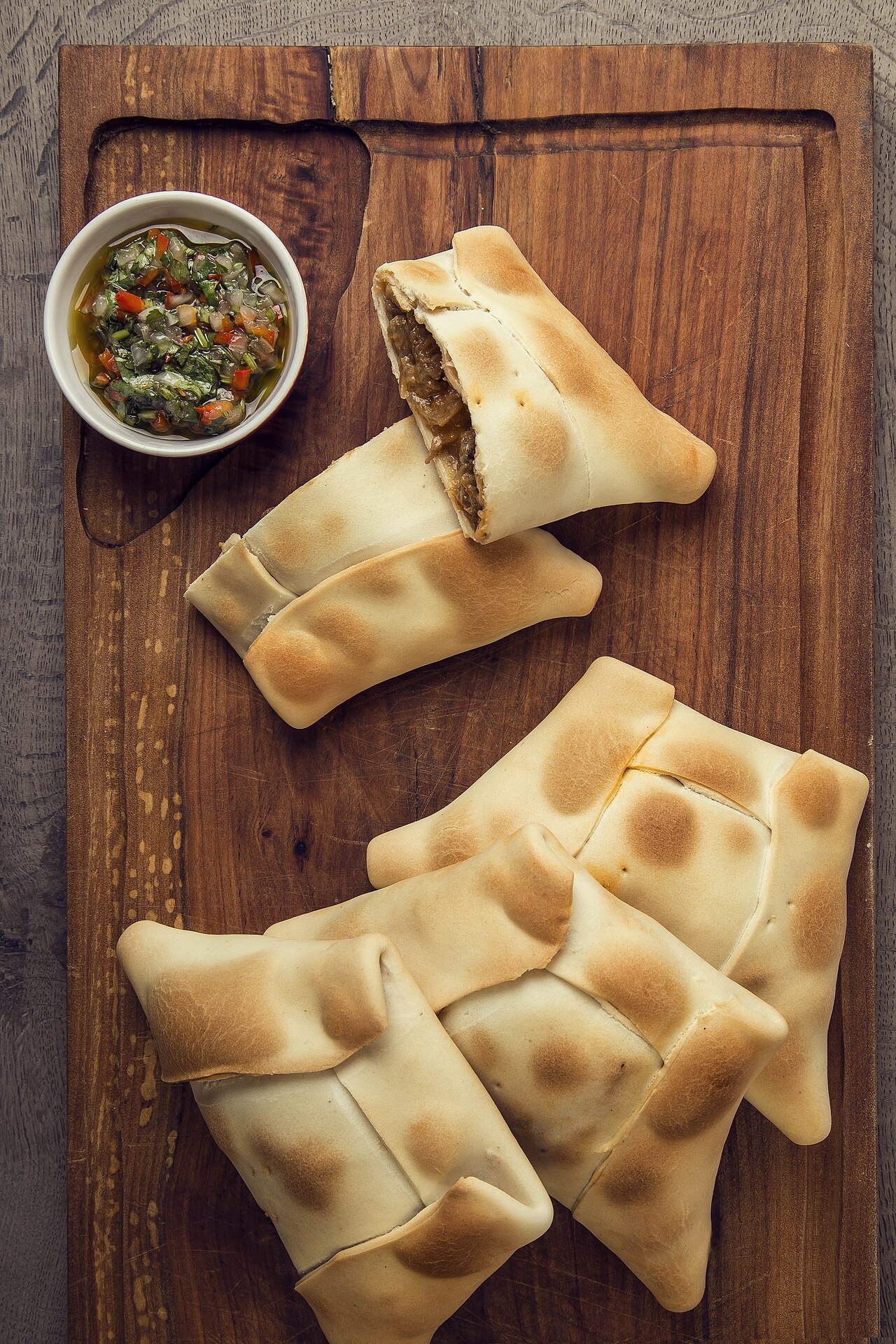
Chile's best-loved pastry: a large baked turnover filled with pino, a mixture of minced beef and onion, with a piece of hard-boiled egg, a black olive and a few raisins. There are also fried empanadas filled with cheese.
Empanadas are the food of the Fiestas Patrias, the national holidays on 18 and 19 September. Watch out for the olive: the stone is often left in.
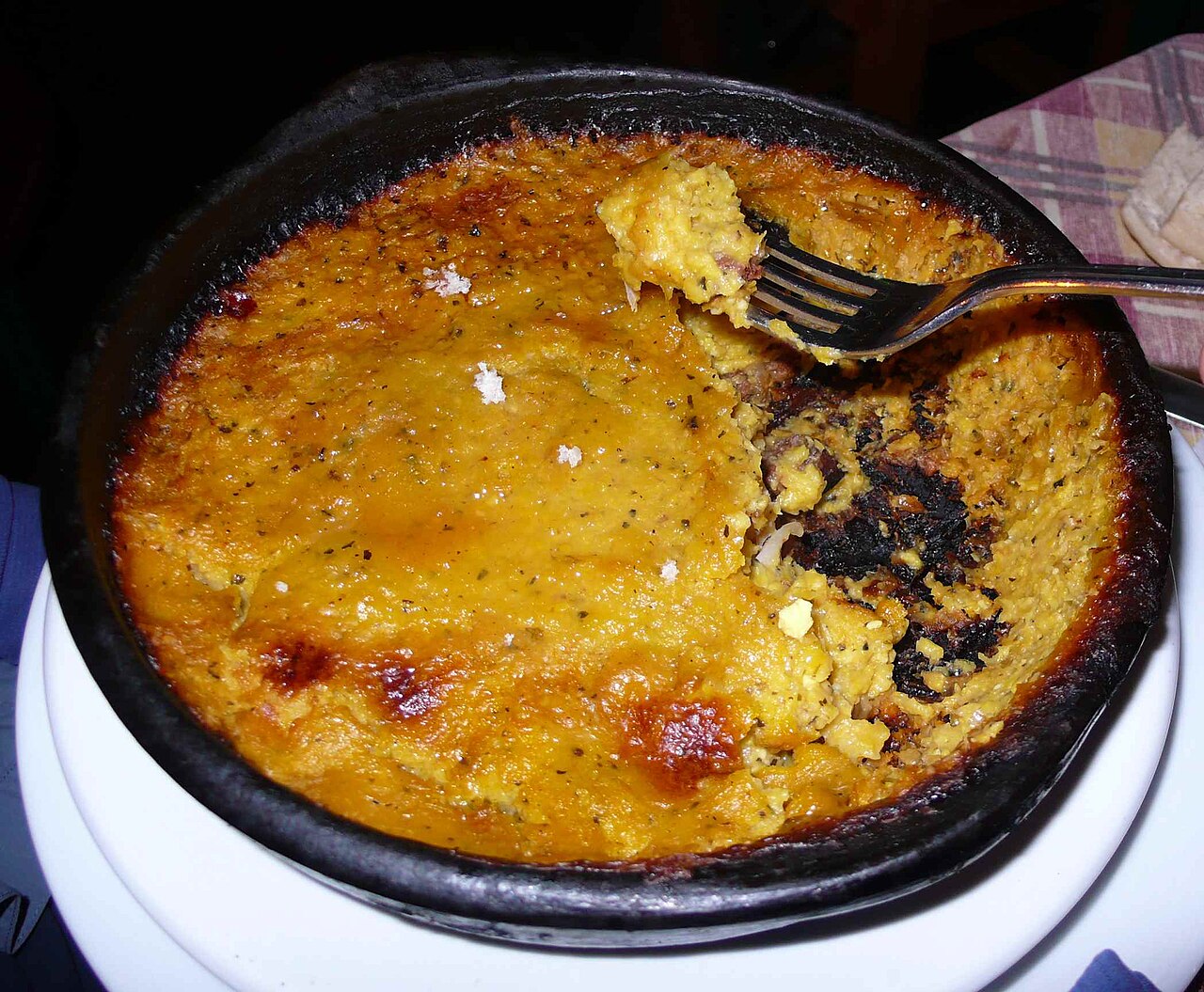
A summer corn pie. A layer of pino, the beef and onion filling, with chicken, olives, raisins and slices of hard-boiled egg is covered with a thick topping of fresh sweetcorn blended with basil and baked until golden.
It is often finished with a little sugar and butter on top, which turns the corn crust golden and slightly sweet.
See the recipe
Serves 6
1 h 30 min
Ingredients
500 g minced beef
3 onions, finely chopped
1 teaspoon paprika and 1 teaspoon ground cumin
2 cooked chicken thighs, meat pulled into pieces (optional)
12 black olives and a handful of raisins
3 hard-boiled eggs, sliced
800 g sweetcorn kernels, fresh or frozen
A handful of fresh basil leaves
250 ml milk and 2 tablespoons butter
Salt, pepper and 1 tablespoon sugar
Method
Fry the onions slowly in a little oil until soft. Add the beef, paprika, cumin, salt and pepper and cook for 15 minutes. This is the pino.
Blend the sweetcorn with the basil and milk until you have a thick paste. Cook it in a pan with the butter and a pinch of salt, stirring all the time, for 10 to 15 minutes until it thickens.
Heat the oven to 200°C. Spread the pino in a baking dish and scatter over the chicken, olives, raisins and egg.
Spread the corn paste over the top and sprinkle with the sugar.
Bake for 30 to 40 minutes until the top is golden brown. Let it rest for 10 minutes before serving.
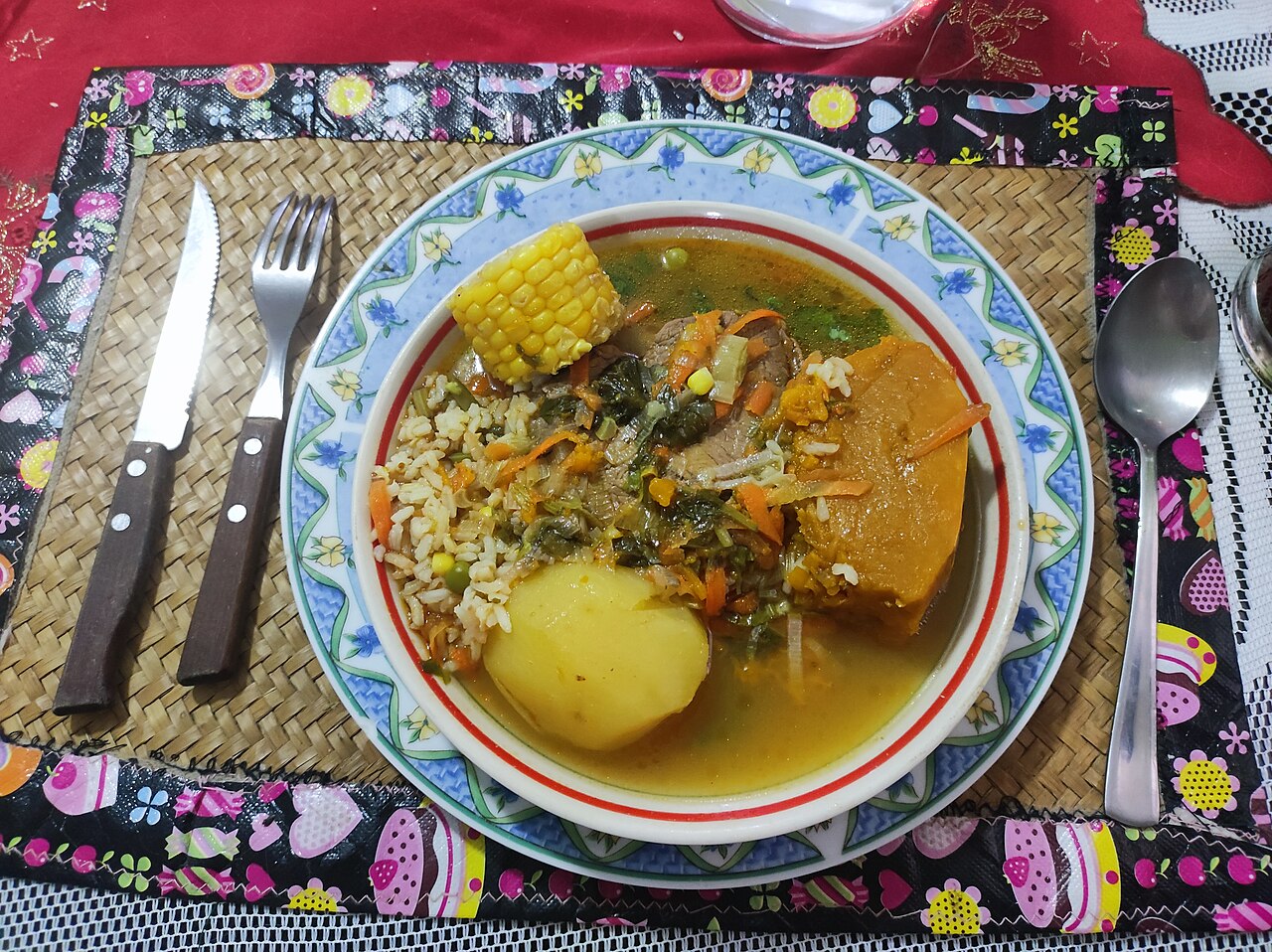
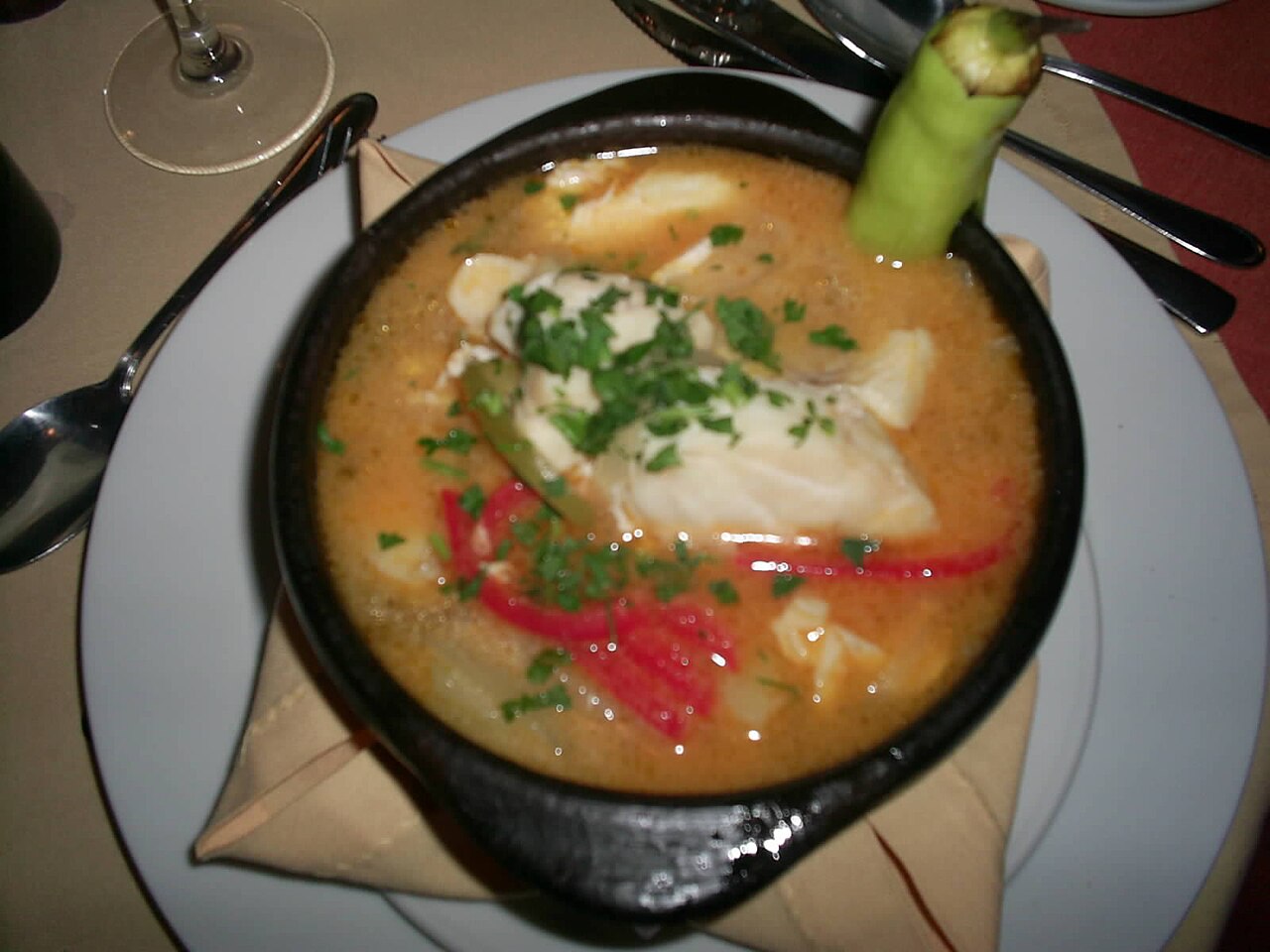
A generous soup of beef or chicken with a big piece of potato, a slice of squash, a piece of corn on the cob, green beans and rice, sprinkled with coriander or parsley. Each diner gets one of every ingredient in a deep plate.
Chileans usually drink the broth first, then eat the meat and vegetables.
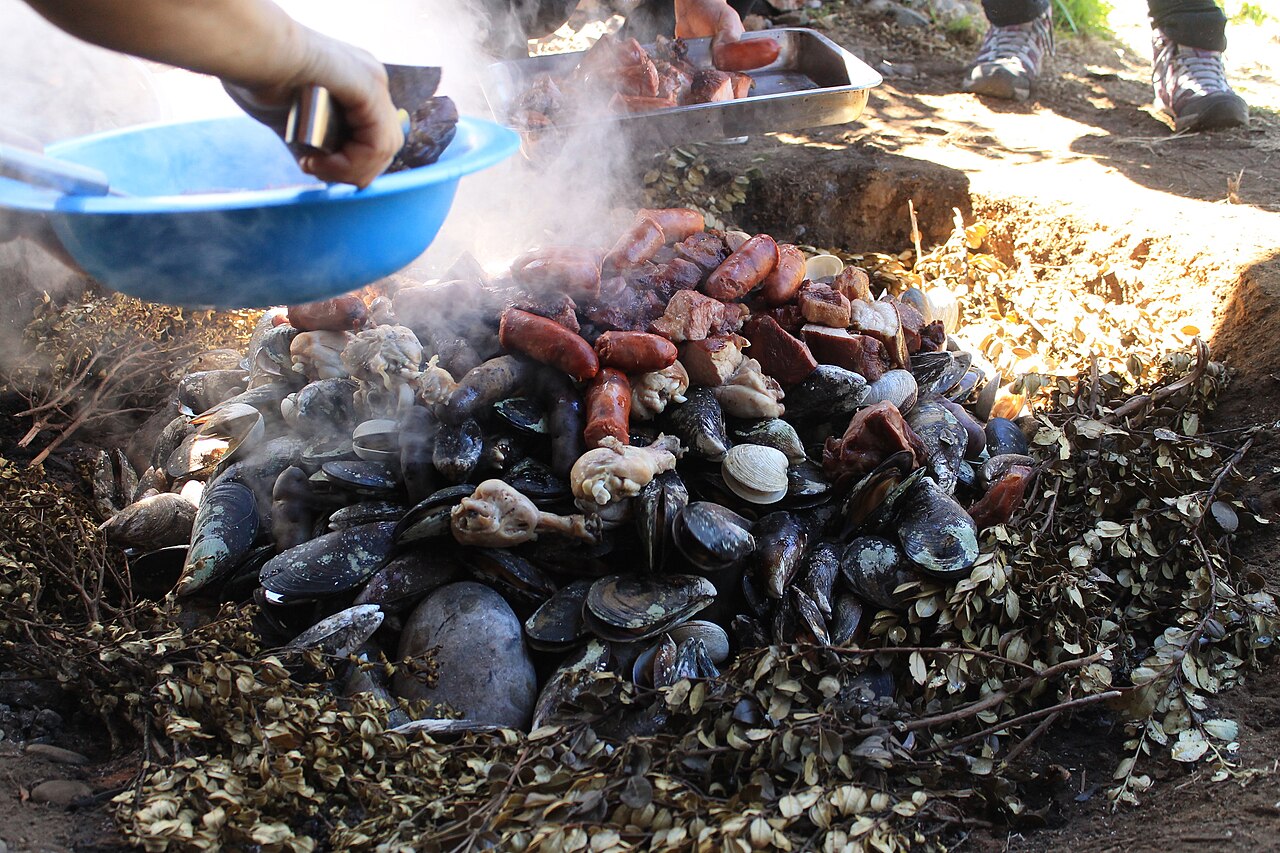
A feast cooked in a pit in the ground. Stones are heated red hot in a fire, then covered with layers of clams, mussels and giant barnacles, meat, sausages, potatoes and potato dumplings called milcao and chapaleles, and sealed with large nalca leaves and turf.
The name comes from the Mapuche word kurantu, meaning 'stony'. The traditional pit version is called curanto en hoyo.
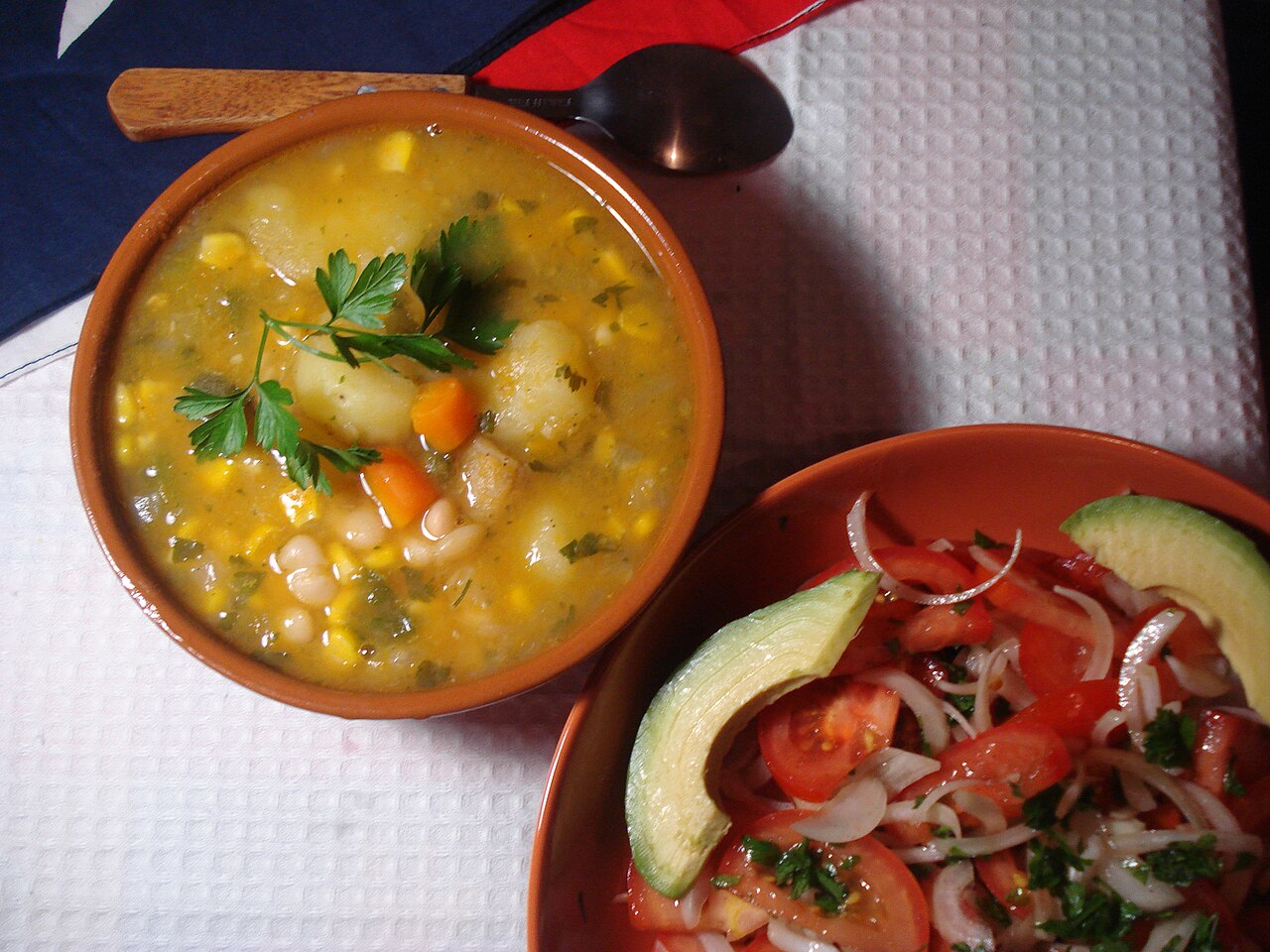
A thick summer stew of fresh cranberry beans, sweetcorn and squash, with onion and basil. It is often made without meat.
The word poroto, bean, comes from the Quechua word purutu.
See the recipe
Serves 4
1 h
Ingredients
500 g fresh shelled beans (or 2 tins of borlotti beans, drained)
400 g pumpkin or butternut squash, peeled and diced
300 g sweetcorn kernels
1 large onion, finely chopped
1 teaspoon paprika
A handful of fresh basil leaves, torn
1 litre vegetable stock
Olive oil and salt
Method
Fry the onion in a little oil with the paprika until soft.
Add the fresh beans and the stock and simmer for about 25 minutes until the beans are nearly tender. If you use tinned beans, add them with the squash.
Add the squash and cook for 15 minutes until it starts to fall apart and thickens the stew.
Stir in the corn and cook for 5 more minutes. Season with salt.
Take off the heat, stir in the basil and serve hot, with a tomato and onion salad on the side.
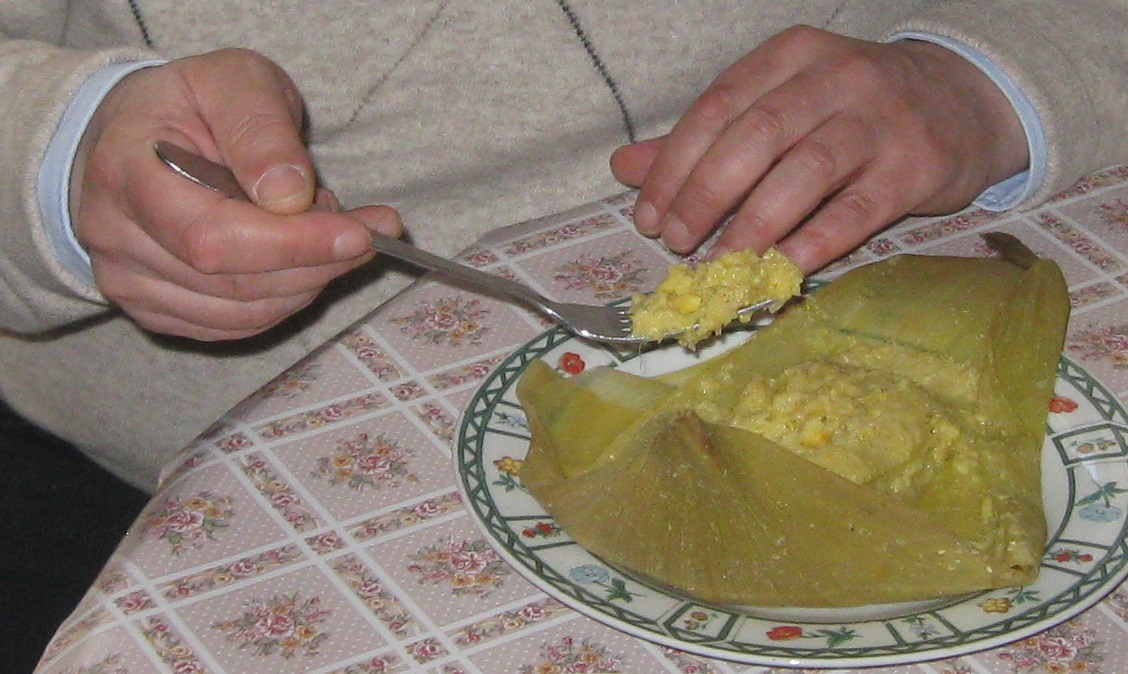
Fresh sweetcorn ground to a paste with onion, basil and butter, wrapped in corn husks, tied with string and boiled or baked. Chileans eat them with a little sugar or with a fresh tomato salad.
The dish goes back to before the Spanish conquest, and the name comes from the Quechua word umint'a.
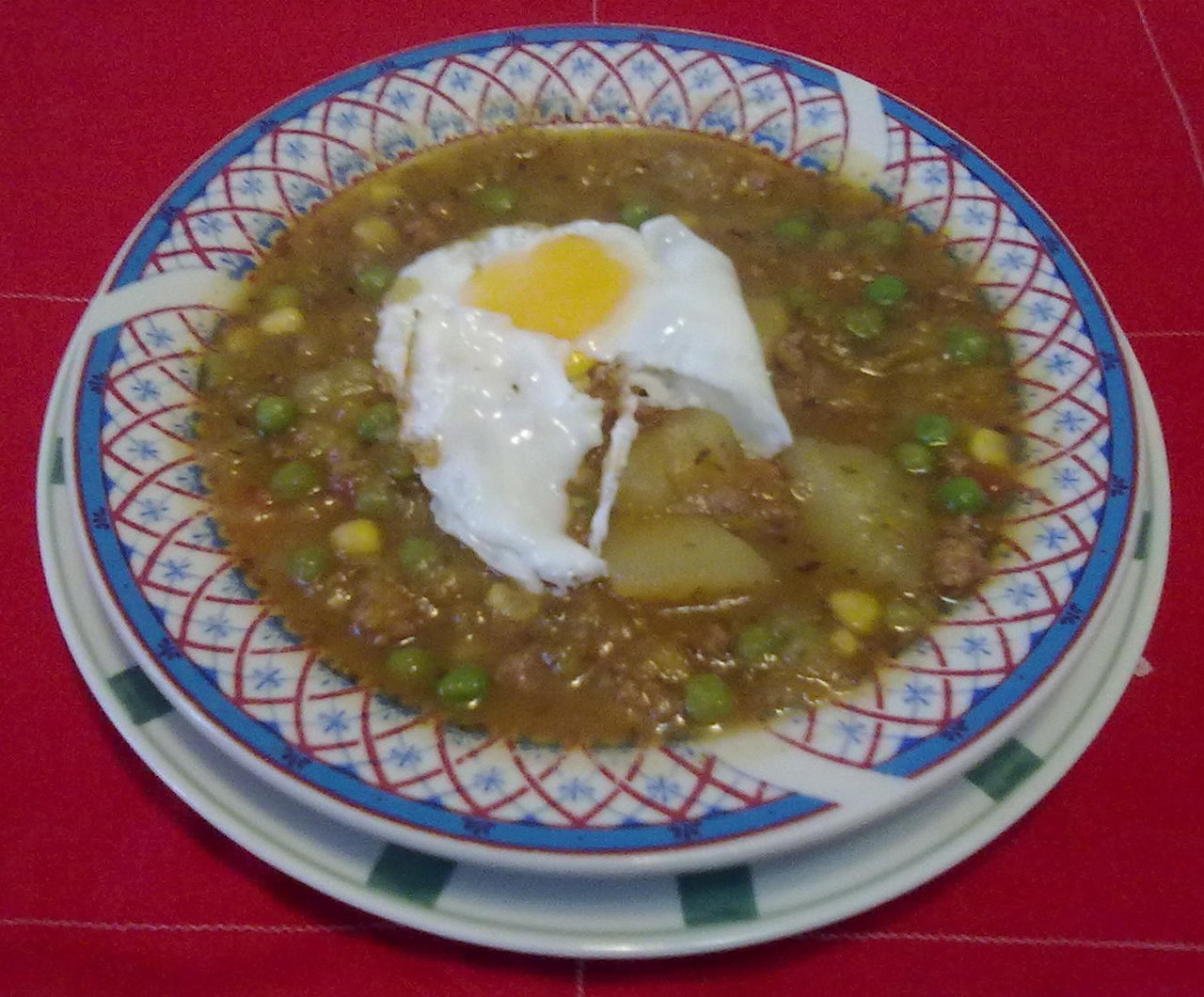
A hearty home-style stew of potatoes, pumpkin, corn and onion mashed together with beef, usually topped with a fried egg. It was first made with dried meat called charqui.
It was a common meal for the soldiers of the Army of the Andes during the wars of independence.
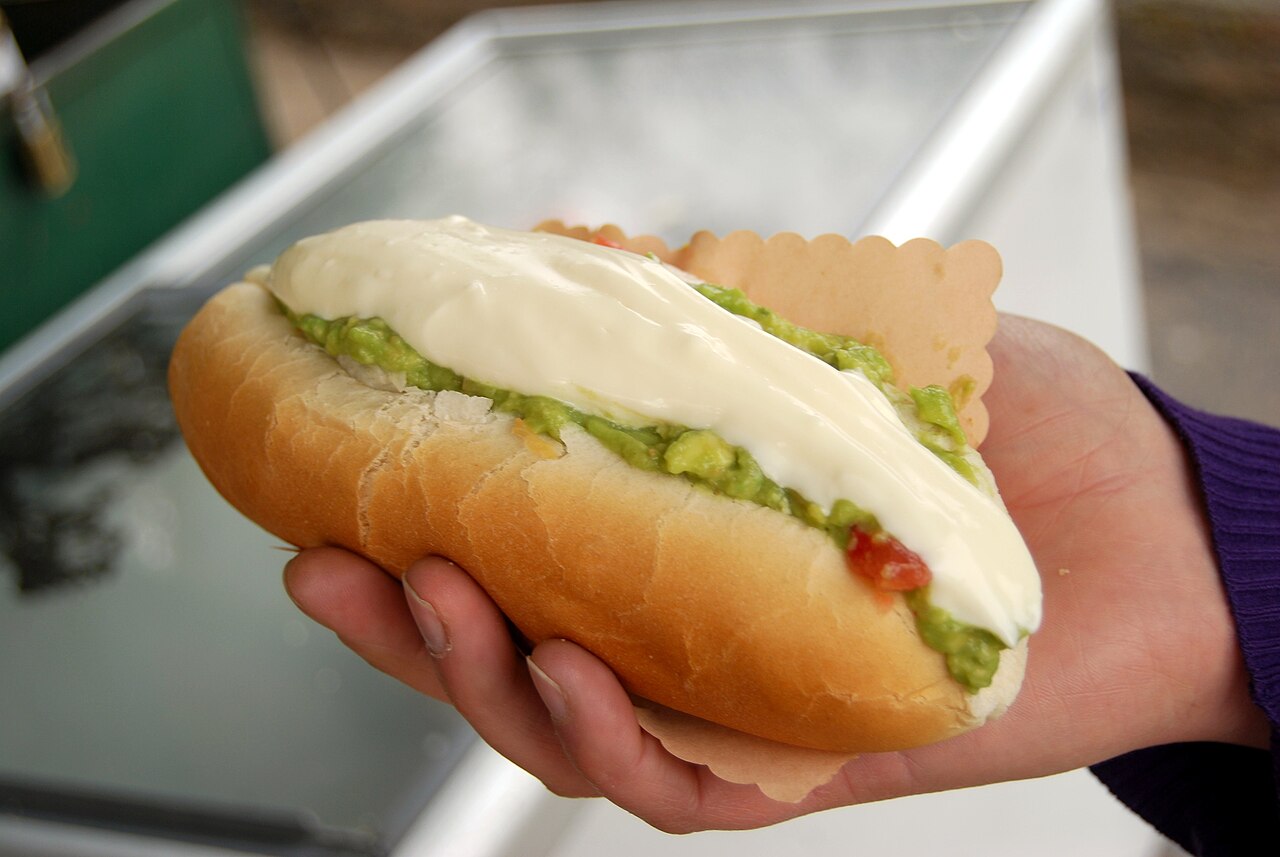
The Chilean hot dog, much bigger and more loaded than the American one. The favourite version, the completo italiano, is topped with chopped tomato, mashed avocado and mayonnaise.
The completo italiano is named for its colours, red, green and white like the Italian flag.
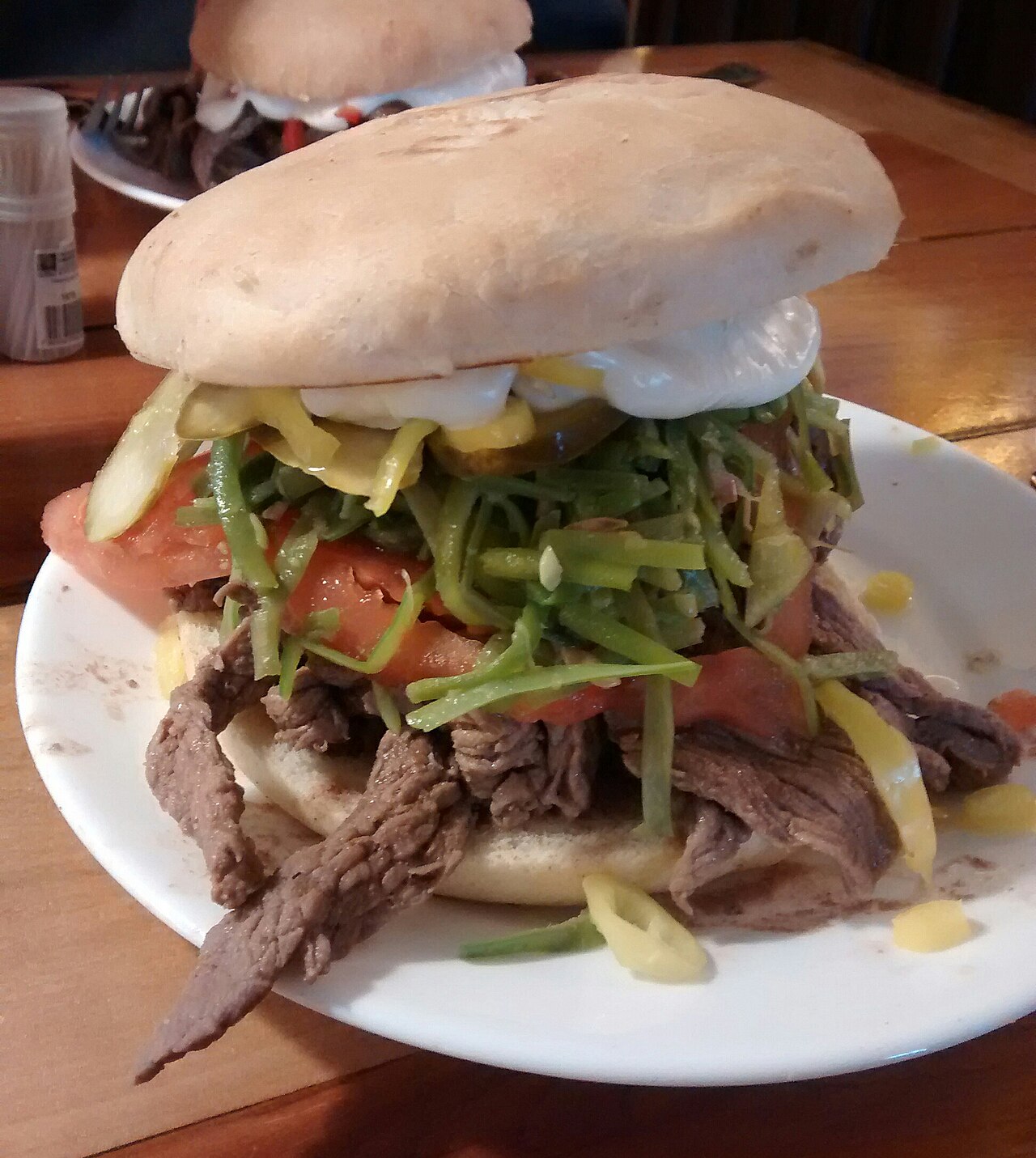
A hot sandwich of thin slices of steak on a round roll with tomato, green beans, mayonnaise and sometimes green chilli. It is a classic of the fuentes de soda, simple Chilean diners that serve sandwiches and draught beer.
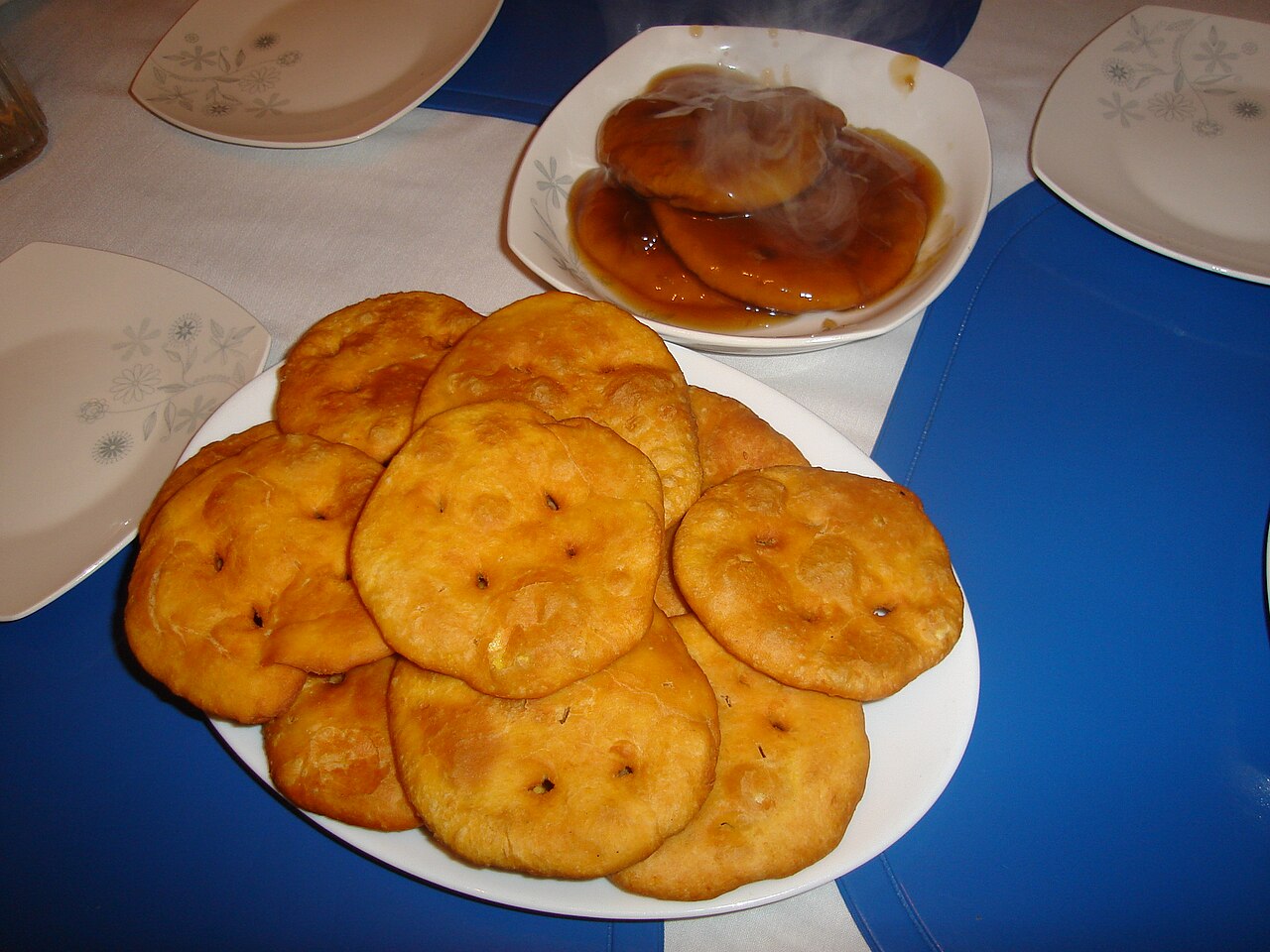
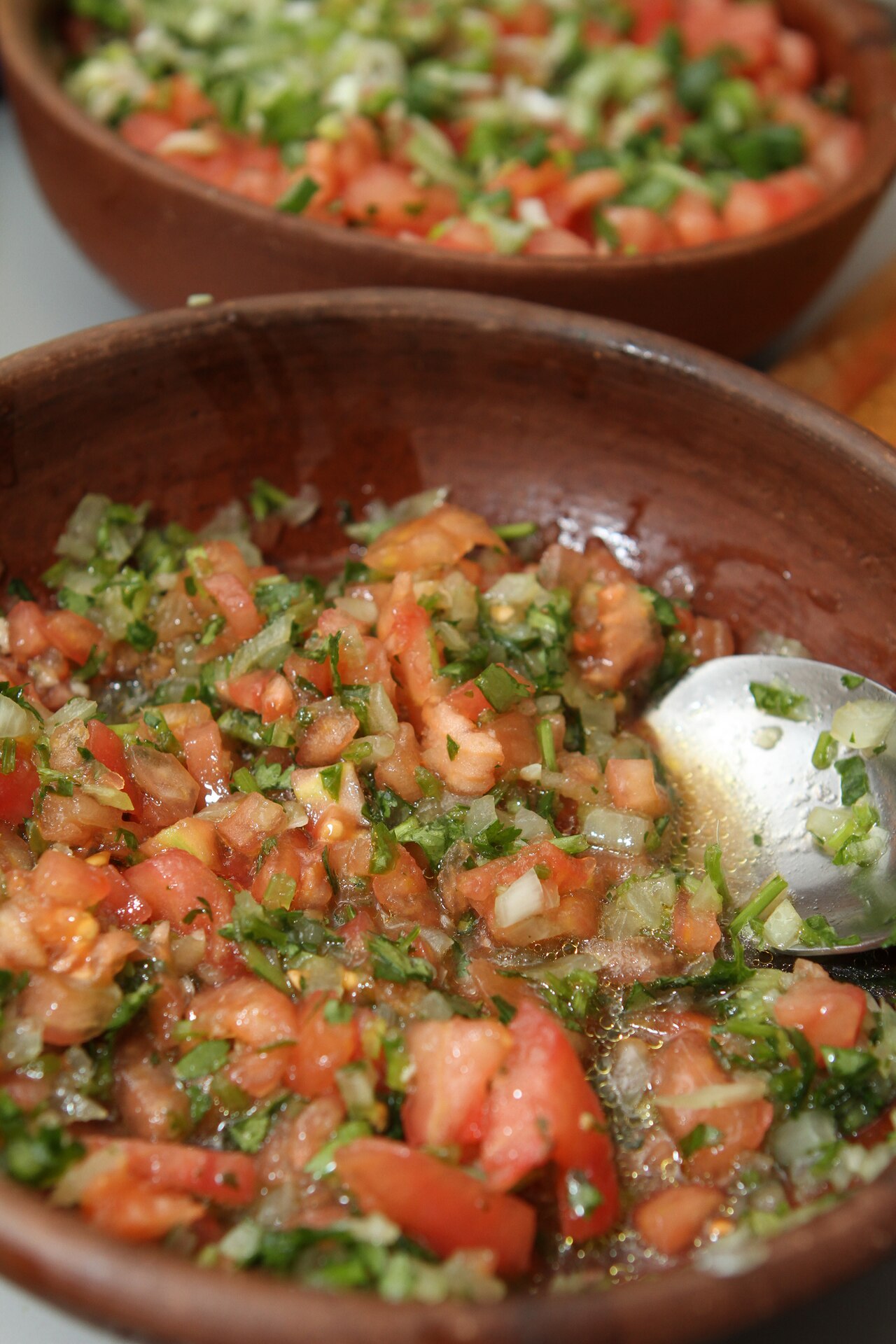
Round, flat fried dough, in central Chile made with mashed pumpkin in the dough. They are eaten as a snack with pebre or mustard, or as a dessert soaked in a warm syrup of dark sugar, orange peel and cinnamon, when they are called sopaipillas pasadas.
Chileans traditionally make sopaipillas at home on cold, rainy days.
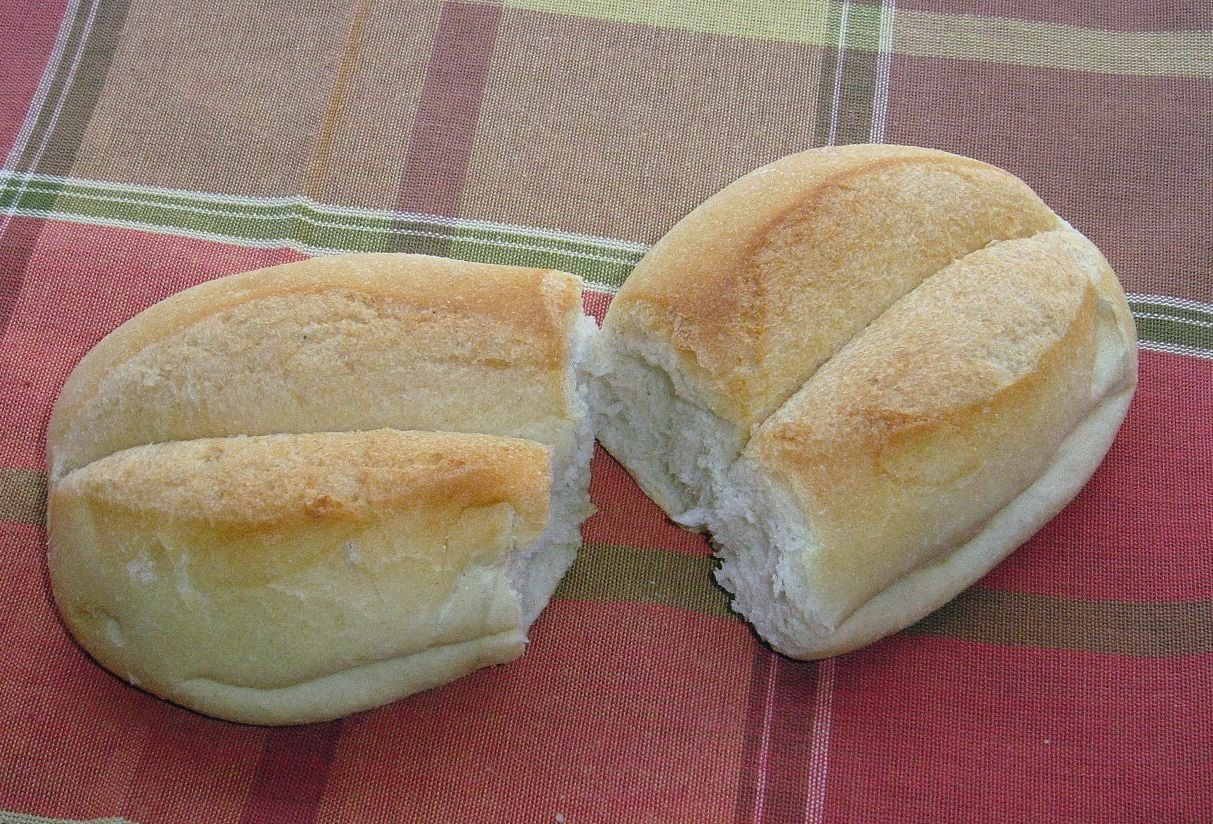
Chile's everyday bread: a crusty white roll made of four parts that can be broken apart by hand. It is eaten at every meal and often at breakfast with mashed avocado.
In some regions it is called pan batido or pan francés, 'French bread'.
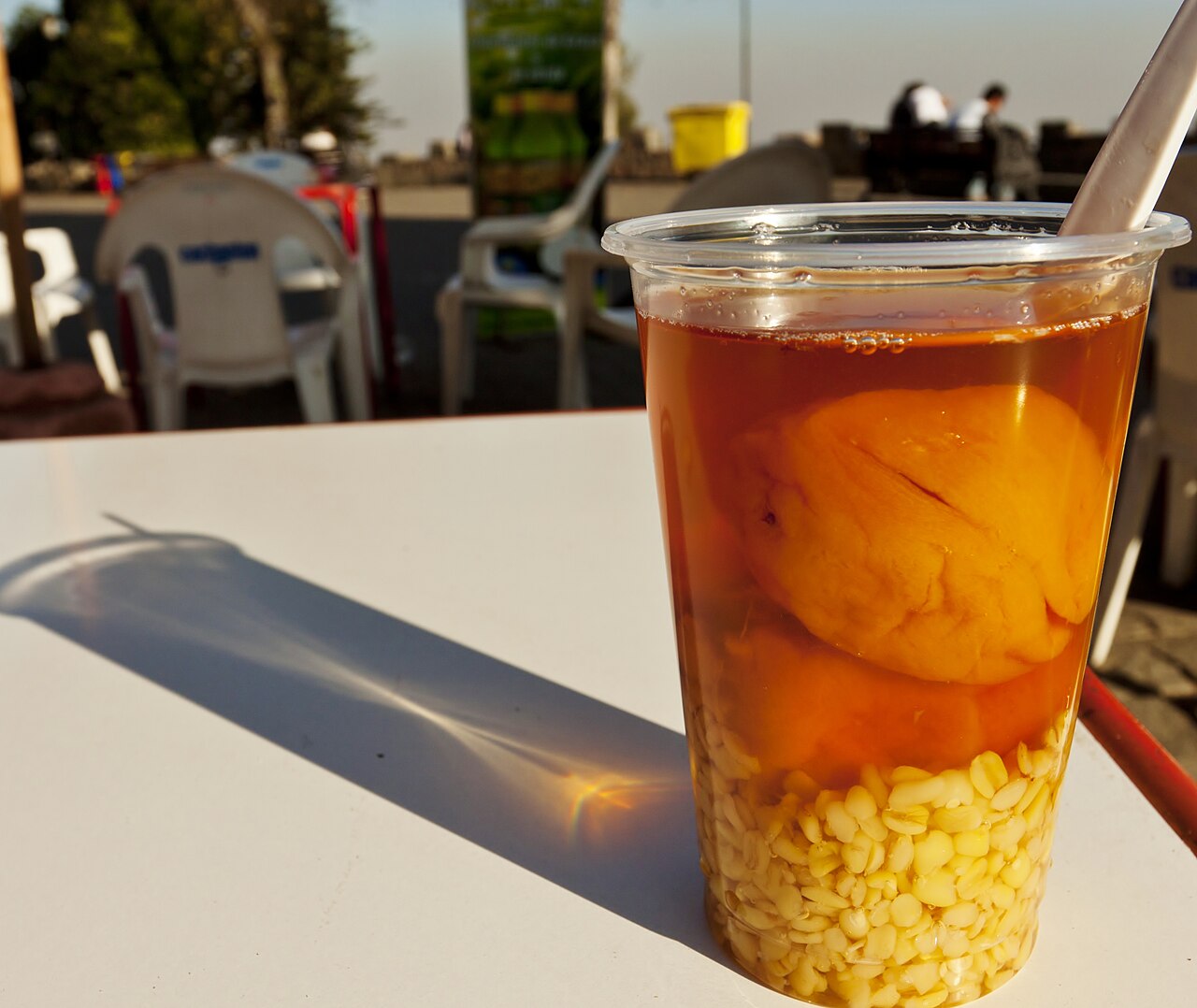
Chile's summer drink, sold from street carts: a cold, sweet nectar made by cooking dried peaches with sugar and cinnamon, served with the peaches and a spoonful of cooked husked wheat, the mote, at the bottom of the glass.
It is drunk and eaten at the same time, so it comes with a spoon.
See the recipe
Serves 6
1 h
Ingredients
12 dried peaches (or dried apricots)
200 g sugar
2 cinnamon sticks
2 litres water
200 g husked wheat (or pearl barley)
Method
The night before, wash the dried peaches and soak them in the water.
Put the peaches and their water in a pan with the sugar and cinnamon and simmer for about 30 minutes, until the peaches are soft and the liquid is a light syrup. Let it cool, then chill it.
Cook the wheat in plenty of water until tender, about 30 to 40 minutes. Drain and cool it.
Put 2 or 3 tablespoons of wheat in each tall glass, add two peaches and fill with the cold syrup. Serve with a spoon.
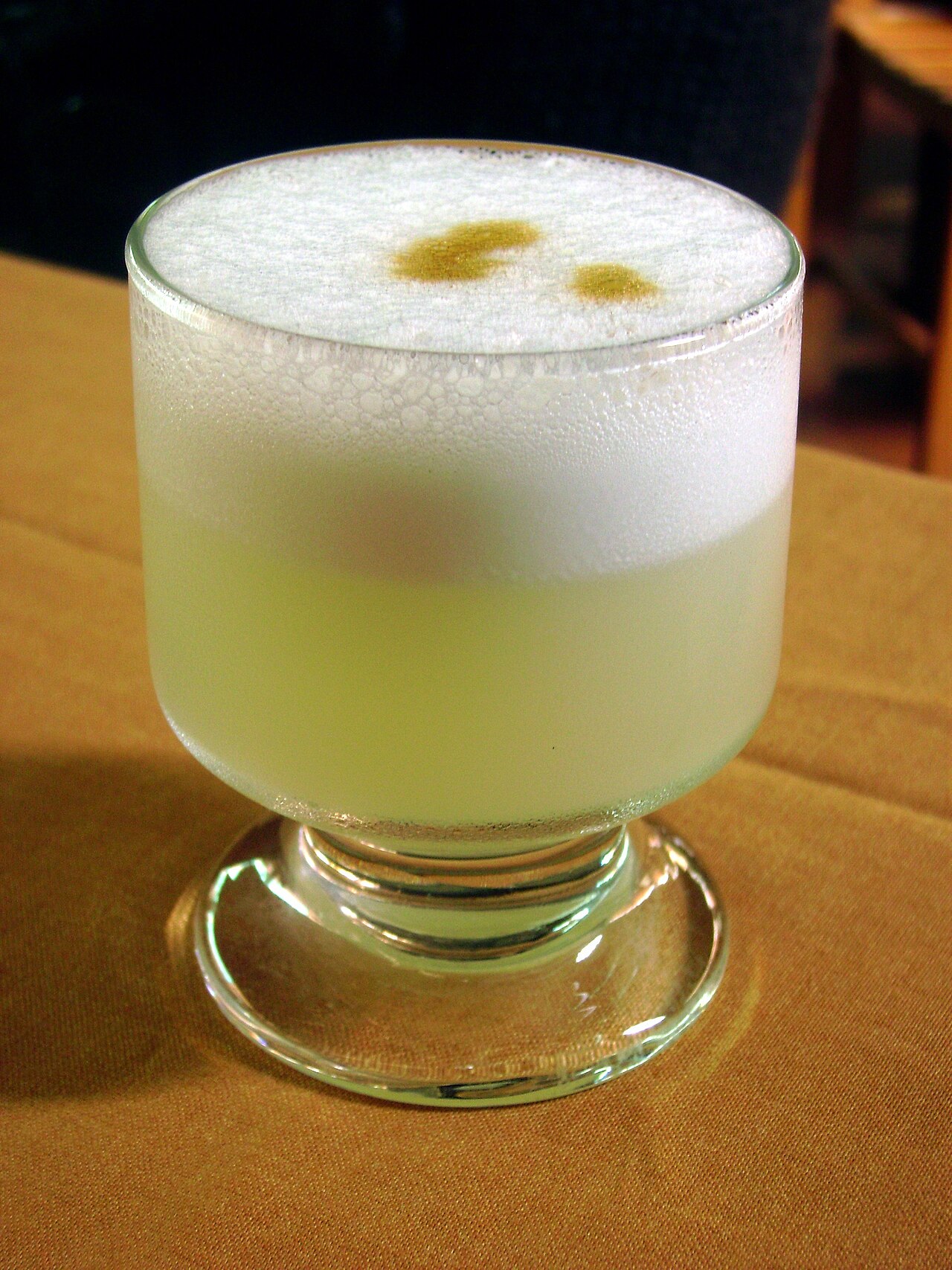
A cocktail of pisco, a grape brandy, with lemon juice and sugar, shaken with ice. The Chilean version uses Chilean pisco and small limes from Pica, and unlike the Peruvian version it has no egg white and no bitters.
Chile and Peru both call the pisco sour their national drink, and the friendly argument about it never ends.
See the recipe
Serves 2
5 min
Ingredients
120 ml pisco
40 ml fresh lemon or lime juice
2 to 3 tablespoons icing sugar, to taste
A handful of ice cubes
Method
Put the pisco, the juice and the sugar in a cocktail shaker or a blender.
Add the ice and shake hard, or blend, for about 20 seconds until frothy and very cold.
Strain into two small glasses and serve at once. For a drink without alcohol, use sparkling water in place of the pisco.
If someone offers you something, say 'Sí, por favor' or 'No, gracias'. A bare 'sí' or 'no' sounds rude.
When you arrive at or leave a gathering, greet every person there. Men shake hands; with women, a light touch of the right cheeks is usual.
When you leave the table at a formal meal, it is polite to say 'Con permiso' (excuse me).
A tip of about 10 percent is customary in restaurants when the service is good, and some restaurants add it to the bill. Leaving no tip at all is seen as rude unless the service was very bad.
Chile's cities are strung out along its great length: desert ports in the north, the capital and its ports in the centre, lake and island towns in the south, and Patagonian towns near the end of the continent. Hanga Roa, on Easter Island, lies about 3,500 km out in the Pacific.
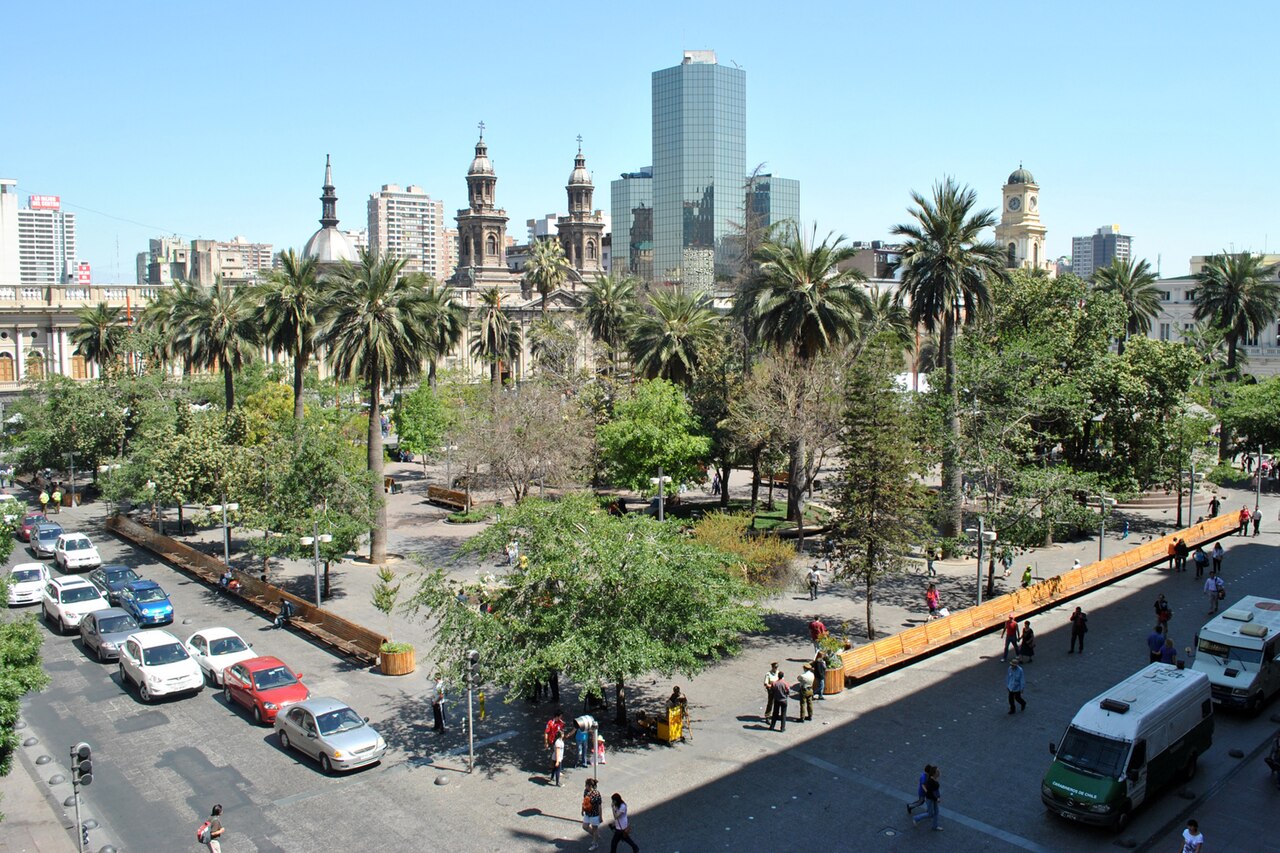
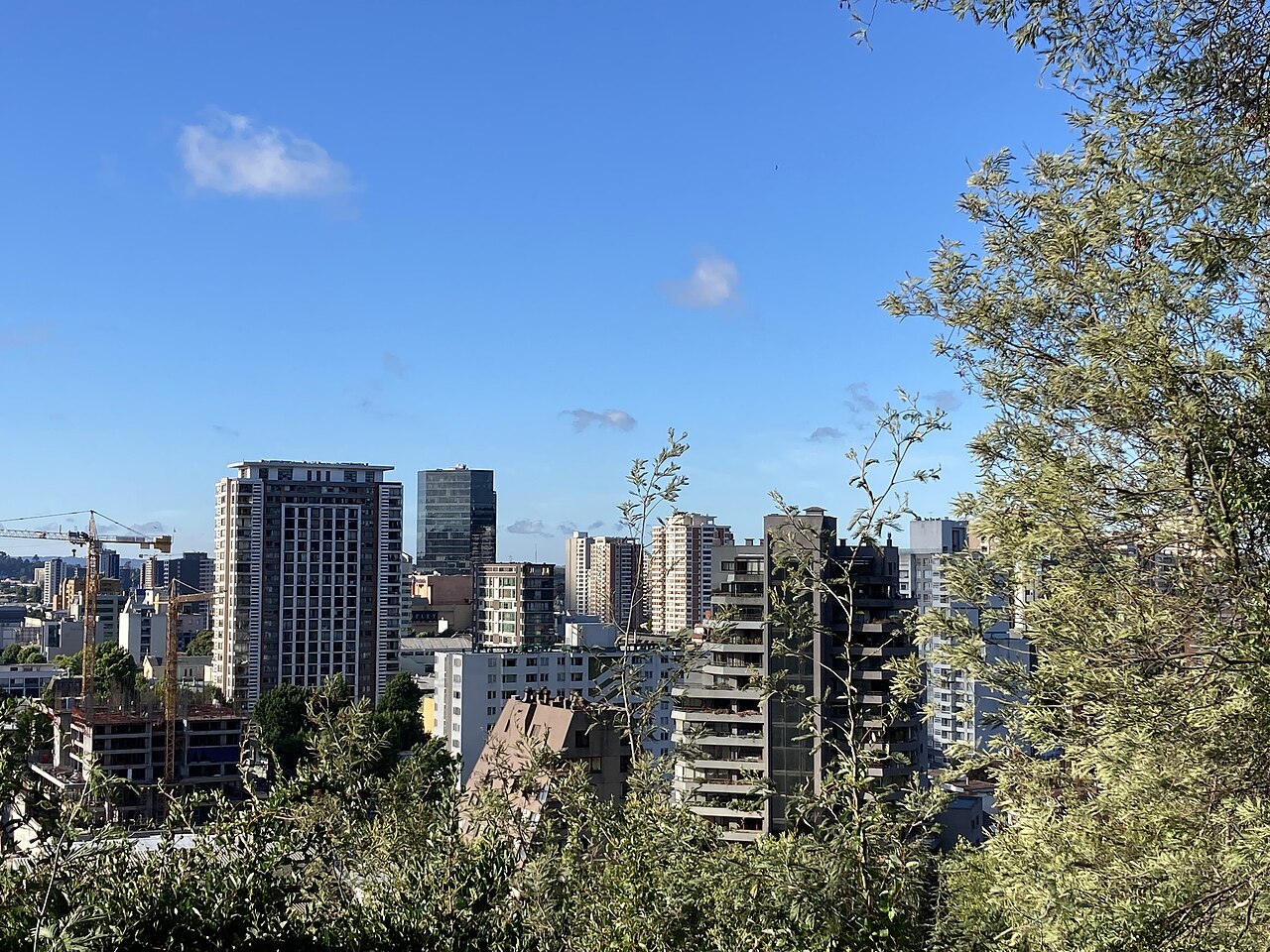
The capital and by far the largest city, in the central valley between the Andes and the coastal hills. It was founded by Pedro de Valdivia in 1541, and Greater Santiago is home to more than a third of all Chileans.
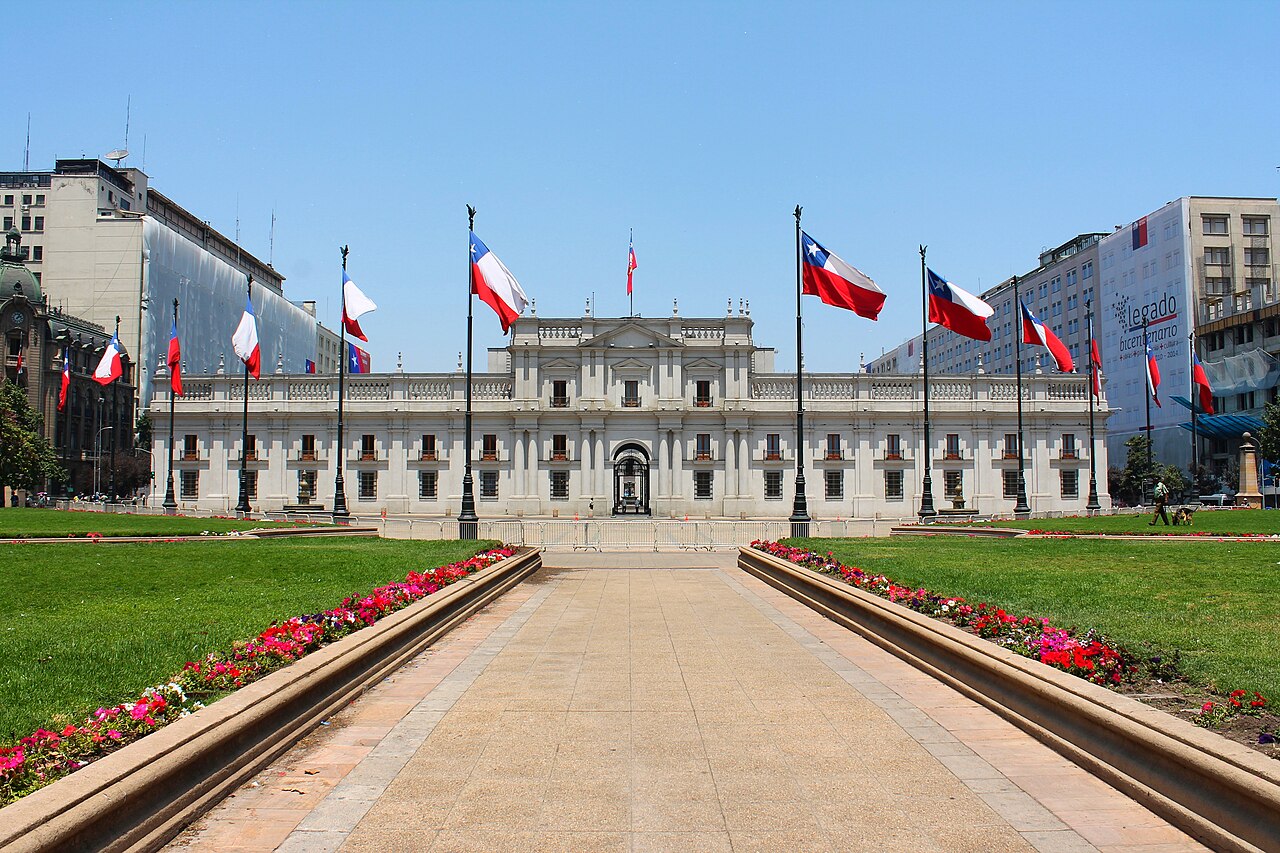
La Moneda Palace and the Plaza de Armas
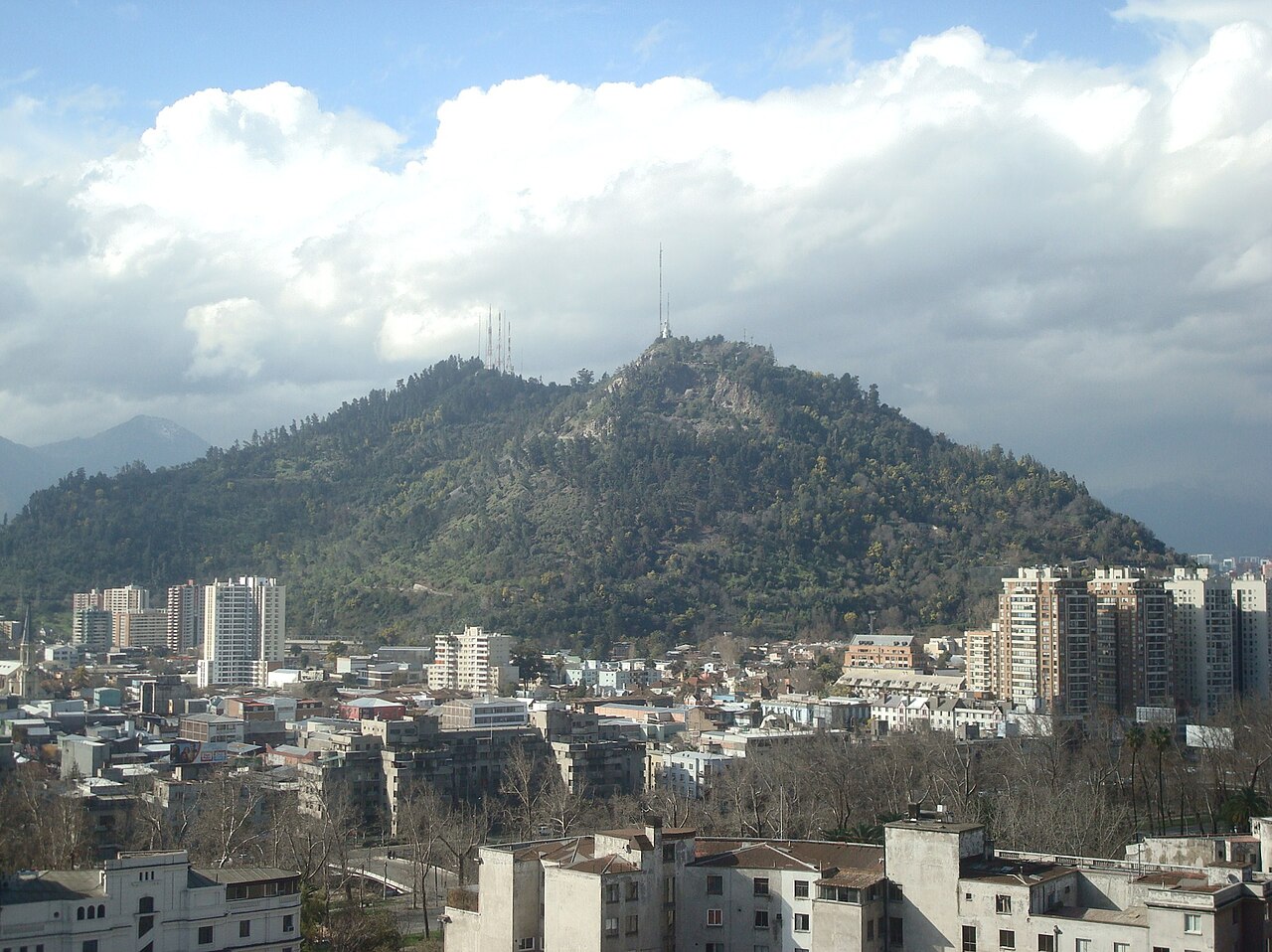
San Cristóbal Hill and its statue of the Virgin Mary
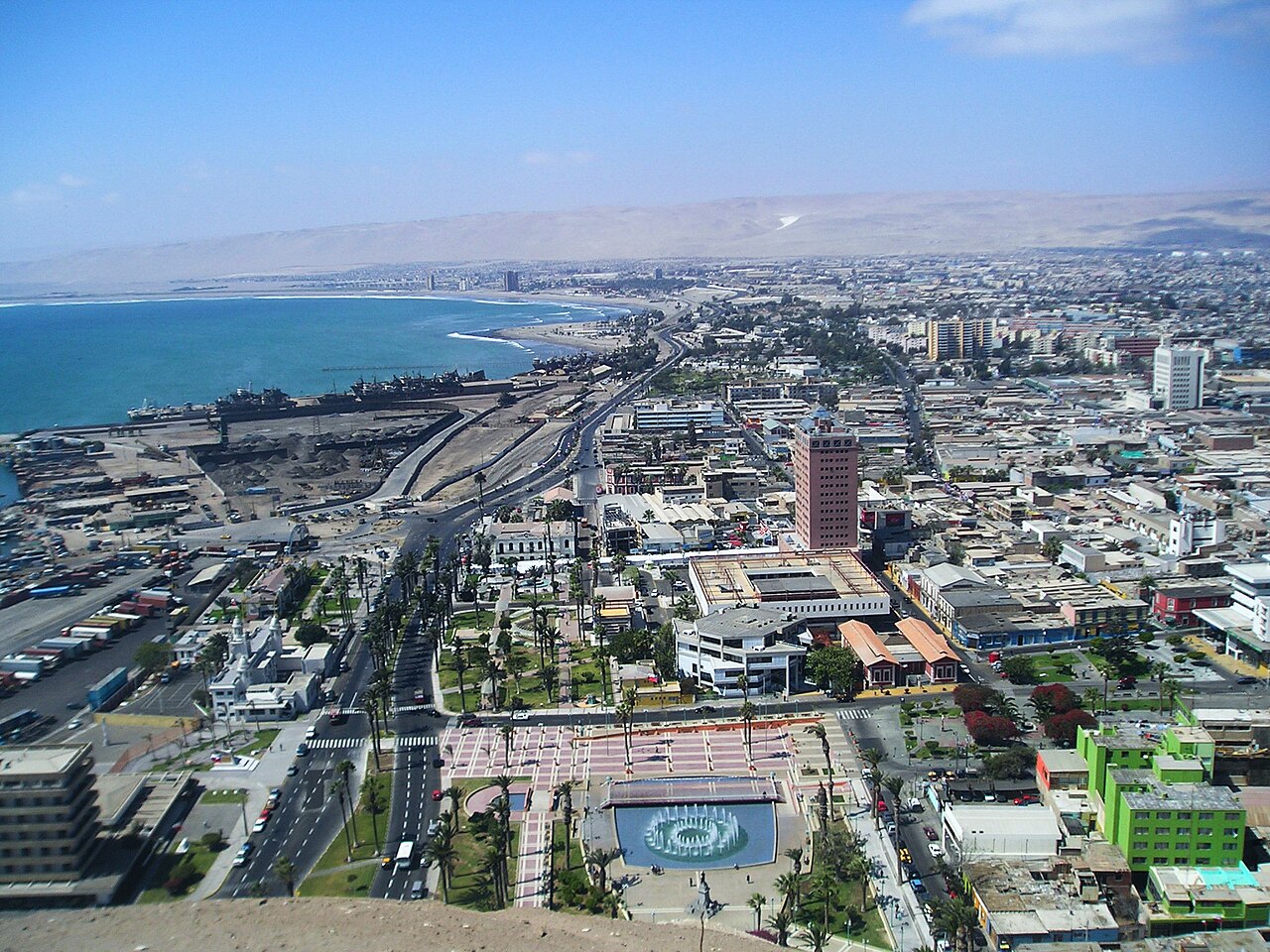
Chile's northernmost city, only 18 km from the border with Peru, in the Atacama Desert where two green valleys reach the sea. The area around Arica was the heartland of the Chinchorro culture and its ancient mummies.
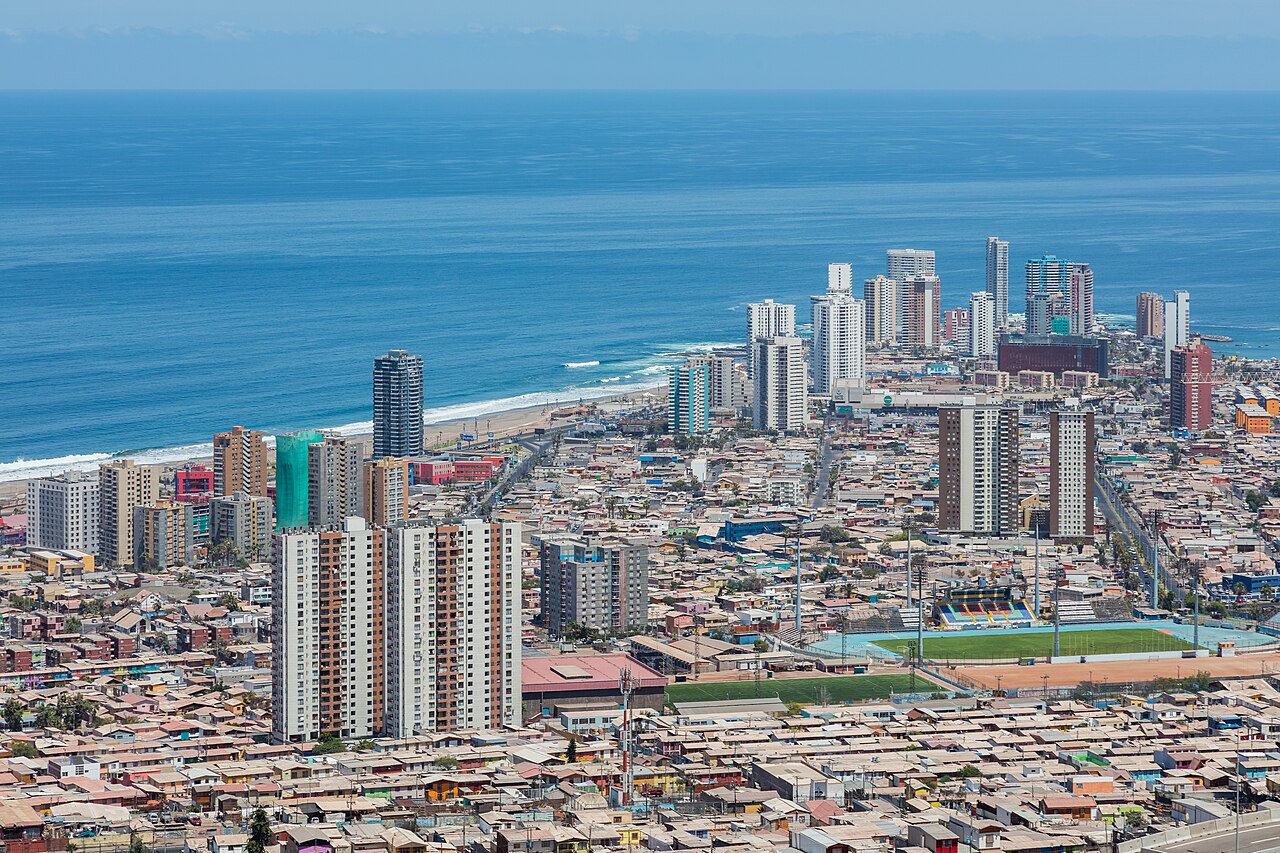
A port on the desert coast that grew rich in the 19th century from saltpetre, the nitrate dug from the Atacama. It was Peruvian until the War of the Pacific. Its name comes from the Aymara 'Iki Iki', said to mean 'land of dreams'.
A free trade zone for shopping
The ghost saltpetre towns of Humberstone and Santa Laura
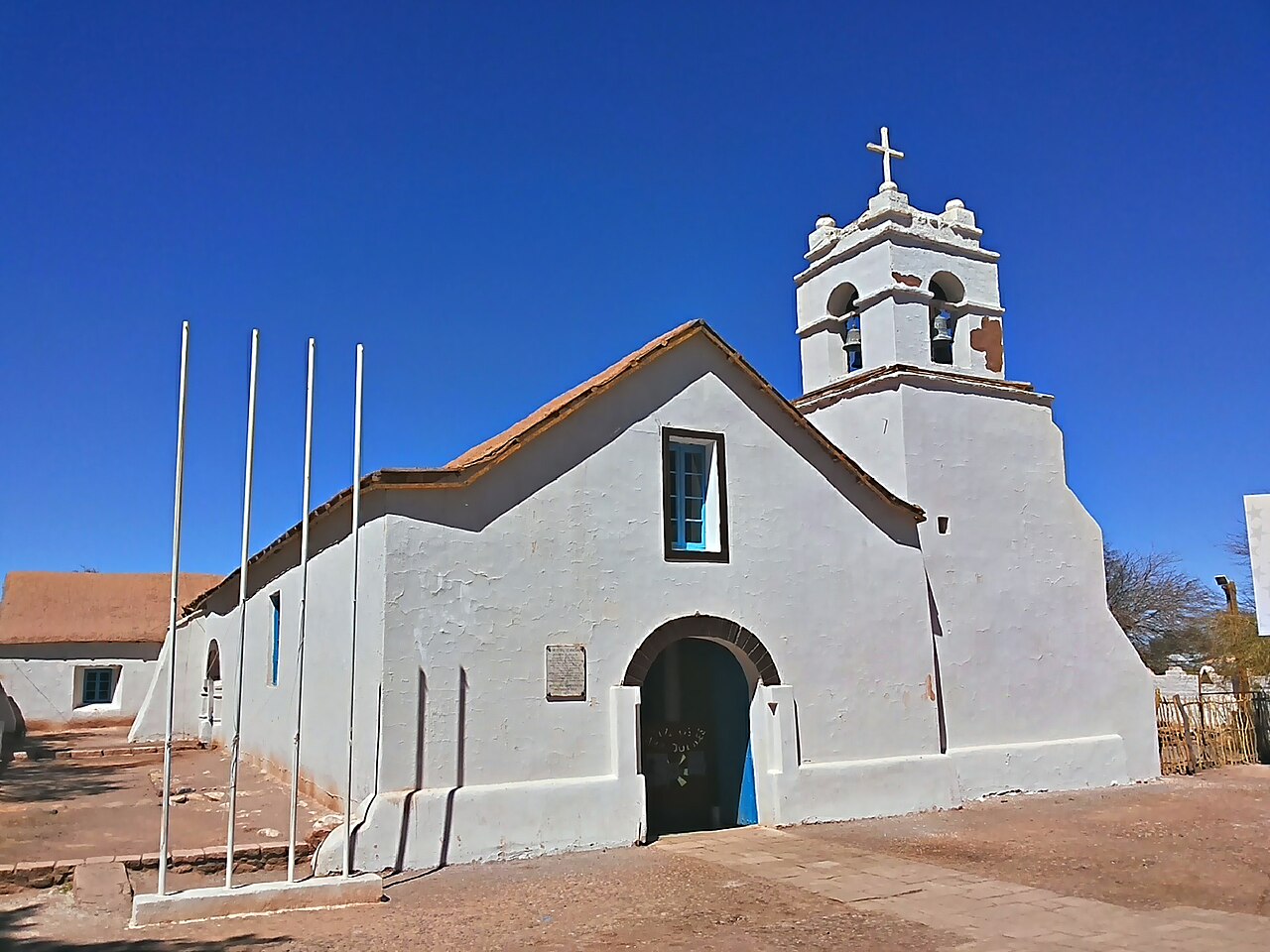
An oasis village of adobe houses at about 2,400 m in the Atacama Desert, below the Licancabur volcano. It is the base for trips to salt flats, geysers, lagoons and the Valley of the Moon.
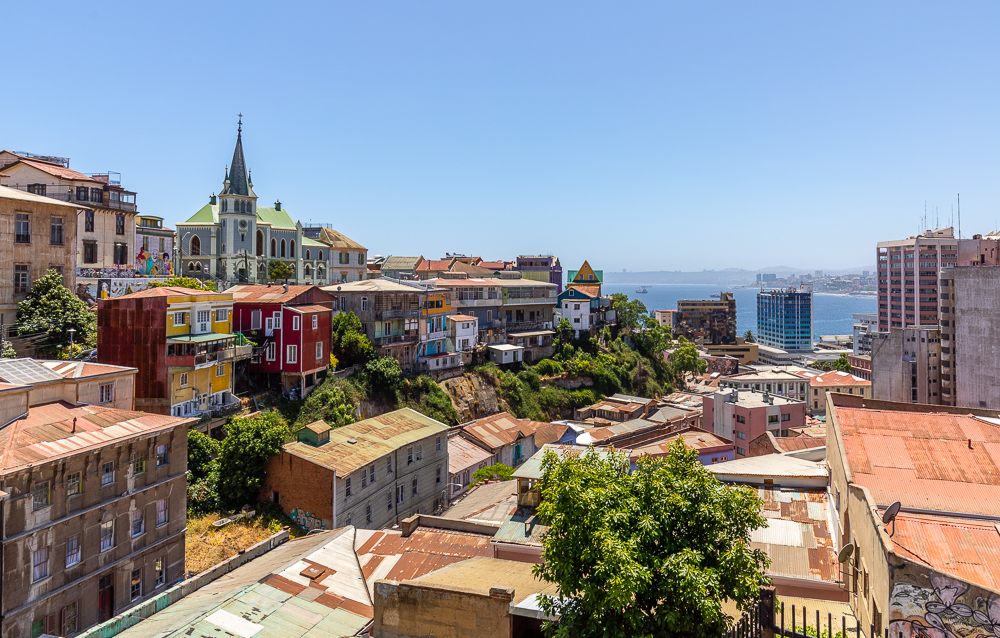
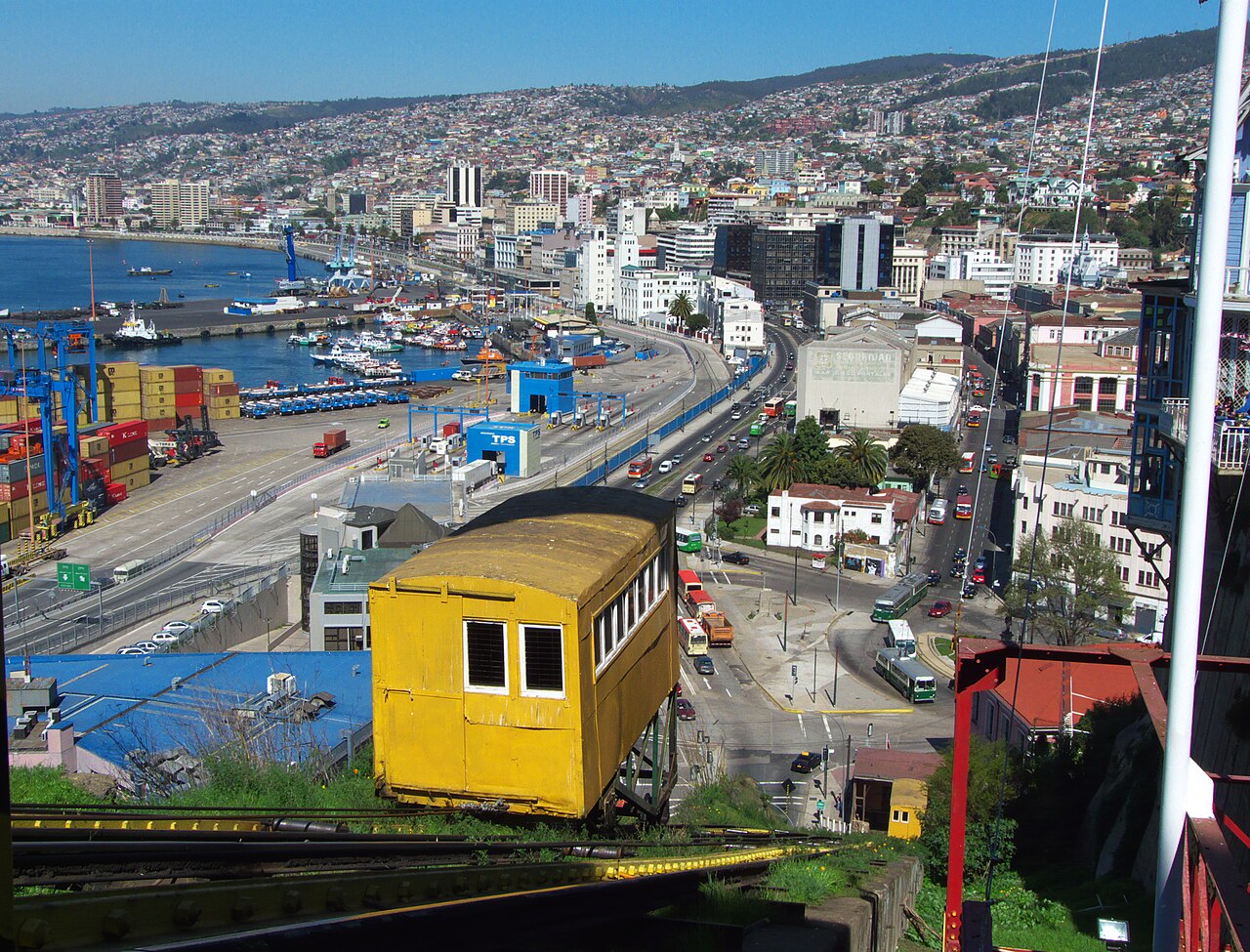
A historic port about 120 km northwest of Santiago, built on steep hills above the bay. Colourful houses, winding alleys and old funicular lifts, the ascensores, give it a character all its own. It is home to Chile's navy and, since 1990, to the National Congress.
The heart of one of Chile's three largest urban areas, about 500 km south of Santiago, beside the Biobío River. Founded by Pedro de Valdivia in 1550, it was moved to its present site after repeated earthquakes and tsunamis.
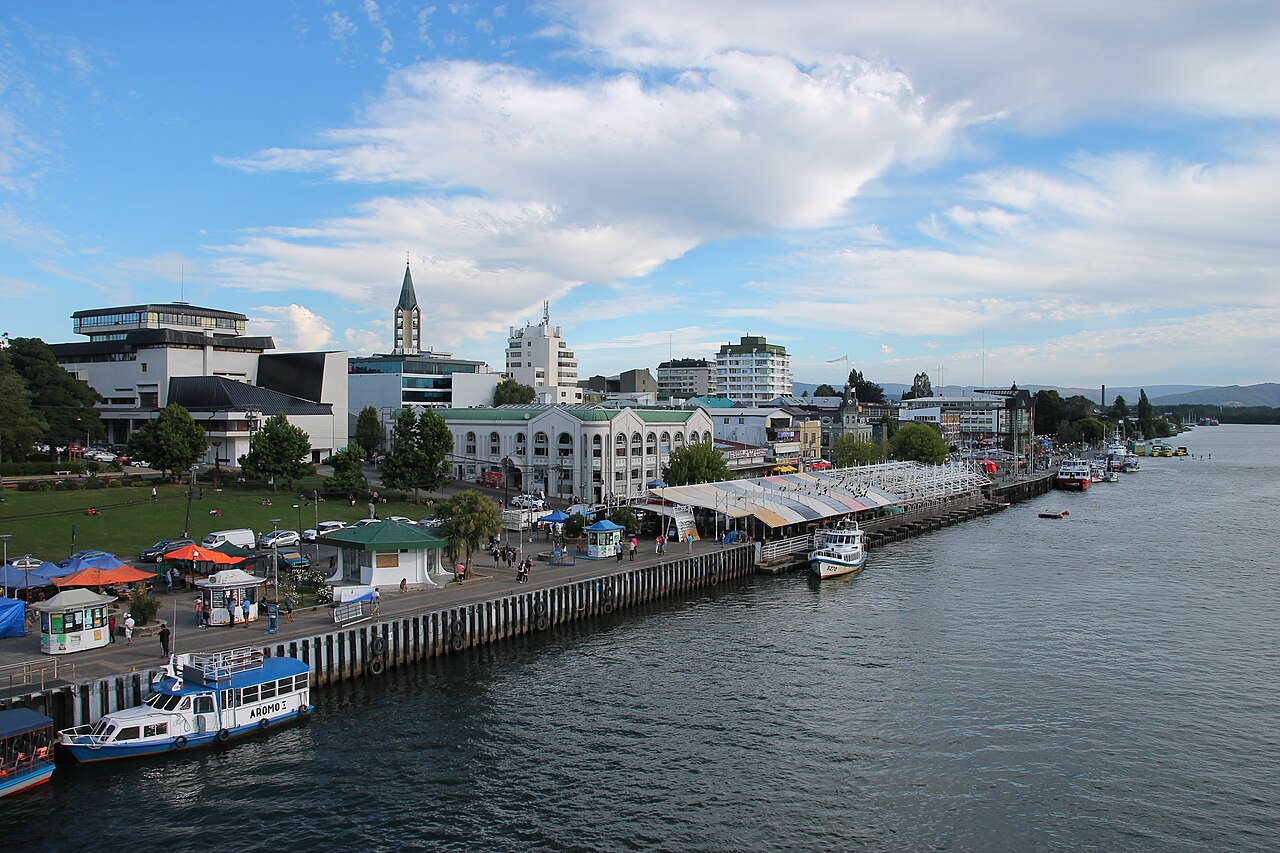
A green river city where three rivers meet, named after its founder, Pedro de Valdivia. German settlers arrived here in the mid-19th century, and in 1960 the city was badly damaged by the strongest earthquake ever recorded.
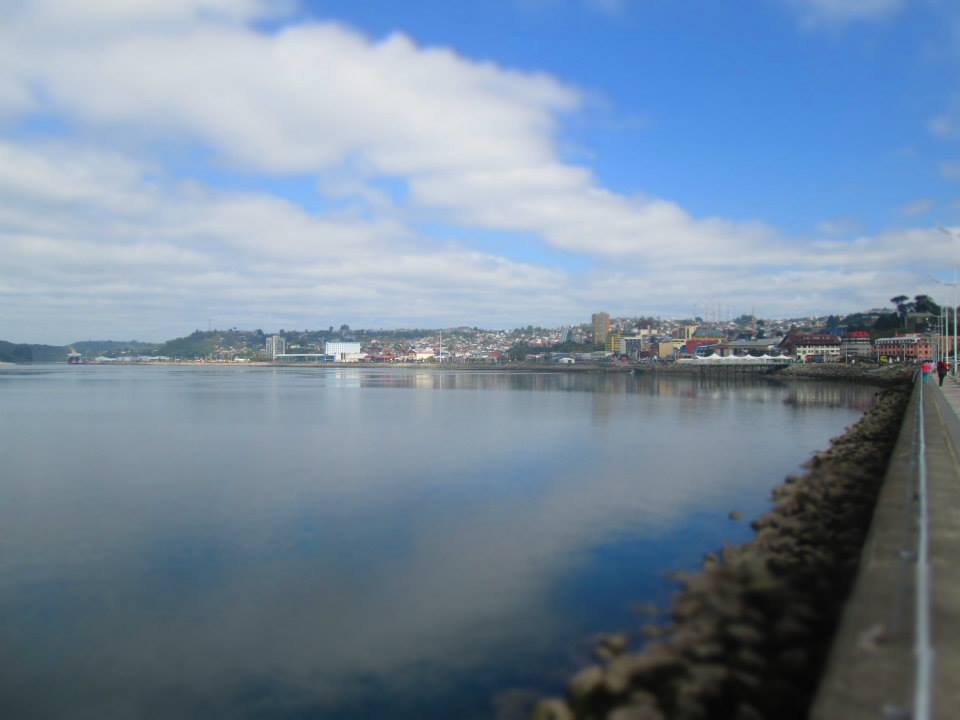
A port at the southern end of Chile's central valley, founded in 1853 during the German settlement of the south. It is the gateway to the Chiloé islands, the southern lakes and the fjords of Patagonia.
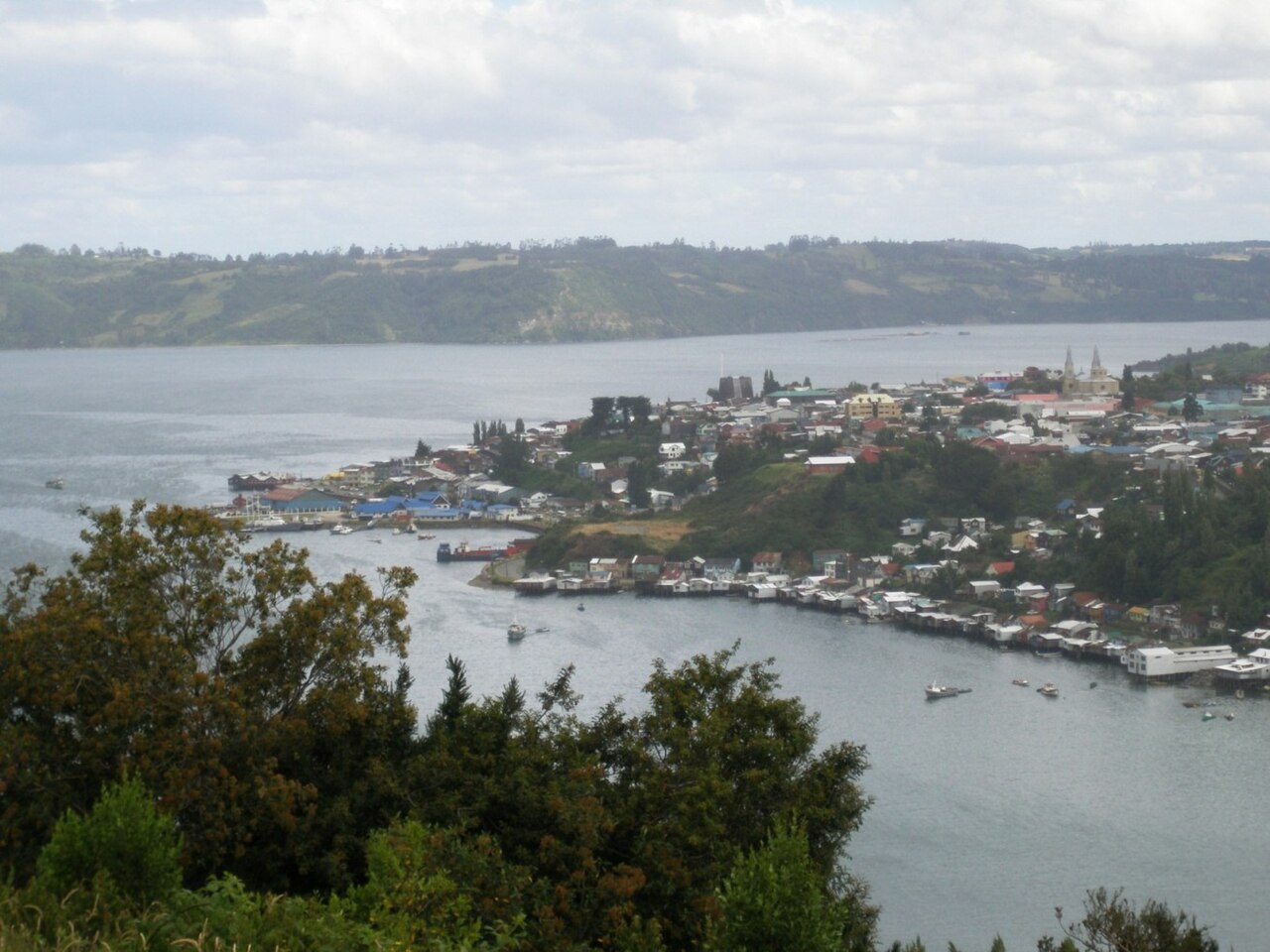
The capital of Chiloé Island, founded in 1567 and one of Chile's oldest cities. It stands on a quiet inlet of the sea, with wooden houses on stilts, the palafitos, along the water.
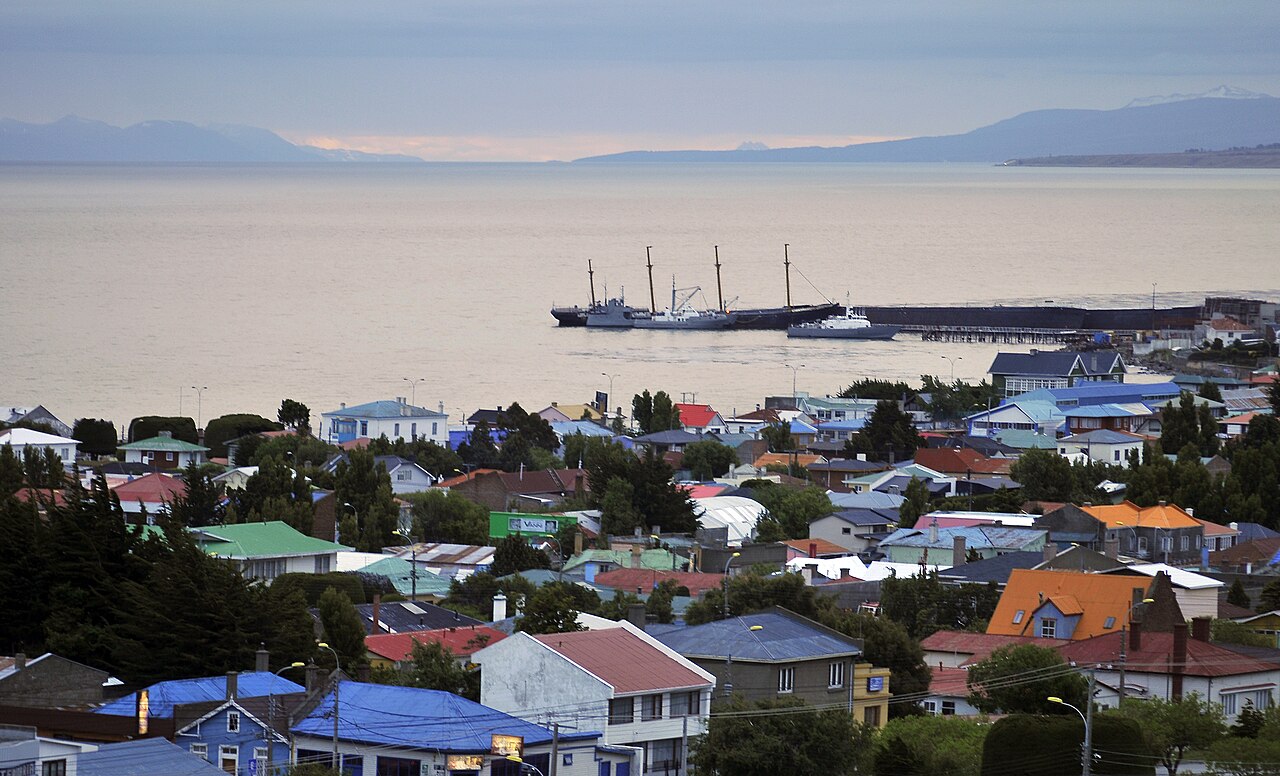
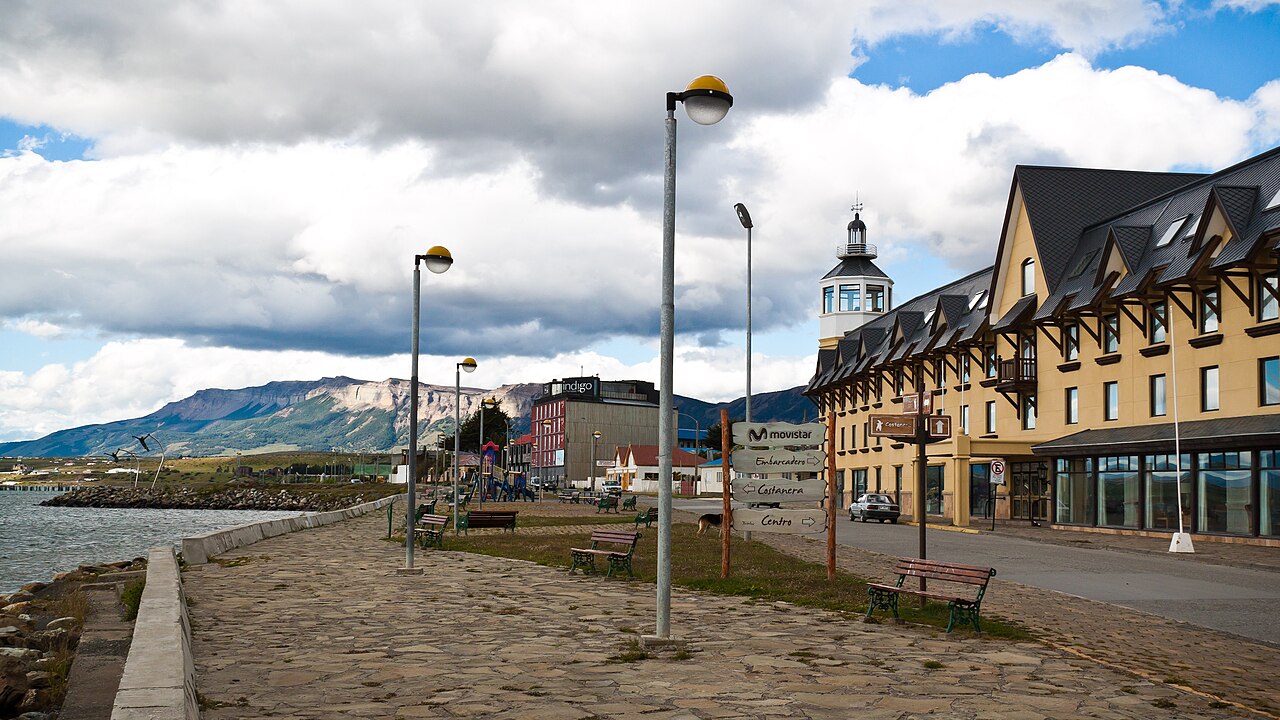
The largest city of Chilean Patagonia, on the Strait of Magellan. It began in 1848 as a small penal colony and grew with sheep farming in the late 19th century. Today it is a gateway to Antarctica.
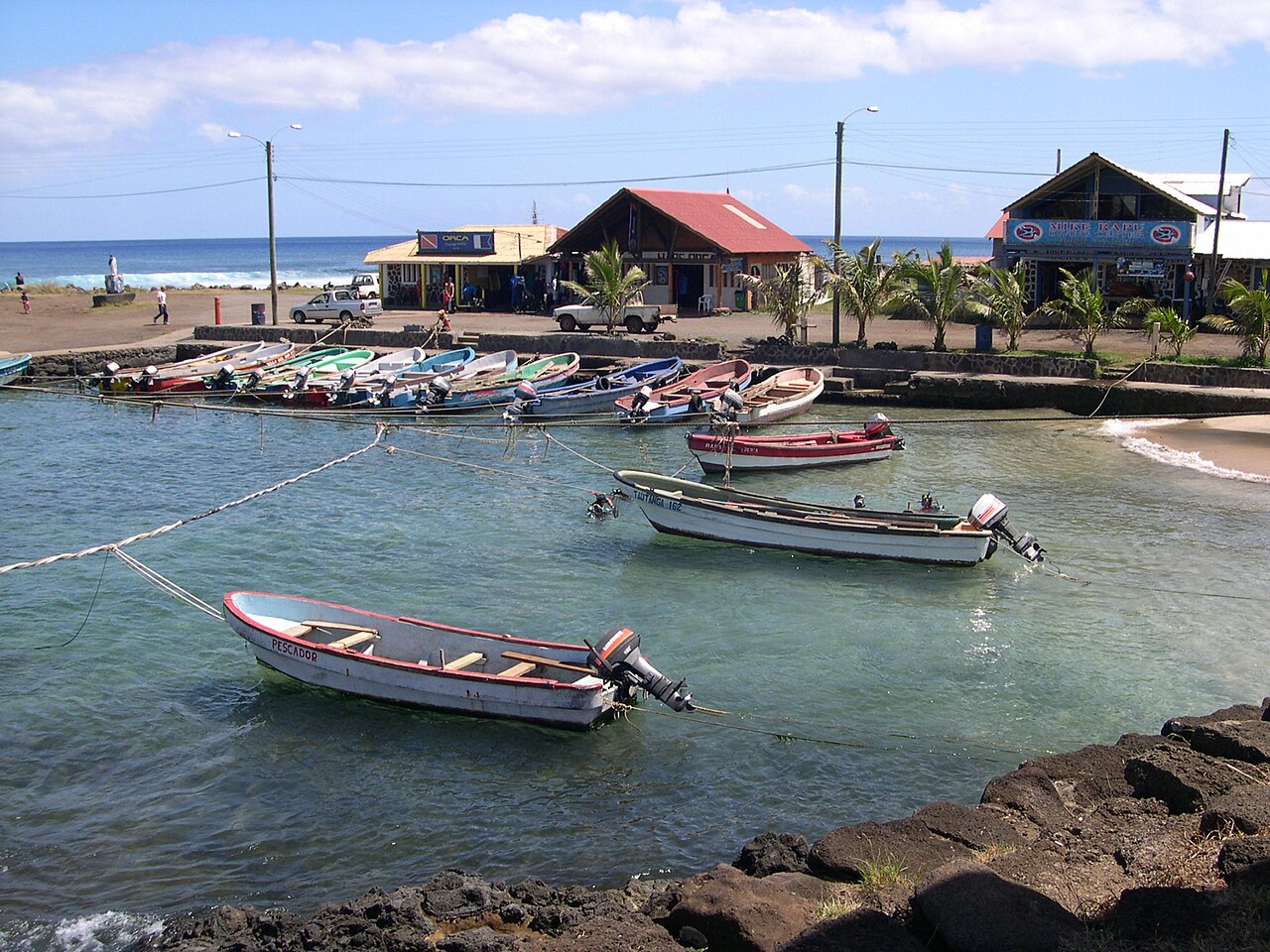
The only town on Easter Island, on the island's west coast between two extinct volcanoes. In 2017 the island had about 7,750 people, and nearly half of them identified as Rapa Nui.
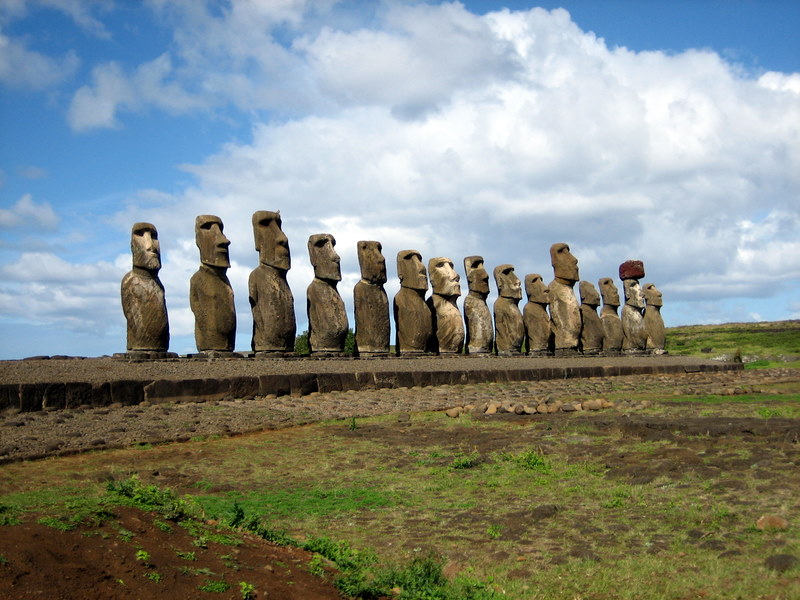
Easter Island has nearly 1,000 moai, giant stone figures with large heads carved by the Rapa Nui people between about 1250 and 1500 to honour their ancestors. They were carved at the Rano Raraku quarry, where nearly half of them still stand. The heaviest moai ever set up, about 86 tonnes, stands at Ahu Tongariki on the east coast. Rapa Nui National Park is a UNESCO World Heritage Site and is managed by the island's Rapa Nui community.
The old port district and its hills, where houses in every colour climb above the bay and old funicular lifts carry people up the slopes. It was listed for its improvised town plan and unusual architecture, from the time when Valparaíso competed to be the leading port on the Pacific coast of South America. It has been a UNESCO World Heritage Site since 2003.
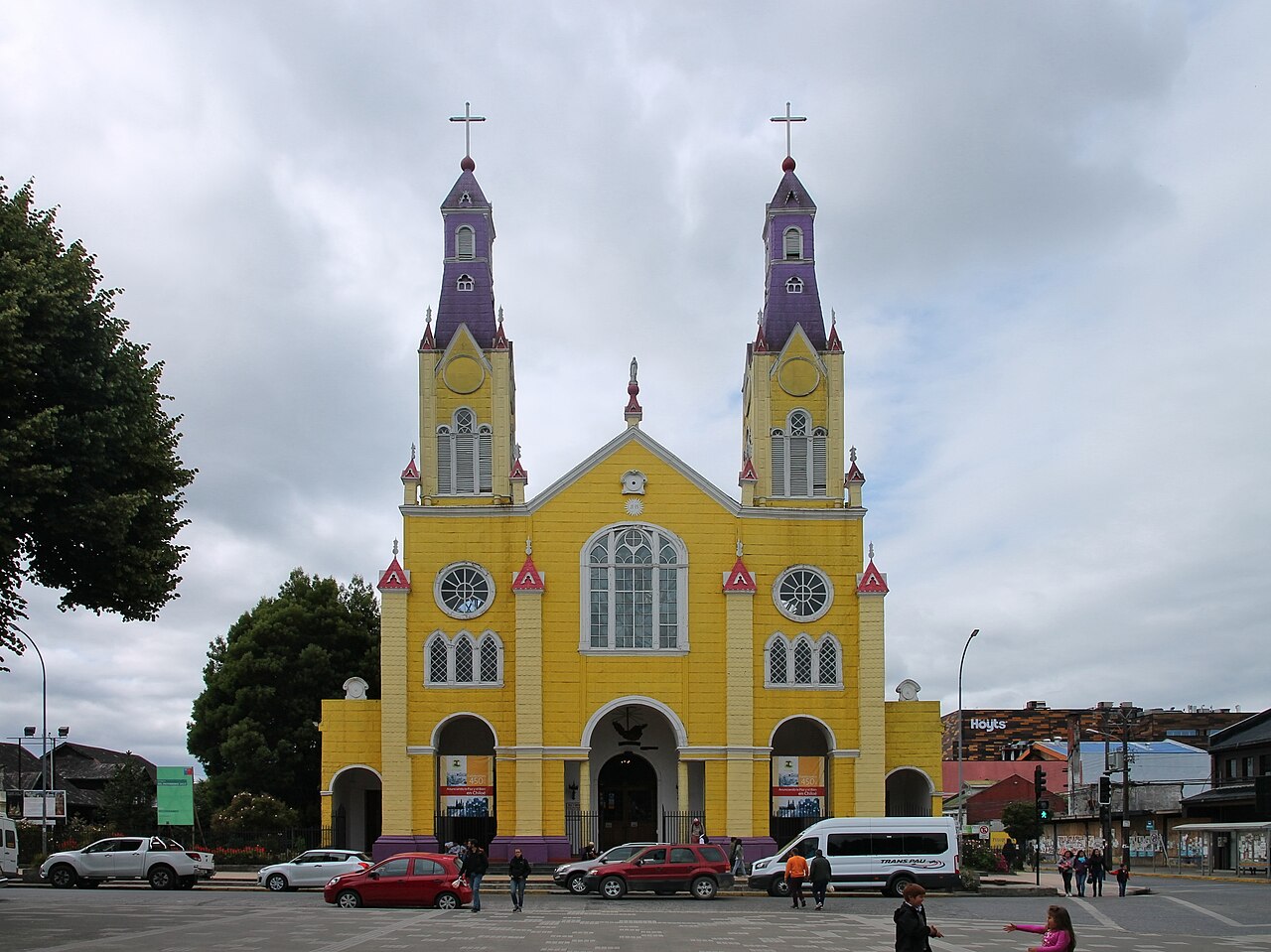
The main church of Castro, built of wood in 1912 on the town square, with towers 42 m high. It is one of the 16 Churches of Chiloé, wooden churches built with local timber and shingles, which became a UNESCO World Heritage Site in 2000.
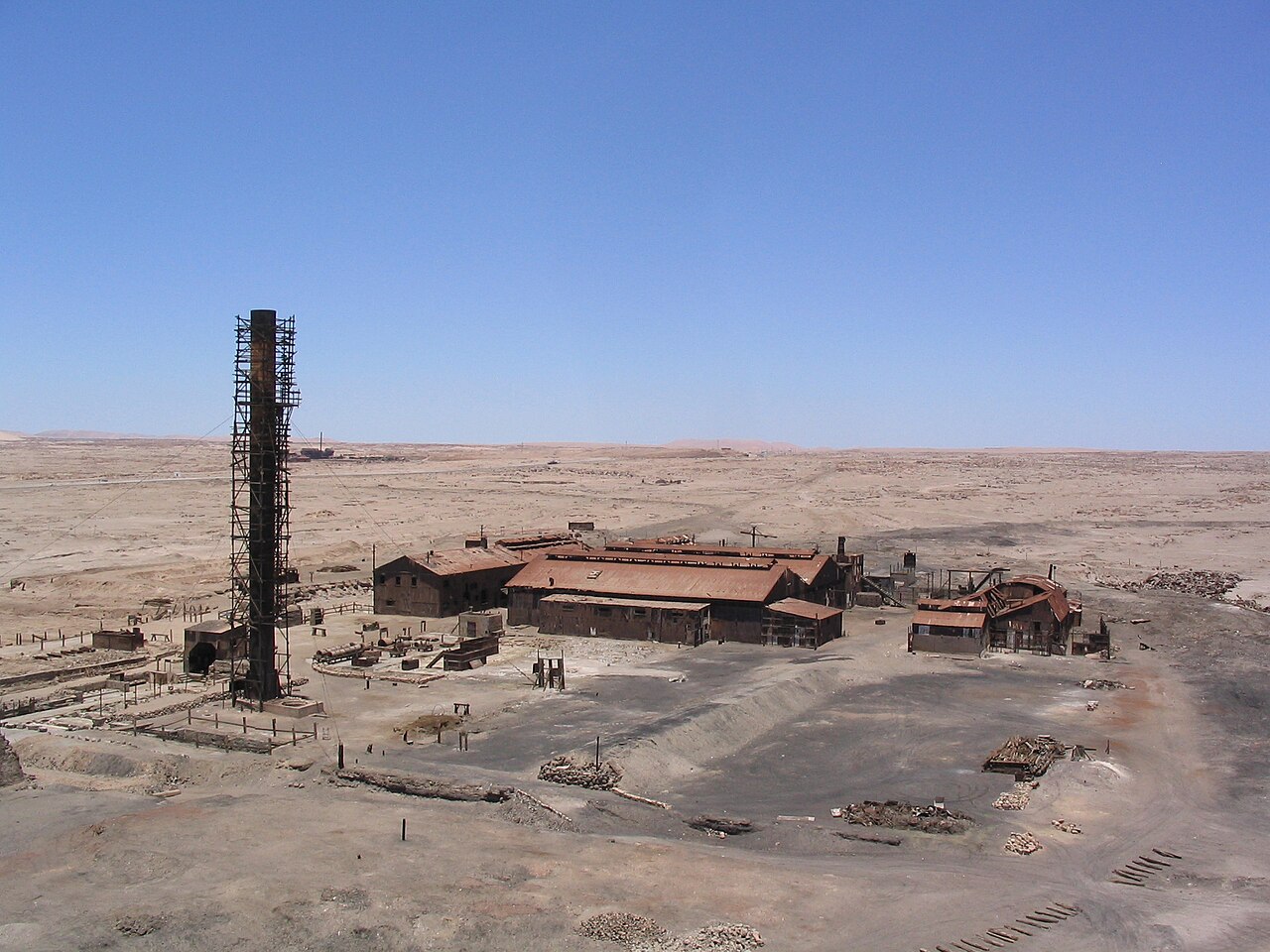
Two ghost towns in the desert about 48 km east of Iquique, where up to about 4,000 people once lived and worked producing saltpetre, used for fertiliser. They were abandoned in 1960. The theatre, church, company store and the processing plant still stand. The site has been on the UNESCO World Heritage List since 2005.
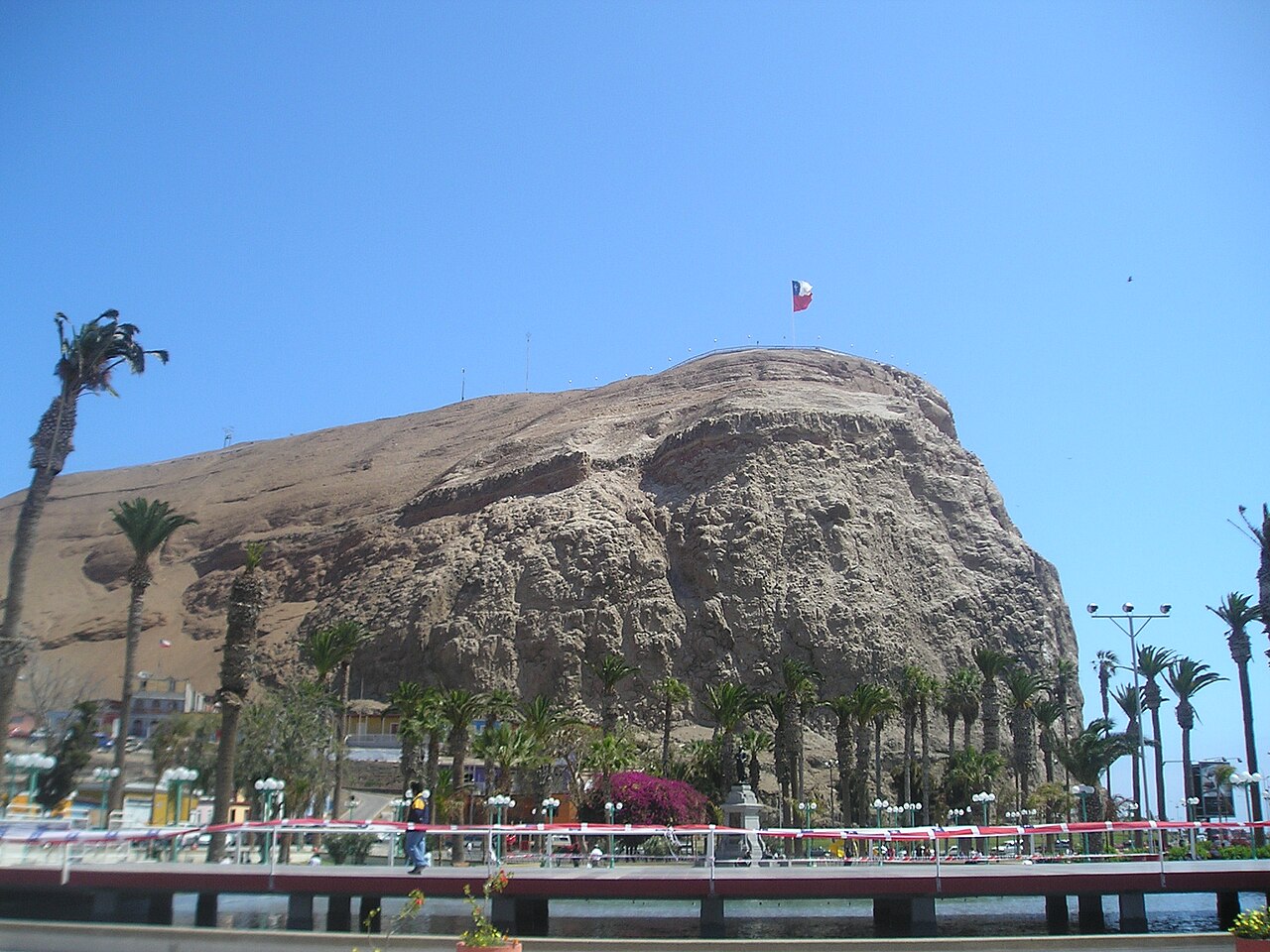
A steep headland 139 m high that rises straight out of the sea above Arica. It was the scene of a famous battle in 1880 during the War of the Pacific, and today a giant Chilean flag flies on top, next to a war museum and a viewpoint over the city.
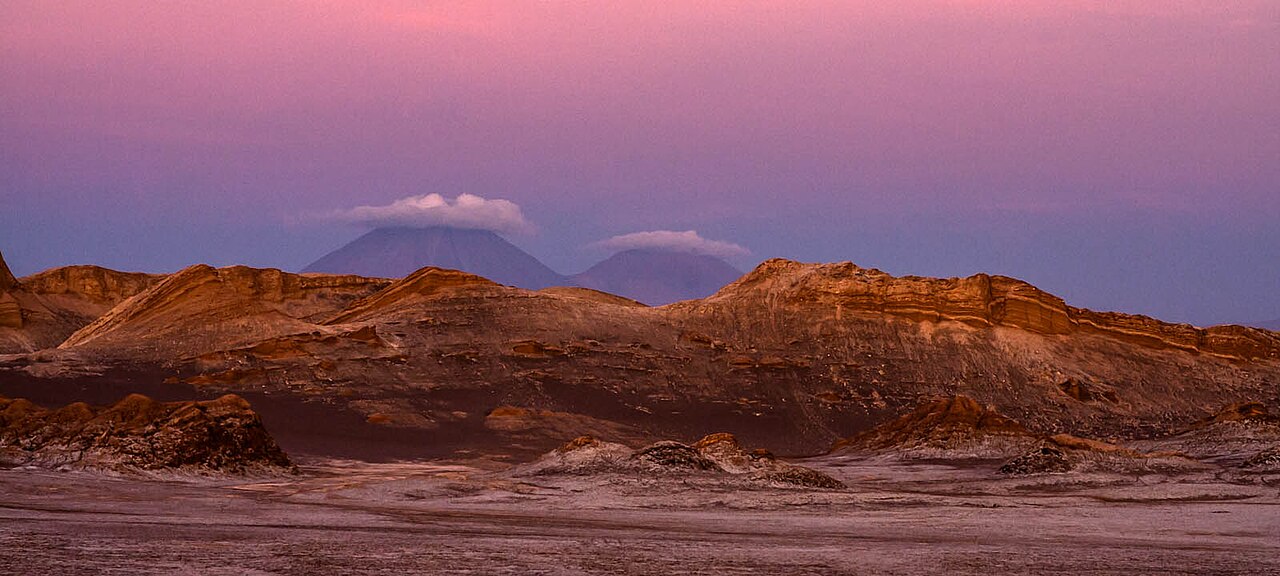
A valley of salt, sand and rock shaped by wind and water, about 13 km west of San Pedro de Atacama. It looks so much like the surface of the Moon that scientists tested a prototype Mars rover here. At sunset the rocks turn pink, then purple.
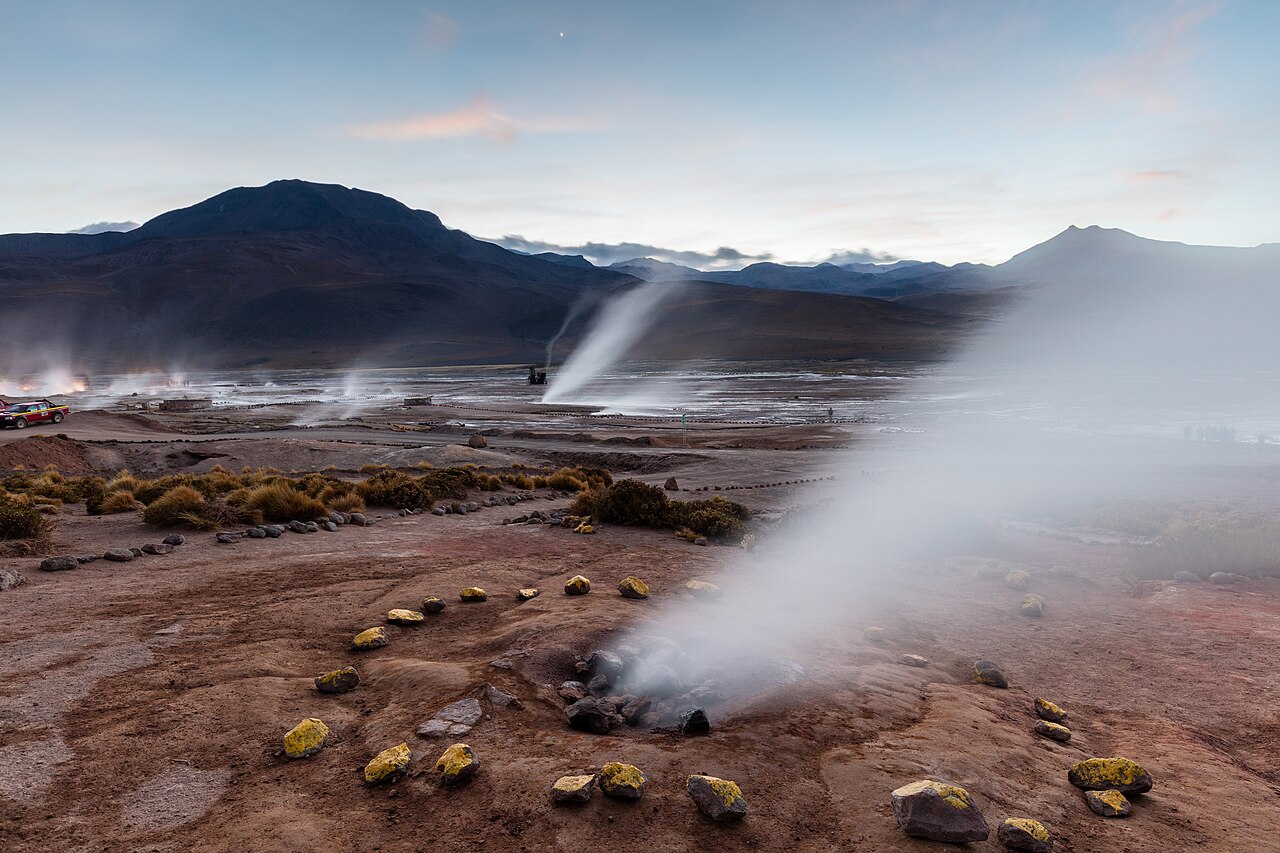
A field of geysers and hot springs at 4,320 m in the Andes. It is the largest geyser field in the Southern Hemisphere and the third largest in the world.
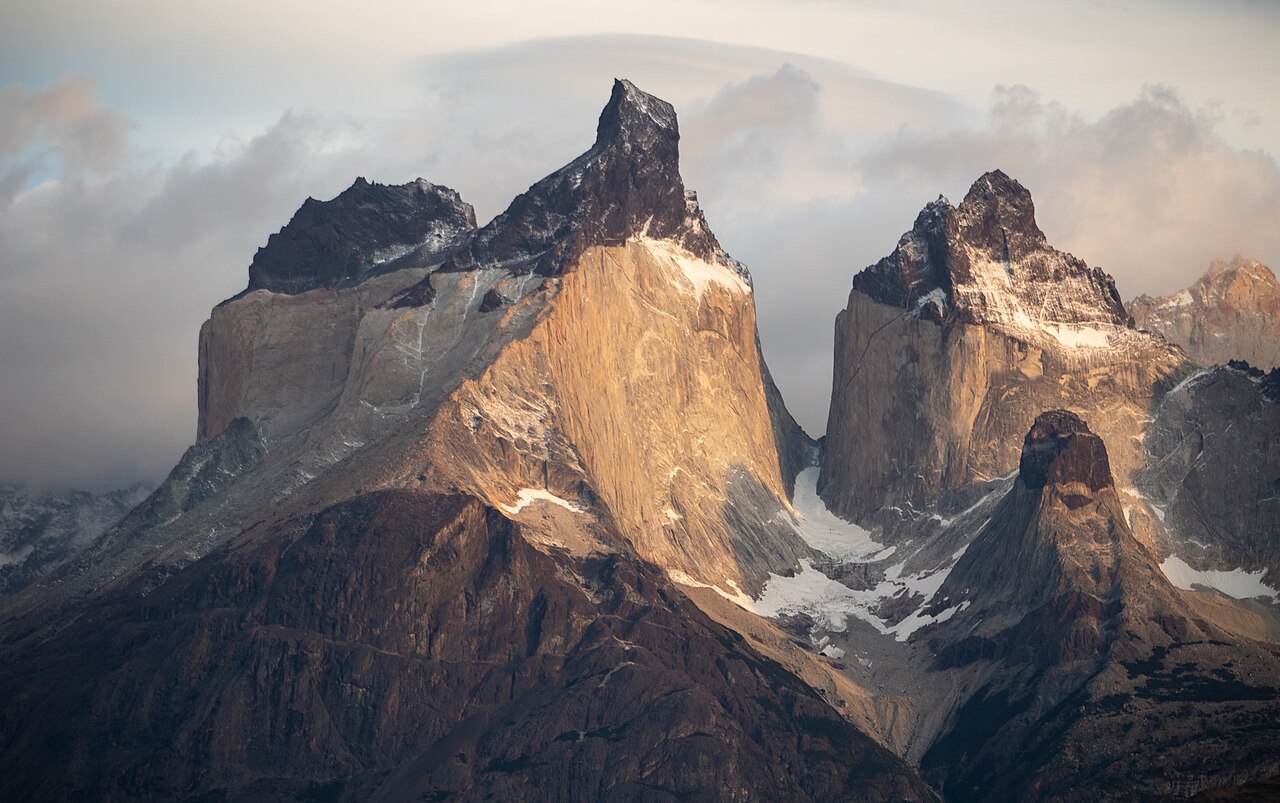
A national park of mountains, glaciers, lakes and rivers about 112 km north of Puerto Natales. Its centrepiece is three granite towers, the Torres, about 2,500 m high. Paine means 'blue' in the Tehuelche language. The park was created in 1959.
The seat of the president of Chile, in the centre of Santiago. It was designed by the Italian architect Joaquín Toesca and opened in 1805 as the royal mint, which gave it its name: La Moneda means 'the mint'. It was bombed during the coup of 11 September 1973 and later restored.
A hill that rises about 300 m above Santiago, crowned by a statue of the Virgin Mary 14 m tall. A funicular railway carries visitors to the top for a view across the city to the Andes.
Chile stretches more than 4,300 km from north to south, but on average it is only about 175 km wide, and at its narrowest just 64 km.
02
The Atacama is the driest non-polar desert in the world. Some weather stations there have never recorded rain.
03
The earthquake that struck Valdivia on 22 May 1960, of about magnitude 9.5, is the strongest ever recorded.
04
Chile has two winners of the Nobel Prize in Literature: Gabriela Mistral in 1945, the first Latin American author to win it, and Pablo Neruda in 1971.
05
Easter Island is about 3,500 km from the nearest point of mainland Chile, making it one of the most remote inhabited islands in the world.
06
The tallest moai ever set up on Easter Island, called Paro, was almost 10 m high and weighed about 82 tonnes.
07
Ojos del Salado, on the border with Argentina, is the highest volcano on Earth at about 6,893 m. A small crater lake near its summit is the highest lake of any kind in the world.
08
As of 2019, Chile was the world's largest producer of copper, mining more than a quarter of the world's supply.
09
The Scottish sailor Alexander Selkirk lived alone for more than four years from 1704 on one of the Juan Fernández Islands, and his story may have inspired Robinson Crusoe. The island is now called Robinson Crusoe Island.
10
The cueca, a dance in which partners circle each other waving handkerchiefs, was declared Chile's national dance in 1979.
11
Rodeo, in which a pair of riders in traditional huaso dress must stop a young bull, was declared Chile's national sport in 1962.
12
One theory says the name Chile comes from the Mapuche word chilli, which may mean 'where the land ends'.
13
The ALMA observatory in the Atacama links 66 radio telescopes on a plateau about 5,000 m high, where the air is thin and very dry.
14
Chile claims about 1,250,000 km² of Antarctica, an area larger than all of mainland Chile.
Chile is in the Southern Hemisphere, so summer is from December to March and winter from June to August. Chilean families take their holidays from December to early March. Ski resorts in the Andes open from about June to October.
Protect yourself from the sun
Ultraviolet light in Chile is very strong, especially at midday from September to March. Use sunscreen and wear a hat, sunglasses and long sleeves, above all in the desert and the mountains.
Take the altitude seriously
San Pedro de Atacama is at about 2,400 m, and the El Tatio geysers are at 4,320 m. Altitude sickness is a risk: go slowly, drink plenty of water and ask your doctor for advice before you travel, especially if you have heart or lung problems.
Know what to do in an earthquake
All of Chile lies on the Pacific Ring of Fire and is prone to earthquakes and tsunamis. Modern buildings follow earthquake codes, and hotels give safety instructions: read them when you arrive.
Keep the emergency numbers
The emergency numbers in Chile are 131 for an ambulance, 132 for the fire brigade and 133 for the police (Carabineros). Do not expect the operator to speak English.
Watch your bag in busy places
Pickpockets work in central Santiago, Valparaíso, bus stations, airports and viewpoints. At Santiago airport, take a taxi only from the official booths inside the terminal.
Stay away from protests
Demonstrations in Santiago and other cities can turn violent, even when they start peacefully. Keep clear of them, especially around 11 September, the anniversary of the 1973 coup. Under Chilean law, foreigners who take part in or promote violent acts can be deported.
Tip about 10 percent
In restaurants a tip of about 10 percent is expected when the service is good. Sometimes it is already added to the bill, so check before you pay. At supermarkets it is usual to give a few hundred pesos to the person who packs your bags.
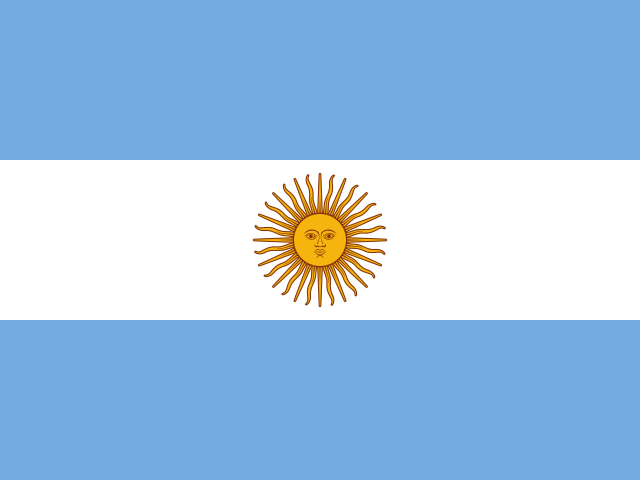 Argentina
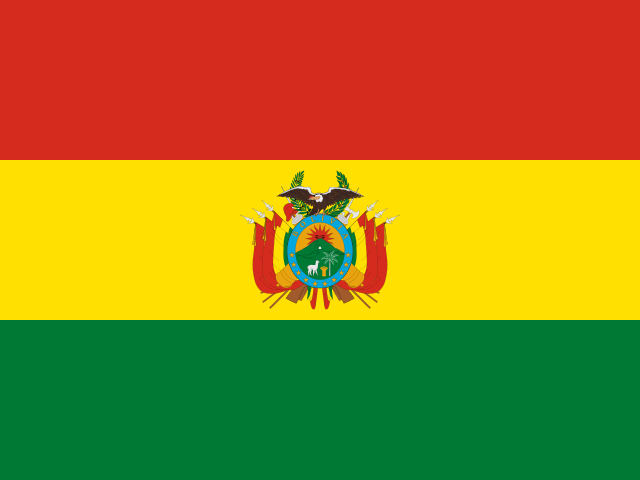 Bolivia
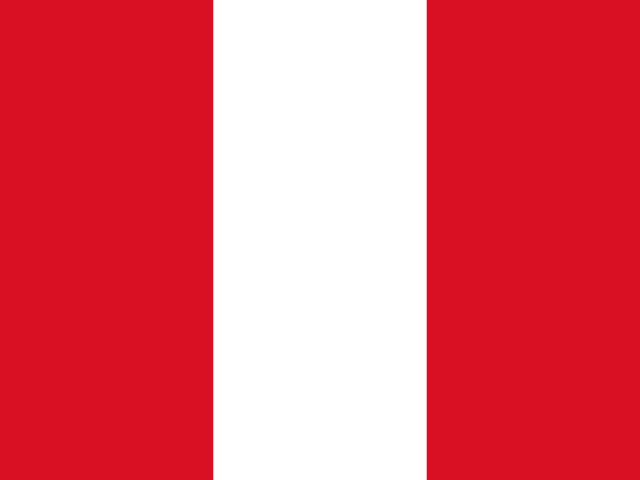 Peru
Peru