A free large-print PDF. Choose what goes in: facts, map, history, dishes and recipes, phrases, fun facts, a quiz with or without answers. Made for clubs, care homes, libraries and family afternoons.
Spain covers most of the Iberian Peninsula in the southwest of Europe, between the Atlantic Ocean and the Mediterranean Sea. Much of the interior is a high, dry plateau called the Meseta, with Madrid right in the middle. The country also includes the Balearic Islands in the Mediterranean, the Canary Islands off the coast of Africa, and two small cities in North Africa, Ceuta and Melilla.
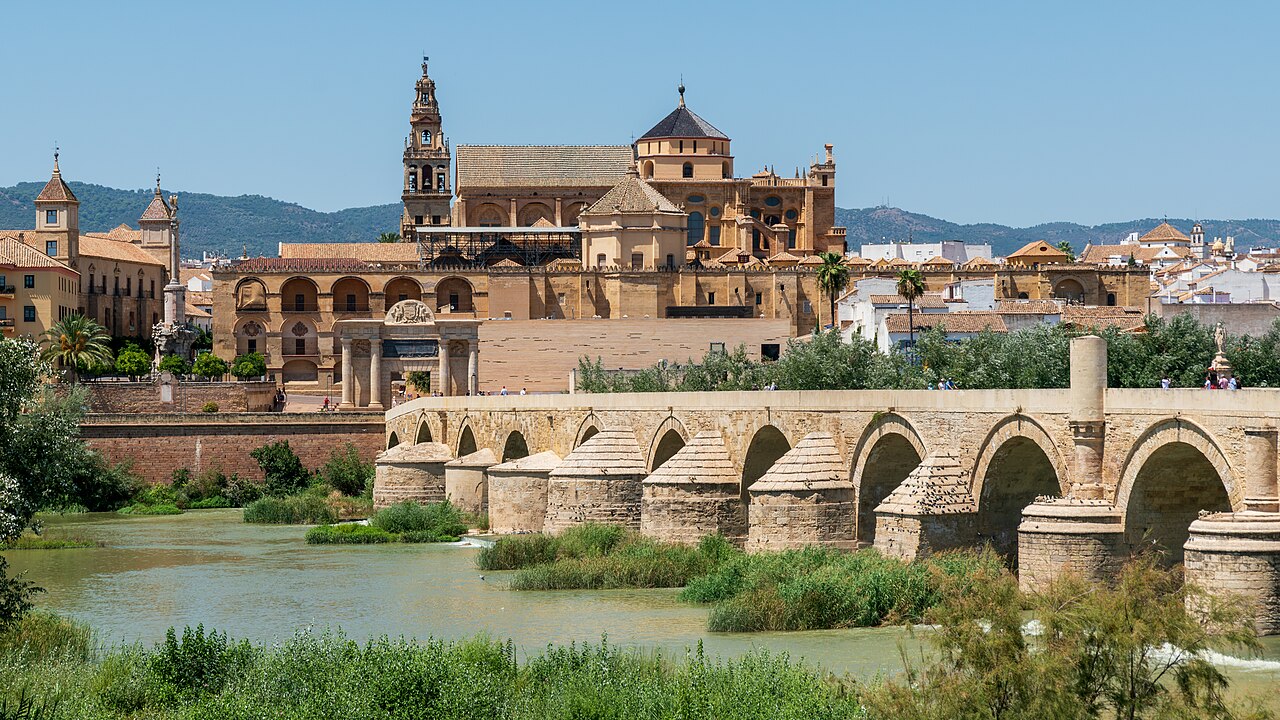
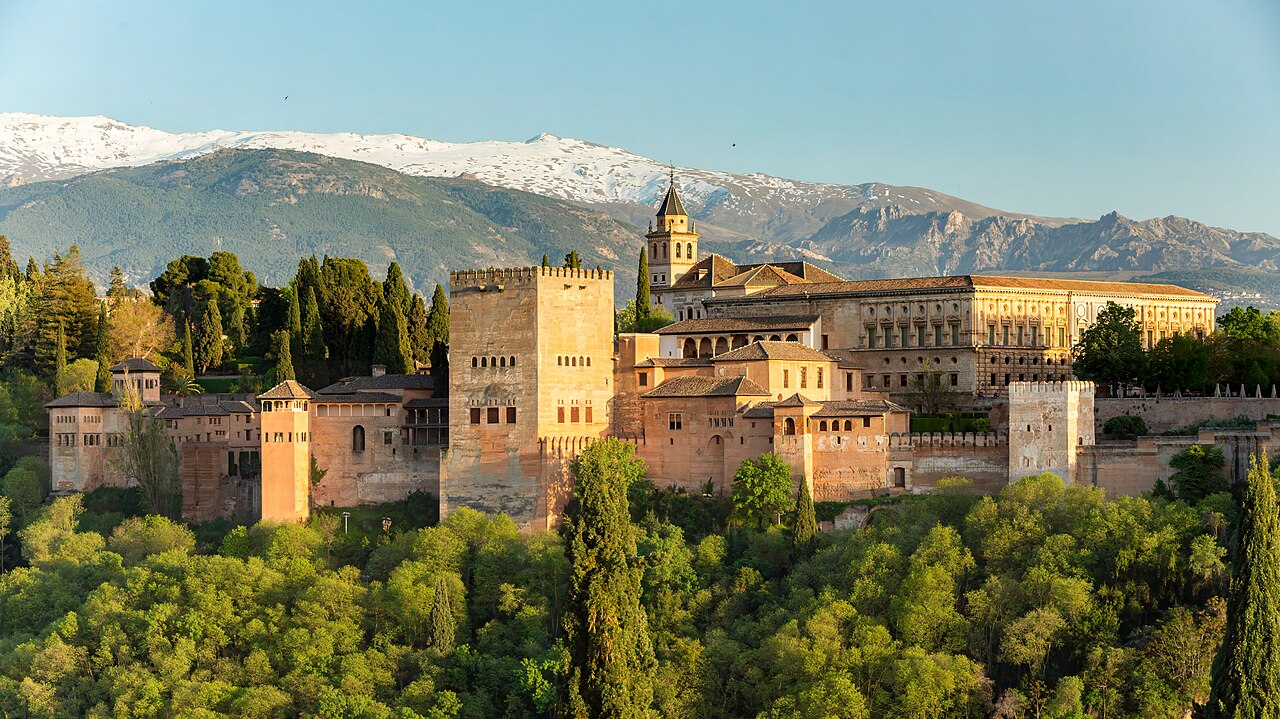
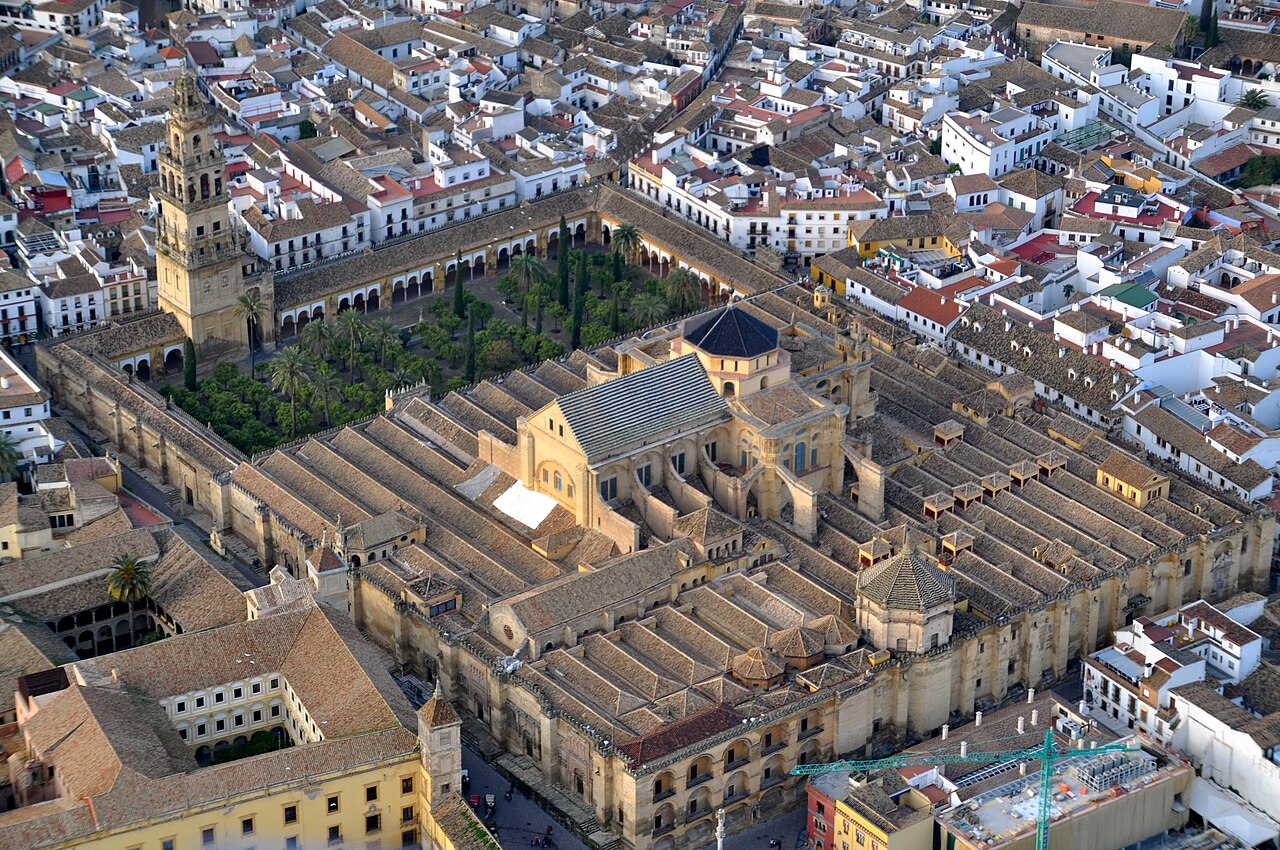
For almost 800 years, from 711 to 1492, Muslim rulers held part of Spain: at first nearly all of it, and in the end only the kingdom of Granada. They left behind masterpieces such as the Alhambra in Granada and the great mosque of Córdoba. In 1492 Spain became the base for Columbus's voyages, and within a century it ruled an empire that stretched across the Americas and into Asia.
Today Spain is a constitutional monarchy of about 50 million people. It is one of the world's favourite holiday destinations, loved for its beaches, its art, its festivals and a relaxed way of life built around food, family and time spent outdoors.
CapitalMadrid
PopulationAbout 50 million (49.8 million in mid 2026)
Official languageSpanish (Castilian), with Catalan, Galician, Basque and others co-official in their regions
CurrencyEuro (€)
AreaAbout 506,000 km²
GovernmentParliamentary constitutional monarchy (constitution of 1978)
Highest mountainTeide, 3,715 m, on Tenerife in the Canary Islands (Mulhacén, 3,479 m, is the highest on the mainland)
Longest riverThe Tagus (Tajo), about 1,007 km, which it shares with Portugal
NeighboursPortugal, France, Andorra, Morocco (at Ceuta and Melilla) and Gibraltar (British)
Romans, Visigoths, Moors and Christian kings all shaped Spain. From a patchwork of kingdoms it became a world empire, lived through a civil war and a long dictatorship, and then built one of Europe's young democracies.
218 BC
Romans land in Hispania
During their war with Carthage, Roman troops landed at Empúries on the Catalan coast. Over the next two centuries Rome conquered the whole peninsula, which it called Hispania, and left behind roads, bridges, aqueducts and the Latin language.
AD 711
Muslim armies cross into Iberia
A Muslim army led by Tariq ibn Ziyad crossed from North Africa and defeated the Visigothic kingdom. Within a few years most of the peninsula was under Muslim rule, known as al-Andalus.
1469
The Catholic Monarchs marry
Isabella of Castile and Ferdinand of Aragon married in secret. Their union joined Spain's two largest Christian kingdoms and laid the foundations of the Spanish state.
1492
Granada falls and Columbus sets sail
In January Isabella and Ferdinand captured Granada, the last Muslim kingdom in Spain. That summer they sponsored Christopher Columbus, who reached the Caribbean in October. In the same year Spain's Jews were ordered to convert or leave.
1522
Elcano completes the first voyage around the world
Ferdinand Magellan's expedition left Spain in 1519. Magellan was killed in the Philippines, and Juan Sebastián Elcano, a Basque sailor, brought the ship Victoria home in 1522, completing the first voyage around the world.
1561
Madrid becomes the capital
King Philip II moved his royal court to Madrid, then a modest town in the centre of the country. Apart from a few years when the court was in Valladolid (1601 to 1606), Madrid has been the capital ever since.
1588
The Spanish Armada sails against England
Philip II sent a great fleet to invade England. It was beaten off by the English navy and then wrecked by storms around Scotland and Ireland.
1605
Don Quixote is published
Miguel de Cervantes published the first part of Don Quixote, the story of a man who reads so many tales of knights that he sets out to become one. It is often called the first modern novel.
1808
The Peninsular War begins
Napoleon's troops occupied Spain and put his brother Joseph on the throne. On 2 May 1808 the people of Madrid rose up, a scene later painted by Goya. The war ended with the French driven out in 1814.
1898
Spain loses its last major colonies
After a short war with the United States, Spain lost Cuba, Puerto Rico, the Philippines and Guam. The defeat, called 'the Disaster' in Spain, ended its overseas empire in the Americas and Asia.
1936
The Civil War begins
An army uprising against the elected Republic started a bitter civil war. It ended in 1939 with the victory of General Francisco Franco, who then ruled Spain as a dictator.
1975
Franco dies
General Franco died on 20 November 1975. Two days later Juan Carlos I was proclaimed king, and he helped lead the country's peaceful move to democracy.
1978
Spaniards approve a new constitution
On 6 December 1978 Spaniards voted in a referendum for a democratic constitution that is still in force. 6 December is now a national holiday, Constitution Day.
1986
Spain joins the European Community
On 1 January 1986 Spain and Portugal joined the European Economic Community, which later became the European Union.
1992
Barcelona hosts the Olympic Games
A big year for Spain: Barcelona held the Summer Olympics, Seville hosted a world fair, Expo '92, and the first high-speed AVE train line opened between Madrid and Seville.
2002
The euro replaces the peseta
Euro notes and coins replaced the Spanish peseta, which had been the national currency since 1868.
Spanish food is built on olive oil, garlic, fresh vegetables, fish and cured pork, and every region has its own specialities. Lunch, eaten around 2 pm, is the main meal of the day: a primer plato (first course, often vegetables, soup or rice), a segundo plato (meat or fish) and a postre (dessert). Dinner comes late, often after 9 pm, and between meals people meet in bars for tapas, small plates shared with a drink.
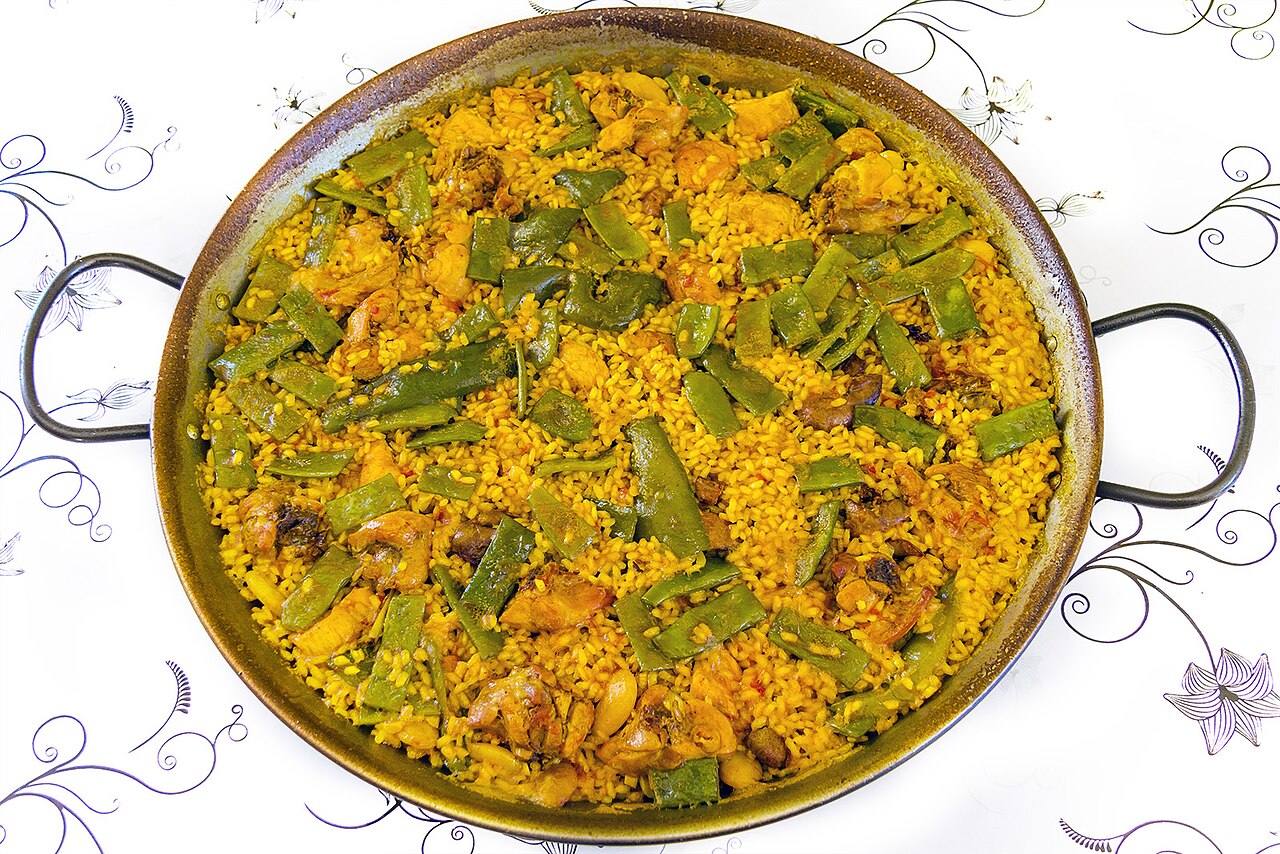
Rice cooked in a wide, shallow pan with olive oil, chicken, rabbit, green beans, large white beans and saffron. The original Valencian recipe has no seafood and no chorizo.
Paella is the Valencian word for frying pan: the dish is named after the pan it is cooked in. The slightly crispy rice stuck to the bottom, called socarrat, is the best part for many Valencians.
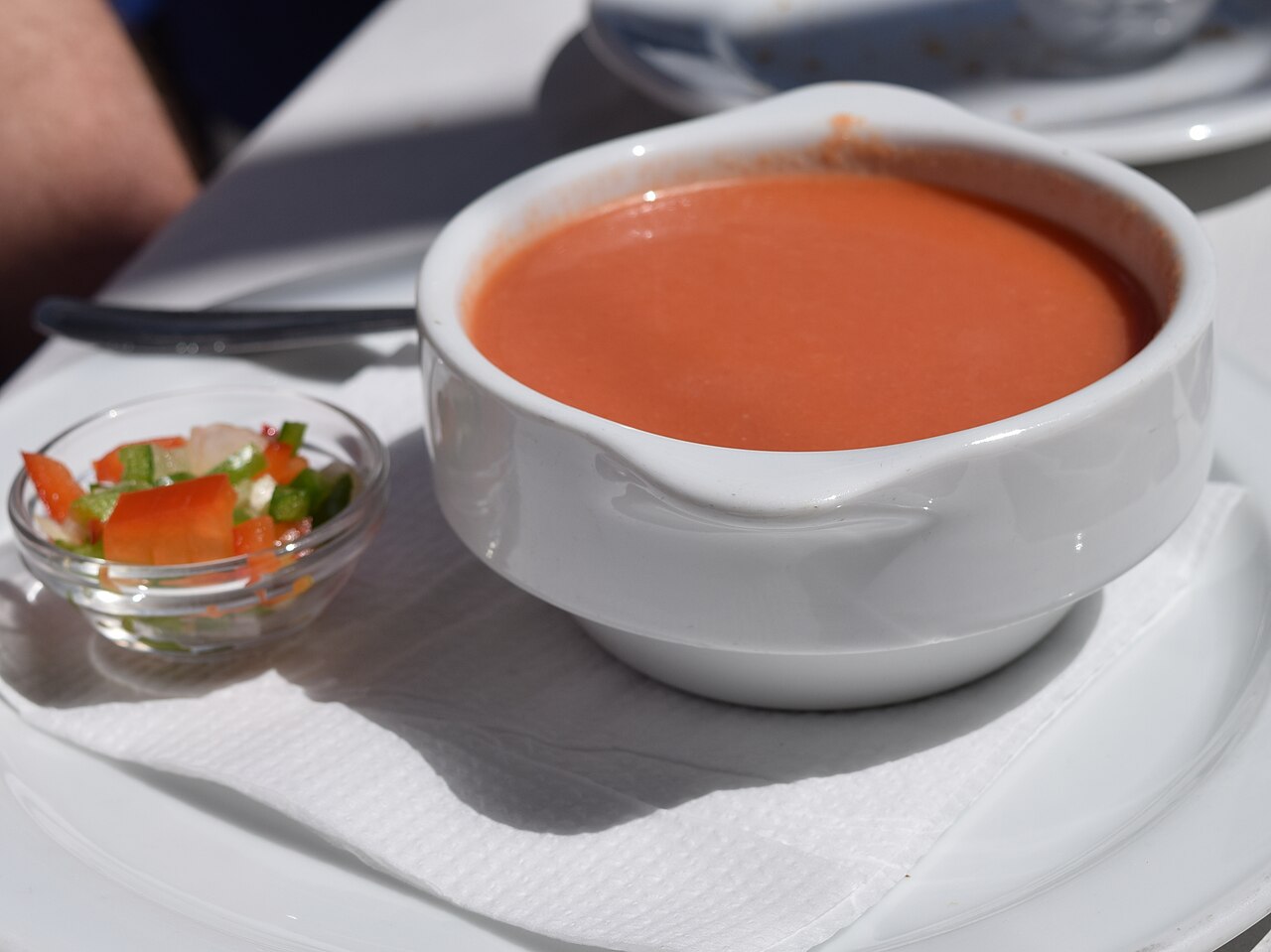
A cold, refreshing soup of raw tomatoes, pepper, cucumber, garlic, olive oil and vinegar, blended until smooth. In summer it is often drunk from a glass.
See the recipe
Serves 4
2 h 20 min
Ingredients
1 kg very ripe tomatoes, roughly chopped
1 green pepper, seeds removed, chopped
Half a cucumber, peeled and chopped
1 small garlic clove
50 g stale white bread, soaked in water and squeezed (optional)
80 ml extra virgin olive oil
2 tablespoons sherry vinegar
Salt
Cold water to thin, if needed
Method
Put the tomatoes, pepper, cucumber, garlic and bread in a blender with a good pinch of salt.
Blend until completely smooth.
With the blender running, pour in the olive oil and vinegar so the soup turns creamy and light orange.
Taste and add more salt or vinegar. Add a little cold water if it is too thick.
Pass it through a sieve for a finer texture, then chill for at least 2 hours. Serve very cold, topped with small cubes of cucumber, pepper and bread.
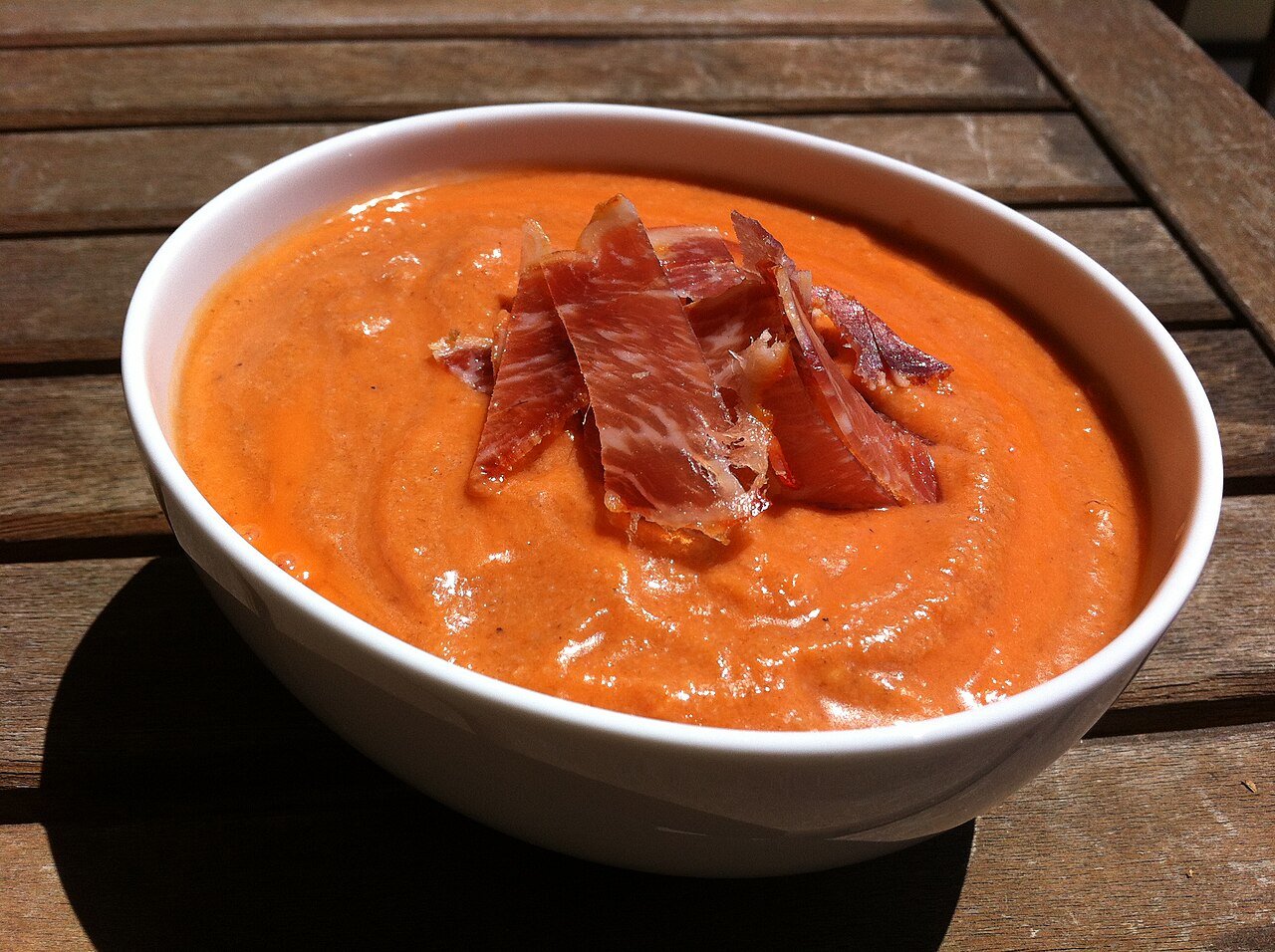
A thicker, creamier cousin of gazpacho, made mainly of tomatoes, bread, garlic and olive oil, served cold and topped with chopped hard-boiled egg and cured ham.
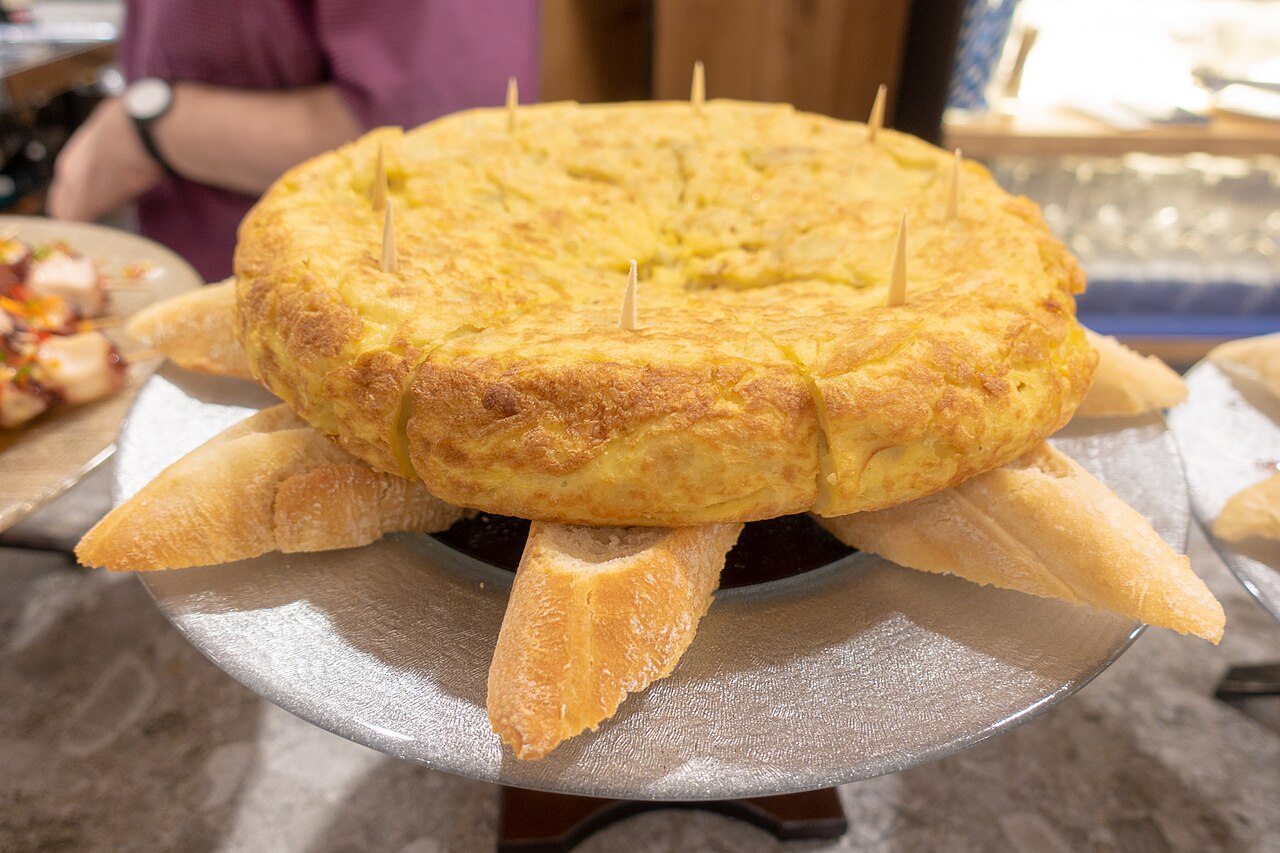
A thick, round omelette of eggs and potatoes slowly fried in olive oil, often with onion. It is eaten warm or cold, as a tapa, a sandwich filling or a light supper.
Whether a tortilla should contain onion is one of Spain's favourite food arguments.
See the recipe
Serves 4
50 min
Ingredients
600 g waxy potatoes, peeled and thinly sliced
1 medium onion, thinly sliced (optional)
5 large eggs (many Spaniards leave the centre soft: for pregnant women, young children, older people or anyone with a weak immune system, cook it until fully set or use pasteurised eggs)
About 250 ml olive oil for frying
Salt
Method
Heat the oil in a frying pan about 24 cm wide. Add the potatoes and onion with a pinch of salt and cook gently for about 20 minutes, until soft but not brown.
Lift the potatoes and onion out with a slotted spoon and let them drain. Keep the oil for another use, leaving about a tablespoon in the pan.
Beat the eggs in a large bowl with a little salt, stir in the warm potatoes and leave for 5 minutes.
Pour the mixture into the hot pan and cook over medium-low heat for 4 to 5 minutes, shaking the pan so it does not stick.
Cover the pan with a large plate, turn it over in one quick movement, then slide the tortilla back into the pan to cook the other side for 3 to 4 minutes, or longer if you want it fully set.
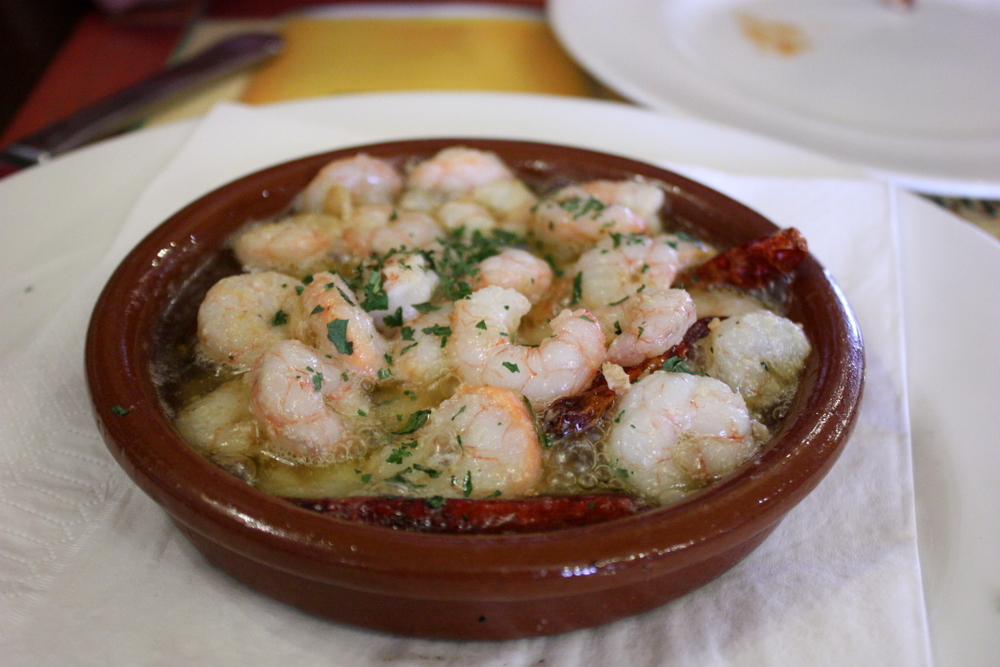
Prawns cooked in plenty of olive oil with sliced garlic and a little dried chilli, served sizzling in a small clay dish with bread to mop up the oil.
See the recipe
Serves 4
15 min
Ingredients
400 g raw prawns, peeled
6 garlic cloves, thinly sliced
1 small dried red chilli, broken in pieces (or a pinch of chilli flakes)
150 ml olive oil
A handful of chopped parsley
Salt
Bread to serve
Method
Pat the prawns dry and sprinkle them with a little salt.
Warm the olive oil in a small clay dish or frying pan over medium heat. Add the garlic and chilli and cook gently until the garlic just starts to turn golden.
Turn up the heat, add the prawns and cook for 2 to 3 minutes, turning once, until they are pink all the way through.
Sprinkle with parsley and serve at once, still sizzling, with bread.
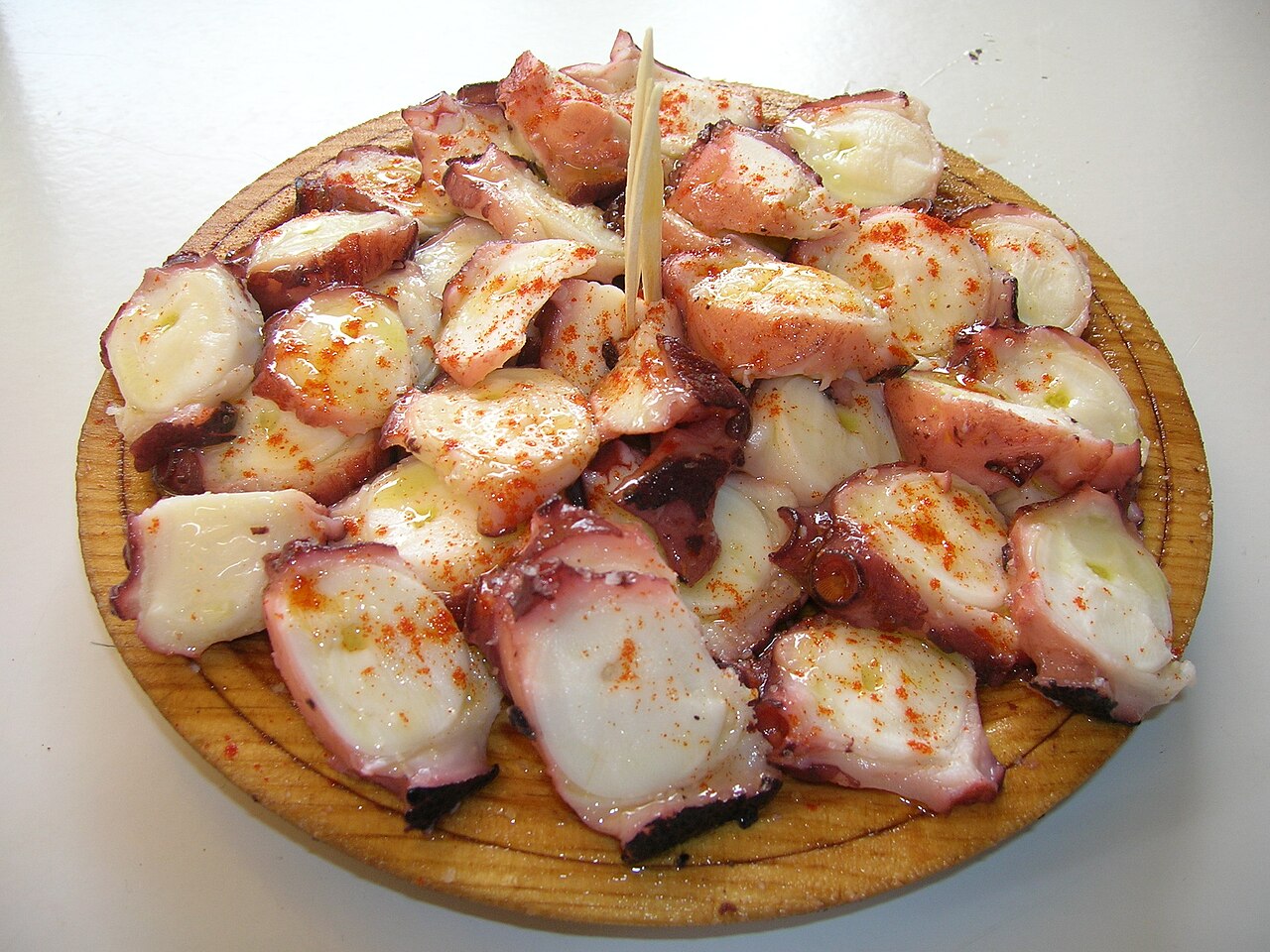
Tender boiled octopus cut into slices, sprinkled with coarse salt and paprika and drizzled with olive oil, traditionally served on a round wooden plate.
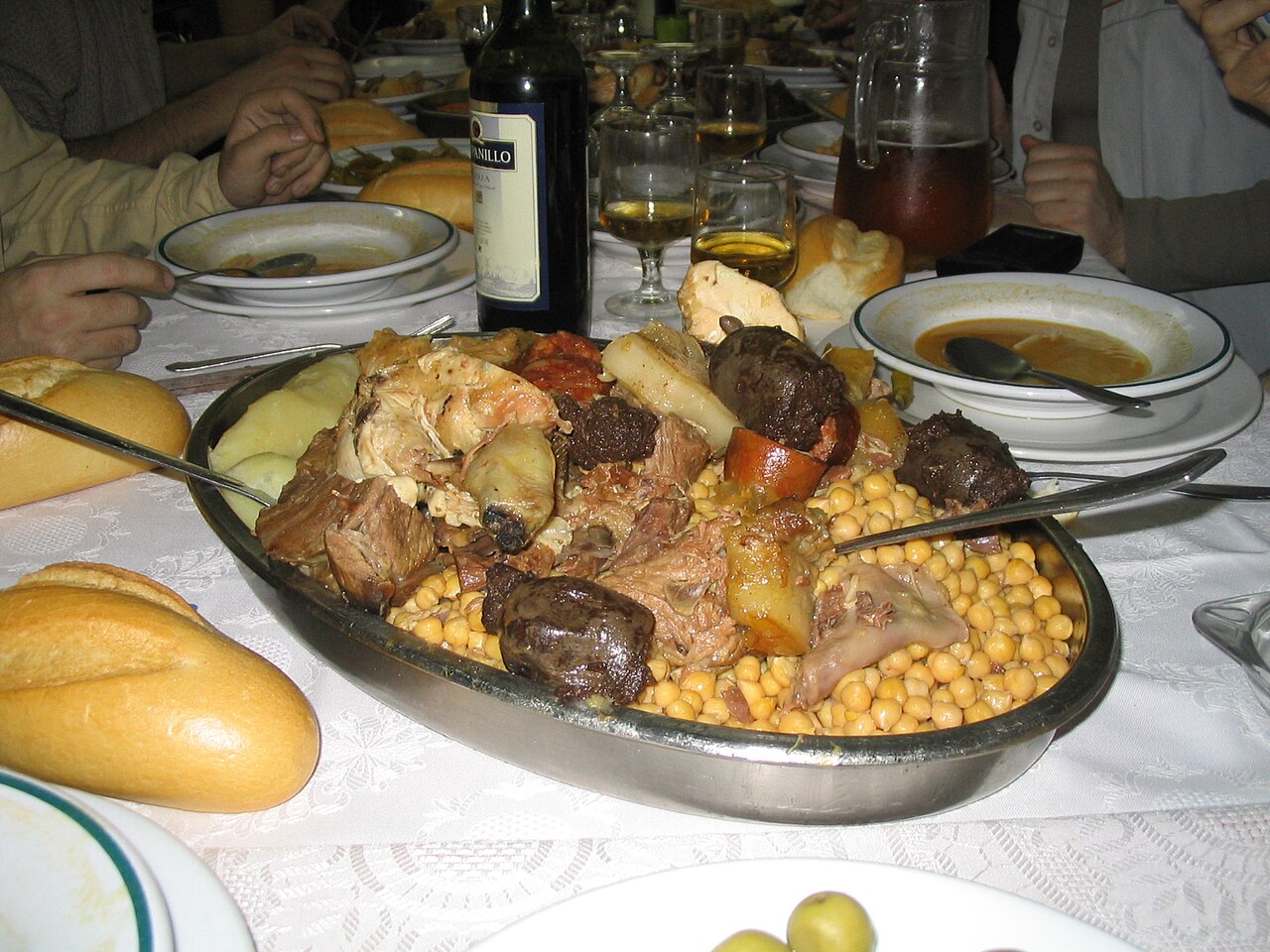
A hearty stew of chickpeas, vegetables and several kinds of meat. It is traditionally served in stages: first the broth as a noodle soup, then the chickpeas and vegetables, then the meats.
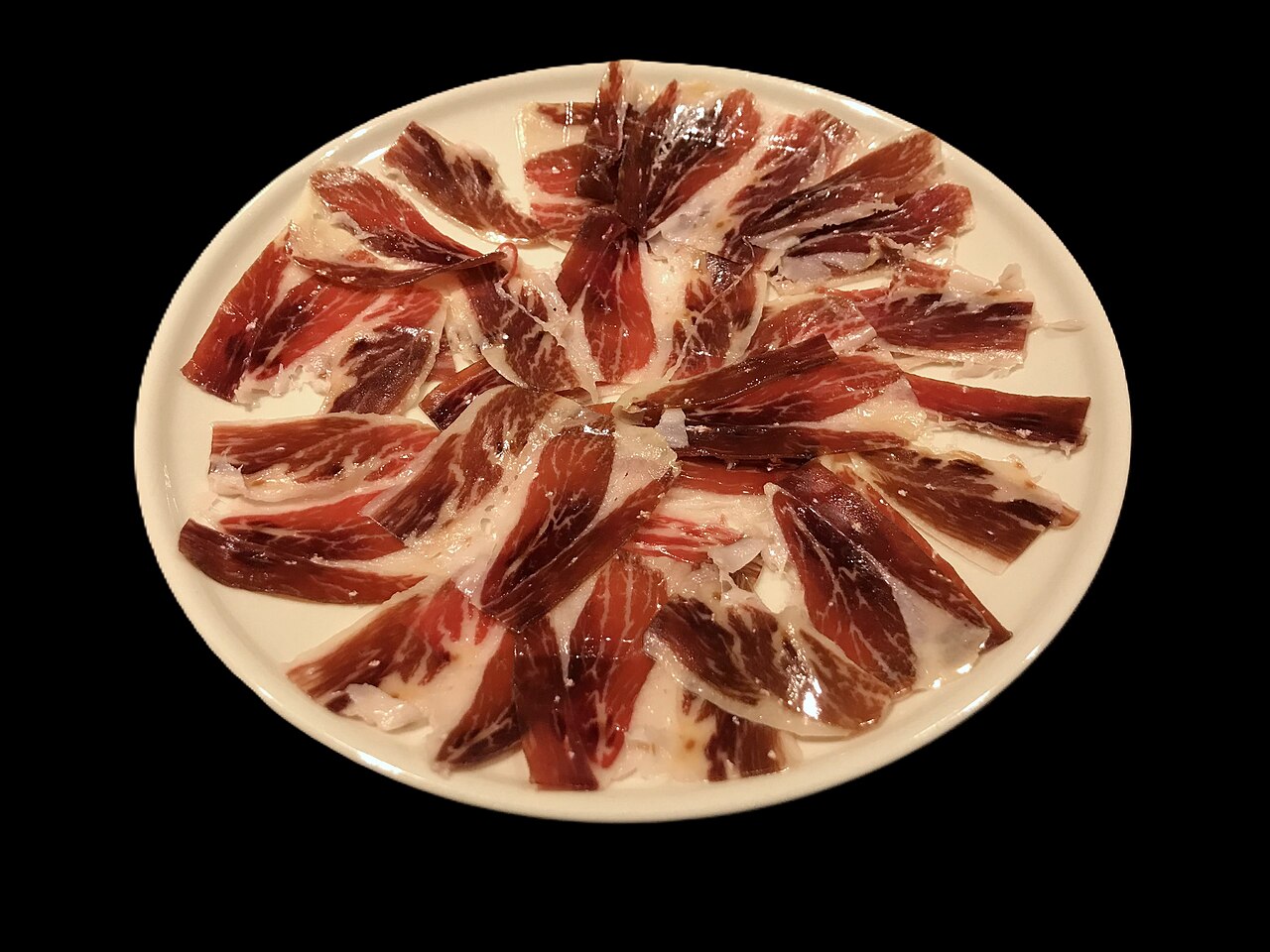
Cured ham from the black Iberian pig, sliced paper-thin by hand. The most prized kind, jamón ibérico de bellota, comes from pigs that feed on acorns in open oak woodland.
A whole leg is held in a stand called a jamonero while it is carved, and good ham carvers are respected professionals.
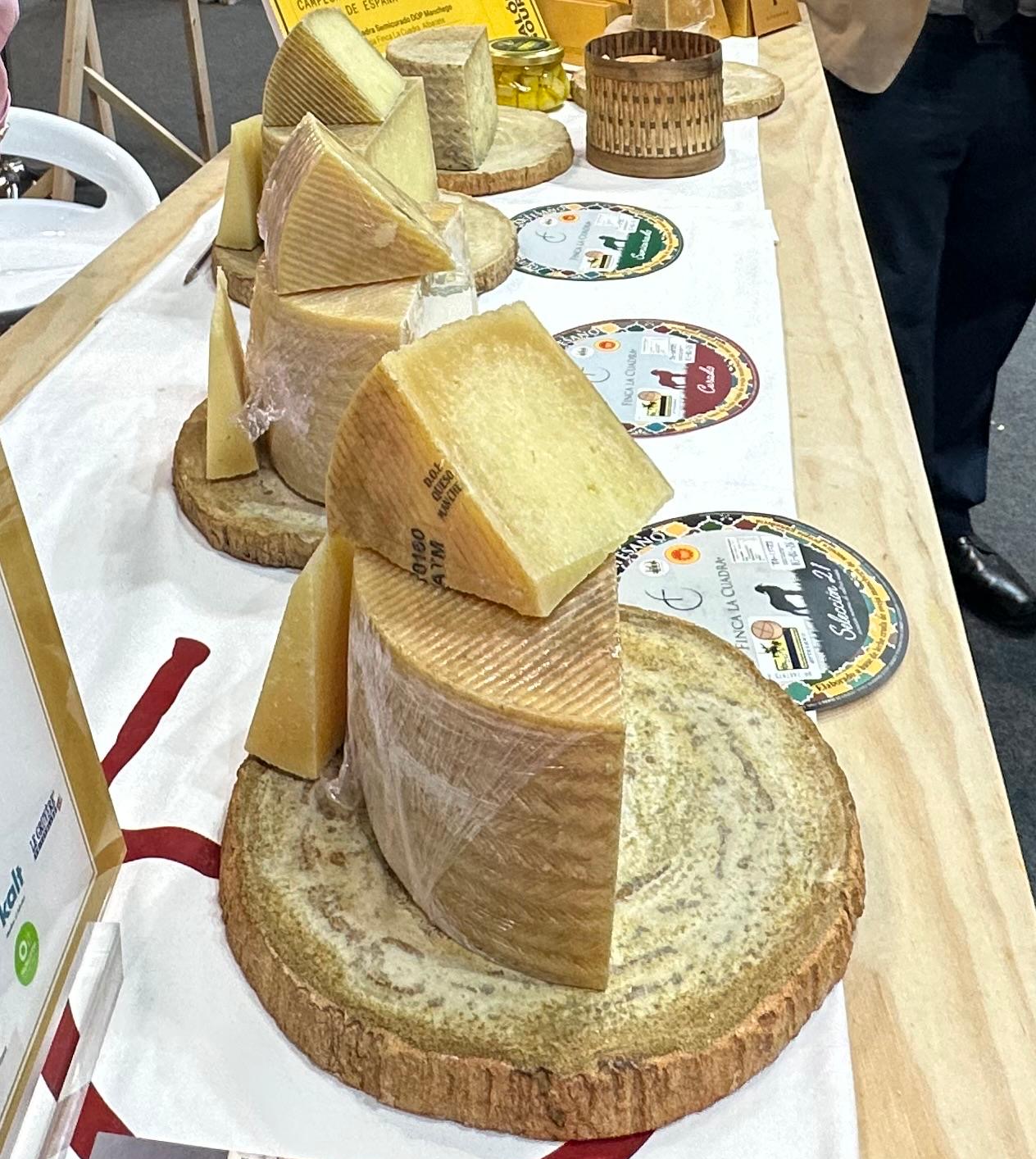
A firm cheese made from the milk of Manchega sheep, with a zigzag pattern on its rind. Only cheese from its protected area of origin in La Mancha may use the name.
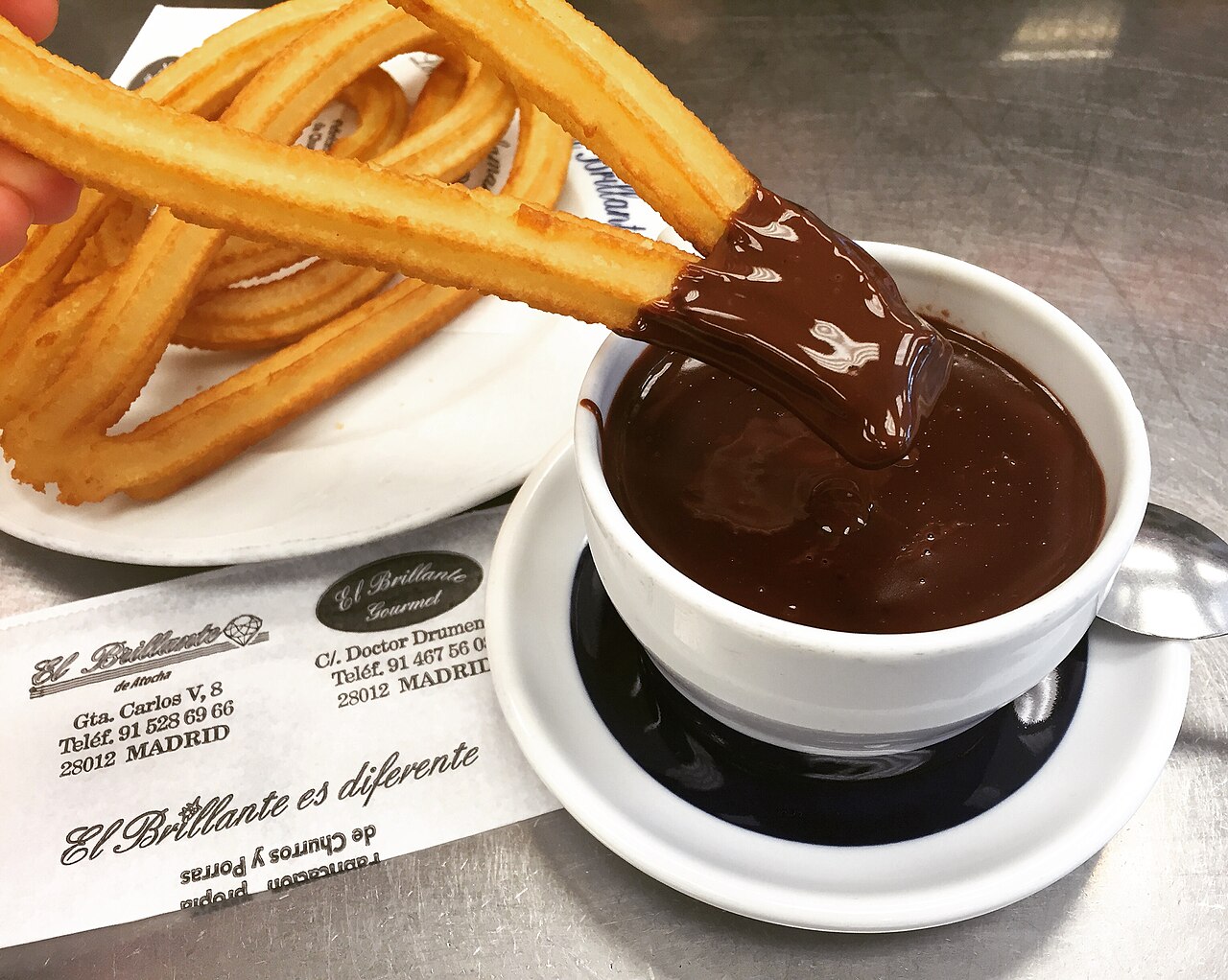
Long, ridged sticks of fried dough dipped into a cup of thick, hot chocolate. People eat them for breakfast, as an afternoon snack, or after a long night out.
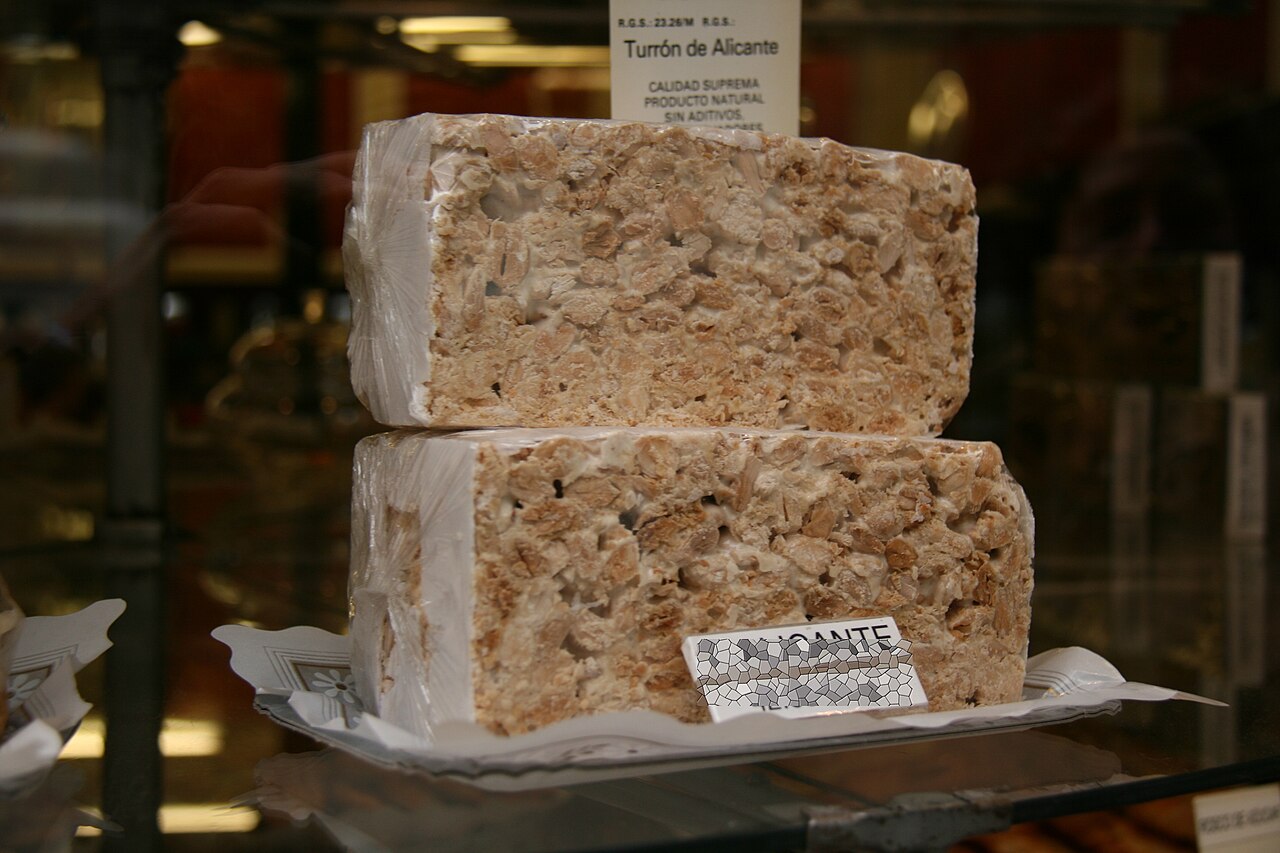
A nougat of almonds, honey, sugar and egg white, eaten all over Spain at Christmas. Turrón de Alicante is hard with whole almonds, and turrón de Jijona is soft and made with ground almonds.
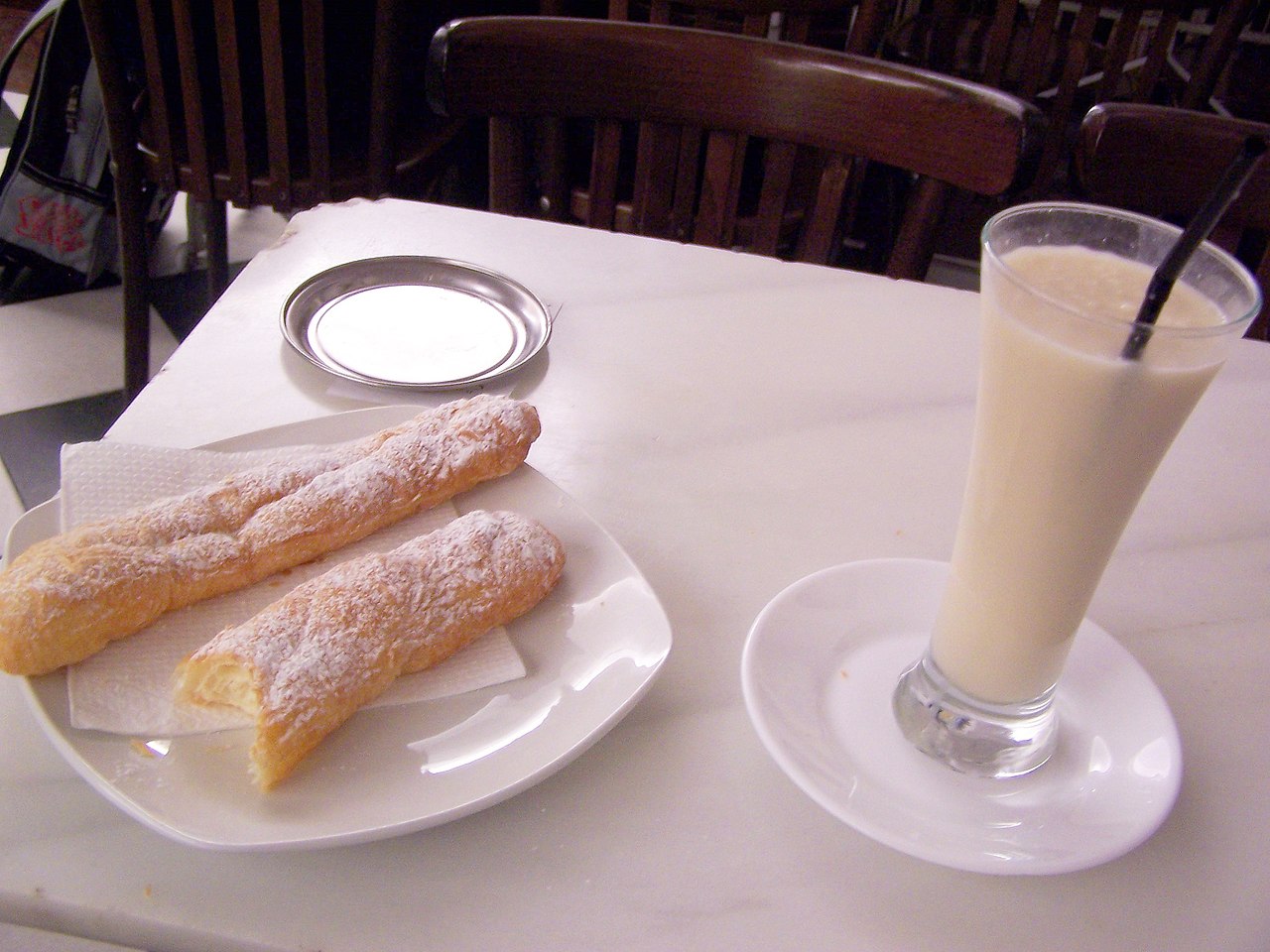
A sweet, milky-looking drink made from tiger nuts (chufas), small tubers grown near Valencia, served ice cold in summer. Valencians dip long soft buns called fartons into it.
Table manners
Meals are late by northern European standards: lunch usually starts around 2 pm and dinner is often after 9 pm.
Tapas are for sharing. Order a few plates for the table and everyone picks from them.
Bread is served with most meals and is used to push food onto the fork and to mop up sauces.
Waiters do not bring the bill until you ask for it. Lingering at the table after a meal to talk is so normal that it has a name: la sobremesa.
At lunch many restaurants offer a menú del día, a fixed-price meal of a first course, a second course and dessert, often with bread and a drink.
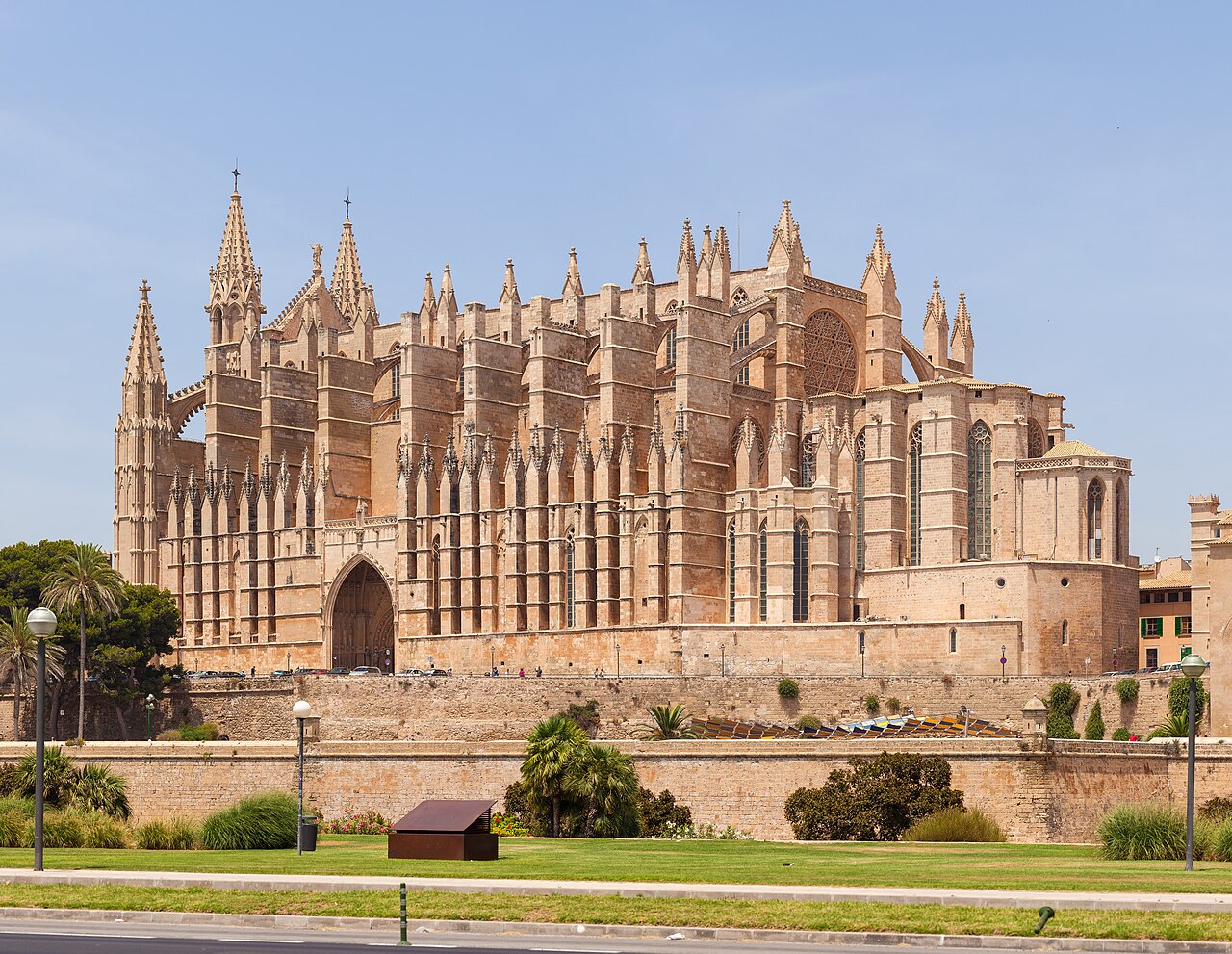
Spain's cities are wonderfully different: Roman walls, Moorish palaces, Gothic cathedrals and bold modern architecture, often within a short train ride of each other.
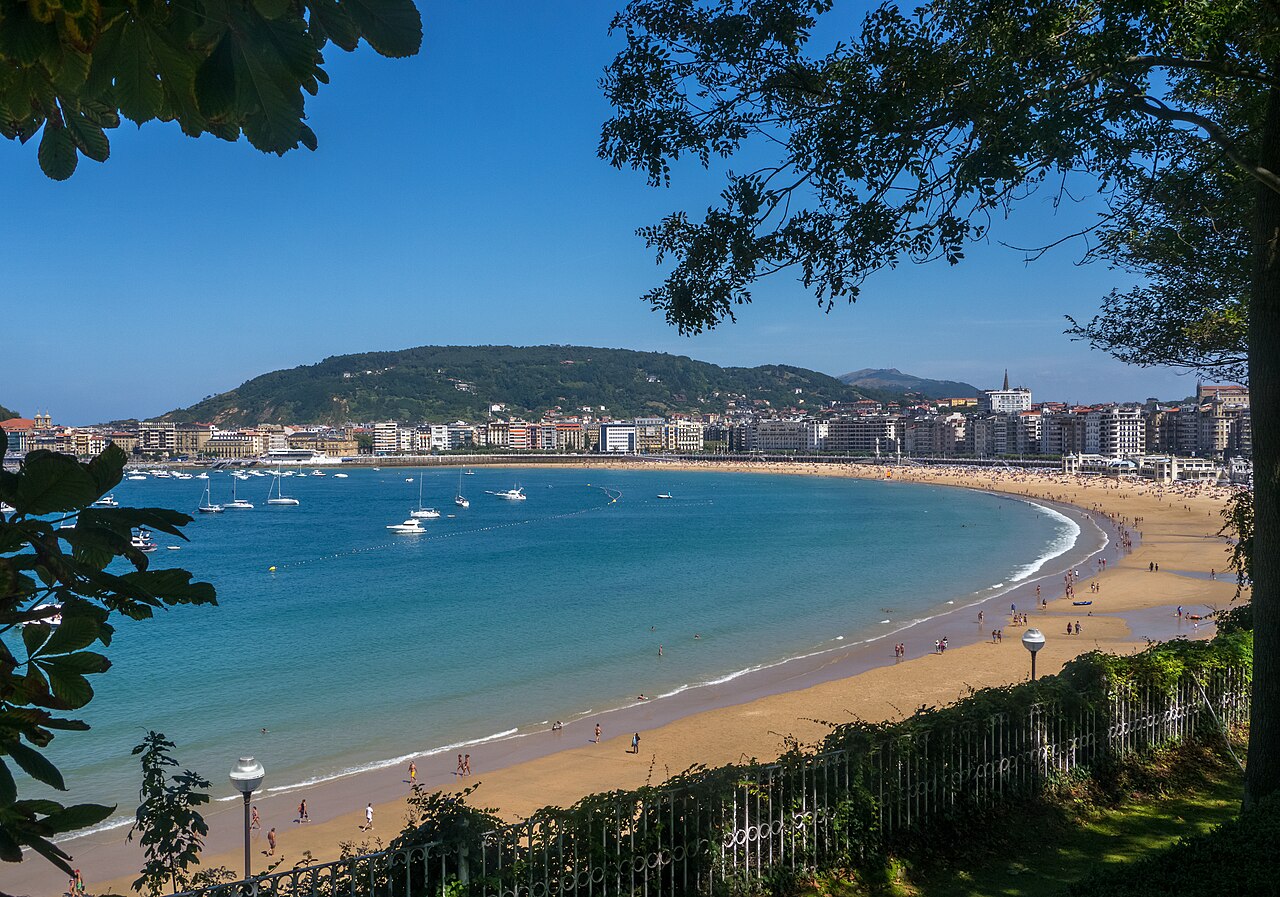
An elegant seaside city wrapped around a shell-shaped bay, famous among food lovers for its pintxo bars and top restaurants. In Basque it is called Donostia.
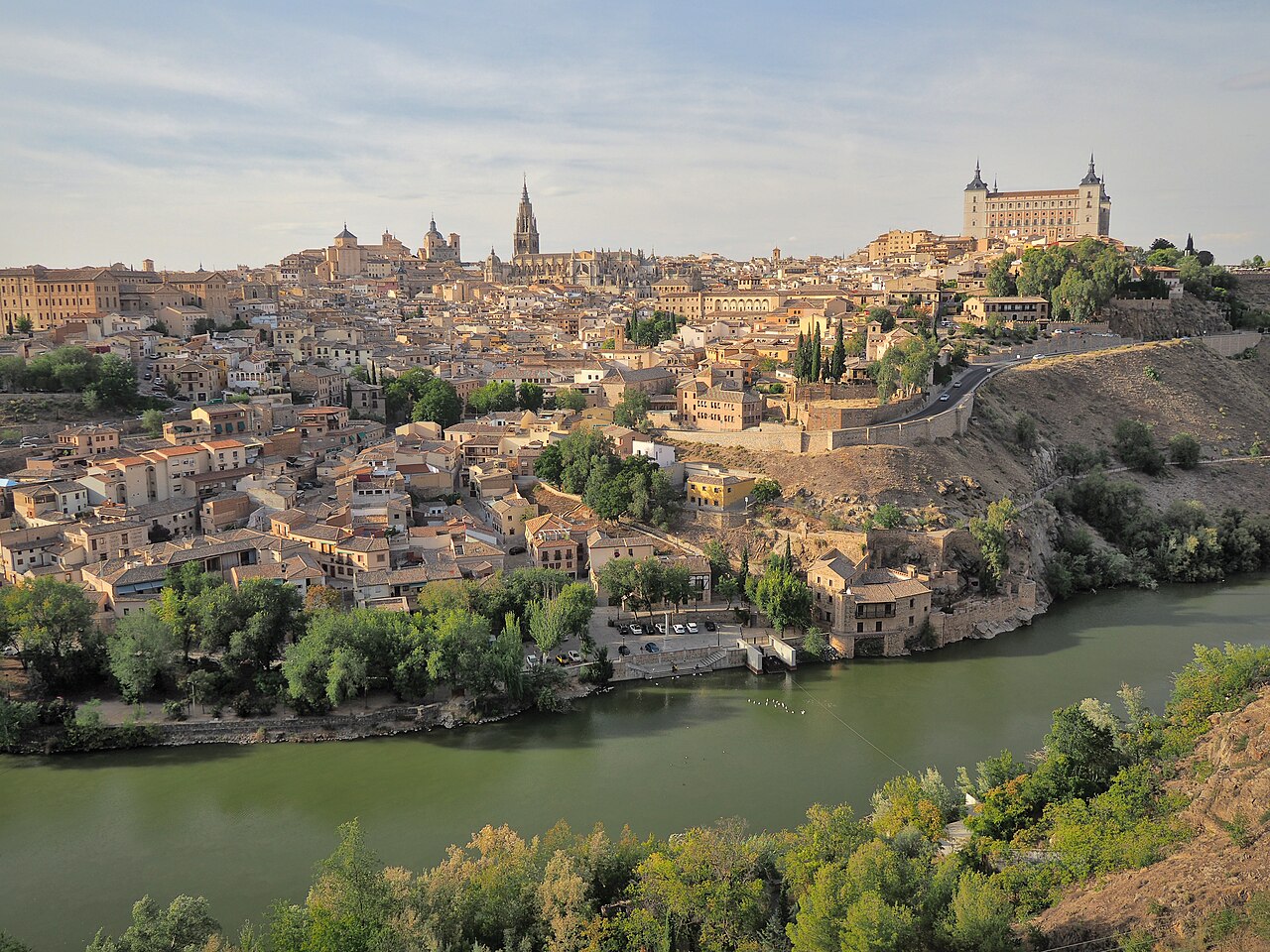
A walled hilltop city above a bend of the Tagus river, where Christians, Muslims and Jews lived side by side for centuries. The painter El Greco made it his home.
In the 10th century it was the capital of the Caliphate of Córdoba, which ruled most of Spain, and one of the largest cities in Europe. Its lanes are known for flower-filled patios.
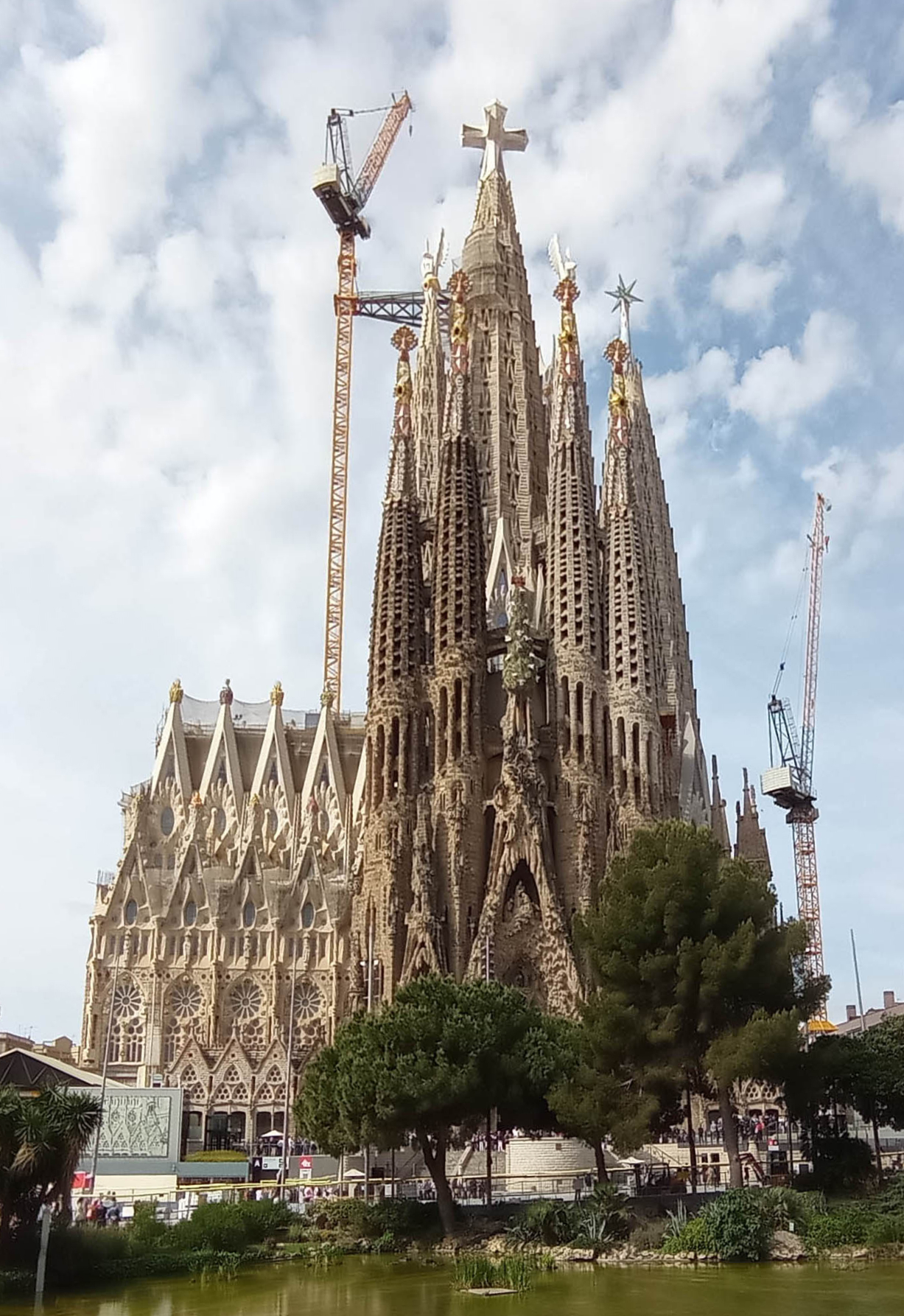
Antoni Gaudí's great basilica, begun in 1882 and still being built. In 2025 it became the tallest church in the world, and its central tower of Jesus Christ reached its full height of 172.5 m in 2026. The Nativity façade and the crypt are part of UNESCO's Works of Antoni Gaudí.
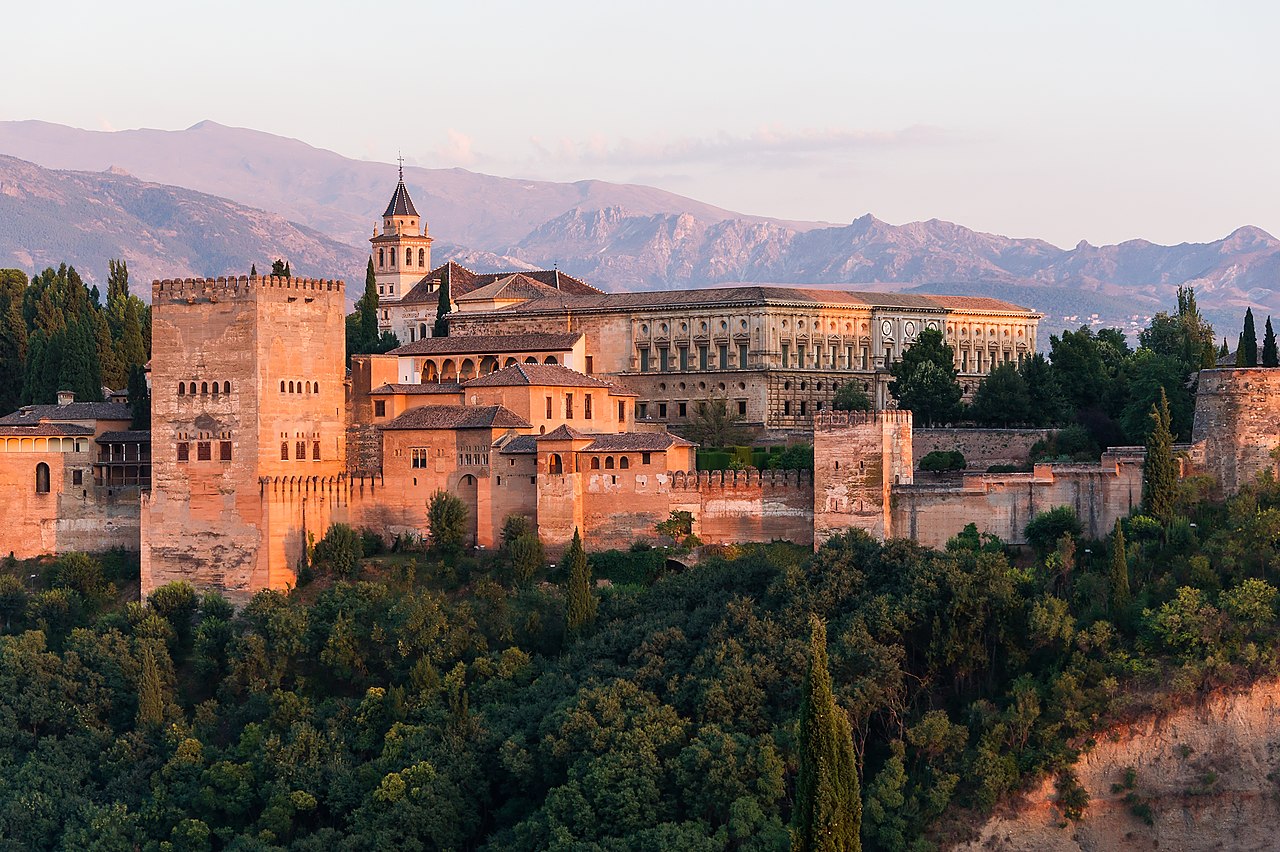
A hilltop fortress and palace of the Nasrid sultans of Granada, with rooms of carved plaster, tiled walls, courtyards and fountains. Tickets often sell out, so book ahead.
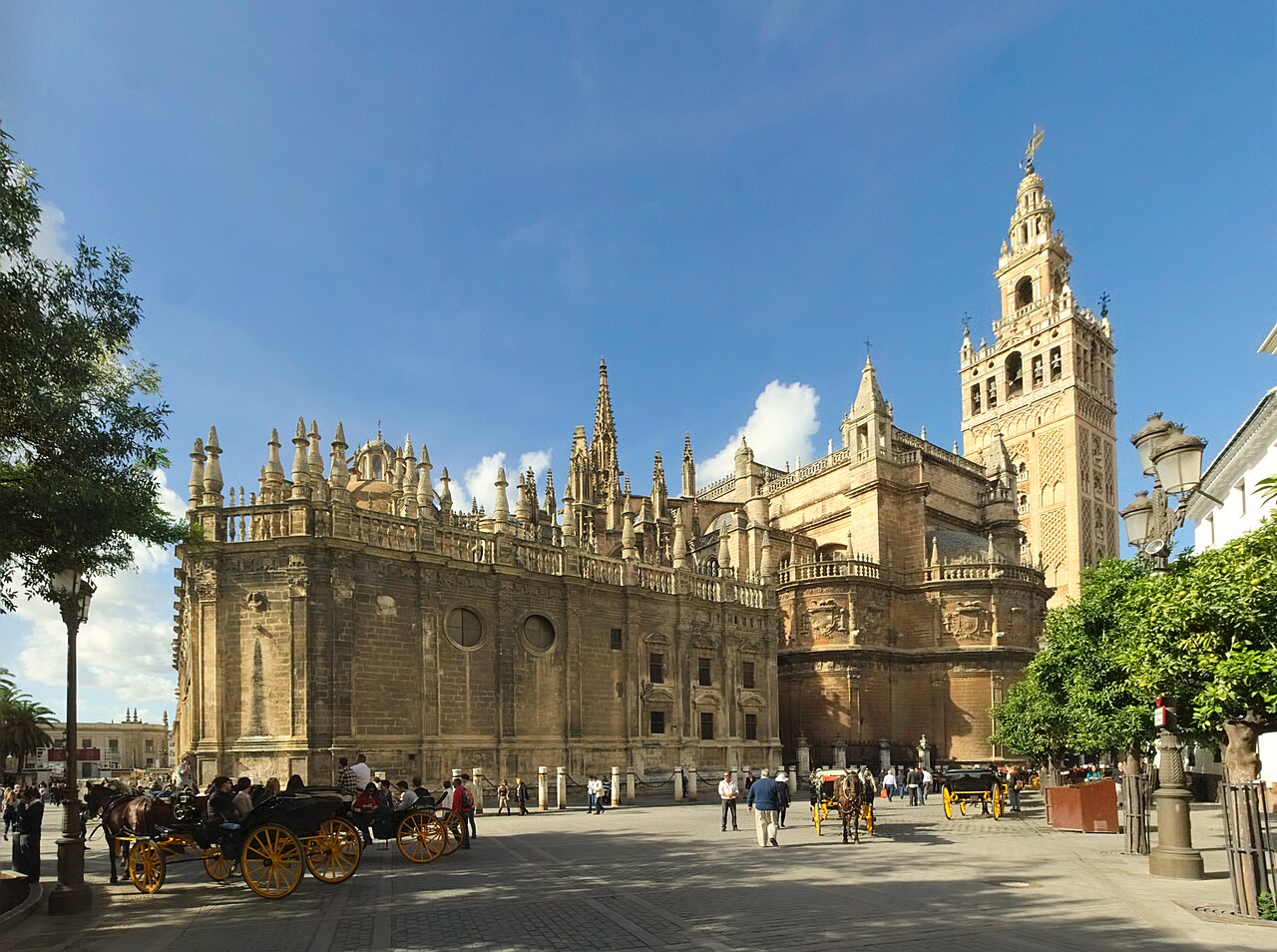
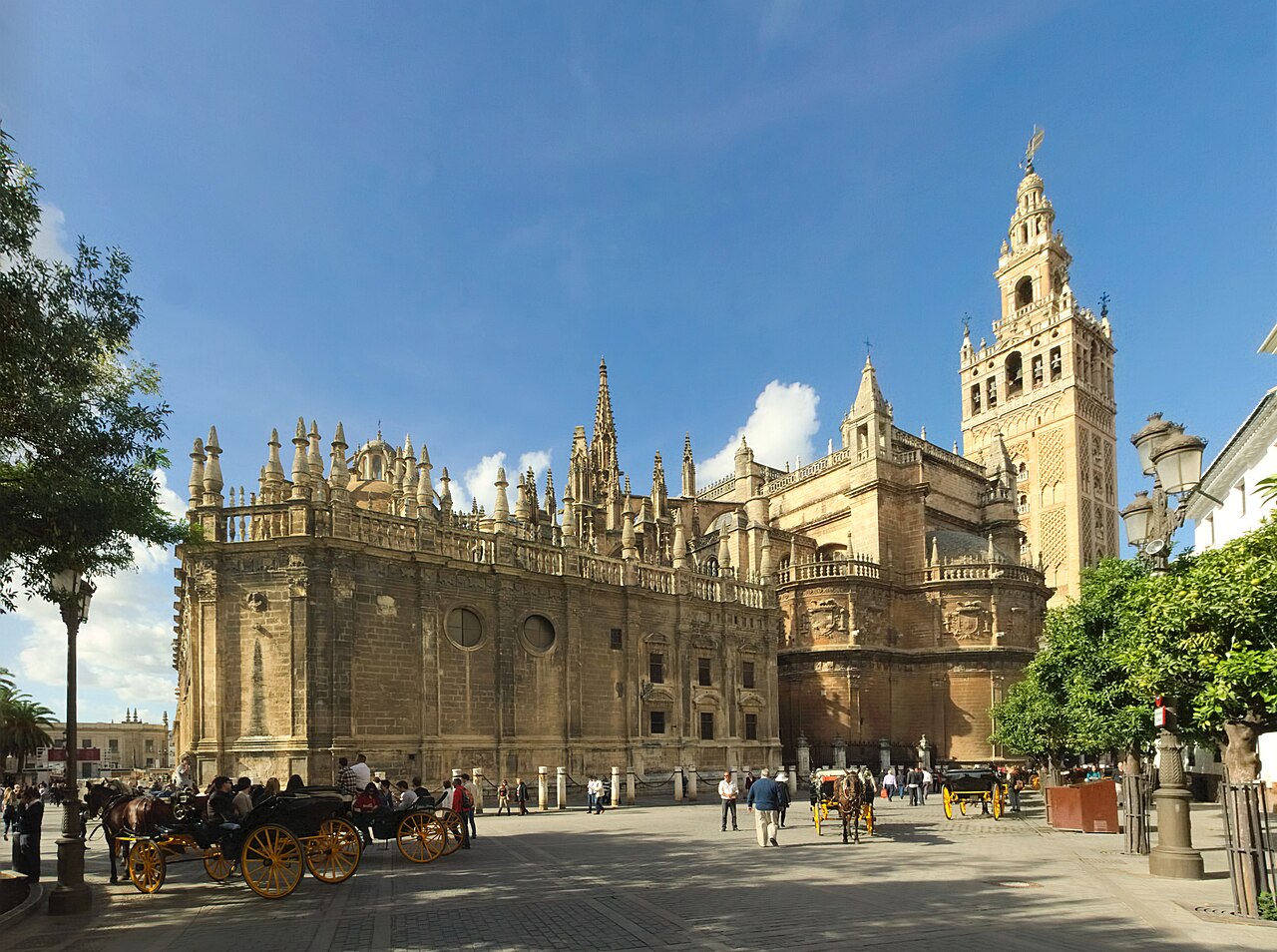
The largest Gothic cathedral in the world, and home to the tomb of Christopher Columbus. Its bell tower, the Giralda, was once the minaret of the mosque that stood here.
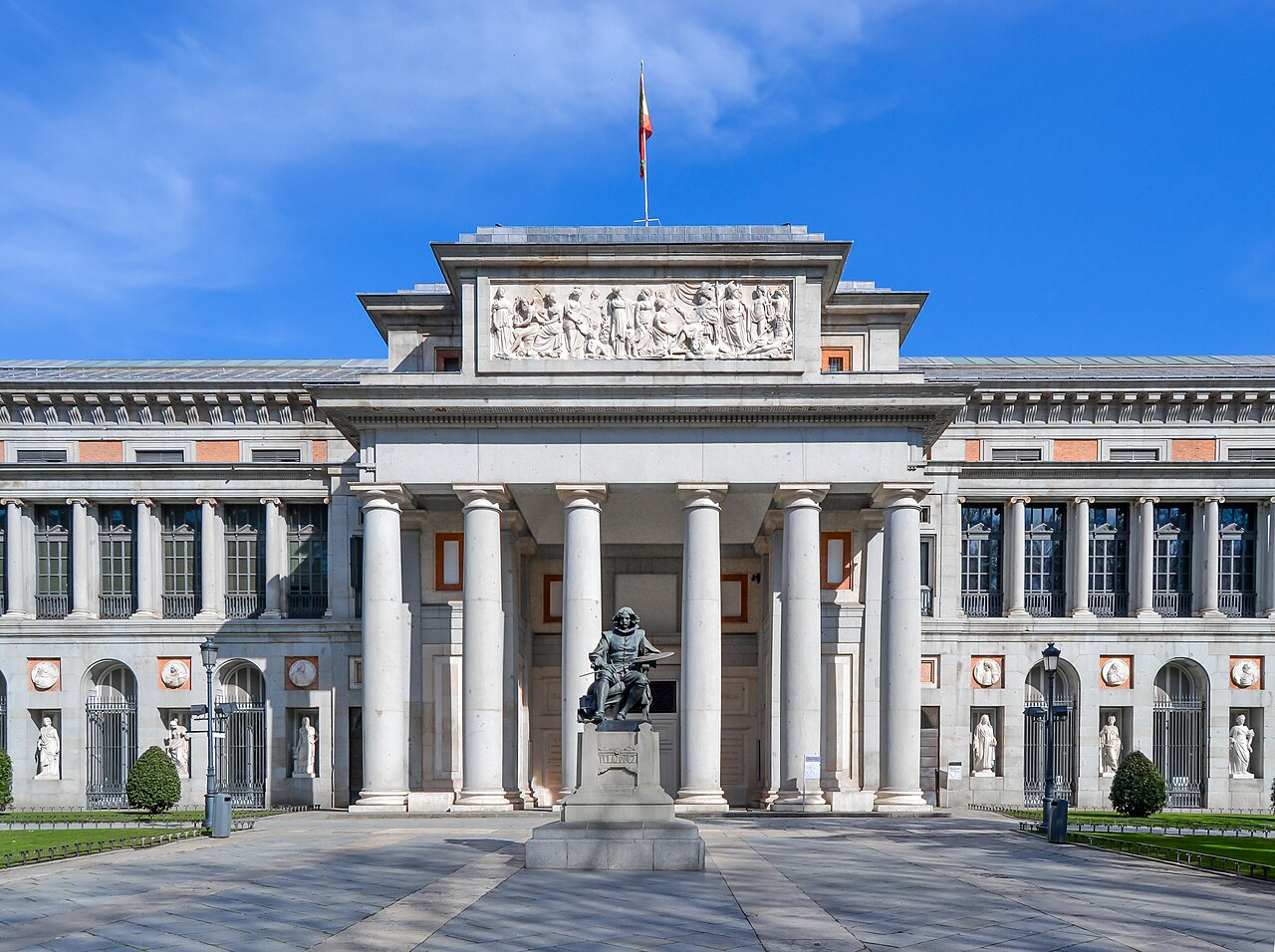
One of the world's great art museums, opened in 1819, with masterpieces by Velázquez, Goya, El Greco and Bosch. It stands inside the World Heritage Site 'Paseo del Prado and Buen Retiro, a Landscape of Arts and Sciences', listed in 2021.
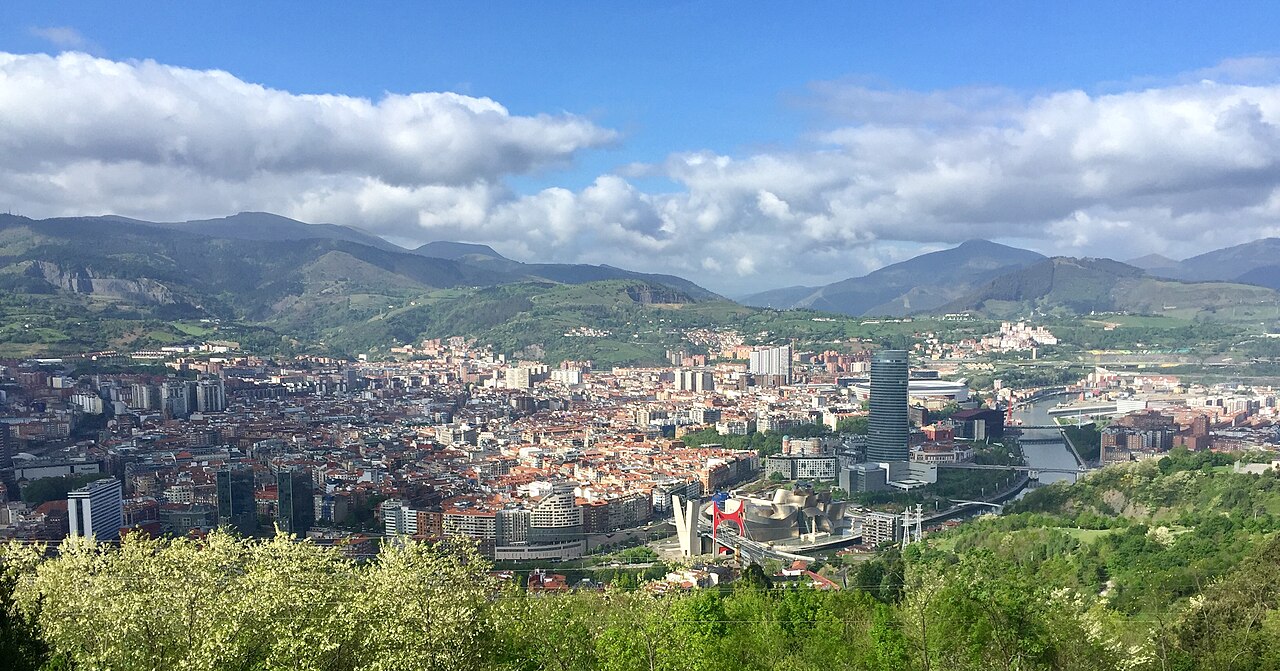
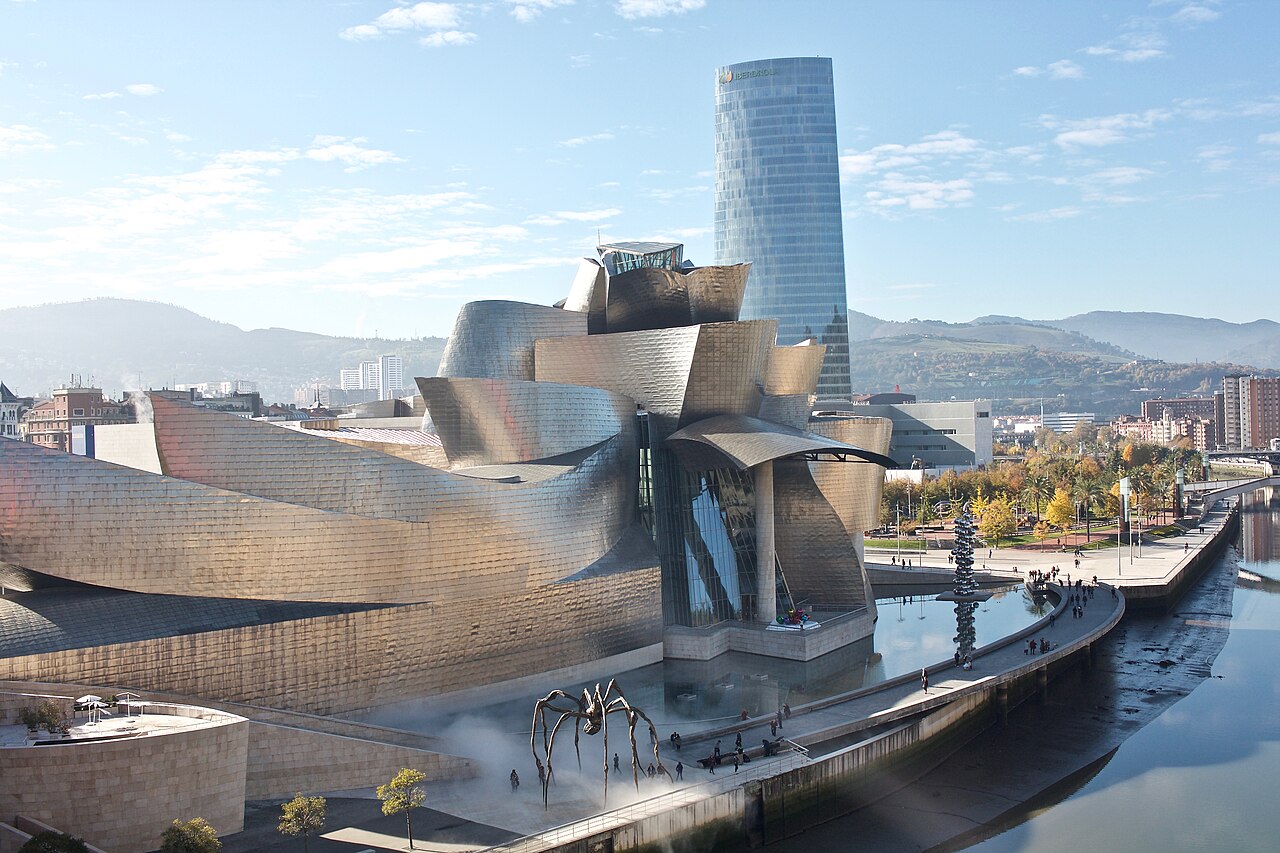
A museum of modern art designed by the architect Frank Gehry and opened in 1997. Its curving walls are covered in thousands of thin titanium plates that shine in the light.
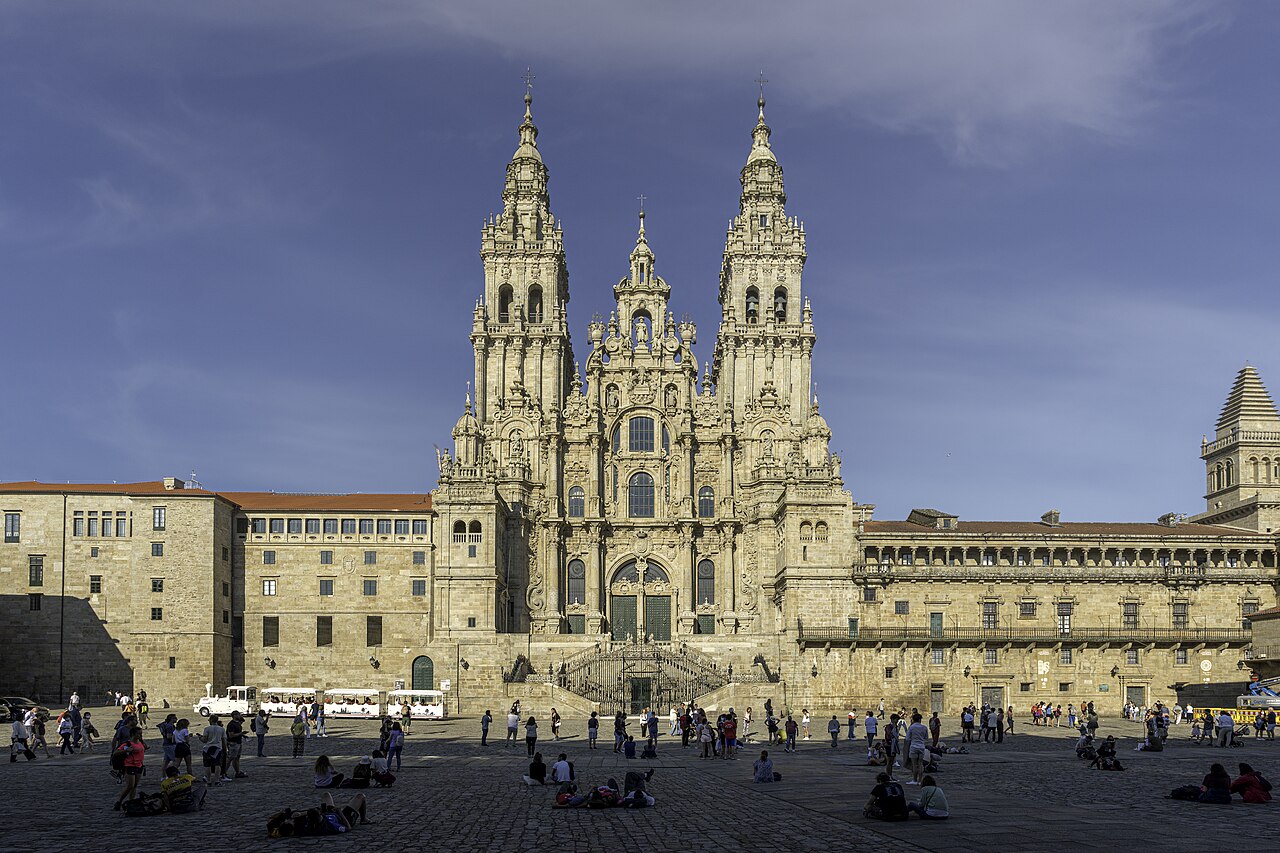
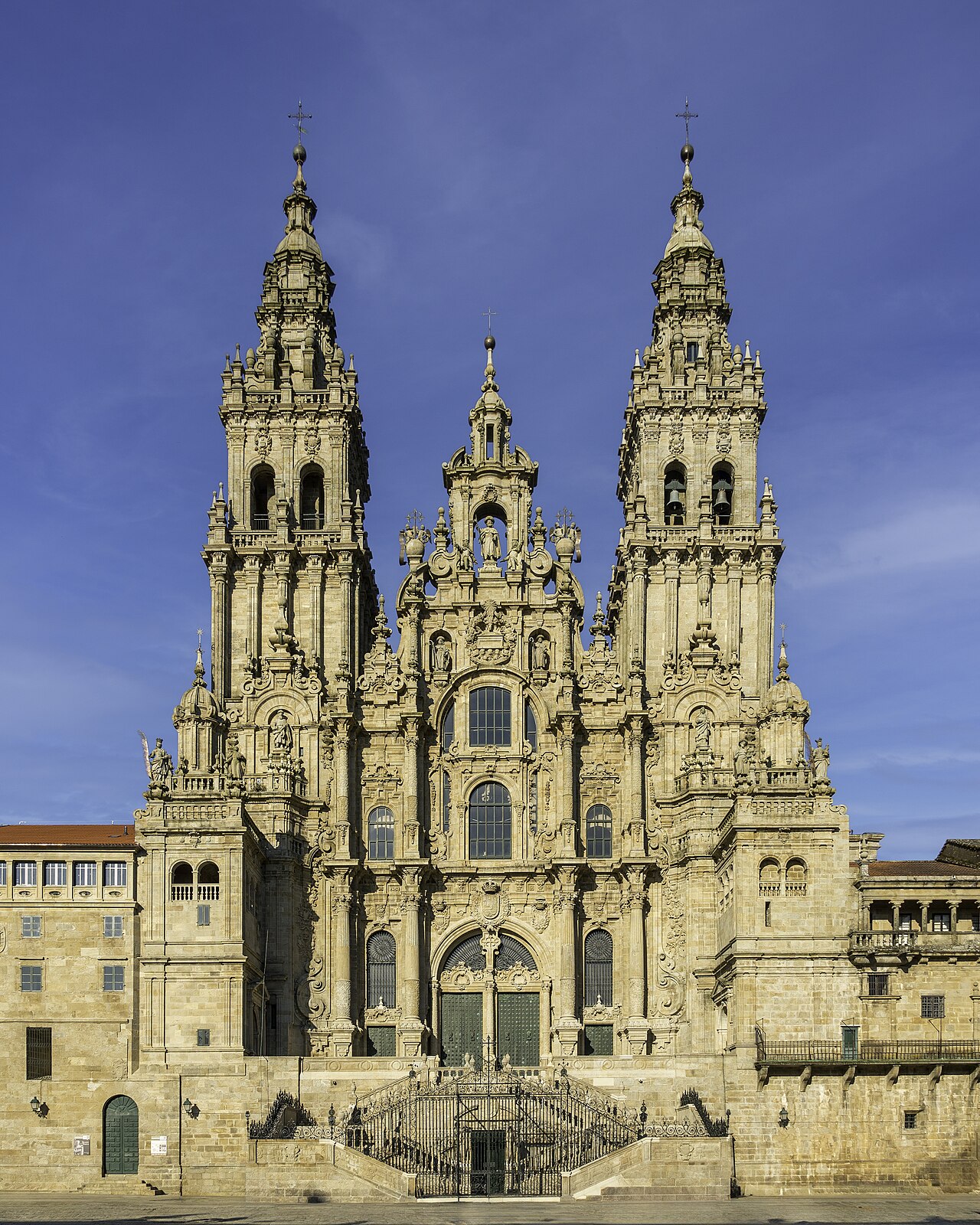
The goal of the pilgrims on the Camino de Santiago and the traditional burial place of Saint James. On special days a giant incense burner, the Botafumeiro, swings high across the church.
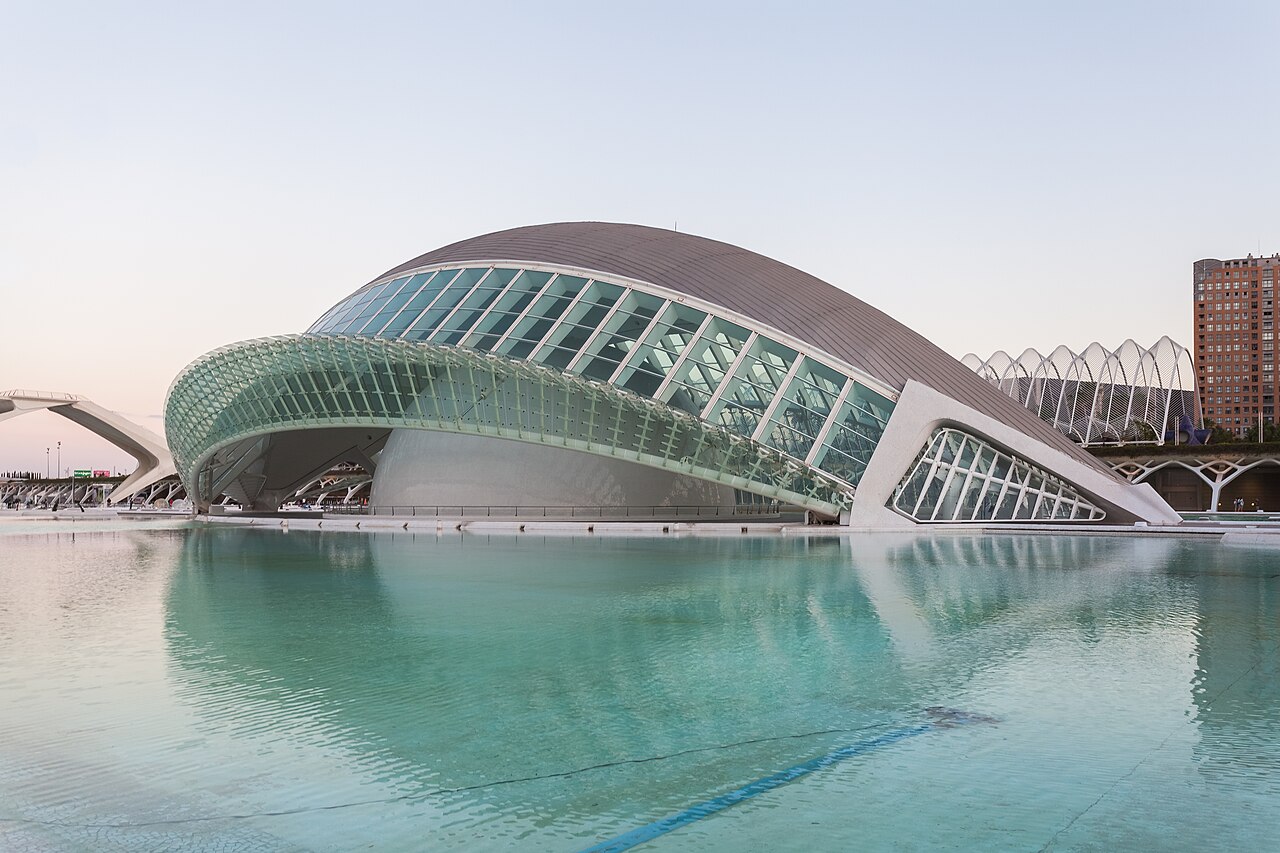
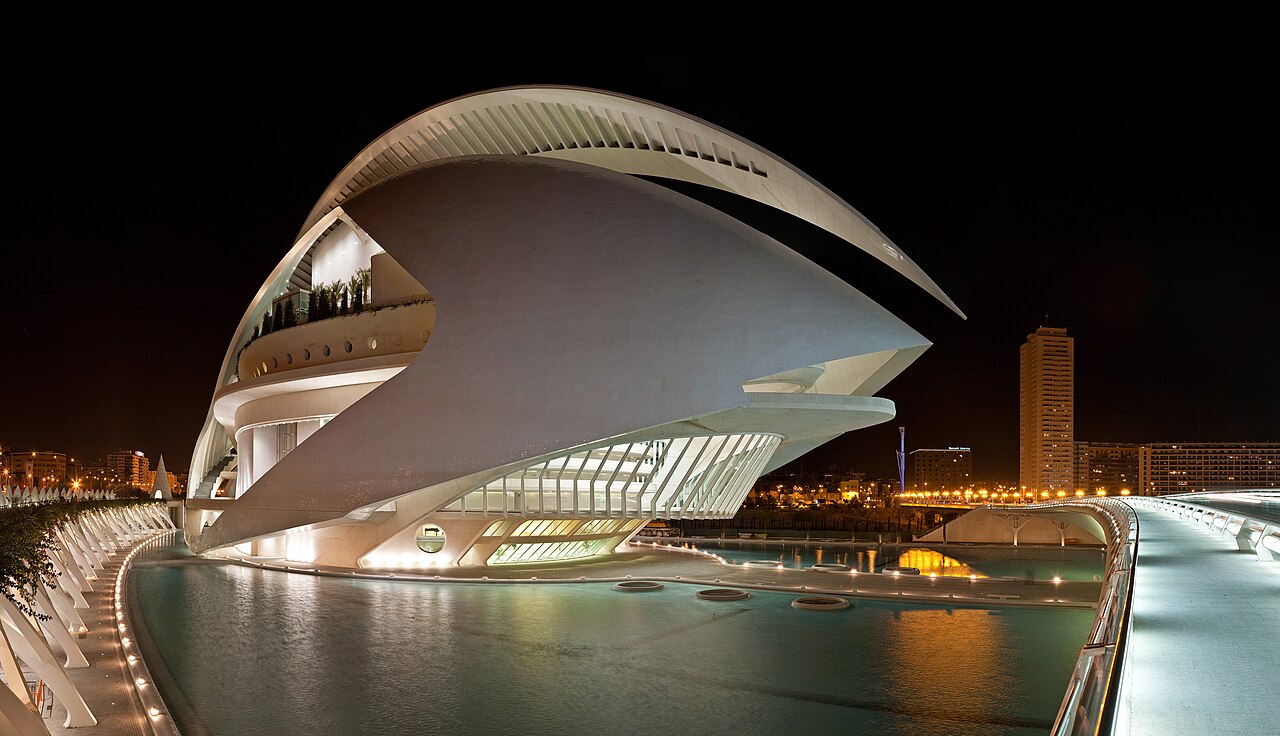
A group of futuristic white buildings, mostly by the Valencian architect Santiago Calatrava, with a science museum, an opera house, a planetarium and the largest aquarium in Europe.
Spain's national anthem, the Marcha Real, has no official lyrics. As of 2026, it is one of only three national anthems in the world without them, along with those of Bosnia and Herzegovina and Kosovo.
02
On New Year's Eve, Spaniards eat one grape at each of the twelve strokes of midnight for good luck. Millions watch the clock of the Puerta del Sol in Madrid on television to keep time.
03
A plaque in Madrid's Puerta del Sol marks Kilometre Zero, the point from which distances on Spain's main national roads are measured.
04
Spain's highest mountain, Teide (3,715 m), is a volcano on the island of Tenerife in the Canary Islands, not on the mainland.
05
Guinness World Records lists Sobrino de Botín in Madrid as the oldest restaurant in the world, open since 1725. Some historians say the present restaurant only dates from 1865.
06
Every year on the last Wednesday of August, thousands of people pelt each other with ripe tomatoes in the town of Buñol, near Valencia, at a festival called La Tomatina.
07
As of the 2020s, Spain is the world's largest producer of olive oil.
08
Spaniards traditionally have two surnames: the first surname of their father and the first surname of their mother. Women keep their own surnames when they marry.
09
The daisy-shaped Chupa Chups lollipop logo was designed in 1969 by the surrealist painter Salvador Dalí.
10
As of 2025, Spanish is the second most spoken native language in the world, after Mandarin Chinese, with more than 500 million native speakers.
11
Work on the Sagrada Família began in 1882. As of 2026, it is the tallest church in the world, even though it is still not finished.
12
Spain has two cities in North Africa, Ceuta and Melilla, so it shares a land border with Morocco.
Restaurants usually serve lunch from about 1 pm to 4 pm and dinner from about 8 pm to 11:30 pm. Arrive at 7 pm and you may find the kitchen closed.
Look for the menú del día
On weekdays many restaurants offer a fixed-price lunch of three courses, often with bread and a drink. It is usually the best value meal of the day.
Shops close on Sundays
Most shops open from about 10 am to 9 pm, but Sunday is the normal day for shops and businesses to close. Some smaller shops also close for a few hours in the afternoon, especially in summer.
Tipping is modest
Tips are not obligatory in Spain. Leaving some small change, or about 5 to 10 percent for good service in a restaurant, is appreciated.
Two kisses
Friends and family usually greet each other with a light kiss on each cheek, first leaning to your left so that right cheeks touch. When you first meet someone in a formal setting, a handshake is fine.
Take the high-speed train
The AVE high-speed trains link the big cities fast: Madrid to Barcelona takes about two and a half hours, and Madrid to Valencia less than two hours.
Book famous sights ahead
Popular places such as the Alhambra in Granada and the Sagrada Família in Barcelona sell timed tickets that often run out days or weeks ahead, especially in spring and summer.
Respect the summer heat
Inland Andalusia, around Seville and Córdoba, can be extremely hot in July and August. Sightsee in the morning, rest in the afternoon like the locals, and carry water.
 Andorra
 France
 Portugal
 Morocco