A free large-print PDF. Choose what goes in: facts, map, history, dishes and recipes, phrases, fun facts, a quiz with or without answers. Made for clubs, care homes, libraries and family afternoons.
Portugal lies on the western side of the Iberian Peninsula, facing the Atlantic Ocean, with Spain as its only land neighbour. Far out in the ocean it also includes two groups of islands, Madeira and the Azores. The north is green and hilly, while the south, the Alentejo and the Algarve, is a land of rolling plains, cork oaks and golden beaches.
Portugal became a kingdom in the 1100s, and its borders on the mainland have barely changed since 1297. In the 1400s and 1500s its sailors led the Age of Discovery: they sailed around Africa to India, reached Brazil and built trading posts as far away as China and Japan.
Today Portugal is a democratic republic of about 11.4 million people. The monarchy ended in 1910, a long dictatorship ended with the peaceful Carnation Revolution of 1974, and the country joined the European Community in 1986. Portuguese, the language its explorers carried around the world, now has more than 250 million native speakers, most of them in Brazil.
CapitalLisbon
PopulationAbout 11.4 million (INE estimate for the end of 2025)
Official languagePortuguese (Mirandese is also recognised in the far northeast)
CurrencyEuro (€), since 2002 (before that, the escudo)
AreaAbout 92,000 km², including Madeira and the Azores
GovernmentSemi-presidential republic (constitution of 1976)
Highest mountainMount Pico, 2,351 m, in the Azores (Torre in the Serra da Estrela, 1,993 m, is the highest on the mainland)
Longest riverThe Tagus (Tejo), about 1,000 km, most of it in Spain; the Mondego, 234 km, is the longest river entirely in Portugal
From Lusitanian warriors who fought Rome to the explorers who opened the sea route to India, Portugal's small corner of Europe has had a very large part in world history.
139 BC
Viriathus is killed
Viriathus, leader of the Lusitanian people, won several victories against the Romans before he was betrayed and murdered in his sleep in 139 BC. The Portuguese remember him as a national hero. Rome went on to conquer the region, which became the province of Lusitania.
AD 868
The County of Portugal is founded
The nobleman Vímara Peres took the land between the Minho and Douro rivers from the Moors and became the first Count of Portugal. The name comes from Portus Cale, the Roman name for the port at the mouth of the Douro, today's Porto.
1147
Lisbon is captured from the Moors
Afonso Henriques, who had called himself king in 1139, took Lisbon after a siege of about four months, with the help of crusaders from northern Europe on their way to the Holy Land. Lisbon became the capital about a century later, in 1255.
1179
The Pope recognises the Kingdom of Portugal
In the papal bull Manifestis Probatum, Pope Alexander III recognised Afonso Henriques as king of an independent Portugal. It is often called the founding document of the country.
1386
The Treaty of Windsor is signed
After English archers helped Portugal beat Castile at the Battle of Aljubarrota in 1385, King John I and England signed a pact of lasting friendship, sealed by his marriage to the English princess Philippa of Lancaster. The alliance is still in force today.
1415
Portugal captures Ceuta
King John I and his sons, among them the young Prince Henry, later called Henry the Navigator, took the North African port of Ceuta. It is seen as the start of the Portuguese overseas empire.
1498
Vasco da Gama reaches India
After sailing around the southern tip of Africa, Vasco da Gama landed near Calicut (Kozhikode) in India on 20 May 1498. He had opened the first sea route from Europe to Asia, and the spice trade made Lisbon rich.
1500
Cabral lands in Brazil
A fleet led by Pedro Álvares Cabral, on its way to India, sailed far out into the Atlantic and on 22 April 1500 reached the coast of Brazil, which Cabral claimed for Portugal.
1580
Portugal passes to the Spanish king
King Sebastian died in battle in Morocco in 1578 and his successor left no heir. Philip II of Spain claimed the throne, and for sixty years, from 1580 to 1640, Spain's kings were also kings of Portugal.
1640
Portugal regains its independence
On 1 December 1640 the Duke of Braganza was proclaimed King John IV of Portugal. After years of war, Spain accepted Portugal's independence in 1668. The date, 1 December, is a national holiday.
1755
An earthquake destroys Lisbon
On the morning of 1 November 1755, All Saints' Day, a huge earthquake, followed by a tsunami and fires, almost completely destroyed Lisbon. Tens of thousands died. The city centre, the Baixa, was rebuilt with a new grid of straight streets.
1807
The royal court sails for Brazil
Days before Napoleon's army reached Lisbon, the royal family and about 10,000 courtiers sailed for Brazil. From 1808 to 1821 Rio de Janeiro was the capital of the Portuguese empire.
1910
Portugal becomes a republic
On 5 October 1910 a revolution ended centuries of monarchy, and the republic was proclaimed from the balcony of Lisbon's city hall. The last king, Manuel II, went into exile in England.
1974
The Carnation Revolution
On 25 April 1974 army officers overthrew the Estado Novo, the dictatorship built by António de Oliveira Salazar, with very little bloodshed. People put red carnations into the soldiers' guns, which gave the revolution its name. Democracy followed, and Portugal's African colonies soon became independent.
1986
Portugal joins the European Community
Portugal joined the European Economic Community, today's European Union, on 1 January 1986, on the same day as Spain.
1999
Macau is handed back to China
At midnight on 20 December 1999 Portugal handed Macau, its last territory in Asia, to China, ending 442 years of Portuguese rule there.
Portuguese cooking is simple and generous: good olive oil, garlic, fresh fish and seafood, pork, bread and a great love of sweets. Lunch and dinner usually begin with a soup, such as caldo verde, followed by a main course of fish or meat, then dessert, and end with a small, strong coffee.
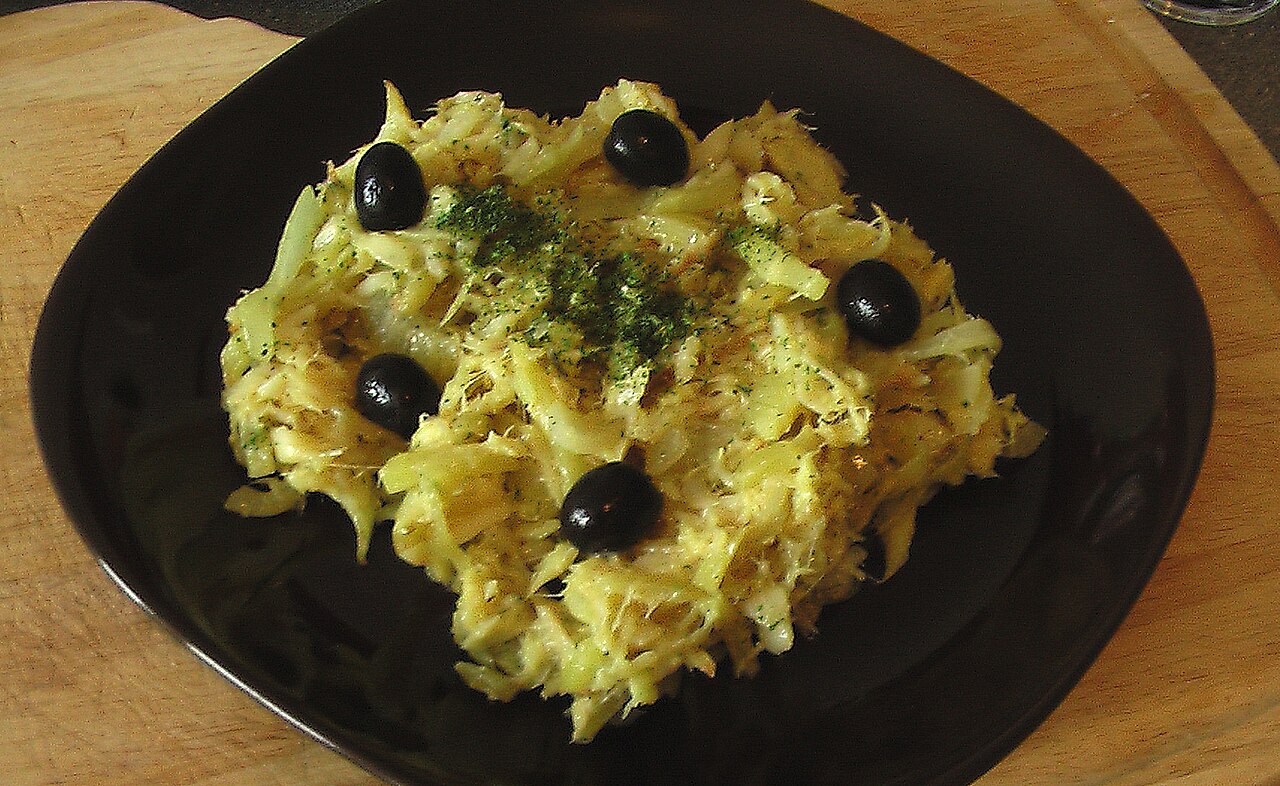
Shredded salt cod, onions and very thin fried potato sticks, bound together with softly scrambled egg and finished with black olives and parsley.
Bacalhau (dried salted cod) is so loved that the Portuguese say there are 365 ways to cook it, one for every day of the year, and some say 1,001.
See the recipe
Serves 4
45 min
Ingredients
400 g salt cod, soaked in advance in cold water in the fridge for 24 to 48 hours, changing the water several times
500 g potatoes, cut into very thin matchsticks (or 150 g ready-made potato sticks)
Oil for frying
4 tablespoons olive oil
2 onions, thinly sliced
2 garlic cloves, finely chopped
6 eggs (use pasteurised eggs if serving pregnant women, young children, older people or anyone with a weak immune system, or cook until firm)
A handful of black olives and chopped flat-leaf parsley
Black pepper
Method
Drain the soaked cod, remove the skin and bones and pull the flesh into fine shreds.
Fry the potato matchsticks in hot oil in batches until golden, then drain them on kitchen paper.
In a wide pan, cook the onions and garlic gently in the olive oil for about 10 minutes until soft and golden.
Add the cod and cook for 5 minutes, stirring, then stir in the fried potatoes.
Beat the eggs with black pepper, pour them into the pan over low heat and stir until they are softly set. Taste before adding salt, as the cod is salty.
Serve at once, topped with black olives and parsley.
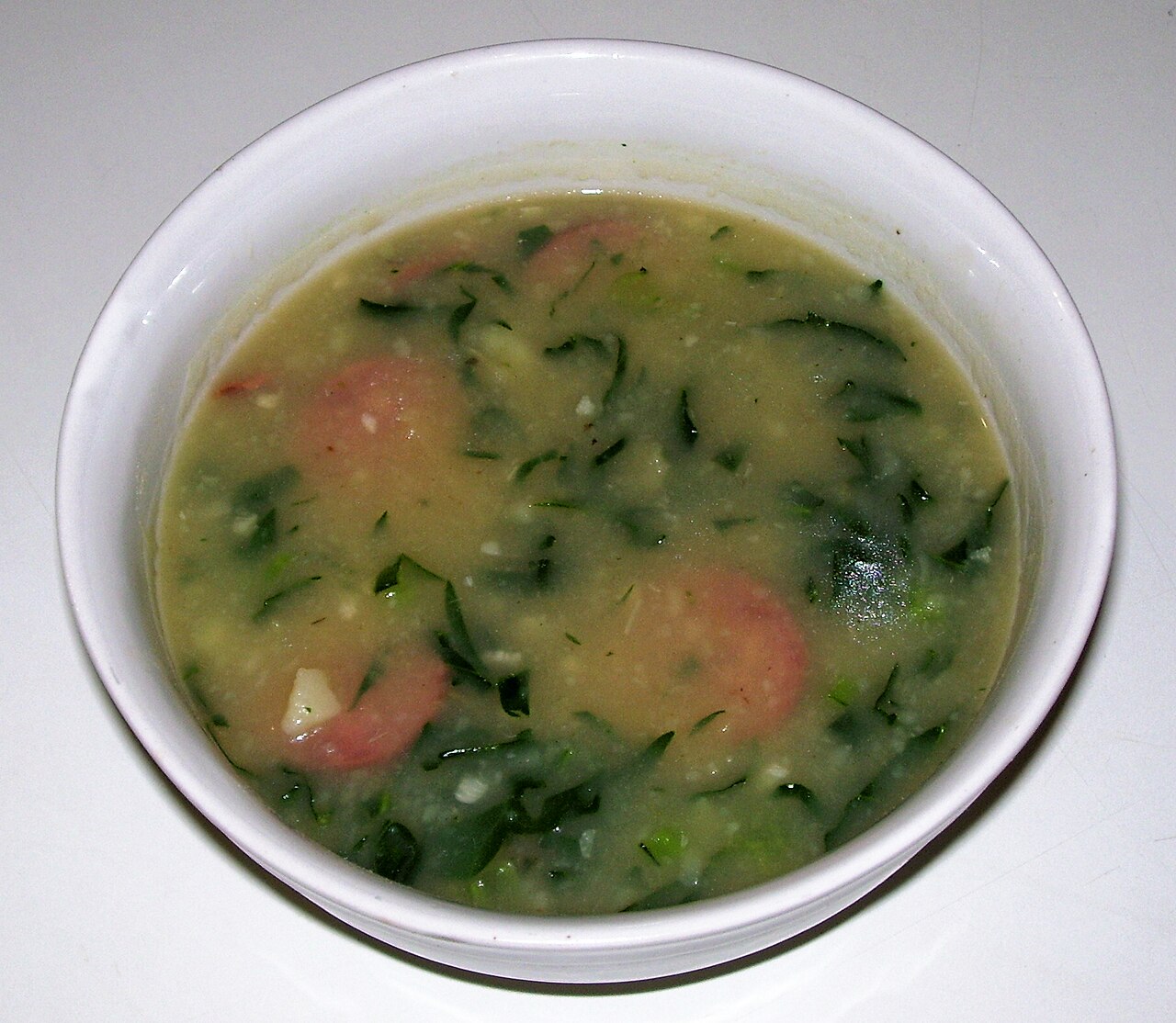
'Green broth': a potato soup filled with very finely shredded Portuguese cabbage or kale, served with a slice of chouriço sausage and a drizzle of olive oil.
In 2011 caldo verde was voted one of the Seven Wonders of Portuguese Gastronomy.
See the recipe
Serves 4
45 min
Ingredients
500 g floury potatoes, peeled and cut into chunks
1 onion, chopped
2 garlic cloves
1.5 litres water
250 g Portuguese cabbage (couve-galega) or kale, shredded as thinly as possible
100 g chouriço or other smoked sausage, sliced (optional)
4 tablespoons olive oil
Salt and black pepper
Method
Put the potatoes, onion, garlic and water in a pot with a little salt. Bring to the boil and simmer for about 20 minutes until the potatoes are very soft.
Blend or mash everything until smooth, then stir in 2 tablespoons of olive oil.
Bring back to a simmer, add the shredded greens and cook for 3 to 5 minutes, until they are bright green and just tender.
Meanwhile, fry the chouriço slices briefly in a dry pan.
Season, ladle into bowls, add a few slices of chouriço and a drizzle of olive oil. Serve with bread.
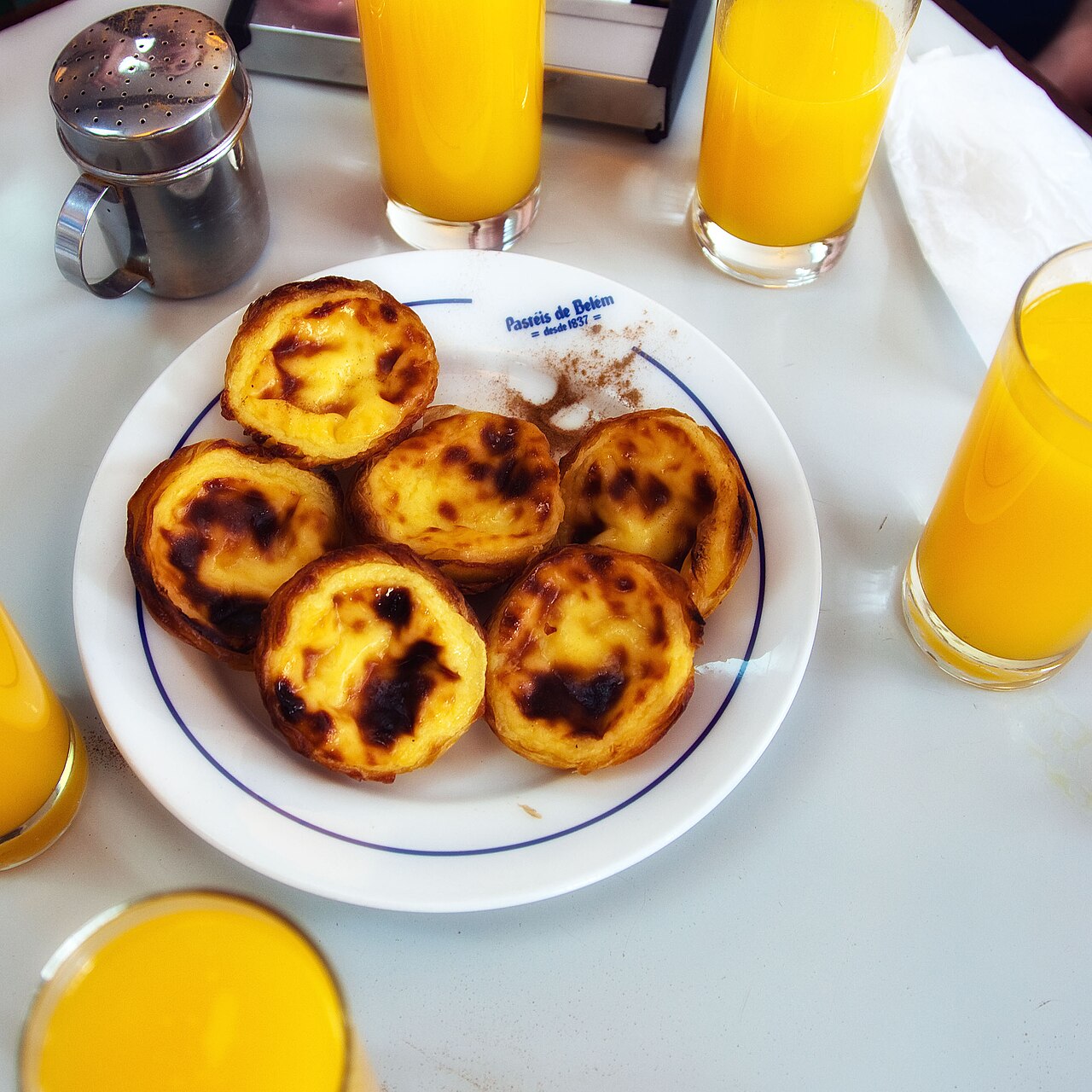
A small tart of crisp, flaky pastry filled with egg custard, baked in a very hot oven until the top is blistered and dark in spots. Often dusted with cinnamon and eaten with a coffee.
Monks of the Jerónimos Monastery made the original tarts. After the monastery closed in 1834 the recipe was sold, and the bakery Pastéis de Belém, open since 1837, still keeps it secret.
Heat the oven to its highest setting (at least 250 °C) and butter a 12-hole muffin tin.
Roll the pastry up tightly into a log, cut it into 12 slices and press each slice, cut side up, into a hole of the tin with a wet thumb, so the pastry comes up the sides.
Boil the sugar, water and cinnamon stick for 3 minutes to make a syrup.
Whisk the flour into the milk with the lemon peel and heat, stirring, until it thickens. Take it off the heat and stir in the syrup. Remove the cinnamon and peel and let it cool for 10 minutes.
Whisk in the egg yolks and fill each pastry case about three quarters full.
Bake for 12 to 15 minutes until the pastry is golden and the custard is set with dark spots on top. Cool a little and dust with cinnamon.
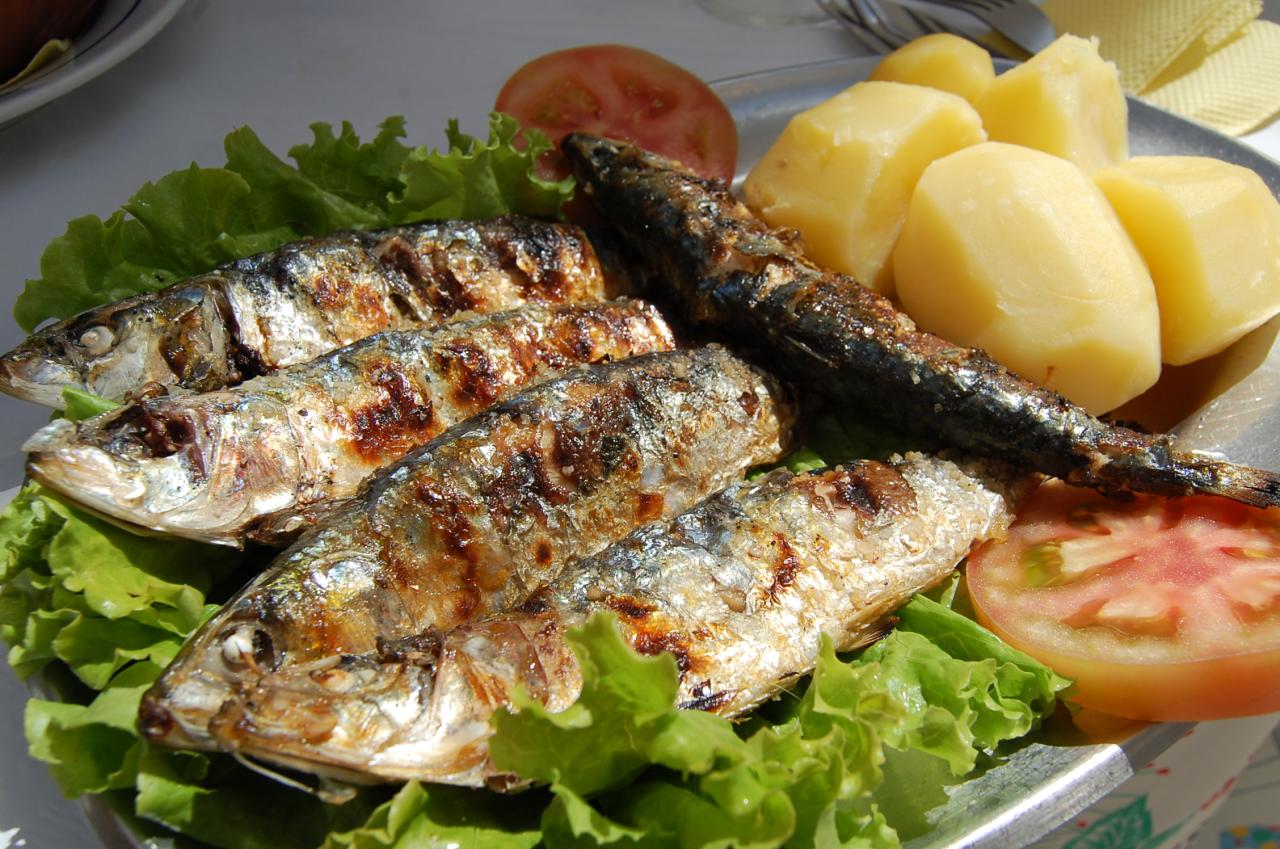
Whole fresh sardines sprinkled with coarse salt and grilled over charcoal, eaten with boiled potatoes, a salad of peppers, or simply on a slice of bread.
Grilled sardines are the smell of June in Lisbon, when the city celebrates Saint Anthony on the nights of 12 and 13 June with street parties in the old quarters.
See the recipe
Serves 4
1 h
Ingredients
12 to 16 very fresh whole sardines, not gutted
Coarse sea salt
Olive oil
Crusty bread or boiled potatoes
A salad of roasted green peppers, tomato and onion
Method
Rinse the sardines and pat them dry. In Portugal they are grilled whole and not gutted, which keeps them moist, and many people do not scale them either.
Sprinkle generously with coarse salt and leave for about 30 minutes.
Heat a charcoal grill or a very hot griddle pan until it is very hot.
Grill the sardines for 3 to 4 minutes on each side, until the skin is crisp and the flesh is opaque and comes away from the bone.
Serve at once with bread, potatoes and the pepper salad, and a drizzle of olive oil.
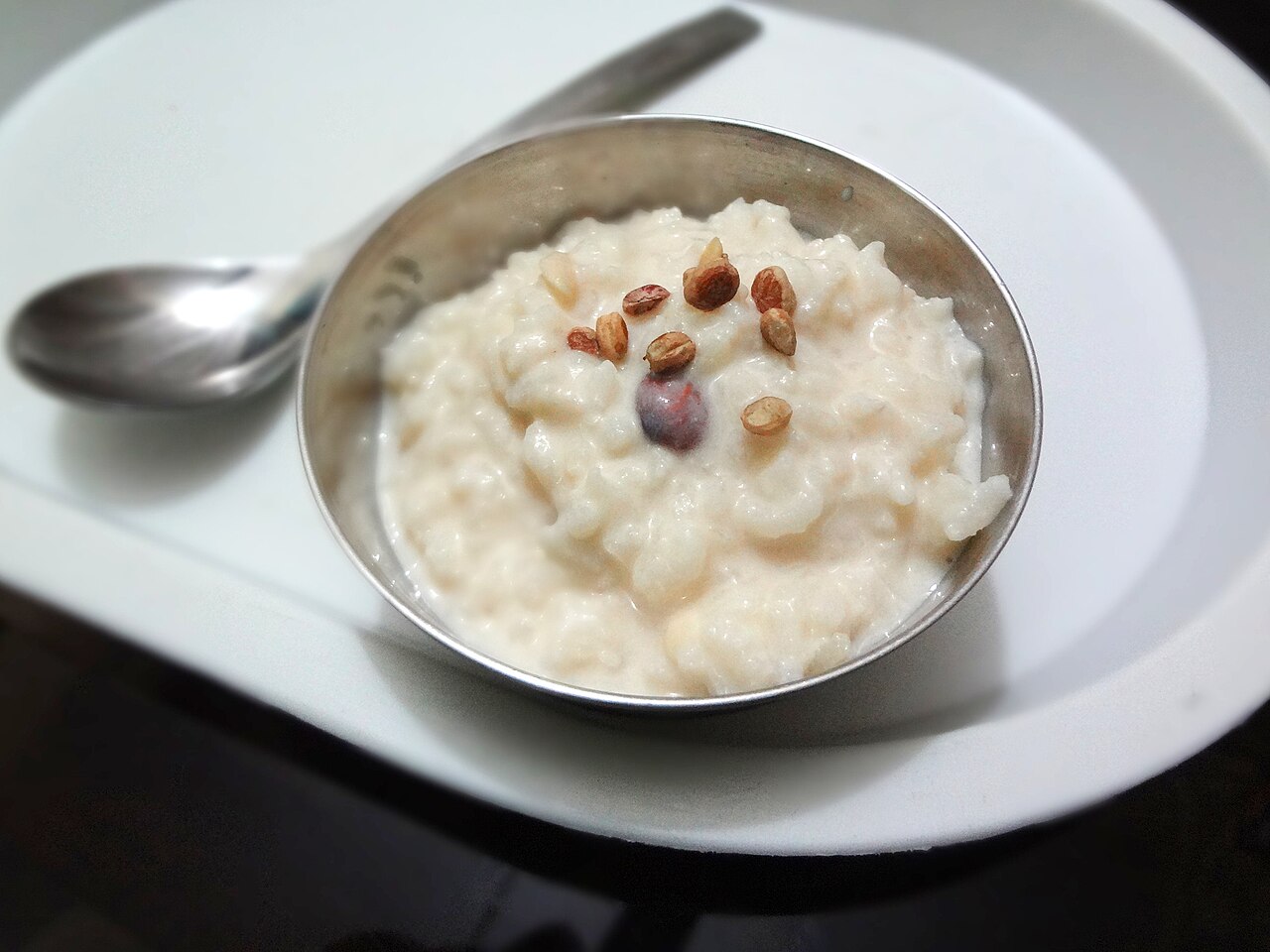
A creamy rice pudding flavoured with lemon peel and enriched with egg yolks, served cold with patterns of ground cinnamon drawn on top.
See the recipe
Serves 6
1 h 10 min
Ingredients
200 g short-grain rice
400 ml water
A pinch of salt
Peel of 1 lemon, in wide strips
1 litre whole milk, warmed
200 g sugar
3 egg yolks
Ground cinnamon, to decorate
Method
Cook the rice in the water with the salt and lemon peel until the water is almost all absorbed, about 10 minutes.
Add the warm milk a ladle at a time and simmer gently, stirring often, for about 30 minutes, until the rice is soft and creamy.
Stir in the sugar until it dissolves, then take the pan off the heat and remove the lemon peel.
Beat the egg yolks with a few spoonfuls of the hot rice, then stir them into the pan. Cook over low heat for 2 to 3 minutes, stirring, until thick, so the yolks are fully cooked.
Pour into a serving dish, let it cool and draw a lattice of ground cinnamon on top.
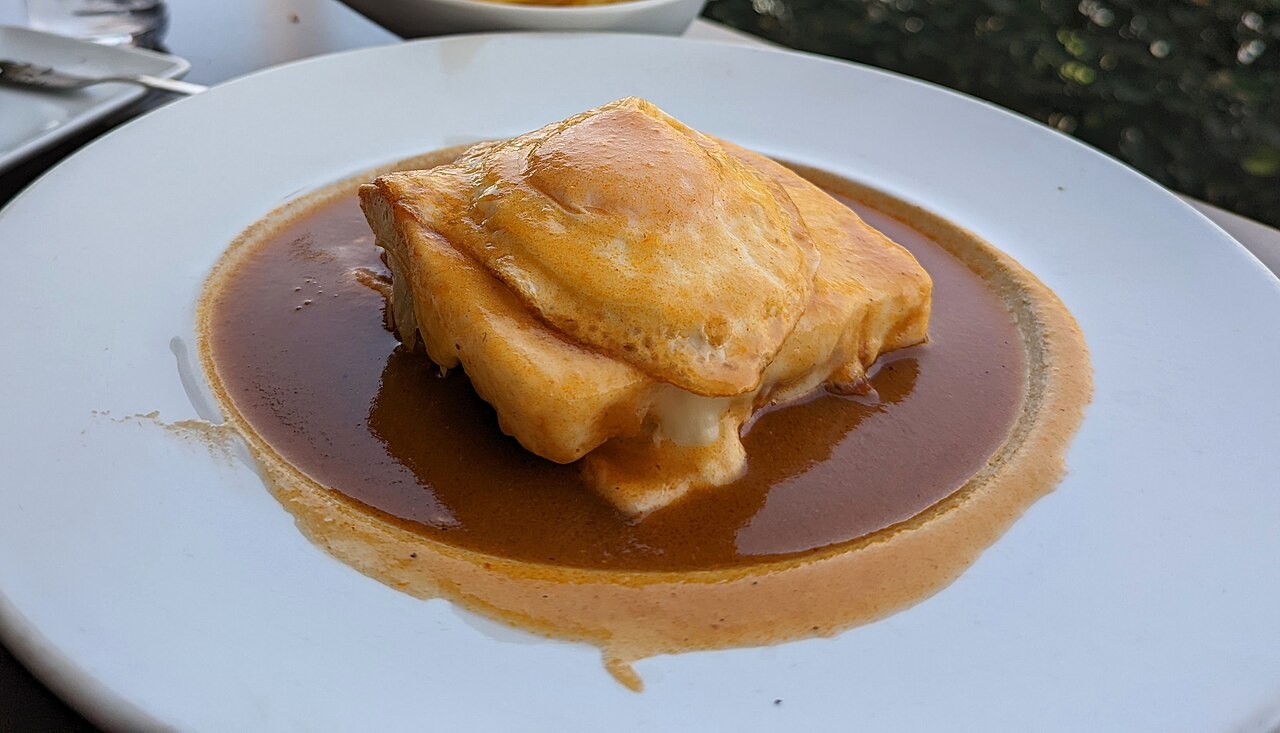
A towering sandwich of bread, steak, ham and sausage, covered in melted cheese and a hot tomato and beer sauce, usually with chips on the side.
The name means 'little French girl'. It is said to have been created in 1953 by Daniel David de Silva, who came home from France and adapted the croque monsieur to Portuguese tastes.
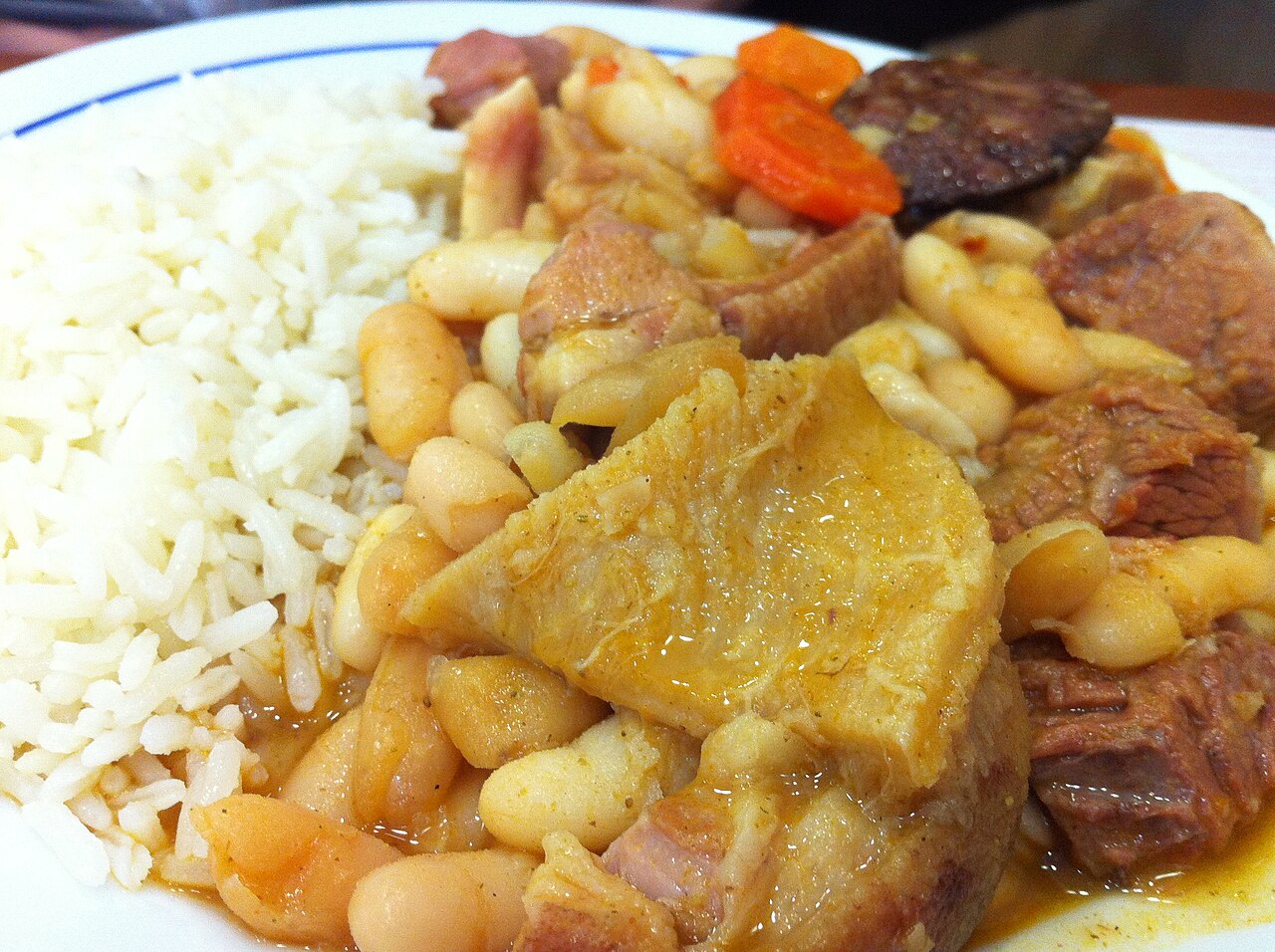
A hearty stew of tripe with white beans, sausage and carrots, served with rice.
Legend says that in 1415 Porto gave all its good meat to the fleet sailing to conquer Ceuta and kept only the tripe. People from Porto are still nicknamed 'tripeiros', tripe eaters.
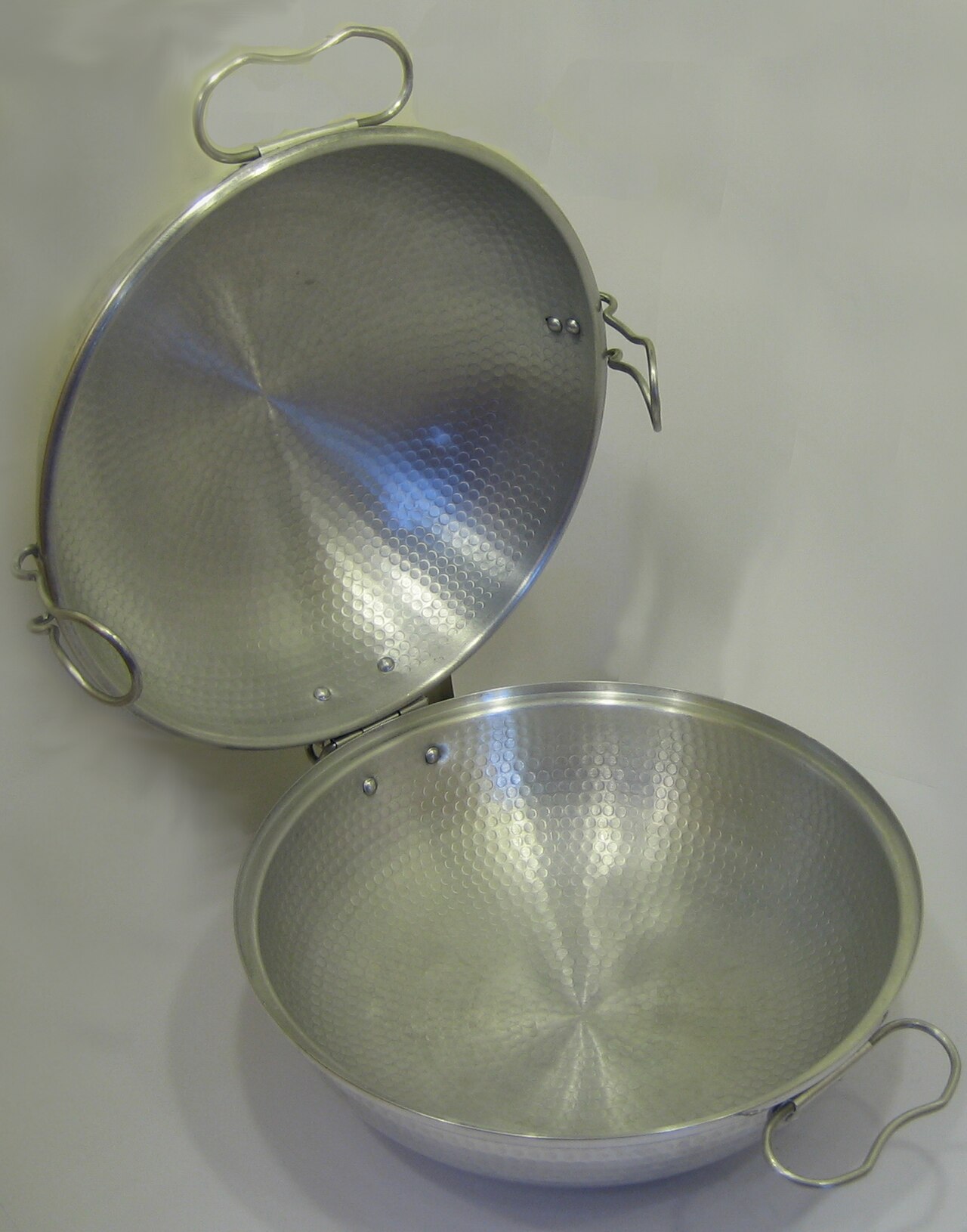
Clams, prawns, fish or pork cooked with onion, peppers, tomato, garlic and white wine in a cataplana, a hinged copper pan shaped like two clam shells that closes tightly and steams the food.
The dish takes its name from the pan. The best known version is clams in cataplana.
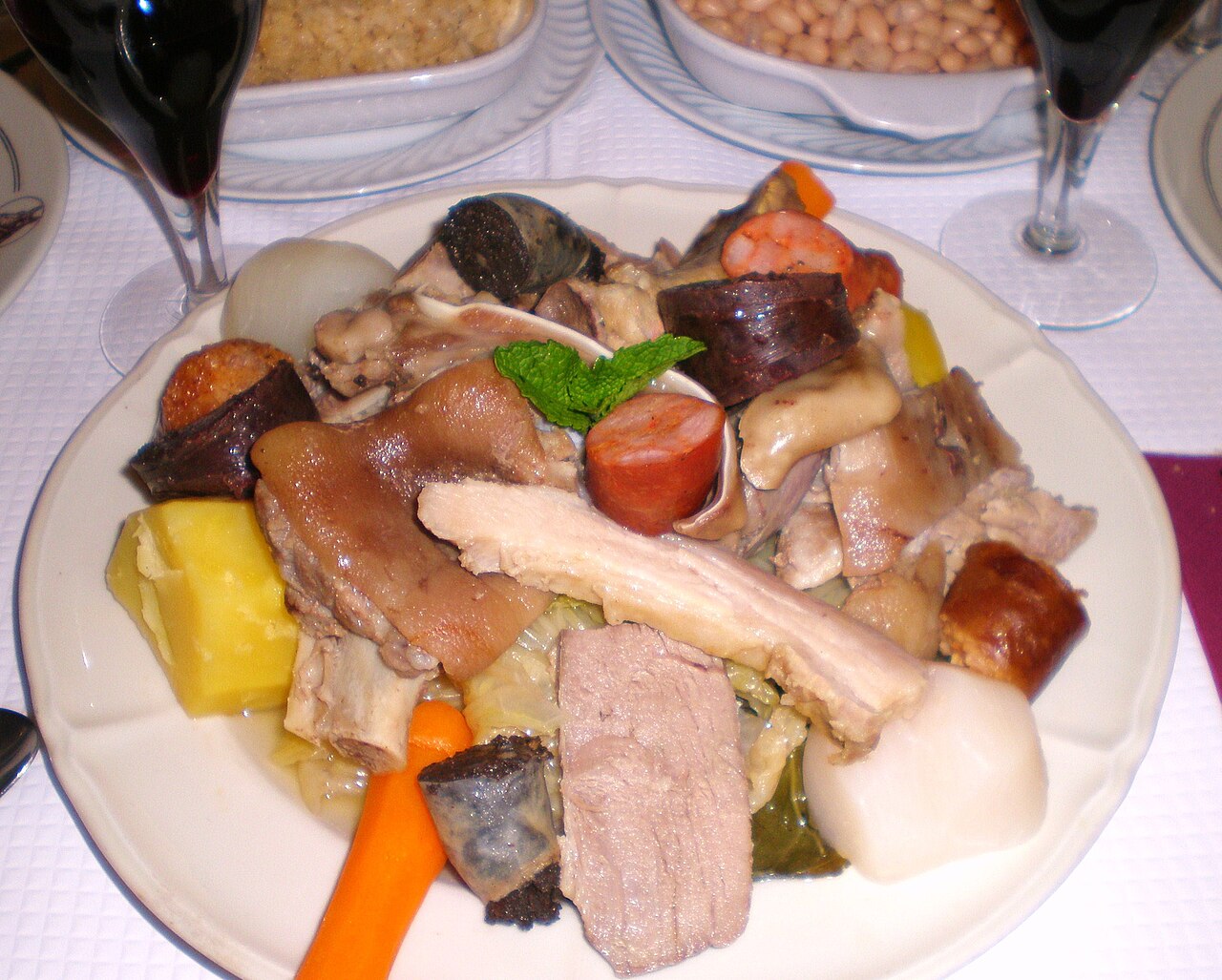
A big boiled dinner of several meats and smoked sausages with cabbage, potatoes, carrots and turnips, a winter favourite and one of the national dishes.
On São Miguel island in the Azores, a local version is cooked in pots buried in the hot volcanic ground.
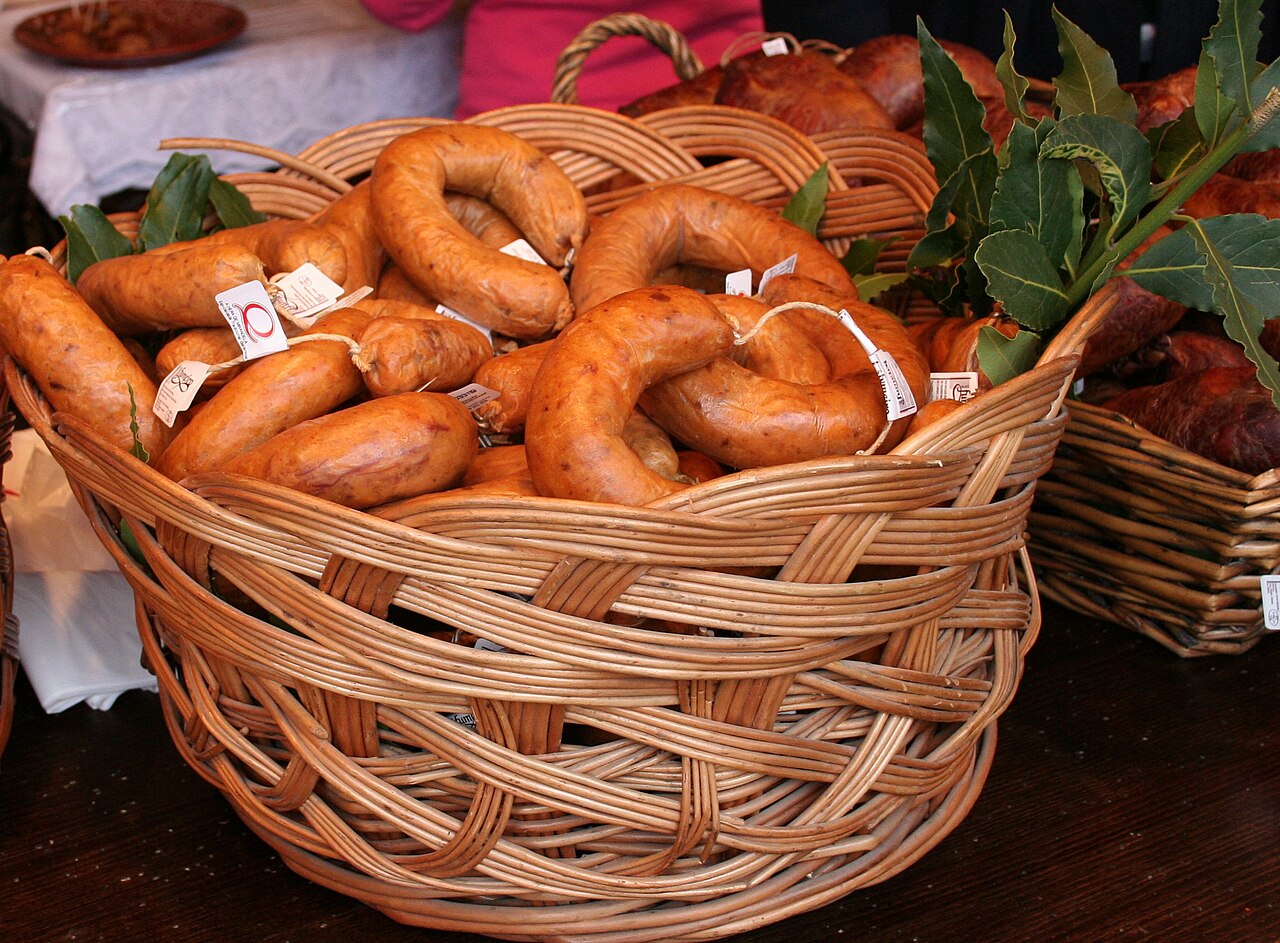
A soft smoked sausage of bread and garlic mixed with meat, traditionally poultry or game. Most alheiras today, including the protected Alheira de Mirandela, also contain pork. It is usually fried and served with chips and a fried egg.
According to a well-known story, it was invented by Jews forced to convert in the 1490s, who hung pork-free sausages in their smokehouses so that they would not be noticed.
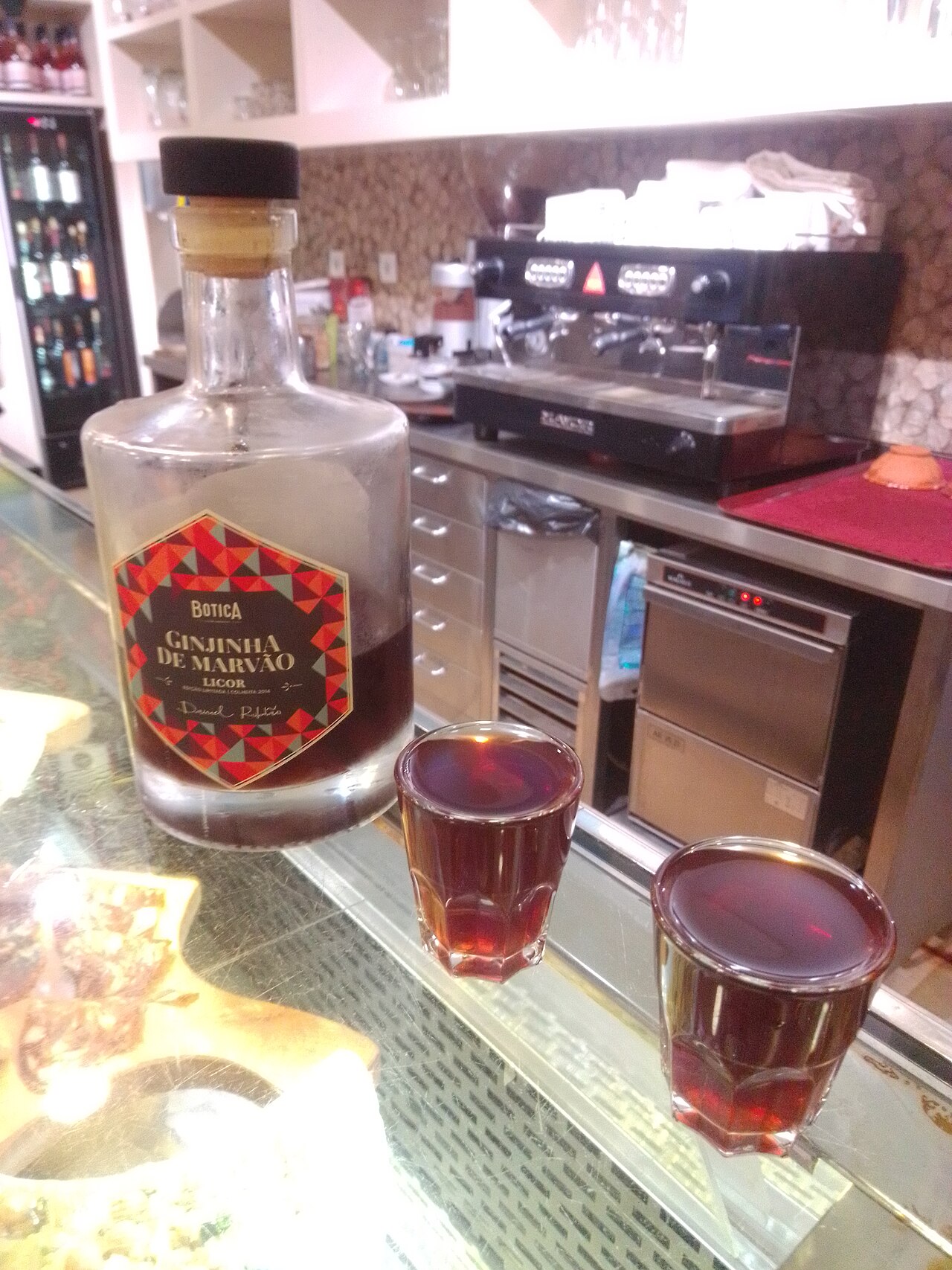
A sweet sour-cherry liqueur served in a small shot glass, often with a cherry at the bottom.
In Óbidos it is often served in a little cup made of chocolate that you eat afterwards.
Table manners
Lunch is usually between noon and about 2:30 pm, and dinner between about 7:30 and 10:30 pm.
Bread, olives, cheese or other starters (the 'couvert') are often put on the table without being ordered. You pay for them only if you eat them, so send them back if you do not want them.
Restaurants must offer free tap water to their customers.
Say 'Bom apetite' to wish people a good meal before eating.
A meal usually ends with a small, strong coffee. Ask for 'um café' and you get an espresso.
Most Portuguese live near the coast, in and around Lisbon and Porto. Inland and in the south are smaller historic towns, each with its own castle, cathedral and pastries.
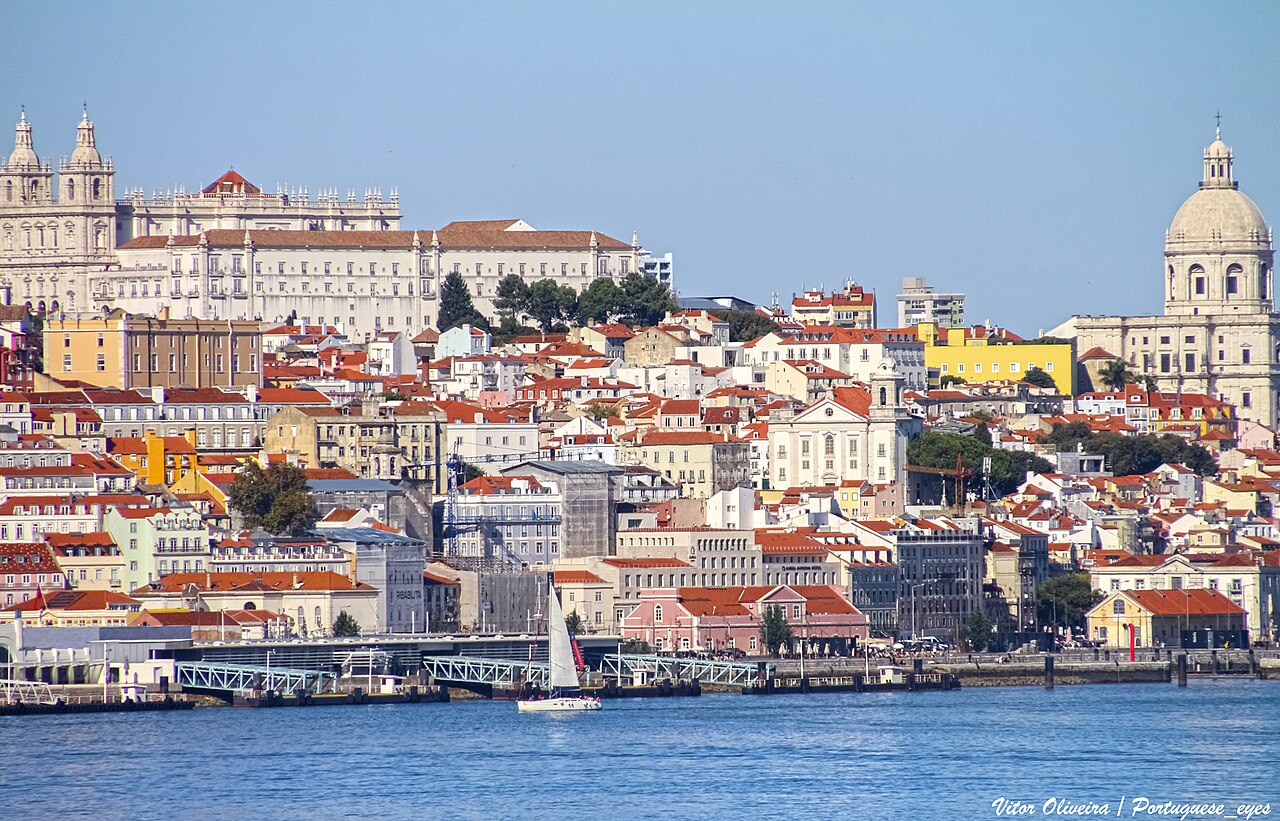
The capital since 1255, built on steep hills above the wide mouth of the Tagus. It is the westernmost capital of mainland Europe, famous for its old yellow trams, tiled façades and fado music.
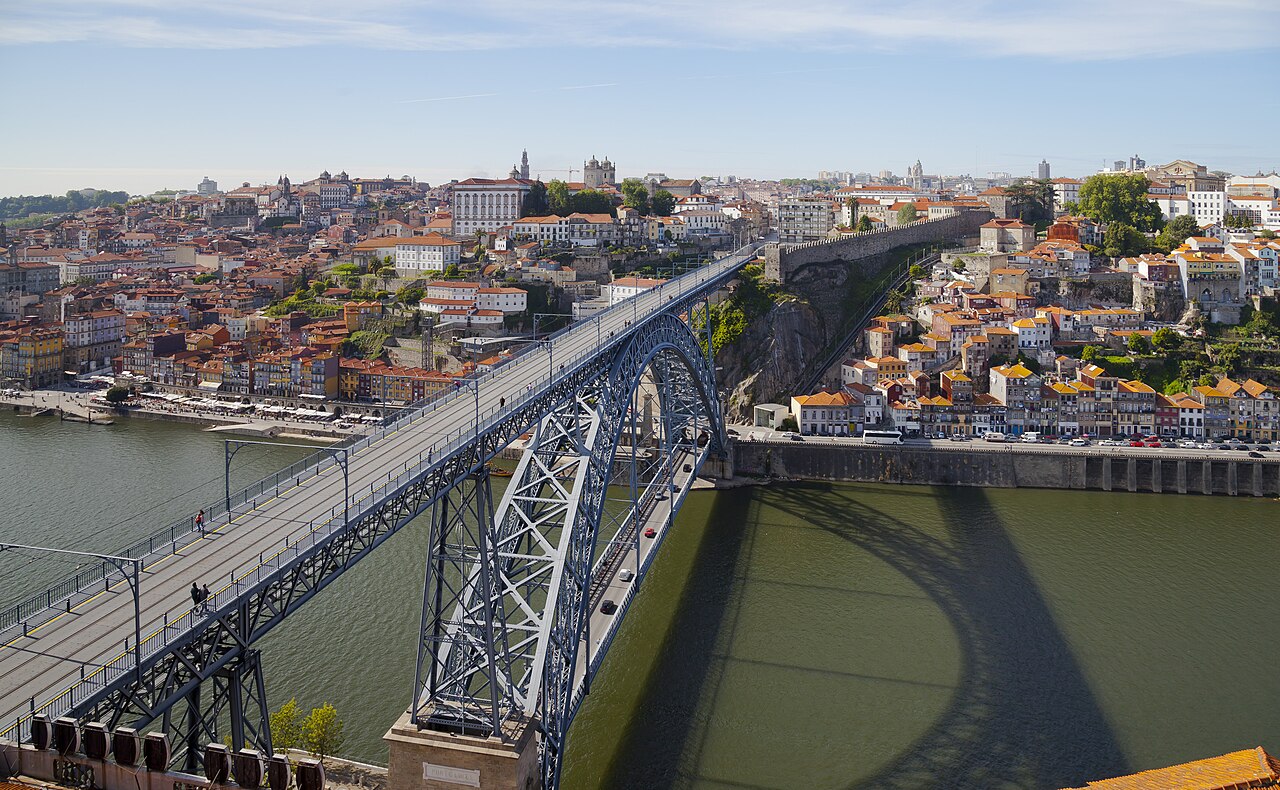
Portugal's second city, climbing the steep bank of the Douro River near the sea. Its historic centre is a UNESCO World Heritage Site, and it gave its name to both port wine and Portugal.
Port wine lodges across the river in Vila Nova de Gaia
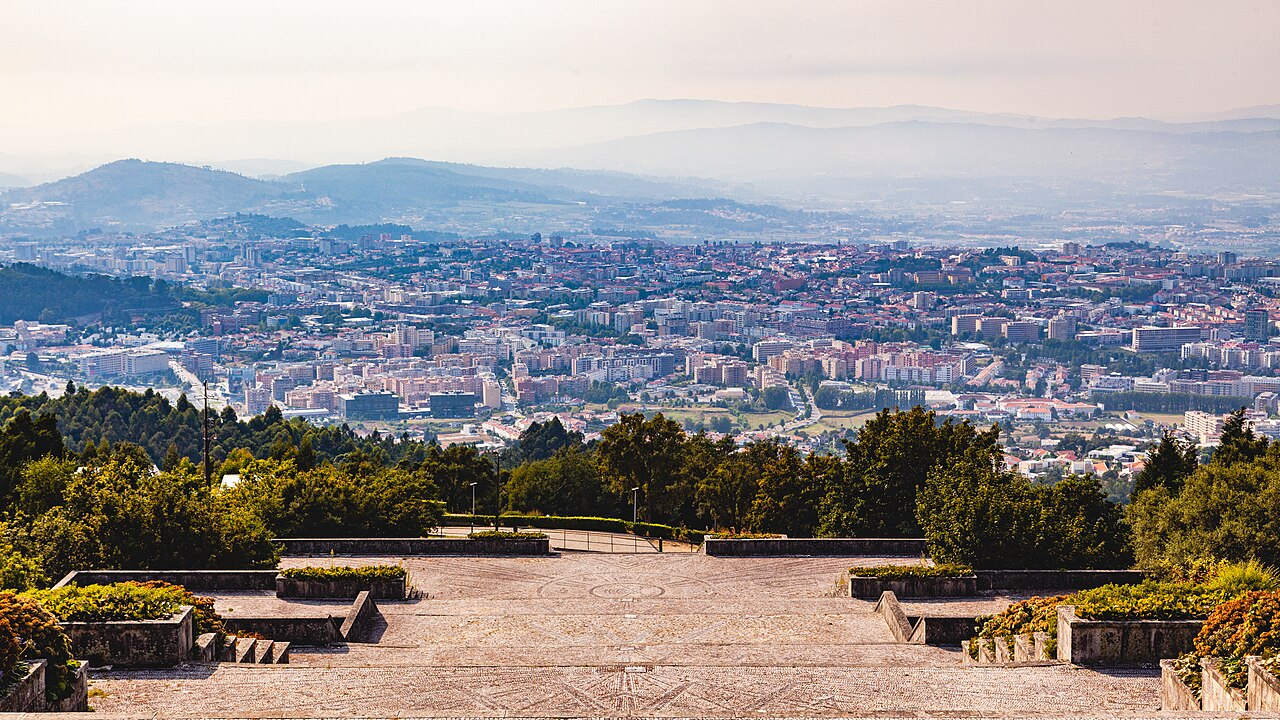
One of the oldest cities in Portugal, founded by the Romans as Bracara Augusta. Its archbishops were so important that it is called the 'Rome of Portugal'.
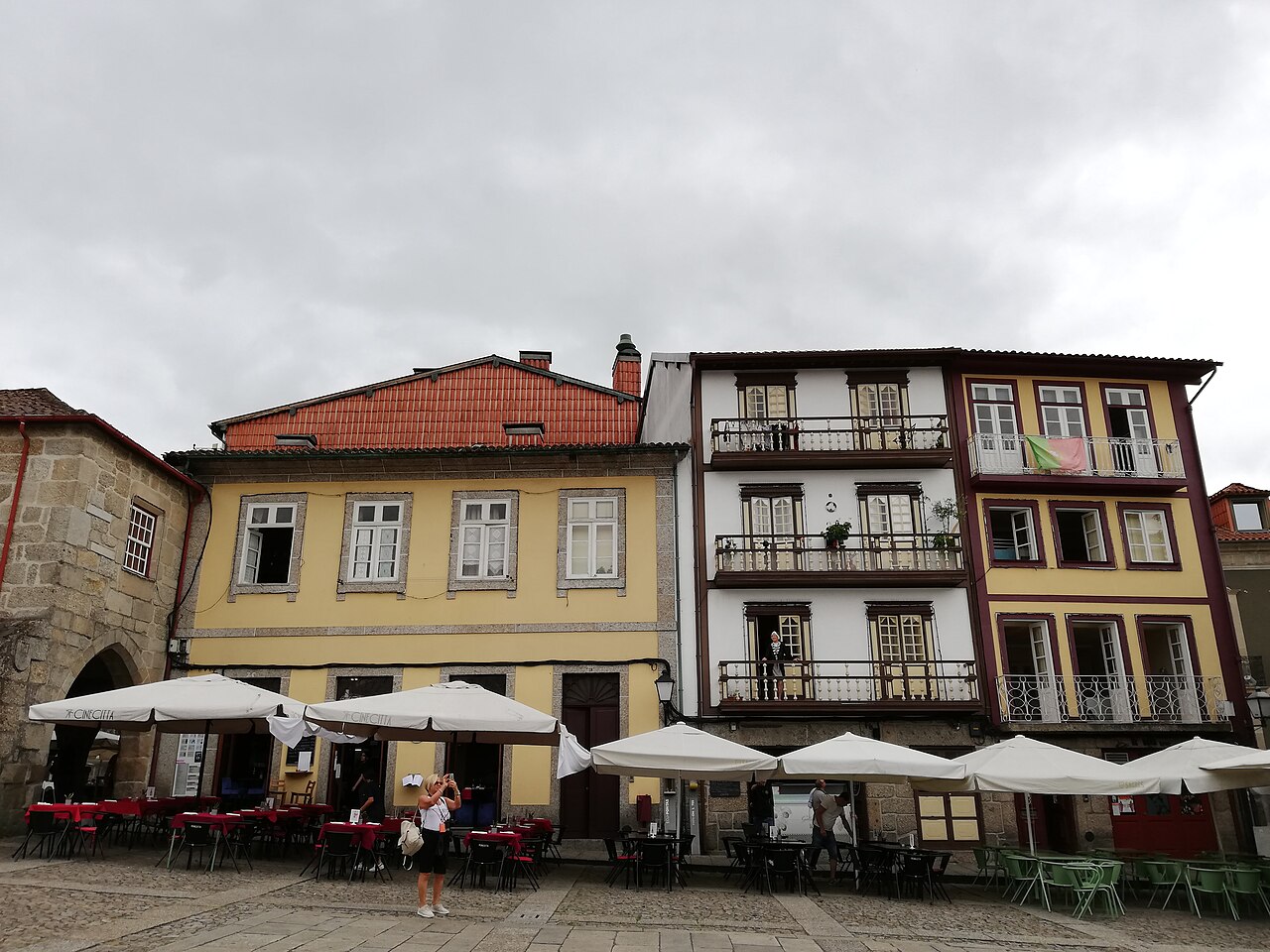
Known as the 'birthplace of Portugal': the Battle of São Mamede, fought near here in 1128, set Afonso Henriques on the road to becoming the first king. The words 'Aqui nasceu Portugal' (Portugal was born here) are written on a tower of its old walls.
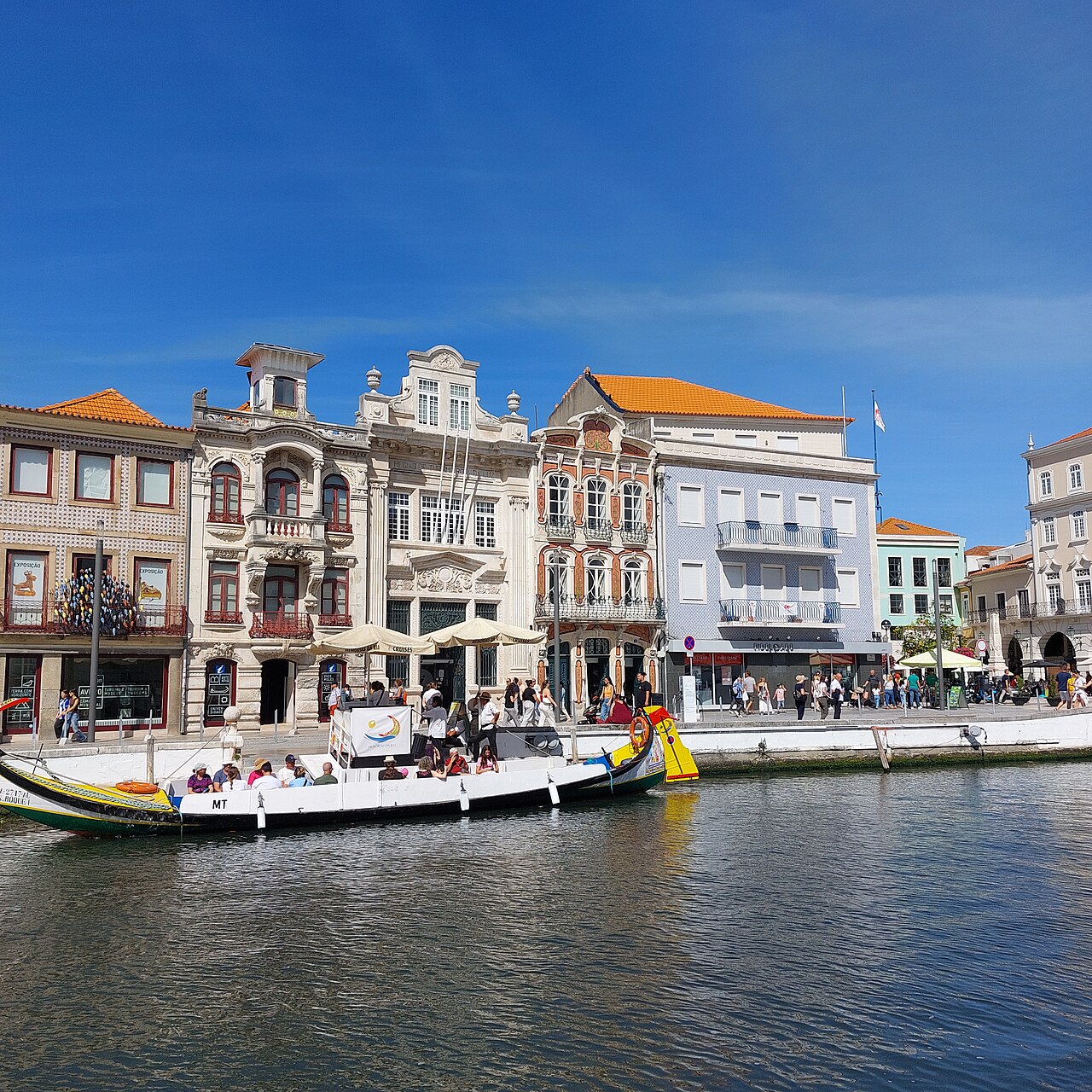
A town of canals on a coastal lagoon, often called the 'Venice of Portugal'. Colourful moliceiro boats, once used to gather seaweed, now carry visitors along the canals.
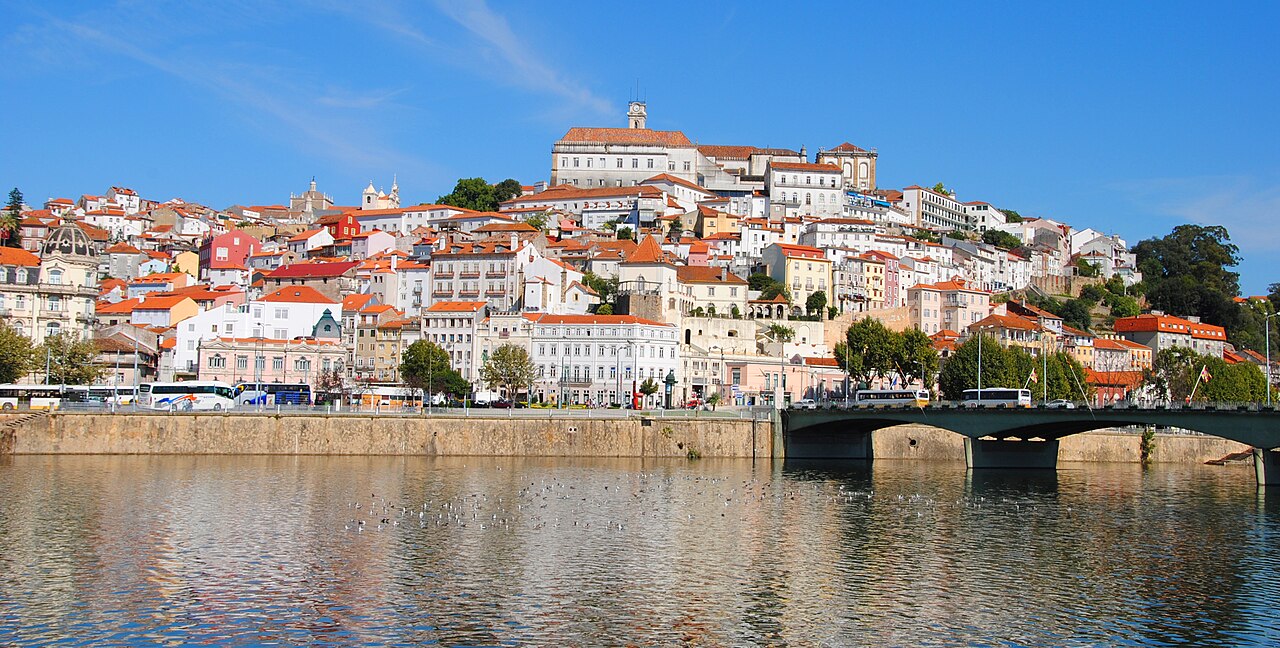
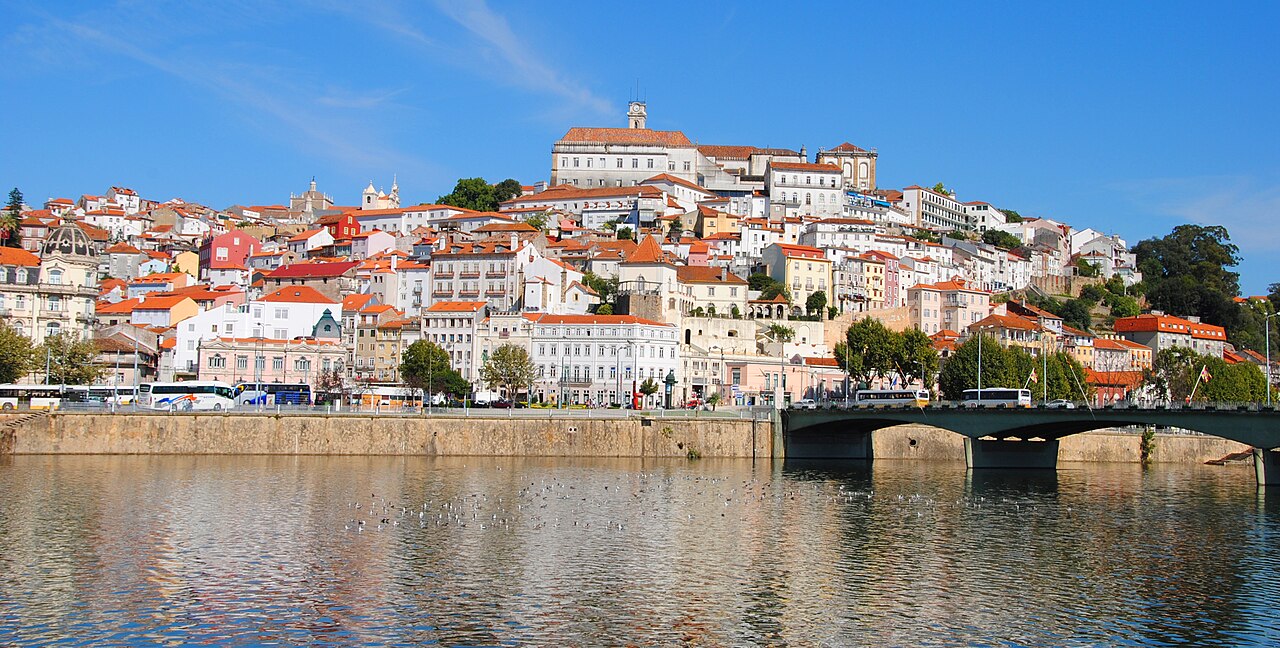
Portugal's capital from 1131 to 1255, on a hill above the Mondego River. It is home to the oldest university in Portugal, and its students still wear long black capes.
The University of Coimbra
Coimbra fado, sung by students in black capes
The tomb of the first king in the Santa Cruz Monastery
A romantic hill town less than 30 km west of Lisbon, where kings and nobles built palaces and gardens in the cool, misty forest. Lord Byron called it a 'glorious Eden'.
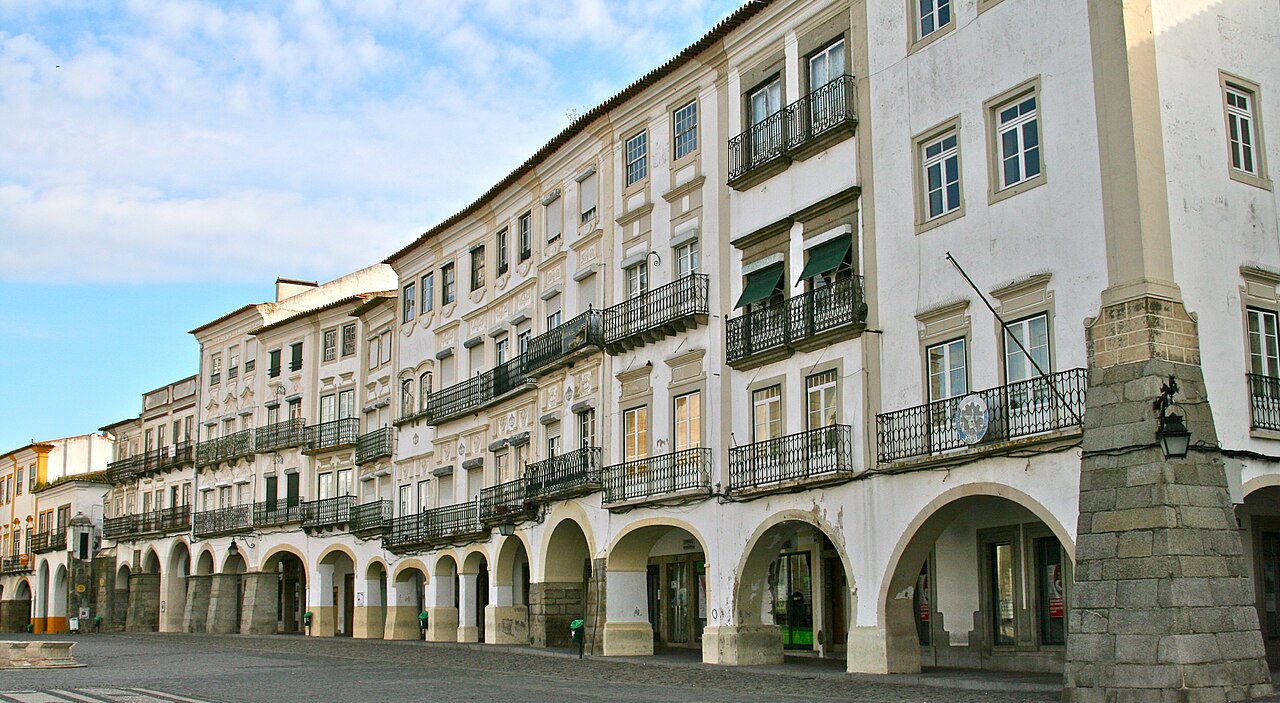
The historic capital of the Alentejo, an inland walled city of whitewashed houses, about 140 km from Lisbon. It is one of Portugal's hottest cities in summer and a European Capital of Culture for 2027.
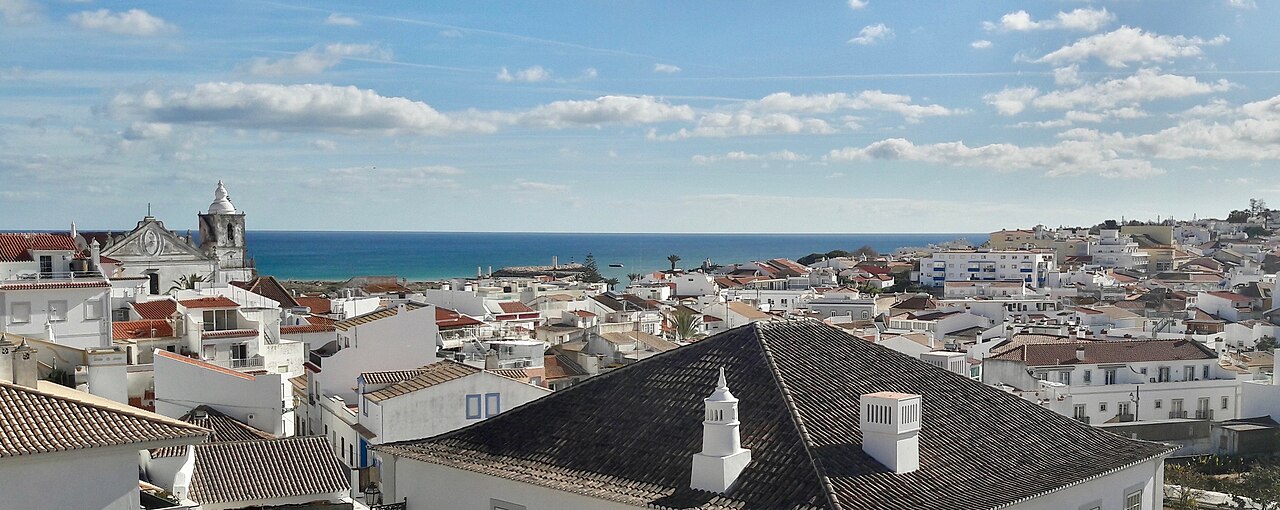
A lively seaside town in the western Algarve. In the 1400s it was a base for the voyages along the coast of Africa organised by Prince Henry the Navigator.
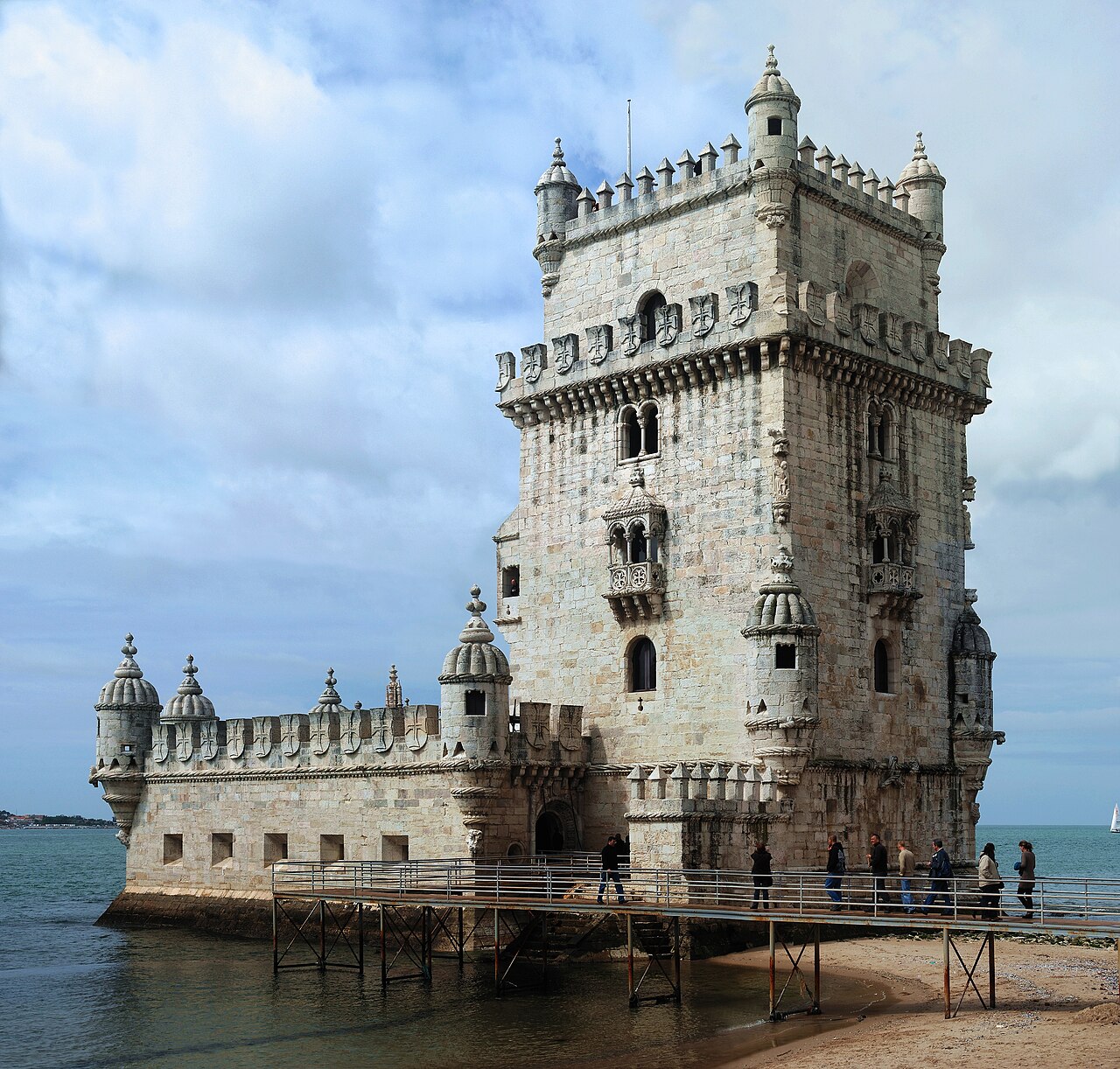
A small fortress of white stone built around 1514 to 1519 on the Tagus, where explorers set out and returned. Among its carvings is a rhinoceros, thought to be the first sculpture of the animal in Western European art. It is part of a World Heritage Site with the Jerónimos Monastery.
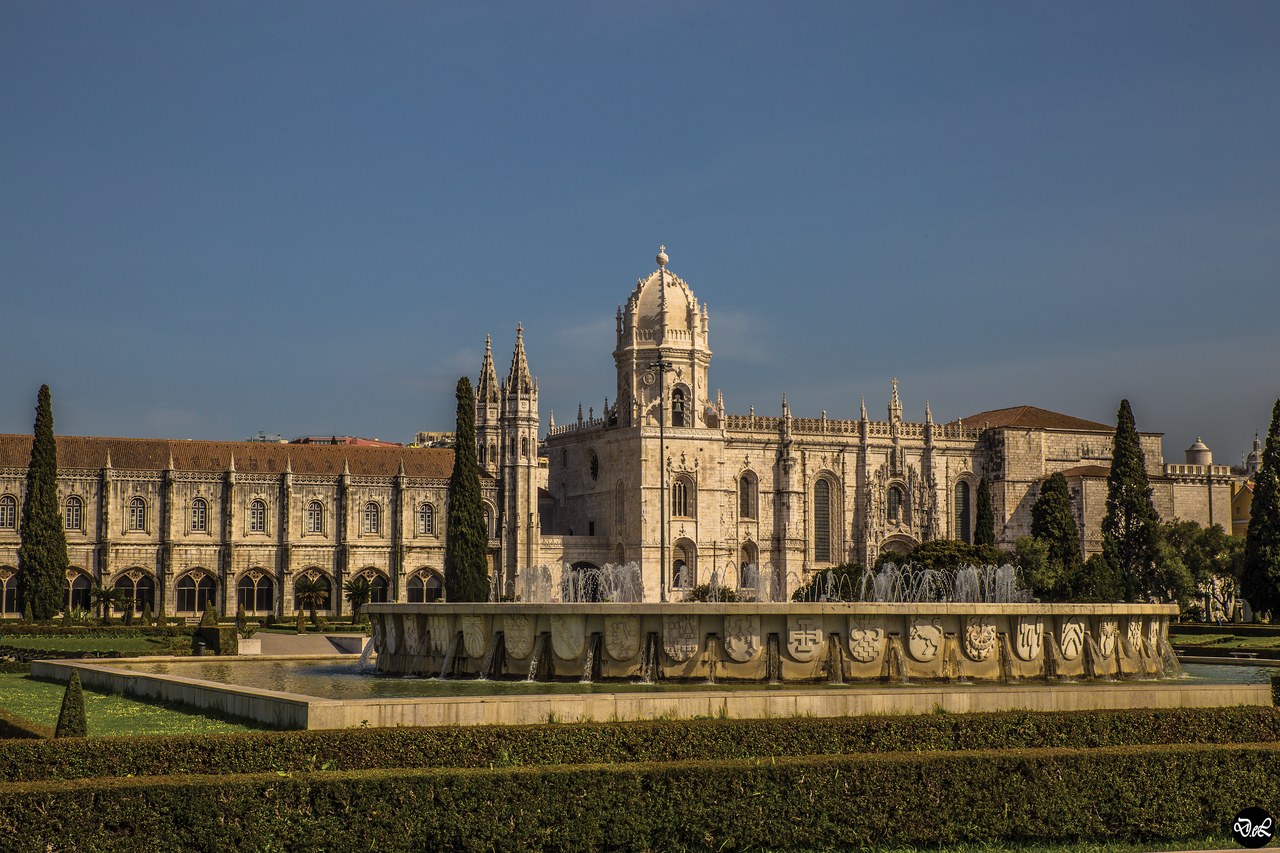
A huge monastery begun in 1501 by King Manuel I at the height of the spice trade. It is the masterpiece of the Manueline style, carved with ropes and sea motifs, and holds the tombs of Vasco da Gama and the poet Luís de Camões.
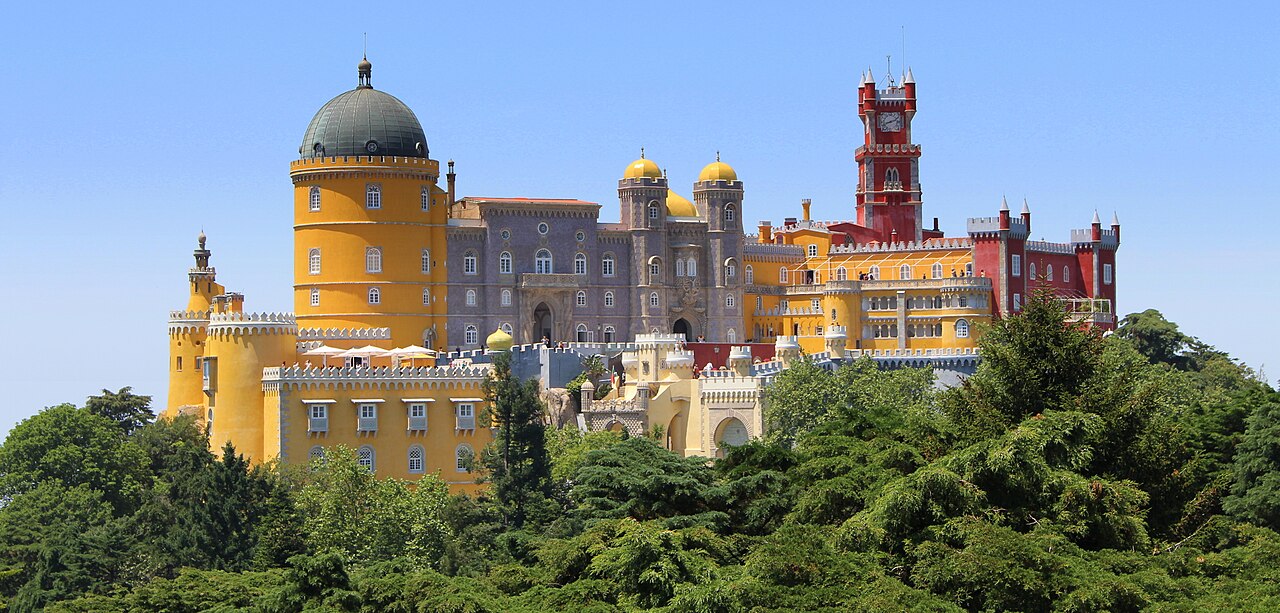
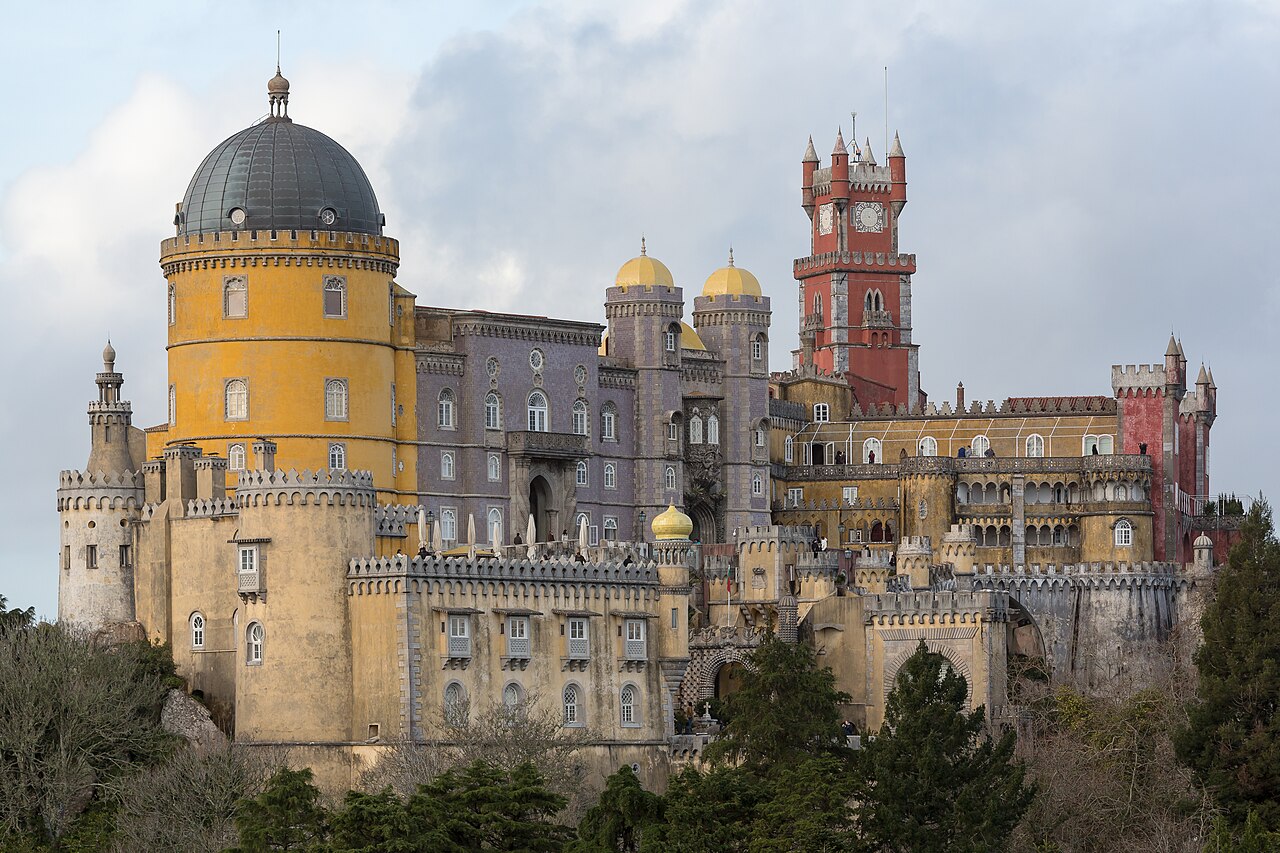
A fairy-tale palace of red and yellow towers on a hilltop above Sintra, built from 1842 to 1854 for King Ferdinand II on the site of an old monastery. It mixes Gothic, Manueline and Islamic styles and is part of the Cultural Landscape of Sintra.
Founded in 1290 and settled in Coimbra for good in 1537, it is the oldest university in Portugal. Its old royal palace and the richly gilded Joanina Library, founded in 1717, sit at the top of the hill.
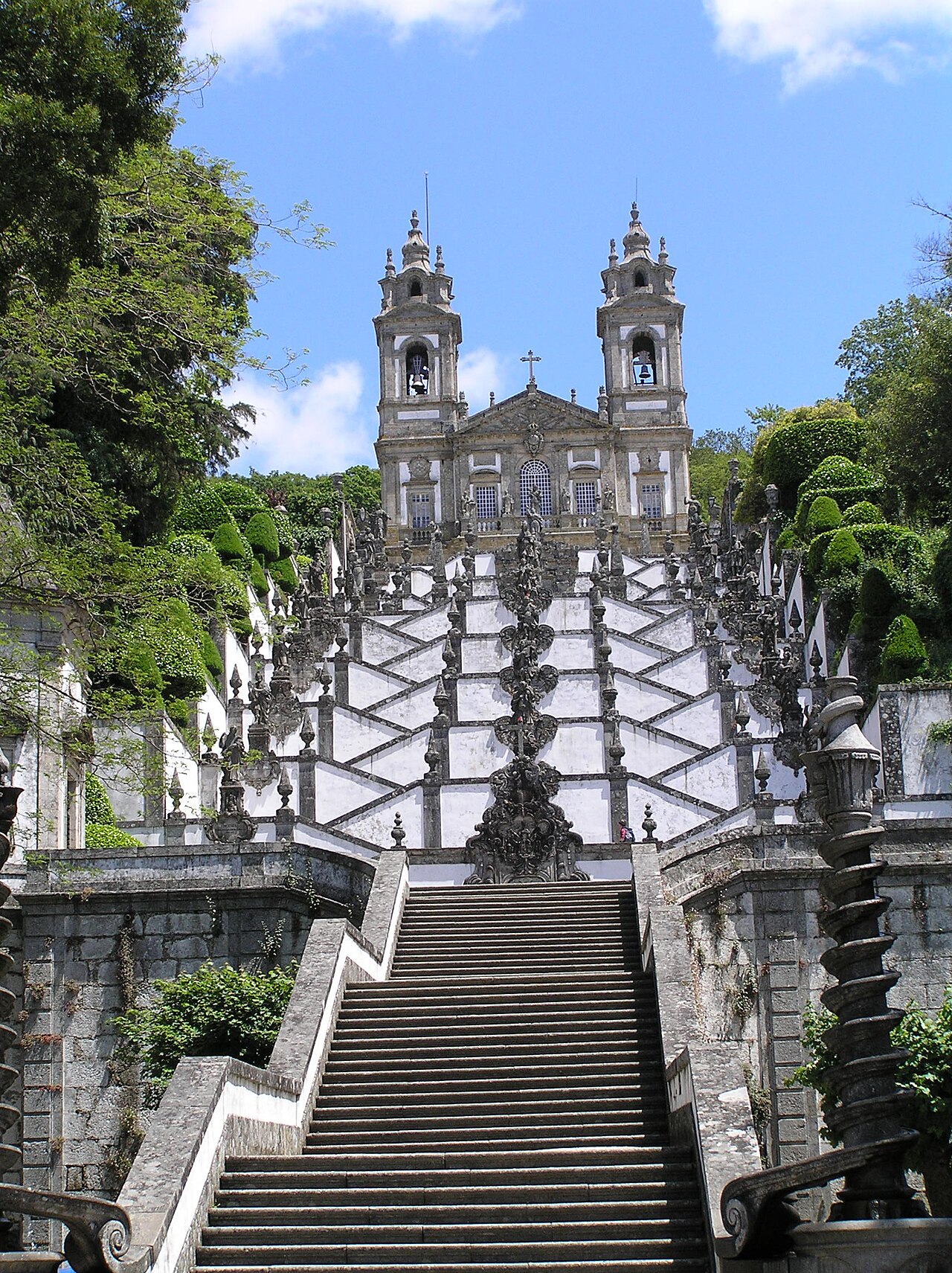
A hilltop sanctuary just outside Braga, reached by a great zigzag Baroque stairway of 583 steps, climbed by pilgrims. A funicular railway worked by water, opened in 1882, also carries visitors up.
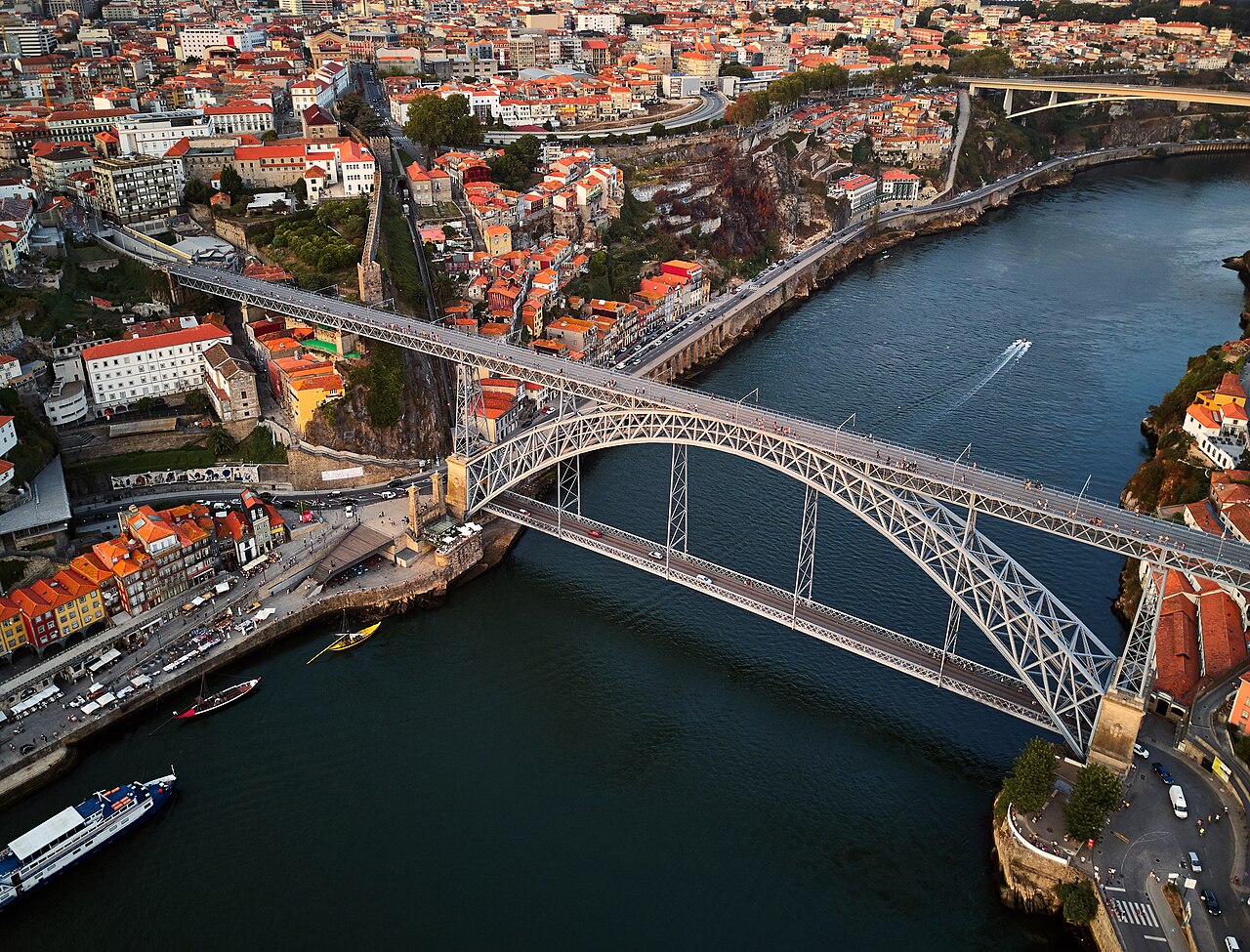
An iron arch bridge with two decks over the Douro, opened in 1886 and designed by Théophile Seyrig, a former partner of Gustave Eiffel. Metro trains and walkers cross the top deck, and buses, bicycles and walkers use the lower one.
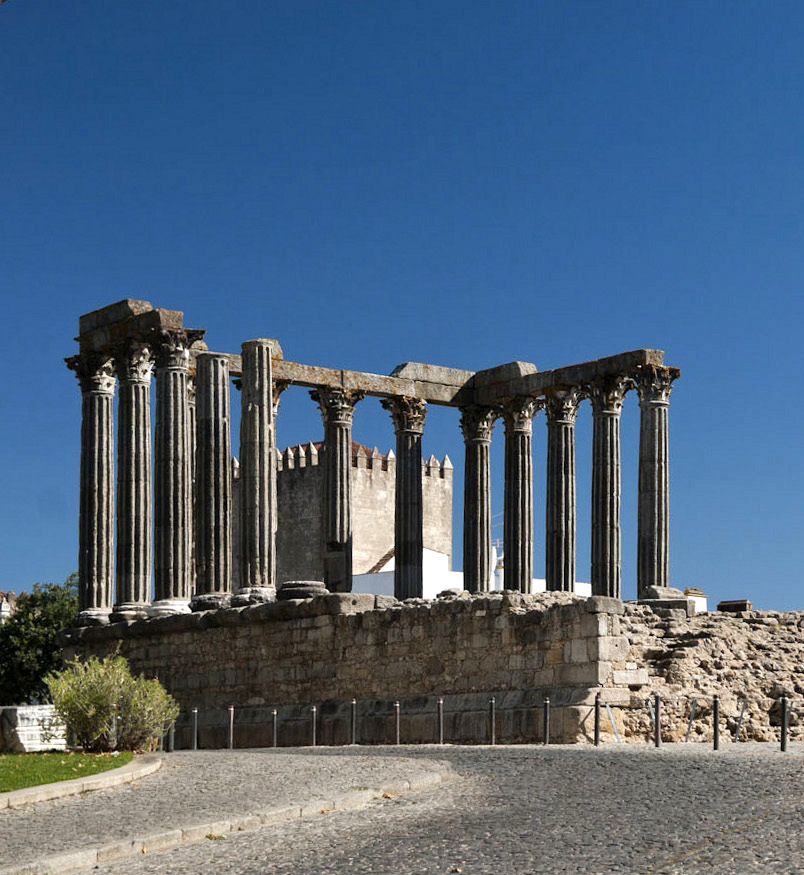
The granite columns of a temple built in the 1st century AD, probably in honour of the emperor Augustus. It is often called the Temple of Diana, but that name comes from a later legend. It survived partly because it was used as a butcher's shop from the 1300s until 1836.
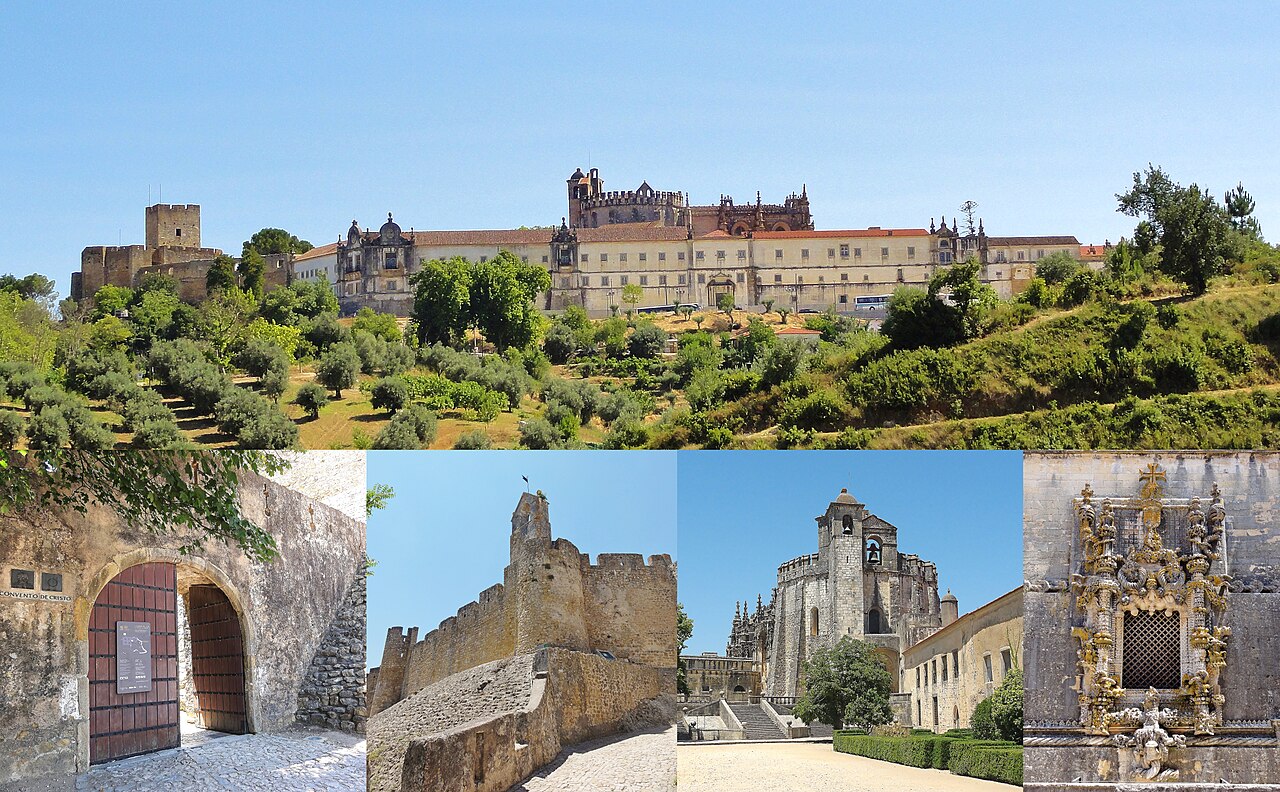
A castle founded by the Knights Templar around 1160, later the headquarters of the Order of Christ, which helped pay for the voyages of discovery. It has a round Templar church and a famous window carved with ropes, coral and seaweed.
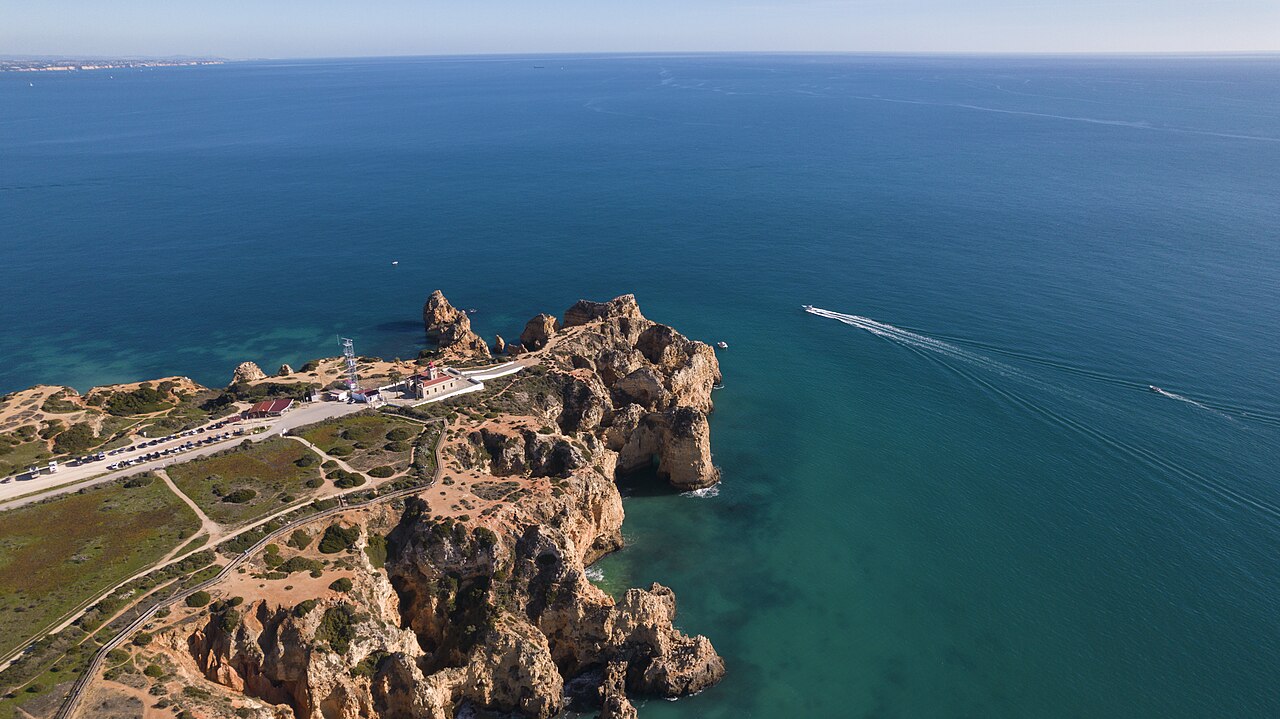
A headland of golden cliffs, sea stacks, arches and grottoes just south of Lagos, with a lighthouse built in 1913. Small boats take visitors into the caves.
Portugal and England (today the United Kingdom) have the oldest alliance in the world that is still in force, sealed by the Treaty of Windsor in 1386.
02
Portugal produces about half of the world's cork. The bark of the cork oak is stripped by hand about every nine years, and the tree is never cut down for it.
03
Guinness World Records lists Livraria Bertrand in Lisbon, founded in 1732, as the oldest operating bookshop in the world.
04
Giant waves at Nazaré, pushed up by a deep underwater canyon, draw surfers from all over the world. As of 2026, the Guinness world record for the biggest wave surfed is a wave of about 26 metres ridden there in 2020 by the German surfer Sebastian Steudtner.
05
Japanese tempura is thought to come from 'peixinhos da horta', green beans fried in batter, brought to Japan by Portuguese missionaries in the 1500s.
06
Catherine of Braganza, a Portuguese princess who married King Charles II in 1662, is credited with making tea drinking fashionable in England. Her dowry included Bombay (today Mumbai).
07
Portuguese is the fifth most spoken native language in the world. Far more people speak it in Brazil than in Portugal.
08
Portuguese children usually carry their mother's surname before their father's, the opposite order to Spain.
09
Fado, the soulful song of Lisbon, was added to UNESCO's list of intangible heritage in 2011. The word comes from the Latin 'fatum', fate.
10
Lisbon's 25 de Abril Bridge is painted the same 'International Orange' as the Golden Gate Bridge. It opened in 1966 as the Salazar Bridge and was renamed after the revolution of 1974.
11
The colourful Rooster of Barcelos, a favourite souvenir, comes from a legend about a roasted rooster that stood up and crowed to prove a pilgrim innocent.
12
Portugal's national day, 10 June, marks the death in 1580 of Luís de Camões, the poet of the great sea epic 'The Lusiads'.
Bread, butter, olives or cheese are often brought to the table before you order. They are not free, but you pay only if you eat them. If you do not want them, ask the waiter to take them away.
Tap water is free
Restaurants must offer free tap water, in clean reusable glasses, to customers who are eating or drinking there.
Tipping
Service is included in restaurant bills, but it is customary to leave about 5 to 10 percent for good service. In taxis, people tip about 5 to 10 percent or round up to the nearest euro.
Wear shoes with good grip
Lisbon and Porto are very hilly, and the beautiful pavements of small polished stones, the 'calçada', can be slippery, especially when wet.
Meal times
Restaurants usually serve lunch from noon to about 2:30 or 3 pm and dinner from about 7:30 to 10:30 pm. Shops traditionally open from 9 or 10 am to 7 pm on weekdays, and shopping centres stay open until late every day.
Portuguese, not Spanish
Portuguese is a different language from Spanish, and people appreciate it when visitors try a few words of Portuguese. Many Portuguese speak good English.
Coffee like a local
'Um café' gets you a small, strong espresso, drunk standing at the counter. In Lisbon it is often called a 'bica'.
Emergencies and pharmacies
The emergency number is 112. Pharmacies are marked with a green cross and usually open on weekdays from 9 am to 7 pm, and on Saturday mornings.
 Spain
Spain