A free large-print PDF. Choose what goes in: facts, map, history, dishes and recipes, phrases, fun facts, a quiz with or without answers. Made for clubs, care homes, libraries and family afternoons.
Peru lies on the Pacific coast of South America. It has three very different parts: a narrow desert coast, where most people live; the high Andes mountains down the middle; and the Amazon rainforest in the east, which covers more than half of the country. Lima, the capital, stands on the dry coast, where rain is extremely rare.
People have lived here for more than 14,000 years. Caral, one of the oldest cities in the Americas, was built more than 4,500 years ago, and later came the Chavín, Nazca and Moche cultures. In the 1400s the Incas, ruling from Cusco, built the largest empire in the Americas before the Europeans arrived. Spain conquered it in the 1530s, and Peru declared its independence in 1821.
Today Peru is a republic of about 34 million people. Most speak Spanish, and millions also speak Quechua, the language of the Incas, or Aymara. Visitors come for Machu Picchu, the Nazca Lines and Lake Titicaca, and more and more for the food: ceviche, potatoes of every colour, and dishes shaped by Spanish, African, Chinese and Japanese cooks.
CapitalLima
PopulationAbout 34 million (2025 national census, INEI)
Official languageSpanish, and in the areas where they predominate, Quechua, Aymara and the other Indigenous languages (constitution of 1993)
CurrencyPeruvian sol (PEN)
AreaAbout 1.29 million km², the third largest country in South America
GovernmentRepublic with an elected president, divided into 25 regions
Highest mountainHuascarán (southern summit), 6,768 m, the highest point in the Earth's tropics
Longest riverThe Amazon. Its main headwaters, the Ucayali and the Marañón, rise in the Peruvian Andes and meet upstream of Iquitos
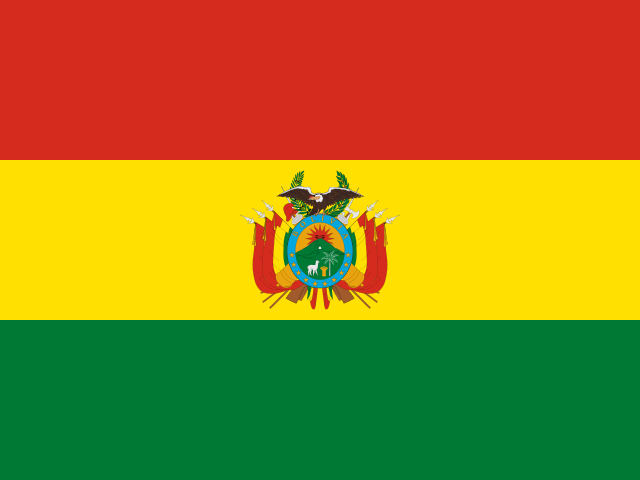
NeighboursEcuador, Colombia, Brazil, Bolivia and Chile. The longest border is with Brazil
Peru has one of the longest histories of civilisation in the world. Long before the Incas, peoples such as the Caral, Chavín, Nazca and Moche built temples, cities and irrigation canals. The Incas then created a vast empire from Cusco, until Spanish conquerors arrived in 1532. For almost three centuries Lima was the capital of the Viceroyalty of Peru, for a long time the heart of Spain's South American empire. Peru became independent in the 1820s and has been a republic ever since.
2600 BC
Caral rises in the Supe Valley
From about 2600 BC, people in the Supe Valley, about 180 km north of Lima, built Caral, with stepped pyramids and sunken plazas. It is one of the oldest cities in the Americas, and the Caral culture began about 1,500 years before the Olmecs of Mexico.
1200 BC
Temples rise at Chavín de Huántar
From as early as 1200 BC, the Chavín people built a great temple centre high in the Andes, with stone passages and carved heads. It remained an important religious site until around 500 BC.
100 BC
The Nazca culture flourishes
From about 100 BC the Nazca people lived in the river valleys of the dry southern coast. They made fine painted pottery, dug underground water channels that still work today, and drew many of the famous Nazca Lines in the desert.
AD 100
The Moche flourish on the north coast
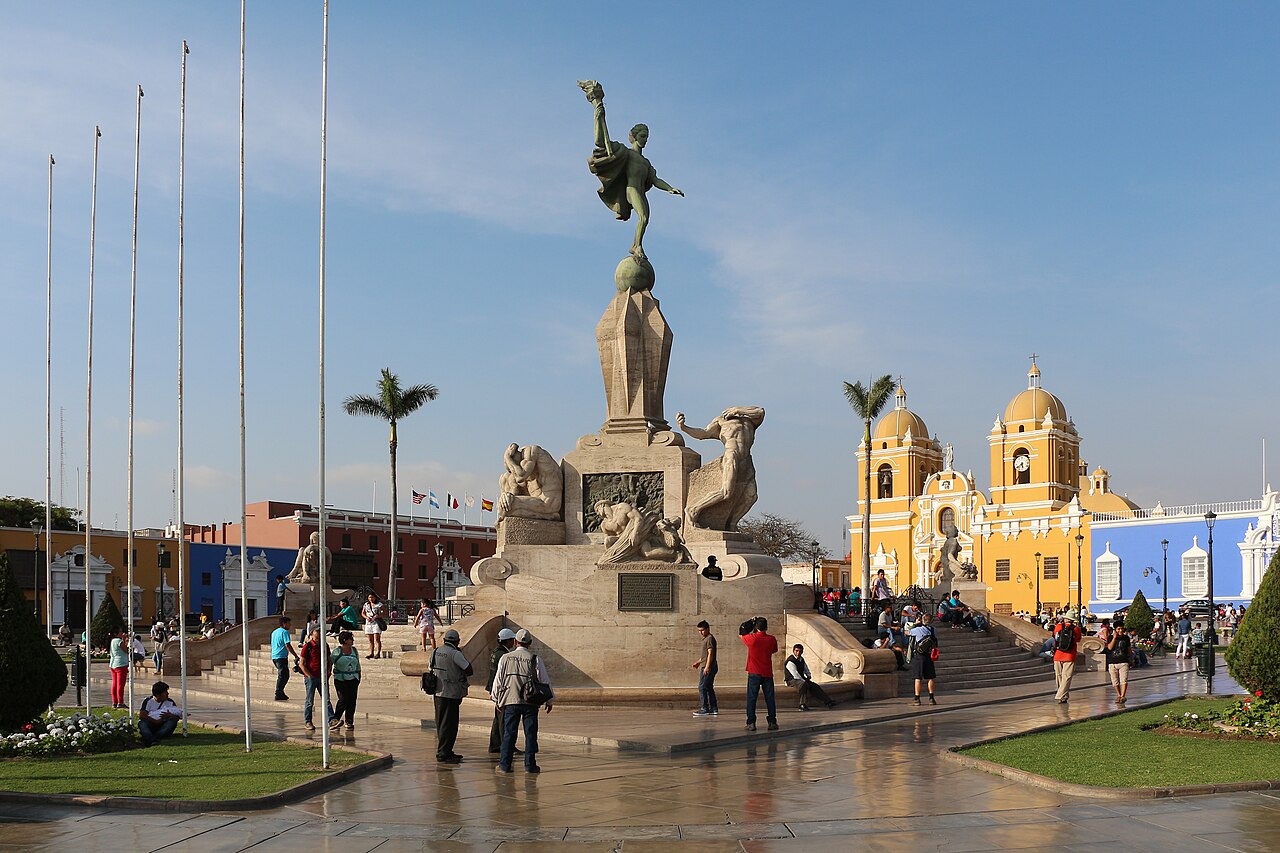
From about AD 100 to 800 the Moche lived in the valleys of northern Peru, near today's Trujillo and Chiclayo. They are famous for lifelike painted pottery, fine gold work, great adobe temples called huacas and clever irrigation.
1438
Pachacuti becomes Sapa Inca
According to the traditional dates, Pachacuti became ruler of Cusco in 1438 (some scientists think it was a little earlier). He rebuilt Cusco and turned a small kingdom into the Inca Empire, which he and his son spread along the Andes.
1450
The Incas build Machu Picchu
Around 1450, the Incas built Machu Picchu on a mountain ridge high above the Urubamba River. It was probably a royal estate for Pachacuti. There are no written records of it from the time, because the Incas had no writing as we know it.
1532
Pizarro captures Atahualpa at Cajamarca
On 16 November 1532, the Spanish conqueror Francisco Pizarro and about 170 to 180 men ambushed the Inca emperor Atahualpa in the town square of Cajamarca and took him prisoner. It was the start of the Spanish conquest of the Inca Empire.
1535
Pizarro founds Lima
In January 1535, Pizarro founded a new capital near the coast and called it the City of Kings. Lima grew into the capital of the Viceroyalty of Peru, which for a long time ruled most of Spanish South America.
1551
The University of San Marcos is founded
On 12 May 1551, a royal decree created the University of San Marcos in Lima. It was the first officially founded university in the Americas and is the oldest one that has worked without a break ever since.
1780
Túpac Amaru II leads a great rebellion
In November 1780, José Gabriel Condorcanqui, an Indigenous leader who called himself Túpac Amaru II after the last Inca ruler, rose up against Spanish rule near Cusco. He was captured in April 1781 and executed in Cusco the next month, but the rebellion went on for another two years.
1821
San Martín declares independence
On 28 July 1821, General José de San Martín declared Peru independent in Lima. Peruvians celebrate their national holiday, Fiestas Patrias, on 28 and 29 July.
1824
The Battle of Ayacucho
On 9 December 1824, independence forces led by Antonio José de Sucre, a general of Simón Bolívar, defeated the Spanish royalist army near Ayacucho. The victory sealed Peru's independence and, in practice, ended Spanish rule in South America.
1879
The War of the Pacific begins
In 1879 Chile went to war against Peru and Bolivia over the rich nitrate deserts of the south. By the end of the war in 1884, Peru had lost the province of Tarapacá. A later agreement, in 1929, gave Tacna back to Peru and Arica to Chile.
1911
Hiram Bingham reaches Machu Picchu
On 24 July 1911, local farmers led the American historian Hiram Bingham to Machu Picchu. The site was known to people in the valley, but his articles and photographs made it famous around the world.
1987
The tomb of the Lord of Sipán is found
In 1987, after looters found gold near Chiclayo, the archaeologist Walter Alva uncovered the rich tomb of a Moche ruler, the Lord of Sipán, full of gold, silver and jewellery. It was one of the great archaeological finds of the century in the Americas.
2025
A Peruvian citizen becomes Pope
On 8 May 2025, Robert Prevost, a missionary born in Chicago who spent many years in Peru and was Bishop of Chiclayo from 2015 to 2023, was elected Pope Leo XIV. He became a Peruvian citizen in 2015 and is the first pope to be a citizen of Peru.
Peruvian food starts with ingredients the Andes gave the world: potatoes, corn, quinoa and chilli peppers called ají, above all the yellow ají amarillo. Over five centuries, Spanish, African, Chinese, Japanese and Italian cooks added their own ideas, so a Peruvian meal can include a stir-fry cooked in a wok or raw fish in lime juice. Breakfast is usually simple. Lunch (el almuerzo) is the main meal of the day: many small restaurants serve a cheap set lunch called the 'menú', with a starter or soup, a main dish and a drink such as chicha morada. Supper is lighter.
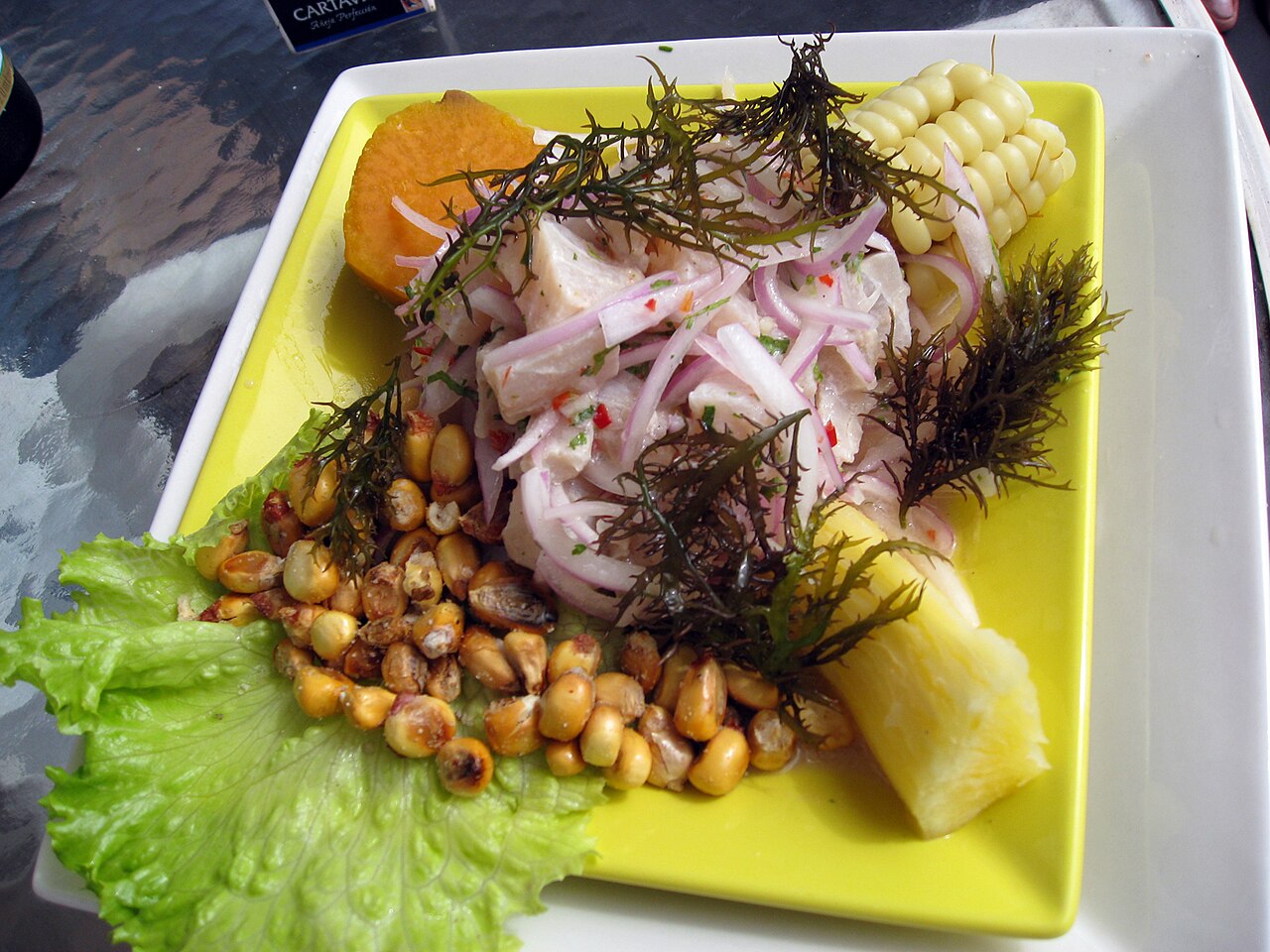
Pieces of very fresh raw fish marinated in lime juice with red onion, salt and chilli, served with sweet potato, corn and crunchy toasted corn (cancha). The lime turns the fish white and firm, but it does not cook it the way heat does.
In 2008 Peru declared 28 June its National Ceviche Day, and in 2023 UNESCO added the traditions of Peruvian ceviche to its list of intangible cultural heritage. The leftover marinade is called leche de tigre, tiger's milk.
See the recipe
Serves 4
30 min
Ingredients
500 g very fresh, skinless white fish, such as sea bass or sole, sold for eating raw (previously frozen is safest). For pregnant women, young children, older people or anyone with a weak immune system, use cooked peeled prawns instead of raw fish
8 to 10 limes, freshly squeezed (about 150 ml of juice)
1 red onion, very thinly sliced
1 fresh yellow or red chilli, seeds removed, finely chopped
1 small garlic clove, crushed
A handful of coriander (cilantro) leaves, chopped
Salt
1 sweet potato, boiled and sliced, and 1 cob of corn, boiled and cut into rounds, to serve
Method
Put the sliced onion in cold water for 10 minutes to make it milder, then drain.
Cut the fish into 2 cm cubes and put them in a cold glass bowl. Season with salt, garlic and chilli and mix gently.
Pour over the lime juice so it just covers the fish. Stir and leave for 5 to 10 minutes, until the outside of the fish turns white.
Add the onion and coriander, taste for salt and serve at once, on cold plates, with the sweet potato and corn.
Keep the fish in the fridge until the last moment. Lime juice does not kill germs the way cooking does, so only use fish meant for eating raw, and eat the ceviche the same day.
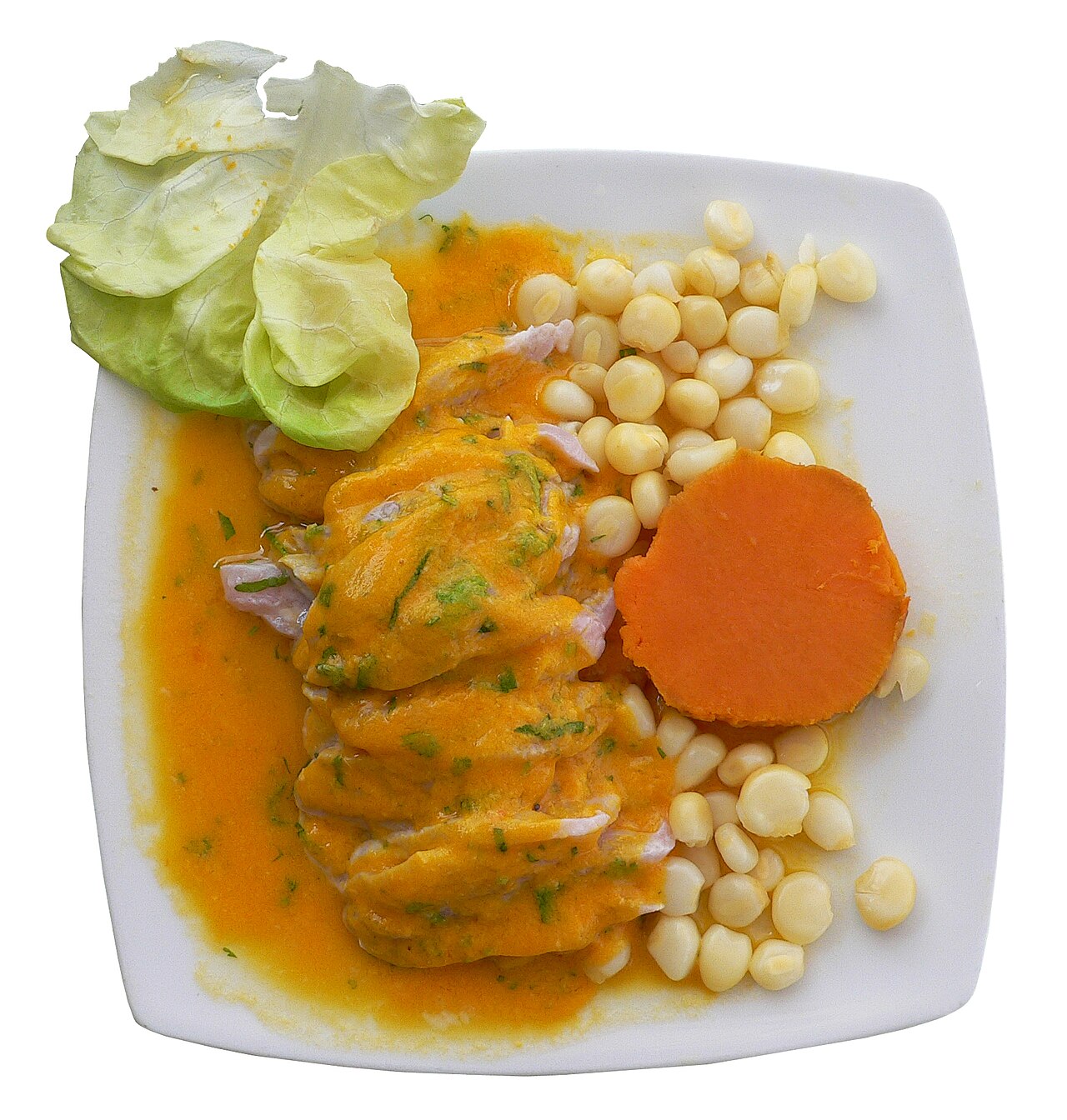
Thin slices of raw fish, cut like Japanese sashimi, with a spicy sauce poured over just before serving. Unlike ceviche, the fish is sliced, not cubed, and usually has no onion.
Tiradito shows the influence of Japanese immigrants on Peruvian food. Because the sauce is added at the last moment, the fish stays completely raw.
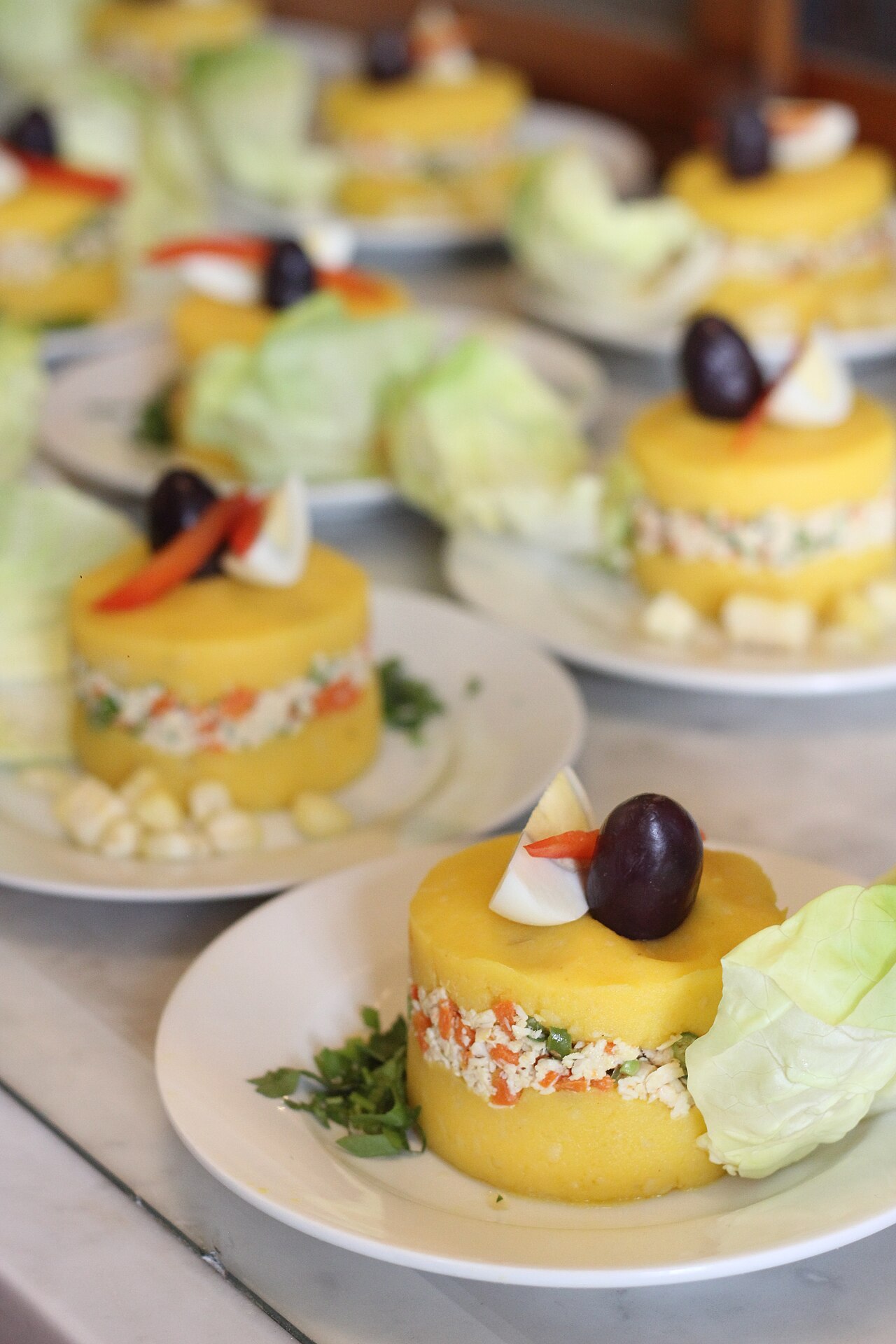
Cold layers of mashed yellow potato, seasoned with lime and yellow chilli, filled with chicken or tuna salad and avocado. It is cut into squares and looks like a small, colourful cake.
200 g cooked chicken, shredded, or tinned tuna, drained
3 tablespoons shop-bought mayonnaise (made with pasteurised eggs)
1 ripe avocado, sliced
2 hard-boiled eggs and a few black olives, to decorate
Salt and pepper
Method
Boil the potatoes in their skins until soft, about 25 minutes. Peel them while warm and mash until very smooth.
Let the mash cool, then mix in the chilli paste, lime juice, oil and salt to taste. It should be soft enough to spread.
Mix the chicken or tuna with the mayonnaise and a little salt and pepper.
Line a small square dish with cling film. Spread half the potato in it, then a layer of avocado, then the chicken or tuna, and finish with the rest of the potato.
Chill for at least 30 minutes, turn out onto a plate, cut into squares and decorate with slices of egg and olives.
Named after Huancayo, in the central Andes, now eaten all over Peru
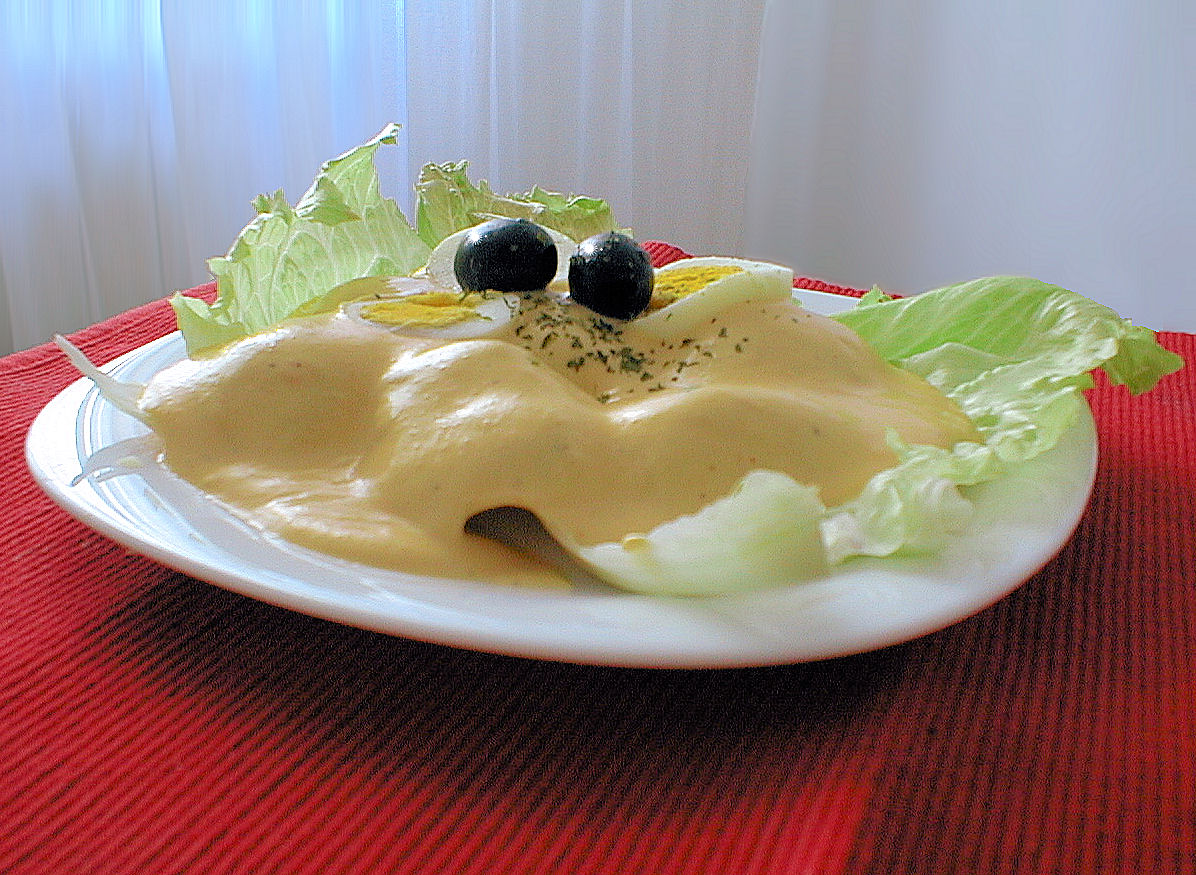
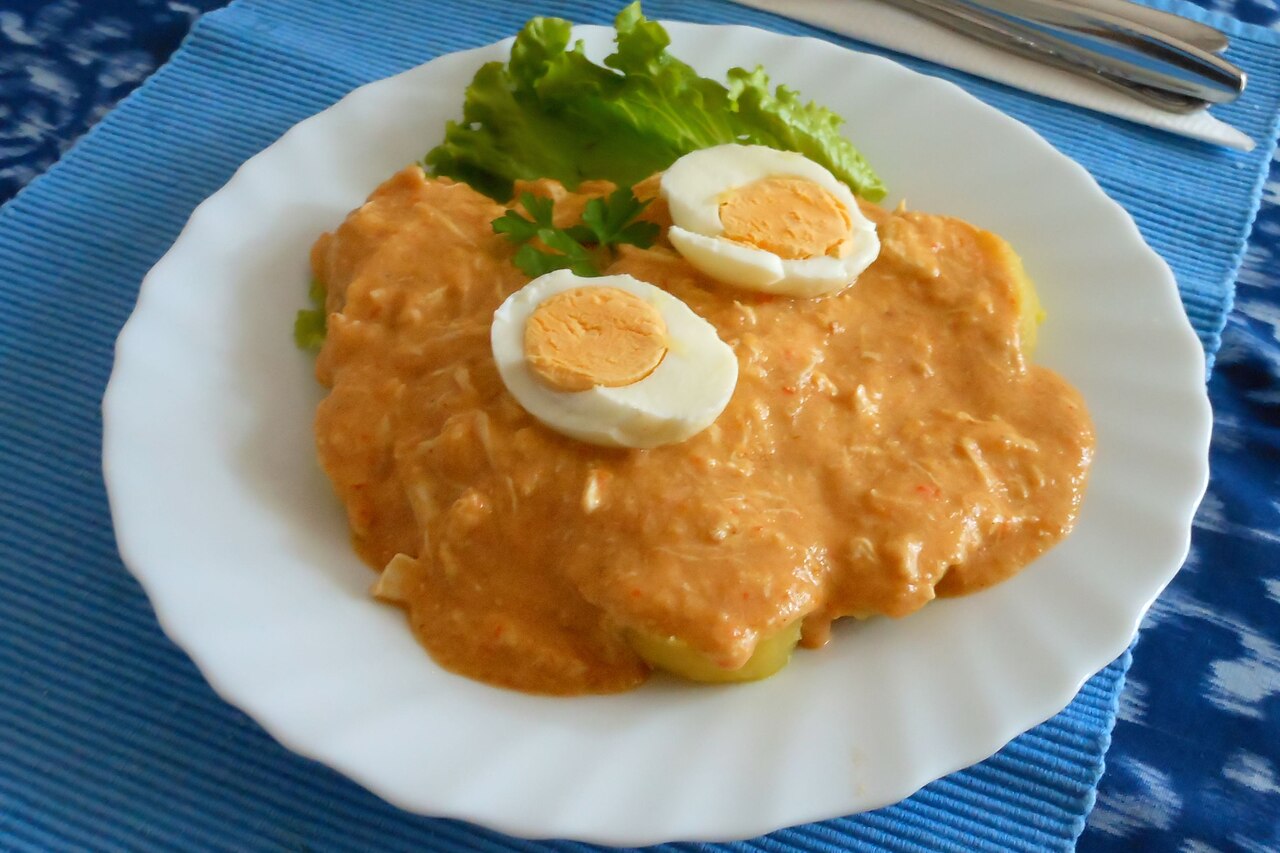
Slices of boiled potato covered in a creamy, gently spicy sauce of fresh white cheese and yellow ají amarillo chilli, served cold on lettuce with a black olive and a slice of hard-boiled egg.
The best-known story says the dish was sold to passengers, or cooked for workers, along the railway between Lima and Huancayo, which gave it the name 'potatoes Huancayo style'.
1 tablespoon vegetable oil and half an onion, chopped
1 garlic clove
150 g fresh white cheese made from pasteurised milk, such as queso fresco or feta (for pregnant women, older people or anyone with a weak immune system, use pasteurised feta)
120 ml evaporated milk
4 plain crackers (optional, to thicken the sauce)
Lettuce leaves, 2 hard-boiled eggs and black olives, to serve
Method
Boil the potatoes until tender, about 20 minutes. Let them cool, peel and cut into thick slices.
Fry the onion, garlic and chilli in the oil for 5 minutes, until soft.
Blend them with the cheese, evaporated milk and crackers until smooth and thick, like double cream. Add a little salt if needed.
Put lettuce leaves on a plate, lay the potato slices on top and pour over the sauce.
Decorate with halves of hard-boiled egg and black olives and serve cold.
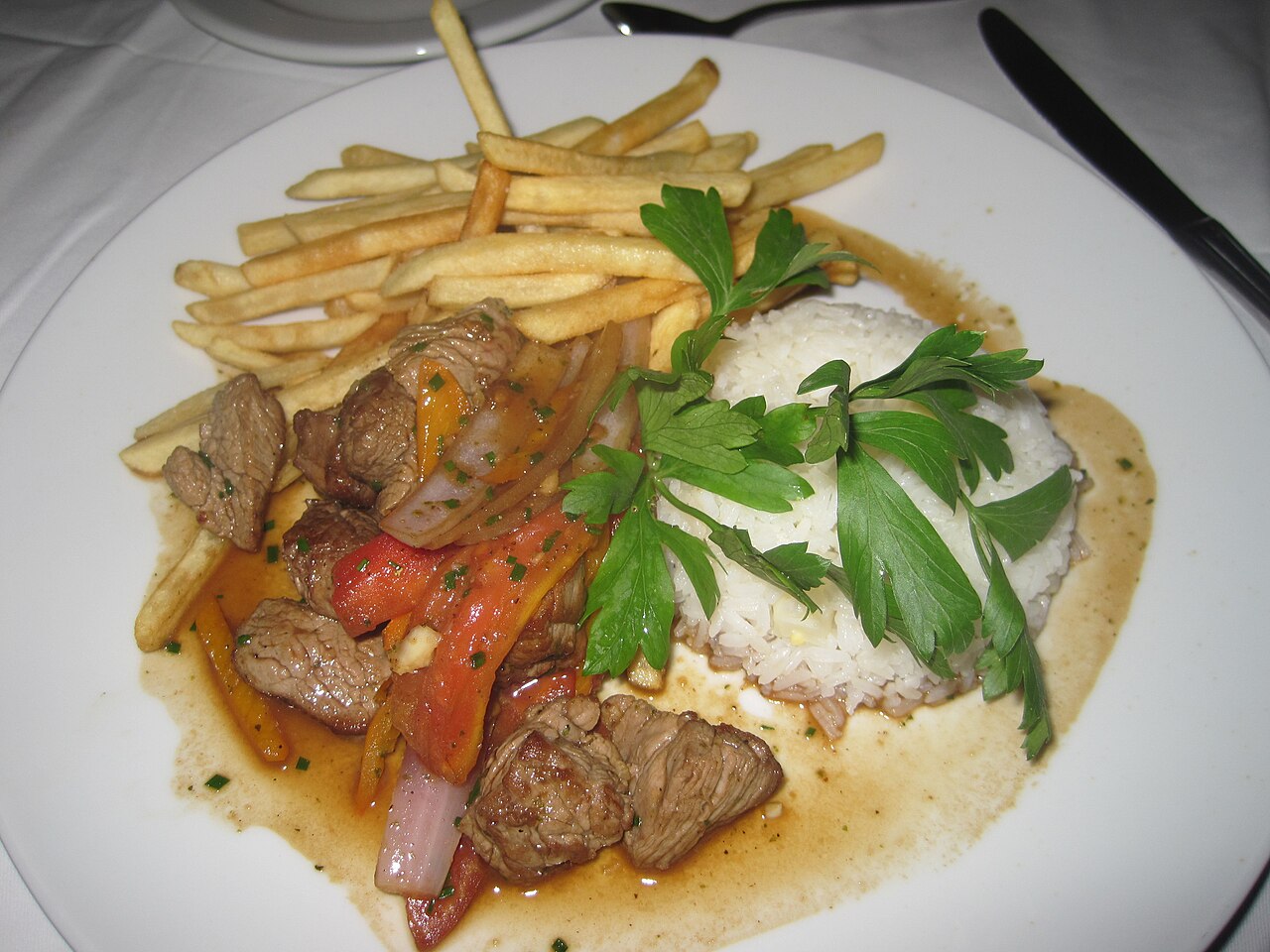
Strips of beef stir-fried at high heat with red onion, tomato, soy sauce and vinegar, then mixed with chips (French fries) and served with white rice. It is one of Peru's best-loved everyday main dishes.
It uses both potatoes, which come from the Andes, and rice, which comes from Asia: a meeting of two worlds on one plate.
See the recipe
Serves 4
40 min
Ingredients
600 g beef sirloin, cut into finger-thick strips
3 tablespoons soy sauce and 2 tablespoons red wine vinegar
2 garlic cloves, crushed, and a pinch of ground cumin
3 tablespoons vegetable oil
1 large red onion, cut into thick wedges
3 tomatoes, cut into wedges
1 yellow chilli (or half a pepper), cut into strips
500 g oven chips, cooked until crisp
Chopped parsley or coriander, and cooked white rice to serve
Method
Mix the beef with the garlic, cumin, a little salt and 1 tablespoon of soy sauce.
Heat a wok or large frying pan until very hot. Add half the oil and fry the beef in two batches for 1 to 2 minutes, until browned. Take it out.
Add the rest of the oil and the onion and chilli and stir-fry for 1 minute. Add the tomato and stir-fry for another minute, so it stays in pieces.
Put the beef back, add the rest of the soy sauce and the vinegar, and toss for 30 seconds.
Take the pan off the heat, fold in the hot chips and the parsley, and serve at once with white rice.
Shredded chicken in a thick, creamy yellow sauce of ají amarillo chilli, onion, garlic, bread soaked in milk, cheese and ground walnuts or pecans. It is mild, rich and comforting, served with rice, boiled potatoes, olives and egg.
It is believed to come from manjar blanco, a medieval dish of chicken with almonds and milk that the Moors brought to Spain.
See the recipe
Serves 4
1 h
Ingredients
2 chicken breasts
4 slices of white bread, crusts removed, and 250 ml evaporated milk
Boiled potatoes, white rice, black olives and 2 hard-boiled eggs, to serve
Method
Simmer the chicken in lightly salted water for about 20 minutes, until cooked through. Keep 250 ml of the stock and shred the chicken with two forks.
Soak the bread in the evaporated milk, then blend until smooth.
Fry the onion, garlic and chilli paste in the oil over a low heat for about 10 minutes, until soft and golden.
Stir in the bread mixture and the stock and cook, stirring, for 5 minutes, until thick. Add the nuts, cheese and chicken and heat through. Season with salt.
Serve over boiled potatoes with white rice, decorated with olives and halves of hard-boiled egg.
Chinese-Peruvian (chifa) restaurants, now everywhere
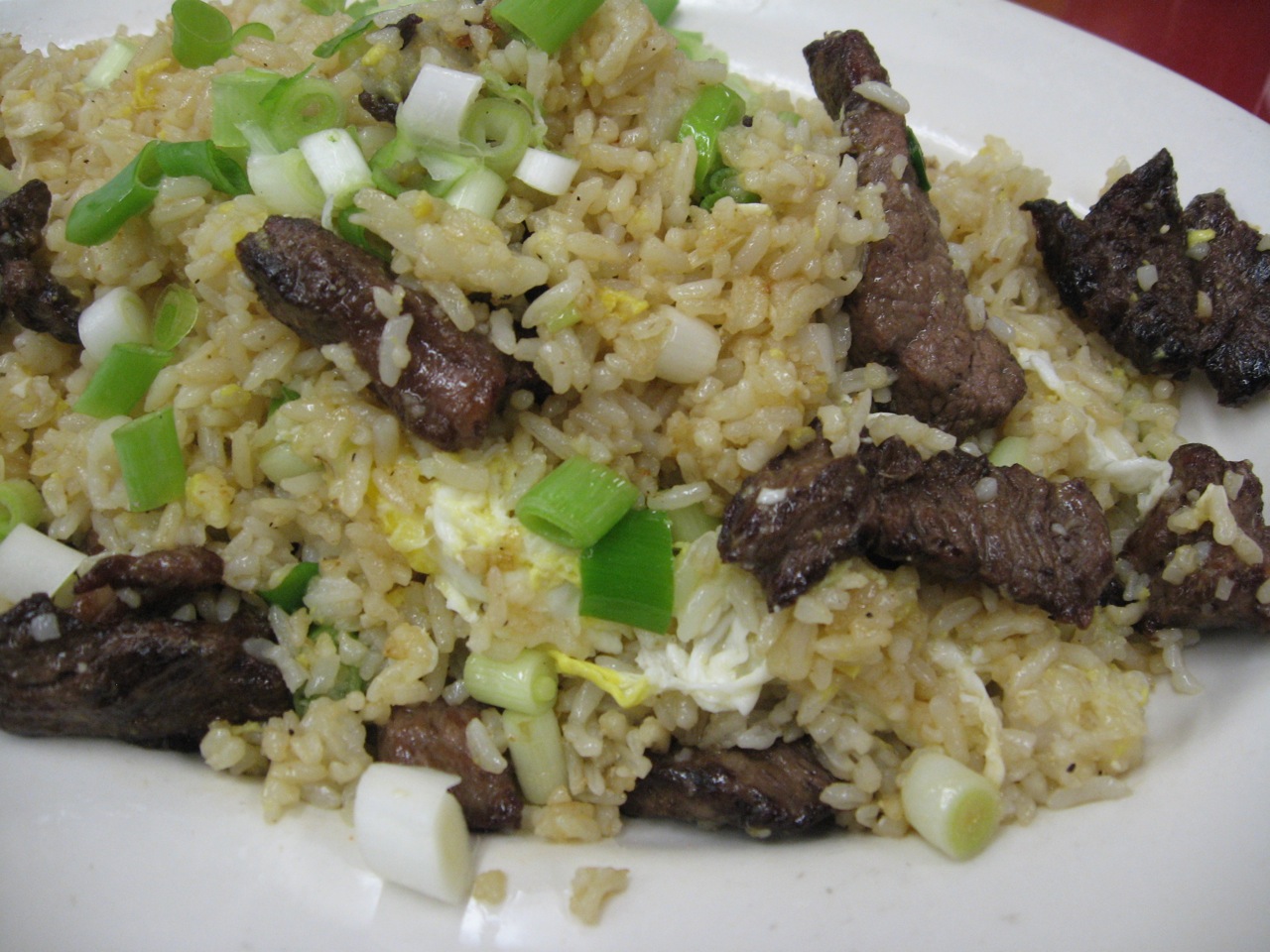
Fried rice cooked fast in a very hot wok with egg, spring onions, soy sauce and chicken, pork or prawns. It is one of the most popular dishes in Peru.
The word chaufa comes from the Cantonese word for fried rice, and chifa, the name for Chinese-Peruvian restaurants, from a Cantonese call to come and eat.
The Andes, since Inca times. Now a street food in Lima
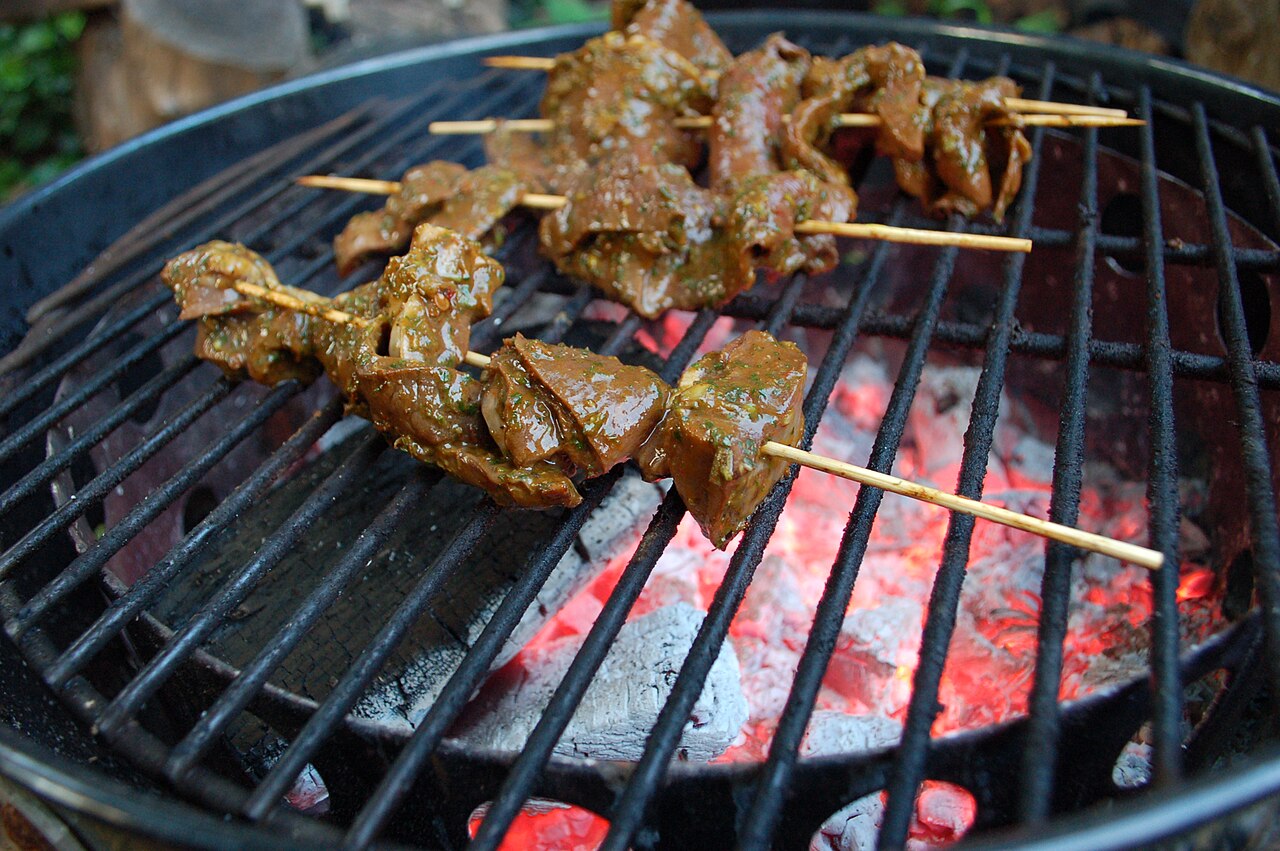
Skewers of marinated beef heart, grilled over charcoal and served with boiled potato, corn and a spicy sauce. They are tender, smoky and much loved at street stalls in the evening.
In Inca times anticuchos were made with llama meat. In colonial times beef took its place, and, the story goes, enslaved Africans were left the beef heart, a cut the Spanish did not want, which is how most anticuchos are made today.
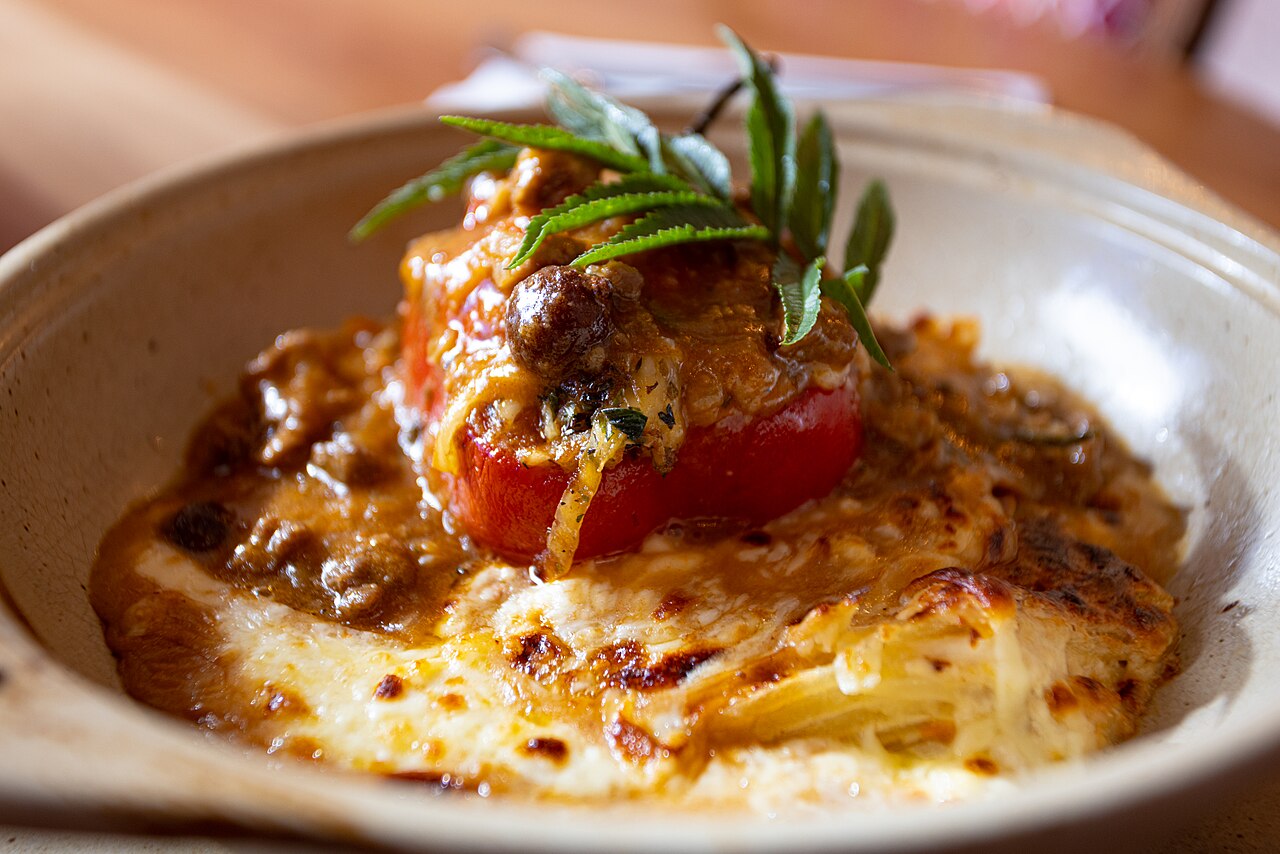
Rocoto, a round red chilli, stuffed with a spiced filling of minced meat and onion, topped with cheese and baked. The rocoto is one of Peru's hottest chillies, so the dish can be very spicy.
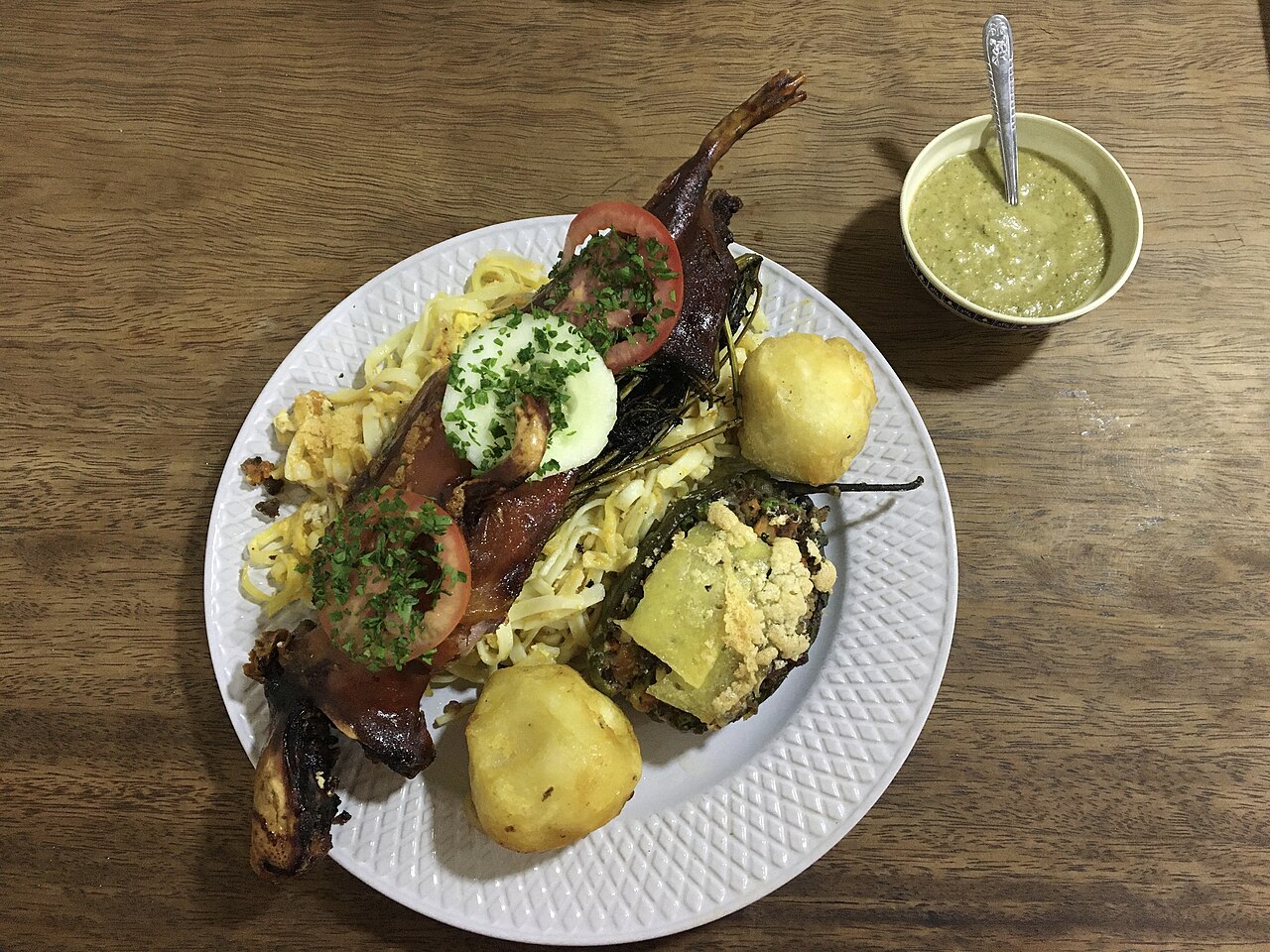
Guinea pig, roasted or fried whole until the skin is crisp. In the Andes it has been eaten for thousands of years and is a dish for festivals and family celebrations.
Guinea pigs were first domesticated for food in the Andes, perhaps as early as 5000 BC.
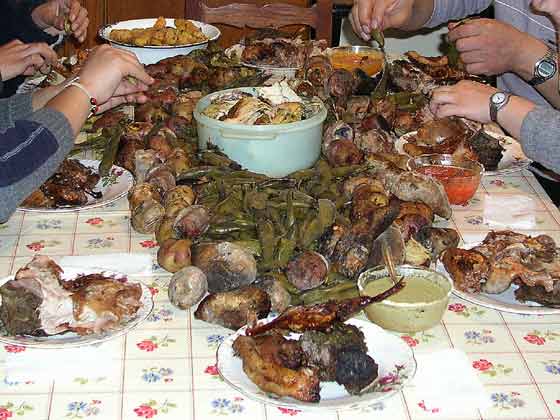
Meats, potatoes, sweet potatoes, broad beans and corn cooked slowly under the ground on hot stones, wrapped in herbs and covered with earth. It is a feast for a crowd.
The name comes from Quechua: pacha means earth and manka means cooking pot.
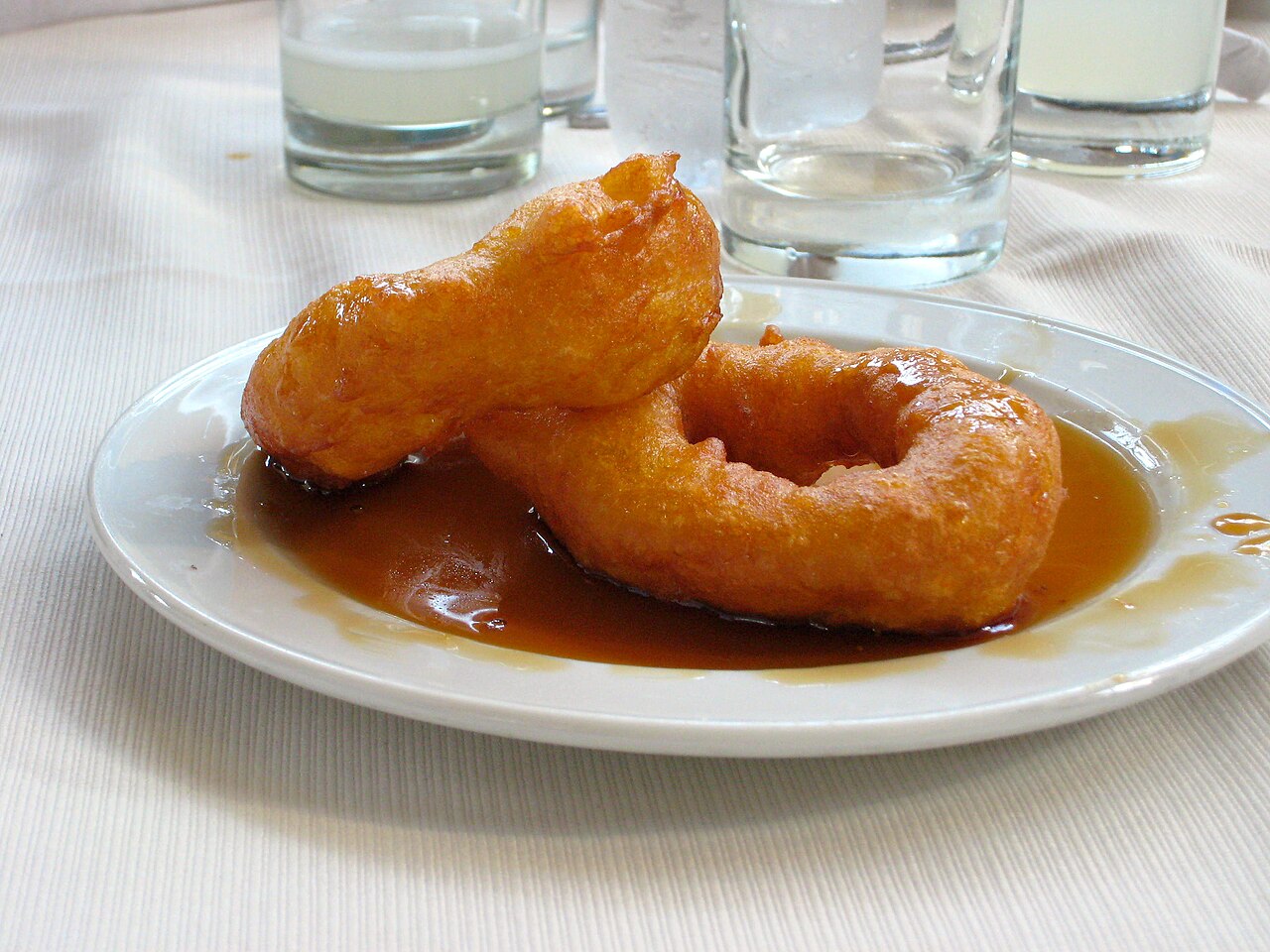
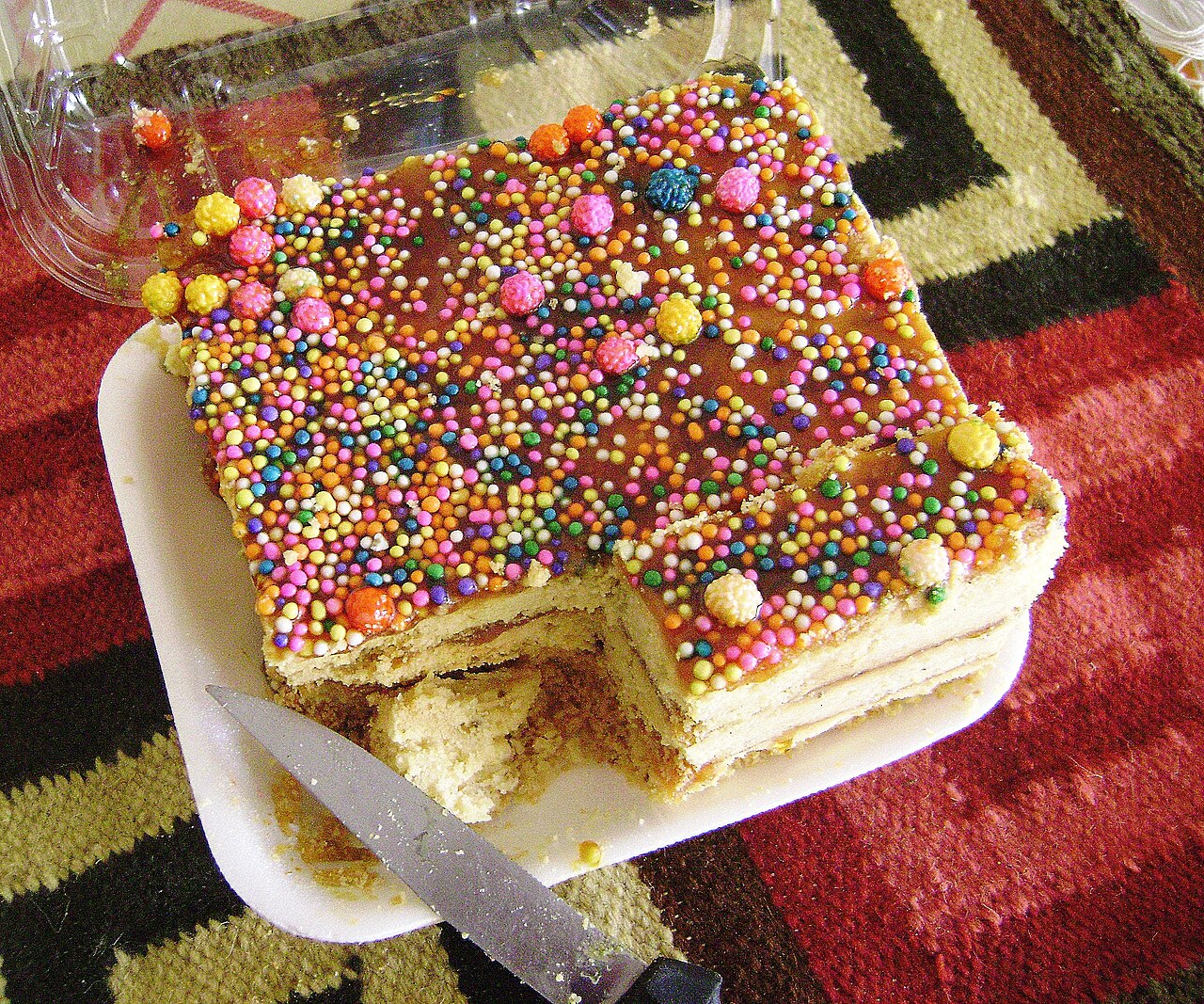
A nougat-like sweet of anise-flavoured pastry sticks layered with a thick syrup of chancaca (dark raw cane sugar) cooked with fruit, decorated with colourful sprinkles.
It is eaten in October for the procession of the Lord of Miracles (Señor de los Milagros), Lima's biggest religious festival. Tradition says a woman called Doña Josefa Marmanillo first made it.
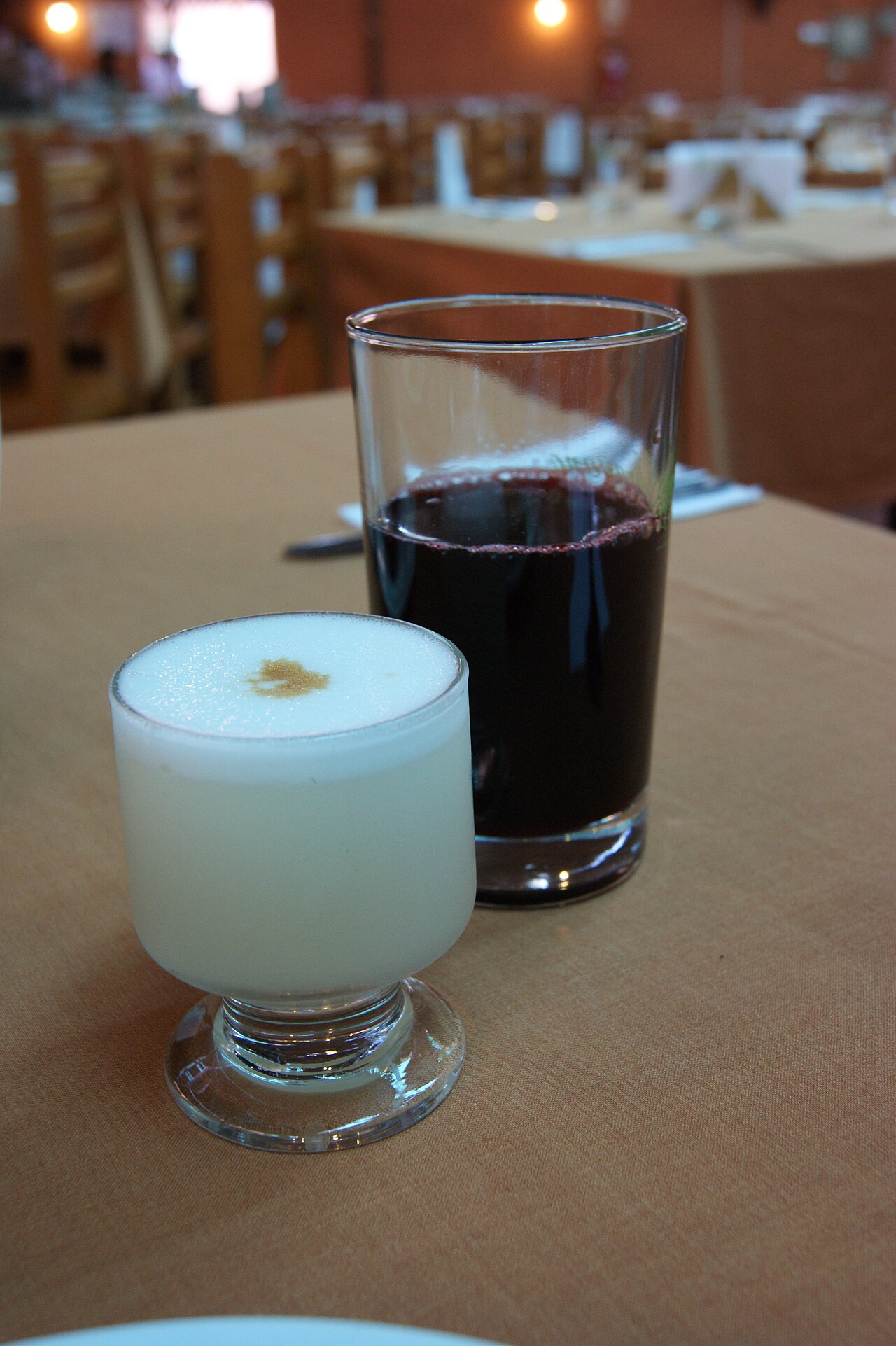
A sweet, deep purple soft drink made by boiling purple corn with pineapple peel, quince, cinnamon and cloves, then sweetening it. It is served cold, often with lunch.
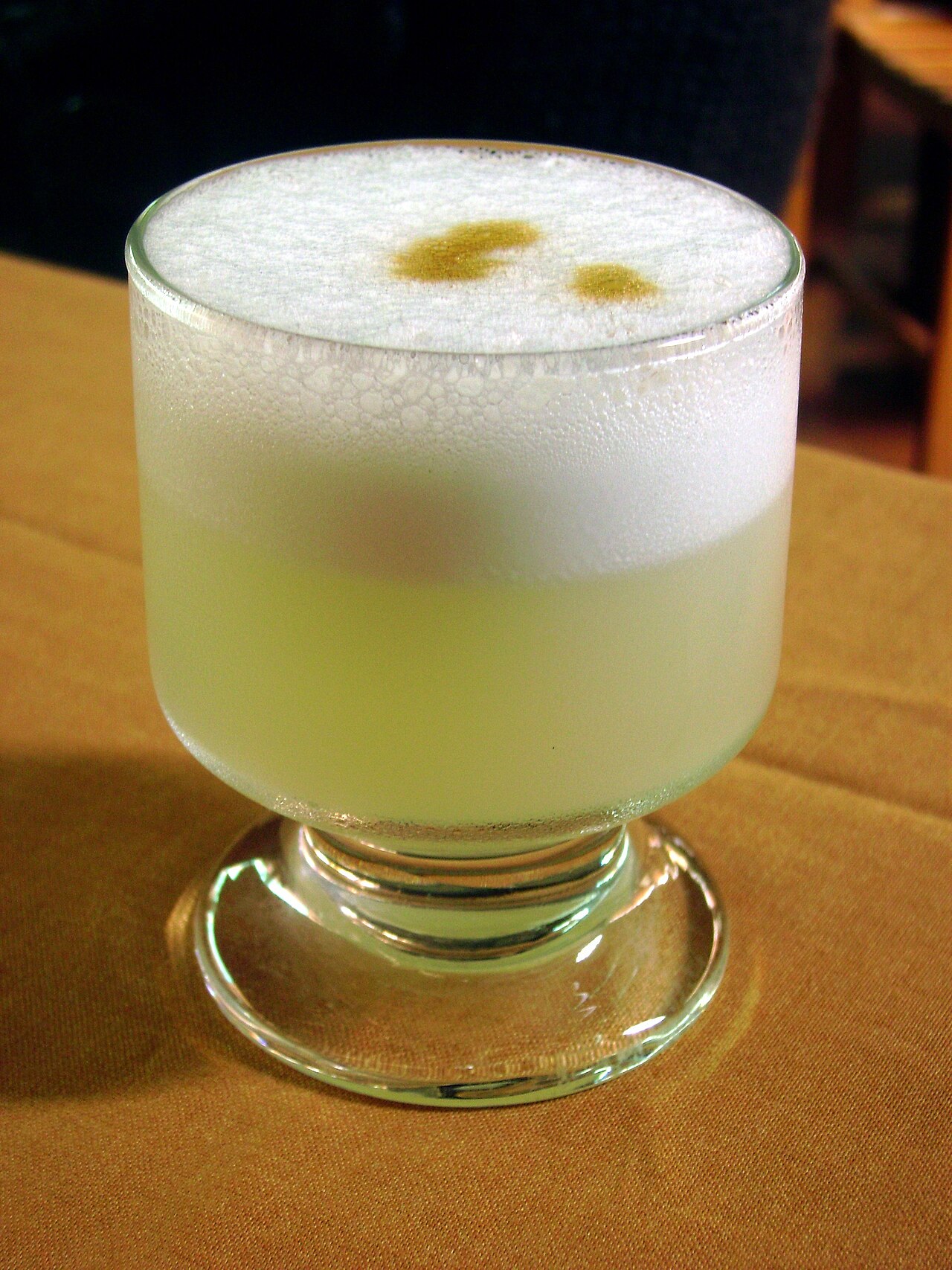
In the Peruvian version, pisco, a grape brandy, is shaken with lime juice, sugar syrup, ice and egg white, and topped with a few drops of bitters; the Chilean version has no egg white or bitters. The egg white is raw: pregnant women, older people and anyone with a weak immune system should ask for it without egg or with pasteurised egg white.
The cocktail as we know it is usually credited to Victor Morris, an American who ran a bar in Lima in the 1920s. Pisco is made in both Peru and Chile, and both countries claim the pisco sour as their national drink.
Table manners
Lunch, el almuerzo, is the main meal of the day. Many small restaurants serve a cheap set lunch, the 'menú', at midday.
Before you start, or when you pass people who are eating, it is polite to say '¡Buen provecho!', which means 'enjoy your meal'.
Ceviche is a lunchtime dish. Peruvians eat it fresh, at midday, and many cevicherías close in the late afternoon.
Taste sauces carefully before you pour them on. Rocoto sauce, often red, is much hotter than it looks.
Waiters do not bring the bill until you ask. Say 'La cuenta, por favor'.
In restaurants a tip of about 10 percent is welcome for good service. Check the bill first, because some restaurants already add a service charge.
Peru's cities sit in three different worlds: the dry Pacific coast, the high Andes and the Amazon rainforest. You can go from a desert city by the sea to an Inca capital at 3,400 m, and on to a river port that no road can reach.
The capital and by far the largest city, home to about 10 million people, almost a third of all Peruvians. It was founded by the Spanish in 1535 on the dry coast, where rain is extremely rare, and today it is famous for its food.
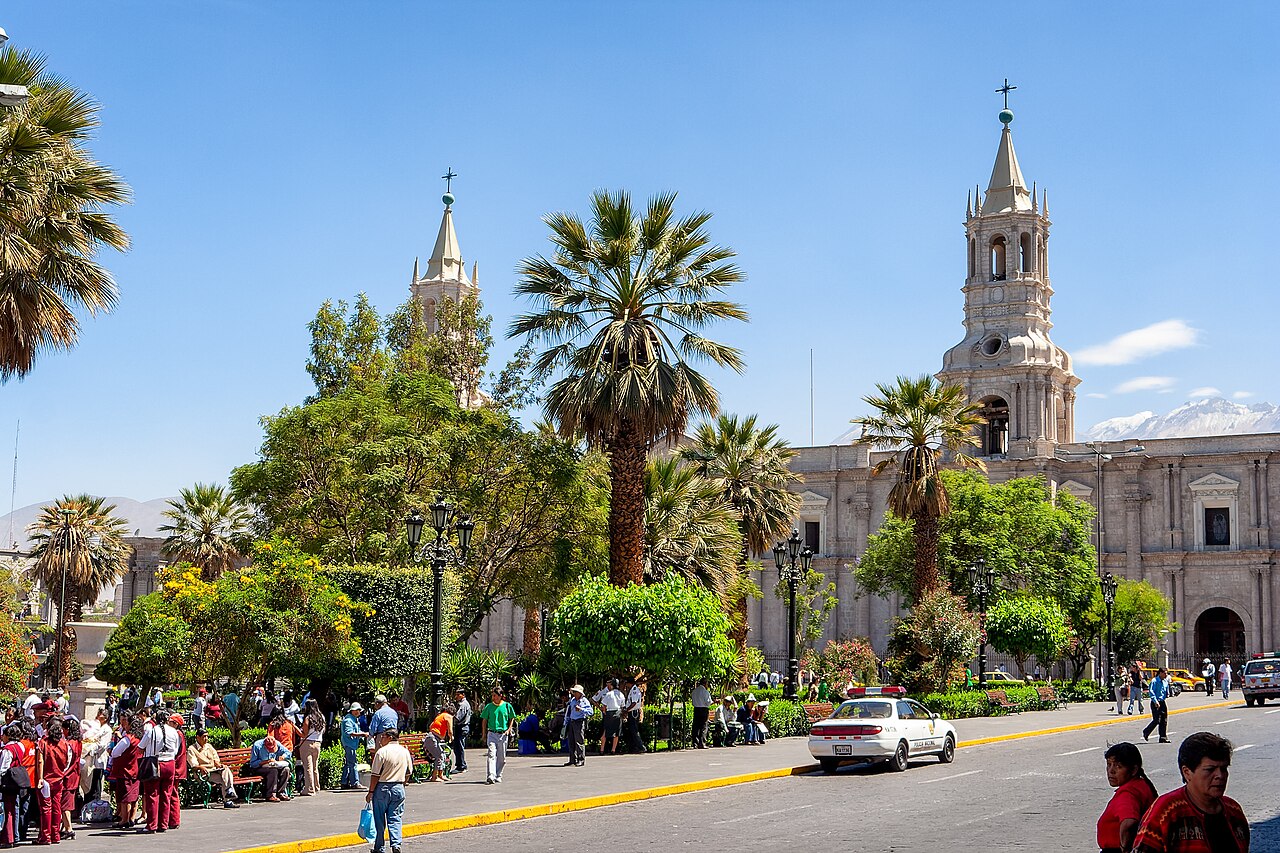
Peru's second largest city, in a valley below the snowy El Misti volcano. Its old centre is built of pale volcanic stone called sillar and is a UNESCO World Heritage Site.
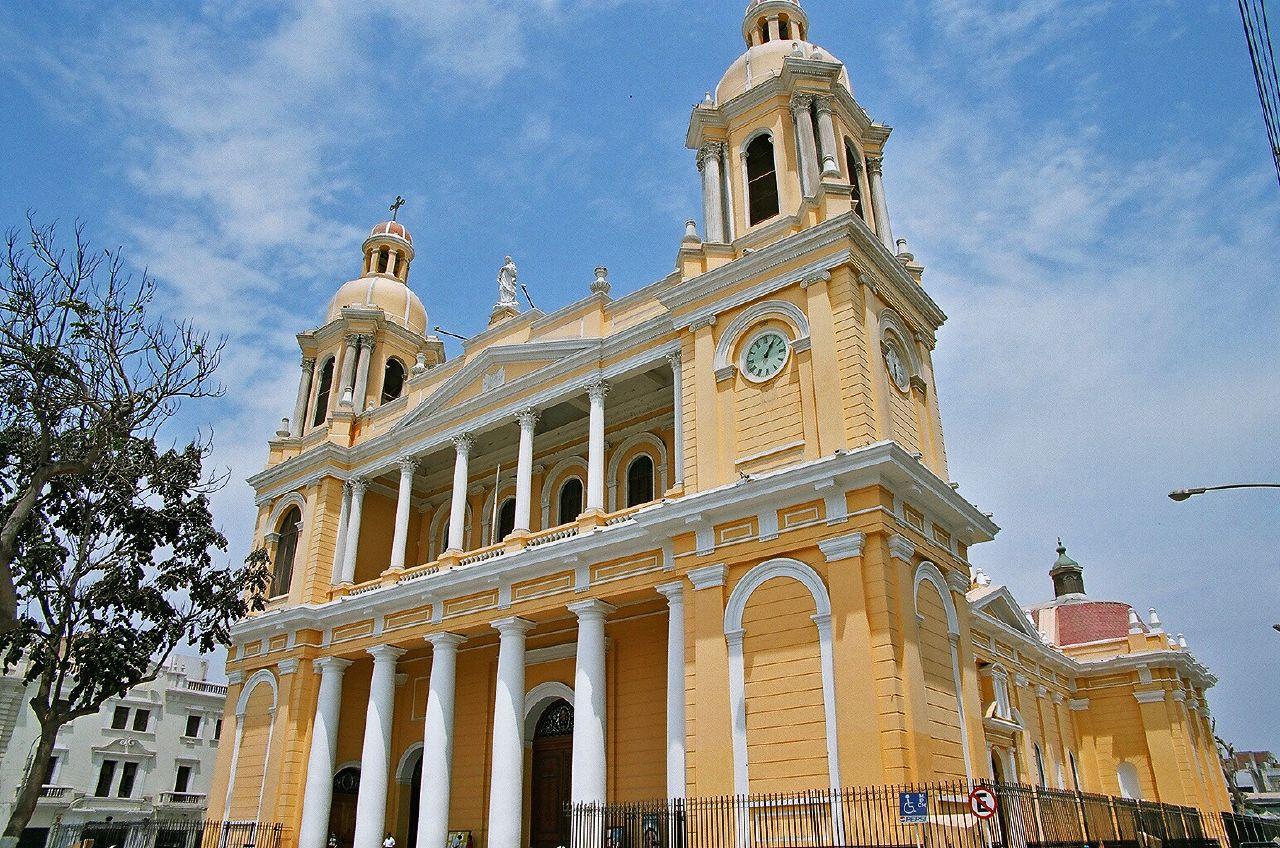
A busy trading city on the north coast, nicknamed the 'City of Friendship'. It is the gateway to the gold of the Moche lords of Sipán, and Pope Leo XIV was its bishop from 2015 to 2023.
The Royal Tombs of Sipán Museum nearby
Being the diocese of Pope Leo XIV before he became pope
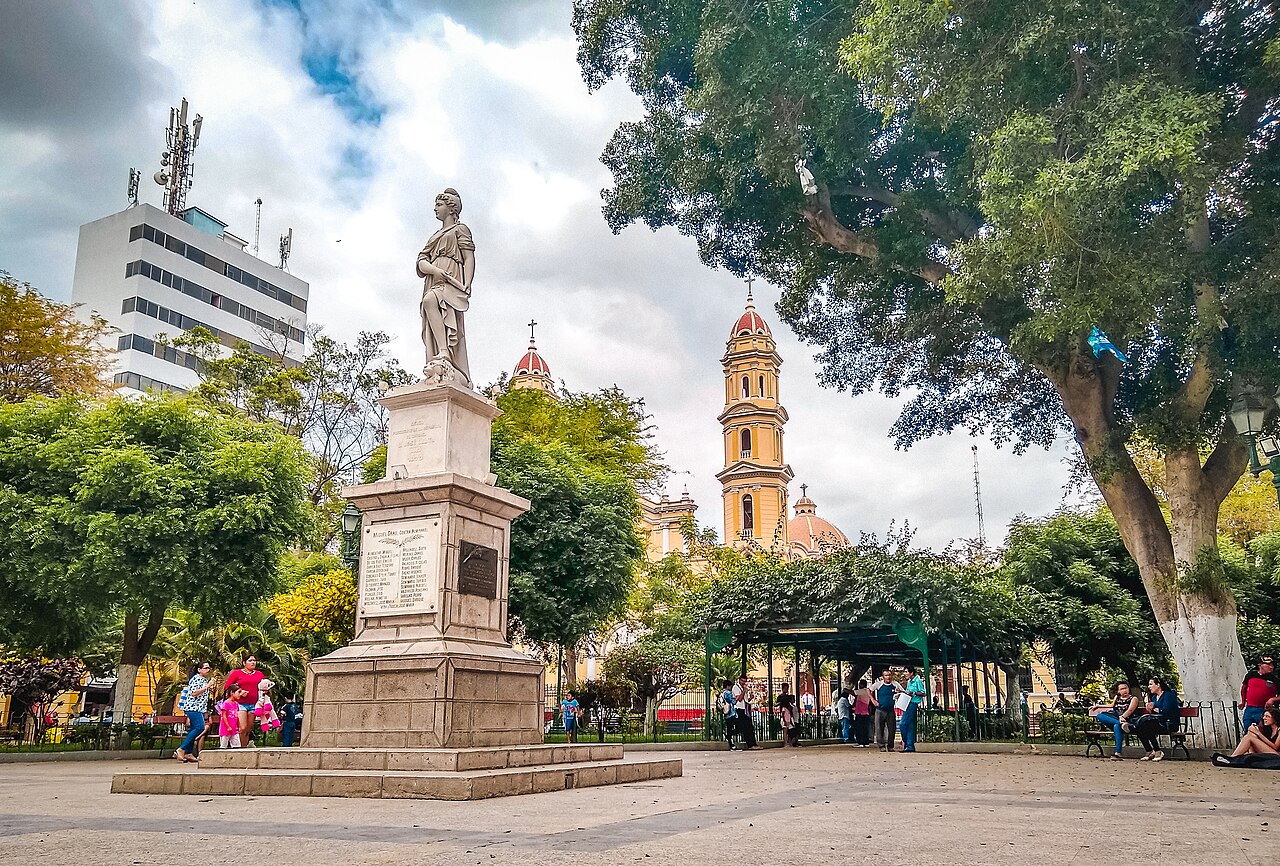
A hot city in the far north, on the edge of the Sechura Desert. The first Spanish town in Peru, San Miguel, was founded in this area by Pizarro in 1532, and Piura grew from it.
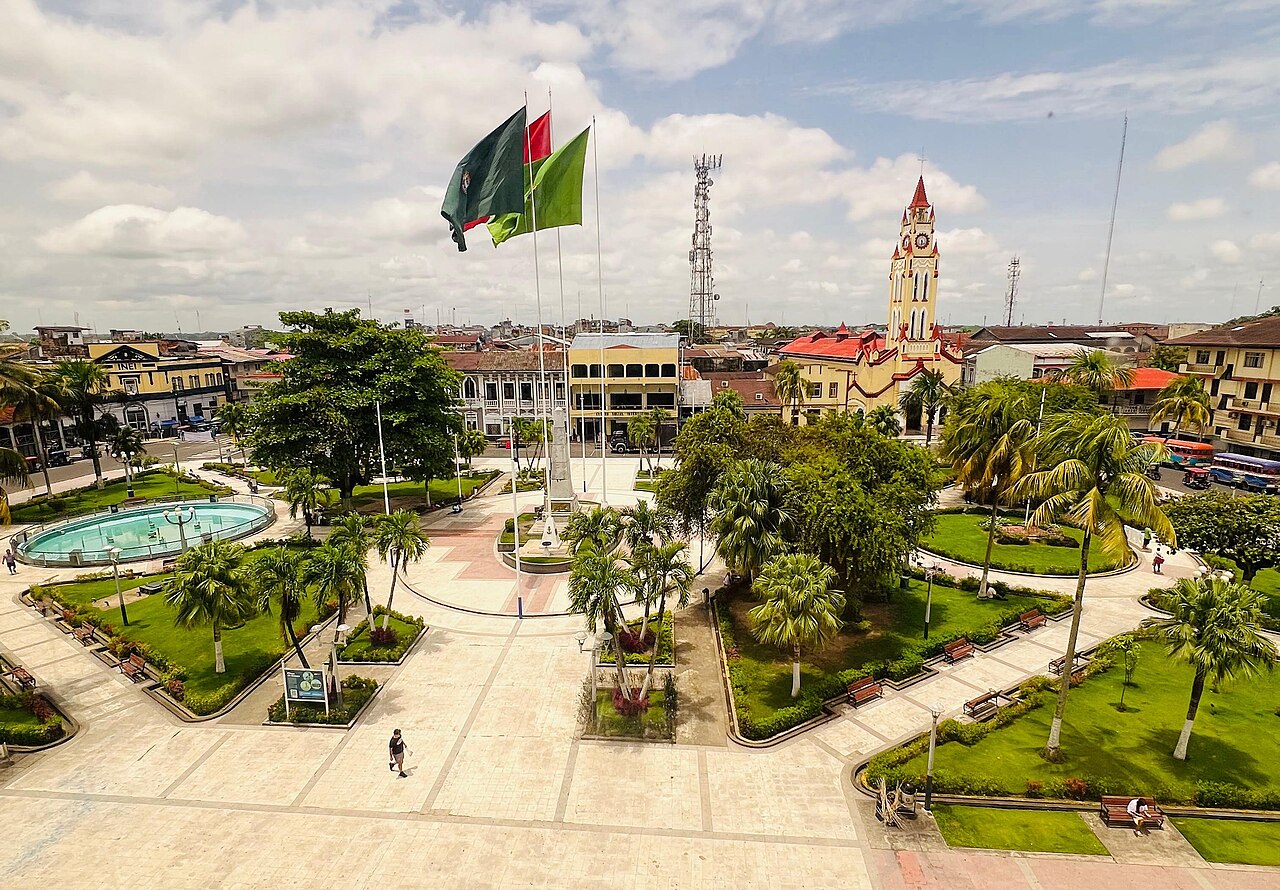
The largest city of the Peruvian Amazon. It is the largest city in the world that is not on an island and cannot be reached by road: you arrive by plane or by boat.
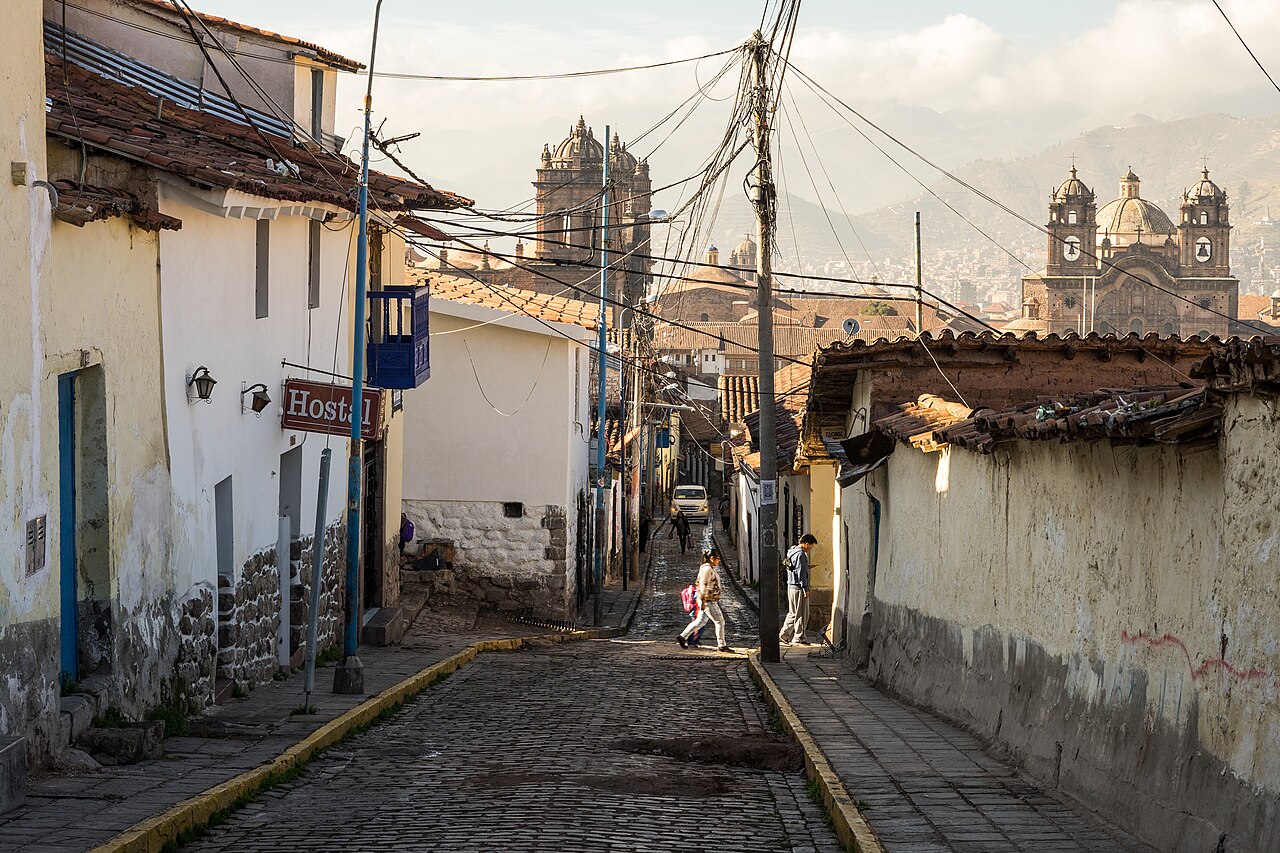
The old capital of the Inca Empire, at about 3,400 m. Spanish churches and mansions stand on top of perfectly fitted Inca stone walls, and its historic centre is a UNESCO World Heritage Site. Peru's constitution calls it the country's historical capital.
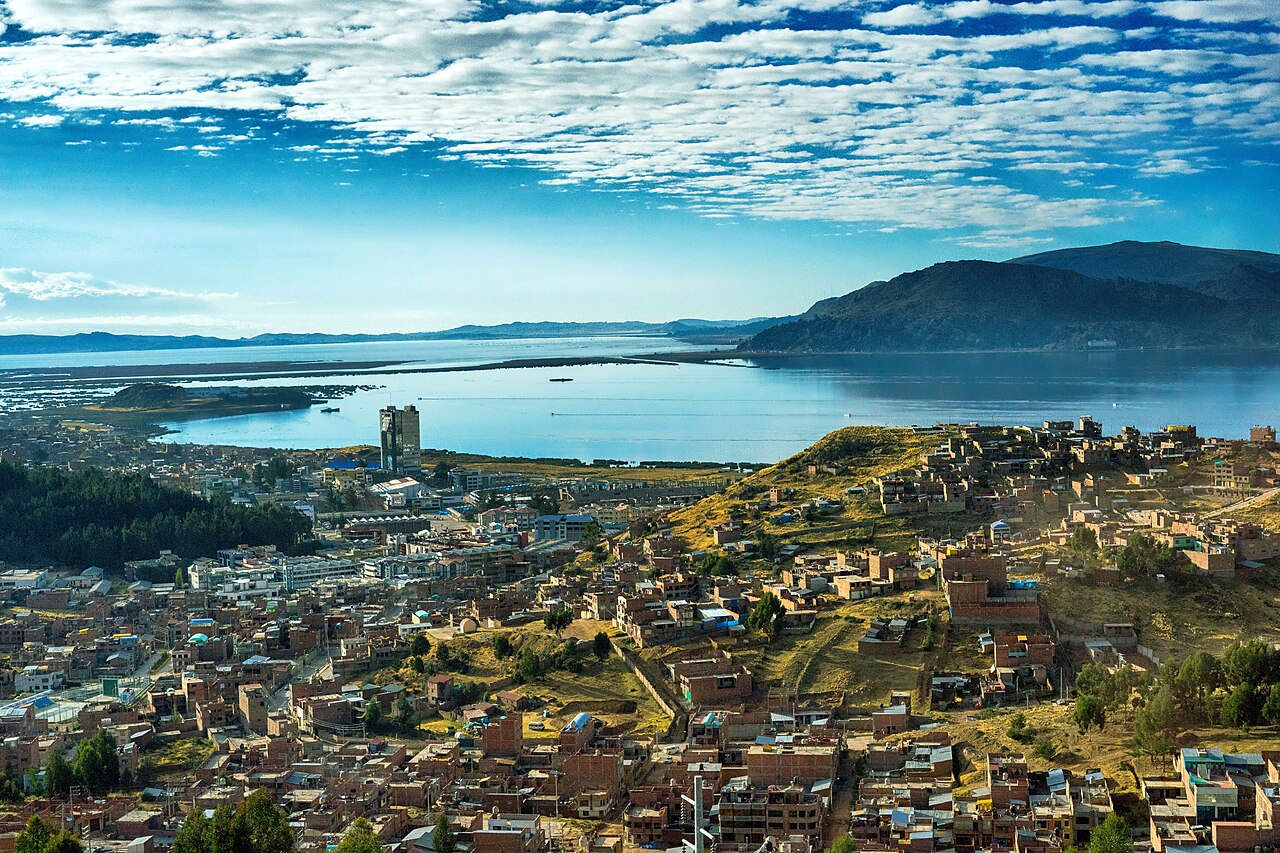
A high city on the shore of Lake Titicaca, at more than 3,800 m. It is known for its music, dances and colourful festivals, and boats leave from its port for the floating islands of the Uros.
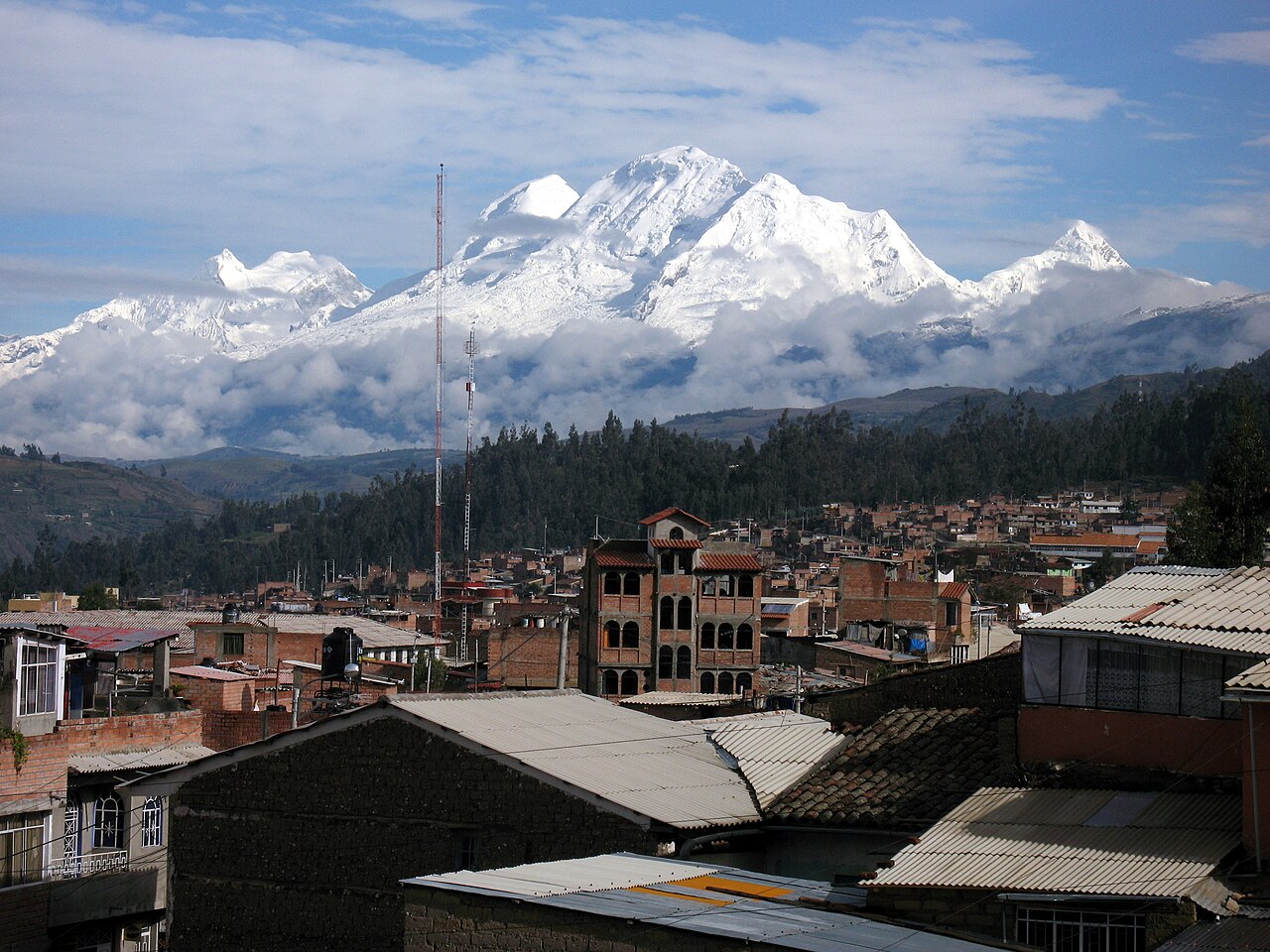
A mountain town at about 3,050 m, in a valley below the snowy Cordillera Blanca. It was almost completely destroyed by an earthquake in 1970 and rebuilt with wider streets.
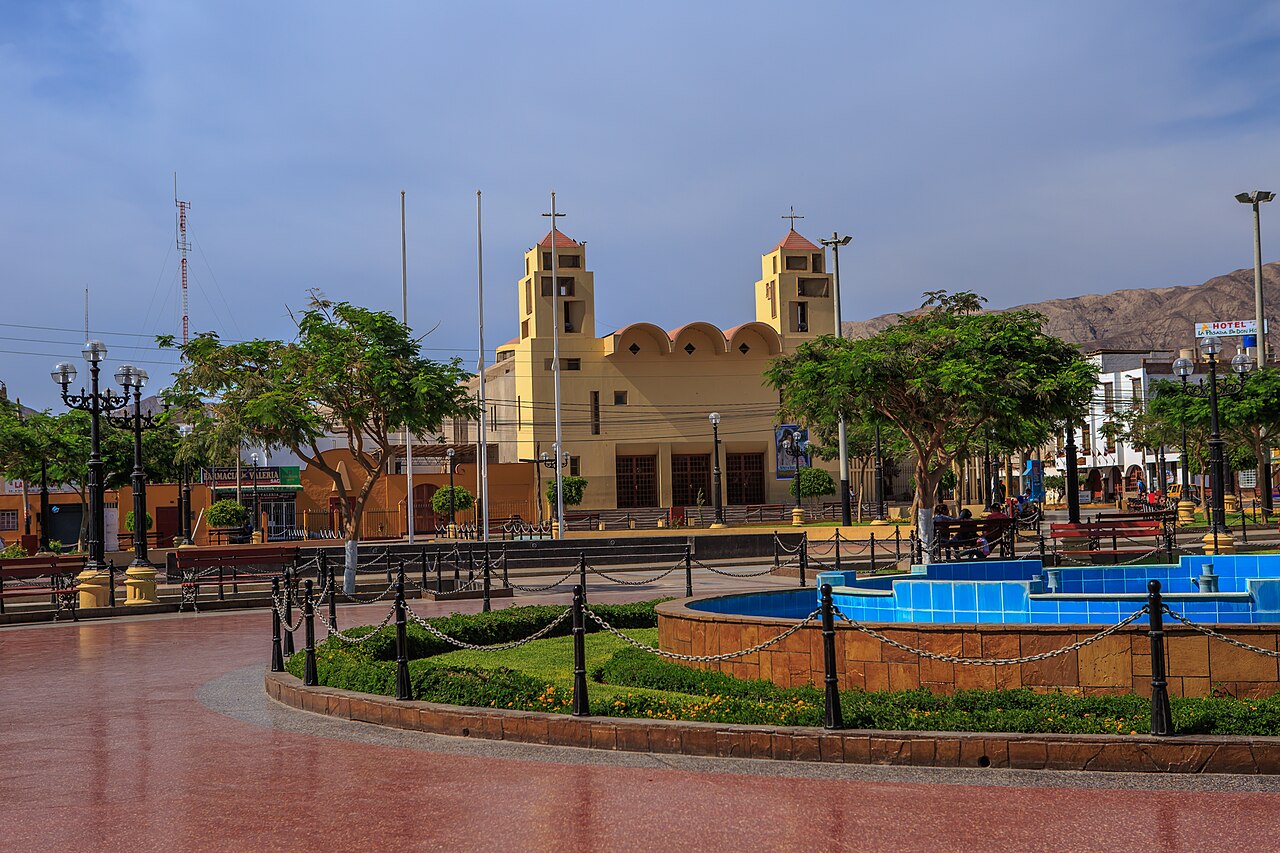
A small desert town on the southern coast, named after the Nazca culture that lived here about 2,000 years ago. Most visitors come to see the famous lines from the air.
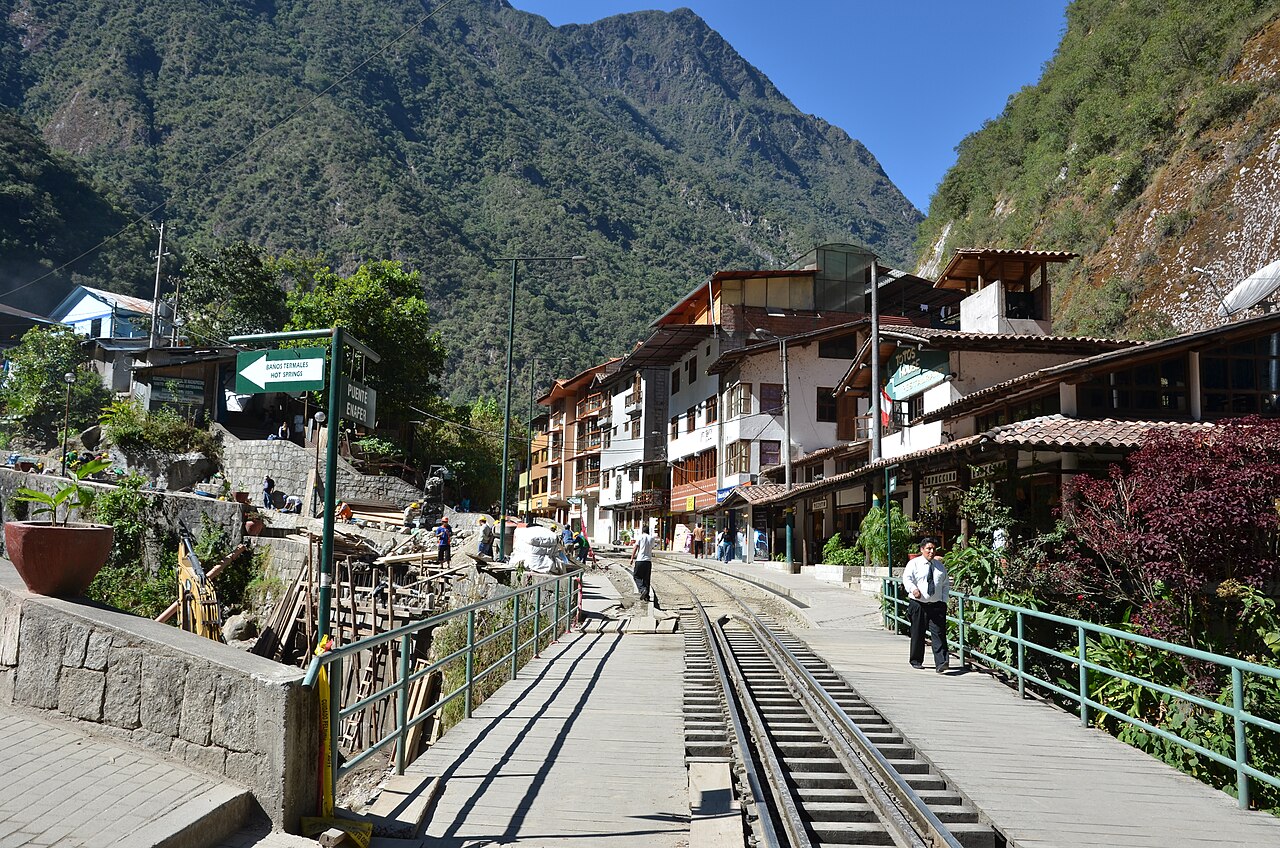
A small town in a deep, green valley below Machu Picchu, officially called Machupicchu Pueblo. There is no road to it: you arrive by train or on foot. Buses climb from here to the ruins, about 6 km away.
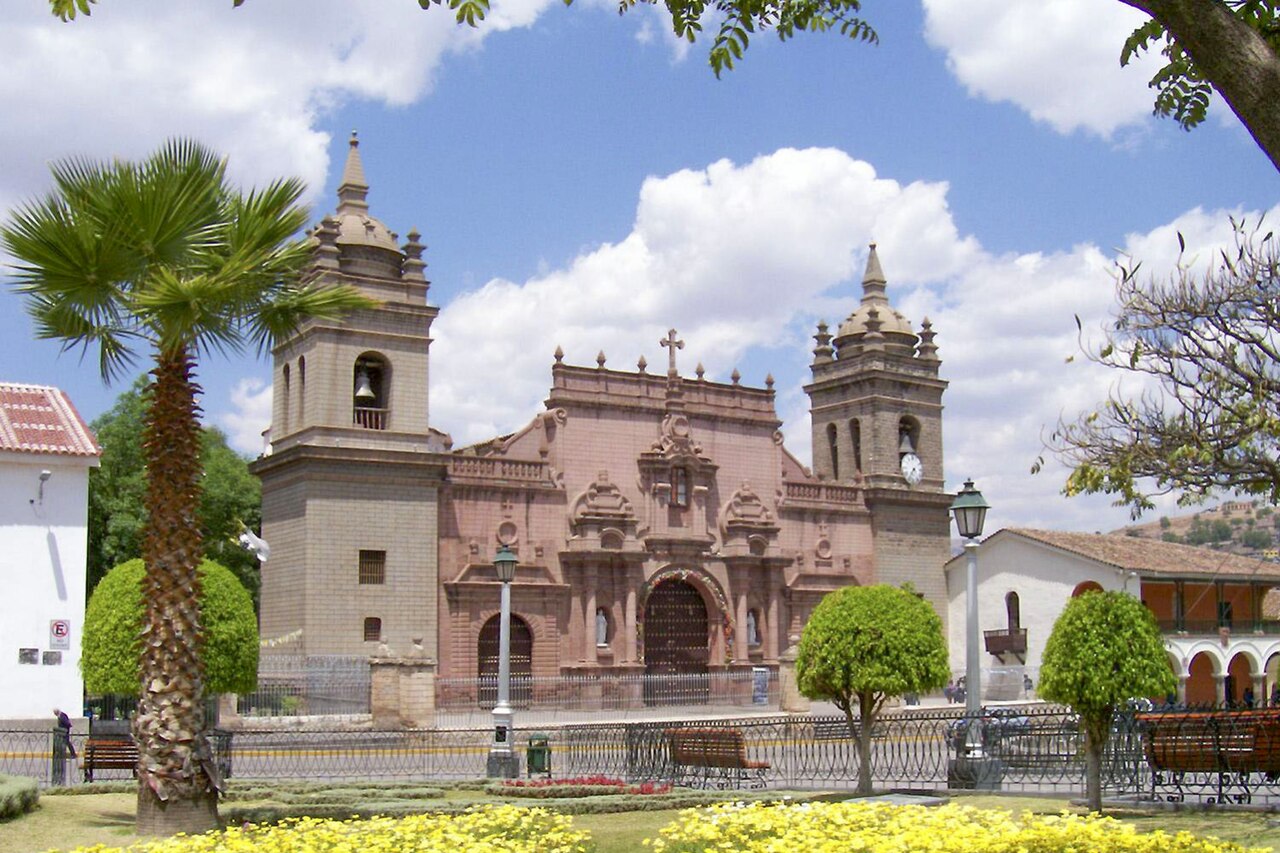
A colonial city in the southern Andes, founded by the Spanish in 1540 as Huamanga. It was renamed after the battle that sealed Peru's independence in 1824, which was fought nearby.
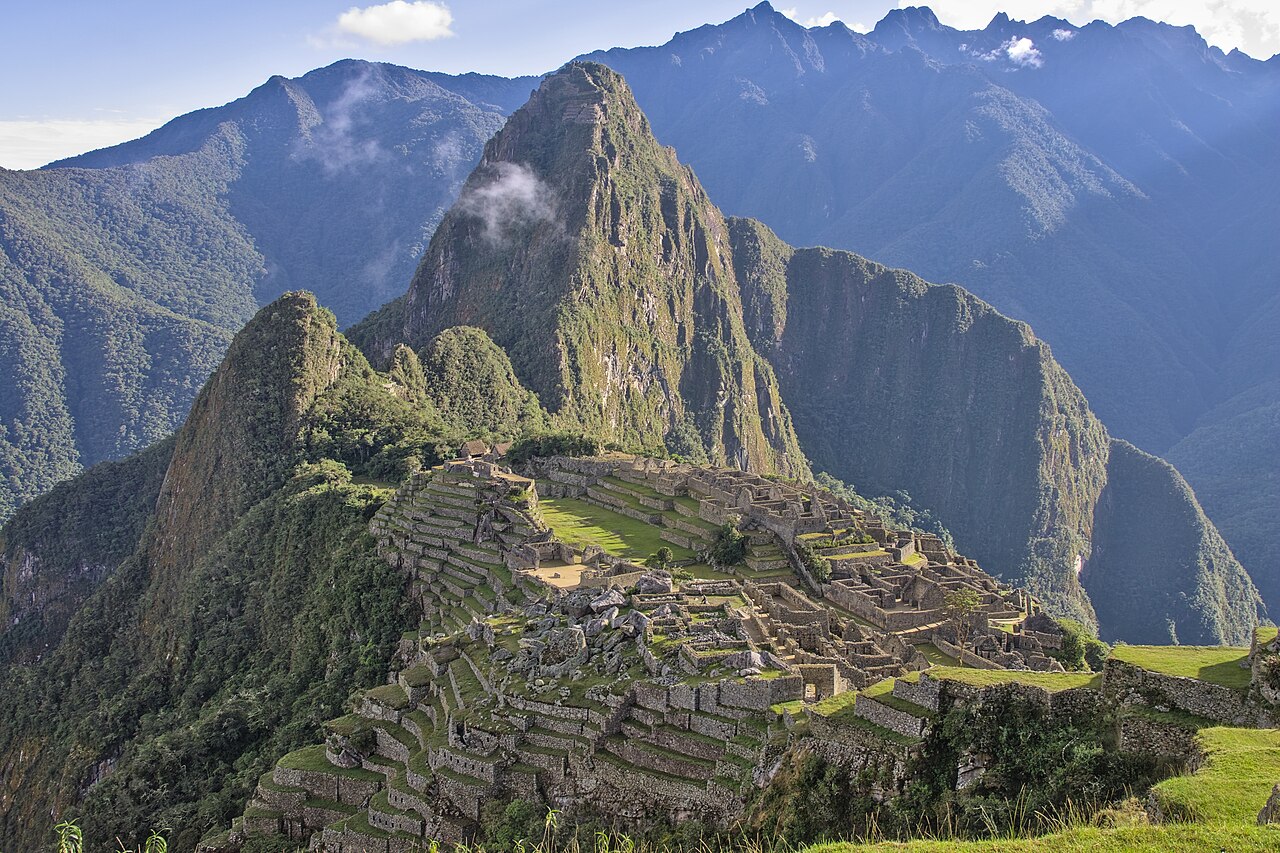
The 15th-century Inca citadel on a mountain ridge at 2,430 m, above the Urubamba River and about 6 km from Aguas Calientes. Its finest temples are built of stone blocks fitted together without mortar. It became a UNESCO World Heritage Site in 1983 and was voted one of the New Seven Wonders of the World in 2007.
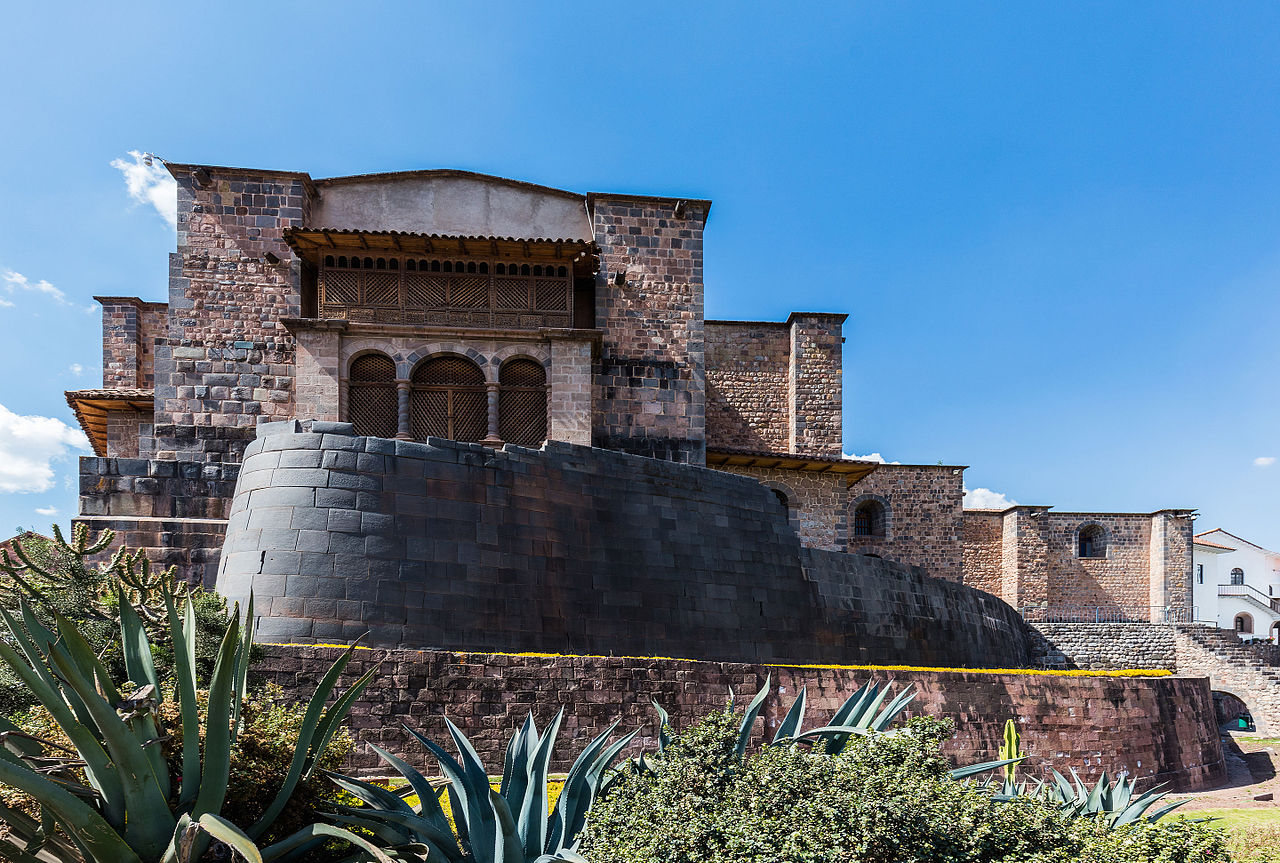
The most important temple of the Inca Empire, dedicated to Inti, the sun god. Spanish accounts say its walls were covered with sheets of gold. The Spanish built the Church and Convent of Santo Domingo on top of it, and you can still see the perfect Inca stonework inside. It is part of the City of Cuzco World Heritage Site.
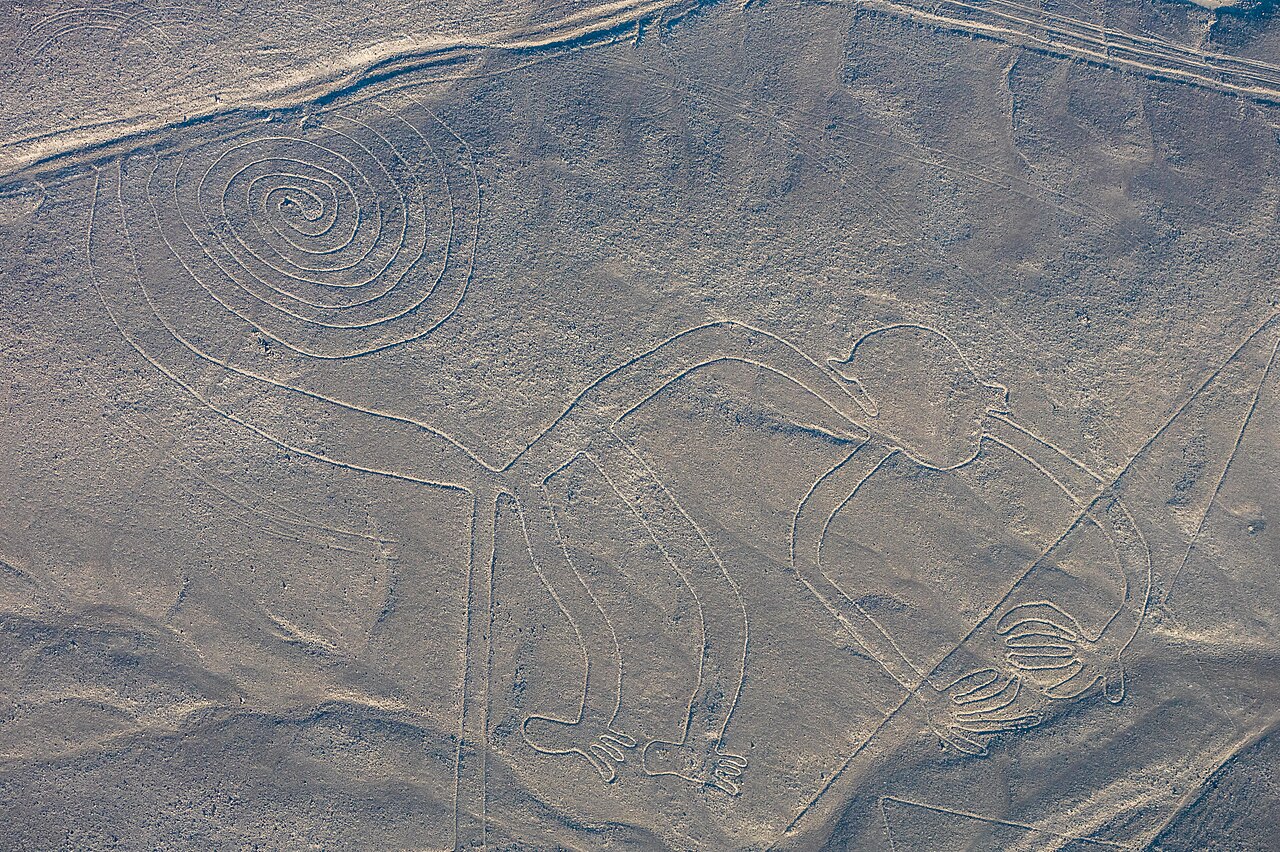
Huge drawings scratched into the desert floor between about 500 BC and AD 500, by removing the dark surface stones. Hundreds are straight lines and shapes, and more than 70 are animals, plants and figures, such as a hummingbird, a monkey and a spider. Many are best seen from the air, from a small plane.
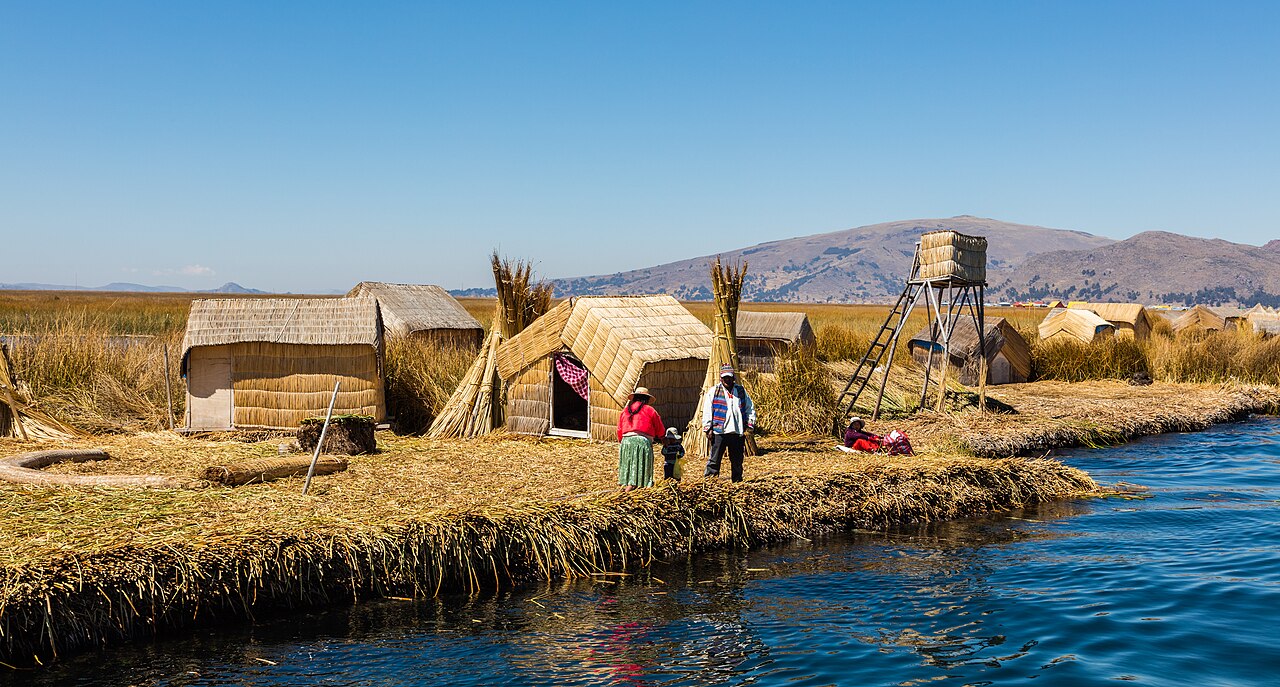
About 120 small islands on Lake Titicaca, a short boat ride from Puno, built entirely from bundles of totora reeds. The Uros people live on them, add fresh reeds all the time, and also make their boats from the same reeds.
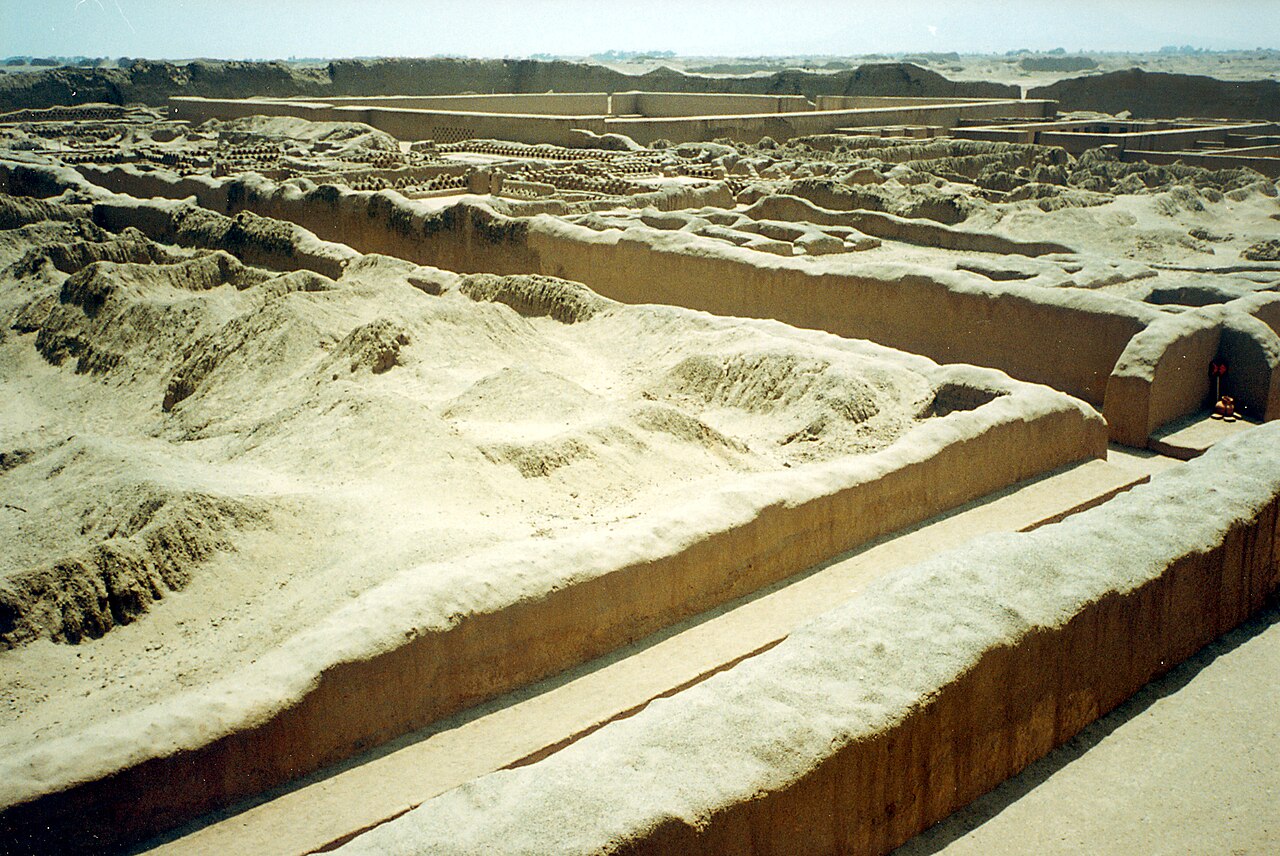
The capital of the Chimú kingdom, about 5 km west of Trujillo, built from around AD 850. Covering about 20 km², it was the largest city of pre-Columbian South America and is the largest adobe city in the Americas. Its mud walls are carved with fish, birds and waves.
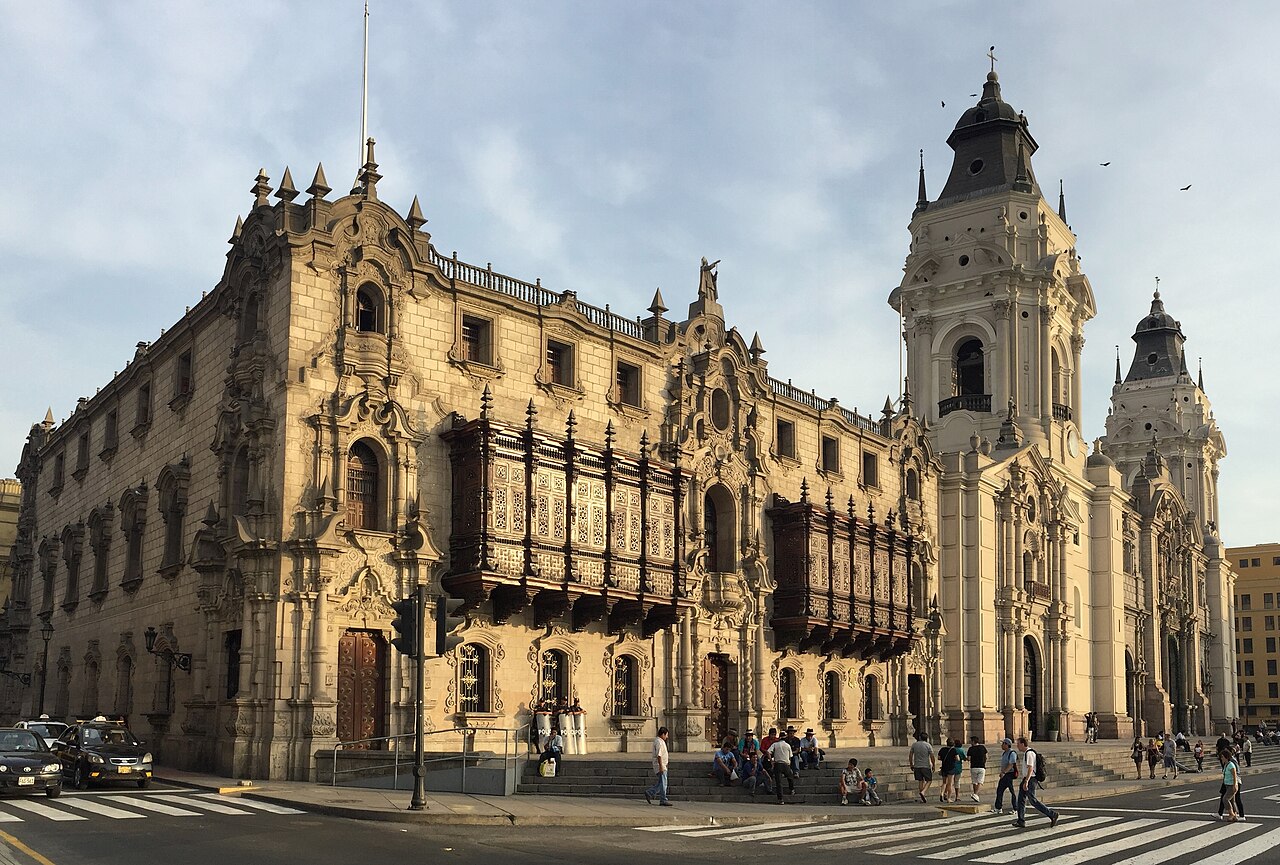
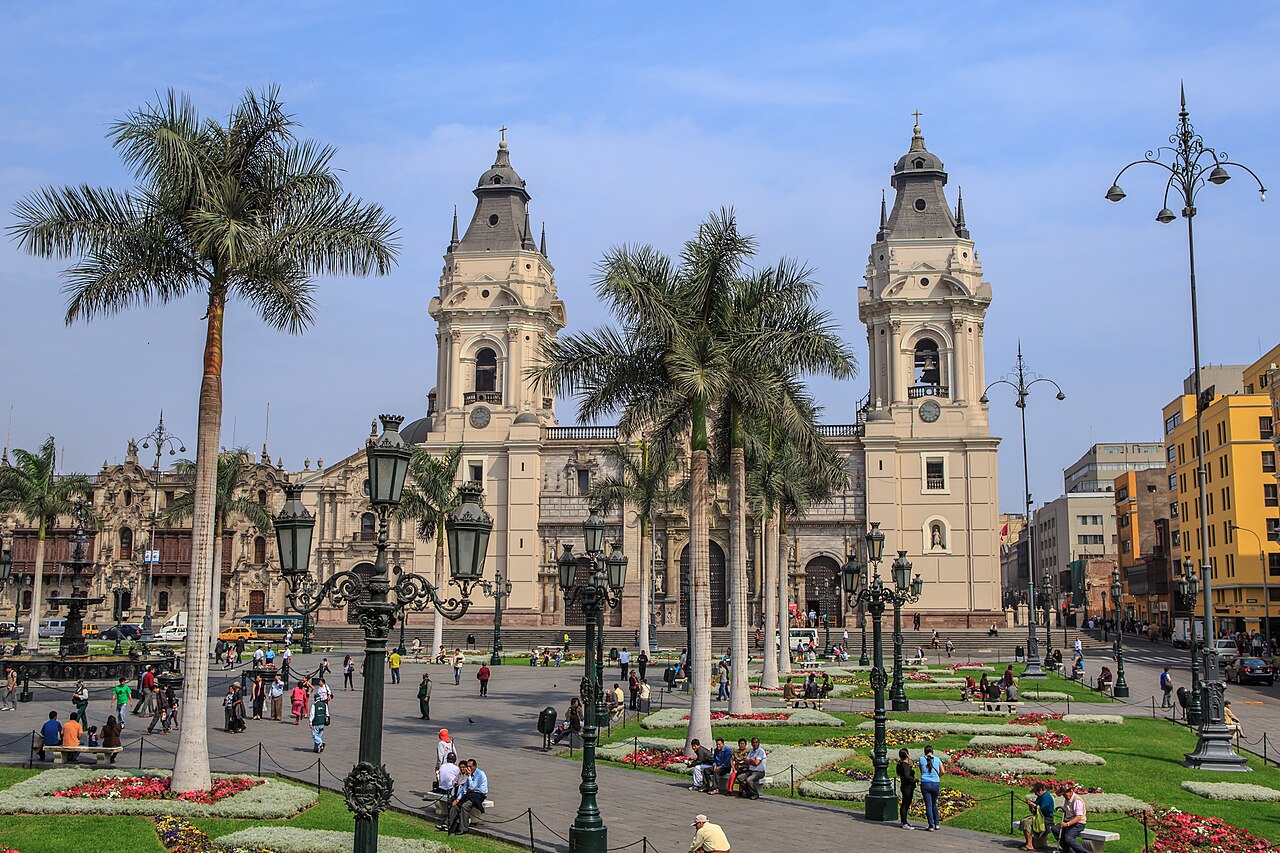
The main square of Lima, laid out when the city was founded in 1535. Around it stand the Government Palace, the Cathedral and the Archbishop's Palace with its carved wooden balconies. The fountain in the middle dates from 1651. It is part of the Historic Centre of Lima World Heritage Site.
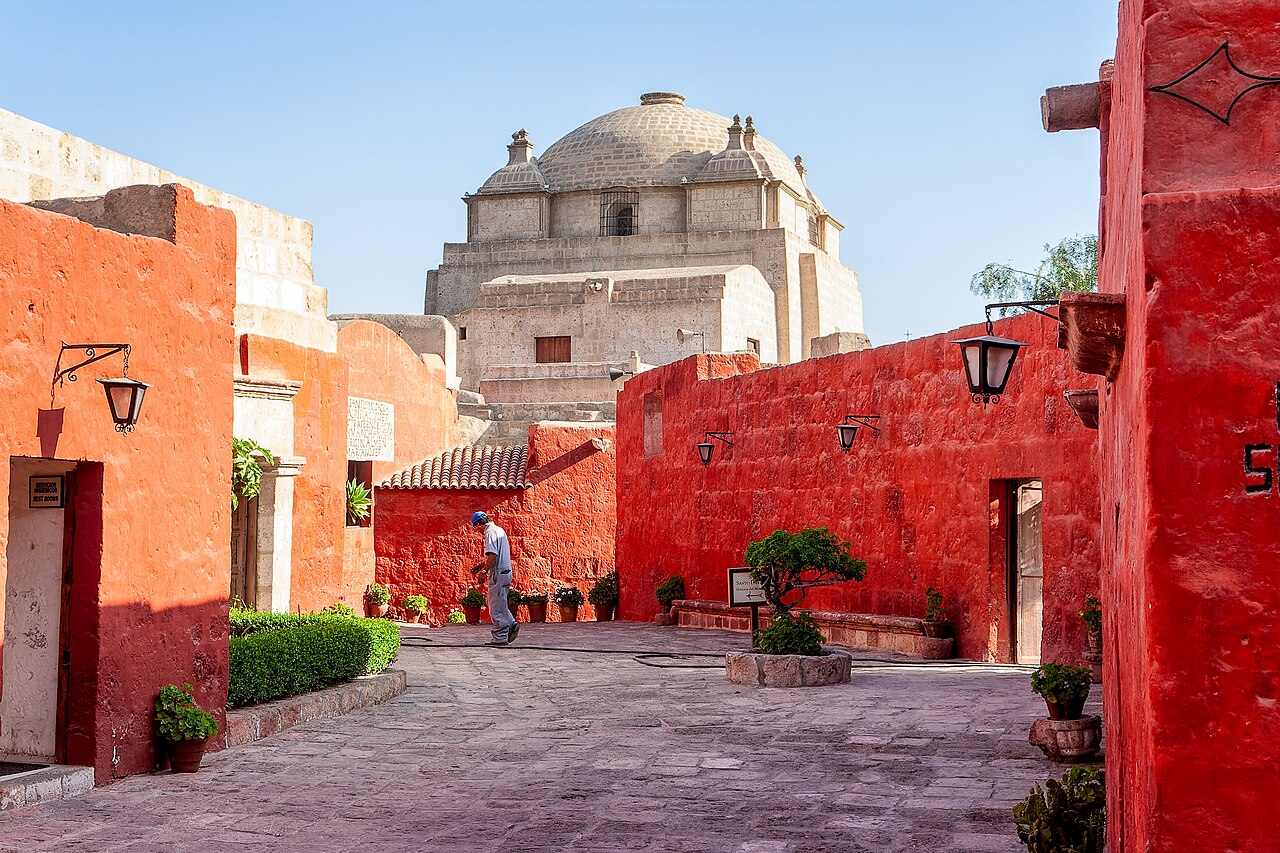
A walled 'city within a city' in the centre of Arequipa, founded in 1579. It covers 20,000 m², with narrow streets, courtyards and brightly painted houses where nuns lived shut away from the world. It was closed to outsiders until 1970.
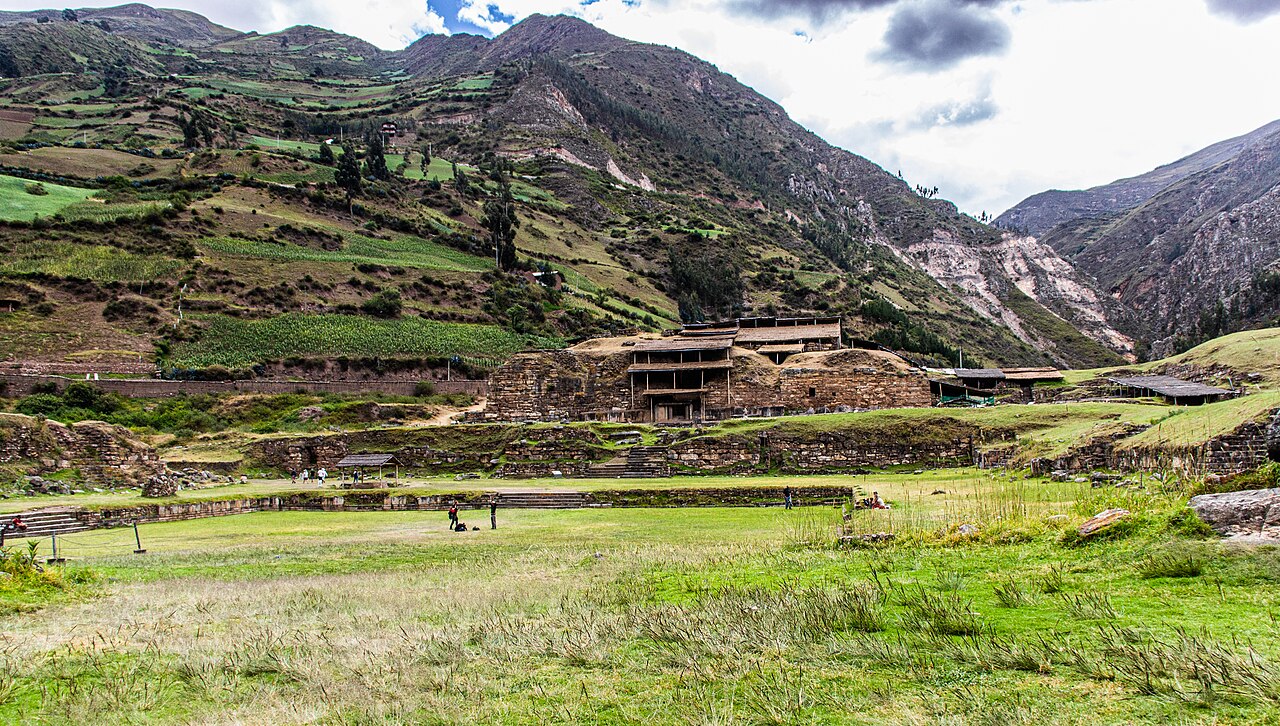
A great temple centre of the Chavín culture, built from as early as 1200 BC on the far side of the Cordillera Blanca, a day trip from Huaraz. Visitors can walk through its dark stone passages to see the Lanzón, a tall carved stone thought to show the temple's supreme god.
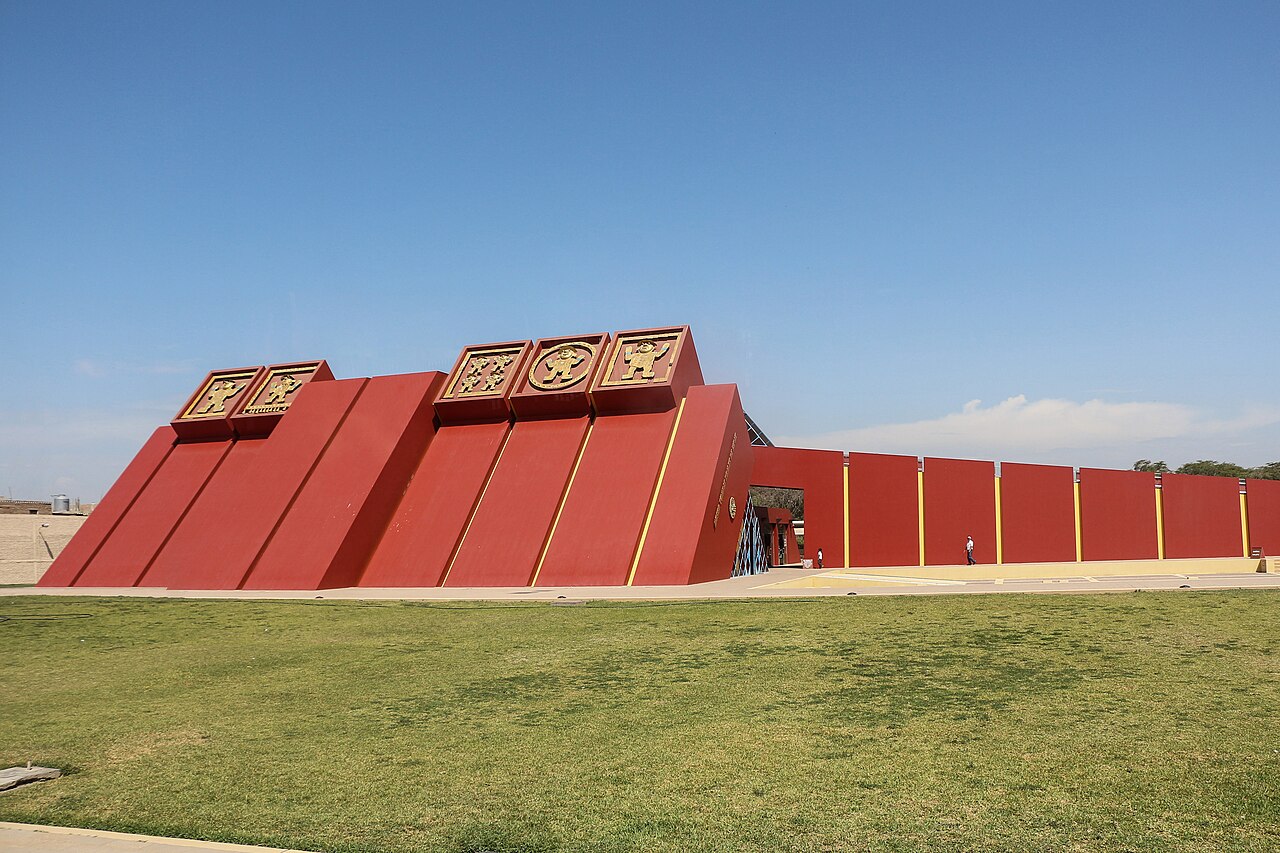
A museum in Lambayeque, just north of Chiclayo, designed to look like the ancient Moche tombs. It holds the gold, silver and jewellery of the Lord of Sipán and other rulers, found by Walter Alva and his team from 1987 onwards. It opened in 2002.
The potato comes from Peru. It was first domesticated by farmers around Lake Titicaca, in today's southern Peru and northwestern Bolivia, about 7,000 to 10,000 years ago.
02
Peru's agriculture ministry says the country has more than 3,000 varieties of potato, and the International Potato Center, based in Lima, says more than 4,000 native varieties grow in the Andes of Peru, Bolivia and Ecuador.
03
Paddington Bear comes from 'darkest Peru'. His author, Michael Bond, first wanted him to come from Africa, but was told there are no bears there, so he chose Peru, home of the spectacled bear.
04
The southern summit of Huascarán, 6,768 m, is the highest point in the Earth's tropics. It is also said to be the place on Earth's surface where gravity is weakest.
05
Lake Titicaca, which Peru shares with Bolivia, lies at 3,812 m and is often called the highest navigable lake in the world. It is the largest lake in South America.
06
The Amazon's most distant source is in the Peruvian Andes. For nearly a century it was thought to be on the mountain Nevado Mismi, but a 2014 study pointed to the headwaters of the Mantaro River, also in Peru.
07
The Incas ran a huge empire without writing as we know it. They kept records, such as taxes and population counts, on quipus: bundles of coloured cords with knots tied in a decimal system.
08
Several English words come from Quechua, the language of the Incas, through Spanish: llama, puma, condor, quinoa, coca and jerky, from ch'arki, dried salted meat.
09
In a painting of the Last Supper from about 1753 in Cusco Cathedral, by the painter Marcos Zapata, Jesus and his disciples have Andean food on the table, apparently including a roast guinea pig.
10
The Colca Canyon, about 160 km northwest of Arequipa, is about 3,270 m deep, one of the deepest canyons in the world. Andean condors, with wings up to 3.3 m across, glide past its walls.
11
The vicuña, a wild relative of the llama, is Peru's national animal and appears on its coat of arms. Its wool is among the finest in the world, and under the Incas only royalty could wear it.
12
Peru's own soft drink, Inca Kola, is bright yellow and tastes of lemon verbena. It was created in Peru in 1935 by a British immigrant, Joseph Robinson Lindley.
13
Iquitos, in the Amazon, is the largest city in the world that is not on an island and cannot be reached by road. You get there by plane or by boat.
14
Peru's currency, the sol, shares its name with the Spanish word for 'sun', a link to Inti, the sun god of the Incas, who gave his name to Peru's previous currency, the inti.
Cusco is at about 3,400 m and Puno at more than 3,800 m, and altitude sickness is a real risk there. Rest on your first day, walk slowly, drink water and go easy on alcohol. If you have heart or breathing problems, talk to your doctor before you go.
Coca tea stays in Peru
Hotels in Cusco often offer coca tea (mate de coca) against altitude sickness. It is legal in Peru, but do not take coca leaves or tea bags home: they are illegal in some countries, including the United States, and one cup can show up on a drug test.
Drink bottled water
Stomach upsets from food and water are common. Drink bottled or boiled water, avoid ice unless you know it is made from purified water, and choose food that is freshly cooked and served hot.
Book Machu Picchu early
Entry tickets are for a set day, time and route, and the numbers are limited, so book weeks or months ahead on the official site, tuboleto.cultura.pe. The ticket is linked to your passport: bring the same passport with you to the gate.
Plan ahead for the Inca Trail
Only 500 people a day, including guides and porters, may start the classic Inca Trail, and you can only go with a licensed company. Permits sell out months ahead, and the trail closes every February for cleaning.
Use official taxis
At the airport, use the official taxi companies at the desks outside the baggage hall. In town, do not hail taxis in the street: use a licensed taxi company by phone or app, or ask your hotel to call one.
Watch your bag
Pickpocketing and bag-snatching are common in Lima, Cusco, Arequipa and other big cities, including tourist areas such as Miraflores and Barranco. Keep your phone out of sight and your bag closed and in front of you.
Tip about 10 percent
In restaurants, a tip of about 10 percent is welcome for good service. Check the bill first: some upscale restaurants already add a service charge.
 Bolivia
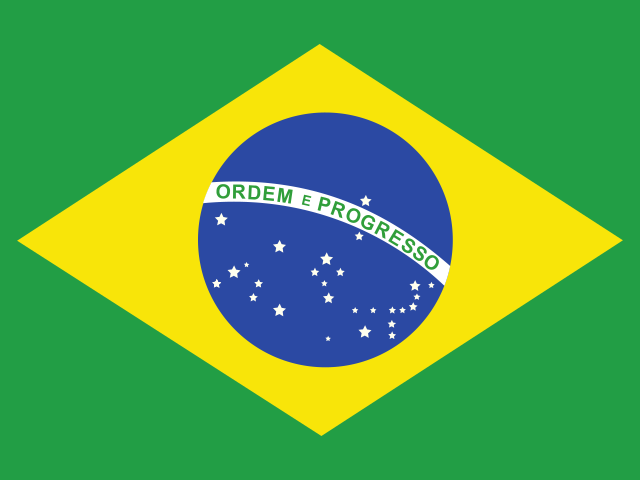 Brazil
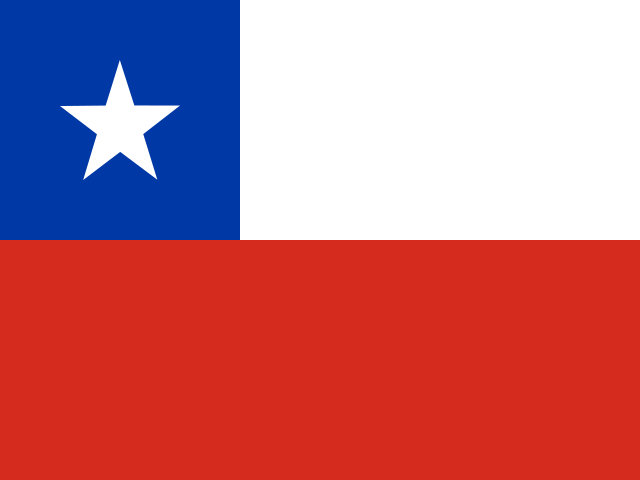 Chile
Chile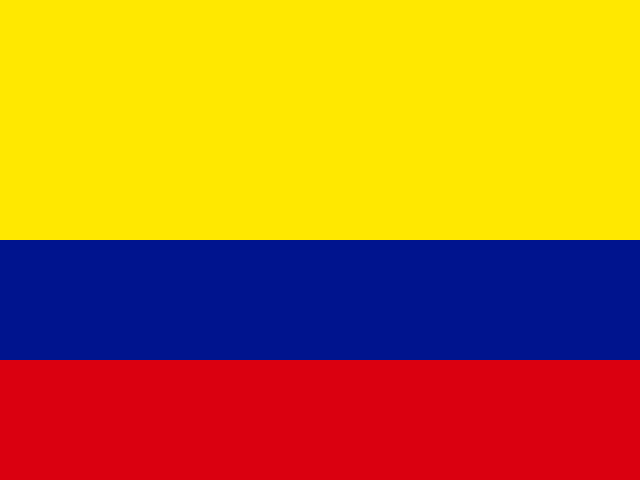 Colombia
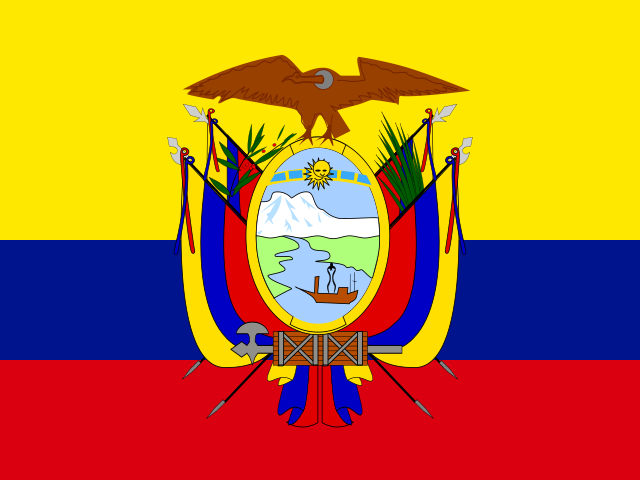 Ecuador