A free large-print PDF. Choose what goes in: facts, map, history, dishes and recipes, phrases, fun facts, a quiz with or without answers. Made for clubs, care homes, libraries and family afternoons.
Ecuador lies in the northwest of South America, on the Pacific coast, between Colombia and Peru. Its name is simply the Spanish word for the equator, which runs just north of the capital, Quito. The country has four very different parts: a warm coast of banana plantations and fishing ports, the Andes mountains with their chain of volcanoes, the Amazon rainforest in the east, and, about 1,000 km out in the Pacific, the Galápagos Islands.
People lived here long before the Incas. On the coast, the Valdivia culture, one of the oldest settled cultures in the Americas, was making pottery more than 4,500 years ago. The Incas conquered the highlands between 1463 and about 1500, and the Spanish arrived in the 1530s and founded Quito in 1534. After the victory at Pichincha in 1822, Ecuador joined Simón Bolívar's Gran Colombia, and in 1830 it became an independent republic.
Today Ecuador is a republic of about 17 million people. Almost everyone speaks Spanish, and about half a million people, mostly in the Andes, also speak Kichwa, a form of the Inca language Quechua. Since 2000 the country has used the United States dollar. Visitors come for the old towns of Quito and Cuenca, the markets of the Andes, the volcanoes and, above all, the wildlife of the Galápagos.
CapitalQuito
PopulationAbout 17 million (2022 national census)
Official languageSpanish. Kichwa and Shuar are official languages of intercultural relations in their communities
CurrencyUnited States dollar (since 2000)
AreaAbout 284,000 km², including the Galápagos Islands
GovernmentPresidential republic. The president is elected for a four-year term
Highest mountainChimborazo, 6,263 m, whose summit is the point on Earth's surface farthest from the planet's centre
Main riversThe Guayas flows to the Pacific; the Napo and the Pastaza flow east to the Amazon
NeighboursColombia to the north and Peru to the east and south. The Pacific Ocean lies to the west
Long before the Incas, farming and fishing peoples such as the Valdivia, the Quitu and the Cañari lived on the coast and in the Andes. The Incas ruled the highlands for less than a century before Spain conquered them in the 1530s. For almost three hundred years Quito was a Spanish colonial capital. Ecuador won its freedom in 1822, left Gran Colombia in 1830, and has been a republic ever since, with a long border quarrel with Peru that ended only in 1998.
3500 BC
The Valdivia culture settles the coast
From about 3500 BC, the Valdivia people lived in villages around central plazas on Ecuador's coast. It is one of the oldest settled cultures recorded in the Americas. They fished, grew maize, beans and cotton, and made pottery, including small clay figures known as the Venus of Valdivia.
1463
The Incas march north
In 1463 the Inca army, led by Topa Inca Yupanqui, began to conquer the peoples of the Ecuadorian Andes. His son Huayna Capac completed the conquest around 1500, and Quito became the capital of the empire's northern region.
1532
Pizarro captures Atahualpa
Atahualpa, who had been governor of Quito, won a civil war against his half-brother Huáscar. In November 1532 the Spanish under Francisco Pizarro captured him at Cajamarca, in today's Peru, and executed him the next year.
1534
The Spanish found Quito
On 6 December 1534, Sebastián de Benalcázar and 204 settlers founded San Francisco de Quito on the site of the old Inca city. The Inca general Rumiñahui, who had resisted them, was captured and executed.
1535
Bishop Berlanga finds the Galápagos
In 1535 Bishop Tomás de Berlanga drifted by accident to the Galápagos Islands. There is no firm evidence that anyone had reached them before. Pirates later used the islands as a hiding place.
1736
The French Geodesic Mission reaches Quito
French and Spanish scientists, led by Charles Marie de La Condamine, Pierre Bouguer and Louis Godin, arrived in Quito in June 1736 to measure the length of a degree of latitude at the equator and so learn the true shape of the Earth.
1809
Quito's first call for independence
On 10 August 1809, leading citizens of Quito set up their own government and called for independence from Spain. It lasted only about two months, but it inspired the rest of Spanish America and gave Quito the nickname 'Light of America'.
1822
The Battle of Pichincha
On 24 May 1822, on the slopes of the Pichincha volcano above Quito, General Antonio José de Sucre defeated the Spanish royalist army. The victory freed the lands that became Ecuador, which then joined Simón Bolívar's Gran Colombia.
1830
Ecuador leaves Gran Colombia
On 13 May 1830, the southern district of Gran Colombia broke away and became the independent Republic of Ecuador, with Quito as its capital. Its first president was the Venezuelan-born general Juan José Flores.
1832
Ecuador claims the Galápagos
On 12 February 1832, an Ecuadorian colonel held a ceremony on Floreana Island to annex the Galápagos. The date is still celebrated in the islands as Galápagos Day.
1835
Darwin visits the Galápagos
The British ship HMS Beagle reached the Galápagos on 15 September 1835 and stayed five weeks. The young naturalist Charles Darwin noticed that mockingbirds and tortoises differed from island to island, ideas that later shaped his theory of evolution, published in 1859.
1895
Eloy Alfaro's Liberal Revolution
In 1895 the Liberal Revolution brought Eloy Alfaro to power. He reduced the power of the Church and the big landowners and pushed through the railway linking Guayaquil on the coast with Quito in the Andes.
1942
The Rio Protocol
After a short war with Peru in 1941, Ecuador signed the Rio de Janeiro Protocol on 29 January 1942. It gave Peru much of the Amazon land that Ecuador claimed, and the quarrel over the border went on for decades.
1998
Peace with Peru
After another brief war in the Cordillera del Cóndor in 1995, Ecuador and Peru signed a final peace agreement in Brasília on 26 October 1998, ending one of the longest border disputes in the Western Hemisphere.
2000
The dollar replaces the sucre
After a severe financial crisis, in which the sucre fell to 25,000 to one US dollar, Ecuador adopted the United States dollar as its currency in 2000. The sucre, used since 1884, was withdrawn the same year.
2008
A new constitution gives nature rights
In 2008 voters approved a new constitution, Ecuador's current one. It was the first in the world to give nature itself legal rights that can be defended in court, inspired by the Andean idea of Pachamama, Mother Earth.
Ecuadorian food changes with the altitude. On the coast people eat fish, prawns and green plantains, often cooked with peanuts or coconut, a legacy of African cooks. In the Andes the table is full of potatoes, maize, pork and, on special days, roast guinea pig. In the Amazon, cassava (yuca) is the staple. Lunch is the main meal: first a soup, then a 'segundo' of rice with meat, chicken or fish, and finally a dessert and coffee. Supper is lighter, sometimes just coffee or herbal tea with bread.
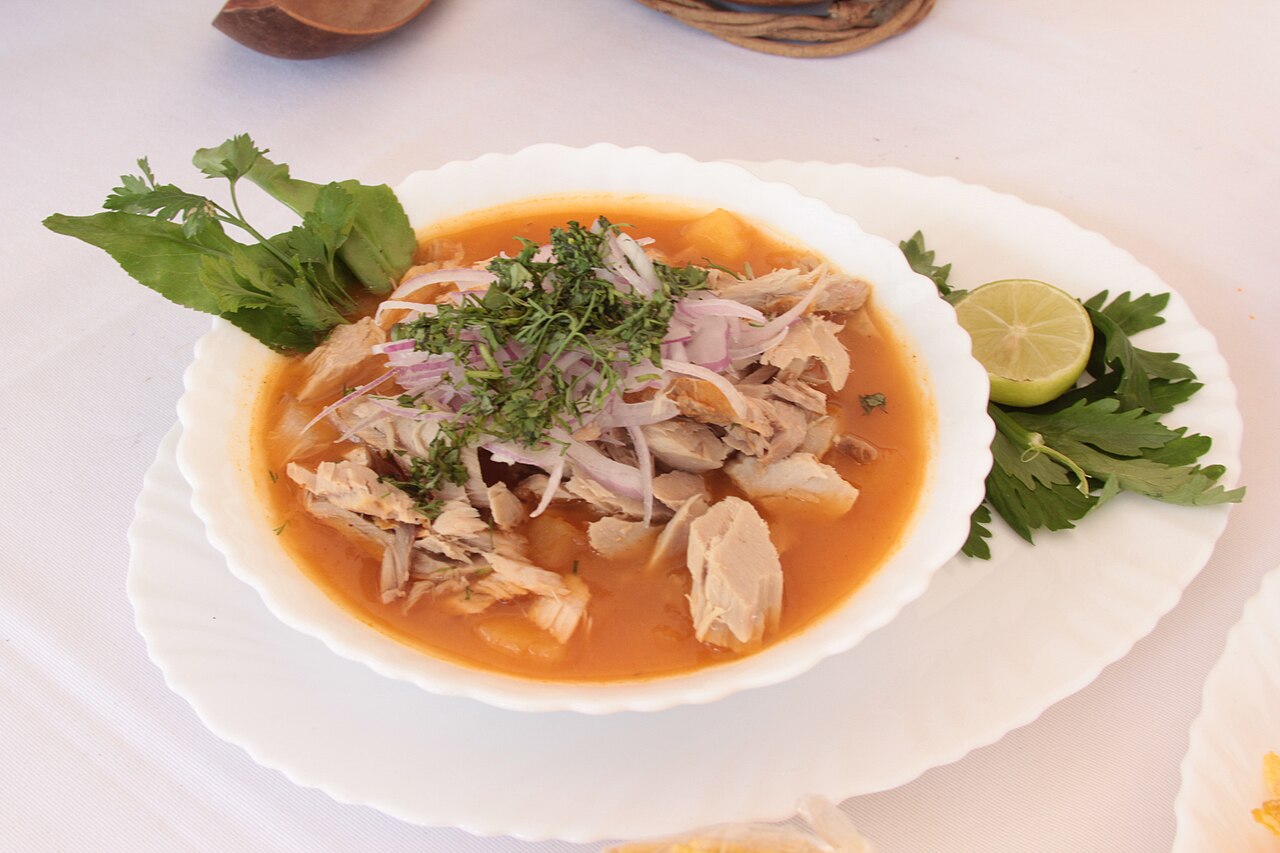
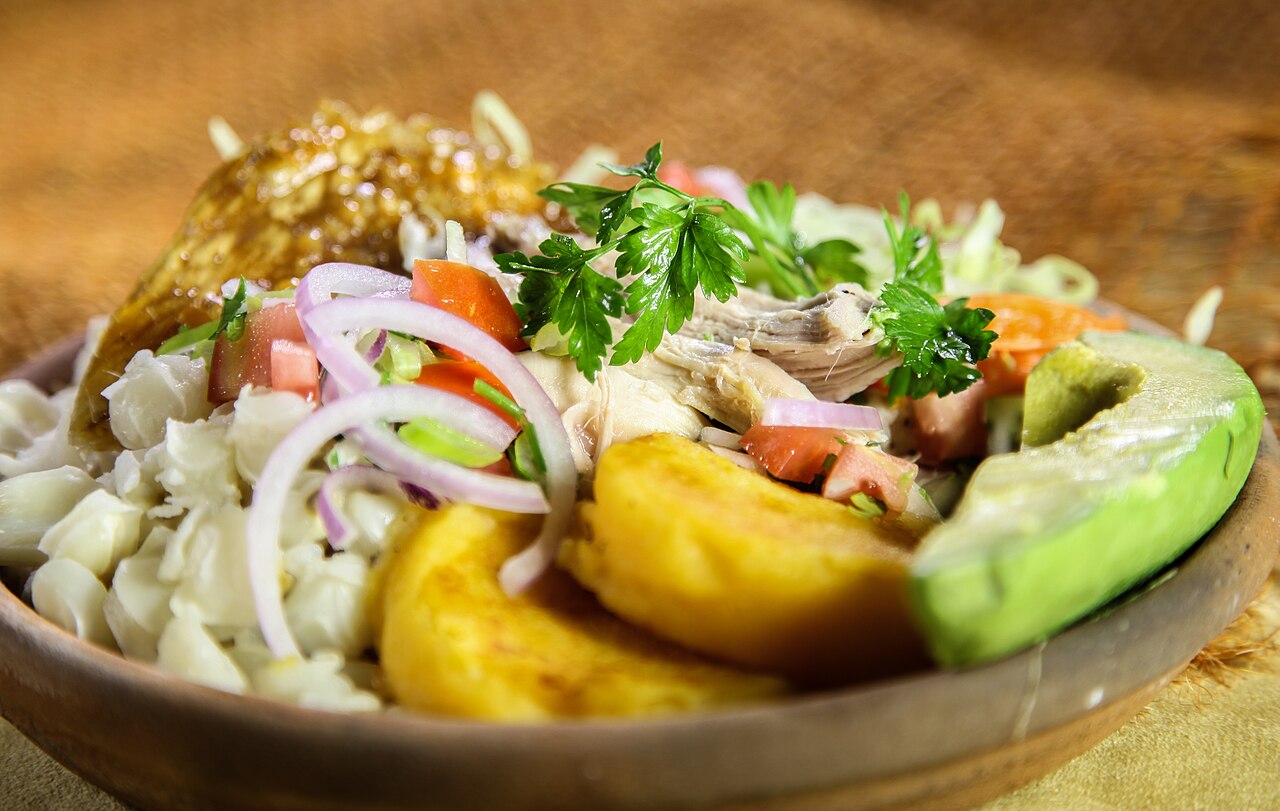
A hearty fish soup made with albacore or other tuna, boiled cassava and a topping of pickled red onion, tomato and coriander. It is served with lime, toasted corn and crisp banana chips called chifles.
Ecuadorians eat it at breakfast, lunch or dinner. Some restaurants sell nothing else and open early in the morning, and it is the country's favourite cure for a hangover, which Ecuadorians call a 'chuchaqui'.
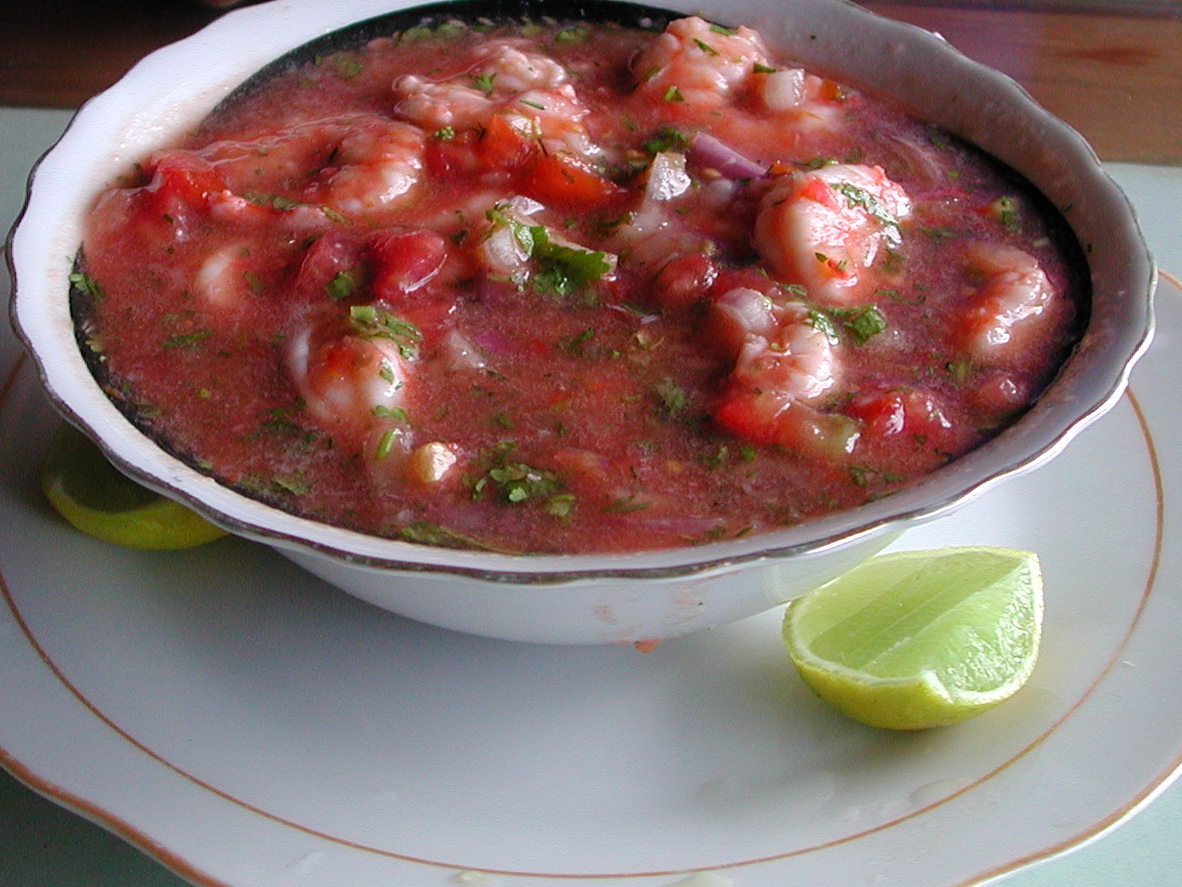
Cooked prawns served cold in a tangy juice of lime, bitter orange and tomato, with red onion and coriander. Unlike the Peruvian kind, Ecuadorian ceviche is usually made with cooked seafood, and it comes with popcorn, toasted corn or plantain chips on the side.
Some cooks stir in a little tomato ketchup and mustard. In the Andes, where seafood was scarce, there are even vegetarian versions made with lupin beans or palm hearts.
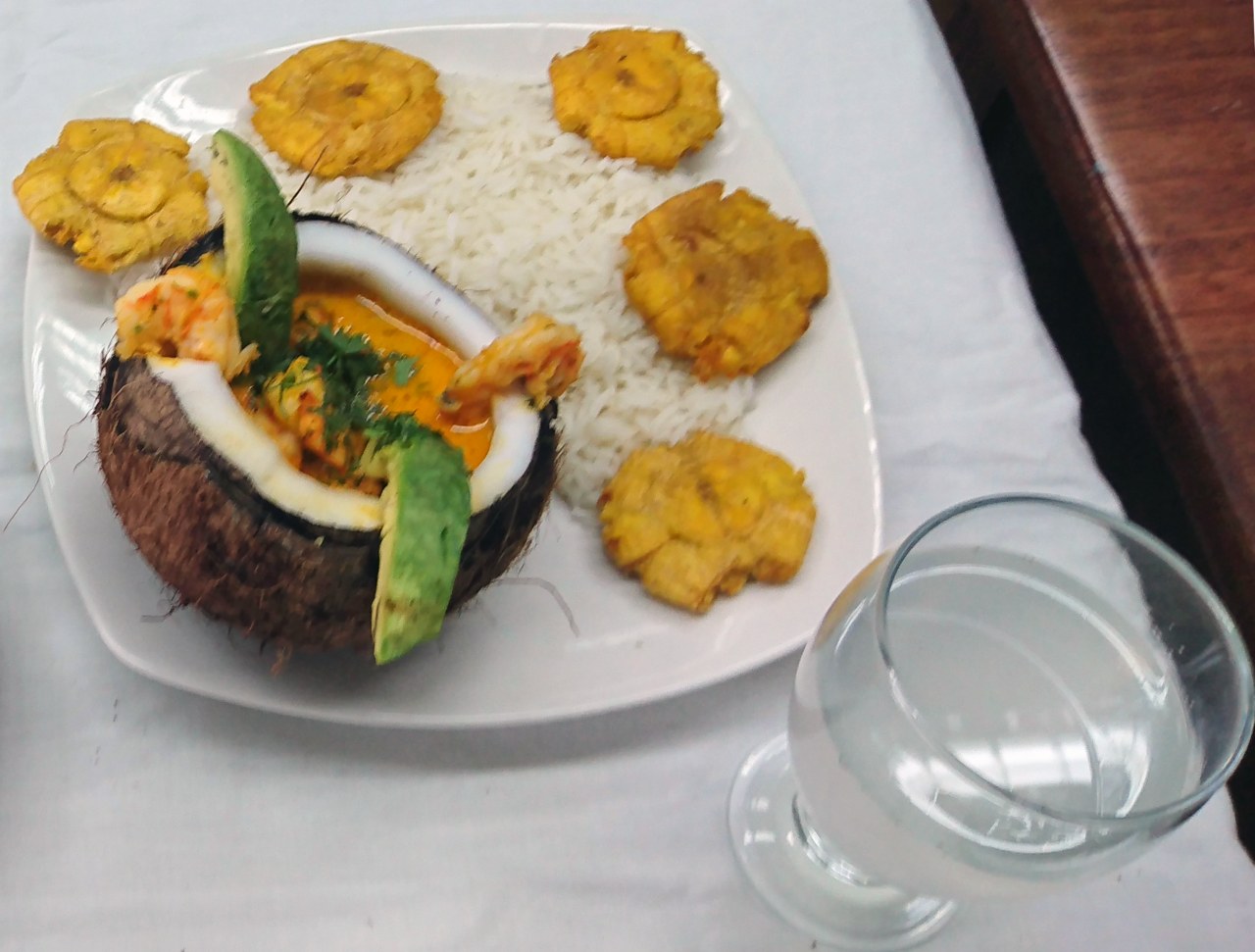
Fish or prawns simmered in a rich sauce made from freshly grated coconut, with garlic, onion and local herbs. It is served with rice and fried plantains.
The dish goes back to the recipes of Africans who settled on the coast of Esmeraldas in colonial times. Its name comes from 'coco', coconut.
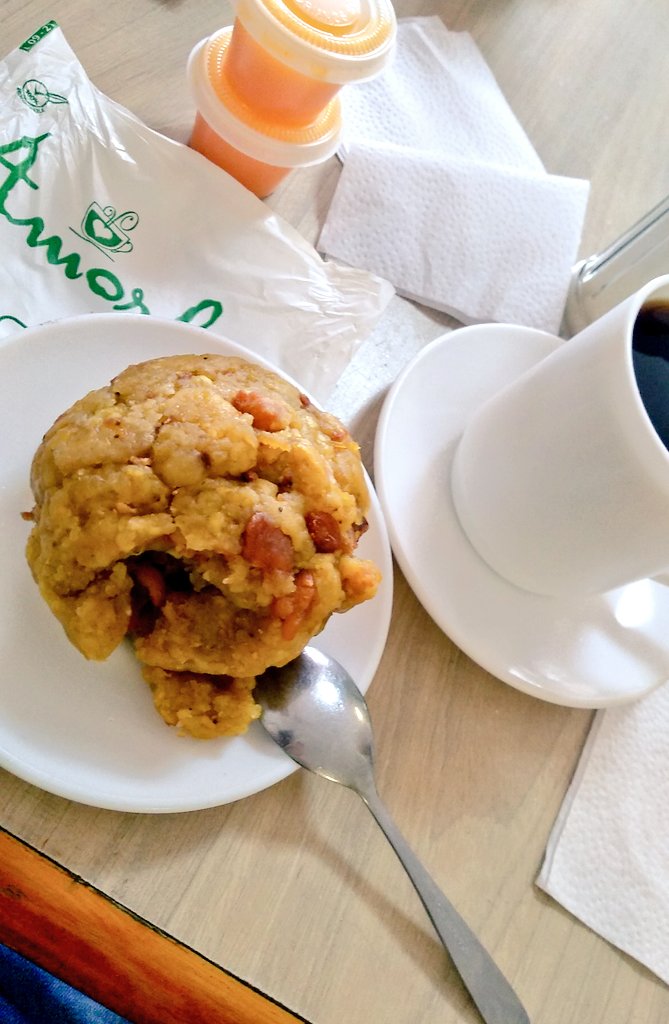
A ball about the size of a fist, made of green plantain that is cooked, mashed and kneaded with cheese or crispy pork, then fried until golden. On the coast it is a very common breakfast, served with black coffee.
Guinness World Records recognised a giant bolón of 292 kg, made in New York.
See the recipe
Serves 4
45 min
Ingredients
3 large green (unripe) plantains
150 g crumbly white cheese, such as feta or queso fresco, crumbled
2 tablespoons butter
Salt
Vegetable oil for frying
Fried eggs and coffee, to serve (optional)
Method
Peel the plantains: cut off both ends, slit the skin along its length and pull it away. Cut each plantain into 4 pieces.
Boil the pieces in salted water for 20 to 25 minutes, until soft. Drain.
While they are still hot, mash them well with the butter and a pinch of salt. Take care, as the plantain is very hot.
Mix in the cheese, then shape the mixture with your hands into 4 firm balls.
Heat 2 cm of oil in a frying pan and fry the balls, turning them, for 5 to 8 minutes, until golden all over. Drain on kitchen paper and serve warm.
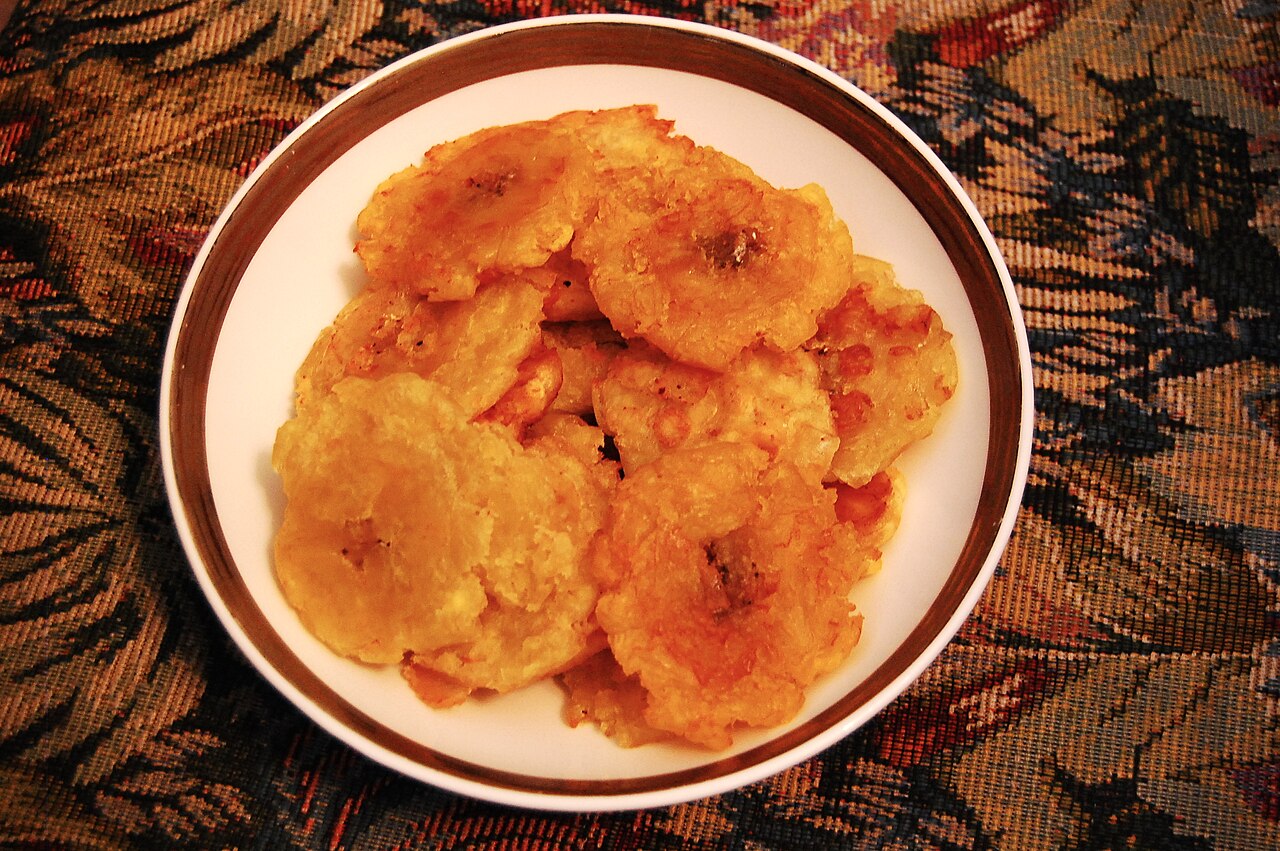
Thick slices of green plantain that are fried, flattened and fried again until crisp outside and soft inside. They are served with fish, ceviche, stews and rice dishes.
In Puerto Rico and Cuba the same thing is called tostones. Ecuador, Colombia, Panama and Peru call them patacones.
See the recipe
Serves 4
30 min
Ingredients
2 green (unripe) plantains
Vegetable oil for frying
Salt
1 lime, cut into wedges, to serve
Method
Peel the plantains and cut them into slices about 3 cm thick.
Heat 2 cm of oil in a frying pan over a medium heat and fry the slices for about 3 minutes on each side, until pale gold. Lift them out onto kitchen paper.
Put each slice between two pieces of baking paper and press it flat with the bottom of a heavy cup or plate, to about 1 cm thick.
Fry the flattened slices again in hot oil for 2 to 3 minutes on each side, until crisp and golden.
Drain, sprinkle with salt and serve hot with lime wedges.
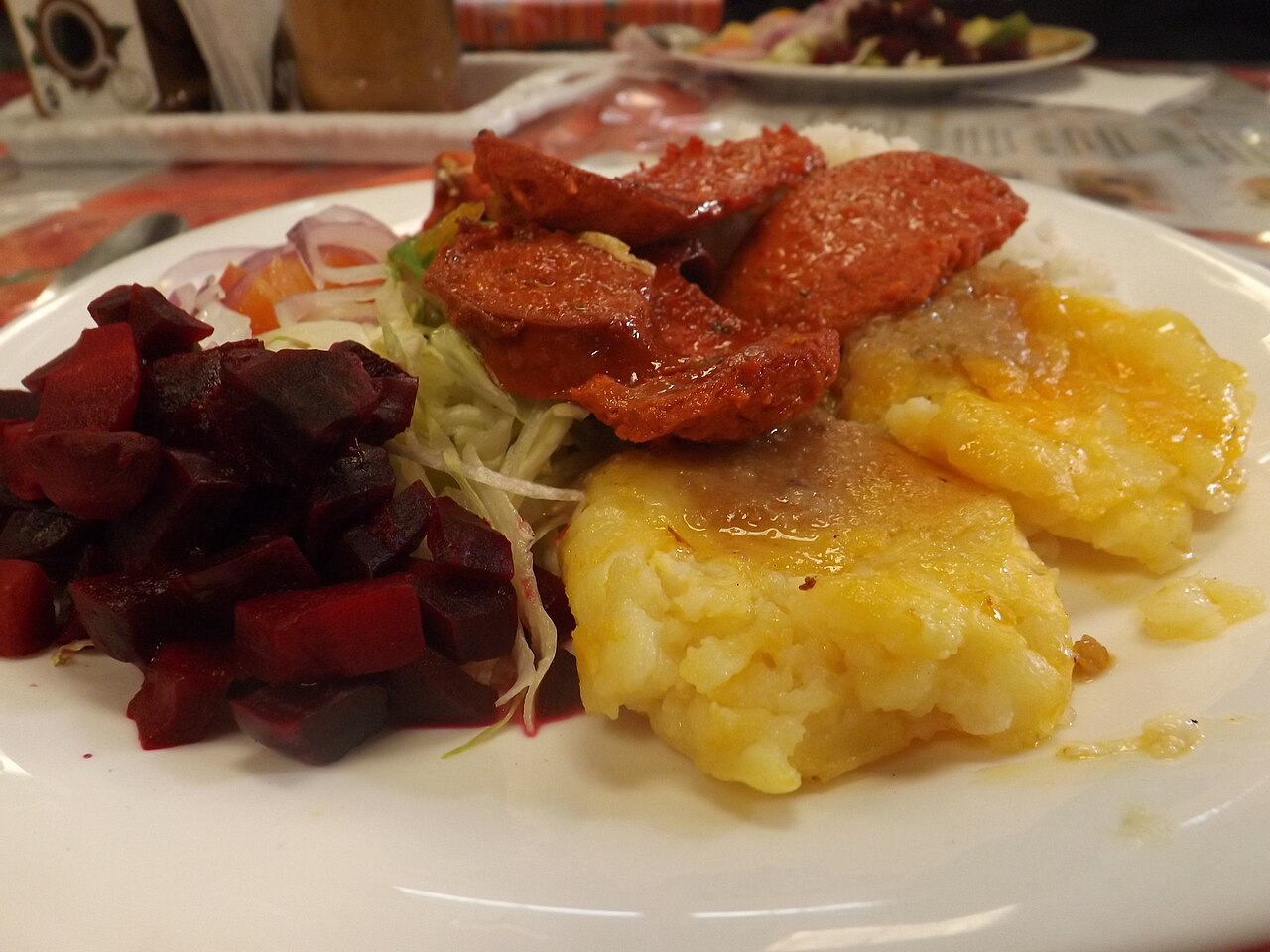
Potato patties coloured orange with achiote (annatto), stuffed with fresh cheese and cooked on a hot griddle until crisp. They come with a peanut sauce, and often with roast pork, sausage, a fried egg, avocado and salad.
See the recipe
Serves 4
1 h
Ingredients
1 kg floury potatoes, peeled and cut into chunks
2 tablespoons butter or oil
1 small onion, very finely chopped
1 teaspoon ground achiote (annatto) or sweet paprika, for colour
Half a teaspoon ground cumin
150 g mild white cheese, such as mozzarella or queso fresco, grated or crumbled
Salt
For the peanut sauce: 4 tablespoons smooth peanut butter, 150 ml milk, 1 spring onion, finely chopped, and a pinch of salt
Method
Boil the potatoes in salted water for about 20 minutes, until soft. Drain well and mash until smooth.
Warm the butter or oil in a small pan, add the onion, achiote and cumin, and cook gently for 5 minutes. Stir this into the mashed potato and season with salt. Leave to cool until you can handle it.
Divide the mash into 8 balls. Press a hole into each one, fill it with a little cheese, close it and flatten it into a patty about 2 cm thick. Chill for 20 minutes so they hold their shape.
Cook the patties in a lightly oiled non-stick frying pan over a medium heat for 4 to 5 minutes on each side, until golden and crisp.
For the sauce, warm the peanut butter, milk and spring onion together in a small pan, stirring, until smooth. Serve the llapingachos hot, with the sauce on the side.
A whole pig, roasted and sold by the plate in highland markets. It is usually served with llapingachos, mote (big boiled maize kernels) and vegetables.
The Andes, above all Quito. Eaten all over Ecuador at Easter
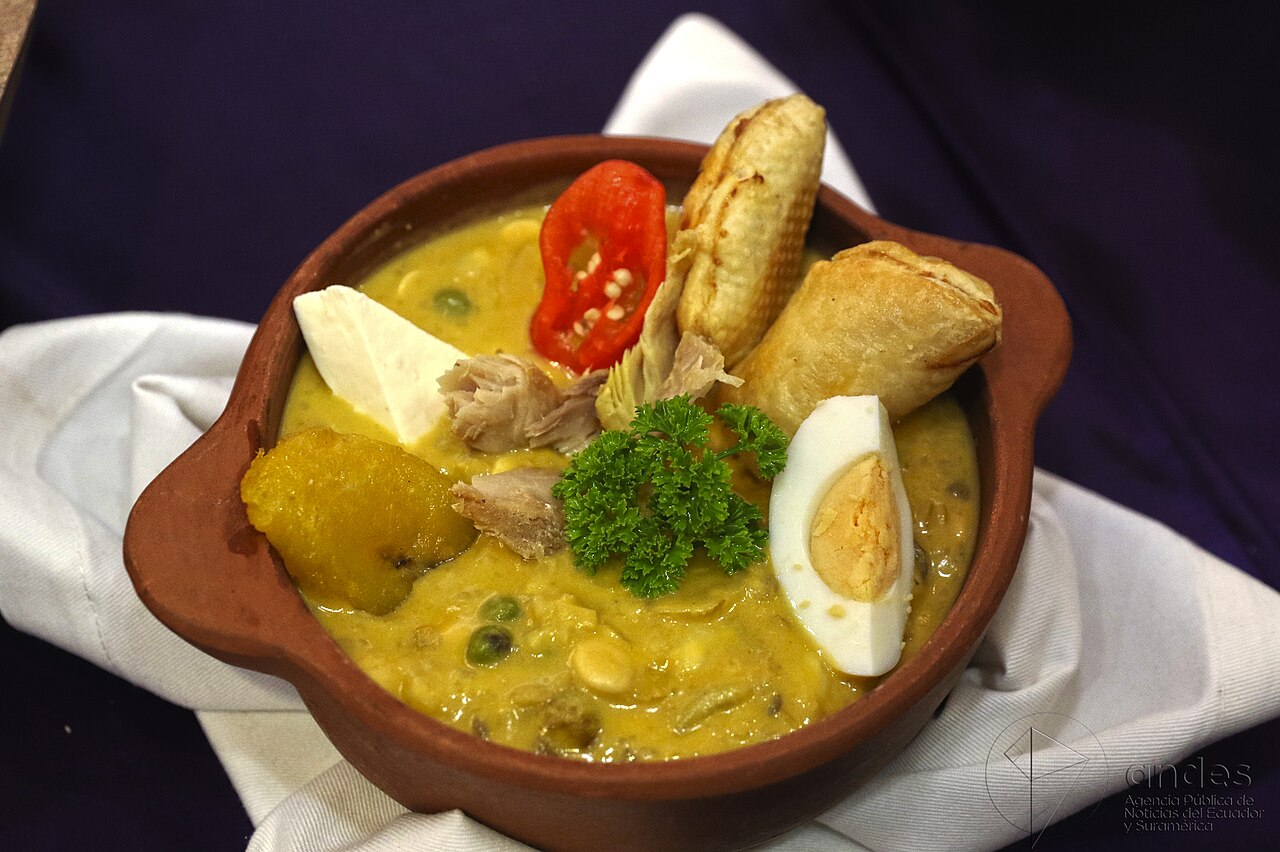
A thick, rich soup of Andean squash, milk and many kinds of tender grains, beans, lentils and peas, with salted dried fish. Households and whole communities prepare it together and share it.
Fanesca is traditionally made only once a year, for Holy Week and Good Friday. Its roots mix a pre-Hispanic harvest meal of tender grains with Spanish Lenten fish.
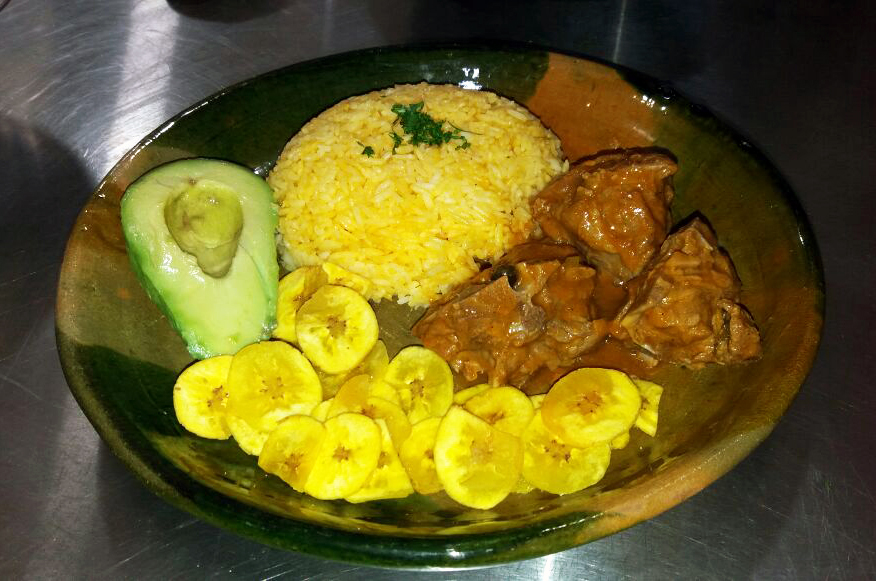
A slow-cooked goat stew. The meat is first marinated in something sour, such as naranjilla fruit juice, beer or chicha, and then stewed in the same sauce. It is served with rice.
'Seco' means dry, but the stew is not dry at all. Nobody agrees where the name comes from.
The Andes, especially the central and southern highlands
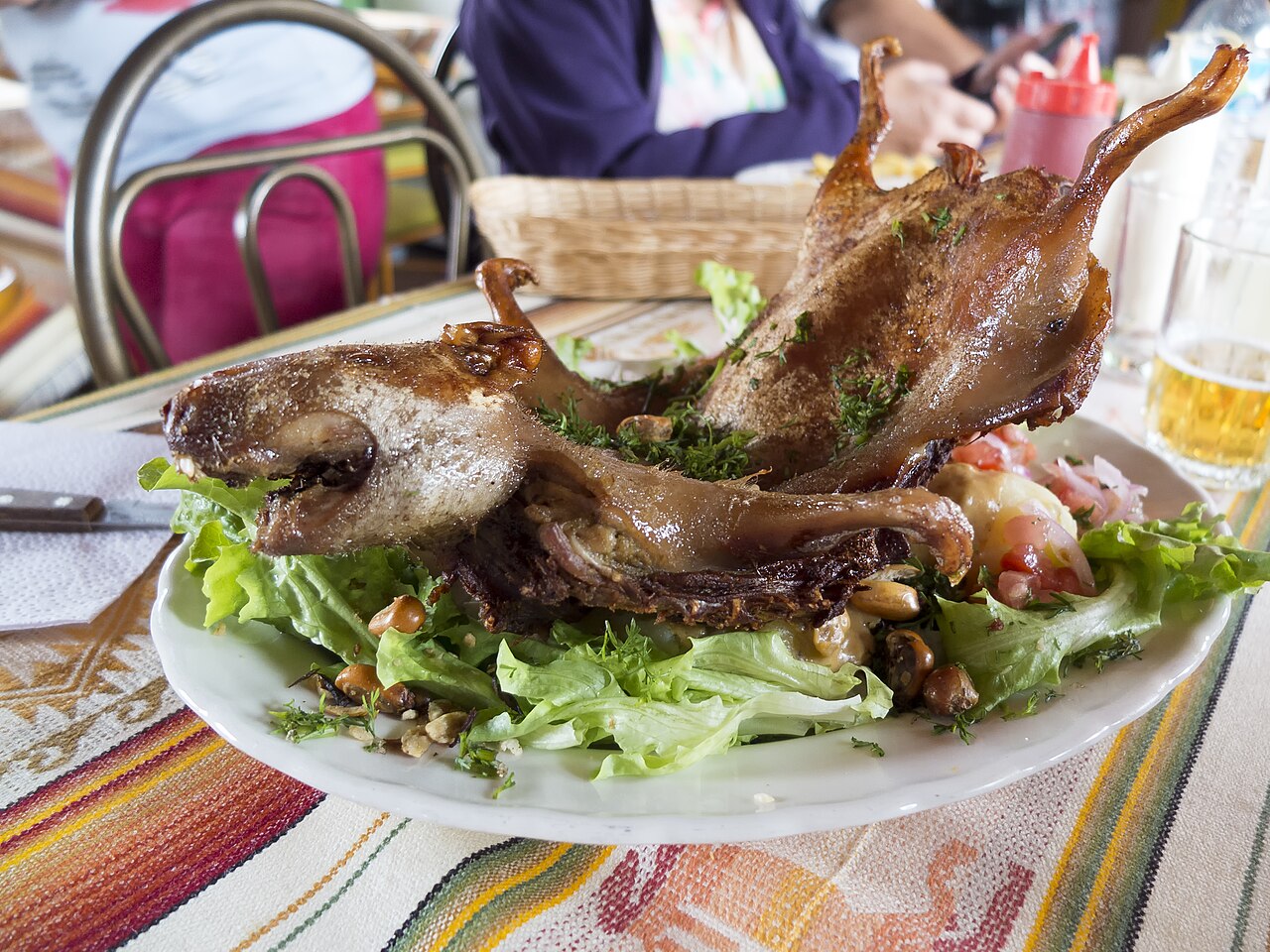
A whole guinea pig, seasoned and roasted or grilled until the skin is crisp, served with potatoes or mote. In the Andes it was traditionally kept for ceremonial meals and festivals, and it is still a dish for special occasions.
Guinea pigs were first kept for food in the Andes, including what is now southern Colombia and Ecuador, as early as 5000 BC. The Spanish word 'cuy' comes from the Quechua 'quwi'.
The Andes. A pre-Hispanic dish shared with Peru, Bolivia, Chile and Argentina
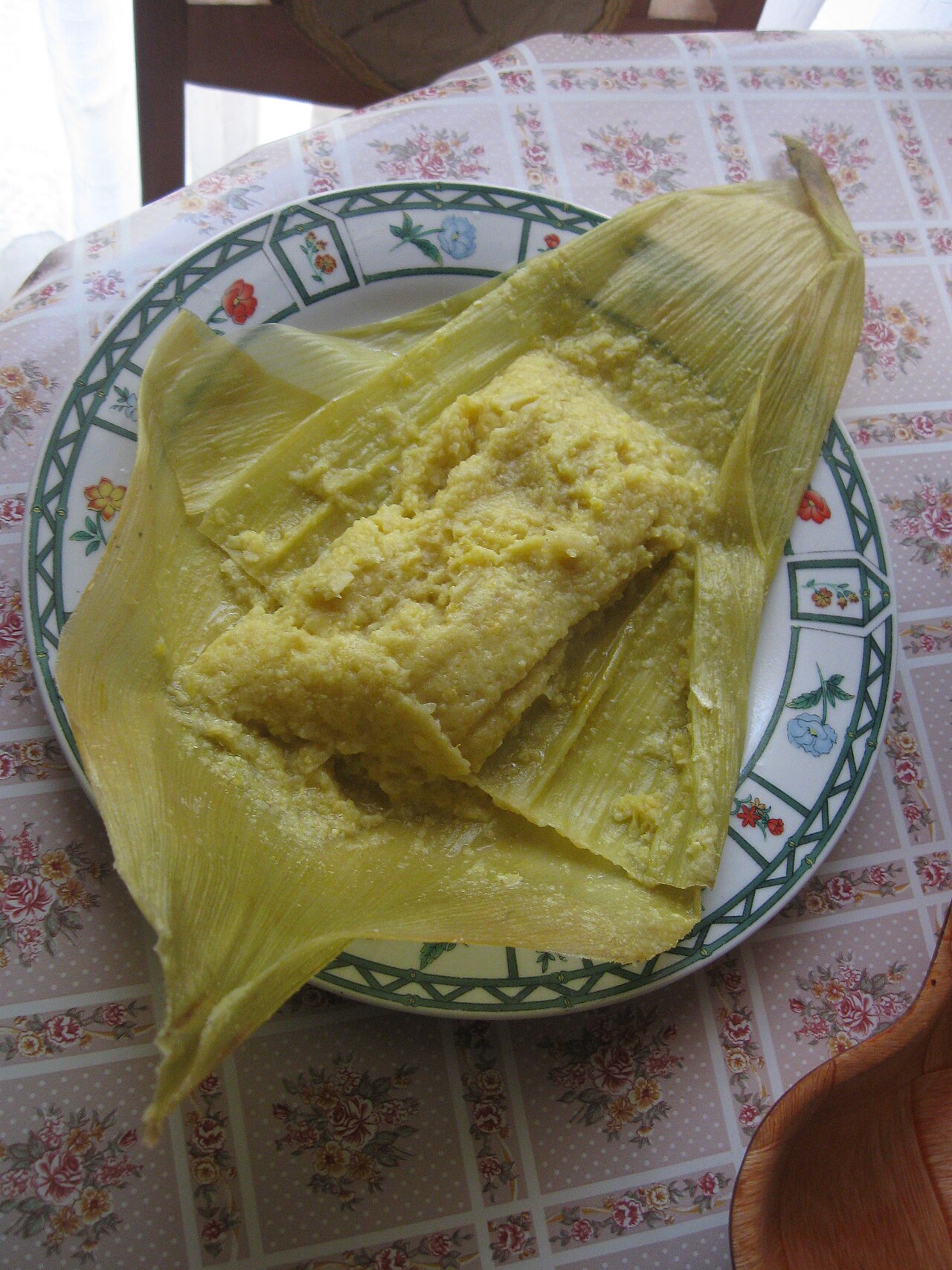
Fresh sweetcorn pounded to a paste, wrapped in a fresh corn husk and slowly steamed. The dish goes back to before the Spanish arrived and is eaten from Ecuador to northwest Argentina.
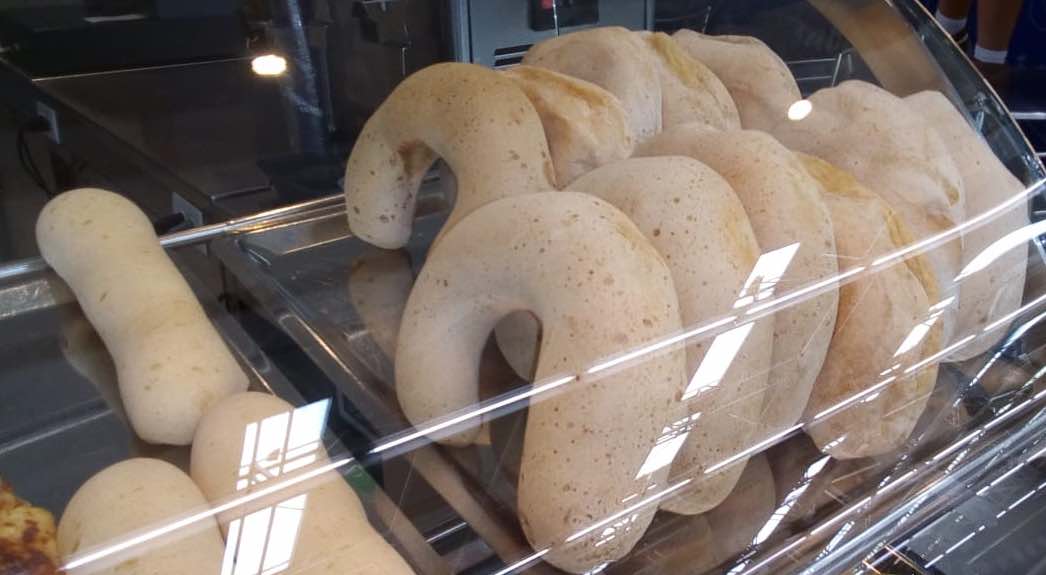
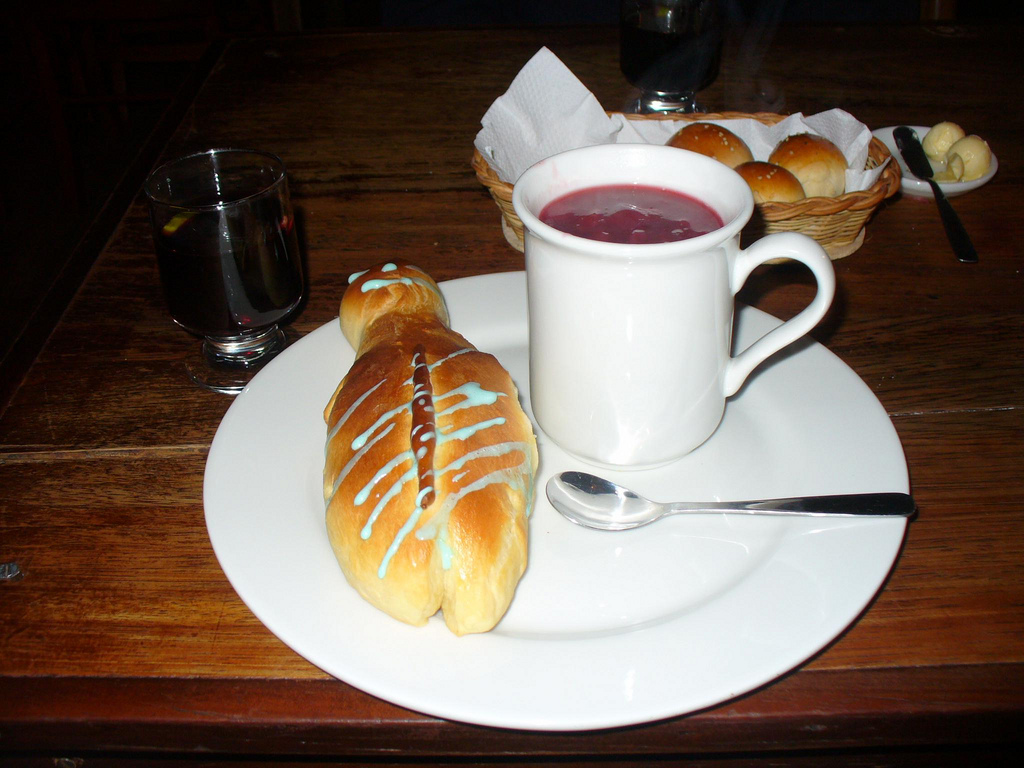
A thick, warm, purple drink made with purple corn flour and fruit such as blackberries, pineapple, strawberries and babaco, spiced with cinnamon and cloves. It is served with guaguas de pan, sweet bread rolls shaped like a baby wrapped in a blanket.
It is the drink of 2 November, All Souls' Day, when families remember their dead. 'Guagua' comes from the Quechua (Kichwa) word 'wawa', baby or child.
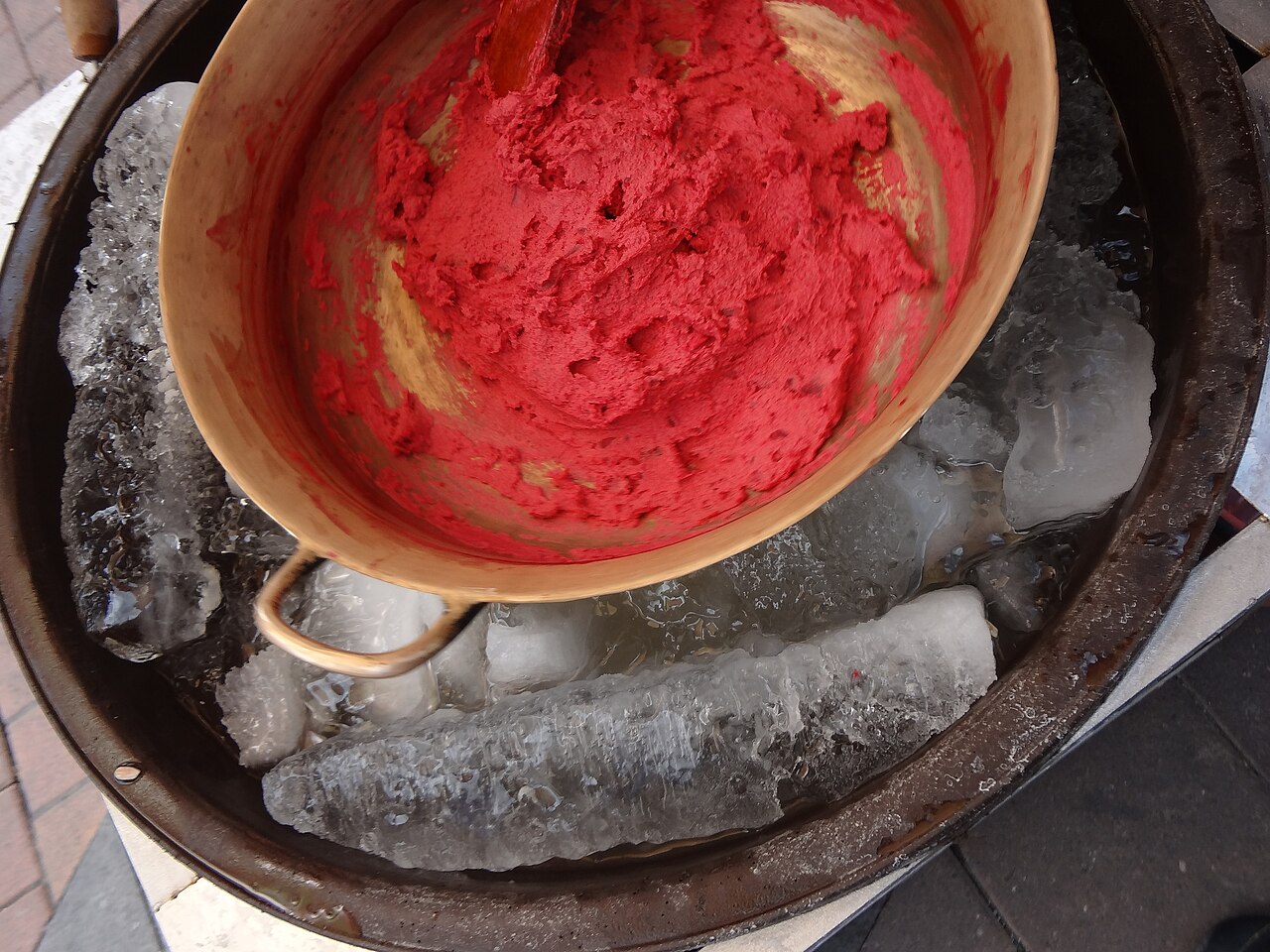
A fruit sorbet made by hand: fruit juice and sugar are stirred with a wooden spoon in a large bronze pan (paila) that spins on a bed of ice and straw. Popular flavours include blackberry, naranjilla, soursop and passion fruit.
It was invented before refrigerators existed. The story goes that it was first made in Ibarra with snow and ice brought down from the nearby Imbabura volcano.
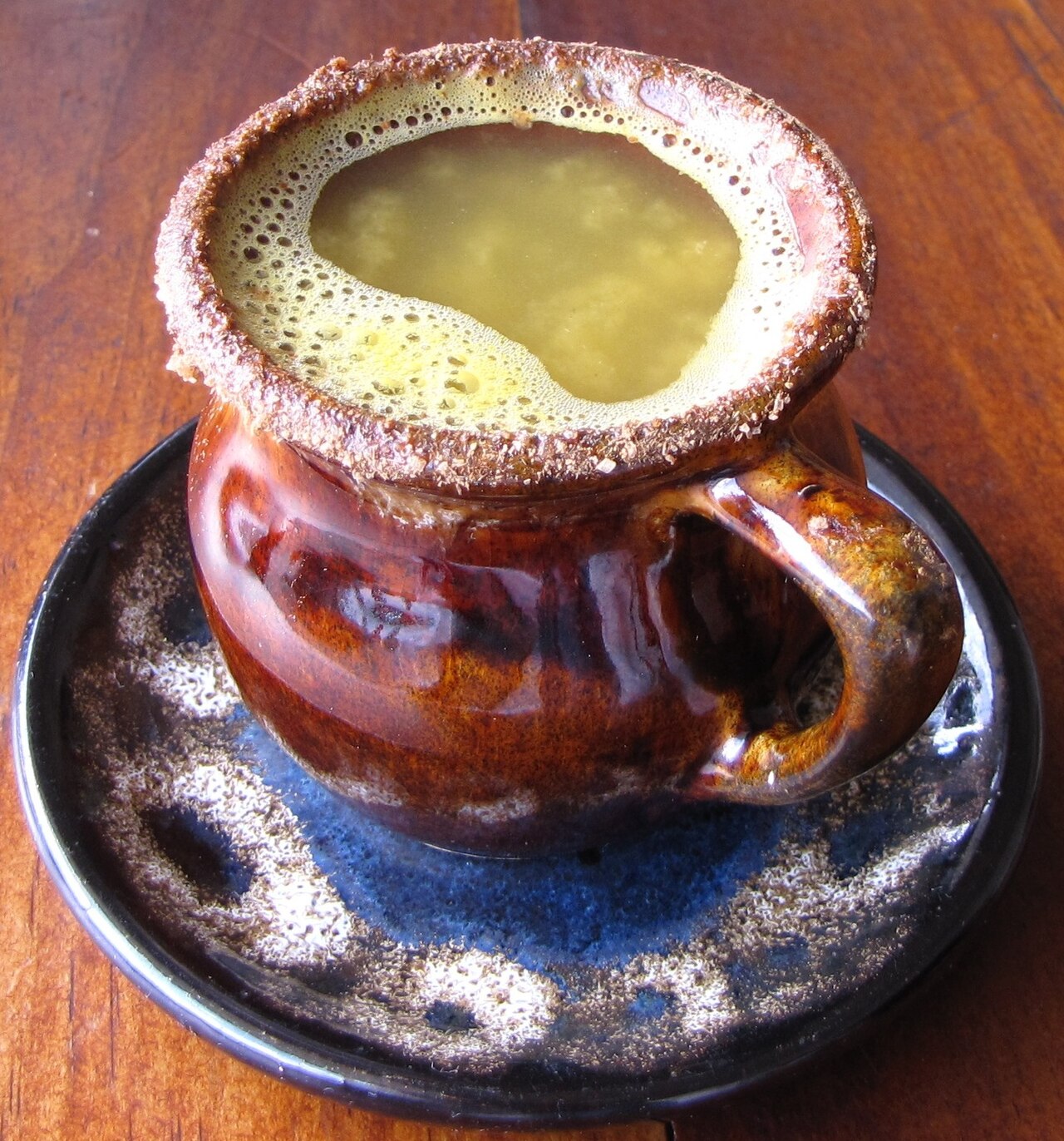
A hot drink of cinnamon water sweetened with raw cane sugar (panela), often with fruit juice such as naranjilla or blackberry, and a splash of aguardiente, a sugar-cane spirit. It is sold by street vendors during the Fiestas de Quito and at Christmas.
See the recipe
Serves 4
20 min
Ingredients
1 litre water
3 cinnamon sticks
4 cloves (optional)
80 g panela or dark brown sugar
250 ml fruit juice, such as blackberry, passion fruit or orange
100 ml aguardiente or white rum (optional; leave it out for a family version)
Method
Put the water, cinnamon sticks and cloves in a pan and bring to the boil. Simmer for 10 minutes.
Add the panela or sugar and stir until it dissolves.
Add the fruit juice and heat through for a few minutes, without boiling.
Take the pan off the heat and remove the cinnamon and cloves. If anyone is not drinking alcohol, pour their cups now. Then stir the aguardiente or rum into the rest of the pan, if you are using it.
Serve hot in small cups. Keep the alcohol-free cups apart and give them to children and anyone not drinking alcohol.
Lunch, el almuerzo, is the main meal of the day. It usually starts with a soup, followed by a 'segundo' of rice with meat, chicken or fish, then a dessert and coffee.
Supper is light. It can be just a coffee or a herbal tea with bread.
Encebollado is eaten any time of day. On the coast, restaurants that serve only this fish soup open early in the morning.
Some dishes belong to one day of the year: fanesca to Holy Week, and colada morada with guaguas de pan to 2 November, All Souls' Day.
Do not drink tap water. Ask for bottled water, and avoid ice unless you know it is made from purified water.
Most of Ecuador's cities lie in high Andean valleys between snow-capped volcanoes, or on the hot Pacific coast. From a colonial capital at 2,850 m you can drive down to an Amazon town in a few hours, or fly out to the Galápagos, 1,000 km into the Pacific.
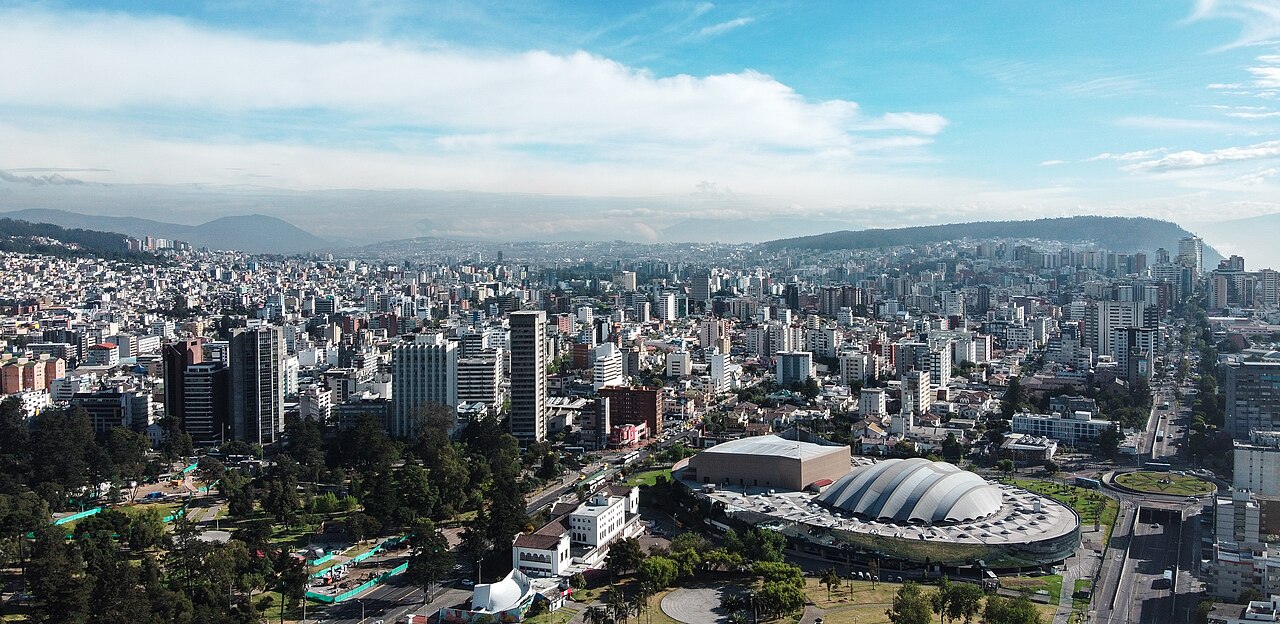
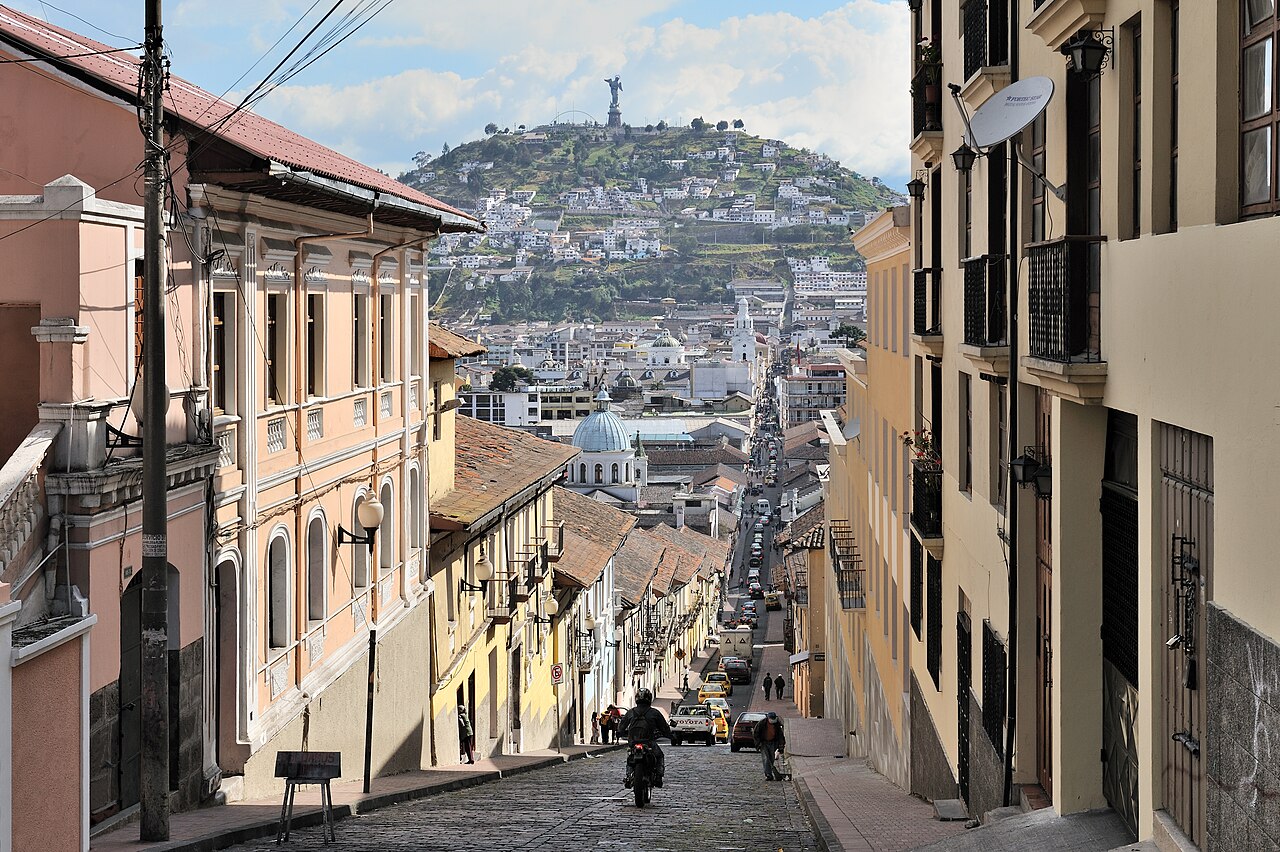
The capital, in a high valley at about 2,850 m on the slopes of the Pichincha volcano. It is the capital city closest to the equator, and its old centre is one of the largest and best preserved in the Americas. In 1978 it became, together with Kraków in Poland, one of the first two cities on UNESCO's World Heritage List.
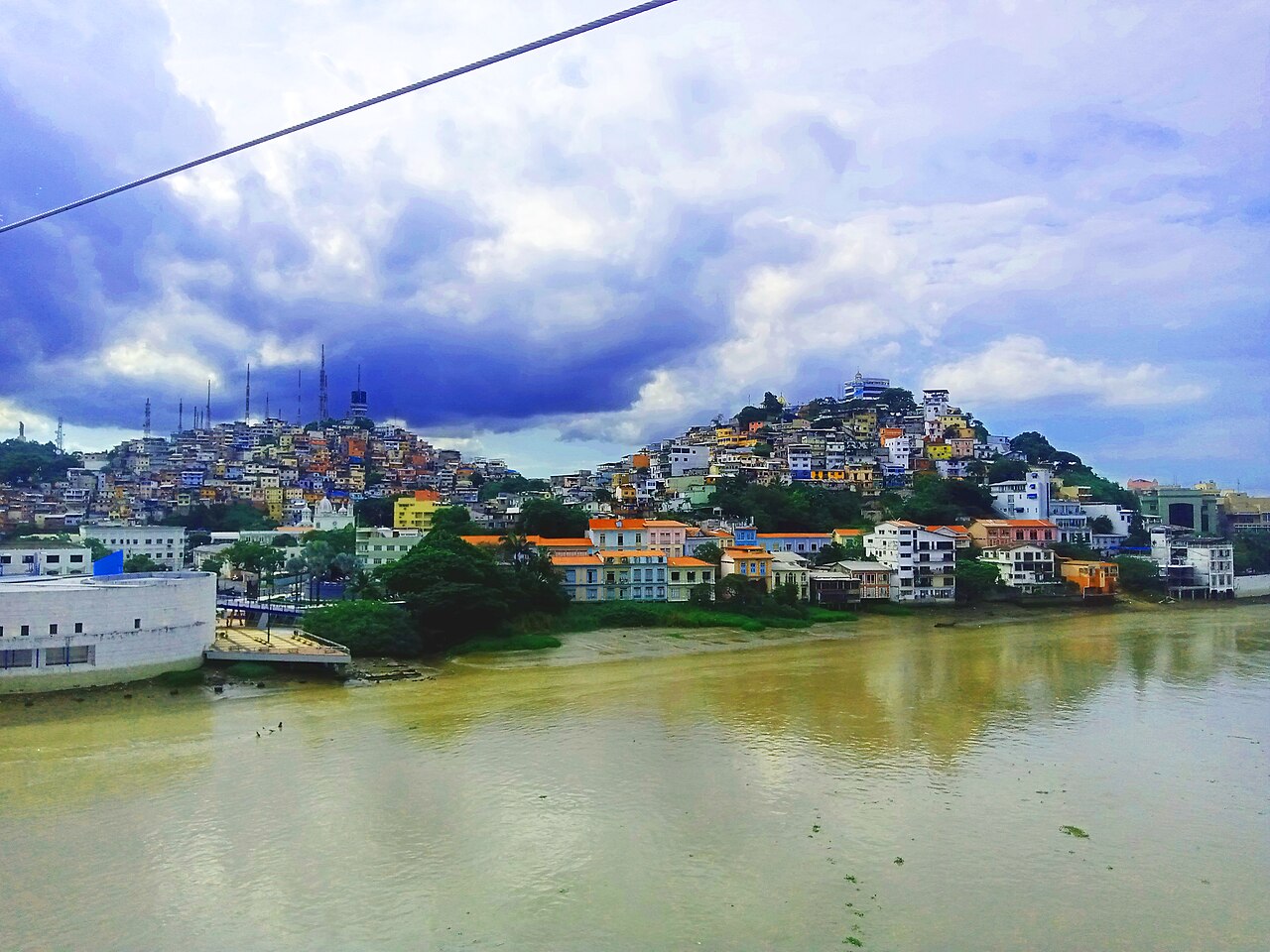
Ecuador's most populous city and main port, on the Guayas River near the Pacific. It declared its independence from Spain on 9 October 1820. As of September 2026, the UK government advises against all but essential travel to Guayas province, which includes the city.
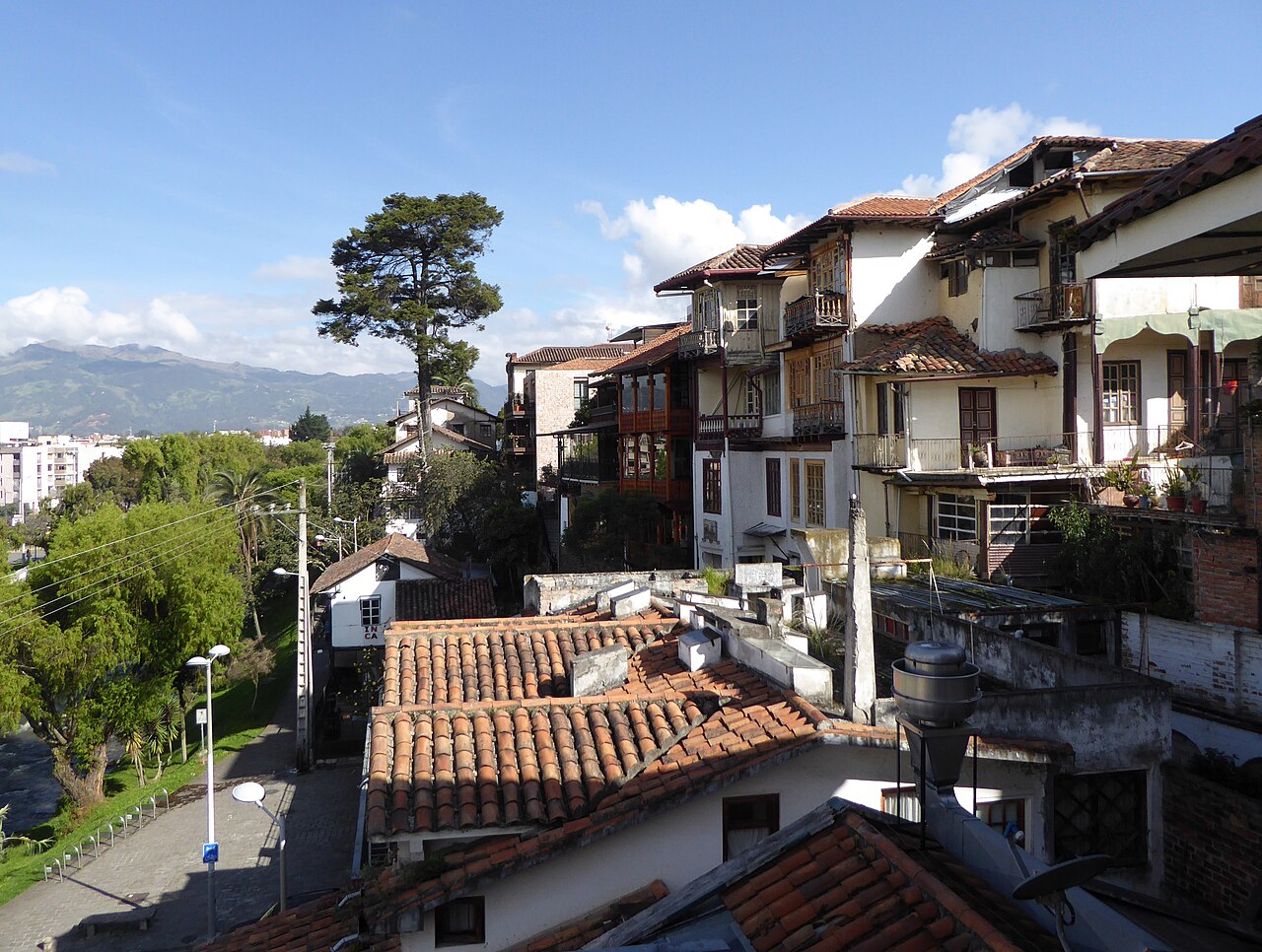
The third largest city, at about 2,540 m in the southern Andes, crossed by four rivers. It was founded by the Spanish in 1557 on the ruins of the Inca city of Tomebamba, and its historic centre became a UNESCO World Heritage Site in 1999.
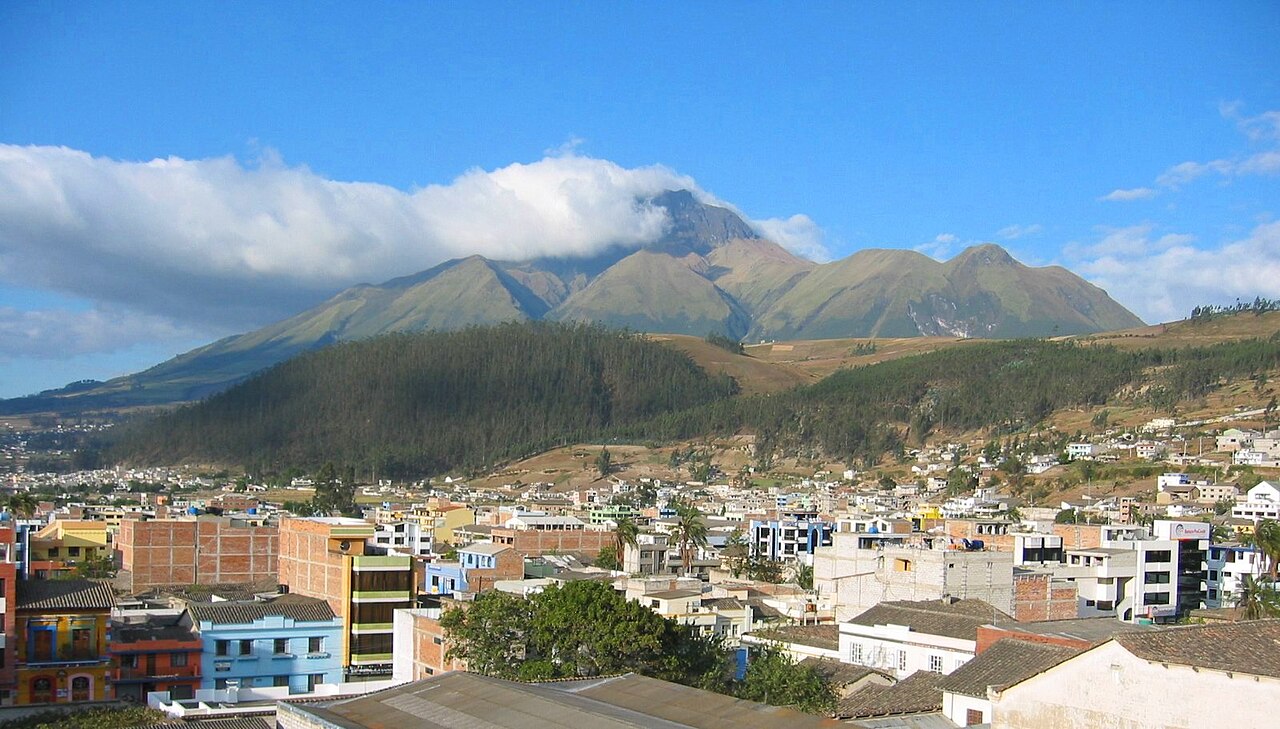
A small Andean town of about 42,000 people at 2,532 m, north of Quito and just north of the equator, home to the Otavalo Indigenous people. It sits between the Imbabura and Cotacachi volcanoes.
A highland city at 2,860 m, about 89 km south of Quito and about 30 km from the Cotopaxi volcano, which has damaged it several times. It is the usual starting point for trips to Cotopaxi and the Quilotoa crater lake.
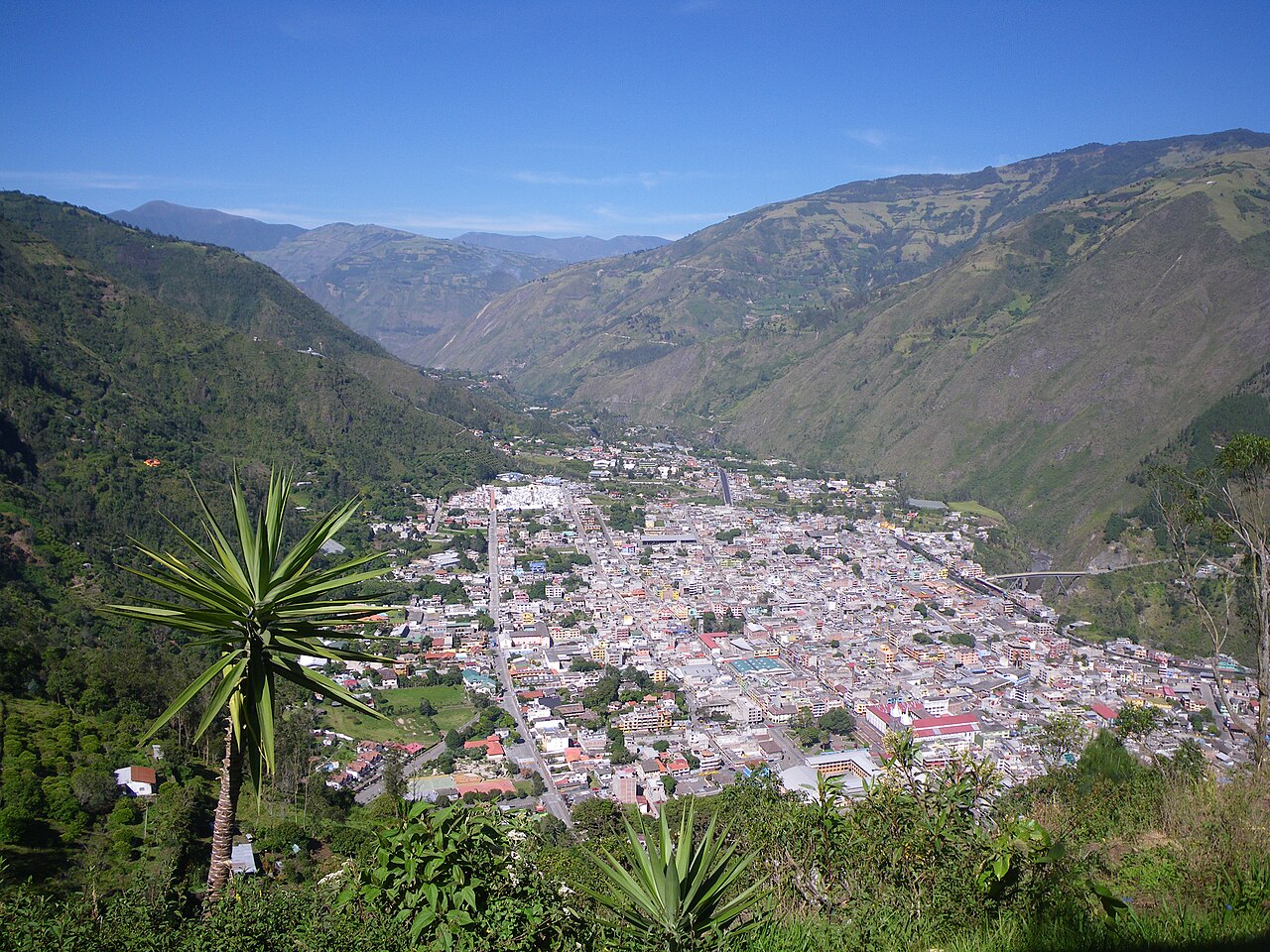
A small spa town at 1,820 m at the foot of the Tungurahua volcano. Its full name, Baños de Agua Santa, means 'baths of holy water', after its hot springs. It is called the 'Gateway to the Amazon', because the road east drops from here into the rainforest.
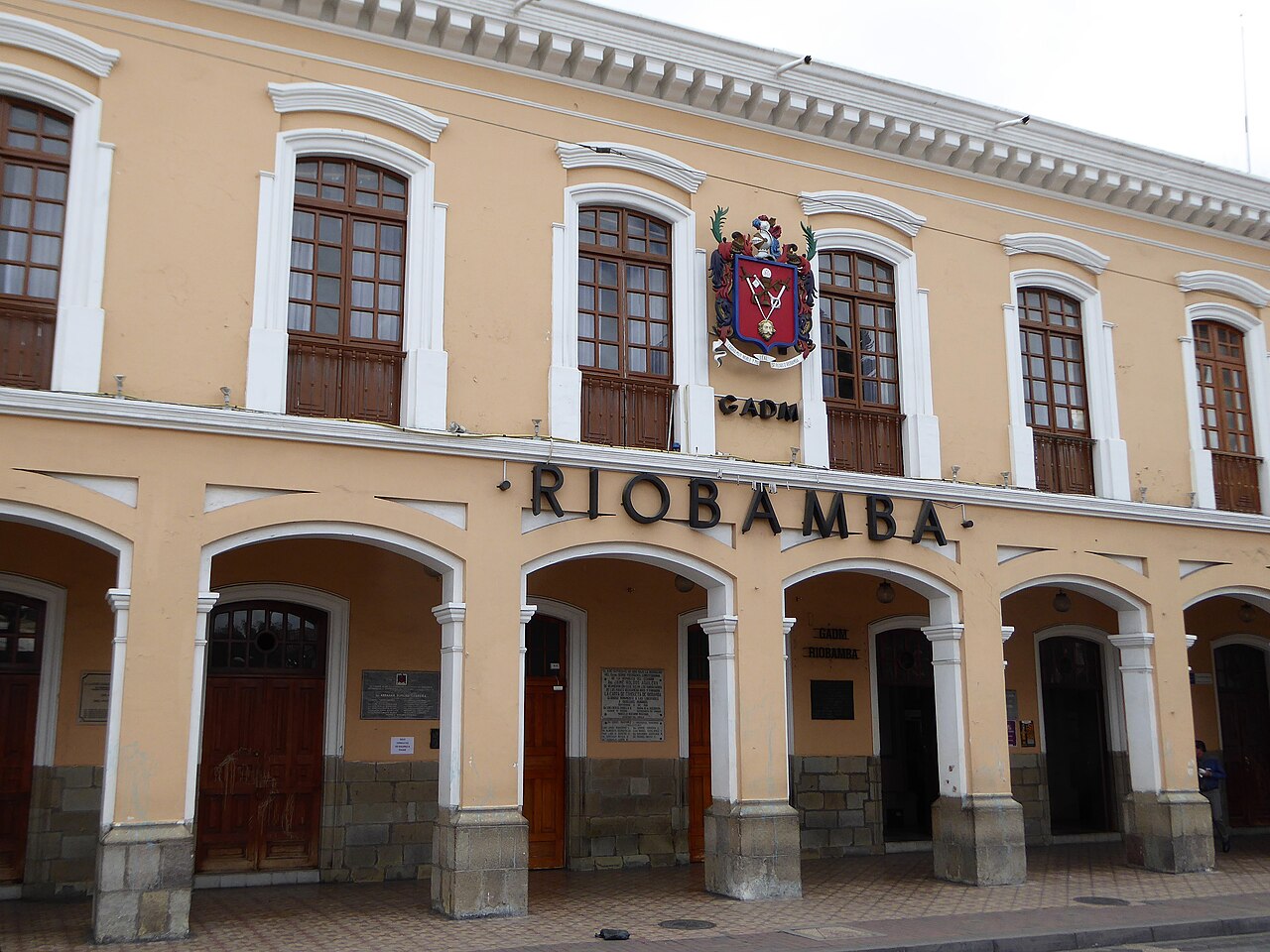
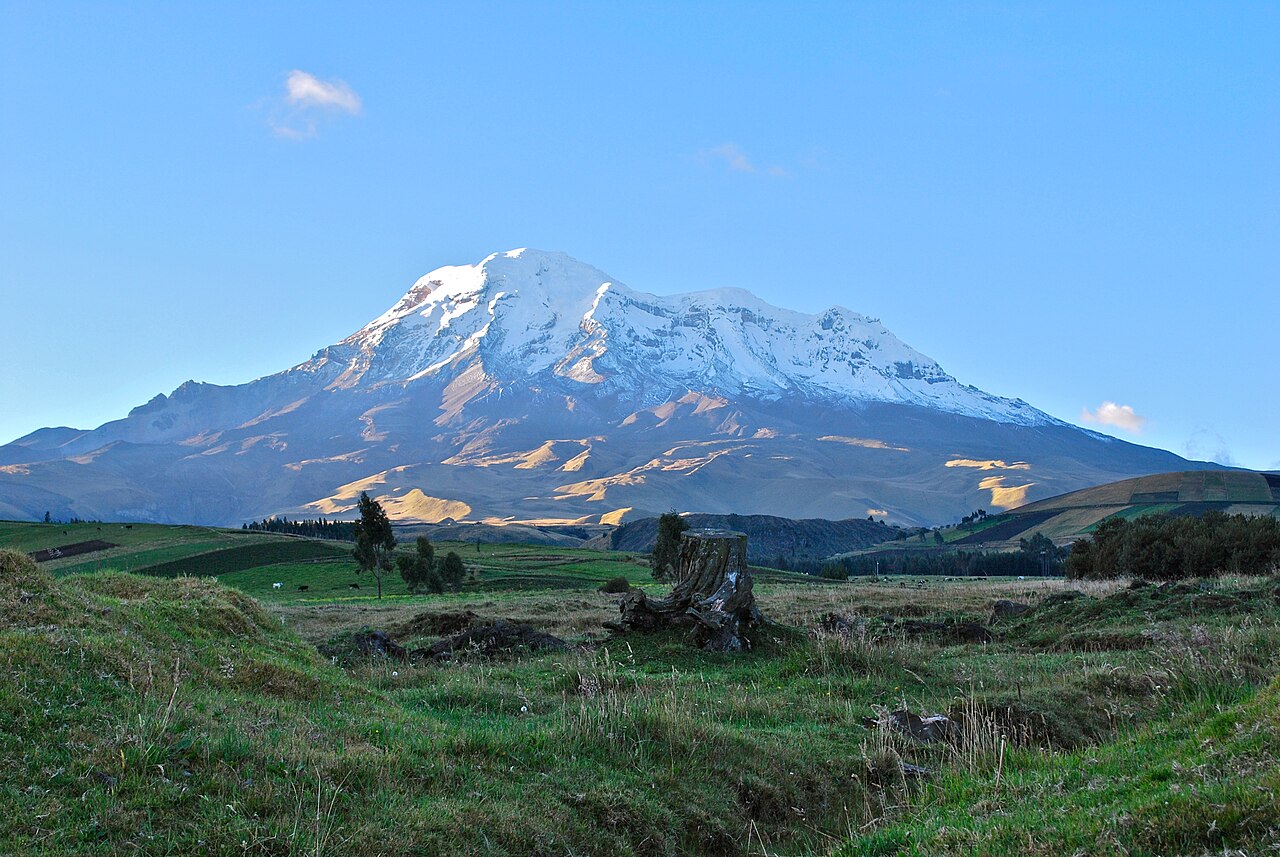
A city at 2,754 m in the central Andes, about 200 km south of Quito, and the capital of Chimborazo province. The snowy summit of Chimborazo, the country's highest mountain, rises about 30 km to the northwest.
The nearest city to Chimborazo
A stop on the Pan-American Highway
A name mixing Spanish 'río' (river) and Quechua 'rispampa' (plain)
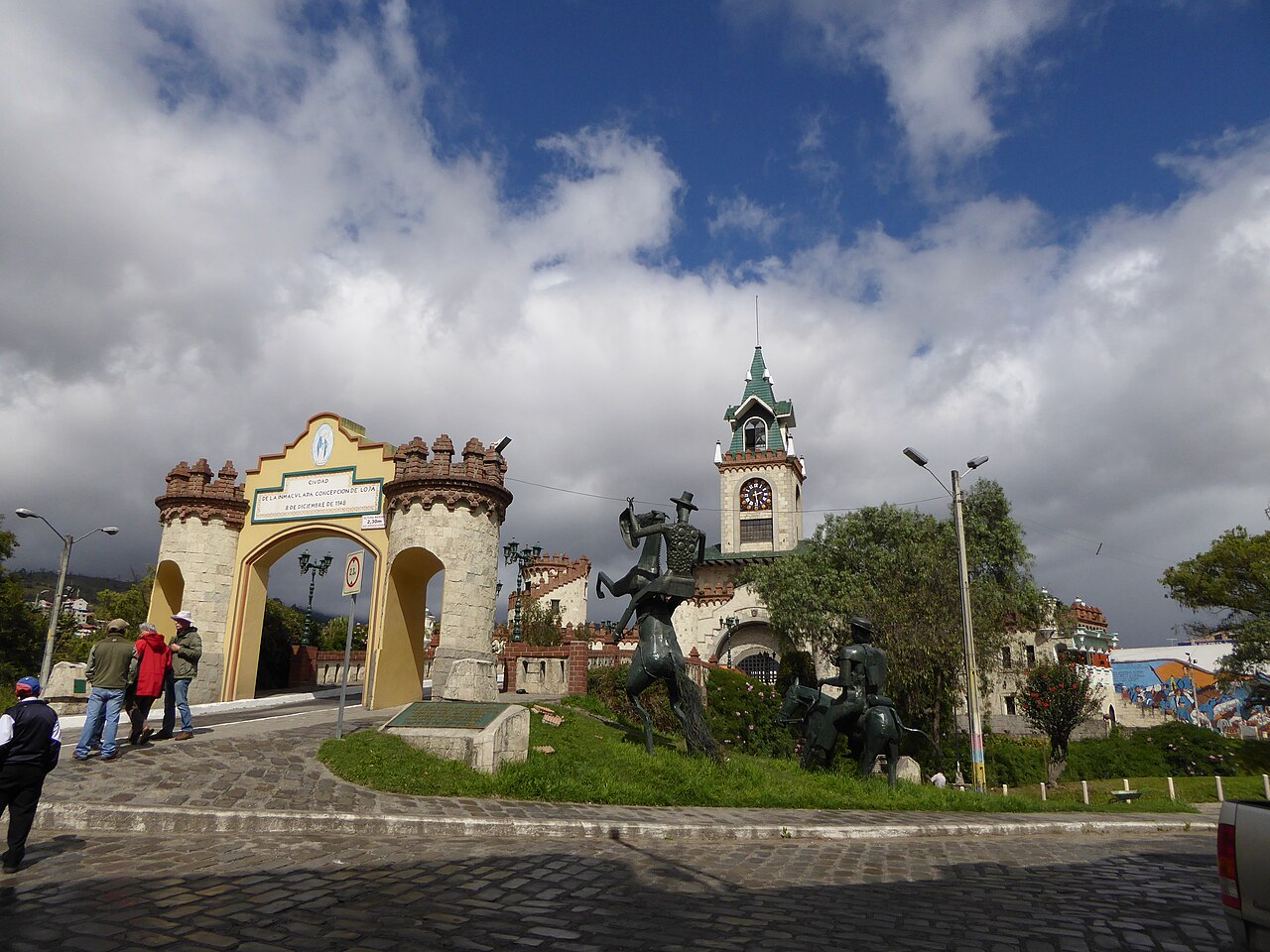
A southern city of about 203,000 people at 2,060 m, with a mild climate. It has a strong tradition in the arts and is known as the Music and Cultural Capital of Ecuador.
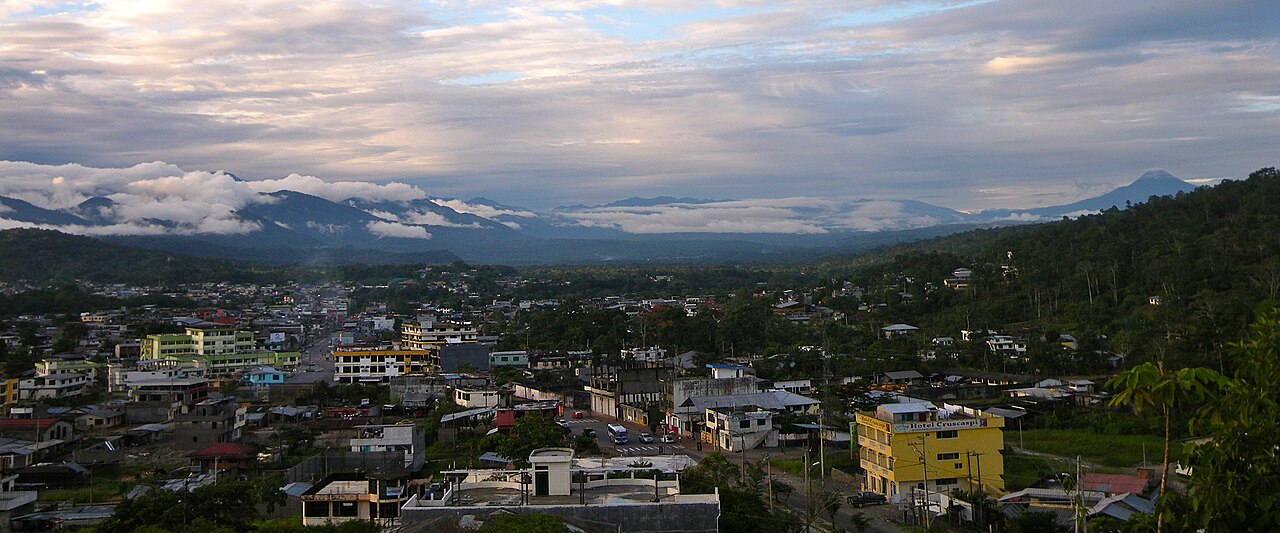
A town in the Amazon rainforest, about 195 km from Quito, and the capital of Napo province. It was founded in the 1500s by Gil Ramírez Dávalos, who also founded Cuenca.
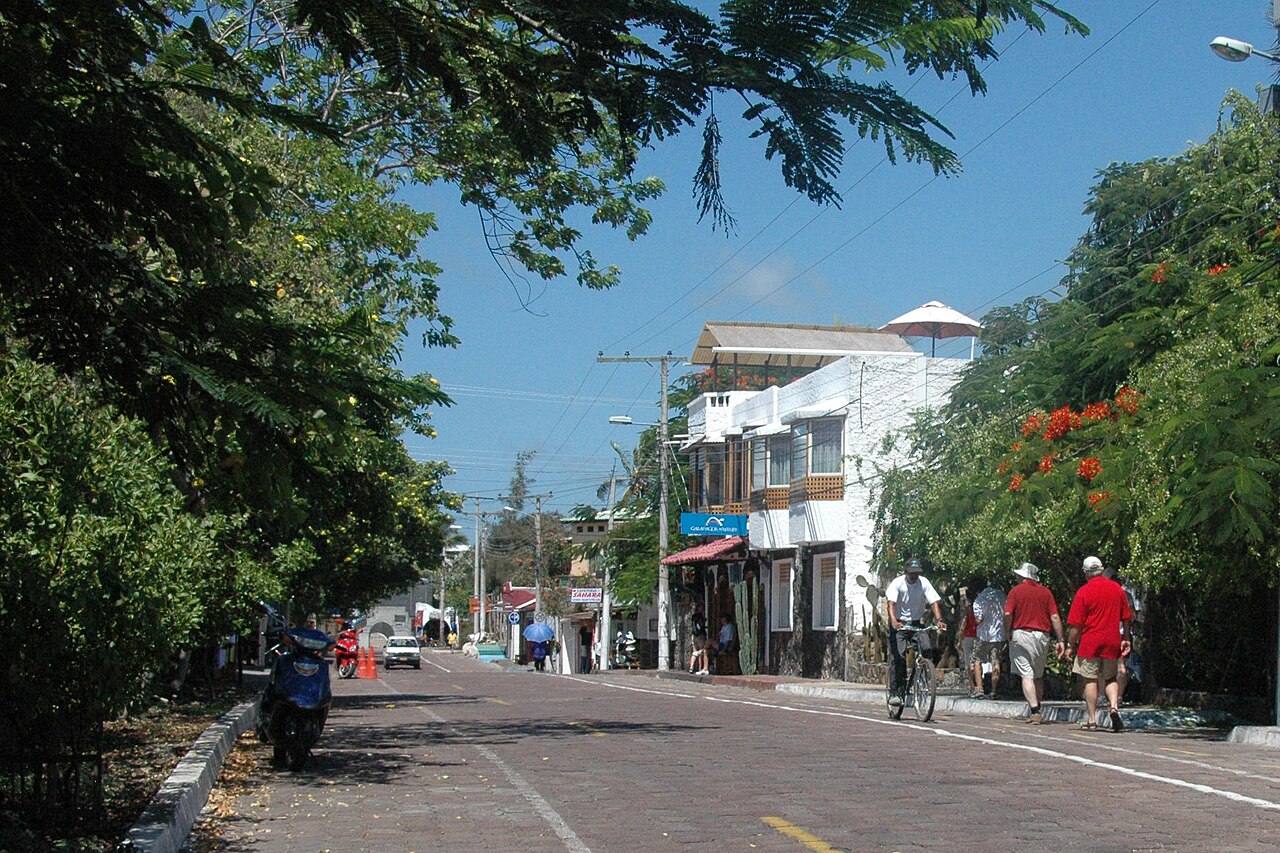
The largest town in the Galápagos Islands, with about 12,700 people, on the south shore of Santa Cruz Island. It is the base of the Charles Darwin Research Station and the Galápagos National Park.
Giant tortoises at the Charles Darwin Research Station
The capital of Galápagos Province, on San Cristóbal, the easternmost island of the archipelago. It has its own airport with flights to mainland Ecuador, and fishing and tourism are the main work.
The old heart of the capital, around the Plaza Grande, with about 130 monumental buildings, many of them churches and convents filled with religious art of the Quito School, which flourished from the 16th to the 18th century. It became a UNESCO World Heritage Site in 1978, in the very first group of sites.
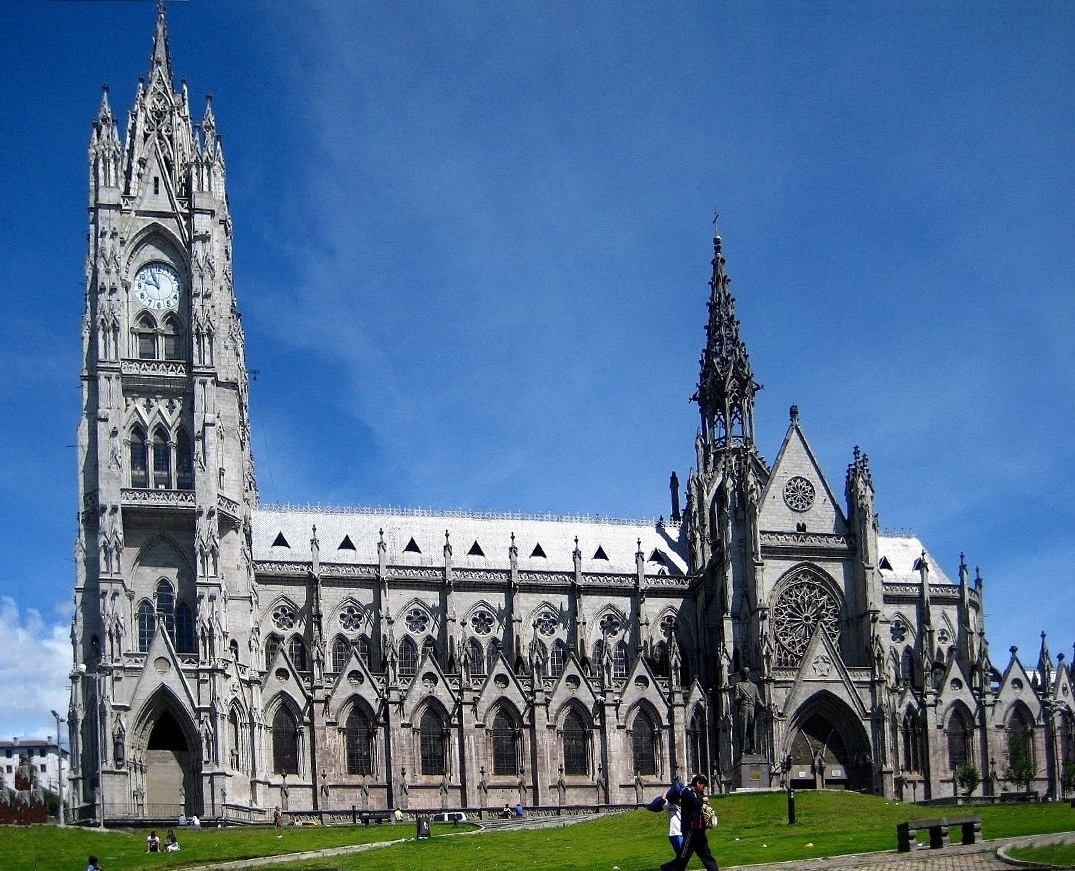
A huge neo-Gothic church in Quito's historic centre, reaching 83 m. Its architect took inspiration from Bourges Cathedral in France. The first stone was laid in 1892, it was consecrated in 1988, and it is still, technically, unfinished.
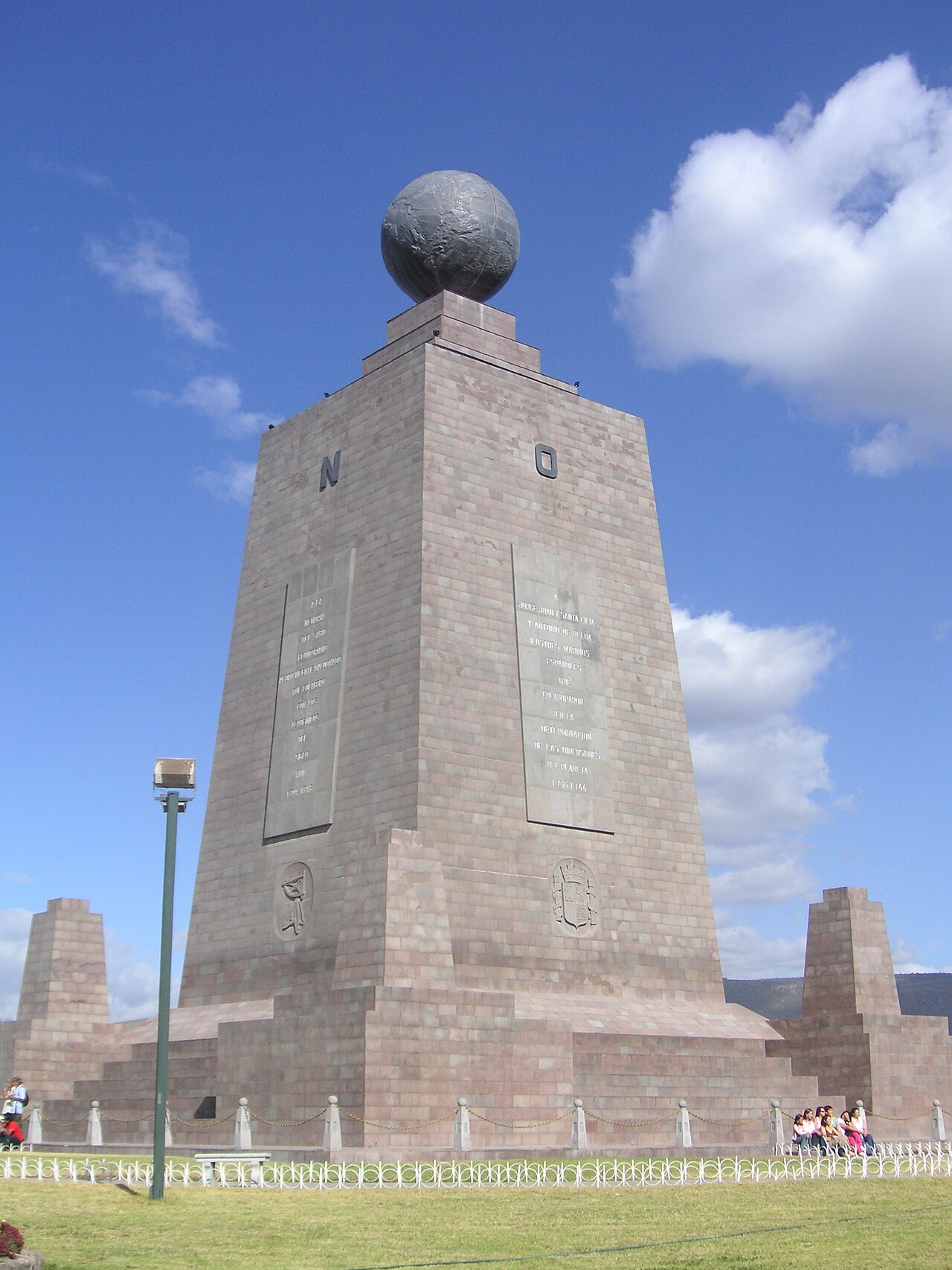
A park 26 km north of central Quito with a 30 m stone monument to the equator, built between 1979 and 1982. It honours the French Geodesic Mission of 1736, which fixed the approximate line of the equator, and has a museum about Ecuador's Indigenous peoples.
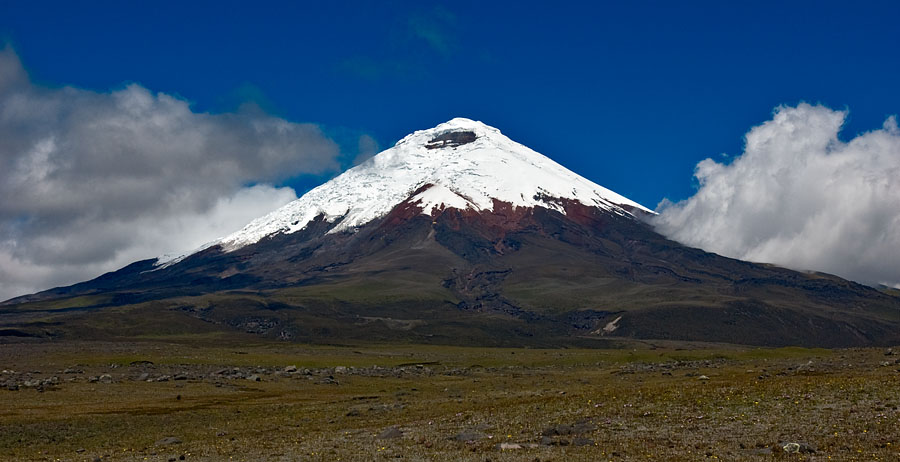
An almost perfect snow-capped cone, 5,897 m high, about 50 km south of Quito and about 30 km northeast of Latacunga. It is Ecuador's second highest peak and one of the highest active volcanoes in the world, with one of the few glaciers on the equator. It lies in Cotopaxi National Park.
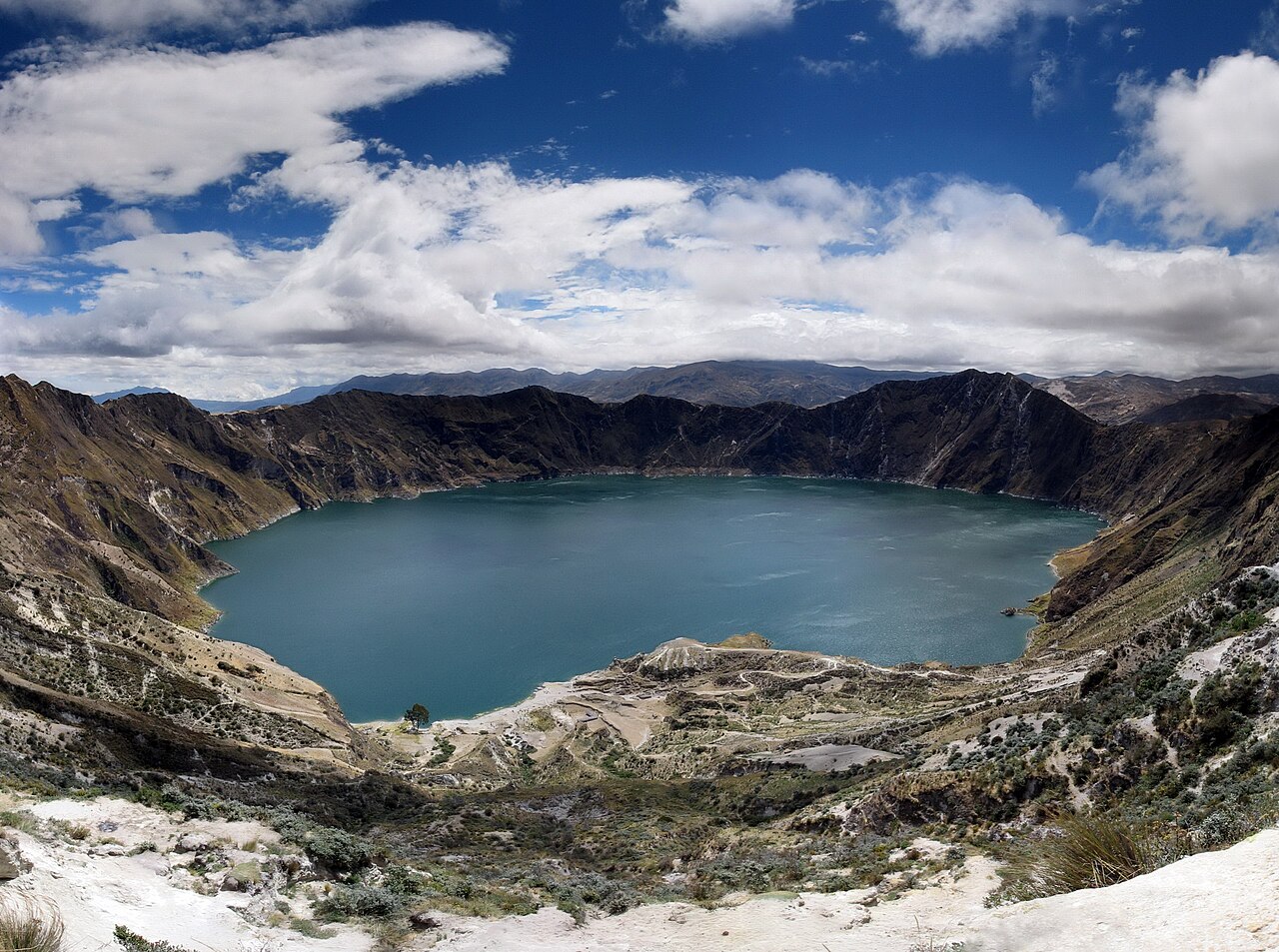
A green lake 250 m deep inside a 3 km wide volcanic crater, formed by a huge eruption about 800 years ago. The rim rises to about 3,900 m at its highest points. Visitors can walk down to the water in about half an hour, but the climb back up is steep.
Ecuador's highest mountain, 6,263 m, an inactive volcano about 30 km from Riobamba. Because the Earth bulges at the equator, its summit is the point on the Earth's surface farthest from the planet's centre, farther even than the top of Everest.
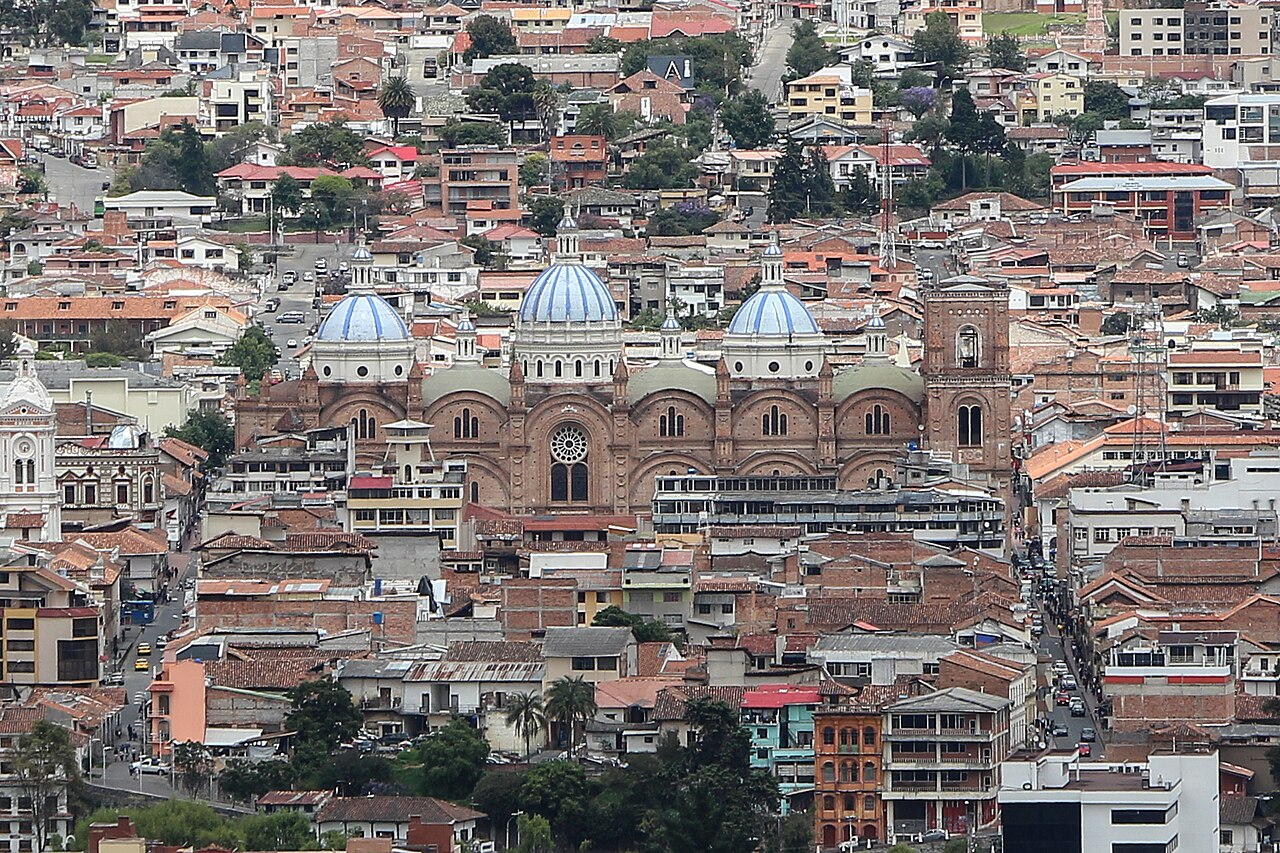
The Cathedral of the Immaculate Conception, facing Parque Calderón in Cuenca's UNESCO-listed old centre. Building began in 1885 and took almost a century. Its three great domes are covered in blue and white tiles from Czechoslovakia, and its towers were left short because of an error in the architect's calculations.
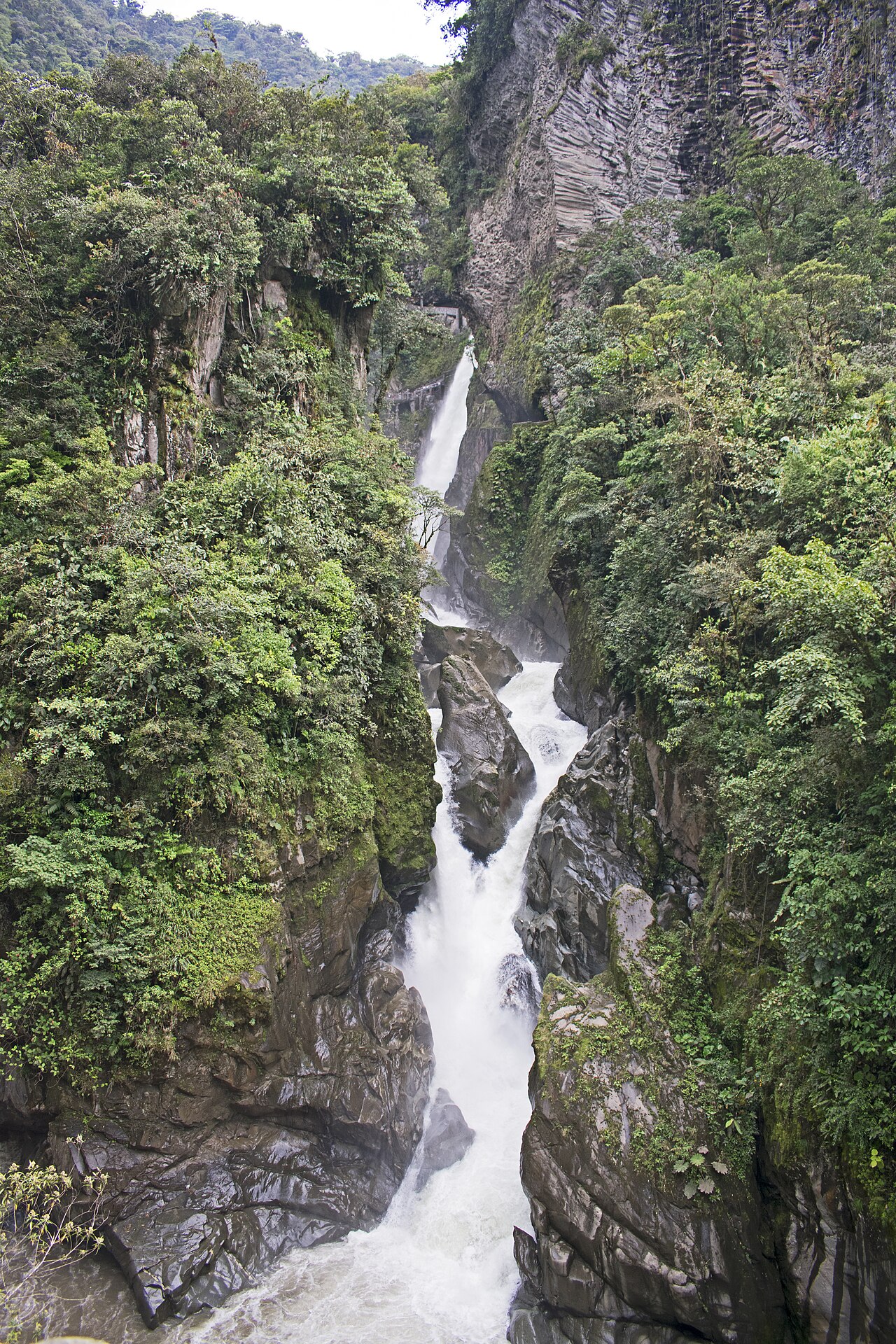
The 'Devil's Cauldron', a powerful waterfall about 80 m high near the village of Río Verde, east of Baños. The Río Verde crashes into a rocky basin just before it joins the Pastaza River. The name comes from a rock beside the falls that some say looks like the devil's face.
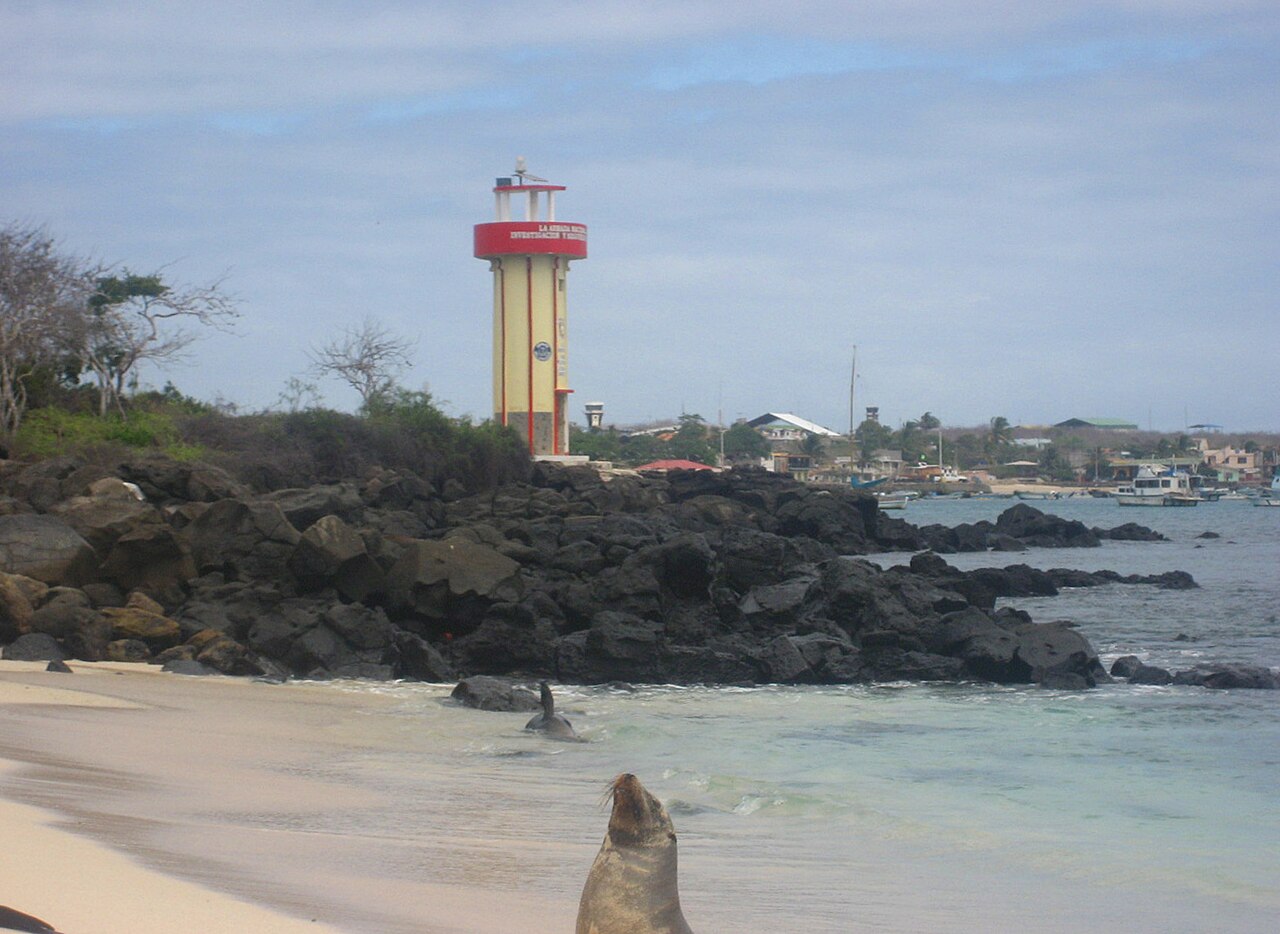
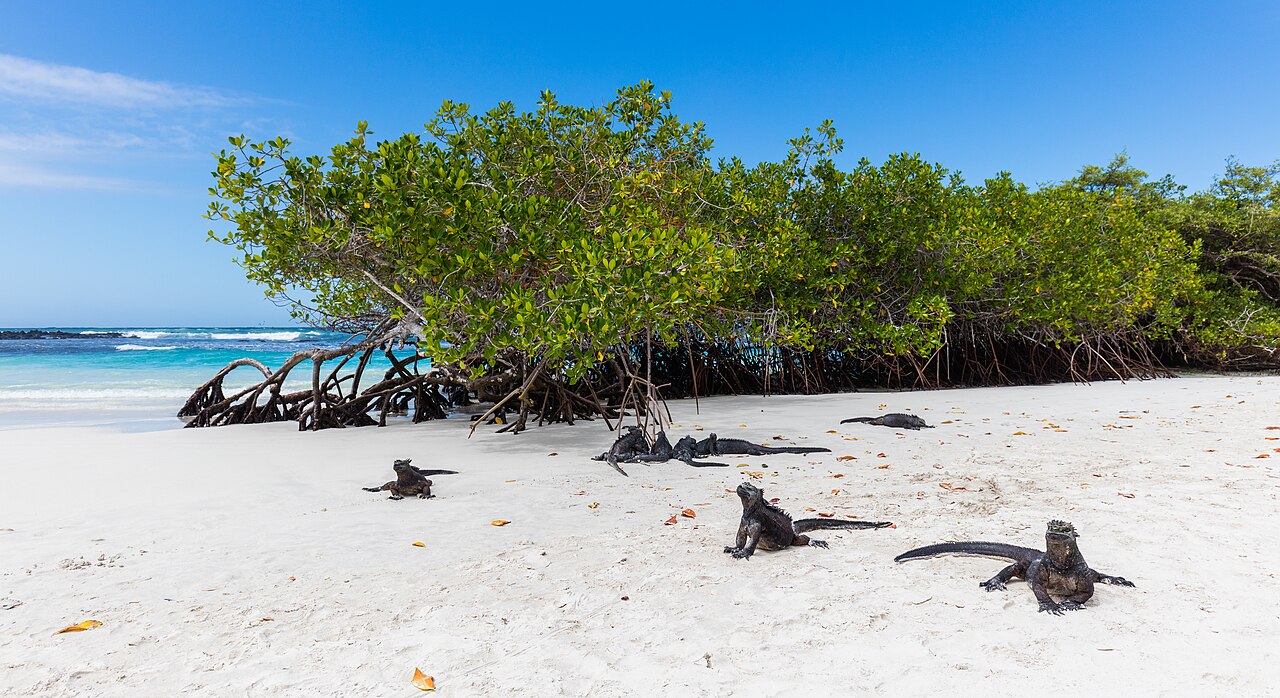
A long beach on Santa Cruz Island, reached by a walking path of about 2.5 km or by water taxi from Puerto Ayora. Marine iguanas lie on the rocks, and swimming is allowed only in a sheltered cove. Like almost all of the islands, it is part of the Galápagos National Park and the Galápagos World Heritage Site.
Ecuador is named after the equator: 'ecuador' is simply the Spanish word for it. The line runs through the northern edge of Quito's metropolitan area, which makes Quito the capital city closest to the equator.
02
Chimborazo is not the world's highest mountain, but because the Earth bulges at the equator, its summit is the point on the Earth's surface farthest from the centre of the planet.
03
The 'Panama hat' actually comes from Ecuador. It got its name because the hats were shipped across the Isthmus of Panama on their way to the rest of the world. In 2012 UNESCO added the weaving of the toquilla straw hat to its list of intangible cultural heritage.
04
A fine toquilla straw hat can take from one day to eight months to weave, depending on how fine the weave is.
05
Since 2000 the United States dollar has been Ecuador's only official currency. Ecuador also issues its own coins: the 50-cent coin of the 2000 issue shows Eloy Alfaro, the leader of the Liberal Revolution.
06
The Galápagos Islands are named after their giant tortoises: 'galápago' is an old Spanish word for a tortoise. The Galápagos tortoise is the largest living tortoise and can weigh more than 400 kg.
07
Lonesome George, the last known giant tortoise from Pinta Island, was found in 1971, spent the rest of his life at the Charles Darwin Research Station and died there in 2012. He became a worldwide symbol of conservation.
08
Archaeologists have found that cacao, the plant that gives us chocolate, was grown at least 5,300 years ago by the Mayo-Chinchipe people in what is now southeast Ecuador, more than a thousand years before the first traces of it in Mexico and Central America.
09
Ecuador is a giant of the banana trade: between 2016 and 2018 it supplied about 36 percent of all the bananas exported in the world.
10
In 2008 Ecuador became the first country to write the rights of nature into its constitution, so that rivers, forests and other ecosystems can be defended in court.
11
In 1978 Quito and Kraków became the first two cities to be declared World Cultural Heritage Sites by UNESCO. The Galápagos Islands were inscribed in the same year.
12
Voting is compulsory in Ecuador for literate citizens aged 18 to 65, and has been since 1936. Voting is optional from the age of 16.
13
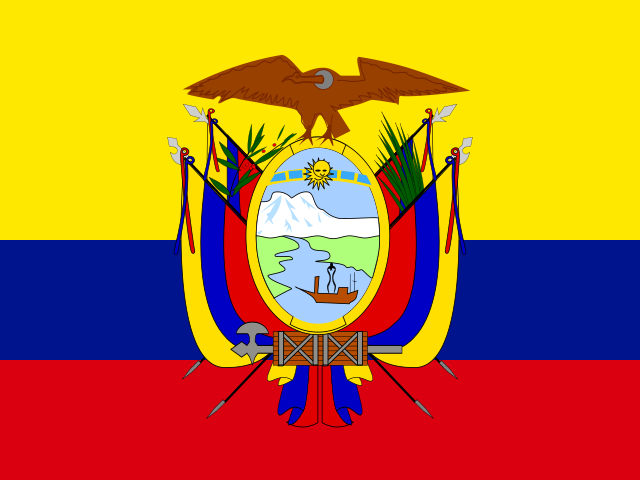
The Andean condor is Ecuador's national bird. A condor with spread wings sits on top of the country's coat of arms, above the snowy peak of Chimborazo.
14
Ecuador's yellow, blue and red flag is very similar to the flags of Colombia and Venezuela, because all three countries were once part of Gran Colombia. Ecuador's flag carries the national coat of arms in the centre.
As of September 2026, the UK government advises against all but essential travel to seven coastal provinces, including Guayas (with Guayaquil), Manabí, Santa Elena and Esmeraldas, and to areas within 20 km of the Colombian border, with some exceptions. On 15 September 2026 Ecuador declared a 60-day state of emergency in eight provinces, including Pichincha, where Quito is, so expect more police and military checks. Check the latest advice before you book, and again before you travel.
Never hail a taxi in the street
Express kidnappings, where people are held while criminals empty their bank accounts, often start with a taxi hailed in the street. Ask your hotel or restaurant to call a registered taxi or use a radio taxi company, and tell someone you trust where you are going, especially after dark.
Watch your drink
Criminals sometimes use the drug scopolamine to rob people. It can be slipped into drinks and can even be absorbed through the skin. Do not accept drinks or snacks from strangers. Methanol poisoning from fake spirits has also increased, and it cannot be detected by taste or smell.
Take care on buses
Robbery is a risk on long-distance buses. Avoid travelling after dark, keep your bag on your lap rather than in the rack overhead, and be wary of people posing as bus inspectors in Quito's bus stations.
Take it easy at altitude
Quito is at about 2,850 m, and many trips in the Andes go higher: the top of Quito's cable car is at about 4,000 m. Altitude sickness is a risk. Rest on your first day, drink water, dress warmly on the mountains, and talk to your doctor first if you have heart or breathing problems.
Drink bottled water
Do not drink the tap water. Drink bottled, boiled or filtered water and avoid ice in drinks. In an emergency, call 911, Ecuador's emergency number.
Plan the Galápagos carefully
Before you fly to the Galápagos you must buy a transit control card at the airport of departure, and travel health insurance is mandatory for foreign tourists. Medical care on the islands is limited, and there have been serious accidents with tour boats, so choose a licensed, well-reviewed operator. Many flights to the islands go through Guayaquil. Before you book, check with the airline that you will stay airside at Guayaquil airport.
Respect the volcanoes
Several volcanoes are active, and earthquakes are common. Ash can close airports and roads. Follow the advice of local authorities, check road conditions before long journeys, and keep some flexibility in your plans.
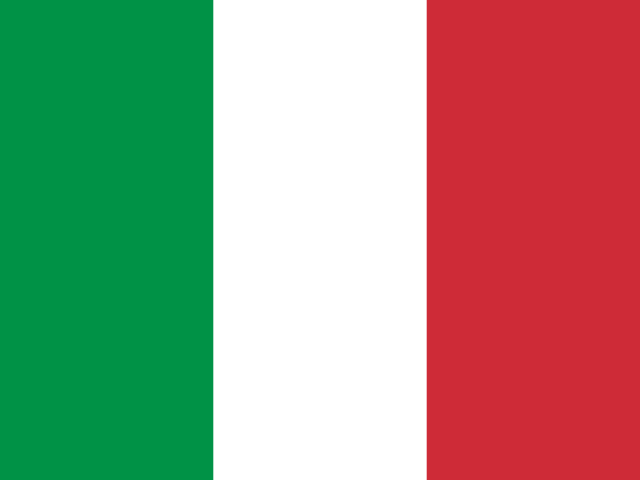
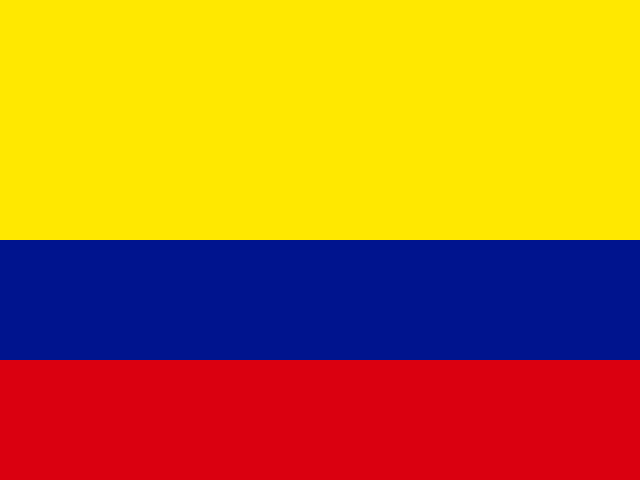 Colombia
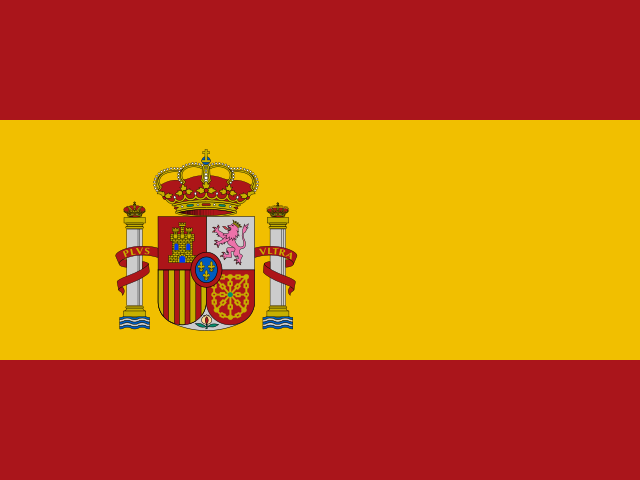
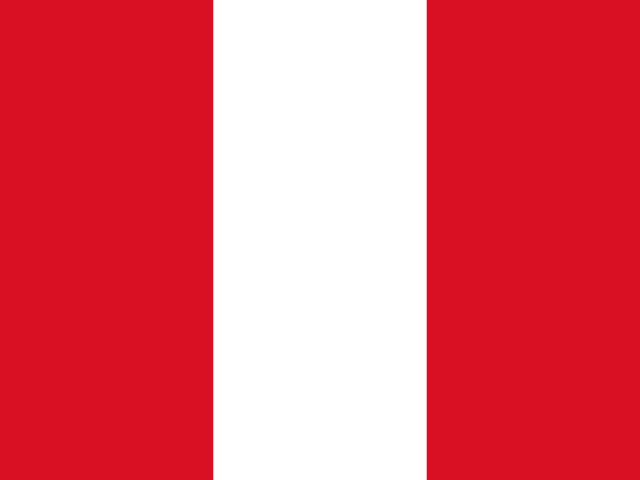 Peru
Peru