A free large-print PDF. Choose what goes in: facts, map, history, dishes and recipes, phrases, fun facts, a quiz with or without answers. Made for clubs, care homes, libraries and family afternoons.
Thailand lies in the heart of mainland Southeast Asia. The mountainous north rises to Doi Inthanon, the northeast is a wide, dry plateau, the fertile plain of the Chao Phraya River runs through the middle, and a long, narrow strip of land stretches south down the Malay Peninsula, between the Gulf of Thailand and the Andaman Sea.
For more than 700 years Thai kingdoms rose and fell here, from Sukhothai and Ayutthaya to today's Bangkok. The country was known internationally as Siam until 1939, and it is the only country in Southeast Asia that was never colonised by a Western power.
Today Thailand is a constitutional monarchy of about 66 million people, most of them Buddhist. Millions of visitors come every year for its temples and royal palaces, its beaches and islands, its lively markets and one of the most loved cuisines in the world.
CapitalBangkok
PopulationAbout 66 million
Official languageThai
CurrencyThai baht (฿)
AreaAbout 513,000 km²
GovernmentConstitutional monarchy with a parliament (King Vajiralongkorn, Rama X, since 2016)
Highest mountainDoi Inthanon, 2,565 m
Longest riverThe Chi, about 765 km (the longest river wholly inside Thailand; the Mekong is longer but forms part of the border)
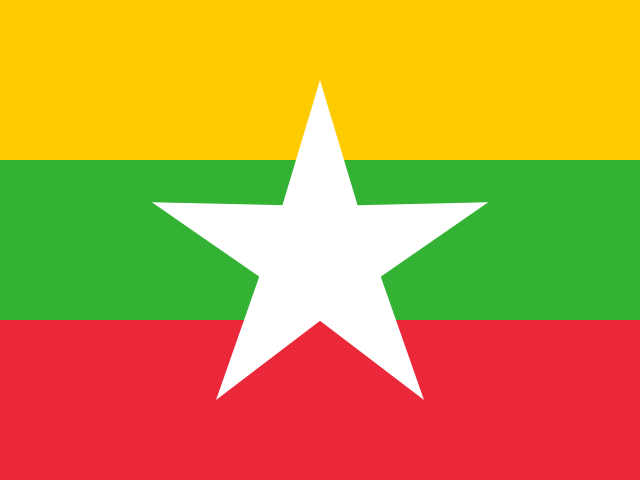
NeighboursMyanmar, Laos, Cambodia and Malaysia. Across the sea: Vietnam, Indonesia and India
People have lived in what is now Thailand for tens of thousands of years, and Mon and Khmer kingdoms ruled much of it before the Thai. Thai historians count Sukhothai, founded in the 1200s, as the first Thai kingdom. It was followed by Ayutthaya, then by Bangkok and the Chakri dynasty, which still reigns today.
1238
The Sukhothai Kingdom is founded
A Thai leader, Bang Klang Hao, with the help of his ally Pha Mueang, took Sukhothai from Khmer control and became its king as Si Inthrathit. Its most famous ruler, Ram Khamhaeng, is traditionally credited with creating the Thai script.
1351
Ayutthaya is founded
King Uthong founded Ayutthaya on an island where three rivers meet. It grew into one of the largest and richest cities in Asia and the capital of a powerful kingdom for more than 400 years.
1511
The first Portuguese envoy arrives
While the Portuguese were capturing Malacca, they sent an envoy, Duarte Fernandes, to Ayutthaya. The Portuguese were the first Europeans to deal with Siam, and the French, Dutch and English followed in the 1600s.
1767
Ayutthaya falls to the Burmese
After a siege of 14 months, a Burmese army captured Ayutthaya and burned it. Within months a general named Taksin drove the Burmese out and made Thonburi, on the west bank of the Chao Phraya and now part of Bangkok, his capital.
1782
Bangkok becomes the capital
General Chakri took power, became King Rama I and founded the Chakri dynasty. He moved the capital across the Chao Phraya River to Bangkok and began building the Grand Palace.
1855
The Bowring Treaty is signed
King Mongkut signed a trade treaty with Britain, negotiated by Sir John Bowring. It was an unequal treaty, but it opened Siam to world trade and was followed by similar treaties with other Western countries.
1868
Chulalongkorn becomes king
Chulalongkorn, Rama V, came to the throne at the age of 15 and reigned for 42 years. He modernised the country with railways, schools and a new government, while skilfully keeping Siam independent.
1893
The Franco-Siamese crisis
After a short conflict, France forced Siam to give up its lands east of the Mekong River, most of today's Laos. Siam stayed independent, partly because Britain and France found it useful as a buffer between their colonies.
1905
The Slave Abolition Act
King Chulalongkorn ended slavery step by step, starting with an edict in 1874. The Slave Abolition Act of 1905 freed the remaining slaves' children and set the rest on a path to freedom, and slavery had legally ended by 1915, without the bloodshed seen in other countries.
1917
The tricolour flag is adopted
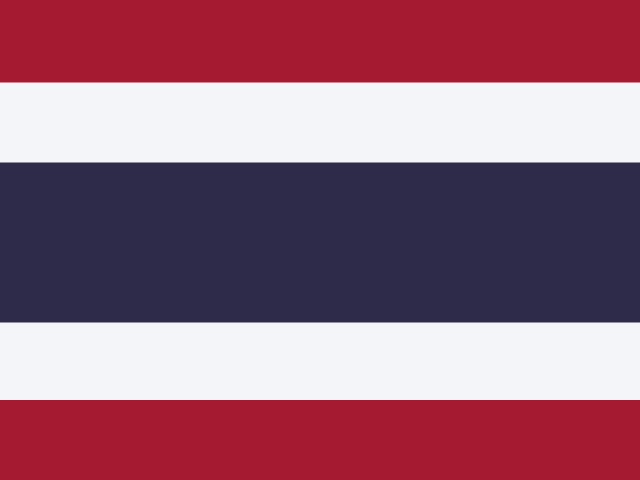
Siam joined the First World War on the Allied side, and on 28 September 1917 King Vajiravudh adopted the red, white and blue striped flag still used today. A red flag with a white elephant had been the national flag for most of the 1800s, before a short-lived red and white striped design.
1932
The end of absolute monarchy
On 24 June 1932 a group of officials and officers called the People's Party staged a bloodless revolution in Bangkok. King Prajadhipok accepted a constitution, and Siam became a constitutional monarchy.
1939
Siam is renamed Thailand
Under Prime Minister Plaek Phibunsongkhram the country's name in English was changed from Siam to Thailand on 24 June 1939. The Thai people had long called their country Mueang Thai.
1946
Bhumibol becomes king
Bhumibol Adulyadej, Rama IX, came to the throne on 9 June 1946. He reigned for 70 years, until his death in 2016, the longest reign of any Thai monarch.
1967
ASEAN is founded in Bangkok
On 8 August 1967 Thailand, Indonesia, Malaysia, the Philippines and Singapore signed the Bangkok Declaration, creating the Association of Southeast Asian Nations.
2004
The Indian Ocean tsunami
On 26 December 2004 a huge earthquake off Sumatra sent a tsunami across the Indian Ocean. It struck Thailand's Andaman coast, including Khao Lak, Phuket and the Phi Phi Islands, and thousands of people died.
2016
Vajiralongkorn becomes king
After the death of King Bhumibol on 13 October 2016, his son Vajiralongkorn became king as Rama X. His coronation took place in May 2019.
Thai food is famous for balancing sweet, sour, salty and spicy flavours, with fresh herbs such as lemongrass, galangal, kaffir lime leaves and holy basil. A Thai meal has no separate courses: rice comes with several dishes that everyone shares, and they are all served at the same time, soup included. Each region has its own style, from the sticky rice and salads of the northeast to the rich curries of the south.
Central Thailand, made popular in the mid-20th century
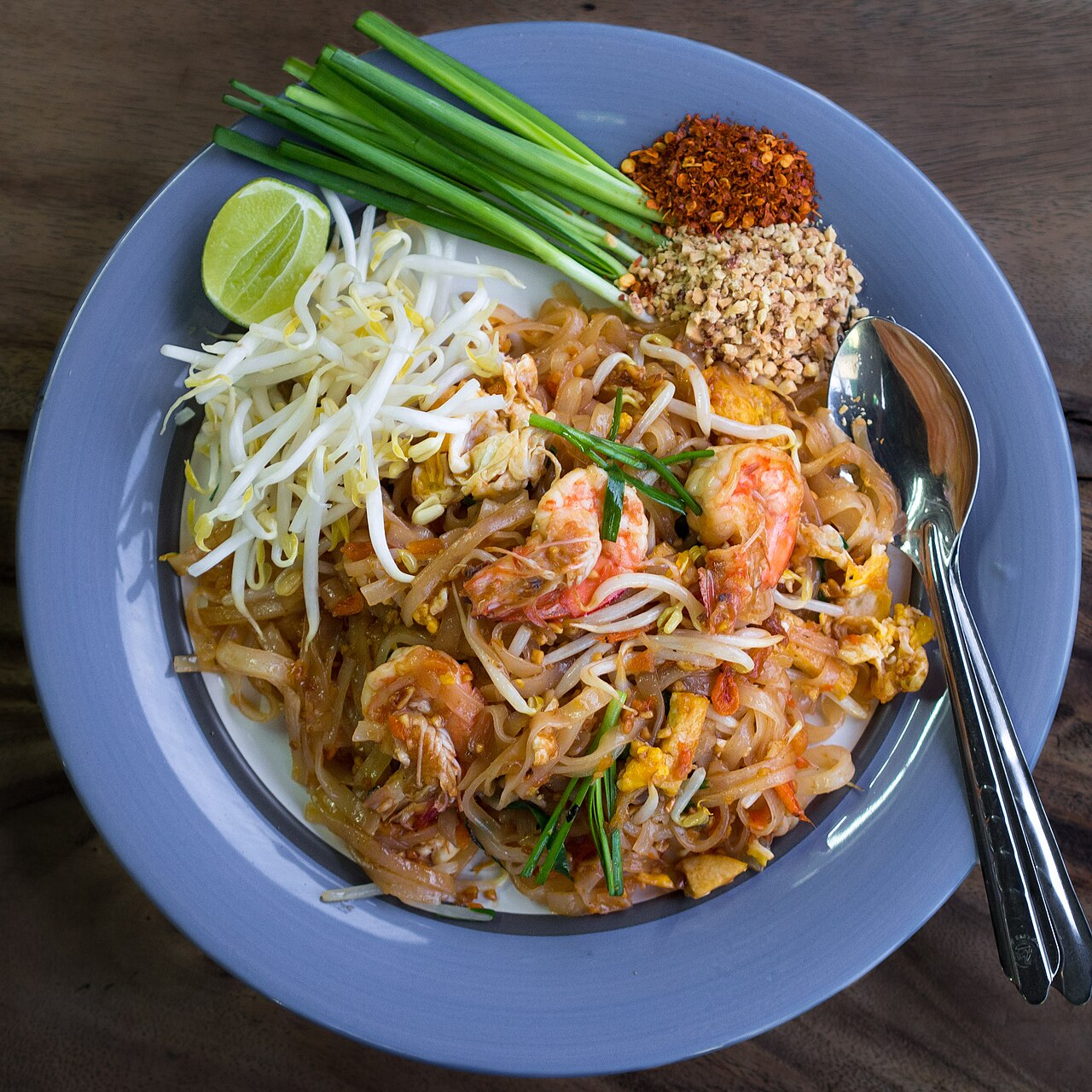
Stir-fried rice noodles with egg, tofu or prawns, bean sprouts and spring onions, seasoned with tamarind, fish sauce and a little sugar, and served with crushed peanuts and a wedge of lime.
Pad thai is younger than many people think. It was promoted around the Second World War, when the government of Prime Minister Phibunsongkhram encouraged people to eat rice noodles.
See the recipe
Serves 2
35 min
Ingredients
150 g dried flat rice noodles (about 5 mm wide)
2 tablespoons tamarind paste
2 tablespoons fish sauce
1 tablespoon palm sugar or brown sugar
3 tablespoons vegetable oil
2 cloves garlic, chopped
150 g raw peeled prawns or firm tofu, cut into cubes
2 eggs
100 g bean sprouts
3 spring onions, cut into 3 cm pieces
3 tablespoons roasted peanuts, roughly crushed (leave out for anyone with a peanut allergy)
1 lime, cut into wedges, and chilli flakes to serve
Method
Soak the noodles in warm water for 20 to 30 minutes, until soft but still firm, then drain.
Stir the tamarind, fish sauce and sugar together in a small bowl until the sugar dissolves.
Heat the oil in a wok or large frying pan over high heat. Fry the garlic for a few seconds, then add the prawns or tofu and stir-fry until the prawns are pink and cooked through.
Push everything to one side, crack the eggs into the pan and scramble them until set.
Add the noodles and the sauce and toss for 2 to 3 minutes, until the noodles are soft and have soaked up the sauce. Add a splash of water if they stick.
Stir in the bean sprouts and spring onions for 30 seconds, then serve with peanuts, lime wedges and chilli flakes on the side.
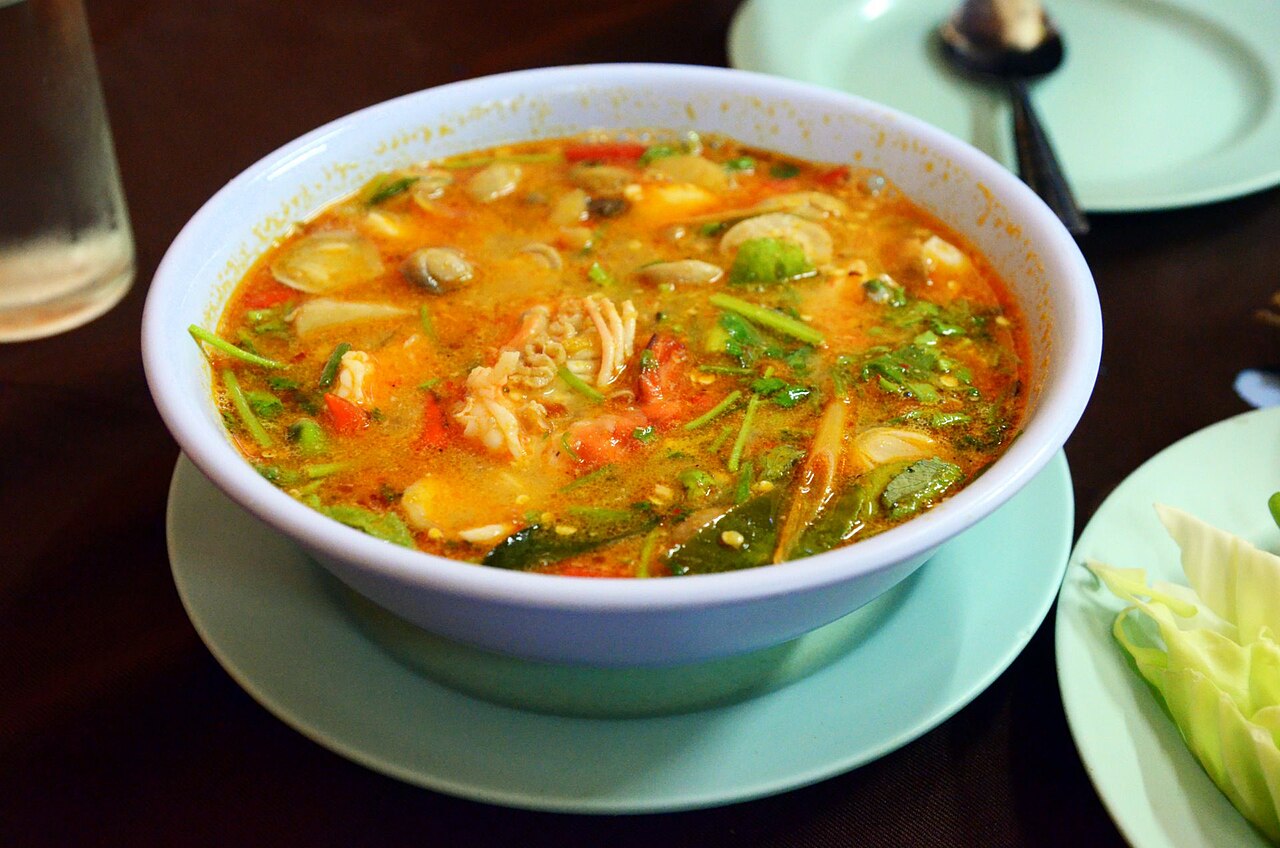
A hot and sour prawn soup flavoured with lemongrass, galangal, kaffir lime leaves, chillies, lime juice and fish sauce. It comes in a clear version, tom yum nam sai, and a creamy one, tom yum nam khon.
In 2024 UNESCO added tom yum kung to its list of the Intangible Cultural Heritage of Humanity.
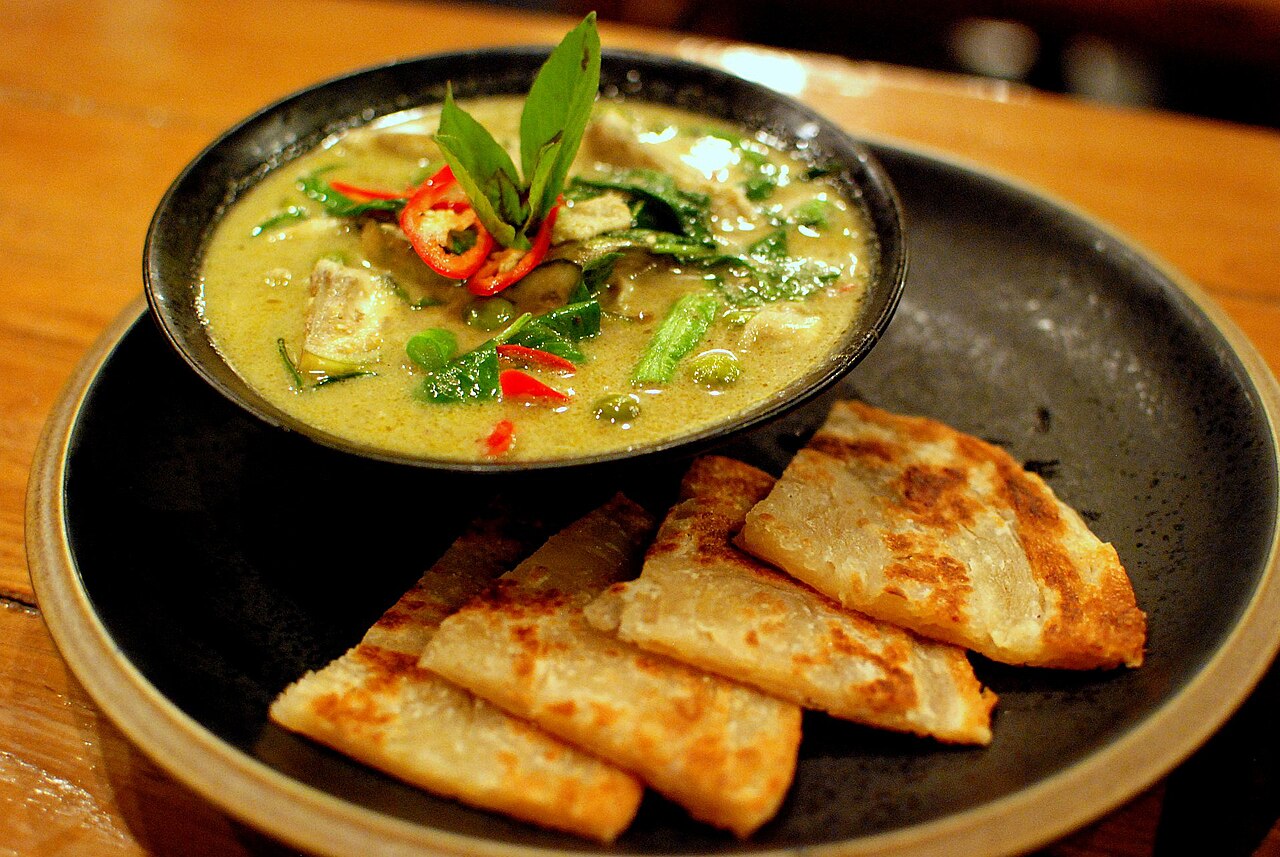
A coconut milk curry made with a paste of fresh green chillies, usually with chicken or fish balls, Thai aubergines and sweet basil. It is often hotter than red curry.
The Thai name, kaeng khiao wan, means 'sweet green curry'. The 'sweet' describes the soft green colour, not the taste.
See the recipe
Serves 4
30 min
Ingredients
1 tablespoon vegetable oil
2 to 3 tablespoons Thai green curry paste (from a jar or packet)
400 ml coconut milk
500 g boneless chicken thighs, cut into thin strips
150 ml chicken stock or water
150 g green beans or Thai aubergines, cut into bite-size pieces
1 tablespoon fish sauce
1 teaspoon palm sugar or brown sugar
4 kaffir lime leaves, torn (optional)
A handful of Thai sweet basil or ordinary basil leaves
Steamed jasmine rice to serve
Method
Heat the oil in a large pan over medium heat, add the curry paste and fry for 1 minute, stirring, until fragrant.
Pour in about a third of the coconut milk and let it bubble for 2 minutes, stirring, until you see a little oil on the surface.
Add the chicken and stir to coat it in the paste, then pour in the rest of the coconut milk and the stock.
Bring to a gentle simmer, add the beans or aubergines and the lime leaves, and cook for 10 minutes, until the chicken is cooked through.
Season with fish sauce and sugar, taste and adjust, then stir in the basil and serve with rice.
Thai Muslim cooking, with Persian, Indian and Malay influences
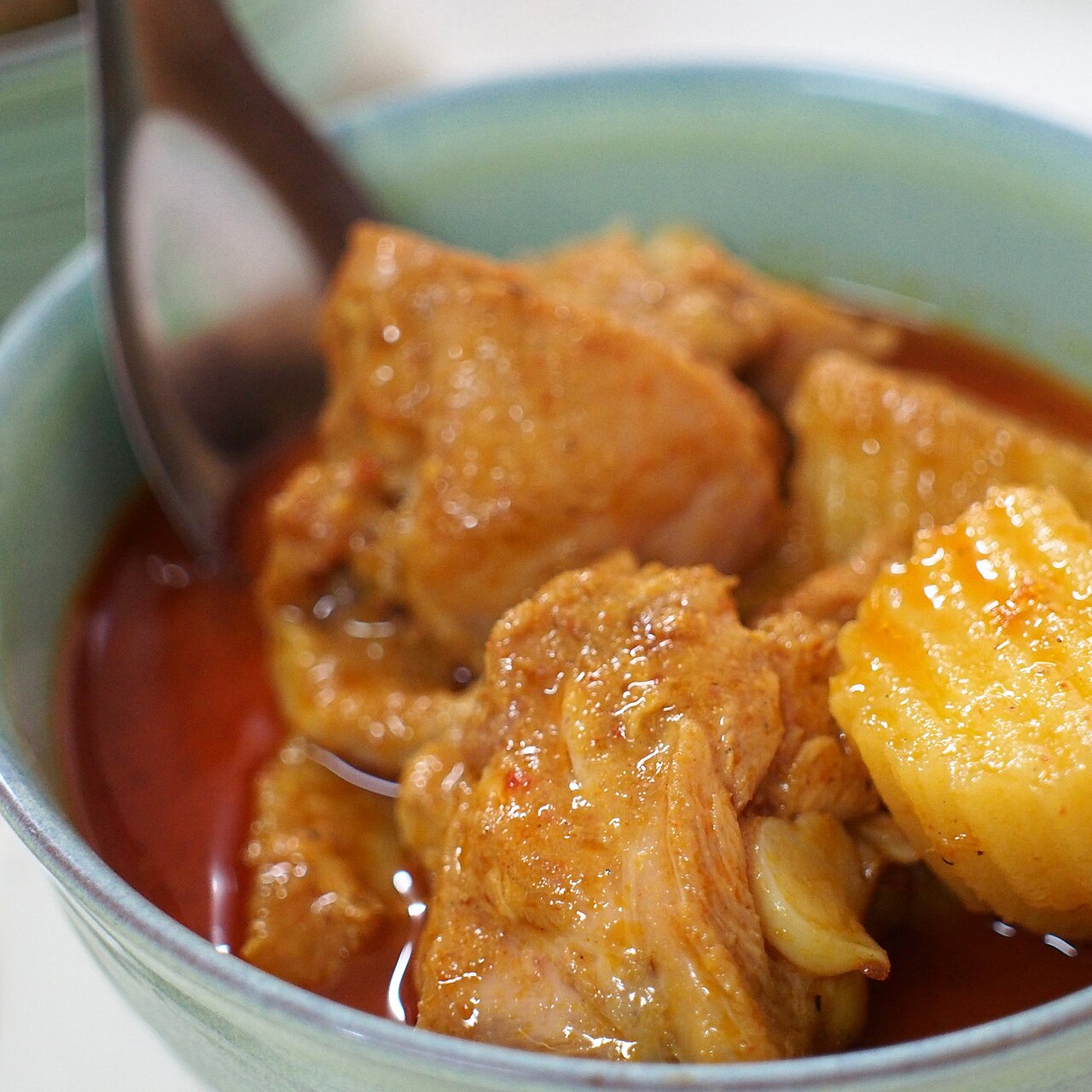
A rich, mild curry of coconut milk with warm spices such as cardamom, cinnamon and cloves, usually made with chicken or beef, potatoes, onions and peanuts.
Massaman curry is praised in a poem from the late 1700s attributed to the prince who later became King Rama II.
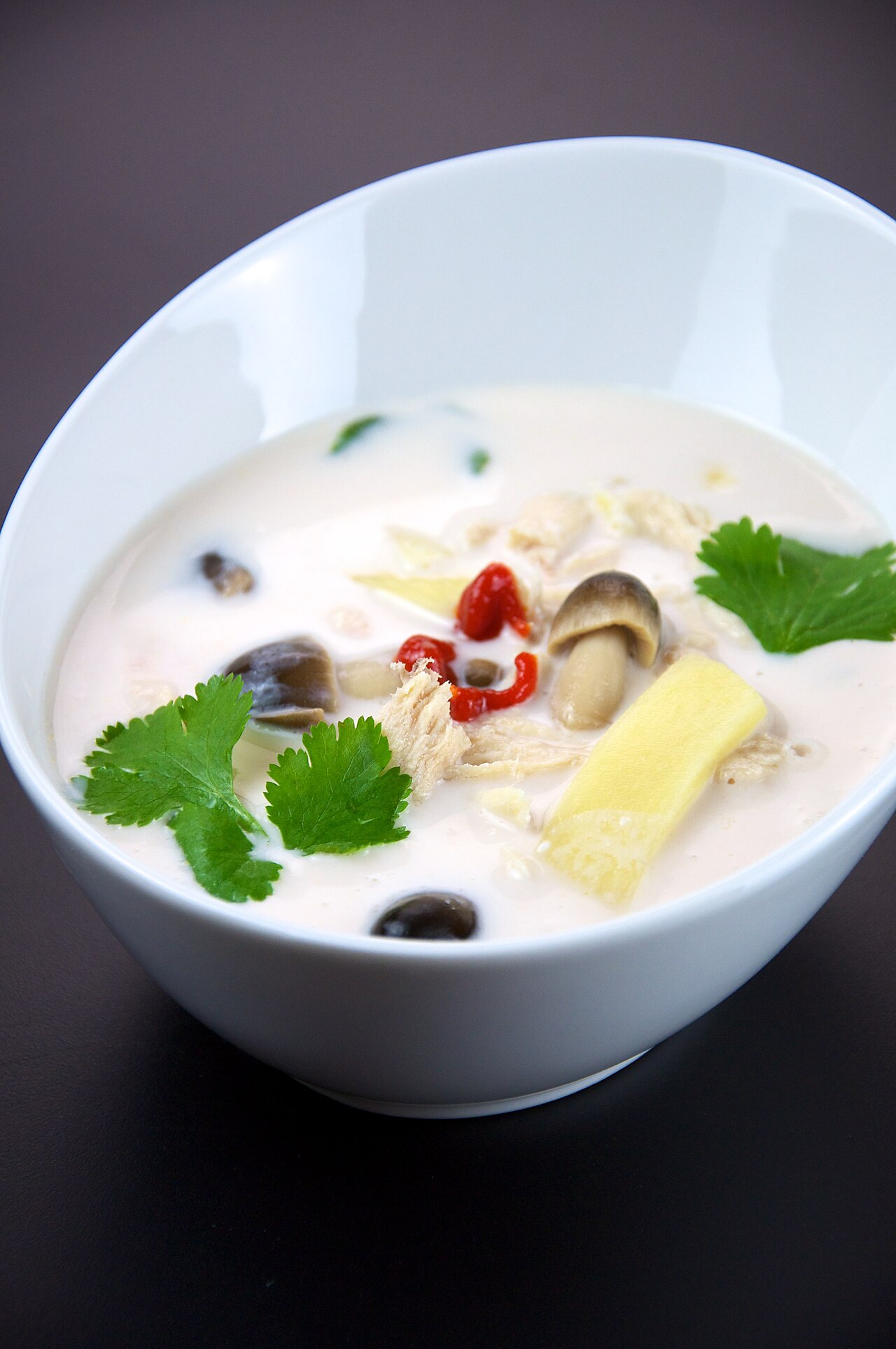
A creamy chicken soup made with coconut milk and galangal, flavoured with lemongrass, kaffir lime leaves, mushrooms, fish sauce and lime juice. It is milder and sweeter than tom yum.
The name simply means 'chicken galangal soup'. The first recorded version, from around 1890, was made with duck.
See the recipe
Serves 4
30 min
Ingredients
400 ml coconut milk
400 ml chicken stock
2 stalks lemongrass, cut into 5 cm pieces and bruised with a knife
5 cm piece of galangal (or ginger), thinly sliced
4 kaffir lime leaves, torn
400 g boneless chicken breast or thigh, thinly sliced
150 g mushrooms, sliced
3 tablespoons fish sauce
1 teaspoon sugar
3 tablespoons lime juice
1 to 2 small chillies, lightly crushed (optional), and fresh coriander to serve
Method
Put the coconut milk, stock, lemongrass, galangal and lime leaves in a pan and bring slowly to a simmer. Simmer for 5 minutes so the herbs flavour the soup.
Add the chicken and mushrooms and simmer gently for 8 to 10 minutes, until the chicken is cooked through.
Stir in the fish sauce, sugar and chillies, then take the pan off the heat and add the lime juice.
Taste: it should be creamy, sour and salty with a little sweetness. Add more lime or fish sauce if needed.
Serve sprinkled with coriander. The lemongrass, galangal and lime leaves are there for flavour and are not eaten.
All of Thailand, first sold by Chinese immigrant cooks
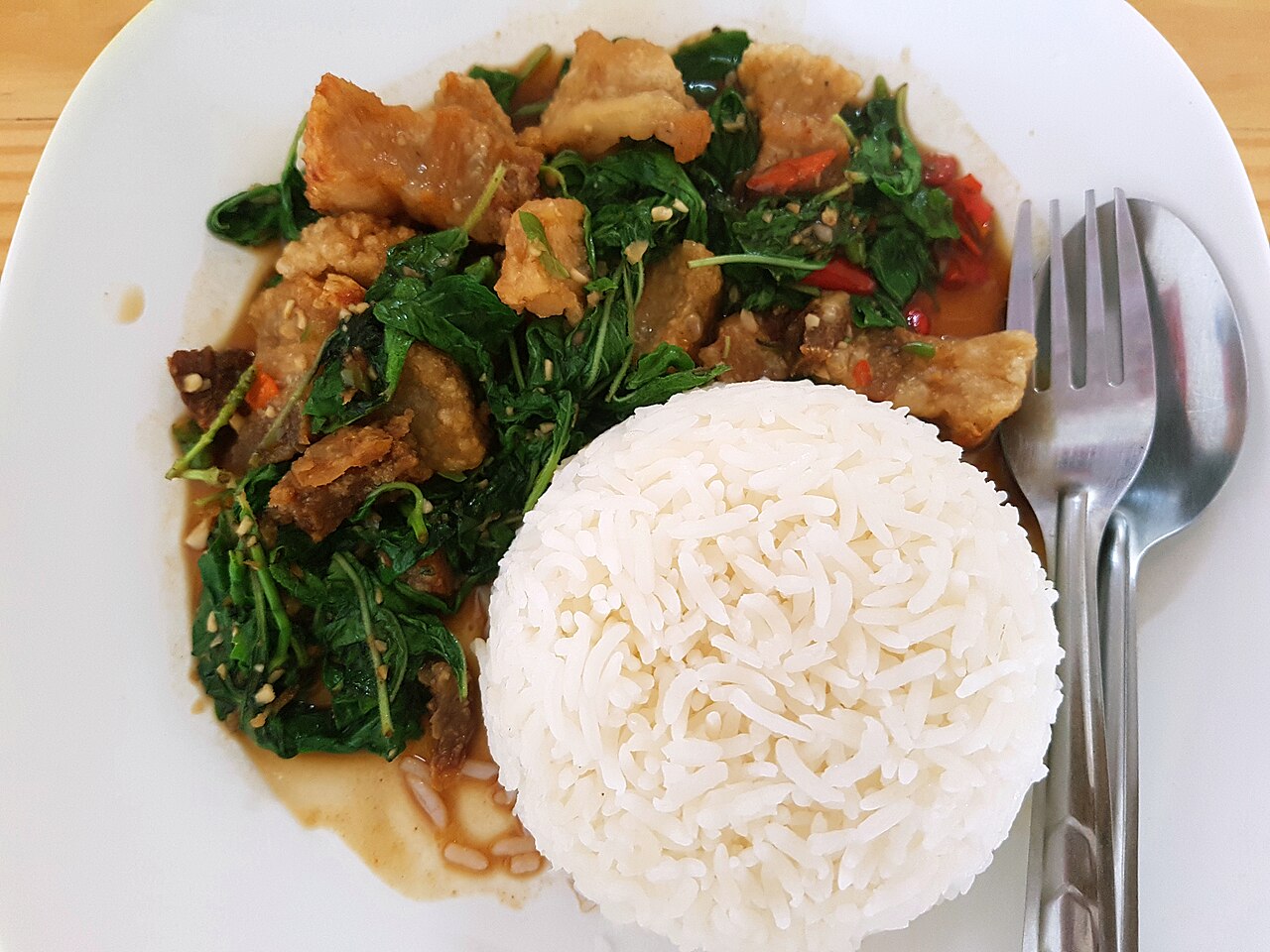
Minced pork or chicken stir-fried with garlic, chillies and holy basil, served over rice and often topped with a crispy fried egg. It is one of the most popular everyday dishes in the country.
Many Thais order it as their quick lunch. If you cannot decide what to eat in Thailand, pad kaphrao with a fried egg is a safe choice.
See the recipe
Serves 2
20 min
Ingredients
2 tablespoons vegetable oil, plus 3 tablespoons for the eggs
4 cloves garlic and 1 to 3 small red chillies, pounded or finely chopped together
300 g minced pork or chicken
1 tablespoon oyster sauce
1 tablespoon soy sauce
2 teaspoons fish sauce
1 teaspoon sugar
2 tablespoons water
2 large handfuls of holy basil leaves (or Thai sweet basil)
2 eggs (the yolk is traditionally runny; fry until fully set if serving pregnant women, young children, older people or anyone with a weak immune system)
2 plates of hot jasmine rice
Method
Heat 3 tablespoons of oil in a wok or frying pan and fry the eggs one at a time until the edges are brown and crispy. Set them aside.
Pour off most of the oil, add 2 tablespoons of fresh oil and fry the garlic and chillies for 20 seconds, until fragrant but not burnt.
Add the meat and stir-fry over high heat, breaking it up, for 4 to 5 minutes, until cooked through with no pink left.
Add the oyster sauce, soy sauce, fish sauce, sugar and water and stir for 1 minute.
Take the pan off the heat, stir in the basil until it wilts, and serve over rice with a fried egg on top.
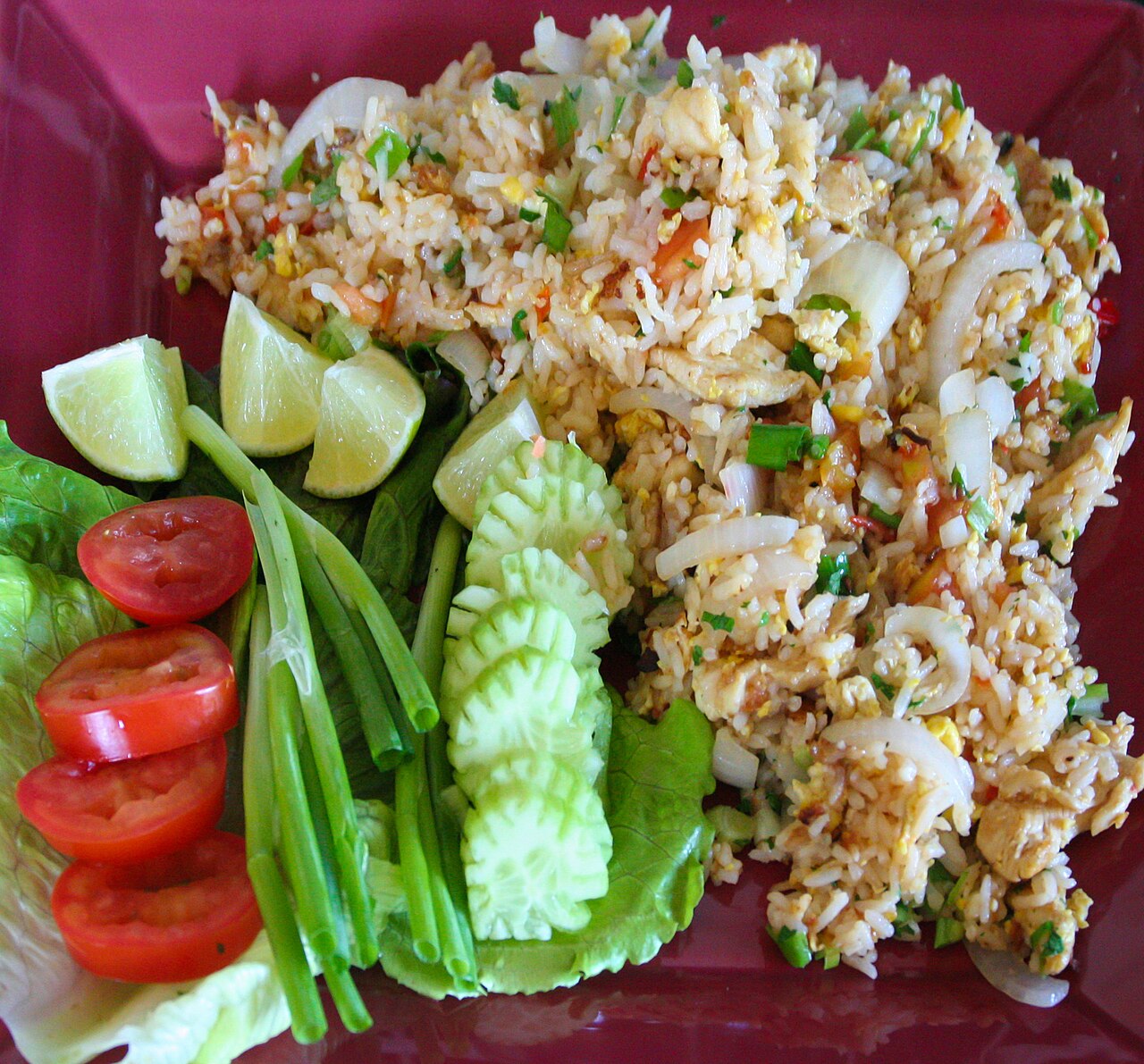
Jasmine rice fried with egg, onion, garlic and chicken, prawns, pork or crab, seasoned with fish sauce and soy sauce, and served with cucumber, lime and a small bowl of chillies in fish sauce.
See the recipe
Serves 2
20 min
Ingredients
400 g cooked jasmine rice, cold (cooked the day before, cooled within an hour and kept covered in the fridge)
2 tablespoons vegetable oil
2 cloves garlic, chopped
1 small onion, sliced
200 g boneless chicken or raw peeled prawns, cut into small pieces
2 eggs
1 tablespoon fish sauce
1 tablespoon light soy sauce
1 teaspoon sugar
2 spring onions, sliced
Cucumber slices and lime wedges to serve
Method
Break up any lumps in the cold rice with your fingers.
Heat the oil in a wok over high heat, fry the garlic and onion for 1 minute, then add the chicken or prawns and stir-fry until cooked through.
Push everything to one side, add the eggs and scramble them until almost set.
Add the rice and toss everything together for 2 to 3 minutes, until the rice is hot.
Season with fish sauce, soy sauce and sugar, stir in the spring onions and serve with cucumber and lime.
Isan, the northeast, shared with neighbouring Laos
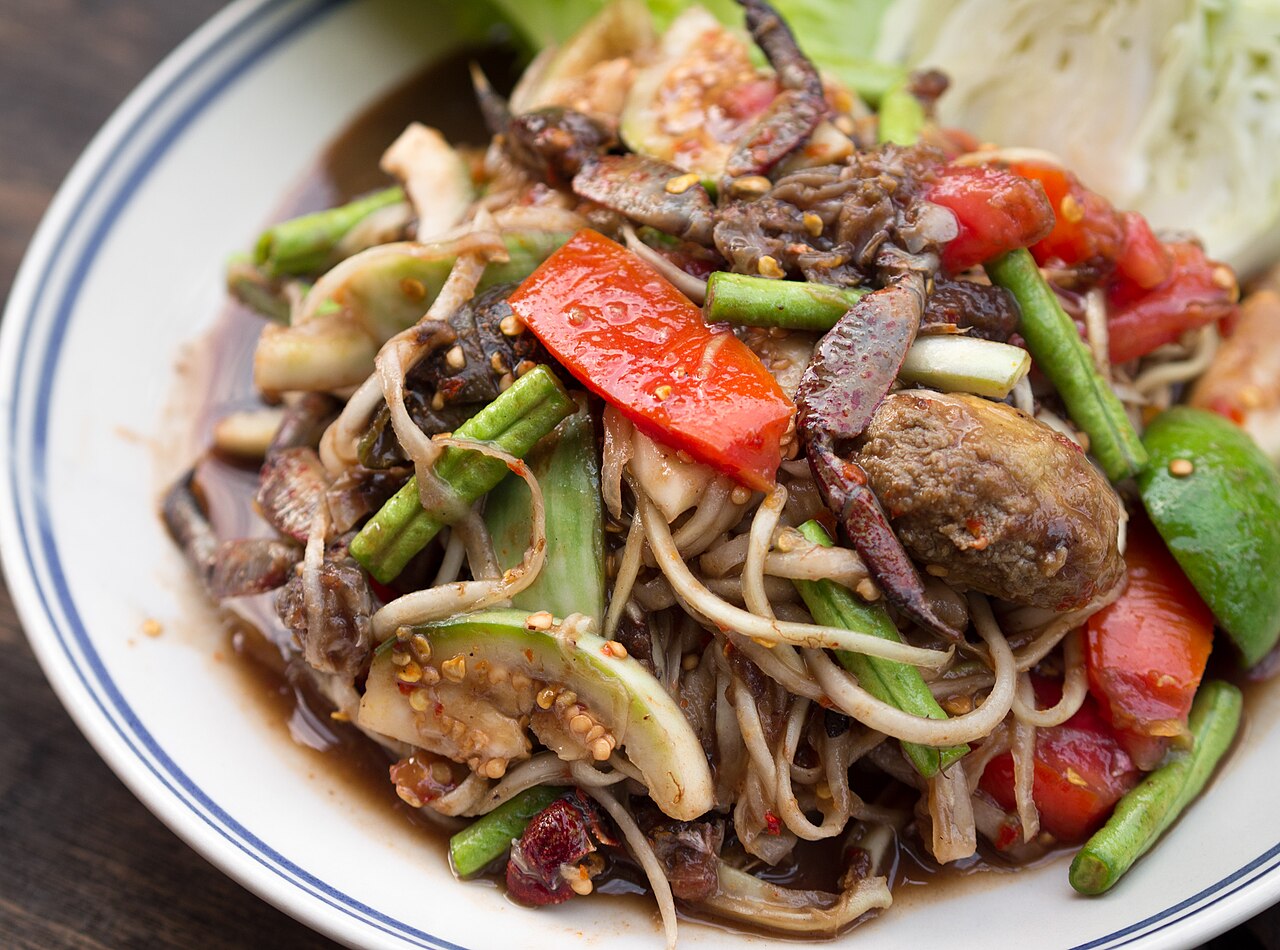
Shredded unripe papaya pounded in a mortar with chillies, garlic, lime juice, fish sauce, palm sugar, tomatoes, long beans and peanuts. It is sour, spicy, salty and sweet all at once.
Some versions include raw pickled crab or fermented fish sauce. If you are pregnant, older or have a weak immune system, ask for the simple Thai style without them.
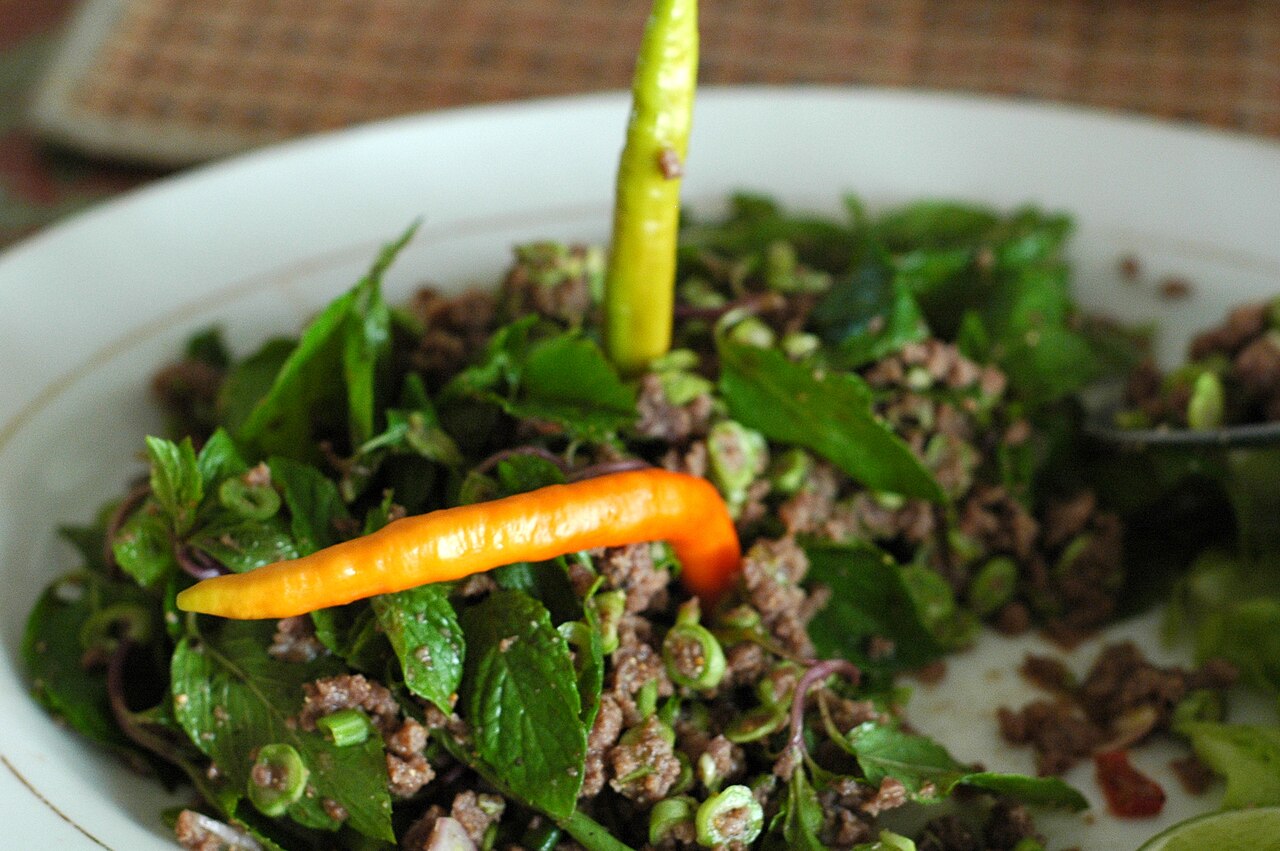
A salad of minced chicken, pork or duck, seasoned with lime juice, fish sauce, chilli, roasted ground rice and fresh mint, usually eaten with sticky rice.
Some traditional versions use raw meat. Ask for it cooked (it is on most menus), which is the safe choice.
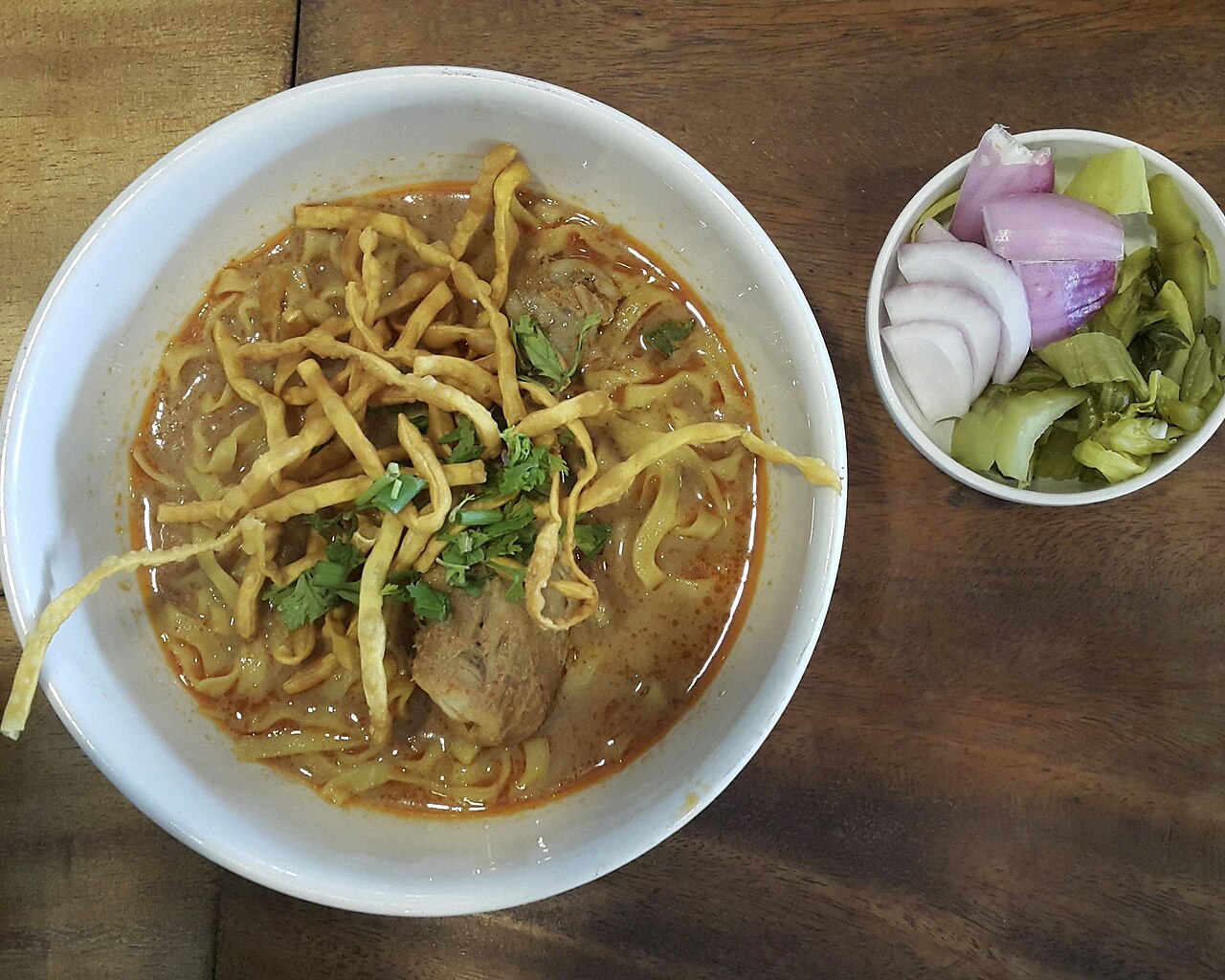
Egg noodles in a curry soup with coconut milk and chicken or beef, topped with a nest of crispy fried noodles and served with pickled mustard greens, shallots and lime.
The dish is believed to have come with Chinese Muslim traders who travelled the caravan routes through the north.
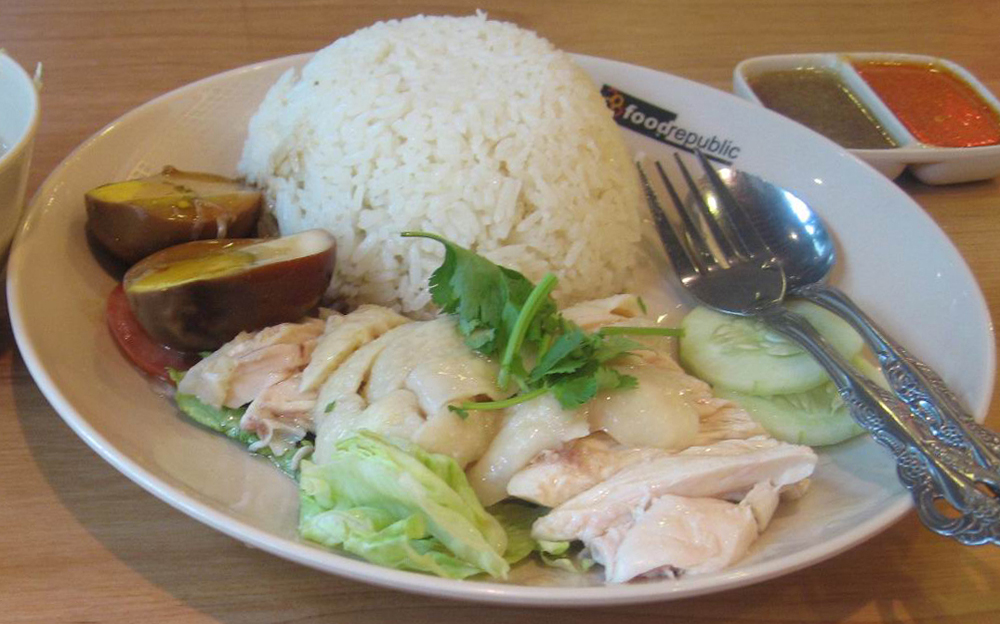
Brought by Hainanese Chinese immigrants; now found all over Thailand
Poached chicken sliced over rice that has been cooked in the chicken's stock and fat, served with cucumber and a spicy dipping sauce. The Thai name means 'chicken fat rice'.
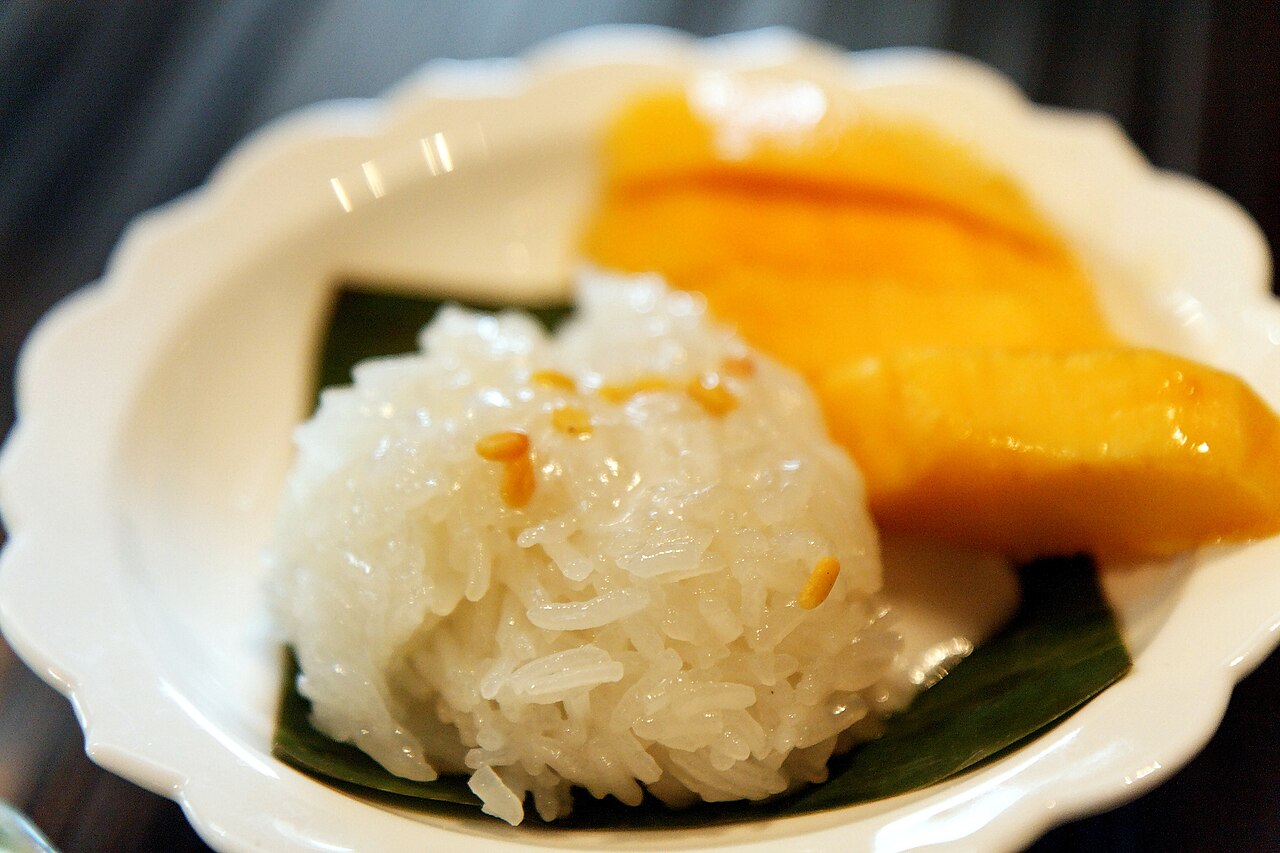
Sweet, sticky glutinous rice soaked in salted coconut milk, served with slices of ripe yellow mango and more coconut sauce poured over the top.
See the recipe
Serves 4
1 h
Ingredients
250 g glutinous (sticky) rice, soaked in cold water for at least 4 hours or overnight
400 ml coconut milk
80 g sugar
1/2 teaspoon salt
1 teaspoon cornflour mixed with 1 tablespoon water
2 large ripe yellow mangoes
1 tablespoon toasted sesame seeds or crispy mung beans (optional)
Method
Drain the rice and steam it in a steamer lined with a clean cloth or muslin for 20 to 25 minutes, until soft and shiny.
Meanwhile, warm 300 ml of the coconut milk with the sugar and a pinch of the salt, stirring until the sugar dissolves. Do not let it boil.
Put the hot rice in a bowl, pour the sweet coconut milk over it, stir once, cover and leave for 20 minutes to soak it up.
For the topping, heat the rest of the coconut milk with the remaining salt, stir in the cornflour mixture and simmer for 1 minute until slightly thick.
Peel the mangoes and slice the flesh away from the stone. Serve the rice with the mango beside it, the salty coconut sauce spooned over and a sprinkle of sesame seeds.
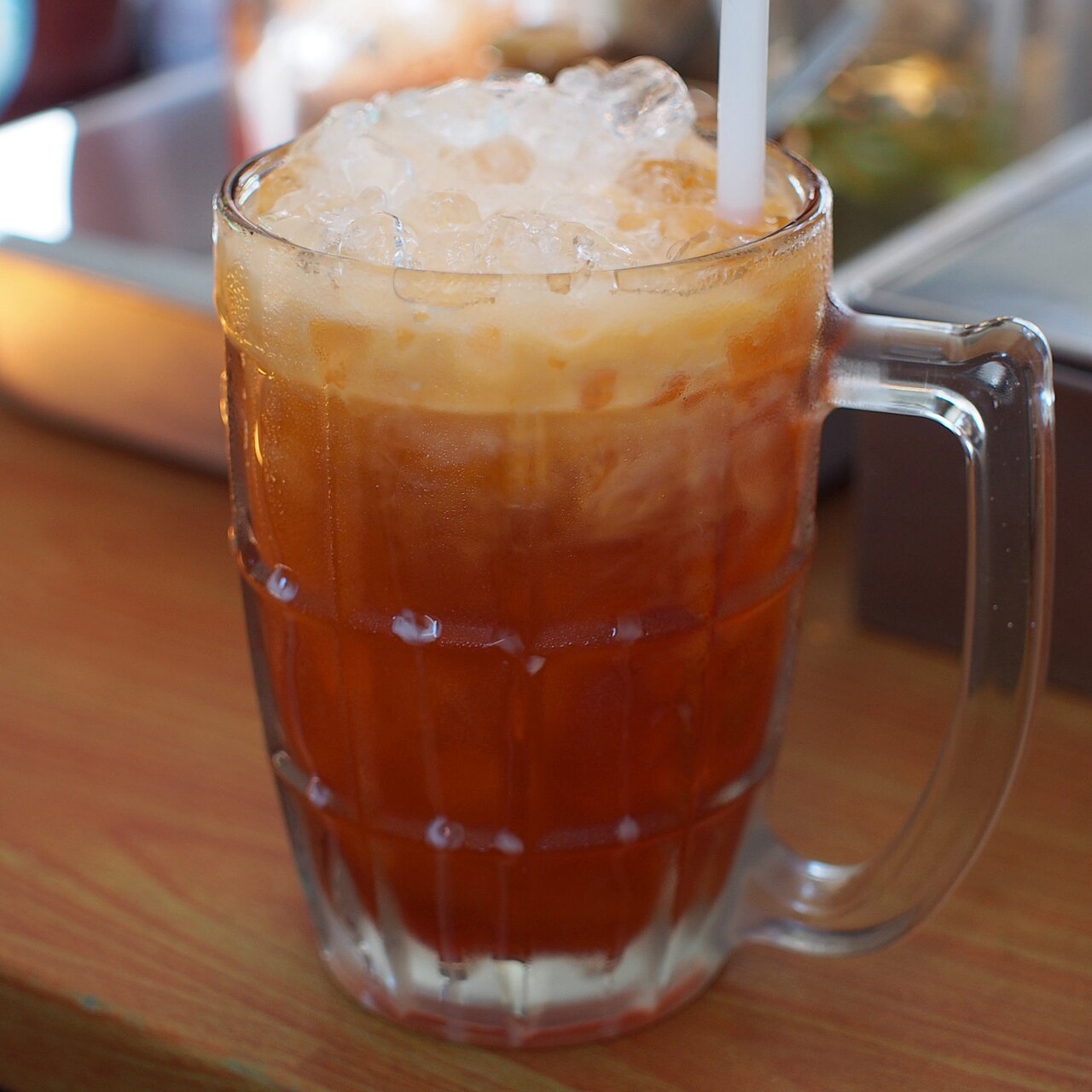
Strong black tea sweetened with sugar and condensed milk and poured over ice, often with a splash of evaporated milk on top. Its Thai name, cha yen, simply means 'cold tea'.
Table manners
Most Thais eat with a spoon in the right hand and a fork in the left, using the fork to push food onto the spoon. Knives are not generally used at the table.
Chopsticks are used mainly for noodle soups and Chinese-style dishes.
Dishes are shared by everyone at the table and eaten with rice. Thais like to mix a little of each dish with the rice on their own plate.
In the north and northeast, sticky rice is rolled into small balls with your fingers, traditionally of the right hand, and dipped into the other dishes.
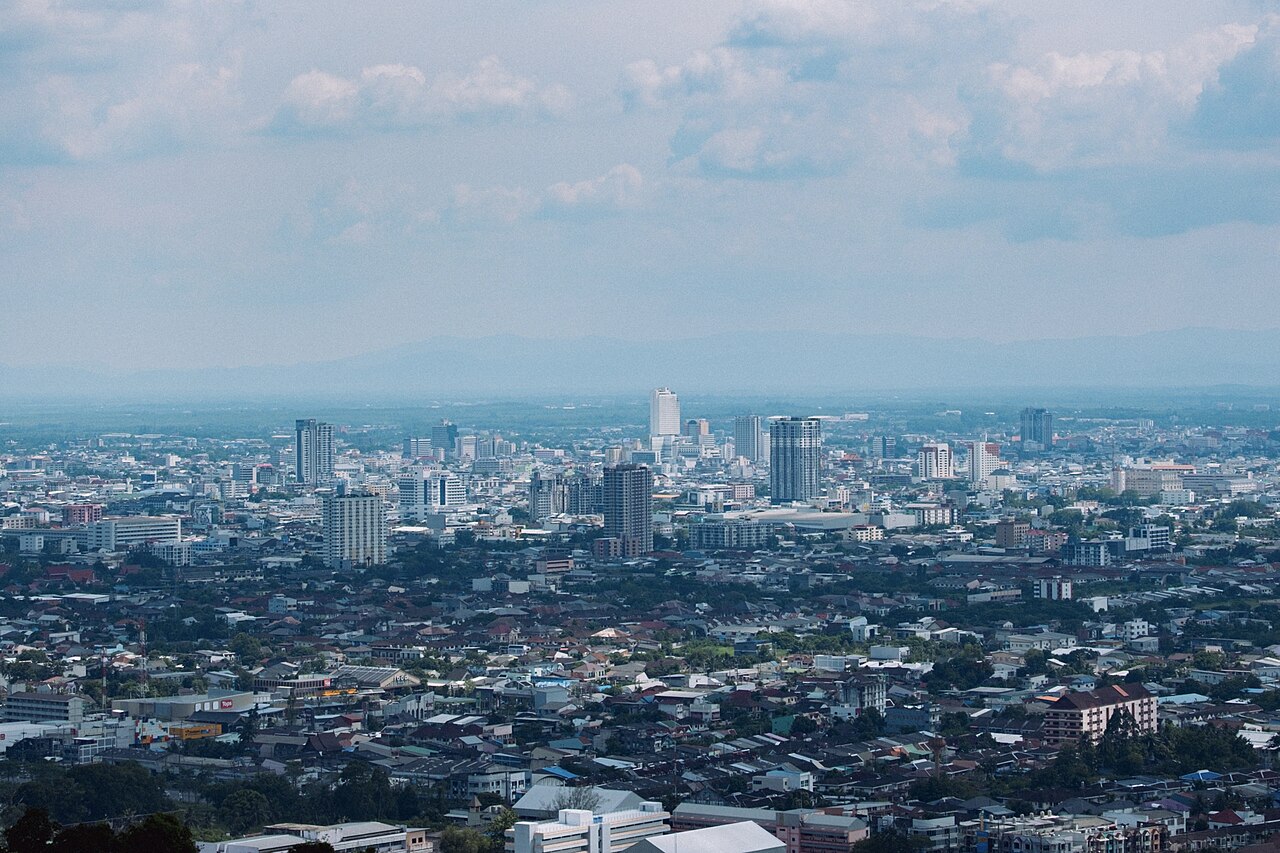
Bangkok is by far the largest city, and most of the country's history was made in the central plain around it. The mountainous north has Chiang Mai and Chiang Rai, the northeast (Isan) has big market towns such as Korat, and the long southern peninsula has beach resorts and islands on two different seas.
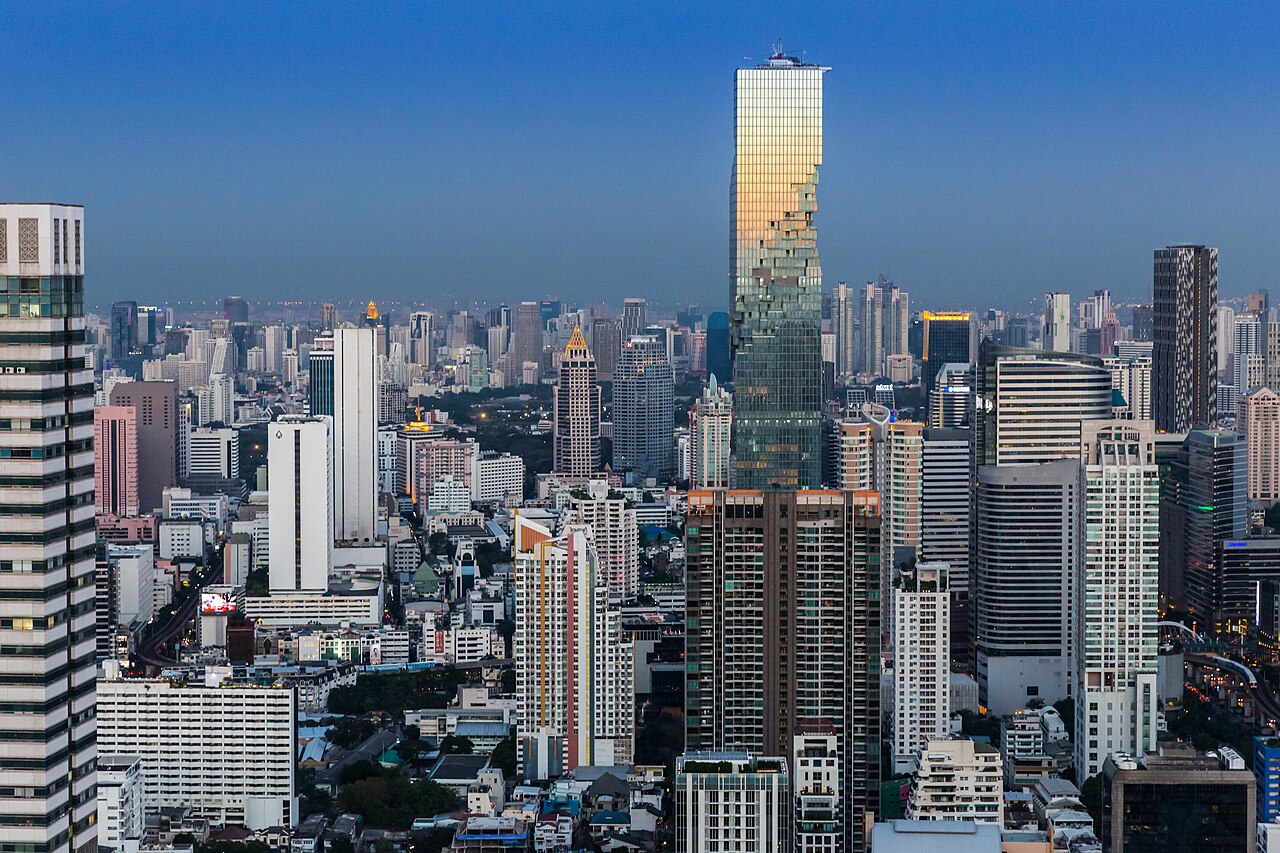
The capital since 1782 and home to about 9 million people, on the Chao Phraya River. Thais call it Krung Thep, the City of Angels. Glittering temples and palaces stand side by side with street food stalls, canals, markets and skyscrapers.
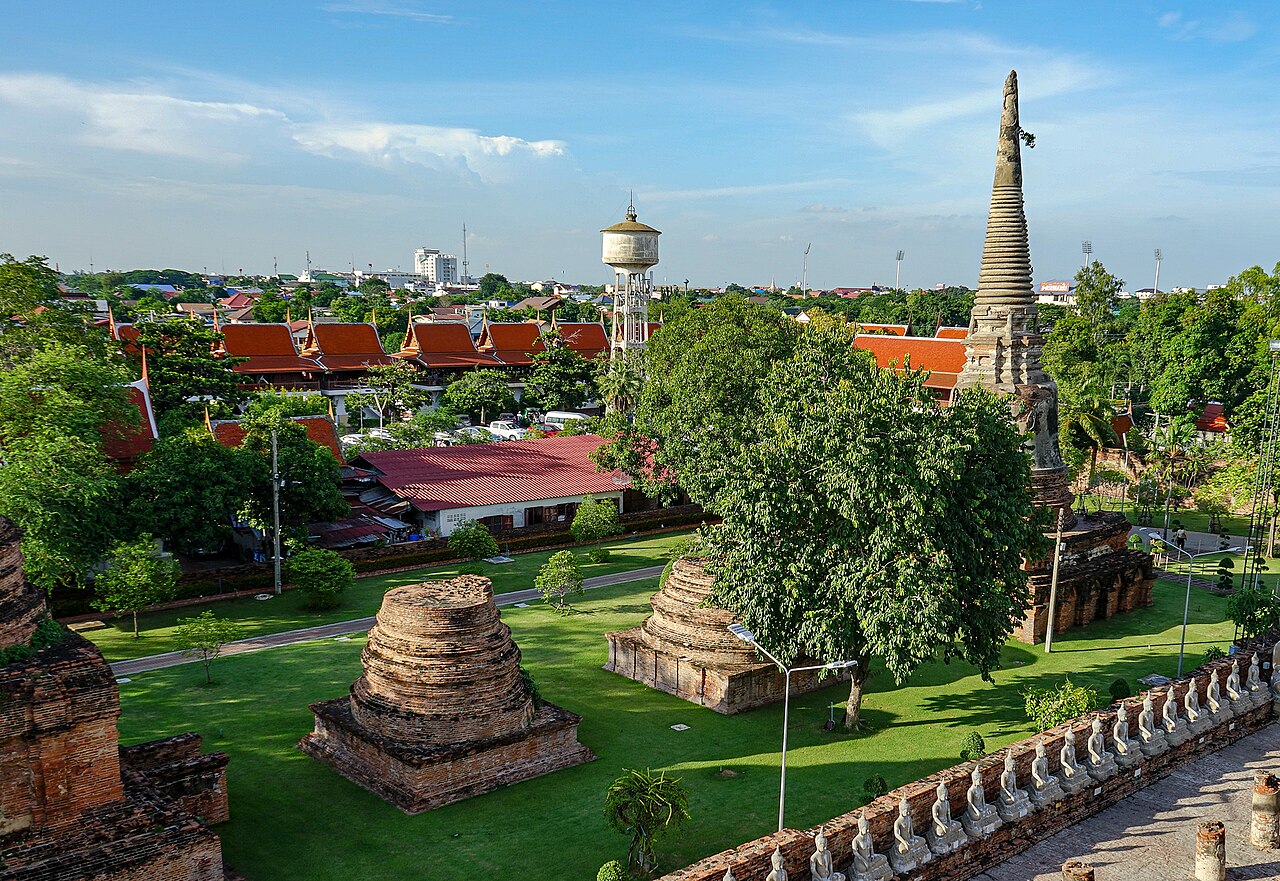
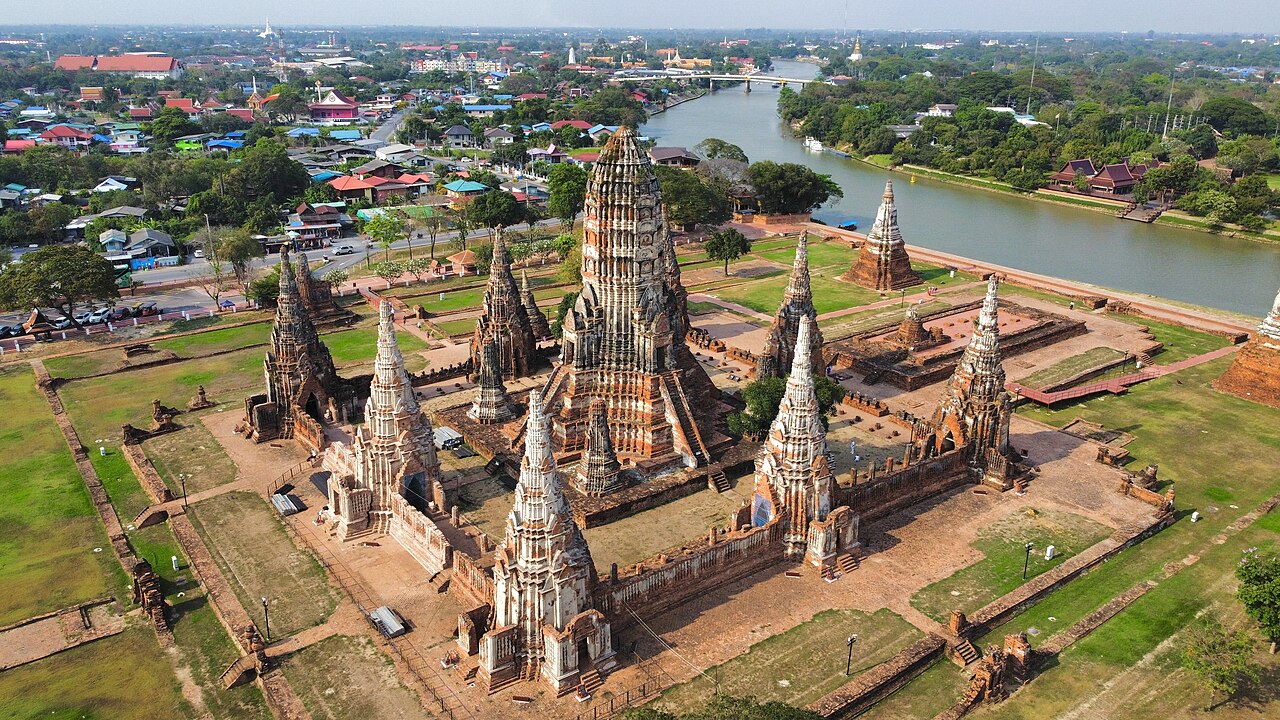
The royal capital for more than 400 years, on an island where the Chao Phraya, Lopburi and Pa Sak rivers meet, about an hour north of Bangkok. Its ruined temples and brick towers recall one of the great cities of Asia.
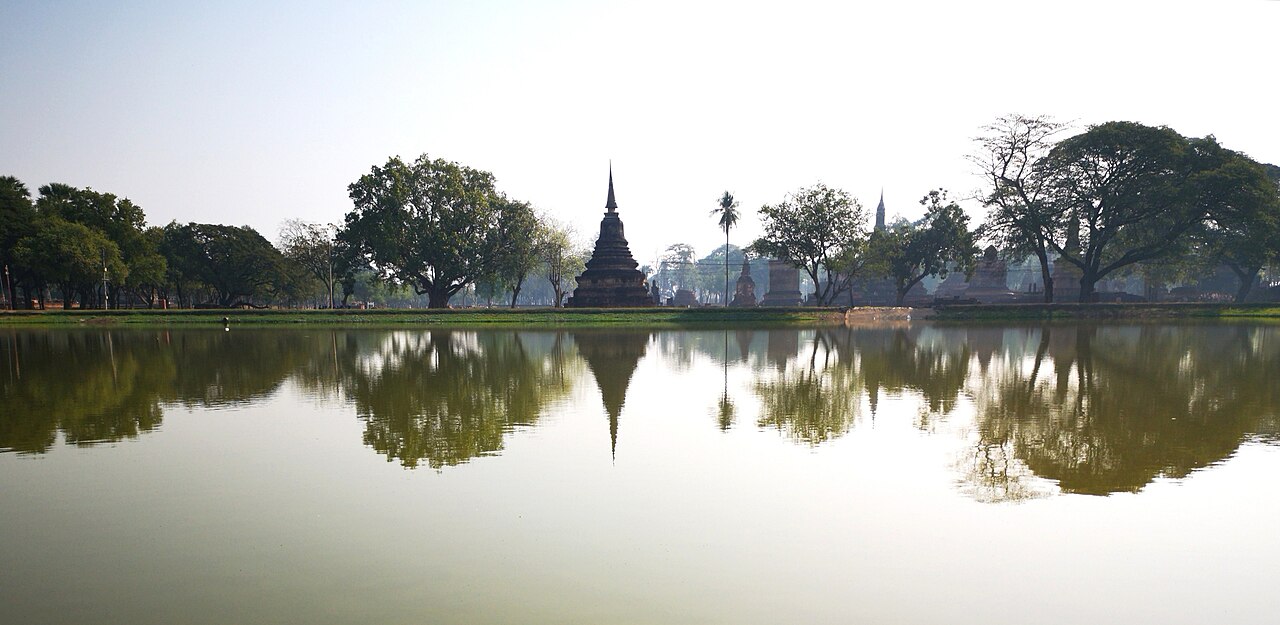
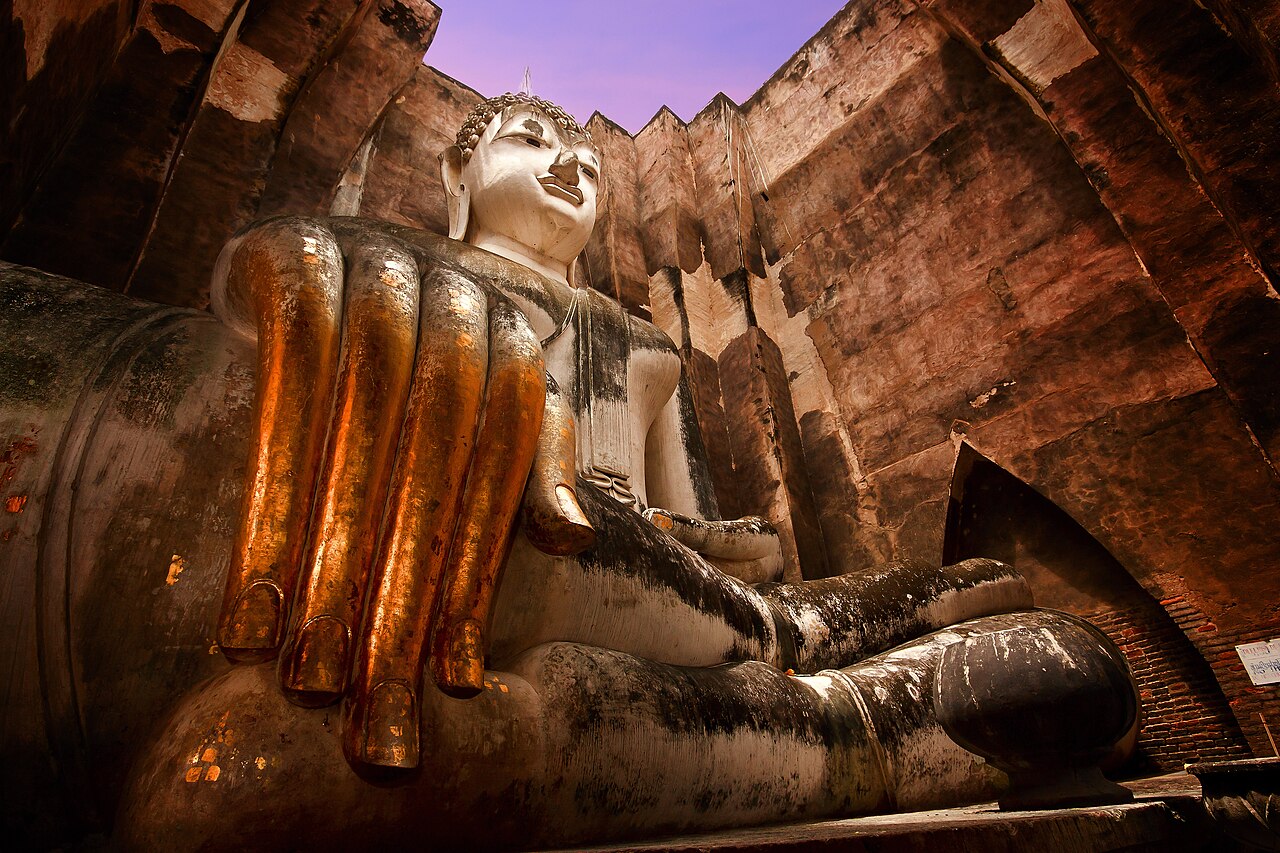
The first capital of a Thai kingdom, in the 1200s and 1300s. Its ruins lie in a peaceful historical park of lotus ponds and Buddha statues; the modern provincial town, Sukhothai Thani, lies nearby.
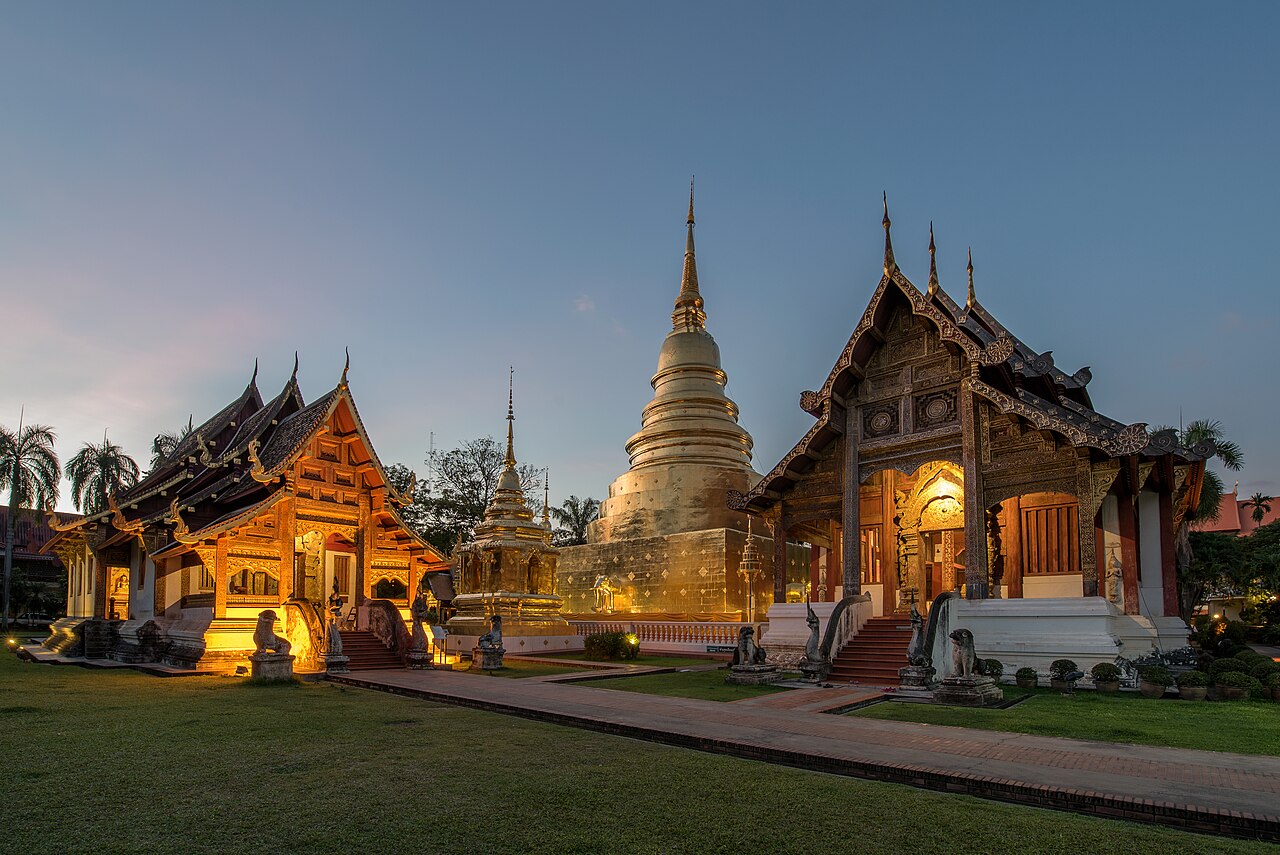
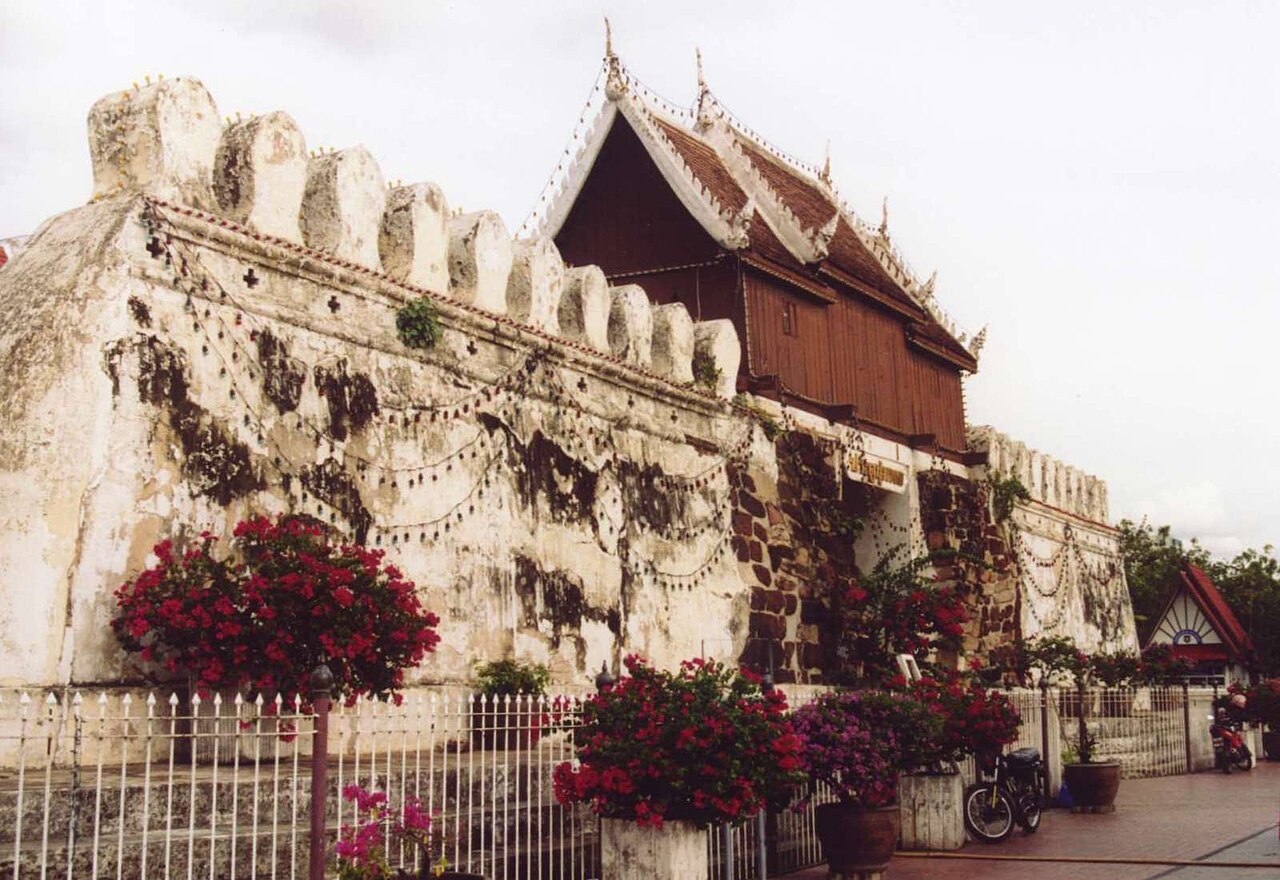
The largest city of the north, about 700 km from Bangkok, founded in the 1290s by King Mangrai as the capital of the Lan Na kingdom. Its old centre is a square surrounded by a moat and the remains of red brick walls, filled with temples.
More than a hundred temples
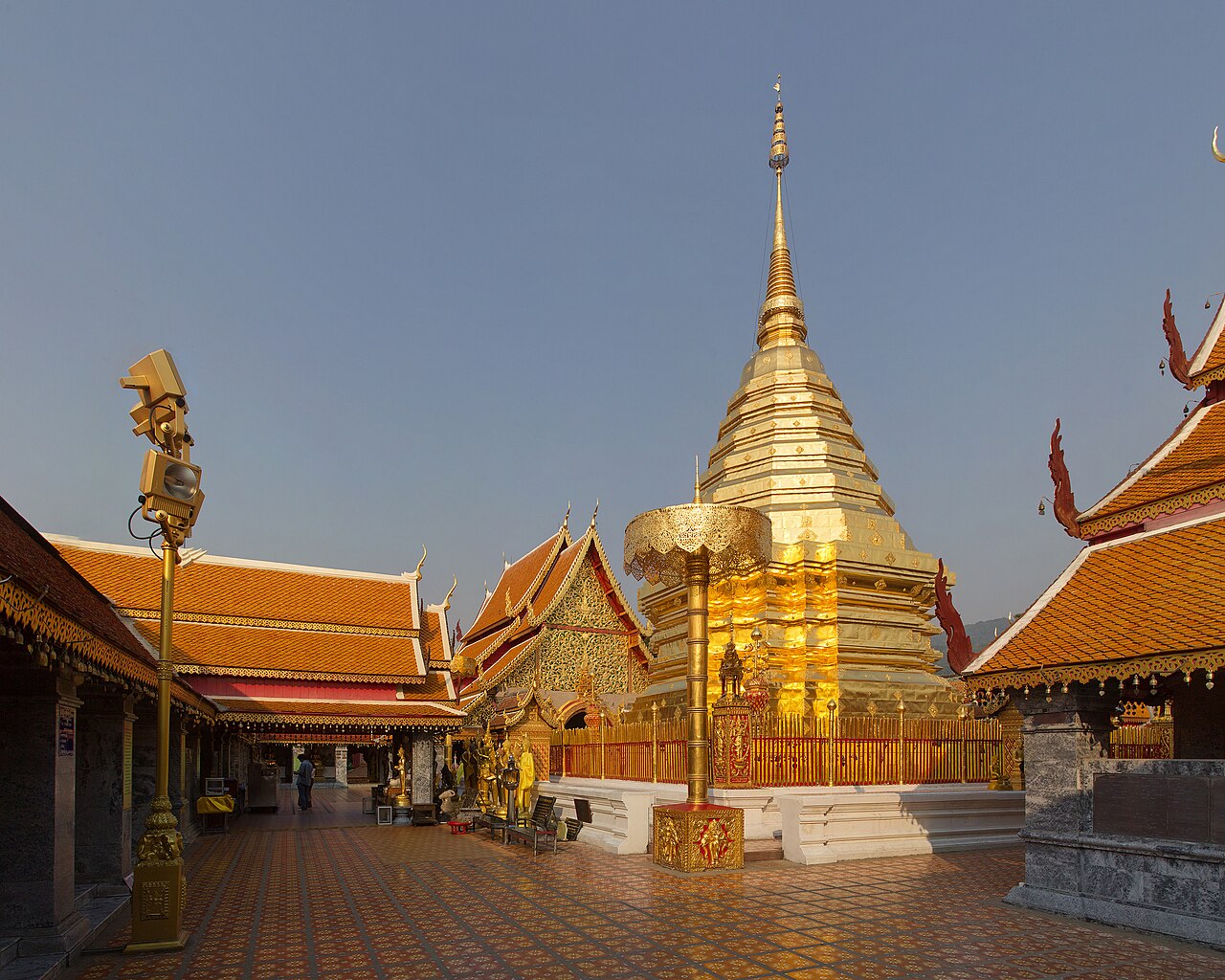
Wat Phra That Doi Suthep on the mountain above the city
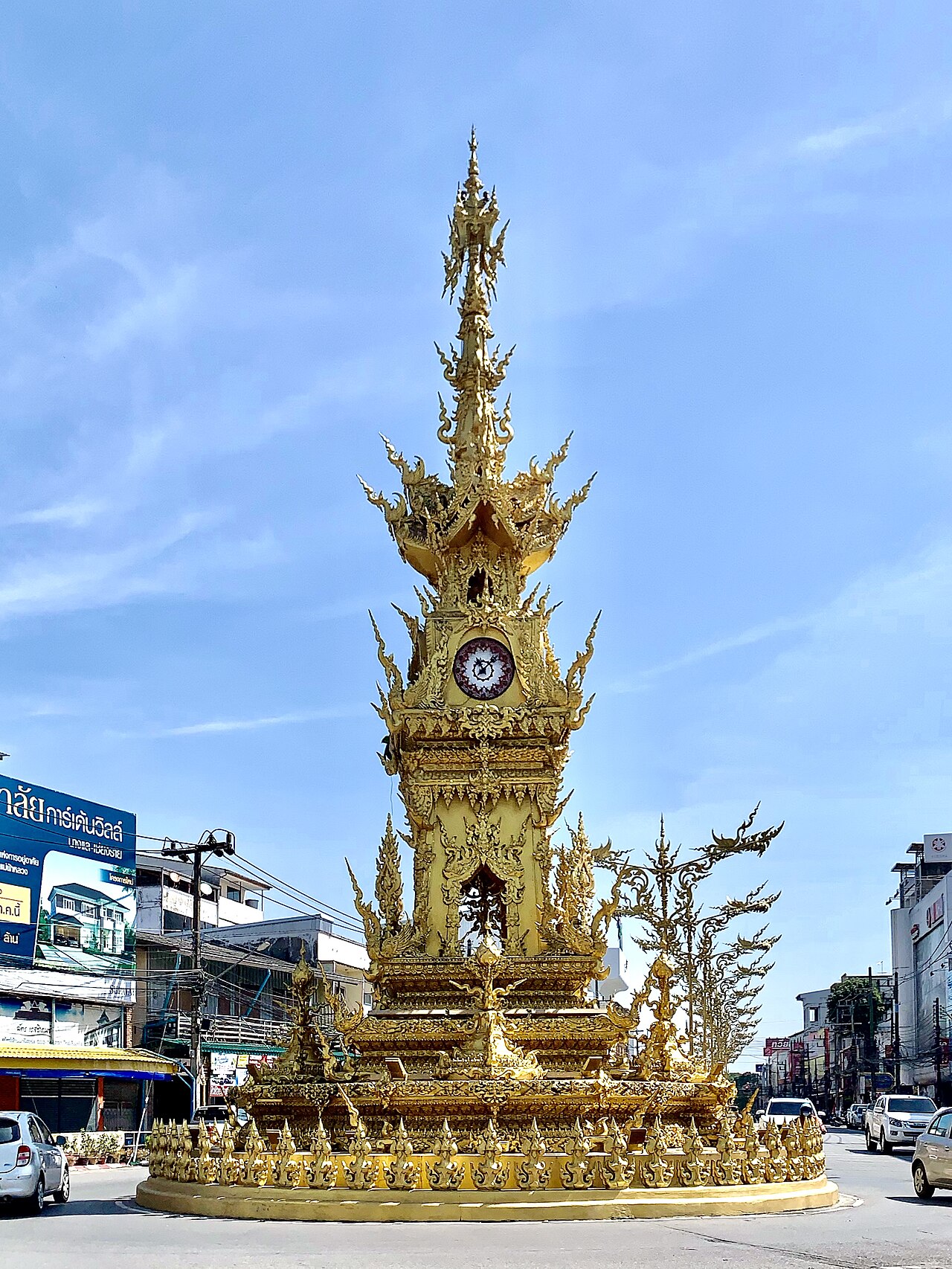
The northernmost major city of Thailand, founded by King Mangrai in 1262, near the borders with Myanmar and Laos. It is a gateway to hill villages and the Golden Triangle.
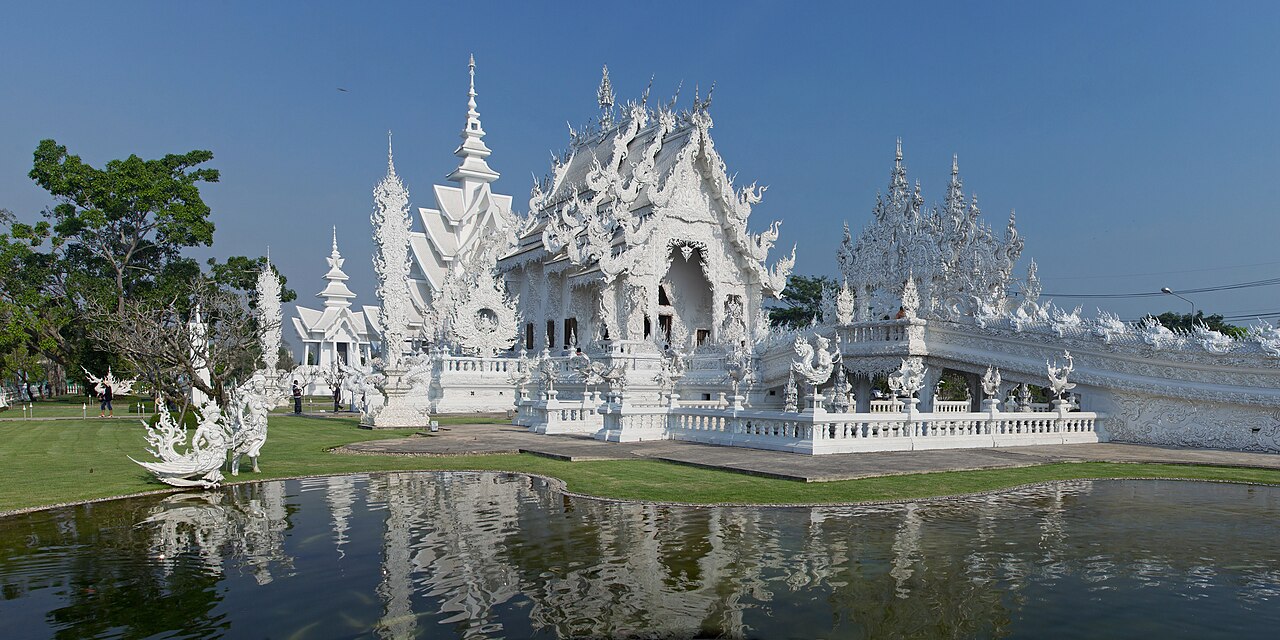
Wat Rong Khun, the White Temple
The Golden Triangle, where Thailand, Laos and Myanmar meet, about 55 km to the north
The largest city of the northeast, about 250 km from Bangkok, usually called Korat. It is the gateway to Isan, the northeastern region known for its sticky rice and spicy salads.
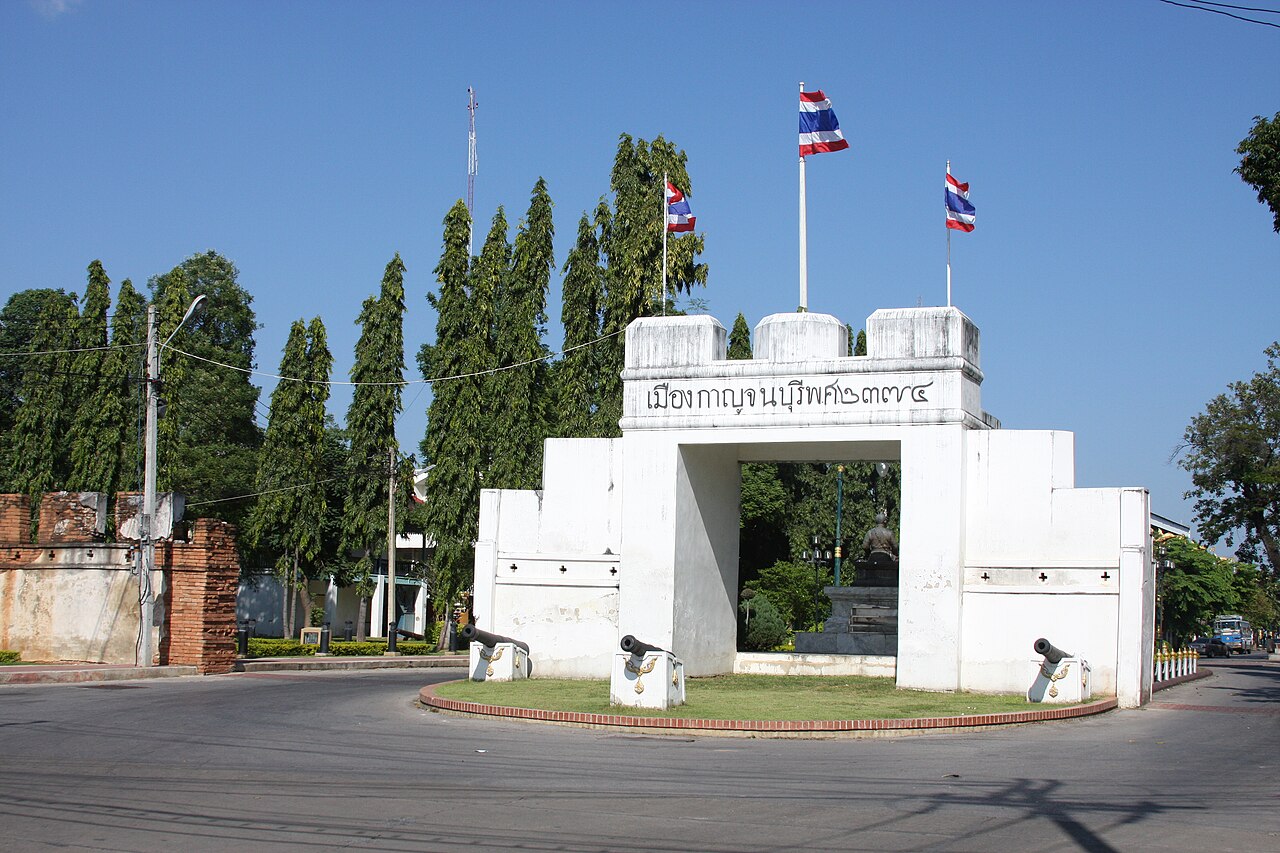
A riverside town about 120 km west of Bangkok, where the Khwae Noi and Khwae Yai rivers meet. During the Second World War prisoners of war and Asian labourers were forced to build a railway through here.
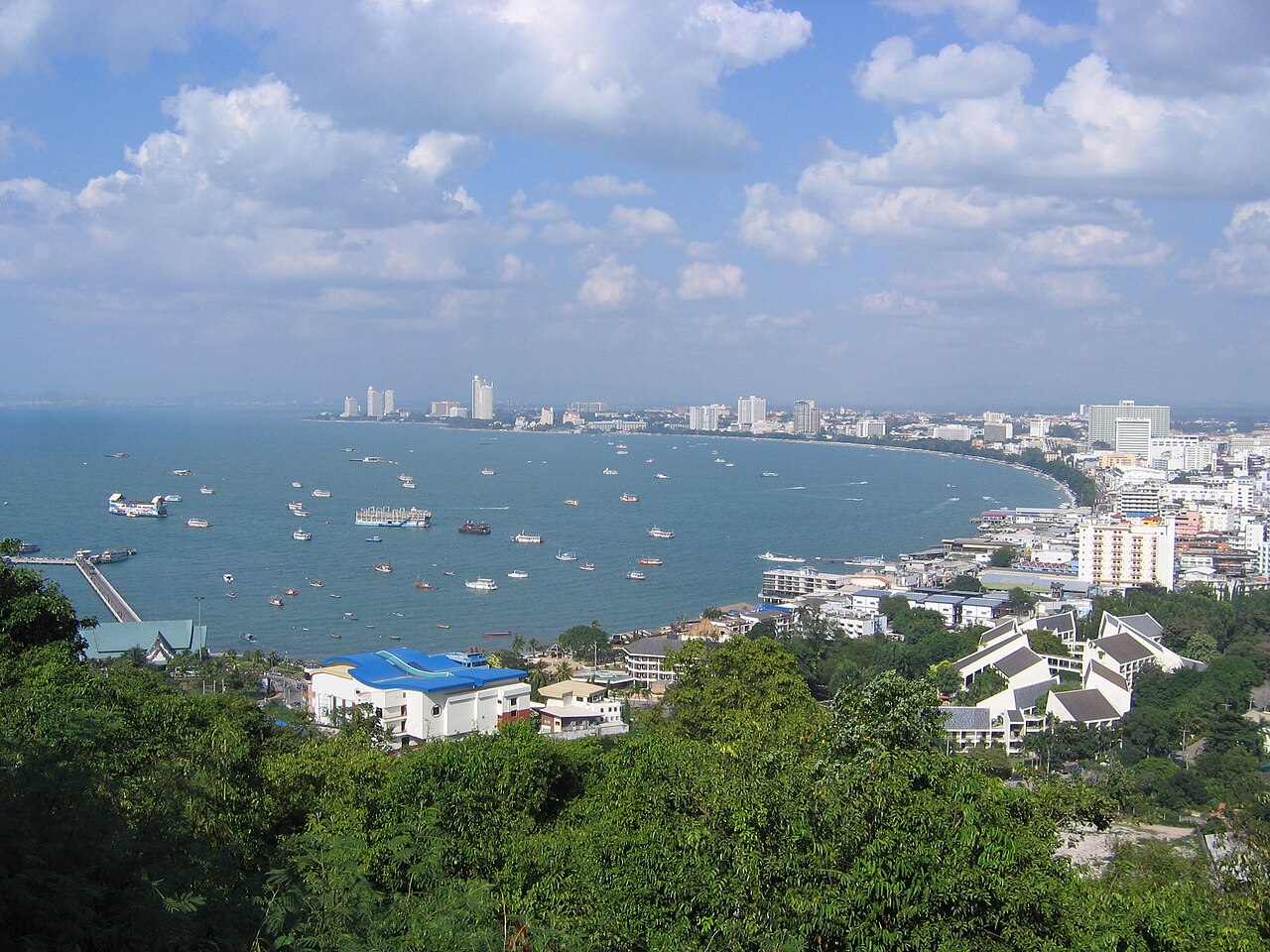
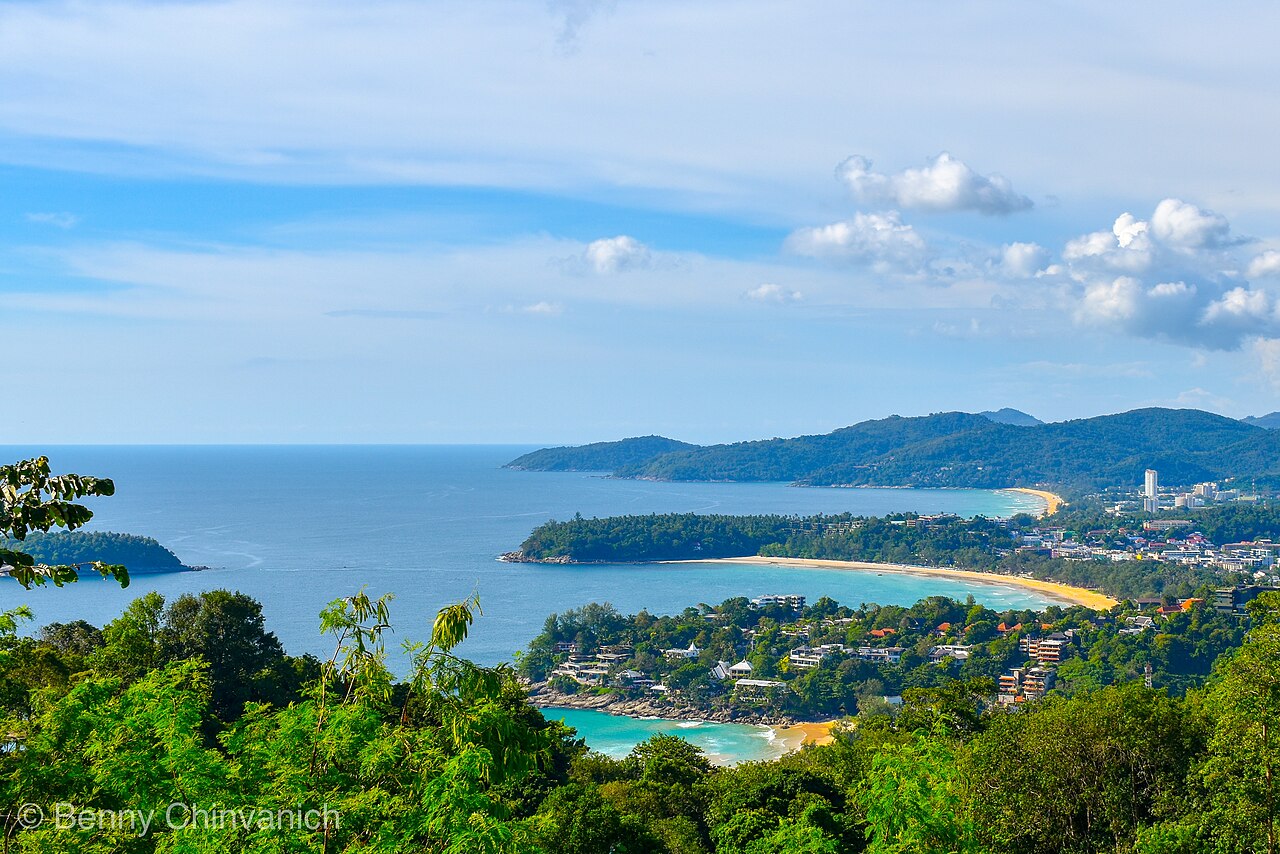
A busy seaside city on the Gulf of Thailand, about 150 km southeast of Bangkok. A fishing village until the 1960s, it is now one of the country's biggest beach resorts.
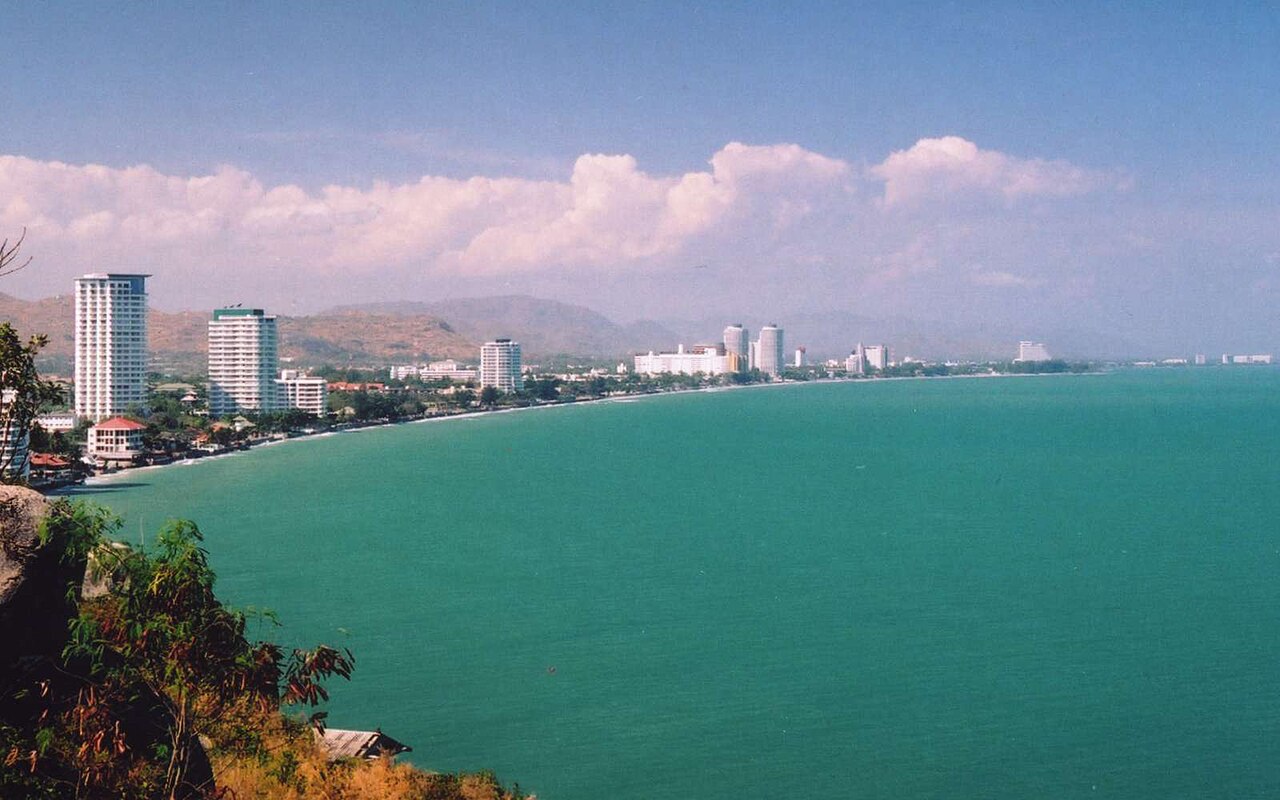
A relaxed beach town about 200 km by road south of Bangkok. It became a royal seaside retreat in the 1920s, and King Bhumibol lived here full time from 2004 to 2006.
Klai Kangwon, the royal summer palace, whose name means 'far from worries'
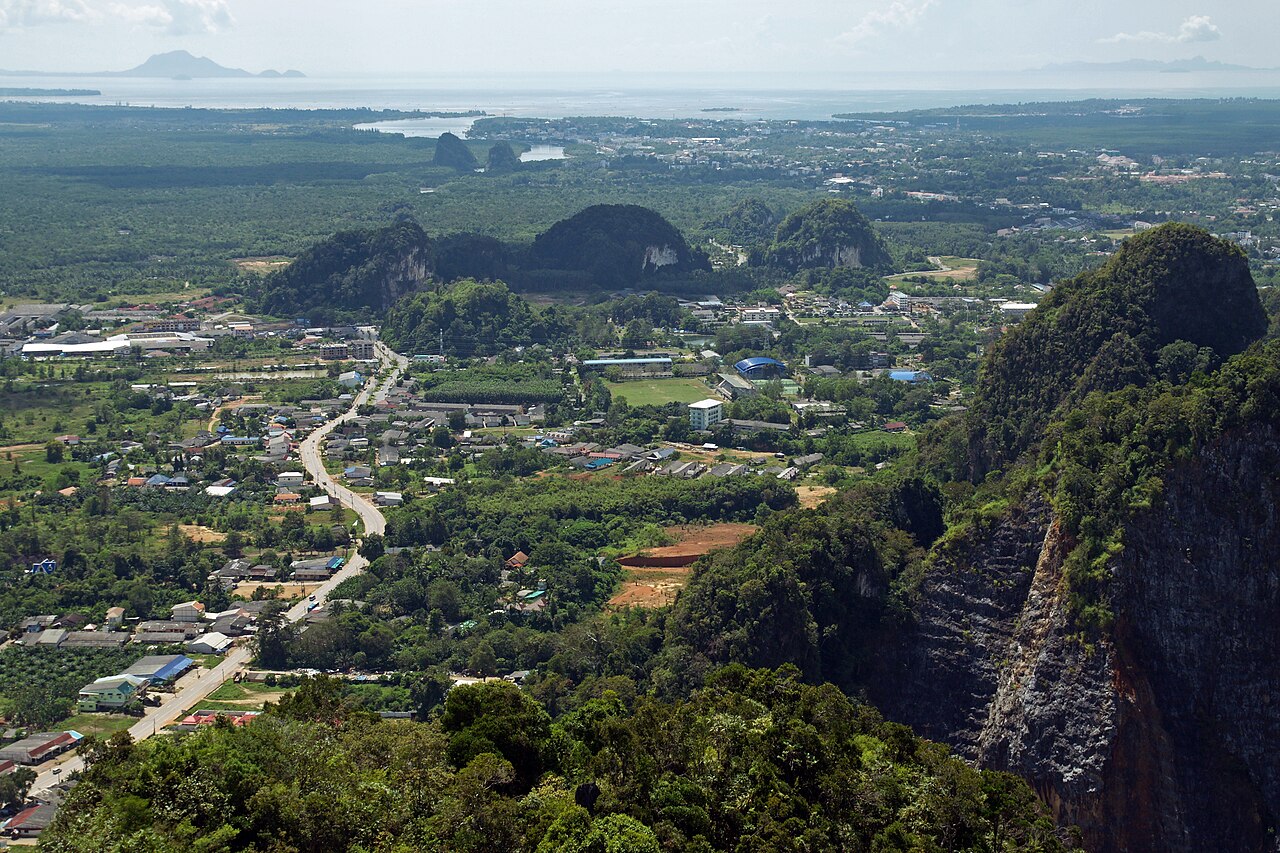
A small provincial town on a river estuary, surrounded by dramatic limestone cliffs, mangroves and beaches. Boats leave from here for the Phi Phi Islands.
The main town of Phuket, Thailand's largest island, about 860 km south of Bangkok. Its old town of colourful 'Sino-Portuguese' shophouses was built in the days of tin mining.
The largest city of the south, near the border with Malaysia. It grew from a small village into a busy trading city after the southern railway arrived in the 1920s.
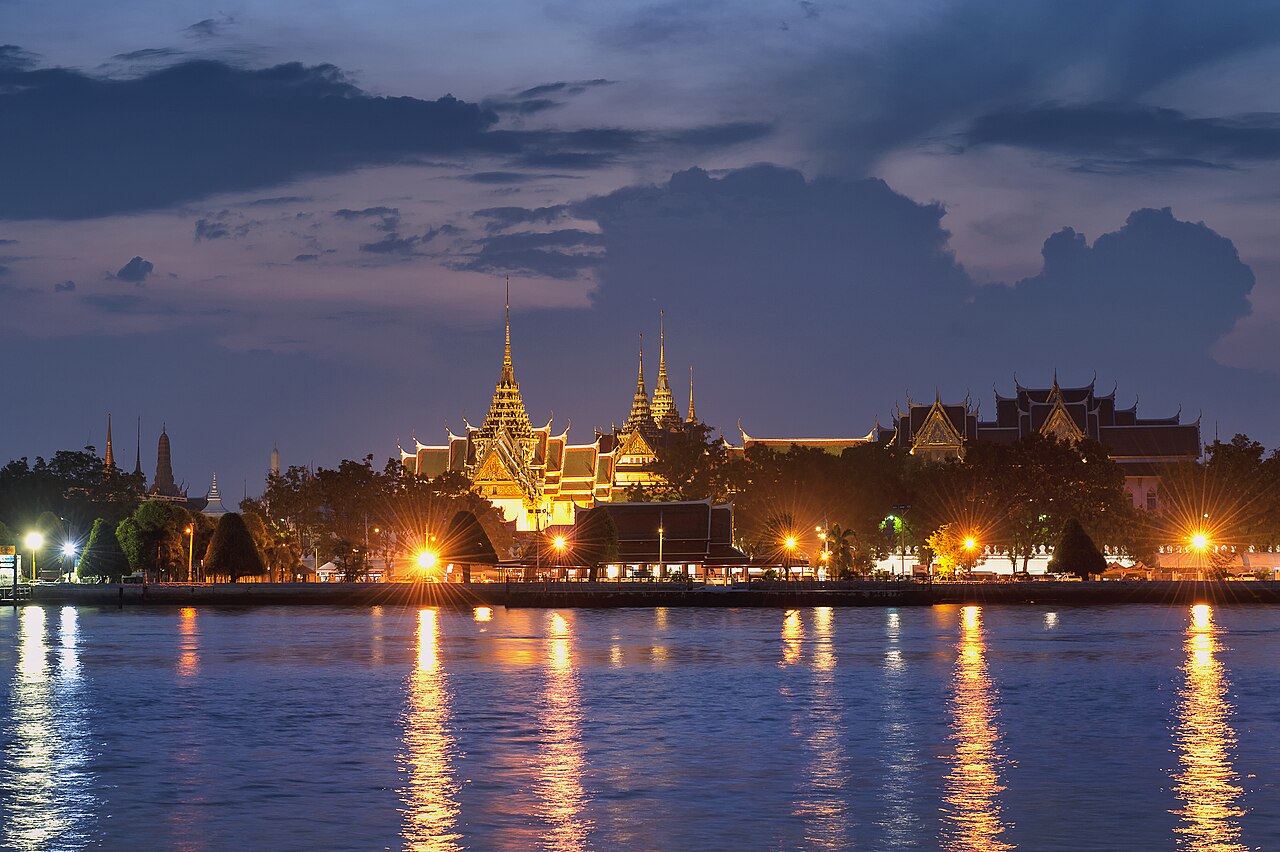
The official residence of the kings of Siam and Thailand since 1782, a walled complex of golden spires and throne halls by the Chao Phraya River. Inside is Wat Phra Kaew, the Temple of the Emerald Buddha, the most sacred Buddha image in the country. The king no longer lives here, but it is still used for royal ceremonies.
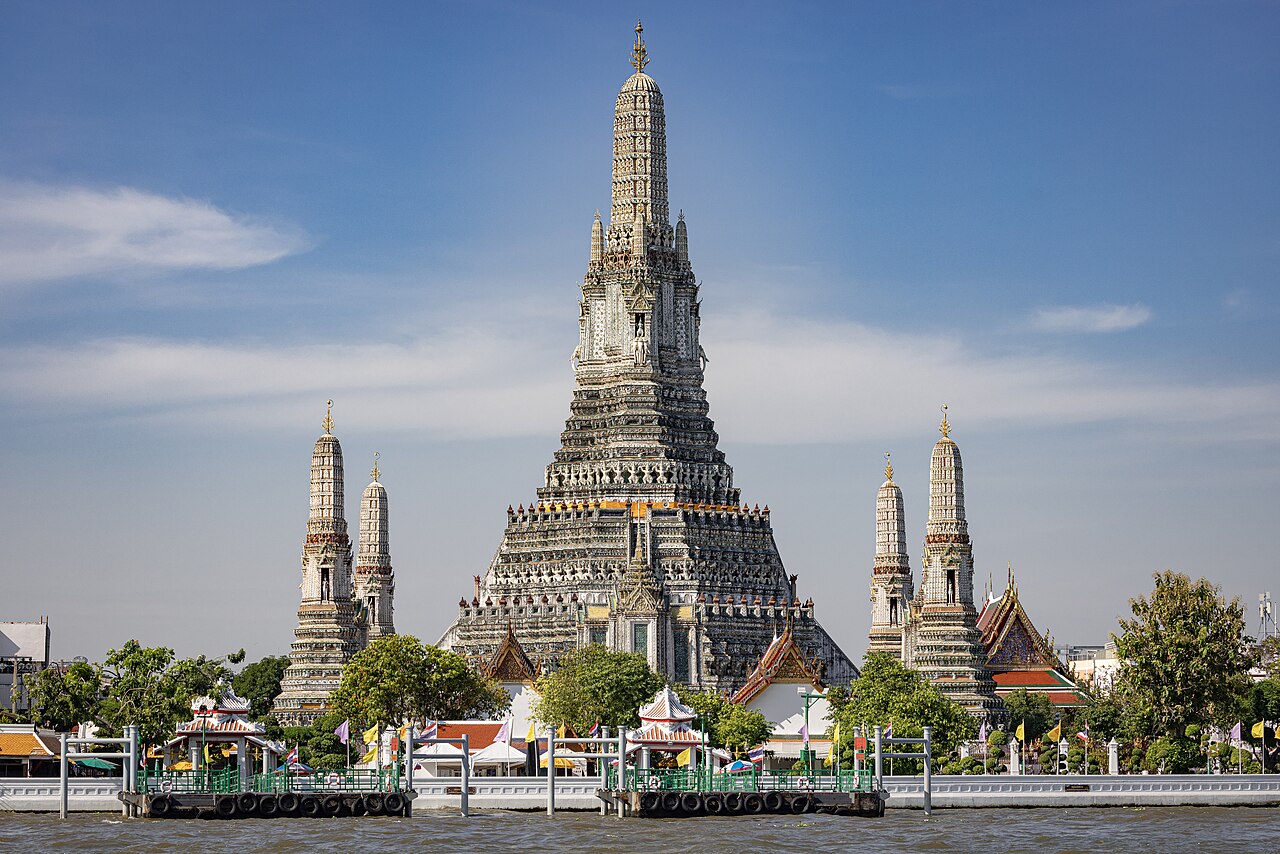
A temple on the west bank of the Chao Phraya, named after Aruna, the Hindu god of the dawn. Its great central tower, built in the early 1800s, is covered in pieces of coloured porcelain that sparkle in the sun.
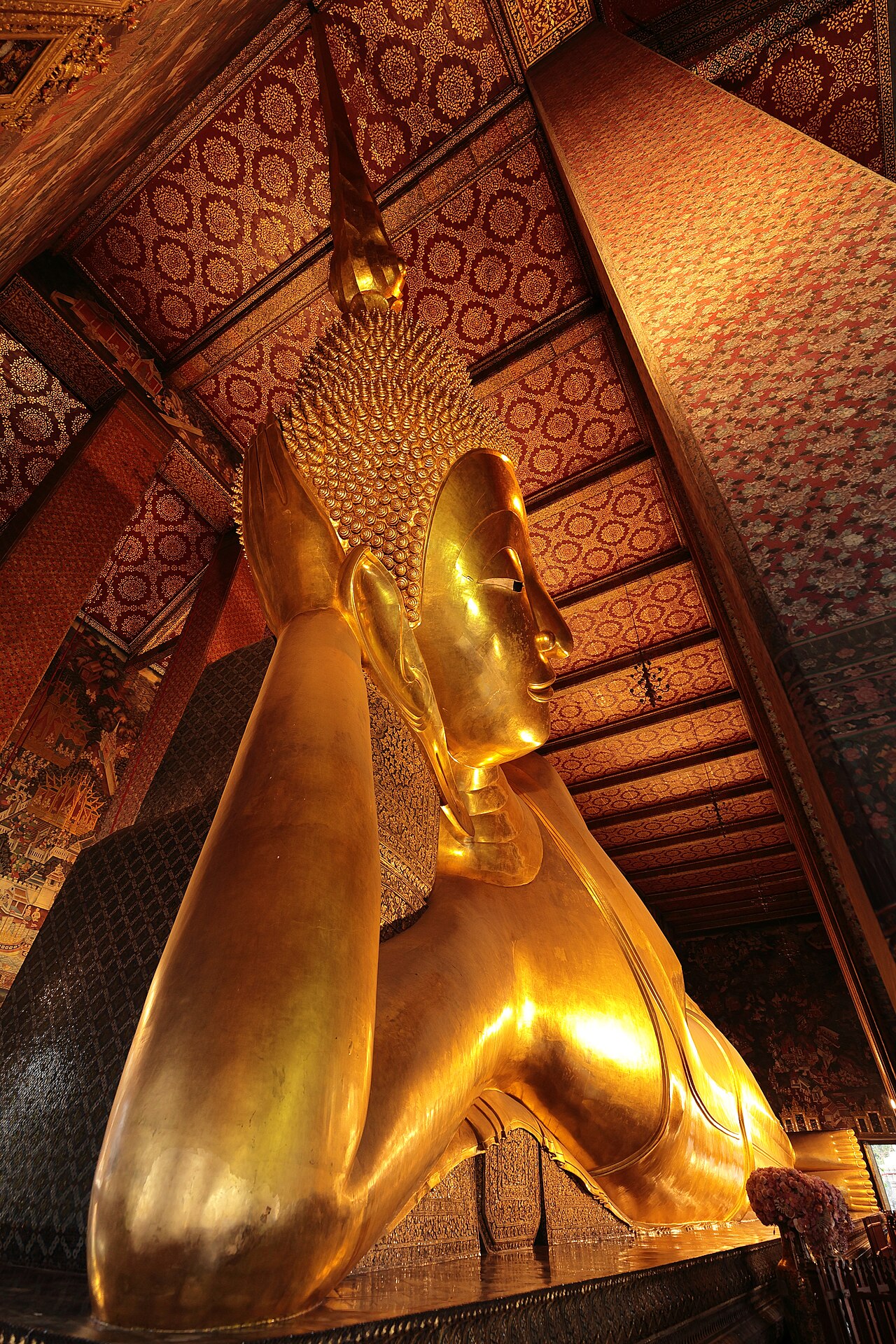
The Temple of the Reclining Buddha, just south of the Grand Palace. Its golden Buddha is 46 m long. The temple holds the largest collection of Buddha images in Thailand and is known as the birthplace of traditional Thai massage, which is still taught there.
The ruins of the old royal capital, destroyed by a Burmese army in 1767: brick towers, rows of Buddha statues and temple foundations spread across the island city. At Wat Mahathat, a stone Buddha head is held in the roots of a tree.
The walled ruins of the first Thai capital, with about 190 ruins of temples and the royal palace set among lotus ponds. The largest temple, Wat Mahathat, has rows of seated Buddhas and towers shaped like lotus buds.
A sacred temple on the mountain of Doi Suthep, about 15 km from the centre of Chiang Mai and more than 1,000 m above sea level. Visitors climb a long stairway lined with serpent-shaped balustrades, or take a tram, to a golden stupa and wide views over the city.
A dazzling white temple just outside Chiang Rai, designed by the Thai artist Chalermchai Kositpipat and opened to visitors in 1997. Its white plaster is set with small pieces of mirror glass, and work on the site is planned to continue for decades.
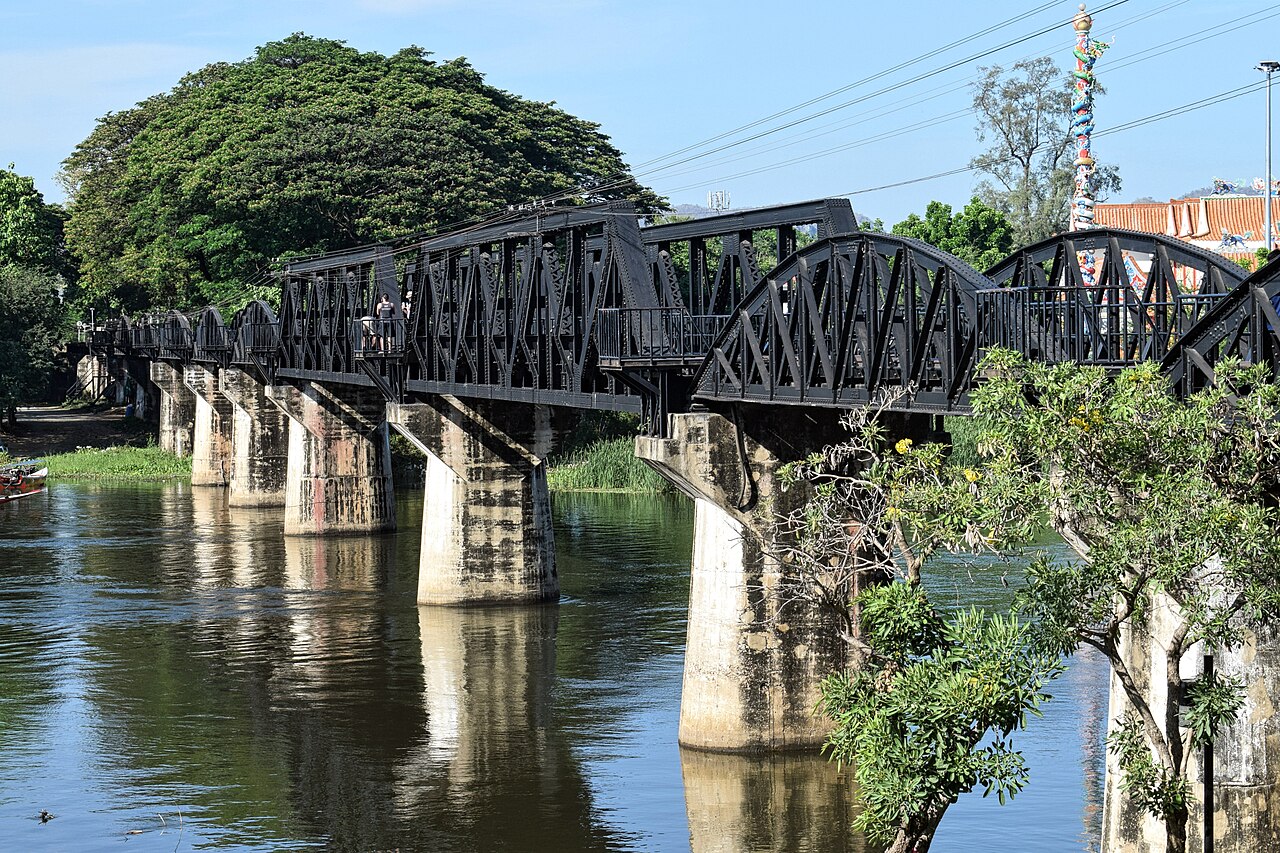
The steel bridge of the 'Death Railway' between Thailand and Burma, built in 1943 under Japanese control by prisoners of war and forced Asian labourers. About 12,000 Allied prisoners and more than 90,000 Asian labourers died building the railway. The 1957 film made its name famous.
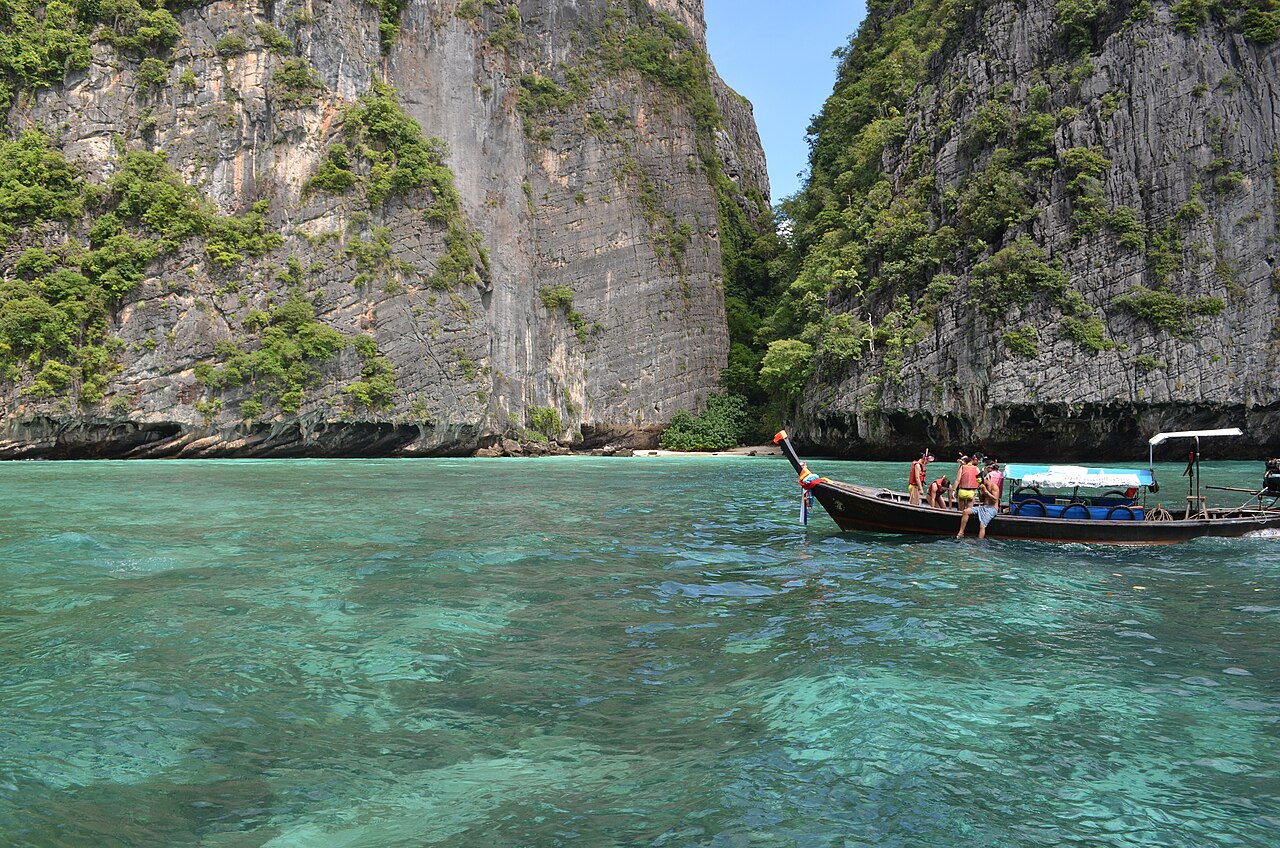
A group of six islands of limestone cliffs, white beaches and clear water in Krabi province, reached by boat from Krabi or Phuket. Maya Bay on Phi Phi Le became famous through the film The Beach in 2000.
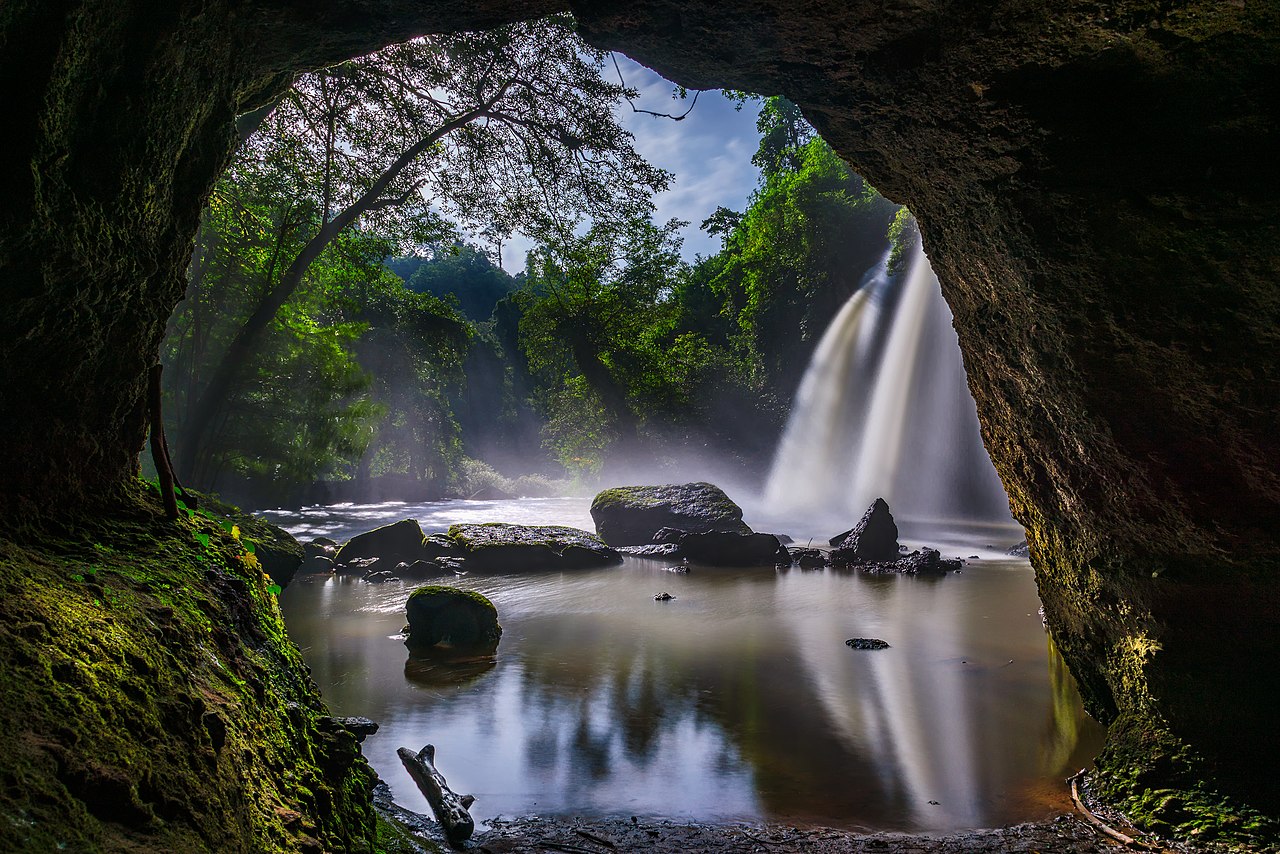
Thailand's first national park, opened in 1962, a large area of forest, grassland and waterfalls between Bangkok and Korat. Wild Asian elephants, gibbons and sambar deer live here, and it is part of the Dong Phayayen-Khao Yai Forest Complex World Heritage Site.
Bangkok's full ceremonial name, which begins 'Krung Thep Maha Nakhon', is listed by Guinness World Records as the longest place name in the world, at 168 letters.
02
Thailand is the only country in Southeast Asia that was never colonised by a Western power.
03
Thailand counts its years from the Buddhist Era, 543 years ahead of the Western calendar. The year 2026 is 2569 in Thailand.
04
The Thai alphabet has 44 consonant letters, and Thai has five tones, so the same syllable can have five different meanings depending on how it is said.
05
The energy drink Red Bull grew out of a Thai drink, Krating Daeng, created in 1976. Its name means 'red gaur', a kind of wild bull. An Austrian businessman discovered it on a visit to Thailand in 1982.
06
Siamese cats come from Thailand. Old Thai 'cat-book poems', thought to date from the Ayutthaya kingdom, describe them.
07
The famous 'Siamese twins', Chang and Eng Bunker, were born in Siam in 1811. They later settled in the United States.
08
Kitti's hog-nosed bat, found in western Thailand and neighbouring Myanmar, is the smallest bat in the world and is often called the bumblebee bat.
09
At Songkran, the Thai New Year in mid-April, people pour and splash water on each other for good luck. UNESCO added the festival to its intangible heritage list in 2023.
10
King Bhumibol Adulyadej reigned for 70 years, from 1946 to 2016, the longest reign of any Thai monarch.
11
Muay Thai, Thai boxing, is called the 'art of eight limbs' because fighters strike with fists, elbows, knees and shins.
12
The Thai elephant is Thailand's official national animal. In the mid-1800s the country had about 100,000 working elephants; today about 4,000 elephants live in the wild and a similar number in captivity.
13
As of 2026, Thailand has nine UNESCO World Heritage Sites, including the old capitals of Sukhothai and Ayutthaya and the prehistoric site of Ban Chiang.
Cover your shoulders and knees: a shirt with sleeves, and long trousers or a skirt below the knee. The Grand Palace and Wat Phra Kaew in Bangkok have a strict dress code at the entrance.
Shoes off, and step over the threshold
Take your shoes off before entering a temple hall or a Thai home; there are racks outside. Step over the raised threshold of a temple door rather than on it, and take off hats and sunglasses inside.
Respect Buddha images
When you sit in front of a Buddha image, tuck your feet behind you so they never point towards it. Walk around Buddha images and other sacred objects clockwise, and do not turn your back to them.
Women should not touch monks
Monks may not be touched by women, not even their robes. A woman who wants to give a monk something can place it down for him to pick up, or hand it to a man to pass on.
Respect the monarchy
Always speak respectfully about the King and the royal family, and treat their images with respect, including on banknotes and coins. Insulting, defaming or threatening the King, the Queen, the heir or the regent is a crime under Thai law, with prison sentences of three to fifteen years for each offence.
Stand for the anthems
In cinemas the royal anthem is played before the film, and audiences are expected to stand; visitors should do the same. The national anthem is broadcast every day at 8:00 and 18:00, when flags are raised and lowered in public places; stop and stand still if you hear it.
Mind your head and feet
The head is seen as the highest part of the body and the feet as the lowest. Do not touch anyone's head, not even a child's, and do not point at people or things with your feet or put your feet up on furniture.
Return a wai
The traditional greeting is the wai: palms pressed together with a slight bow. Return a wai offered by someone older or of similar standing, but do not start one with someone younger than you. When a shop cashier gives you a wai, a smile or a nod is the usual reply.
 Myanmar
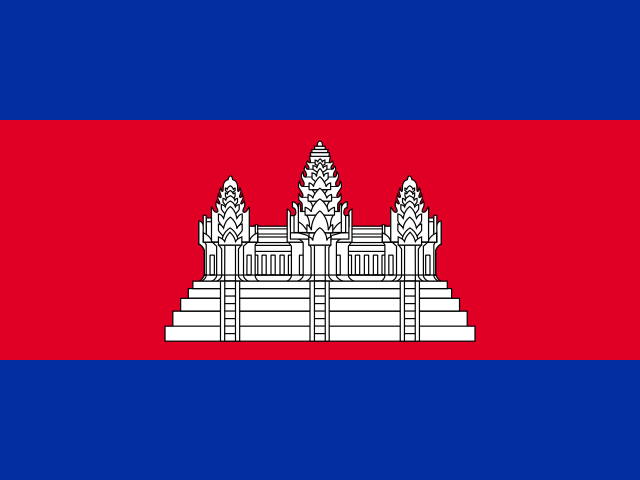 Cambodia
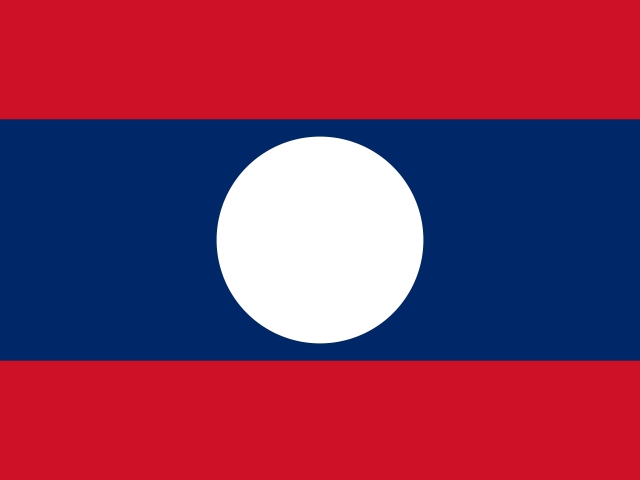 Laos
Laos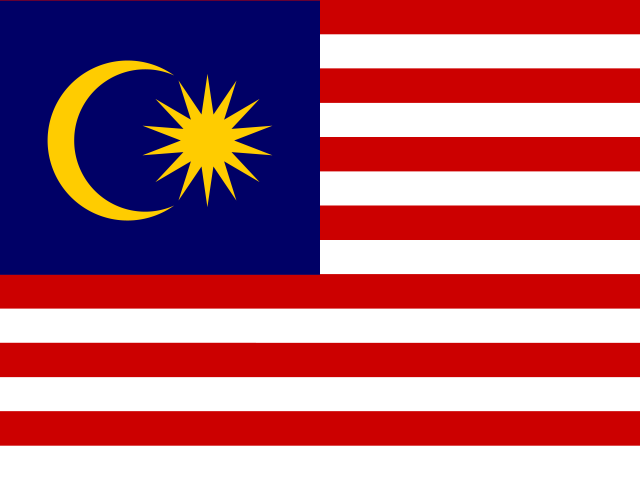 Malaysia