A free large-print PDF. Choose what goes in: facts, map, history, dishes and recipes, phrases, fun facts, a quiz with or without answers. Made for clubs, care homes, libraries and family afternoons.
Myanmar is the largest country by area in mainland Southeast Asia. A horseshoe of mountains, rising in the far north to Hkakabo Razi near the Himalayas, surrounds the long valley of the Irrawaddy River, where most people live. To the south and west lies a coastline of almost 2,000 km on the Bay of Bengal and the Andaman Sea.
The Pyu built the first cities here more than 2,000 years ago, and the Bamar kings of Bagan later united the Irrawaddy valley and spread Theravada Buddhism. After three wars in the 1800s the country became a British colony, and in 1948 it became independent as the Union of Burma. Both names, Burma and Myanmar, come from the same Burmese word for the country and its main people. The military government changed the official English name to Myanmar in 1989. The United Nations uses Myanmar, while some governments and many people still say Burma.
About 55 million people live here, from the Bamar majority to the Shan, Karen, Rakhine, Mon, Kachin, Chin and many other peoples: the government officially recognises 135 ethnic groups. Most people are Theravada Buddhists, and the monastery is still the centre of village life. The country has been troubled by conflict for decades. Since the army seized power again in 2021 a civil war has forced millions of people from their homes, and as of September 2026 the fighting continues.
CapitalNaypyidaw
PopulationAbout 55 million (UN estimate)
Official languageBurmese, called the Myanmar language in the constitution. More than a hundred languages are spoken in the country
CurrencyBurmese kyat (K)
AreaAbout 676,600 km²
GovernmentRepublic. The army took power in a coup in 2021. After elections run by the military government, a new parliament met in March 2026 and a nominally civilian government took office in April 2026, with the army still the dominant power (as of September 2026)
Highest mountainHkakabo Razi, about 5,881 m, in the far north (nearby Gamlang Razi, about 5,870 m, has been proposed as a rival)
Longest riverThe Irrawaddy (Ayeyarwady), about 2,170 km
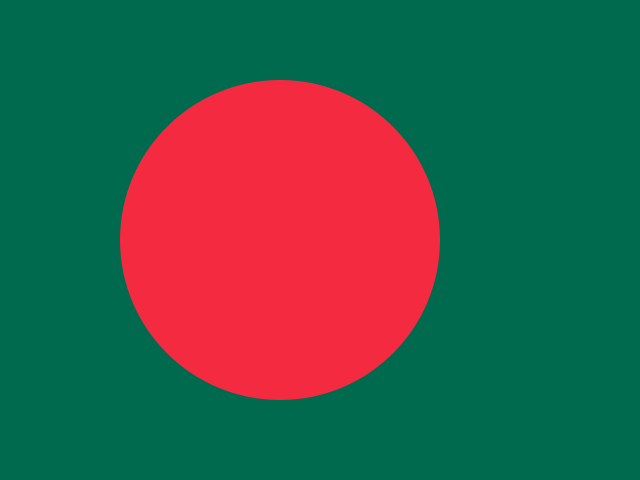
NeighboursBangladesh, India, China, Laos and Thailand
Drives on theRight, since 1970, although many cars still have the steering wheel on the right
The Irrawaddy valley has been home to rice farmers for thousands of years. Pyu city-states came first, then the Bamar kingdom of Bagan, and later great empires ruled from Taungoo, Ava and Mandalay. Britain took the country in three wars in the 1800s. Since independence in 1948 Myanmar has lived through long periods of military rule, a short opening in the 2010s, and a new coup and civil war from 2021.
200 BC
The first Pyu cities rise
Around the 2nd century BC the Pyu people, who spoke a Tibeto-Burman language, began building walled cities in the dry zone of central Myanmar. For about a thousand years cities such as Halin, Beikthano and Sri Ksetra traded with India and China and took up Buddhism.
1044
Anawrahta becomes king of Pagan
Anawrahta came to the throne of Pagan, today's Bagan, in 1044. He united the whole Irrawaddy valley for the first time and supported Theravada Buddhism. Historians count his reign as the start of verifiable Burmese history, and his successors covered the Bagan plain with thousands of temples.
1287
Pagan falls after the Mongol invasions
Repeated Mongol invasions in the late 1200s brought down the Pagan Kingdom in 1287. About 250 years of division followed, with Shan states, the kingdoms of Ava and Hanthawaddy, and Arakan on the western coast competing for power.
1550
Bayinnaung becomes king
Bayinnaung of the Taungoo dynasty became king in 1550. By his death in 1581 he had built the largest empire in the history of Southeast Asia, including the Shan states, Lan Na, Manipur and the Siamese kingdom of Ayutthaya. It fell apart soon after he died.
1752
The Konbaung dynasty is founded
Alaungpaya, the chief of a small village, founded the Konbaung dynasty in 1752 and reunited the country within a few years. He enlarged the town of Dagon and named it Yangon. The Konbaung kings were the last royal dynasty of Burma.
1857
Mandalay is founded
King Mindon founded Mandalay as his new royal capital in 1857, with a walled palace city surrounded by a moat at the foot of Mandalay Hill. Much of the old palace at Amarapura was taken apart and carried to the new site.
1885
The last king is deposed
After wars with Britain in 1824 to 1826 and in 1852, a third war in November 1885 ended with British troops entering Mandalay Palace. King Thibaw was sent into exile in India, and on 1 January 1886 all of Burma was annexed to British India. Rangoon, today's Yangon, became the capital.
1948
Burma becomes independent
On 4 January 1948 the country became independent as the Union of Burma. The independence leader Aung San, who had negotiated the Panglong Agreement with leaders of the ethnic minorities, had been assassinated less than six months earlier. Unlike most former British colonies, Burma did not join the Commonwealth.
1962
The military seizes power
On 2 March 1962 the army under General Ne Win overthrew the elected government. The country was run under the 'Burmese Way to Socialism', with most businesses nationalised, and became one of the poorest countries in the world.
1988
The 8888 Uprising
Nationwide protests for democracy peaked on 8 August 1988, the date that gave the uprising its name. Security forces killed thousands of demonstrators and a new military council took power. Aung San Suu Kyi, the daughter of Aung San, became the leader of the democracy movement.
1989
The English name becomes Myanmar
On 18 June 1989 the military government changed the official English name of the country from Burma to Myanmar, and renamed many places: Rangoon became Yangon and Pegu became Bago. Some governments and opposition groups kept using Burma because they did not accept the military government's authority.
2005
Naypyidaw becomes the capital
On 6 November 2005 government offices began moving from Yangon to a new city built near the town of Pyinmana, in the centre of the country. Its name, Naypyidaw, meaning 'royal capital', was announced on 27 March 2006.
2008
Cyclone Nargis strikes
On 2 May 2008 Cyclone Nargis drove a storm surge up to 40 km inland across the Irrawaddy delta. At least 138,000 people died, making it the worst natural disaster in the country's recorded history.
2017
The Rohingya flee to Bangladesh
From August 2017 military operations in northern Rakhine State drove more than 700,000 Rohingya, a mostly Muslim minority, across the border into Bangladesh, according to UN reports. In 2019 The Gambia brought a case against Myanmar at the International Court of Justice under the Genocide Convention. The court heard the case in January 2026 and, as of September 2026, has not yet given its judgment.
2021
The army takes power again
After a period of reforms, the National League for Democracy won elections in 2015 and 2020. On 1 February 2021, the day the new parliament was due to meet, the army detained Aung San Suu Kyi and other elected leaders and seized power. Mass protests followed, and armed resistance grew into a civil war that continues as of September 2026.
2025
The Mandalay earthquake
On 28 March 2025 an earthquake of magnitude 7.7 to 7.9 struck near Mandalay, the strongest in the country since 1912. It killed thousands of people, damaged Naypyidaw and Mandalay Palace, and destroyed more than 8,000 monasteries, nunneries and pagodas.
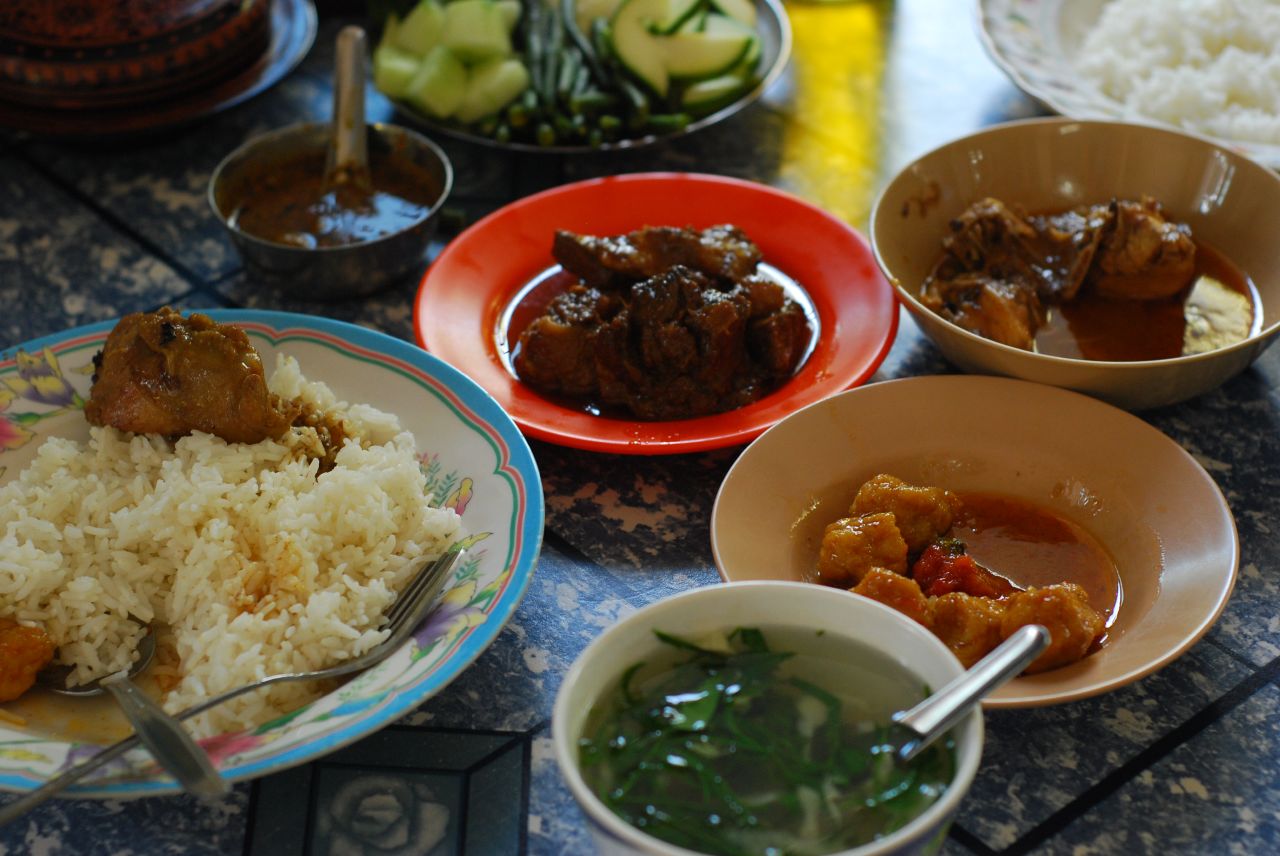
A traditional Burmese meal is served all at once and shared: steamed rice in the middle, with one or two curries, a light soup, salads, fried vegetables and a plate of fresh and blanched vegetables with a dip of fermented fish. The Burmese sum up the flavours in three words, 'sour, salty and spicy'. The meal often ends with a piece of palm sugar or a little pickled tea. Noodles are eaten mostly for breakfast or as a snack, and the tea shop, with milk tea and flaky breads, is at the heart of daily life.
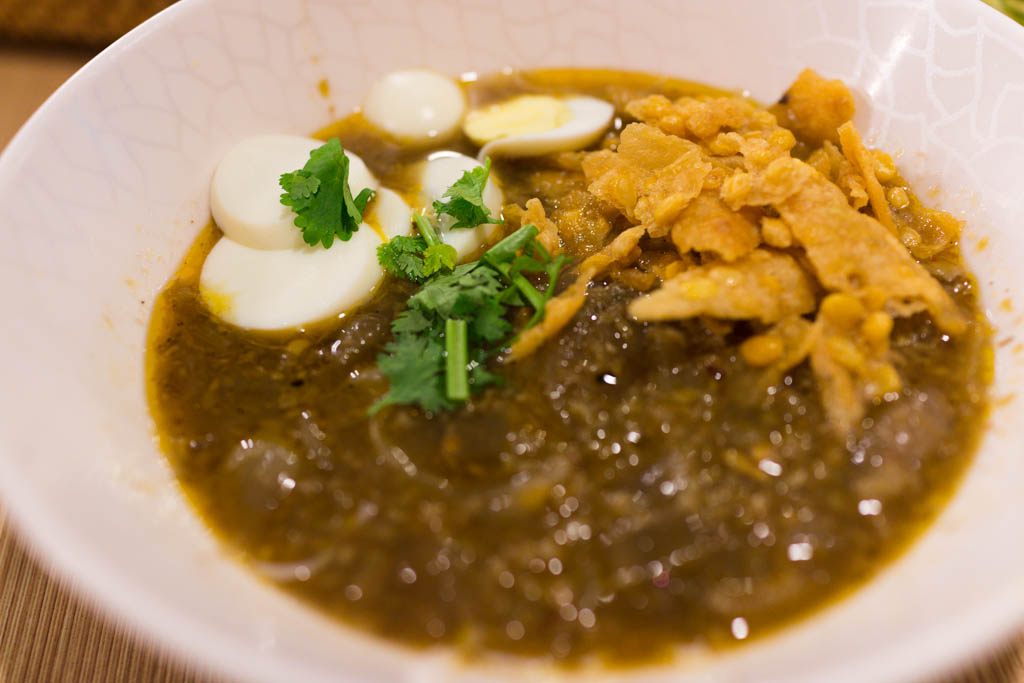
The national dish: thin rice noodles in a fish broth thickened with toasted chickpea flour or rice, flavoured with lemongrass, ginger, garlic, onion and banana stem. It is topped with boiled egg, crisp fritters, coriander and a squeeze of lime.
Mohinga is eaten with Chinese-style soup spoons, which the Burmese call mohinga zun, 'mohinga spoons'. Street sellers used to carry the pot of soup on one end of a shoulder pole and the noodles and bowls on the other.
See the recipe
Serves 4
1 h 15 min
Ingredients
500 g white fish fillets, such as catfish, cod or haddock
2 stalks lemongrass, bruised
1.5 litres water
1 teaspoon ground turmeric
3 tablespoons chickpea flour (gram flour)
2 tablespoons rice flour
3 tablespoons vegetable oil
2 onions, finely chopped
4 cloves garlic, crushed
4 cm fresh ginger, grated
1 teaspoon paprika or mild chilli powder
3 tablespoons fish sauce
400 g thin rice noodles (rice vermicelli)
To serve: 4 hard-boiled eggs, lime wedges, fresh coriander, crisp fried onions and chilli flakes
Method
Put the fish, lemongrass and half the turmeric in a large pan with the water. Bring to the boil and simmer gently for 10 minutes. Lift out the fish, flake it with a fork and keep the broth.
Toast the chickpea flour and rice flour in a dry frying pan over low heat for 3 to 4 minutes, stirring, until they smell nutty and turn light brown. Whisk them into 250 ml of cold water to make a smooth paste.
Heat the oil in a frying pan and fry the onions, garlic and ginger over medium heat for about 8 minutes, until soft and golden. Stir in the rest of the turmeric, the paprika and the flaked fish and fry for 2 more minutes.
Tip the fish mixture into the broth with the fish sauce. Whisk in the flour paste and simmer for about 20 minutes, stirring often, until the soup thickens a little. Remove the lemongrass and taste for salt.
Cook the noodles as the packet says, drain them and divide them between four bowls.
Ladle the hot soup over the noodles and top with halved eggs, coriander and fried onions. Serve with lime wedges and chilli flakes on the side.
Eaten everywhere; the tea is grown mainly in Shan State
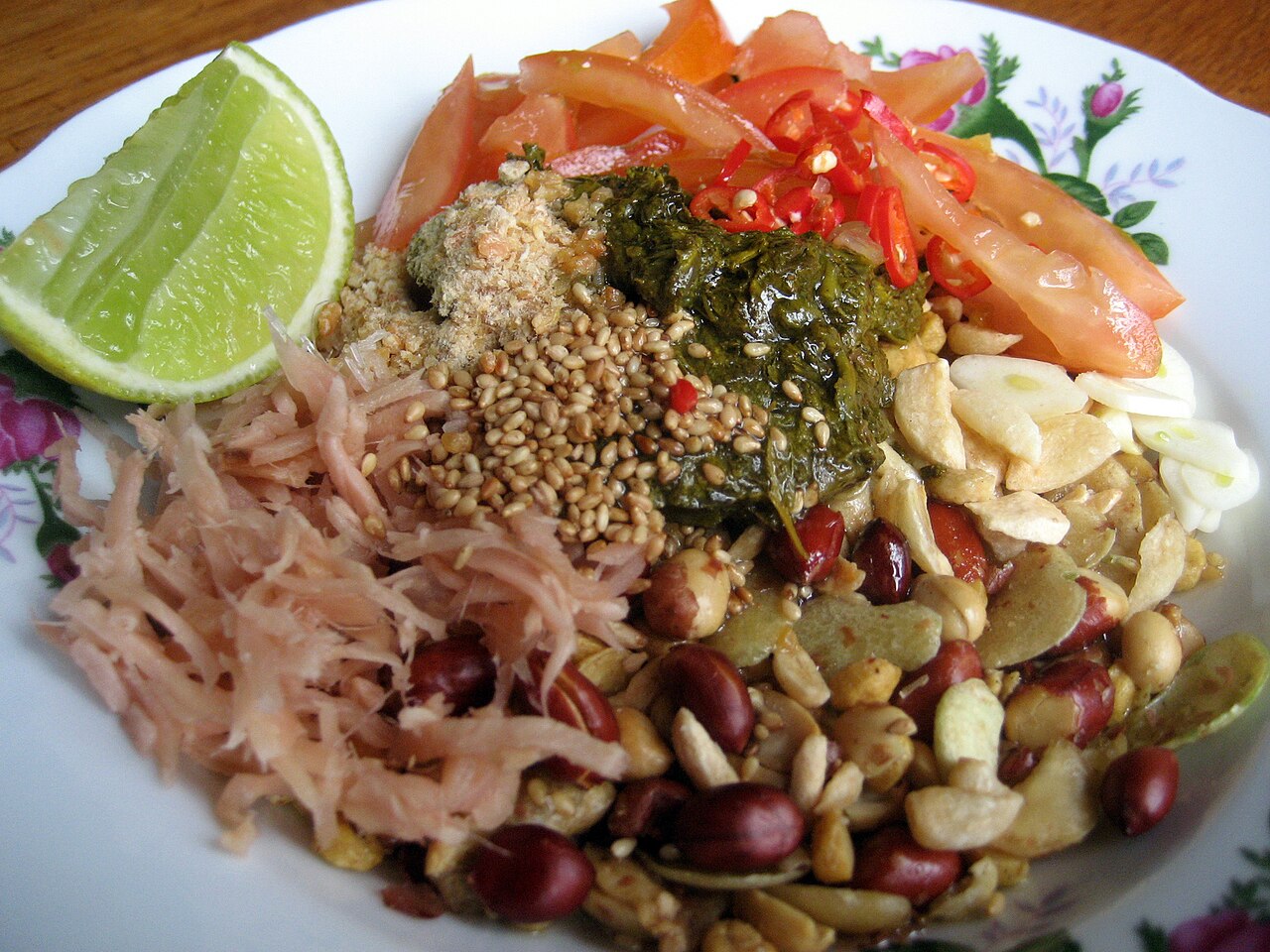
Pickled tea leaves mixed by hand with crunchy fried beans and peas, peanuts, toasted sesame, fried garlic, dried shrimp, tomato and green chilli, and dressed with peanut oil, fish sauce and lime.
Myanmar is one of very few countries where tea is eaten as well as drunk. A popular saying goes: 'Of all the fruit, the mango's the best; of all the meat, pork's the best; and of all the leaves, lahpet's the best.' Lahpet is still offered to guests as a sign of welcome.
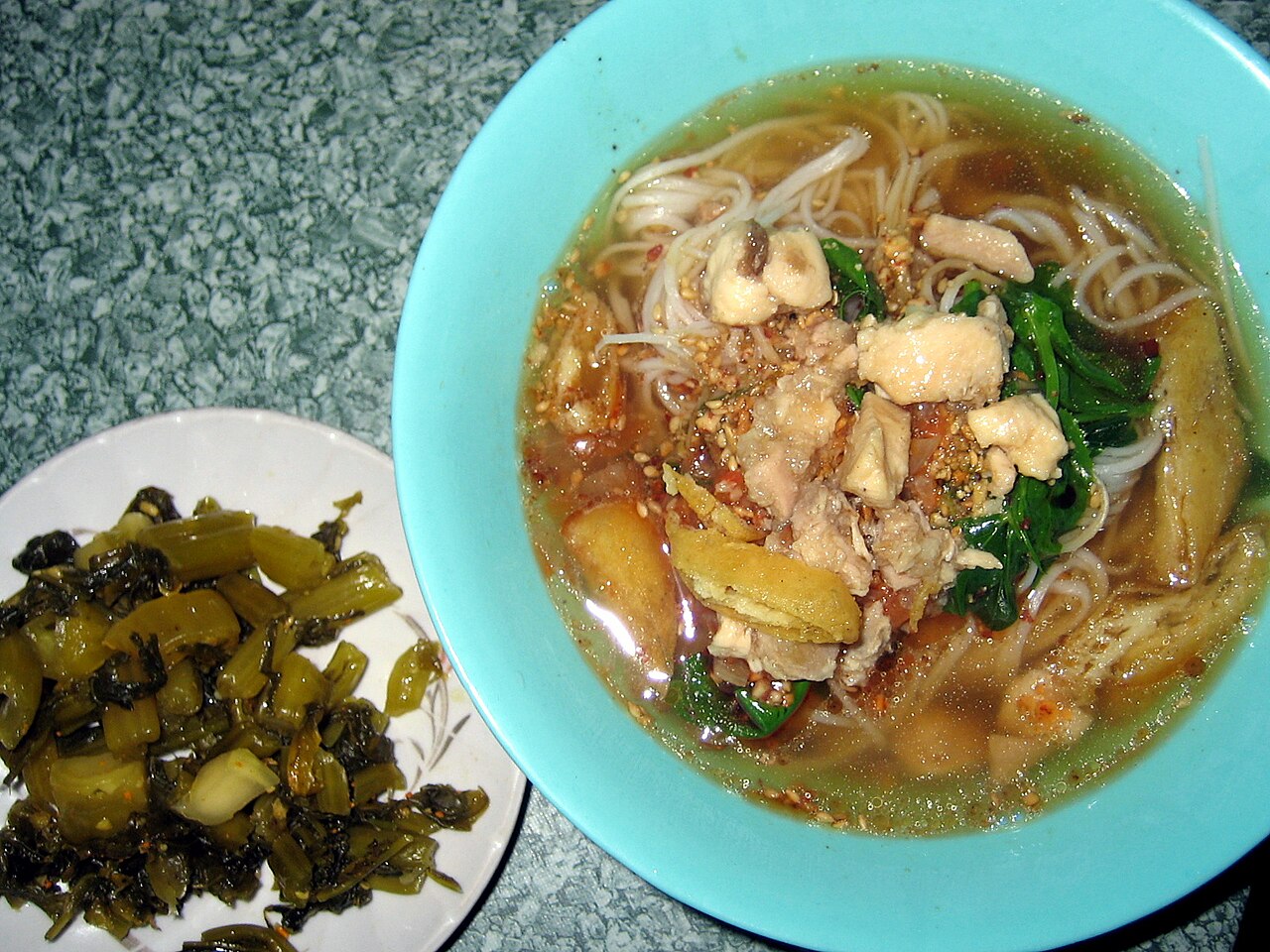
Flat or round rice noodles with chicken or minced pork cooked with tomato, garlic and onion, topped with crushed roasted peanuts and served with pickled mustard greens. It comes as a soup or as a dry noodle dish with a little broth on the side.
Central Myanmar; it is thought to come from Shwedaung, near Pyay
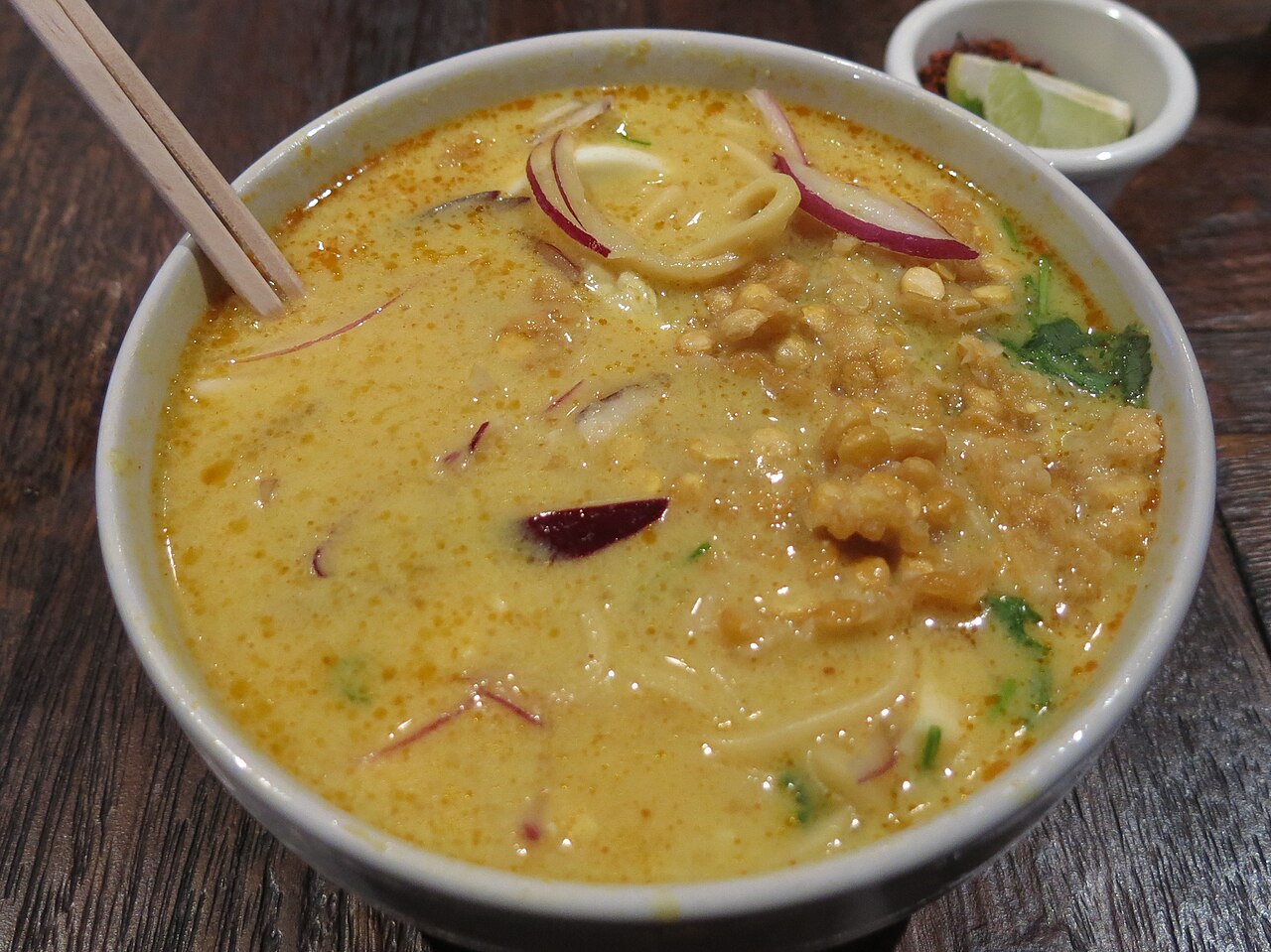
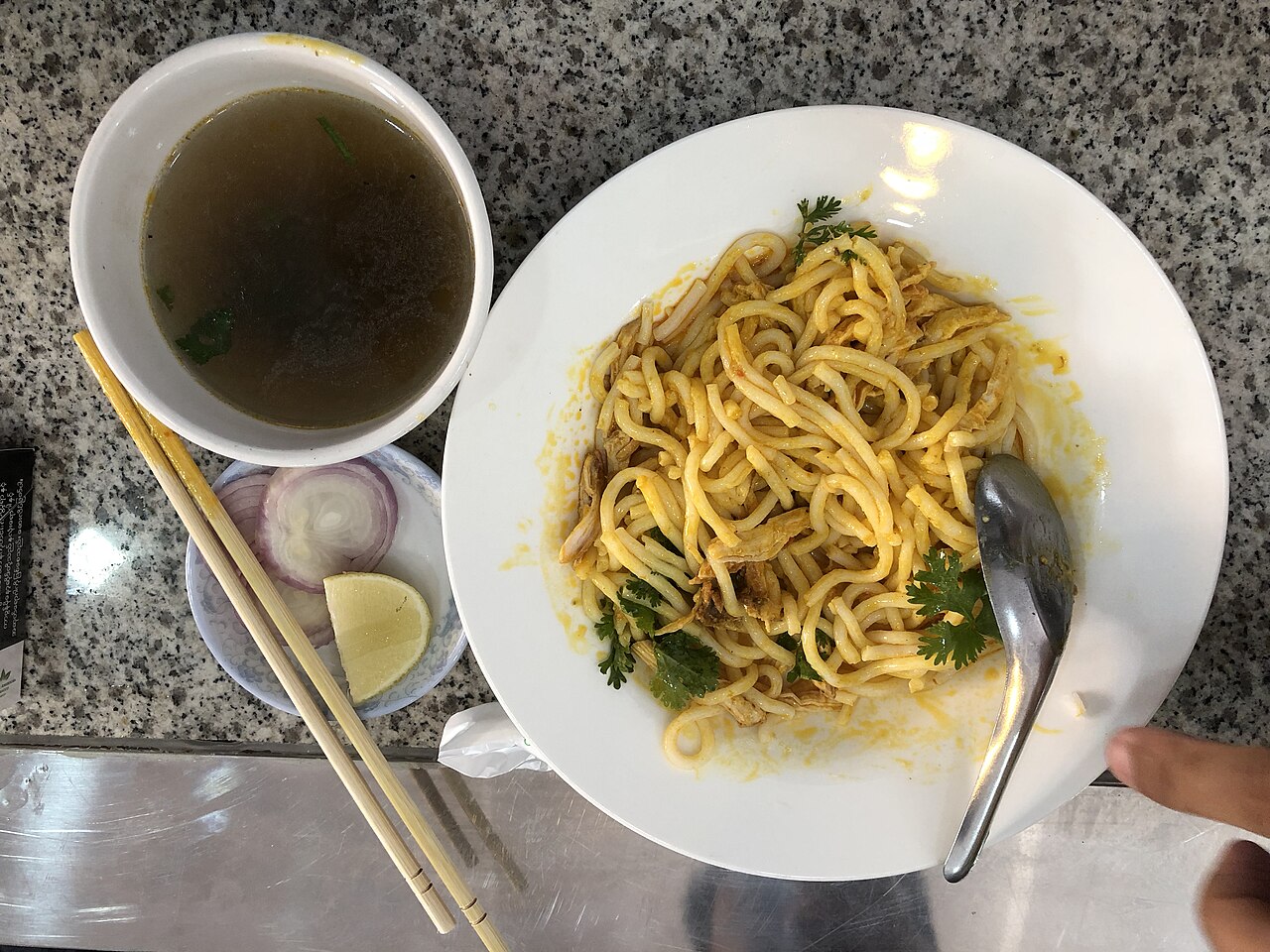
Wheat noodles in a mild curried chicken broth made with coconut milk and thickened with chickpea flour. It is served with boiled egg, raw onion, crispy fried noodles, chilli, fish sauce and lime.
Families of the Memon community who had lived in Myanmar took the dish to Pakistan, where it became a favourite in Karachi.
See the recipe
Serves 4
1 h
Ingredients
500 g boneless chicken thighs, cut into bite-size pieces
1 teaspoon ground turmeric
1 teaspoon paprika
3 tablespoons vegetable oil
2 onions, finely chopped
4 cloves garlic, crushed
3 cm fresh ginger, grated
400 ml coconut milk
750 ml chicken stock
3 tablespoons chickpea flour (gram flour), mixed with 150 ml cold water
2 tablespoons fish sauce
400 g egg noodles or wheat noodles
To serve: 4 hard-boiled eggs, 1 small raw onion thinly sliced, lime wedges, chilli flakes and fresh coriander
Method
Mix the chicken with the turmeric, paprika and a pinch of salt.
Heat the oil in a large pan and fry the onions, garlic and ginger over medium heat for about 8 minutes, until soft and golden.
Add the chicken and fry for 5 minutes, stirring, until it is sealed on all sides.
Pour in the coconut milk and stock and bring to a gentle simmer. Stir the chickpea flour mixture again, pour it in while stirring, and simmer for 20 minutes, until the chicken is cooked through and the broth is creamy.
Season with the fish sauce. Meanwhile cook the noodles as the packet says and drain them.
Divide the noodles between bowls, ladle over the chicken broth and top with halved eggs, sliced onion and coriander. Serve with lime and chilli flakes.
Thick, round rice noodles mixed with a chicken curry sauce and chilli oil, sprinkled with toasted chickpea flour and topped with onion, boiled egg, fish cake and crispy noodles. It is a favourite breakfast in Mandalay.
In Yangon the same dish is often called 'Mandalay mont di'.
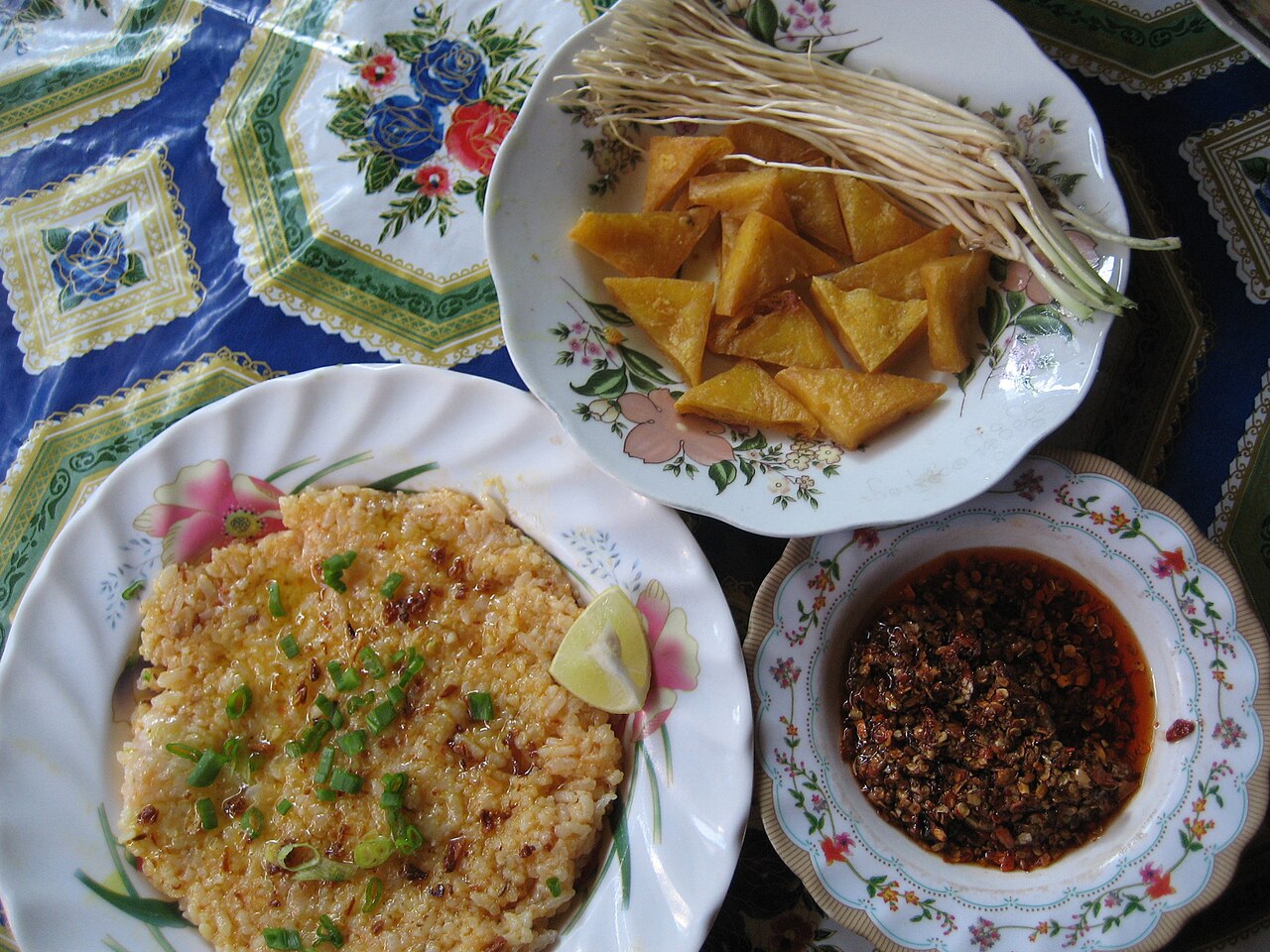
Rice kneaded with boiled fish from the lake, tomato and mashed potato, shaped into balls and topped with crispy garlic and garlic oil. It is served with roasted chilli flakes in oil.
The name means 'sour rice', because the rice used is often lightly fermented.
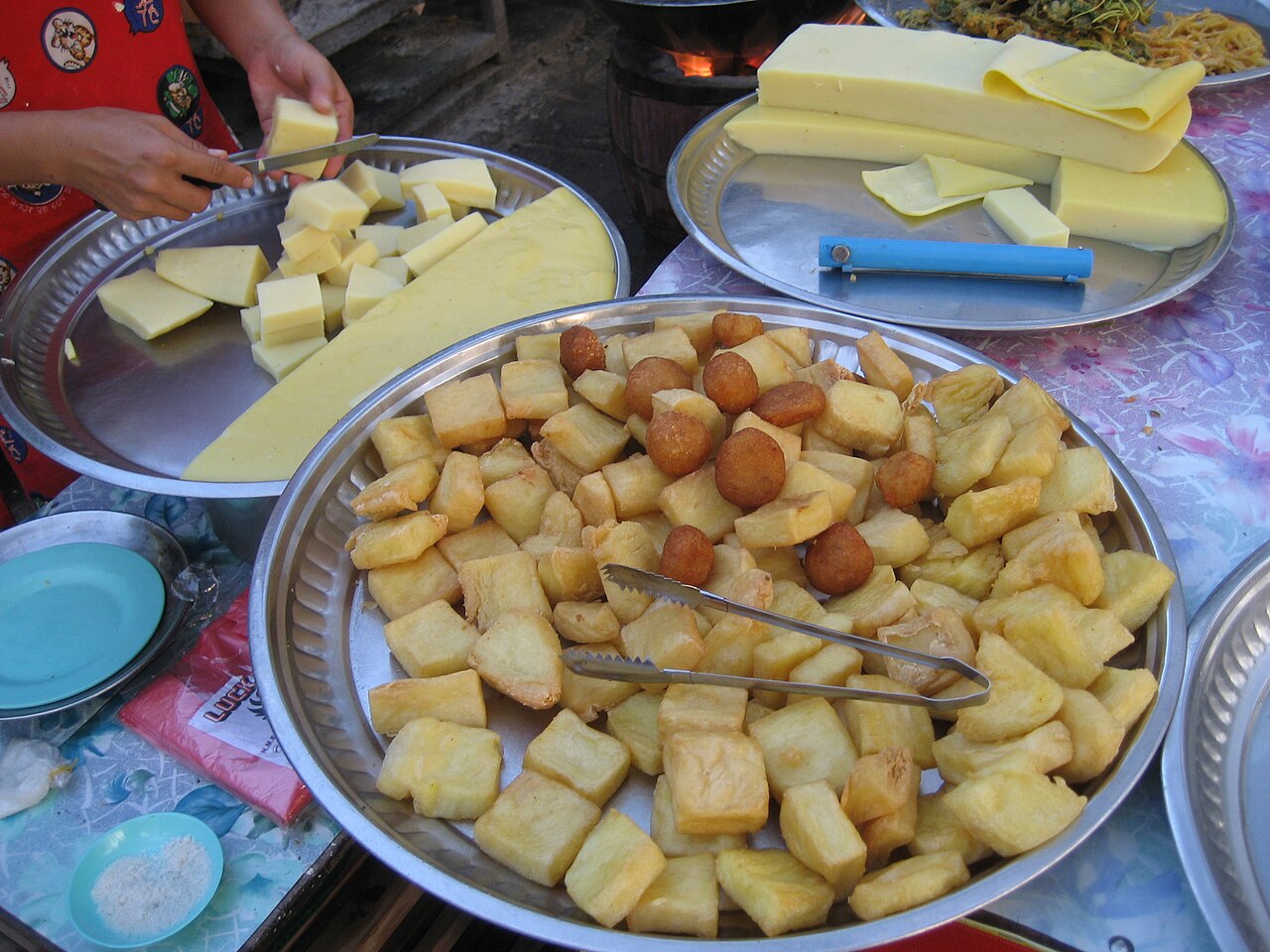
A smooth yellow 'tofu' made not from soya but from chickpea flour or yellow split peas, cooked with water, turmeric and salt until thick and then left to set. It is eaten sliced in a salad or fried into crisp fritters.
Despite its name, Burmese tofu has nothing to do with Chinese tofu, which is made from soy milk.
See the recipe
Serves 4
25 min
Ingredients
150 g chickpea flour (gram flour)
750 ml water
1/2 teaspoon ground turmeric
1 teaspoon salt
A little vegetable oil for the dish
To serve as a salad: chilli oil, light soy sauce, lime juice, sliced spring onion and fresh coriander
Method
Lightly oil a dish about 20 cm square.
In a bowl, whisk the chickpea flour, turmeric and salt with 250 ml of the water until there are no lumps.
Bring the remaining 500 ml of water to the boil in a heavy saucepan, then turn the heat down to medium.
Pour in the chickpea mixture while whisking. Keep stirring for 8 to 10 minutes, until it is very thick and glossy and comes away from the sides of the pan.
Pour it into the oiled dish, smooth the top and leave it to cool for about 1 hour, until firm.
Cut into slices and dress with chilli oil, soy sauce, lime juice, spring onion and coriander, or fry the slices in hot oil until golden and crisp.
The most common Burmese curry: chicken, pork, fish or prawns slowly cooked with onion, garlic, ginger, turmeric and paprika until the water has boiled away and the oil rises to the top. Burmese curries are usually milder than Thai ones and seldom use coconut milk. They are eaten with rice, a sour soup and many small side dishes.
Hsibyan means 'the oil returns', after the layer of oil that separates from the sauce when the curry is ready.
The whole country, above all at the April New Year festival
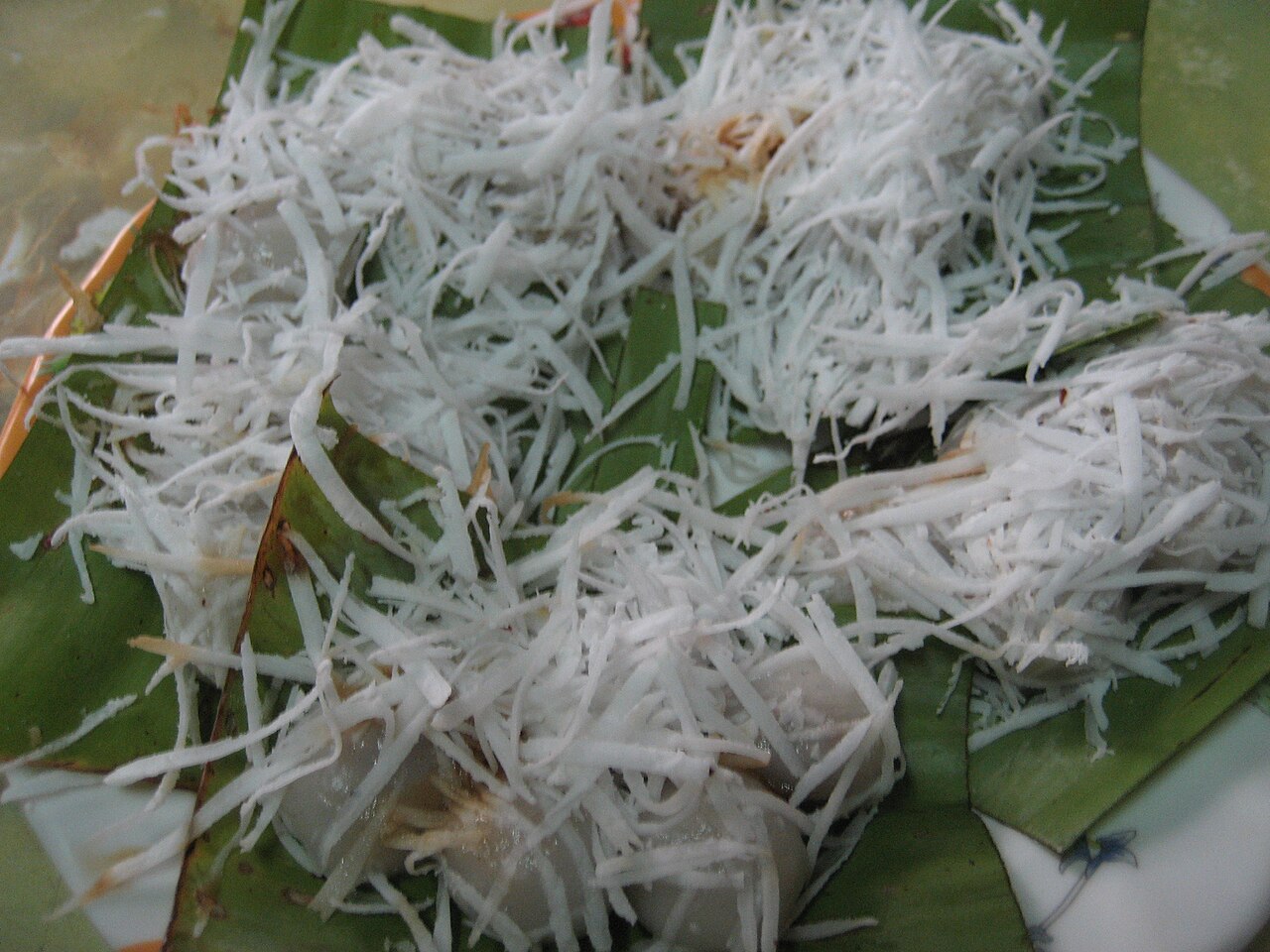
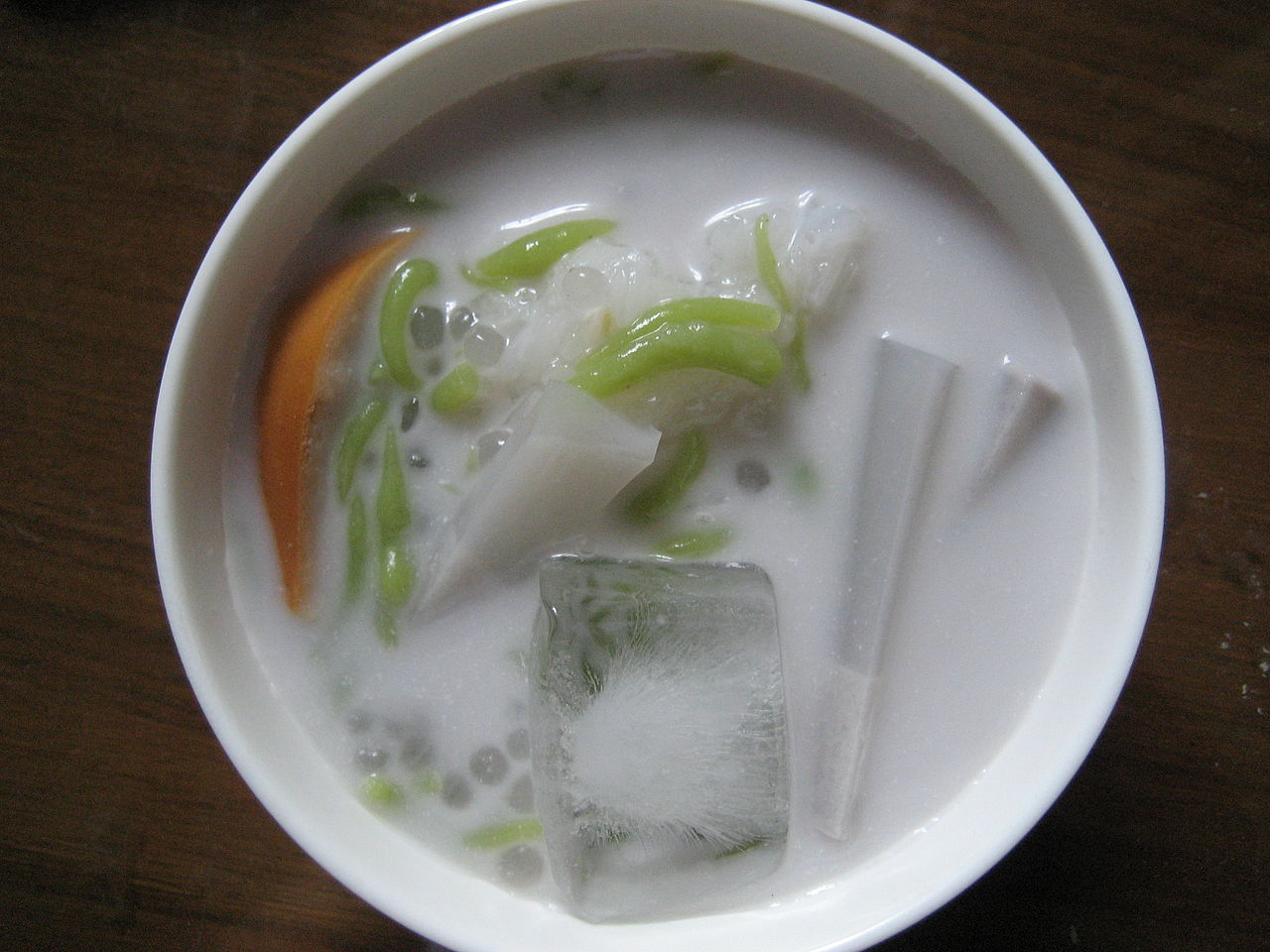
Small balls of glutinous rice dough filled with palm sugar, boiled until they float and served warm with grated coconut. They are soft and chewy, so eat them in small bites, and take care with young children and anyone who has trouble swallowing.
During Thingyan, the water festival, friends make them together and hand them out to passers-by as a good deed. A favourite prank is to hide a chilli inside one.
The whole country, for the full moon of Tabodwe (about February)
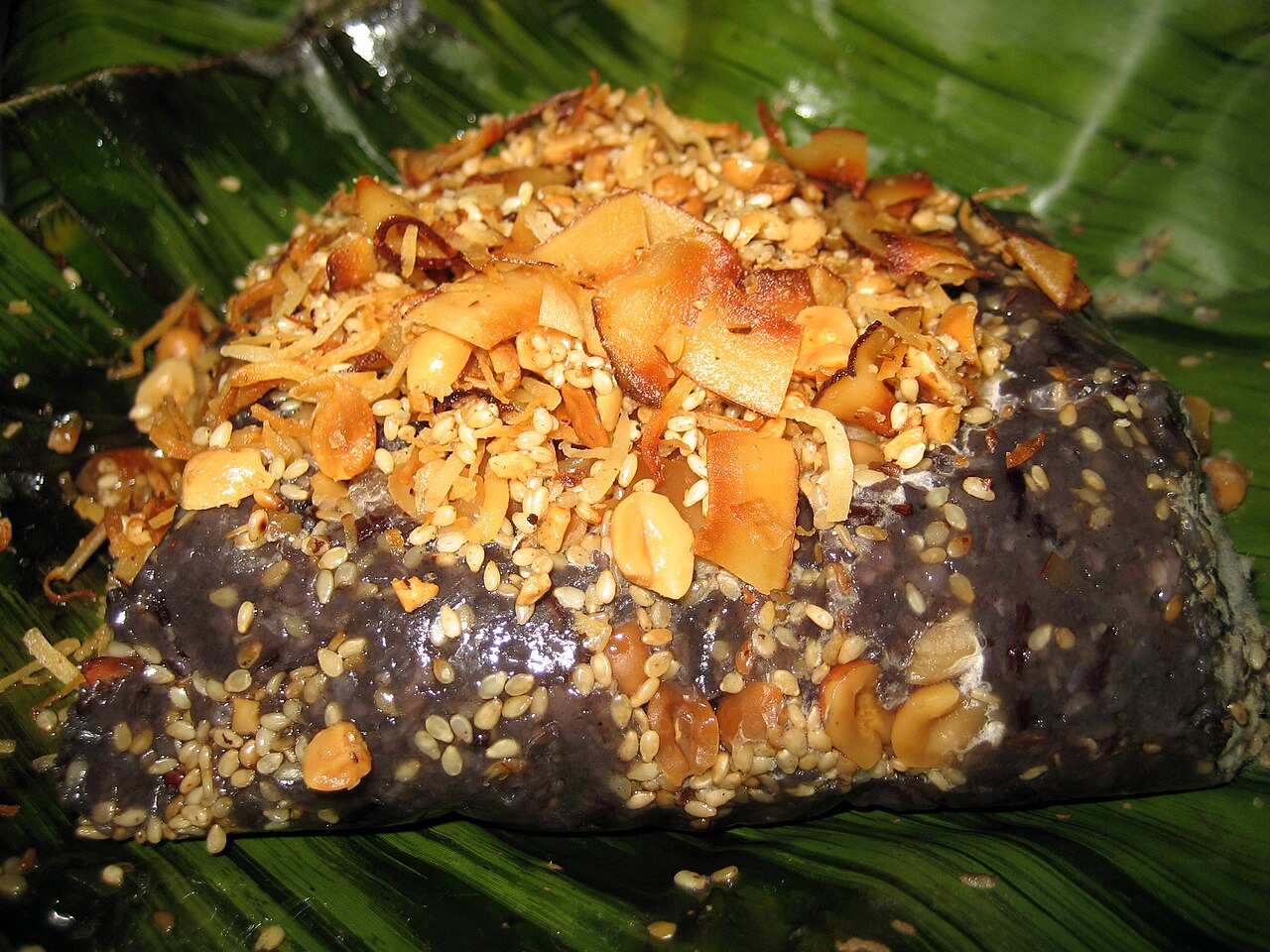
Glutinous rice cooked in a giant wok with oil and then mixed with peanuts, toasted sesame, fried ginger and coconut. It is made once a year and shared with neighbours and friends.
Mixing htamane takes a team: two people stir the heavy dough with paddle-like spatulas while a third guides them. Some pagodas, including the Shwedagon, hold htamane-making competitions.
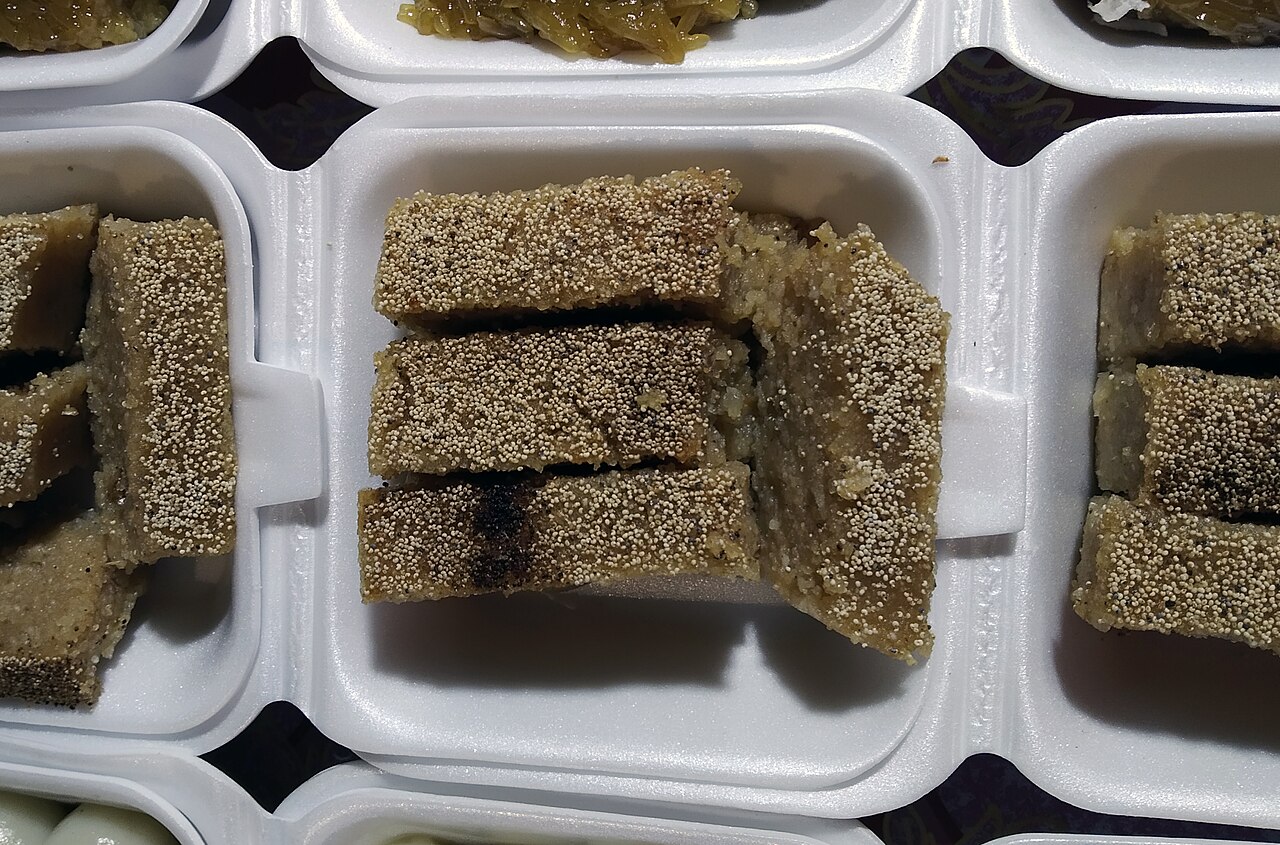
A dense, golden baked cake of semolina, coconut milk, butter and sugar, often with raisins and topped with poppy seeds. It is cut into squares or diamonds and served at donation feasts and sold as a street snack.
See the recipe
Serves 8
1 h 15 min
Ingredients
200 g fine semolina
400 ml coconut milk
250 ml milk
150 g sugar
1/2 teaspoon salt
100 g butter, plus a little for the tin
3 eggs, beaten
2 tablespoons raisins
1 tablespoon poppy seeds or white sesame seeds
Method
Heat the oven to 180°C and butter a baking tin about 20 cm square.
Put the semolina, coconut milk, milk, sugar and salt in a heavy saucepan and stir well.
Cook over medium heat for about 10 minutes, stirring all the time, until the mixture is very thick and comes away from the sides of the pan.
Take the pan off the heat and stir in the butter until it melts. Leave to cool for 5 minutes, then beat in the eggs and raisins.
Spread the mixture in the tin, smooth the top and sprinkle with the poppy seeds.
Bake for 40 to 45 minutes, until the top is deep golden and the cake is set. Let it cool completely before cutting into diamonds or squares.
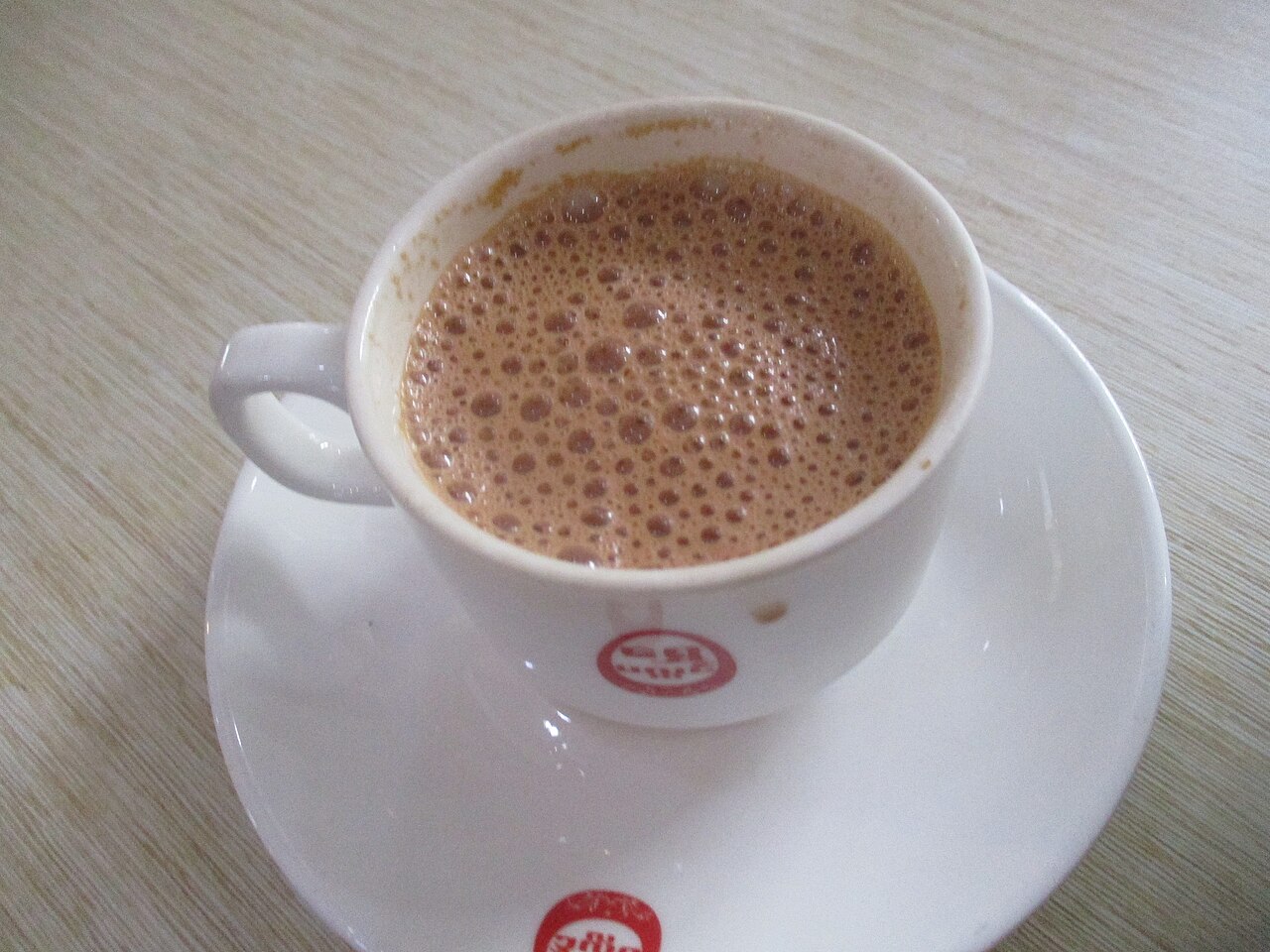
Strong black tea sweetened with condensed milk and evaporated milk. Customers often say exactly how sweet and how strong they want it. Plain green tea, on the other hand, is usually free on every table.
Tea shops were brought to Burma by the Indian community during British rule, and today they are where friends meet, read the news and eat breakfast.
See the recipe
Serves 2
10 min
Ingredients
500 ml water
3 tablespoons strong loose black tea, or 4 tea bags
4 tablespoons sweetened condensed milk
4 tablespoons evaporated milk
Method
Bring the water to the boil in a small pan and add the tea.
Turn the heat down and simmer for about 5 minutes, until the tea is very dark and strong.
Put 2 tablespoons of condensed milk and 2 tablespoons of evaporated milk in each cup.
Strain the hot tea into the cups, stir well and taste. Add more condensed milk for a sweeter cup or more evaporated milk for a creamier one.
The eldest people at the table are served first. At home the first scoop of rice from the pot is often set aside as a sign of respect for one's parents.
Traditionally the Burmese eat rice with the fingertips of the right hand, but a spoon and fork are common today. Chopsticks and Chinese-style spoons are used for noodles.
All the dishes arrive at the same time and are shared. Take a little of each with your rice rather than filling your plate with one dish.
Plain green tea is usually served free in restaurants and tea shops, and a light soup is often drunk during the meal instead of other drinks.
Many Buddhists do not eat beef and Muslims do not eat pork. During Buddhist Lent, roughly from July to October, some people eat only vegetarian food on certain days.
Yangon, the old capital, is by far the largest city and the main port. Mandalay, the last royal capital, is the heart of Burmese culture in the north, and Naypyidaw is the planned capital in between. Many other towns grew up around great pagodas, on the Irrawaddy River or in the cool Shan hills.
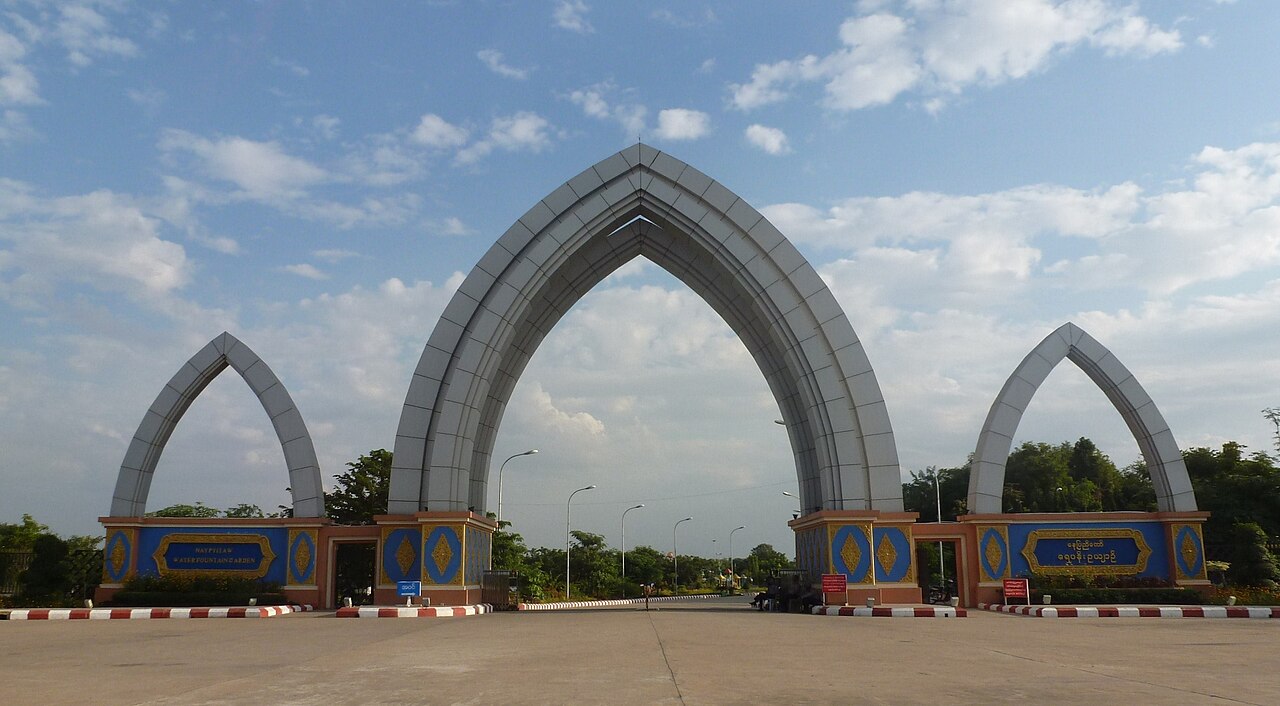
A planned capital built from 2002 on an empty site near the town of Pyinmana, halfway between Yangon and Mandalay. The government moved here in 2005. The city is known for its enormous scale and very quiet streets, including a boulevard with 20 lanes. It was badly damaged in the 2025 earthquake.
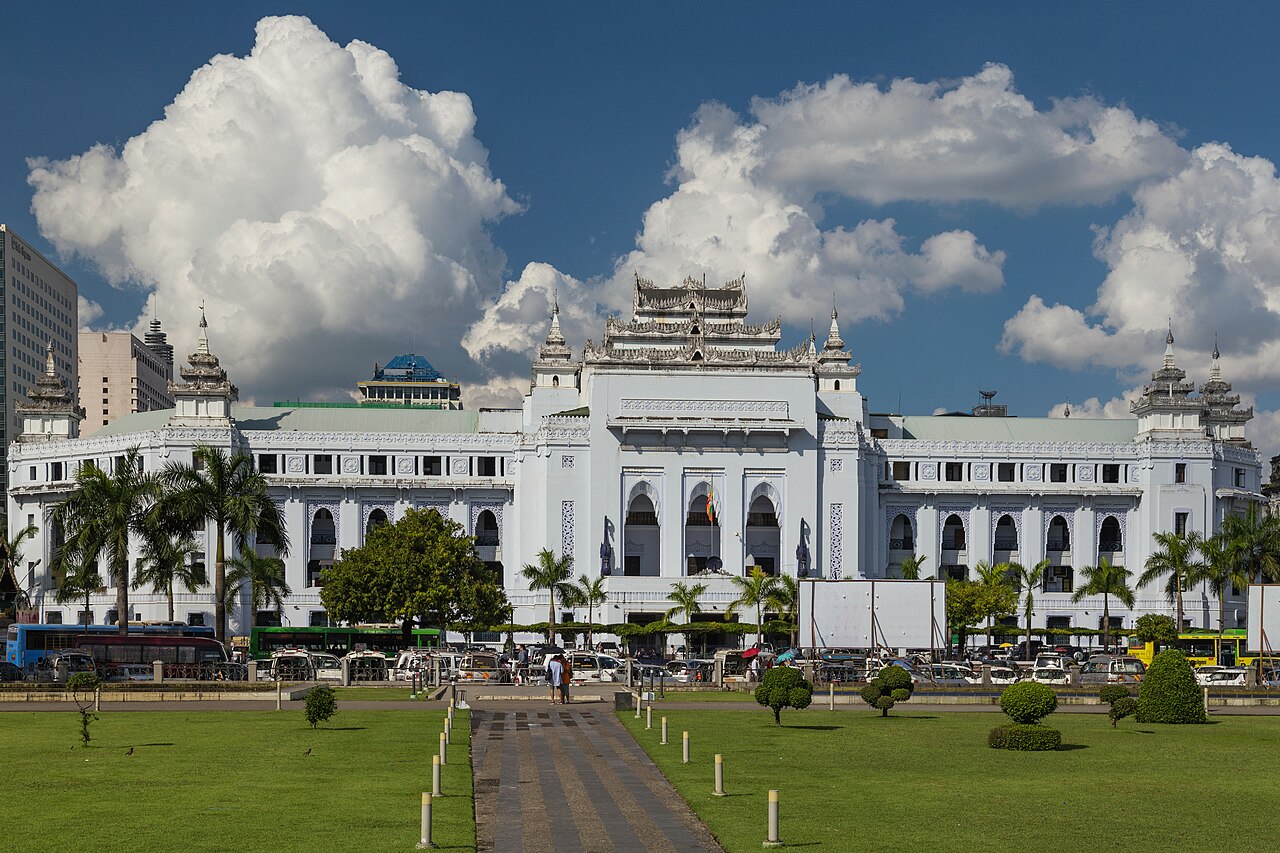
The largest city, with over five million people, and the capital until 2005. Formerly called Rangoon, its name means 'end of strife'. The city centre has more colonial-era buildings than any other city in Southeast Asia, around the ancient Sule Pagoda.
The second-largest city, on the east bank of the Irrawaddy. King Mindon founded it in 1857, and it was the last royal capital before the British took it in 1885. It is seen as the centre of Burmese culture, with many monasteries and craft workshops. It was hit hard by the 2025 earthquake.
The capital of the Pagan Kingdom from the 9th to the 13th century, on a bend of the Irrawaddy. More than 10,000 temples, pagodas and monasteries were built on its plain, and the remains of over 2,200 still stand. Today the nearby town of Nyaung-U is the main place to stay.
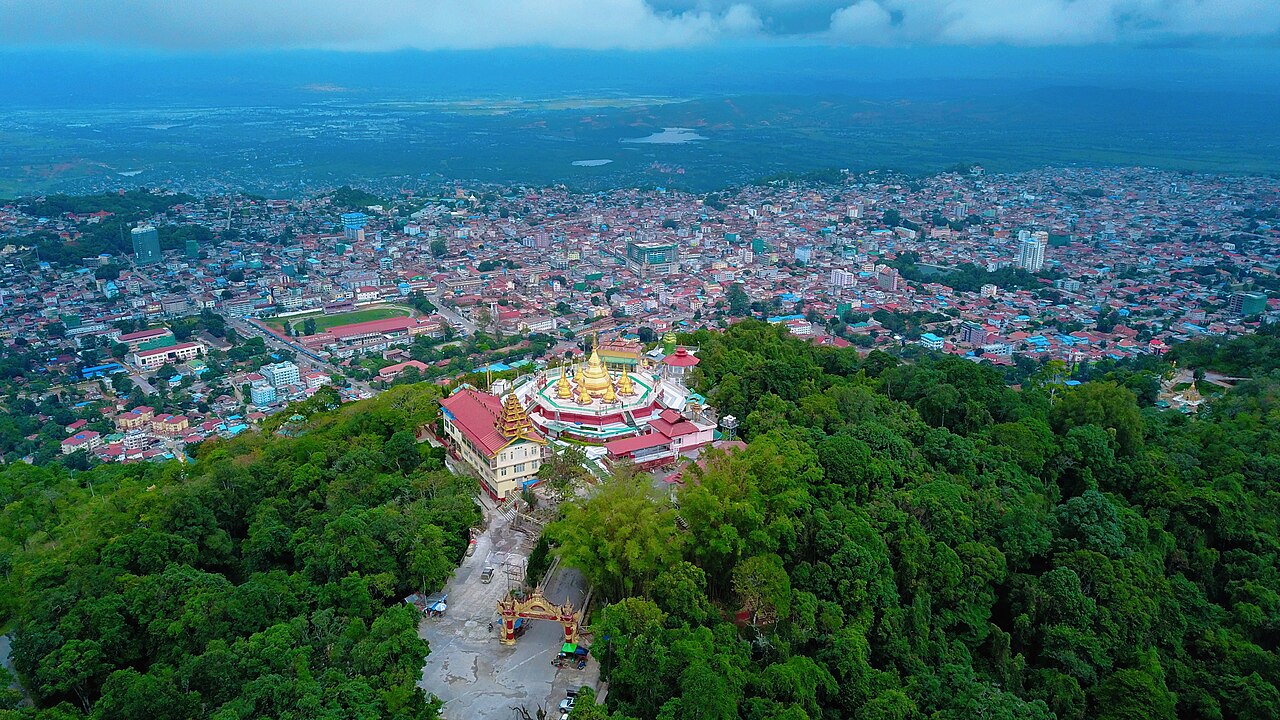
A hill town 1,070 m above sea level, about 67 km east of Mandalay. It was the summer capital of British Burma, when it was called Maymyo, and is still loved for its cool climate, gardens and flowers.
The capital of Kachin State in the far north, on the Irrawaddy about 40 km below the point where its two headwaters meet. It is the northernmost river port and railway terminus in the country.
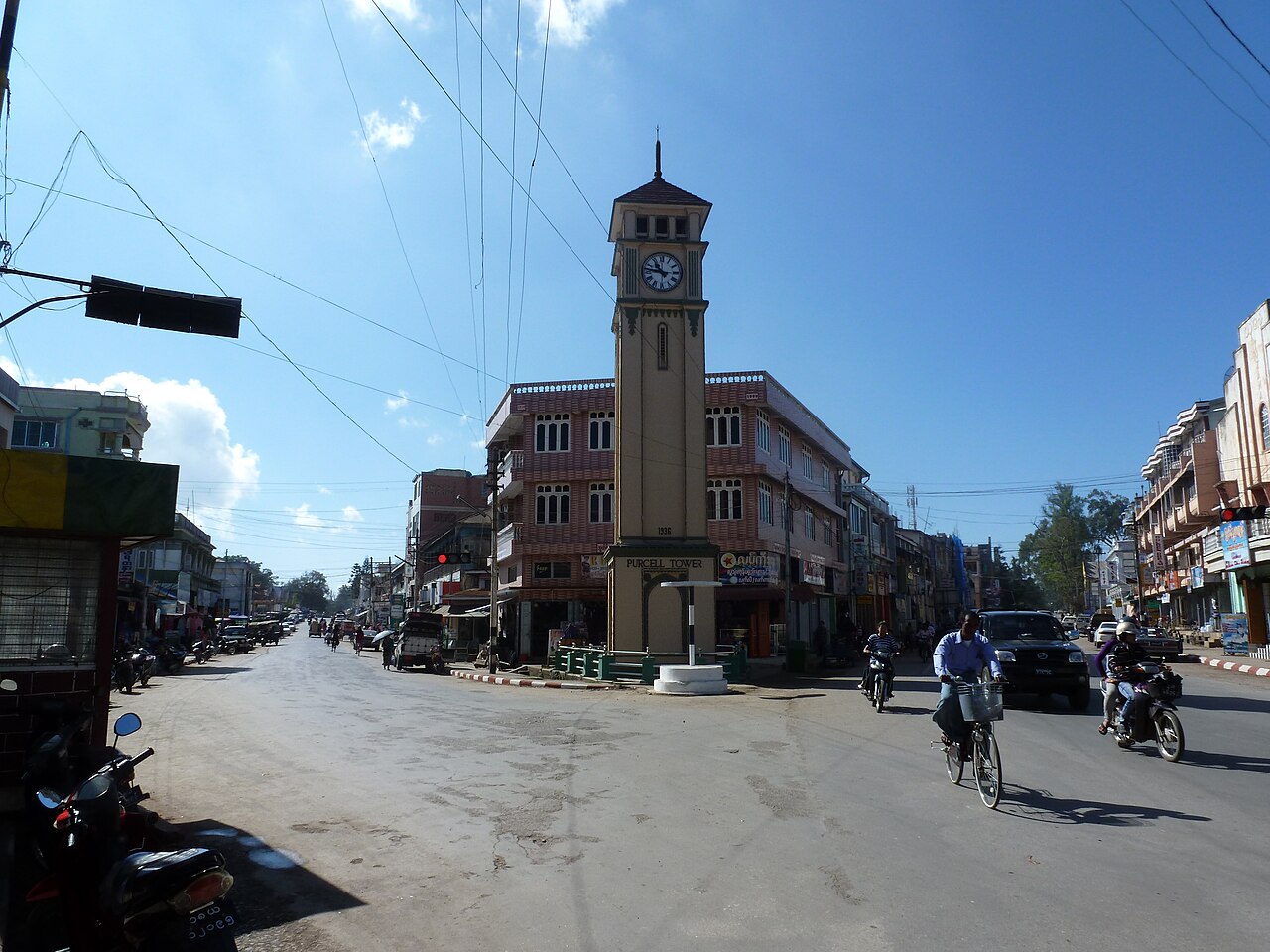
The capital of Shan State, built along a mountain ridge about 1,436 m high. Its name means 'big mountain'. It is a busy trading town with a cool climate.
A small town at the northern end of Inle Lake and the starting point for boat trips on the lake. It was the historical capital of the Shan state of Yawnghwe.
A river town on the Irrawaddy, about 260 km north-west of Yangon. The ruins of Sri Ksetra, the largest Pyu city, lie just outside it. The first railway in Burma, from Yangon, reached Pyay in 1877.
A city 91 km north-east of Yangon, formerly called Pegu. It was the capital of the Mon kingdom of Hanthawaddy and later of the Taungoo kings. It is famous for its large pagodas.
The capital of Kayin (Karen) State, on the Thanlwin (Salween) River. The town is surrounded by steep limestone hills and caves, such as the Saddan Cave, the largest in Kayin State.
The fourth-largest city, formerly Moulmein, at the mouth of the Thanlwin River. It was the first capital of British Burma and is the capital of Mon State. A Burmese saying praises it for its food.
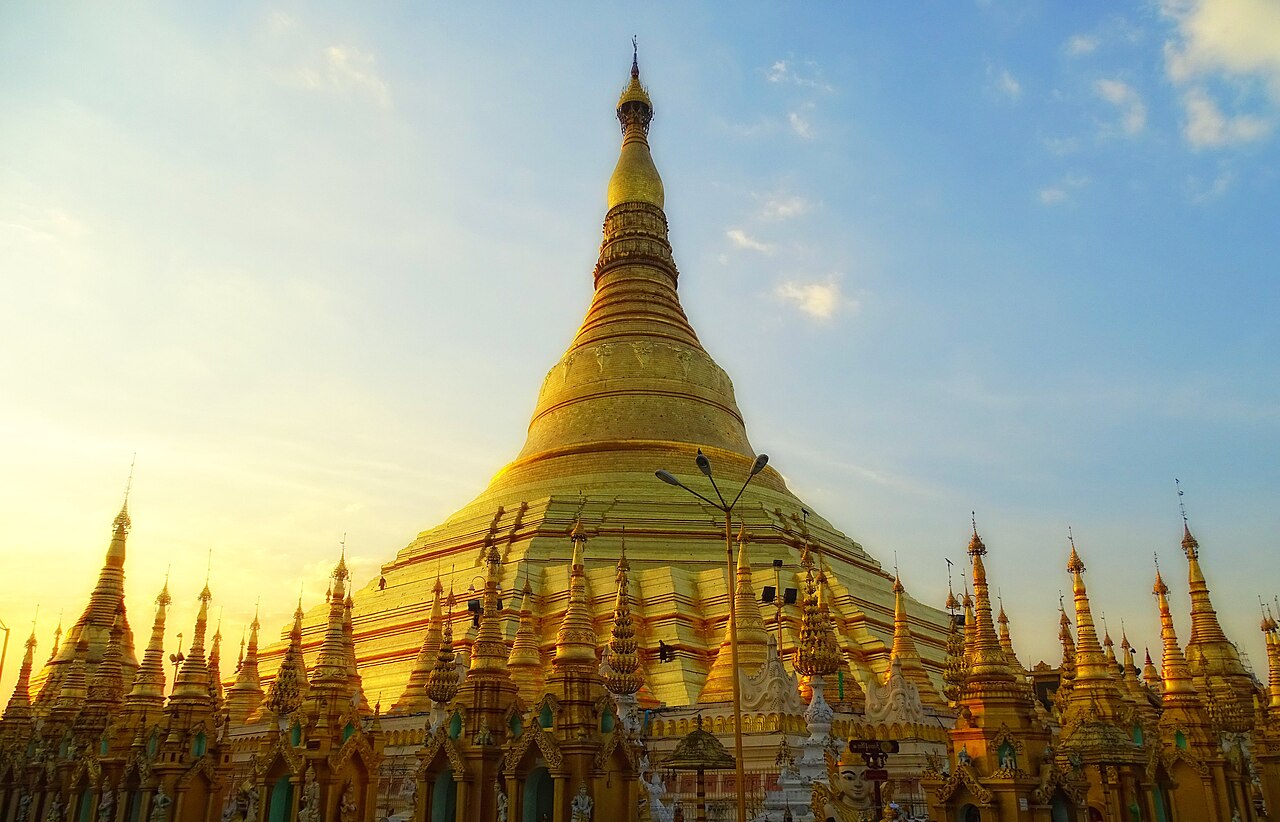
The most sacred Buddhist pagoda in Myanmar, a gilded stupa about 112 m tall on Singuttara Hill that dominates the Yangon skyline. It is believed to hold relics of four Buddhas, including eight hairs of the Buddha. Pilgrims walk around it clockwise, barefoot, especially at sunset.
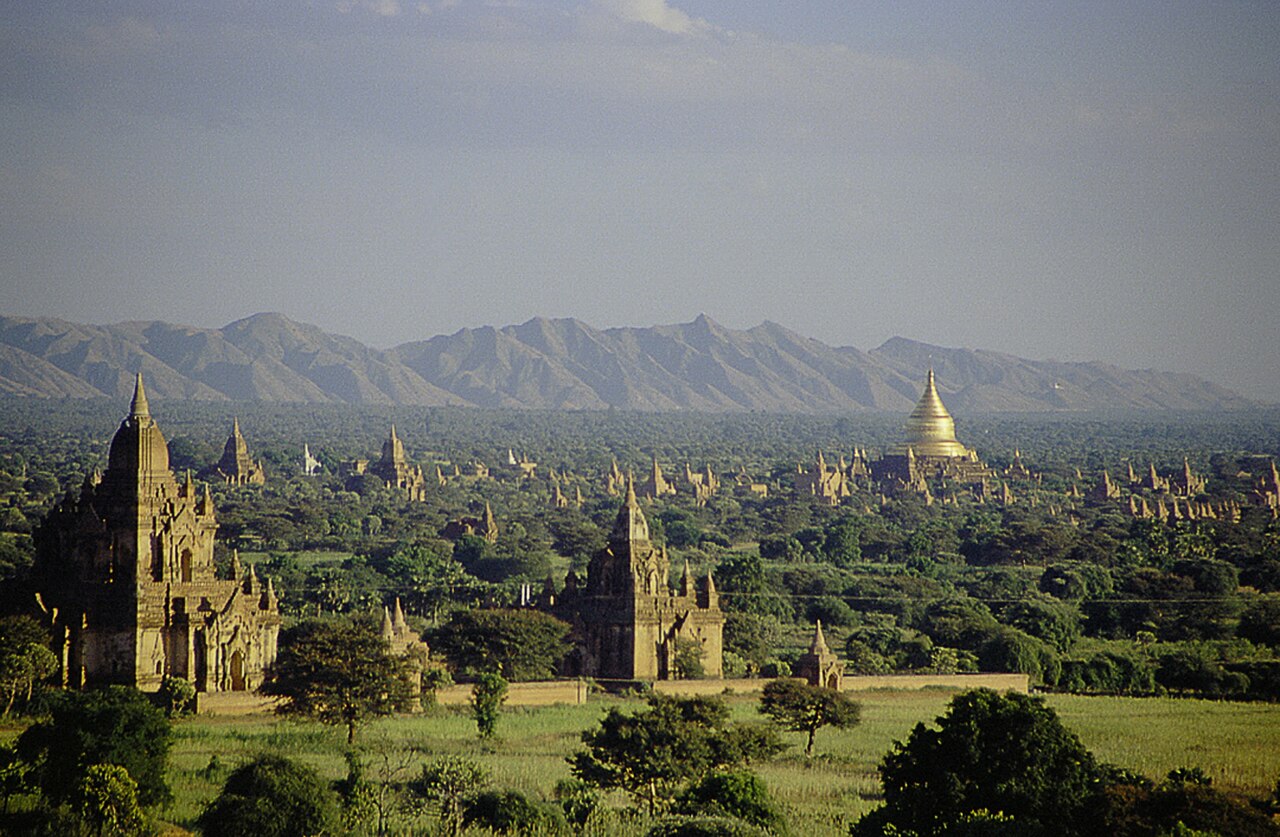
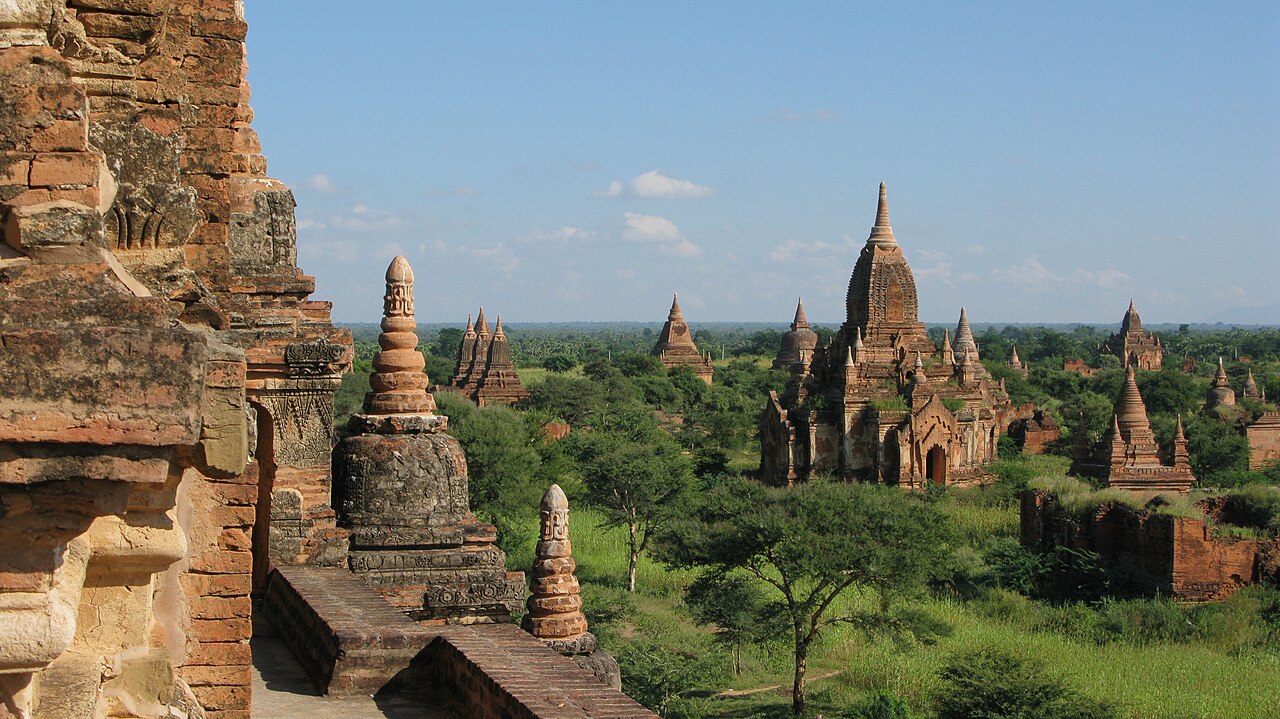
The ancient capital of the Pagan Kingdom, where more than 2,200 temples and pagodas from the 11th to 13th centuries still stand on a wide plain beside the Irrawaddy. The Ananda Temple is among the best known. Bagan became a UNESCO World Heritage Site in 2019.
The ruins of the largest Pyu city, with brick walls, gates and tall early stupas, about 8 km from Pyay. Together with Halin and Beikthano it became Myanmar's first UNESCO World Heritage Site, the Pyu Ancient Cities, in 2014.
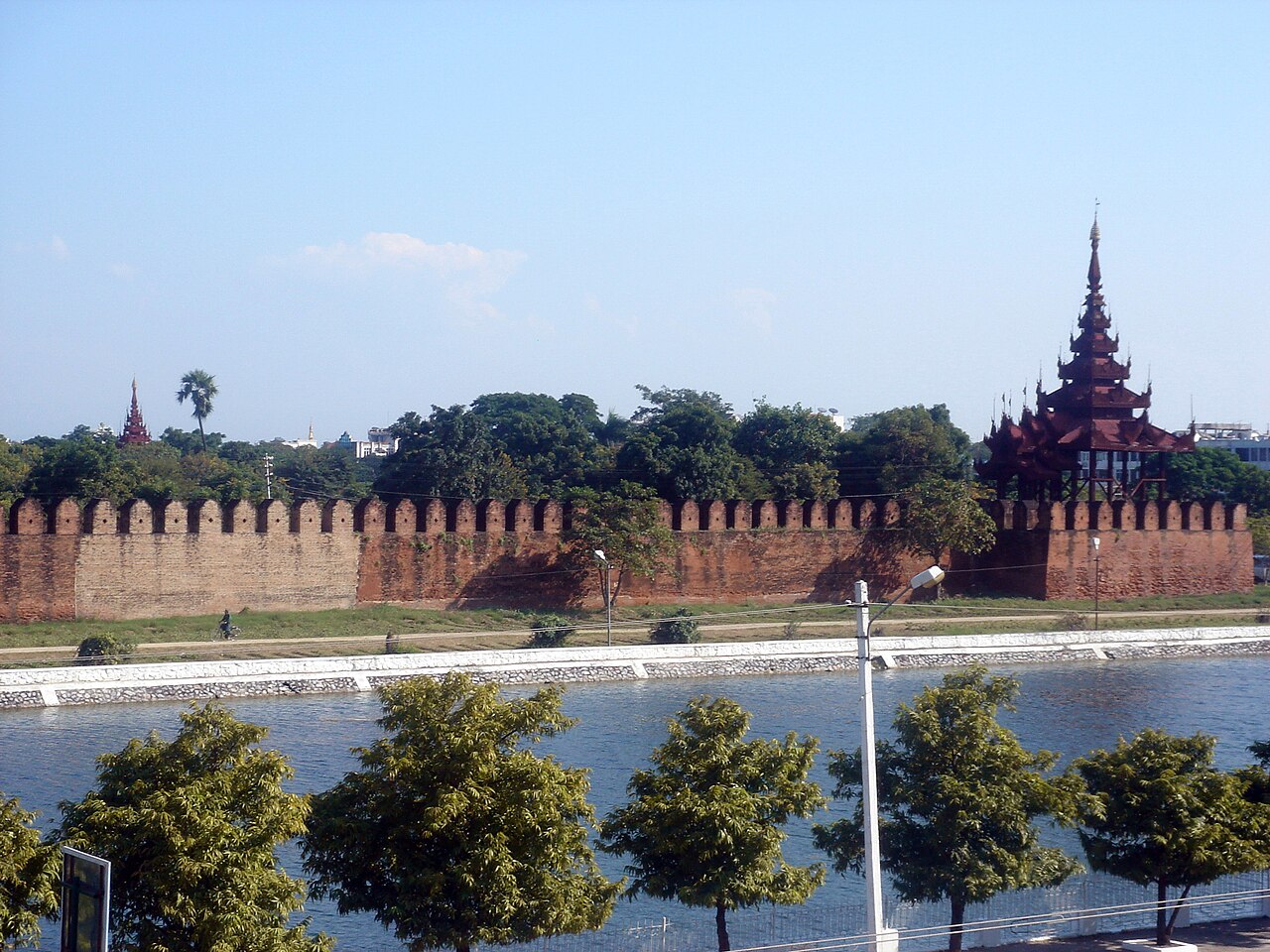
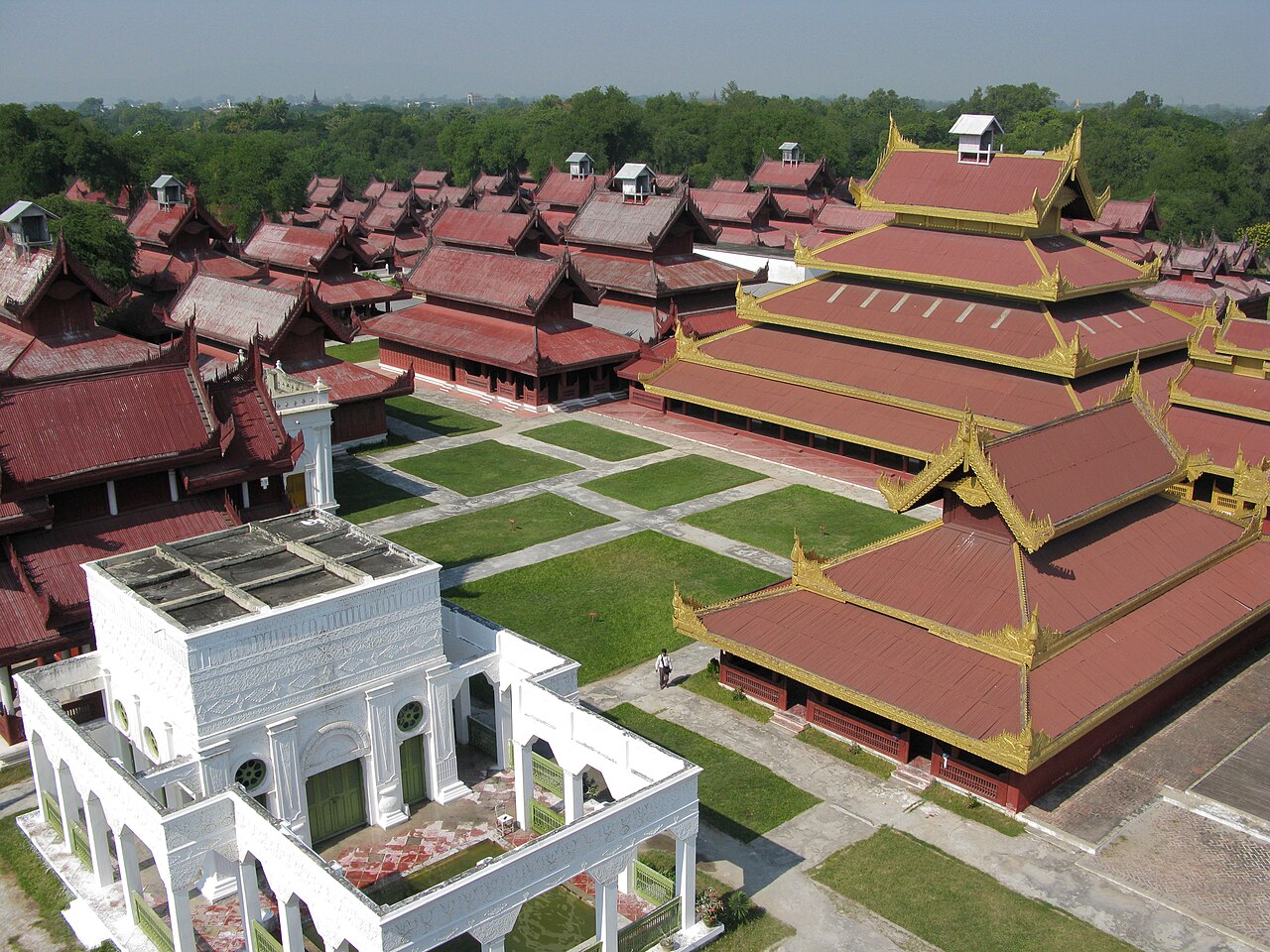
The palace of the last two Burmese kings, built in 1857 to 1859 inside a square walled citadel with a wide moat. Most of it burned in the Second World War; the palace buildings seen today were rebuilt in the 1990s. Parts were damaged in the 2025 earthquake.
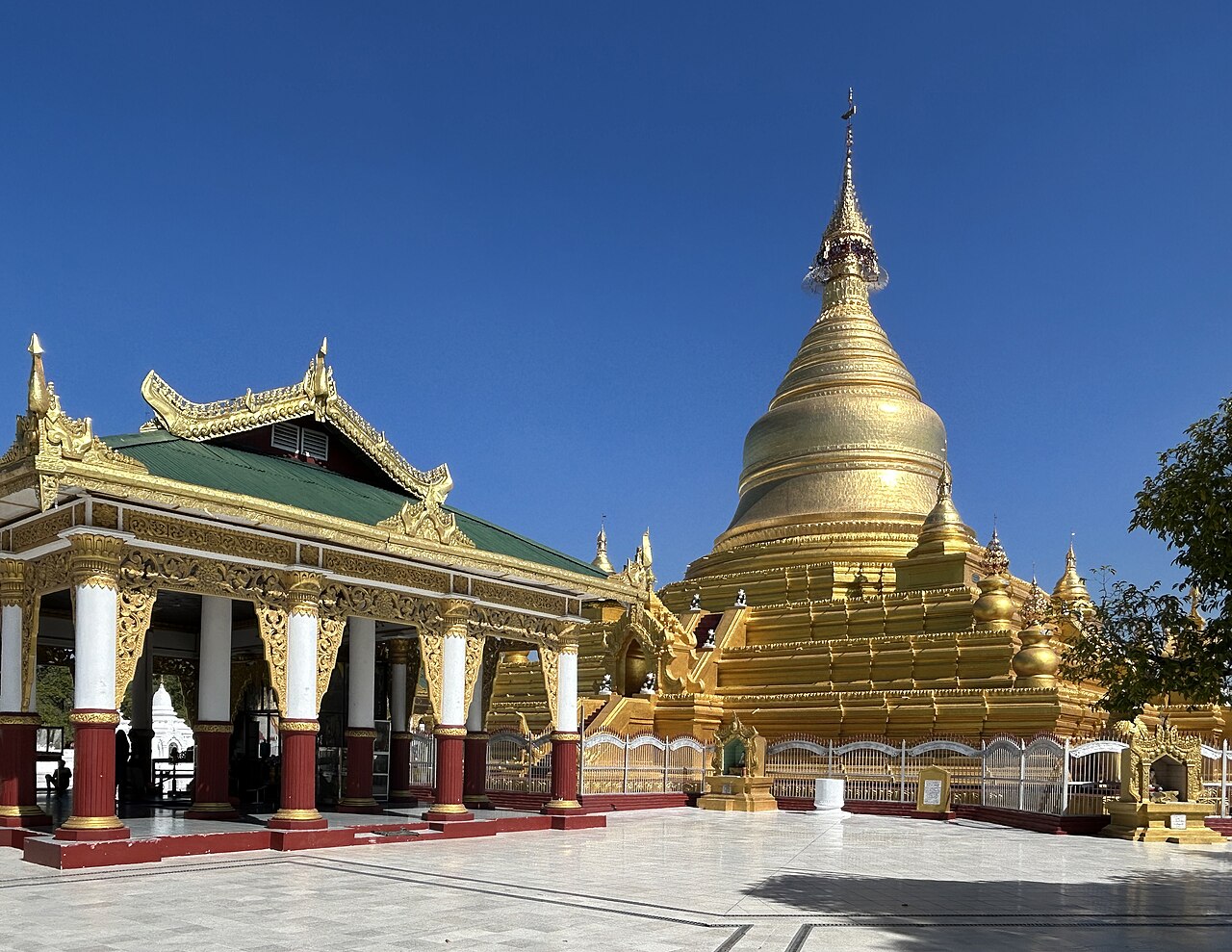
A gilded stupa at the foot of Mandalay Hill, built by King Mindon. Around it stand 729 small white shrines, each holding a marble slab carved on both sides with part of the Buddhist scriptures, often called the world's largest book.
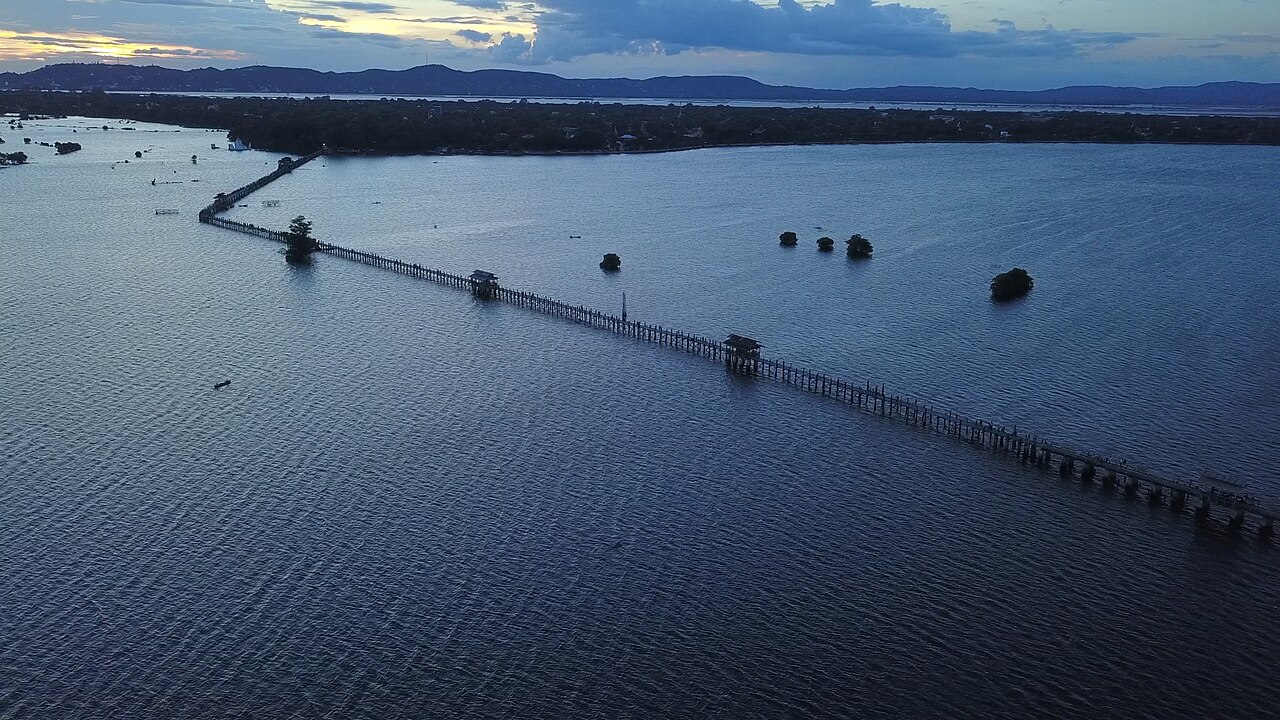
A footbridge about 1.2 km long across Taungthaman Lake at Amarapura, just south of Mandalay. It was built around 1850 from teak posts taken from the old royal palace at Inwa, and is believed to be the oldest and longest teak bridge in the world.
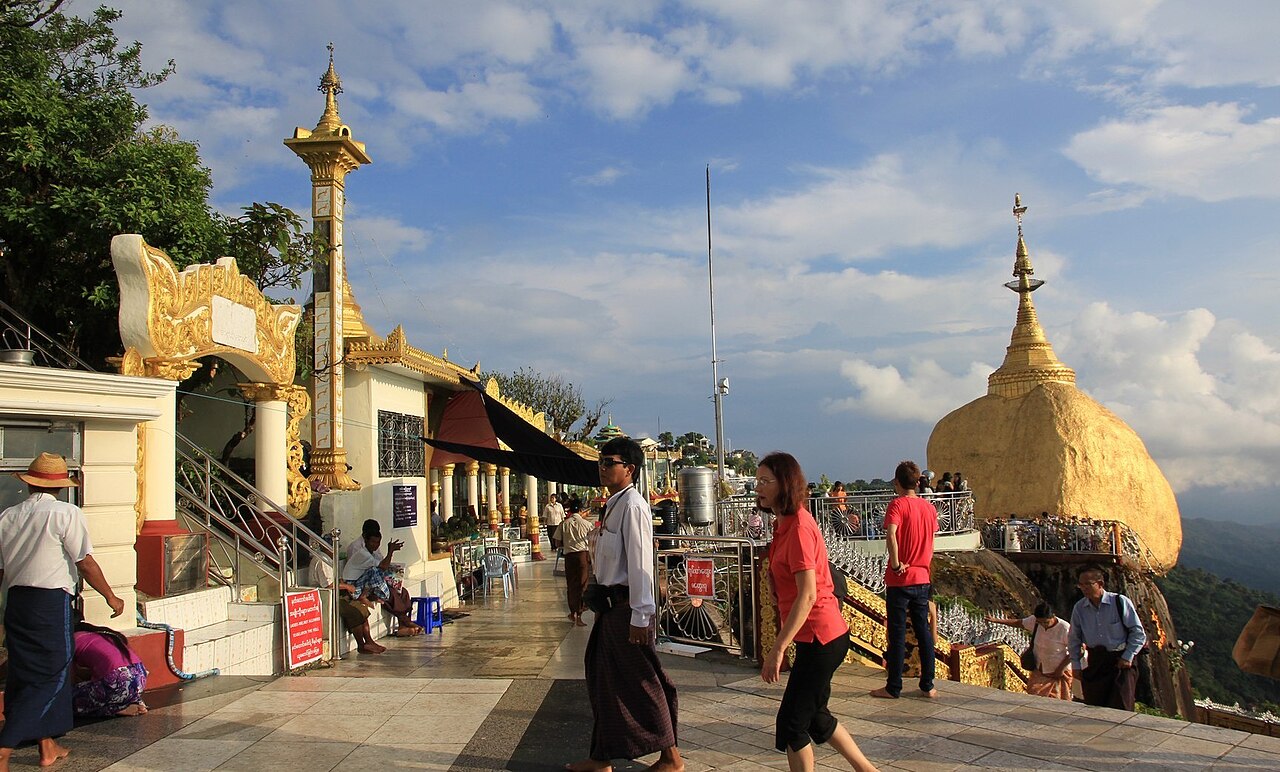
A granite boulder covered in gold leaf, balanced on the edge of a cliff at about 1,100 m in Mon State, with a small pagoda on top. Legend says a hair of the Buddha keeps it from falling. It is one of the most important pilgrimage sites in the country. The pin marks the nearest city on this page, Bago.
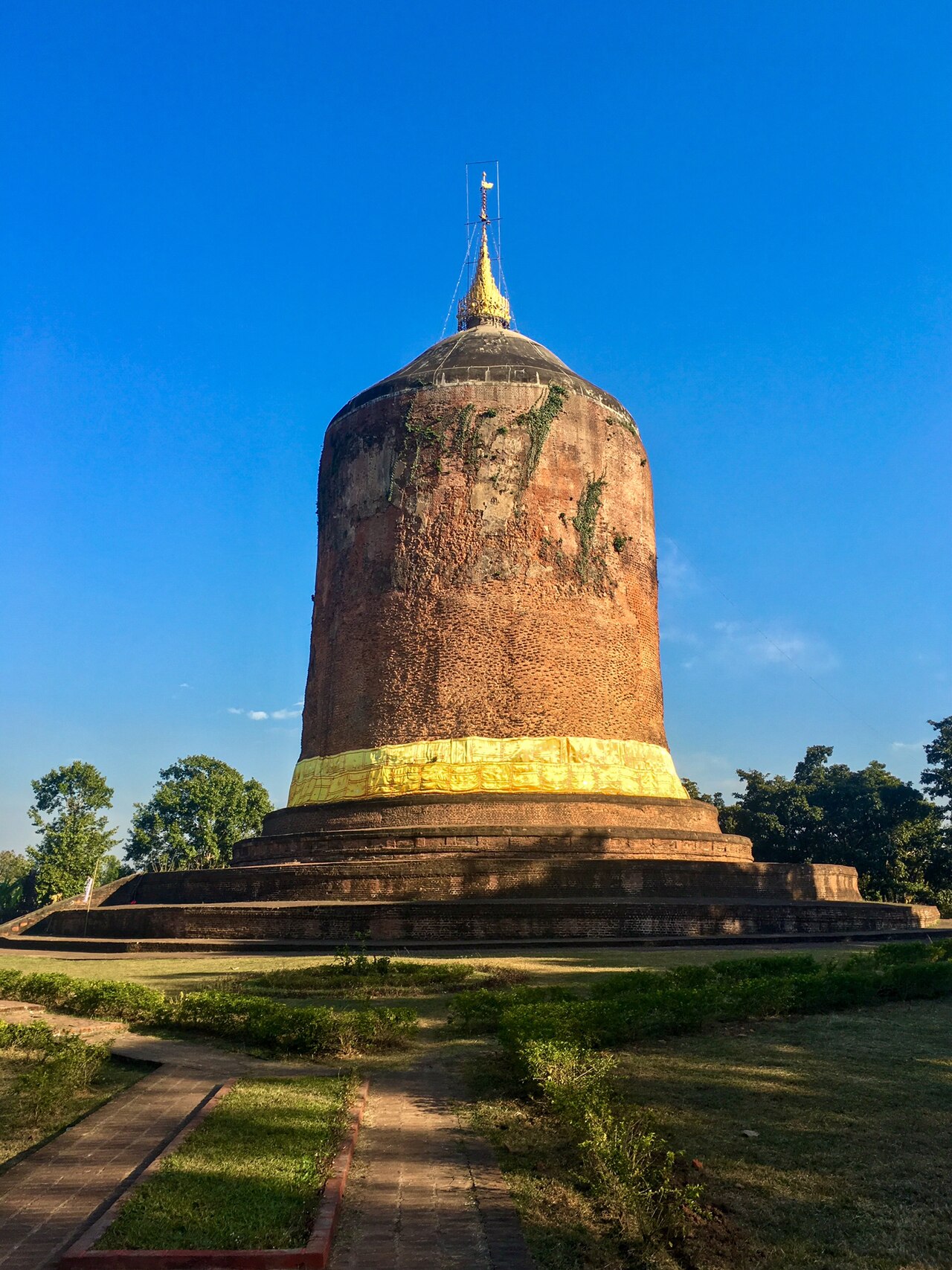
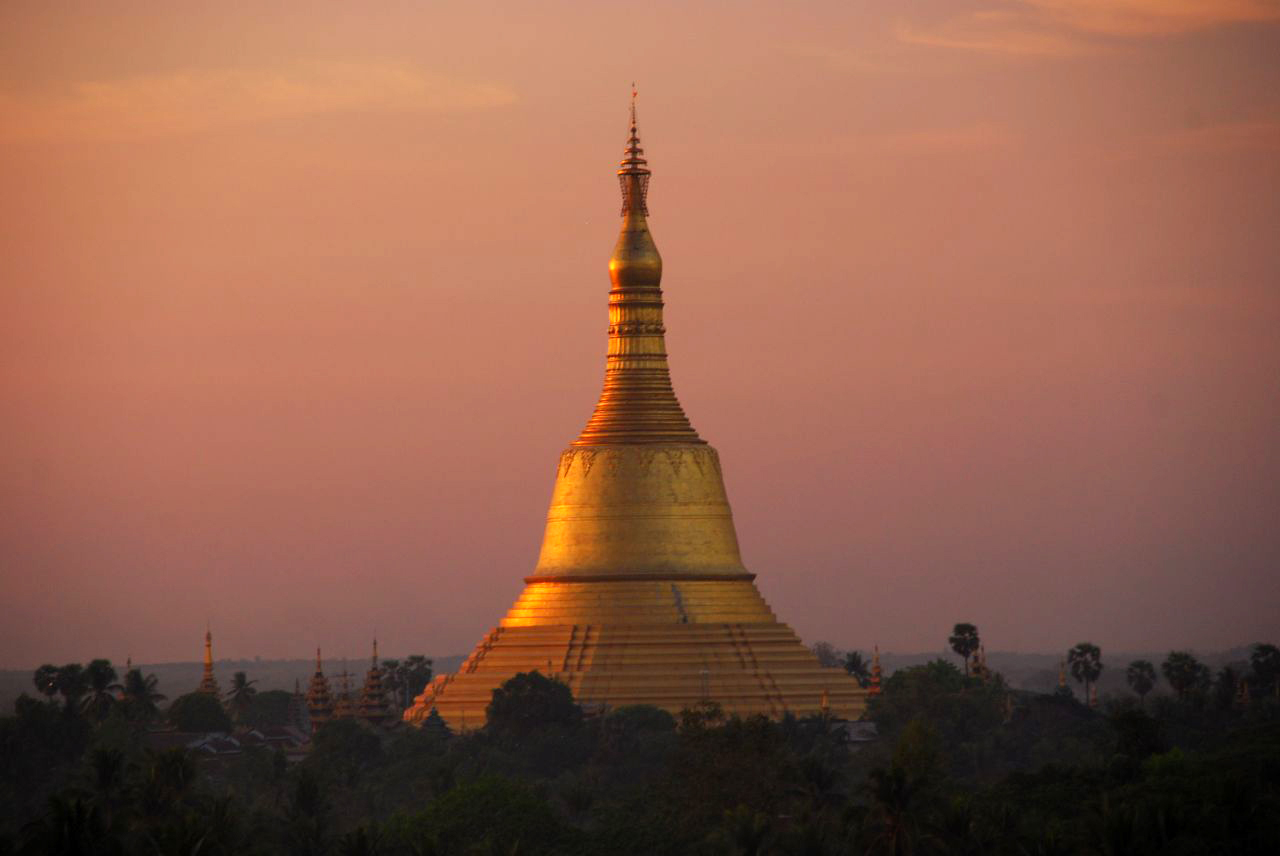
The great golden stupa of Bago, rebuilt after earthquakes in the 1910s and 1930 and now about 114 m tall. A pagoda has stood here since at least the 14th century, when Bago was the capital of the Mon kingdom of Hanthawaddy, and its festival is held around the April New Year.
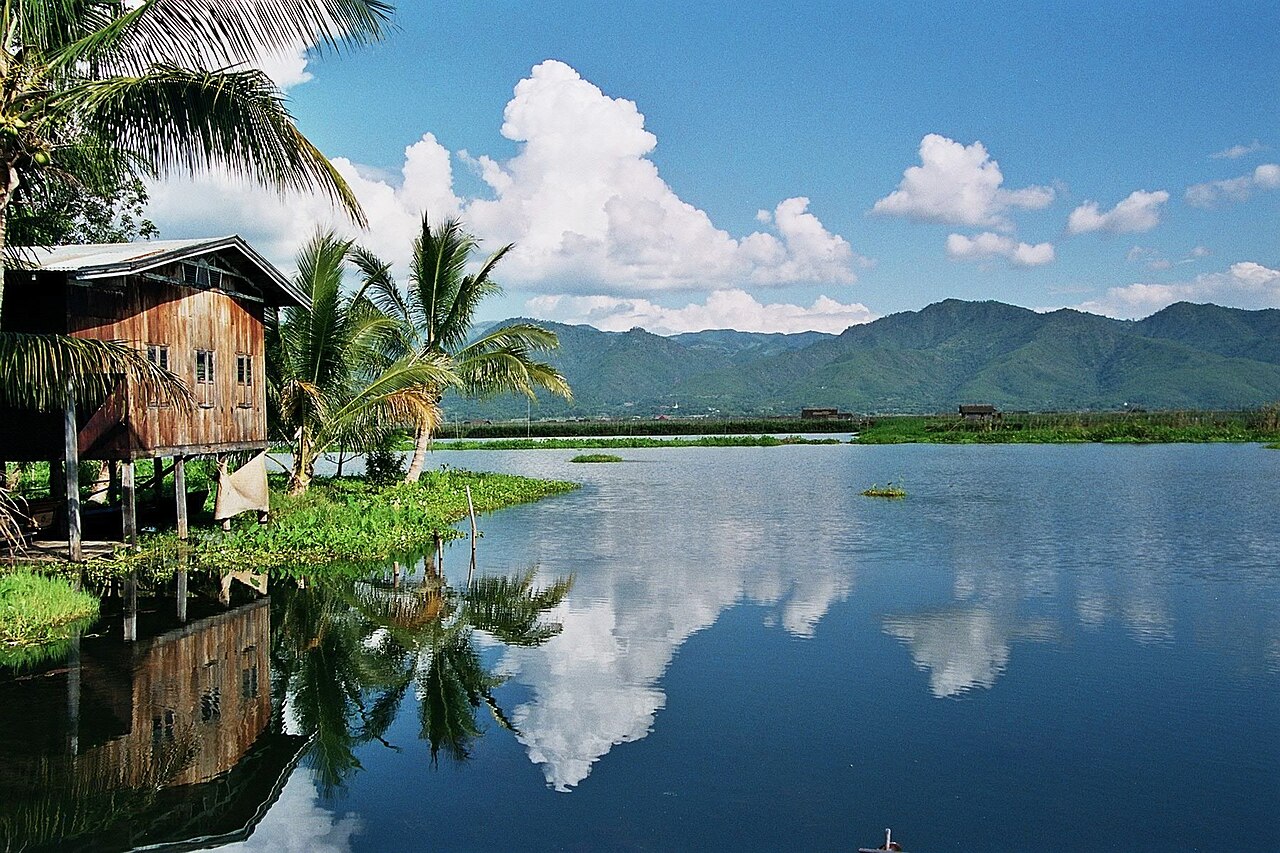
A shallow lake about 880 m up in the Shan hills, with stilt-house villages, floating gardens and fishermen who row standing on one leg. It is home to fish and snails found nowhere else and became a UNESCO biosphere reserve in 2015.
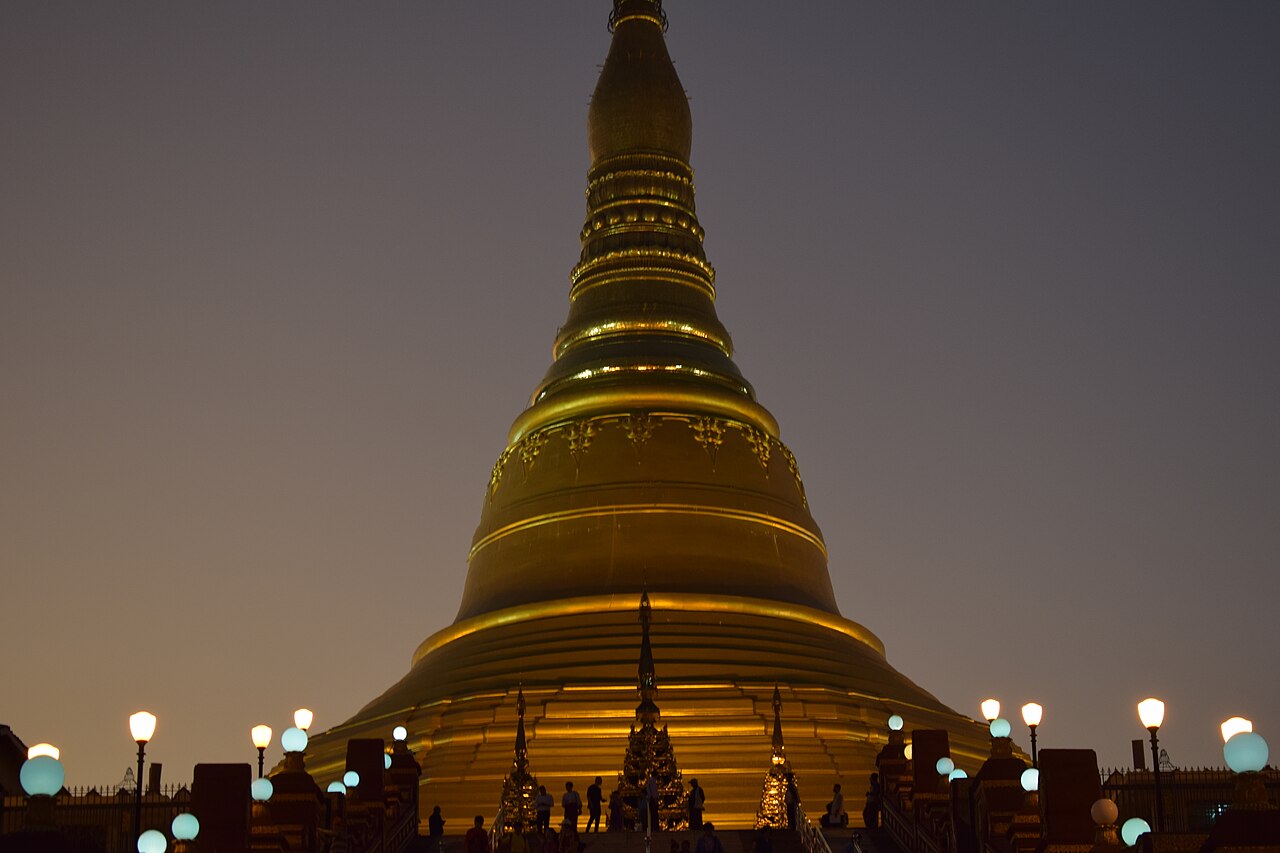
The great pagoda of the new capital, completed in 2009 as a near-identical copy of the Shwedagon, about 99 m tall on a man-made base. It holds a Buddha tooth relic, and its name means 'protection against calamity'.
Burmese people have no family names. A person has one personal name, often of two to four syllables, and a title such as U (for an older man) or Daw (for an older woman) shows respect. Aung San Suu Kyi's name, for example, combines her father's name, her grandmother's name and her mother's.
02
Many women and children, and some men, paint their faces with thanaka, a pale yellow paste made by grinding the bark of a tree on a stone slab with a little water. It cools the skin and protects it from the sun, and a Bagan-era wall painting already shows it.
03
Myanmar is one of the very few countries where tea is eaten as well as drunk, as pickled tea leaves called lahpet. Burmese is also one of the few languages whose word for tea does not come from Chinese.
04
Myanmar switched to driving on the right in 1970, but for decades most cars were second-hand imports from Japan with the steering wheel on the right, and many are still on the road.
05
U Thant from Burma was Secretary-General of the United Nations from 1961 to 1971, the first Asian to hold the post. He helped to calm the Cuban Missile Crisis in 1962.
06
At the Kuthodaw Pagoda in Mandalay, 729 marble slabs, each carved on both sides, hold the whole of the Buddhist scriptures. They are often called the world's largest book.
07
The national sport, chinlone, has no opposing team. Around six players stand in a circle and keep a woven rattan ball in the air without using their hands, as gracefully as they can.
08
Most of the world's gem-quality jadeite jade, prized above all in China, comes from the mines of northern Myanmar.
09
The writer George Orwell served in Burma as a colonial police officer in the 1920s. His first novel, Burmese Days (1934), is set in a town based on Katha on the Irrawaddy.
10
The round letters of the Burmese alphabet are thought to come from writing on palm leaves: straight lines scratched with a stylus could tear the leaf.
11
The Irrawaddy dolphin, a small, round-headed dolphin named after the river, is known for working with fishermen who throw cast nets.
12
The government officially recognises 135 ethnic groups, and more than a hundred languages are spoken in the country.
13
The Burmese New Year, Thingyan, falls in mid-April, the hottest time of the year. For several days people throw water at each other in the streets to wash away the bad luck of the old year.
As of September 2026 a civil war continues in many parts of Myanmar, and the situation can change quickly. The UK government advises against all travel to large areas, including several places on this page, and against all but essential travel to many others. Before any trip, read your own government's latest advice and do not go to areas where fighting is reported; travel insurance may not be valid there.
Take off shoes and socks at pagodas
At pagodas, temples and monasteries you remove your shoes and socks at the entrance of the whole compound, not just the building, so you may walk barefoot across large courtyards. Sandals that slip on and off easily make this simpler.
Cover shoulders and knees
Shorts, short skirts and sleeveless tops are not allowed in religious places. Many men and women wear a longyi, a long sarong tied at the waist, and you can buy or borrow one near most big pagodas.
Walk clockwise and respect monks
Walk around a pagoda clockwise, with the stupa on your right, and never point your feet at a Buddha image or a monk. Women should not touch a monk or hand something directly to him. Real monks collect only food on their morning rounds and do not ask tourists for money.
Give and receive with the right hand
Hand over money, gifts or cards with your right hand, ideally with your left hand touching your right forearm as a sign of respect. The left hand alone is considered impolite. Older people are addressed with U (for men) or Daw (for women) before their name.
Drink bottled water
Do not drink tap water. Drink sealed bottled water, and choose food that is freshly cooked and hot.
Leave politics to the local people
Do not press people to talk about politics or the conflict. Talking openly with foreigners can put local people at risk, so let them choose the subject.
 Bangladesh
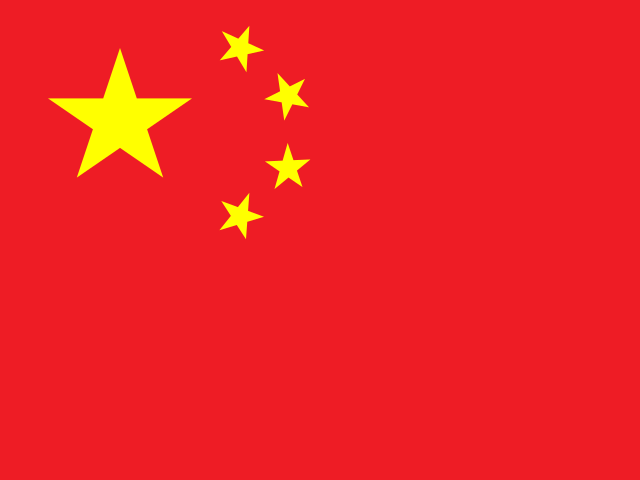 China
China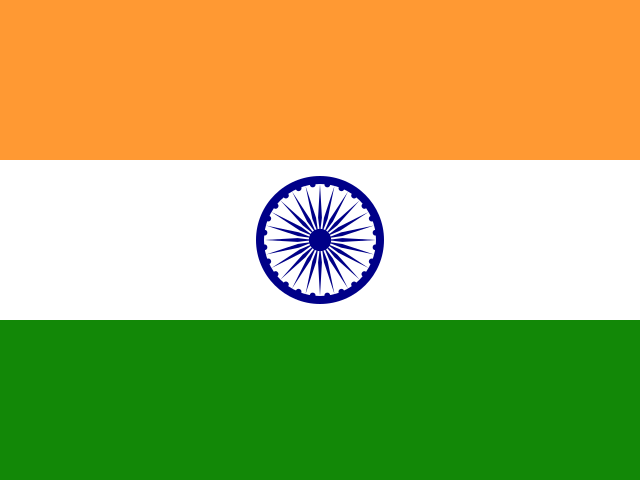 India
India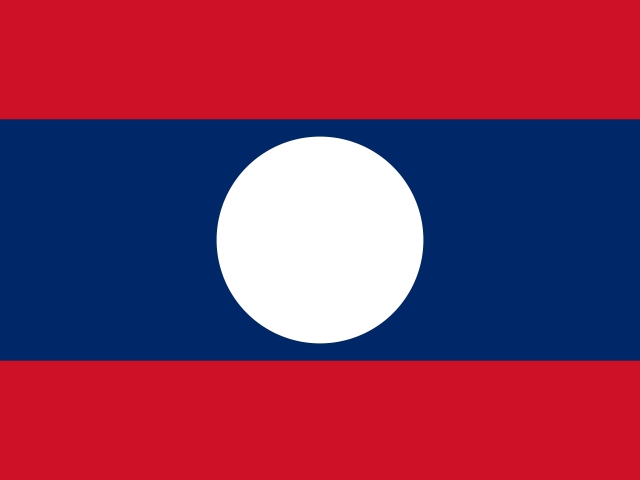 Laos
Laos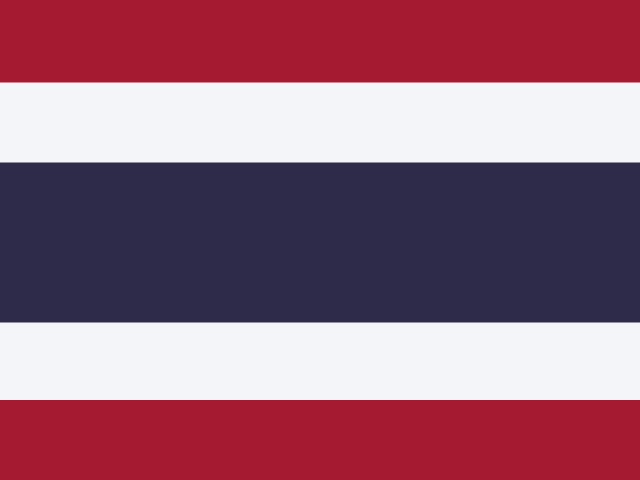 Thailand