A free large-print PDF. Choose what goes in: facts, map, history, dishes and recipes, phrases, fun facts, a quiz with or without answers. Made for clubs, care homes, libraries and family afternoons.
Bangladesh lies in the northeast of the South Asian subcontinent, on the Bay of Bengal. Almost all of it is the flat, green Ganges Delta, the largest river delta in the world, where the Padma (the Ganges), the Jamuna (the Brahmaputra) and the Meghna meet on their way to the sea. Only the southeast rises into hills, the Chittagong Hill Tracts. India surrounds it on three sides, and in the southeast it borders Myanmar.
Buddhist and Hindu kingdoms, the Bengal Sultanate and the Mughals all ruled here, and Bengal became famous for its fine cotton muslin. After almost two centuries of British rule, East Bengal became the eastern part of Pakistan in 1947. Anger over language, money and power grew, and after the Liberation War of 1971 Bangladesh became an independent country. Its name means 'the land of Bengal'.
Today Bangladesh is one of the most populous countries on Earth, with about 170 million people counted in the 2022 census on an area a little smaller than England and Wales together. Most people are Bengali and speak Bengali, which they call Bangla. Most are Muslim, with Hindu, Buddhist and Christian minorities. Rice, fish, rivers and boats run through daily life, songs and poems.
CapitalDhaka
PopulationAbout 170 million (2022 census), one of the ten most populous countries in the world
Official languageBengali (Bangla), named in the constitution as the state language
CurrencyBangladeshi taka (৳)
AreaAbout 148,000 km²
GovernmentParliamentary republic, with a president as head of state and a prime minister leading the government
Highest mountainSaka Haphong, about 1,050 to 1,065 m (sources differ), on the border with Myanmar in the Chittagong Hill Tracts (older lists name Keokradong or Tazing Dong)
Great riversThe Padma (the Ganges), the Jamuna (the Brahmaputra) and the Meghna, among hundreds of rivers and streams
NeighboursIndia and Myanmar. Nepal and Bhutan are only a short distance away across India's narrow Siliguri Corridor
The story of Bangladesh is the story of Bengal. Ancient cities rose in the delta more than 2,000 years ago, Buddhist kings built great monasteries, and sultans and Mughal governors made Bengal one of the richest lands in Asia. British rule, the partition of 1947 and a long struggle for the Bengali language led to independence in 1971.
300 BC
A city rises at Mahasthangarh
A stone slab with an inscription in Prakrit, found in 1931, shows that a walled city, Pundranagara, stood at Mahasthangarh near today's Bogura by at least the 3rd century BC, when the region was part of the Maurya Empire. It is one of the earliest city sites found so far in Bangladesh.
AD 750
The Pala Empire begins
Around 750 AD the chiefs of Bengal chose Gopala as their king. His Buddhist Pala dynasty ruled Bengal and Bihar for about 400 years. His son Dharmapala built the great monastery of Somapura at Paharpur, in area the largest of the great Buddhist monastery-universities of eastern India.
1204
Bakhtiyar Khalji conquers Bengal
Around 1204 the general Muhammad Bakhtiyar Khalji, serving the Ghurid rulers of Afghanistan and northern India, captured Nabadwip and then Gauda, the capital of Bengal, and the Sena king fled to the east. It began more than 500 years of rule by Muslim sultans and governors in Bengal.
1342
The first Shah of Bangala
In 1342 Shamsuddin Ilyas Shah declared himself the first 'Shah of Bangala' and went on to unite Bengal as one independent sultanate. Under later sultans, Bengali was recognised at court for the first time, and in the 1400s the governor Khan Jahan built the mosque city of Bagerhat.
1576
The Mughals conquer Bengal
In 1576 the armies of the Mughal emperor Akbar defeated the last sultan of Bengal. Under the Mughals, Bengal became one of the wealthiest provinces of the empire, famous for its rice, silk, shipbuilding and very fine cotton muslin.
1610
Dhaka becomes the Mughal capital of Bengal
In 1610 the Mughal governor Islam Khan moved the capital of Bengal to Dhaka, which was renamed Jahangirnagar after the emperor Jahangir. Forts, palaces, gardens and mosques followed, and Dhaka grew into one of the great trading cities of Asia.
1757
The Battle of Plassey
On 23 June 1757 the army of the British East India Company defeated Siraj ud-Daulah, the last independent Nawab of Bengal, at Plassey, in today's India. It began almost two centuries of British rule over Bengal and, in time, the whole subcontinent.
1905
The first partition of Bengal
In 1905 the British split the huge province of Bengal in two, with a Muslim-majority east and a Hindu-majority west. The poet Rabindranath Tagore wrote Amar Sonar Bangla, 'My Golden Bengal', in protest. After years of opposition, Bengal was reunited in 1911.
1947
East Bengal joins Pakistan
When British India was divided in August 1947, Bengal was split again. Its Muslim-majority east became part of the new state of Pakistan, although it lay more than 1,500 km from the western part of the country. It was later renamed East Pakistan.
1952
The Language Movement
Pakistan's government wanted Urdu to be the only state language, although most of its people spoke Bengali. On 21 February 1952 police in Dhaka opened fire on students protesting for Bengali, and several were killed. In 1956 Bengali was made an official language of Pakistan, and 21 February is remembered every year.
1970
The Bhola cyclone
On 12 November 1970 a cyclone and a huge storm surge struck the coast and islands of East Pakistan. At least 300,000 people died, making it the deadliest tropical cyclone on record. The slow response of the government in West Pakistan deepened anger in the east.
1971
The Liberation War
On the night of 25 March 1971 the Pakistani army began a crackdown in Dhaka, and independence was declared on 26 March. Bengali fighters, the Mukti Bahini, fought back; about 10 million people fled to India, and many civilians were killed in mass killings, though estimates of the dead vary widely. India joined the war in December, and on 16 December 1971 Pakistan's forces surrendered in Dhaka.
1972
The constitution is adopted
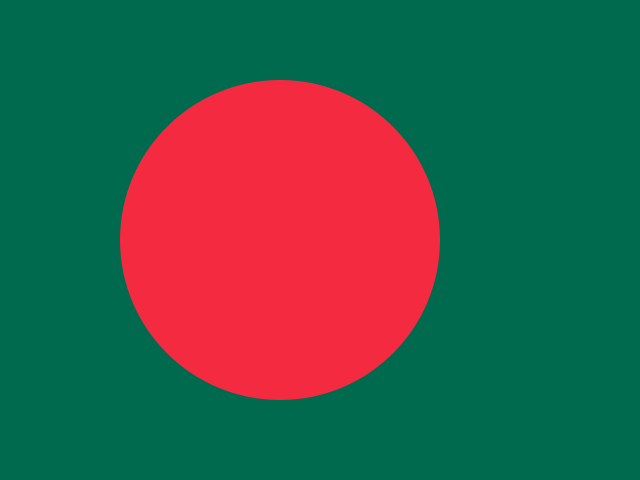
The Constituent Assembly adopted the constitution of the People's Republic of Bangladesh on 4 November 1972, and it came into force on 16 December 1972, the first anniversary of victory. It names Bangla as the state language. The same year the country adopted its green flag with a red disc.
1974
Bangladesh joins the United Nations
On 17 September 1974 Bangladesh became a full member of the United Nations. A week later, on 25 September, its prime minister gave the first speech ever made in Bengali at the UN General Assembly.
1999
International Mother Language Day is proclaimed
On 17 November 1999 UNESCO proclaimed 21 February, the day of the 1952 shootings in Dhaka, as International Mother Language Day. Since 2000 it has been marked around the world to celebrate all languages.
2022
The Padma Bridge opens
On 25 June 2022 the Padma Bridge opened over the Padma River. At 6.15 km it is the longest bridge in Bangladesh, carrying a four-lane road above and a railway below, and it links the southwest of the country to Dhaka without a ferry.
A Bengali saying goes 'machhe bhate Bangali': fish and rice make a Bengali. Rice is eaten at almost every meal, and fish from rivers, ponds and the sea is the main source of protein. Food is cooked in pungent mustard oil with turmeric, cumin, green chilli and mustard seed. A home meal is not served in courses: a mound of rice comes with small mashes called bhorta, dal, vegetables and a fish or meat curry, and sweet yoghurt or syrupy sweets end the meal. The grand meat and rice dishes of Old Dhaka come from the Mughal kitchens, and during Ramadan whole streets fill with fried snacks for iftar, the meal at sunset.
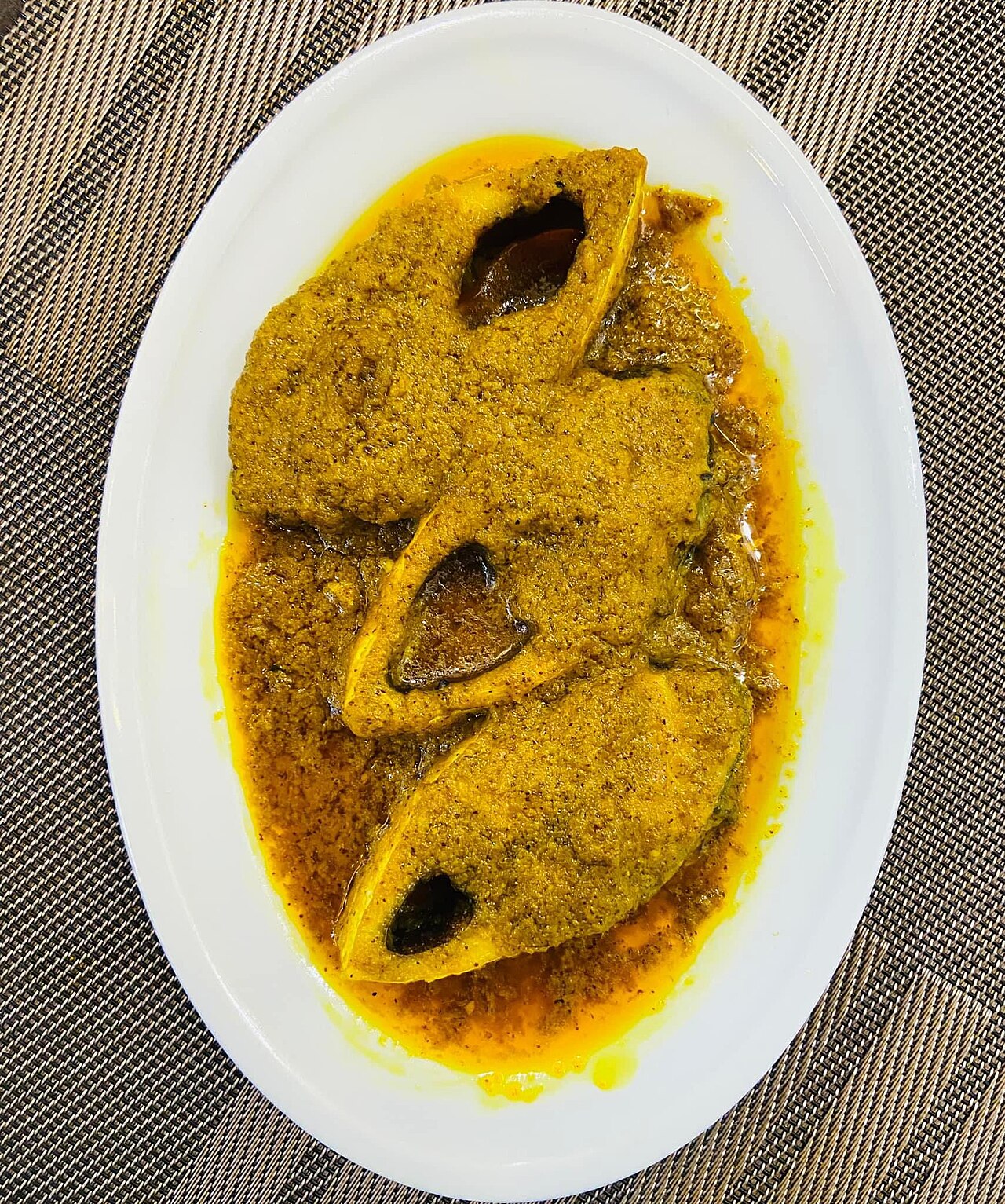
Ilish, or hilsa, a rich and bony fish of the herring family, cooked in a sharp sauce of ground mustard seeds, mustard oil, turmeric and green chillies. Eaten with plain rice, it is many people's favourite dish and is often called the national dish.
The ilish is the national fish of Bangladesh, and most of the world's ilish is caught in Bangladeshi waters: estimates range from about 86 to 97 percent.
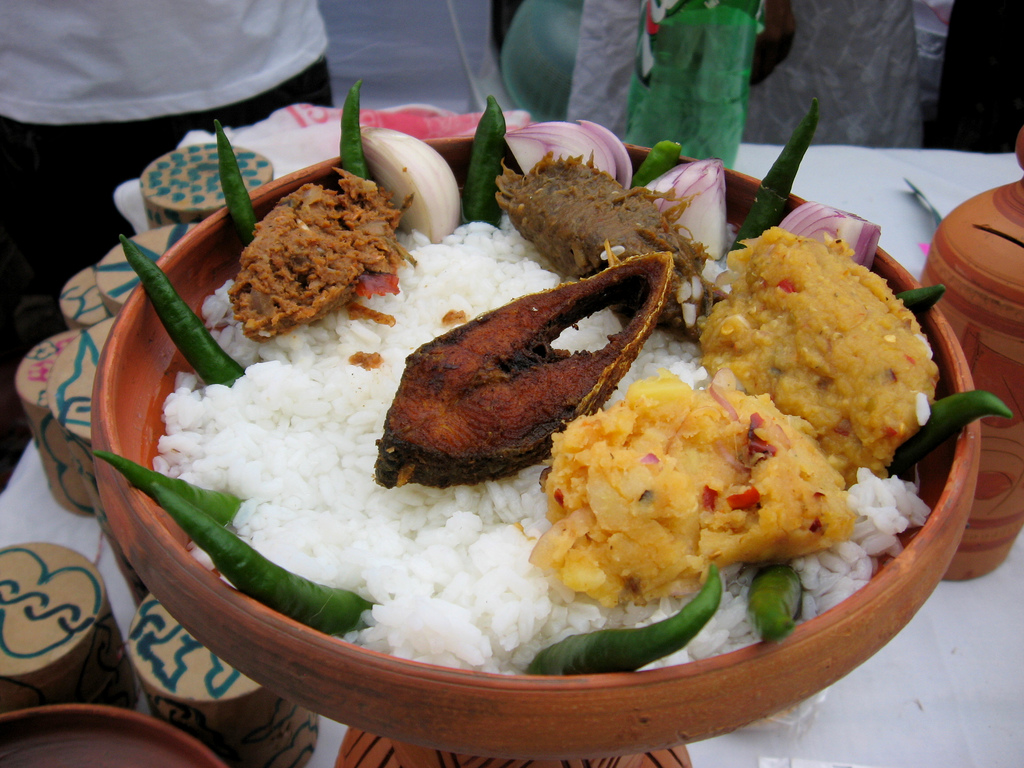
Cooked rice left to soak in water overnight, so that it ferments a little and turns cool and slightly sour. It is eaten in the morning with salt, onion, green chilli and a mash of potato or fried fish.
On Pohela Boishakh, the Bengali New Year on 14 April, many city people eat panta bhat with fried ilish for breakfast.
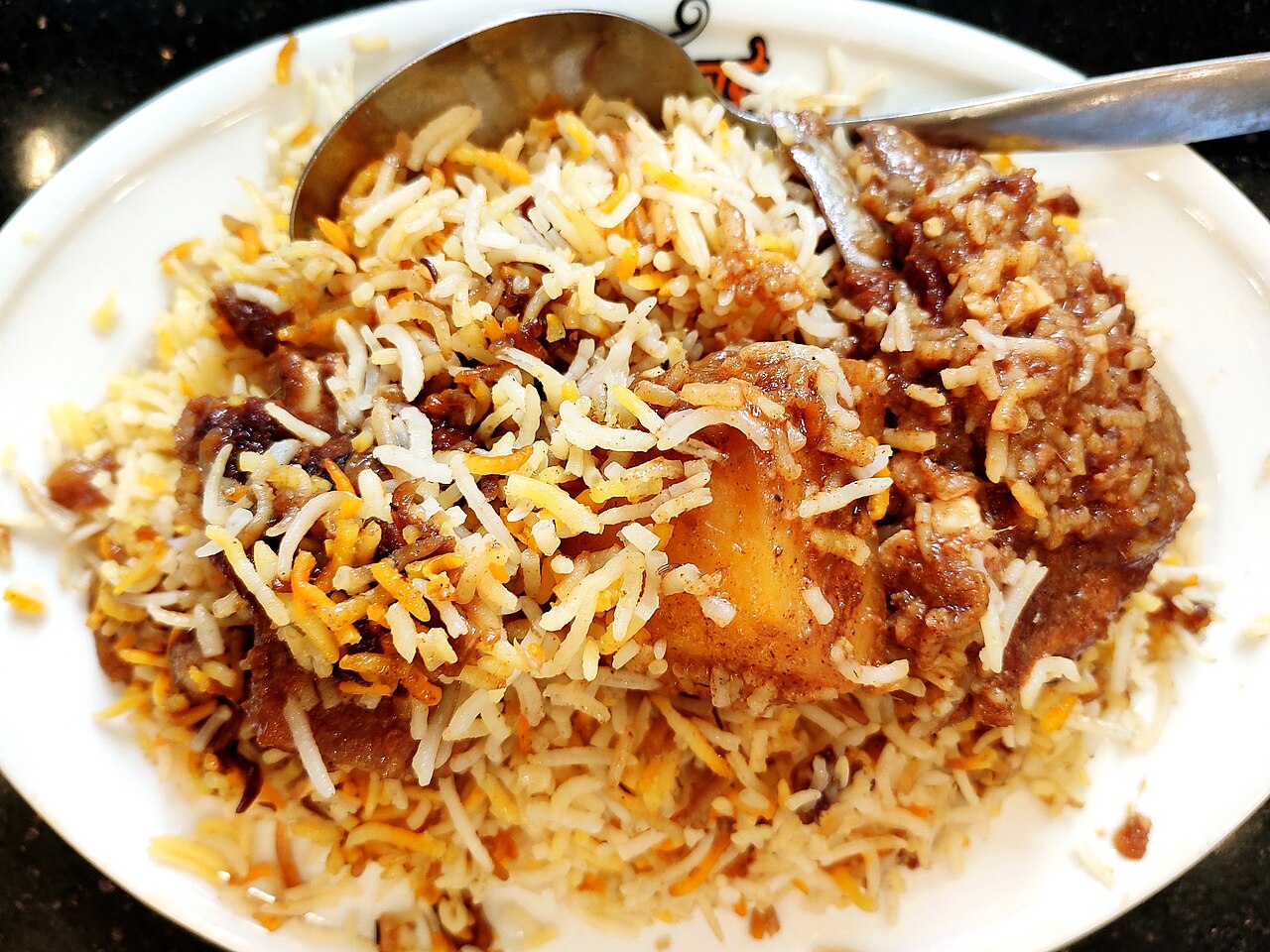
Aromatic rice layered with raw marinated mutton or goat and potatoes, then sealed and cooked slowly so the meat steams in its own juices. Kacchi means 'raw'. It is the classic dish of weddings in Dhaka, usually followed by a glass of borhani.
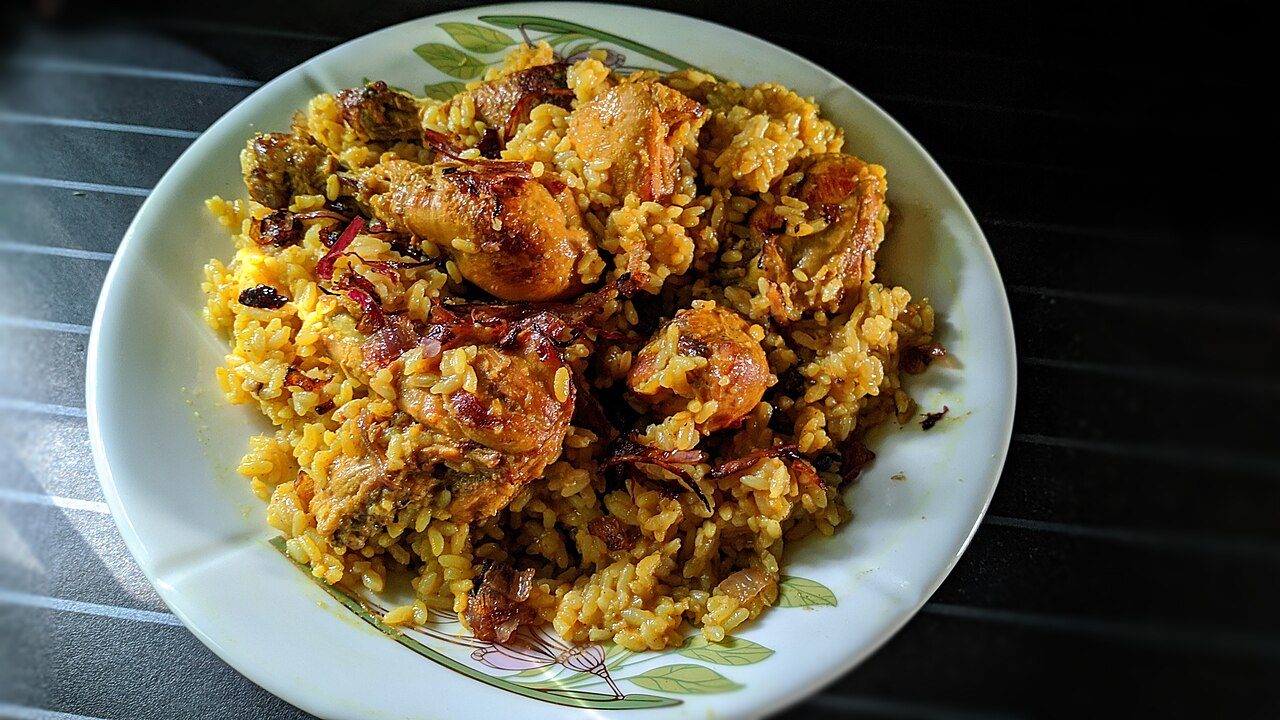
A fragrant pilaf of rice and chicken cooked with ghee, whole spices and a little milk or yoghurt, gentler than biryani. It is a signature festive dish of Dhaka.
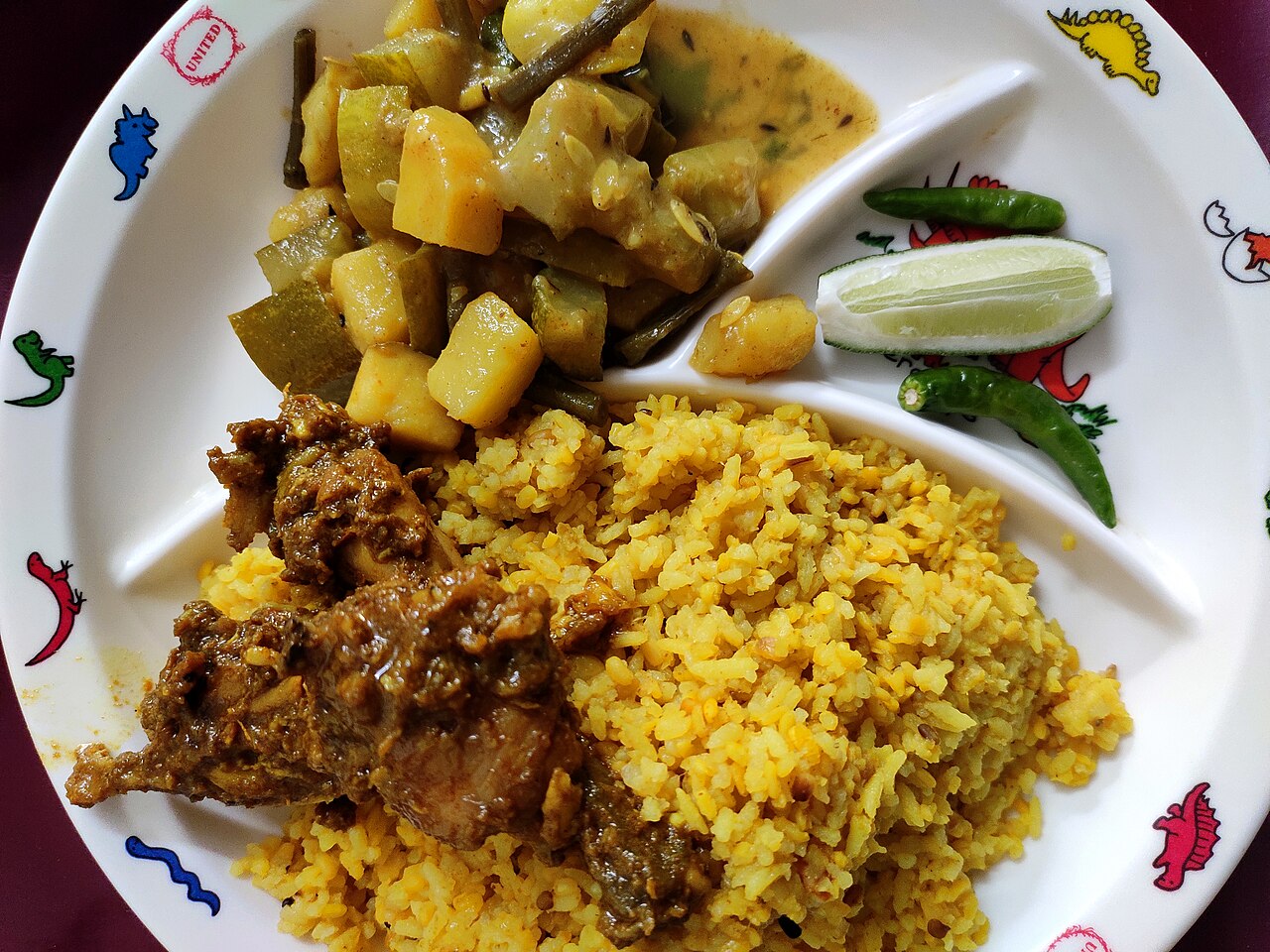
Rice and lentils fried in ghee with onion and spices, then cooked together into a soft, savoury dish. It is often eaten with fried egg, beef or aubergine, and many families cook it on rainy days.
See the recipe
Serves 4
50 min
Ingredients
200 g basmati or other fragrant rice
100 g split yellow mung lentils (moong dal)
3 tablespoons ghee or vegetable oil
1 large onion, thinly sliced
2 bay leaves, 3 green cardamom pods and a small piece of cinnamon
1 tablespoon grated ginger and 2 cloves garlic, crushed
1 teaspoon ground turmeric
1 teaspoon ground cumin
½ teaspoon chilli powder (or less, to taste)
1 teaspoon salt
About 900 ml hot water
2 green chillies, split (optional)
Method
Dry-roast the lentils in a heavy pan over medium heat for 3 to 4 minutes, stirring, until they smell nutty. Rinse the lentils and the rice together and drain.
Heat the ghee in the same pan. Fry the onion until golden, then add the bay leaves, cardamom and cinnamon for 30 seconds.
Add the ginger, garlic, turmeric, cumin and chilli powder with a splash of water and fry for 1 minute.
Add the rice and lentils and fry gently for 3 to 4 minutes, stirring, so every grain is coated.
Pour in the hot water, add the salt and green chillies, bring to the boil, then cover and cook on low heat for 20 to 25 minutes, until the rice and lentils are soft and the water is absorbed.
Let it rest for 5 minutes, remove the whole spices and serve hot with a fried egg or aubergine fritters.
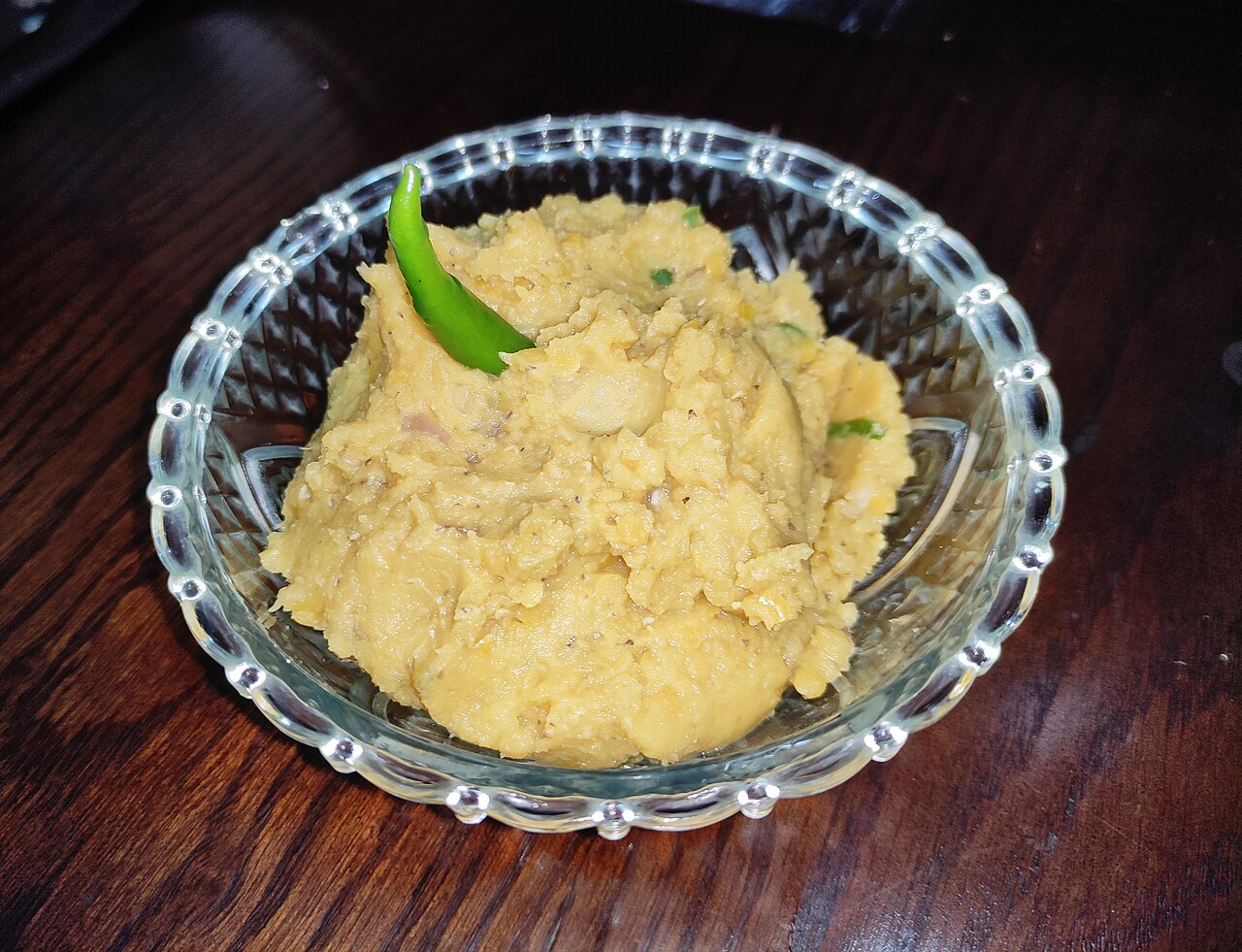
Boiled potato mashed by hand with raw mustard oil, sliced onion, green or fried dried chilli and salt. Bhorta means a mash, and families make dozens of kinds, from aubergine, fish, lentils or tomato, to eat with rice.
See the recipe
Serves 4
30 min
Ingredients
4 medium potatoes
1 small red onion, very finely chopped
1 to 2 green chillies, finely chopped, or 2 dried red chillies fried in a little oil and crumbled
2 tablespoons mustard oil sold for cooking (or vegetable oil)
A handful of fresh coriander, chopped
Salt to taste
Method
Boil the potatoes in their skins until soft right through, about 20 minutes. Drain, peel while warm and put them in a bowl.
Add the onion, chilli, coriander, salt and mustard oil.
Mash and squeeze everything together with a fork or clean hands until smooth and well mixed. Taste and add more salt or oil if you like.
Shape into small mounds and serve at room temperature with plain rice and dal.
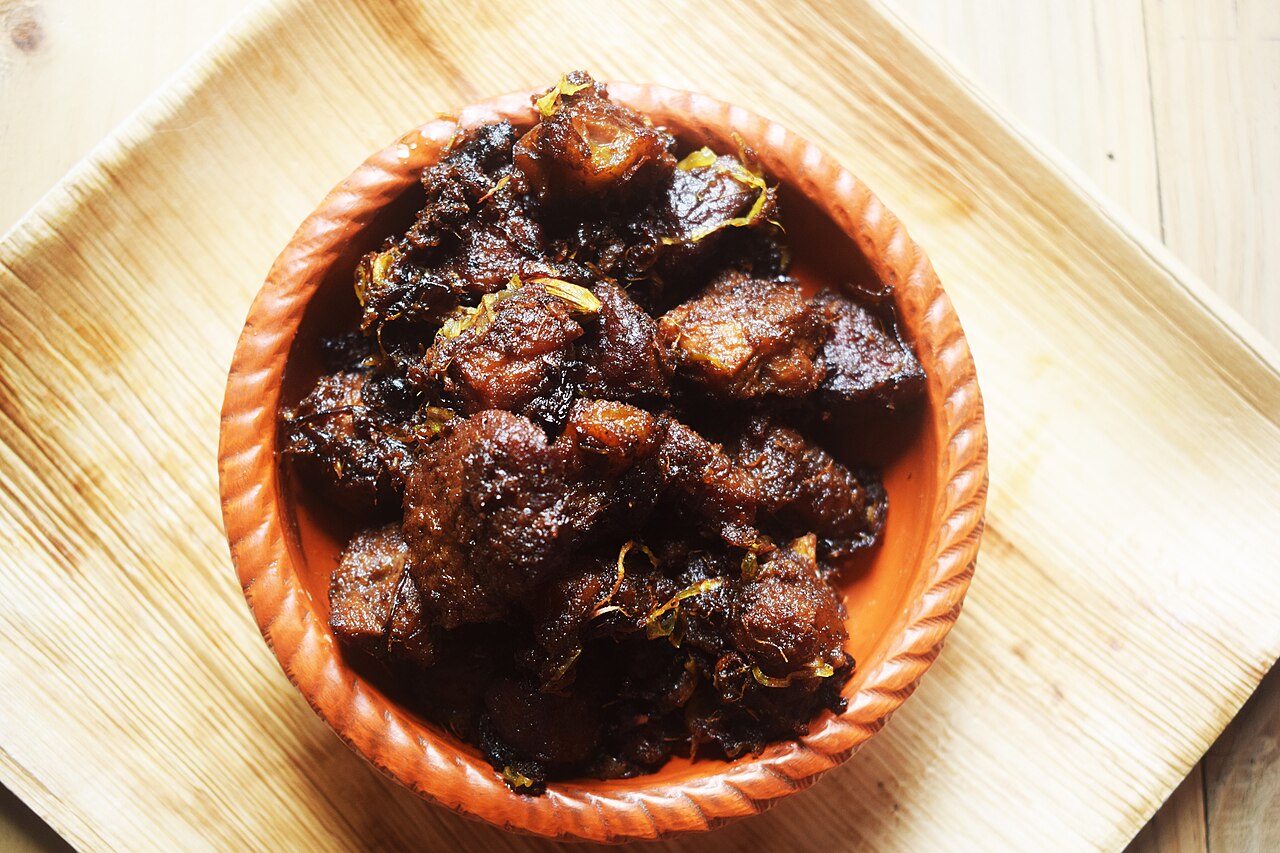
Beef cooked slowly with onion, ginger, garlic, chilli and warm spices, then fried in its own sauce for a long time until it turns almost black and very tender. Kala means black, and bhuna is this way of frying spices and meat until dry and rich. It is a favourite at Chittagong's mezban feasts.
A mezban is a great communal feast in Chittagong, where hosts serve beef curry and rice to hundreds of guests.
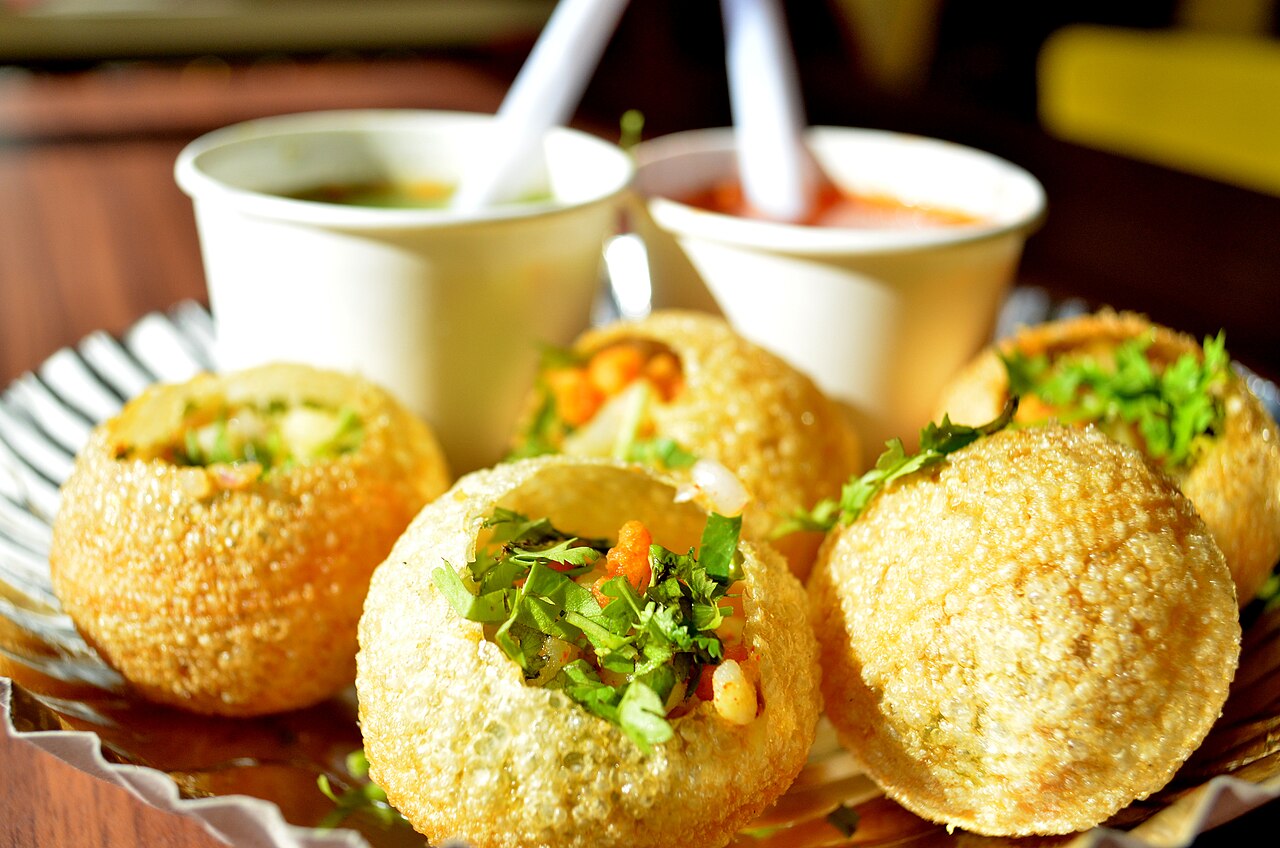
Small, hollow, crisp shells filled with a spicy mix of potatoes, chickpeas and onion, topped with grated boiled egg and eaten in one bite after a splash of sour tamarind water. The Bangladeshi cousin of Indian panipuri.
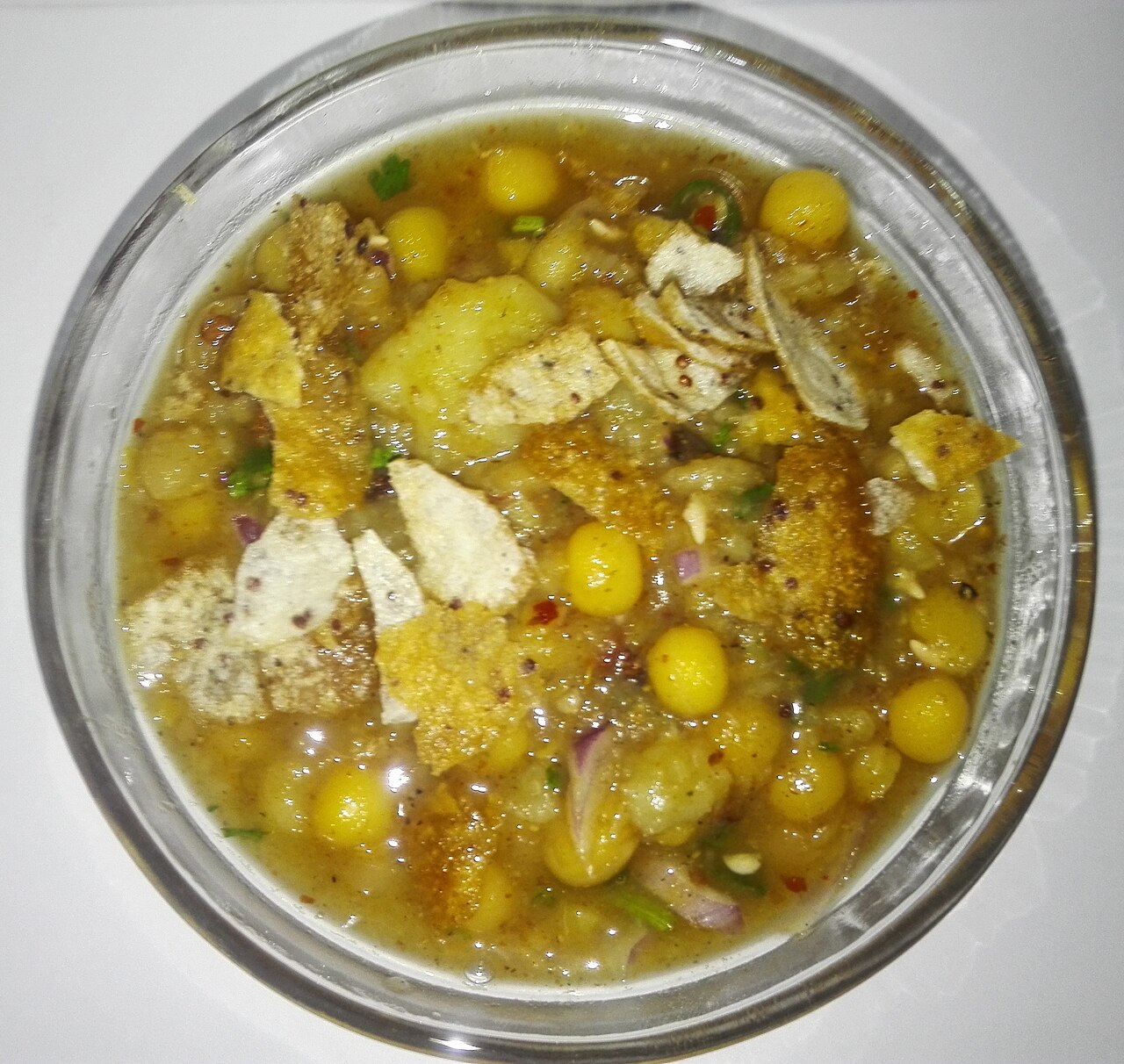
A warm, tangy dish of yellow peas and potatoes, topped with onion, green chilli, grated boiled egg, coriander, cumin, tamarind sauce and crushed crisp puri. It is sold at the same stalls as fuchka.
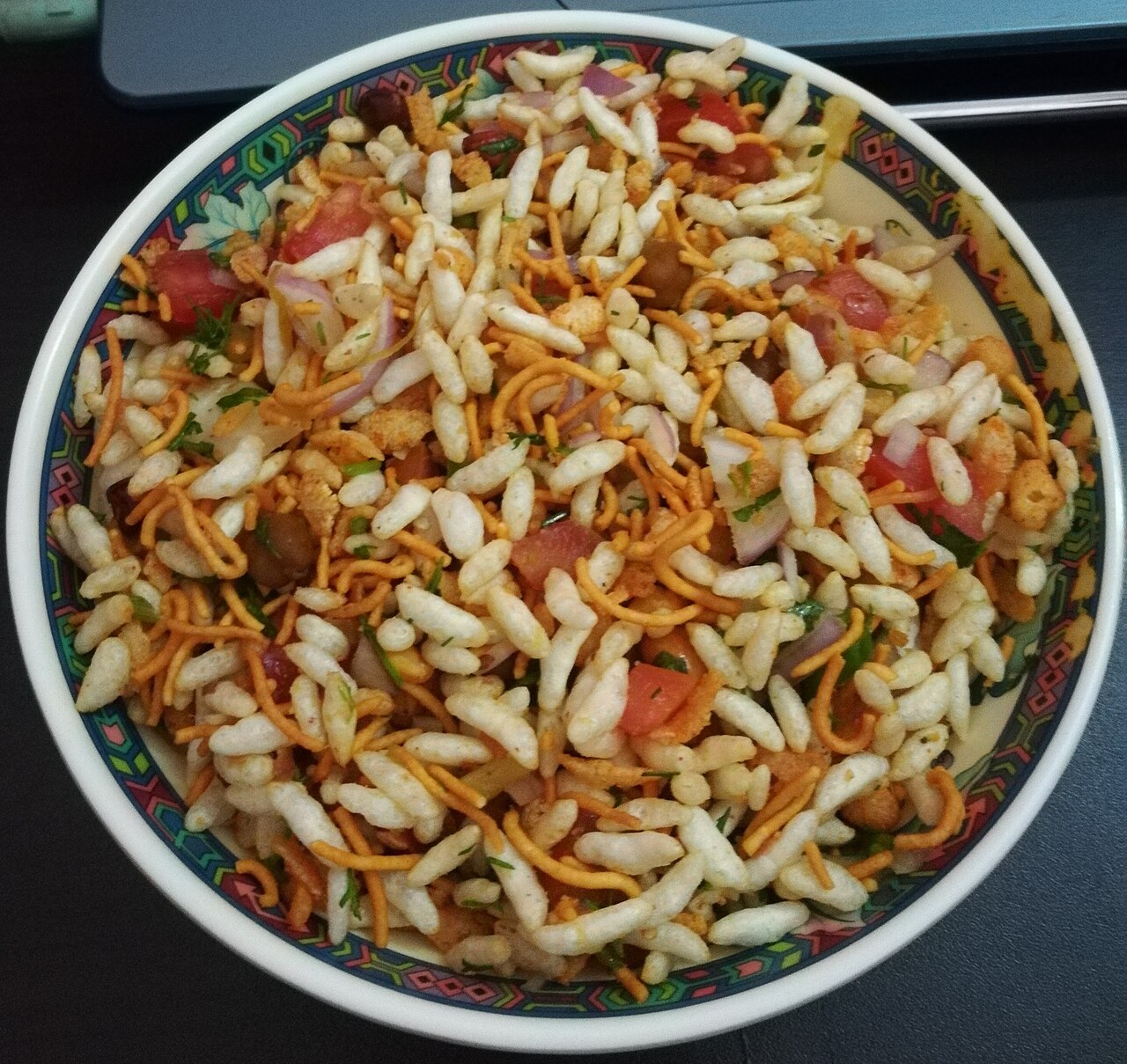
Puffed rice tossed with chanachur (a spicy fried snack mix), onion, green chilli, cucumber, coriander and a few drops of mustard oil, sold by street sellers in paper cones. Jhal means spicy and muri means puffed rice.
See the recipe
Serves 2
10 min
Ingredients
60 g puffed rice (muri)
40 g spicy Bombay mix (chanachur)
1 small red onion, finely chopped
½ small cucumber and 1 small tomato, finely chopped
1 green chilli, finely chopped (or less, to taste)
A handful of fresh coriander, chopped
1 teaspoon mustard oil
Juice of ½ lime
A pinch of salt and a pinch of ground roasted cumin
Method
Put the onion, cucumber, tomato, chilli and coriander in a large bowl with the salt, cumin, mustard oil and lime juice, and mix.
Just before eating, add the puffed rice and chanachur and toss quickly with a spoon.
Serve at once in bowls or paper cones, before the puffed rice goes soft.
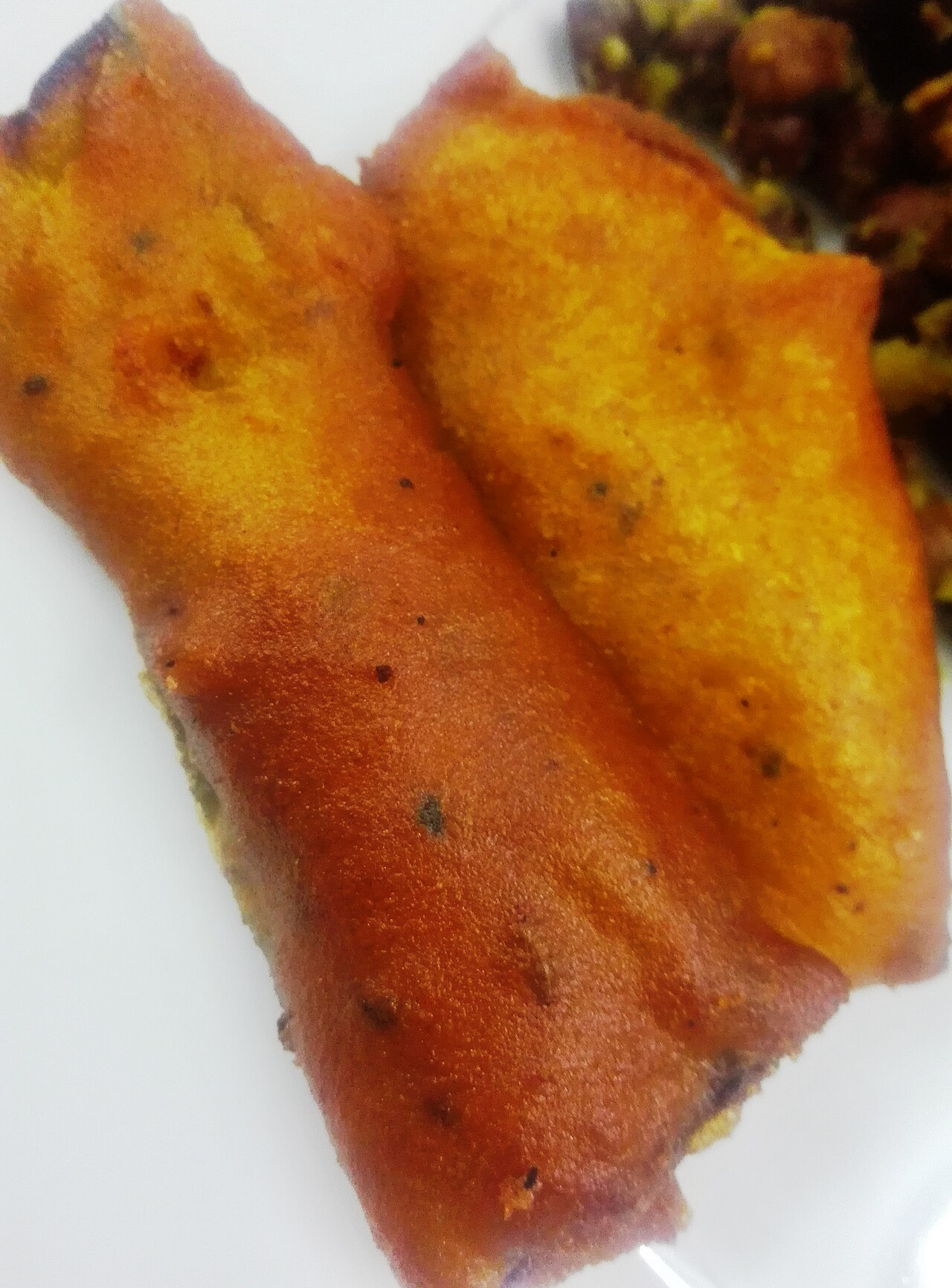
Long slices of aubergine dipped in a gram flour batter with turmeric and salt, then deep-fried until golden. It is a favourite with afternoon tea and at iftar during Ramadan.
The name comes from begun, the Bengali word for aubergine.
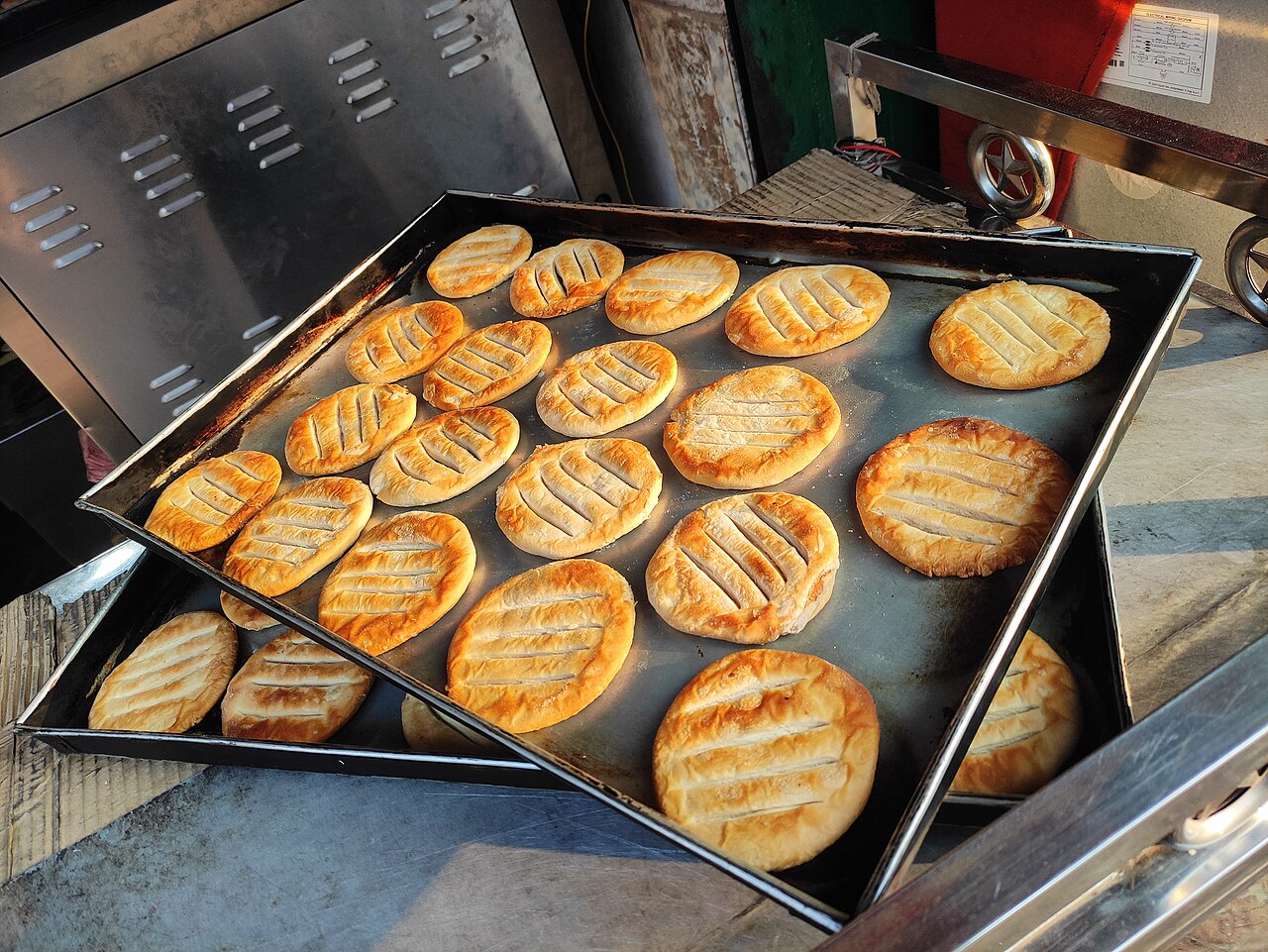
A thick, layered flatbread made with flour and ghee and baked until crisp, almost like a biscuit. In Old Dhaka it is eaten for breakfast or with tea, and small bakeries still make it by hand.
A legend says the bread is named after Aga Baqer, an 18th-century general, and his beloved Khani Begum.
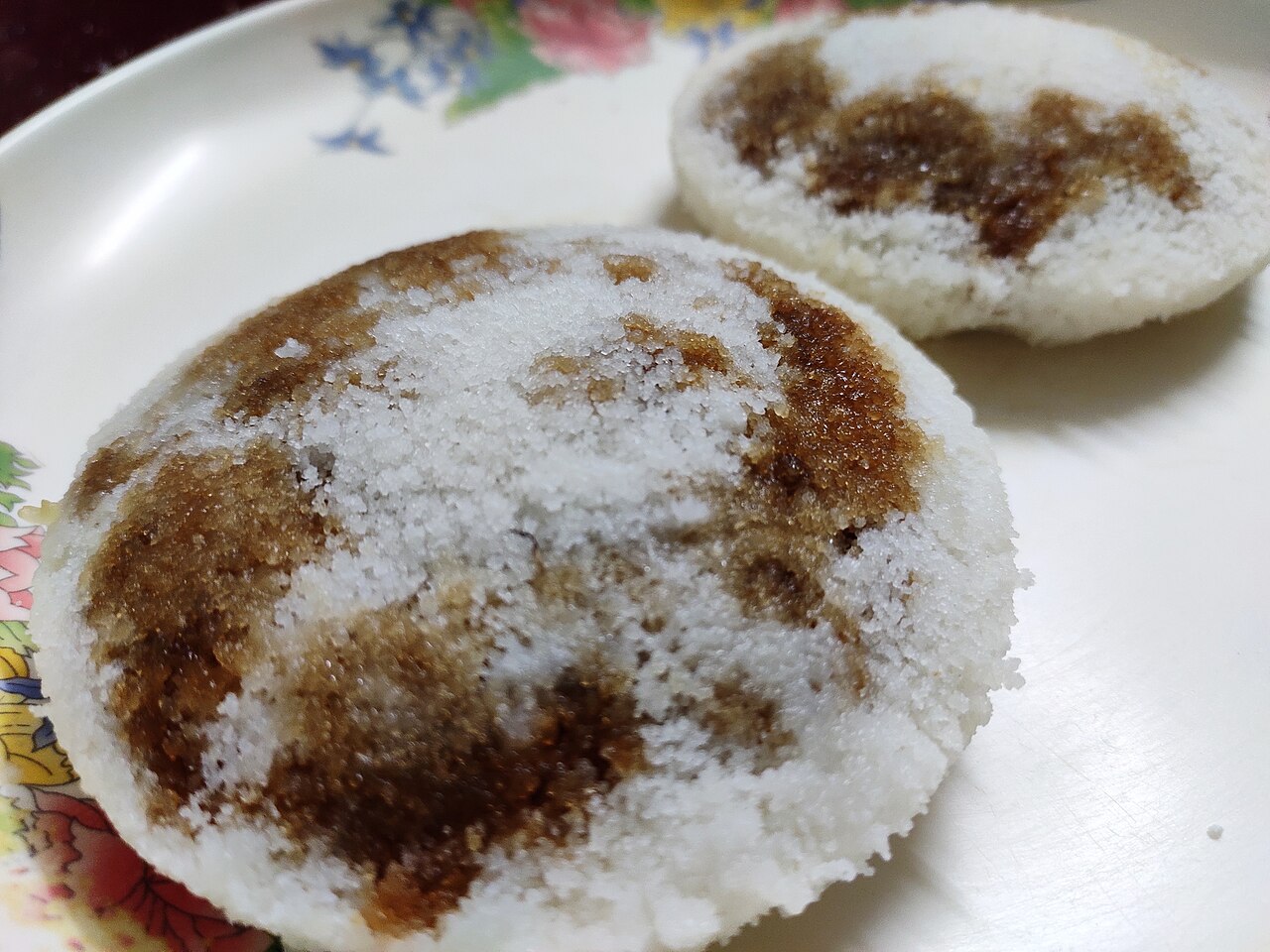
A soft, round cake of fresh rice flour filled with grated coconut and date palm molasses, steamed in a cloth over a pot of boiling water. Sold hot from street stalls on winter mornings and evenings.
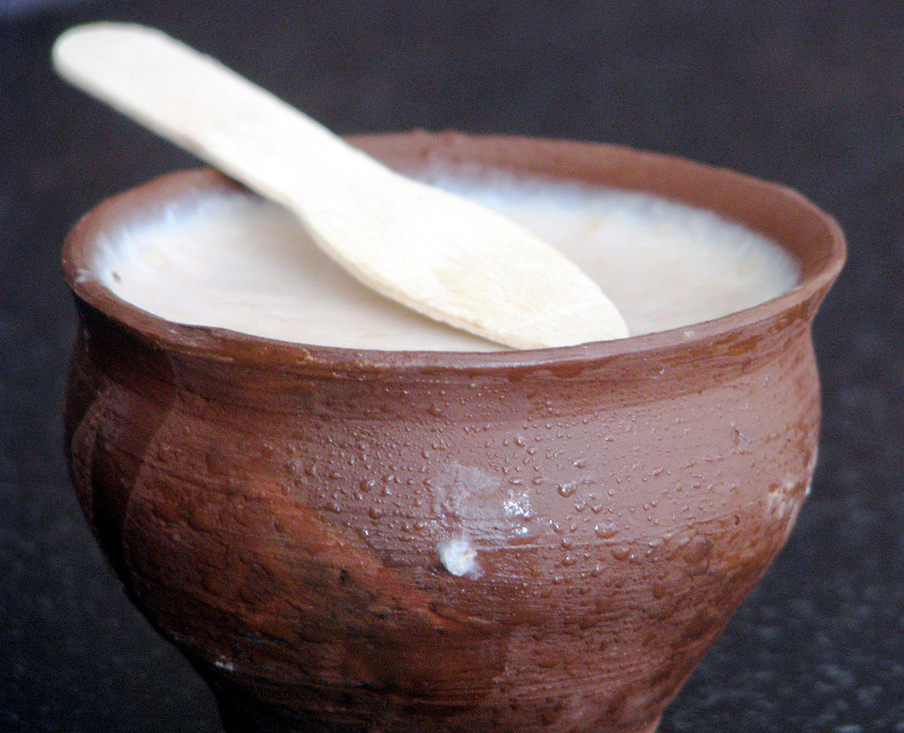
Sweet yoghurt made from milk boiled down until thick, sweetened with sugar or molasses and set overnight in clay pots. The pots let water evaporate, so the yoghurt becomes thick and creamy.
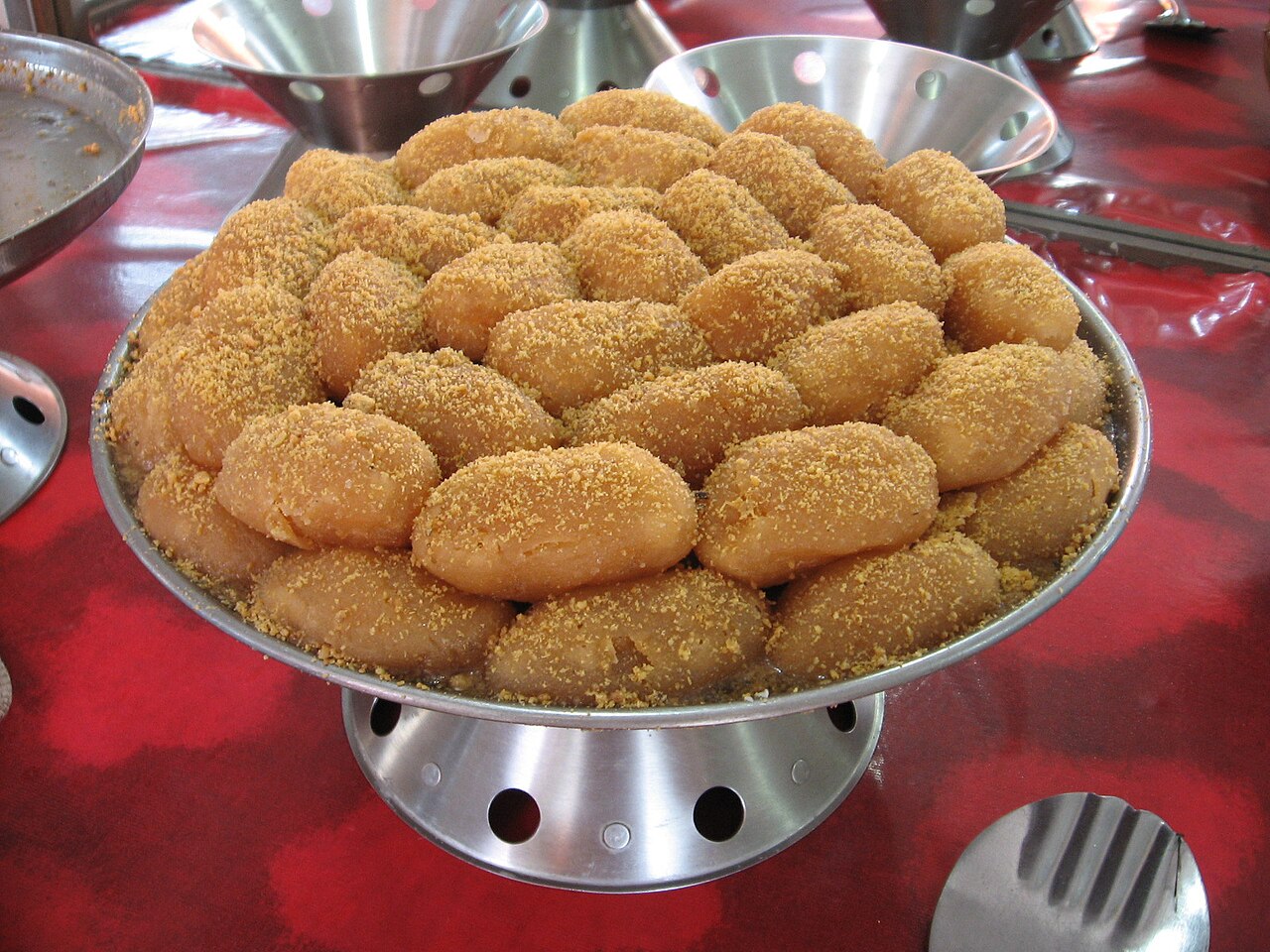
An oval sweet of fresh cheese (chhena) cooked in sugar syrup until firm and brown, sometimes coated with dried milk flakes. The version from Porabari in Tangail dates back to the mid-1800s.
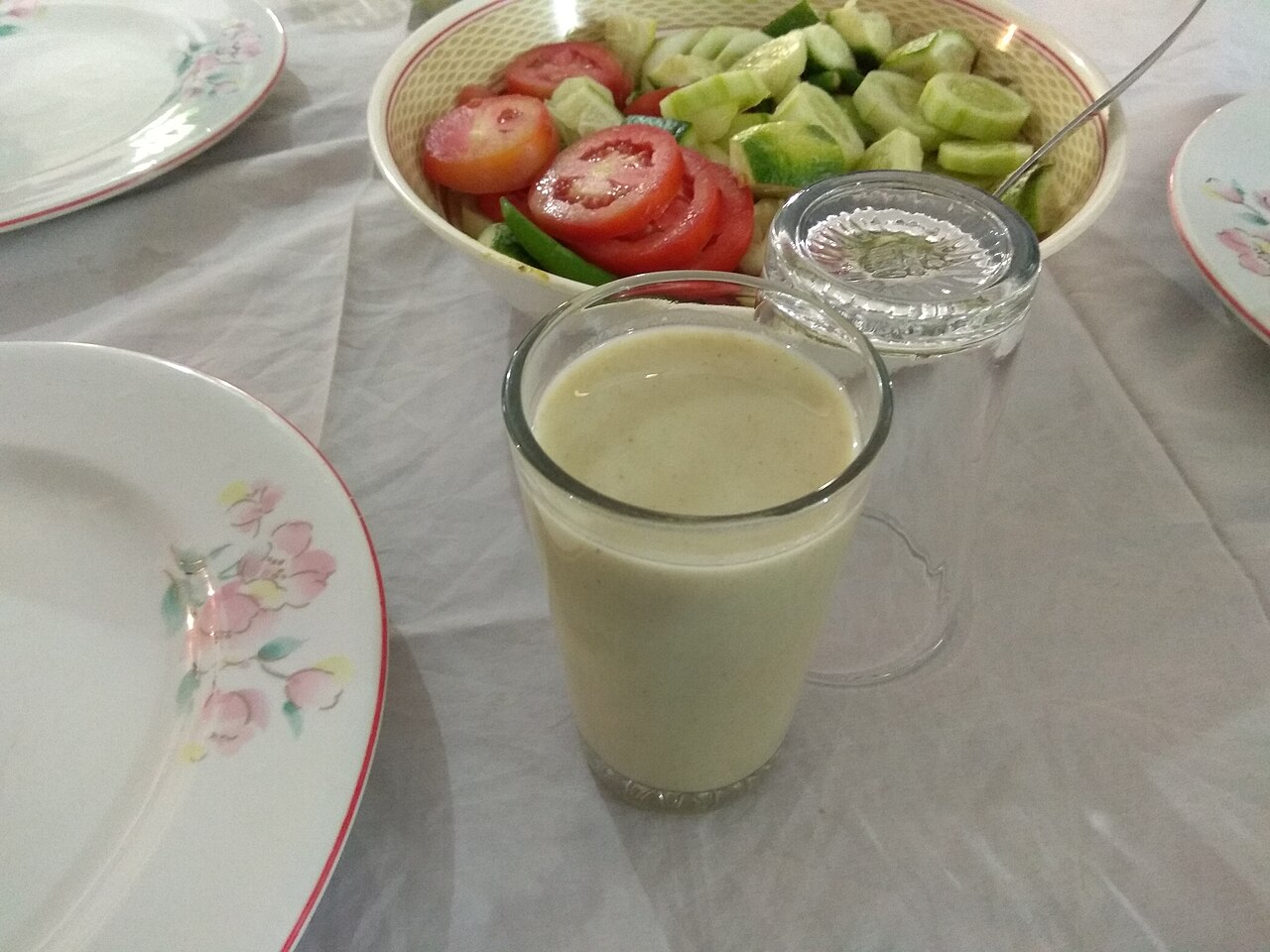
A savoury, spicy yoghurt drink with mint, coriander, green chilli, mustard seed and black salt. It is served after heavy meals such as kacchi biryani at weddings and during Ramadan to help digestion.
See the recipe
Serves 4
10 min
Ingredients
500 g plain yoghurt, chilled (use pasteurised yoghurt, as sold in shops)
300 ml cold water
A large handful of fresh mint leaves and a handful of coriander
1 green chilli (or less, to taste)
1 teaspoon ground roasted cumin
½ teaspoon ground mustard seed
½ teaspoon black salt (kala namak) or ordinary salt
1 to 2 teaspoons sugar
Method
Blend the mint, coriander and green chilli with a splash of the water to a smooth green paste.
Add the yoghurt, the rest of the water, cumin, mustard, black salt and sugar and blend again until frothy.
Taste and adjust the salt and sugar. Strain if you prefer it smooth.
Chill and serve in glasses, sprinkled with a pinch of cumin, alongside or after a rich rice dish.
Most Bangladeshis eat with their right hand. Wash your hands before and after the meal: restaurants have a wash basin, and at home a jug of water and a bowl are brought to the table.
Mix a little rice with curry at the edge of your plate, make a small ball with your fingers and push it into your mouth with your thumb. Spoons are always available in city restaurants if you prefer.
Never eat with your left hand, and use your right hand to pass food or to give and take anything.
Ilish and many river fish are full of small bones. Eat slowly and put the bones at the edge of your plate.
Most people are Muslim, so pork is not served and alcohol is restricted. During Ramadan do not eat, drink or smoke in public during the day, and accept an invitation to iftar at sunset if you can.
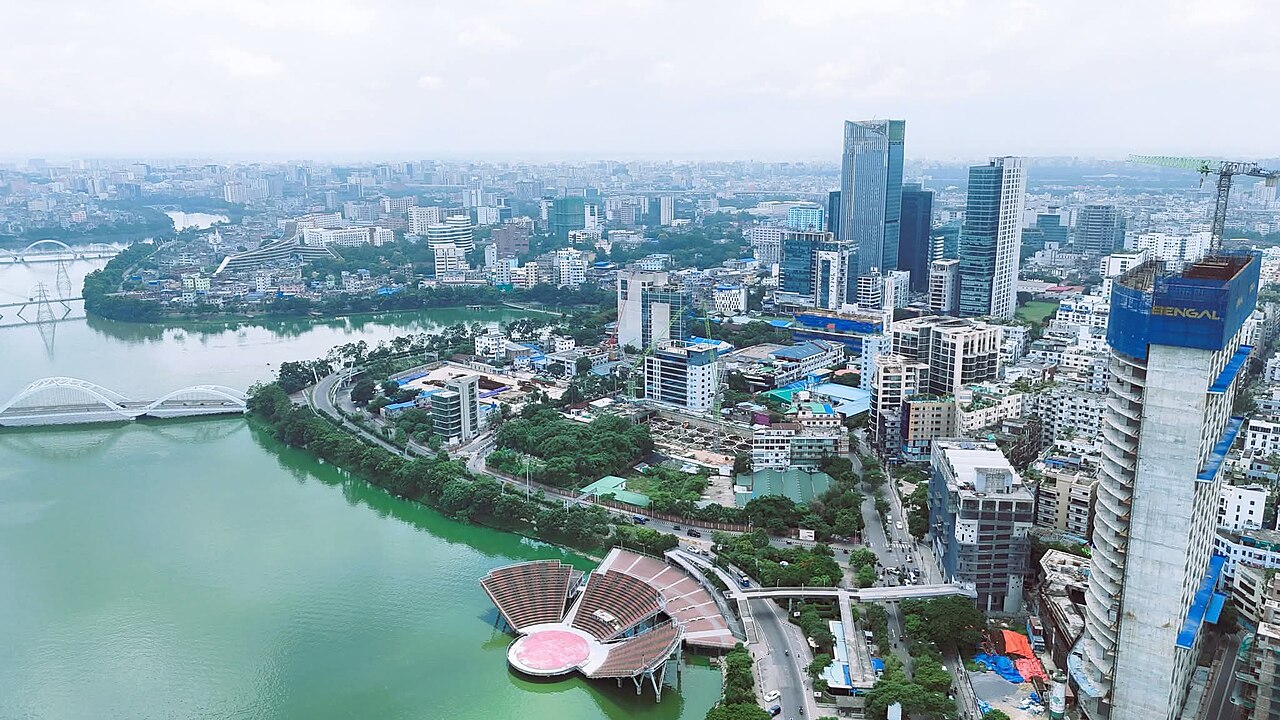
Dhaka, the capital, sits almost in the middle of the country, among rivers. Chittagong is the great port of the southeast, near the hills and the long beach of Cox's Bazar. Khulna is the gateway to the Sundarbans, Rajshahi and Bogura lie in the north on the old lands of Pundravardhana, and Sylhet and Sreemangal in the northeast are tea country.
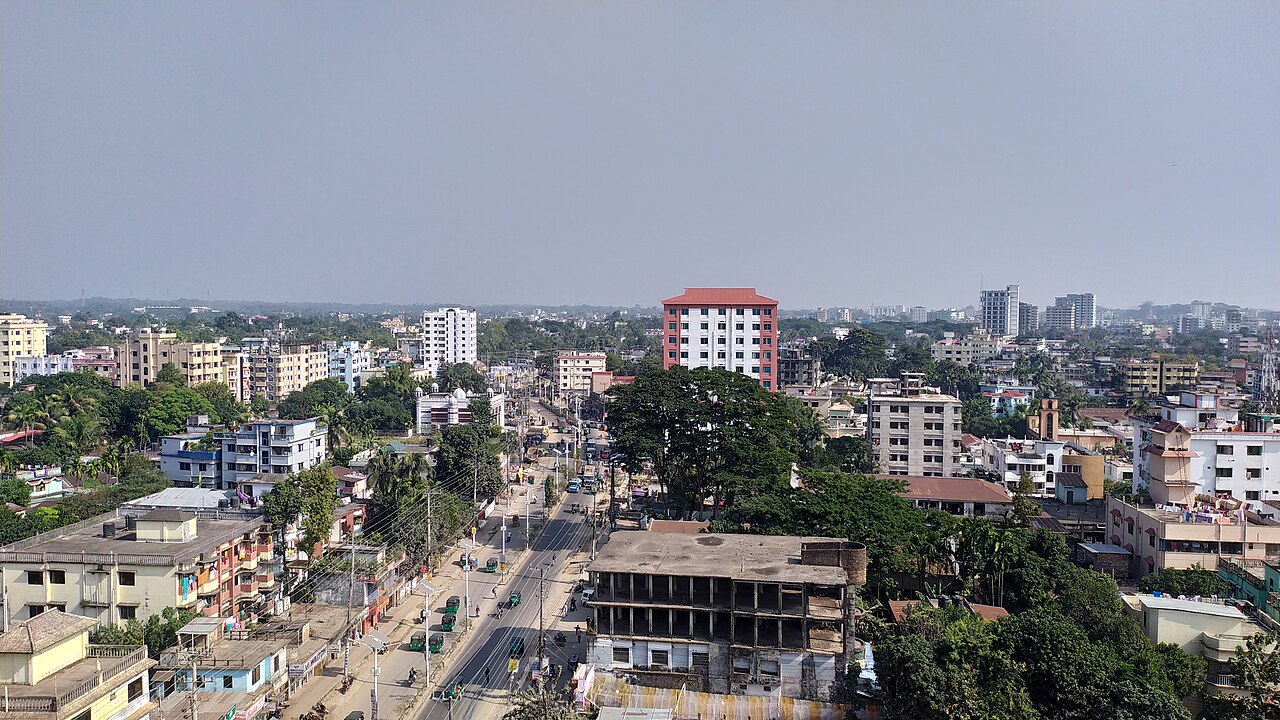
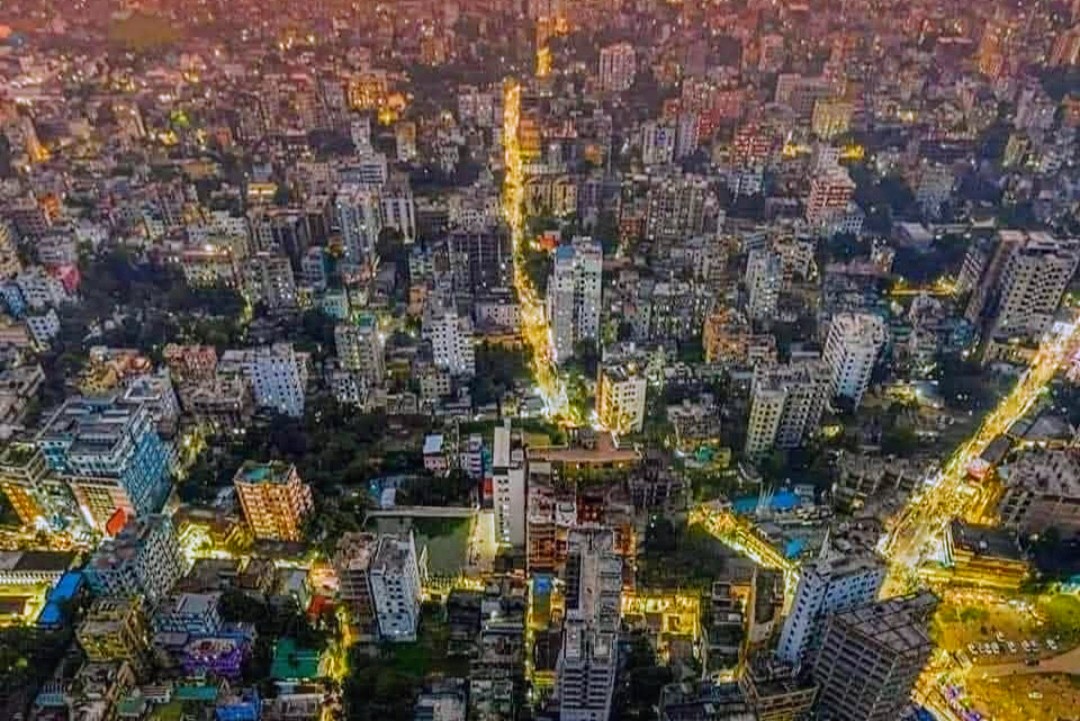
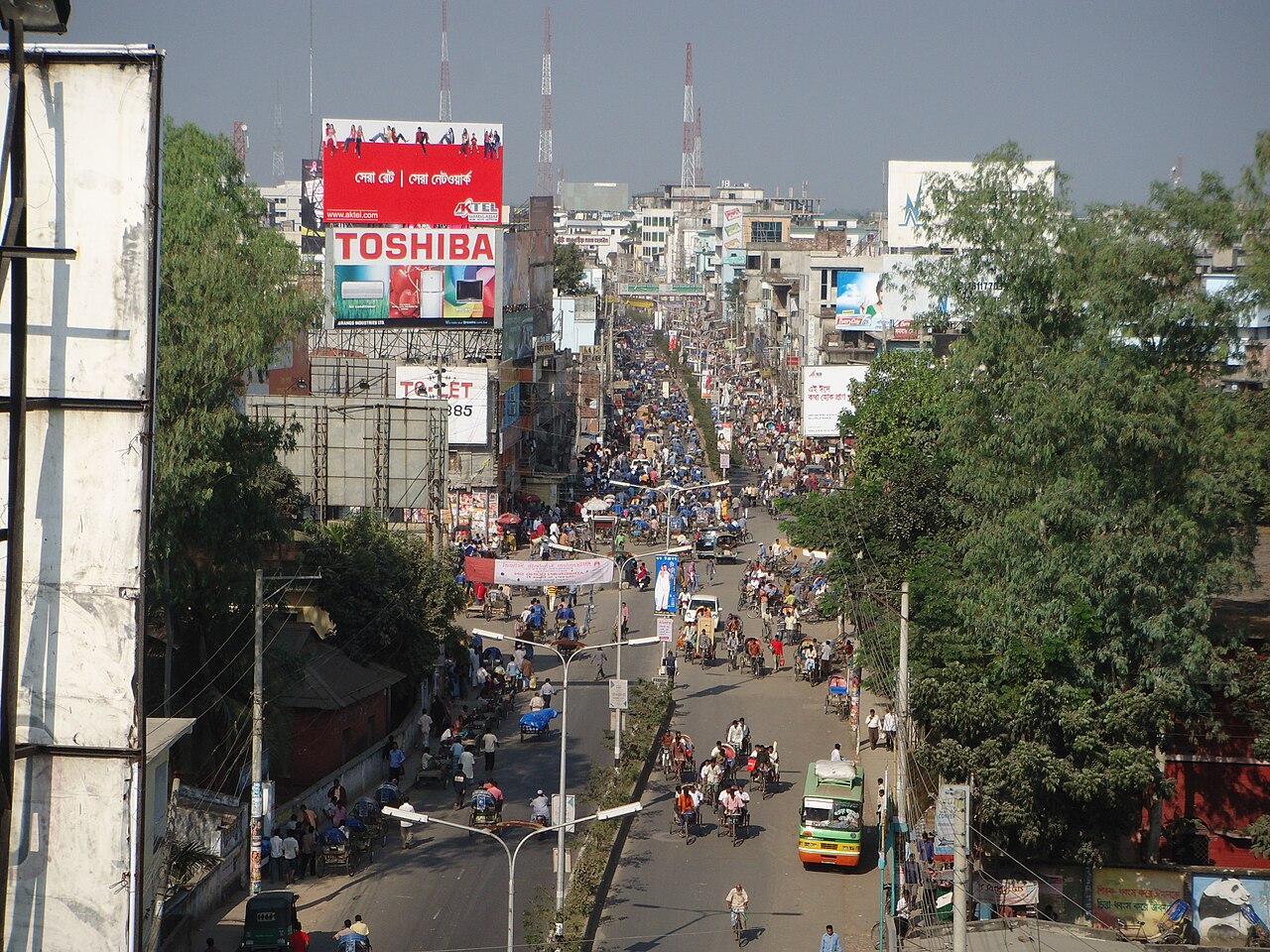
The capital and by far the largest city, on the Buriganga River. It became the Mughal capital of Bengal in 1610. Old Dhaka is a maze of bazaars, mosques and Mughal buildings, and the city's streets are full of colourfully painted cycle rickshaws.
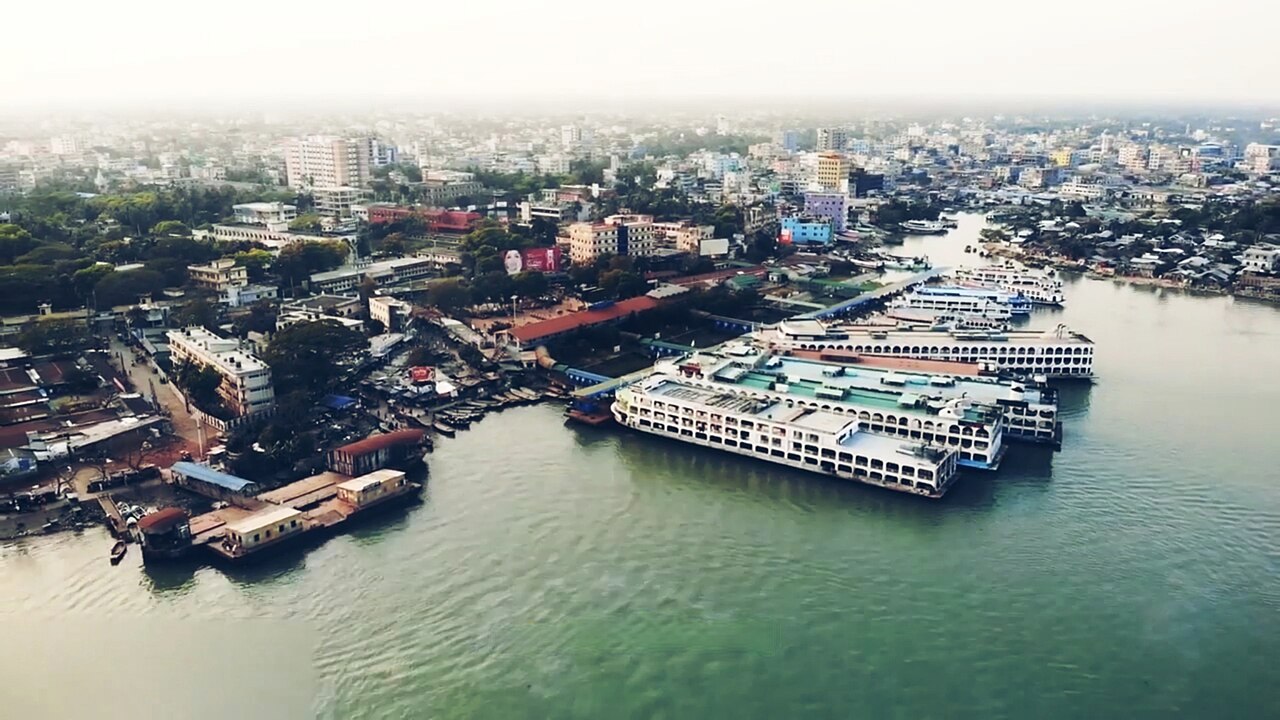
The second-largest city, officially called Chattogram, on the Karnaphuli River between the hills and the Bay of Bengal. Its port is the busiest in Bangladesh and the busiest container port on the Bay of Bengal, and has been a trading harbour for centuries.
A river port in the southwest, on the Rupsha and Bhairab rivers, and the country's third-largest urban area. It is the starting point for boat trips into the Sundarbans, and the mosque city of Bagerhat is close by.
The largest city of the north, on the Padma River close to the Indian border. It is a historic centre of silk weaving, a city of universities, and often called the cleanest city in Bangladesh.
A green city on the Surma River in the northeast, among tea gardens and hills. Pilgrims visit the shrine of the Sufi saint Shah Jalal, and many British Bangladeshis have family roots here.
A river port on the Kirtankhola River in the south, officially spelled Barishal, where rivers and canals are the main roads. It was once called the Venice of Bengal, and boats and ferries are still a main way to travel.
An old city on the Gumti River in the east, officially spelled Cumilla, near the Indian border. It was once a capital of the Tripura kingdom, and the nearby Lalmai and Mainamati hills were ruled by Buddhist dynasties more than a thousand years ago.
A trading city in the north, officially renamed from Bogra in 2018. It is one of the oldest cities in Bengal: the ancient city of Mahasthangarh lies just 11 km to the north.
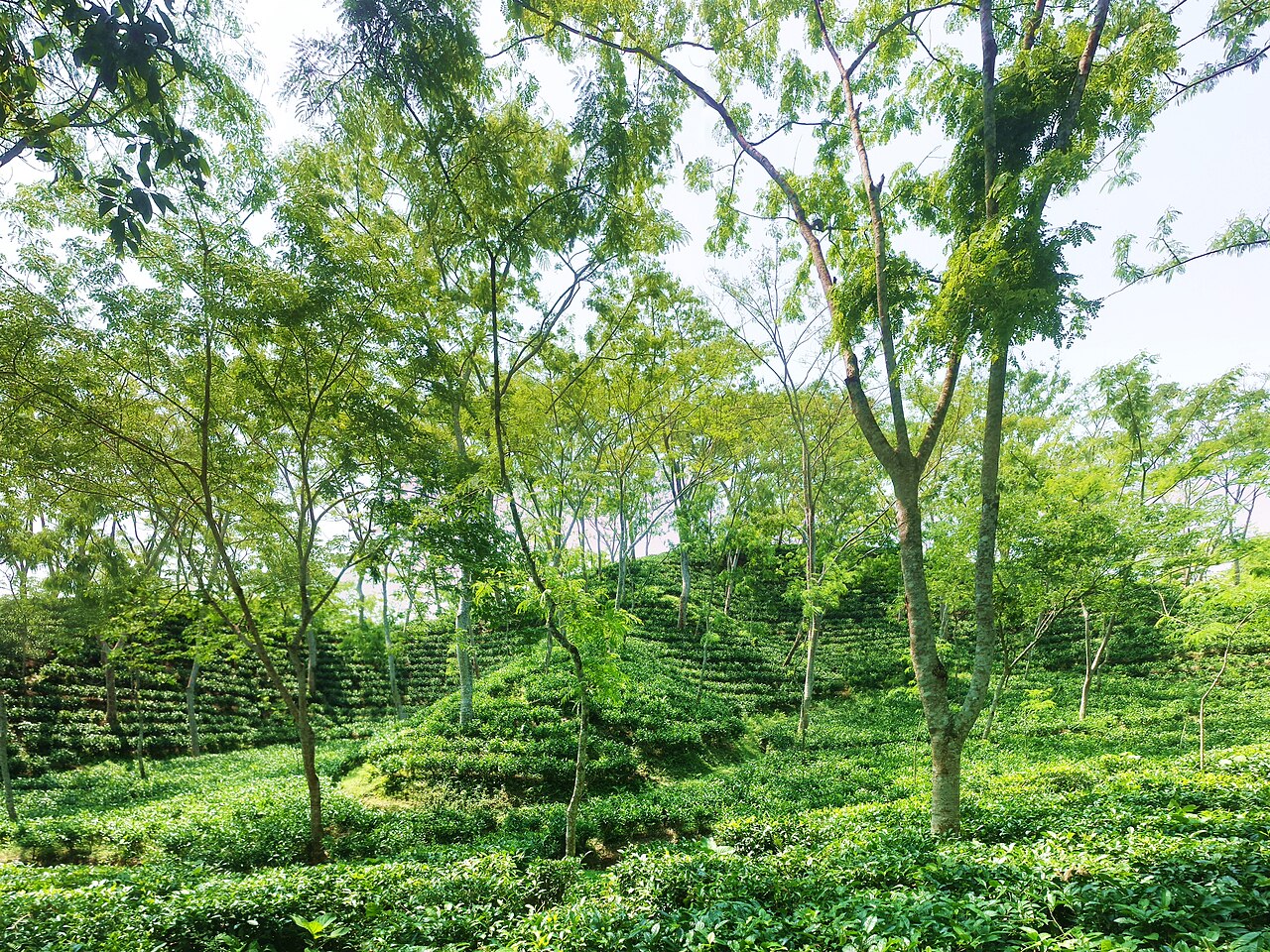
A small town surrounded by rolling tea estates, often called the tea capital of Bangladesh. Rubber, pineapples and lemons also grow in the hills around it.
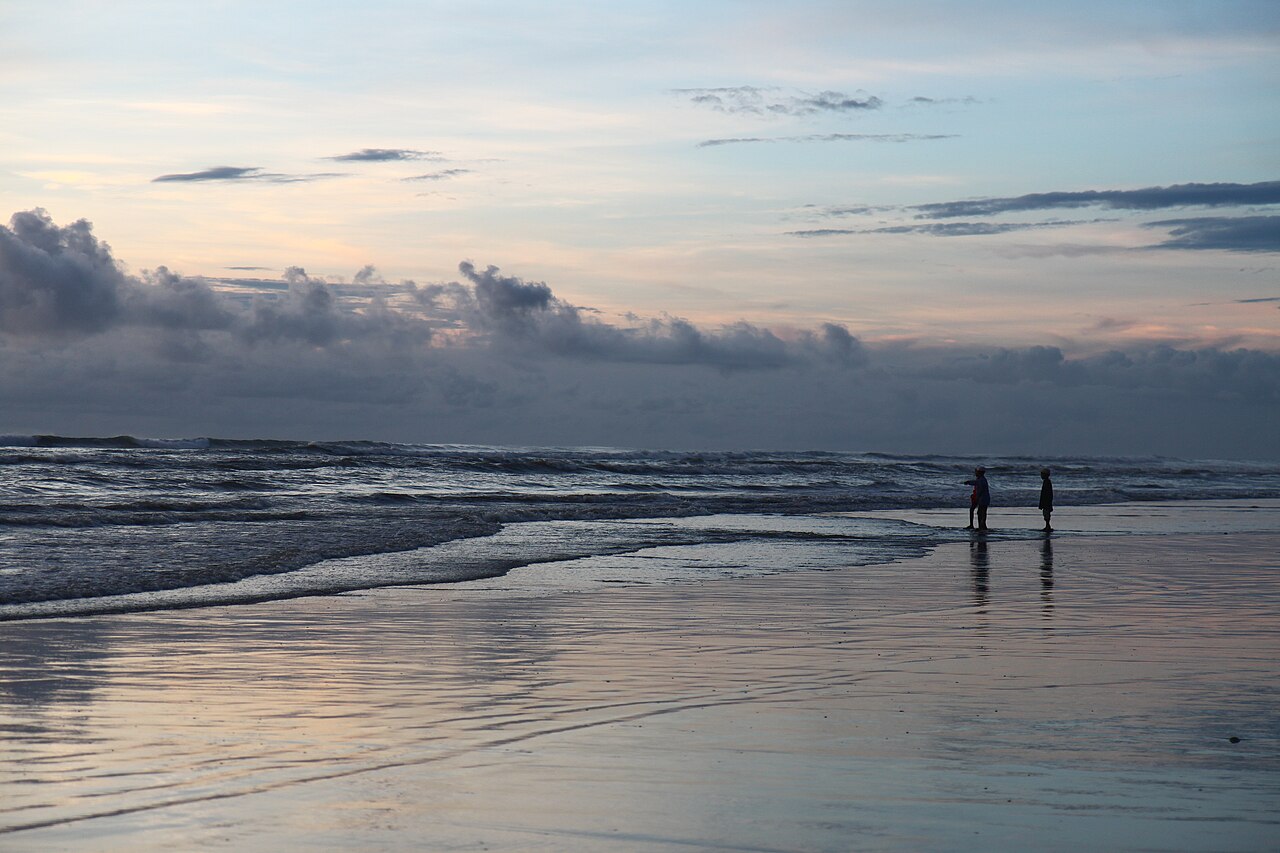
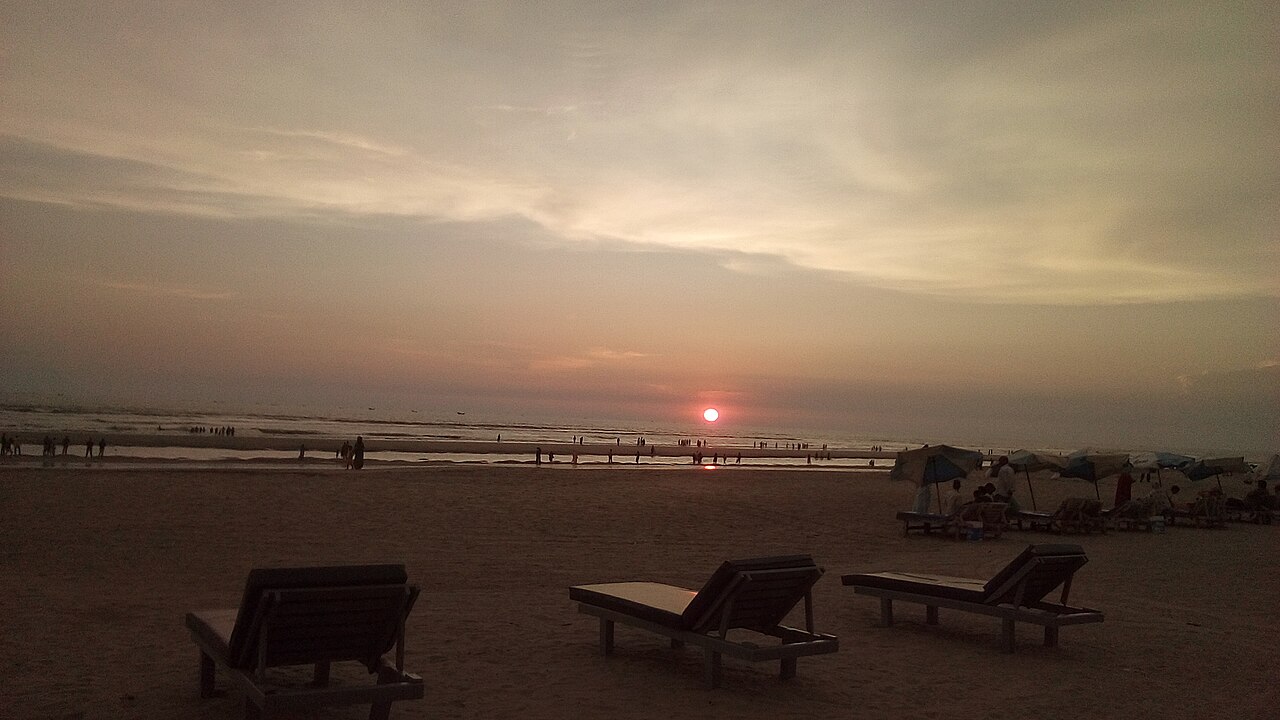
A fishing port and seaside town in the far southeast, named after Captain Hiram Cox, an East India Company officer who died there in 1799 while settling refugees. Its beach is the country's most popular holiday spot.
One of the longest natural sea beaches in the world
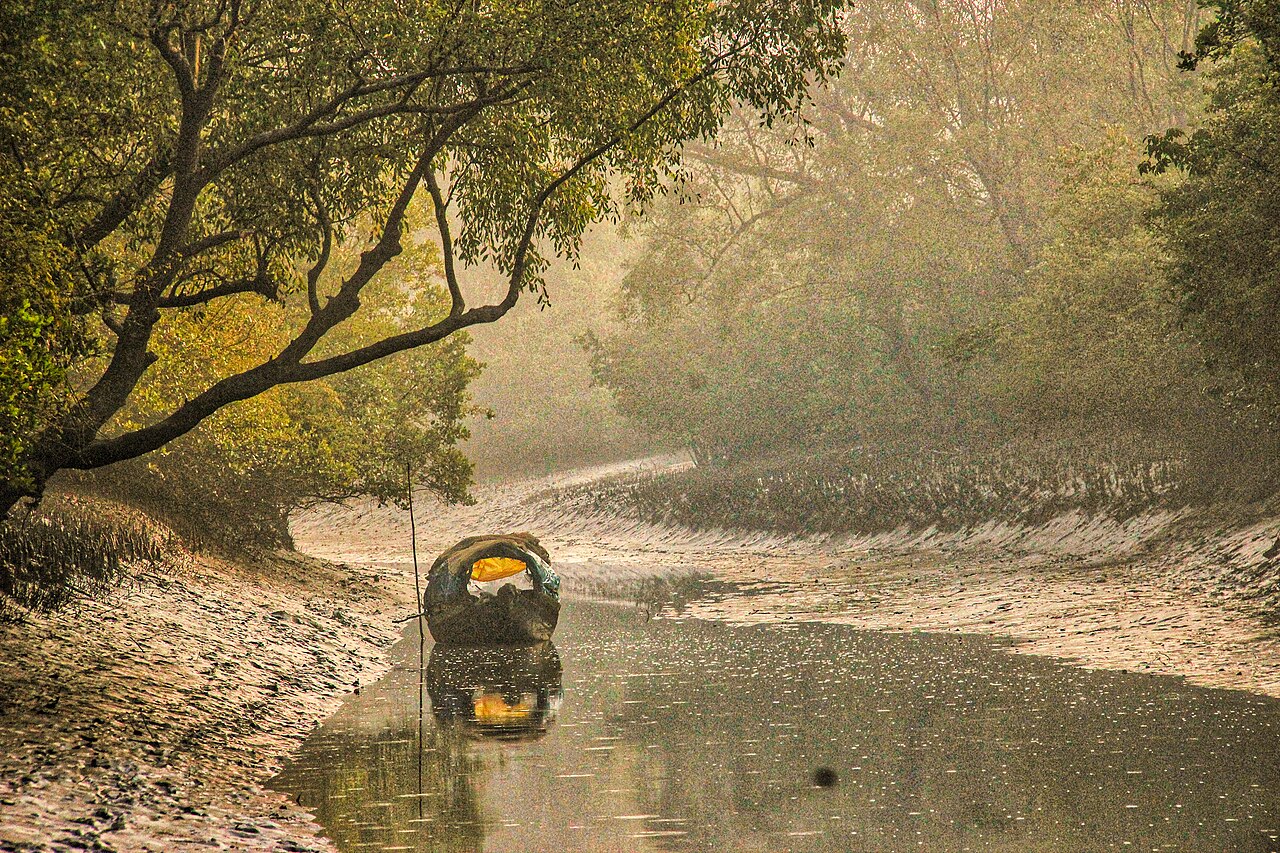
The largest mangrove forest in the world, a maze of tidal rivers, mudflats and islands where the delta meets the sea, shared by Bangladesh and India. More than half of it lies in Bangladesh. It is home to the Bengal tiger, which swims between islands, as well as spotted deer, crocodiles and river dolphins. Visits are by boat from Khulna or Mongla.
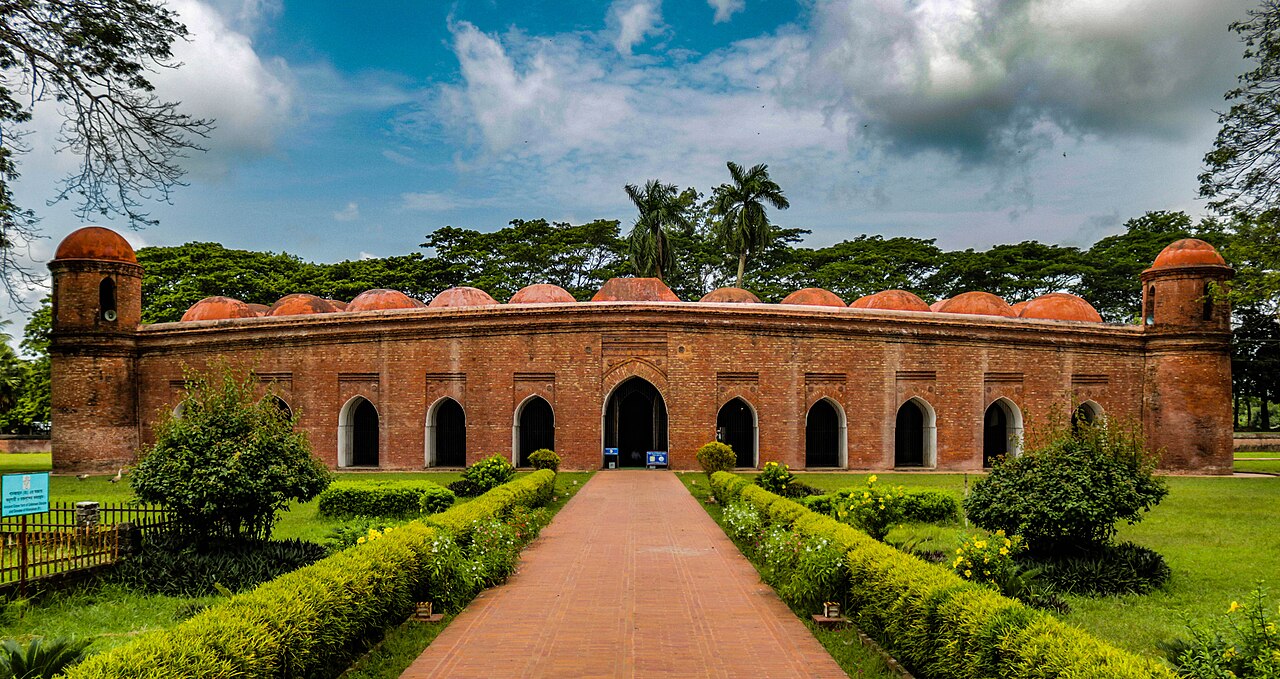
A great brick mosque built in the 1400s by Khan Jahan, the governor who founded the city of Khalifatabad, today's Bagerhat, about 30 km from Khulna. Despite its name it has many more than sixty domes, carried on rows of stone pillars. It is the largest of the many old mosques of the Mosque City of Bagerhat.
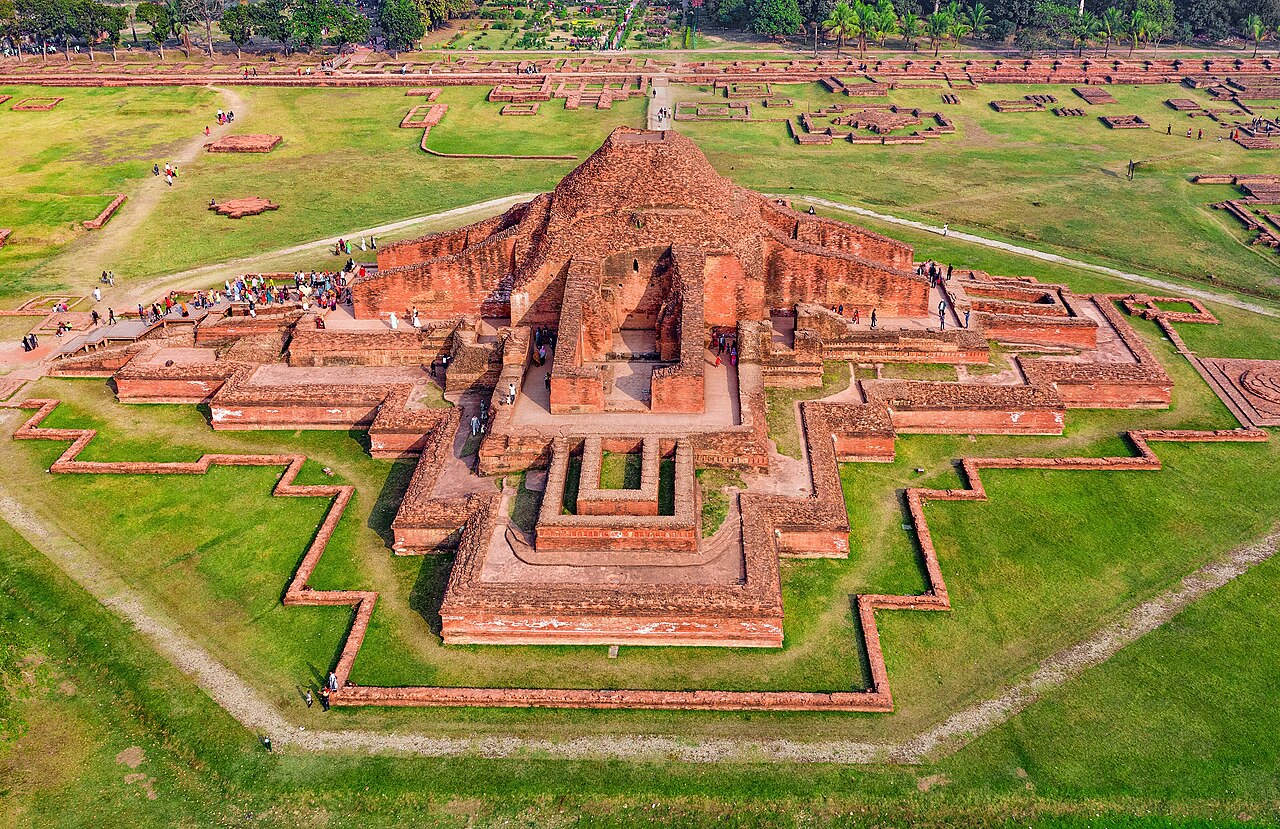
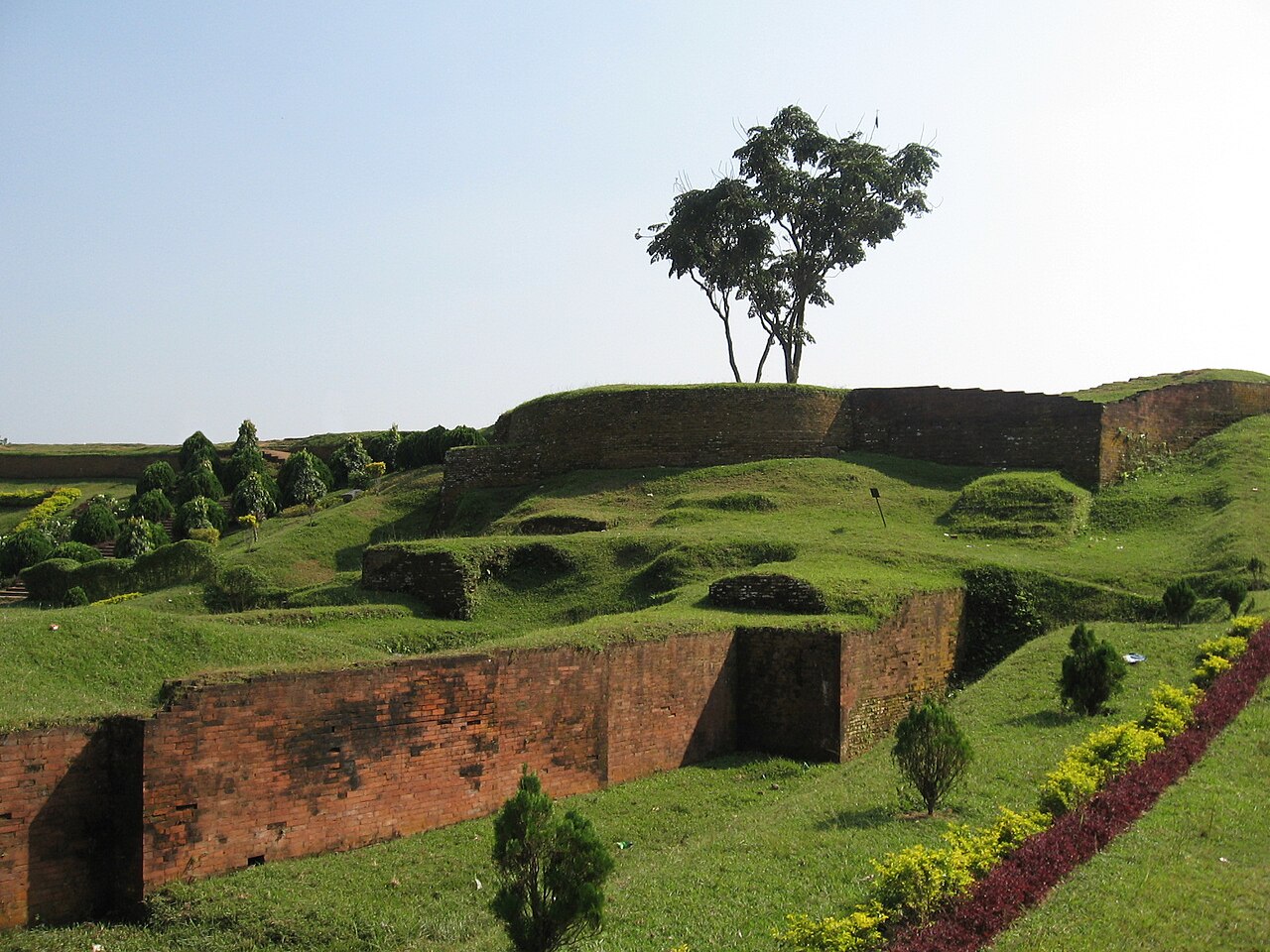
The ruins of a great Buddhist monastery built by the Pala king Dharmapala around the year 800. A huge terraced temple stands in the middle of a square courtyard lined with 177 monks' cells, and its walls are decorated with terracotta plaques. It lies about 45 km northwest of Bogura.
The ruined walls and mounds of Pundranagara, one of the earliest cities found so far in Bangladesh, dating back to at least the 3rd century BC. It lies 11 km north of Bogura on the Karatoya River, with a small museum of finds.
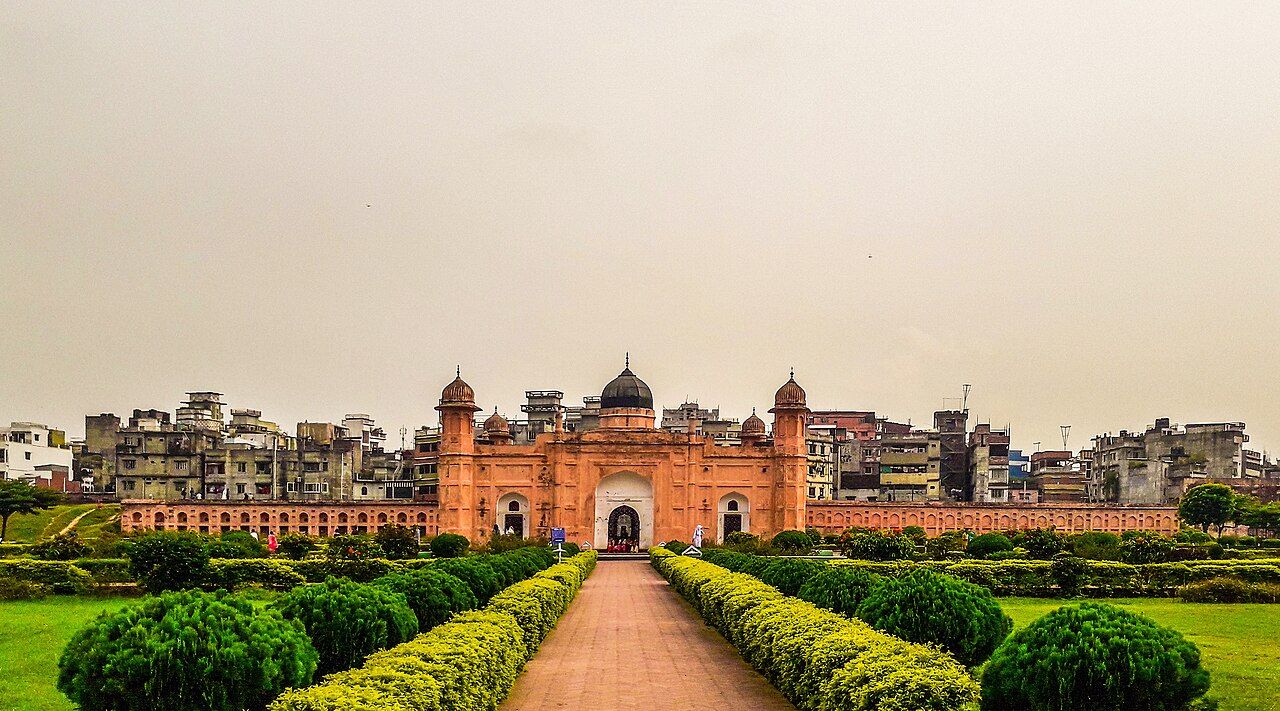
An unfinished Mughal fort in Old Dhaka, begun in 1678 by Prince Muhammad Azam, a son of the emperor Aurangzeb. The governor Shaista Khan stopped the work after his daughter Pari Bibi died; her tomb, a mosque and an audience hall stand among lawns and fountains.
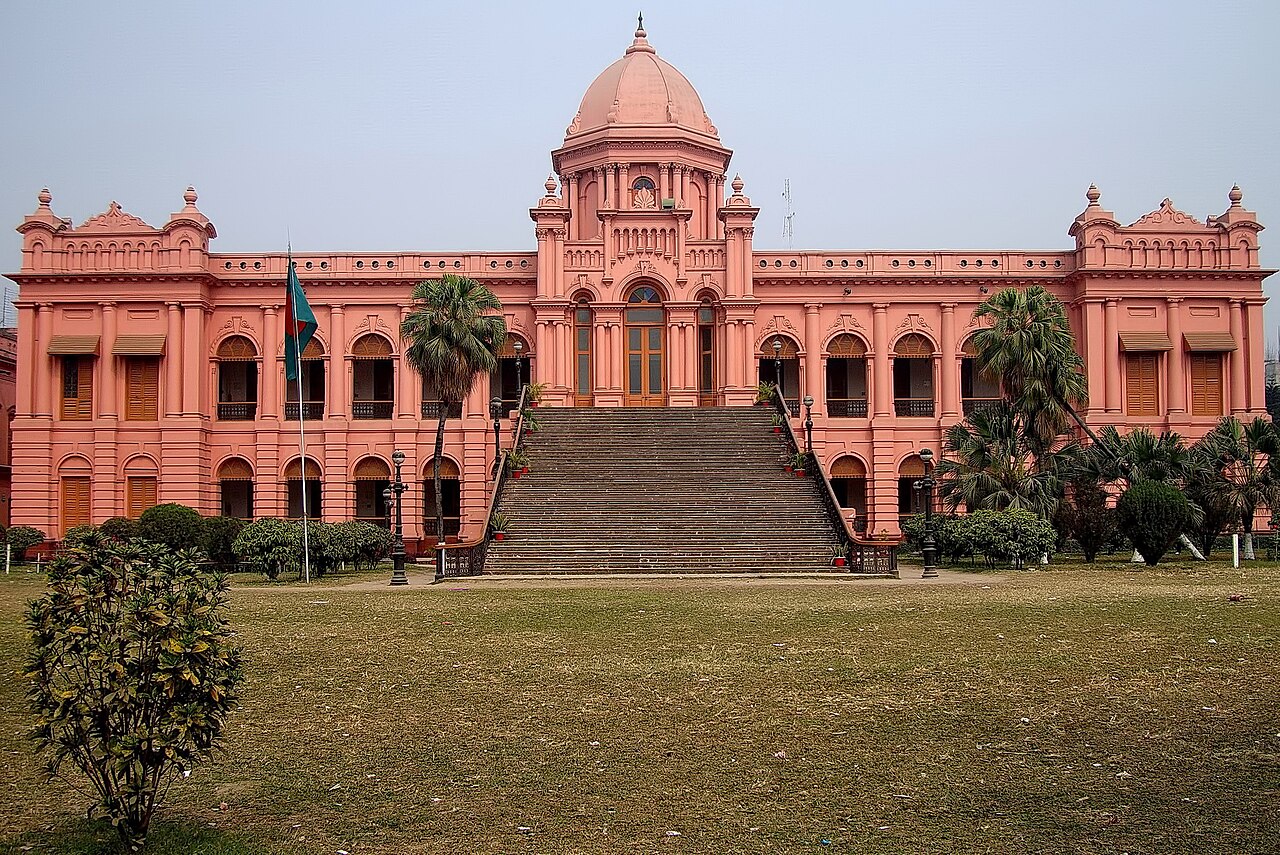
The pink palace of the Nawabs of Dhaka on the bank of the Buriganga River, built between 1859 and 1872 with a great dome and a grand staircase facing the river. Today it is a museum of the Nawab family and old Dhaka.
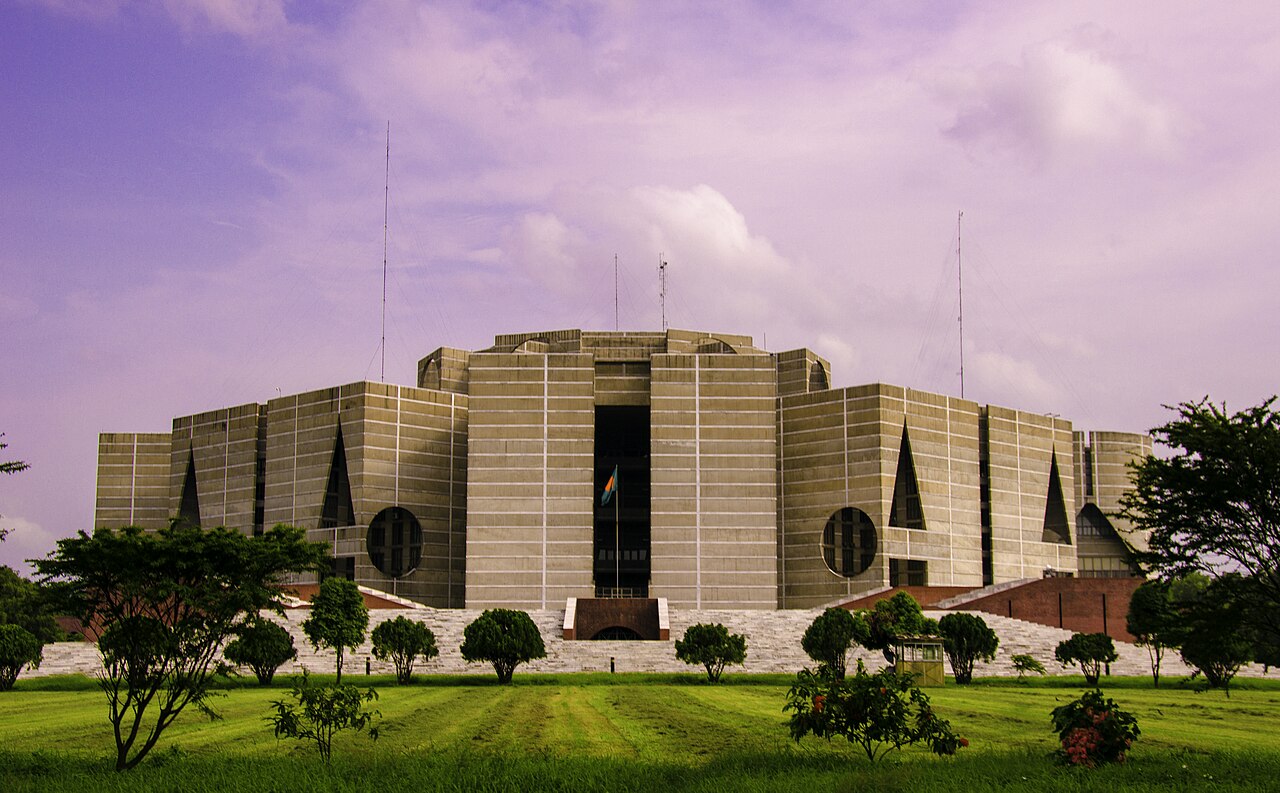
The Jatiya Sangsad Bhaban, designed by the American architect Louis Kahn: bold blocks of concrete with huge circles and triangles cut into them, surrounded by a lake. Building began in 1964 and it was completed in 1982. It is one of the largest parliament complexes in the world.
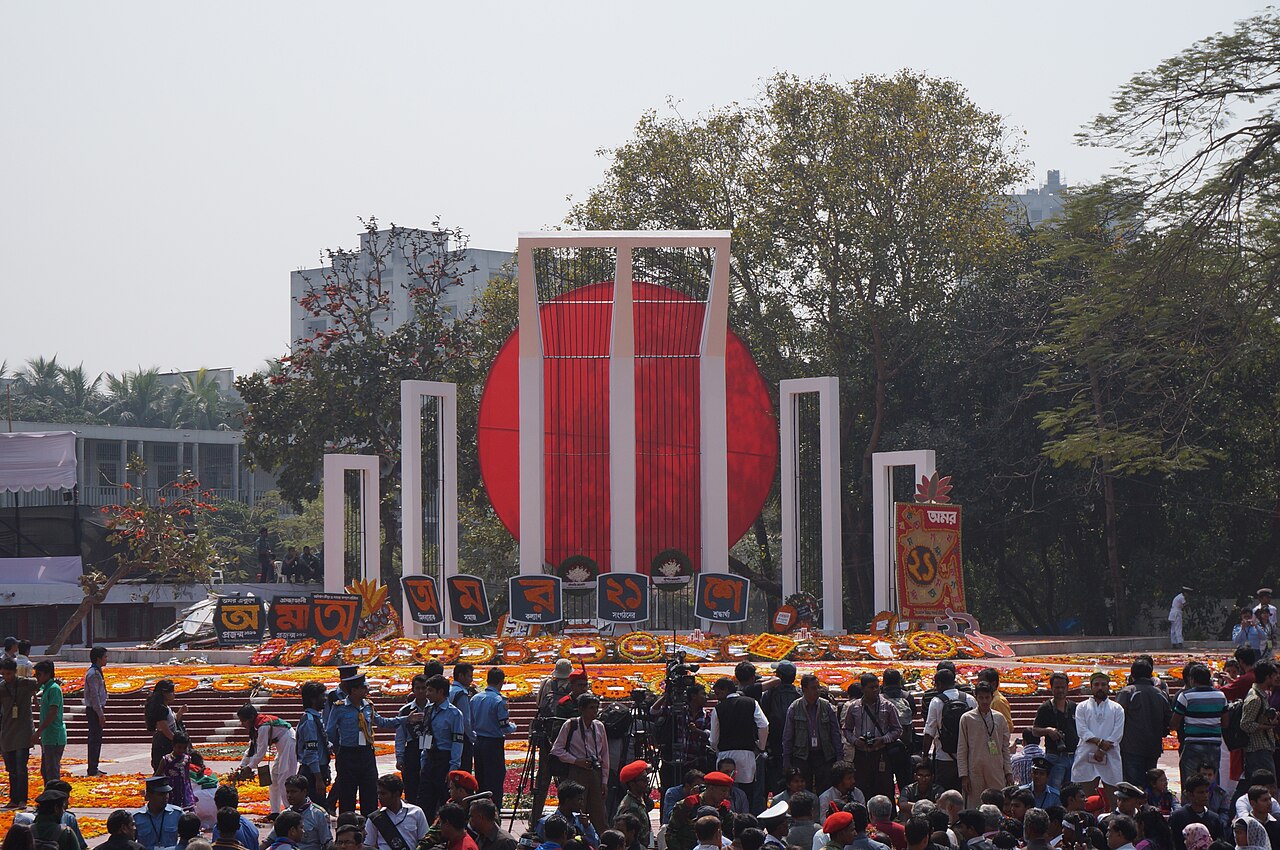
The Martyrs' Monument, near Dhaka Medical College, remembers the students killed on 21 February 1952 during the Language Movement. It was destroyed in 1971 and rebuilt after independence. Every 21 February, Language Movement Day, crowds come here to lay flowers.
A wide, sandy beach that runs for about 120 km along the Bay of Bengal, often called the longest natural sea beach in Asia. Swim only at guarded spots: the currents can be strong, and quicksand forms in places at low tide.
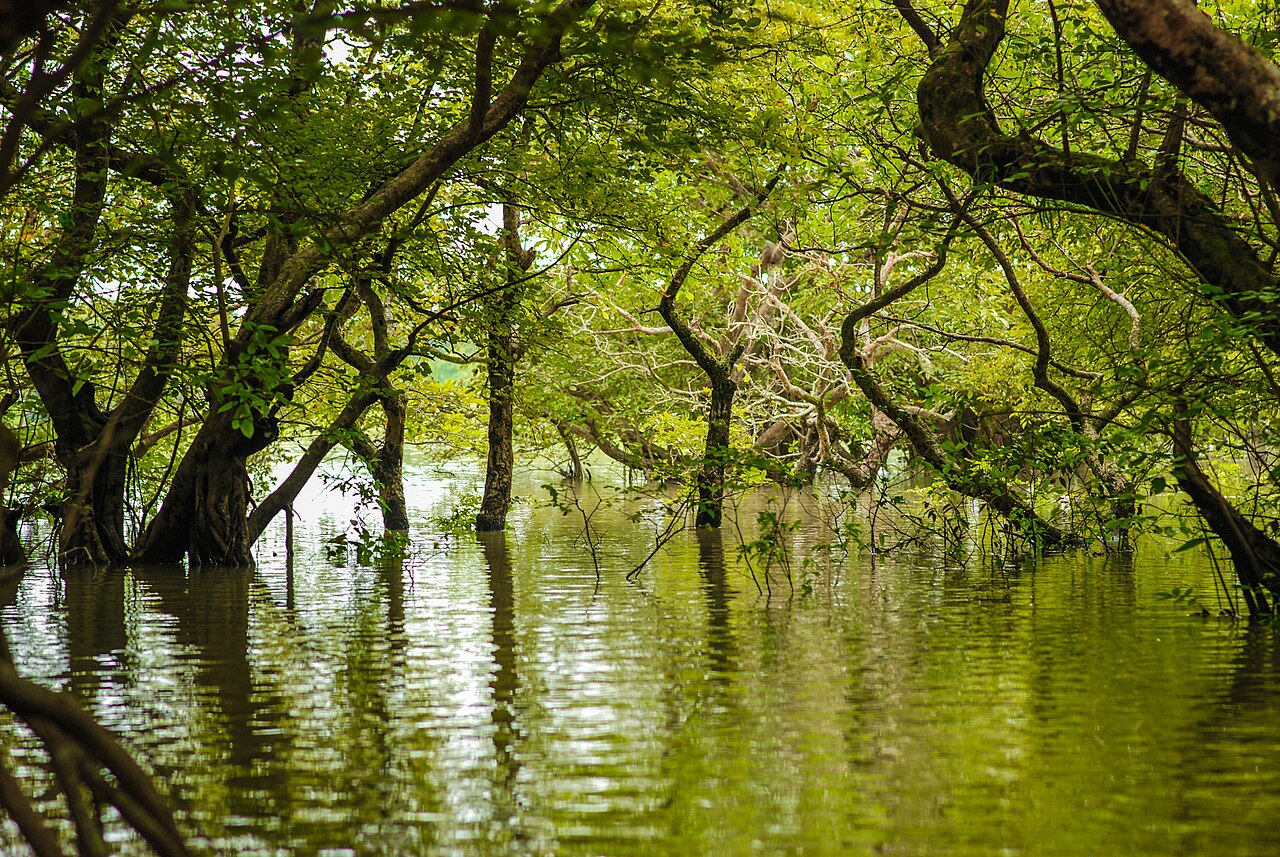
A freshwater swamp forest about 26 km from Sylhet, where trees stand in several metres of water during the rainy season. Visitors glide between the trunks in small wooden boats. It is nicknamed the Sundarbans of Sylhet.
21 February, International Mother Language Day, comes from Bangladesh. It remembers the students killed in Dhaka in 1952 while demanding recognition for Bengali, and UNESCO proclaimed it in 1999.
02
Rabindranath Tagore wrote the national anthems of two countries: Bangladesh's Amar Sonar Bangla and India's Jana Gana Mana.
03
The Sundarbans, shared with India, is the largest mangrove forest in the world, and its Bengal tigers are known for swimming between islands.
04
Almost all of Bangladesh lies on the Ganges Delta, the largest river delta in the world, built up by the Ganges, the Brahmaputra and the Meghna.
05
The red disc on the flag is set a little towards the flagpole, so that it looks centred when the flag flies. It stands for the sun rising over Bengal and for the blood of those who died for independence.
06
The national fish is the ilish, the national fruit is the jackfruit and the national bird is the doel, the oriental magpie-robin.
07
In 2023 UNESCO added the rickshaws of Dhaka and their bright hand-painted decoration to its list of the Intangible Cultural Heritage of Humanity.
08
Jamdani, a fine, hand-woven cotton cloth with patterns woven straight into it, has been on UNESCO's Intangible Cultural Heritage list since 2013. It continues the tradition of the famous muslin of Dhaka.
09
As of 2024, Bangladesh is one of the world's biggest exporters of ready-made clothing, second only to China, and many of the clothes in Western shops were sewn there.
10
As of 2020, Bangladesh was the most densely populated large country in the world, with more than 1,200 people per square kilometre.
11
Cox's Bazar Beach runs for about 120 km along the Bay of Bengal, and is often called the longest natural sea beach in Asia.
12
Bangladesh became the tenth Test cricket nation on 26 June 2000, and cricket is widely described as the most popular sport in the country, although the official national sport is kabaddi.
13
Pohela Boishakh, the Bengali New Year, falls on 14 April every year in Bangladesh and begins with songs at dawn under a banyan tree in Dhaka's Ramna Park.
14
Most of the curry houses in Britain known as 'Indian restaurants' are run by people of Bangladeshi origin, the great majority with roots in Sylhet.
Most visitors need a visa. Some nationalities can get a visa on arrival, but rules change, so as of 2026 check the latest requirements with the Bangladeshi embassy or high commission and your airline before you travel, and carry printed hotel bookings and an onward ticket.
Come in the cool, dry season
The most pleasant months are from about November to February, when days are warm and dry. The monsoon, from June to September, brings heavy rain and floods, and cyclones can strike the coast before and after it. Air pollution in Dhaka is worst in winter, which matters if you have heart or lung problems.
Drink only sealed bottled water
Tap water is not safe to drink. Choose sealed bottles, skip ice unless you know it was made with safe water, and eat food that is freshly cooked and served hot. Mosquitoes spread dengue, especially in the rainy season, so use repellent.
Dress modestly
Men and women should cover their shoulders and legs in public. Take off your shoes before entering a mosque, a temple or a home, and women should cover their hair in mosques. A scarf is always useful.
Agree the fare first
Cycle rickshaws and green CNG auto-rickshaws are everywhere and handy for short trips, but they give little protection in heavy traffic, so on main roads and after dark a car booked through your hotel or a ride-hailing app is safer. Few drivers speak English, so agree the fare and the destination before you set off, and keep your bag close.
Greet with care
Use your right hand to shake hands and to give or take anything. Do not offer to shake hands with a woman unless she offers first; a hand on the heart with a slight nod is a warm and polite greeting.
Check before going to the hills
As of 2026 the UK government advises against all but essential travel to the Chittagong Hill Tracts, and foreigners must give the authorities 10 days' notice before going there. Check the current travel advice before planning a trip.
Know the emergency number
Dial 999 for police, fire or ambulance from any phone in Bangladesh.
 Myanmar
 India
India