A free large-print PDF. Choose what goes in: facts, map, history, dishes and recipes, phrases, fun facts, a quiz with or without answers. Made for clubs, care homes, libraries and family afternoons.
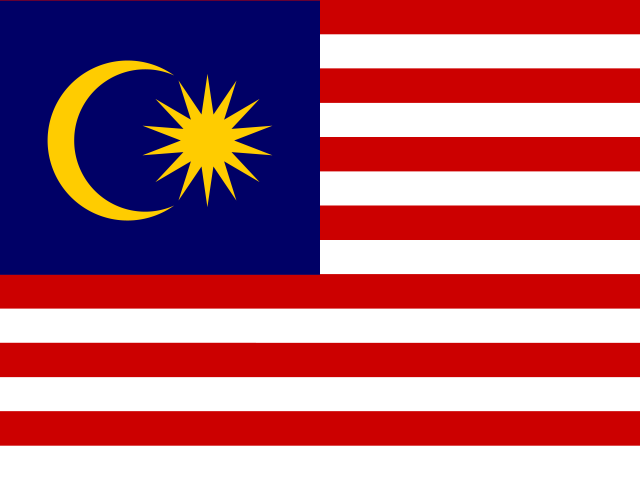
Malaysia lies in the heart of Southeast Asia and comes in two parts, separated by the South China Sea. Peninsular Malaysia hangs down from the Asian mainland below Thailand, with Singapore at its southern tip. East Malaysia, made up of the states of Sabah and Sarawak, covers the northern part of the great island of Borneo, which it shares with Indonesia and Brunei. Together the country has 13 states and three federal territories.
For centuries ships passed through the Strait of Malacca, one of the busiest sea lanes in the world, and the port of Malacca grew rich on that trade around 1400. The Portuguese, the Dutch and then the British followed. The Federation of Malaya became independent on 31 August 1957, and Malaysia was formed on 16 September 1963, when Sabah, Sarawak and Singapore joined it. Singapore left two years later.
About 34 million people live here. Malays and other indigenous peoples make up the majority, with large Chinese and Indian communities, and you can hear Malay, English, Chinese dialects and Tamil in a single street. Islam is the religion of the federation, and Buddhism, Christianity and Hinduism are widely practised. Malaysia is also a rare kind of monarchy: its king is chosen every five years from among nine hereditary state rulers.
Kuala Lumpur is the capital and the seat of Parliament and the king. Since 1999 most government ministries have worked from Putrajaya, a planned city about 25 km to the south, which is the administrative centre, but by law Kuala Lumpur remains the national capital.
CapitalKuala Lumpur
Administrative centrePutrajaya, where most federal ministries and the highest courts sit
PopulationAbout 34.4 million (2026 official estimate)
Official languageMalay (Bahasa Melayu, also called Bahasa Malaysia); English is widely used
CurrencyMalaysian ringgit (RM)
AreaAbout 330,800 km²
GovernmentFederal constitutional monarchy with an elected parliament; the king is chosen every five years from nine state rulers
Highest mountainMount Kinabalu, 4,095 m, in Sabah on Borneo
Longest riverThe Rajang, about 565 km, in Sarawak
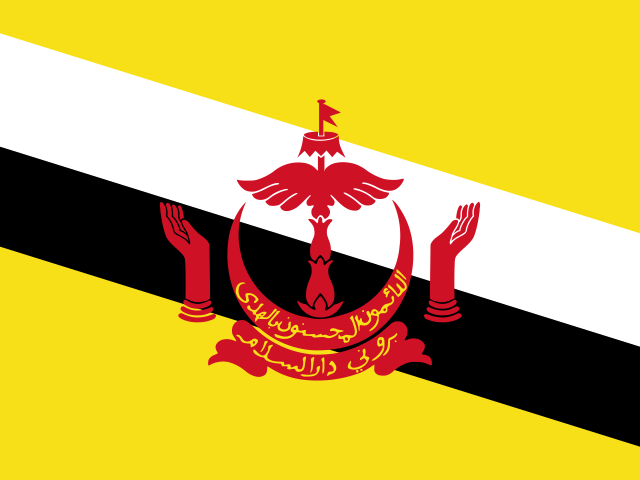
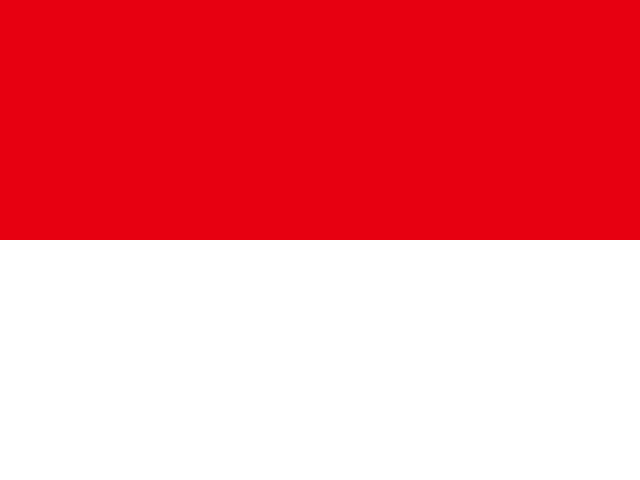
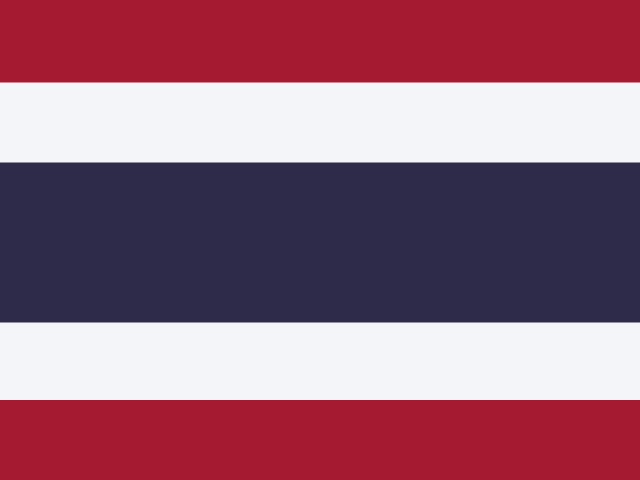
NeighboursThailand, Indonesia and Brunei. Across the sea: Singapore (joined by a causeway and a bridge), the Philippines and Vietnam
People have lived here for a very long time: a human skull found in the Niah Caves of Sarawak is about 40,000 years old. Early kingdoms traded with India and China, and around 1400 the port of Malacca became the richest trading city of the region and helped spread Islam. European powers came for the spice trade, first the Portuguese, then the Dutch and finally the British, while Sarawak was ruled for a century by a British family, the 'White Rajahs'. After Japanese occupation in the Second World War, Malaya won its independence peacefully in 1957, and Malaysia was born in 1963.
1400
The Malacca Sultanate is founded
Around 1400, a prince from Sumatra named Parameswara settled at the mouth of the Malacca River. According to legend, he chose the place after seeing a small mouse deer outwit his hunting dog. Malacca grew into the greatest port on the strait, visited by traders from China, India and Arabia, and its rulers became Muslim sultans.
1511
The Portuguese capture Malacca
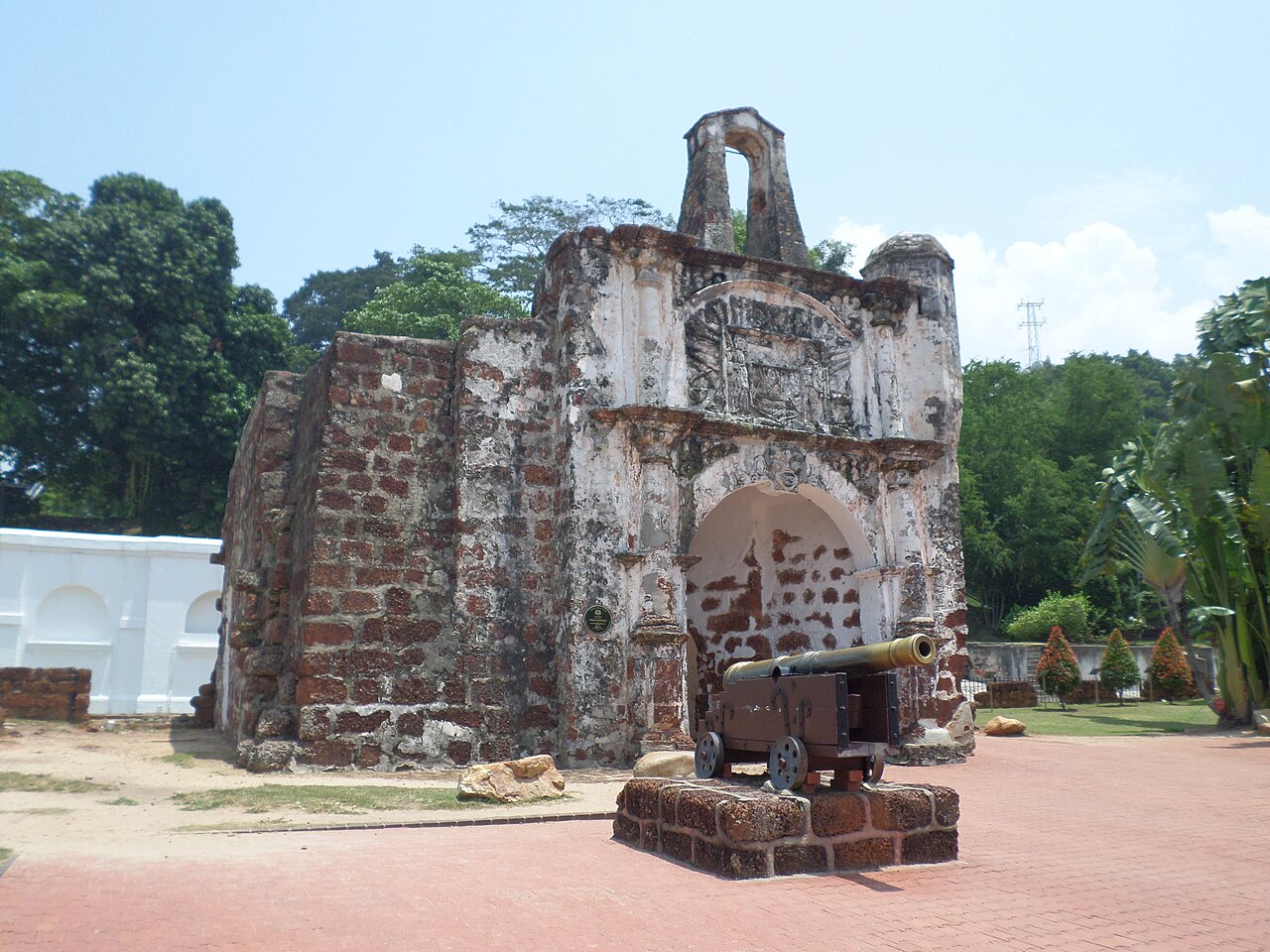
A Portuguese fleet led by Afonso de Albuquerque captured Malacca to control the spice trade. The sultan fled south, and his family went on to found the Sultanates of Johor and Perak. The Portuguese built a stone fortress, A Famosa, whose gateway still stands.
1641
The Dutch take Malacca
After a long siege, the Dutch East India Company and its ally Johor took Malacca from the Portuguese. The Dutch ruled it for most of the next 180 years, but they cared more about Batavia on Java, and Malacca slowly lost its importance.
1786
Francis Light founds George Town
Captain Francis Light of the British East India Company took possession of the island of Penang from the Sultan of Kedah and founded George Town, named after King George III. It was the first British settlement in what is now Malaysia, and it quickly attracted traders and settlers from all over Asia.
1824
The Anglo-Dutch Treaty
Britain and the Netherlands signed a treaty in London that divided the region between them. The Dutch handed over Malacca, and the Malay Peninsula came into the British sphere, while Sumatra and the islands to the south went to the Dutch. The line they drew is still, roughly, the border between Malaysia and Indonesia.
1841
James Brooke becomes Rajah of Sarawak
An English adventurer, James Brooke, helped the Sultan of Brunei put down a rebellion and was made ruler of Sarawak in return. He and his family, known as the White Rajahs, ruled Sarawak for about a hundred years, with Kuching as their capital.
1857
Tin miners found Kuala Lumpur
A Malay chief of Klang, Raja Abdullah, sent Chinese miners up the Klang River to open new tin mines. They set up camp where the Gombak and Klang rivers meet, and the small, muddy trading post grew into Kuala Lumpur.
1874
The Pangkor Treaty
To end a war between rival tin-mining groups and a quarrel over who should be sultan, the Sultan of Perak signed a treaty with Britain on a ship off the island of Pangkor. He agreed to accept a British Resident, whose advice he had to follow on everything except Malay religion and custom. It opened the way to British control of the Malay states.
1895
The Federated Malay States are formed
Britain joined four protected states, Perak, Selangor, Negeri Sembilan and Pahang, into the Federated Malay States; the agreement took effect in 1896, and Kuala Lumpur became its capital. Tin and later rubber made the peninsula one of the richest colonies in the British Empire.
1941
Japan invades Malaya
Just after midnight on 8 December 1941, Japanese troops landed on a beach at Kota Bharu, on the northeast coast, and within about ten weeks they had taken the whole peninsula and Singapore. The occupation lasted until 1945 and brought hunger and great hardship.
1948
The Federation of Malaya is created
On 1 February 1948, the Malay states and the settlements of Penang and Malacca were joined as the Federation of Malaya. In June that year a communist guerrilla war began in the jungle, which the British called the Malayan Emergency. It lasted until 1960.
1957
Malaya becomes independent
On 31 August 1957, Tunku Abdul Rahman, who became the first prime minister, read the declaration of independence at the new Merdeka Stadium in Kuala Lumpur and led the crowd in shouts of 'Merdeka!', meaning 'Independence!'. Independence was won through negotiation, not war, and 31 August is National Day.
1963
Malaysia is formed
On 16 September 1963, the Federation of Malaya joined with Singapore, Sabah (then North Borneo) and Sarawak to form Malaysia. Brunei was invited but decided not to join. 16 September is celebrated as Malaysia Day.
1965
Singapore leaves Malaysia
After two years of political and economic disagreements, Singapore separated from Malaysia on 9 August 1965 and became an independent country. Since then Malaysia has been made up of the peninsula, Sabah and Sarawak.
1999
The government moves to Putrajaya
Work on a new planned city south of Kuala Lumpur began in 1995, and in 1999 the Prime Minister's office moved there. Other ministries followed, and the courts moved in 2003. Putrajaya became the administrative centre, while Kuala Lumpur remained the capital.
2008
Malacca and George Town join the UNESCO list
UNESCO listed Melaka and George Town together as the 'Historic Cities of the Straits of Malacca'. Their shophouses, temples, mosques, churches and colonial buildings show 500 years of trade and cultural exchange between East and West.
Malaysian food is a meeting of Malay, Chinese and Indian cooking, with flavours from Thailand, Indonesia and the peoples of Borneo. A meal has no separate courses: rice sits in the middle, with a few shared dishes of curry, fish, vegetables and a spicy sambal, and everyone eats together. Many people eat with a spoon in the right hand and a fork in the left, some with their right hand, and chopsticks are used for Chinese dishes. Much of the best food comes from hawker stalls, open-air food courts and 'mamak' shops, simple cafés run by Indian Muslims, many of them open late into the night. Each state is proud of its own specialities: laksa and nasi kandar in Penang, blue rice in Kelantan, fish crackers in Terengganu, and their own laksa and raw fish salad in Sarawak and Sabah.
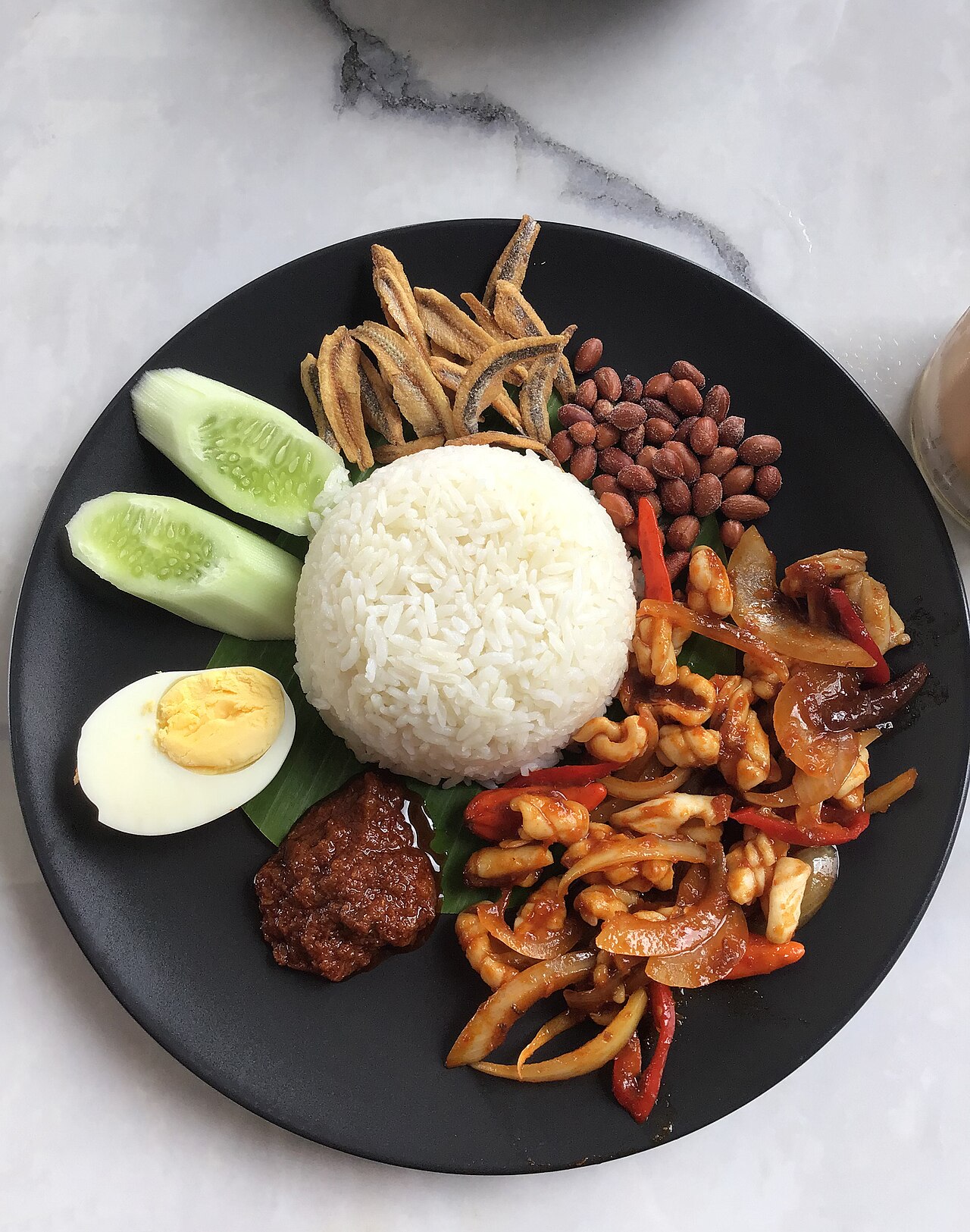
Rice cooked in coconut milk with a pandan leaf, served with a spicy sambal, crispy fried anchovies, roasted peanuts, cucumber and a boiled or fried egg. It is often wrapped in a banana leaf and eaten for breakfast, and many people add fried chicken or beef rendang. It is widely seen as Malaysia's national dish.
The name means 'fatty' or 'rich' rice, after the creamy coconut milk it is cooked in.
See the recipe
Serves 4
1 h
Ingredients
400 g long-grain rice, rinsed until the water runs clear
400 ml coconut milk and 200 ml water
2 pandan leaves, tied in a knot (or leave out), a 2 cm piece of ginger, sliced, and 1 teaspoon salt
For the sambal: 10 dried red chillies (soaked in hot water), 5 shallots, 2 cloves garlic, 1 teaspoon shrimp paste (optional), 1 red onion, sliced, 2 tablespoons tamarind water, 1 tablespoon sugar and 4 tablespoons oil
80 g dried anchovies (ikan bilis), rinsed and patted dry, and 80 g raw peanuts
Oil for frying
4 eggs, and 1 cucumber, sliced
Method
Put the rice, coconut milk, water, pandan, ginger and salt in a rice cooker or a heavy pot. Bring to the boil, then cover and cook on the lowest heat for about 15 minutes, until the liquid is absorbed. Rest for 10 minutes and fluff with a fork.
For the sambal, blend the drained chillies, shallots, garlic and shrimp paste into a paste. Fry it in the oil over medium heat for 10 minutes, stirring, until dark and fragrant. Add the onion, tamarind water and sugar and cook 5 minutes more, with a pinch of salt.
Fry the peanuts in 2 cm of oil over medium heat for 3 to 4 minutes until golden, then the anchovies for 2 to 3 minutes until crisp. Drain on kitchen paper. Peanuts cause serious allergies, so warn your guests.
Boil the eggs for 10 minutes, cool them in cold water and cut them in half.
Serve a mound of rice with sambal, anchovies, peanuts, egg and cucumber on the side.
Indian Muslim cooking, now eaten all over Malaysia
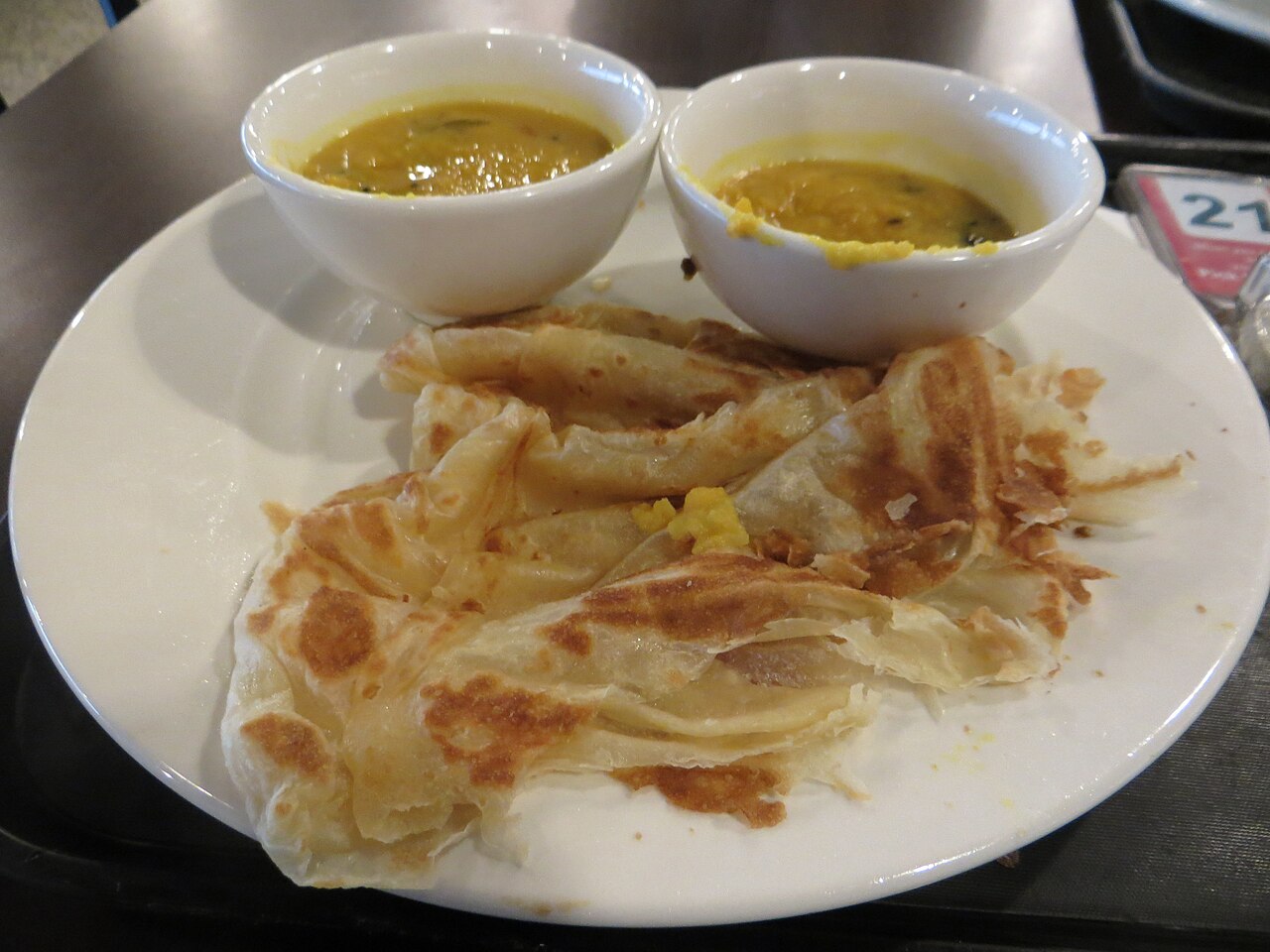
A flaky, chewy flatbread: the dough is tossed and spread until paper-thin, folded and cooked on a hot griddle. It is served with dal or curry for dipping, usually with a glass of teh tarik, and is a favourite breakfast in mamak cafés.
Watching the cook toss and stretch the dough into a thin sheet is part of the fun of ordering roti canai.
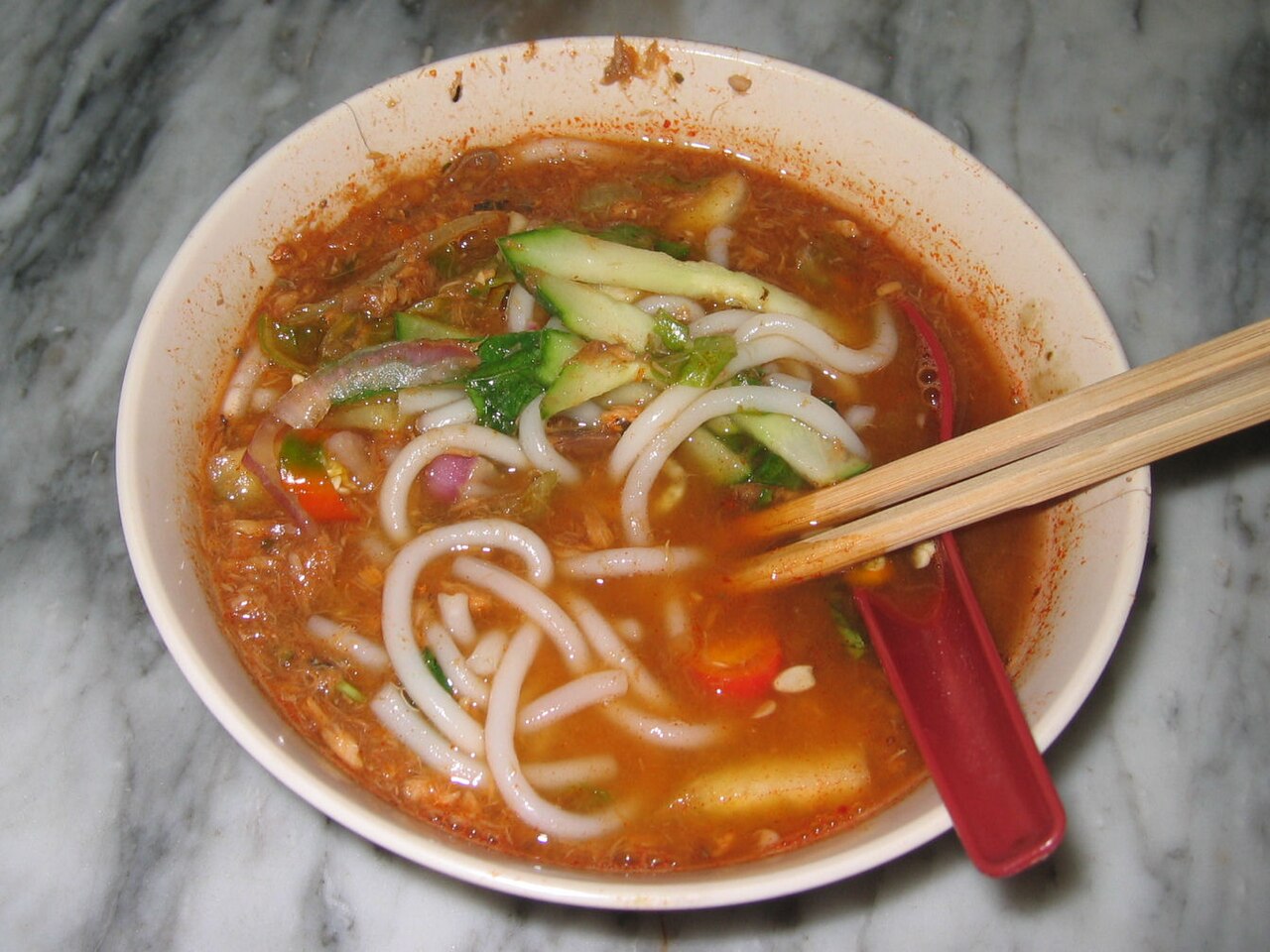
A sour, spicy fish soup made with mackerel and tamarind, poured over thick rice noodles and topped with cucumber, pineapple, onion, mint and a spoonful of thick, sweet shrimp paste. Its sharp, tangy taste is very different from the creamy coconut laksas of other places.
'Asam' is the Malay word for anything that makes food sour, such as tamarind.
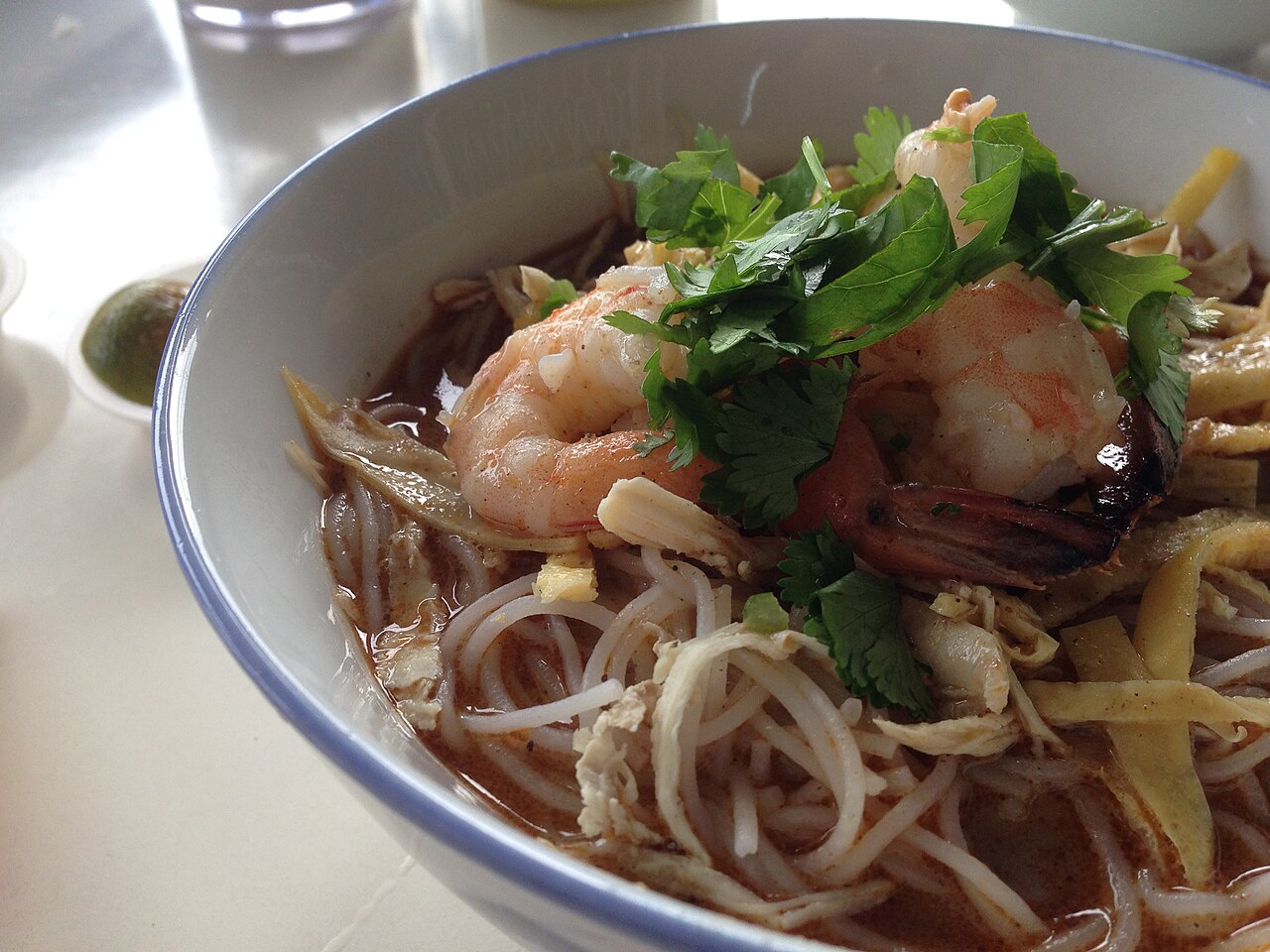
Thin rice noodles in a rich soup of sambal belacan, coconut milk, tamarind, garlic, galangal and lemongrass, topped with prawns, strips of omelette, chicken, bean sprouts and coriander, with lime on the side. In Kuching it is eaten for breakfast.
The American chef Anthony Bourdain called Sarawak laksa the 'breakfast of the gods'.
All over Malaysia; the town of Kajang in Selangor is famous for it
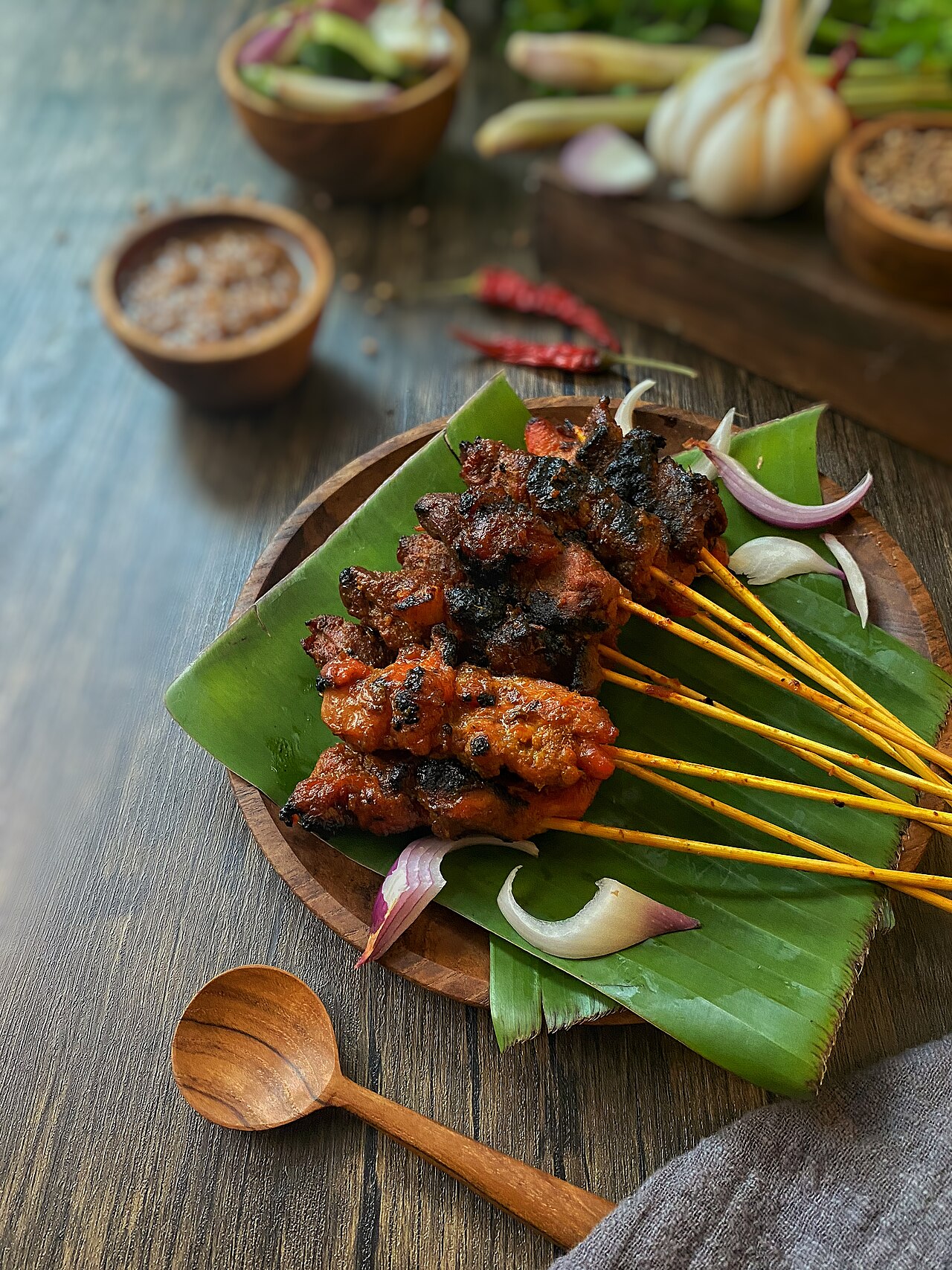
Small pieces of chicken or beef marinated with turmeric and lemongrass, threaded on bamboo sticks and grilled over charcoal. Satay is served with a sweet, spicy peanut sauce, cucumber, raw onion and ketupat, rice pressed into little cakes.
Satay Kajang is known for its bigger pieces of meat, and people from Kuala Lumpur drive out to Kajang just to eat it.
See the recipe
Serves 4
1 h
Ingredients
600 g boneless chicken thighs, cut into 2 cm pieces
For the marinade: 2 stalks lemongrass (white part), 3 shallots, 2 cloves garlic, 1 teaspoon ground turmeric, 1 teaspoon ground coriander, 1 teaspoon ground cumin, 2 tablespoons sugar, 1 teaspoon salt and 2 tablespoons oil
Bamboo skewers, soaked in water for 30 minutes
For the peanut sauce: 150 g roasted unsalted peanuts, roughly ground, 1 to 2 tablespoons chilli paste, 1 tablespoon tamarind water, 2 tablespoons sugar, a pinch of salt and about 250 ml water
To serve: cucumber chunks and sliced red onion
Method
Blend the marinade ingredients into a paste, mix it with the chicken and leave in the fridge for at least 1 hour.
For the sauce, simmer the peanuts, chilli paste, tamarind water, sugar, salt and water in a small pan for 10 minutes, stirring, until thick. Peanuts cause serious allergies, so warn your guests.
Thread 4 or 5 pieces of chicken onto each skewer.
Grill over charcoal or under a hot grill for 8 to 10 minutes, turning often and brushing with a little oil, until browned and cooked through with no pink left.
Serve hot with the peanut sauce, cucumber and onion.
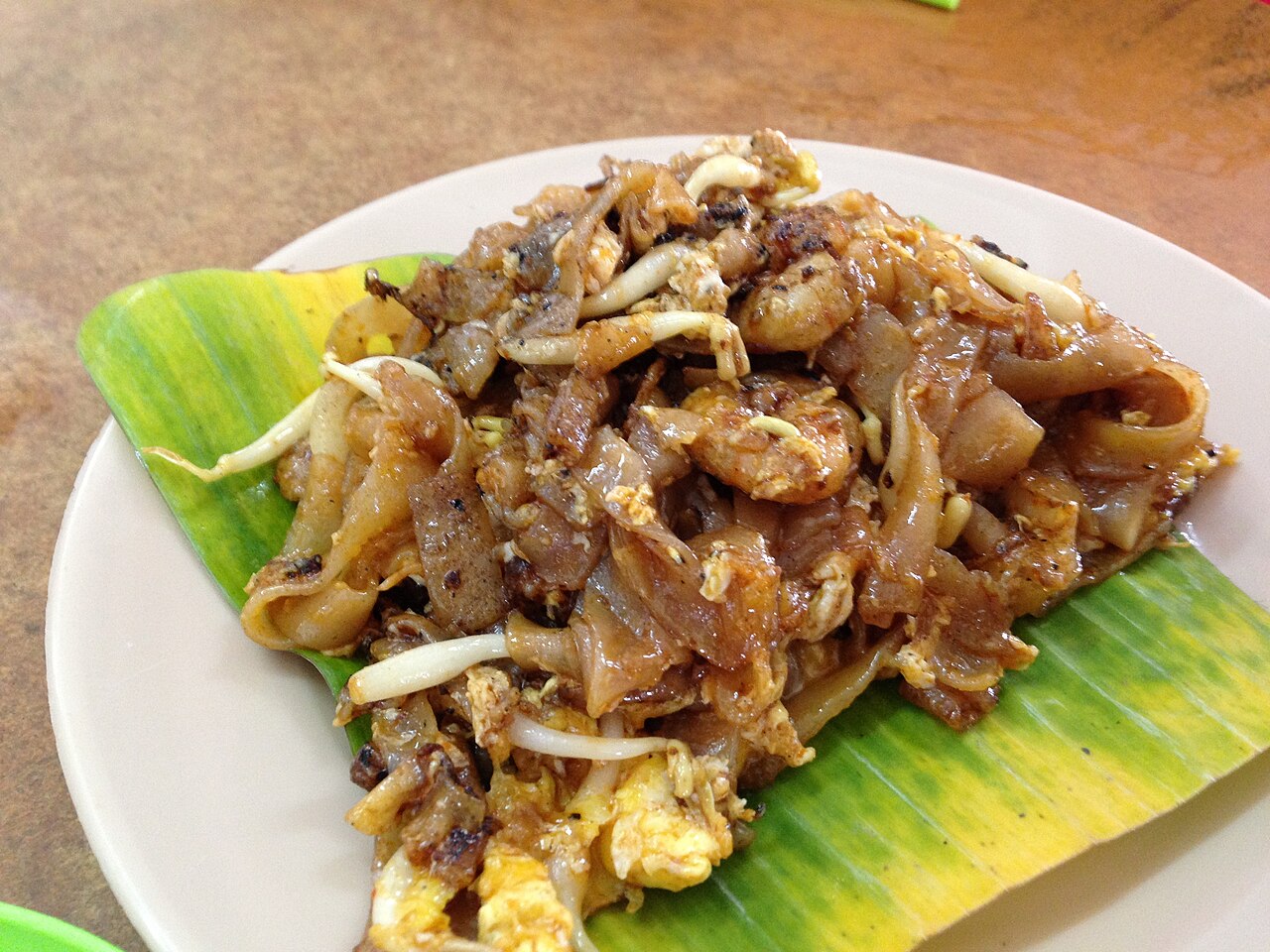
Flat rice noodles stir-fried over a fierce flame with light and dark soy sauce, chilli, prawns, cockles, Chinese sausage, egg, chives and bean sprouts. A smoky taste from a very hot wok is the sign of a good plate.
The name comes from Hokkien: 'char' means stir-fried and 'kway teow' means flat rice noodles.
See the recipe
Serves 2
25 min
Ingredients
400 g fresh flat rice noodles, gently separated
150 g raw prawns, peeled
1 Chinese sausage (lap cheong), thinly sliced (optional)
2 cloves garlic, chopped, and 1 tablespoon chilli paste
2 tablespoons light soy sauce, 1 tablespoon dark soy sauce and 1 teaspoon oyster sauce
2 eggs
100 g bean sprouts and a handful of Chinese chives, cut into 4 cm lengths
3 tablespoons oil
Method
Mix the three sauces in a cup. Heat a wok until very hot and add the oil.
Fry the garlic and chilli paste for 30 seconds, then add the prawns and sausage and stir-fry for 2 minutes, until the prawns are pink and cooked through.
Add the noodles and the sauce and toss over high heat for 2 minutes, until the noodles are coated and slightly charred.
Push the noodles aside, crack the eggs into the wok, scramble them until fully set, then mix them in.
Add the bean sprouts and chives and toss for 1 minute more, until the sprouts are hot. Traditional versions add raw blood cockles at the end; if you add shellfish, cook it until steaming hot, especially for older people, pregnant women, young children or anyone with a weak immune system.
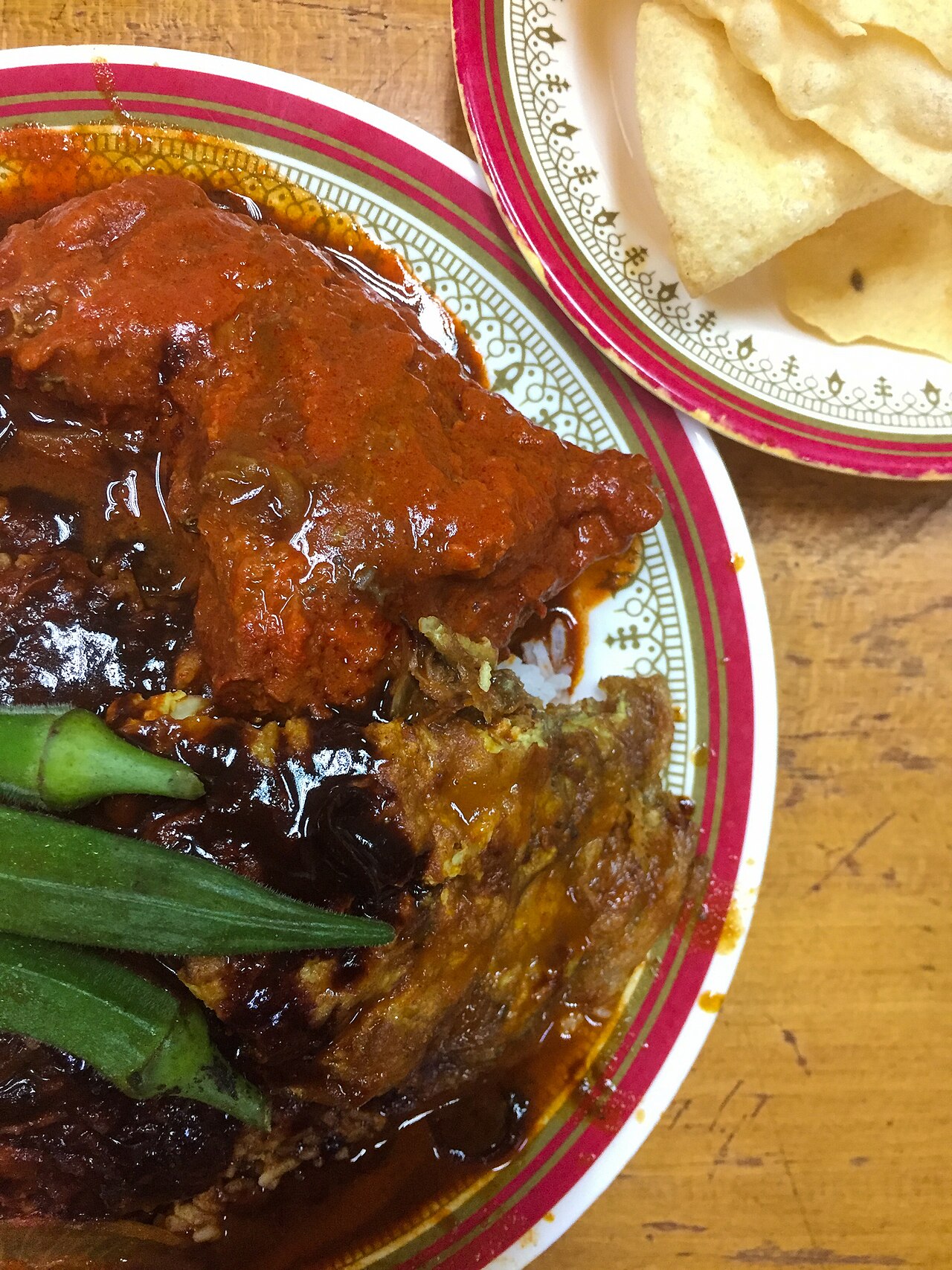
Steamed rice with your choice of curries and side dishes, such as fried chicken, fish curry, okra and boiled egg. At the end, the server pours several curry sauces over the rice, which is called 'banjir', or flooded.
In the early 1900s, Indian Muslim sellers carried the rice and curries through George Town in pots hung from a shoulder pole, or 'kandar', which gave the dish its name.
Chinese Malaysian, associated with the town of Klang
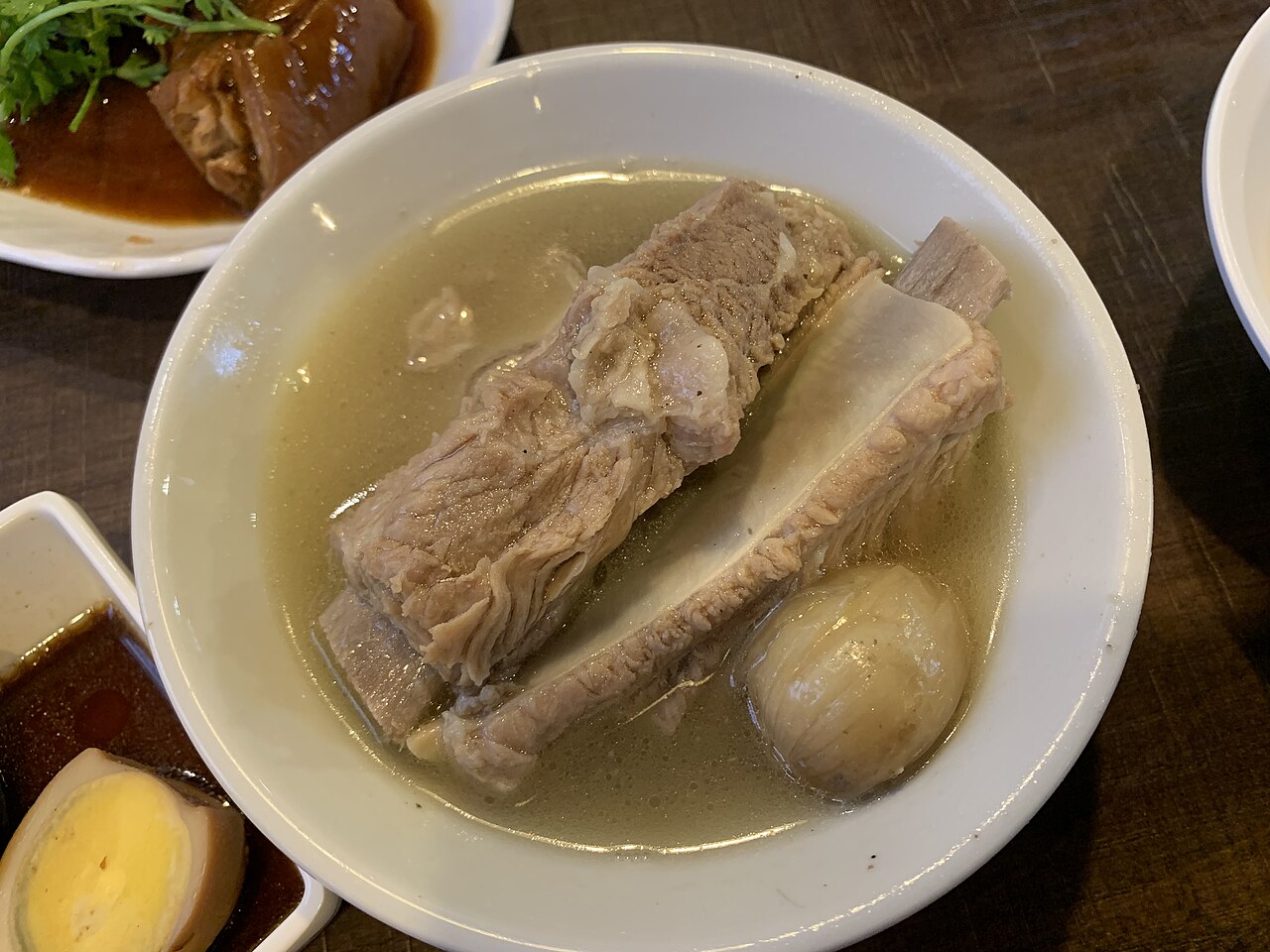
Pork ribs simmered for hours in a dark broth of herbs and spices such as star anise, cinnamon, cloves and garlic, served with rice, strips of fried dough and a pot of Chinese tea. In Klang, many people believe the dish was invented there.
The name means 'meat bone tea' in Hokkien, although there is no tea in the soup: the tea is drunk alongside it.
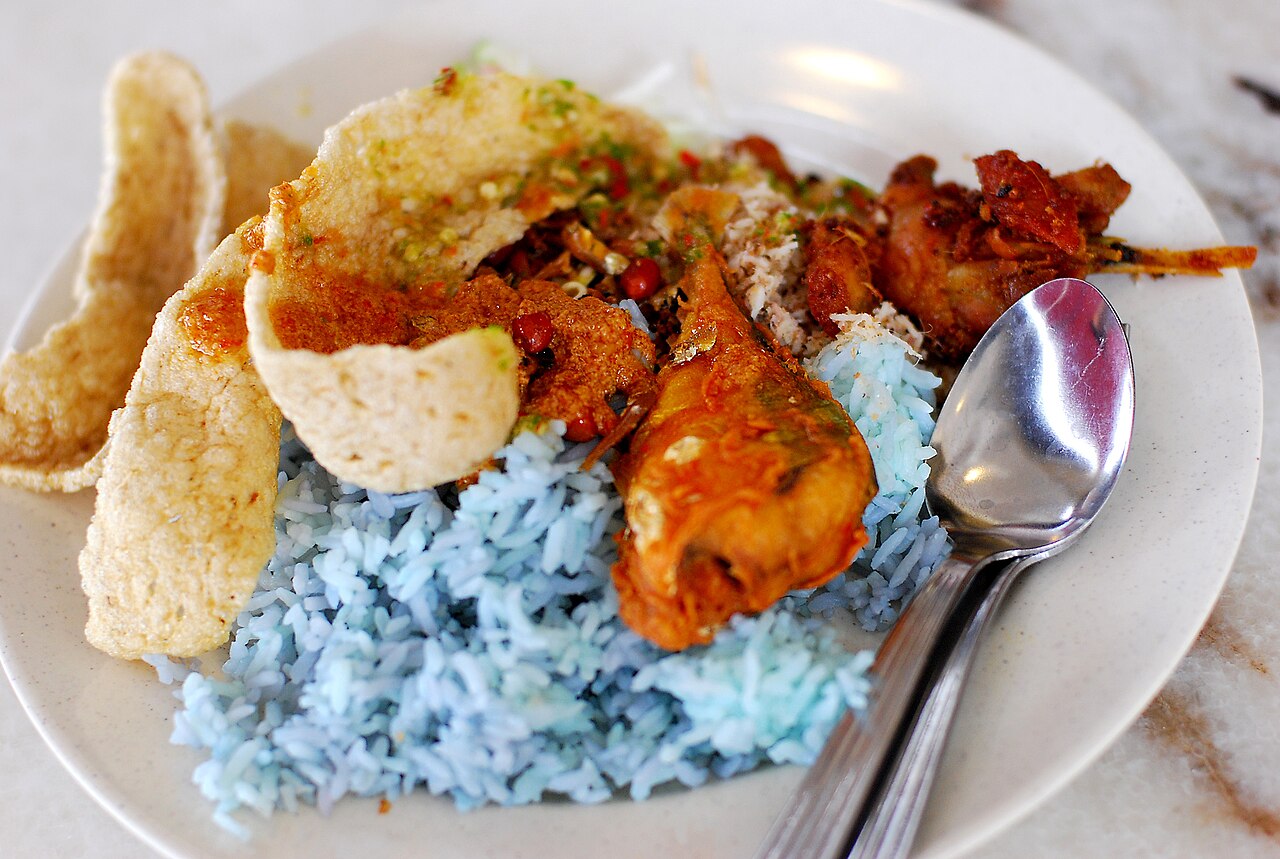
Bright blue rice served with fresh herbs and greens, grated coconut, salted egg, fried fish or chicken, crackers and a spicy sauce. Everything is mixed together on the plate, a bit like a salad.
The blue colour comes naturally from the petals of the butterfly pea flower.
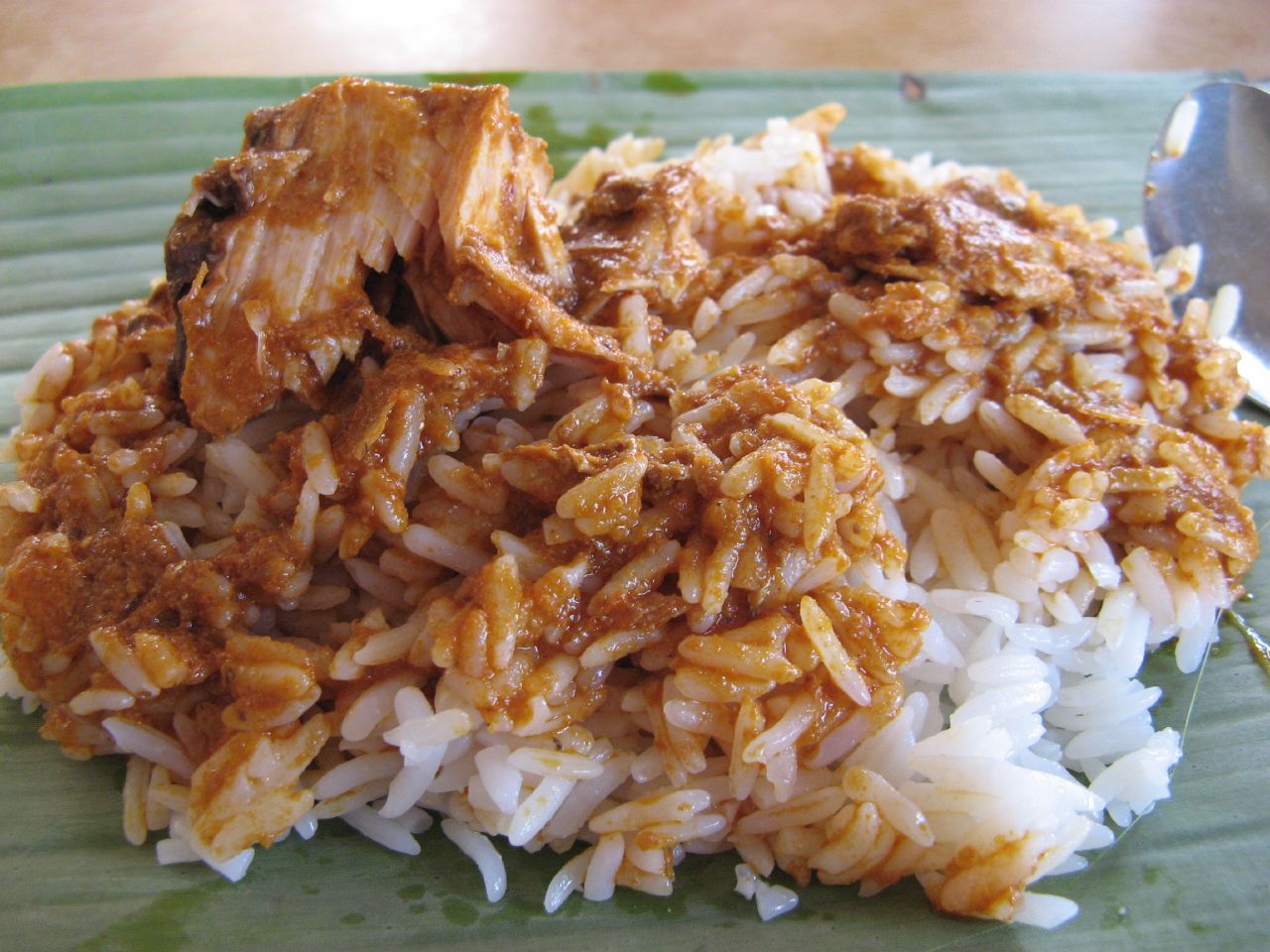
Rice steamed with coconut milk, shallots and fenugreek seeds, eaten with a fish curry, hard-boiled egg and pickled cucumber and carrot. It is a classic breakfast of the east coast.
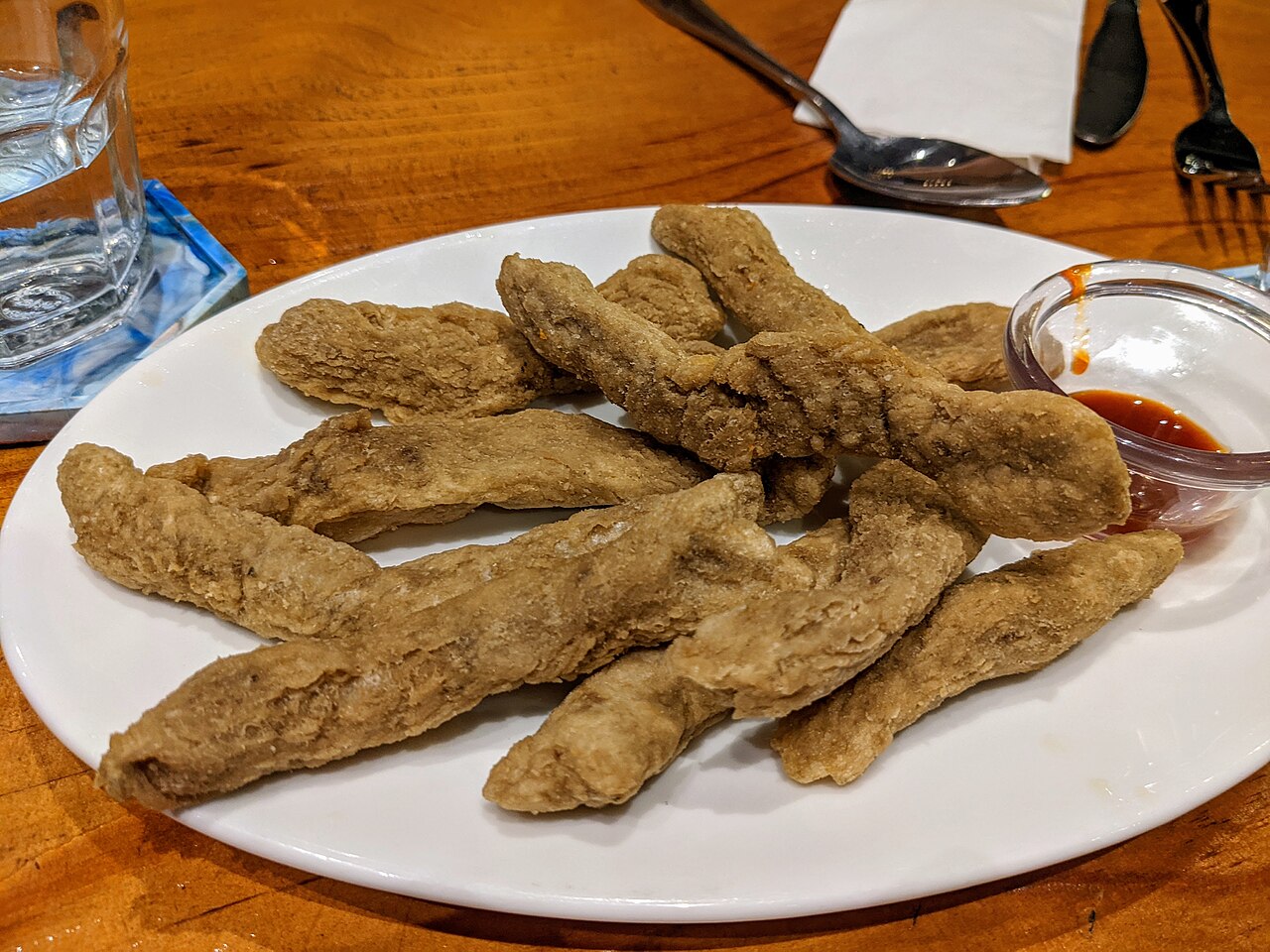
Chewy fish sausages made from fish and sago flour, boiled, sliced and deep-fried until crisp outside and soft inside, then dipped in chilli sauce. Stalls along the Terengganu coast fry them fresh all day.
It has a fishy smell and taste that grows stronger as it cools, so it is best eaten hot.
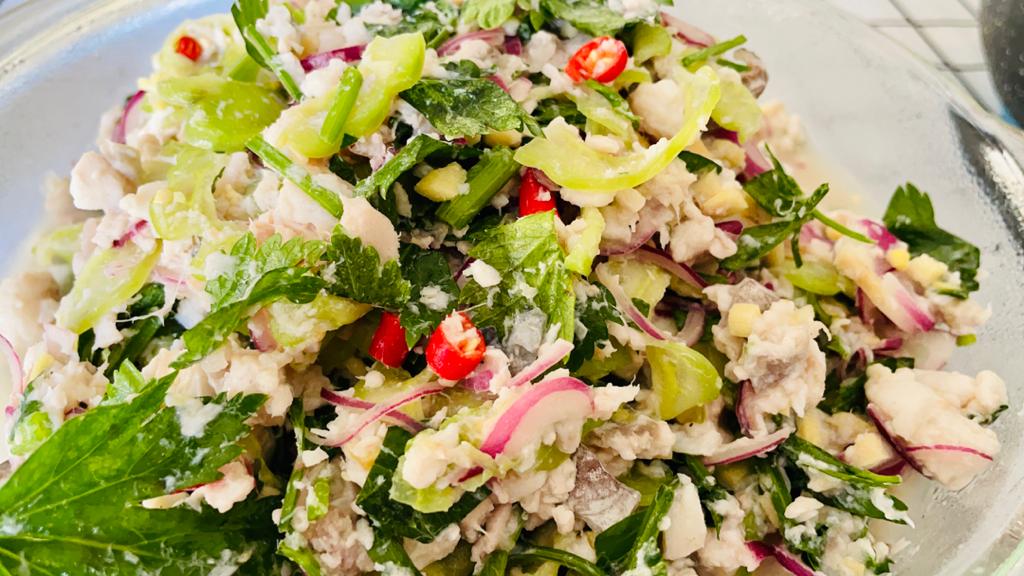
Thin slices of raw fish, usually Spanish mackerel, mixed with lime juice, chilli, shallots and grated ginger. It is served at weddings and at the Kaamatan harvest festival. Because the fish is not cooked, older people, pregnant women, young children and anyone with a weak immune system should choose a cooked dish instead.
In 2009 Malaysia's Department of National Heritage named hinava a national heritage dish.
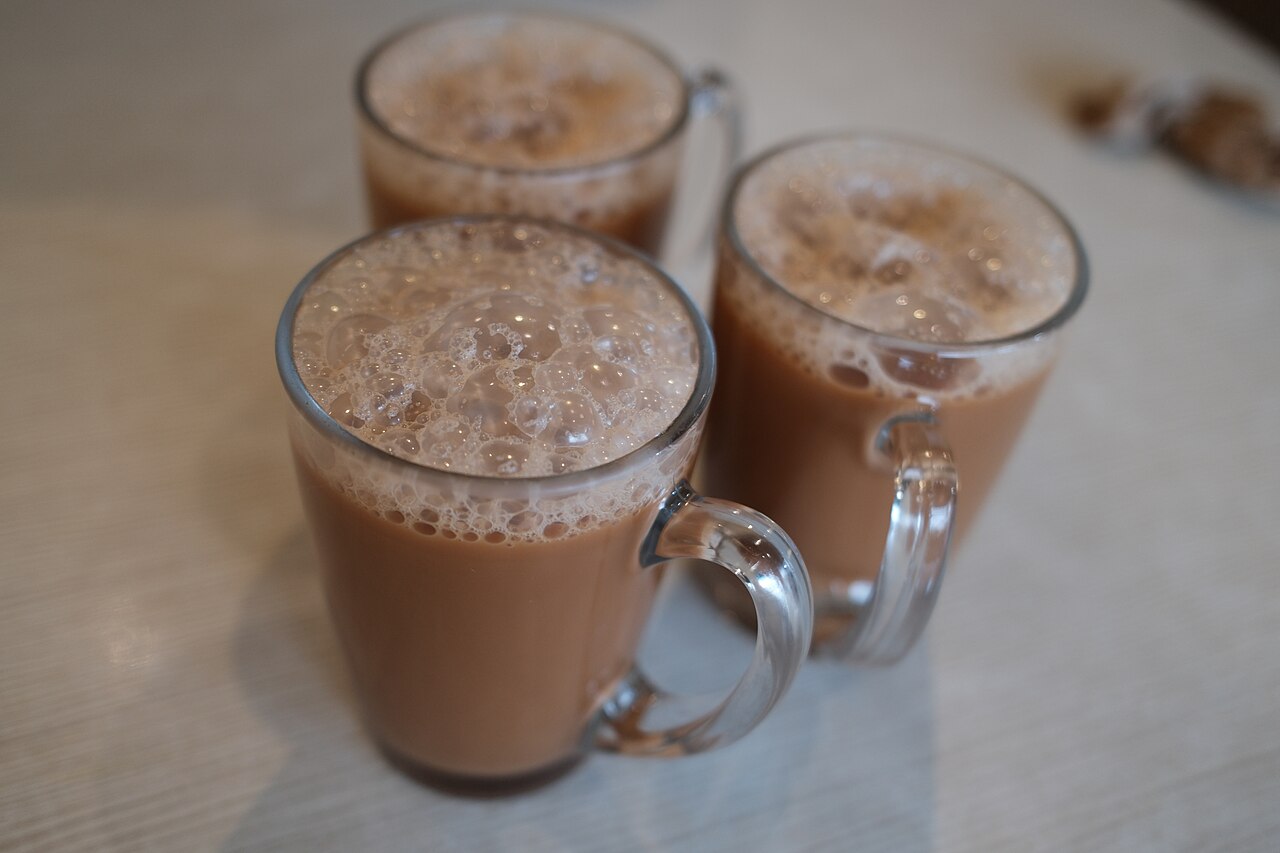
Strong black tea mixed with sweetened condensed milk and 'pulled': poured back and forth between two cups from arm's length, which cools it a little and gives it a frothy top. It is often called Malaysia's national drink.
'Teh tarik' simply means 'pulled tea'.
See the recipe
Serves 2
10 min
Ingredients
2 black tea bags, or 2 teaspoons strong loose black tea
400 ml boiling water
4 tablespoons sweetened condensed milk (more or less to taste)
2 tablespoons evaporated milk (optional)
Method
Brew the tea in the boiling water for 4 to 5 minutes until very strong, then remove the tea bags or strain.
Stir in the condensed milk and evaporated milk until dissolved.
Take two heatproof jugs and pour the tea from one to the other, starting low and raising the jug a little each time, 5 or 6 times, until frothy. The tea is very hot, so start close together, pour slowly over a sink, and never pull it near children.
Pour into cups with the foam on top and serve at once.
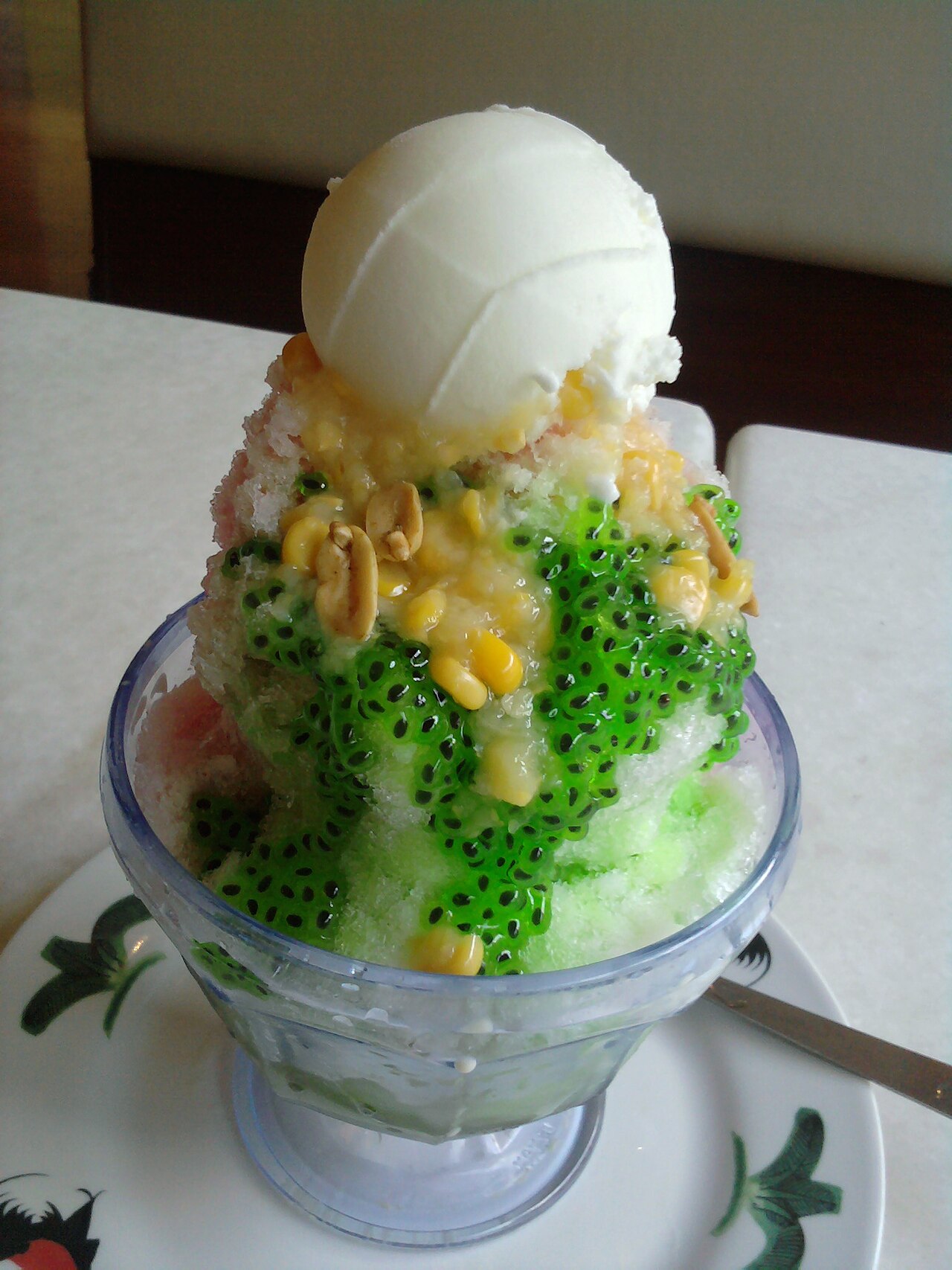
A mountain of shaved ice over sweet red beans, sweetcorn, jelly cubes and palm seeds, drizzled with bright syrups and evaporated milk. It is a favourite way to cool down on a hot afternoon at a hawker centre.
The name means 'bean ice', and its other name, ABC, stands for 'air batu campur', or 'mixed ice'.
See the recipe
Serves 4
20 min
Ingredients
200 g cooked sweet red beans (from a can)
150 g sweetcorn kernels (canned)
100 g grass jelly or other jelly, cut into small cubes
About 1 kg ice, shaved or finely crushed
Rose syrup or other red syrup, and palm sugar syrup
Evaporated milk or sweetened condensed milk
Optional: roasted peanuts, chopped
Method
Divide the red beans, sweetcorn and jelly among four bowls.
Shave or crush the ice as finely as you can, in an ice shaver or a strong blender, and pile it high over the toppings.
Drizzle the ice with rose syrup, palm sugar syrup and milk.
Scatter peanuts on top if you like, but warn your guests, as peanuts cause serious allergies. Eat straight away with a long spoon.
Use your right hand to eat, pass food and hand over money or gifts; the left hand is traditionally seen as unclean.
Most meals are eaten with a spoon in the right hand and a fork in the left, used to push food onto the spoon. If you eat with your hand, as many people do with nasi kandar or banana leaf rice, use only the right.
At Chinese meals, never stick your chopsticks upright in a bowl of rice: it looks like incense sticks at a funeral.
Shared dishes sit in the middle of the table; take from them with the serving spoon, and everyone gets their own plate of rice.
Malay Muslims do not eat pork or drink alcohol, and restaurants marked 'halal' serve neither. During Ramadan, avoid eating or drinking in front of people who are fasting in the daytime.
Most Malaysians live on the peninsula, especially along the west coast, where Kuala Lumpur, Putrajaya, Ipoh, George Town, Malacca and Johor Bahru lie. The east coast, with Kota Bharu and Kuala Terengganu, is quieter and more traditionally Malay. Across the South China Sea, on Borneo, are Kuching and Miri in Sarawak, and Kota Kinabalu and Sandakan in Sabah.
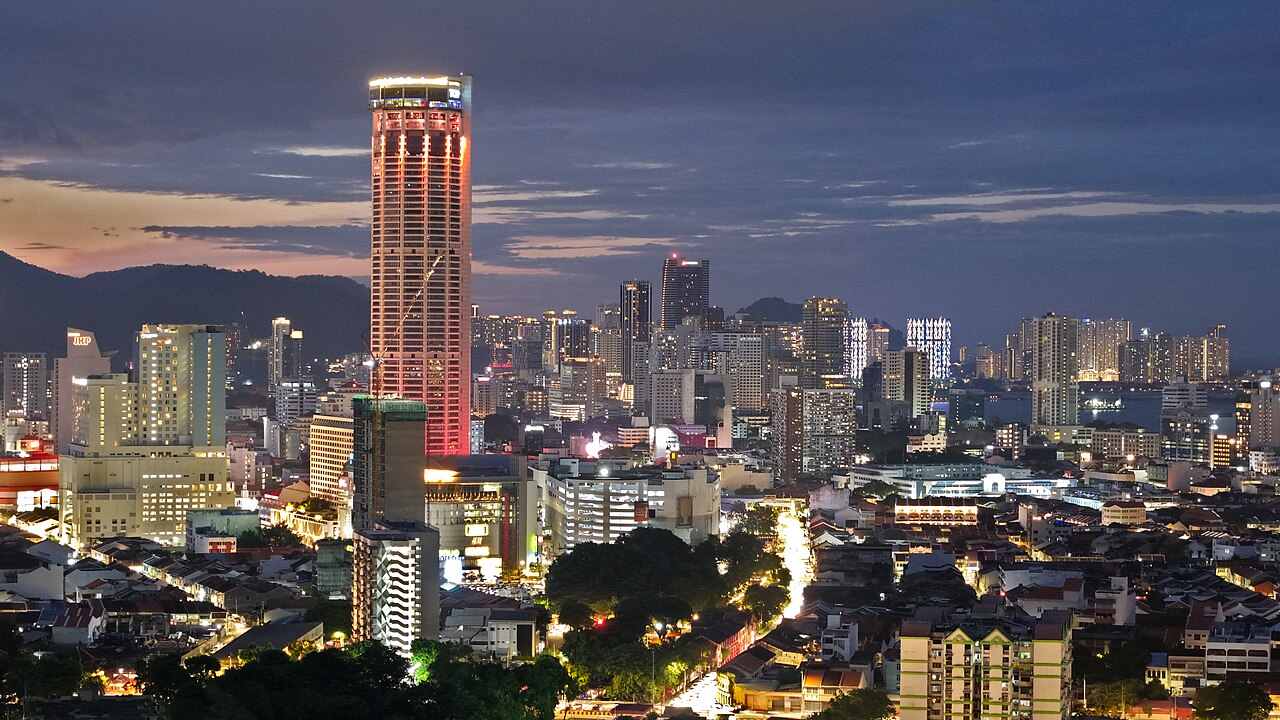
The capital of Penang, on an island off the northwest coast, founded by the British in 1786. Its old centre of shophouses, clan houses, temples, mosques and churches is a UNESCO World Heritage Site, and many Malaysians consider it the food capital of the country.
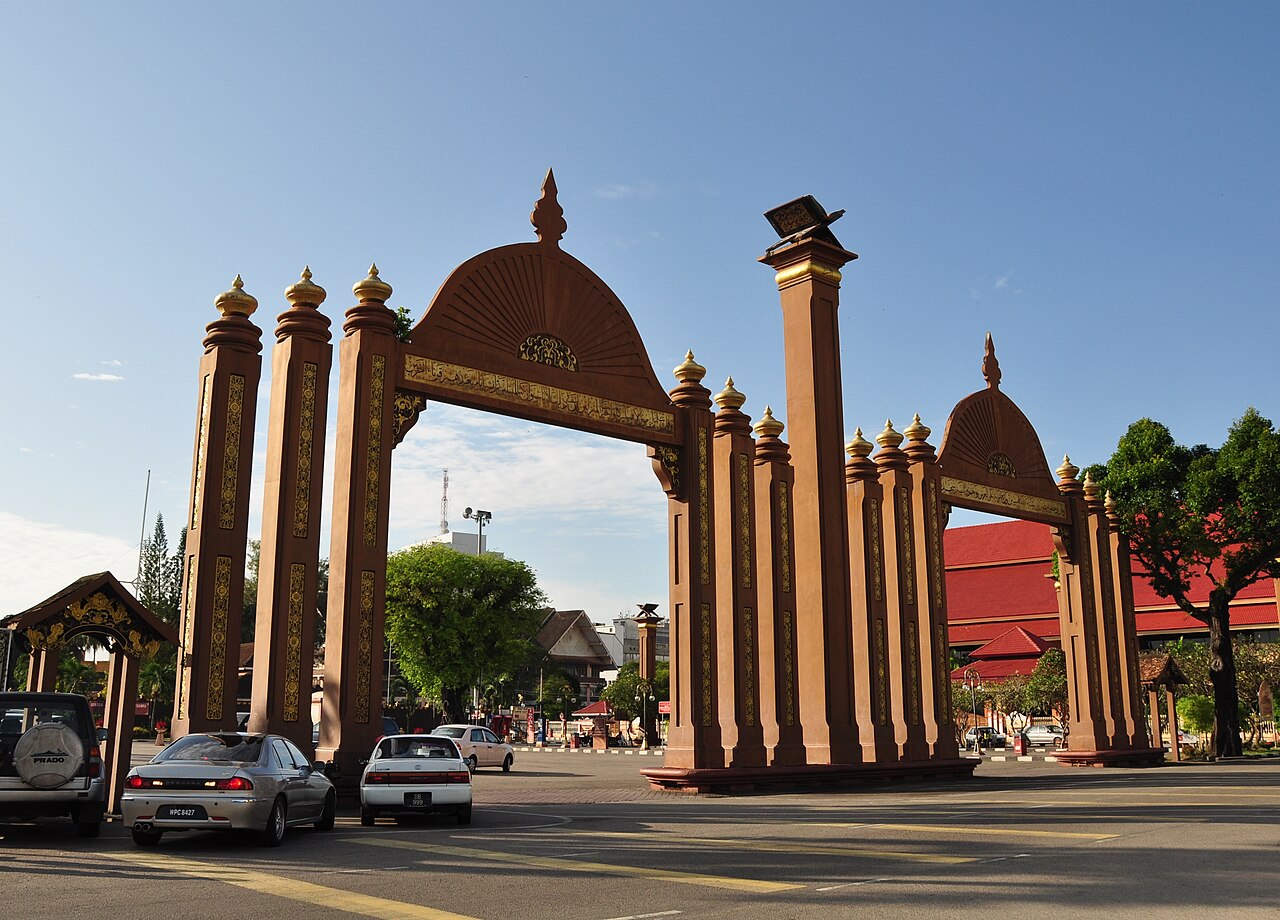
The royal capital of Kelantan, in the far northeast near the Thai border, at the mouth of the Kelantan River. It has old royal palaces, museums and many mosques, and it was where Japanese troops first landed in December 1941.
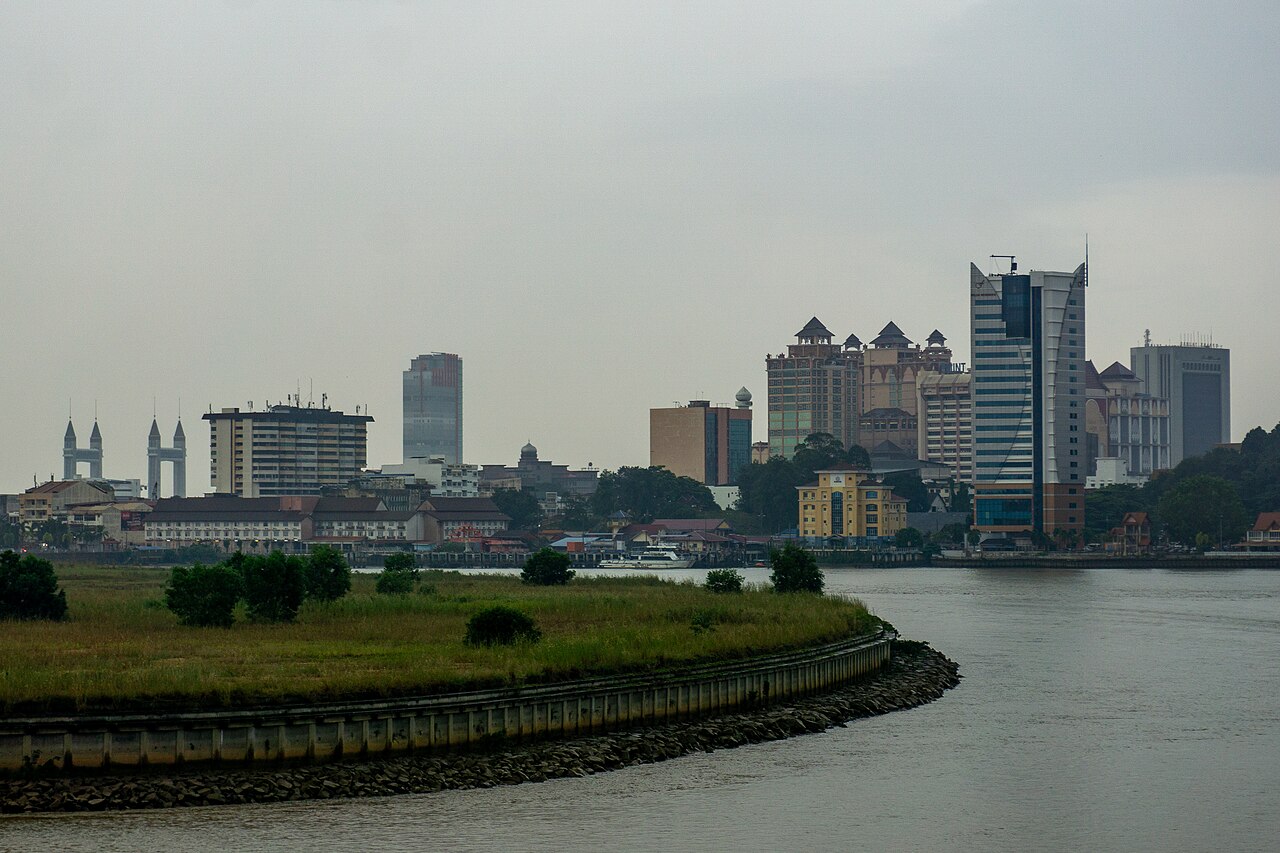
The royal capital of Terengganu, at the mouth of the Terengganu River on the South China Sea, about 440 km northeast of Kuala Lumpur by road. Redang Island lies offshore, and the city is home to the Crystal Mosque, built of steel and glass.
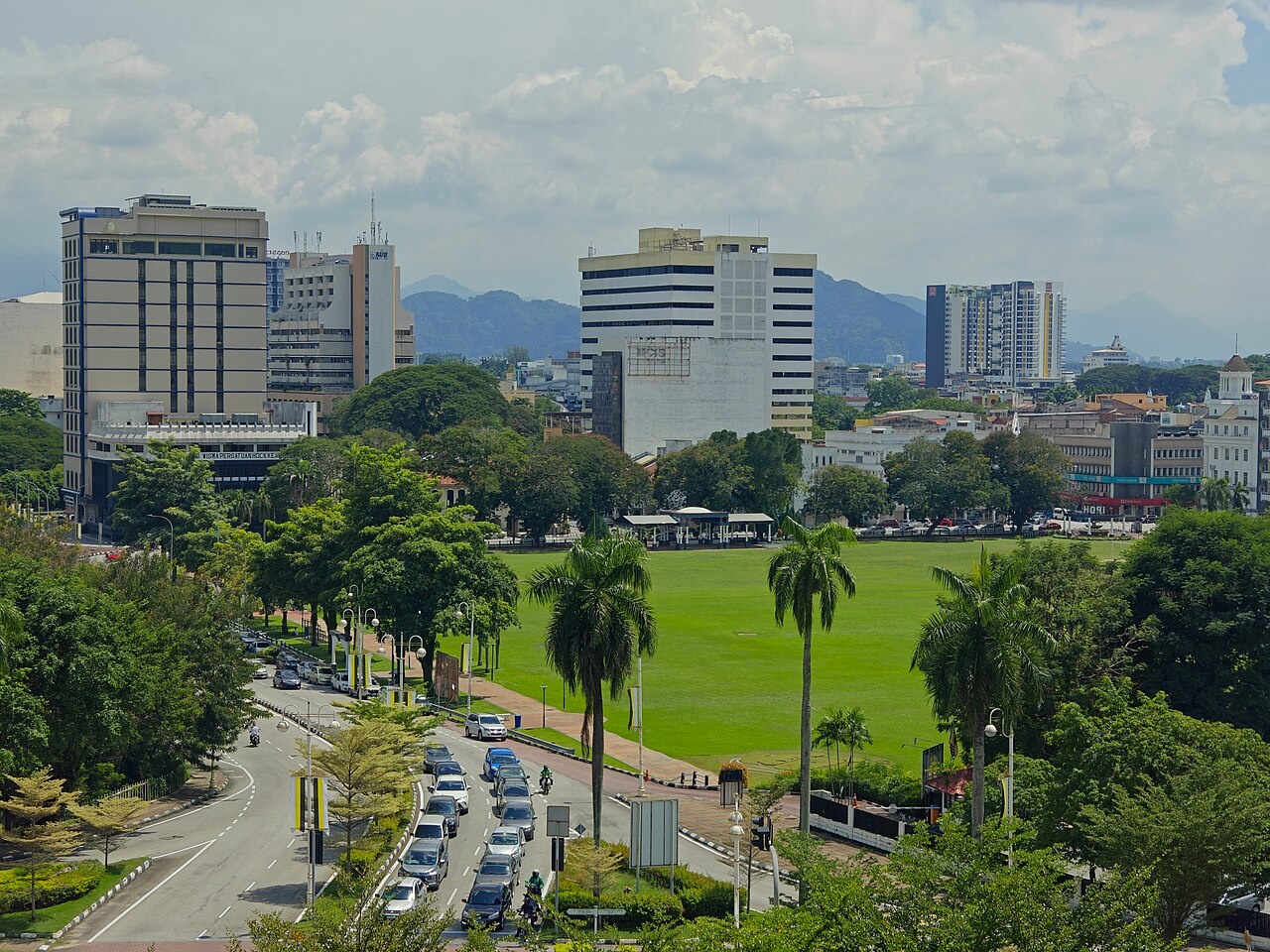
The capital of Perak, about 200 km north of Kuala Lumpur by road, which grew rich in the tin-mining boom. It has a well-kept colonial old town and is ringed by limestone hills with Buddhist cave temples.
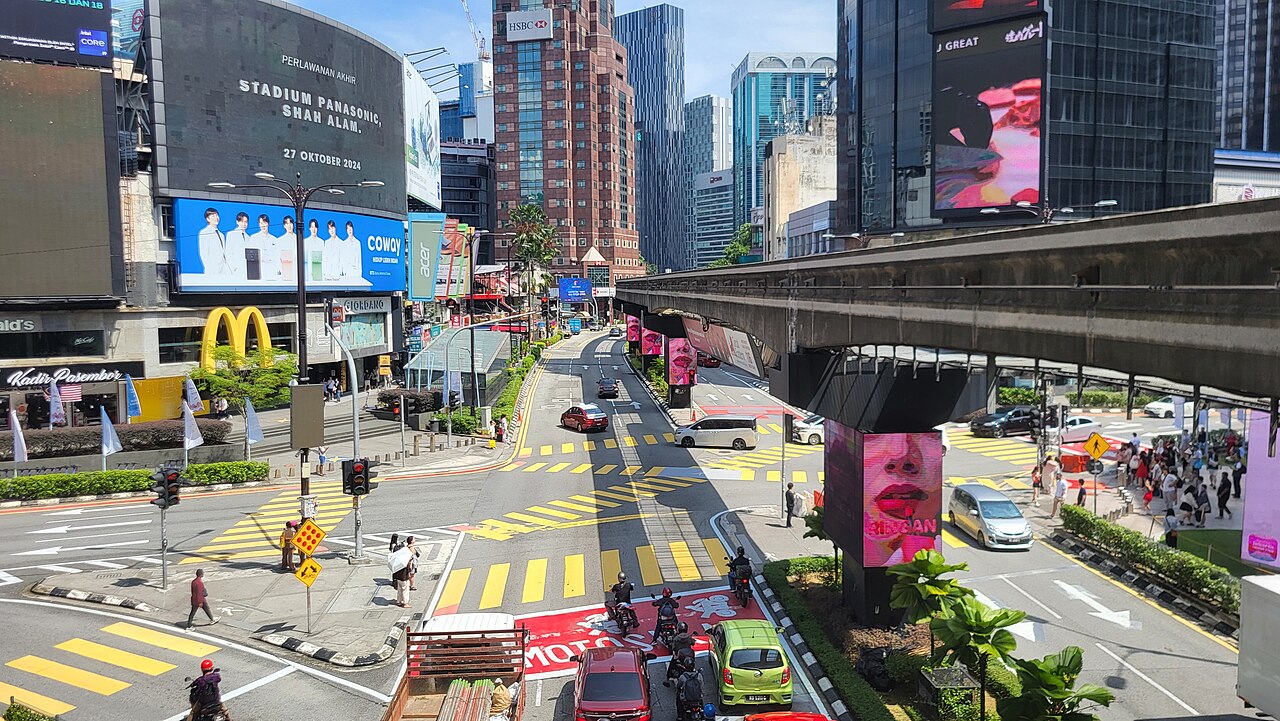
The capital and largest city, founded in 1857 as a tin-mining settlement where the Klang and Gombak rivers meet. Its name means 'muddy confluence'. Today it is a city of skyscrapers, shopping streets, markets and mosques, and the seat of Parliament and the king.
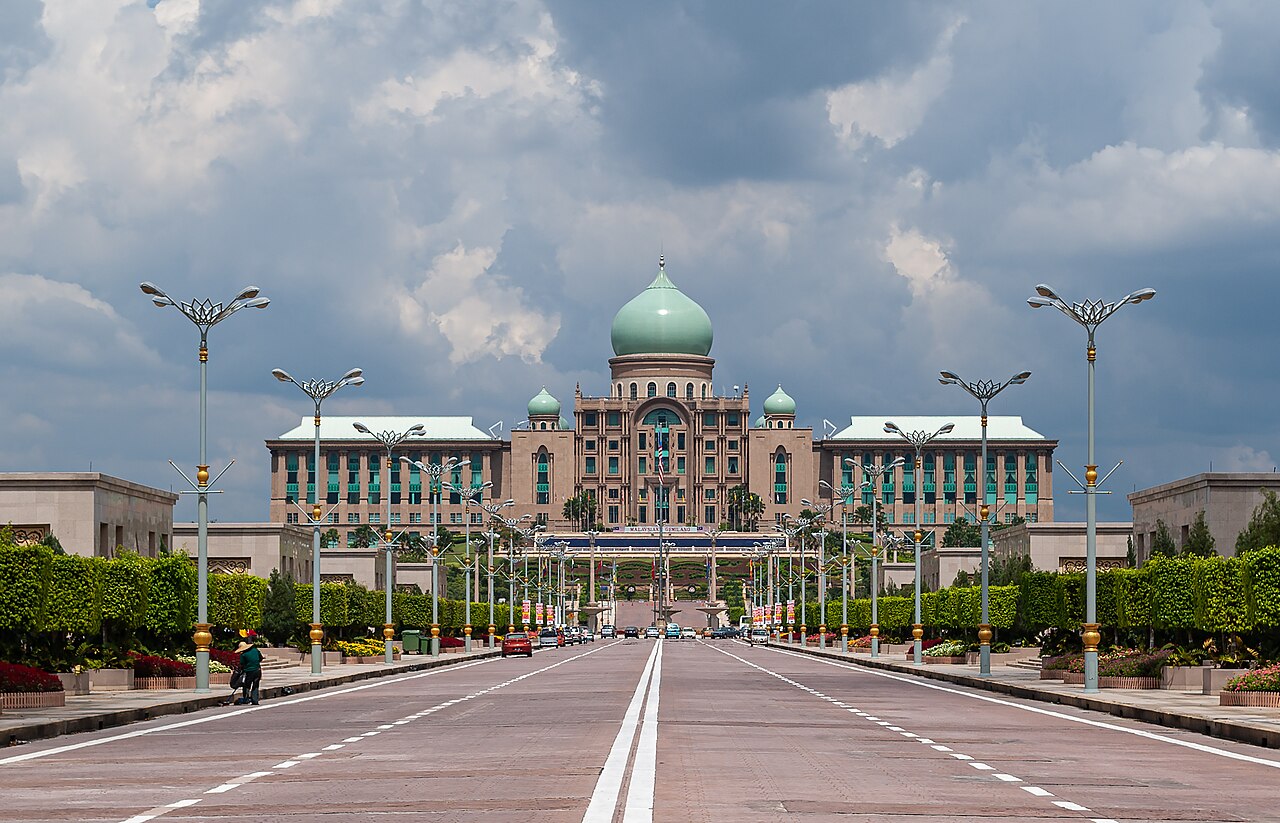
A planned city about 25 km south of Kuala Lumpur, built from 1995 around a man-made lake. Since 1999 it has been the administrative centre, where the Prime Minister's office, most ministries and the highest courts work, but it is not the national capital.
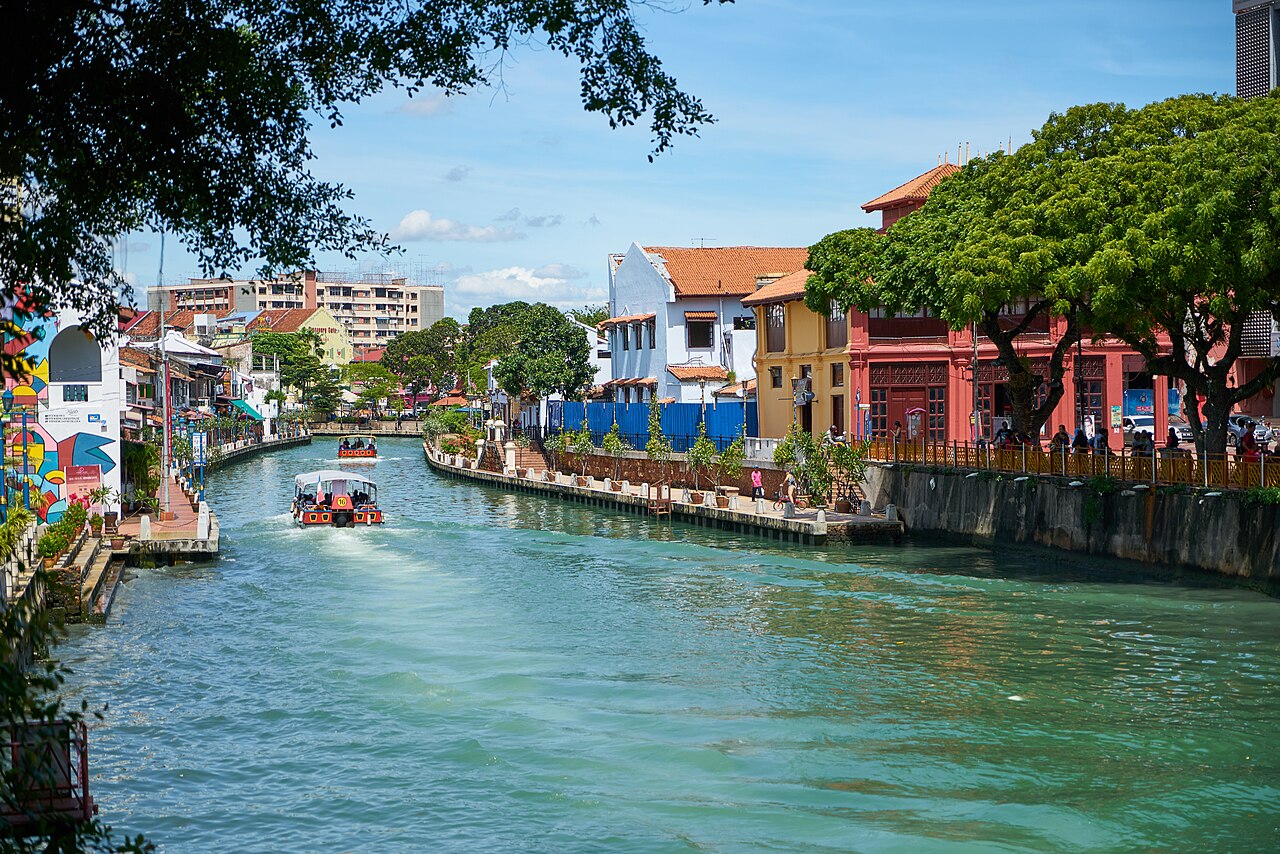
The historic port on the Strait of Malacca, founded around 1400 and ruled in turn by sultans, the Portuguese, the Dutch and the British. Its old centre, with the red Dutch Stadthuys and the Portuguese gateway of A Famosa, is a UNESCO World Heritage Site together with George Town. In Malay it is called Melaka.
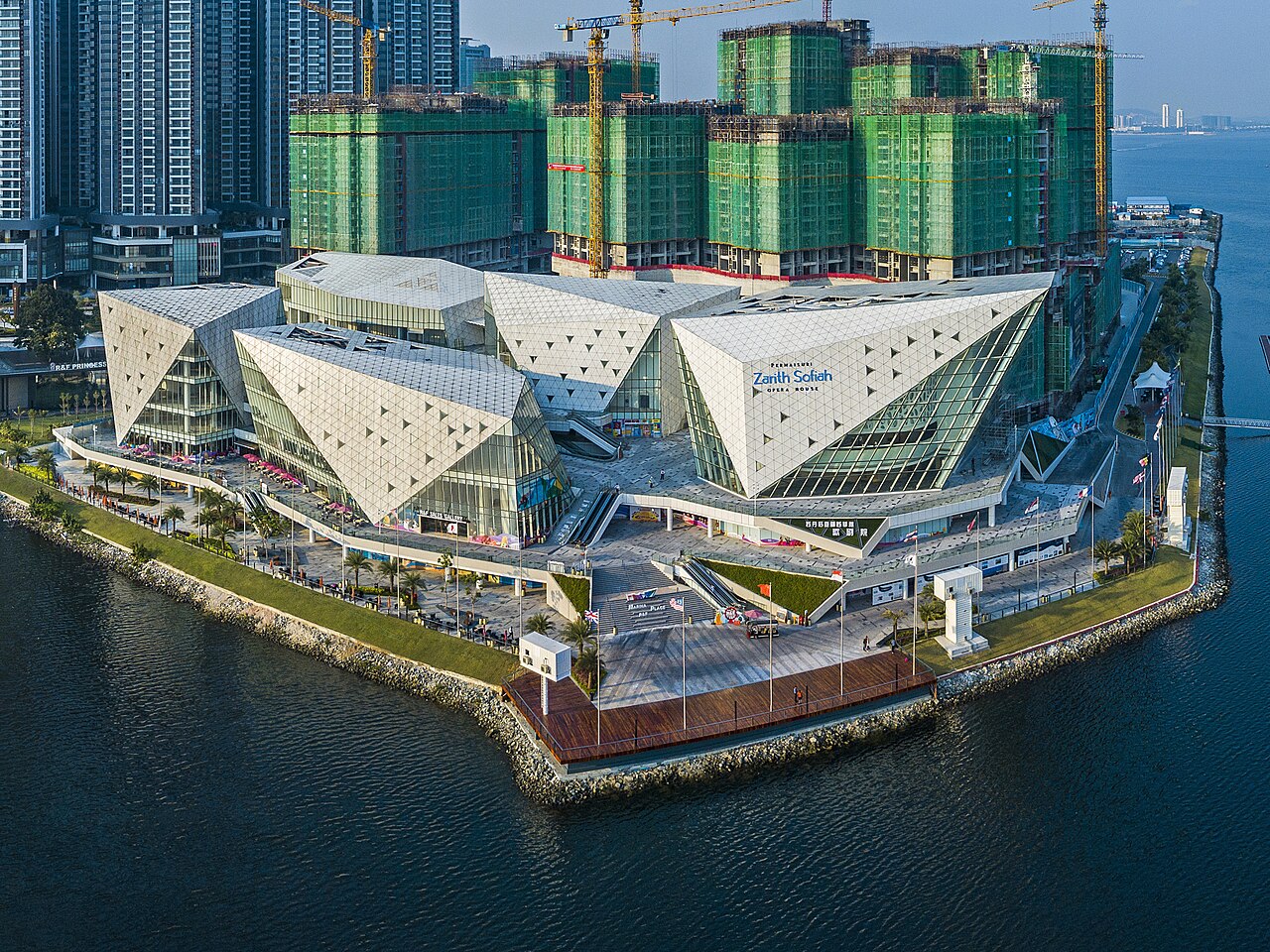
The capital of Johor, at the southern tip of the peninsula, just across a narrow strait from Singapore. The causeway between the two is one of the busiest land border crossings in the world, used every day by people who work in Singapore.
The causeway to Singapore
Busy shopping and trade
Tanjung Piai, the southern tip of mainland Asia, nearby
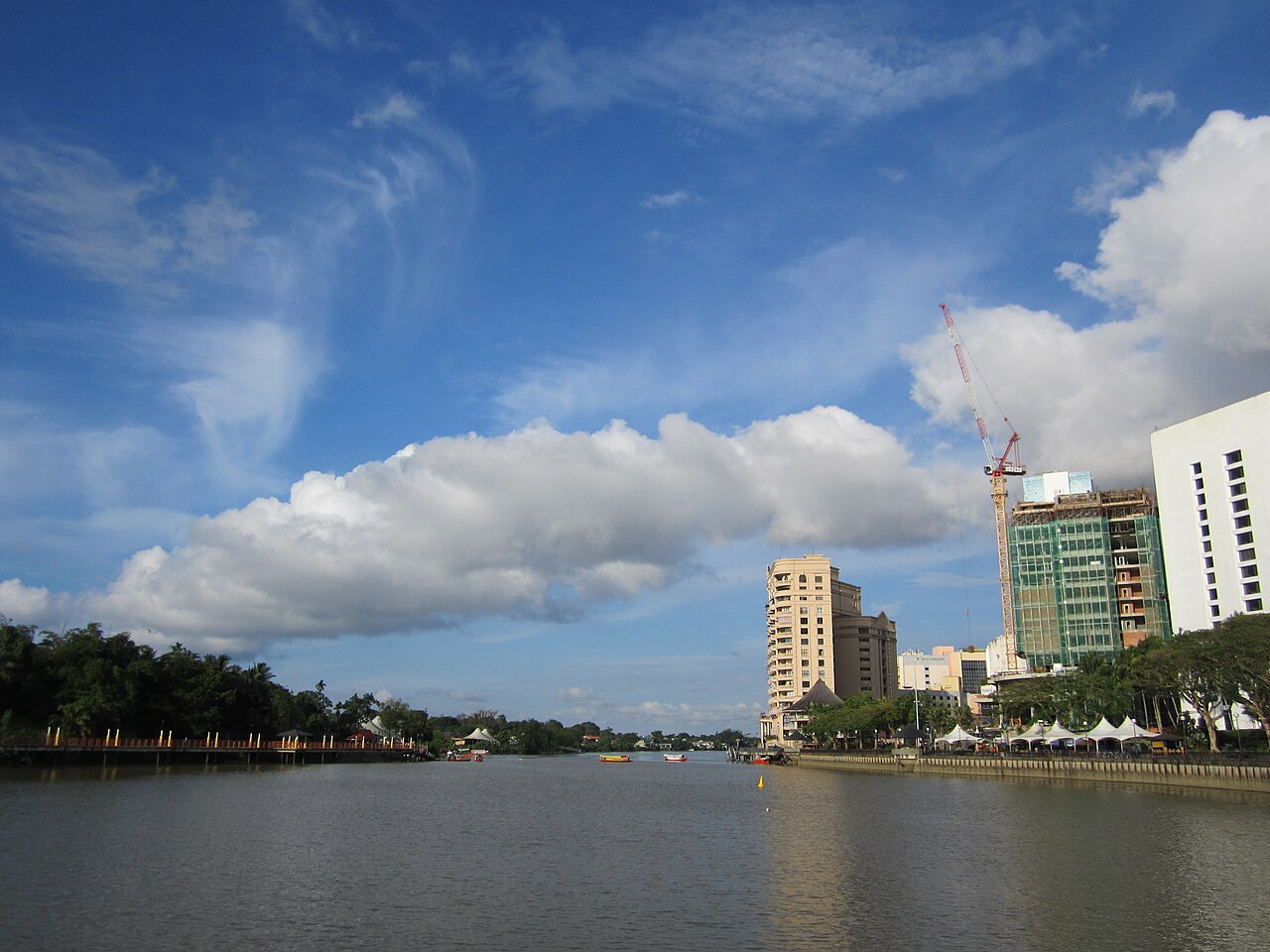
The capital of Sarawak, on the Sarawak River in western Borneo, and the capital of the White Rajahs from 1841. It is a relaxed city with a riverside promenade, colonial buildings and a museum devoted to cats, whose Malay name, 'kucing', may have given the city its name.
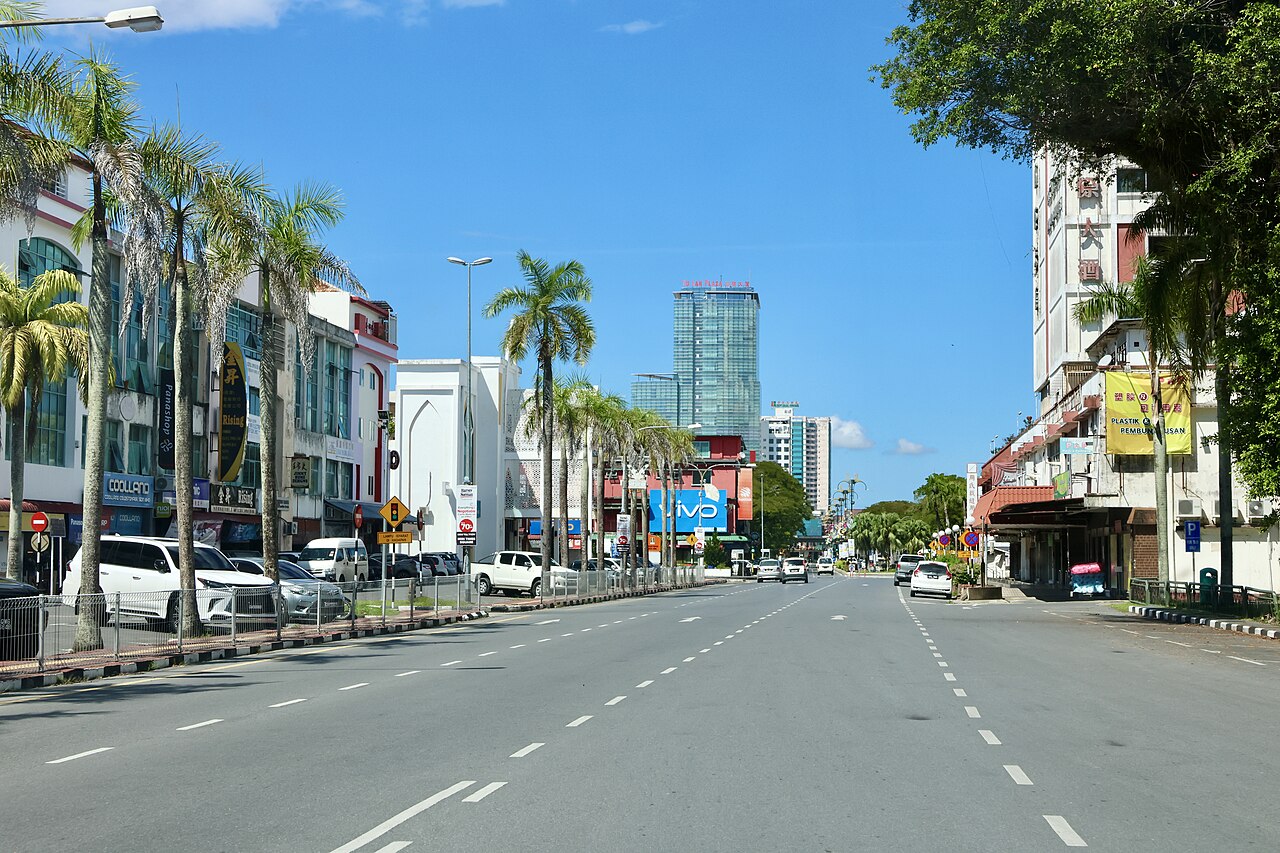
A coastal city in northern Sarawak near the border with Brunei. It grew from a small fishing village after 1910, when Malaysia's first oil well was drilled on a hill above the town, and it is the gateway to the caves of Niah and Mulu.
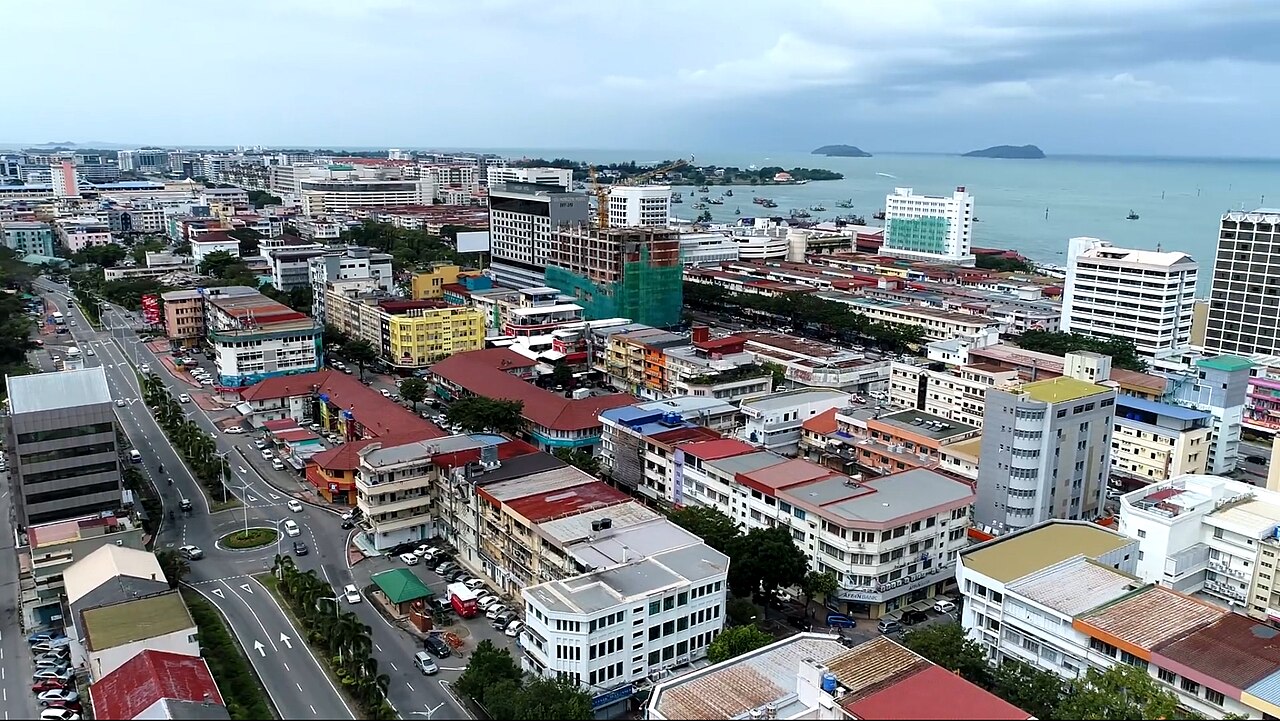
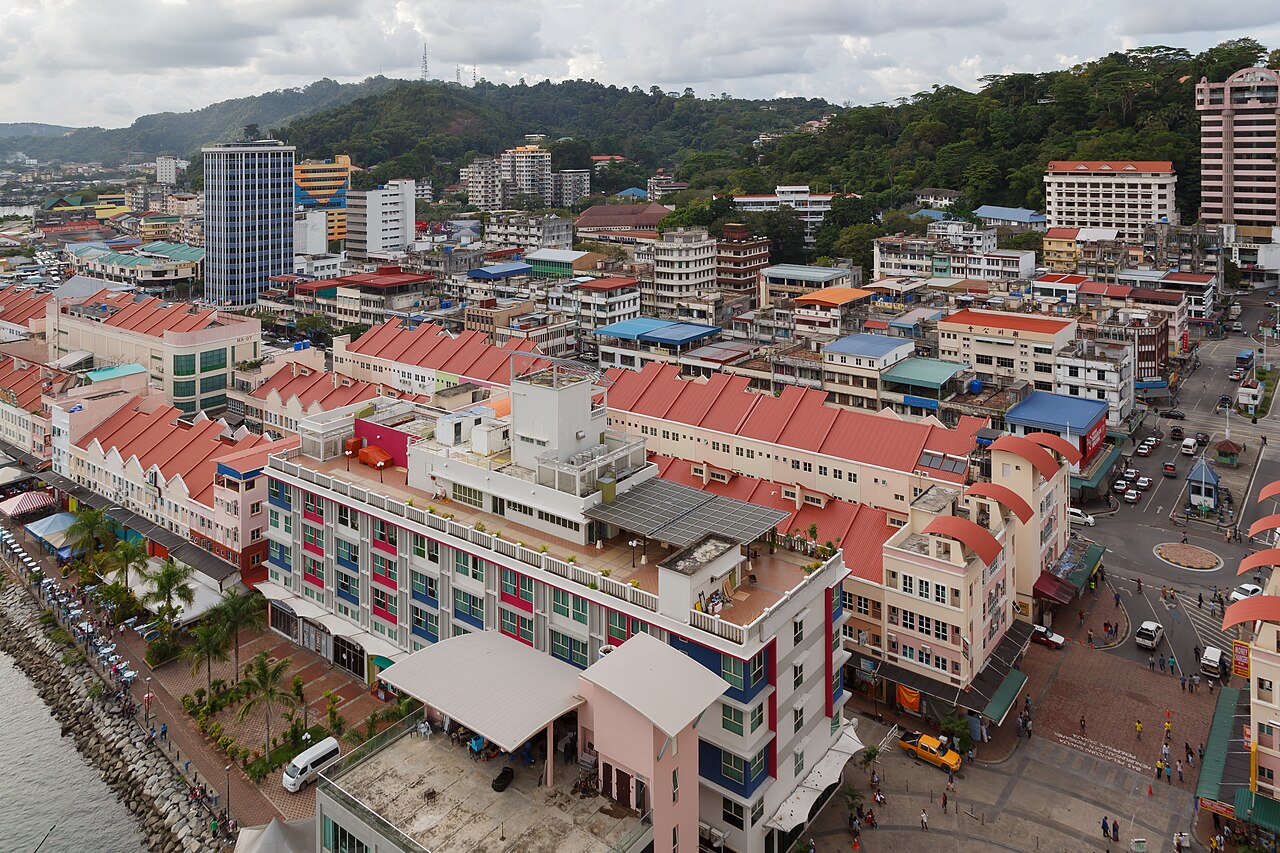
The capital of Sabah, on the northwest coast of Borneo, named after Mount Kinabalu, which rises to the east. The five islands of Tunku Abdul Rahman Park lie just offshore, a short boat ride from the city.
The second-largest city of Sabah, on the east coast, and once the capital of British North Borneo. It is the starting point for trips to see orangutans at Sepilok, about 25 km to the west.
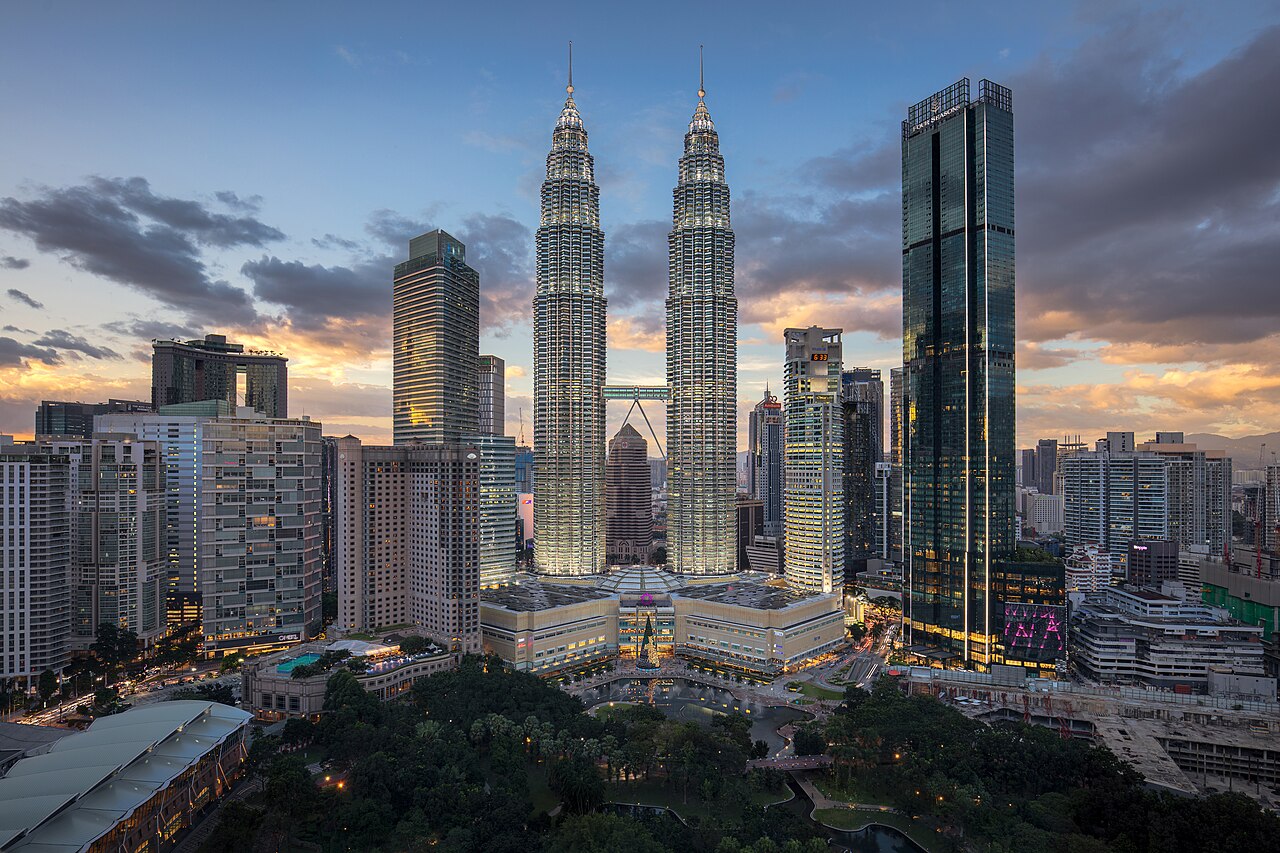
Two 88-storey towers of steel and glass, 451.9 m tall, whose shape is based on patterns from Islamic art. From 1998 to 2004 they were the tallest buildings in the world, and as of 2026 they are still the tallest twin towers. A two-storey skybridge joins them, and visitors can go up to it and to an observation deck.
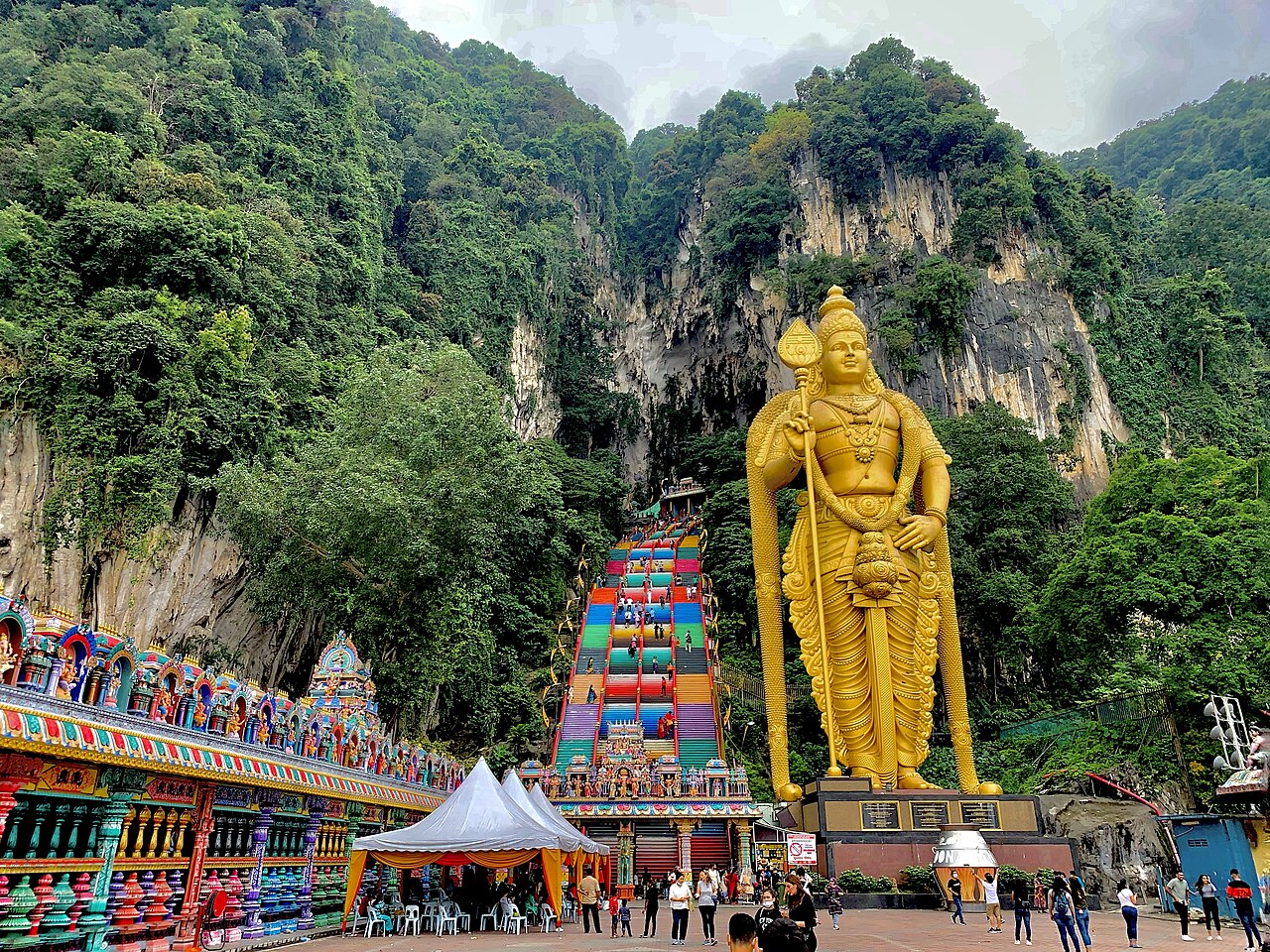
Limestone caves with Hindu temples, about 13 km north of Kuala Lumpur. A giant golden statue of the god Murugan, about 43 m tall, stands at the foot of 272 steps, painted in rainbow colours since 2018, that lead up to the main Temple Cave. It is the centre of the Tamil Hindu festival of Thaipusam in Malaysia, which draws huge crowds of pilgrims every year.
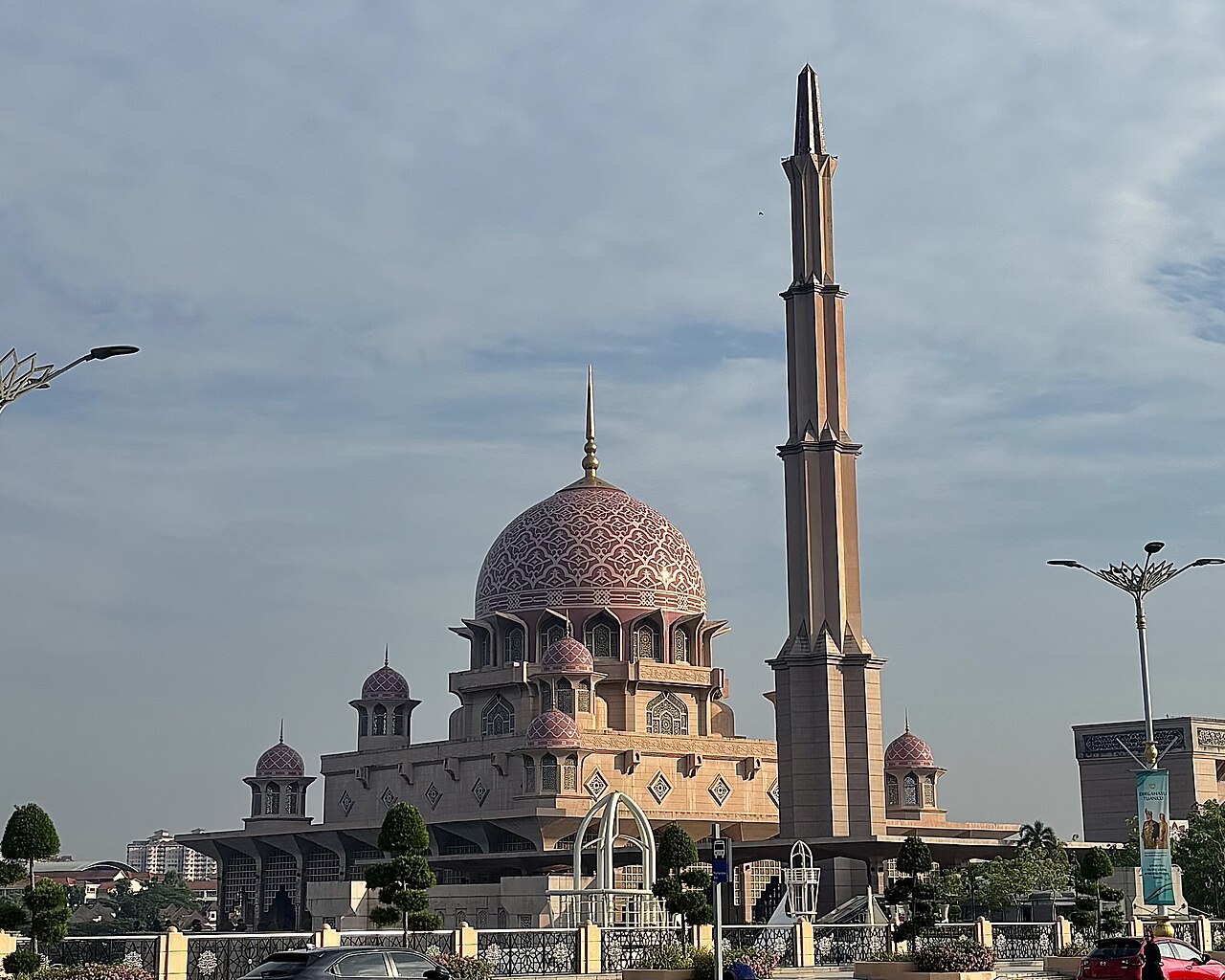
The main mosque of Putrajaya, completed in 1999 beside the man-made lake. It is built of rose-tinted granite, crowned by a pink dome, and can hold 15,000 worshippers. Visitors are welcome outside prayer times if they dress modestly.
The last surviving gateway of the fortress the Portuguese built around 1512, after they captured Malacca. The British destroyed most of the fort in the early 1800s, but this gate was saved. It stands at the foot of St Paul's Hill in the historic centre, part of the UNESCO site listed in 2008.
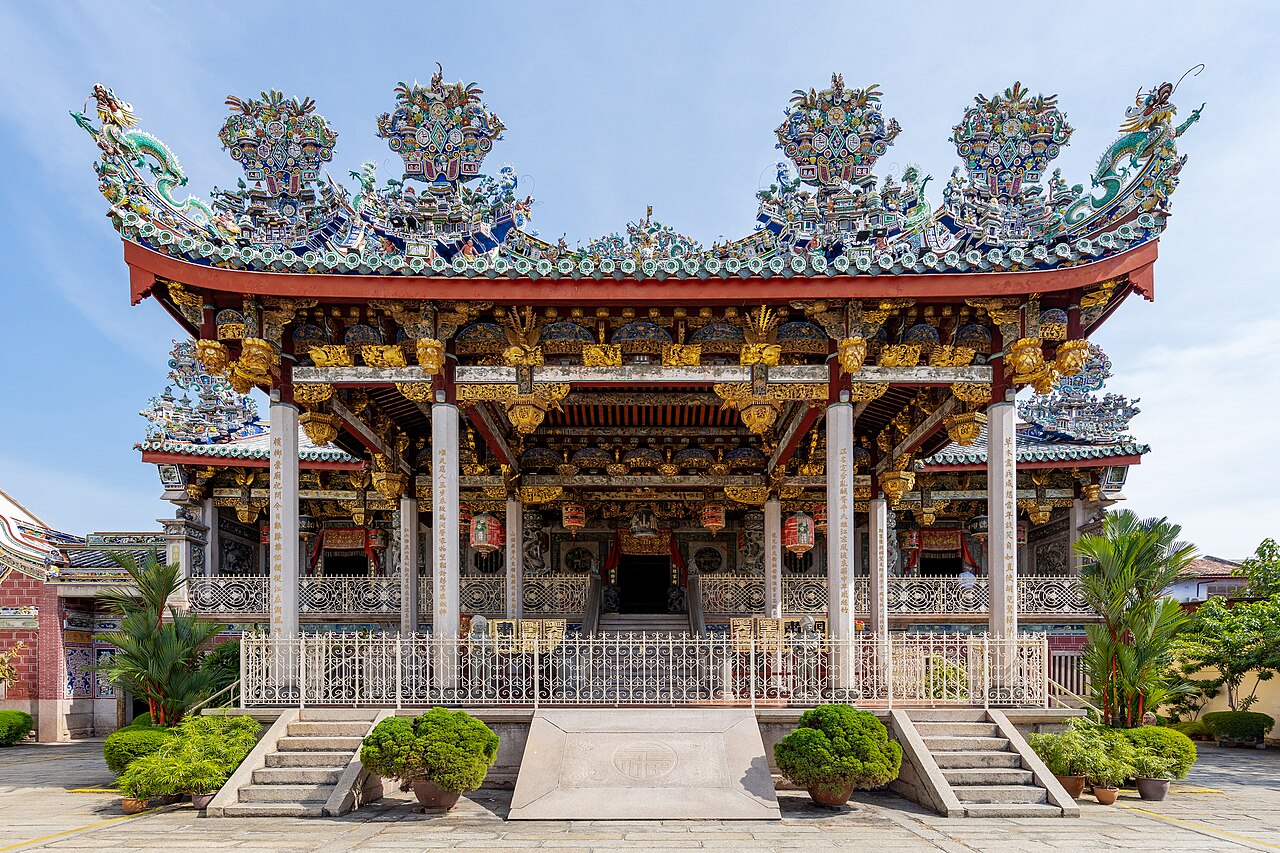
The grandest Chinese clan house in Malaysia, built by the Khoo family, whose ancestors came from Fujian in China. Its temple is covered in carvings, gilding and painted roofs, and it stands on a granite square surrounded by old clan rowhouses in the heart of George Town's UNESCO-listed centre.
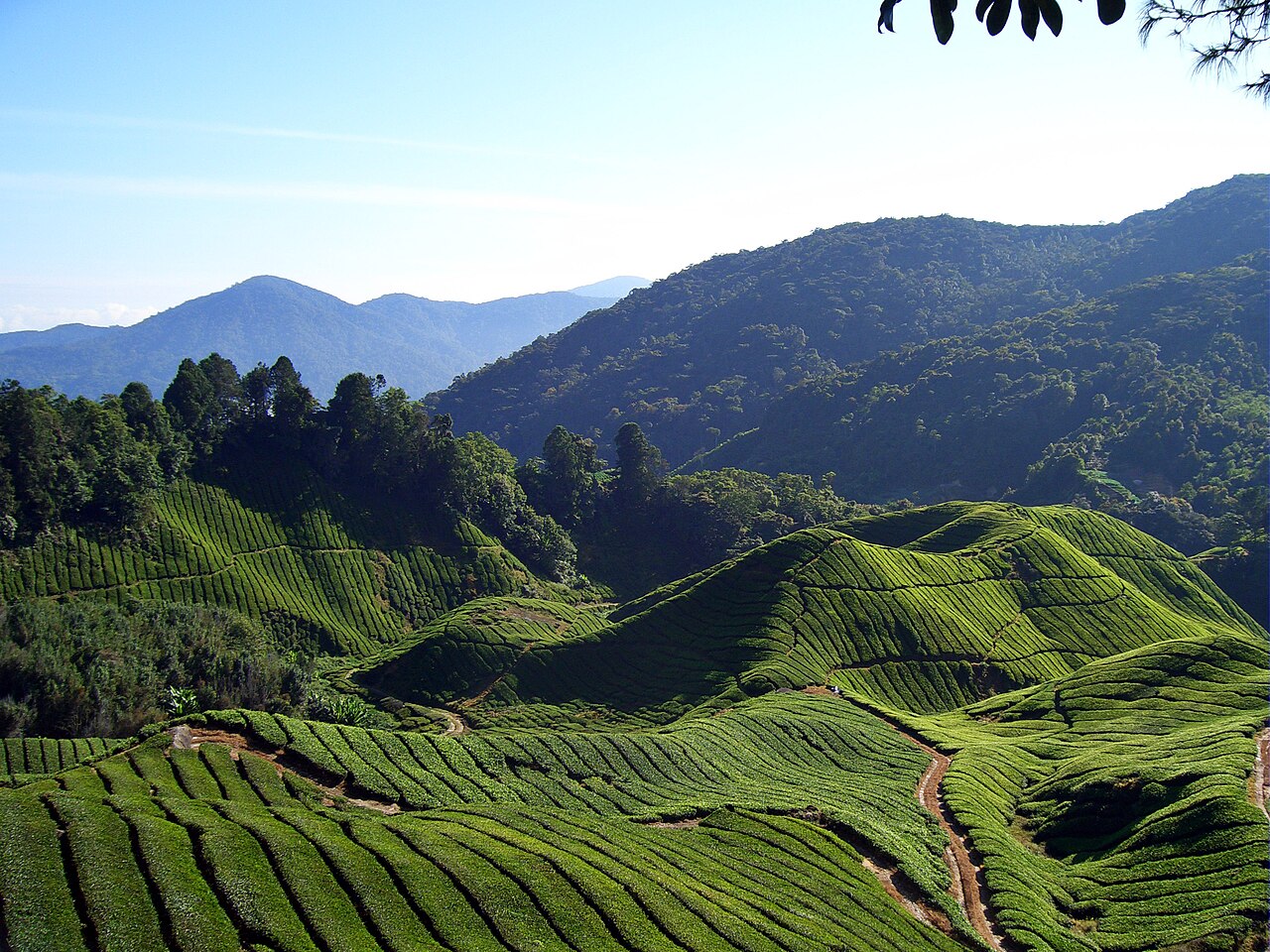
Cool green hills between about 800 and 1,600 m high, covered in tea plantations, strawberry farms and mossy forest. Developed as a hill resort in the 1930s, it is one of the oldest holiday spots in Malaysia. The pin marks Ipoh, about 90 km to the west by road.
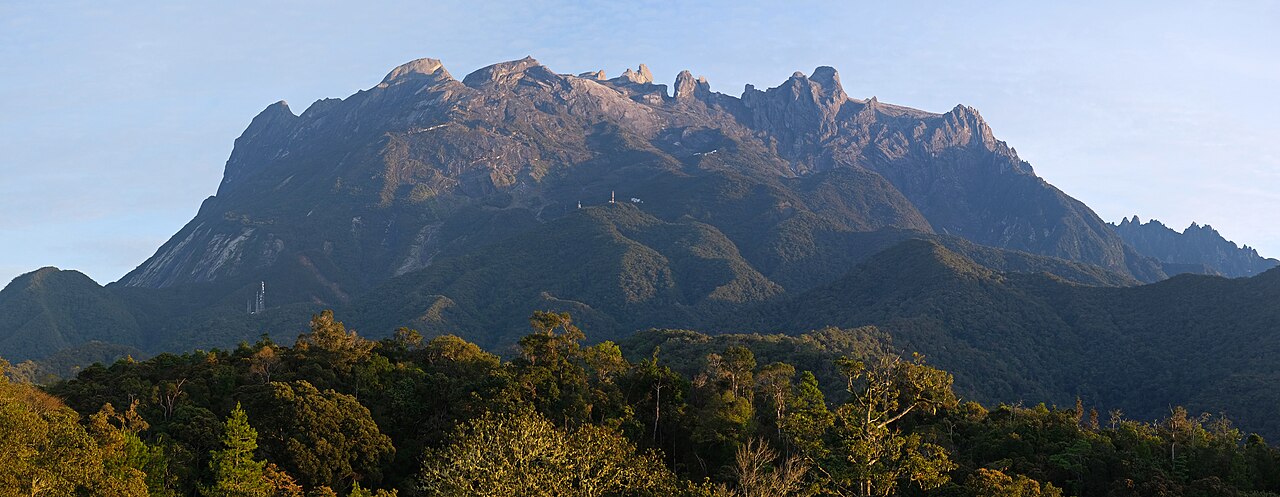
At 4,095 m, the highest mountain in Malaysia and on the island of Borneo. Fit walkers can reach the summit, Low's Peak, on the main trail without climbing gear, but by park rules every climber must go with an accredited guide. The park around it is one of the richest places for plants and animals on Earth, and it was listed by UNESCO in 2000.
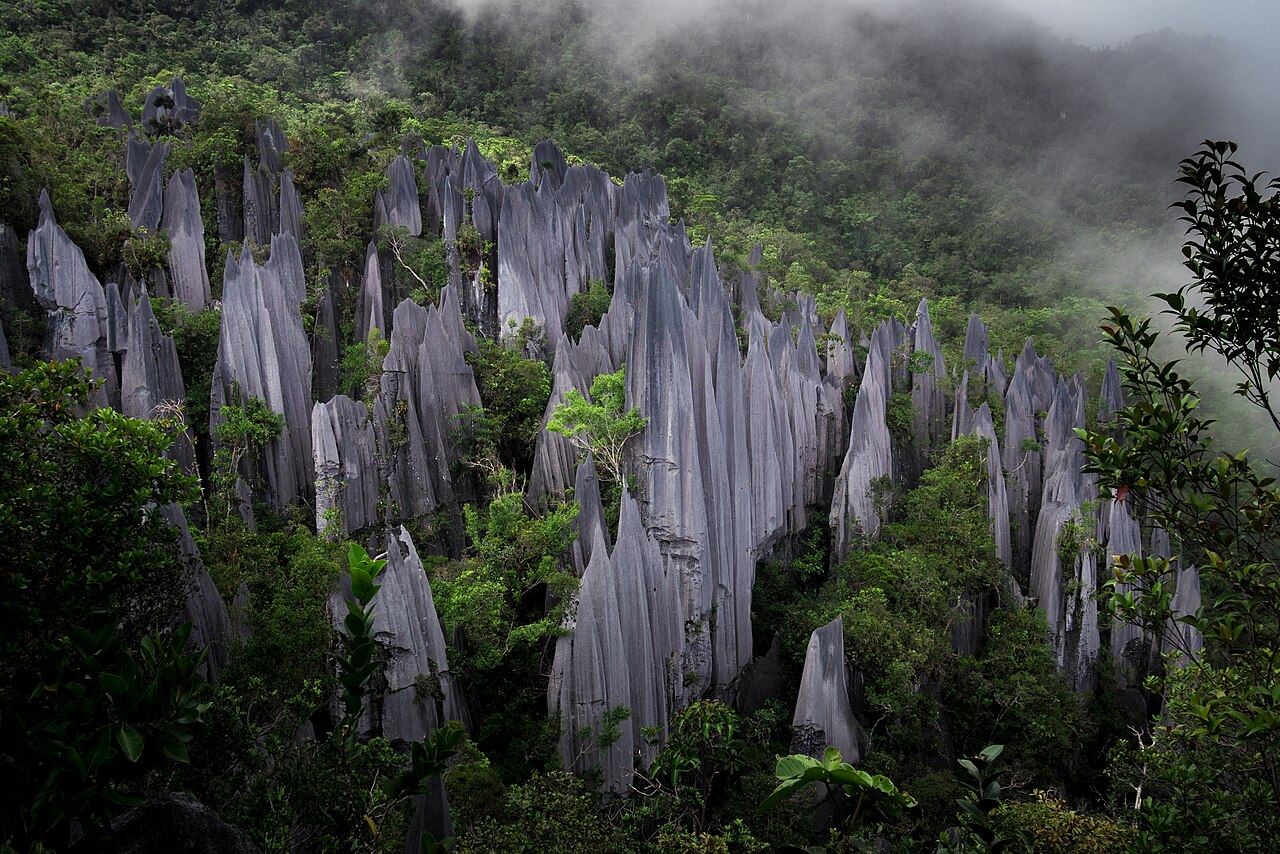
A rainforest park in Sarawak with some of the largest caves in the world, including the Sarawak Chamber, the largest known cave chamber by area, and Deer Cave, where huge swarms of bats fly out at dusk. There are no roads to the park: visitors fly in from Miri or come by river. It was listed by UNESCO in 2000.
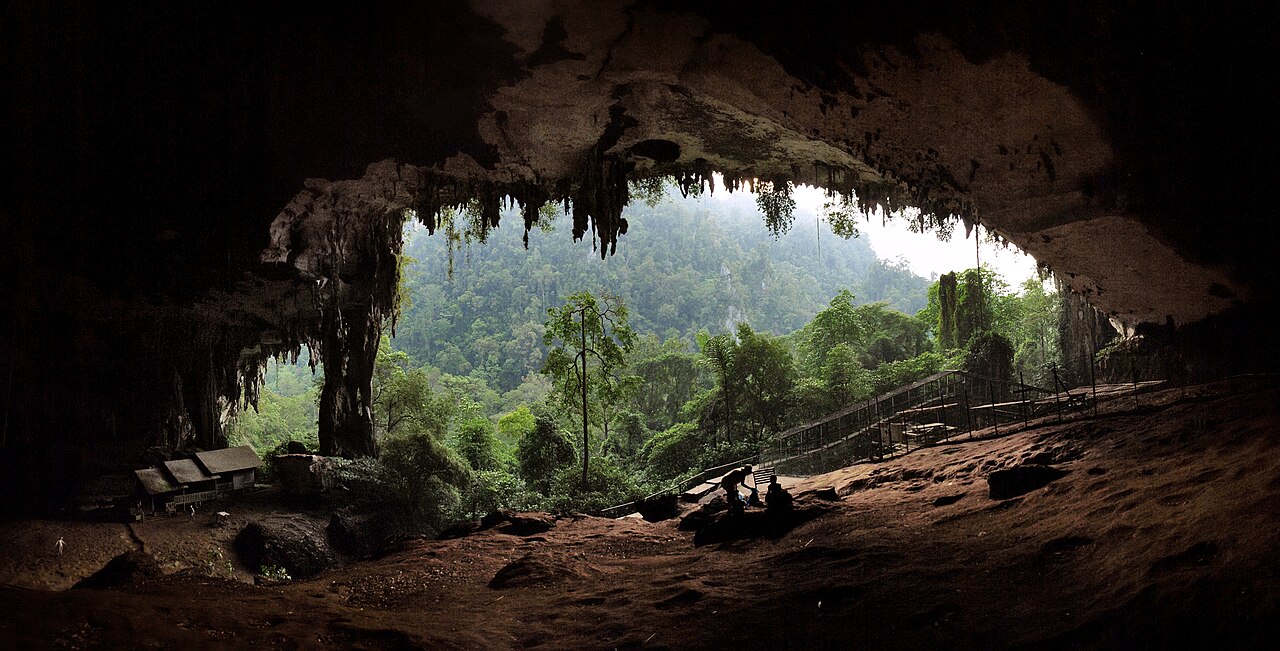
A huge cave complex in Niah National Park, southwest of Miri. A human skull about 40,000 years old, the 'Deep Skull', was found here in 1958, and the nearby Painted Cave has rock paintings about 1,200 years old. It was listed by UNESCO in 2024.
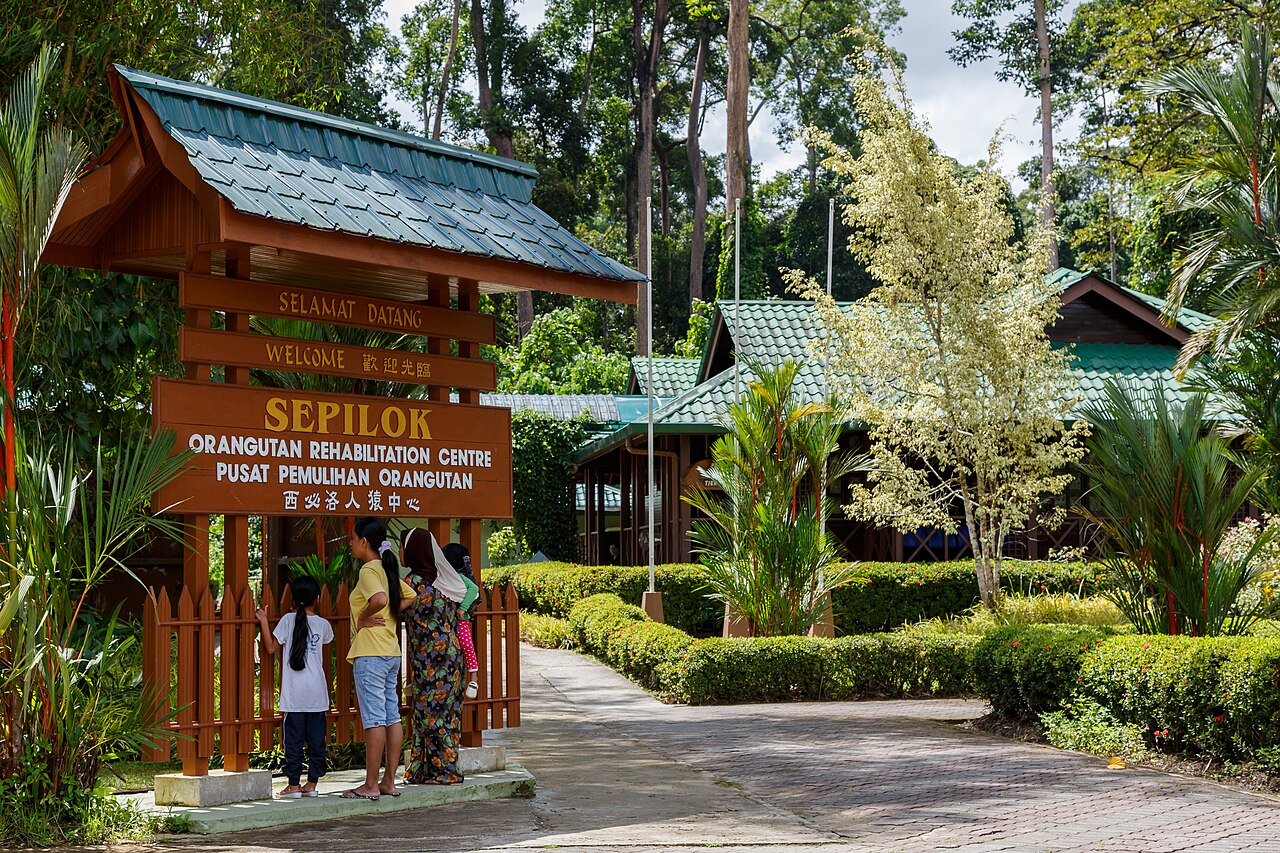
Opened in 1964, this centre about 25 km west of Sandakan cares for orphaned orangutans and teaches them to live in the wild again. Visitors can watch young orangutans come to the feeding platforms in the surrounding rainforest reserve.
As of 2026, the Petronas Twin Towers in Kuala Lumpur are the tallest twin towers in the world. From 1998 to 2004 they were the tallest buildings of any kind.
02
As of September 2026, the second-tallest building in the world is also in Kuala Lumpur: the 678.9 m Merdeka 118, completed in 2023 and renamed Merdeka Maybank Tower in July 2026. Only the Burj Khalifa in Dubai is taller.
03
Malaysia's king is elected. Every five years the nine hereditary rulers of the Malay states choose one of themselves to be king, and in practice the office rotates among them.
04
Tanjung Piai, in Johor, is the southernmost point of mainland Asia. On a clear day you can see the skyline of Singapore from it.
05
The Sarawak Chamber, in Gunung Mulu National Park, is the largest known cave chamber in the world by area.
06
Malaysia is one of the world's 17 'megadiverse' countries, home to a large share of the planet's plants and animals, many found nowhere else.
07
The rainforest of Taman Negara, the national park of the peninsula, is estimated to be more than 130 million years old.
08
The name Kuala Lumpur means 'muddy confluence': 'kuala' is where two rivers meet and 'lumpur' is mud.
09
Malaysia is the only country with territory both on the Asian mainland and on the islands of the Malay Archipelago.
10
Rafflesia, found in the rainforests of Malaysia, has the largest flowers in the world, up to about 1 m across.
11
The durian, a spiky fruit with a very strong smell, is loved by many Malaysians but banned in many hotels. Bringing one into your room can earn you a large cleaning fee.
12
The first Malaysian car, the Proton Saga, was launched in July 1985.
13
Wild orangutans live only on two islands, Borneo and Sumatra, and Sabah and Sarawak are among the best places to see them.
14
As of 2026, Malaysia has six UNESCO World Heritage Sites. The newest, listed in 2025, is the Forest Research Institute Malaysia Forest Park near Kuala Lumpur, a rainforest planted on old tin-mining land.
Give and receive money, food and gifts with your right hand, and eat with it too. Point with your thumb, with the fingers folded, rather than your forefinger, and do not touch anyone's head.
Shoes off, shoulders covered
Take off your shoes before entering a home, a mosque or a temple, and often a guesthouse too. Dress modestly, covering your shoulders and knees. At mosques, women, Muslim or not, are required to cover their hair.
Fill in the arrival card
As of 2026, almost all foreign visitors, Singaporeans being the main exception, must complete the free Malaysia Digital Arrival Card (MDAC) online, at most three days before they arrive. Sabah and Sarawak run their own immigration checks, so keep your passport with you even on flights within Malaysia.
Drink bottled or boiled water
Tap water is treated, but old pipes are not always reliable, so most people boil or filter it. Bottled water is cheap. Ice in proper restaurants is safe, but at street stalls it is wiser to skip ice and plain water and choose bottled or hot drinks.
Tipping and the '++' sign
Tipping is not expected in Malaysia. Prices marked '++' in restaurants and hotels mean that service charge and tax will be added to the bill. Hotels also charge foreign guests a small tourism tax per room per night.
Leave the durian outside
Durian, the spiky 'king of fruits', is delicious to many people but smells so strong that it is banned in many hotels and on public transport. Enjoy it at a roadside stall.
Use licensed taxis or ride apps
At airports, use the prepaid coupon taxi counter or a ride-hailing app, and never go with drivers who approach you in the arrivals hall. Elsewhere, agree the fare in advance if the driver does not use the meter.
Know the emergency number
The emergency number in Malaysia is 999, for police, ambulance and fire. Save it in your phone, along with the address of your hotel.
 Brunei
 Indonesia
 Thailand