A free large-print PDF. Choose what goes in: facts, map, history, dishes and recipes, phrases, fun facts, a quiz with or without answers. Made for clubs, care homes, libraries and family afternoons.
South Africa sits at the southern tip of the African continent, with the Atlantic Ocean on its west coast and the Indian Ocean on its east. Its landscapes range from the green hills of KwaZulu-Natal and the high peaks of the Drakensberg to the dry Karoo and the Kalahari, the wine valleys near Cape Town and the game reserves of the northeast, where lions, elephants and rhinos roam. The small mountain kingdom of Lesotho lies entirely inside South Africa.
People have lived here for a very long time: some of the world's most important fossils of early human ancestors were found in caves near Johannesburg. Around 1220 to 1300 the Kingdom of Mapungubwe in the Limpopo valley traded gold and ivory across the Indian Ocean. From 1652 Dutch and then British settlers took more and more land, and in the 20th century the country was ruled under apartheid, a system of racial segregation, until the first democratic election in 1994 brought Nelson Mandela to power.
Today South Africa is home to about 63 million people and to twelve official languages. It is unusual in having three capital cities: Pretoria for the government, Cape Town for Parliament and Bloemfontein for the Supreme Court of Appeal. Visitors come for safaris, the Garden Route, Cape Town and its mountain, the winelands, and a warm, outdoor way of life that often gathers around a braai.
CapitalPretoria
Three capitalsPretoria is the executive capital, where the President and government have their offices. Cape Town is the legislative capital, home of Parliament. Bloemfontein is the judicial capital, home of the Supreme Court of Appeal; the highest court, the Constitutional Court, sits in Johannesburg
PopulationAbout 63 million (Statistics South Africa mid-year estimate for 2025: 63.1 million)
Official languageTwelve: Afrikaans, English, isiNdebele, isiXhosa, isiZulu, Sepedi, Sesotho, Setswana, siSwati, Tshivenda, Xitsonga and, since a constitutional amendment signed in 2023, South African Sign Language. isiZulu is the most common home language
CurrencySouth African rand (ZAR), divided into 100 cents
AreaAbout 1,221,037 km²
GovernmentParliamentary republic of nine provinces. The President is head of state and of government and is elected by the National Assembly
Highest mountainMafadi in the Drakensberg, about 3,450 m, on the border with Lesotho
Longest riverThe Orange, about 2,400 km, which rises in Lesotho and flows west to the Atlantic, forming part of the border with Namibia
NeighboursNamibia, Botswana, Zimbabwe, Mozambique and Eswatini. Lesotho is an enclave, completely surrounded by South Africa
Long before Europeans arrived, San hunter-gatherers, Khoikhoi herders and Bantu-speaking farming peoples lived across southern Africa, and the Kingdom of Mapungubwe flourished in the Limpopo valley in the 1200s. Portuguese sailors rounded the Cape in 1488, and the Dutch founded Cape Town in 1652. Diamonds and gold turned the country upside down in the late 1800s, wars followed, and in 1910 the Union of South Africa was formed. From 1948 the government imposed apartheid, a harsh system of racial segregation, until negotiations and the first democratic election in 1994 opened a new chapter.
1488
Dias sails round the Cape
The Portuguese navigator Bartolomeu Dias became the first European known to sail round the southern tip of Africa, landing at Mossel Bay in February 1488. The rocky cape he passed on the way back later became known as the Cape of Good Hope.
1652
The Dutch arrive at the Cape
On 6 April 1652 Jan van Riebeeck landed in Table Bay for the Dutch East India Company to set up a station supplying fresh food and water to ships sailing to Asia. The settlement grew into Cape Town, and the Company's farms spread inland onto the land of the Khoikhoi.
1816
Shaka becomes king of the Zulu
Shaka became king of the Zulu in 1816 and, with new fighting methods, built a powerful kingdom in what is now KwaZulu-Natal. He reigned until 1828, when he was killed by two of his half-brothers.
1871
The diamond rush at Kimberley
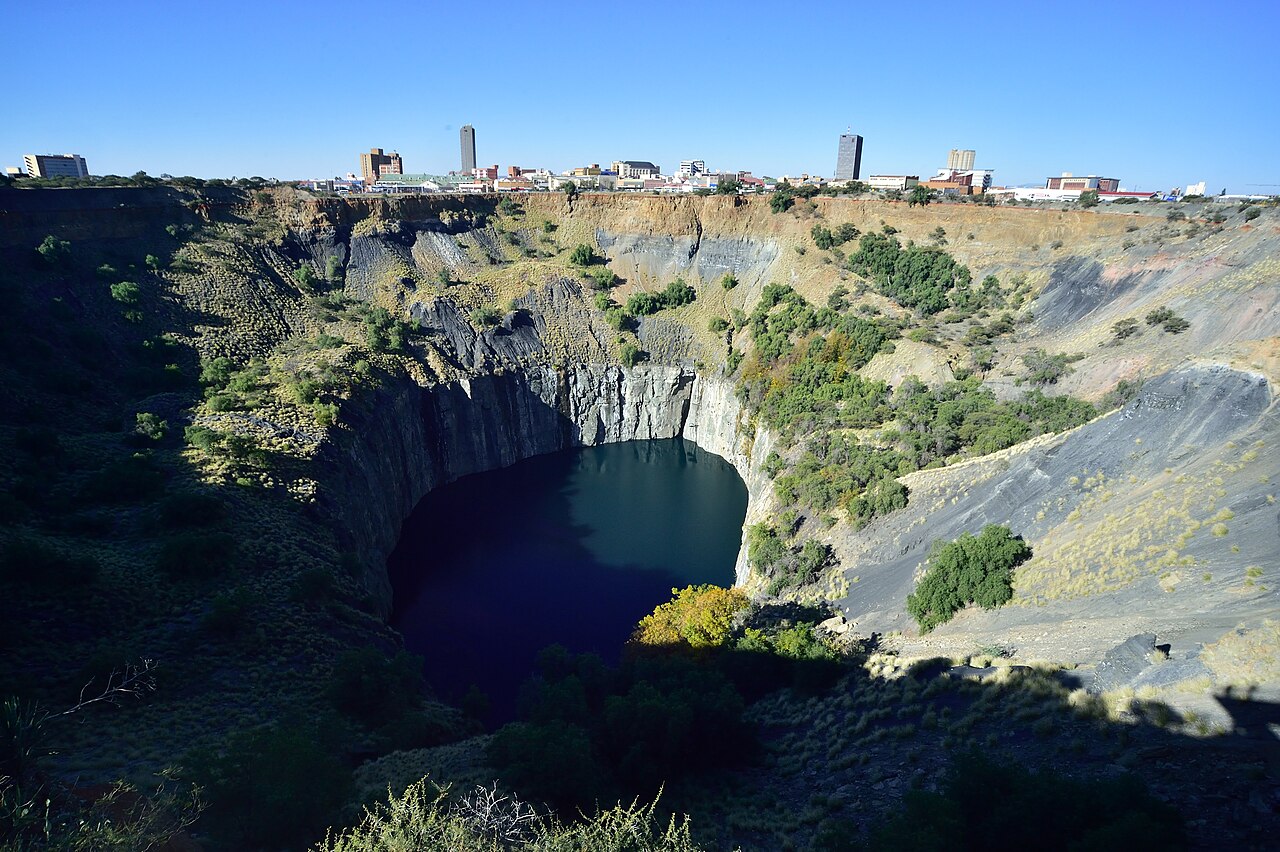
After the first diamonds were found near the Orange River in 1867, a rich find on a farm in 1871 drew tens of thousands of diggers to the new town of Kimberley. With picks and shovels they dug the Big Hole, and within a few years diamonds were transforming the economy.
1879
The Battle of Isandlwana
On 22 January 1879, during the Anglo-Zulu War, a Zulu army of King Cetshwayo defeated a large British force at Isandlwana, a heavy defeat that shocked Britain. Britain sent reinforcements and conquered the Zulu kingdom later that year.
1886
Gold is found on the Witwatersrand
In 1886 gold was discovered on the Witwatersrand ridge, and Johannesburg was founded the same year. Within ten years it had more than 100,000 people, and the gold mines drew workers from all over southern Africa.
1899
The South African War begins
In October 1899 war broke out between Britain and the two Boer republics, the Transvaal and the Orange Free State. It lasted until May 1902. Tens of thousands of Boer and Black African civilians died in British camps, and the republics became British colonies.
1910
The Union of South Africa is formed
On 31 May 1910 the Cape, Natal, the Transvaal and the Orange River Colony were joined as the Union of South Africa, a self-governing part of the British Empire. As a compromise between the old colonies, the government sat in Pretoria, Parliament in Cape Town and the appeal court in Bloemfontein.
1912
The ANC is founded
On 8 January 1912 Black leaders met in Bloemfontein and founded the South African Native National Congress to defend the rights of Black South Africans. It took the name African National Congress (ANC) in 1923.
1948
Apartheid begins
The National Party won the 1948 election and began apartheid, meaning 'separateness' in Afrikaans. Laws classified every person by race, decided where people could live, work, study and even marry, and forced millions of people from their homes. Apartheid lasted until 1994.
1960
The Sharpeville massacre
On 21 March 1960 police opened fire on a crowd protesting against the pass laws at Sharpeville, killing dozens of people. The government then banned the ANC and other movements. Today 21 March is Human Rights Day in South Africa.
1976
The Soweto uprising
On 16 June 1976 thousands of school students in Soweto marched against being forced to learn in Afrikaans. Police fired on them, and the photograph of the dying 12-year-old Hector Pieterson went round the world. 16 June is now Youth Day.
1990
Mandela walks free
On 11 February 1990 Nelson Mandela was released after 27 years in prison, 18 of them on Robben Island. He had been sentenced to life in 1964. His release opened talks between the government of F. W. de Klerk and the ANC to end apartheid.
1994
The first democratic election
From 26 to 29 April 1994 South Africans of all races voted together for the first time, many waiting for hours in long queues. Nelson Mandela was sworn in as president on 10 May 1994 and served until 1999. 27 April is now Freedom Day.
1996
A new constitution is signed
Nelson Mandela signed the new Constitution at Sharpeville on 10 December 1996, and it came into force in February 1997.
2010
Africa's first World Cup
From 11 June to 11 July 2010 South Africa hosted the FIFA World Cup, the first held in Africa, and the sound of the vuvuzela horn filled the stadiums. Spain won the final in Johannesburg.
South African food mixes many traditions: the maize porridge and stews of Black African families, Dutch and French Huguenot baking, the spiced dishes of the Cape Malay community, whose ancestors came from Southeast Asia, and the curries of Durban's Indian South Africans. Everyday meals are often a starch such as pap or rice with meat or a stew and vegetables. At weekends and on holidays, family and friends gather round the fire for a braai, and a milk tart or malva pudding may follow.
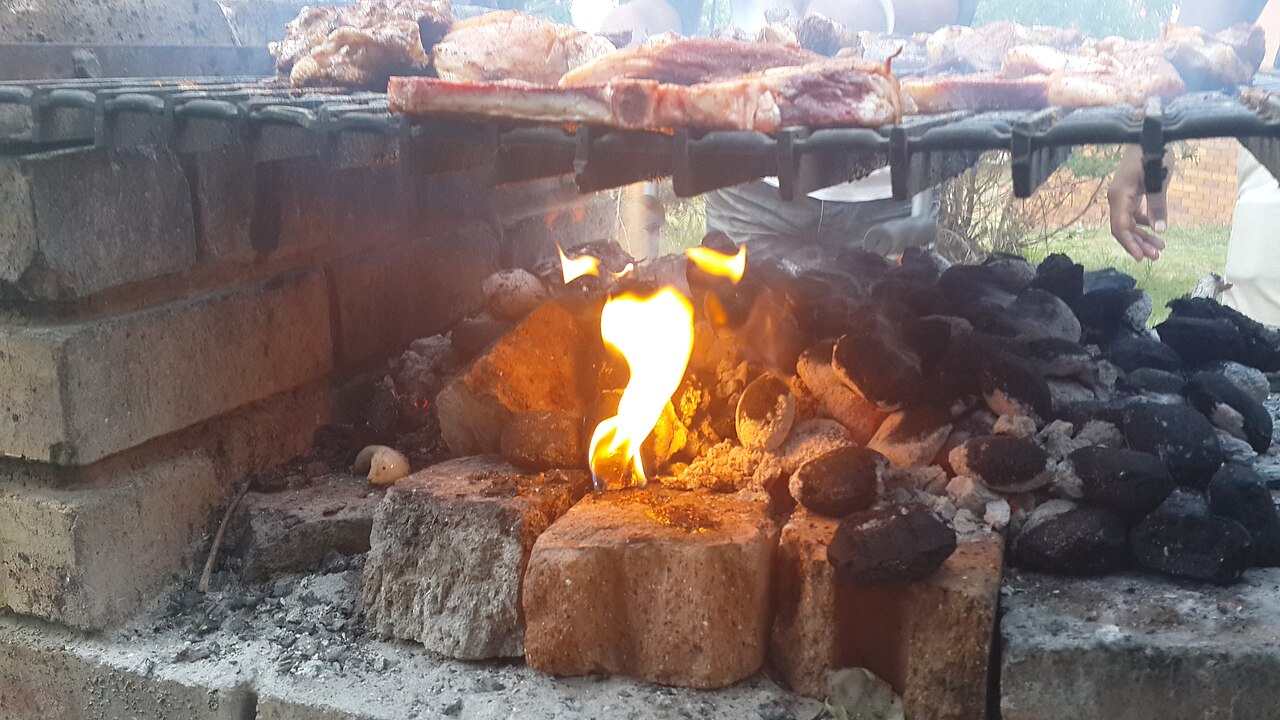
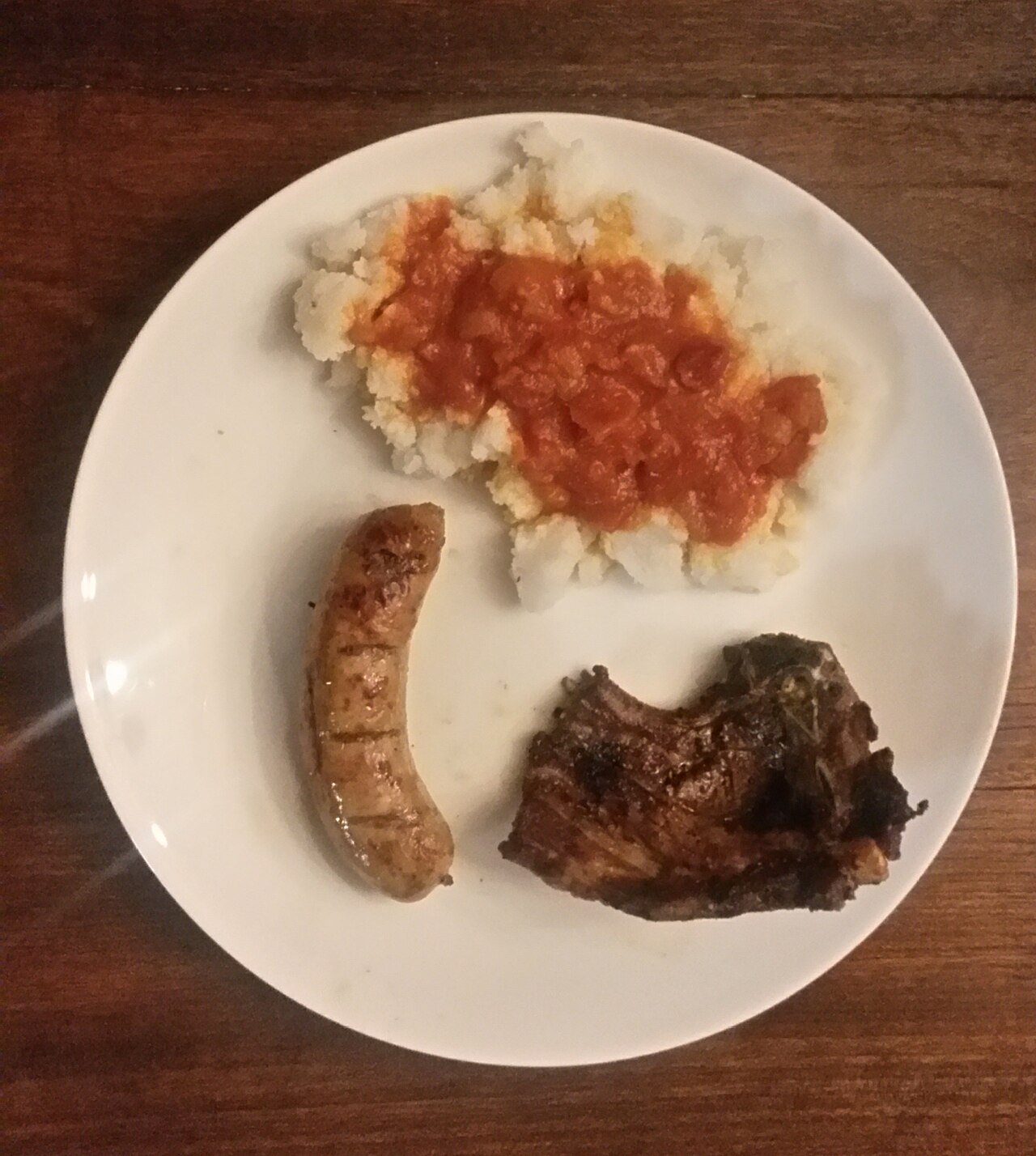
More than a barbecue: a social gathering where meat is grilled over wood or charcoal in the garden or at a picnic spot. Typical foods are boerewors, lamb chops, steaks and sosaties (spiced kebabs), with fish or rock lobster on the coast, served with pap, salads and chakalaka.
Heritage Day on 24 September is popularly called National Braai Day, a campaign meant to bring all South Africans together round the fire.
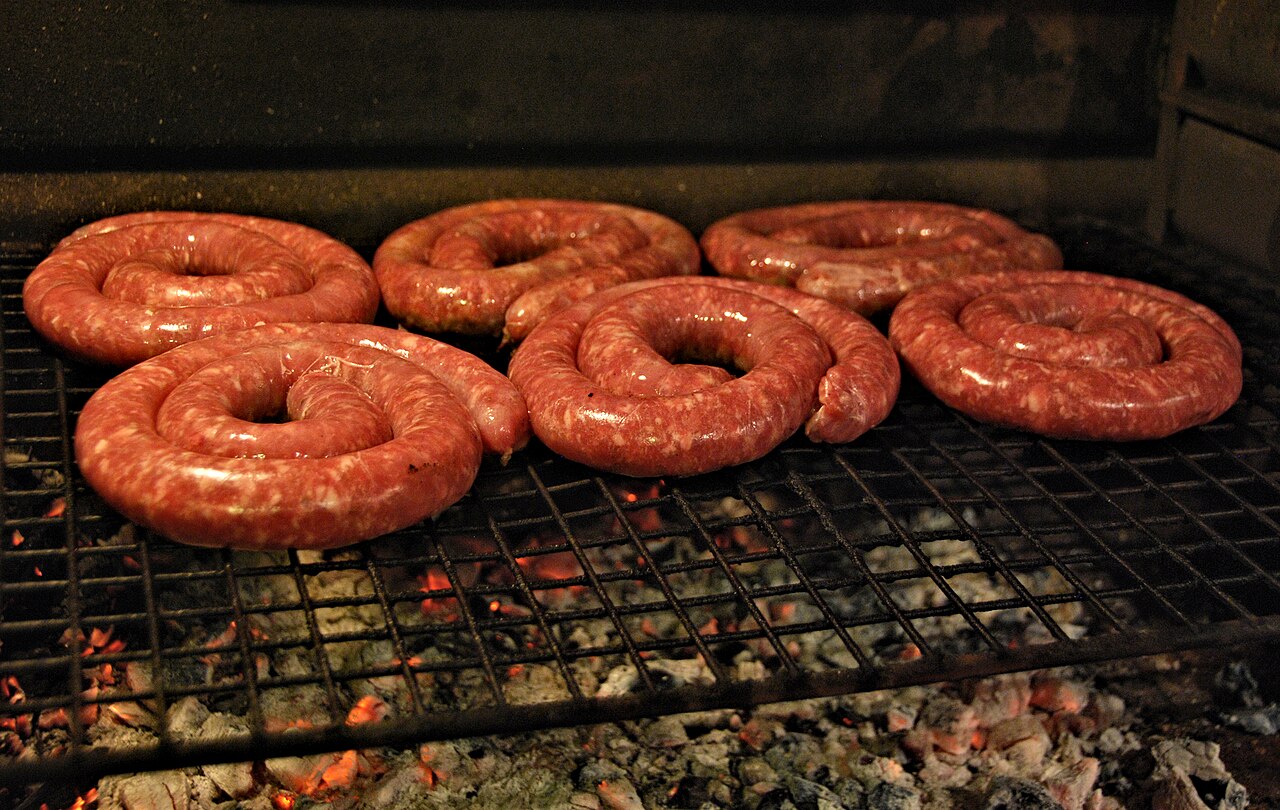
A thick, coiled sausage whose name means 'farmer's sausage' in Afrikaans. It is flavoured with toasted coriander seed, black pepper, nutmeg, cloves and allspice, and is usually grilled on the braai, or served in a bread roll as a 'boerie roll'.
By South African rules, boerewors must contain at least 90 percent meat.
Cape Town and the Western Cape, from Cape Malay cooking
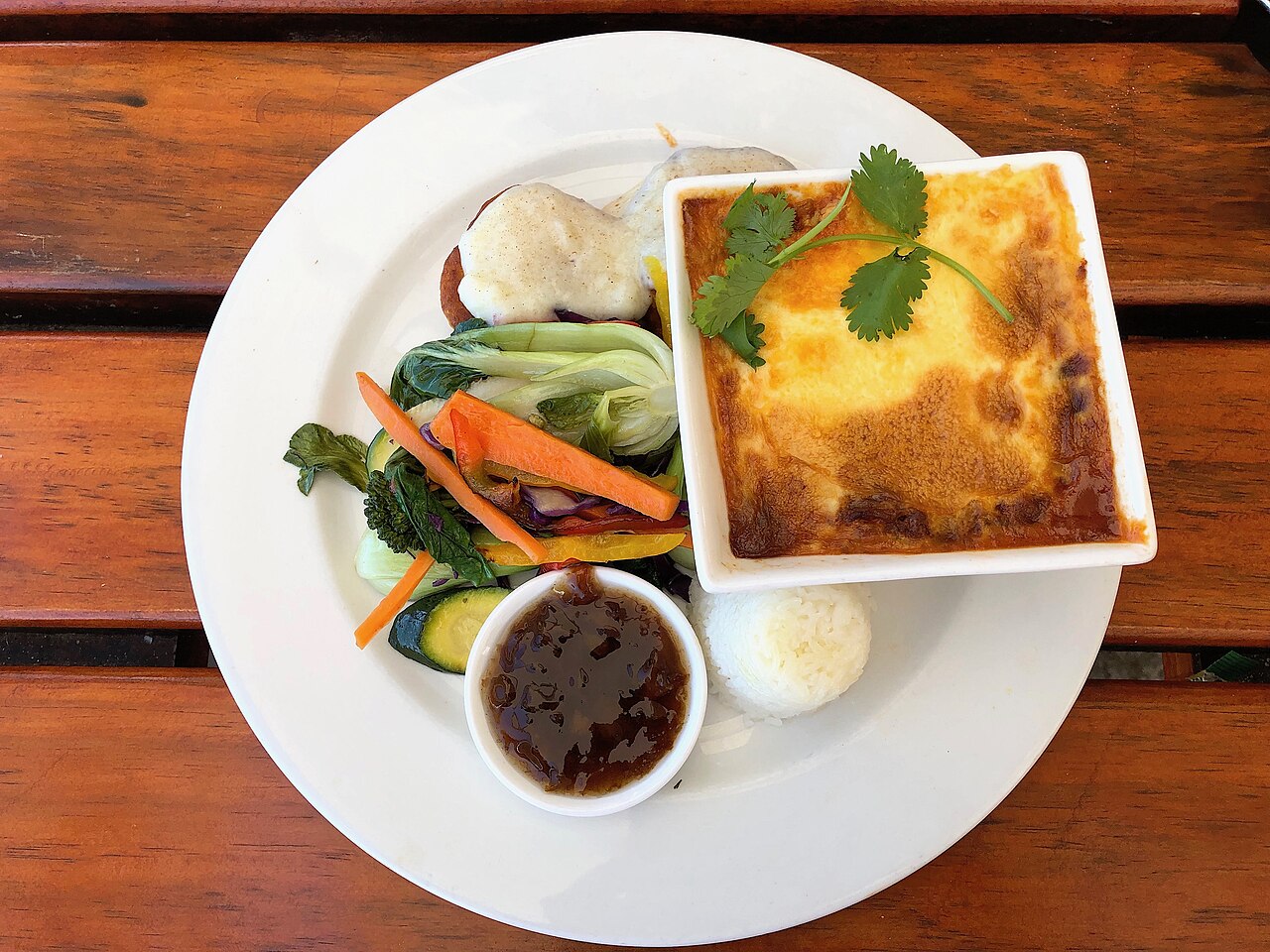
Gently curried minced beef or lamb with onions and dried fruit, baked under a golden layer of egg and milk. It is served with yellow rice and fruit chutney.
The name probably comes from a Malay word for curry spices.
See the recipe
Serves 6
1 h 15 min
Ingredients
1 thick slice of white bread, crusts removed
375 ml milk
2 tablespoons oil and 1 tablespoon butter
2 onions, finely chopped
2 cloves garlic, crushed
1 tablespoon mild curry powder and 1 teaspoon turmeric
1 kg minced beef or lamb
2 tablespoons fruit chutney and 1 tablespoon apricot jam
1 tablespoon lemon juice or vinegar
50 g raisins or sultanas
3 eggs
4 bay leaves, and salt and pepper
Method
Heat the oven to 180 °C. Soak the bread in the milk for a few minutes, then squeeze it out and keep the milk.
Fry the onions in the oil and butter until soft, add the garlic, curry powder and turmeric and cook for 1 minute.
Add the mince and fry until it is no longer pink, breaking it up. Stir in the chutney, jam, lemon juice, raisins, the squeezed bread, 1 teaspoon of salt and some pepper, and cook for 5 minutes.
Spread the mixture in an ovenproof dish and press it down lightly.
Beat the eggs with the saved milk (add more milk to make about 375 ml) and pour it over the meat. Push the bay leaves into the top.
Bake for 35 to 40 minutes, until the topping is set and golden. Serve with yellow rice and chutney.
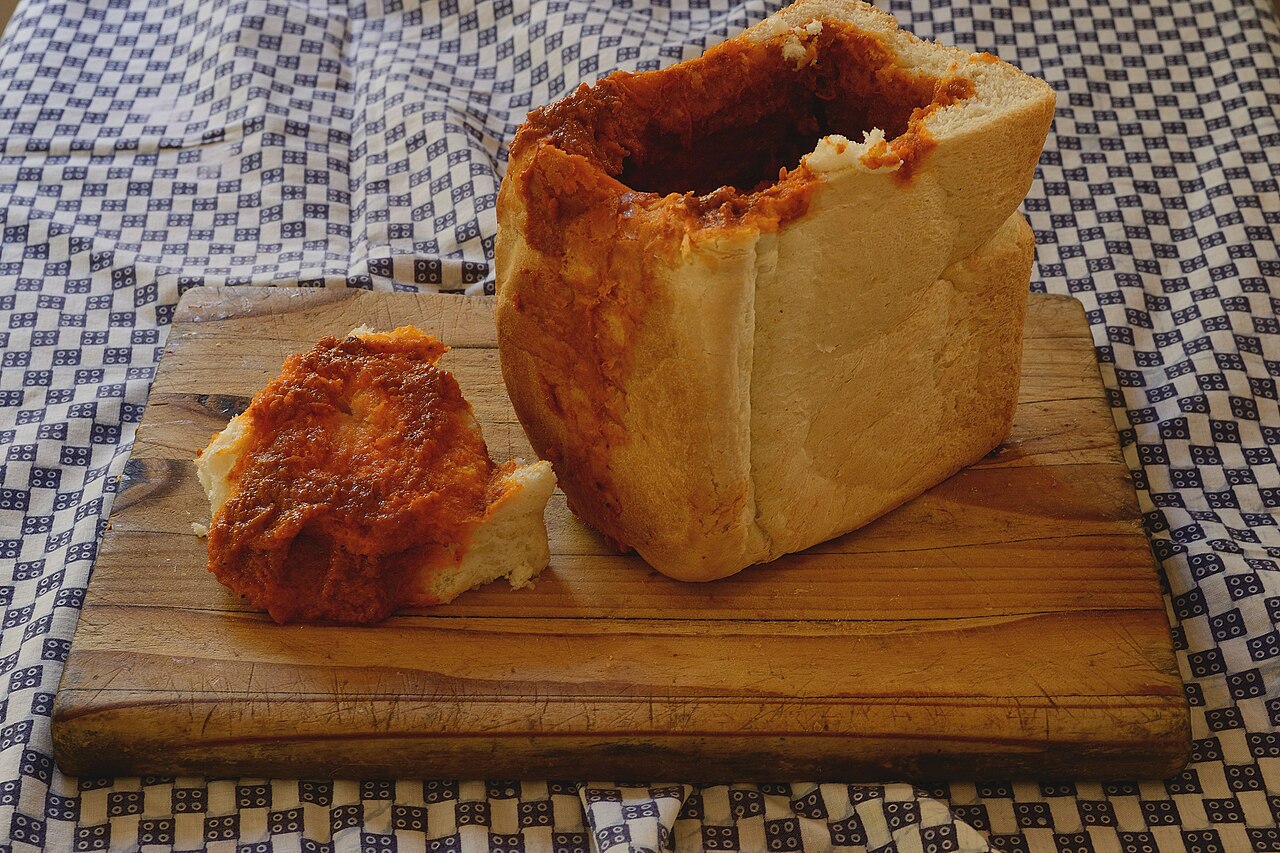
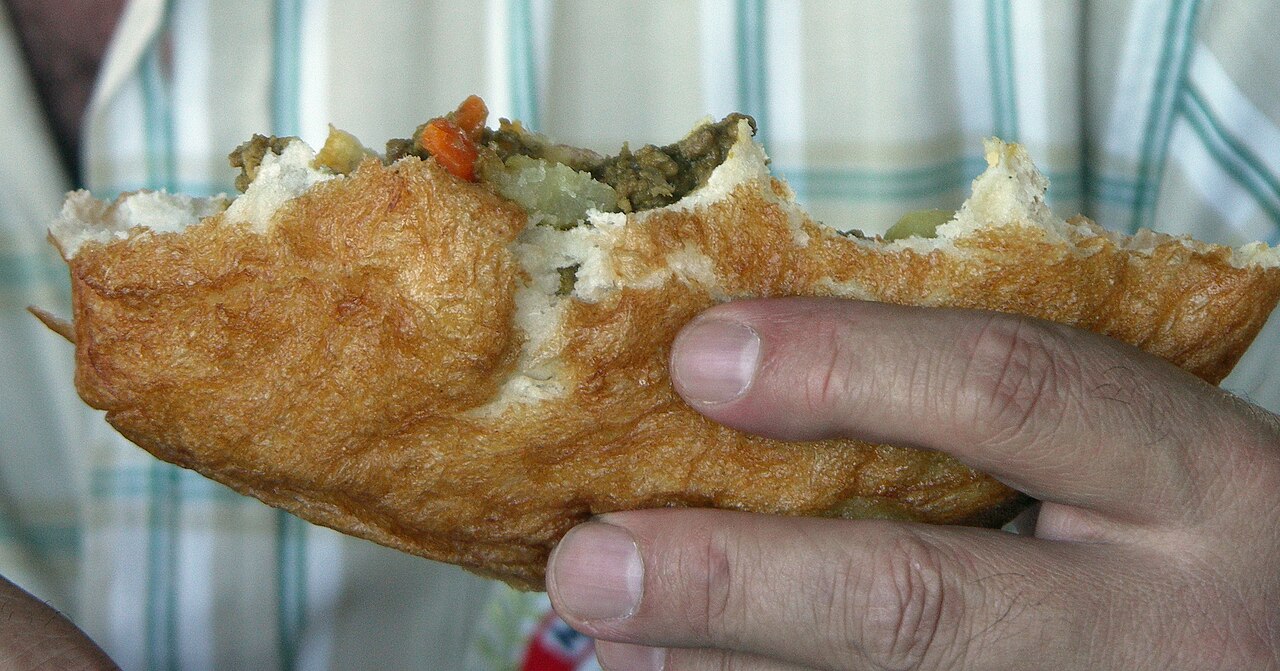
A hollowed-out loaf of white bread filled with a hot curry of mutton, chicken or beans. It comes as a quarter, half or full loaf, and is eaten with the fingers.
It dates from the 1940s in Durban. Nobody is sure where the name comes from, but 'chow' is South African slang for food.
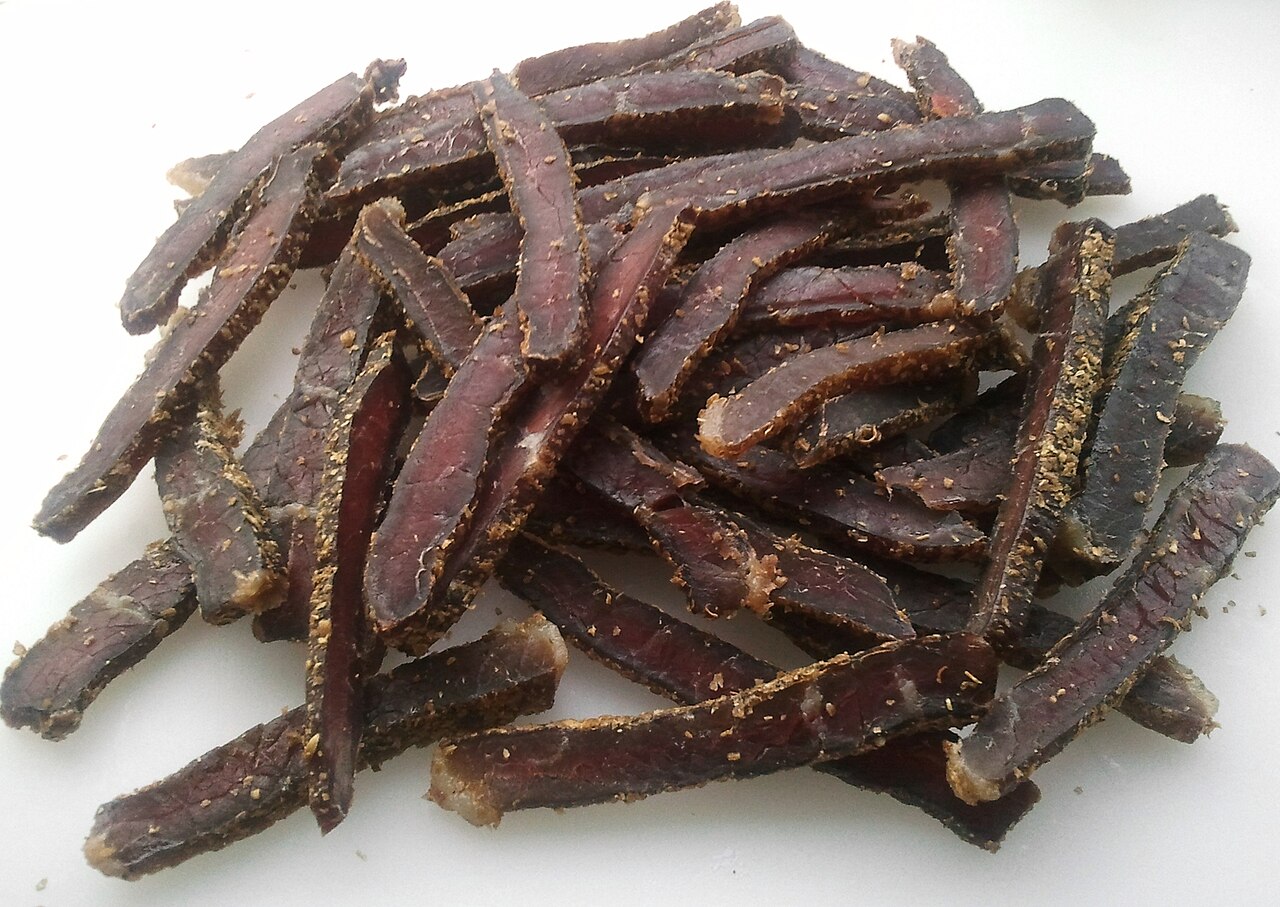
Strips of beef or game such as kudu or springbok, cured with vinegar, salt, coriander and black pepper, then air-dried for several days. It is thicker and more tender than jerky, which is dried with heat. Because it is raw cured meat, pregnant women are advised not to eat it unless it has been cooked until steaming hot.
The name is Afrikaans: 'bil' means buttock and 'tong' means strip.
Porridge of white maize meal, cooked soft for breakfast, stiff enough to hold its shape to eat with stews, or dry and crumbly. 'Pap en wors', pap with boerewors and a tomato and onion sauce, is a braai favourite.
See the recipe
Serves 4
30 min
Ingredients
750 ml water
1 teaspoon salt
250 g (about 2 cups) white maize meal (mielie meal)
1 tablespoon butter (optional)
Method
Bring the water and salt to the boil in a heavy saucepan.
Pour in the maize meal in a heap in the middle and do not stir. Put the lid on, turn the heat to low and leave for 5 minutes.
Now stir hard with a wooden spoon until smooth and thick, with no dry lumps.
Cover again and cook on the lowest heat for 20 minutes, stirring every 5 minutes, until the pap is stiff and no longer tastes raw. Stir in the butter and serve with a stew, chakalaka or braai meat.
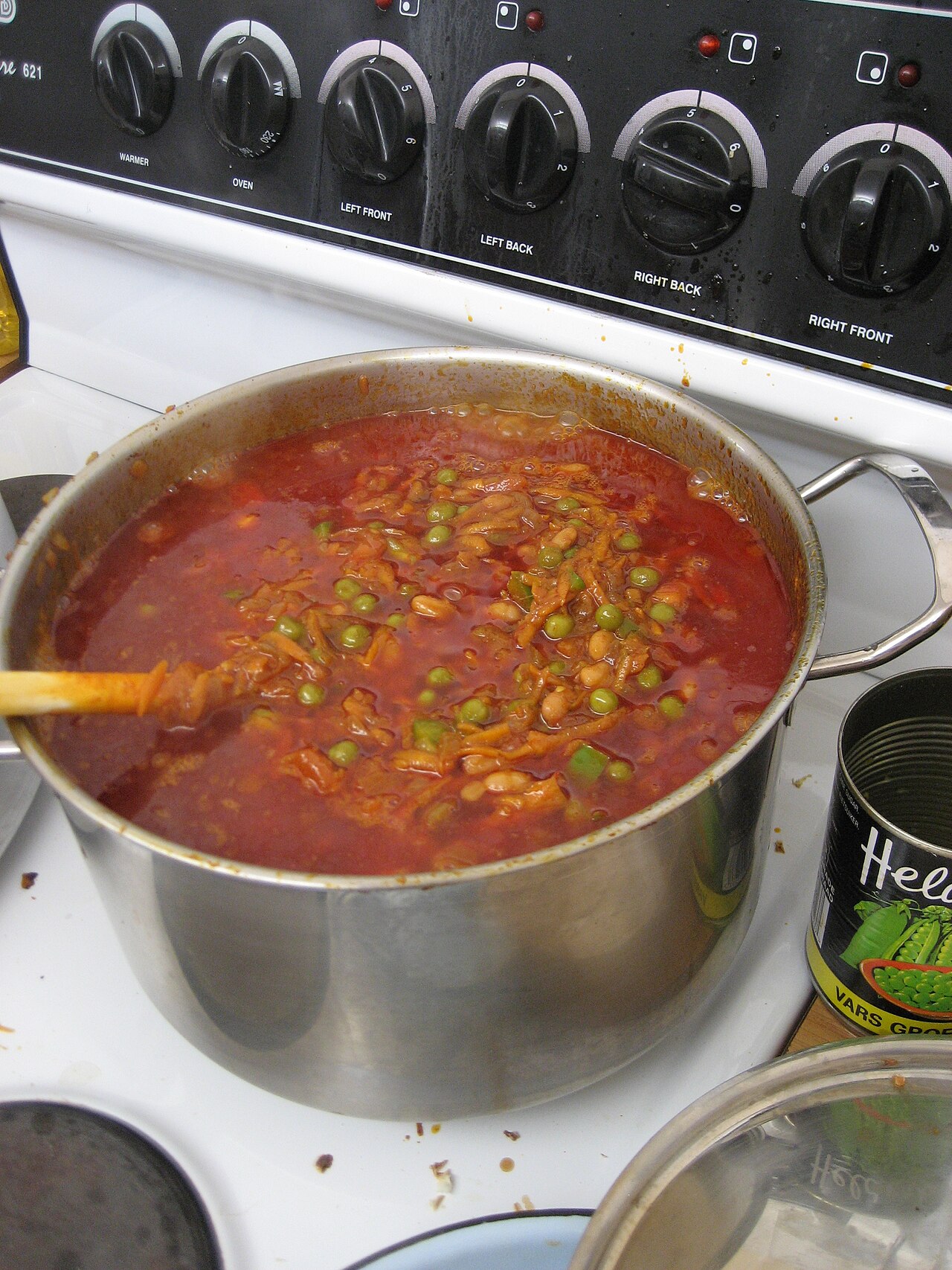
A spicy relish of onions, peppers, carrots, tomatoes and beans, flavoured with curry powder and chilli. It is served warm or cold with pap, bread, stews and braai meat.
It is said to have been created by mineworkers from Mozambique who cooked tinned tomatoes and beans with chilli to eat with their pap.
See the recipe
Serves 6
35 min
Ingredients
2 tablespoons oil
1 onion, chopped
2 cloves garlic, crushed, and 1 teaspoon grated fresh ginger
1 green and 1 red pepper, chopped
1 small chilli, finely chopped (optional)
1 tablespoon mild curry powder
3 carrots, coarsely grated
1 x 400 g tin chopped tomatoes
1 x 400 g tin baked beans in tomato sauce
Salt and pepper
Method
Fry the onion in the oil for 5 minutes until soft. Add the garlic, ginger, peppers and chilli and cook for 5 minutes more.
Stir in the curry powder, then the grated carrots, and cook for 3 minutes.
Add the tomatoes and simmer for 10 minutes, stirring now and then.
Stir in the baked beans, heat through for 5 minutes and season with salt and pepper. Serve warm or cold.
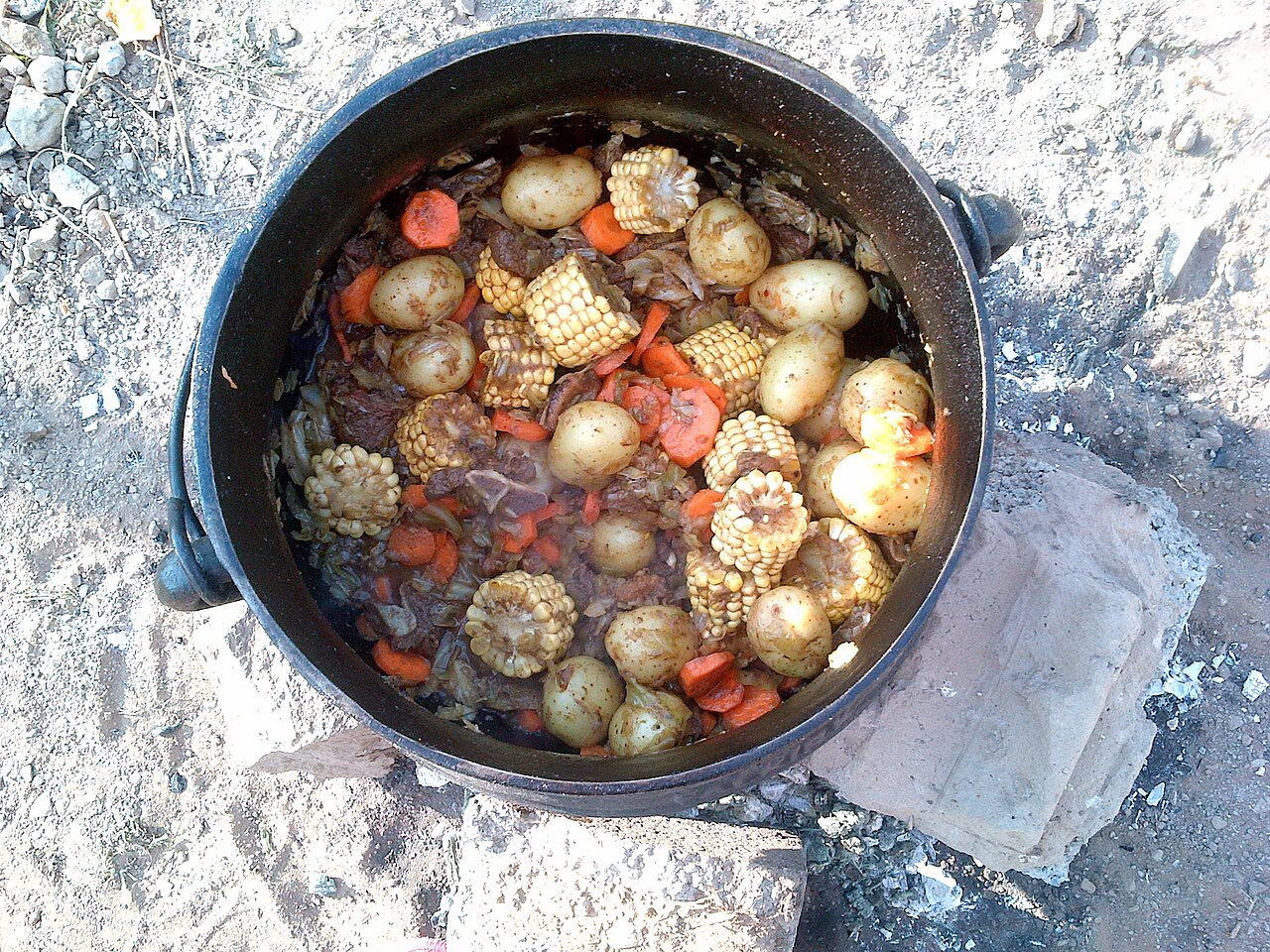
A stew of meat, vegetables and potatoes cooked slowly for hours over a small fire in a three-legged cast-iron pot, the potjie. The ingredients are laid in layers and, by tradition, not stirred.
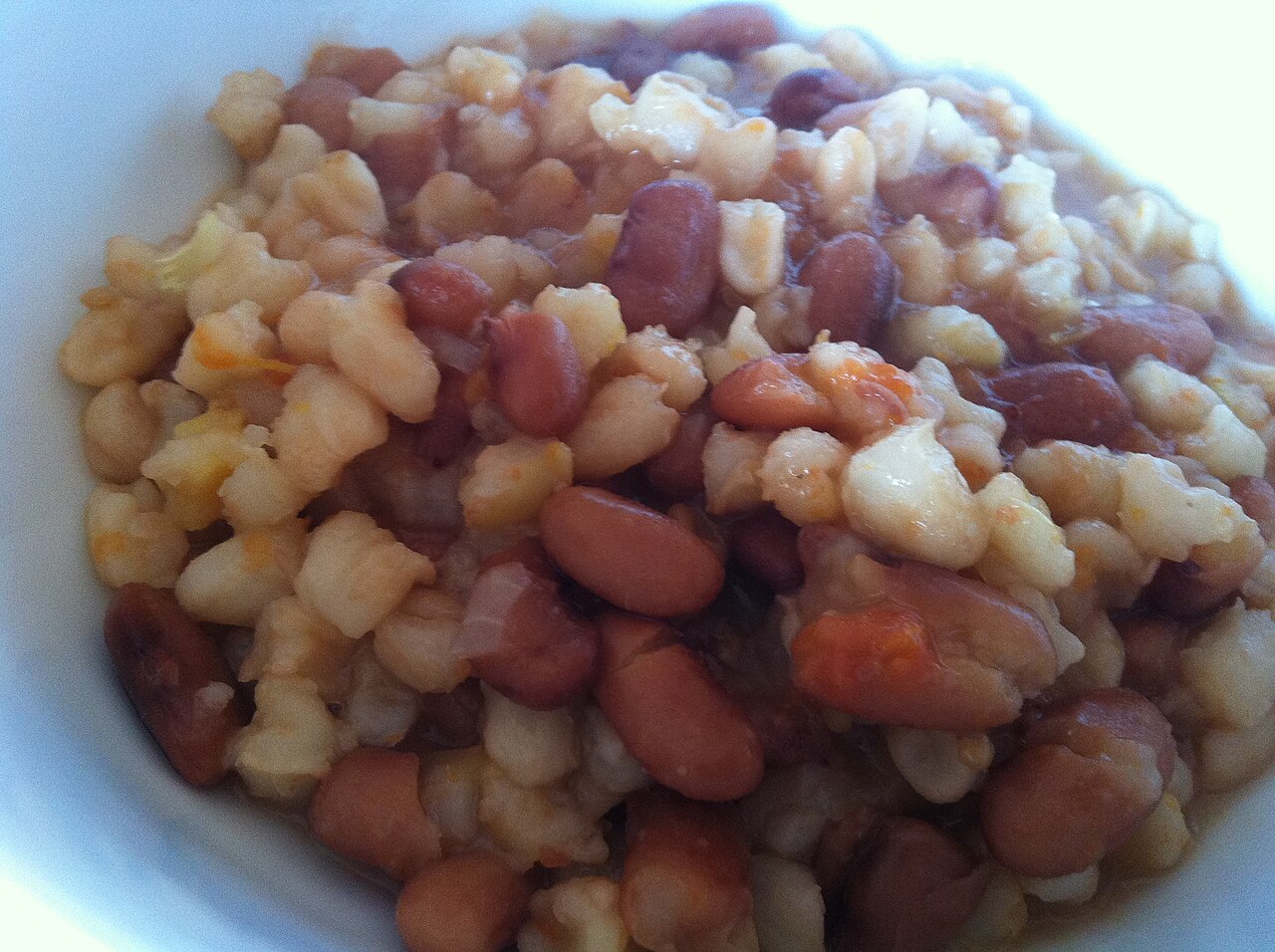
Samp (dried, crushed maize kernels) cooked slowly with sugar beans, butter, onions and chilli until soft and creamy. It is often eaten with chicken or a meat stew.
It is often said to have been Nelson Mandela's favourite dish.
A ball of yeast dough deep-fried until golden, like a doughnut without a hole. It is split open and filled with curried mince, or eaten with jam, syrup or cheese, and sold by street vendors and at taxi ranks.
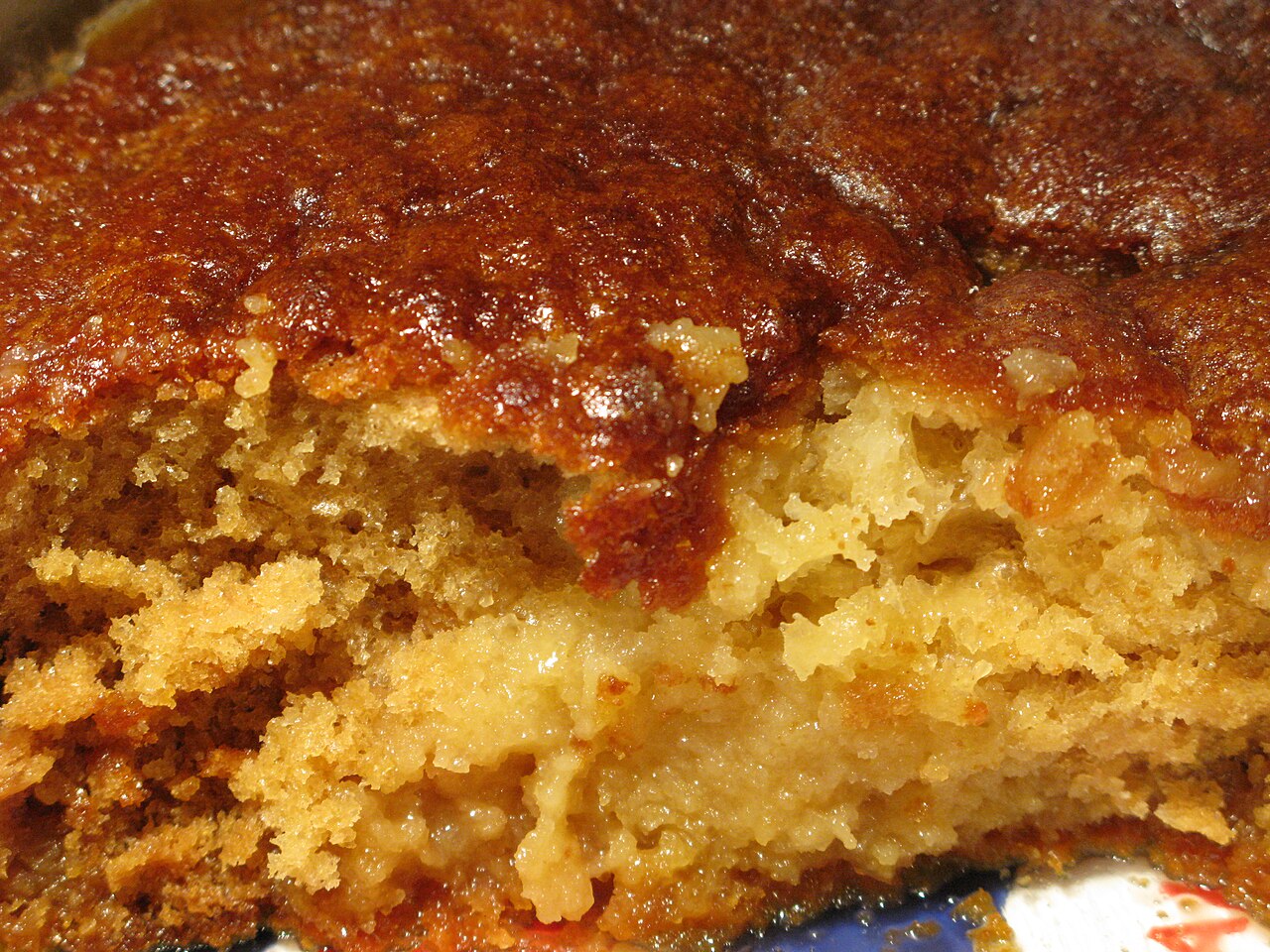
A soft, spongy baked pudding made with apricot jam. As soon as it comes out of the oven, a warm sauce of butter, sugar and cream is poured over it and soaks in. It is served warm with custard or ice cream.
See the recipe
Serves 6
1 h
Ingredients
1 egg
200 g caster sugar
1 tablespoon apricot jam
150 g plain flour
1 teaspoon bicarbonate of soda and a pinch of salt
1 tablespoon butter, melted
1 teaspoon white vinegar
250 ml milk
For the sauce: 250 ml cream, 100 g butter, 100 g sugar and 125 ml hot water
Method
Heat the oven to 180 °C and butter a medium ovenproof dish.
Beat the egg and sugar together until pale and thick, then beat in the jam.
Sift the flour, bicarbonate of soda and salt. Mix the melted butter, vinegar and milk. Fold the dry and wet mixtures alternately into the egg mixture to make a smooth batter.
Pour into the dish and bake for 40 to 45 minutes, until well risen, brown and springy.
Meanwhile, heat all the sauce ingredients in a pan, stirring until the butter has melted and the sugar has dissolved.
As soon as the pudding comes out of the oven, prick it all over with a fork and slowly pour the hot sauce over it. Leave for a few minutes to soak in, and serve warm with custard or ice cream.
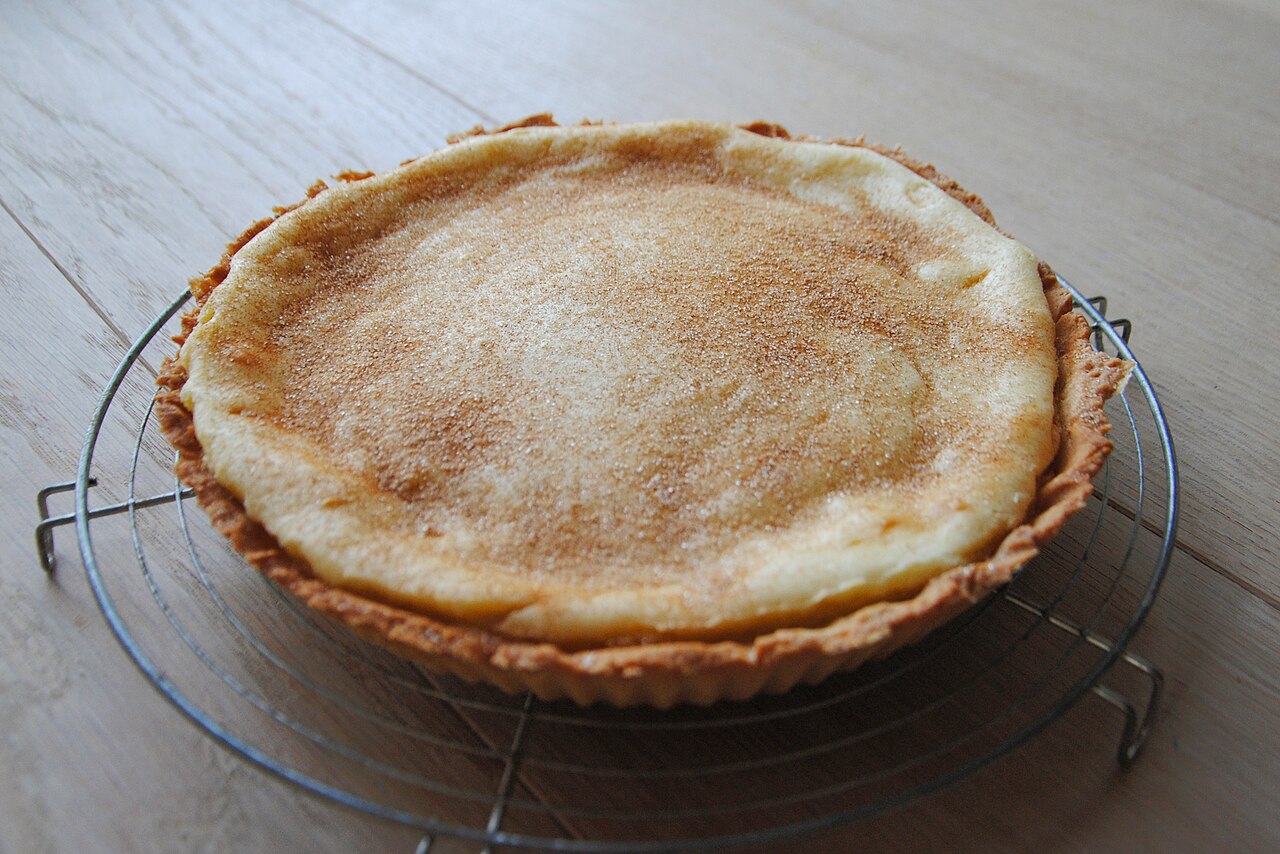
A sweet pastry case filled with a smooth, light custard of milk, flour, sugar and eggs, dusted with cinnamon. It has more milk and fewer eggs than a Portuguese custard tart, so it tastes of milk.
27 February is celebrated as National Milk Tart Day.
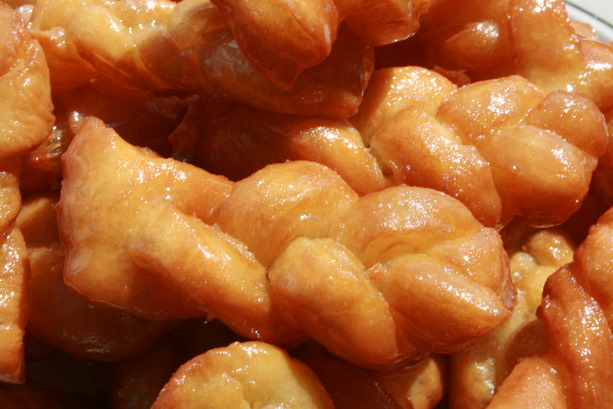
Plaited strips of dough, deep-fried and dropped straight into ice-cold sugar syrup, so they are crunchy outside and dripping with syrup inside. The Cape Malay koesister is a different treat: a spiced, fried dough ball rolled in coconut.
Koeksisters were often made and sold to raise money for churches and schools.
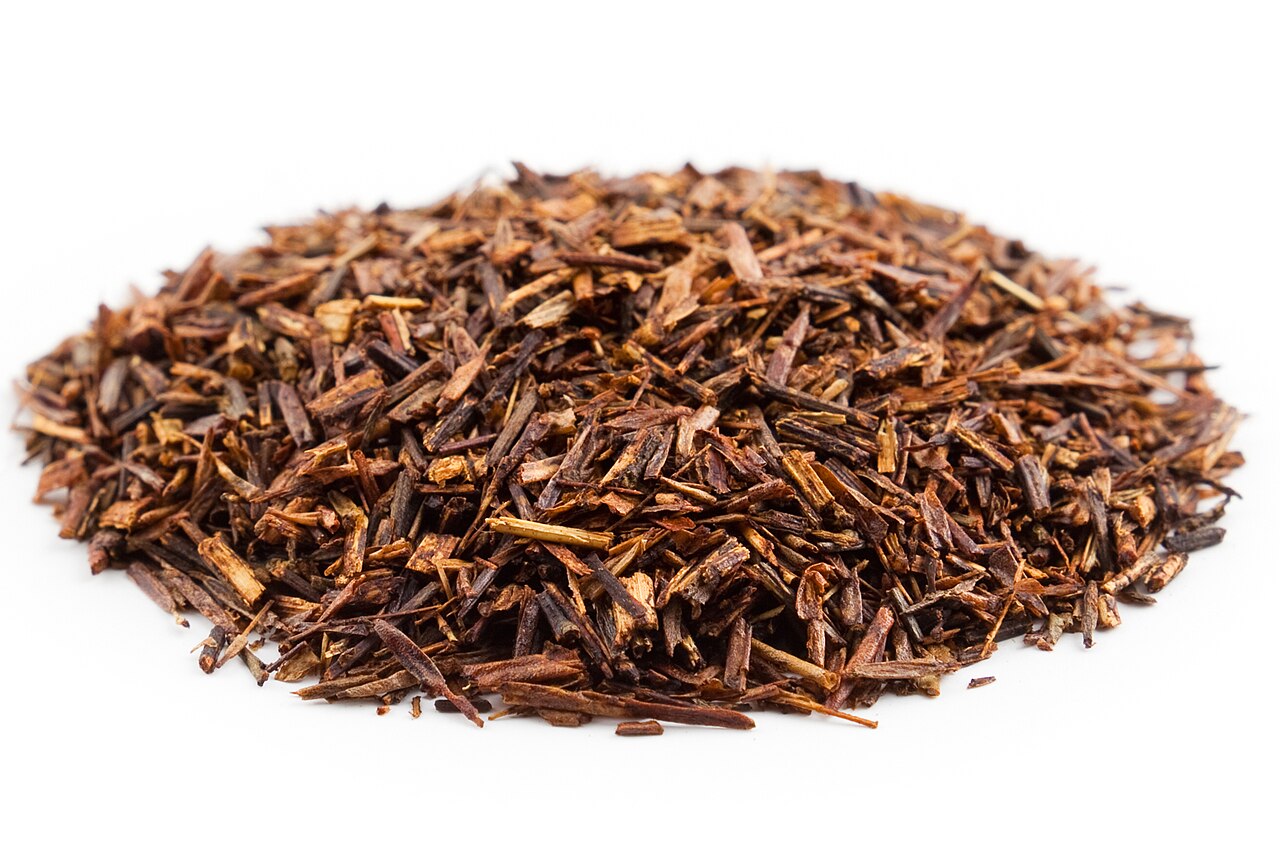
A red-brown herbal tea made from the leaves of the rooibos plant, which means 'red bush' in Afrikaans. It is naturally caffeine-free and is drunk hot with milk and sugar, plain, or iced.
Since 2021 the name rooibos has had protected designation of origin status in the European Union, like champagne.
See the recipe
Serves 2
10 min
Ingredients
2 rooibos tea bags, or 2 teaspoons loose rooibos
500 ml boiling water
Milk, sugar or honey, to taste (or a slice of lemon)
Method
Warm a teapot with a little hot water, then pour it away.
Put in the rooibos and pour over the boiling water.
Leave to brew for 5 minutes or longer; rooibos does not turn bitter the way black tea does.
Pour and add milk and sugar or honey, or a slice of lemon. For iced rooibos, let it cool and serve over ice with lemon and mint.
If you are invited to a braai, ask what to bring. Guests often bring their own meat and drinks, and a bottle of wine for the host is a welcome gift.
Greet everyone when you arrive, not only your host.
Many white South Africans eat with a knife and fork, while in many Black and Indian South African homes people eat with a spoon or their fingers. Follow your host.
Try to finish what is on your plate; leaving a lot of food can suggest that you did not like it. Praise the cooking towards the end of the meal.
It is polite to receive things, such as a plate, with both hands held out together.
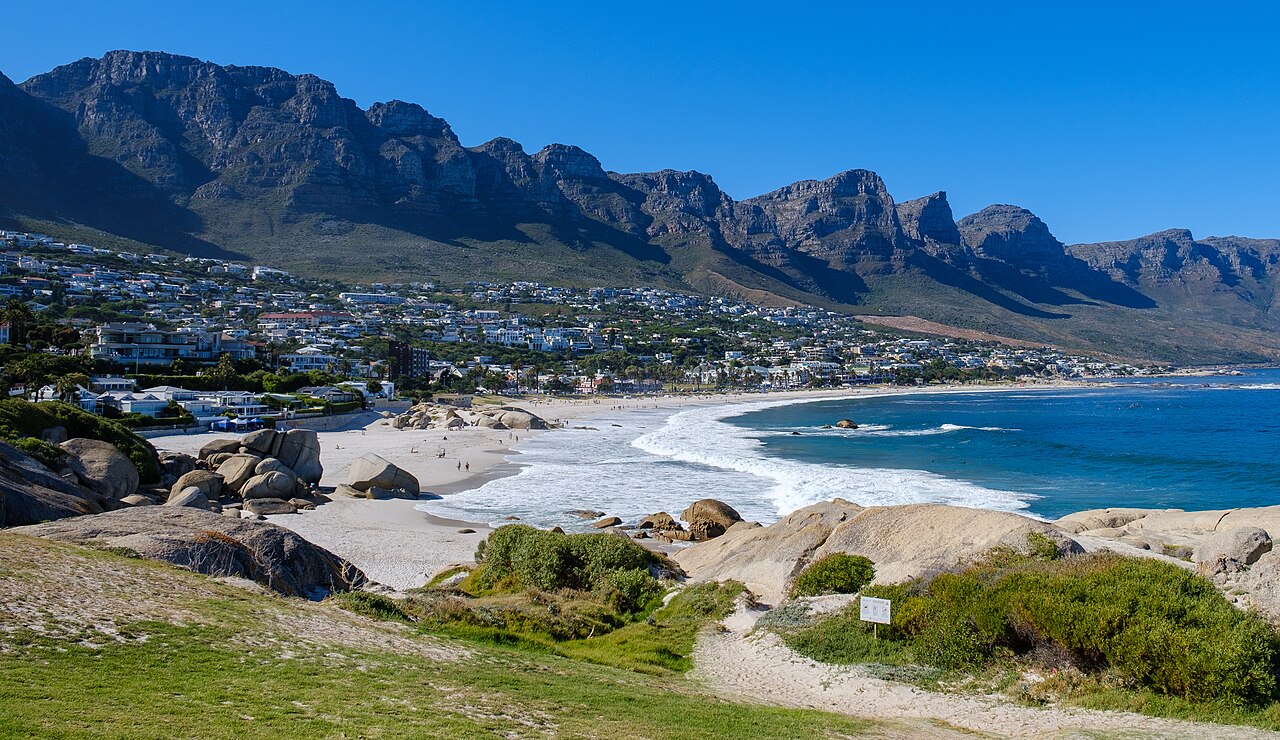
South Africa's biggest urban area grew up around the gold mines of Gauteng, where Johannesburg and Pretoria almost touch. Cape Town lies far to the southwest beneath Table Mountain, and Durban on the warm Indian Ocean coast. The country is unusual in splitting its capital between three cities, Pretoria, Cape Town and Bloemfontein.
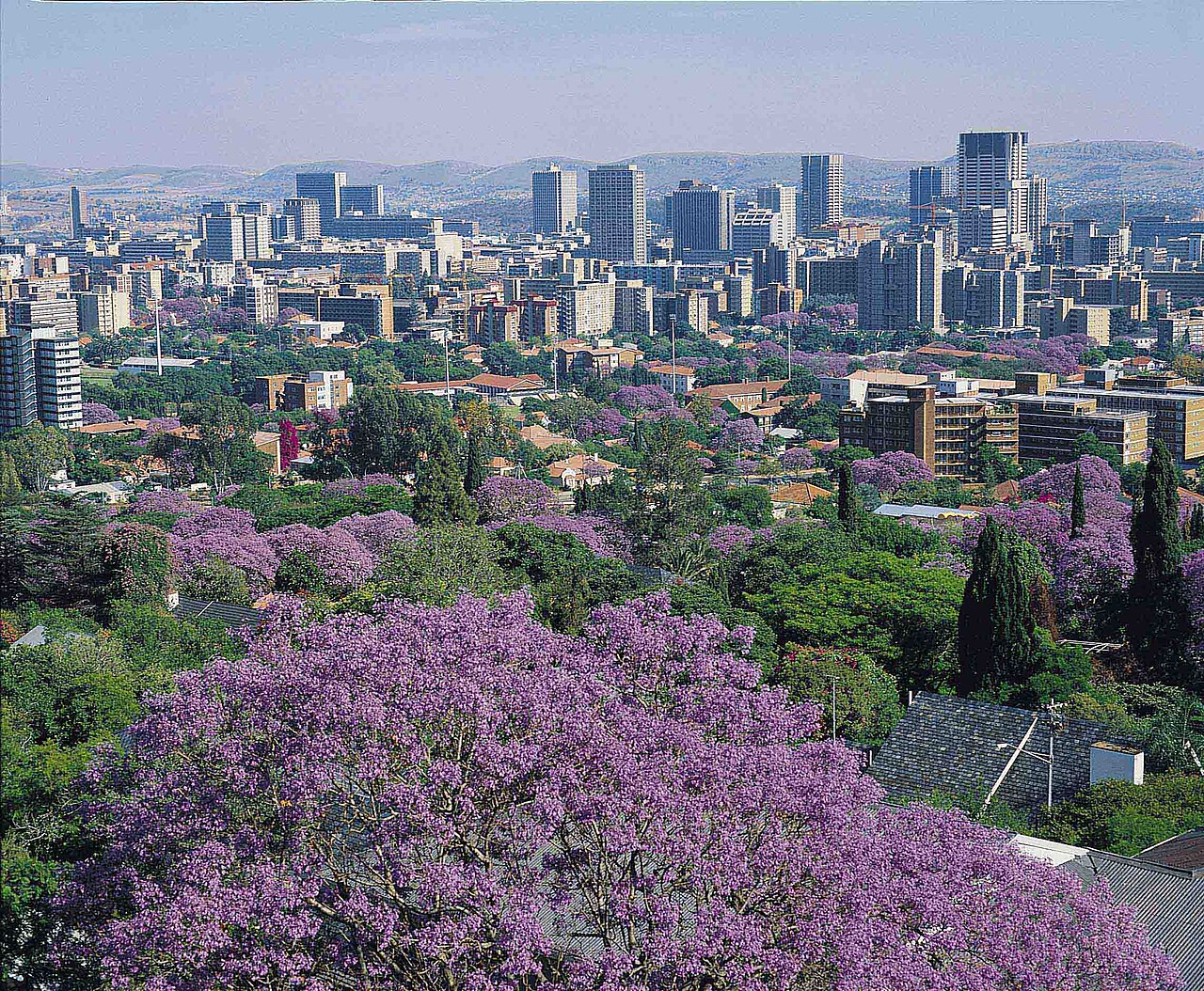
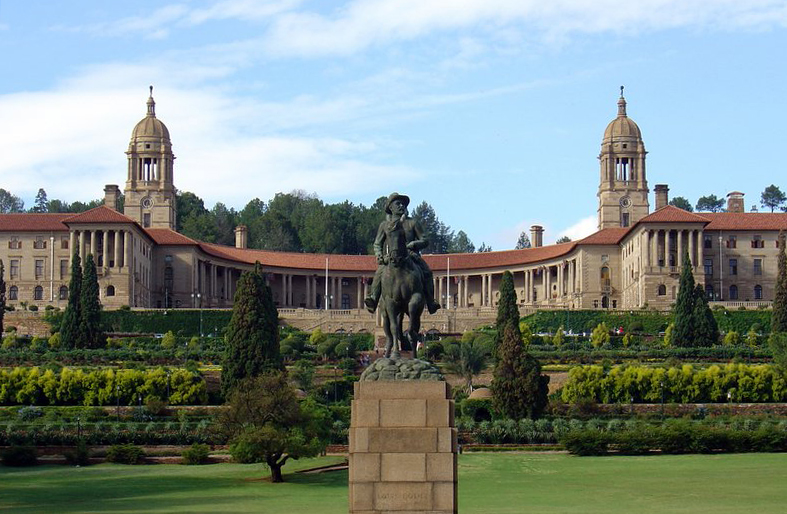
The executive capital, where the President and government work from the Union Buildings. It was founded in 1855 and named after the Voortrekker leader Andries Pretorius, and it lies at the heart of the City of Tshwane municipality, about 56 km north of Johannesburg.
The Union Buildings
Tens of thousands of jacaranda trees, which turn the streets purple in spring
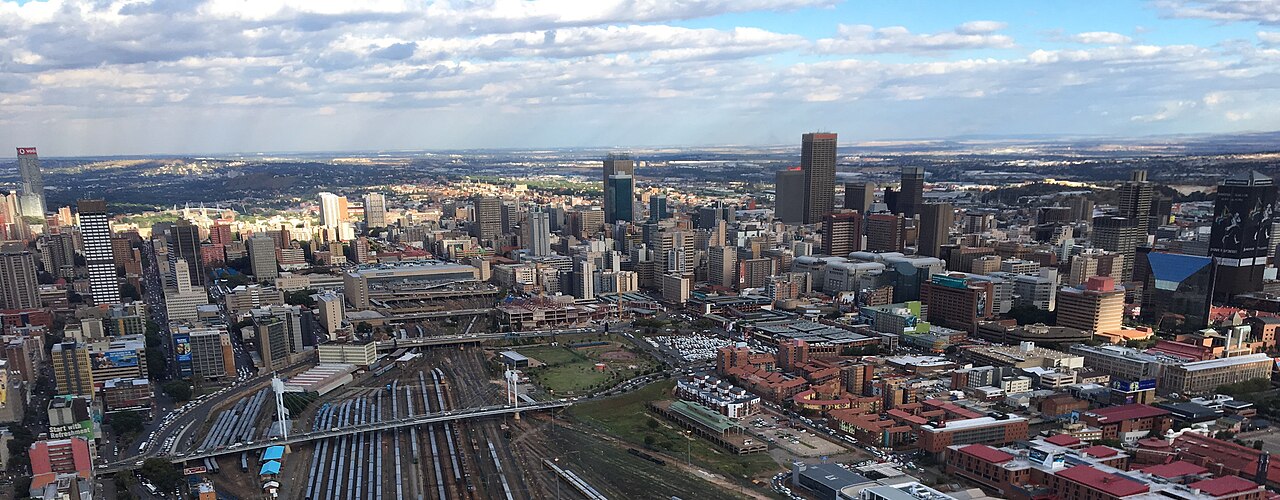
South Africa's largest city, founded in 1886 after gold was found on the Witwatersrand. Known as Jozi or Joburg, and in isiZulu as iGoli, 'place of gold', it is the country's centre of business and home to Africa's largest stock exchange. Soweto, where the 1976 uprising began, is part of the city.
The legislative capital, where Parliament sits, and the country's oldest city, founded by the Dutch in 1652. Nicknamed the 'Mother City', it spreads round Table Bay beneath Table Mountain, and after his release in 1990 Nelson Mandela made his first public speech from the balcony of its City Hall.
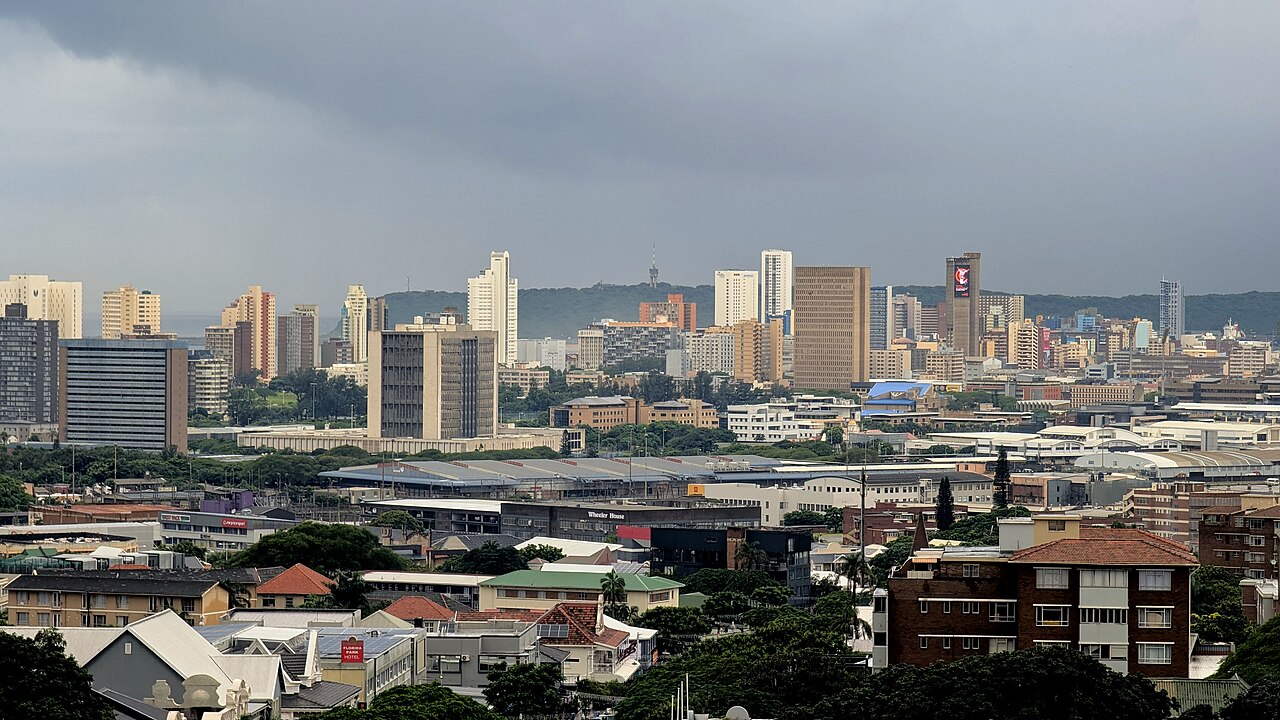
The third-largest city and the busiest port in sub-Saharan Africa, with warm sea and long beaches. Its isiZulu name, eThekwini, comes from a word for bay. It is home to a large Indian South African community, and its curries are famous across the country.
Bunny chow and Durban curry
The beachfront known as the Golden Mile
Moses Mabhida Stadium, built for the 2010 World Cup
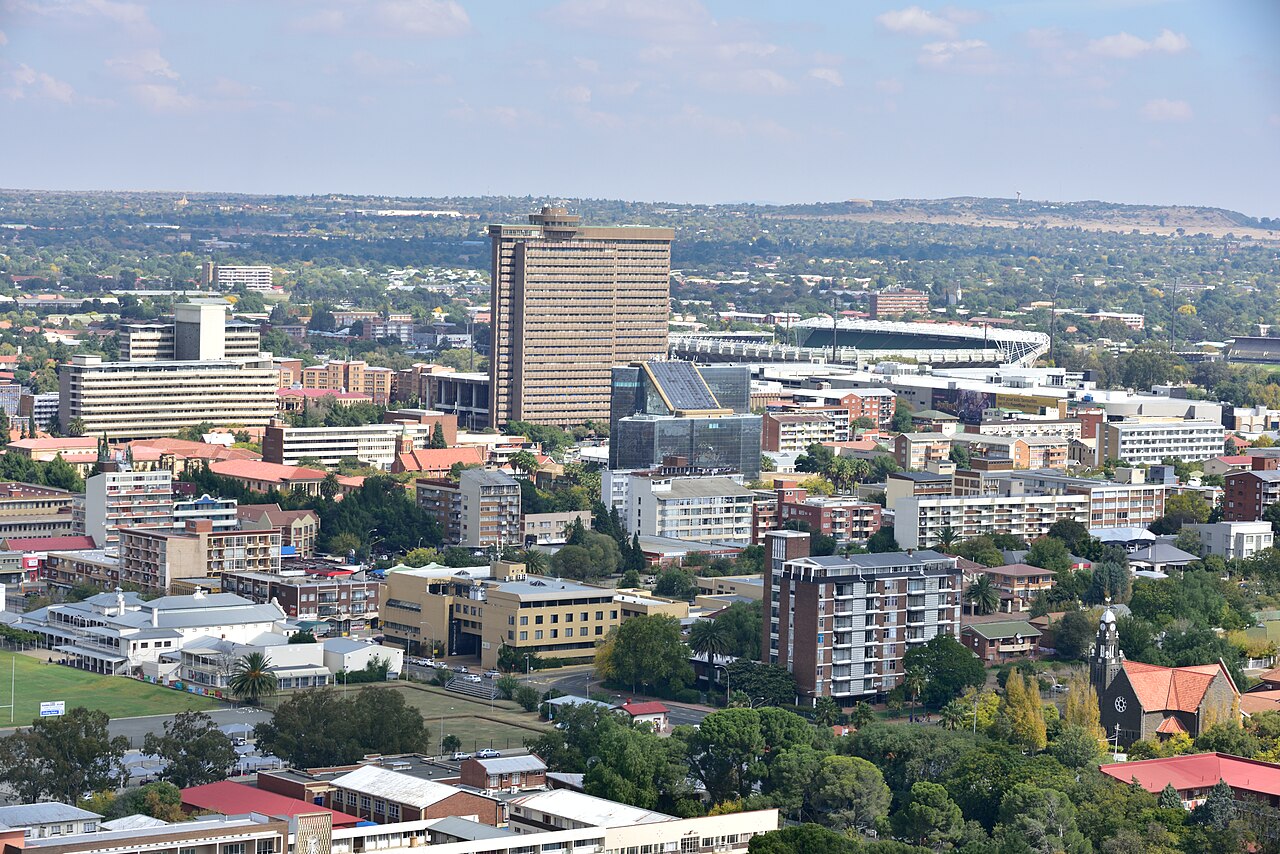
The judicial capital, home of the Supreme Court of Appeal. It was founded in 1846, was the capital of the Orange Free State republic, and in 1912 saw the founding of the ANC. Its Sesotho name, Mangaung, means 'place of cheetahs'.
The nickname 'City of Roses' and its rose festival
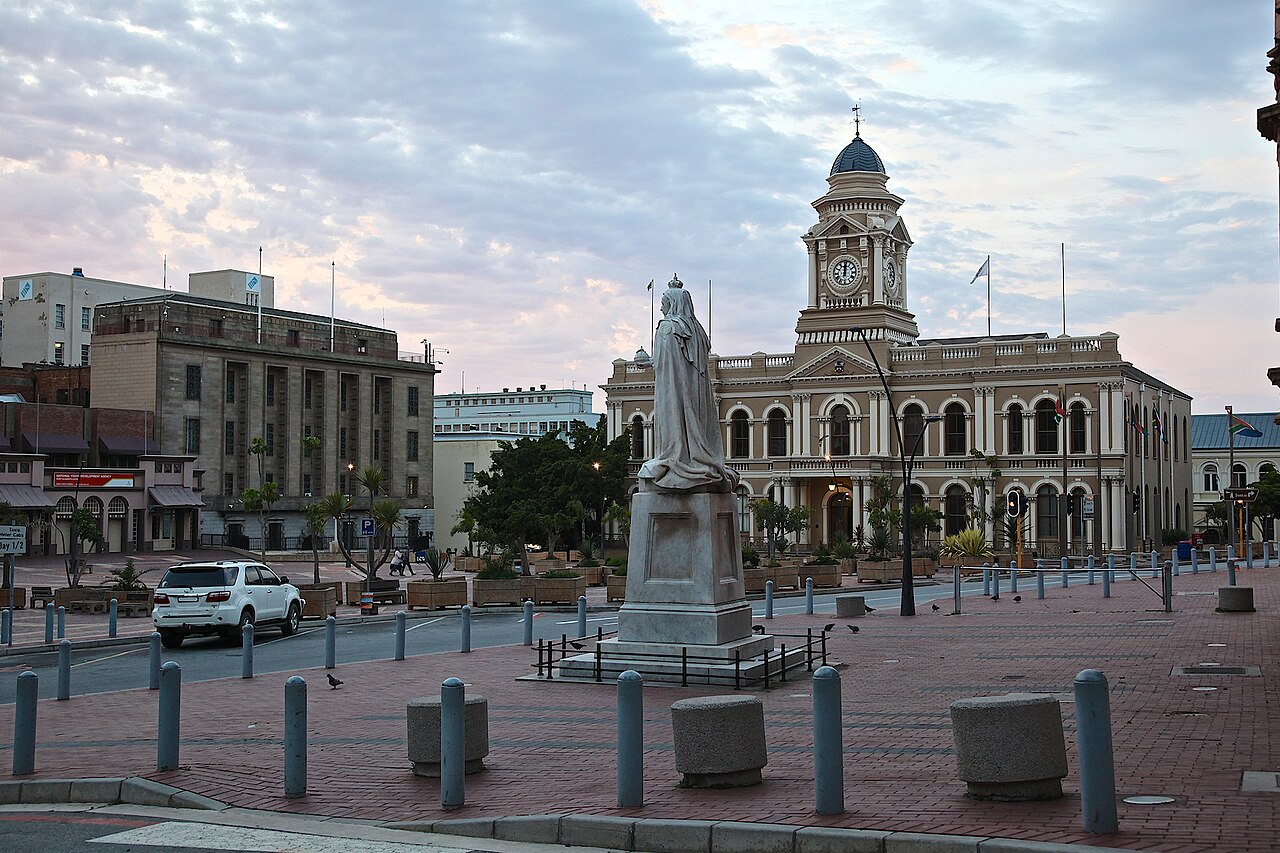
A port city founded in 1820 and called Port Elizabeth until 2021, when it took the Xhosa name of the river that flows through it. It is the main city of the Nelson Mandela Bay municipality and a gateway to the Eastern Cape.
The capital of the Northern Cape, born in the diamond rush of 1871. In 1882 it became the first town in the Southern Hemisphere to light its streets with electricity.
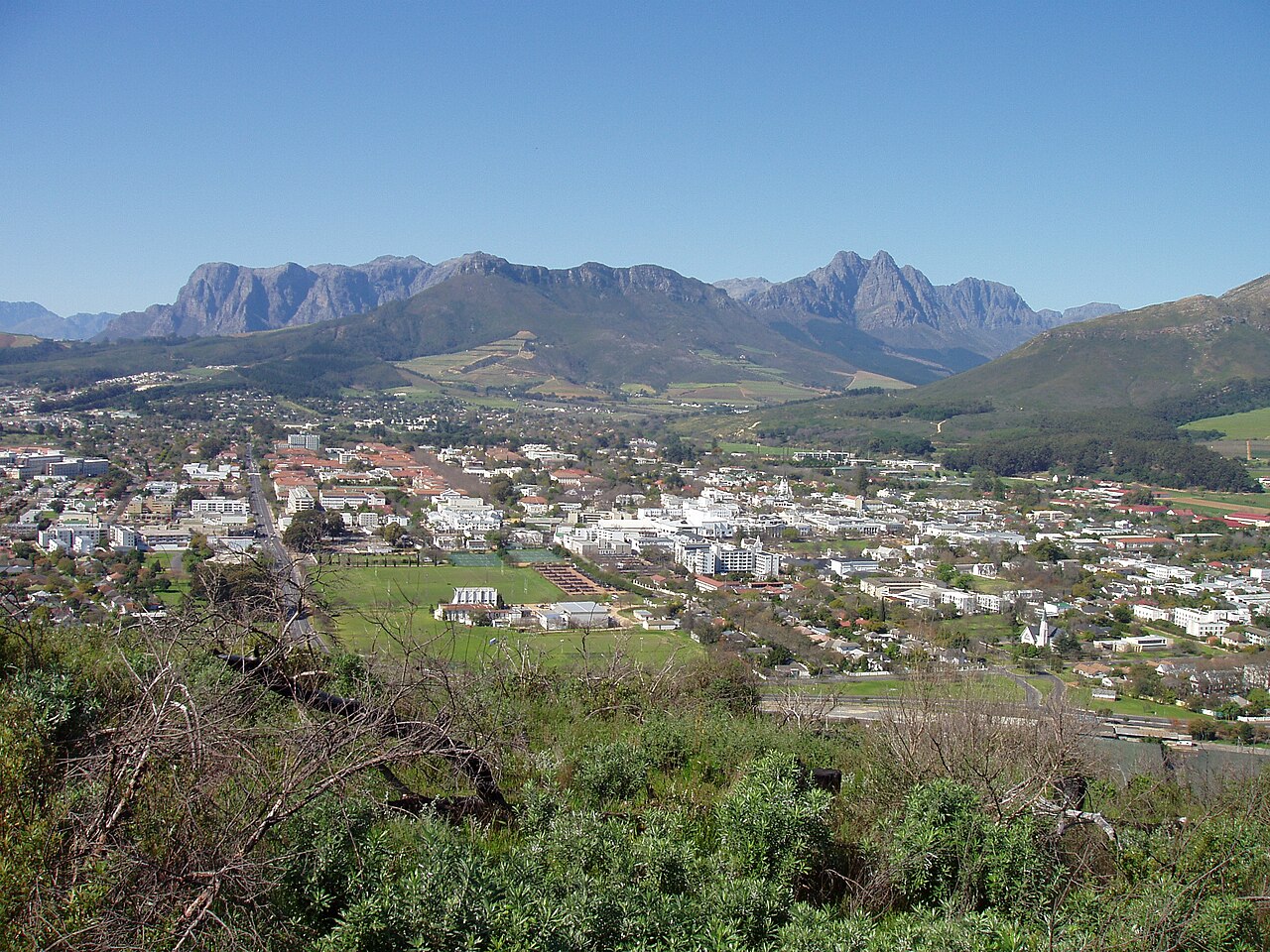
A university town about 50 km east of Cape Town, founded in 1679 by Governor Simon van der Stel. Its oak-lined streets and old Cape Dutch buildings are surrounded by mountains and vineyards.
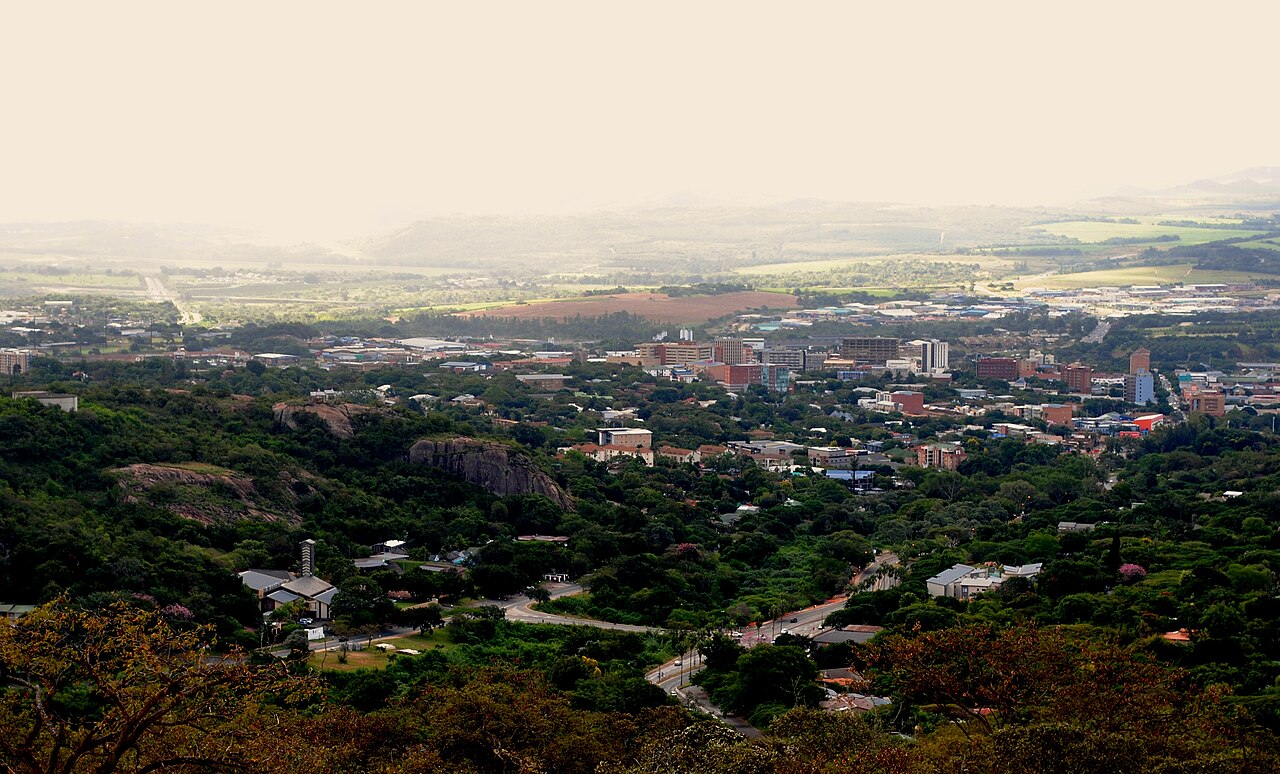
The capital of Mpumalanga province, called Nelspruit until 2009. Its siSwati name is said to mean 'many people together in a small space'. It is a main stop for travellers on the way to the Kruger National Park.
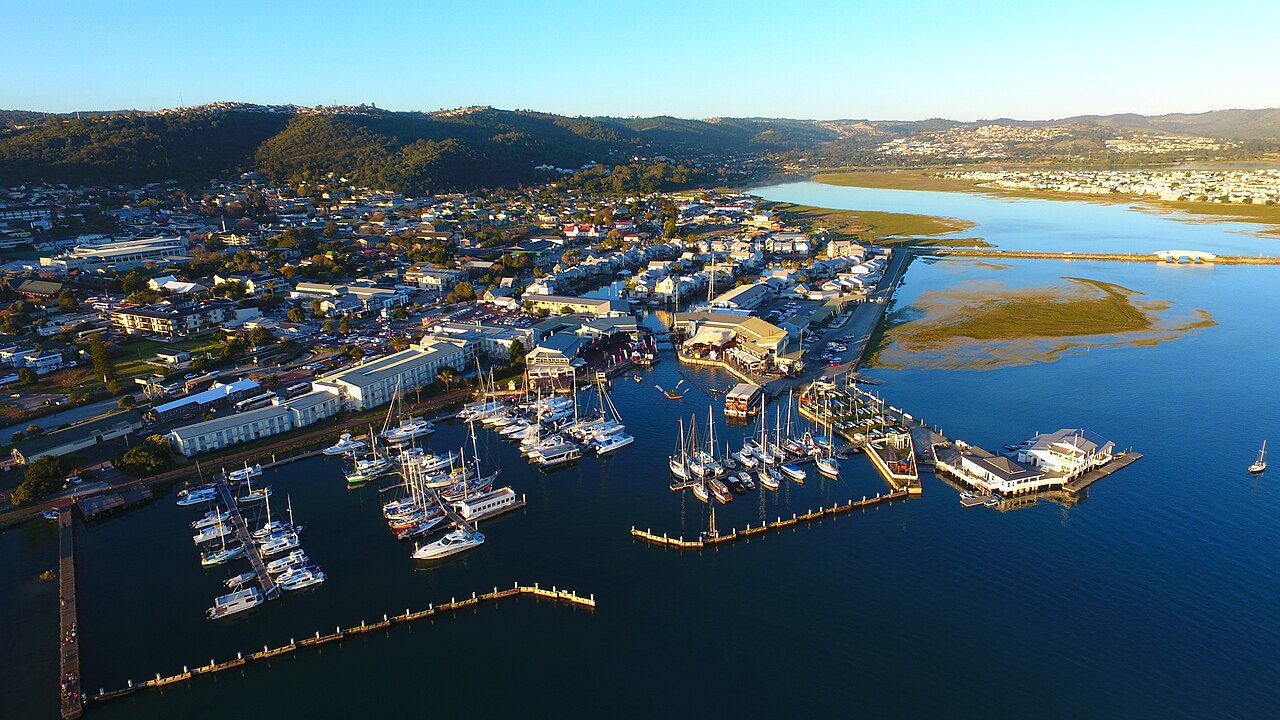
A small town on the Garden Route, set round a large lagoon that opens to the sea between two cliffs called the Knysna Heads. The name probably comes from a Khoekhoe word meaning 'place of timber', and forests still surround it.
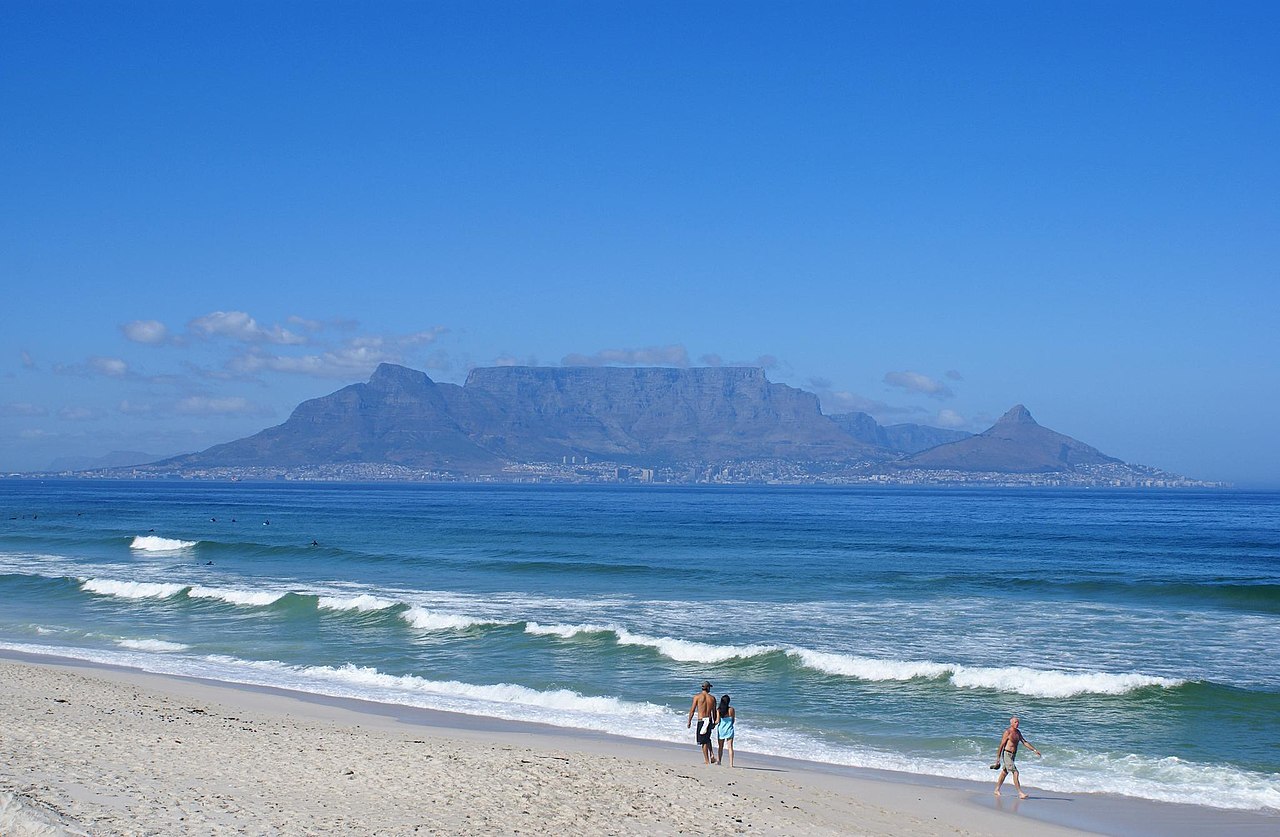
The flat-topped mountain behind Cape Town, 1,086 m high at its highest point, Maclear's Beacon. A cable car has carried visitors to the top since 1929, and a white 'tablecloth' of cloud often pours over its edge. It is part of the Cape Floral Region World Heritage Site and was named one of the New7Wonders of Nature in 2011.
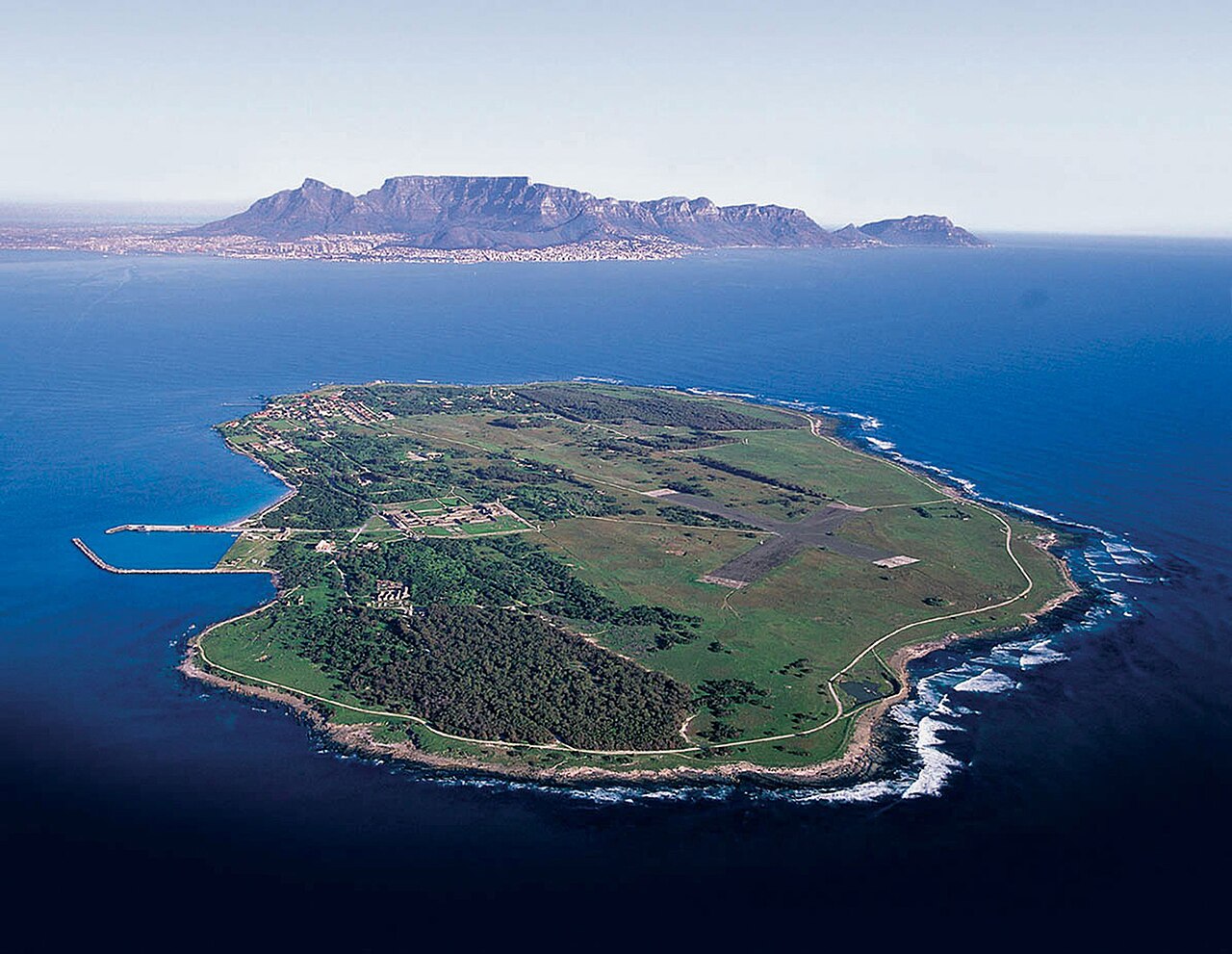
A small island in Table Bay where political prisoners, among them Nelson Mandela for 18 years, were held under apartheid. The prison closed in the 1990s and the island became a museum in 1997. The pin marks the ferry departure point at the V&A Waterfront in Cape Town; the island itself lies about 7 km off the mainland coast.
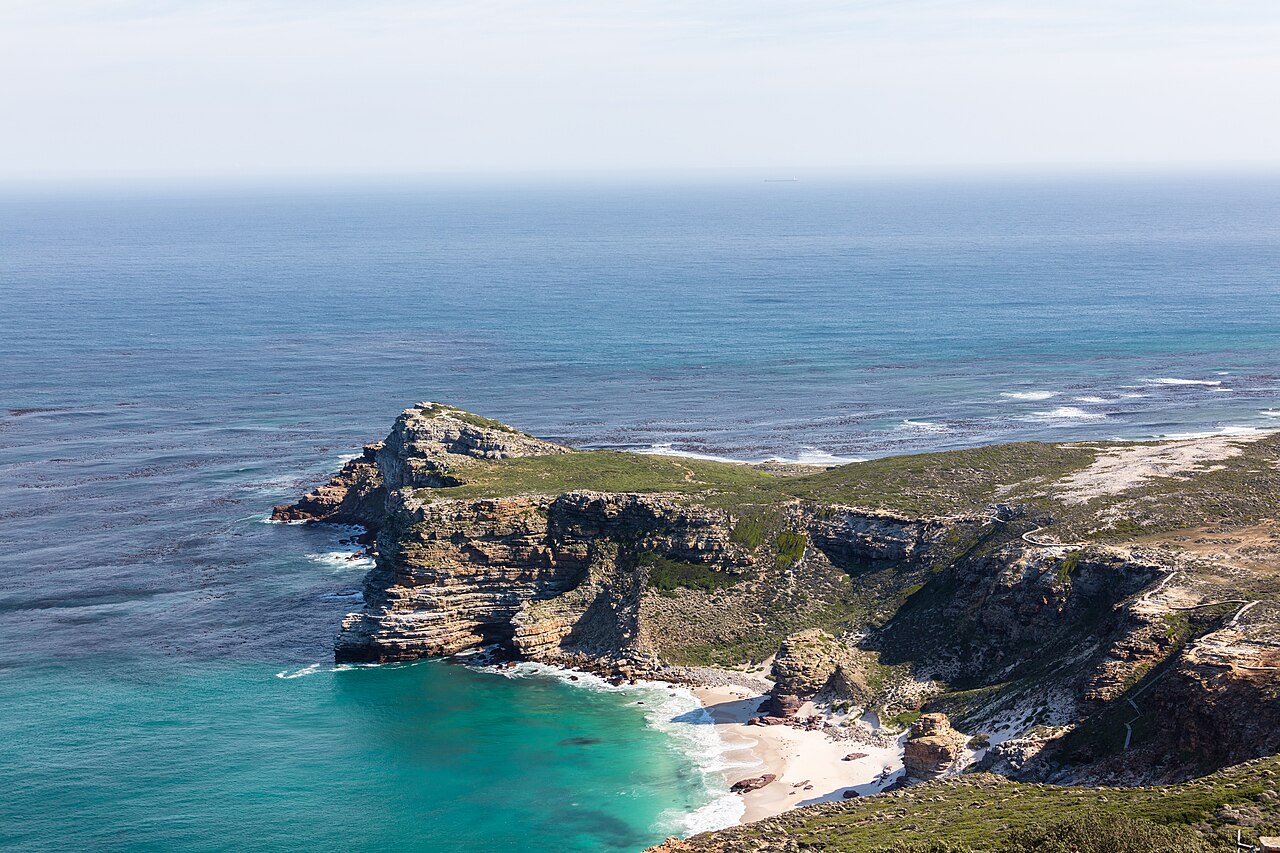
A rocky headland about 50 km south of Cape Town, first rounded by Bartolomeu Dias in 1488. Many people think it is Africa's southernmost point, but that is Cape Agulhas, about 150 km to the east-southeast. It lies in Table Mountain National Park, where baboons, ostriches and antelope live among the fynbos.
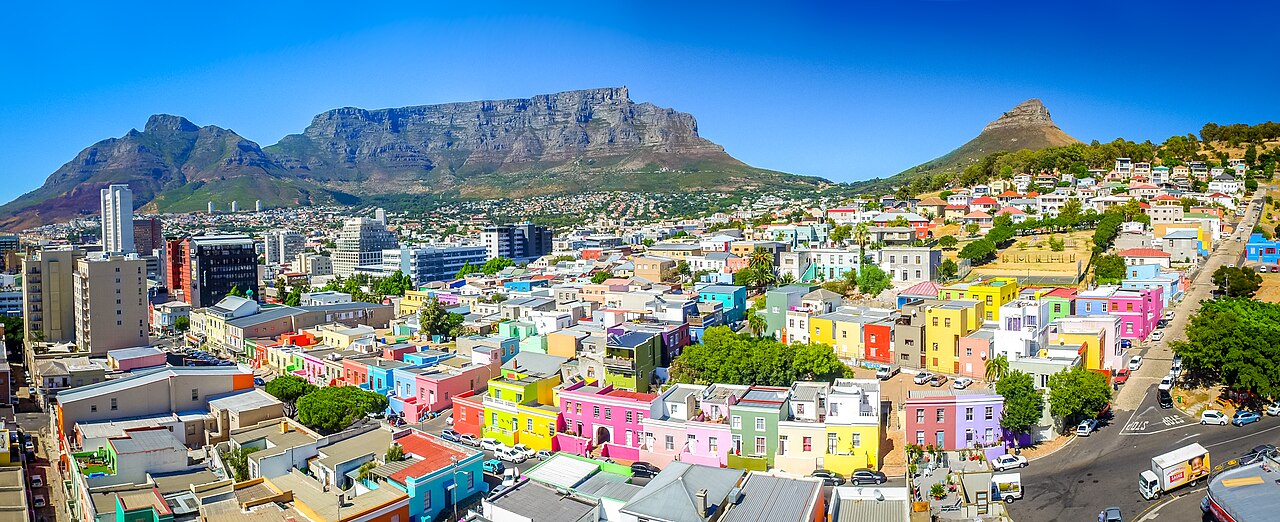
A historic neighbourhood on the slopes of Signal Hill, known for its cobbled streets and houses painted pink, blue, green and yellow. It is the heart of the Cape Malay community, and the Auwal Mosque here, founded in 1794, is South Africa's oldest mosque.
The official seat of the government and the President's offices, designed by Sir Herbert Baker and completed in 1913, above terraced gardens on a hill in Pretoria. Nelson Mandela was sworn in as president here on 10 May 1994, and a 9 m bronze statue of him stands in front. It is part of the Nelson Mandela Legacy Sites, a World Heritage Site since 2024.
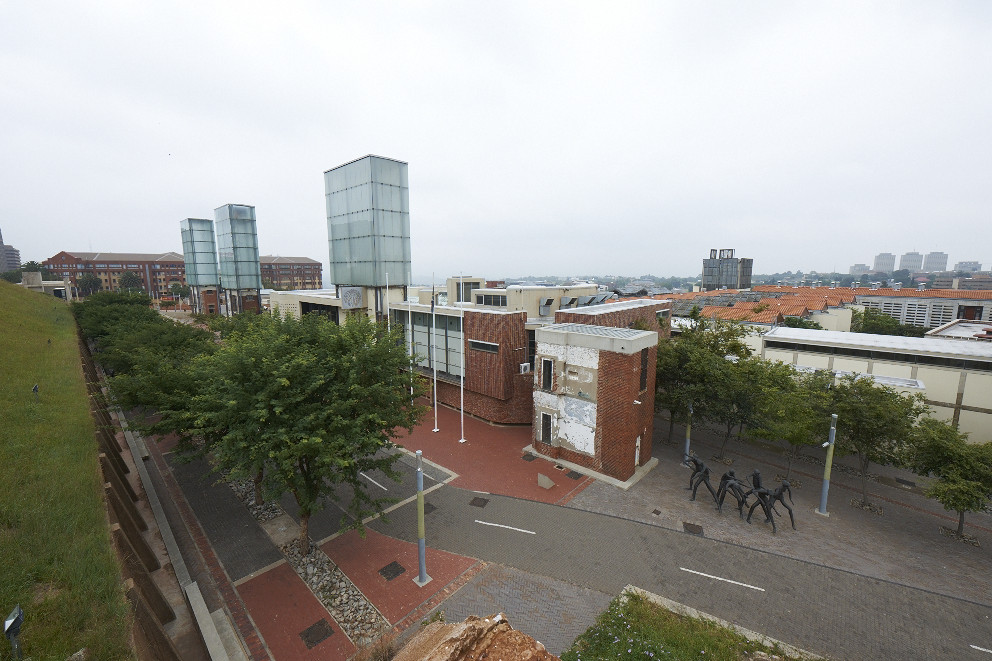
A former fort and prison where Mahatma Gandhi, Nelson Mandela and many others were held. Since 2004 it has also been the home of the Constitutional Court, built partly with bricks from the old prison. It is part of the Nelson Mandela Legacy Sites, a World Heritage Site since 2024.
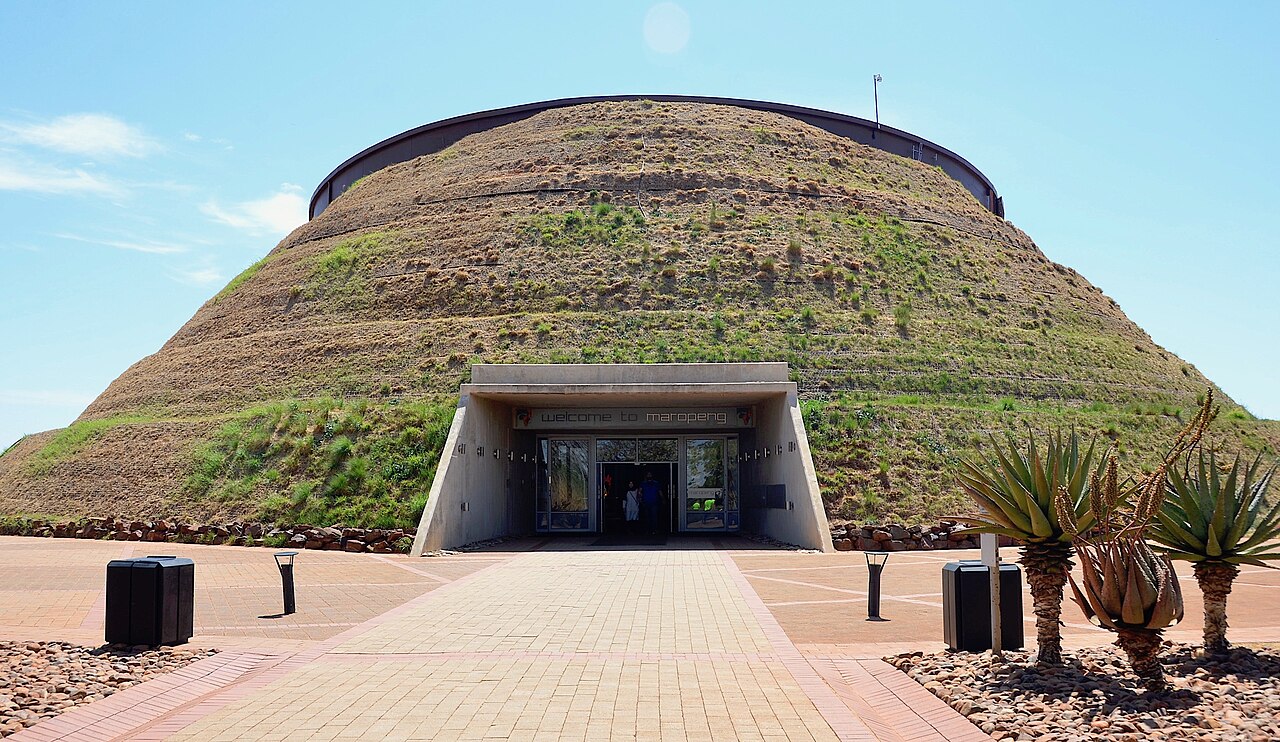
A valley of limestone caves about 50 km northwest of Johannesburg that holds one of the richest collections of early human ancestor fossils in the world. At the Sterkfontein Caves the skull known as 'Mrs Ples', more than 2 million years old, was found in 1947. Visitors can tour the caves and the Maropeng visitor centre.
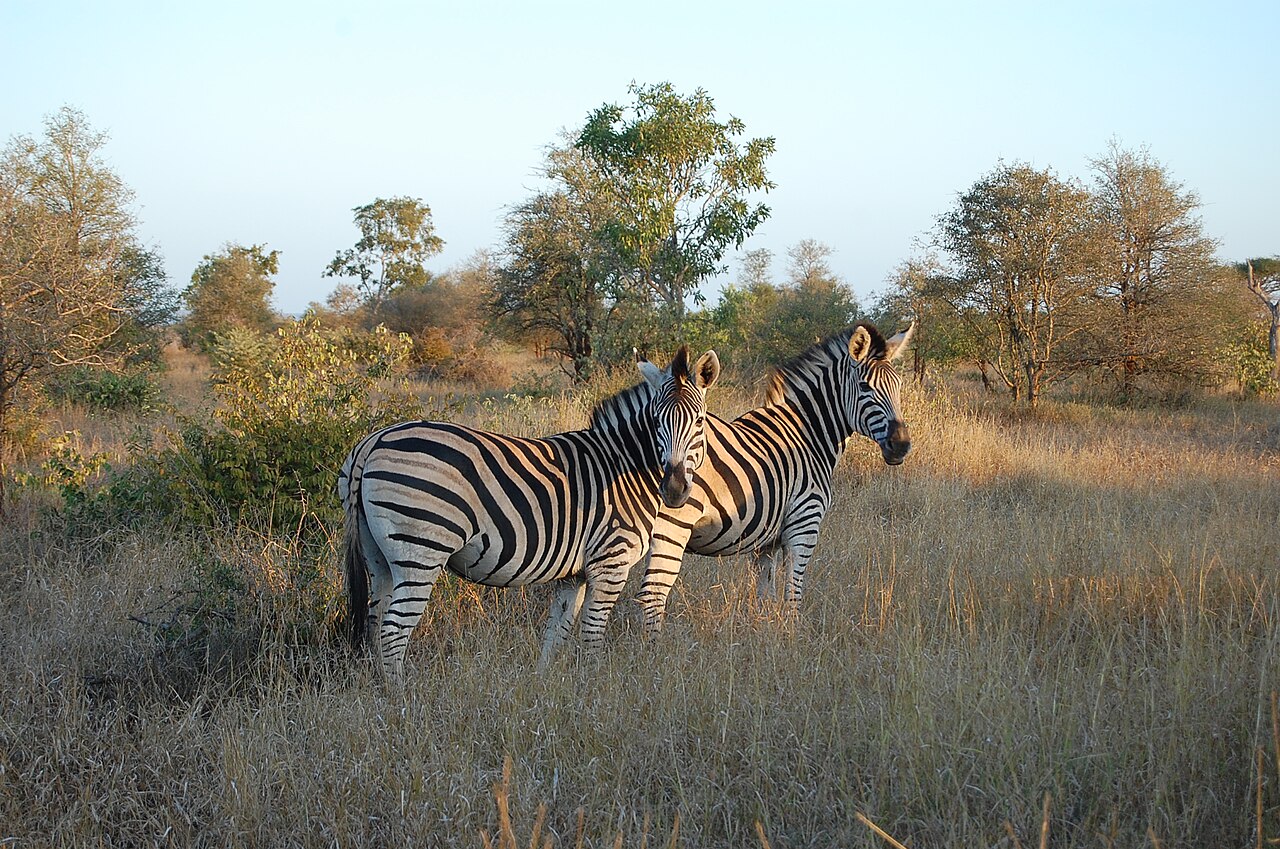
One of Africa's largest game reserves, about 19,600 km² of bush along the border with Mozambique, protected since 1898 and a national park since 1926. All of the Big Five live here: lion, leopard, elephant, rhino and buffalo. The pin marks Skukuza, its main camp.
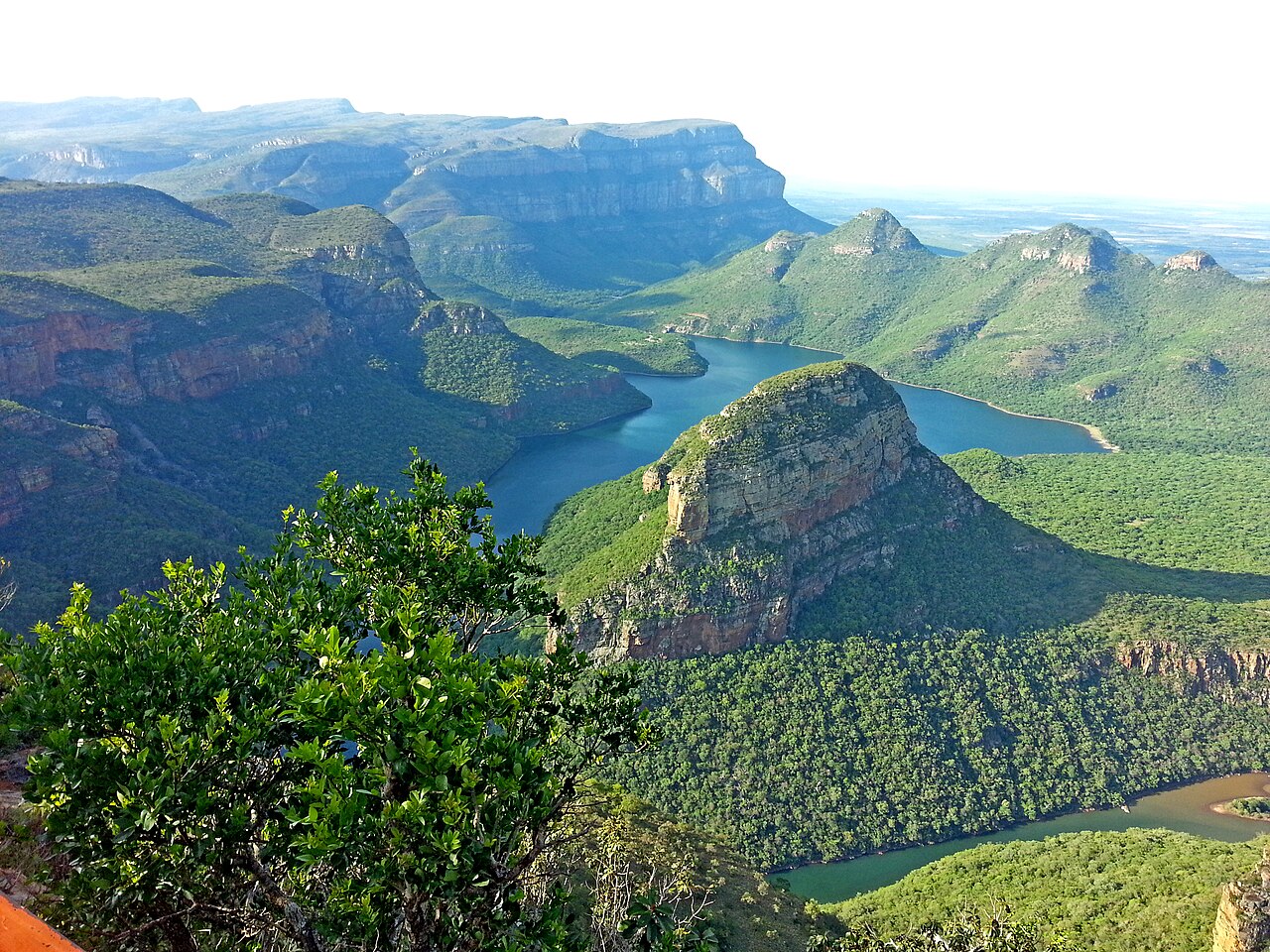
A deep, 26 km long canyon covered in green subtropical forest, one of the largest canyons on Earth. Viewpoints such as the Three Rondavels, rock towers shaped like round huts, God's Window and Bourke's Luck Potholes line the Panorama Route.
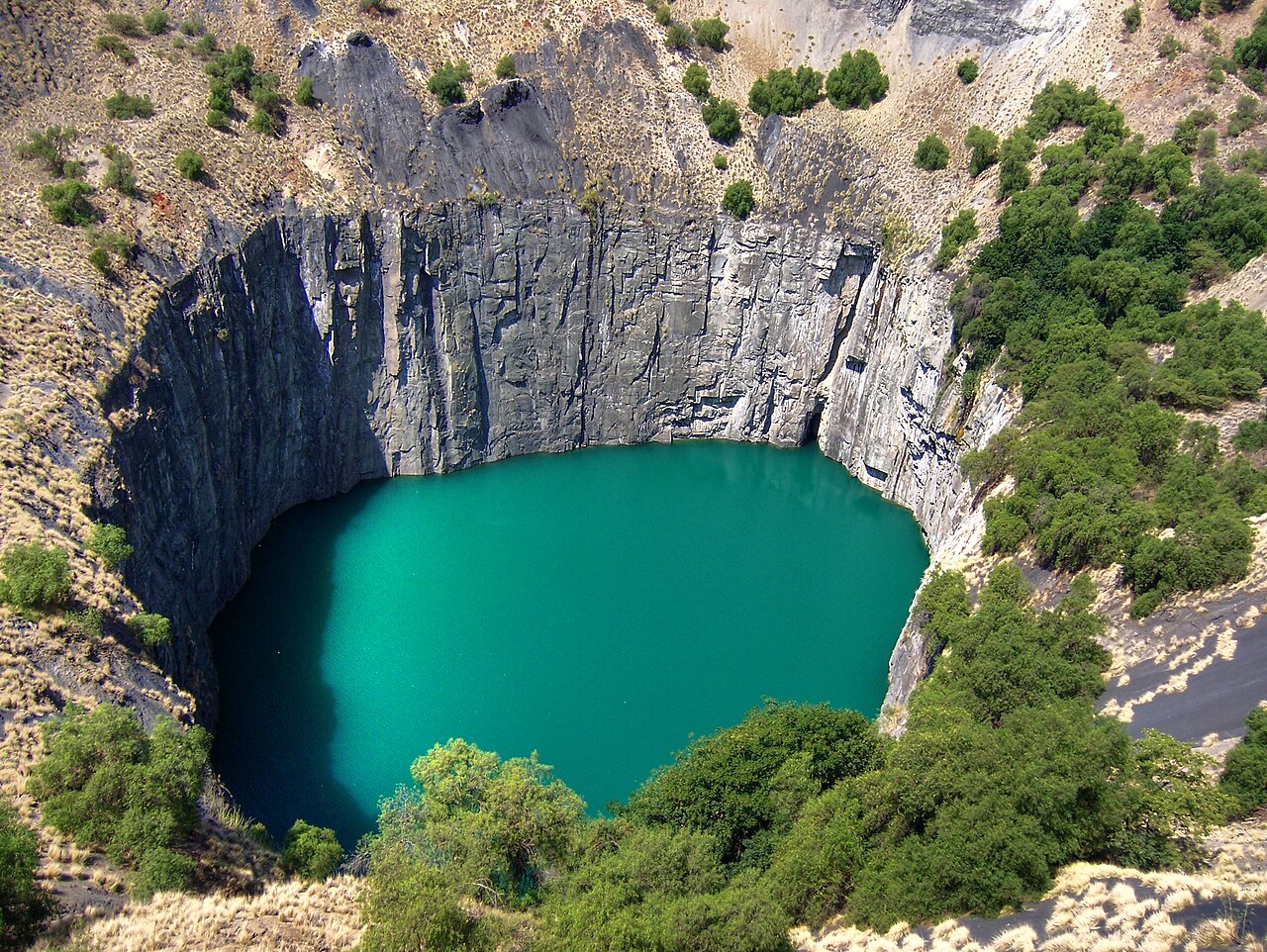
A vast open pit, about 460 m wide, dug with picks and shovels by up to 50,000 miners from 1871 in search of diamonds, and mined until 1914. By then about 3,000 kg of diamonds had come out of it. Today it is partly filled with water and has a museum on its edge.
South Africa has three capital cities: Pretoria for the government, Cape Town for Parliament and Bloemfontein for the Supreme Court of Appeal. The arrangement was a compromise when the Union was formed in 1910.
02
As of 2026, South Africa has twelve official languages. South African Sign Language became the twelfth through a constitutional amendment approved by Parliament and signed into law in 2023.
03
The national anthem is sung in five languages: isiXhosa, isiZulu, Sesotho, Afrikaans and English. It joins the hymn 'Nkosi Sikelel' iAfrika' with the old anthem 'Die Stem'.
04
The world's first human-to-human heart transplant was carried out by Dr Christiaan Barnard at Groote Schuur Hospital in Cape Town on 3 December 1967.
05
Vilakazi Street in Soweto was home, at different times, to two Nobel Peace Prize winners: Nelson Mandela and Archbishop Desmond Tutu. Mandela's house is now a museum.
06
As of 2026, the Cullinan Diamond, found near Pretoria in 1905, is the largest gem-quality rough diamond ever found, at 3,106 carats. Its two biggest cut stones are among the British Crown Jewels.
07
South Africa secretly built six nuclear bombs and then dismantled all of them. It joined the Nuclear Non-Proliferation Treaty in 1991.
08
The tip of South Africa is home to the Cape Floral Kingdom, the smallest of the world's six floral kingdoms, with more than 9,000 plant species, most of which grow nowhere else.
09
Table Mountain is the only place on Earth that one of today's 88 constellations is named after: Mensa, 'the table', named by the French astronomer Nicolas de Lacaille in the 1750s.
10
As of 2026, the Springboks have won the Rugby World Cup four times, in 1995, 2007, 2019 and 2023, more than any other team. In 1995 Nelson Mandela, wearing a Springbok shirt, handed the trophy to the captain.
11
The African penguin colony at Boulders Beach near Cape Town started with just two breeding pairs in 1982 and has grown to a few thousand birds.
12
J. R. R. Tolkien, author of The Lord of the Rings, was born in Bloemfontein in 1892. His family left when he was three years old.
13
The Cape of Good Hope is not the southern tip of Africa. That is Cape Agulhas, about 150 km to the east-southeast.
14
Nelson Mandela's birthday, 18 July, is marked around the world as Mandela Day.
isiZulu, Afrikaans and South African English Pronunciation is written the way it sounds; the capital letters show where the stress goes. Audio is coming soon.
Greetings
sawubona (isiZulu)sah-woo-BOH-nahhello, to one person
sanibonani (isiZulu)sah-nee-boh-NAH-neehello, to a group
ngiyabonga (isiZulu)ngee-yah-BOHN-gahthank you
yebo (isiZulu)YEH-bohyes
howzit (South African English)HOW-zithello, how are things?
dankie (Afrikaans)DUN-keethanks
Numbers
kunye (isiZulu)KOO-nyehone
kubili (isiZulu)koo-BEE-leetwo
kuthathu (isiZulu)koo-TAH-toothree
Food and drink
amanzi (isiZulu)ah-MAHN-zeewater
inyama (isiZulu)een-YAH-mahmeat
mielie (South African English and Afrikaans)MEE-leemaize, corn
lekker (Afrikaans and South African English)LEK-ernice, tasty, great
braai (Afrikaans and South African English)BRY (rhymes with 'dry')a barbecue, or to grill over a fire
Around town
robot (South African English)ROH-bottraffic light
bakkie (South African English and Afrikaans)BUCK-eepick-up truck
Nature
indlovu (isiZulu)een-DLOH-vooelephant
ibhubesi (isiZulu)ee-boo-BEH-seelion
veld (South African English and Afrikaans)FELTopen grassland or bush country
Ideas
ubuntu (isiZulu and isiXhosa)oo-BOON-toohumanity, the belief that 'a person is a person through other people'
Drive on the left, and 'robot' means traffic light
Traffic keeps to the left, and South Africans call traffic lights 'robots'. Keep windows closed and bags out of sight when stopped at junctions, and ask your car hire firm for anti-smash-and-grab window film.
Know the emergency numbers
As of 2026 the official numbers are 10111 for the police and 10177 for an ambulance or the fire service. From a mobile phone you can dial 112 for any emergency.
Tip about 10 percent
In restaurants a tip of around 10 percent is normal, and many waiters depend on it. Petrol stations have attendants who fill your tank and will clean your windscreen for a small tip. Uniformed car guards in car parks also expect a few rand.
Check malaria advice before a safari
The low-lying areas of Mpumalanga and Limpopo, including the Kruger National Park, and the far northeast of KwaZulu-Natal have a malaria risk, mainly from September to May. See a doctor or travel clinic before you go. Cape Town, the Garden Route and Johannesburg have no malaria.
Keep valuables out of sight
Do not wear expensive jewellery or show large amounts of cash, use cash machines inside banks or shopping centres, and avoid walking alone after dark. Your hotel can tell you which areas are safe to explore on foot.
Hike Table Mountain in a group
On quieter trails, walk in a group of four or more, and avoid very early mornings and evenings. The weather on the mountain can change fast, so take water and a warm layer, or ride the cable car.
Swim between the flags
Currents can be strong on many beaches. Swim only where lifeguards are on duty, between the red and yellow flags.
Power cuts are rarer, but can happen
Planned power cuts, called 'loadshedding', were common for years. As of 2026 they are much less frequent, but they can still happen, so keep a torch and a charged phone to hand.
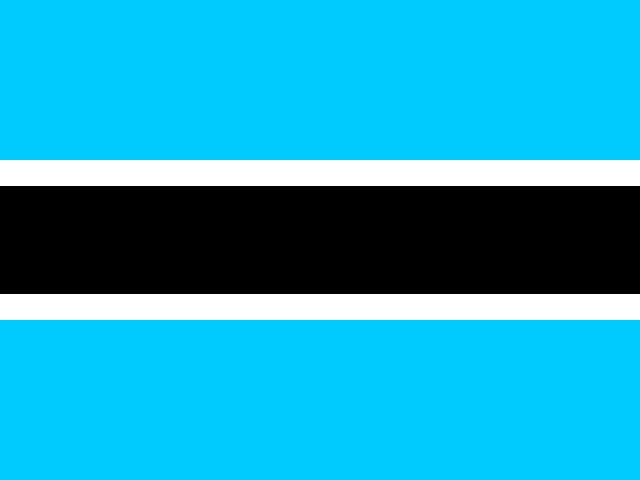 Botswana
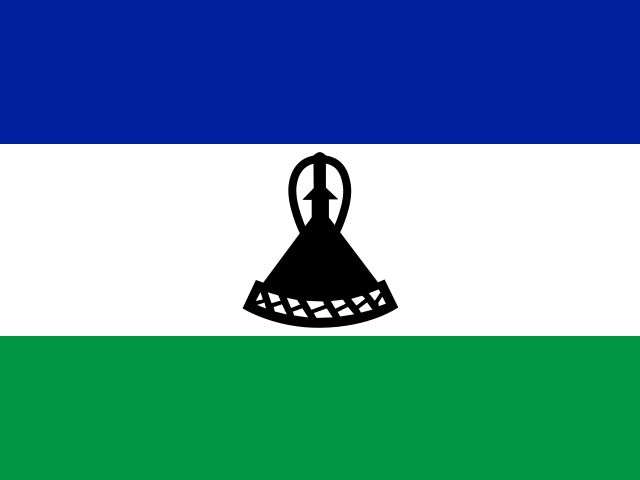 Lesotho
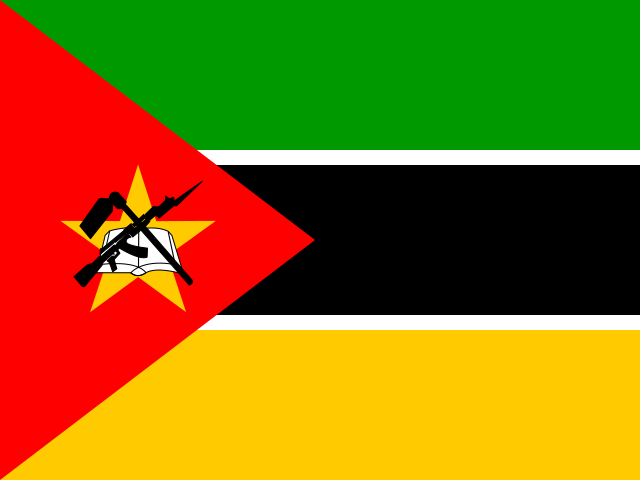 Mozambique
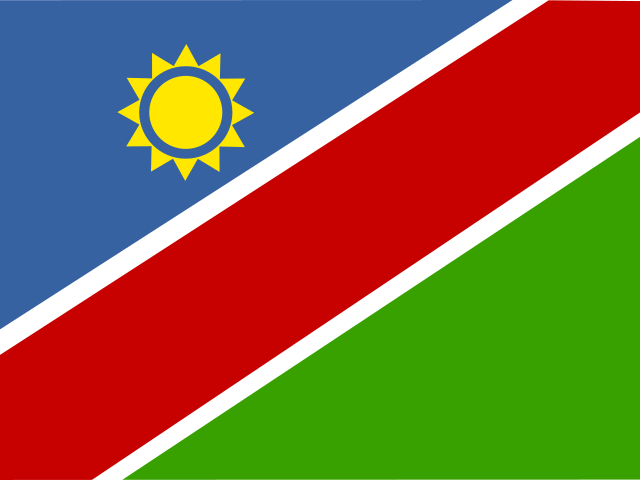 Namibia
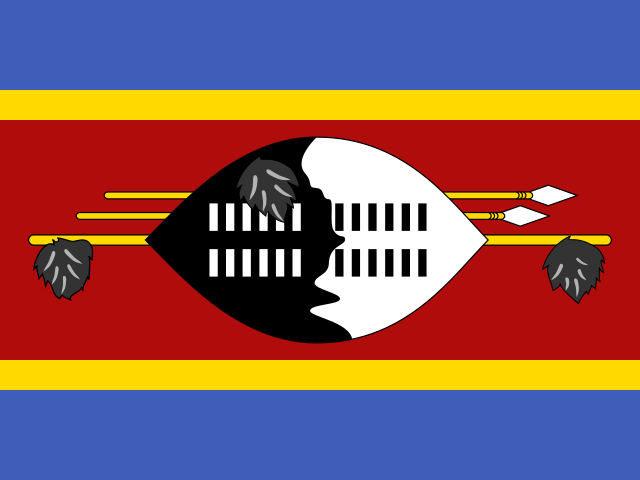 Eswatini
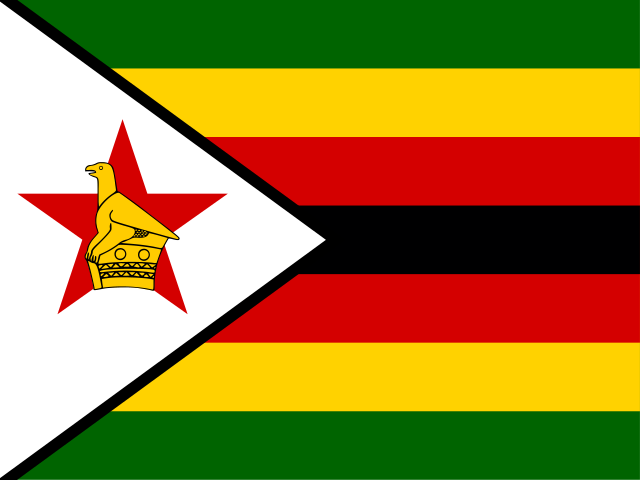 Zimbabwe