World Stroll
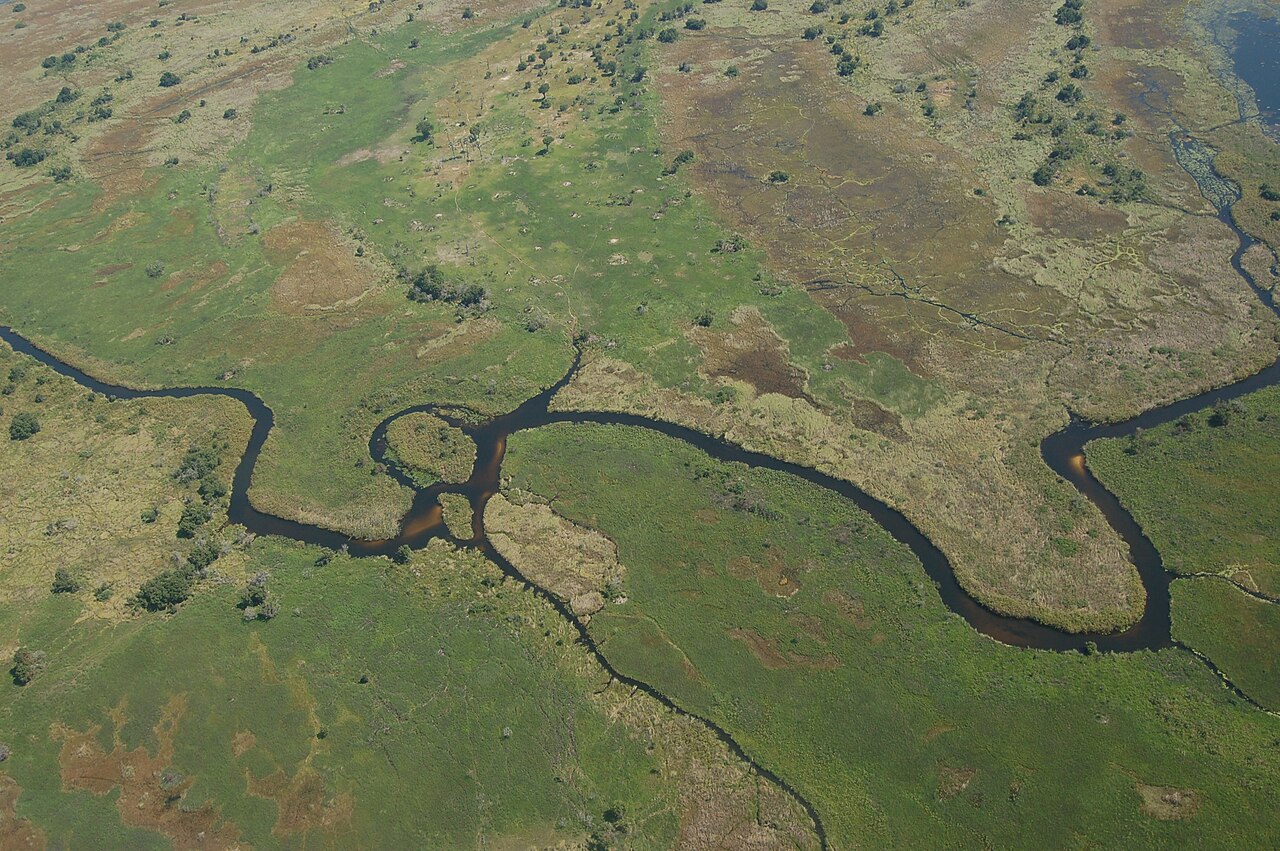
Okavango Delta
Photo: Joachim Huber, CC BY-SA 2.0
Flag of Botswana
Southern Africa

Botswana

The Okavango Delta, the Kalahari, more elephants than any other country and a peaceful democracy built on diamonds, all in the heart of southern Africa.
Your trip to Botswana

Ready for the trip?

10 questionsAbout 3 minutesNo timer
Explore Botswana
You have explored 0 of 9 parts. Scroll on to discover the rest.
AngolaBotswanaComorosDR CongoEswatiniLesothoMadagascarMalawiMozambiqueNamibiaSaint Helena, Ascension and Tristan da CunhaSouth AfricaTanzaniaZambiaZimbabwe

Neighbours

Going to Botswana?Phrases, table manners and local tips on one printable page. Send a postcard from BotswanaA free digital postcard for family and friends.
Overview

Botswana at a glance

Botswana is a landlocked country in the middle of southern Africa, bordered by South Africa, Namibia, Zambia and Zimbabwe. It is mostly flat and dry: about 70 percent of the land is part of the Kalahari, a sandy savanna of grass, thorn trees and salt pans. In the north-west the Okavango River does something rare. Instead of reaching the sea, it spreads out into the Okavango Delta, a huge green maze of channels, lagoons and islands that fills with water in the dry winter months and draws enormous herds of animals.

People have lived here for a very long time. The San, the first hunter-gatherers of the Kalahari, left thousands of rock paintings at the Tsodilo Hills, and Tswana and Kalanga farmers and cattle herders settled the land long before Europeans arrived. In 1885 Britain declared the Bechuanaland Protectorate, and on 30 September 1966 the country became independent as the Republic of Botswana, then one of the poorest nations in the world.

A year later, diamonds were found at Orapa. Careful management of that wealth, a steady multiparty democracy and one of the largest protected wildlife areas in Africa have made Botswana one of the continent's success stories. Today about 2.4 million people live here, in a country slightly larger than mainland France, so it is one of the most thinly populated nations on earth. Visitors come for safaris by boat, mokoro canoe and jeep, for the silence of the Kalahari and the white salt pans of Makgadikgadi.

CapitalGaborone
PopulationAbout 2.4 million (2022 census: 2,359,609)
Official languageEnglish. Setswana is the national language and the one most people speak at home
CurrencyBotswana pula (BWP), divided into 100 thebe
AreaAbout 581,730 km²
GovernmentParliamentary republic. The President is head of state and of government and is elected by the National Assembly
Highest pointOtse Hill, about 1,491 m, is the figure most often given; nearby Monalanong Hill is sometimes measured a few metres higher
Main riverThe Okavango, about 1,600 km in total. It rises in Angola, crosses Namibia and ends inland in the Okavango Delta instead of the sea
NeighboursSouth Africa, Namibia, Zimbabwe and Zambia. The border with Zambia is only a short stretch of the Zambezi River near Kazungula
Drives on theLeft
Calling code+267
Next: Story

The story

A short history of Botswana

Botswana's story runs from the rock painters of Tsodilo to the Tswana chiefdoms, whose leaders met their people in the kgotla, an open-air village assembly, then through eighty years as a British protectorate to independence in 1966. Since then the country has held regular multiparty elections, and in 2024 power passed peacefully to the opposition for the first time.

  1. 1847

    Livingstone's mission at Kolobeng

    The Scottish missionary David Livingstone built his third and last mission at Kolobeng, west of today's Gaborone, among the Bakwena of Kgosi (chief) Sechele I. It had a church and a school, and its ruins are now a national monument.

  2. 1852

    The Battle of Dimawe

    Boer commandos from the Transvaal attacked Sechele I and the Bakwena at Dimawe Hill. The Boers took the hill, but Sechele's counter-raids soon drove them back, and the Tswana kept their land.

  3. 1885

    The Bechuanaland Protectorate

    Britain declared a protectorate over the land of the Tswana, partly to block German and Boer expansion. The chiefs kept much of their authority, and the territory was governed from Mafeking, a town outside its own borders in today's South Africa.

  4. 1895

    Three chiefs travel to Britain

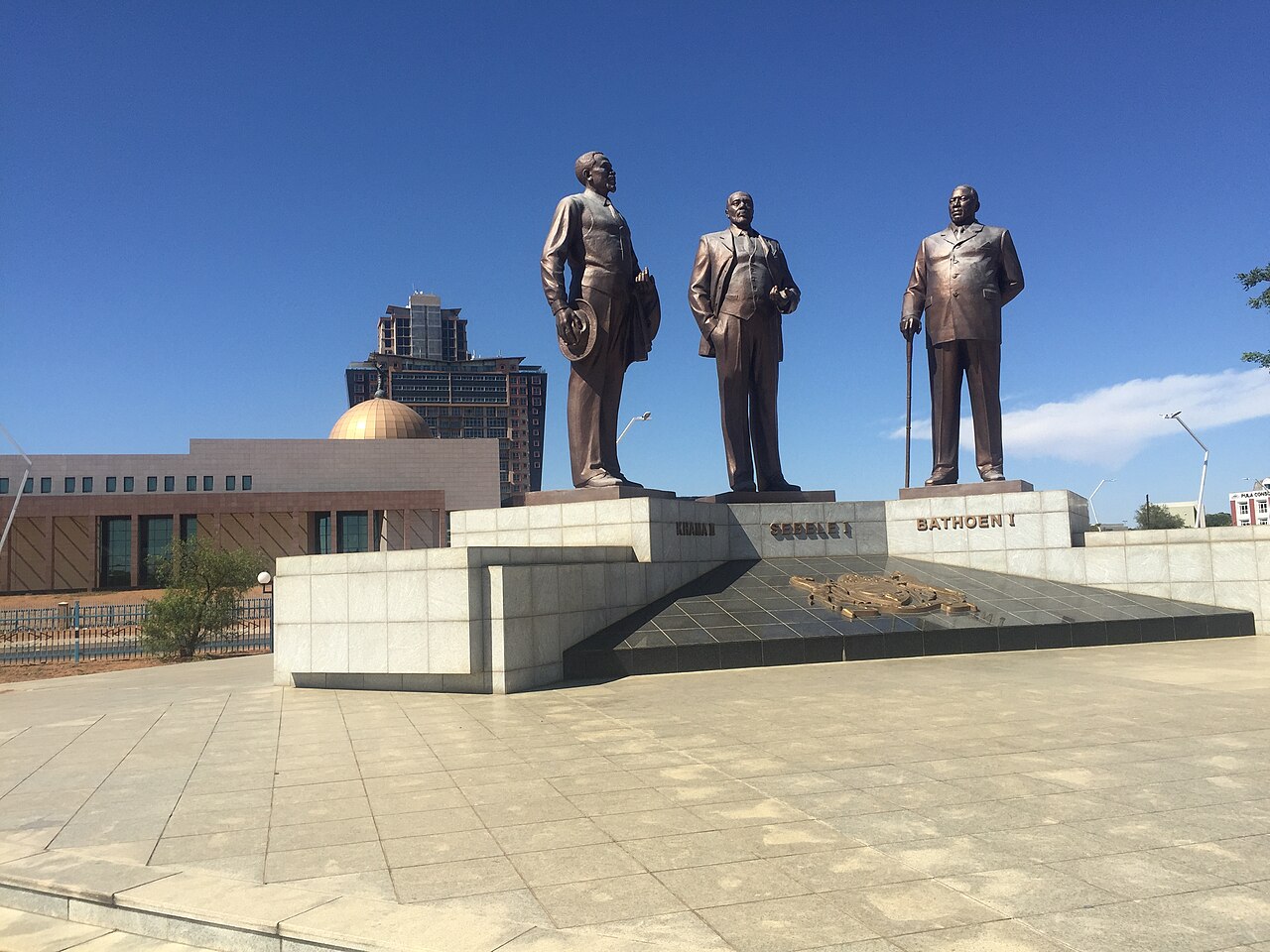
    Khama III, Sebele I and Bathoen I sailed to Britain and persuaded the government not to hand their land to Cecil Rhodes's British South Africa Company. They are honoured today as founders of the nation.

  5. 1897

    Francistown is founded

    A settlement grew near the Monarch gold mine in the north-east, in the area of the Tati goldfields, and was named after the English prospector Daniel Francis. It is now Botswana's second city.

  6. 1902

    Khama III founds Serowe

    Kgosi Khama III moved the capital of the Bamangwato people to a new site, Serowe, in a fertile valley. Serowe later became the birthplace of the first president, Seretse Khama.

  7. 1948

    Seretse Khama marries Ruth Williams

    The heir to the Bamangwato chieftainship married an English office clerk in London. Under pressure from apartheid South Africa, Britain banished the couple in 1950, and they were allowed home only in 1956. The dispute helped push the country towards elected government.

  8. 1965

    Gaborone becomes the capital

    The seat of government moved from Mafeking to the newly built town of Gaberones, today's Gaborone. The same year the first general election was held and the protectorate gained self-government.

  9. 1966

    Independence

    On 30 September 1966 the Bechuanaland Protectorate became the independent Republic of Botswana, with Seretse Khama as its first president. 30 September, Botswana Day, is still the national holiday.

  10. 1967

    Diamonds are found at Orapa

    A team of De Beers geologists discovered diamonds at Orapa, a year after independence. The mine opened in 1971, and diamond income paid for roads, schools and clinics across the young country.

  11. 1976

    The pula is introduced

    On 23 August 1976 Botswana's own currency, the pula, replaced the South African rand. Pula means 'rain' in Setswana, a precious thing in a dry land, and the day is still remembered as Pula Day.

  12. 1982

    The Jwaneng mine opens

    After nine years of study and building, the Jwaneng diamond mine south-west of Gaborone began production. It is run by Debswana, a partnership between the government and De Beers, and is often called the richest diamond mine in the world.

  13. 2001

    Tsodilo becomes World Heritage

    UNESCO added the Tsodilo Hills, with their thousands of rock paintings, to the World Heritage List. It was Botswana's first World Heritage Site.

  14. 2014

    The Okavango Delta joins the list

    On 22 June 2014 the Okavango Delta became the 1,000th site inscribed on the UNESCO World Heritage List.

  15. 2024

    Olympic gold in Paris

    The sprinter Letsile Tebogo won the 200 metres at the Paris Olympics, Botswana's first Olympic gold medal. He was 21 years old.

Next: At the table

At the table

What to eat in Botswana

Everyday food in Botswana is simple and filling: a stiff porridge of sorghum or maize, called bogobe or phaletshe, served with a relish of meat stew, beans or cooked wild greens. Beef is the favourite meat, followed by goat, and free-range 'Setswana' chicken is the dish a host cooks to honour a guest. At weddings, funerals and national celebrations, big three-legged iron pots bubble over wood fires with seswaa, the pounded meat that is the national dish, served with samp and beans or sorghum porridge. Many dishes, such as fat cakes, maize porridge and mopane worms, are shared with neighbouring countries in southern Africa.

Commons: Seswaa
Photo: Jay Superthato, CC0
Main courseRecipe

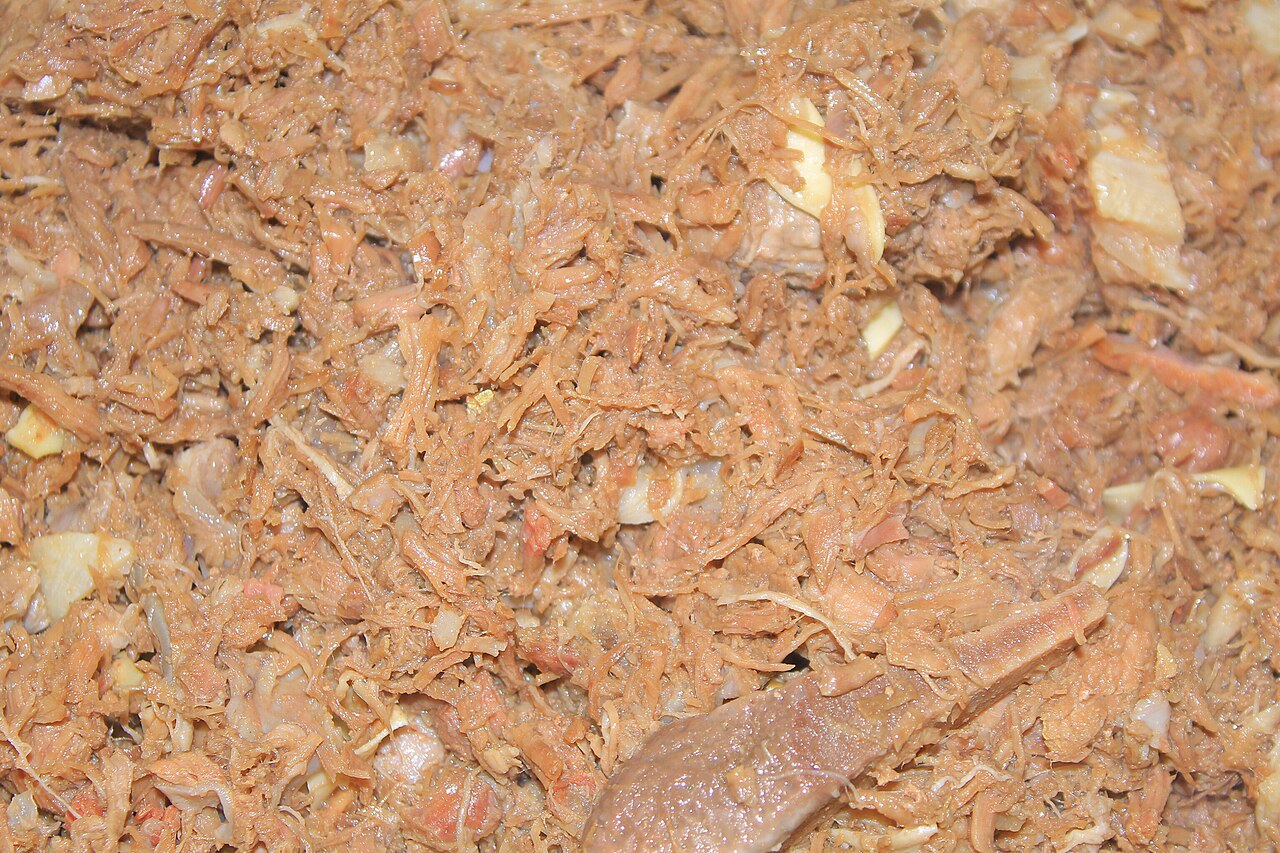
Seswaa

All of Botswana; also called loswao in the south

The national dish: beef or goat meat, often from tough cuts such as the neck and legs, simmered for hours with just water and salt until it falls apart, then pounded with a wooden spoon into soft shreds. It is usually cooked by men in a three-legged iron pot for weddings, funerals and Independence Day, and served with bogobe, samp or maize porridge.

Seswaa uses almost no seasoning beyond salt. The flavour comes from long, slow cooking and the pounding at the end.

See the recipe
Serves 6 4 h

Ingredients

  • 1.5 kg beef on the bone, such as shin, neck or brisket (or goat)
  • 1 onion, halved (optional)
  • About 2 litres water
  • 2 teaspoons salt, or to taste

Method

  1. Put the meat in a large heavy pot, ideally cast iron, add the onion and cover with water.
  2. Bring to the boil, skim off any foam, then cover and simmer gently for 3 to 4 hours, topping up with hot water, until the meat falls off the bone.
  3. Lift out the bones and onion, add the salt and let most of the liquid cook away.
  4. Pound and stir the meat with a sturdy wooden spoon until it breaks into fine shreds, moistening it with a little of the cooking liquid.
  5. Serve hot with sorghum porridge, maize porridge or samp and beans.
Commons: Phaletshe Botswana
Photo: JupiterKB, CC0
Side dish

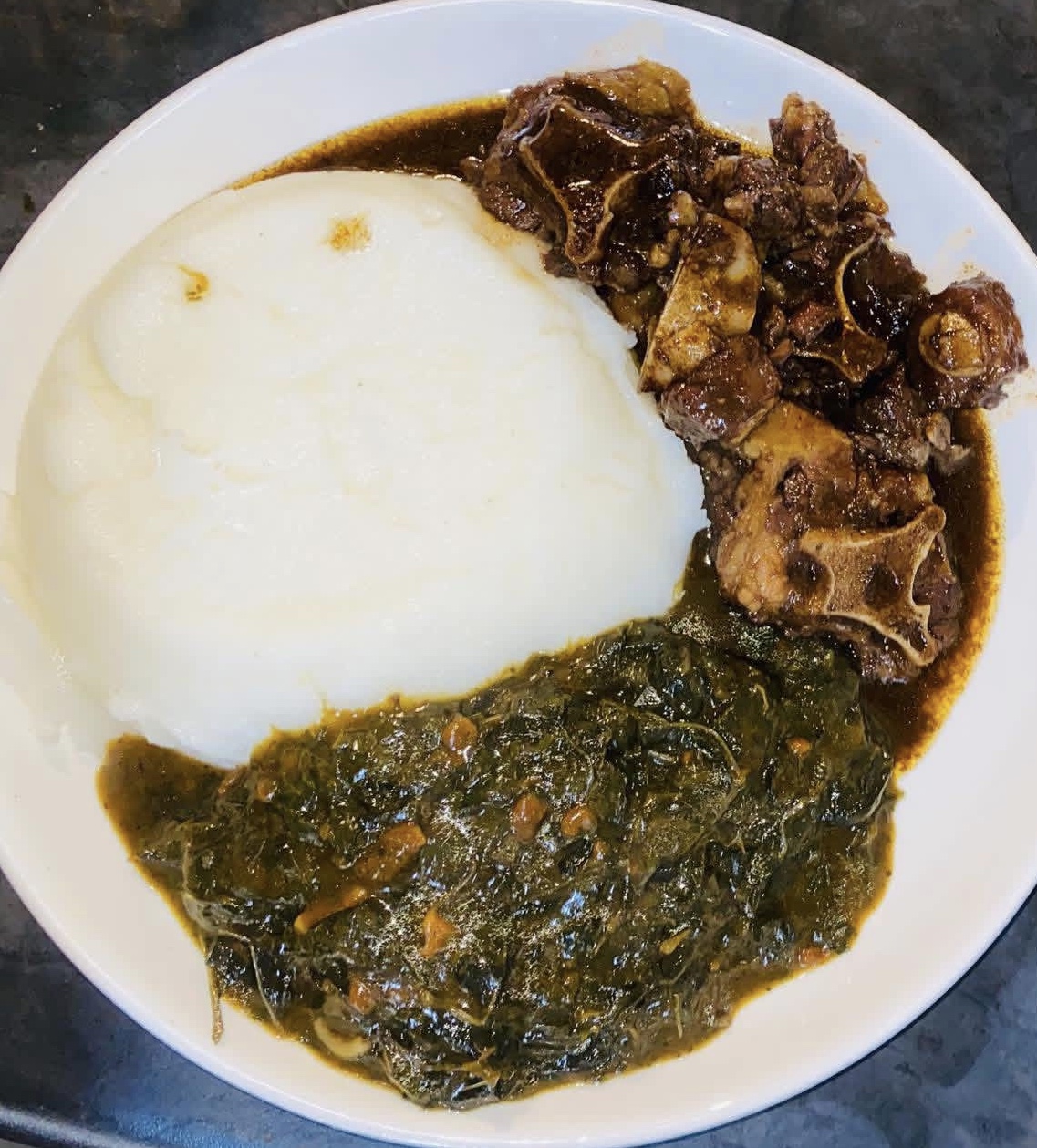
Phaletshe

All of Botswana, and across southern Africa as pap

A stiff porridge made from white maize meal cooked in boiling water and stirred until thick enough to hold its shape. It is the everyday starch on many tables, eaten with meat, chicken, greens or seswaa, and a softer version with milk and sugar is eaten for breakfast.

Commons: Ting Botswana
Photo: LoatilePro14, CC BY-SA 4.0
Side dish

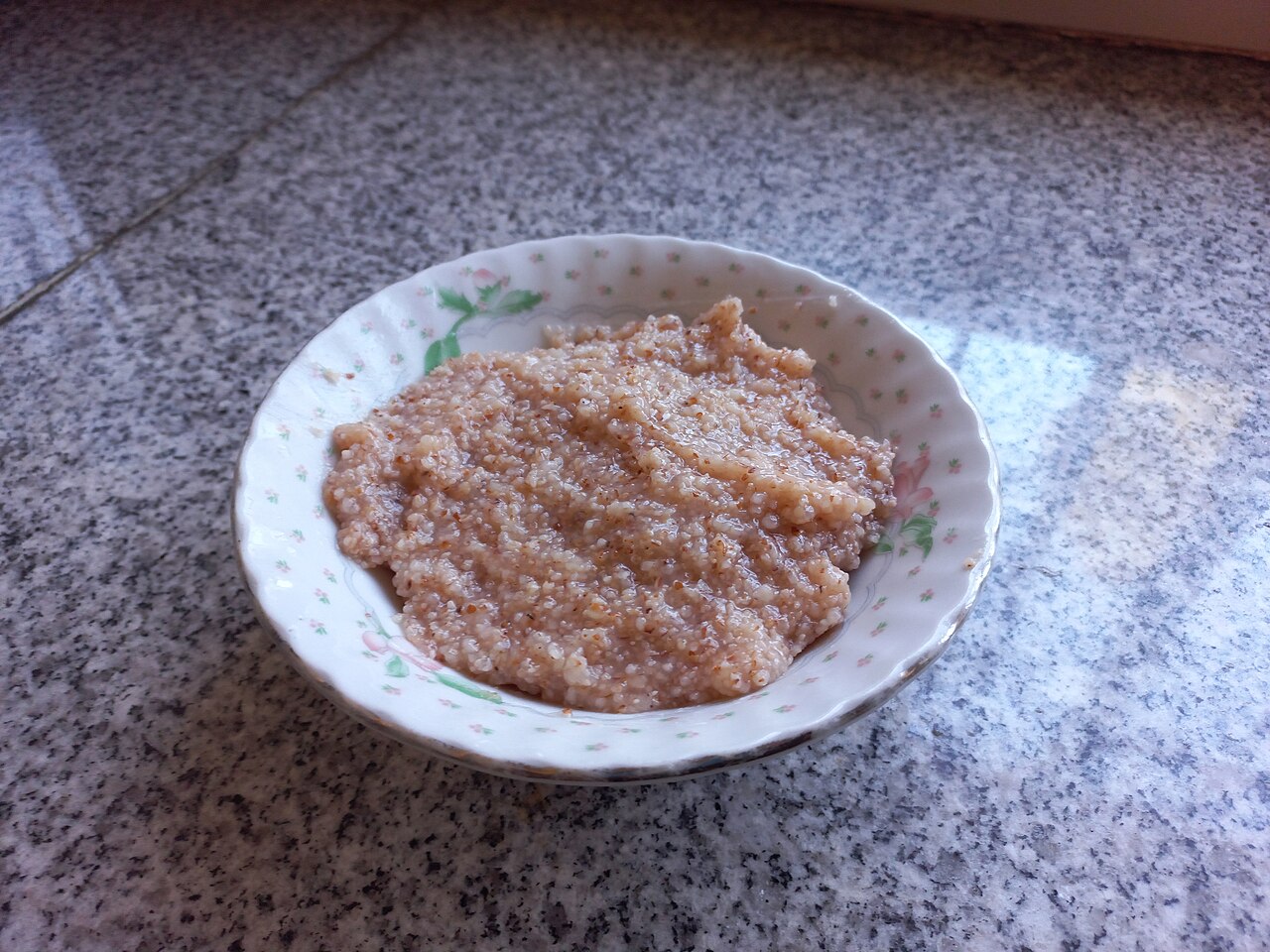
Ting

bogobe jwa ting
All of Botswana

Sorghum or maize meal that is left to ferment for a few days before it is cooked, which gives the porridge a pleasant sour taste. With milk and sugar it is a breakfast dish; without them it is eaten with meat or vegetables for lunch or dinner.

Commons: lerotse porridge
Photo: Gaone1991, CC0
Side dishRecipe

Bogobe jwa lerotse

All of Botswana; the Kalanga call it tophi

Sorghum porridge cooked with lerotse, a local yellow cooking melon, and often sour milk. It is soft, slightly sweet and sour, and is a traditional wedding dish, when big pots of it are served alongside the meat.

The melon is usually prepared ahead with sour milk and stored until it is needed.

See the recipe
Serves 4 1 h

Ingredients

  • 500 g peeled, seeded yellow cooking melon or firm pumpkin, cubed
  • 1 litre water
  • 200 g sorghum meal (or fine maize meal)
  • 250 ml sour milk (maas) or buttermilk
  • A pinch of salt

Method

  1. Put the melon in a pot with the water and simmer for about 20 minutes until very soft, then mash it into the water.
  2. Sprinkle in the sorghum meal a little at a time, stirring hard to prevent lumps.
  3. Cover and cook on low heat for about 25 minutes, stirring now and then, until thick and cooked through.
  4. Stir in the sour milk and salt and cook for a few more minutes.
  5. Serve warm, on its own or with seswaa.
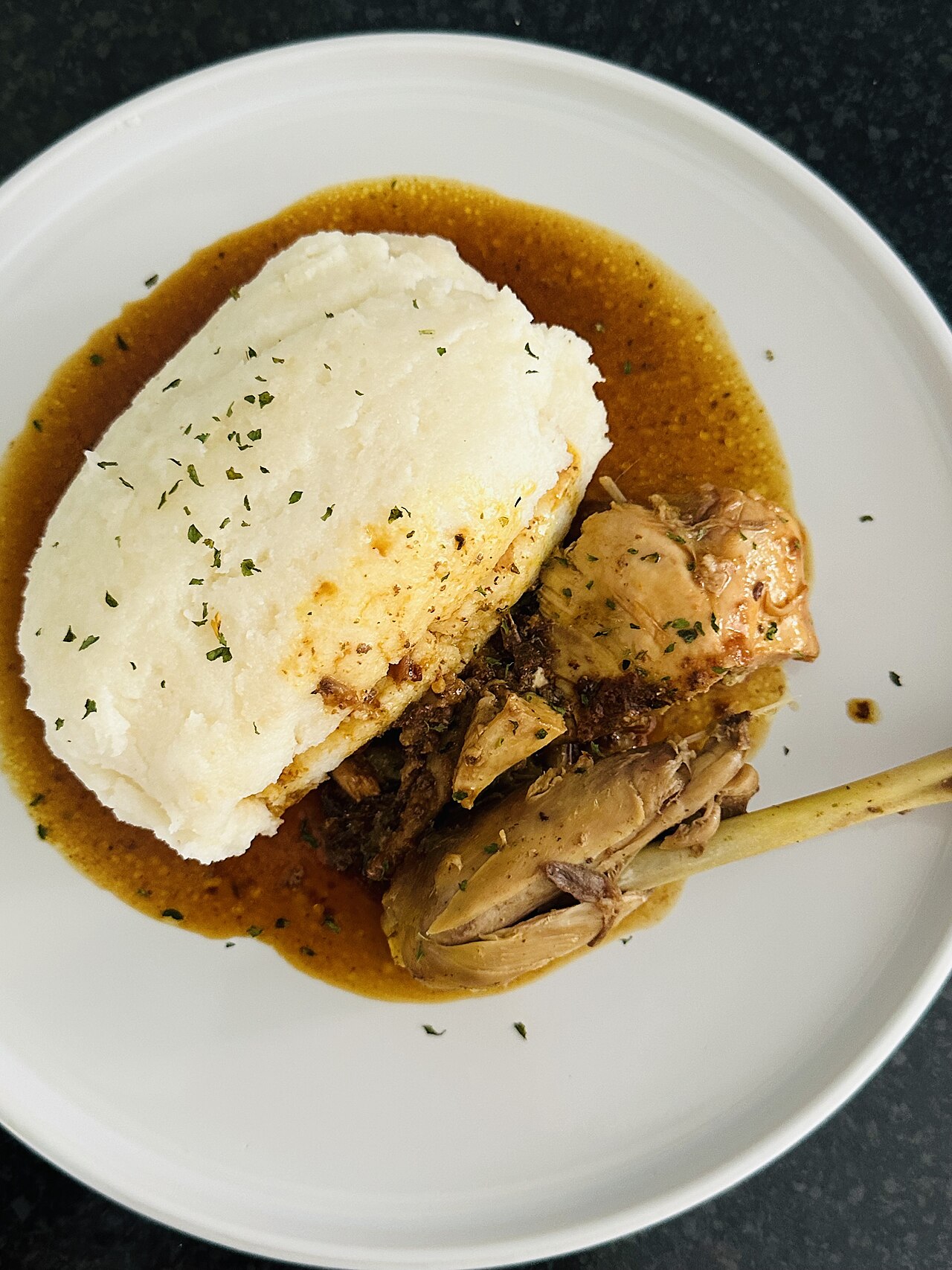
Commons: koko ya Setswana
Photo: WomanON, CC BY 4.0
Main course

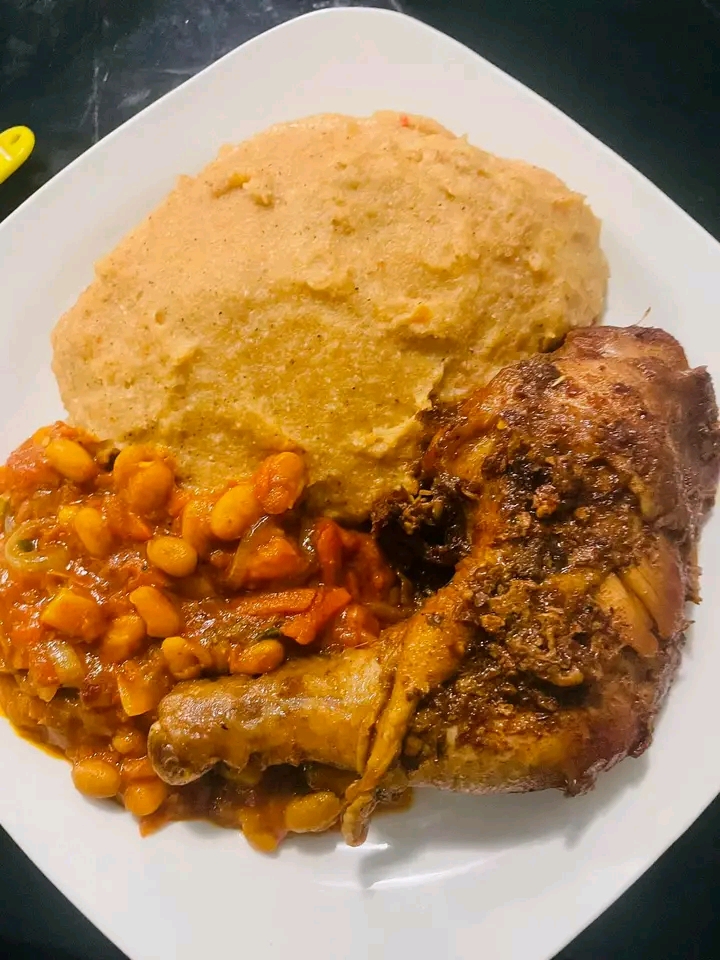
Setswana chicken stew

koko ya Setswana
All of Botswana

Free-range village chicken, called koko ya Setswana, slow-cooked in a three-legged pot over a wood fire until tender. It is thought to be much tastier than shop-bought chicken, and cooking one for a visitor is a sign of special hospitality. It is served with phaletshe or dumplings.

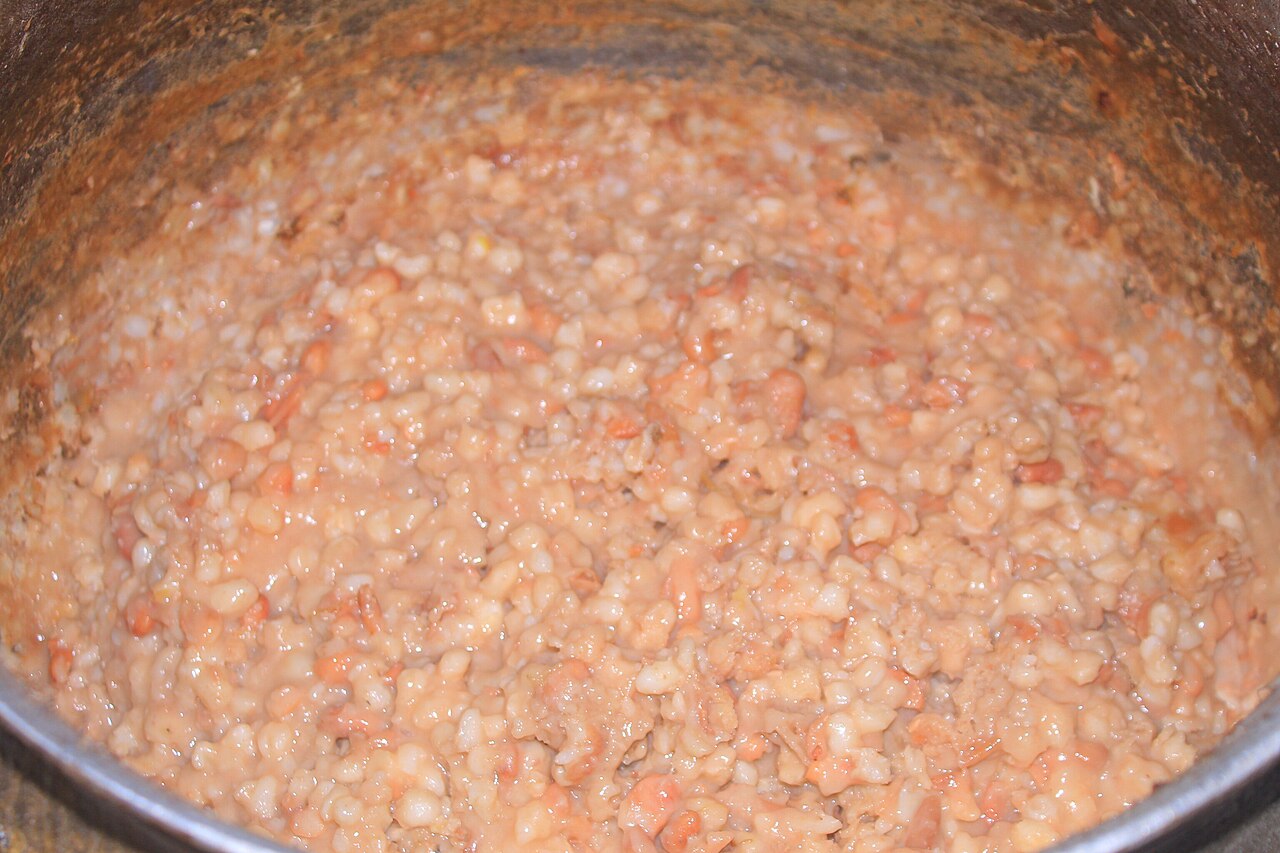
Commons: Dikgobe
Photo: Jay Superthato, CC0
Main courseRecipe

Dikgobe

All of Botswana

Samp, which is dried maize kernels broken into pieces, cooked slowly with beans until thick and creamy. Dikgobe is a comforting everyday meal and a fixture at weddings, where it is served with seswaa.

See the recipe
Serves 6 3 h

Ingredients

  • 250 g samp (broken dried maize kernels)
  • 250 g dried sugar beans or cowpeas
  • 2 litres water
  • 1 onion, chopped, fried in 2 tablespoons oil (optional)
  • 1 teaspoon salt

Method

  1. Soak the samp and beans together overnight in plenty of cold water, then drain.
  2. Put them in a large pot with the water and bring to the boil.
  3. Simmer gently, half covered, for 2 to 3 hours, stirring from time to time and adding hot water if it gets too dry, until both are soft.
  4. Stir in the salt and the fried onion, if using, and mash lightly so the mixture becomes creamy.
  5. Serve on its own or with seswaa or a meat stew.
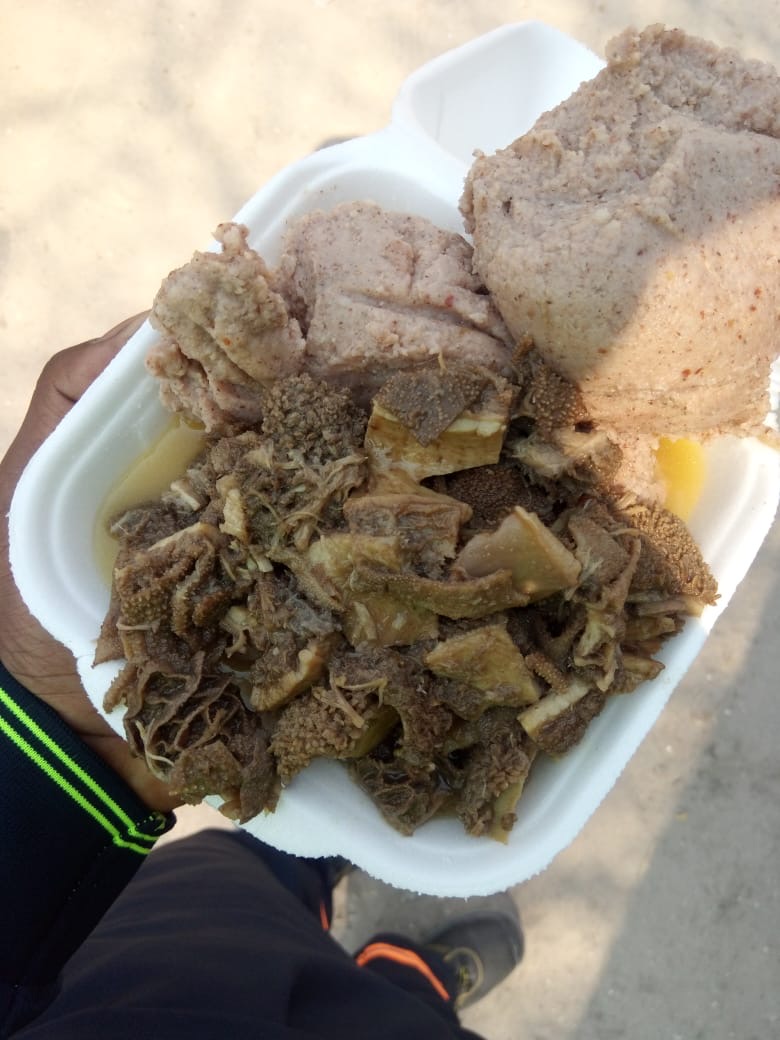
Commons: Serobe
Photo: Olgatladi2020, CC BY-SA 4.0
Main course

Serobe

All of Botswana

A dish of tripe and intestines of a goat, sheep or cow, washed carefully, cut into small pieces and boiled until soft; for goat or sheep, the trotters go in too. It is a popular dish at ceremonies and is eaten with phaletshe or sorghum porridge.

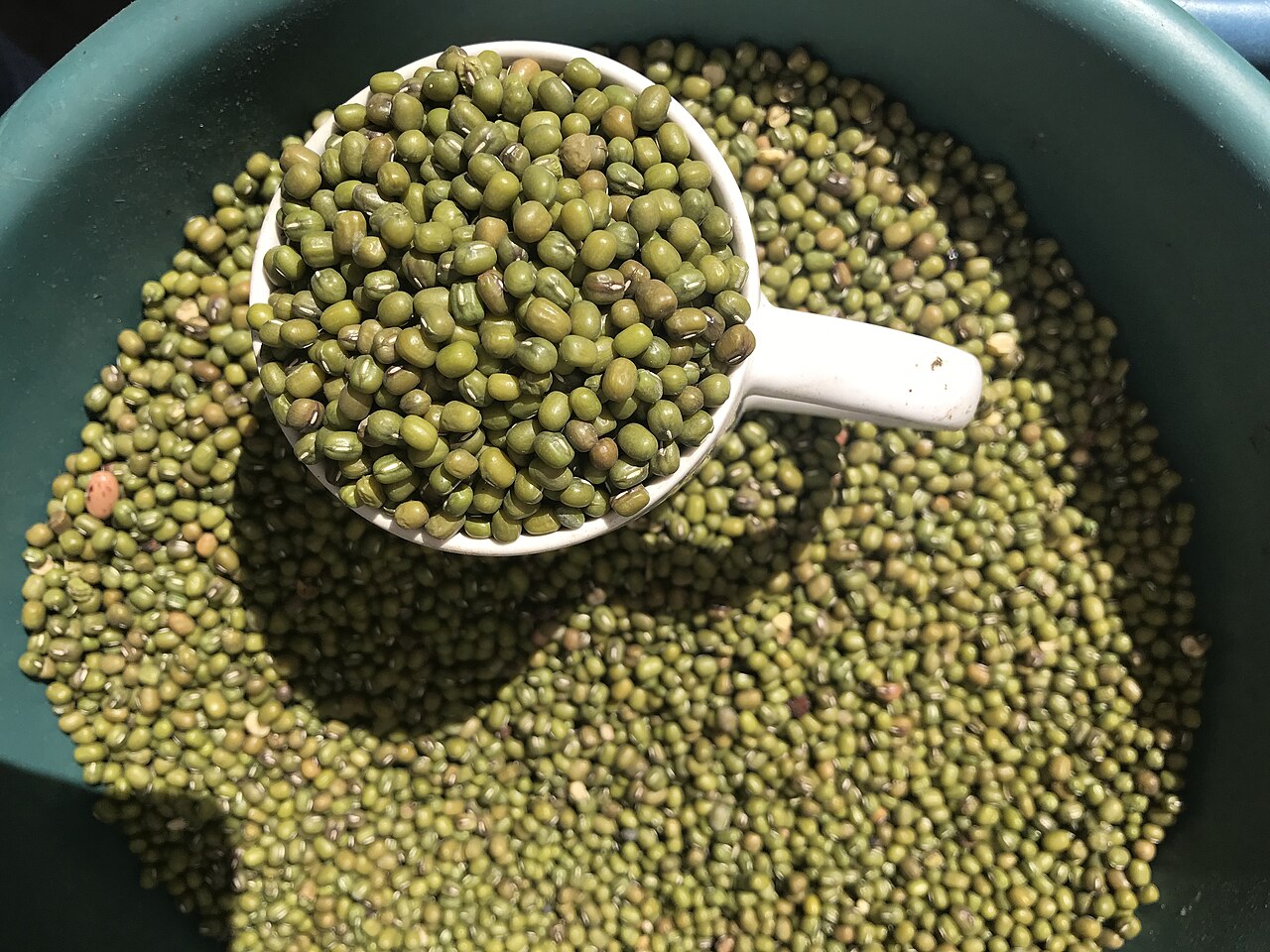
Commons: Letlhodi
Photo: Chandapiwa Malema, CC BY-SA 4.0
Main course

Letlhodi

All of Botswana

Mung beans, a small green bean grown in Botswana, boiled until soft and often cooked into a thick stew. It is a cheap and nourishing dish, eaten with porridge, and letlhodi is also sold dried in shops and markets.

Commons: Morogo
Photo: Sharon the Bubbly Maker, CC BY-SA 4.0
Side dish

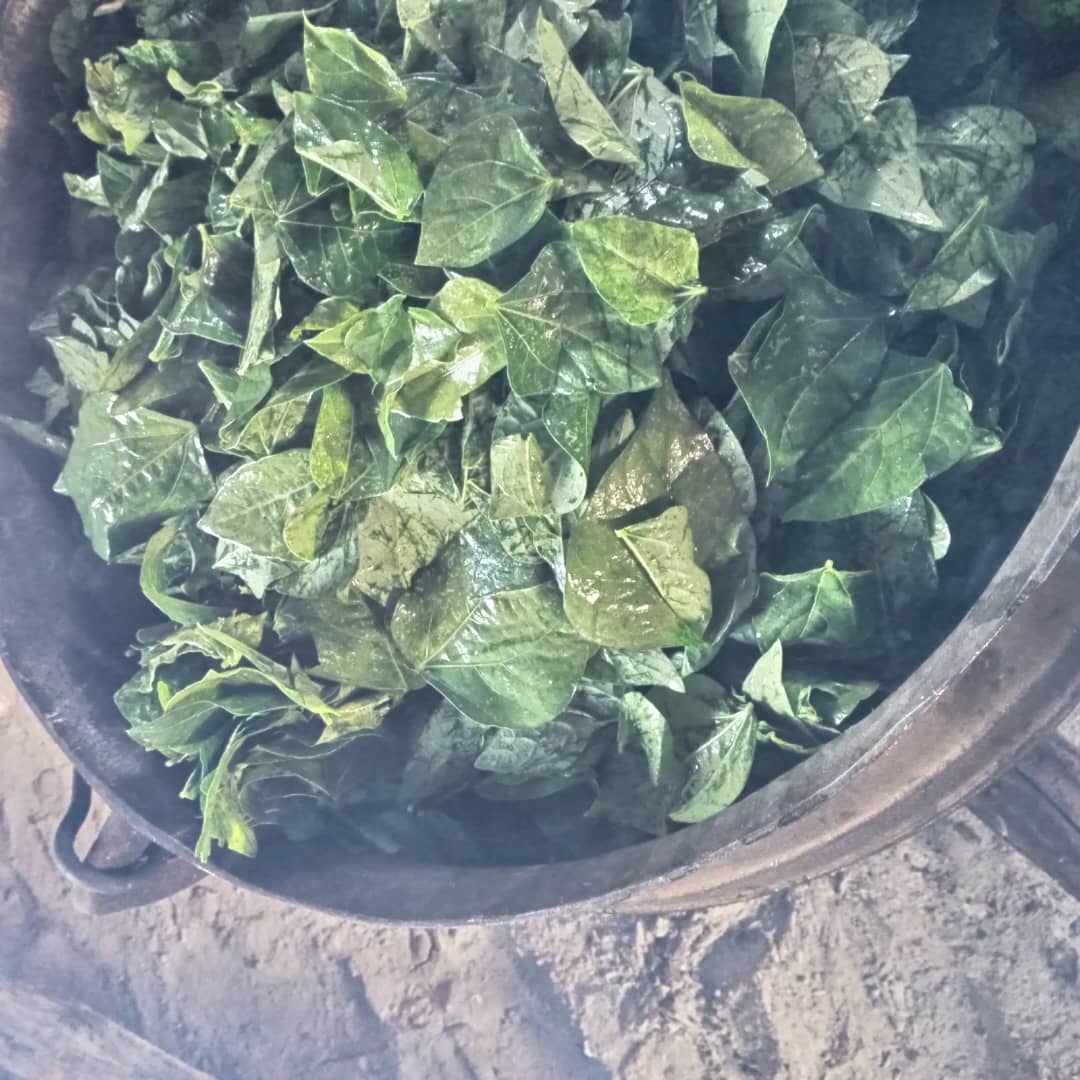
Morogo

morogo wa dinawa
All of Botswana, and across southern Africa

Leafy greens, often wild or from bean plants, boiled and seasoned, sometimes with onion and tomato. Morogo wa dinawa is made from bean leaves, which are often dried in the sun so they can be eaten all year round.

Commons: Phane Botswana
Photo: JAMESJUNIORB, CC BY-SA 4.0
Snack

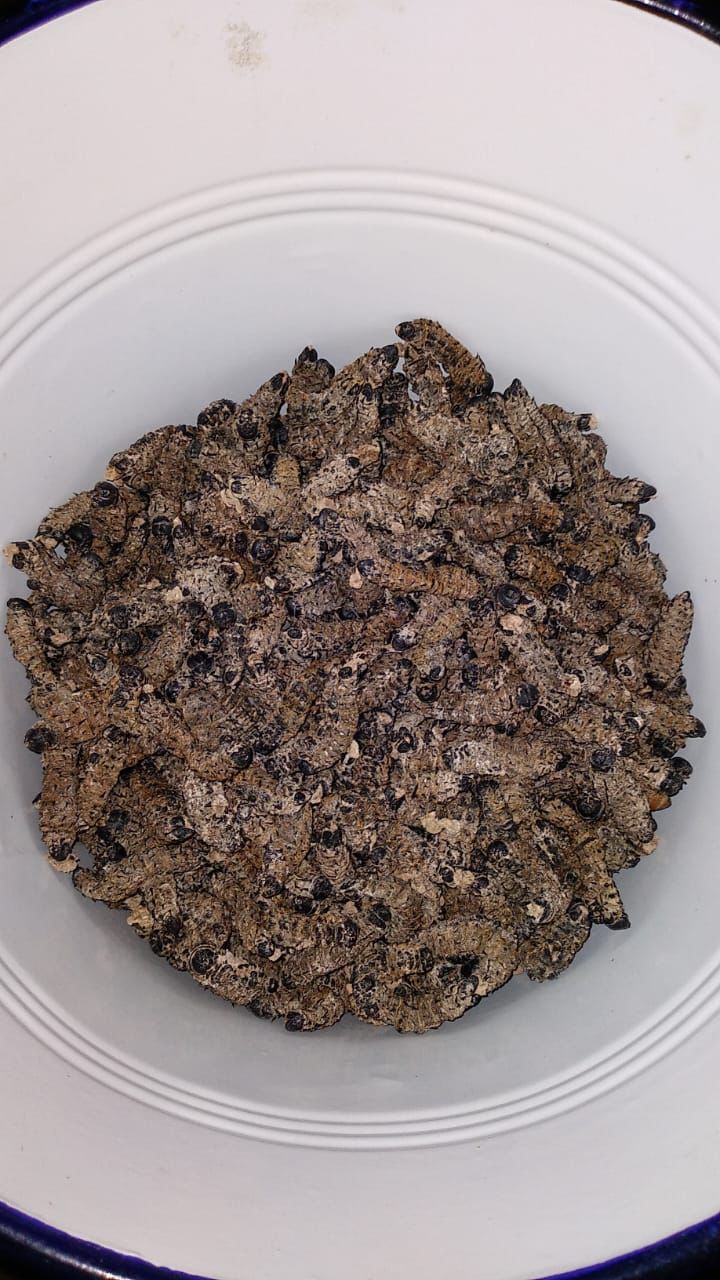
Mopane worms

phane
The mopane woodlands of northern and eastern Botswana, and neighbouring countries

The large caterpillars of the mopane emperor moth, collected from mopane trees, squeezed clean, boiled and dried. They are eaten as a crunchy snack or softened again and cooked in a tomato and onion sauce, and they are rich in protein.

Phane are sold by the bag in markets, and gathering and selling them earns many rural families money every year.

Commons: Magwinya
Photo: Attiem, CC BY-SA 4.0
BreadRecipe

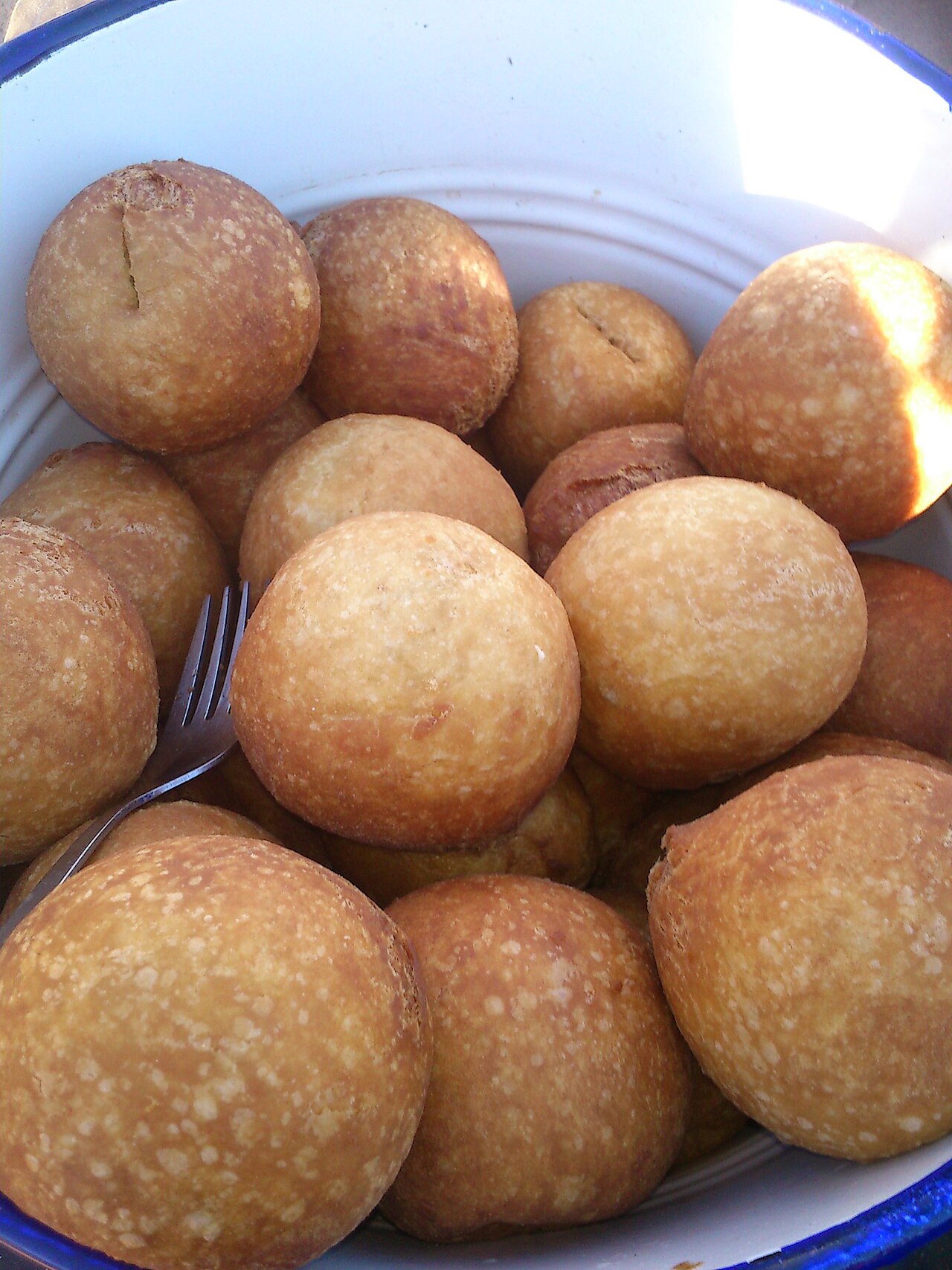
Magwinya (fat cakes)

magwinya
Across southern Africa

Balls of soft yeast dough deep-fried until golden, like a doughnut without a hole and without much sugar. They are sold hot from roadside stalls in the morning and eaten plain, with jam, or with soup or a stew.

See the recipe
Serves 12 2 h

Ingredients

  • 500 g plain flour
  • 7 to 10 g (1 sachet) instant dried yeast
  • 2 tablespoons sugar
  • 1 teaspoon salt
  • About 350 ml lukewarm water
  • Vegetable oil for deep-frying

Method

  1. Mix the flour, yeast, sugar and salt in a large bowl.
  2. Add the water little by little and knead for about 8 minutes into a soft, slightly sticky dough.
  3. Cover and leave in a warm place for about an hour, until doubled in size.
  4. Heat the oil in a deep pan to about 170 °C. Pull off golf-ball-sized pieces of dough and fry a few at a time for 3 to 4 minutes, turning, until golden and cooked inside.
  5. Drain on kitchen paper and eat warm. Take great care with hot oil, and never leave the pan unattended.
Commons: Madila
Photo: WomanON, CC0
Side dish

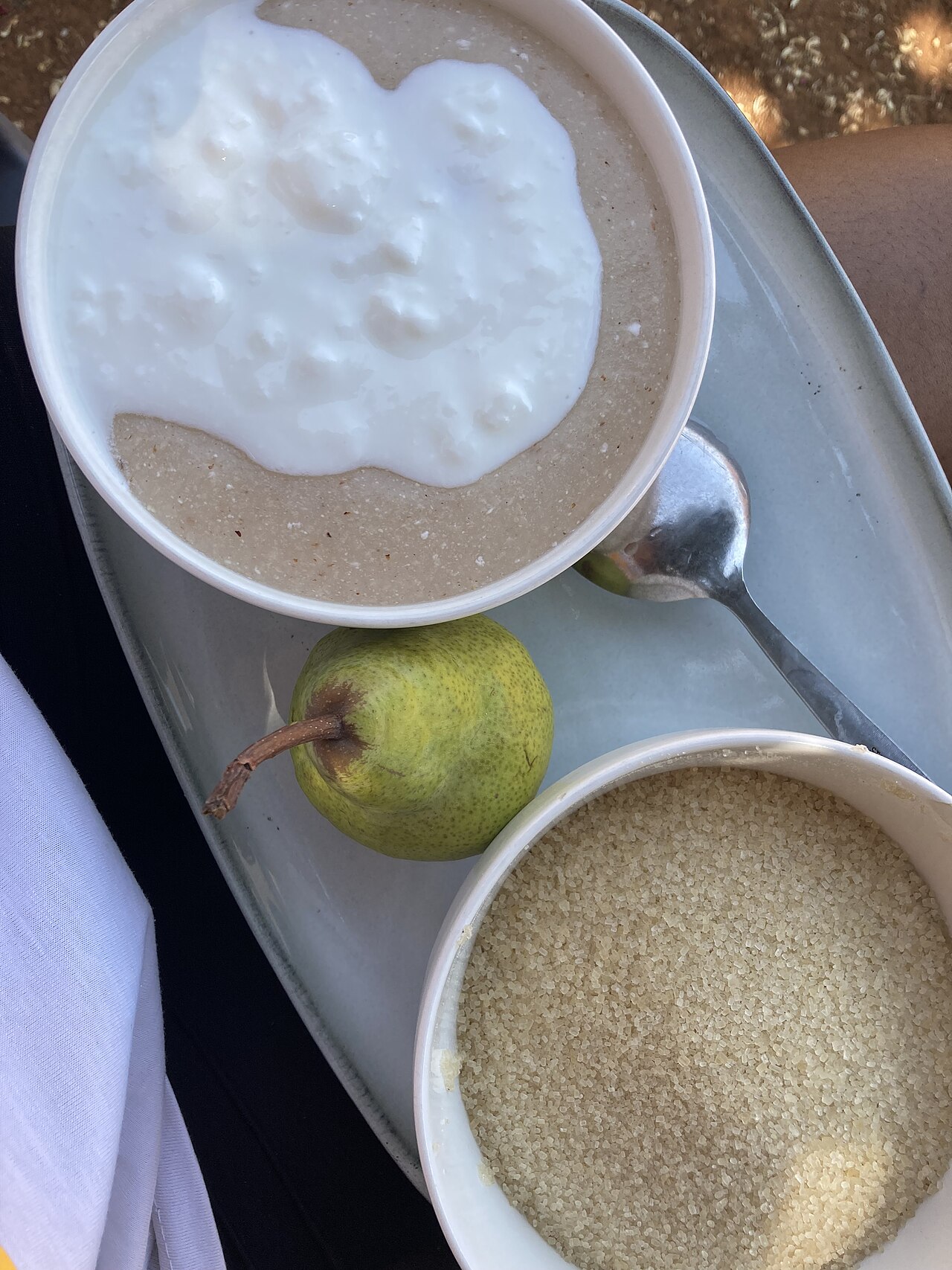
Madila

All of Botswana

Fresh milk left to ferment into thick sour milk, much like yoghurt or sour cream. It is eaten on its own, poured over porridge, or stirred into bogobe jwa lerotse.

Commons: Dithotse
Photo: Chandapiwa Malema, CC BY-SA 4.0
Snack

Dithotse

All of Botswana

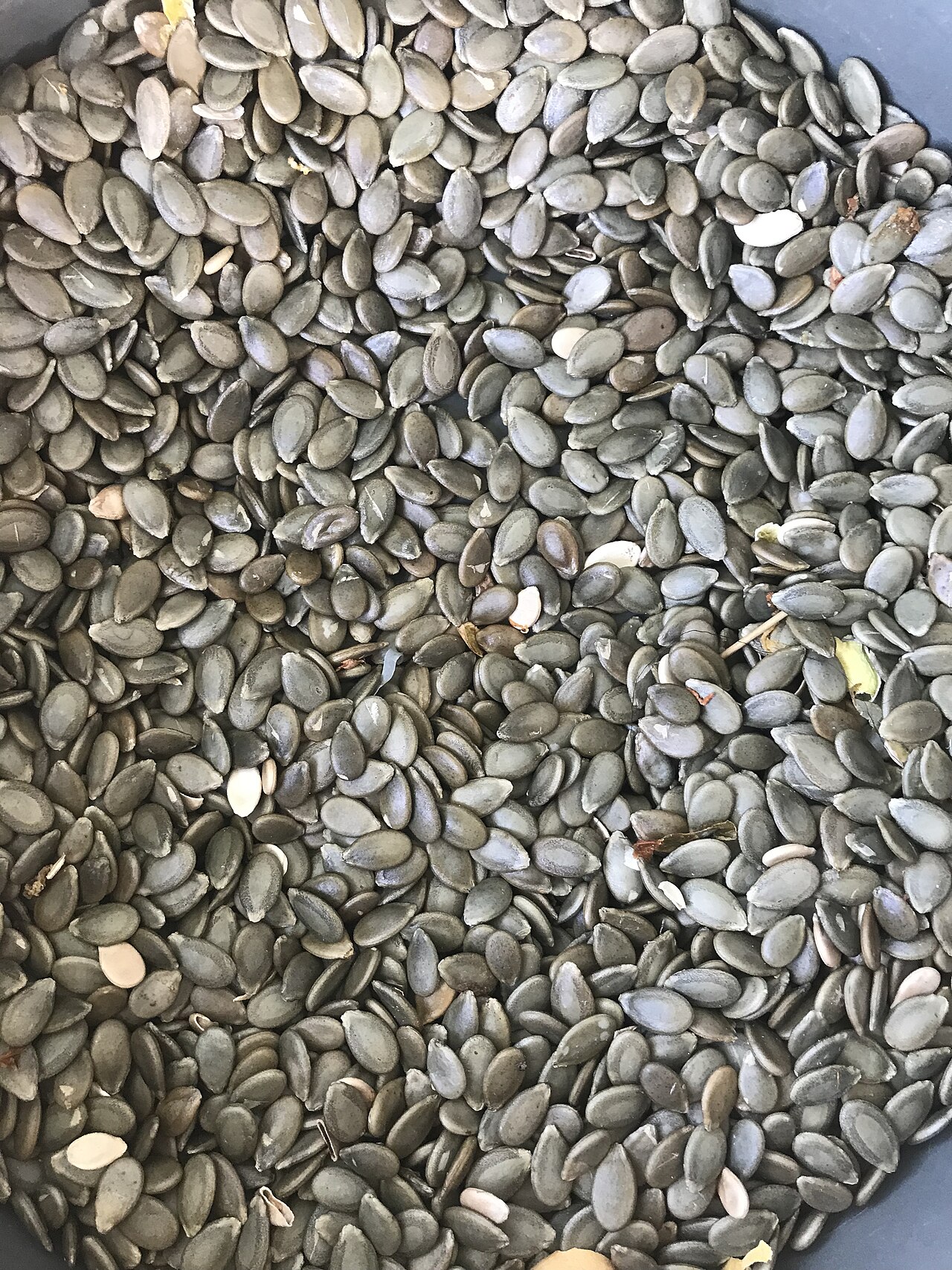
Roasted melon seeds, usually from the lerotse cooking melon. They are dried, roasted and cracked open with the teeth as a snack, much as sunflower seeds are eaten elsewhere.

Commons: traditional beer Botswana
Photo: OtengPortia, CC0
Drink

Bojalwa jwa Setswana

bojalwa jwa Setswana
All of Botswana

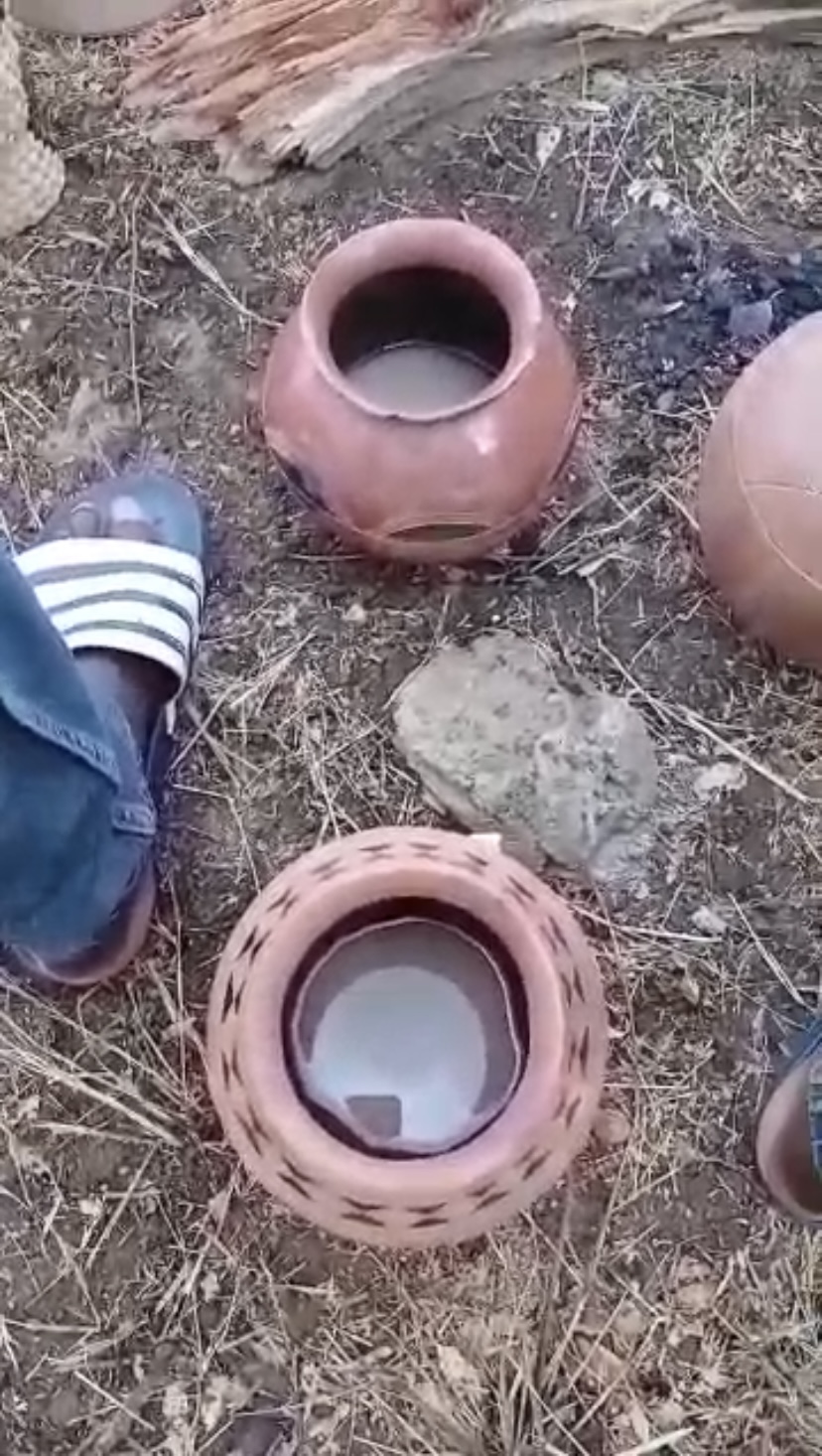
The traditional home-brewed beer of Botswana, made from fermented sorghum. It is thick, cloudy and slightly sour, and among the Kalanga a similar beer is made from millet. It contains alcohol.

Table manners

  • Wash your hands before and after the meal. A bowl of water is often passed round for this.
  • If you eat with your hands, as many people do with porridge and meat, use your right hand.
  • When you are a guest, wait for your host to start eating before you begin.
  • Accept food or a drink with both hands, or with the right hand while the left hand touches the right arm. It is a sign of respect and thanks.
  • Food is often shared from common dishes, especially in villages. If you really cannot eat more, decline politely rather than simply refusing.

Next: Cities

Cities

12 cities to know

Most people in Botswana live in the greener south-east, along the railway and the main road from Lobatse through Gaborone to Francistown. Many of the big places are officially 'villages', traditional tribal capitals that have grown to tens of thousands of people. In the north and west, the towns are gateways to the Okavango Delta, the Chobe River and the Kalahari.

GaboroneFrancistownMolepololeMaunSeroweKasanePalapyeSelebi-PhikweLobatseKanyeGhanziShakawe
Gaborone
Photo: CNJerem, CC BY 4.0

Gaborone Capital

South-East, near the South African border

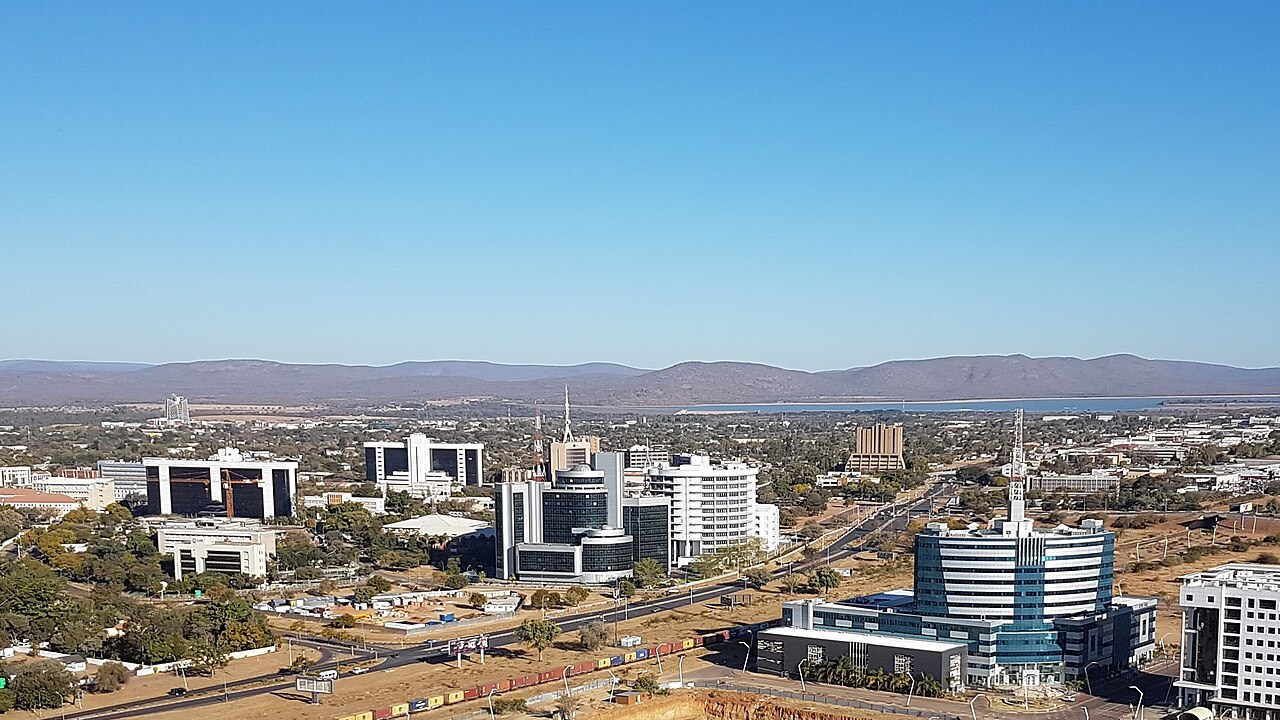
The capital and largest city, with about 246,000 people at the 2022 census. It was planned from scratch in the mid-1960s, near fresh water and on land not tied to any one tribe, and named after Kgosi Gaborone of the Tlokwa. It is the headquarters of the Southern African Development Community (SADC).

  • The Three Dikgosi Monument
  • Main Mall and the government enclave
  • Kgale Hill, with views over the city
  • The setting of the No. 1 Ladies' Detective Agency novels
Francistown
Photo: James BonTempo from Baltimore, USA, CC BY-SA 2.0

Francistown

North-East

Botswana's second city, about 400 km north-east of Gaborone, near the border with Zimbabwe. It grew up around southern Africa's first gold rush in the Tati area and was named after the English prospector Daniel Francis. Kalanga is the main local language.

  • Old gold mines around the town
  • The only city in Botswana with an English name
  • A busy trading and railway centre
Molepolole
Photo: Lerotsi at English Wikipedia, CC0

Molepolole

Kweneng, west of Gaborone

One of the largest traditional villages in Africa, about 50 km west of Gaborone, with about 75,000 people. It is the capital of the Bakwena, whose chief Sebele I was one of the three chiefs who went to Britain in 1895.

  • A large traditional kgotla
  • The Scottish Livingstone Hospital
  • A gateway to the Kalahari
Commons: Maun city
Photo: Pavel Špindler, CC BY 3.0

Maun

Ngamiland, in the north-west

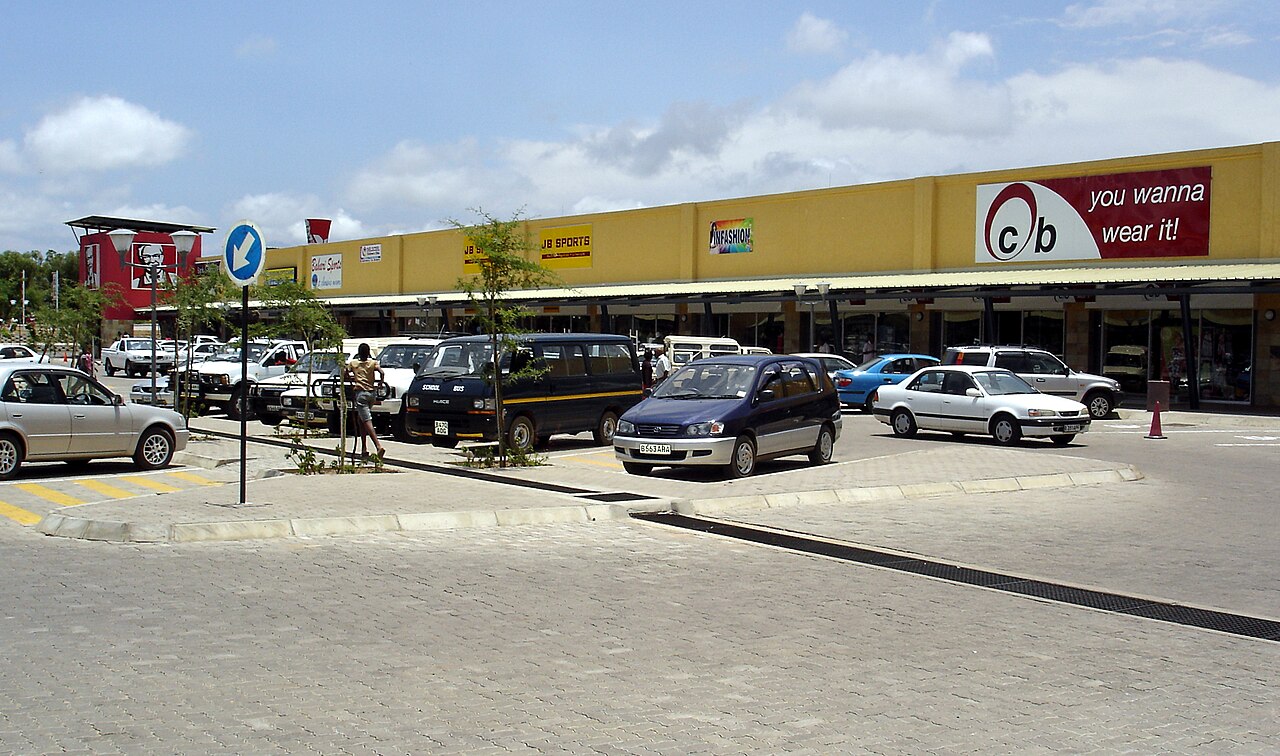
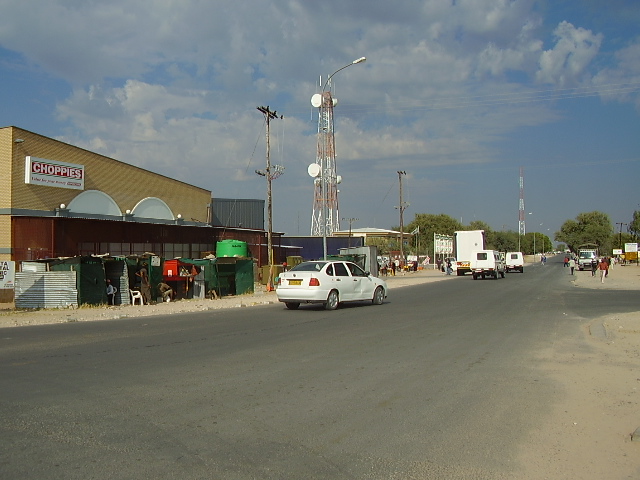
Botswana's 'tourism capital' on the Thamalakane River, with about 85,000 people. Founded in 1915 as the capital of the Batawana, it is still officially a village. Small planes fly from here into the Okavango Delta, and cattle and donkeys still wander its streets.

  • Scenic flights and trips into the Okavango Delta
  • Safari and air-charter companies
  • The Thamalakane River
Commons: Serowe
Photo: JackyR, CC BY-SA 3.0

Serowe

Central District

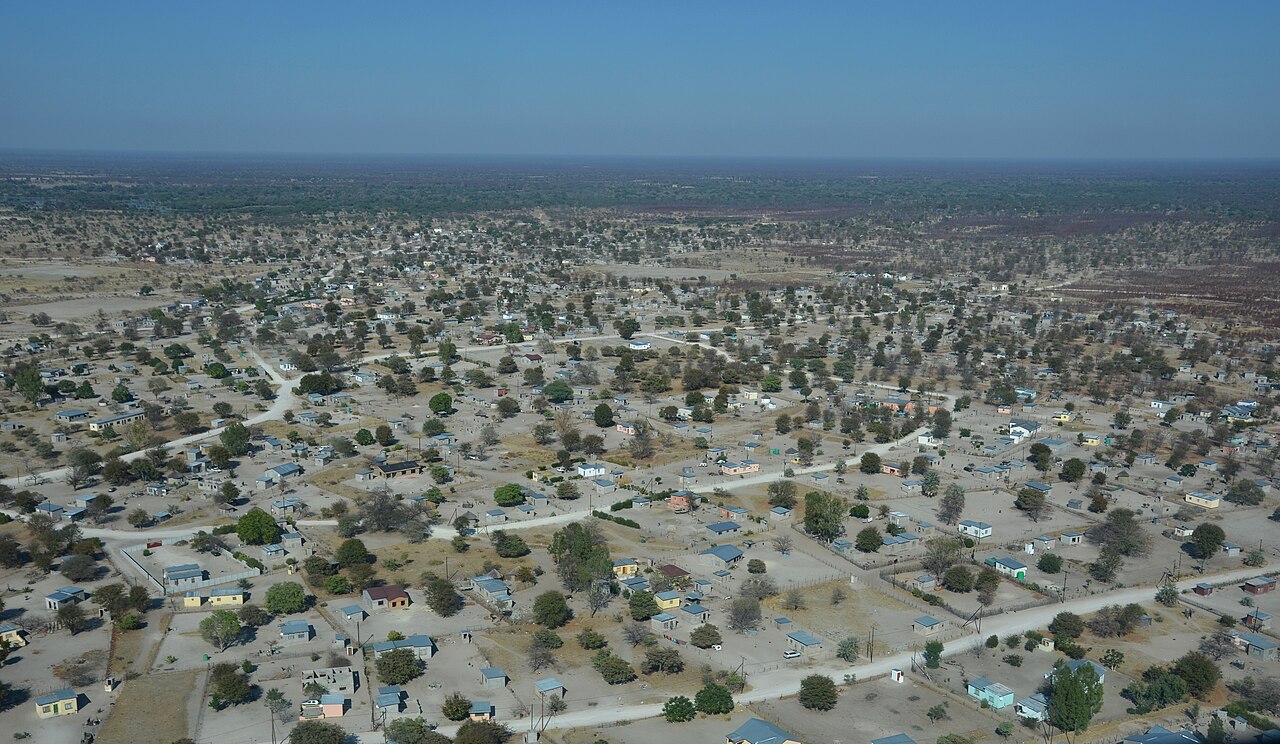
A large village founded in 1902 by Khama III as the capital of the Bamangwato. It is the birthplace of Seretse Khama, the first president, and of the third president, and lies near the Khama Rhino Sanctuary.

  • The royal graves of the Khama family
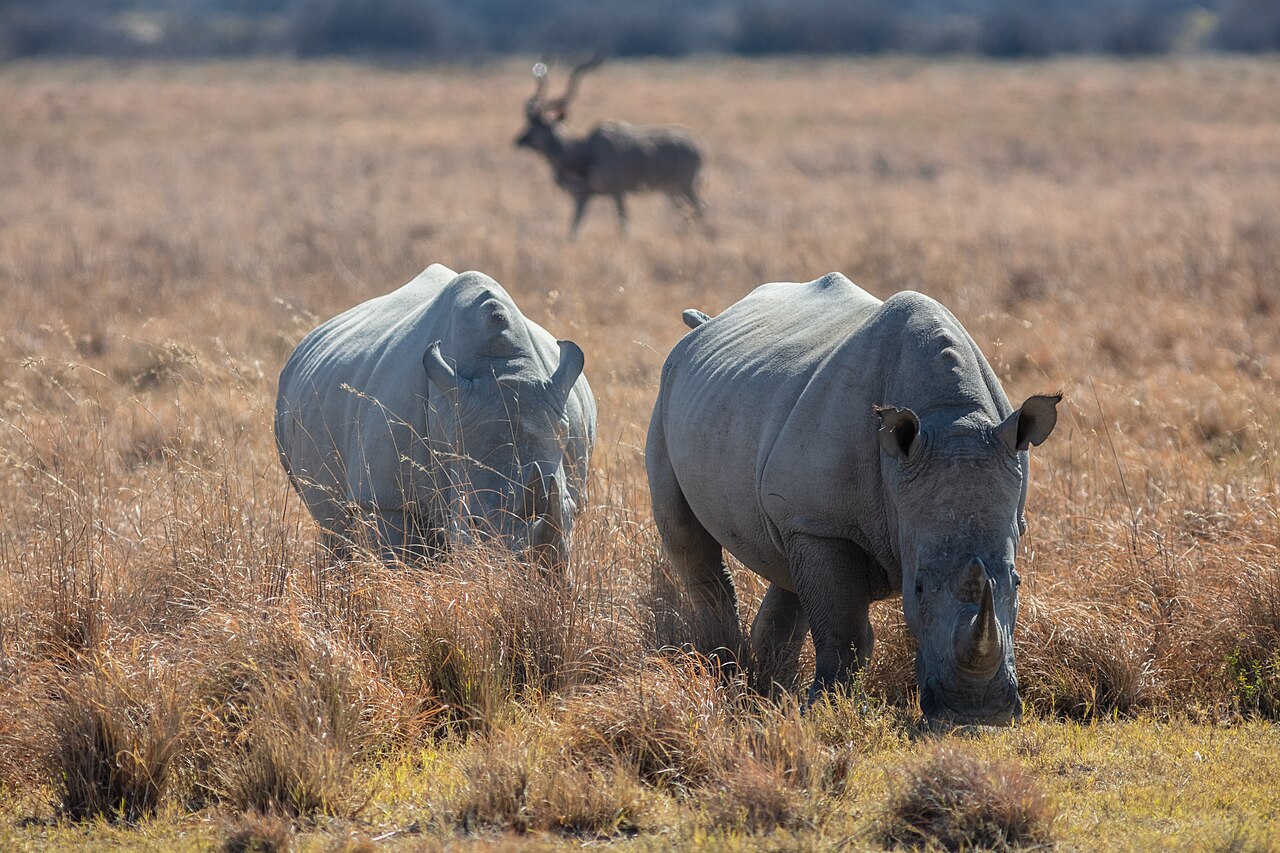
  • Khama Rhino Sanctuary nearby
  • Swaneng Hill School
Kasane
Photo: Christine Scholer & Hp.Baumeler, CC BY-SA 4.0

Kasane

Chobe, in the far north-east

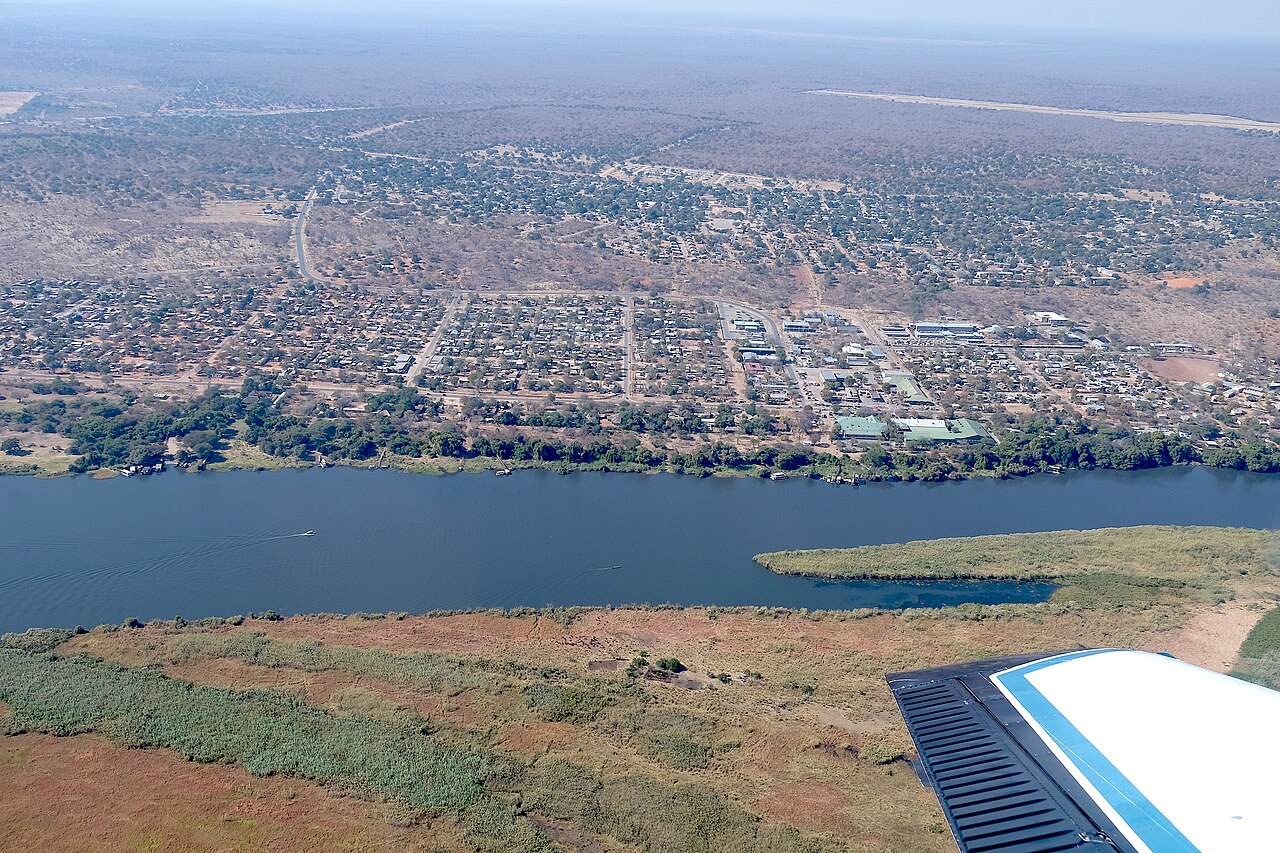
A small town on the Chobe River close to the point where Botswana, Namibia, Zambia and Zimbabwe almost meet. It is the main gateway to Chobe National Park and is about 80 km by road from Victoria Falls in Zimbabwe.
  • Boat safaris on the Chobe River
  • The Kazungula Bridge to Zambia
  • Where Elizabeth Taylor and Richard Burton remarried in 1975
Palapye
Photo: Guinnog, CC BY-SA 3.0

Palapye

Central District

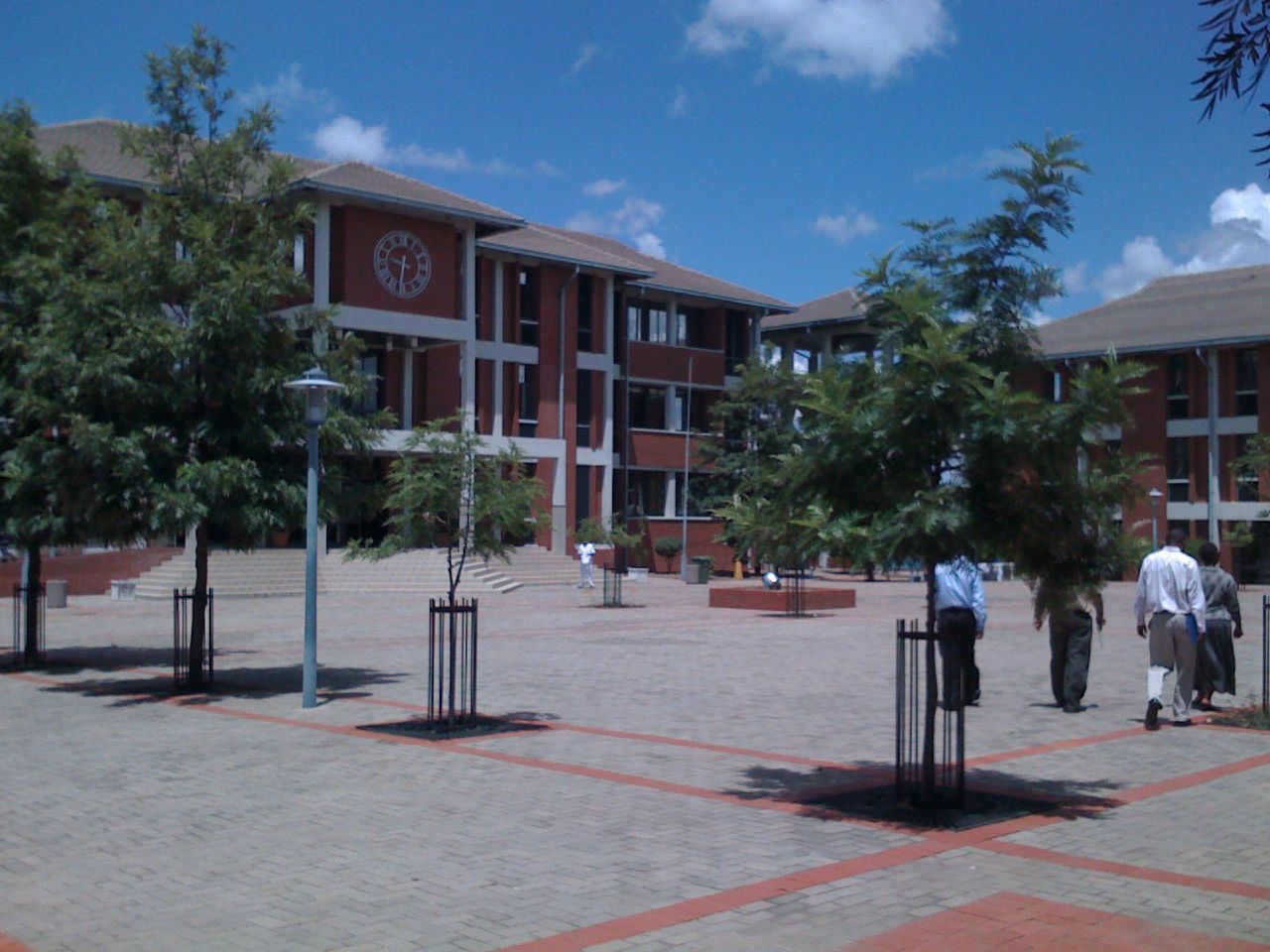
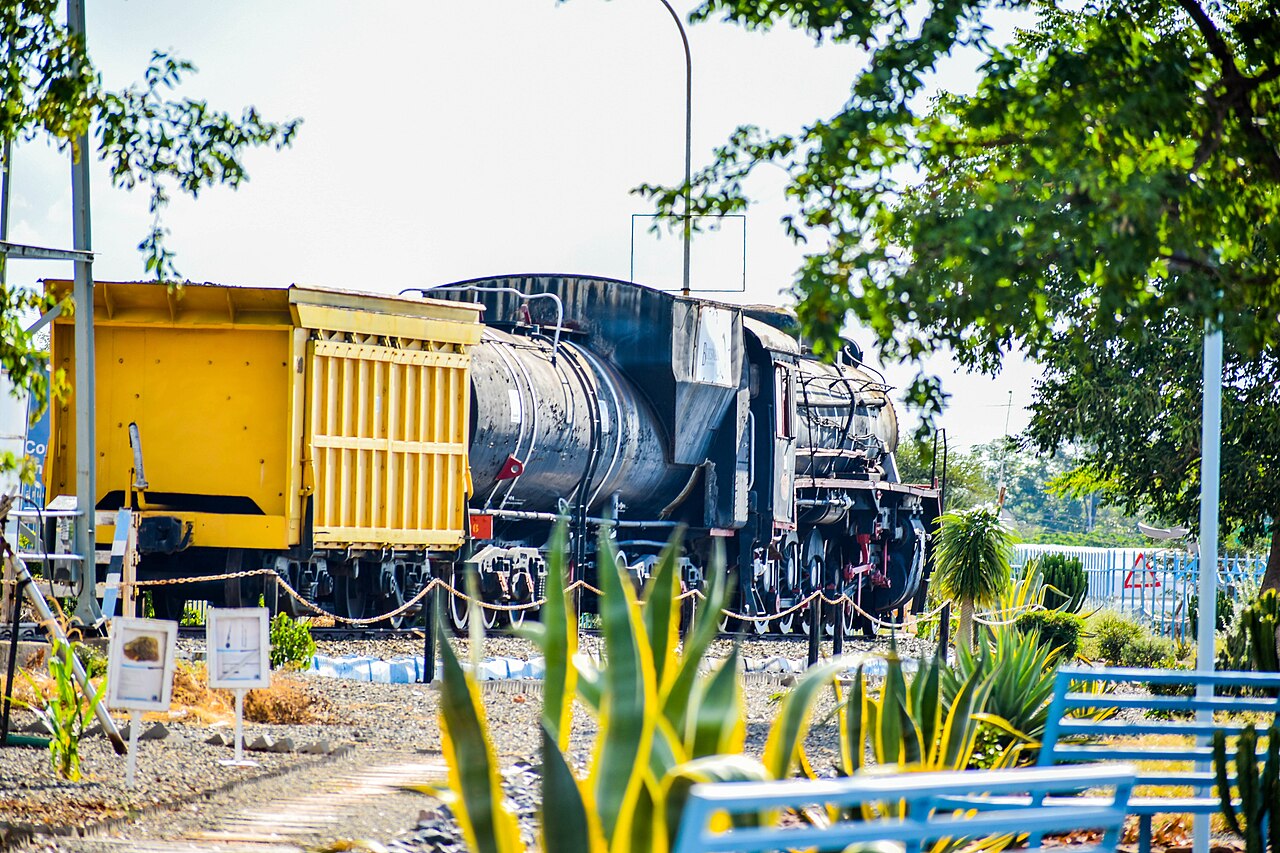
A growing town on the main road and railway, about 240 km from Gaborone and 170 km from Francistown. Nearby are the Morupule coal mine and power station and the Botswana International University of Science and Technology.

  • Morupule Power Station
  • Ruins of Khama III's old capital, Phalatswe
  • A stopover on the main north to south route
Selebi-Phikwe
Photo: Thabang S. Peter, CC BY-SA 4.0

Selebi-Phikwe

Central District, in the east

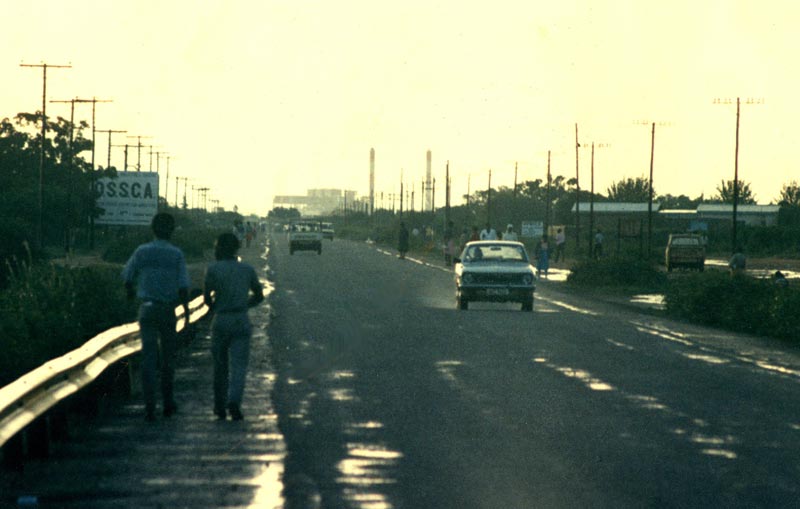
A mining town built in the 1960s between two small places, Selebi and Phikwe, over a deposit of copper and nickel. The big mine closed in 2016, and the town of about 42,000 people is working to find new industries.

  • Copper and nickel mining history
  • A modern planned town
  • The Botswana Defence Force eastern garrison
Lobatse
Photo: Ronald Moabi, CC BY-SA 4.0

Lobatse

South-East, on the South African border

A town in a green valley about 70 km south of Gaborone, with about 30,000 people. It is home to the Botswana Meat Commission, one of the largest meat processing plants in Africa, and a branch of the High Court.

  • The Botswana Meat Commission
  • Botswana beef
  • Lobatse Stadium
Kanye, Botswana
Photo: CNJerem, CC BY 4.0

Kanye

Southern District

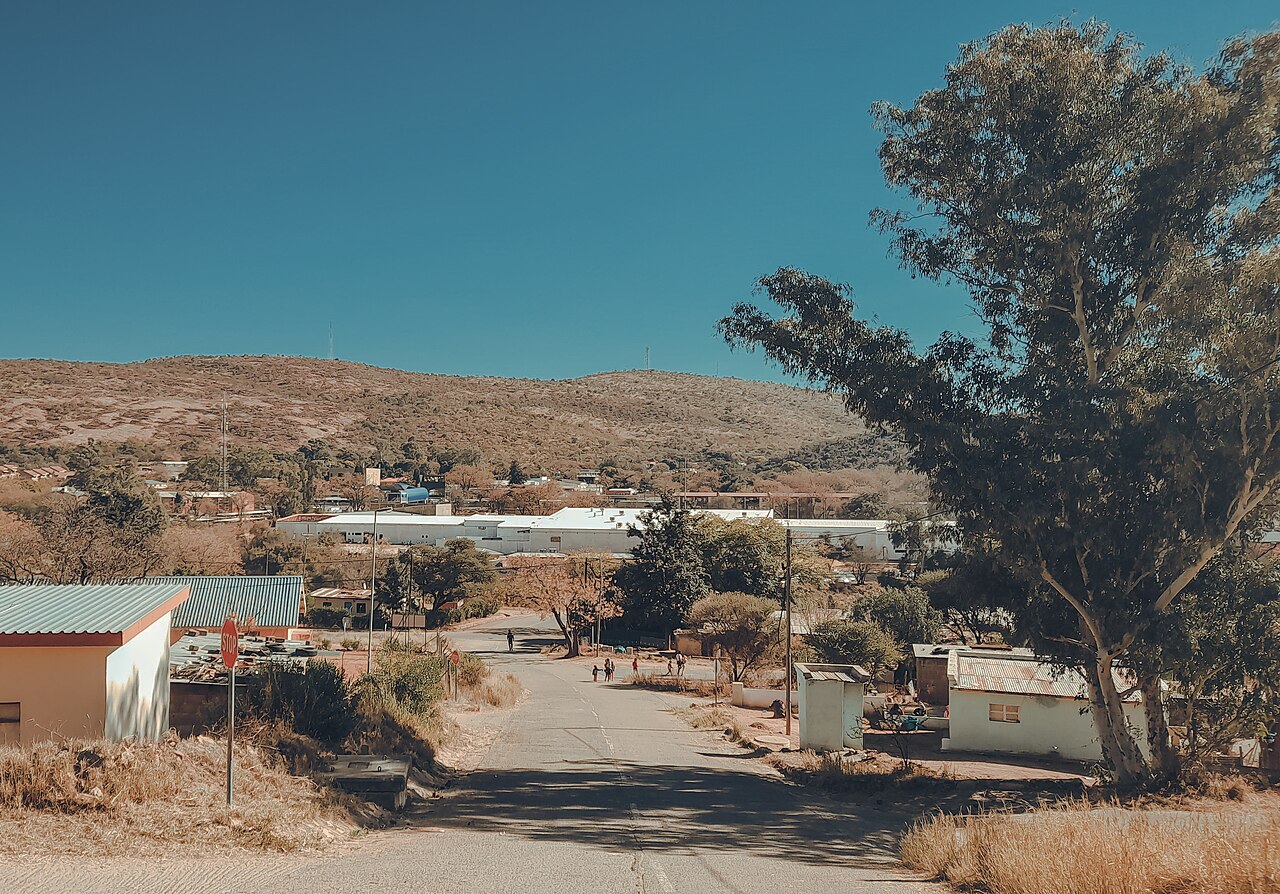
A hilltop village 83 km south-west of Gaborone, founded in the 1790s as the capital of the Bangwaketse. It is the longest continuously occupied tribal capital in the country and has about 48,000 people.

  • Pharing Gorge, a hiding place in the 19th-century wars
  • Kgwakgwe Hill
  • Two dams in the village
Ghanzi
Photo: Bots2008 at English Wikipedia, CC BY 3.0

Ghanzi

Ghanzi, in the western Kalahari

A cattle town in the middle of the Kalahari, the centre of Botswana's beef ranching country. It is the largest place in Ghanzi District and a base for visiting the Central Kalahari Game Reserve and San communities.

  • Cattle ranches and beef
  • San culture and crafts
  • A gateway to the Central Kalahari
Shakawe
Photo: Hp.Baumeler, CC BY-SA 4.0

Shakawe

Ngamiland, in the far north-west

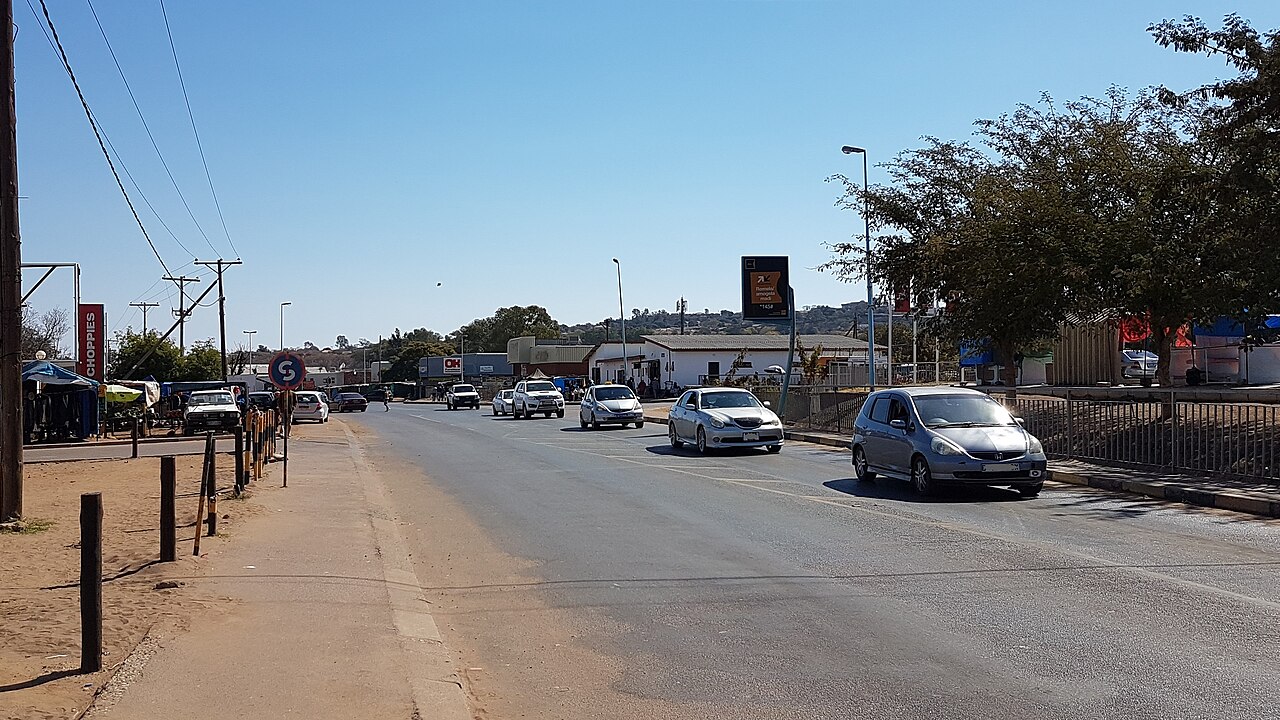
A large village on the Okavango River, just south of where the river enters Botswana from Namibia, at the start of the Okavango Panhandle. It is the base for visiting the Tsodilo Hills, about 40 km away.

  • Fishing on the Okavango Panhandle
  • The border crossing to Namibia
  • Trips to the Tsodilo Hills

Next: Landmarks

Landmarks

Places everyone should see once

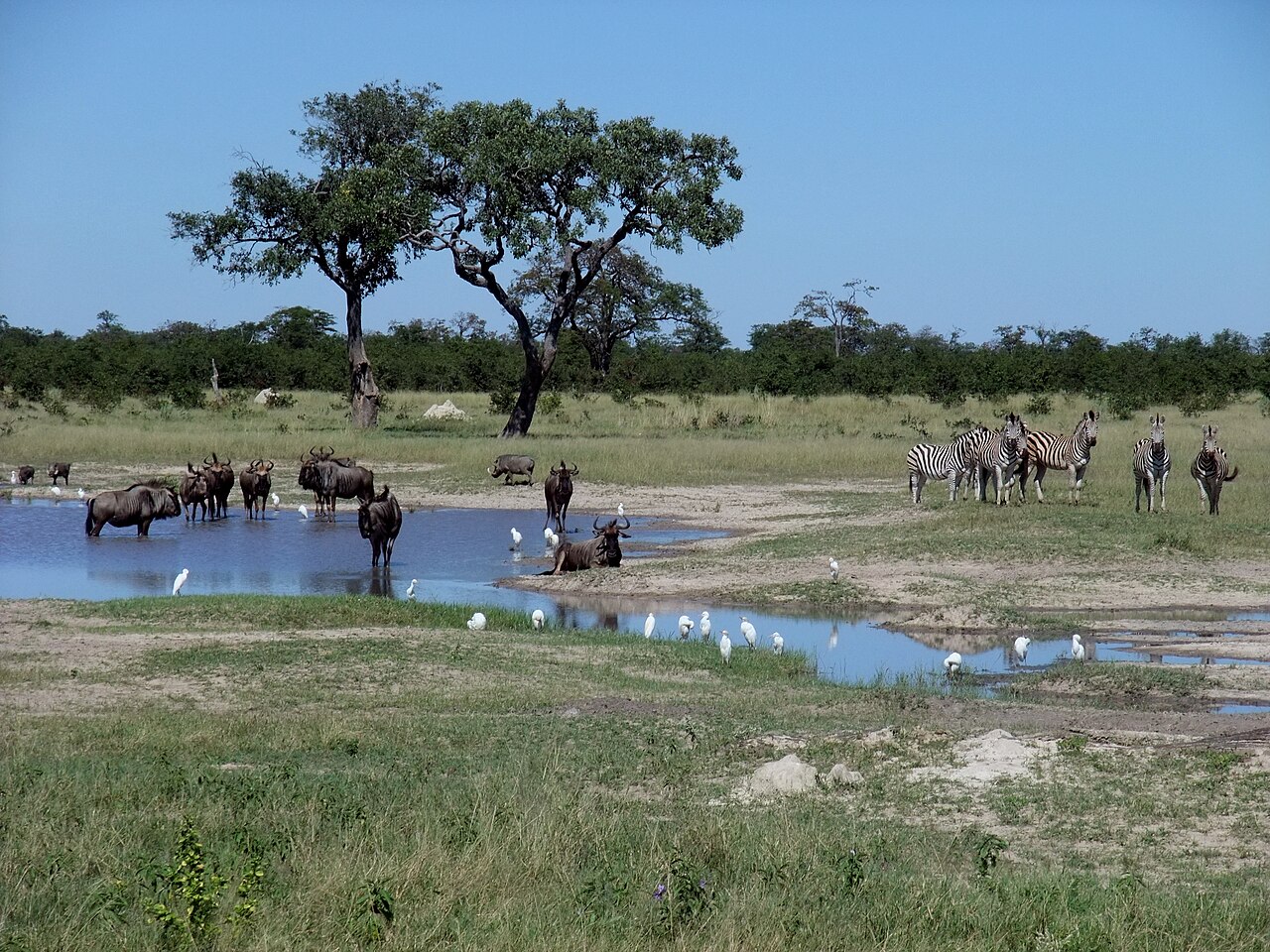
Okavango Delta
Photo: Joachim Huber, CC BY-SA 2.0
Near Maun

Okavango Delta

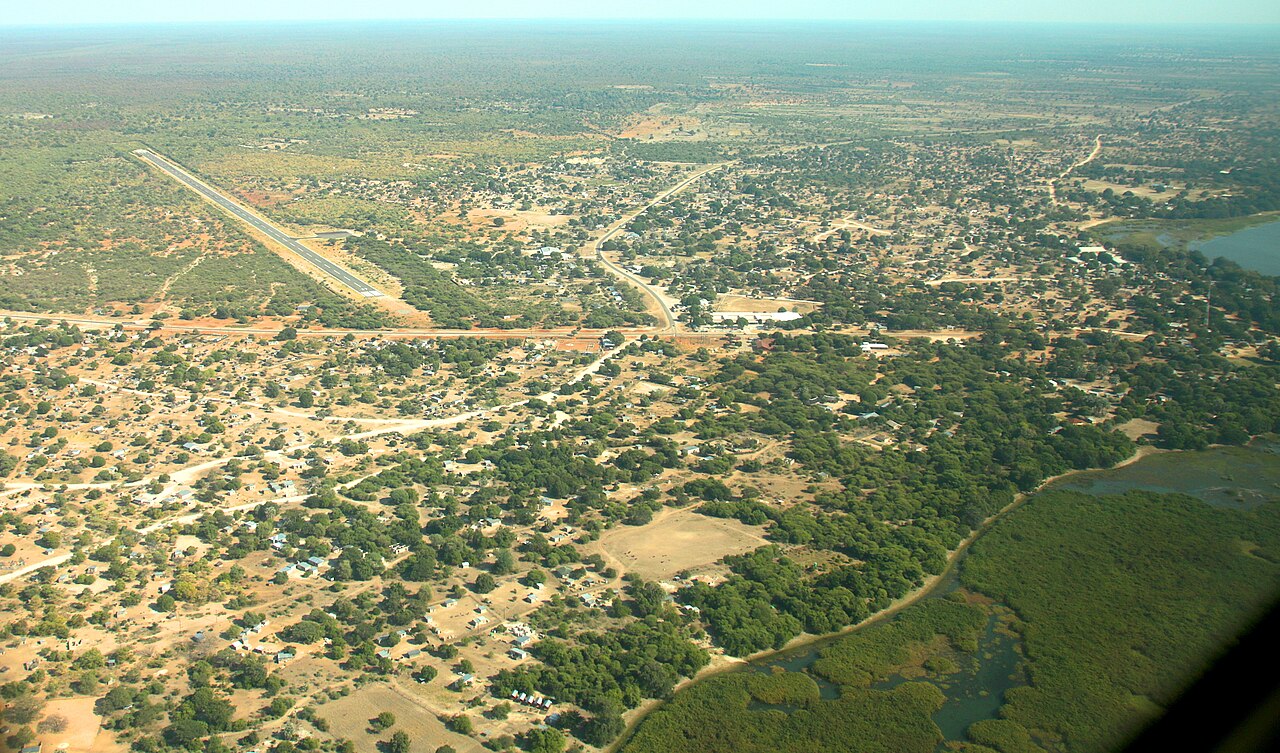
One of the largest inland deltas in the world, where the Okavango River spreads over the Kalahari instead of reaching the sea. Rains in Angola send a flood south that peaks between June and August, in Botswana's dry winter, and the wetland swells to three times its usual size. Visitors glide through the channels in a mokoro, a dugout-style canoe. The pin marks the heart of the delta, north-west of Maun.

UNESCO World Heritage
Moremi Game Reserve
Photo: Ian Sewell, CC BY-SA 2.5
Near Maun

Moremi Game Reserve

A reserve of just under 5,000 km² on the eastern side of the Okavango Delta, including Chief's Island. It was created in 1963 on the initiative of the Batawana, led by the widow of Chief Moremi III, and is known for lions, leopards, African wild dogs and nearly 500 kinds of birds.

Commons: Tsodilo
Photo: Joachim Huber from Switzerland, CC BY-SA 2.0
Near Shakawe

Tsodilo Hills

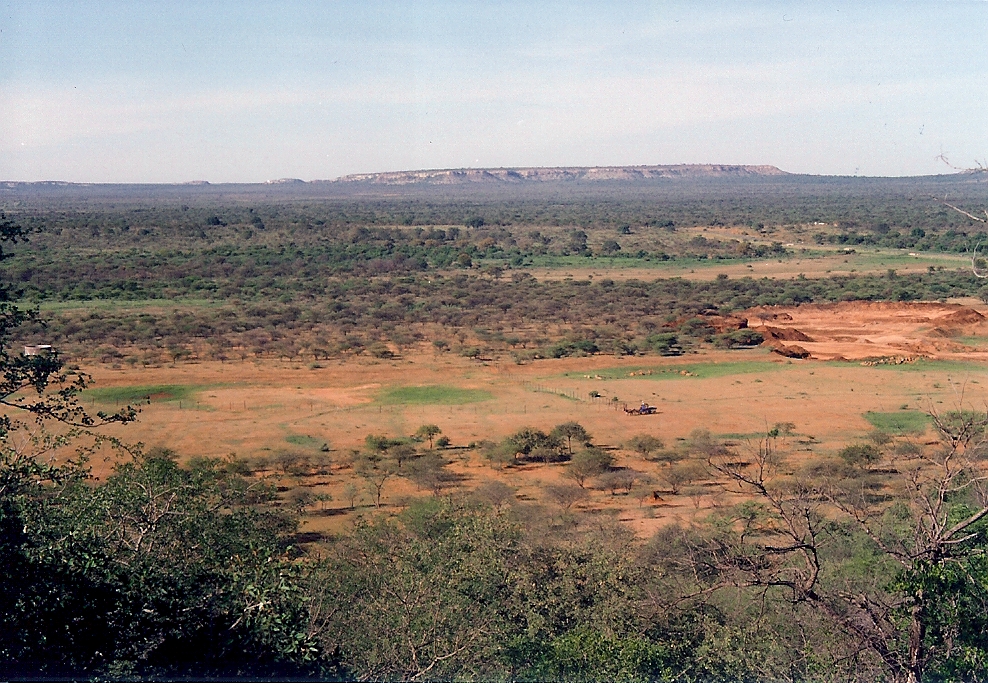
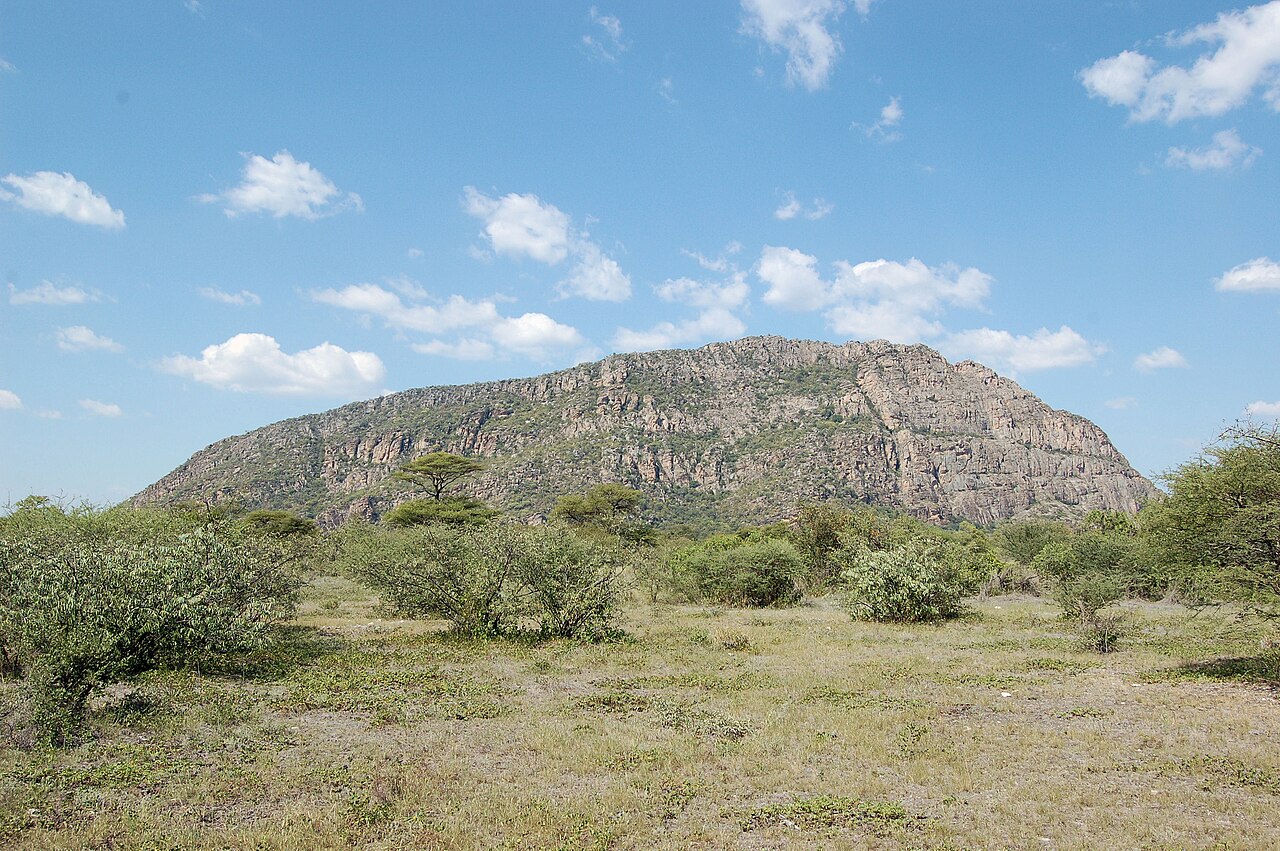
Four rocky hills rising from the flat Kalahari, known as the Male, Female and Child hills and a small unnamed knoll. They hold more than 4,500 rock paintings, some of them thousands of years old, and are still a sacred place for local communities. Tsodilo became Botswana's first World Heritage Site in 2001.

UNESCO World Heritage
Chobe National Park
Photo: Gorgo, Public domain
Near Kasane

Chobe National Park

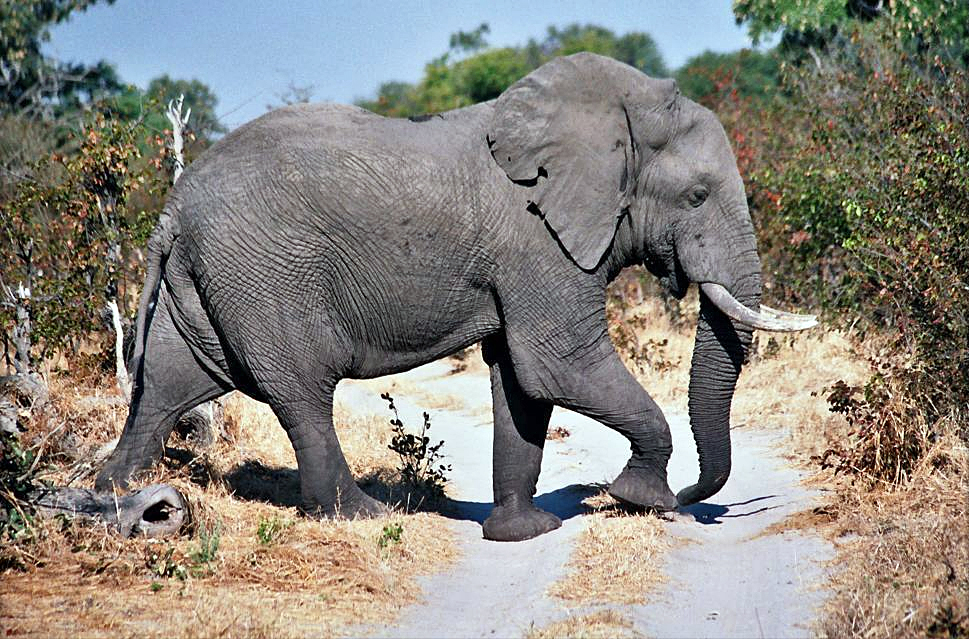
Botswana's first national park, declared in 1968, famous for its huge herds of elephants, especially along the Chobe River near Kasane in the dry season. Boat trips on the river pass elephants, hippos, buffalo and crocodiles. The pin marks the middle of the park, south-west of Kasane.

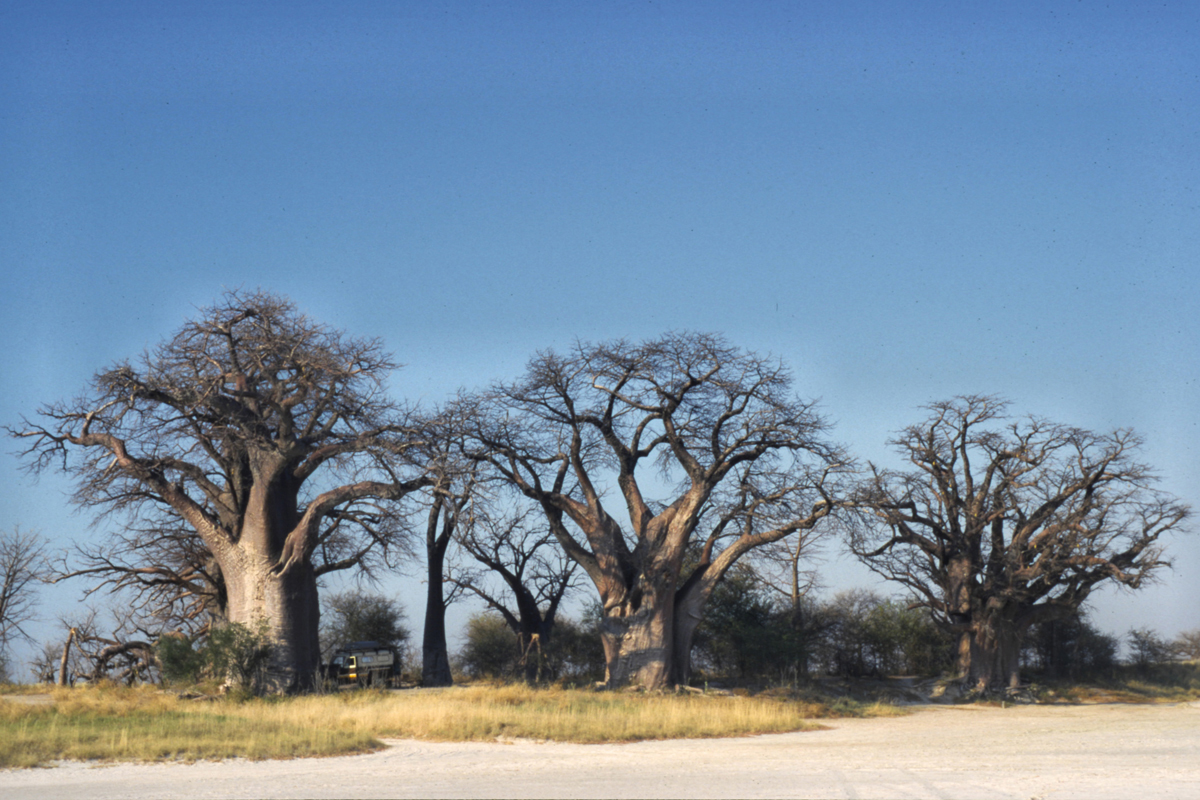
Nxai Pan National Park
Photo: Ralf Ellerich, CC BY-SA 3.0
Near Maun

Nxai Pan and Baines' Baobabs

Nxai Pan National Park lies on the northern edge of the Makgadikgadi salt pans, the remains of an ancient lake. In its southern part, on a small island in Kudiakam Pan, stands a group of old baobab trees named after the artist and explorer Thomas Baines, who painted them in 1862. The park lies east of Maun, just north of the main road from Maun to Nata.

Commons: Central Kalahari
Photo: s9-4pr, CC BY 2.0
Near Ghanzi

Central Kalahari Game Reserve

A reserve of 52,800 km², larger than the Netherlands, created in 1961 in the heart of the Kalahari. After the rains, its grassy fossil river valleys such as Deception Valley attract springbok, gemsbok and the lions that hunt them. The San have lived here for thousands of years. The pin marks the middle of the reserve, east of Ghanzi.

Khama Rhino Sanctuary
Photo: Diego Delso, CC BY-SA 4.0
Near Serowe

Khama Rhino Sanctuary

A community-run sanctuary about 25 km north of Serowe, founded in 1992 to protect white and black rhinos. Its pans and sandveld are also home to giraffes, zebras, antelopes and more than 230 kinds of birds.

Commons: Three Dikgosi Monument
Photo: CivArmy, CC BY 4.0
Gaborone

Three Dikgosi Monument

Bronze statues, 5.4 m tall, of Khama III, Sebele I and Bathoen I, the three chiefs who travelled to Britain in 1895 to protect their land. The monument was unveiled in 2005 in Gaborone's Central Business District.

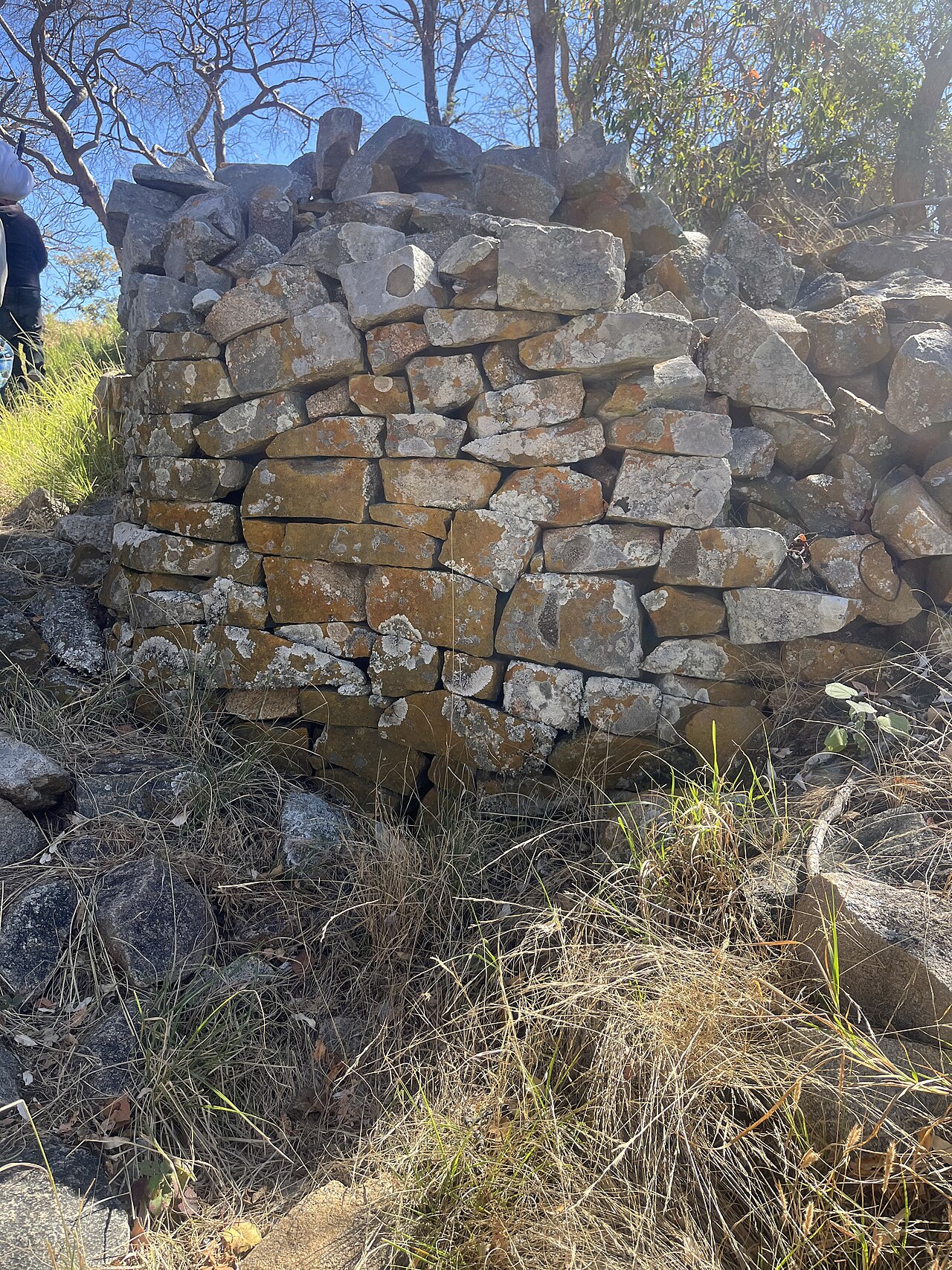
Commons: Domboshaba Ruins
Photo: Hanani Khupe, CC BY-SA 4.0
Near Francistown

Domboshaba Ruins

Dry stone walls on a hilltop north of Francistown, built towards the end of the Great Zimbabwe period (about 1250 to 1450). The chief is thought to have lived on the hill with his advisers, and the ruins are a national monument.
Next: Fun facts

Fun facts

Things you might not know

  1. 01

    The name Botswana means 'land of the Tswana'. In Setswana the prefix tells you the rest: one person is a Motswana, the people are Batswana and the language is Setswana.

  2. 02

    Pula, the name of the currency, means 'rain' in Setswana, and 'Pula!' is also the national motto and a popular toast. The small coins are called thebe, which means 'shield'.

  3. 03

    As of the 2022 KAZA aerial survey, Botswana had an estimated 131,909 elephants, more than any other country in the world.

  4. 04

    The Okavango River never reaches the sea. It spreads out into the Okavango Delta, where almost all of its water evaporates or is taken up by plants.

  5. 05

    The Okavango Delta was the 1,000th site ever added to the UNESCO World Heritage List, on 22 June 2014.

  6. 06

    The flood in the Okavango Delta is highest between June and August, in Botswana's dry winter, because the water takes months to arrive from the rains in Angola.

  7. 07

    For its whole 80 years as a British protectorate, Bechuanaland was run from Mafeking, a town outside its own borders, in what is now South Africa. Gaborone was built as a new capital in the mid-1960s.

  8. 08

    At independence in 1966 Botswana had only 22 university graduates and was one of the poorest countries in the world. Diamond income helped pay for schools, roads and clinics.

  9. 09

    Orapa is the world's largest diamond mine by area, and its name is said to mean 'resting place for lions'. As of September 2026, the Jwaneng mine is often described as the richest diamond mine in the world.

  10. 10

    About 70 percent of Botswana lies in the Kalahari, a sandy savanna rather than a desert of bare dunes.

  11. 11

    The Central Kalahari Game Reserve covers 52,800 km², which is larger than the Netherlands and almost a tenth of Botswana.

  12. 12

    The Makgadikgadi Pans are what remains of an ancient lake that was once larger than Switzerland.

  13. 13

    Mma Precious Ramotswe, the heroine of Alexander McCall Smith's novel The No. 1 Ladies' Detective Agency (1998), opens her detective agency in Gaborone.

  14. 14

    In August 2024 the sprinter Letsile Tebogo won the 200 metres at the Paris Olympics, Botswana's first Olympic gold medal.

Next: Words

Setswana words

20 words to start with

'G' is a throaty sound, like the 'ch' in Scottish 'loch', and 'rr' is rolled Pronunciation is written the way it sounds; the capital letters show where the stress goes. Audio is coming soon.

Greetings

  • dumeladoo-MEH-lahhello
  • eeEH-ehyes

People

  • rraRRAHsir; father
  • mmaMMAHmadam; mother
  • ngwanaNGWAH-nahchild
  • monnaMOHN-nahman

Community

  • kgosiKHOH-seechief; king
  • kgotlaKHOHT-lahvillage assembly and meeting place
  • ntloN-tlohhouse

Nature

  • pulaPOO-lahrain; also the currency and a toast
  • letsatsileh-TSAHT-seesun
  • metsiMEH-tseewater
  • nokaNOH-kahriver

Animals

  • tlouTLOH-ooelephant
  • tauTAH-oolion
  • kwenaKWEH-nahcrocodile
  • kgomoKHOH-mohcow

Food

  • namaNAH-mahmeat
  • bogobeboh-KHOH-behporridge
  • mabelemah-BEH-lehsorghum

Next: Phrases

Say it like a local

Useful phrases

Use 'rra' for a man and 'mma' for a woman; it is polite to add them

Dumela rra
doo-MEH-lah RRAH
Hello (to a man)
Greeting a man, at any time of day
Dumela mma
doo-MEH-lah MMAH
Hello (to a woman)
Greeting a woman, at any time of day
Dumelang
doo-meh-LAHNG
Hello (to a group)
Greeting two or more people
O tsogile jang?
oh tsoh-KHEE-leh JAHNG
How are you? (literally: how did you wake up?)
After the greeting, especially in the morning
Ke tsogile sentle
keh tsoh-KHEE-leh SEN-tleh
I am well
Answering "O tsogile jang?"
O amogetswe
oh ah-moh-KHEH-tsweh
Welcome
Welcoming one person to your home
Ke a leboga
keh ah leh-BOH-khah
Thank you
Thanking anyone; add rra or mma
Tswee-tswee
TSWEH-tsweh
Please
Asking for something politely
Ke kopa tshwarelo
keh KOH-pah tshwah-REH-loh
I am sorry
Apologising
Intshwarele
in-tshwah-REH-leh
Excuse me
Getting past someone or getting attention
Leina la me ke...
LAY-nah lah meh keh
My name is...
Introducing yourself
Leina le gago ke mang?
LAY-nah leh KHAH-khoh keh MAHNG
What is your name?
Asking someone politely
A o bua Setswana?
ah oh BOO-ah seh-TSWAH-nah
Do you speak Setswana?
Starting a conversation
Ga ke tlhaloganye
khah keh tlhah-loh-KHAHN-yeh
I do not understand
When you are lost in a conversation
E ke bokae?
eh keh boh-KAH-eh
How much is this?
Shopping at a market
Ke kopa...
keh KOH-pah
I would like...
Ordering food or asking for something
Tsamaya sentle
tsah-MAH-yah SEN-tleh
Go well (goodbye)
Said to someone who is leaving
Sala sentle
SAH-lah SEN-tleh
Stay well (goodbye)
Said by the person leaving to those who stay
Pula!
POO-lah
Rain! (a blessing and a toast)
Raising a glass, or at the end of a speech

Next: Local tips

Local tips

Before you go

Always greet first

Say 'Dumela rra' or 'Dumela mma' before you ask a question, buy something or ask for directions. Going straight to business without a greeting is considered rude.

Drive on the left, and not at night

Traffic keeps to the left. Outside the towns, cattle, donkeys and wild animals often stand on the roads, so avoid driving after dark if you can.

Know the emergency numbers

As of September 2026 the numbers are 999 for the police, 997 for an ambulance and 998 for the fire service. Save them in your phone before you travel. Ambulances cover the main towns; on safari, rely on your operator's evacuation plan.

Take malaria advice for the north

As of September 2026 the CDC lists malaria in much of the north, east and centre, including the Okavango, Ngamiland and Chobe areas, where preventive tablets are recommended. Gaborone has no malaria transmission. Ask your doctor before you travel.

Stay out of rivers and lakes

Do not swim in rivers, lagoons or lakes: crocodiles and hippos live there, and the water can carry disease.

Ask before taking photos

Ask before photographing people, and never photograph military or government buildings, which is against the law.

Carry identification

Keep a copy of your passport photo page with you at all times; it is usually enough if you are asked for ID, as long as you can show the original passport later.

Plan safaris for the dry season

Wildlife gathers around permanent water in the dry winter months, roughly May to September, which is also when the Okavango flood is at its fullest.

You have seen it all: take the quiz

Sources (60)