A free large-print PDF. Choose what goes in: facts, map, history, dishes and recipes, phrases, fun facts, a quiz with or without answers. Made for clubs, care homes, libraries and family afternoons.
Iran is a large country in West Asia, about the size of Britain, France, Spain and Germany together. Most of it is a high plateau ringed by mountains: the Alborz in the north, with Mount Damavand, and the long Zagros range in the west. The Caspian Sea lies to the north, and the Persian Gulf and the Gulf of Oman to the south. The centre holds two great deserts, the Dasht-e Kavir and the Lut. For centuries the country was known in the West as Persia, a name that came through Greek from Pars (today's Fars province), the homeland of the ancient Persian kings. Iranians have long called their land Iran, and in 1935 the government asked other countries to use that name in official letters. Both names are still heard, and 'Persian' is used for the language, carpets, cats and cooking.
This is one of the oldest centres of civilisation. People built cities here, such as Susa, more than 5,000 years ago, and in 550 BC Cyrus the Great founded the Persian Empire, which grew into the largest the world had yet seen. Later came the Parthians and the Sasanians, then Islam in the 7th century, and a golden age of Persian poetry: Ferdowsi, Saadi and Hafez are still quoted every day. Iranians celebrate Nowruz, the New Year, on the first day of spring.
About 92 million people live in Iran. Persian (Farsi) is the official language, and Azerbaijani Turks, Kurds, Lurs, Baluch, Arabs and others speak their own languages too. Most people are Shia Muslims. Since the revolution of 1979 the country has been an Islamic Republic, and its nuclear programme has led to international sanctions for many years. In June 2025 Israel and Iran fought a 12-day war, and on 28 February 2026 the United States and Israel began strikes on Iran, which struck back across the region. A ceasefire from April did not hold, and as of September 2026 the conflict is not over. Many heritage sites were damaged, and governments such as the UK advise against all travel to Iran.
CapitalTehran
PopulationAbout 92 million (2025 estimate)
Official languagePersian (Farsi), as set out in the constitution. Azerbaijani, Kurdish, Luri, Baluchi, Arabic and other languages are also spoken
CurrencyIranian rial (IRR). Prices are often given in toman: 1 toman = 10 rials. In 2025 parliament approved a plan to drop four zeros from the rial over several years
AreaAbout 1,648,000 km², the 17th-largest country in the world
GovernmentIslamic republic, with a Supreme Leader as head of state and an elected president and parliament
Highest mountainMount Damavand, 5,610 m, a dormant volcano in the Alborz range northeast of Tehran
Longest riverThe Karun, about 950 km, which is also the only river in Iran that boats can navigate
NeighboursTurkey, Armenia, Azerbaijan (including its Nakhchivan exclave), Turkmenistan, Afghanistan, Pakistan and Iraq. Across the Caspian Sea: Russia and Kazakhstan. Across the Persian Gulf and the Gulf of Oman: Kuwait, Saudi Arabia, Bahrain, Qatar, the United Arab Emirates and Oman
Iran's history is often told as a chain of great empires: the Elamites, the Medes, the Achaemenid Persians of Cyrus and Darius, the Parthians and the Sasanians. After the Arab conquest in the 7th century Iran became Muslim, but kept its own language, and Persian poetry, painting and architecture flourished under many dynasties. The Safavids made Shia Islam the state religion in 1501, the Qajars moved the capital to Tehran, and the 20th century brought a constitution, the Pahlavi shahs and, in 1979, the Islamic Republic.
1250 BC
Chogha Zanbil ziggurat is built
Around 1250 BC the Elamite king Untash-Napirisha built a great stepped temple, a ziggurat, near Susa in today's Khuzestan. It is one of the few ziggurats outside Mesopotamia and among the best preserved anywhere. In 1979 it became one of Iran's first three sites on the UNESCO World Heritage List, together with Persepolis and Naqsh-e Jahan Square.
550 BC
Cyrus the Great founds the Persian Empire
In 550 BC Cyrus II, a king from Persis in the southwest, defeated the Medes and founded the Achaemenid Empire. He went on to conquer Lydia in Anatolia and Babylon, building the largest empire the world had yet seen. His capital was Pasargadae, where his tomb still stands.
539 BC
Cyrus takes Babylon
In 539 BC Cyrus entered Babylon. A clay cylinder written in his name, the Cyrus Cylinder, praises his rule and tells how he allowed deported peoples to return home and rebuild their temples. The cylinder was found in Babylon in 1879 and is now in the British Museum in London.
518 BC
Darius begins Persepolis
Around 518 BC Darius the Great began building Persepolis, a ceremonial capital on a great stone terrace in Fars. His son Xerxes and later kings added halls and palaces. Stone reliefs on the staircases show people from all over the empire bringing gifts to the king.
330 BC
Alexander burns Persepolis
Alexander the Great of Macedon defeated the last Achaemenid king, Darius III, and in 330 BC his army took Persepolis. Soon afterwards its palaces burned. Ancient writers disagree about whether the fire was revenge for the Persian burning of Athens or an accident after a feast.
AD 224
The Sasanian Empire begins
In 224 Ardashir I defeated the last Parthian king and founded the Sasanian Empire, which called itself Eranshahr, the realm of the Iranians. For four centuries it was the great rival of Rome and Byzantium, and Zoroastrianism was its state religion.
AD 651
The Arab conquest ends Sasanian rule
From 633 the armies of the new Muslim caliphate invaded the Sasanian Empire. The last Sasanian king, Yazdegerd III, was killed in 651. Over the following centuries most Iranians became Muslim, while Persian survived as the everyday language and later returned as a great literary language.
1010
Ferdowsi completes the Shahnameh
In 1010 the poet Ferdowsi finished the Shahnameh, the Book of Kings, after more than 30 years of work. Its roughly 50,000 couplets tell the story of Iran from the creation of the world to the Arab conquest, and it helped keep the Persian language alive.
1219
The Mongol invasions begin
In 1219 the armies of Genghis Khan invaded the Khwarazmian Empire, which ruled much of Iran. Cities such as Nishapur were destroyed and many people were killed. Later, Mongol rulers of the Ilkhanate settled in Iran and became patrons of Persian art and learning.
1501
The Safavids unite Iran
In 1501 Ismail I was crowned shah in Tabriz and founded the Safavid dynasty. He made Twelver Shia Islam the official religion, one of the most important turning points in the history of Islam, and the Safavids ruled a united Iran for more than two centuries.
1598
Isfahan becomes the capital
In 1598 Shah Abbas the Great moved his capital from Qazvin to Isfahan and rebuilt it with a vast square, grand mosques, palaces, gardens and bridges. Isfahan became one of the largest cities of its time, and Iranians still say 'Esfahan nesf-e jahan': Isfahan is half the world.
1786
Tehran becomes the capital
In 1786 Agha Mohammad Khan, founder of the Qajar dynasty, made the small town of Tehran his capital. It has been the capital ever since, and it has grown into a city of about 9 million people.
1906
The first constitution and parliament
The Constitutional Revolution of 1905 to 1911 forced the Qajar shah to accept a constitution. In 1906 Iran got its first elected parliament, the Majles, one of the first in the Muslim world.
1935
Persia asks to be called Iran
In 1935 Reza Shah Pahlavi asked foreign governments to use the name Iran, the country's own name, instead of Persia in official letters. In 1959 his son said that both names could be used.
1979
The Islamic Republic is proclaimed
Mass protests in 1978 forced the last shah, Mohammad Reza Pahlavi, to leave the country in January 1979, ending Iran's monarchy. After a referendum, the Islamic Republic was proclaimed on 1 April 1979, led by the cleric Ruhollah Khomeini.
1980
The Iran-Iraq War begins
In September 1980 Iraq invaded Iran. The war lasted eight years and cost around half a million lives before both sides accepted a UN ceasefire in August 1988. Iranians call it the Sacred Defence.
Iranian cooking is built around rice, fresh herbs, and a gentle balance of sweet and sour from fruits such as pomegranates, barberries, plums and dried limes, with saffron for colour and scent. Breakfast is usually flatbread with white cheese, walnuts, herbs, butter, jam or honey, and sweet black tea. Lunch has traditionally been the main meal: a mound of fluffy rice (chelow or polo) with a slow-cooked stew called khoresh, a plate of fresh herbs, yoghurt, pickles and a glass of doogh. The crispy rice from the bottom of the pot, tahdig, is the prize everyone wants. Tea follows every meal, and fruit is always offered to guests.
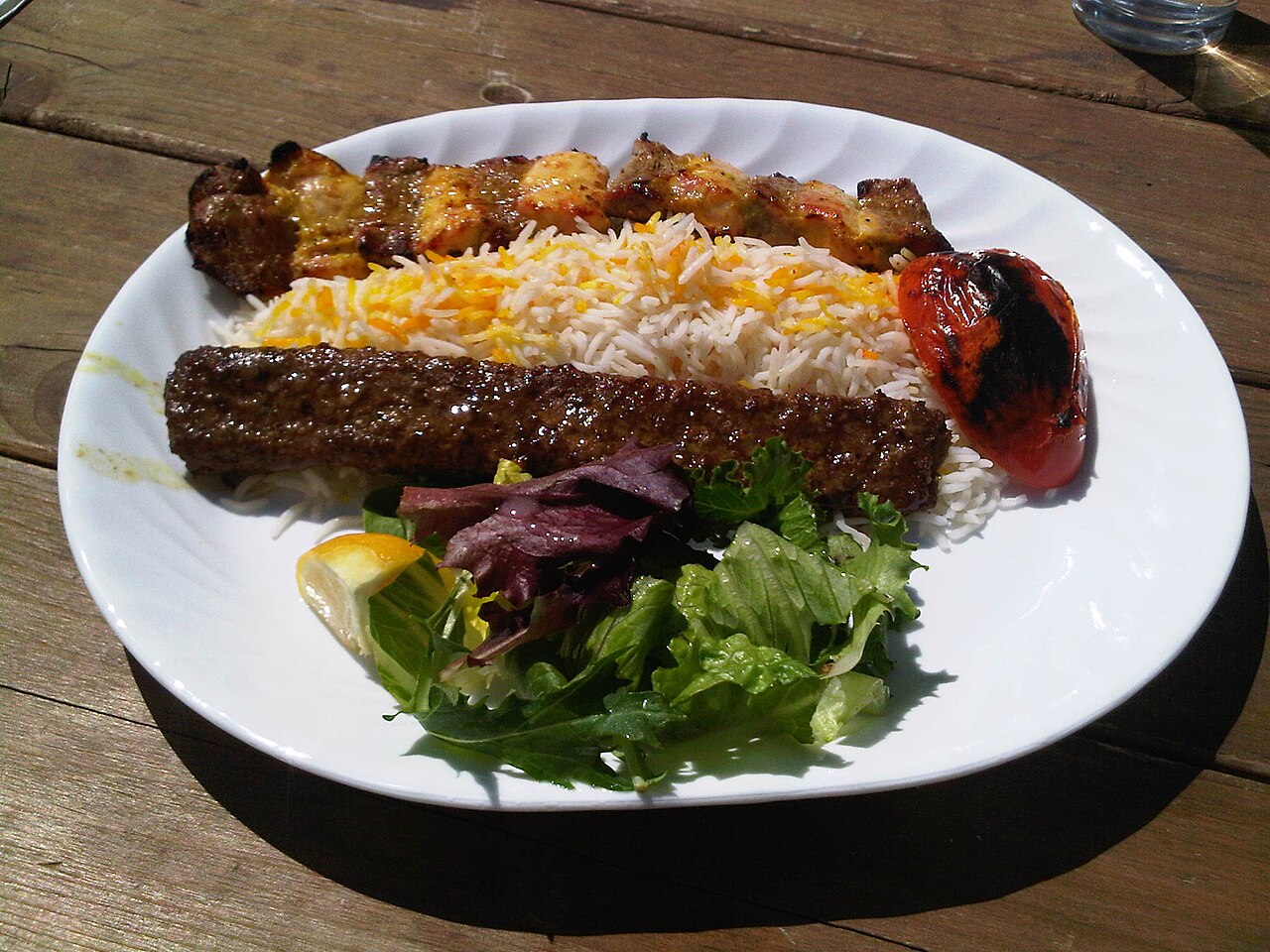
Buttery steamed rice (chelow) with a saffron top, served with kebabs: kabab koobideh, made from minced lamb and grated onion pressed onto wide flat skewers, or kabab barg, thin strips of marinated fillet. It comes with grilled tomatoes, raw onion, a pat of butter, sumac to sprinkle and a glass of doogh.
In the old bazaar restaurants of Tehran the rice arrived first, and the kebabs followed straight from the grill on their skewers, slid off onto the rice with a piece of flatbread.
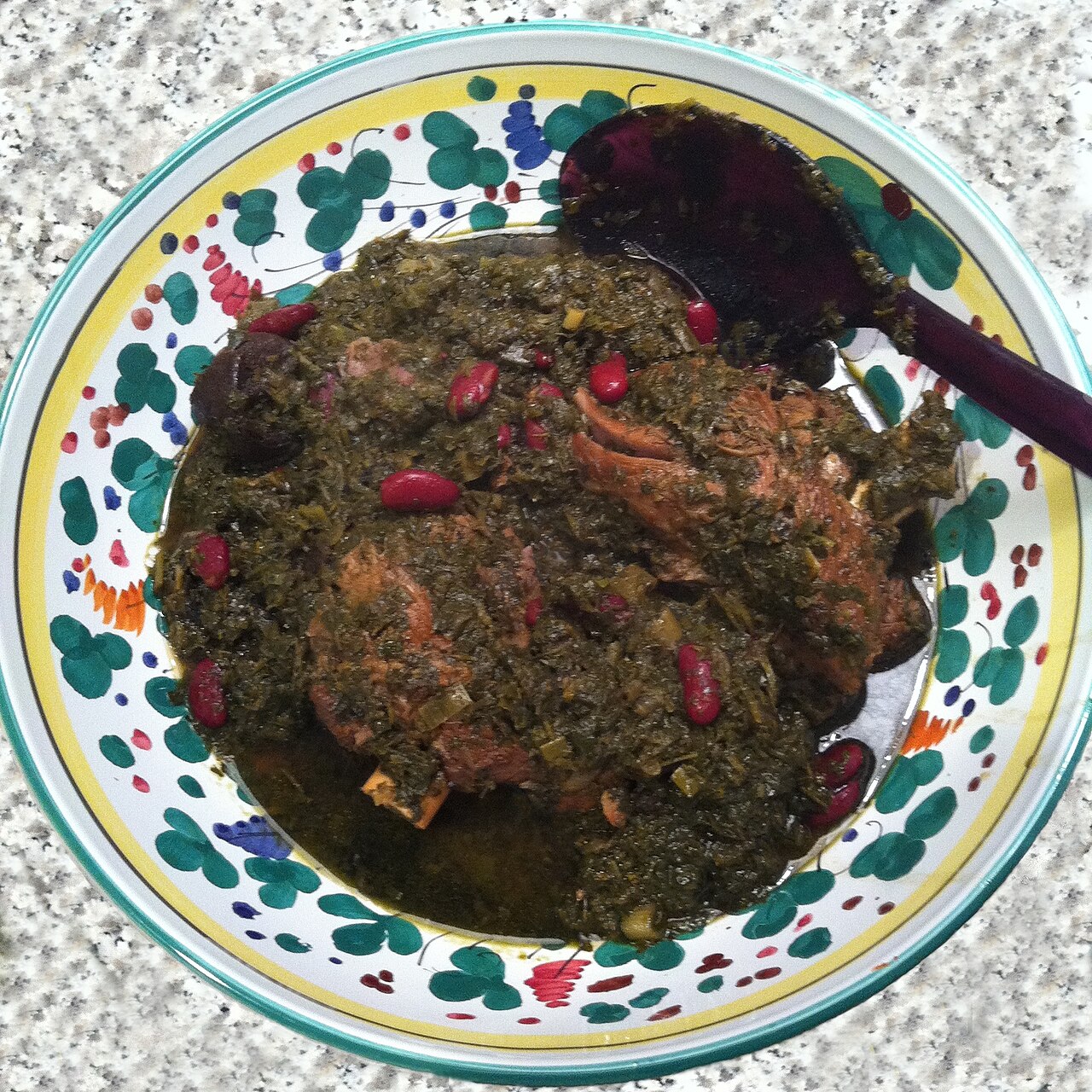
A deep green stew of lamb or beef slow-cooked with a big mountain of fried herbs (parsley, coriander, chives and fenugreek), red kidney beans and whole dried limes, which give it a sour, earthy taste. It is served over rice and is often called the national dish.
The herbs are fried slowly for a long time before they go into the pot, which turns them dark and gives the stew its deep flavour.
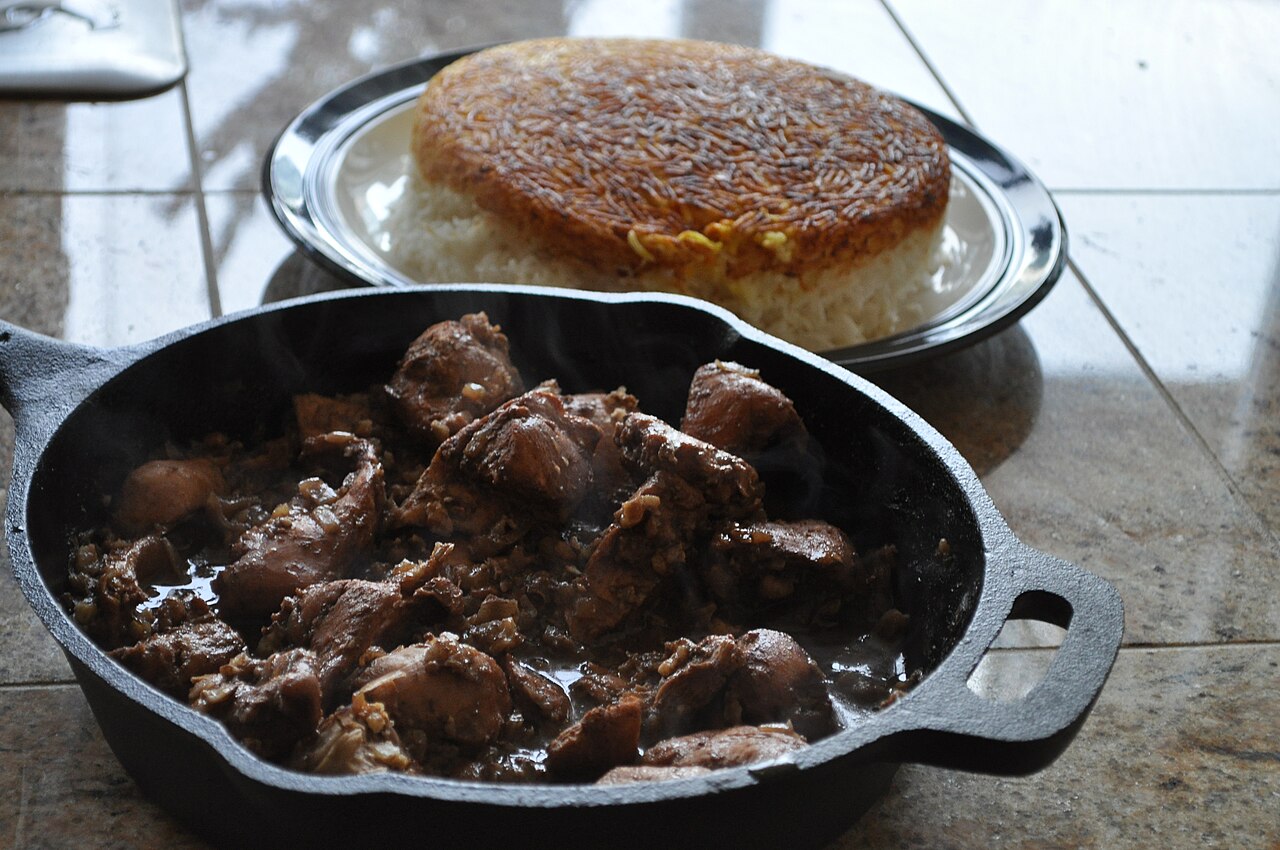
A rich, dark brown stew of chicken or duck (sometimes meatballs) cooked slowly with ground walnuts and pomegranate molasses, which make it sweet and sour at the same time. It is a dish for guests and celebrations, served with rice.
Cooks adjust the balance with a little sugar or more pomegranate molasses: some families like it sweeter, others sharper.
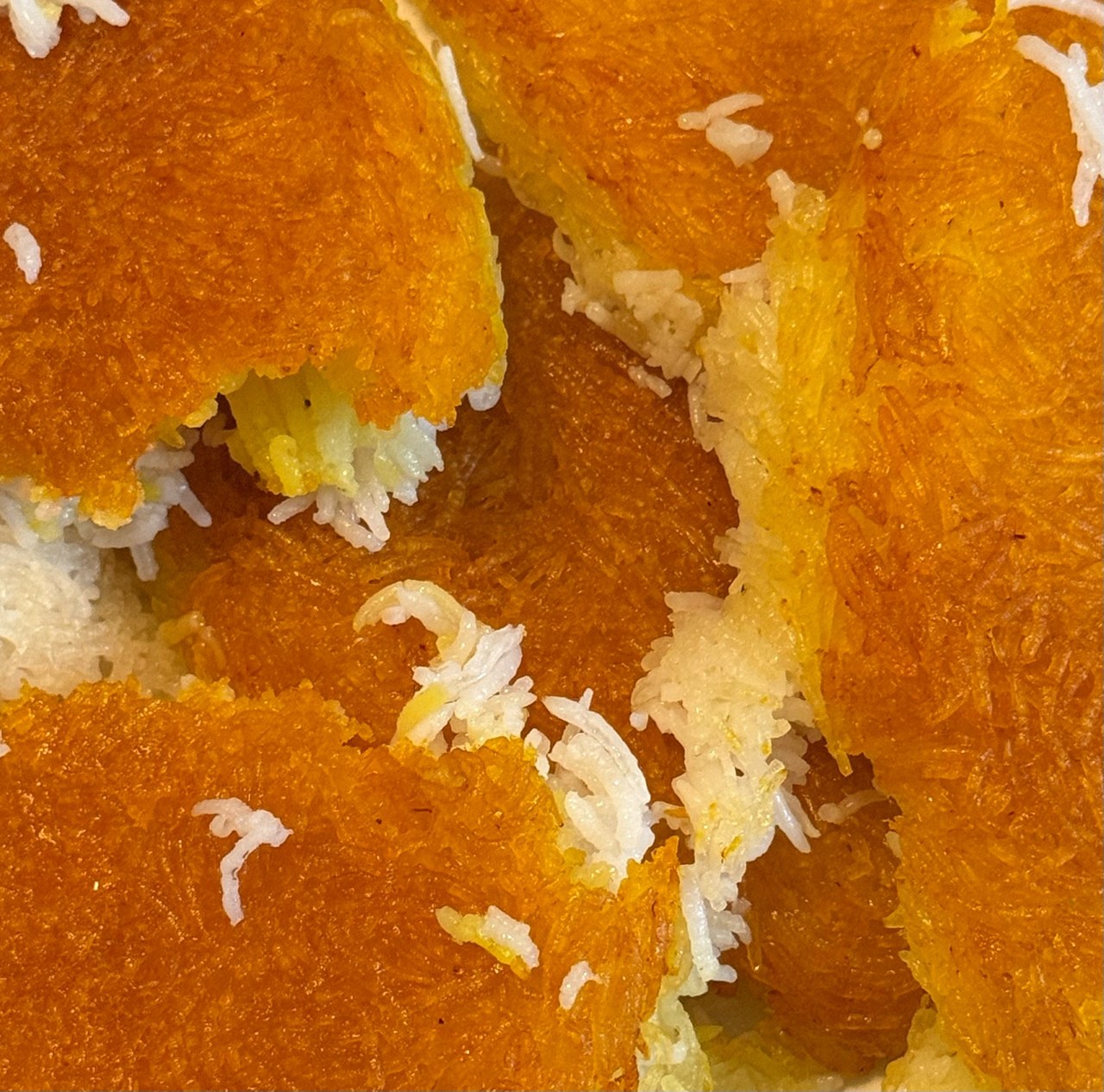
The golden, crispy crust of rice that forms at the bottom of the pot. Cooks line the pot with oil or butter and often with saffron rice, yoghurt rice, flatbread or thin potato slices, then turn the rice out so the crust sits on top. The name means 'bottom of the pot'.
At family meals there is often friendly competition for the last pieces of tahdig, and serving it well is a point of pride for the cook.
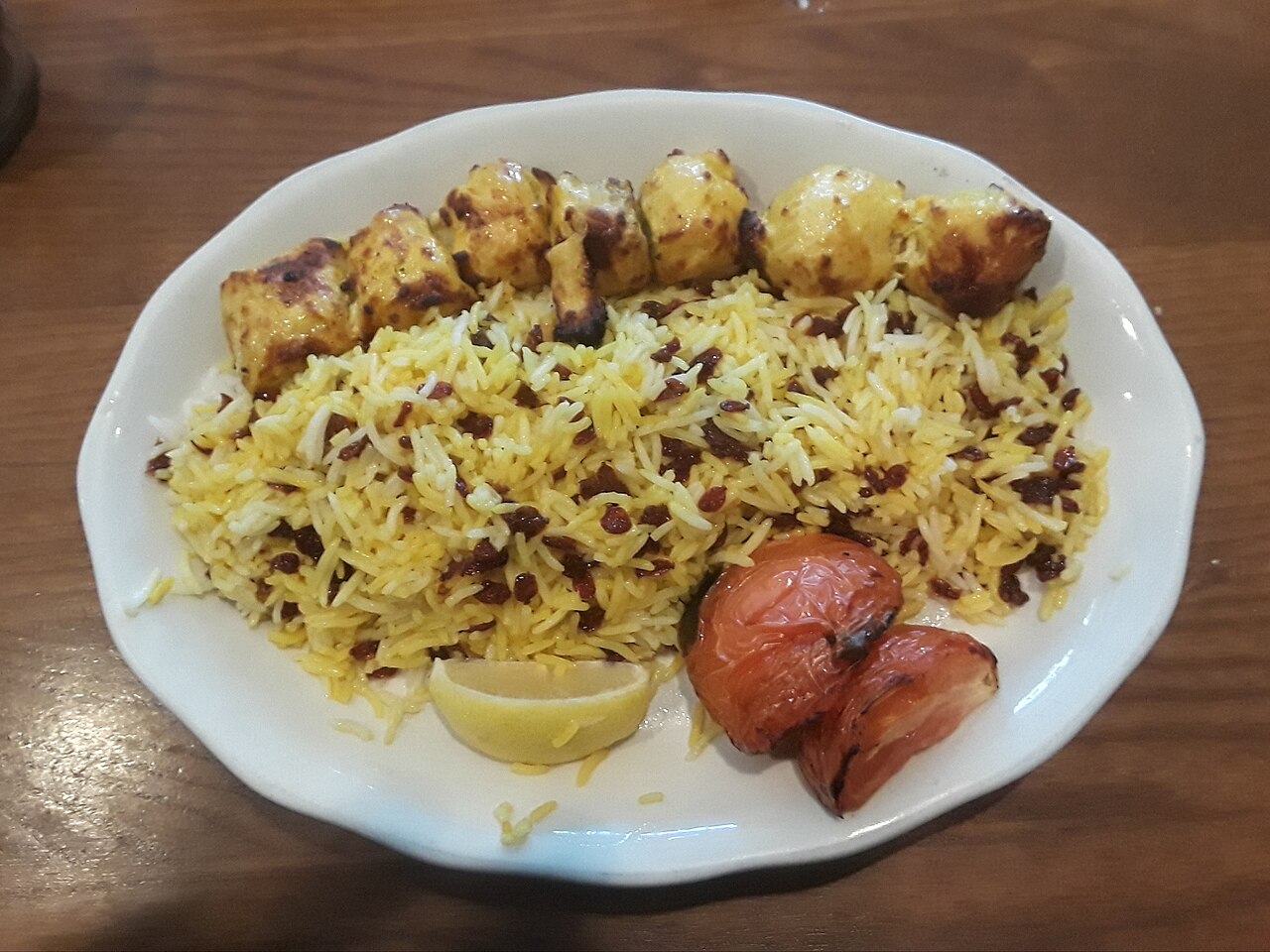
White and saffron rice scattered with tiny, tart red barberries fried in butter with a little sugar, usually served with saffron chicken. With its jewel colours it is a favourite at weddings and gatherings.
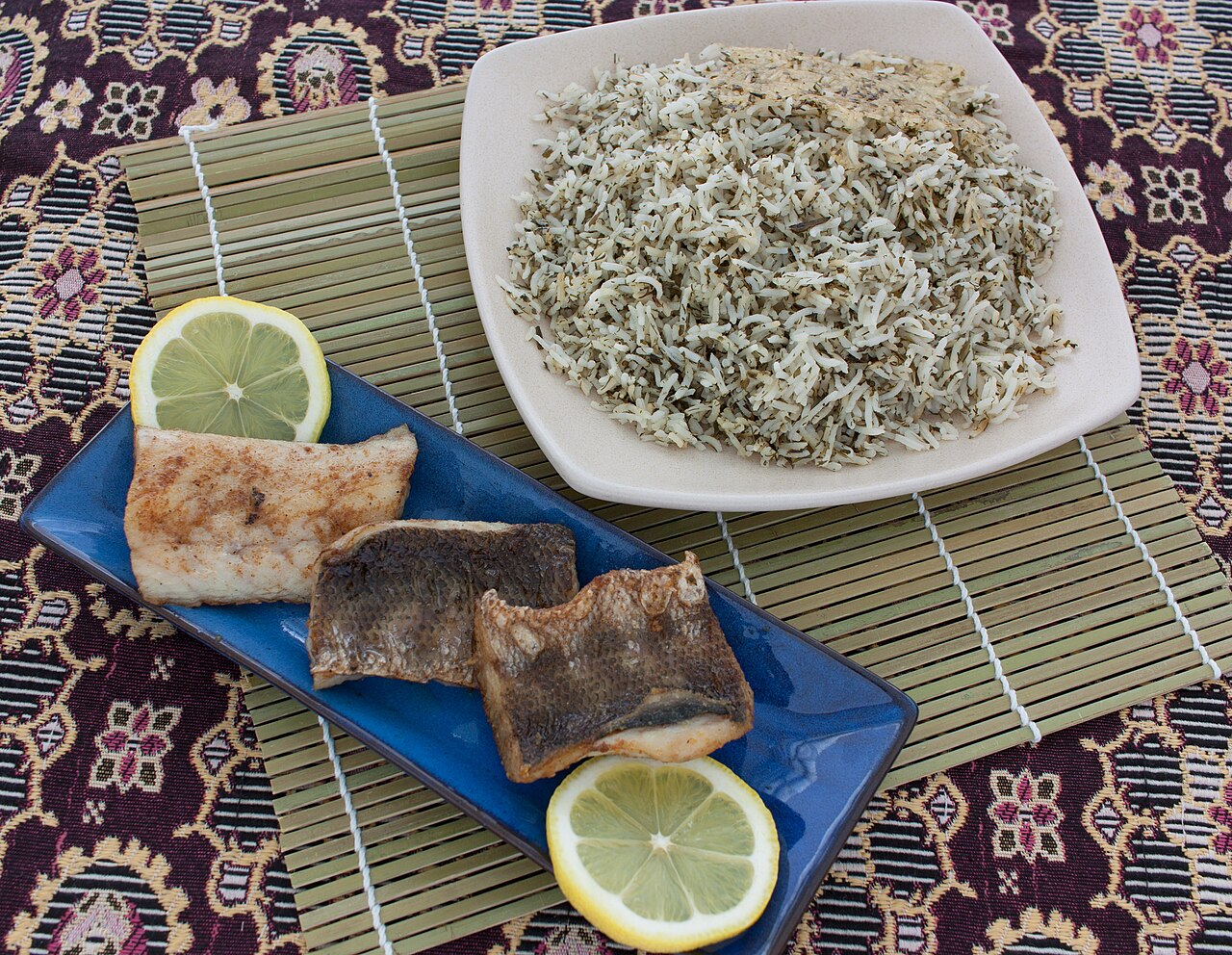
Rice steamed with lots of chopped fresh herbs, such as dill, coriander, parsley and chives, served with fried or smoked fish. It is the traditional lunch on Nowruz, the Persian New Year, when the fresh green herbs suit the start of spring.
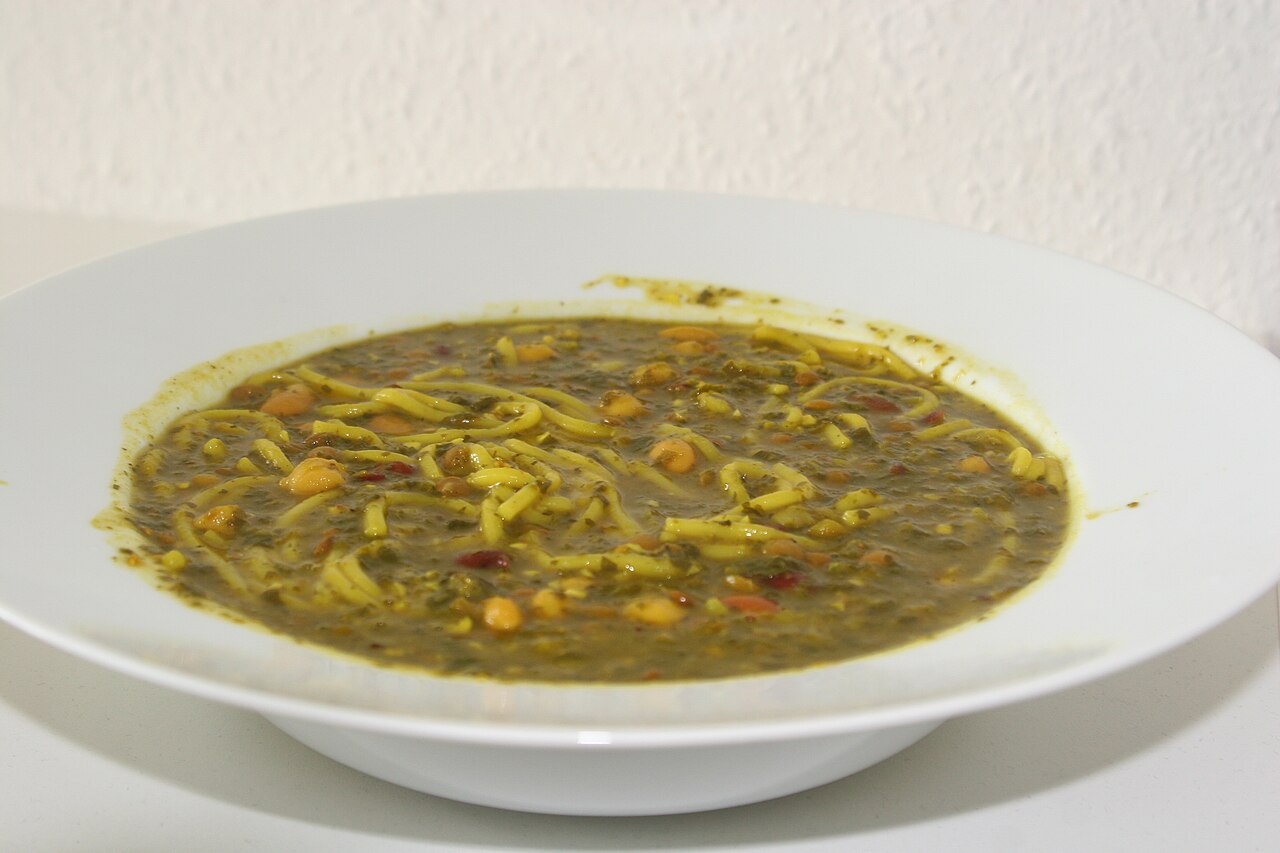
A thick soup of noodles, beans, chickpeas, lentils and plenty of herbs, topped with kashk (a tangy dried whey), fried onions, garlic and dried mint fried in oil. It is a warming winter dish and is often cooked in big pots to share.
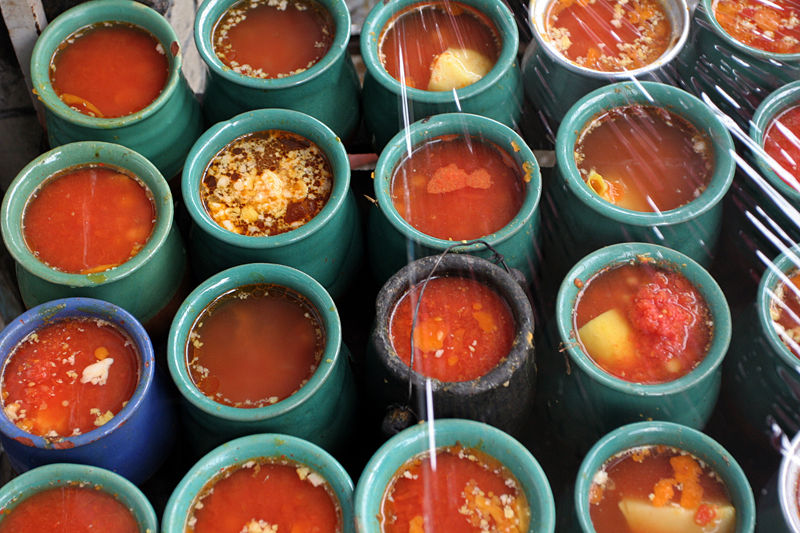
A hearty lamb stew with chickpeas, white beans, potatoes and tomato, cooked slowly in a stoneware pot called a dizi. You pour the broth over torn bread and eat it first, then mash the meat and vegetables into a paste called goosht-e koobideh and eat it with bread, herbs and pickles.
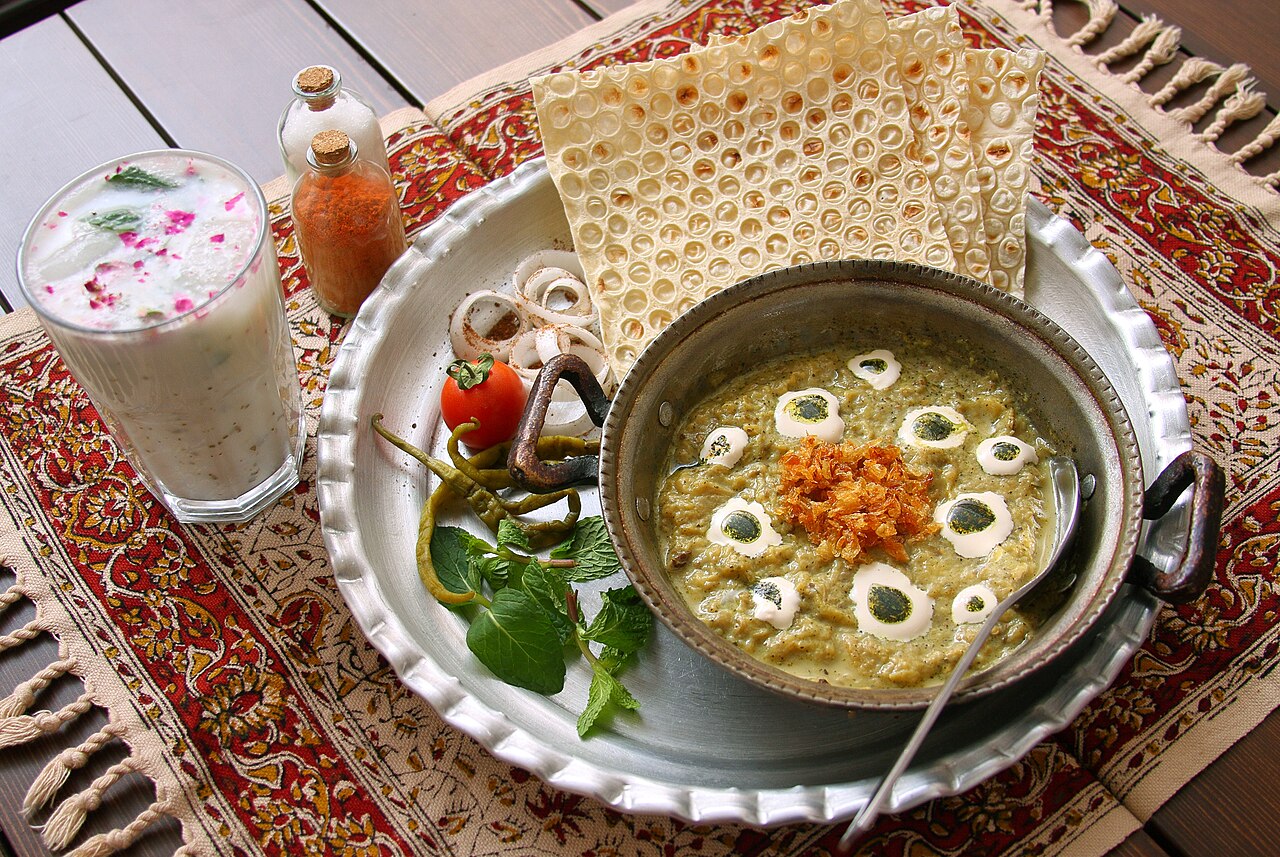
A warm dip of fried aubergine mashed with garlic, onions and kashk, a tangy dried whey, and topped with fried mint, crispy onions, walnuts and a swirl of saffron. It is eaten with flatbread.
See the recipe
Serves 4
1 h
Ingredients
3 medium aubergines (about 1 kg)
2 onions, thinly sliced
4 garlic cloves, crushed
150 ml kashk (from a Middle Eastern shop), or 150 g thick Greek yoghurt with a pinch of salt
1 tbsp dried mint
1/2 tsp turmeric
A pinch of saffron threads soaked in 2 tbsp hot water
30 g walnuts, roughly chopped
5 to 6 tbsp vegetable oil, salt and black pepper
Method
Peel the aubergines and cut them into thick slices. Salt them lightly, leave for 20 minutes, then pat dry.
Fry the onions in 3 tbsp oil until deep golden and crisp. Lift half out and keep it for the topping.
Fry the aubergine slices in the remaining oil until soft and golden on both sides.
Add the aubergine, garlic and turmeric to the pan with the onions, add 100 ml water and cook gently for 10 minutes, mashing with a fork.
Stir in most of the kashk (keep a spoonful), season with pepper and heat through for 2 minutes. Taste before adding salt, as kashk is salty.
In a small pan, warm 1 tbsp oil, take it off the heat and stir in the dried mint for a few seconds.
Spread the dip on a plate, top with the kept kashk, the saffron water, crispy onions, mint oil and walnuts. Serve warm with flatbread.
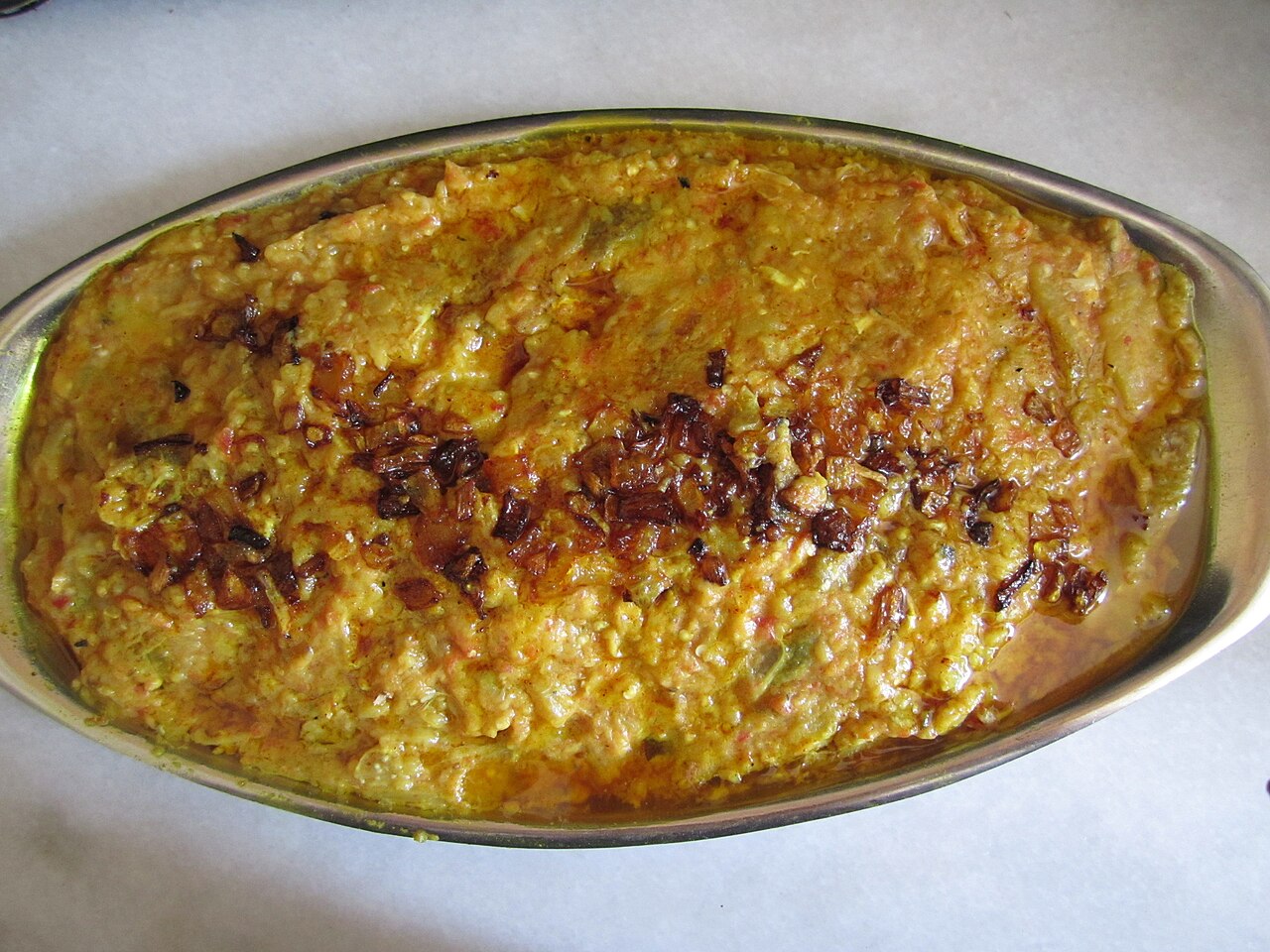
Smoky grilled aubergines chopped and cooked with lots of garlic, tomatoes and eggs until thick. It comes from Gilan in the green, rainy north and is eaten with bread or rice.
See the recipe
Serves 4
50 min
Ingredients
3 medium aubergines
6 garlic cloves, finely chopped
3 ripe tomatoes, peeled and chopped
3 eggs
1/2 tsp turmeric
3 tbsp vegetable oil or butter
Salt and black pepper
Flatbread or rice to serve
Method
Grill the whole aubergines over a gas flame, on a barbecue or under a very hot grill, turning, until the skin is black and the inside soft (about 20 minutes).
When cool enough to handle, peel off the skin and chop the flesh finely.
Fry the garlic gently in the oil for 1 minute, add the turmeric, then the tomatoes, and cook for 5 minutes until soft.
Add the aubergine, season with salt and pepper, and cook for 10 minutes, stirring now and then.
Make a well in the middle, break in the eggs, stir them until they begin to set, then mix them through and cook until the eggs are completely set, with no runny egg left.
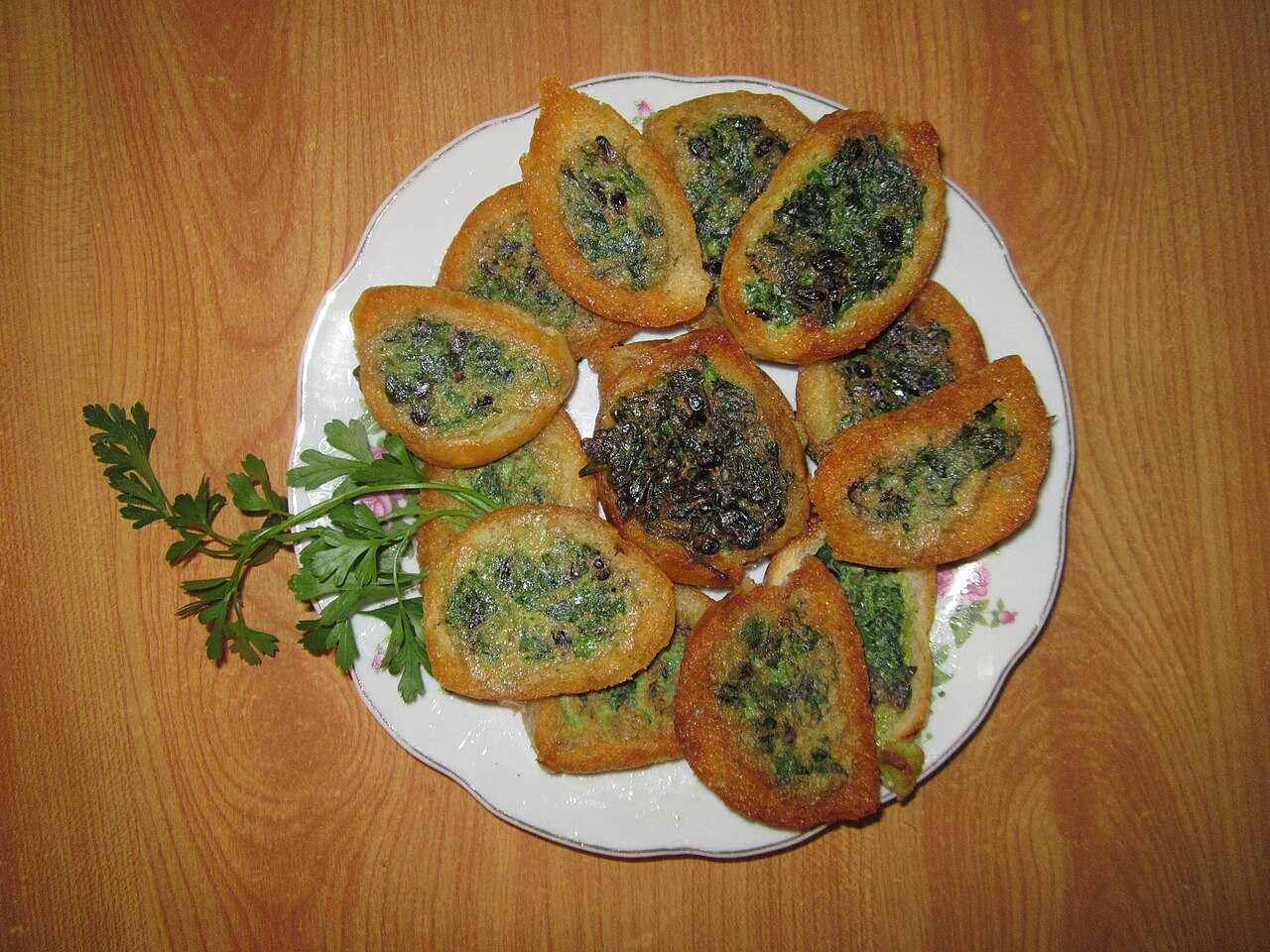
A thick, bright green herb frittata made with more herbs than egg: parsley, coriander, dill and chives, often with walnuts and barberries. It is served warm or cold, in wedges, with bread and yoghurt, and is a favourite at Nowruz.
See the recipe
Serves 6
55 min
Ingredients
6 eggs
1 large bunch each of parsley, coriander and dill (about 250 g of herbs in total), finely chopped
6 spring onions or a bunch of chives, finely chopped
1 tbsp dried fenugreek leaves (optional)
40 g walnuts, chopped
1 tbsp dried barberries or cranberries (optional)
1 tsp baking powder
1/2 tsp turmeric
4 tbsp vegetable oil, salt and black pepper
Method
Heat the oven to 180 °C. Pour the oil into a 22 cm ovenproof dish and put it in the oven to heat.
Beat the eggs in a large bowl with the baking powder, turmeric, 1 tsp salt and some pepper.
Stir in the herbs, spring onions, fenugreek, walnuts and barberries. The mixture should look much greener than yellow.
Carefully pour the mixture into the hot oiled dish and smooth the top.
Bake for 30 to 35 minutes, until firm in the middle and golden at the edges. A knife pushed into the centre should come out clean, with no liquid egg.
Cut into wedges and serve warm or cold with bread, yoghurt and a salad.
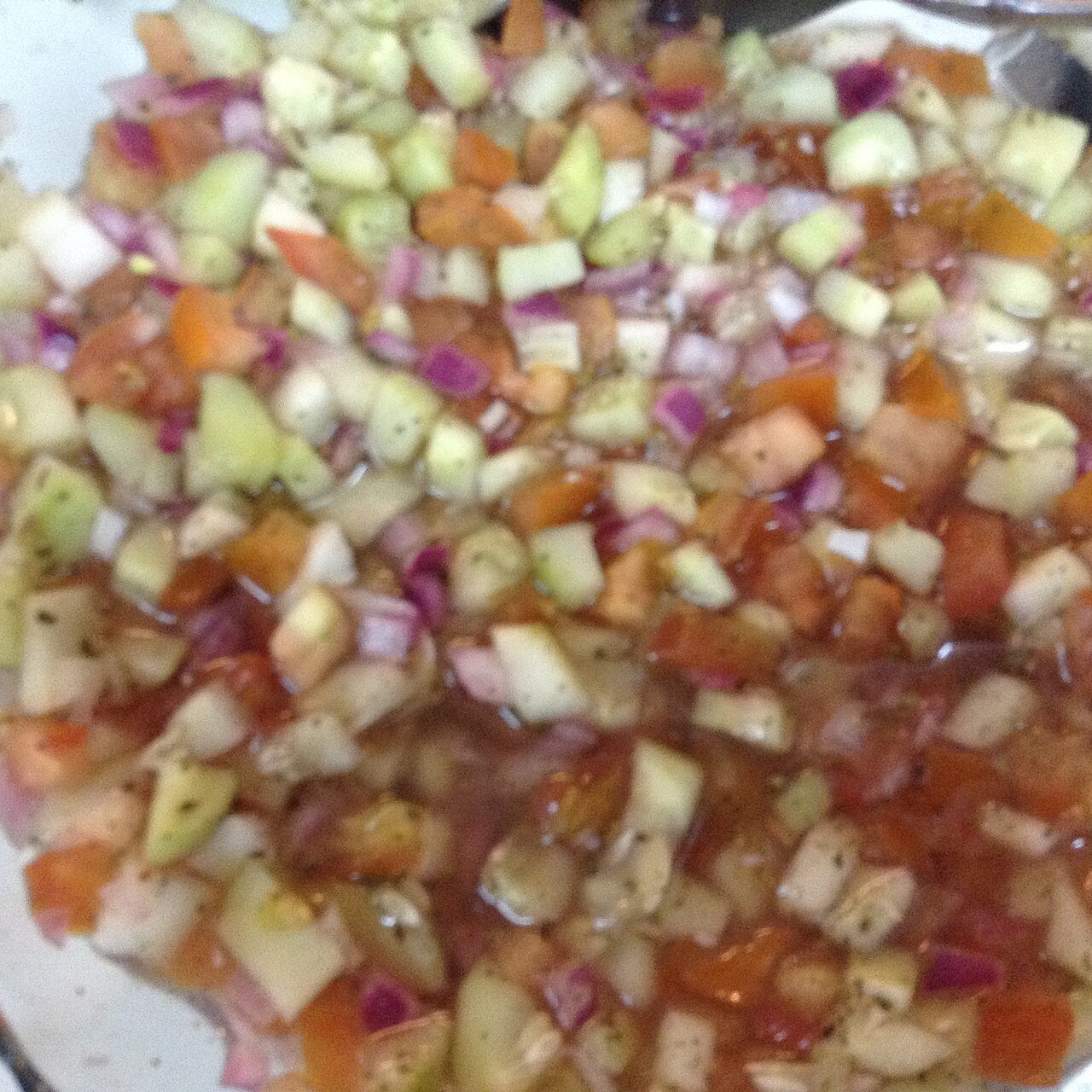
A fresh chopped salad of cucumber, tomato and onion with dried mint, dressed with lime juice or verjuice (sour grape juice) and a little oil. It is served with rice and kebabs, and some people spoon it over their rice.
See the recipe
Serves 4
15 min
Ingredients
2 cucumbers
3 firm tomatoes
1 small red onion
1 tbsp dried mint
Juice of 2 limes, or 4 tbsp verjuice
2 tbsp olive oil
Salt and black pepper
Method
Cut the cucumbers, tomatoes and onion into very small, even cubes, about 5 mm.
Put them in a bowl and sprinkle over the dried mint, rubbing it between your fingers.
Whisk the lime juice or verjuice with the oil, 1/2 tsp salt and some pepper.
Pour the dressing over the salad and mix gently.
Leave for 10 minutes so the flavours come together, then serve cold with rice, kebabs or bread.
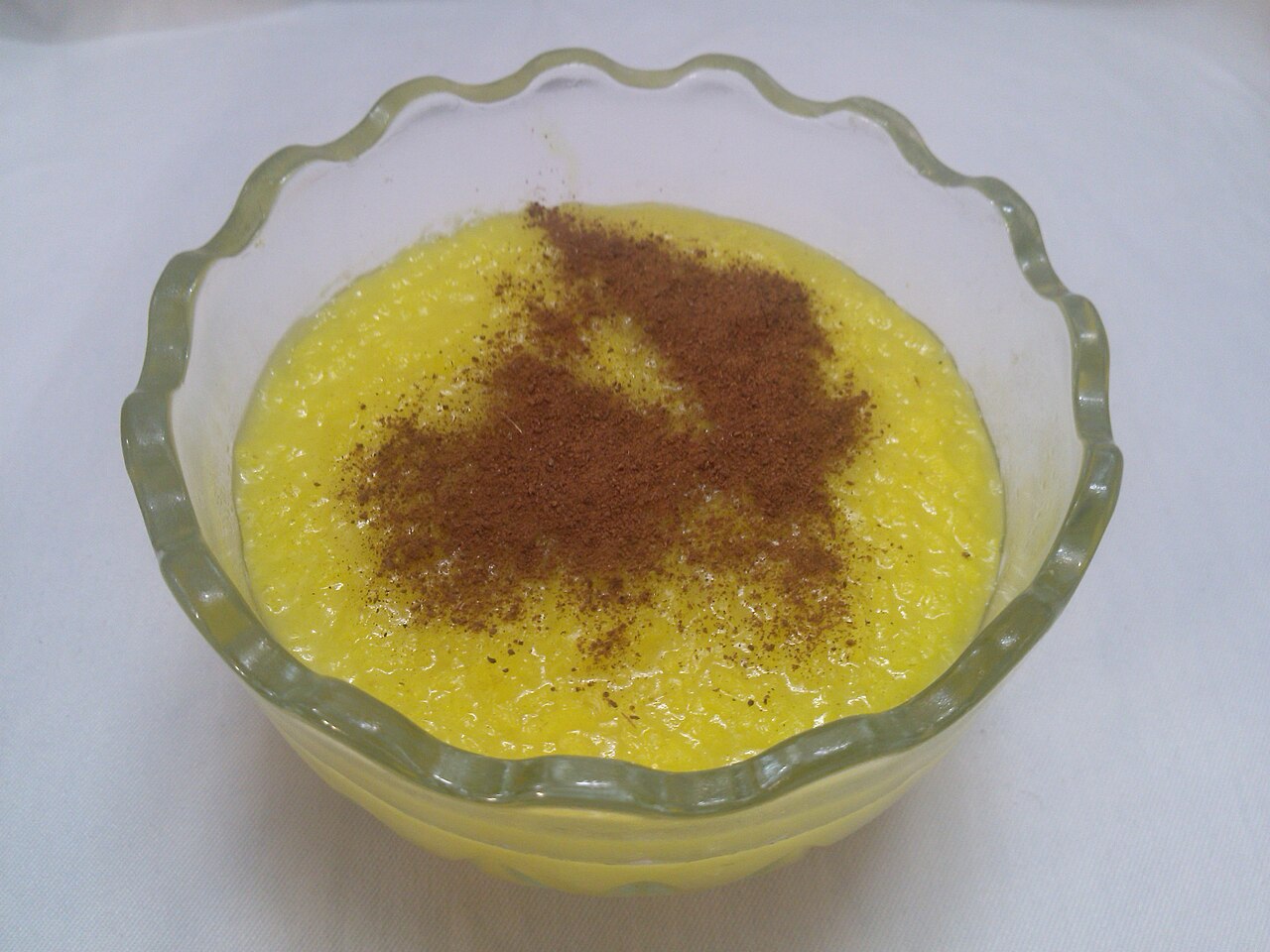
A golden saffron rice pudding scented with rosewater and cardamom, topped with cinnamon, almonds and pistachios, often in pretty patterns. It is made in huge pots for religious occasions and handed out to neighbours, and it is also eaten to break the fast in Ramadan.
See the recipe
Serves 6
1 h 40 min
Ingredients
200 g short-grain rice, rinsed and soaked for 1 hour
1.5 litres water
250 g sugar
1/4 tsp saffron threads, ground and soaked in 3 tbsp hot water
4 tbsp rosewater
40 g butter
1/2 tsp ground cardamom
2 tbsp slivered almonds
Ground cinnamon and chopped pistachios to decorate
Method
Drain the rice and put it in a large pot with the water. Bring to the boil, then simmer, stirring often, for about 40 minutes until the rice is very soft and the mixture thick.
Stir in the sugar and cook for 15 minutes more, stirring so it does not stick.
Add the saffron water, butter, cardamom and almonds and cook gently for 20 minutes, until thick and glossy.
Stir in the rosewater and cook for 5 more minutes.
Pour into a serving dish or small bowls and leave to cool and set.
Decorate with lines of cinnamon and chopped pistachios. Serve cold or at room temperature.
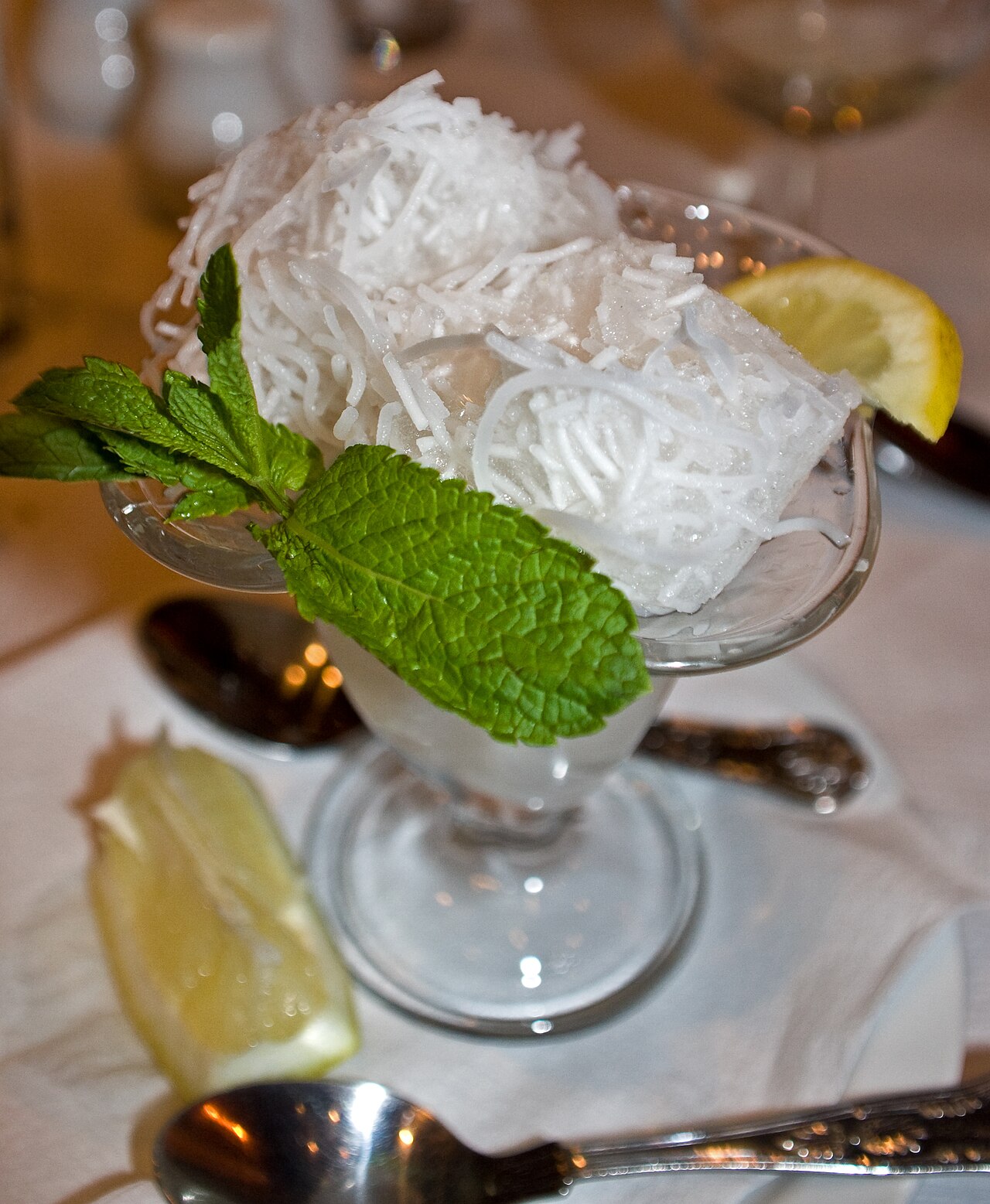
A cold dessert of thin, springy starch noodles in a half-frozen syrup of sugar and rosewater, served with a squeeze of lime juice and sometimes sour cherry syrup. Ice cream shops often serve it next to saffron ice cream.
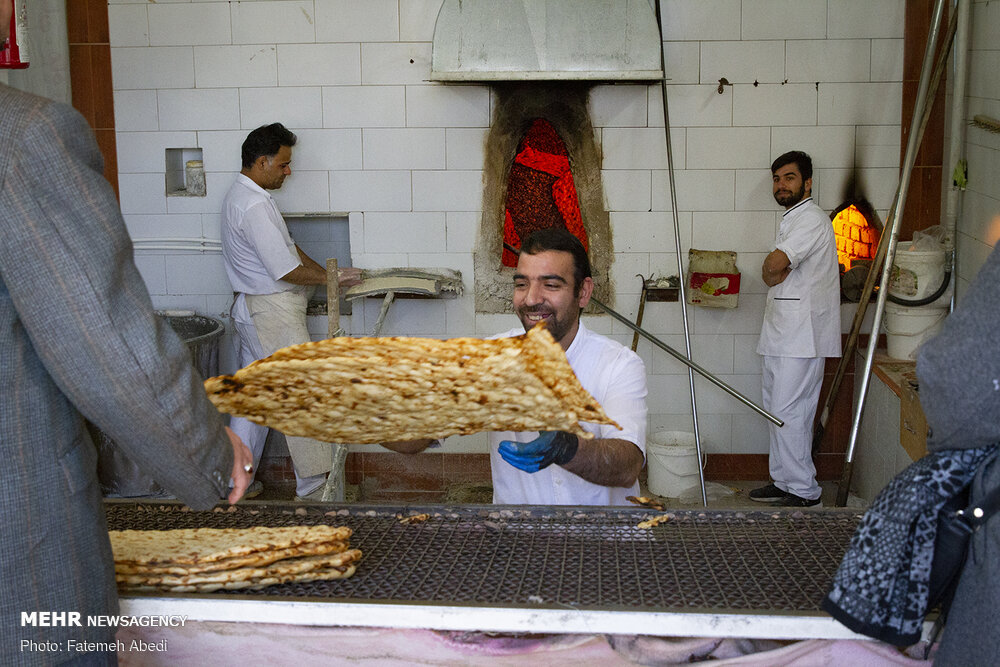
A long, bubbly wholewheat flatbread baked on a bed of small hot pebbles in a big oven, which leaves dimples in the dough. Its name means 'little stone' or pebble. People queue at the bakery to buy it hot for breakfast or to eat with abgoosht.
Before eating, people check the bread for any small stones that stuck to it in the oven.
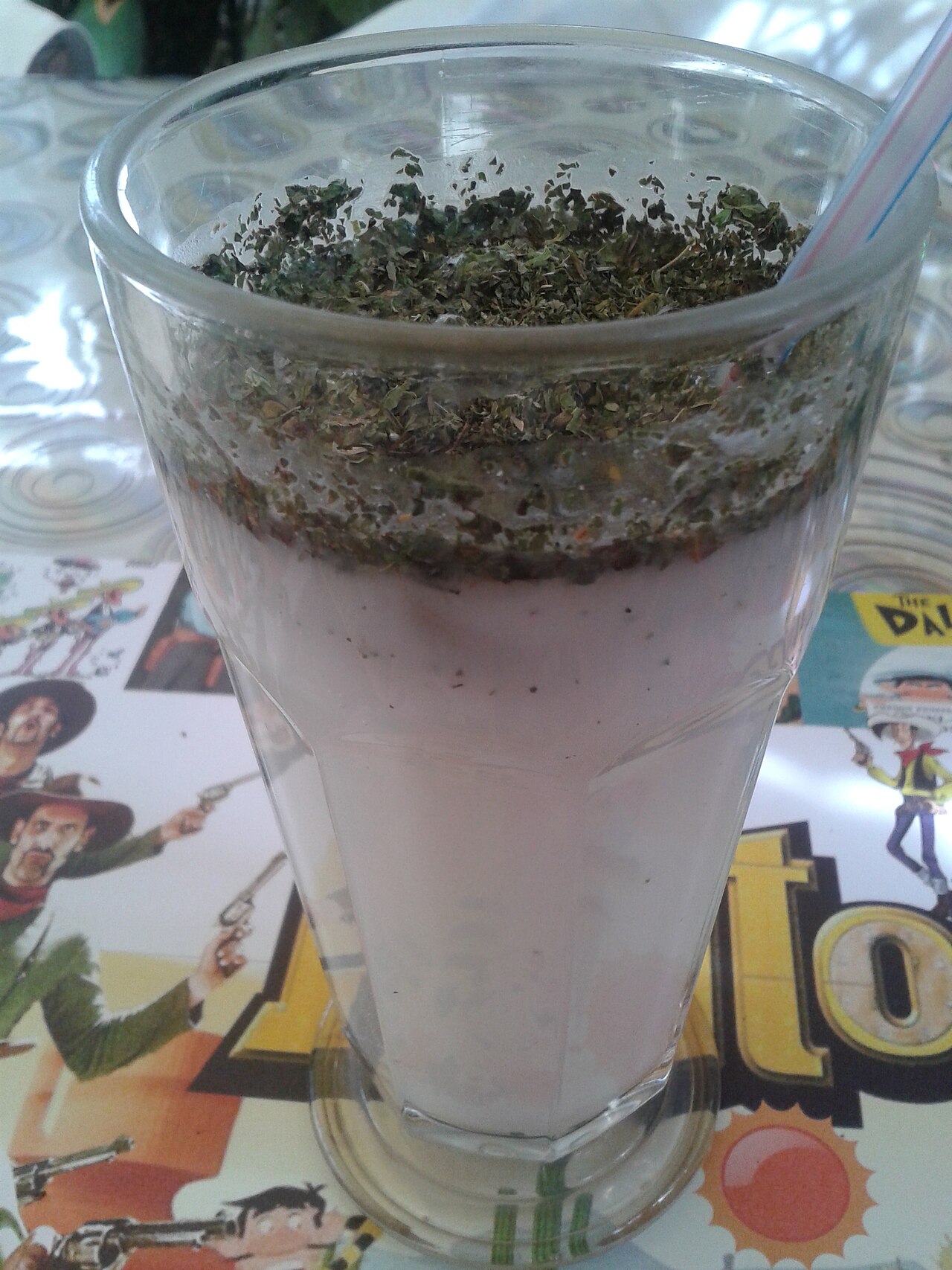
A cold, salty drink of yoghurt mixed with water, flavoured with dried mint and sometimes made fizzy. It is the classic drink with chelow kabab and helps on hot days.
Table manners
Taarof, a ritual of polite offers and refusals, shapes every meal. A host will press you to take more food, and it is polite to refuse once or twice before accepting. Hosts may also refuse your offer to help; ask again if you mean it.
In many homes, especially in the countryside and at big family meals, food is served on a cloth called a sofreh spread on the floor. Take off your shoes at the door, sit cross-legged or with your legs tucked away, and never step on the sofreh.
Iranians usually eat with a spoon in the right hand and a fork in the left, using the fork to push rice onto the spoon. Knives are rarely needed.
Tea is the first thing offered to a guest and comes again after the meal. Many people hold a sugar cube in their mouth and drink the tea through it.
Before or during a meal people say 'nush-e jan', may it nourish your soul, and afterwards guests thank the cook with 'dast-e shoma dard nakone', may your hand not hurt.
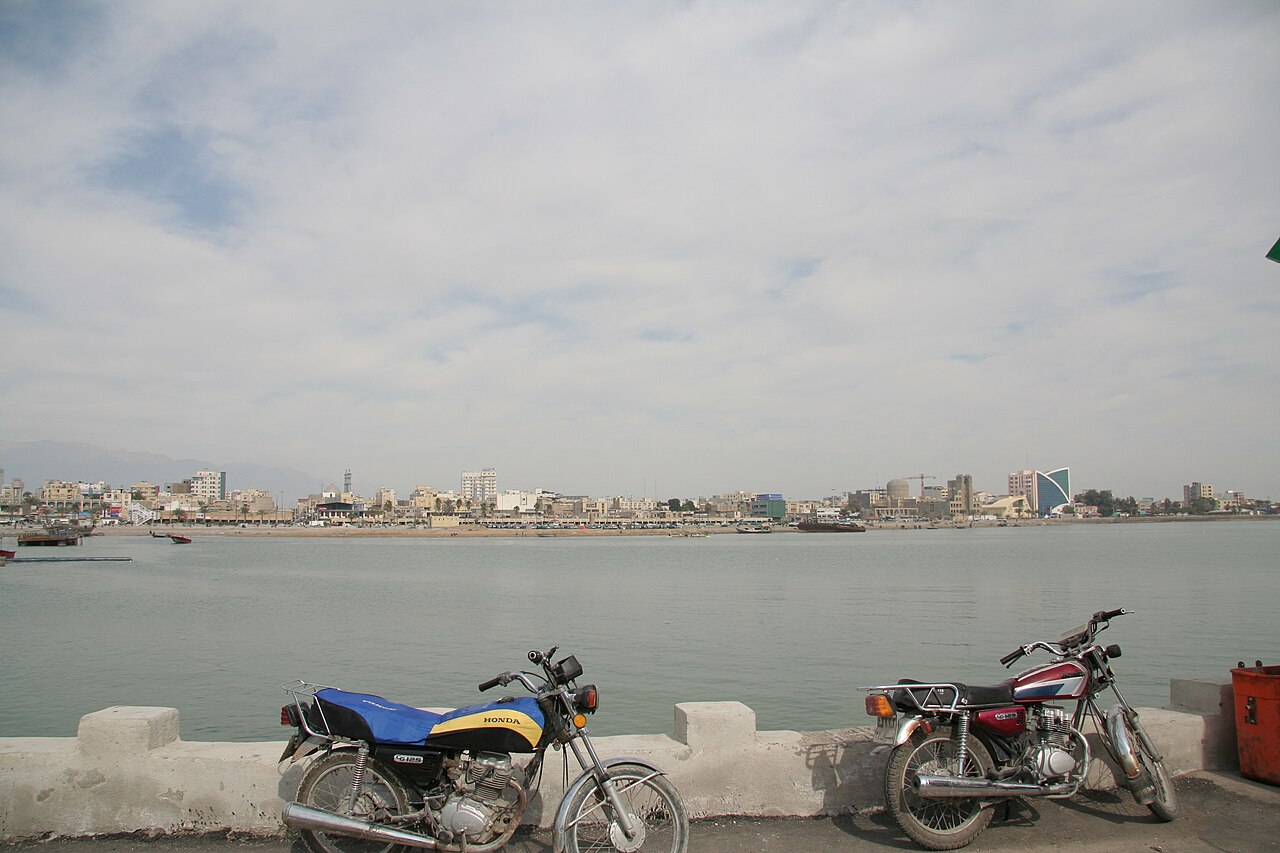
Iran's cities sit far apart, often separated by mountains and desert. Tehran spreads along the foot of the Alborz, Tabriz lies in the cool northwest, and Rasht on the green, rainy Caspian side. On the central plateau are the old oasis cities: Kashan, Isfahan, Yazd and Kerman. Shiraz lies in the south, in the heart of old Persia, Mashhad in the far northeast, and Bandar Abbas on the hot Persian Gulf coast.
Tehran Province, at the foot of the Alborz mountains
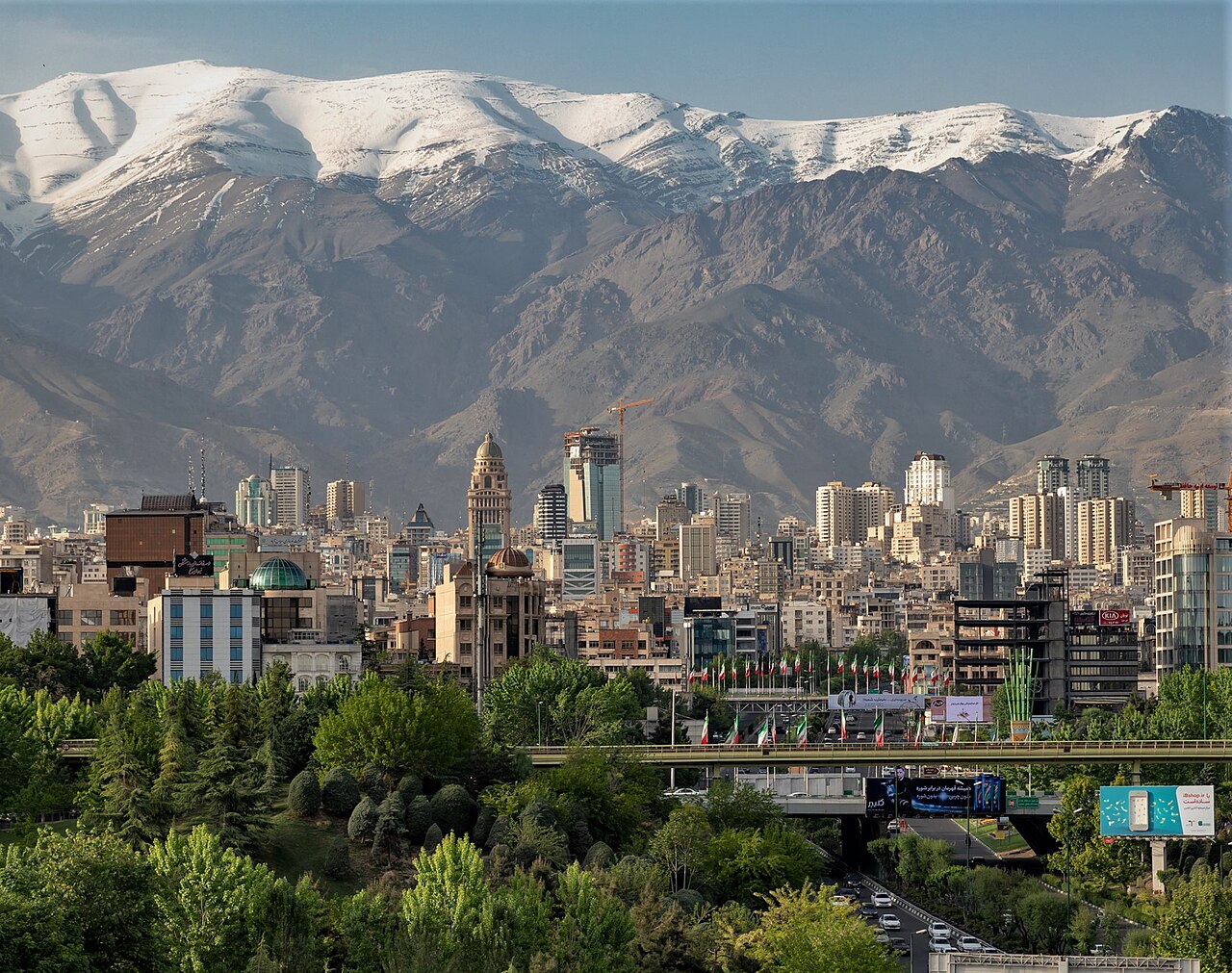
Iran's capital since 1786 and by far its largest city, with about 9 million people in the city and nearly 17 million in the wider area. The streets climb from the hot south to the cooler north, with snowy peaks behind. It holds the national museums and the Golestan Palace of the Qajar shahs.
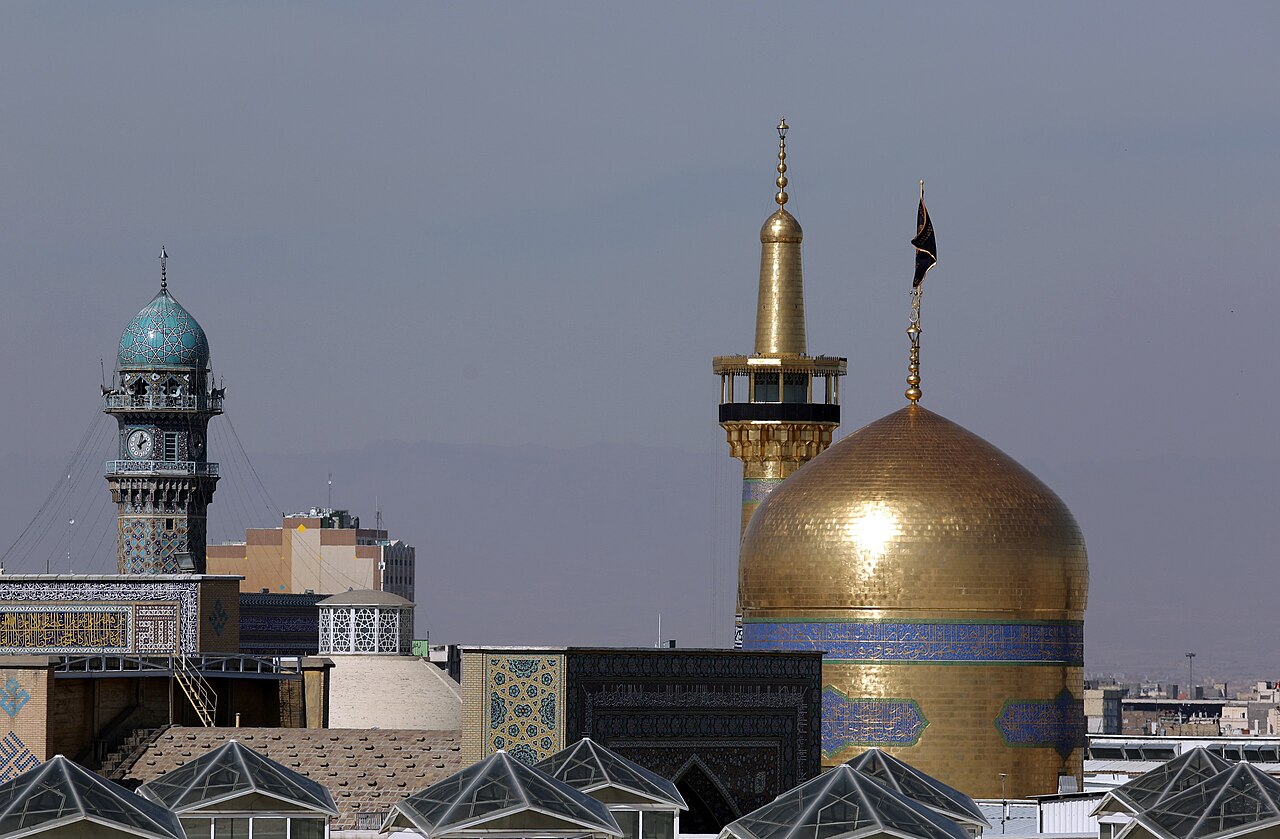
Iran's second-largest city and one of the holiest cities of Shia Islam. Millions of pilgrims come every year to the vast shrine of Imam Reza, the eighth Shia imam. The tomb of the poet Ferdowsi stands at Tus, just outside the city.
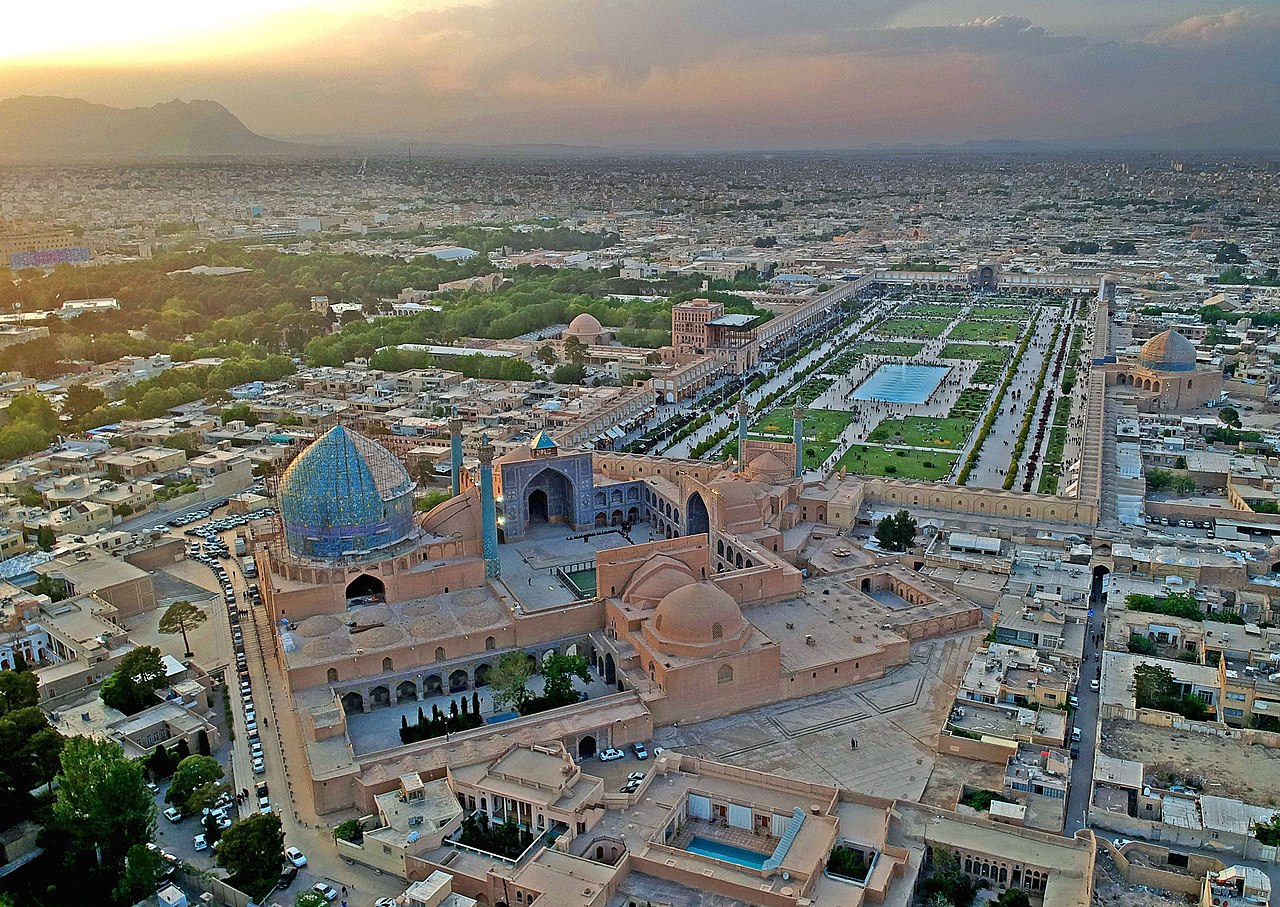
Capital of the Safavid shahs from 1598, famous for its turquoise domes, its huge Naqsh-e Jahan Square and the old bridges over the Zayanderud river. Iranians still say 'Isfahan is half the world'. Several of its monuments were reported damaged by air strikes in March 2026.
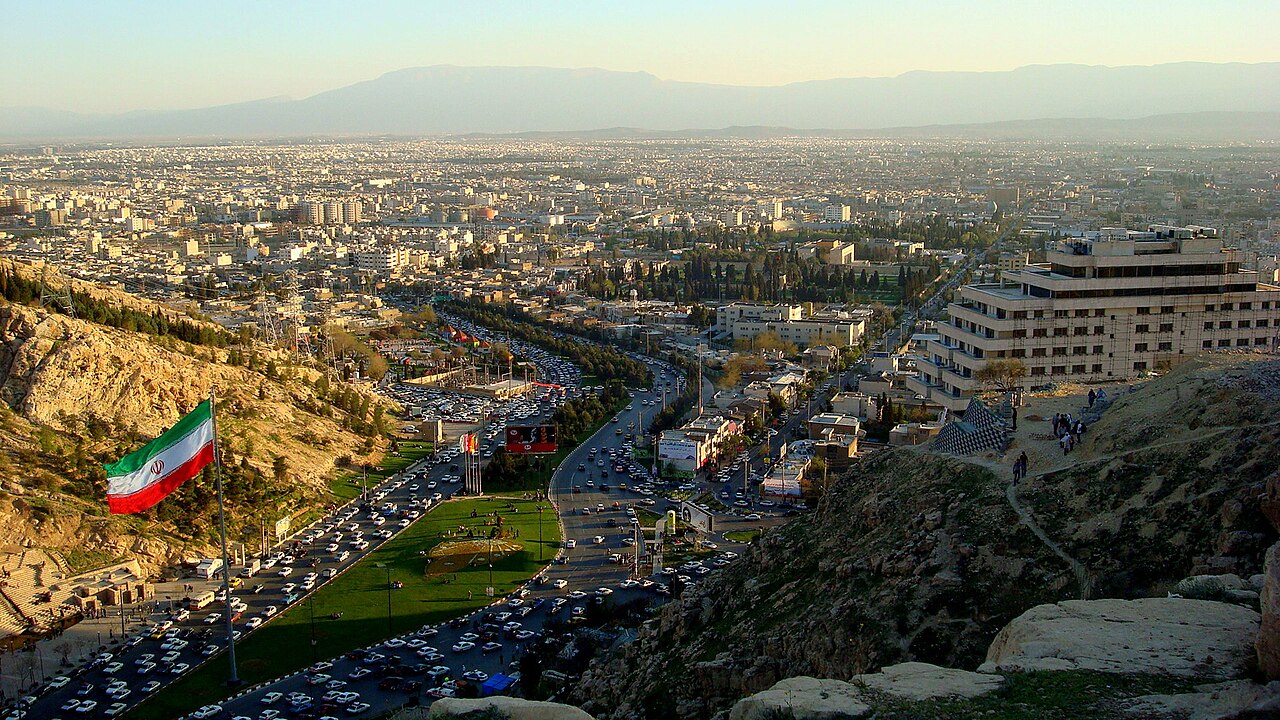
The city of poets, roses and gardens, home of Hafez and Saadi, whose tombs stand in gardens that people visit to recite their verses. It lies in Fars, the heart of ancient Persia, and is the base for trips to Persepolis.
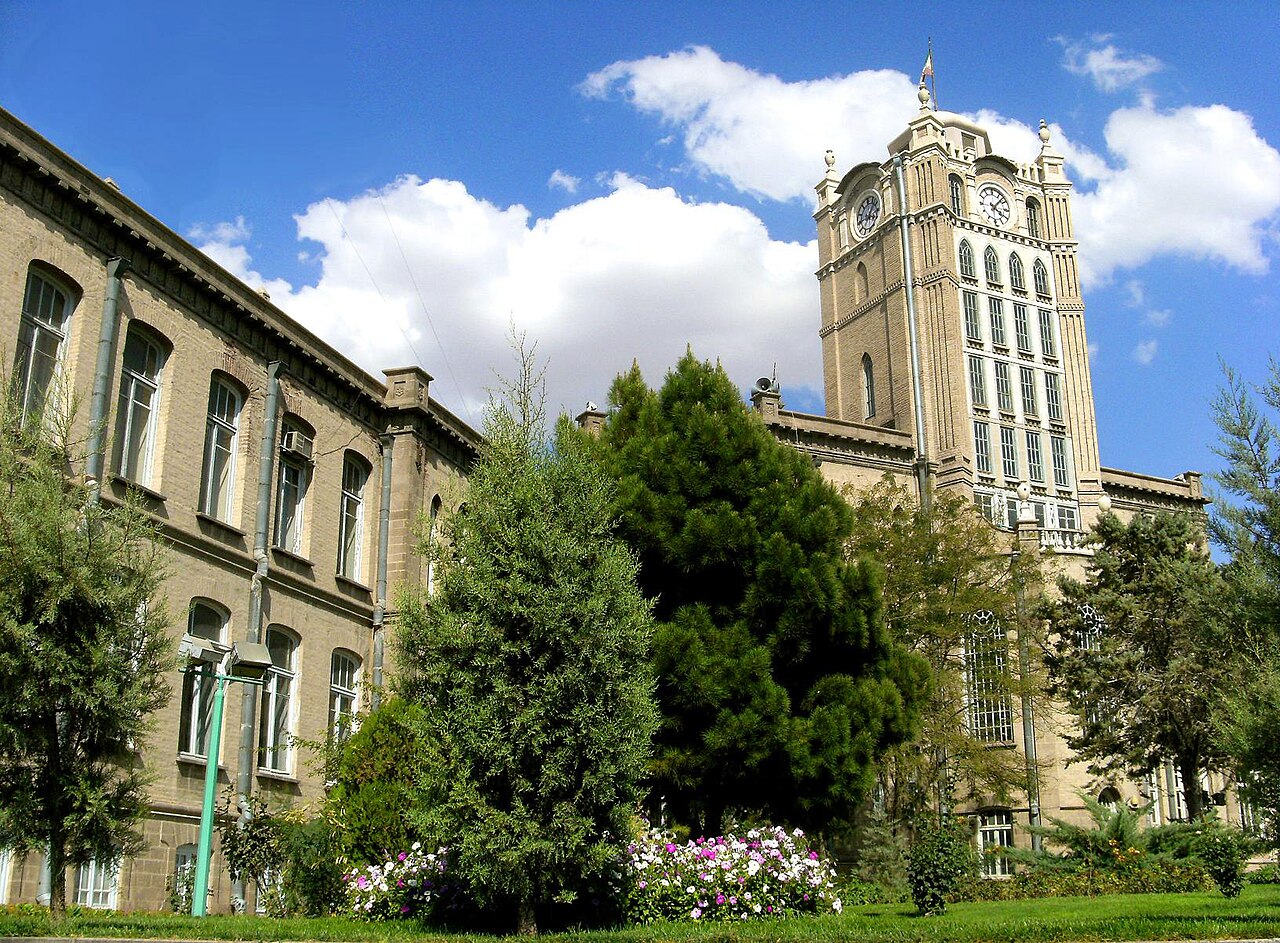
The main city of the northwest, where most people speak Azerbaijani Turkish as well as Persian. It was a capital of several dynasties and a great stop on the Silk Road, and it is famous for its carpets.
A desert city of mud-brick lanes, called the City of Windcatchers for the tall towers that cool its houses. It is a centre of Iran's small Zoroastrian community, and its historic city is on the UNESCO World Heritage List.
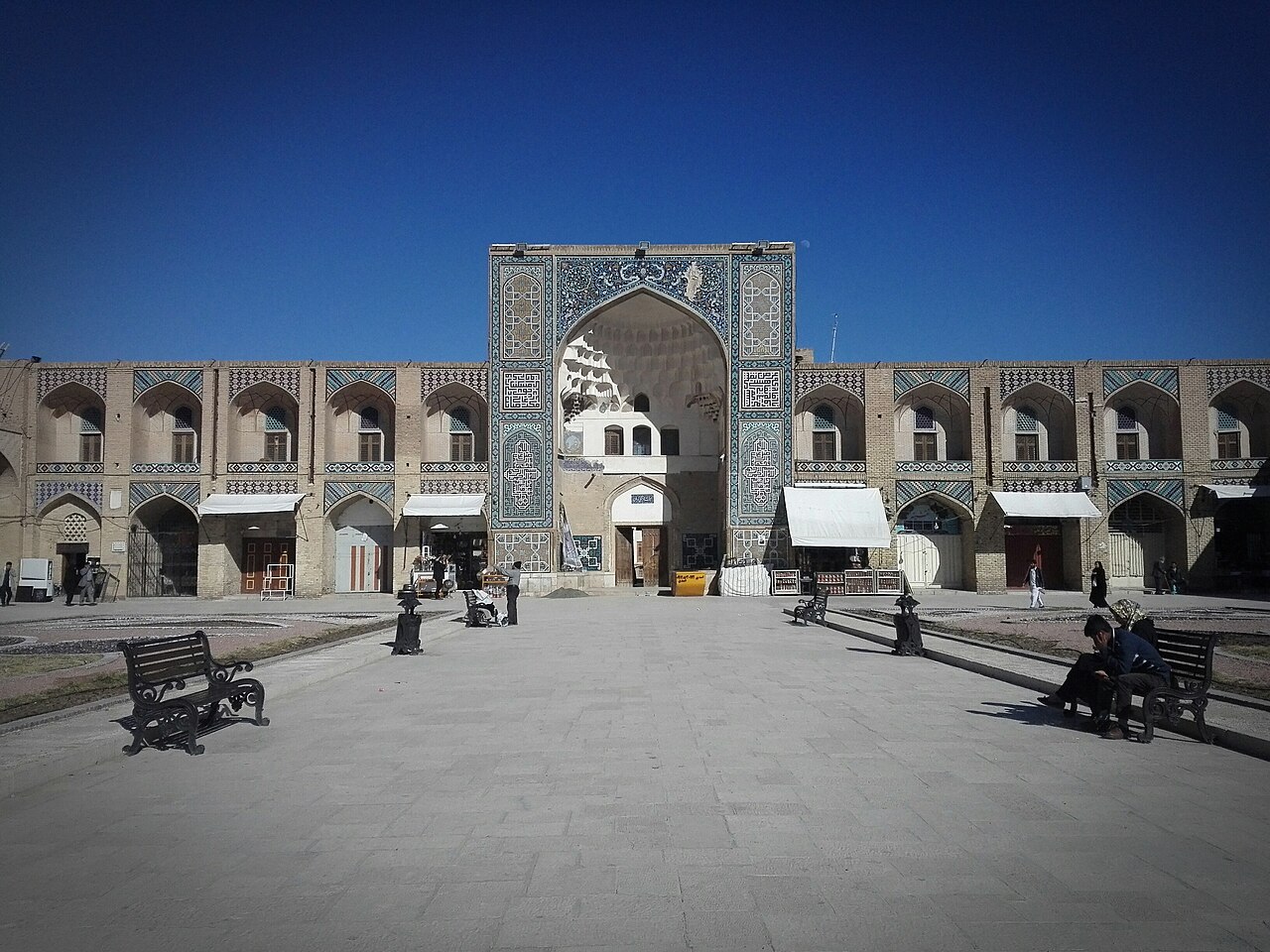
An old desert city in the southeast, on the edge of the Lut Desert. Its province grows many of Iran's pistachios, and it is known for its carpets and the historic Ganjali Khan complex.
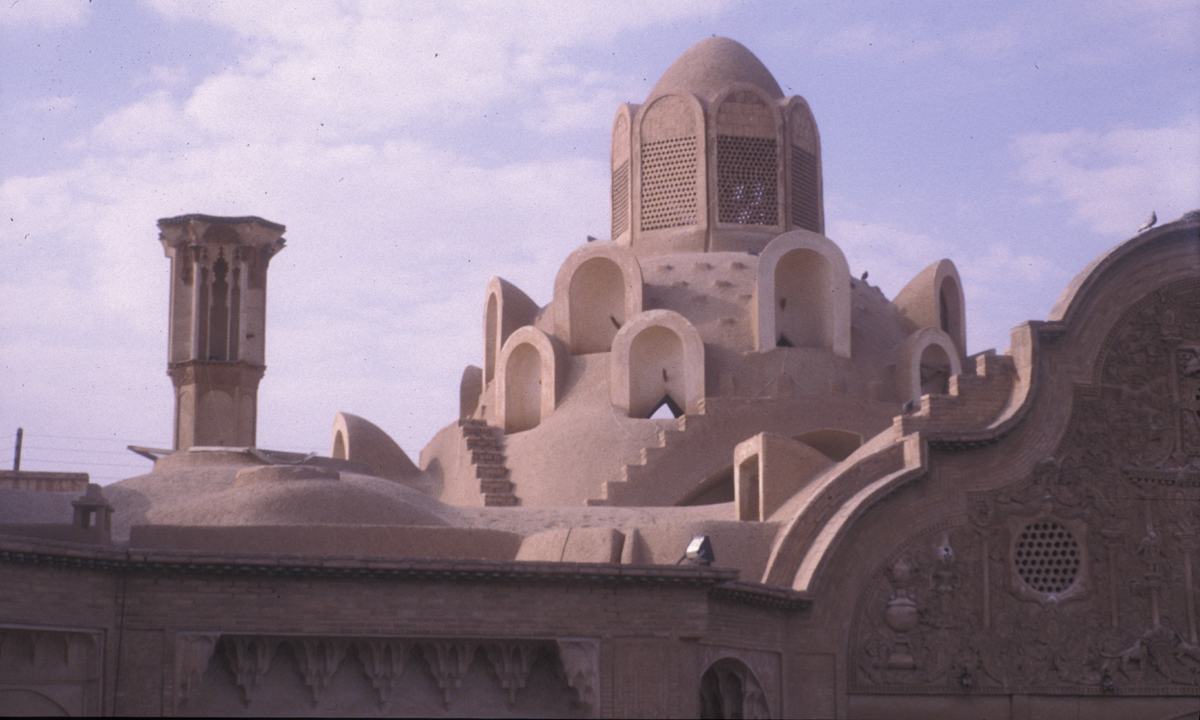
One of Iran's oldest cities, an oasis on the edge of the desert between Tehran and Isfahan. It is famous for its grand 19th-century merchants' houses, its rosewater and the Fin Garden.
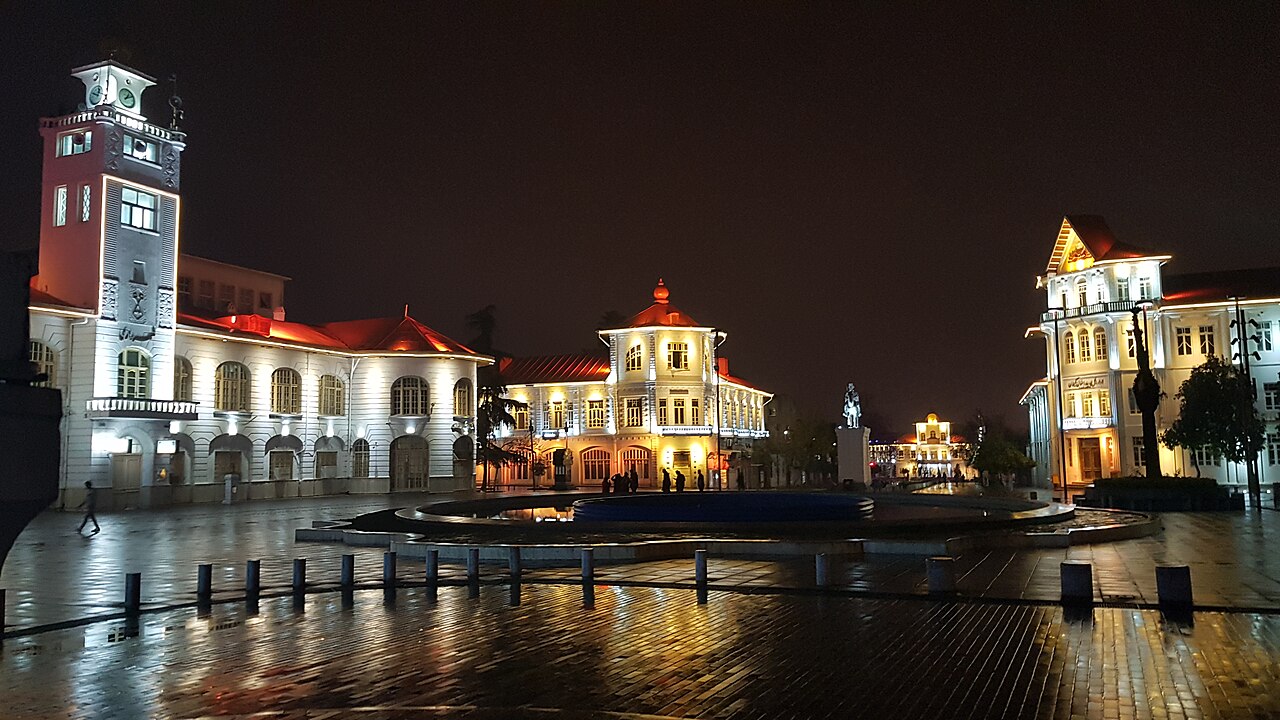
The largest city on the Caspian side, green and rainy, with rice fields and tea gardens nearby. It is known as the City of Silver Rain and for Gilan cooking, including mirza ghasemi.
One of the oldest cities in Iran, built on the site of Ecbatana, capital of the Medes. The ancient mound of Hegmataneh became a UNESCO World Heritage Site in 2024. The city stands at the foot of Mount Alvand.
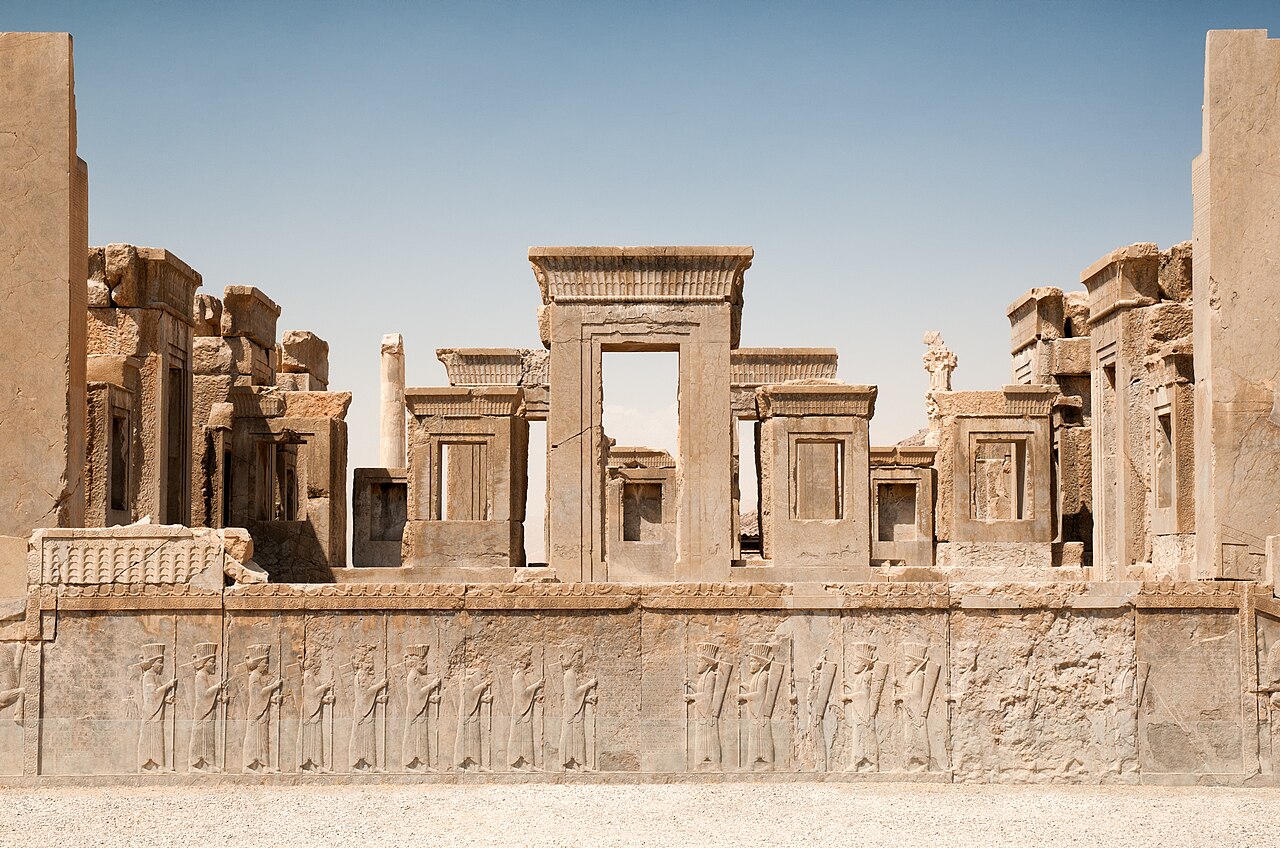
The ceremonial capital of the Achaemenid kings, begun by Darius the Great around 518 BC on a vast stone terrace about 60 km northeast of Shiraz. Tall columns, carved gateways and staircase reliefs of people bringing gifts survive from the palaces that Alexander's army burned in 330 BC. The royal tombs of Naqsh-e Rostam are nearby.
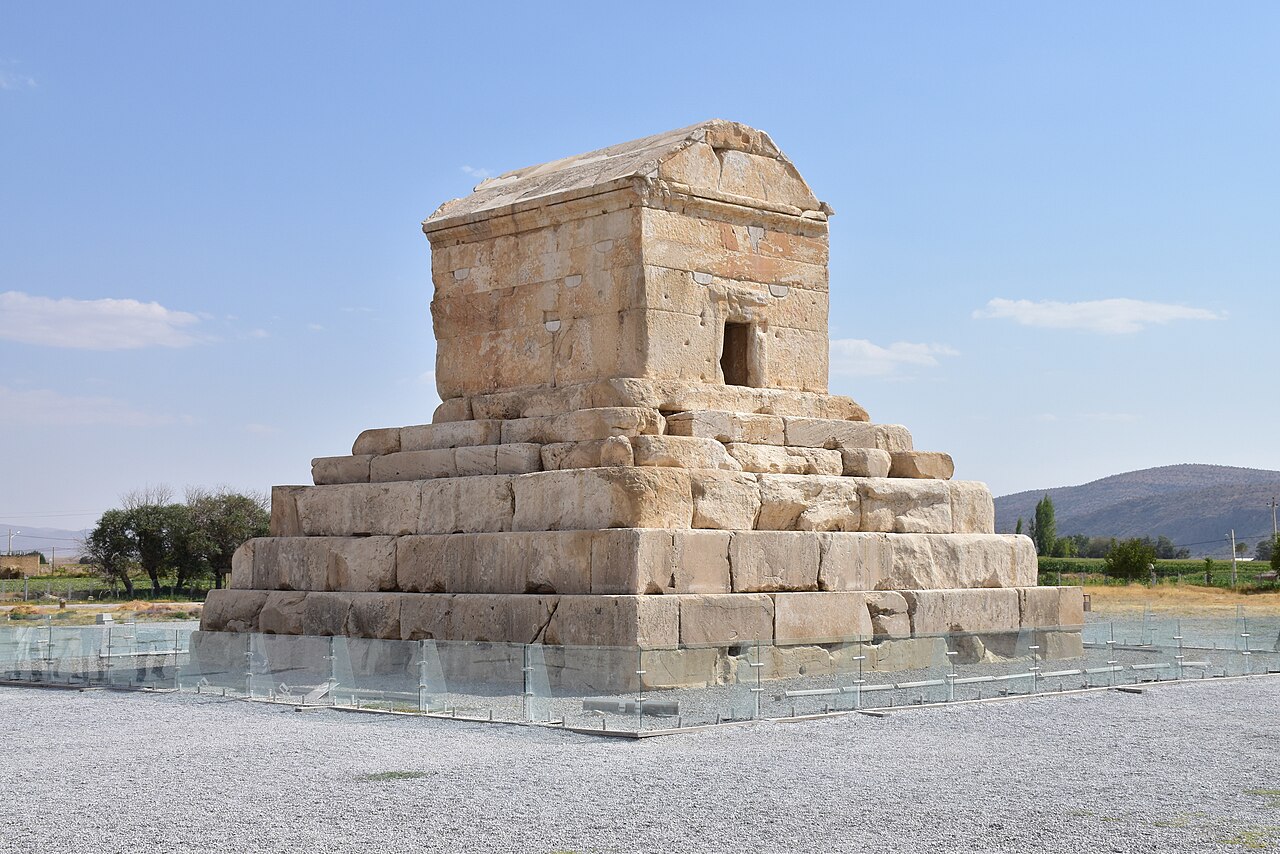
The first capital of the Persian Empire, built by Cyrus the Great, about 90 km northeast of Shiraz in a straight line. Its best-known monument is the simple stone tomb of Cyrus, standing on six steps in an open plain.
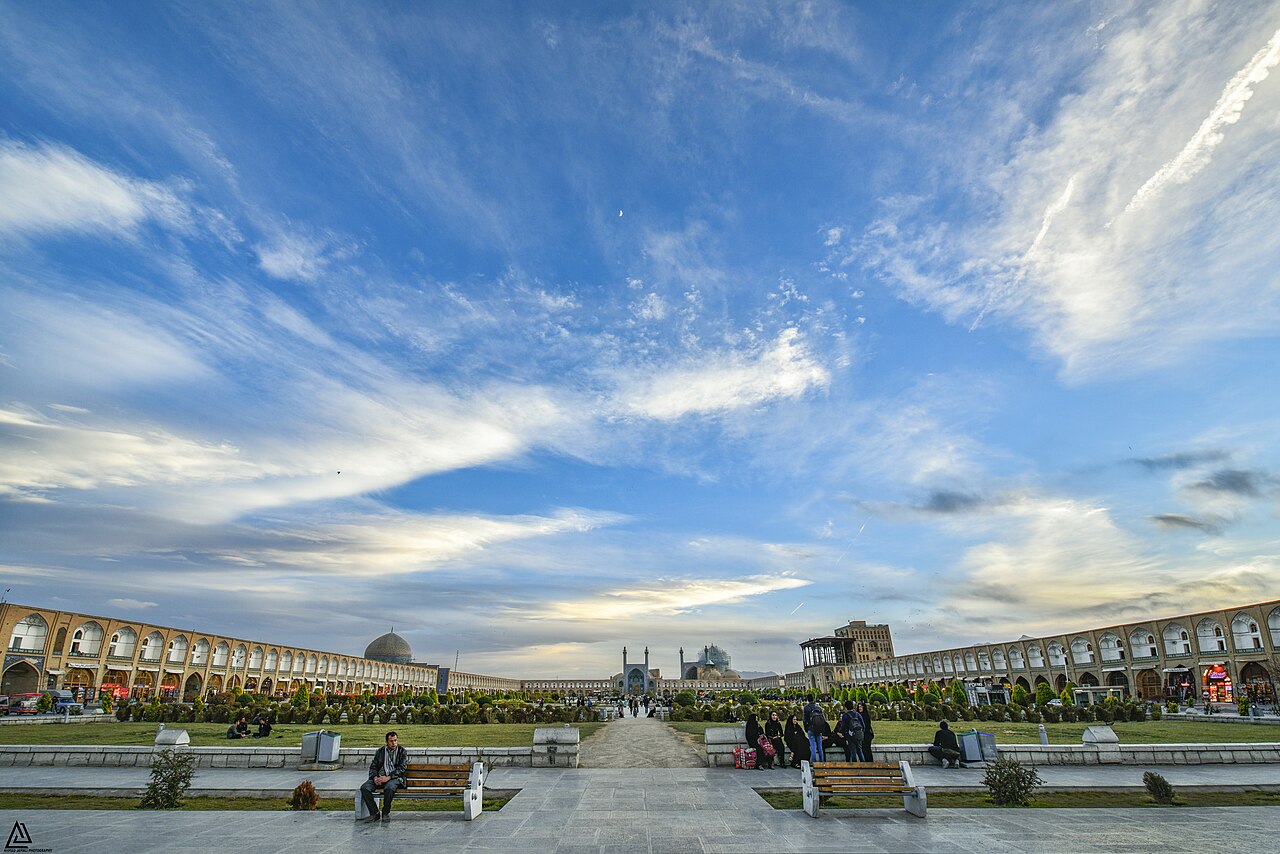
A vast square built from 1598 by Shah Abbas the Great, about 560 m long, framed by the Shah Mosque, the Sheikh Lotfollah Mosque, the Ali Qapu palace and the gate to the bazaar. Polo was once played here while the shahs watched. Buildings around the square were reported damaged by air strikes in March 2026.
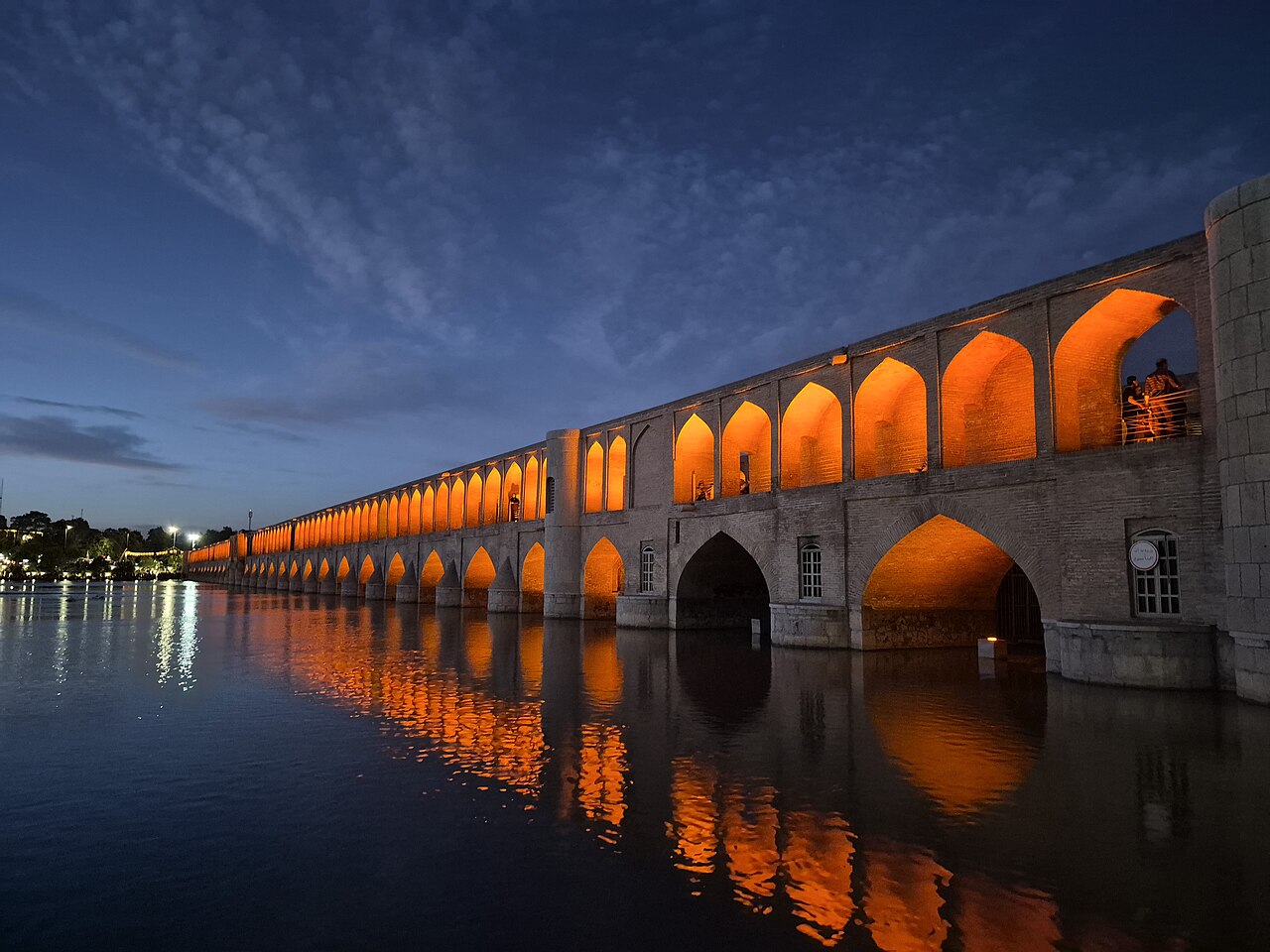
The 'bridge of thirty-three spans', built in the early 1600s for Shah Abbas across the Zayanderud river. It is a favourite place for an evening walk, though in recent years the river has often been dry for much of the year.
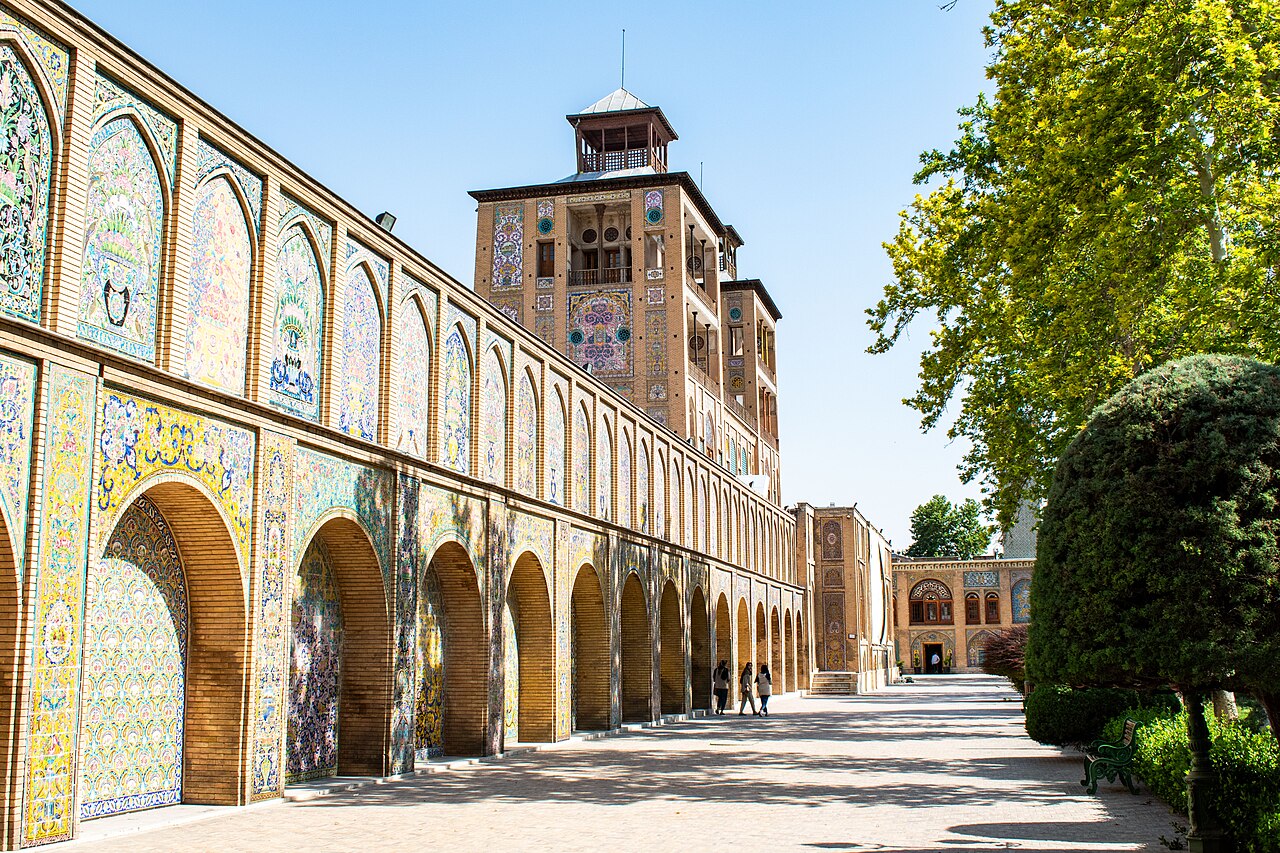
The palace complex of the Qajar shahs in the old heart of Tehran, with mirrored halls, tiled walls and gardens. It is now a group of museums. The palace was reported damaged by a strike nearby in March 2026, so check whether it is open.
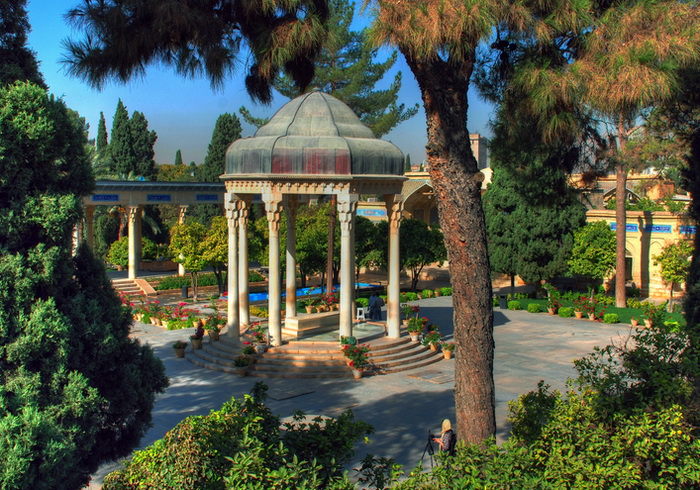
The marble tomb of the 14th-century poet Hafez under an open pavilion in a garden of orange trees. Iranians come here to recite his poems, and some open his book at random to find advice, a custom called fal-e Hafez.
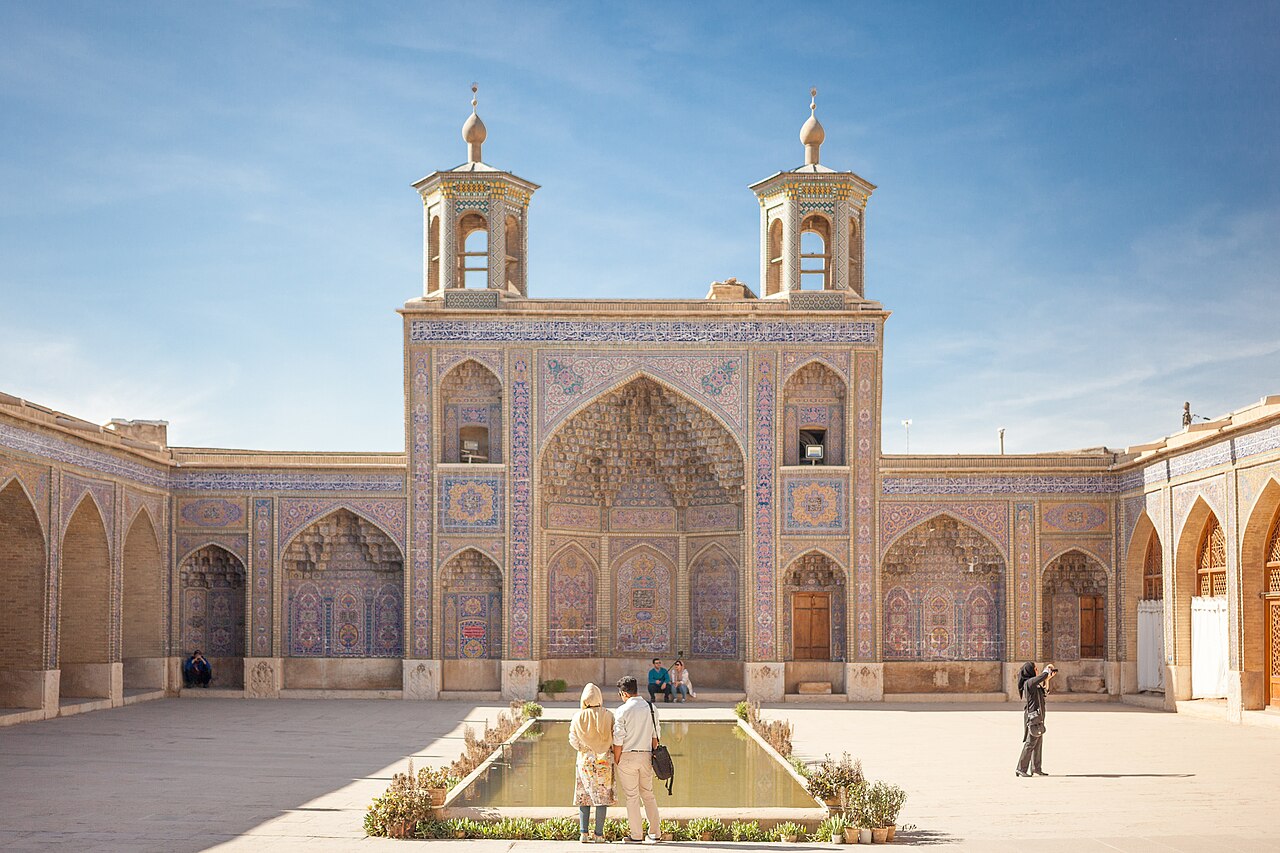
A mosque completed in 1888, known as the Pink Mosque for its rose-coloured tiles. In the early morning, sunlight through its stained-glass windows throws patches of colour across the Persian carpets inside.
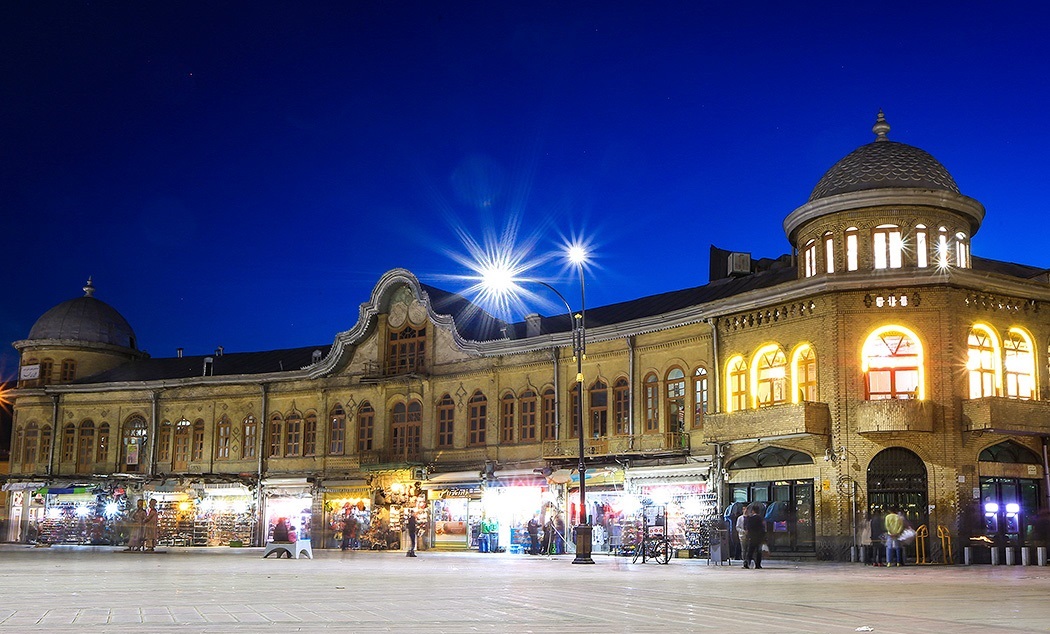
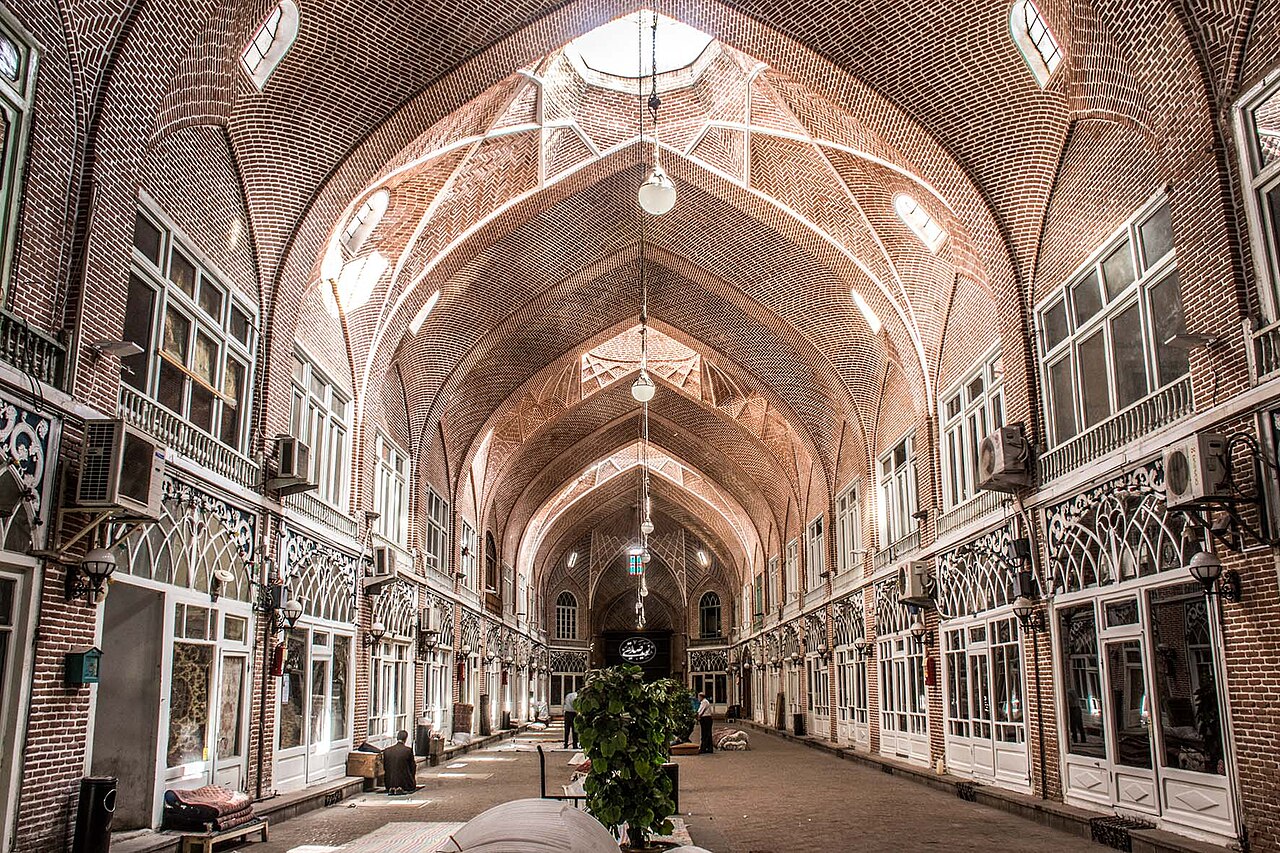
One of the oldest and largest covered bazaars in the Middle East, a maze of brick-vaulted lanes, domed halls and caravanserais that grew rich on the Silk Road. Carpets, spices and gold are still traded here.
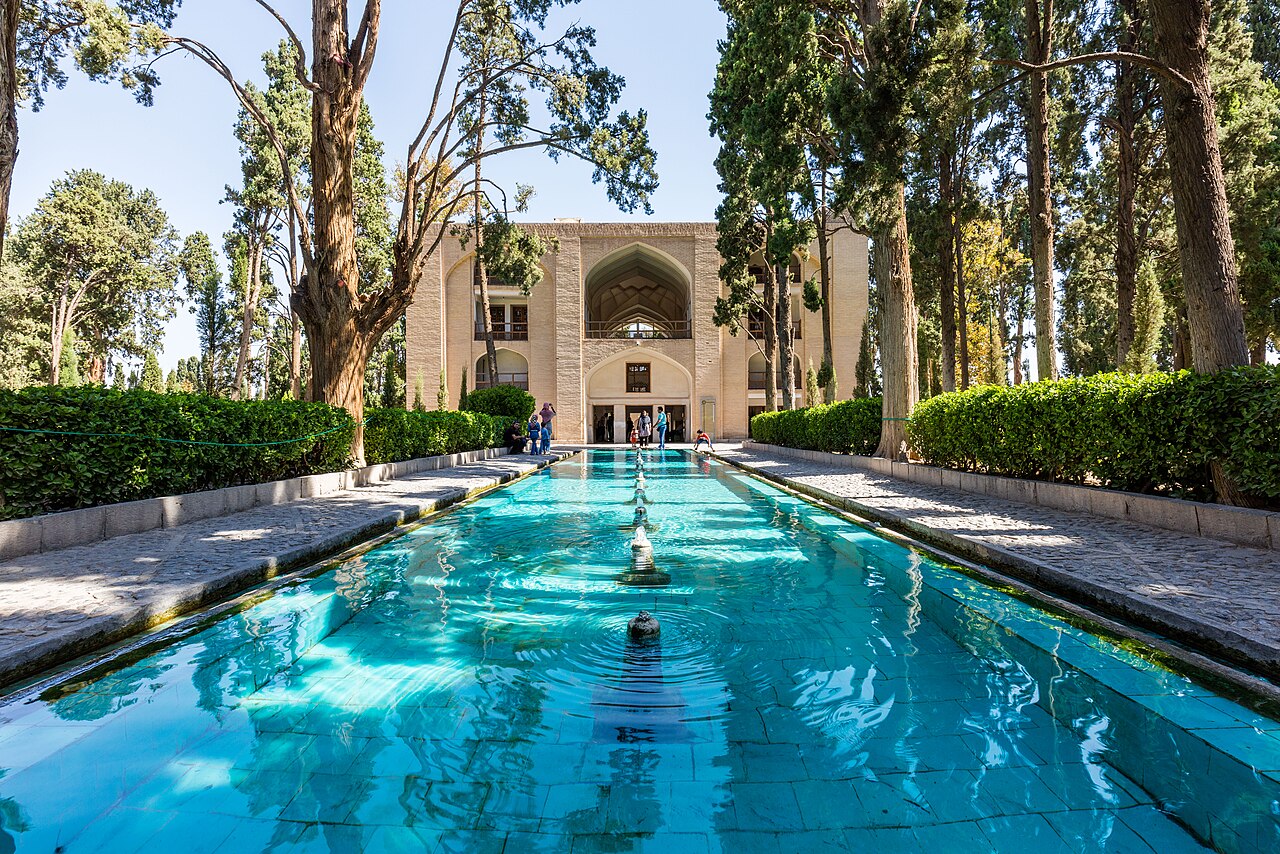
A royal Persian garden completed in 1590, with channels of spring water running between tall cypress trees and pavilions. It is the oldest surviving garden in Iran and one of nine gardens in the UNESCO site The Persian Garden.
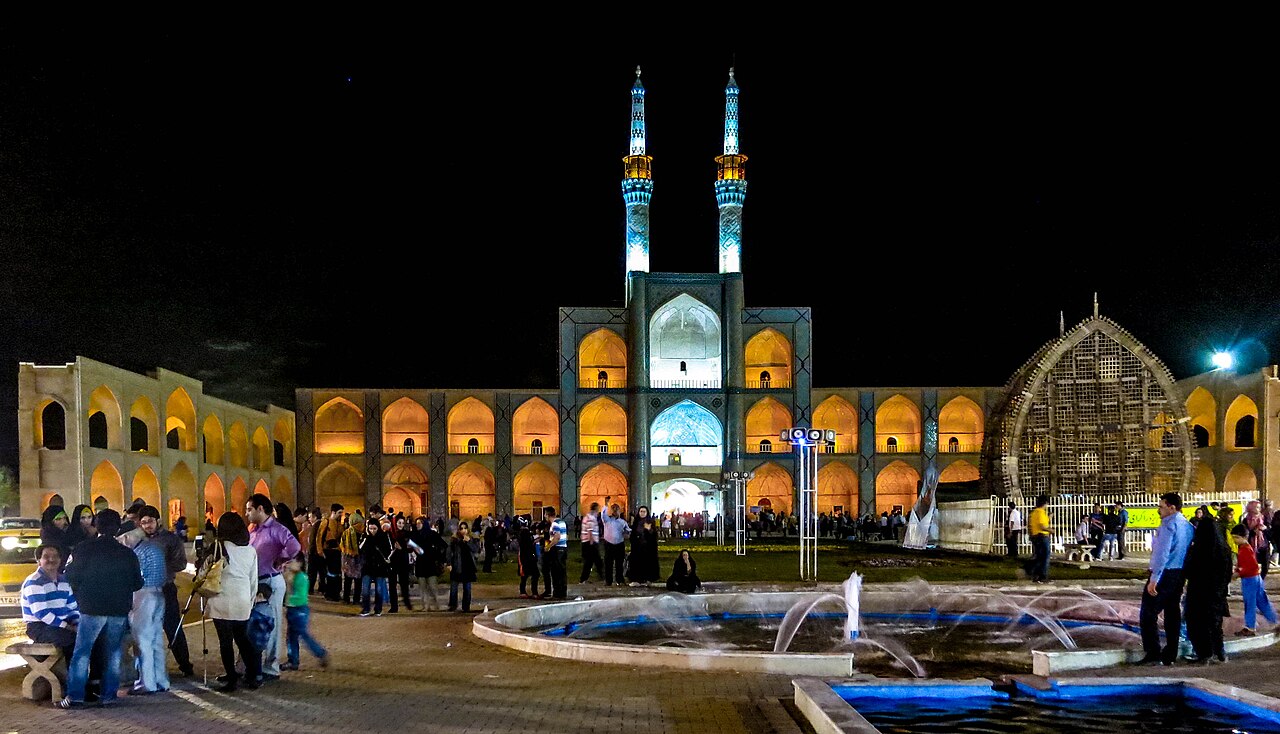
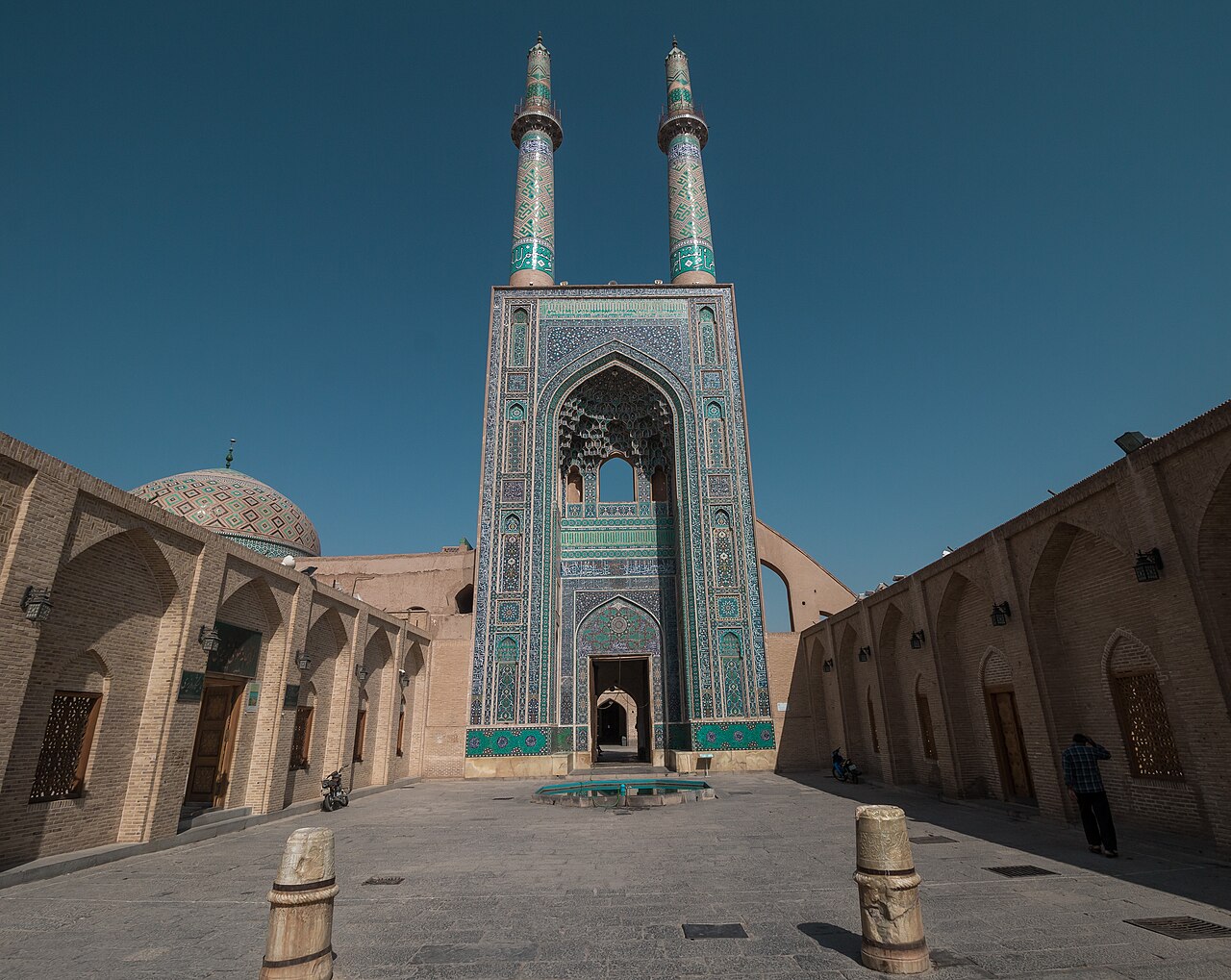
The great Friday mosque of Yazd, with a pair of very tall minarets over a gateway covered in blue tiles. It stands in the historic city of Yazd, a UNESCO World Heritage Site since 2017.
Nowruz, the Persian New Year, begins at the exact moment of the spring equinox in March. Iran's official calendar starts its year then too: the year 1405 began in March 2026.
02
On Yalda Night, the longest night of the year in December, families stay up late eating pomegranates, watermelon and nuts and reading poems by Hafez.
03
Iran grows most of the world's saffron: 85 to 90 percent, according to the UN Food and Agriculture Organization (as of November 2025). Most of it comes from the provinces of Razavi Khorasan and South Khorasan, in the east.
04
Qanats, underground channels that carry water from the mountains to desert towns, were developed in ancient Iran about 3,000 years ago. Some are still in use, and eleven of them form a UNESCO World Heritage Site.
05
Yazd is called the City of Windcatchers. Its tall towers, badgirs, catch the breeze and send it down into the houses, cooling them without electricity.
06
Satellites have measured the sand of the Lut Desert at 70.7 °C, one of the hottest ground temperatures ever recorded on Earth.
07
Ferdowsi's Shahnameh, the national epic, has about 50,000 couplets and took him more than 30 years to write. It is one of the longest poems ever written by one person.
08
Polo grew out of chovgan, a horseback game played in ancient Persia. In Isfahan the Safavid shahs watched polo matches in Naqsh-e Jahan Square from the balcony of the Ali Qapu palace.
09
As of September 2026, Iran has 30 UNESCO World Heritage Sites, from Persepolis and the Lut Desert to Alamut Castle, added in 2026.
10
The English word 'bazaar' comes from the Persian 'bâzâr', market, and 'paradise' goes back to an old Persian word for a walled garden.
11
Mount Damavand, 5,610 m, is the highest mountain in Iran and the highest volcano in Asia. It has a special place in Persian myths and legends.
12
Taarof is the Iranian art of polite offers and refusals. A shopkeeper or taxi driver may say 'it's not worthy of you' and wave away payment; it is courtesy, and you should insist on paying.
13
In 2024 Iran, the United States and Turkey together grew 87 percent of the world's pistachios, and many of Iran's come from Kerman province.
Persian is written in a form of the Arabic script, from right to left. Each word is shown first in Latin letters, with the Persian script in brackets; 'â' is a long 'aa' sound, 'kh' is like the ch in Scottish 'loch' and 'gh' is a soft gargled sound Pronunciation is written the way it sounds; the capital letters show where the stress goes. Audio is coming soon.
As of September 2026, the UK government advises against all travel to Iran because of the ongoing conflict, the risk of detention and airspace that may close at short notice. Other governments give similar warnings. Always check your own government's current advice before making any plans.
The dress code is the law
Women must cover their hair with a headscarf in public and wear loose clothes with long sleeves that cover the hips, and a chador may be needed at shrines. Men should wear long trousers and avoid sleeveless shirts. Rules are enforced, sometimes strictly.
No alcohol
Alcohol is illegal for visitors, including foreigners: you may not bring it in, buy it or drink it, and penalties are severe. Try doogh, fresh juices and the many teas instead.
Bring cash
Because of sanctions, foreign bank cards do not work in Iran. Visitors need to bring cash and change it only at official exchange offices. Prices are often quoted in toman (1 toman = 10 rials), so ask which one is meant.
Be careful with cameras
Never take photos near military sites, government buildings or police, and avoid drones, which need permission. Ask before photographing people, especially women.
Understand taarof
If a taxi driver or shopkeeper says 'ghâbel nadâre', it's not worthy of you, and refuses your money, it is a polite ritual. Offer again, and they will then accept.
Mind Nowruz
Around Nowruz, from about 20 March, many Iranians travel for two weeks. Offices close, trains and hotels fill up, and famous sites are very busy.
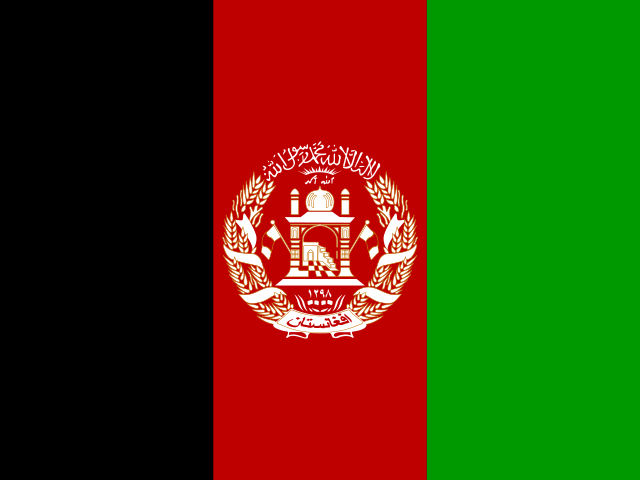 Afghanistan
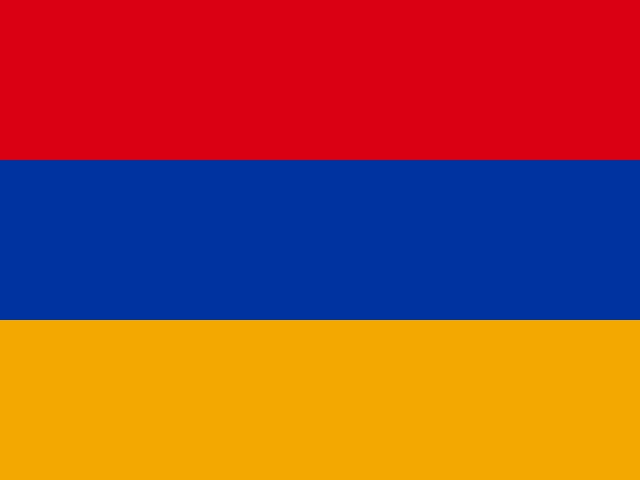 Armenia
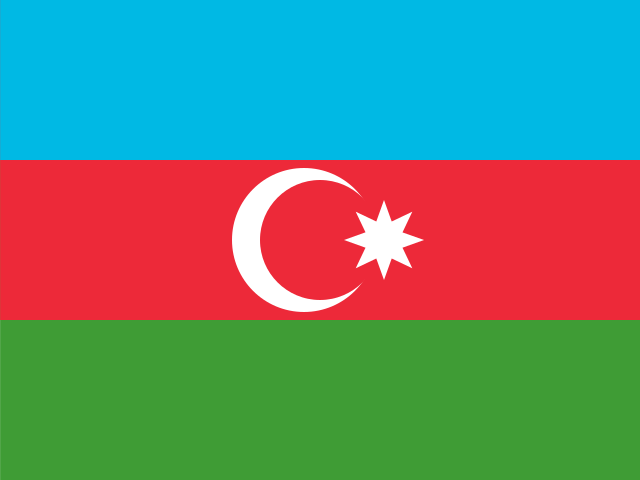 Azerbaijan
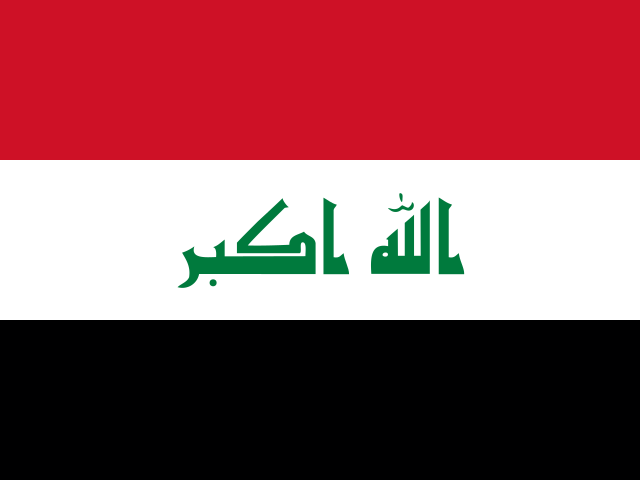 Iraq
Iraq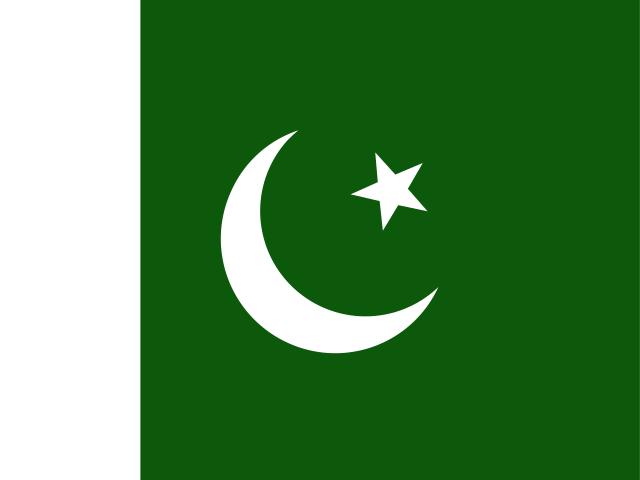 Pakistan
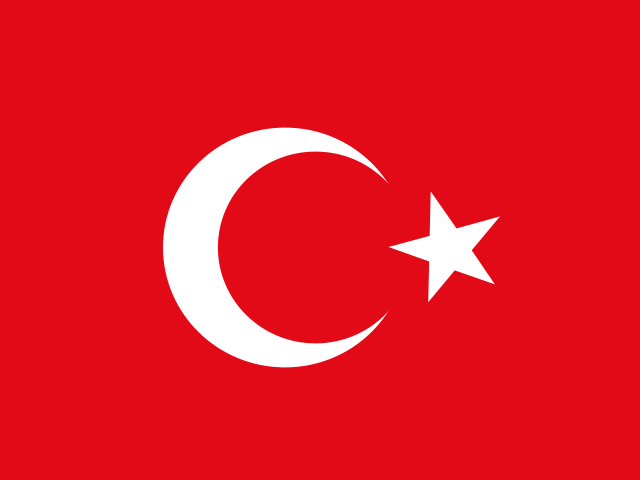 Türkiye
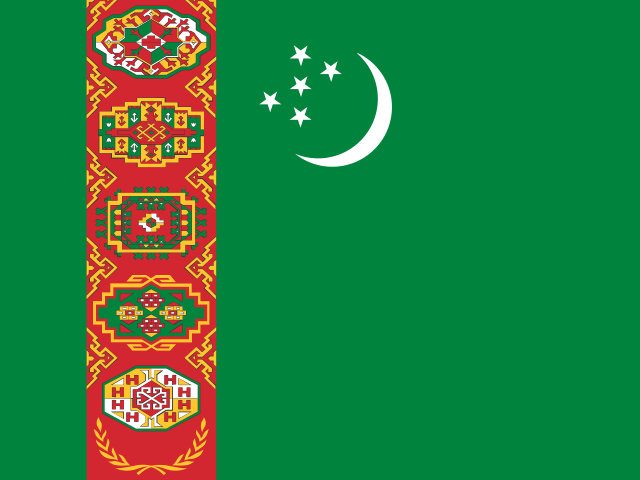 Turkmenistan