A free large-print PDF. Choose what goes in: facts, map, history, dishes and recipes, phrases, fun facts, a quiz with or without answers. Made for clubs, care homes, libraries and family afternoons.
Uruguay is a small, calm country in the southeast of South America, tucked between Argentina and Brazil. To the south lies the wide Río de la Plata, and to the southeast the Atlantic Ocean. There are no high mountains: the land is mostly rolling grassland and low hills called cuchillas, and the highest point is only about 514 m. It is the only country in South America that lies entirely south of the Tropic of Capricorn, so it has four real seasons.
The Charrúa and other peoples lived here long before Europeans arrived. The Portuguese founded Colonia del Sacramento in 1680 and the Spanish founded Montevideo as a fortress in the 1720s, and the two empires fought over the land for a century. After the struggles led by José Gervasio Artigas, the national hero, Uruguay became independent in 1828 and adopted its first constitution in 1830. Large waves of immigrants, above all from Spain and Italy, shaped its food and its way of speaking.
Today Uruguay is a democratic republic of about 3.5 million people, and more than a third of them live in Montevideo. It is known for its stable democracy, its early social reforms, its beef, and a passion for football: it hosted and won the very first World Cup in 1930. Visitors come for the old streets of Colonia, the Art Deco buildings and seafront of Montevideo, the beaches of Punta del Este and the wild coast of Rocha.
CapitalMontevideo
PopulationAbout 3.5 million (2023 national census)
Official languageSpanish in practice: it is the national language, although the constitution does not name an official language. Uruguayan Sign Language was recognised by law in 2001, and a mix of Spanish and Portuguese is spoken near the border with Brazil
CurrencyUruguayan peso (UYU)
AreaAbout 176,000 km² of land, the second smallest independent country in South America after Suriname
GovernmentUnitary presidential republic, divided into 19 departments. The president is elected for five years and cannot be re-elected straight away
Highest pointCerro Catedral, about 514 m, in the Sierra Carapé hills of Maldonado
Main riversThe Uruguay River, about 1,838 km long, forms the western border with Argentina. The Río Negro, the main river inside the country, crosses it from east to west
NeighboursArgentina to the west and southwest, across the Uruguay River and the Río de la Plata, and Brazil to the north and northeast
Drives on theRight. Like Argentina, Uruguay drove on the left in the past and later switched
Uruguay's story runs from hunter-gatherers and mound builders, through a long tug of war between Spain and Portugal, to independence in 1828 and a wave of European immigration. In the early 1900s it became known for bold social reforms and was called the 'Switzerland of the Americas'. A civic-military dictatorship ruled from 1973 to 1985; since then Uruguay has been one of the most stable democracies in Latin America.
1516
Solís reaches the Río de la Plata
The navigator Juan Díaz de Solís, sailing for Spain, reached the wide estuary later called the Río de la Plata and is said to be the first European to land in what is now Uruguay. He and several of his men were killed soon after going ashore. At that time the Charrúa, the Chaná and some Guaraní groups lived in the region.
1680
The Portuguese found Colonia del Sacramento
In January 1680 a Portuguese expedition led by Manuel Lobo landed opposite Buenos Aires and began building a settlement. The Spanish captured it within months, but it was handed back, and for the next century Colonia changed hands between Portugal and Spain several times. Its old quarter is now a UNESCO World Heritage Site.
1726
Montevideo is founded
In 1724 the Spanish governor Bruno Mauricio de Zabala drove a small Portuguese garrison away from the bay of Montevideo and began to settle the site, first with families from Buenos Aires and then from the Canary Islands. His diary gives 24 December 1726 as the date of the city's founding. Its fine natural harbour soon made it a rival to Buenos Aires.
1811
Artigas wins the Battle of Las Piedras
On 18 May 1811 José Gervasio Artigas, later called the Father of the Nation, defeated Spanish forces at Las Piedras near Montevideo. After the battle he gave the famous order to show mercy to the defeated and care for the wounded. The date is a national holiday. Artigas later spent 30 years in exile in Paraguay, where he died in 1850.
1825
The Thirty-Three Orientals declare independence
In April 1825 a small band of exiles led by Juan Antonio Lavalleja, the Thirty-Three Orientals, crossed the Uruguay River to free the land from Brazil, which had annexed it as the province of Cisplatina. On 25 August 1825 independence was declared, and 25 August is Uruguay's Independence Day.
1828
A peace treaty creates an independent Uruguay
After a war between Brazil and the United Provinces of the Río de la Plata (today's Argentina) ended in stalemate, British diplomats helped the two sides agree on a solution. The Preliminary Peace Convention, signed on 27 August 1828, recognised Uruguay as an independent country, belonging to neither of its big neighbours.
1830
The first constitution is adopted
On 18 July 1830 the new Oriental State of Uruguay adopted its first constitution. It divided power between a president, a two-chamber General Assembly and the courts. Montevideo's main avenue, 18 de Julio, is named after this date.
1839
The Guerra Grande begins
Uruguay's two parties, the Blancos (Whites) and the Colorados (Reds), were each backed by factions in Argentina. In 1839 the Colorado leader Fructuoso Rivera declared war on the Argentine ruler Rosas, and the 'Great War' lasted until 1851. Montevideo was besieged for nine years, from 1843, and was defended with the help of foreign volunteers, including an Italian legion led by Giuseppe Garibaldi.
1903
Batlle y Ordóñez becomes president
José Batlle y Ordóñez was elected president in 1903 and again in 1911. His reforms, known as Batllismo, brought a welfare state, free secondary schooling, the eight-hour working day and the separation of church and state. Divorce was made legal in 1907. These changes earned Uruguay the nickname 'the Switzerland of the Americas'.
1927
Women vote for the first time, in Cerro Chato
In July 1927 women were allowed to vote in a local plebiscite in the small town of Cerro Chato. It is remembered as the first time women cast votes in Uruguay. A decree of 1932 gave women the vote nationally, and they took part in a national election for the first time in 1938.
1930
Uruguay hosts and wins the first World Cup
Uruguay was chosen to host the first FIFA World Cup because it was celebrating 100 years of its constitution and was the reigning Olympic football champion. Every match was played in Montevideo, most of them in the new Estadio Centenario. On 30 July 1930 Uruguay beat Argentina 4 to 2 in the final.
1950
The Maracanazo
On 16 July 1950 Uruguay met host country Brazil in the deciding match of the World Cup at the Maracanã Stadium in Rio de Janeiro, in front of at least 173,850 people. Brazil needed only a draw, but Uruguay won 2 to 1, one of the greatest upsets in football history, and took its second world title.
1973
A coup begins twelve years of dictatorship
On 27 June 1973, amid economic crisis and years of violence involving the Tupamaros guerrilla group, the armed forces and President Juan María Bordaberry closed Parliament. The civic-military regime that followed banned political activity and imprisoned and tortured many opponents; Uruguay had one of the highest numbers of political prisoners per person in the world.
1980
Voters reject the military's constitution
In November 1980 the regime put a new constitution, drafted by the military, to a referendum. Uruguayans voted it down. After this defeat the armed forces announced a plan to return the country to civilian rule.
1985
Democracy returns
National elections were held in November 1984, and on 1 March 1985 the elected president, Julio María Sanguinetti of the Colorado Party, took office. Press freedom was restored on his first day. Since then Uruguay has held regular free elections.
2013
Uruguay legalises cannabis
In December 2013, under President José Mujica, Uruguay passed a law to regulate the growing, sale and use of cannabis, making it the first country in modern times to legalise it fully. The aim was to take the trade away from criminal gangs. Same-sex marriage was also legalised in 2013.
Uruguayan food is built on beef and on the cooking of Spanish and Italian immigrants, with touches from Germany, Britain and Brazil. There is pasta on Sundays, pizza with a slice of fainá on top, and cakes filled with dulce de leche. The biggest social meal is the asado, the barbecue. It usually starts with a picada, a board of cheese, olives, salami and bread with an aperitif, then sausages and black pudding come off the grill, and finally the big cuts of beef, with salads and bread. In the afternoon people drink mate with small pastries called bizcochos or with tortas fritas.
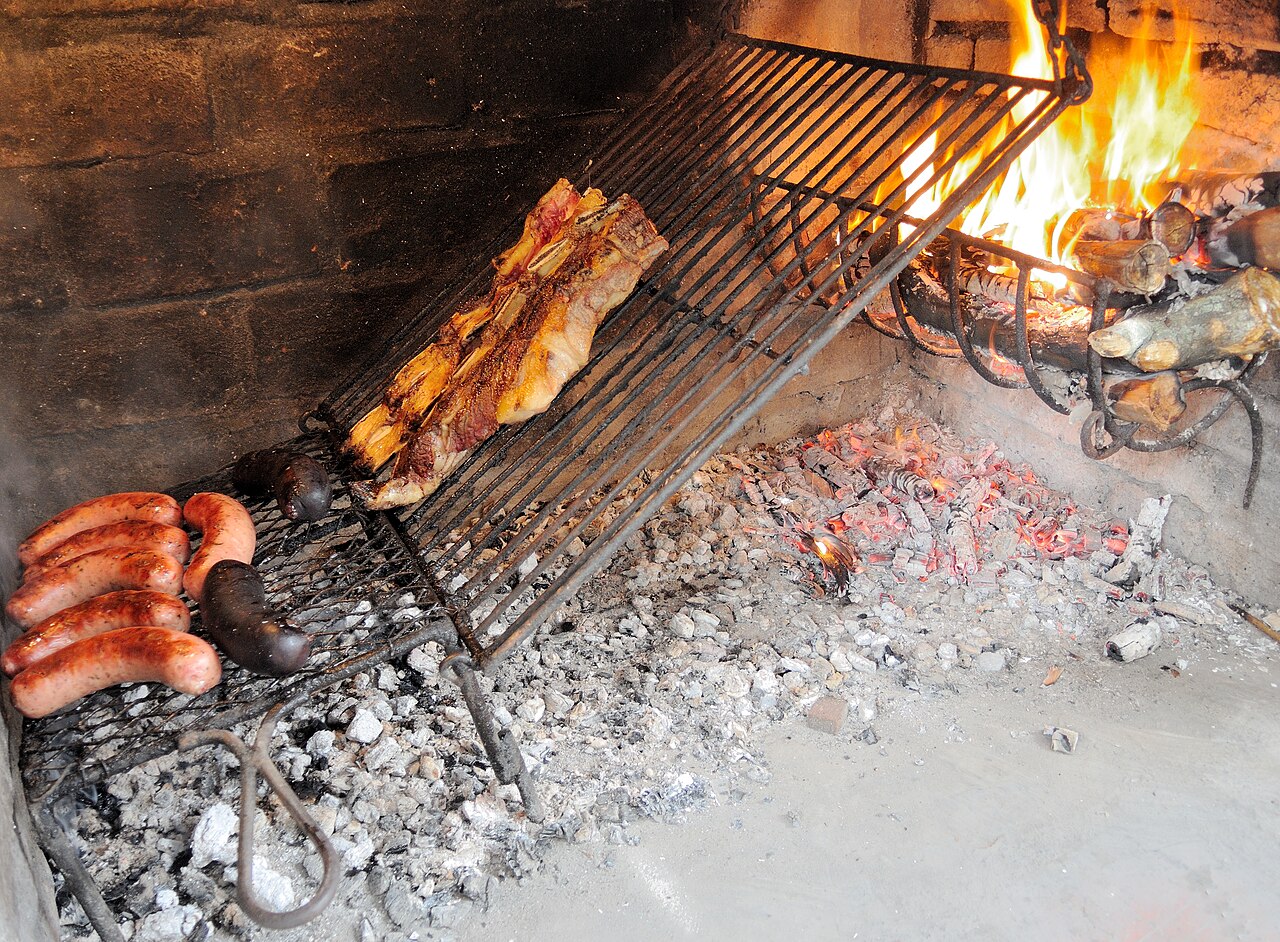
The Uruguayan barbecue, and a social ritual as much as a meal. Beef ribs (tira de asado), sausages (chorizo), black pudding (morcilla), offal and other cuts are cooked slowly over wood embers on a large grill. Many Uruguayan homes have a brick and iron grill on the patio, and in Montevideo's Mercado del Puerto you can eat asado at the counter.
The person in charge of the grill is called the asador or parrillero, and the grill itself is the parrilla.
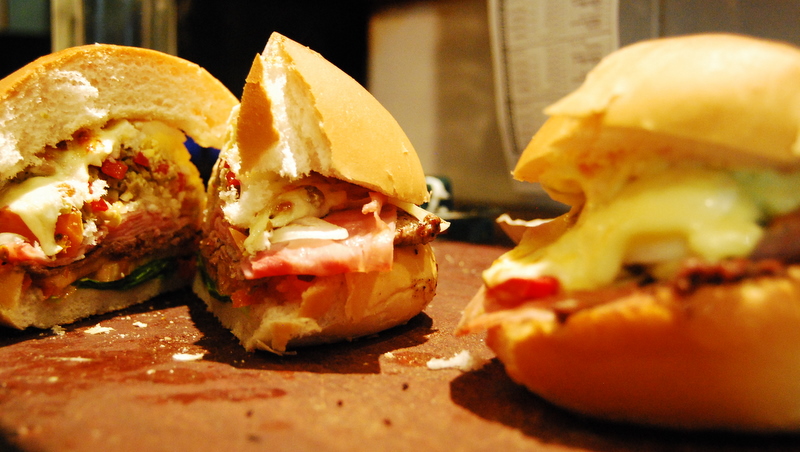
Uruguay's national dish: a huge sandwich of thin grilled beef steak with ham, mozzarella, bacon, tomato, lettuce, mayonnaise, olives and a fried or hard-boiled egg, usually served with chips. Chivito al plato comes on a plate, without the bun.
Chivito means 'little goat'. The story goes that in 1946, at El Mejillón bar in Punta del Este, a customer asked for a kid goat sandwich; the owner, Antonio Carbonaro, had no goat and used beef fillet instead.
See the recipe
Serves 2
30 min
Ingredients
2 thin slices of beef sirloin or fillet steak, about 120 g each, flattened
2 large soft bread rolls, split
4 rashers of bacon
4 slices of cooked ham
2 slices of mozzarella
2 eggs
1 tomato, sliced, and a few lettuce leaves
Mayonnaise and a few green olives, sliced
1 tablespoon oil, salt and pepper
Method
Fry the bacon in a large pan until crisp, then keep it warm.
Season the steaks and cook them in the hot pan for 1 to 2 minutes on each side.
Lay the ham and then the mozzarella on each steak, cover the pan for a minute so the cheese melts, and lift them out.
Fry the eggs. Older people, pregnant women and young children should cook them until the yolk is firm.
Spread the rolls with mayonnaise, add lettuce and tomato, then the steak with ham and cheese, the bacon, the egg and the olives. Close and serve at once with chips.
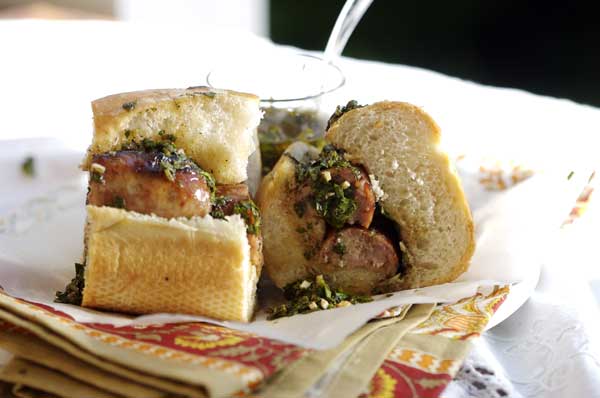
A grilled chorizo sausage split in half and served in bread, often with sauces such as salsa criolla, a mix of chopped tomato and onion. It is a favourite street food and the first thing off the grill at many asados.
The name joins its two ingredients: chorizo and pan, bread.
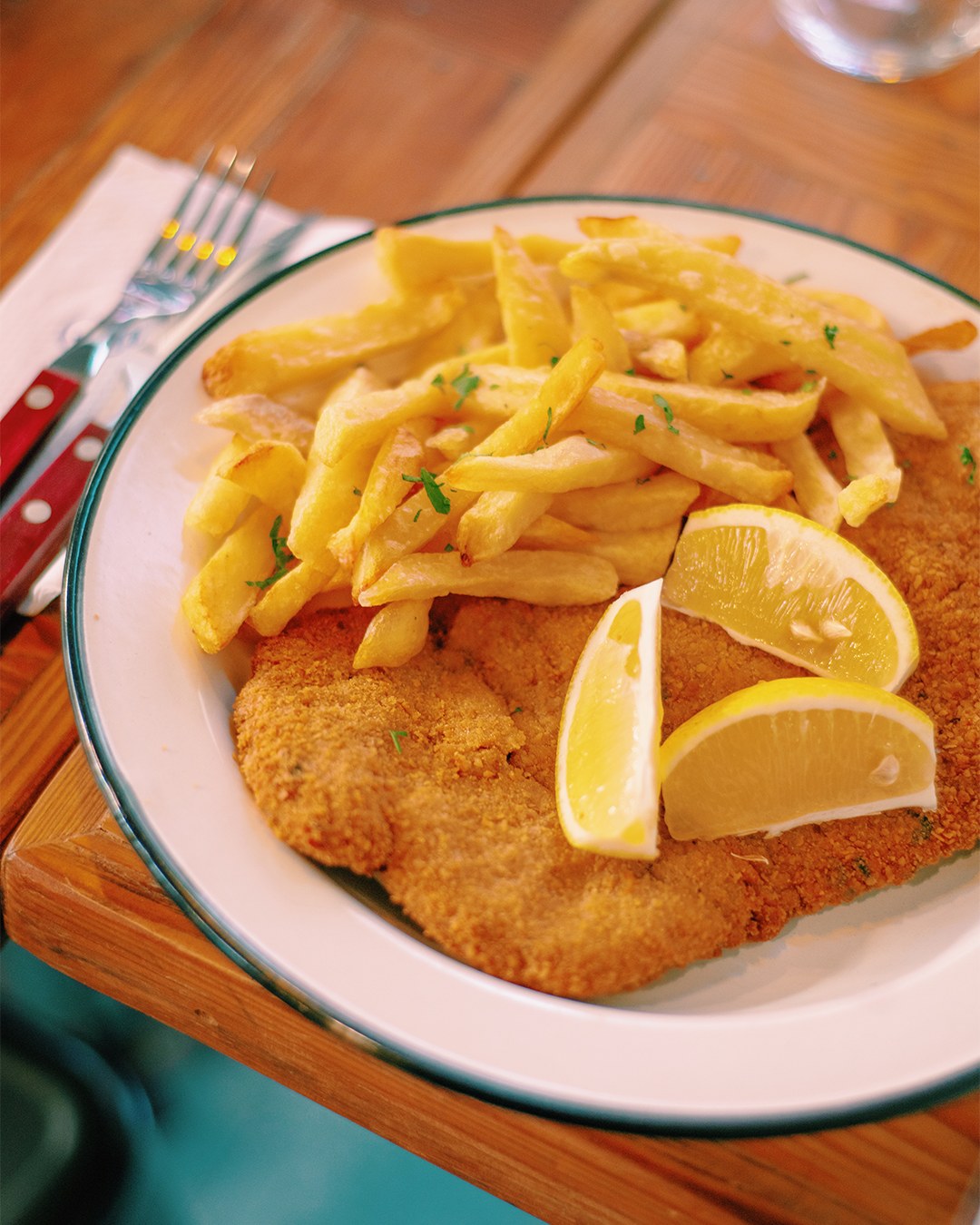
A thin slice of beef or chicken dipped in egg and breadcrumbs and fried. It comes 'a la napolitana' with tomato sauce, ham and melted cheese, 'a caballo' (on horseback) with fried eggs on top, or 'al pan' as a big sandwich.
Despite its name, the milanesa a la napolitana does not come from Naples: popular legend says it was created in Buenos Aires in the 1940s.
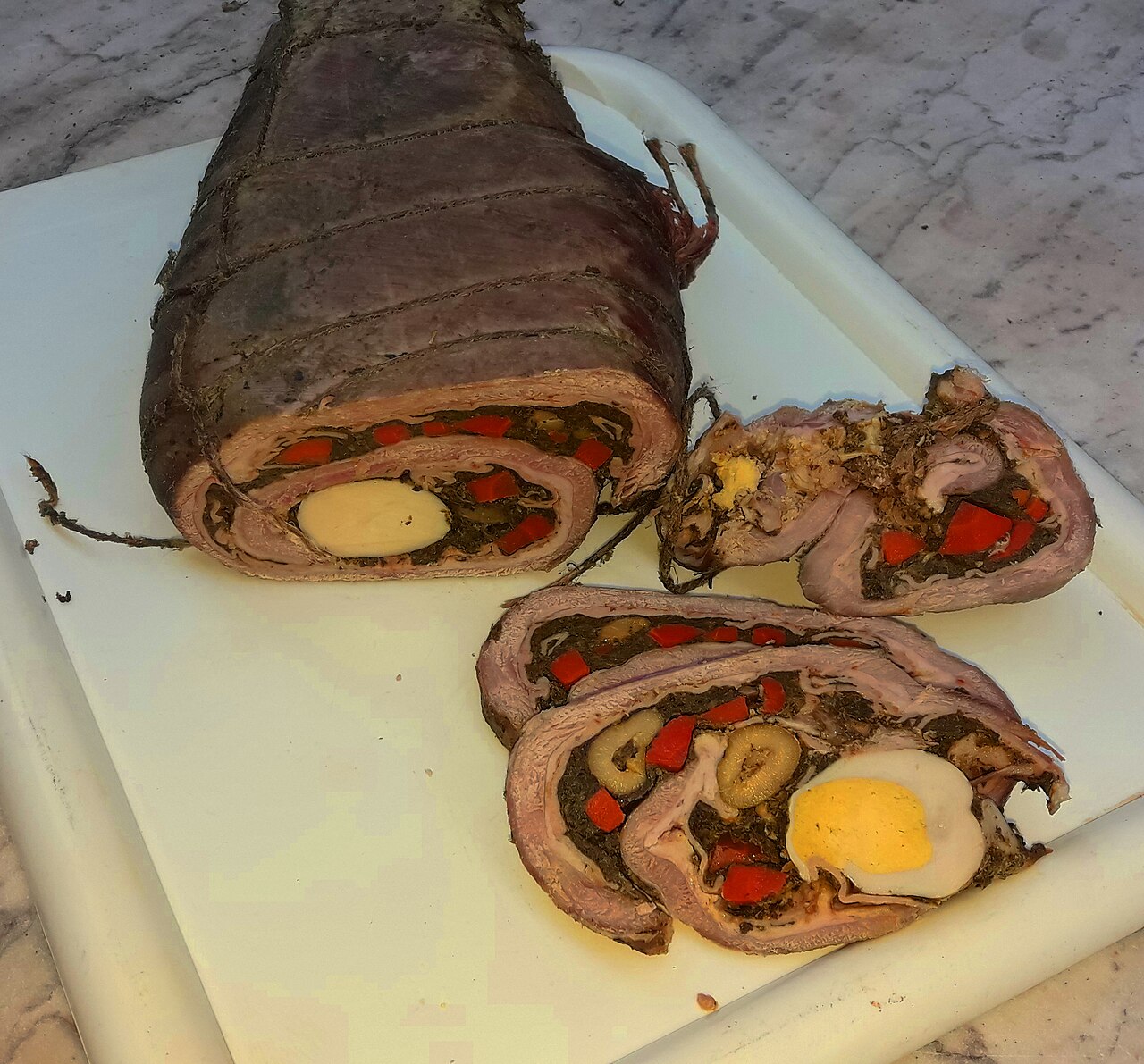
A thin, wide cut of beef rolled around a filling of spinach, carrots and hard-boiled eggs, tied with string, boiled, pressed and served cold in slices, which show a colourful spiral.
Matambre joins the Spanish words matar and hambre: it means 'hunger killer'.
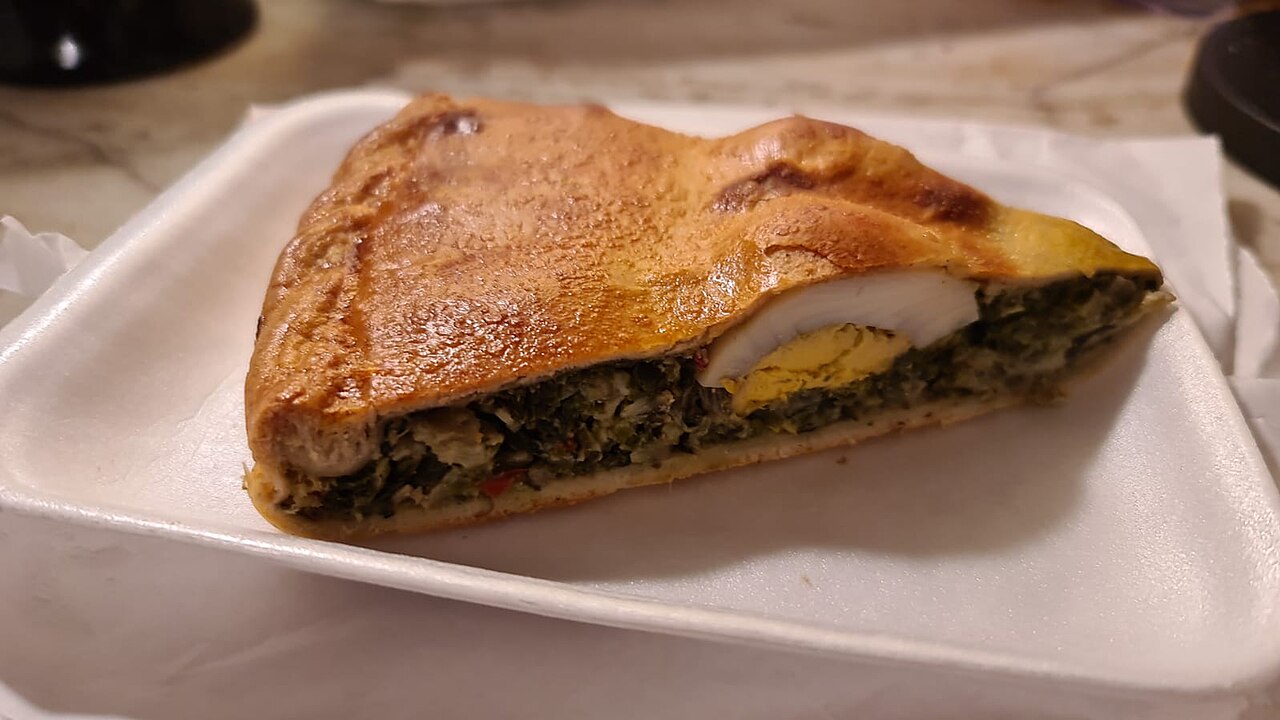
A savoury pie of thin pastry filled with chard or spinach, cheese and eggs. Whole eggs are broken into hollows in the filling, so each slice shows a hard-cooked egg. It is a favourite family dish, brought by Italian immigrants.
In Genoa, where it comes from, it is an Easter dish, and legend says skilled cooks once layered up to 33 sheets of pastry, one for each year of Christ's life.
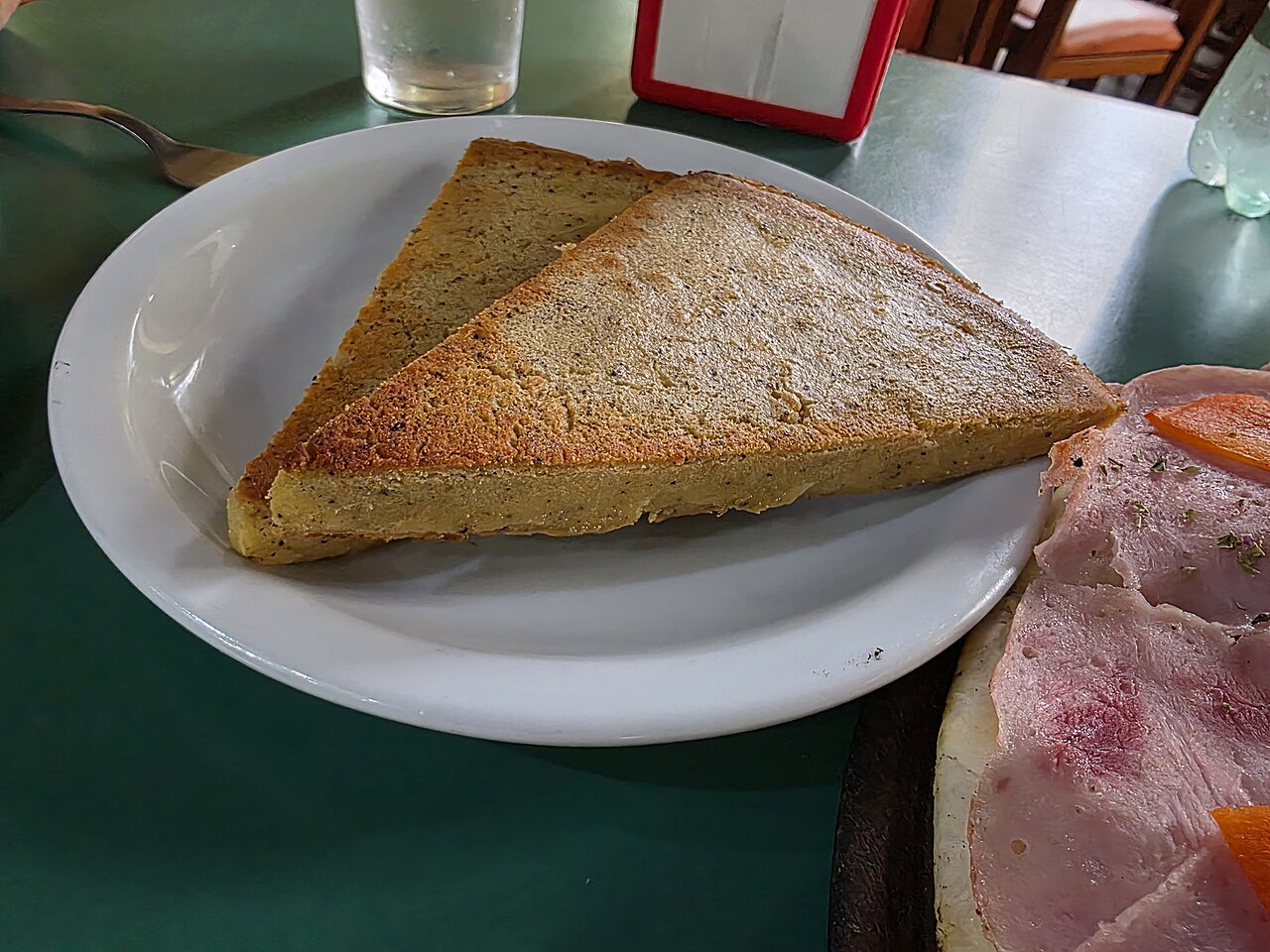
A thin, flat bake of chickpea flour, water and olive oil, cut into slices and sprinkled with pepper. In pizzerias people order a slice of pizza with a slice of fainá on top, called 'pizza a caballo'.
Uruguayans celebrate Fainá Day on 27 August.
See the recipe
Serves 6
1 h 30 min
Ingredients
250 g chickpea flour (gram flour)
750 ml cold water
5 tablespoons olive oil, plus extra for the tin
1 teaspoon salt
Freshly ground black pepper
Method
Whisk the chickpea flour with the water and salt until there are no lumps. Cover and leave it to rest for at least 1 hour, then skim off any foam.
Heat the oven to its highest setting, about 250°C. Pour a generous layer of oil into a large round baking tin or roasting tin and heat it in the oven for 5 minutes.
Stir the 5 tablespoons of oil into the batter and pour it carefully into the hot tin. It should be only about 5 mm deep.
Bake for 15 to 20 minutes, until the top is golden and the edges are crisp.
Leave it to set for a few minutes, cut it into wedges, grind plenty of black pepper over it and serve warm, on its own or on top of a slice of pizza.
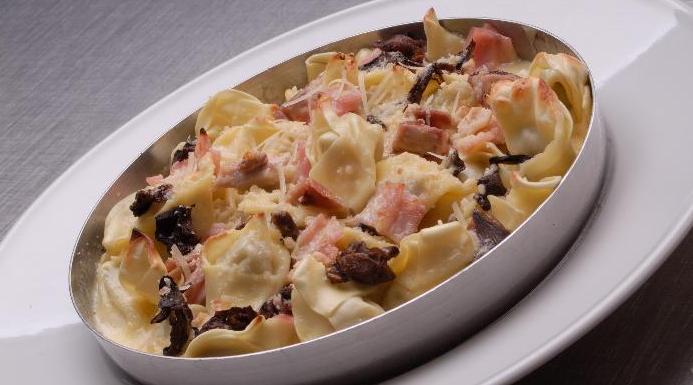
Small stuffed pasta (cappelletti) in a warm, rich sauce of cream, ham, mushrooms and a spoonful of beef extract, sometimes with onion or walnuts. It is Uruguay's own contribution to Italian-style pasta.
The sauce was invented in the 1950s by the Italian chef Raimondo Monti at the Montevideo restaurant Mario y Alberto, and named after the tenor Enrico Caruso, who had sung in Montevideo in 1915. Caruso never tasted it.
Italian immigrants all over the Río de la Plata region
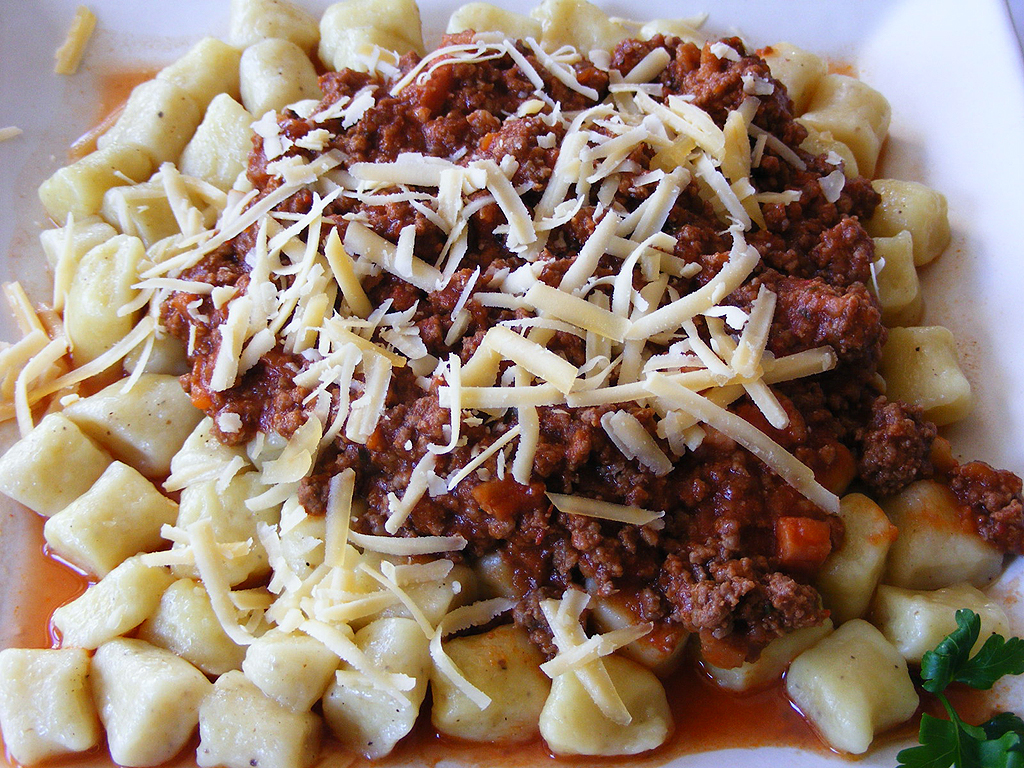
Potato gnocchi, usually with tuco (a meat and tomato sauce), eaten on the 29th of every month. It is a family tradition in homes and restaurants alike.
Diners put a banknote or a coin under their plate to bring luck and money in the month ahead. One explanation is that the 29th, just before payday, was when poor families could only afford cheap food like gnocchi.
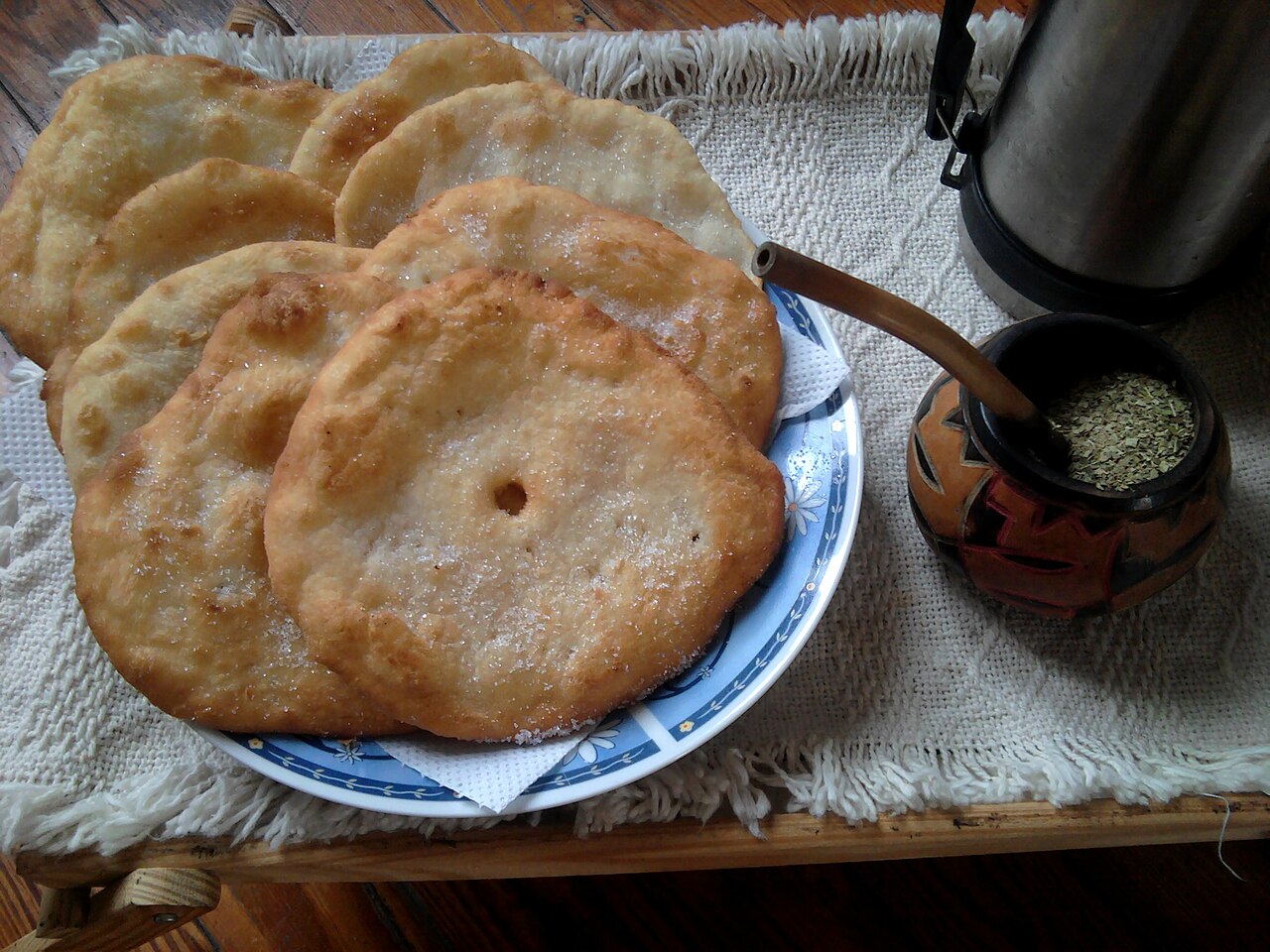
Thin, round pieces of fried dough with a little cut or hole in the middle, sprinkled with sugar or salt. They are sold at street stalls and fairs and are the classic partner for mate.
Uruguayans like to make tortas fritas on rainy days. One story says the gauchos of the countryside used to collect rainwater to make the dough.
See the recipe
Serves 6
45 min
Ingredients
500 g plain flour
1 teaspoon salt
1 teaspoon baking powder
50 g beef dripping or butter, melted
About 250 ml warm water
Oil for frying
Sugar, for sprinkling
Method
Mix the flour, salt and baking powder in a bowl. Add the melted fat and enough warm water to make a soft dough.
Knead for a few minutes until smooth, cover and leave to rest for 20 minutes.
Roll the dough out to about 5 mm thick and cut rounds about 12 cm across. Make a small cut or hole in the middle of each one so it does not puff up like a balloon.
Heat about 2 cm of oil in a deep pan. Fry the rounds one or two at a time for 1 to 2 minutes on each side, until golden. Take care with the hot oil.
Drain on kitchen paper and sprinkle with sugar while still warm. Serve with mate or coffee.
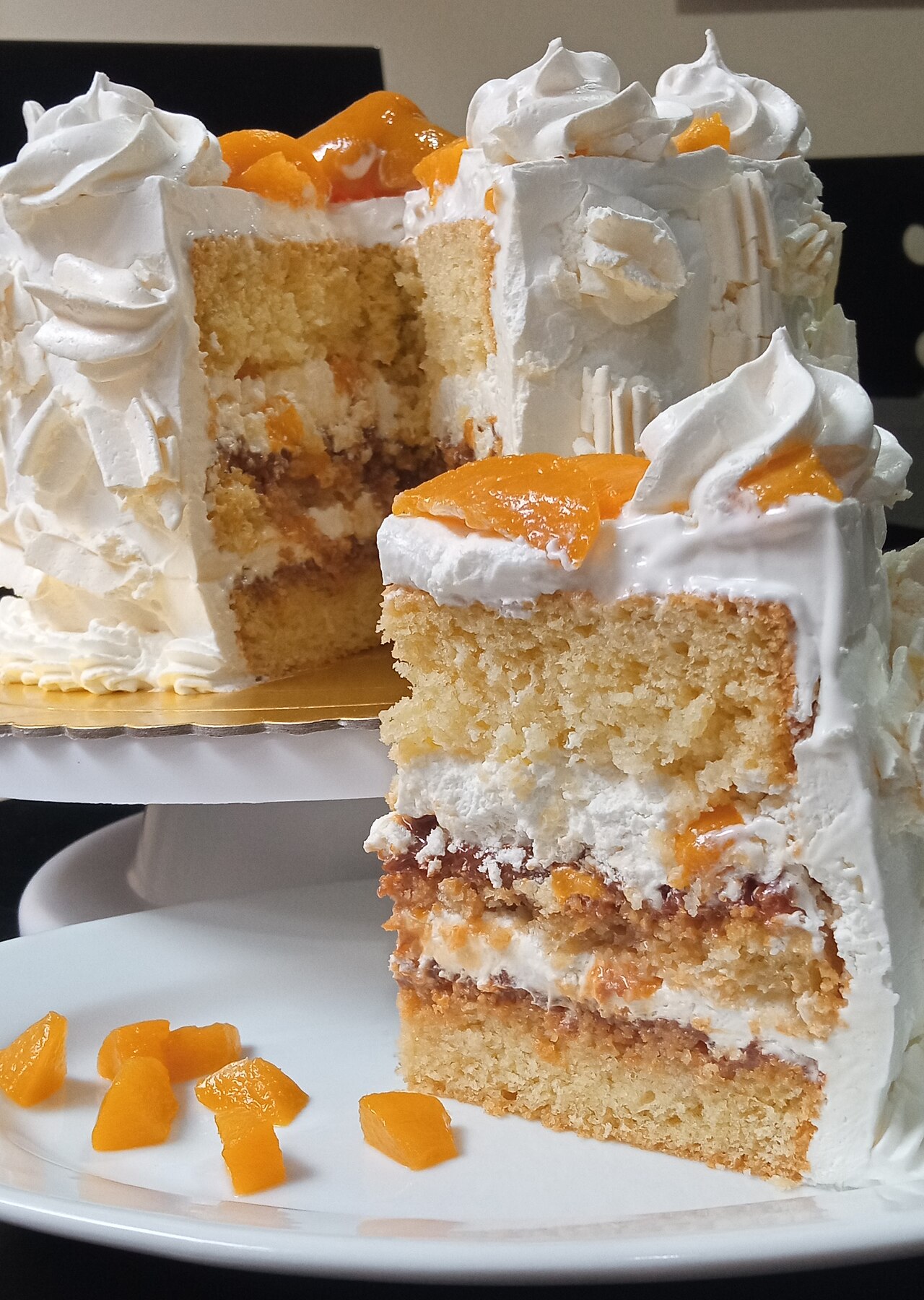
A light cake of sponge, whipped cream, crunchy meringue and fruit, usually peaches and sometimes strawberries. Some versions add dulce de leche or chocolate. You can buy it in bakeries and supermarkets all over the country.
It was created on 27 April 1927 by Orlando Castellano at the Confitería Las Familias in Paysandú, and named after the chajá, the southern screamer, a large bird of the wetlands.
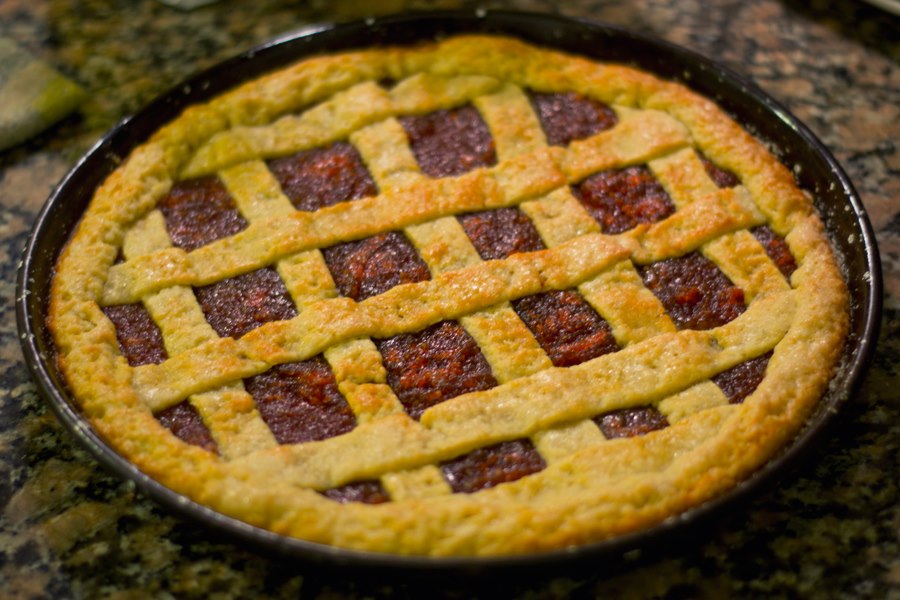
A sweet tart of crumbly shortcrust pastry filled with quince paste (dulce de membrillo), sweet potato jam or dulce de leche, covered with a lattice of thin pastry strips. It is a favourite with afternoon mate or coffee.
The name comes from the Italian pasta frolla, 'crumbly pastry', the dough used for the Italian crostata.
See the recipe
Serves 8
1 h 15 min
Ingredients
250 g plain flour
1 teaspoon baking powder
100 g caster sugar
125 g soft butter
1 egg and 1 egg yolk
The grated zest of 1 lemon and 1 teaspoon vanilla extract
400 g quince paste (membrillo)
3 to 4 tablespoons hot water
Method
Beat the butter and sugar together, then beat in the egg, the yolk, the lemon zest and the vanilla.
Add the flour and baking powder and mix to a soft dough. Wrap it and chill it for 30 minutes.
Heat the oven to 180°C. Mash the quince paste with the hot water until it is soft and spreadable.
Roll out about two thirds of the dough and line a 24 cm tart tin. Spread the quince paste over it. Roll out the rest of the dough, cut it into thin strips and lay them over the top in a criss-cross pattern.
Bake for 30 to 35 minutes, until the pastry is golden. Let it cool in the tin before cutting.
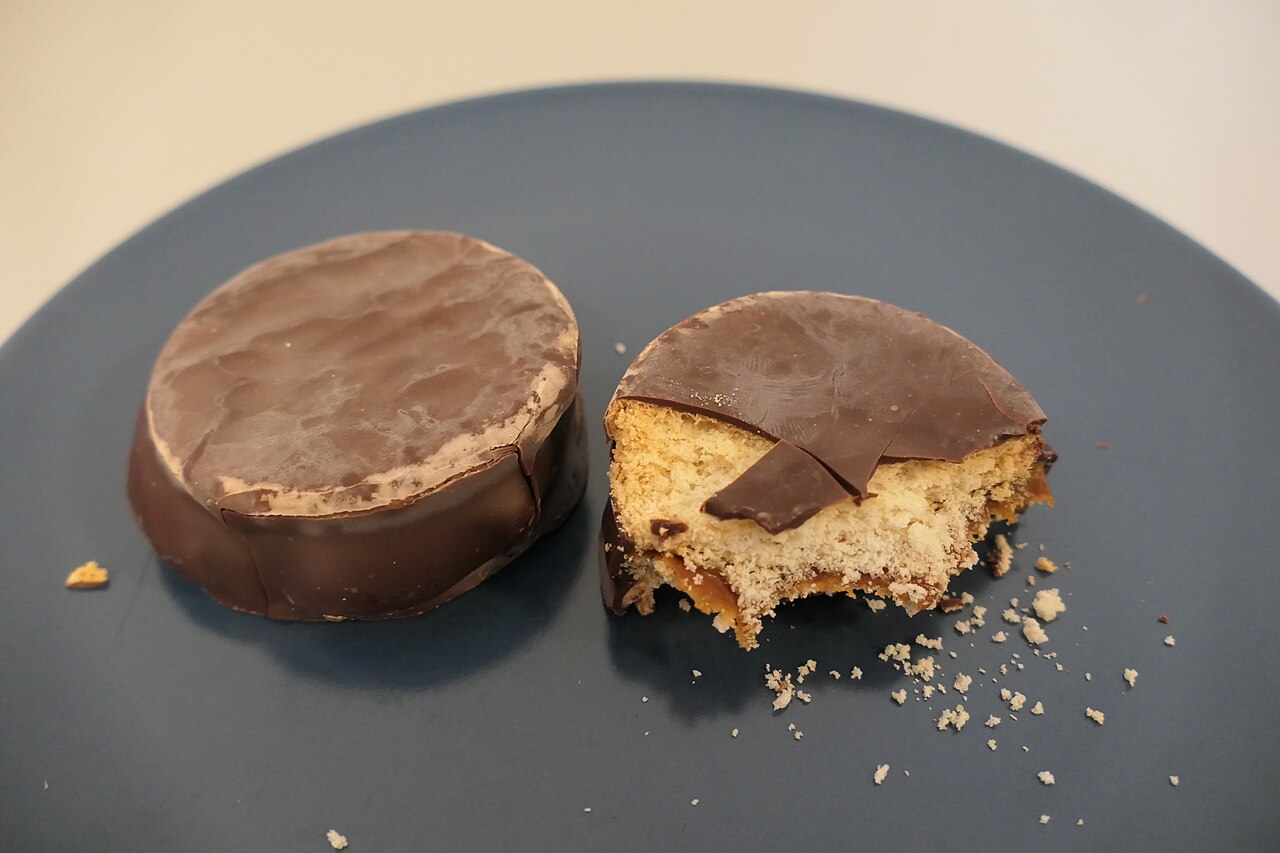
Two soft round biscuits sandwiched with dulce de leche, the thick caramel made by slowly cooking milk and sugar. In Uruguay they come in two main styles: covered in chocolate, or 'nieve' (snow), covered in white meringue icing.
Dulce de leche is one of the most popular spreads in Uruguay; it goes into cakes, pancakes, pastries and ice cream as well as alfajores.
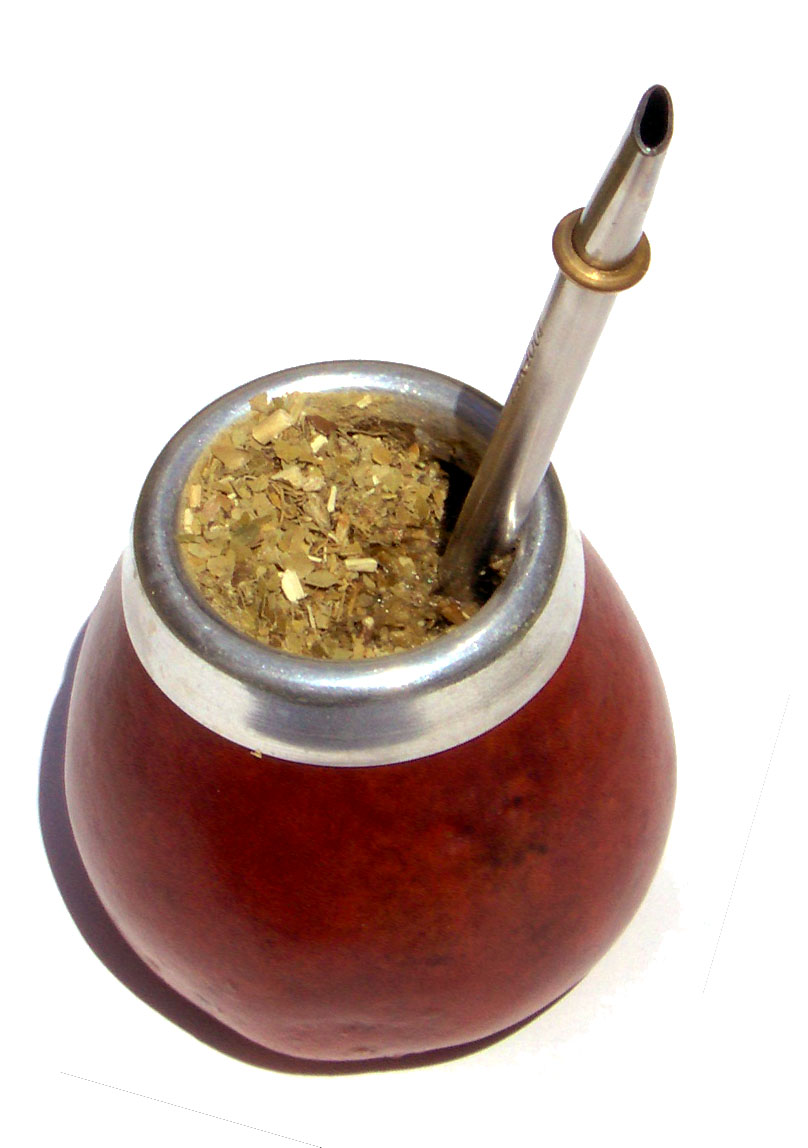
An infusion of dried yerba mate leaves, drunk through a metal straw (bombilla) from a gourd that is filled again and again with hot water from a thermos. It contains caffeine and tastes strong and bitter, and most Uruguayans drink it without sugar. Let the water cool a little: very hot drinks are bad for the throat.
Uruguayans are often said to drink more mate than anyone else: about 6.8 kg of yerba per person a year by one estimate. People carry a gourd and a thermos under their arm on the street.
Southwest France; now grown above all in southern Uruguay
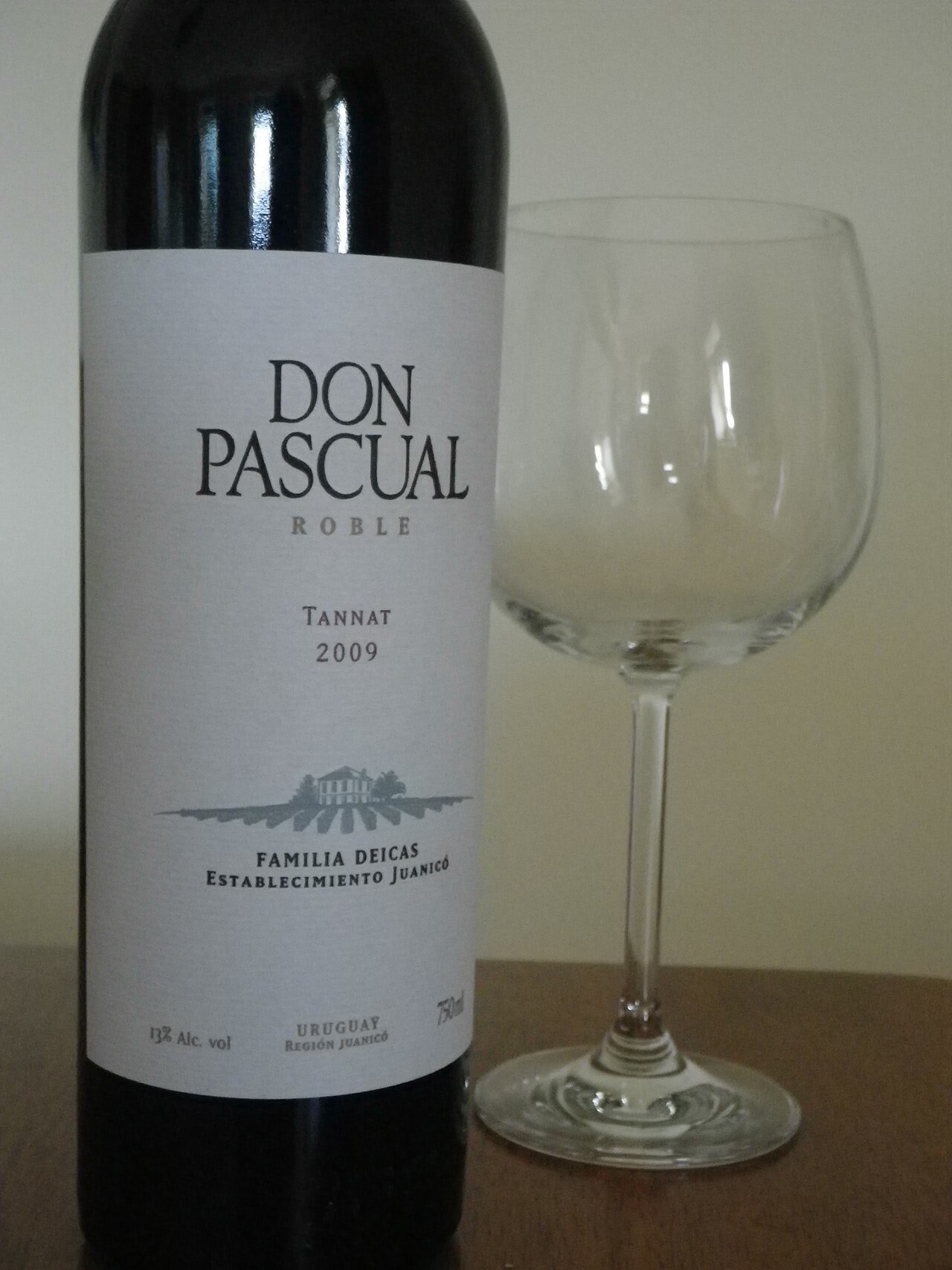
A deep red wine from the Tannat grape, which Uruguayans call their national grape. Uruguayan Tannat is usually softer than the French wines made from the same grape, with notes of blackberry. It contains alcohol.
The grape was brought to Uruguay in the 1800s by Basque settlers, especially Pascual Harriague, so it is also known locally as 'Harriague'.
Table manners
An asado is slow. Expect a picada of cheese, olives, salami and bread first, often with an aperitif such as medio y medio, a mix of sparkling and white wine first made at the Mercado del Puerto in Montevideo.
Mate is shared. One person prepares the gourd, fills it with hot water and hands it to each person in turn. Drink it all through the straw and hand it back to the same person. Do not stir the straw.
On the 29th of the month, many families eat gnocchi and put a banknote or coin under the plate for luck. Join in if you are invited.
Friends and acquaintances usually greet each other with a single kiss on the cheek, and in Uruguay men often greet each other this way too. A handshake is fine if you prefer.
Many restaurants add a cover charge to the bill. A tip of about 10 percent is usual for good service, but it is not compulsory.
In pizzerias, try your pizza 'a caballo', with a slice of fainá on top. It is completely normal to eat it with your hands.
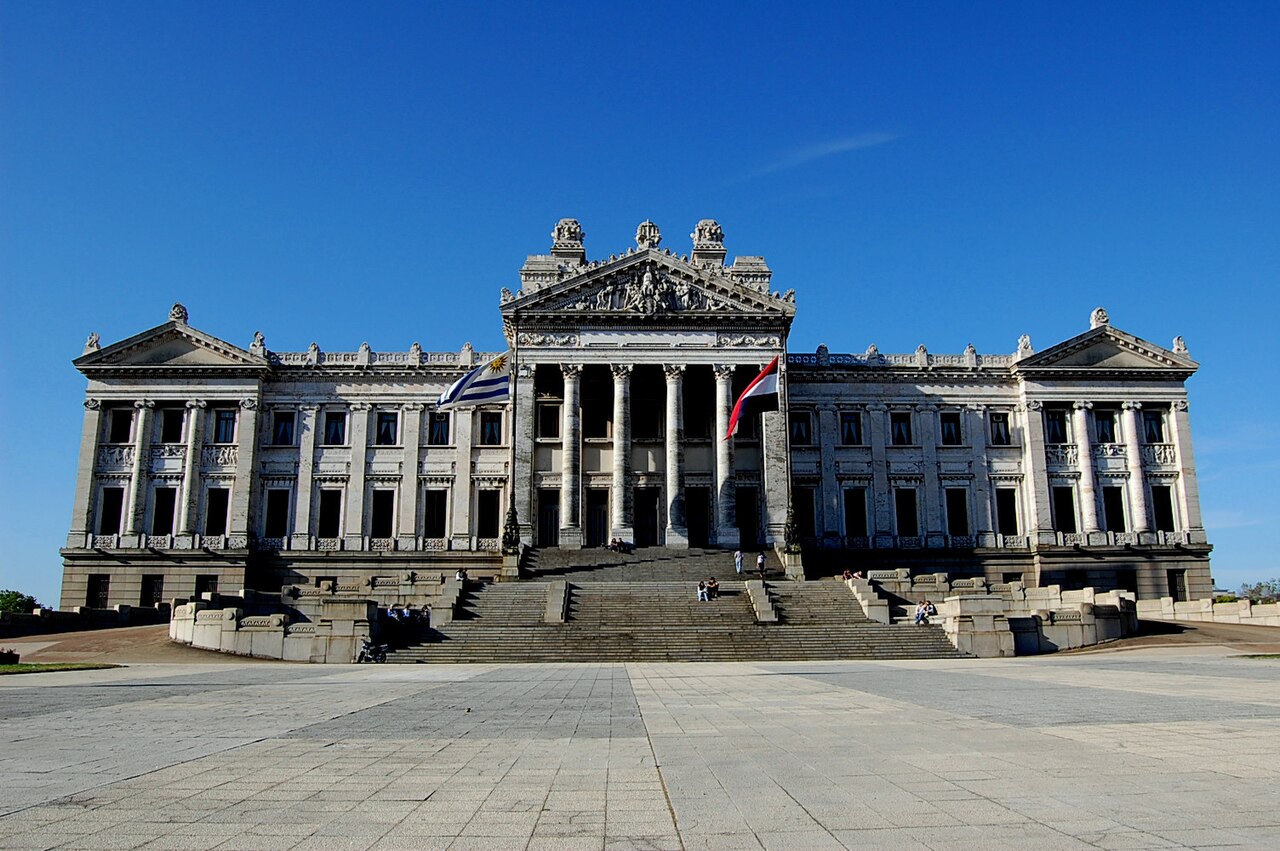
More than a third of all Uruguayans live in Montevideo, on the Río de la Plata. West of the capital lies old Colonia, facing Buenos Aires; to the east a chain of beach towns runs to Punta del Este and the wild coast of Rocha. Along the Uruguay River in the west are river ports such as Fray Bentos, Paysandú and Salto, and in the north lie the gaucho country of Tacuarembó and the border city of Rivera.
The capital, largest city and main port, on the northern shore of the Río de la Plata. About 1.3 million people live in the city (2023 census) and about 2 million in the metropolitan area. It is the southernmost national capital in the Americas, and the headquarters of the Mercosur trade bloc.
The Ciudad Vieja (Old City) and Plaza Independencia
The Rambla, a seafront promenade more than 22 km long
Carnival, candombe drums and the Estadio Centenario
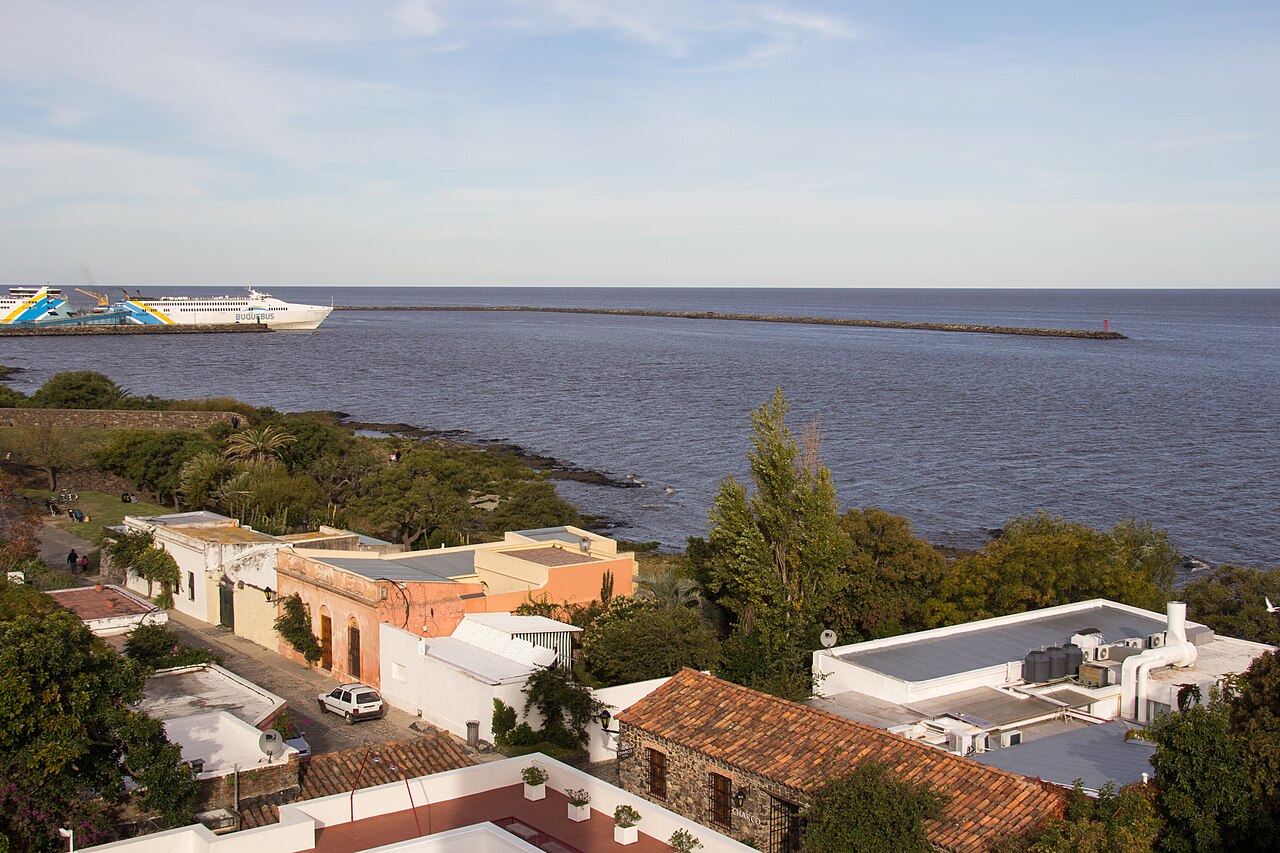
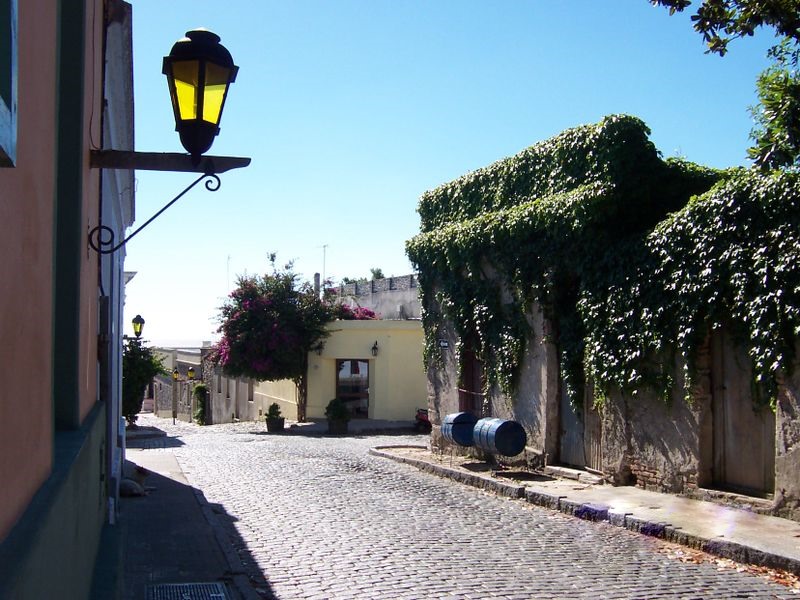
One of the oldest towns in Uruguay, founded by the Portuguese in 1680 on the Río de la Plata, directly across from Buenos Aires. Its historic quarter of cobbled streets, low houses and old walls is a UNESCO World Heritage Site. Ferries from Buenos Aires make it a popular day trip.
The cobbled Calle de los Suspiros
The lighthouse beside the ruins of a 17th-century convent
The old bullring, Real de San Carlos, now a cultural venue
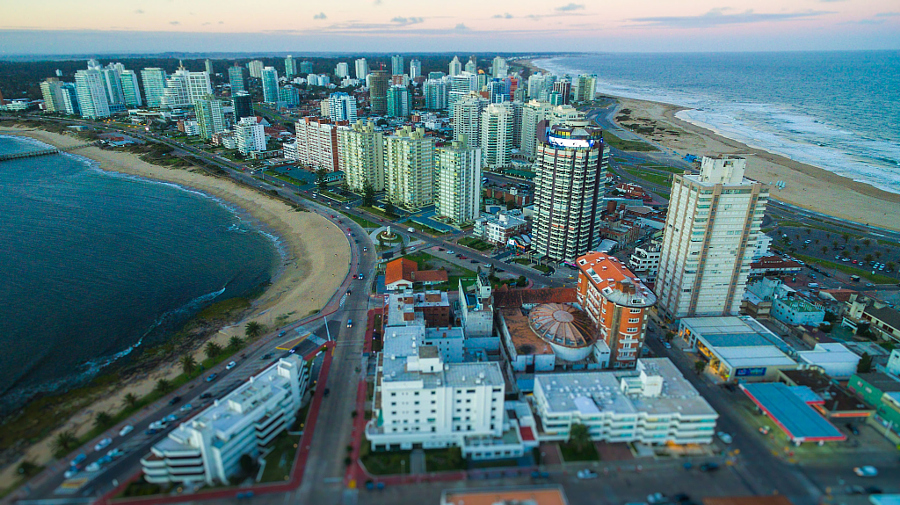
A seaside resort on a small peninsula about 140 km east of Montevideo, where the Río de la Plata meets the Atlantic. It is quiet in winter, but in summer it fills with visitors from Argentina, Brazil and beyond. Its beaches are divided into the calm Mansa side and the rougher Brava side.
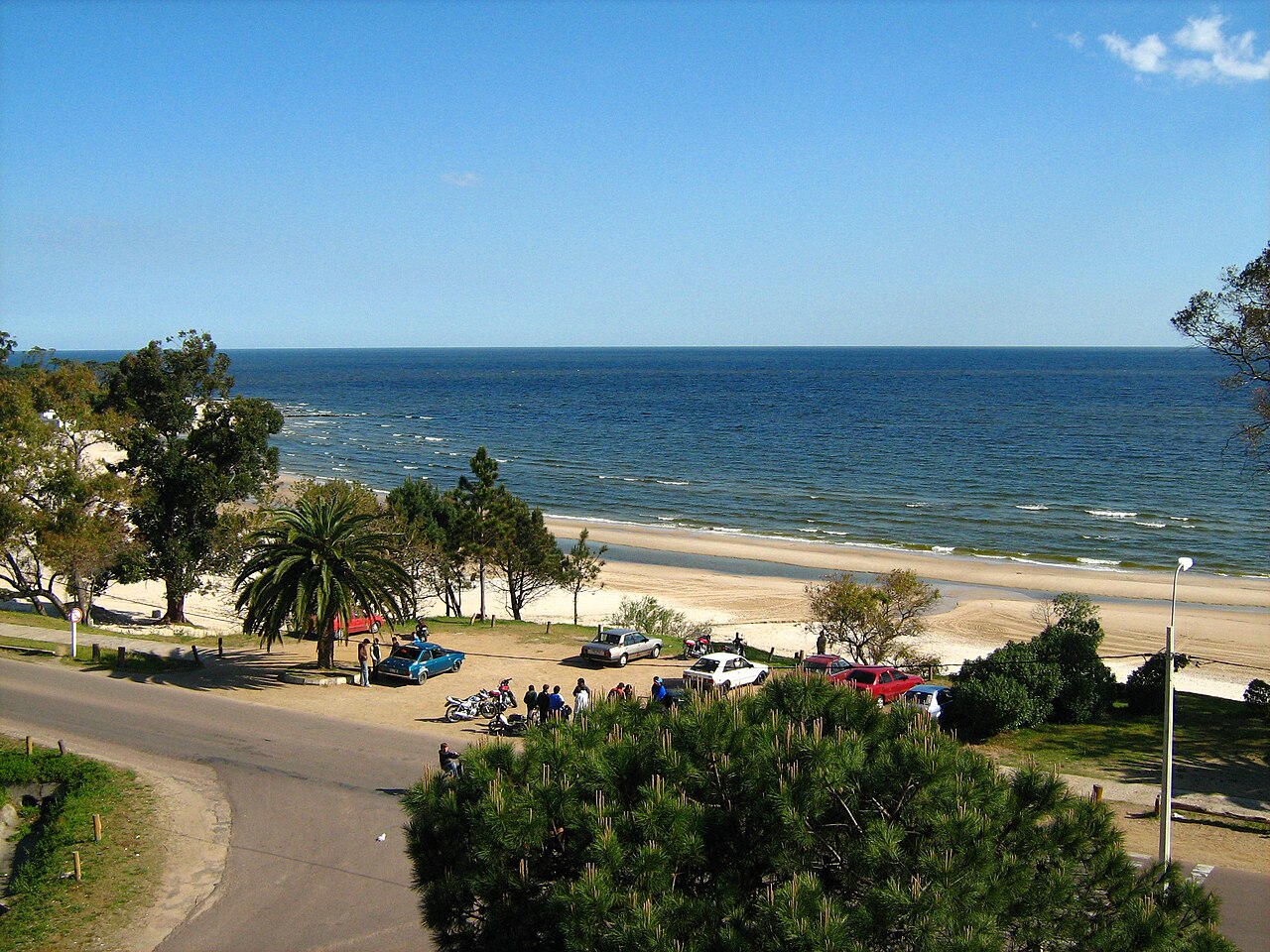
A resort town on the Costa de Oro, the 'Gold Coast', about 45 km east of Montevideo. It began in the early 1900s as a seaside retreat for wealthy families from the capital, and today its pine-lined beaches are popular with Uruguayan families.
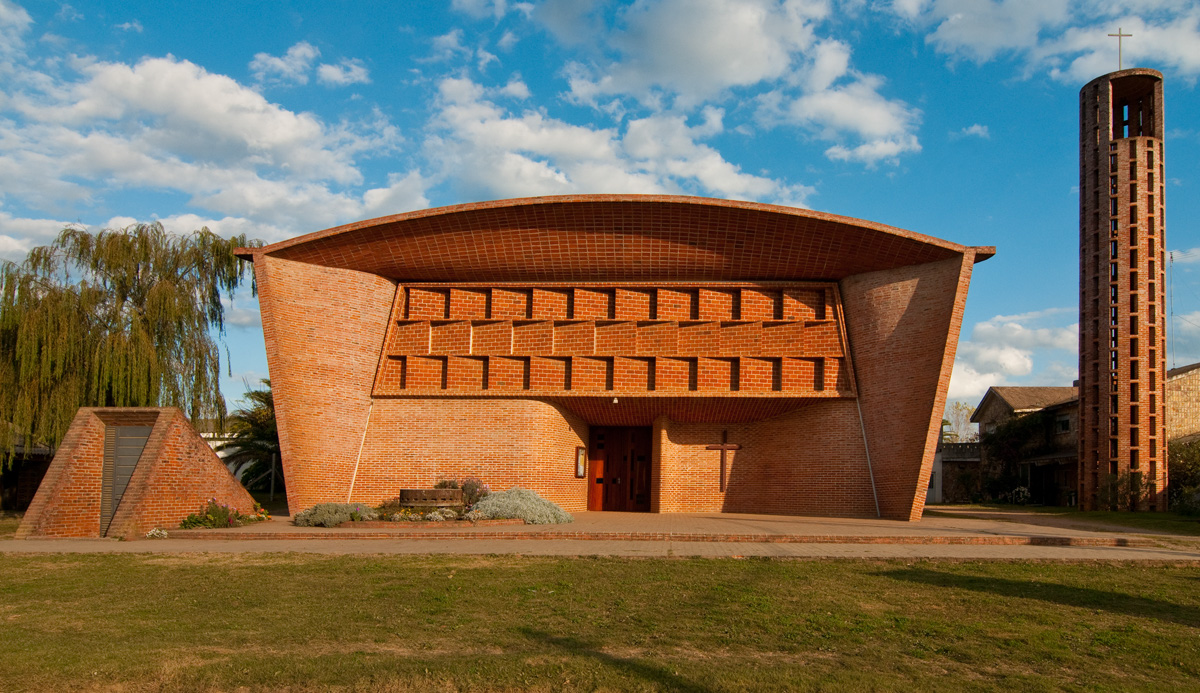
Eladio Dieste's brick church, a UNESCO World Heritage Site
The capital of Rocha department, a quiet town of about 27,000 people (2023) on the main road from Montevideo to Brazil. The department around it has some of the wildest coast in the country, with lagoons, dunes and fishing villages.
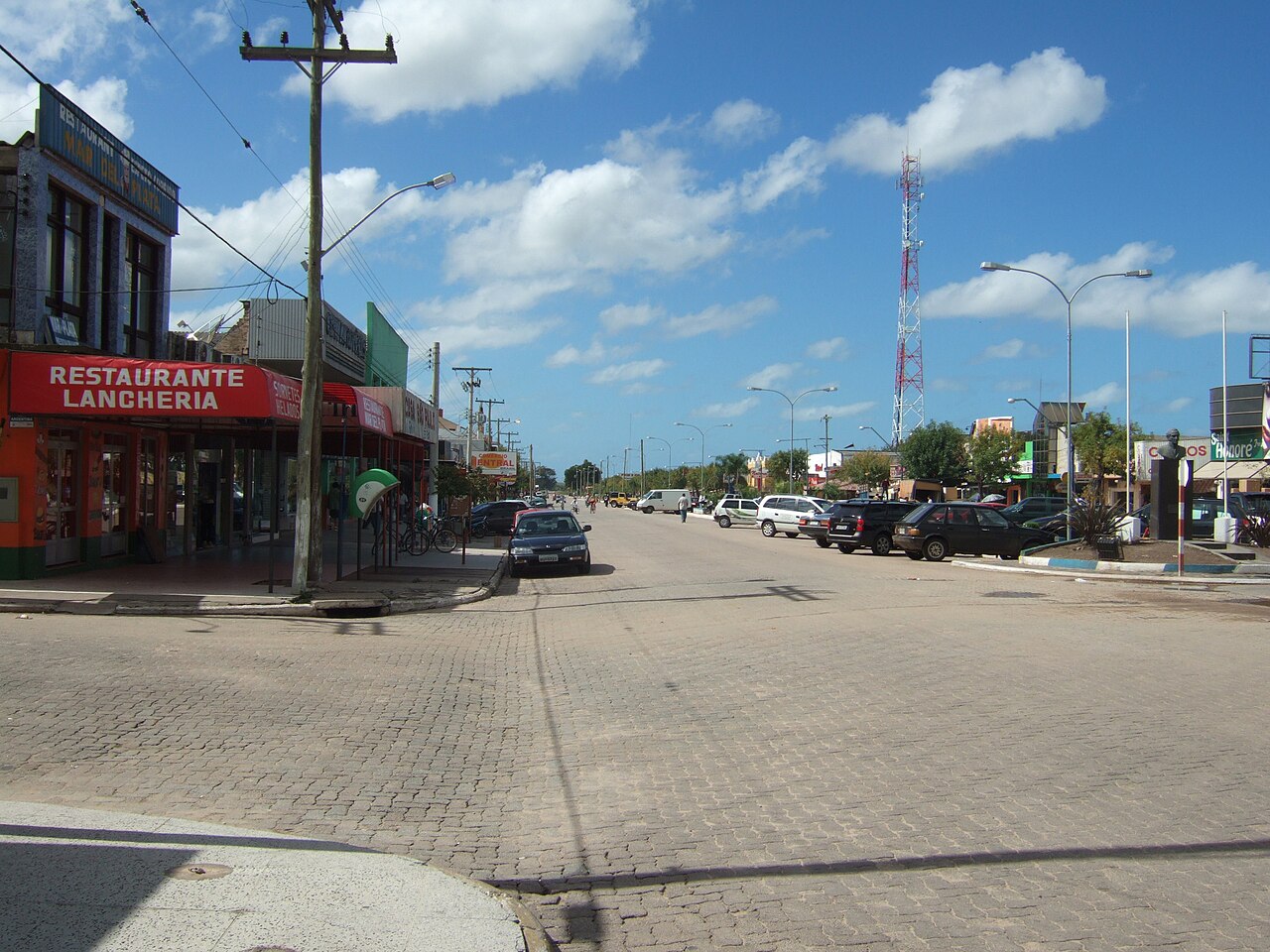
A small city in the far east of Uruguay, about 340 km from Montevideo, on the border with Brazil. It is separated from its Brazilian twin town, Chuí, only by a shared avenue, so shoppers cross from one country to the other simply by crossing the street.
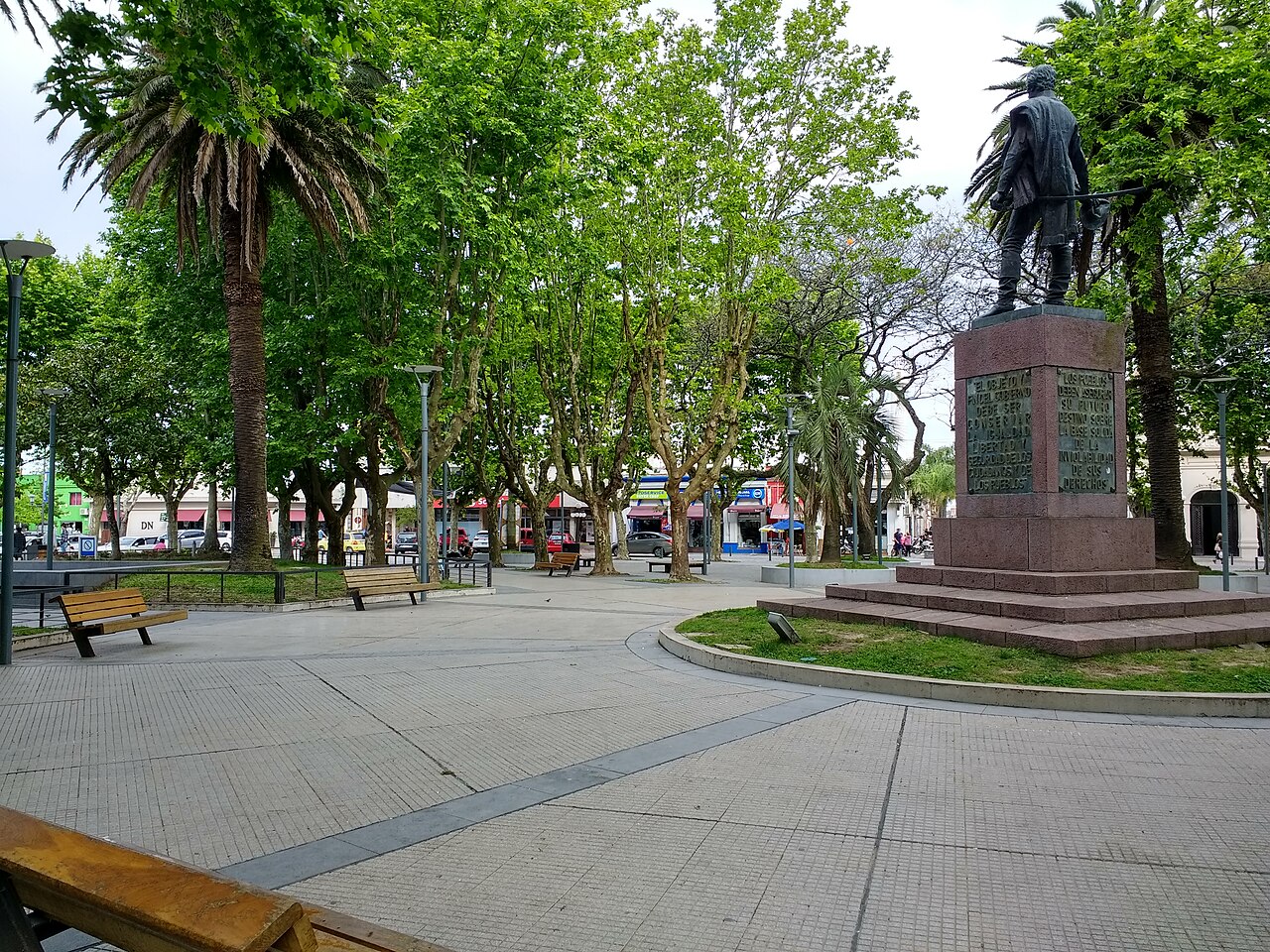
A town among green hills, founded in 1783 by families from Asturias and Galicia in Spain. It is the birthplace of Juan Antonio Lavalleja, leader of the Thirty-Three Orientals, after whom the department is named.
Uruguay's second city, with about 114,000 people (2023 census), on the Uruguay River opposite the Argentine city of Concordia. It is built on hills and bluffs near the river's falls, known as the Salto Grande, the 'big jump'.
A river port of about 81,500 people (2023) on the Uruguay River, across from Colón in Argentina. It is nicknamed La Heroica, 'the Heroic City', for its resistance during a siege in 1864 and 1865, and many of its people have Italian roots.
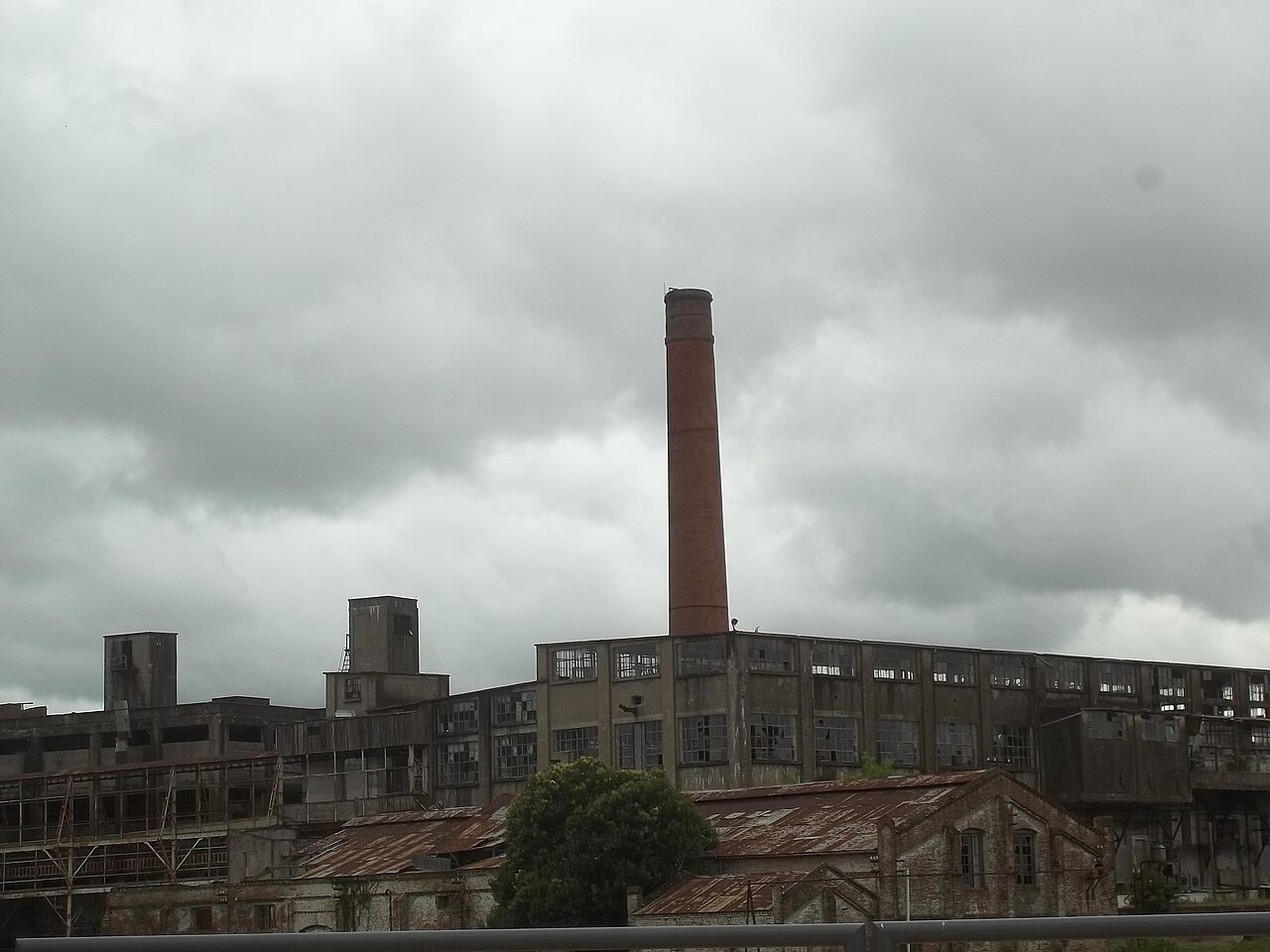
A river port of about 27,000 people (2023) on the Uruguay River. From 1863 a meat plant here made Liebig's meat extract, and later the Anglo company made corned beef, sending the name Fray Bentos around the world. The old factory district is now a UNESCO World Heritage Site.
The Anglo meat-packing plant and museum
The Fray Bentos brand name, later used for British pies
A town of about 60,500 people (2023) in the rolling cattle country of the north. Its name means 'bamboo shoot' in Guaraní. Some Uruguayans claim that the tango singer Carlos Gardel was born nearby, although researchers have confirmed that he was born in Toulouse, France.
The Fiesta de la Patria Gaucha, a gaucho festival held since 1986
A Carlos Gardel museum in nearby Valle Edén
Writers born here, such as Tomás de Mattos and Jorge Majfud
A city of about 85,000 people (2023) on the northern border, joined to the Brazilian city of Santana do Livramento. There is no fence or checkpoint between them, and many people here speak a local Portuguese mixed with Spanish.
The old town the Portuguese founded in 1680, with cobbled streets, tile-roofed houses, fragments of the old walls, a lighthouse beside the ruins of a 17th-century convent, and the narrow Calle de los Suspiros, the 'Street of Sighs'. It has been a UNESCO World Heritage Site since 1995.
The Barrio Anglo, the old meat-processing district on the Uruguay River. From 1863 it produced Liebig's meat extract and later the Anglo company's corned beef, which was sold in Britain for generations. The plant closed in 1979 after 117 years, and a museum opened on the site in 2005. It became a UNESCO World Heritage Site in 2015.
A small parish church in Estación Atlántida, just north of the resort, designed by the engineer Eladio Dieste in 1958. Its walls and roof ripple in waves, built from ordinary bricks reinforced with steel. It became a UNESCO World Heritage Site in 2021.
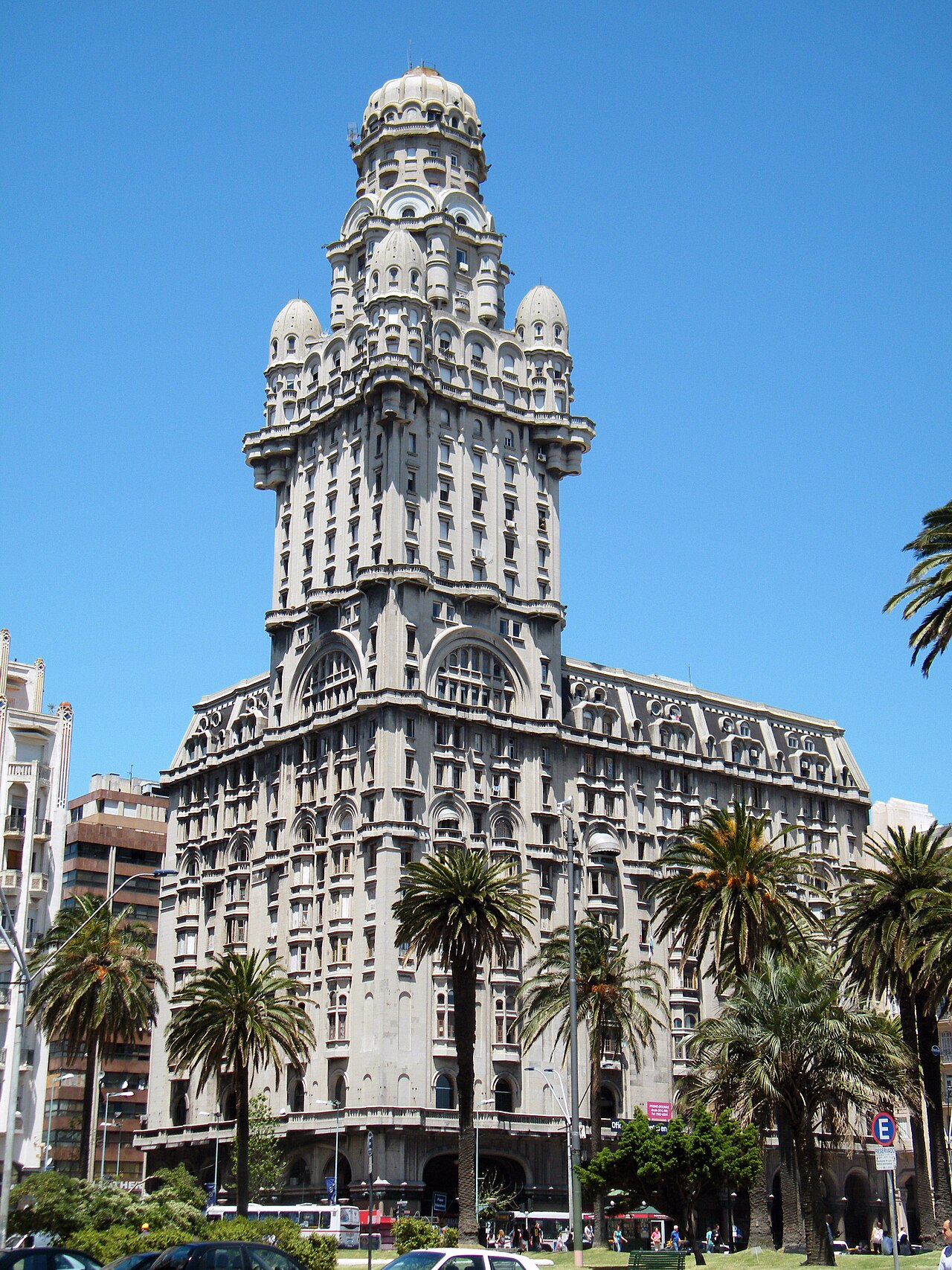
A 27-storey tower, about 105 m high including the beacon on top, on Plaza Independencia, finished in 1928. When it was completed it was briefly the tallest building in Latin America. It stands on the site of the Café La Giralda, where the famous tango La cumparsita was first played, and it houses a small tango museum. In the middle of the square nearby, Artigas's remains lie in an underground mausoleum below his statue.
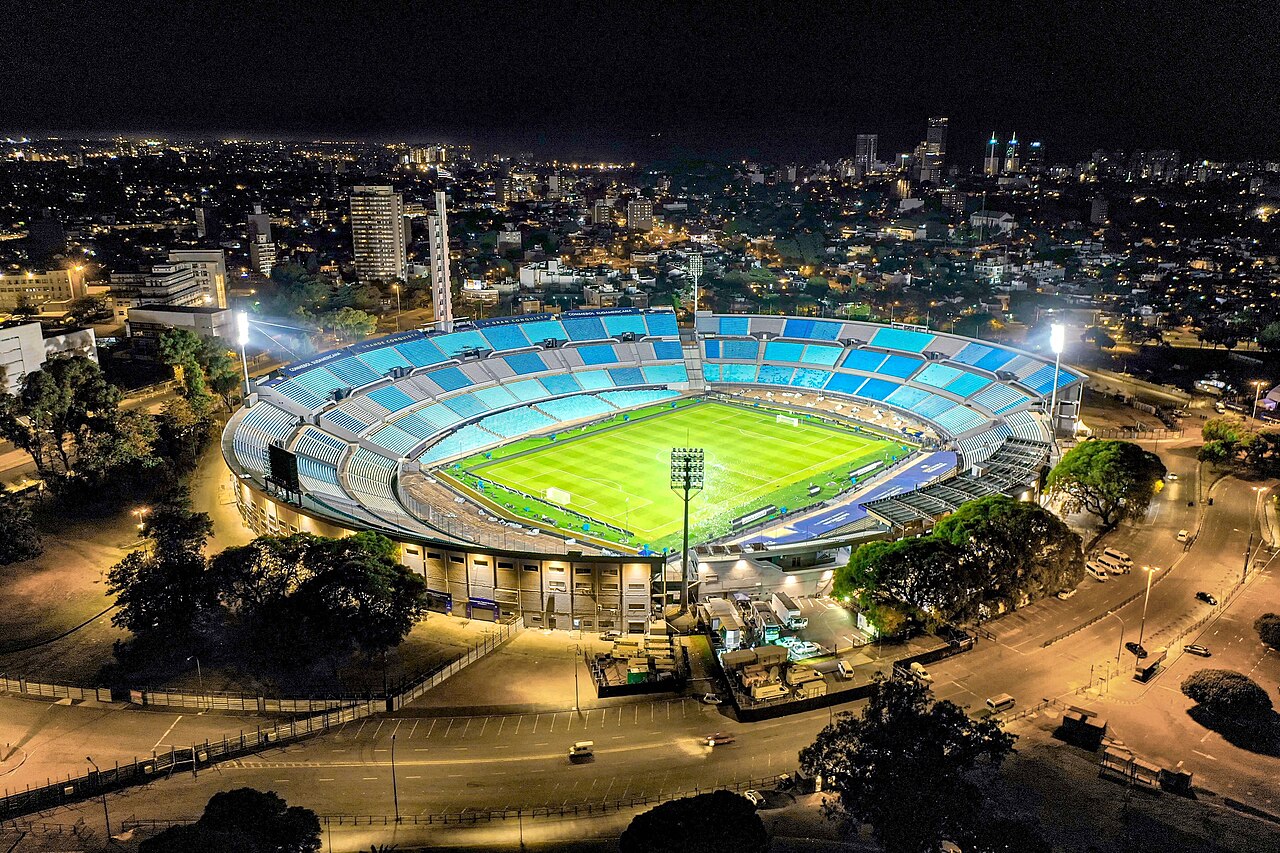
The national football stadium, built in about nine months for the first World Cup and opened on 18 July 1930, exactly 100 years after the first constitution. Uruguay beat Argentina 4 to 2 in the final here. In 1983 FIFA declared it the first Historical Monument of World Football. It houses a football museum.
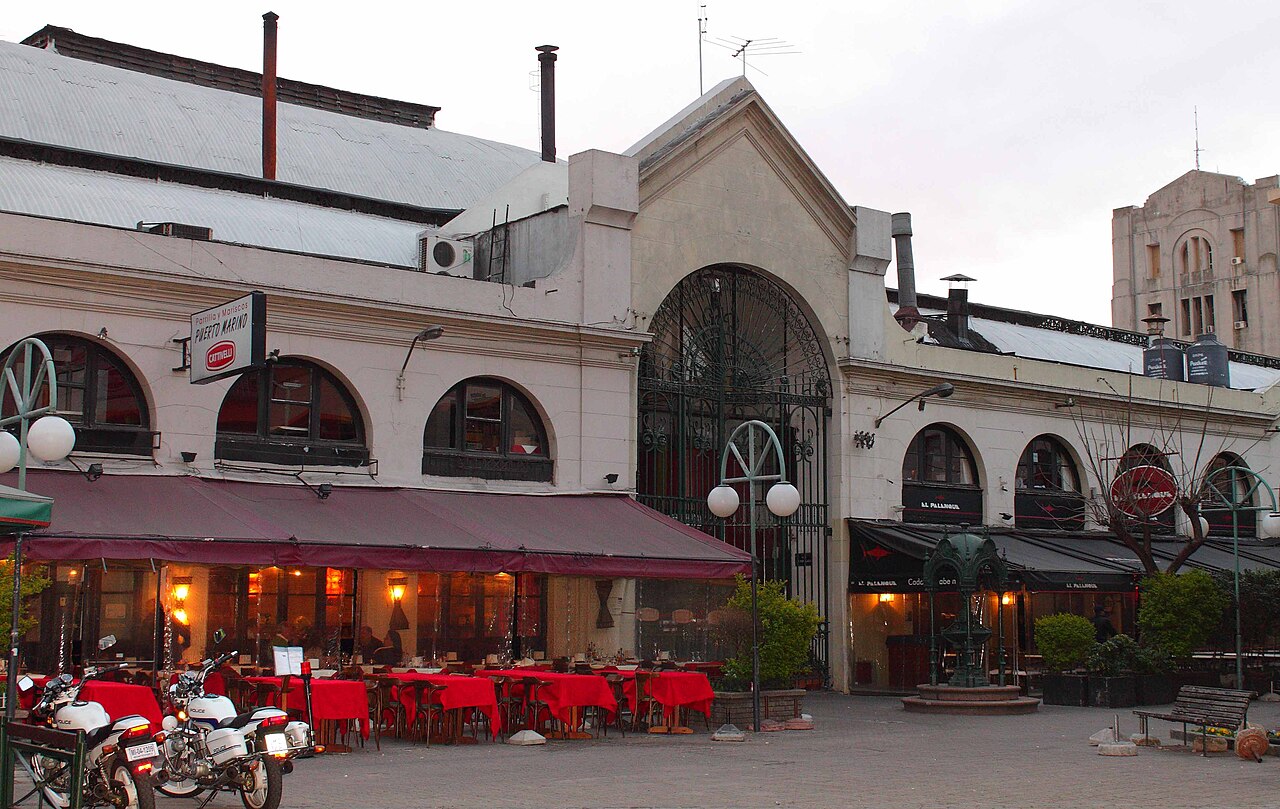
A covered market of iron made in Liverpool, opened in 1868 near the port in the Ciudad Vieja. Since the 1970s it has been full of grill restaurants, where beef and sausages sizzle over wood fires at the counter. A big clock stands in the middle of the hall.
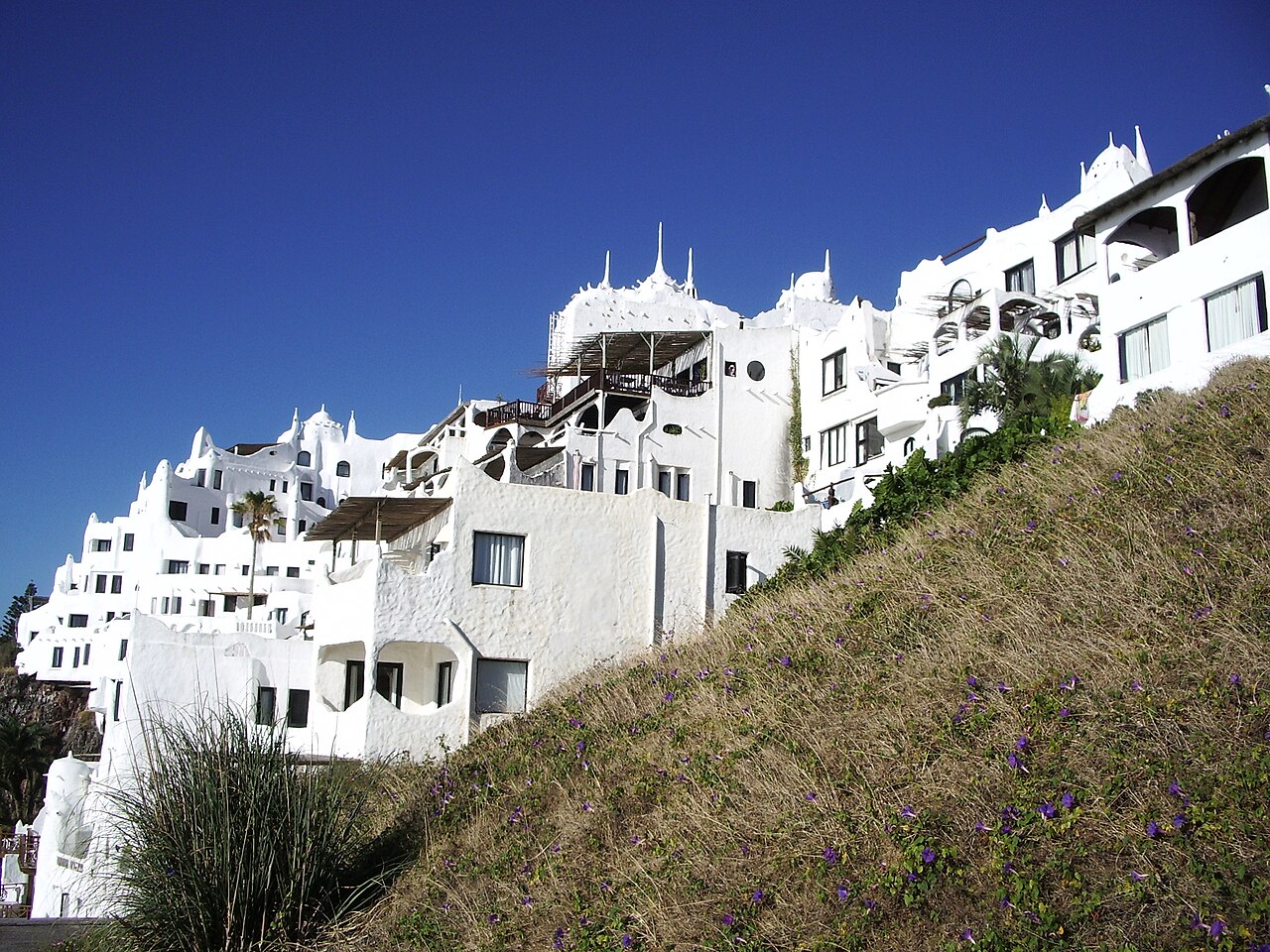
A white, curving building on the cliffs of Punta Ballena, about 13 km from Punta del Este, built by the artist Carlos Páez Vilaró by hand and without plans over 36 years. It was his home and studio and is now a museum, gallery and hotel, famous for watching the sunset over the sea.
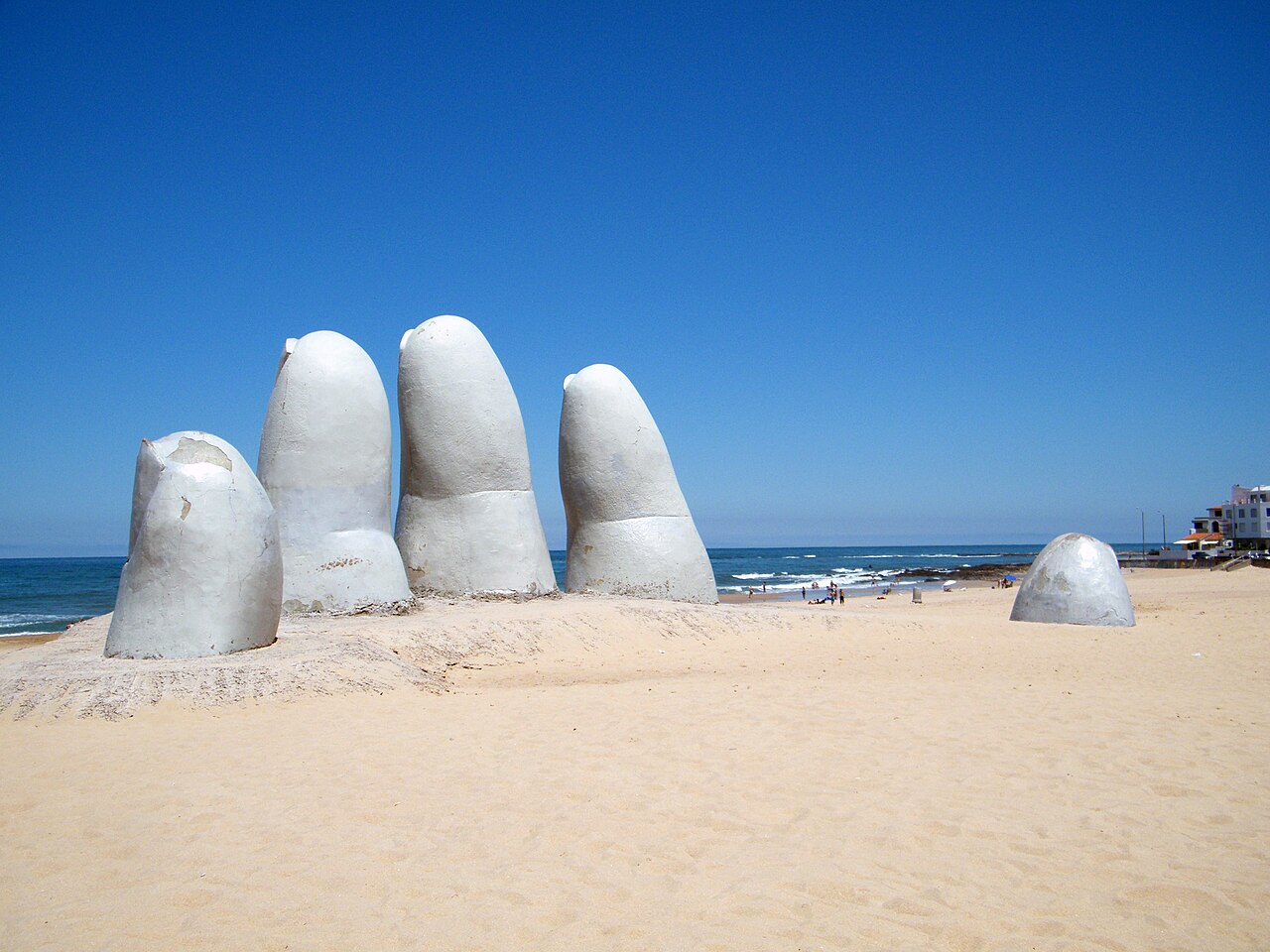
Five giant concrete fingers rising out of the sand of Playa Brava. The Chilean artist Mario Irarrázabal made them in just six days in February 1982 as a warning to swimmers about the rough sea. The sculpture has become a symbol of Punta del Este.
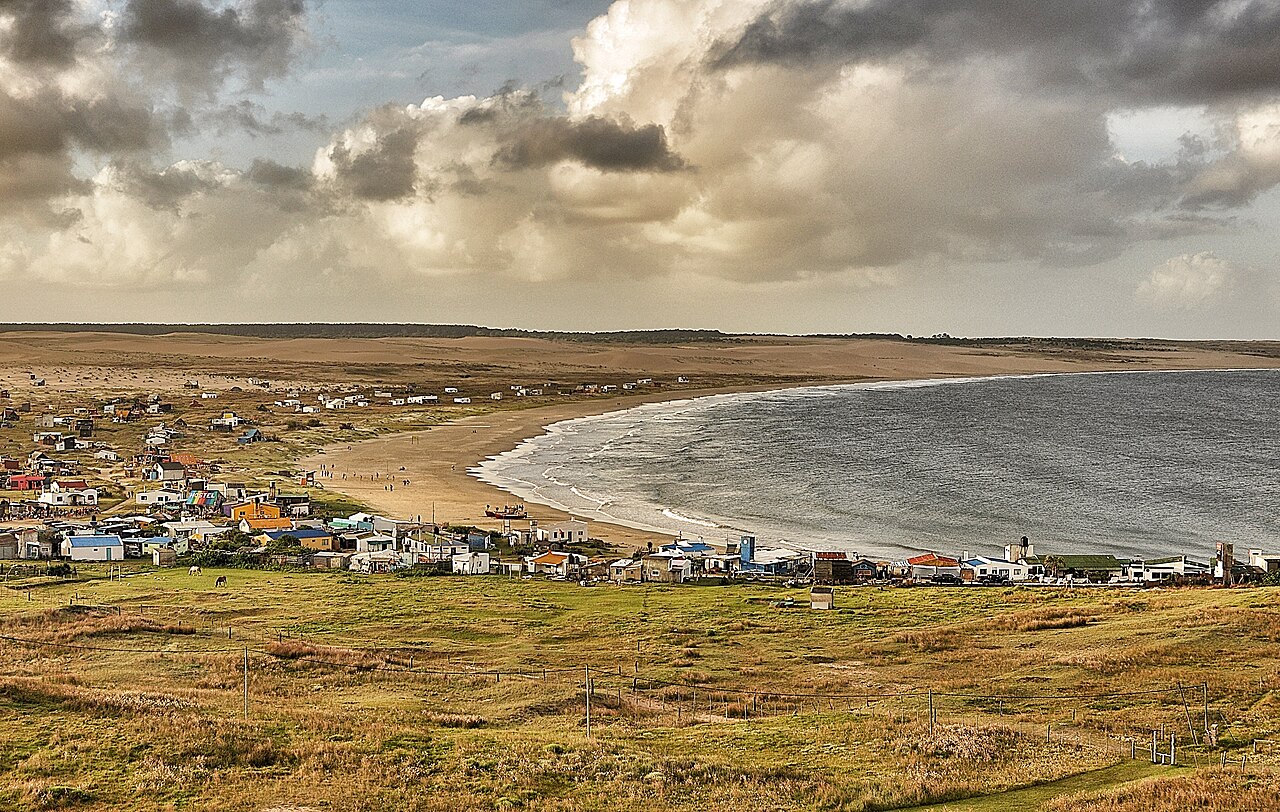
A tiny fishing village on a rocky cape on the Atlantic, inside a protected area. No road leads to it: visitors walk about 7 km through the sand dunes or ride in special 4x4 trucks. Most houses have no mains electricity, and the rocks and islands offshore are home to one of Uruguay's biggest colonies of sea lions and fur seals.
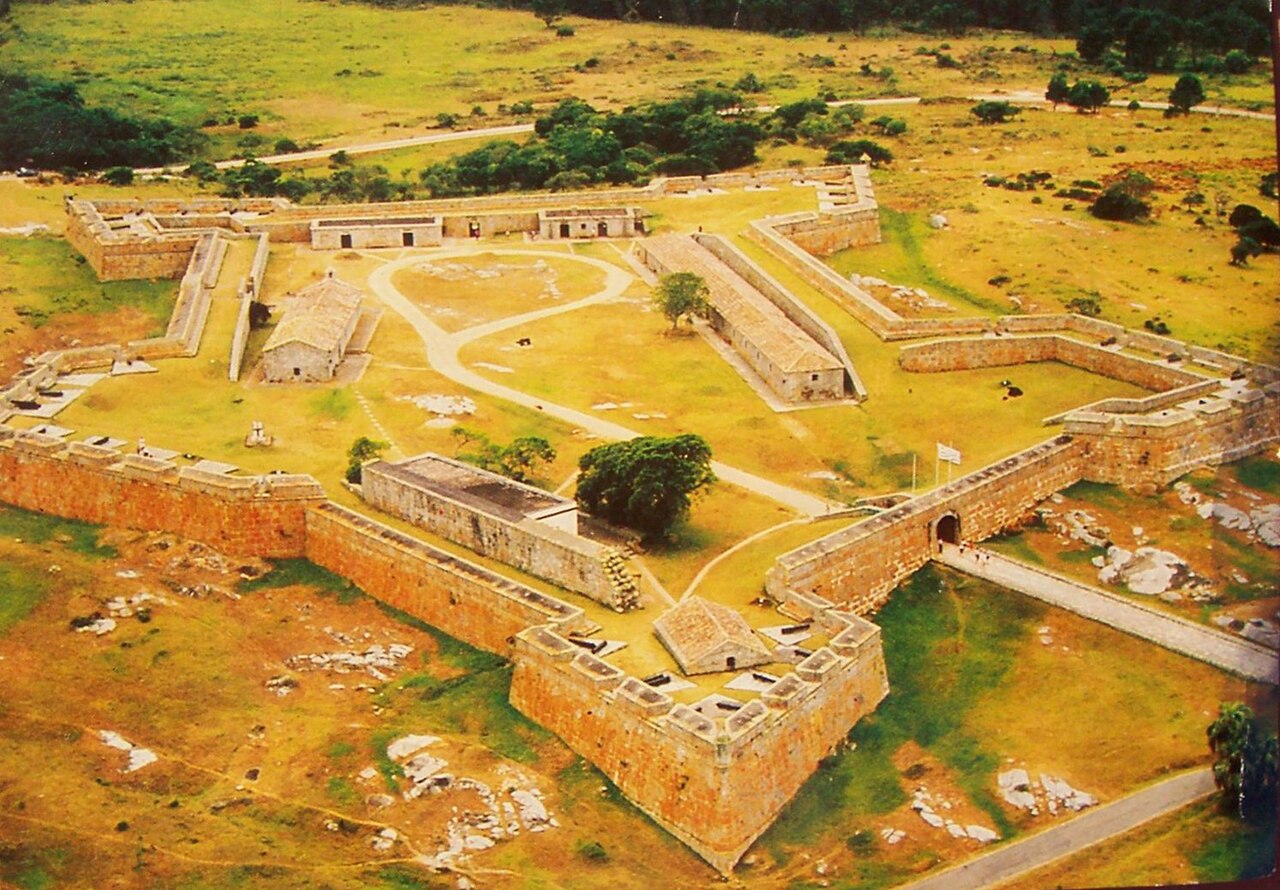
A five-sided stone fortress begun by the Portuguese in 1762 on a rocky rise between the marshes and the sea, about 36 km south of Chuy. Its granite walls reach 11.5 m high. It stands inside Santa Teresa National Park, with beaches, forest and camping areas.
Uruguay is the only country in South America that lies entirely south of the Tropic of Capricorn, and Montevideo is the southernmost national capital in the Americas.
02
Uruguay hosted and won the first FIFA World Cup in 1930, and every match was played in Montevideo. It won the World Cup again in 1950, and it has by far the smallest population of any country that has won it.
03
The Estadio Centenario in Montevideo was declared the first Historical Monument of World Football by FIFA in 1983. As of 2026 it is the only building in the world with that title.
04
In December 2013 Uruguay became the first country in modern times to legalise cannabis fully, with the state regulating how it is grown and sold.
05
In 2023 about 98 percent of Uruguay's electricity came from renewable sources, mostly hydroelectric dams and wind farms. The switch took less than ten years.
06
Uruguay has far more cows than people. In 2007 it had about 12 million cattle, around 3.8 for every person, the highest number of cattle per person in the world at the time.
07
In 2009 Uruguay became the first country in the world to give a laptop to every primary school pupil, through a programme called Plan Ceibal.
08
One of the most famous tangos of all, La cumparsita, was written in 1916 by the young Uruguayan Gerardo Matos Rodríguez and first played at the Café La Giralda in Montevideo, where the Palacio Salvo stands today.
09
In 2009 UNESCO added candombe, the drumming and dance tradition of Afro-Uruguayans in Montevideo's Sur, Palermo and Cordón neighbourhoods, to its list of the intangible cultural heritage of humanity. Its three drums are called chico, repique and piano.
10
Montevideo's carnival lasts about 40 days, starting in late January, and it bills itself as the longest carnival in the world. Its highlight is the Desfile de Llamadas, a parade of candombe drummers.
11
The nine blue and white stripes on Uruguay's flag stand for the nine original departments of the country. The golden Sun of May in the corner also appears on the flag of Argentina.
12
In December 1939, after the Battle of the River Plate, the damaged German warship Admiral Graf Spee took refuge in Montevideo harbour. Allowed to stay only 72 hours, her captain had the ship scuttled just outside the port on 17 December.
13
The country takes its name from the Uruguay River, a Guaraní name. Its meaning is uncertain: 'river of the uru birds' is one explanation, and the poet Juan Zorrilla de San Martín's 'river of painted birds' is a popular one.
14
Uruguay's official name is the Oriental Republic of Uruguay, meaning the 'Republic East of the Uruguay River'. In colonial times the land was called the Banda Oriental, the 'Eastern Bank'.
Uruguay is in the Southern Hemisphere: summer runs from December to March and winter from June to September. Winters are mild but can feel chilly and damp in the wind. Lifeguards work on the beaches from December to March: watch the flags (green is safe, yellow means caution, red means danger) and beware of strong currents.
Travel by long-distance bus
There are almost no long-distance passenger trains, but buses are frequent, comfortable, safe and usually leave on time. In Montevideo most of them leave from the Tres Cruces terminal. Occasional one-day bus strikes happen, so check before you travel.
Arriving by ferry from Buenos Aires
Ferries cross the Río de la Plata from Buenos Aires to Colonia (about one hour on the fast boat) and to Montevideo. Take your passport: you pass through border control. As of September 2026, British visitors can stay up to 90 days without a visa; check the latest rules for your nationality before you go.
Check which currency a price is in
Uruguayan pesos and US dollars both use the dollar sign (dollar prices usually have 'US' or 'U S' written with the sign), and expensive things such as rent, cars or some hotel rates are often priced in dollars. If you are not sure, ask. Small shops often take only cash, so carry some pesos in small notes.
Keep an eye on your bag in Montevideo
Bag snatching and pickpocketing happen in Montevideo, especially in the Ciudad Vieja and the port area. Avoid quiet streets there after dark, use cash machines inside banks or shopping centres, and do not leave anything on the seat of a car.
Protect yourself from sun and mosquitoes
The sun is strong and UV levels are high, even when it is not very hot, so wear a hat and sunscreen. Dengue fever, spread by mosquitoes, is a health risk, so use insect repellent, especially in summer after rain.
Bring your medicines and good insurance
Medical treatment is good but expensive for visitors. Bring enough of your regular medicines for the whole trip, because pharmacies need a local doctor's prescription, and make sure your travel insurance covers medical care and the journey home.
Cannabis is not legal for tourists
Although Uruguay has legalised cannabis, only Uruguayan citizens and foreign residents of more than two years may register to grow it or buy it from pharmacies. It is illegal for tourists to buy or grow it.
Mind your hand gestures
The 'OK' sign made with thumb and forefinger in a circle is considered very rude in Uruguay. A thumbs up is fine.
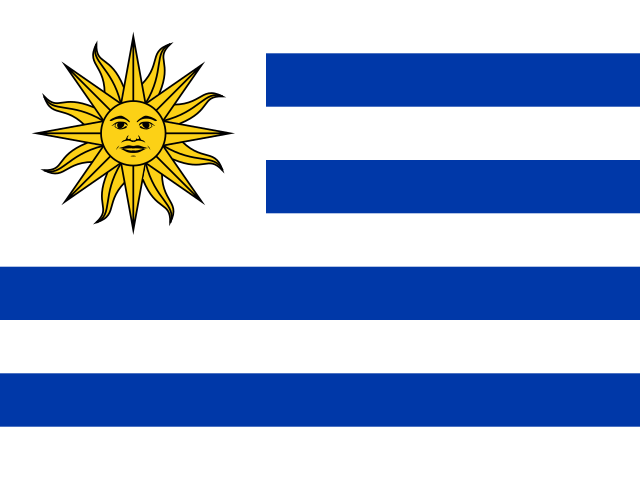
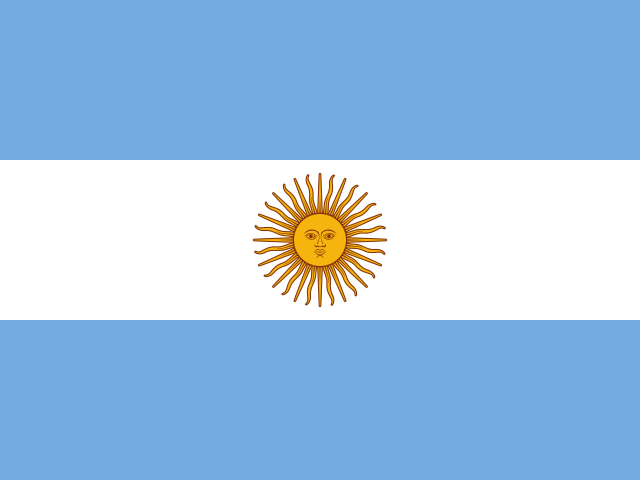 Argentina
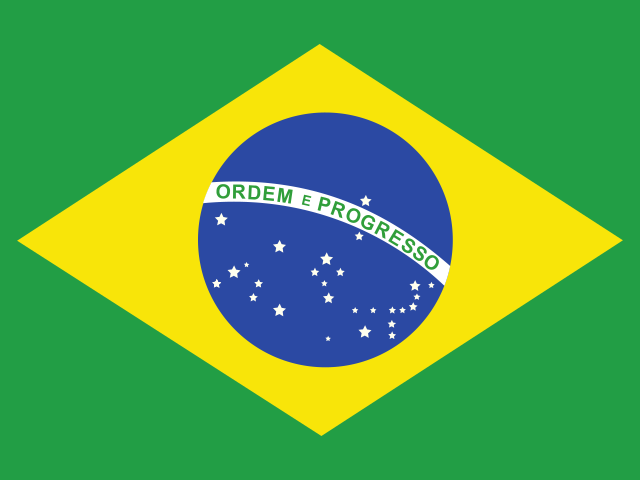 Brazil