A free large-print PDF. Choose what goes in: facts, map, history, dishes and recipes, phrases, fun facts, a quiz with or without answers. Made for clubs, care homes, libraries and family afternoons.
The United Kingdom of Great Britain and Northern Ireland is a country made up of four nations. England, Scotland and Wales share the island of Great Britain, and Northern Ireland lies in the northeast of the island of Ireland. So 'Great Britain' is the island, while 'the United Kingdom' also includes Northern Ireland, and England is just one of its four parts. The UK also takes in hundreds of smaller islands, such as Anglesey, the Isle of Wight, the Hebrides, Orkney and Shetland. The Channel Islands and the Isle of Man are Crown Dependencies: they belong to the Crown but are not part of the United Kingdom.
People have lived here for many thousands of years. Stone Age builders raised Stonehenge, the Romans ruled much of Britain for nearly 400 years, and Normans conquered England in 1066. England and Scotland shared a king from 1603 and joined as one kingdom, Great Britain, in 1707. Ireland was added in 1801, and most of Ireland left in 1922. In the 1800s Britain led the Industrial Revolution and ruled the largest empire in history.
Today the UK is a constitutional monarchy with a parliamentary democracy. King Charles III has been head of state since 2022, and the Parliament at Westminster in London makes laws for the whole country. Scotland, Wales and Northern Ireland also have their own parliaments or assemblies for many everyday matters, but England does not. About 69.5 million people live here. English is spoken everywhere, and Welsh, Scottish Gaelic, Scots and Irish are also part of the story.
CapitalLondon
PopulationAbout 69.5 million (ONS provisional estimate for mid-2025: 69,487,000)
Official languageNo law names an official language for the whole UK; English is the de facto official language. Welsh is official in Wales, Gaelic (since 2005) and Scots (since 2025) have official status in Scotland, and Irish and Ulster Scots are recognised in law in Northern Ireland
CurrencyPound sterling (£), also called the British pound, divided into 100 pence
AreaAbout 244,000 km², including inland water
GovernmentConstitutional monarchy and parliamentary democracy. King Charles III has been head of state since 2022, and the Prime Minister leads the government. Scotland, Wales and Northern Ireland have devolved parliaments or assemblies
Highest mountainBen Nevis, 1,345 m, in the Scottish Highlands, also the highest mountain in the British Isles
Longest riverThe Severn, about 354 km, which rises in Wales and flows through England to the Bristol Channel
NeighboursIreland, its only land neighbour, along the border of Northern Ireland. France lies across the English Channel, linked by the Channel Tunnel, and Belgium, the Netherlands, Denmark and Norway across the North Sea. Gibraltar (next to Spain) and Akrotiri and Dhekelia (on Cyprus) are British Overseas Territories, not part of the UK
From stone circles and Roman walls to Norman castles, a union of crowns, the Industrial Revolution and two world wars, the story of the United Kingdom is the story of four nations slowly coming together under one crown.
2500 BC
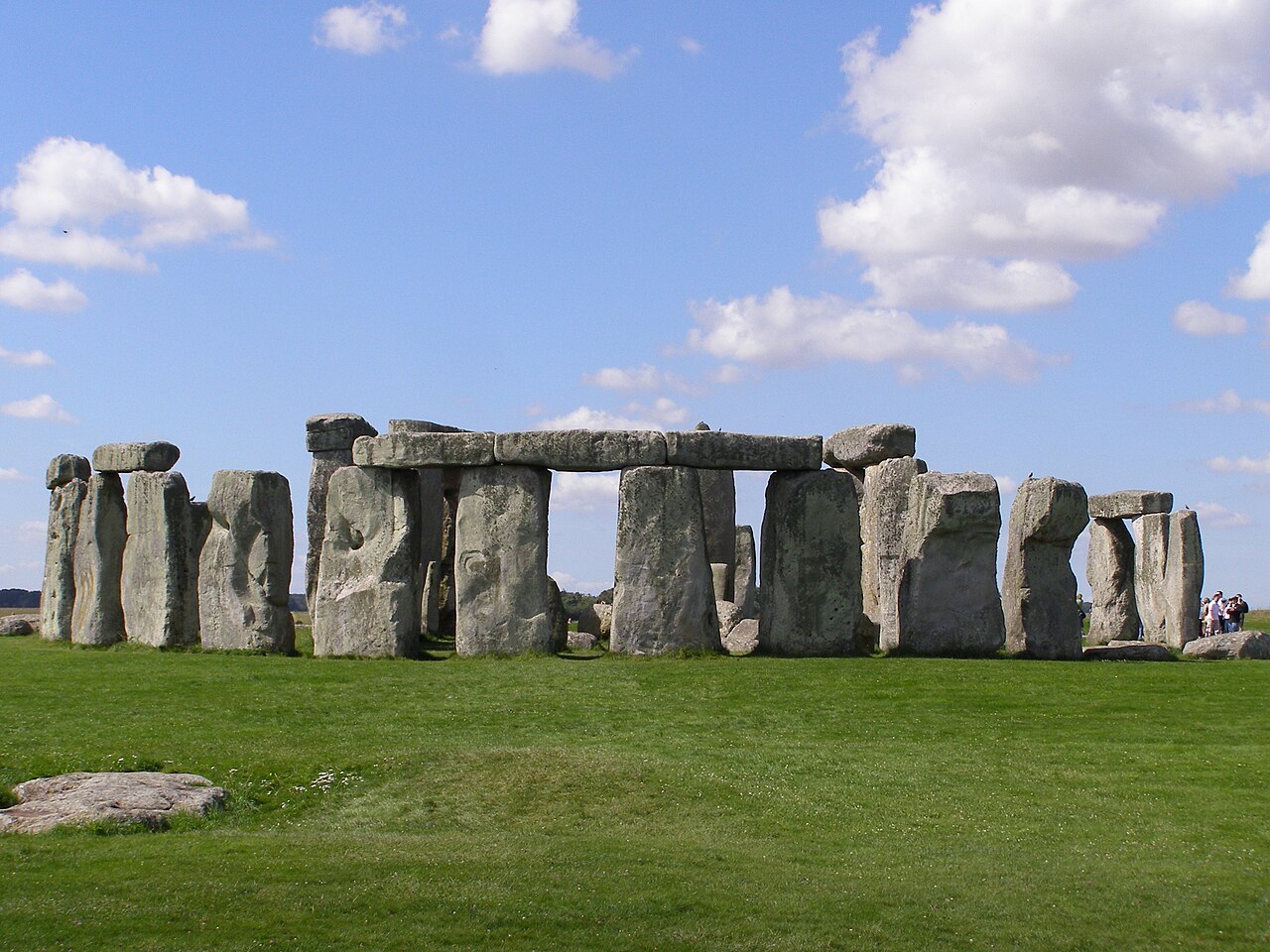
The great stones of Stonehenge are raised
Around 2500 BC Stone Age people on Salisbury Plain raised huge sarsen stones, many weighing around 25 tonnes, into a great circle. The stones line up with the sunrise at midsummer and the sunset at midwinter.
AD 43
The Romans invade Britain
In AD 43 the Roman emperor Claudius sent an army across the Channel. Much of Britain became the Roman province of Britannia for nearly 400 years, and the Romans founded Londinium, today's London, soon after.
AD 122
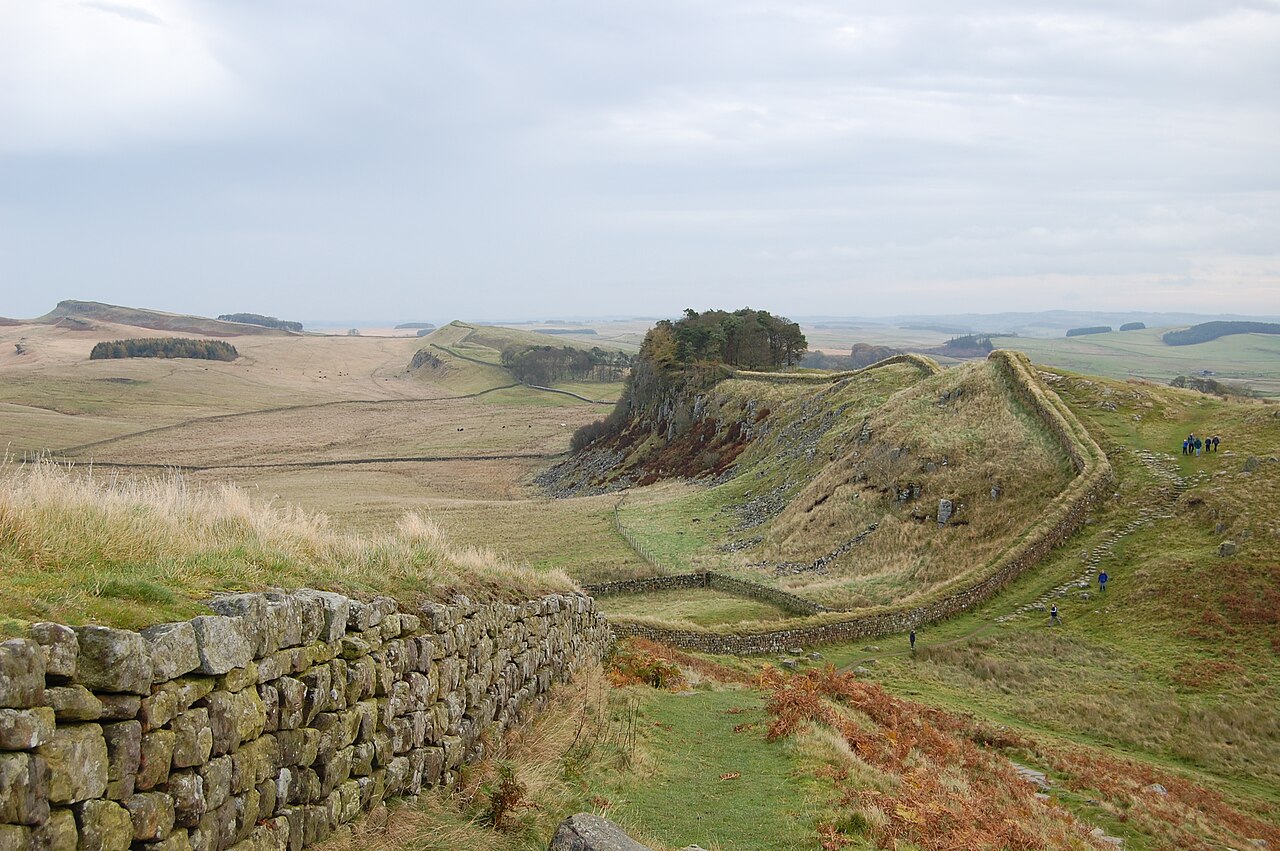
Hadrian's Wall is begun
Emperor Hadrian ordered a stone wall about 117 km long across northern Britain, from the River Tyne to the Solway Firth. It lies entirely in England and has never been the border with Scotland, although people often think so.
1066
The Battle of Hastings
On 14 October 1066 Duke William of Normandy defeated the English king Harold II near Hastings. William the Conqueror was crowned on Christmas Day, and the Normans built castles, such as the Tower of London, all over England.
1215
King John agrees to Magna Carta
At Runnymede, beside the Thames, rebel barons forced King John to agree to Magna Carta, the 'Great Charter'. It said that even the king had to obey the law, an idea that later inspired constitutions around the world.
1603
The Union of the Crowns
When Queen Elizabeth I died without children, her cousin King James VI of Scotland also became King James I of England. The two kingdoms now shared a king but kept their own parliaments and laws.
1707
England and Scotland unite as Great Britain
The Acts of Union joined England (which already included Wales) and Scotland into one Kingdom of Great Britain, with one Parliament at Westminster, from 1 May 1707. Scotland kept its own law, church and schools.
1801
The United Kingdom is formed
On 1 January 1801 Great Britain and Ireland were joined into the United Kingdom of Great Britain and Ireland. The Union Flag gained the cross of Saint Patrick and took the design still used today.
1837
Victoria becomes queen
Victoria came to the throne at 18 and reigned for more than 63 years. Her era saw railways, factories and fast-growing cities at home, and the British Empire grew to be the largest in history.
1922
Most of Ireland leaves the UK
After the Irish War of Independence, 26 of Ireland's 32 counties became the self-governing Irish Free State on 6 December 1922. Northern Ireland stayed in the UK, and in 1927 the country's name became the United Kingdom of Great Britain and Northern Ireland.
1940
The Battle of Britain
In the summer and autumn of 1940 the Royal Air Force fought off the German air force in the skies over southern England, stopping a planned invasion. Winston Churchill said of the pilots: 'Never in the field of human conflict was so much owed by so many to so few.'
1948
The NHS is founded
On 5 July 1948 the National Health Service began, offering medical care to everyone, paid for by taxes and free at the point of use. It is still one of the things Britons value most.
1973
The UK joins the EEC
On 1 January 1973 the United Kingdom joined the European Economic Community, together with Ireland and Denmark. The EEC later grew into the European Union.
1998
The Good Friday Agreement
From the late 1960s Northern Ireland lived through about 30 years of conflict known as the Troubles, between those who wanted to stay in the UK and those who wanted a united Ireland. More than 3,500 people died. The agreement signed on 10 April 1998 set up a power-sharing government and was approved by voters on both sides of the Irish border.
2020
The UK leaves the European Union
In a referendum in June 2016, about 52 percent of voters chose to leave the European Union. After years of negotiation, the UK left on 31 January 2020, a step known as Brexit.
2022
Charles III becomes king
Queen Elizabeth II died on 8 September 2022 after reigning for 70 years, the longest of any British monarch. Her son became King Charles III at 73, the oldest person to succeed to the British throne, and was crowned at Westminster Abbey on 6 May 2023.
British food is hearty, homely and full of regional pride. A traditional day might begin with a cooked breakfast, especially at weekends. Lunch is often light, and the main meal comes in the evening, called 'dinner' by some and 'tea' by others, especially in the north. Sunday is for a roast with all the trimmings, and in the afternoon there is always time for a cup of tea, perhaps with a scone or a slice of cake. Each of the four nations has its own favourites.
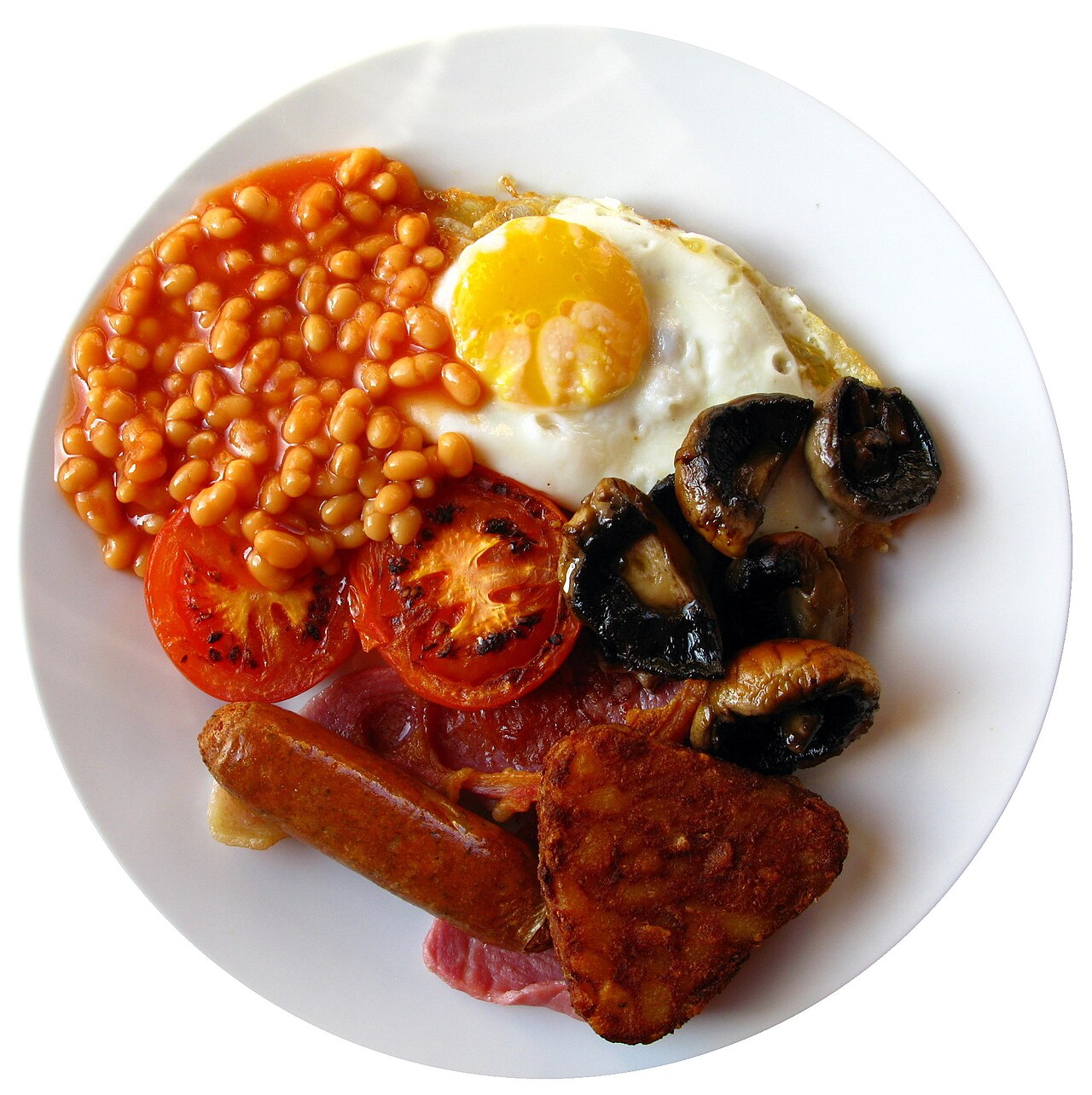
A big cooked breakfast of bacon, sausages, eggs, grilled tomatoes, mushrooms, baked beans and toast or fried bread, often with black pudding. Scotland, Wales and Northern Ireland each have their own version.
The Ulster fry of Northern Ireland adds soda farls and potato bread, the Scottish breakfast may bring tattie scones and Lorne sausage, and a Welsh breakfast can include cockles and laverbread, a purée of seaweed.
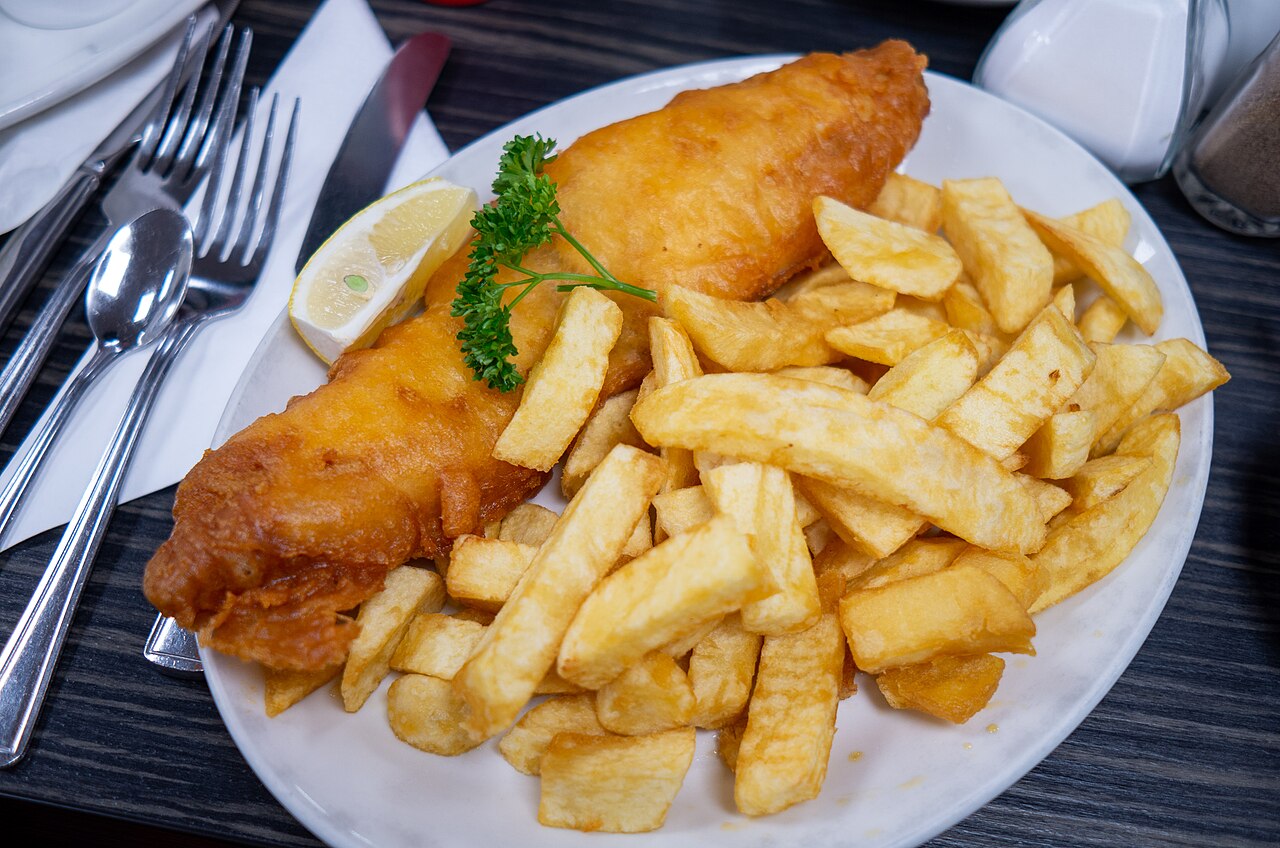
White fish, usually cod or haddock, fried in crisp batter and served with thick-cut chips, salt and malt vinegar. Mushy peas and tartare sauce are popular sides, and seaside towns are famous for it.
The first fish and chip shops opened in the 1860s, in London and in Lancashire, and which came first is still argued. During the Second World War, fish and chips was one of the few foods never rationed.
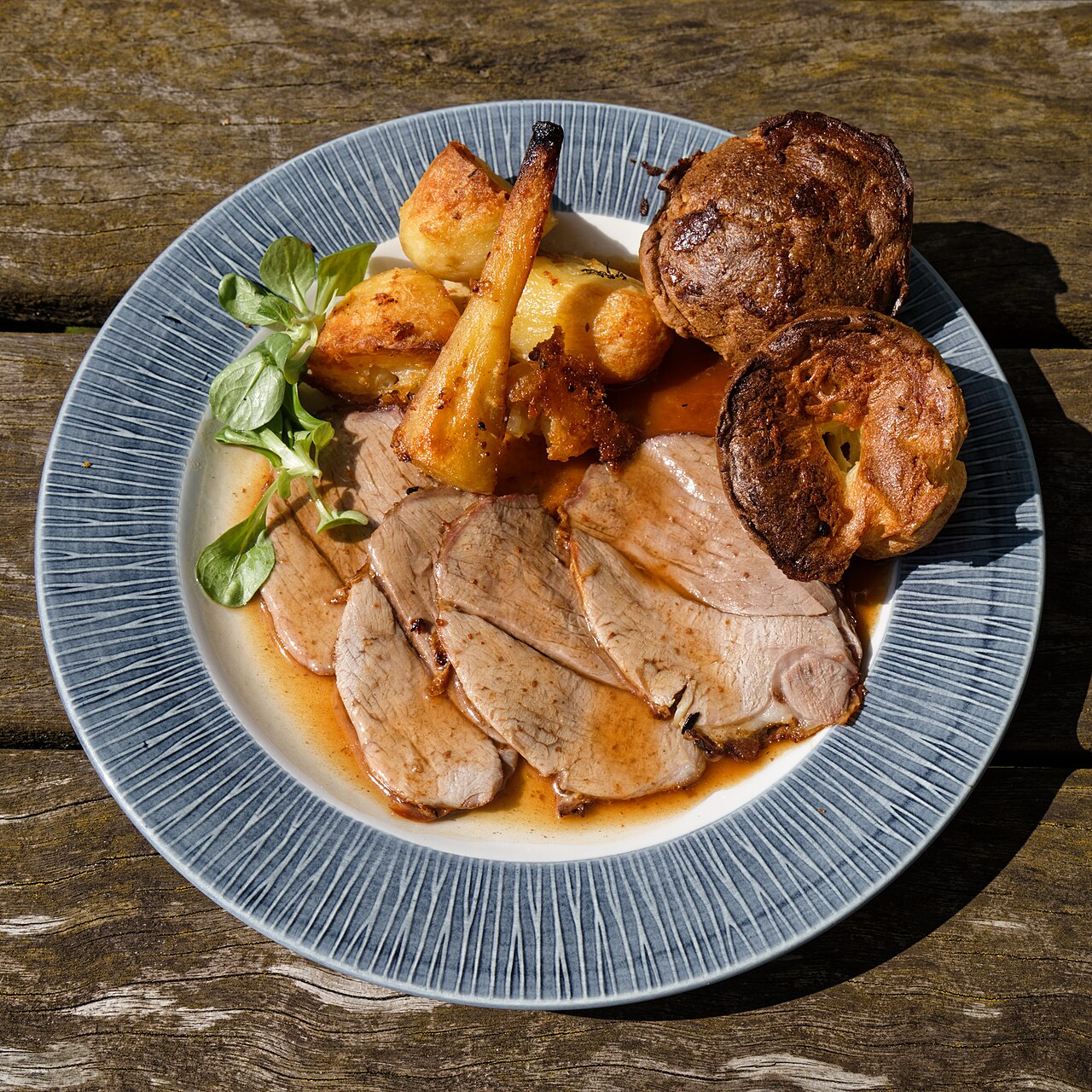
Roast beef, lamb, pork or chicken with roast potatoes, vegetables and gravy, traditionally eaten at Sunday lunchtime. Each meat has its partner: Yorkshire pudding and horseradish with beef, mint sauce with lamb, apple sauce with pork.
One story says the custom grew up because families put the meat in the oven before going to church and ate it when they came home.
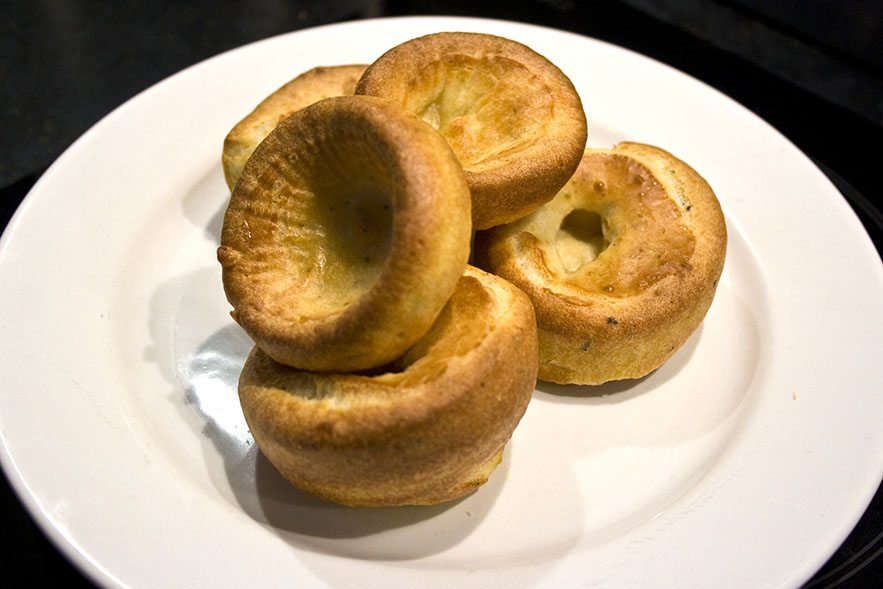
A simple batter of eggs, flour and milk poured into smoking hot fat, which puffs up into a golden, crisp cup. It is served with roast beef and gravy.
In 2008 the Royal Society of Chemistry declared that a proper Yorkshire pudding should be at least 4 inches (10 cm) tall. Long ago it was served first, with gravy, so that people would eat less of the expensive meat.
See the recipe
Serves 6
40 min
Ingredients
140 g plain flour
4 eggs
200 ml milk
A pinch of salt
Beef dripping or sunflower oil for the tin
Method
Heat the oven to 230 °C (210 °C fan).
Put about 1 teaspoon of dripping or oil into each hole of a 12-hole muffin tin and heat it in the oven for about 10 minutes, until very hot.
Meanwhile, whisk the flour, eggs and salt together, then whisk in the milk a little at a time until the batter is smooth, like thin cream.
Take the tin out carefully and quickly pour the batter into the hot fat, filling each hole about a third full.
Bake for 20 to 25 minutes without opening the oven door, until tall, golden and crisp.
Serve straight away with roast beef and plenty of gravy.
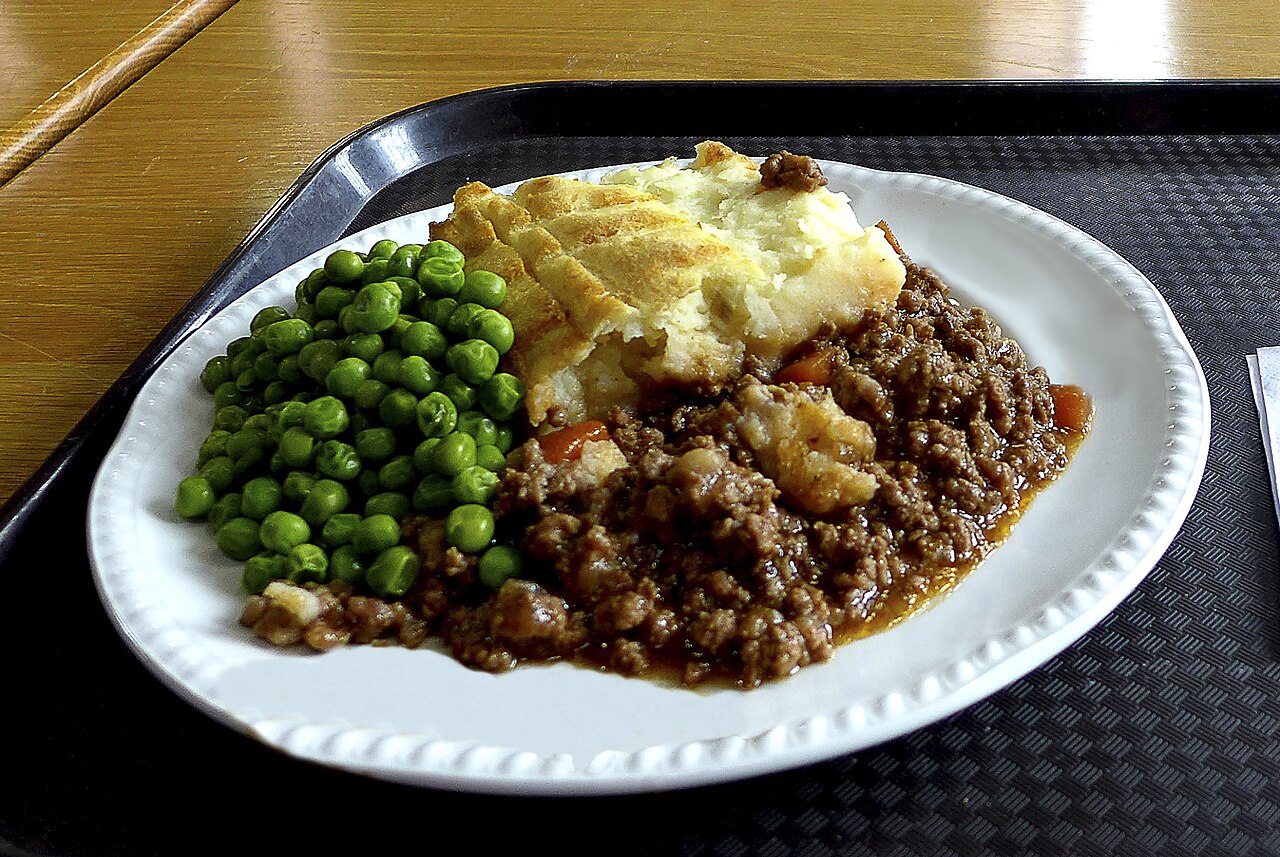
Minced lamb cooked with onions, carrots and gravy, topped with mashed potato and baked until golden. Made with beef, it is usually called cottage pie.
Cottage pie is the older name, first recorded in 1791. Shepherd's pie appears in the 1800s, and it was a thrifty way to use up the leftover meat from a Sunday roast.
See the recipe
Serves 4
1 h 30 min
Ingredients
500 g minced lamb
1 onion, finely chopped
2 carrots, finely diced
1 tablespoon plain flour
1 tablespoon tomato purée
1 tablespoon Worcestershire sauce
400 ml lamb or beef stock
1 kg floury potatoes, peeled and cut into chunks
50 g butter and a splash of milk
Salt and black pepper
Method
Brown the lamb in a large pan over a high heat, then lift it out and pour away most of the fat.
Soften the onion and carrots in the pan for about 8 minutes, then stir in the flour and tomato purée.
Return the meat, add the Worcestershire sauce and stock, and simmer gently for about 30 minutes until thick. Season well.
Meanwhile, boil the potatoes until tender, drain and mash them with the butter, milk, salt and pepper.
Heat the oven to 200 °C. Spoon the meat into an ovenproof dish, spread the mash on top and rough it up with a fork.
Bake for 25 to 30 minutes, until the top is golden and the gravy bubbles at the edges.
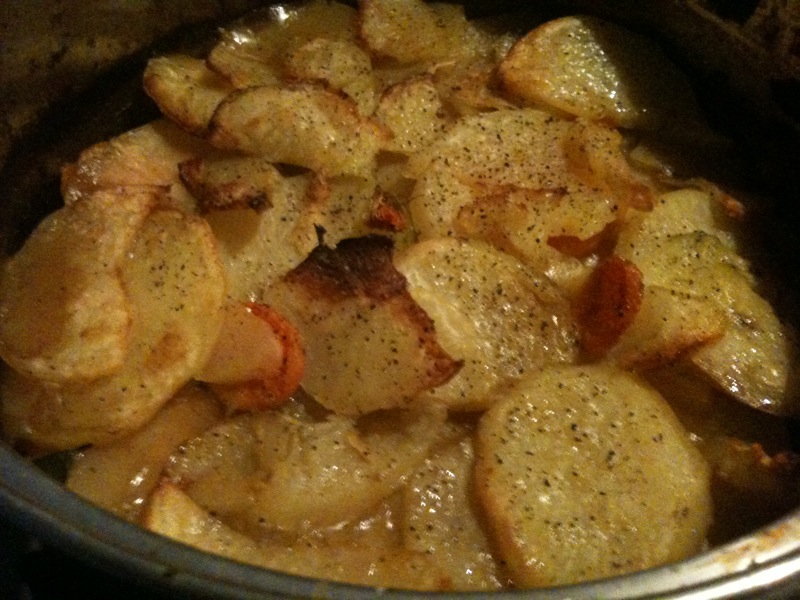
Lamb or mutton and onions, covered with overlapping slices of potato and cooked slowly in a lidded pot until the top is crisp and brown. It is traditionally served with pickled red cabbage.
In her novel North and South (1854), Elizabeth Gaskell showed hotpot as the most prized dish of cotton workers in a northern town. It was popular because it could be left to cook slowly while the family was at work.
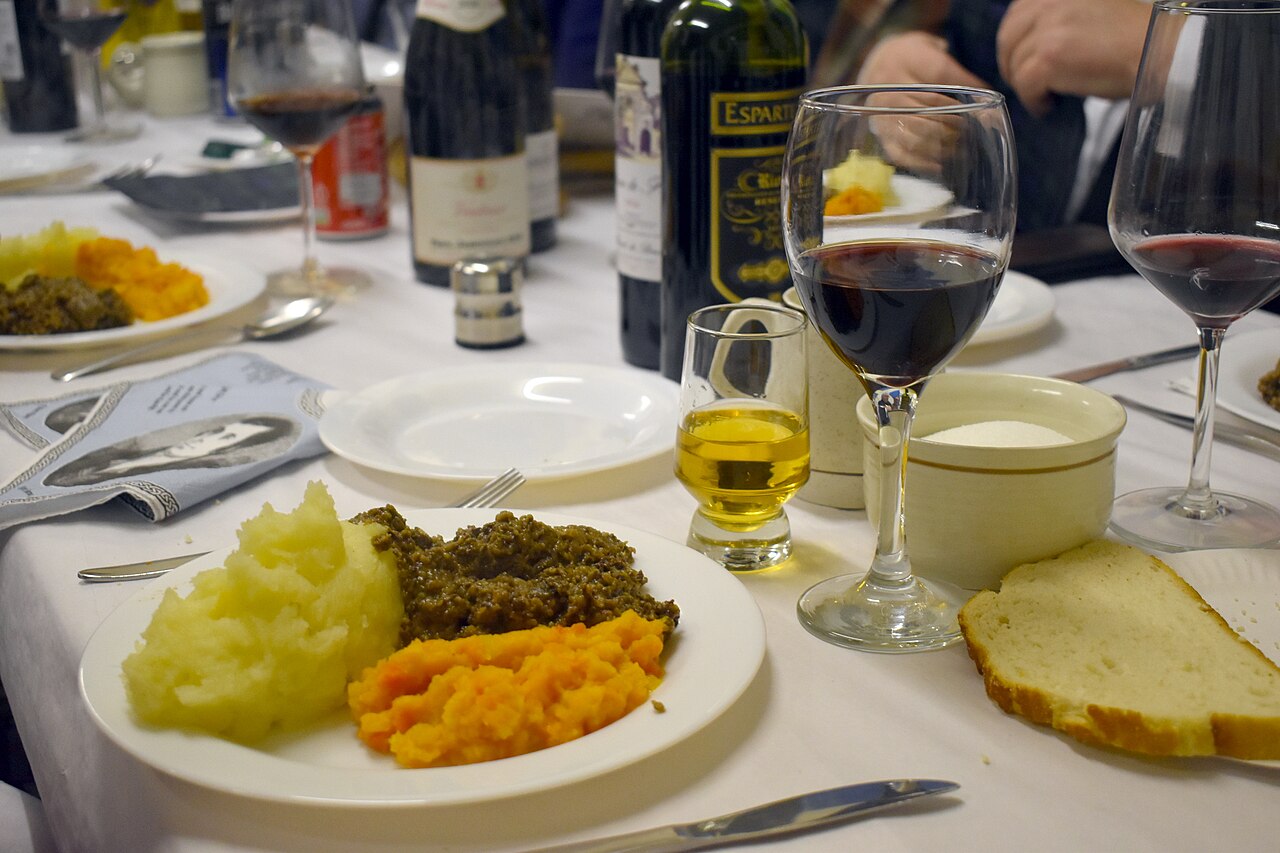
Scotland's national dish: sheep's heart, liver and lungs minced with onion, oatmeal, suet and spices, traditionally cooked in a sheep's stomach. It is served with 'neeps and tatties', mashed swede and potatoes.
On Burns Night, 25 January, Scots celebrate the poet Robert Burns by reciting his 'Address to a Haggis' before the haggis is cut open. Traditional haggis cannot be imported into the United States, because a 1971 ban covers food containing sheep's lung.
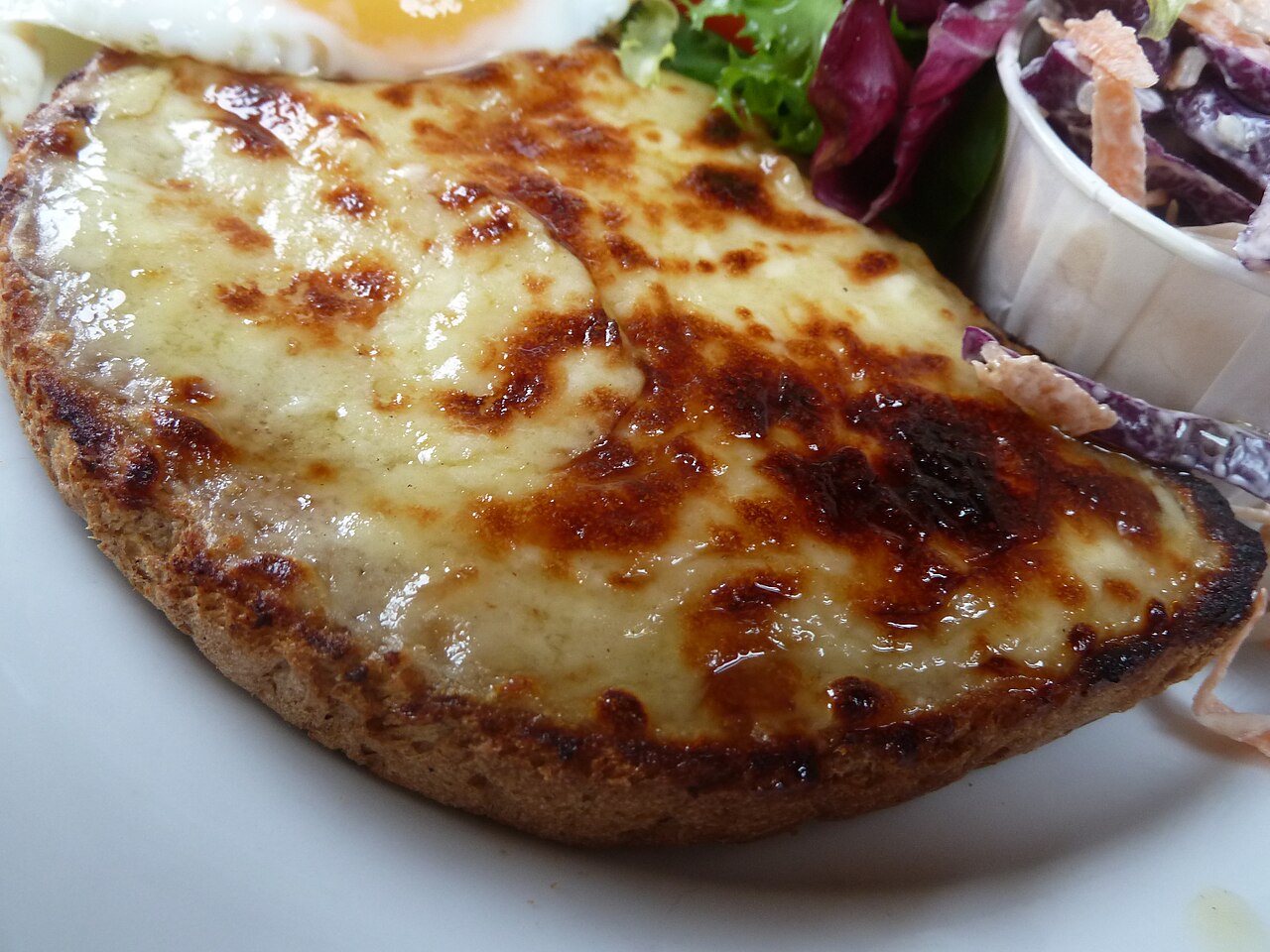
Toast topped with a rich sauce of melted cheese, often with ale, mustard and Worcestershire sauce, then grilled until bubbling. There is no rabbit in it at all.
It was first recorded in 1725 as 'Welsh rabbit', probably as a joke. The spelling 'rarebit' came later. With a fried egg on top it becomes a 'buck rarebit'.
See the recipe
Serves 4
20 min
Ingredients
25 g butter
25 g plain flour
150 ml ale or milk
200 g mature Cheddar cheese, grated
1 teaspoon English mustard
2 teaspoons Worcestershire sauce
4 thick slices of bread
Black pepper
Method
Melt the butter in a small pan, stir in the flour and cook for 1 minute.
Slowly whisk in the ale or milk and cook, stirring, until you have a thick, smooth sauce.
Take the pan off the heat and stir in the cheese, mustard, Worcestershire sauce and a little pepper until the cheese melts.
Heat the grill and toast the bread on both sides.
Spread the cheese mixture thickly over the toast, right to the edges.
Grill for 2 to 3 minutes until golden and bubbling, and serve at once.
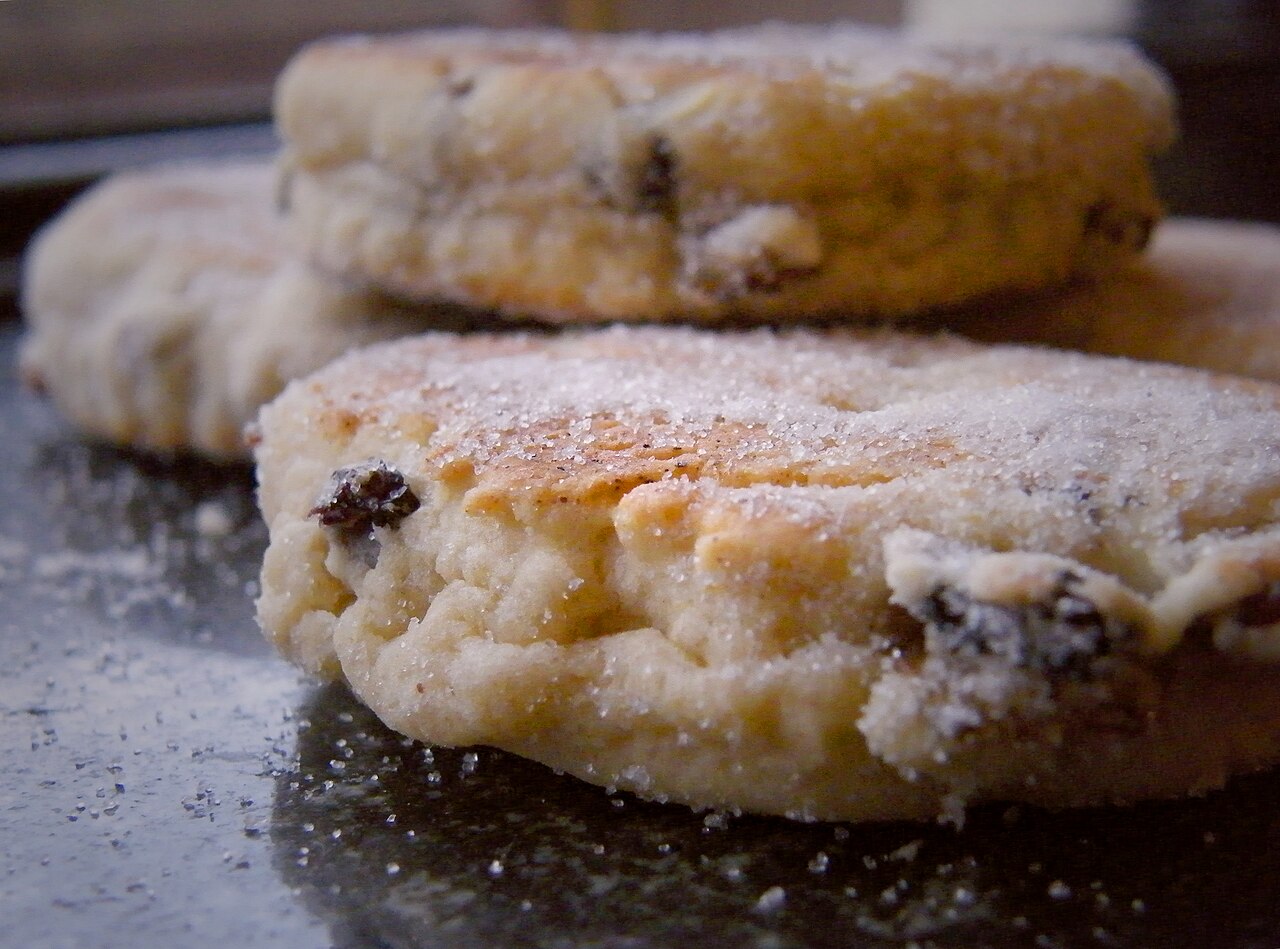
Small, round, lightly spiced cakes with currants, cooked on a flat griddle or 'bakestone' rather than in the oven. They taste like something between a scone, a biscuit and a pancake.
Coal miners carried them underground as a handy snack, and they are baked for Saint David's Day, the Welsh national day, on 1 March.
See the recipe
Serves 6
35 min
Ingredients
225 g self-raising flour
A pinch of salt
1/2 teaspoon mixed spice or nutmeg
100 g butter, cold and diced
75 g caster sugar, plus extra for sprinkling
50 g currants
1 egg, beaten
A little milk if needed
Method
Mix the flour, salt and spice in a bowl, then rub in the butter with your fingertips until it looks like breadcrumbs.
Stir in the sugar and currants, then add the egg and mix to a firm dough, adding a splash of milk if it is too dry.
Roll out on a floured surface to about 5 mm thick and cut into rounds about 6 cm wide.
Heat a heavy frying pan or griddle over a medium-low heat and rub it with a little butter.
Cook the cakes for about 3 minutes on each side, until golden brown and cooked through.
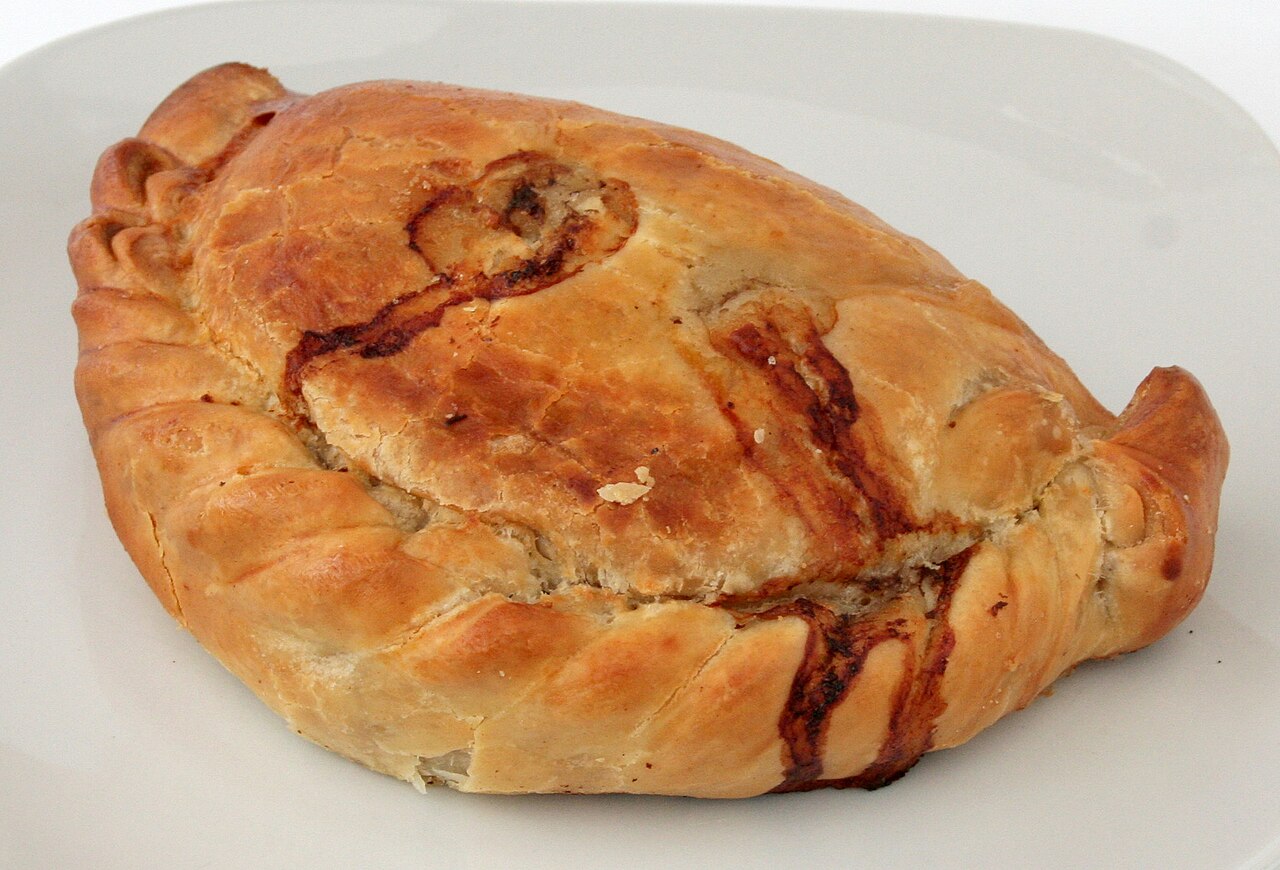
A D-shaped pastry filled with beef, potato, swede and onion, seasoned with salt and pepper and crimped along one side. It is a complete meal you can hold in your hand.
Since 2011 the Cornish pasty has had Protected Geographical Indication (PGI) status, so only pasties prepared in Cornwall to the traditional recipe may use the name. Tin miners took pasties underground, where they stayed warm for hours.
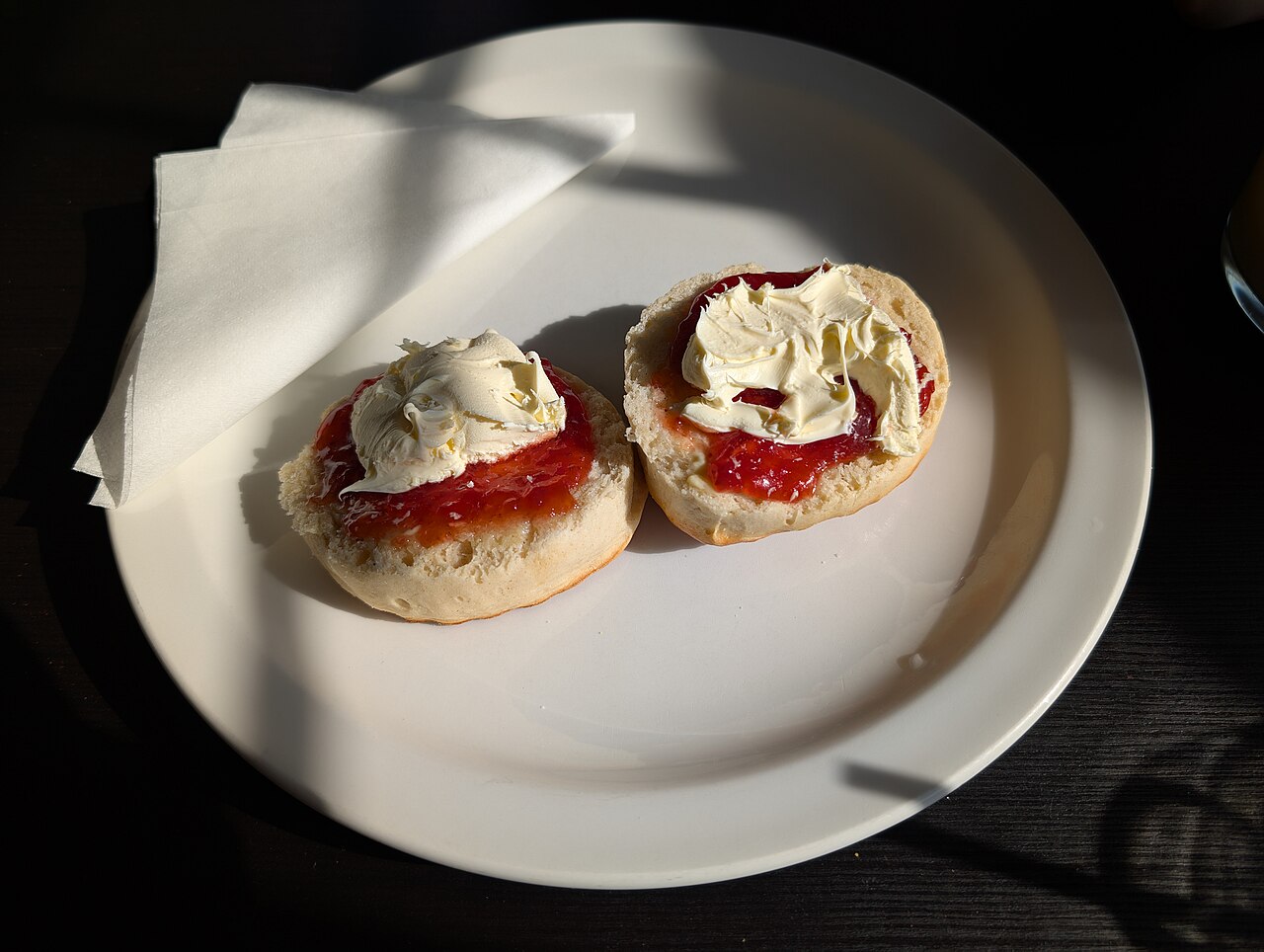
Light, crumbly little breads served warm with strawberry jam and thick clotted cream. With a pot of tea, this is a 'cream tea', a favourite in Devon and Cornwall.
Devon and Cornwall disagree on the order: in Devon the cream goes on first and the jam on top, and in Cornwall it is jam first, then cream. How to pronounce 'scone' is another friendly argument.
See the recipe
Serves 8
30 min
Ingredients
350 g self-raising flour, plus extra for dusting
1 teaspoon baking powder
A pinch of salt
85 g butter, cold and diced
3 tablespoons caster sugar
175 ml milk
1 teaspoon lemon juice
1 beaten egg, to glaze
Strawberry jam and clotted cream, to serve
Method
Heat the oven to 220 °C (200 °C fan) and put a baking tray inside to warm.
Mix the flour, baking powder and salt, then rub in the butter until the mixture looks like fine crumbs. Stir in the sugar.
Warm the milk slightly, add the lemon juice, and pour it into the bowl. Mix quickly with a knife to a soft dough.
Pat the dough out gently on a floured surface to about 4 cm thick and cut out rounds with a 5 cm cutter, without twisting.
Brush the tops with beaten egg, put them on the hot tray and bake for about 10 minutes, until risen and golden.
Serve warm, split open, with jam and clotted cream in the order you prefer.
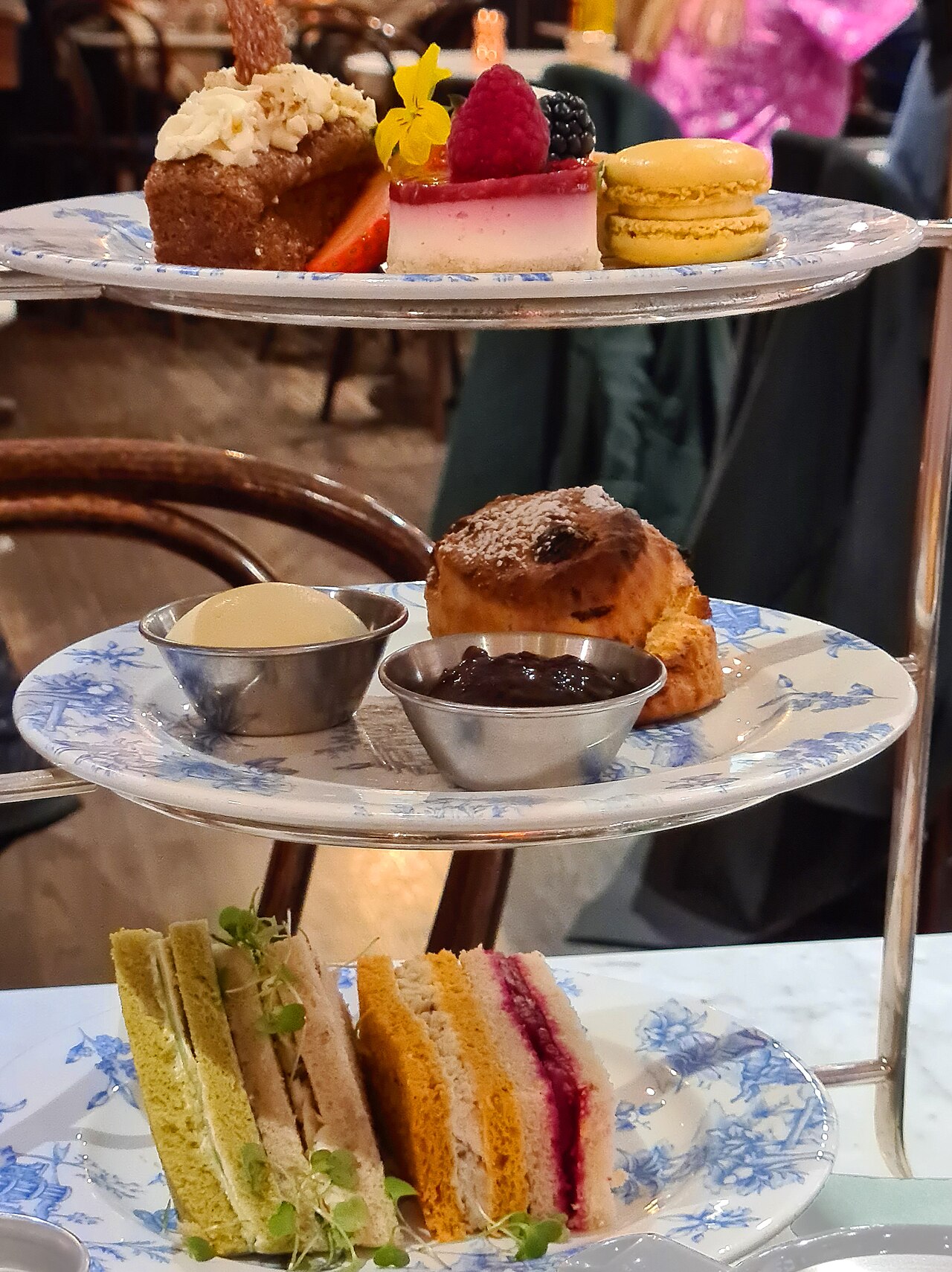
A pot of tea, usually drunk with milk, served with small sandwiches (cucumber is a classic), scones and cakes, often on a tiered stand. It is a treat for a special occasion in a hotel or tea room.
Anna, Duchess of Bedford, is often said to have started the fashion in the 1830s or 1840s by asking for tea and snacks to bridge the long gap between lunch and a late dinner, although some historians think the habit is older.
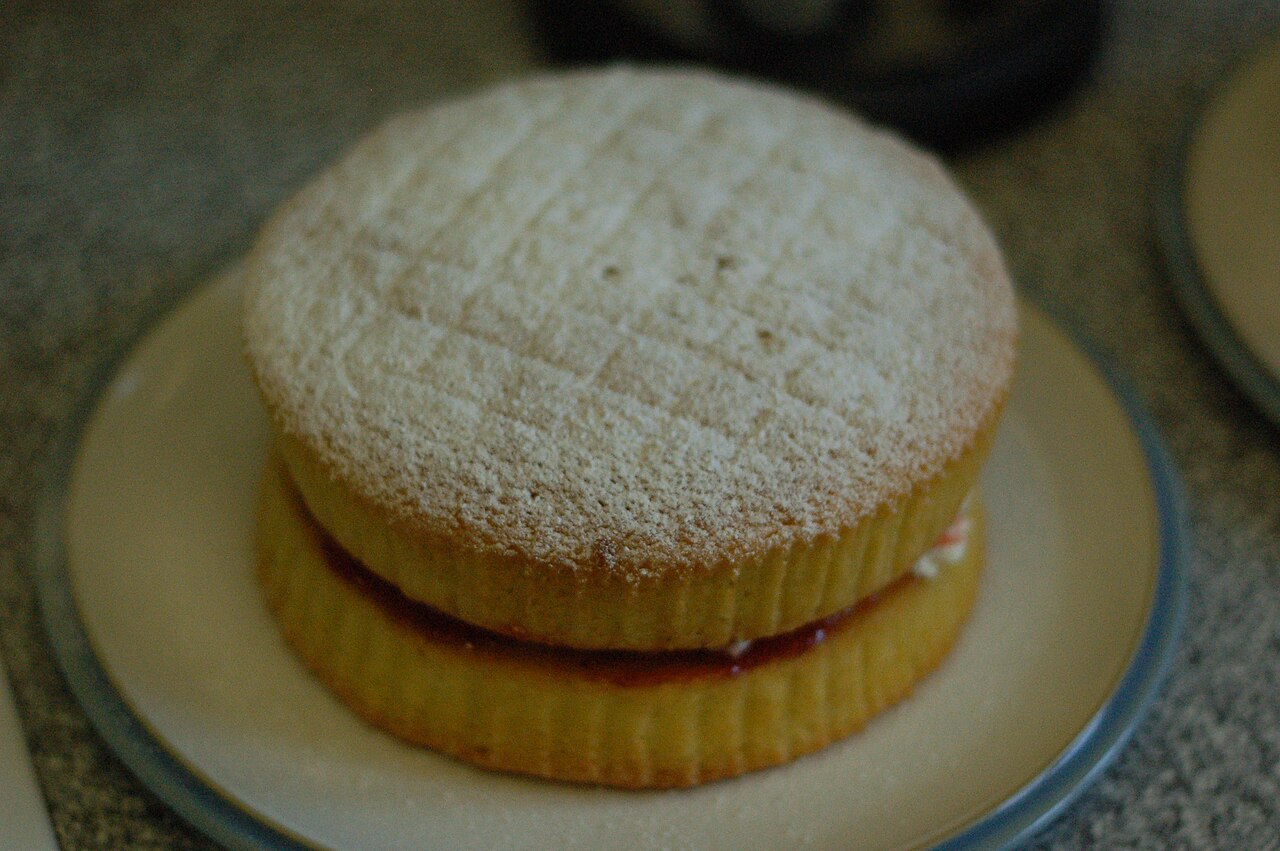
Two light butter sponge cakes sandwiched together with raspberry or strawberry jam, and often cream, with a dusting of sugar on top. It is a village fête and tea-time classic.
It is named after Queen Victoria, who is said to have enjoyed a slice with her afternoon tea. It became possible after Alfred Bird invented baking powder in 1843.
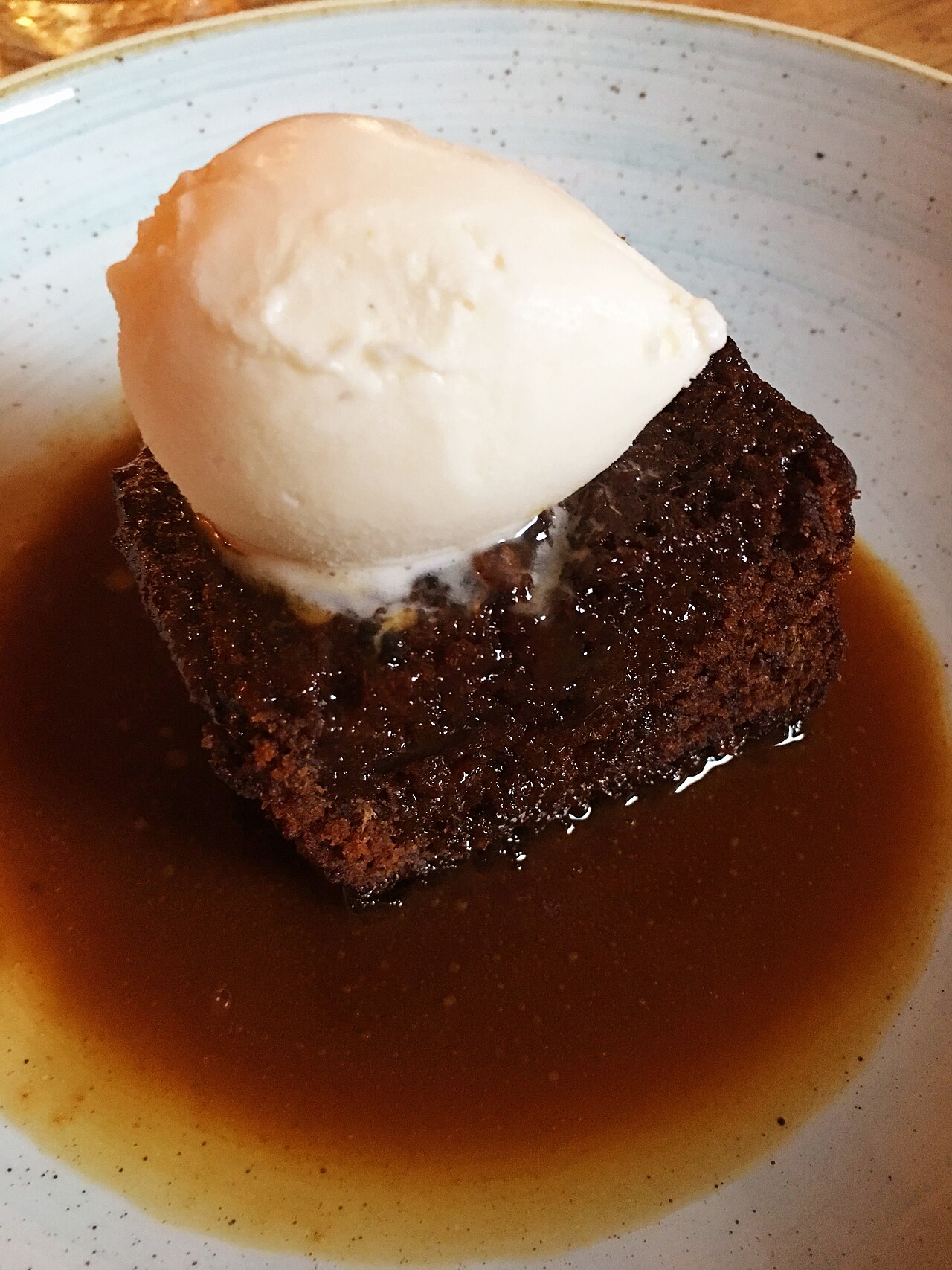
A moist sponge made with chopped dates, soaked in a warm toffee sauce of butter, cream and dark sugar, served with custard, cream or vanilla ice cream.
It was made famous in the 1970s at the Sharrow Bay hotel on Ullswater in the Lake District, although several other places claim to have served it first.
Table manners
Hold the fork in your left hand and the knife in your right, and keep them there while you eat, rather than swapping hands.
In most pubs you order and pay at the bar. Friends often take turns to buy a 'round' of drinks for the whole group, and if someone buys you one, it is polite to buy the next.
Check the restaurant bill before tipping: many restaurants add a service charge of about 10 to 12.5 percent. If there is none, 10 to 15 percent is usual for good service. You do not need to tip for drinks at the bar.
Tea is usually drunk with milk. If you visit someone at home, you will almost certainly be asked if you would like a cup, and it is friendly to say yes.
When raising a glass, say 'Cheers'. In Wales you may hear 'Iechyd da' (YEH-chid DAH), which means 'good health'.
London is by far the biggest city, home to about 9 million people. Each of the four nations has its own capital: London for England and the UK, Edinburgh for Scotland, Cardiff for Wales and Belfast for Northern Ireland. Beyond them lie proud industrial cities in the north, Roman and Georgian towns in the south, and the small Highland capital of Inverness.
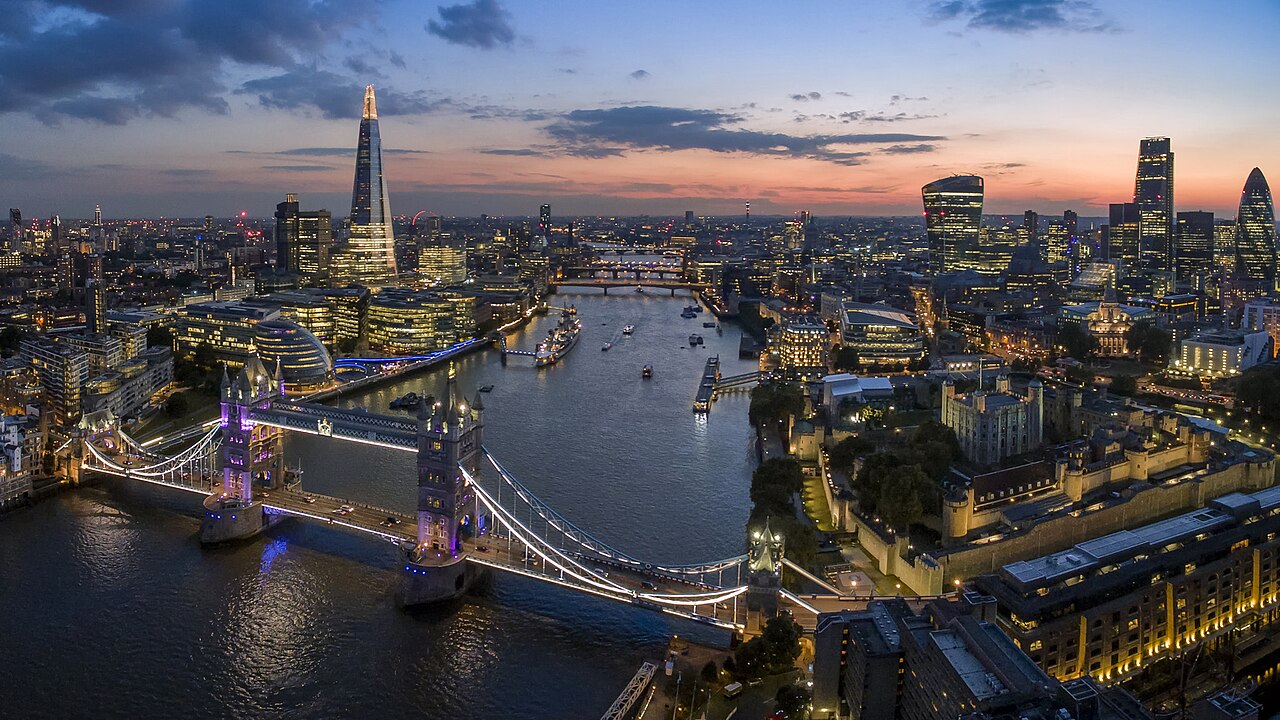
The capital of the United Kingdom and of England, on the River Thames. Founded by the Romans as Londinium around AD 47, it is now one of the world's great cities, with royal palaces, famous museums and theatres, and red buses.
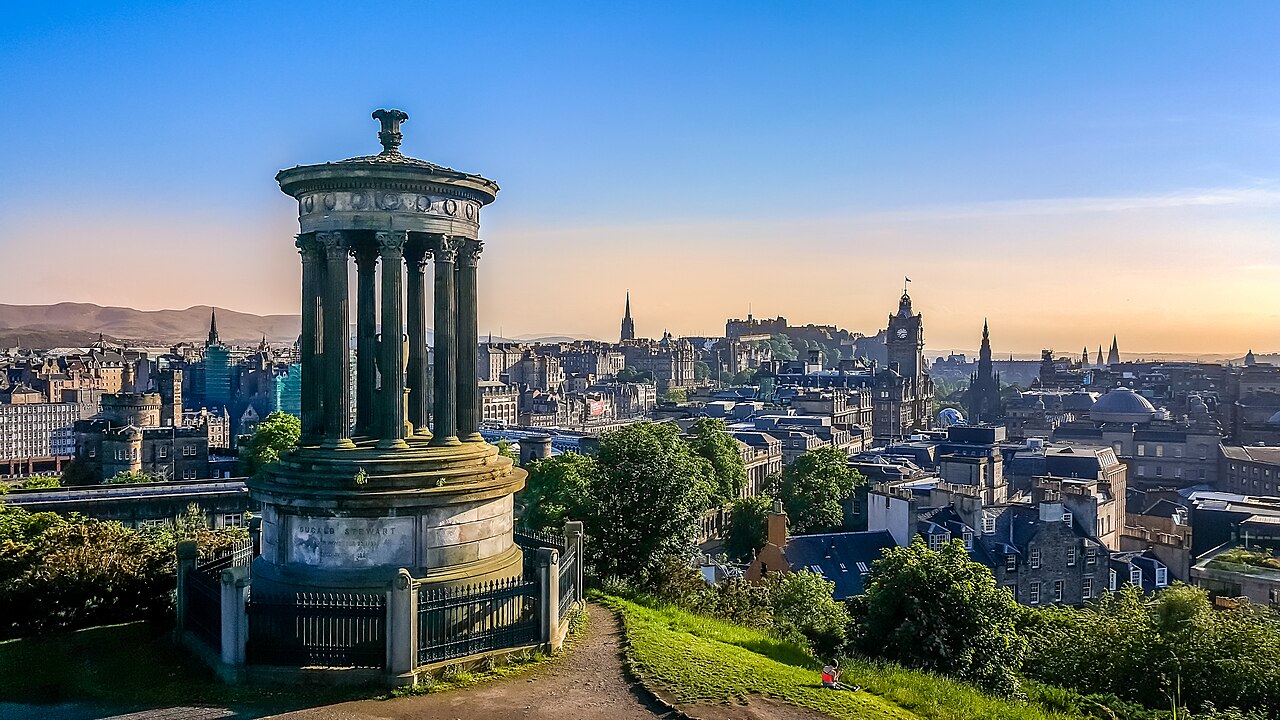
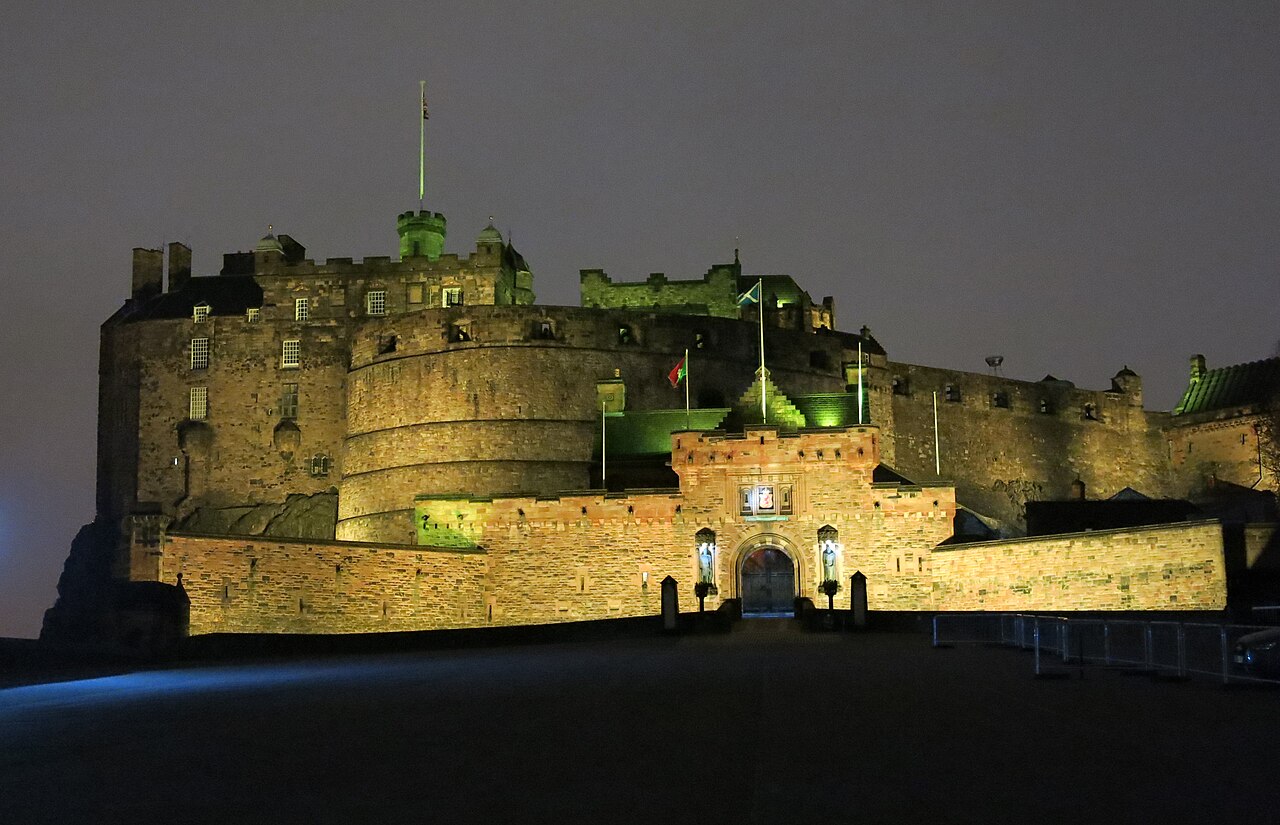
The capital of Scotland since at least the 15th century, built on hills around an old volcano topped by its castle. The medieval Old Town and the elegant Georgian New Town are a World Heritage Site.
Edinburgh Castle and the Royal Mile
The Festival Fringe every August
The Palace of Holyroodhouse and the Scottish Parliament
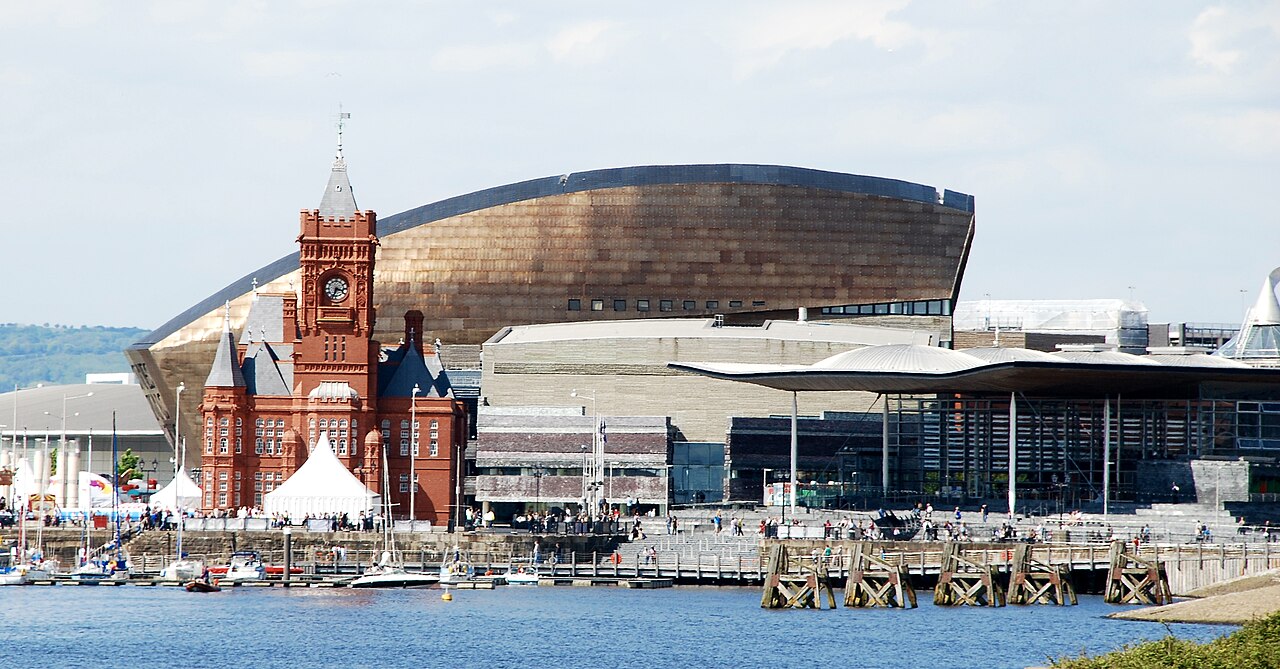
The largest city in Wales, and its capital since 1955. It grew in the 1800s as a great port for Welsh coal, and today its old docks in Cardiff Bay are home to the Senedd, the Welsh Parliament.
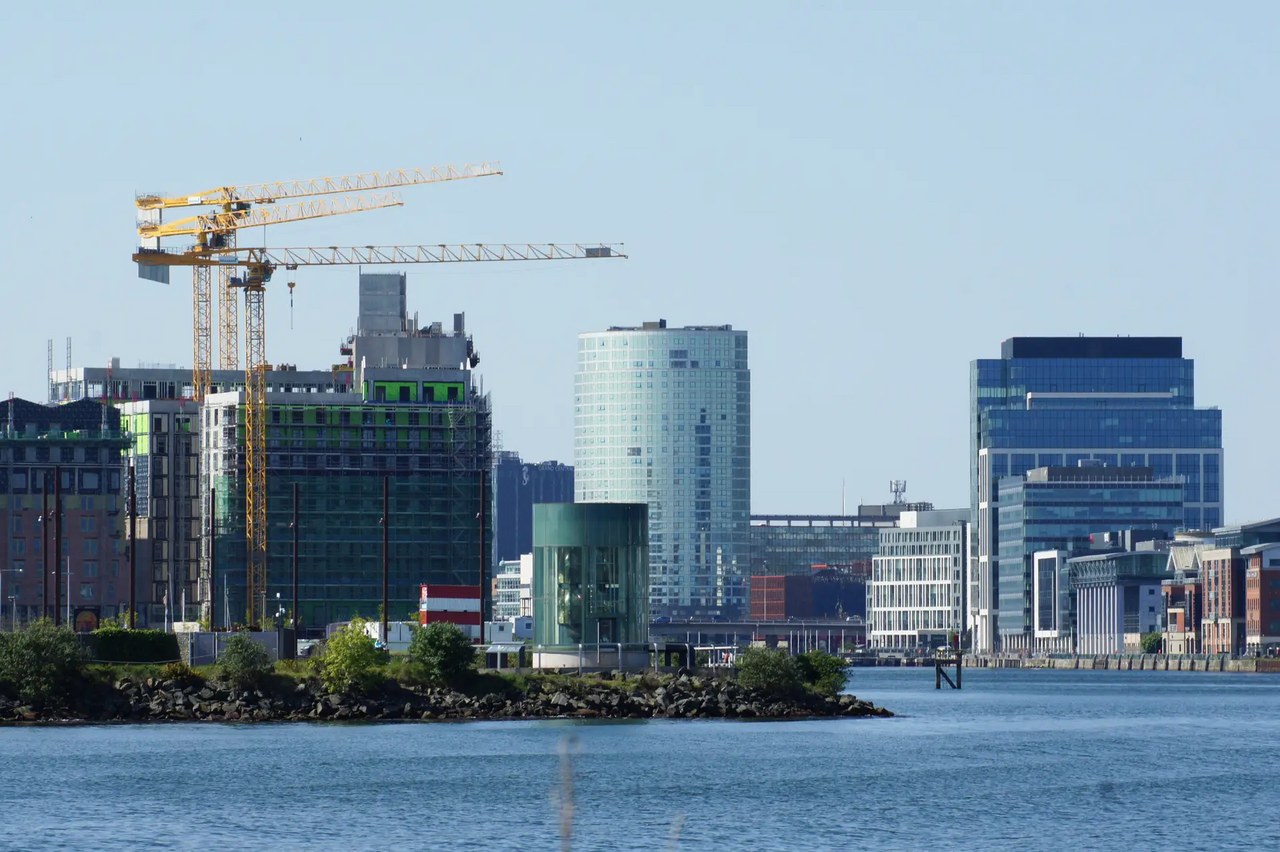
The capital and largest city of Northern Ireland, on the River Lagan at the head of Belfast Lough. It was once a world centre of linen and shipbuilding, and the Titanic was built here.
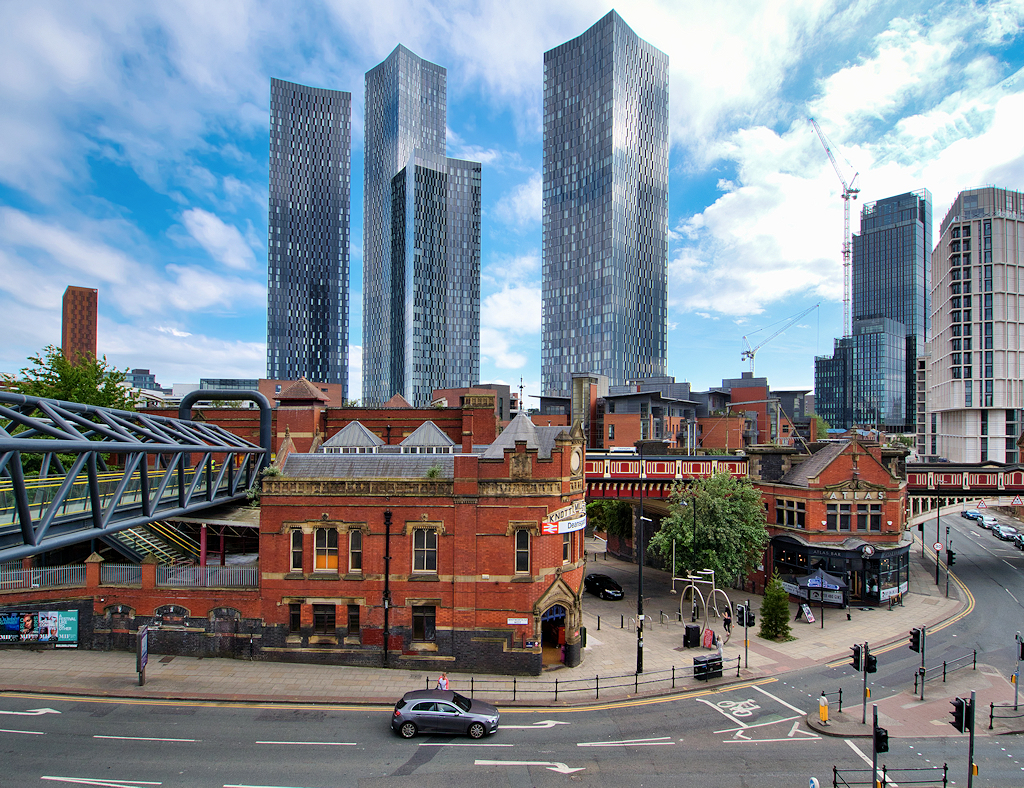
Often called the world's first industrialised city, Manchester grew rich on cotton in the 1800s and earned the nickname 'Cottonopolis'. It is now a lively city of music, universities and football.
Two famous football clubs, Manchester United and Manchester City
Industrial heritage and red-brick warehouses
The world's first intercity passenger railway, to Liverpool, in 1830
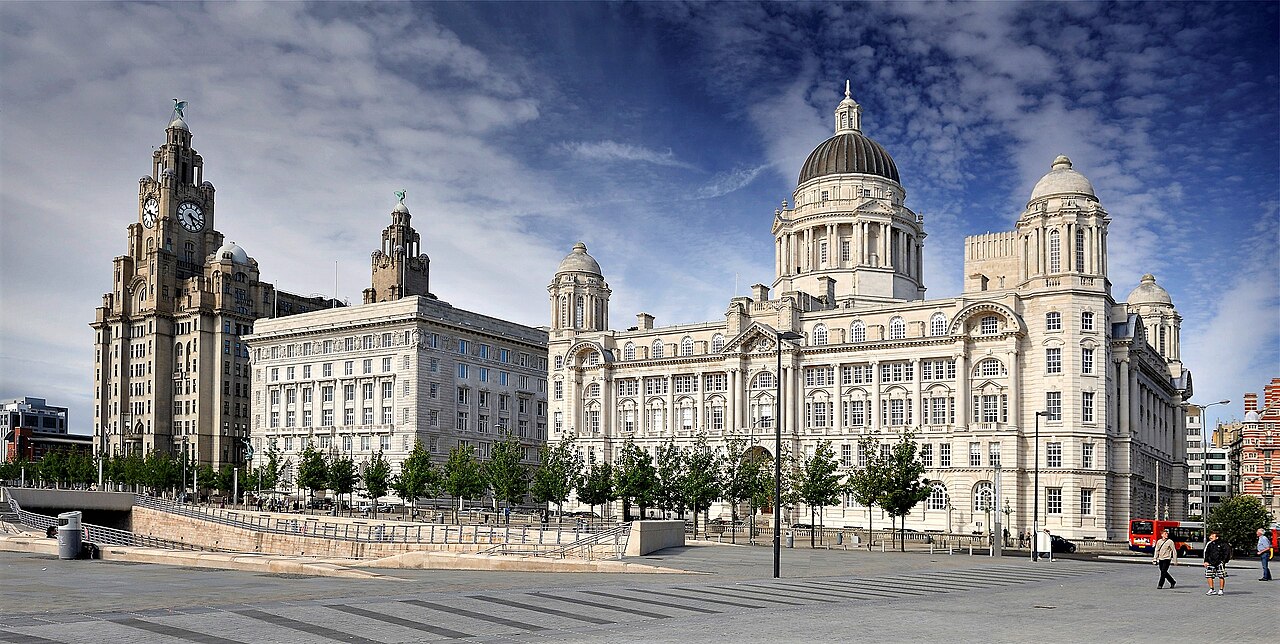
A historic port on the River Mersey and a major departure point for emigrants to North America. It is the home town of the Beatles and is famous for its warm, witty people.
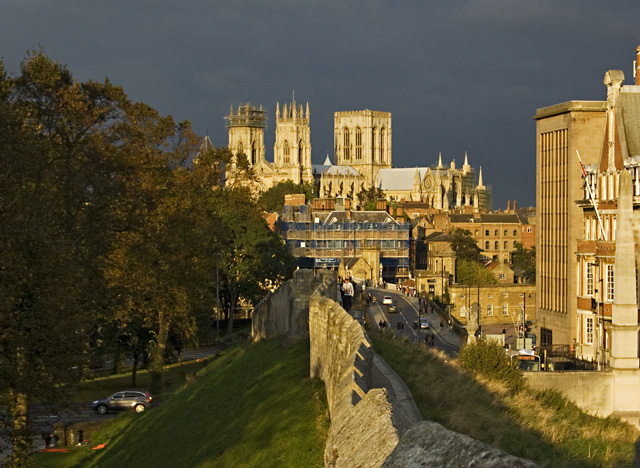
A walled city founded by the Romans in AD 71 as Eboracum. The Vikings later called it Jorvik. Its medieval streets, such as the Shambles, lead to the great Gothic cathedral of York Minster.
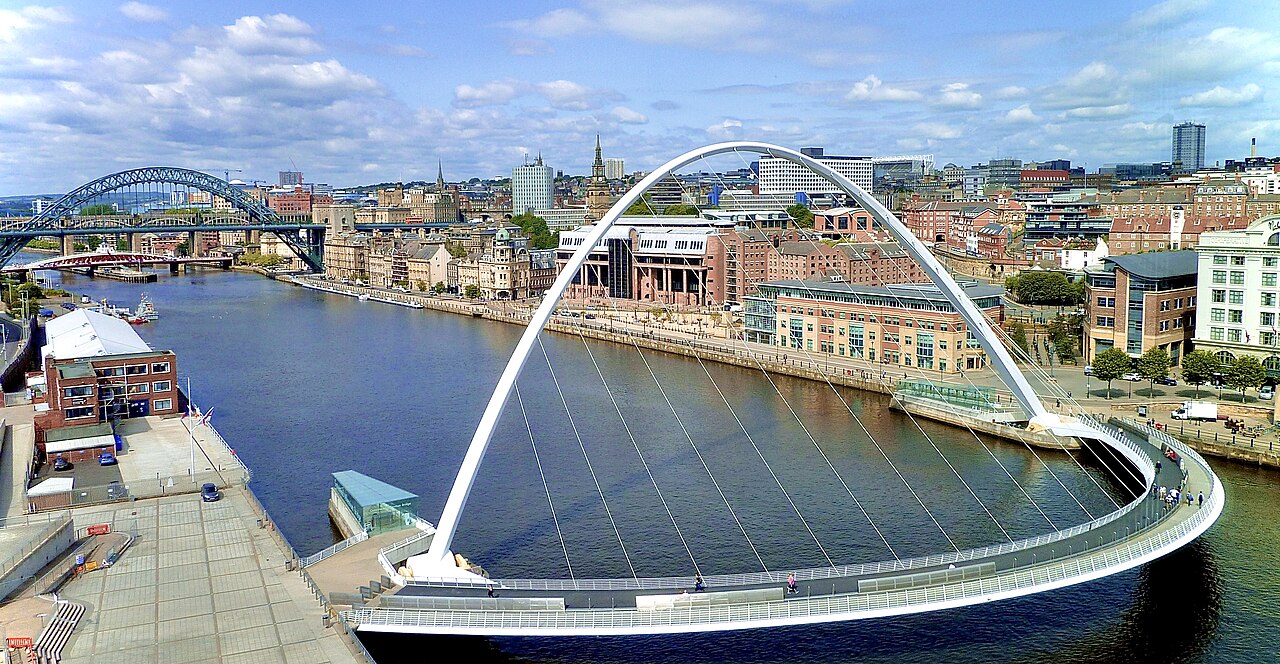
A proud northern city on the River Tyne, which began as a Roman fort, Pons Aelius, on the line of Hadrian's Wall. It grew on coal and shipbuilding, and its people are known as Geordies.
The Tyne Bridge, opened in 1928
The Gateshead Millennium Bridge
The saying 'carrying coals to Newcastle'
The Angel of the North sculpture nearby, in Gateshead
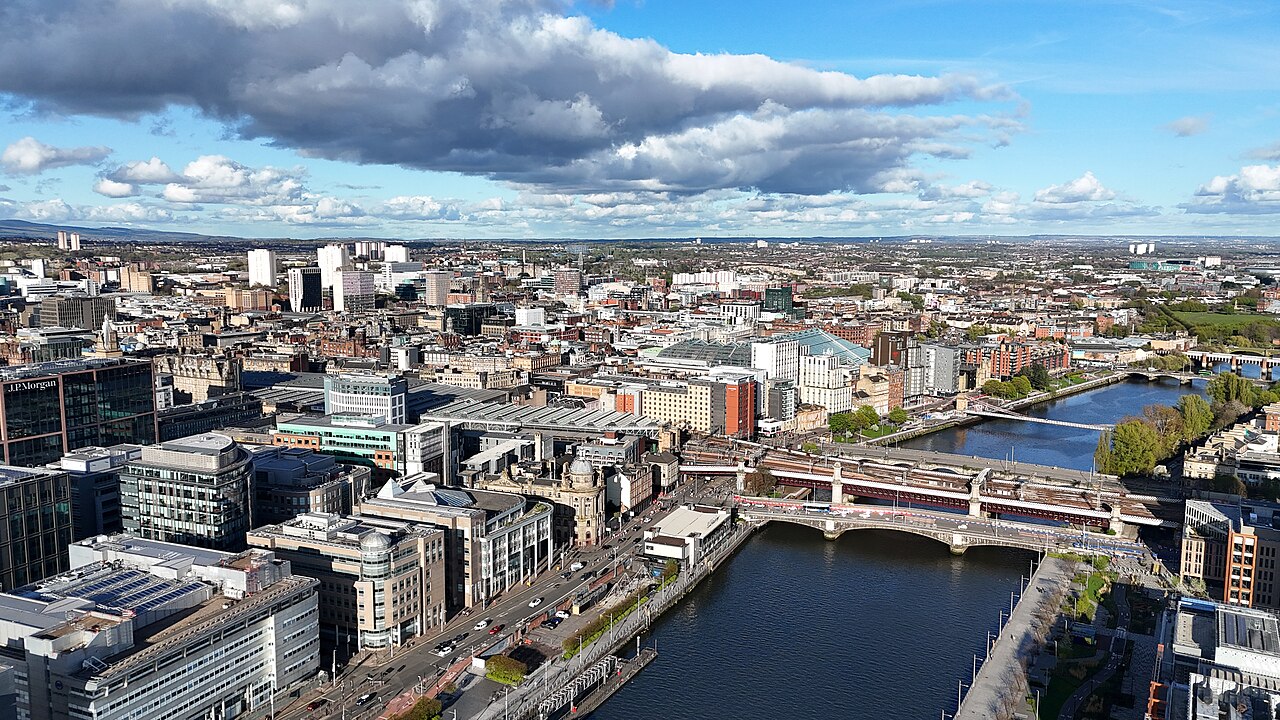
Scotland's largest city, on the River Clyde. In the 1800s it built ships for the whole world and was called the 'second city of the British Empire'. Today it is known for art, music and friendly people.
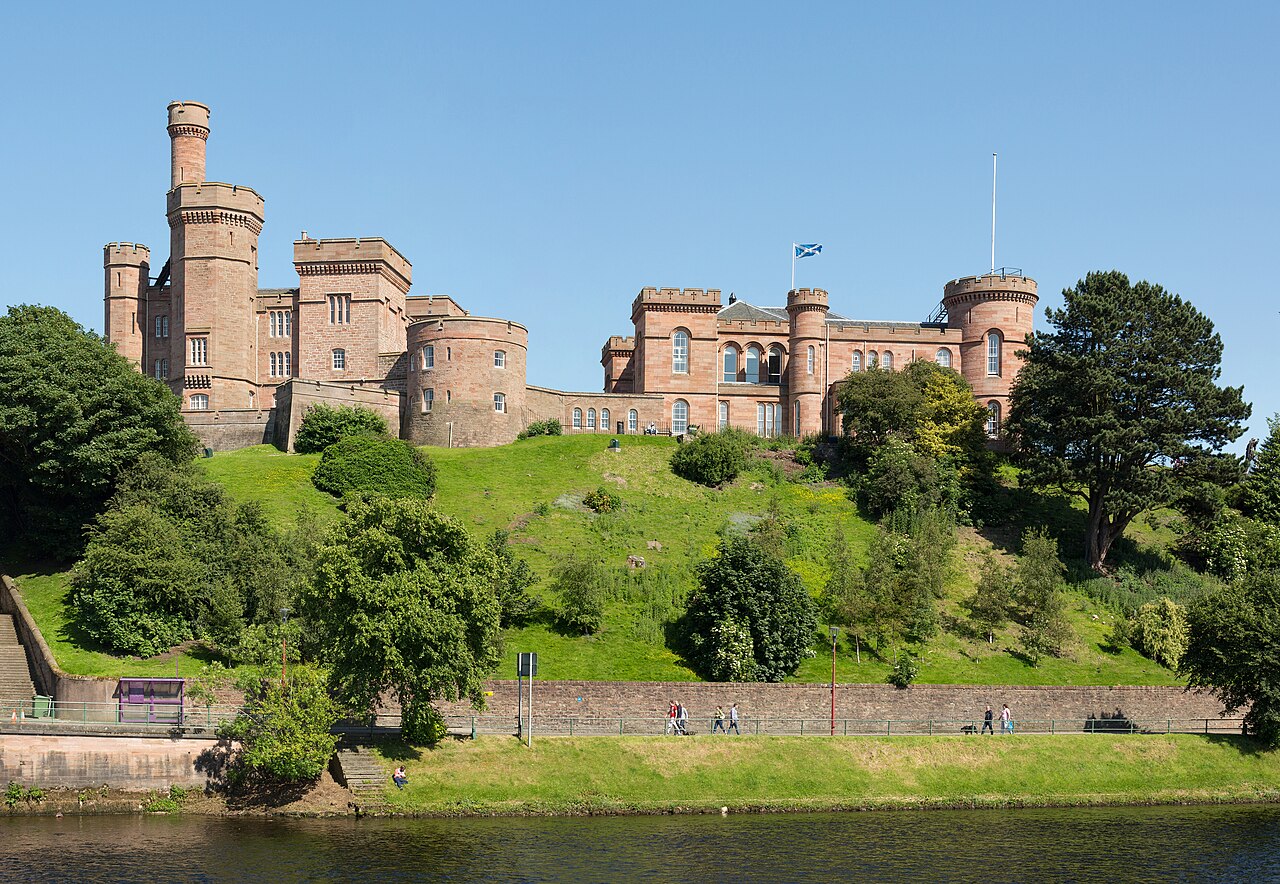
The northernmost city in the United Kingdom and the unofficial capital of the Scottish Highlands, on the River Ness where it meets the sea. It became a city in 2000.
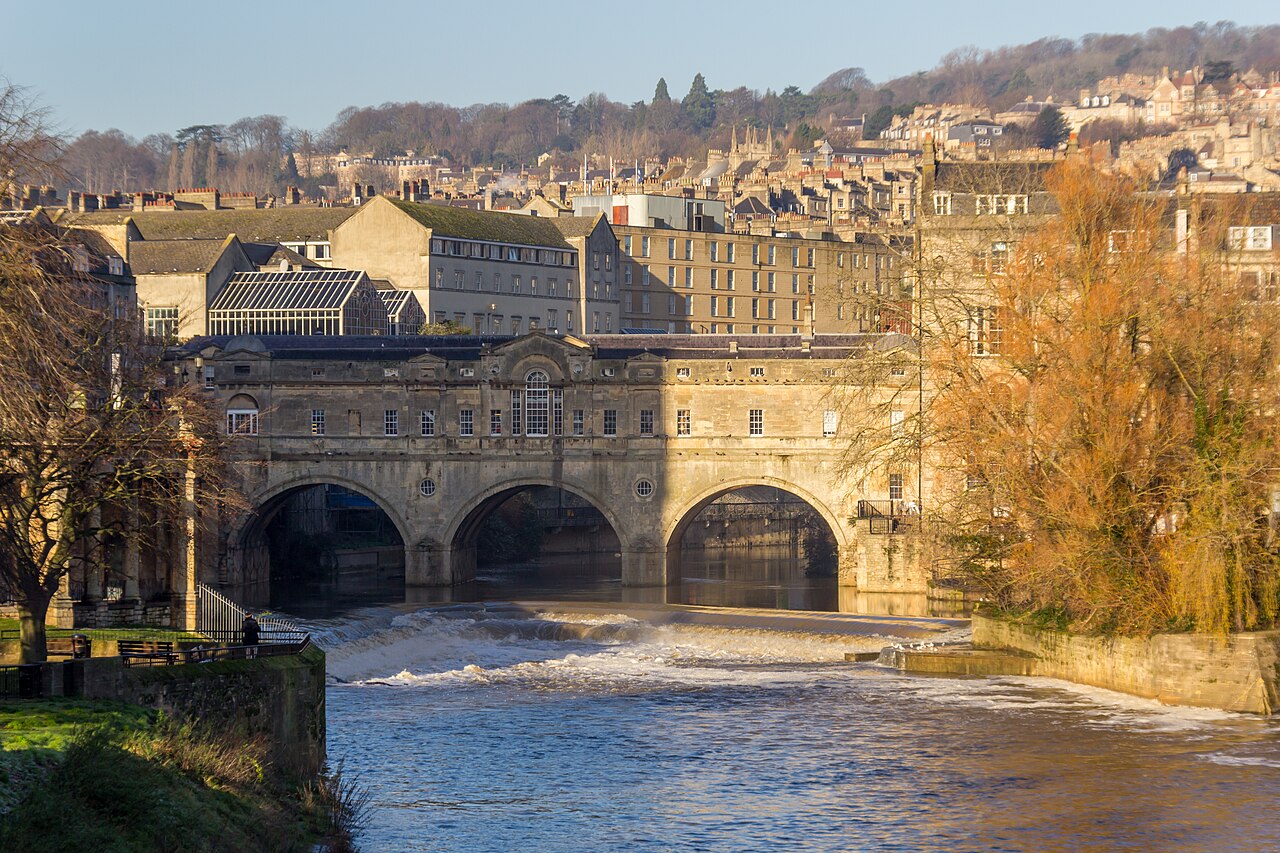
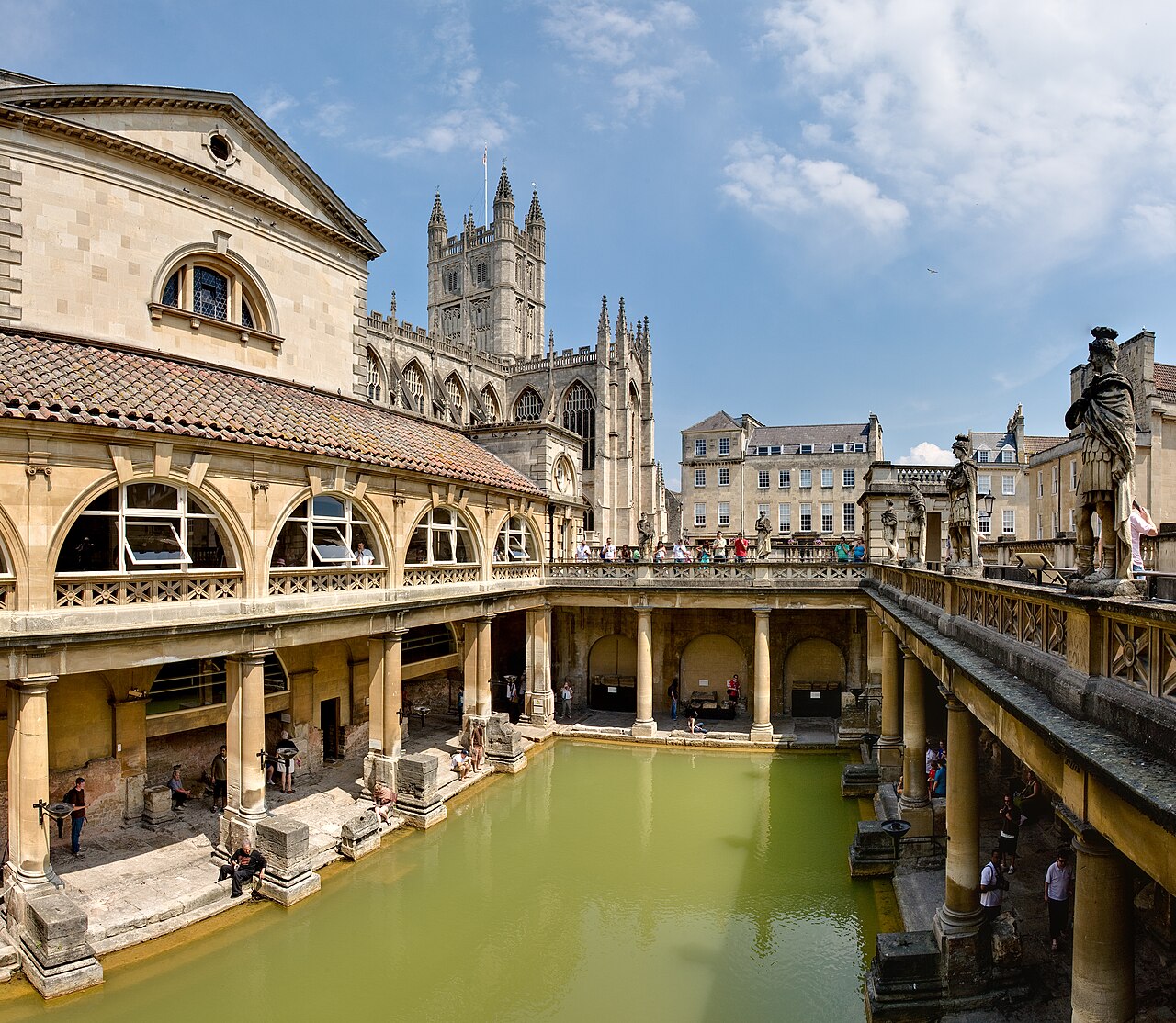
An elegant city of honey-coloured Georgian stone, built around hot springs that the Romans called Aquae Sulis. The whole city is a World Heritage Site, and Jane Austen lived here in the early 1800s.
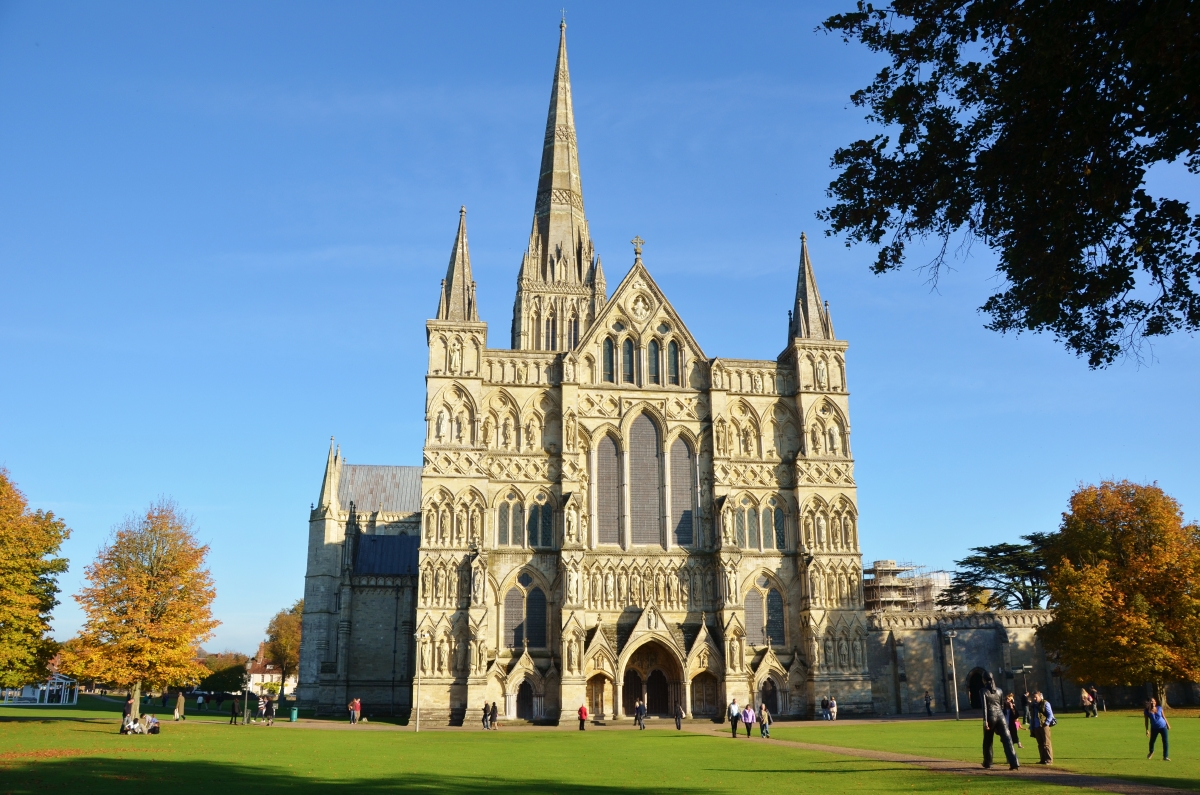
A peaceful cathedral city in the south of England and the nearest city to Stonehenge. Its cathedral has the tallest church spire in England, 123 m high.
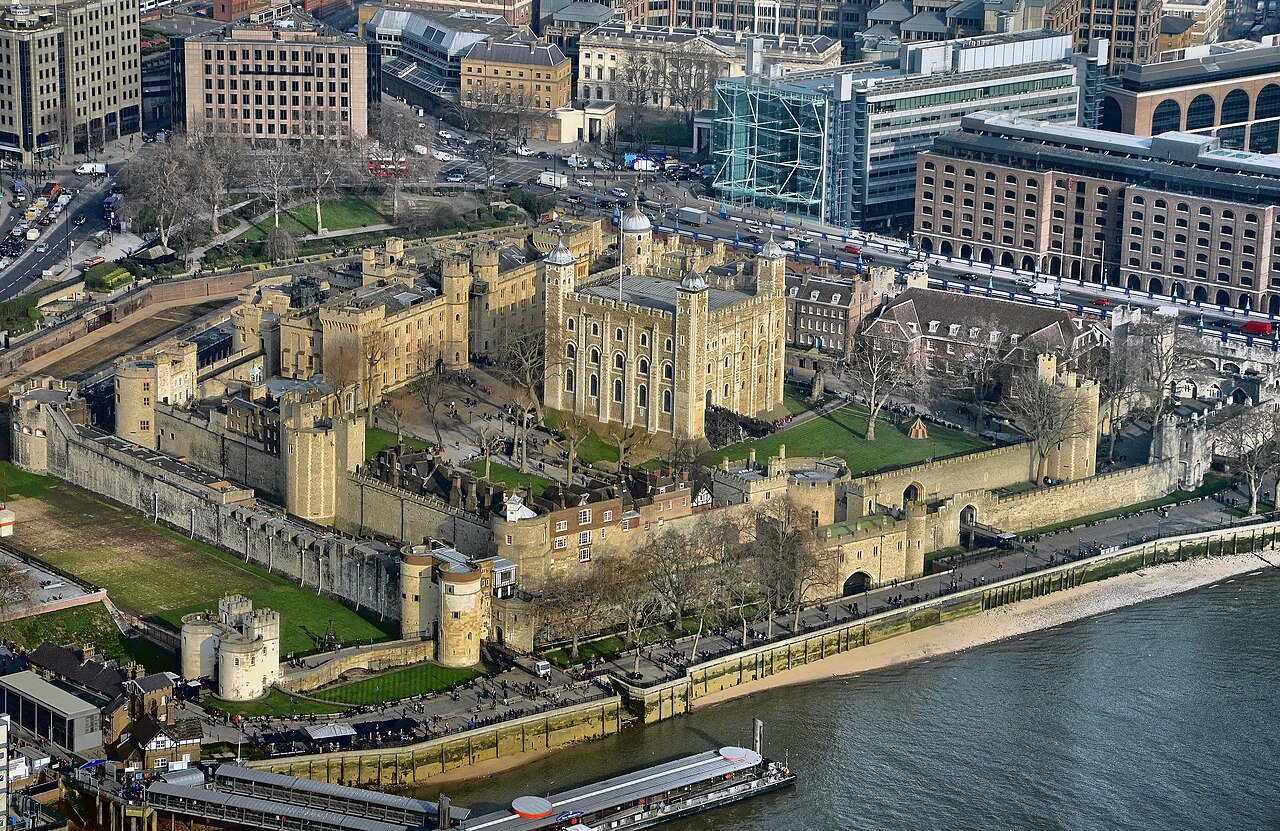
A royal fortress on the Thames, begun by William the Conqueror. Its White Tower dates from about 1078. It has been a palace, a prison and the home of the Crown Jewels, and the Yeoman Warders, or 'Beefeaters', still guard it.
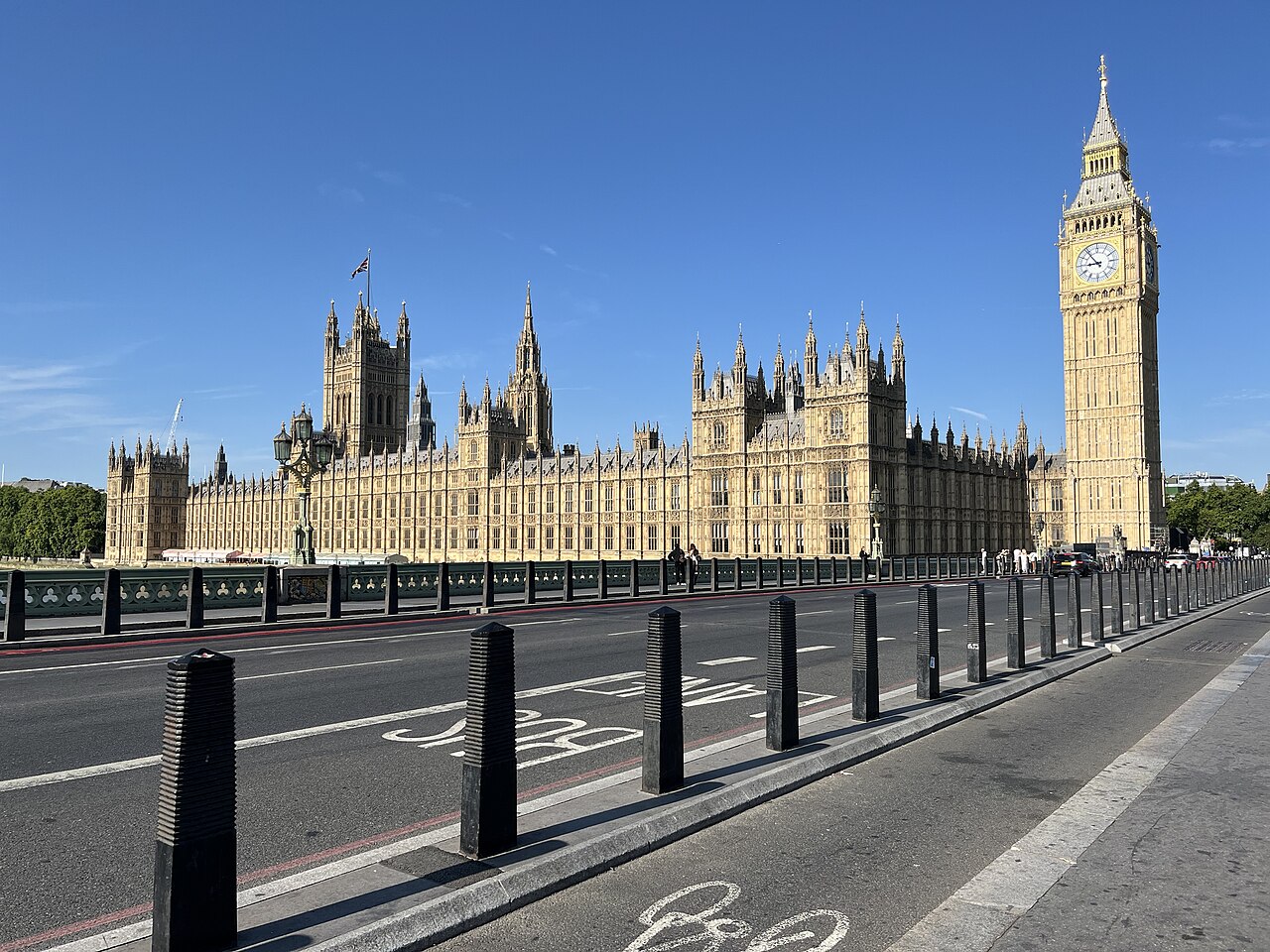
The home of the UK Parliament, rebuilt in Gothic style after a great fire in 1834; Westminster Hall, from 1097, is the most famous part to survive. 'Big Ben' is really the name of the great bell; the clock tower has been called the Elizabeth Tower since 2012.
The world's most famous prehistoric stone circle, on Salisbury Plain about 13 km north of Salisbury. Its great sarsen stones were raised around 2500 BC. Together with Avebury it has been a World Heritage Site since 1986.
A Roman temple and bathing complex built around a natural hot spring from about AD 60 to 70 and dedicated to the goddess Sulis Minerva. The water still rises at about 46 °C. They are part of the City of Bath World Heritage Site.
A mighty fortress on the rock of an extinct volcano above the city. It holds the Honours of Scotland, the Scottish crown jewels, and the One O'Clock Gun is fired here most days. It is part of the Old and New Towns of Edinburgh World Heritage Site.
The Roman wall began at Wallsend, on the edge of Newcastle, and ran about 117 km west. Some of its best-preserved stretches and forts, such as Housesteads, lie about 45 km west of Newcastle in Northumberland. It is part of the Frontiers of the Roman Empire World Heritage Site.
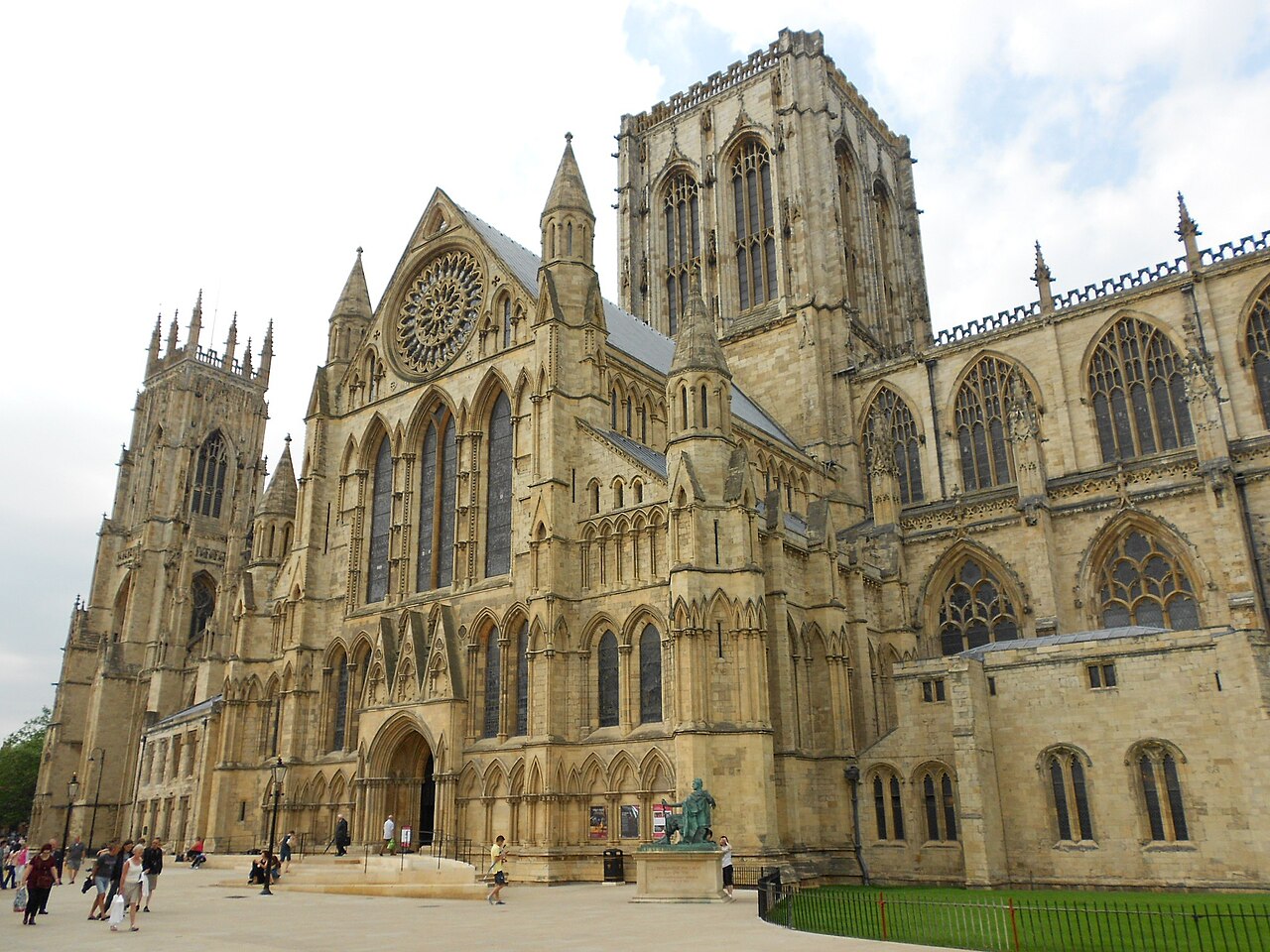
One of the largest Gothic cathedrals in northern Europe, built between about 1230 and 1472. Its Great East Window is the largest area of medieval stained glass in the country.
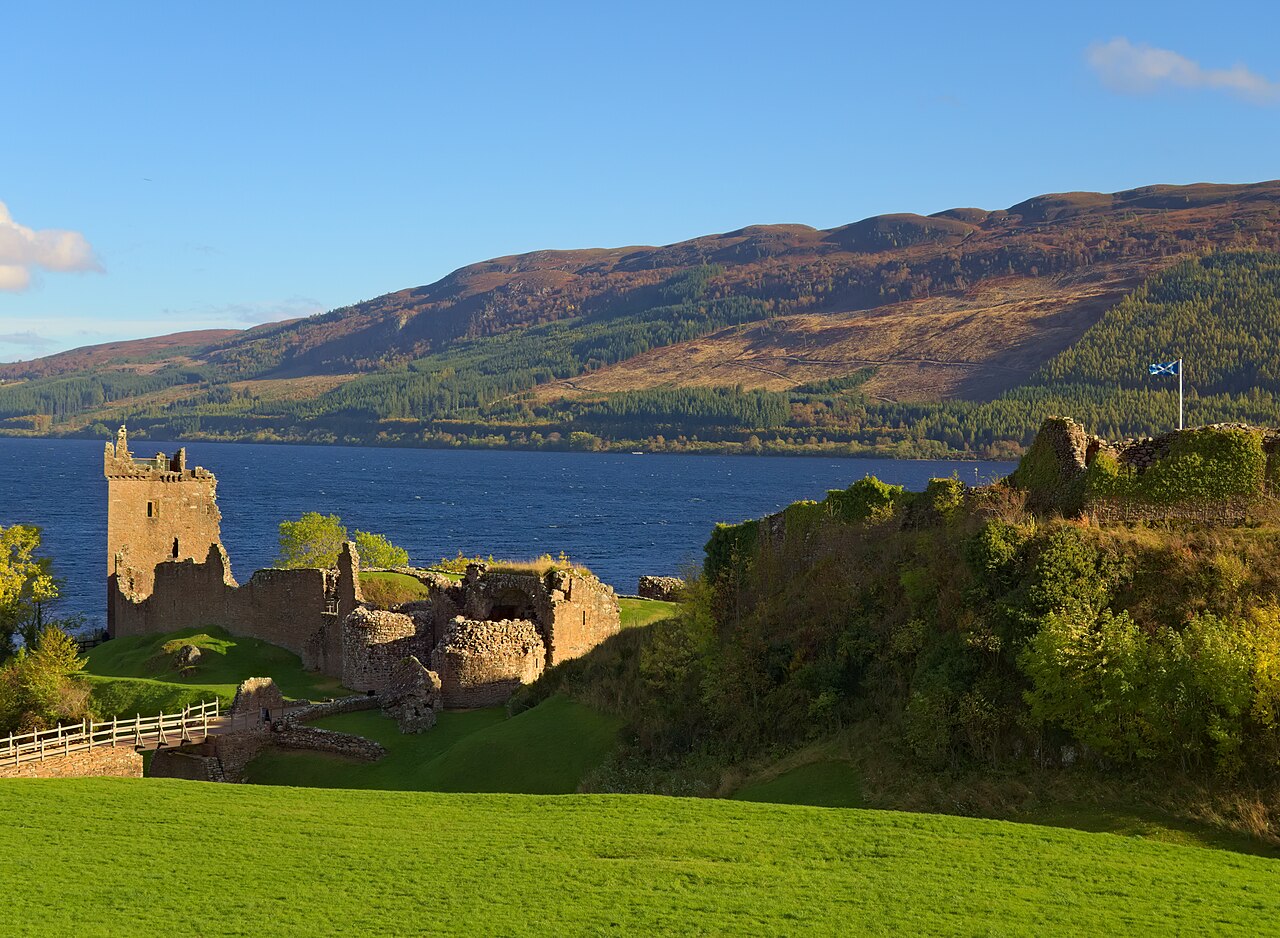
A long, deep and dark lake in the Highlands, about 37 km long and 230 m deep, famous for its legendary monster, 'Nessie'. The ruins of Urquhart Castle stand on its shore about 21 km southwest of Inverness.
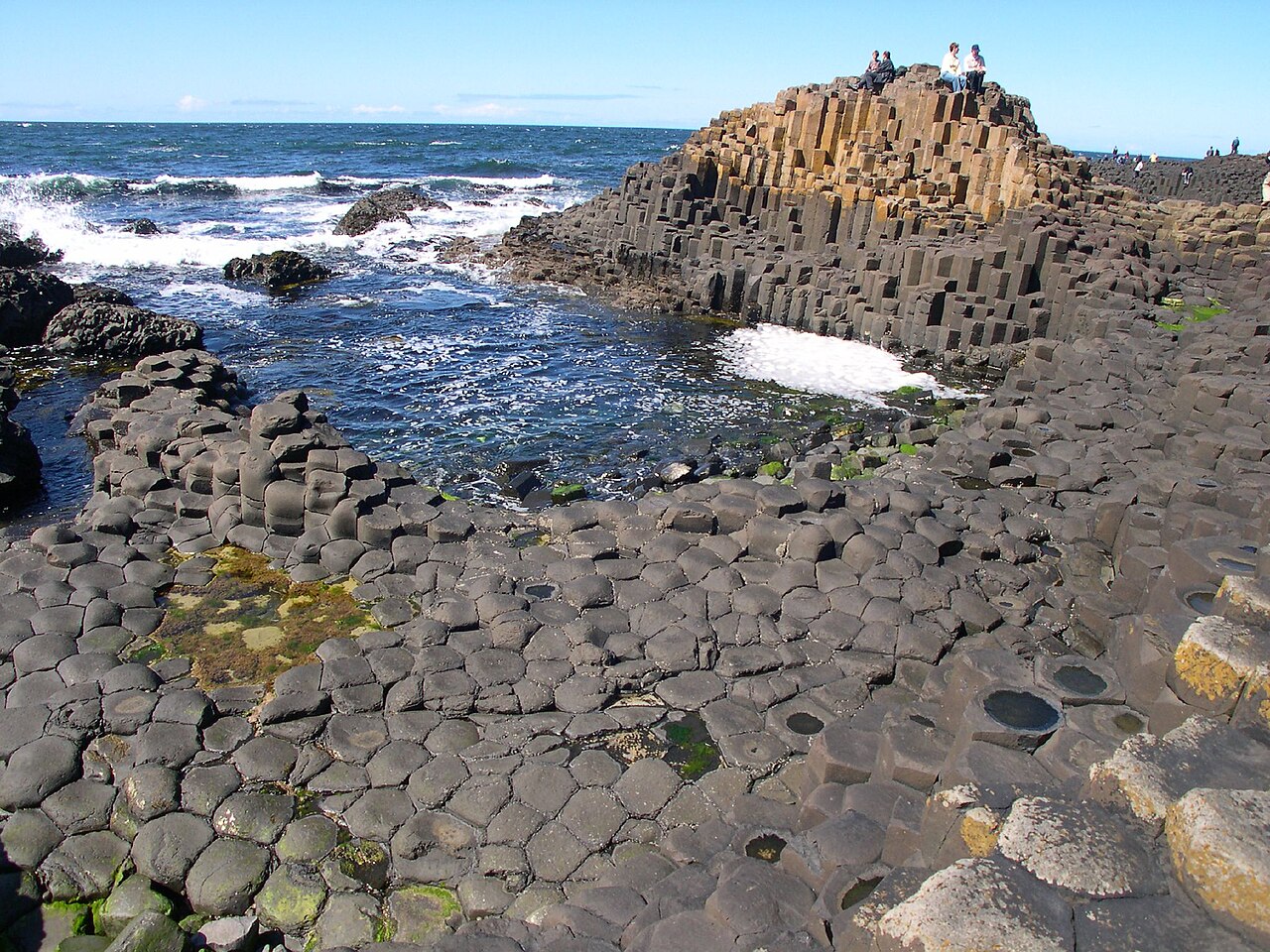
About 40,000 mostly six-sided basalt columns formed by volcanic activity 50 to 60 million years ago, on the north coast of County Antrim near Bushmills, about 80 km north of Belfast. Legend says the giant Finn McCool built it. It has been a World Heritage Site since 1986.
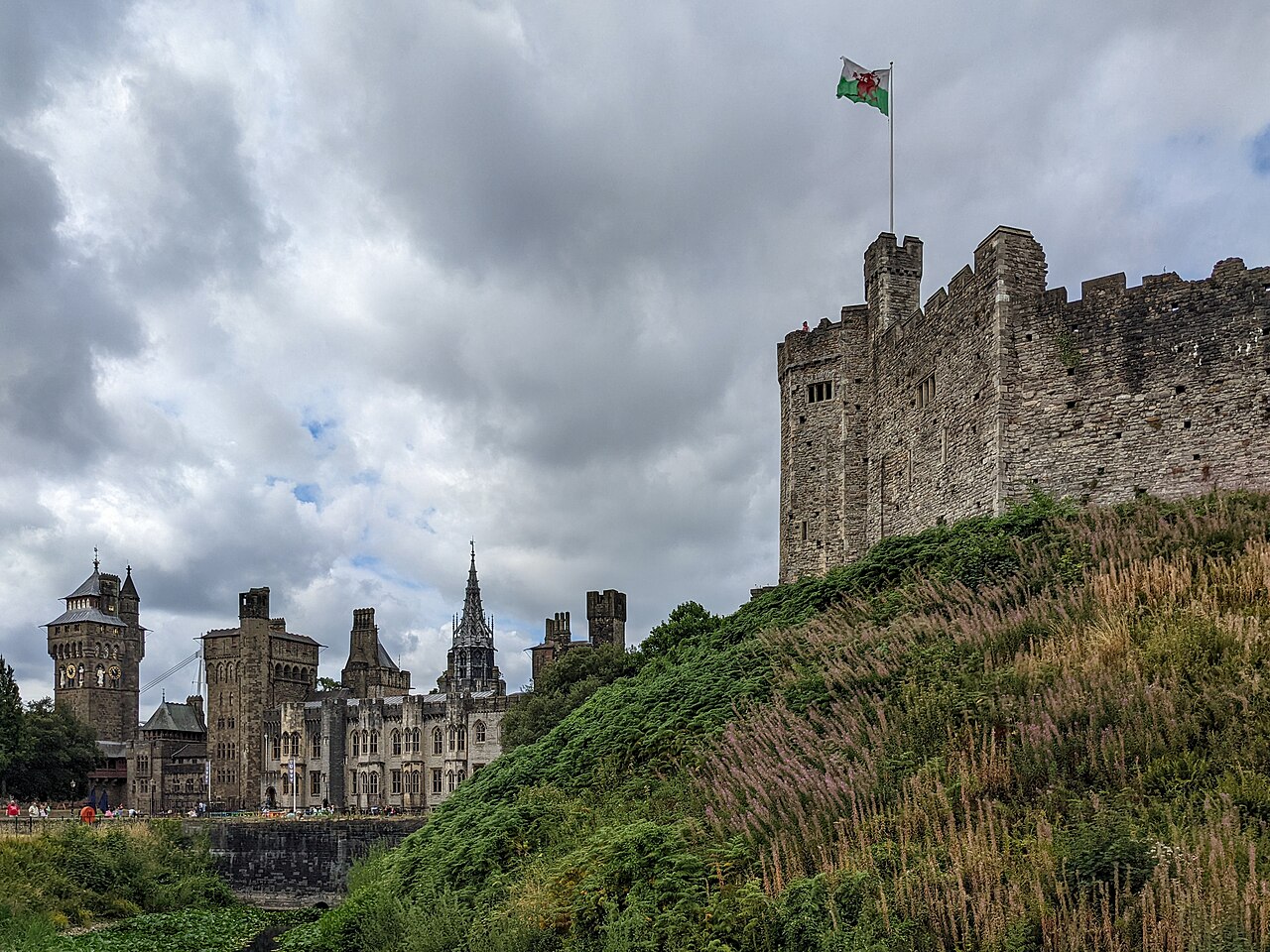
A castle in the heart of Cardiff with Roman walls, a Norman keep on its mound, and lavish Victorian Gothic rooms created by the architect William Burges for the Marquess of Bute. It was given to the city in 1947.
Great Britain and the United Kingdom are not the same thing. Great Britain is the island with England, Scotland and Wales; the United Kingdom also includes Northern Ireland.
02
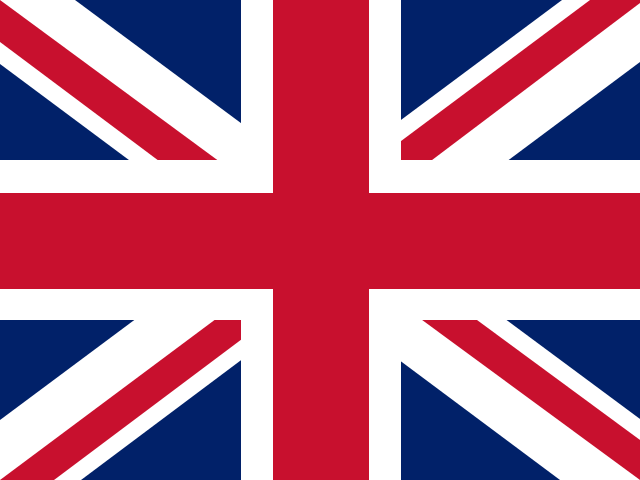
The Union Flag combines the crosses of Saint George for England, Saint Andrew for Scotland and Saint Patrick for Ireland. Wales does not appear, because it was treated as part of the Kingdom of England when the first union flag was designed in 1606.
03
Strictly speaking, Big Ben is the great bell inside the clock tower, not the tower itself. Since 2012 the tower has been called the Elizabeth Tower.
04
The London Underground opened on 10 January 1863 as the world's first underground railway, between Paddington and Farringdon. The warning 'Mind the gap' was first heard there around 1968.
05
By tradition, each new monarch faces the opposite way on coins. Queen Elizabeth II faced right, and King Charles III faces left.
06
Nowhere in Great Britain is more than about 113 km (70 miles) from the sea. The furthest point is at Church Flatts Farm, near the village of Coton in the Elms in Derbyshire.
07
As of 2026, the UK and its overseas territories have 35 UNESCO World Heritage Sites. Liverpool's waterfront lost its listing in 2021, only the third site ever to be removed from the list.
08
The national animal of Scotland is the unicorn. On the royal coat of arms, a chained unicorn for Scotland faces a crowned lion for England.
09
A village on the Welsh island of Anglesey has a 58-character name: Llanfairpwllgwyngyllgogerychwyrndrobwllllantysiliogogogoch. The long form was probably made up around 1869 as a publicity stunt for the railway station.
10
Three banks in Scotland and three in Northern Ireland print their own pound banknotes, with their own designs. They are usually accepted in Scotland and Northern Ireland but are sometimes refused elsewhere.
11
Britain's emergency number 999 was introduced in London on 30 June 1937, making it the oldest emergency telephone number in the world.
12
Loch Ness holds more fresh water than all the lakes in England and Wales put together, because it is so deep.
13
The British Museum, which opened in 1759, is often described as the world's first public national museum, and entry to its permanent collection is free.
14
A Portuguese princess, Catherine of Braganza, made tea fashionable at the English court after she married King Charles II in 1662.
Most of these words mean something different, or are simply not used, in American English; the meaning shows the American word. Pronunciation is written the way it sounds; the capital letters show where the stress goes. Audio is coming soon.
Food and drink
biscuitBIS-kita cookie or cracker
crispsKRISPSpotato chips
chipsCHIPSFrench fries (thick-cut)
cuppaKUP-uha cup of tea
puddingPUD-ingdessert (also a dish such as Yorkshire or black pudding)
aubergineOH-ber-zheeneggplant
courgettekor-ZHETzucchini
Eating out
the billthuh BILLthe check, in a restaurant
Getting around
liftLIFTelevator
motorwayMOH-ter-wayhighway, freeway
petrolPET-rulgasoline
car parkKAR parkparking lot
pavementPAYV-mentsidewalk
return ticketrih-TURN TIK-itround-trip ticket
Everyday life
queueKYOOa line of people waiting (and 'to queue', to wait in line)
Traffic drives on the left, and road signs show distances in miles and speeds in miles per hour. The usual limits for cars are 30 mph (about 48 km/h) in towns, 60 mph on ordinary country roads and 70 mph (about 112 km/h) on dual carriageways and motorways. In Wales the default in built-up areas is 20 mph.
Check if you need an ETA
As of 2026, most visitors who do not need a visa, including travellers from the United States and the European Union, must get an Electronic Travel Authorisation (ETA) before they travel. It costs £20 (as of 2026) and lets you visit for up to 6 months at a time. Apply on the official GOV.UK website, as other websites may charge more. Irish citizens do not need one.
Money: pounds and pence
The currency is the pound sterling (£), divided into 100 pence. Cards and contactless payment are accepted almost everywhere. Banks in Scotland and Northern Ireland print their own notes: they work well there, but some shops in England may hesitate to take them, so spend them before you leave.
Bring the right plug
The UK uses the Type G plug, with three large rectangular pins. Plugs from mainland Europe and North America do not fit, so pack an adapter.
Emergency number
For police, ambulance, fire or coastguard, call 999. The European emergency number 112 also works and reaches the same service. Both are free.
Tipping without worry
Look at the bill first: many restaurants add a service charge of 10 to 12.5 percent, and then no extra tip is needed. Otherwise 10 to 15 percent is usual for good table service. In pubs you order at the bar and do not need to tip, and for taxis people often just round up.
Many great museums are free
Entry to the permanent collections of the big national museums, such as the British Museum in London, is free. A donation box at the door is welcome, and special exhibitions usually charge a fee.
 Ireland