A free large-print PDF. Choose what goes in: facts, map, history, dishes and recipes, phrases, fun facts, a quiz with or without answers. Made for clubs, care homes, libraries and family afternoons.
Tunisia is the smallest country of the Maghreb, the region of northwest Africa, and its northern tip, Cape Angela near Bizerte, is the northernmost point of the African continent. It has about 1,300 km of Mediterranean coastline with long sandy beaches, while the eastern end of the Atlas Mountains crosses the west of the country and the south opens onto salt lakes, palm oases and the dunes of the Sahara.
Few countries of its size have so much history. Phoenician settlers founded Carthage near today's Tunis, the city that fought Rome in the Punic Wars. Rome then made the region one of its richest provinces, and its amphitheatres, mosaics and ruined towns still stand. Arab armies brought Islam in the 7th century and founded Kairouan, and later Ottoman beys ruled from Tunis until France made Tunisia a protectorate in 1881. Independence came in 1956.
Today about 12 million people live in Tunisia, most of them along the coast. Tunis is the capital and by far the largest city. Everyday life is conducted in Tunisian Arabic, called Derja or Tounsi, and French is widely used in business and education. Visitors come for the beaches of the Sahel and Djerba, the old medinas, Roman ruins, the desert, and a cuisine known for olive oil, seafood and fiery harissa.
CapitalTunis
PopulationAbout 12 million (11.97 million in the 2024 census)
Official languageArabic. Most people speak Tunisian Arabic (Derja), and French is widely used in business and education but has no official status
CurrencyTunisian dinar (TND), divided into 1,000 millimes
AreaAbout 163,610 km²
GovernmentRepublic with an elected president and parliament, under a constitution approved by referendum in 2022
Highest mountainJebel ech Chambi, 1,544 m, near Kasserine
Longest riverThe Medjerda, about 450 km, which rises in Algeria and flows into the Gulf of Tunis
NeighboursAlgeria to the west and southwest, and Libya to the southeast. Across the sea: Italy (Sicily and its small islands) and Malta
Amazigh (Berber) peoples have lived in Tunisia since ancient times. Phoenician traders built Carthage, which became a great sea power until Rome destroyed it. After Roman, Vandal and Byzantine rule, Arab armies brought Islam in the 7th century, and a series of dynasties ruled from Kairouan, Mahdia and Tunis. Ottoman governors and then local dynasties of beys followed, France ruled from 1881, and Tunisia became independent in 1956 and a republic in 1957.
814 BC
Carthage is founded
According to legend, Queen Elissa, also called Dido, sailed from the Phoenician city of Tyre, in today's Lebanon, and founded Carthage on the Gulf of Tunis in 814 BC. The date comes from ancient Greek writers, and archaeology places the city's beginnings in the 9th century BC.
218 BC
Hannibal crosses the Alps
In the Second Punic War the Carthaginian general Hannibal marched an army, with war elephants, from Spain over the Alps into Italy. He won great victories at Lake Trasimene and Cannae, but was finally defeated by Scipio at the Battle of Zama in 202 BC.
146 BC
Rome destroys Carthage
At the end of the Third Punic War, after a siege of nearly three years, the Romans captured and destroyed Carthage. The region became the Roman province of Africa, and a new Roman Carthage later grew into one of the largest cities of the empire.
AD 670
Kairouan is founded
The Arab general Uqba ibn Nafi founded Kairouan in central Tunisia as a military base, and built its Great Mosque. The city became the capital of Ifriqiya, as the Arabs called the region, and a great centre of Islamic learning.
AD 909
The Fatimids take Kairouan
The Fatimids, a Shia dynasty supported by Kutama Amazigh tribes, drove out the Aghlabids who had ruled from Kairouan since 800, and founded a new caliphate. They built a fortified capital at Mahdia on the coast, inaugurated in 921, before moving on to conquer Egypt.
1229
The Hafsid dynasty begins
Abu Zakariya, the governor in Tunis, declared his independence from the Almohad empire. His Hafsid dynasty ruled for more than three centuries, and under it Tunis became the capital and grew into a rich centre of trade and learning.
1574
The Ottomans take Tunis
After decades of fighting between Spain and the Ottoman Empire over Tunis, an Ottoman fleet under Uluç Ali captured the city for good in 1574. Tunisia became a province of the Ottoman Empire, governed from Tunis.
1705
The Husainid dynasty is founded
Husayn ibn Ali, a cavalry officer, took power in Tunis as bey. His family, the Husainids, ruled in practice until 1881 and kept the title of bey until the monarchy was abolished in 1957.
1846
Slavery is abolished
Ahmad Bey, who had already ended the slave trade in 1841, abolished slavery in Tunisia in January 1846, two years before France abolished it for good in its colonies in 1848.
1881
The Treaty of Bardo
On 12 May 1881, after a French army entered the country, the bey Muhammad as-Sadiq signed the Treaty of Bardo, which made Tunisia a French protectorate. The bey stayed on the throne, but real power soon passed to a French Resident-General.
1943
The Tunisia Campaign ends
From November 1942 German and Italian forces fought the Allies across Tunisia. On 13 May 1943 the Axis armies in Tunisia surrendered, ending the fighting in North Africa during the Second World War.
1956
Independence from France
After years of campaigning led by the Neo Destour party and Habib Bourguiba, France recognised Tunisia's independence on 20 March 1956. In August the same year the Code of Personal Status abolished polygamy and gave women new rights in marriage and divorce.
1957
Tunisia becomes a republic
On 25 July 1957 the Constituent Assembly abolished the monarchy of the beys and proclaimed a republic, with Habib Bourguiba as its first president. He led the country for three decades, until 1987.
2011
The Tunisian Revolution
Protests that began in December 2010, after a young street vendor, Mohamed Bouazizi, set himself on fire in Sidi Bouzid, spread across the country. On 14 January 2011 President Zine El Abidine Ben Ali, in power since 1987, left the country. The events inspired protests across the Arab world, known as the Arab Spring.
2015
The Nobel Peace Prize
The Tunisian National Dialogue Quartet, four organisations representing trade unions, employers, lawyers and human rights campaigners, won the Nobel Peace Prize for helping to build a peaceful, pluralistic political order after the revolution.
Tunisian cooking is built on olive oil, wheat, tomatoes, seafood and lamb, with Amazigh, Arab, Andalusian, Ottoman, Italian and French influences. It is spicier than most of its neighbours' cooking, thanks to harissa, a red chilli paste. A meal often starts with bread, olive oil and harissa, then salads such as slata mechouia, a crisp brik or a soup, followed by a stew or a big dish of couscous, and ends with fruit, sweet pastries and a glass of tea.
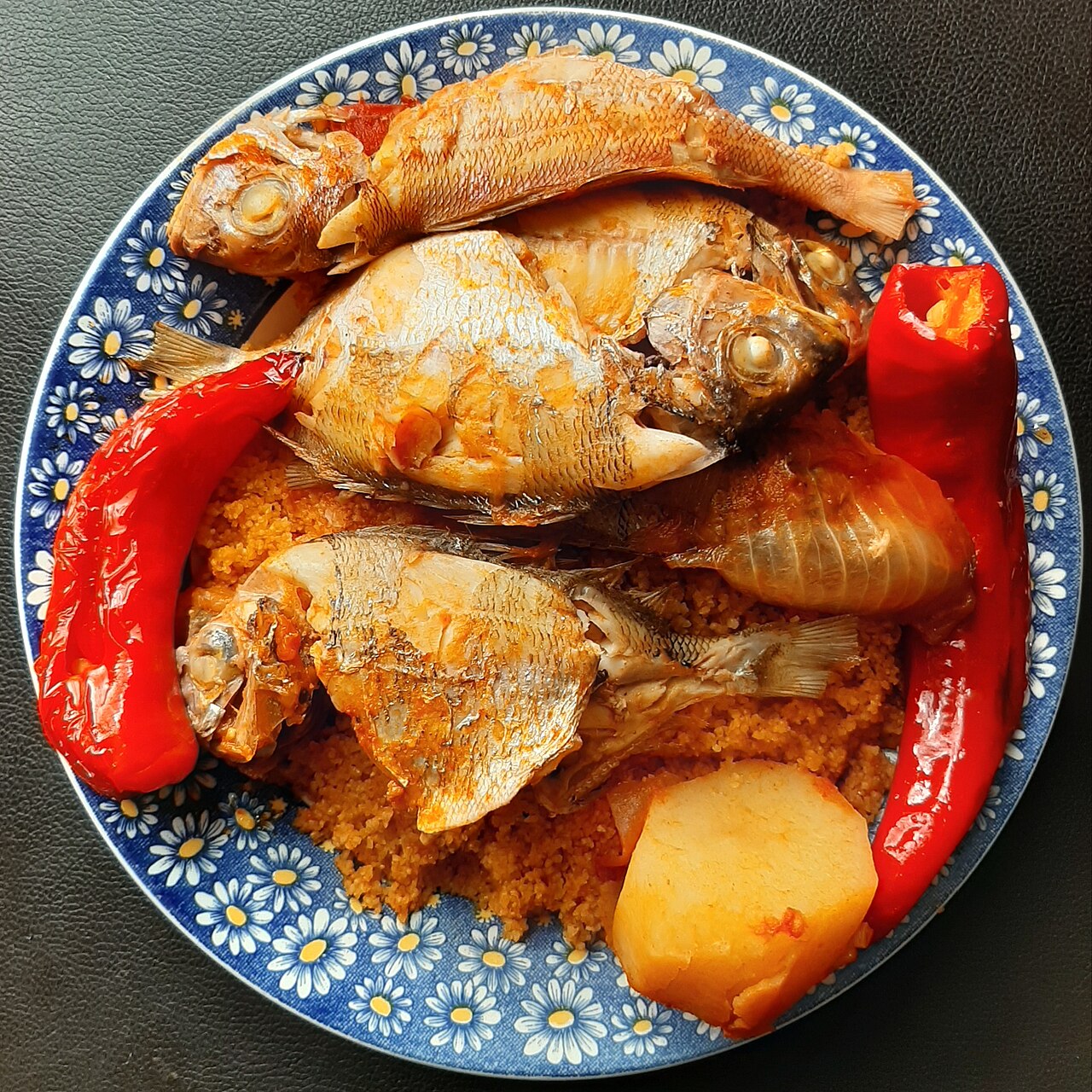
All of Tunisia; fish couscous is a speciality of the coast, from Sfax to the Kerkennah Islands
Couscous, called kosksi in Tunisia, is steamed over a pot of stew in a double pot called a couscoussier. On the coast it is often served with whole fish, such as sea bream or grouper, and vegetables in a hot, red, harissa-spiced sauce. Inland, lamb, chicken or beef are more common.
In 2020 UNESCO added the knowledge and practices of couscous to its intangible heritage list, after a joint nomination by Tunisia, Algeria, Mauritania and Morocco.
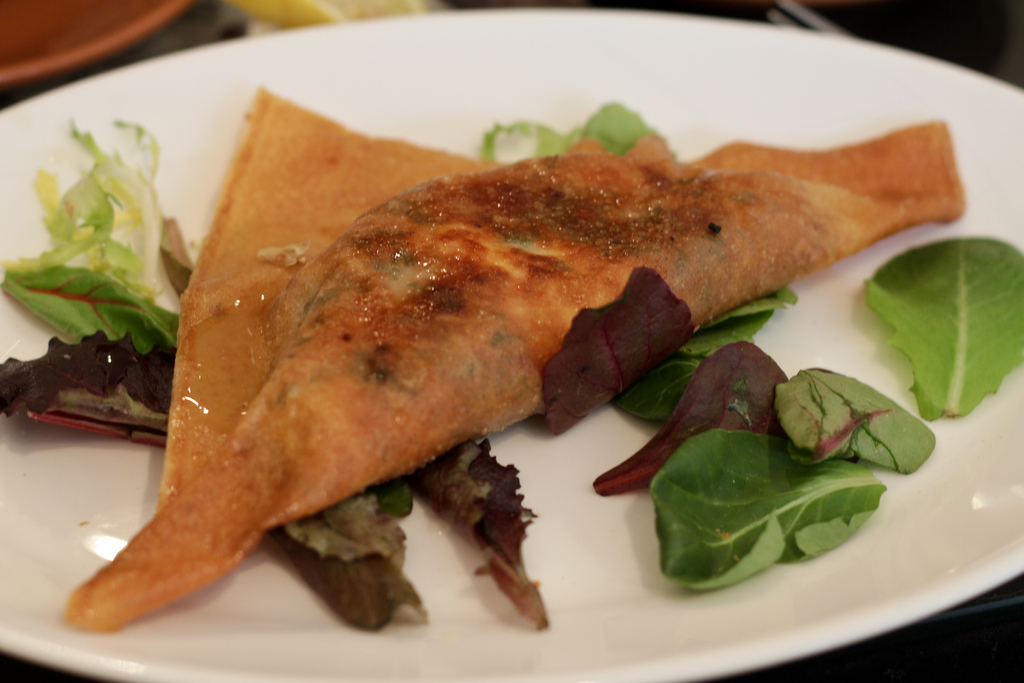
A sheet of paper-thin malsouka pastry folded around a whole egg, often with tuna, capers, parsley and onion, then fried for a few minutes until crisp and golden. The yolk usually stays runny inside.
Eating a brik without dripping egg down your chin takes practice: hold it by the corners and bite from the top.
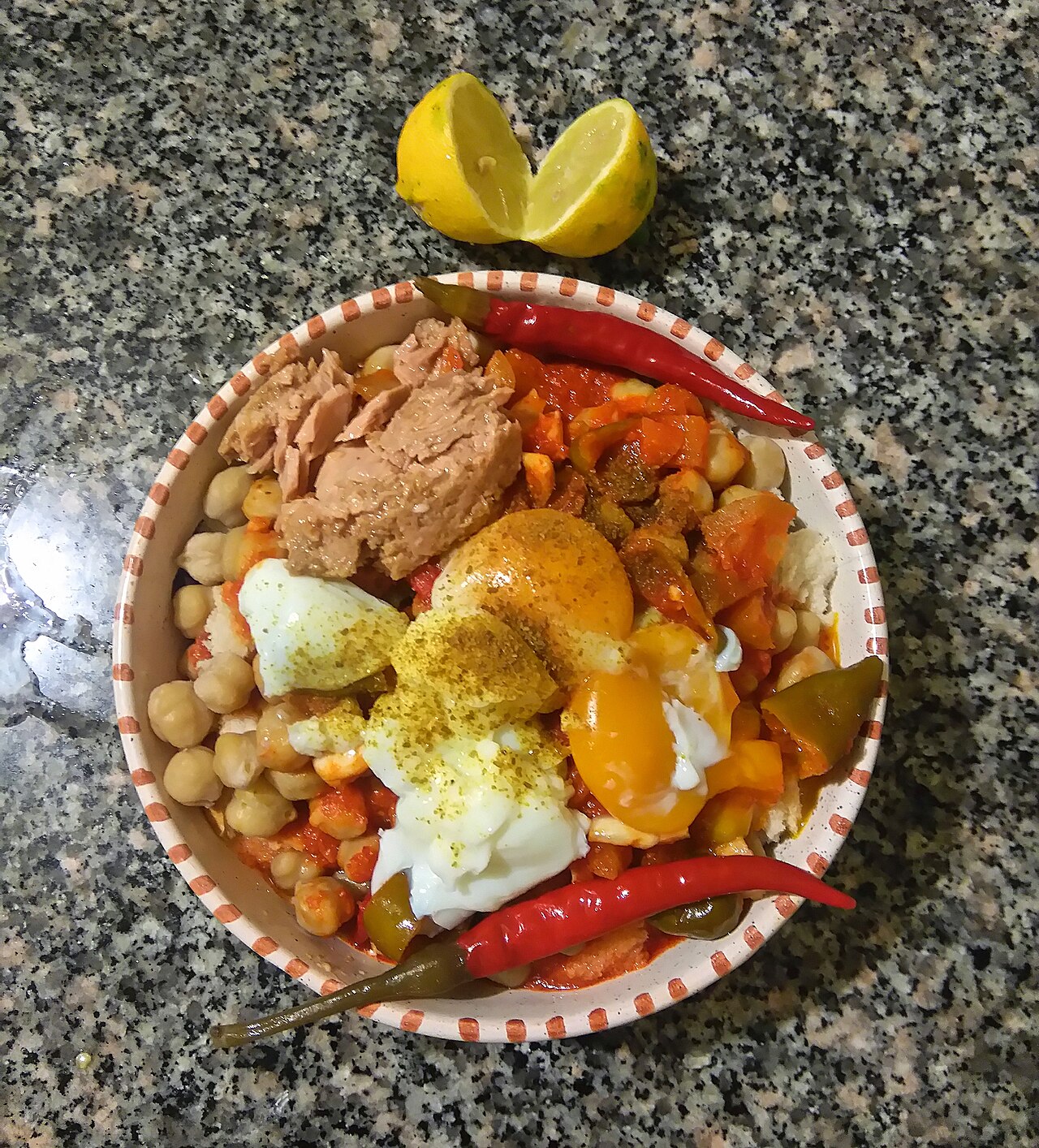
A garlicky chickpea soup with cumin, poured over torn pieces of stale bread and topped with harissa, olive oil, often a soft-cooked egg, and sometimes tuna, capers and olives. It is cheap, filling and warming.
Lablabi was once a winter breakfast, but today it is eaten all day and all year, and in Bizerte people eat it stuffed into a baguette.
See the recipe
Serves 4
45 min
Ingredients
2 x 400 g tins chickpeas, with their liquid
4 tablespoons olive oil, plus extra to serve
4 cloves garlic, crushed
2 teaspoons ground cumin, plus extra to serve
1 to 2 teaspoons harissa, to taste
1 litre water or vegetable stock
Juice of 1 lemon, and salt
About 200 g stale crusty bread, torn into small pieces
4 eggs (use pasteurised eggs if serving soft yolks to pregnant women, young children, older people or anyone with a weak immune system)
To serve: capers, olives, a small tin of tuna (optional)
Method
Warm the olive oil in a large pot, add the garlic and cook gently for 1 minute without letting it brown. Stir in the cumin and the harissa.
Add the chickpeas with their liquid and the water or stock. Bring to the boil and simmer for 20 minutes, then season with salt and the lemon juice.
Crack the eggs into the simmering soup, cover and cook for 3 to 4 minutes, until the whites are firm. For firm yolks, cook for a few minutes longer.
Put the torn bread in four deep bowls and ladle the hot chickpeas and broth over it, with one egg per bowl.
Top each bowl with a drizzle of olive oil, a pinch of cumin, extra harissa, and capers, olives or tuna if you like. Break the egg and stir it in as you eat.
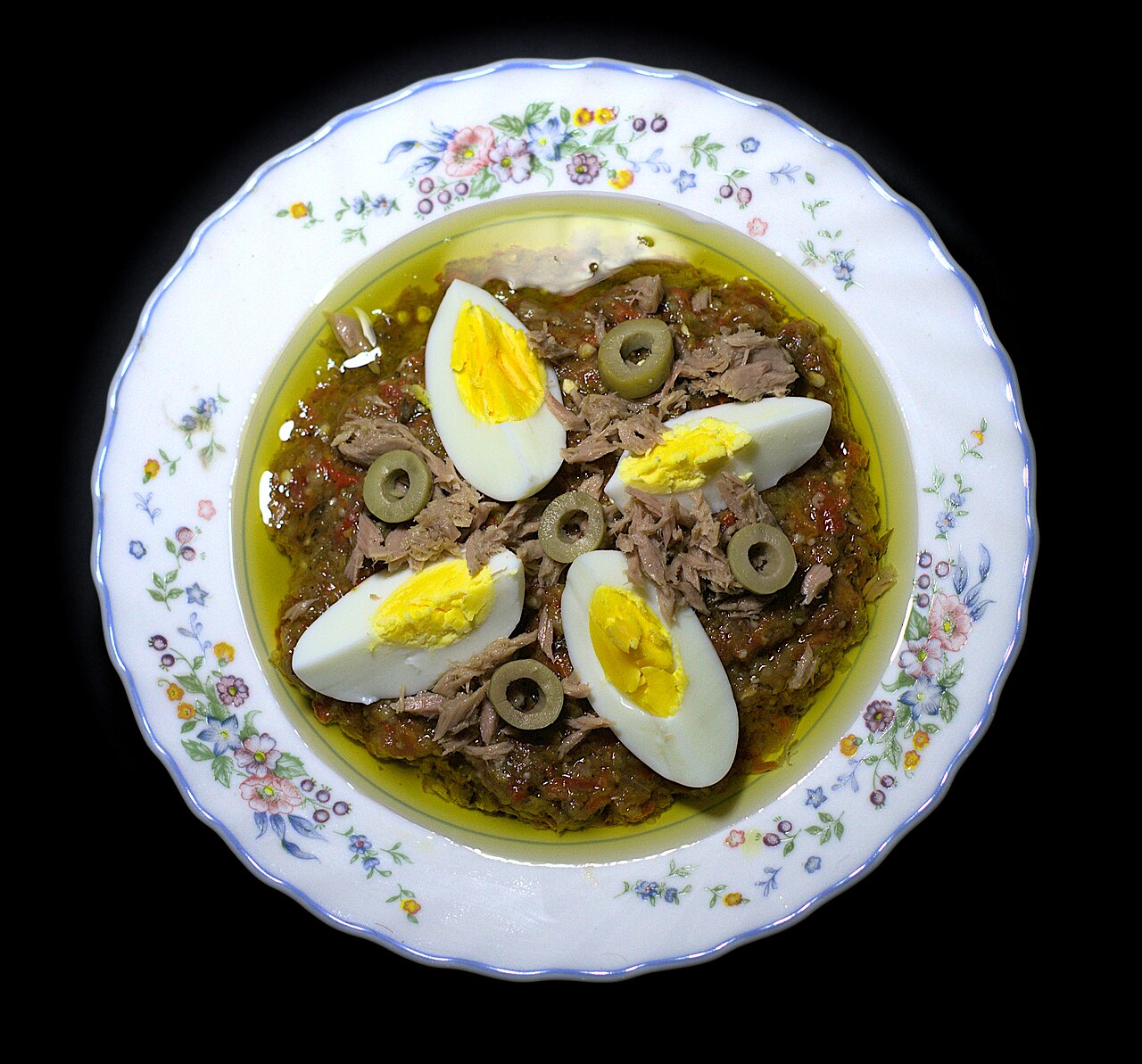
Peppers, tomatoes, onions and garlic are grilled until blackened, peeled and chopped or pounded together with olive oil, caraway and coriander seed. It is usually served cold with tuna, olives and hard-boiled eggs, and eaten with bread.
Its name simply means 'grilled salad', and it is especially popular in summer, when peppers and tomatoes are at their best.
See the recipe
Serves 4
1 h
Ingredients
4 green or red peppers (use 1 or 2 hot green chillies among them if you like heat)
4 ripe tomatoes
1 onion, halved
4 cloves garlic, unpeeled
1 teaspoon ground caraway and 1/2 teaspoon ground coriander
4 tablespoons olive oil
Juice of 1/2 lemon, and salt
To serve: 1 small tin of tuna in oil, a handful of black olives, 2 hard-boiled eggs cut into quarters
Method
Grill the peppers, tomatoes, onion and garlic under a hot grill, on a barbecue or over a gas flame, turning often, until the skins are black and the vegetables are soft (15 to 25 minutes).
Put the peppers in a bowl, cover and leave for 10 minutes so the skins loosen. Peel all the vegetables and remove the pepper seeds.
Chop everything finely on a board, or pound it roughly in a mortar, and mix in the caraway, coriander, olive oil, lemon juice and salt.
Spread the salad on a plate and leave it to cool.
Top with the tuna, olives and hard-boiled eggs, drizzle with a little more olive oil and serve with bread.
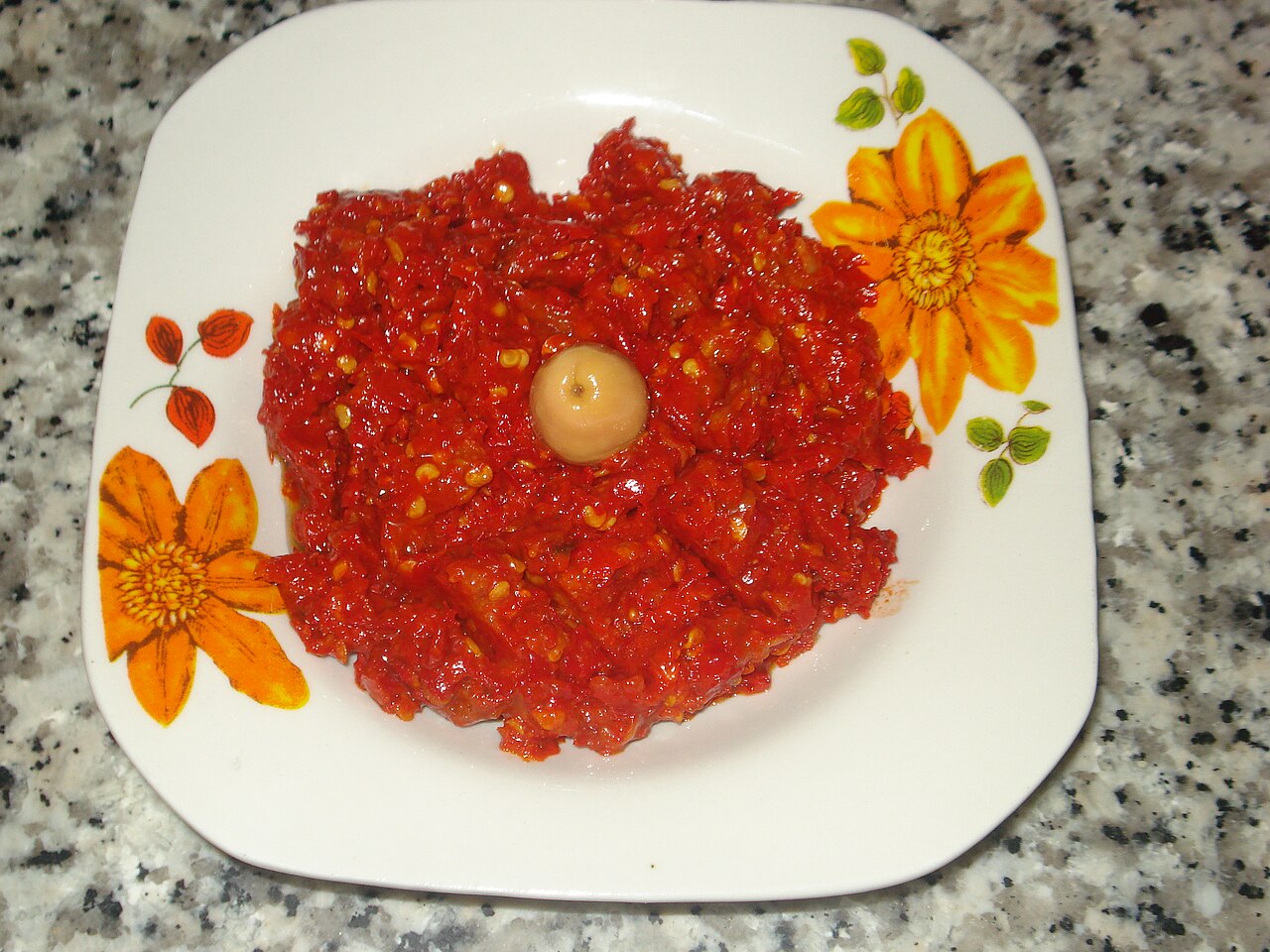
A hot red paste of sun-dried chilli peppers pounded with garlic, caraway, coriander seed and salt, and covered with olive oil. It goes into stews, soups and couscous, and is served on its own with bread and olive oil at the start of almost any meal.
In 2022 UNESCO added harissa, with the knowledge and social practices around it, to its intangible heritage list as part of Tunisia's heritage.
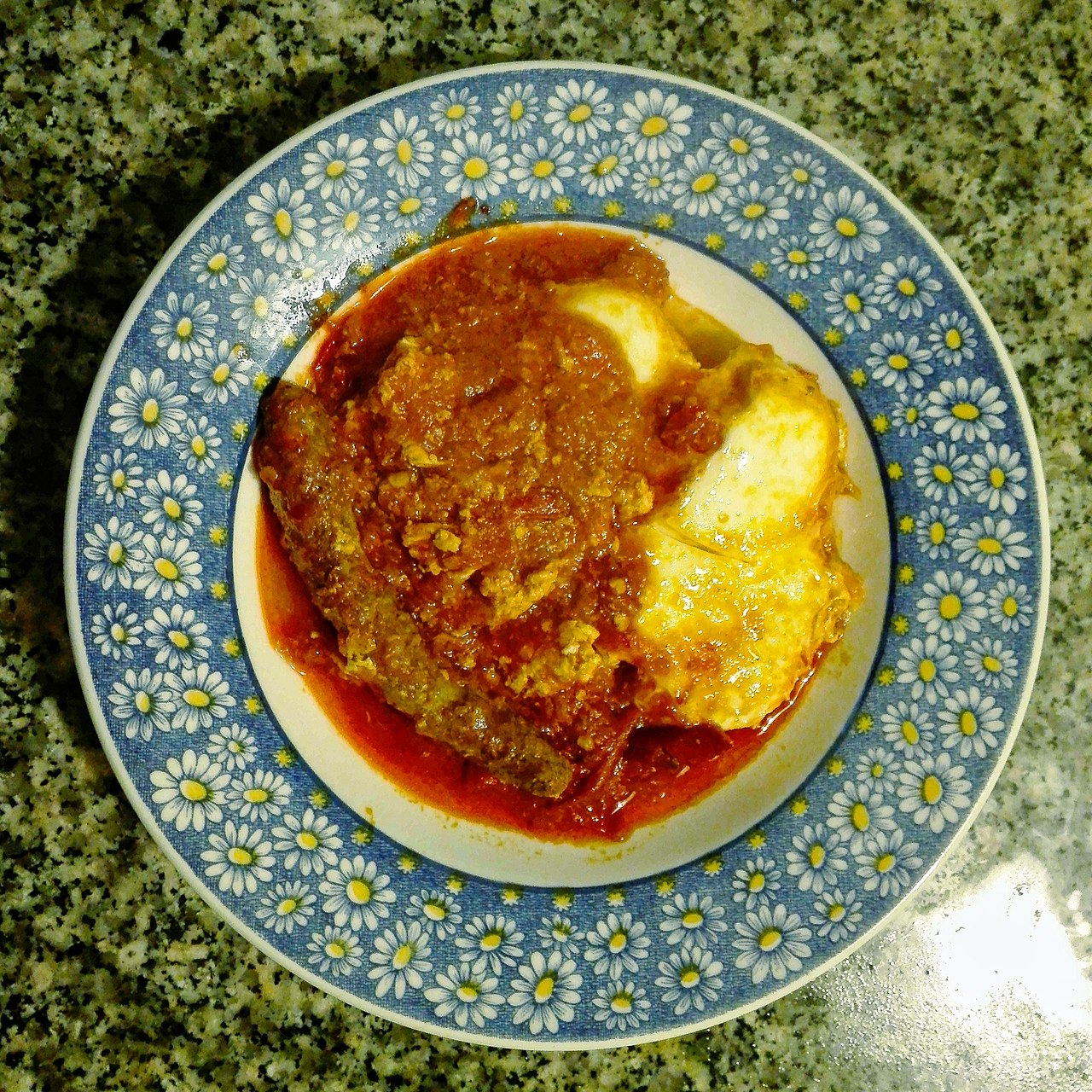
A quick dish of eggs cooked in a spicy sauce of tomatoes, peppers, garlic, caraway and harissa, often with slices of merguez, a small spicy sausage, or with shrimp. It is eaten straight from the pan with bread.
With onions, potatoes or other vegetables added, Tunisians call the dish chakchouka instead.
See the recipe
Serves 4
35 min
Ingredients
3 tablespoons olive oil
300 g merguez sausages, cut into thick slices
3 cloves garlic, crushed
2 green peppers, sliced
1 tablespoon tomato paste and 1 teaspoon harissa (more if you like it hot)
4 ripe tomatoes, chopped, or 1 x 400 g tin chopped tomatoes
1 teaspoon ground caraway, salt and black pepper
150 ml water
6 eggs (use pasteurised eggs if the yolks will stay soft)
Chopped parsley and bread to serve
Method
Heat the oil in a wide frying pan and brown the merguez slices for 5 minutes. Lift them out and set aside.
In the same pan, fry the garlic and peppers for 3 minutes, then stir in the tomato paste and harissa.
Add the tomatoes, caraway, salt, pepper and water, and simmer for 10 minutes until the sauce is thick. Return the merguez to the pan.
Make six hollows in the sauce and break an egg into each. Cover and cook over a low heat for 5 to 8 minutes, until the whites are set. For pregnant women, young children, older people or anyone with a weak immune system, cook until the yolks are firm too, or use pasteurised eggs.
Sprinkle with parsley and serve at once from the pan, with plenty of bread.
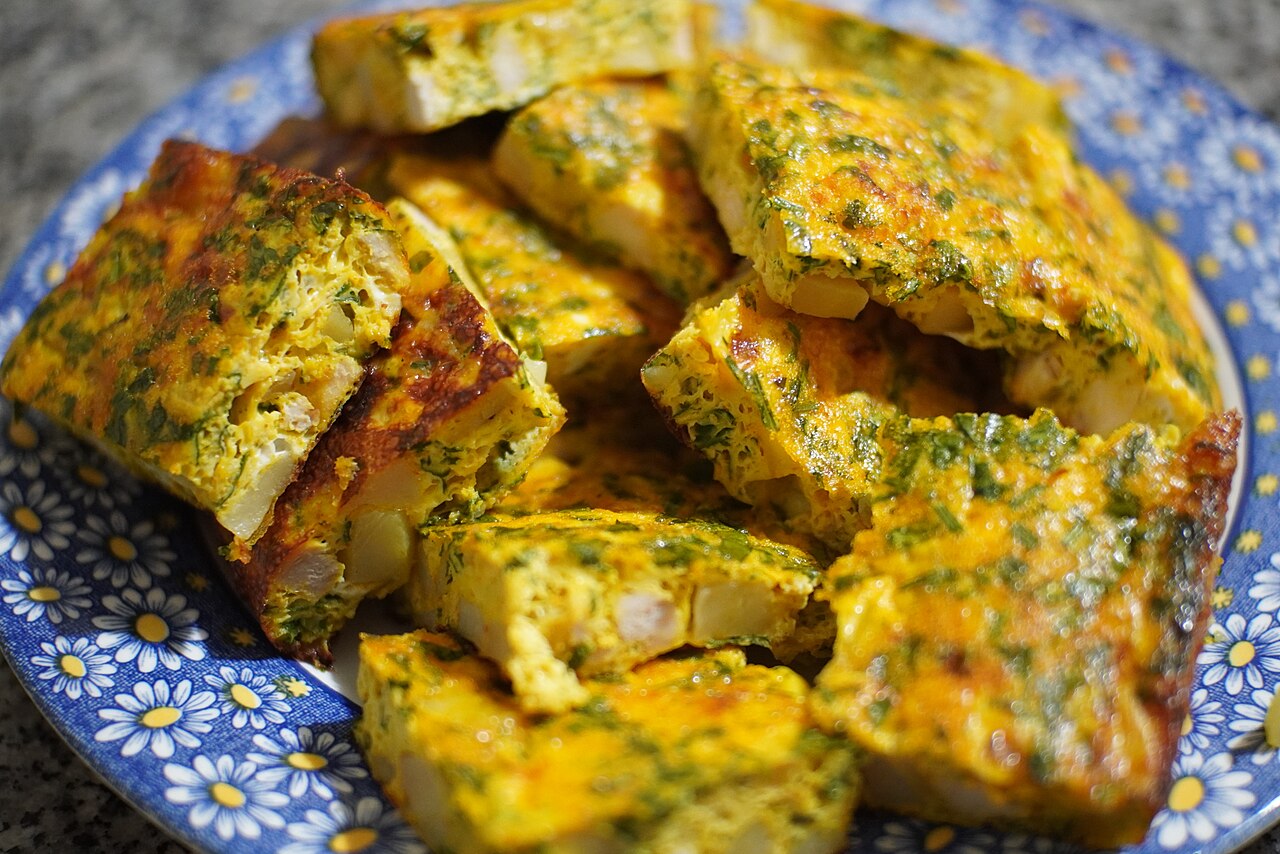
Nothing like the Moroccan stew of the same name: a Tunisian tajine is a thick baked omelette, somewhat like an Italian frittata, made with eggs, grated cheese, parsley, potatoes and chicken, minced meat or tuna. It is cut into squares and served warm or cold.
The name comes from the clay dish in which it was first baked.
See the recipe
Serves 6
1 h 15 min
Ingredients
2 tablespoons olive oil
1 onion, finely chopped
300 g chicken breast, cut into small cubes
1 teaspoon turmeric, 1/2 teaspoon ground black pepper and salt
2 medium potatoes, peeled and cut into small cubes
8 eggs
100 g grated cheese (such as Gruyère, Emmental or mild Cheddar)
3 tablespoons dried breadcrumbs
A large handful of parsley, finely chopped
Butter or oil for the dish
Method
Heat the oven to 180°C. Fry the onion in the oil for 5 minutes, add the chicken, turmeric, pepper and salt, and cook for 10 minutes, until the chicken is cooked through. Leave to cool a little.
Meanwhile, fry or boil the potato cubes until just tender, about 10 minutes, and drain.
Beat the eggs in a large bowl, then stir in the cheese, breadcrumbs, parsley, chicken and potatoes.
Pour into a buttered baking dish about 20 x 25 cm and bake for 30 to 35 minutes, until firm in the middle and golden on top.
Leave to rest for 10 minutes, then cut into squares. Serve warm or cold, with salad and lemon wedges.
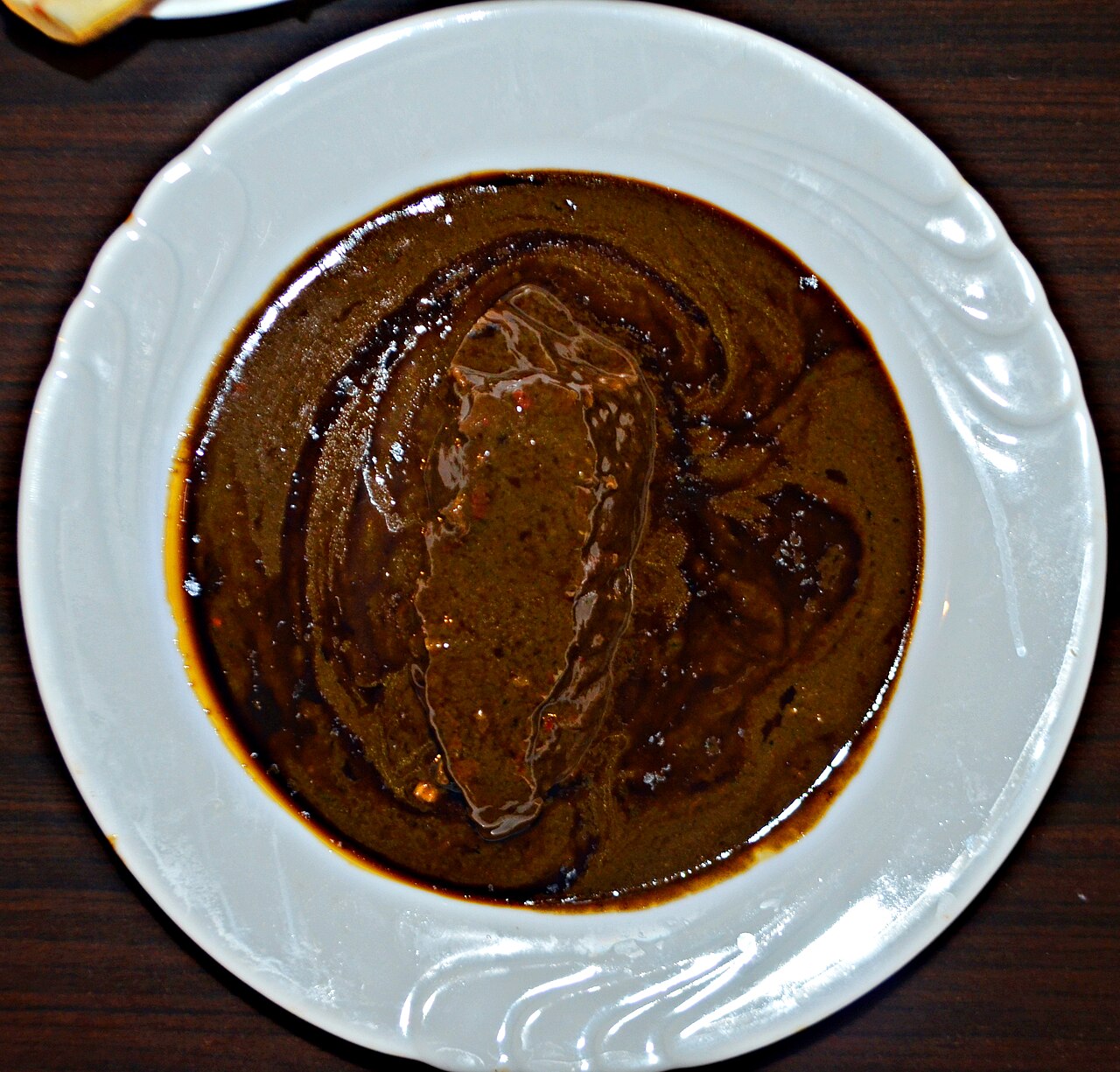
A slow-cooked beef or lamb stew in a thick, almost black-green sauce made from the dried and powdered leaves of the jute plant, simmered for hours in olive oil with garlic and bay leaves. It is eaten with bread.
In Egypt the same leaves make a green soup, but in Tunisia they are ground to a fine powder, which gives the sauce its very dark colour.
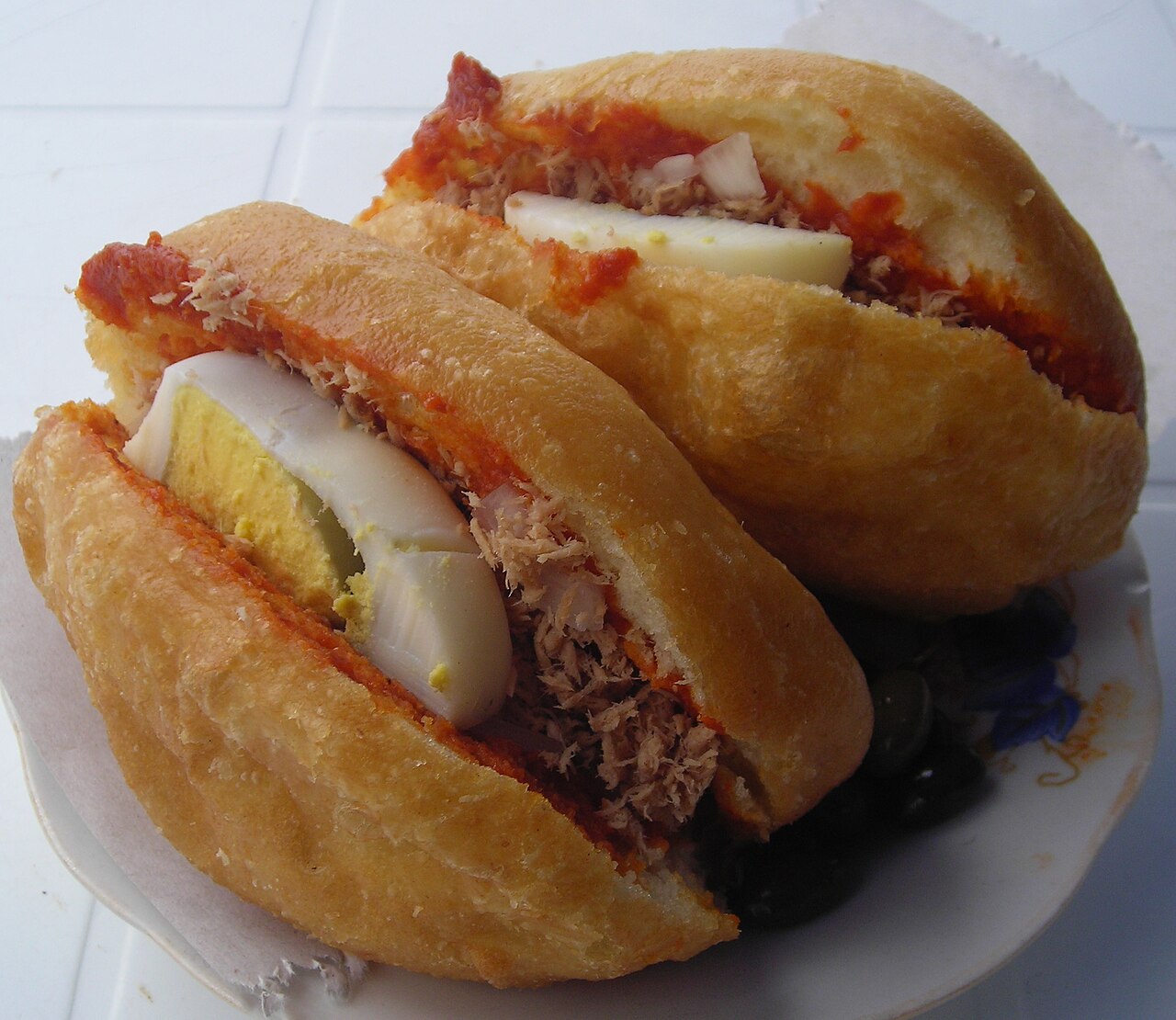
A small fried roll of soft yeast dough, split and filled with tuna, hard-boiled egg, olives, boiled potato, harissa and sometimes preserved lemon and capers. It is sold by street vendors and small shops as a snack.
Tunisian Jews brought the fricassé to Israel, where it is popular, and it is also well known in France.
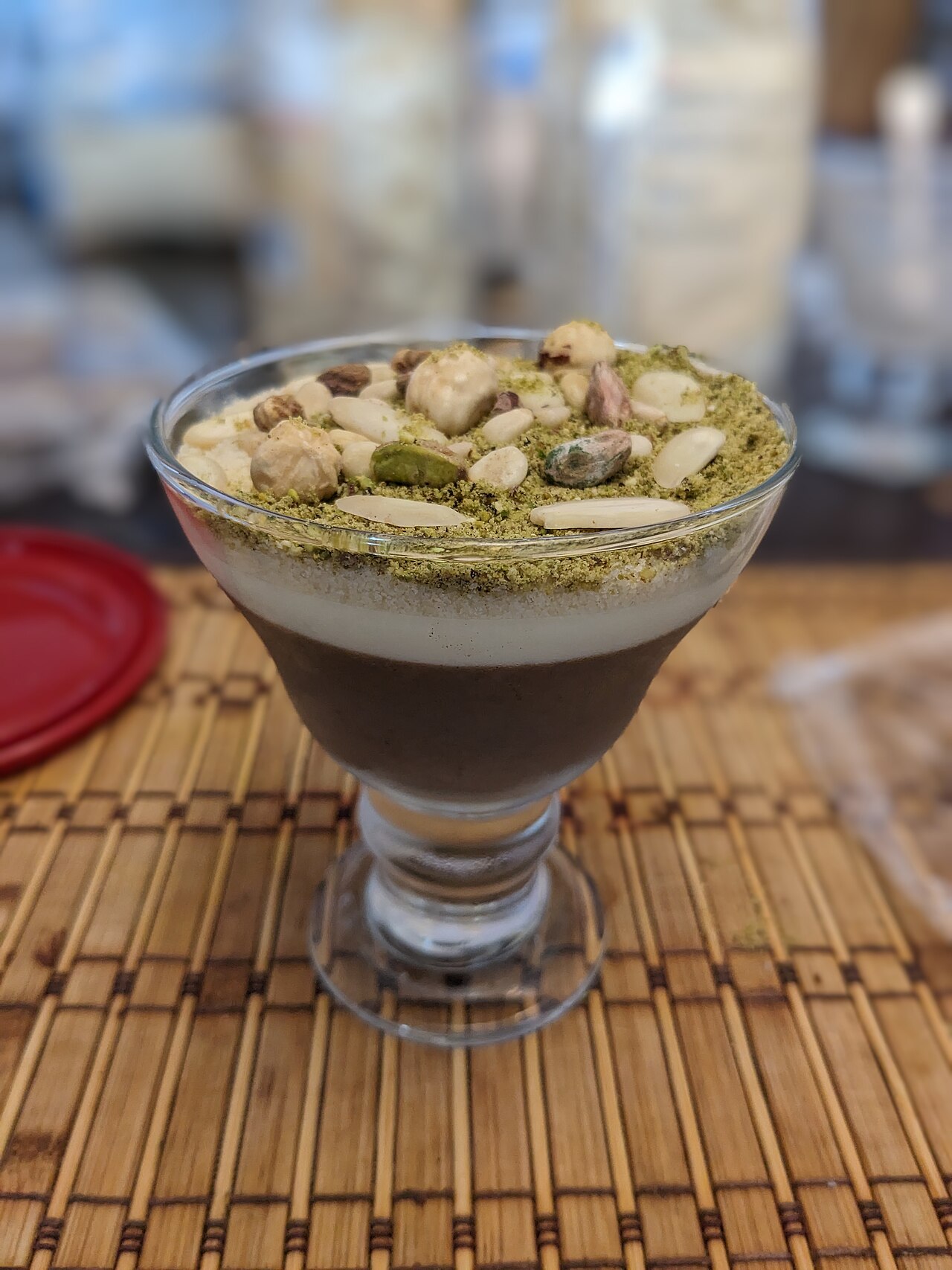
A smooth, dark pudding made from the tiny seeds of the Aleppo pine, cooked with flour, water and sugar, then covered with a vanilla custard cream and decorated with almonds, pistachios and sugared sweets.
Families prepare bowls of assida zgougou to celebrate the Mouled, the birthday of the Prophet Muhammad, and give them to neighbours and friends.
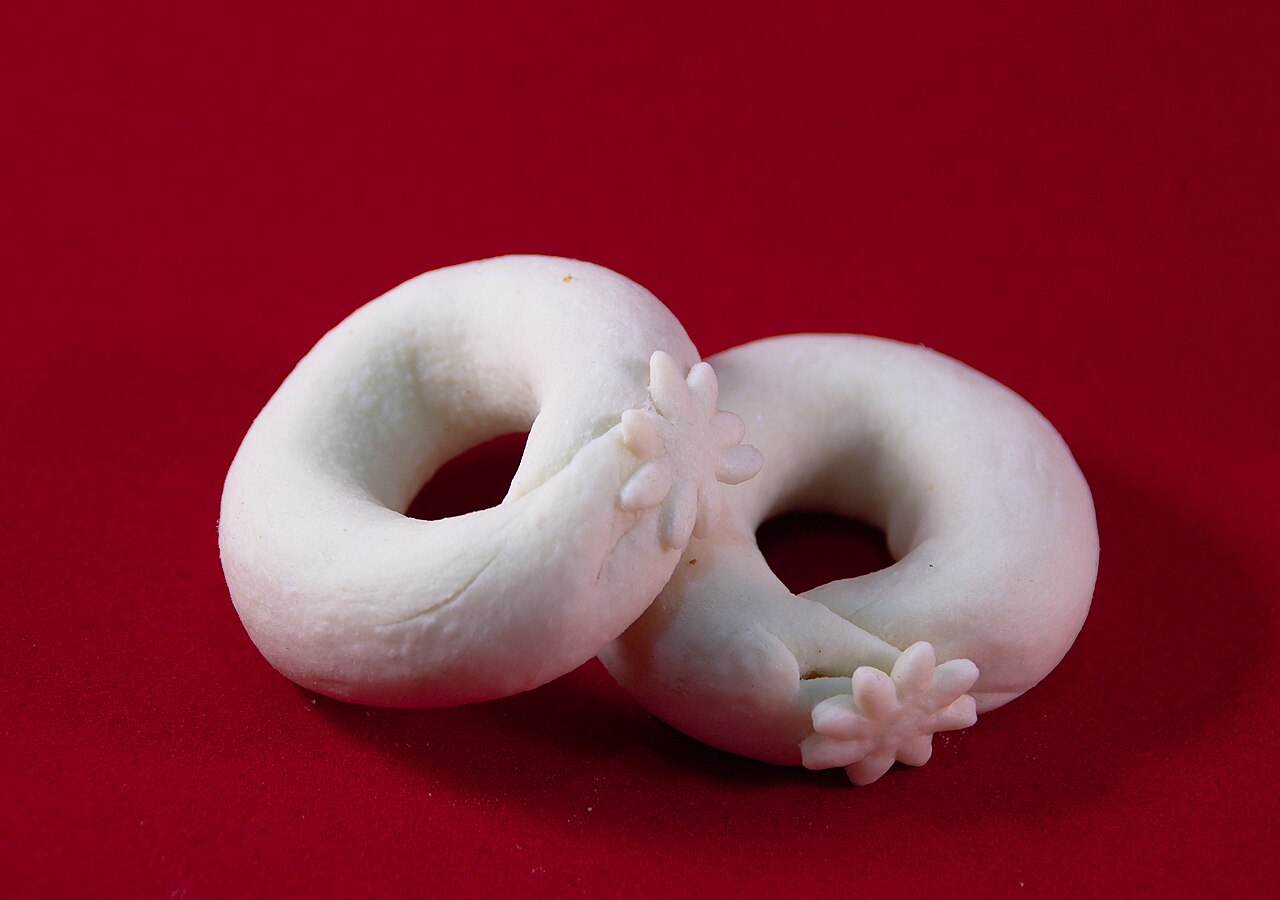
White rings of very thin, smooth pastry wrapped around a filling of ground almonds, sugar and rose or geranium water. It is a delicate pastry for weddings and special occasions.
Warka means 'leaf' or 'sheet of paper': the pastry around the almond filling must be rolled as thin, smooth and white as paper.
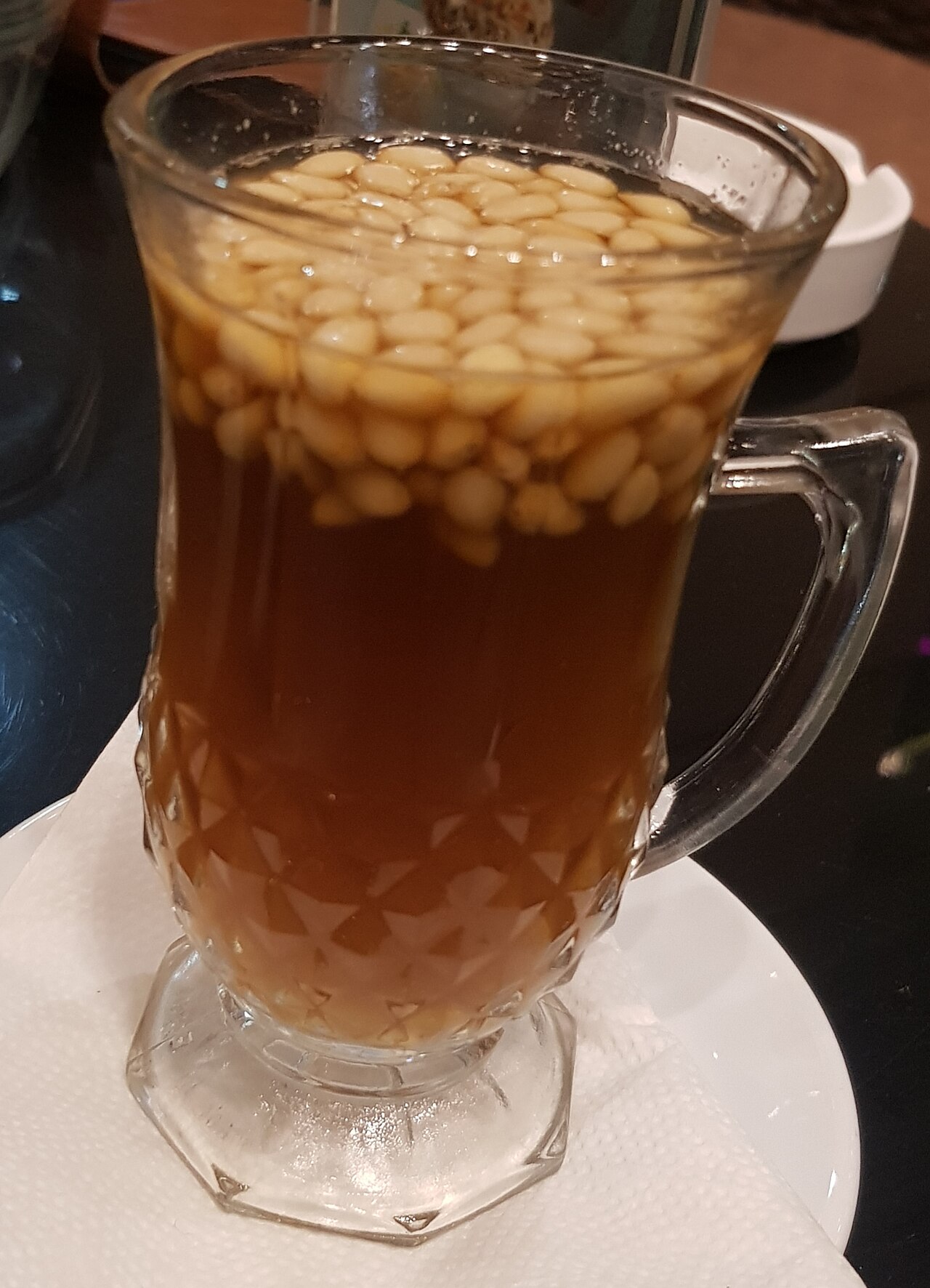
Sweet green tea with fresh mint, served in small glasses with a spoonful of pine nuts floating on top. In the cafés of Tunis you are often asked whether you want your tea with or without pine nuts.
The pine nuts are there more for their crunch than for their taste; toasted almonds or peanuts are sometimes used instead.
See the recipe
Serves 4
15 min
Ingredients
2 teaspoons Chinese gunpowder green tea
700 ml water
4 to 6 teaspoons sugar, to taste
A large handful of fresh mint
4 tablespoons pine nuts, lightly toasted in a dry pan
Method
Bring the water to the boil. Rinse the tea leaves in a teapot with a little boiling water and pour this water away.
Add the rest of the boiling water and the sugar to the pot, and let it brew for 3 minutes, or simmer it gently on a low heat as many Tunisians do.
Push the mint into the pot and leave it for 2 more minutes.
Put a spoonful of pine nuts in each small glass and pour the hot tea over them from a height, so it froths a little.
Serve at once; sip the tea and eat the pine nuts at the end.
Bread, olive oil and harissa are put on the table at the start of almost every meal: tear off a piece of bread, dip it in the oil and then, carefully, in the harissa.
Couscous is served in one large shared dish at family meals, weddings and other gatherings. Eat from the part of the dish in front of you.
Eat a brik with your fingers, holding it by the corners, and bite carefully: the egg yolk inside is often runny.
Tea is usually drunk after a meal, sweet and in small glasses, sometimes with pine nuts floating on top.
Most Tunisians are Muslim and do not eat pork, and alcohol is served only in licensed restaurants, bars and hotels.
During Ramadan, families break the day's fast together at sunset, and cafés and streets fill up after the meal.
Most Tunisians live along the coast, from Bizerte in the north through Tunis and the Sahel towns of Sousse, Monastir and Mahdia to Sfax, the second city. Kairouan, the holy city, lies inland, while in the south the oases of Tozeur, the island of Djerba and the Amazigh villages around Tataouine lead towards the Sahara.
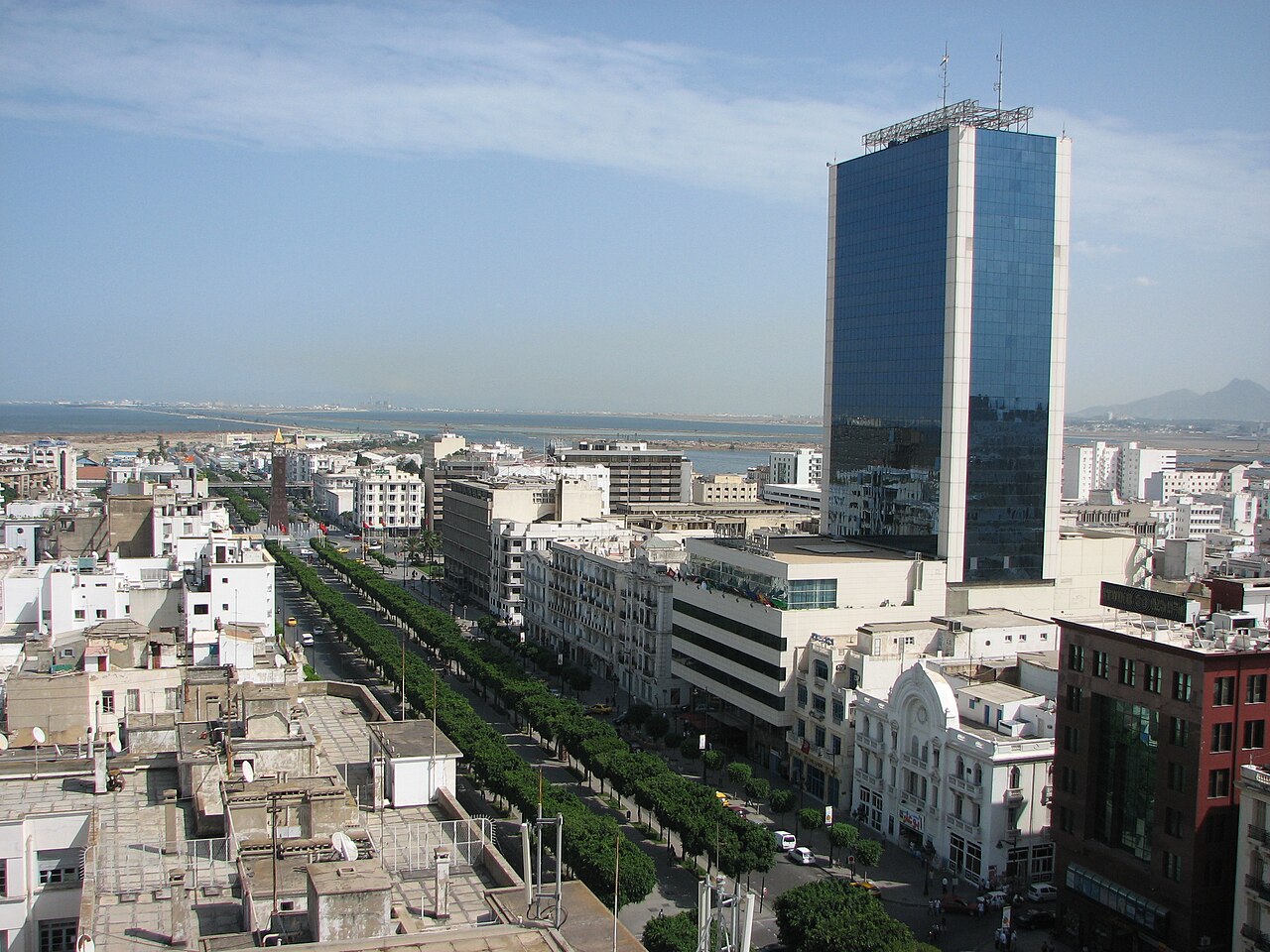
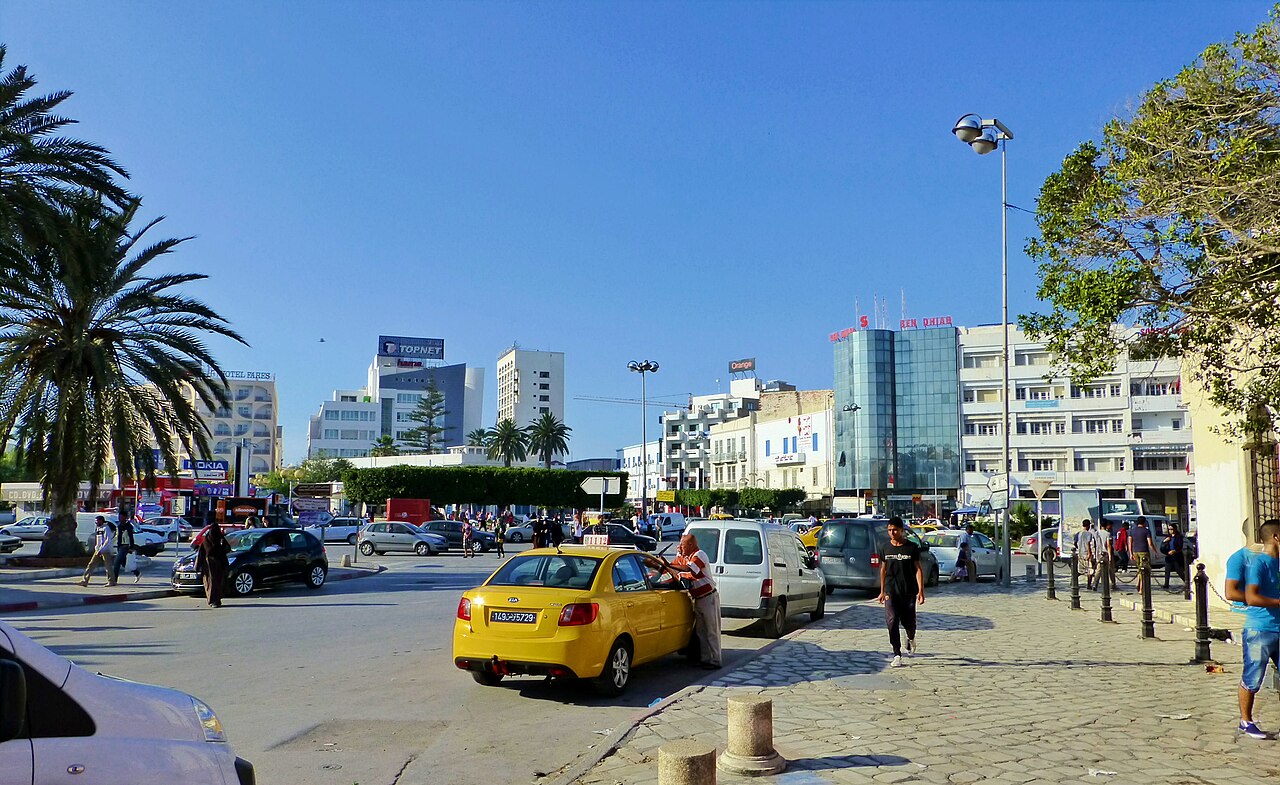
The capital and largest city, with about 2.7 million people in the greater metropolitan area. Its old medina, a World Heritage Site, is a maze of souks, mosques and palaces, while the French-built Ville Nouvelle stretches along the wide Avenue Habib Bourguiba. The seaside suburbs of Carthage, Sidi Bou Said and La Marsa lie a short train ride away.
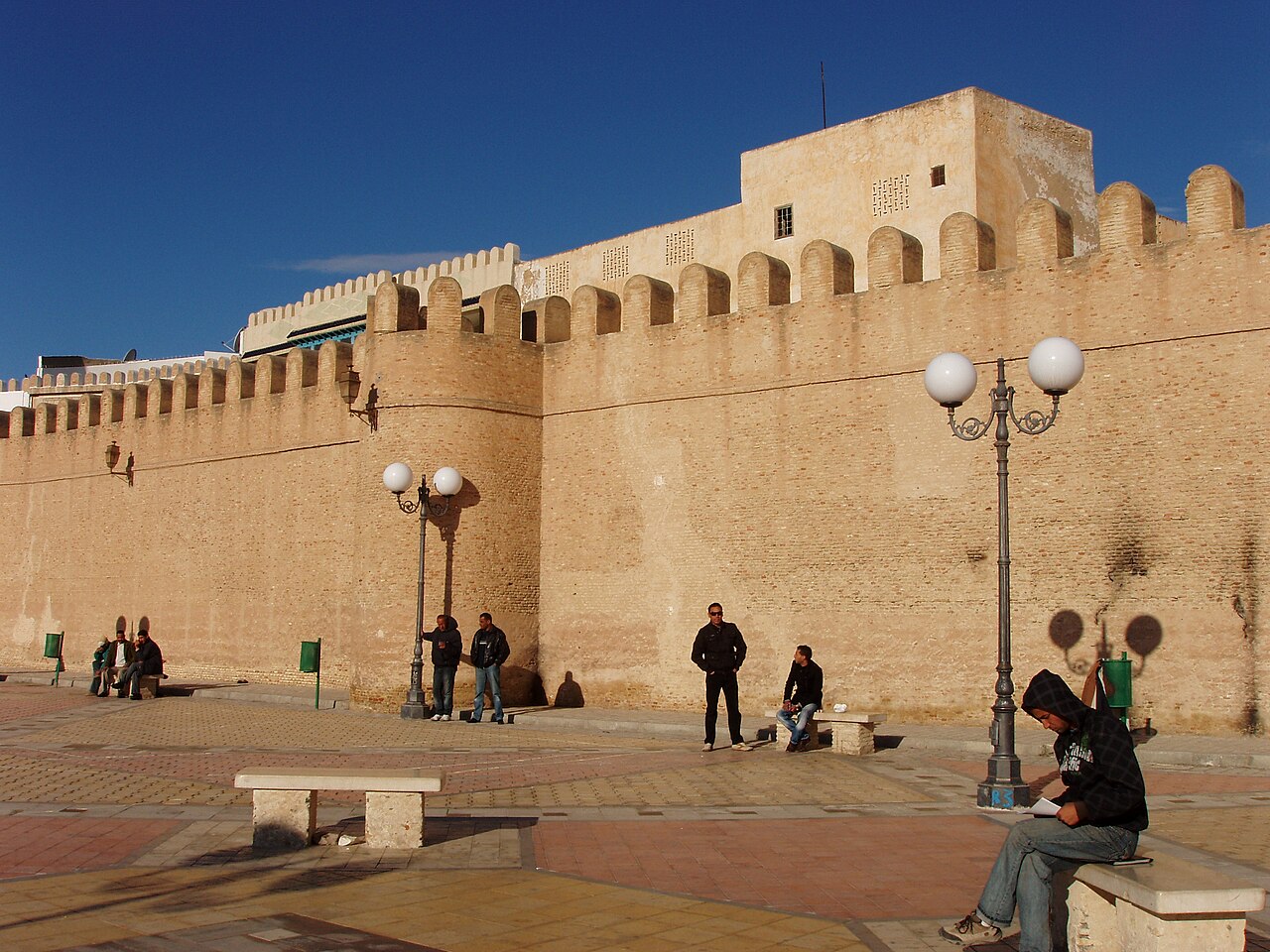
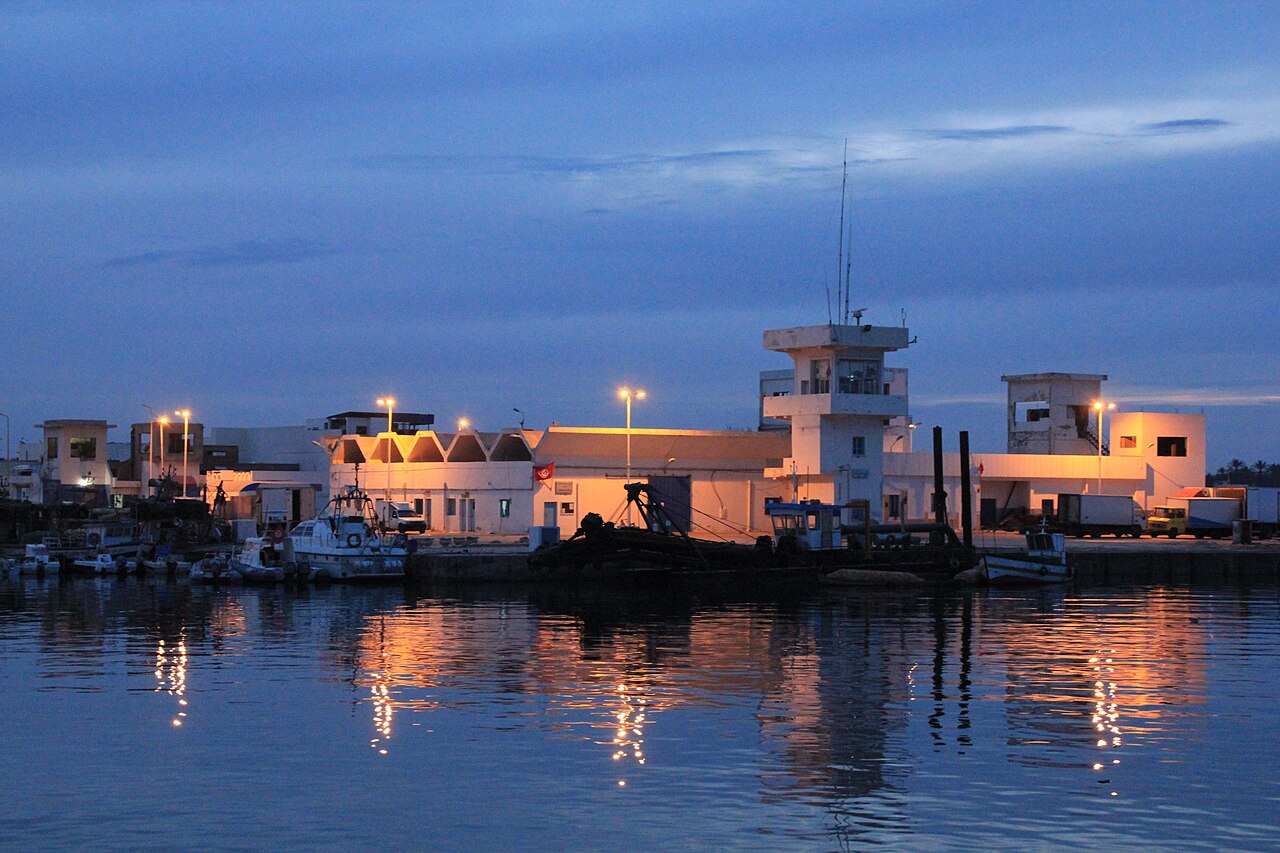
Tunisia's second-largest city and a busy port, founded in 849 on the site of an older town. It is a working city rather than a resort, with a walled medina, olive oil and phosphate industries, and the country's largest fishing port.
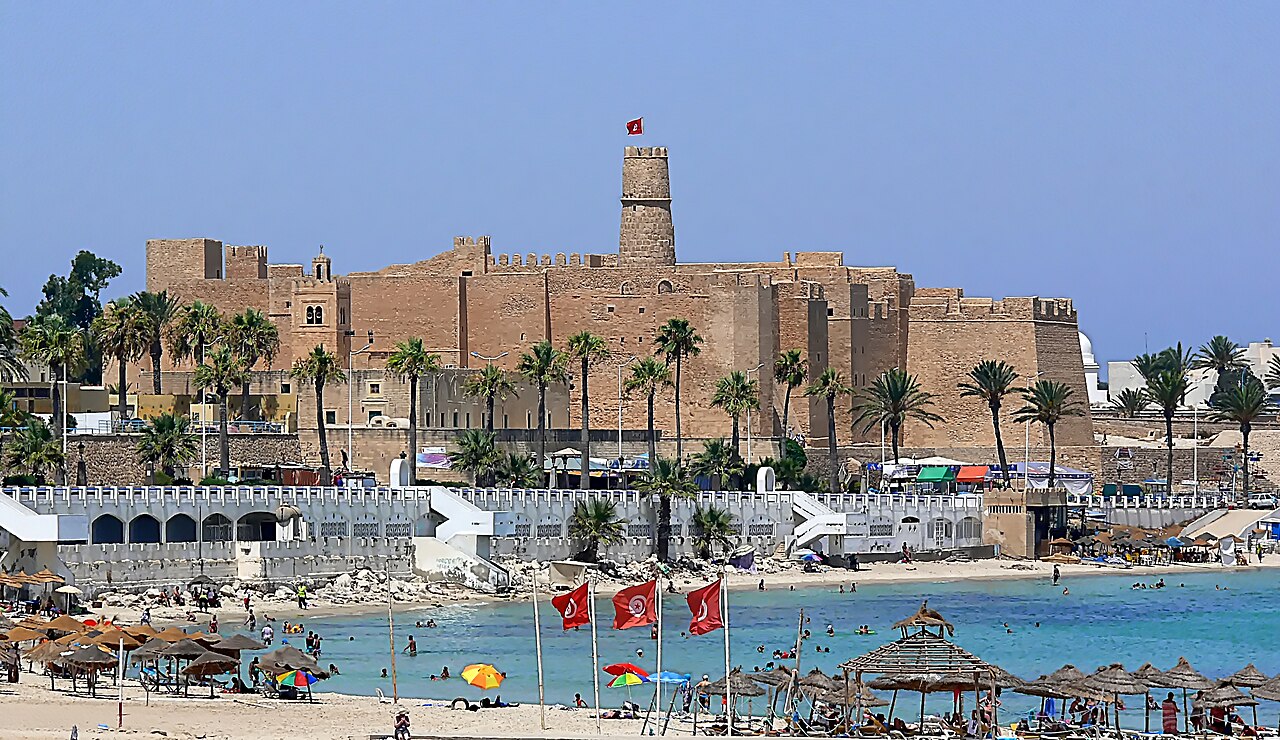
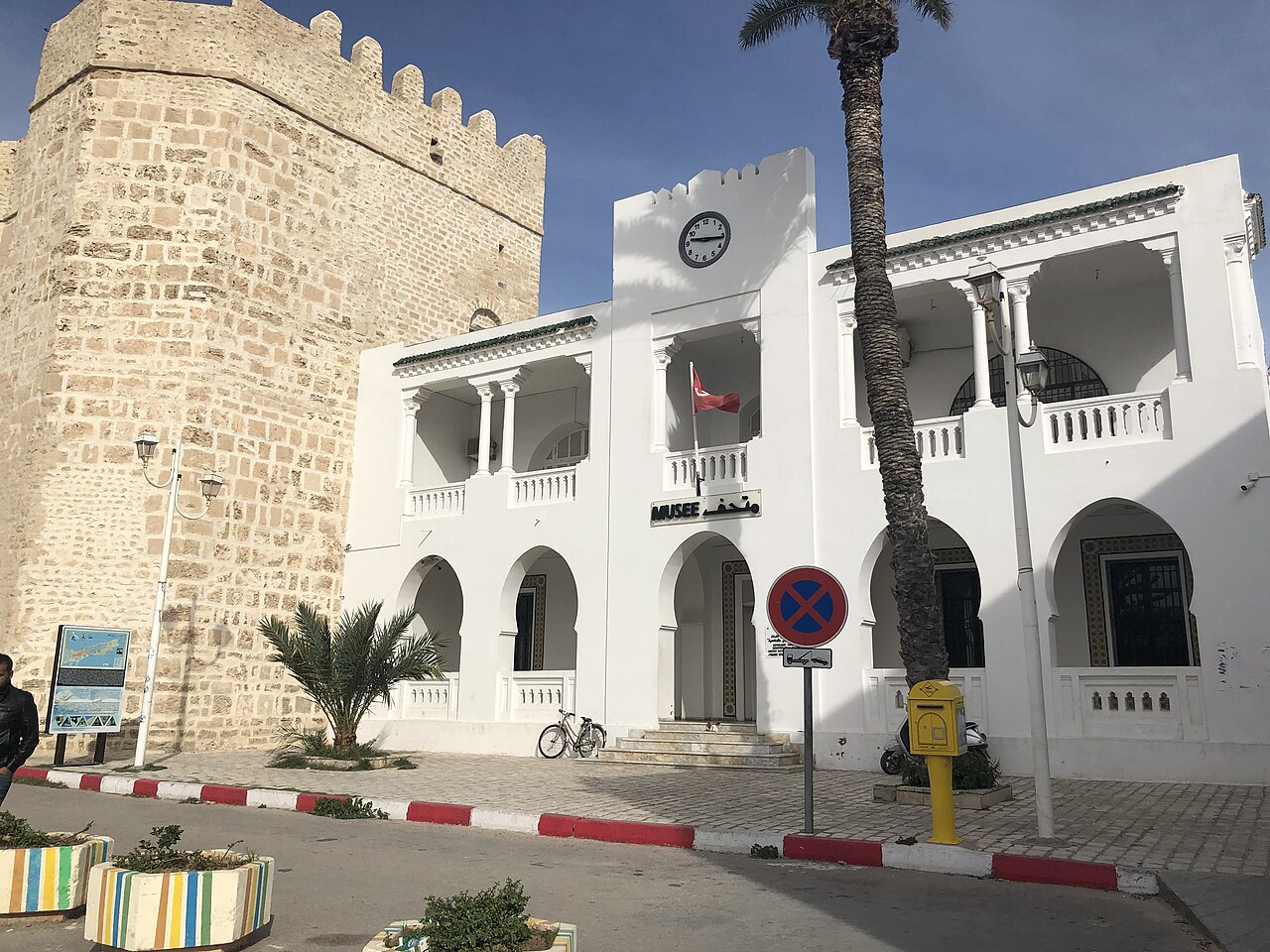
A lively port and beach resort on the Sahel coast, about 140 km south of Tunis by road, built over the ancient city of Hadrumetum. Its medina, with the Ribat and the Great Mosque, is a World Heritage Site.
Founded in 670, Kairouan was the first great Arab city of the Maghreb and the capital of Ifriqiya for centuries. Some Muslims regard it as the fourth holiest city of Islam, after Mecca, Medina and Jerusalem. Its old city and historic monuments are a World Heritage Site.
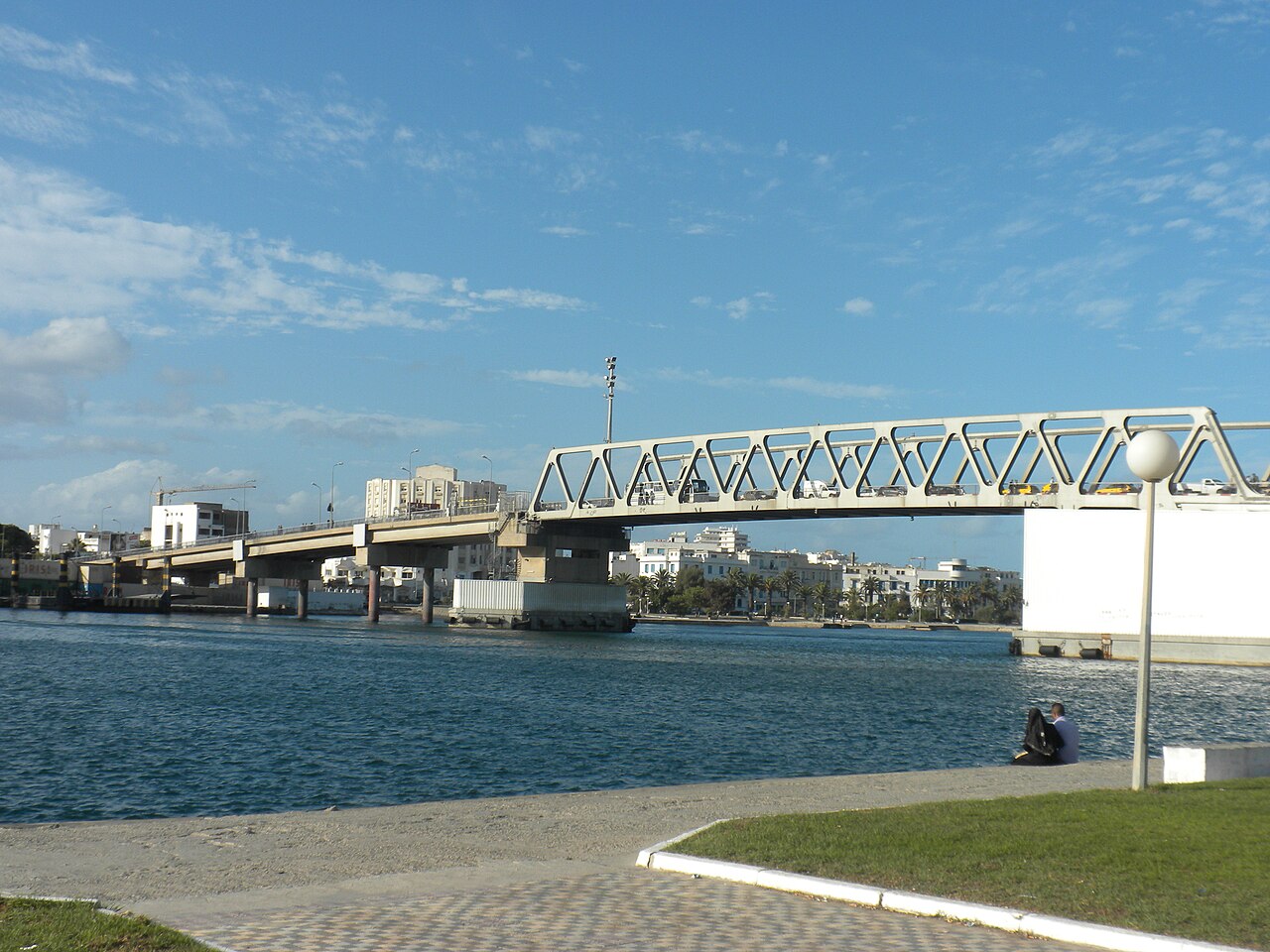
The northernmost city in Africa, about 65 km north of Tunis by road, with an old port, a canal to a large inland lake and a naval base. France kept the base after independence and left only in 1963.
A port city with an unusual seaside oasis, where palm groves reach almost to the sea. It was the ancient Tacapae, and today it is a centre of industry and a gateway to the south.
The main town of Djerba, the largest island of North Africa. Its name means 'the market quarter', and it is known for its souks, its old fort by the sea and whitewashed houses. The island has a Jewish community with roots going back many centuries.
An oasis town on the edge of the Chott el Djerid salt lake, with hundreds of thousands of date palms watered by a canal system designed in the 13th century. Its old quarter is built of patterned yellow bricks.
A former fishing port on a small peninsula, now a beach resort, about 20 km south of Sousse by road. It is the birthplace of Habib Bourguiba, Tunisia's first president, who is buried in a large mausoleum in the town.
A seaside town on the Cap Bon peninsula, founded by Greeks as Neapolis, 'new city'. The surrounding farmland grows the peppers for harissa, and the town holds a harissa festival each autumn.
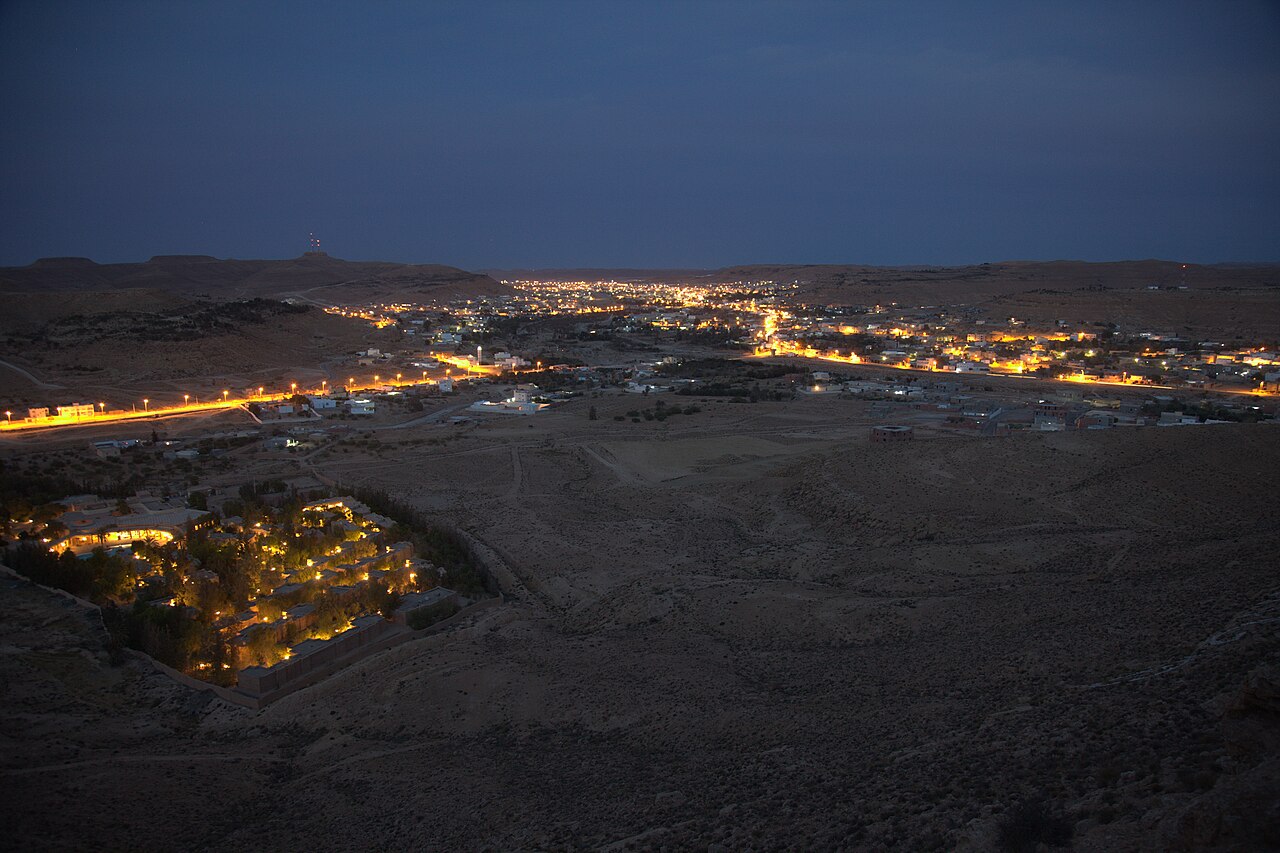
A desert town surrounded by fortified Amazigh granaries, called ksour, and hilltop villages such as Chenini. Its name means 'water springs' in the Amazigh language.
A calm fishing town on a narrow cape, founded by the Fatimids as their fortified capital and inaugurated in 921. Its old town is entered through a massive gate, the Skifa el Kahla.
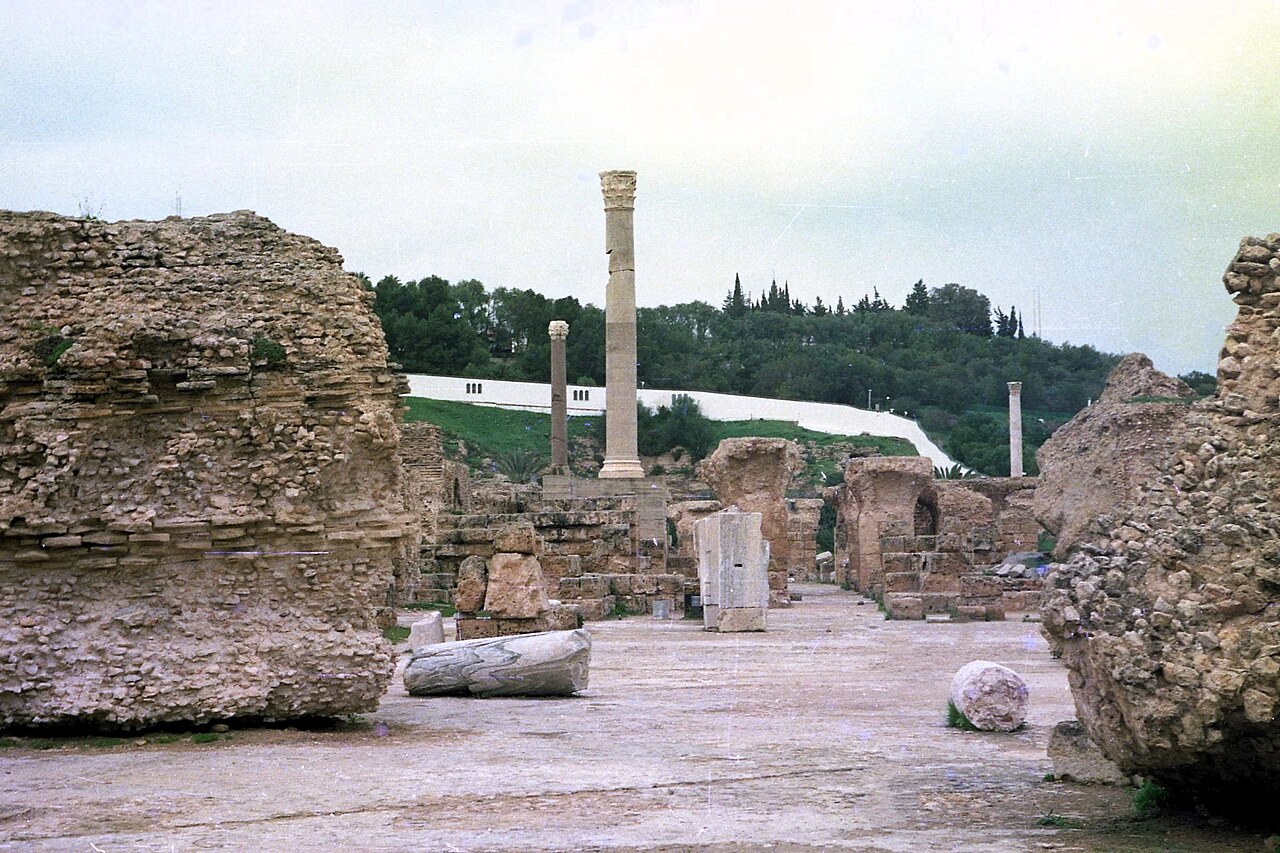
The remains of the great Phoenician and later Roman city lie scattered among the villas of a seaside suburb of Tunis. Visitors can see the Byrsa hill with its museum, the Punic ports, the Tophet and the huge Roman Antonine Baths by the sea. The site has been on the World Heritage List since 1979.
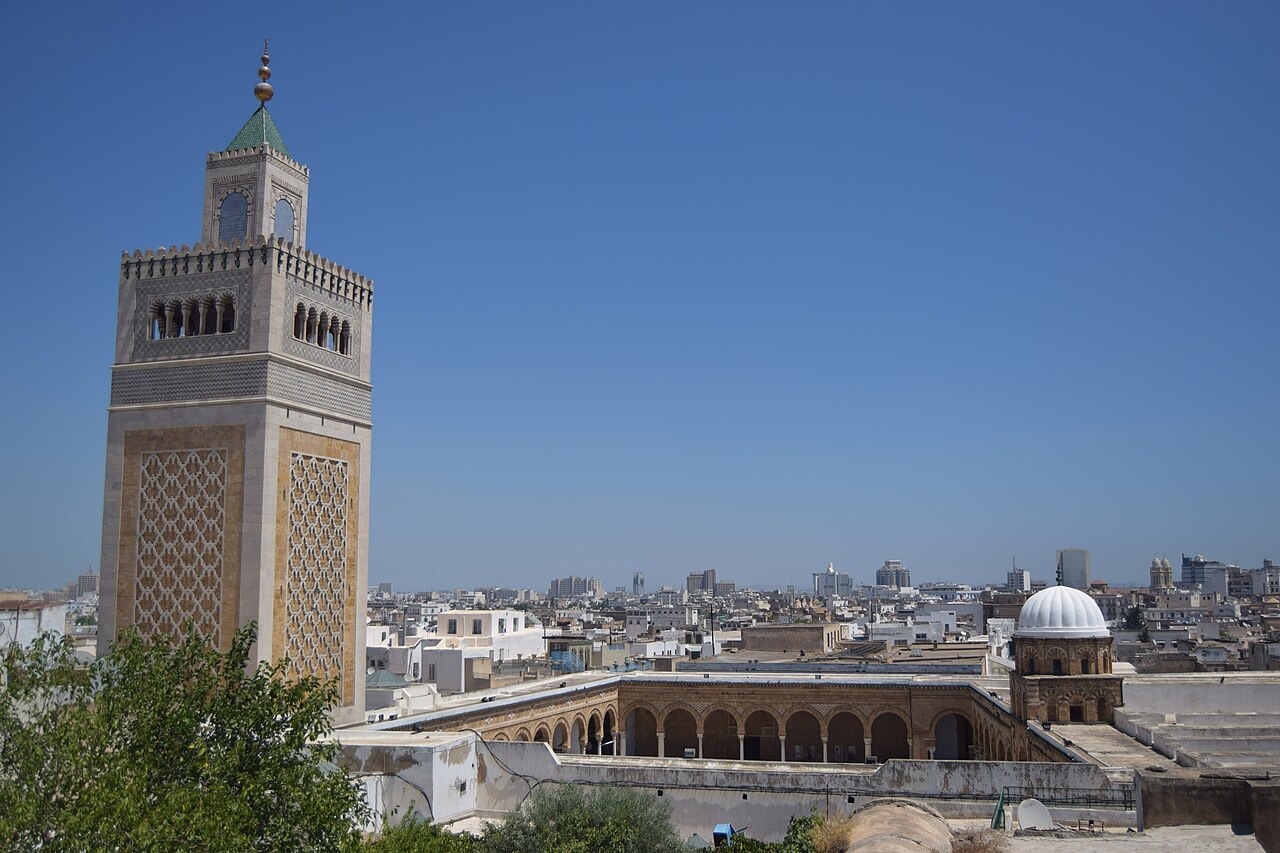
The old walled city has some 700 monuments, including palaces, mosques and fountains, along narrow lanes of covered souks. At its heart stands the Zitouna, or 'olive tree', Mosque, the oldest in the city, whose school grew into a famous university. The medina has been a World Heritage Site since 1979.
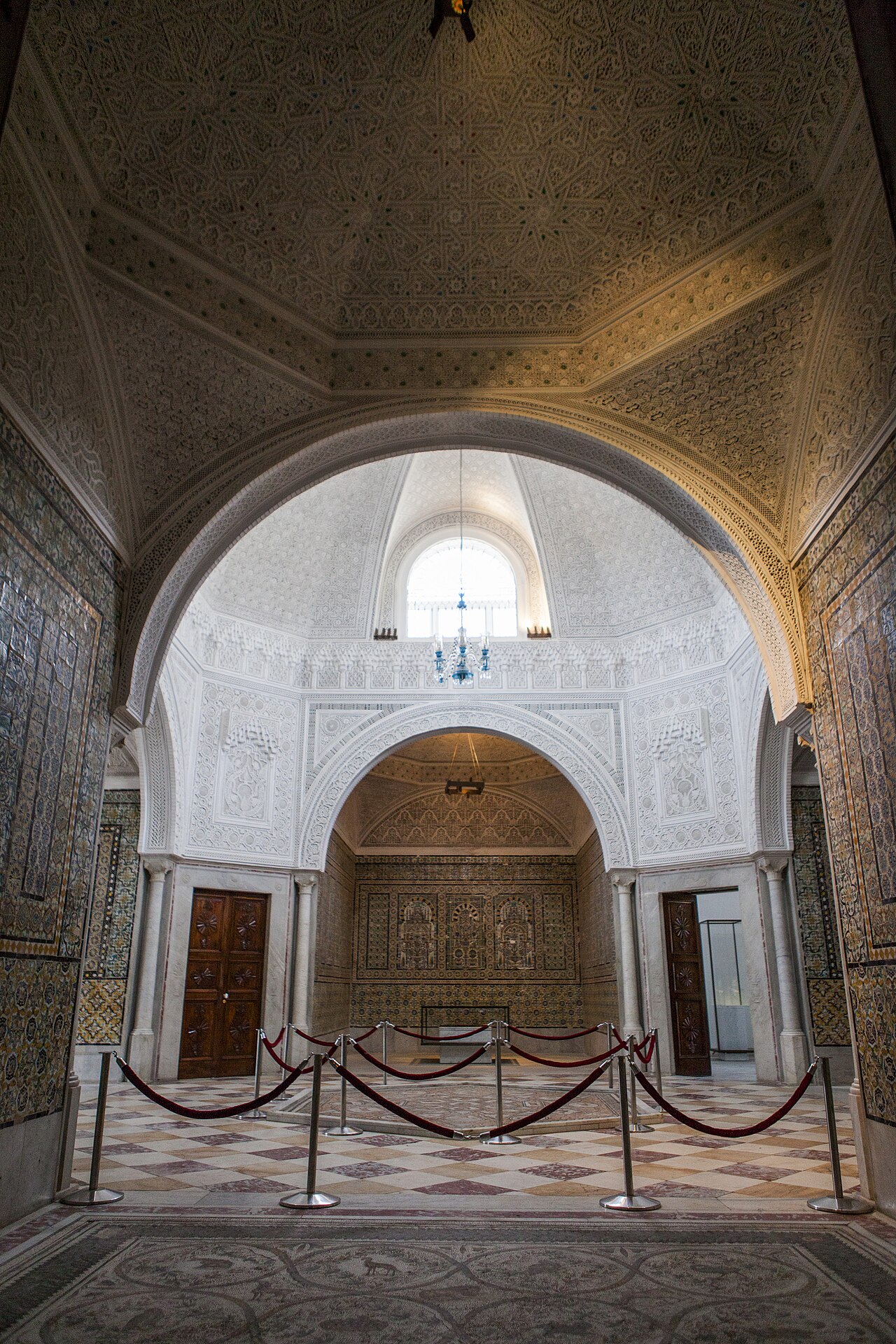
Housed since 1888 in a palace of the beys, the Bardo has one of the largest collections of Roman mosaics in the world, found at Carthage, Dougga, Sousse and other sites. One of its most famous pieces shows the Roman poet Virgil between two Muses.
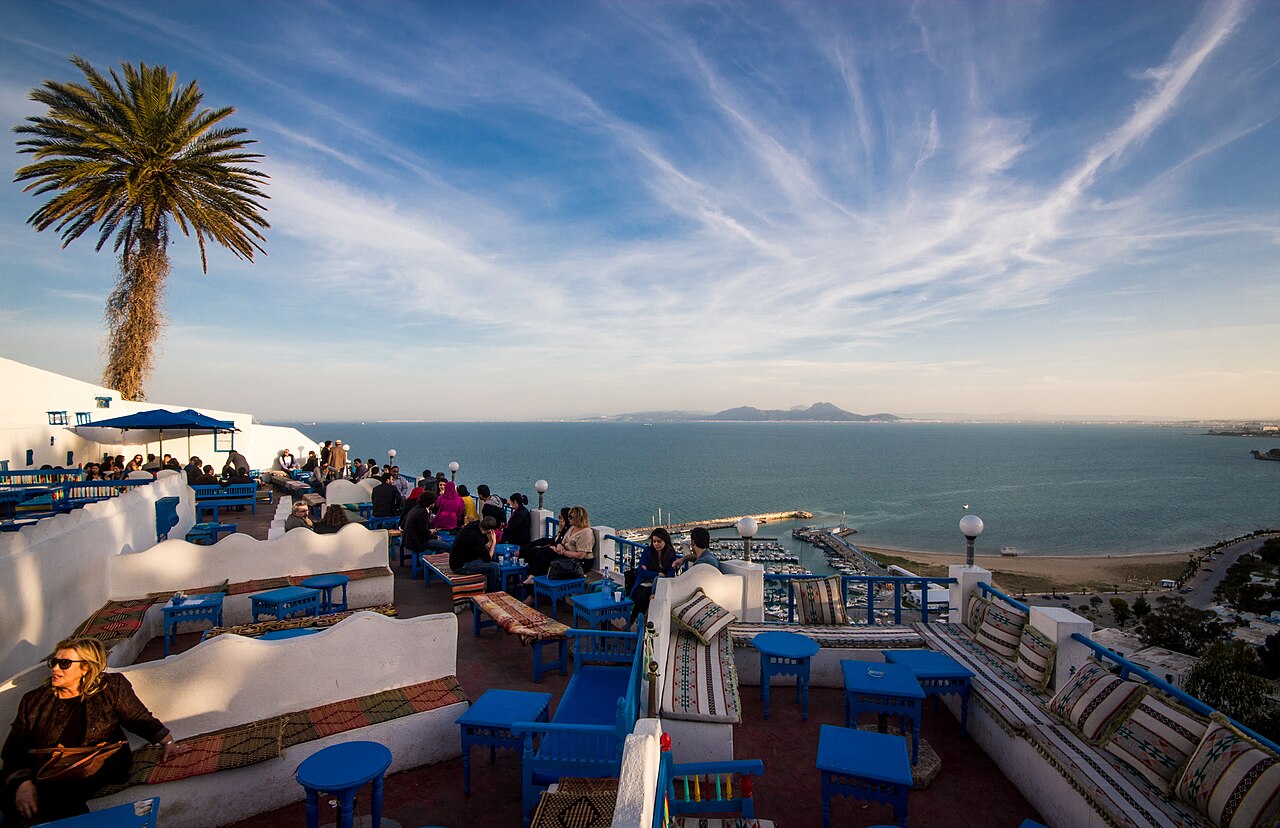
A village of white houses with bright blue doors and shutters on a cliff above the Gulf of Tunis, about 20 km by road from the centre of the capital. It grew around the shrine of a Sufi holy man, and the blue and white look was made popular in the 1920s by the Baron Rodolphe d'Erlanger. In July 2026 it became a World Heritage Site in its own right.
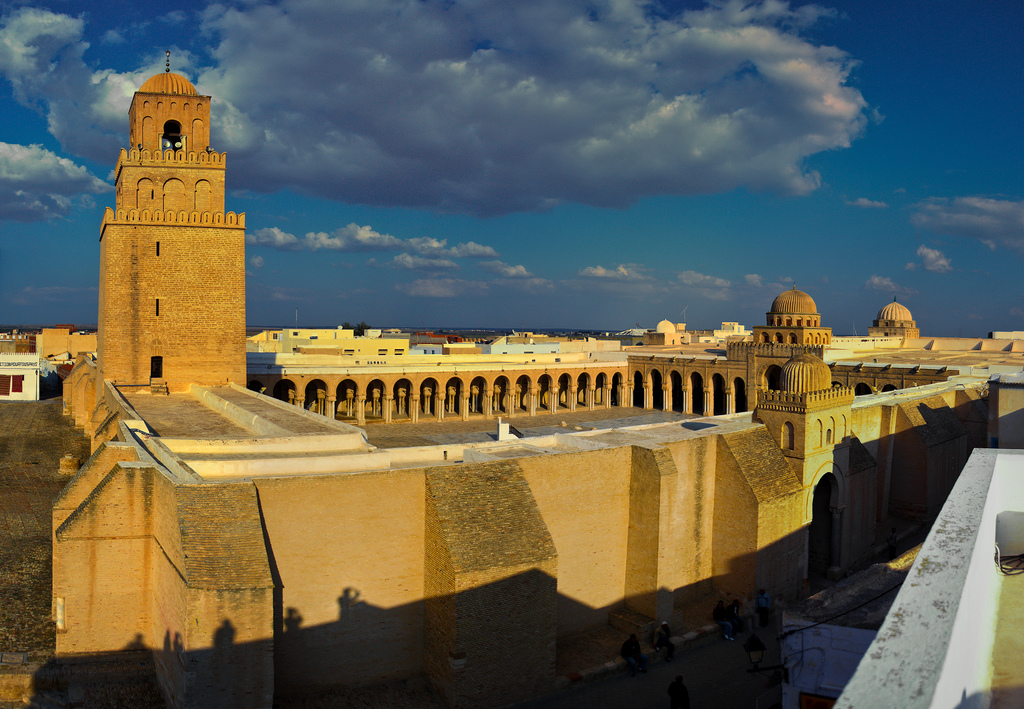
Founded by Uqba ibn Nafi in 670 and given its present form by the Aghlabids in the 9th century, it is one of the oldest places of worship in the Islamic world and a model for later mosques across the Maghreb. It has a vast marble courtyard, a forest of ancient columns and a massive square minaret.
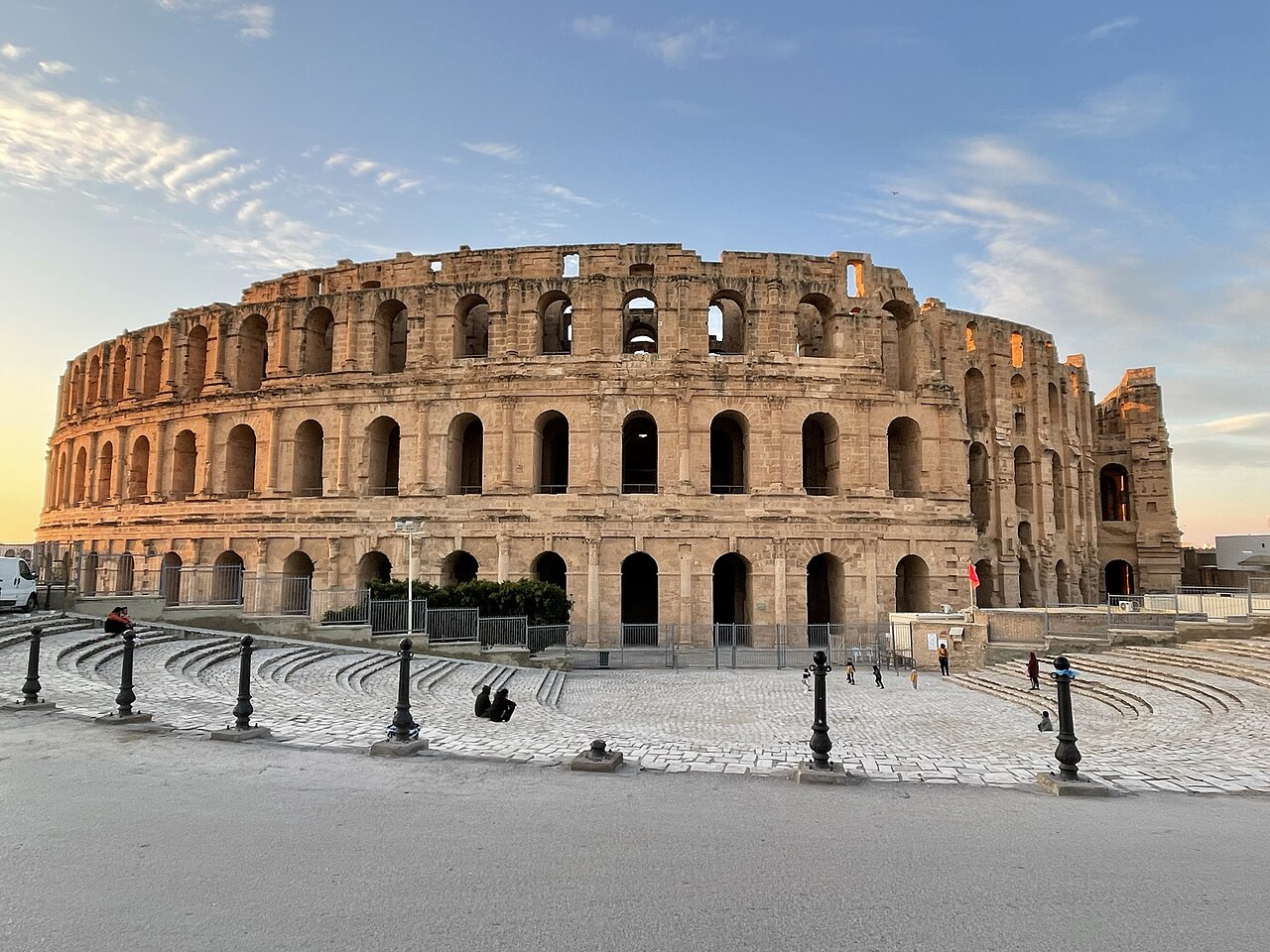
A huge Roman amphitheatre built around AD 238 in the town of Thysdrus, today's El Jem, with room for about 35,000 spectators. It is one of the best-preserved Roman amphitheatres in the world and rises high above the small modern town. It has been a World Heritage Site since 1979.
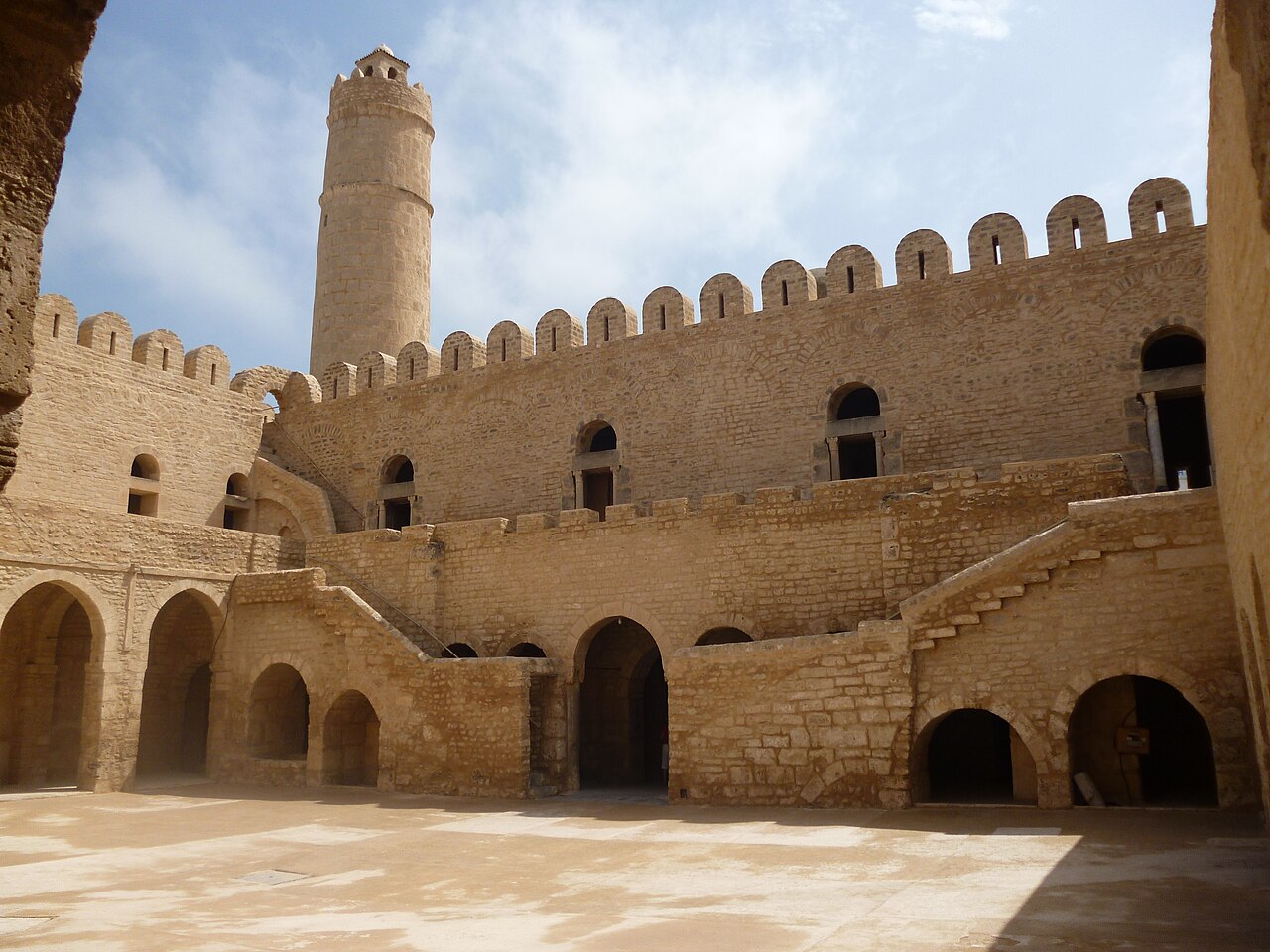
A fortified monastery built for soldiers who guarded the coast, completed in its current form under the Aghlabids; an inscription on its round tower gives the year 821. It is the best-preserved of the many ribats built along the Tunisian coast, and from the tower there is a view over the medina.
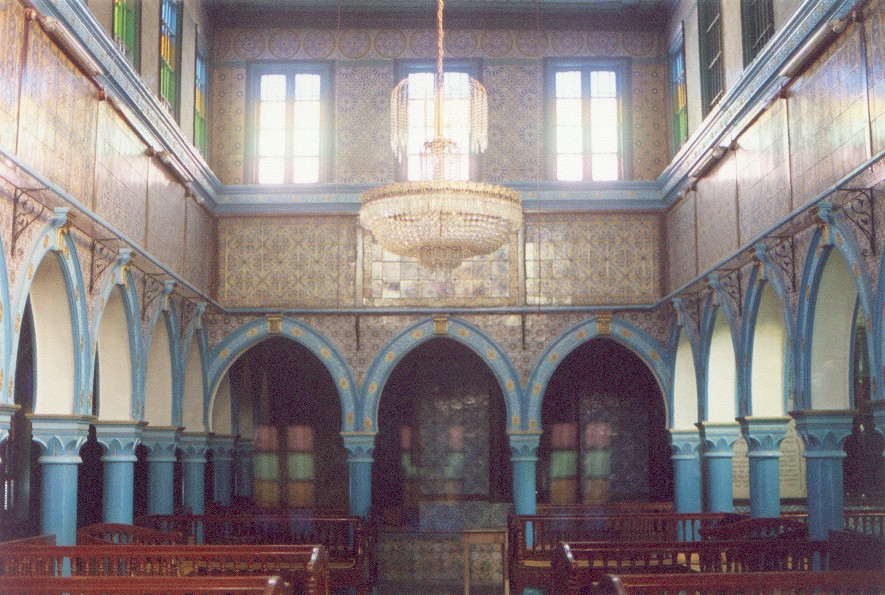
A synagogue in the village of Er-Riadh on Djerba, a few kilometres from Houmt Souk, and one of the oldest in the world. The present building was largely renovated in the 19th century, and it is a place of pilgrimage for Jews each spring. It is one of the components of the Djerba World Heritage Site, inscribed in 2023.
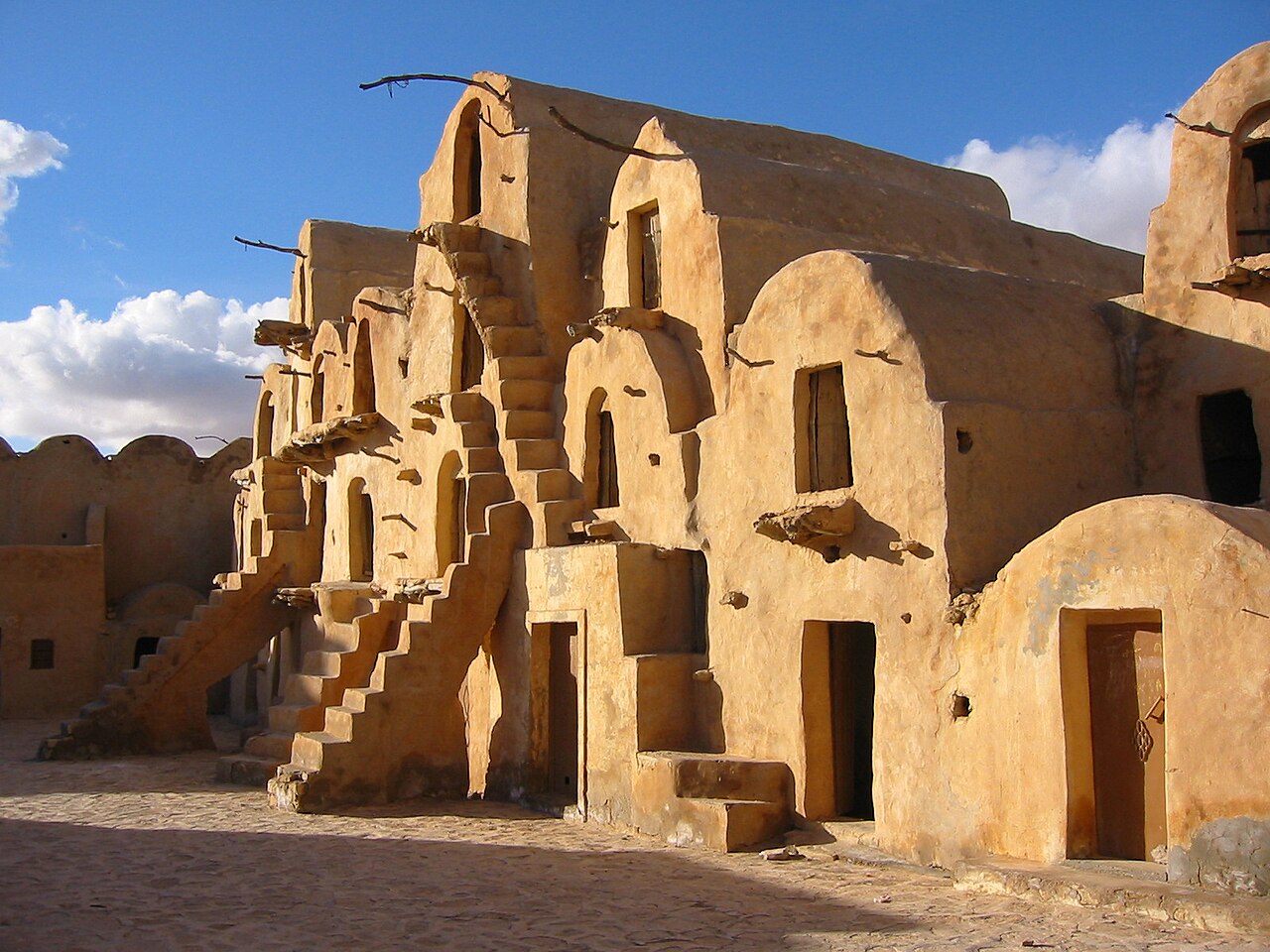
A fortified Amazigh granary on a hilltop south of Tataouine, with rows of vaulted storage rooms, called ghorfas, stacked several storeys high around two courtyards. Its oldest parts are thought to date from the late 17th century, and it appeared in Star Wars: Episode I.
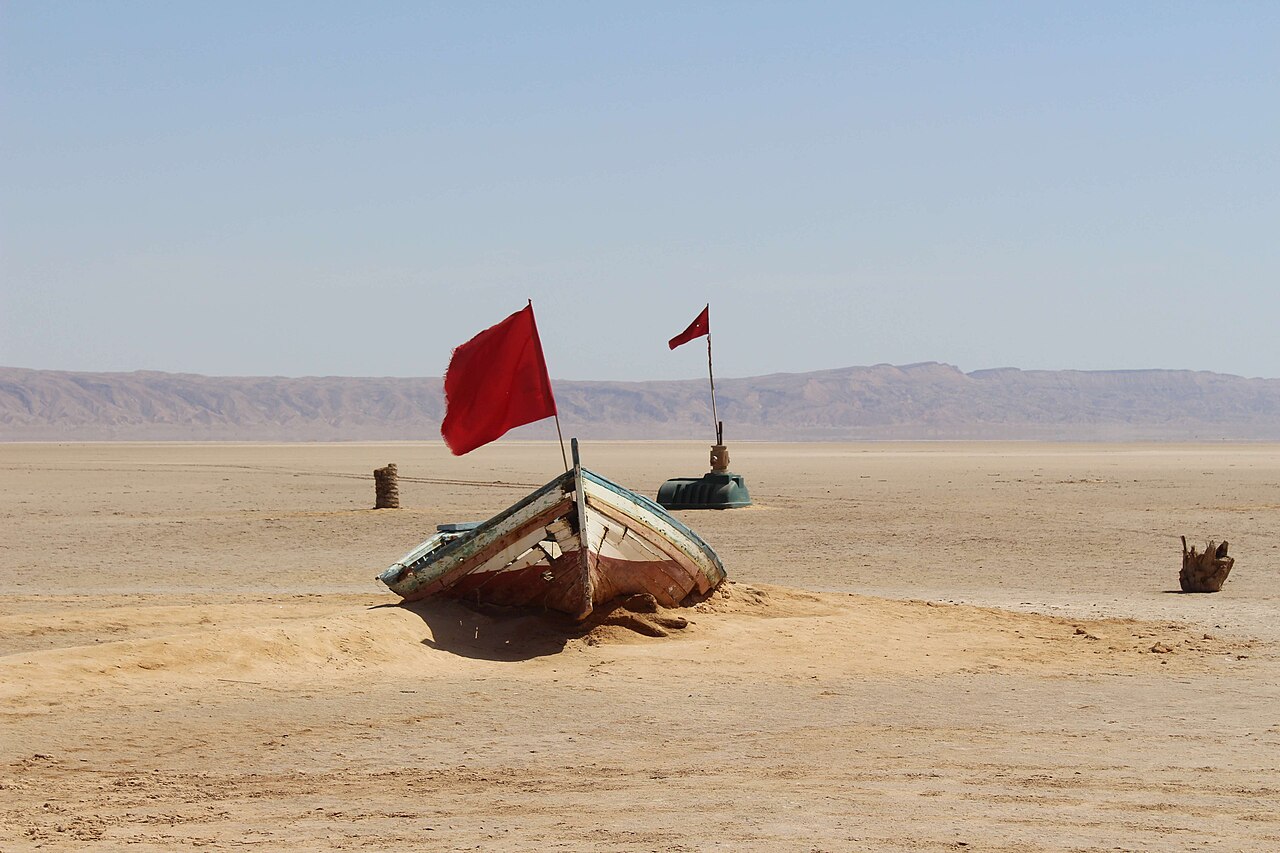
The largest salt pan of the Sahara, a flat white plain of salt crust between Tozeur and Kebili that is dry for most of the year. A causeway road crosses it, and in the heat of summer the air above it often shows mirages.
George Lucas filmed the first Star Wars film in southern Tunisia and named Luke Skywalker's desert planet Tatooine after the town of Tataouine. Luke's underground home was filmed in a cave house in Matmata.
02
Cape Angela, near Bizerte, is the northernmost point of Africa, and Bizerte is the northernmost city on the continent.
03
In 2022 UNESCO added harissa to its list of intangible heritage as part of Tunisia's heritage, and Tunisia is a leading exporter of the chilli paste.
04
In the 2025/2026 season Tunisia was the world's second-largest producer of olive oil after Spain, with a record of about 500,000 tonnes, according to the International Olive Council.
05
Tunisia abolished slavery in 1846, two years before France abolished it for good in its colonies.
06
In 2015 the Nobel Peace Prize went to the Tunisian National Dialogue Quartet, four organisations that helped the country through a political crisis after the revolution.
07
Djerba, in the Gulf of Gabès, is the largest island of North Africa, at 514 km².
08
The Maltese language descends partly from the Arabic once spoken in Sicily and Tunisia, and Maltese and Tunisian Arabic speakers can understand about a third of each other's speech.
09
The Bardo National Museum in Tunis holds one of the largest collections of Roman mosaics in the world.
10
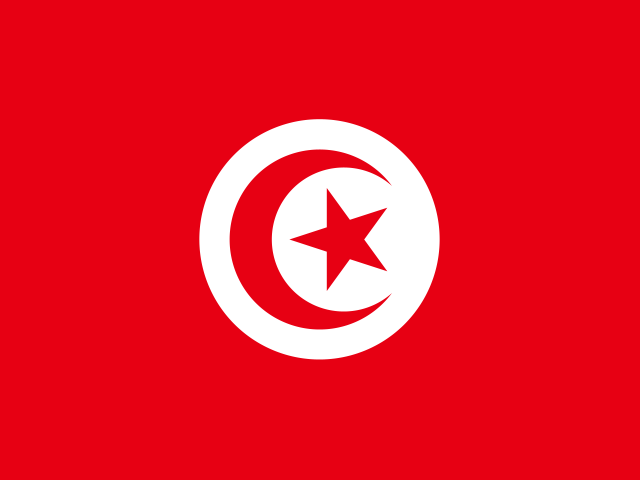
Tunisia's red flag with a white disc, a crescent and a star was first approved in 1831, under the Ottoman-era beys, and has barely changed since.
11
The country takes its name from its capital. In Arabic, as in Spanish and Russian, the same word is used for both the city and the country.
12
As of September 2026, Tunisia has ten World Heritage Sites. The newest, the village of Sidi Bou Said, was added in July 2026.
13
Chott el Djerid, a salt lake of more than 5,000 km² in the southwest, is the largest salt pan of the Sahara.
Tunisians call their everyday Arabic Derja or Tounsi. It differs from Standard Arabic, has many French and Italian loanwords, and Latin spellings vary; the ones here follow common usage Pronunciation is written the way it sounds; the capital letters show where the stress goes. Audio is coming soon.
Greetings
aslema (عالسلامة)ah-SLEH-mahhello
bislema (بالسلامة)bis-SLEH-mahgoodbye
yaishek (يعيشك)yah-EESH-ekthank you; also added to a request, like 'please'
The Tunisian dinar is a closed currency: you may not take dinars into or out of the country. Change money in Tunisia, keep the official receipts, and use them to change leftover dinars back before you leave. Declare larger amounts of foreign cash on arrival. ATMs are common in towns.
Be thoughtful during Ramadan
During the holy month of Ramadan (as of September 2026, the next one begins in February 2027) most Tunisians fast from dawn to sunset. Eating, drinking or smoking in public in the daytime may cause offence, many cafés close by day, and the evenings after the sunset meal are lively.
Dress modestly away from the beach
Beachwear is fine in resorts, but cover shoulders and knees when visiting religious sites, medinas and villages, especially in the more traditional south.
Know where alcohol is sold
Alcohol is served in licensed restaurants, bars and hotels. Supermarkets do not sell it on Fridays. During Ramadan, shops stop selling alcohol and only a few restaurants and bars serve it, although these rules do not apply in holiday resorts.
Do not photograph official buildings
Do not take photographs of or near government buildings or military sites. Ask before photographing people, and never take antiquities out of the country without permission.
Agree taxi fares first
In Tunis and other large towns, city taxis have meters: check that it is switched on. For longer trips, agree the price before you set off.
Emergency numbers
As of 2026, the numbers in Tunisia are 190 for an ambulance, 197 for the police in towns, 193 for the National Guard in rural areas, and 198 for fire and road accidents.
French helps
Most road signs are in Arabic and French, and French is widely spoken in shops, hotels and offices. English is mostly heard in tourist areas, so a few words of French or Derja go a long way.
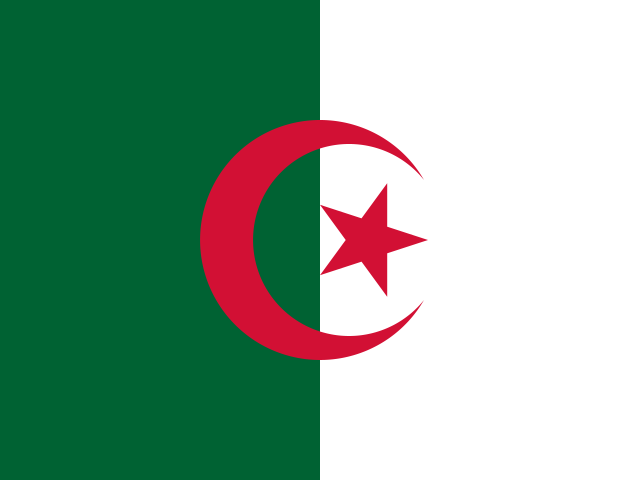 Algeria
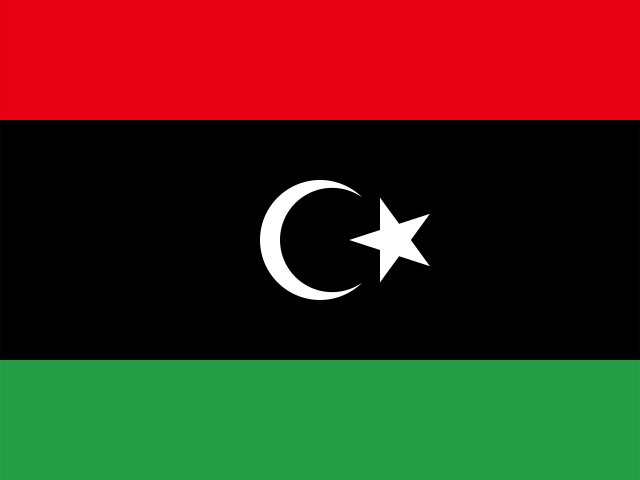 Libya
Libya