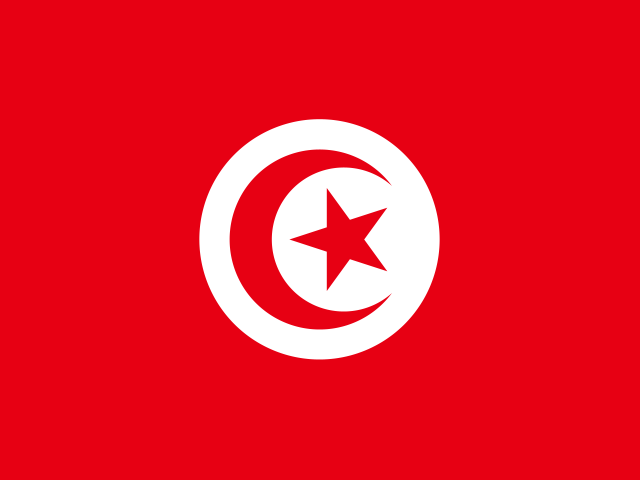
 Tunisia
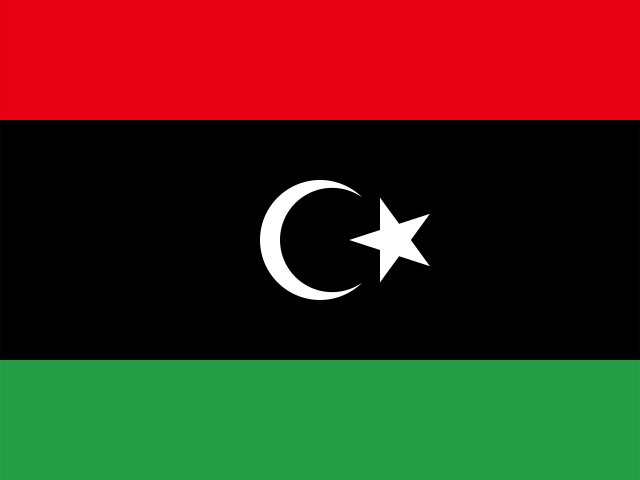 Libya
Libya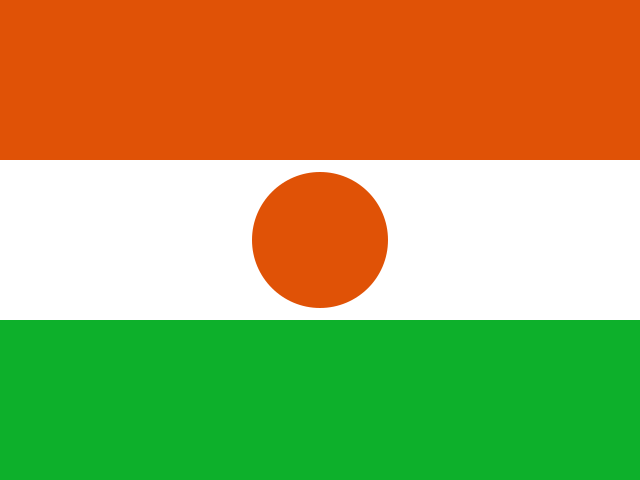 Niger
Niger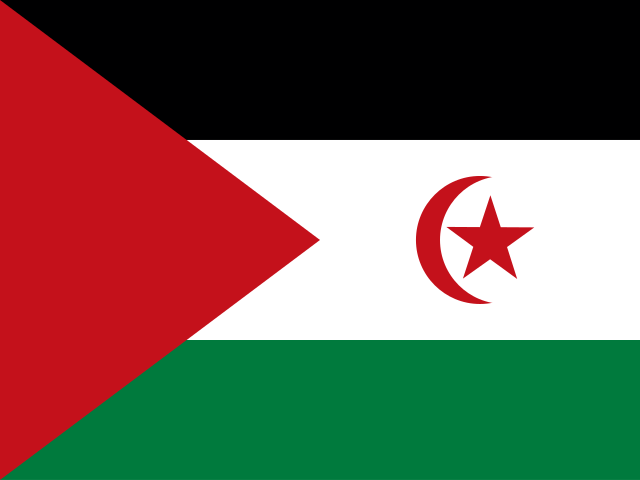 Western Sahara
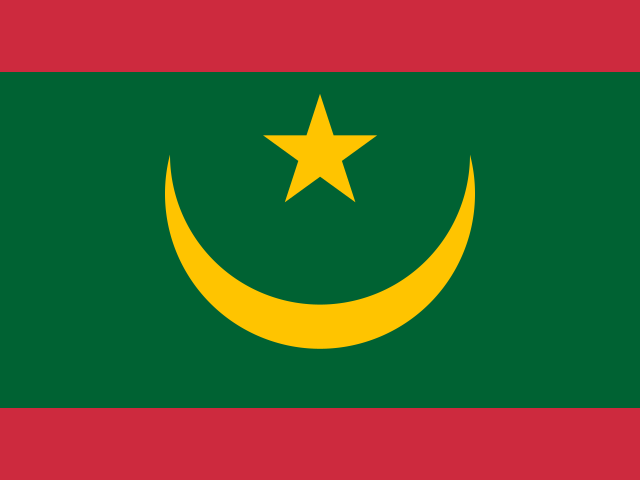 Mauritania
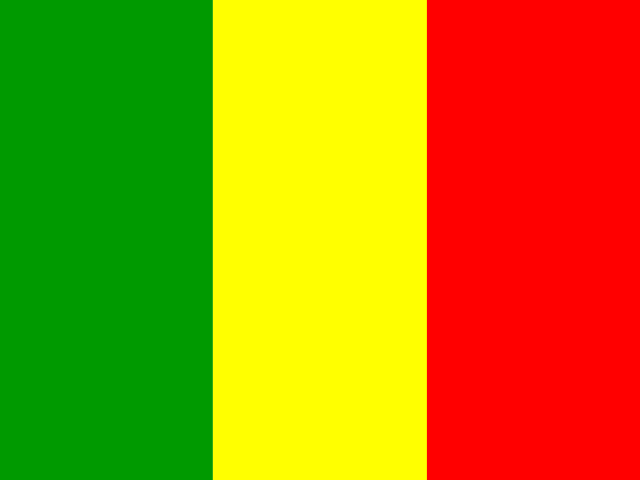 Mali
Mali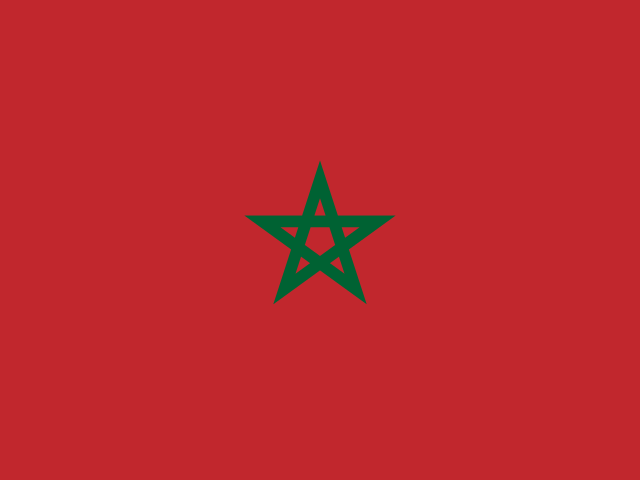 Morocco
Masinissa unites Numidia
Around 202 BC the Amazigh king Masinissa, an ally of Rome against Carthage, united the Numidian kingdoms into one state, with its capital at Cirta, today's Constantine.
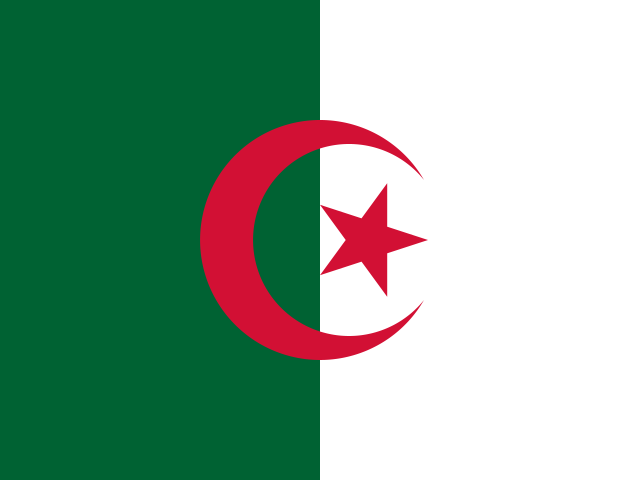
A free large-print PDF. Choose what goes in: facts, map, history, dishes and recipes, phrases, fun facts, a quiz with or without answers. Made for clubs, care homes, libraries and family afternoons.
Algeria lies in North Africa, between Morocco and Tunisia, with a long Mediterranean coast in the north. As of 2026 it is the largest country in Africa by area, and the Sahara covers most of it. About nine in ten Algerians live in the green, hilly north, where the Tell Atlas mountains rise behind the coast, while the far south holds the volcanic peaks of the Hoggar and the rock art plateau of Tassili n'Ajjer.
The land was home to the Amazigh (Berber) kingdoms of Numidia, then became part of the Roman world, and from the 7th century was shaped by Islam and the Arabic language. Local dynasties ruled from cities such as Tahert, Béjaïa and Tlemcen, and from 1516 Algiers was the capital of a largely self-governing Ottoman regency. France invaded in 1830, and Algeria won its independence in 1962 after a long war.
Today Algeria is a republic of about 47 million people, almost all of them Muslim. Arabic and Tamazight (Berber) are the official languages, most people speak Algerian Arabic in daily life, and French is still widely used. Visitors are few, which makes its Roman ruins, old casbahs, desert oases and generous hospitality all the more rewarding.
Algeria's history runs from Amazigh kingdoms and Roman towns through Islamic dynasties and an Ottoman regency to 132 years of French rule and a hard-won independence in 1962. The events below follow that long story, with approximate dates for the early centuries.
Around 202 BC the Amazigh king Masinissa, an ally of Rome against Carthage, united the Numidian kingdoms into one state, with its capital at Cirta, today's Constantine.
Around AD 100 the Roman emperor Trajan founded Timgad as a colony for veterans in the Aurès mountains. North Africa became one of Rome's great grain-growing regions.
Augustine was born in Thagaste, today's Souk Ahras. He became bishop of Hippo Regius, near modern Annaba, and one of the most influential Christian thinkers.
The Vandals crossed from Spain in 429 and ended Roman rule in the region. A century later the Byzantine Empire took back parts of the coast.
After the arrival of Islam, an independent Ibadi state, the Rustamid imamate, was founded around 777 with its capital at Tahert, near modern Tiaret. It grew rich on trade across the Sahara.
Hammad ibn Buluggin built the Qal'a of Beni Hammad in the Hodna mountains in 1007 as the capital of the Hammadid dynasty. Later the Hammadids moved their capital to Béjaïa.
Yaghmurasen ibn Zayyan founded the Zayyanid kingdom in 1236 with Tlemcen as its capital. The city became a centre of learning and trade for three centuries.
The corsair brothers Aruj and Hayreddin Barbarossa took Algiers in 1516, and in 1519 Hayreddin placed it under Ottoman protection. The Regency of Algiers became a largely self-governing Mediterranean power.
A French army landed in 1830 and captured Algiers, ending the Regency. The conquest of the rest of the country took decades, and many European settlers followed.
Emir Abdelkader led the resistance in the west from 1832 and built a state of his own before he surrendered in 1847. He is remembered as a national hero.
On 1 November 1954 the National Liberation Front (FLN) launched coordinated attacks across the country, the start of a war that lasted more than seven years.
After the Évian Accords and a ceasefire in March 1962, Algerians voted for independence on 1 July. France recognised it on 3 July, and 5 July 1962 was proclaimed Independence Day.
In January 1992 the authorities cancelled the second round of the first multi-party parliamentary elections. A long armed conflict followed between the state and armed Islamist groups, often called the Black Decade.
A referendum in 1999 approved the Civil Concord, which offered a limited amnesty. Violence fell in the following years, and a second reconciliation charter followed in 2005.
Tamazight, the Amazigh (Berber) language, was recognised as a national language in 2002 and became an official language alongside Arabic in the 2016 constitution.
Algerian cooking brings together Amazigh, Arab, Ottoman, Andalusian and French influences, with wheat and semolina at its heart. A family meal often starts with a soup such as chorba or with salads, continues with a stew (tajine) or a big shared dish of couscous, and bread comes with almost every meal. Sweet pastries with almonds, dates and honey are served with coffee or mint tea, above all during Ramadan and at weddings.
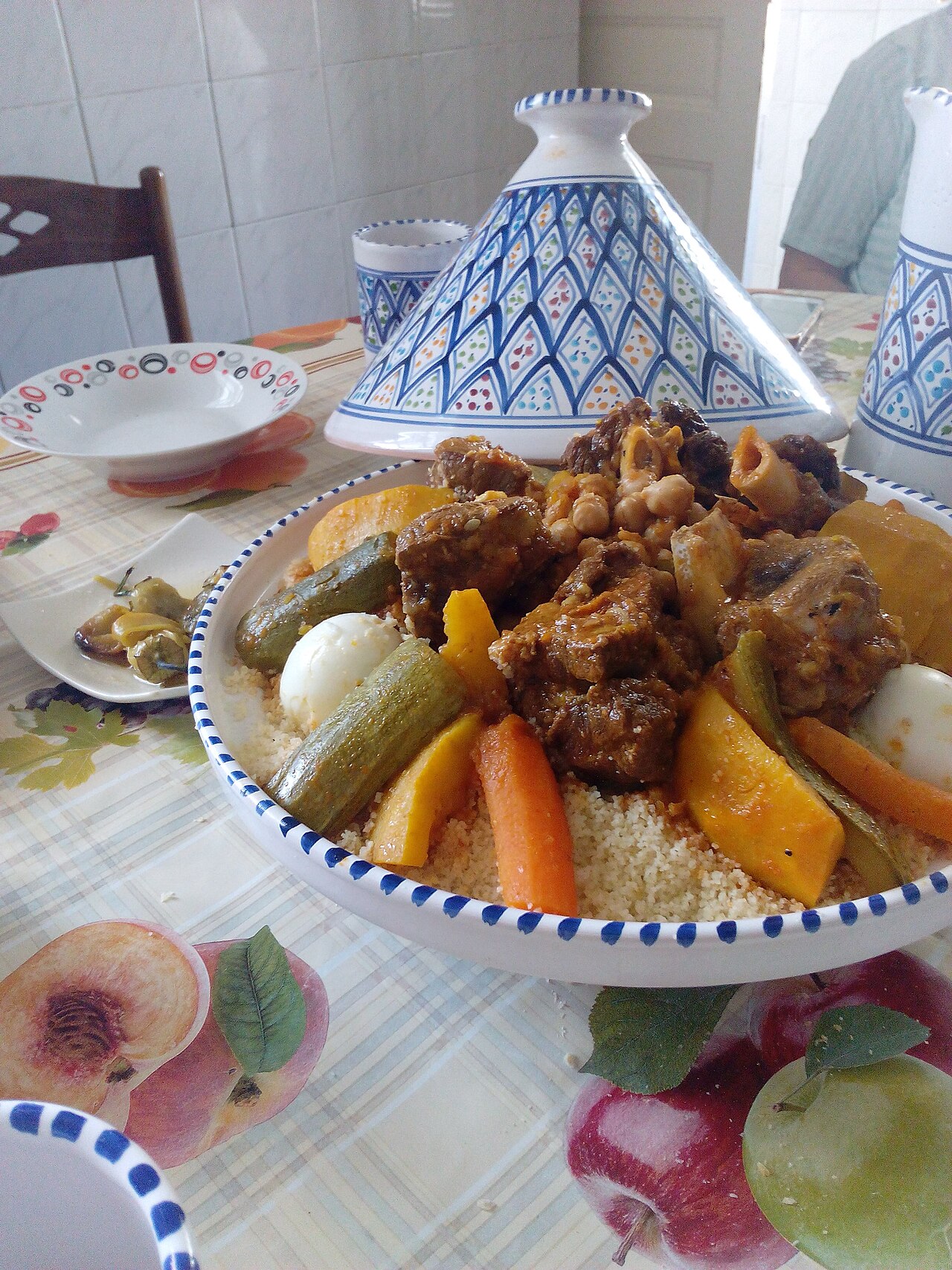
Tiny grains of semolina, steamed two or three times over a pot of stew and served in a large dish with meat, chickpeas and vegetables such as courgettes, carrots and turnips. In Algeria it comes with a red tomato sauce or a white one, and there is also masfouf, a dry version, sometimes sweet with raisins.
In December 2020 UNESCO added the knowledge and practices of couscous to its intangible heritage list, after a joint nomination by Algeria, Mauritania, Morocco and Tunisia.
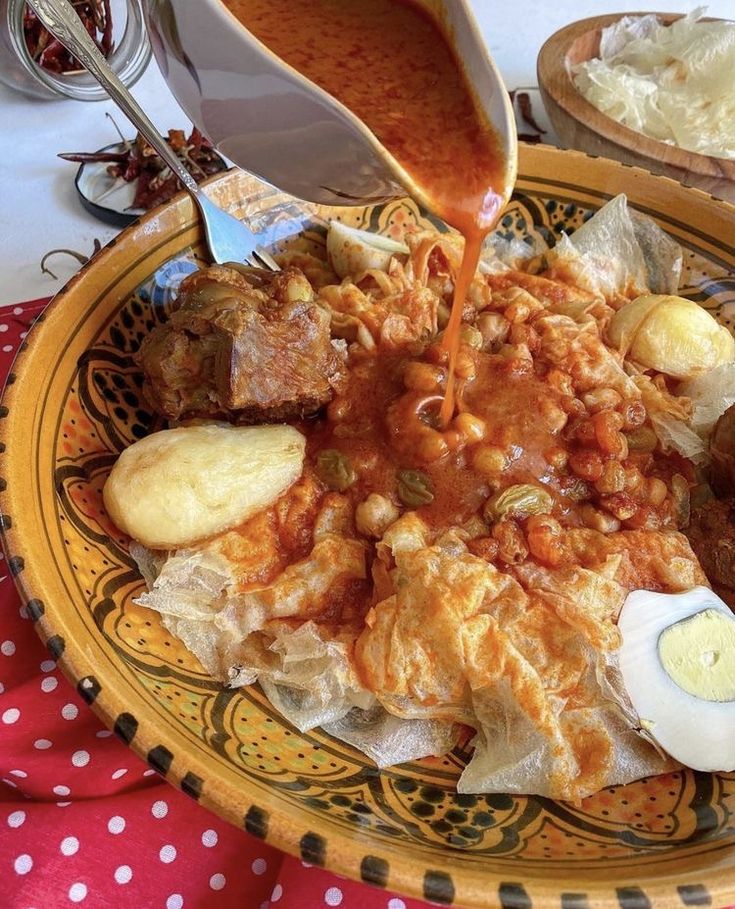
Thin rounds of semolina flatbread are torn into small pieces and soaked in marqa, a tomato stew with lamb, chickpeas and spices. The bread softens and soaks up the sauce, a filling dish for family gatherings.
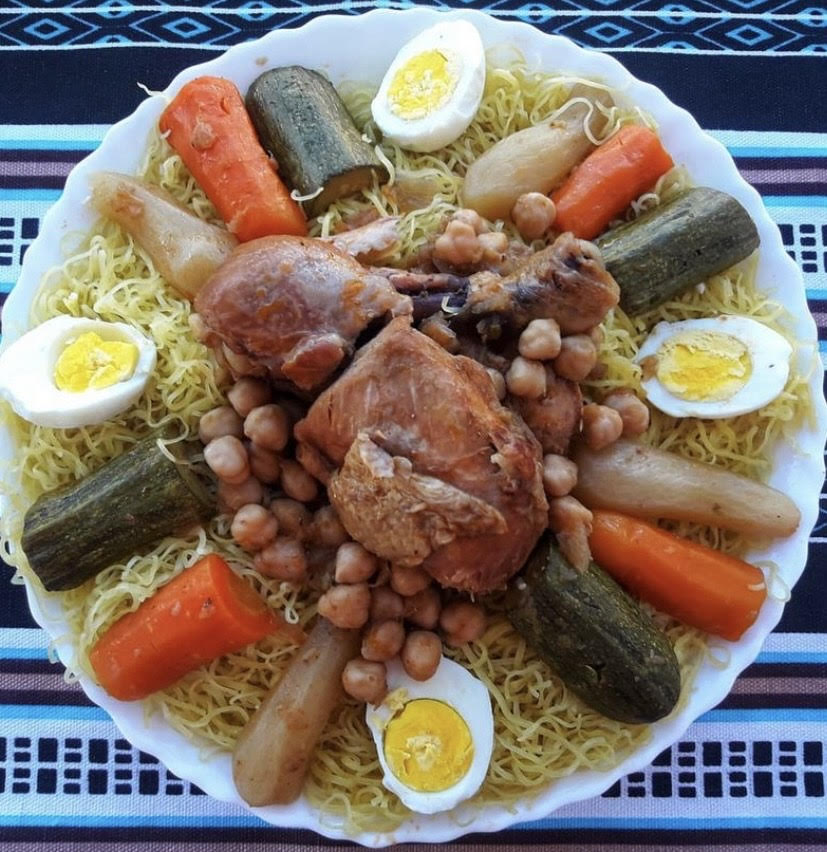
Fine, flat noodles cut by hand, steamed and served with chicken, chickpeas and turnips in a white sauce flavoured with cinnamon and white pepper. It is the signature dish of Algiers, often made for family celebrations.
The name comes from the Persian word rista, meaning 'thread'.
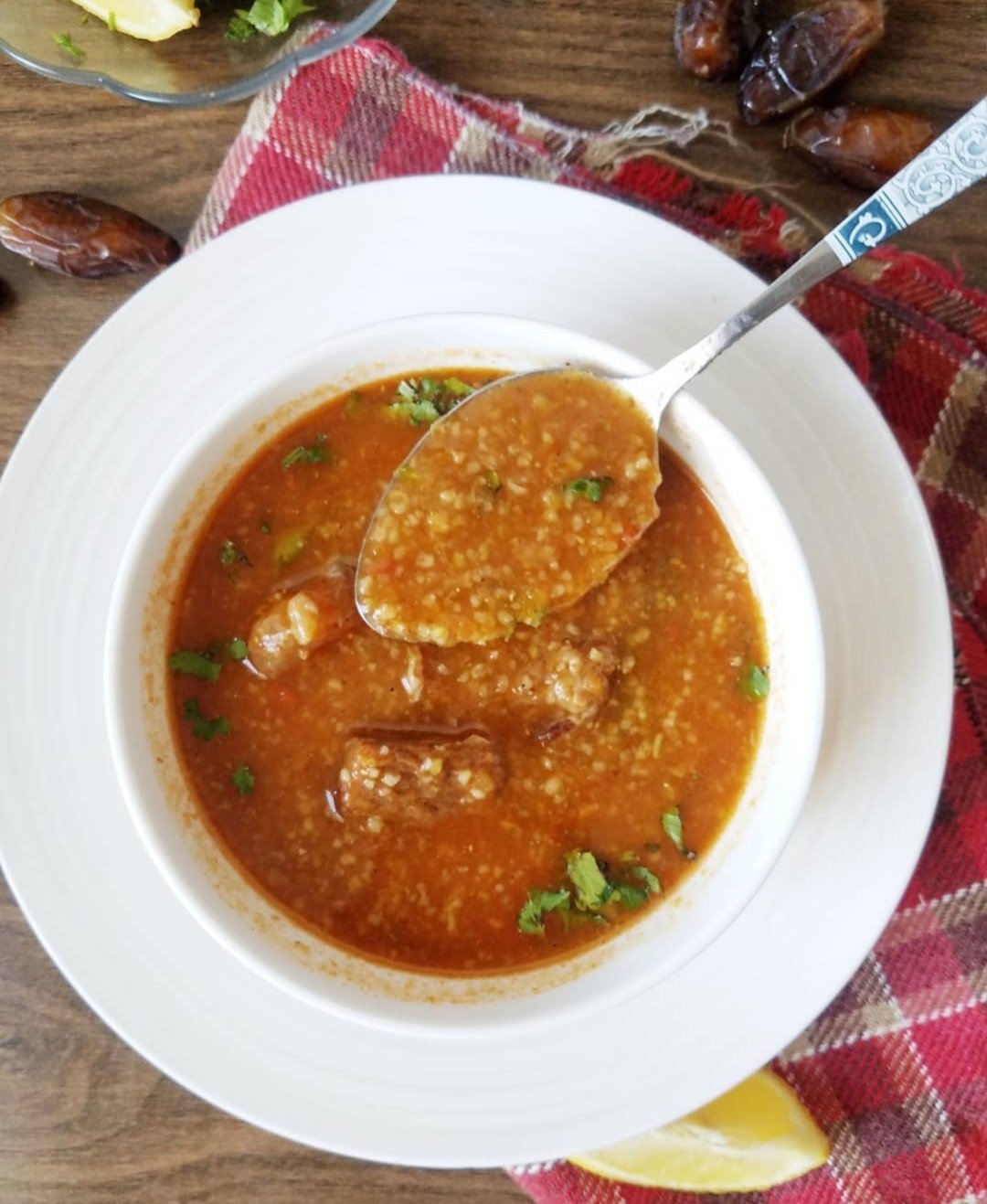
A thick soup of lamb, tomato, chickpeas and frik, wheat harvested green, roasted and cracked. It is the soup of Ramadan evenings, when families break the fast with it.
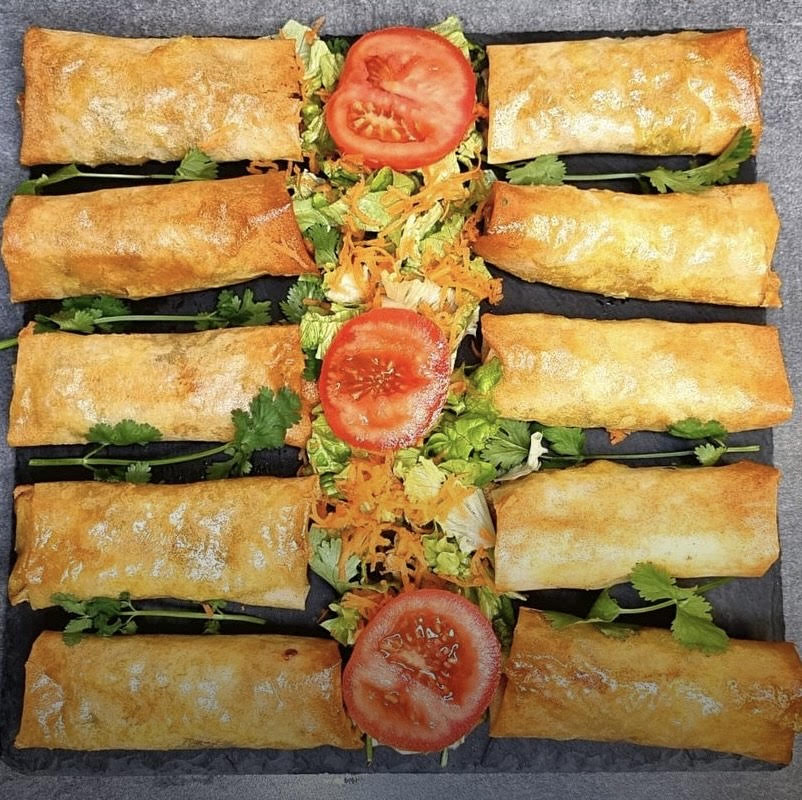
Thin pastry sheets, called dyoul, rolled or folded around minced meat, potato, cheese, egg or tuna and fried until crisp. In eastern Algeria it is called brik, and it is a fixture of the Ramadan table.
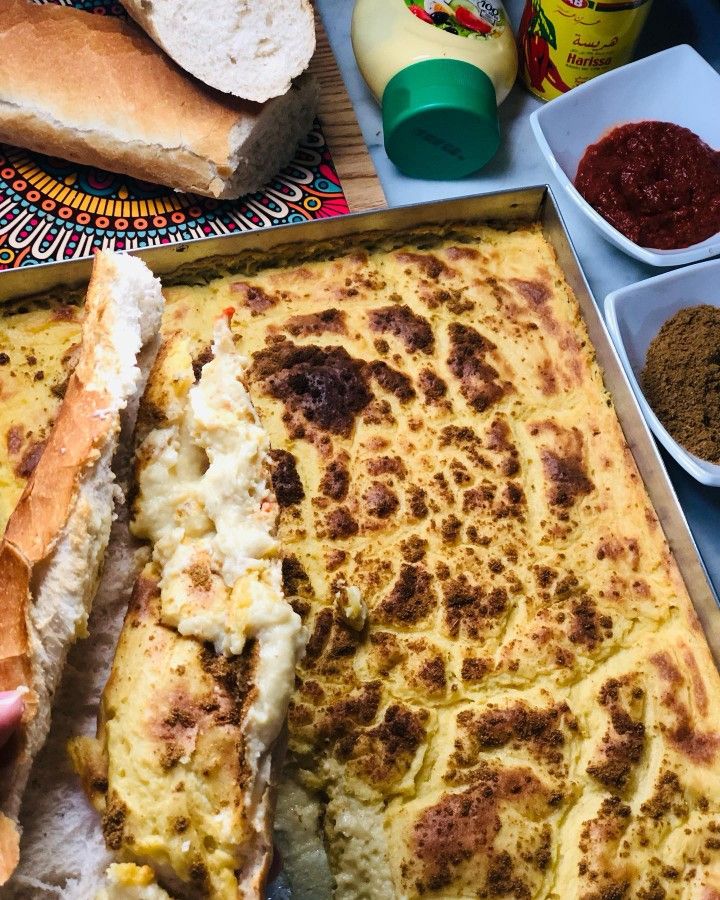
A baked chickpea-flour custard with a golden, egg-glazed top, sold hot by street vendors in squares or tucked into bread and sprinkled with cumin and harissa.
The name is usually traced to the Spanish word caliente, 'hot', from the centuries when Spain held Oran.
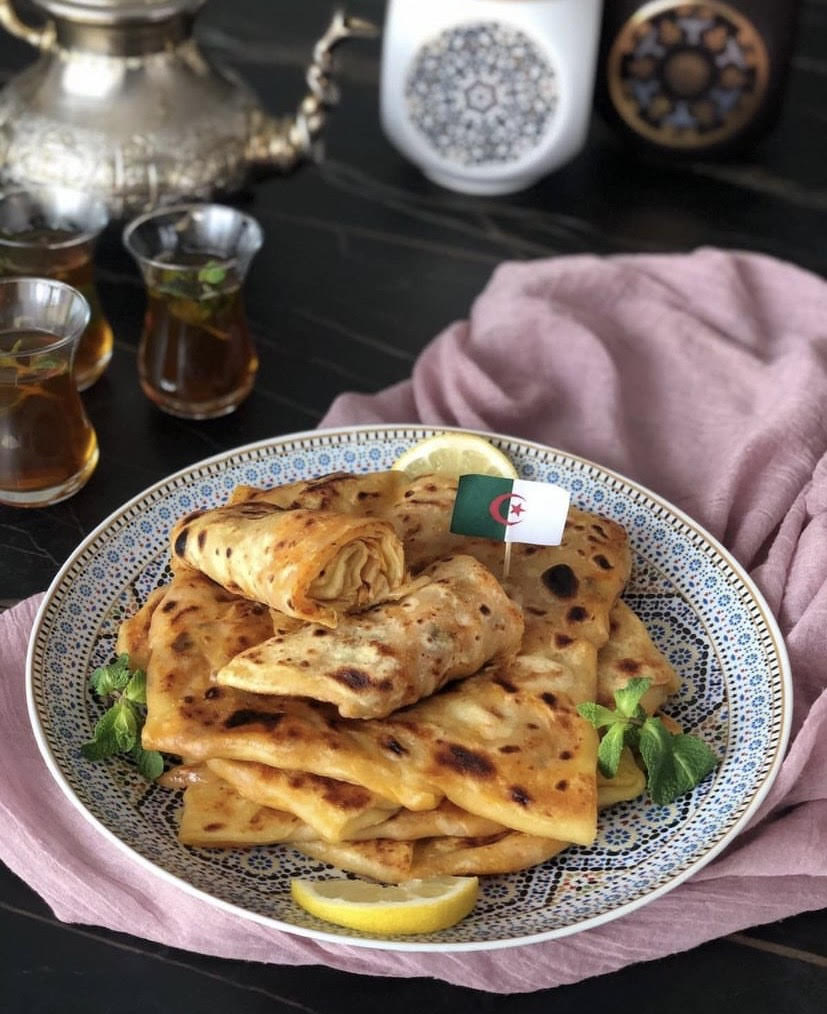
A very thin semolina dough, stretched by hand, filled with a spicy mixture of onion, tomato and pepper, folded into a square and cooked on a griddle. The name means 'veiled' or 'covered'.
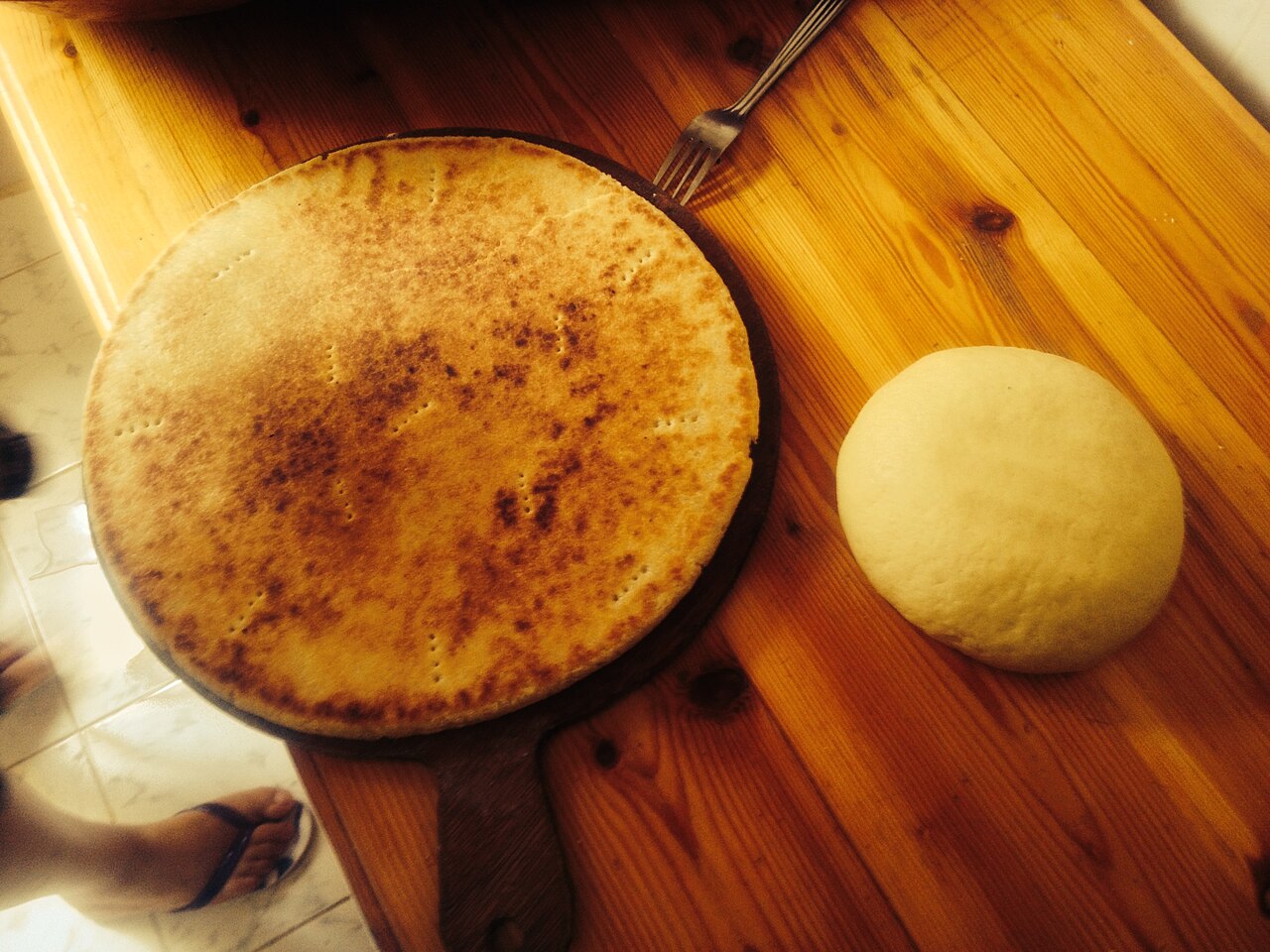
A round, flat semolina bread cooked on a clay or iron griddle. It is eaten warm or cold with almost anything, from stews to olive oil, honey or a glass of fermented milk (leben).
The name comes from an Arabic root meaning 'to break', as the bread is broken by hand to share.
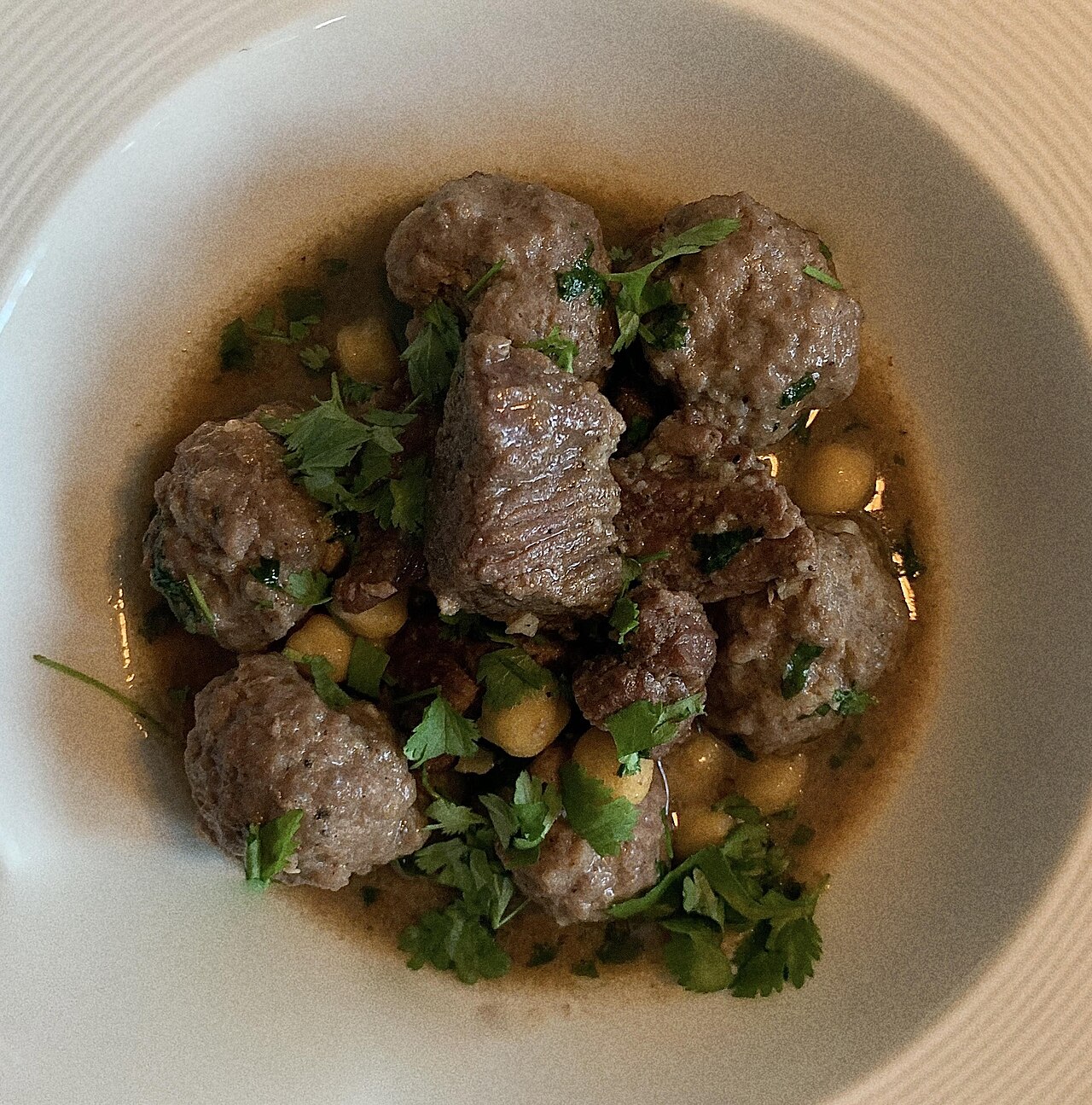
Meatballs and pieces of lamb or chicken cooked with plenty of garlic, almonds or chickpeas, in a red or a white sauce. It is a favourite for guests and weddings in Algiers, and during Ramadan.
The name means 'with garlic', and there is a lot of it in the sauce.
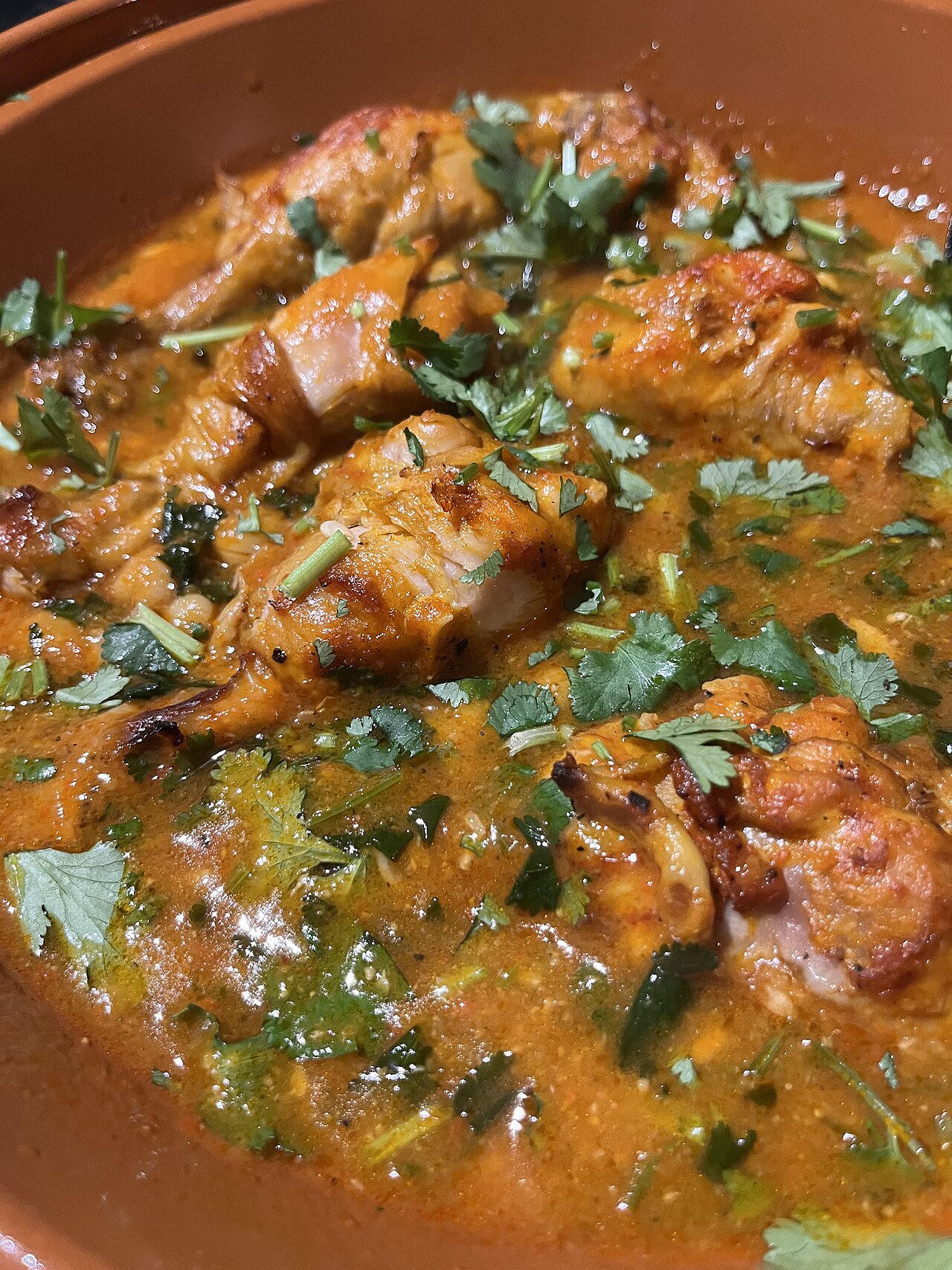
Chicken and chickpeas simmered in a red sauce with a lot of garlic, tomato paste, paprika and a little chilli. Chtitha is a whole family of red stews, made with chicken, meat, liver or even potatoes.
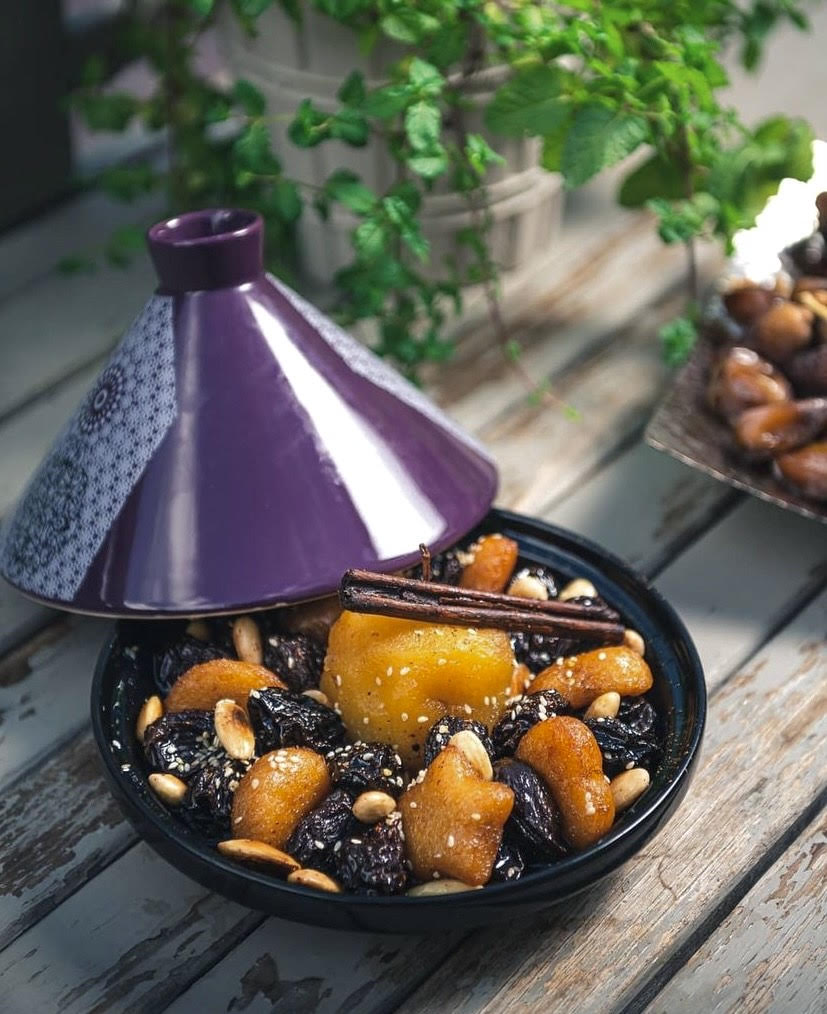
A sweet dish of lamb cooked with prunes, dried apricots, raisins and almonds in a syrup scented with cinnamon and orange blossom water. Its name means 'sweet meat', and it is made especially during Ramadan and for weddings.
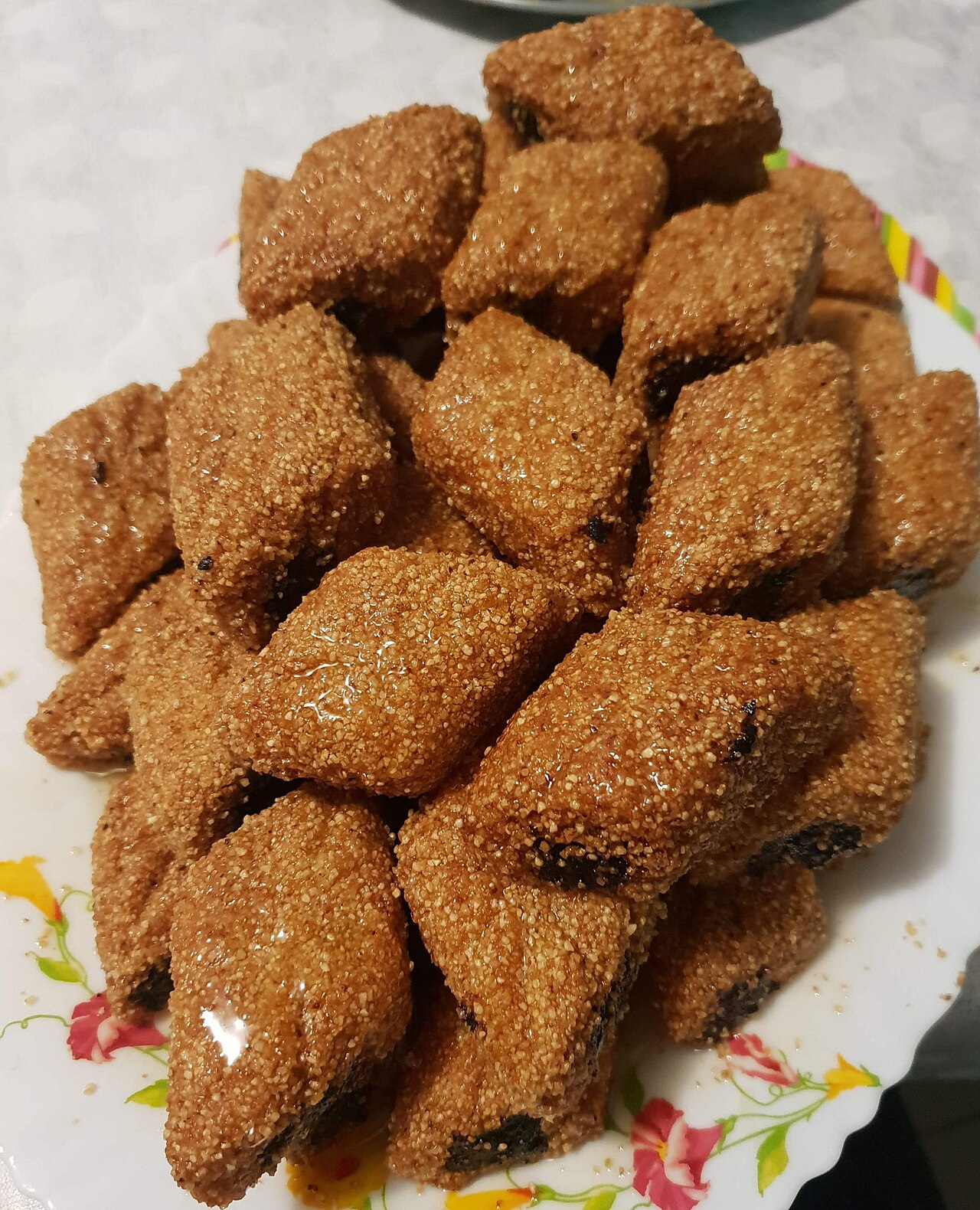
Diamond-shaped pastries of semolina filled with date paste, fried or baked and then dipped in honey or syrup. They are a classic sweet for Eid and for serving with coffee or tea.
The oldest known recipe for date-filled maqrud comes from a 13th-century Arabic cookbook.
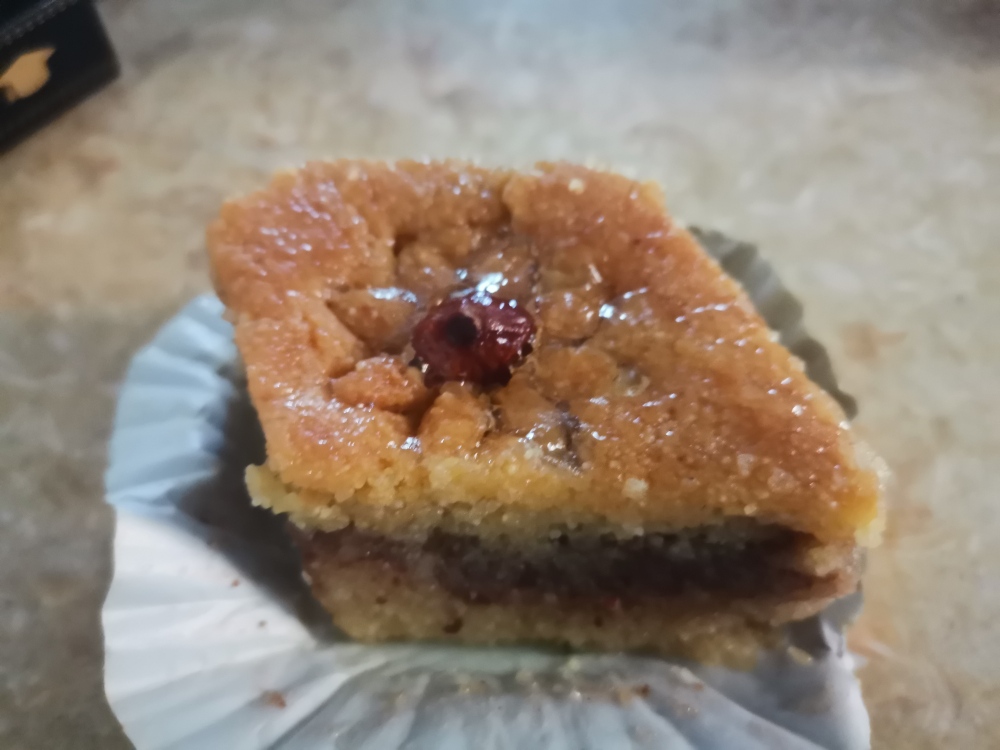
A dense semolina cake filled with ground almonds, flavoured with orange blossom and soaked in honey syrup, each piece topped with a whole almond. It is a favourite on Ramadan evenings with mint tea or coffee.
The name means 'heart of almonds'.
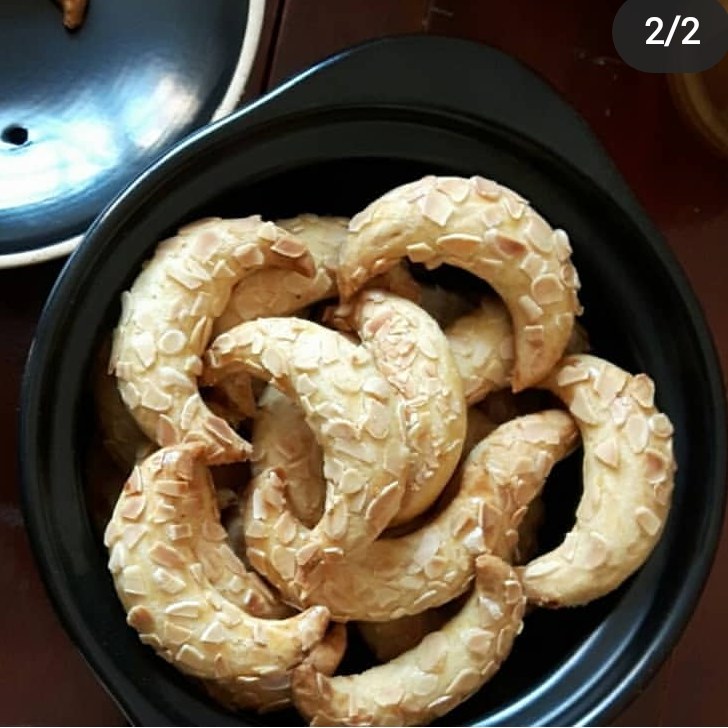
Small crescent-shaped pastries of thin, buttery dough wrapped around almond paste with cinnamon and orange blossom water. Tcharek msaker is rolled in icing sugar, while tcharek el ariane is left bare.
In Morocco, and in parts of Algeria such as Tlemcen and the east, the same pastry is called 'gazelle heels' or 'gazelle horns'.
Most Algerians live in the north, in port cities along the Mediterranean and in inland cities on the high plains. Far to the south, oasis towns such as Ghardaïa, Tamanrasset and Djanet are the gateways to the Sahara.
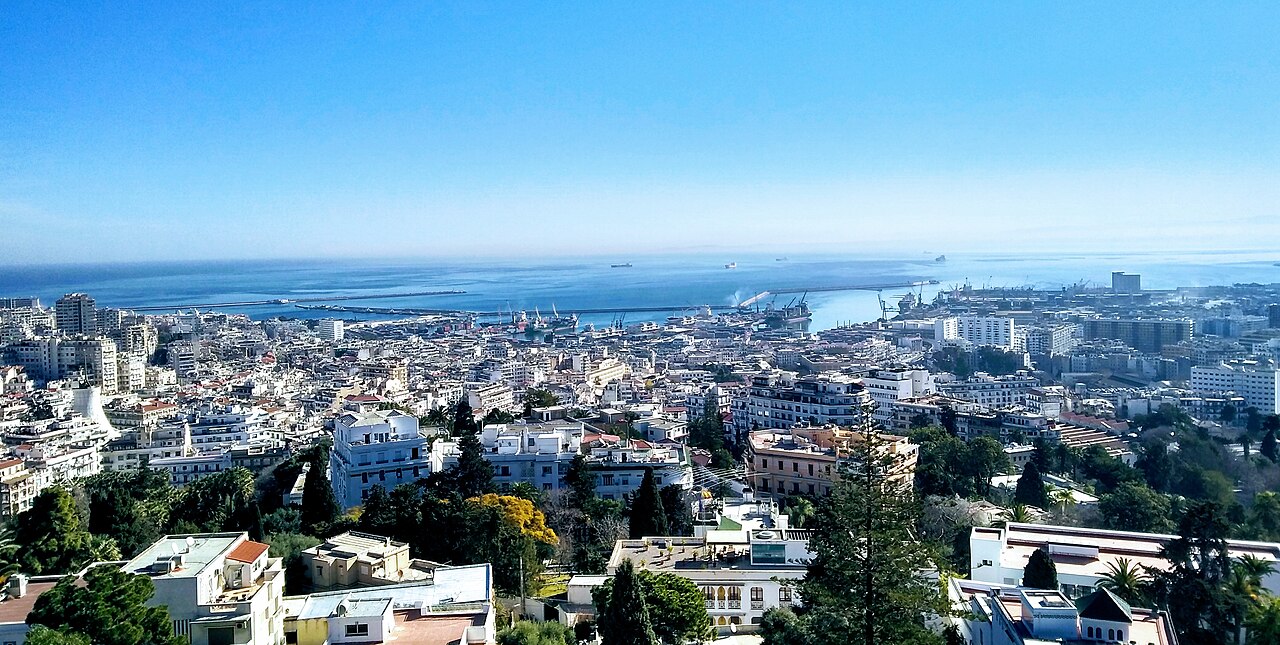
The capital and largest city, with more than four million people in the urban area, climbing the hills around a wide bay. Its whitewashed buildings earned it the nickname 'Algiers the White'. It was the capital of the Ottoman regency and of French Algeria before becoming the capital of independent Algeria in 1962.
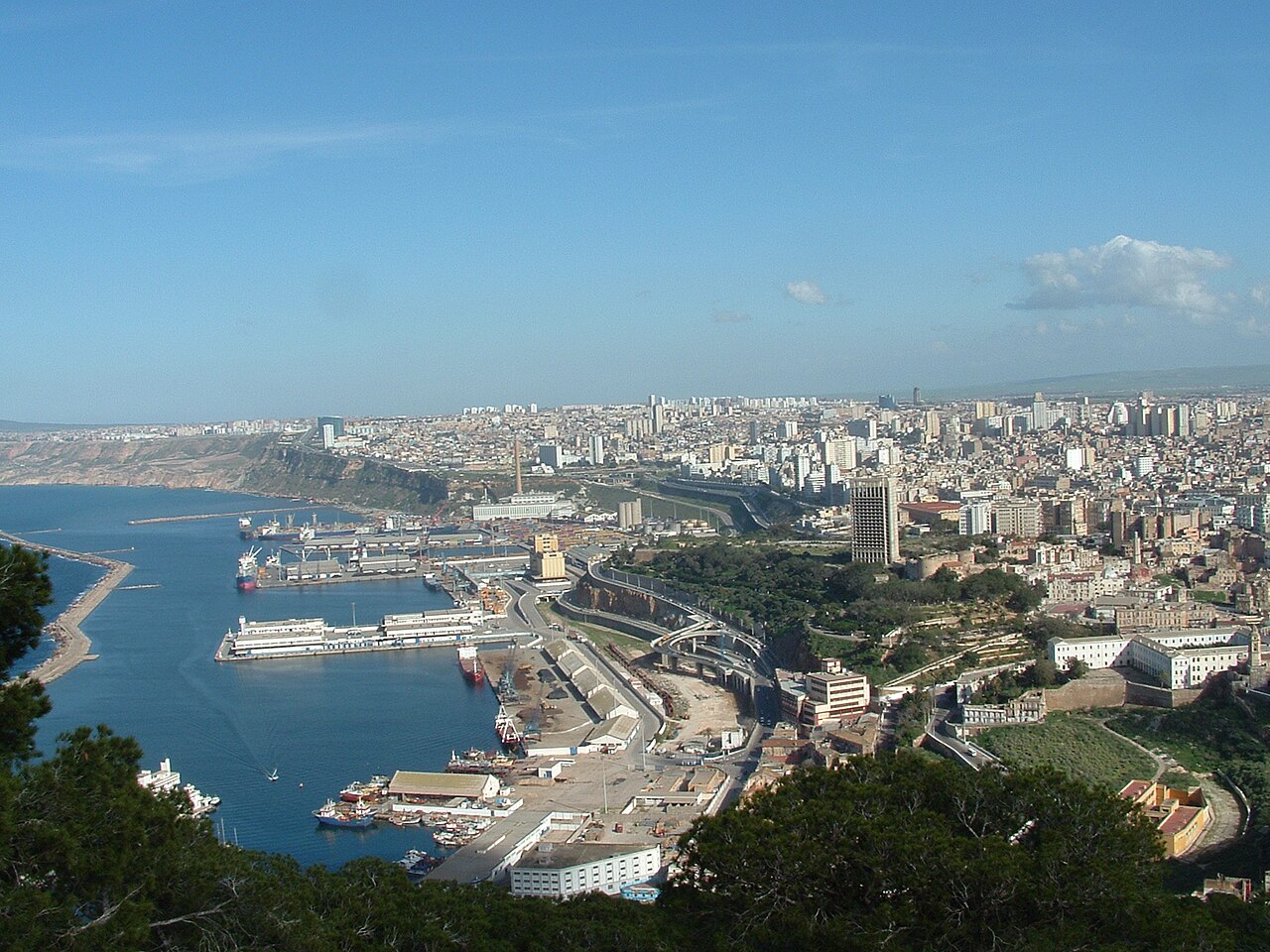
Algeria's second city and the capital of the west, a busy port about 430 km west of Algiers. Spain held it for most of the time between 1509 and 1792, and it grew fast under French rule.
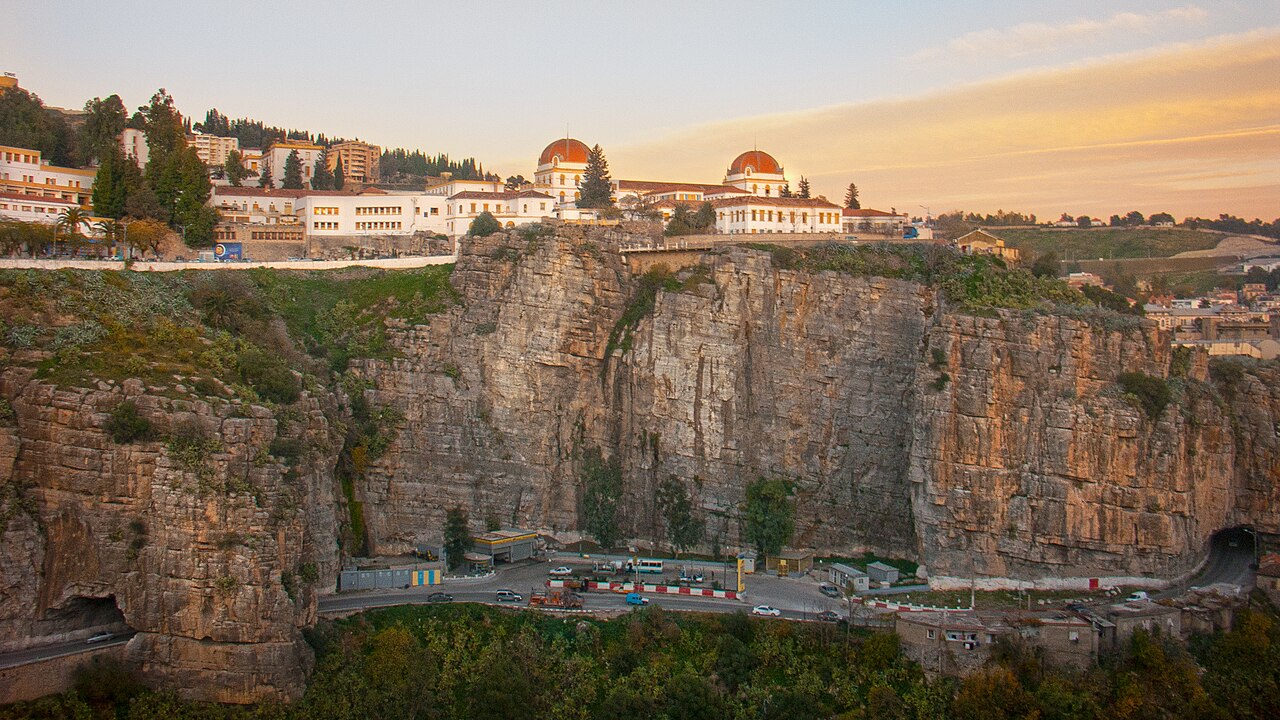
An inland city built on a rock plateau cut by the deep gorge of the Rhumel river, about 80 km from the sea. As Cirta it was the capital of the Numidian kings, and it was renamed after the Roman emperor Constantine.
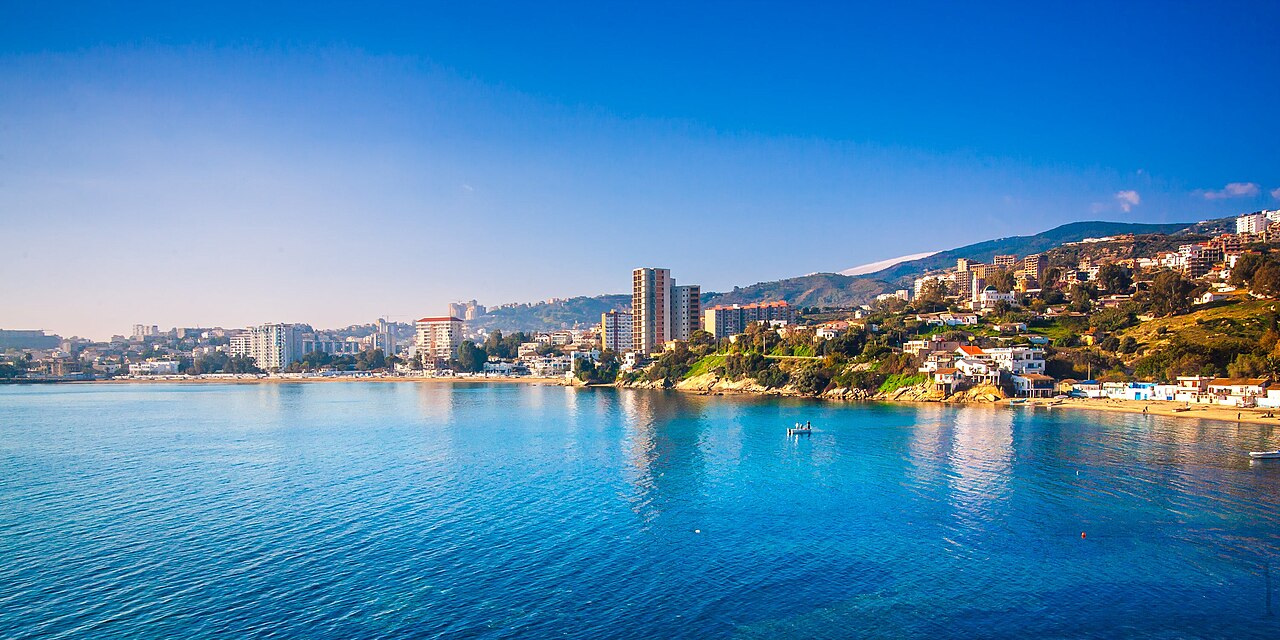
A port city near the Tunisian border. Beside it lie the ruins of Hippo Regius, the Roman town where Saint Augustine was bishop, and a basilica in his honour stands on the hill above them.
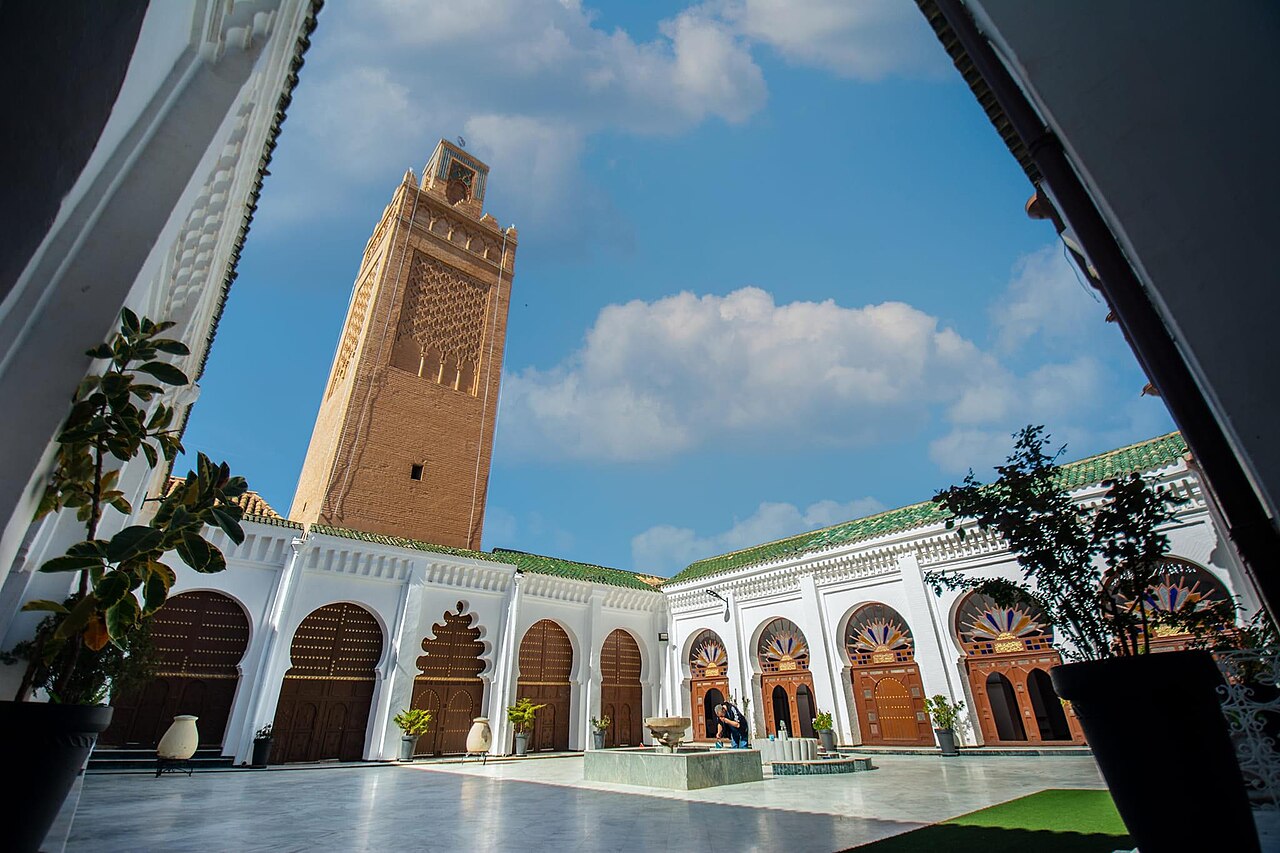
A historic city near the Moroccan border, the capital of the Zayyanid kings from the 13th to the 16th century. It mixes Amazigh, Arab, Andalusian and Ottoman influences and is called 'the Pearl of the Maghreb'.
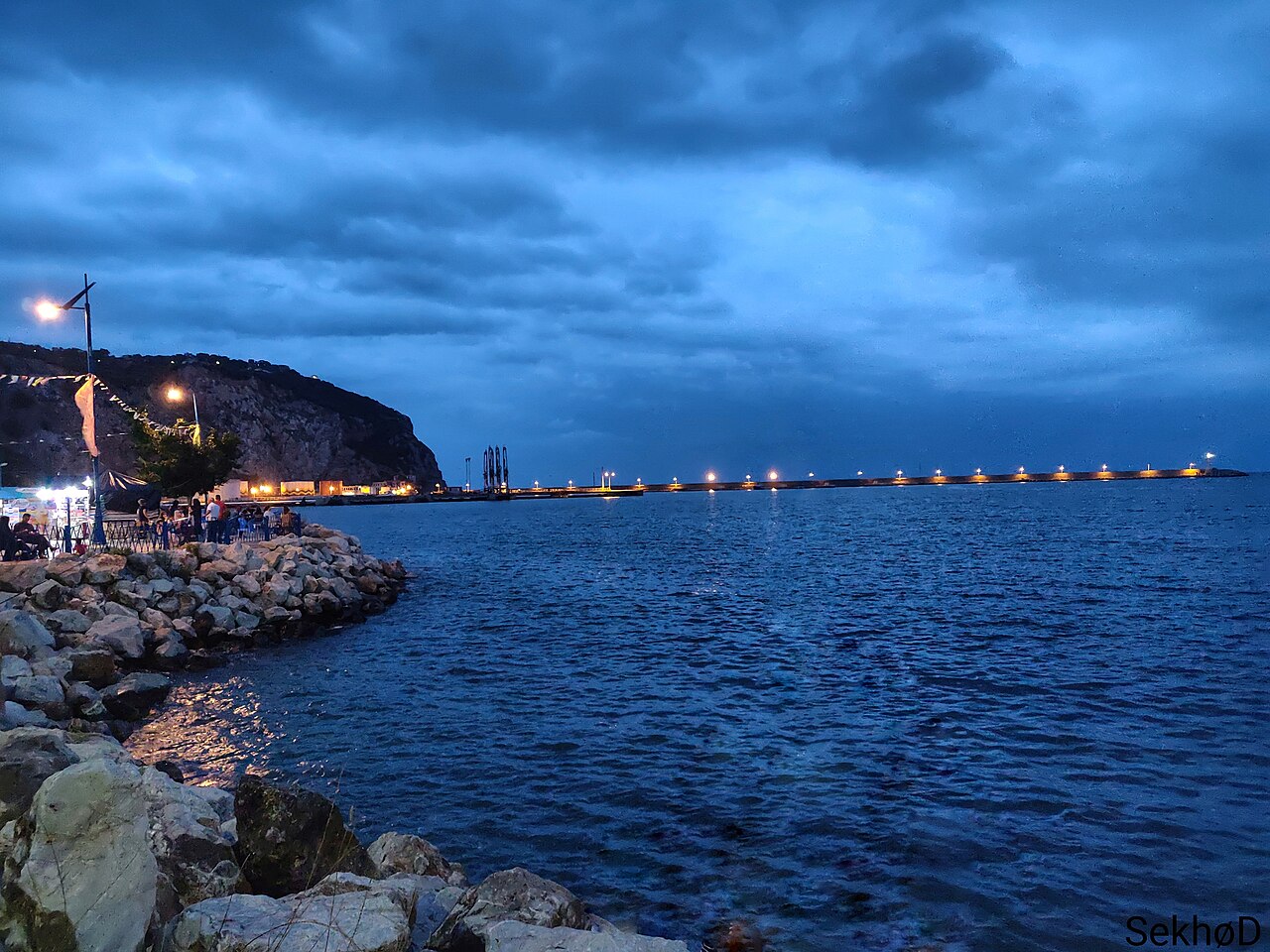
A port on a curved bay below Mount Gouraya, once the capital of the Hammadid dynasty. In the Middle Ages its beeswax was shipped to Europe for candles, and the French word for candle, bougie, comes from the city's old name.
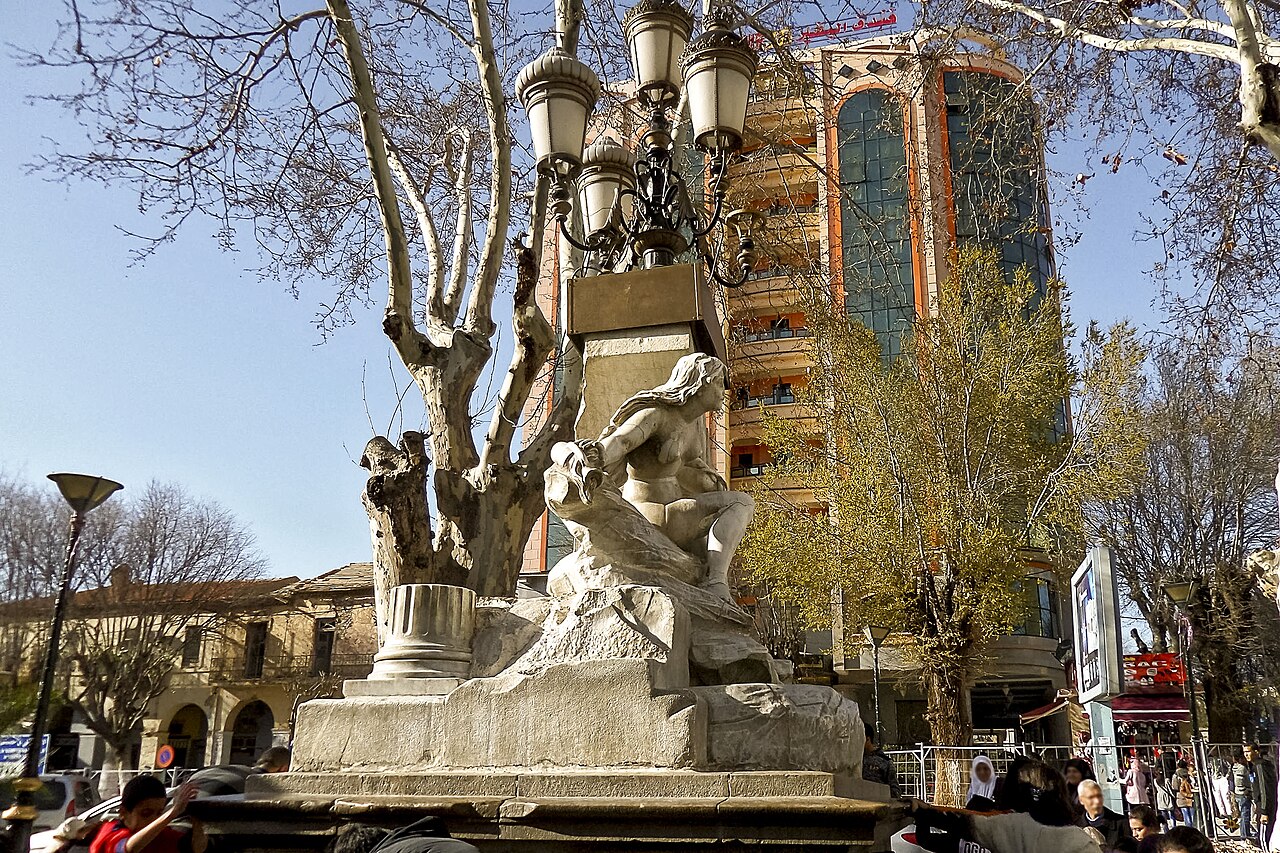
A busy trading and industrial city on the high plains, at about 1,100 m above sea level and about 270 km east of Algiers. It is the nearest large city to the Roman ruins of Djémila.
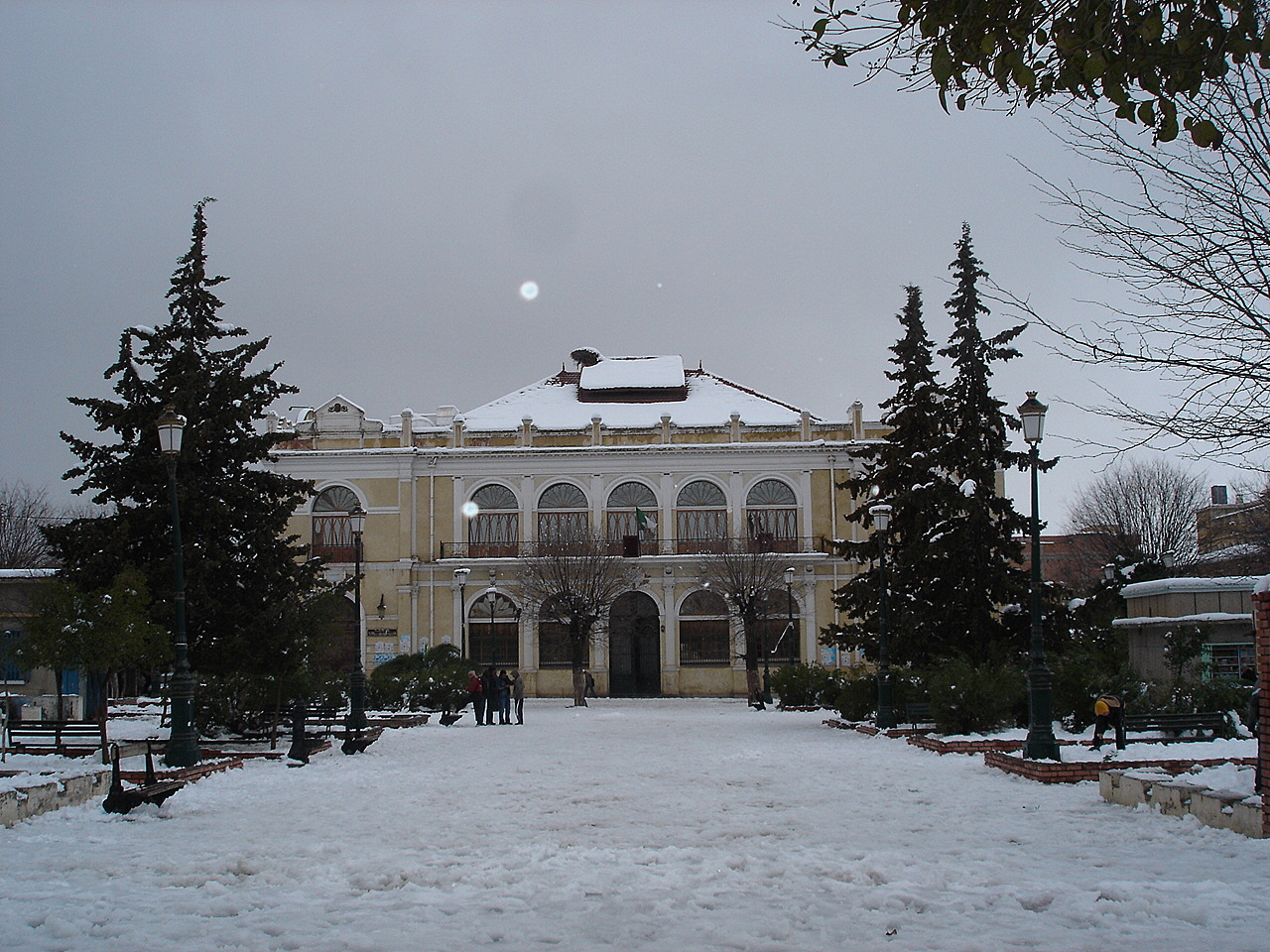
The main city of the Aurès mountains, home of the Chaoui Amazigh people. The Roman city of Timgad lies about 35 km to the east.
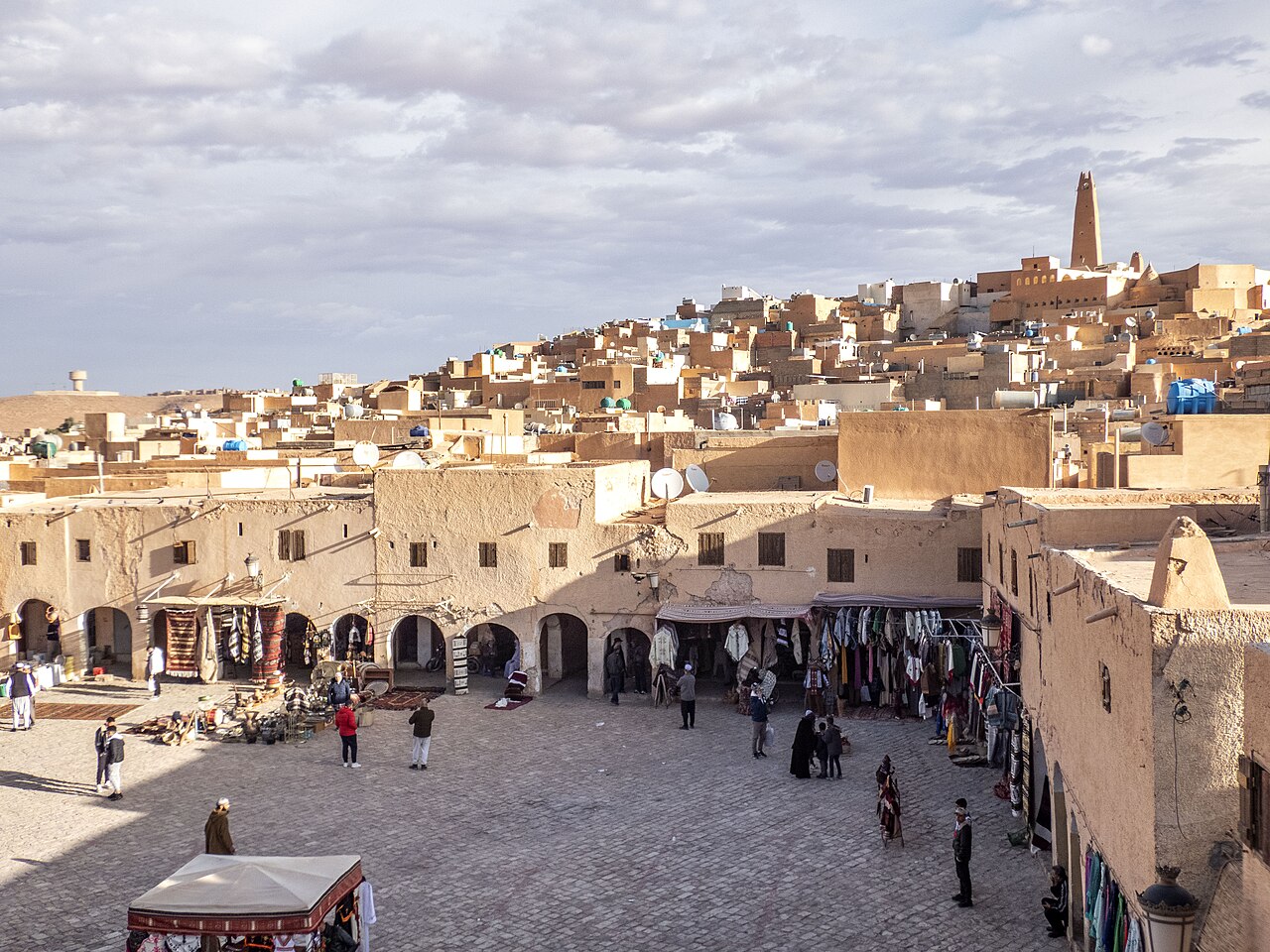
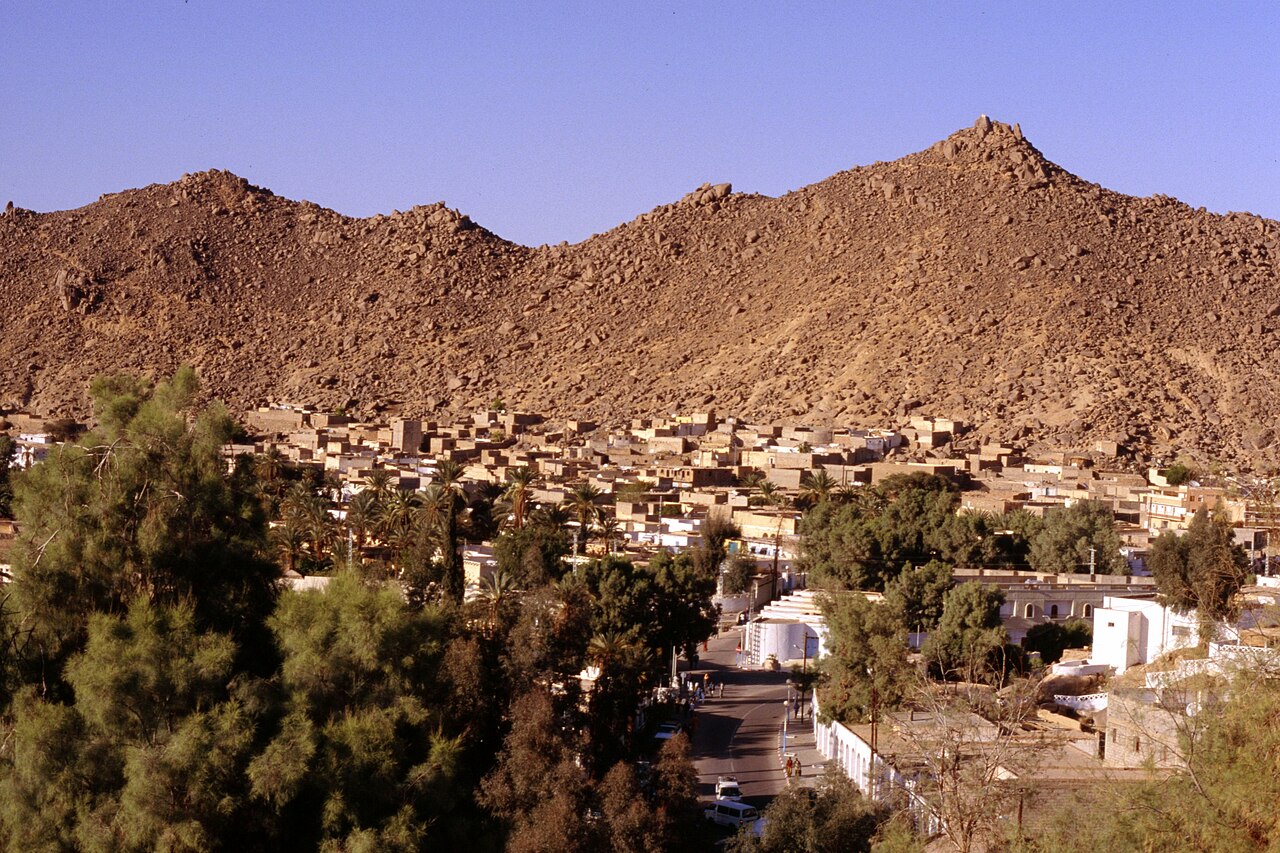
The main town of the M'zab valley, about 600 km south of Algiers, built as a hill of houses around a mosque with a tall, tapering minaret. It is a centre of the Ibadi Mozabite community.
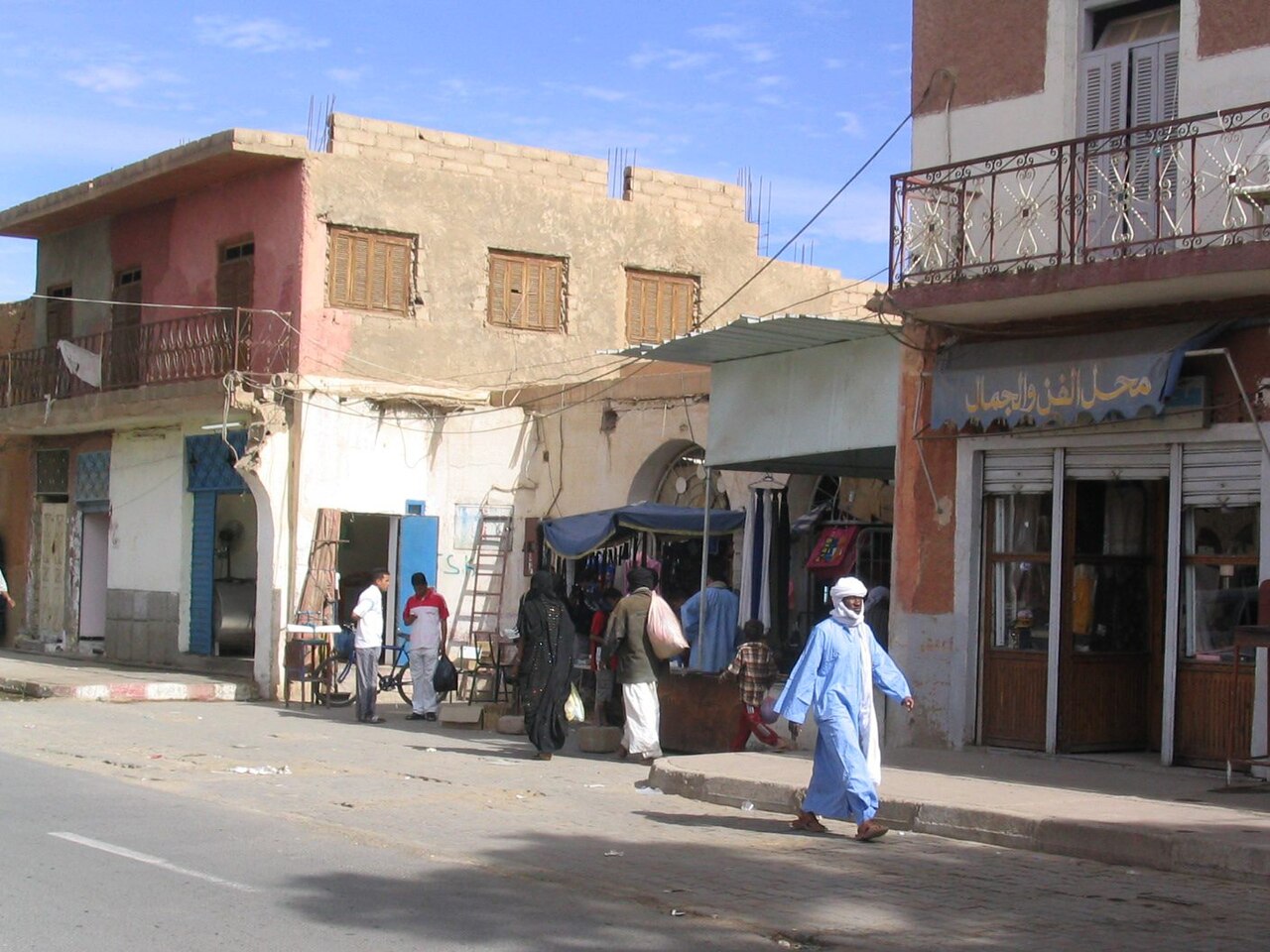
An oasis town at about 1,320 m in the Hoggar mountains, the main town of the Algerian Tuareg. It is the starting point for trips to the volcanic peaks of the Hoggar.
A small oasis town of the Kel Ajjer Tuareg, surrounded by palm groves and sandstone cliffs. It is the gateway to the Tassili n'Ajjer plateau and its rock art.
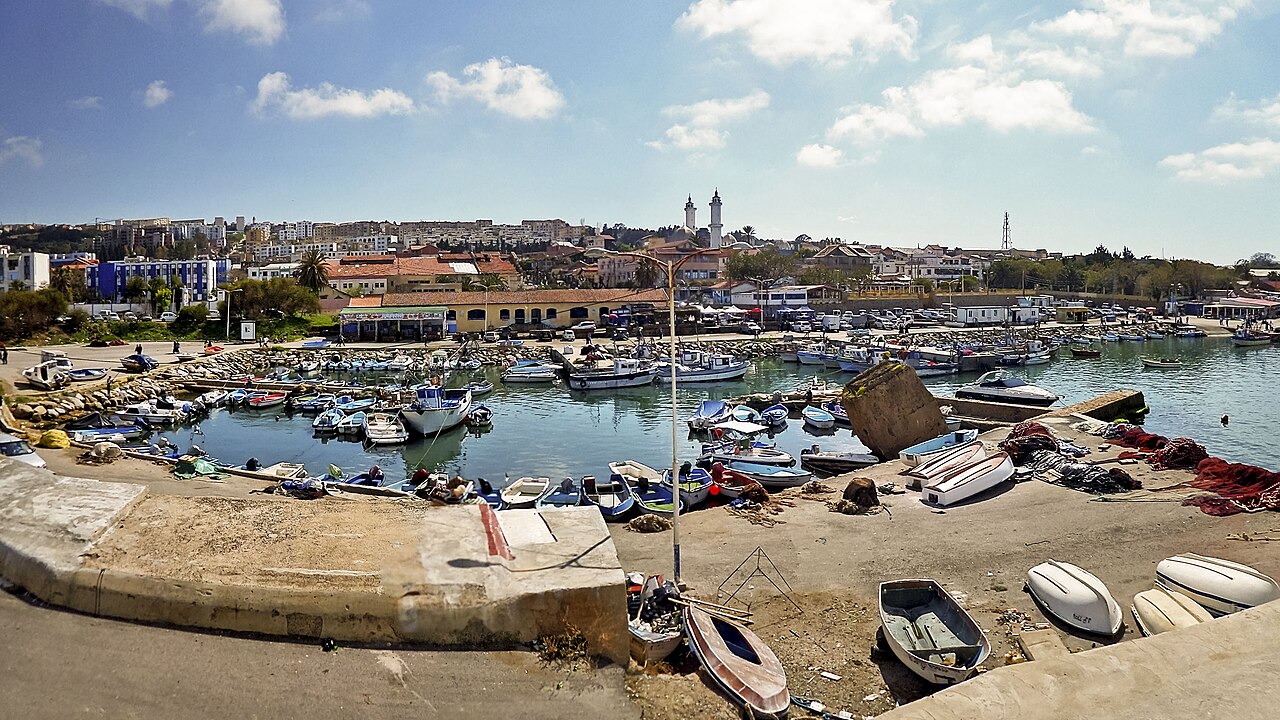
A small seaside town west of Algiers. Its Roman and early Christian ruins run down to the sea, and the author Albert Camus wrote about them.
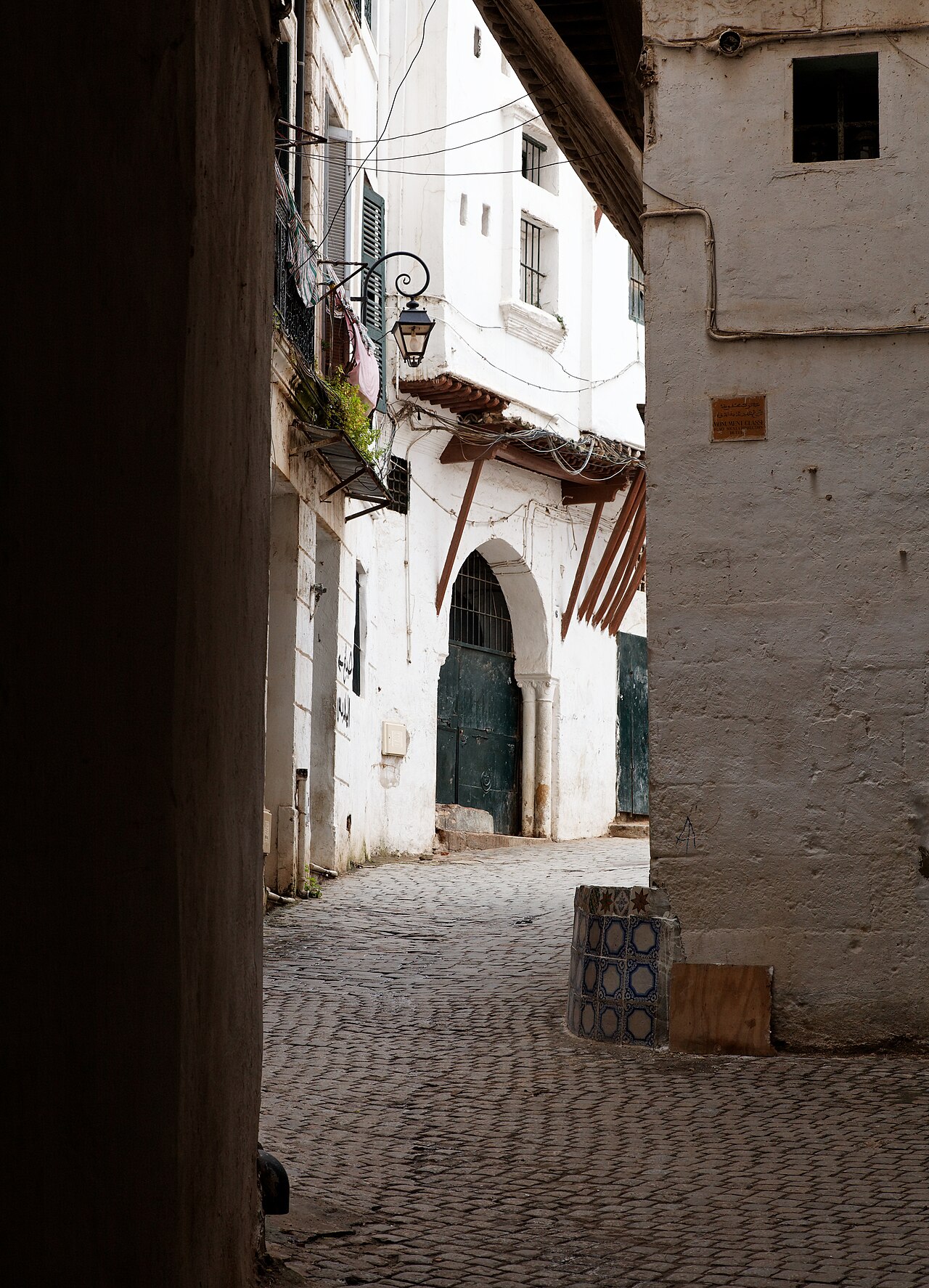
The old town of Algiers, a steep maze of narrow lanes, stairways, mosques and Ottoman houses with inner courtyards, climbing the hill above the port. It reached its peak as the seat of the Ottoman regency, and it has been a World Heritage Site since 1992.
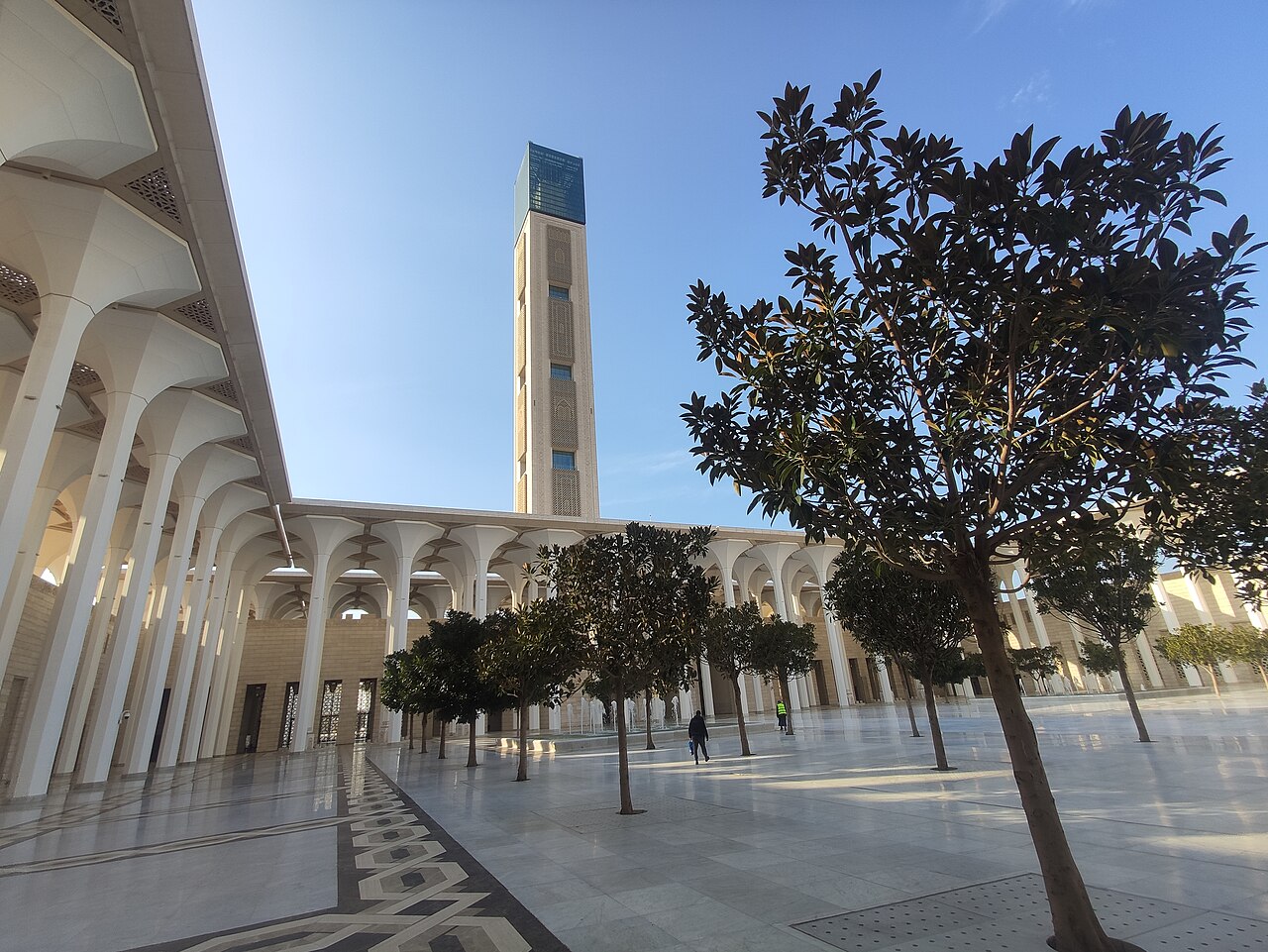
UNESCO World HeritageA vast mosque on the bay of Algiers, opened in 2019, with room for up to 120,000 worshippers across the complex. Its 265 m minaret is the tallest in the world as of 2026.
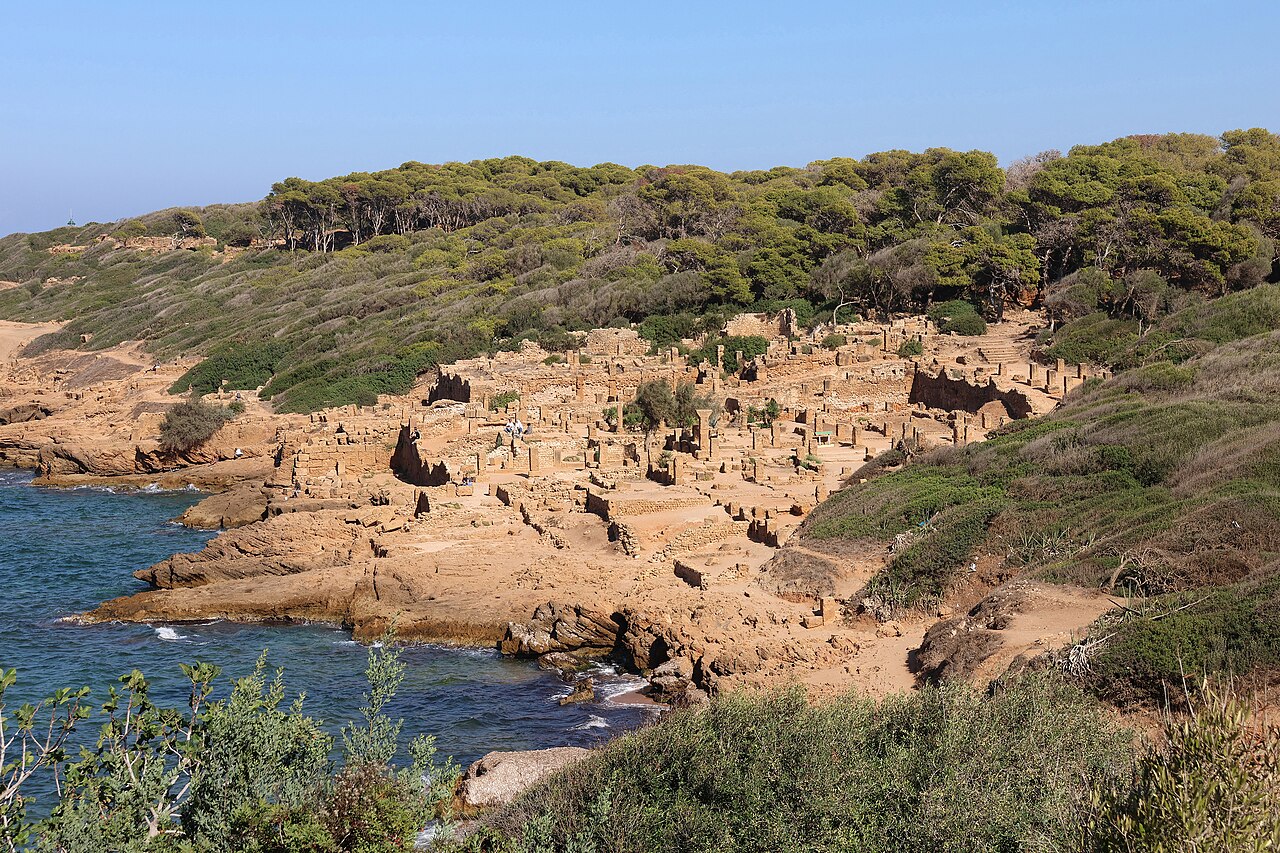
The ruins of a Punic trading post that became a Roman town, with an amphitheatre, temples, villas and early Christian basilicas set among pines on the edge of the sea.
UNESCO World Heritage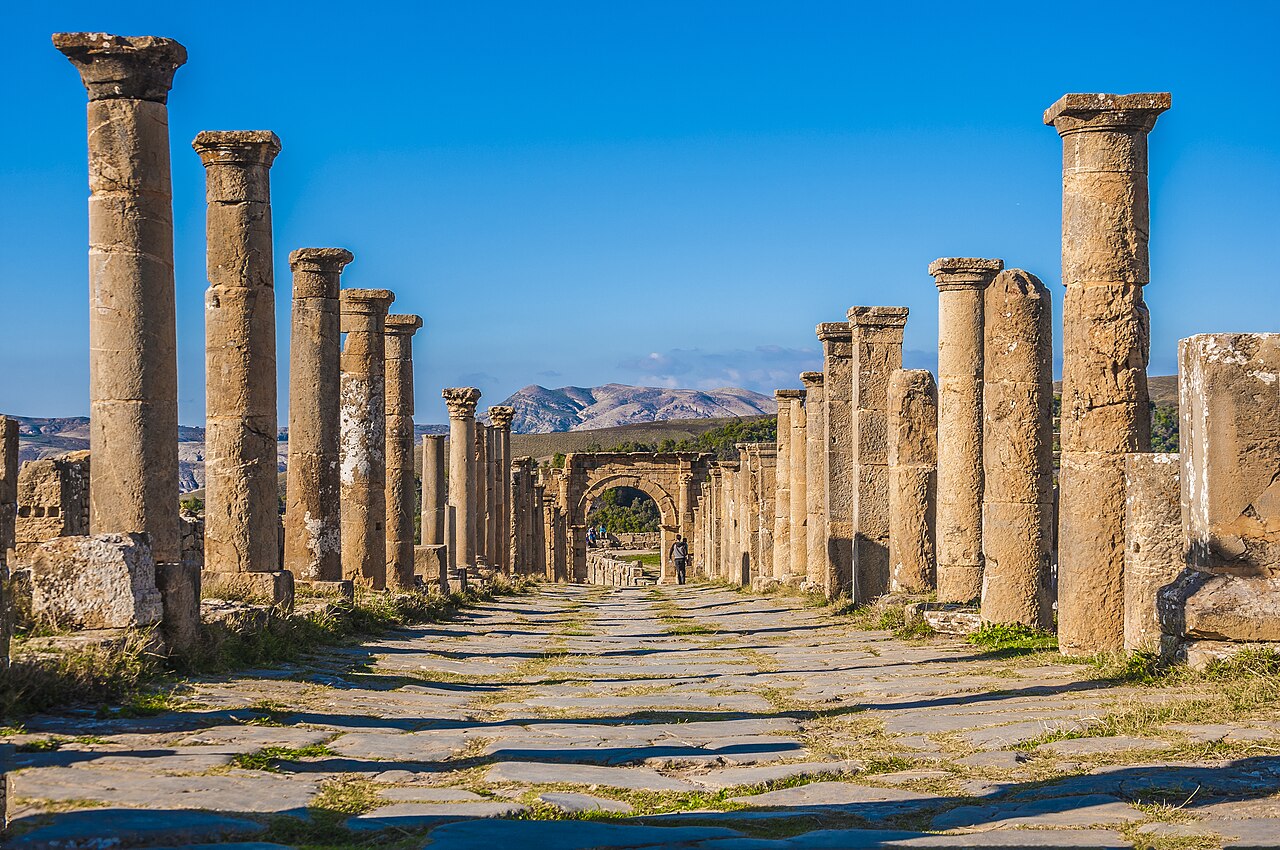
The Roman town of Cuicul, built about 900 m above sea level on a narrow mountain ridge. Its forums, temples, theatre, basilicas and arches are among the best-preserved Roman ruins in North Africa.
UNESCO World Heritage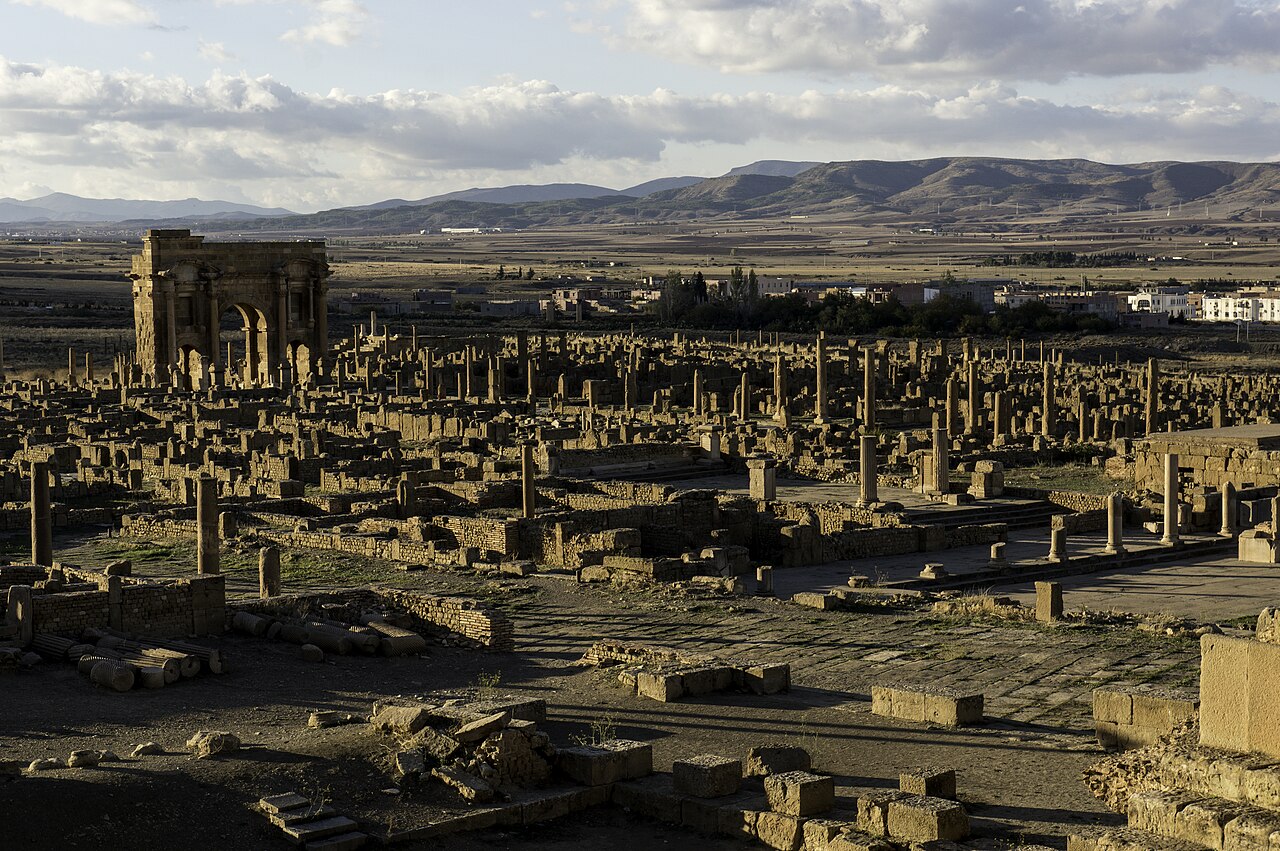
A Roman colony founded by the emperor Trajan around AD 100, laid out on a perfect grid of streets. Its Arch of Trajan, theatre and library make it one of the best examples of a planned Roman town.
UNESCO World Heritage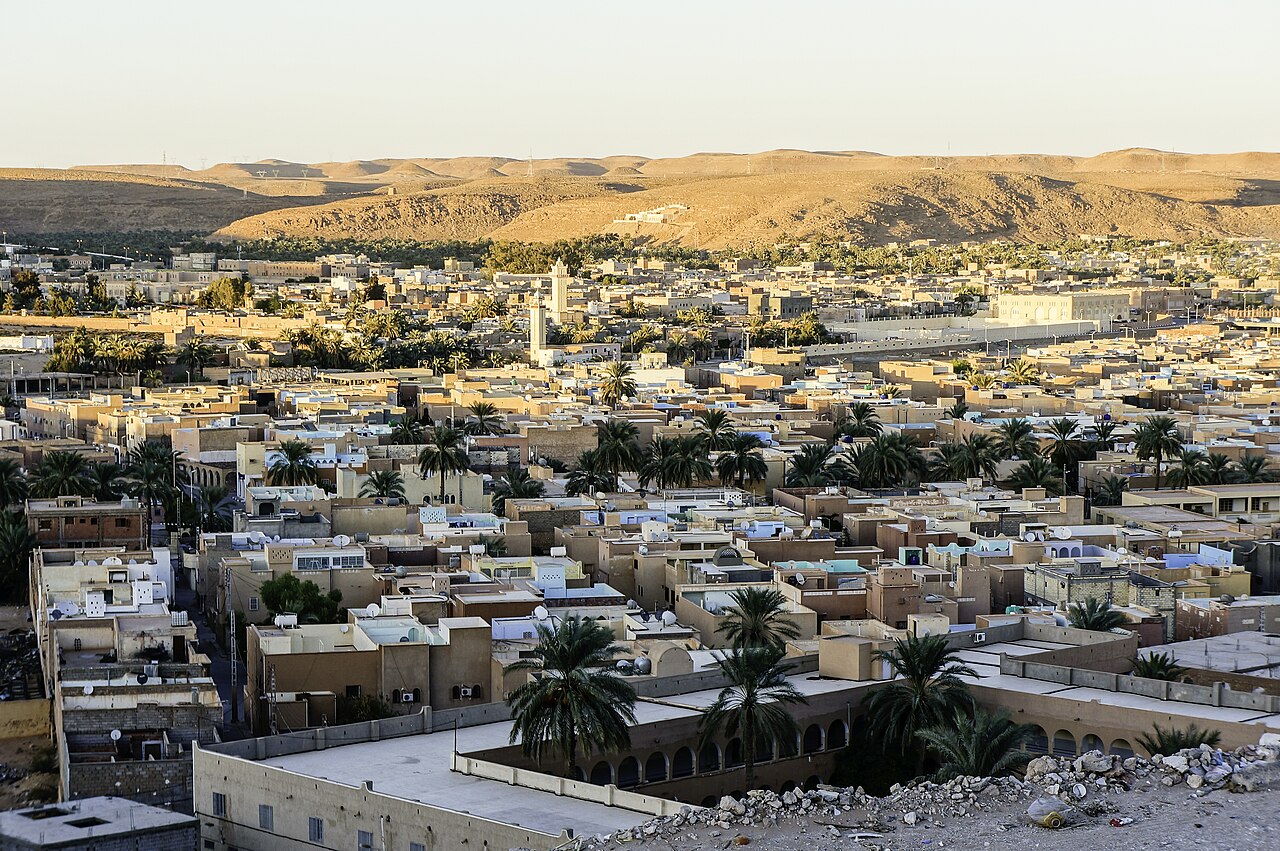
Five fortified towns (ksour) founded by the Mozabites between the 11th and 14th centuries on rocky hills in the northern Sahara, each clustered around its mosque, with palm groves in the valley below.
UNESCO World Heritage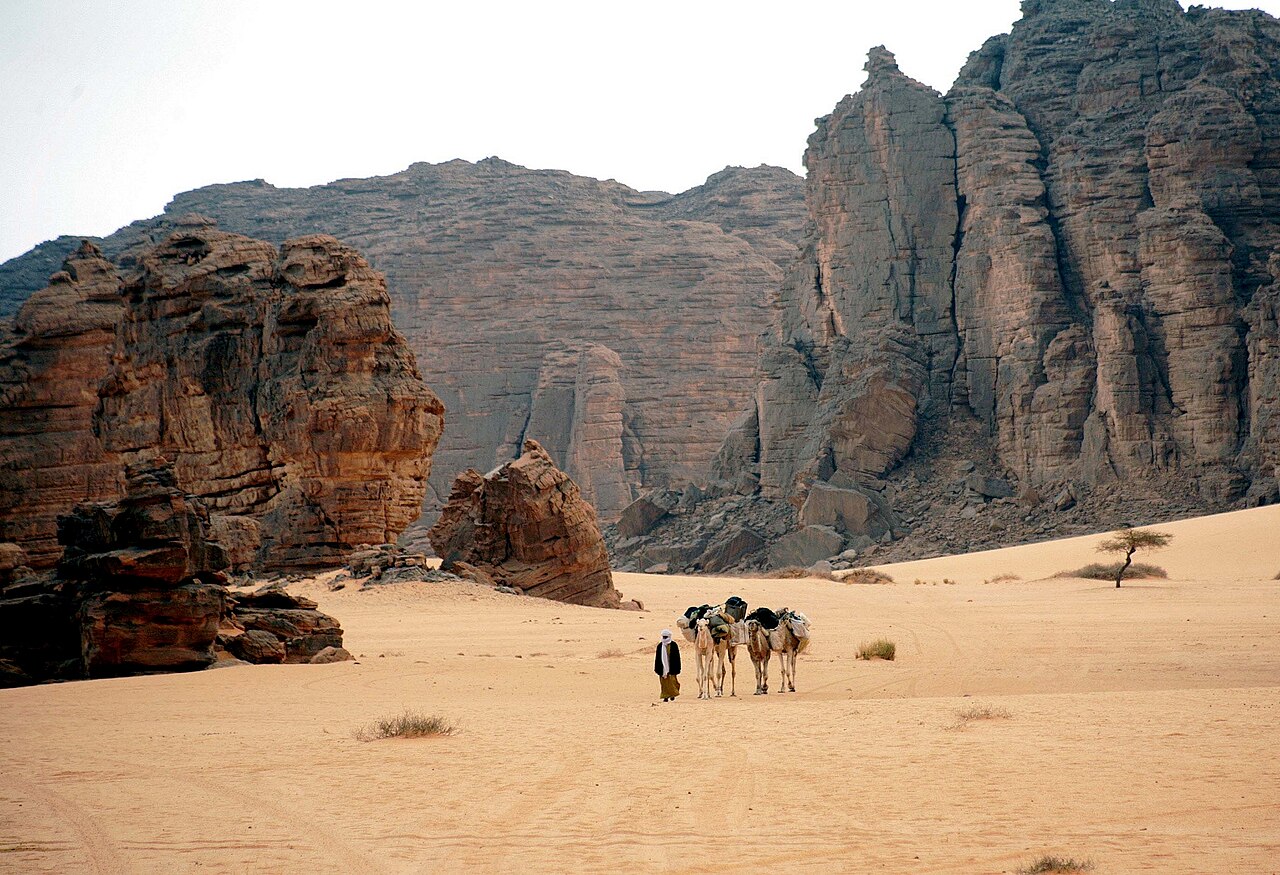
A vast sandstone plateau of more than 72,000 km² with rock 'forests' and one of the world's great collections of prehistoric rock art. Its paintings show herds of cattle and wild animals from a time when the Sahara was green. The pin marks the middle of the plateau.
UNESCO World Heritage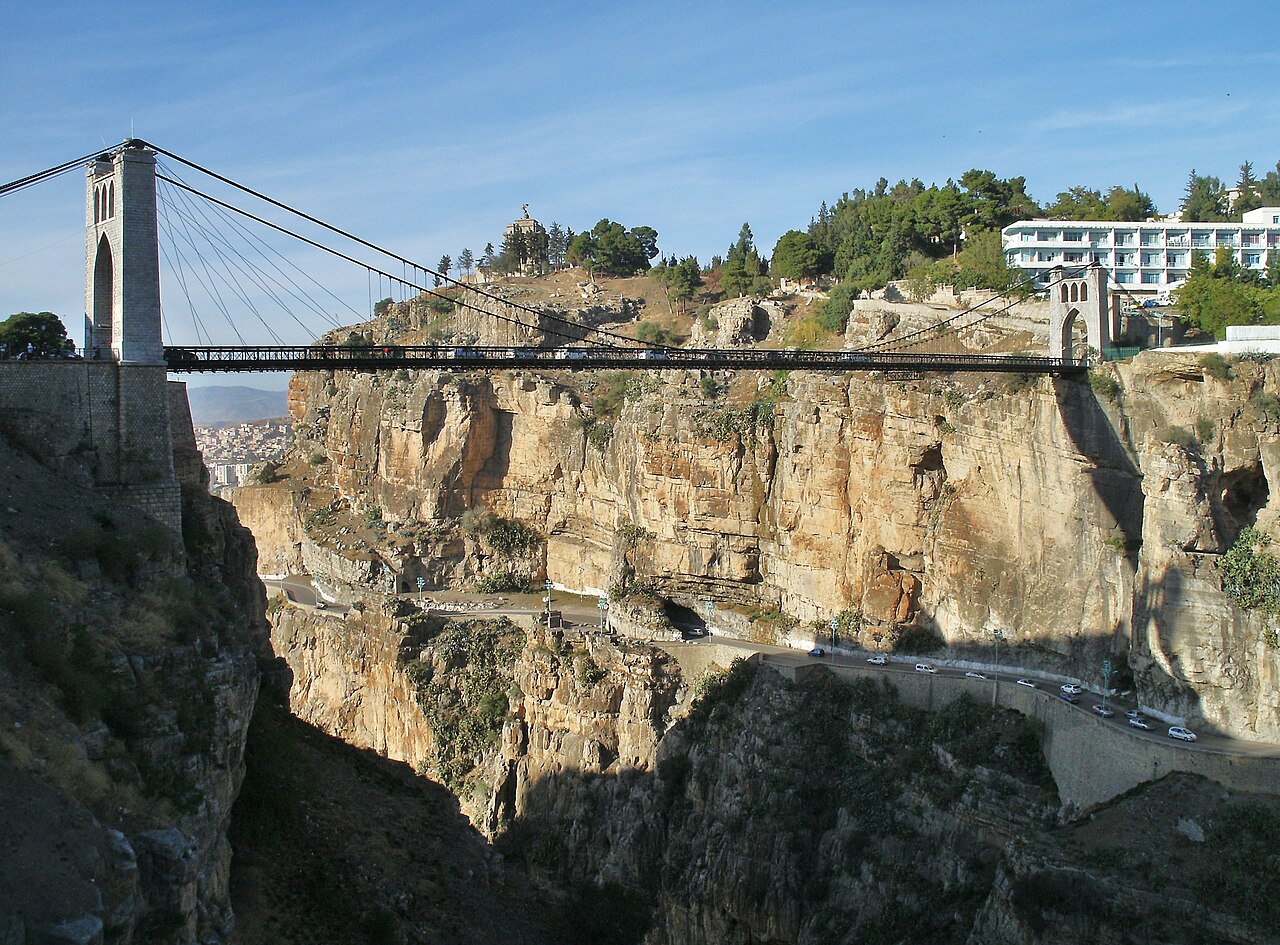
A 164 m suspension bridge that opened in 1912, hanging about 175 m above the Rhumel gorge. It was the highest bridge in the world until 1929.
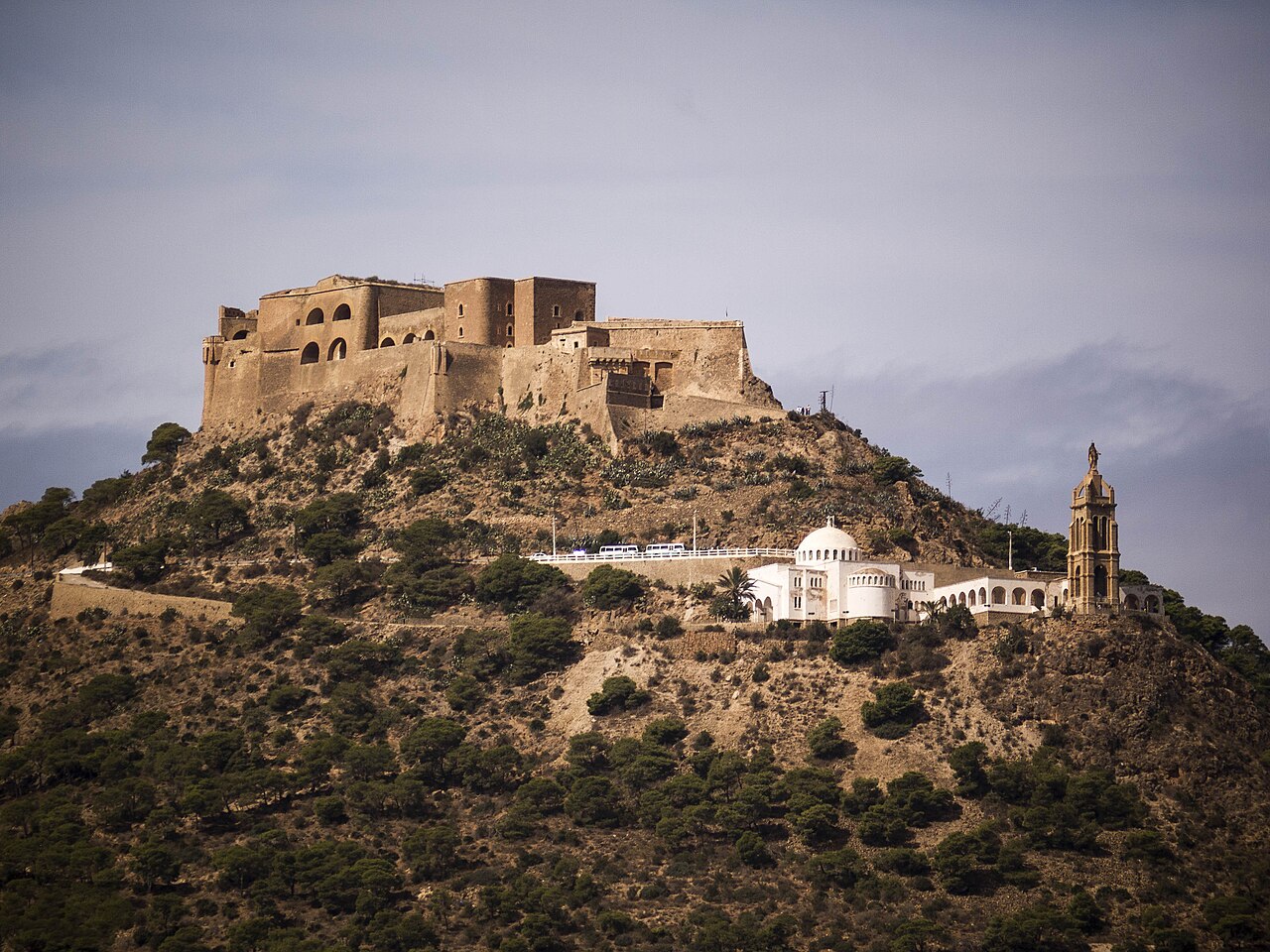
A Spanish fort built between 1577 and 1604 on Mount Murdjadjo, more than 400 m above the bay of Oran, with a chapel crowned by a statue of the Virgin Mary just below it. The views over the city and the sea are the best in Oran.
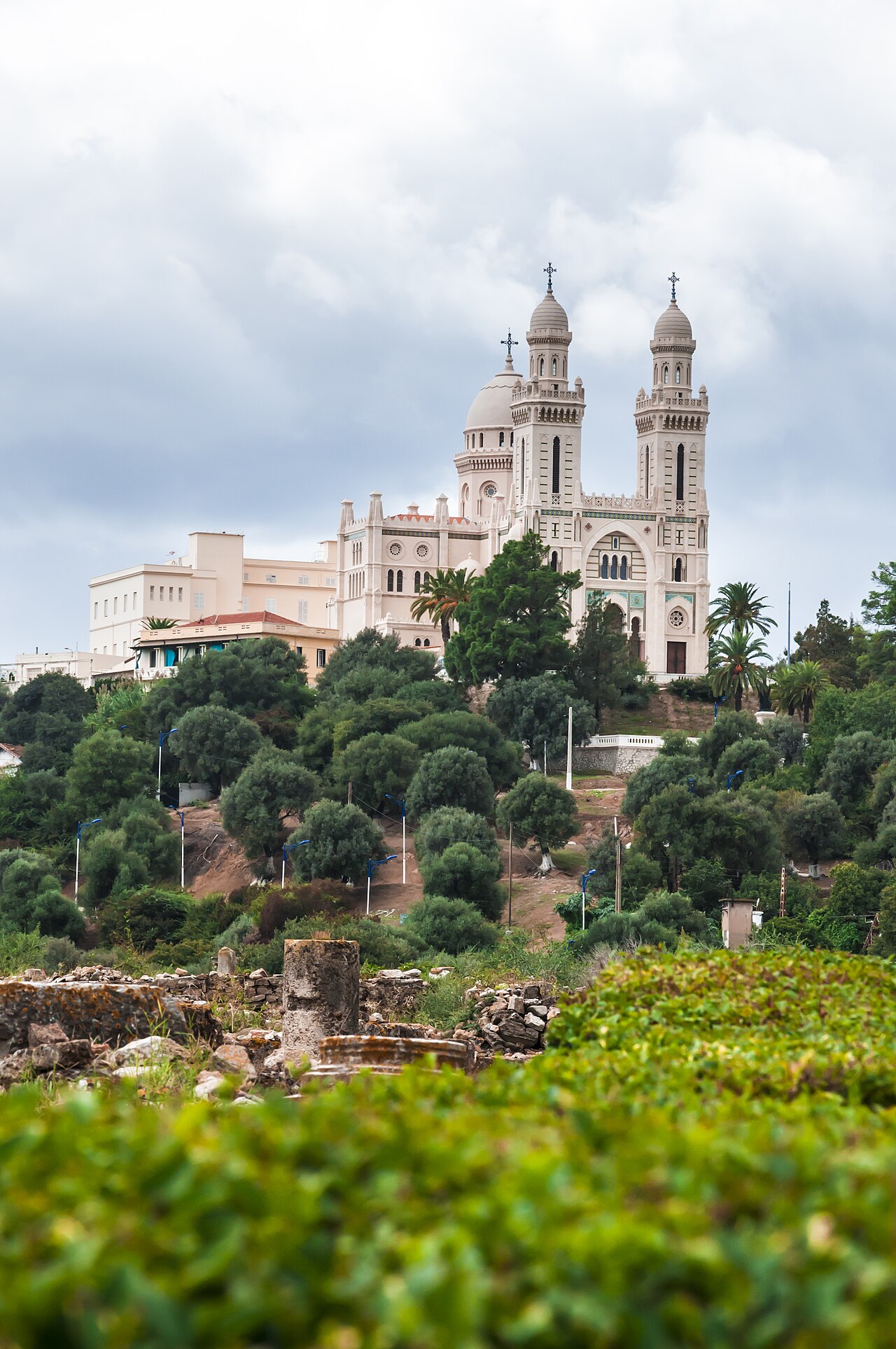
A Catholic basilica completed in 1900 on a hill above the ruins of Hippo Regius, where Augustine was bishop. Its style mixes Roman, Byzantine and Moorish influences.
As of 2026, Algeria is the largest country in Africa by area. It took that title in 2011, when South Sudan became independent and Sudan grew smaller.
The Sahara covers most of Algeria, but about 90% of Algerians live in the narrow northern, coastal part of the country.
The minaret of Djamaa el Djazaïr, the Great Mosque of Algiers, is 265 m tall, the tallest minaret in the world as of 2026.
As of 2026, Algeria has seven UNESCO World Heritage Sites, including three Roman towns (Timgad, Djémila and Tipasa) and the rock art of Tassili n'Ajjer.
When it opened in 1912, the Sidi M'Cid suspension bridge in Constantine, about 175 m above the gorge, was the highest bridge in the world. It kept that record until 1929.
The French word for candle, bougie, comes from Bougie, the old European name of Béjaïa, whose beeswax was shipped to Europe in the Middle Ages.
In 2020 couscous was added to UNESCO's intangible heritage list after a joint nomination by Algeria, Mauritania, Morocco and Tunisia.
The fennec fox, a tiny desert fox with huge ears, is Algeria's national animal, and the national football team is nicknamed the Fennecs.
As of 2026, Algeria has won the Africa Cup of Nations twice: at home in 1990 and in Egypt in 2019.
The writer Albert Camus, winner of the 1957 Nobel Prize in Literature, was born in French Algeria in 1913 and was the first literature laureate born in Africa.
In 1860, living in exile in Damascus, Emir Abdelkader intervened to stop a massacre of the city's Christians, and several countries honoured him for it.
As of 2026, Algeria is divided into 69 provinces (wilayas), up from 58 before November 2025. Each province is named after its capital city.
Raï, the popular music of the young singers called cheb and cheba, grew up in the city of Oran.
Two words are in Tamazight, the Amazigh (Berber) language, and are marked. Arabic is written from right to left; the Latin spellings are simple guides, and 'kh' sounds like the ch in Scottish 'loch'. Pronunciation is written the way it sounds; the capital letters show where the stress goes. Audio is coming soon.
Some phrases change slightly depending on whether you speak to a man or a woman; the form for a man is given, with the other where it matters. Most Algerians also understand French.
Read your government's travel advice before you book, especially for the south and the border areas. As of September 2026, for example, the UK advises against all travel within 30 km of Algeria's borders with Libya, Mali, Mauritania and Niger, and parts of the border with Tunisia. The Sahara is best visited with a licensed local agency.
As of 2026 most visitors need a visa from an Algerian consulate before they travel, and the application asks for a lot of paperwork. A visa on arrival is possible only in some cases, such as desert trips booked through an approved local travel agency.
Cards are accepted in few places, so most travellers bring euros in cash. Visitors without Algerian residency may not carry dinar banknotes into or out of the country, and larger sums of foreign cash must be declared on arrival (as of 2026).
Algeria is huge: Tamanrasset is about 1,600 km from Algiers as the crow flies, and much farther by road. Domestic flights save days of driving, and desert roads are no place to travel at night or without experience.
During the holy month of Ramadan most Algerians fast from dawn to sunset. Avoid eating, drinking or smoking in public in the daytime, and expect shorter opening hours. The evenings are lively, with special soups and sweets.
Bringing drones, binoculars and some other camera equipment into Algeria without permission is illegal (as of 2026). Do not photograph police, soldiers or government buildings, and ask before taking pictures of people.
Covering shoulders and knees is respectful, especially in the south and in mosques. Algerians are known for their hospitality: accept a coffee when it is offered, and show interest in the country's history and culture.
The land border between Algeria and Morocco has been closed since 1994 (as of 2026), so travel between the two countries is by air.