A free large-print PDF. Choose what goes in: facts, map, history, dishes and recipes, phrases, fun facts, a quiz with or without answers. Made for clubs, care homes, libraries and family afternoons.
Norway is a long, narrow country on the western side of the Scandinavian Peninsula, facing the North Sea and the Atlantic. Its coast is cut by hundreds of fjords, deep arms of the sea carved by glaciers, and lined with countless islands. A large part of the country lies north of the Arctic Circle, where the sun does not set in early summer and hardly rises in midwinter.
Norway's Viking seafarers sailed as far as Iceland, Greenland and North America more than a thousand years ago. Later Norway spent centuries in unions with Denmark and then Sweden. It wrote its own constitution on 17 May 1814, still celebrated as the national day, and became fully independent in 1905. The country was occupied by Germany from 1940 to 1945.
Since oil was found in the North Sea in 1969, Norway has become one of the richest countries in the world, and it saves much of its oil income in a huge state fund. It is a constitutional monarchy of about 5.6 million people. Norwegians voted twice not to join the European Union, but Norway works closely with the EU through the European Economic Area. Norwegian is written in two official standards, Bokmål and Nynorsk, and the Sámi languages of the Indigenous Sámi people are also official.
CapitalOslo
PopulationAbout 5.6 million (Statistics Norway, end of the second quarter of 2026: 5,636,904)
Official languageNorwegian, written in two official standards, Bokmål (used by most people) and Nynorsk, and the Sámi languages, spoken by the Indigenous Sámi people, mainly in the north
CurrencyNorwegian krone (NOK), in use since 1875
AreaAbout 324,000 km² on the mainland; about 385,000 km² including the Arctic islands of Svalbard and Jan Mayen
GovernmentConstitutional monarchy with a parliamentary system; the parliament, the Storting, has 169 members. As of September 2026 the monarch is King Haakon VIII, who succeeded his father, King Harald V, on 28 August 2026
Highest mountainGaldhøpiggen, 2,469 m, in the Jotunheimen range, also the highest peak in Northern Europe
Longest riverThe Glomma, 621 km, which flows into the sea at Fredrikstad
NeighboursSweden (1,619 km of border), Finland (729 km) and Russia (196 km) by land. Denmark lies across the Skagerrak and the United Kingdom across the North Sea
From Viking ships and saint kings to plague, long unions with Denmark and Sweden, a proud constitution, a hard occupation and sudden oil wealth, Norway's story is one of a small nation at the edge of Europe finding its own way.
AD 793
The Viking Age begins
On 8 June 793 Norse raiders attacked the monastery of Lindisfarne, off the coast of northeast England. The raid is usually taken as the start of the Viking Age. For the next 270 years Norwegian Vikings raided, traded and settled across the North Atlantic, from Ireland and Scotland to Iceland and Greenland.
AD 872
Harald Fairhair wins at Hafrsfjord
At Hafrsfjord, near today's Stavanger, King Harald Fairhair defeated rival kings and became the first king of a united Norway. The battle is traditionally dated to 872, but historians place it somewhere between about 870 and 900, and see unification as a slower process. Three giant bronze swords, 'Swords in Rock', stand by the fjord today.
1030
The Battle of Stiklestad
On 29 July 1030 King Olaf II Haraldsson was killed at Stiklestad, in Trøndelag, fighting an army of farmers and nobles. Soon after his death he was honoured as a saint, and Nidaros Cathedral in Trondheim was later built over his grave. Saint Olaf became Norway's patron saint and helped complete the country's conversion to Christianity.
1349
The Black Death reaches Norway
In 1349 the plague reached Norway by sea, probably first at Oslo in the spring, and in late summer a ship from England brought it to Bergen. It spread quickly, and scholars estimate that up to 60 percent of the people died by 1350. Norway's population did not recover to its earlier size until the 1600s, and the kingdom was badly weakened.
1380
The union with Denmark begins
In 1380 the young Olaf Haakonsson, already King of Denmark, also inherited the throne of Norway. The two kingdoms now shared one king, the start of a union with Denmark that lasted, in different forms, until 1814.
1397
The Kalmar Union
In 1397, at Kalmar in Sweden, Queen Margaret I brought Denmark, Sweden and Norway together under one king. Norway's lands across the sea, such as Iceland, Greenland and the Faroe Islands, came too. Sweden left the union in 1523, but Norway stayed tied to Denmark.
1537
The Reformation comes to Norway
In 1537 the Danish King Christian III made Lutheranism the official religion of Norway. The Catholic archbishop, Olav Engelbrektsson, went into exile, church lands passed to the crown and Norway was bound more tightly to Denmark, ruled from Copenhagen until 1814.
1814
The Constitution is signed at Eidsvoll
Denmark, on the losing side in the Napoleonic Wars, had to hand Norway to Sweden in the Treaty of Kiel. Norwegians refused and met at Eidsvoll, where they signed their own constitution on 17 May 1814. Norway then entered a union with Sweden in November 1814, but kept its constitution and parliament. The constitution is still in force, the second-oldest working national constitution in the world after that of the United States.
1905
The union with Sweden ends
On 7 June 1905 the Storting voted to end the union with Sweden. In a referendum in August, 368,208 voters said yes and only 184 said no. Sweden accepted the separation peacefully, and Prince Carl of Denmark became King Haakon VII after a second vote kept the monarchy.
1911
Amundsen reaches the South Pole
On 14 December 1911 the Norwegian explorer Roald Amundsen and his team became the first people to reach the South Pole, about a month ahead of the British expedition of Robert Falcon Scott. Amundsen had also been the first to sail through the Northwest Passage, from 1903 to 1906.
1940
Germany invades Norway
On 9 April 1940 German forces invaded. In the Oslofjord, guns and torpedoes from Oscarsborg Fortress sank the cruiser Blücher, which delayed the Germans long enough for the King and government to escape. After two months of fighting they went into exile in London. During the occupation, about 765 Norwegian Jews were killed in the Holocaust, while a resistance movement grew across the country.
1945
Norway is liberated
The German forces in Norway surrendered on 8 May 1945, at the end of the war in Europe. King Haakon VII came home to Oslo on 7 June 1945. In the far north, Finnmark had to be rebuilt almost from nothing, because retreating German troops had burned it.
1969
Oil is found at Ekofisk
In 1969 the Ekofisk oil field was discovered in the Norwegian part of the North Sea, and production began in 1971. Oil and gas changed Norway's economy, and in 1990 the state created a fund, often called the Oil Fund, to save the income for future generations.
1994
Lillehammer and a second no to the EU
In February 1994 Lillehammer hosted the Winter Olympics, and Norway won more medals than any other country. The same year Norway joined the European Economic Area, but in November voters said no to EU membership, 52.2 percent against, just as they had in 1972.
Norwegian food is simple and hearty, built on fish from the cold sea, lamb from the mountain pastures, potatoes, dairy and berries, with old ways of preserving food by salting, drying and curing. Breakfast is bread with cheese and toppings, lunch is often a packed 'matpakke' of open sandwiches, and the main hot meal, 'middag', is eaten early, often between 4 and 7 in the evening.
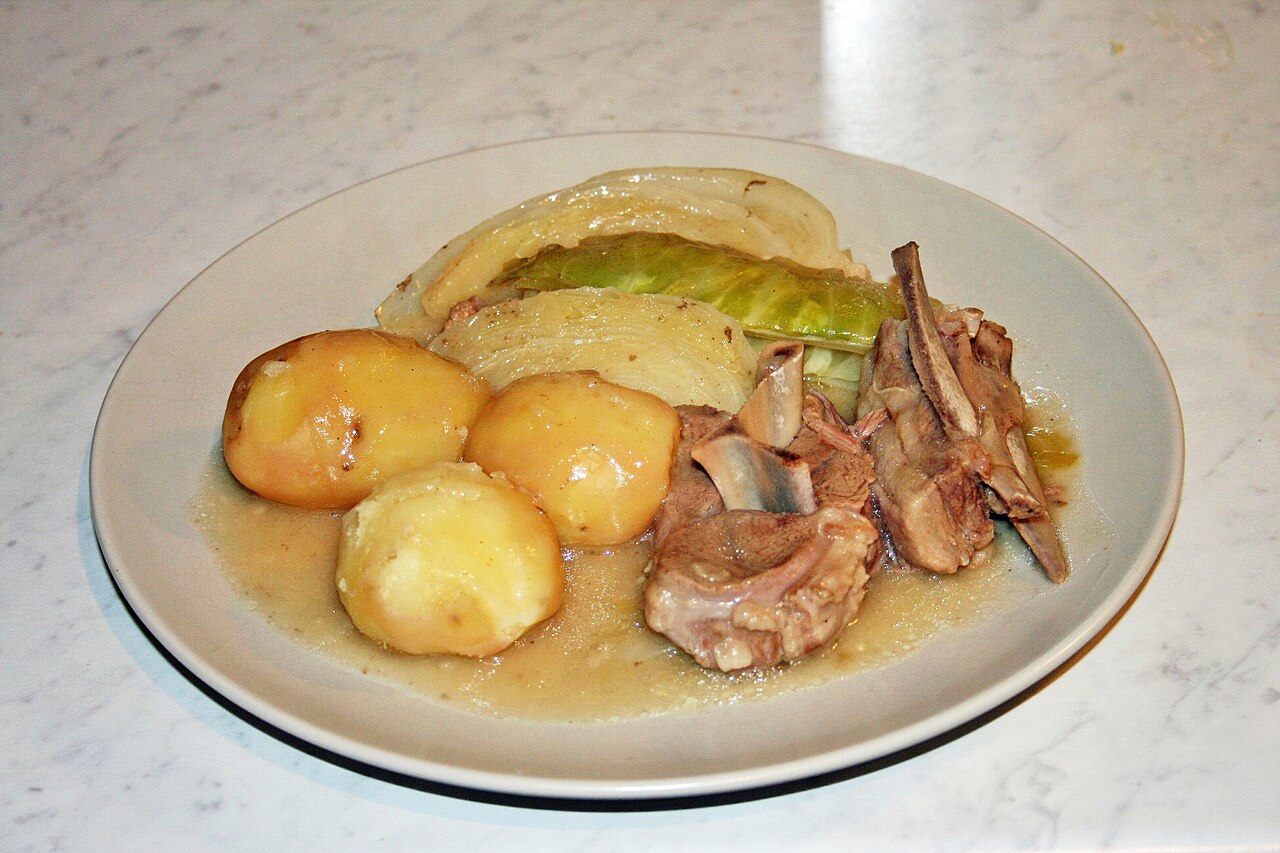
Mutton or lamb on the bone layered with cabbage and whole black peppercorns, then slowly simmered for hours and served with boiled potatoes. The name means 'mutton in cabbage'.
Fårikål was voted Norway's national dish on a radio programme in the 1970s and confirmed again in 2014. Its own feast day is the last Thursday in September.
See the recipe
Serves 4
3 h
Ingredients
1.5 kg lamb or mutton on the bone (neck or shoulder), in thick pieces
1.5 kg white cabbage, cut into wedges
2 tablespoons whole black peppercorns
2 teaspoons salt
2 tablespoons plain flour (optional)
About 500 ml water
Boiled potatoes, to serve
Method
Put a layer of meat, fatty side down, in the bottom of a large, heavy pot.
Add a layer of cabbage wedges, sprinkle with salt, peppercorns and a little flour if using.
Repeat the layers until everything is used, finishing with cabbage.
Pour in the water, bring it to the boil, then cover and simmer very gently for 2 to 3 hours, until the meat falls off the bone.
Taste the broth and add salt if needed. Serve hot with boiled potatoes and plenty of the broth.
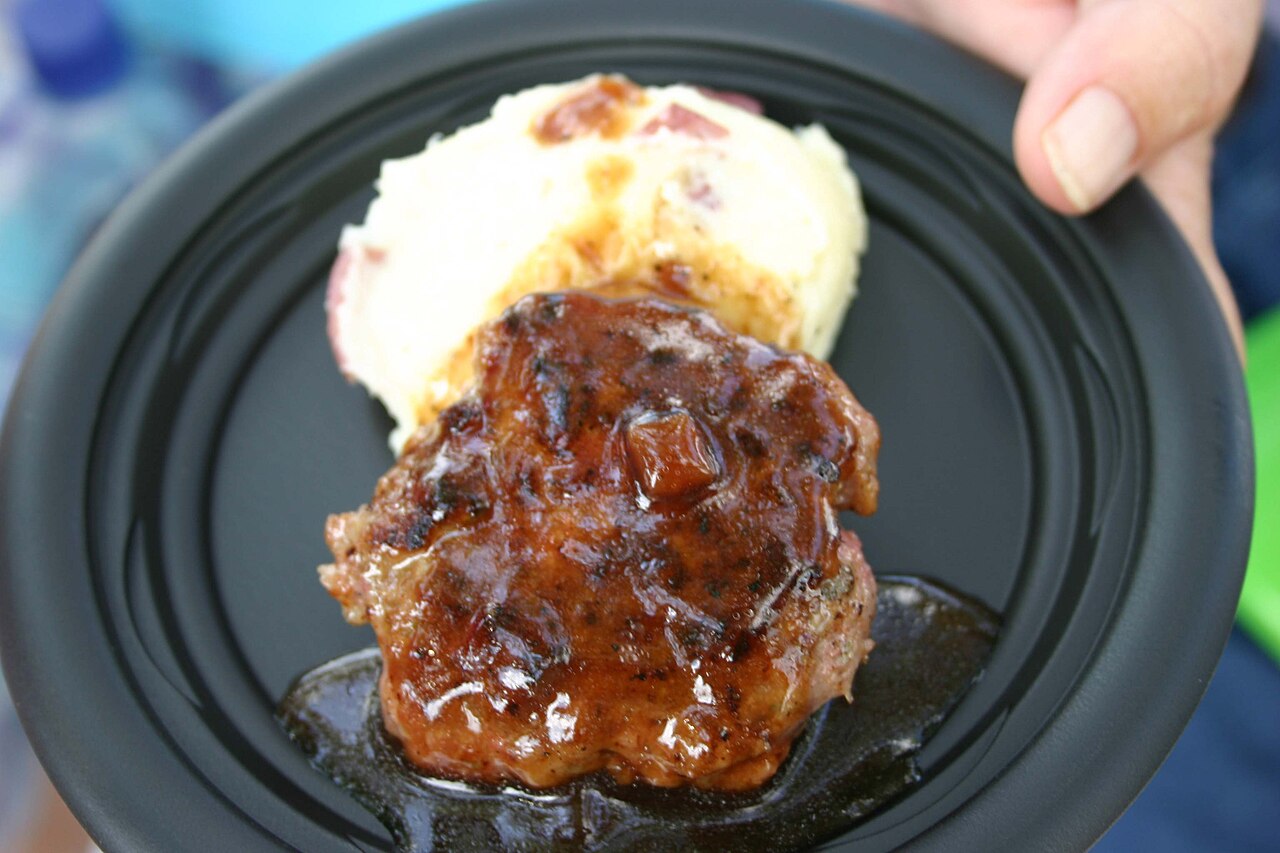
Flattened, oval meat patties, larger than meatballs, simmered in a brown gravy and served with boiled potatoes, creamed cabbage and lingonberry jam. A classic everyday dinner.
See the recipe
Serves 4
50 min
Ingredients
500 g minced beef
1 teaspoon salt
1/2 teaspoon black pepper
1/4 teaspoon ground nutmeg
2 tablespoons potato starch or cornflour
About 150 ml milk
Butter for frying
For the gravy: 3 tablespoons butter, 3 tablespoons flour, 500 ml beef stock
Boiled potatoes and lingonberry jam, to serve
Method
Mix the mince with the salt, pepper, nutmeg and potato starch, then work in the milk a little at a time until soft and smooth.
With wet hands, shape about 12 flat oval patties.
Brown the patties in butter in a frying pan, a few at a time, and set them aside.
For the gravy, melt the butter in a pot, stir in the flour and cook until nut brown, then whisk in the stock little by little until smooth.
Put the patties into the gravy and simmer gently for about 15 minutes, until cooked through.
Serve with boiled potatoes and a spoonful of lingonberry jam.
All of Norway; the name changes from region to region
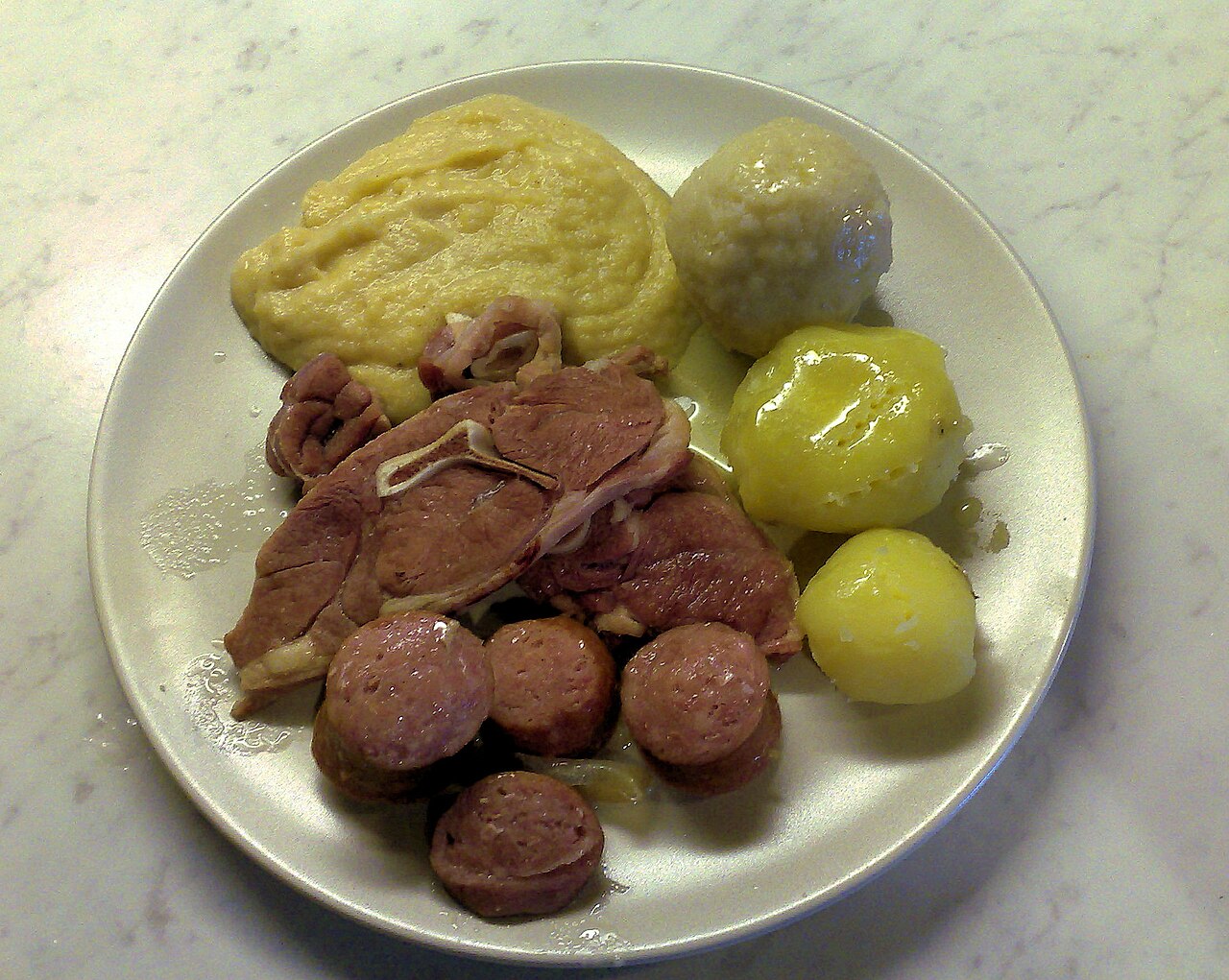
Large, soft dumplings of grated raw potato and flour, boiled and served with salted or boiled pork or lamb, sausages, melted butter and mashed rutabaga.
In western Norway raspeball is traditionally eaten on Thursdays, and many cafés serve it as the dish of the day.
See the recipe
Serves 4
1 h 30 min
Ingredients
1.5 kg floury potatoes, peeled
About 250 g barley flour, or plain wheat flour
1 teaspoon salt
Salted pork or smoked sausages, to cook with the dumplings
Melted butter and mashed rutabaga (swede), to serve
Method
Put the pork or sausages into a large pot of lightly salted water and bring it to a gentle simmer.
Grate the potatoes finely and squeeze out some of the liquid.
Mix the potato with the salt and enough flour to make a firm dough that holds its shape.
With wet hands, shape round dumplings about the size of a tennis ball.
Lower them into the simmering water and cook gently, without boiling hard, for 40 to 45 minutes, turning them now and then.
Serve the dumplings with the meat, melted butter and mashed rutabaga.
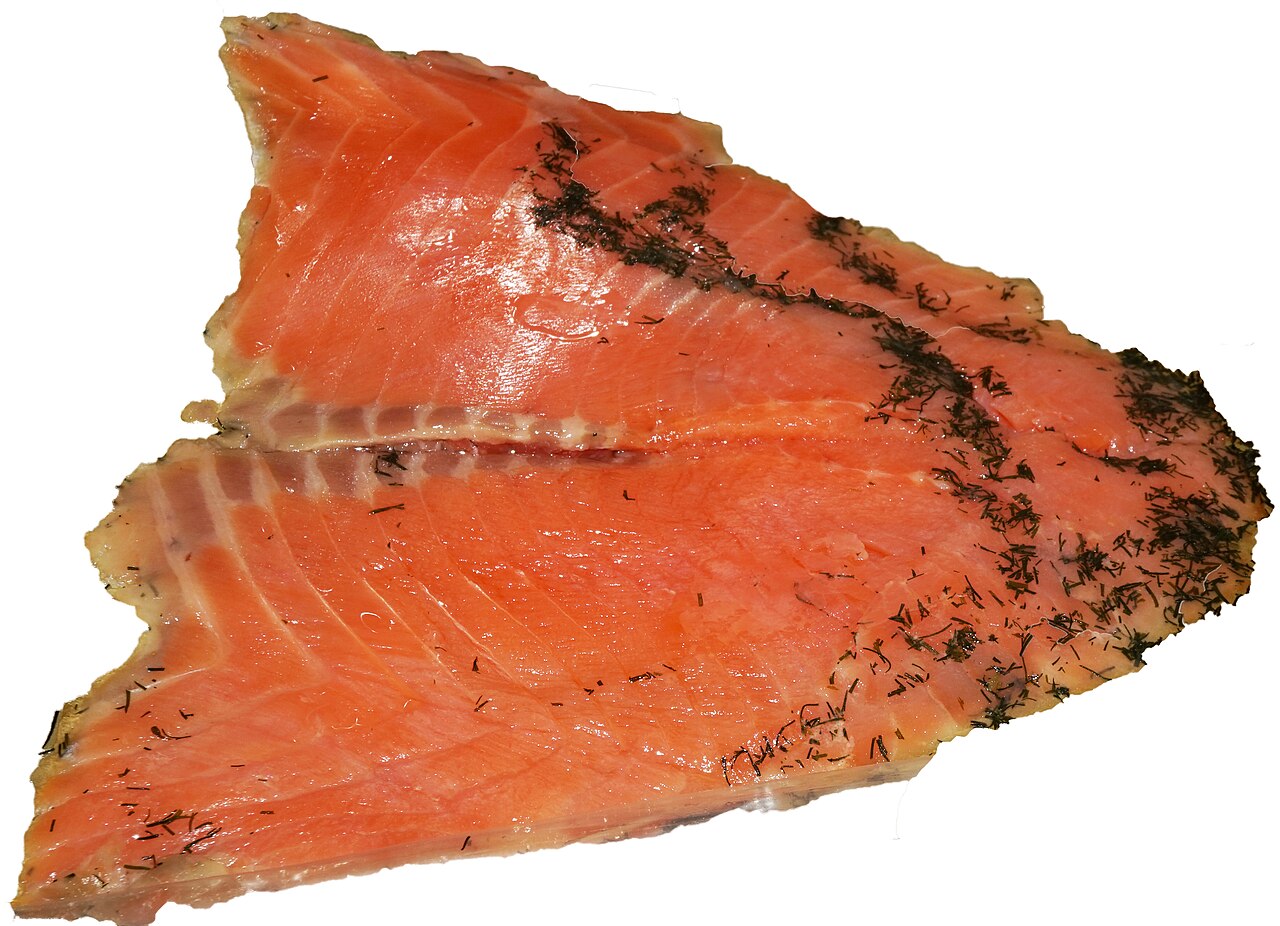
Raw salmon cured for a day or more in salt, sugar and dill, then sliced thin and served with a sweet mustard and dill sauce on bread or with potatoes. The name means 'buried salmon', from the old way of burying salted fish.
In 1985 a Norwegian campaign called Project Japan set out to sell Norwegian salmon to Japan. Over the following years raw salmon became a favourite sushi topping there and then around the world.
See the recipe
Serves 8
30 min
Ingredients
1 kg very fresh salmon fillet, skin on, bones removed, sold as safe to eat raw or frozen first
4 tablespoons coarse salt
4 tablespoons sugar
1 tablespoon crushed white or black pepper
A large bunch of fresh dill, chopped
For the sauce: 3 tablespoons mild mustard, 1 tablespoon sugar, 1 tablespoon vinegar, 100 ml oil, chopped dill
Method
Safety first: this is raw, cured fish. Freezing kills parasites but not all germs, and pregnant women, young children, older people and anyone with a weakened immune system should avoid it.
Mix the salt, sugar and pepper.
Cut the fillet in two pieces. Rub the mixture into the flesh and cover with dill.
Put one piece skin side down in a dish, lay the other on top skin side up, cover with film and put a light weight on top.
Leave in the fridge for 2 to 3 days, turning the fish once a day and spooning the juices over it.
Scrape off the dill and salt, slice thinly at an angle and serve with the sauce, made by whisking the mustard, sugar and vinegar, then the oil and dill.
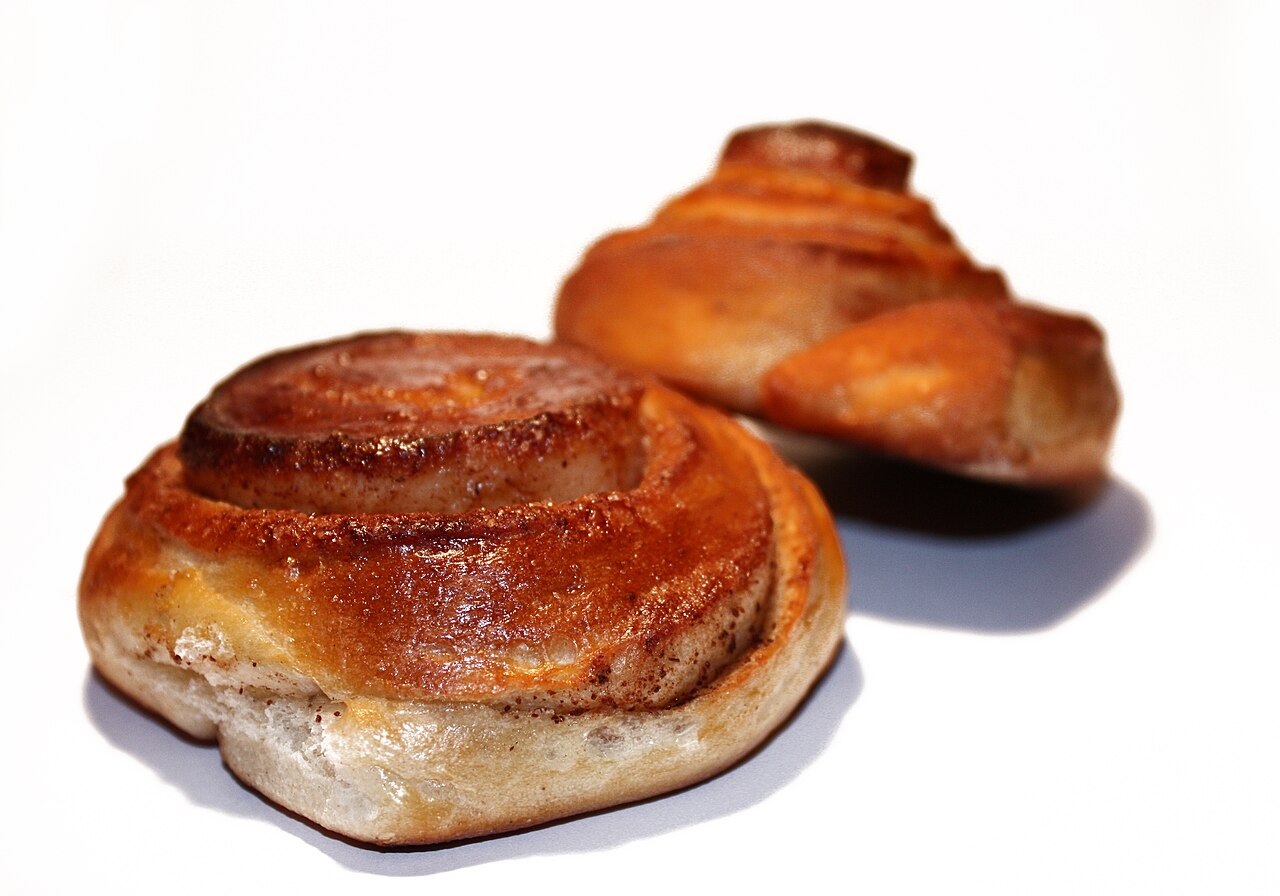
Soft yeast buns rolled up with butter, sugar and cinnamon, eaten with coffee at any time of day. In Bergen they are called skillingsboller.
Cinnamon buns spread from Germany to Scandinavia and are said to have reached Norway with Hanseatic traders through Bergen, where they became known as skillingsboller.
See the recipe
Serves 12
2 h 30 min
Ingredients
500 g plain flour
75 g sugar
1 teaspoon ground cardamom (optional)
1 sachet (12 g) dried yeast
300 ml lukewarm milk
75 g soft butter
For the filling: 100 g soft butter, 80 g sugar, 2 tablespoons ground cinnamon
1 beaten egg, for brushing
Method
Mix the flour, sugar, cardamom and yeast. Add the milk and butter and knead for about 10 minutes to a soft, smooth dough.
Cover and leave in a warm place for about 1 hour, until doubled in size.
Roll the dough out to a rectangle about 40 by 30 cm. Spread with the butter, then sprinkle with the sugar and cinnamon.
Roll it up tightly from the long side and cut into 12 slices. Place them cut side up on lined baking trays.
Cover and leave to rise for 30 minutes. Heat the oven to 220 °C.
Brush with beaten egg and bake for 10 to 12 minutes, until golden. Cool a little before eating.
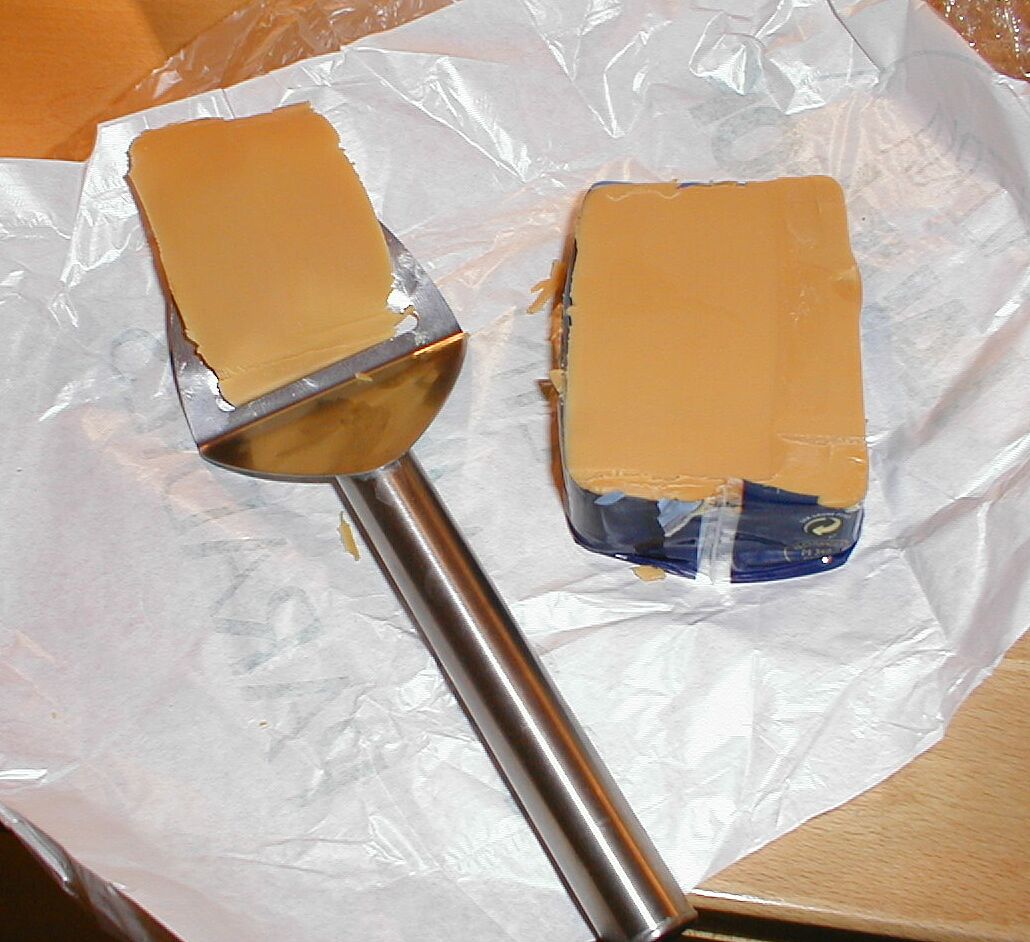
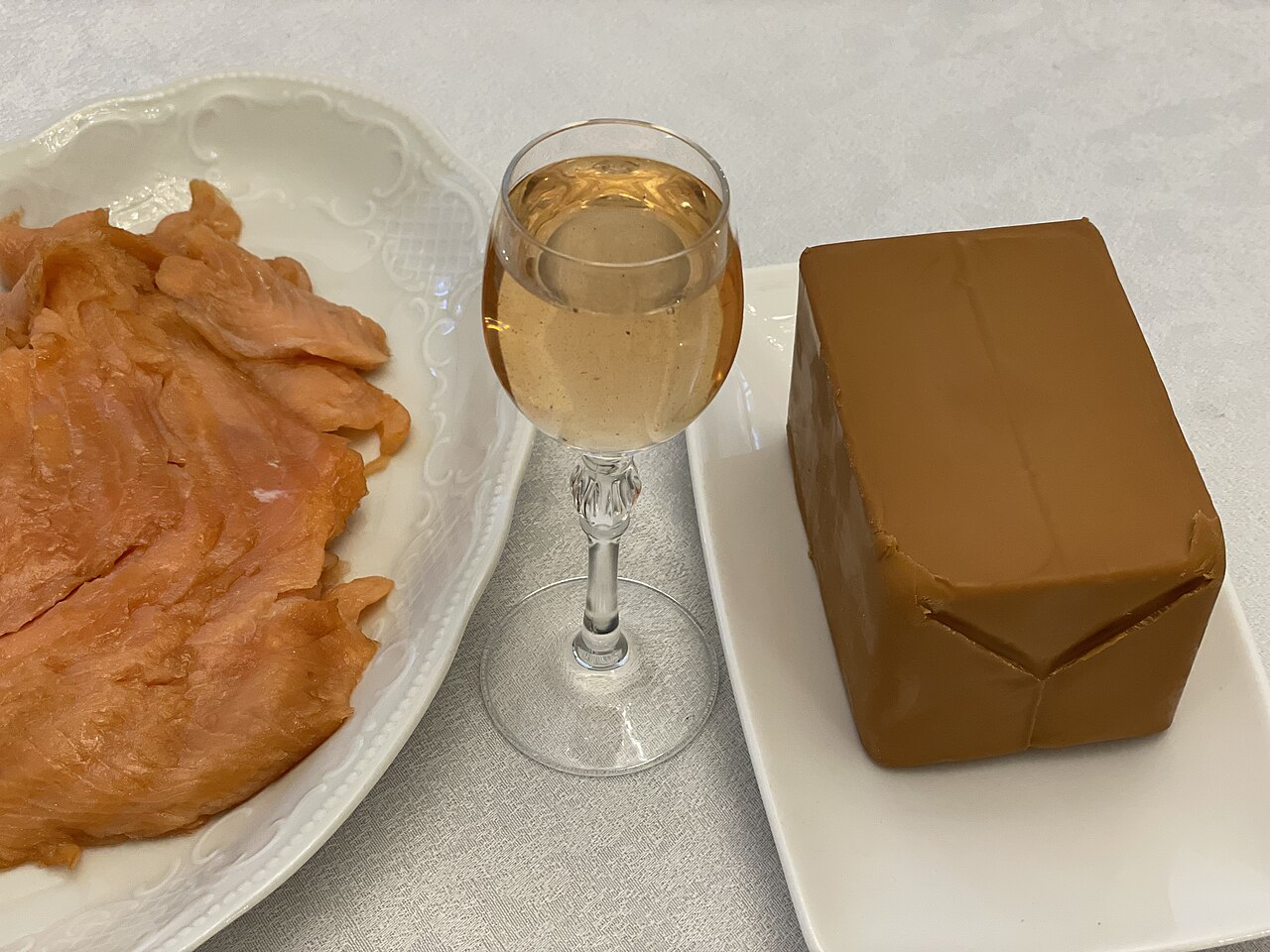
A sweet, caramel-coloured 'cheese' made by boiling whey, milk and cream until the milk sugars turn brown. It is sliced thin with a cheese slicer and eaten on bread, crispbread or warm waffles. The most popular kind, Gudbrandsdalsost, mixes cow's and goat's milk.
In January 2013 a lorry carrying 27 tonnes of brunost caught fire in the Brattli tunnel. The fatty, sugary cheese burned for days.
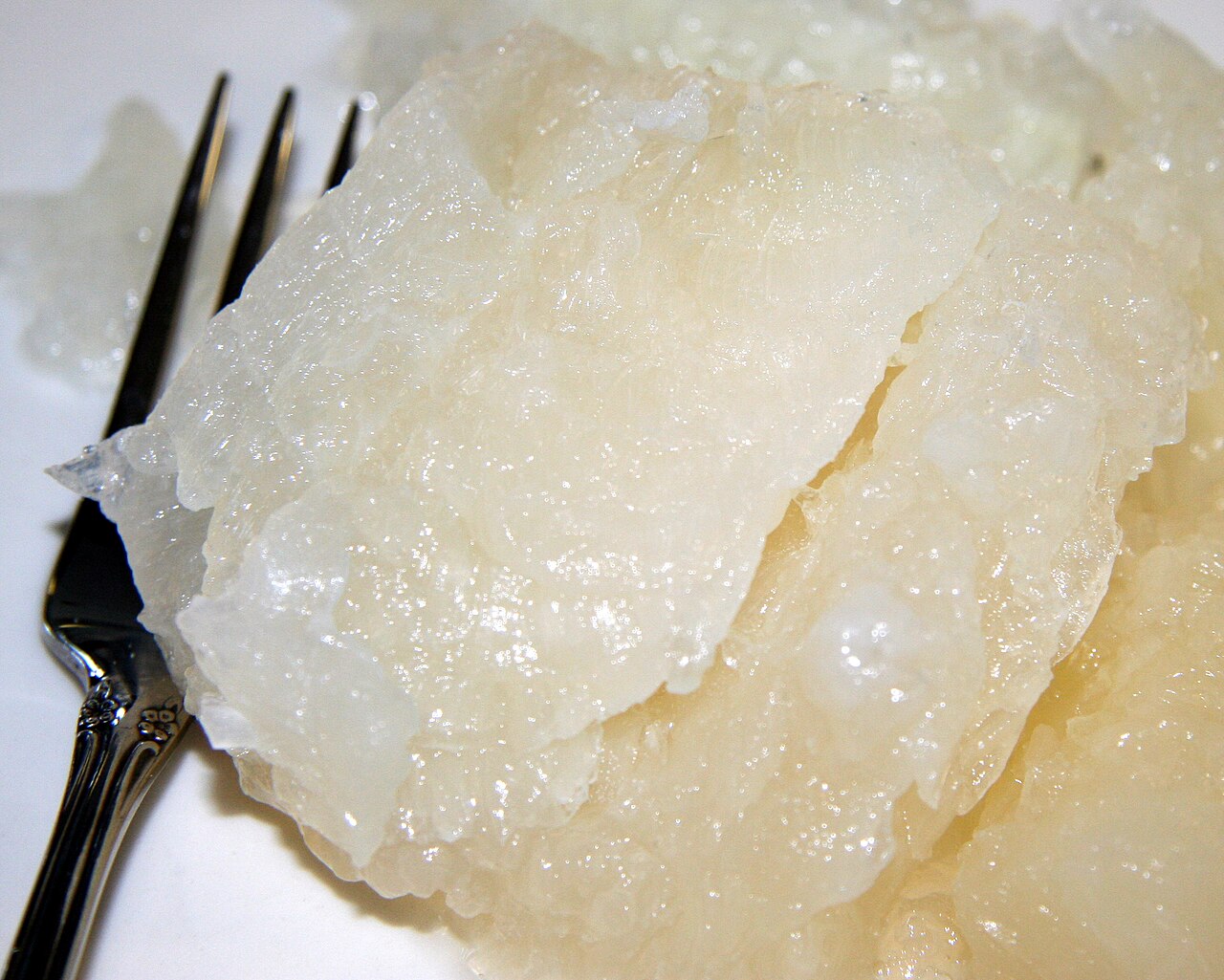
Dried whitefish, usually cod, soaked for days in water, then in lye, then in water again until it turns soft and jelly-like. It is served with boiled potatoes, mashed peas, bacon and melted butter. Lye is strongly caustic, and the fish is not edible until the lye has been fully soaked out, so buy lutefisk ready to cook rather than making it at home.
The name simply means 'lye fish'. Many Norwegian Americans in the Midwest still gather for lutefisk dinners in autumn and winter.
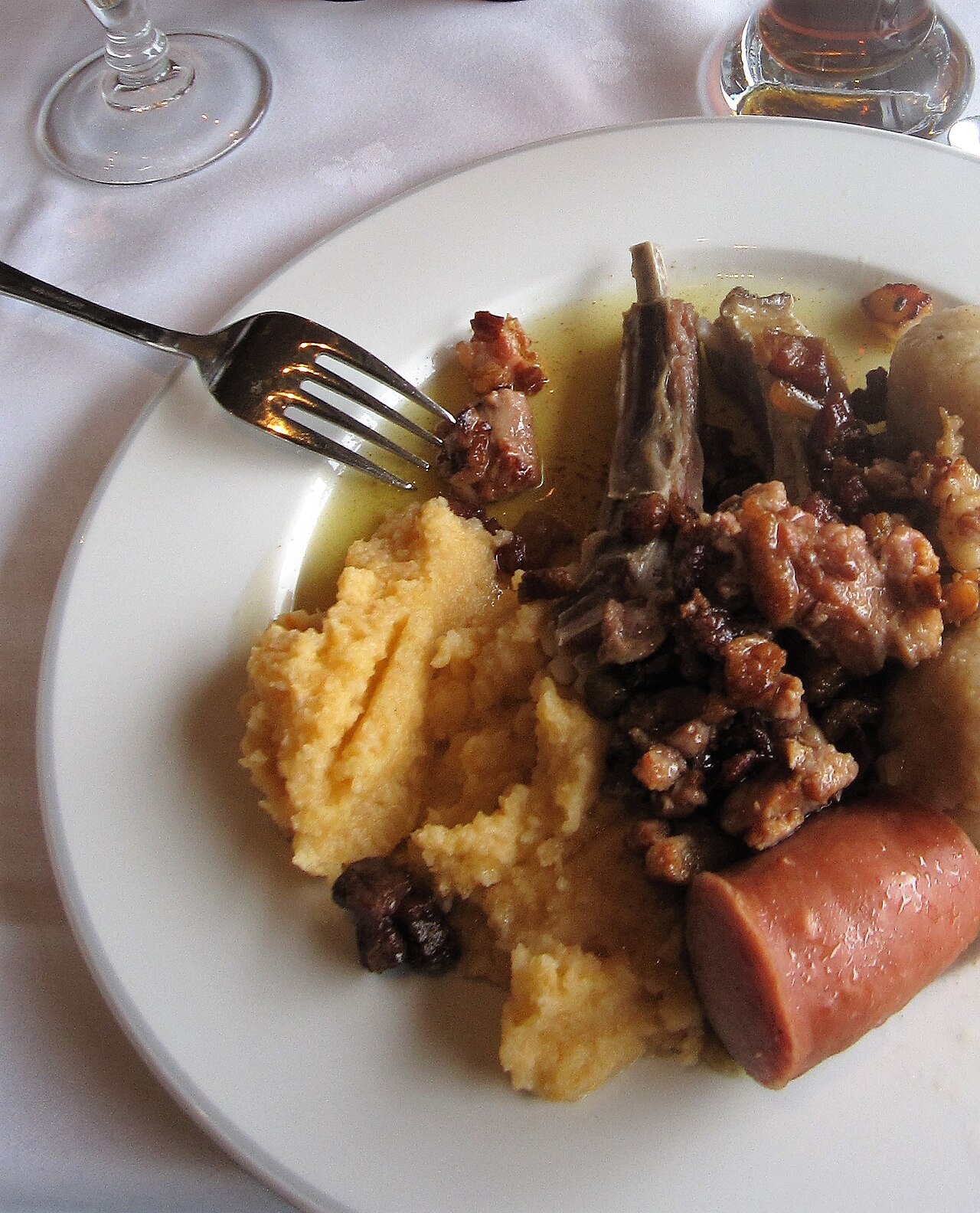
Salted and dried lamb ribs, soaked to remove the salt, then steamed for hours over a layer of birch sticks. It is served at Christmas with mashed rutabaga, potatoes and sausages.
The name means 'stick meat', probably from the birch sticks used in the pot.
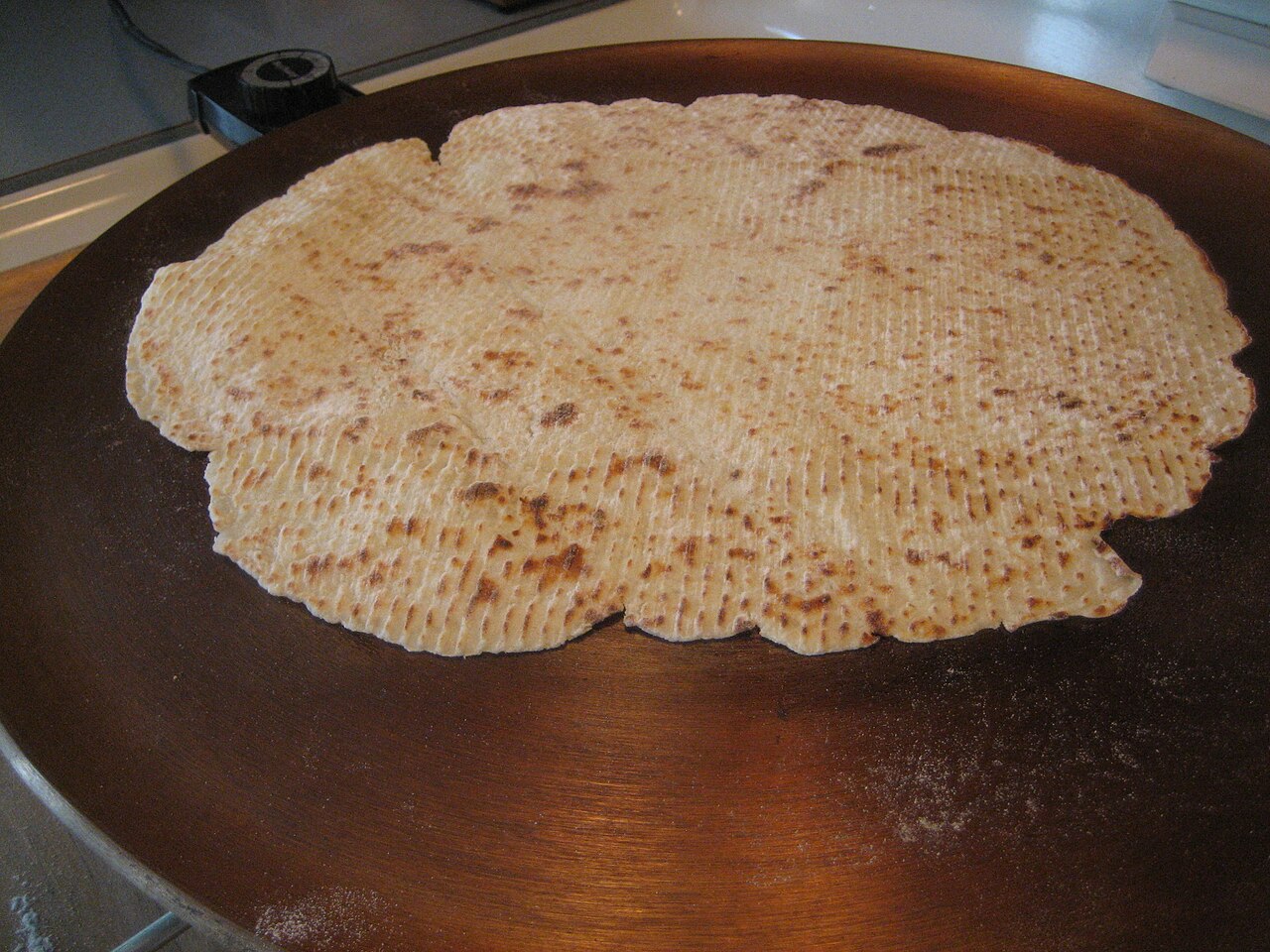
A soft, thin flatbread, often made with potato, flour and butter, cooked on a large griddle. It is spread with butter and sugar and rolled up, or wrapped around savoury fillings.
A small potato version, 'lompe', is wrapped around a hot dog to make 'pølse i lompe', a favourite Norwegian snack.
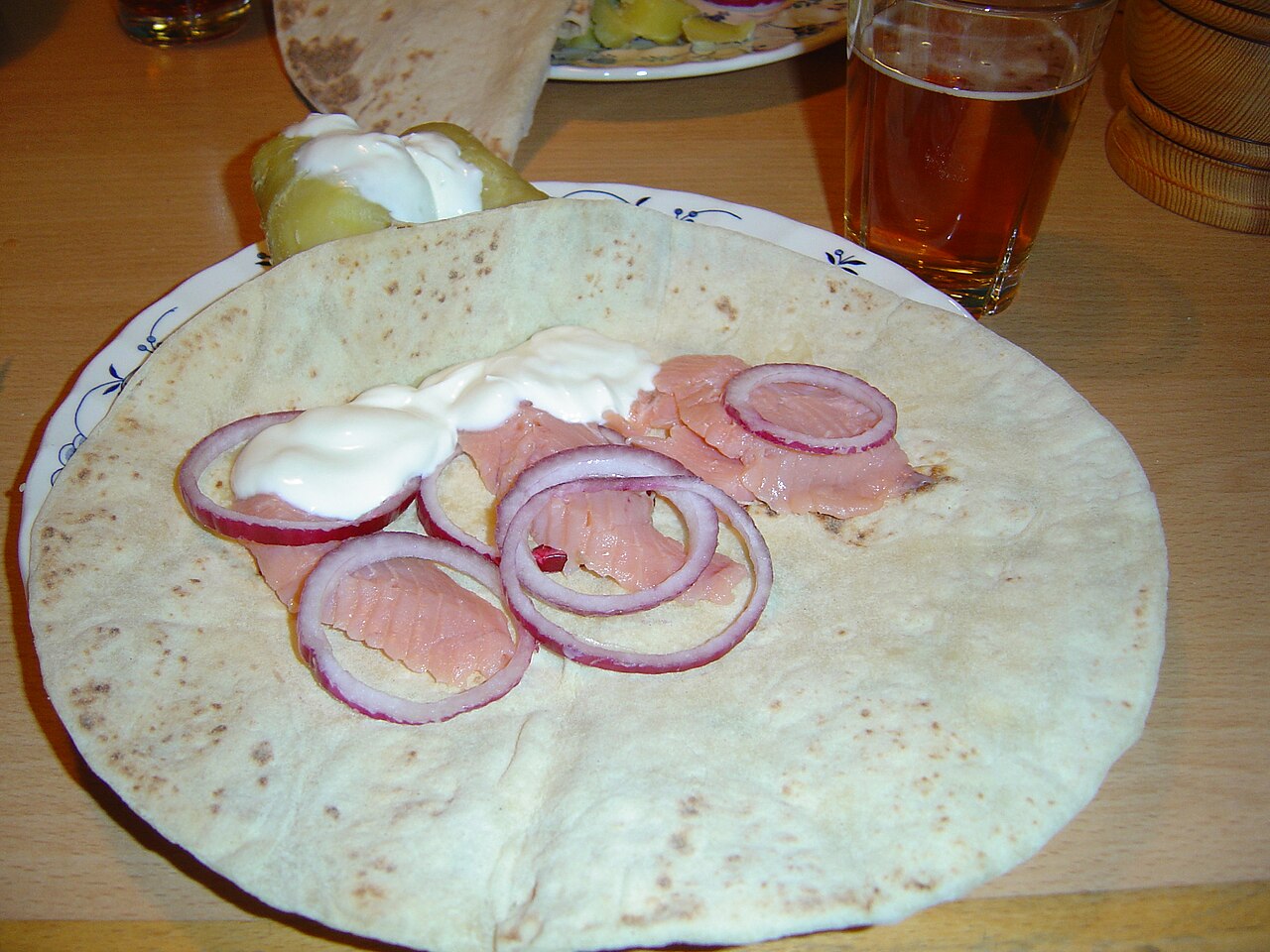
Trout or char salted and left to ferment for two to three months or longer, then eaten without cooking on flatbread or lefse with raw onion, sour cream and potatoes. It has a very strong smell. As a raw fish dish, it is best avoided by pregnant women, young children, older people and anyone with a weakened immune system.
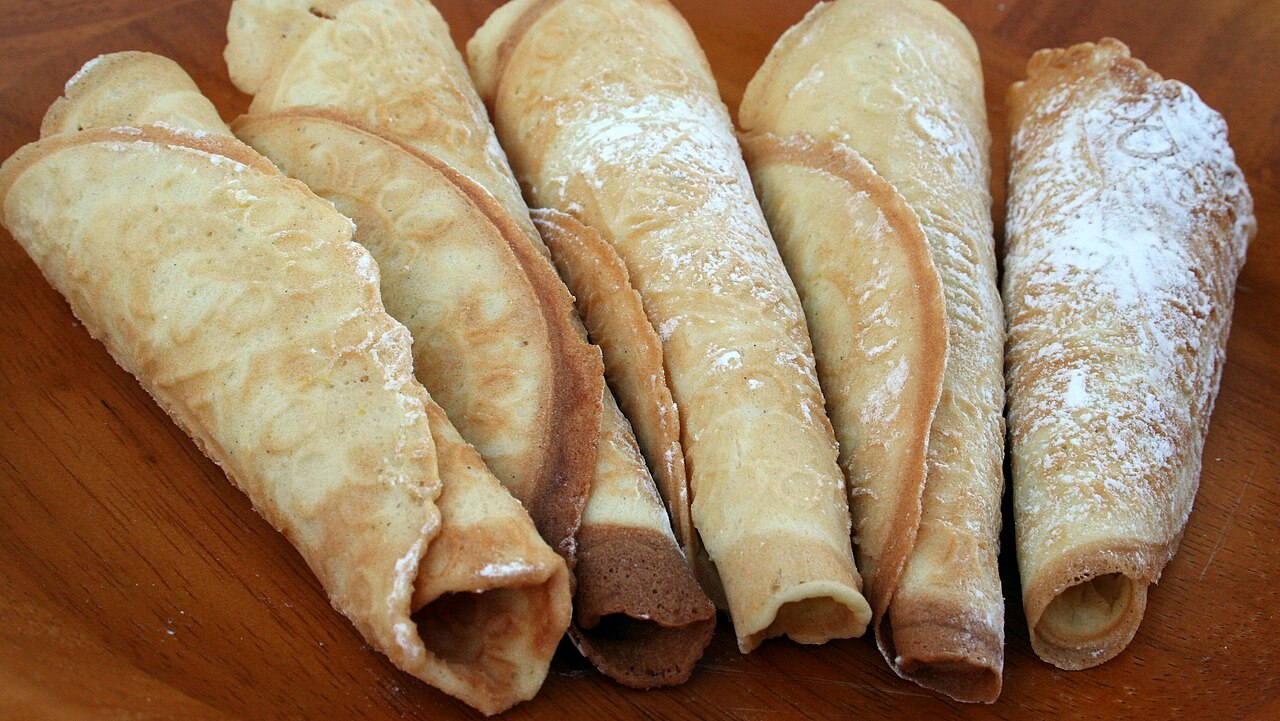
Thin, crisp wafers of flour, butter, eggs and sugar, baked in a patterned iron and rolled into cones while hot. They are often filled with whipped cream and made for Christmas.
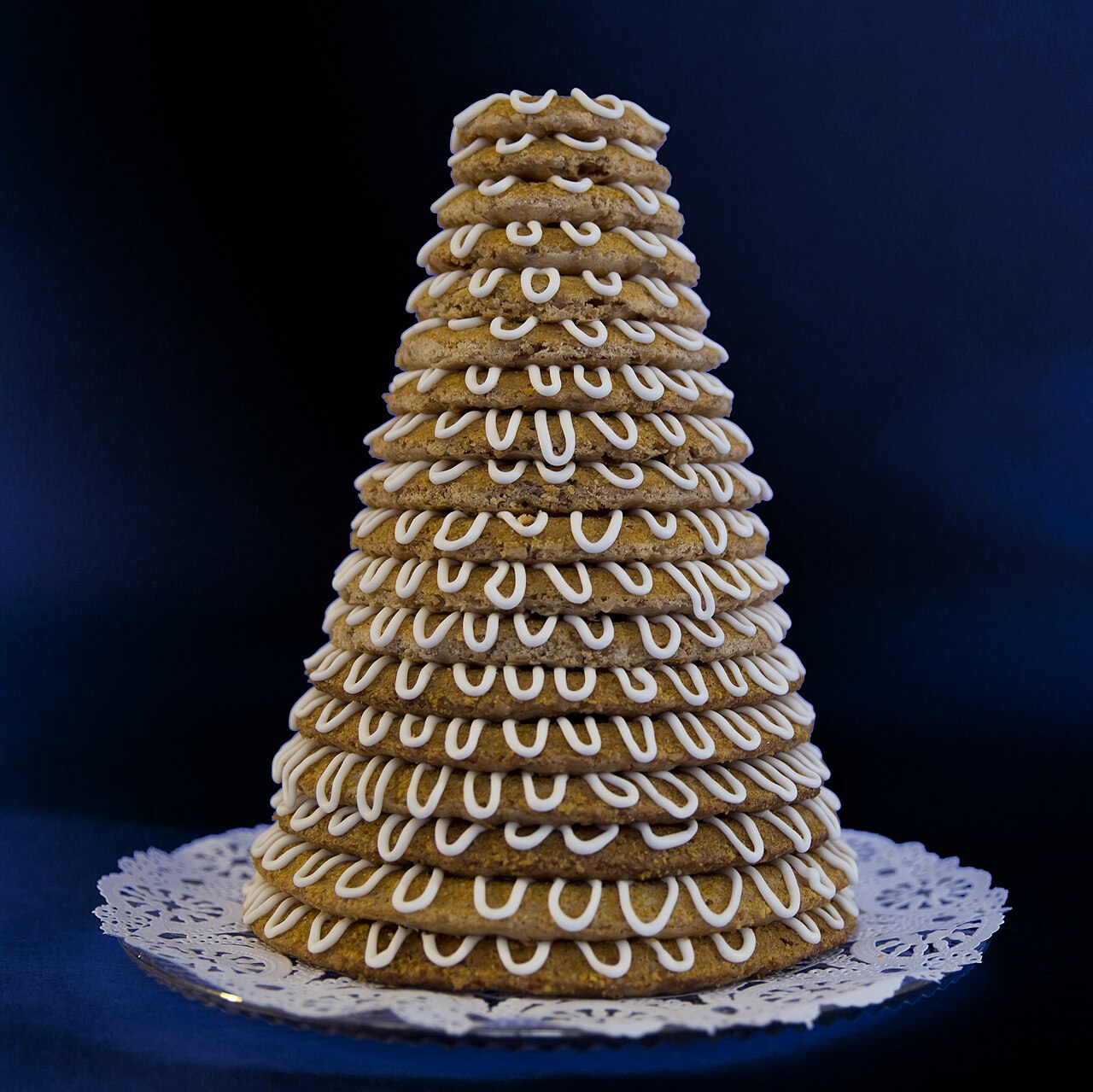
A tall tower of 18 or more rings of almond, sugar and egg white, held together with white icing, served on 17 May, at Christmas, weddings and christenings.
At weddings, it is said that the number of rings stuck to the top ring when the couple lift it shows how many children they will have.
All of Norway, especially the mountains and the north
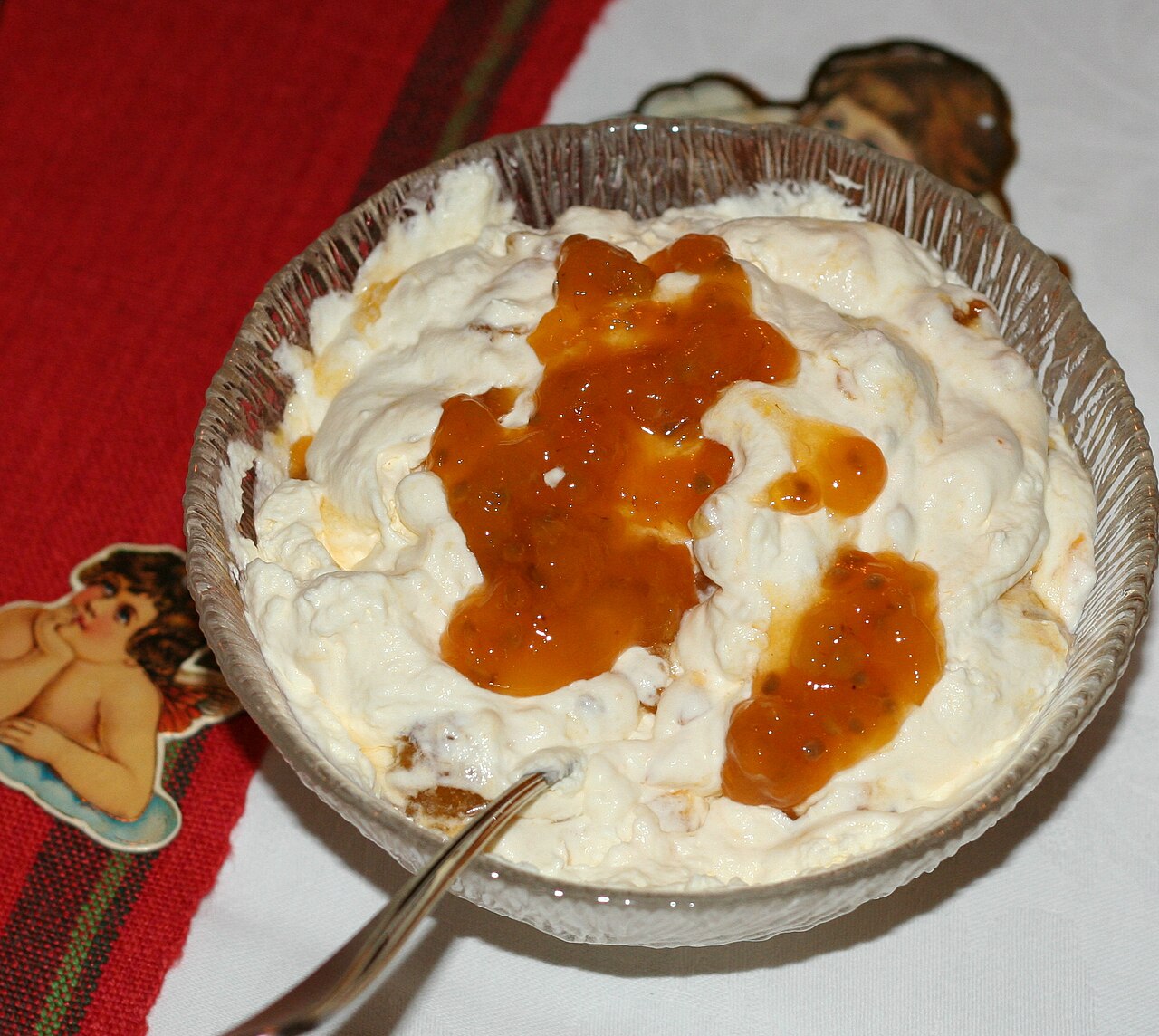
Cloudberries, golden wild berries of northern bogs and mountains, folded into sweetened whipped cream. It is served as a dessert and used to fill krumkake.
A strong spirit flavoured with caraway or dill, usually about 40 percent alcohol, drunk in small glasses with Christmas food such as pinnekjøtt and lutefisk. It is for adults only, and best enjoyed slowly and in small amounts.
Linie akevitt is sent by ship in oak barrels to Australia and back, crossing the equator twice, because the motion and changing temperatures are said to help it mature.
Table manners
After a meal, thank the host with 'Takk for maten' (tahk for MAH-ten), 'thanks for the food'. The host may answer 'Vel bekomme', 'you are welcome'.
The hot main meal, 'middag', is eaten early, often between 4 and 7 in the evening, so plan dinner invitations accordingly.
Many Norwegians take a packed lunch, a 'matpakke' of simple open sandwiches, to work or school, rather than eating out.
When raising a glass, say 'Skål!' (SKOAL).
Tipping is not expected. If you are happy with the service in a restaurant, rounding up or leaving 5 to 15 percent is a kind extra, but it is entirely up to you.
Most Norwegians live in the south, around Oslo and along the coast. Towns grew up by the sea, on fjords and islands, and in the far north they are small and far apart. The cities here are all on the mainland; the Arctic islands of Svalbard have only small settlements.
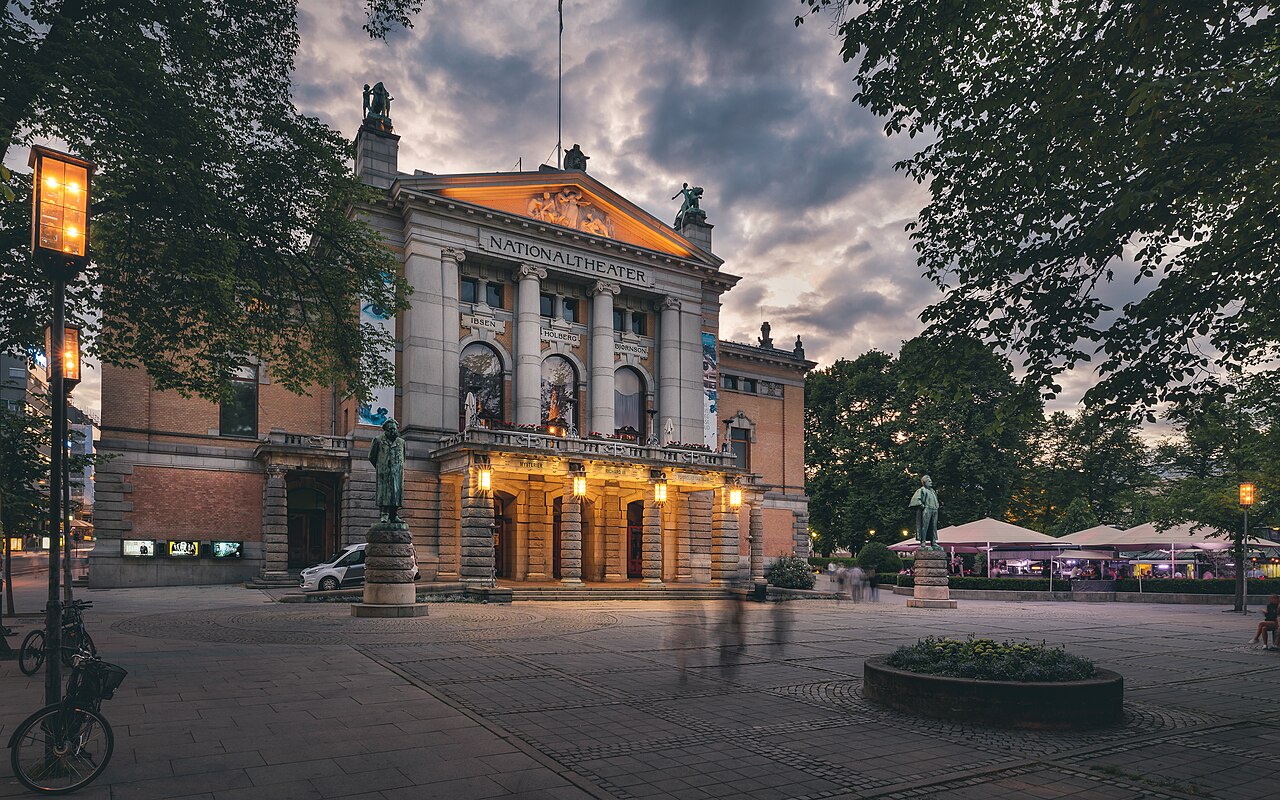
The capital and largest city, at the head of the Oslofjord and ringed by forested hills. Founded in the mid-1000s, it was called Christiania, later Kristiania, from 1624 until it took back the name Oslo in 1925.
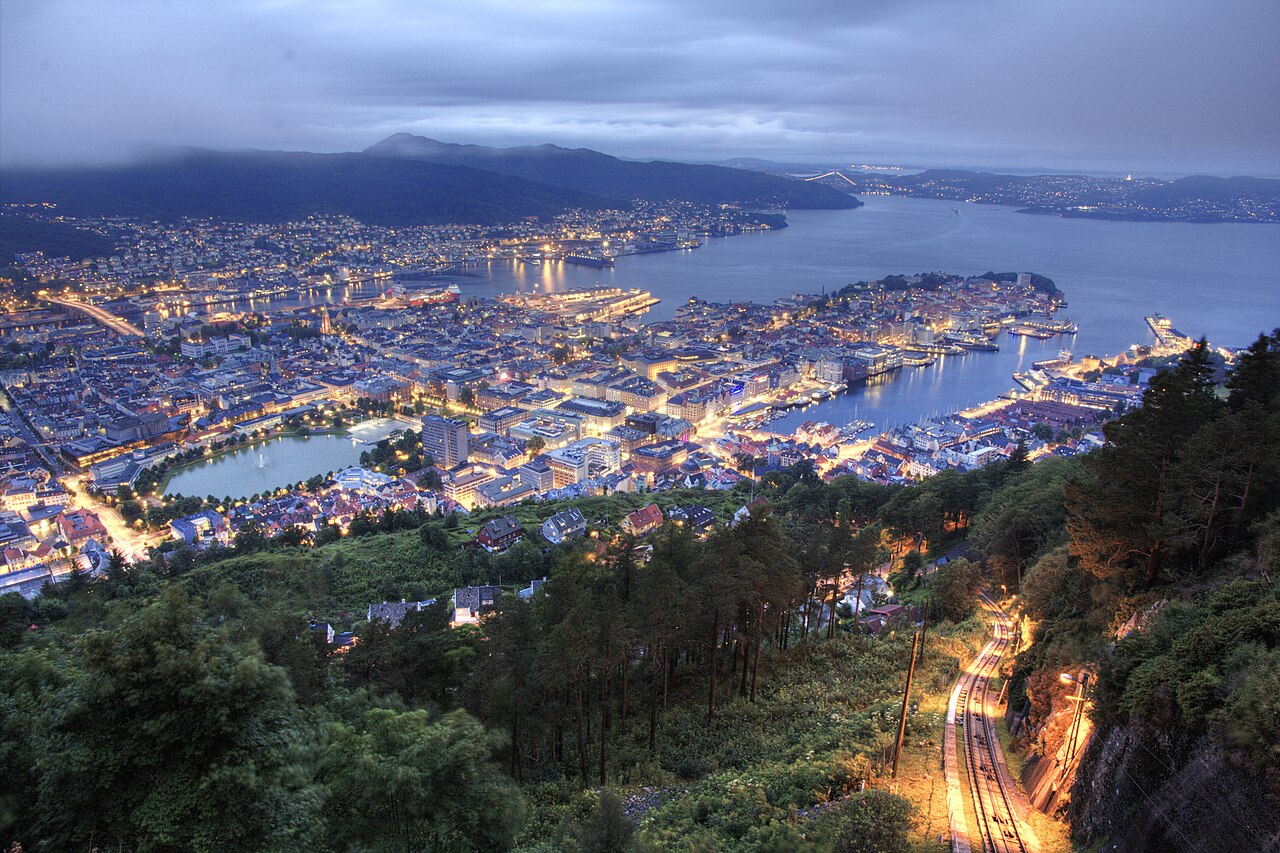
Norway's second city, on the west coast among 'seven mountains'. Founded by tradition in 1070, it was an early capital and a great Hanseatic trading port. It is known for its rain and as a gateway to the western fjords.
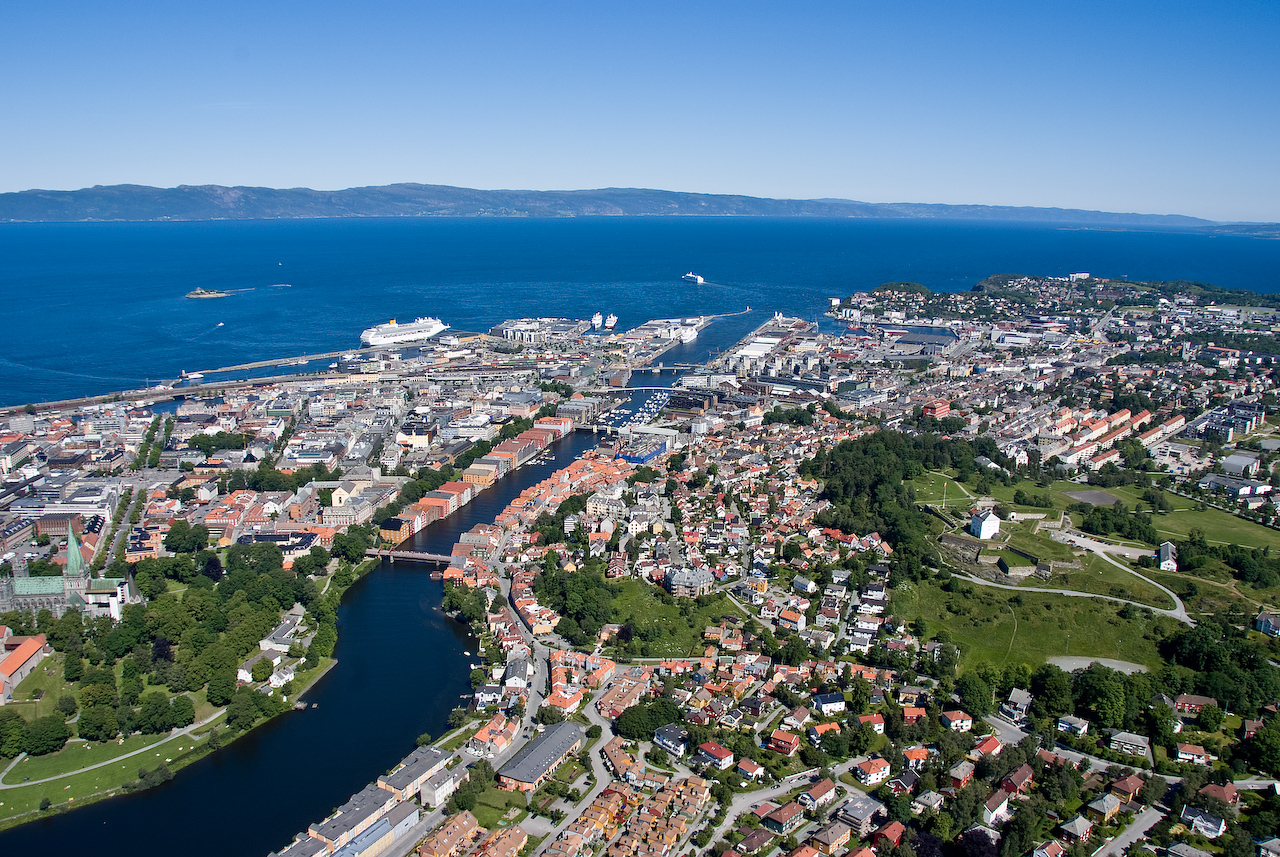
Founded in 997 by King Olaf Tryggvason under the name Nidaros, it was Norway's capital in the Viking Age. Pilgrims still walk here to the tomb of Saint Olaf in Nidaros Cathedral.
Nidaros Cathedral
The old wooden houses of Bakklandet
The Trampe bicycle lift
NTNU, Norway's university of science and technology
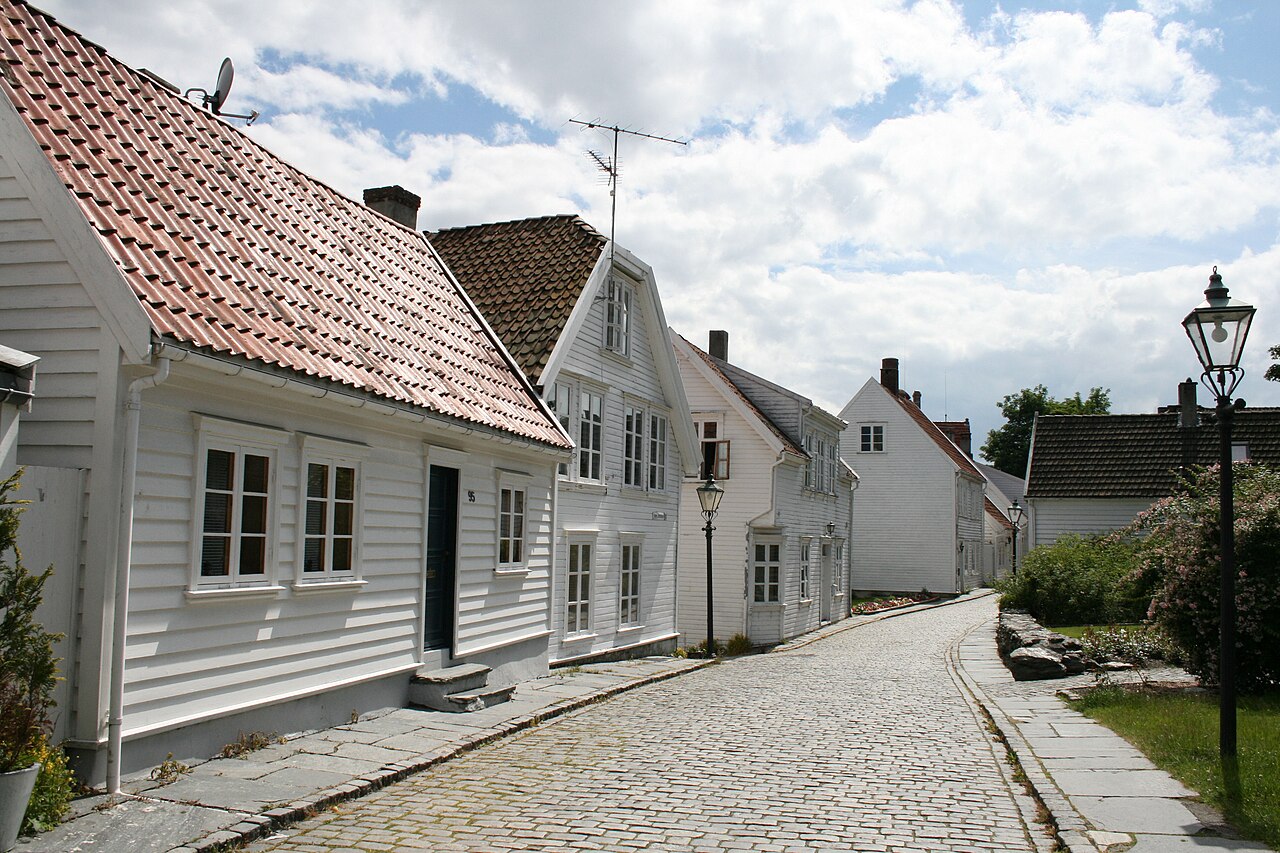
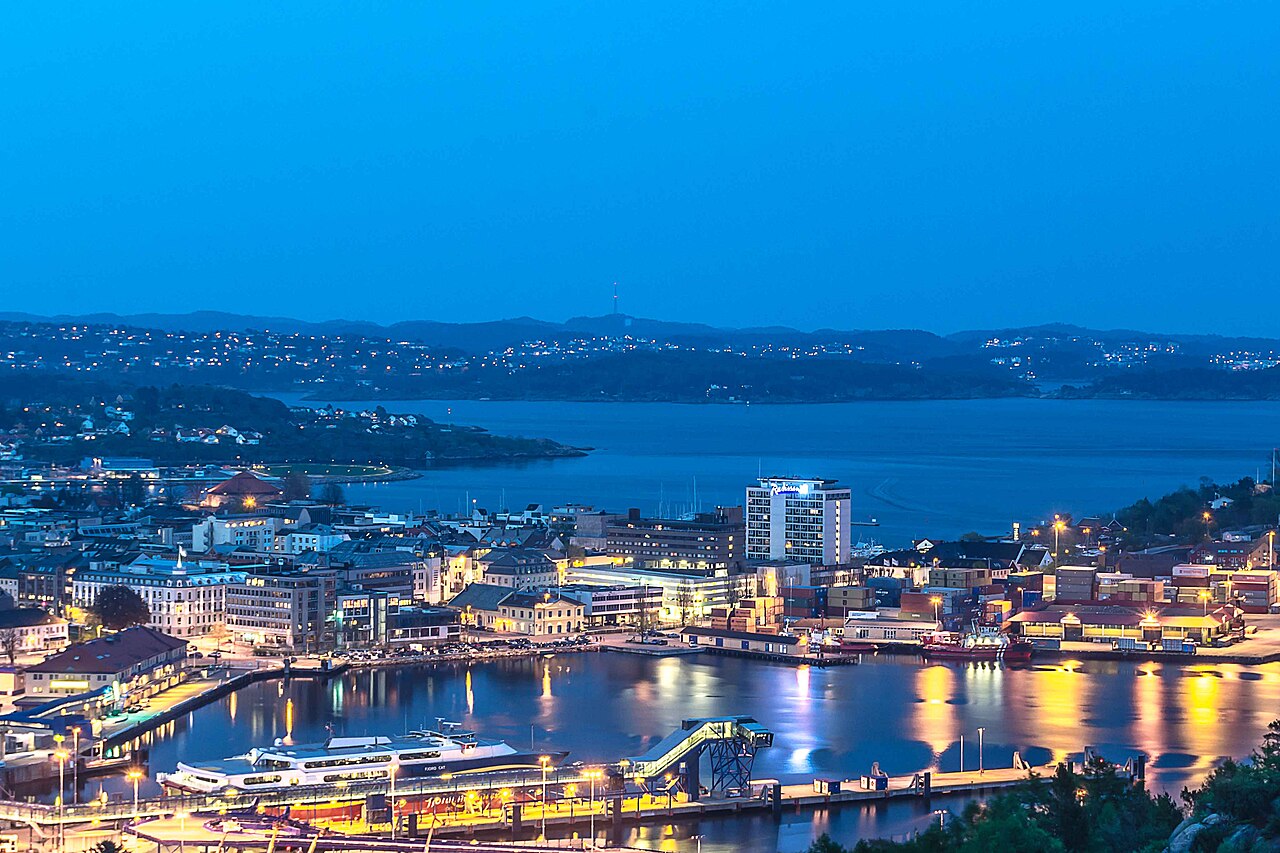
A southwestern port that counts 1125, when its cathedral was completed, as its founding year. After oil was found in the North Sea in 1969 it grew from a fishing town into the 'Oil Capital of Norway'.
The main city of the south coast, founded by King Christian IV in 1641 with a neat grid of streets, the Kvadraturen. In summer, Norwegians come for its beaches.
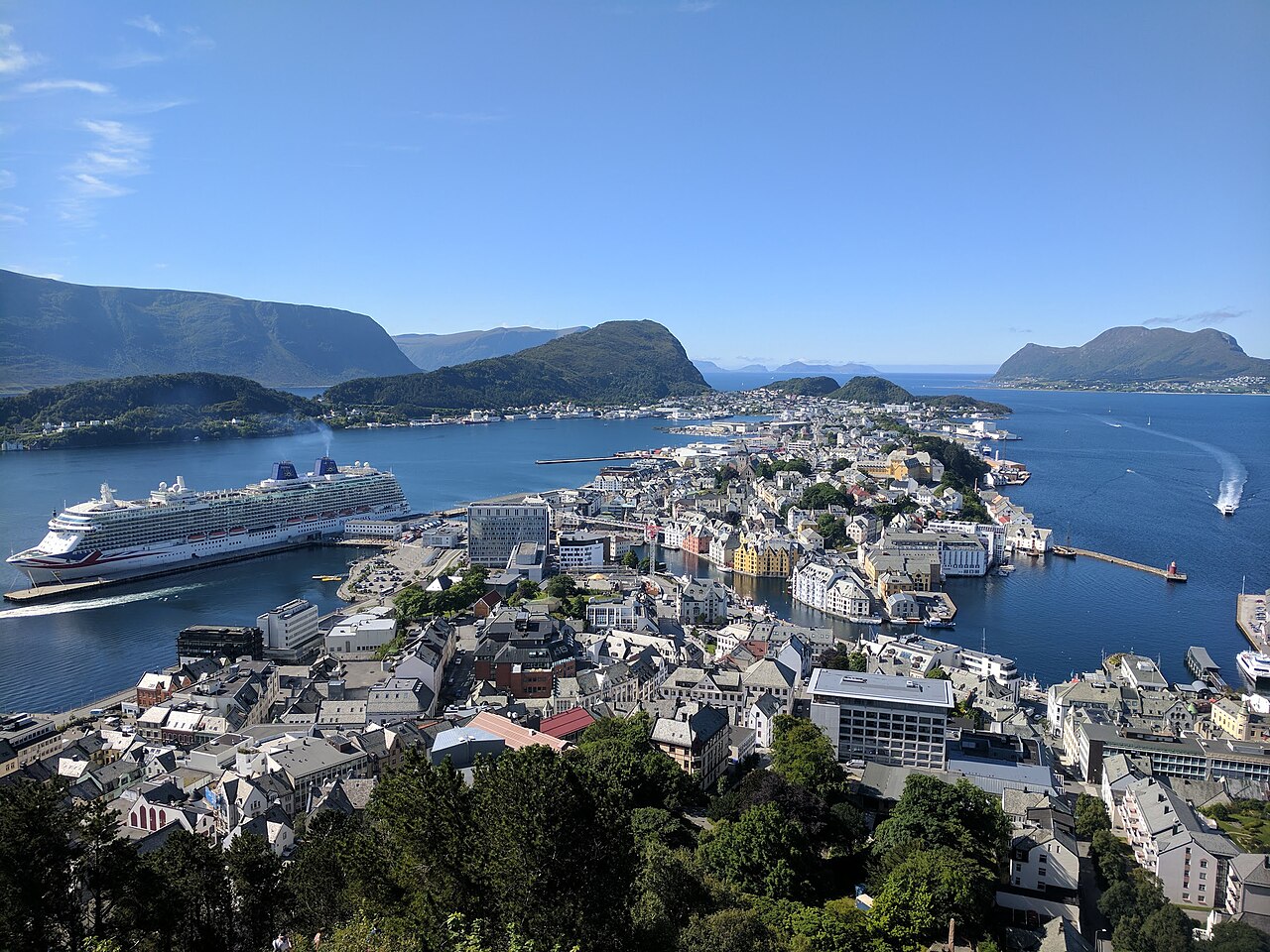
A fishing port spread over several islands. After a fire destroyed almost the whole town on 23 January 1904, it was rebuilt in only a few years in the Art Nouveau style, with towers, turrets and decorations.
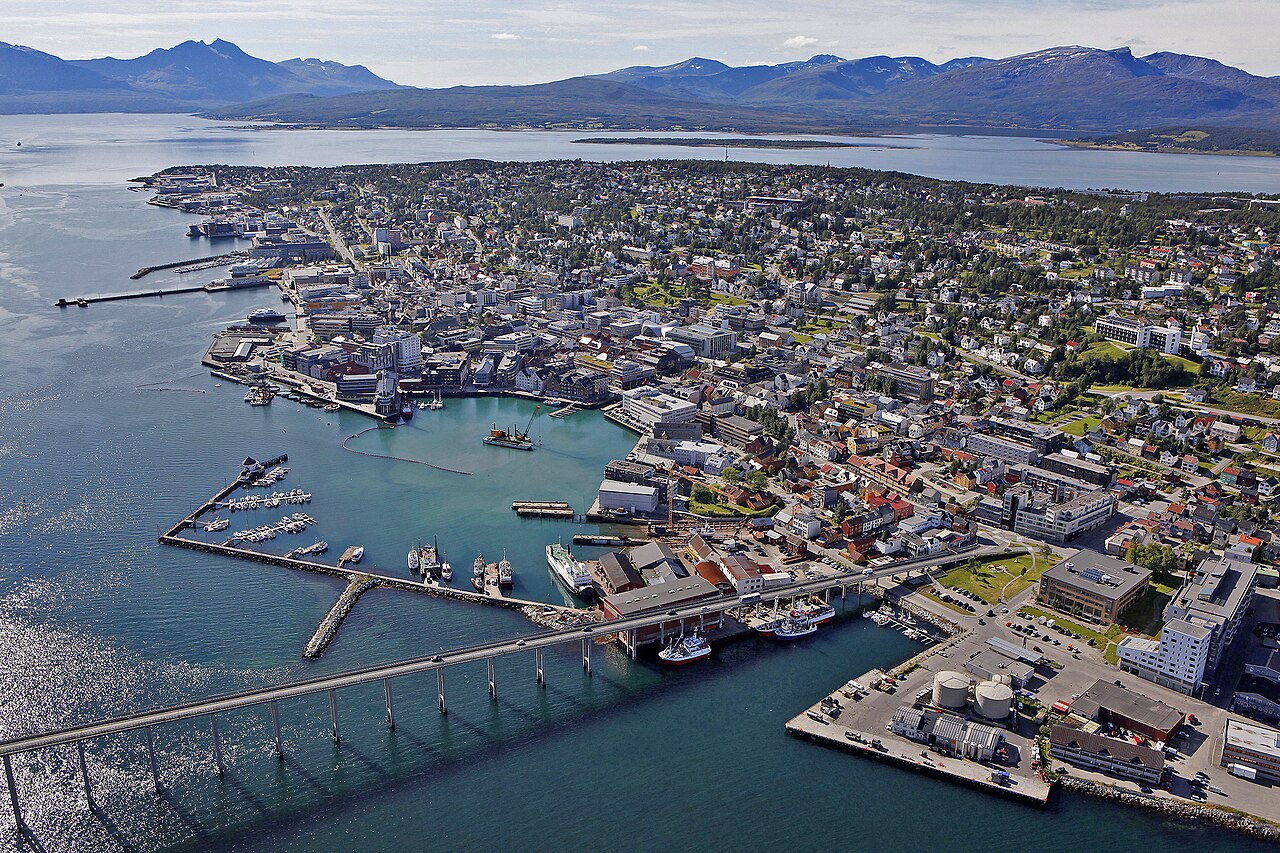
The largest town in northern Norway, on an island more than 300 km north of the Arctic Circle. Once a base for Arctic hunting and polar expeditions, it was nicknamed 'the Paris of the North'. The midnight sun shines from about late May to late July, and the sun stays below the horizon from late November to mid January.
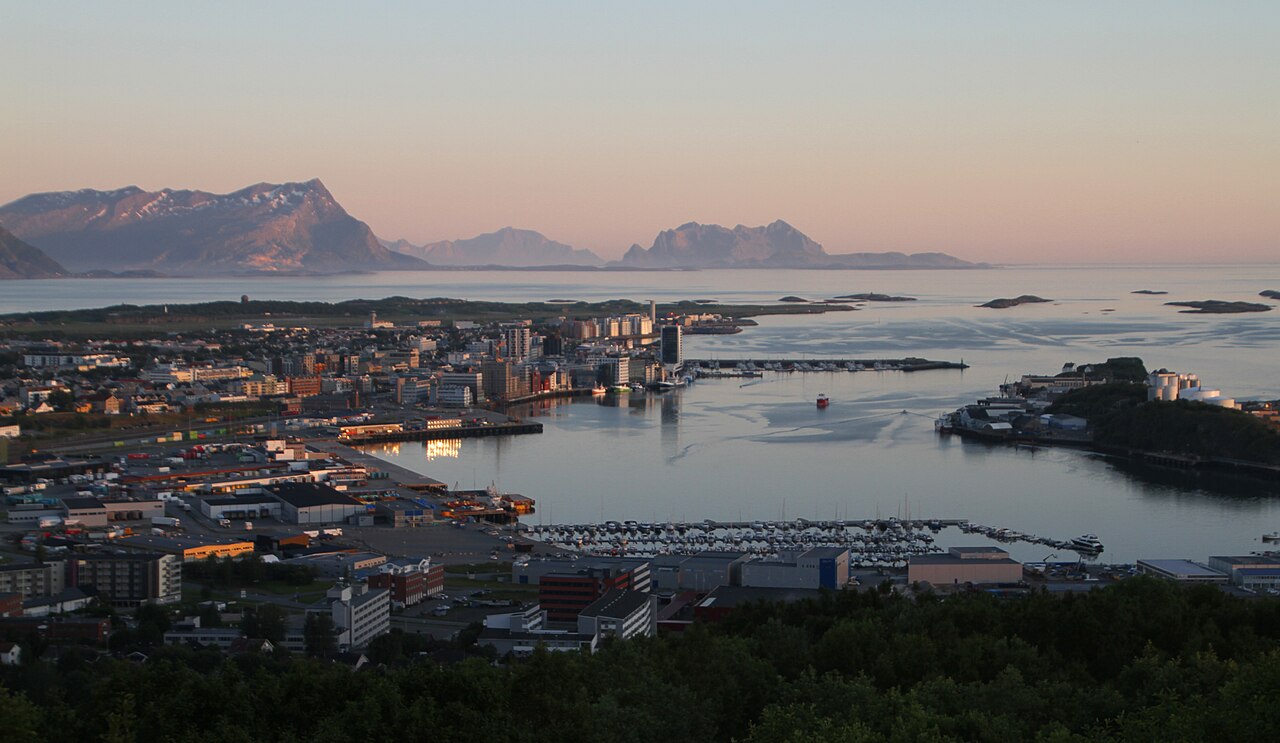
A modern coastal town just north of the Arctic Circle, rebuilt after heavy bombing in 1940. It was a European Capital of Culture in 2024, and ferries leave from here for the Lofoten Islands.
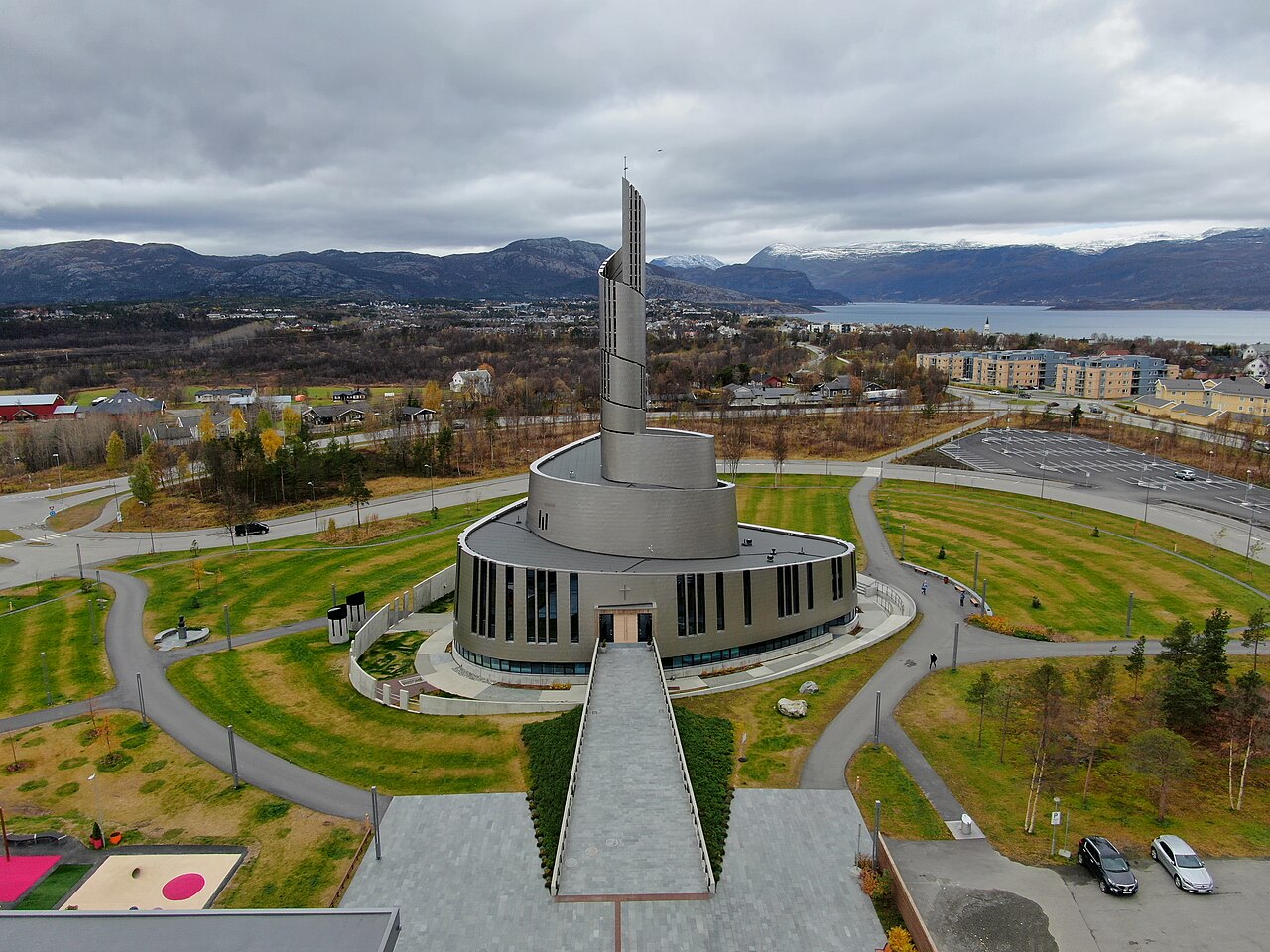
The largest town in Finnmark, near the top of Norway, calling itself 'the Northern Lights City'. Thousands of ancient rock carvings lie just west of the town.
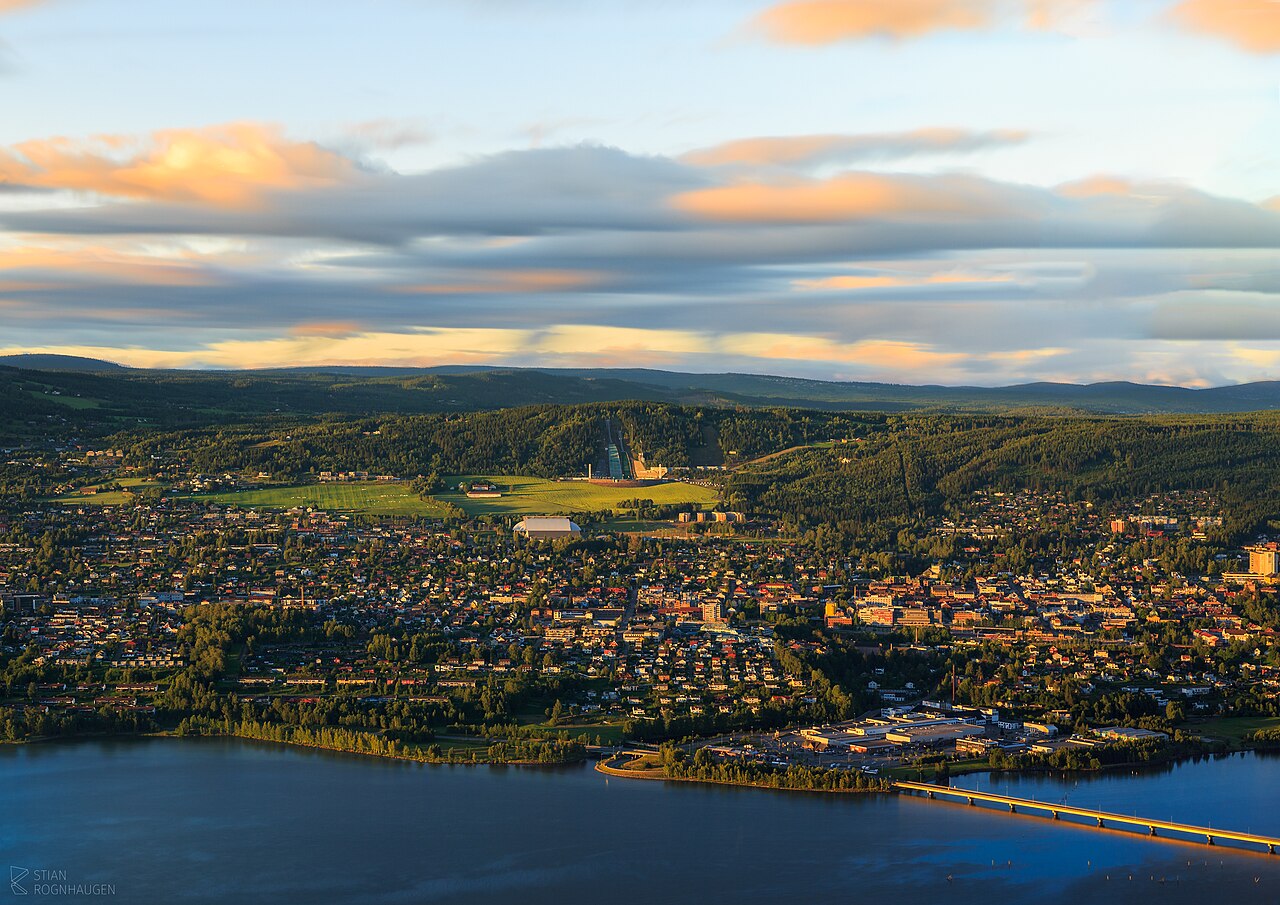
A small town at the northern end of Lake Mjøsa, Norway's largest lake, at the foot of the Gudbrandsdalen valley. It hosted the Winter Olympics in 1994 and the Winter Youth Olympics in 2016.
The 1994 Winter Olympics
Maihaugen, one of Northern Europe's largest open-air museums
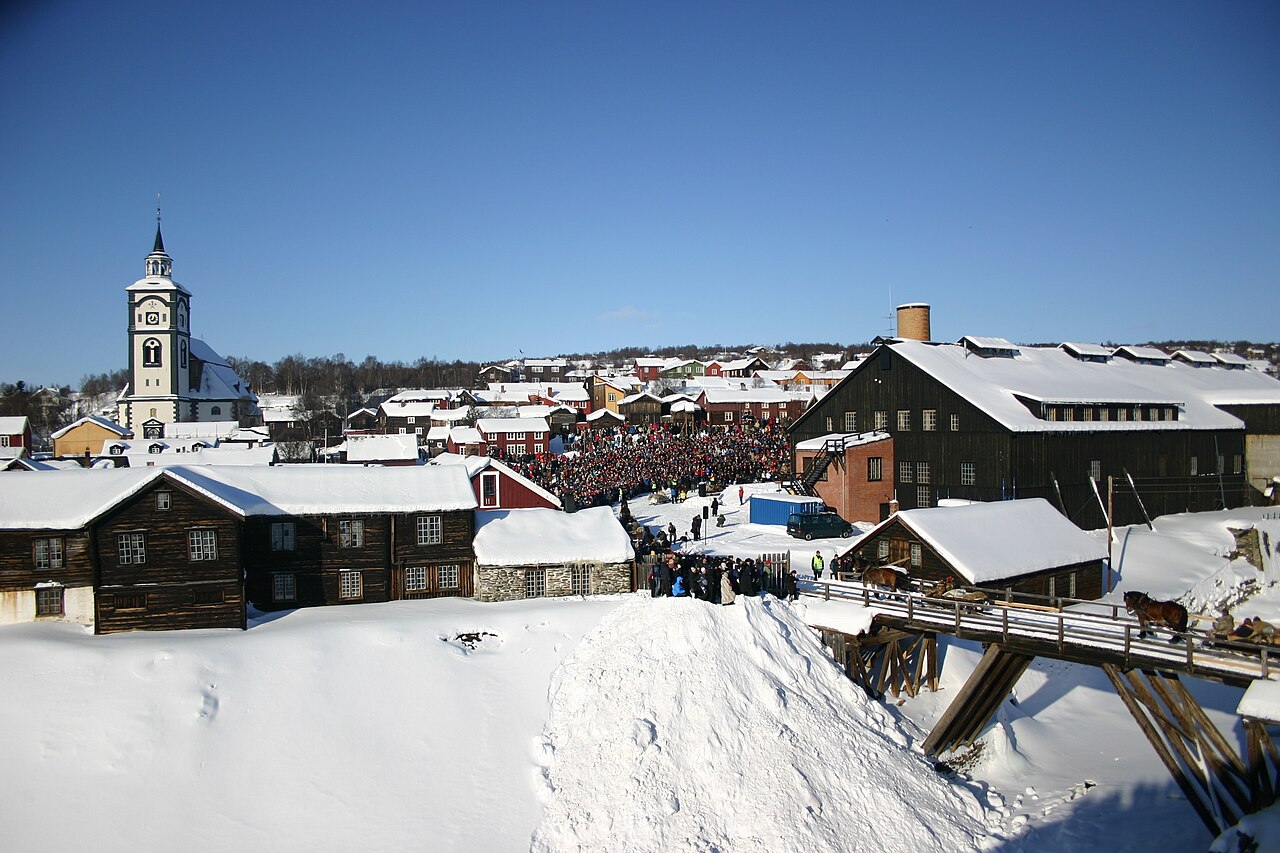
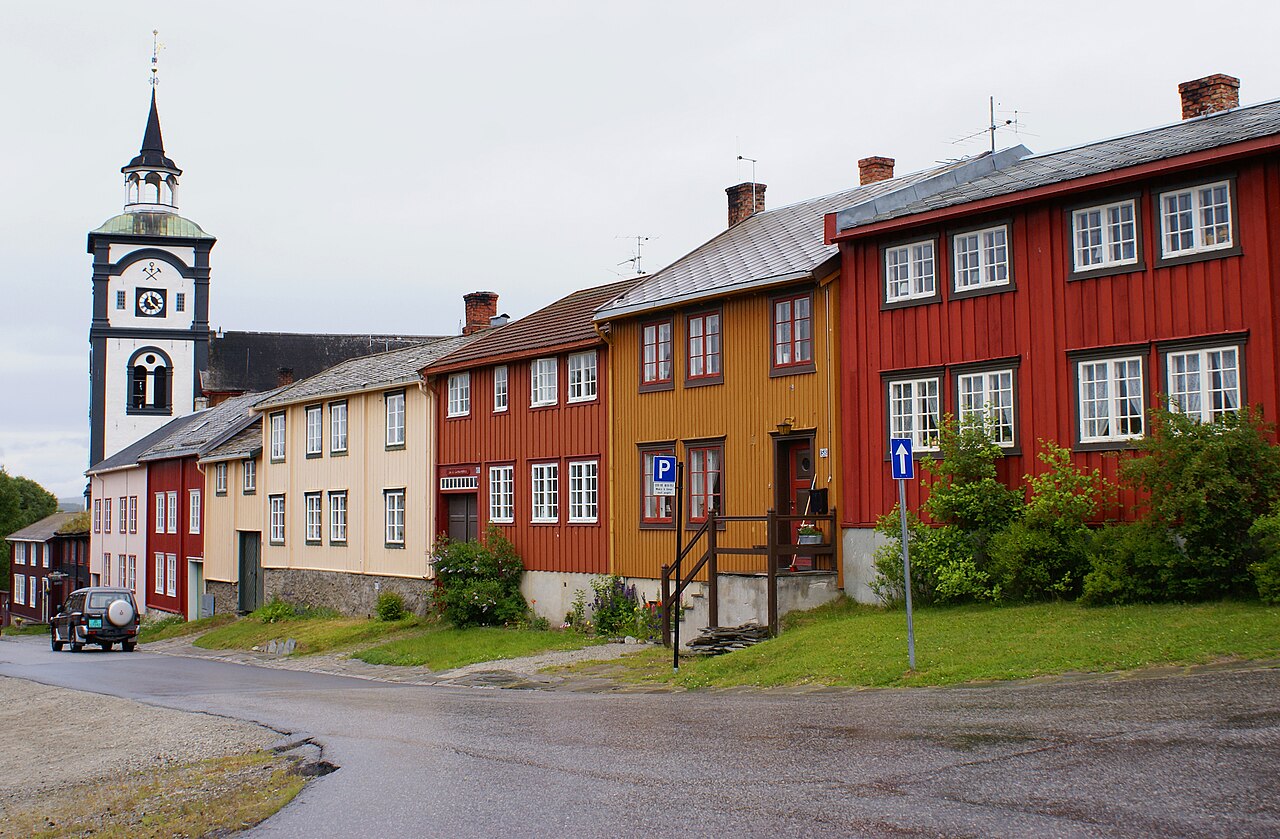
A copper-mining town high in the mountains, founded in 1646. Its mines worked for 333 years, until 1977, and its streets of dark wooden houses are a UNESCO World Heritage Site.
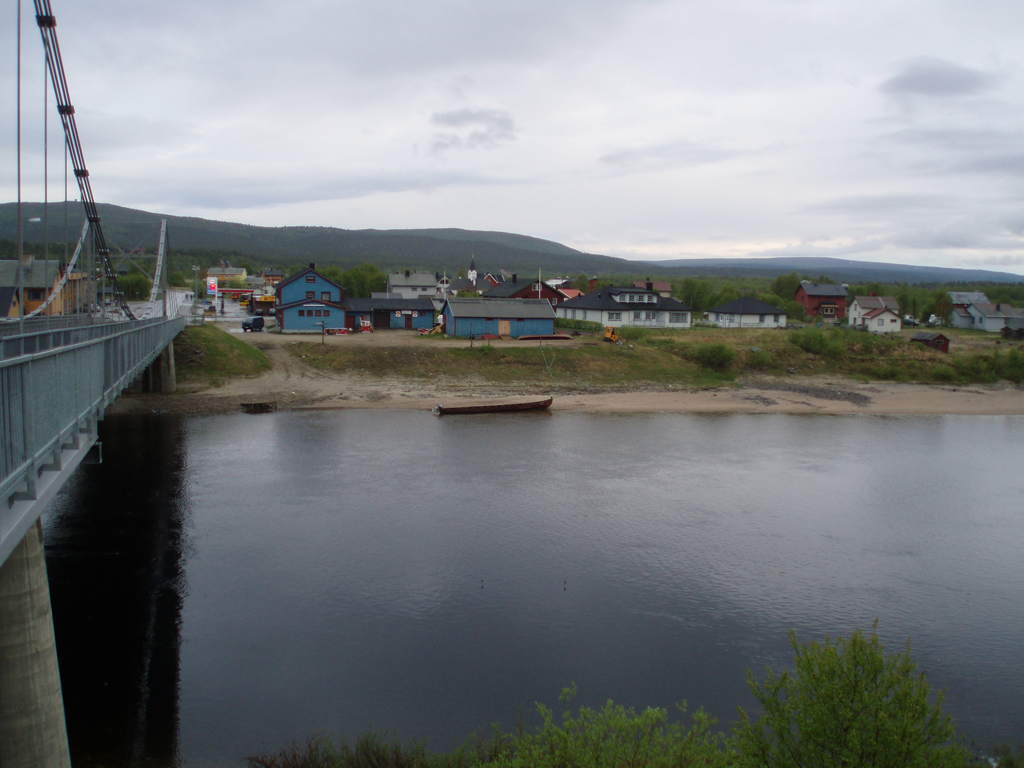
A village on the Finnmark plateau near the border with Finland, called Kárášjohka in Northern Sámi. It is a centre of Sámi language and culture and the seat of the Sámi Parliament of Norway.
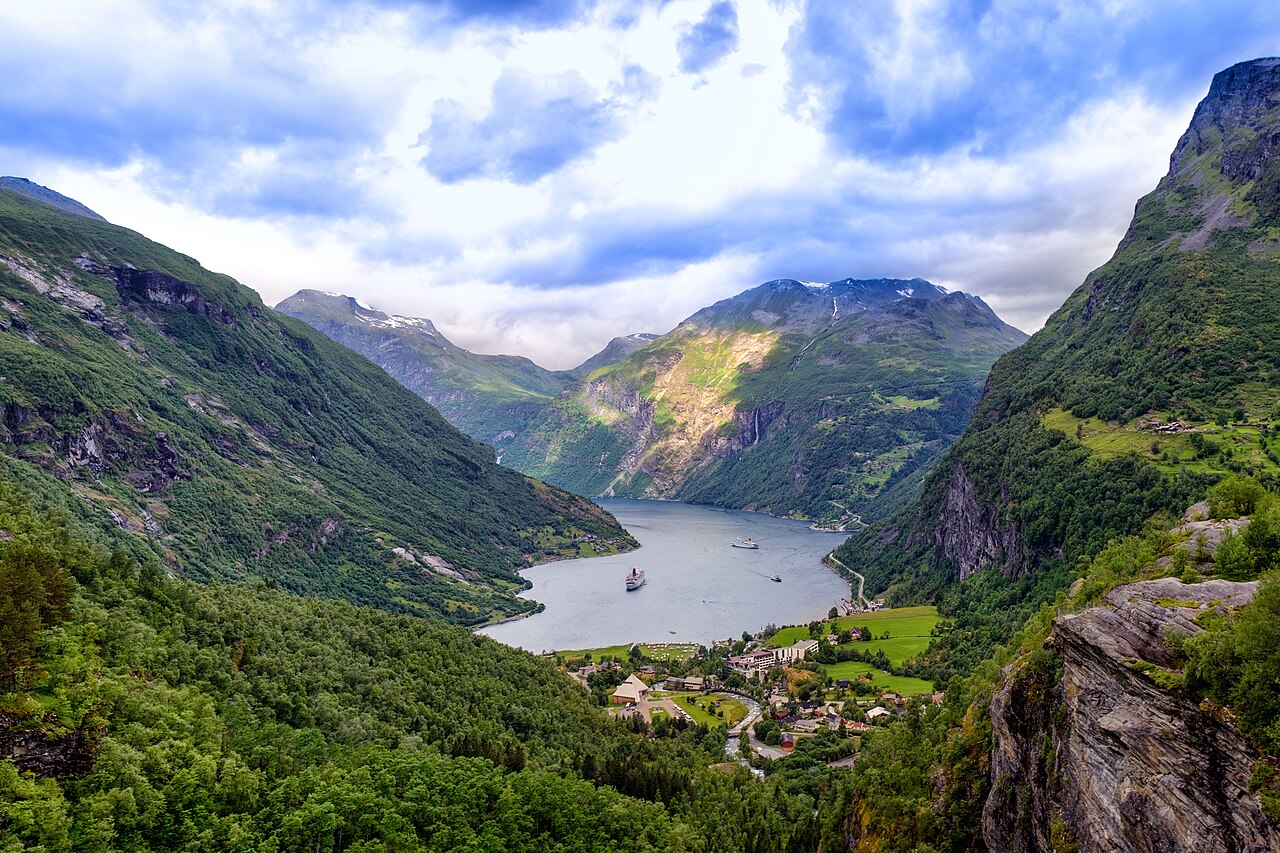
A 15 km arm of the sea between towering cliffs, with the Seven Sisters waterfall on one side and the 'Suitor' falls facing them. Together with the Nærøyfjord it forms the West Norwegian Fjords World Heritage Site, inscribed in 2005. It is often visited from Ålesund.
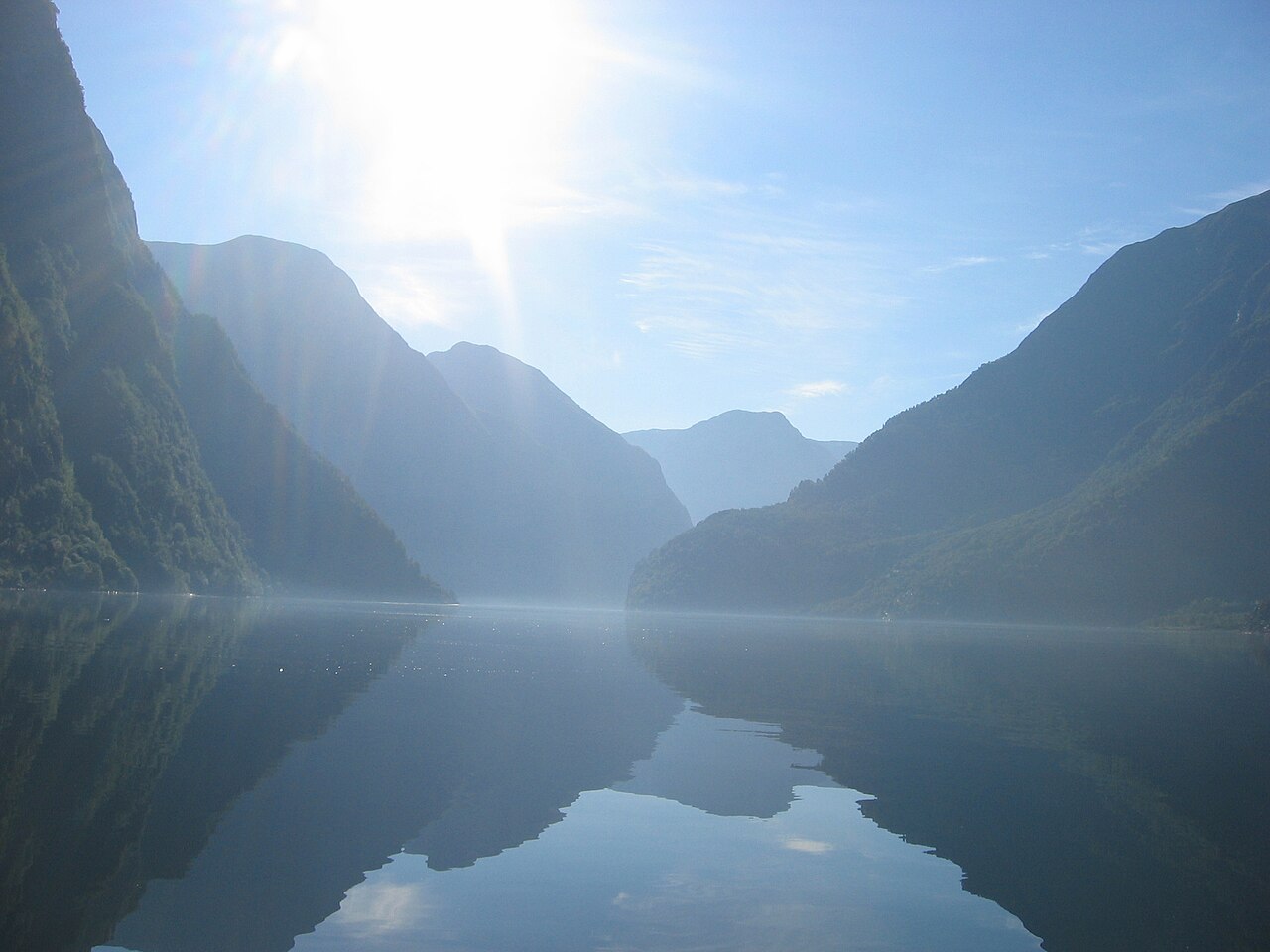
A branch of the Sognefjord about 17 km long and, at its narrowest, only about 250 m wide, between mountains up to 1,761 m high. It is part of the West Norwegian Fjords World Heritage Site and is reached through Flåm or Gudvangen, often on day trips from Bergen, about 170 km away by road.
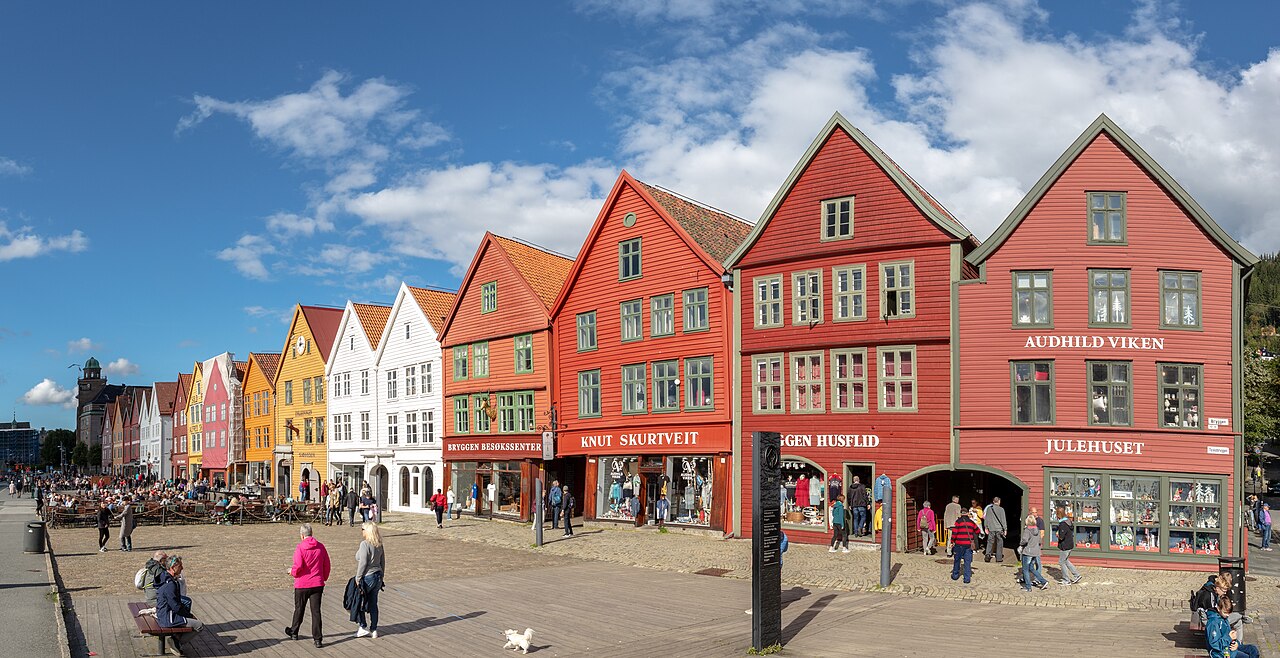
A row of wooden merchant houses on Bergen's harbour, where German Hanseatic traders had one of their four main trading offices from around 1350, storing stockfish from the north and grain from Europe. Most buildings date from after a fire in 1702. It has been a World Heritage Site since 1979.
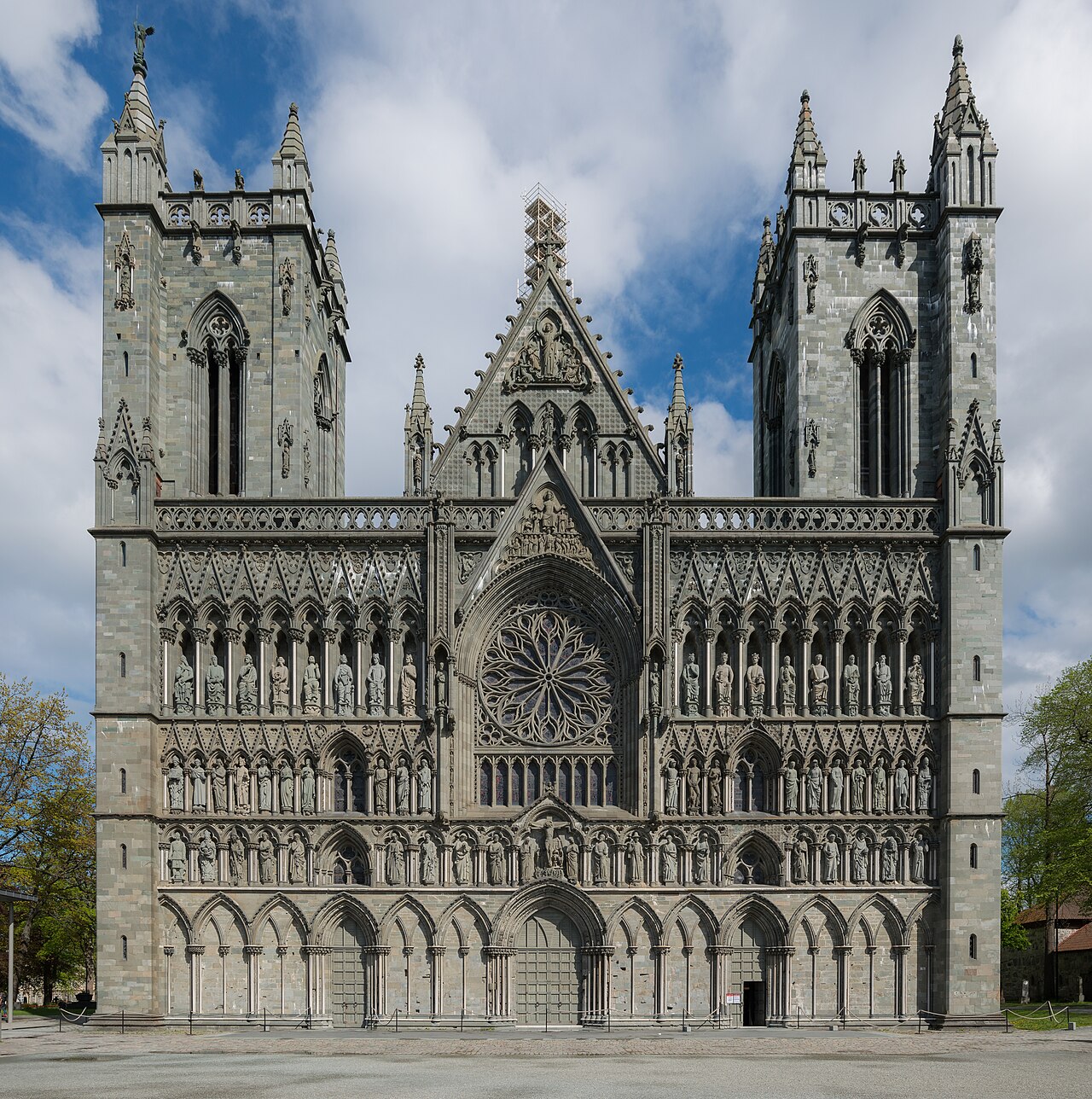
A great stone cathedral begun in 1070 and largely finished around 1300, built over the grave of Saint Olaf. It is the northernmost medieval cathedral in the world and still the end point of pilgrim routes across Norway.
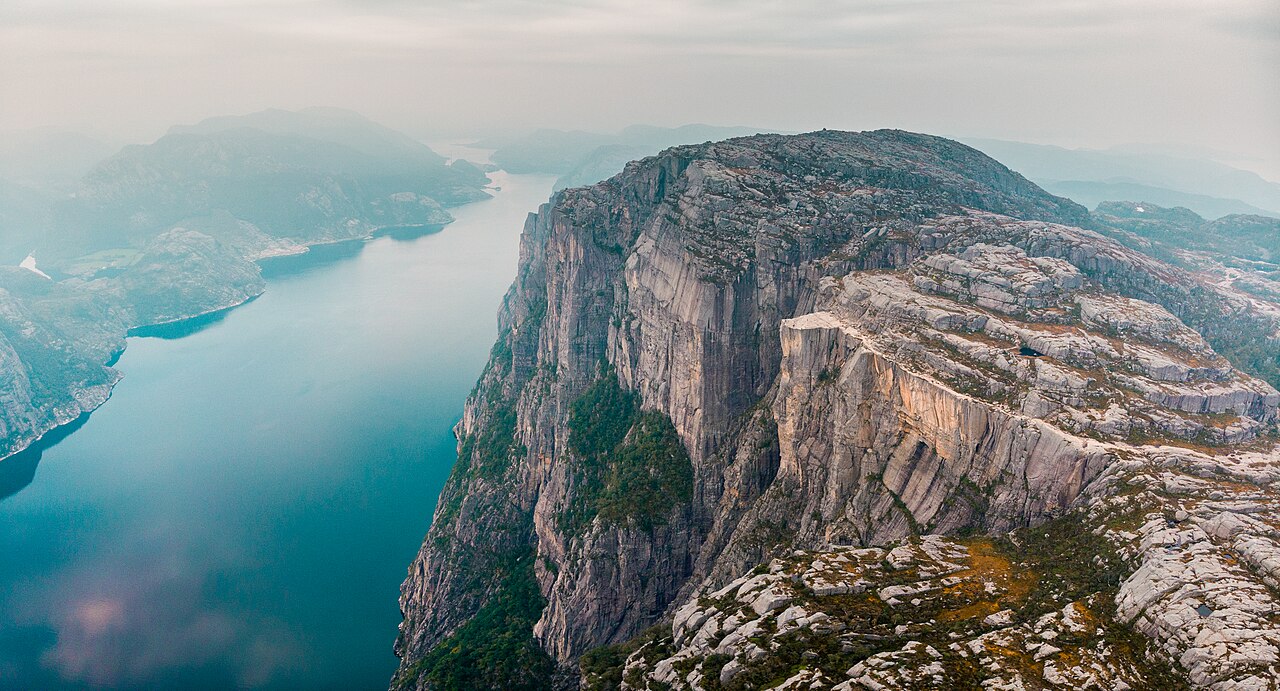
A flat-topped cliff, about 25 by 25 m, rising 604 m straight above the Lysefjord, about 25 km from Stavanger. The marked trail is 3.8 km each way, with a climb of about 330 m, and the round trip takes about 3 to 4 hours for someone of average fitness.
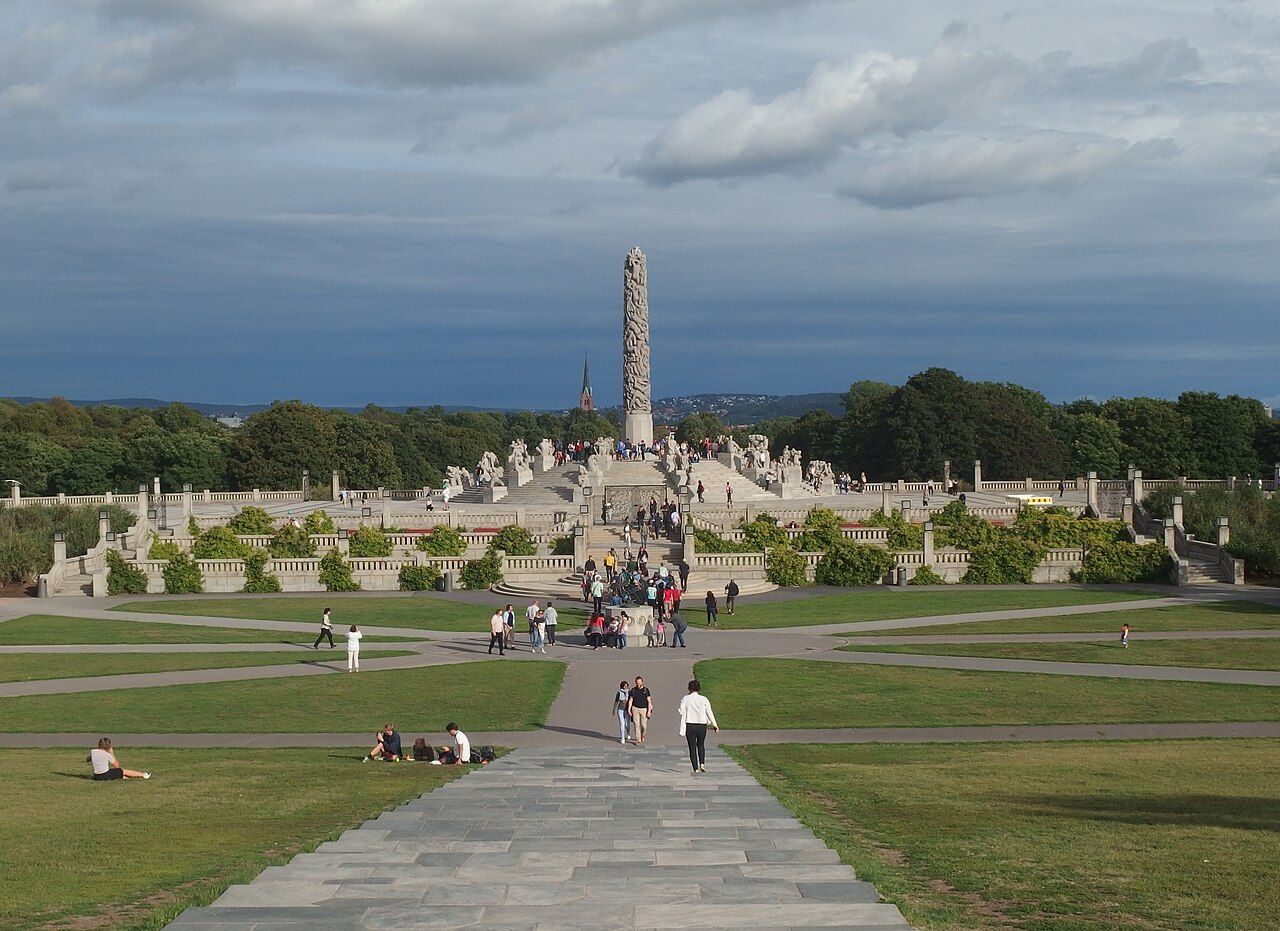
More than 200 bronze and granite sculptures of people of all ages by Gustav Vigeland, set in Oslo's largest park. The Monolith, 14.12 m tall, is carved from a single block of granite with 121 figures. The park is free and open all year.
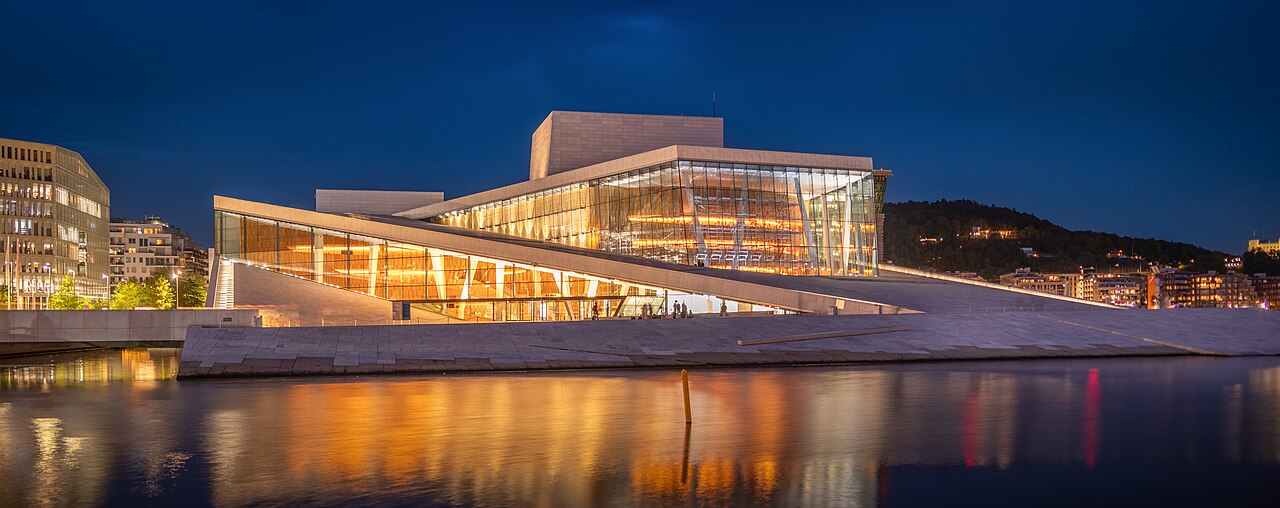
Home of the Norwegian National Opera and Ballet, opened in 2008 on the Oslofjord. Its white, sloping roof of marble and granite rises from the water, and anyone can walk up it for views over the city and fjord.
The old copper-mining town, with its church, slag heaps and streets of dark, log-built houses from the 1600s and 1700s, many still lived in today. It became a World Heritage Site in 1980, extended in 2010 to the surrounding area.
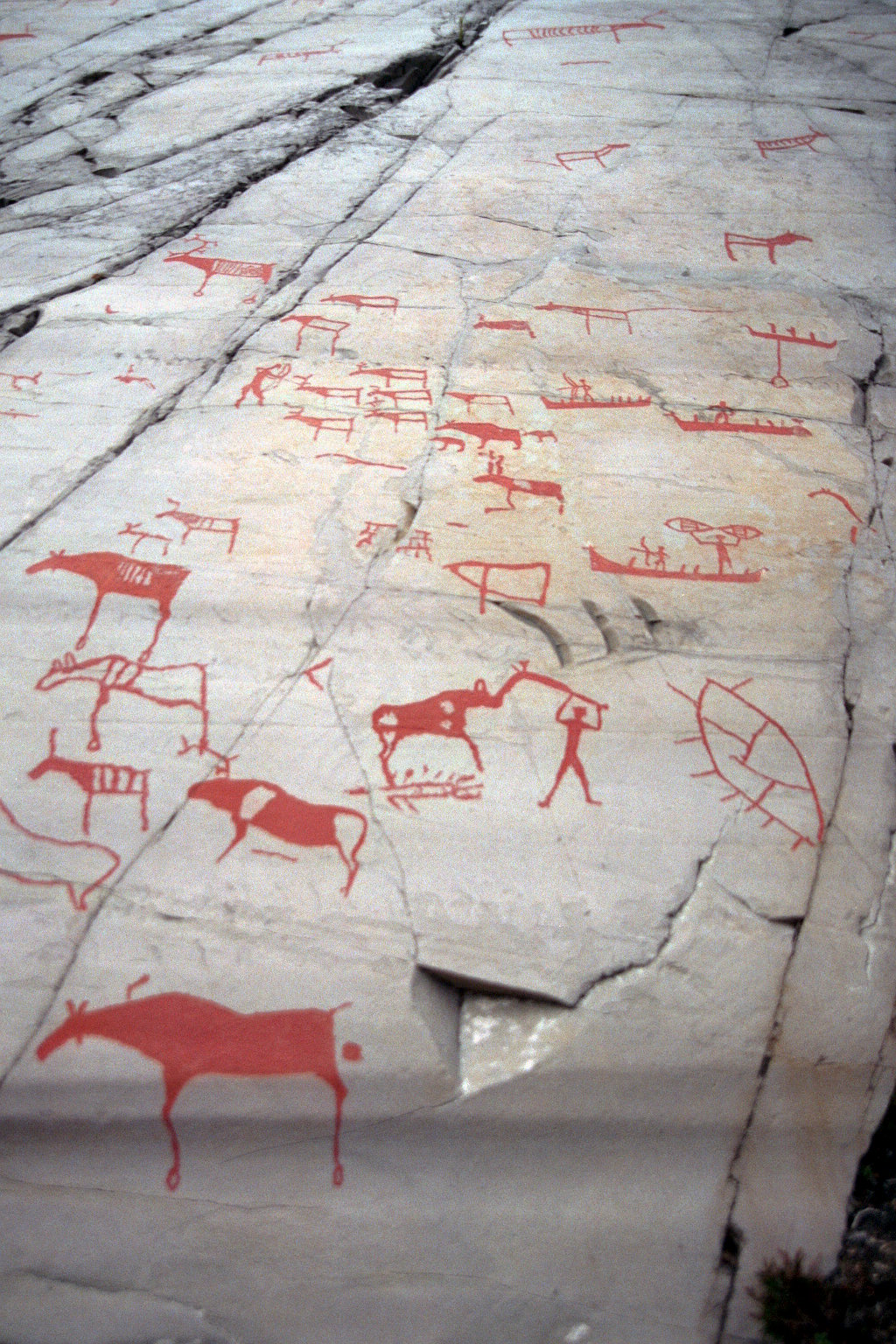
More than 6,000 carvings of reindeer, elk, boats, fishing and hunting scenes, made from about 4200 BC to 500 BC, just west of Alta. Found in 1973, they became Norway's only prehistoric World Heritage Site in 1985, and the Alta Museum stands at the main site.
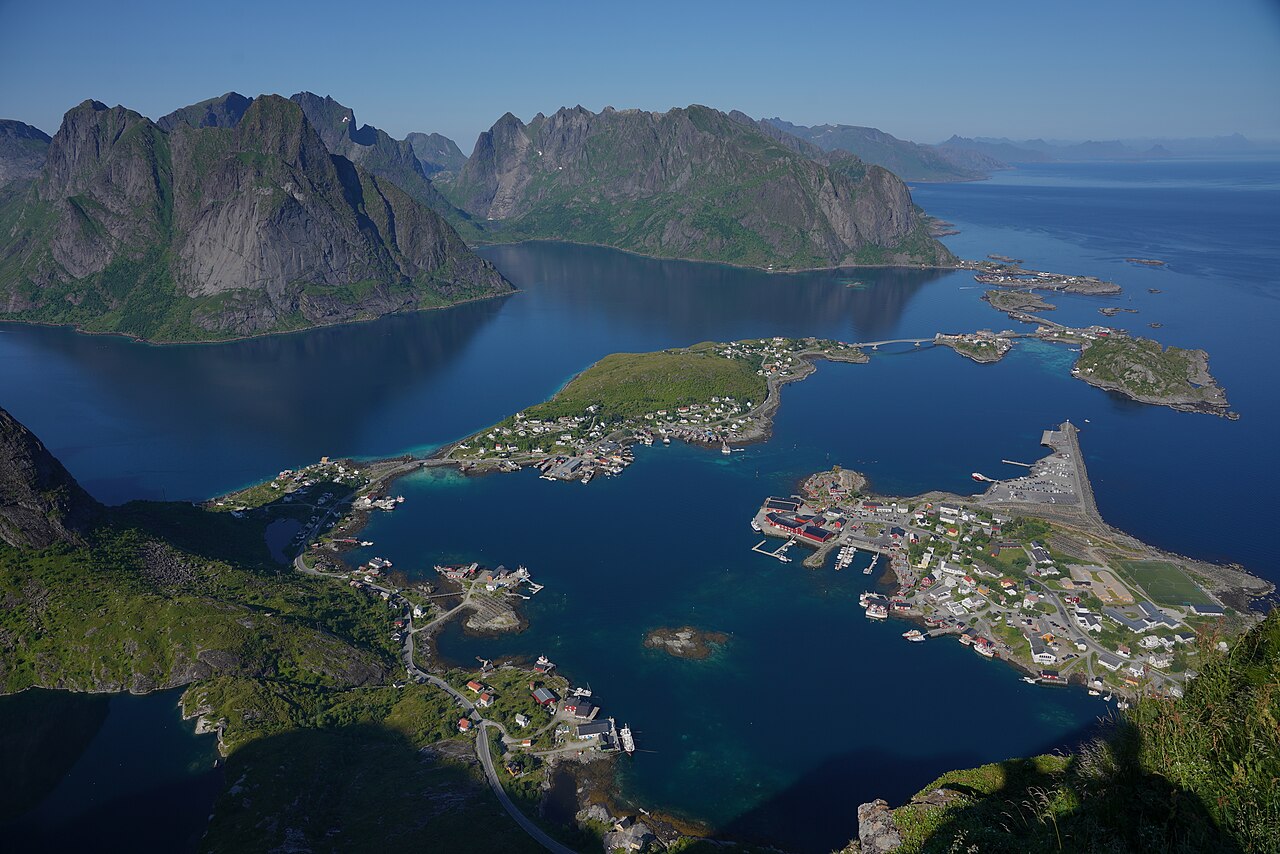
A chain of steep, jagged islands in the Norwegian Sea, famous for more than a thousand years for its winter cod fishery. The warm sea current keeps the winters mild for so far north. Ferries sail from Bodø to Moskenes, and a fast boat to Svolvær; the pin marks Svolvær, the main town.
North of the Arctic Circle the sun does not set for part of the summer. At the North Cape the midnight sun lasts from about mid May to late July, in Tromsø from about late May to late July, and on Svalbard from about late April to late August.
02
The northern lights can be seen in northern Norway from about late August to late March, on dark, clear nights, often between 11 pm and 2 am. Tromsø, Alta, Lofoten and Bodø are popular places to look for them.
03
The Nobel Peace Prize is the only Nobel Prize awarded in Norway. Following Alfred Nobel's will, a committee chosen by the Norwegian parliament picks the winner, and the prize is presented every 10 December at Oslo City Hall.
04
Every year since 1947, Oslo has given London a tall Norway spruce for Trafalgar Square, as thanks for British support during the Second World War.
05
As of 2026, Norway has won more Winter Olympic medals than any other country, 447 including 166 golds, after winning a record 41 medals at the 2026 Games in Milan and Cortina.
06
The Lærdal Tunnel on the road between Oslo and Bergen is 24.5 km long. As of 2026 it is the longest road tunnel in the world, and its three large caves are lit in blue and yellow to give drivers a feeling of sunrise.
07
Norway's state Oil Fund, set up in 1990, is the largest sovereign wealth fund in the world. As of 2026 it owns about 1.5 percent of the value of all the world's listed companies.
08
The Svalbard Global Seed Vault, dug into a mountain near Longyearbyen and opened in 2008, keeps back-up copies of seeds from gene banks all over the world, over a million samples.
09
The modern cheese slicer, the 'ostehøvel', was designed by the Norwegian carpenter Thor Bjørklund in 1925 and made in Lillehammer from 1927.
10
On 17 May, Constitution Day, the main events are not military parades but children's parades, with flags, school bands and many people in 'bunad', traditional regional costume. The royal family waves from the balcony of the palace in Oslo.
11
Anyone may walk, ski, pick berries and camp in a tent for up to two nights on open, uncultivated land, even if it is privately owned, as long as they stay at least 150 m from homes and cabins. This right to roam is called 'allemannsretten'.
12
Norwegian has two official written standards. Bokmål grew out of the Danish written language, and Nynorsk was built in the 1800s by Ivar Aasen from the dialects he collected across the countryside.
13
Svalbard, far north in the Arctic Ocean, belongs to Norway under a treaty signed in 1920. People of any nationality may live and work there without a visa, although travelling there through mainland Norway may need a Schengen visa.
14
The 'Law of Jante', a set of rules telling people not to think they are better than anyone else, comes from a 1933 novel by the Danish-Norwegian writer Aksel Sandemose. It is often used to describe the modest, equal spirit of Nordic life.
Norwegian (Bokmål, the written standard used by most Norwegians). Spoken Norwegian varies a lot between dialects; pronunciations are simple guides for English speakers, and capital letters show the stressed part. The letter 'ø' sounds like the 'u' in 'fur', without the r. Pronunciation is written the way it sounds; the capital letters show where the stress goes. Audio is coming soon.
Greetings
heiHAYhi, hello
takkTAHKthanks
jaYAHyes
neiNAYno
Food and drink
vannVAHNwater
brødBRUR (the d is silent)bread
ostOOSTcheese
fiskFISKfish
laksLAHKSsalmon
kaffeKAH-fehcoffee
Nature
fjellFYELLmountain
fjordFYOOR (the d is silent)fjord, a long, narrow arm of the sea
Norway drives on the right, and dipped headlights must be on at all times, even on a bright summer day. Speed limits are low, usually 80 km/h outside towns and at most 110 km/h, the drink-driving limit is very strict (0.2 per mille) and fines are high.
Tolls and ferries
Most road tolls are collected automatically by camera. If you rent a car, ask how tolls are paid. Many roads along the fjords include short car ferries, paid with the AutoPASS or FerryPay systems, and some routes are free.
Cards almost everywhere
Debit and credit cards, and phone payments, are accepted almost everywhere. Carry a little cash in Norwegian kroner for small places in the countryside. Tipping is not expected.
Buying wine and beer
You must be 18 to buy beer and wine and 20 to buy spirits. Supermarkets sell beer only until 8 pm on weekdays and 6 pm on Saturdays. Apart from airport tax-free shops, wine, spirits and stronger beer are sold only in the state shops called Vinmonopolet.
When to see the light
For the midnight sun, travel north of the Arctic Circle between about late May and late July (a shorter time just north of the circle, such as in Bodø). For the northern lights, go to the north between September and March and look up on dark, clear nights, often late in the evening.
Respect nature
The right to roam lets you walk and camp on open land, but campfires in the countryside are banned from 15 April to 15 September, except in safe places such as by the sea or at approved fire sites, and you should take all your rubbish with you. The weather in the mountains changes fast, so bring warm, waterproof layers even in summer.
Plugs
Norway uses 230 volt electricity and the round two-pin plugs common in continental Europe. Visitors from the United Kingdom and North America need an adapter.
Emergencies
The emergency numbers are 112 for police, 113 for an ambulance and 110 for fire.
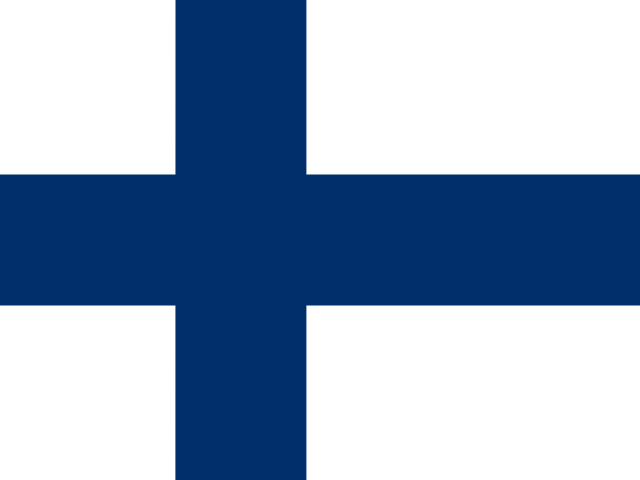 Finland
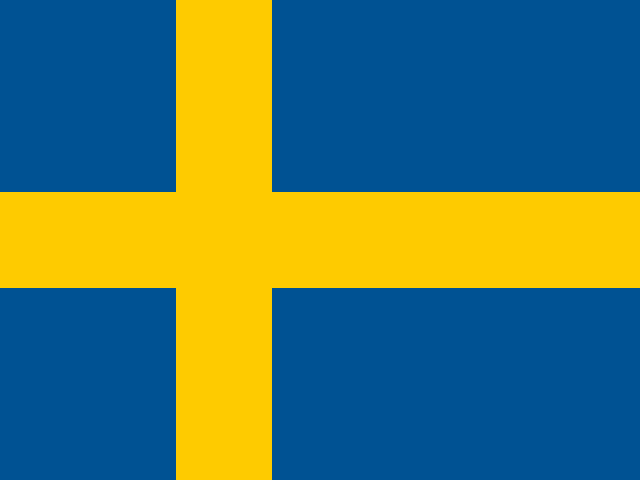 Sweden
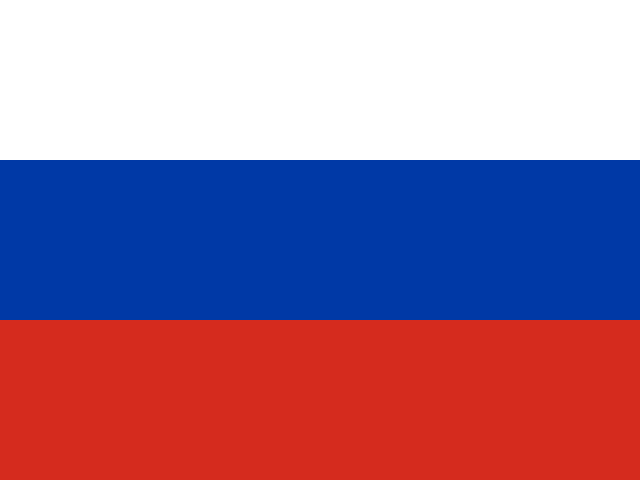 Russia