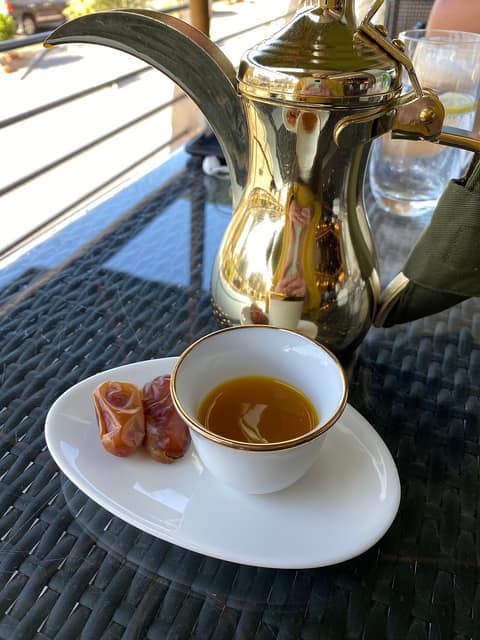
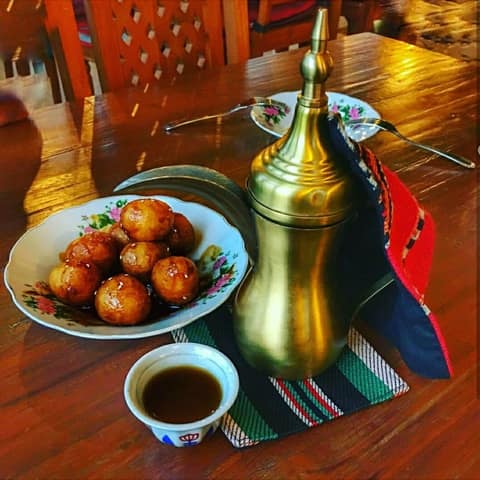
Red sand dunes, carved Nabataean tombs, cool green mountains and a small cup of cardamom coffee, in the country that holds Islam's two holiest cities.
Saudi Arabia covers most of the Arabian Peninsula, between the Red Sea in the west and the Gulf in the east. Much of it is desert: the Rub' al Khali, or Empty Quarter, in the south is the largest continuous sand desert in the world. There are no permanent rivers at all, only wadis, dry valleys that fill with water after rare rains. In the southwest, the green mountains of Asir rise to about 3,000 m and are much cooler and wetter than the rest of the country.
Islam began here in the 7th century. Mecca, where the Prophet Muhammad was born, and Medina, where he is buried, are the two holiest cities in Islam, and millions of Muslims come every year for the Hajj and Umrah pilgrimages. The modern kingdom was proclaimed in 1932, and the discovery of oil in 1938 turned a land of oases, caravan towns and Bedouin camps into one of the world's great oil producers.
Questions to ask the older generation
Memories fade faster than photos. Ask these over a meal or a phone call, and write the answers down.
Which town or region of Saudi Arabia did our family come from? Was it near Jeddah, Mecca, Medina?
Who was the first in the family to leave Saudi Arabia, when, and why?
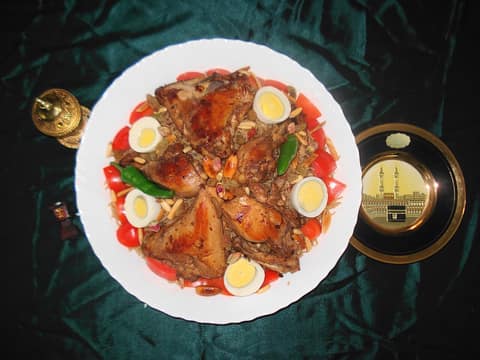
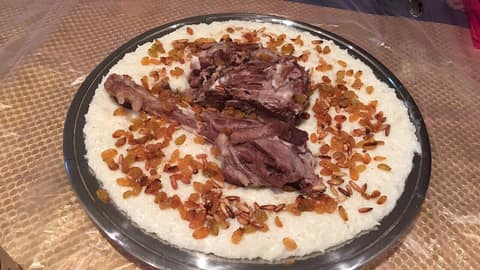
Which dishes from Saudi Arabia were cooked at home? Did anyone make Kabsa or Jareesh?
Does anyone in the family still speak Arabic, or use a few words of it?
Were there songs, prayers, games or holidays from Saudi Arabia that the family kept?
Are there old photos, letters or documents from Saudi Arabia? Who has them?
If you could visit Saudi Arabia together, where would you go first?
A short history of Saudi Arabia
Long before Islam, caravans carrying incense and spices crossed Arabia, and peoples such as the Nabataeans built cities along their routes. In the 7th century Islam began in Mecca and Medina and spread across much of the world. For centuries the holy cities of the Hejaz were ruled from far away, while in the central region of Najd a family from the oasis town of Diriyah, the Al Saud, founded a state in 1727. After two earlier Saudi states, the modern kingdom was proclaimed in 1932.
AD 106
Rome annexes the Nabataean kingdom
The Nabataeans, famous for Petra in Jordan, had built their second city at Hegra in the northwest of today's Saudi Arabia, carving grand tombs into the sandstone. In AD 106 the Roman Empire under Trajan annexed their kingdom and made it the province of Arabia Petraea.
AD 610
The first revelation
Muslims believe that in about 610, in the Cave of Hira on a mountain just outside Mecca, Muhammad received the first verses of the Quran. He began to preach in Mecca soon after.
AD 647
Jeddah becomes the port of Mecca
The caliph Uthman chose Jeddah, a fishing village on the Red Sea, as the main port for travellers to Mecca. Since then, millions of pilgrims have arrived in Mecca by way of Jeddah.
1727
The First Saudi State begins in Diriyah
Muhammad bin Saud became the ruler of Diriyah, a small oasis town now on the edge of Riyadh, in February 1727. Since 2022, 22 February has been celebrated as Founding Day, a public holiday. His state, the Emirate of Diriyah, grew to rule much of Arabia.
1902
Abdulaziz retakes Riyadh
In January 1902 the young Abdulaziz Al Saud, later known as Ibn Saud, returned from exile with a small band of men and captured the Masmak fort in Riyadh. Over the next 30 years he brought most of the peninsula under his rule.
1925
Abdulaziz takes the Hejaz
Abdulaziz's forces entered Mecca in 1924, and the campaign ended in December 1925 with the surrender of Jeddah. Najd and the Hejaz, with the holy cities, were now under one ruler.
1938
Oil is found at Dammam No. 7
After six disappointing wells, American and Saudi oilmen struck oil in commercial quantities at well Dammam No. 7 on 3 March 1938. Oil soon transformed the country's economy; the well, nicknamed the Prosperity Well, produced oil until 1982.
2019
Tourist visas are introduced
In September 2019 Saudi Arabia began issuing tourist visas online and on arrival to citizens of dozens of countries, opening the country to independent holiday visitors for the first time.