Smoking volcanoes, a deep blue lake ringed by Maya villages, jungle pyramids at Tikal, and a cobbled colonial city carpeted with flowers at Easter.
Guatemala lies in the north of Central America, with Mexico to the north and west, Belize to the northeast, and Honduras and El Salvador to the southeast. It has a long Pacific coast in the south and a short Caribbean coast on the Gulf of Honduras. Two mountain chains cross the country, so it falls into three regions: the cool volcanic highlands, the hot Pacific coastal plain, and the vast, sparsely populated lowland forests of Petén in the north. Volcán Tajumulco, at about 4,200 m, is the highest peak in all of Central America.
This was a heartland of the Maya civilisation. Great cities such as El Mirador, Tikal and Quiriguá rose in the forests, and highland kingdoms of the K'iche', Kaqchikel and other peoples were still strong when the Spanish arrived in 1524. For almost three centuries Guatemala was the centre of Spanish rule in Central America, above all from Antigua and later from Guatemala City. It became independent in 1821 and a separate republic in 1847. The 20th century brought dictatorships, a decade of reform, a coup in 1954 and a civil war that lasted until the peace accords of 1996.
Questions to ask the older generation
Memories fade faster than photos. Ask these over a meal or a phone call, and write the answers down.
Which town or region of Guatemala did our family come from? Was it near Antigua Guatemala, Quetzaltenango, Flores?
Who was the first in the family to leave Guatemala, when, and why?
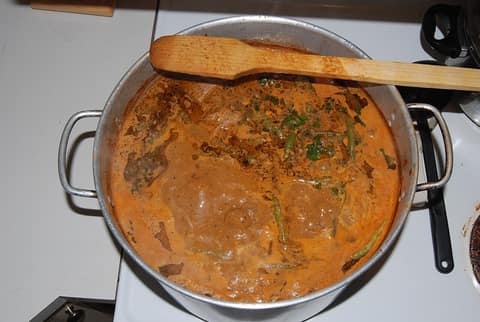
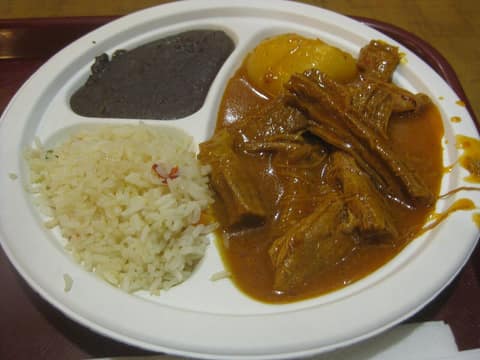
Which dishes from Guatemala were cooked at home? Did anyone make Pepián or Kak'ik?
Does anyone in the family still use a few words from the old country?
Were there songs, prayers, games or holidays from Guatemala that the family kept?
Are there old photos, letters or documents from Guatemala? Who has them?
If you could visit Guatemala together, where would you go first?
A short history of Guatemala
Maya cities flourished in Guatemala for well over a thousand years before the Spanish arrived. Spanish rule lasted almost three centuries and left behind Antigua and a deep Catholic tradition. Since independence in 1821 the country has lived through dictators, reforms, a coup, a long civil war and, since 1996, peace and elected governments.
AD 378
Siyaj K'ak' arrives at Tikal
Carved monuments record that on 14 January 378 the king of Tikal died and, on the same day, a lord called Siyaj K'ak' (Fire Is Born) arrived from the west. He was probably a general linked to the great Mexican city of Teotihuacan, and a new dynasty soon ruled Tikal, which went on to become one of the most powerful Maya kingdoms.
1524
Alvarado founds the first Spanish capital
The conquistador Pedro de Alvarado, sent from Mexico by Hernán Cortés, led a campaign into the highlands in 1524. At first allied with the Kaqchikel Maya, he defeated their rivals the K'iche' and founded the first Spanish capital near the Kaqchikel city of Iximche. The alliance soon broke down, and resistance went on for years.
1697
The Spanish take Nojpetén
Nojpetén, the island capital of the Itza Maya on Lake Petén Itzá, was the last independent Maya kingdom. Spanish forces took it by boat in 1697 and destroyed its temples. The town of Flores later grew up on the same island.
1821
Independence from Spain
On 15 September 1821 leaders in Guatemala City signed the Act of Independence of Central America, ending Spanish rule. The region briefly joined the Mexican Empire and then formed the Federal Republic of Central America. 15 September is still Guatemala's Independence Day.
1944
The October Revolution
Protests and a general strike forced the dictator Jorge Ubico to resign in July 1944, and on 20 October a revolt by young officers and students overthrew his successor. The free elections that followed began ten years of reforms, later called the Ten Years of Spring, including a labour code and, in 1952, a land reform.
1960
An officers' revolt starts the civil war
On 13 November 1960 a group of junior officers rebelled and failed. The survivors formed a guerrilla movement, and this is usually taken as the start of a civil war between the state and left-wing rebel groups that lasted 36 years.
1992
Rigoberta Menchú wins the Nobel Peace Prize
Rigoberta Menchú, a K'iche' Maya woman whose family suffered during the civil war, received the Nobel Peace Prize in 1992 for her work for the rights of Indigenous peoples. She was 33 years old.
1999
The truth commission reports
In February 1999 the UN-backed Commission for Historical Clarification presented its report, Memory of Silence. It estimated that more than 200,000 people were killed or disappeared during the war, found that 83 percent of the fully identified victims were Maya, and attributed 93 percent of the violations it documented to state forces and related paramilitary groups. It concluded that agents of the state had committed acts of genocide against groups of Maya people in the four regions it studied, between 1981 and 1983.
camionetakah-myoh-NEH-tahbus, especially a colourful 'chicken bus'
lanchaLAHN-chahsmall motor boat, such as the boats on Lake Atitlán
Towns and regions
Guatemala City, Guatemala: The National Palace of Culture and the cathedral on the central square, Zones (zonas): addresses such as '7a Avenida 1-17, Zona 4'.
Antigua Guatemala, Sacatepéquez: The yellow Santa Catalina Arch, Holy Week processions over carpets of coloured sawdust and flowers.
Quetzaltenango, Quetzaltenango: The name Xela (SHEH-lah), Belle Époque buildings around the Parque Central.
Flores, Petén: Its island setting on Lake Petén Itzá, Trips to Tikal and other Maya sites.
Chichicastenango, Quiché: The market on Thursdays and Sundays, The church of Santo Tomás, where Maya prayers and incense fill the steps.
Panajachel, Sololá: Views of three volcanoes across the lake, Boats to the lakeside villages.
Cobán, Alta Verapaz: Coffee and cardamom farms, Cloud forests and orchids.
Puerto Barrios, Izabal: The Caribbean port for bananas and other exports, Boats to Livingston.
Livingston, Izabal: Garifuna music, dance and language, Tapado, the coconut seafood soup.
Huehuetenango, Huehuetenango: Highland coffee, The ruins of Zaculeu.
Esquipulas, Chiquimula: The Black Christ of Esquipulas, The white baroque basilica.
Retalhuleu, Retalhuleu: The nickname Reu, The Maya site of Tak'alik Ab'aj nearby.