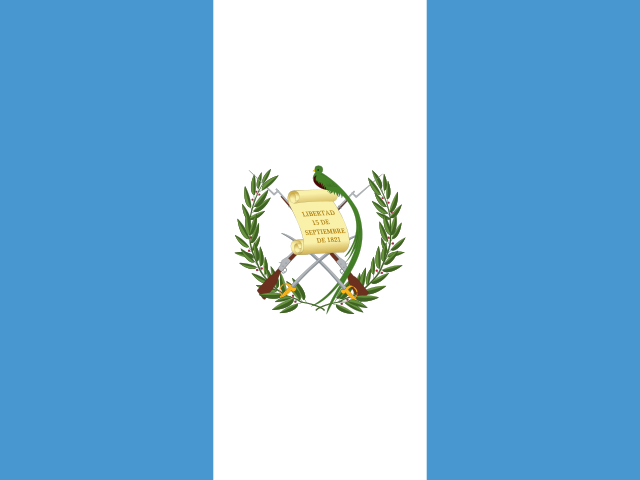
Learn Guatemala before you go
10 phrases to learn
In Spanish (Guatemalan). Capital letters show the stressed part. Tap the heart to practise a phrase later.
At the table
- Greet everyone when you arrive, with 'buenos días' or 'buenas tardes'. In small towns people also greet strangers politely in the street, and it is good to answer.
- Tortillas are eaten at every meal and are often served in a covered basket or cloth to keep them warm. Close the cloth again after you take one.
- Say '¡Buen provecho!' (enjoy your meal) to people who are eating when you come into or leave a room, even in a restaurant.
- It is polite to wait until everyone is served before you start eating, and to thank the cook at the end.
- In many restaurants a suggested tip (propina) of about 10 percent is already on the bill. Check before you add a tip of your own.
- Drink only bottled or purified water (agua pura), and ask for drinks without ice if you are not sure where the ice came from.
Local tips
Know the seasons
Guatemala has a dry season from about November to April and a rainy season from about May to October, when afternoon downpours are common and roads can suffer landslides. The highlands are spring-like by day but cold at night, especially in Quetzaltenango, while Petén and the coasts are hot and humid all year.
Check the rules before you travel
As of September 2026, British visitors can stay up to 90 days without a visa, and the passport must be valid for at least 6 months after arrival. Under the CA-4 agreement those 90 days also cover El Salvador and Nicaragua, and they do not restart when you cross between them. Always check the latest rules before you go.
Take shuttles rather than chicken buses
The colourful camionetas, old American school buses, are cheap and fun to look at but crowded, and robberies happen. For longer trips most visitors use tourist shuttles or first-class buses, and in cities they take radio taxis or ride-hailing apps rather than taxis hailed in the street. Avoid driving at night.
Climb volcanoes with a guide
Hikes up Pacaya, Acatenango or Tajumulco are highlights, but go with a licensed local guide, bring warm clothes for the summit, and check the official volcano and disaster agencies (INSIVUMEH and CONRED) first. For Tajumulco, where GOV.UK warns of violent crime in the area, ask PROATUR (1500) first whether it is safe to climb. There is no mountain rescue service, and some routes have had robberies.
Ask before taking photos
Many Maya people, especially women and children, do not want to be photographed by strangers. Always ask first, and accept a no with a smile. In markets and churches such as Santo Tomás in Chichicastenango, respect the prayers and ceremonies going on around you.
Carry quetzales and drink safe water
Cards work in cities and hotels, but markets, small shops, boats and village restaurants want cash in quetzales. Drink only bottled or purified water, and take care with raw salads and ice in simple places.
Save the emergency numbers
As of September 2026, the police can be called on 110, and the fire brigade and ambulance on 122 or 123. PROATUR, the tourist assistance service of INGUAT, answers 24 hours a day in English and Spanish on 1500.
Dishes to try
- Pepián: Often called the national dish: a thick, rust-coloured stew of chicken or beef with potatoes, chayote and green beans. The sauce is made from pumpkin and sesame seeds, dried chillies, tomatoes and tomatillos, all toasted until dark and fragrant before being ground. It is served with rice and tortillas or small tamales.
- Kak'ik: A red, spicy turkey soup of pre-Hispanic origin. Turkey pieces are cooked in a broth coloured with annatto and flavoured with tomatoes, dried chillies, garlic, coriander, mint and a herb called culantro. It is served with rice and white tamales wrapped in leaves.
- Tamales colorados (Tamal colorado): Large red tamales of soft cooked corn dough topped with a tomato and annatto sauce, a piece of chicken or pork, a strip of red pepper, an olive and sometimes a caper, then wrapped in leaves and steamed. Many families eat them on Saturday nights and above all on Christmas Eve.
- Chuchitos: Small, firm tamales of corn dough with a little meat and tomato sauce inside, wrapped in dried corn husks. They are served with a simple tomato salsa and a sprinkling of hard, salty white cheese.
- Paches: Tamales made from mashed potato instead of corn, mixed with a tomato sauce and a piece of chicken or pork and a hot green chilli, then wrapped in leaves and steamed.
- Fiambre: A huge cold salad made only once a year for All Saints' Day on 1 November. It can contain dozens of ingredients: sausages and cold meats, chicken, pickled vegetables, baby corn, beetroot, olives, cheeses and the edible flower of the pacaya palm. It is fiambre rojo with beetroot and fiambre blanco without.
- Hilachas: Boiled beef pulled into shreds and simmered in a sauce of tomatoes, tomatillos and mild dried chillies, with potatoes and carrots. It is eaten with rice, black beans and tortillas.
- Tapado: A rich seafood soup of the Garifuna people. Whole fish, crab, prawns and other shellfish are cooked in coconut milk with green plantain, tomato, onion and coriander.
Cities to see
- Guatemala City (capital): The National Palace of Culture and the cathedral on the central square, Zones (zonas): addresses such as '7a Avenida 1-17, Zona 4', Museums of Maya archaeology and Indigenous textiles.
- Antigua Guatemala: The yellow Santa Catalina Arch, Holy Week processions over carpets of coloured sawdust and flowers, Coffee farms on the volcano slopes.
- Quetzaltenango: The name Xela (SHEH-lah), Belle Époque buildings around the Parque Central, The Santa María and Santiaguito volcanoes nearby.
- Flores: Its island setting on Lake Petén Itzá, Trips to Tikal and other Maya sites, The Mundo Maya airport, with flights from Guatemala City.
- Chichicastenango: The market on Thursdays and Sundays, The church of Santo Tomás, where Maya prayers and incense fill the steps, Carved wooden masks and woven textiles.
- Panajachel: Views of three volcanoes across the lake, Boats to the lakeside villages, Street stalls of Maya textiles.