 Oman
Oman Saudi Arabia
The Hafit period begins
Around 3200 BC people began building beehive-shaped stone tombs on the slopes of Jebel Hafeet near today's Al Ain. The period is named after the mountain, and the tombs are part of a World Heritage Site.
A free large-print PDF. Choose what goes in: facts, map, history, dishes and recipes, phrases, fun facts, a quiz with or without answers. Made for clubs, care homes, libraries and family afternoons.
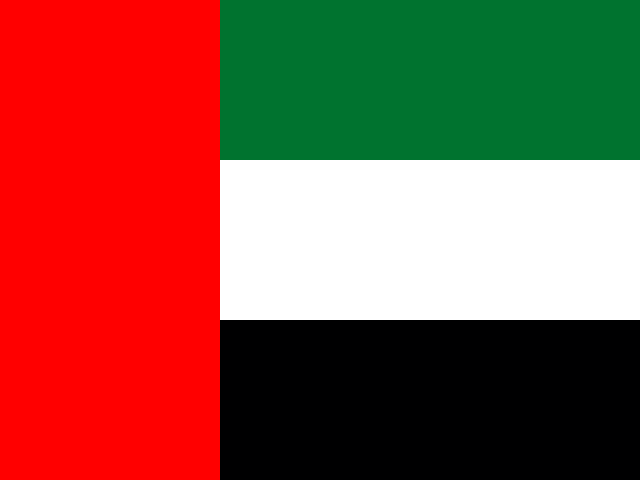
The United Arab Emirates sits at the eastern end of the Arabian Peninsula. Most of the country faces the Persian Gulf, while a short stretch of coast in the east looks out on the Gulf of Oman. Inland, sand dunes roll south into the Empty Quarter, and in the north and east the bare, rocky Hajar Mountains rise along the border with Oman.
It is a federation of seven emirates: Abu Dhabi, Dubai, Sharjah, Ajman, Umm Al Quwain, Ras Al Khaimah and Fujairah. Each has its own hereditary ruler, and together the seven rulers form the Federal Supreme Council, which elects the country's president. Abu Dhabi, by far the largest emirate, holds the capital, while Dubai is the biggest city.
Until the 1950s most people here lived from pearl diving, fishing, date farming and herding camels. Oil, found offshore in 1958, paid for roads, schools, hospitals and whole new cities. Today about 11 million people live in the UAE, and most of them come from other countries, above all from South Asia. Visitors come for the skyscrapers of Dubai, the great white mosque of Abu Dhabi, desert camps, mountain drives, museums and warm winter sunshine.
People have lived along this coast and in its oases for thousands of years, trading copper with Mesopotamia and the Indus Valley and farming dates with the help of underground water channels called falaj. Islam arrived in the 7th century. From the 1820s the coastal sheikhdoms signed a series of treaties with Britain and became known as the Trucial States. After Britain decided to leave the Gulf, six of them formed the United Arab Emirates in December 1971, and Ras Al Khaimah joined on 10 February 1972.
Around 3200 BC people began building beehive-shaped stone tombs on the slopes of Jebel Hafeet near today's Al Ain. The period is named after the mountain, and the tombs are part of a World Heritage Site.
From about 2600 BC to 2000 BC people built large round tombs and towers, such as those at Hili in Al Ain, and traded copper from the Hajar Mountains. Sumerian texts speak of a land called Magan, which covered today's UAE and Oman.
Islam is thought to have reached the region after the Prophet Muhammad sent a letter to the rulers of Oman in 630. Within a few years the peoples of the coast and the oases had become Muslim.
A round watchtower was built on Abu Dhabi island to guard its only freshwater well. It later grew into a fort and palace, Qasr Al Hosn, the oldest stone building in the city of Abu Dhabi.
The ruling family of the Bani Yas tribe moved their residence from the Liwa Oasis in the desert to Abu Dhabi island on the coast, where pearling and fishing offered a living.
After British forces attacked Ras Al Khaimah, the rulers of the coast signed a maritime truce with Britain. The treaties that followed gave the area its English name, the Trucial States or Trucial Coast.
Members of the Al Bu Falasah tribe left Abu Dhabi and settled on the creek at Dubai, led by Maktoum bin Butti and Obeid bin Saeed. The Al Maktoum family has ruled Dubai ever since.
The rulers agreed to deal with no foreign power except Britain, which in return promised to protect them. The Trucial States became, in effect, a British protectorate while keeping their own rulers.
A drilling rig towed from Germany struck oil under Umm Shaif, an old pearl bed in the waters of Abu Dhabi. It was the first commercial oil find on the Trucial Coast, and exports began in 1962.
In January 1968 the British government announced that it would end its treaties with the Gulf sheikhdoms and withdraw its forces by the end of 1971. The rulers began talks about forming a union.
On 2 December 1971 six emirates, Abu Dhabi, Dubai, Sharjah, Ajman, Umm Al Quwain and Fujairah, formed the United Arab Emirates. The date is celebrated every year as National Day. Bahrain and Qatar, which had taken part in the talks, became separate countries instead.
Ras Al Khaimah, the northernmost emirate, joined the federation on 10 February 1972, making it the seven emirates of today.
The UAE was one of the six founding members of the Gulf Cooperation Council, and Abu Dhabi hosted its first summit in May 1981.
The Burj Khalifa in Dubai opened on 4 January 2010. At 828 m it became the tallest building in the world, a title it still held as of September 2026.
On 9 February 2021 the UAE's Hope probe, launched from Japan in July 2020, went into orbit around Mars to study its weather and atmosphere.
UNESCO added the Faya Palaeolandscape in the emirate of Sharjah to its World Heritage List. Stone tools found at Jebel Faya are some of the earliest evidence of modern humans outside Africa.
Emirati cooking grew out of three ways of life: Bedouin herders with their camel milk and meat, fishermen of the Gulf, and farmers of the date-palm oases. Trade with India, Persia and East Africa brought rice and spices such as cardamom, saffron, turmeric and dried lime, called loomi. A traditional meal is a big shared platter of spiced rice with meat or fish, and a guest is always welcomed with small cups of Arabic coffee and a plate of dates. In the cities you can eat food from almost every country in the world, and Emirati dishes are easiest to find in heritage restaurants and during Ramadan.
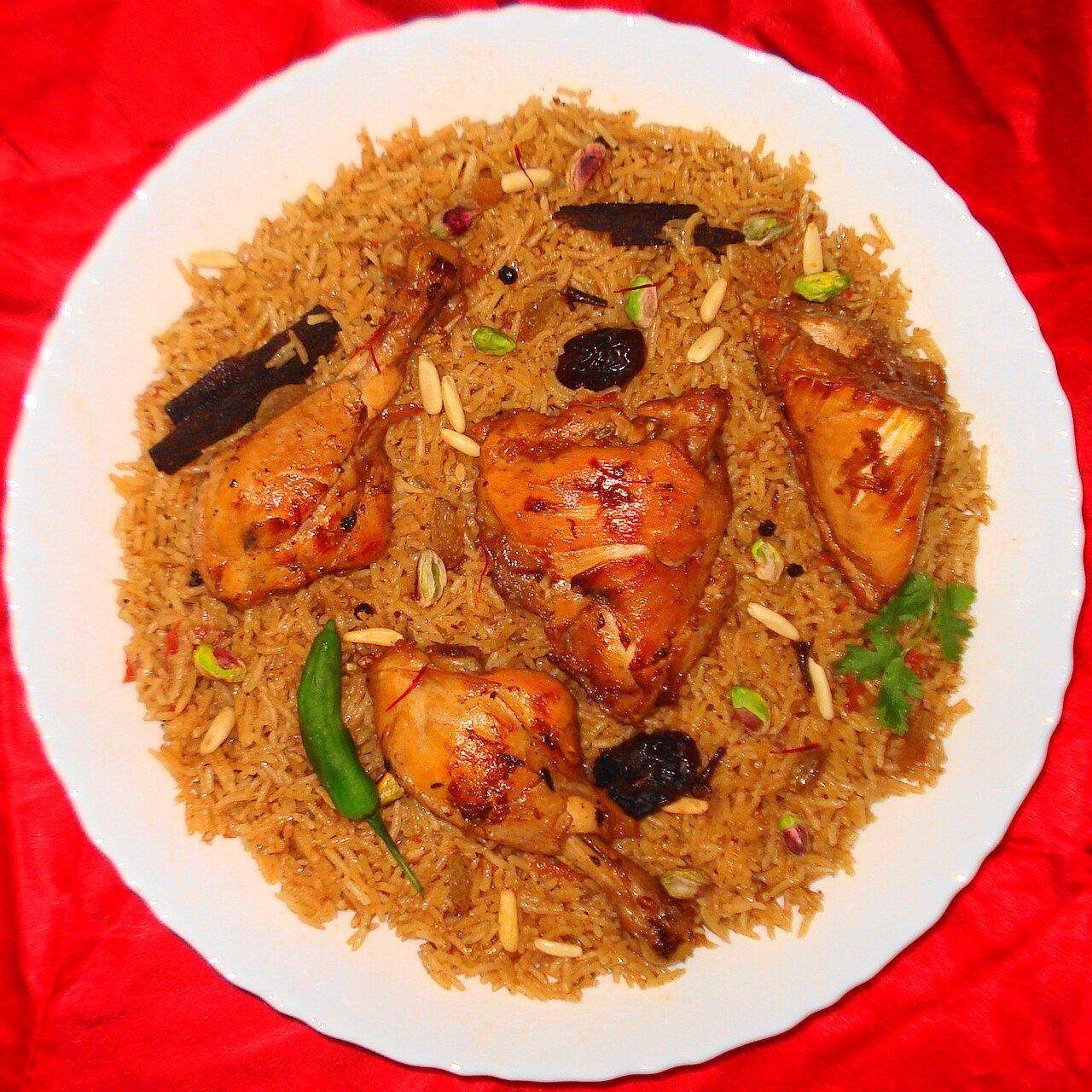
Rice cooked in a fragrant stock with chicken, lamb, fish or shrimp, spiced with cardamom, cinnamon, turmeric and loomi, the sun-dried lime of the Gulf. It is served on a large platter in the middle of the table.
Machboos is the Gulf name for a dish that Saudis call kabsa; it is often described as a national dish of all the Gulf countries.
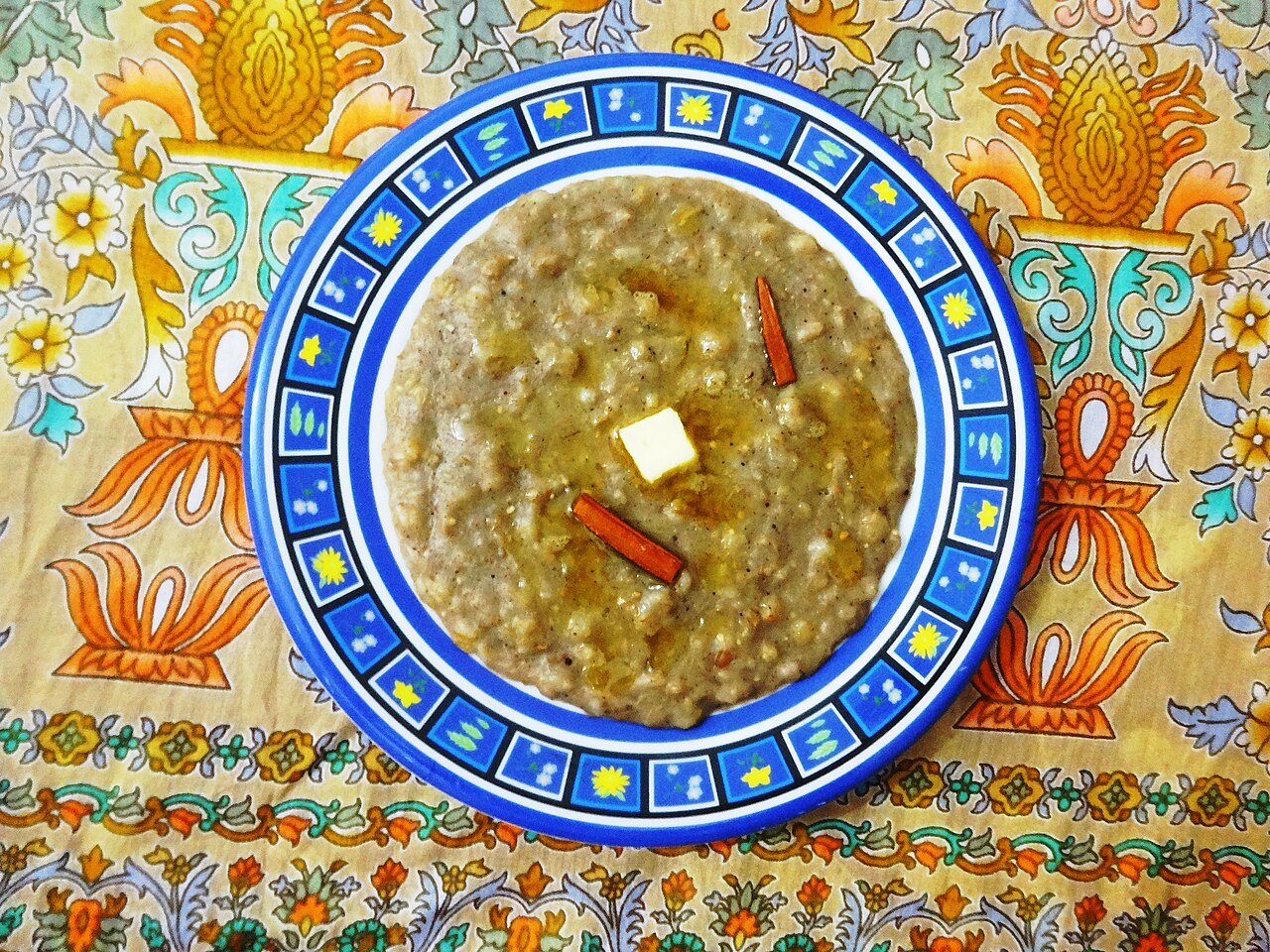
Whole wheat and meat, usually chicken or lamb, cooked slowly for hours and then beaten until they melt into a smooth, thick porridge. It is served with a spoonful of melted ghee on top.
Harees is so closely tied to Ramadan that many Emirati families cook a big pot of it for the evening meal that breaks the fast.
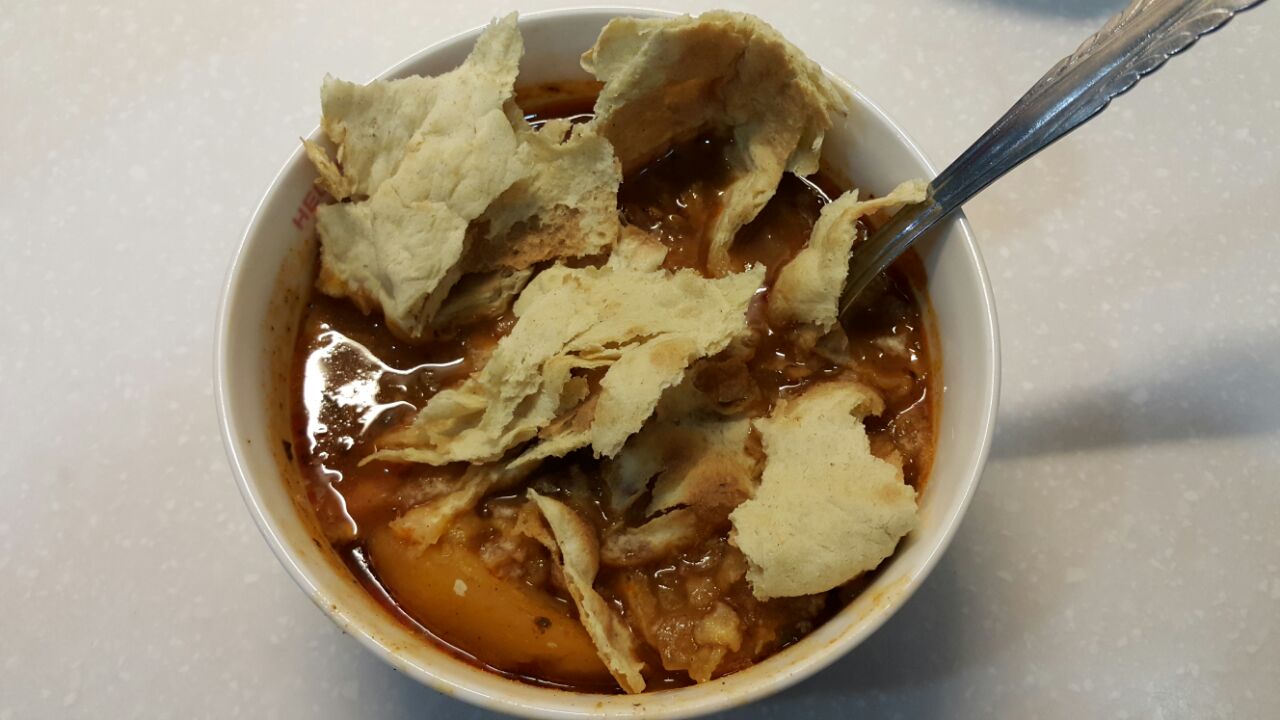
A stew of meat, potatoes, marrow and other vegetables in a spiced tomato broth, ladled over thin pieces of regag bread that soak up the sauce.
Thareed is an ancient dish: versions of bread soaked in meat broth are mentioned in early Islamic writings.
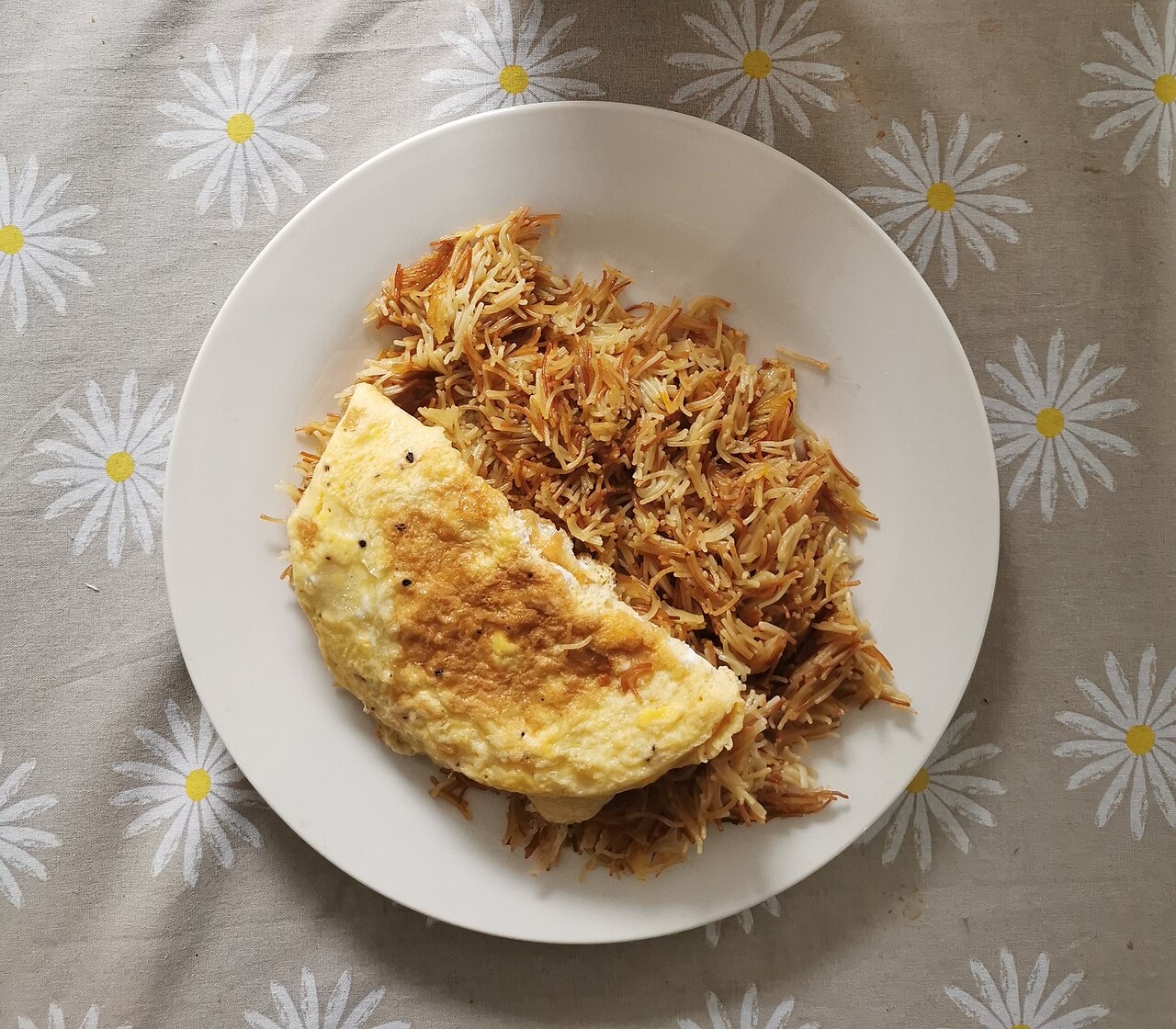
Thin vermicelli noodles cooked with sugar, cardamom, rose water and saffron, served with a thin omelette laid over the top. The mix of sweet noodles and savoury egg is the whole point.
Balaleet is often the first meal of the day at Eid al-Fitr, the festival that ends Ramadan.
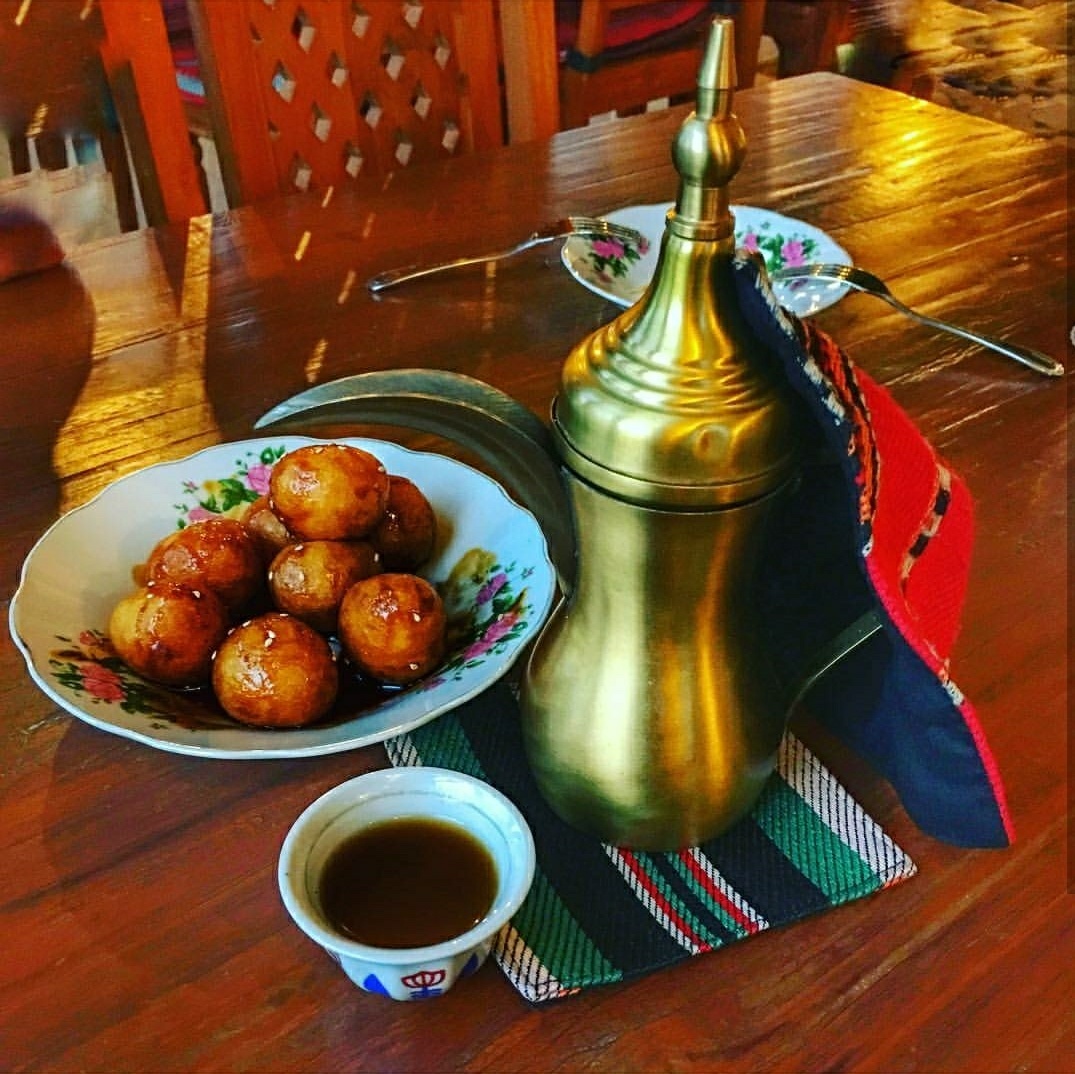
Small balls of yeast batter, flavoured with cardamom and saffron, deep-fried until crisp and golden outside and soft inside, then drizzled with date syrup and sprinkled with sesame seeds.
The name means 'little bites'. Similar fried dough balls go back to recipes written down in the 13th century.
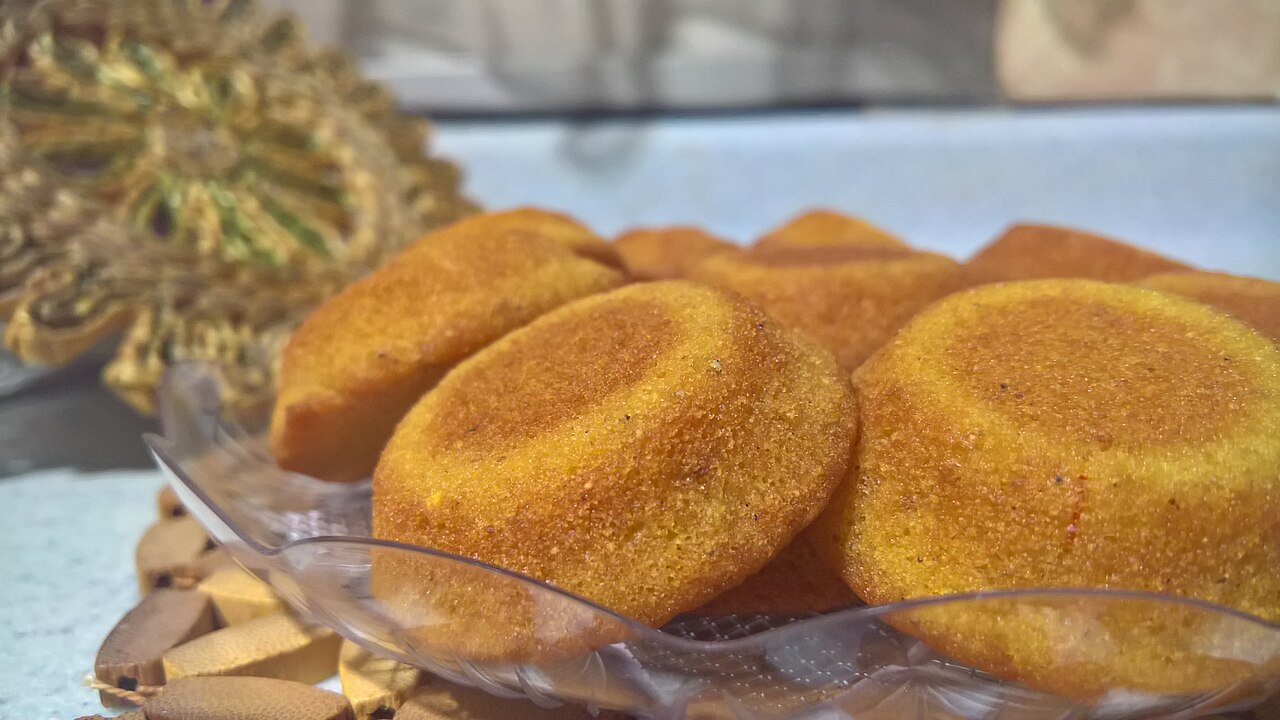
Small golden cakes made from eggs, flour, sugar, saffron and cardamom, sometimes with a little rose water. They are fried in oil until puffed and crisp at the edges.
Khanfaroosh is made all along the Gulf coast, and each family tends to have its own mix of spices.
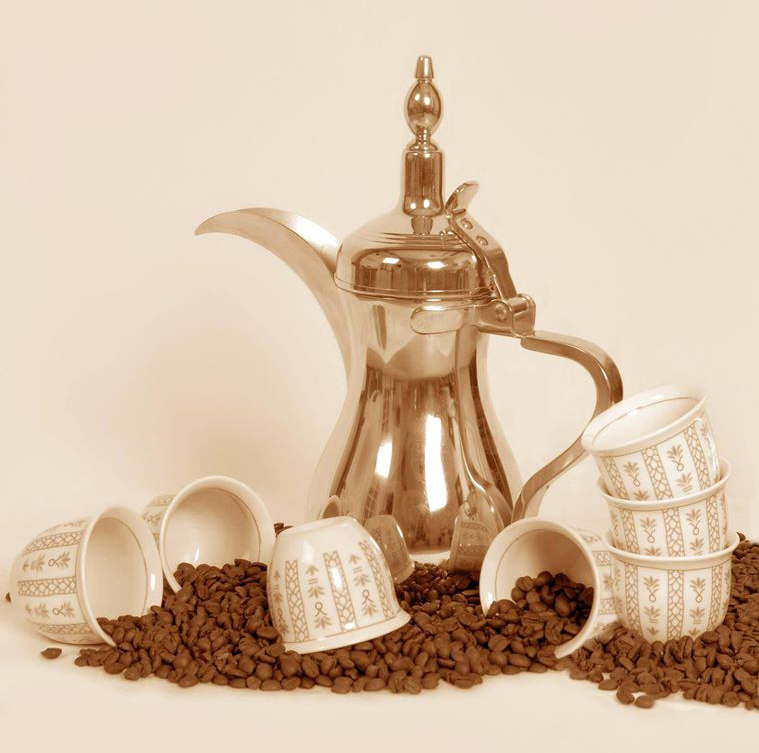
Lightly roasted coffee boiled with cardamom, and sometimes saffron, served without sugar from a tall pot called a dallah into tiny cups without handles. It is almost always offered with dates.
In 2015 UNESCO listed Arabic coffee, a symbol of generosity, as intangible cultural heritage, nominated by the UAE together with Saudi Arabia, Oman and Qatar.
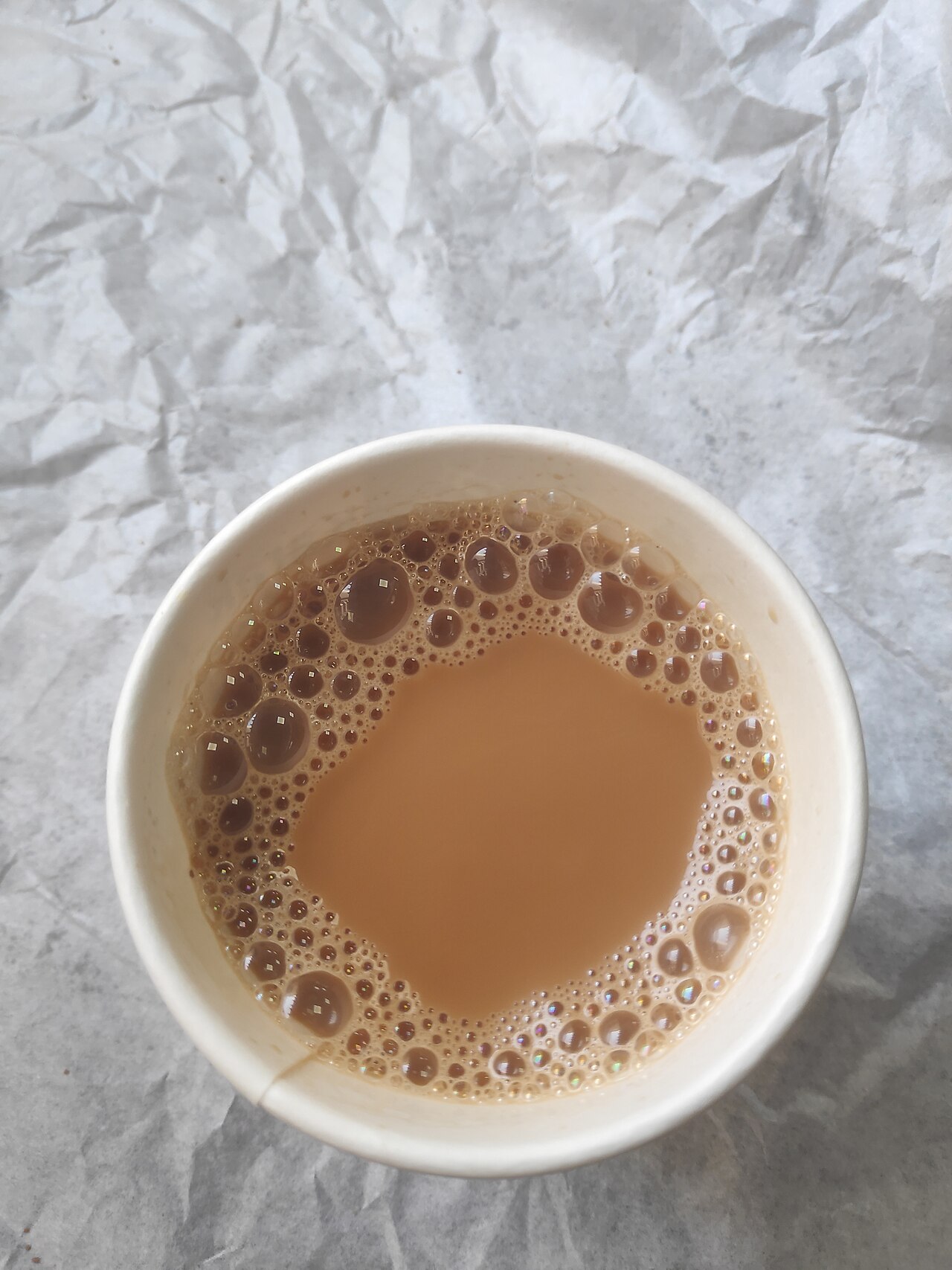
Black tea boiled hard with milk, sugar and cardamom until strong and creamy. Karak means 'hard' or 'strong'. It came to the Gulf from the Indian subcontinent and is now sold in small cups at cafeterias everywhere.
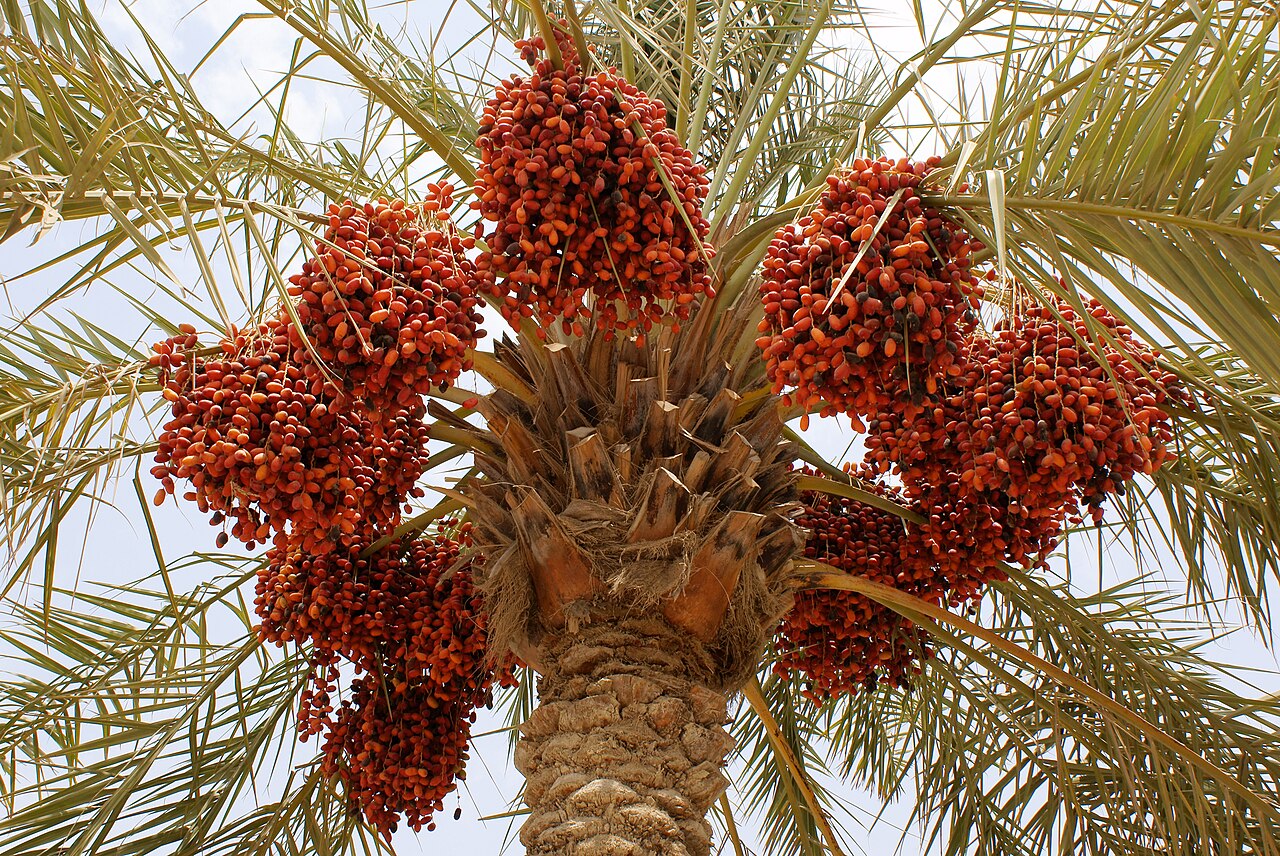
Soft, sticky dates from local palms, served with coffee to every guest and eaten to break the fast in Ramadan. The UAE grows many varieties, such as khalas, khenaizi and lulu.
Date seeds found at Bronze Age sites show that people in the region have grown date palms for more than 4,000 years.
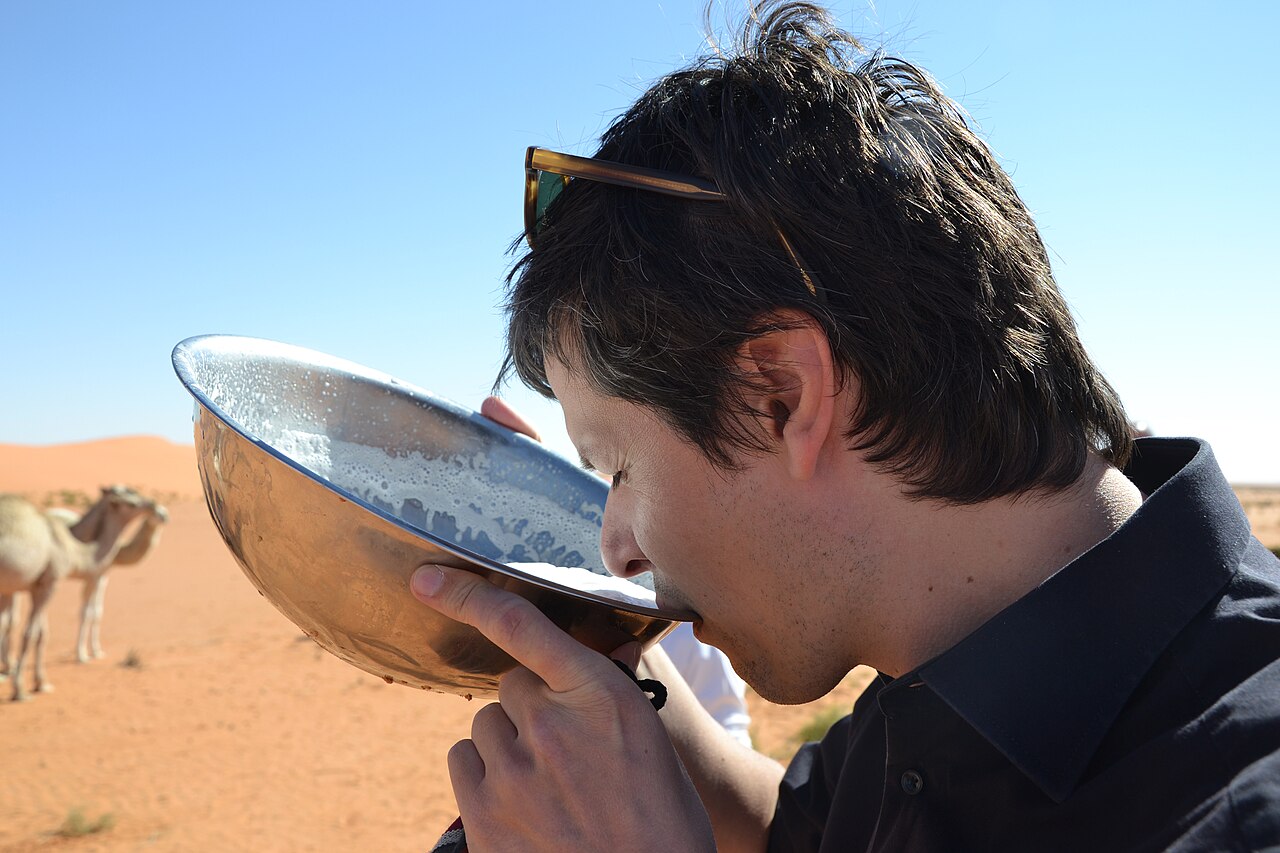
Slightly salty, rich milk that once kept desert families alive. Today you can buy it fresh in supermarkets, and also as flavoured milk, ice cream and chocolate.
Camel milk was a staple of the Bedouin diet together with dates and Arabic coffee.
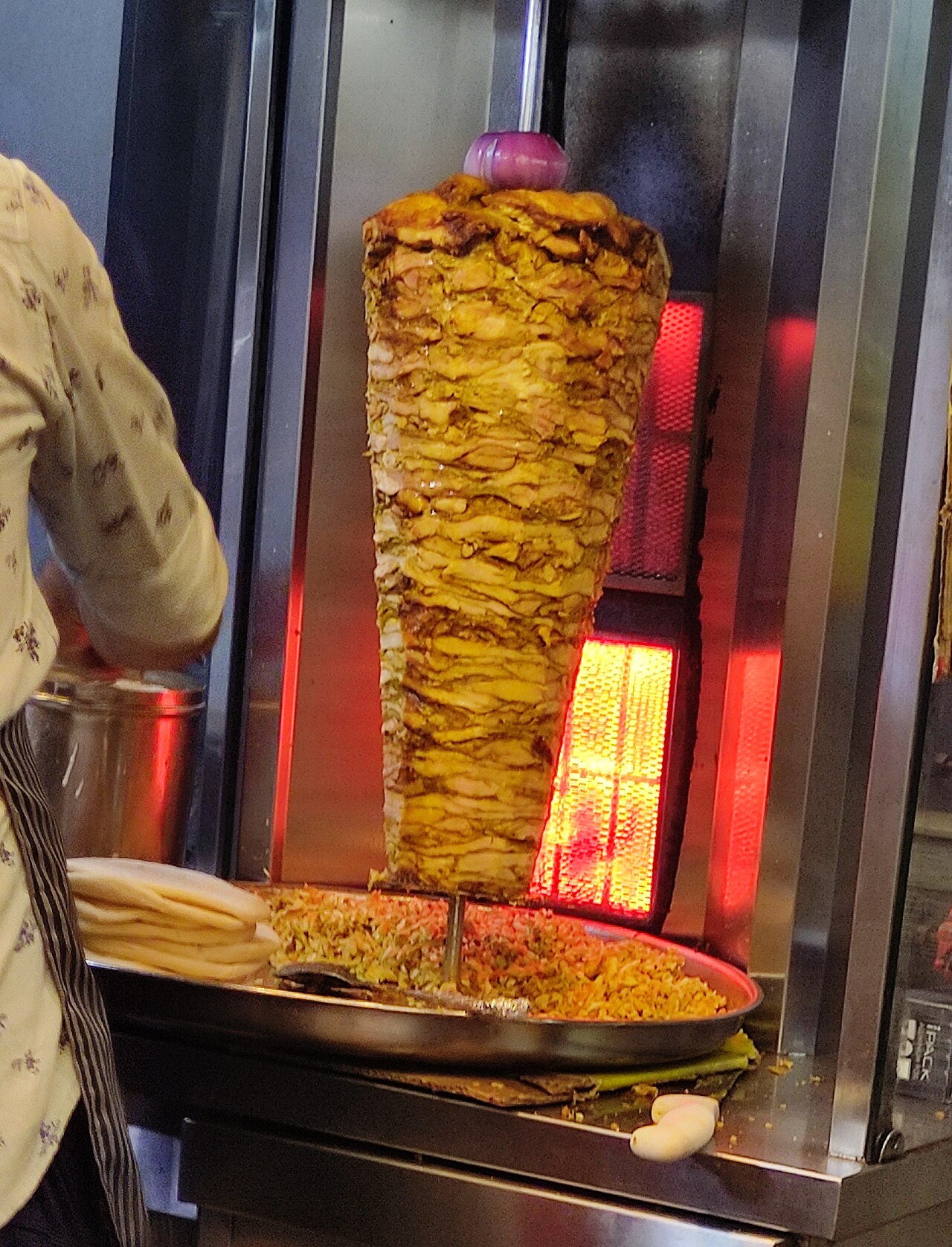
Thin slices of spiced chicken or lamb carved from a turning spit and rolled in flatbread with garlic sauce, pickles and chips. Small cafeterias sell it late into the night.
Shawarma is not Emirati in origin, but it is so popular that almost every neighbourhood has a shawarma stand.
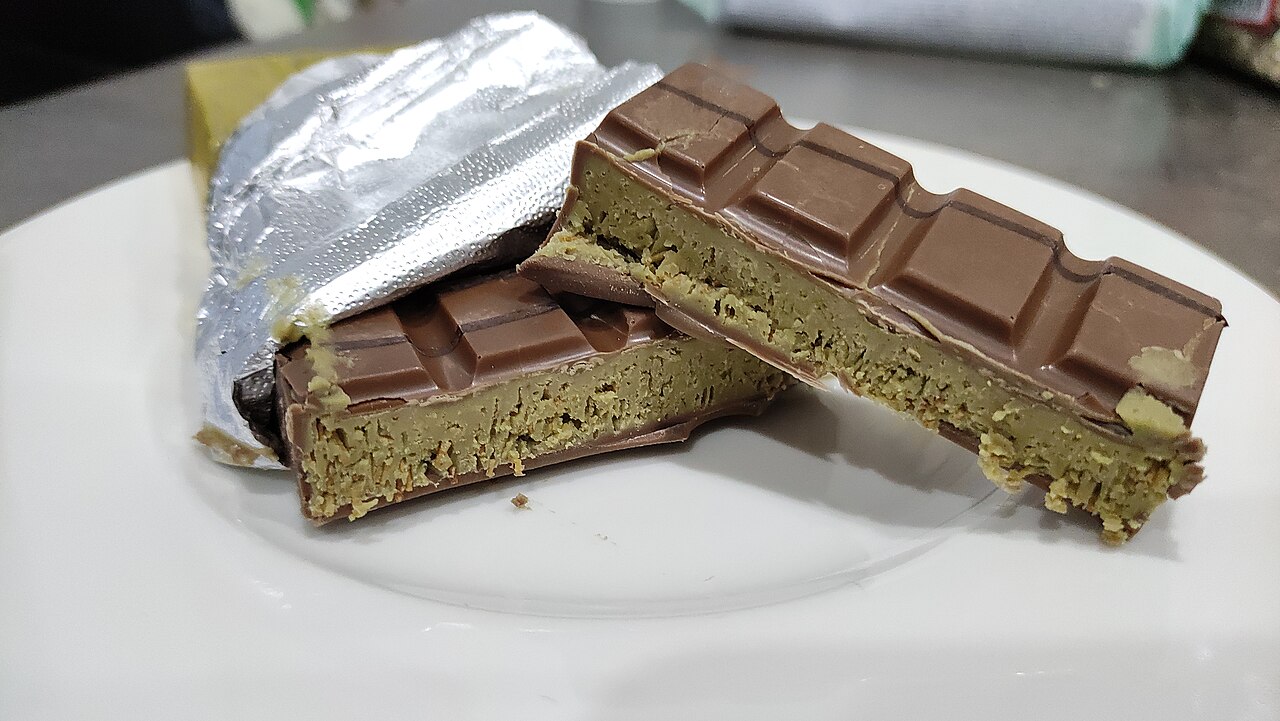
A thick milk chocolate bar filled with pistachio and tahini cream and crunchy shreds of kadayif pastry, the flavours of the dessert knafeh.
A small Dubai chocolatier first sold the bar in 2022; videos on social media made it famous around the world in 2024.
Almost all the big towns lie on the coast of the Persian Gulf, where Abu Dhabi, Dubai, Sharjah and Ajman grew from small fishing and pearling villages. Fujairah and Khor Fakkan face the Gulf of Oman on the other side of the mountains, while Al Ain and Liwa grew around desert oases.
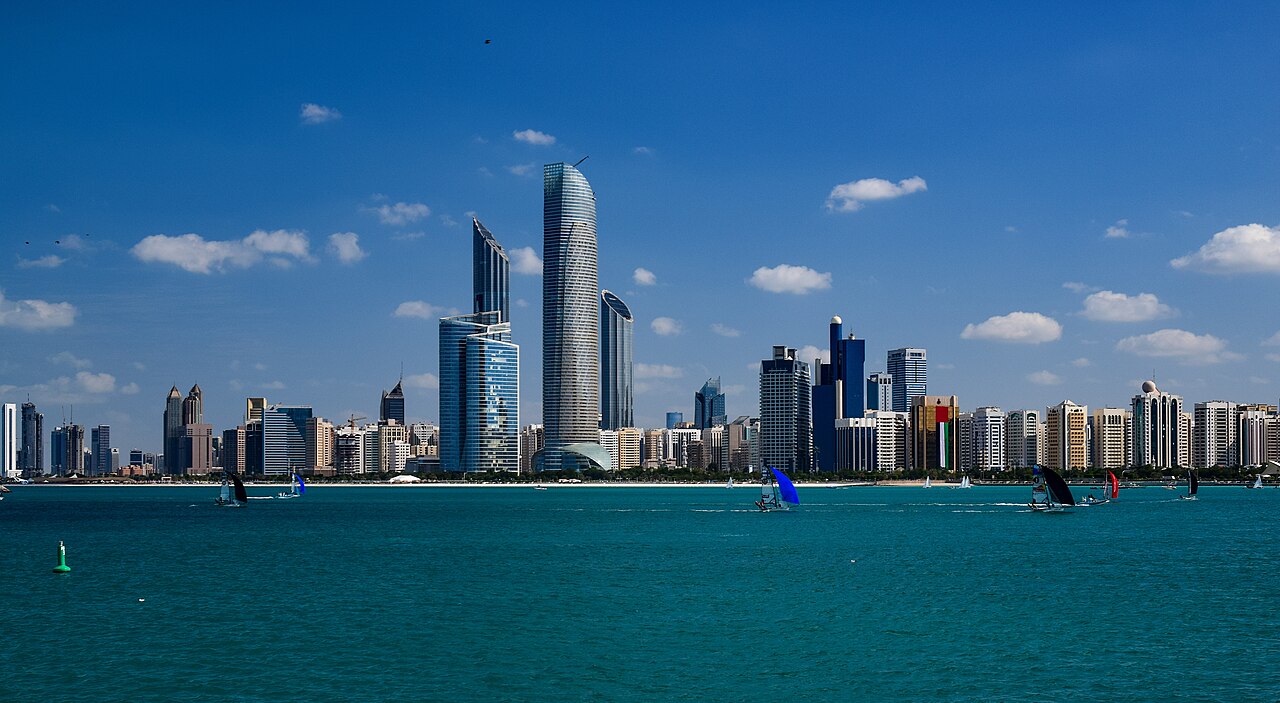
The capital, built mostly on an island in the Gulf. Its name means 'father of the gazelle'. Planned wide avenues, a long seafront promenade and new museums on Saadiyat Island stand beside the old fort of Qasr Al Hosn.
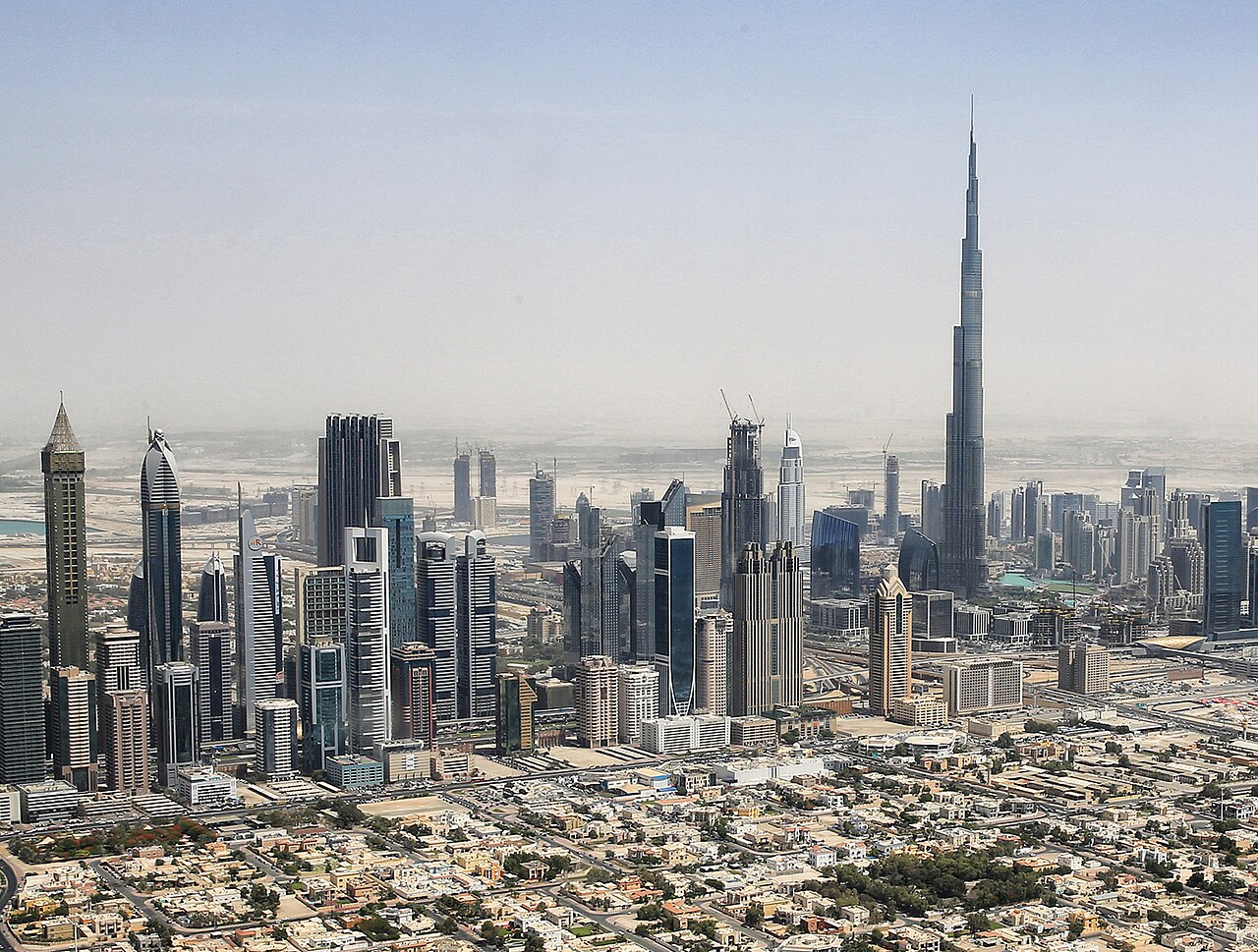
The largest city, with about 4 million people as of 2025, most of them from abroad. It grew around Dubai Creek as a trading port and is now a world hub for business, travel and shopping.
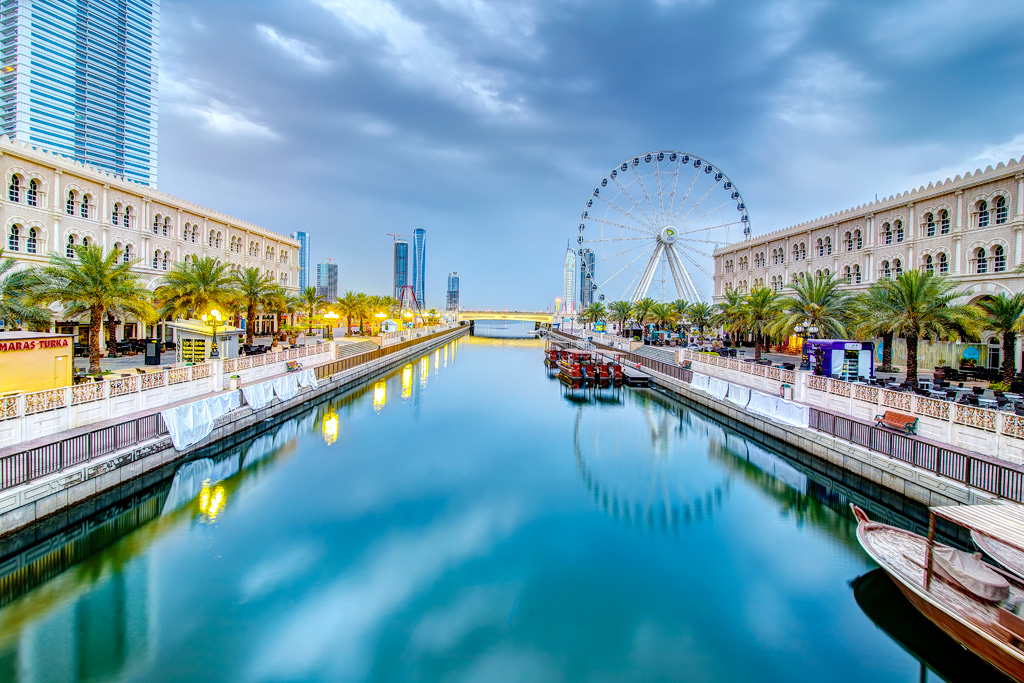
The third-largest city, joined to Dubai by a continuous stretch of suburbs. It is the most conservative emirate, known for its museums, restored heritage quarter and lagoons.
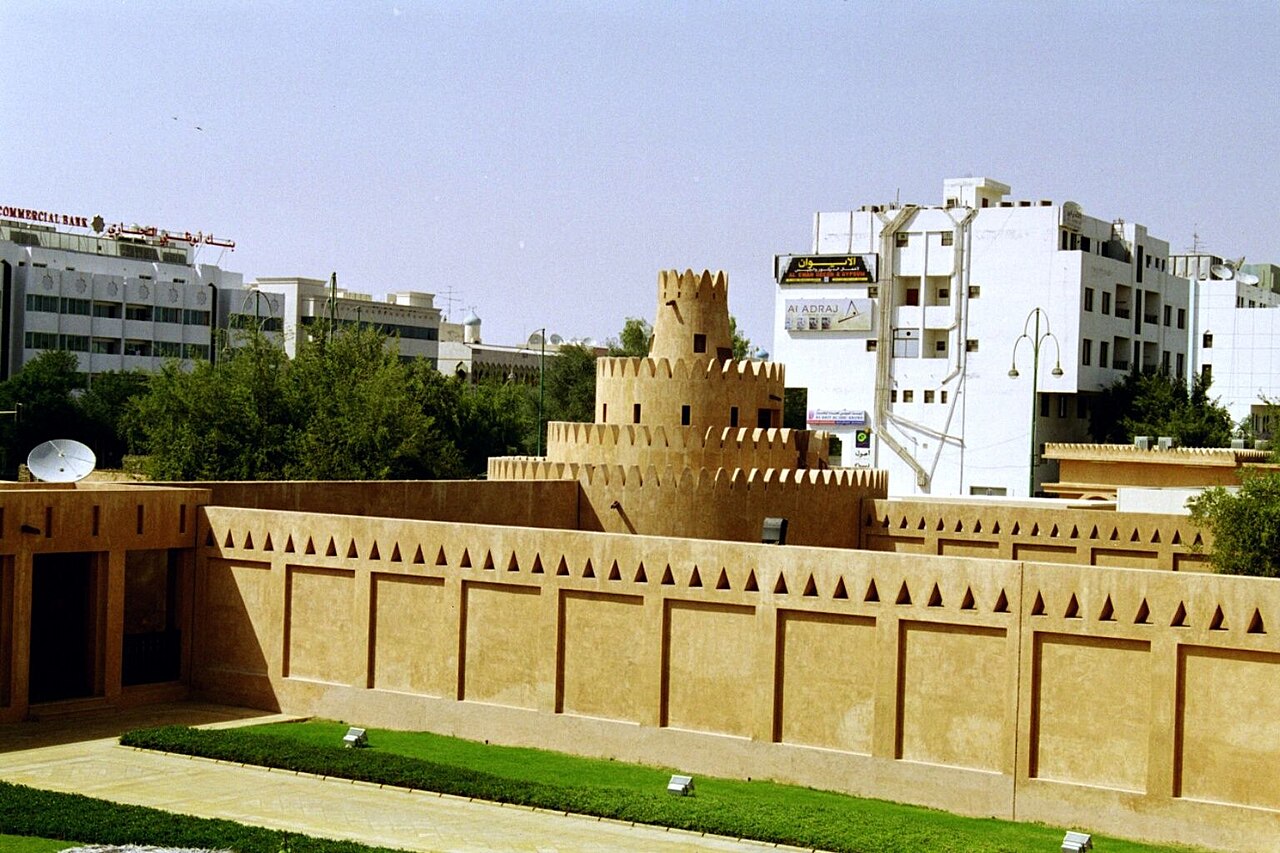
The 'Garden City' of the Emirates, an oasis town of palm groves, parks and forts next to the Omani town of Al Buraimi. It has the highest share of Emirati citizens of any city in the country.
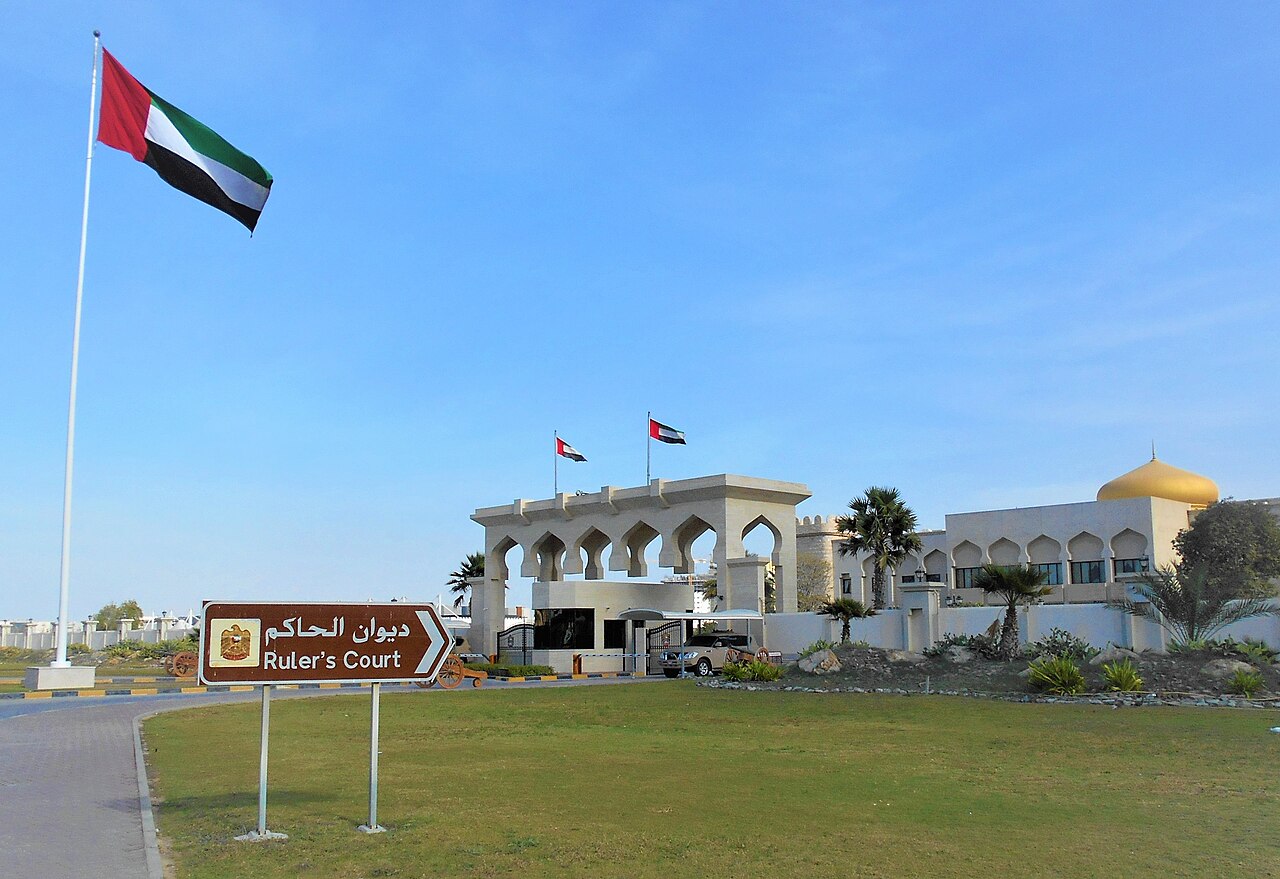
The capital of Ajman, the smallest of the seven emirates, with only about 259 km². It lies on the coast just north of Sharjah, surrounded on land by the emirate of Sharjah, and in the 1820s a British survey praised its sheltered backwater.
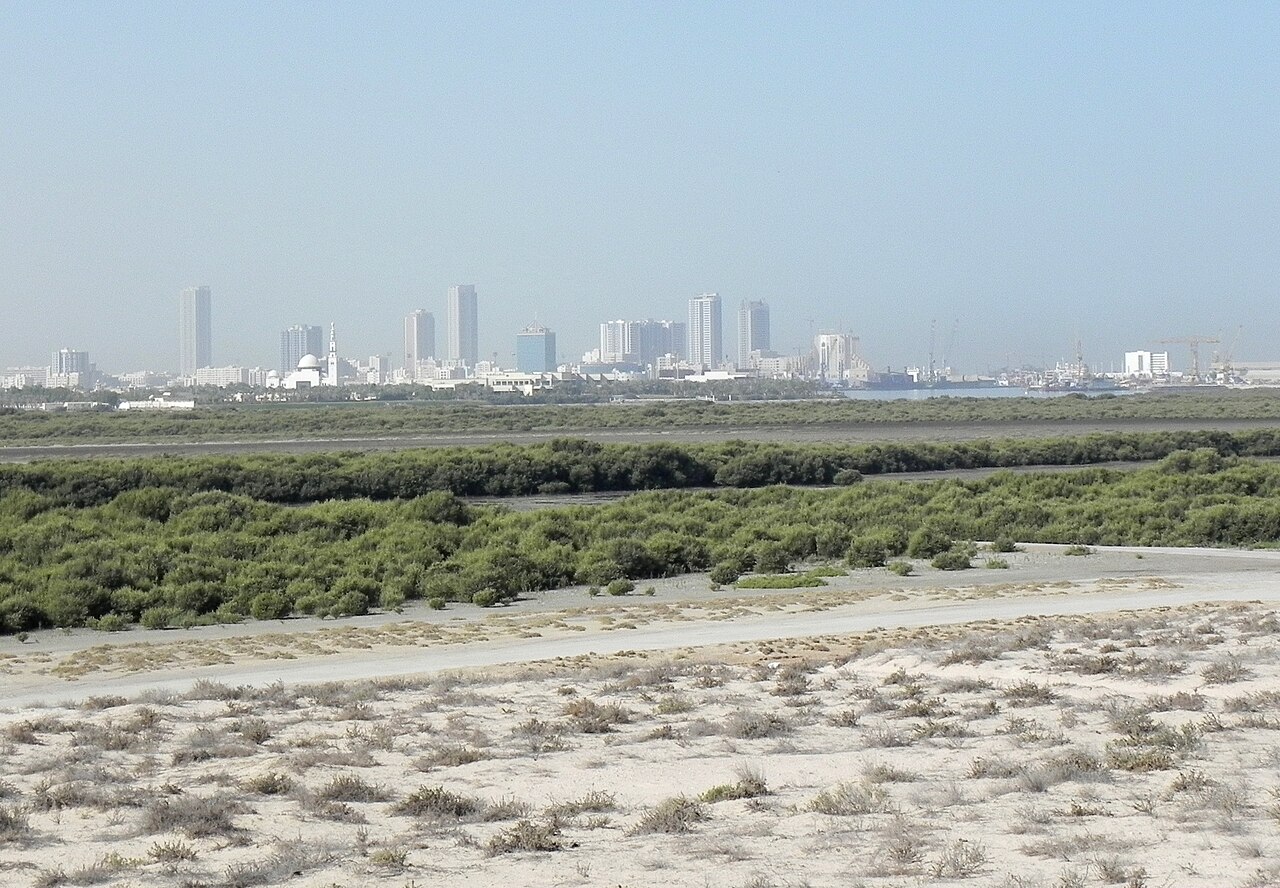
A quiet town on a sandy peninsula between the sea and a lagoon of mangroves. The economy is based on fishing and tourism, and on nearby Siniyah Island archaeologists found the oldest known pearling town in the Gulf.
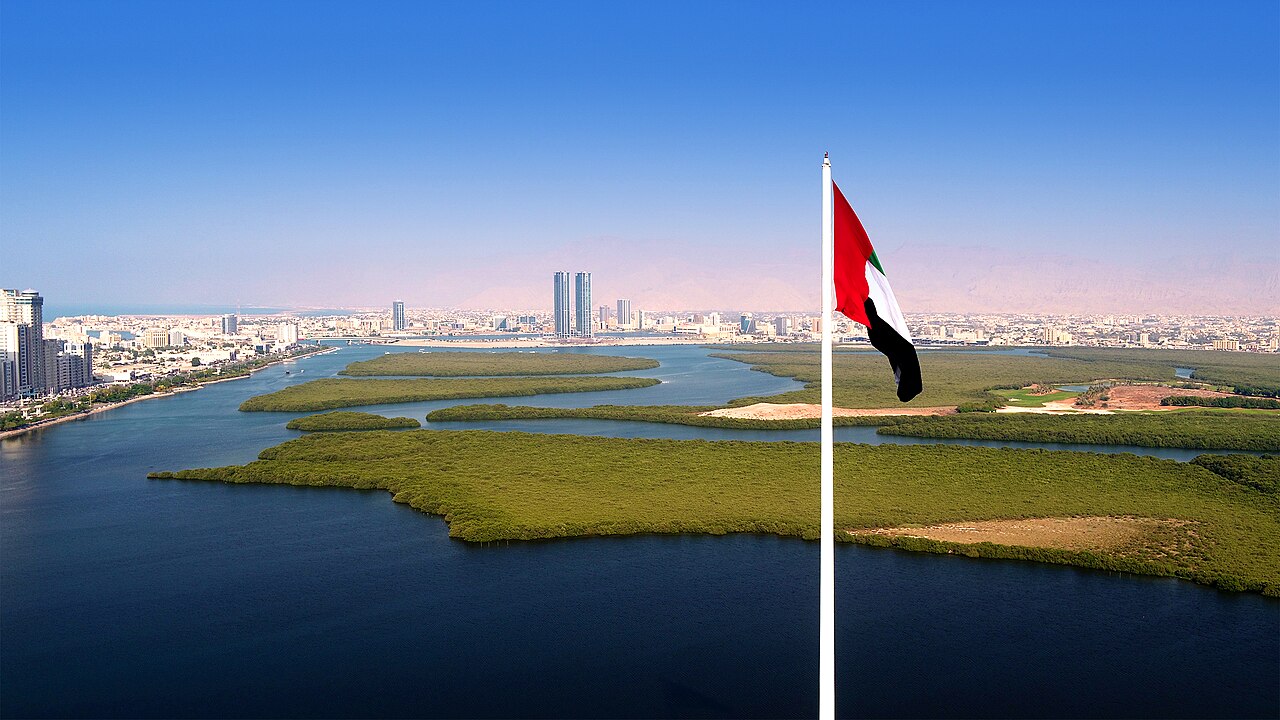
The capital of the northernmost emirate, lying between the sea and the Hajar Mountains. Near it stood Julfar, a busy medieval port famous for its pearls.
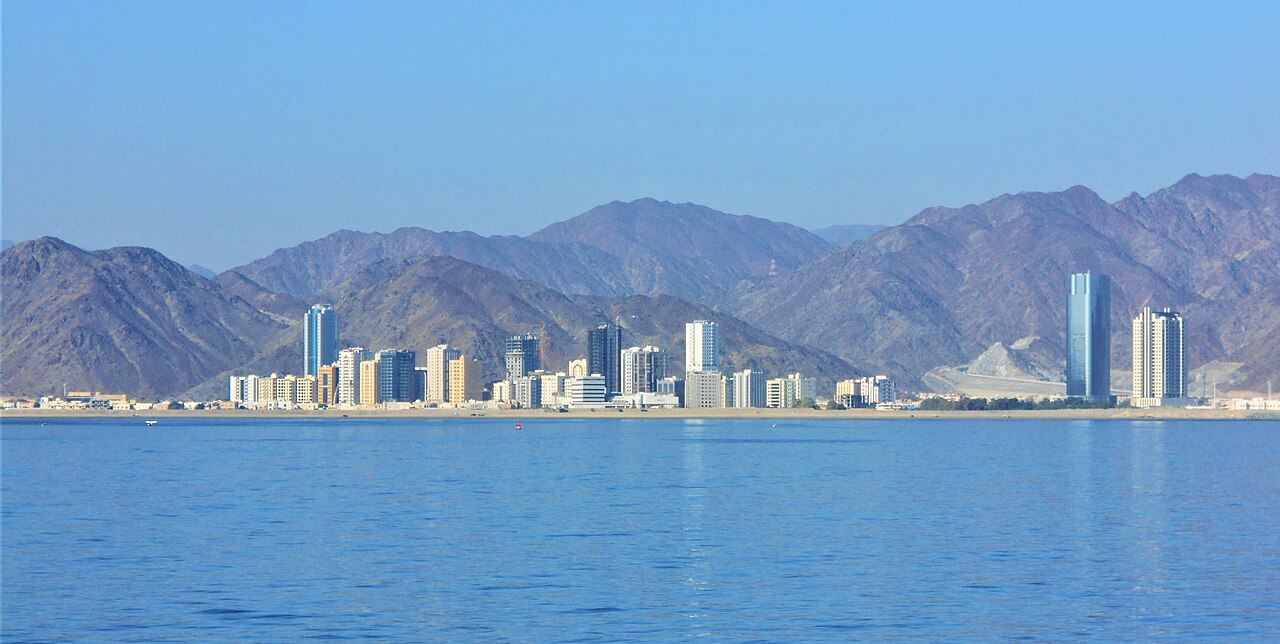
The only emirate capital on the east coast, facing the Gulf of Oman at the foot of the Hajar Mountains. It is an industrial and commercial hub with a busy port.
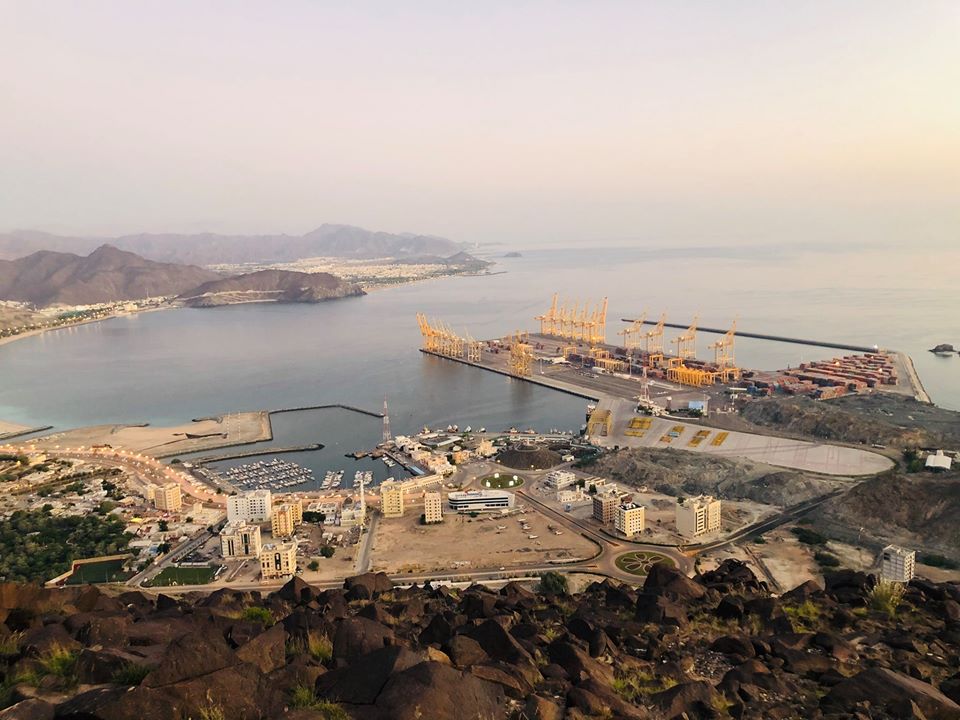
A town in a bay ringed by mountains on the east coast. It belongs to the emirate of Sharjah, even though it lies on the other side of the country from the city of Sharjah.
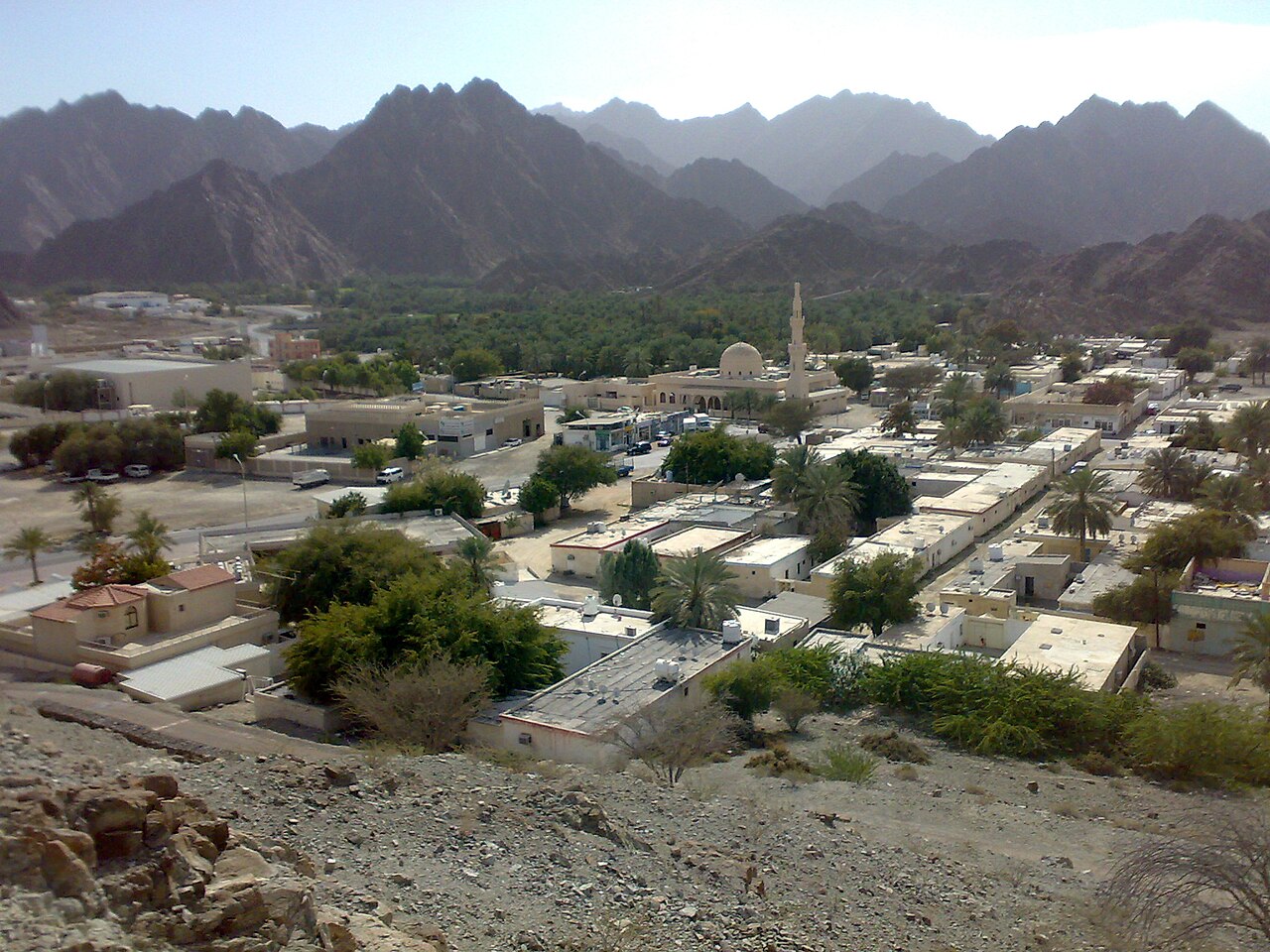
A mountain town that belongs to Dubai but is cut off from the rest of the emirate, about 134 km east of the city. Families from the coast have long come here to escape the summer heat.
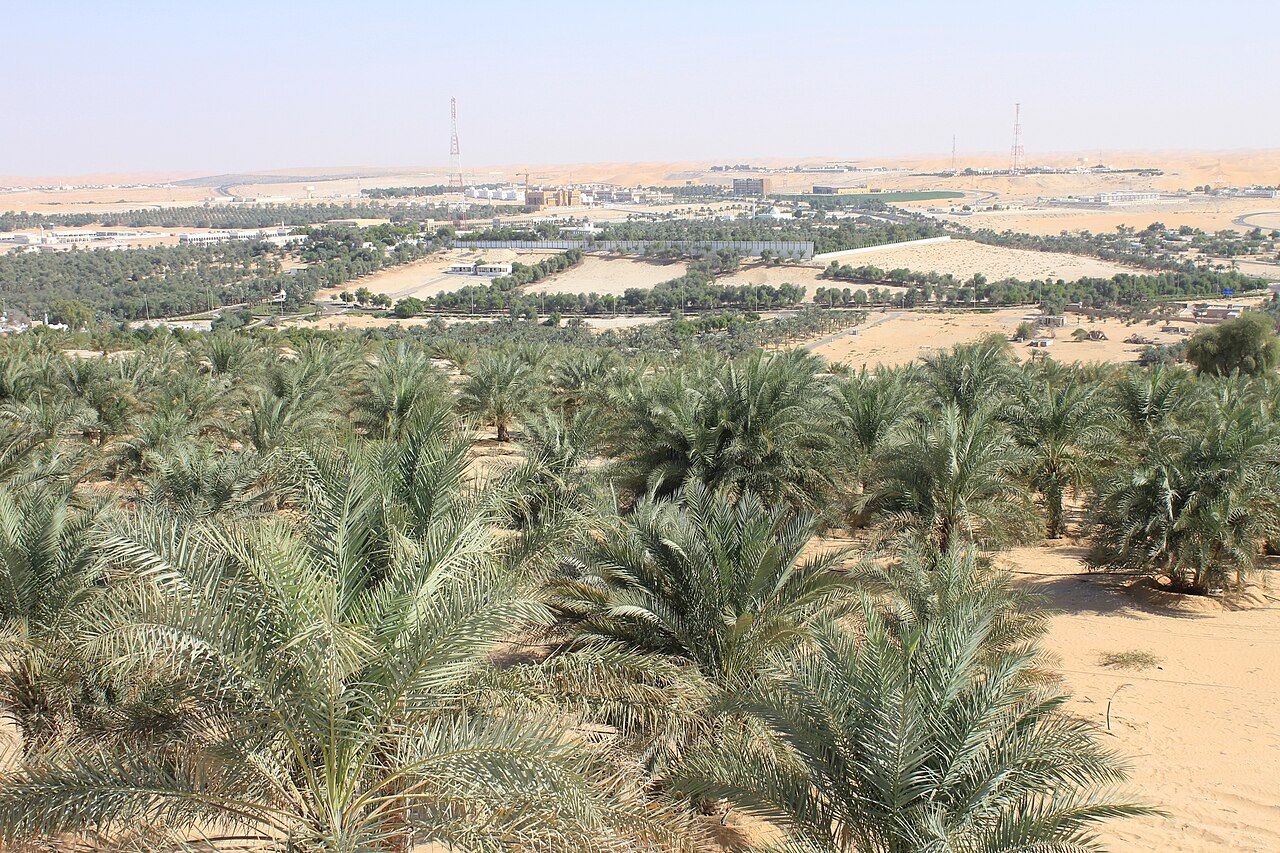
A crescent of oasis villages and date farms among towering sand dunes in the far south. It is the homeland of the Bani Yas tribe, from which the ruling families of both Abu Dhabi and Dubai descend.
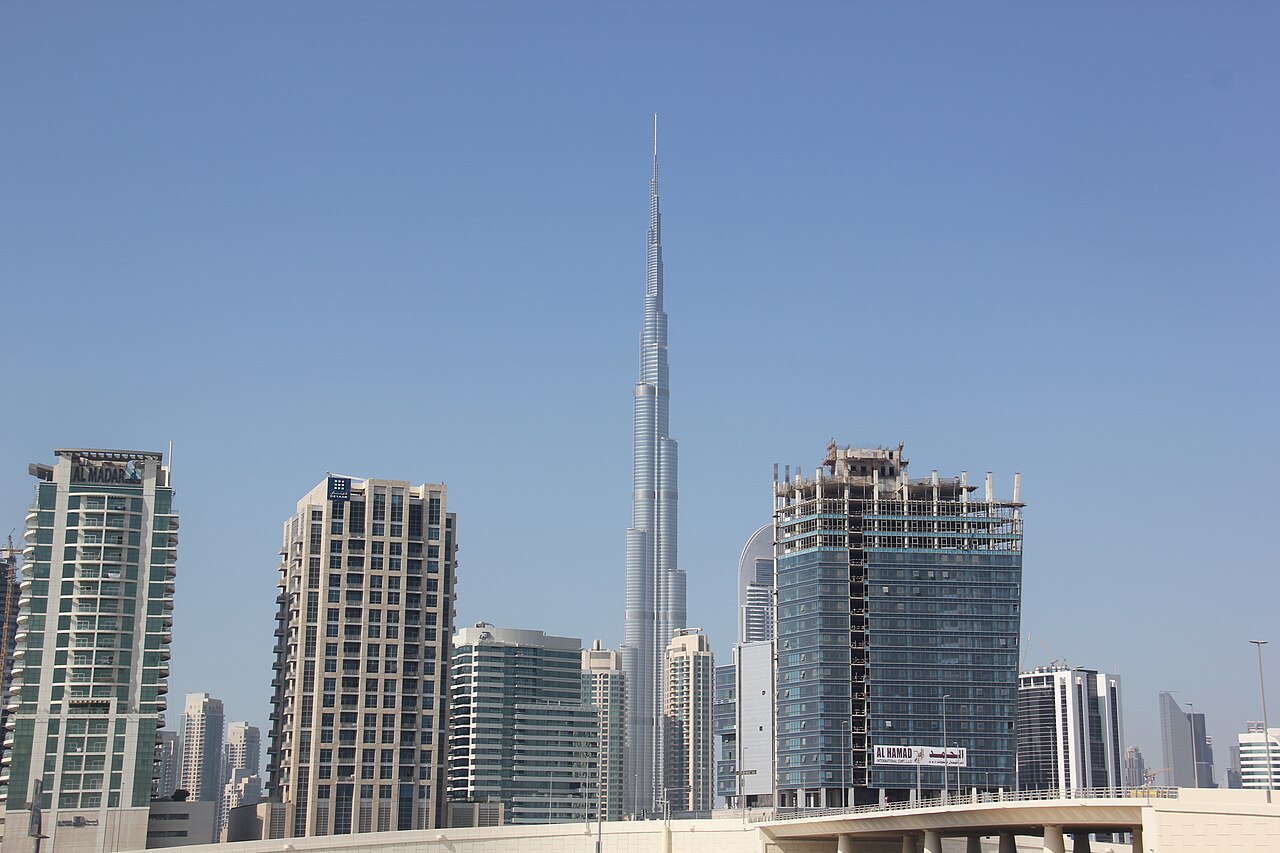
A needle-like skyscraper of glass and steel, 828 m tall, which opened in 2010. As of September 2026 it is the tallest building in the world. Observation decks near the top look out over the desert and the sea, and at its foot the Dubai Fountain dances to music every evening.
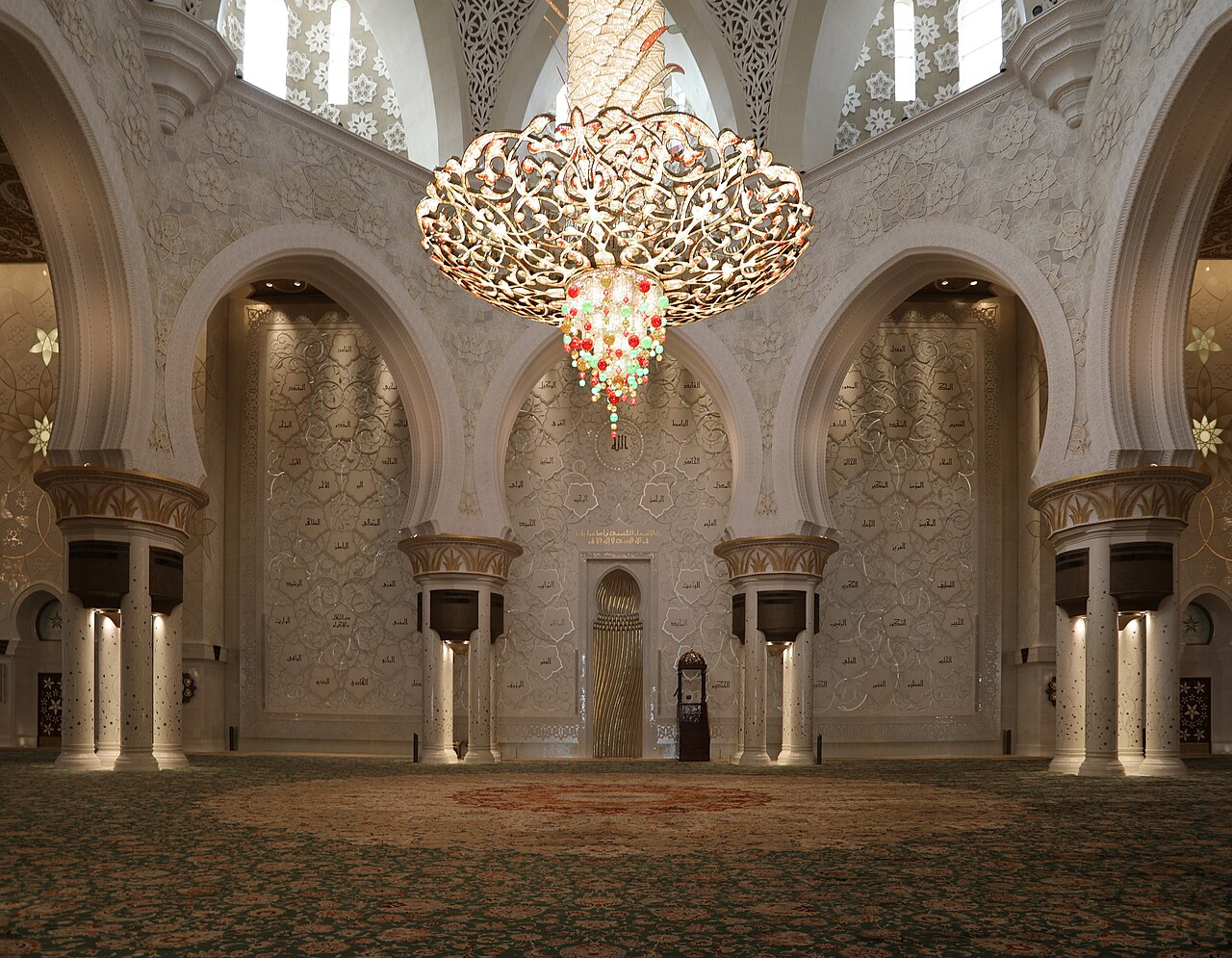
The country's largest mosque, built of white marble and finished in 2007, with 82 domes, more than 1,000 columns, gold-plated chandeliers and one of the largest hand-knotted carpets in the world. The founder of the UAE, Sheikh Zayed, is buried in its courtyard. Visitors of all faiths are welcome outside prayer times, in modest dress.
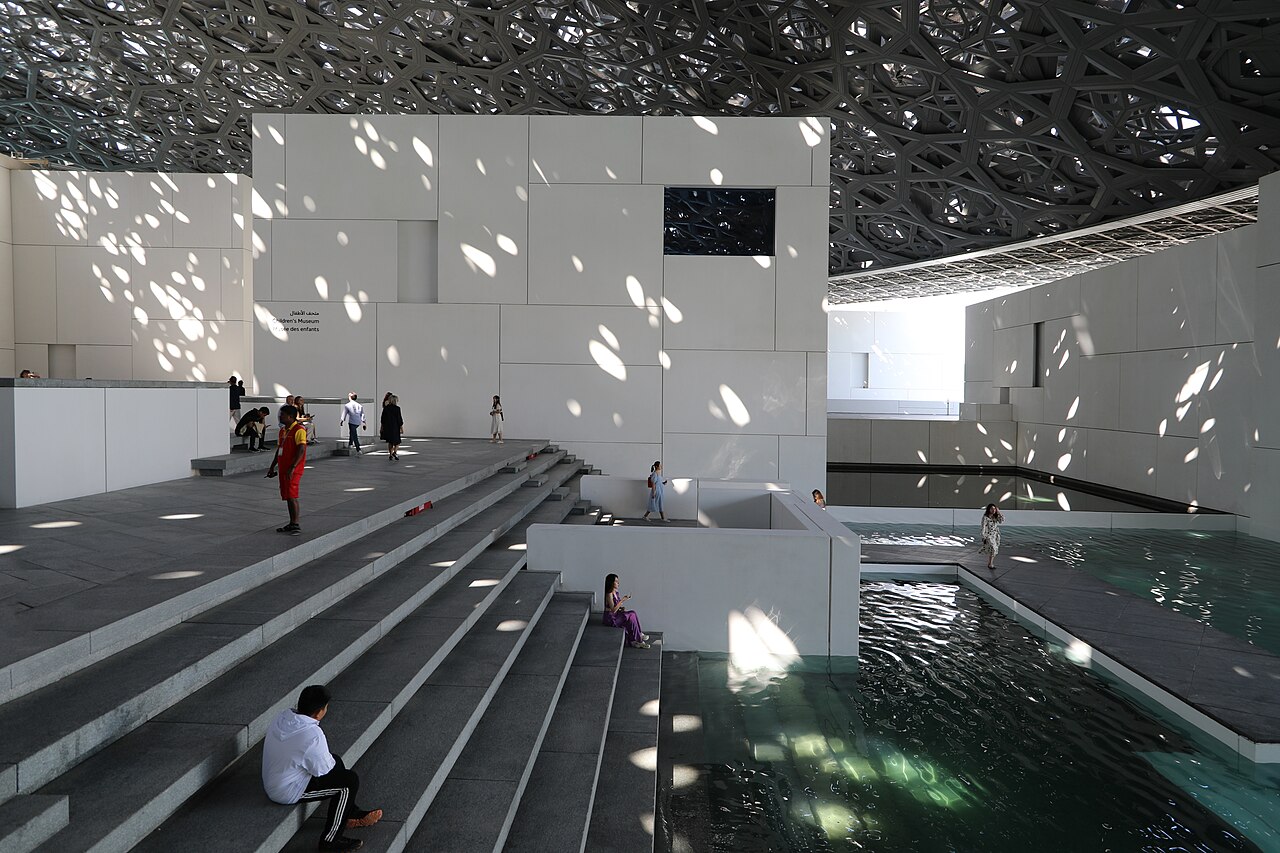
An art museum on Saadiyat Island, opened in 2017 under an agreement with France. The architect Jean Nouvel covered its white buildings with a vast, seemingly floating dome of patterned metal that lets sunlight filter through, like light through palm leaves.
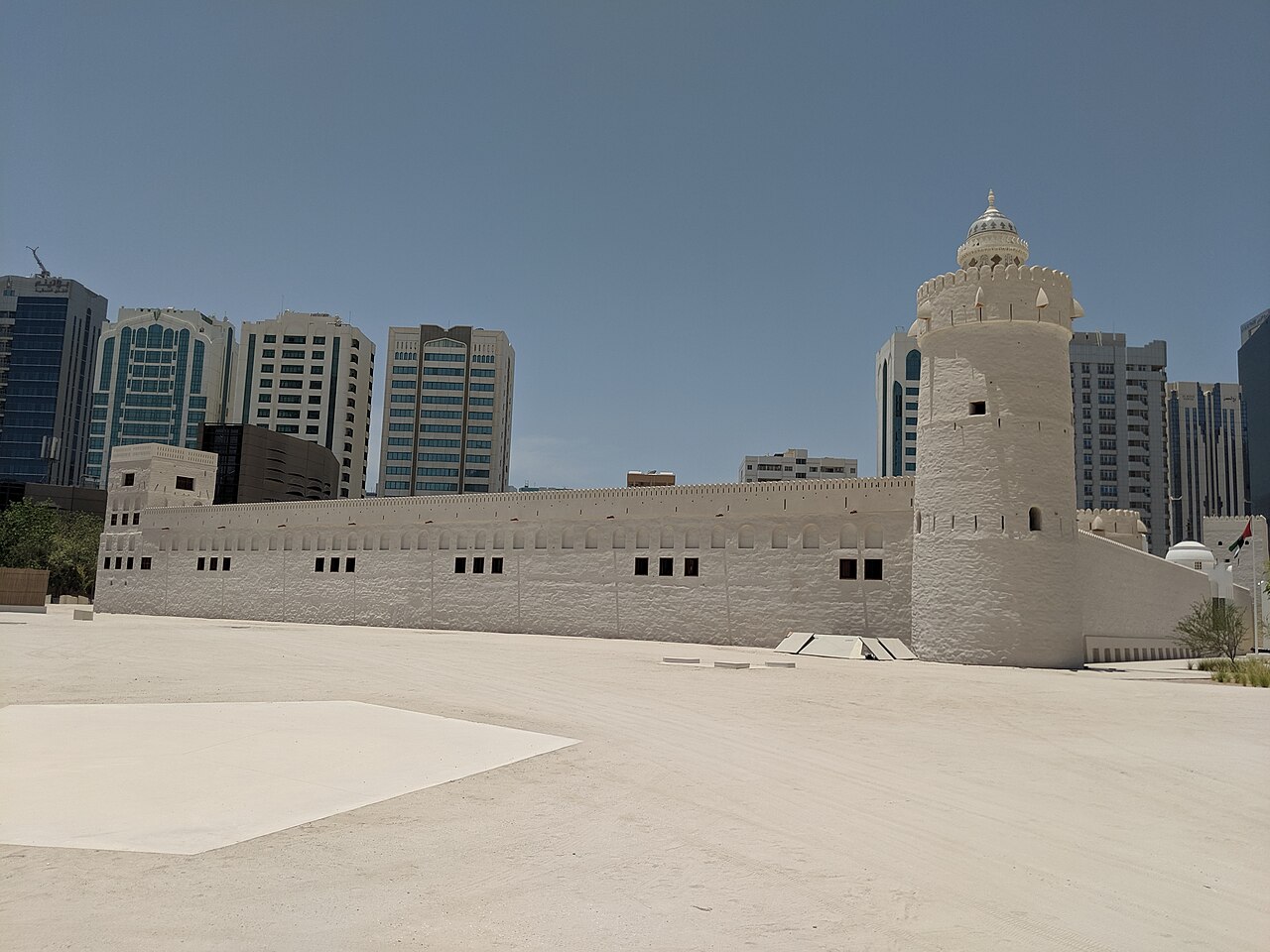
Abu Dhabi's oldest stone building, begun in 1761 as a watchtower guarding the island's only freshwater well. It grew into the ruler's palace and seat of government until 1966, and reopened in 2018 as a museum of the city's history.
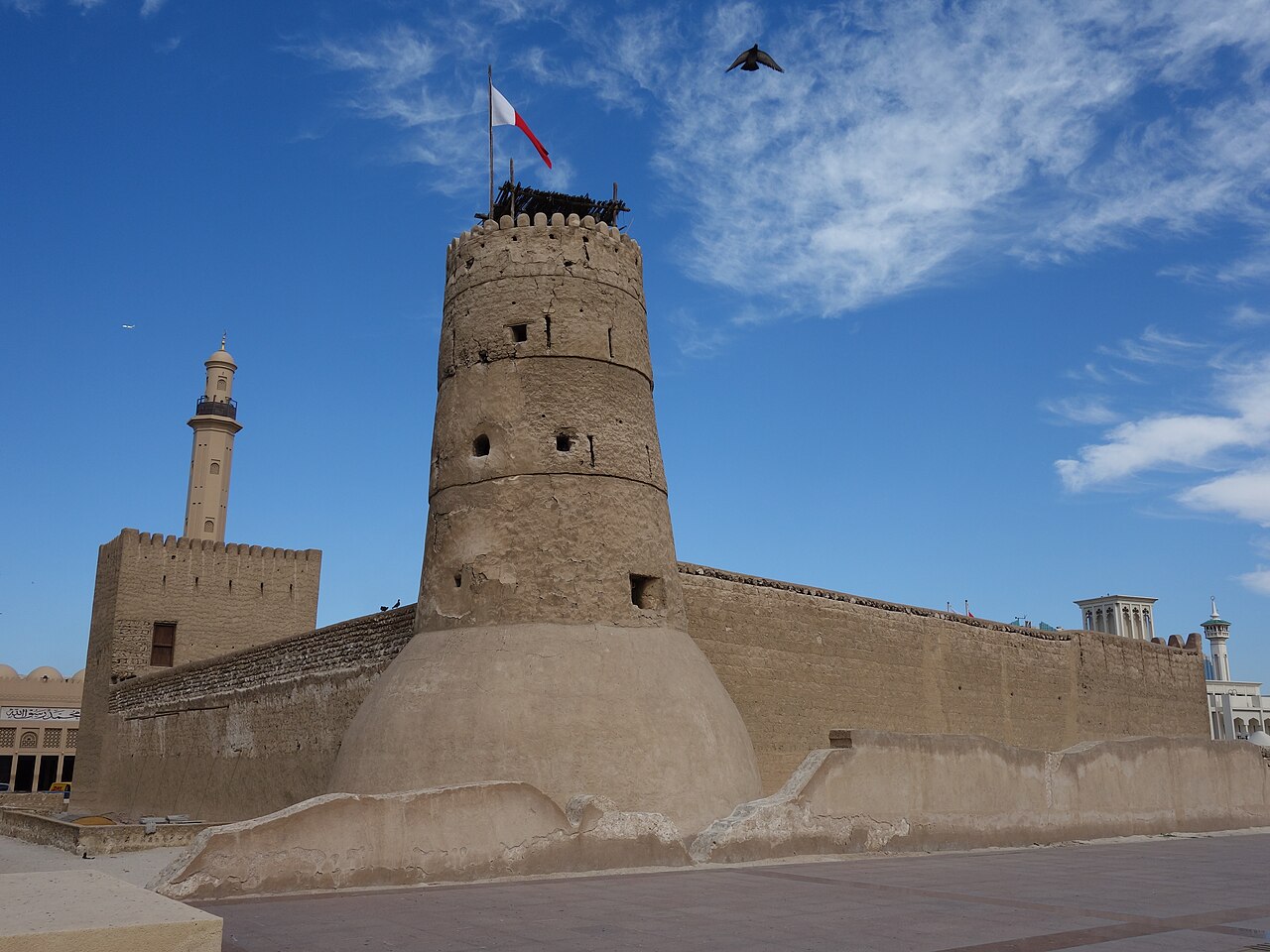
The heart of old Dubai. Al Fahidi Fort, built in 1787, is the oldest building in Dubai; as of September 2026 it is closed for restoration and due to reopen with a new Dubai Museum. The lanes of the Al Fahidi quarter next to it are lined with houses cooled by wind towers. For a small fare you can cross the creek in an abra, a wooden water taxi, to the spice and gold souks of Deira.
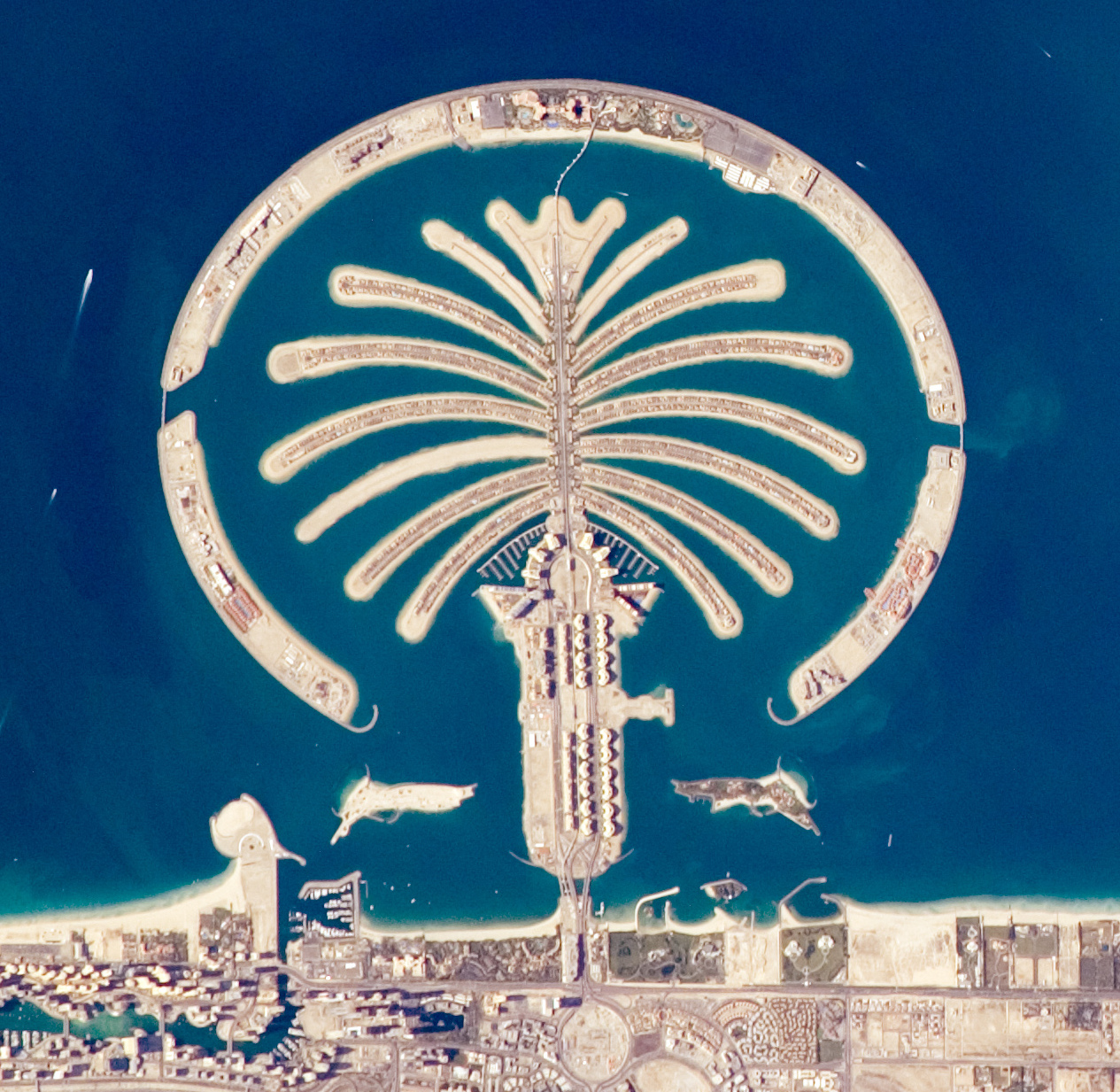
Artificial islands shaped like a palm tree, with a trunk, fronds and a curving outer crescent, built from sand and rock dredged from the sea from 2001 onwards. More than 25,000 people live on it, among hotels, villas and beaches.
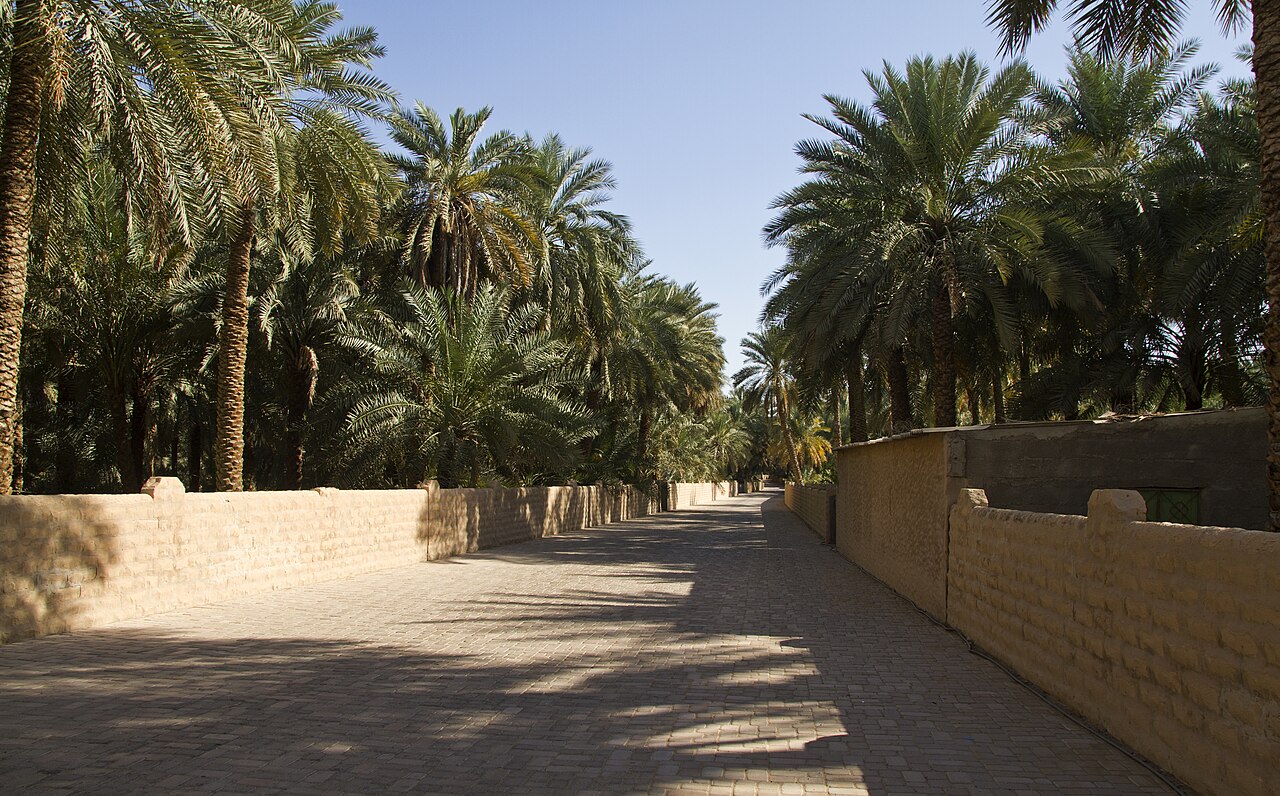
More than 147,000 date palms of about 100 varieties grow in this shady oasis in the middle of Al Ain, watered by falaj, ancient channels that carry water from underground. Shaded paths lead through the groves, and it is part of the Cultural Sites of Al Ain World Heritage Site.
UNESCO World Heritage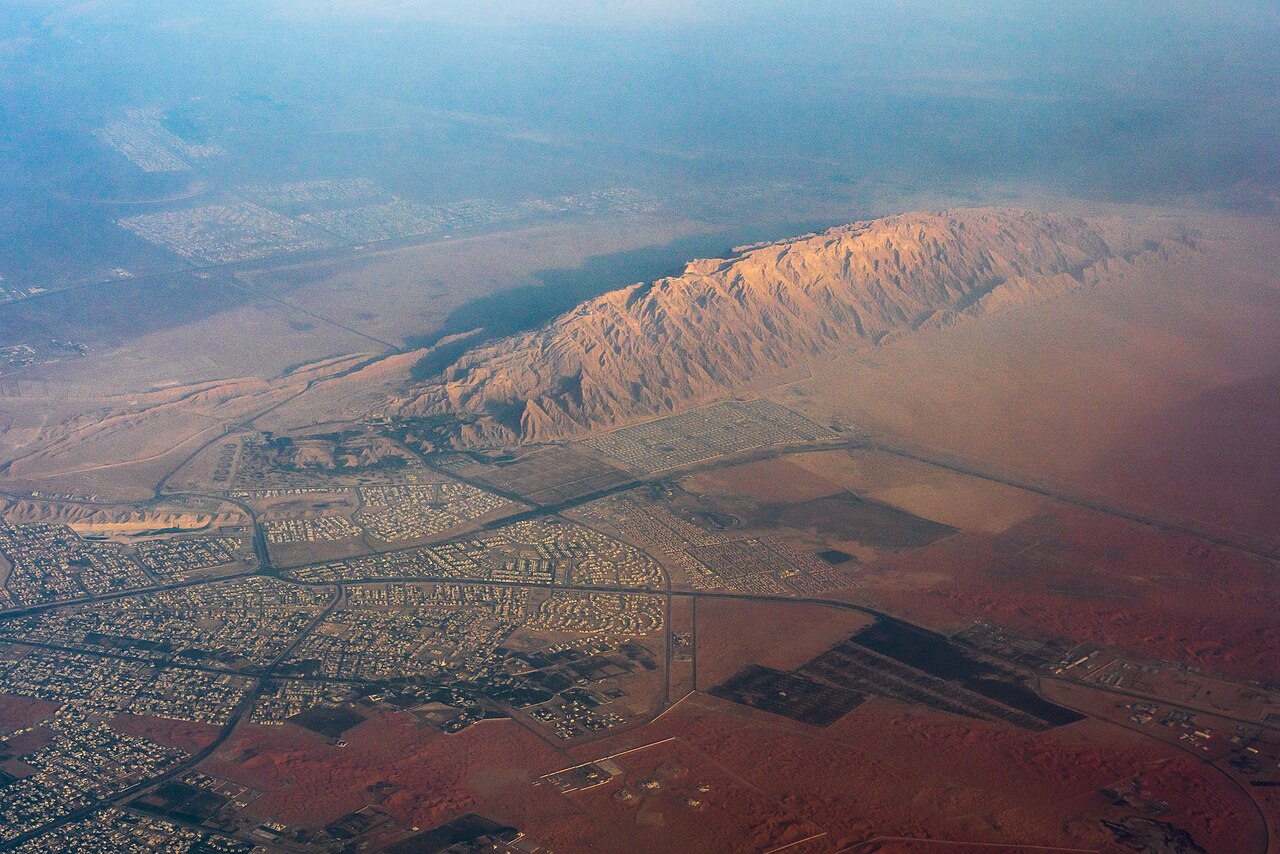
A lone limestone mountain rising steeply from the desert just south of Al Ain, on the border with Oman. A road with 60 bends climbs 11.7 km and about 1,200 m to the top. At its foot lie the 5,000-year-old Hafit tombs, part of the Cultural Sites of Al Ain World Heritage Site.
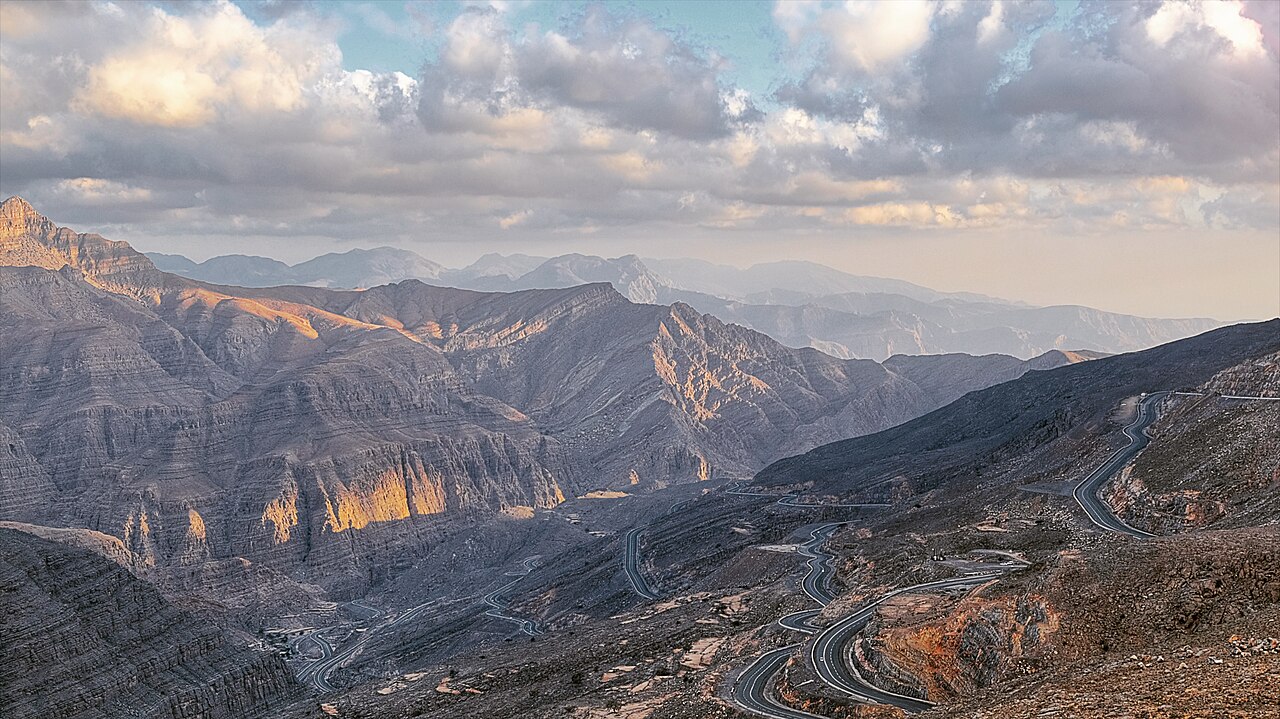
The highest mountain in the UAE, north of Ras Al Khaimah. A 36 km road hairpins up its bare slopes to viewing platforms and a zip line that was the world's longest when it opened in 2018. Its true summit lies just across the border in Oman.
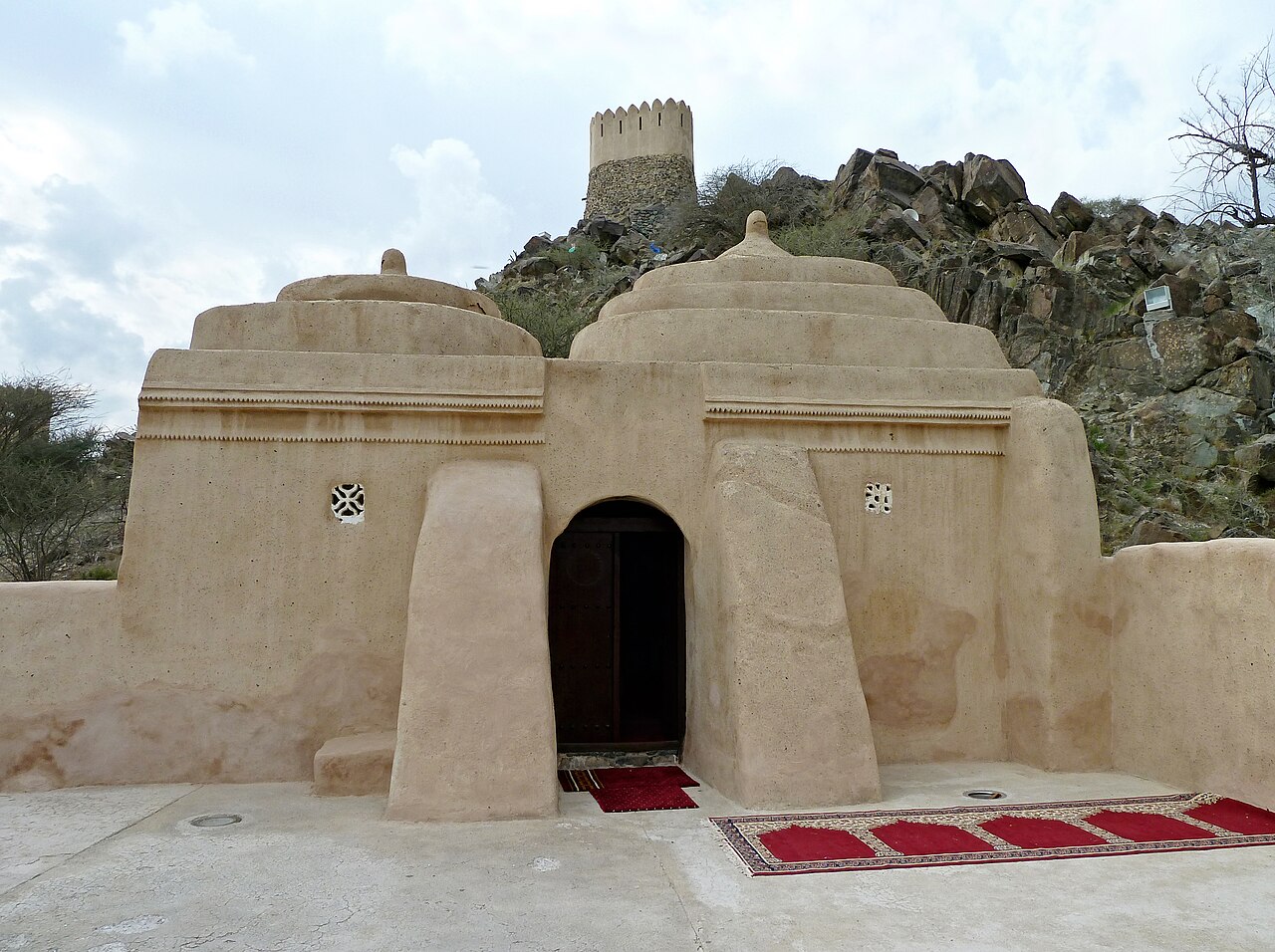
A small mosque of mud and stone with four low domes, in a village about 35 km north of Fujairah. It is usually dated to the 15th century and is often described as the oldest surviving mosque in the country.
As of September 2026 the Burj Khalifa in Dubai, 828 m tall, is the tallest building in the world. It was called Burj Dubai until the day it opened in 2010.
Snow was recorded in the UAE for the first time on 28 December 2004, on the Jebel Jais mountains in Ras Al Khaimah.
Abu Dhabi means 'father of the gazelle' in Arabic. The emirate of Abu Dhabi covers about 87 percent of the whole country.
On 9 February 2021 the UAE's Hope probe went into orbit around Mars, making the UAE the first Arab country to reach the planet.
Only about 11 percent of the people living in the UAE are Emirati citizens; most residents come from other countries, above all from South Asia.
In 2024 Dubai International Airport was the world's busiest airport for international passengers, with more than 92 million travellers.
As of 2026 the UAE has three World Heritage Sites: the Cultural Sites of Al Ain (2011), the Faya Palaeolandscape in Sharjah (2025) and Wadi Wurayah, a mountain valley in Fujairah with waterfalls and rare wildlife (2026).
The Dubai Metro opened on 9 September 2009, at 9 minutes and 9 seconds past 9 in the evening. Its trains have no drivers.
Falconry is a treasured Emirati tradition. In 2010 UNESCO listed it as intangible cultural heritage, nominated by the UAE together with ten other countries.
Around 1907, at the height of the pearl trade, about 4,500 pearling boats worked from ports around the Gulf, employing more than 74,000 people.
Hatta is part of Dubai, yet to get there from the city you drive about 134 km inland into the mountains. Several emirates own such separate pieces of land, called exclaves.
On Sir Bani Yas Island, off the coast of Abu Dhabi, archaeologists found a Christian monastery and church from around the 7th century.
The Palm Jumeirah was built from sand dredged from the sea floor and rock, and seen from the air it really does look like a palm tree.
Arabic is written from right to left; each word is shown in simple Latin letters with the Arabic script in brackets. 'Kh' sounds like the ch in Scottish 'loch', and in the Gulf the letter qaf is often said as a hard 'g', so qahwa (coffee) becomes gahwa Pronunciation is written the way it sounds; the capital letters show where the stress goes. Audio is coming soon.
Some phrases change with the person you speak to: 'shlonak' is for a man and 'shlonich' for a woman. Almost everyone in the UAE also speaks English, but a few words of Arabic are warmly received
In 2026 the UAE was hit by drone and missile attacks during the war involving Iran. As of September 2026, British government advice warns of a risk of further attacks and says flights and airspace in the region can be disrupted at short notice. Before and during your trip, check your own government's official travel advice for the UAE.
Some ordinary medicines, including certain painkillers with codeine, are controlled in the UAE. As of September 2026 you must apply online to the UAE Ministry of Health before you fly to bring in any medicine the UAE classes as narcotic, psychotropic, controlled or semi-controlled. Visitors may bring at most three months' supply of ordinary medicine, and only one month's supply of a medicine that needs approval. Bringing controlled medicines without approval can lead to prosecution.
As of 2026 alcohol is sold in licensed hotels, restaurants and bars, and the legal age is 21. Drinking or being drunk in a public place is illegal everywhere, and the emirate of Sharjah bans alcohol altogether. There is zero tolerance for drinking and driving.
In shopping malls and other public places, women are advised to cover their shoulders and knees, and swimwear should be worn only on beaches and at pools. The Sheikh Zayed Grand Mosque asks all visitors to wear long, loose, ankle-length clothes, and women must also cover their hair with a headscarf.
During the holy month of Ramadan most Muslims fast from dawn to sunset. Eating, drinking, smoking or chewing gum in public in the daytime, loud music and dancing may cause offence. Opening hours change, and the evenings, with their iftar meals, are lively and welcoming.
Do not photograph people, especially women, without their permission, and never take pictures of government buildings, military sites or airports. Swearing and rude gestures, including online, are criminal offences.
The best months to visit are November to March, when days are warm and sunny. In July and August the temperature on the coast often climbs above 45 °C, so plan outdoor visits for early morning or evening and drink plenty of water.
The emergency numbers are 999 for the police, 998 for an ambulance and 997 for the fire service. Only cross roads at marked crossings; crossing anywhere else is illegal and can be fined.