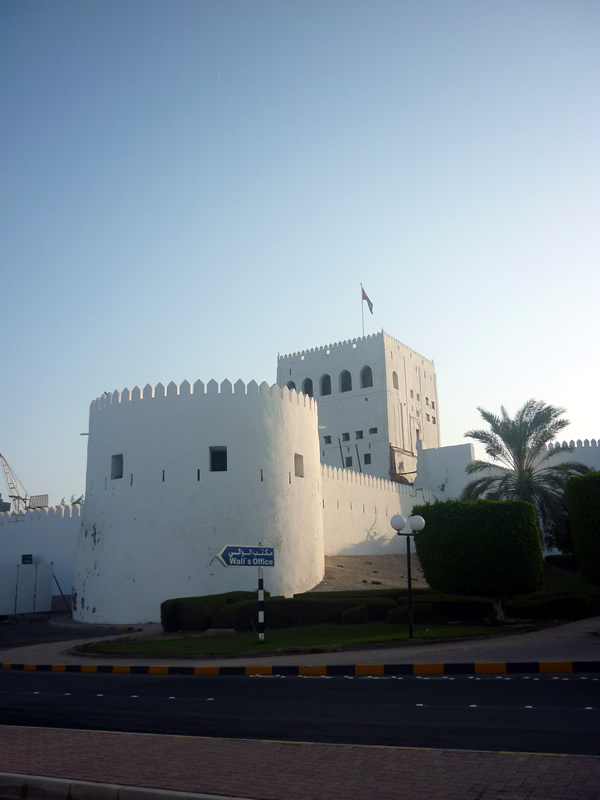
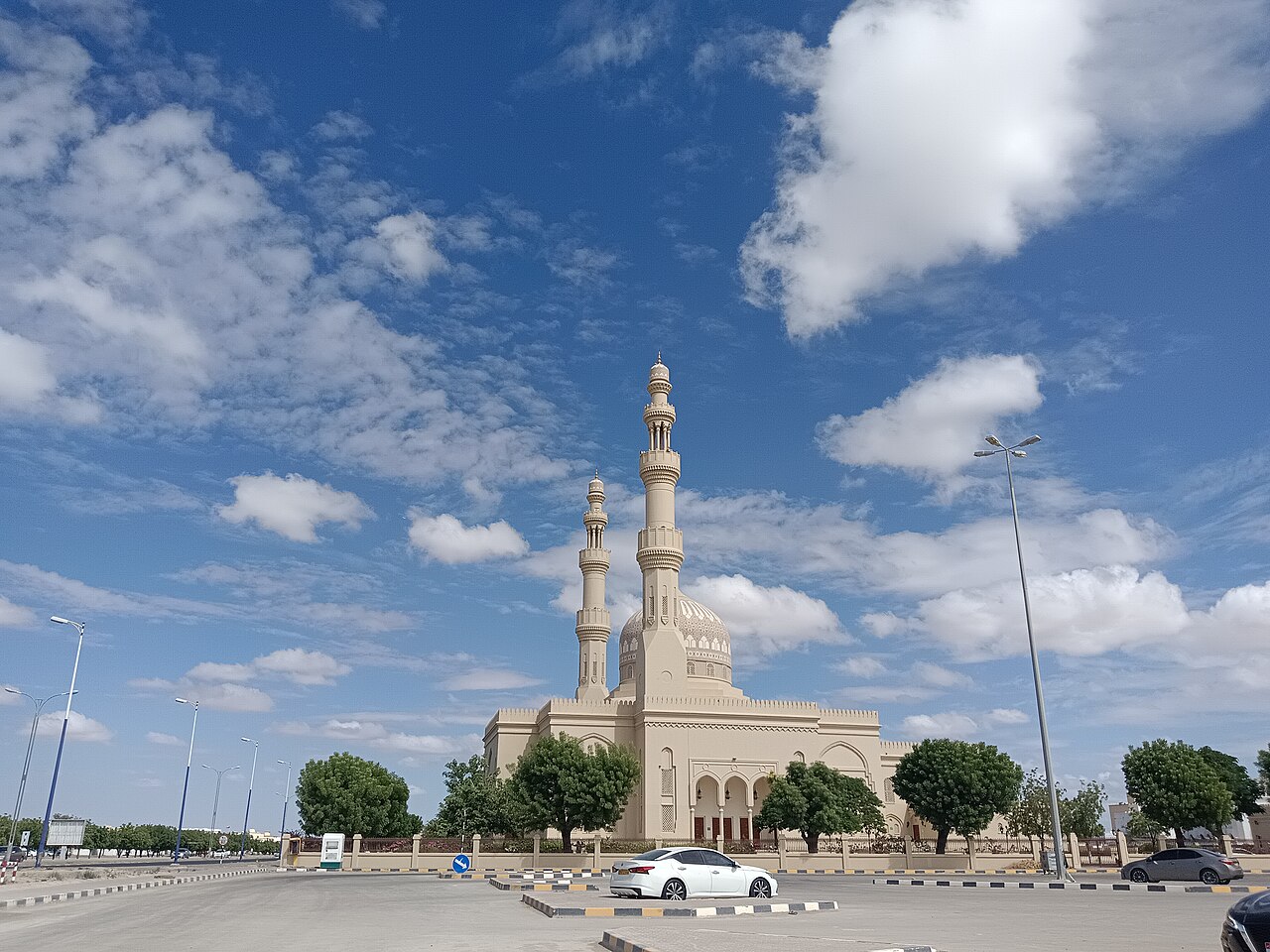
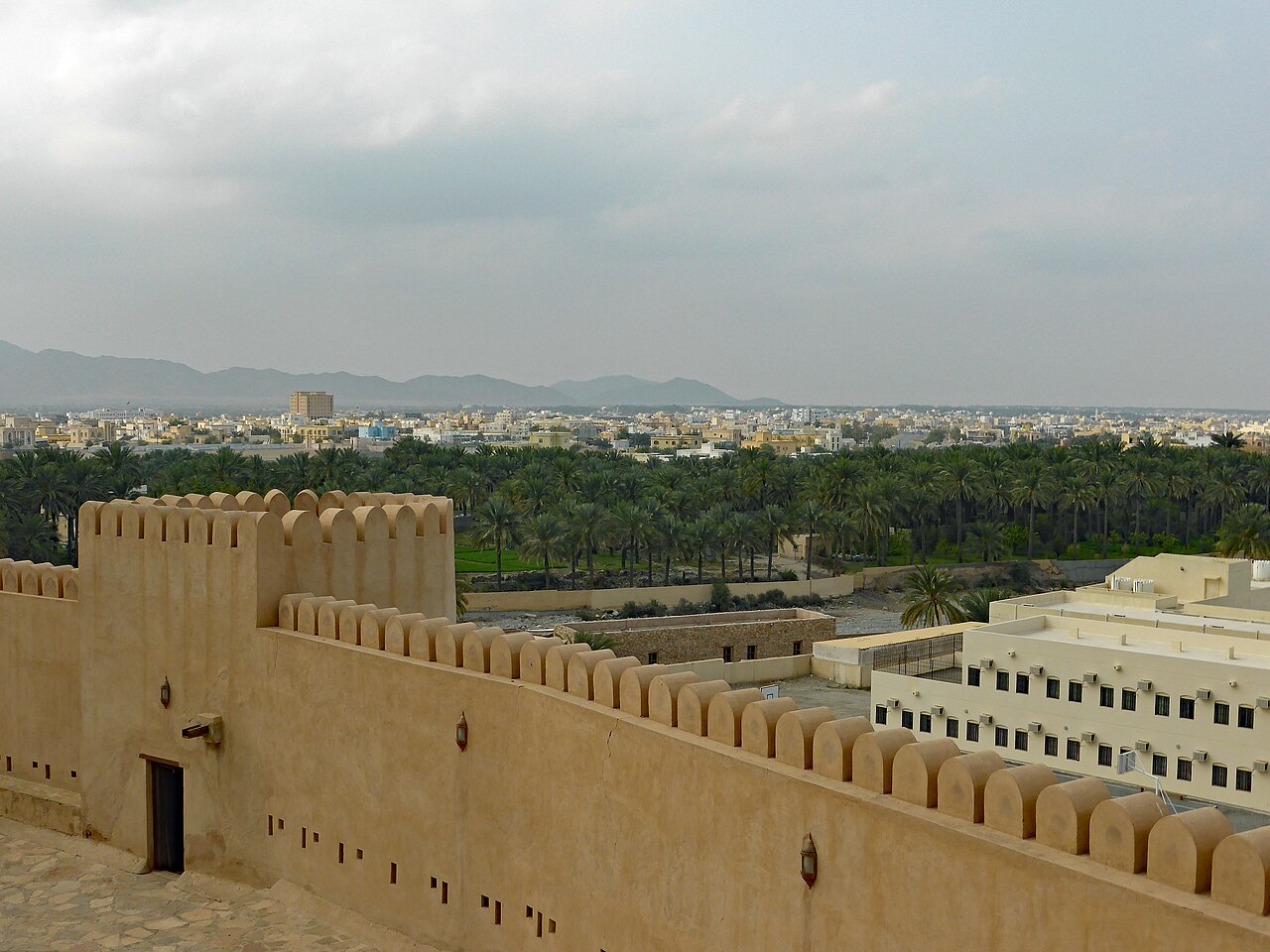
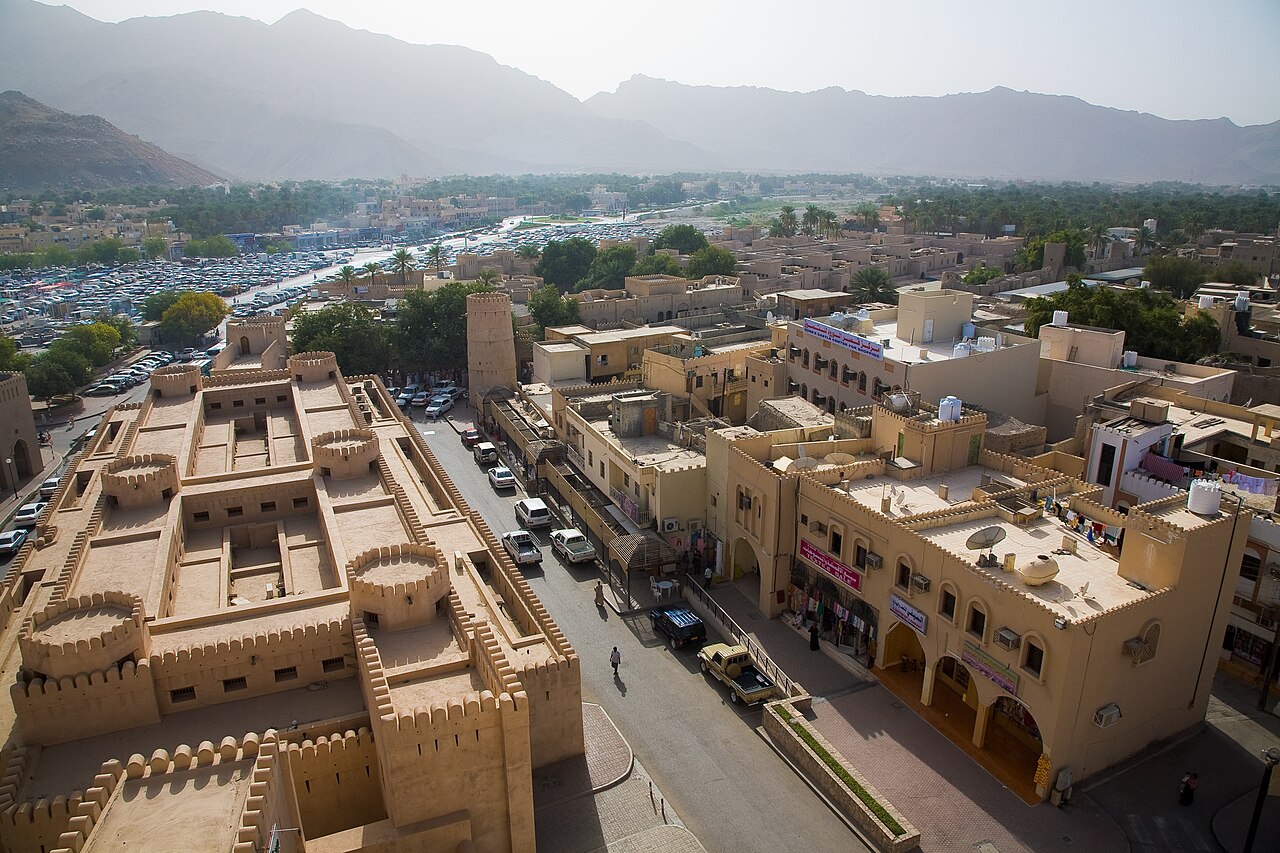
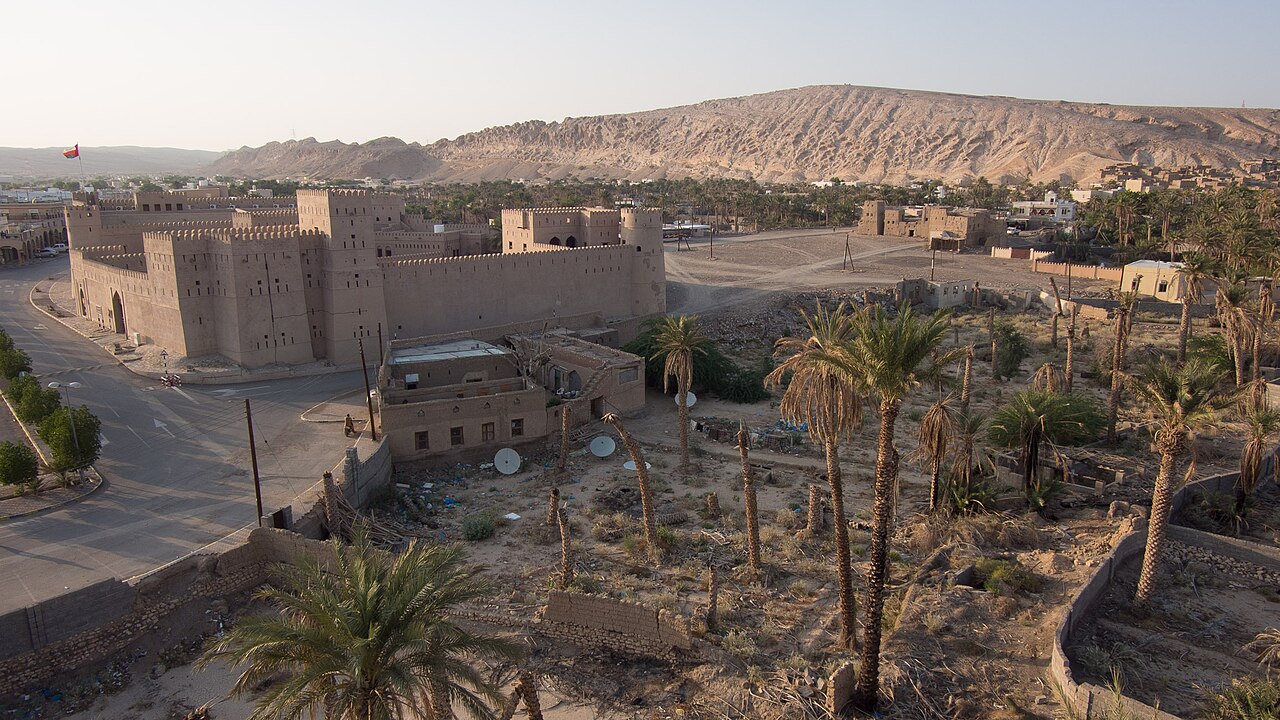
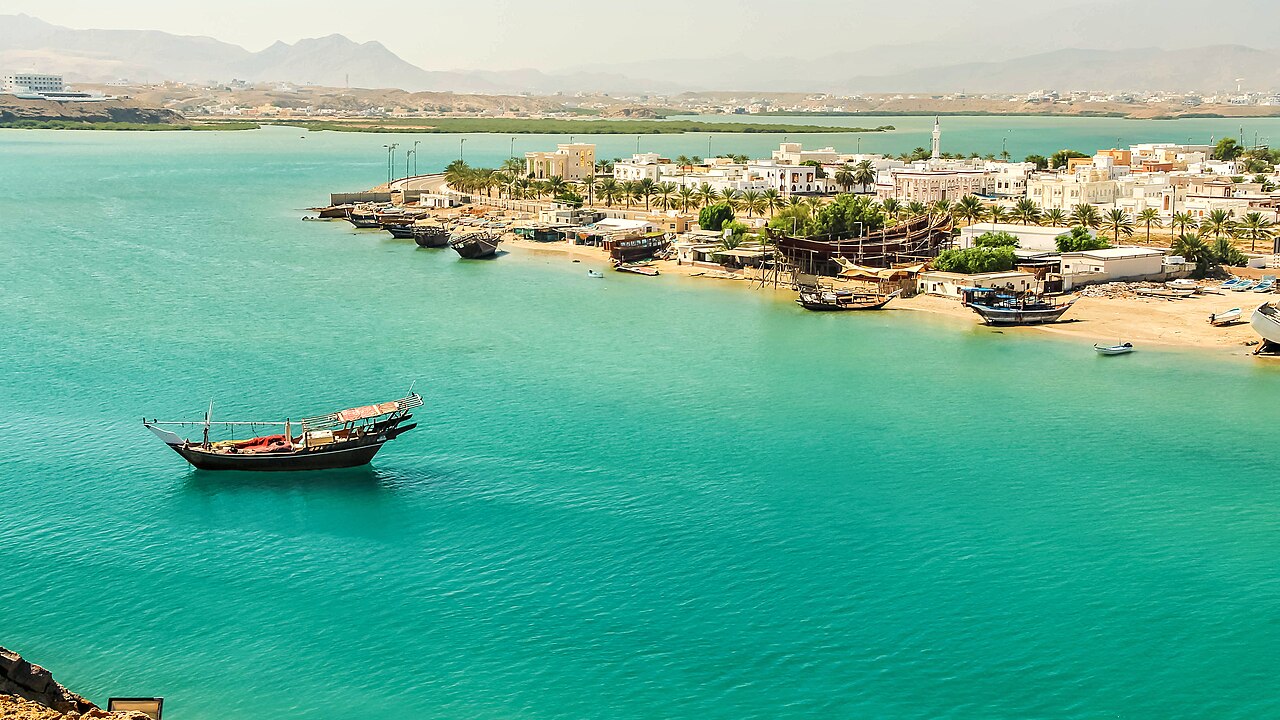
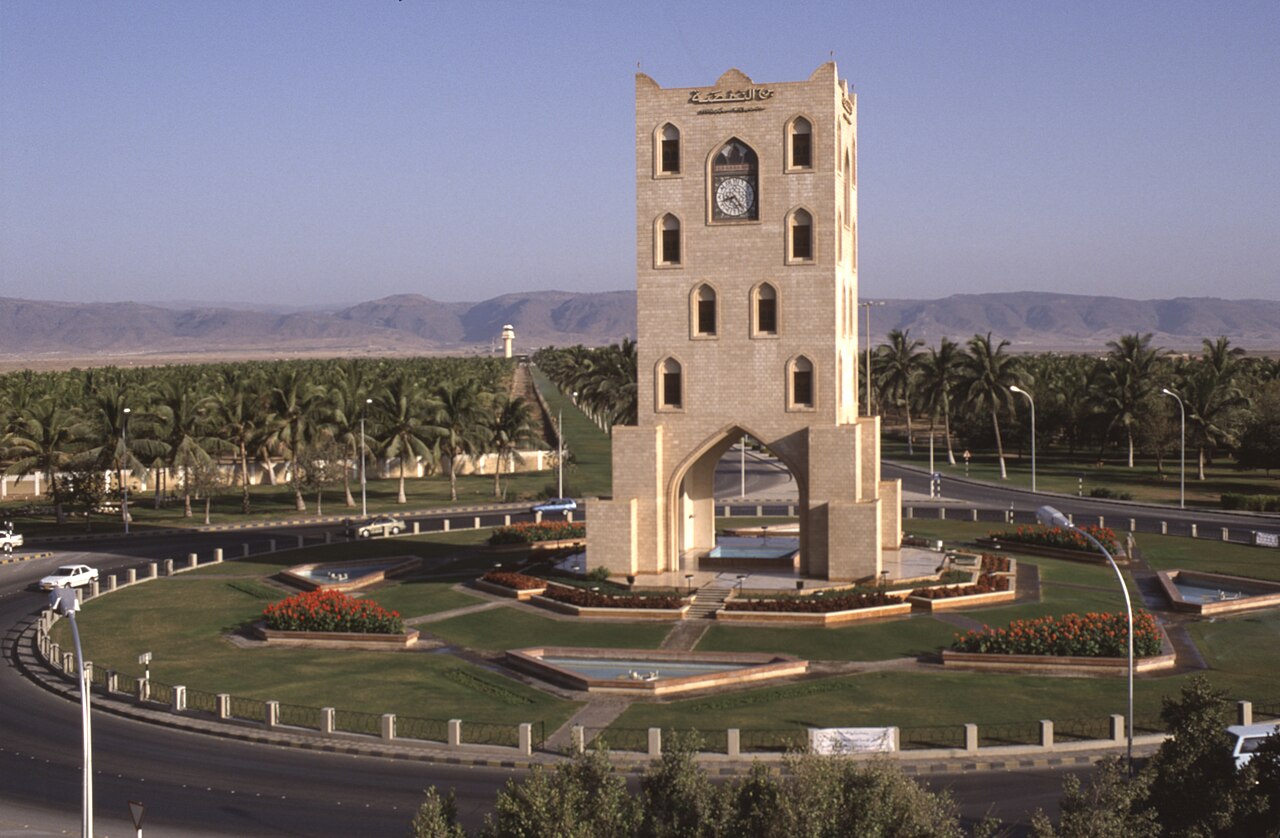
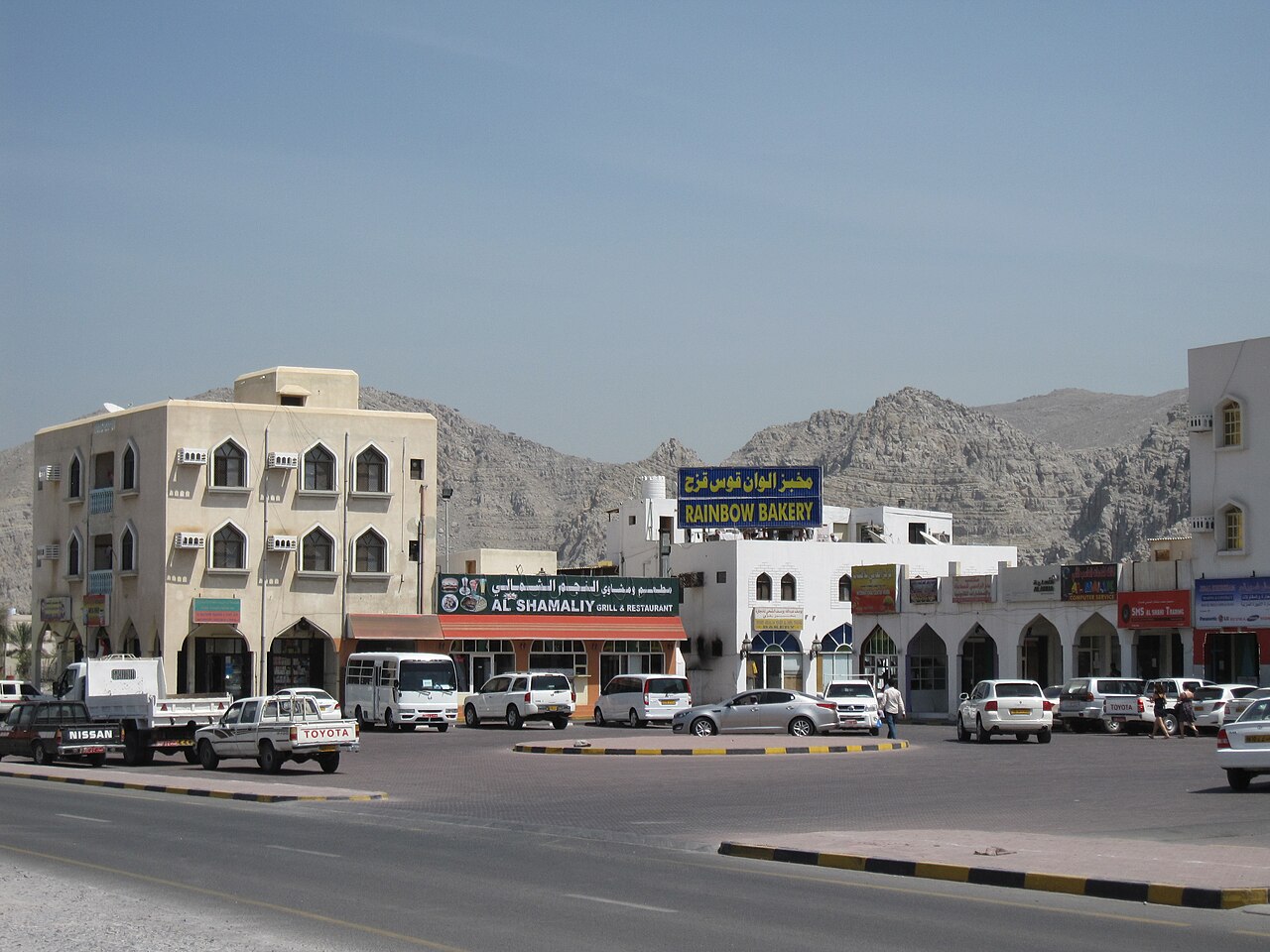
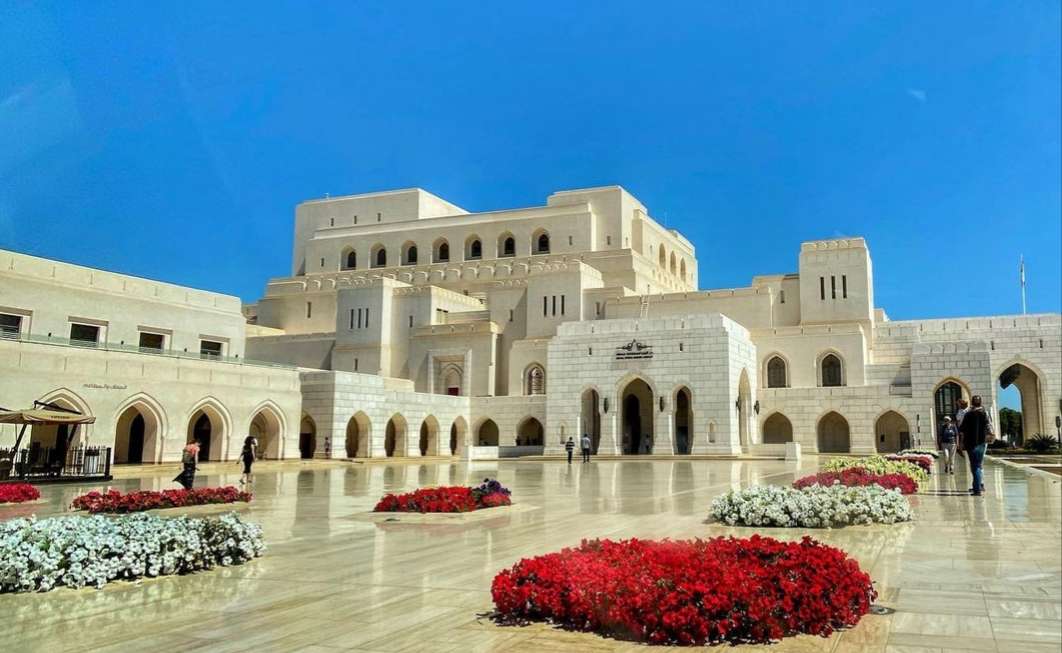
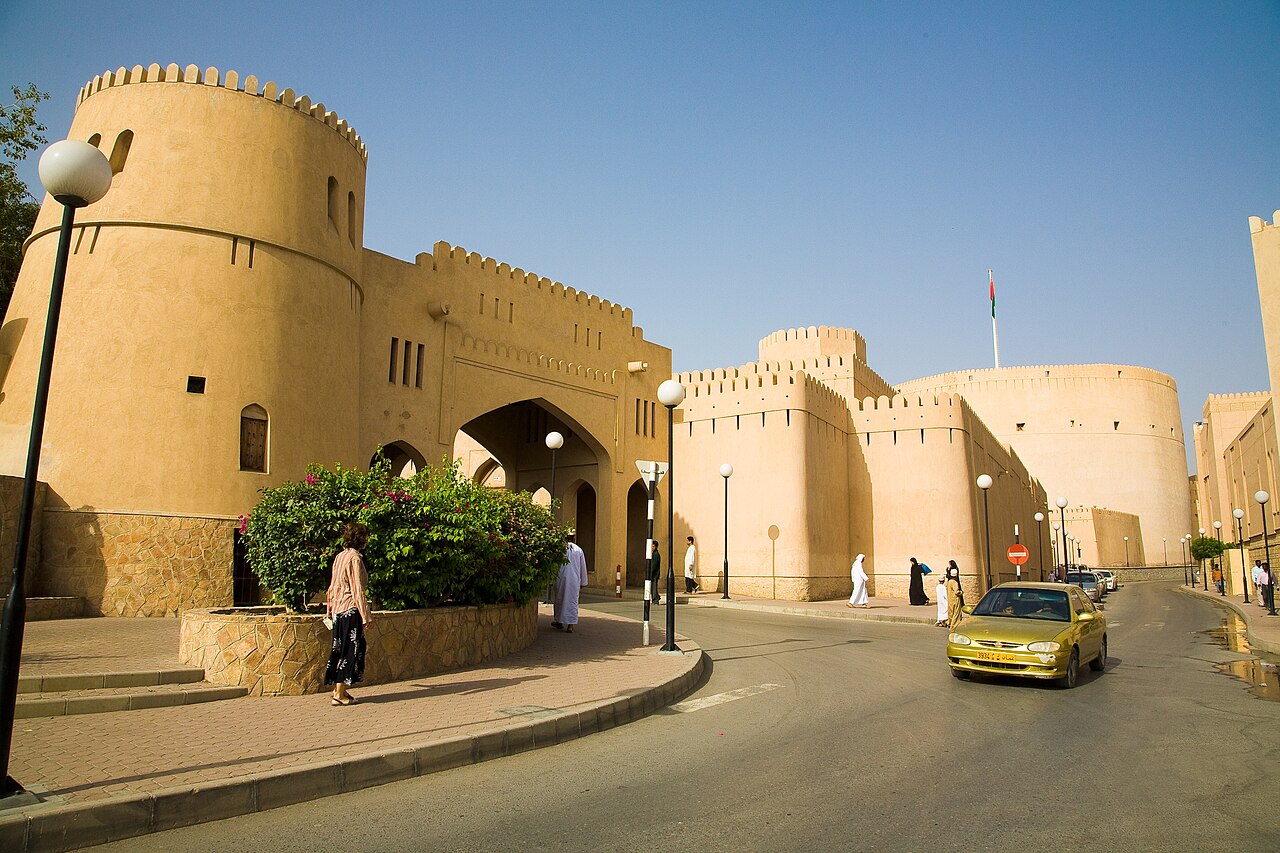
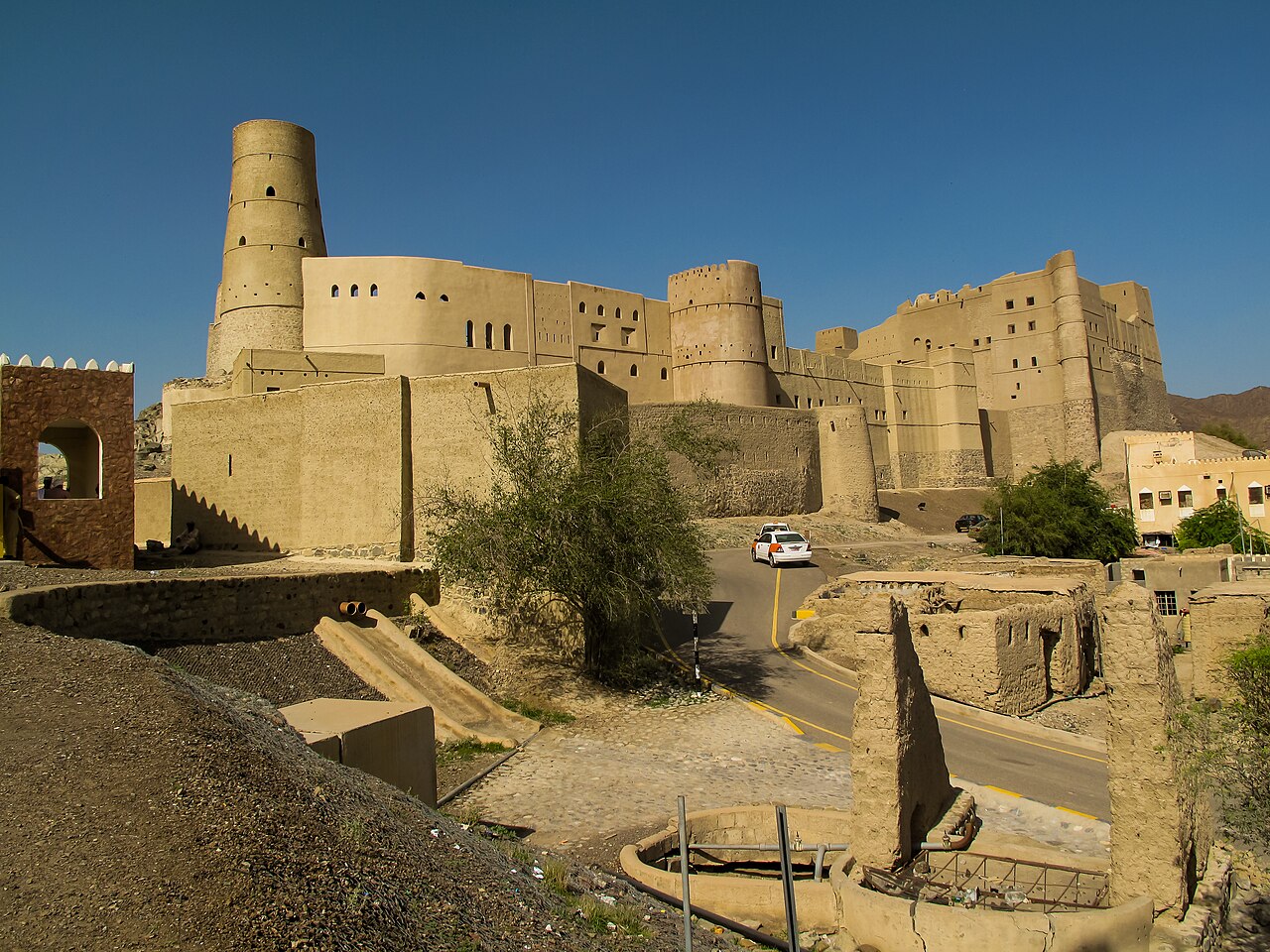
Mud-brick forts below bare mountains, green palm oases, golden dunes, misty monsoon hills and a long coast of fishing towns, in a land ruled by the same family since 1744.
Your trip to Oman
Ready for the trip?
10 questionsAbout 3 minutesNo timer
Explore Oman
You have explored 0 of 9 parts. Scroll on to discover the rest.
A free large-print PDF. Choose what goes in: facts, map, history, dishes and recipes, phrases, fun facts, a quiz with or without answers. Made for clubs, care homes, libraries and family afternoons.
Oman lies in the southeast corner of the Arabian Peninsula, with a long coastline on the Gulf of Oman and the Arabian Sea. The rugged Hajar Mountains run across the north, a wide gravel desert and the sand dunes of the Sharqiya fill the middle, and in the far south the Dhofar hills turn green each summer under the monsoon mist. Oman also has two pieces of land cut off from the rest of the country: the Musandam Peninsula on the Strait of Hormuz and the tiny Madha, both surrounded on land by the United Arab Emirates.
For thousands of years Omanis lived from the sea, from copper and from frankincense. Sumerian texts call the land Magan, a source of copper. Omani sailors traded as far as India, China and East Africa, and in the 17th century Oman drove out the Portuguese and built an empire that reached Zanzibar and Mombasa. The Al Bu Said family, which still rules, came to power in 1744. From 1970 oil money paid for roads, schools and hospitals in a country that had very few before.
As of 2026 about 5.4 million people live in Oman, and a little over half of them are Omani citizens; most of the rest are workers from South Asia and other countries. Almost all Omanis are Muslims. Oman is the heartland of the Ibadi school of Islam, which has few followers elsewhere, and many Omanis are Sunni, with a small Shia minority. Visitors come for the forts of Nizwa and Bahla, the Grand Mosque in Muscat, turtle beaches, desert camps, mountain villages and the cool green season in Salalah.
CapitalMuscat
PopulationAbout 5.4 million (National Centre for Statistics and Information, September 2026), of whom about 57% are Omani citizens
Official languageArabic. English is widely used in business and tourism, and many workers speak languages of India, Pakistan and Bangladesh
CurrencyOmani rial (OMR, often written RO), divided into 1,000 baisa and tied to the US dollar
AreaAbout 309,500 km²
GovernmentAbsolute monarchy: the sultan is head of state and head of government and rules by royal decree; the Consultative Assembly (Majlis al-Shura) is elected and advises
Highest mountainJebel Shams, in the Hajar Mountains, about 3,009 m according to the Ministry of Tourism (its highest summit is a closed military area)
Longest riverNone: Oman has no permanent rivers. Water flows through dry valleys called wadis only after rain, and ancient channels called aflaj carry spring water to villages
NeighboursThe United Arab Emirates to the northwest, Saudi Arabia to the west and Yemen to the southwest. Across the sea lie Iran, on the other side of the Strait of Hormuz, and Pakistan
Oman looks out to the Indian Ocean, so its history is one of sailors, merchants and sea empires, with a tribal interior ruled for centuries by elected religious leaders called imams. Early dates are approximate. Copper and frankincense made the land rich in ancient times, the Portuguese held its coast for more than a century, and Omani imams and sultans later ruled lands as far away as Zanzibar and Gwadar. Modern Oman took shape after 1970.
2300 BC
Sumerian texts name Magan
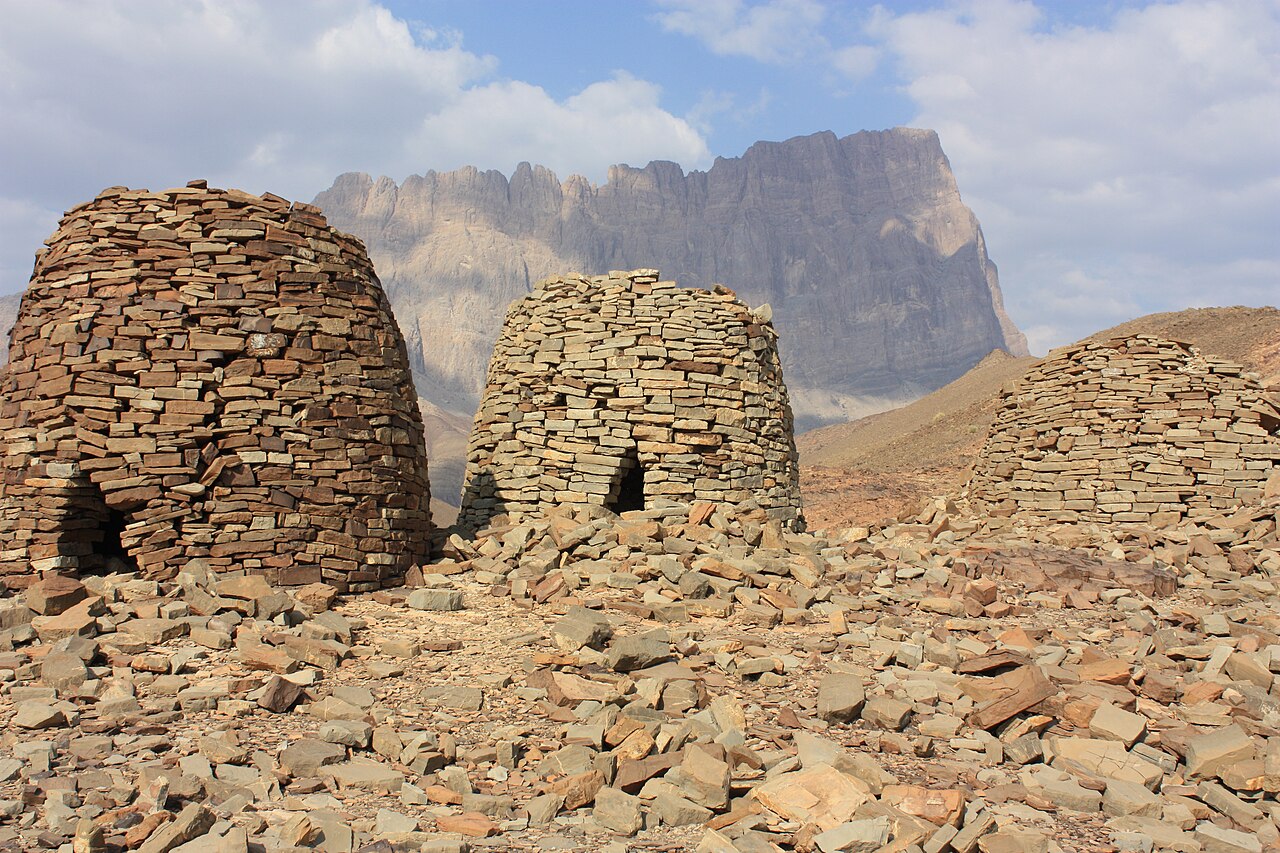
Around 2300 BC clay tablets from Mesopotamia mention Magan, a land that sent copper and hard stone up the Gulf by boat. Magan is now identified with Oman and the nearby United Arab Emirates, where ancient copper mines and smelting sites have been found. The beehive-shaped stone tombs at Bat date from this Bronze Age world.
AD 630
Oman accepts Islam
Around 630 the Prophet Muhammad sent Amr ibn al-As to the two brothers who ruled Oman, Jaifar and Abd, sons of al-Julanda. They accepted Islam, and Omanis became Muslims early and largely peacefully.
AD 751
The first Ibadi imam is elected
According to many historians, al-Julanda bin Masud was elected the first Ibadi imam of Oman around 751. Ibadism, a branch of Islam that chooses its leader by the agreement of scholars and tribes, became the leading faith of the interior, and elected imams ruled the interior on and off for more than 1,000 years.
1154
The Nabhani dynasty takes power
In 1154 the Nabhani family came to power, ruling as kings with Bahla as their capital, while the imams lost most of their power. The Nabhanis grew rich from the frankincense trade, and the great mud-brick fort of Bahla grew in their time.
1507
The Portuguese capture Muscat
In 1507 a Portuguese fleet under Afonso de Albuquerque attacked the Omani coast and took Muscat. The Portuguese fortified the harbour and held a chain of coastal towns to control trade at the mouth of the Gulf. The two forts that still guard Muscat harbour, Al Jalali and Al Mirani, were built in their time.
1624
The Yaruba imams unite Oman
In 1624 the tribes elected Nasir bin Murshid of the Yaruba family as imam at Rustaq. He brought the quarrelling tribes together and began to push the Portuguese out of their coastal forts.
1650
The Portuguese are driven out of Muscat
In January 1650, after a surprise attack at dawn by the imam's troops, the Portuguese garrison of Muscat surrendered. Only a small Portuguese post at Khasab in Musandam held out a few years longer. Around the same time the Yaruba imams built the great round tower of Nizwa Fort.
1698
Fort Jesus in Mombasa falls
Omani ships chased the Portuguese down the coast of East Africa. In 1698, after a long siege, Imam Saif bin Sultan's forces took Fort Jesus in Mombasa, in today's Kenya. Oman became the leading power on the Swahili coast, including Zanzibar.
1744
Ahmad bin Said founds the Al Bu Said dynasty
After a civil war and two Persian invasions, Ahmad bin Said, the governor of Sohar, drove out the Persians and was elected imam on 20 November 1744. His family, the Al Bu Said, has ruled Oman ever since, and as of 2026 Oman's National Day is celebrated on 20 November in memory of that date.
1856
Said bin Sultan dies and the empire splits
Said bin Sultan ruled from 1804 to 1856 and moved his court to Zanzibar, which grew rich from cloves and, sadly, from the slave trade. When he died in 1856 his sons quarrelled, and in 1861 British arbitration confirmed the split into two sultanates, Muscat and Oman in Arabia and Zanzibar in Africa.
1920
The Treaty of Seeb
After years of fighting between the sultan on the coast and the imam of the interior, the Treaty of Seeb, brokered by Britain in 1920, gave the imam self-rule in the interior while the sultan kept Muscat and the coast. The country was known as Muscat and Oman.
1958
Oman sells Gwadar to Pakistan
For almost two centuries the port of Gwadar, on the coast of today's Pakistan, belonged to the rulers of Muscat. On 8 September 1958 Pakistan bought it from Oman, and many families in both countries still have links across the Arabian Sea.
1967
Oman exports its first oil
Oil was found in the interior in the 1960s, and in 1967 the first tanker load of Omani oil left from the coast near Muscat. Oil money soon changed the country completely.
1970
Sultan Qaboos comes to power
On 23 July 1970 Qaboos bin Said replaced his father in a palace coup in Salalah. At that time Oman had only about 10 km of paved road and very few schools or hospitals. He renamed the country the Sultanate of Oman, abolished slavery and began a rapid programme of building that Omanis call the Renaissance.
1976
The Dhofar War ends
A rebellion in the southern region of Dhofar, backed by South Yemen and other left-wing governments, had begun in the 1960s. With help from Britain, Iran and Jordan, and with offers of amnesty and new roads, schools and clinics, the government won, and in early 1976 the war was declared over, although a few small clashes went on until 1979.
2020
Sultan Qaboos dies
Sultan Qaboos died on 10 January 2020, after almost 50 years in power, at that time the longest-serving ruler in the Arab world. A cousin from the same family succeeded him the next day, following the rules of the Basic Statute, Oman's constitution of 1996.
Omani cooking grew up on trade routes, so it mixes Arab, Persian, Indian and East African flavours: rice, lamb, goat, chicken and plenty of fish, with cardamom, cinnamon, saffron, cloves, dried limes and chilli. The main meal is eaten in the middle of the day, often a big platter of spiced rice with meat or fish shared by the family, and the evening meal is lighter. Whenever a guest arrives, the first thing offered is kahwa, cardamom coffee, with fresh dates and a spoonful of sticky Omani halwa.
All of Oman, above all the villages of the interior; made for Eid
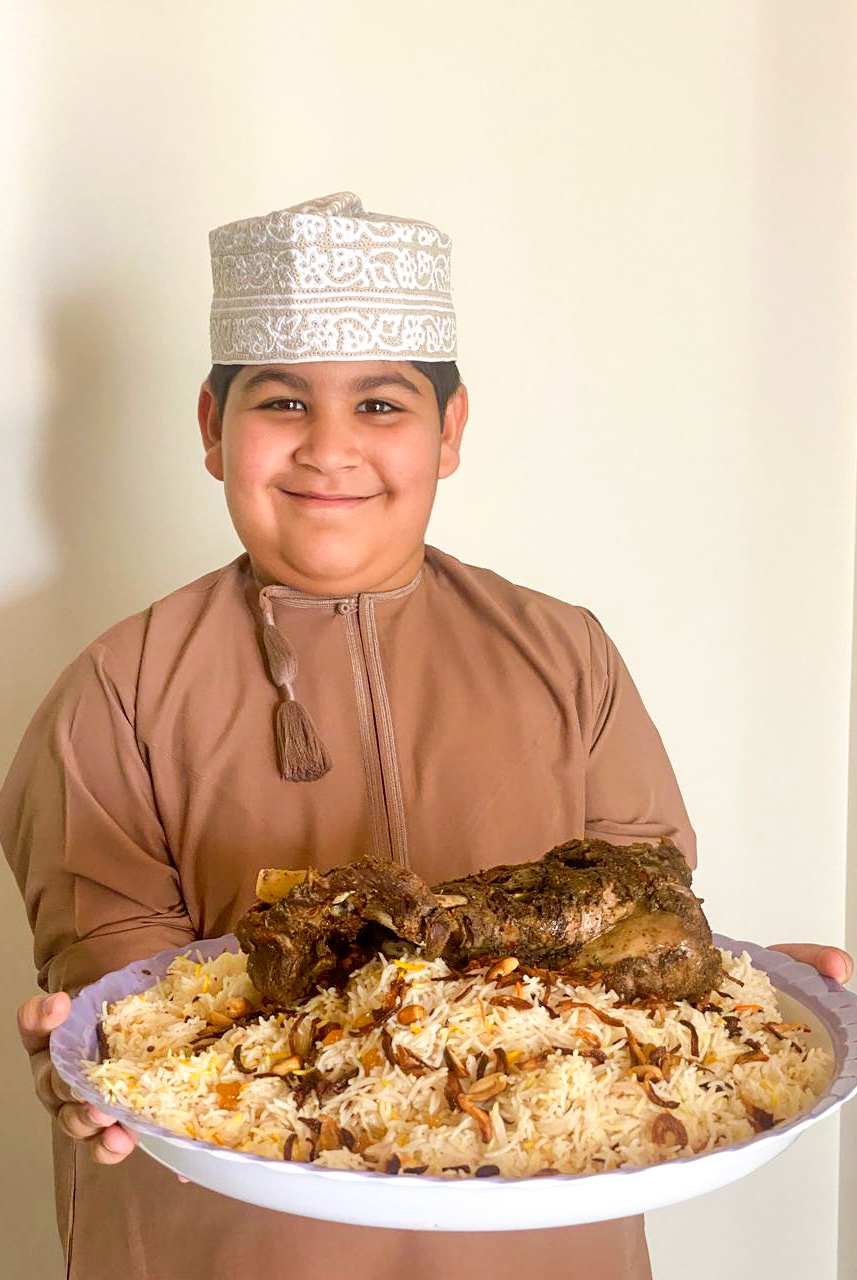
Oman's great festive dish: lamb, goat or camel rubbed with a paste of dried chillies, garlic, cumin, coriander and vinegar or date syrup, wrapped in palm or banana leaves and a sack, then lowered into a sand pit lined with hot coals and sealed. It cooks slowly for a day or even two, until the meat falls off the bone, and is served with rice.
On the first day of Eid al-Adha whole villages bring their meat bundles to the shared shuwa pit, and the bundles are dug up again a day or two later.
See the recipe
Serves 6
5 h
Ingredients
2 kg lamb shoulder or leg on the bone
6 cloves of garlic
3 tablespoons ground dried red chilli (use less for a milder dish)
1 tablespoon each ground cumin and ground coriander
1 teaspoon each ground cardamom, cinnamon and black pepper, and ½ teaspoon ground cloves
4 tablespoons white vinegar or lemon juice, and 2 tablespoons date syrup or honey
3 tablespoons vegetable oil and 2 teaspoons salt
Banana leaves (from Asian shops) or baking paper, and foil
To serve: plain or spiced rice
Method
Crush the garlic and mix it with all the spices, the vinegar, date syrup, oil and salt to make a thick paste.
Cut deep slits all over the lamb and rub the paste into them and over the surface. Cover and leave in the fridge overnight.
Heat the oven to 150 °C. Wrap the lamb tightly in banana leaves or baking paper, then in two layers of foil so no steam escapes.
Put it in a roasting tin and cook for 4 to 5 hours, until the meat pulls away from the bone with a spoon.
Unwrap it carefully (hot steam) and serve on a big platter of rice, with the juices spooned over.
All of Oman and the Gulf coast; an everyday family lunch
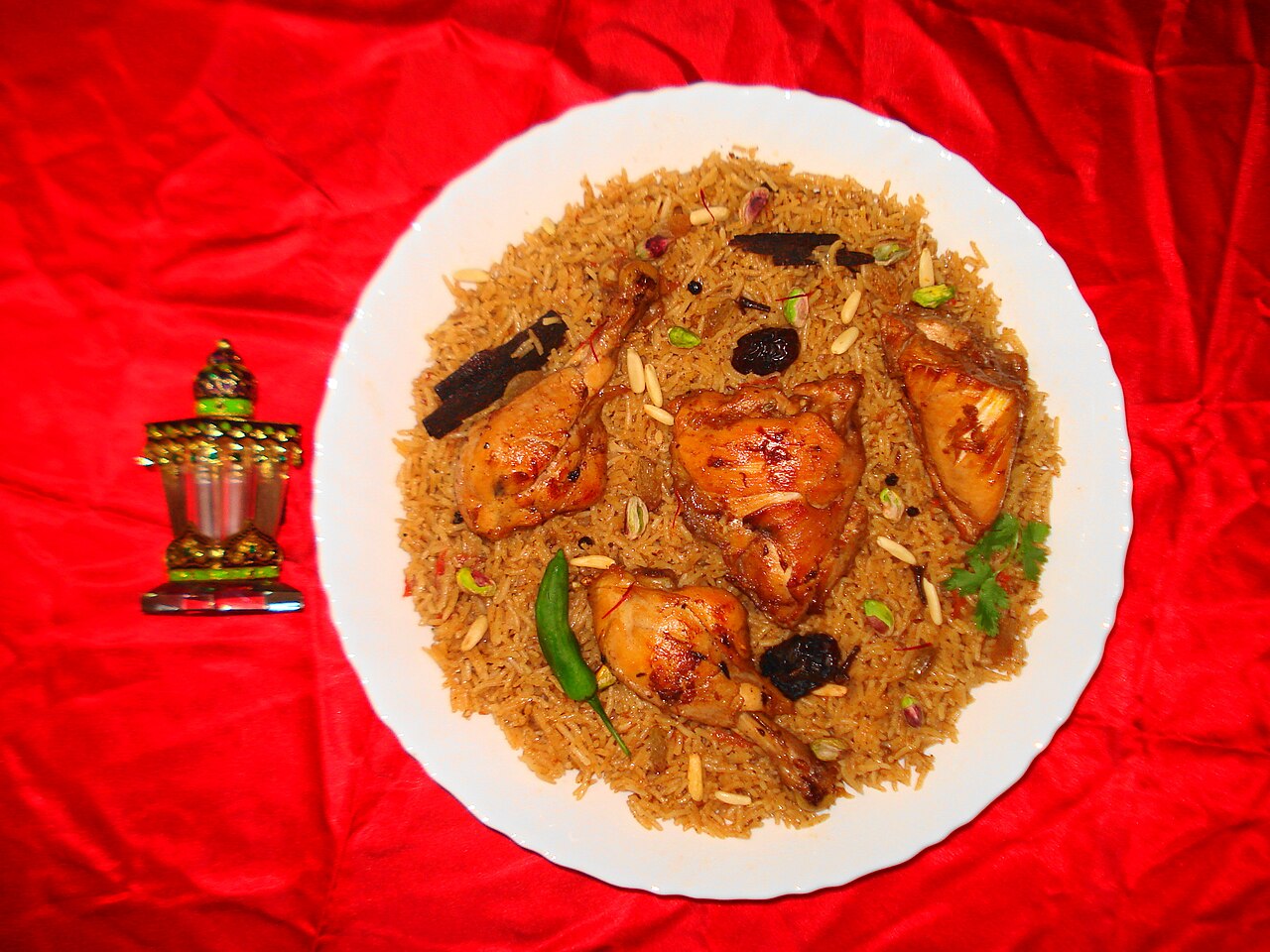
Spiced rice cooked in the broth of the chicken, lamb or fish that goes with it, flavoured with onion, tomato, dried black limes, cardamom, cinnamon and a pinch of saffron. The meat is often browned at the end and laid on top of the golden rice, with fried onions and nuts.
The dried limes, called loomi, are small limes boiled in salt water and left in the sun until they turn black and hollow; they give the rice a sour, smoky taste.
See the recipe
Serves 6
1 h 30 min
Ingredients
1 chicken (about 1.5 kg), cut into 8 pieces
400 g basmati rice, rinsed and soaked for 20 minutes
2 onions, sliced, and 3 cloves of garlic, chopped
2 tomatoes, chopped, and 1 tablespoon tomato paste
2 dried limes (loomi), pierced with a knife
1 cinnamon stick, 4 cardamom pods, 4 cloves and 1 tablespoon baharat or mixed Gulf spice
A pinch of saffron soaked in 2 tablespoons warm water
3 tablespoons oil or ghee, and salt
To serve: fried onions, toasted almonds or raisins
Method
Heat the oil in a large pot and fry the onions until golden. Add the garlic, the whole spices and the baharat and stir for 1 minute.
Add the chicken and brown it on all sides, then stir in the tomatoes, tomato paste and dried limes.
Pour in 1.2 litres of water with 2 teaspoons of salt, bring to the boil and simmer for 35 minutes. Lift out the chicken.
Measure 750 ml of the broth back into the pot, bring to the boil, add the drained rice, cover and cook on the lowest heat for 20 minutes. Sprinkle over the saffron water.
Meanwhile brown the chicken pieces under a hot grill. Pile the rice on a platter, place the chicken on top and scatter with fried onions and nuts. Nut allergy: leave out the nuts.
All of Oman and the Gulf; made in Ramadan, for Eid and for weddings
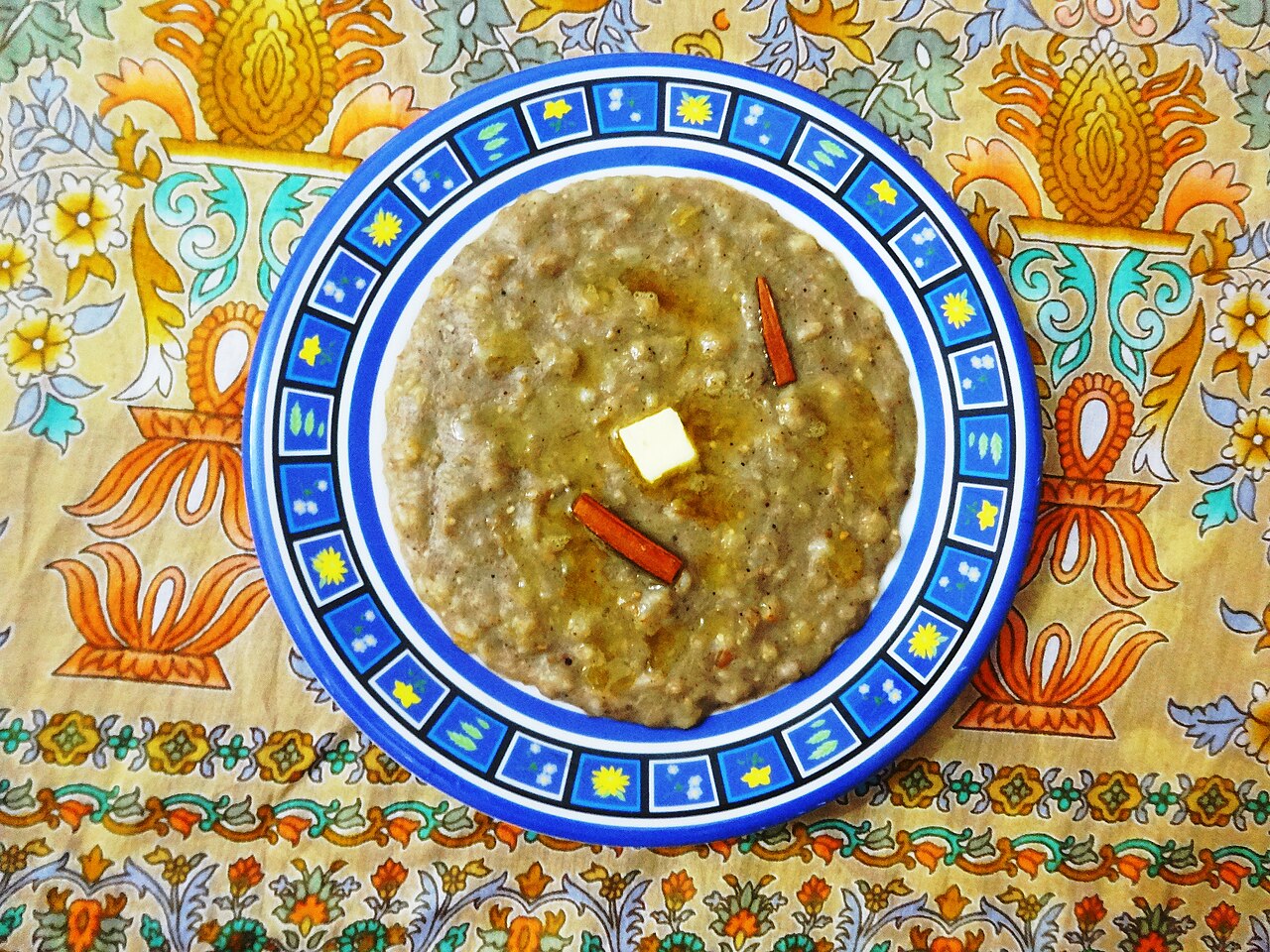
Whole wheat grains cooked very slowly with lamb or chicken and water until the meat melts and the mixture is beaten into a smooth, thick porridge. It is served in a shallow dish with a pool of melted ghee on top and sometimes a little cinnamon.
Harees is one of the oldest dishes of the Arab world: it appears in Ibn Sayyar al-Warraq's 10th-century cookbook from Baghdad. In 2023 UNESCO added harees, shared by Oman and six other Arab countries, to its list of intangible cultural heritage.
See the recipe
Serves 6
4 h
Ingredients
400 g whole wheat grains (harees wheat or pearled wheat), soaked overnight
700 g boneless lamb or chicken, in large pieces
1 cinnamon stick and 3 cardamom pods
2 teaspoons salt
4 tablespoons ghee or butter, melted
A pinch of ground cinnamon to serve
Method
Drain the wheat. Put the meat, cinnamon stick and cardamom in a large, heavy pot with 2 litres of water, bring to the boil and skim off the foam.
Add the wheat, cover and simmer on a very low heat for 3 hours, stirring now and then and adding hot water if it gets too thick.
Remove the whole spices and the bones, if any. Add the salt.
Beat the mixture hard with a wooden spoon or a hand blender until the meat and wheat become a smooth, stretchy porridge.
Spoon into bowls, make a hollow in the middle and pour in the melted ghee. Dust with cinnamon and serve hot.
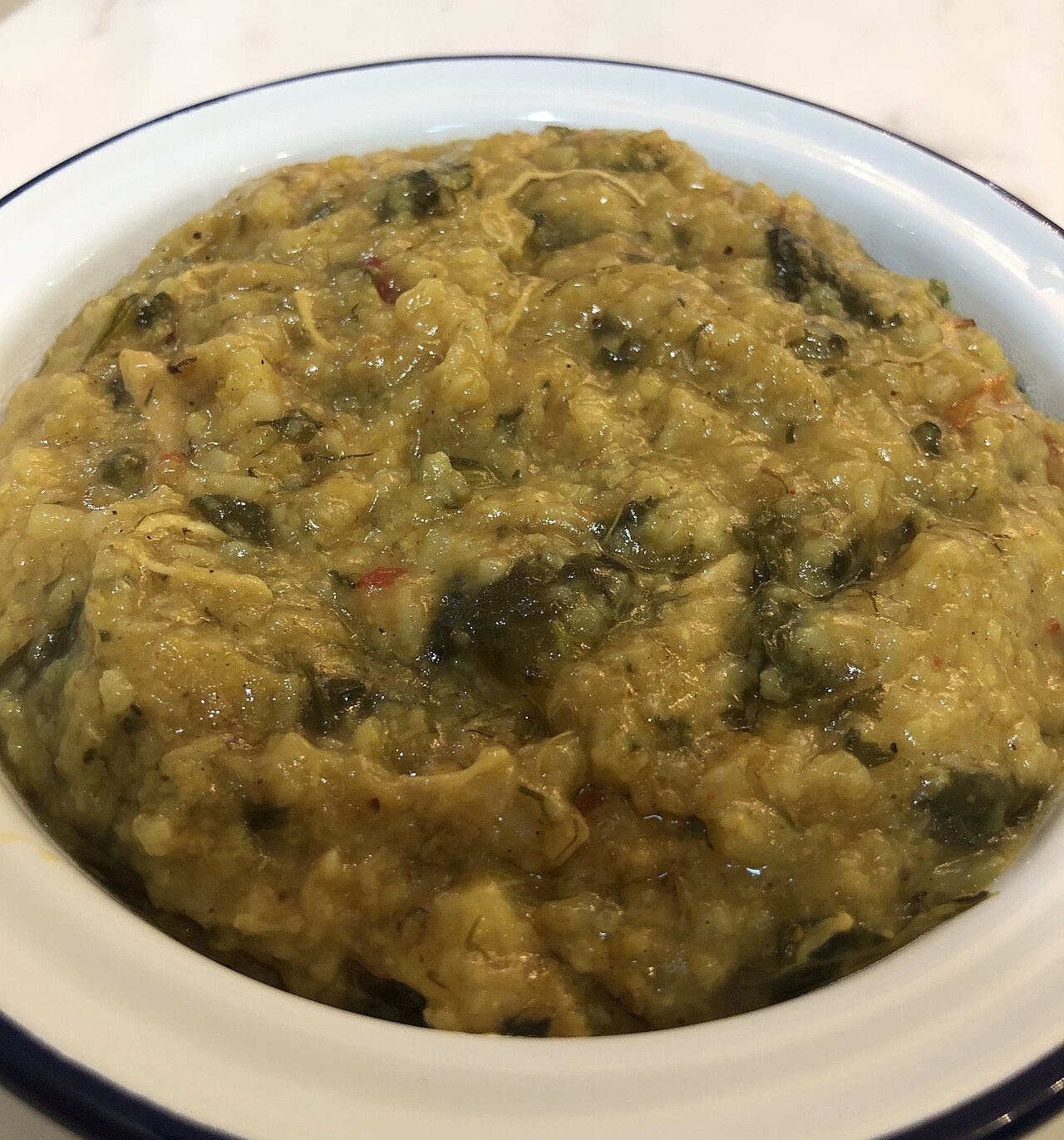
A soft, savoury porridge of rice, or sometimes cracked wheat, cooked with chicken or fish, onion, tomato and spices, then beaten hard until everything breaks down into one creamy mixture. It is eaten warm with a squeeze of lime.
Its name means 'beaten' in Arabic, from the long stirring and beating that gives it its smooth texture.
All of Oman; street food at night markets and festivals
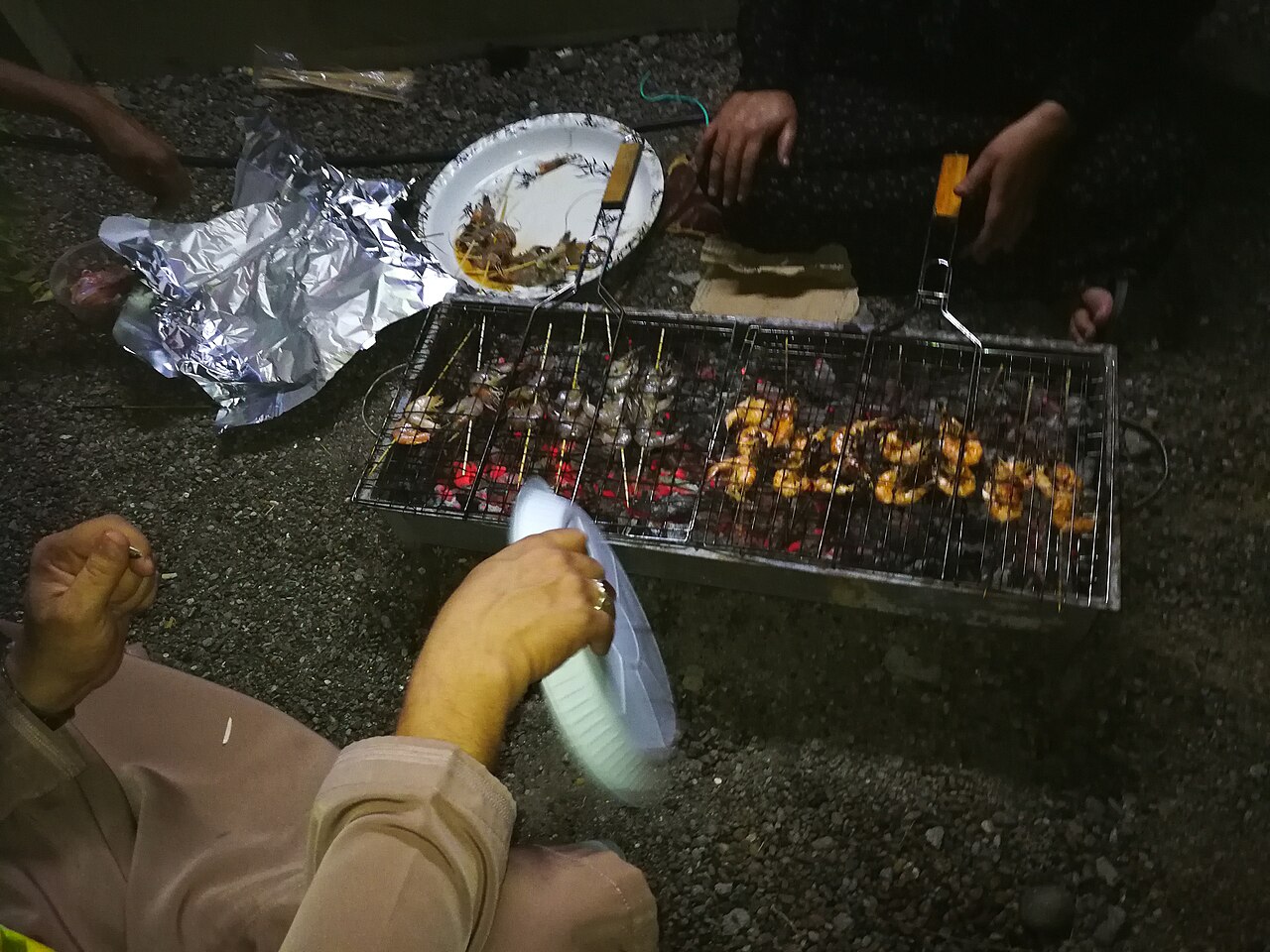
Small skewers of beef, lamb or chicken marinated in tamarind, garlic, chilli and spices, grilled over charcoal and eaten hot, often with a tangy tamarind sauce and bread.
In the evenings, and above all during Eid and the national holidays, smoke from mishkak grills rises along the beaches and corniches of Muscat.
See the recipe
Serves 4
45 min
Ingredients
600 g beef or lamb (or chicken thighs), cut into 2 cm cubes
2 tablespoons tamarind paste
3 cloves of garlic, crushed, and 1 teaspoon grated ginger
1 teaspoon each ground chilli, cumin and coriander, and ½ teaspoon turmeric
2 tablespoons oil, 1 tablespoon lime juice and 1 teaspoon salt
Metal skewers, or wooden skewers soaked in water for 30 minutes
To serve: flatbread and lime wedges
Method
Mix the tamarind, garlic, ginger, spices, oil, lime juice and salt in a bowl.
Add the meat, stir well to coat, cover and leave in the fridge for at least 2 hours or overnight.
Thread the meat onto the skewers, leaving small gaps between the pieces.
Grill over hot charcoal or under a very hot grill for 8 to 10 minutes, turning often, until browned and cooked through. Chicken must have no pink left inside.
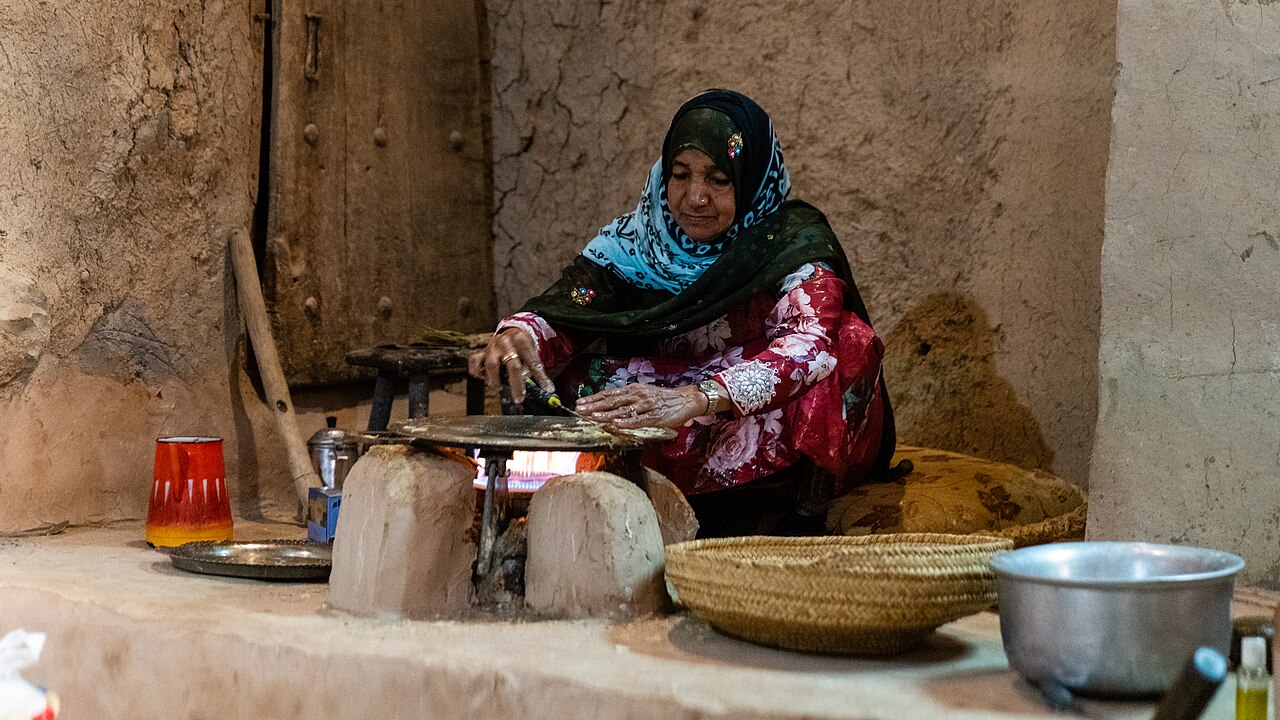
A paper-thin round bread made by spreading a runny wheat batter in one quick sweep across a very hot, slightly domed iron plate. It dries in seconds into a crisp sheet. For breakfast it is eaten with Omani honey or an egg, and at dinner it is crumbled into curry.
Skilled bakers spread the batter with the palm of the hand in a single circular stroke, and the finished bread is so thin that light shines through it.
All of Oman; famous shops in Muscat, Nizwa and Sur
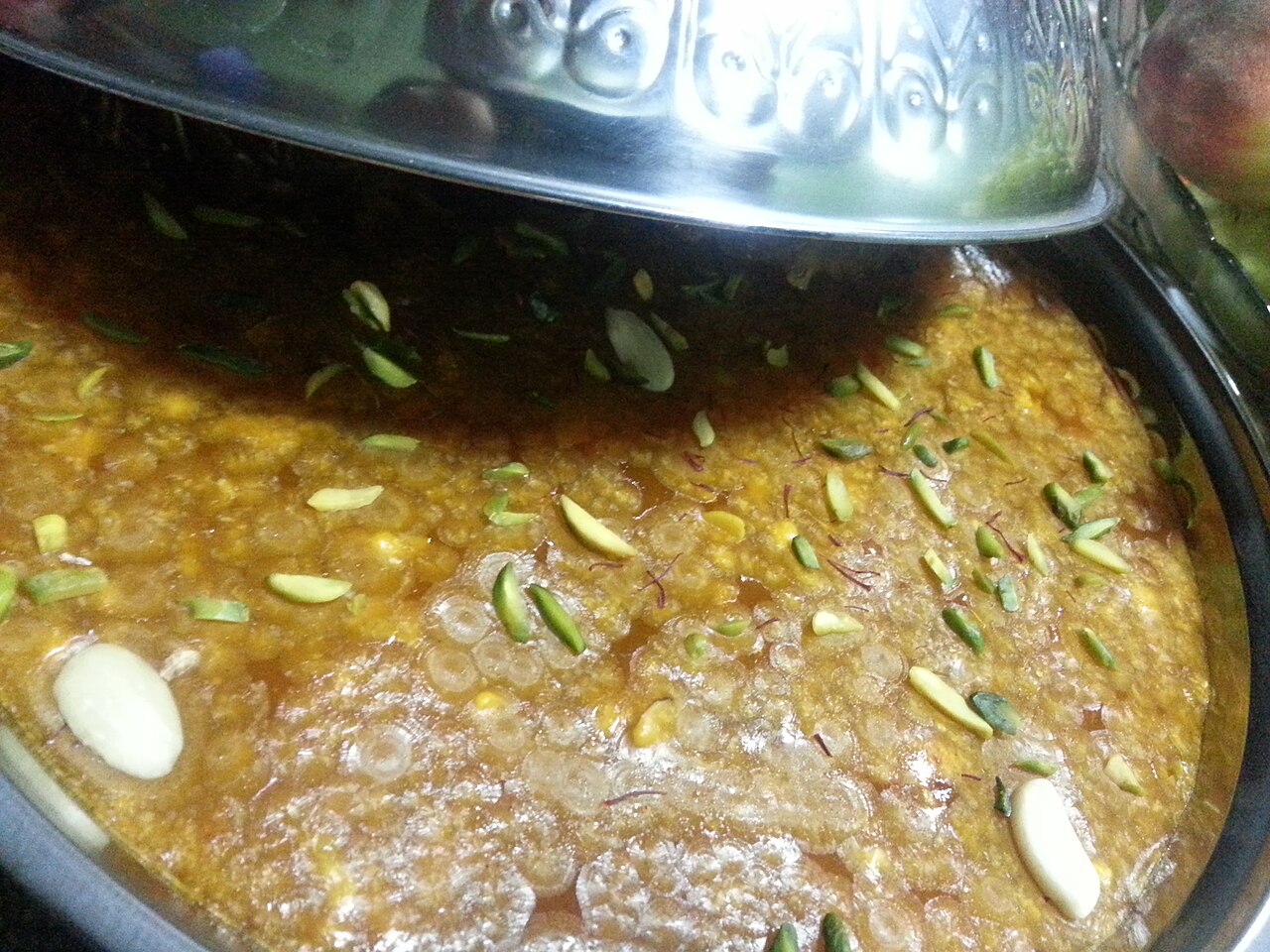
A glossy, sticky sweet of sugar, starch and ghee cooked for hours in a big copper pot and stirred all the time, then flavoured with rosewater, saffron, cardamom and nuts. Black halwa, coloured with caramelised sugar, is the classic; saffron halwa is golden.
Halwa is a symbol of Omani hospitality and is always served with coffee. It is sold in decorated bowls, and a visitor brings a bowl as a gift.
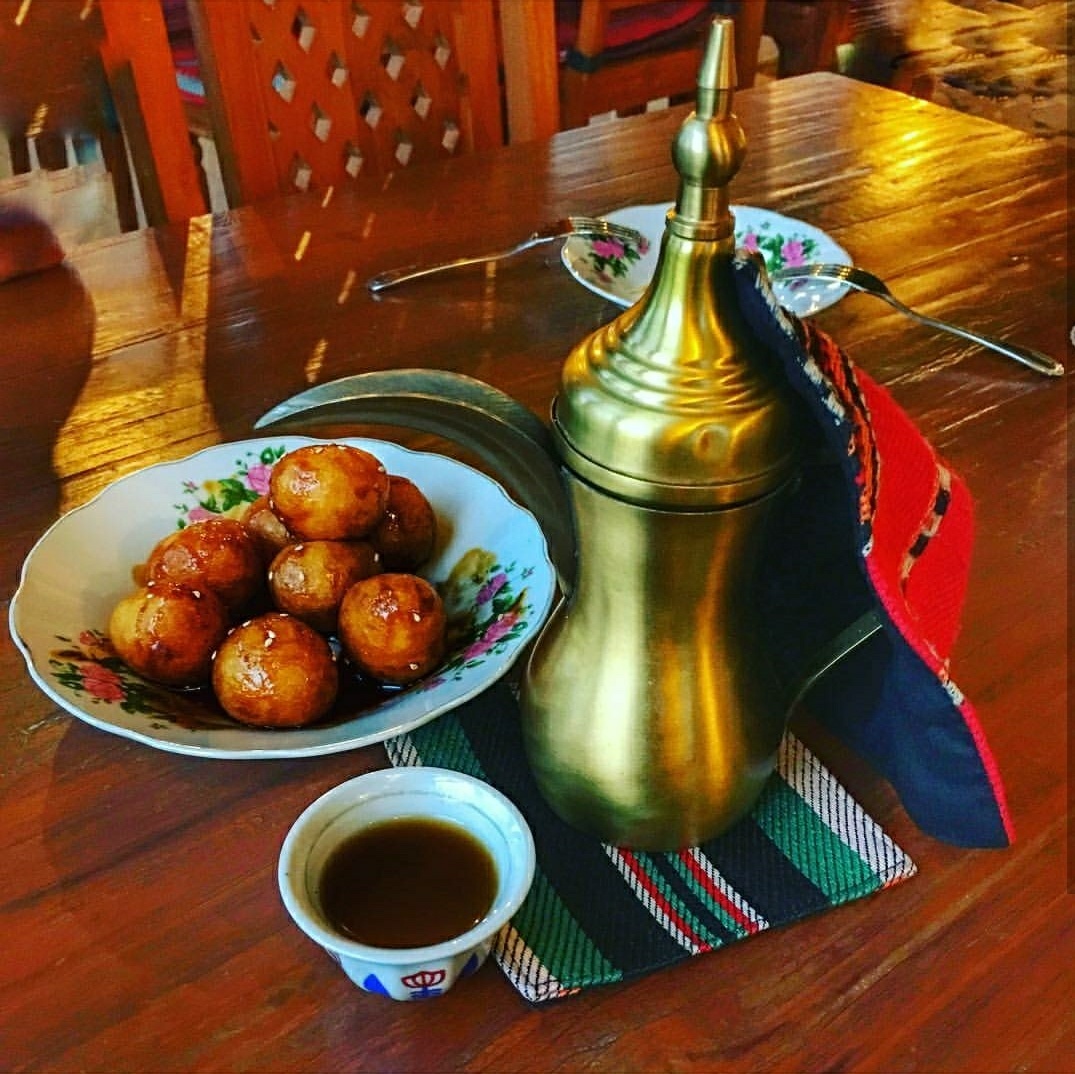
Small balls of yeast dough flavoured with cardamom and saffron, deep-fried until golden and crisp outside and soft inside, then drizzled with date syrup and sometimes sesame seeds.
The name means 'little bites'. In Ramadan, plates of luqaimat are shared with neighbours at sunset, when the fast is broken.
See the recipe
Serves 6
1 h 30 min
Ingredients
250 g plain flour and 2 tablespoons cornflour
1 teaspoon dried yeast and 1 tablespoon sugar
½ teaspoon ground cardamom and a pinch of saffron
A pinch of salt
About 300 ml warm water
Vegetable oil for deep-frying
To serve: date syrup (dibs) or honey, and toasted sesame seeds
Method
Mix the flour, cornflour, yeast, sugar, cardamom, saffron and salt. Beat in the warm water to make a thick, sticky batter, like very thick cream.
Cover and leave in a warm place for about 1 hour, until bubbly and doubled.
Heat the oil to about 170 °C in a deep pan. Never leave hot oil unattended.
Squeeze small balls of batter out between your thumb and first finger, or drop them from a wet teaspoon, into the oil. Fry for 4 to 5 minutes, turning, until golden all over.
Drain on kitchen paper, drizzle with date syrup and sprinkle with sesame seeds. Eat warm. Sesame allergy: leave out the seeds.
All of Oman and the Gulf; a breakfast for Eid and weekends
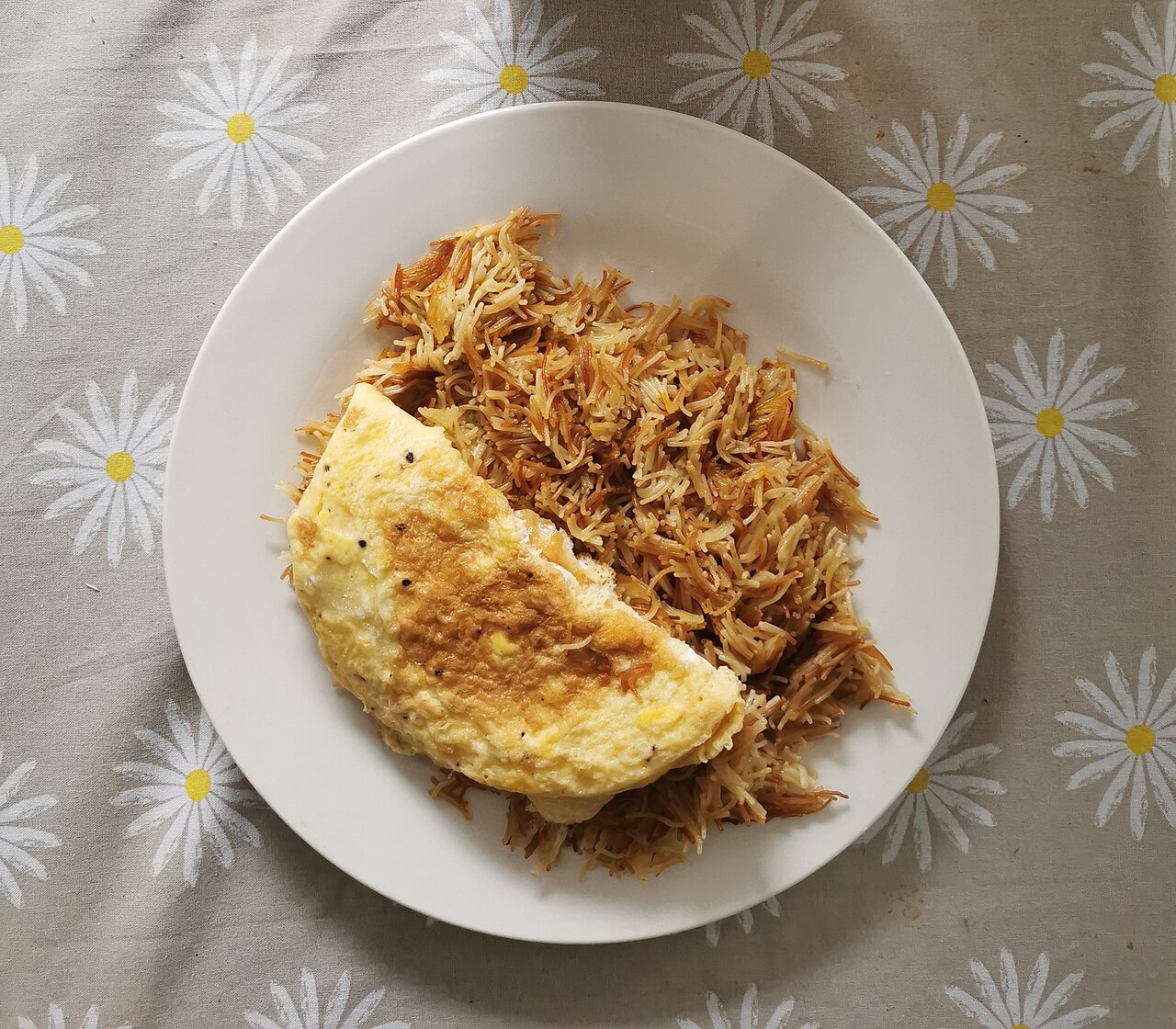
Thin vermicelli noodles fried in ghee and then cooked with sugar, saffron, cardamom and rosewater, served warm with a thin, plain omelette on top. The mix of sweet noodles and salty egg surprises many visitors.
Balaleet is a classic breakfast on the morning of Eid, eaten after the Eid prayer.
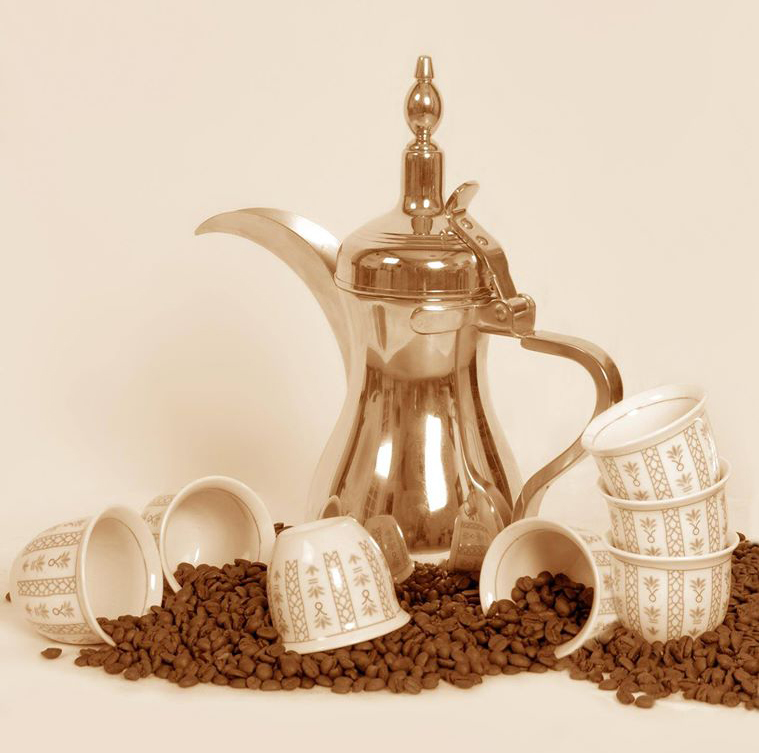
Lightly roasted coffee boiled with plenty of cardamom, and sometimes rosewater or saffron, poured from a tall brass pot called a dallah into tiny cups without handles. It is golden to light brown, bitter and fragrant, and is always drunk with dates or halwa.
The host pours only a small amount at a time and refills your cup until you gently shake it from side to side to show you have had enough.
Palm oases all over Oman, above all the Batinah coast and the interior
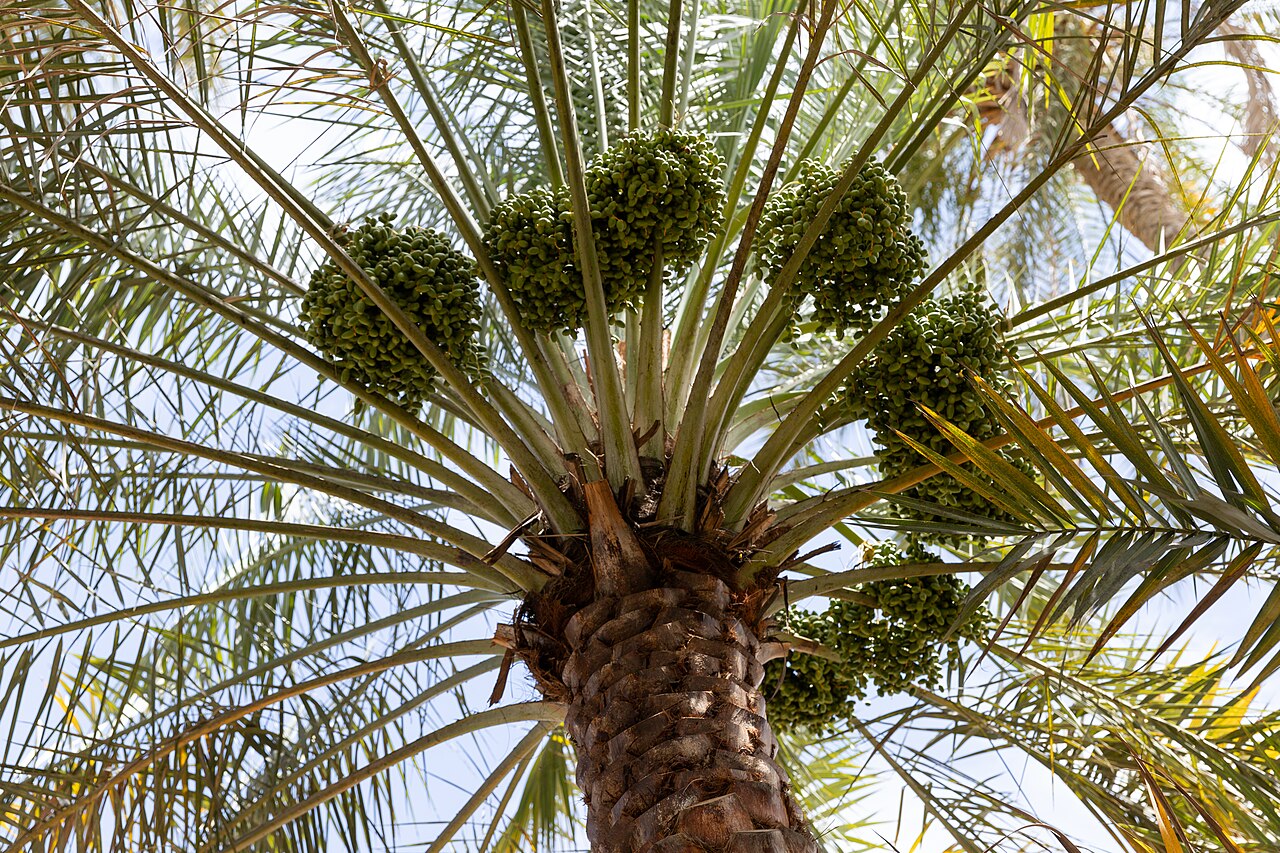
Fresh or dried dates from the country's millions of date palms, eaten with coffee at every visit, at breakfast and to break the fast in Ramadan. They range from soft, honey-like varieties to firm, dry ones, and some are pressed into a sticky paste or boiled down into date syrup.
Dates make up about 80% of Oman's fruit harvest, and date palms cover about half of the farmland in the country.
Table manners
Hospitality is a point of honour. A guest is offered kahwa, dates and often halwa first, and it is polite to accept at least one cup.
Hold the coffee cup in your right hand. When you do not want more, gently shake the empty cup from side to side before handing it back.
Many families eat sitting on a mat on the floor around shared platters. Eat with your right hand only, and from the part of the platter in front of you.
Take your shoes off before stepping onto the mat or carpet where food is served.
Muslims do not eat pork or drink alcohol. During Ramadan, do not eat or drink in public during daylight hours; the day's meal starts at sunset, often with dates, water and luqaimat.
About half of Oman's people live around Muscat and along the Batinah coast to Sohar. Inland, oasis towns such as Nizwa, Ibri and Rustaq sit at the foot of the Hajar Mountains. The east coast has the old shipbuilding town of Sur, the new port of Duqm lies far down the Arabian Sea, Salalah is the capital of the south, and Khasab is the main town of the Musandam exclave.
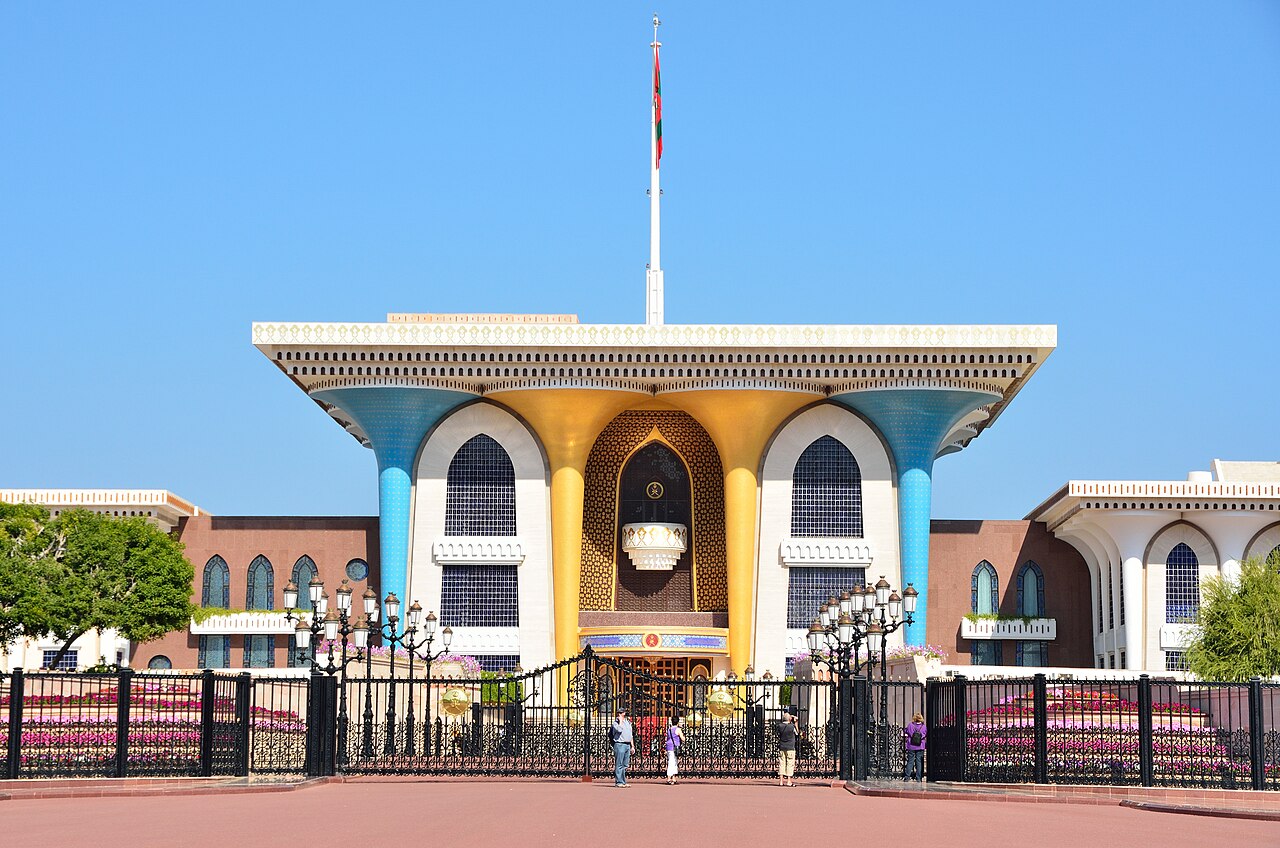
The capital and largest city, a long ribbon of white, low buildings squeezed between the sea and bare brown mountains. The Muscat Governorate had about 1.7 million people in 2022. The old walled town with the palace and the Portuguese forts, the harbour of Muttrah and the new districts along the coast are linked by one long highway.
An old port on the Batinah coast that was one of the great trading towns of the Indian Ocean in the Middle Ages, with ships sailing to India, China and East Africa. Local tradition names it as the home port of Sinbad the Sailor. Today it has a large industrial port.
Al Buraimi Governorate, on the border with the UAE
An oasis town on the western edge of the Hajar Mountains, sitting right against the city of Al Ain in the United Arab Emirates. The two grew up around the same group of oases and palm groves.
South Al Batinah Governorate, at the foot of the Hajar Mountains
An old market town on the inland side of the Batinah plain. The Yaruba imams were elected here in 1624, and Rustaq was the capital of Oman more than once.
The main town of the interior, in a green oasis at the foot of the Jebel Akhdar. It was the seat of the imams and a centre of religious learning, and its huge round fort still towers over the palm groves and the covered souq.
Ad Dhahirah Governorate, on the edge of the desert
A market town where the Hajar Mountains meet the gravel desert that runs to Saudi Arabia. It is the base for visiting the Bronze Age tombs of Bat and Al-Ayn.
South Ash Sharqiyah Governorate, on the east coast
A sea town on a lagoon at the eastern tip of Oman, for centuries the home of the country's shipbuilders, who built large wooden dhows for the trade with India and East Africa. Workshops still build dhows by hand.
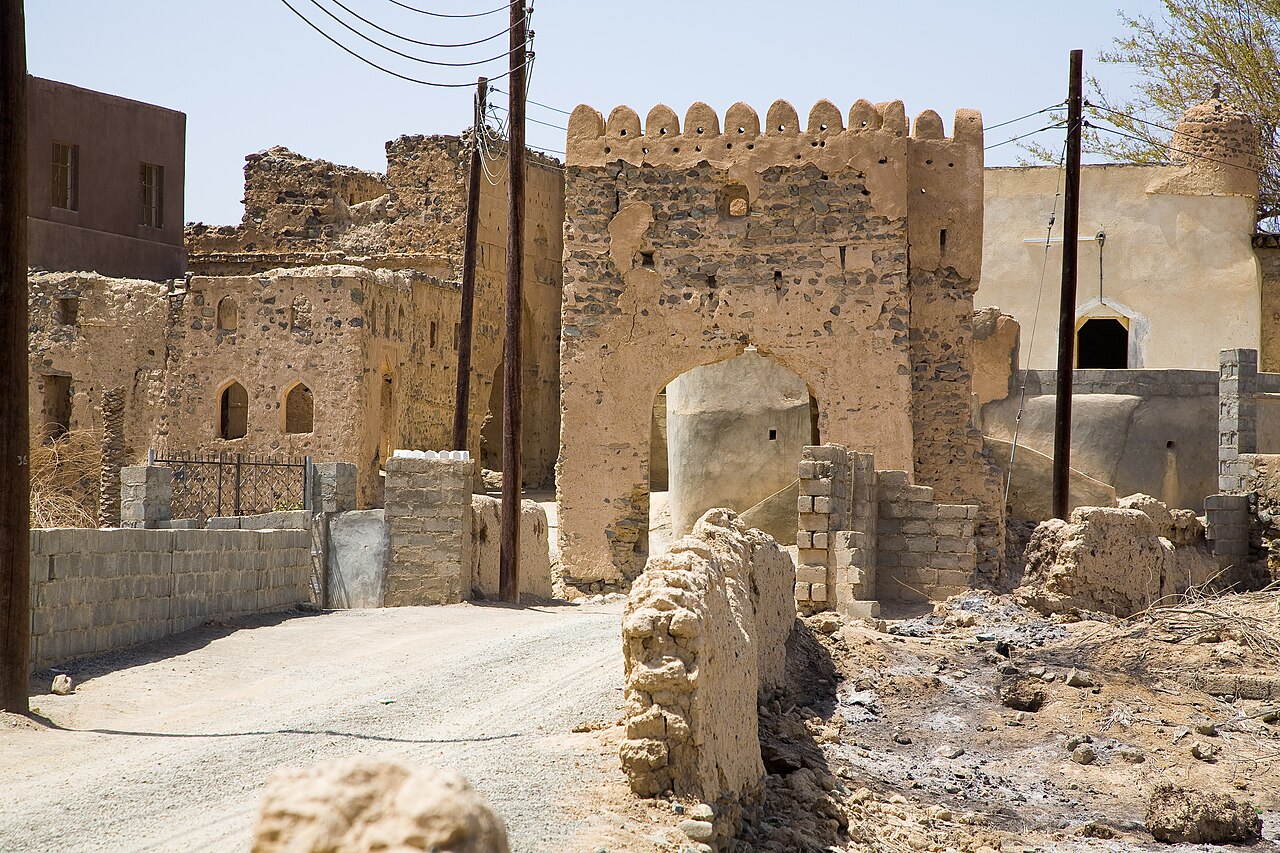
An old oasis town between the mountains and the dunes of the Sharqiya Sands, with abandoned mud-brick mansions and the only souq in the country that keeps a whole day just for women.
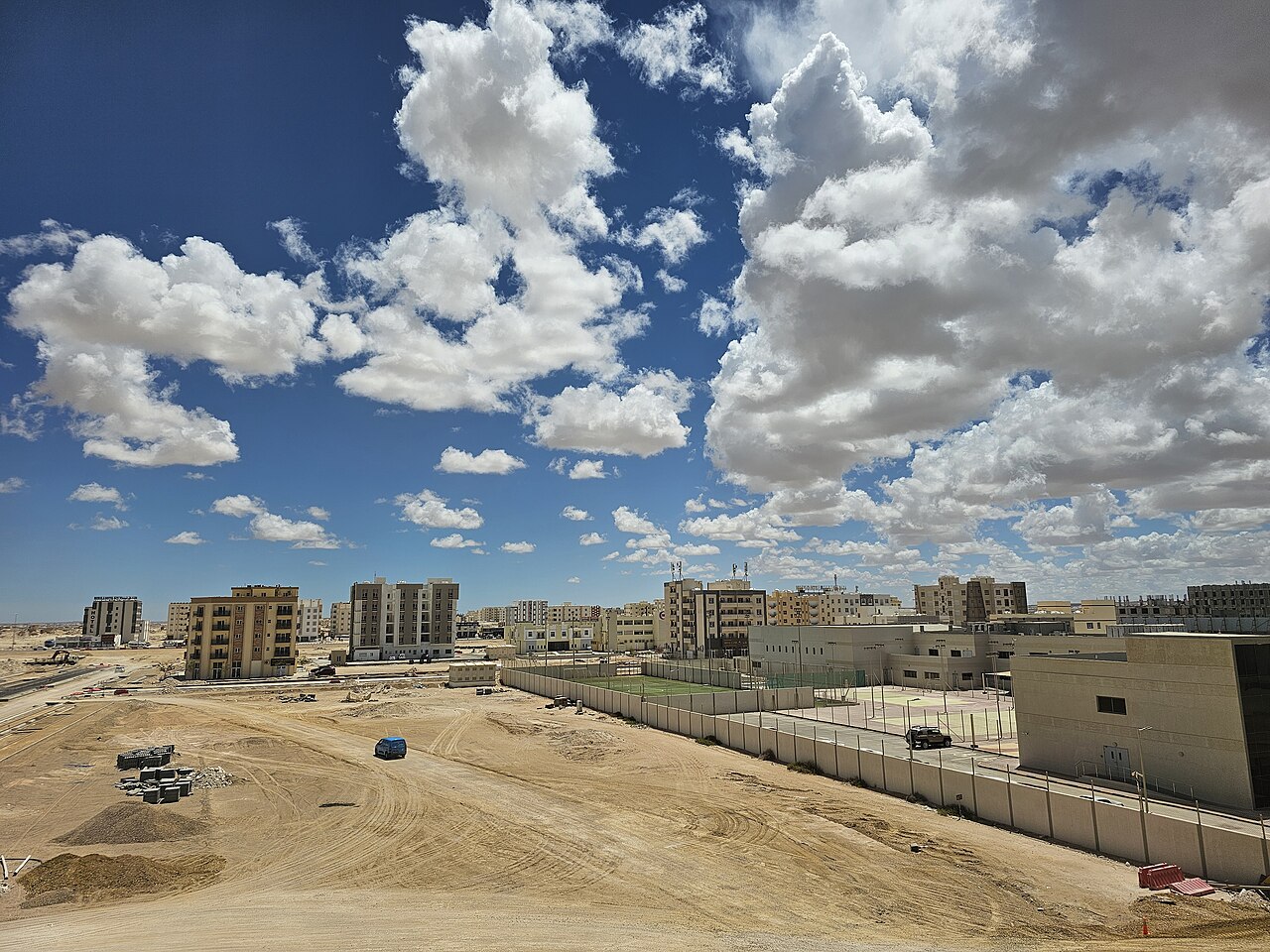
Once a small fishing village on an empty stretch of coast, Duqm has been turned since the 2010s into a new port town with a dry dock, a refinery and a special economic zone.
The capital of the southern region of Dhofar and the second largest city of Oman, with coconut palms, banana gardens and long beaches. From late June to September the monsoon, called khareef, covers the hills in mist and drizzle and turns them green.
Musandam Governorate, an exclave on the Strait of Hormuz
The main town of the Musandam Peninsula, which is separated from the rest of Oman by the United Arab Emirates. From its small harbour, dhows carry visitors into deep inlets between steep mountains, where dolphins are often seen.
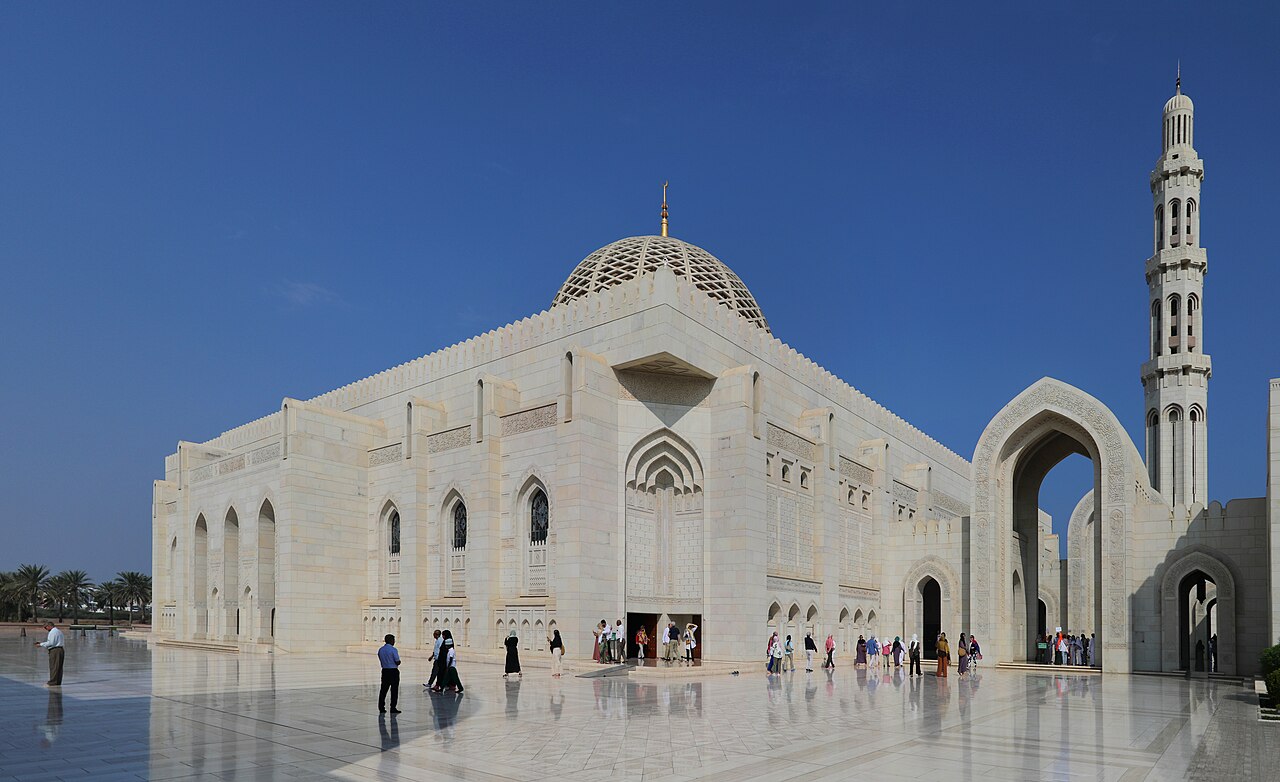
Oman's main mosque, completed in 2001, with room for about 20,000 worshippers. Its main minaret is 90 m high. The prayer hall has a single hand-woven Persian carpet of about 70 by 60 m, made by some 600 weavers, and a crystal chandelier 14 m high.
A white stone opera house in the Shati Al Qurum district, built in a modern Omani style with carved wood and marble inside. It opened on 12 October 2011 with Puccini's Turandot, conducted by Plácido Domingo, and holds up to about 1,100 people.
Built in the 1650s by Imam Sultan bin Saif of the Yaruba dynasty, the fort took about 12 years to finish. Its huge round tower, about 30 m high, is partly filled with rocks and earth to resist cannon fire. The winding stairway has removable planks over deep pits and 'murder holes' above the doors, through which defenders could pour boiling oil, water or date syrup on attackers.
A vast mud-brick fort on a rocky rise in the oasis of Bahla, about 40 km west of Nizwa by road, ringed by old oasis walls about 13 km long. It is believed to have been built between the 12th and 15th centuries by the Banu Nabhan. It was added to UNESCO's World Heritage list in 1987, was on the list of World Heritage in Danger from 1988 to 2004, and a long restoration was finished in 2012.
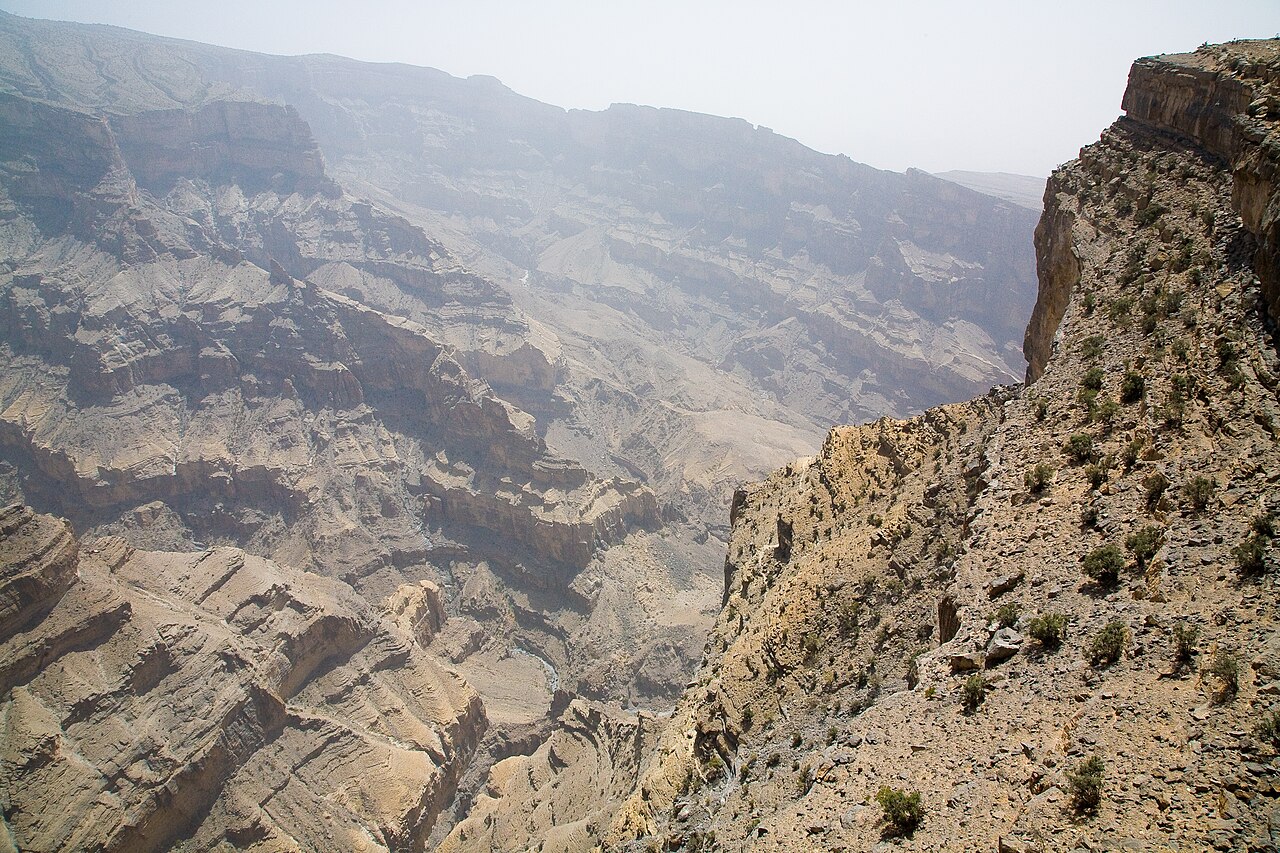
Oman's highest mountain, about 3,009 m, whose name means 'mountain of the sun' because it is the first place in Oman to catch the morning light. Below it lies a deep canyon, often called the Grand Canyon of Arabia, with a walking trail along its rim. In winter the nights can fall below freezing.
Rows of beehive-shaped tombs built from stacked flat stones more than 4,000 years ago stand along a ridge, most famously at Al-Ayn below the jagged Jebel Misht. Together with the towers and settlements of Bat and Al-Khutm they are among the most complete Bronze Age sites in Arabia, a UNESCO World Heritage Site since 1988.
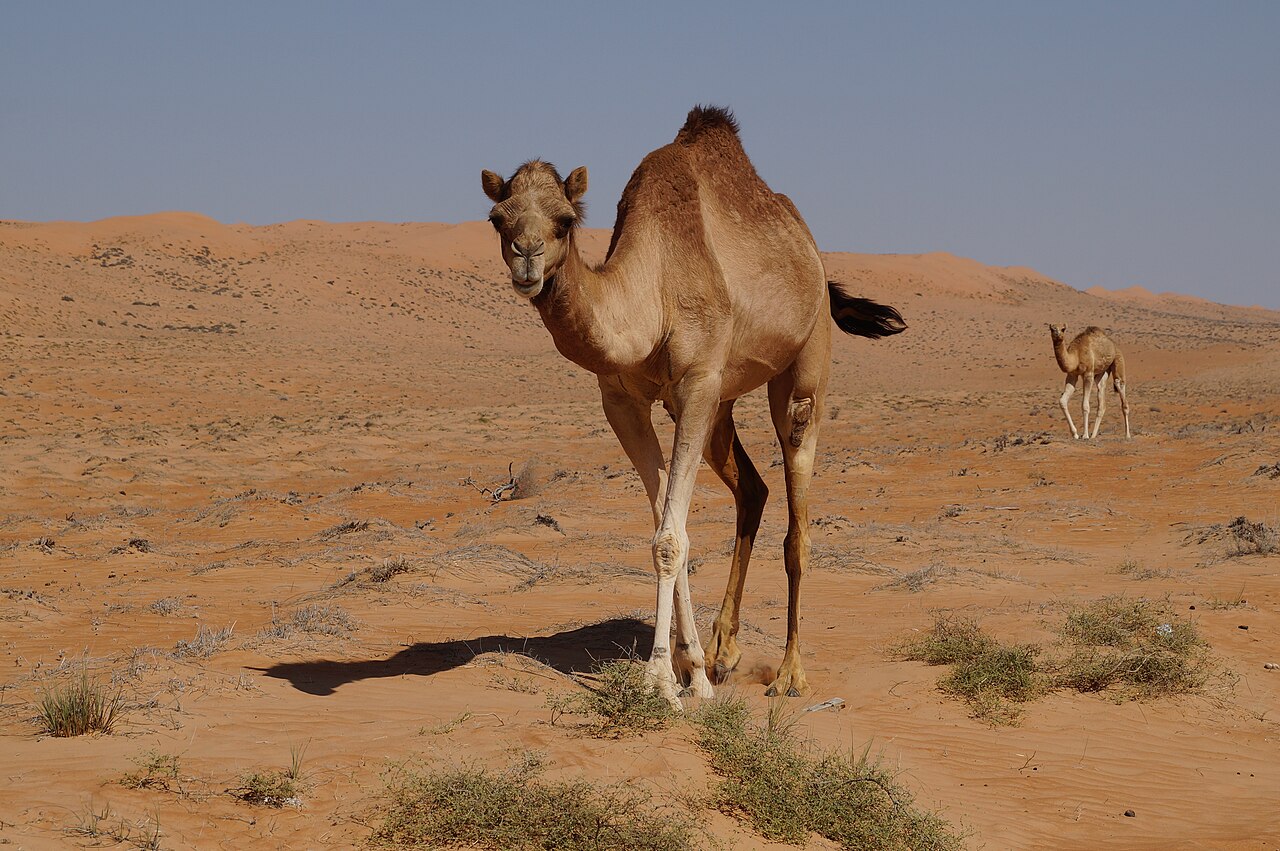
A sea of orange and honey-coloured dunes about 180 km from north to south, with some dunes up to about 100 m high. Bedouin families still keep camels and goats here, and visitors stay in desert camps to watch the sunset from the crests.
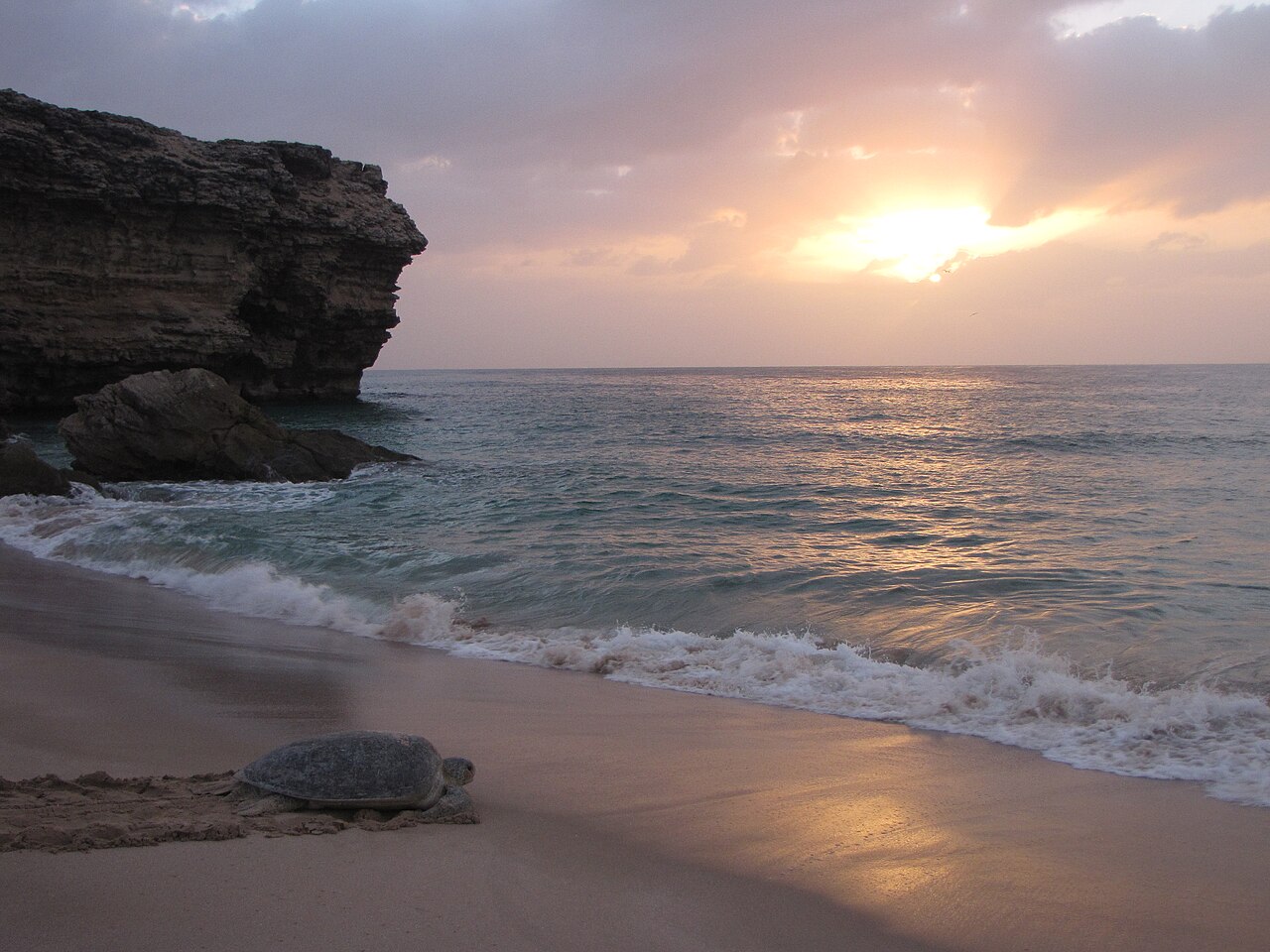
A beach on the far eastern tip of Oman where green turtles come ashore at night to lay their eggs in the sand. Rangers lead small groups to watch them in the dark. Archaeologists have also found a Bronze Age harbour here with pottery from the Indus Valley.
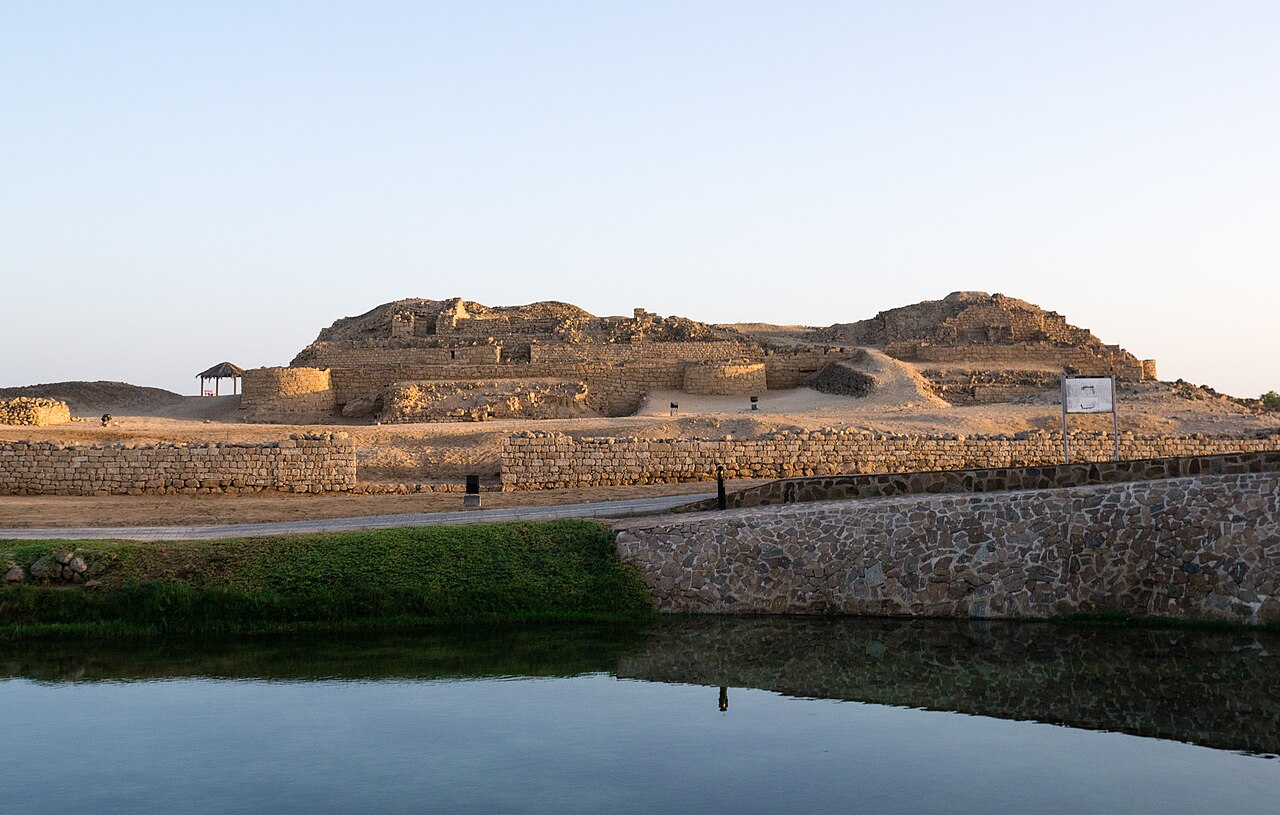
The ruins of Zafar, a medieval port on the shore of Salalah that shipped frankincense and horses across the Indian Ocean and was visited by Marco Polo and Ibn Battuta. It has a museum of the Land of Frankincense and is part of the UNESCO World Heritage Site of that name.
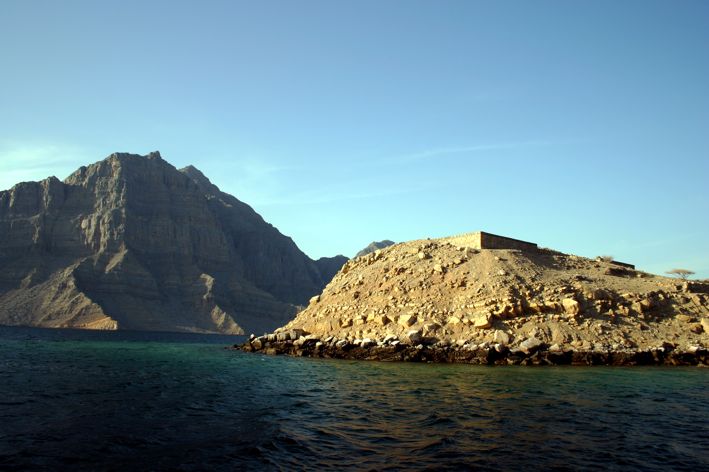
A tiny rocky island in Khor Ash Sham, a long, deep inlet between the mountains of Musandam reached by dhow from Khasab. From 1864 to 1868 the British ran a telegraph repeater station here on the cable between London and India; the ruins remain, and dolphins often swim alongside the boats.
As of September 2026, the Omani rial is the third most valuable currency unit in the world, after the Kuwaiti dinar and the Bahraini dinar. It is pegged at about 2.60 US dollars and is divided into 1,000 baisa.
02
Oman has two exclaves surrounded on land by the United Arab Emirates: the Musandam Peninsula and the tiny Madha. Inside Madha lies Nahwa, a village of about forty houses that belongs to the UAE emirate of Sharjah: a piece of the UAE inside a piece of Oman inside the UAE.
03
As of 2026, the Al Bu Said family has ruled Oman without a break since 1744, which makes it one of the oldest ruling dynasties in the Arab world.
04
While the rest of Arabia bakes in summer, the Dhofar hills around Salalah are cool and green. From late June to late September the Indian Ocean monsoon, called khareef, brings mist and drizzle, and summer temperatures in Salalah stay at about 20 to 30 °C.
05
Frankincense, the fragrant resin of the Boswellia sacra tree, still grows wild in the hills of Dhofar. The old incense trade made the region rich for thousands of years, and its ports and oases are the UNESCO World Heritage Site 'Land of Frankincense'.
06
About 3,000 aflaj, ancient water channels, are still in use in Oman. Some run underground for kilometres to carry spring water to villages and palm groves, and water time is shared out between families by old rules. Five of them are a UNESCO World Heritage Site.
07
The Arabian Oryx Sanctuary in Oman was the first site ever removed from UNESCO's World Heritage list, in 2007, after the government cut its area by about 90%.
08
In the 19th century the Omani ruler Said bin Sultan moved his court to Zanzibar, off the coast of today's Tanzania. Many Omani families still have relatives in East Africa, and some older Omanis speak Swahili.
09
The khanjar, a curved dagger in a decorated sheath, is worn at the waist by Omani men on formal occasions, and it appears on the national flag and emblem.
10
In 2010 the Jewel of Muscat, a copy of a 9th-century Arab ship, sailed about 5,000 km from Oman to Singapore. Like the original, its planks were sewn together with coconut-fibre rope, without a single nail.
11
On 26 June 2018 the temperature in the coastal village of Qurayyat, near Muscat, never fell below 42.6 °C for a whole 24 hours, which was reported as a world record for the warmest low temperature.
12
A popular story, told by tour guides, says that British telegraph operators on lonely Telegraph Island in Musandam, driven mad by heat and isolation, gave English the phrase 'going round the bend'. There is no proof that the phrase began there.
Arabic is written from right to left; each word is shown in Latin letters with the Arabic script in brackets. 'H' marks a breathy h from the throat, 'kh' is like the ch in Scottish 'loch', and an apostrophe marks a short catch in the throat Pronunciation is written the way it sounds; the capital letters show where the stress goes. Audio is coming soon.
From May to September most of Oman is extremely hot, often above 40 °C. The exception is Salalah and the Dhofar hills, which are cool, misty and green during the khareef from late June to September. Tropical cyclones sometimes reach Oman in the hot months.
Dress modestly
In towns, markets and malls, cover your shoulders and knees; loose clothes are also more comfortable in the heat. Swimwear is for hotel pools and beaches only.
Visiting the Grand Mosque
As of September 2026 non-Muslim visitors are welcome on mornings from Saturday to Thursday, roughly 8:30 to 11:00, and not on Fridays. Arms and legs must be covered, women must cover their hair, and shoes are left outside the prayer hall. Check the times before you go, as they can change.
The weekend is Friday and Saturday
Friday is the day of communal prayer, and many shops and sites close in the middle of the day. Government offices close on Friday and Saturday, and during Ramadan opening hours are shorter.
Never cross a flooded wadi
Wadis are dry valleys that can fill with a fast, deep flood within minutes after rain, even rain falling far away in the mountains. Do not drive or walk into moving water, and do not camp in a wadi bed.
Drive carefully, and hire a 4x4 for the mountains
Traffic drives on the right, and speed cameras are everywhere. Mountain and desert roads can be dangerous without a well-equipped four-wheel-drive car, and some mountain roads, such as the one up Jebel Akhdar, allow only four-wheel-drive vehicles.
Know the emergency number
The emergency number for the Royal Oman Police, ambulance and fire is 9999. Do not photograph military sites or some government buildings, and ask before you photograph people.
Check your visa, especially for Musandam
Visa rules depend on your nationality and change from time to time, so check the official rules before you travel. To drive to Musandam you must leave Oman, cross part of the United Arab Emirates and enter Oman again, so you need the right papers for both countries, or you can fly from Muscat or take the ferry from Shinas, on the coast north of Sohar.

 Saudi Arabia
 United Arab Emirates
 Yemen
Yemen