A free large-print PDF. Choose what goes in: facts, map, history, dishes and recipes, phrases, fun facts, a quiz with or without answers. Made for clubs, care homes, libraries and family afternoons.
The Netherlands lies in northwestern Europe, on the North Sea, between Belgium and Germany. Its name means 'the lower lands', and it is true to the name: about a quarter of the land lies below sea level, kept dry by dikes, dunes, pumps and, in the past, windmills. The country is very flat, crossed by rivers and canals, and much of it is green farmland and polders, land drained from lakes and the sea.
People often call the whole country 'Holland', but Holland is really a region: the two western provinces of North Holland and South Holland, out of twelve. Amsterdam is the capital named in the constitution, but the parliament, the government and the Supreme Court sit in The Hague. The Netherlands also includes three small Caribbean islands, Bonaire, Sint Eustatius and Saba, and it is one of four countries in the wider Kingdom of the Netherlands, together with Aruba, Curaçao and Sint Maarten.
In the 1600s, the Dutch Golden Age, this small republic became one of the richest trading nations in the world, the age of Rembrandt, Vermeer and the Dutch East India Company. Today it is a constitutional monarchy of about 18 million people, one of the six founding members of what is now the European Union, famous for cheese, flowers and cycling.
CapitalAmsterdam
Seat of governmentThe Hague, where the parliament, the government and the Supreme Court sit
PopulationAbout 18.2 million (Statistics Netherlands, CBS, July 2026)
Official languageDutch. West Frisian is also official in the province of Friesland, and English and Papiamentu on the Caribbean islands
CurrencyEuro (€), since 1999 (notes and coins since 2002); before that, the Dutch guilder. The Caribbean islands use the US dollar
AreaAbout 41,850 km² including lakes and coastal waters, of which about 33,500 km² is land
GovernmentParliamentary constitutional monarchy. King Willem-Alexander (since 2013) is head of state, and the prime minister leads the government
Highest mountainMount Scenery, about 870 m, a dormant volcano on the Caribbean island of Saba. In the European part: the Vaalserberg, about 322 m
Main riversThe Rhine and the Meuse (Maas), which reach the North Sea through a great delta shared with the Scheldt
NeighboursGermany and Belgium on land. The United Kingdom lies across the North Sea. In the Caribbean, Venezuela lies south of Bonaire, and Saint Kitts and Nevis and Saint Barthélemy are near Saba and Sint Eustatius. The wider Kingdom also borders France on the island of Saint Martin
The story of the Netherlands is a story of water and trade. Romans guarded the Rhine, medieval farmers drained the marshes, and a rebellion against Spain gave birth to a proud trading republic. Later came a kingdom, a hard occupation in the Second World War, and great works to keep the sea out for good.
AD 50
Romans build a fort at Utrecht
Around AD 50 the Romans built a small fort at a crossing of the Rhine, which then marked the northern edge of their empire. It grew into the city of Utrecht. The remains of the Roman frontier along the Rhine are now a UNESCO World Heritage Site.
1568
The Eighty Years' War begins
Provinces of the Low Countries rose against their ruler, King Philip II of Spain, over taxes, religion and their old rights. Led by William of Orange, known as William the Silent, the Dutch Revolt became a long war, usually dated from 1568.
1579
The Union of Utrecht
On 23 January 1579, northern provinces and cities signed an alliance in Utrecht to stand together against Philip II. It is often seen as the first step towards the Dutch Republic and even as an early kind of constitution.
1602
The Dutch East India Company is founded
On 20 March 1602 the Dutch East India Company (VOC) was founded, one of the first companies whose shares anyone could buy. It built a trading empire across Asia, with forts, colonies and its own soldiers, and it also traded in enslaved people and used great violence.
1637
Tulip mania collapses
Tulips spread in the Netherlands from the 1590s, after the botanist Carolus Clusius planted them in Leiden. In the 1630s prices for rare bulbs soared, some selling for more than ten times a skilled craftsman's yearly income, until the market suddenly collapsed in February 1637. It is often called the first recorded speculative bubble.
1648
The Peace of Münster
On 30 January 1648 Spain signed the Peace of Münster, formally recognising the Dutch Republic as independent and ending the Eighty Years' War. This was the heart of the Dutch Golden Age, the century of Rembrandt, Vermeer and worldwide trade.
1815
The Kingdom of the Netherlands is founded
After years of French rule under Napoleon, William of Orange-Nassau declared himself King William I on 16 March 1815. His new kingdom also included most of today's Belgium, and his family, the House of Orange-Nassau, still reigns.
1830
Belgium breaks away
In August 1830 riots in Brussels grew into a revolution, and the southern provinces broke away to form the Kingdom of Belgium. The Netherlands only accepted Belgian independence in 1839.
1848
A new constitution
As revolutions swept across Europe in 1848, King William II agreed to a new constitution drafted by a commission led by Johan Rudolph Thorbecke. Ministers became answerable to parliament, and the Netherlands has been a parliamentary constitutional monarchy ever since.
1863
Slavery is abolished
On 1 July 1863 the Netherlands abolished slavery in Suriname and its Caribbean islands, where about 45,000 people were still enslaved. In Suriname they had to keep working on plantations for another ten years. The day is remembered as Keti Koti, 'the chain is cut'.
1932
The Afsluitdijk closes the Zuiderzee
On 28 May 1932 workers closed the last gap in the Afsluitdijk, a 32 km dam that cut off the Zuiderzee, an arm of the North Sea. The salty inland sea slowly became a freshwater lake, the IJsselmeer, and large new polders were later drained from it.
1940
Germany invades
On 10 May 1940 Germany invaded the neutral Netherlands. On 14 May German bombers destroyed the historic centre of Rotterdam, and the main Dutch forces surrendered the same day. Queen Wilhelmina and the government carried on from exile in Britain.
1942
Anne Frank goes into hiding
On 6 July 1942 Anne Frank, a 13-year-old Jewish girl, went into hiding with her family in a secret annex behind her father's business on the Prinsengracht in Amsterdam. They were discovered and arrested in August 1944, and Anne died in the Bergen-Belsen camp in early 1945. About three quarters of the Jews of the Netherlands were murdered in the Holocaust.
1945
Liberation
On 5 May 1945, at Wageningen, the German commander agreed to surrender all German forces in the Netherlands. Every year the Dutch remember the war dead on 4 May and celebrate Liberation Day on 5 May.
1953
The great flood
On the night of 31 January to 1 February 1953 a storm surge broke through the dikes in Zeeland and South Holland, and 1,836 people died in the Netherlands. The disaster led to the Delta Works, dams and storm barriers built between 1954 and 1997.
1957
A founding member of the EEC
On 25 March 1957 the Netherlands signed the Treaty of Rome with Belgium, France, Italy, Luxembourg and West Germany, creating the European Economic Community, which grew into today's European Union.
Dutch cooking is simple, filling and built on dairy, potatoes, vegetables and fish from the North Sea. Breakfast and lunch are usually bread, often with cheese or sweet toppings, and the warm meal comes in the evening: traditionally potatoes, vegetables and a little meat with gravy. Coffee time with a cake or a biscuit is a daily ritual, and centuries of trade, especially with Indonesia and Suriname, brought spices and dishes that the Dutch now think of as their own.
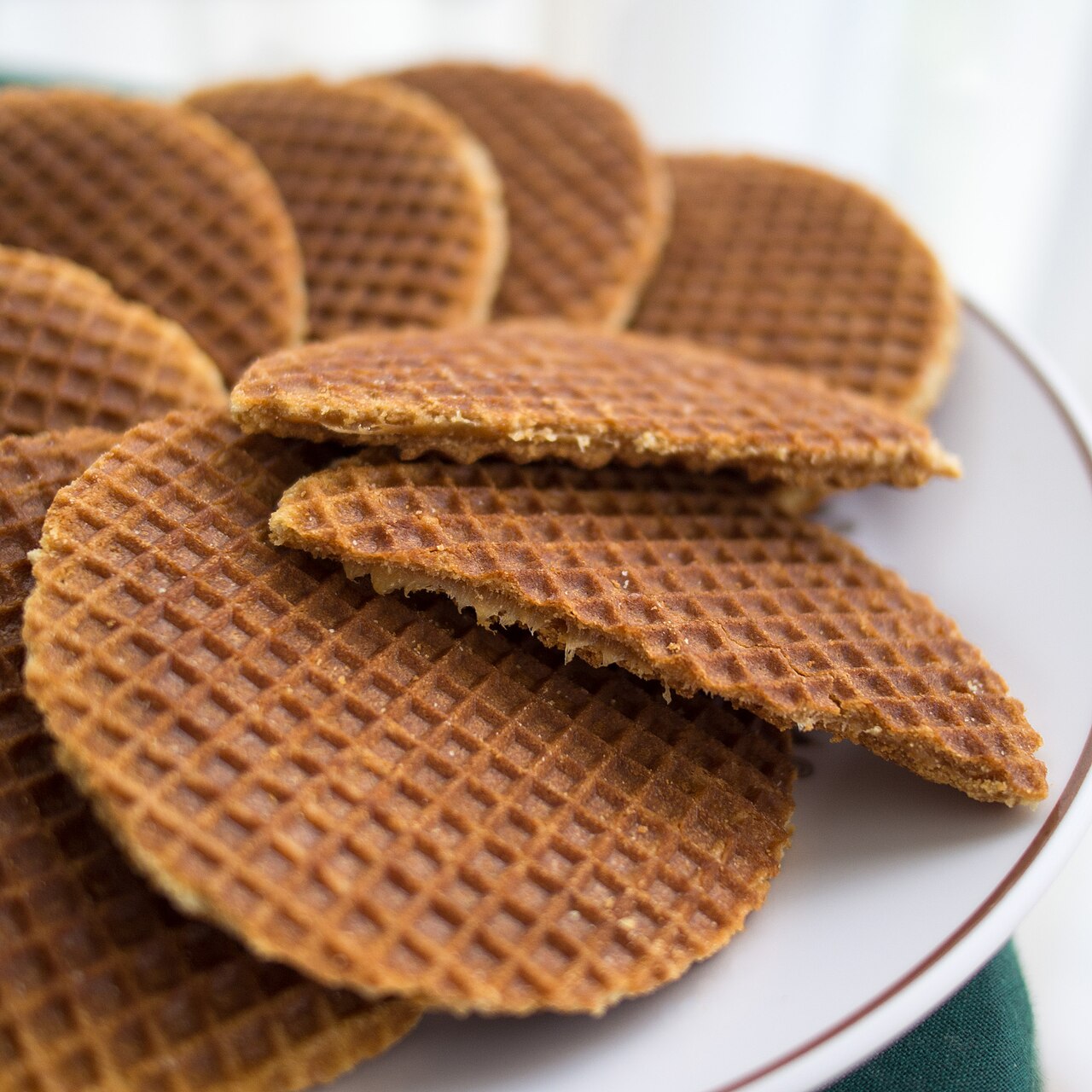
Two thin, crisp waffles pressed together with a warm, sticky filling of syrup, brown sugar, butter and cinnamon. They are sold hot and fresh at markets and in packets in every supermarket.
According to Dutch food tradition, stroopwafels were first made in Gouda in the late 1700s or early 1800s by bakers who sweetened leftover crumbs with syrup. Many people rest one on top of a hot cup of coffee or tea so the filling softens.
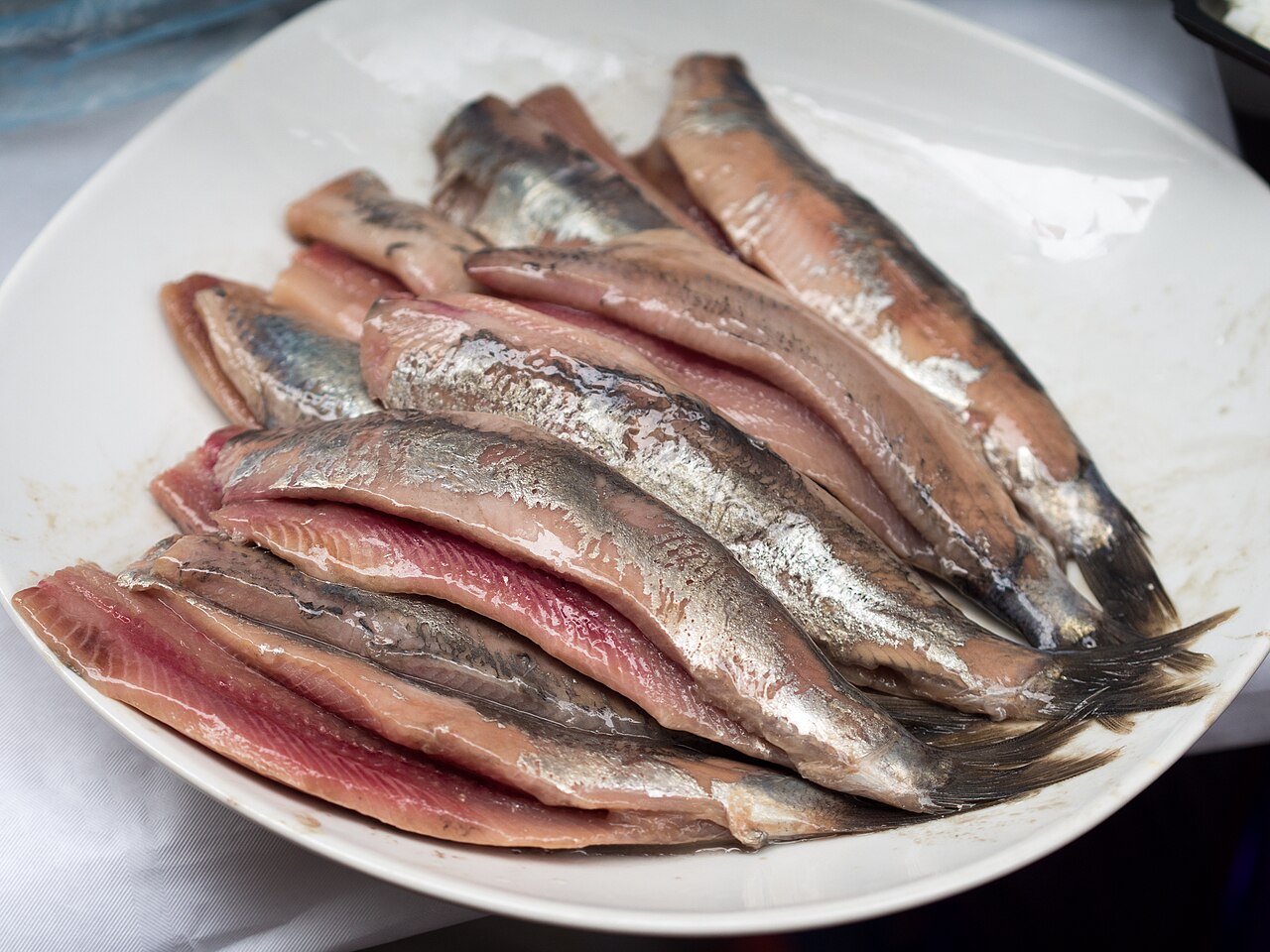
Young herring, lightly salted and ripened, eaten raw from a fish stall, often with chopped raw onion and pickles or in a soft bread roll. The new season's herring, 'Hollandse Nieuwe', arrives in early summer. By law, herring for eating raw is frozen first to kill parasites. Like other raw fish, it is best avoided by pregnant women, and older people or anyone with a weakened immune system may prefer to skip it too.
The traditional way to eat a whole herring is to hold it by the tail, tip your head back and lower it into your mouth. Leiden gives out free herring and white bread every 3 October, remembering the food brought to the starving city in 1574.
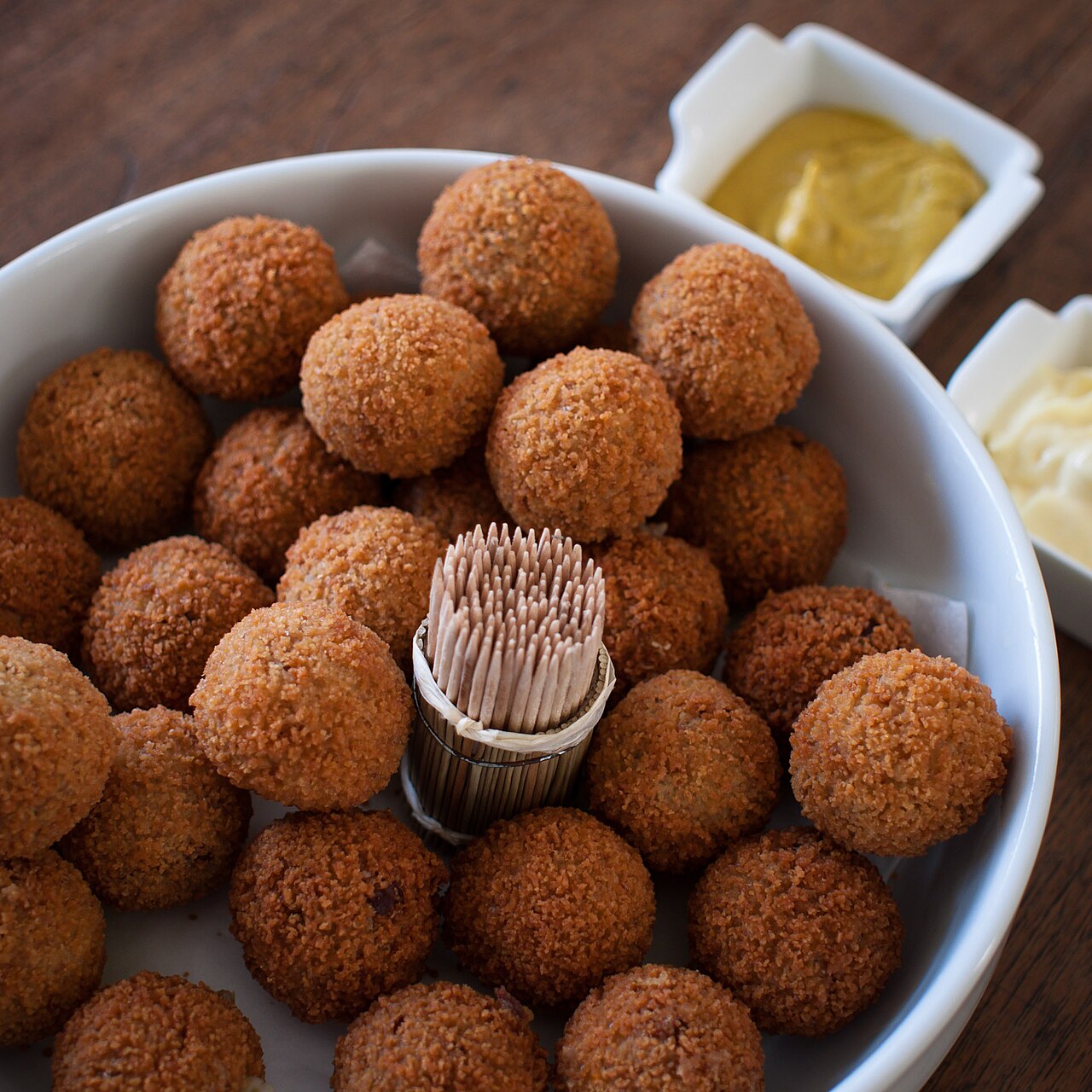
Small crunchy balls of thick beef ragout, rolled in breadcrumbs and deep-fried, served piping hot with mustard for dipping. They are part of the classic plate of snacks served with drinks in a Dutch café.
The name comes from 'bitters', the herb-flavoured spirits they were traditionally served with. Let them cool for a moment: the inside stays very hot.
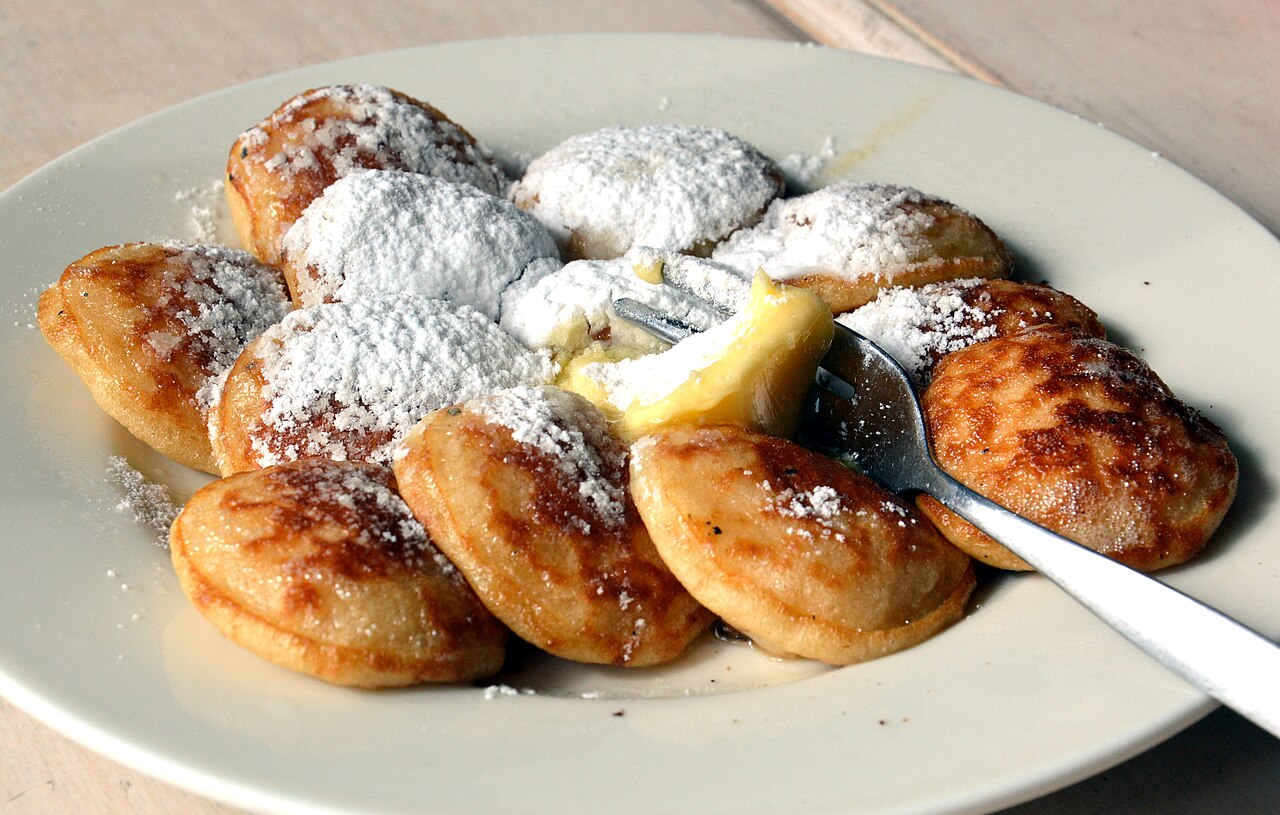
Tiny, fluffy pancakes made with yeast and cooked in a special pan with many shallow hollows, then served with a knob of butter and a snowfall of powdered sugar.
Poffertjes stands appear at fairs, summer festivals and Christmas markets, where they are served by the dozen on a little plate with a tiny fork. They first appear in a Dutch cookbook in 1746.
See the recipe
Serves 4
1 h 15 min
Ingredients
125 g plain flour
125 g buckwheat flour (or use all plain flour)
7 g dried yeast (1 sachet)
1 tablespoon sugar
A pinch of salt
1 egg
About 300 ml lukewarm milk
Butter for the pan and for serving
Powdered sugar for serving
Method
Mix the flours, yeast, sugar and salt in a bowl.
Whisk in the egg and the milk little by little to make a smooth, thick batter that drops slowly from a spoon.
Cover the bowl and leave it in a warm place for about 45 minutes, until the batter is bubbly.
Heat a poffertjes pan over a medium heat and brush the hollows with melted butter. Without a special pan, use a heavy frying pan and drop in small teaspoons of batter.
Fill each hollow about three quarters full. When the tops start to set and bubble, turn them with a fork or skewer and cook the other side until golden, about 1 to 2 minutes in total.
Serve at once with a knob of butter and plenty of powdered sugar.
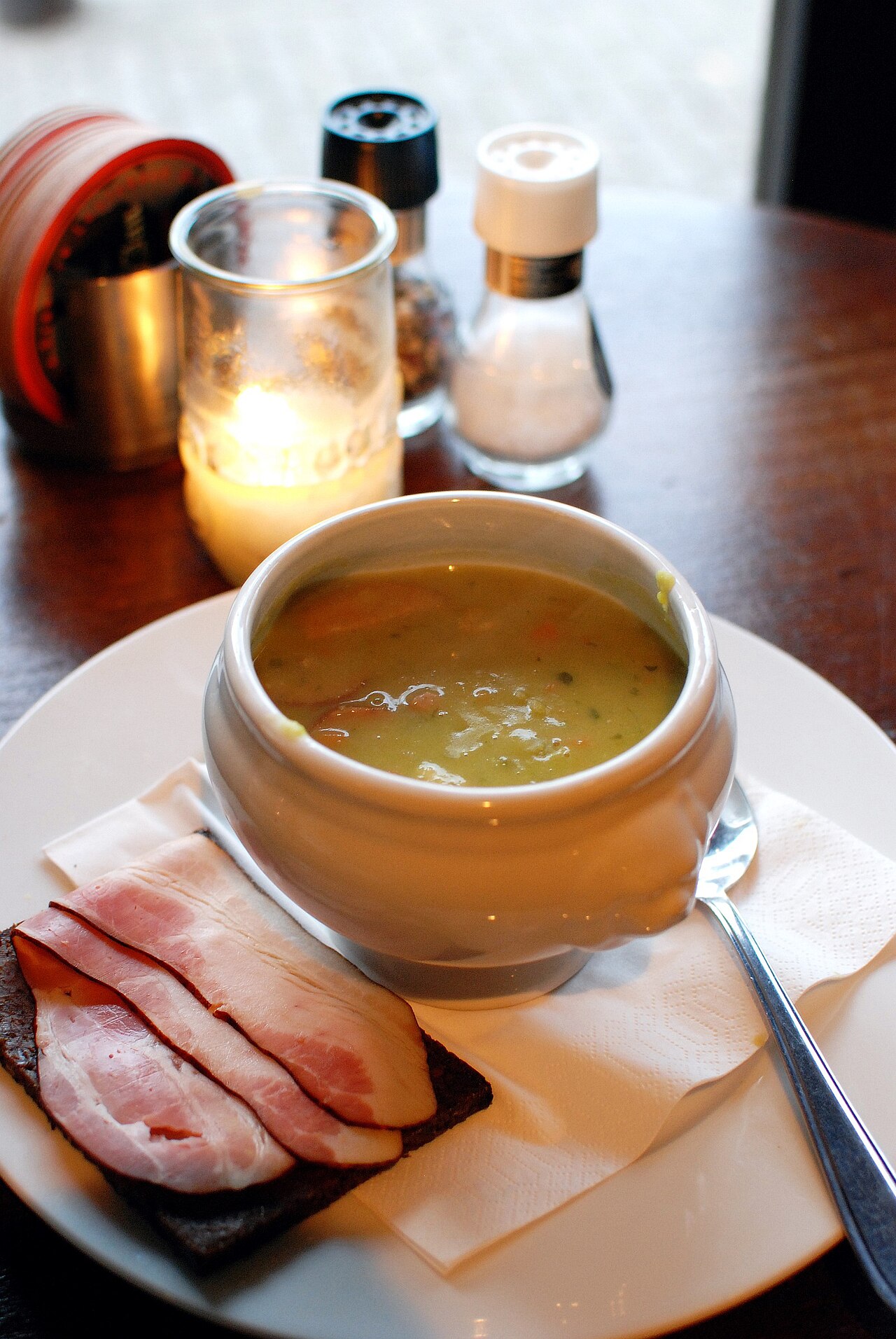
A very thick winter soup of green split peas with pork, celeriac, leeks, carrots, onions and often potato, finished with slices of smoked sausage. It is almost a stew, served with dark rye bread and bacon.
When canals and lakes freeze, little stalls on the ice sell steaming cups of snert to skaters.
See the recipe
Serves 6
3 h
Ingredients
500 g green split peas, rinsed
2 litres water
500 g pork ribs or a piece of pork belly
1 onion, chopped
2 leeks, sliced
2 carrots, diced
Half a small celeriac, peeled and diced
2 potatoes, peeled and diced
1 smoked sausage (rookworst), about 275 g
A handful of chopped celery leaves
Salt and black pepper
Dark rye bread, to serve
Method
Put the split peas, water and pork in a large pot, bring to the boil and skim off the foam.
Cover and simmer gently for about 1 hour, stirring now and then so the peas do not stick.
Take out the pork. Add the onion, leeks, carrots, celeriac and potatoes and simmer for another 45 minutes to 1 hour, until the peas have fallen apart and the soup is very thick.
Meanwhile cut the meat from the bones into small pieces. Heat the smoked sausage in hot water as the packet says, then slice it.
Return the meat to the pot with the sausage and the celery leaves, season with salt and pepper and heat through, stirring well.
Serve hot with rye bread. The soup is even better the next day, thinned with a little water.
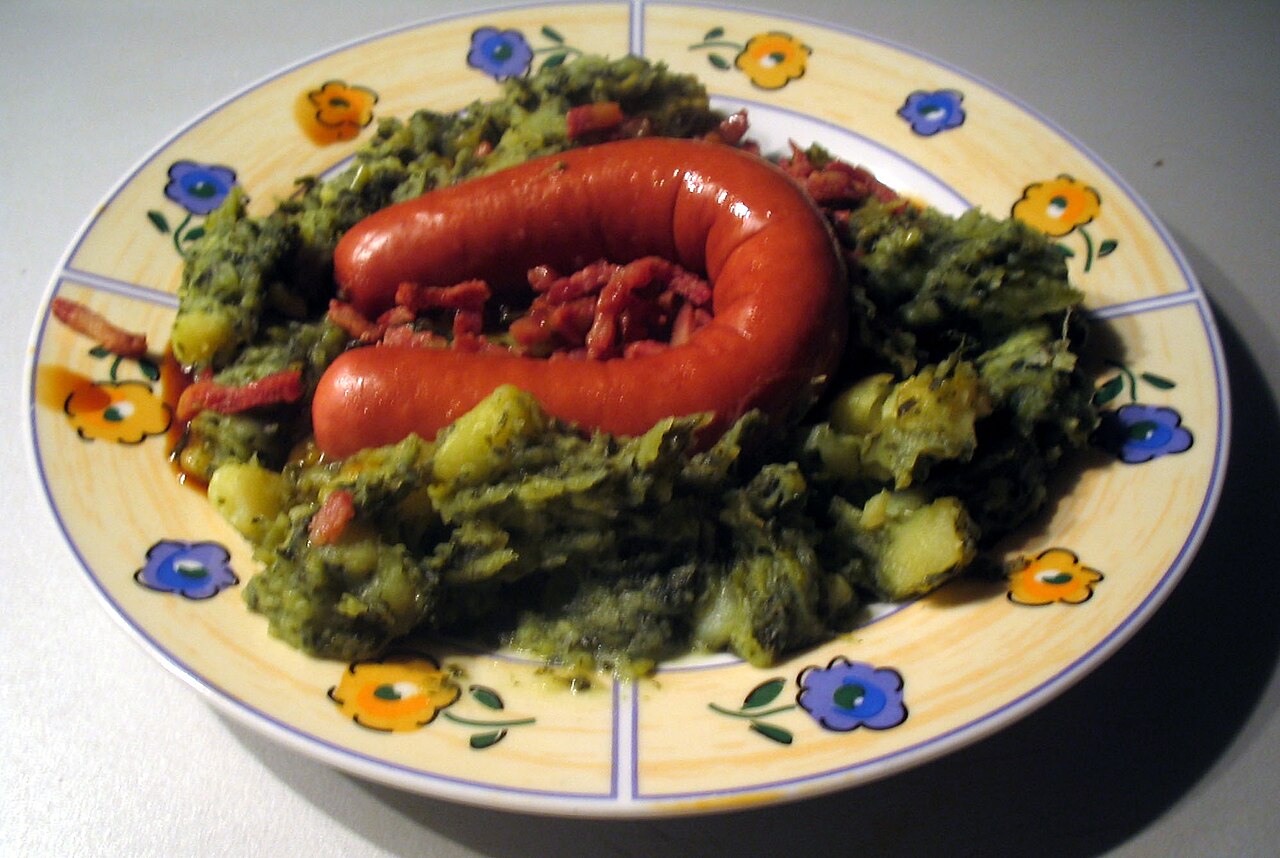
Potatoes mashed together with curly kale, butter and warm milk, served with a smoked sausage and gravy or mustard. Stamppot, 'mash pot', is the classic cold-weather dinner, also made with sauerkraut, endive or carrots and onions.
See the recipe
Serves 4
45 min
Ingredients
1 kg floury potatoes, peeled and cut into chunks
500 g curly kale, washed and finely chopped
1 smoked sausage (rookworst), about 275 g
About 150 ml warm milk
40 g butter
Salt, black pepper and a little nutmeg
Mustard or gravy, to serve
Method
Put the potatoes in a large pan, just cover with salted water and bring to the boil.
Put the chopped kale on top of the potatoes, cover and cook for about 20 minutes, until the potatoes are soft.
Meanwhile heat the smoked sausage in hot water as the packet says.
Drain the potatoes and kale well, add the butter and mash everything together, adding warm milk until it is smooth but firm.
Season with salt, pepper and a little nutmeg.
Serve with slices of sausage and mustard, or with gravy.
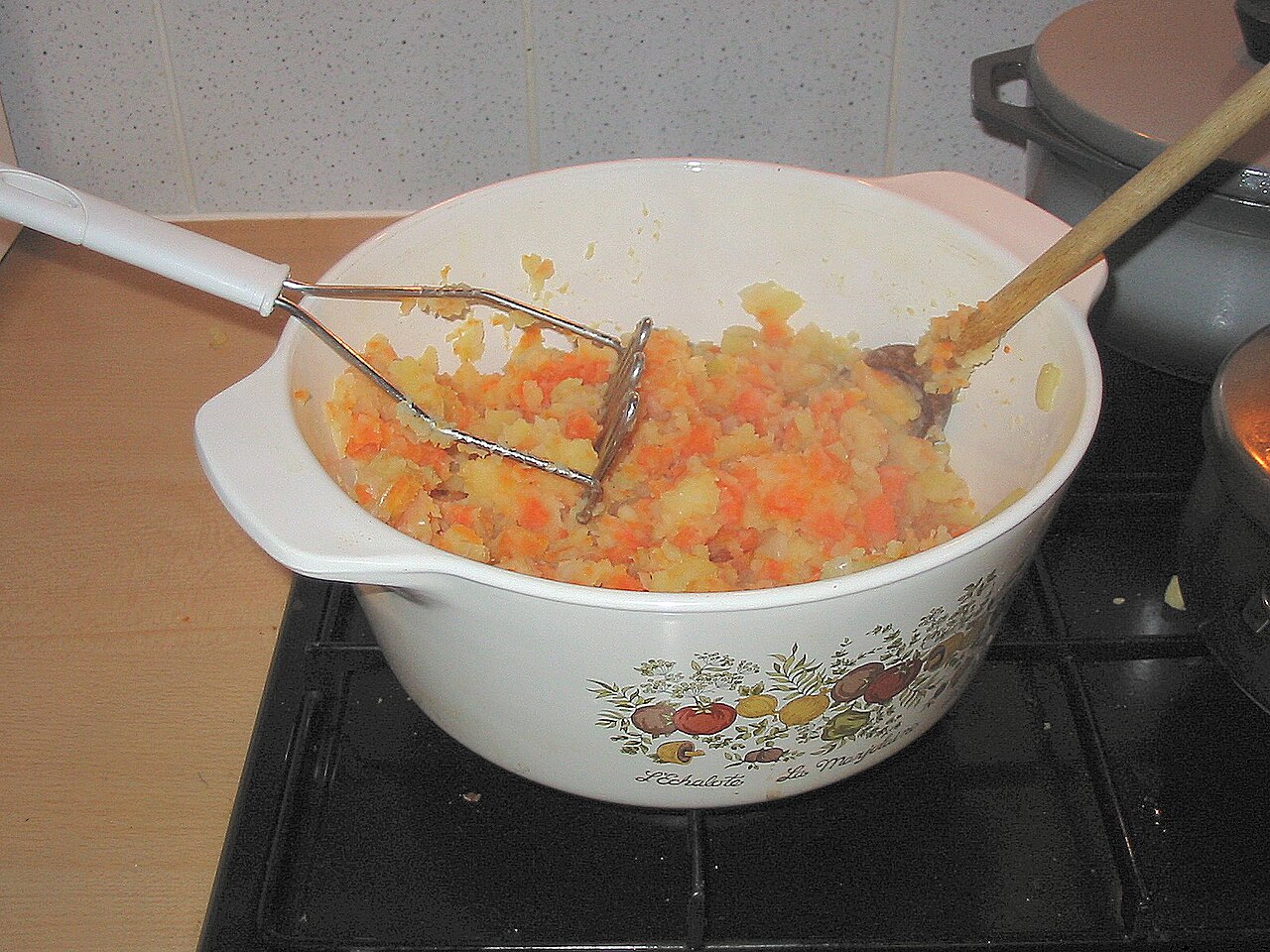
Potatoes, carrots and onions boiled and mashed together, traditionally with slow-cooked beef. It is sweet, orange and comforting.
Legend says the starving people of Leiden found a pot of hutspot left behind by Spanish soldiers when the siege of the city ended in 1574. Leiden still eats hutspot every 3 October to celebrate.
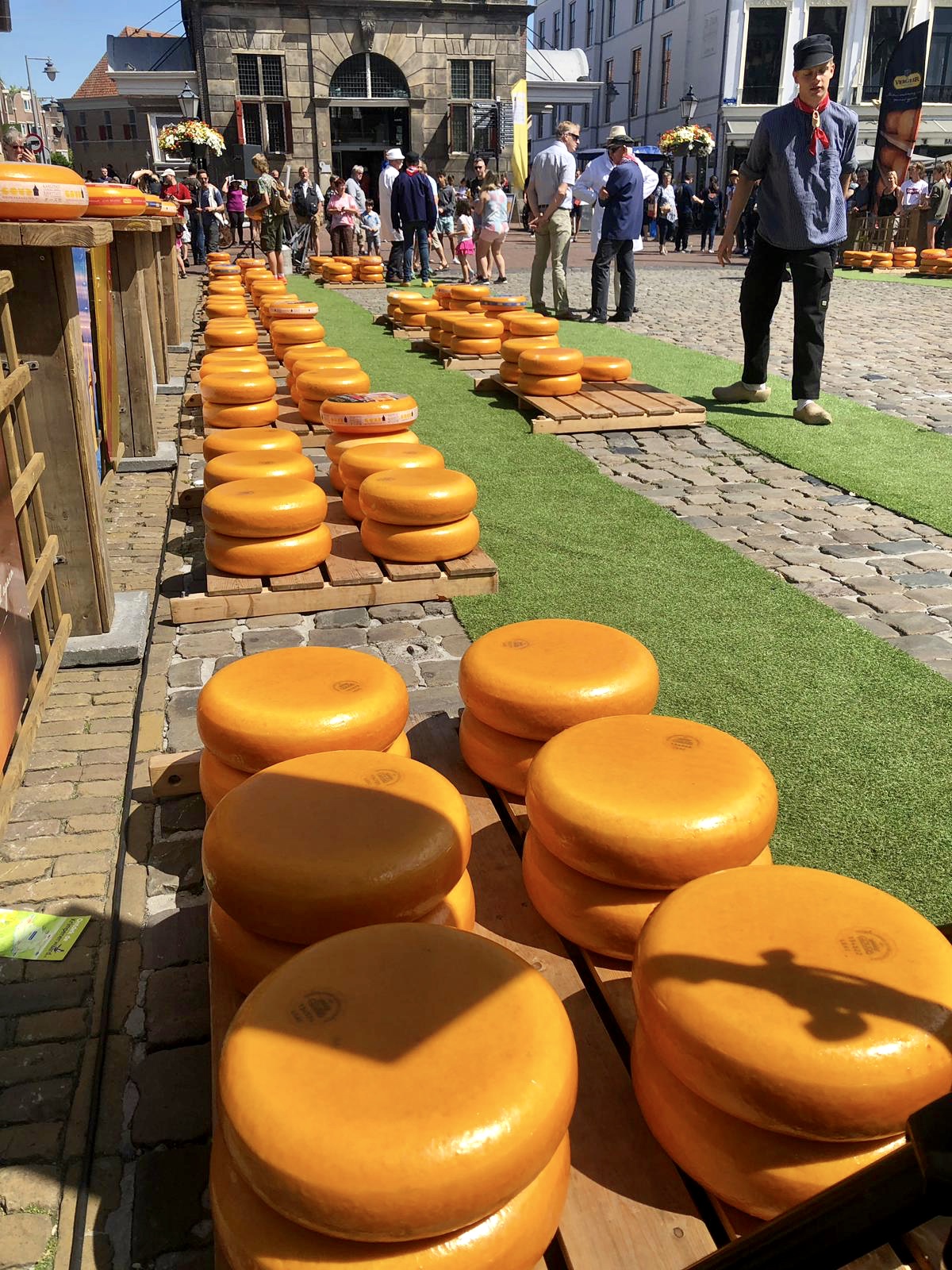
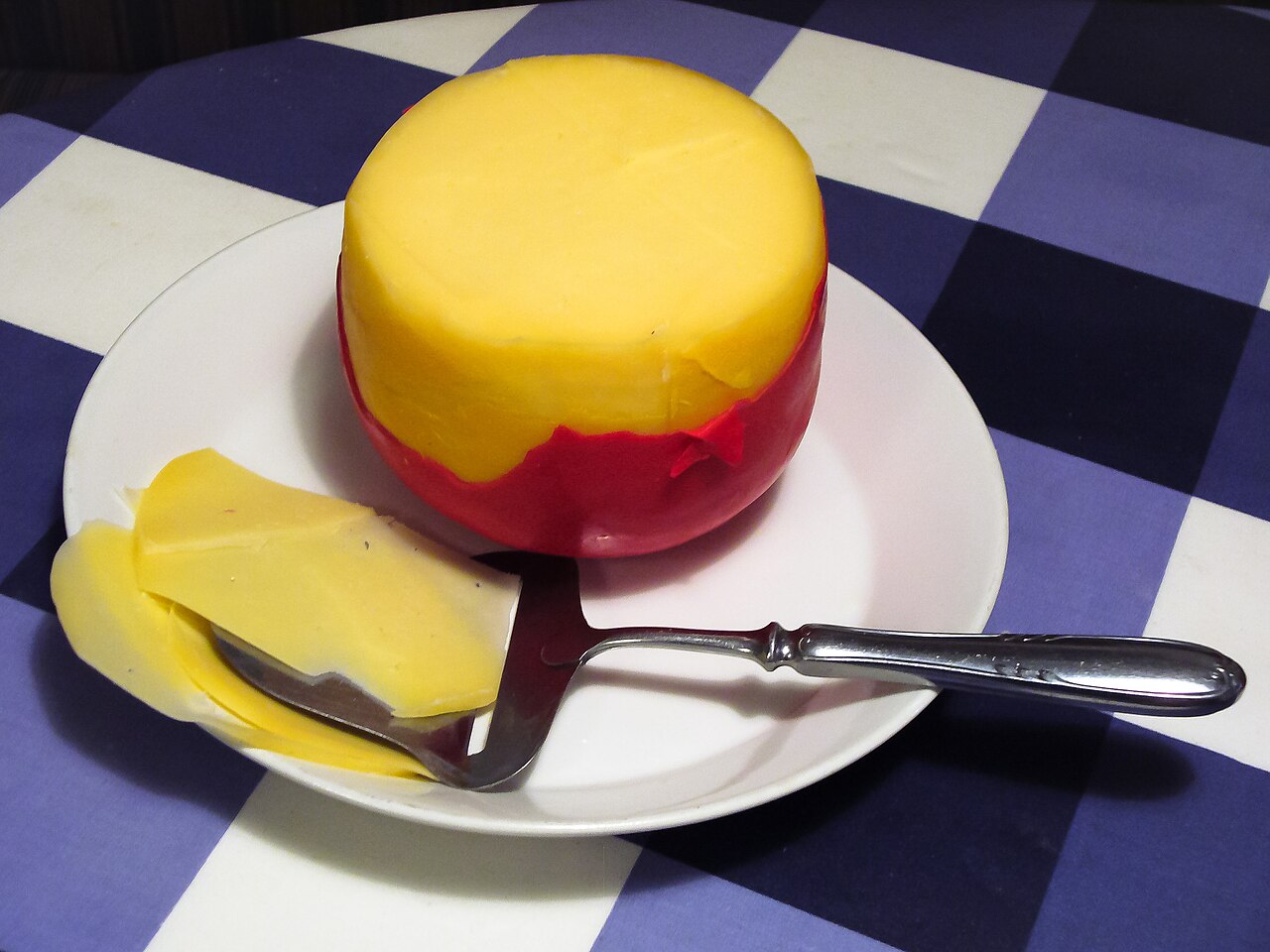
A yellow cow's milk cheese, from young, soft and mild to old, hard and full of flavour. It is eaten on bread at breakfast and lunch, and in cubes with a drink.
The cheese is named after the town of Gouda, where farmers brought their cheeses to the market square and buyers and sellers agreed a price by clapping hands, a custom called 'handjeklap'.
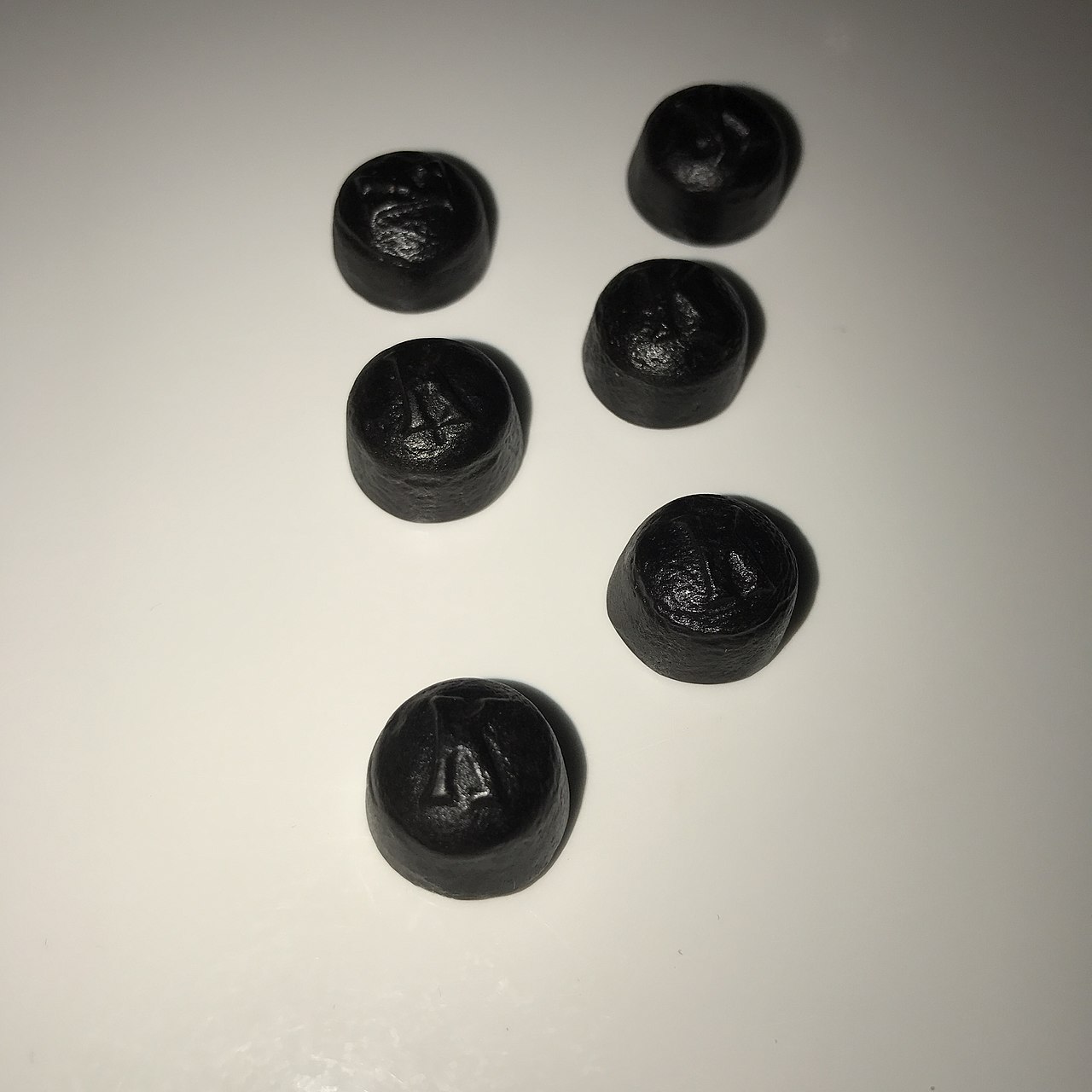
Black liquorice sweets in every shape, from soft and sweet to hard and very salty (zoute drop). Dutch liquorice is often flavoured with ammonium chloride, which gives it its salty taste.
The Dutch are said to eat more liquorice than any other people. Real liquorice can raise blood pressure, and large amounts eaten every day can upset the heart's rhythm, especially in people over 40. Enjoy it in small amounts, and skip it if you have high blood pressure or heart problems.
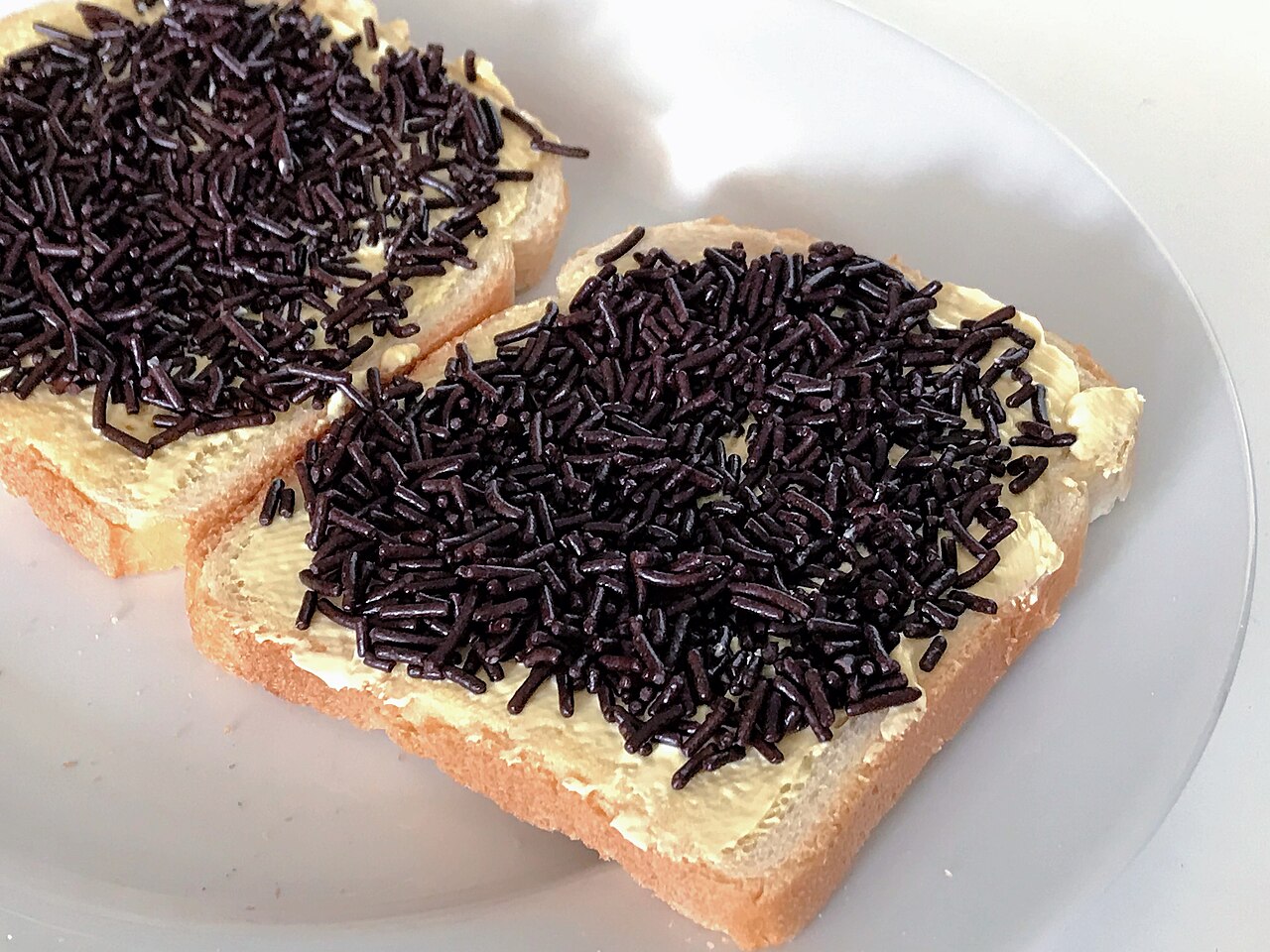
Little chocolate sprinkles scattered thickly on a slice of buttered bread, eaten at breakfast or lunch by children and adults alike. There are also fruit-flavoured and aniseed versions.
The name means 'hailstorm'. An estimated 750,000 hagelslag sandwiches are eaten in the Netherlands every day.
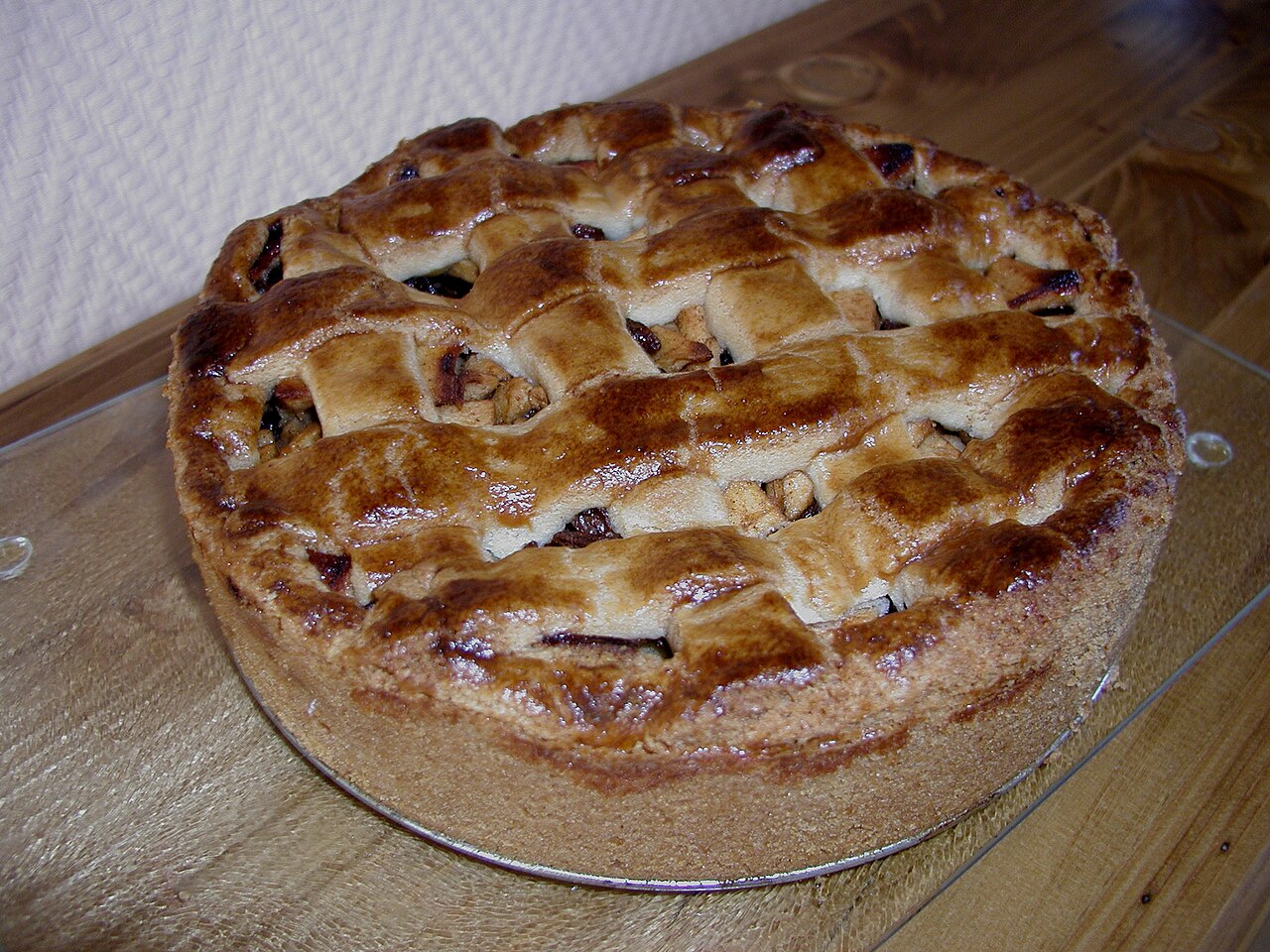
A deep apple pie in a buttery, crumbly crust, filled with apple pieces, cinnamon and lemon, often with raisins, and topped with a lattice or crumble. It is served with a spoonful of whipped cream, 'met slagroom'.
A Dutch-language cookbook printed in 1514 already has a recipe for 'appeltaerten', apple pies.
See the recipe
Serves 10
2 h
Ingredients
300 g self-raising flour, plus a little for rolling
200 g cold butter, cubed
150 g light brown sugar
1 egg, beaten (keep a little for brushing)
A pinch of salt
1 kg tart apples, such as Elstar, Goudreinet or Bramley
75 g sugar
2 teaspoons ground cinnamon
Juice of half a lemon
50 g raisins (optional)
Whipped cream, to serve
Method
Heat the oven to 175 °C and butter a 24 cm springform tin.
Rub the butter into the flour, brown sugar and salt, add most of the egg and knead briefly to a smooth dough. Chill for 20 minutes.
Peel and core the apples, cut them into small chunks and mix with the sugar, cinnamon, lemon juice and raisins.
Press about two thirds of the dough over the base and up the sides of the tin. Fill with the apples.
Roll out the rest of the dough, cut it into strips and lay them in a lattice over the top. Brush with the remaining egg.
Bake for about 60 to 70 minutes, until golden brown and the apples are soft. Let it cool in the tin before serving with whipped cream.
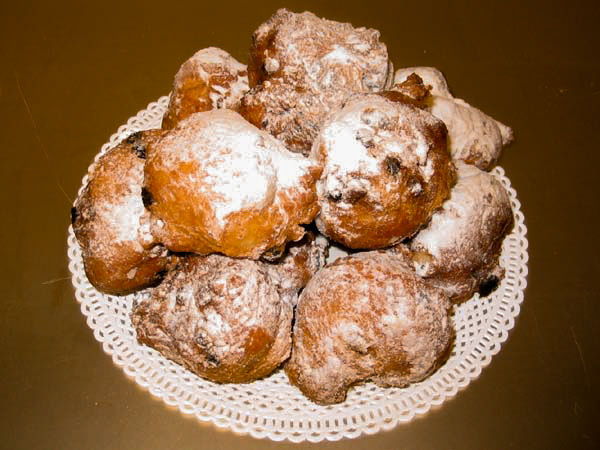
Round balls of yeast dough, often with raisins or apple, deep-fried and dusted with powdered sugar. They are the traditional treat for New Year's Eve, sold from stalls all through December.
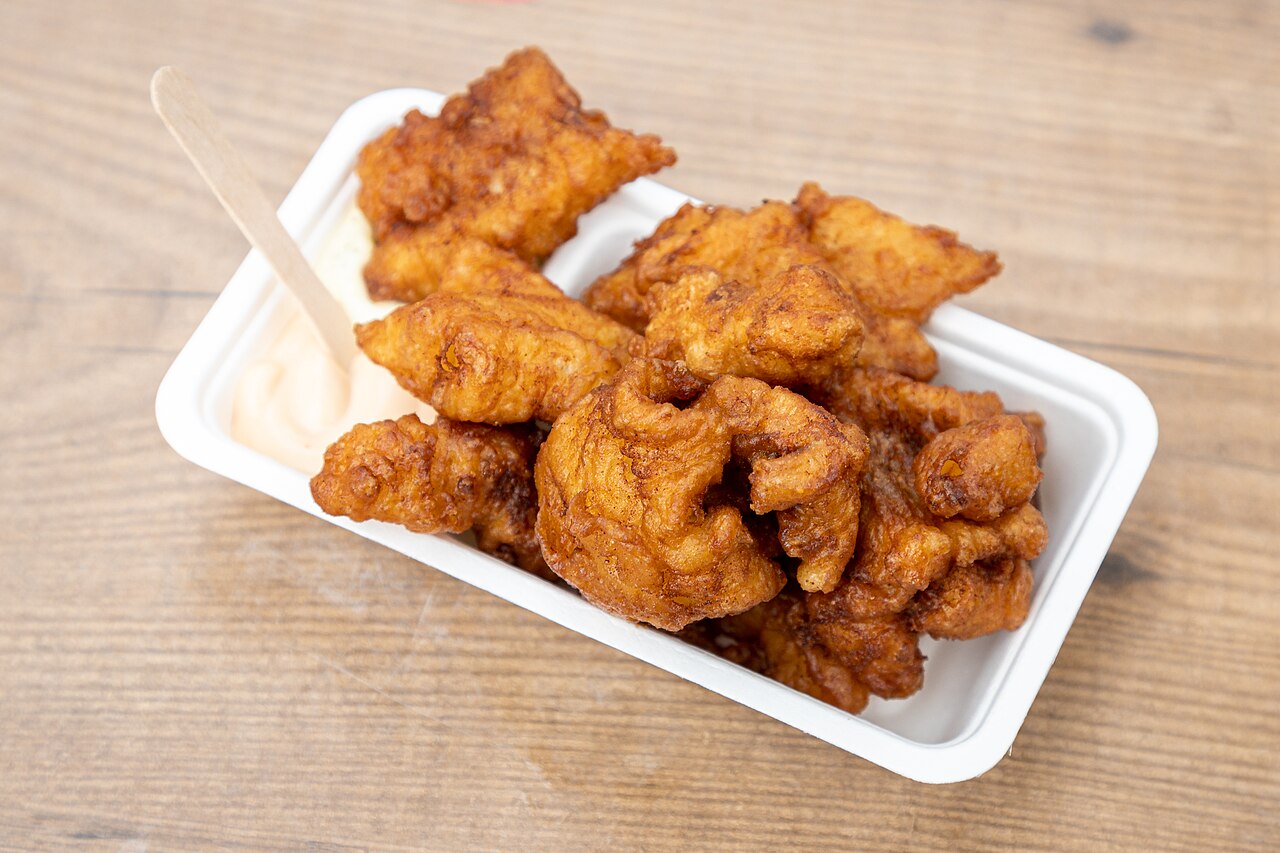
Bite-sized chunks of white fish, traditionally cod, in a spiced batter, fried and served hot from a market fish stall with a mayonnaise-based sauce such as remoulade.
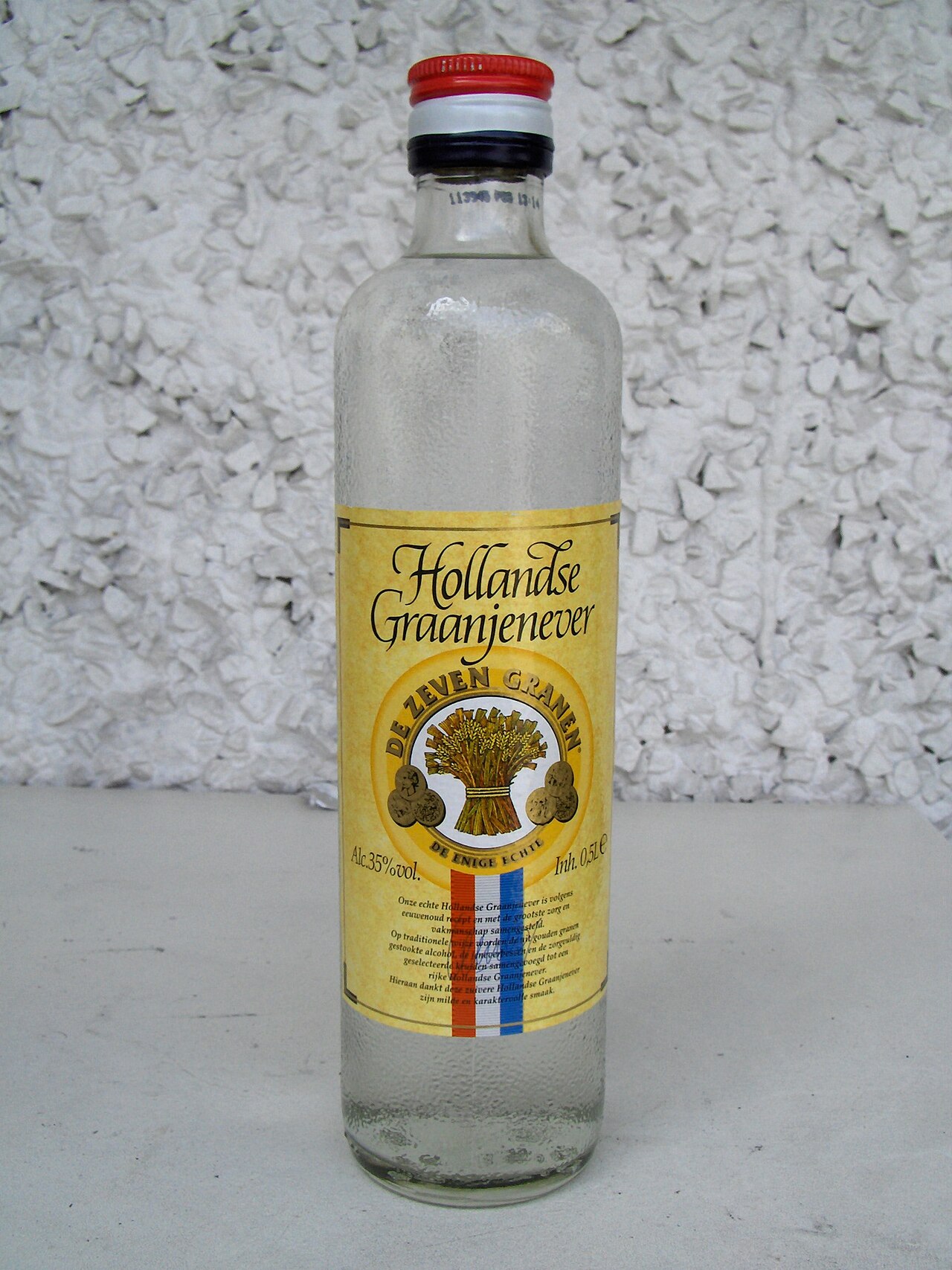
A juniper-flavoured spirit, the traditional liquor of the Netherlands and Belgium. There are two kinds, 'jonge' (young) and 'oude' (old). It is strong alcohol, to be sipped slowly.
Modern gin grew out of jenever after it was taken to Britain, and even the English word 'gin' comes from its name.
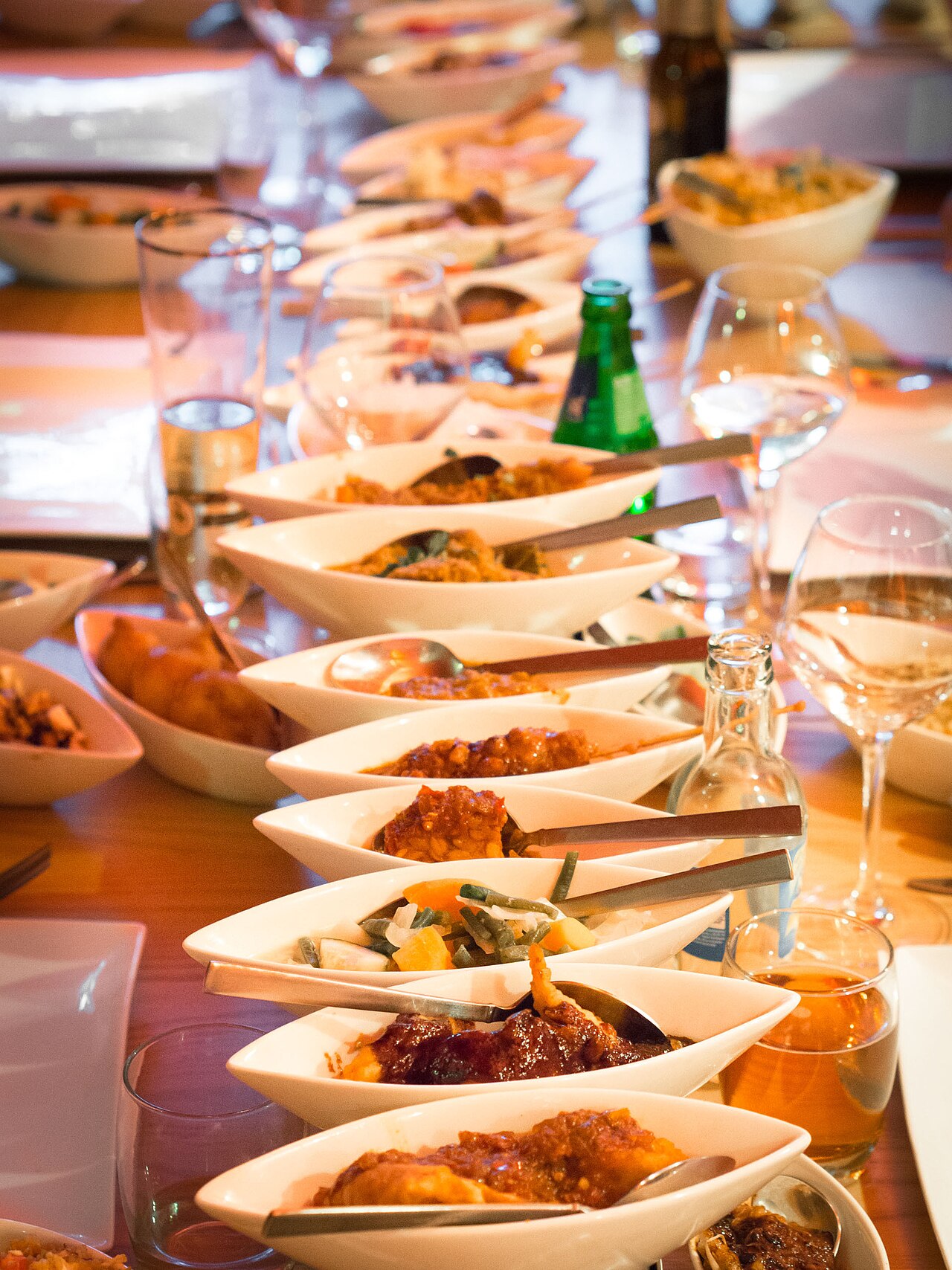
A feast of rice with many small Indonesian dishes: satay, sambal, curries, vegetables, eggs, fish and crunchy extras. The dishes are Indonesian, but the idea of serving dozens at once was a Dutch colonial custom, made to impress visitors.
Almost every Dutch town has a Chinese-Indonesian restaurant, a legacy of the colonial past in Indonesia.
Table manners
Before eating, people wish each other 'eet smakelijk' (ayt SMAH-kuh-luk), 'enjoy your meal'.
When raising a glass, say 'proost' (PROHST), 'cheers'.
Coffee time is a real tradition: guests are offered coffee or tea with a biscuit or a slice of cake, and the old saying goes that you take just one biscuit from the tin.
Service is included in restaurant prices by law. Tipping is not required, but rounding up or leaving 5 to 10 percent for good service is common.
Most Dutch people live in the Randstad, a ring of cities in the west that includes Amsterdam, Rotterdam, The Hague and Utrecht. Distances are short, trains are frequent, and nearly every town has a historic centre of canals, gabled houses and a market square. All the places here are in the European part of the country; the Caribbean islands are too far away to show on this map.
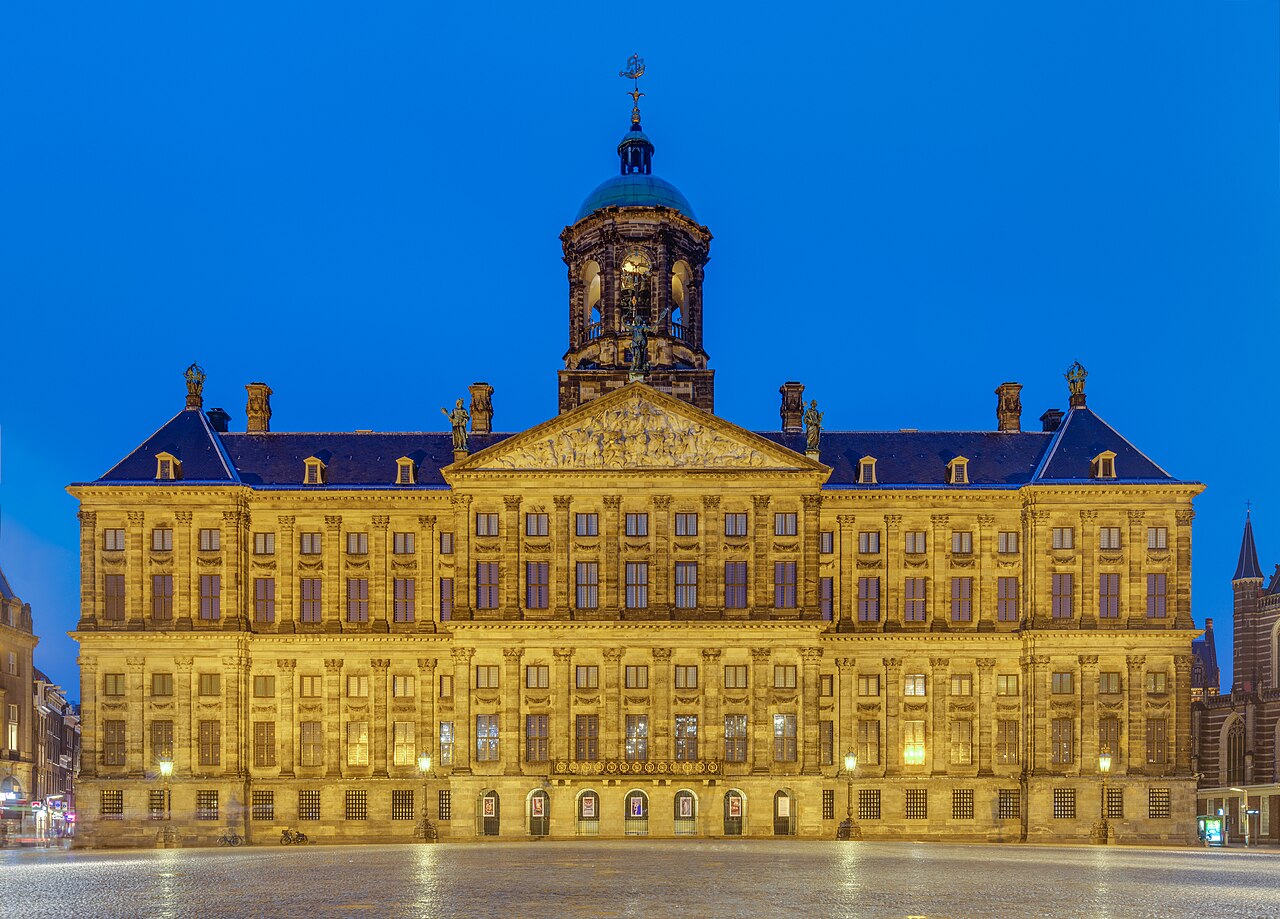
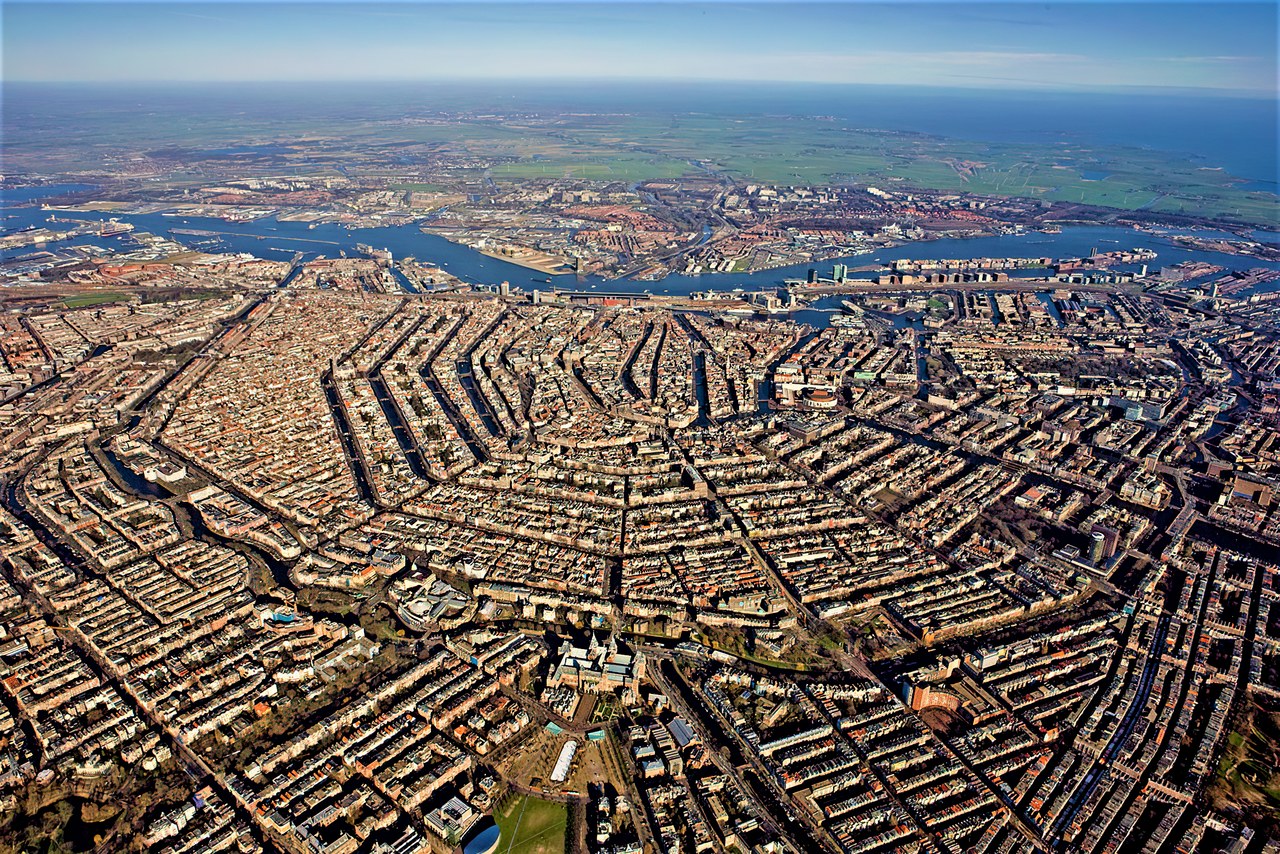
The capital and largest city, built on a dam in the river Amstel. Its 17th-century rings of canals, lined with tall, narrow merchants' houses, are a UNESCO World Heritage Site, and the city is full of museums, bridges and bicycles.
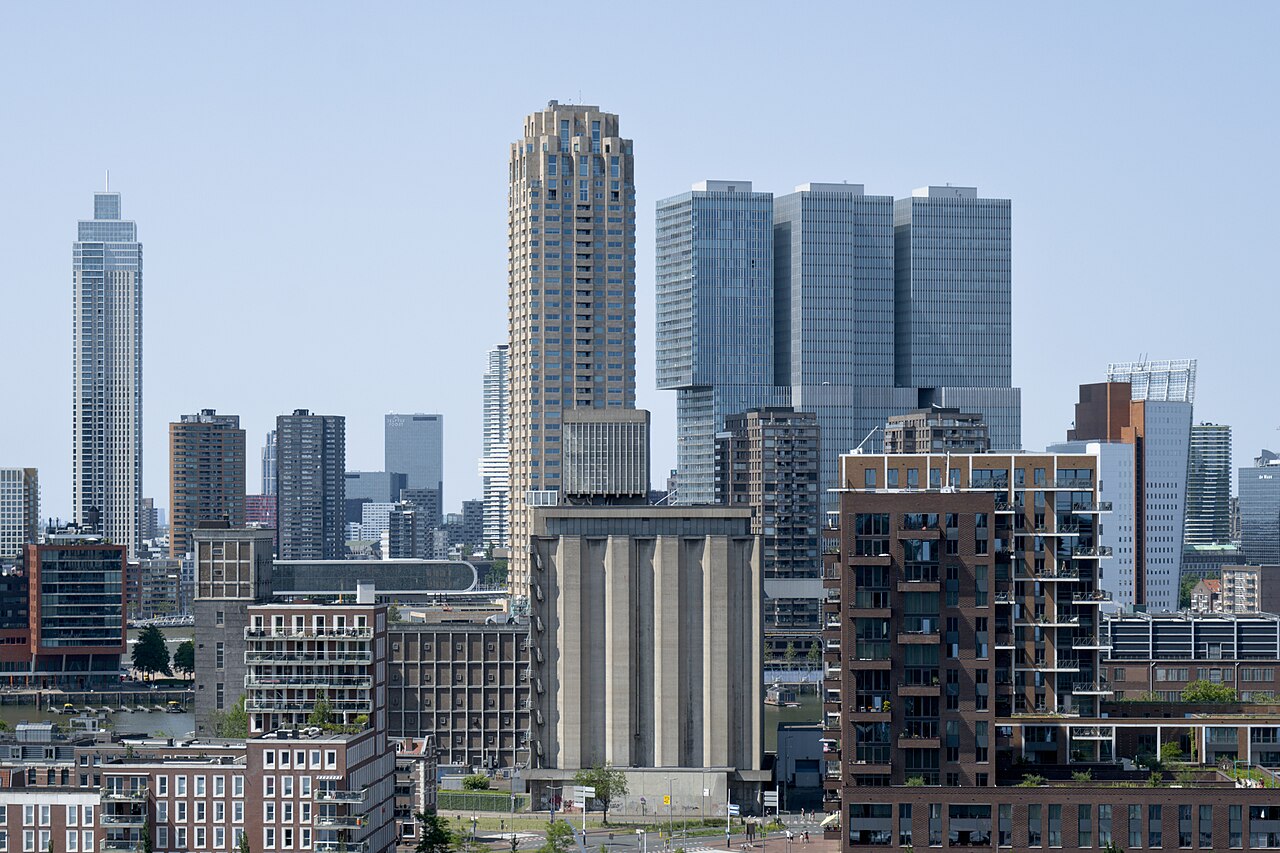
The second-largest city and home to Europe's largest seaport. Its old centre was destroyed by bombing in May 1940, and it was rebuilt with bold modern architecture.
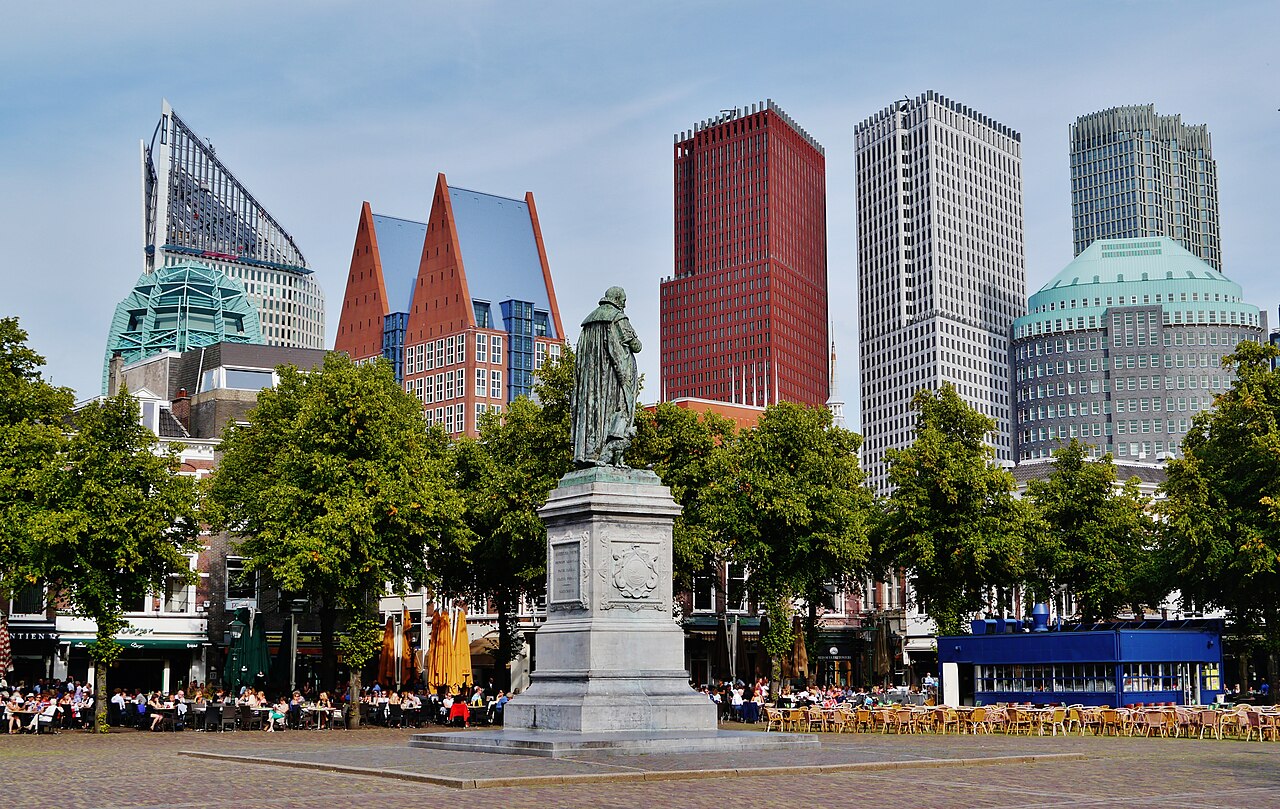
The seat of the Dutch parliament, government and Supreme Court, and home of the King's working palace, although Amsterdam is the capital. It is also a city of international courts and embassies, with a beach at Scheveningen.
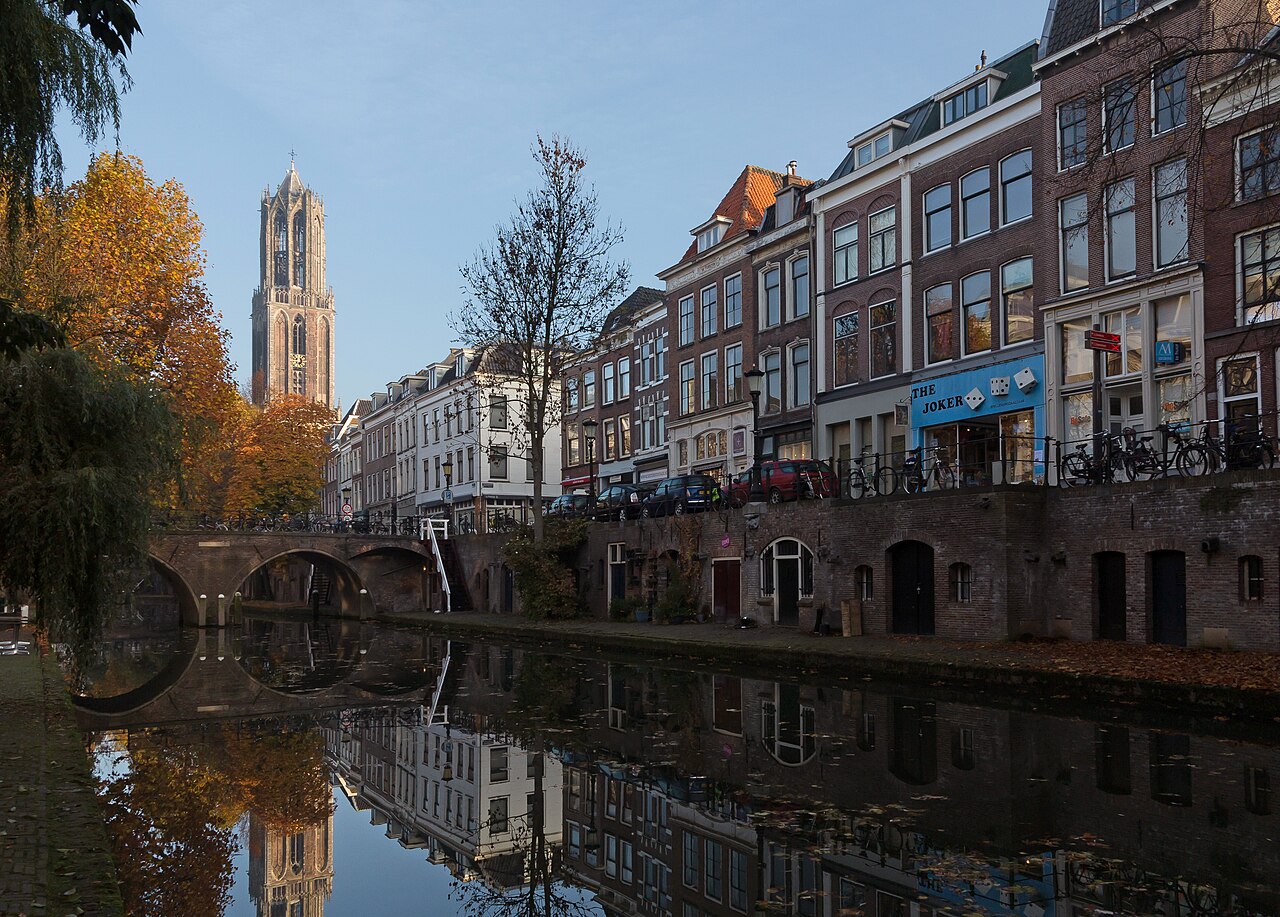
The fourth-largest city, in the centre of the country, which grew from a Roman fort. Its canals have wharves and old cellars at water level, and the Dom Tower, 112 m high, is the tallest church tower in the Netherlands.
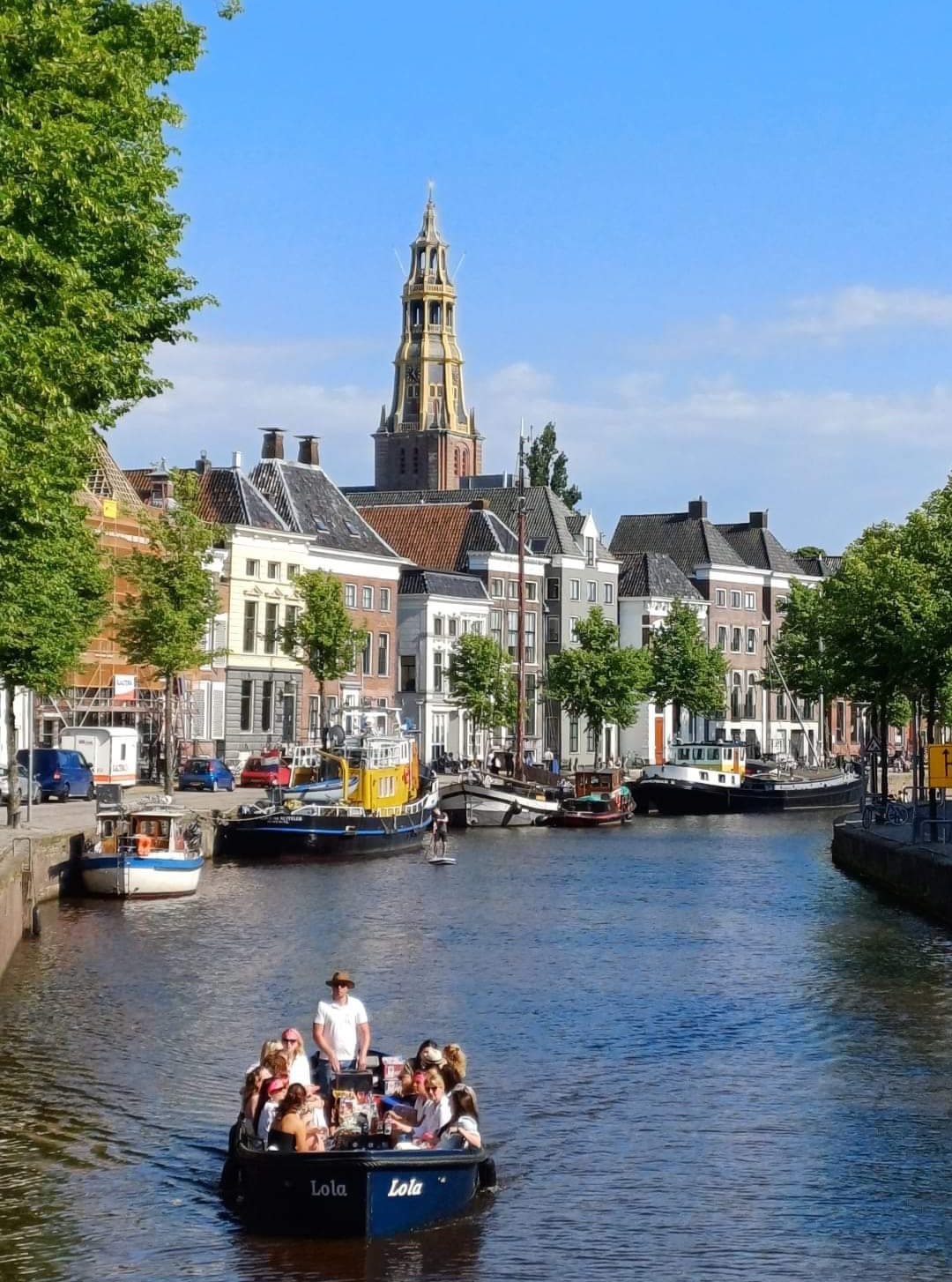
The largest city in the north, a lively university city and an old member of the Hanseatic trading league. It is often called the 'capital of the north'.
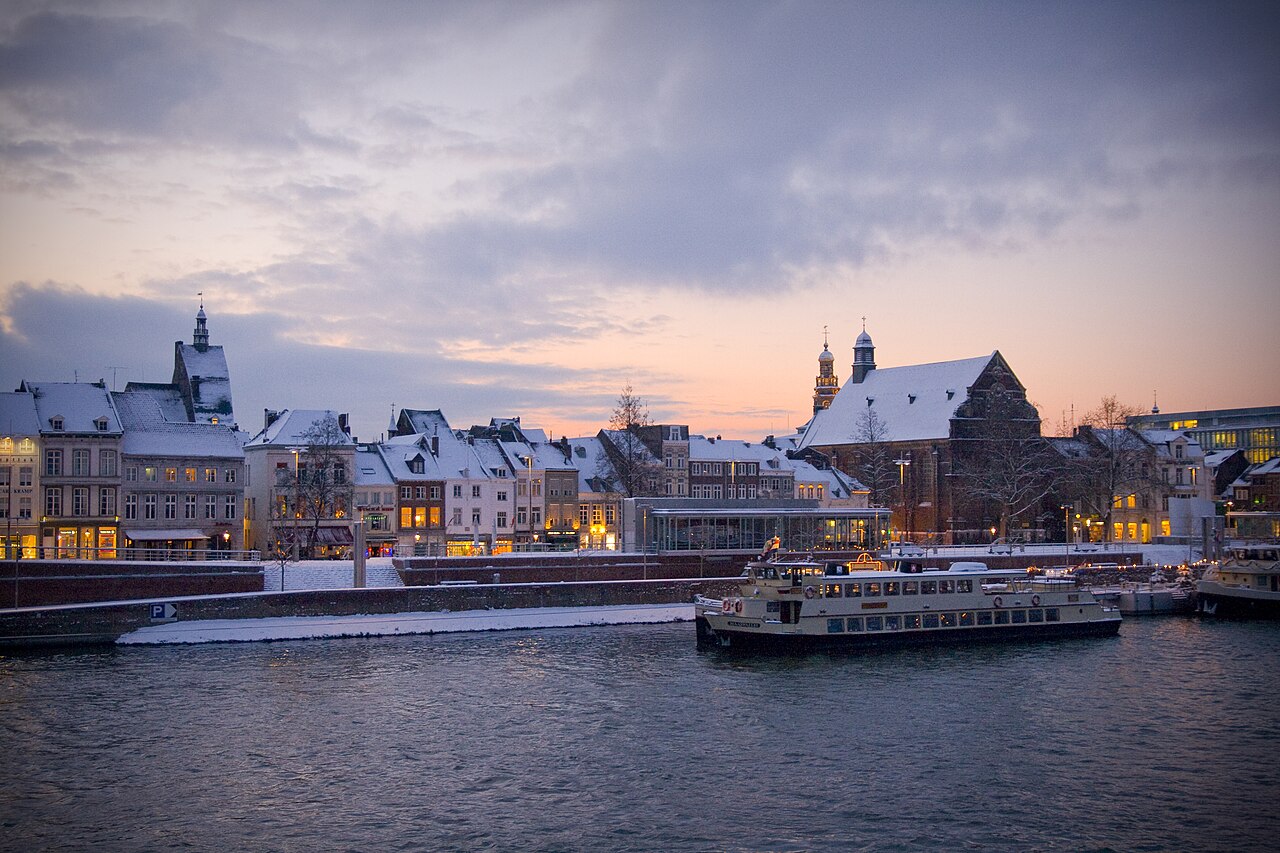
A city on the river Meuse (Maas) in the far south, close to Belgium and Germany, with Roman roots, old churches and cobbled squares. The treaty that created the European Union and led to the euro was signed here in 1992.
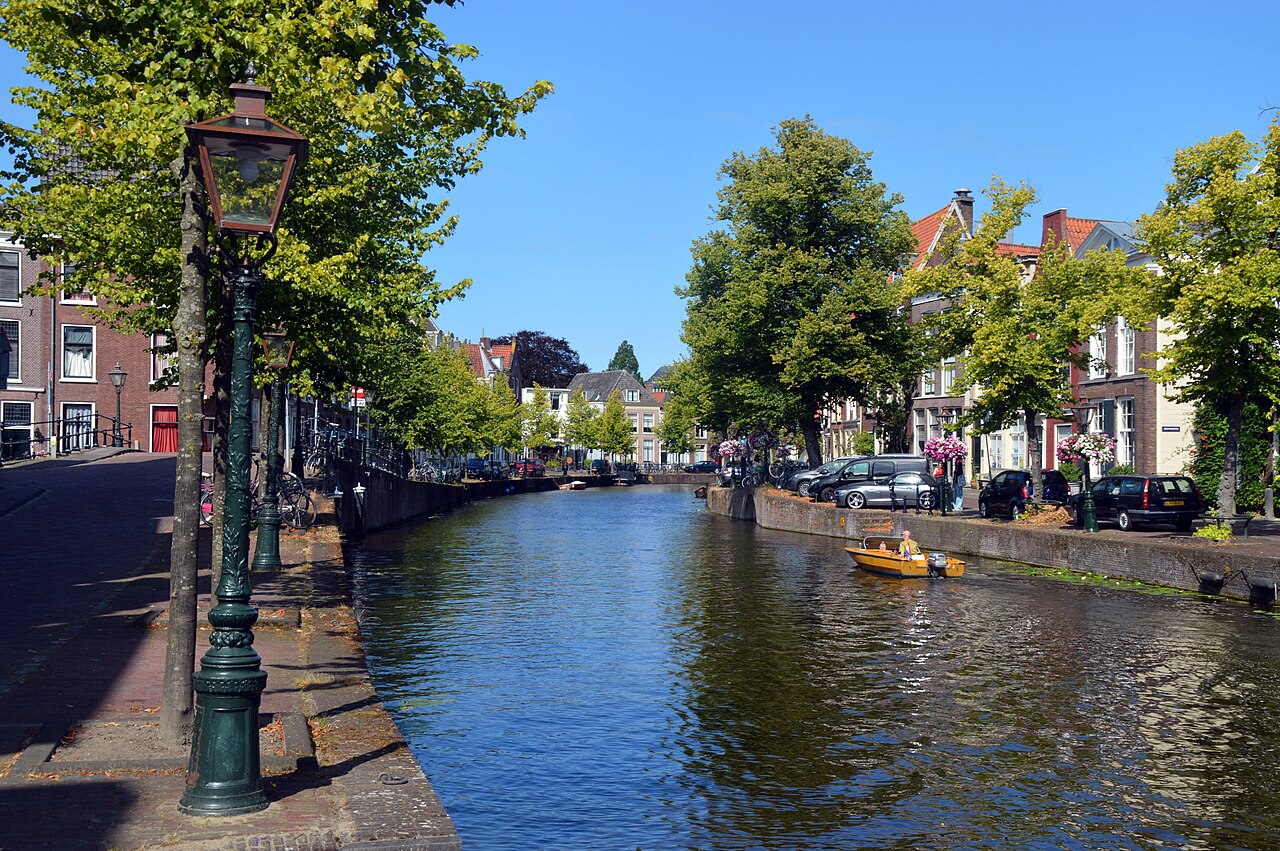
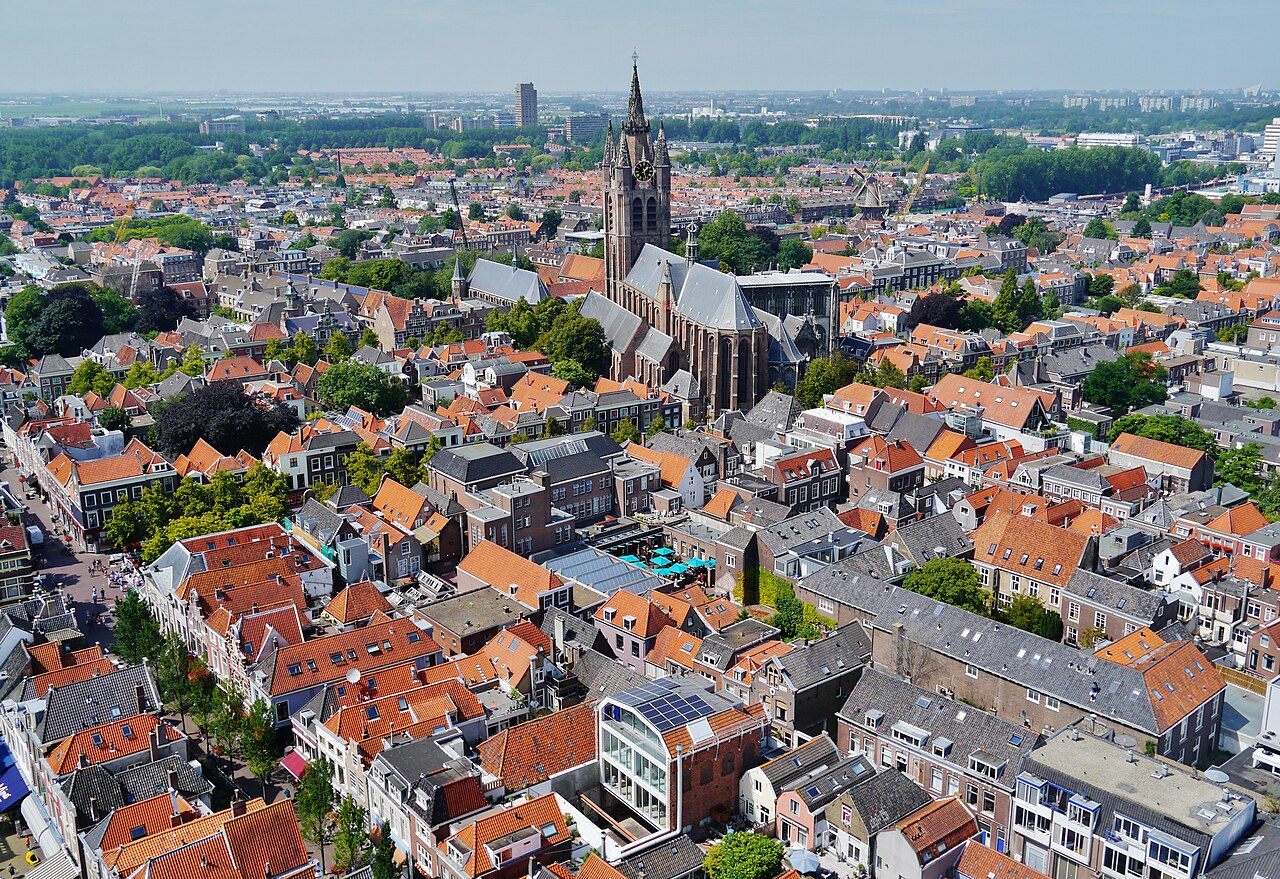
A canal city between Amsterdam and The Hague, home to Leiden University, founded in 1575, the oldest university in the Netherlands. Tulip growing took off after the botanist Carolus Clusius planted bulbs in its botanical garden in 1593.
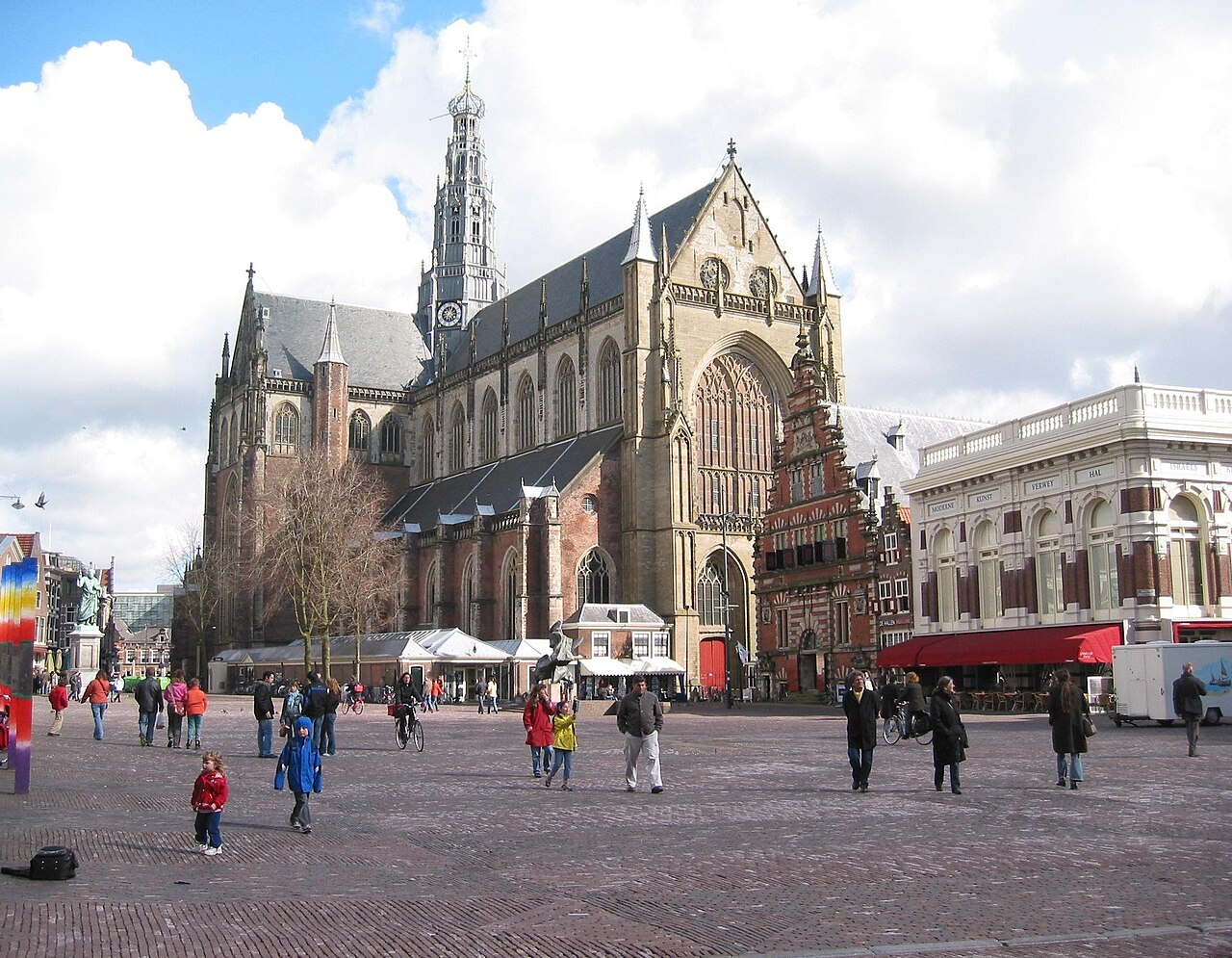
The capital of the province of North Holland, about 20 km west of Amsterdam near the coastal dunes, on the river Spaarne. For centuries it has been the centre of the tulip bulb-growing district.
A small canal city between Rotterdam and The Hague, famous for its blue and white pottery and as the home of the painter Johannes Vermeer. William of Orange lived and was murdered here in 1584, and the royal family is buried in its New Church.
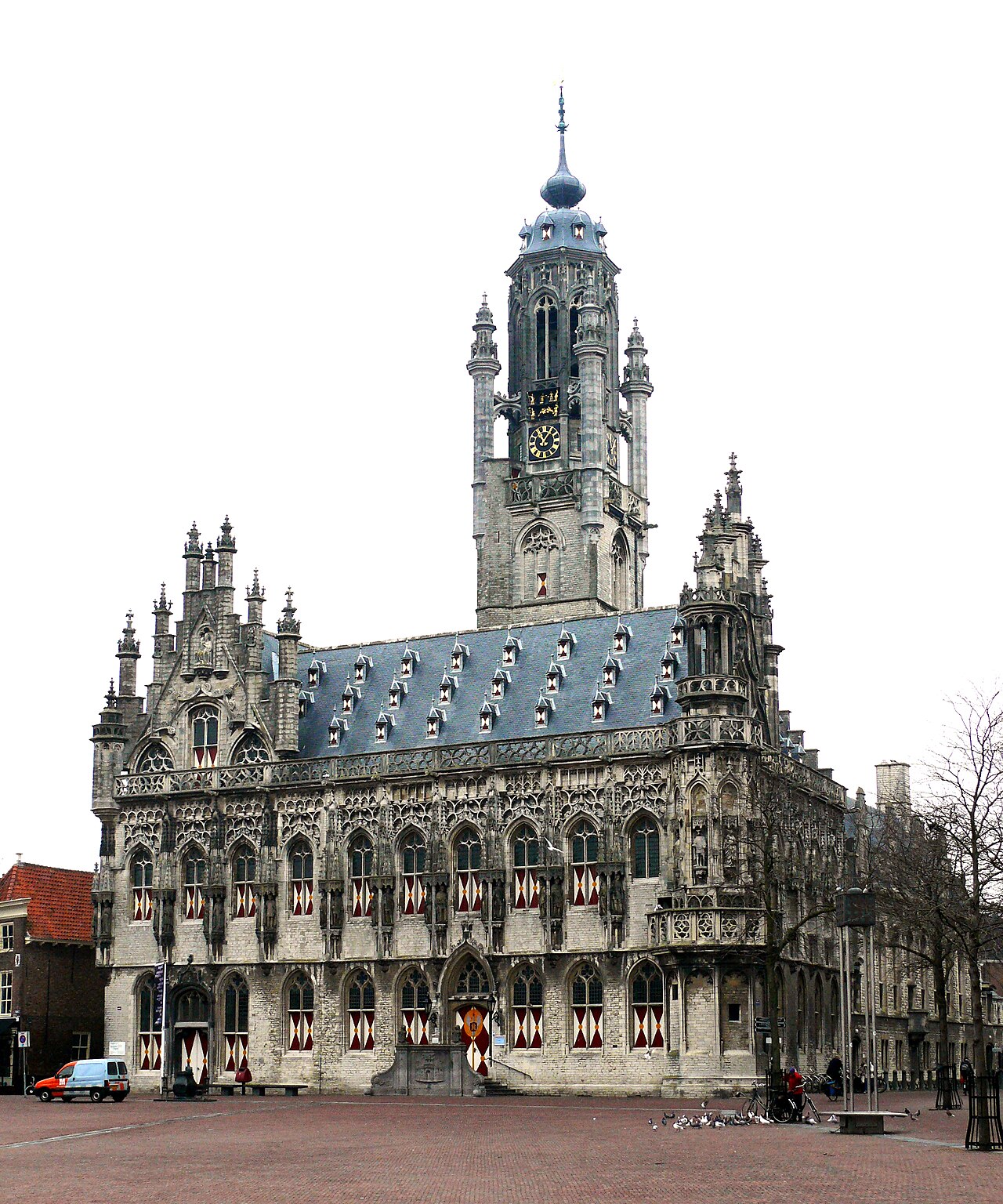
A small town between Rotterdam and Utrecht with a 15th-century city hall on its market square. It gave its name to Gouda cheese and is the home of the stroopwafel.
The capital of Zeeland, in the southwest, a province of islands and peninsulas between the rivers and the sea. In the Golden Age its spectacle makers were among the first to make microscopes and telescopes.
Early telescopes and microscopes
The Delta Works nearby
The medieval abbey, seat of the provincial government
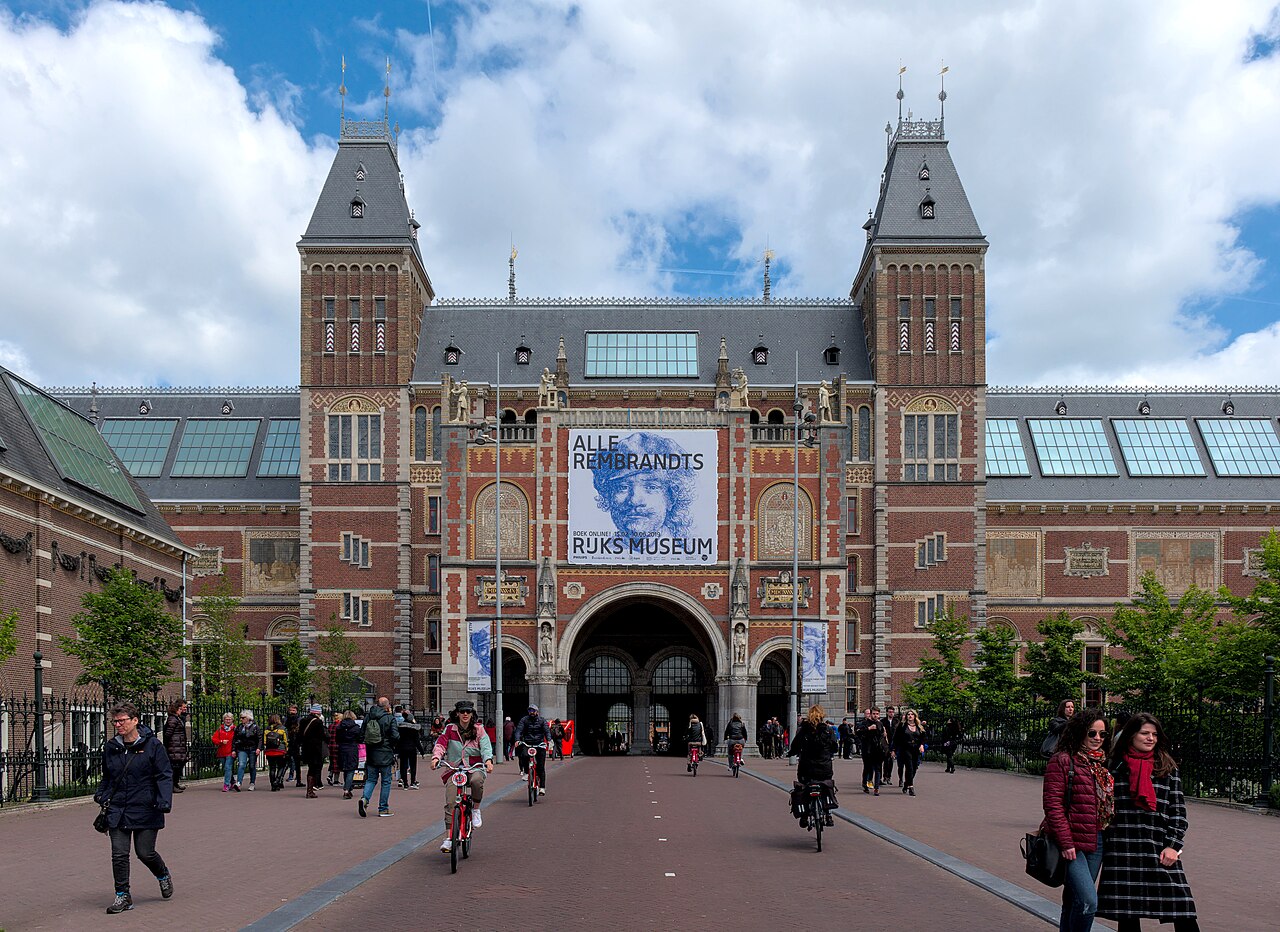
The national museum of Dutch art and history, in a grand building opened in 1885. The most famous painting on show is Rembrandt's 'The Night Watch' of 1642, owned by the City of Amsterdam and on permanent loan: a huge group portrait of a civic guard company that, despite its name, is not a night scene.
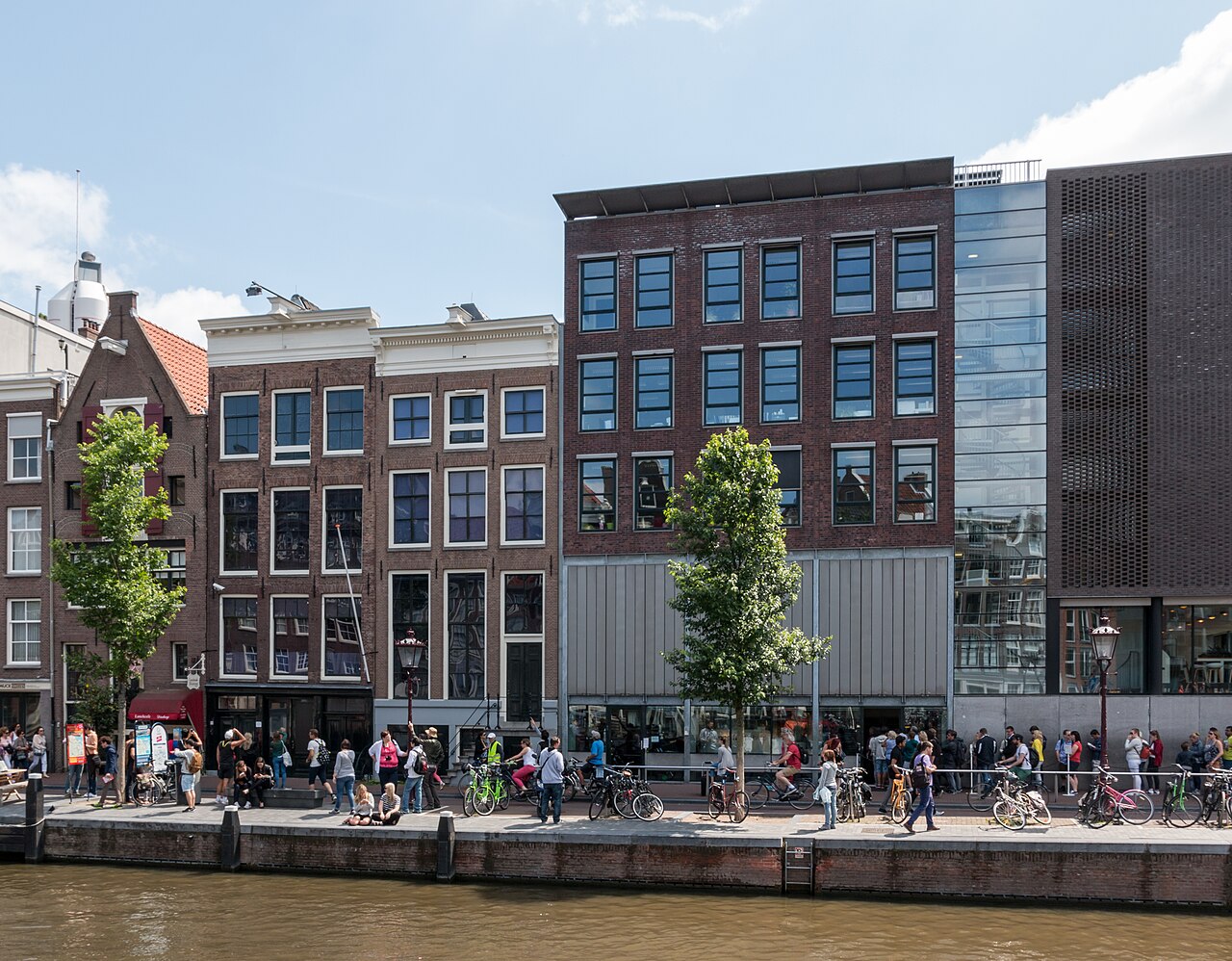
The canal house on the Prinsengracht where Anne Frank and seven other people hid from the Nazis from 1942 to 1944. Visitors walk through the secret annex behind the bookcase. It is a museum since 1960, and tickets are sold only online.
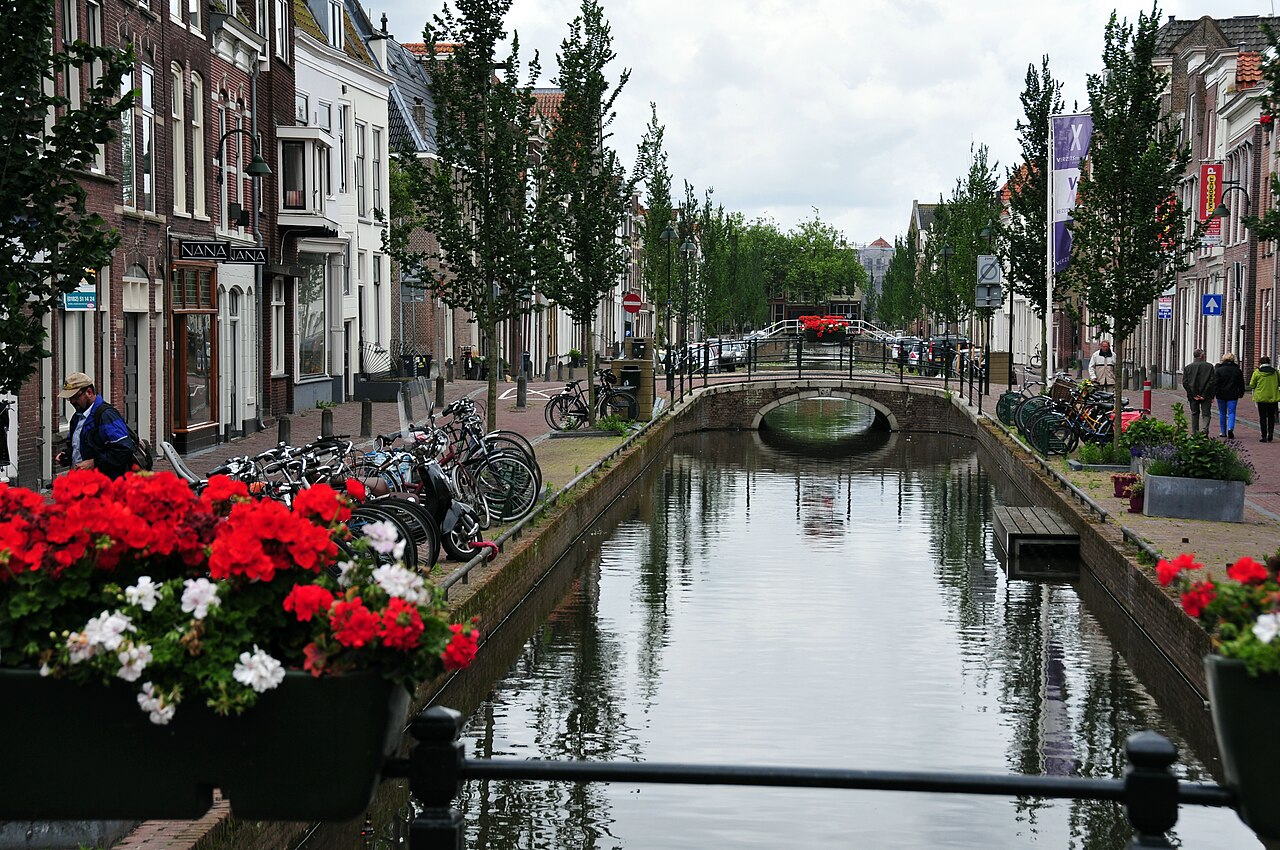
The three main canals, the Herengracht, Keizersgracht and Prinsengracht, were dug in the 17th century in half-rings around the old centre and lined with merchants' houses. The canal ring area has been a UNESCO World Heritage Site since 2010.
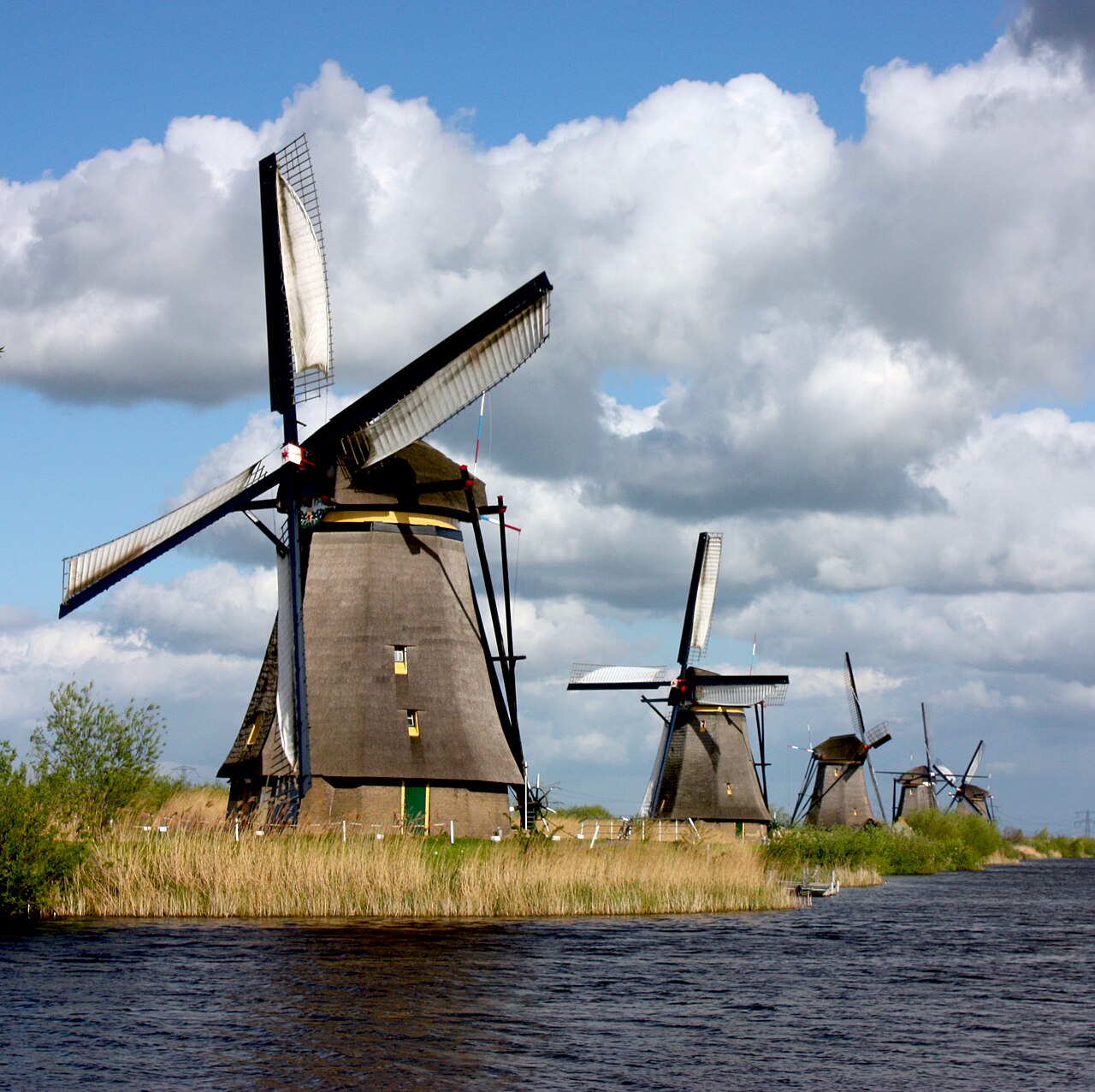
Nineteen windmills built around 1740 to pump water out of the low polder into a higher basin and on to the river, about 15 km east of Rotterdam. It is the largest group of old windmills in the country and a UNESCO World Heritage Site since 1997.
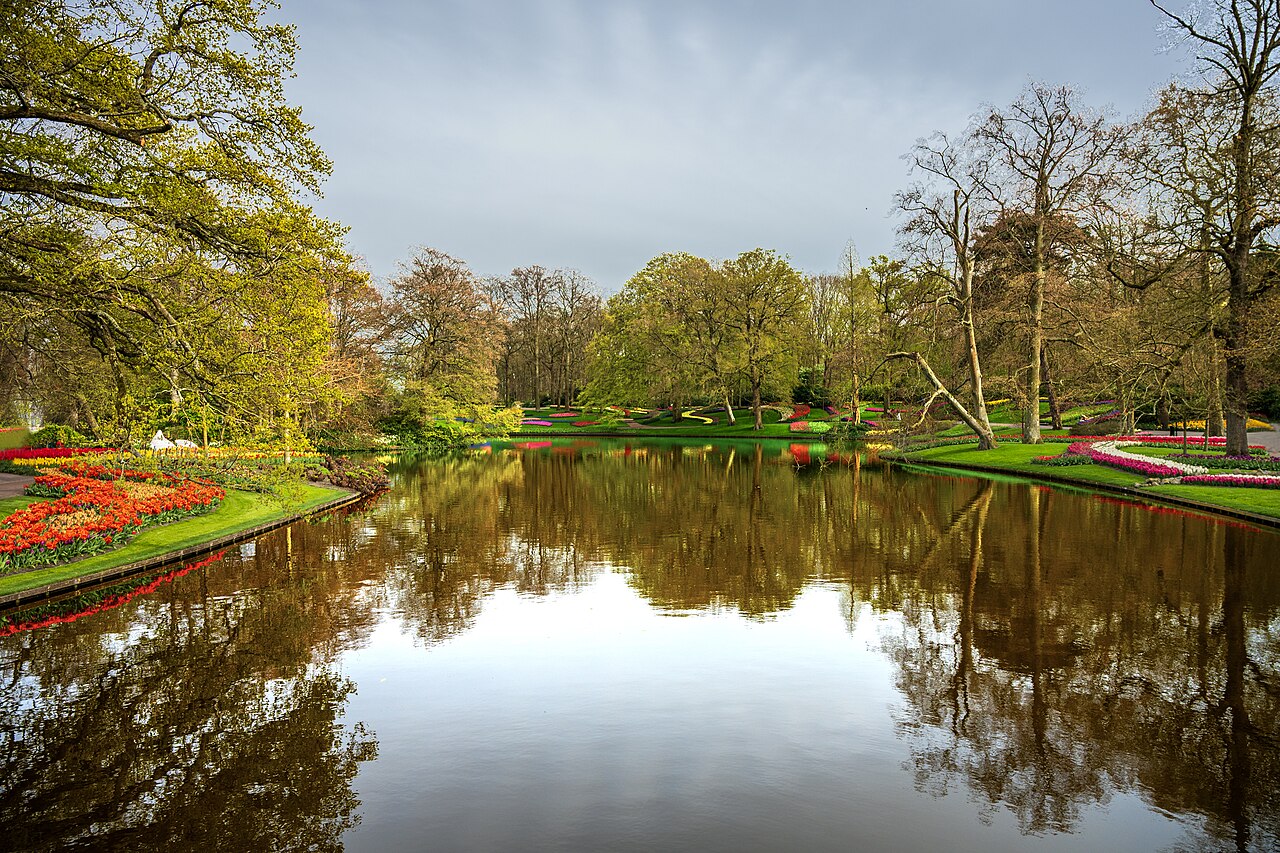
One of the world's largest flower gardens, at Lisse in the bulb-growing region between Leiden and Haarlem. About 7 million bulbs are planted each year, and the park opens to the public for about eight weeks in spring, from about mid-March to mid-May.
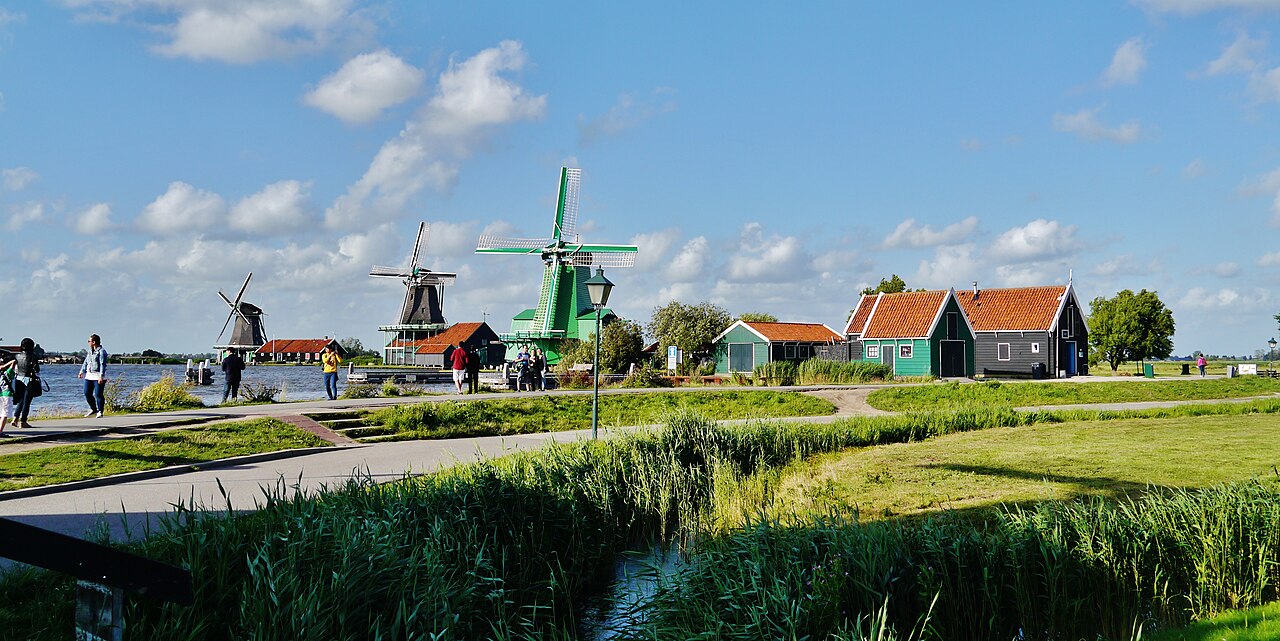
A neighbourhood of working windmills, wooden houses, museums and workshops on the river Zaan, just north of Amsterdam. Most of the buildings were moved here from the surrounding region between 1961 and 1974 to save them.
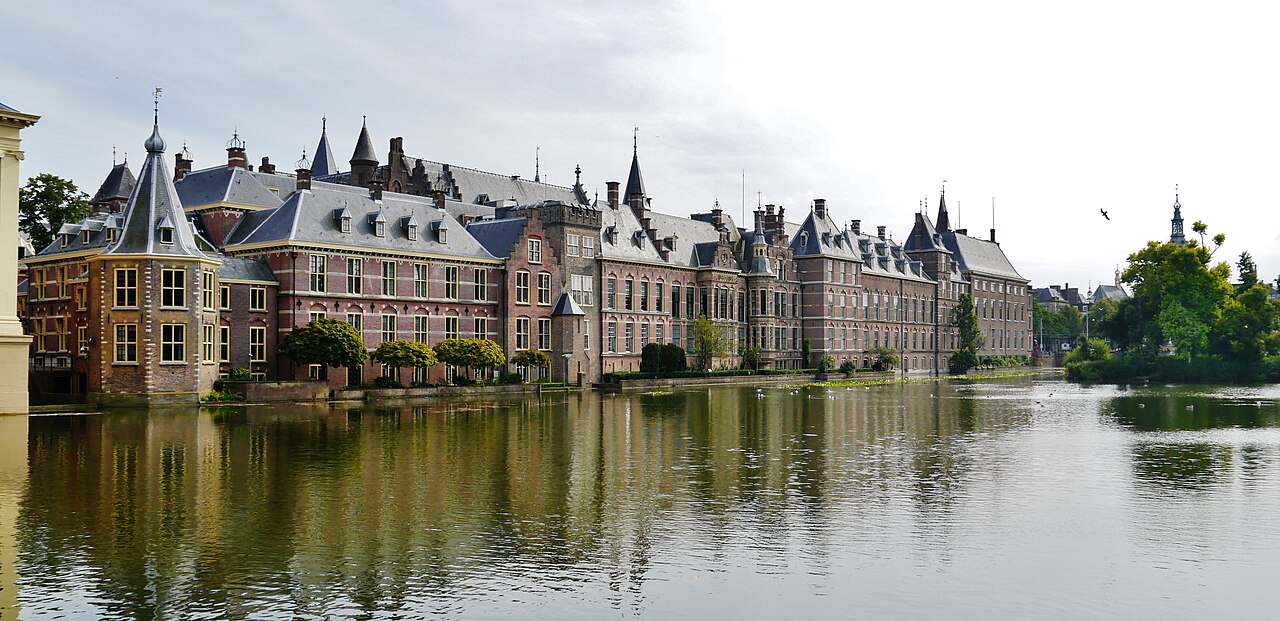
A complex of mostly medieval buildings beside a pond in the centre of The Hague, home of the Dutch parliament and the prime minister's office. At its heart is the Gothic Ridderzaal, the Hall of Knights, from the 13th century. The complex has been closed for a major renovation since 2021.
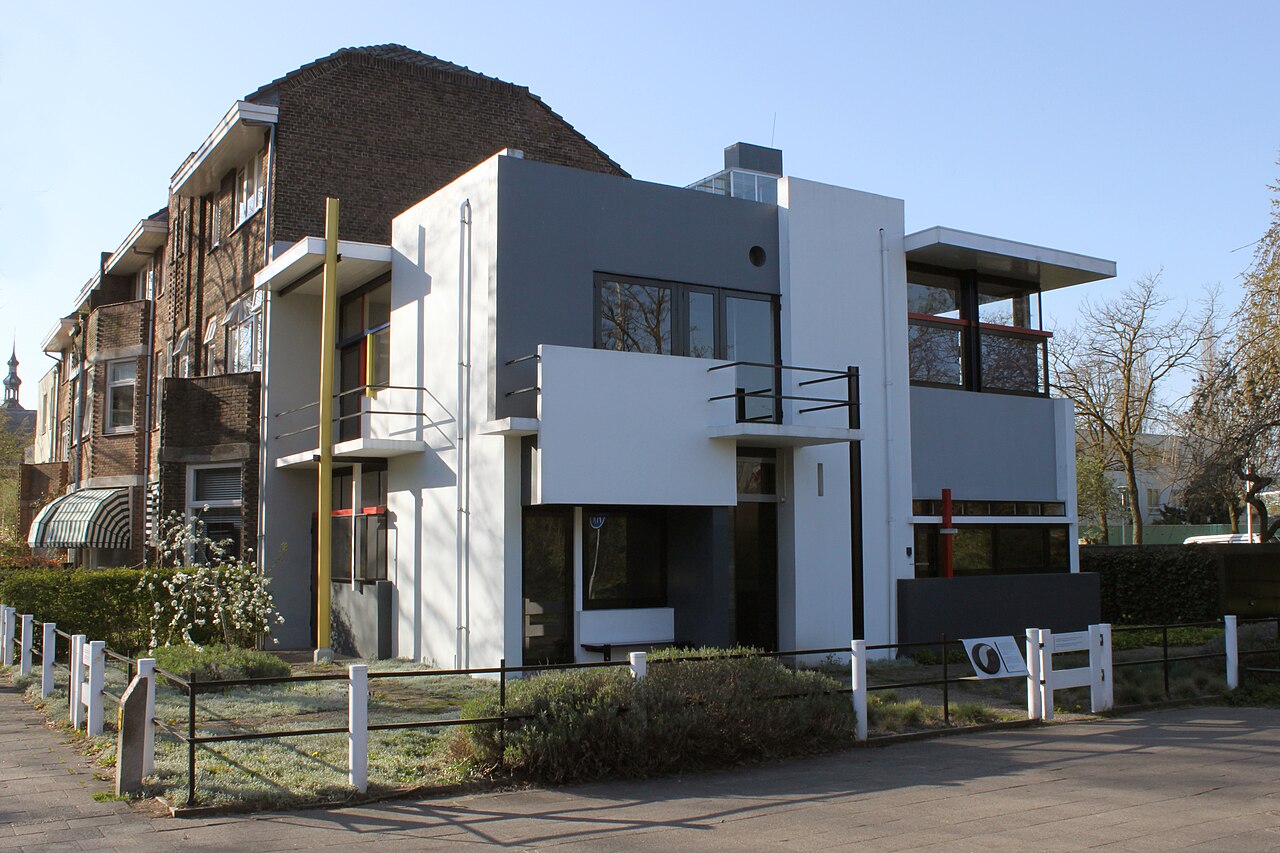
A small, strikingly modern house built in 1924 by the architect Gerrit Rietveld for Truus Schröder and her three children. Sliding and revolving panels let the upper floor be opened into one large space or closed into separate rooms. It is a UNESCO World Heritage Site since 2000.
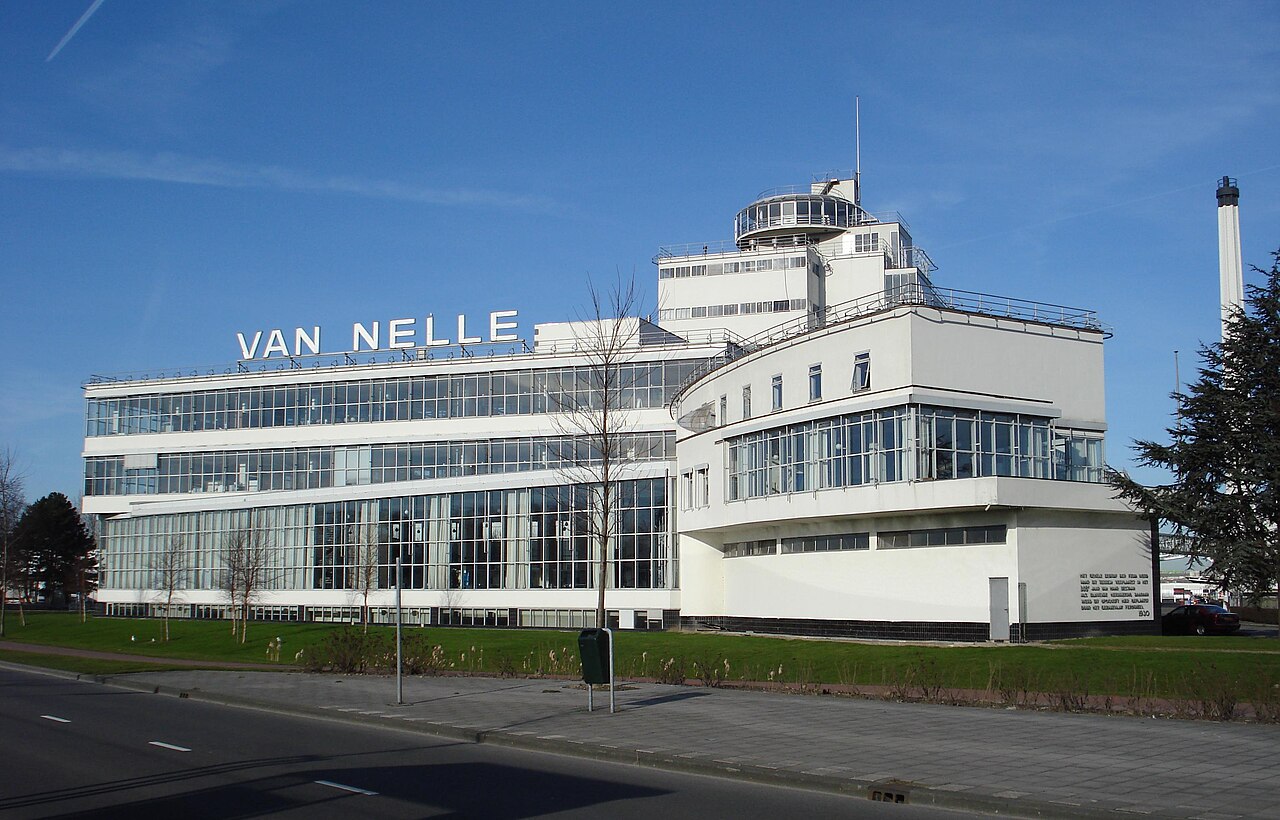
A factory of glass and steel for processing coffee, tea and tobacco, built between 1925 and 1931 and famous for its light, open design. It was called 'a poem in steel and glass' and has been a UNESCO World Heritage Site since 2014.
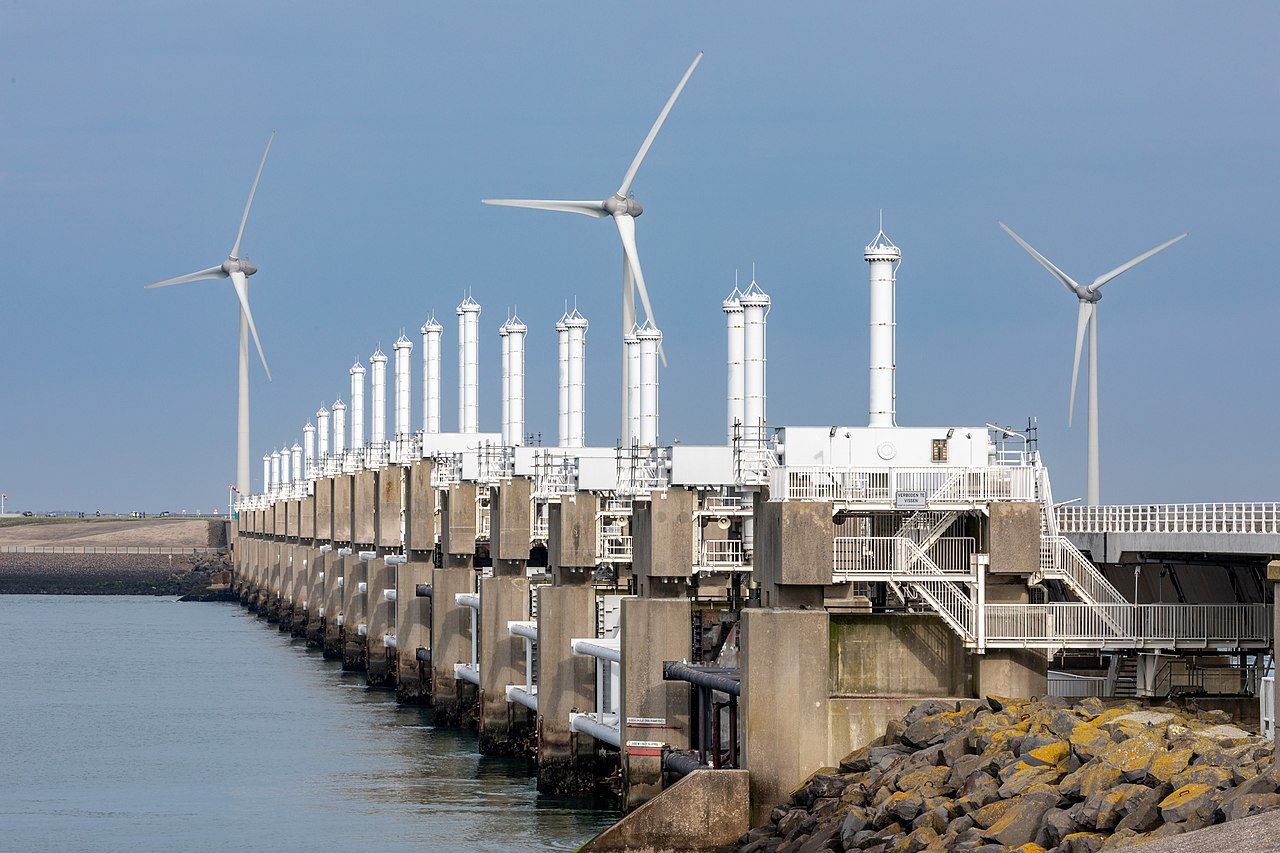
The largest of the Delta Works, a 9 km barrier across the Eastern Scheldt in Zeeland, finished in 1986. Its huge steel gates normally stay open so the tide and sea life can pass, and close only when a storm threatens.
About 26 percent of the Netherlands lies below sea level, and about 21 percent of the people live there, protected by dikes, dunes and pumps.
02
Holland is not the whole country: it is a region made up of two of the twelve provinces, North Holland and South Holland. In 2019 the Dutch government decided to use 'the Netherlands' rather than 'Holland' in its international communication.
03
Amsterdam is the capital named in the constitution, and the king is sworn in there, but the parliament, the government and the Supreme Court sit in The Hague.
04
The Dutch own at least 18 million bicycles, about one for every person, and about 27 percent of all trips are made by bike.
05
Flevoland, the twelfth and newest province, was formed in 1986 on land drained from the former Zuiderzee. Its land was reclaimed between 1942 and 1968, and its largest city, Almere, is now the seventh-largest city in the country.
06
The highest point of the Netherlands is not in Europe: it is Mount Scenery, a dormant volcano on the Caribbean island of Saba, which became part of the Netherlands in 2010.
07
New York began as the Dutch settlement of New Amsterdam, at the tip of Manhattan. The English took it in 1664 and renamed it New York.
08
Dutch water boards, which look after dikes and water levels, go back to the 12th century, and people still elect their members every four years.
09
In the 1800s the Dutch were known for being short. By 2012 young Dutch men averaged about 183 cm, among the tallest in the world.
10
On King's Day, 27 April (26 April if the 27th is a Sunday), the country turns orange, the colour of the royal House of Orange, and people all over the country sell their old things at a huge street 'free market'.
11
Some 1,200 historic windmills still stand in the Netherlands, and many of them still work.
12
Dutch children get their main presents on 5 December from Sinterklaas, who traditionally arrives by steamboat from Spain in mid-November and rides a white horse.
The 'g' and 'ch' are a throaty sound like the 'ch' in Scottish 'loch', written here as KH. Pronunciation is written the way it sounds; the capital letters show where the stress goes. Audio is coming soon.
Greetings
halloHAH-lohhello
dagDAHKHhello, or goodbye
doeiDOO-eebye (casual)
Basics
jaYAHyes
neeNAYno
Feelings
gezelligkhuh-ZEL-ukhcosy, sociable, pleasant, a favourite Dutch word
Food
lekkerLEK-urtasty, nice
kaasKAHScheese
broodBROHTbread
koffieKOF-eecoffee
bierBEERbeer
waterVAH-turwater
Getting around
fietsFEETSbicycle
treinTRAYNtrain
stationstah-SYONstation
kaartKAHRTmap, ticket or card
Places
grachtKHRAHKHTcanal (in a town)
dijkDAYKdike
molenMOH-luhmill, windmill
polderPOL-durlow land drained from a lake or the sea
Cycle paths are everywhere, often paved in red asphalt or marked with a round blue sign with a white bike. Do not walk on them, and look both ways for bikes, not only cars, before you cross.
Tap in and tap out
Since 2023 you can pay on all trains, trams, buses and metros by tapping a contactless bank card or phone on the card reader at the start and end of each journey (as of 2026). Always remember to tap out again when you leave.
Carry a card, and a little cash
Cards are accepted almost everywhere and some shops take cards only. A few shops do not accept credit cards, and city buses and trams take no cash, so carry a debit card as well as a credit card, plus a little cash for markets.
Book the Anne Frank House early
Tickets are sold only online, never at the door. Every Tuesday at 10 am Dutch time, tickets are released for visits six weeks later, and they sell out fast (as of 2026).
Tipping is optional
Service charges are included in the prices by law. Rounding up the bill, or leaving 5 to 10 percent for good service in a restaurant, is a kind gesture but not required.
See the tulips in spring
The bulb fields and the Keukenhof gardens are at their best in spring. Keukenhof opens to the public only for about eight weeks each spring, so check the dates before you plan a trip.
Emergency number
The official emergency number is 112. It is free and works from any phone.
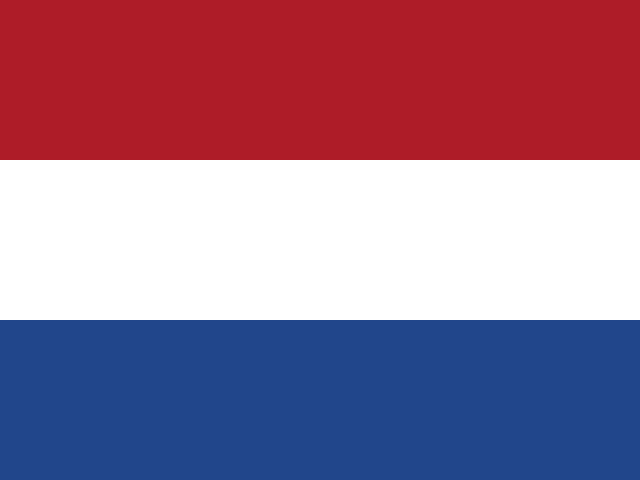
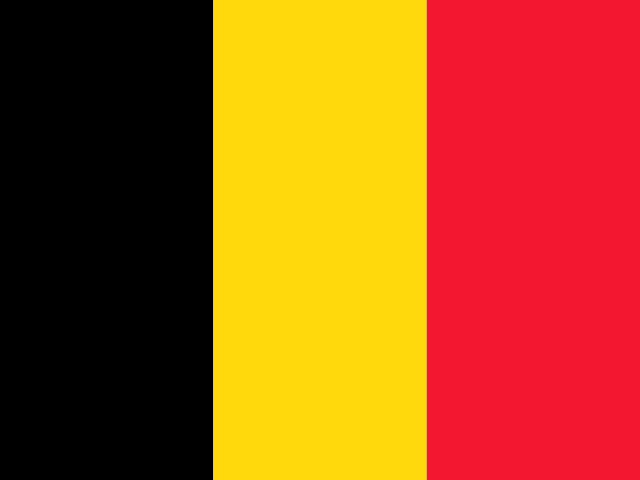 Belgium
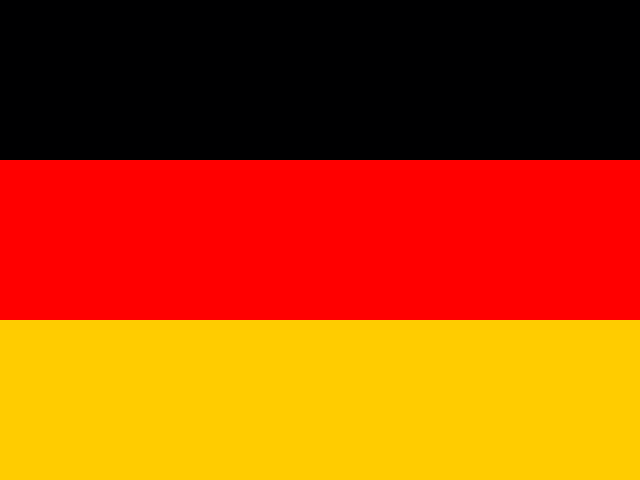 Germany