A free large-print PDF. Choose what goes in: facts, map, history, dishes and recipes, phrases, fun facts, a quiz with or without answers. Made for clubs, care homes, libraries and family afternoons.
Germany lies in the middle of Europe, stretching from the North Sea and the Baltic Sea in the north to the Alps in the south. It has nine neighbours, more than most European countries, and with about 83 million people it has the largest population in the European Union. It is a federal country of 16 states, each with its own capital, dialects and food, from the harbour city of Hamburg to Bavarian villages under the mountains.
For most of its history, 'Germany' was not one country but hundreds of kingdoms, duchies and free cities inside the Holy Roman Empire. It became a single state only in 1871. The 20th century brought two world wars, the Nazi dictatorship and the Holocaust, and then, after 1949, four decades of division into two states: the Federal Republic of Germany (West Germany) and the German Democratic Republic (East Germany).
On 3 October 1990 the two states were reunified, and Berlin became the capital of the whole country. Bonn, the West German capital, stayed the seat of parliament and government until 1999 and is still a 'Federal City' with several ministries. Today Germany is a parliamentary democracy, a founding member of what became the European Union, and one of the world's largest economies, famous for cars, engineering, beer, bread and classical music.
CapitalBerlin
PopulationAbout 83 million, the largest in the European Union
Official languageGerman, set by federal law for public offices and courts. Danish, North and Saterland Frisian, Sorbian, Romani and Low German are recognised regional or minority languages
CurrencyEuro (€), since 1999 (notes and coins since 2002); before that, the Deutsche Mark, introduced in 1948
AreaAbout 357,000 km²
GovernmentFederal parliamentary republic of 16 states, under the Basic Law of 1949. The Federal President is head of state and the Federal Chancellor leads the government
Highest mountainZugspitze, 2,962 m, in the Bavarian Alps on the border with Austria
Longest riverThe Rhine, about 1,230 km long in total, flowing from the Swiss Alps through Germany to the North Sea in the Netherlands
NeighboursNine: Denmark, Poland, the Czech Republic, Austria, Switzerland, France, Luxembourg, Belgium and the Netherlands. Sweden lies across the Baltic Sea
From Roman frontiers and medieval emperors to the printing press, the Reformation, two world wars, division and a peaceful reunification, Germany's story shaped the whole of Europe.
AD 9
The Battle of the Teutoburg Forest
In September of the year 9, an alliance of Germanic peoples led by Arminius destroyed three Roman legions under Varus. After a few years of revenge campaigns, Rome gave up trying to conquer the lands east of the Rhine, and the river became the empire's frontier.
AD 800
Charlemagne is crowned emperor
On Christmas Day 800, Pope Leo III crowned Charlemagne, King of the Franks, emperor in Rome. His empire covered much of Western and Central Europe, and his favourite residence was Aachen, where he is buried in the cathedral he built.
AD 962
Otto I is crowned emperor
Otto I, King of Germany since 936, was crowned emperor in Rome in 962. This is seen as the formal beginning of the Holy Roman Empire, a loose union of many German and other lands that lasted for more than 800 years.
1455
Gutenberg prints his Bible
In Mainz, Johannes Gutenberg printed the Bible with movable metal type, and the first finished copies were ready by 1455. Printing made books far cheaper and spread ideas across Europe. Of about 160 to 185 copies, 49 survive at least in large part.
1517
Luther's Ninety-five Theses
On 31 October 1517, Martin Luther, a monk and professor in Wittenberg, sent his 95 theses against the sale of indulgences to his archbishop. They were soon printed and read all over Germany, and began the Protestant Reformation. His later translation of the Bible helped shape the German language.
1618
The Thirty Years' War begins
A war that began over religion and power in 1618 drew in most of Europe and was fought largely on German soil. Some regions lost more than half their people to fighting, hunger and disease. It ended with the Peace of Westphalia, signed in Münster and Osnabrück in 1648.
1806
The Holy Roman Empire ends
After Napoleon's victories, Emperor Francis II gave up the imperial crown on 6 August 1806, and the Holy Roman Empire, which had lasted since 962, came to an end.
1871
The German Empire is founded
After wars led by Prussia and its chancellor Otto von Bismarck, the German states united. On 18 January 1871, King Wilhelm I of Prussia was proclaimed German Emperor in the Hall of Mirrors at Versailles. Austria stayed outside the new empire.
1919
The Weimar Republic
After defeat in the First World War and the end of the monarchy in 1918, Germany became a democratic republic. Its constitution was written by an assembly that met in the town of Weimar in 1919, and in that year's election women could vote for the first time.
1933
The Nazi dictatorship begins
On 30 January 1933 Adolf Hitler was appointed chancellor. Within months the Nazis abolished democracy, banned other parties and began persecuting Jews, political opponents and many other groups.
1939
The Second World War and the Holocaust
Germany invaded Poland on 1 September 1939, starting the Second World War in Europe. Tens of millions of people died. In the Holocaust, Nazi Germany and its collaborators murdered about six million Jews, as well as many others. The war in Europe ended with Germany's unconditional surrender on 8 May 1945.
1949
Two German states are founded
After the war, Germany was occupied by the Allies. In 1949 two states were created: the Federal Republic of Germany in the west, under the Basic Law of 23 May, with Bonn as its seat of government, and the German Democratic Republic in the east, on 7 October, with East Berlin as its capital.
1957
The Treaty of Rome
On 25 March 1957, West Germany, France, Italy, Belgium, the Netherlands and Luxembourg signed the Treaty of Rome, which created the European Economic Community, the forerunner of today's European Union.
1961
The Berlin Wall is built
About 3.5 million people had left East Germany for the West. On 13 August 1961 the East German government began building a wall around West Berlin to stop them. At least 140 people were killed at the Wall or died because of it in the years that followed.
1989
The Berlin Wall falls
In the autumn of 1989, peaceful protests grew in East Germany, above all the Monday demonstrations in Leipzig, where people chanted 'We are the people'. On the night of 9 November 1989 the border crossings in Berlin were opened, and people from East and West celebrated together on the Wall.
1990
Germany is reunified
On 3 October 1990 the German Democratic Republic joined the Federal Republic, and Germany became one country again, with Berlin as its capital. The day is now a national holiday, the Day of German Unity.
German food is hearty and very regional: every area has its own sausages, breads and cakes. A traditional day starts with bread rolls, cheese, cold meats and jam. Lunch was long the main hot meal, while supper is often 'Abendbrot', literally 'evening bread', a cold meal of bread with cheese and cold cuts. On weekend afternoons many families still meet for 'Kaffee und Kuchen', coffee and cake.
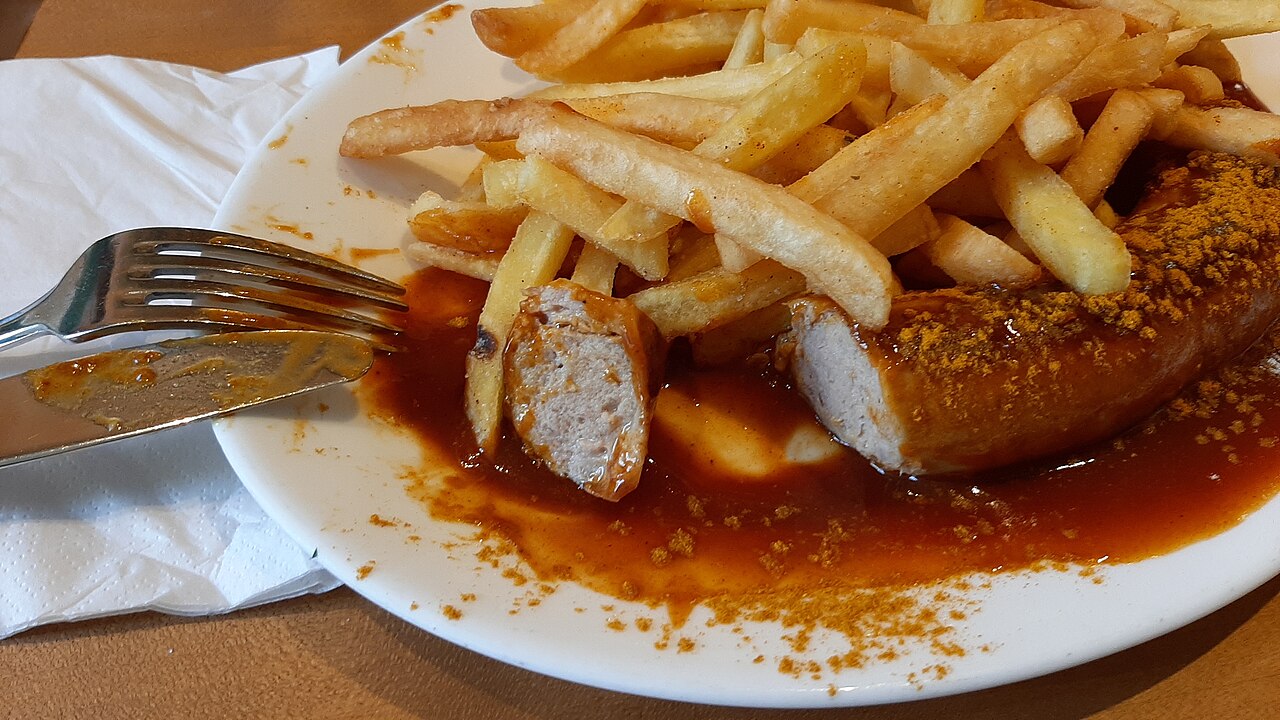
A grilled or fried pork sausage, cut into slices and covered in a warm tomato sauce spiced with curry powder, with more curry powder dusted on top. It is eaten standing at a street stall, with chips or a bread roll.
Herta Heuwer is said to have created it in 1949 at her stall in Berlin-Charlottenburg, using ketchup and curry powder she got from British soldiers.
See the recipe
Serves 4
30 min
Ingredients
4 pork sausages for frying (bratwurst)
1 tablespoon oil
1 small onion, finely chopped
2 teaspoons curry powder, plus more for dusting
1 teaspoon sweet paprika
400 g passata (sieved tomatoes)
1 tablespoon sugar
1 tablespoon vinegar
Salt
Method
Heat the oil in a small pan and soften the onion over medium heat for 5 minutes.
Stir in the curry powder and paprika and cook for 1 minute.
Add the passata, sugar and vinegar, simmer for 10 minutes and season with salt. Blend until smooth if you like.
Meanwhile, fry or grill the sausages for 10 to 12 minutes, turning often, until browned and cooked right through.
Cut the sausages into thick slices, pour the warm sauce over them and dust with a little more curry powder.
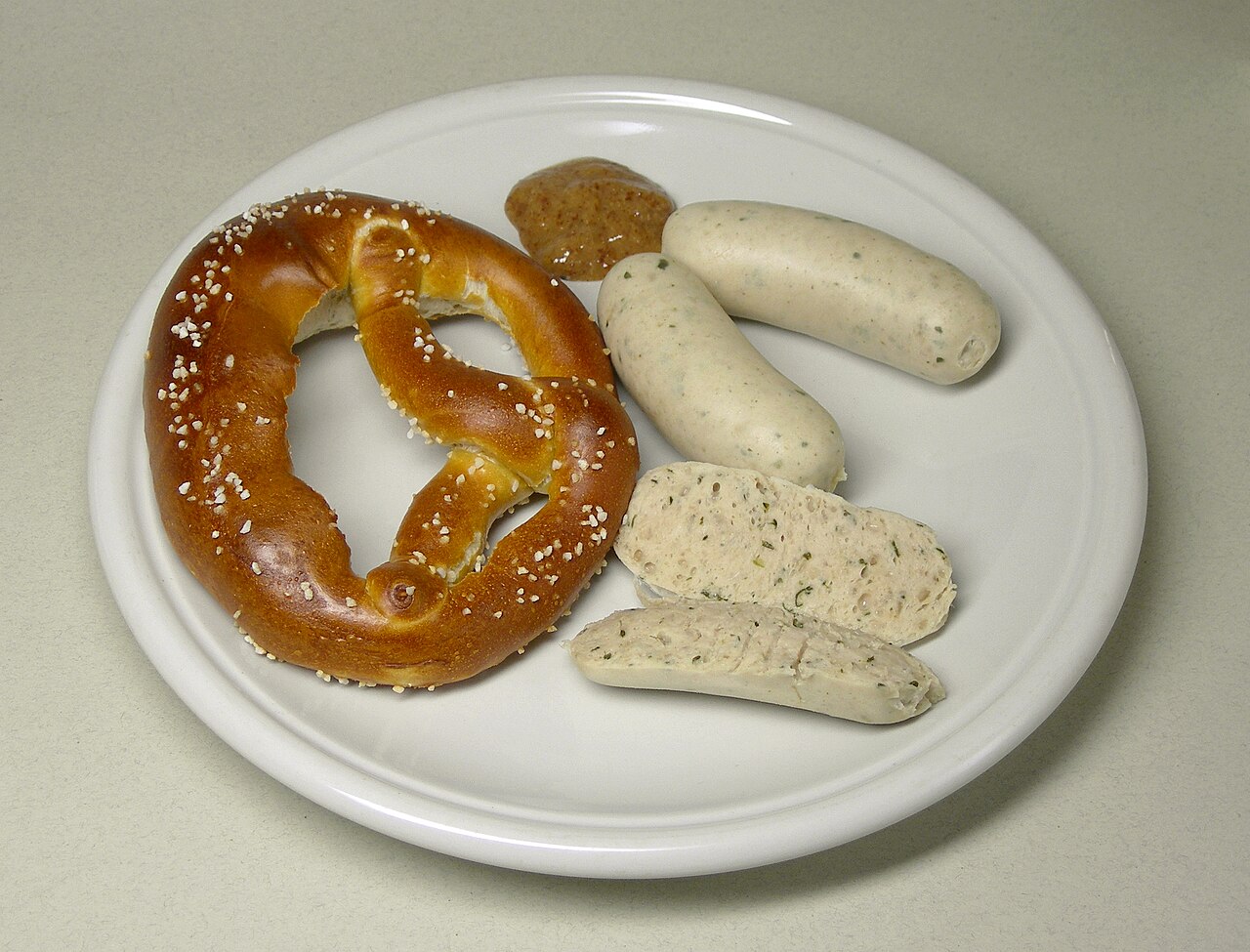
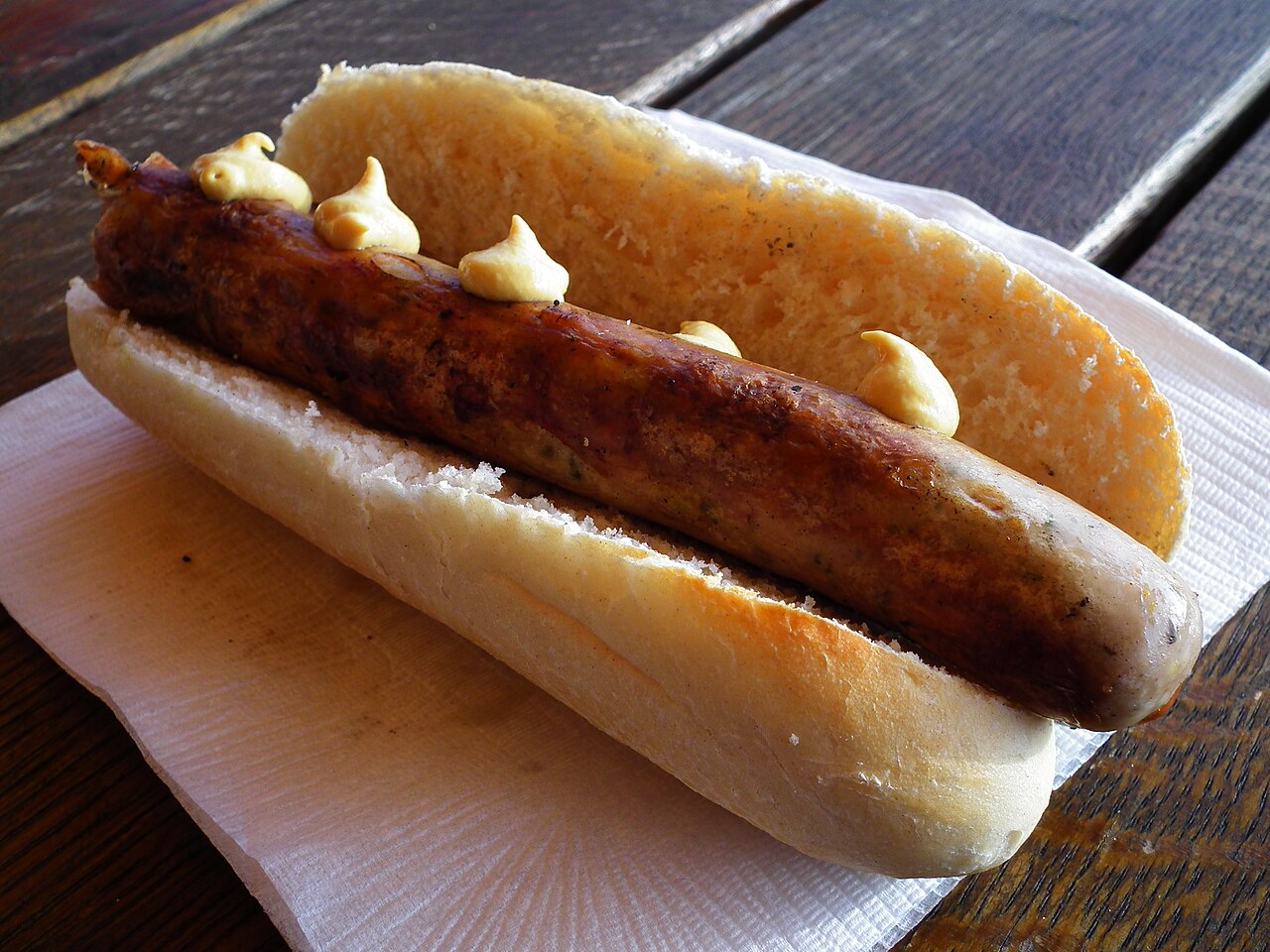
A pale sausage of minced veal and pork back fat, flavoured with parsley, lemon, onion and mace. It is heated in hot water, not boiled, and served with sweet Bavarian mustard, a soft pretzel and a wheat beer. The skin is not eaten.
Because it was made fresh each morning without preserving, an old saying goes that a Weisswurst should not hear the church bells ring noon, so it is eaten as a late breakfast.
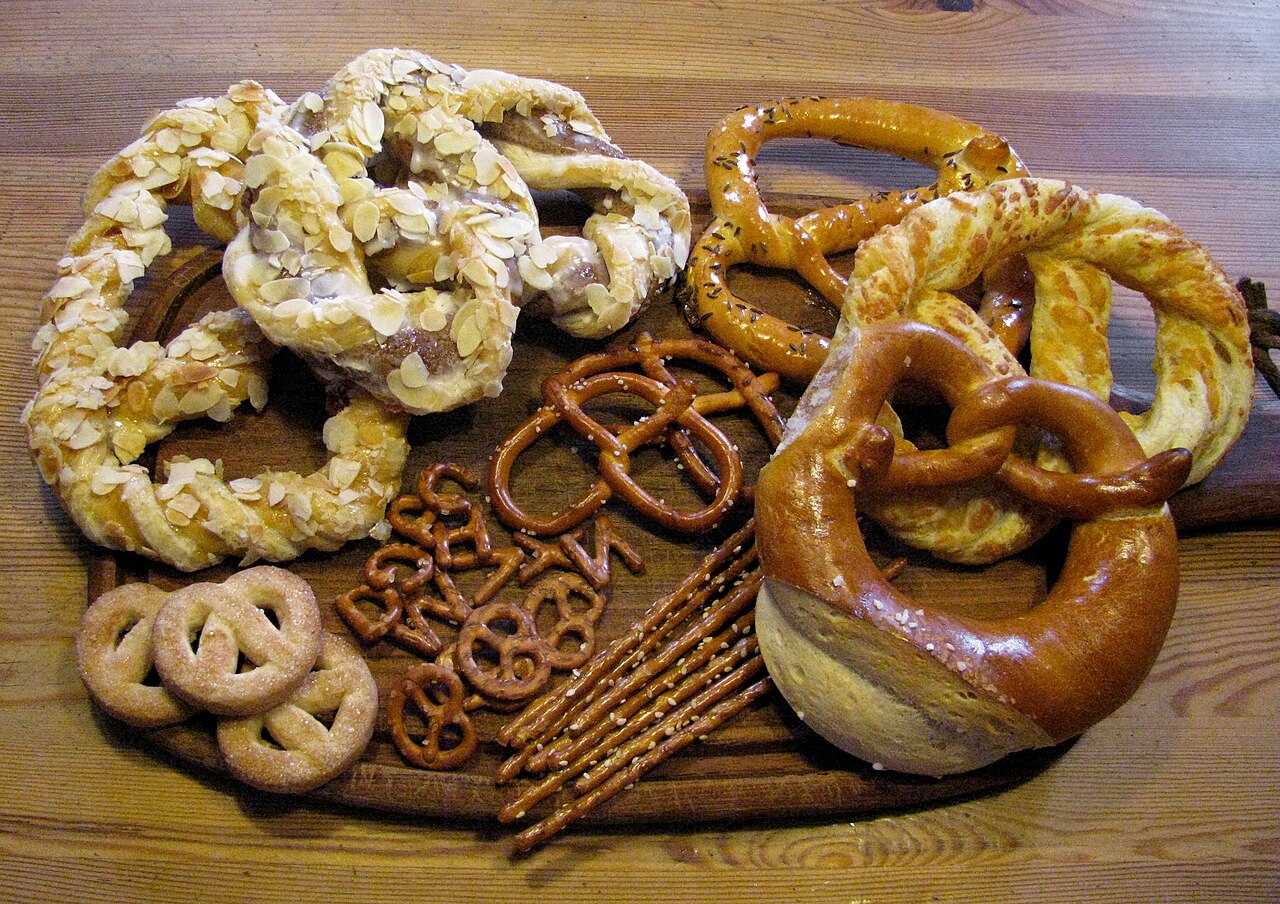
A knotted bread dipped in a lye solution before baking, which gives it a shiny brown crust and a special taste, then sprinkled with coarse salt. Bavarian pretzels have thick, soft arms; Swabian pretzels have thin, crisp arms and a thick 'belly'.
In southern Germany the pretzel has been the sign of bakers and their guilds since at least the 12th century, and you still see it hanging over bakery doors.
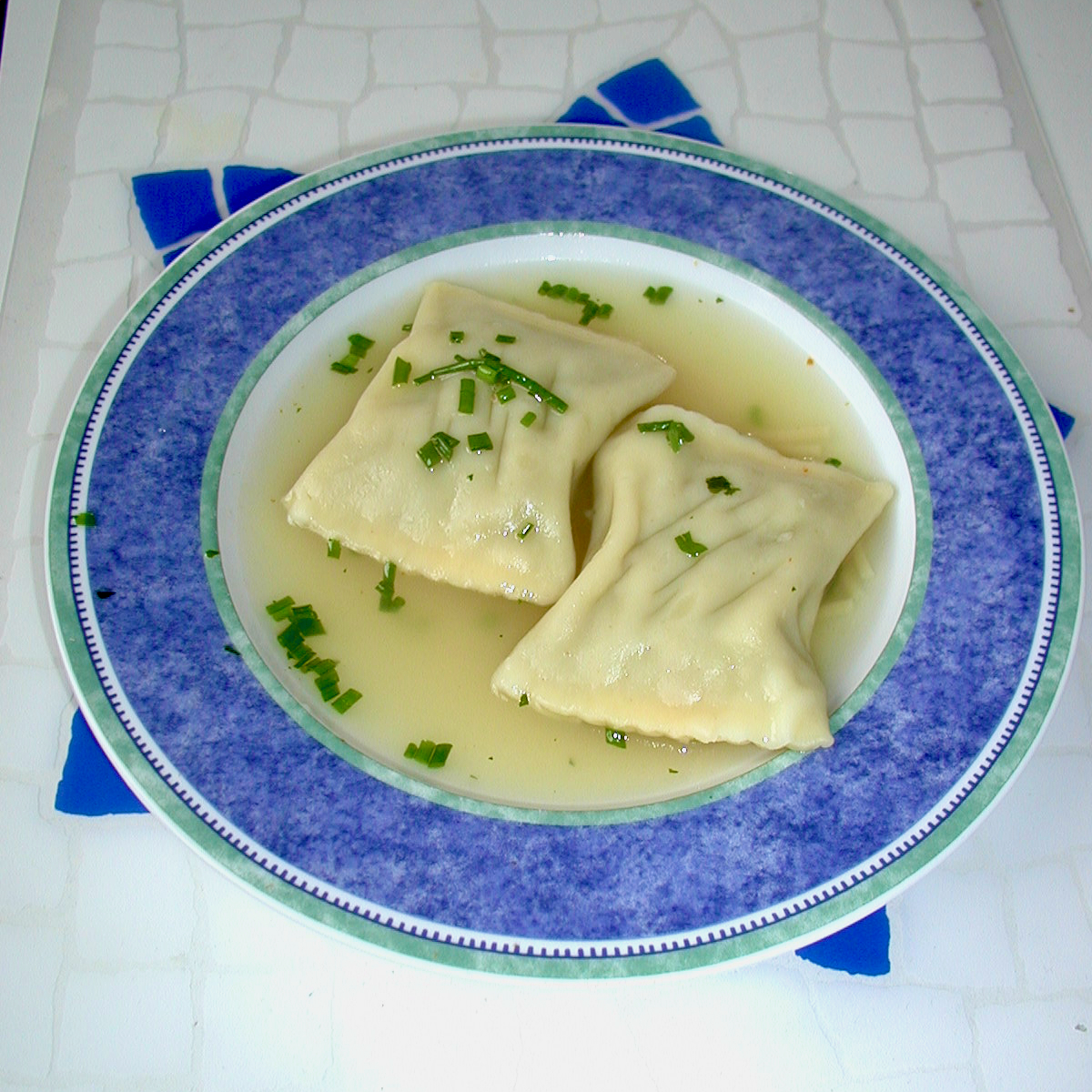
Large square pasta parcels filled with minced meat, spinach, onions and breadcrumbs, seasoned with parsley and nutmeg. They are served in broth, or sliced and fried with onions and egg.
Their Swabian nickname means 'little God-cheaters': legend says monks at Maulbronn Abbey hid meat inside pasta so that God would not see it during Lent.
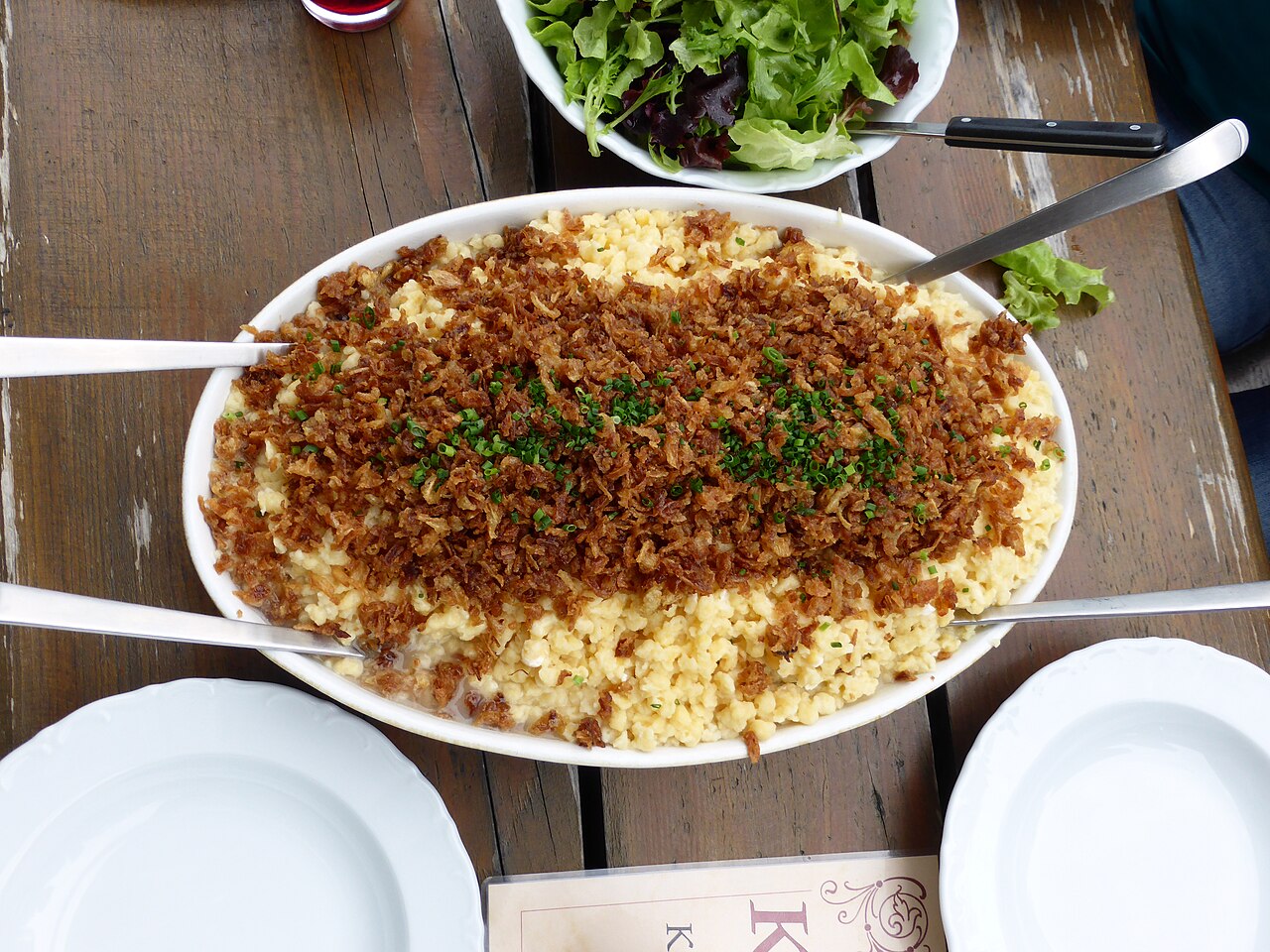
Soft egg noodles, traditionally scraped from a wooden board straight into boiling water, layered with melted Emmental cheese and topped with crisp fried onions. It is usually served with a green salad.
Since 2012 'Swabian Spätzle' has had Protected Geographical Indication status in the European Union.
See the recipe
Serves 4
50 min
Ingredients
400 g plain flour
4 eggs
About 150 ml water
1 teaspoon salt
250 g Emmental or another mountain cheese, grated
2 large onions, thinly sliced into rings
40 g butter
Black pepper and chopped chives
Method
Beat the flour, eggs, salt and most of the water into a thick, smooth, slightly sticky dough. Beat until bubbles appear, adding water if it is too stiff. Rest it for 10 minutes.
Fry the onions slowly in half the butter for about 15 minutes until golden brown and crisp. Heat the oven to 150 °C.
Bring a large pot of salted water to the boil. Press or scrape the dough in batches into the water through a spätzle press, a colander with large holes, or from a wet board with a knife.
When the spätzle float to the top, cook them for 1 more minute, lift them out with a slotted spoon and put a layer in a warm ovenproof dish.
Sprinkle each layer with cheese and pepper, and keep the dish in the oven while you cook the rest, so the cheese melts.
Top with the fried onions and chives, and serve hot with a green salad.
All of Germany, with a well-known Rhineland version
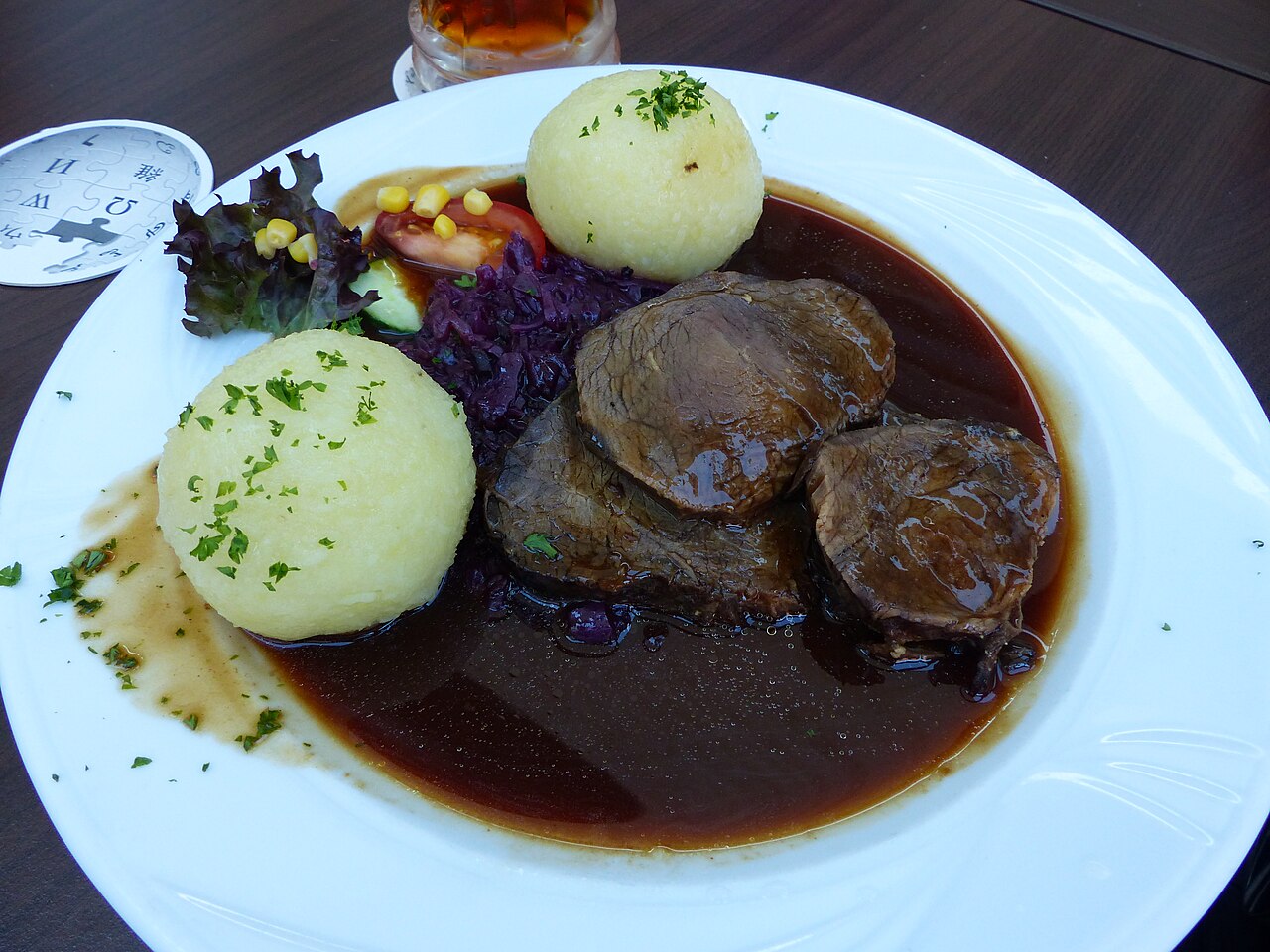
A pot roast of beef marinated for several days in vinegar or wine with onions and spices, then slowly braised. The rich, sweet-sour gravy is served with potato dumplings, red cabbage or spätzle.
The Rhineland version is sweetened with raisins and sometimes sugar beet syrup to balance the sourness.
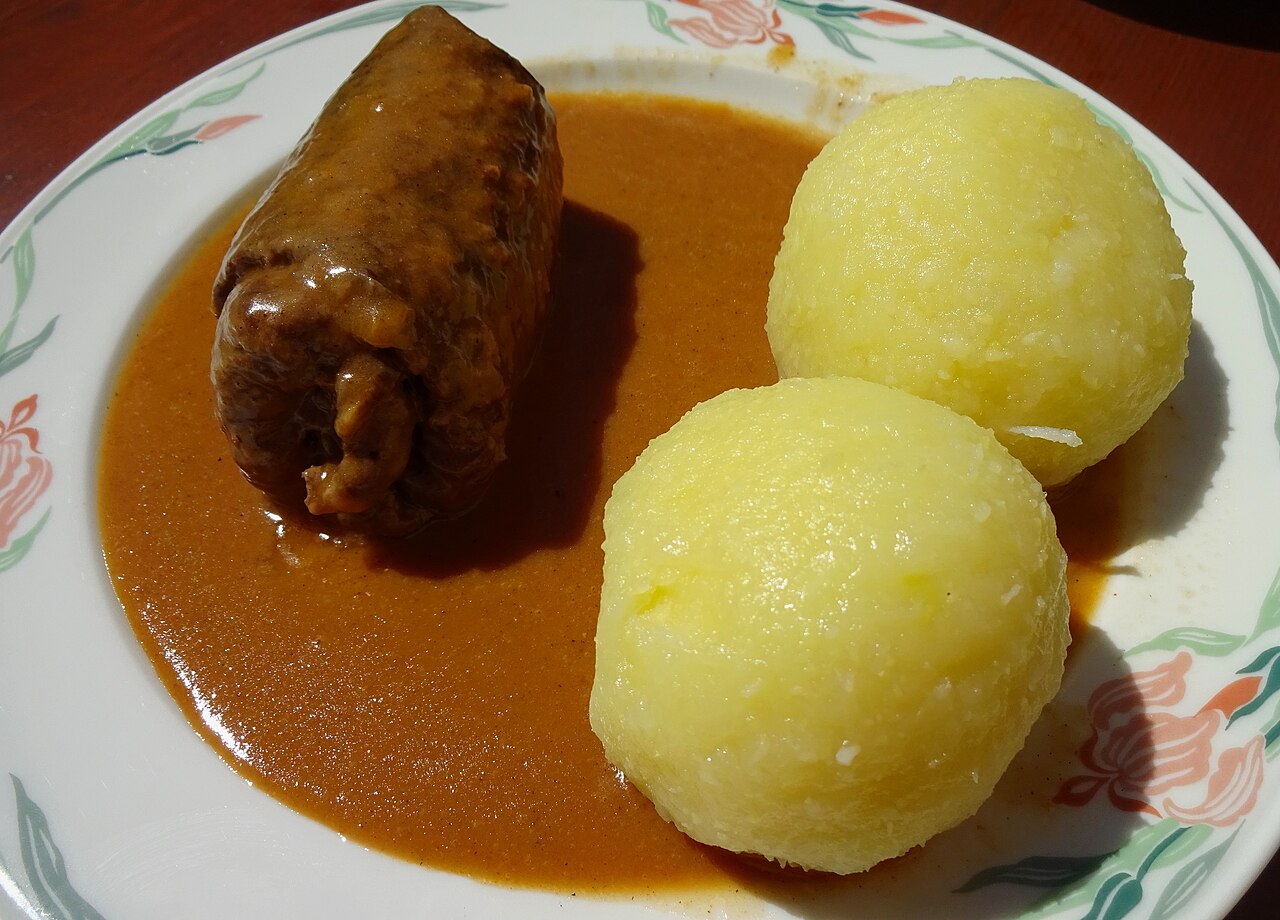
Thin slices of beef spread with mustard, rolled around bacon, onion and pickled gherkin, browned and braised until tender in a dark gravy. A classic Sunday dinner, served with potatoes or dumplings and red cabbage.
See the recipe
Serves 4
2 h
Ingredients
4 large thin slices of beef topside (about 150 g each), pounded thin
4 teaspoons medium-hot mustard
4 rashers of streaky bacon
1 onion, cut into thin wedges
2 pickled gherkins, cut into strips
2 tablespoons oil
1 tablespoon tomato purée
500 ml beef stock
1 tablespoon cornflour mixed with a little cold water
Salt and black pepper
Kitchen string or cocktail sticks
Method
Lay the beef slices flat, season with salt and pepper and spread each one with mustard.
Lay a rasher of bacon, some onion and gherkin strips at the short end of each slice. Roll up tightly, fold in the sides, and tie with string or pin with cocktail sticks.
Heat the oil in a heavy pot and brown the rolls well on all sides. Add any remaining onion and the tomato purée and stir for 1 minute.
Pour in the stock, cover and simmer very gently for about 1 hour 30 minutes, turning the rolls now and then, until tender.
Lift out the rolls, remove the string, and stir the cornflour into the liquid. Simmer for 2 minutes until the gravy thickens, and season.
Serve the rolls in the gravy with boiled potatoes or dumplings and red cabbage.
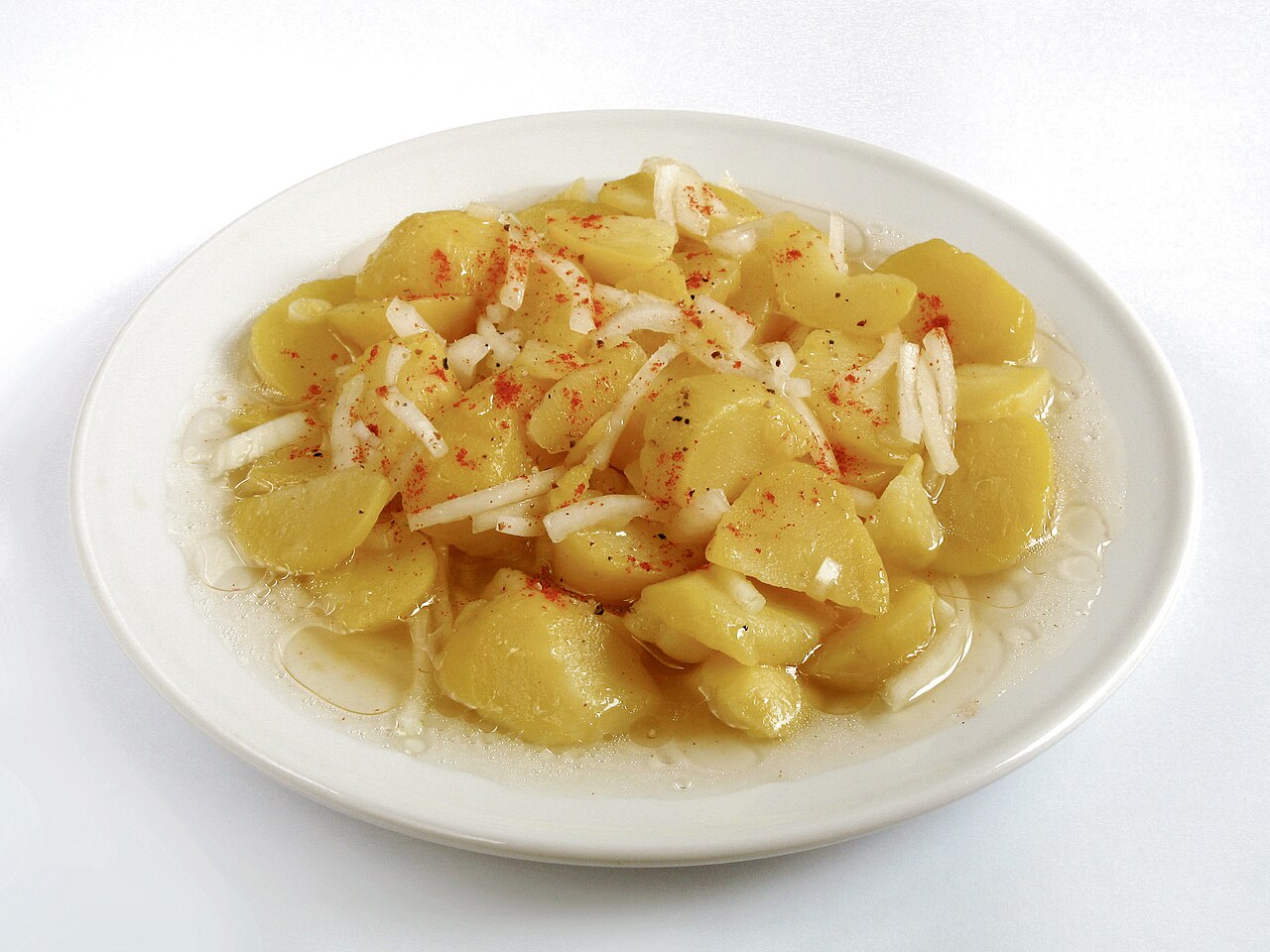
Warm sliced waxy potatoes soaked in a dressing of hot broth, vinegar, onion and oil, served warm or at room temperature. In the north, potato salad is more often made with mayonnaise, egg and pickles.
Which potato salad is 'right' is a friendly north-south argument in Germany, and many families keep their own recipe.
See the recipe
Serves 4
1 h
Ingredients
1 kg waxy potatoes, unpeeled
1 small onion, very finely chopped
250 ml hot beef or vegetable broth
4 tablespoons white wine vinegar
1 teaspoon mustard
A pinch of sugar
4 tablespoons sunflower oil
Salt, black pepper and chopped chives
Method
Boil the potatoes in their skins for about 20 minutes, until just tender. Drain, let them cool a little and peel them while still warm.
Slice the potatoes thinly into a large bowl.
Bring the broth to the boil with the onion, vinegar, mustard, sugar, salt and pepper, and pour it hot over the potatoes.
Mix gently and leave for at least 30 minutes, so the potatoes soak up the dressing and turn creamy.
Stir in the oil, taste and season again, and scatter with chives.
Serve warm or at room temperature, with sausages, schnitzel or Maultaschen.
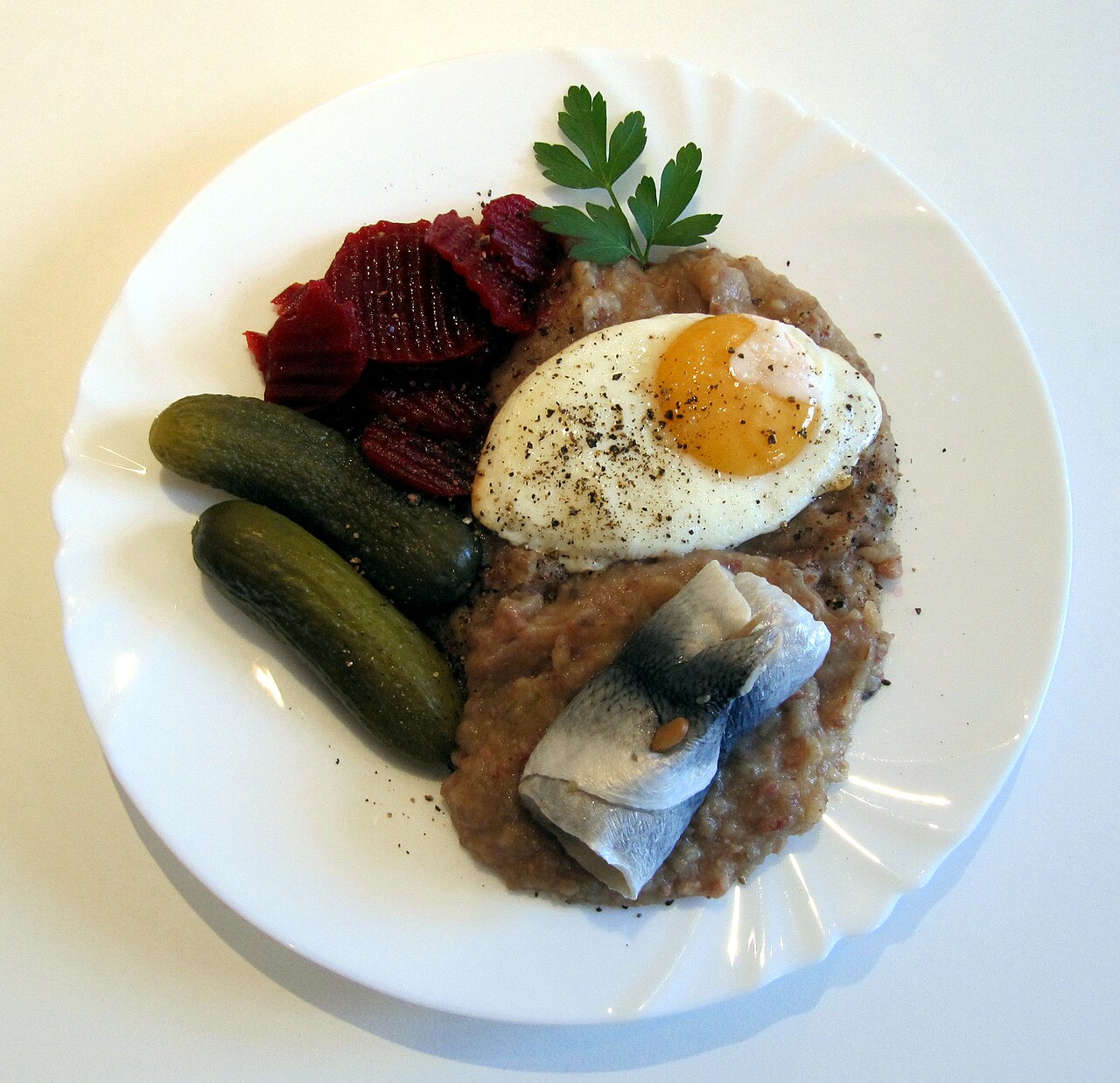
A sailors' dish of corned beef, potatoes and onions, minced and fried together, often coloured pink with beetroot. It is served with a fried egg on top, gherkins and rolled pickled herring.
It was a ship's meal in the age of sail, because potatoes and salted meat kept well at sea.
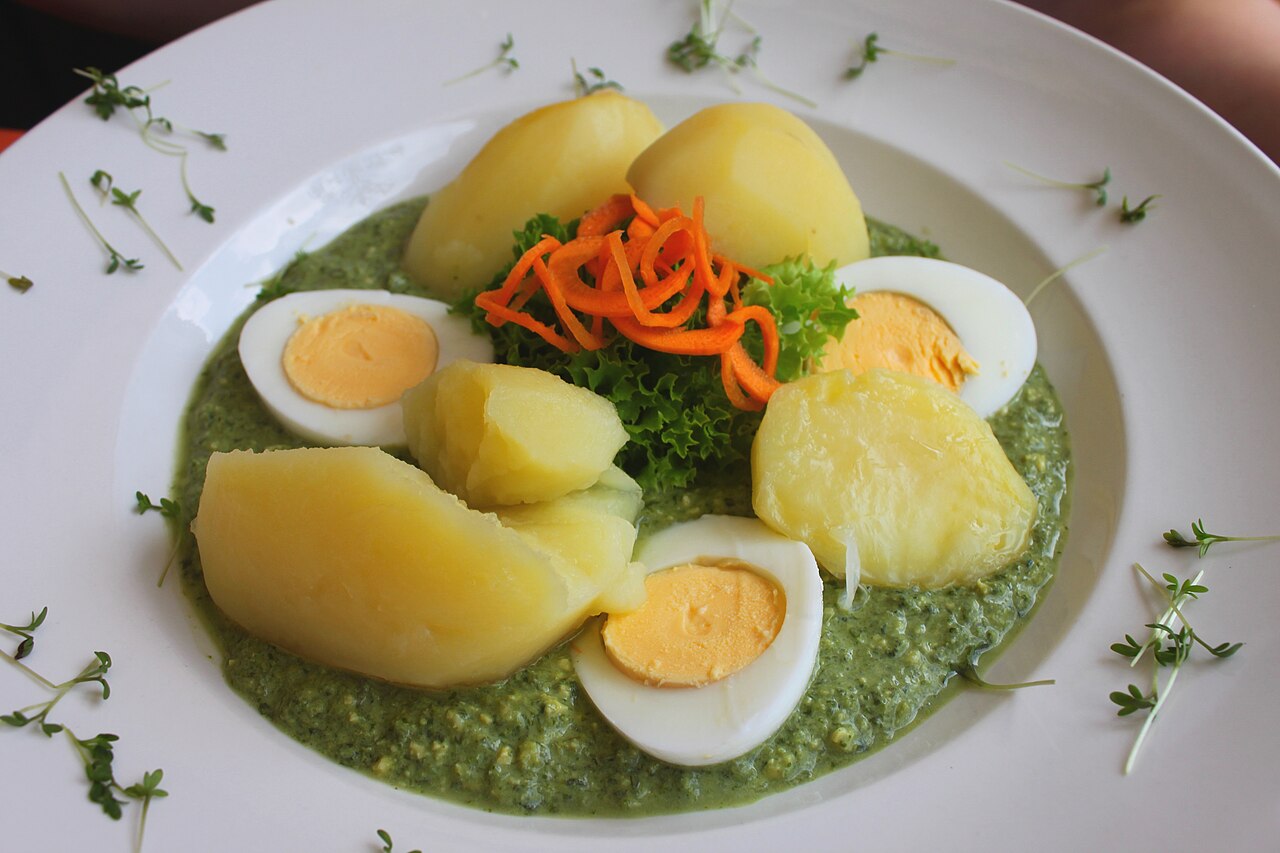
A cold sauce of seven fresh herbs, parsley, chives, chervil, borage, sorrel, garden cress and salad burnet, chopped fine and mixed with sour cream or yoghurt. It is served with halved hard-boiled eggs and boiled potatoes, often in spring.
Frankfurt has a Green Sauce Monument, seven small greenhouses in the district of Oberrad, one for each herb.
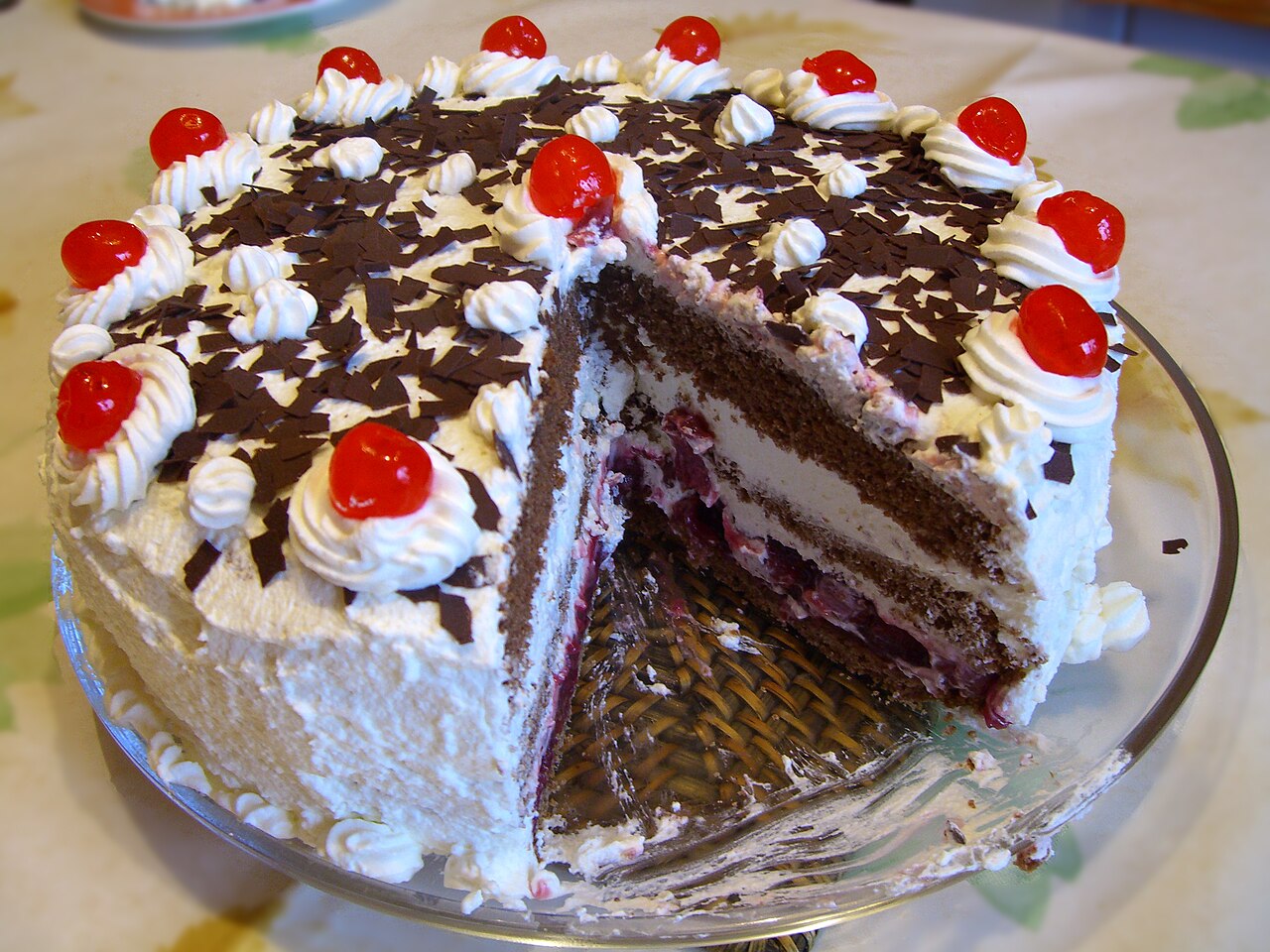
Layers of chocolate sponge soaked in Kirsch, a clear cherry brandy, filled with whipped cream and sour cherries, and decorated with more cream, cherries and chocolate shavings.
Who invented it is disputed. The name 'Schwarzwälder Kirschtorte' is first known in print from 1915.
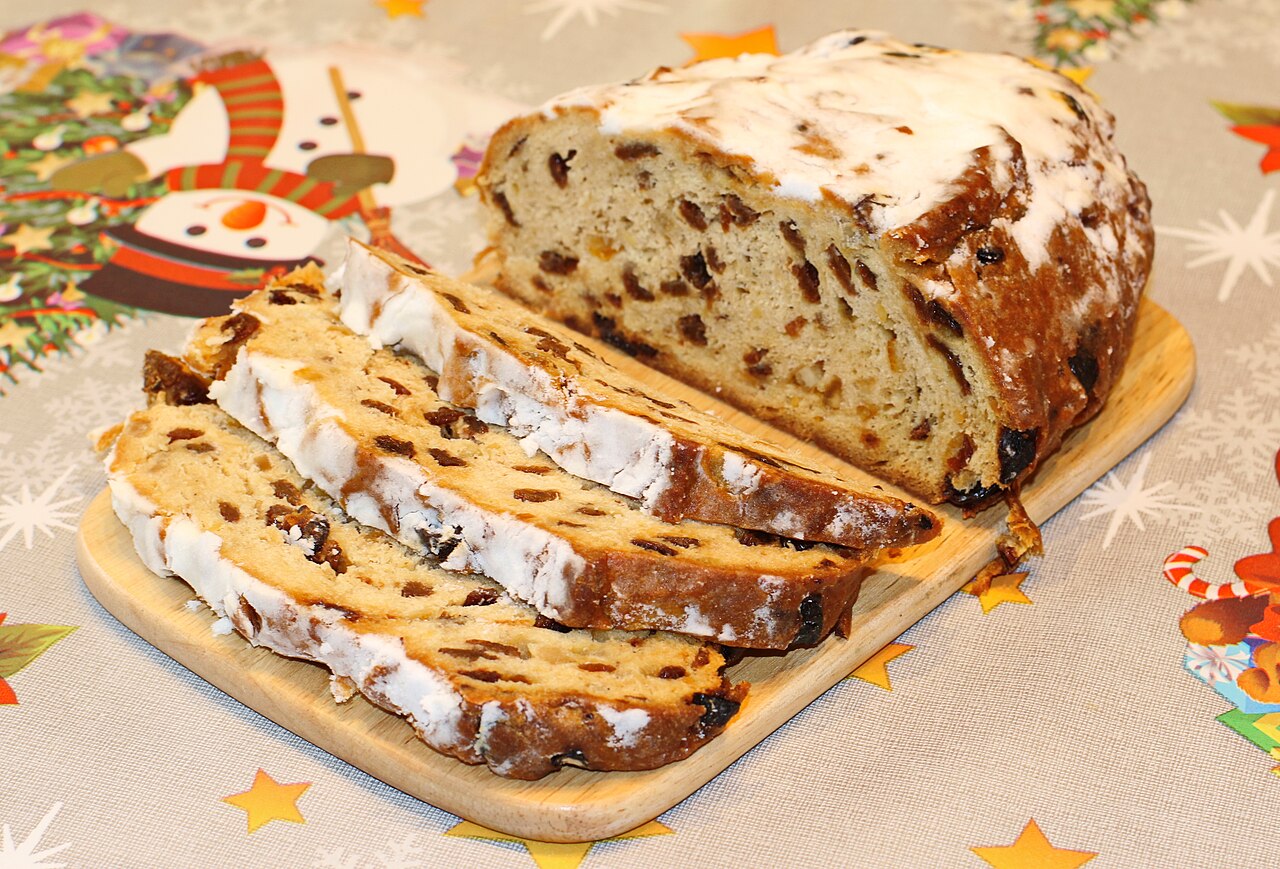
A dense, buttery Christmas bread full of raisins, candied peel and almonds, brushed with butter and covered in icing sugar. It is baked weeks before Christmas and eaten in slices through Advent.
Early stollen was plain, because butter was forbidden during the Advent fast. In 1490 a letter from Pope Innocent VIII, the 'Butter Letter', allowed it.
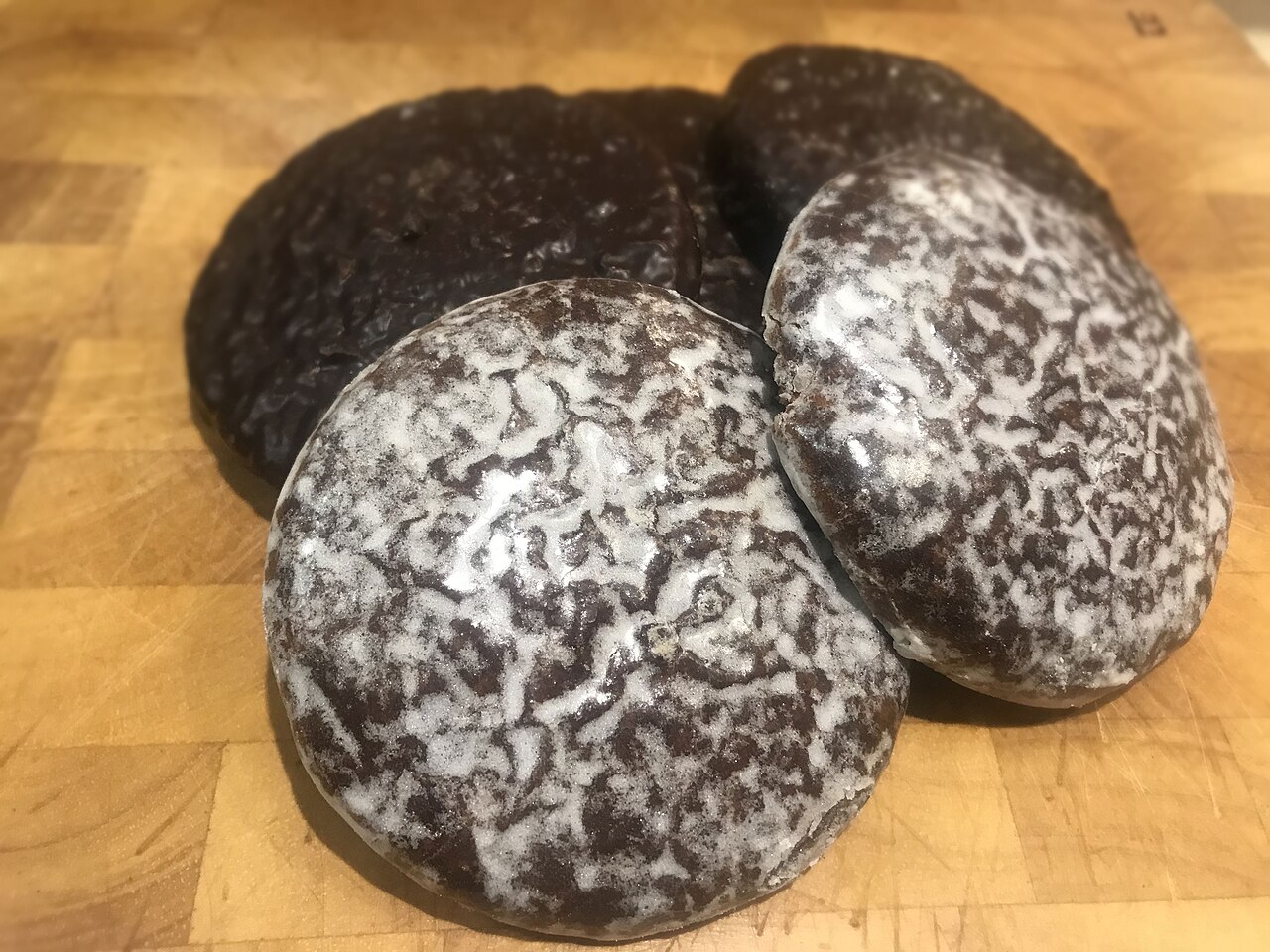
Soft, spiced gingerbread made with honey, nuts and spices such as cinnamon, cloves and ginger, often on a thin wafer base and glazed or coated in chocolate. The finest kind, Elisenlebkuchen, contains little or no flour.
Lebkuchen bakers are recorded in Nuremberg from 1395, and 'Nürnberger Lebkuchen' may only be made within the city.
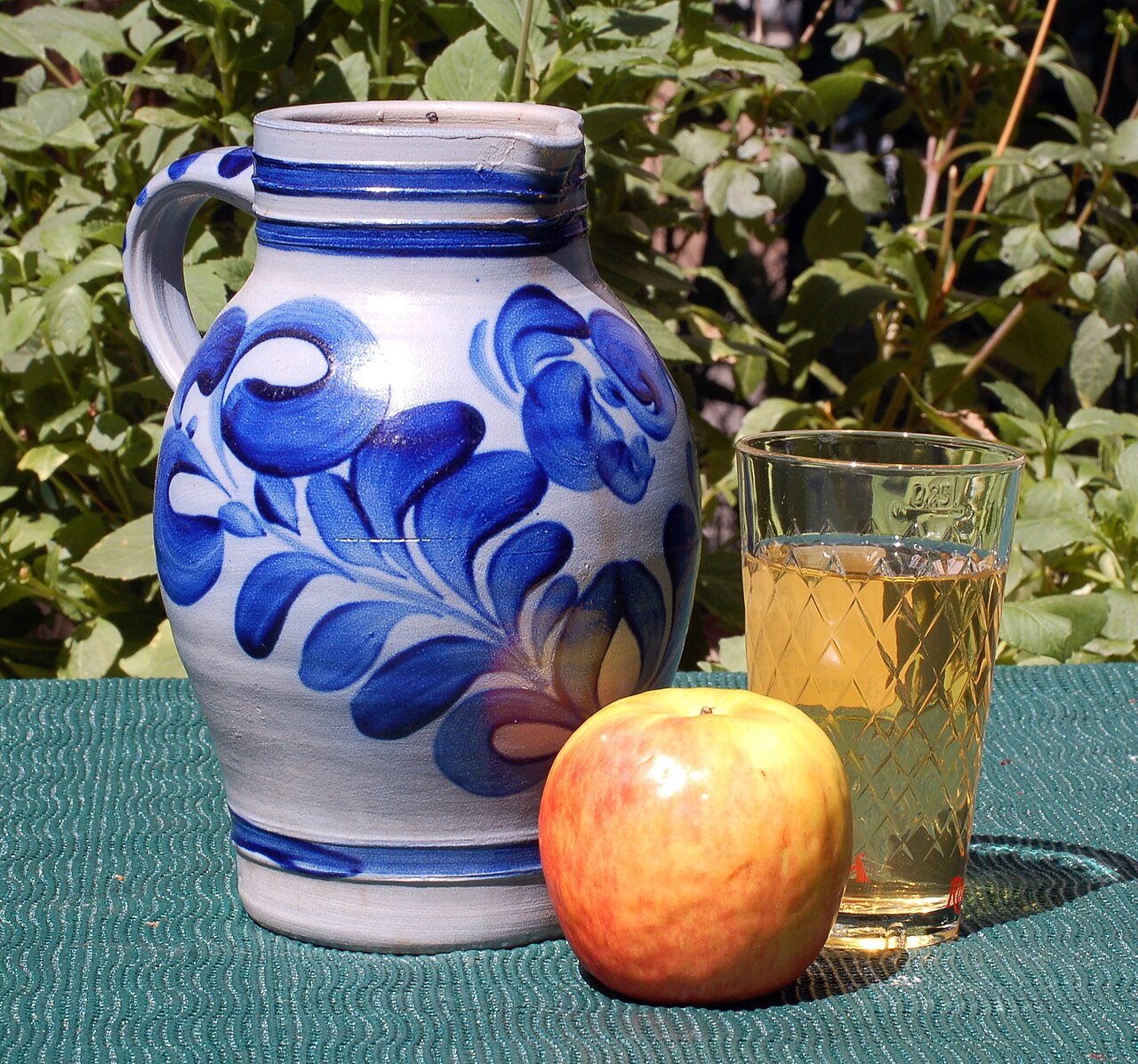
A tart, dry apple cider of about 5 to 7 percent alcohol, poured from a grey and blue stoneware jug called a Bembel into a glass with a diamond-cut pattern, the Geripptes.
In winter it is also served hot, with cinnamon, cloves and a slice of orange, like mulled wine.
Table manners
Before eating, people wish each other 'Guten Appetit', enjoy your meal, and wait until everyone has been served.
When drinking together, glasses are raised with 'Prost' (for beer) or 'Zum Wohl' (often for wine).
Tipping is usually modest: round up the bill or add about 5 to 10 percent, and tell the server the total you want to pay, rather than leaving money on the table.
Supper is often a simple cold meal of bread, cheese and cold meats, called Abendbrot.
Coffee and cake in the afternoon, especially at weekends, is a cherished social custom.
Germany has no single dominant city. Berlin is by far the largest, but Hamburg, Munich, Cologne and Frankfurt are big, confident cities in their own right, and many smaller cities were once capitals of their own kingdoms or duchies, which is why the country has so many palaces, opera houses and cathedrals.
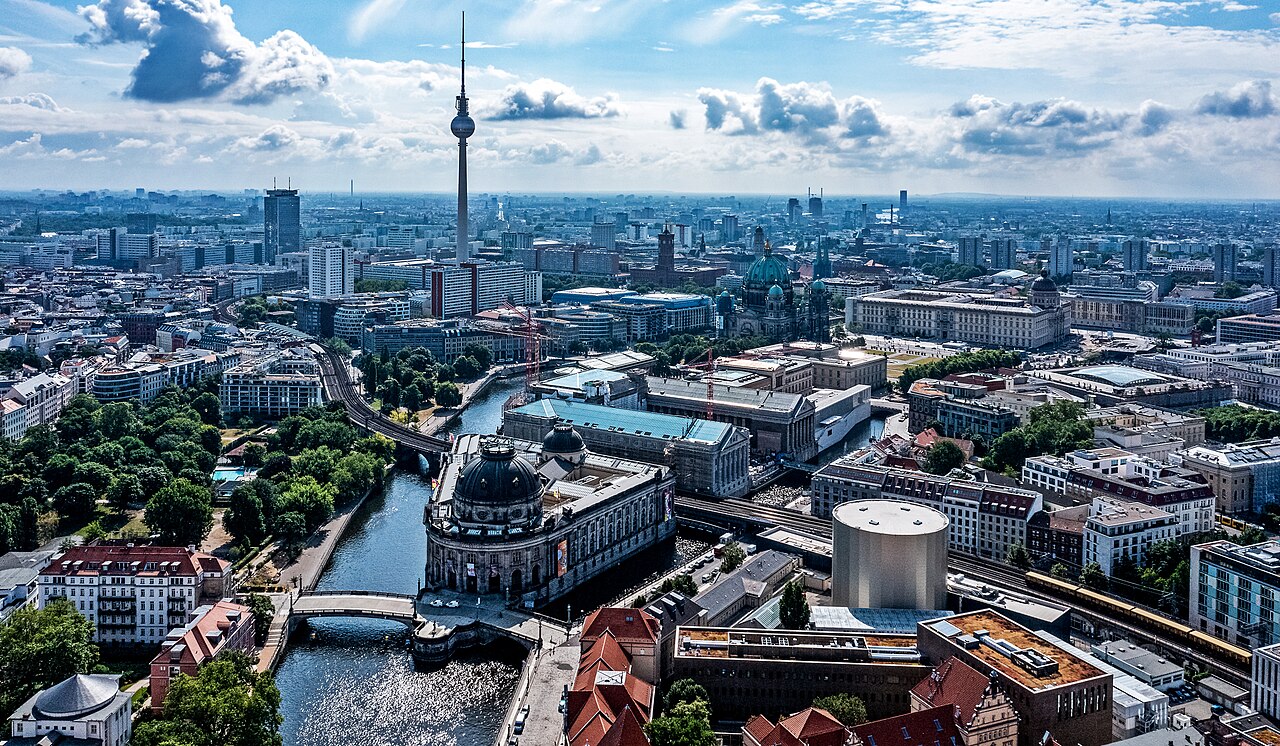
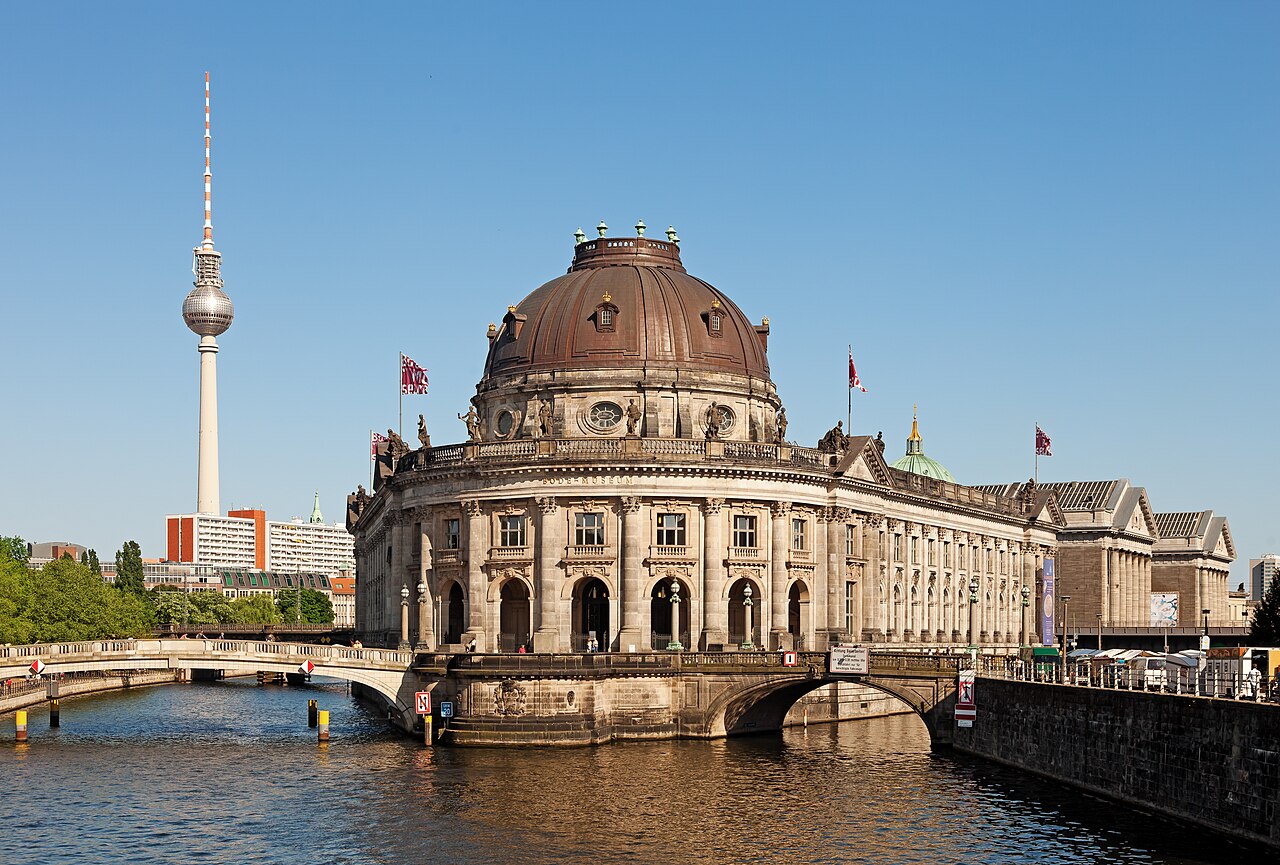
The capital and largest city, with about 3.7 million people, on the rivers Spree and Havel. Divided by the Wall from 1961 to 1989, it is today a green, creative city where about a third of the area is forests, parks, rivers and lakes.
The Brandenburg Gate
The Reichstag and its glass dome
Museum Island
The East Side Gallery, a stretch of the Wall covered in murals
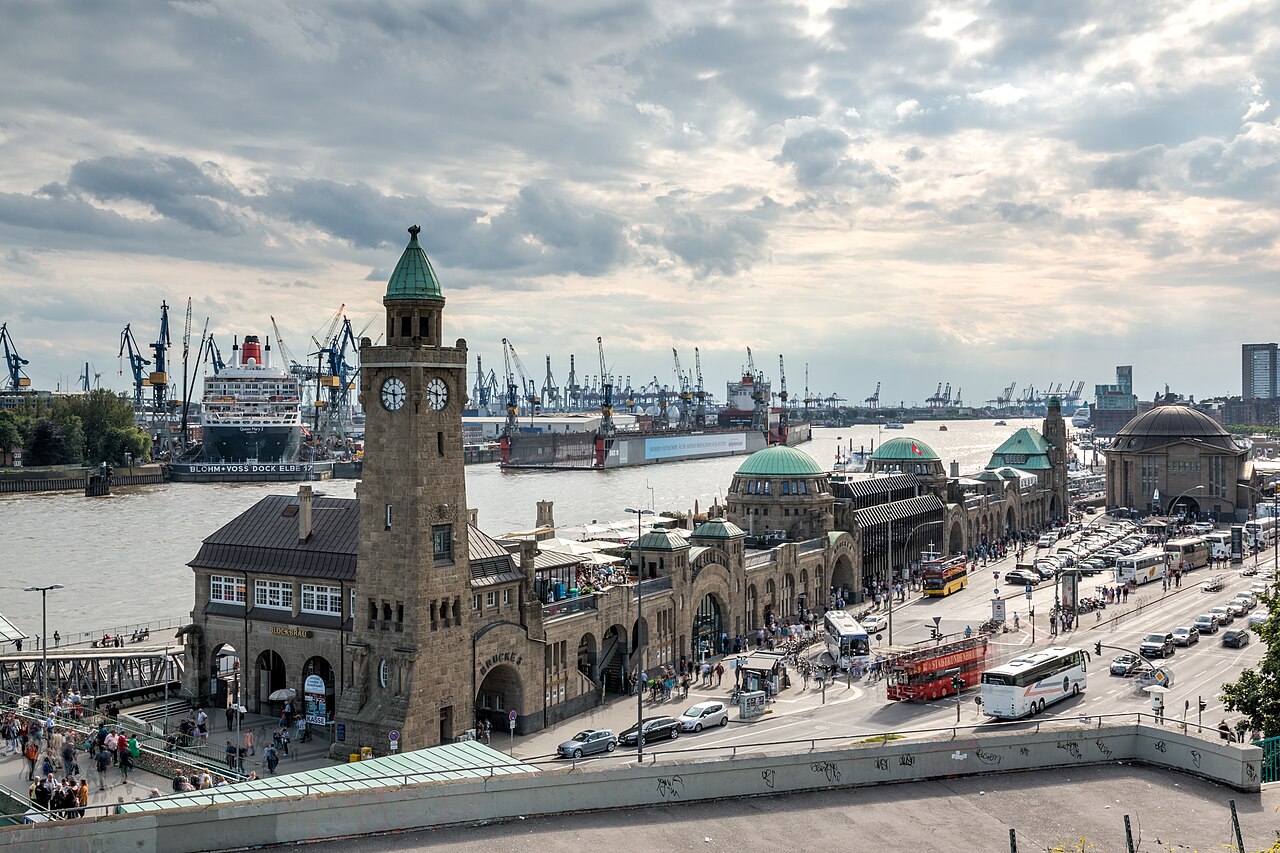
The second-largest city and a great port on the River Elbe, a proud member of the medieval Hanseatic League and still a city-state of its own. It has about 2,500 bridges over its rivers and canals.
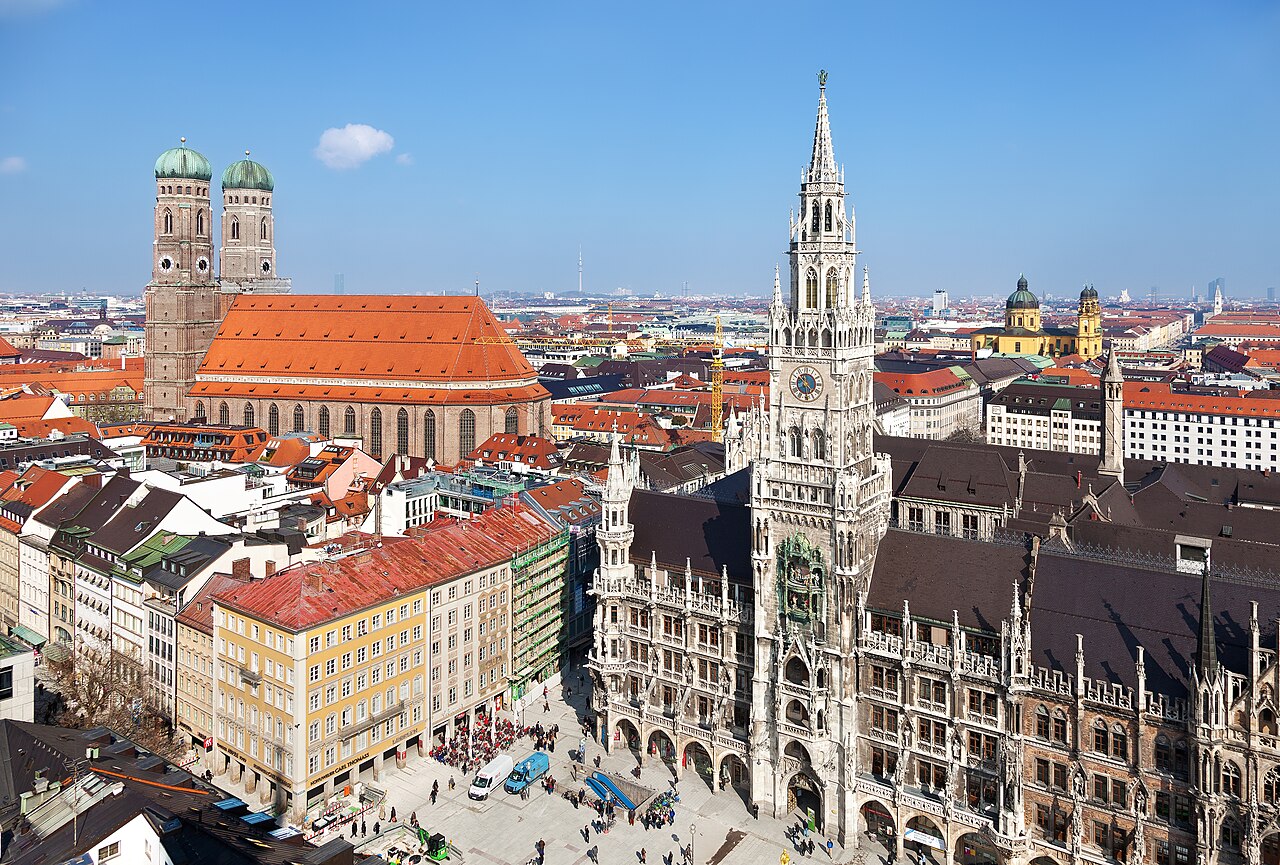
The capital of Bavaria and third-largest city, on the River Isar about 50 km north of the Alps. First recorded in 1158, it is known for beer halls, art museums and a relaxed southern way of life.
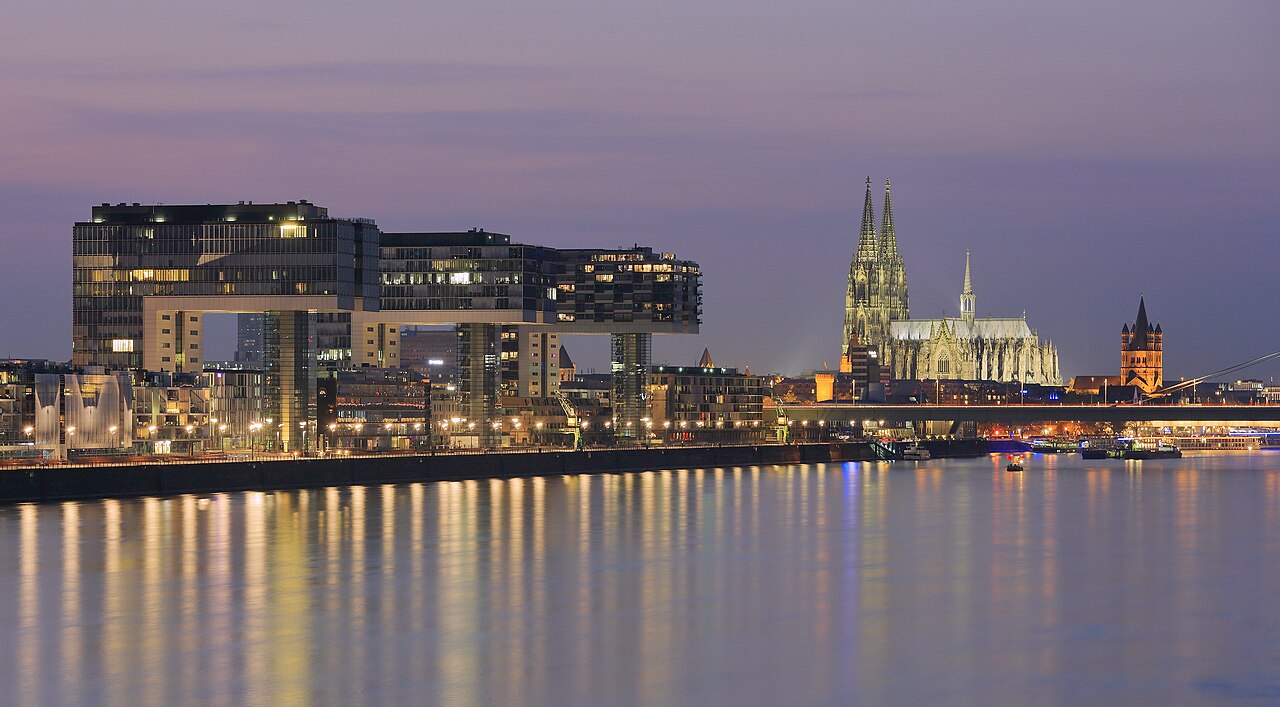
The fourth-largest city, on the Rhine, founded by the Romans as a colony in the year 50. Its great Gothic cathedral survived the Second World War, when much of the city centre was destroyed.
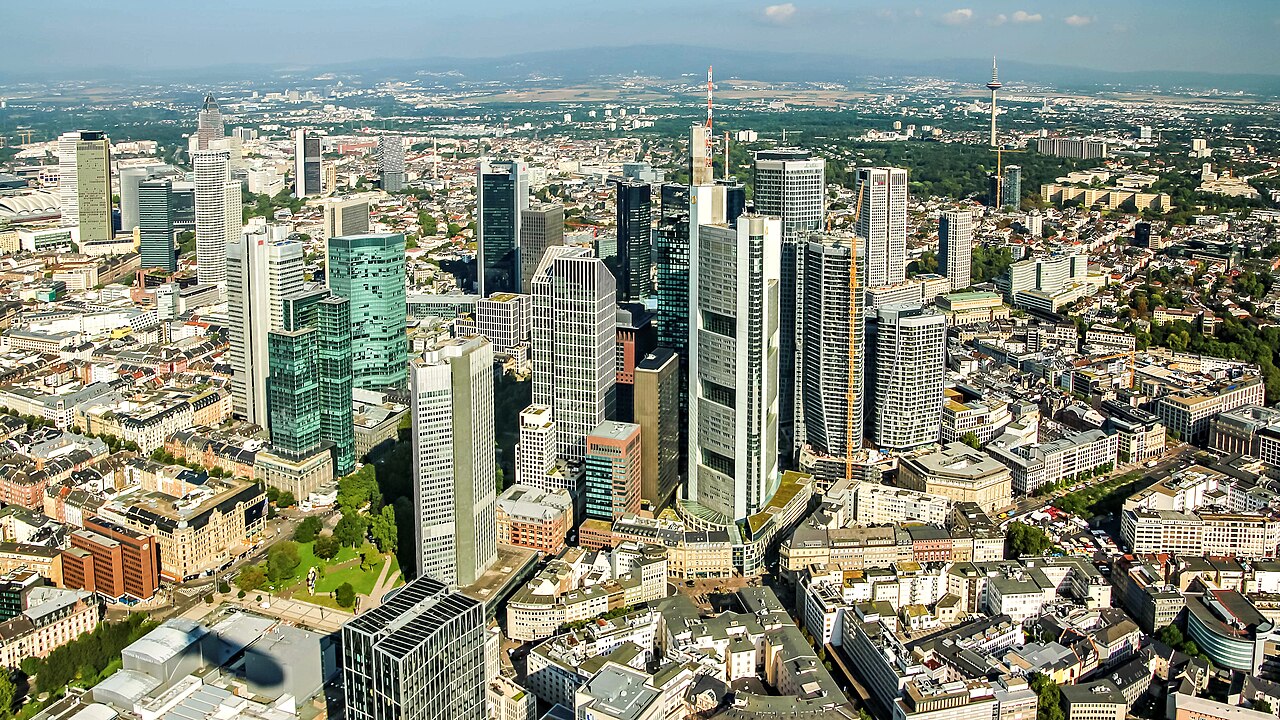
Frankfurt am Main is Germany's financial centre, home of the European Central Bank and the stock exchange. Its skyscrapers have earned it the nickname 'Mainhattan', and its airport is the busiest in Germany.
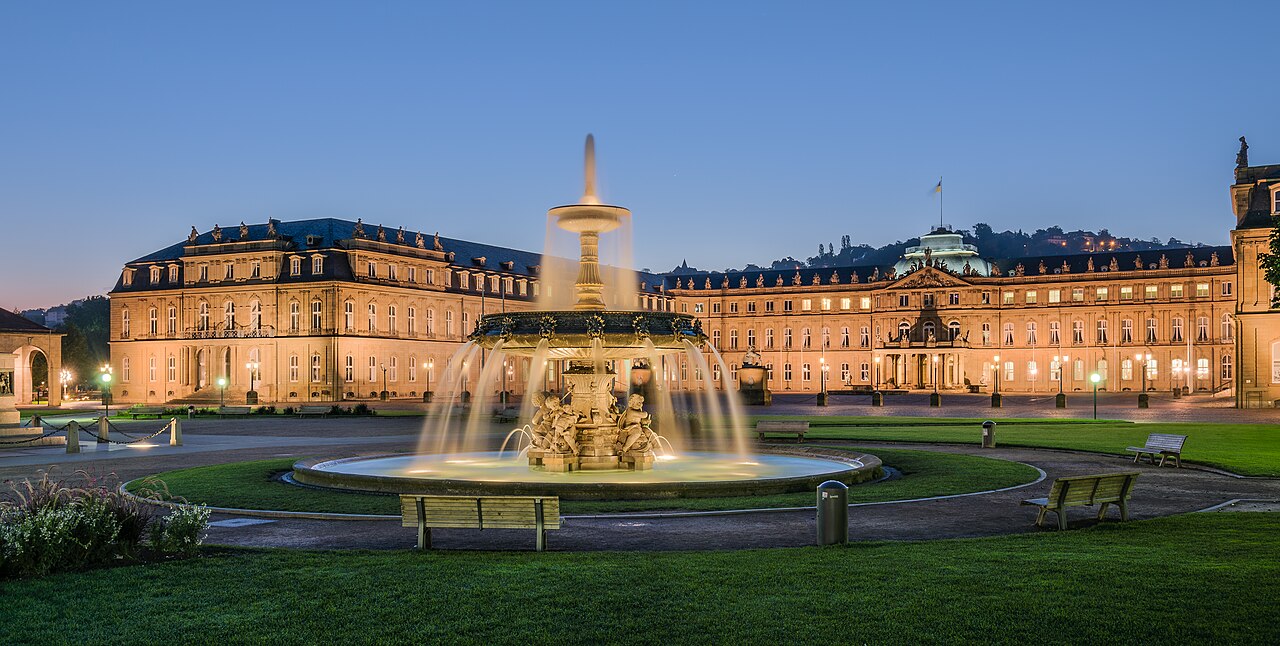
The capital of Baden-Württemberg, set in a valley with vineyards on its hillsides. It calls itself the cradle of the automobile, and Mercedes-Benz and Porsche both have their headquarters here.
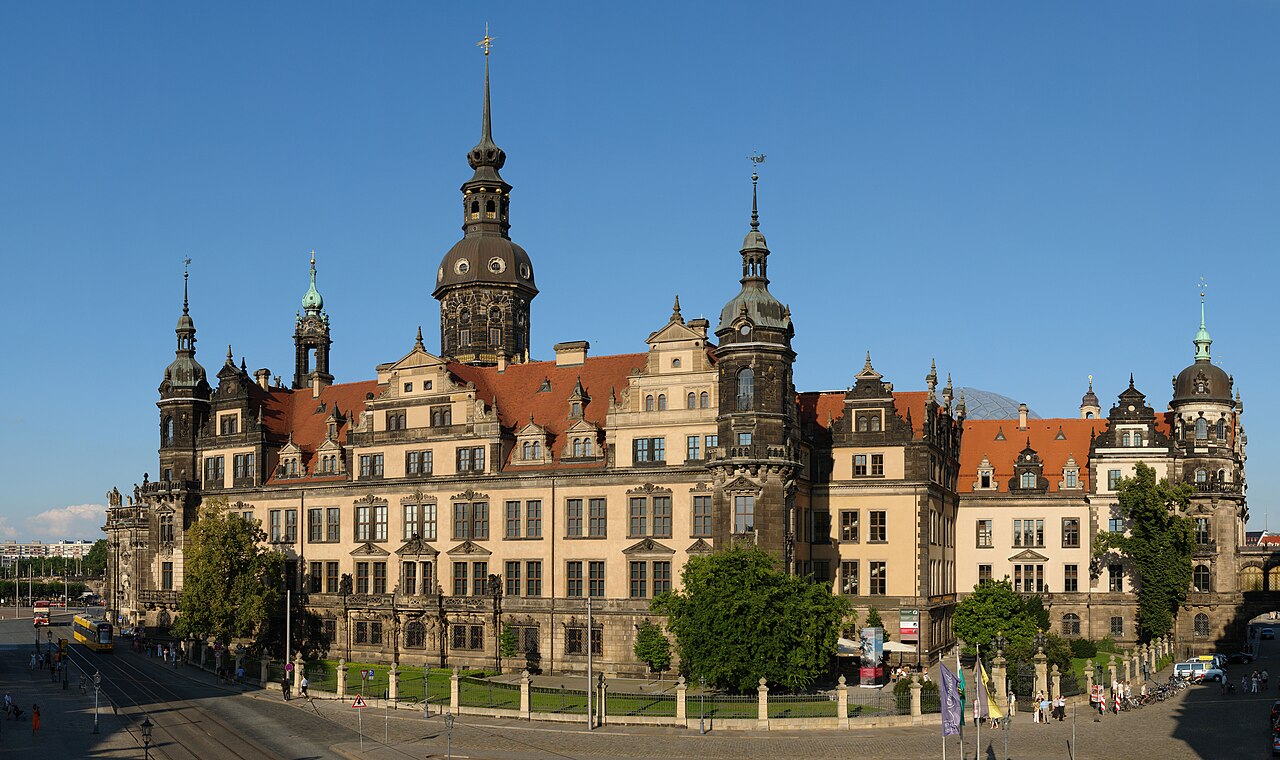
The capital of Saxony, on the River Elbe, once called 'Florence on the Elbe' for its baroque palaces and churches. Much of the centre was destroyed by bombing in February 1945 and has been carefully rebuilt.
The Frauenkirche
The Zwinger palace and the Semperoper opera house
The Striezelmarkt, a Christmas market first held in 1434
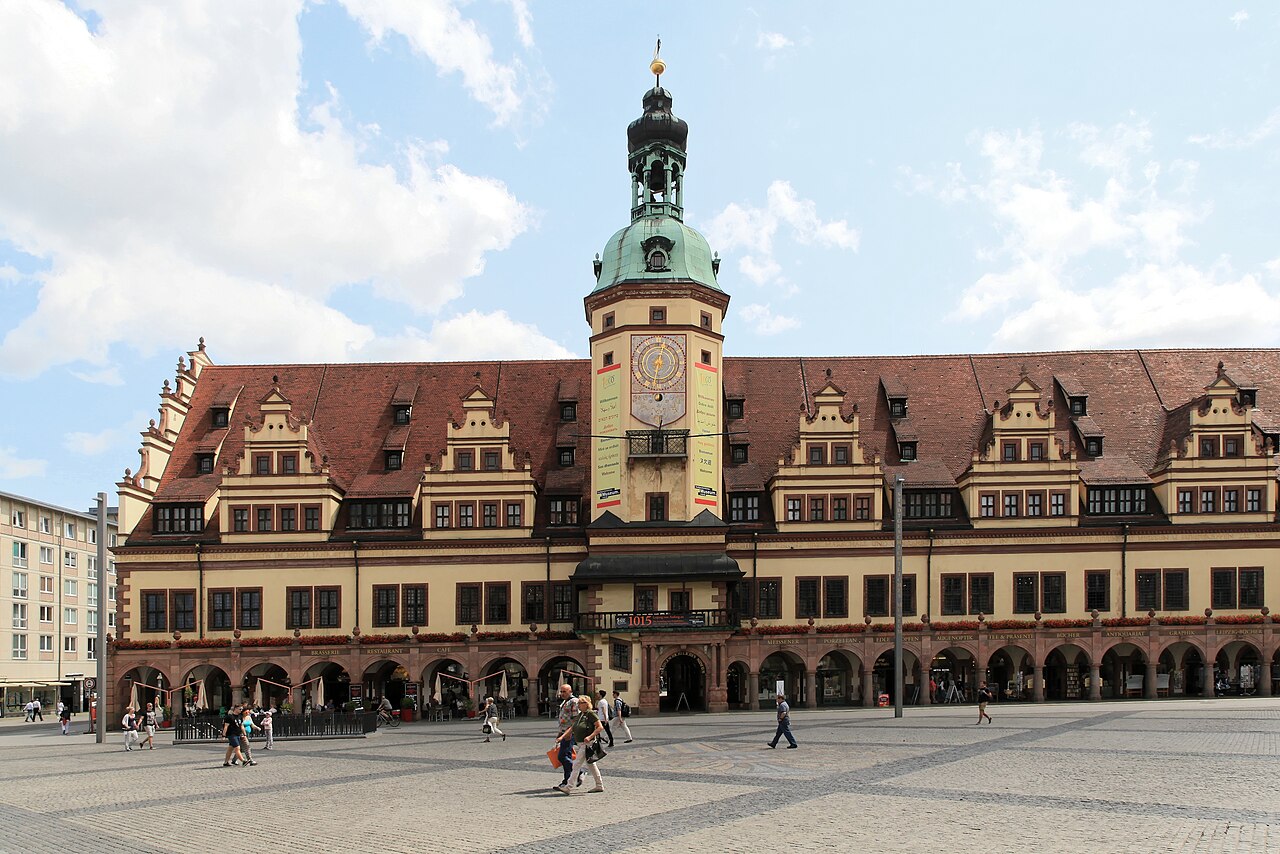
A lively city of trade and music in Saxony. Johann Sebastian Bach was cantor of St Thomas Church here from 1723 until his death in 1750, and in 1989 the peaceful Monday demonstrations that began at St Nicholas Church helped bring down the East German regime.
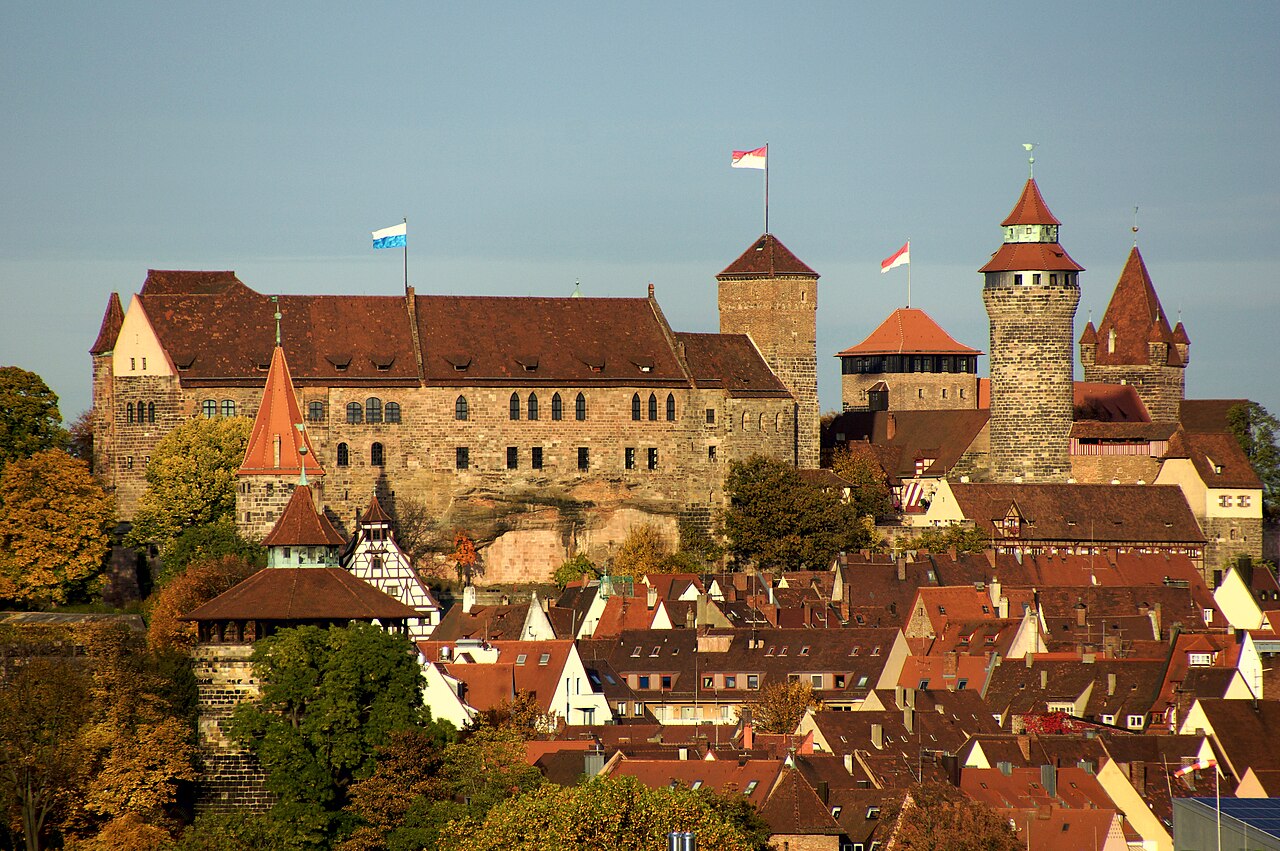
Bavaria's second-largest city, on the River Pegnitz, a free imperial city of the Holy Roman Empire, overlooked by its castle. The trials of leading Nazi war criminals were held here in 1945 and 1946.
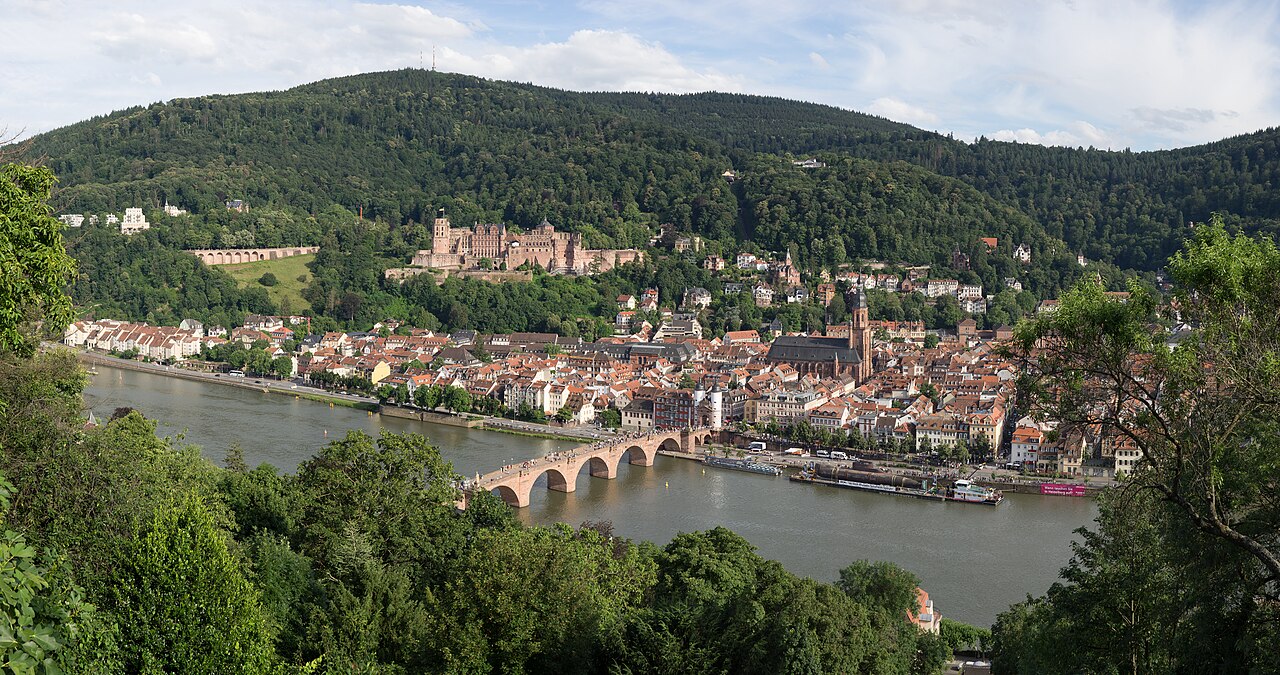
A romantic university town on the River Neckar, with a ruined castle above the old town. Its university was founded in 1386, and about a quarter of the people who live here are students.
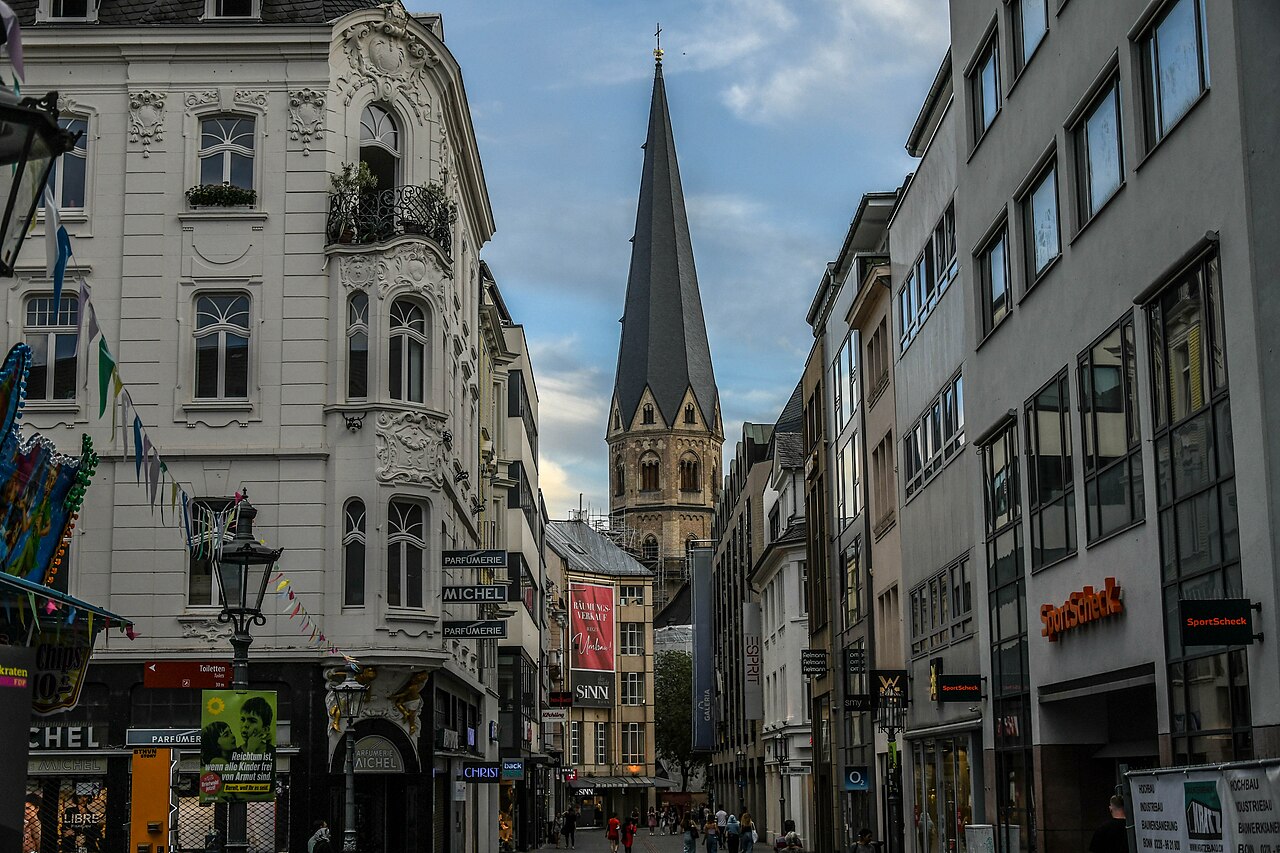
A city on the Rhine that was the capital of West Germany from 1949 to 1990 and the seat of parliament and government until 1999. It keeps the title 'Federal City' and is still home to several federal ministries.
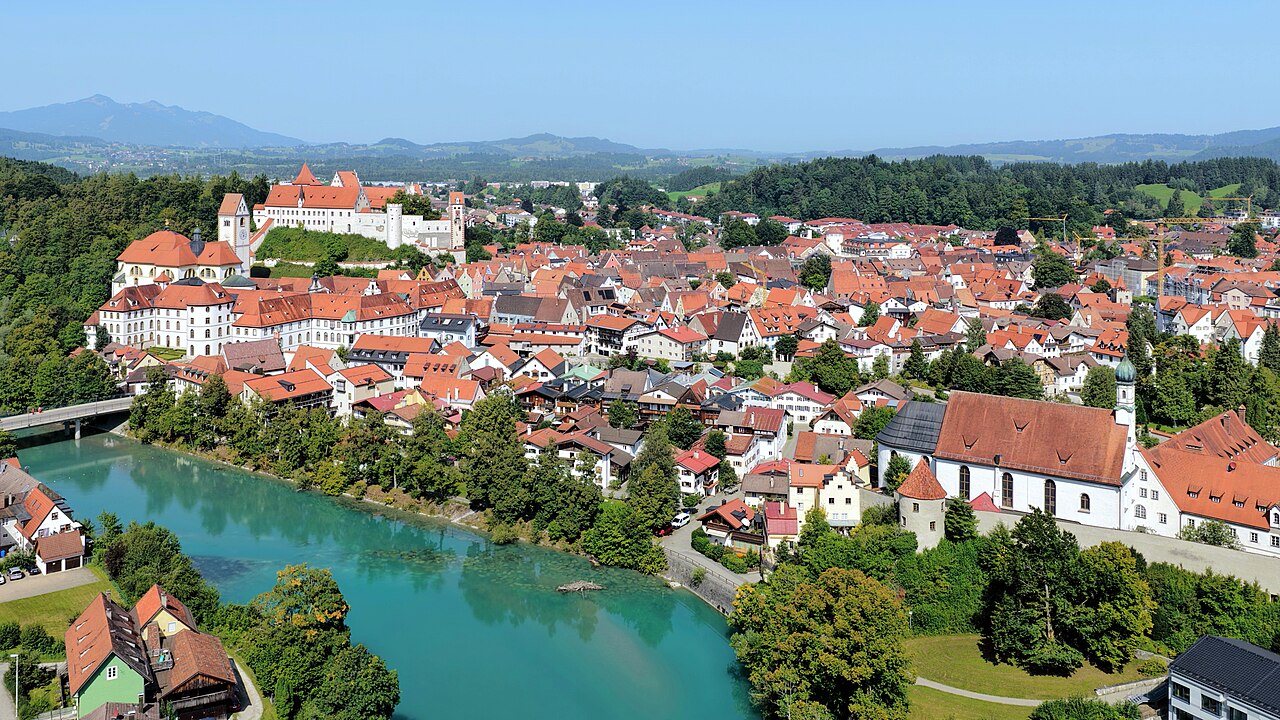
A small old town on the River Lech at the foot of the Alps, about 1 km from the Austrian border. It is the end of the Romantic Road and the gateway to the royal castles of Neuschwanstein and Hohenschwangau.
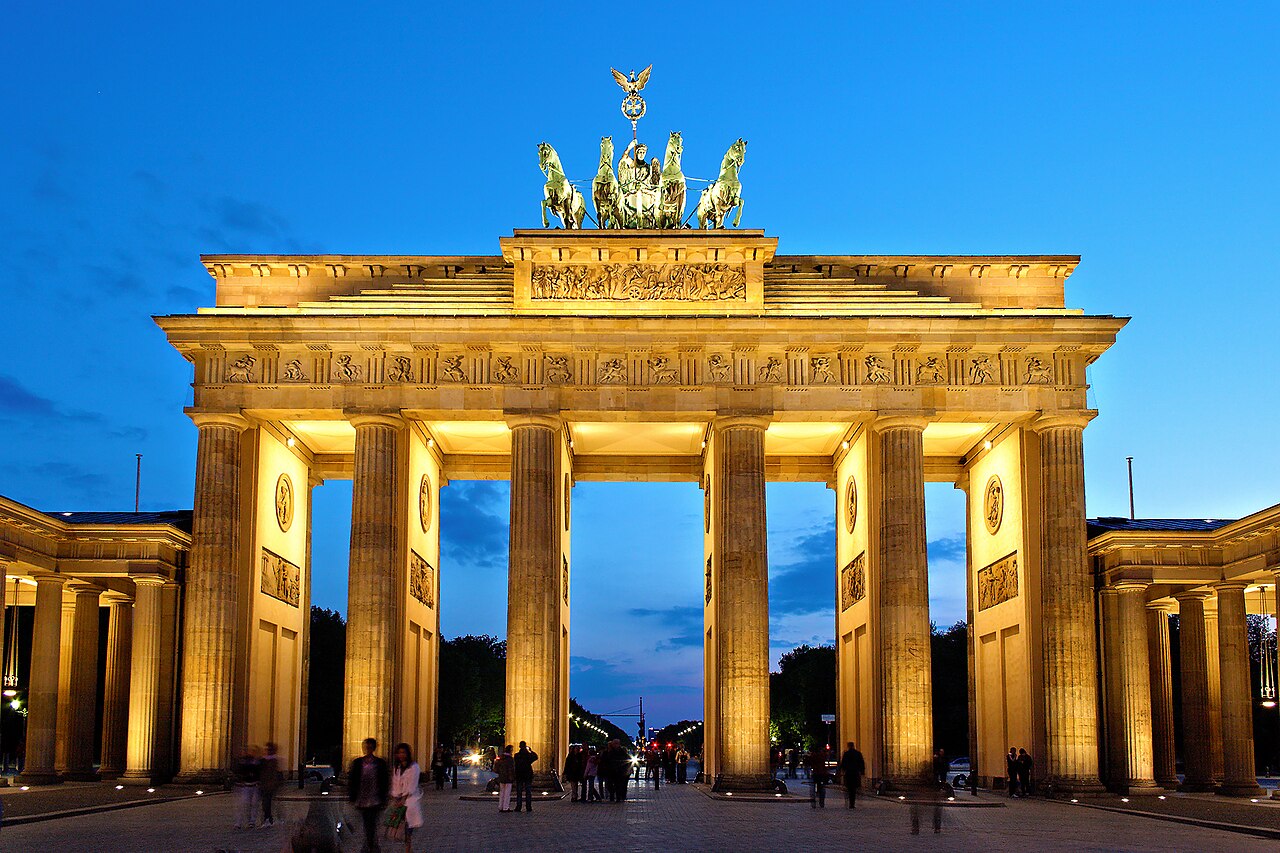
A neoclassical gate built from 1788 to 1791, crowned by the Quadriga, a chariot pulled by four horses. Napoleon took the Quadriga to Paris in 1806; it came back in 1814. The gate stood just behind the Berlin Wall and reopened on 22 December 1989, becoming a symbol of reunification.
Five great museums on an island in the River Spree, built between 1830 and 1930: the Altes Museum, Neues Museum, Alte Nationalgalerie, Bode Museum and Pergamon Museum. The famous bust of the Egyptian queen Nefertiti is in the Neues Museum.
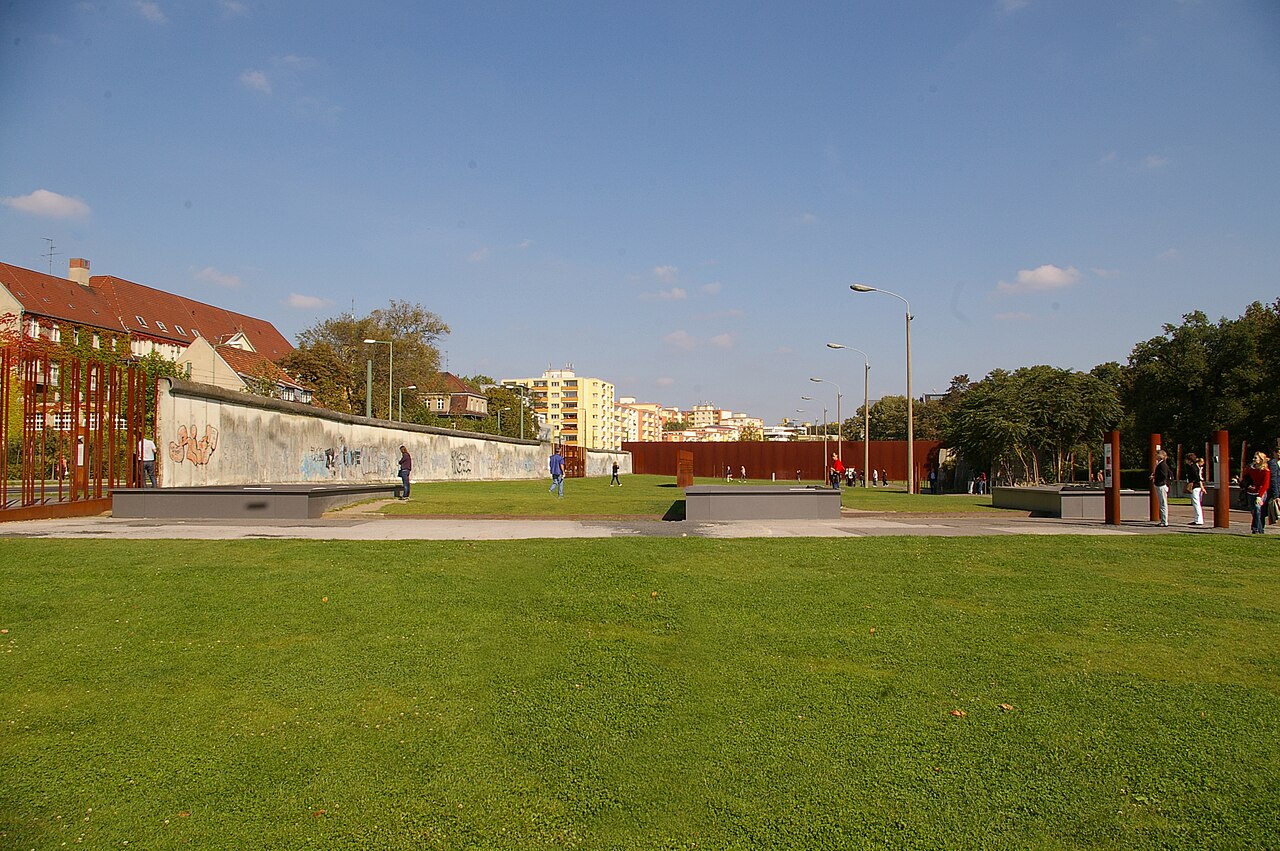
The main memorial to the division of Berlin, on Bernauer Strasse, where the Wall ran along the street. It keeps a stretch of the Wall with its 'death strip' and watchtower as they were, with a documentation centre and a viewing tower.
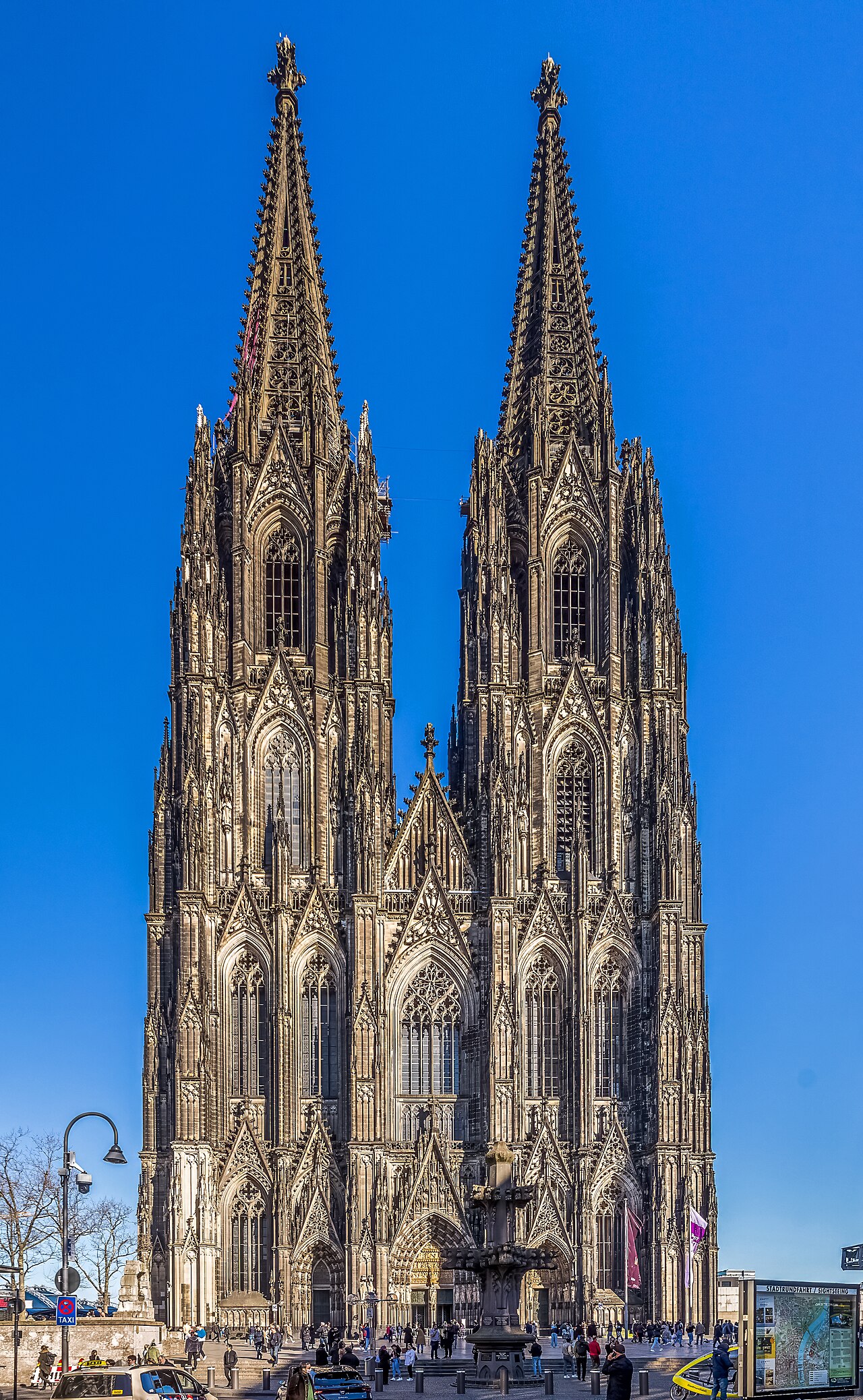
A huge Gothic cathedral begun in 1248 and finished only in 1880, with twin spires 157 m high. It holds the golden Shrine of the Three Kings and, with about 6 million visitors a year, is Germany's most visited landmark.
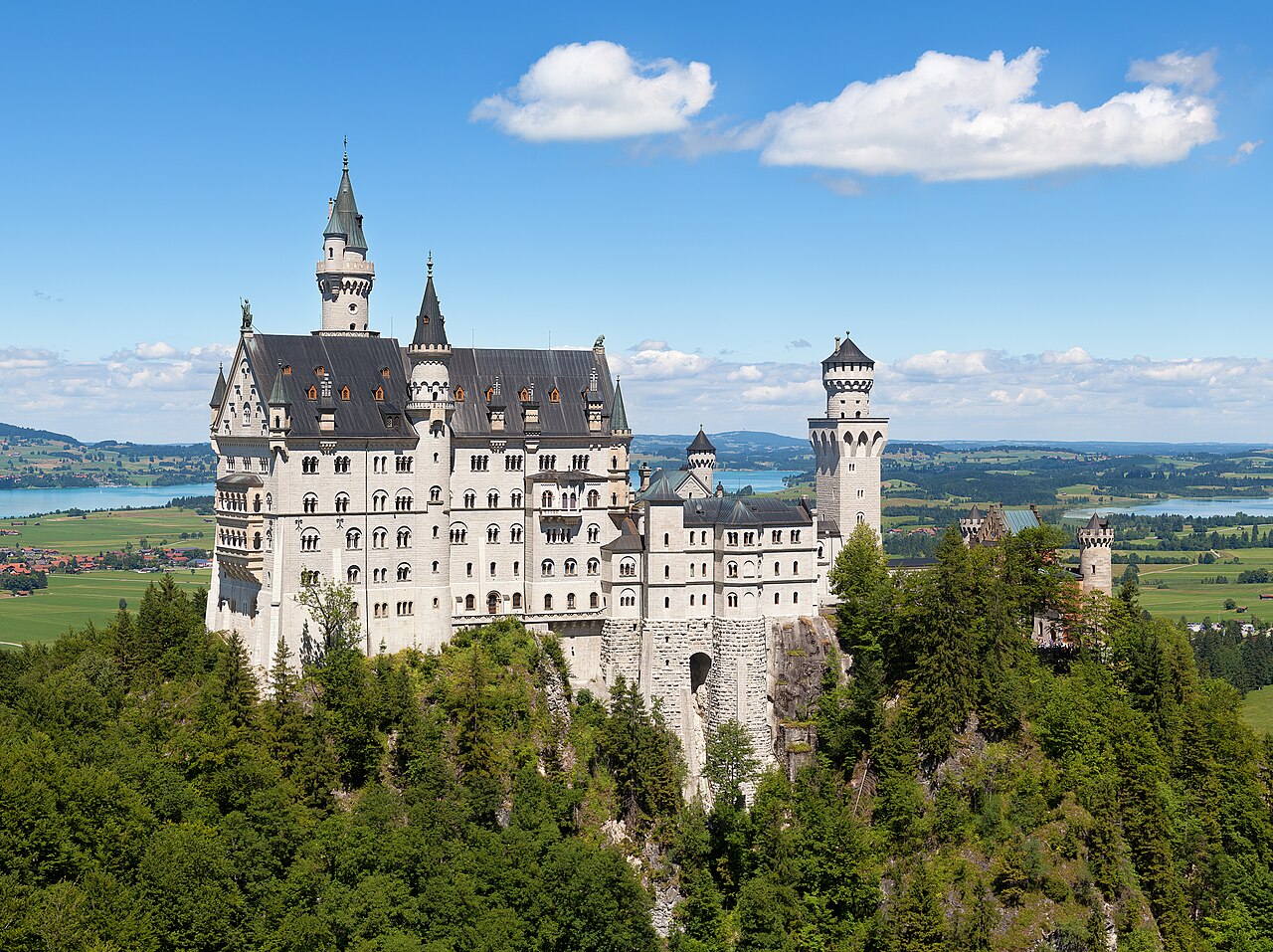
A fairy-tale castle on a rock above a gorge near Füssen, begun in 1869 for King Ludwig II of Bavaria, who spent only 172 days there. It inspired Disney's Sleeping Beauty castle, and since 2025 it has been a World Heritage Site together with three other palaces of Ludwig II.
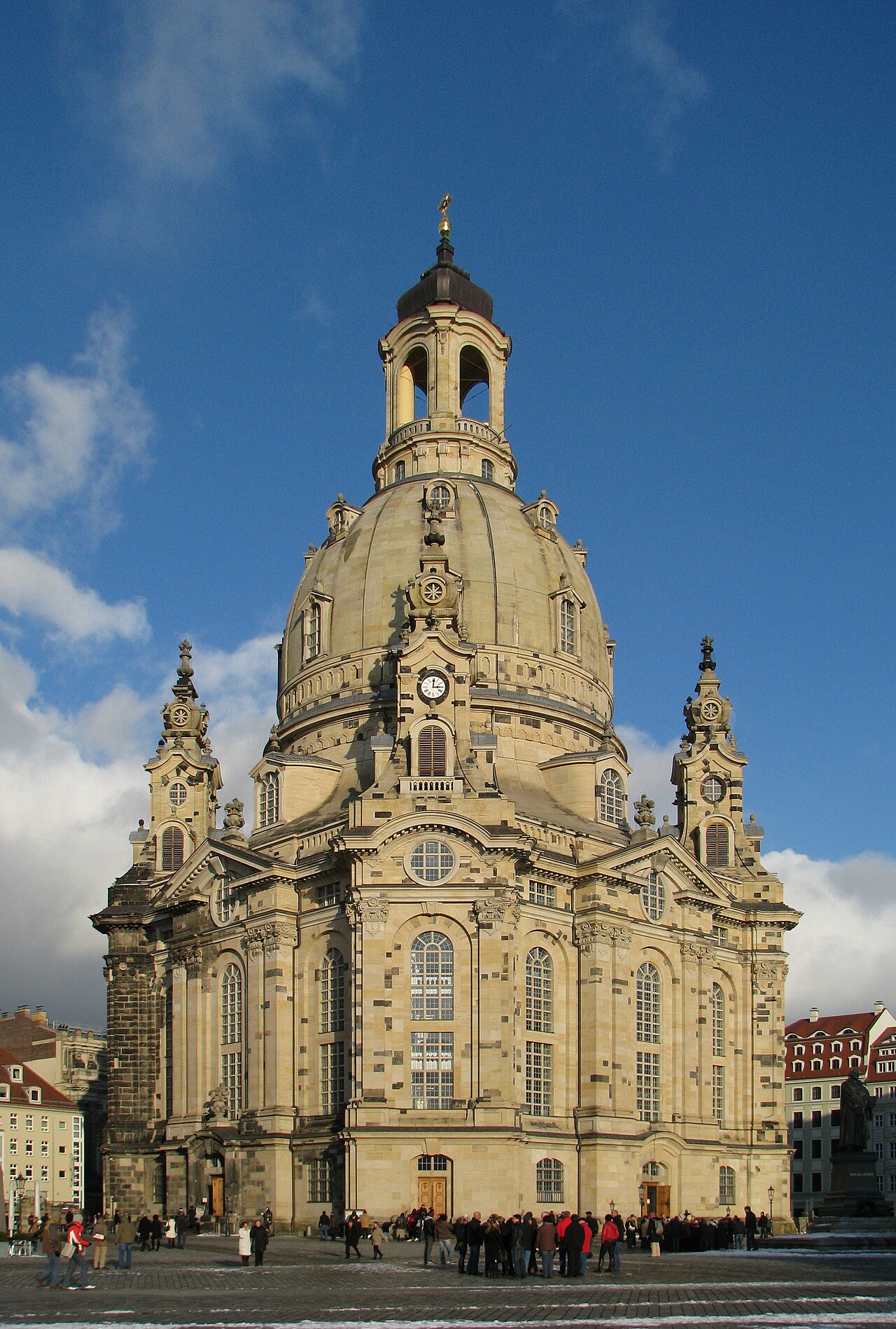
A baroque Lutheran church with a great stone dome, built from 1726 to 1743. It collapsed after the bombing of February 1945, and the ruins stood as a memorial for almost 50 years. Rebuilt from 1994 using thousands of original stones, it was consecrated again on 30 October 2005 and has become a symbol of reconciliation.
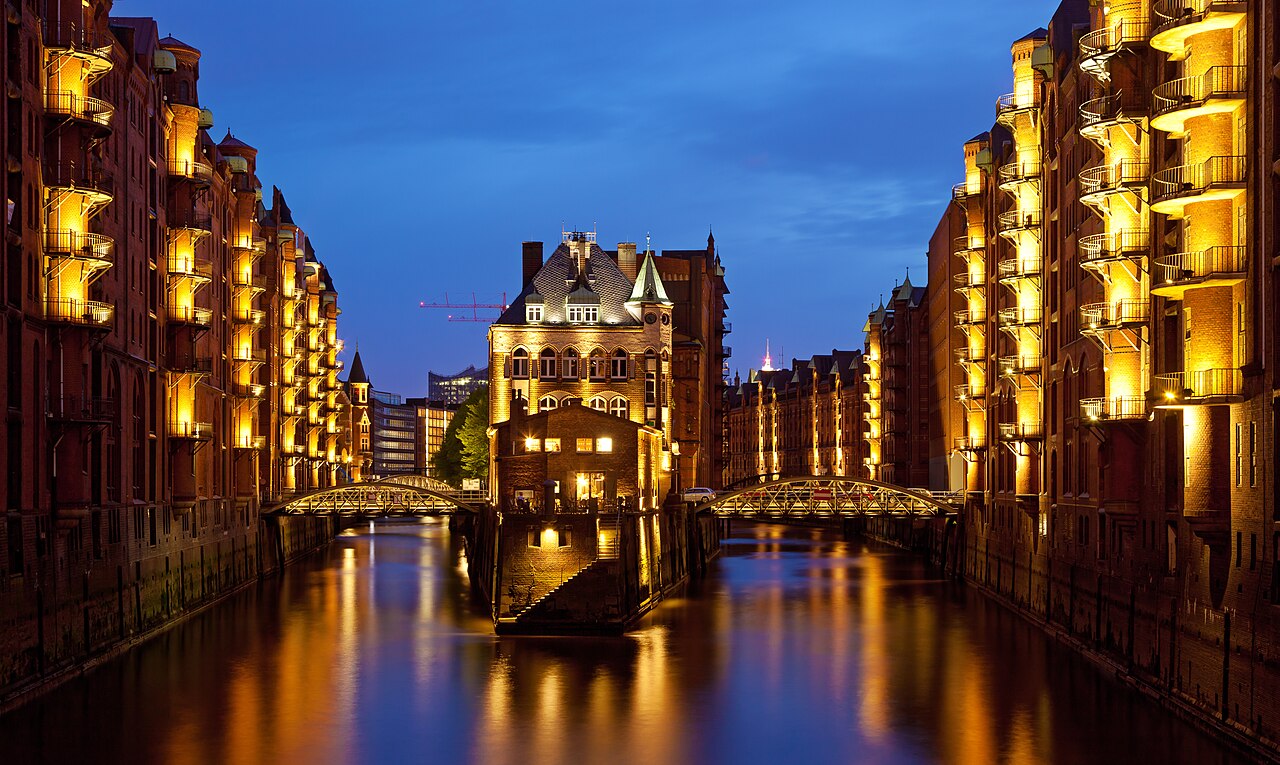
The largest warehouse district in the world built on timber piles, with red-brick warehouses along canals, built from 1883 to 1927. Together with the nearby Kontorhaus District and the Chilehaus, it has been a World Heritage Site since 2015. Some warehouses still store coffee, cocoa, spices and carpets.
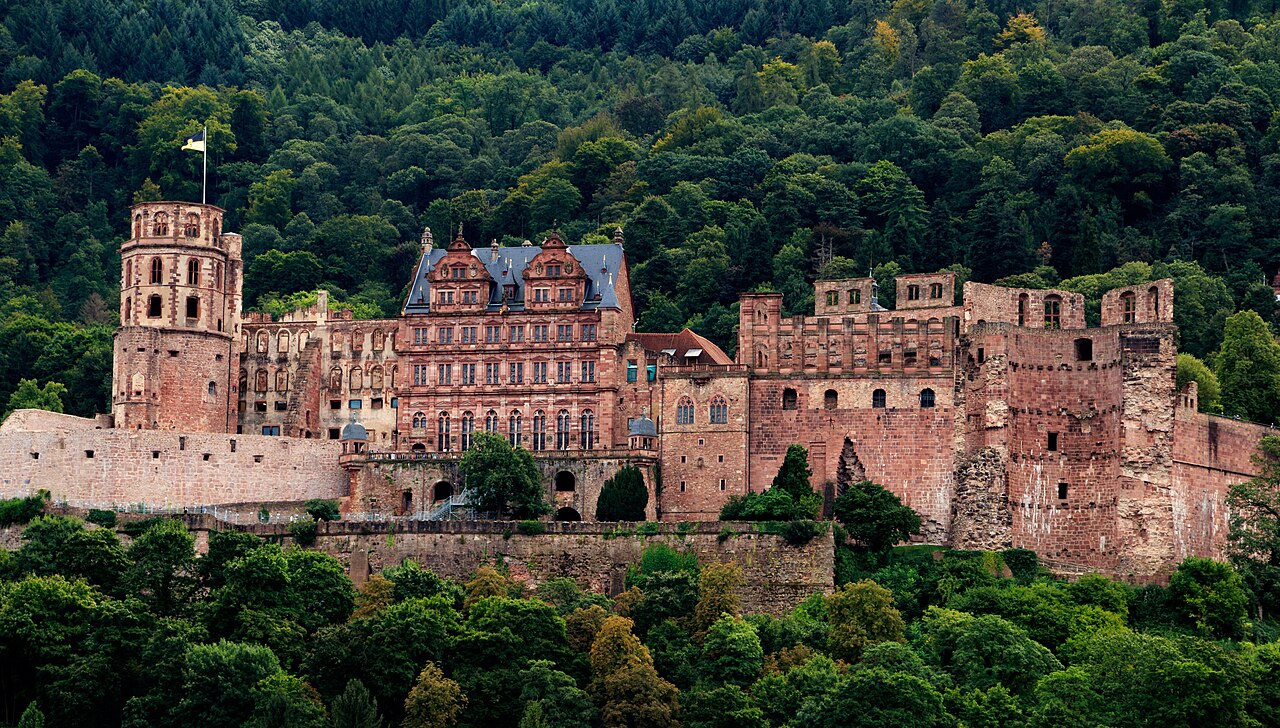
The red sandstone ruin of a great palace, 80 m above the Neckar. French troops destroyed much of it in 1689 and 1693, and lightning struck it again in 1764. It became a favourite of Romantic poets and painters, and its cellar holds a giant wine barrel, the Heidelberg Tun.
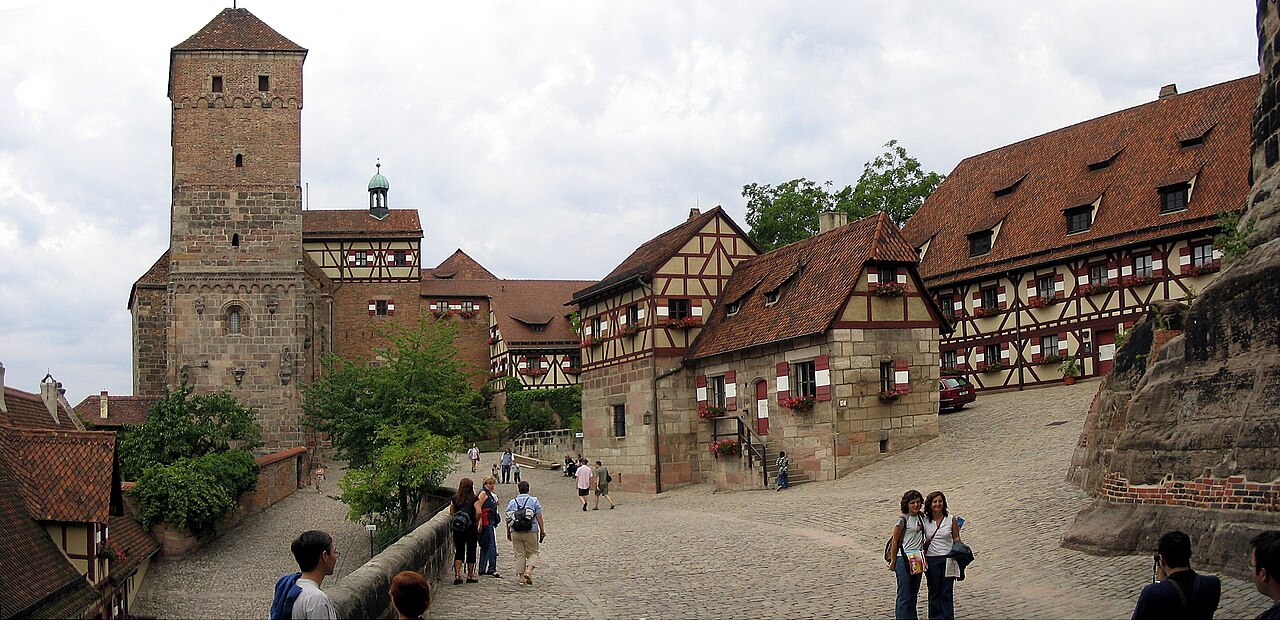
The imperial castle on a sandstone ridge above the old town, where German kings and emperors of the Holy Roman Empire stayed, most of them many times, from the 11th to the 16th century. Its deep well reaches water 50 m below the courtyard.
The famous beer purity law, the Reinheitsgebot, was issued in Bavaria on 23 April 1516. It allowed only barley, hops and water; yeast was added later, once its role was understood. The rule was applied across all of Germany only in 1906.
02
Munich's Oktoberfest began as the celebration of a royal wedding: Crown Prince Ludwig of Bavaria married Princess Therese on 12 October 1810. The meadow where the festival is held, the Theresienwiese, is named after her.
03
Christmas markets began in German-speaking lands in the late Middle Ages. Dresden's Striezelmarkt, first held in 1434, is one of the oldest, and Nuremberg's Christkindlesmarkt is one of the most famous.
04
The decorated Christmas tree is an old German custom. Queen Victoria and her German-born husband, Prince Albert, helped make it popular in Britain in the 1840s.
05
Gummy bears were first made in Bonn in 1922 by Hans Riegel. His company's name, Haribo, comes from the first letters of HAns RIegel BOnn.
06
The word 'kindergarten', 'garden of children', comes from Friedrich Fröbel, who gave that name to his school for young children in Bad Blankenburg in 1840.
07
The Brothers Grimm, Jacob and Wilhelm, published their first volume of fairy tales in 1812. It includes Snow White, Hansel and Gretel, Rapunzel and Cinderella.
08
As of 2026, much of Germany's autobahn network has no general speed limit for cars, only a recommended speed of 130 km/h. Many sections do have posted limits.
09
Germany is proud of its bread: around 3,000 kinds of bread are baked in the country, from light wheat rolls to dark rye.
10
Cologne Cathedral took 632 years to finish, from 1248 to 1880. When it was completed, it was briefly the tallest building in the world.
11
Aachen Cathedral, built for Charlemagne, was among the first 12 places on the UNESCO World Heritage List in 1978. About 30 German kings were crowned there between 936 and 1531.
12
As of 2026, Germany has 55 UNESCO World Heritage Sites, from Roman frontier walls to the royal palaces of Ludwig II, added in 2025.
13
The first article of Germany's constitution, the Basic Law of 1949, says: 'Human dignity shall be inviolable.'
14
German is spoken as a first language by about 95 million people, more than any other native language in the European Union. It is official in Germany, Austria, Switzerland, Liechtenstein, Luxembourg and Belgium.
In German every noun starts with a capital letter. The pronunciation guides are simple approximations for English speakers. Pronunciation is written the way it sounds; the capital letters show where the stress goes. Audio is coming soon.
Greetings
HalloHAH-lohhello
TschüssCHUESS (short 'ü', with rounded lips, and a sharp 's' at the end)bye (friendly)
dankeDAHN-kuhthank you
bitteBIT-tuhplease, and also 'you're welcome'
Food and drink
BrotBROHTbread
WasserVAHS-serwater
BierBEERbeer
KuchenKOO-khencake
WurstVOORSTsausage
Kartoffelkar-TOF-felpotato
FrühstückFREW-shtewkbreakfast
Places
StadtSHTAHTtown, city
BahnhofBAHN-hohfrailway station
StraßeSHTRAH-suhstreet (ß is a double s)
SchlossSHLOSSpalace, castle (a grand residence)
BurgBOORKcastle (a fortress)
KircheKEER-khuhchurch
BergBAIRKmountain
Everyday life
Gemütlichkeitguh-MEWT-likh-kitecosiness, a warm and relaxed feeling of being at ease
FeierabendFY-er-ah-bentthe end of the working day, and the free evening after it
Most shops, including supermarkets, are closed on Sundays and public holidays. Bakeries often open for a few hours, and shops in large railway stations and airports stay open, so plan your shopping for Saturday.
Bottle deposit (Pfand)
Most drinks bottles and cans carry a deposit: 25 cents on single-use bottles and cans, and 8 to 15 cents on reusable ones. Take them back to the machine in almost any supermarket and you get a voucher for the till.
The Deutschlandticket
As of 2026, the Deutschlandticket costs 63 euros a month and gives unlimited travel on local buses, trams, U-Bahn, S-Bahn and regional trains all over Germany. It generally does not cover long-distance trains such as the ICE and IC, apart from a few IC routes paid for by some states. It is a monthly subscription that you can cancel.
Driving
Germany drives on the right. Many autobahn sections have no general speed limit, only a recommended 130 km/h, but posted limits must be obeyed, and speed limits in towns are much lower.
Tipping
Tipping is modest: round up the bill or add about 5 to 10 percent. Tell the server the total you want to pay when you hand over the money or before they run your card, or say 'Stimmt so', keep the change.
Plugs
Germany uses round two-pin plugs (Schuko, type F) and 230 volts. Visitors from Britain, Ireland and North America will need an adapter.
Emergencies
Call 112 for an ambulance or the fire brigade, and 110 for the police. Both numbers are free.
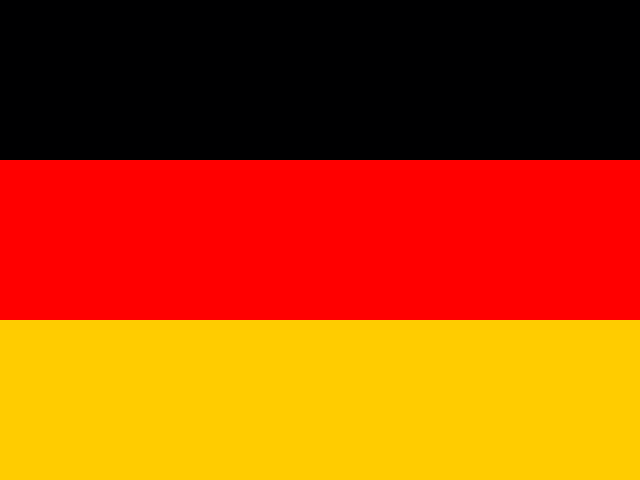
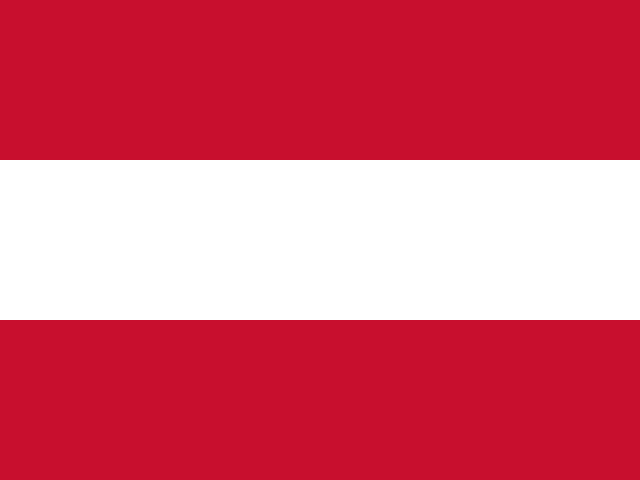 Austria
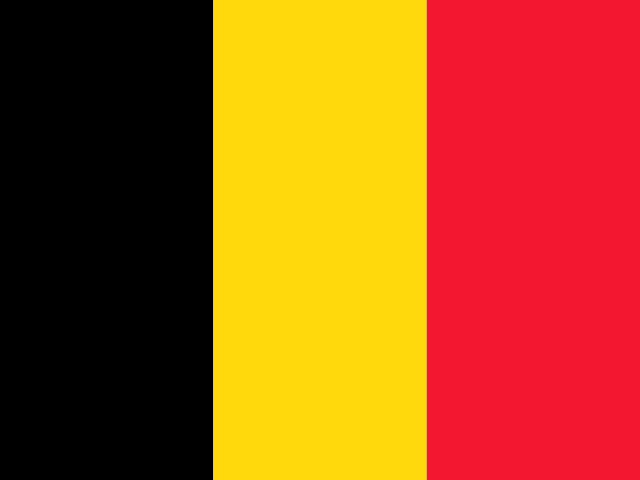 Belgium
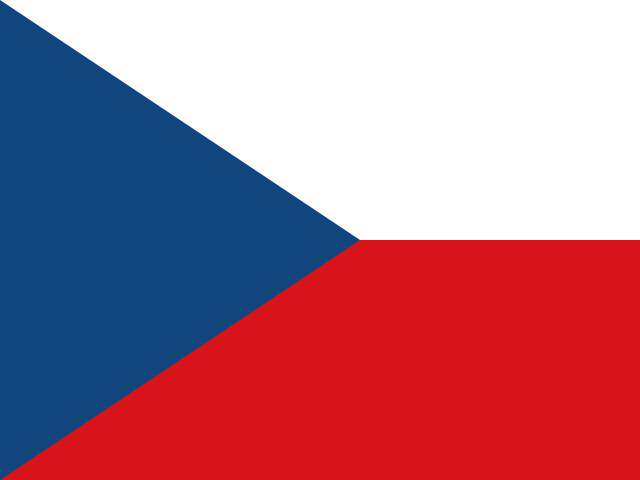 Czechia
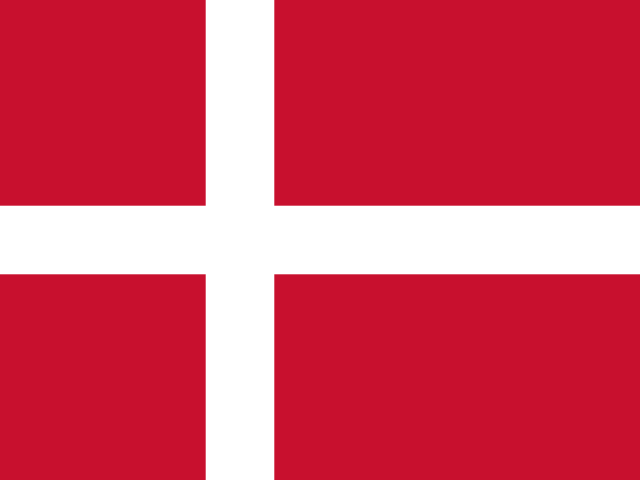 Denmark
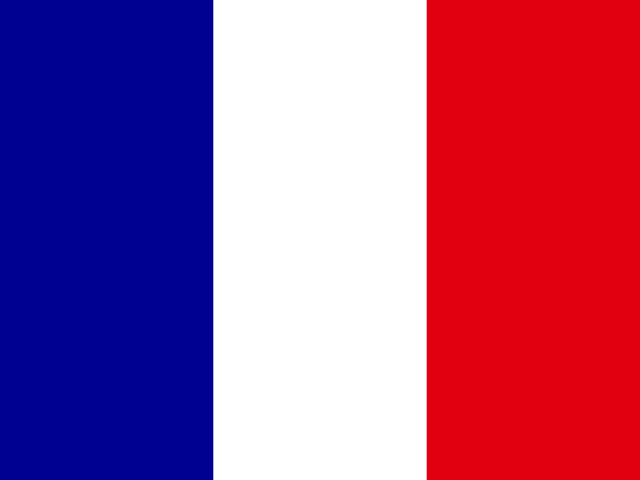 France
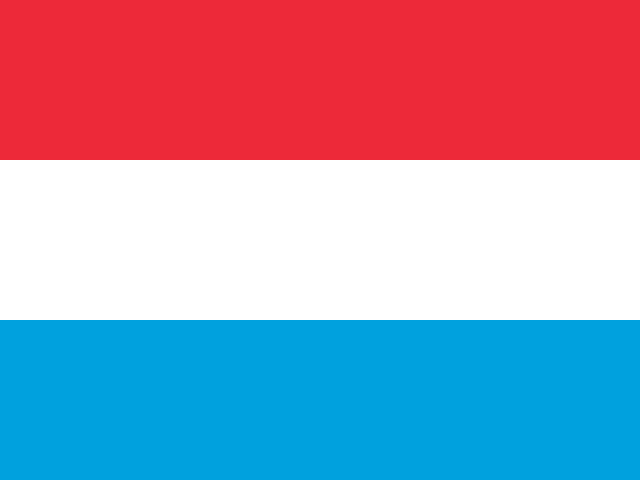 Luxembourg
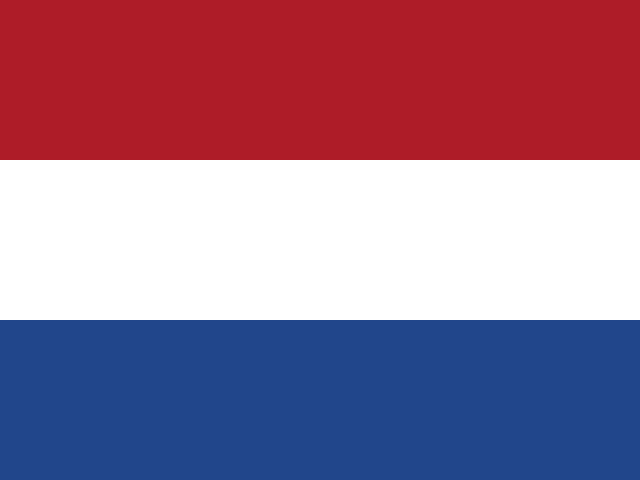 Netherlands
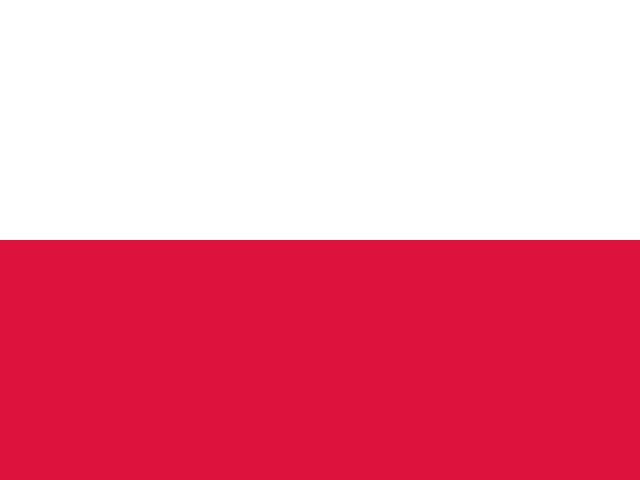 Poland
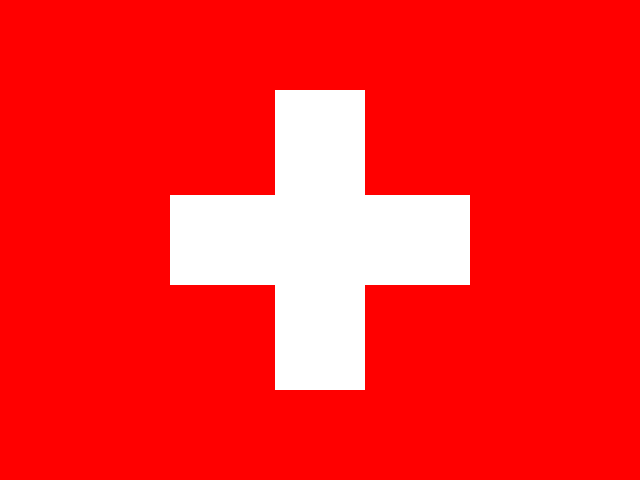 Switzerland