 Belarus
 Latvia
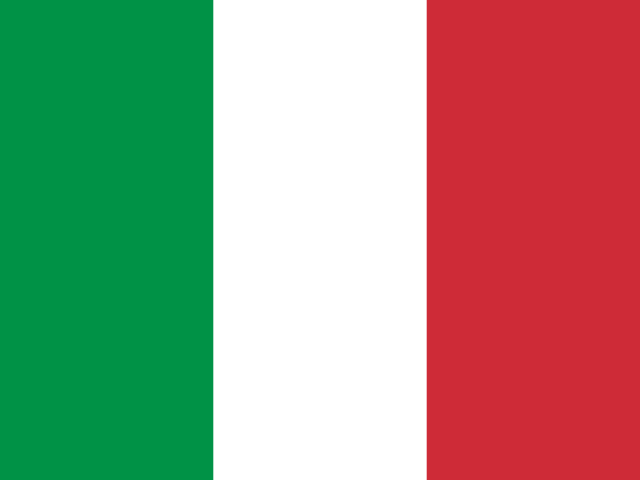
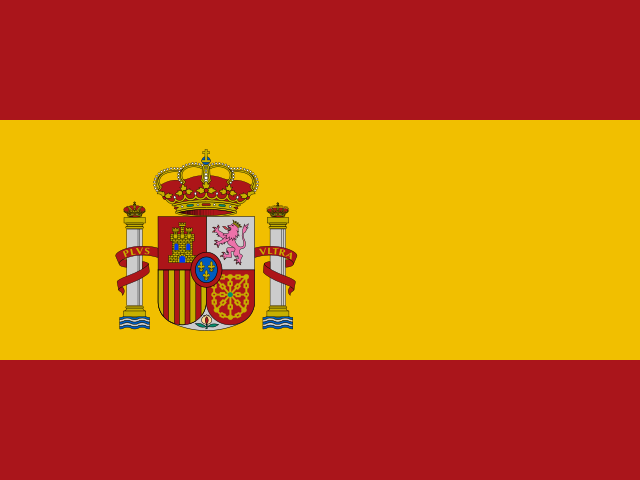
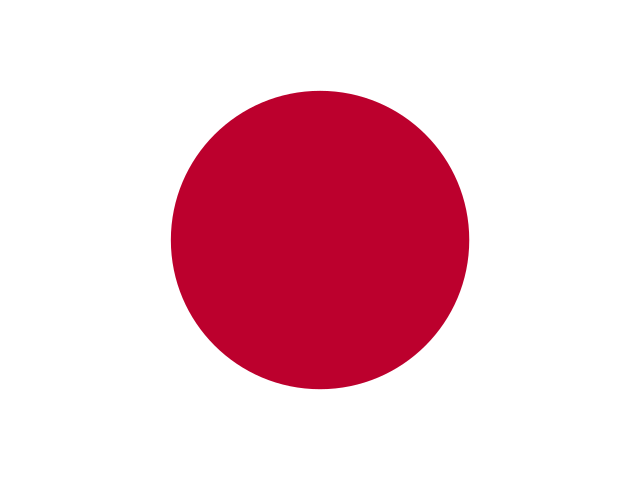
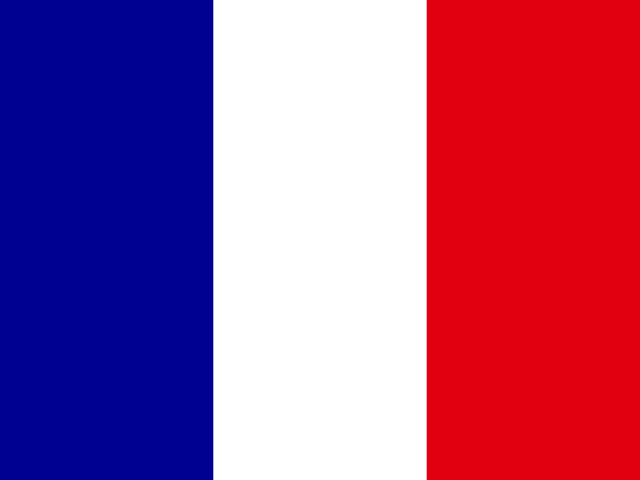
 Poland
 Russia
Lithuania first named
The name of Lithuania appears in writing for the first time, as 'Litua', in the Annals of Quedlinburg. The entry tells the story of the missionary Saint Bruno.
A free large-print PDF. Choose what goes in: facts, map, history, dishes and recipes, phrases, fun facts, a quiz with or without answers. Made for clubs, care homes, libraries and family afternoons.
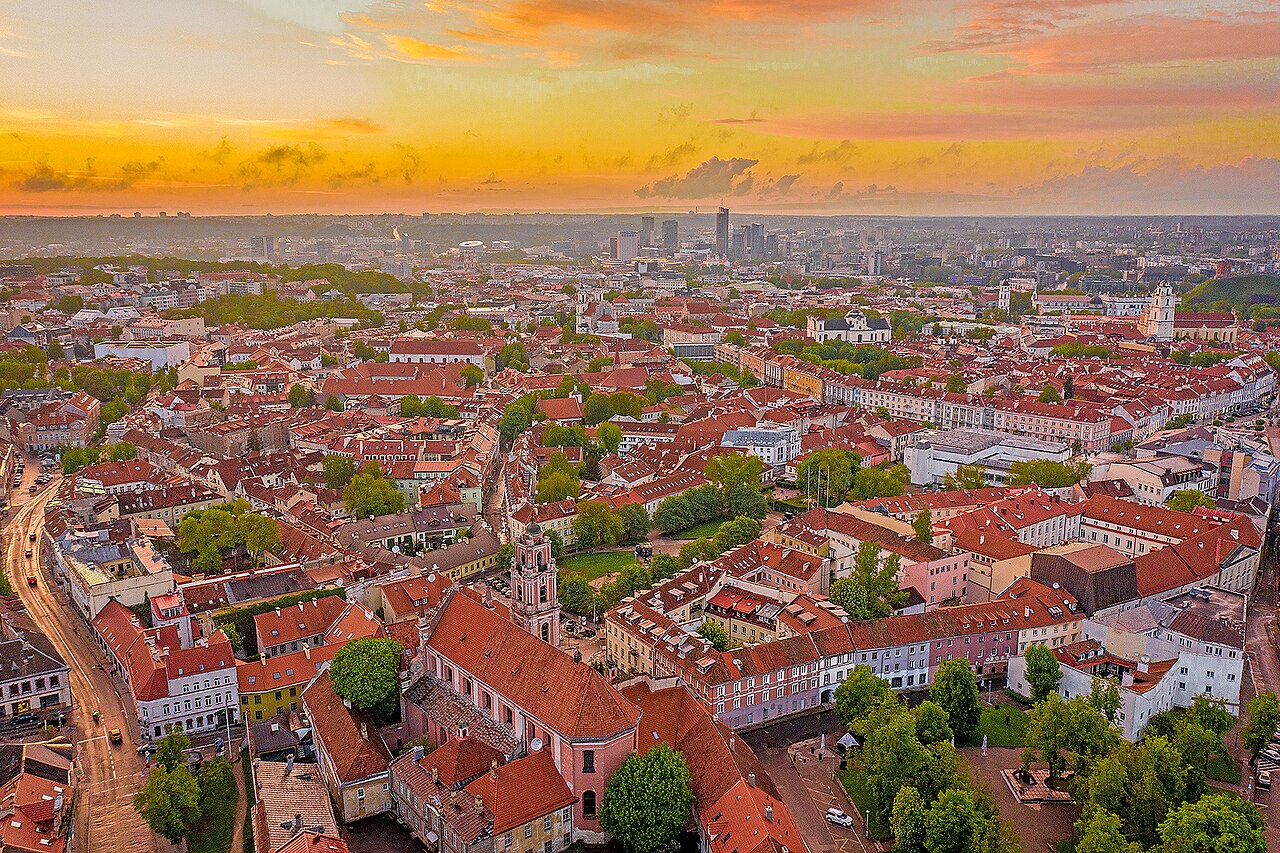
Lithuania is one of the three Baltic states, on the eastern shore of the Baltic Sea. It is a low country of fields, forests and more than 3,000 lakes, smoothed by the glaciers of the last ice age. Its short coast includes half of the Curonian Spit, a thin strip of sand dunes that runs south towards Kaliningrad.
Baltic tribes lived here for thousands of years. Mindaugas united the Lithuanian lands and was crowned king in 1253, and by the end of the 14th century the Grand Duchy of Lithuania was the largest country in Europe. From 1569 it shared a Commonwealth with Poland, until its neighbours divided that state in 1795 and most of Lithuania passed to the Russian Empire.
Lithuania declared independence in 1918, was occupied by the Soviet Union in 1940 and in 1990 became the first Soviet republic to declare its independence restored. Today it is a republic of about 2.9 million people. It joined NATO and the European Union in 2004 and has used the euro since 1 January 2015.
Lithuania's story runs from pagan Baltic tribes and a crowned king, through a grand duchy that stretched towards the Black Sea and a long union with Poland, to more than a century under Russian rule, two declarations of independence and a peaceful chain of two million people.
The name of Lithuania appears in writing for the first time, as 'Litua', in the Annals of Quedlinburg. The entry tells the story of the missionary Saint Bruno.
On 22 September Samogitian and Semigallian warriors crushed the crusading Livonian Brothers of the Sword in the land of Saule, traditionally placed near today's Šiauliai. The city counts this day as its founding date, and 22 September is now Baltic Unity Day.
Mindaugas, who had united most of the Lithuanian lands, was crowned the Catholic King of Lithuania. He is the only king Lithuania ever had, and 6 July, the traditional coronation date, is Statehood Day.
Grand Duke Gediminas wrote letters from 'our royal city called Vilna', the first written mention of Vilnius. Legend says he founded the city after dreaming of an iron wolf howling on a hill.
Grand Duke Jogaila, now also King of Poland, began the official conversion of Lithuania to Catholic Christianity. Lithuania is often described as the last pagan country in Europe.
On 15 July the armies of Poland and Lithuania, led by Jogaila and his cousin Vytautas, decisively defeated the Teutonic Order. Lithuanians call it the Battle of Žalgiris, and it was one of the largest battles of medieval Europe.
Poland and Lithuania joined into one Commonwealth with a single elected monarch and a common parliament. It was one of the largest countries in Europe at the time.
In the third partition, Russia, Prussia and Austria divided what remained of the Polish-Lithuanian Commonwealth. Most of Lithuania became part of the Russian Empire.
For about 40 years the Russian Empire had banned Lithuanian books printed in the Latin alphabet. Book smugglers carried them in from abroad, and on 24 April 1904 the ban was finally lifted.
On 16 February the 20 members of the Council of Lithuania, chaired by Jonas Basanavičius, signed the act that restored an independent, democratic Lithuania with Vilnius as its capital.
Lithuania accepted a Soviet ultimatum and was occupied and turned into a Soviet republic. After German occupation from 1941, Soviet rule returned in 1944, with deportations and years of armed resistance.
On 23 August about two million people joined hands in a human chain of 675 km through Lithuania, Latvia and Estonia, to demand freedom for the three Baltic states.
On 11 March the Supreme Council declared Lithuania's independence restored. It was the first of the 15 Soviet republics to do so, and it survived a Soviet economic blockade that lasted 74 days.
On 13 January Soviet troops attacked the Radio and Television Building and the TV Tower in Vilnius. Fourteen civilians were killed, but crowds kept guarding parliament, and 13 January is now the Day of the Defenders of Freedom.
Lithuania became a member of NATO in March and a full member of the European Union on 1 May 2004. It later joined the Schengen area in 2007 and the eurozone in 2015.
Lithuanian food grew from a cool, damp northern climate: rye, barley, potatoes, beets, mushrooms, berries and plenty of dairy, with sour cream served with almost everything. Dark rye bread is the centre of the table. A festive meal starts with a cold table of smoked meats, herring and salads, then soup, a hot main dish and, after a pause, cake with coffee or tea. Everyday breakfasts are filling and evening meals light.
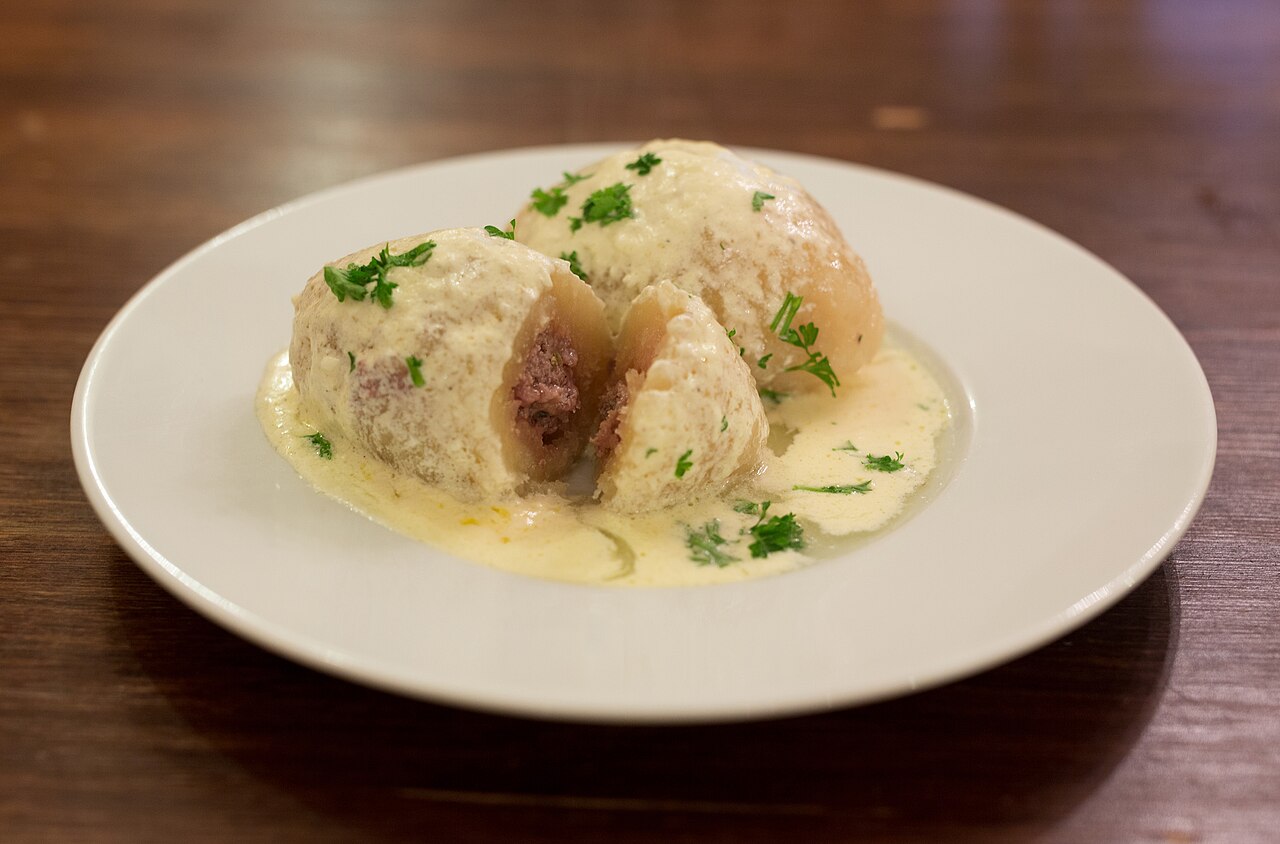
Large dumplings of grated raw potato, stuffed with minced meat, curd cheese or mushrooms, boiled and served with a sauce of sour cream and fried bacon bits. Often called the national dish.
They were once called didžkukuliai, and were later renamed after Count Zeppelin, because their shape looks like his airships.
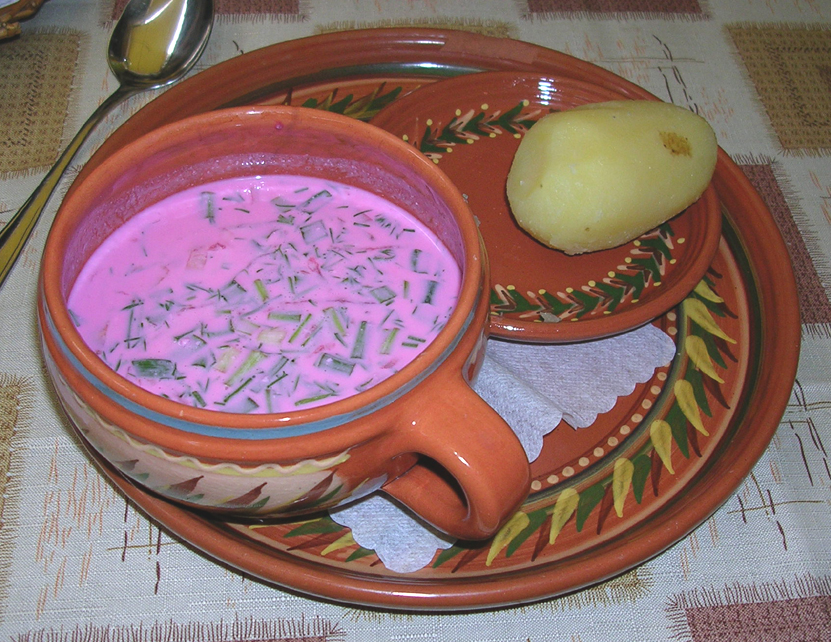
A cold summer soup of cooked beetroot, cucumber, dill and spring onion in kefir or soured milk, bright pink in the bowl. Hot boiled potatoes are served on the side.
Since 2023 Vilnius has held a yearly festival just for this pink soup.
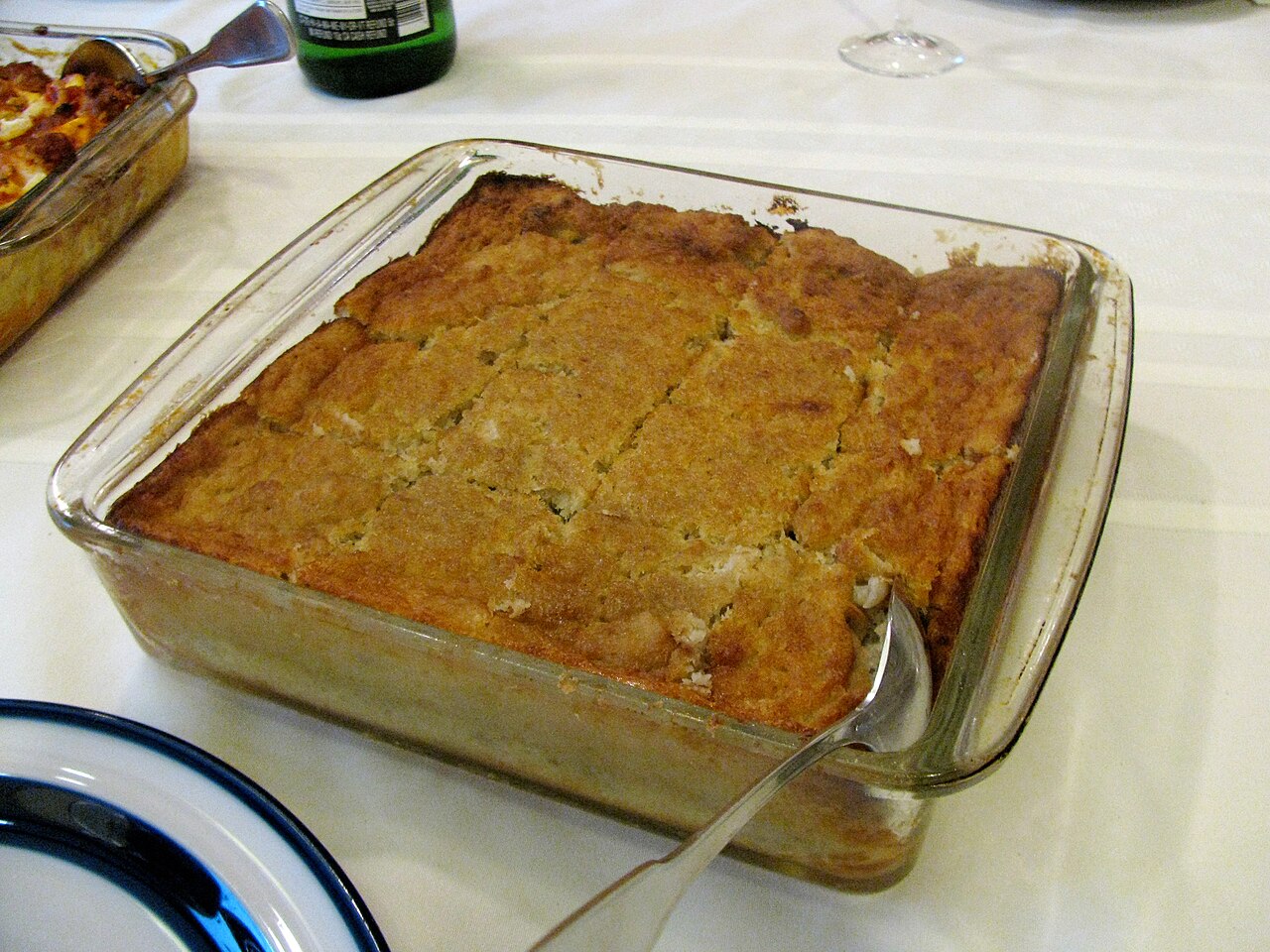
Grated potatoes mixed with eggs, milk, onion and bacon, seasoned with bay leaf or marjoram and baked in a flat dish until golden. It is cut into squares and eaten with sour cream.
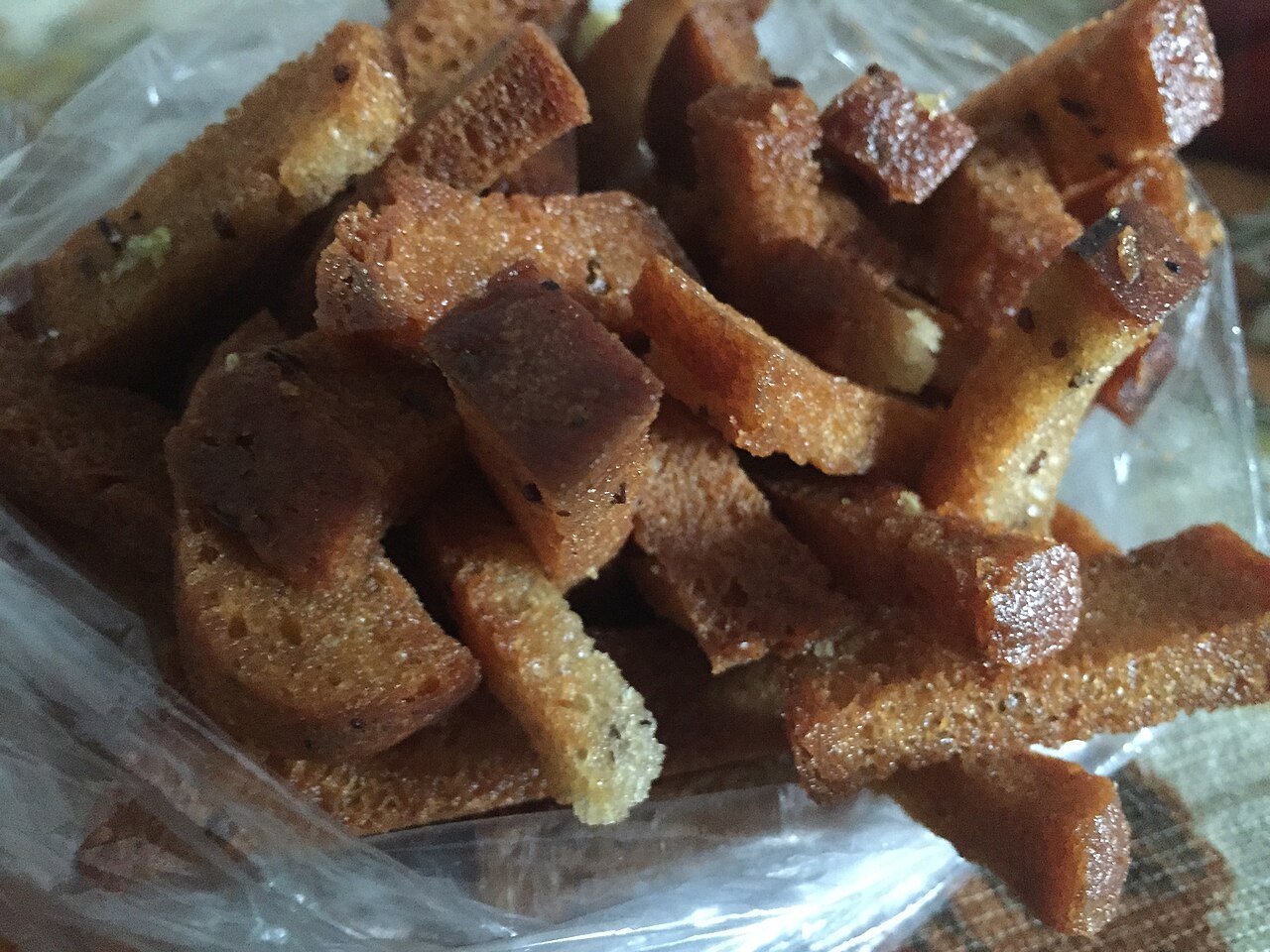
Sticks of dark rye bread fried in oil until crisp and rubbed with garlic. It is the classic snack to share with a glass of beer.
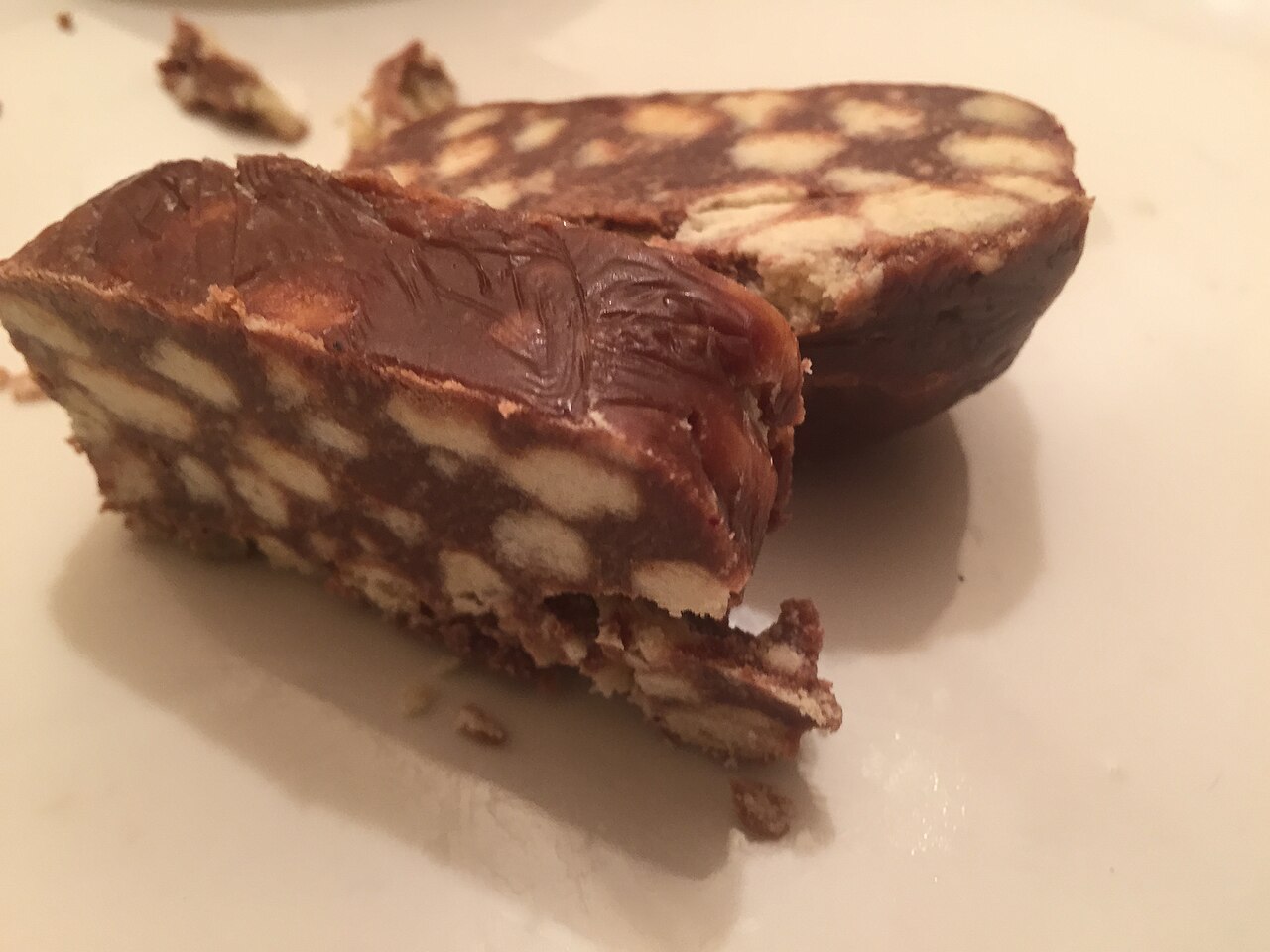
A no-bake chocolate log of broken biscuits bound with cocoa, butter and sweetened condensed milk, chilled and cut into slices. Its name means 'lazy man', because it is so quick to make.
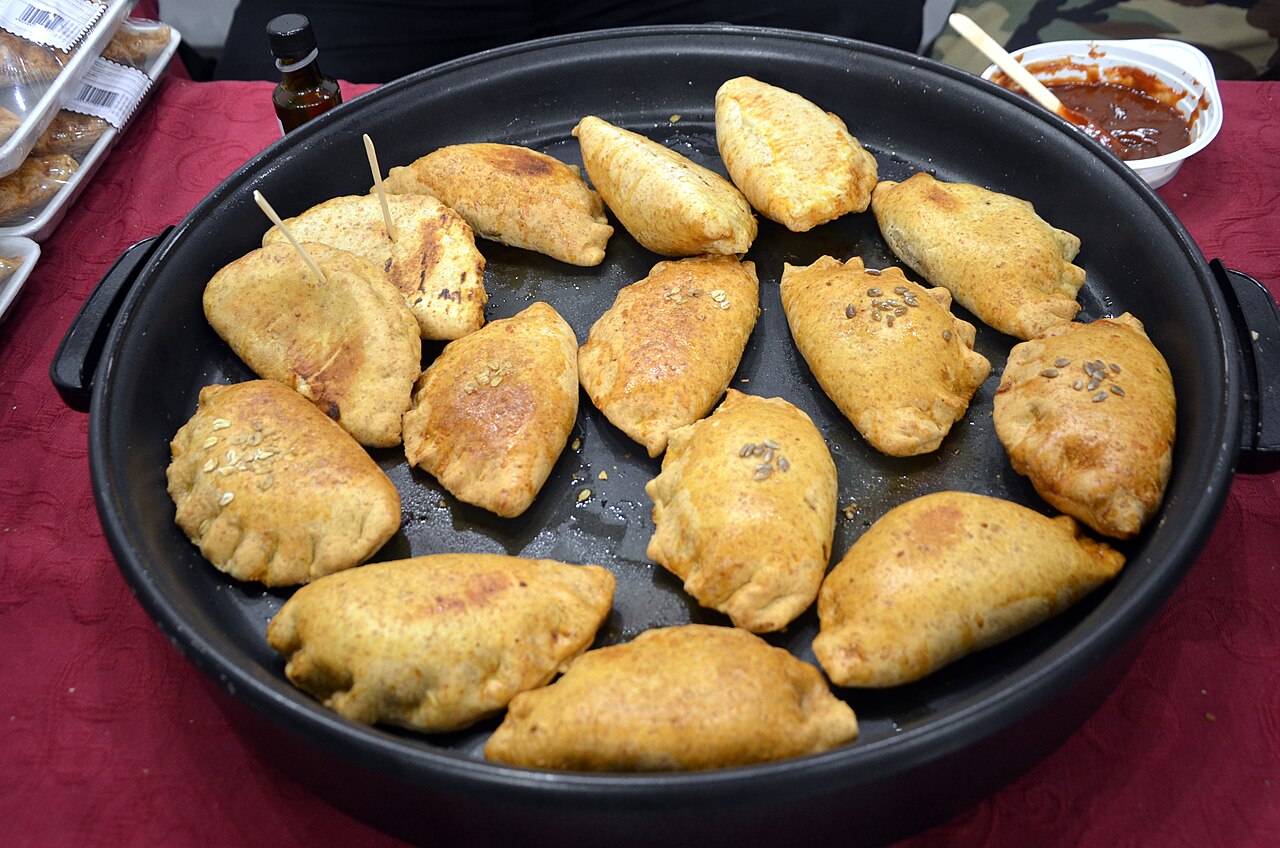
Pastries filled with mutton and onion. Travel guides compare them to Cornish pasties.
The Karaites came from Crimea, brought to Lithuania by Grand Duke Vytautas the Great to serve as his guards.
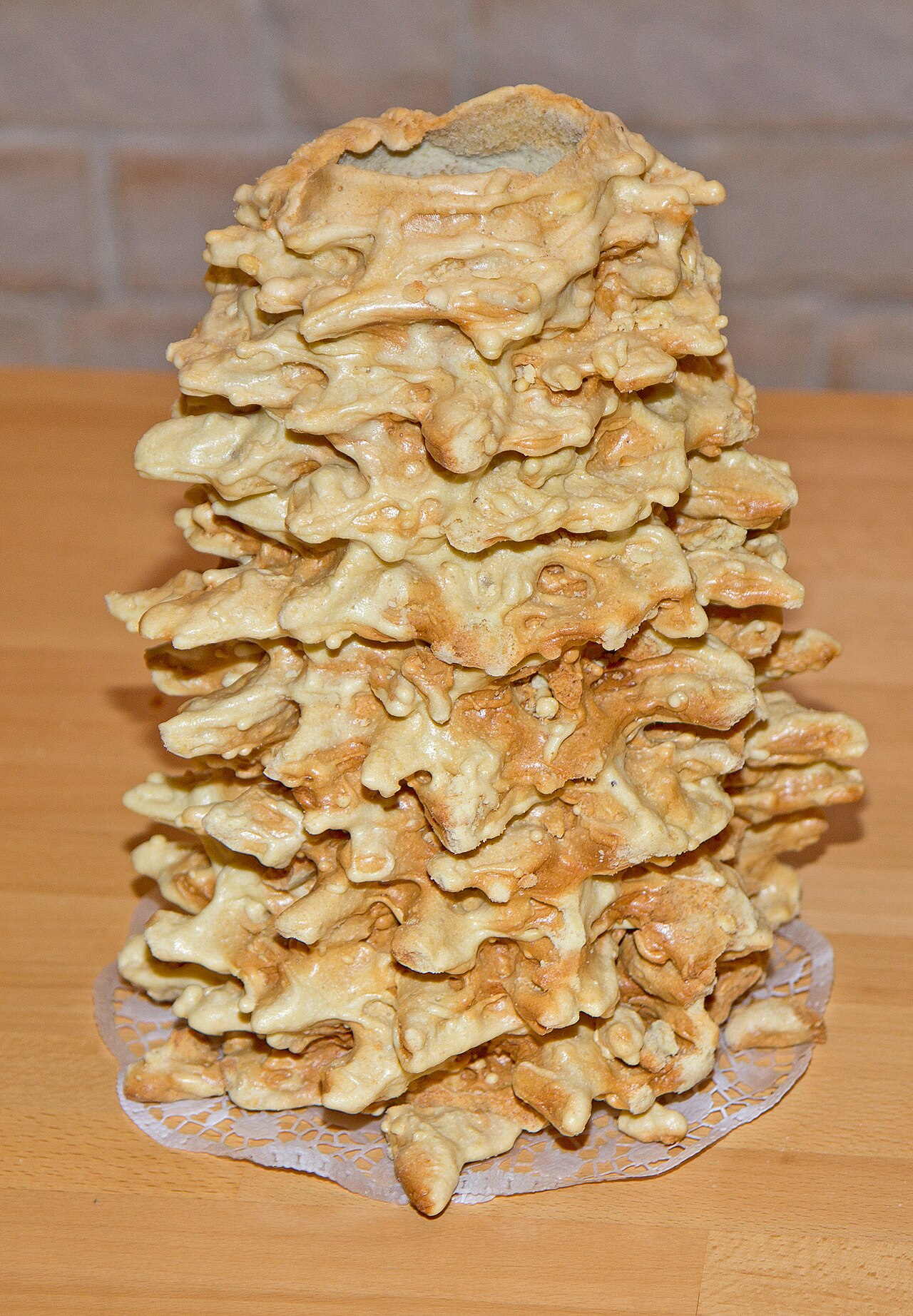
A tall, spiky cake baked on a rotating spit over heat, with batter of butter, eggs, flour, sugar and cream painted on layer by layer. Sliced, it shows rings like a tree trunk.
In 2015 bakers in Druskininkai made a record šakotis 372 cm tall, weighing 85.8 kg.
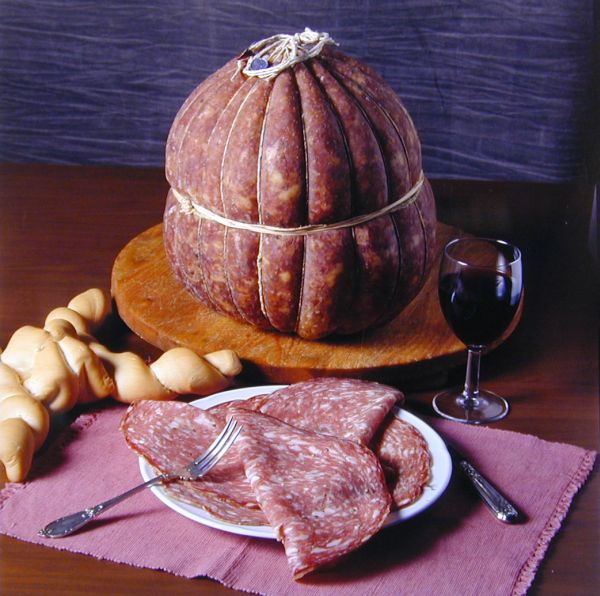
Minced meat and fat seasoned with salt, pepper and garlic, traditionally pressed into a pig's stomach, then dried and cold-smoked. It is sliced thinly for the cold table.
Lietuviškas skilandis is protected in the EU as a Traditional Speciality Guaranteed.
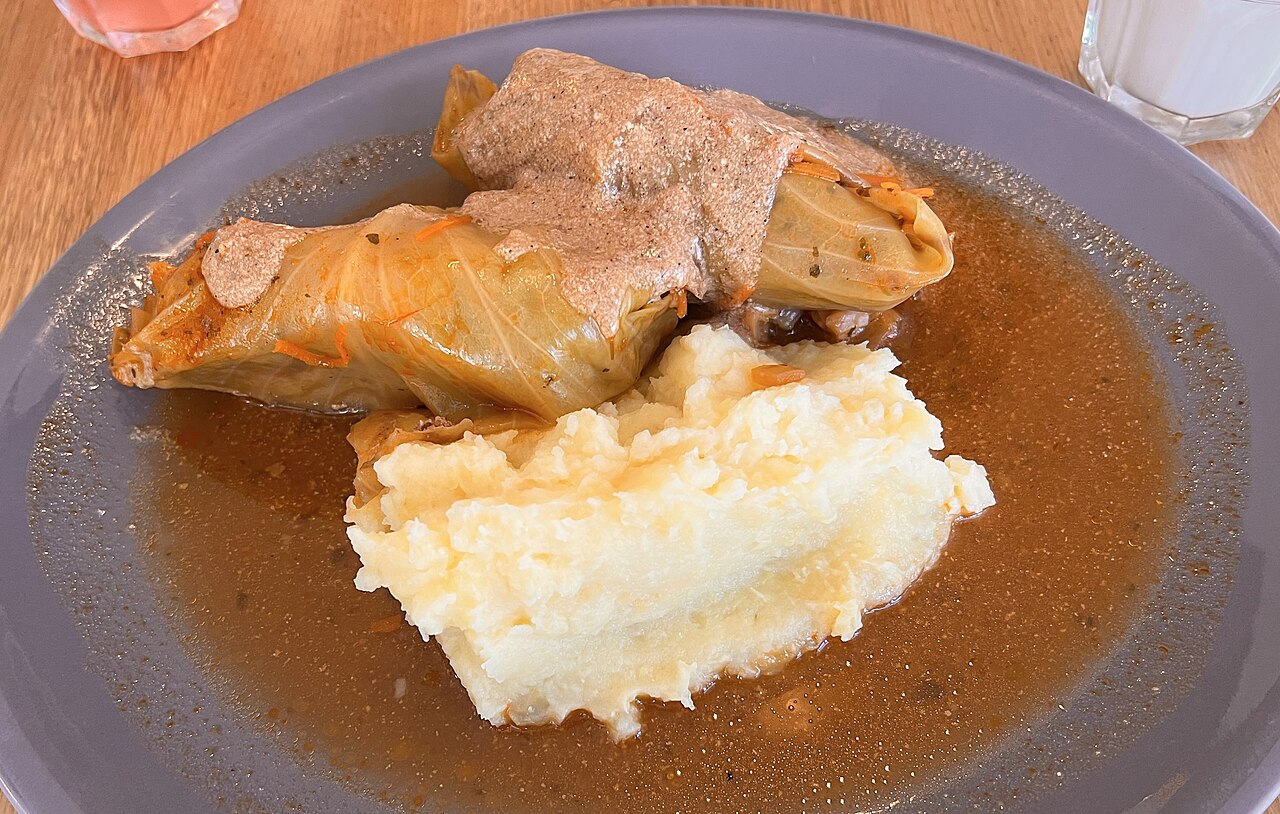
Cabbage leaves wrapped around a filling of minced meat and braised until soft. The name means 'little doves'.
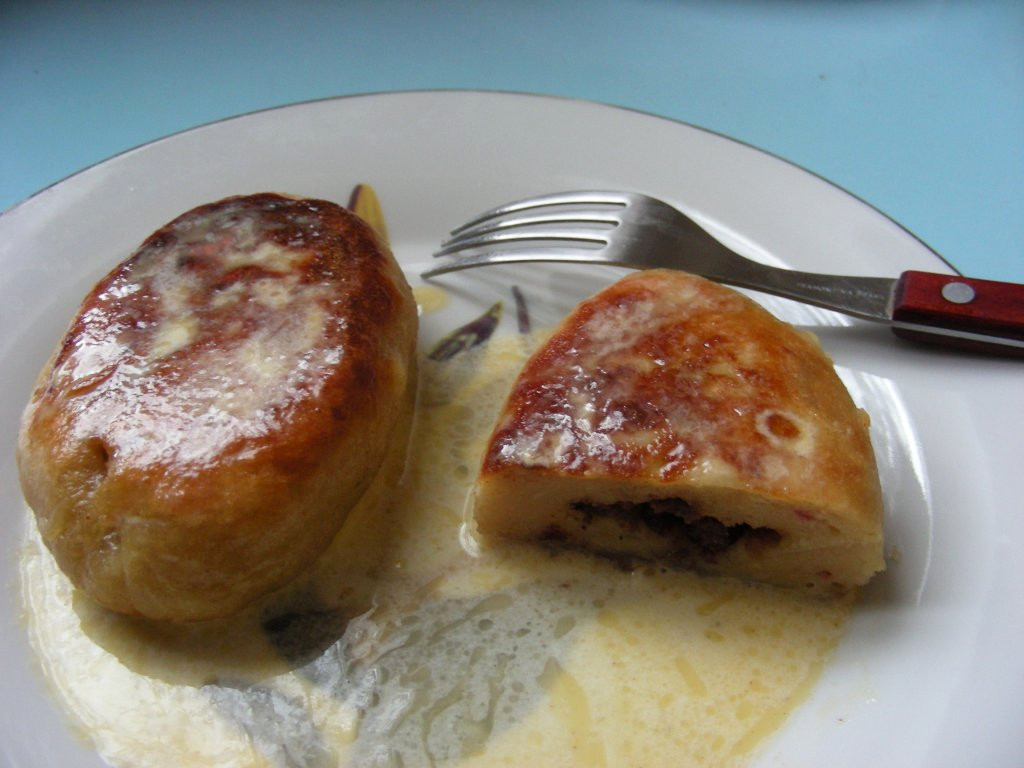
Pancakes made from boiled potatoes and filled with chopped cooked meat. Like most Lithuanian dishes, they are often eaten with sour cream.
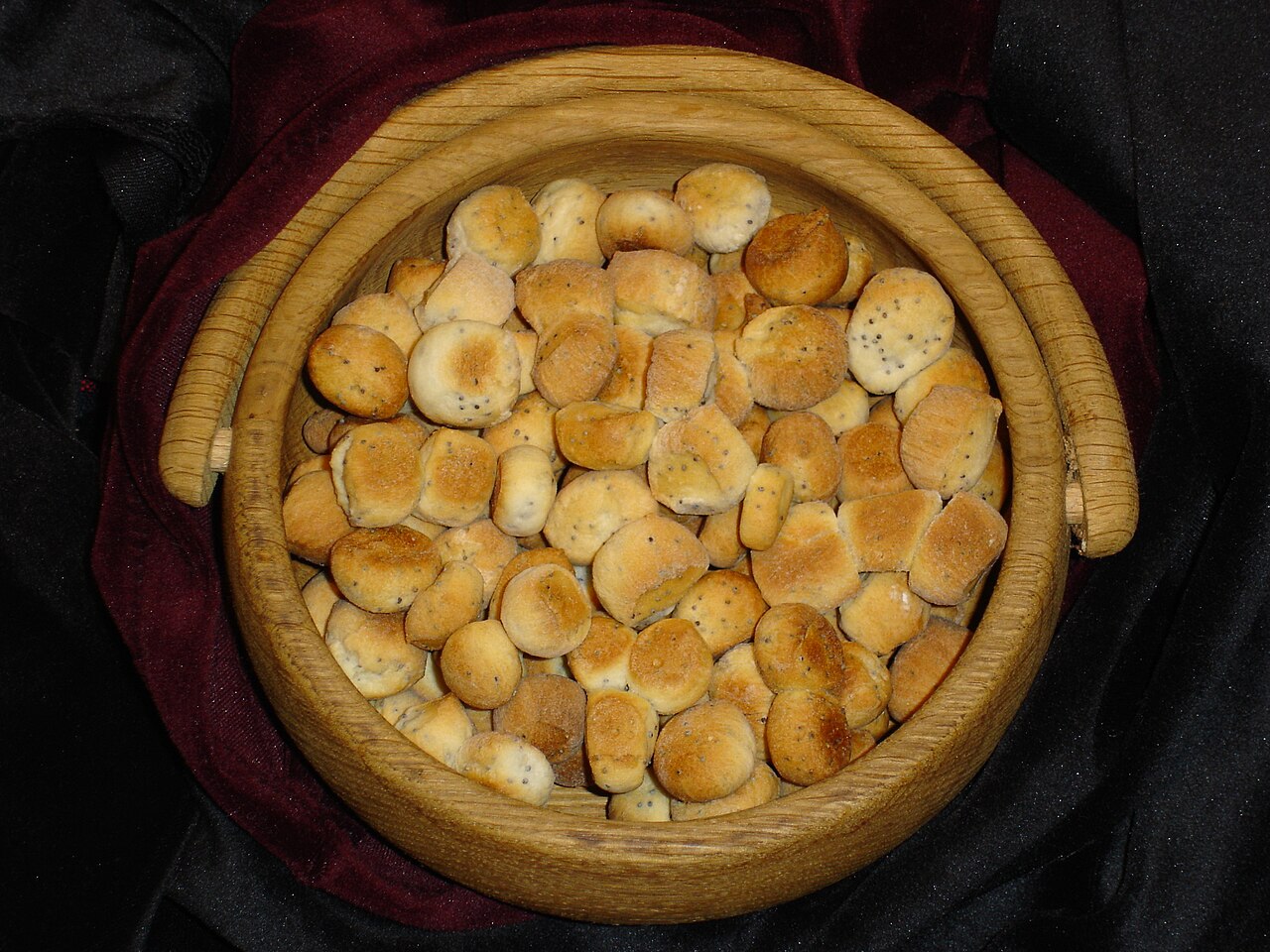
Small, slightly sweet bites of yeast dough with poppy seeds, baked until crunchy. They are eaten on Kūčios, Christmas Eve, often soaked in poppy seed milk.
The Christmas Eve table traditionally has twelve dishes and no meat or dairy, though fish is allowed.
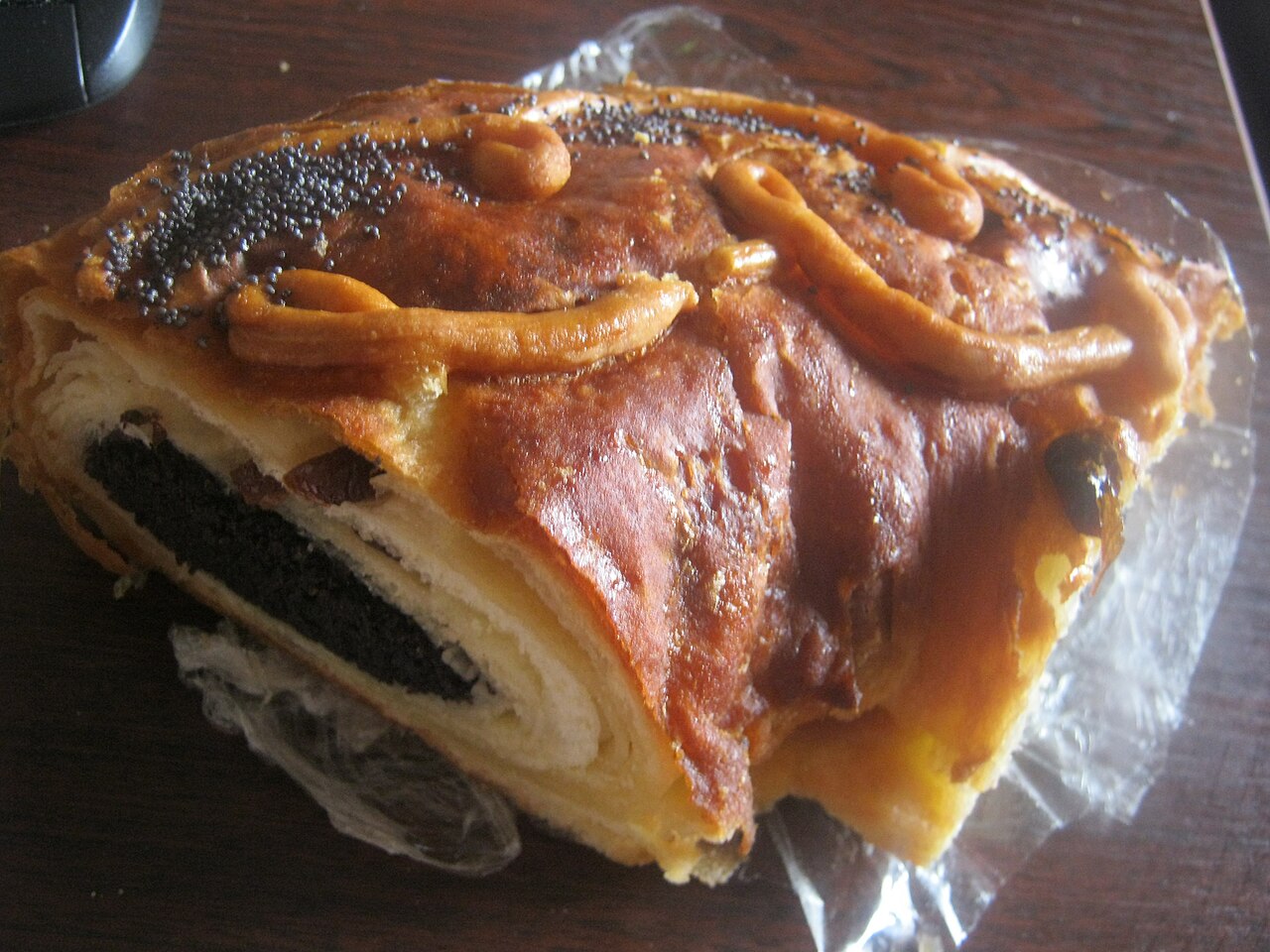
A pastry of thin layers of dough separated by melted butter, like a croissant, often rolled with poppy seed filling. The name means 'one hundred sheets'.
It is said to have arrived with the Tatars whom Vytautas the Great invited to settle in Lithuania.
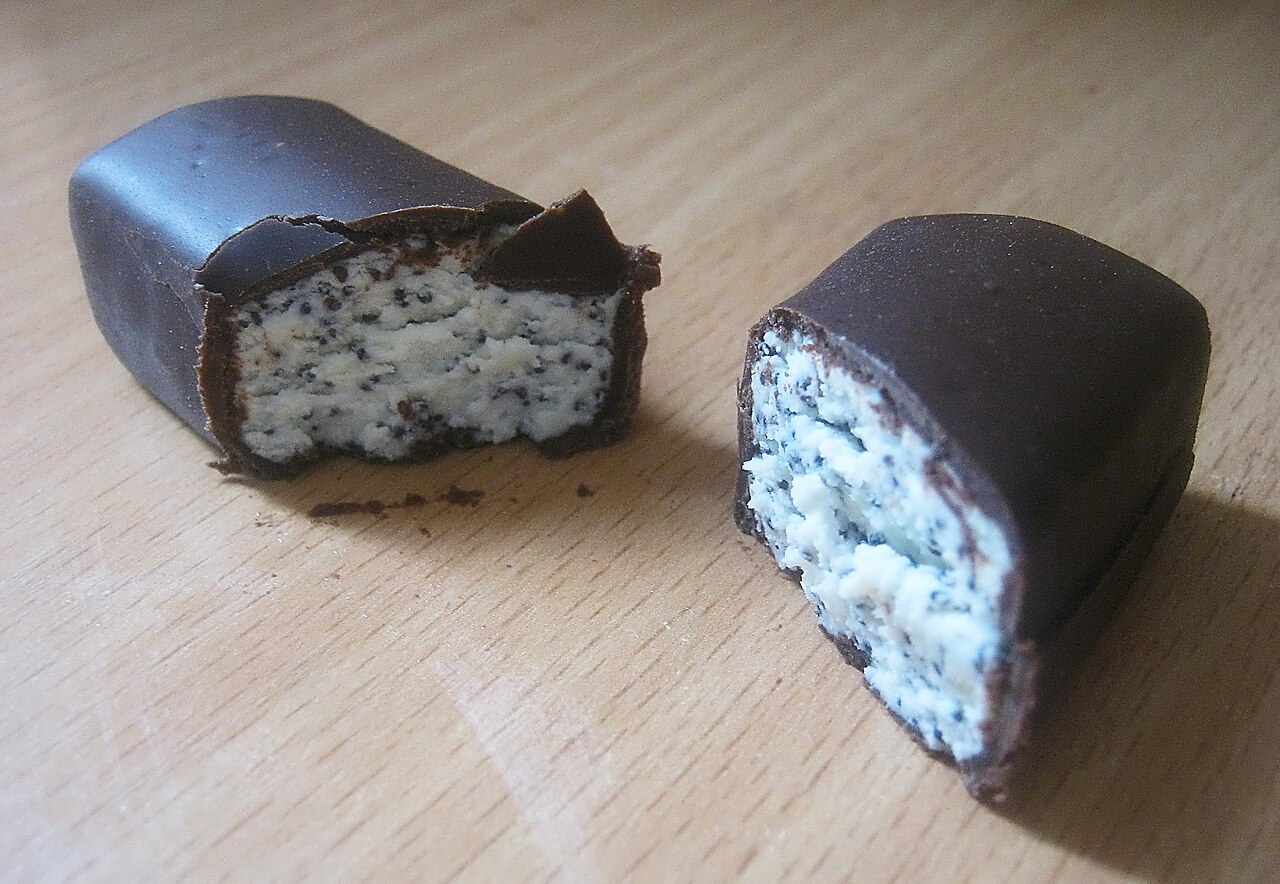
A small bar of sweetened curd cheese, often with a jam or boiled condensed milk filling, coated in chocolate glaze and sold chilled in shops.
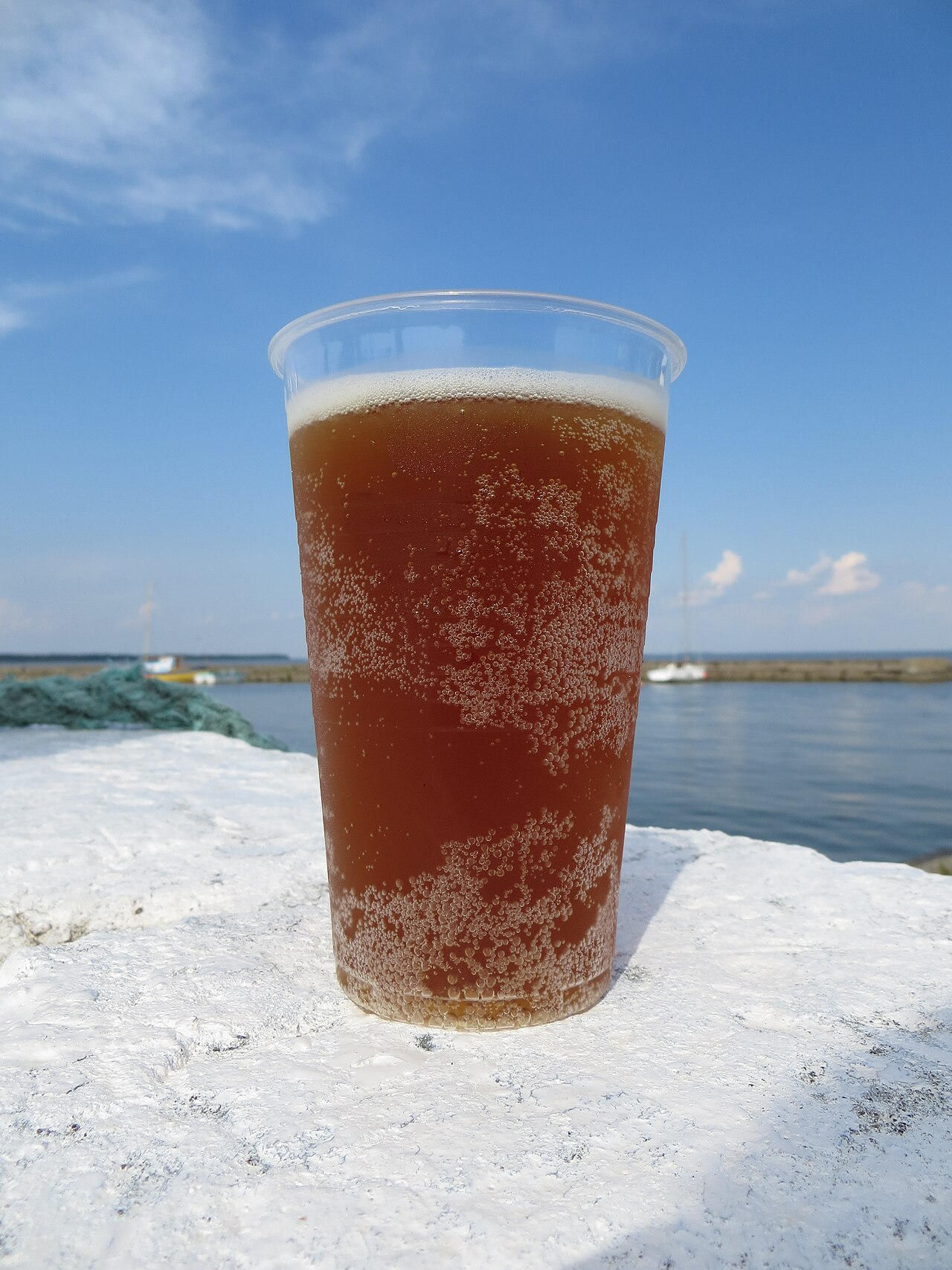
A lightly sour, almost alcohol-free drink made by fermenting black rye bread or rye malt, sometimes flavoured with caraway, berries or apples. Many restaurants brew their own.
The first written recipes for gira in Lithuania date from the 16th century.
Lithuania's cities are small and easy to explore: baroque Vilnius in the south-east, interwar Kaunas where two rivers meet, the port of Klaipėda and seaside Palanga on the coast, and spa towns and castle towns among the lakes and forests.
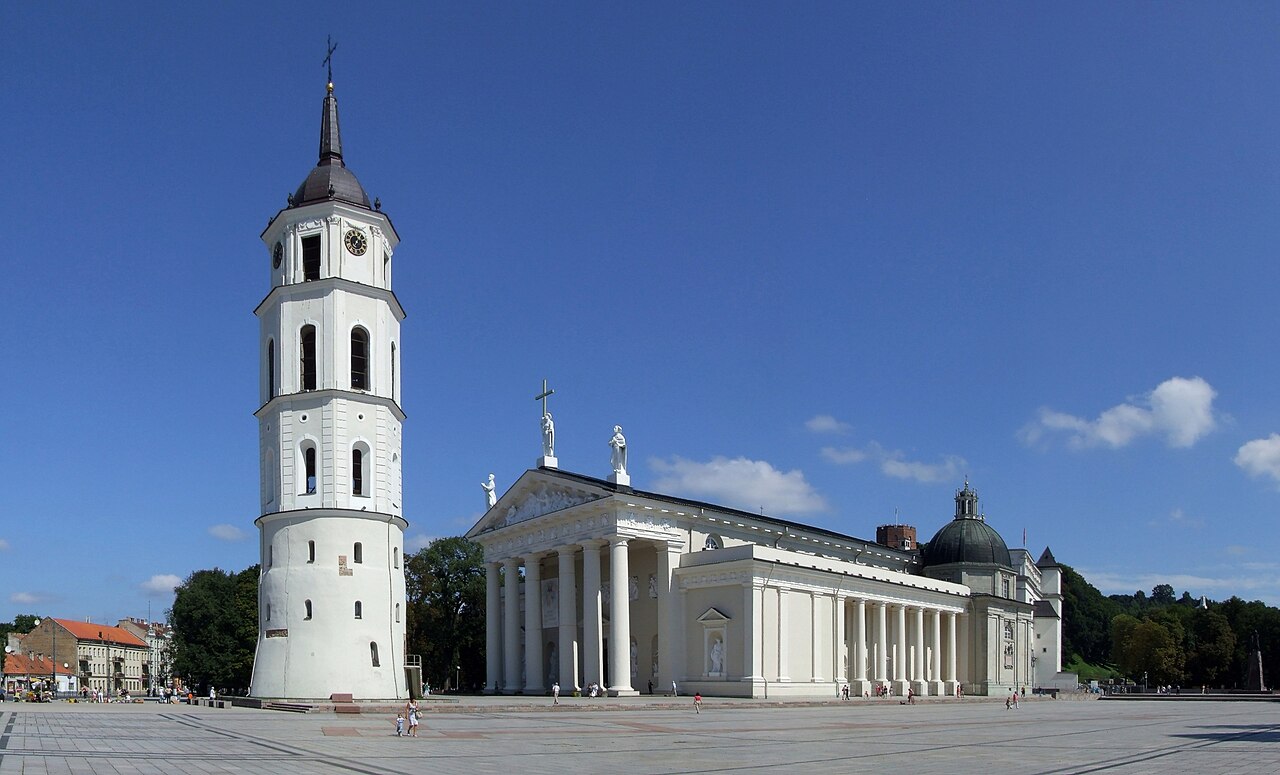
The capital and largest city, with about 620,000 people as of 2026. It lies where the Vilnia river flows into the Neris, and its baroque Old Town is one of the largest in Northern Europe and on the UNESCO list since 1994.
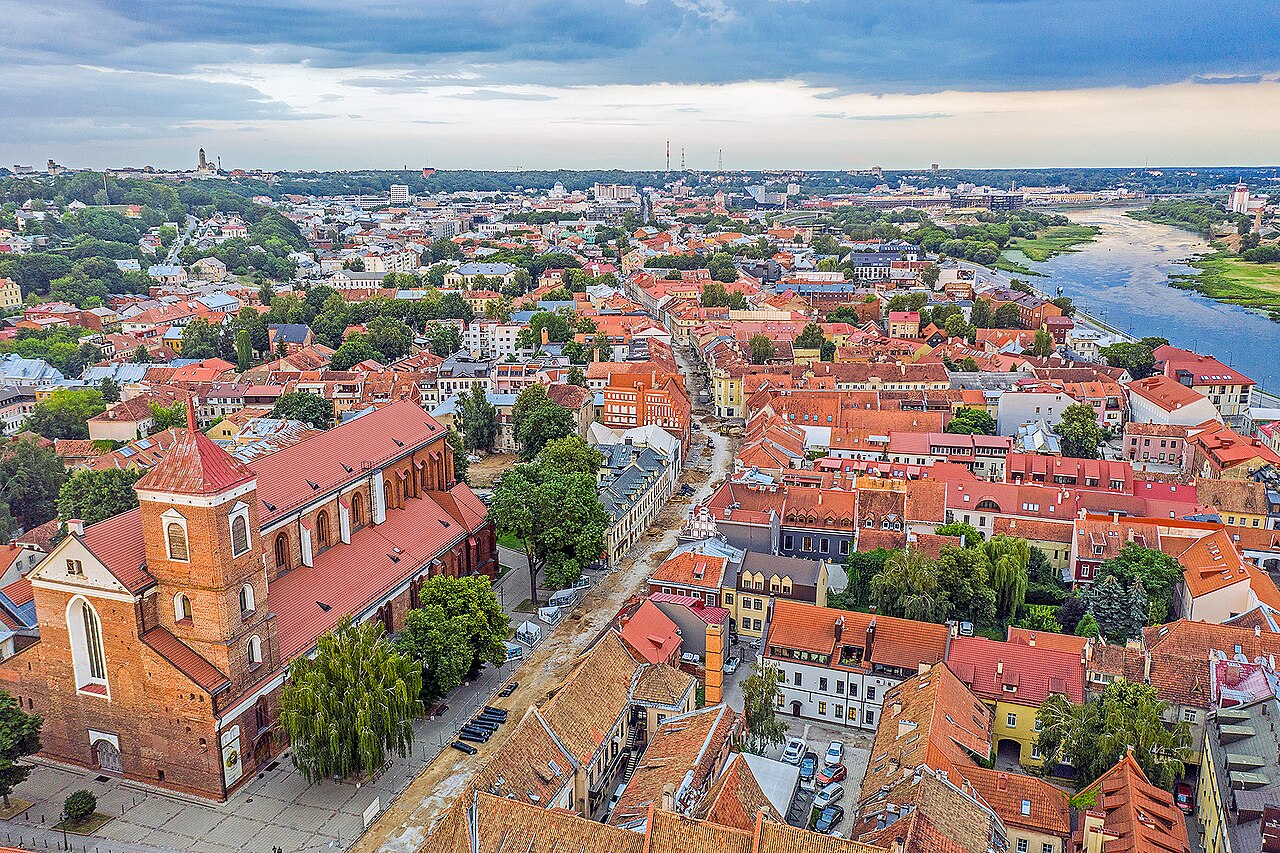
The second-largest city, where the Neris meets the Nemunas. Between the two world wars, while Vilnius was held by Poland, Kaunas was the temporary capital, and it filled with modernist buildings that are now on the UNESCO list.
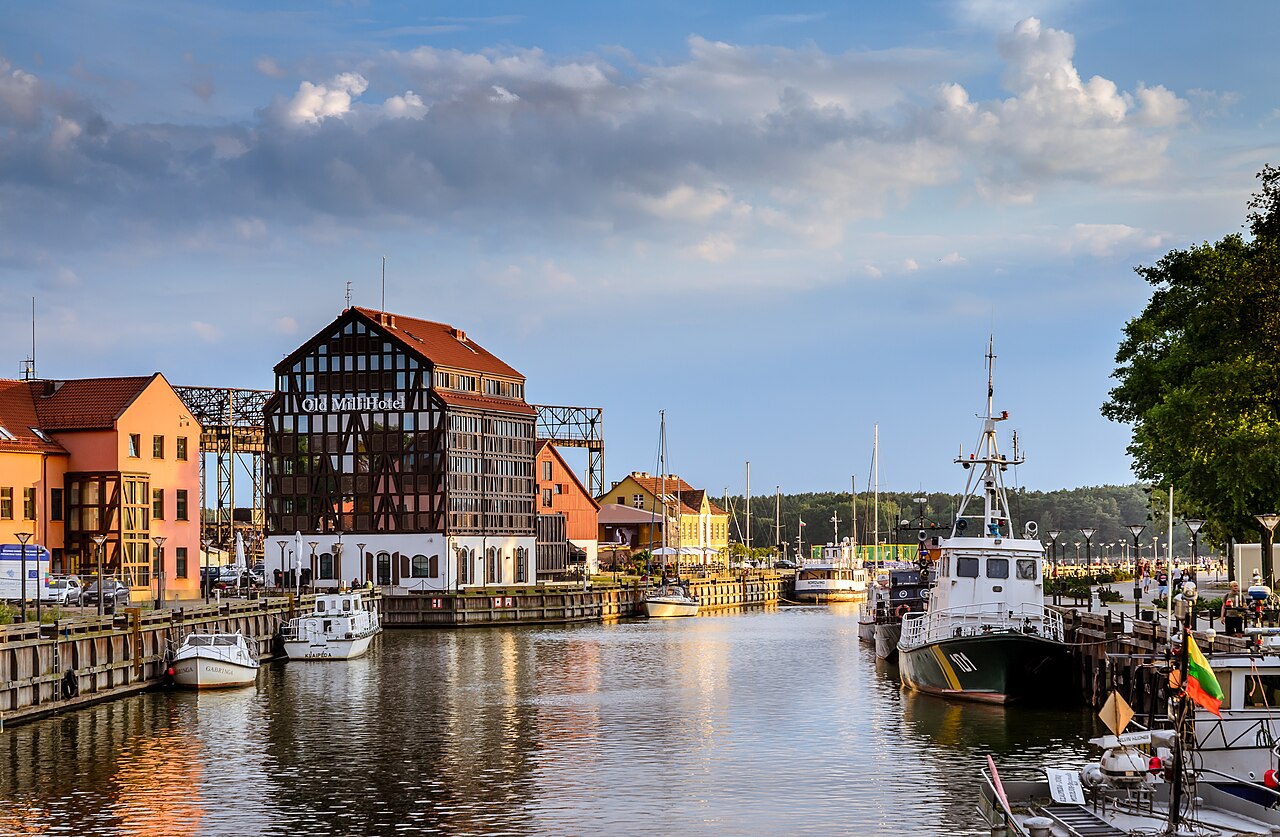
The third-largest city and Lithuania's only major seaport, on the narrow mouth of the Curonian Lagoon. For centuries it was the German town of Memel, and it joined Lithuania in 1923.
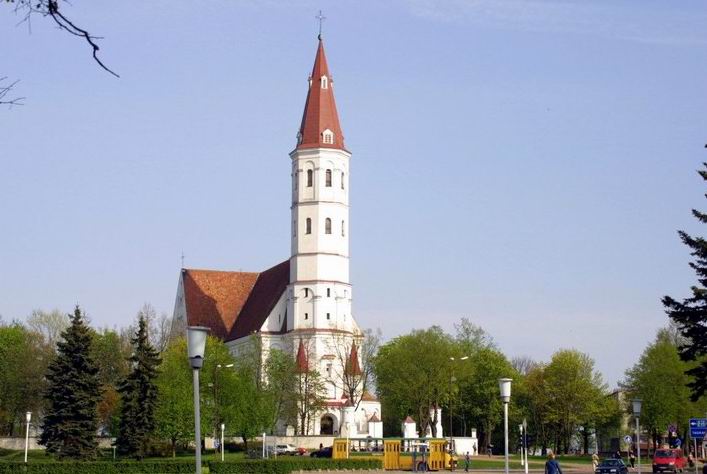
The fourth-largest city, in the north. It counts its birthday from the Battle of Saule on 22 September 1236, and it grew into a great leather and shoe-making centre in the 19th century.
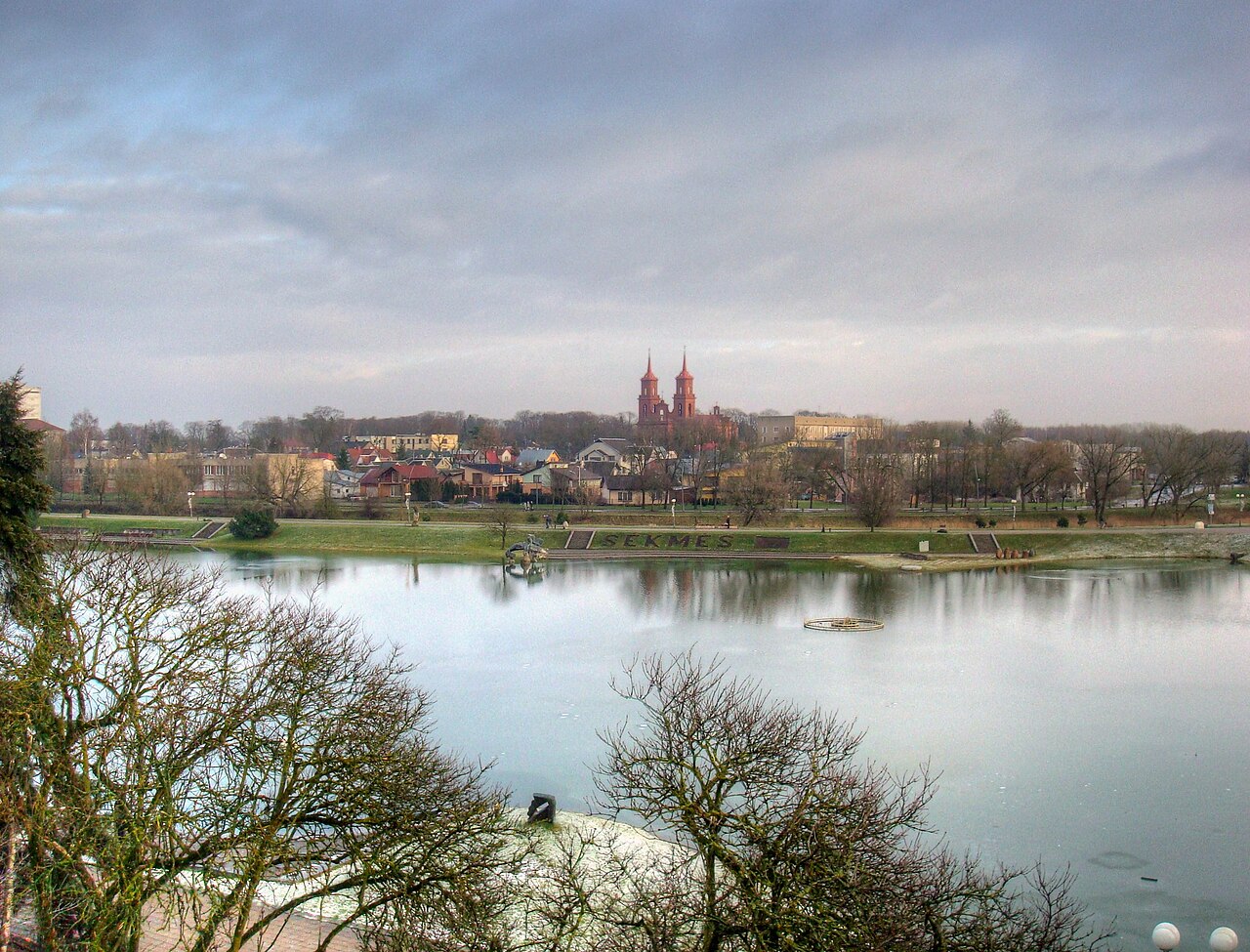
The fifth-largest city, on the Nevėžis river in the north-east. It is an industrial and cultural centre and a gateway to the lakes of the Aukštaitija region.
The main town of Dzūkija, a region of thick pine forests, on the banks of the Nemunas in the south.
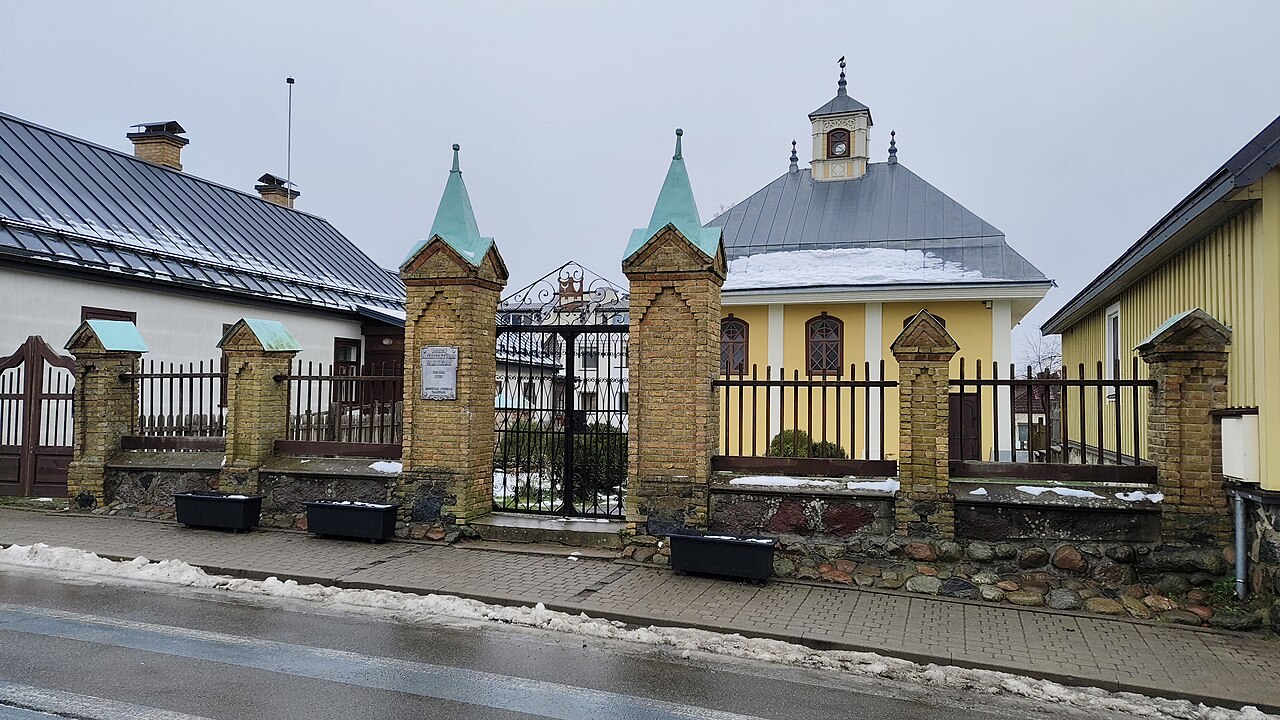
A small lake town 28 km west of Vilnius and a medieval capital of Lithuania. It is surrounded by lakes, and for centuries Karaites, Tatars, Lithuanians, Poles, Russians and Jews lived side by side here.
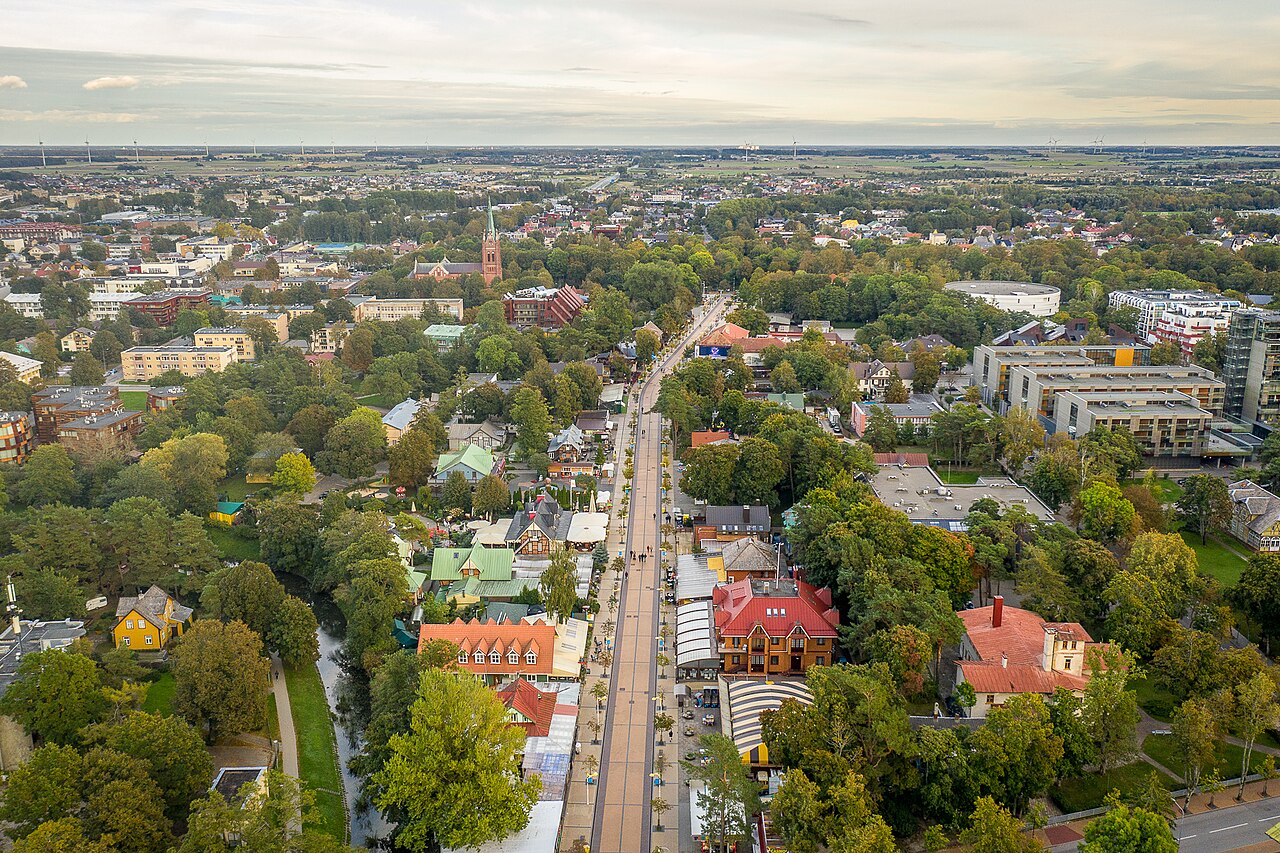
Lithuania's largest and busiest summer resort, with about 18 km of sandy beach and dunes on the Baltic Sea. Its pier has been a favourite place for a stroll since 1892.
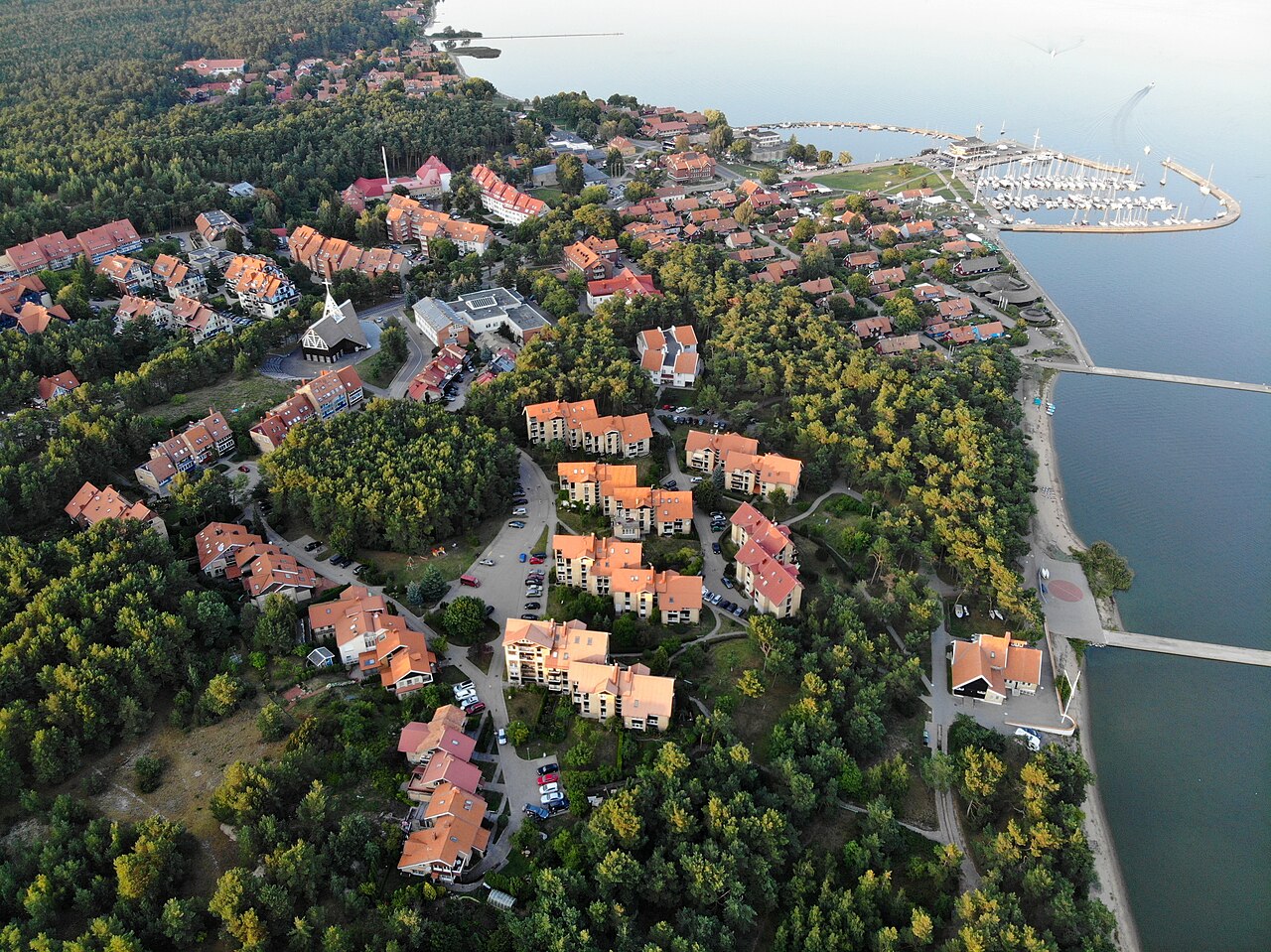
A small resort on the Curonian Spit, between the lagoon and the open sea, and the westernmost point of Lithuania. The writer Thomas Mann spent his summers here from 1930 to 1932.
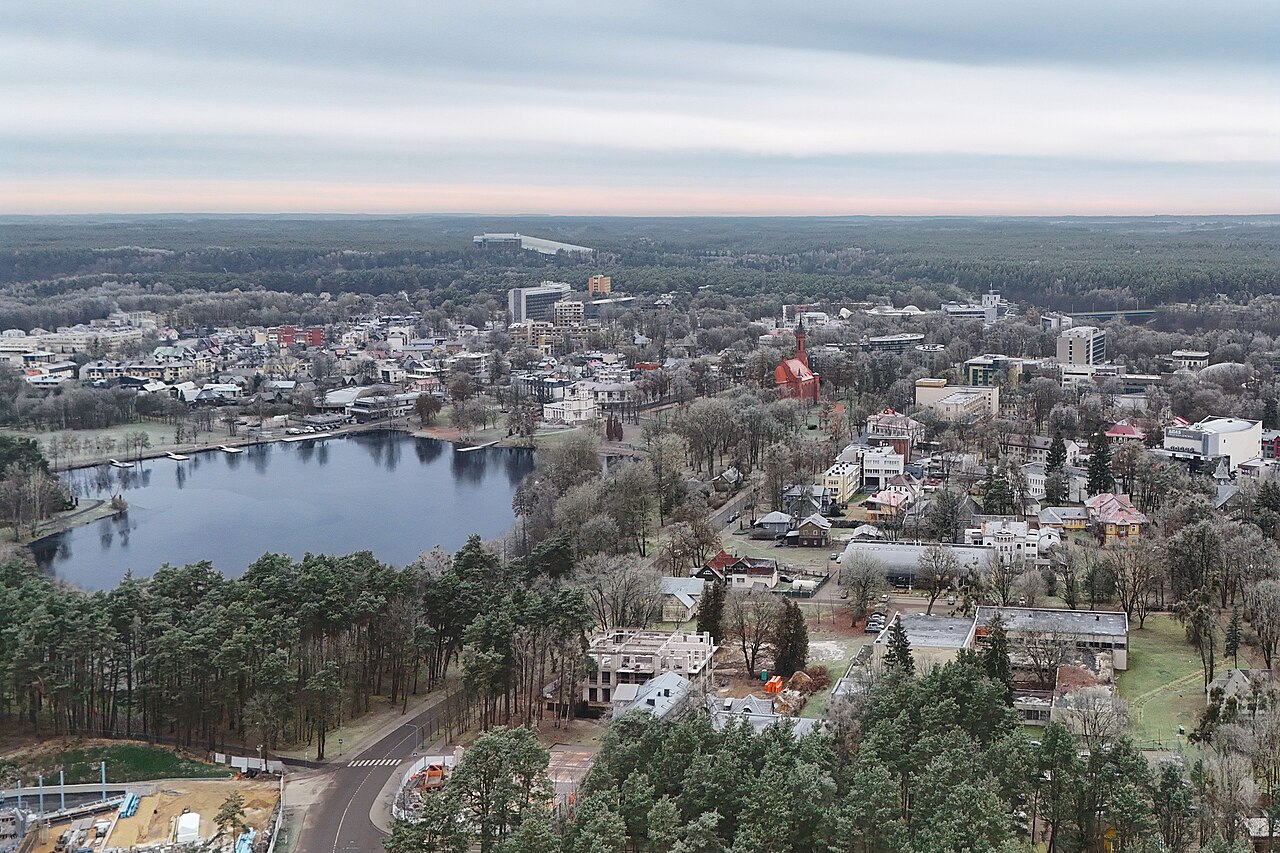
A spa town on the Nemunas in the far south, close to the borders with Belarus and Poland, known for its mineral waters since the 19th century. The painter and composer Mikalojus Konstantinas Čiurlionis lived and worked here from 1896 to 1910.
Gothic, Renaissance, baroque and neoclassical buildings stand side by side in one of the largest old towns of Northern Europe, with about 1,500 buildings on 70 streets and lanes. Above it rises Gediminas's Tower, and in the south stands the Gate of Dawn, a 16th-century city gate with a revered painting of the Virgin Mary.
UNESCO World Heritage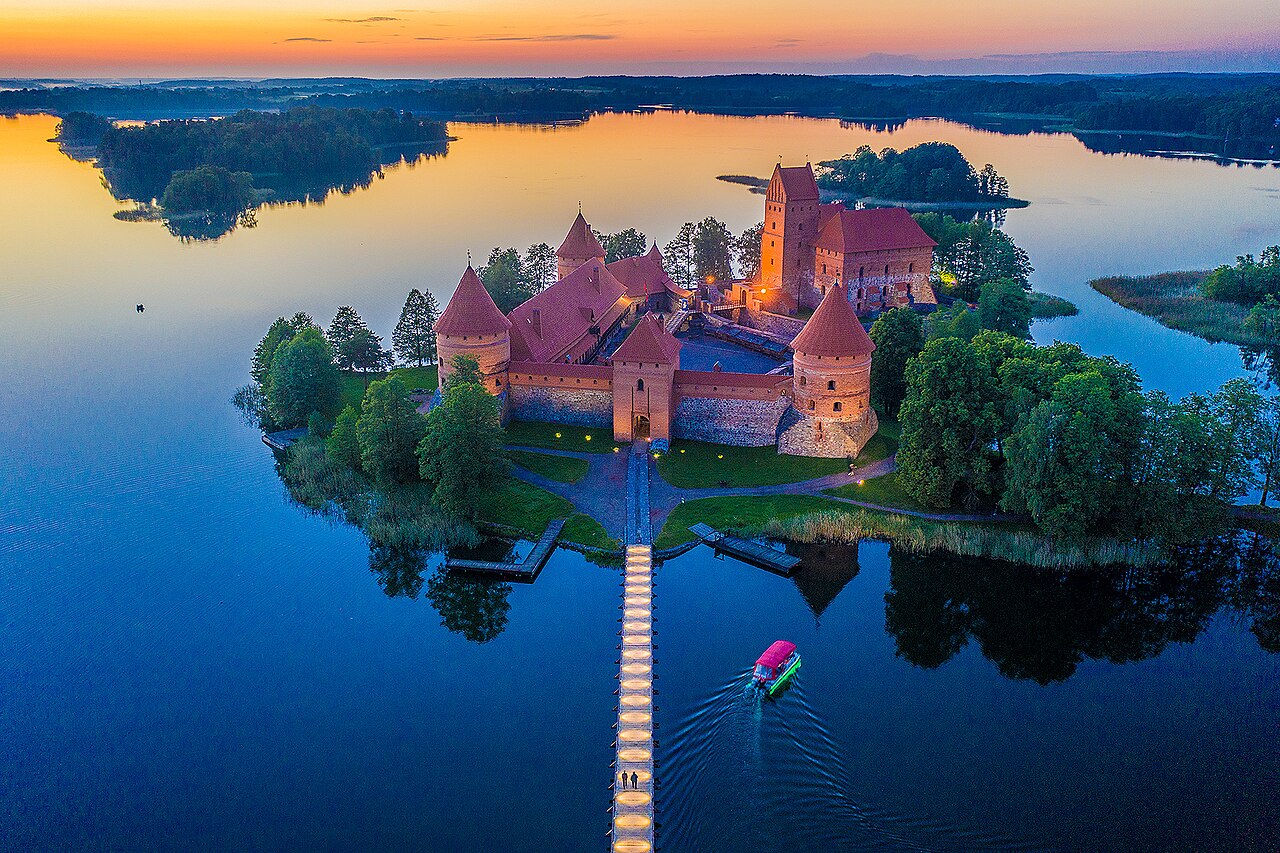
A brick castle on an island in Lake Galvė, begun by Grand Duke Kęstutis in the 14th century and finished around 1409 by his son Vytautas the Great, who died here in 1430. It was rebuilt in the 1950s and 1960s and now holds a history museum.
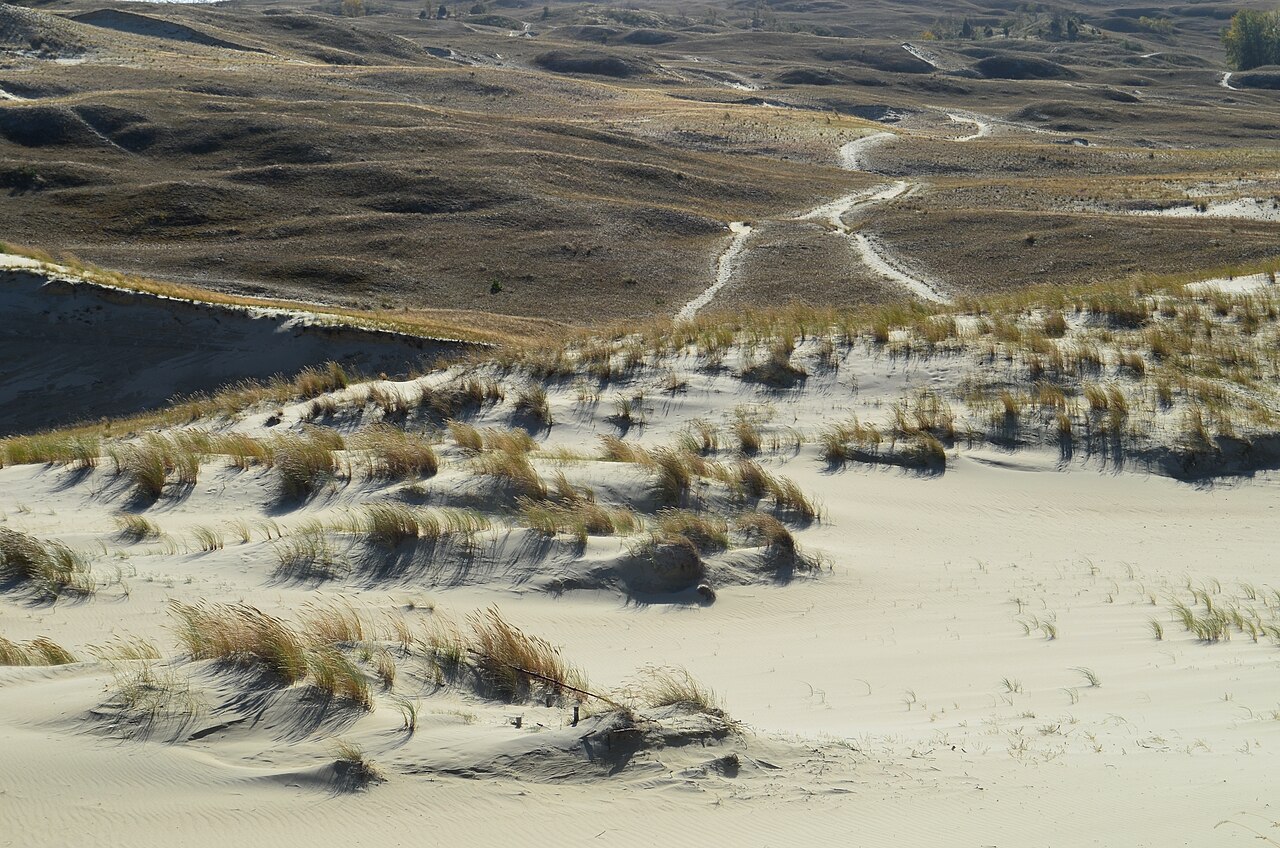
A 98 km curved strip of sand dunes between the Baltic Sea and the Curonian Lagoon, shared by Lithuania and Russia. Just south of Nida the drifting Parnidis Dune rises to 52 metres, with a 13.8 m stone sundial on top.
UNESCO World Heritage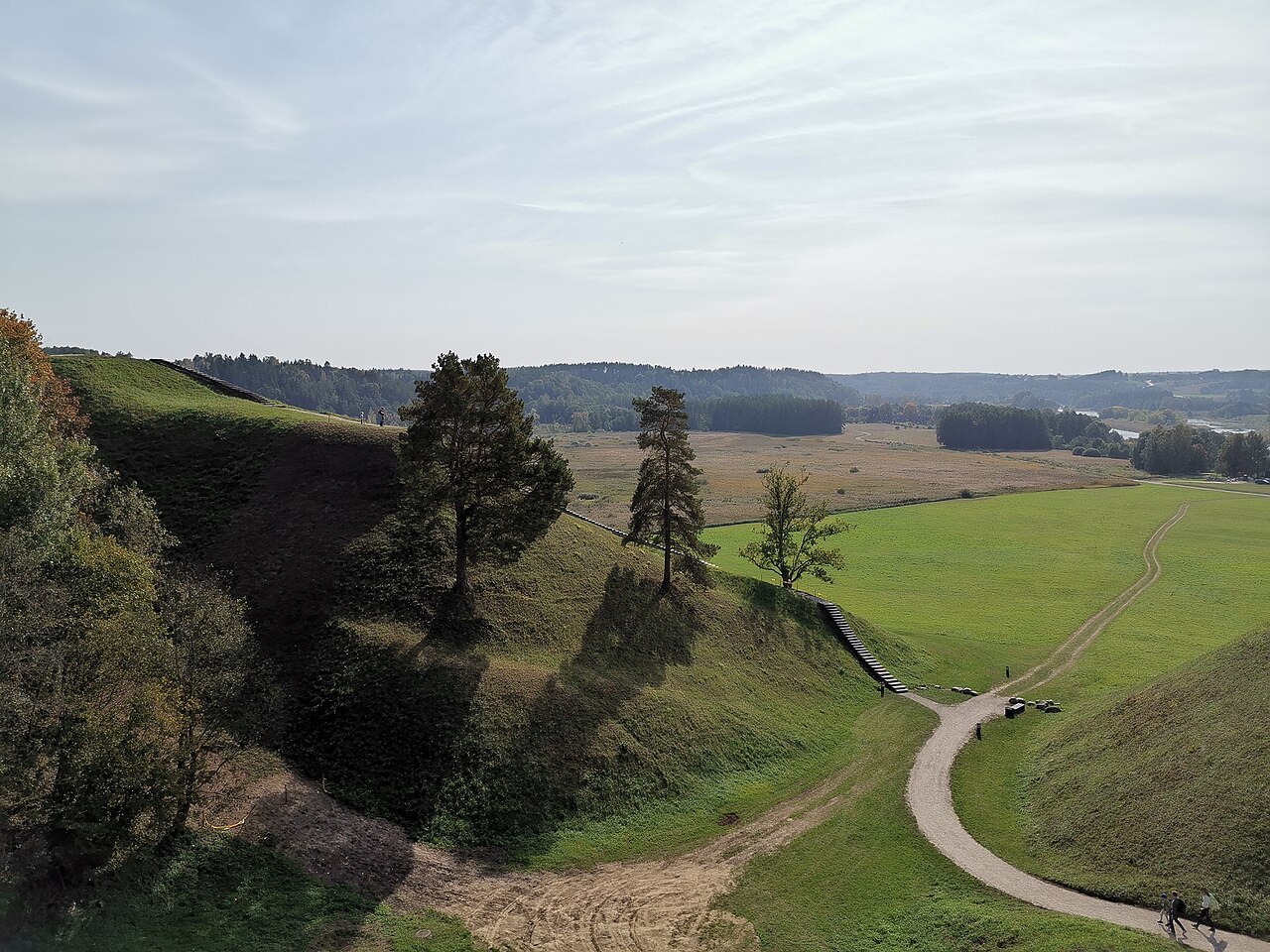
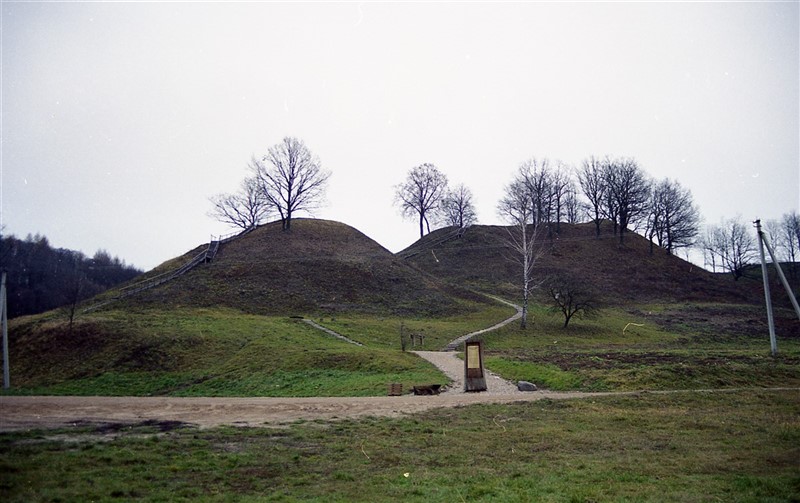
Grassy hillforts above the Neris river mark a medieval capital of the Grand Duchy of Lithuania, first mentioned in 1279 when the Teutonic Knights besieged it. It lies about 35 km from Vilnius and is on the UNESCO list since 2004.
UNESCO World Heritage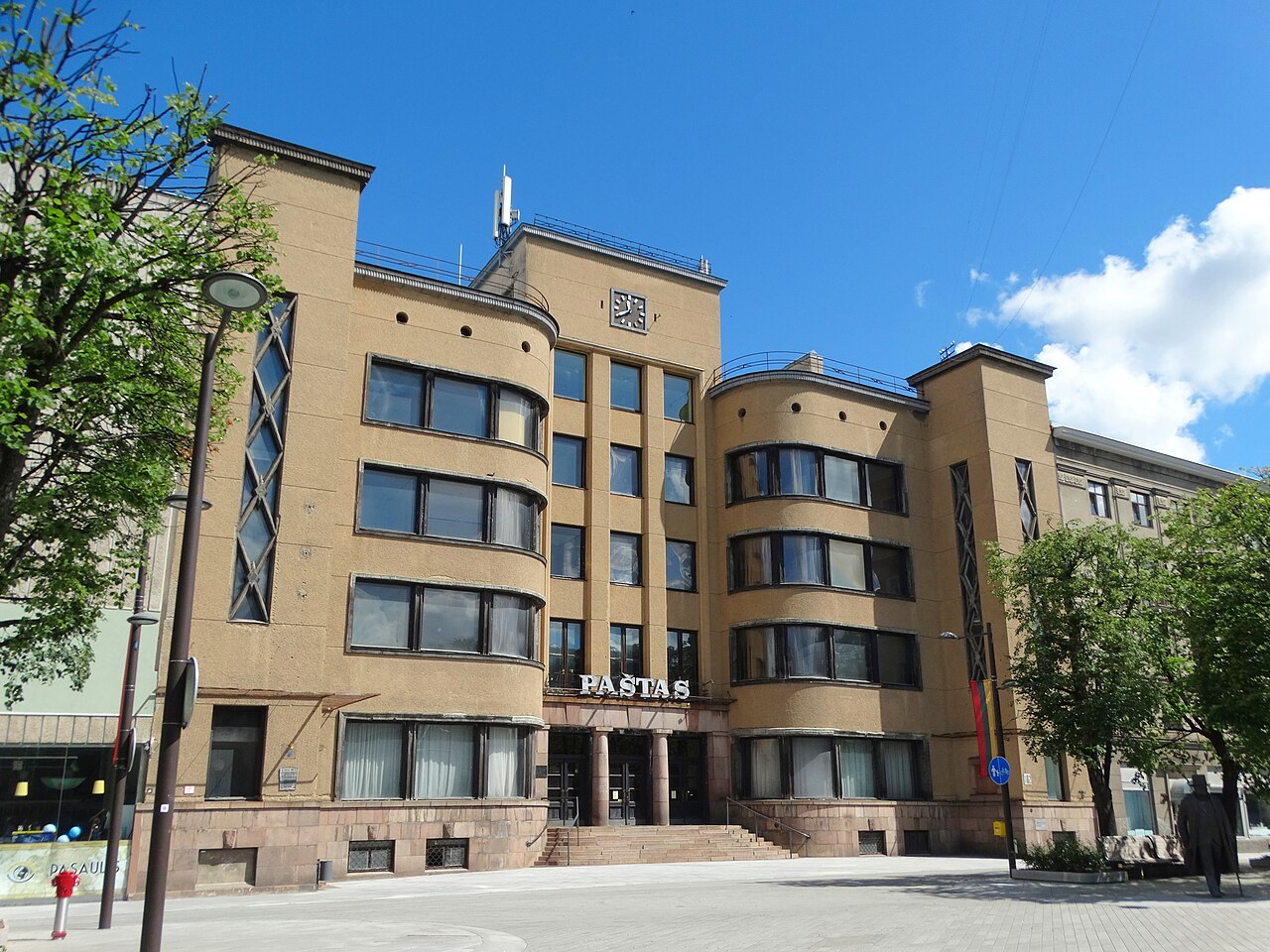
About 12,000 buildings went up in Kaunas between the two world wars, when it was the temporary capital. The best of them, such as the Central Post Office and the Church of the Resurrection of Christ, joined the UNESCO list in 2023.
UNESCO World Heritage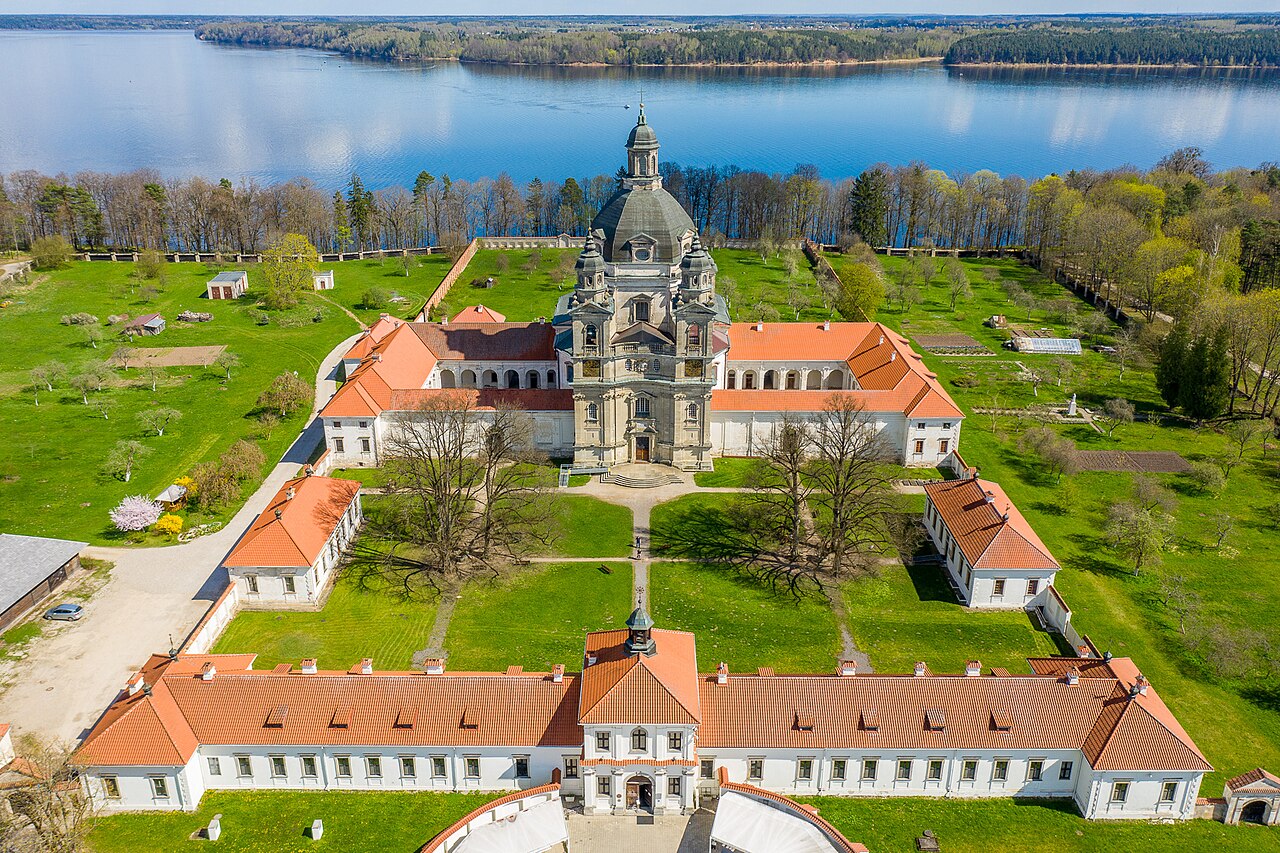
The largest monastery complex in Lithuania and its finest baroque building, founded in 1664 by the chancellor Krzysztof Zygmunt Pac on a peninsula in the Kaunas Reservoir. Italian architects gave the church a six-sided plan and a curved front, and its interior is rich in marble.
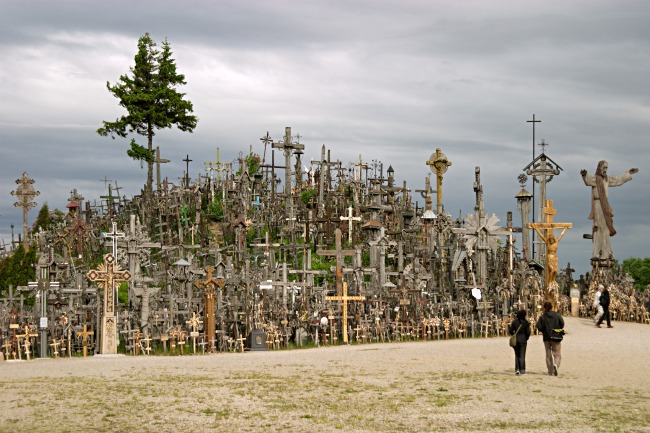
A small hill about 12 km north of Šiauliai covered with crosses, rosaries and statues, about 100,000 of them by 2006. The first crosses were probably placed after the 1831 uprising. Soviet authorities bulldozed the hill three times, but people kept bringing new crosses.
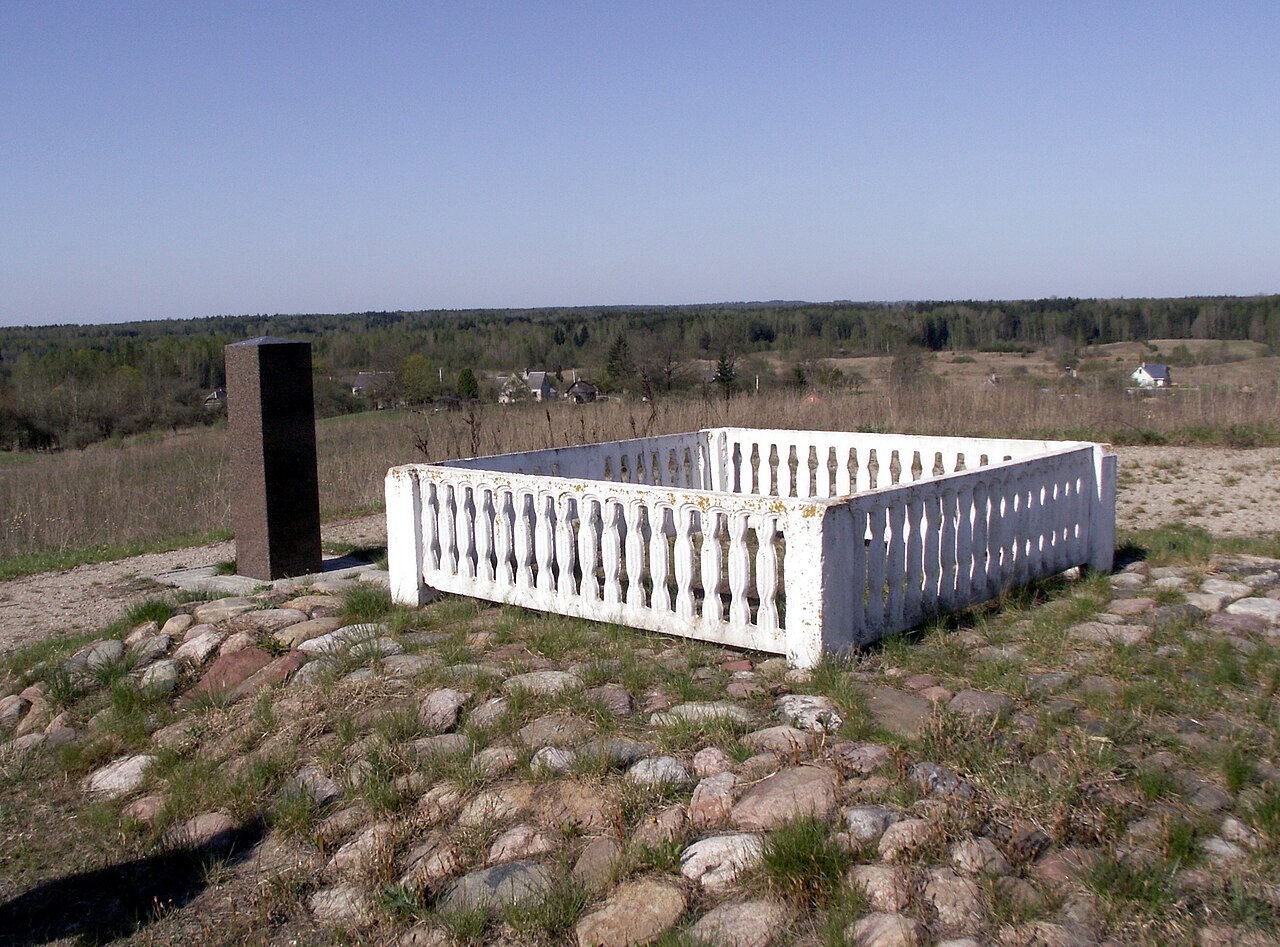
One of three Lithuanian survey points of a chain of triangles from Norway to the Black Sea, used between 1816 and 1855 to measure the size and shape of the Earth. The whole chain runs through ten countries and is on the UNESCO list since 2005.
UNESCO World Heritage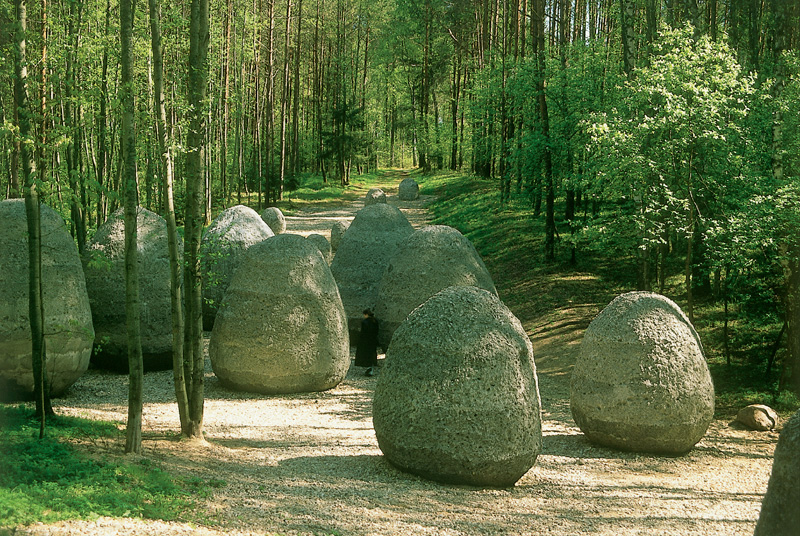
A 50-hectare open-air sculpture park about 17 km from Vilnius, created near the point that French geographers named the centre of Europe in 1989. It shows more than 90 works by artists from 27 countries.
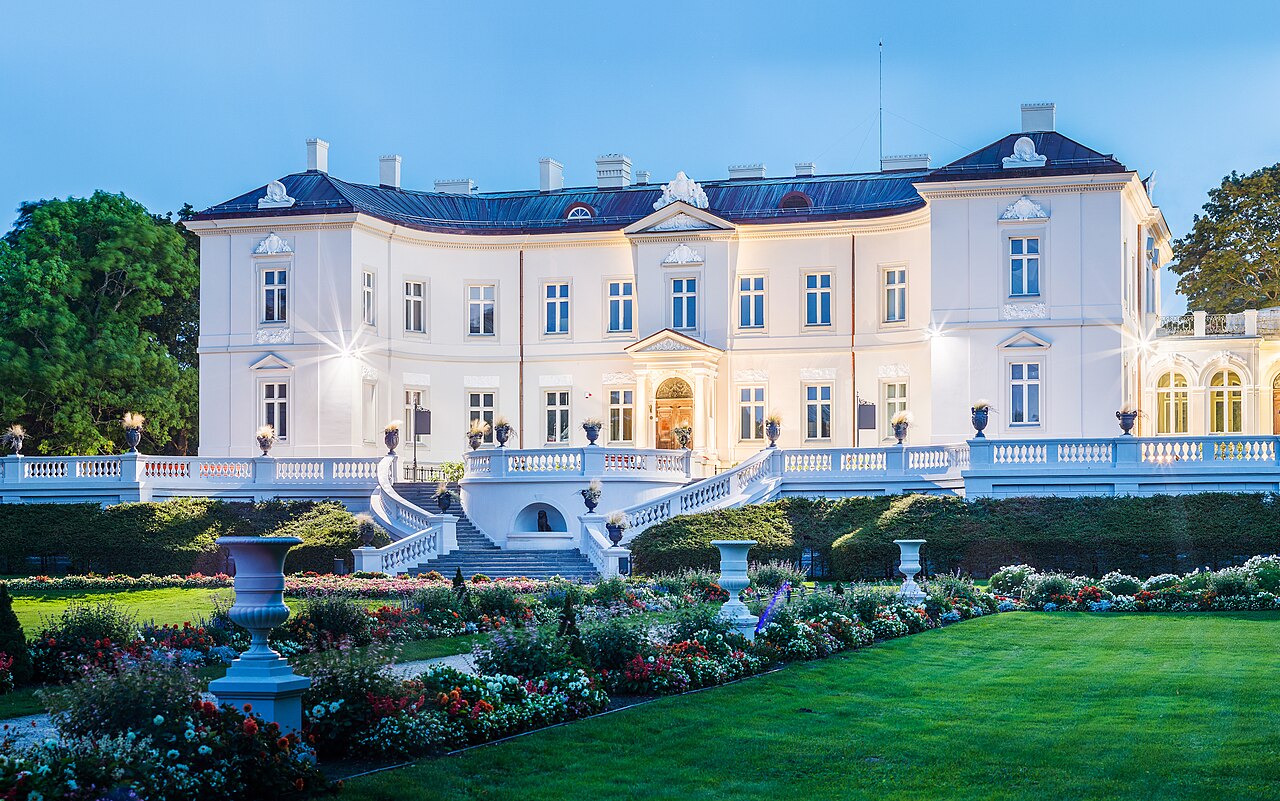
A museum in the restored 19th-century Tiškevičiai Palace, set in a large botanical park. Its collection holds about 28,000 pieces of amber, about 15,000 of them with insects, spiders or plants trapped inside.
Lithuanian is believed to be the most conservative living Indo-European language. It keeps many features of Proto-Indo-European, the ancient ancestor of the whole language family, so it is important for linguists.
In 1989 a scientist at France's National Geographic Institute calculated that the geographic centre of Europe lies in Lithuania, about 26 km north of Vilnius. Other places in Europe make similar claims.
Basketball is the national sport. The men's team has won the European championship three times, in 1937, 1939 and 2003, and about 76% of people watched the national team's games in 2014.
On 23 August 1989 about two million people held hands in the Baltic Way, a human chain 675 km long across Lithuania, Latvia and Estonia.
On 1 April 1997 the Vilnius district of Užupis declared itself an independent republic. Its tongue-in-cheek constitution, on a wall in many languages, says people have the right to be happy, and also the right to be unhappy.
Cepelinai, the national potato dumplings, are named after Count Ferdinand von Zeppelin, because they look like his airships.
The highest point in Lithuania, Aukštojas Hill, is only 293.84 metres high. It was found to be the highest by GPS measurement in 2004, and its name was chosen in a contest.
For about 40 years, until 1904, printing Lithuanian in the Latin alphabet was banned in the Russian Empire. Book smugglers, called knygnešiai, carried Lithuanian books across the border from East Prussia.
The national anthem, 'Tautiška giesmė', has both words and music by one man, Vincas Kudirka, who wrote it in 1898.
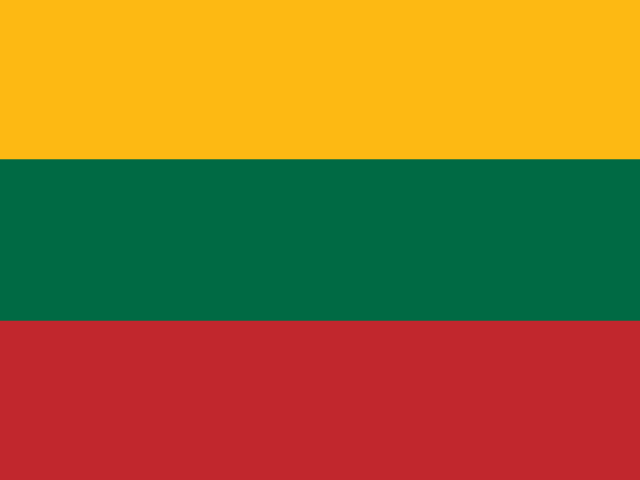
The yellow, green and red flag was adopted on 25 April 1918. Under Soviet rule Soviet flags replaced it, and it returned on 18 November 1988, before independence was restored.
Women in Lithuania gained the vote in the 1918 constitution and first used it in 1919, among the first countries in the world to allow it.
Lithuanian cross crafting, the carving of tall wooden crosses and shrines, was recognised by UNESCO in 2001 as a Masterpiece of the Oral and Intangible Heritage of Humanity.
At Užgavėnės, the Lithuanian carnival before Lent, an effigy of winter called Morė is burned, and masked revellers dance and eat pancakes.
Pronunciation is written the way it sounds; the capital letters show where the stress goes. Audio is coming soon.
Lithuania has used the euro since 1 January 2015. If you find old litas notes at home, the Bank of Lithuania still exchanges them free of charge at a fixed rate of 3.4528 litas to 1 euro. City buses and trolleybuses no longer take cash, so pay with a travel card or by tapping your bank card.
Tipping is appreciated but not deeply rooted. As of September 2026, about 5% is normal in restaurants, and it may already be on the bill or offered on the card machine.
Trains between Vilnius and Kaunas run about every hour and take 70 to 90 minutes. Other lines have few, short trains that can sell out, so buy tickets from LTG Link in advance. Buses reach almost every town.
Lithuanians drive on the right, and headlights must be on at all times, day and night. On smaller roads watch out for wild animals.
As of September 2026, shops may sell alcohol only from 10:00 to 20:00, and until 15:00 on Sundays. Bars and restaurants can serve it whenever they are open, but drinking in public places is not allowed.
The emergency number for police, ambulance and fire is 112. For non-urgent medical advice there is 113. Tap water is safe to drink.
Forest walks and mushroom picking are a national pastime, but ticks in the woods can carry Lyme disease and encephalitis. Wear long trousers, use repellent and check yourself afterwards. Mosquitoes are a nuisance in summer, though harmless.