 Israel
 Syria
SyriaEarly settlement at Byblos
By about 5000 BC fishing families were living in huts on the shore at Byblos. The town has been lived in ever since, and it is often listed among the oldest continuously inhabited cities in the world.
A free large-print PDF. Choose what goes in: facts, map, history, dishes and recipes, phrases, fun facts, a quiz with or without answers. Made for clubs, care homes, libraries and family afternoons.
Lebanon is a small country on the eastern shore of the Mediterranean, smaller than the US state of Connecticut. Two mountain ranges run through it from north to south, with the fertile Beqaa Valley between them. Its name comes from an old Semitic root meaning 'white', a reminder of the snow on its peaks.
Byblos, Sidon and Tyre were great cities of the Phoenicians, the seafaring traders who spread their alphabet around the Mediterranean. Later came Romans, Arab caliphates, Crusaders, Mamluks and the Ottomans, and after the First World War a French mandate. Lebanon became independent in 1943.
Today Lebanon is a parliamentary republic of about 5.4 million people, with 18 officially recognised religious communities that share political power. A civil war from 1975 to 1990, a deep economic crisis since 2019 and repeated conflict with Israel have made life hard for many families. As of September 2026, governments advise against travel to large parts of the country, especially the south and east.
Few places pack so much history into so little land. The Lebanese coast was home to Phoenician city-states thousands of years ago, while the modern state only took shape in 1920 and became independent in 1943.
By about 5000 BC fishing families were living in huts on the shore at Byblos. The town has been lived in ever since, and it is often listed among the oldest continuously inhabited cities in the world.
A king of Byblos named Ahiram was buried in a carved stone coffin. Its inscription, usually dated to around 1000 BC, is considered the earliest known example of the fully developed Phoenician alphabet, the ancestor of the Greek and Latin letters.
According to tradition, settlers from Tyre led by Queen Elissa, also called Dido, founded Carthage in what is now Tunisia in 814 BC. It grew into the capital of a great trading empire.
Tyre stood on an island about 1 km off the coast. Alexander the Great besieged it for seven months and built a causeway to reach it. Sand later built up along the causeway, and Tyre has been joined to the mainland ever since.
The Roman general Pompey added the region to the Roman world. Under Rome, Baalbek received its giant temples.
After a long siege, Crusaders from southern France took Tripoli in 1109 and made it the capital of the County of Tripoli, one of the Crusader states. The Mamluks took the city in 1289.
Lebanon became part of the Ottoman Empire. For centuries local emirs, such as Fakhr al-Din II and later Bashir II, ruled Mount Lebanon on behalf of the sultan.
After fighting between Druze and Maronite communities in 1860, European powers pressed the Ottomans to make Mount Lebanon a self-governing province with a Christian governor. It lasted until 1918.
On 1 September 1920 France declared the State of Greater Lebanon, with Beirut as its capital. It joined Mount Lebanon with the coast, the north, the south and the Beqaa, close to the borders of today.
Lebanon adopted a constitution in 1926 and became the Lebanese Republic, though France still held real power under its League of Nations mandate.
In November 1943 Lebanon's parliament removed the French mandate from the constitution. France arrested the leaders, but released them on 22 November after protests, and Lebanon still celebrates 22 November as Independence Day.
On 22 March 1945 Lebanon was one of the seven founding members of the Arab League in Cairo. The same year it also became a founding member of the United Nations.
Tensions between political and religious groups, and the presence of armed Palestinian groups, turned into a civil war. Syria and Israel both sent troops during the war.
The Taif Agreement of 1989 laid the basis for peace, and the fighting ended in 1990 after 15 years. Estimates of the dead are around 120,000 to 150,000, and nearly a million people were displaced.
In May 2000 Israeli forces withdrew from southern Lebanon, which they had held for years. The Lebanese mark 25 May as Liberation Day.
On 4 August 2020 a large store of ammonium nitrate, about 2,750 tonnes when it was unloaded and kept unsafely at the port of Beirut for six years, exploded after a fire. More than 200 people died, thousands were injured and large parts of the city were damaged.
Lebanese food is built on olive oil, lemon, garlic, fresh herbs, chickpeas, bulgur wheat and flatbread. A meal usually starts with mezze, many small dishes shared from the middle of the table, such as hummus, tabbouleh and stuffed vine leaves. Then come grilled meats or a baked dish, and the meal ends with fresh fruit and a small cup of coffee. A plate of raw vegetables, olives and pickles is almost always on the table.
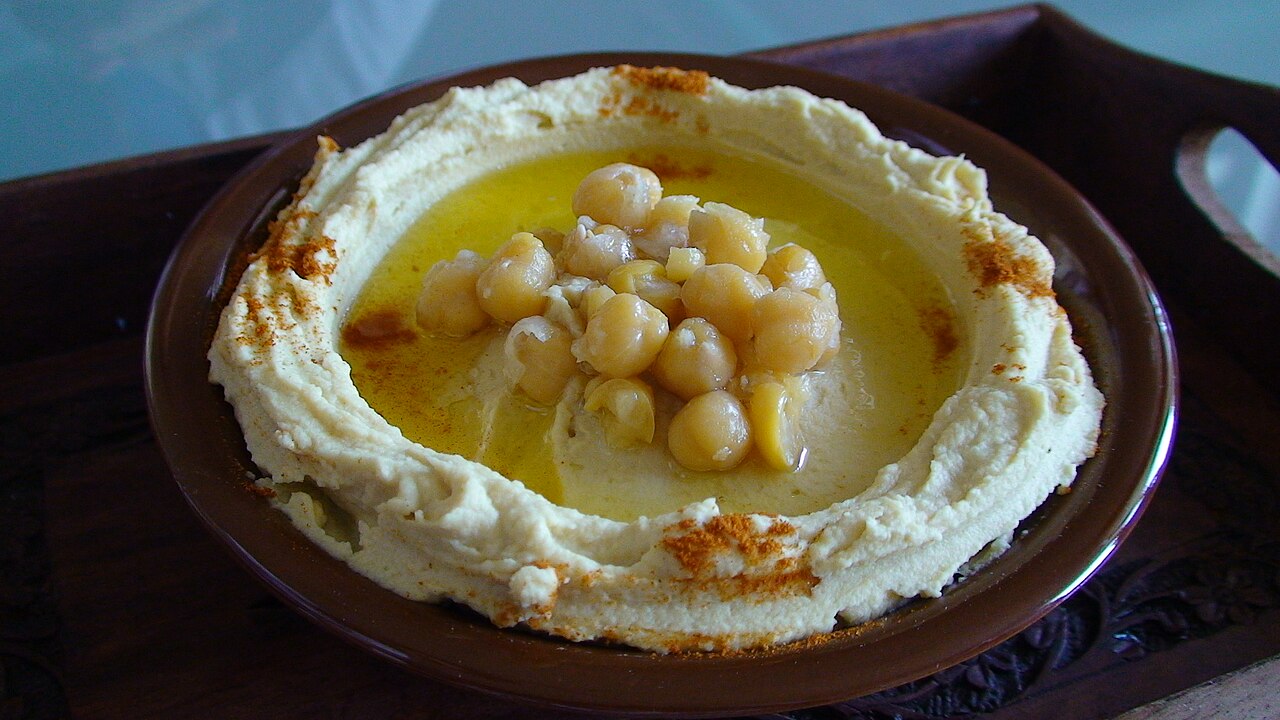
A smooth purée of cooked chickpeas, tahini (sesame paste), lemon juice and garlic, spread on a plate, drizzled with olive oil and eaten by scooping it up with flatbread.
In May 2010 about 300 cooks in the village of al-Fanar near Beirut made a plate of hummus weighing about 10,450 kg, a Guinness World Record at the time.
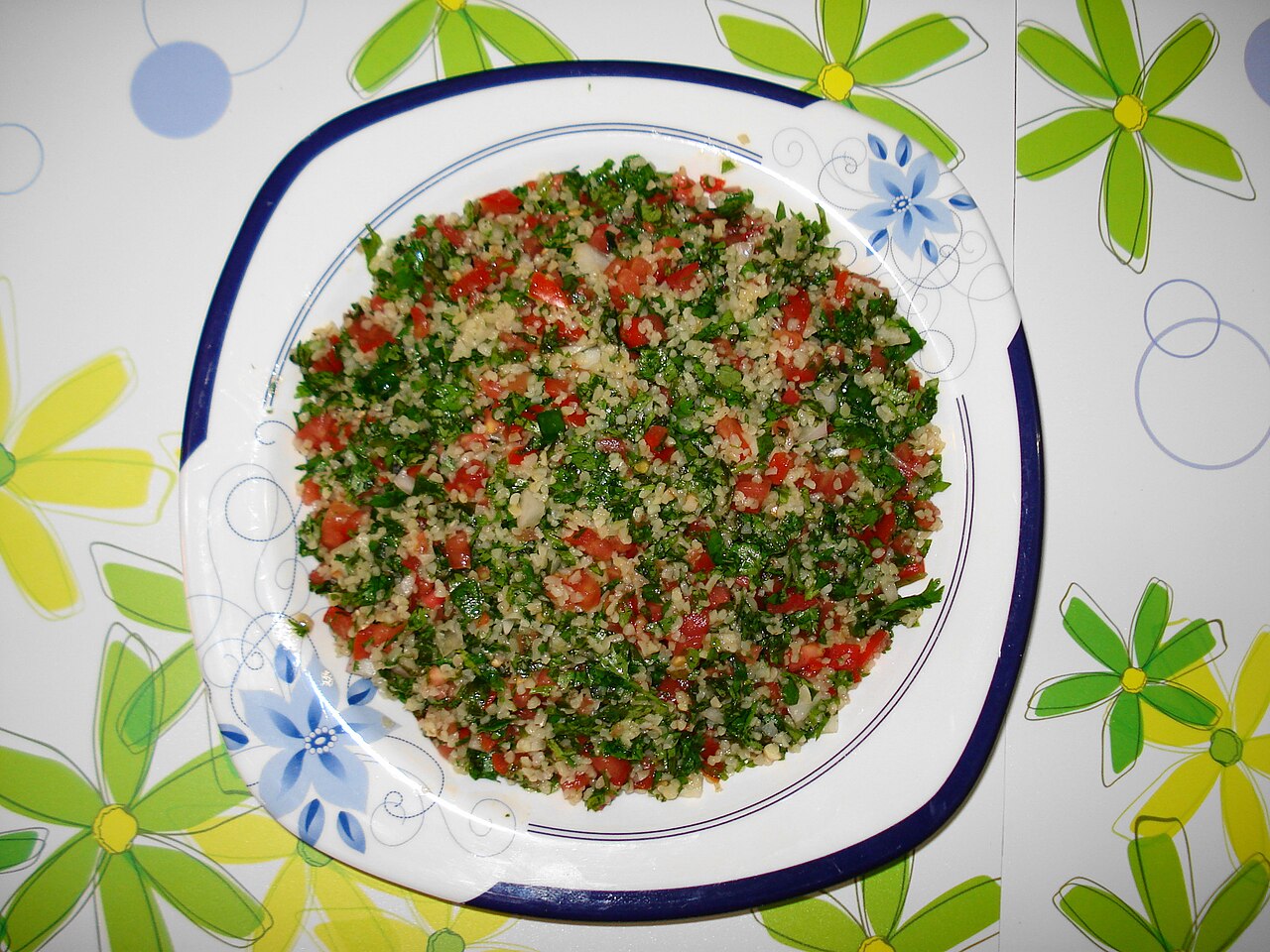
A bright green salad that is mostly finely chopped parsley, with a little mint, tomato, onion and fine bulgur wheat, dressed with lemon juice and olive oil.
In Lebanon tabbouleh is a parsley salad with a little bulgur, not a bulgur salad with a little parsley. Some families eat it with crisp lettuce or cabbage leaves as spoons.
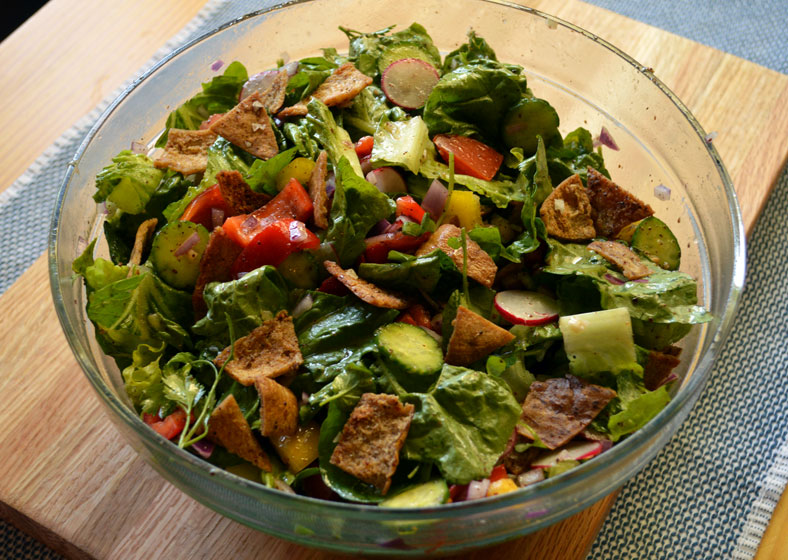
A crunchy village salad of lettuce, tomato, cucumber, radish, peppers and herbs, tossed with toasted or fried pieces of flatbread and a dressing sharp with lemon and sumac.
Fattoush is a good way to use up yesterday's bread. Its name comes from the Arabic word 'fatt', to crush.
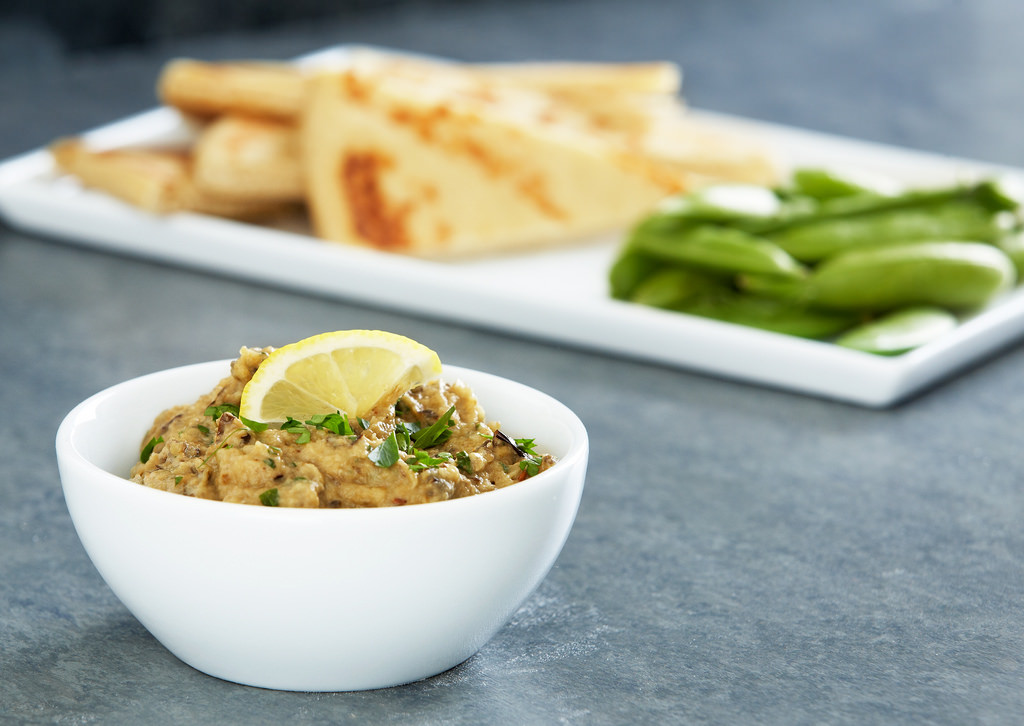
Aubergines are charred over a flame until the flesh is soft and smoky, then mashed with tahini, lemon, garlic and olive oil. It is a favourite on the mezze table.
In Lebanon the tahini version is often called moutabal, and the name baba ghanouj is also used for a lighter mix of aubergine and chopped vegetables. Menus do not always agree.
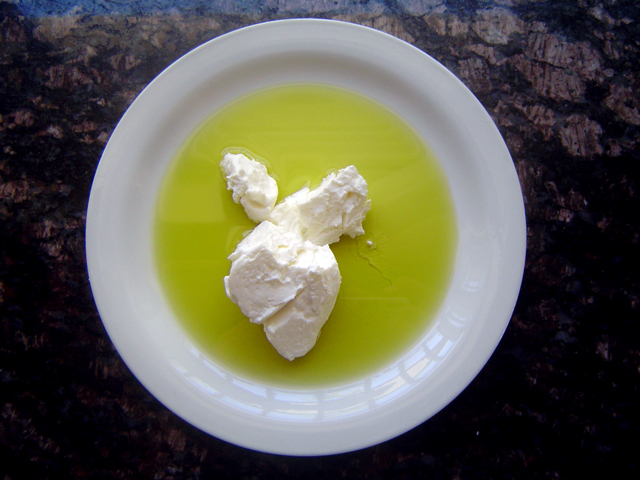
Yogurt strained in a cloth until it is as thick as soft cheese, spread on a plate and drizzled with olive oil. It is a breakfast favourite with olives, mint, cucumber and bread.
Labneh can be rolled into small balls and kept for weeks in jars of olive oil.
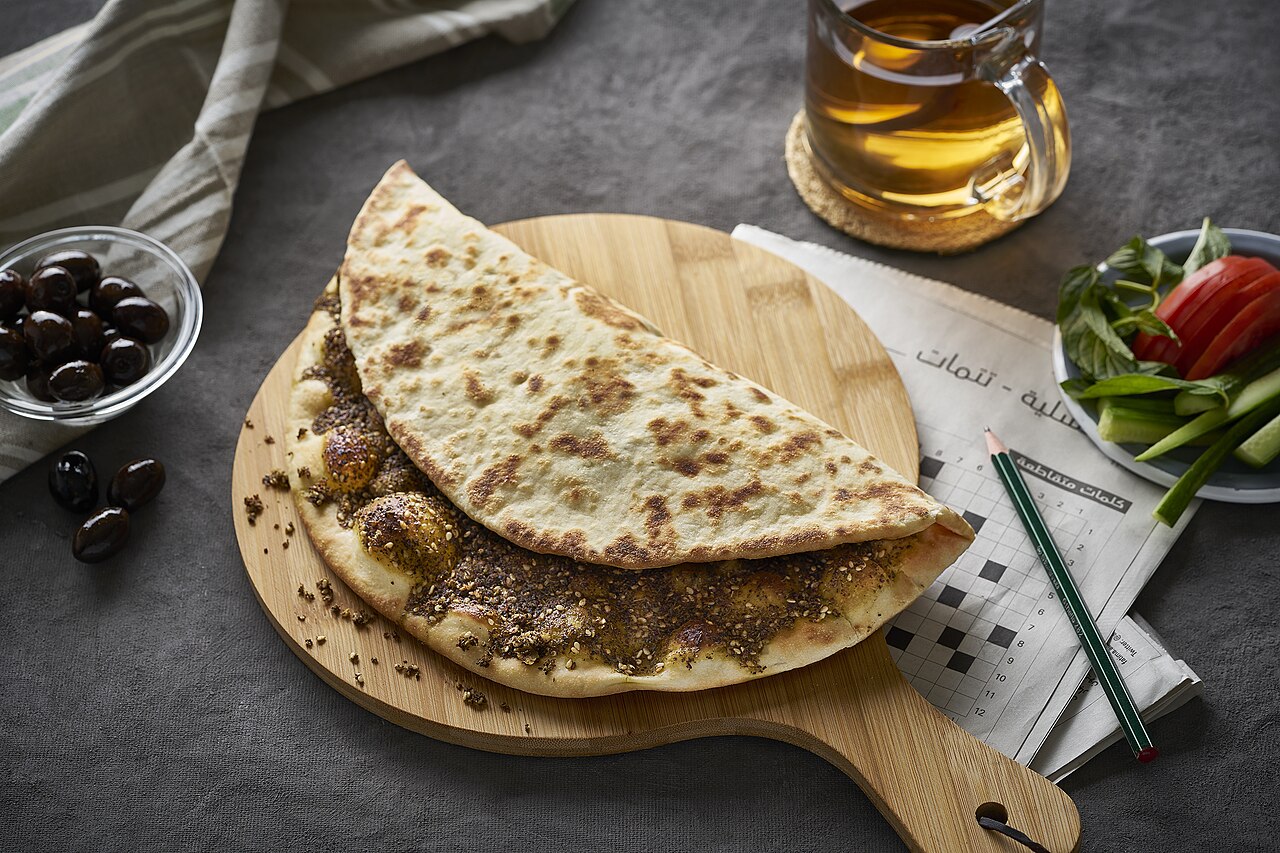
Round flatbread spread with za'atar, a mix of wild thyme, sumac and sesame seeds in olive oil, and baked until crisp at the edges. Cheese and minced meat are other toppings. It is the classic Lebanese breakfast.
In 2023 UNESCO added al-man'ouche, 'an emblematic culinary practice in Lebanon', to its list of intangible cultural heritage.
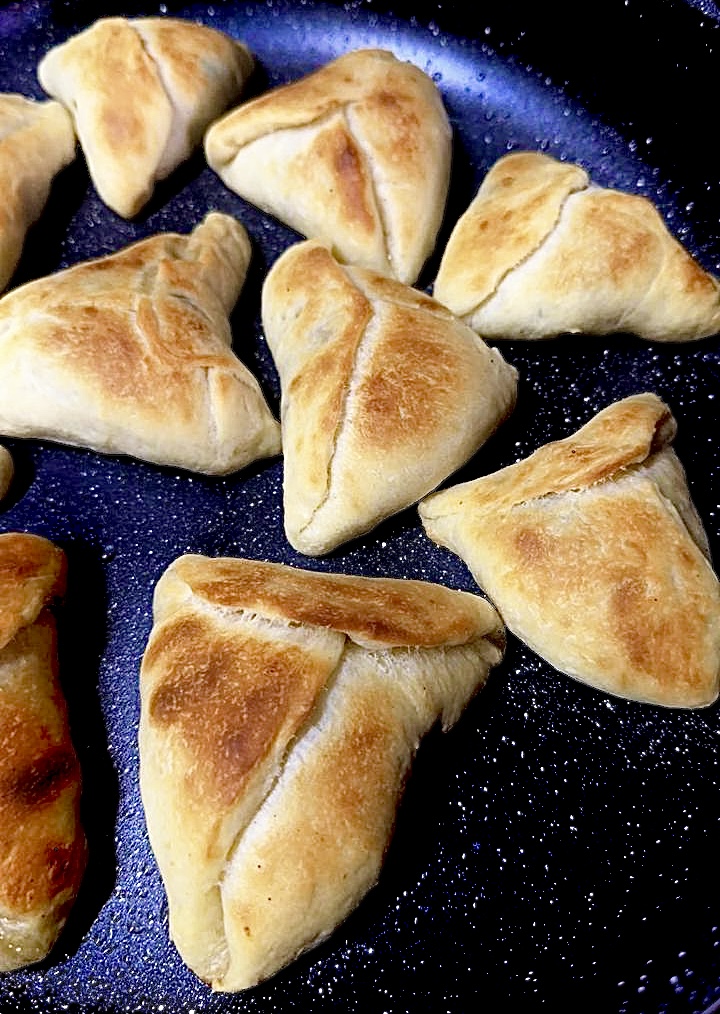
Small triangles of soft dough filled with spinach, onion, lemon juice and sumac, baked until golden. Other fatayer are filled with cheese or meat.
Lebanese and Syrian emigrants took fatayer to South America: in Argentina they are sold as empanadas árabes.
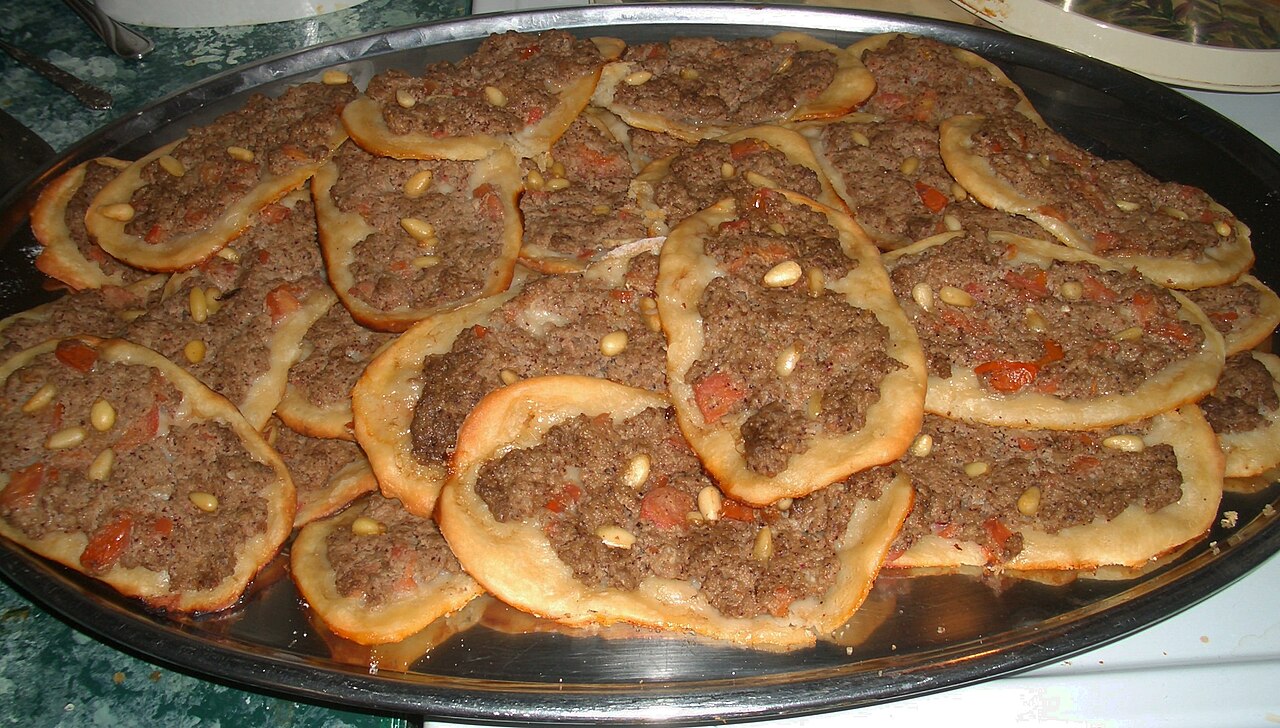
Small open pies of thin dough topped with minced lamb or beef, onion, tomato and spices. The Baalbek version, sfiha baalbakiya, is famous across Lebanon.
Arab emigrants took sfiha to Brazil, where the esfiha became a popular snack sold all over the country.
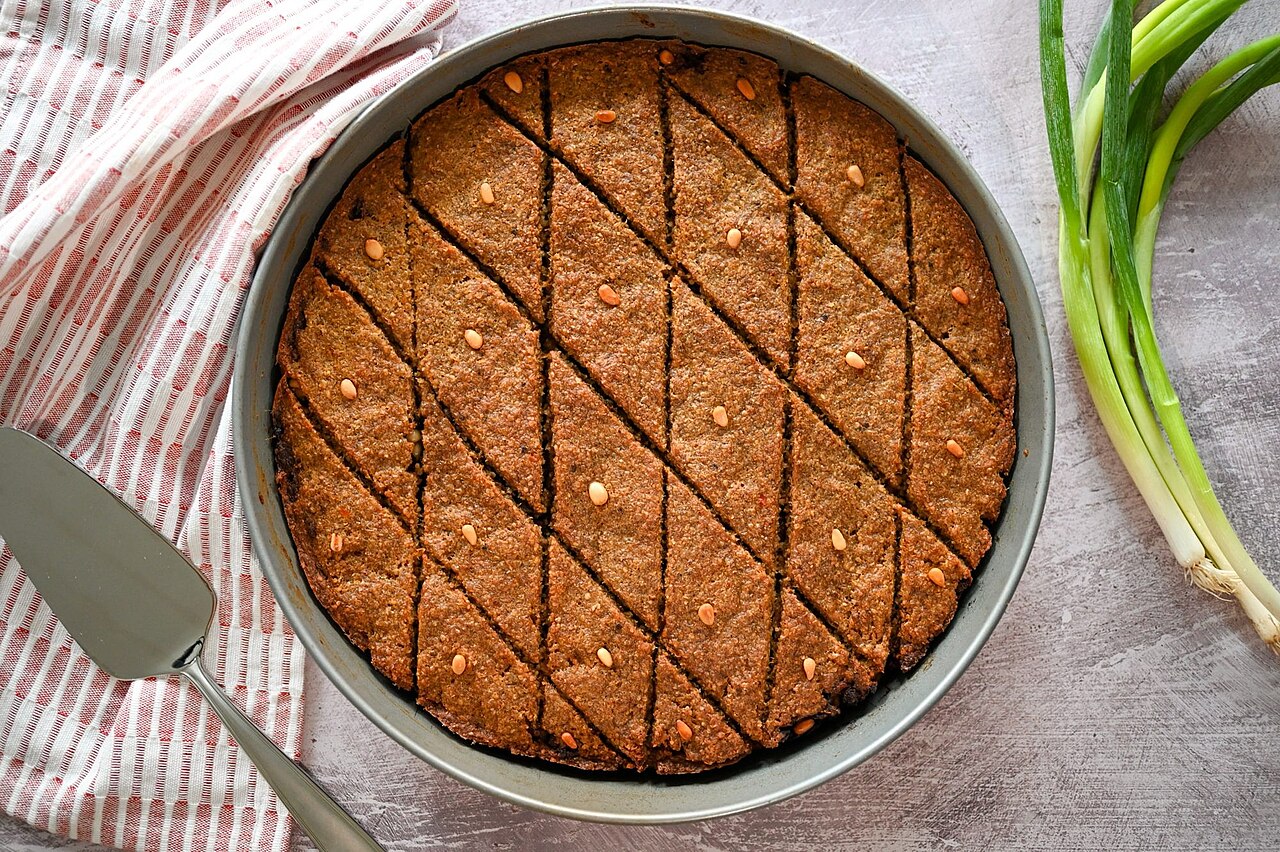
A paste of fine bulgur wheat pounded with lean minced lamb or beef and onion, layered in a tray around a filling of fried meat, onion and pine nuts, then cut into diamonds and baked.
Kibbeh is considered a national dish of Lebanon and Syria. It is also shaped into fried torpedoes, and in some villages served raw as kibbeh nayyeh.
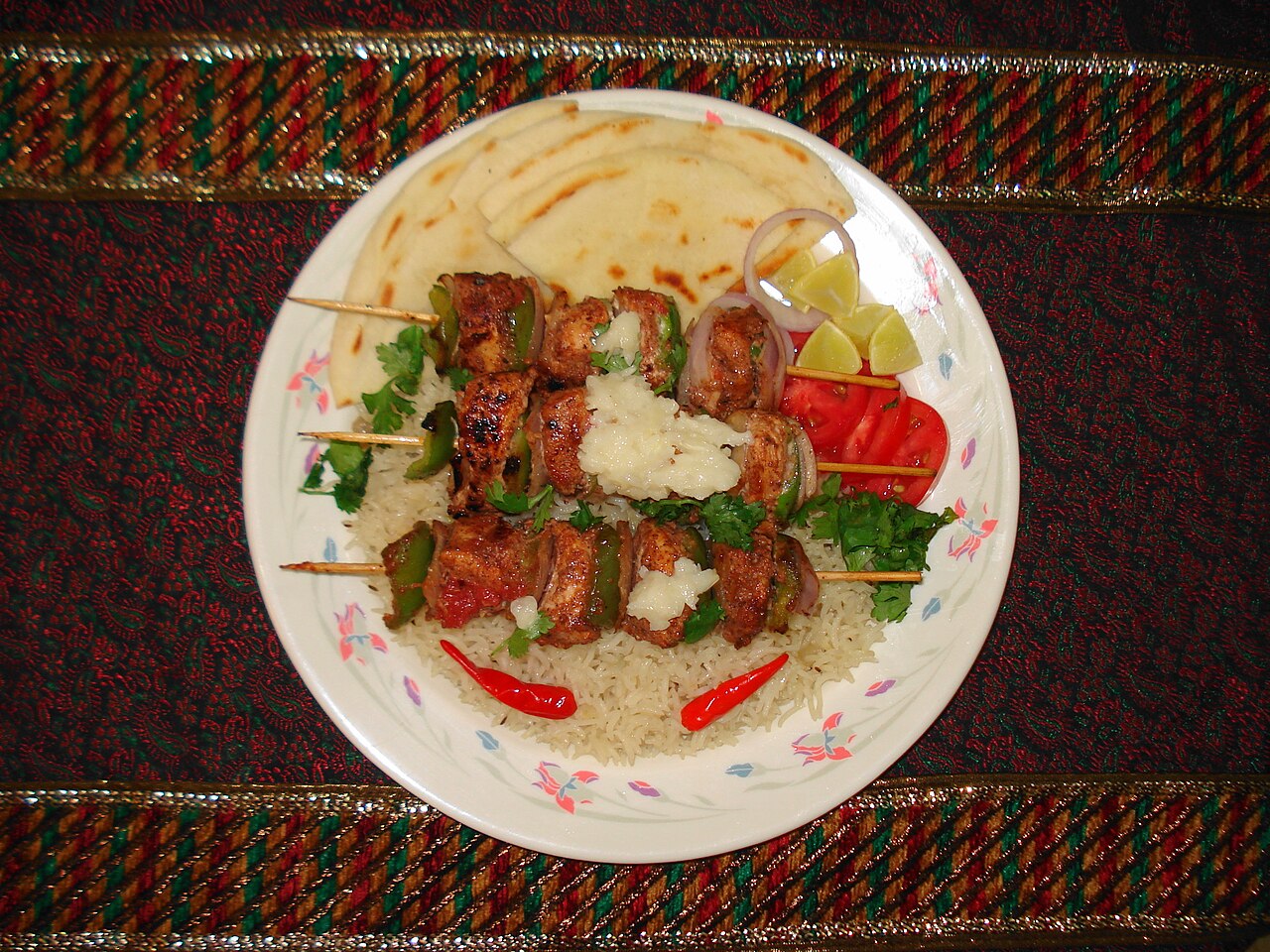
Chunks of chicken marinated in yogurt, lemon, garlic and tomato paste, grilled on skewers and served with a strong garlic sauce called toum, pickles and bread.
The name comes from Turkish: 'şiş' means skewer and 'tavuk' means chicken.
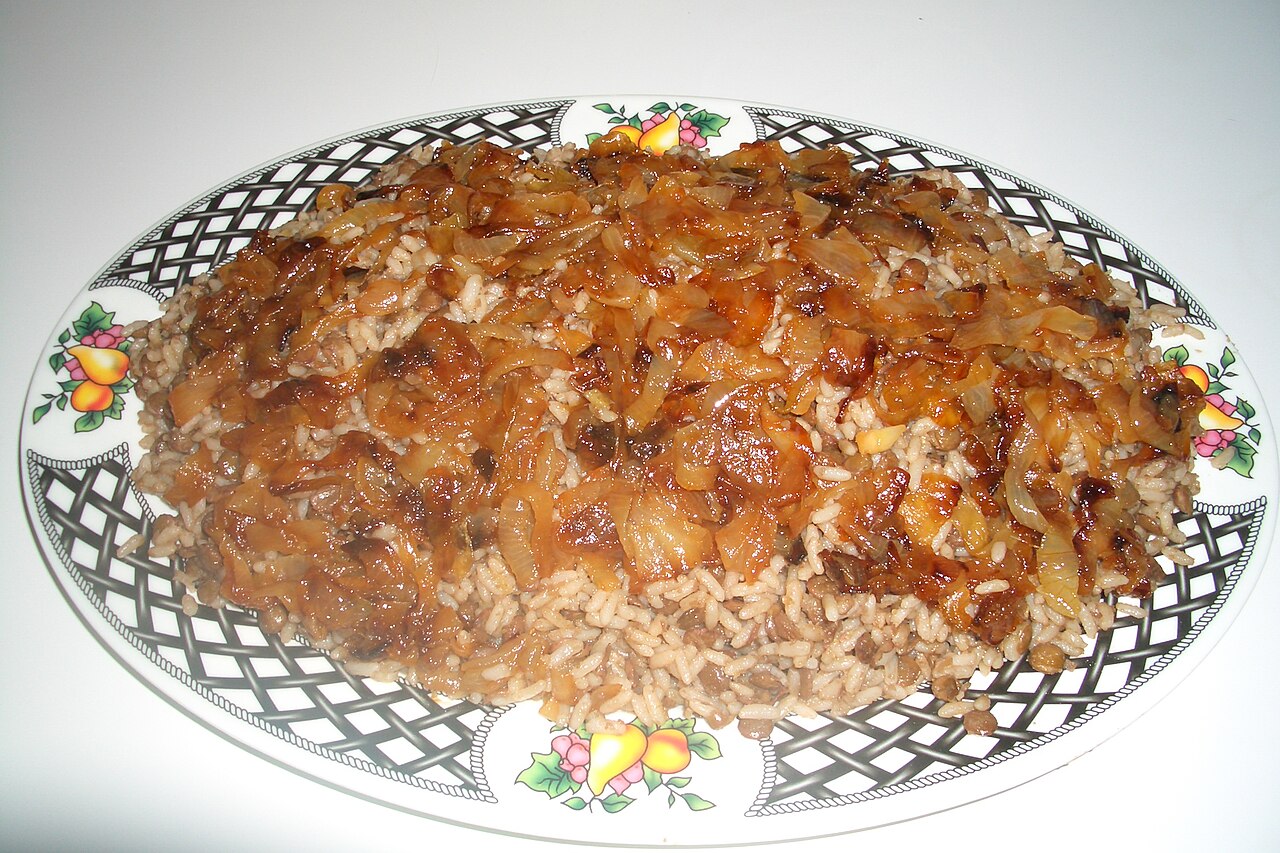
A humble, filling dish of brown lentils cooked with rice or bulgur and topped with a heap of deeply browned onions, often eaten with yogurt or a salad.
The name means 'pockmarked' in Arabic: the lentils among the rice look like little marks.
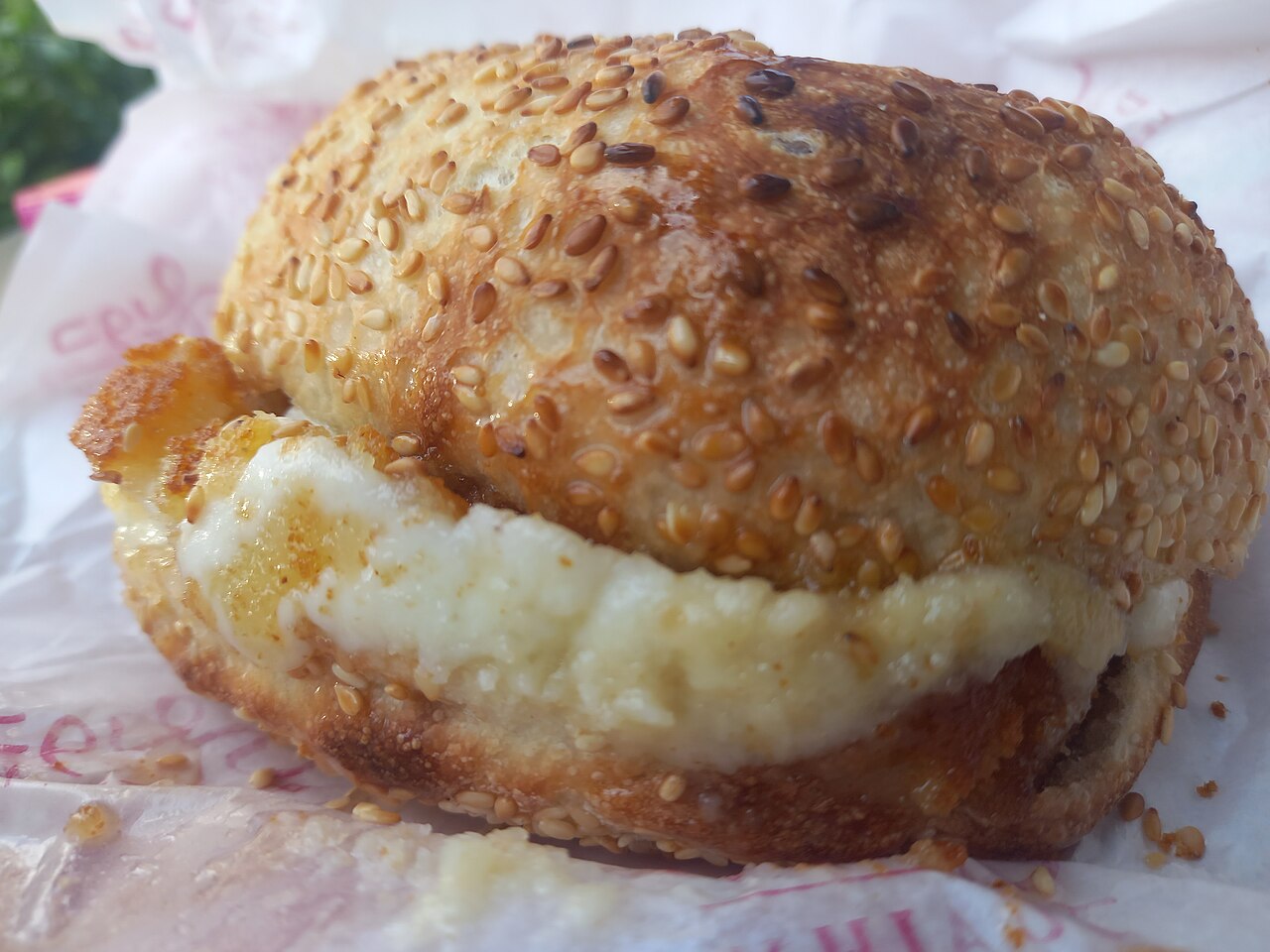
Soft white cheese under a layer of semolina or shredded pastry, baked and soaked in sugar syrup scented with orange blossom. It is also eaten as street food inside a sesame bread.
Ka'ak knafeh, knafeh tucked inside a sesame-coated bread, is a popular Lebanese street food.
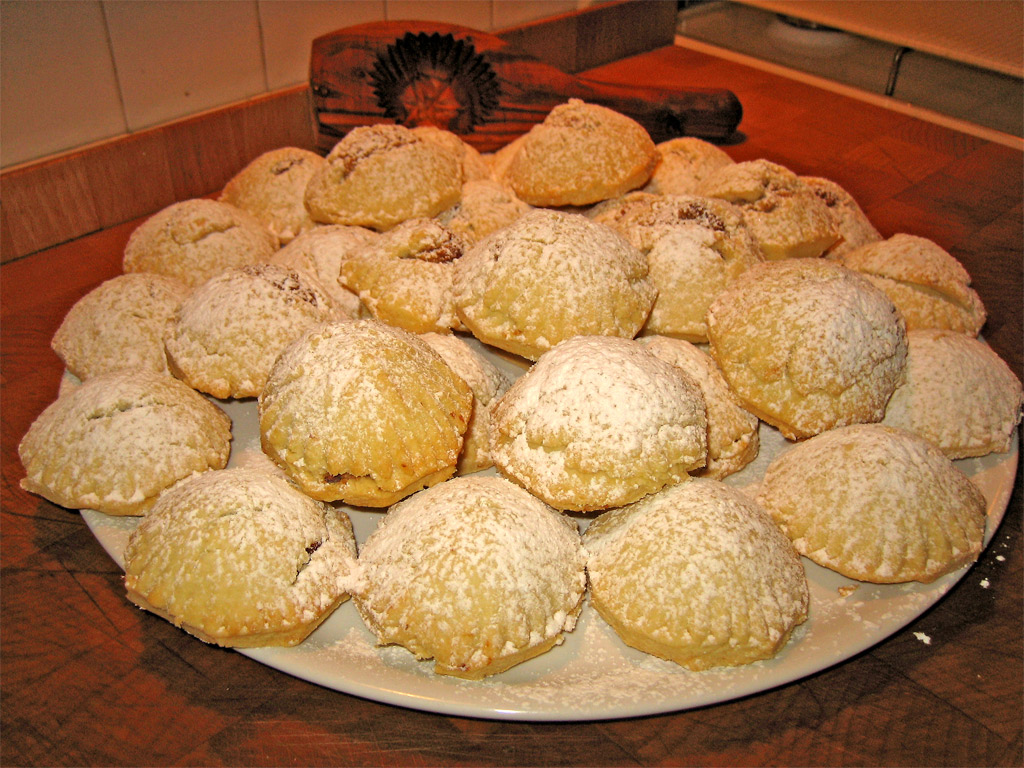
Buttery semolina cookies filled with dates, walnuts or pistachios and pressed into carved wooden moulds, then dusted with icing sugar.
Families bake ma'amoul together before Easter and before Eid, and the pattern of the mould often shows which filling is inside.
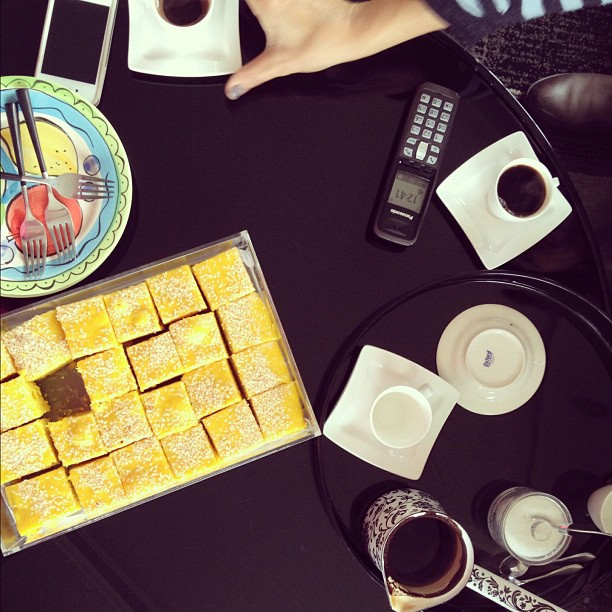
A golden-yellow cake of semolina and flour coloured with turmeric, flavoured with aniseed and topped with pine nuts or almonds. It is not soaked in syrup, so it is light and not too sweet.
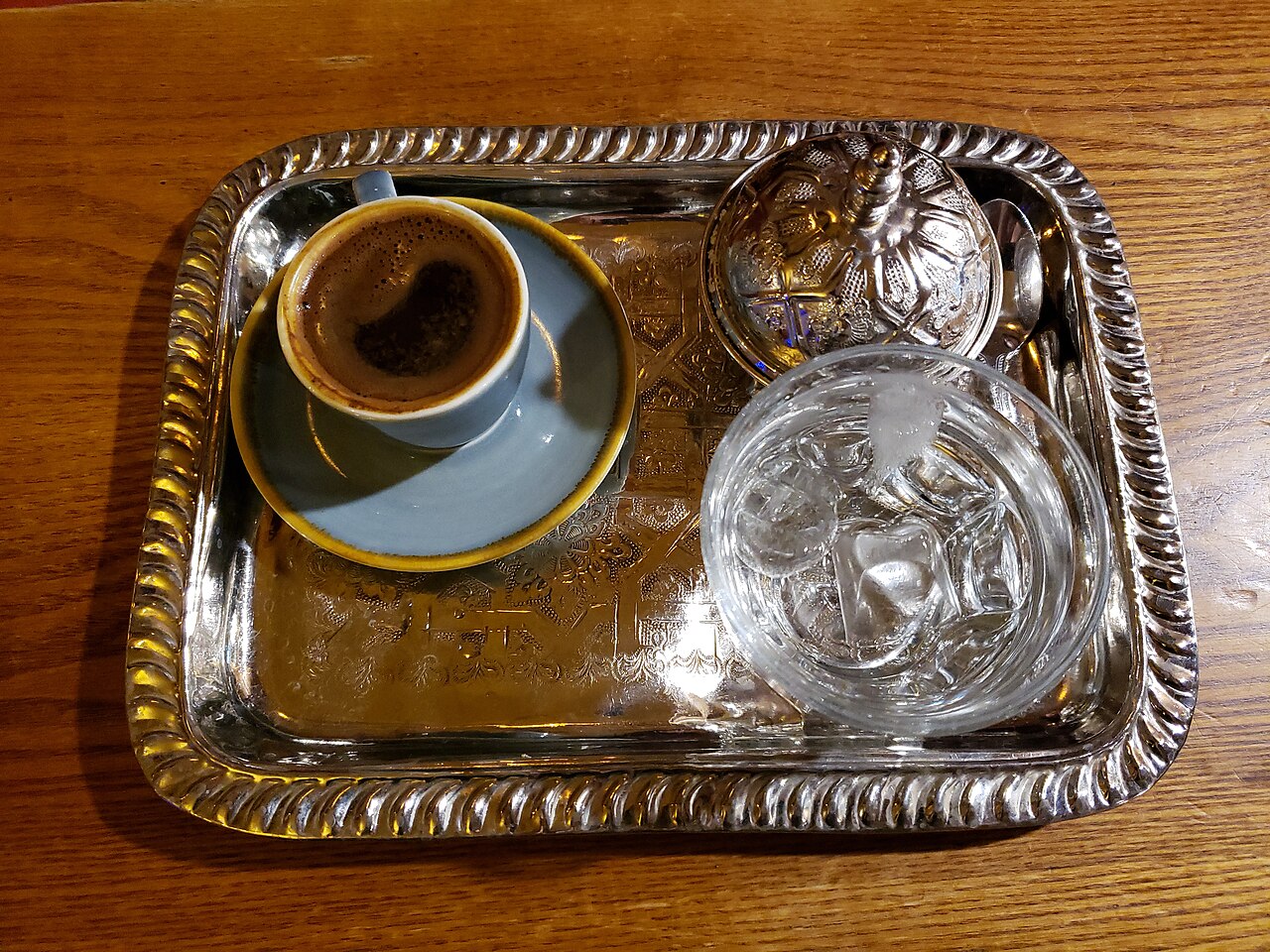
Very finely ground coffee, often with cardamom, boiled in a small long-handled pot and poured into tiny cups without filtering. Offering coffee is the first sign of welcome in a Lebanese home.
A traditional Lebanese meal ends with a plate of fresh fruit and a cup of coffee.
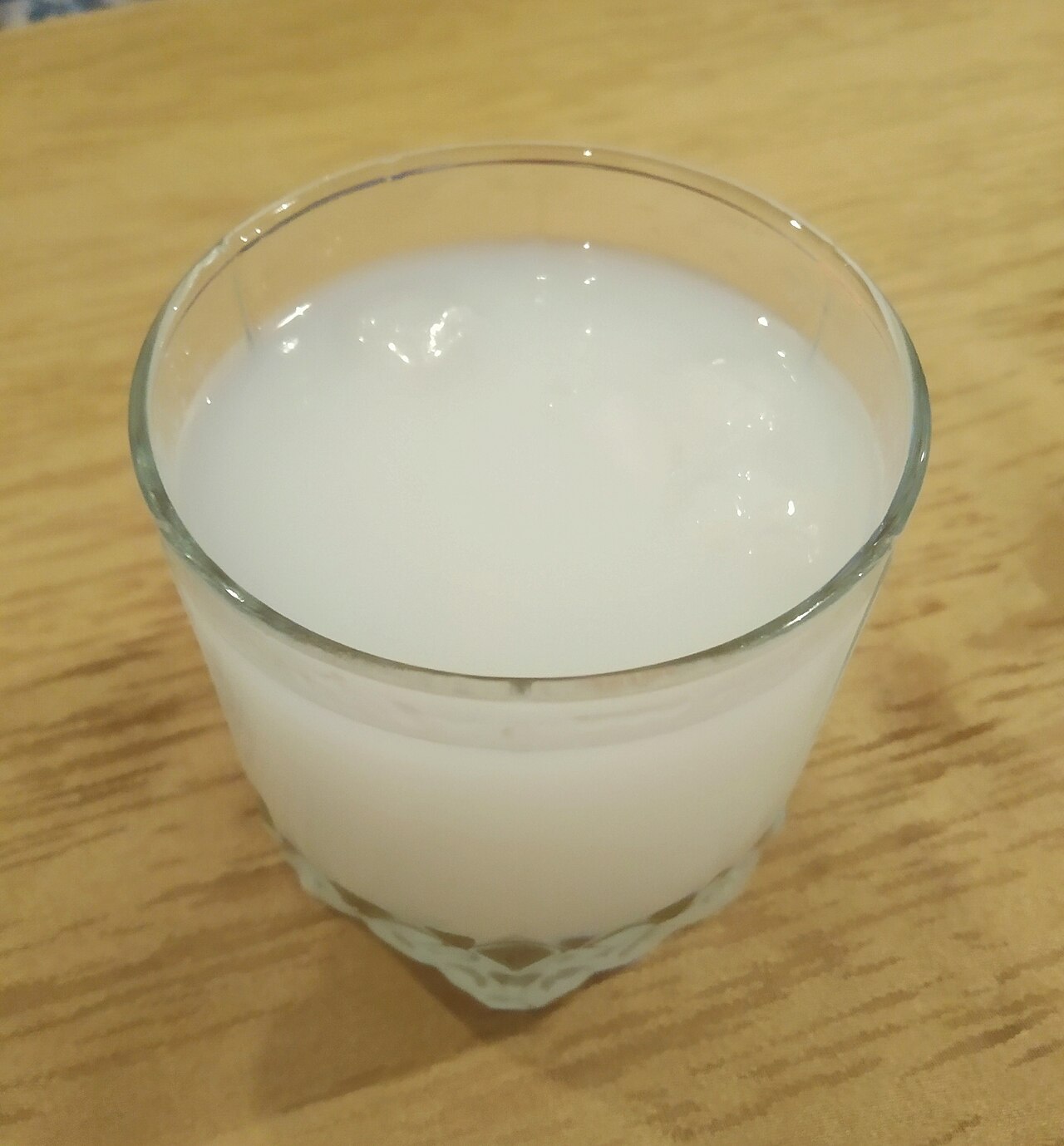
A strong clear spirit made from grapes and aniseed. Mixed with water and ice it turns milky white, and it is sipped slowly with a long mezze meal.
Arak is often called Lebanon's national drink, and Zahlé is known as a capital of arak.
Most Lebanese live along a narrow coast, in towns founded by the Phoenicians. Up in the mountains and in the Beqaa Valley, stone villages, monasteries and vineyards tell a different story.
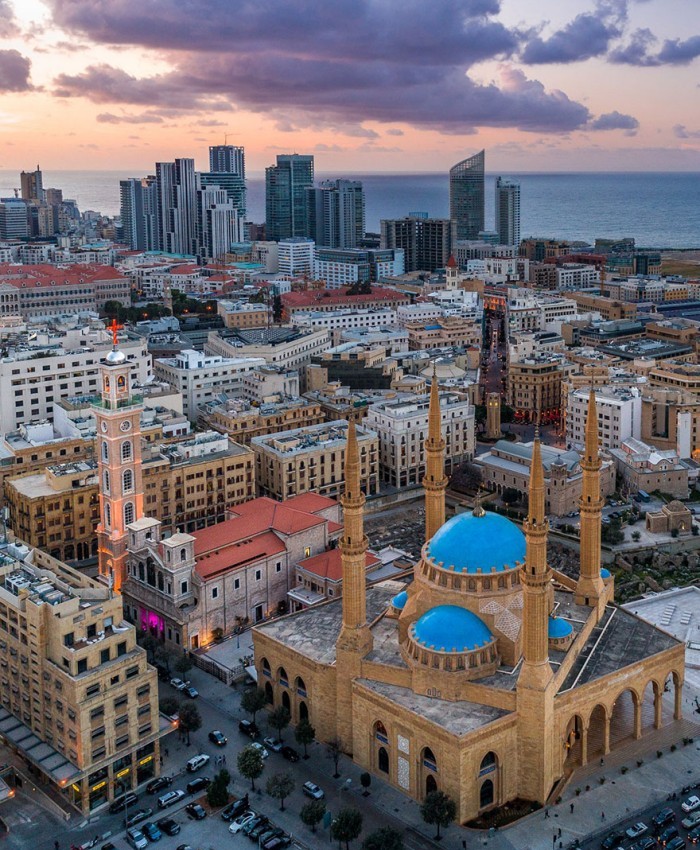
The capital and largest city sits on a headland in the middle of the coast. It has been lived in for more than 5,000 years and was once called the Paris of the Middle East. Greater Beirut is home to almost half of the country.
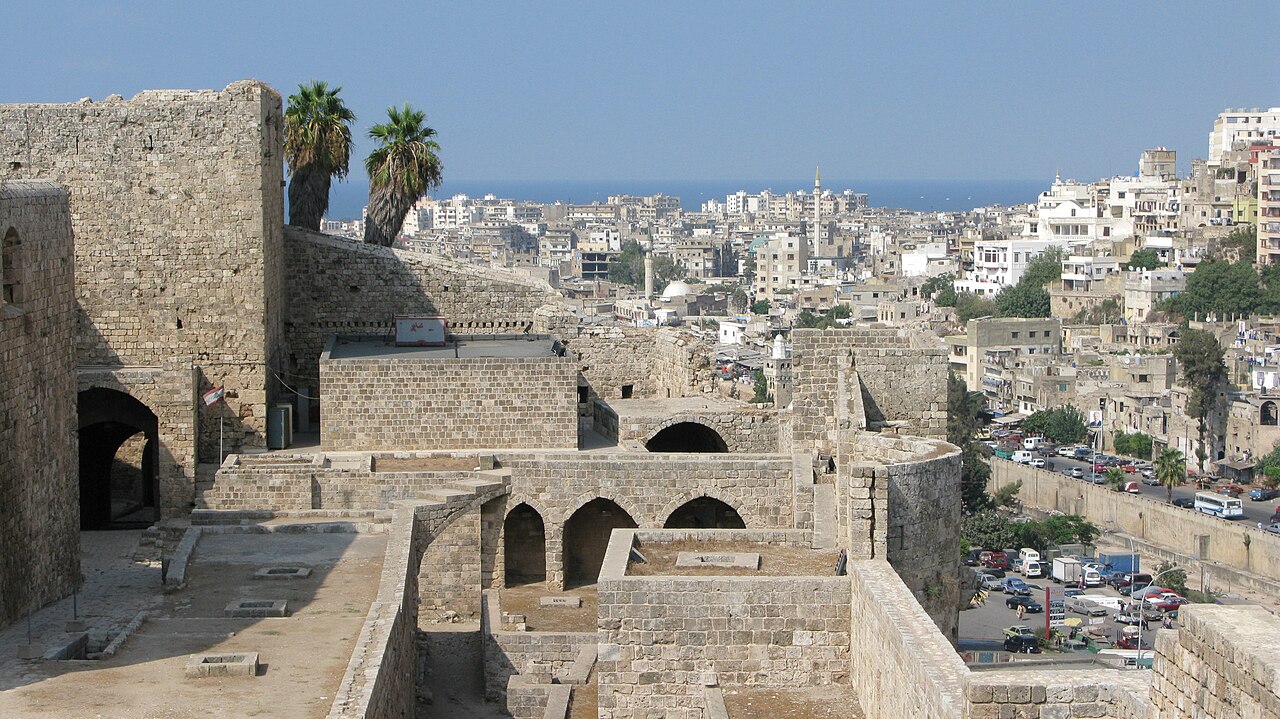
Lebanon's second city and the capital of the north. After the Crusaders and Mamluks it was rich in mosques, bath houses and markets, and it has the densest collection of Mamluk buildings outside Cairo.
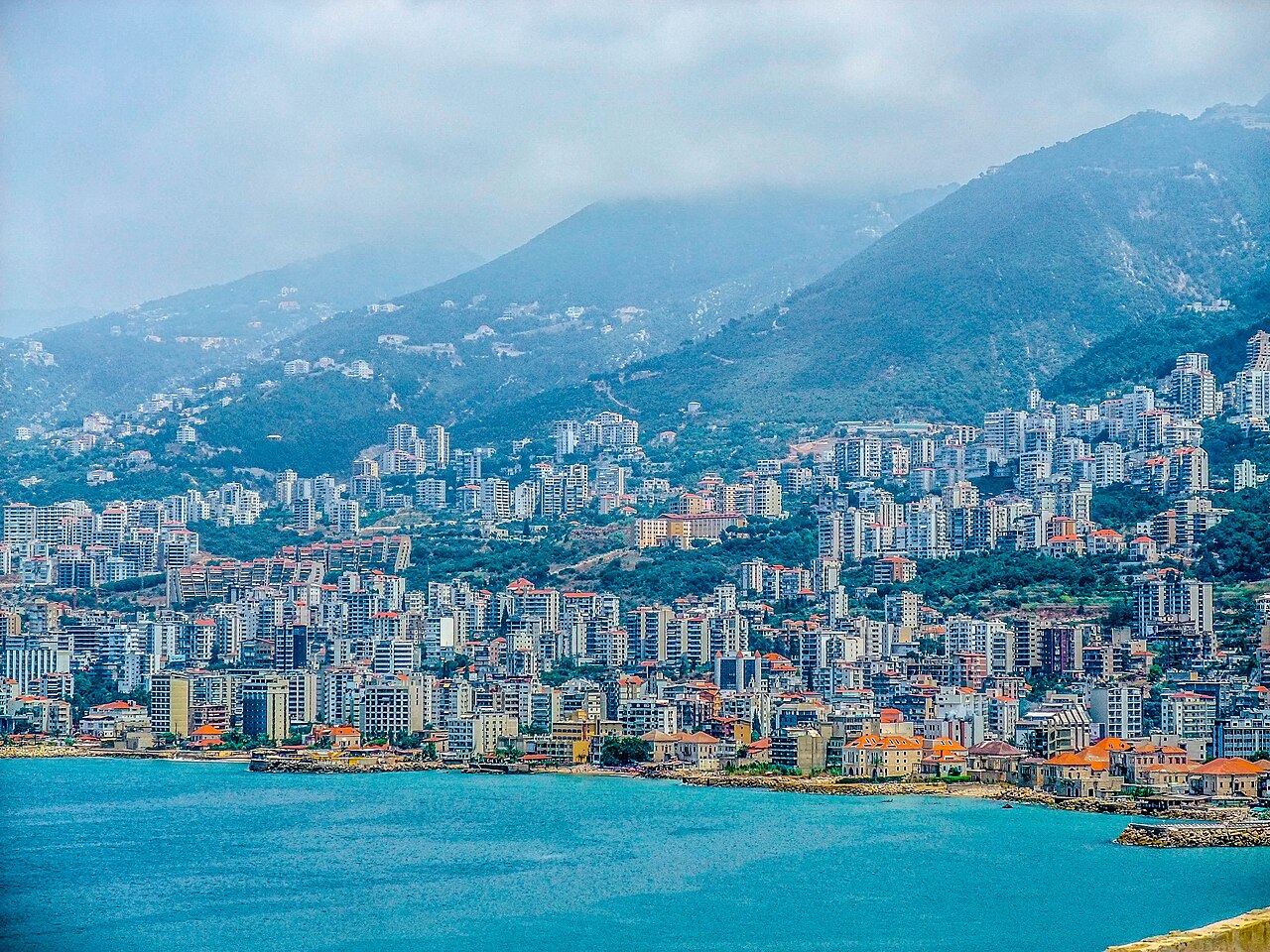
A seaside town on a wide bay about 16 km north of Beirut, busy with beaches, marinas and restaurants. A cable car climbs from the shore to the shrine of Our Lady of Lebanon at Harissa.
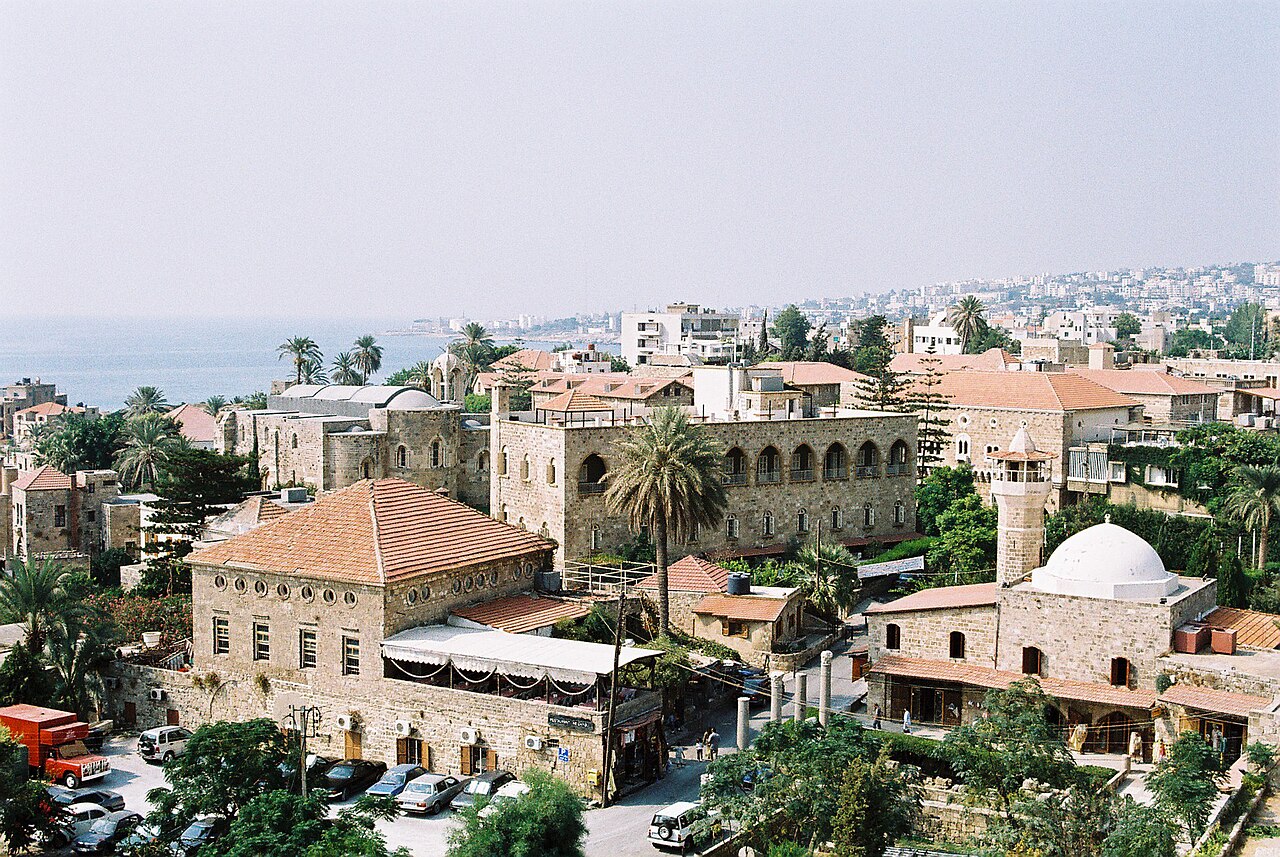
A small harbour town, known locally as Jbeil, with ruins from the Stone Age to the Crusaders. The Greek name of the town gave us the word Bible.
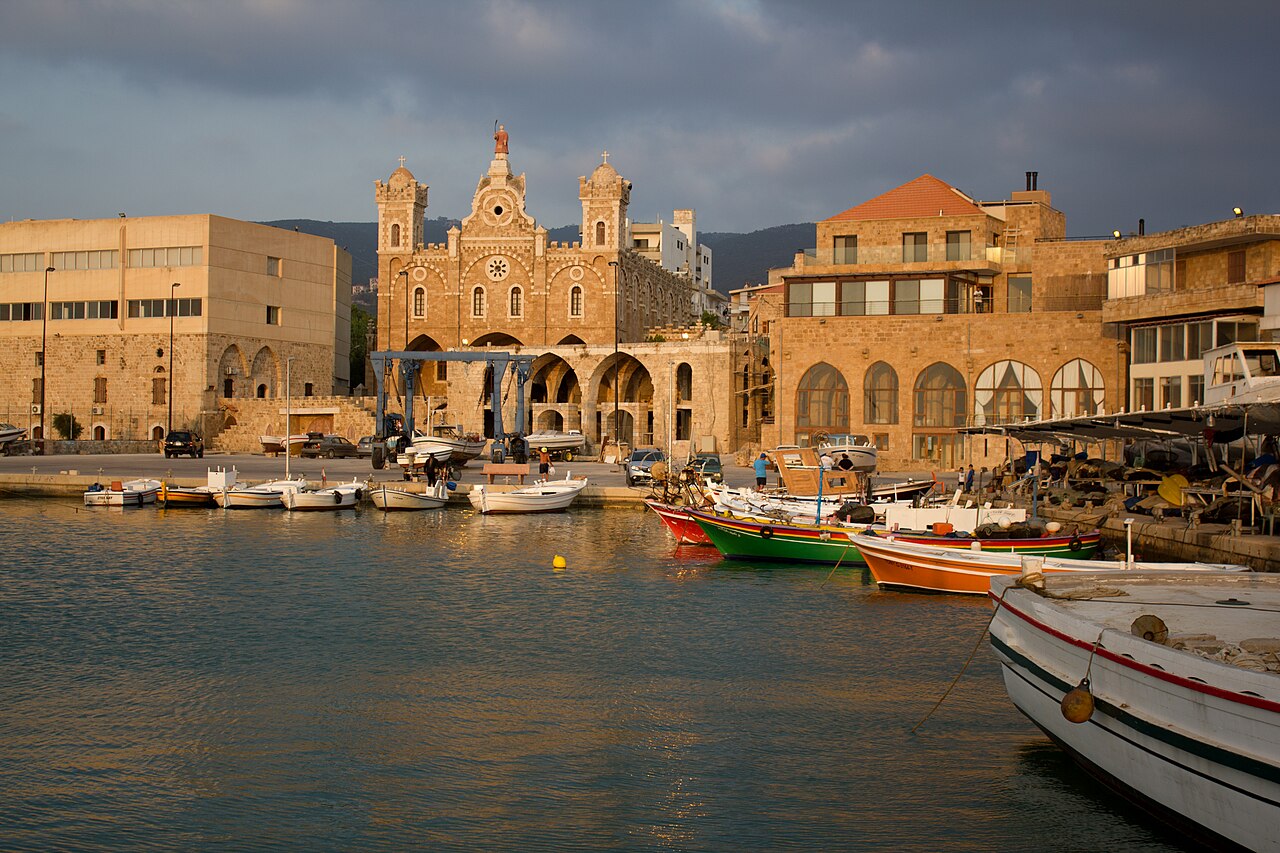
An old coastal town surrounded by citrus groves, with stone churches, a small fishing harbour and a lively summer seafront.
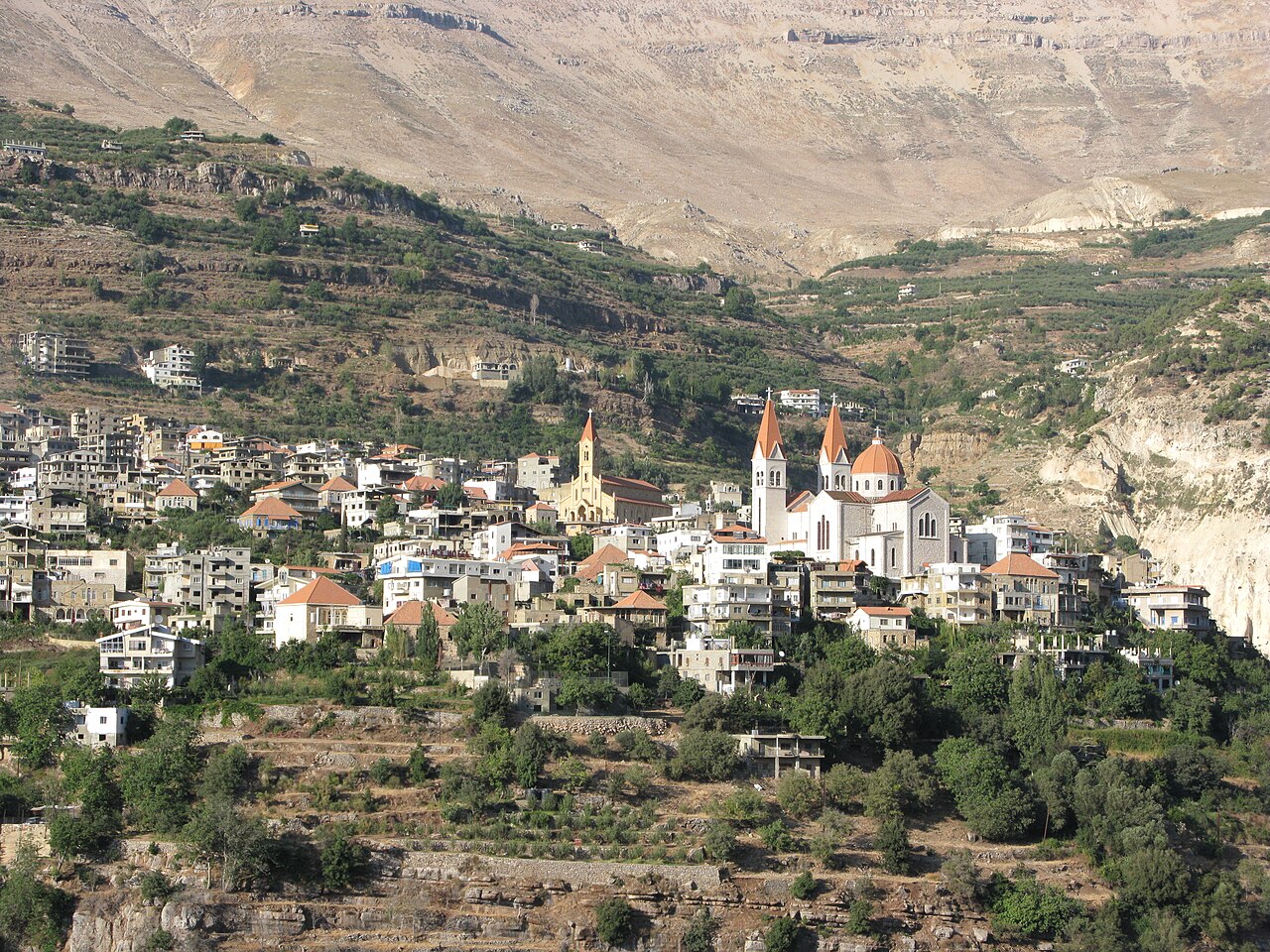
A mountain town high in the north, at the head of the Kadisha Valley. It is the birthplace of the writer Kahlil Gibran.
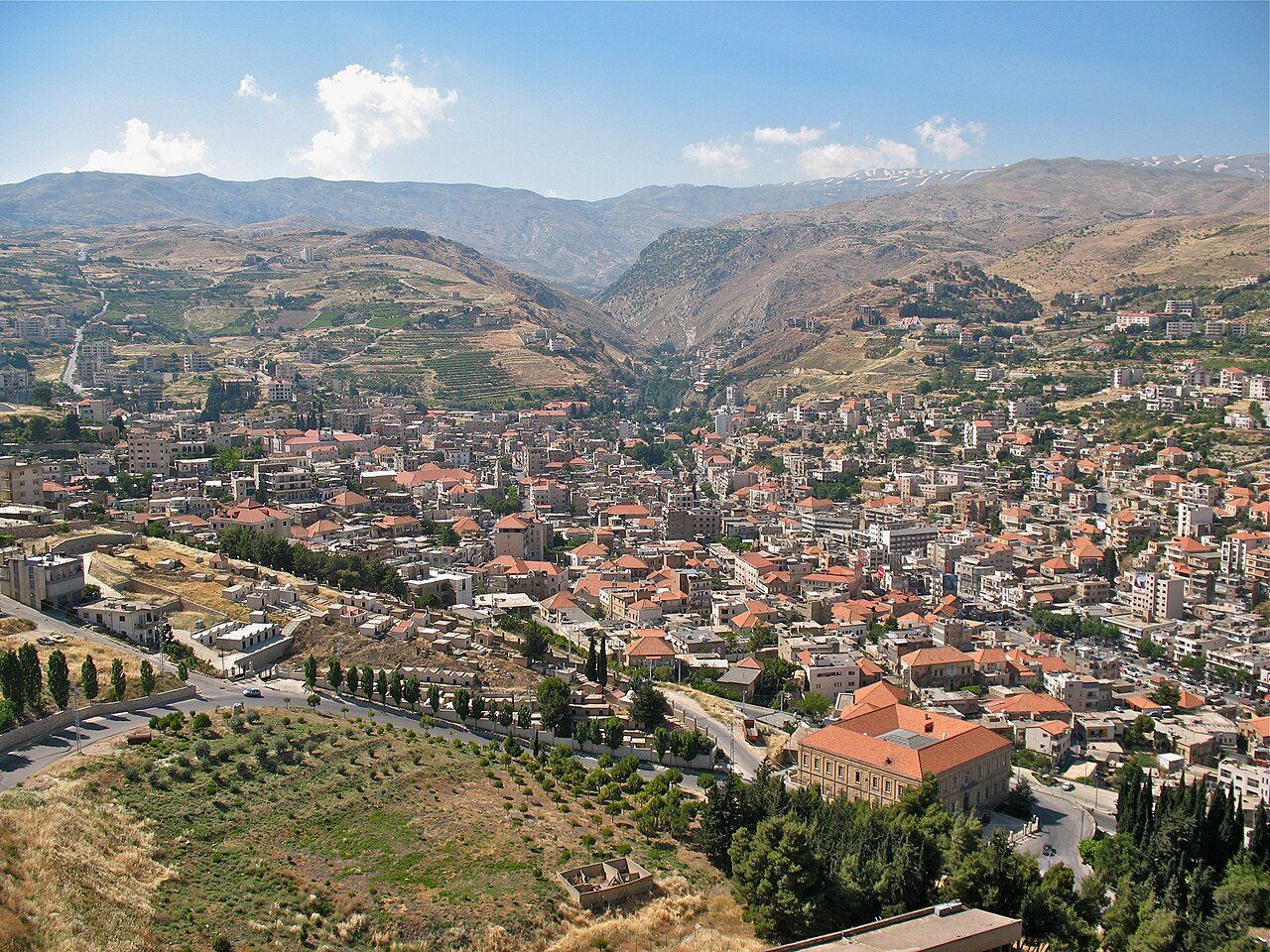
The largest town of the Beqaa, about 1,000 m up where Mount Lebanon meets the valley, along the Berdawni river. It is known as the city of wine and poetry.
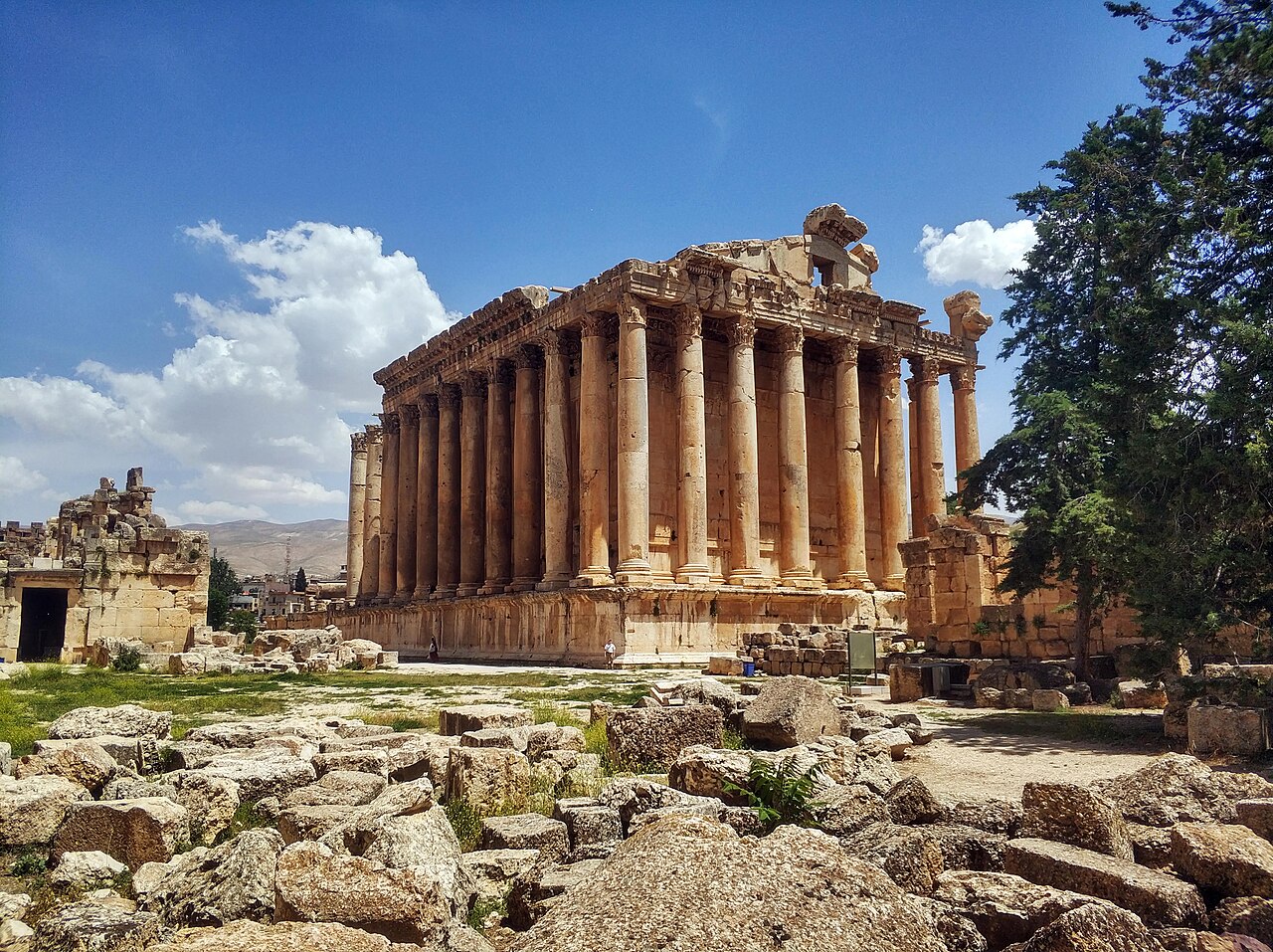
A town in the north of the Beqaa Valley, once the Roman city of Heliopolis. It is famous for one of the largest Roman temple complexes ever built.
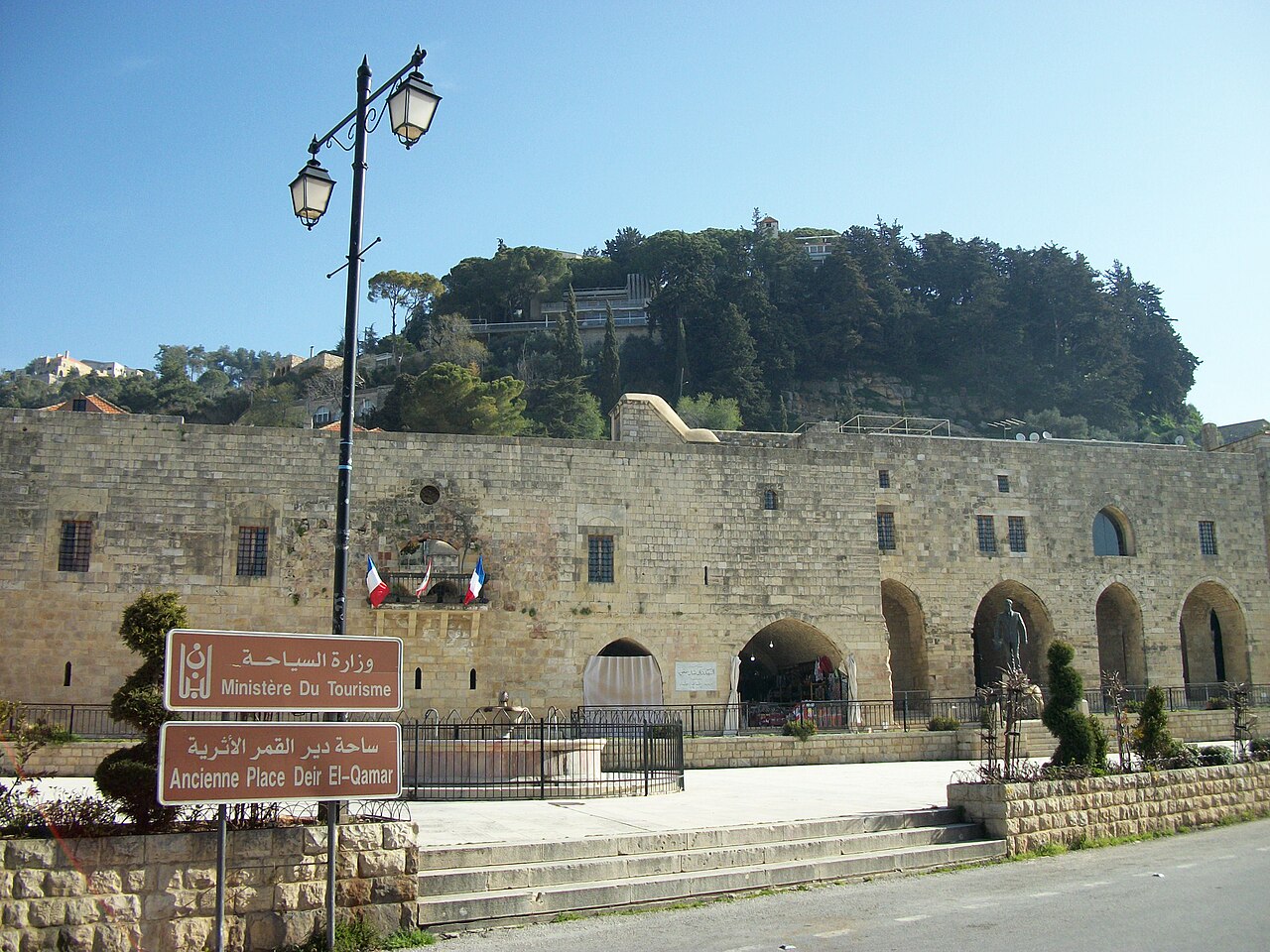
A mountain village of honey-coloured stone in the Chouf, the seat of the emirs of Mount Lebanon from the 16th to the 18th century. Its name means Monastery of the Moon.
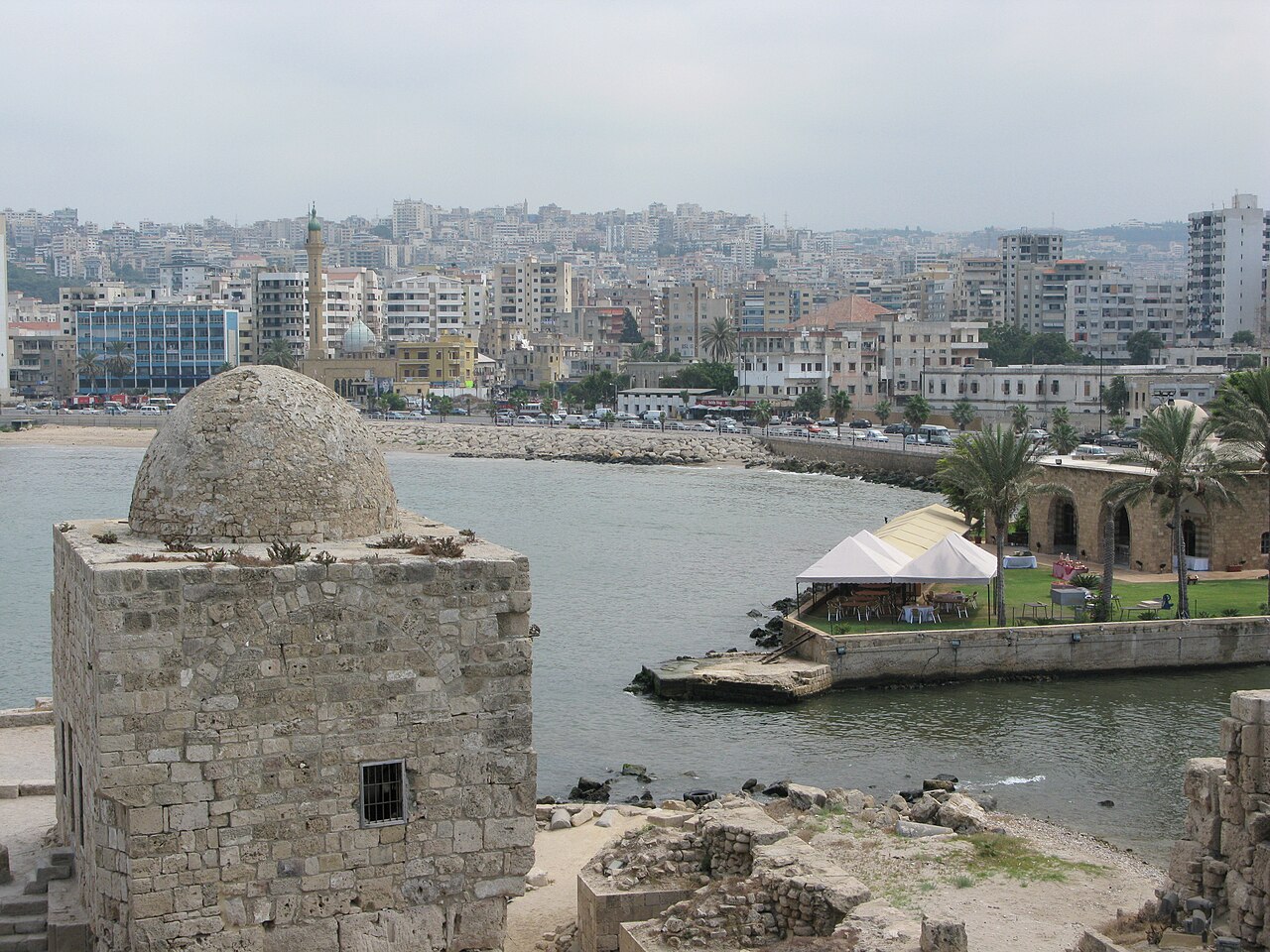
Lebanon's third city, called Saida in Arabic, about 40 km south of Beirut. It was one of the great Phoenician cities.
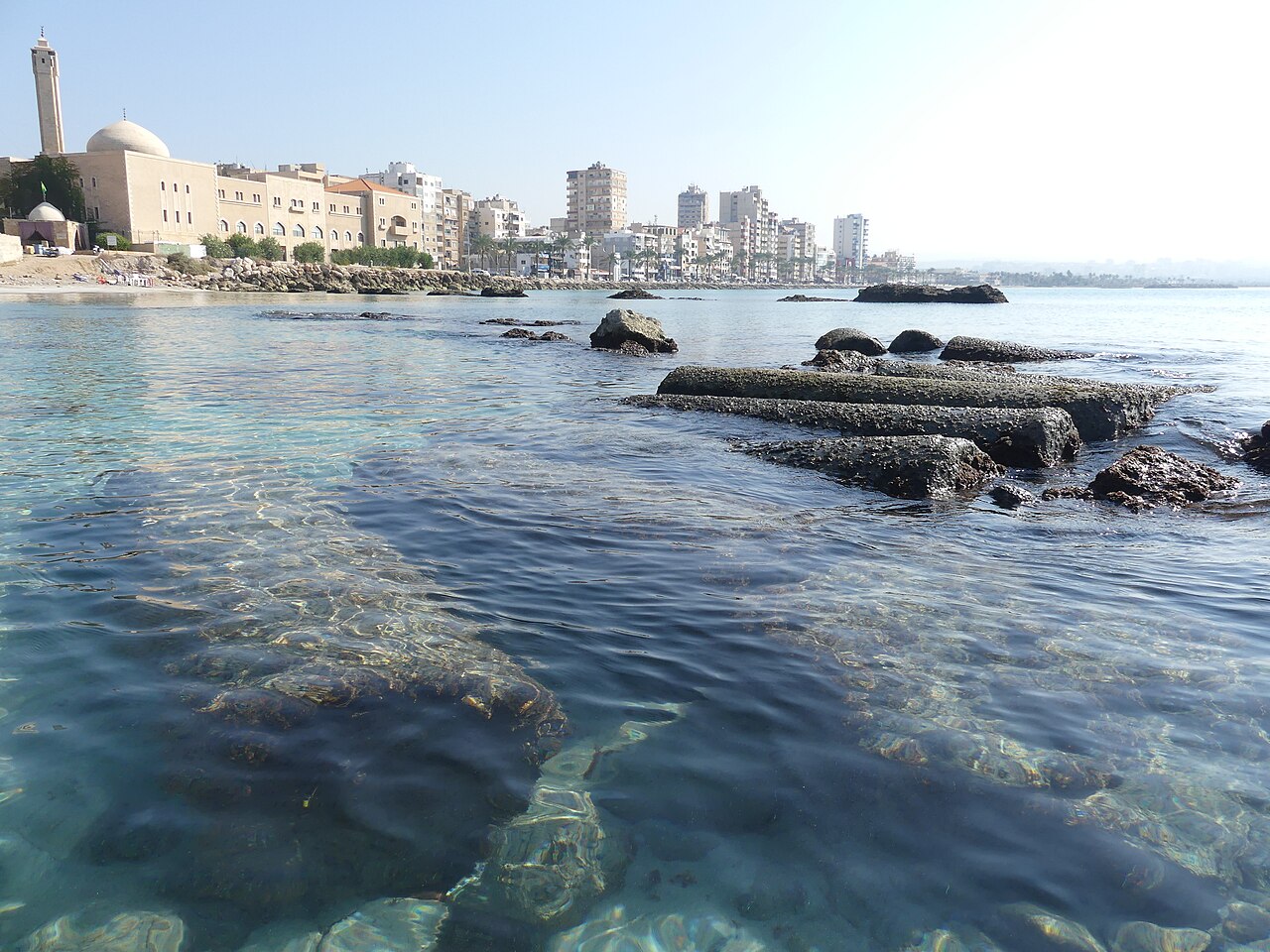
An ancient Phoenician port near the southern border, called Sour in Arabic. It was once an island, and its ruins are a UNESCO World Heritage Site.
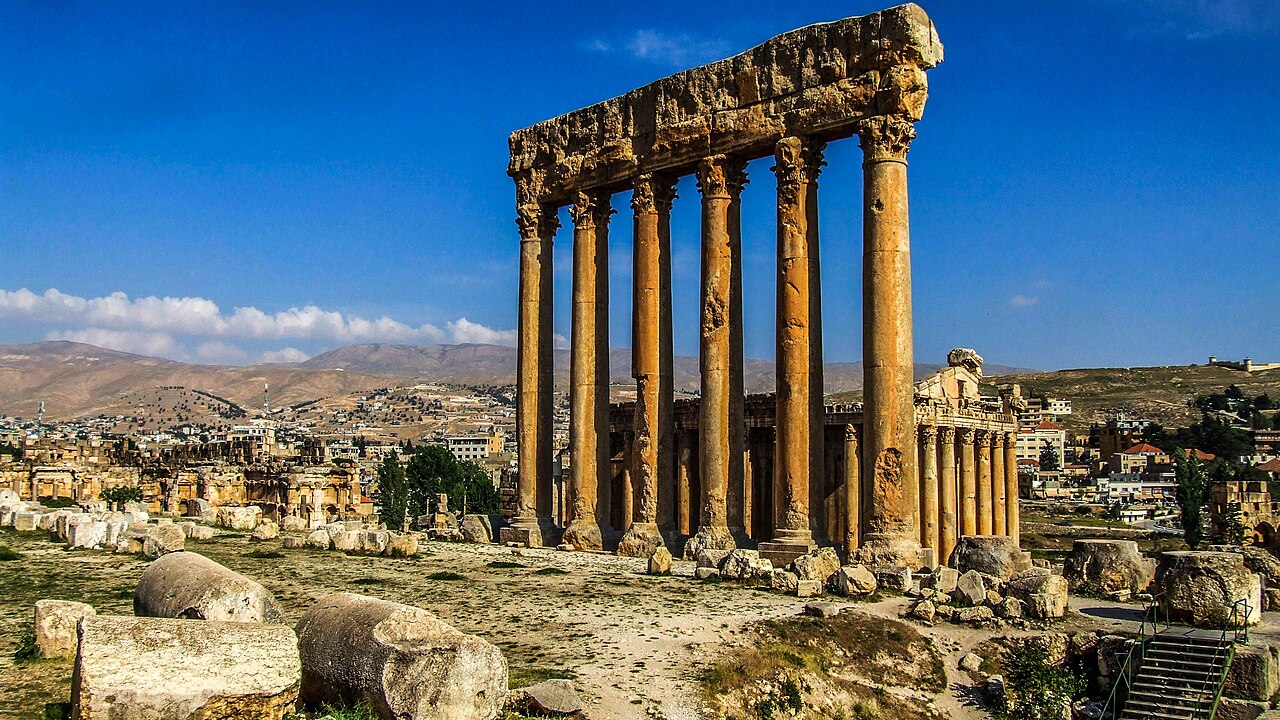
Huge Roman temples built over more than two centuries of Roman rule. Six columns of the Temple of Jupiter still stand about 20 m high, and the Temple of Bacchus is one of the best preserved Roman temples anywhere. Nearby quarries hold some of the largest stone blocks ever cut in ancient times.
UNESCO World Heritage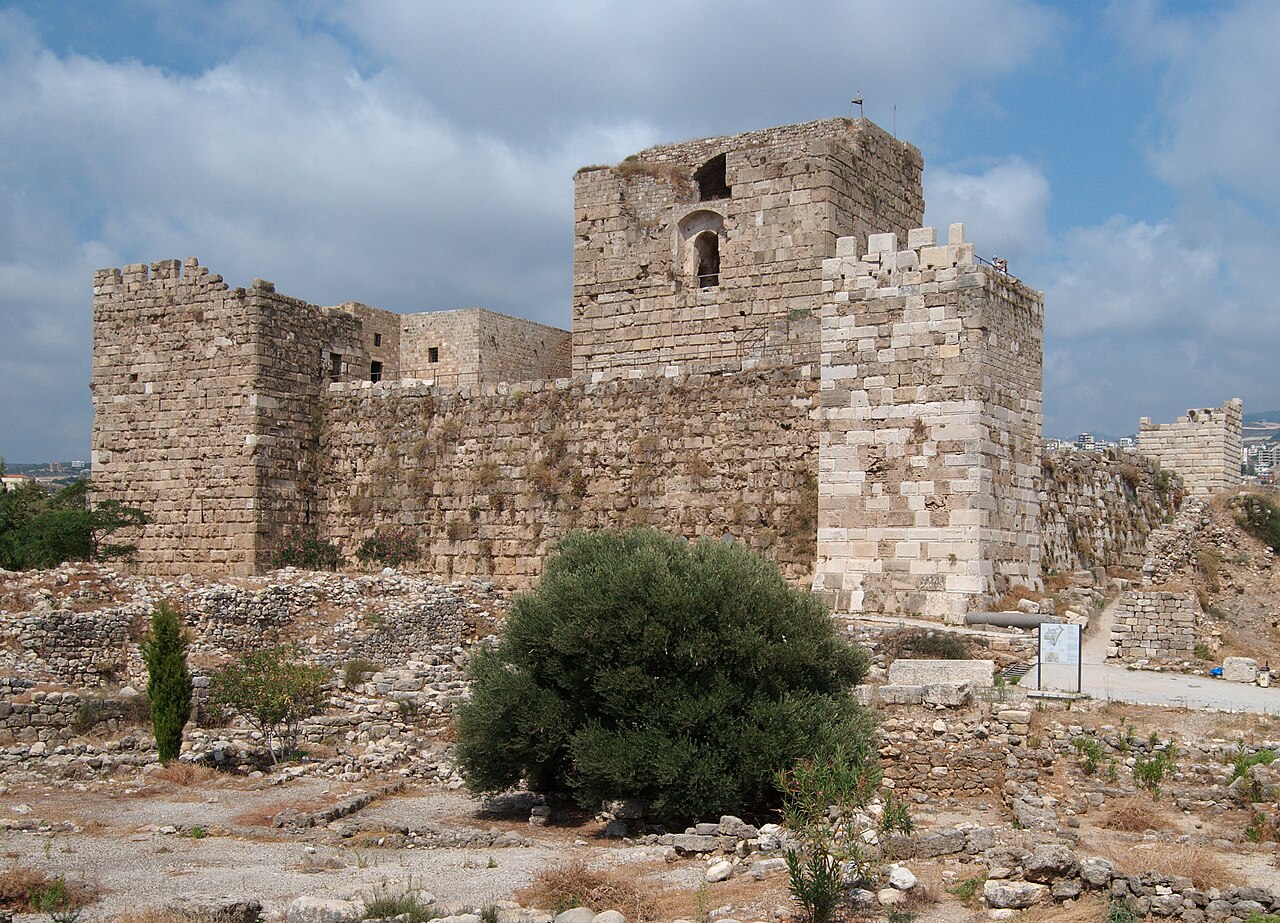
Beside the old harbour, a Crusader castle stands over ruins that go back thousands of years, including temples, royal tombs and a Roman theatre. The whole site is on the UNESCO World Heritage List.
UNESCO World Heritage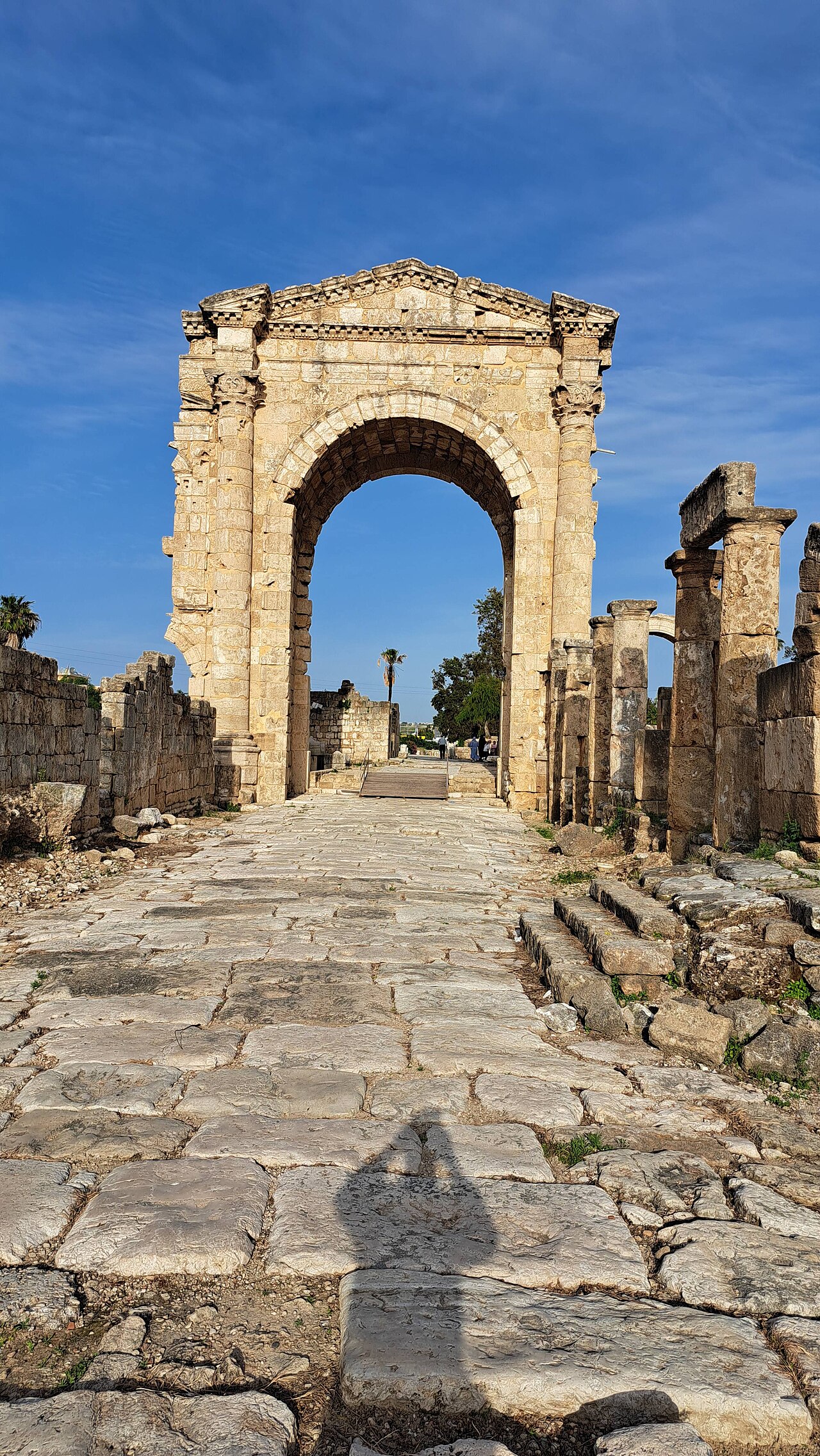
Colonnaded streets, Roman baths, an arch and one of the largest Roman hippodromes, where about 20,000 spectators watched chariot races.
UNESCO World Heritage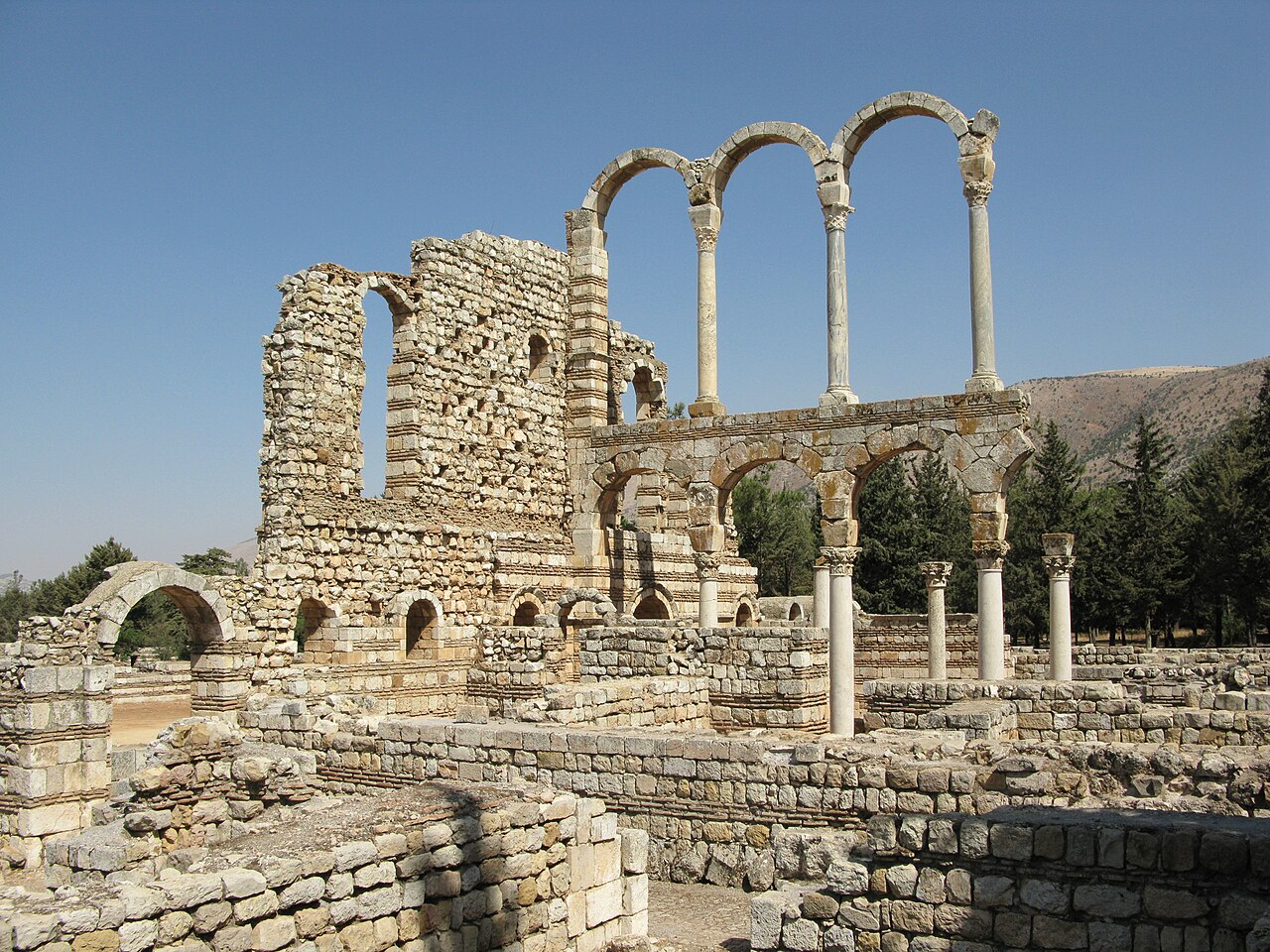
A walled town from the early 700s, built by the Umayyad caliphs with a grid of streets, palaces, baths and shops. It is a rare example of a planned city from that time.
UNESCO World Heritage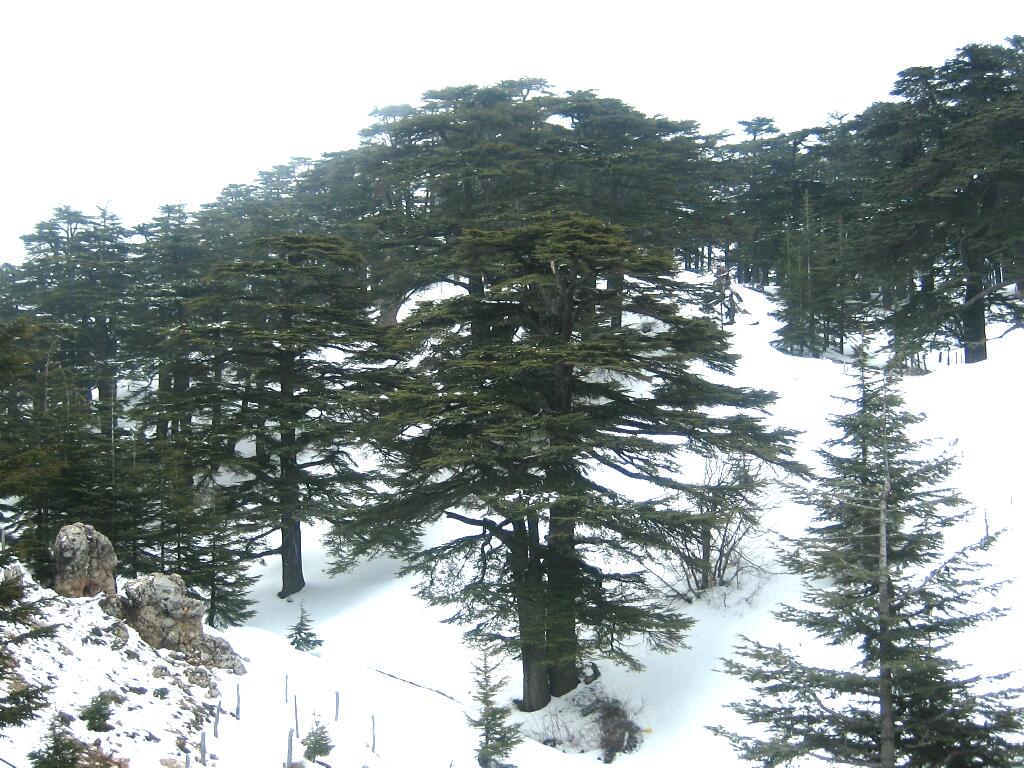
A grove of ancient cedar trees high above the Kadisha Valley, a remnant of the great forests that once covered Mount Lebanon. The cedar is Lebanon's national emblem and appears on its flag.
UNESCO World Heritage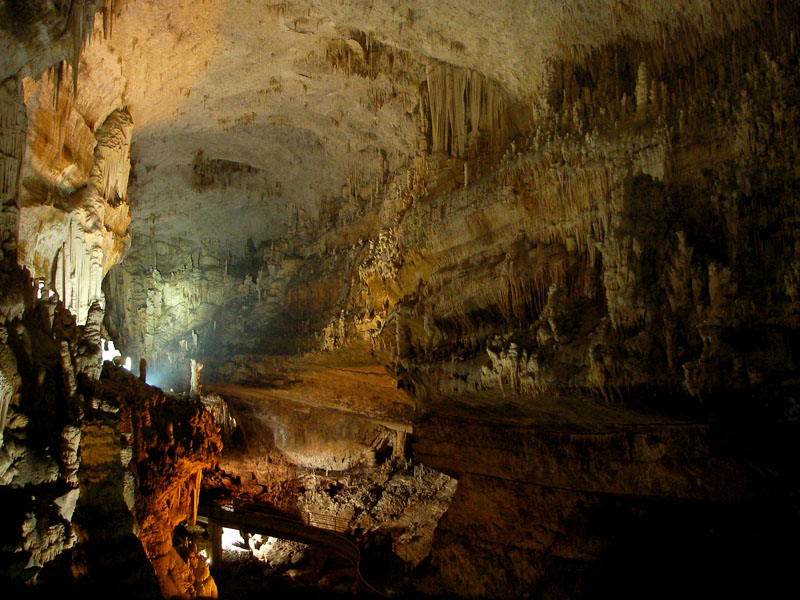
Two linked limestone caves about 18 km north of Beirut. Visitors walk through the upper cave among giant stalactites, and take a boat on the underground river in the lower cave.
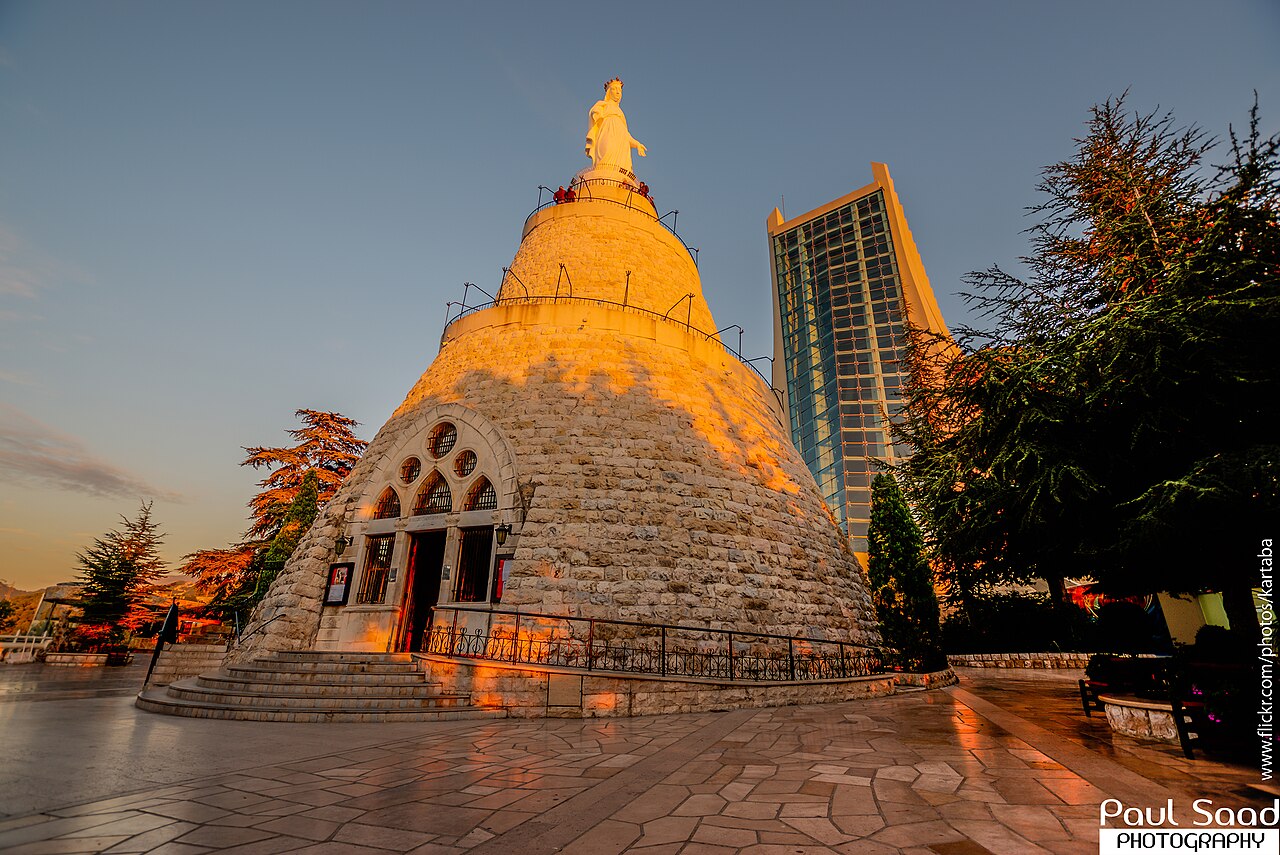
A bronze statue of the Virgin Mary, about 8.5 m tall, stands on a hilltop above the Bay of Jounieh with her arms stretched towards Beirut. Christians and Muslims both come to visit.
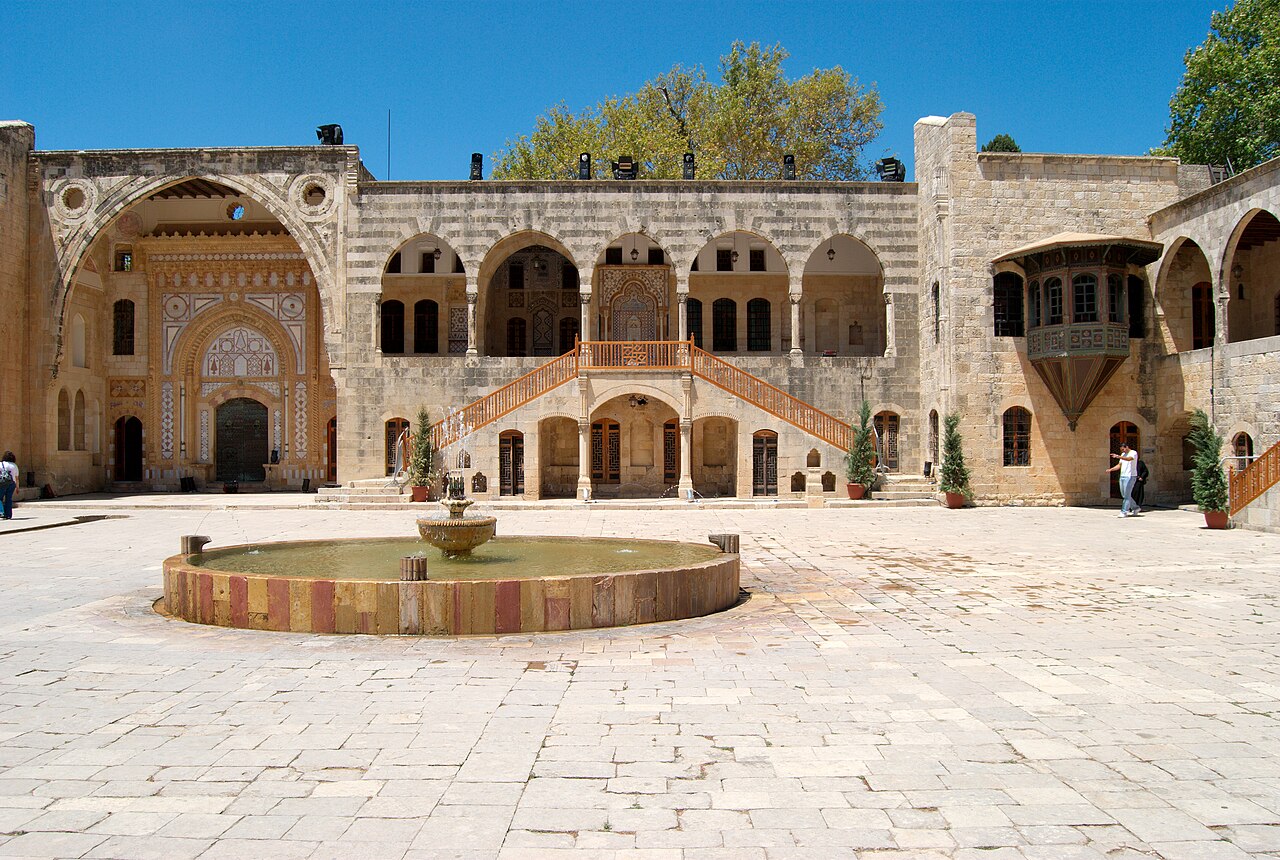
A palace of courtyards, fountains and painted wooden ceilings built by the emir Bashir II between 1788 and 1818. It hosts a summer festival.
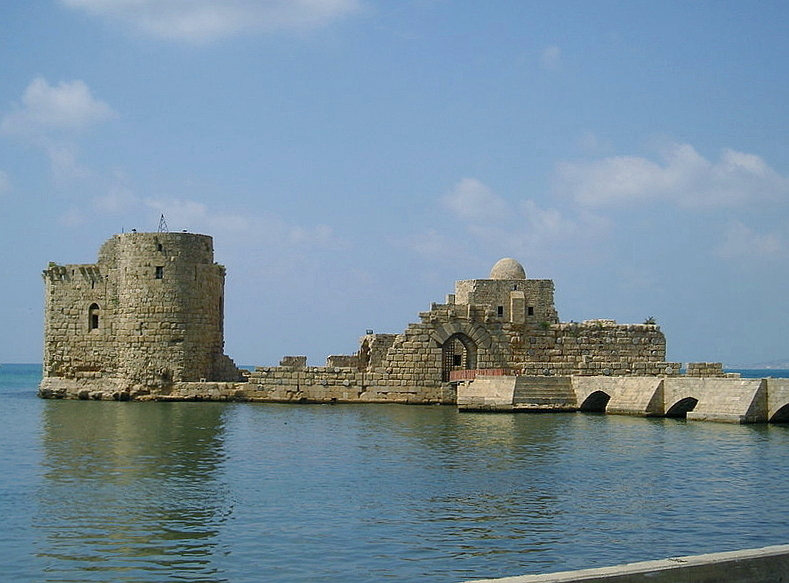
A Crusader fortress from 1228 on a small island, joined to the shore by a stone causeway about 80 m long. From its roof there is a view over the old city and fishing harbour.
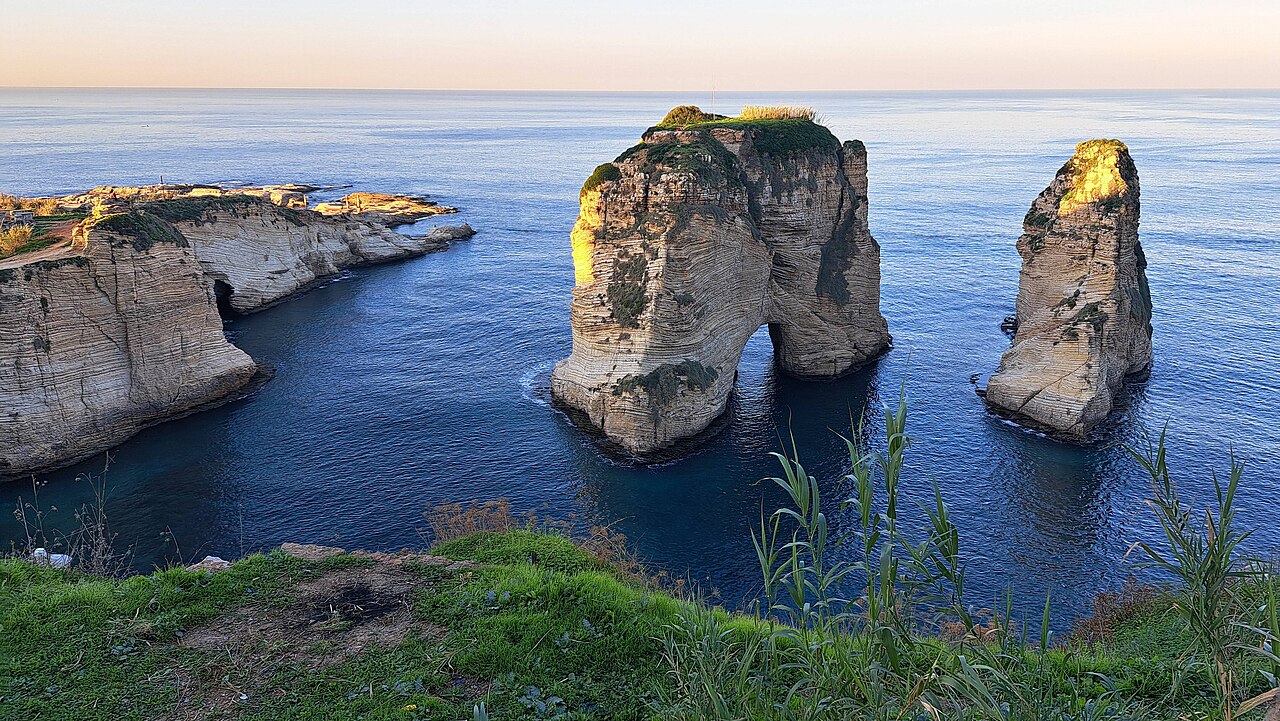
Two great limestone rocks rising from the sea off the Raouché district of Beirut. The seafront promenade above them is a favourite place for an evening walk.
The name Lebanon comes from an old Semitic root, 'lbn', meaning white, probably because of the snow on its mountains.
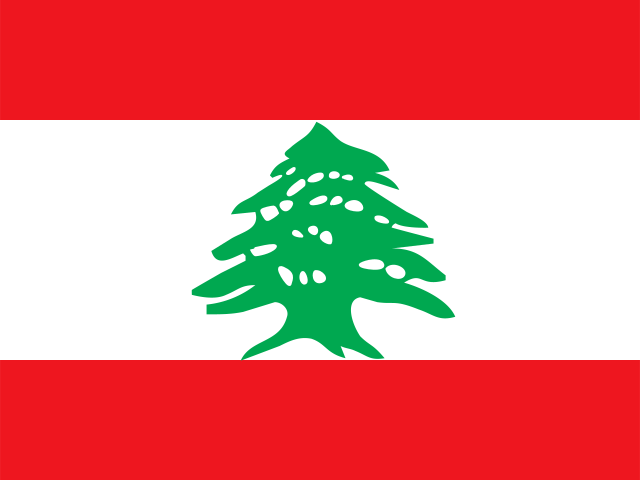
The green cedar on the Lebanese flag is the cedar of Lebanon. The flag was first raised in November 1943, during the struggle for independence, and was written into the constitution on 7 December 1943.
The Greeks called the town of Byblos after the papyrus that passed through its port, and 'byblos' came to mean papyrus in Greek. The English word Bible comes from the same name.
The stone coffin of King Ahiram of Byblos, now in the National Museum of Beirut, carries what is considered the earliest known example of the fully developed Phoenician alphabet.
Lebanon officially recognises 18 religious communities, Christian, Muslim, Druze and Jewish. By the unwritten National Pact of 1943, the president is a Maronite Christian, the prime minister a Sunni Muslim and the speaker of parliament a Shia Muslim.
As of September 2026, Lebanon has seven sites on UNESCO's World Heritage List. The newest, the Mount Amel Castles, was added in 2026.
Kahlil Gibran, born in Bsharri in 1883, wrote 'The Prophet', published in 1923. It has been translated into more than 100 languages.
The singer Fairuz, often called 'the Voice of Lebanon', first sang at the Baalbeck International Festival in 1957.
The upper cave of Jeita Grotto holds a stalactite about 8.2 m long, often described as the longest known stalactite in the world.
In 2014 archaeologists found a stone block in the Roman quarry at Baalbek estimated to weigh about 1,650 tonnes, suggested to be the largest ancient stone block ever found.
The Litani is the longest river that flows entirely within Lebanon. In ancient times it was called the Leontes, the 'lion river'.
Qurnat as Sawda', at about 3,088 m, is the highest point in Lebanon and in the whole Levant.
Lebanese and other Levantine emigrants took sfiha to Brazil, where the esfiha is now a popular snack, and fatayer to Argentina, where they are sold as empanadas árabes.
The national anthem, adopted in 1927, begins with the words "All for the country, for glory and the flag".
Lebanese Arabic is the everyday spoken form of Arabic in Lebanon, while newspapers and the news use Modern Standard Arabic. Arabic is written from right to left; the Latin spellings here are simple guides. Many Lebanese mix in French and English words, so 'merci' and 'bonjour' are heard everywhere. Pronunciation is written the way it sounds; the capital letters show where the stress goes. Audio is coming soon.
Some phrases change with the person you speak to: 'kifak' is for a man and 'kifik' for a woman. The apostrophe marks a short catch in the throat.
As of September 2026, the UK and other governments advise against all travel to large parts of Lebanon, including the South and Nabatieh governorates, parts of the Beqaa and Baalbek-Hermel, the southern suburbs of Beirut, the far north of Akkar and the Palestinian refugee camps. The situation can change quickly, so read your own government's advice before planning any trip and follow local news while there.
Since the economic crisis that began in 2019, many shops and restaurants do not accept cards and cash machines can be unreliable. As of 2026, US dollars in cash are the main currency for visitors, and change is often given in Lebanese pounds.
The national grid supplies only limited electricity, and many buildings rely on generators for part of the day. Keep a torch and a charged phone with you, as streets can be dark at night.
Travellers whose passports show a visit to Israel may be refused entry to Lebanon. Check the entry rules with the Lebanese embassy before you go.
Taking photos of military sites, checkpoints or soldiers can lead to arrest. Take pictures only at tourist sites, and never fly a drone without permission.
As of 2026, the UK government advises against shared 'service' taxis and taxis hailed on the street, and recommends taxis from recognised companies, for example booked through your hotel. Public transport vehicles have red number plates. Always agree the price before you get in.
Lebanese people often switch between Arabic, French and English in one sentence, as in "Hi, kifak, ça va?". A greeting in Arabic is always welcome, but French or English will get you far in cities.
Police 112, ambulance (Lebanese Red Cross) 140 and fire brigade 175, as of 2026.