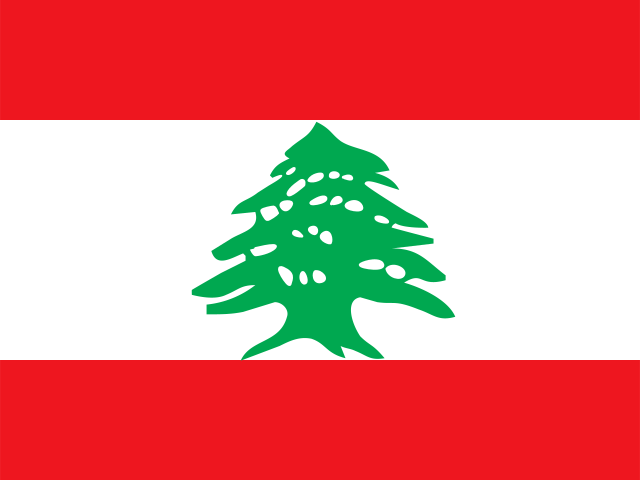
Learn Lebanon before you go
10 phrases to learn
In Lebanese Arabic. Capital letters show the stressed part. Tap the heart to practise a phrase later.
At the table
- Before eating, people say 'Sahtein', to your health, and the answer is 'Ala albak', to your heart.
- Mezze is shared: tear off a piece of flatbread and use it to scoop up food from the plates in the middle of the table.
- Hosts keep offering more food. Saying no once is often taken as politeness, so leave a little on your plate when you have really had enough.
- Lunch on Sundays is often a long family meal that lasts much of the afternoon.
- When raising a glass, people say 'Bisahtak', to your health (to a woman, 'bisahtik').
Local tips
Check official travel warnings first
As of September 2026, the UK and other governments advise against all travel to large parts of Lebanon, including the South and Nabatieh governorates, parts of the Beqaa and Baalbek-Hermel, the southern suburbs of Beirut, the far north of Akkar and the Palestinian refugee camps. The situation can change quickly, so read your own government's advice before planning any trip and follow local news while there.
Bring cash
Since the economic crisis that began in 2019, many shops and restaurants do not accept cards and cash machines can be unreliable. As of 2026, US dollars in cash are the main currency for visitors, and change is often given in Lebanese pounds.
Expect power cuts
The national grid supplies only limited electricity, and many buildings rely on generators for part of the day. Keep a torch and a charged phone with you, as streets can be dark at night.
Passport stamps matter
Travellers whose passports show a visit to Israel may be refused entry to Lebanon. Check the entry rules with the Lebanese embassy before you go.
Don't photograph soldiers or checkpoints
Taking photos of military sites, checkpoints or soldiers can lead to arrest. Take pictures only at tourist sites, and never fly a drone without permission.
Use registered taxis
As of 2026, the UK government advises against shared 'service' taxis and taxis hailed on the street, and recommends taxis from recognised companies, for example booked through your hotel. Public transport vehicles have red number plates. Always agree the price before you get in.
Mix your languages
Lebanese people often switch between Arabic, French and English in one sentence, as in "Hi, kifak, ça va?". A greeting in Arabic is always welcome, but French or English will get you far in cities.
Emergency numbers
Police 112, ambulance (Lebanese Red Cross) 140 and fire brigade 175, as of 2026.
Dishes to try
- Hummus (Hummus bi tahini (حمص بطحينة)): A smooth purée of cooked chickpeas, tahini (sesame paste), lemon juice and garlic, spread on a plate, drizzled with olive oil and eaten by scooping it up with flatbread.
- Tabbouleh (Tabbouleh (تبولة)): A bright green salad that is mostly finely chopped parsley, with a little mint, tomato, onion and fine bulgur wheat, dressed with lemon juice and olive oil.
- Fattoush (Fattoush (فتوش)): A crunchy village salad of lettuce, tomato, cucumber, radish, peppers and herbs, tossed with toasted or fried pieces of flatbread and a dressing sharp with lemon and sumac.
- Smoky aubergine dip (Baba ghanouj (بابا غنوج)): Aubergines are charred over a flame until the flesh is soft and smoky, then mashed with tahini, lemon, garlic and olive oil. It is a favourite on the mezze table.
- Labneh (Labneh (لبنة)): Yogurt strained in a cloth until it is as thick as soft cheese, spread on a plate and drizzled with olive oil. It is a breakfast favourite with olives, mint, cucumber and bread.
- Za'atar flatbread (Man'oushe (منقوشة)): Round flatbread spread with za'atar, a mix of wild thyme, sumac and sesame seeds in olive oil, and baked until crisp at the edges. Cheese and minced meat are other toppings. It is the classic Lebanese breakfast.
- Spinach pies (Fatayer bi sabanekh (فطاير بسبانخ)): Small triangles of soft dough filled with spinach, onion, lemon juice and sumac, baked until golden. Other fatayer are filled with cheese or meat.
- Sfiha (Sfiha (صفيحة)): Small open pies of thin dough topped with minced lamb or beef, onion, tomato and spices. The Baalbek version, sfiha baalbakiya, is famous across Lebanon.
Cities to see
- Beirut (capital): The Corniche seafront promenade, The National Museum, Pigeons' Rock at Raouché.
- Tripoli: The Crusader Citadel of Raymond de Saint-Gilles, Old covered souks, Sweet shops and knafeh.
- Jounieh: The cable car to Harissa, Its bay and old stone souk.
- Byblos: Its Crusader castle and ancient ruins, The old harbour, A UNESCO World Heritage Site.
- Batroun: Fresh lemonade, Old Maronite and Greek Orthodox churches, Beaches and cafés.
- Bsharri: The Gibran Museum, The Cedars of God forest nearby, Skiing at the Cedars.