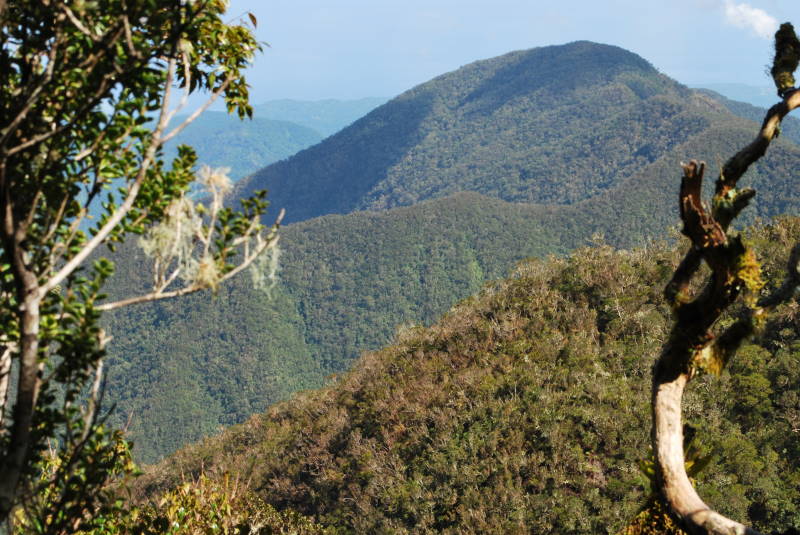
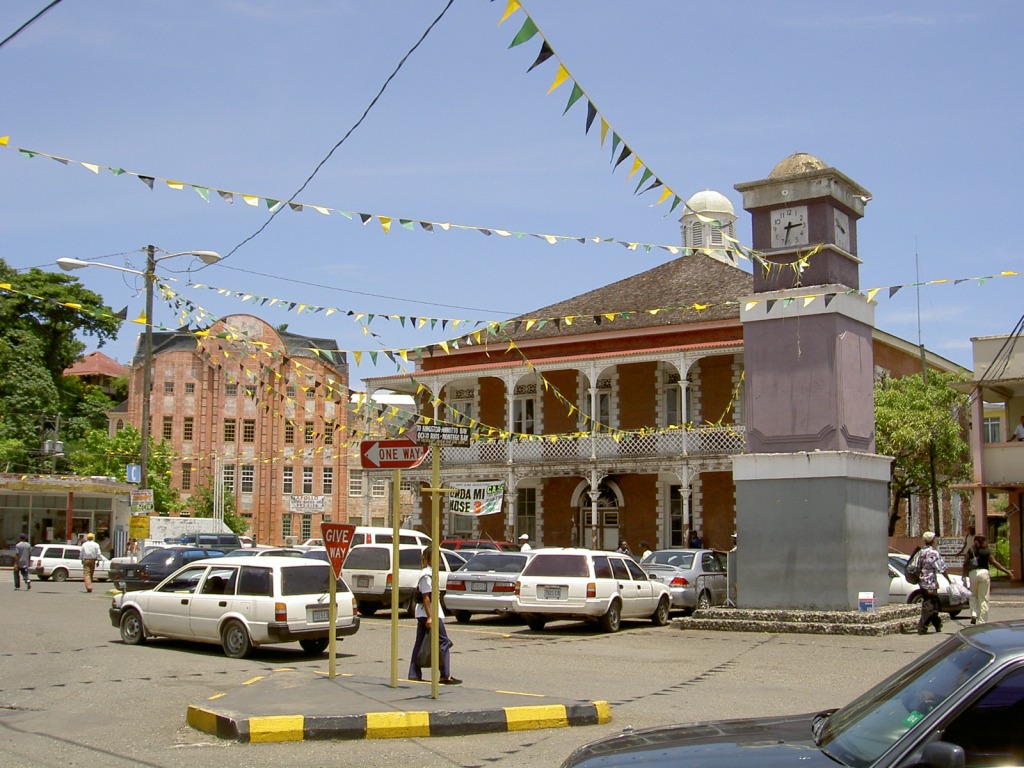
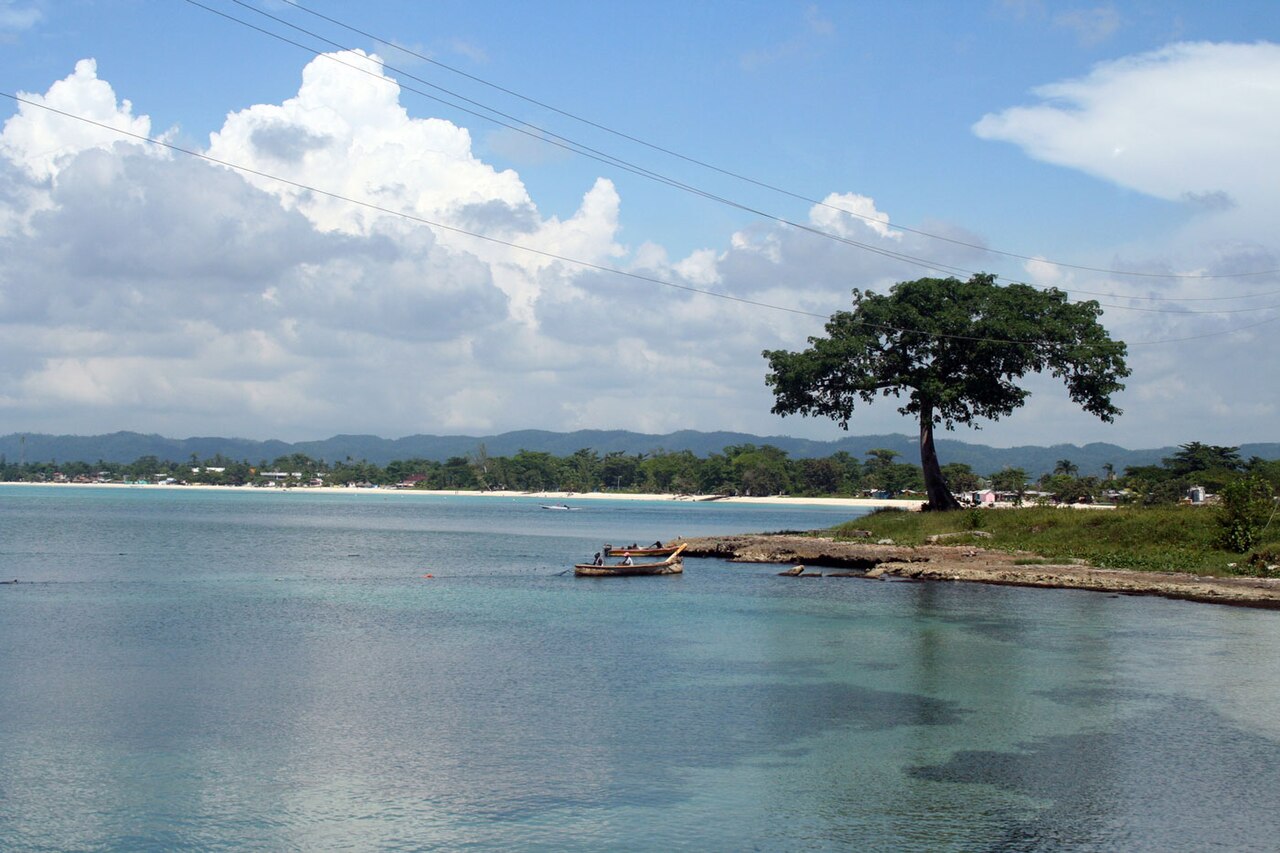
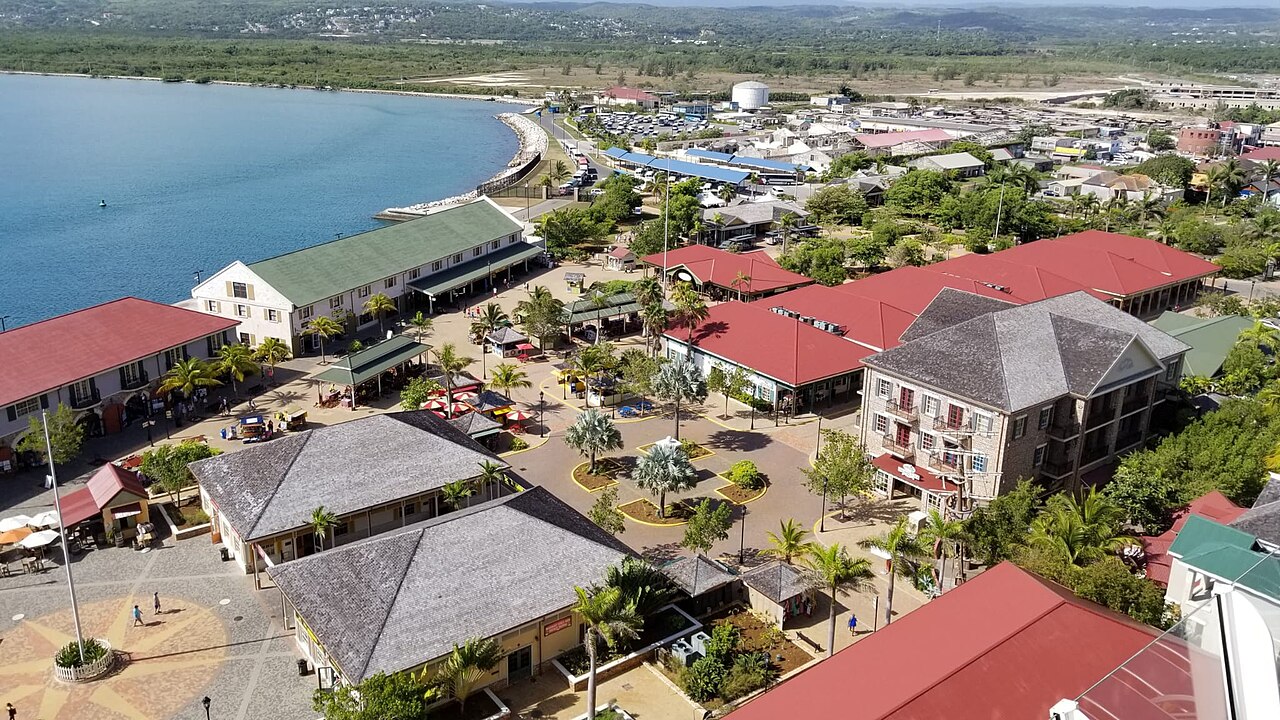
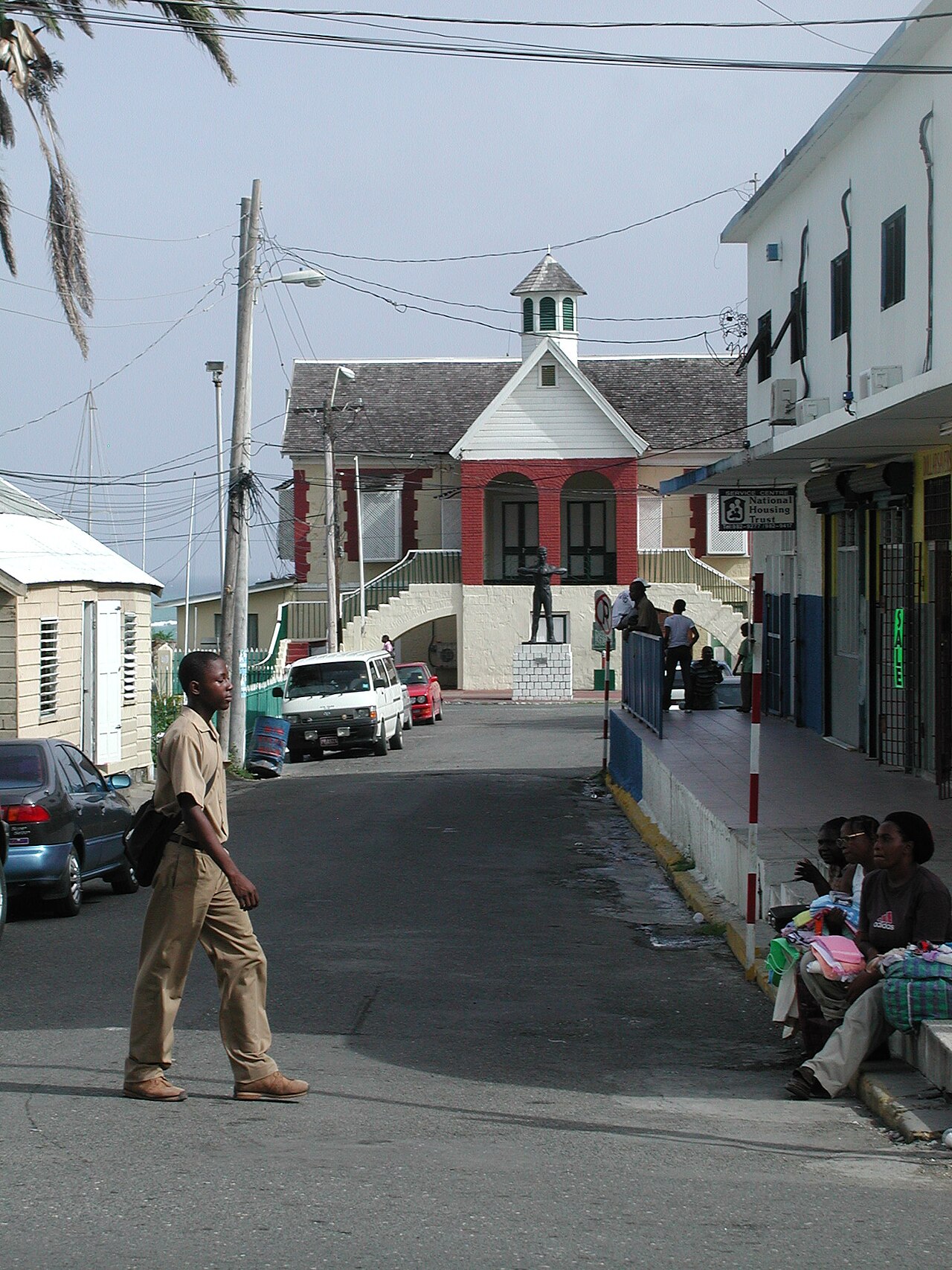
Misty blue mountains, waterfalls that run into the sea, the beat of reggae, and a plate of ackee and saltfish for breakfast.
Your trip to Jamaica
Ready for the trip?
10 questionsAbout 3 minutesNo timer
Explore Jamaica
You have explored 0 of 9 parts. Scroll on to discover the rest.
Print the Jamaica pack
A free large-print PDF. Choose what goes in: facts, map, history, dishes and recipes, phrases, fun facts, a quiz with or without answers. Made for clubs, care homes, libraries and family afternoons.
Jamaica is an island in the Caribbean Sea, about 145 km south of Cuba. It is the third-largest island in the Greater Antilles, after Cuba and Hispaniola, and is about 235 km long. Mountains fill the middle of the island: the Blue Mountains in the east rise to 2,256 m at Blue Mountain Peak, where it can be cool and misty while the coast below is hot. A narrow plain with beaches, bays and mangroves runs around the edge.
The Taíno called the island Xaymaca, usually explained as the 'land of wood and water' or 'land of springs'. Spain ruled it from 1509, and England took it in 1655. Under British rule Jamaica became a great sugar producer, worked by hundreds of thousands of enslaved Africans, until slavery ended in the 1830s. Later, workers came from India and China. The national motto, 'Out of Many, One People', reflects this mix.
Jamaica became independent on 6 August 1962. Today about 2.8 million people live here, most of them of African descent. English is the language of government and schools, while most Jamaicans speak Jamaican Patois in daily life. For a small island, Jamaica is known all over the world: it gave the world reggae, ska and Rastafari, Bob Marley and Usain Bolt, jerk cooking and Blue Mountain coffee.
CapitalKingston
PopulationAbout 2.8 million
Official languageEnglish, the language of government, law, schools and the media. Most Jamaicans also speak Jamaican Patois (Patwa), an English-based creole, in everyday life
CurrencyJamaican dollar (JMD)
AreaAbout 10,991 km², the third-largest island in the Greater Antilles
GovernmentParliamentary constitutional monarchy. As of September 2026 the head of state is the monarch of Jamaica (the same person as the British monarch), represented by a governor-general; becoming a republic would need a two-thirds vote in parliament and a referendum
Highest mountainBlue Mountain Peak, 2,256 m
Longest riverThe Rio Minho, about 92.8 km, which flows south past May Pen to the Caribbean Sea
NeighboursNo land borders. The nearest countries across the sea are Cuba, about 145 km to the north, and Haiti, about 190 km to the east on the island of Hispaniola
Drives on theLeft, as in Britain
Calling code+1 876 (and +1 658). Jamaica is part of the North American numbering plan
Jamaica's story runs from the Taíno villages, through 146 years of Spanish rule and three centuries of British rule built on sugar and slavery, to independence in 1962. Much of it is a story of resistance: the Maroons who kept their freedom in the mountains, the great slave rebellions, and the march on Morant Bay. It is also a story of earthquakes and hurricanes, and of an island that keeps rebuilding.
AD 800
The Taíno settle the island
People first reached Jamaica around 500 to 600 CE. The Taíno, who most likely came from South America, arrived around 800. They fished and farmed cassava and maize, and at their height about 60,000 of them lived in some 200 villages, each led by a chief called a cacique.
1494
Columbus reaches Jamaica
On his second voyage, in May 1494, Christopher Columbus became the first European to see Jamaica and claimed it for Spain. He probably landed at Dry Harbour, now Discovery Bay, on the north coast. On his fourth voyage, in 1503, he was shipwrecked and spent a year on the island waiting to be rescued.
1509
The Spanish found Sevilla
Juan de Esquivel founded the first Spanish settlement, Sevilla, near St Ann's Bay on the north coast in 1509. Because the site was thought unhealthy, it was moved to higher ground in 1518, and in 1534 most of its people moved to the new capital on the south coast. The Taíno died in great numbers from new diseases and forced labour, and the Spanish began to bring enslaved Africans to the island.
1534
Spanish Town becomes the capital
Around 1534 the Spanish moved their capital to Villa de la Vega, on the south side of the island, later known as St Jago de la Vega and today as Spanish Town. It stayed the seat of government, under Spain and then Britain, until 1872.
1655
The English capture Jamaica
In May 1655 an English force under Admiral William Penn and General Robert Venables, sent by Oliver Cromwell, took the island after failing to capture Santo Domingo. Many enslaved Africans escaped into the mountains during the fighting and joined the free communities known as Maroons. Spain formally gave Jamaica to England in the Treaty of Madrid in 1670.
1692
An earthquake destroys Port Royal
On 7 June 1692 an earthquake struck Port Royal, a rich harbour town famous as a base for privateers and pirates. Most of the town sank below the sea, and about 2,000 people died, with thousands more dying in the following days. Survivors moved across the harbour, where the new town of Kingston was laid out.
1739
The Maroons win a peace treaty
After years of guerrilla war in the mountains, the British signed a treaty with the Leeward Maroons, led by Cudjoe, in 1739, and with the Windward Maroons, whose leaders included Queen Nanny, soon after. The treaties gave the Maroons their freedom and land. Nanny of the Maroons is now one of Jamaica's National Heroes.
1760
Tacky's War
In April 1760 enslaved Africans led by Tacky, a Fante chief from what is now Ghana, rose up in the parish of St Mary. The rebellion spread across the island and lasted into 1761 before British forces and their Maroon allies put it down. It was the largest slave uprising in the British Caribbean until 1831.
1831
The Baptist War
At Christmas 1831 up to 60,000 enslaved people in western Jamaica stopped work and rose up, led by the Baptist deacon Samuel Sharpe. The rebellion lasted eleven days and was crushed, and Sharpe was hanged in Montego Bay in 1832. News of the uprising and its brutal punishment helped push the British Parliament to end slavery. Sharpe is a National Hero.
1838
Full freedom from slavery
Britain's law ending slavery took effect on 1 August 1834, but most formerly enslaved people had to keep working for their old masters as 'apprentices'. Full freedom came on 1 August 1838. The date is still celebrated as Emancipation Day, a public holiday. Many freed people left the plantations to farm their own small plots.
1865
The Morant Bay rebellion
On 11 October 1865 the Baptist preacher Paul Bogle led a march on the courthouse in Morant Bay to protest against poverty and injustice. The militia opened fire and the protesters burned the courthouse. Governor Edward John Eyre answered with martial law: more than 400 people were killed, and Bogle and the politician George William Gordon were hanged. Both are now National Heroes.
1872
The capital moves to Kingston
In 1872 the seat of government moved from Spanish Town to Kingston, the island's largest city and port. Its great natural harbour, sheltered by the long sand spit of the Palisadoes, made it the natural choice.
1907
An earthquake shakes Kingston
On 14 January 1907 an earthquake and the fires that followed damaged every building in Kingston and killed about 1,000 people. Much of the downtown area was rebuilt in the years afterwards.
1944
All adults win the vote
After the labour unrest of the late 1930s, a new constitution in 1944 created a House of Representatives elected by all adults. The two main parties of modern Jamaica grew out of this period: the Jamaica Labour Party of Alexander Bustamante and the People's National Party of Norman Manley.
1962
Jamaica becomes independent
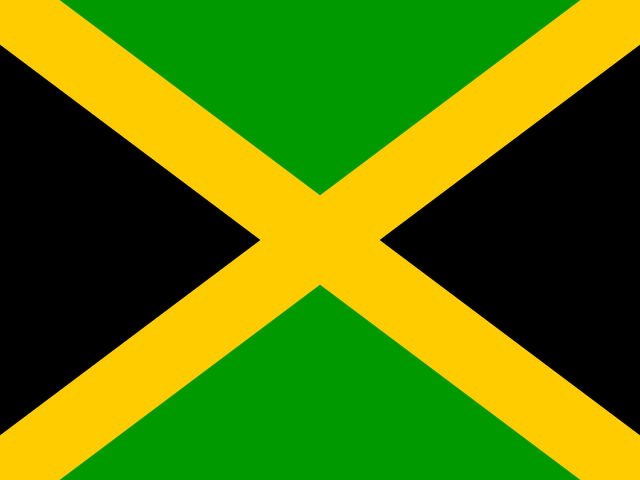
Jamaica joined the West Indies Federation in 1958, but in a referendum in September 1961 a majority of voters chose to leave it. On 6 August 1962 Jamaica became an independent country within the Commonwealth, with a new black, green and gold flag. Alexander Bustamante, aged 78, became the first prime minister.
2025
Hurricane Melissa strikes
On 28 October 2025 Hurricane Melissa came ashore near New Hope in Westmoreland as a Category 5 storm, the strongest hurricane on record to hit Jamaica. The western and southwestern parishes suffered the worst damage, and at least 45 people died in Jamaica. As of September 2026 many communities in the west are still rebuilding.
Jamaican food is a mix of many peoples: the Taíno gave jerk cooking and cassava bammy, Africans brought ackee and one-pot cooking, the Spanish brought escovitch and stews, the British brought baked buns and pies, and Indian and Chinese workers added curry, soy sauce and hard dough bread. The day often starts with a big breakfast of ackee and saltfish with fried dumplings, boiled green bananas or breadfruit. Lunch might be a patty in coco bread from a bakery. Sunday dinner, after church, is the great family meal: rice and peas with brown stew chicken, curry goat or oxtail, followed by something sweet. Scotch bonnet peppers and allspice, called pimento here, flavour almost everything.
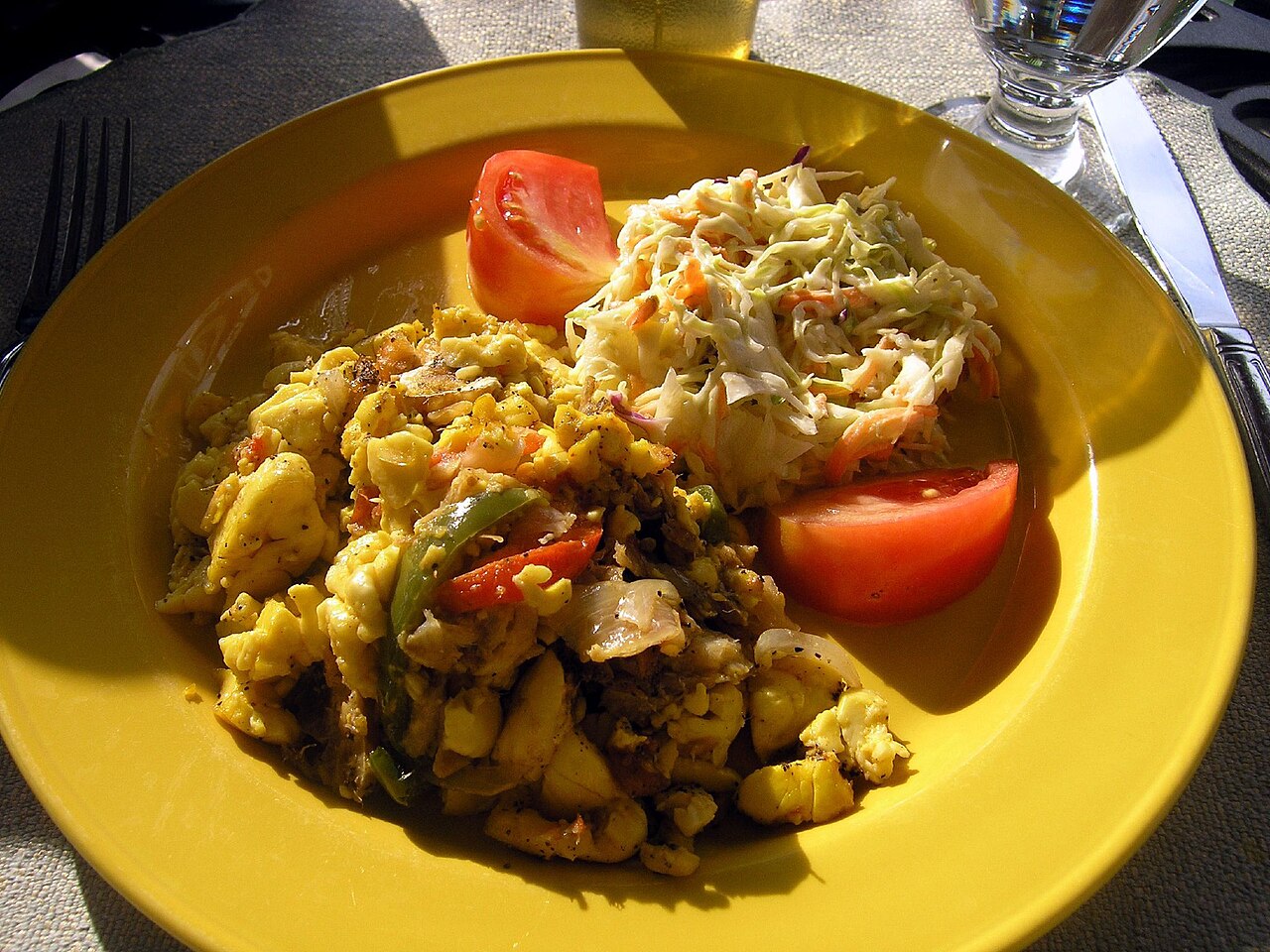
Jamaica's national dish: soft yellow ackee fruit cooked with flakes of salted cod, onion, tomato, thyme and Scotch bonnet pepper. The ackee looks and tastes a little like scrambled eggs. It is eaten above all at breakfast, with fried dumplings, boiled green bananas, breadfruit or hard dough bread.
The ackee tree came from West Africa in the 1700s. Its scientific name, Blighia sapida, honours Captain William Bligh, who took the fruit from Jamaica to Kew Gardens in England in 1793. Harry Belafonte sang 'Ackee rice, saltfish are nice' in his 1956 hit 'Jamaica Farewell'.
See the recipe
Serves 4
1 h
Ingredients
250 g boneless salt cod (saltfish)
1 tin of ackee (about 540 g), drained
2 tablespoons vegetable oil
1 onion, sliced
2 spring onions (scallions), chopped
2 cloves of garlic, chopped
1 tomato, chopped
Half a small red or yellow pepper, sliced
Half a Scotch bonnet pepper, seeds removed and finely chopped (or less, to taste)
A few sprigs of fresh thyme and black pepper
Method
Soak the salt cod in cold water for several hours or overnight, changing the water two or three times. Then boil it for 15 minutes, drain, cool and break it into flakes, removing any skin and bones.
Use only tinned ackee. Fresh ackee is poisonous unless it is fully ripe and correctly cleaned, so leave fresh fruit to experienced Jamaican cooks. Drain the tin gently, because the ackee breaks easily.
Heat the oil in a large pan and fry the onion, spring onion, garlic, sweet pepper and Scotch bonnet for 3 to 4 minutes until soft. Wash your hands well after touching the Scotch bonnet.
Add the tomato, thyme and flaked fish and cook for 5 minutes, stirring.
Fold in the ackee very gently, cover and heat through for 3 to 4 minutes without stirring hard. Season with black pepper and serve hot with fried dumplings, boiled green bananas or bread.
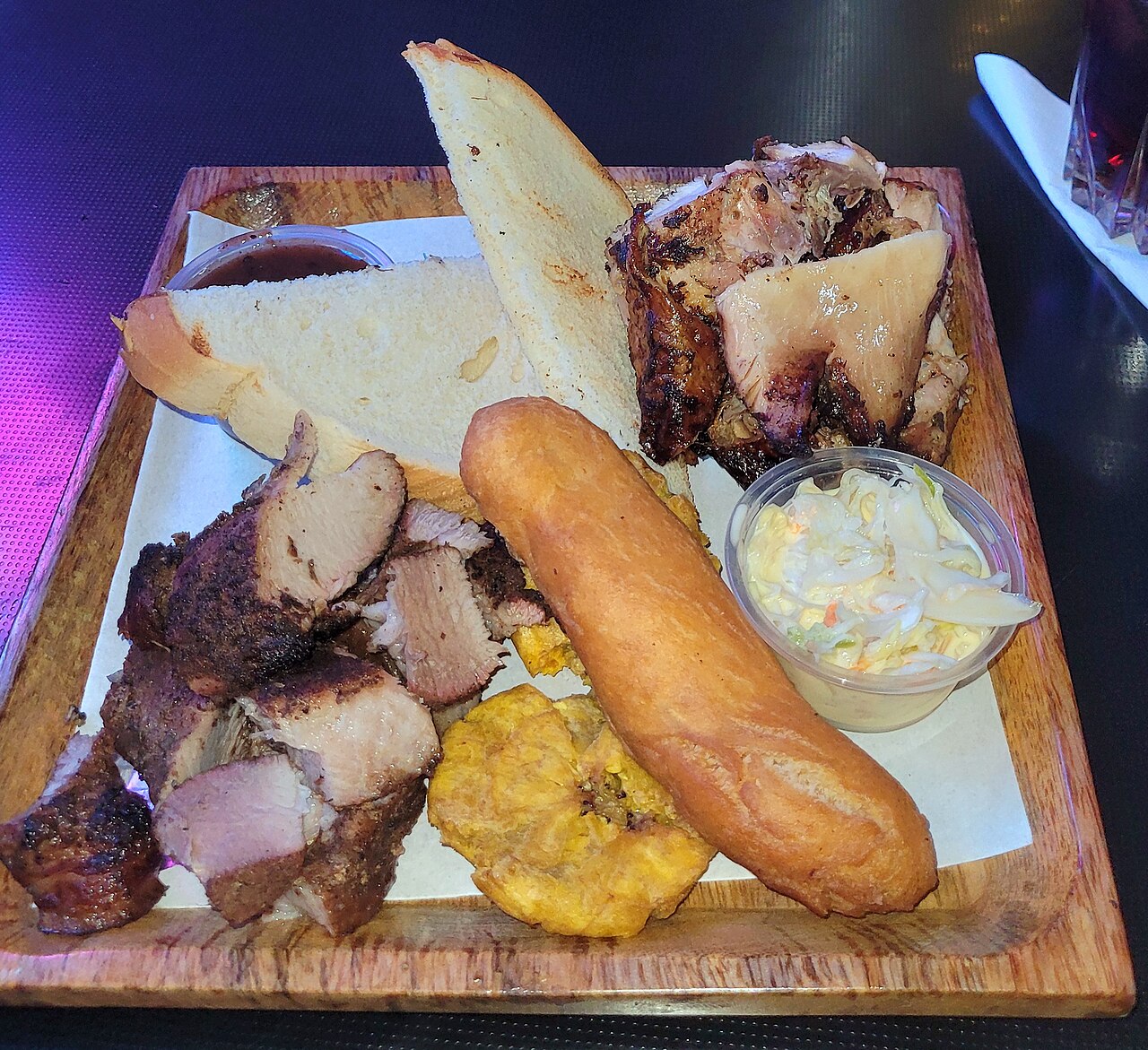
Chicken or pork rubbed with a fiery paste of Scotch bonnet peppers, allspice, spring onion, thyme and other spices, then cooked slowly over a smoky fire, traditionally of pimento wood. Jerk is sold at roadside stalls all over the island and eaten with hard dough bread or festival.
The Taíno smoked meat on a wooden frame they called a barbacoa, the root of the word 'barbecue'. The word 'jerk' is thought to come from charqui, a Spanish word of Quechua origin for dried meat, which also gave English the word 'jerky'.
1 teaspoon dried thyme or a few sprigs of fresh thyme
Half a teaspoon ground cinnamon and a pinch of nutmeg
2 tablespoons soft brown sugar
2 tablespoons soy sauce and the juice of 1 lime
2 tablespoons vegetable oil and 1 teaspoon salt
Method
Blend the spring onions, peppers, garlic, spices, sugar, soy sauce, lime juice, oil and salt to a thick paste. Wear gloves or wash your hands very well after handling Scotch bonnets, and keep them away from your eyes.
Cut two or three slashes in each piece of chicken, rub the paste all over and into the cuts, cover and leave in the fridge for at least 4 hours, or overnight.
Heat the oven to 200°C. Put the chicken on a rack over a roasting tin and roast for 40 to 45 minutes, turning once, until the skin is dark and crisp and the juices run clear.
For a smoky taste, finish the chicken on a hot barbecue for a few minutes on each side. Make sure it is cooked right through.
Rest for 5 minutes and serve with rice and peas, festival or hard dough bread.
Brought by workers from India, who arrived from 1845
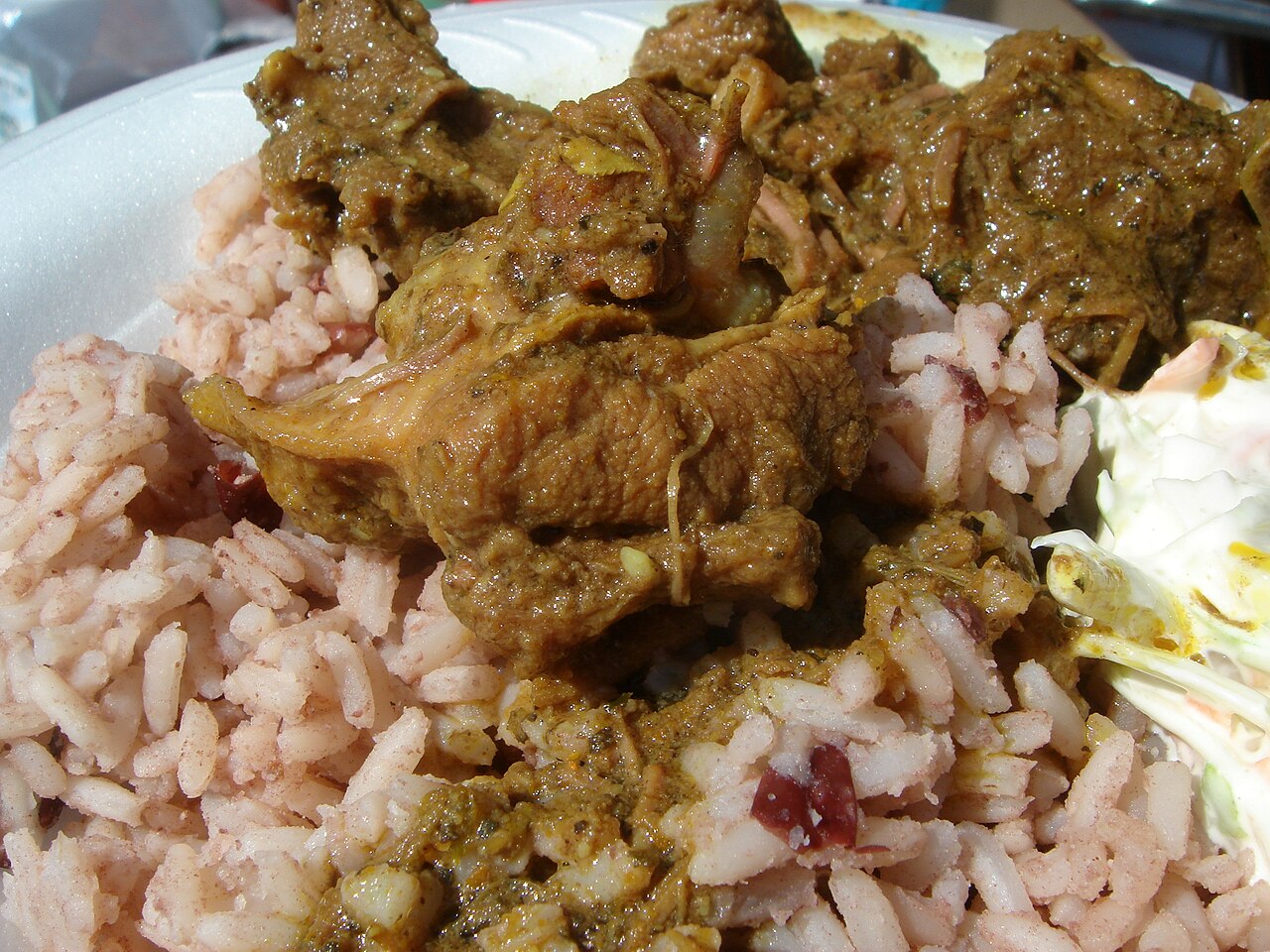
Pieces of goat on the bone, marinated in Jamaican curry powder, garlic, thyme and Scotch bonnet, then browned and simmered slowly until tender, often with potatoes. It is the dish for parties and special occasions, served with white rice or rice and peas.
Indian indentured labourers brought curry and turmeric to Jamaica after slavery ended. Jamaican curry powder, heavy with turmeric and allspice, is now a kitchen staple.
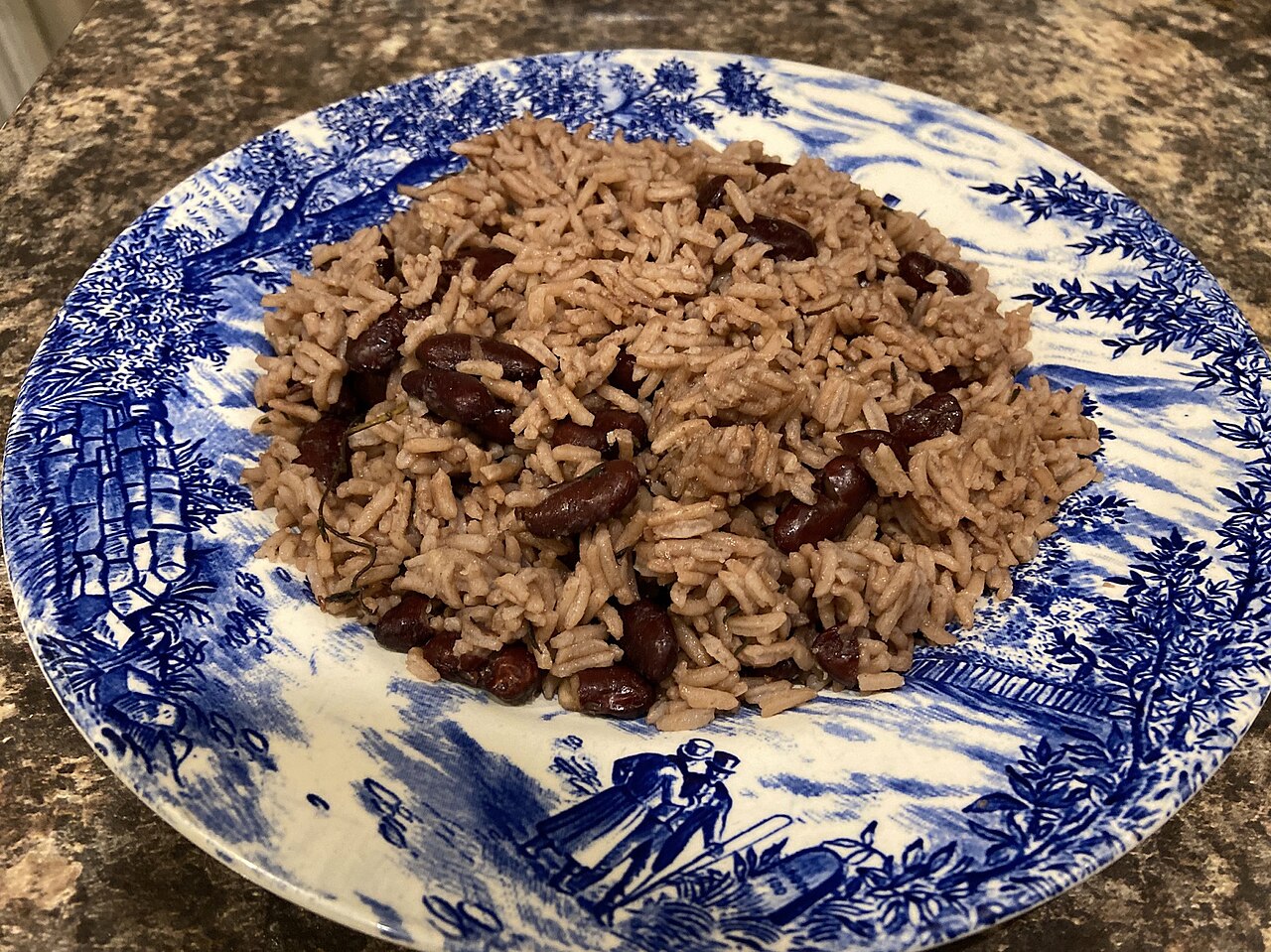
Rice cooked with red kidney beans, which Jamaicans call 'peas', in coconut milk with thyme, spring onion, allspice and a whole Scotch bonnet pepper for flavour. It is the classic Sunday dinner side dish. At Christmas many families make it with gungo (pigeon) peas instead.
In 1961 the linguist Frederic Cassidy wrote that rice and peas had been called 'Jamaica's coat of arms'.
See the recipe
Serves 6
1 h 15 min
Ingredients
1 tin (400 g) red kidney beans, with its liquid
400 ml coconut milk
400 g long-grain rice, rinsed
2 spring onions (scallions), lightly crushed
2 cloves of garlic, crushed
A few sprigs of fresh thyme
4 allspice berries (pimento)
1 whole Scotch bonnet pepper, left whole and not cut
1 teaspoon salt
Method
Put the beans and their liquid, the coconut milk and 300 ml of water in a large pot with the spring onions, garlic, thyme, allspice and salt, and bring to the boil.
Add the rice and stir once. Lay the whole Scotch bonnet on top. Do not let it burst, or the dish will be very hot.
When it boils again, turn the heat to the lowest setting, cover tightly and cook for 20 to 25 minutes, until the rice has absorbed the liquid and is tender. Add a splash of water if it dries out too soon.
Lift out the pepper, thyme stalks and spring onions, fluff the rice with a fork and leave it covered for 5 minutes before serving.
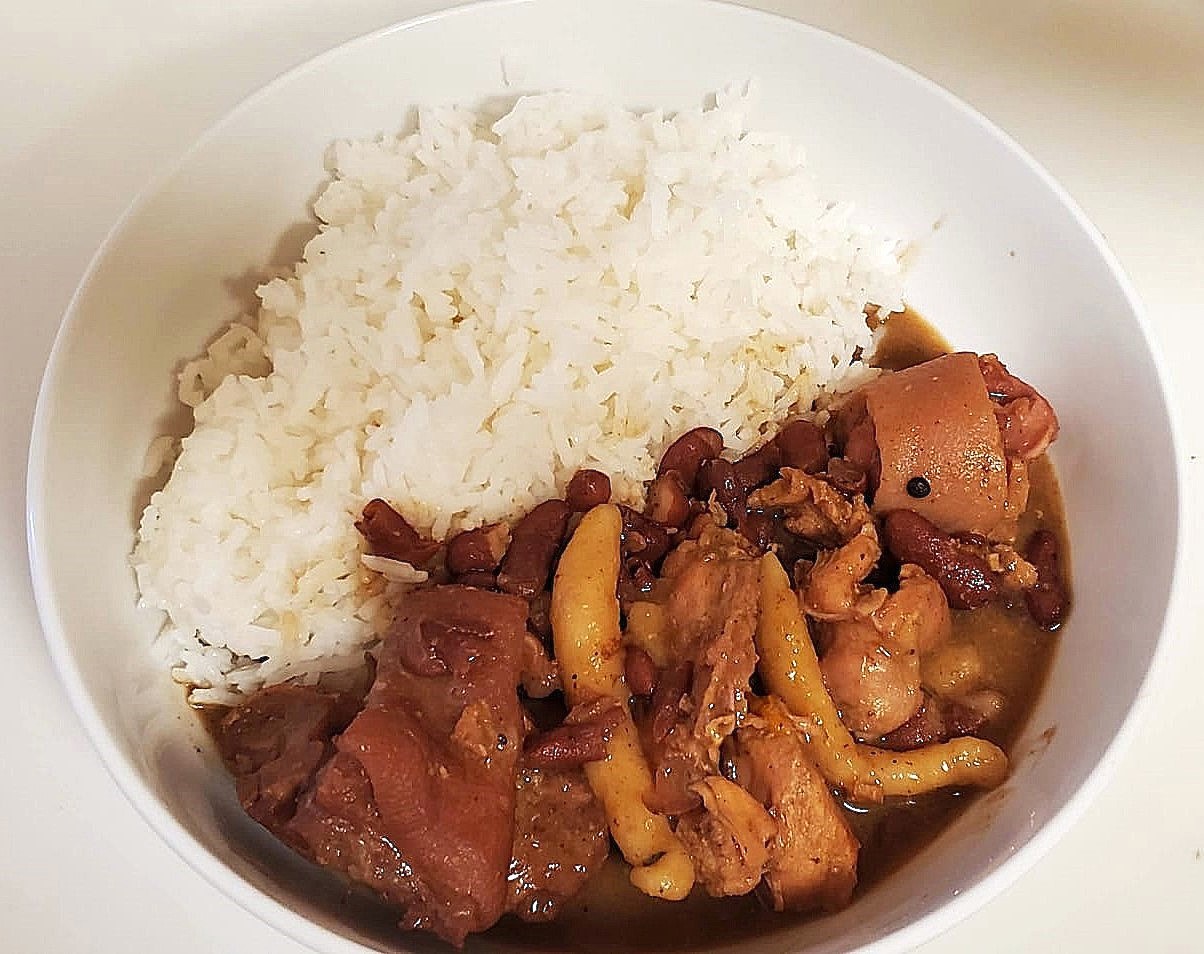
A thick, comforting stew of red kidney beans cooked with coconut milk, salted pork or beef, pigtail, thyme and allspice, with thin flour dumplings called 'spinners'. It is served over white rice. A version without meat is called ital stew peas.
In September 1992 the Jamaican newspaper The Gleaner called stew peas with rice 'the best dish made in Jamaica'.
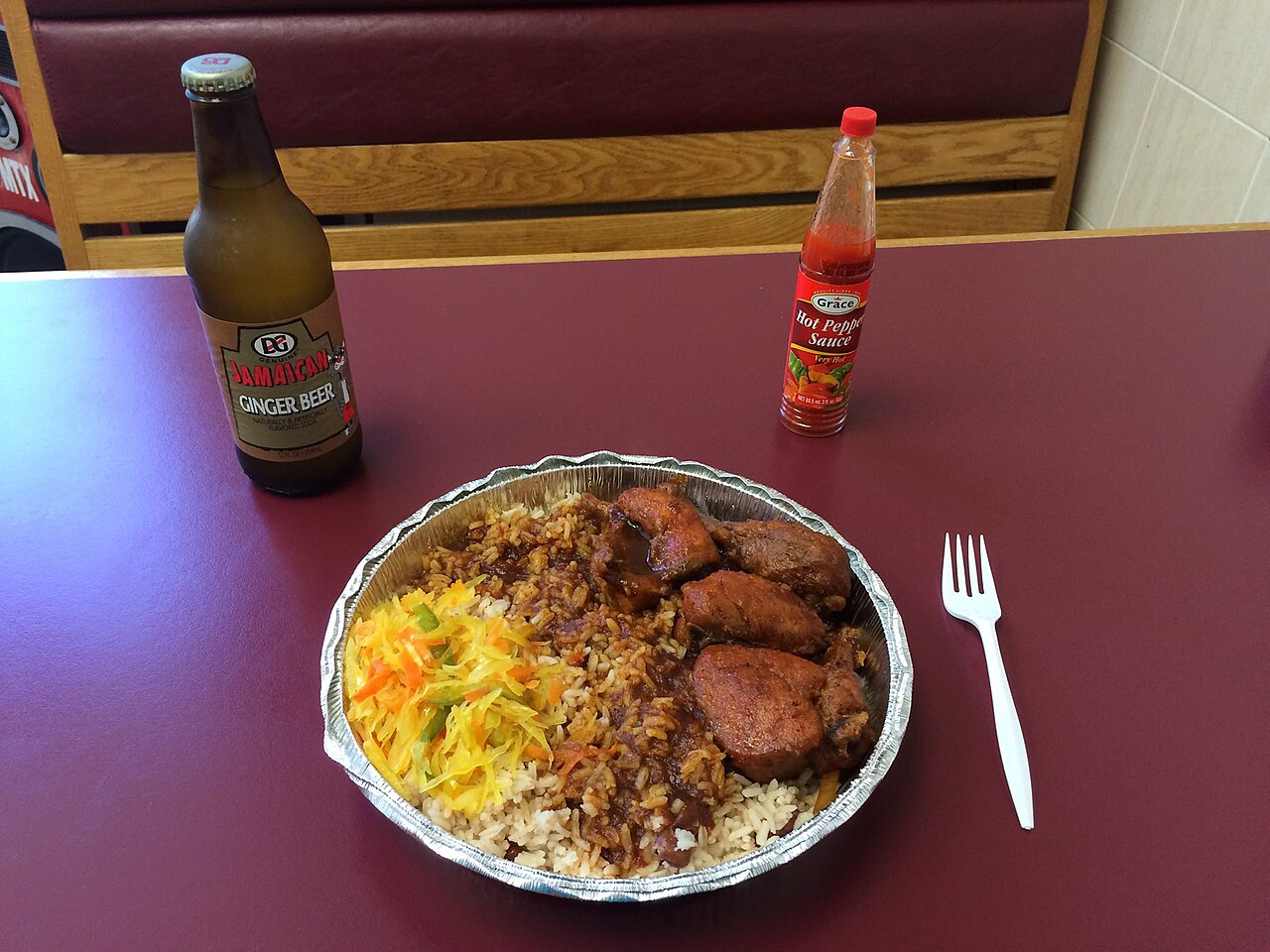
Chicken pieces seasoned and browned in hot oil, then simmered slowly with onion, carrot, tomato, garlic, thyme and a little ketchup until the sauce is dark and rich. It is a favourite Sunday dinner with rice and peas. The same method is used for pork, oxtail and cow foot.
The ginger, spring onion and soy sauce in many Jamaican brown stews are a legacy of Chinese Jamaican cooks.
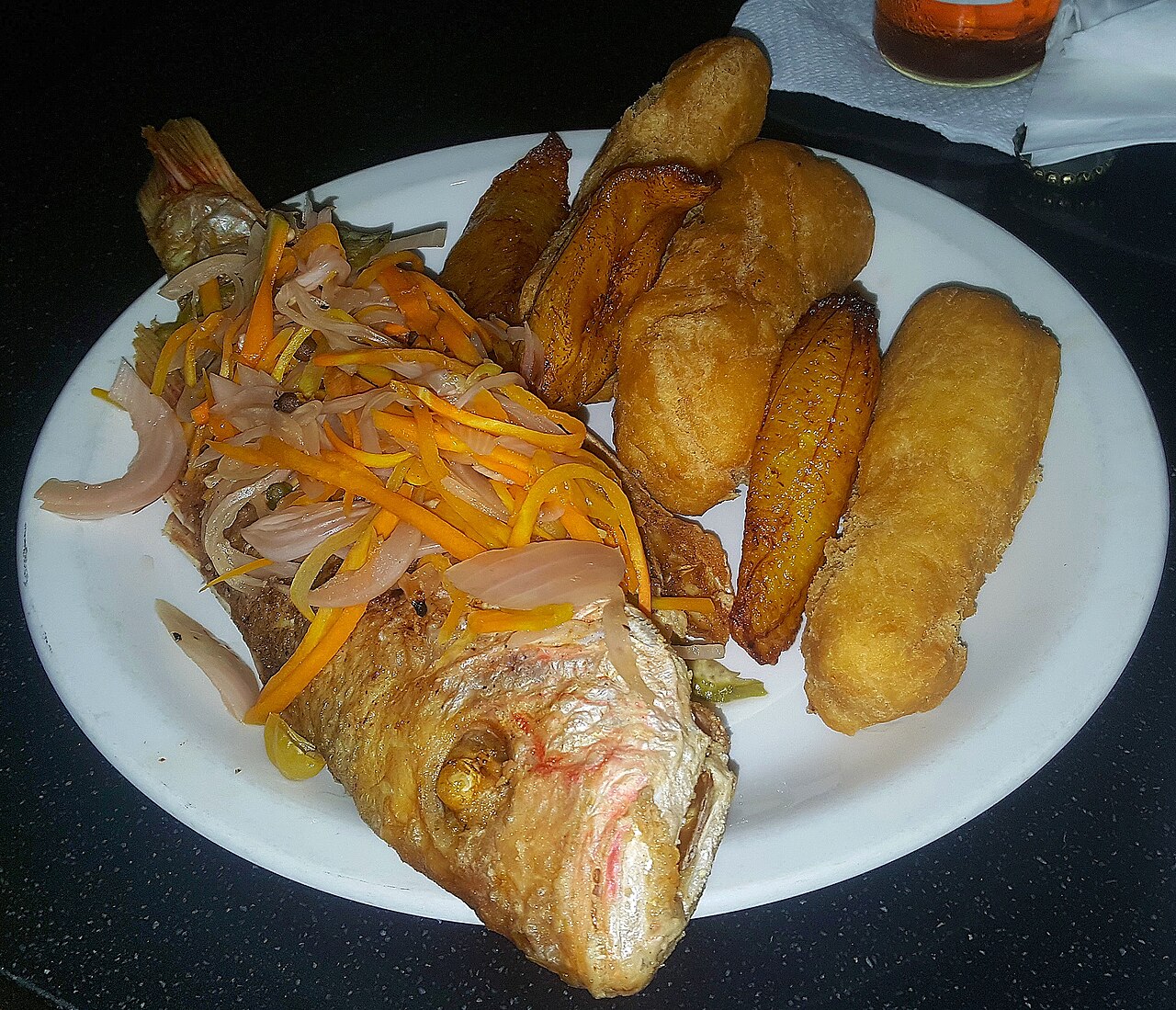
A whole fried fish covered with a sharp pickle of vinegar with thin strips of onion, carrot and Scotch bonnet pepper. It is served hot or cold with festival or bammy, especially at beachside cook shops.
Like saltfish, escovitch fish has long been a favourite during Lent and at Easter, especially on Good Friday.
The whole island, with roots in the Cornish pasty and the Spanish empanada
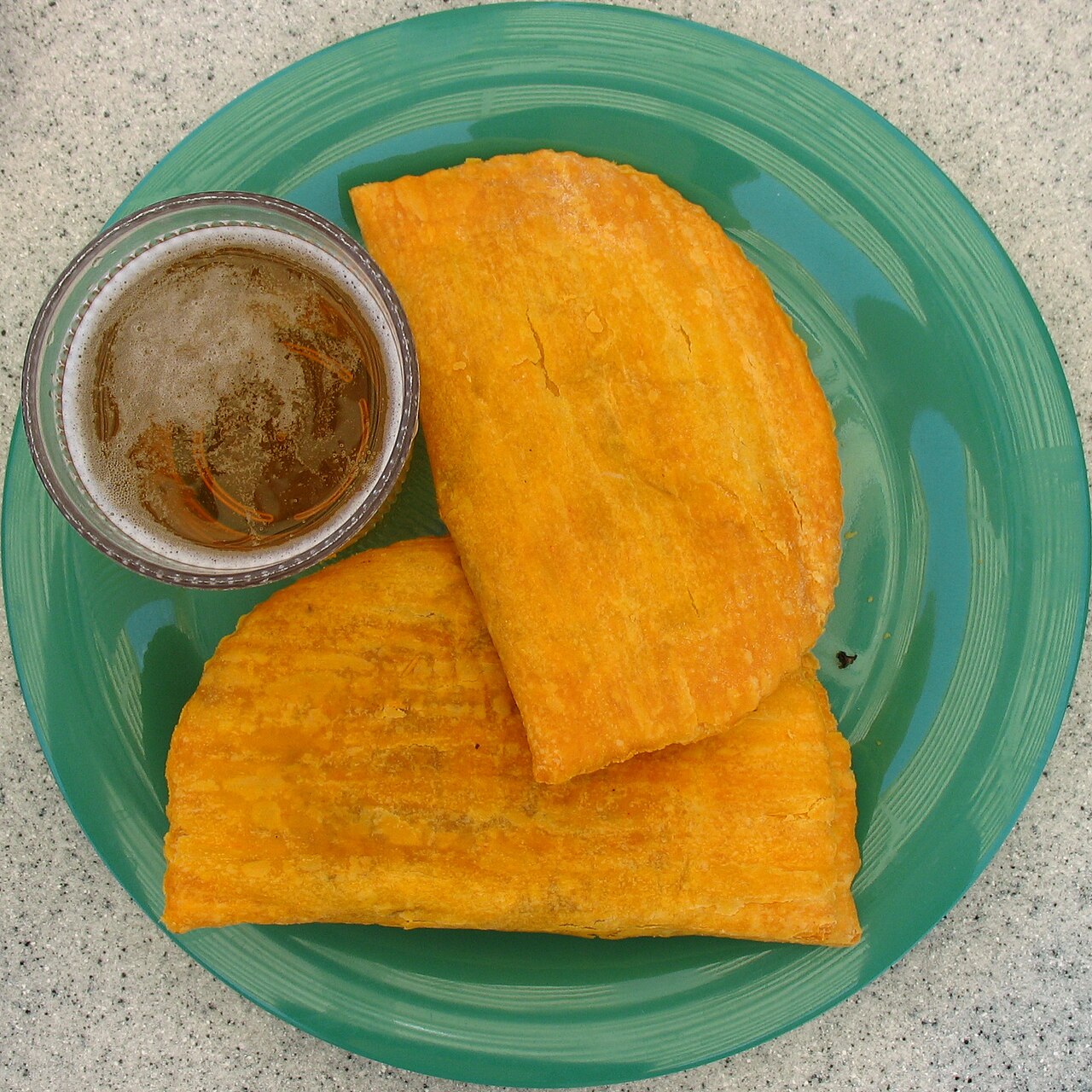
A half-moon pastry with a flaky yellow crust, coloured with turmeric or annatto, filled with spicy minced beef. There are also chicken, vegetable, callaloo and cheese fillings. Many Jamaicans eat a patty for lunch folded inside a soft coco bread.
In 1985 Canadian officials tried to stop Toronto bakers from calling them 'beef patties', because the term was reserved for hamburgers. After the so-called Patty War, the compromise name was 'Jamaican patty'.
The whole island; popular at Hellshire Beach since the 1970s
A slightly sweet fried dough of flour and cornmeal, shaped into long ovals, crisp outside and soft inside. It is the classic partner for fried fish, escovitch fish and jerk, and is also eaten at breakfast.
Festival is often described as a sweeter cousin of the round, savoury Jamaican fried dumpling.
See the recipe
Serves 6
40 min
Ingredients
250 g plain flour
100 g fine cornmeal
2 teaspoons baking powder
3 tablespoons sugar
Half a teaspoon salt
1 tablespoon butter, softened
About 175 ml milk or water, with a few drops of vanilla
Vegetable oil for frying
Method
Mix the flour, cornmeal, baking powder, sugar and salt in a bowl. Rub in the butter with your fingertips.
Add the milk a little at a time and knead to a firm, smooth dough. Cover and rest for 10 minutes.
Divide into 10 to 12 pieces. Roll each into a sausage about 12 cm long and flatten it a little into an oval.
Heat about 3 cm of oil in a deep pan to medium heat. Fry the festivals a few at a time for 3 to 4 minutes, turning, until golden brown all over. Take care with the hot oil.
Drain on kitchen paper and serve warm with fried fish, escovitch fish or jerk chicken.
The Taíno; still made in St Elizabeth and Manchester
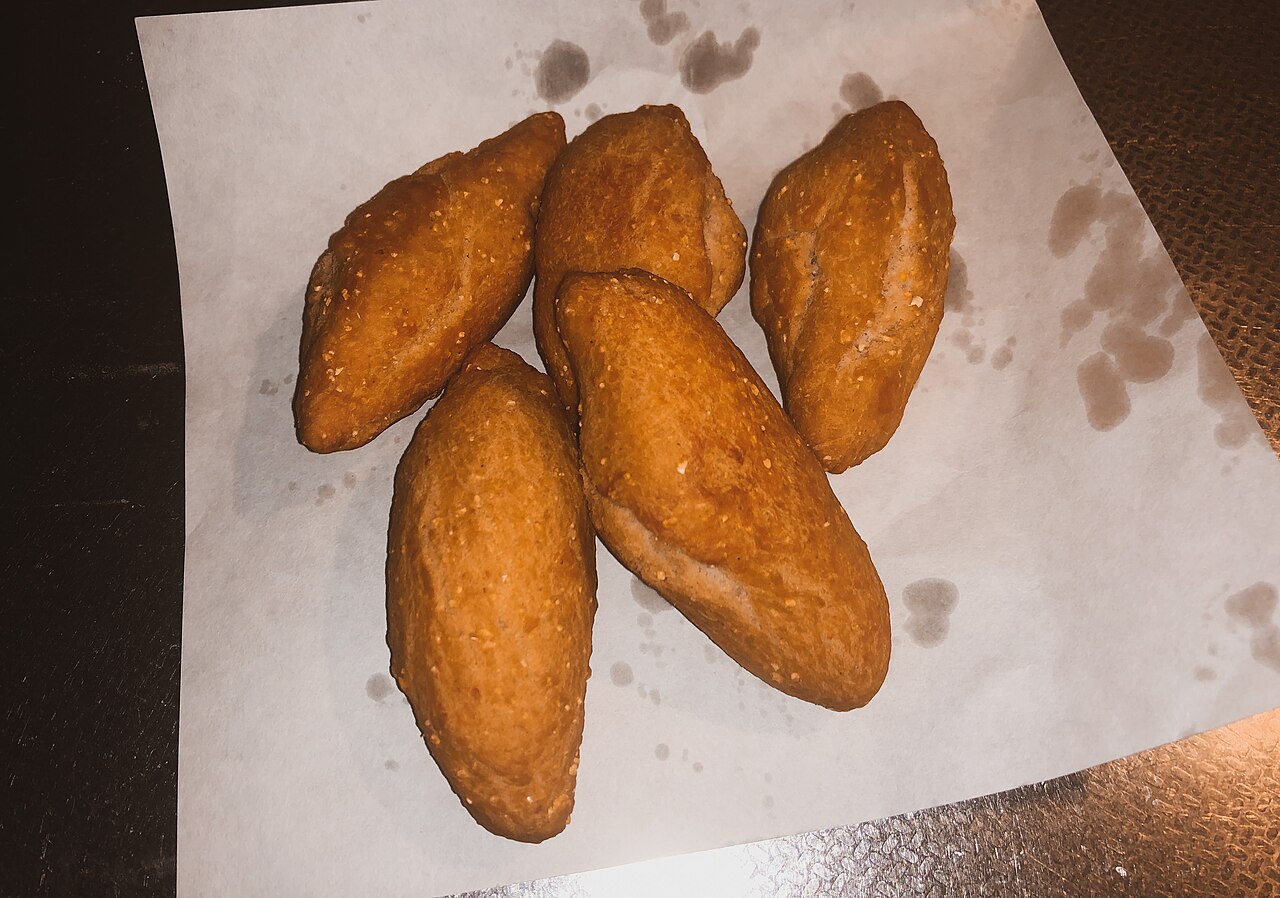
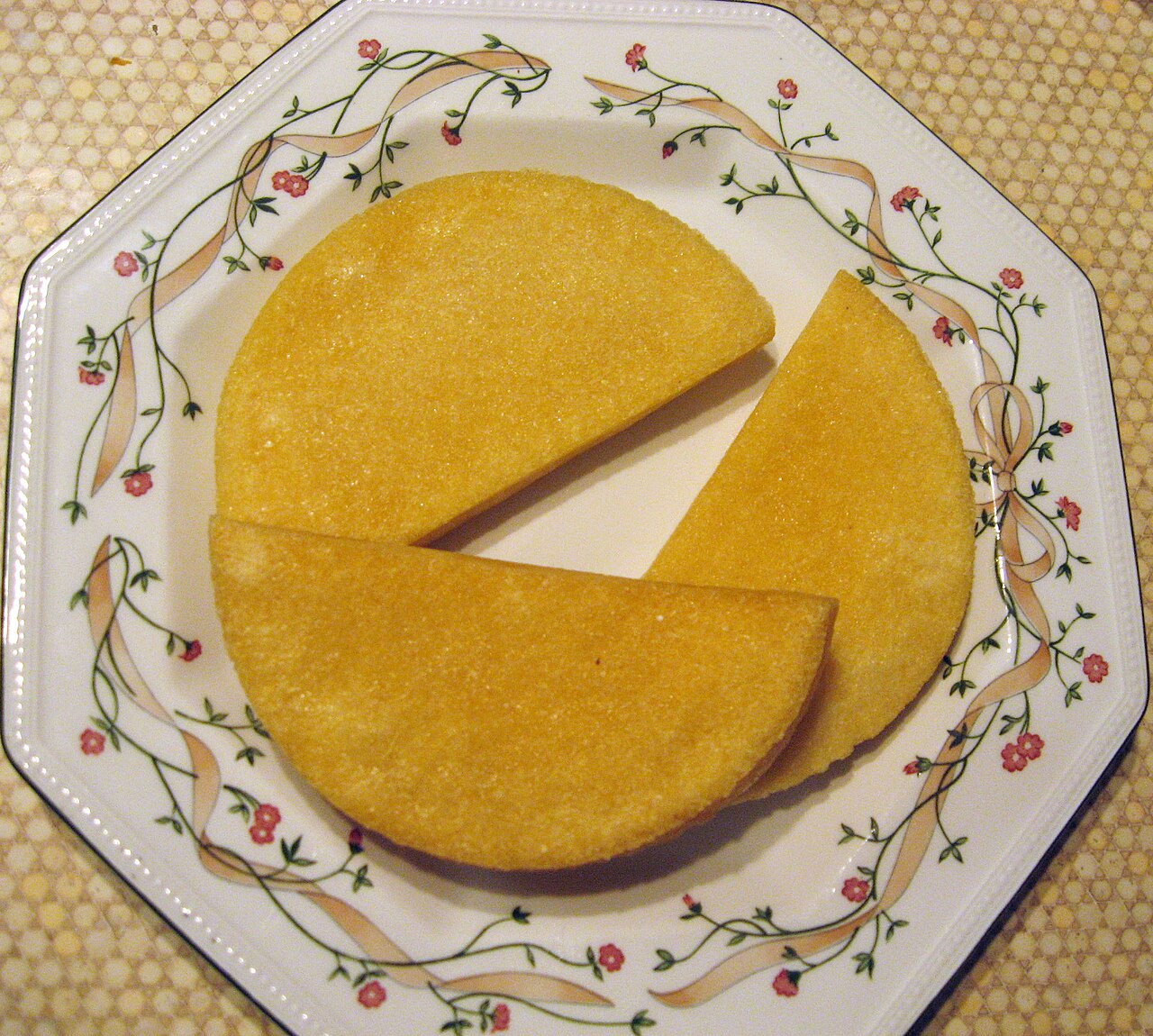
A round, flat bread made from grated cassava, pressed to remove its juice, then baked on a griddle. It has been eaten on the island since before Columbus. Today it is sold in supermarkets and served with fried fish at seaside restaurants.
For centuries bammy was the everyday bread of rural Jamaica, until cheaper wheat bread took over after the Second World War. In the 1990s a programme was set up to revive it.
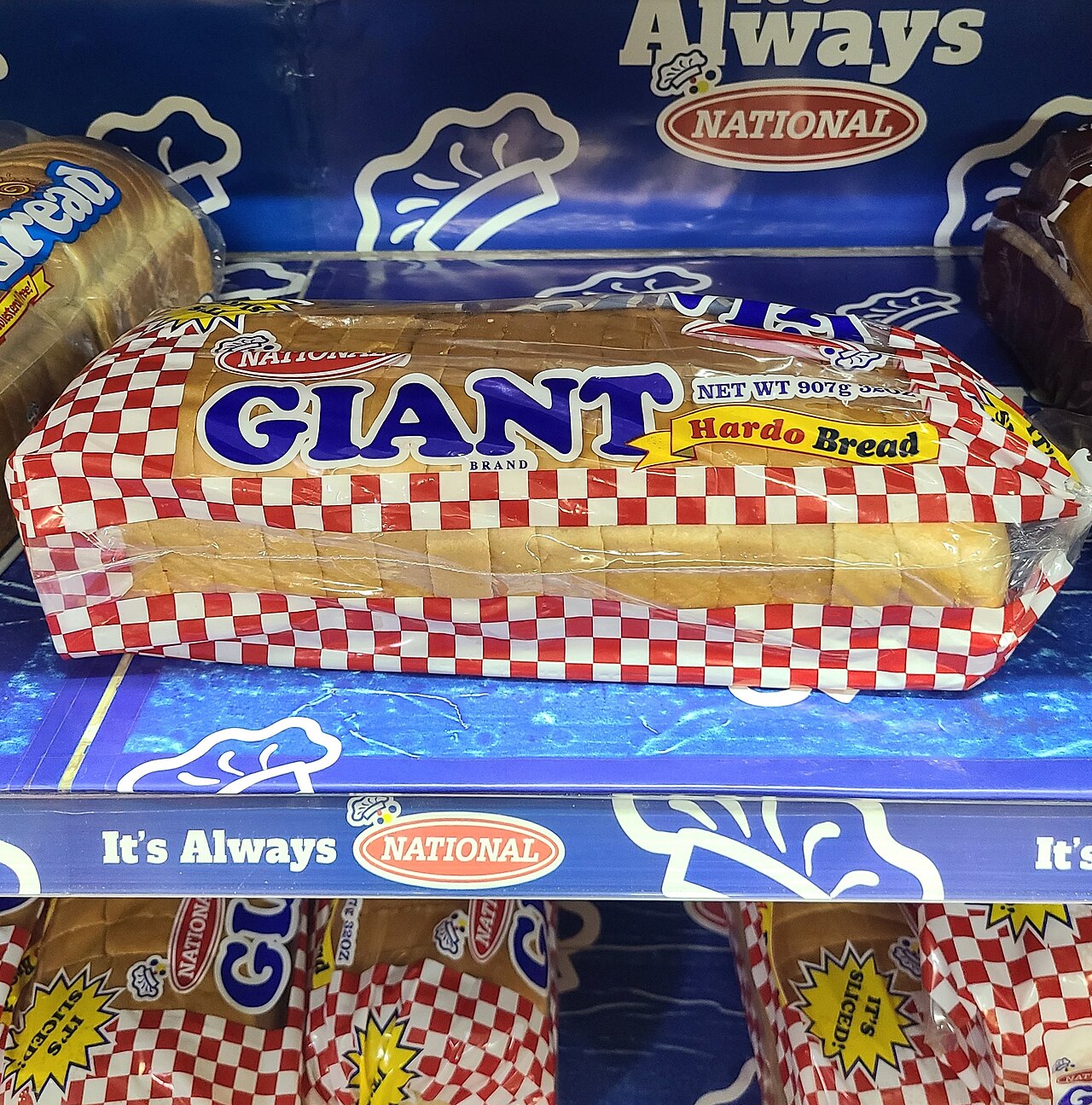
A dense, soft, slightly sweet white loaf with a glossy top, usually sold sliced. It is eaten with butter and cheese, dunked in porridge, or served beside jerk, fried fish and ackee and saltfish.
It is often called 'hardo'. The earliest known use of the word 'hard-dough' was in 1911, in the Daily Gleaner in Kingston.
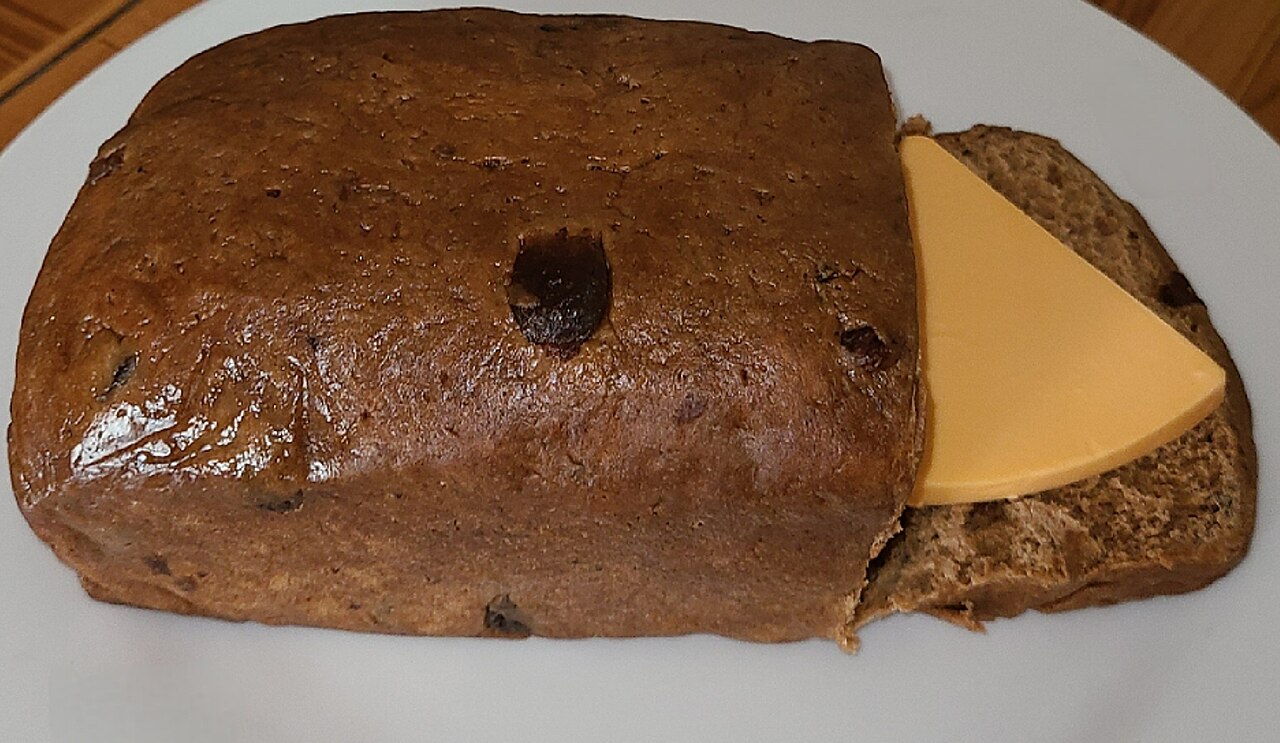
A dark, sweet, spiced loaf with dried fruit, sliced and eaten with a slice of cheese. It is the great treat of the Easter season, when bakeries and supermarkets are full of it.
Spiced buns are one of many Jamaican baked treats with British roots, and eating a slice of bun with cheese is the Jamaican way to enjoy one.
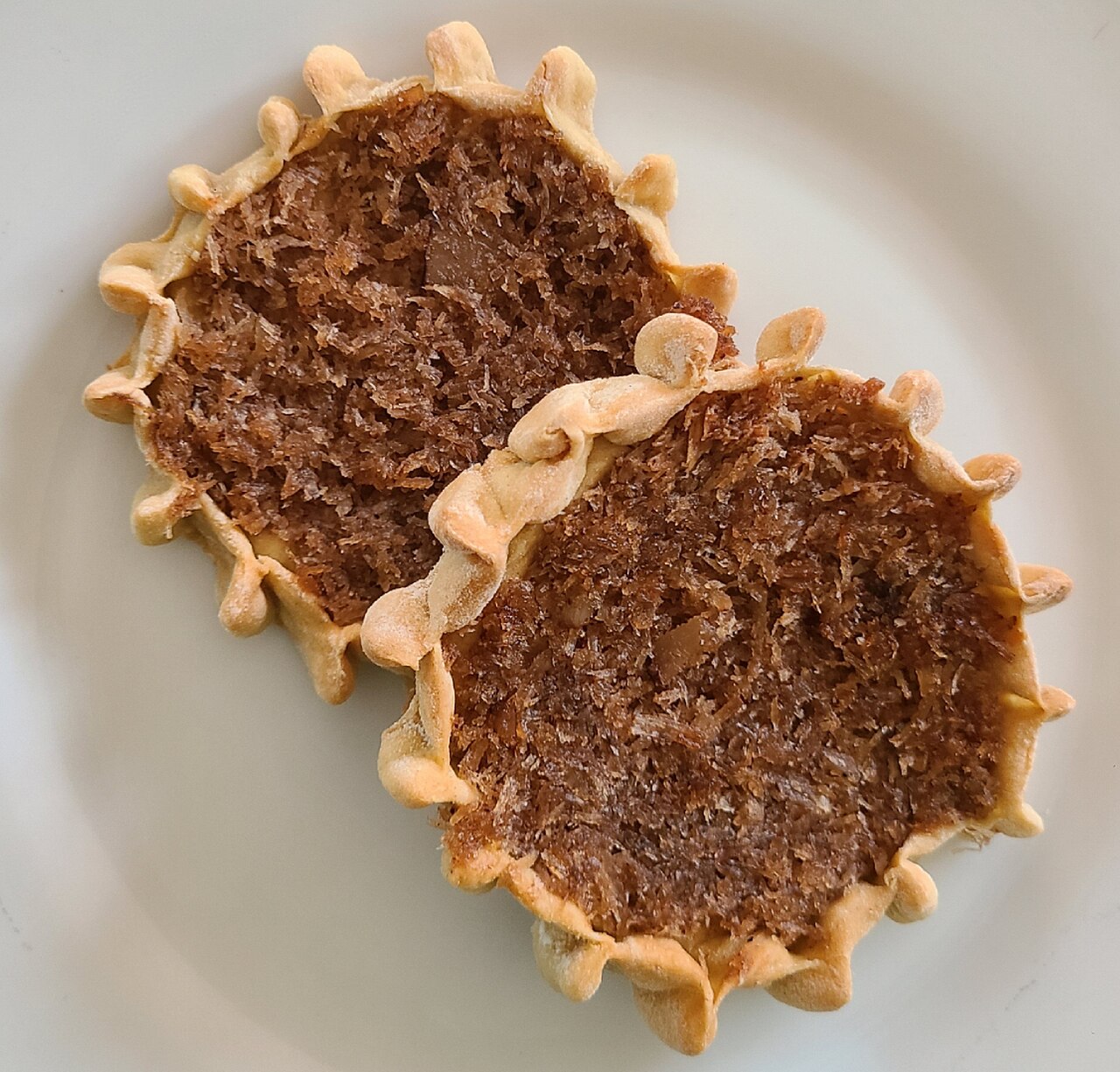
A small, crisp pastry shell with a pinched, star-like edge, filled with grated coconut cooked with brown sugar, ginger, nutmeg and cinnamon. It is sold at bakeries, on street stalls and even on buses.
Its other name is 'pinch-me-round', after the way the edge of the pastry is pinched by hand. The name gizzada comes from the Portuguese guisada, 'stewed'.
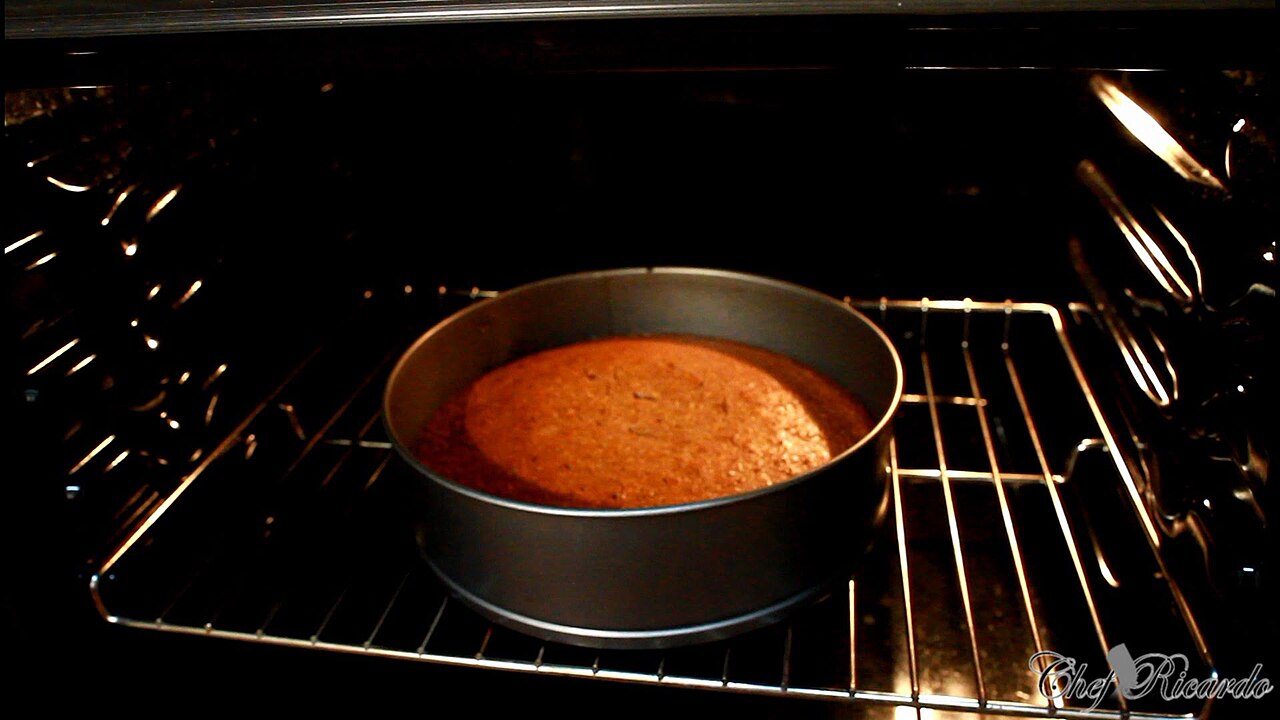
A small, dense coconut cake made with grated coconut, brown sugar, flour and coconut milk, spiced with nutmeg, cinnamon or allspice. It is baked at home for family gatherings and Sunday dinners and eaten warm or cold.
Toto recipes are usually handed down within families rather than sold in shops, and some families say their recipe dates back to the 1800s.
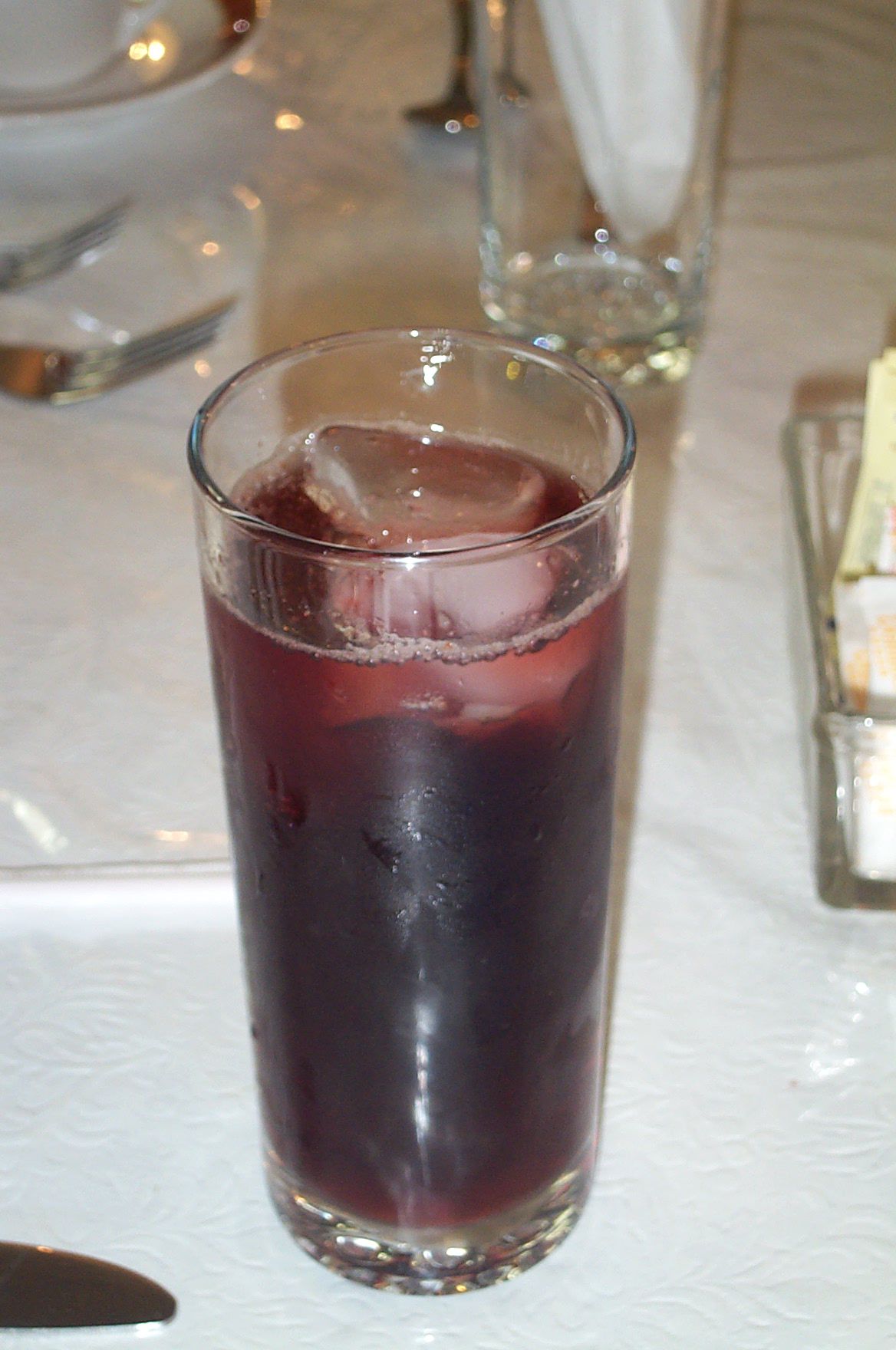
A deep red drink made by steeping dried hibiscus flowers (called sorrel in Jamaica) with fresh ginger, allspice and cloves, sweetened and served cold. It is Jamaica's Christmas drink. Many families also add a splash of rum; the version below has none.
The drink has African roots, and the ginger that gives Jamaican sorrel its bite is thought to be a Chinese Jamaican addition.
See the recipe
Serves 8
30 min
Ingredients
60 g dried sorrel (hibiscus) flowers
5 cm piece of fresh ginger, grated
6 allspice berries and 4 cloves
2 litres water
150 to 250 g sugar, to taste
The juice of 1 lime
Method
Rinse the dried flowers well in cold water.
Bring the water to the boil in a large pot, add the flowers, ginger, allspice and cloves, then take it off the heat.
Cover and leave to steep for at least 8 hours, or overnight, in a cool place or the fridge.
Strain through a fine sieve, pressing the flowers to get all the juice. Stir in sugar to taste and the lime juice.
Chill and serve over ice. It keeps for a few days in the fridge.
The Blue Mountains, between Kingston and Port Antonio
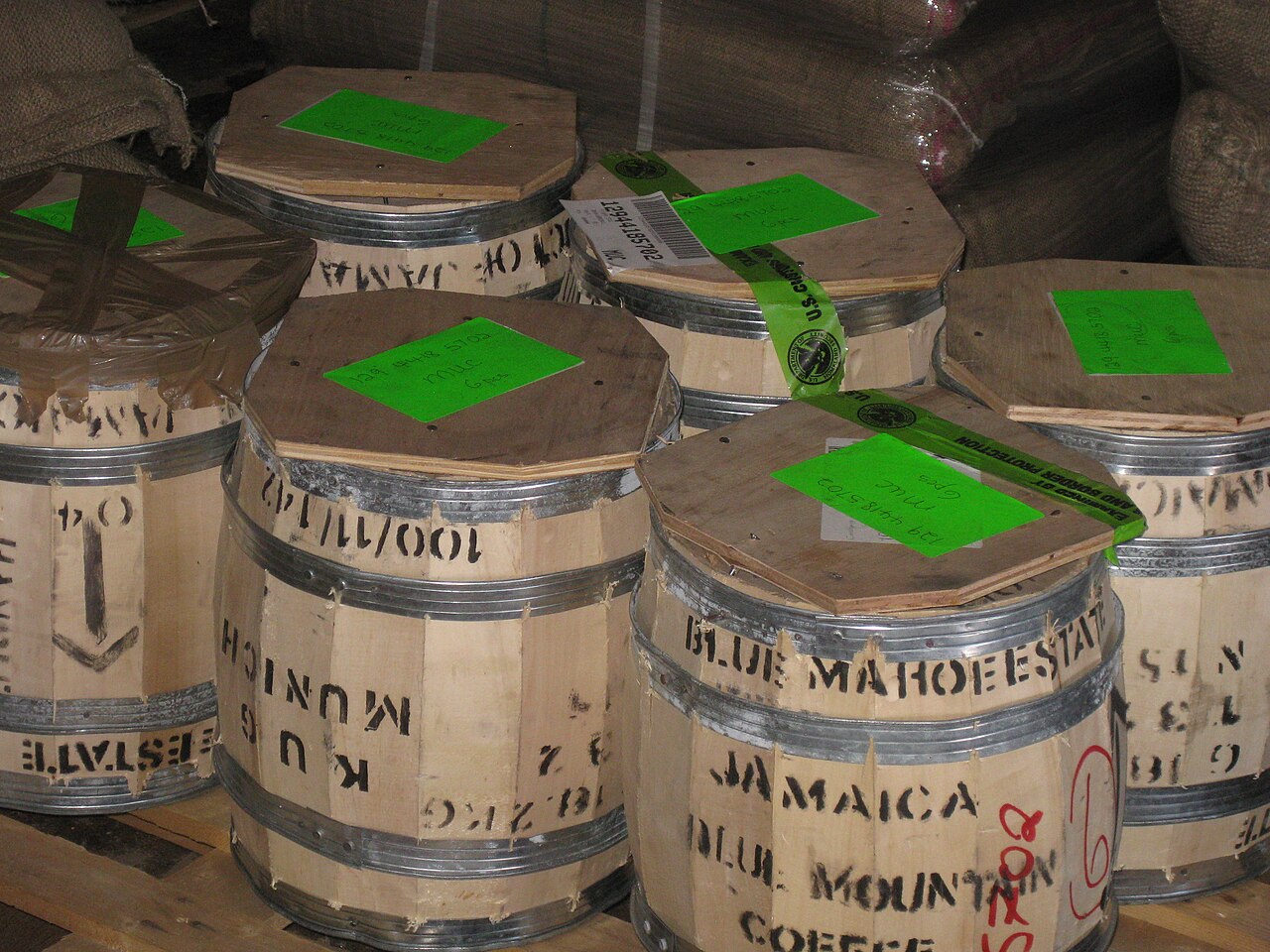
Arabica coffee grown on the cool, misty slopes of the Blue Mountains, known for its mild flavour and lack of bitterness. It is one of the most expensive coffees in the world. Only coffee from the recognised growing area, certified by Jamaica's regulator, may use the name.
Coffee came to Jamaica in 1728. A large share of the Blue Mountain crop is exported to Japan, and the beans are also the flavour base of Tia Maria coffee liqueur.
Table manners
Greet everyone with 'Good morning' or 'Good afternoon' when you walk into a shop, café or home, before asking for anything. Jamaicans find it rude to skip the greeting.
Sunday dinner is the big family meal, usually after church. If you are invited, expect rice and peas with a meat dish, and say yes to a second helping.
Scotch bonnet peppers are very hot. When a dish comes with pepper sauce on the table, try a tiny drop first.
Jerk and patties are often eaten with your hands, straight from the paper, at a roadside stall or bakery. This is completely normal.
Many dishes are cooked with a whole Scotch bonnet for flavour. If you find it on your plate, leave it aside unless you love very hot food.
Address older people politely as 'sir' or 'ma'am'. Respect for elders matters a great deal at the table and elsewhere.
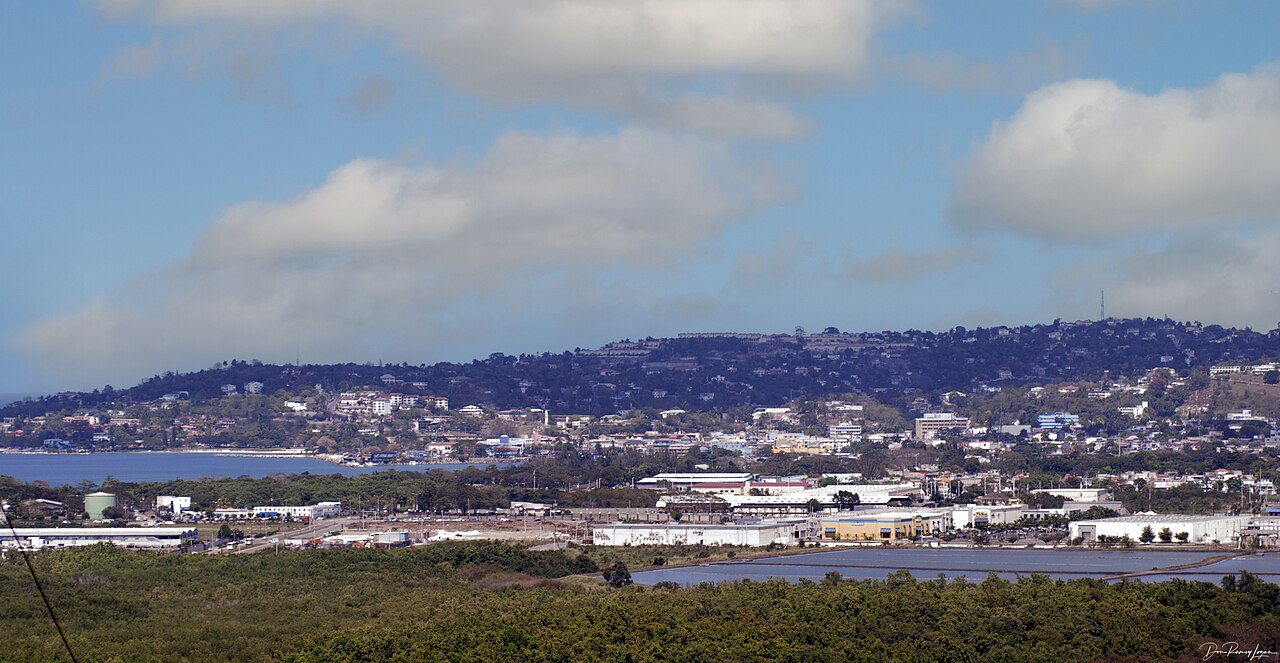
Kingston, the capital, lies on the south coast beside a huge natural harbour, with old Spanish Town nearby. The north coast is lined with resort towns: Montego Bay, Falmouth, Ocho Rios and Port Antonio, with Negril at the western tip. Inland, market towns such as May Pen and Mandeville sit among farms and hills. In October 2025 Hurricane Melissa badly damaged the west and southwest of the island, including Falmouth, Mandeville and parts of Montego Bay, and as of September 2026 many places there are still rebuilding.
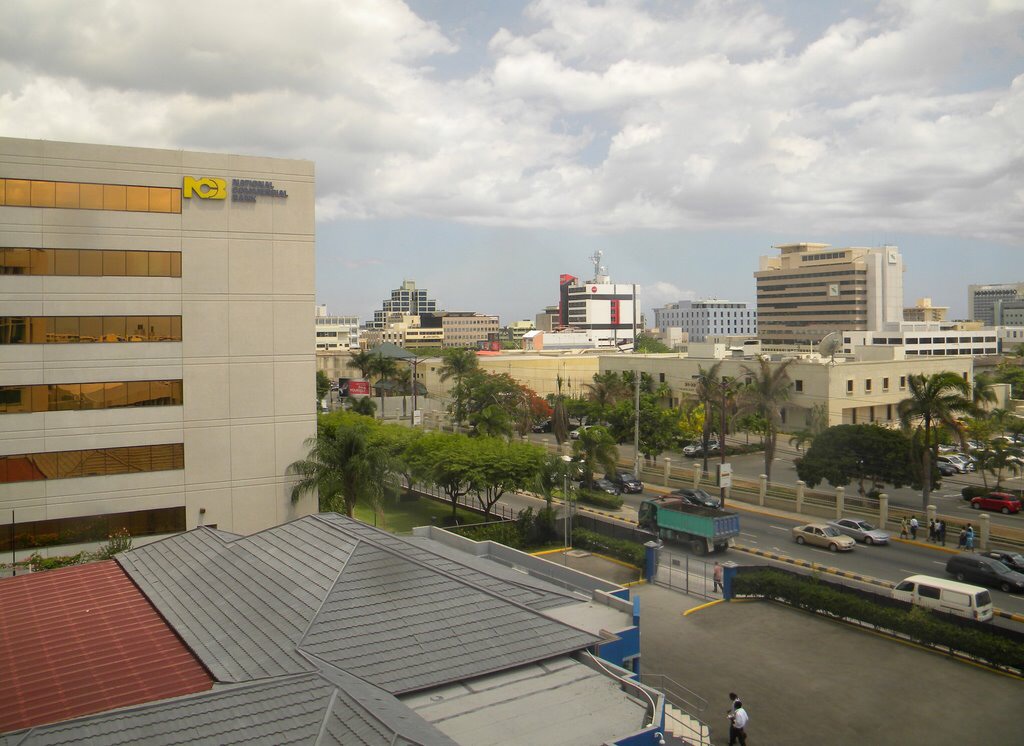
The capital and largest city, on the southeast coast. It was founded in 1692 for survivors of the earthquake that destroyed Port Royal, and became the capital in 1872. The parishes of Kingston and St Andrew had about 660,000 people at the 2011 census. It faces one of the largest natural harbours in the world, sheltered by the long sand spit of the Palisadoes.
The Bob Marley Museum and Devon House
National Heroes Park and the National Gallery
Sabina Park cricket ground and a lively music scene
Founded by the Spanish in 1534 as Villa de la Vega, it was the capital of Jamaica under Spain and then Britain until 1872. It lies on the Rio Cobre, about 21 km west of Kingston, and is the capital of St Catherine parish.
The old square with the Rodney Memorial and the facade of the Old King's House
An early cast-iron bridge from 1801 over the Rio Cobre
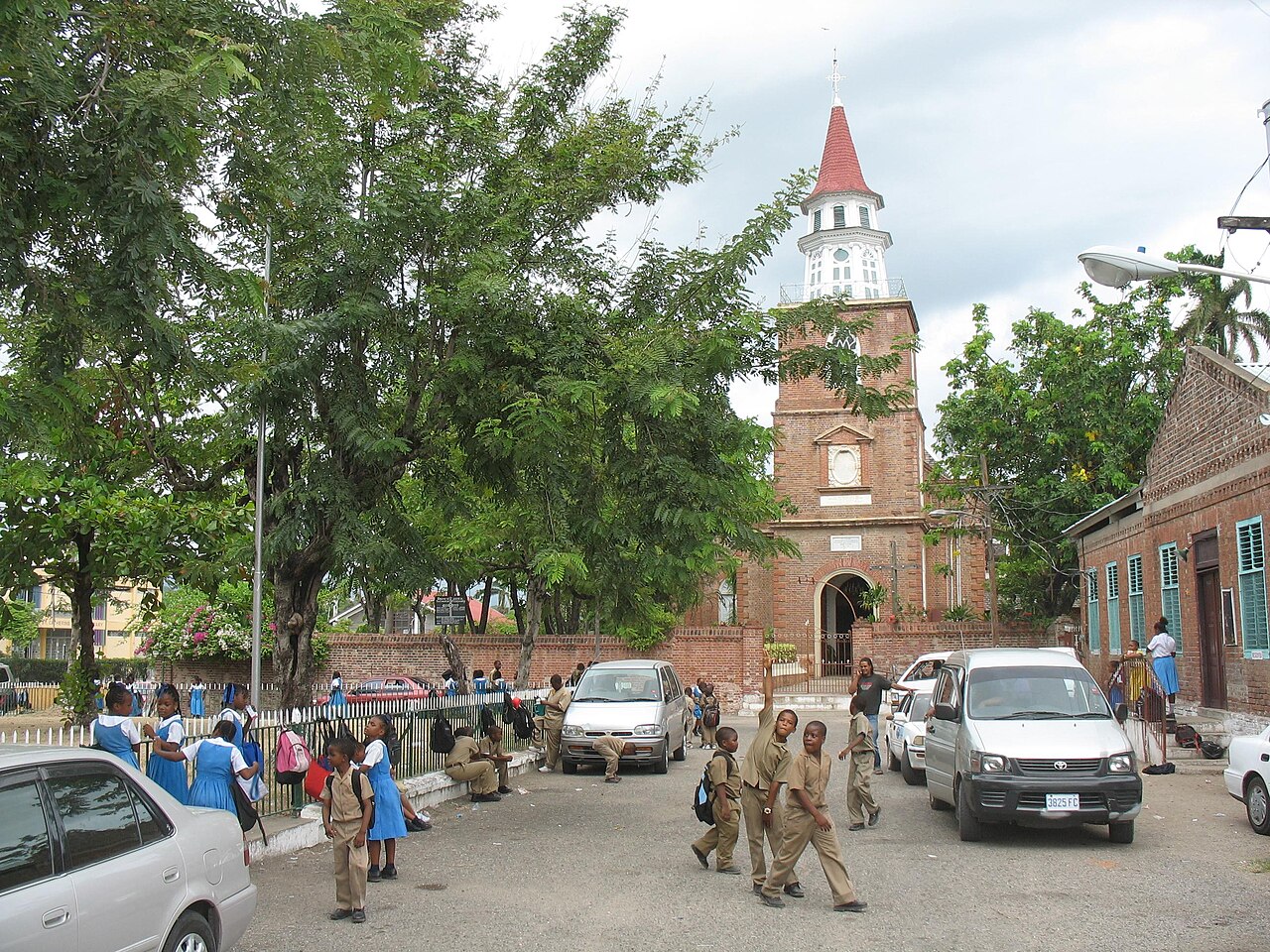
One of the oldest Anglican churches outside England
The main tourist city of the north coast, often called 'MoBay'. It was once a sugar port, and the Baptist War of 1831 began in the plantations around it. Today it has the island's busiest airport, a cruise port and many beaches and resorts.
Sam Sharpe Square, named after the leader of the 1831 rebellion
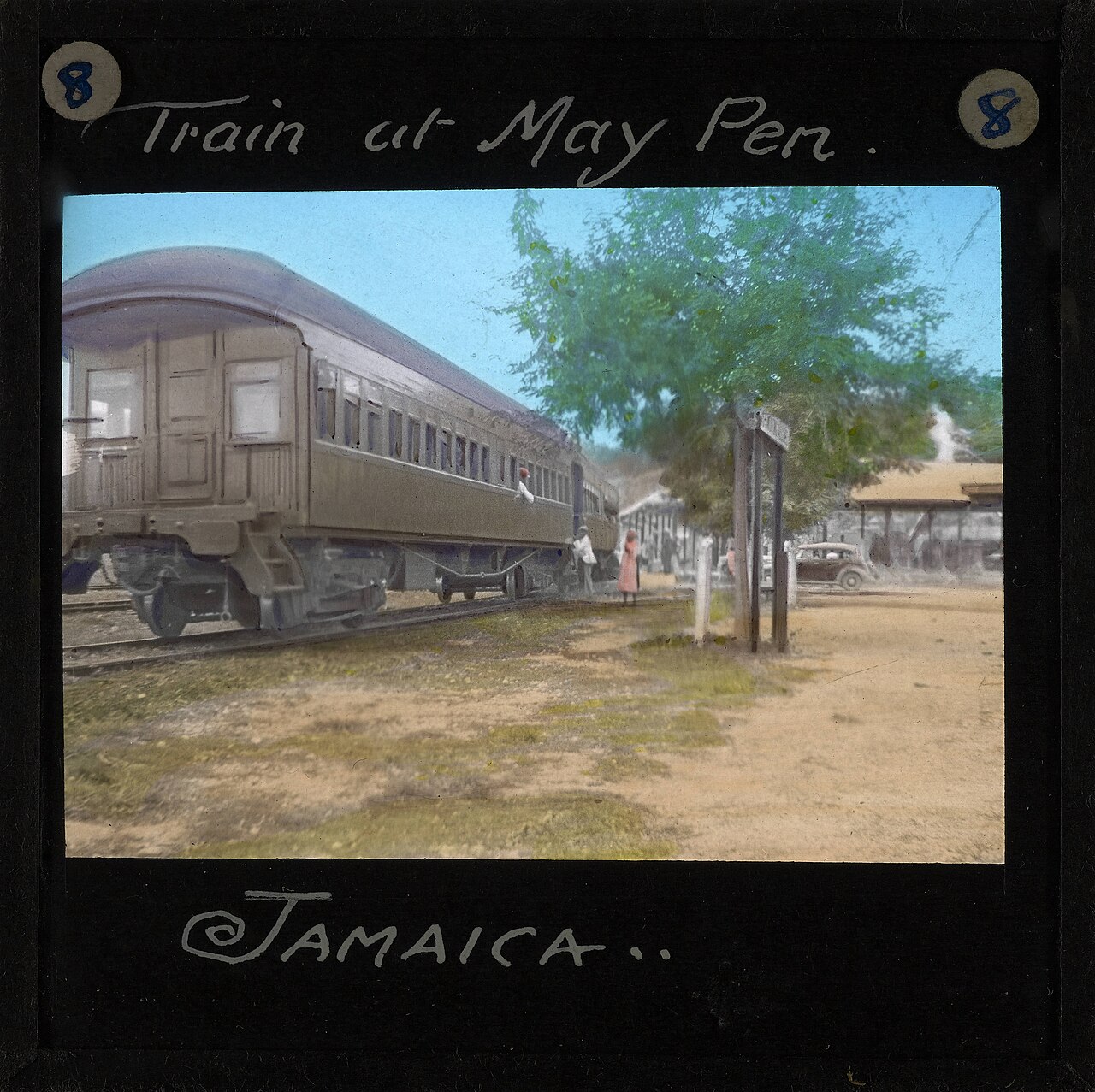
A busy market town on the Rio Minho, the longest river in Jamaica, near the centre of the island. It began as a cattle farm, or 'pen', in the late 1600s. The town had about 61,500 people at the 2011 census.
The Denbigh agricultural show, held around Independence Day
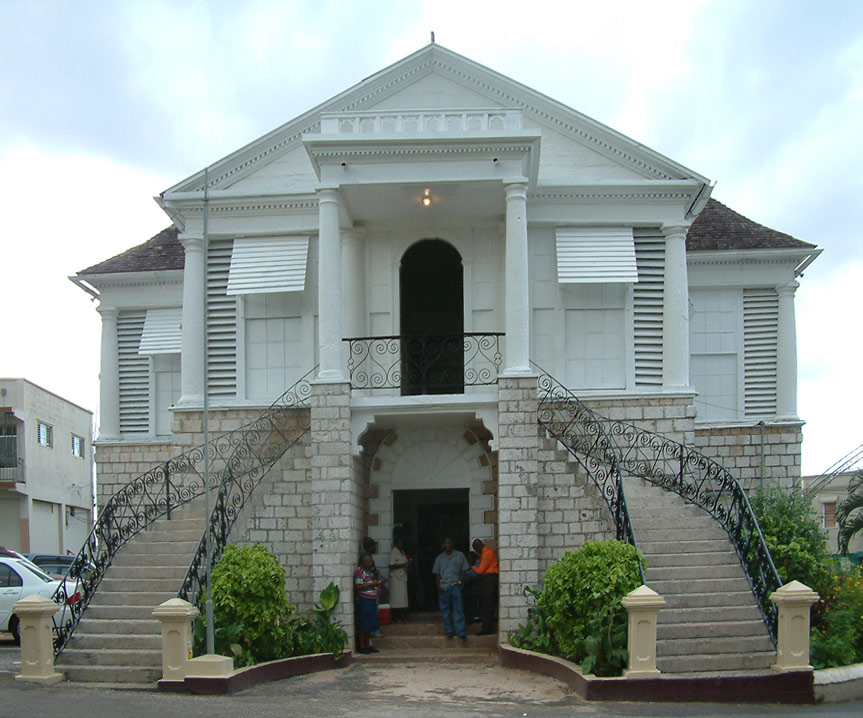
A town on an inland plateau about 628 m above sea level, with a cooler climate than the coast. It was laid out in 1816 and has Georgian buildings around its town square. Many Jamaicans returning from Britain and North America have settled here.
The courthouse of 1820 with its horseshoe staircase
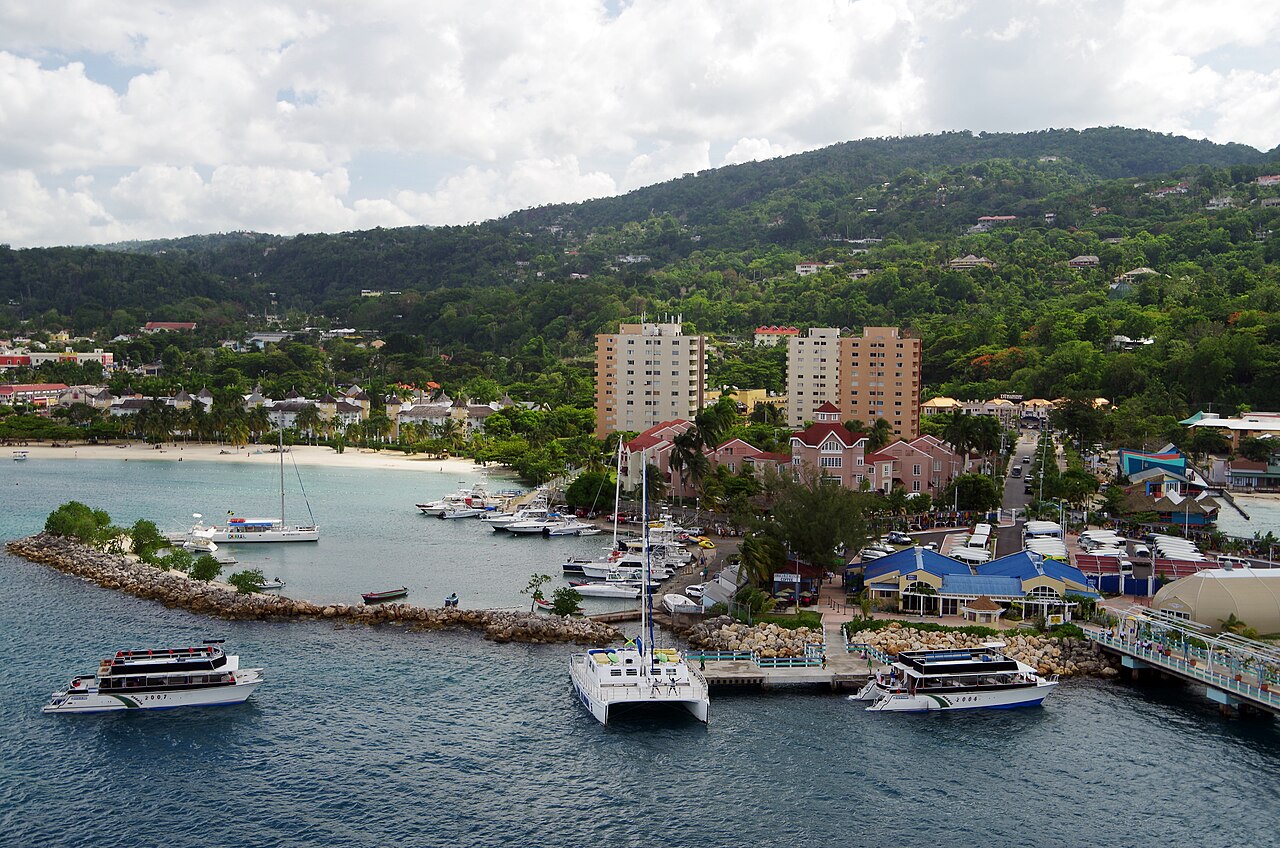
A former fishing village on the north coast that grew into a busy resort and cruise port, known locally as 'Ochi'. Its Spanish name means 'eight rivers', but it may come from Las Chorreras, 'the waterfalls', after the falls nearby.
A quiet harbour town on the green, rainy northeast coast, about 100 km from Kingston. In the 1880s it grew rich on the banana trade, and banana boats brought some of Jamaica's first tourists. Hollywood stars later came here, including Errol Flynn.
A beach resort at the western tip of the island. It was a quiet fishing village until the 1960s and 1970s, when guest houses and then hotels began to open. It is famous for its long white beach and for watching the sunset from the cliffs of the West End.
A port town founded in 1769, about 29 km east of Montego Bay, when Jamaica was the world's leading sugar producer. Its grid of streets and Georgian buildings made it one of the best-preserved Georgian towns in the Caribbean. It was very badly damaged by Hurricane Melissa in 2025.
A small town about 40 km east of Kingston and the capital of St Thomas parish. It is remembered for the Morant Bay rebellion of 1865, led by Paul Bogle. The courthouse burned in the rebellion was rebuilt, burned again in 2007, and a new one opened in 2014.
Blue Mountain Peak and the Blue and John Crow Mountains
Jamaica's highest point, 2,256 m, northeast of Kingston. Hikers often climb the last stretch in the dark to watch the sunrise, and on a clear morning they can see Cuba. The peak lies in the Blue and John Crow Mountains National Park, home to rare plants, the Jamaican boa and the giant swallowtail butterfly. The park was also a refuge for the Windward Maroons, and in 2015 it became a UNESCO World Heritage Site for both its nature and its culture.
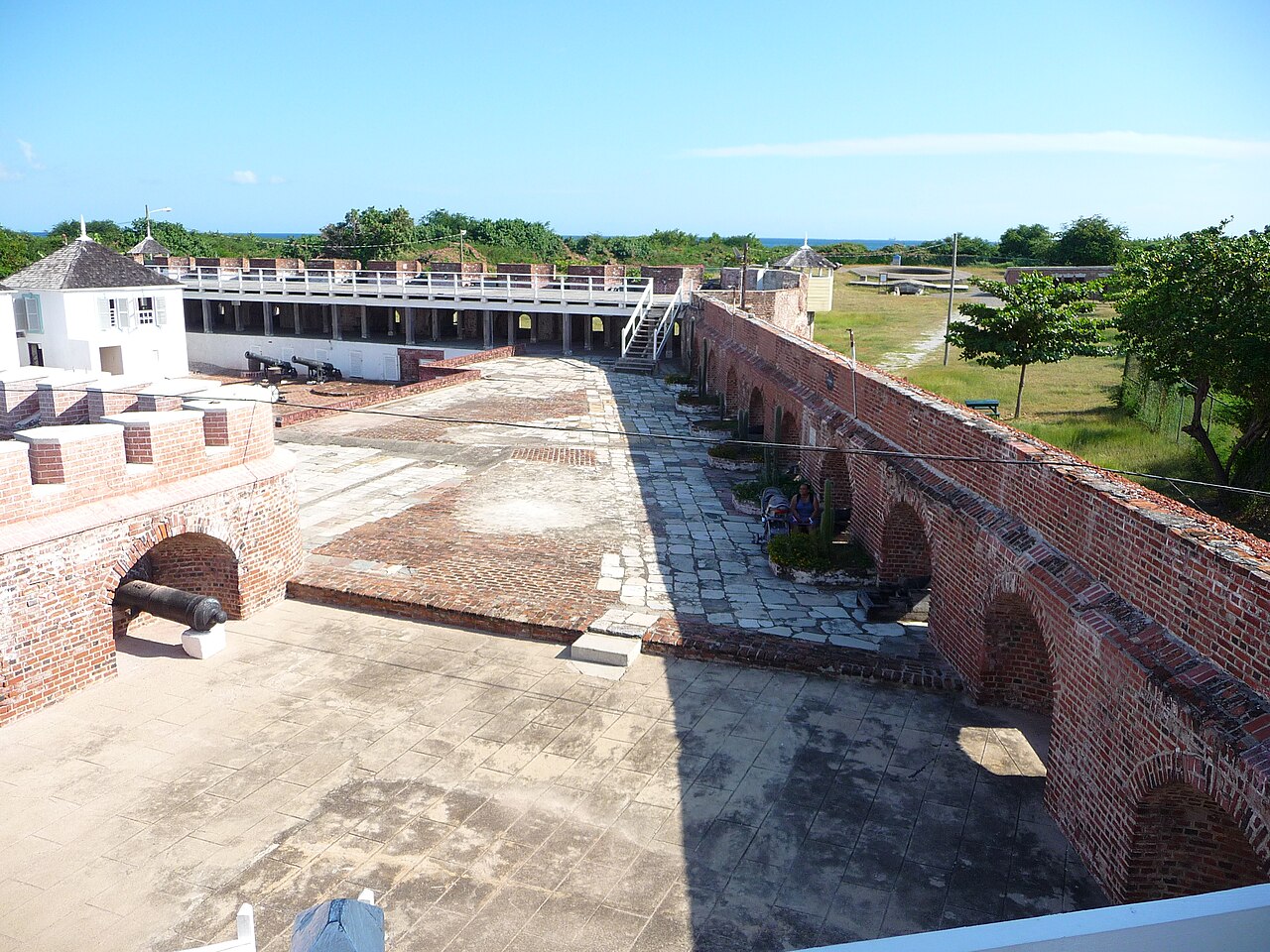
The small fishing town at the end of the Palisadoes, at the mouth of Kingston Harbour. In the 1600s it was one of the richest ports in the Americas and a base for privateers and pirates, until the earthquake of 1692 sank much of it into the sea. Visitors can see Fort Charles, built from 1655, and the tilted 'Giddy House'. In 2025 UNESCO listed the archaeological ensemble of 17th-century Port Royal as a World Heritage Site.
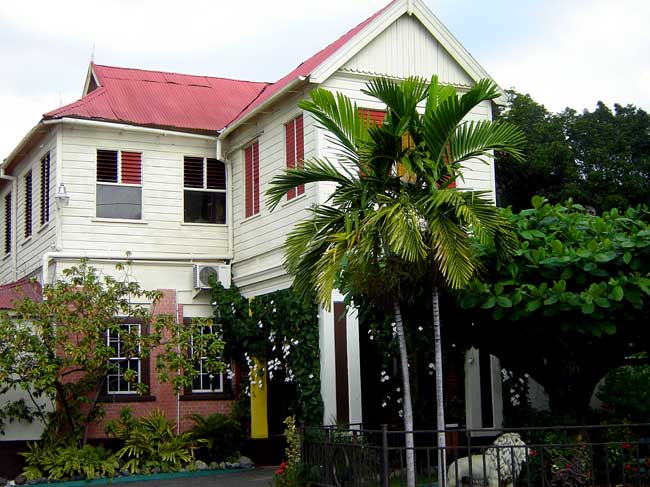
Bob Marley's home at 56 Hope Road in Kingston, which was also the base of his Tuff Gong record label. He survived an assassination attempt here in 1976. His wife, Rita Marley, turned the house into a museum in 1986.
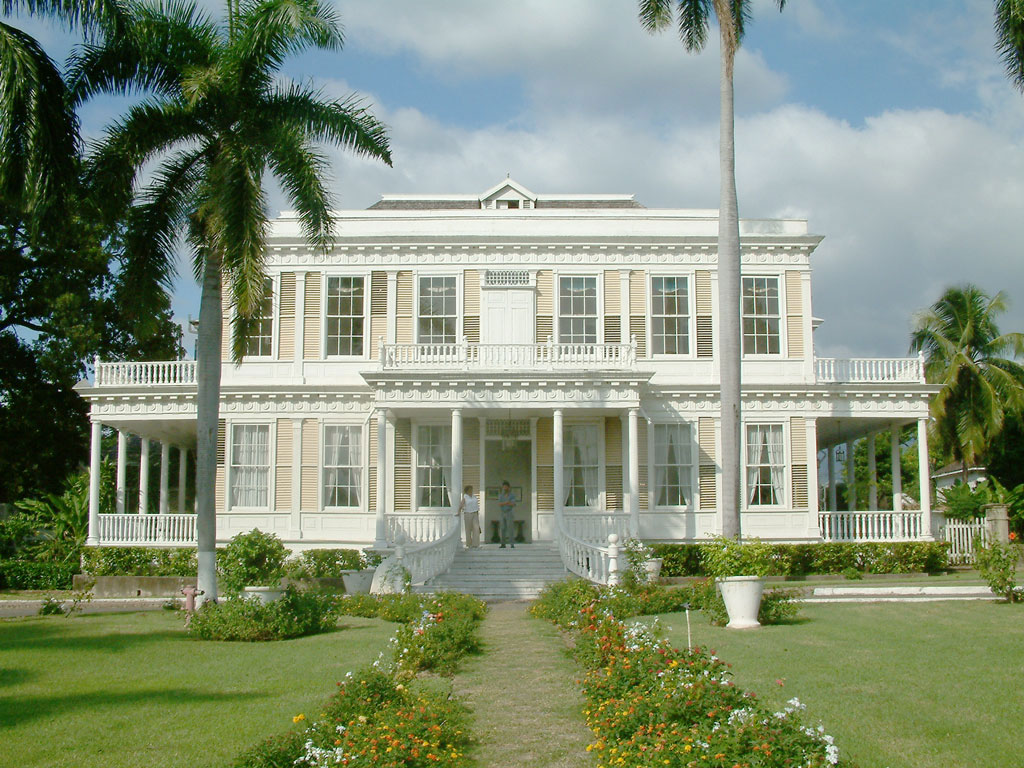
An elegant mansion built in 1881 for George Stiebel, Jamaica's first millionaire of colour, who made his fortune in Venezuela. It was due to be demolished in 1965 until the government bought it, and it is now a house museum and National Heritage Site.
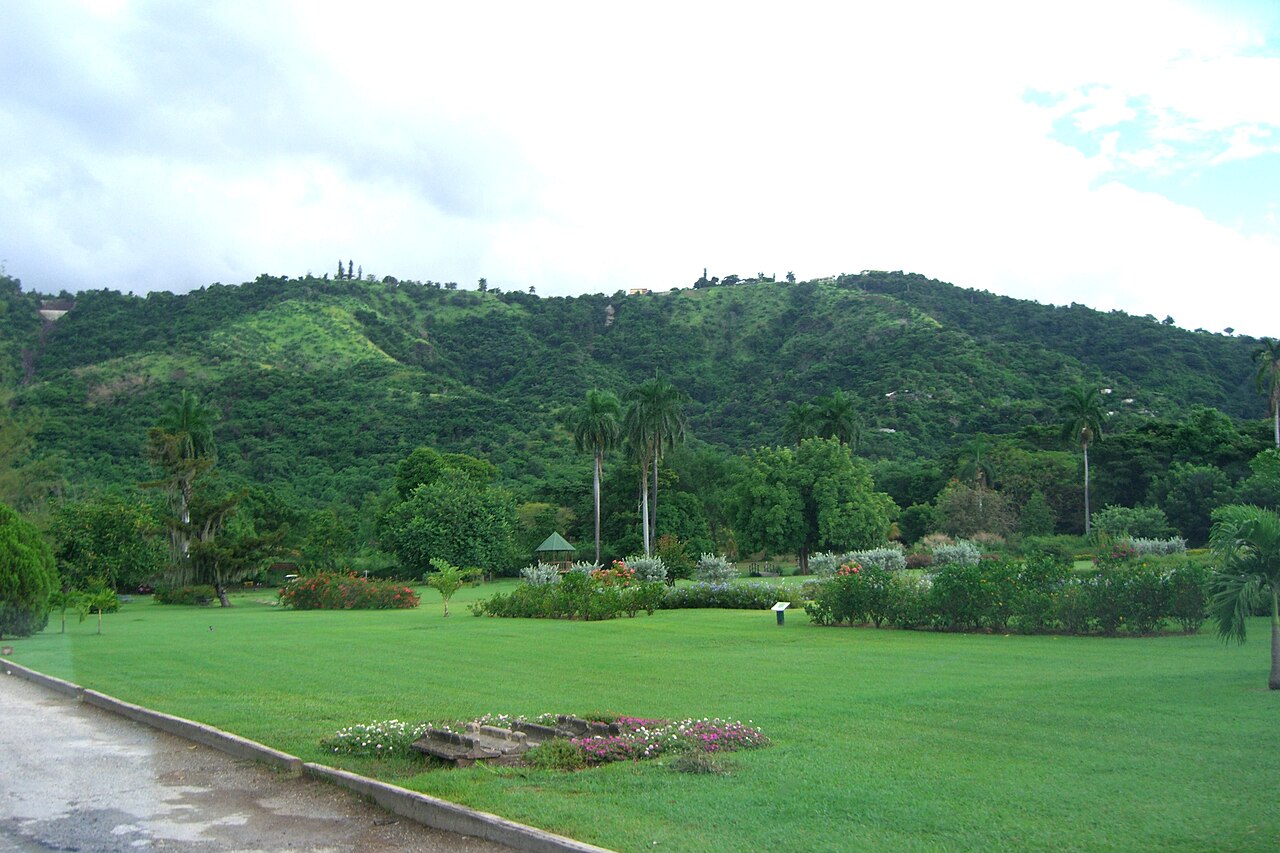
A park and garden of about 81 hectares in St Andrew, on the edge of Kingston. It was founded in 1873 on part of an old sugar estate and worked closely with Kew Gardens in London. Visitors walk among a palm avenue, a cactus garden, an orchid house and ornamental ponds.
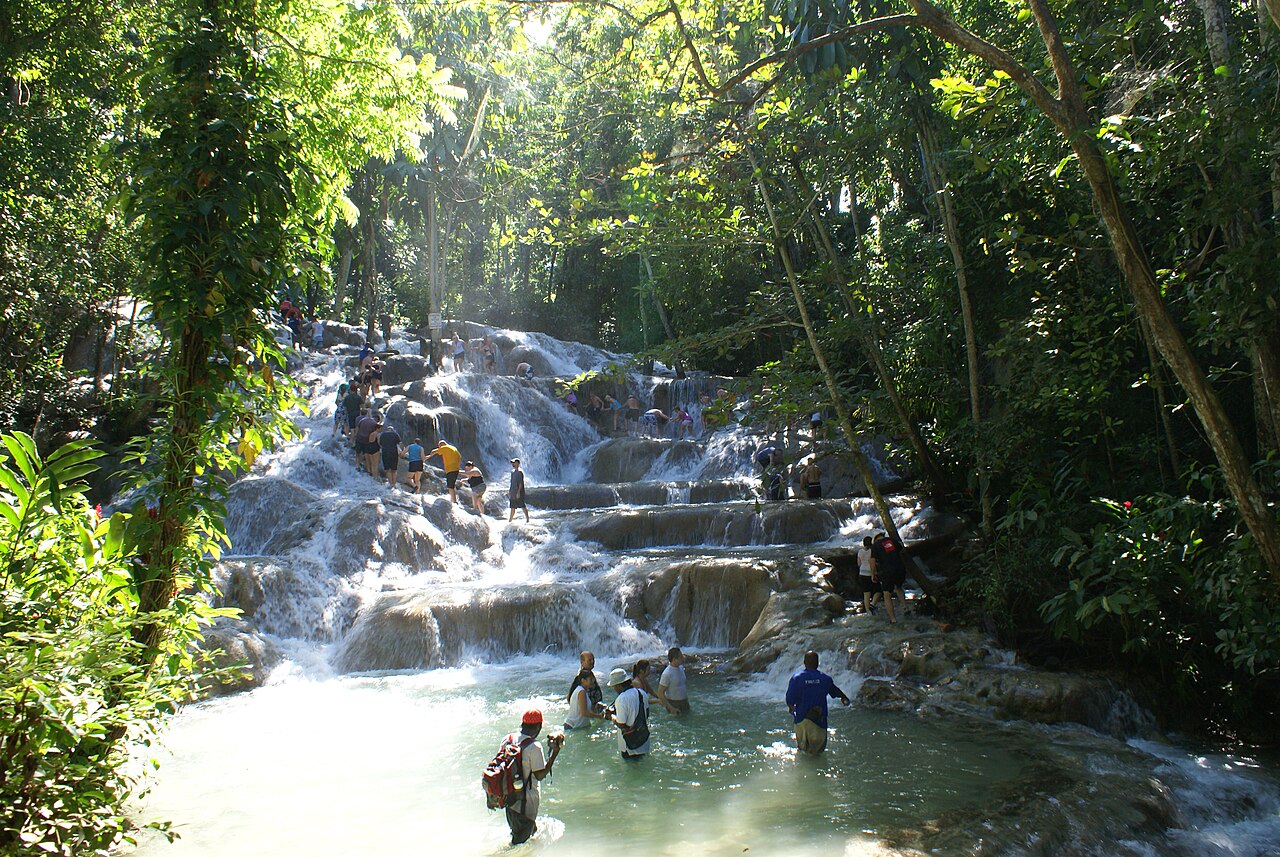
A waterfall about 55 m high and 180 m long that drops in natural steps straight onto a beach and into the sea. Visitors climb up through the pools in a hand-holding chain led by guides; there are also stairs alongside for those who want to stay dry. It is one of very few travertine waterfalls in the world that empty directly into the sea.
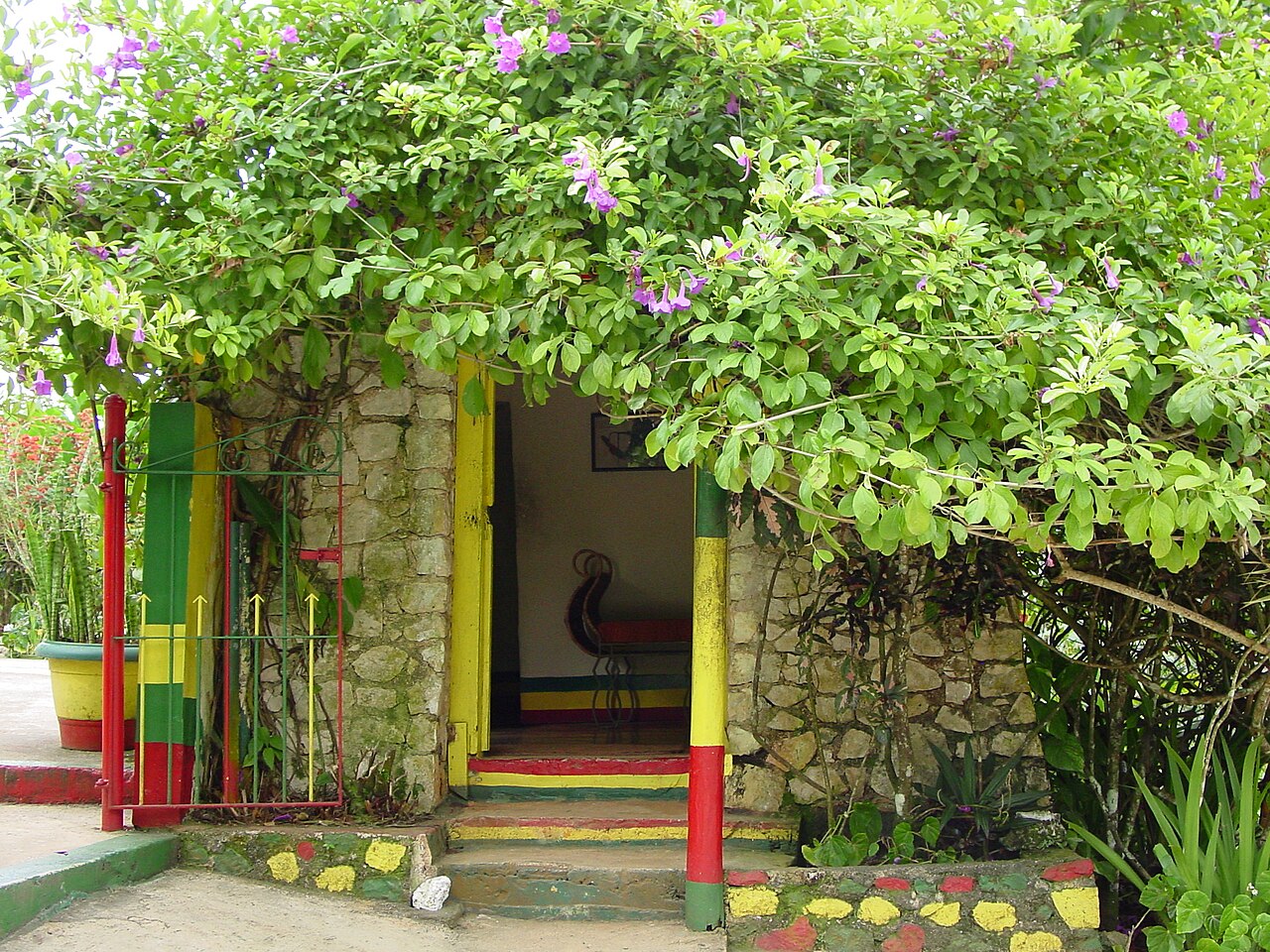
The small village in the hills of St Ann where Bob Marley was born on 6 February 1945 and where he is buried. His marble mausoleum stands inside a small church, beside that of his mother. The site is run by members of his family, and visitors see his old house and the 'rock pillow' where he is said to have rested his head to find inspiration.
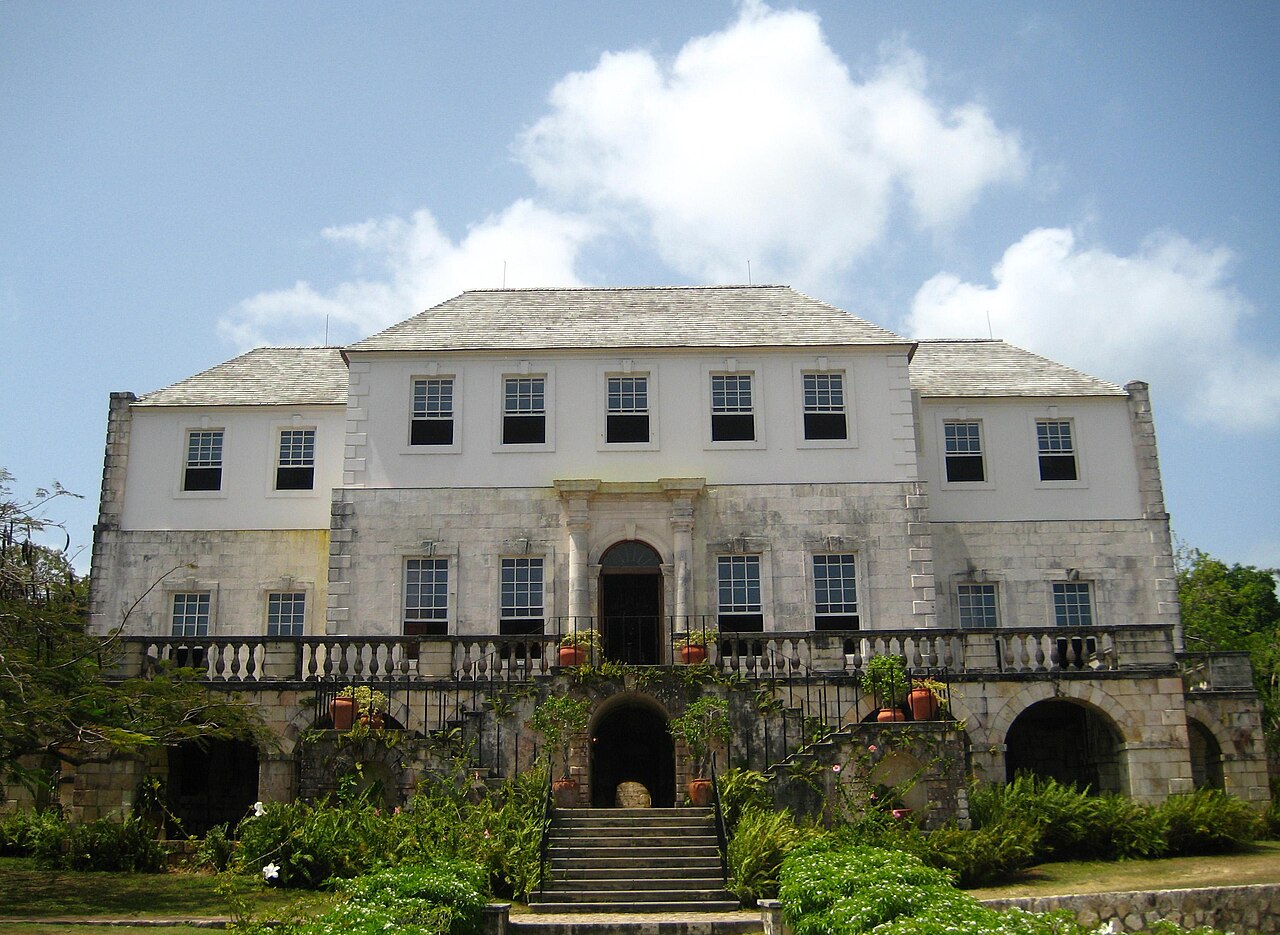
A grand Georgian plantation house on a hillside east of Montego Bay, with a wide view of the sea. It was built in the 18th century, had fallen into ruin by the 1960s, and was then restored. Tours tell the history of the enslaved people who worked the estate and the legend of the 'White Witch of Rose Hall', a story that historians say was largely invented.
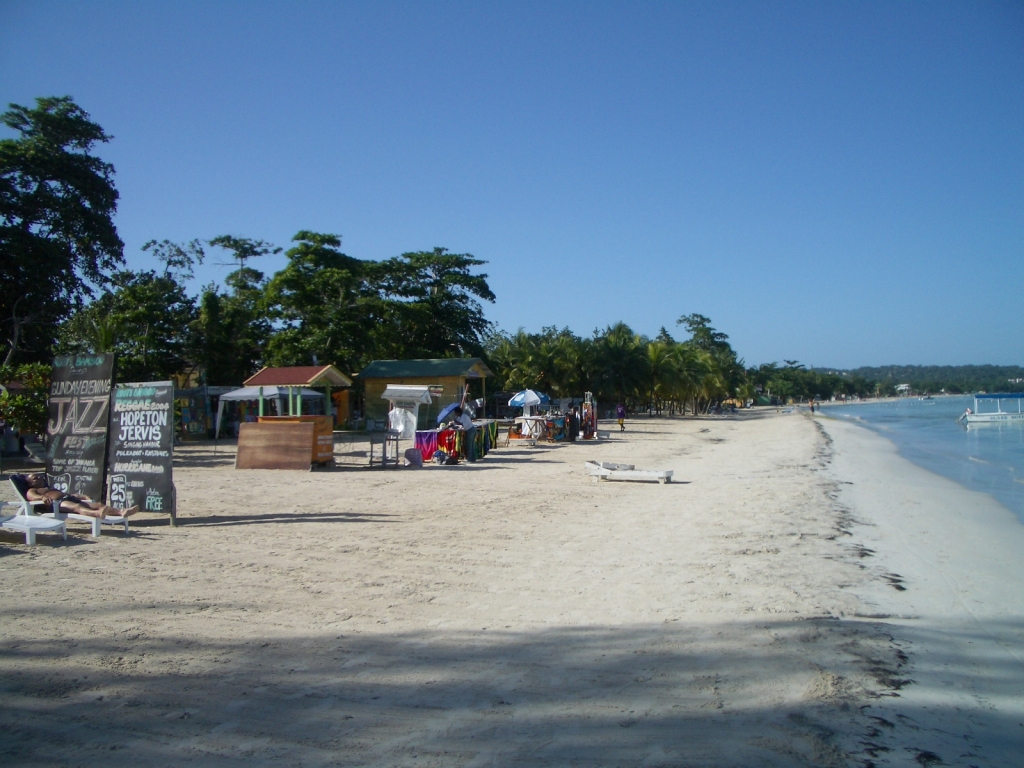
The long, curving beach of white sand that runs north from Negril along two bays, Long Bay and Bloody Bay. Its calm, clear water and reef make it good for swimming and snorkelling, and it is one of the best places on the island to watch the sun set over the sea.
The name Jamaica comes from the Taíno name Xaymaca, usually translated as 'land of wood and water' or 'land of springs'.
02
As of September 2026, Jamaica's black, green and gold flag is the only national flag in the world with no red, white or blue in it.
03
In November 2018 UNESCO added 'reggae music of Jamaica' to its list of the intangible cultural heritage of humanity.
04
Usain Bolt won eight Olympic gold medals. As of September 2026 he still holds the men's world records for the 100 metres, 9.58 seconds, and the 200 metres, 19.19 seconds, both set in Berlin in 2009.
05
A tropical island went to the Winter Olympics: Jamaica's bobsleigh team made its debut at Calgary in 1988. Their story inspired the 1993 Disney film Cool Runnings.
06
Ian Fleming wrote all of his James Bond stories at Goldeneye, his house on the north coast at Oracabessa, starting with Casino Royale in 1952. The first Bond film, Dr. No (1962), was partly filmed in Jamaica.
07
Jamaica's national bird is the doctor bird, or red-billed streamertail, a hummingbird found nowhere else in the world. The male has two long black tail streamers.
08
None of Jamaica's eight native snake species is venomous. Apart from bats, the only native land mammal left on the island is the Jamaican hutia, a rodent known locally as the coney.
09
Bob Marley's greatest hits album Legend, released in 1984, three years after his death, became the best-selling reggae album of all time.
10
Allspice, the berry used in jerk, is also called Jamaica pepper or pimento. The English gave it the name allspice as early as 1621 because it seemed to combine the flavours of cinnamon, nutmeg and cloves.
11
The Blue Mountains climb from the coast to over 2,200 m in only about 16 km, one of the steepest rises in the world. The temperature falls from about 27°C by the sea to about 5°C at the top.
12
Rastafari, a faith that honours Emperor Haile Selassie of Ethiopia and was inspired partly by the Jamaican leader Marcus Garvey, began in Jamaica in the 1930s and has since spread around the world.
13
Jamaica's national motto is 'Out of Many, One People', and its national anthem, adopted in 1962, is 'Jamaica, Land We Love'.
Hurricane Melissa hit western Jamaica very hard in October 2025. As of May 2026 the British government reported that some communities there still lacked electricity and piped water, and that healthcare was limited in the worst-hit areas. Check the latest travel advice and ask your hotel or tour operator before you go.
Mind the hurricane season
The Atlantic hurricane season runs from June to November, and storms are most likely from August to October, which is also when fewer visitors come. Take out good travel insurance and follow local warnings if a storm is forecast.
Traffic keeps left
Jamaica drives on the left. Roads are often narrow, winding and busy, and rural roads can be dangerous in heavy rain. Many visitors prefer licensed taxis, tours or hotel transfers to driving themselves.
Greet people and respect elders
It is customary to say 'Good morning' or 'Good afternoon' to people, even strangers, before starting a conversation. Call older people 'sir' or 'ma'am'. Religion matters to many Jamaicans, so avoid mocking it.
Money and cash machines
The currency is the Jamaican dollar. Cash machines are often called ABMs. Use them in daylight, in busy, well-lit places, and don't take out large sums at once.
Stay safe
Crime rates are high in some inner-city areas, although tourist areas are usually not affected by gang violence. Don't walk alone on isolated beaches or at night, don't show valuables, and use reputable taxis and tour companies.
Emergency numbers
As of September 2026, call 119 for the police and 110 for an ambulance or the fire service.
Leave your picnic at home
As of September 2026 it is illegal to bring meat and dairy products into Jamaica, and customs officers may search bags and destroy them. Fill in the online customs form (C5) before you land if you can.