Red desert and coral reef, koalas and kangaroos, beaches and big cities: a whole island continent, home to one of the oldest living cultures on Earth.
Your trip to Australia
Ready for the trip?
10 questionsAbout 3 minutesNo timer
Explore Australia
You have explored 0 of 9 parts. Scroll on to discover the rest.
Print the Australia pack
A free large-print PDF. Choose what goes in: facts, map, history, dishes and recipes, phrases, fun facts, a quiz with or without answers. Made for clubs, care homes, libraries and family afternoons.
Australia is a country made up of the mainland of the Australian continent, the island of Tasmania and many smaller islands, between the Indian and Pacific oceans. By total area it is the sixth-largest country in the world. Most of the interior is dry outback and desert, while the east coast has green hills, rainforests and long sandy beaches, and the Great Barrier Reef runs along the coast of Queensland. Most Australians live in cities near the coast, especially in the south-east.
Aboriginal and Torres Strait Islander peoples are the Indigenous peoples of Australia. Their ancestors arrived at least 50,000 years ago, and dating at the Madjedbebe rock shelter in Arnhem Land suggests it may have been about 65,000 years ago. When the British arrived, Aboriginal people spoke more than 250 languages, and theirs is one of the oldest continuous cultures in the world. Dutch sailors mapped much of the coast in the 1600s, and British colonisation began in 1788 with a penal colony at Sydney Cove.
In 1901 six British colonies united to form the Commonwealth of Australia. Today it is a federation of six states and ten territories, with about 28 million people. It is a parliamentary democracy and a constitutional monarchy, and its capital, Canberra, is a planned city built between Sydney and Melbourne. English is the everyday language of the country, and about three in ten Australians were born overseas, which makes its cities some of the most multicultural in the world.
CapitalCanberra
PopulationAbout 28 million (Australian Bureau of Statistics, 31 March 2026: 27.9 million)
Official languageNo official language is set down in law. English is the national language in practice, and Auslan (Australian Sign Language) and many Aboriginal and Torres Strait Islander languages are also used
CurrencyAustralian dollar (AUD), divided into 100 cents, in use since 1966
AreaAbout 7.69 million km², the sixth-largest country in the world
GovernmentFederal parliamentary democracy and constitutional monarchy of six states and ten territories. As of 2026 the monarch is King Charles III, represented in Australia by the Governor-General
Highest mountainMount Kosciuszko in New South Wales, 2,228 m, the highest on the mainland (some Australian islands and Antarctic territory have higher peaks)
Longest riverThe Murray, 2,508 km, which flows into the sea in South Australia
NeighboursNo land borders. The nearest countries are Papua New Guinea (Saibai Island in the Torres Strait is only about 4 km from its coast), Indonesia and Timor-Leste to the north, and New Zealand across the Tasman Sea
For tens of thousands of years before Europeans arrived, Aboriginal and Torres Strait Islander peoples lived across the whole continent and its islands, with hundreds of languages and deep knowledge of the land. Dutch sailors charted the coasts in the 1600s, and James Cook claimed the east coast for Britain in 1770. British settlement from 1788 took land from Aboriginal people without treaty, and conflict and disease caused great suffering. The colonies grew with free settlers and gold, united in 1901, and the country has since worked, not always easily, to face the harder parts of its past.
1606
The Duyfken reaches Cape York
In 1606 the small Dutch ship Duyfken, captained by Willem Janszoon, sailed from Java and charted part of the Cape York Peninsula, landing near the Pennefather River in the Gulf of Carpentaria. It is the first recorded European landing in Australia. The Dutch later called the land New Holland.
1642
Abel Tasman reaches Tasmania
On 24 November 1642 the Dutch explorer Abel Tasman sighted the west coast of a large island in the far south. He named it Van Diemen's Land after the Dutch governor in Batavia. It was later renamed Tasmania in his honour.
1770
Captain Cook charts the east coast
In April 1770 James Cook's ship Endeavour reached the east coast of Australia and landed at Botany Bay, where two Gweagal men opposed the landing. Cook sailed north, charting the coast, and on Possession Island near Cape York he claimed the whole east coast for Britain.
1788
The First Fleet arrives
Eleven British ships under Captain Arthur Phillip, carrying about 1,500 people, around half of them convicts, reached Botany Bay in January 1788. Phillip moved on to Port Jackson, and on 26 January 1788 the colony of New South Wales was founded at Sydney Cove. The date is now Australia Day, and since at least 1938 it has also been a day of mourning and protest for many Aboriginal people.
1851
The gold rush begins
In May 1851 Edward Hargraves announced that he had found gold near Orange in New South Wales, and within months even richer goldfields were found in Victoria, at Ballarat and Bendigo. People came from around the world, and Australia's population grew from about 430,000 in 1851 to 1.7 million in 1871.
1868
The last convict ship arrives
On 10 January 1868 the Hougoumont docked at Fremantle in Western Australia with 280 convicts, including 62 Irish Fenian political prisoners. It was the last convict ship to Australia. Between 1788 and 1868 about 162,000 convicts had been sent to the Australian colonies.
1901
Federation
On 1 January 1901 the six British colonies of New South Wales, Victoria, Queensland, South Australia, Western Australia and Tasmania united to form the Commonwealth of Australia. The first federal Parliament opened in Melbourne on 9 May 1901, in the Royal Exhibition Building.
1915
The Anzacs land at Gallipoli
On 25 April 1915, during the First World War, soldiers of the Australian and New Zealand Army Corps (ANZAC) landed at what became known as Anzac Cove on the Gallipoli Peninsula in Turkey. The campaign failed, but 25 April became Anzac Day, when both countries remember those who served and died in war, often at dawn services.
1927
Parliament moves to Canberra
Sydney and Melbourne both wanted to be the capital, so a new city was planned between them, designed by the American architects Walter Burley Griffin and Marion Mahony Griffin, and named Canberra in 1913. On 9 May 1927 Parliament moved there from Melbourne, into a provisional Parliament House.
1932
The Sydney Harbour Bridge opens
The steel arch bridge across Sydney Harbour, nicknamed 'the Coathanger', was formally opened on 19 March 1932. Its arch spans 504 m, and its top is 134 m above the water. Before it opened, it was tested by loading its rail tracks with up to 96 steam locomotives.
1967
The 1967 referendum
On 27 May 1967 Australians voted on changing the Constitution so that Aboriginal people would be counted in the national population and so that the federal Parliament could make laws for them. It was approved by 90.77 percent of voters and in all six states. It is often said that it gave Aboriginal people the vote or citizenship, but it did not: all Aboriginal people could already choose to vote in federal elections from 1962.
1973
The Sydney Opera House opens
Queen Elizabeth II formally opened the Sydney Opera House on 20 October 1973. The Danish architect Jørn Utzon had won the design competition in 1957, but he left the project in 1966, and an Australian team led by Peter Hall completed the building. It became a World Heritage Site in 2007.
1992
The Mabo decision
On 3 June 1992 the High Court of Australia decided the case brought by Eddie Mabo and others from Mer (Murray Island) in the Torres Strait. The court rejected the idea that Australia had belonged to no one (terra nullius) when the British arrived, and recognised native title, the rights of Indigenous peoples to land under their traditional laws.
1999
The republic referendum
On 6 November 1999 Australians voted on whether to become a republic with a president chosen by Parliament. The proposal did not pass: 54.87 percent voted No, and no state had a Yes majority. Australia remains a constitutional monarchy.
2008
The National Apology
For much of the 20th century, government agencies and church missions took Aboriginal and Torres Strait Islander children from their families. A 1997 report, Bringing Them Home, found that in some places and periods between one in ten and one in three Indigenous children were removed between 1910 and 1970. These children are known as the Stolen Generations. On 13 February 2008 the Parliament of Australia formally apologised to them and their families.
2023
The Voice referendum
On 14 October 2023 Australians voted on a proposal to recognise Aboriginal and Torres Strait Islander peoples in the Constitution through an advisory body called the Aboriginal and Torres Strait Islander Voice. The proposal was not approved: about 60 percent of voters and a majority in every state voted No.
Australians usually eat three meals a day: breakfast, lunch and dinner, with a morning or afternoon tea break for many. Everyday food has British roots, such as meat pies, roasts and fish and chips, but waves of migrants brought Italian, Greek, Lebanese, Vietnamese, Chinese and Indian cooking, and good espresso coffee is found in almost every town. The warm climate makes outdoor eating popular, from a backyard barbecue with friends to a sausage sizzle outside the hardware shop. Aboriginal peoples have eaten native foods, from seeds and nuts to fish and game, for tens of thousands of years, and the macadamia nut is a native Australian plant. Some favourite sweets, such as pavlova and Anzac biscuits, are loved on both sides of the Tasman Sea, and Australians and New Zealanders still argue, in a friendly way, about who made them first.
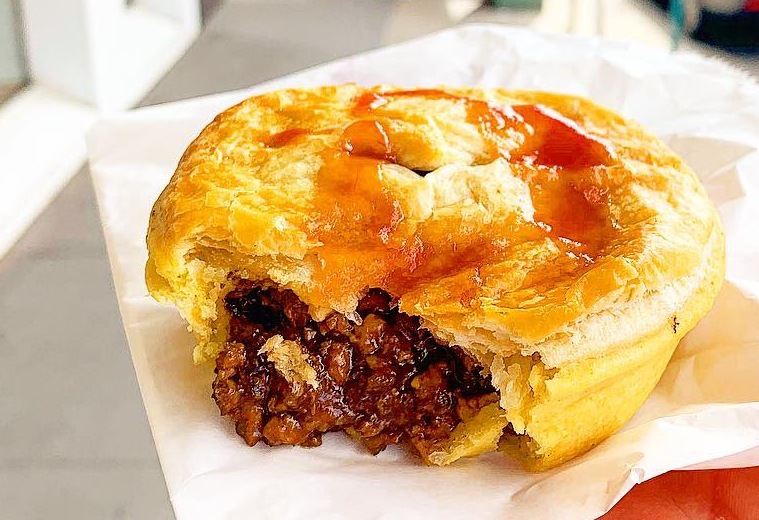
A hand-sized pie of minced or diced beef in thick gravy, with a shortcrust base and often a flaky top. It is eaten hot, straight from the hand, usually with tomato sauce squeezed on top.
The meat pie has been described as Australia's national dish, and it is the classic snack at a football match. Food rules say a commercial meat pie must be at least 25 percent meat.
See the recipe
Serves 6
2 h 30 min
Ingredients
2 sheets ready-made shortcrust pastry and 2 sheets puff pastry (or pastry for a 23 cm pie dish)
750 g beef chuck steak, cut into small cubes, or beef mince
1 large onion, finely chopped
2 tablespoons plain flour
2 tablespoons oil
500 ml beef stock
2 tablespoons tomato sauce (ketchup), plus extra to serve
1 tablespoon Worcestershire sauce
Salt and pepper
1 egg, beaten, to glaze
Method
Heat the oil in a large pan and brown the beef in batches. Add the onion and cook until soft.
Stir in the flour, then slowly add the stock, tomato sauce and Worcestershire sauce. Cover and simmer gently for about 1 hour 15 minutes (30 minutes if using mince), stirring now and then, until the meat is tender and the gravy is thick. Season, then cool the filling quickly (spread it in a shallow dish) and put it in the fridge within 2 hours. It keeps there for up to 2 days.
Heat the oven to 200 °C. Line a greased pie dish (or 6 small pie tins) with shortcrust pastry, fill with the cold meat, and cover with puff pastry. Press the edges to seal and cut a small slit in the top.
Brush with beaten egg and bake for 25 to 30 minutes (35 to 40 minutes for one large pie), until golden and the filling is piping hot.
Rest for 5 minutes, as the filling is very hot, and serve with tomato sauce.
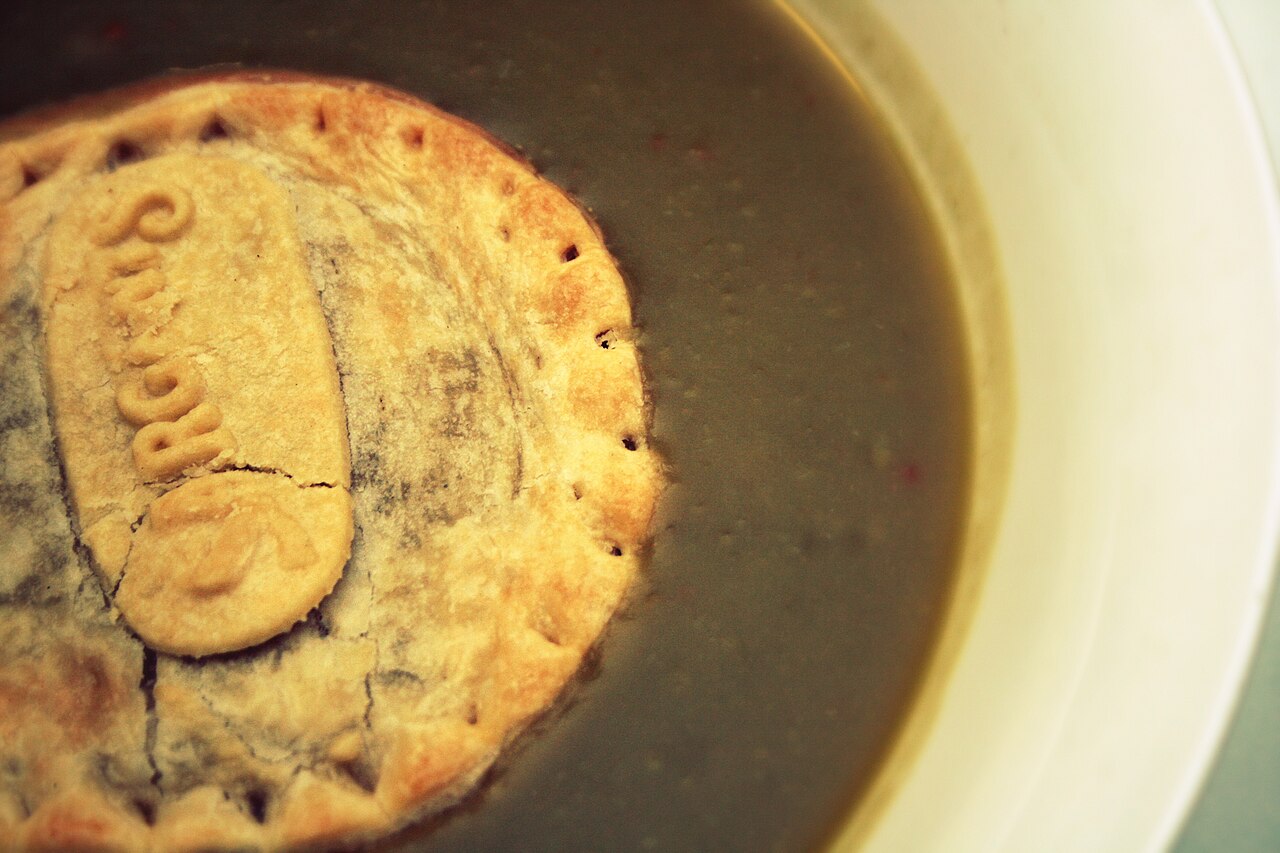
A meat pie sitting in, or turned upside down into, a bowl of thick green pea soup, usually with a swirl of tomato sauce on top.
It was sold late at night from pie carts on Adelaide's streets, and in 2003 the National Trust of South Australia named it a South Australian Heritage Icon.
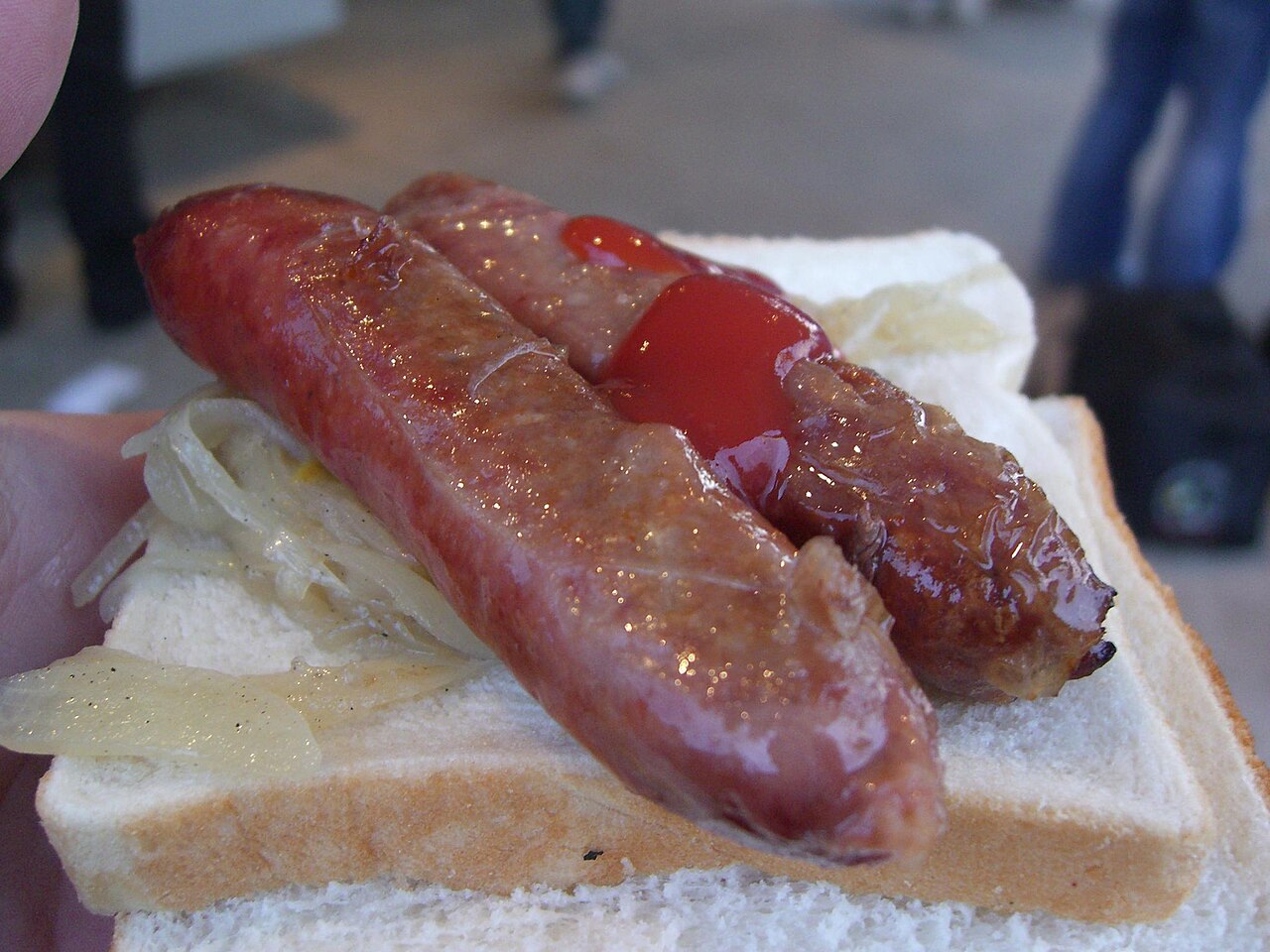
A barbecued sausage, often called a 'snag', wrapped in a slice of white bread with fried onions and tomato sauce or mustard. It is sold cheaply at fundraisers for schools, sports clubs and charities.
Sausage sizzles are so common outside polling places on election day that the sausages there are nicknamed 'democracy sausages'.
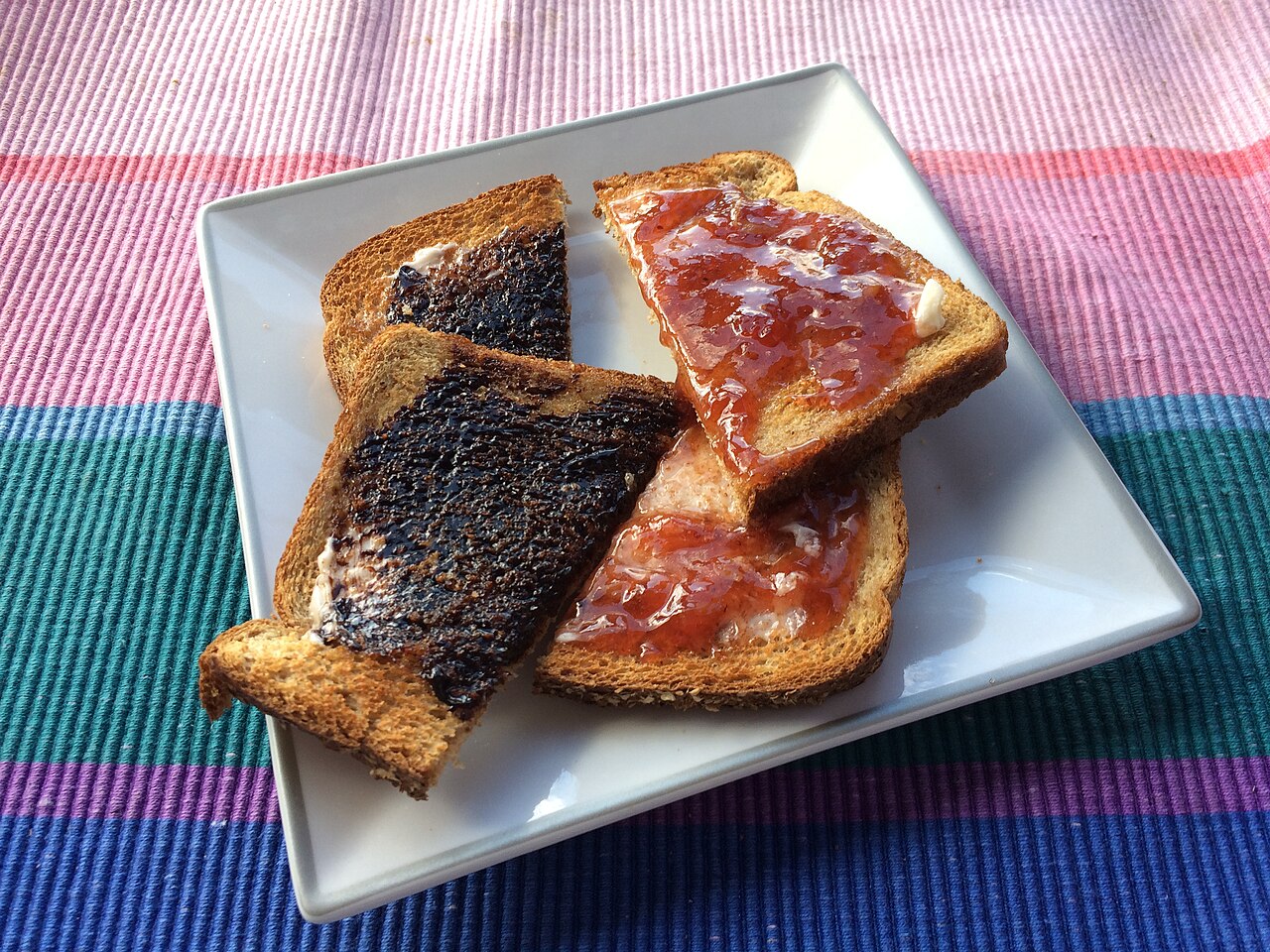
Hot buttered toast with a thin scrape of Vegemite, a thick, dark brown, salty spread made from leftover brewer's yeast. It has a strong taste, so it is spread very thinly.
The chemist Cyril Callister developed Vegemite in Melbourne in 1922, when imports of the British spread Marmite were disrupted after the First World War. It went on sale in 1923.
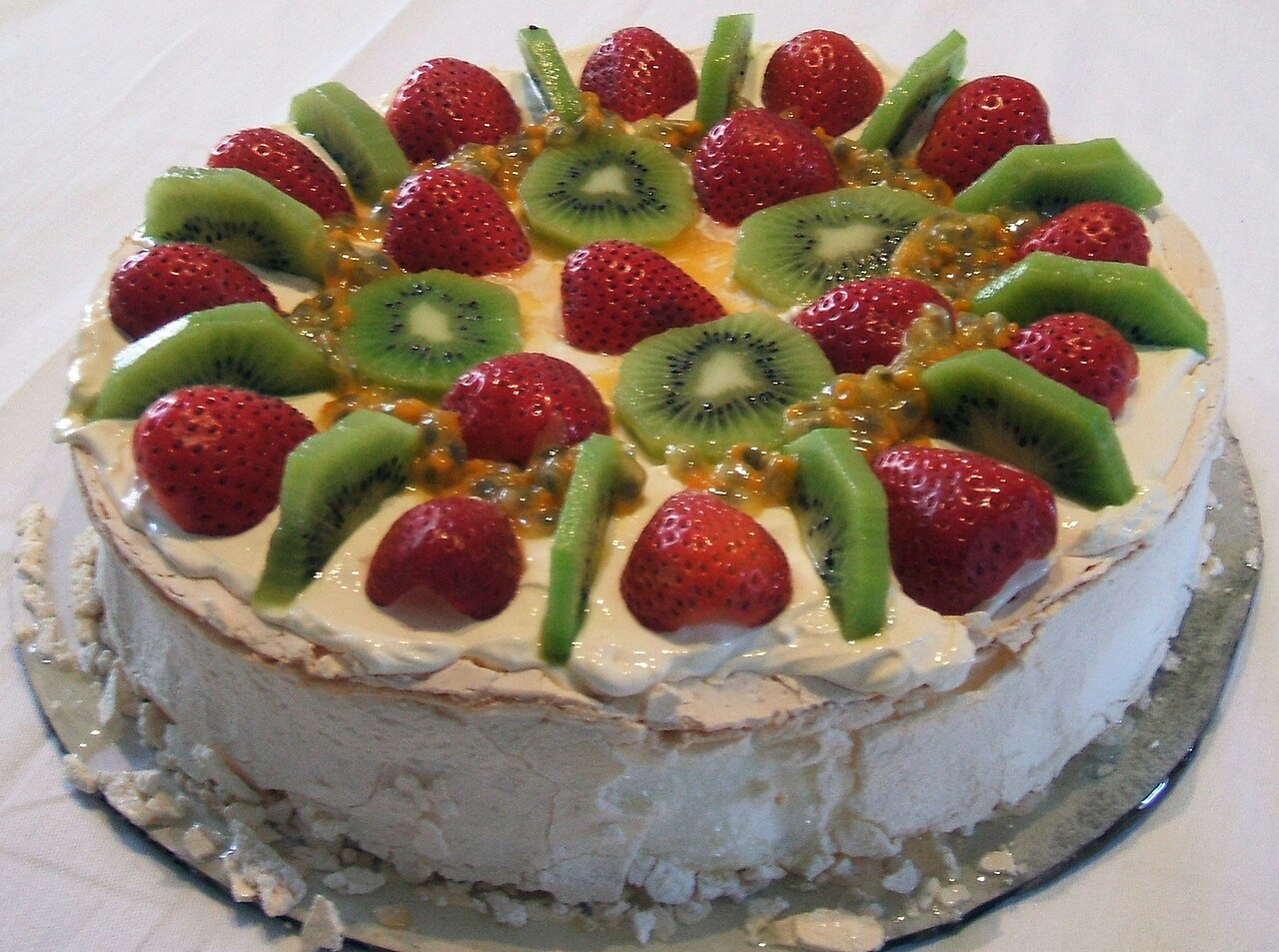
A large round of baked meringue, crisp outside and soft like marshmallow inside, topped with whipped cream and fresh fruit such as strawberries, kiwi fruit and passionfruit. It is a favourite summer dessert, especially at Christmas.
It was named after the Russian ballerina Anna Pavlova, who toured Australia and New Zealand in the 1920s. Both countries claim to have invented it, and food historians still disagree.
See the recipe
Serves 8
3 h
Ingredients
4 egg whites, at room temperature
220 g caster (superfine) sugar
1 teaspoon white vinegar
1 tablespoon cornflour (cornstarch)
1 teaspoon vanilla extract
300 ml cream for whipping
Fresh fruit: strawberries, kiwi fruit, banana and the pulp of 2 passionfruit
Method
Heat the oven to 150 °C. Draw a 20 cm circle on baking paper and put it upside down on a tray.
Beat the egg whites in a clean, dry bowl until soft peaks form. Add the sugar a spoonful at a time, beating well after each, until the meringue is thick and glossy and the sugar has dissolved.
Gently fold in the vinegar, cornflour and vanilla. Spread the meringue inside the circle, making the sides a little higher than the middle.
Put it in the oven, lower the heat to 120 °C and bake for 1 hour 15 minutes. Turn the oven off and let the pavlova cool completely inside with the door slightly open, about 1 hour.
Just before serving, whip the cream, spread it on top and cover with fruit and passionfruit pulp.
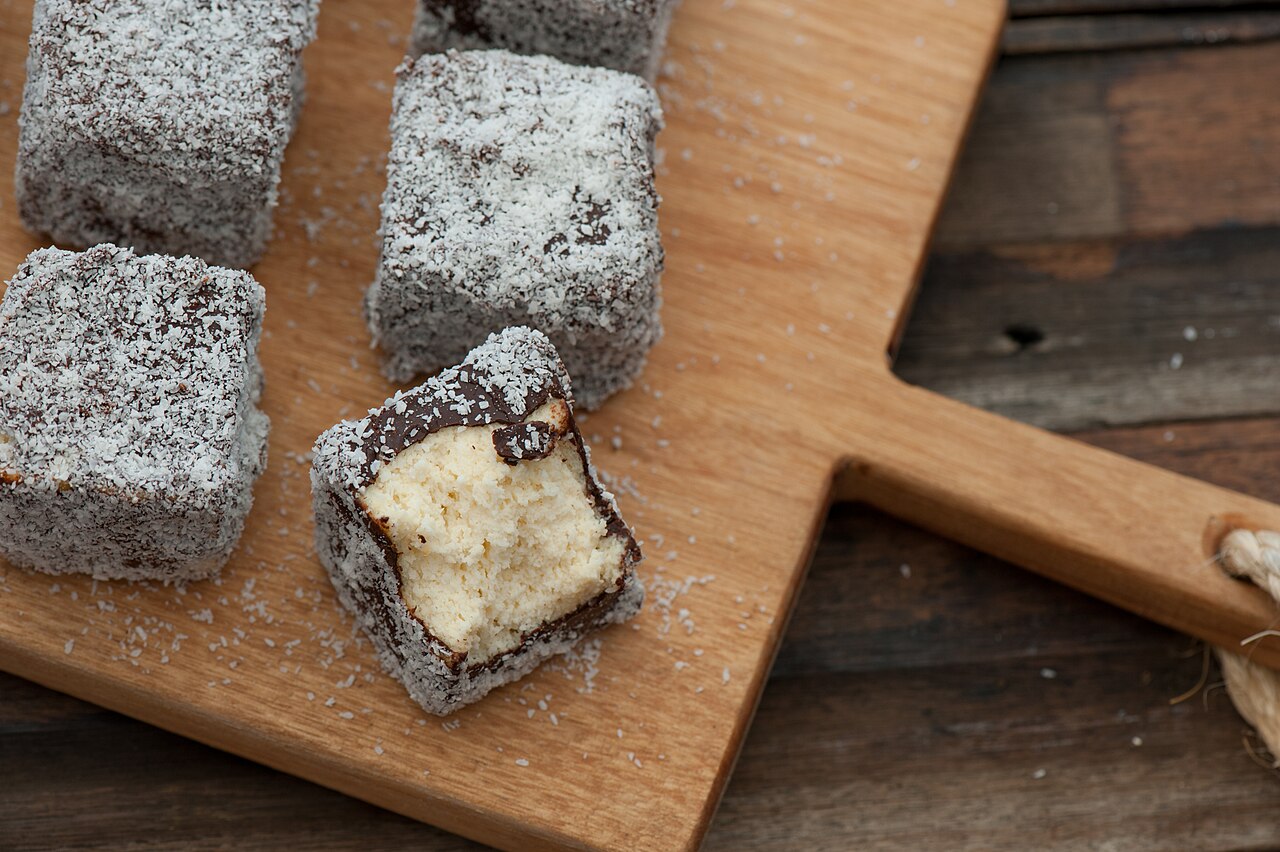
Squares of sponge or butter cake dipped in thin chocolate icing and rolled in desiccated coconut. Some are cut in half and filled with jam and cream.
They are believed to be named after Lord Lamington, Governor of Queensland from 1896 to 1901. The most popular story says his French-born chef, Armand Galland, made them from leftover cake for unexpected guests.
See the recipe
Serves 16
1 h
Ingredients
1 square sponge or butter cake, about 20 cm, baked a day ahead (home-made or bought)
500 g icing sugar
40 g cocoa powder
15 g butter
125 ml milk
250 g desiccated coconut
Method
Trim the edges of the cake and cut it into 16 squares. A cake from the day before is firmer and easier to dip.
Sift the icing sugar and cocoa into a heatproof bowl. Add the butter and milk and stir over a pan of simmering water until smooth and runny.
Put the coconut in a shallow dish.
Using two forks, dip each square of cake quickly into the chocolate icing, let the extra drip off, then roll it in the coconut.
Put the lamingtons on a wire rack for about 1 hour until the icing sets.
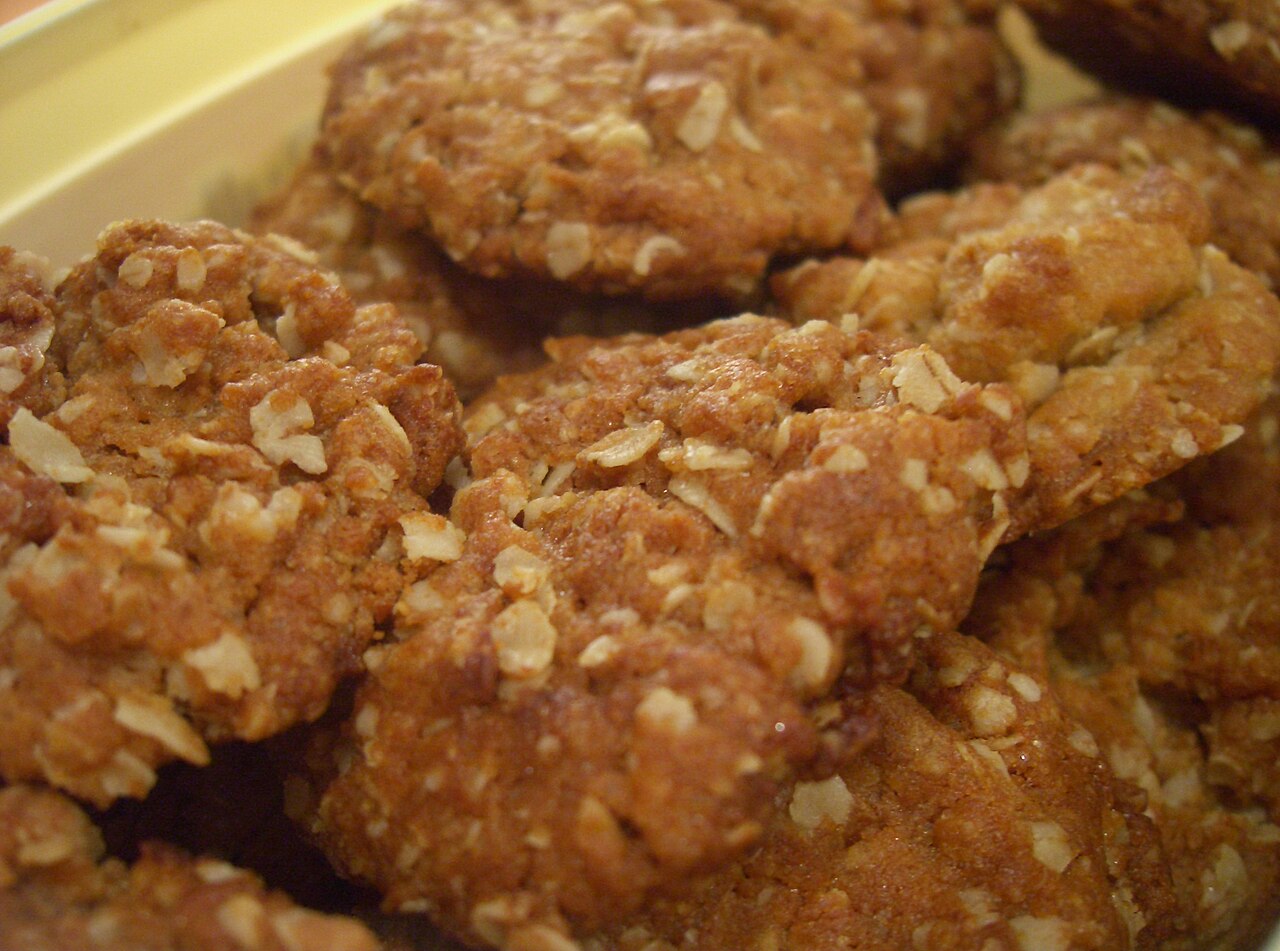
Crunchy or chewy biscuits of rolled oats, flour, sugar, butter, golden syrup and usually coconut, with no eggs. They are baked at home especially around Anzac Day on 25 April.
They are linked with the soldiers of the ANZAC corps, as women's groups are thought to have sent biscuits that kept well in the post. The name 'Anzac' is protected by law in Australia, but Anzac biscuits may be sold as long as they stay close to the traditional recipe and are called biscuits, never cookies.
See the recipe
Serves 20
35 min
Ingredients
90 g rolled oats
150 g plain flour
150 g brown sugar
65 g desiccated coconut
125 g butter
2 tablespoons golden syrup
1/2 teaspoon bicarbonate of soda
2 tablespoons boiling water
Method
Heat the oven to 160 °C and line two baking trays with baking paper.
Mix the oats, flour, sugar and coconut in a large bowl.
Melt the butter and golden syrup together in a small pan. Mix the bicarbonate of soda with the boiling water and stir it into the butter mixture: it will foam up.
Pour the foaming mixture into the dry ingredients and mix well. Roll tablespoons of the mixture into balls and put them on the trays about 5 cm apart, pressing each one flat.
Bake for 12 to 15 minutes until golden. Let them cool on the trays, where they will firm up.
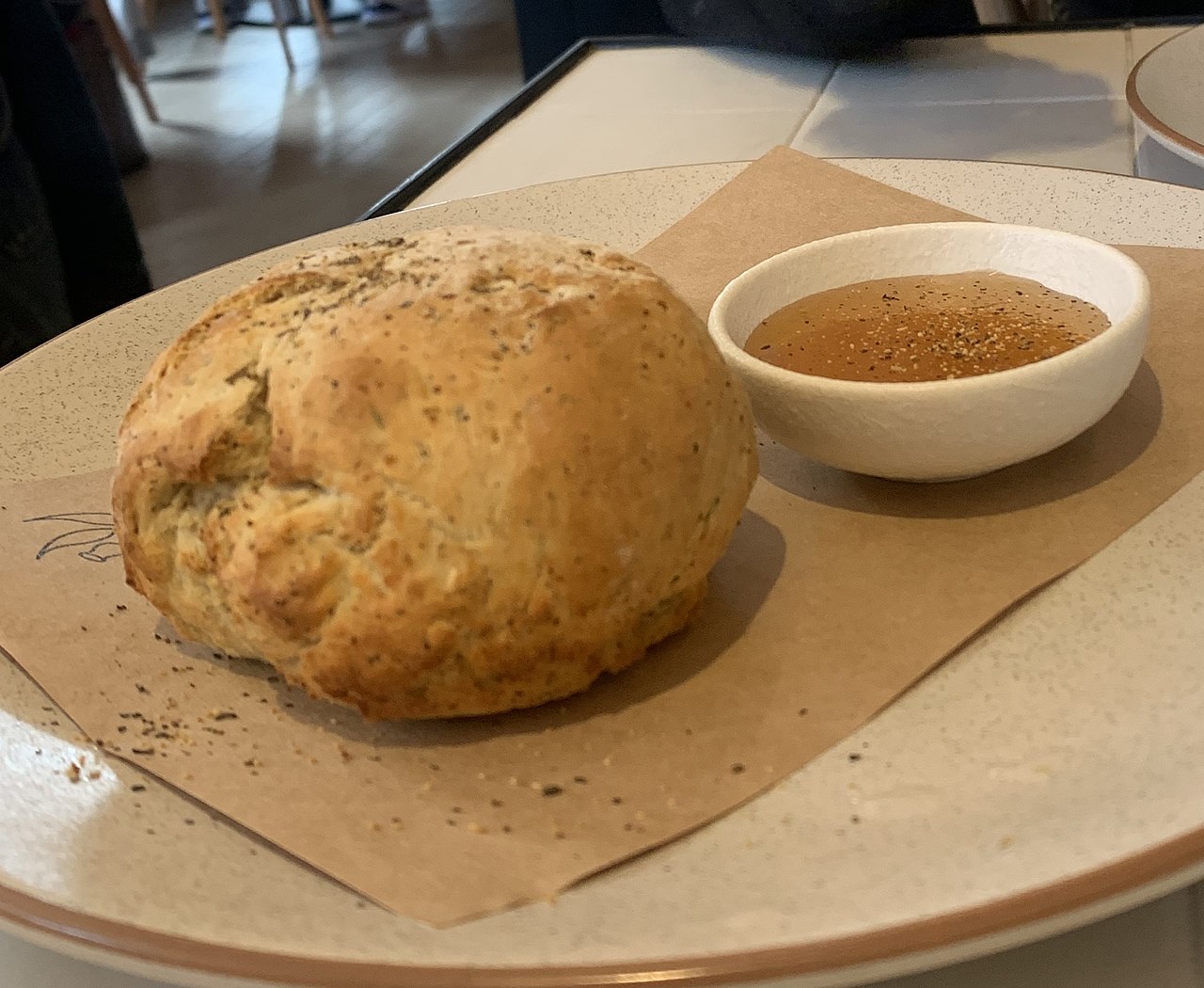
A simple bread of flour, water and salt, with a little butter if there is any, traditionally baked in the hot ashes of a campfire or in a camp oven. It is eaten warm with butter, jam or golden syrup.
Stockmen who spent long weeks in remote areas lived on damper, tea and whatever meat they had. It is different from bush bread, which Aboriginal peoples have made for thousands of years by grinding native seeds.
See the recipe
Serves 6
45 min
Ingredients
450 g self-raising flour
1 teaspoon salt
60 g cold butter, cut small
About 300 ml milk, or half milk and half water
Extra flour for dusting
Method
Heat the oven to 200 °C and dust a baking tray with flour.
Mix the flour and salt in a bowl, then rub in the butter with your fingertips until it looks like breadcrumbs.
Add the milk and mix quickly with a knife to a soft, slightly sticky dough. Do not knead it much.
Shape into a round about 5 cm thick, put it on the tray, cut a cross on top and dust with flour.
Bake for about 30 minutes, until golden and hollow-sounding when tapped underneath. Serve warm with butter and golden syrup or jam.
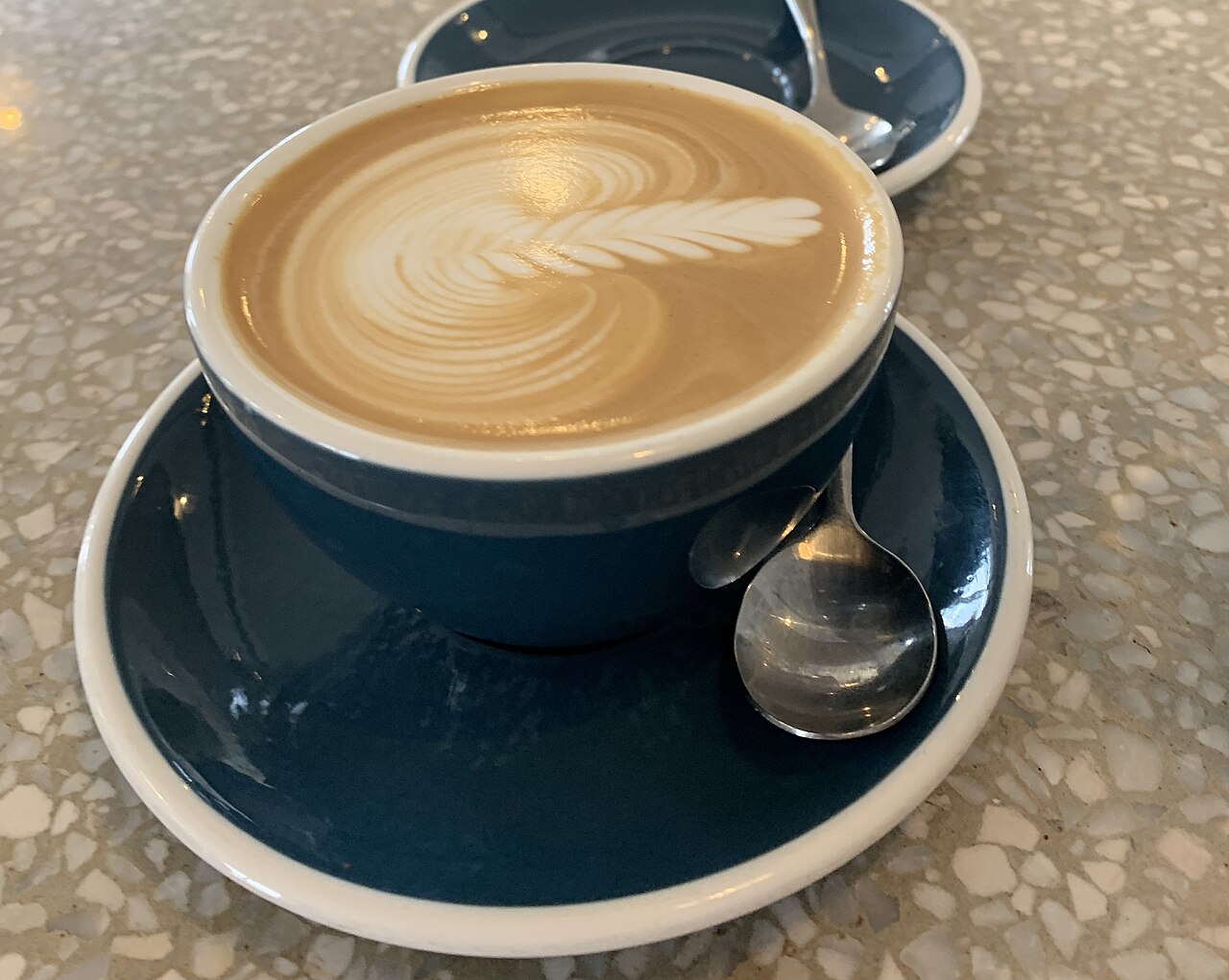
Espresso coffee with steamed milk and only a very thin layer of fine foam on top, usually stronger in taste than a latte and without the thick froth of a cappuccino.
Cafés in both Australia and New Zealand claim to have invented the flat white, and nobody knows for sure who was first.
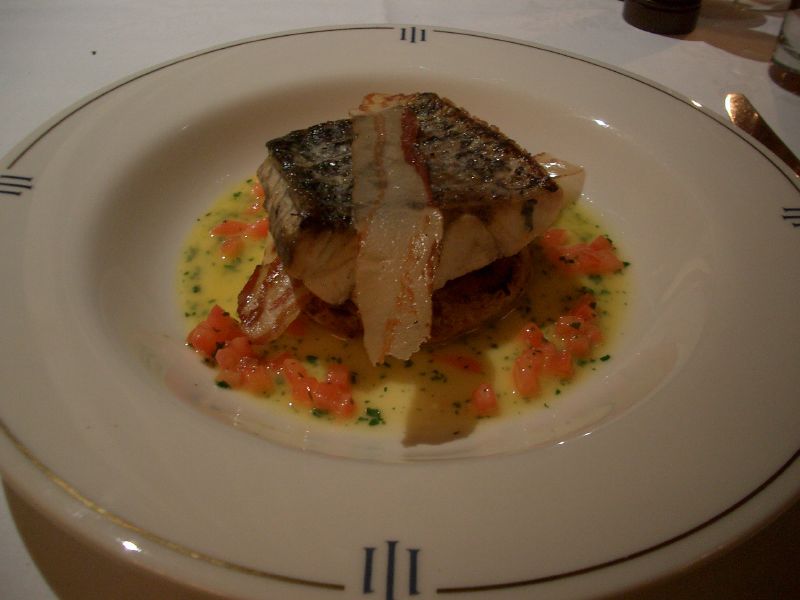
A large fish of the tropical rivers and coasts with firm, mild white flesh. It is often pan-fried or grilled with crispy skin, or served as fish and chips.
Its name is a loanword from an Aboriginal language of the Rockhampton area in Queensland, said to mean 'large-scaled river fish'.
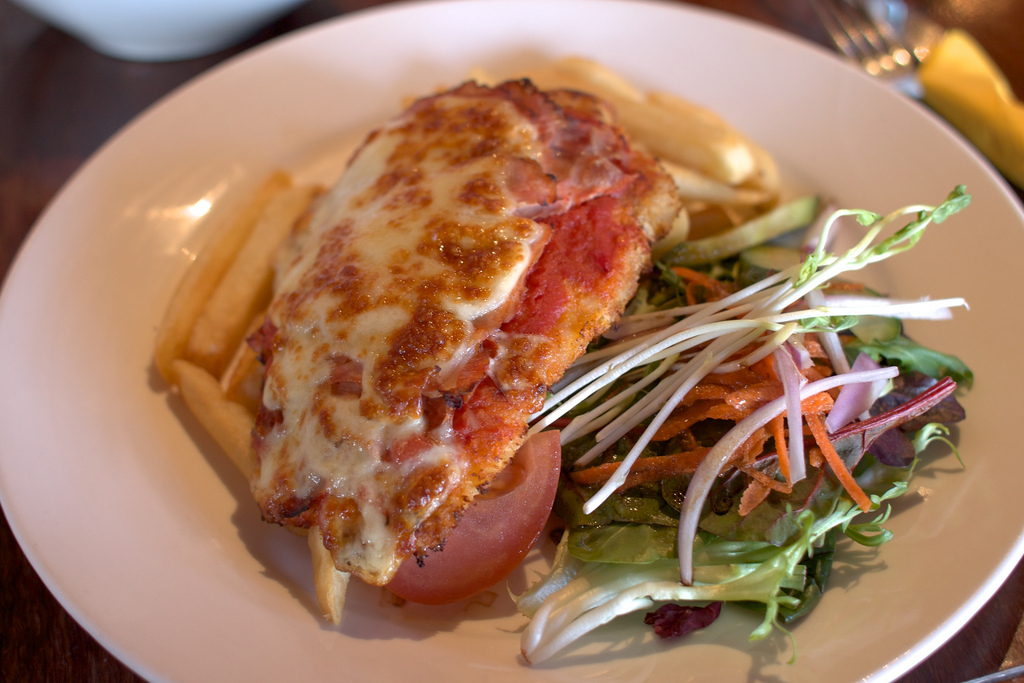
Chicken parmigiana: a crumbed, fried chicken breast topped with tomato sauce, ham in some places and melted cheese, usually served with chips and salad. It is a classic meal in Australian pubs.
Whether it is called a 'parma' or a 'parmi' depends on where in Australia you are. It was on restaurant menus in Adelaide as early as 1953.
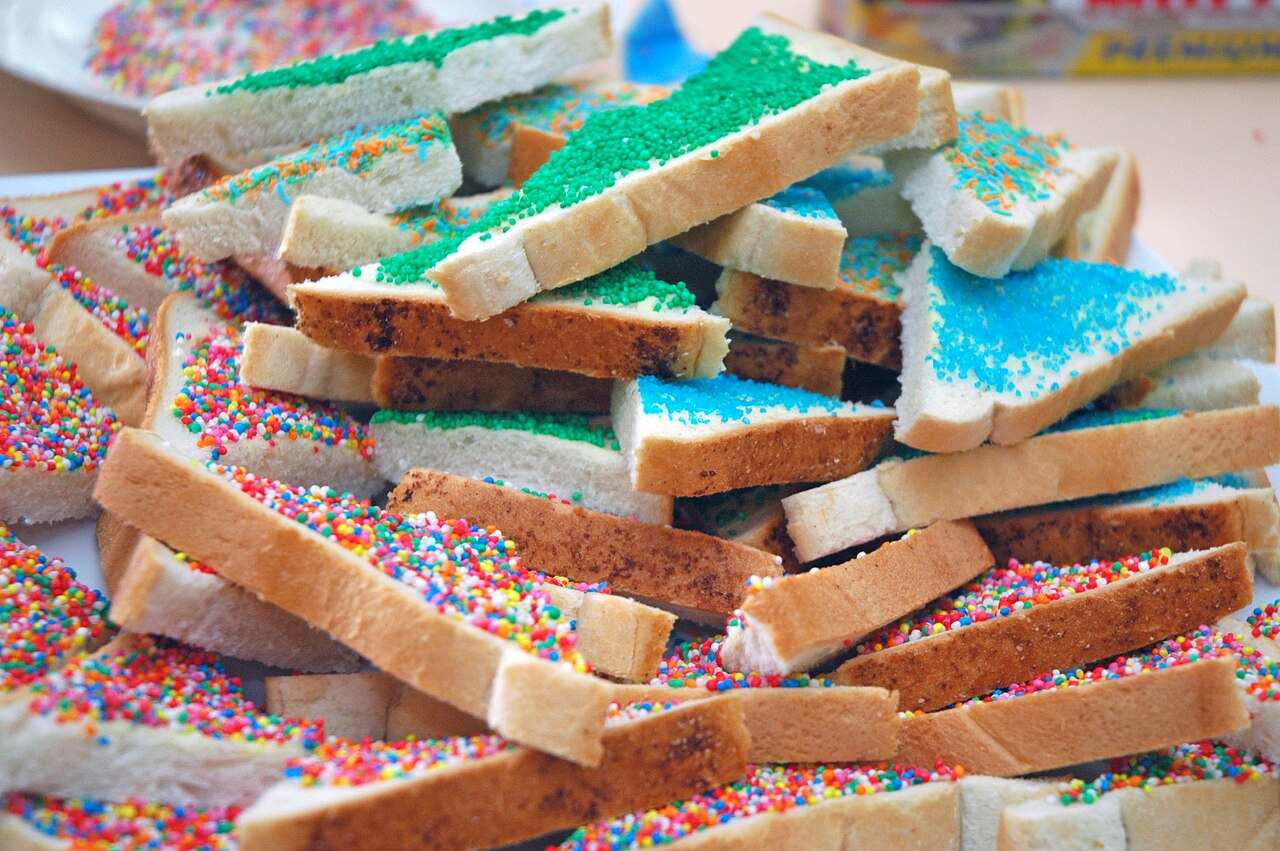
Slices of white bread spread with butter and covered with 'hundreds and thousands', tiny round coloured sprinkles, then cut into triangles. It is a must at children's birthday parties.
The first known mention of the name was in a Hobart newspaper, The Mercury, in April 1929.
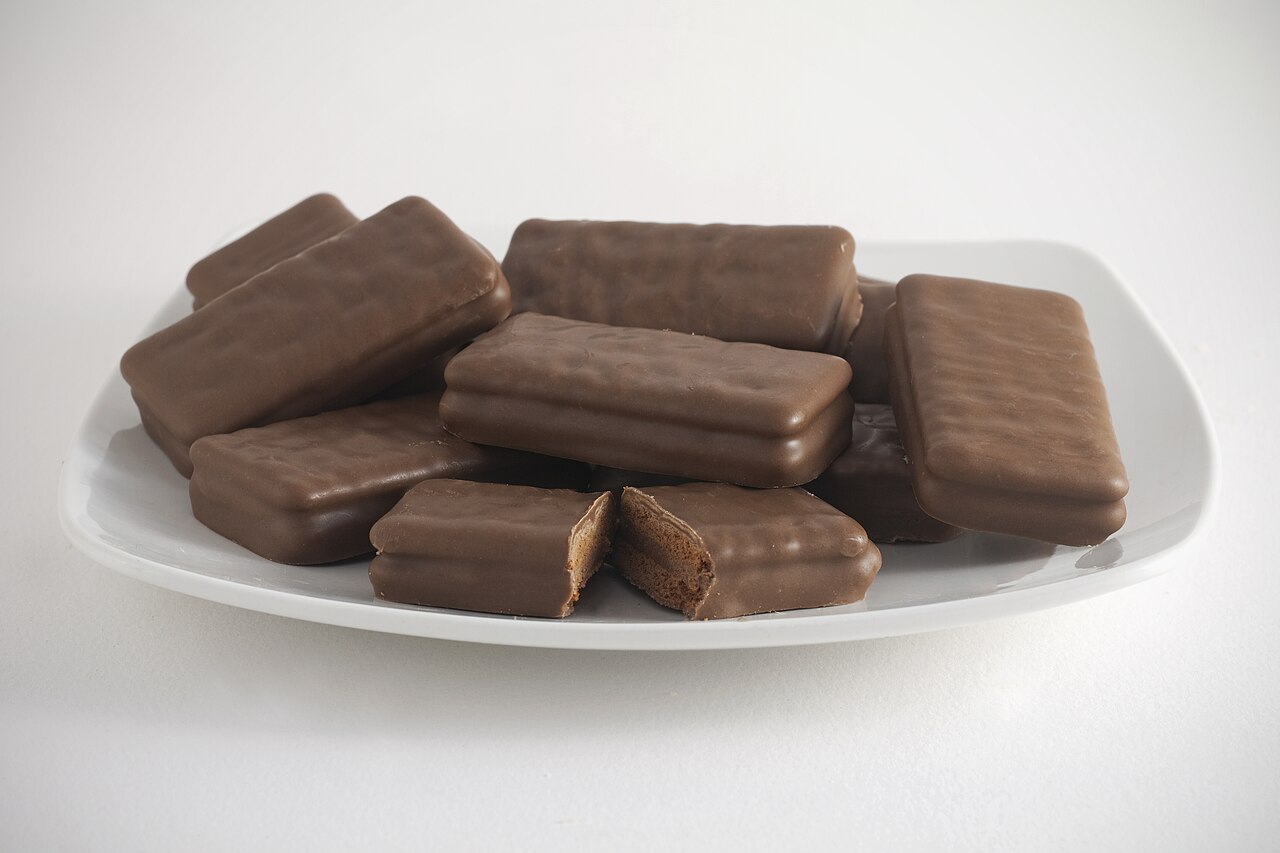
A chocolate biscuit made of two malted biscuits with a chocolate cream filling, all coated in chocolate. Many Australians bite off opposite corners and sip hot drink through it, which is called a 'Tim Tam slam'.
It went on sale in 1964 and was named after Tim Tam, the horse that won the 1958 Kentucky Derby, which Ross Arnott had watched.
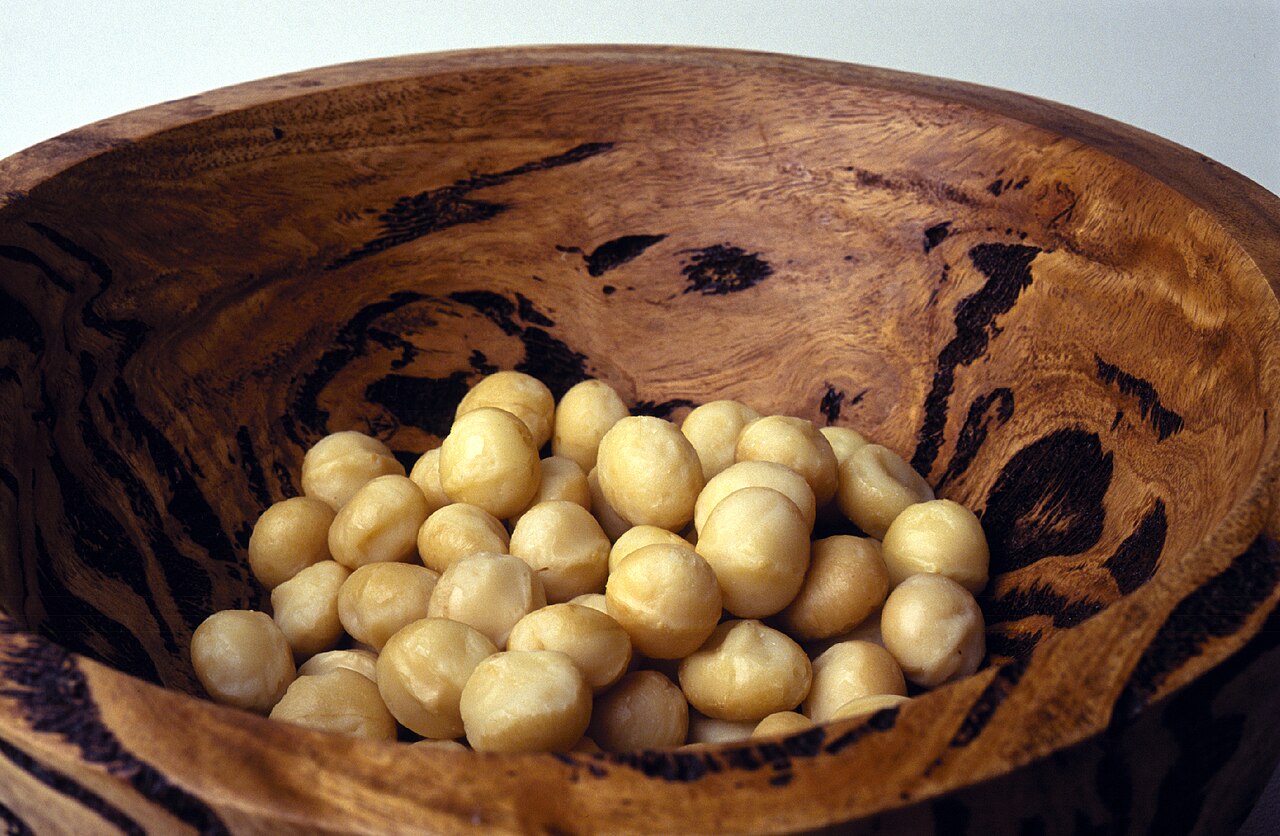
Round, creamy, buttery nuts with a very hard shell, eaten roasted and salted, or baked into biscuits and cakes.
The macadamia tree grows wild only in eastern Australia, and it was an important bush food for Aboriginal peoples. Seeds taken to Hawaii in 1882 were first planted as windbreaks, and Hawaii later became the world's biggest grower for about a century.
Table manners
If you are asked to 'bring a plate' to a party or gathering, it means bring a dish of food to share, not an empty plate.
In a pub, friends often take turns to buy a round of drinks for the group, called a 'shout'. 'It's my shout' means 'I'm paying'.
Meat pies are usually eaten from the hand, not with a knife and fork, often with tomato sauce on top.
At a barbecue, the host usually cooks the meat outside, and guests may bring a salad, a dessert or their own drinks.
Christmas comes in the middle of summer, so many families have a cold lunch with seafood and salads, and pavlova for dessert.
Almost all Australians live in cities along the coast, and each state has its own capital. Sydney and Melbourne, rivals for more than a century, are the two biggest, with more than five million people each. Canberra was built as a compromise between them. In the tropical north and the red centre, towns are smaller and farther apart, and they are gateways to the reef, the rainforest and the outback.
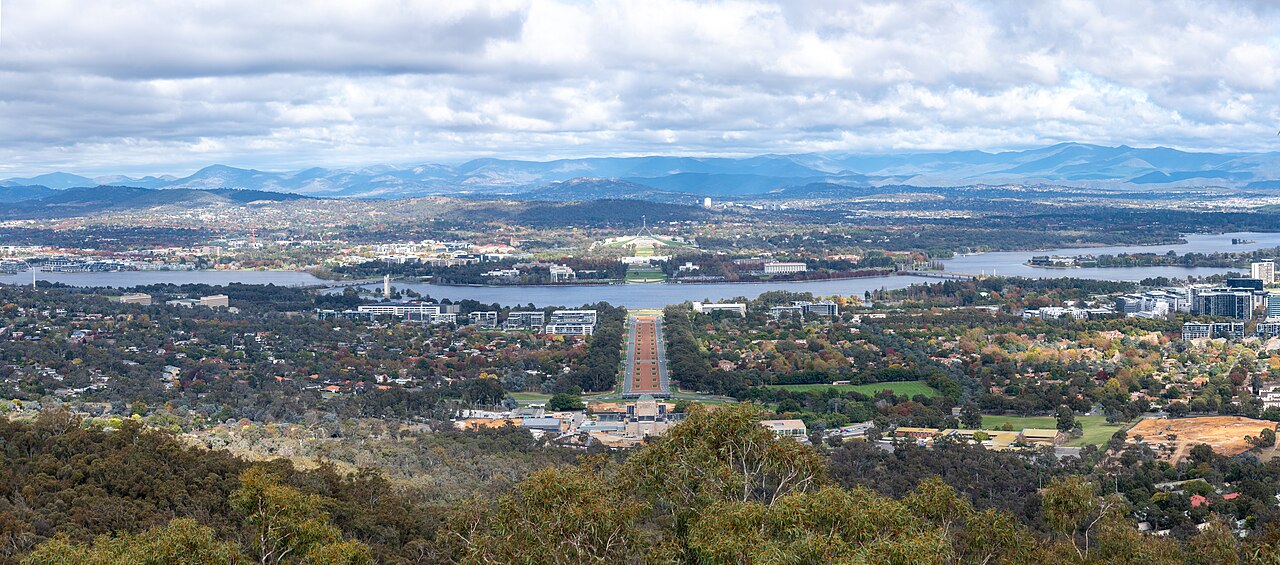
The national capital, a planned city designed by Walter Burley Griffin and Marion Mahony Griffin around a large artificial lake. It was named in 1913, and Parliament moved here from Melbourne in 1927. Its name comes from the language of the local Ngunnawal and Ngambri people. With about half a million people, it is, as of 2026, Australia's largest inland city.
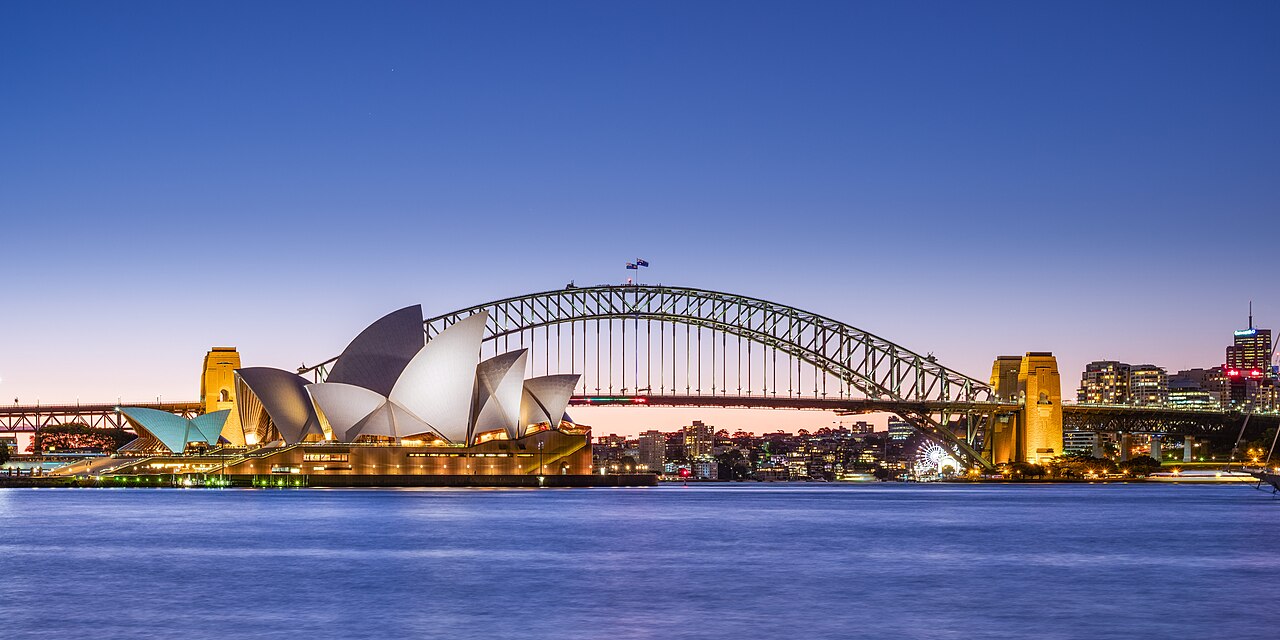
Australia's largest city and the capital of New South Wales, spread around one of the world's great natural harbours. It was founded in 1788 as a British penal colony on land of the Eora, Darug and Dharawal peoples. Today more than 5.6 million people live here, and in 2021 over 40 percent of them had been born overseas.
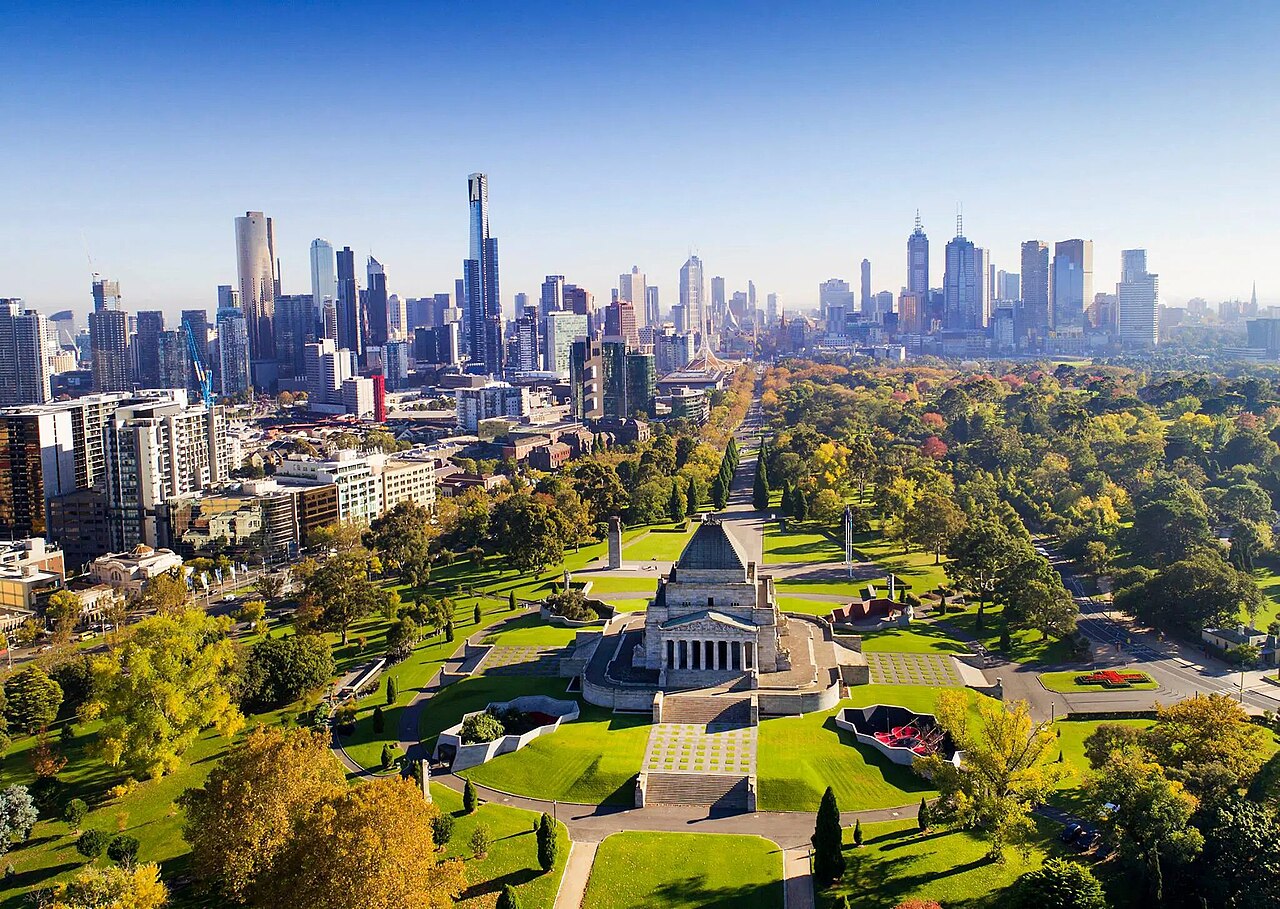
The capital of Victoria and Australia's second-largest city, on Port Phillip Bay. It was founded in 1835 and grew rich in the gold rush. From 1901 to 1927 it was the seat of the national government. As of 2026 it is the southernmost city in the world with more than one million people.
As of 2026, the largest urban tram network in the world
The Melbourne Cricket Ground and Australian football
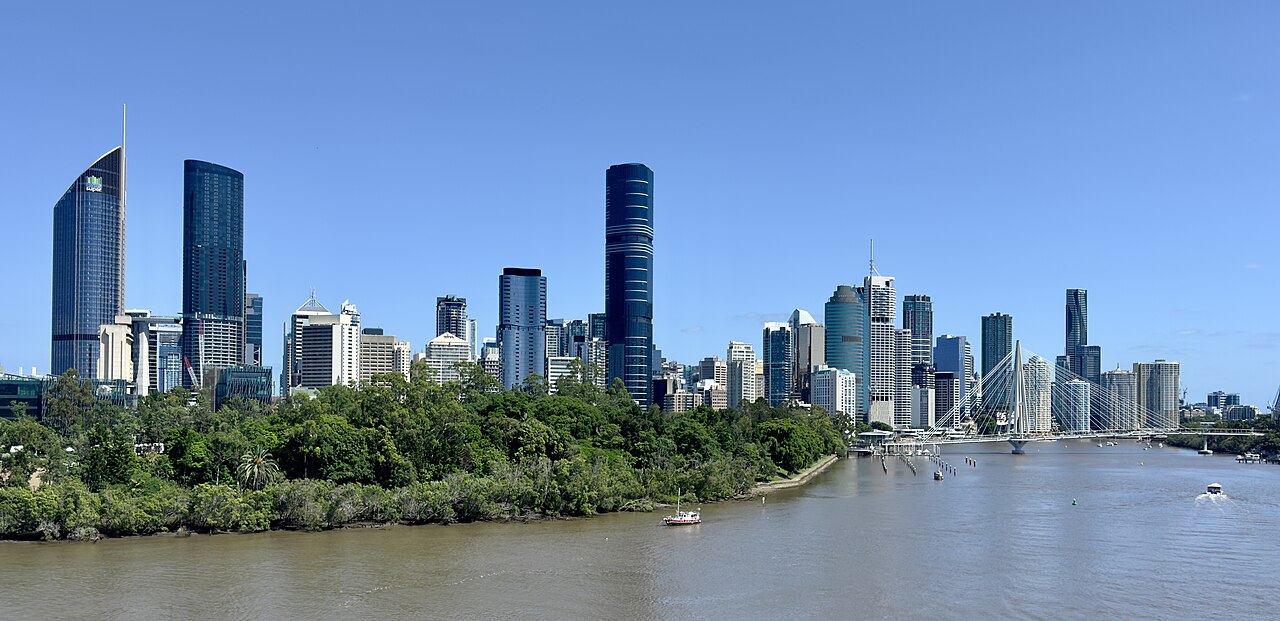
The capital of Queensland and Australia's third-largest city, on a winding river near the Pacific coast. It began in 1824 as a convict settlement for reoffenders, which moved to the Brisbane River in 1825, and it became Queensland's capital in 1859. It has a warm, sunny climate most of the year.
South Bank parklands on the Brisbane River
Easy trips to the Gold Coast and Sunshine Coast beaches
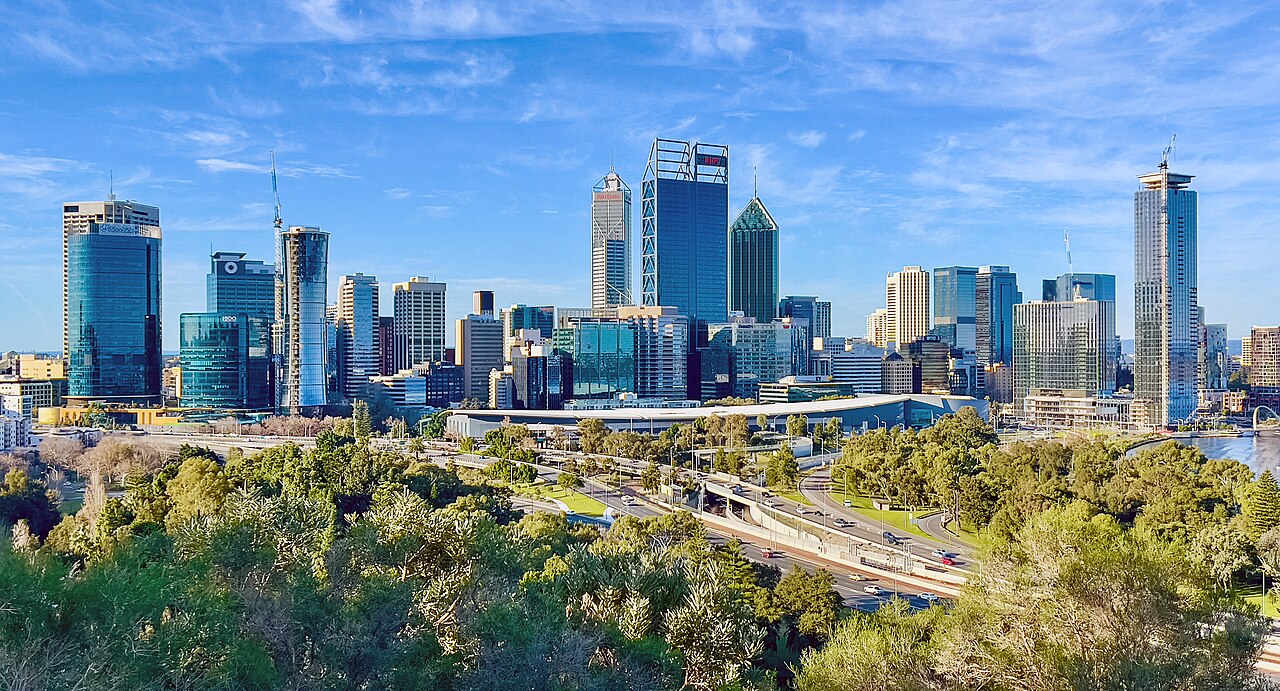
The capital of Western Australia, on the Swan River near the Indian Ocean. It was founded in 1829 as a free settlement, on the land of the Whadjuk Noongar people. It is often called one of the most isolated big cities in the world, far from any other large city.
Kings Park, one of the largest inner-city parks in the world
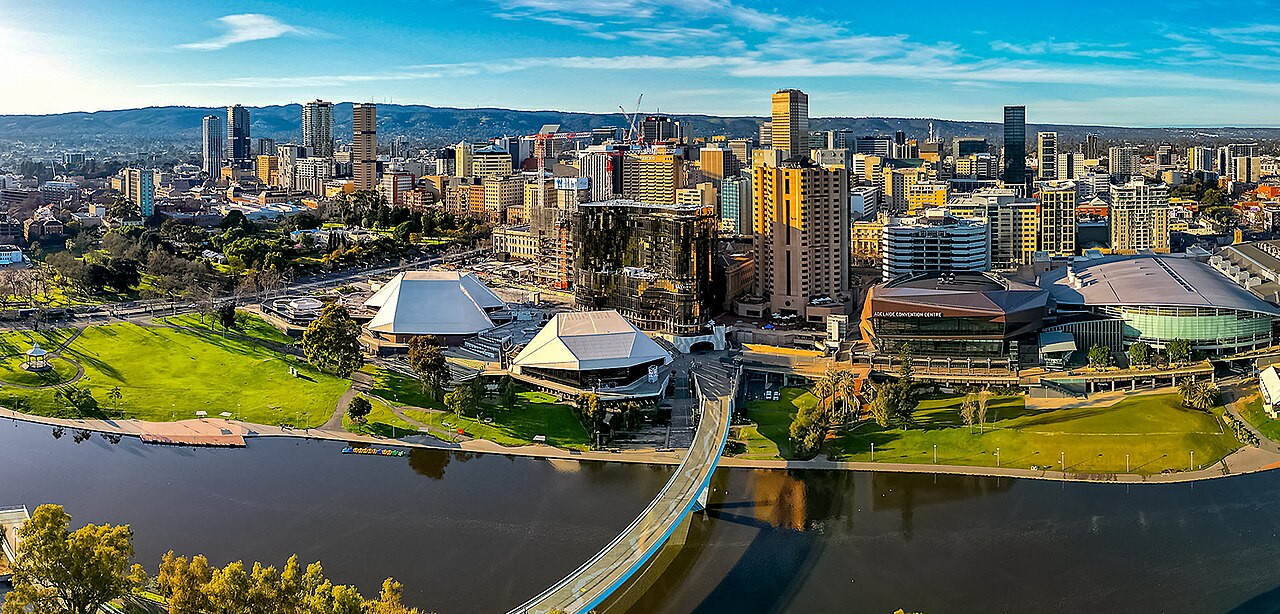
The capital of South Australia, founded in 1836 as a planned city for free settlers. Colonel William Light laid out the city centre in a grid with wide streets and squares, surrounded by parkland. It was named after Queen Adelaide, wife of King William IV.
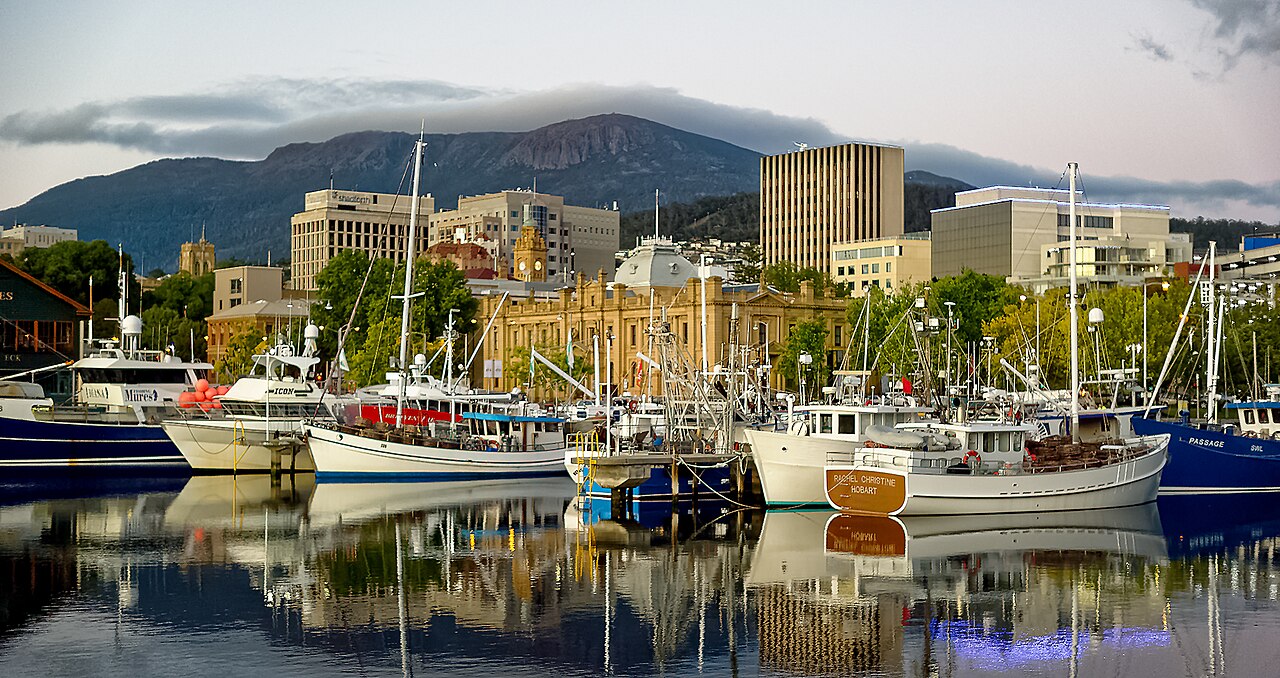
The capital of the island state of Tasmania, on the River Derwent below kunanyi / Mount Wellington. Founded in 1804 as a penal colony, it is Australia's second-oldest capital city after Sydney and the southernmost state capital.
Salamanca Market and the Georgian buildings of Salamanca Place
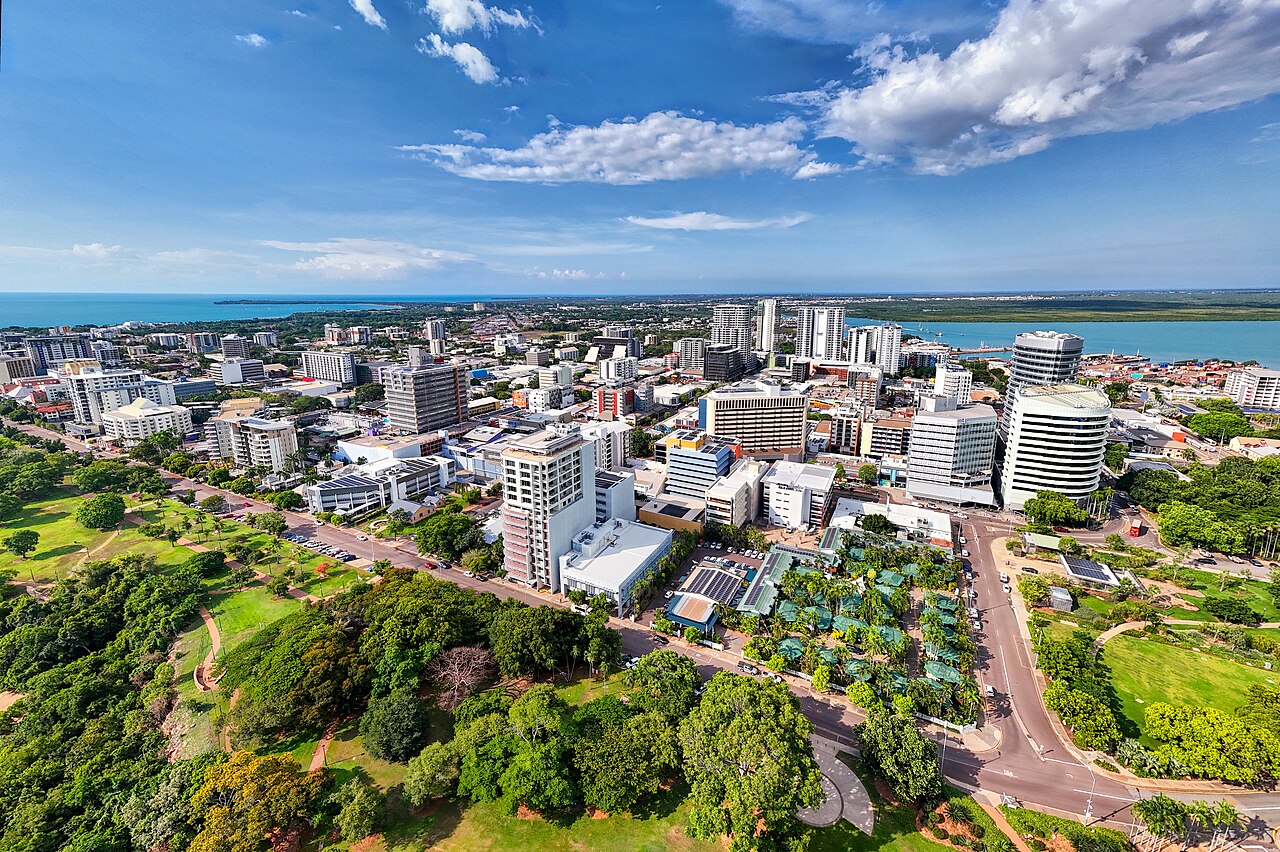
The capital of the Northern Territory, on the tropical north coast, closer to Indonesia than to most Australian cities. The harbour was named after Charles Darwin. The city was bombed by Japanese planes on 19 February 1942 and almost destroyed by Cyclone Tracy on Christmas Day 1974, and was rebuilt both times.
The start of the Stuart Highway, which crosses the continent to South Australia
A gateway to Kakadu National Park
A hot tropical climate with a wet and a dry season
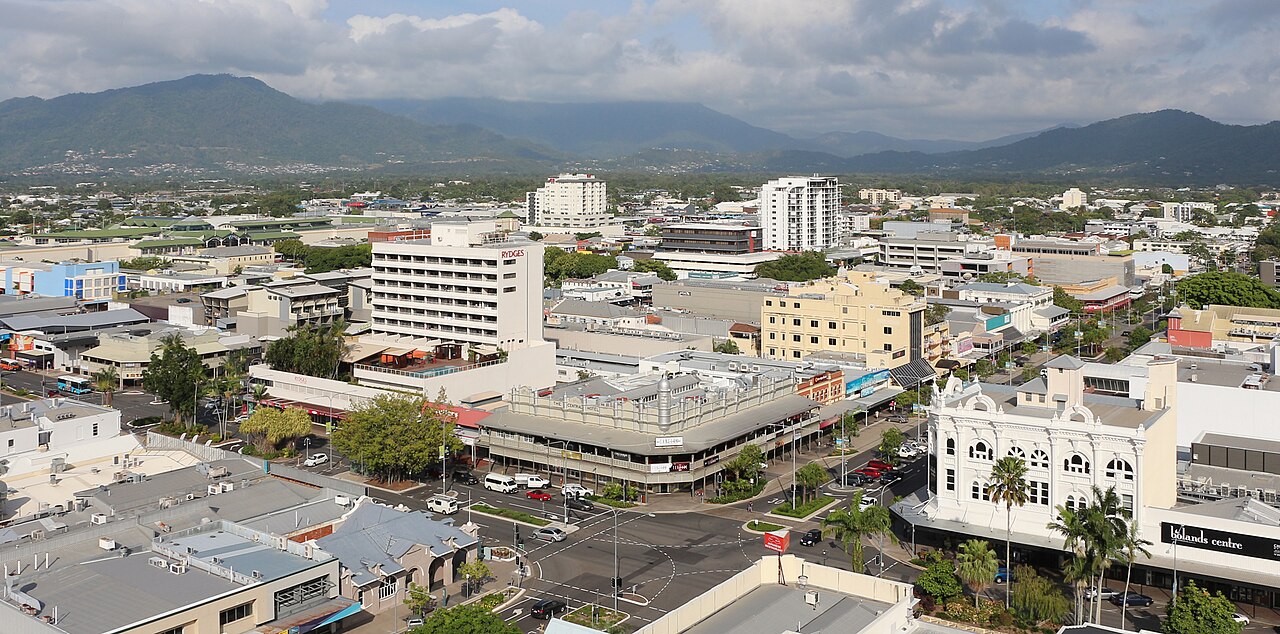
A tropical city in Far North Queensland, founded in 1876. It is the main gateway to two World Heritage Sites: the Great Barrier Reef offshore and the Daintree rainforest, part of the Wet Tropics of Queensland, to the north.
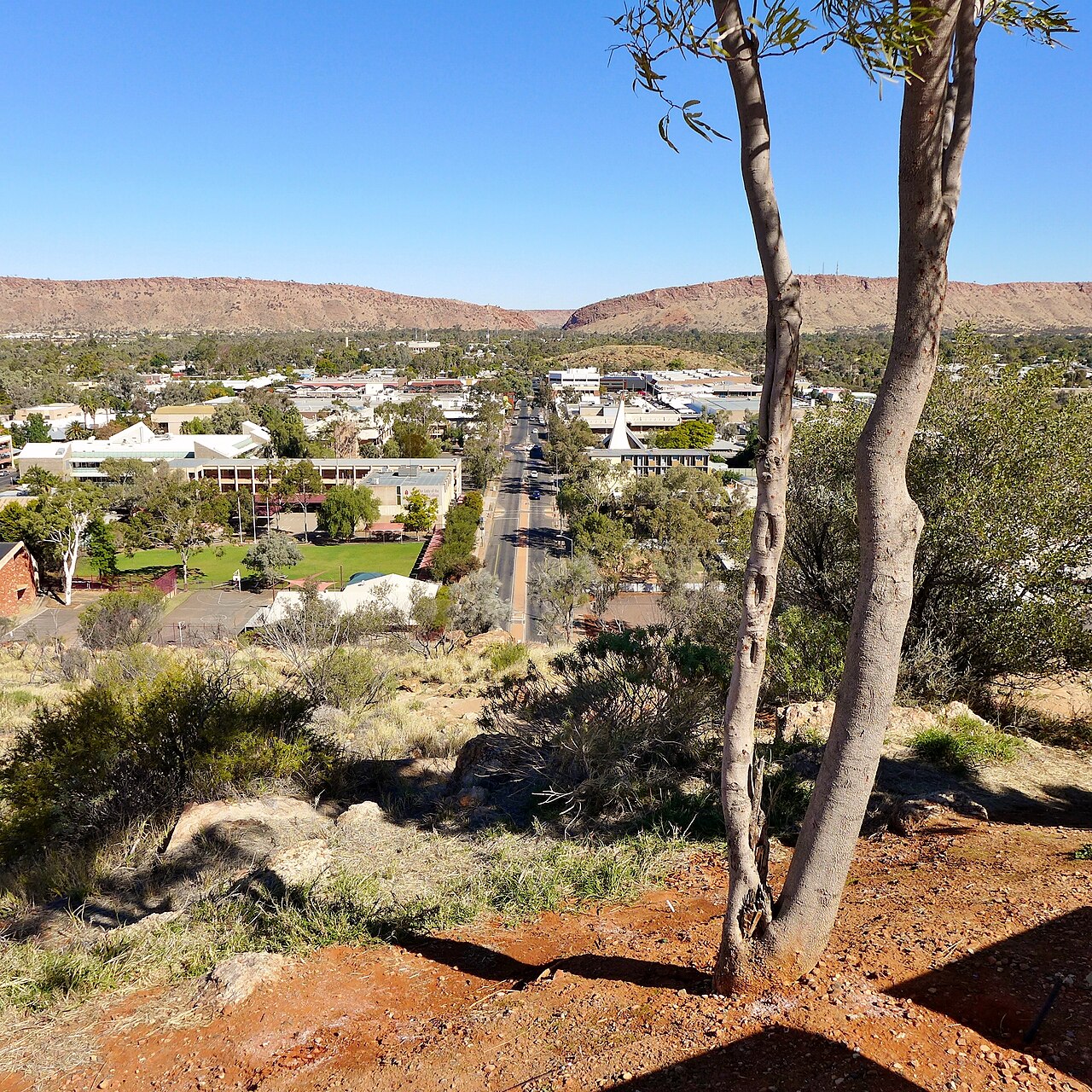
A town in the red centre of Australia, roughly halfway between Adelaide and Darwin, beside the usually dry Todd River. The Arrernte people have lived here for tens of thousands of years and call the place Mparntwe. The town grew around a telegraph station on the Overland Telegraph Line, completed in 1872.
The MacDonnell Ranges
The Old Telegraph Station
A base for trips to Uluru, about 450 km away by road
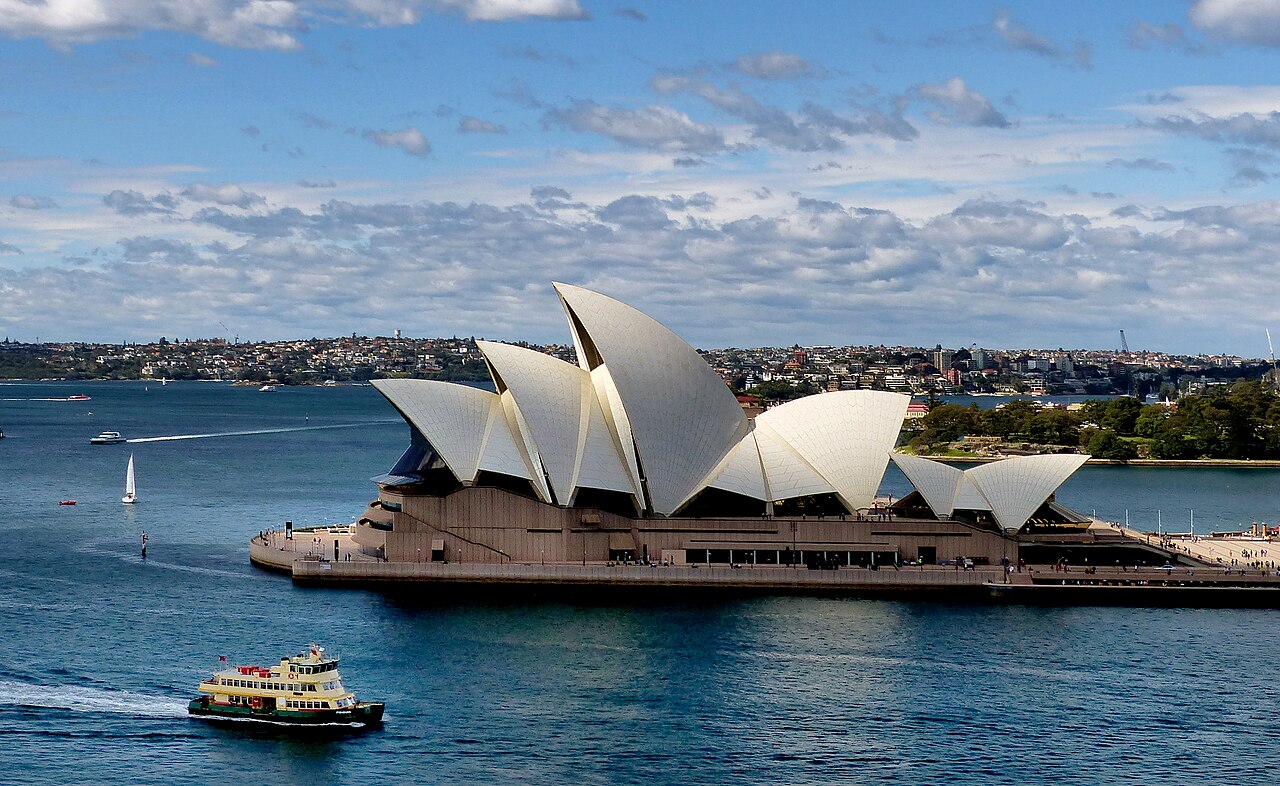
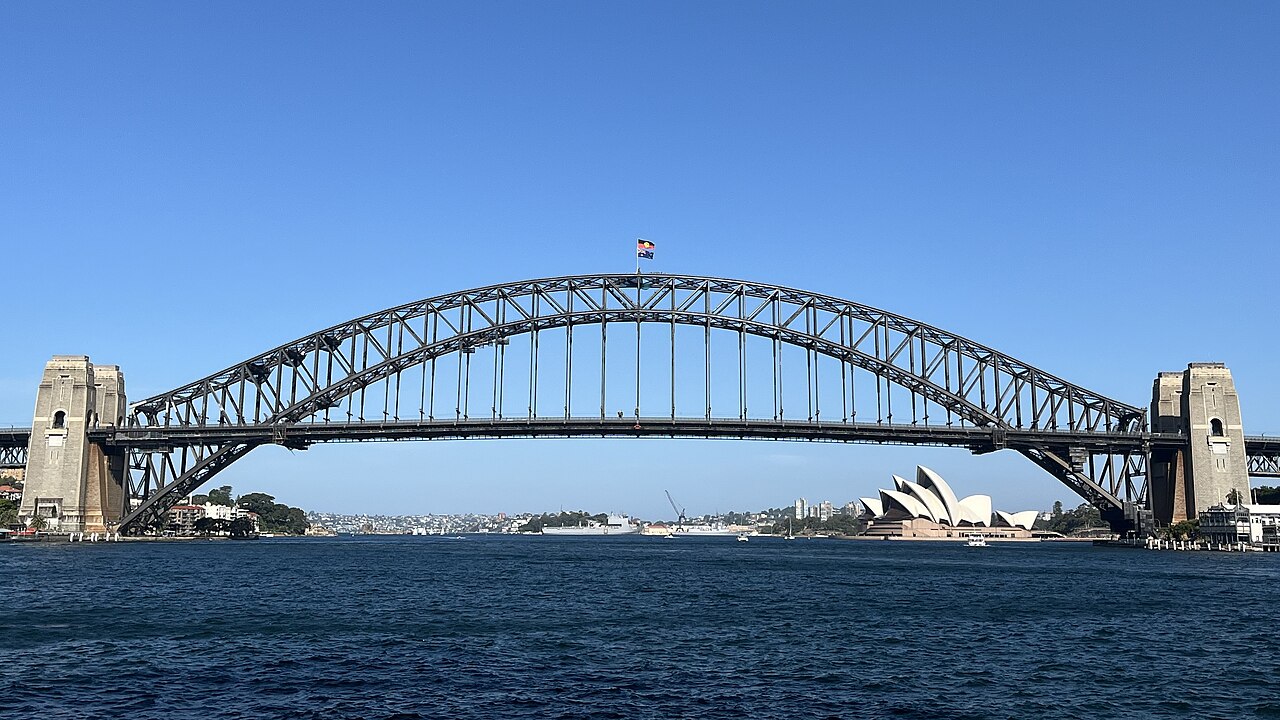
A performing arts centre on Bennelong Point in Sydney Harbour, designed by the Danish architect Jørn Utzon and opened in 1973. Its white 'sails' are covered with 1,056,006 tiles in glossy white and matte cream. It hosts more than 1,800 performances a year and became a World Heritage Site in 2007.
The great steel arch across Sydney Harbour, opened in 1932 and nicknamed 'the Coathanger'. It carries trains, cars, bicycles and people on foot, and its arch is 134 m above the water. On hot days the steel expands and the arch can rise by up to 18 cm.
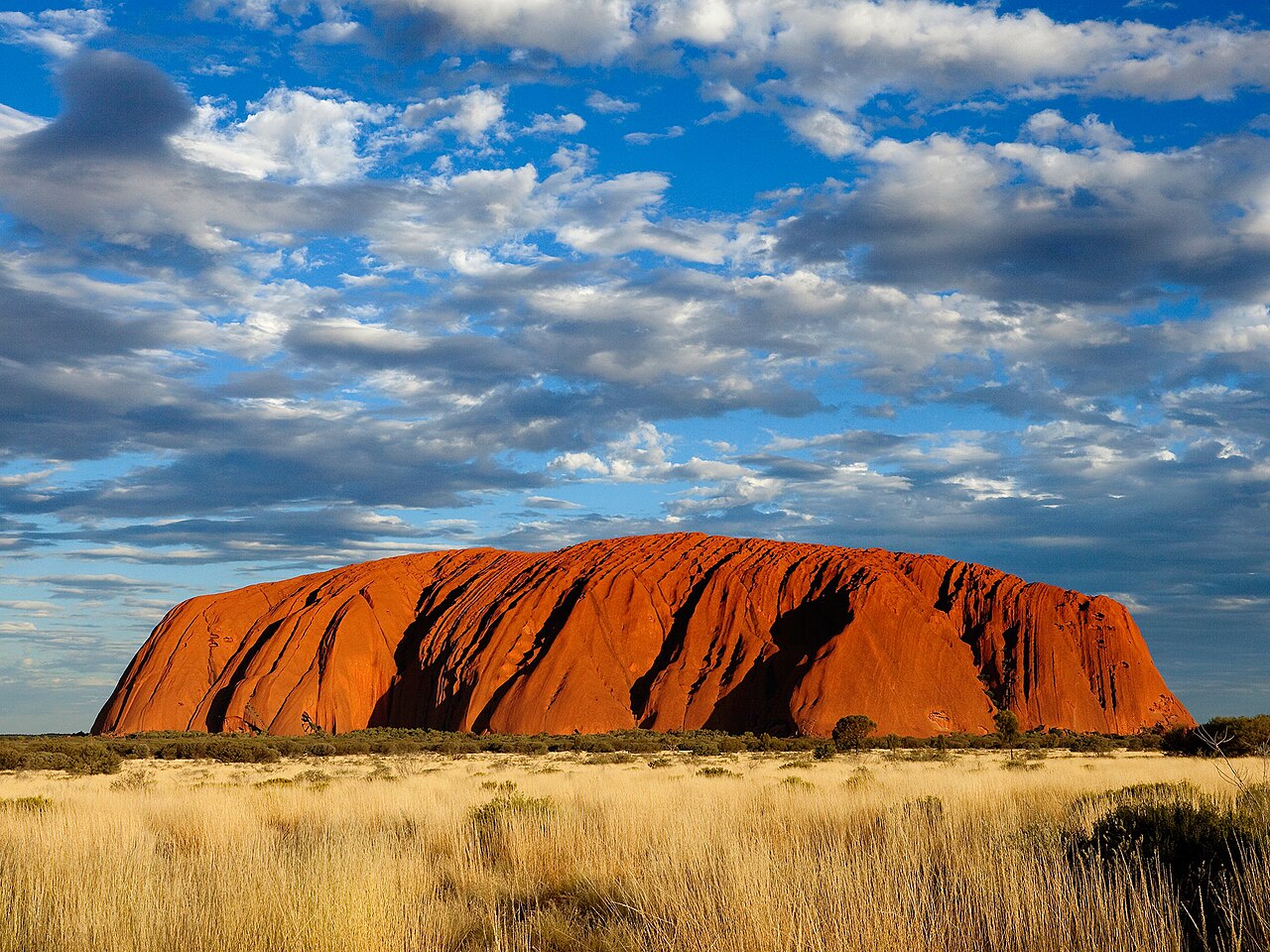
A huge sandstone rock in the red centre, 348 m high, about 335 km south-west of Alice Springs. It is sacred to the Anangu, its traditional owners, and its official name is Uluru / Ayers Rock. The land was handed back to its traditional owners in 1985, and climbing the rock has been banned since 26 October 2019. Uluru-Kata Tjuta National Park is a World Heritage Site.
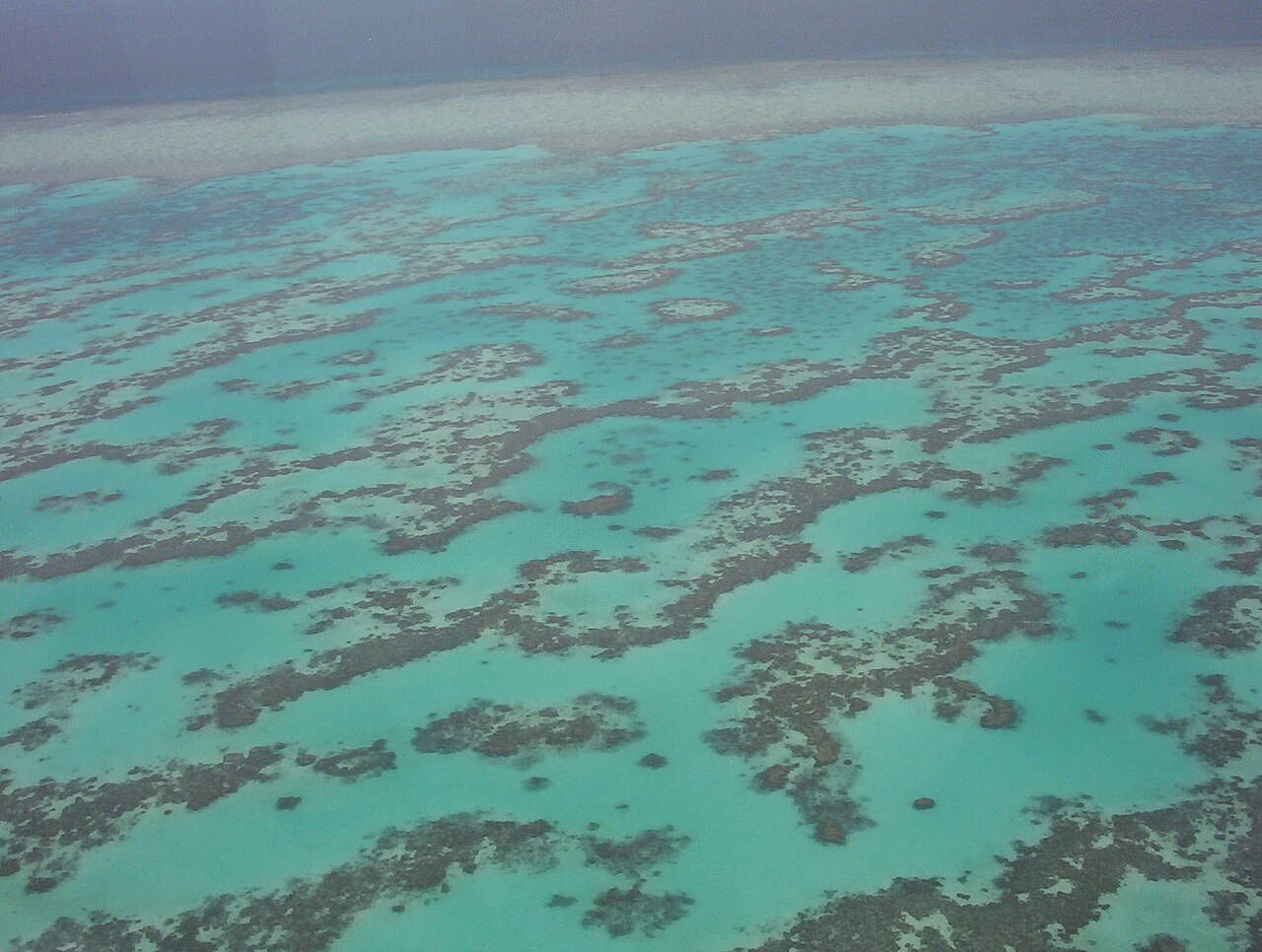
The world's largest coral reef system, with more than 2,900 separate reefs and 900 islands stretching for over 2,300 km off the coast of Queensland. Boats from Cairns reach the reef and islands such as Green Island. It became a World Heritage Site in 1981. The pin marks the reef near Cairns.
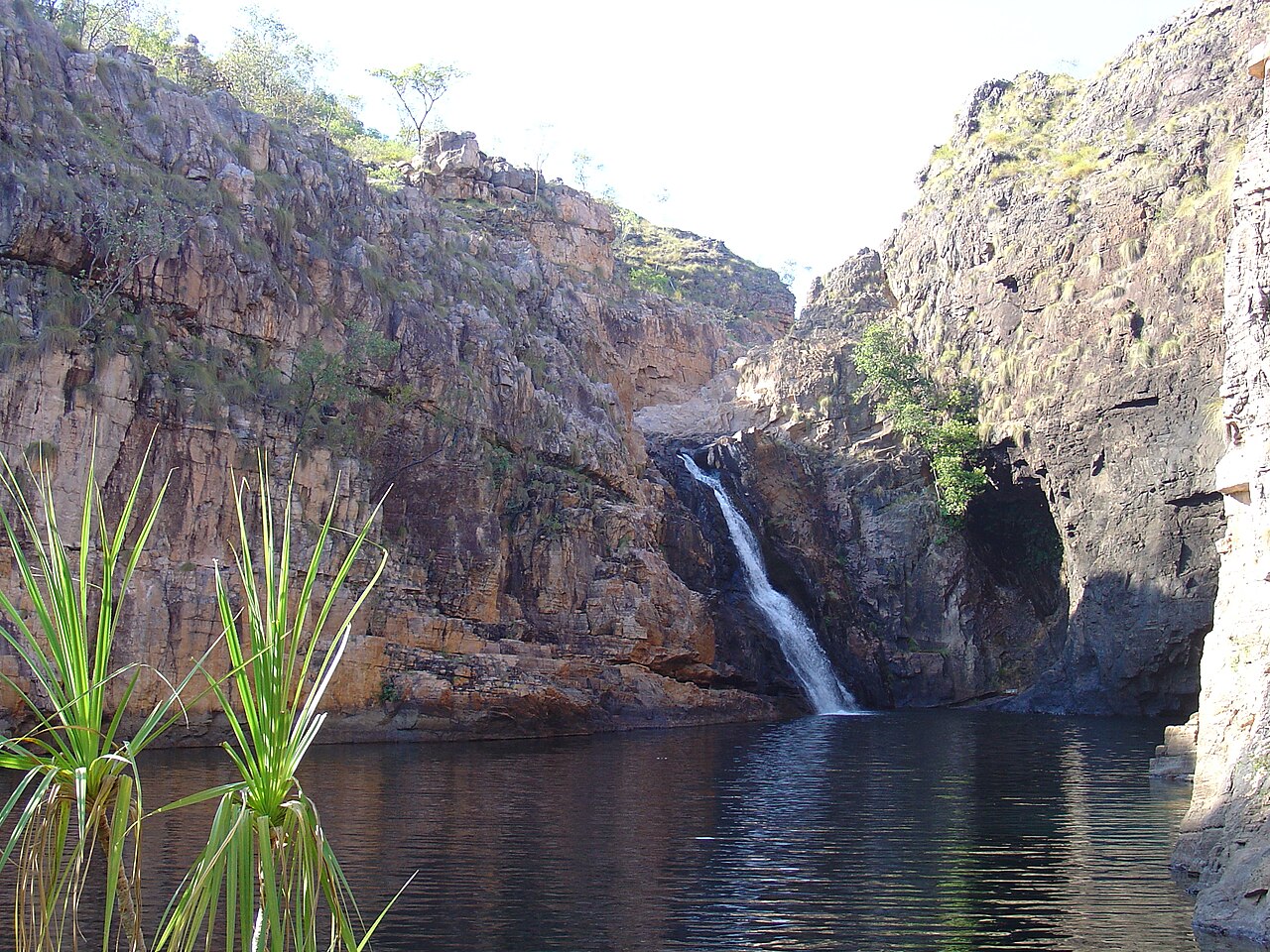
A huge national park about 171 km south-east of Darwin, with wetlands, waterfalls, sandstone cliffs and crocodile-filled rivers. About half of the land belongs to its Aboriginal traditional owners, who manage the whole park jointly with Parks Australia. Its rock art sites, such as Ubirr, are world famous. It is a World Heritage Site.
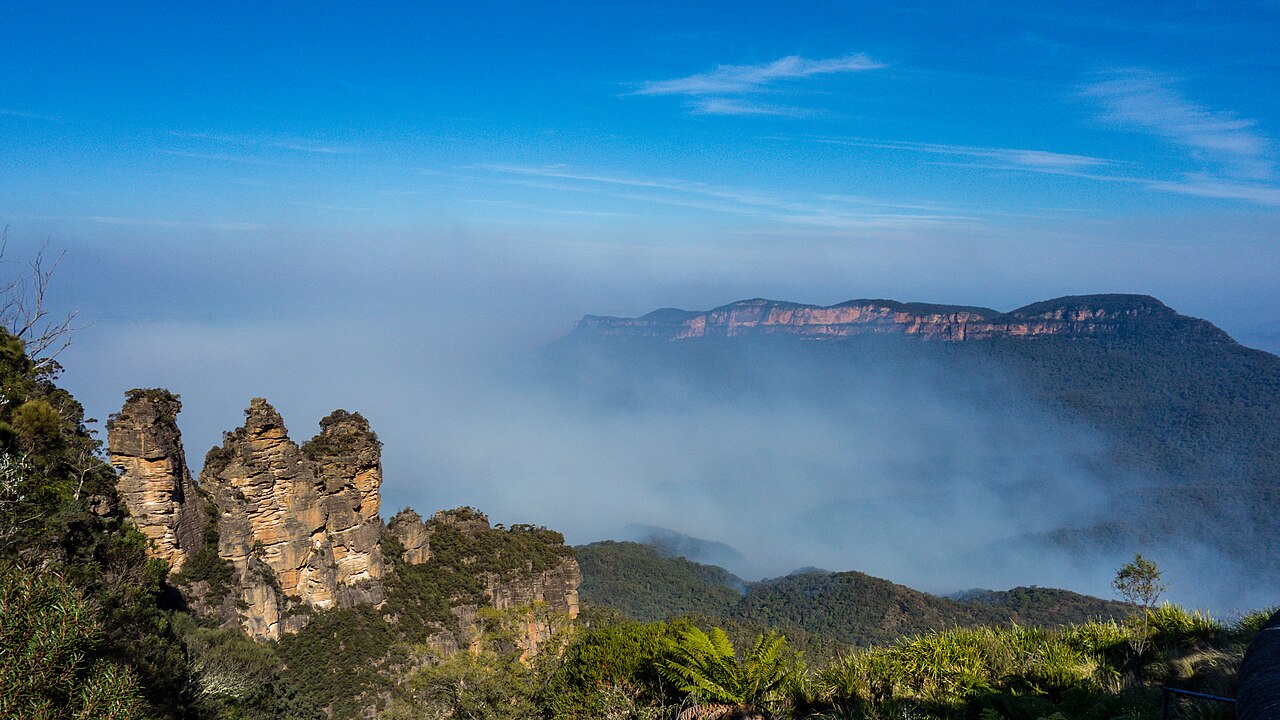
A range of sandstone plateaus and deep valleys whose foothills start about 50 km west of central Sydney. The blue haze that gives them their name may come from oils released by the eucalyptus trees. The Three Sisters rock formation near Katoomba is the best-known view. The Greater Blue Mountains Area is a World Heritage Site, listed in 2000.
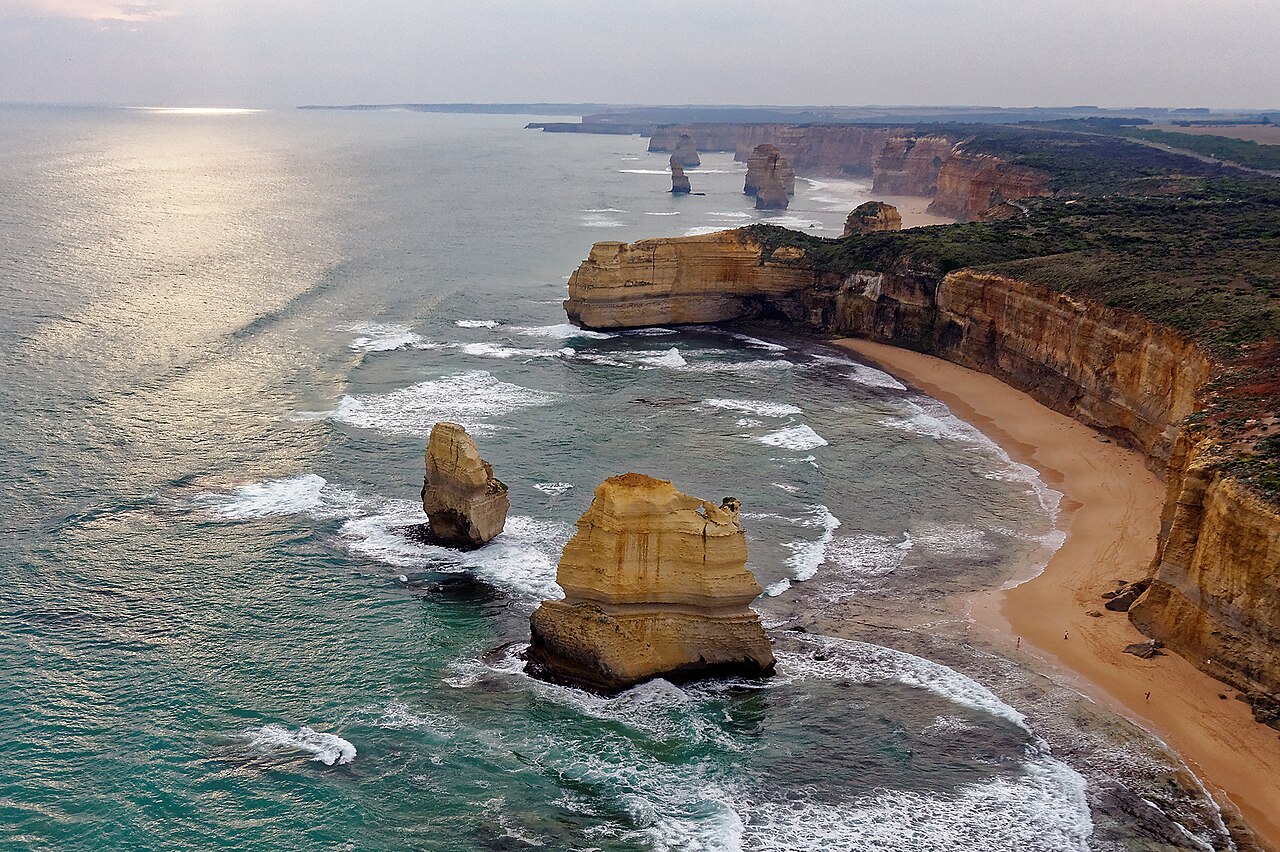
Tall limestone stacks standing in the sea off Port Campbell National Park, beside the Great Ocean Road in Victoria, a long day trip from Melbourne. Despite the name, there were probably never twelve: nine stacks were counted, and after collapses in 2005 and 2009 seven are still standing.
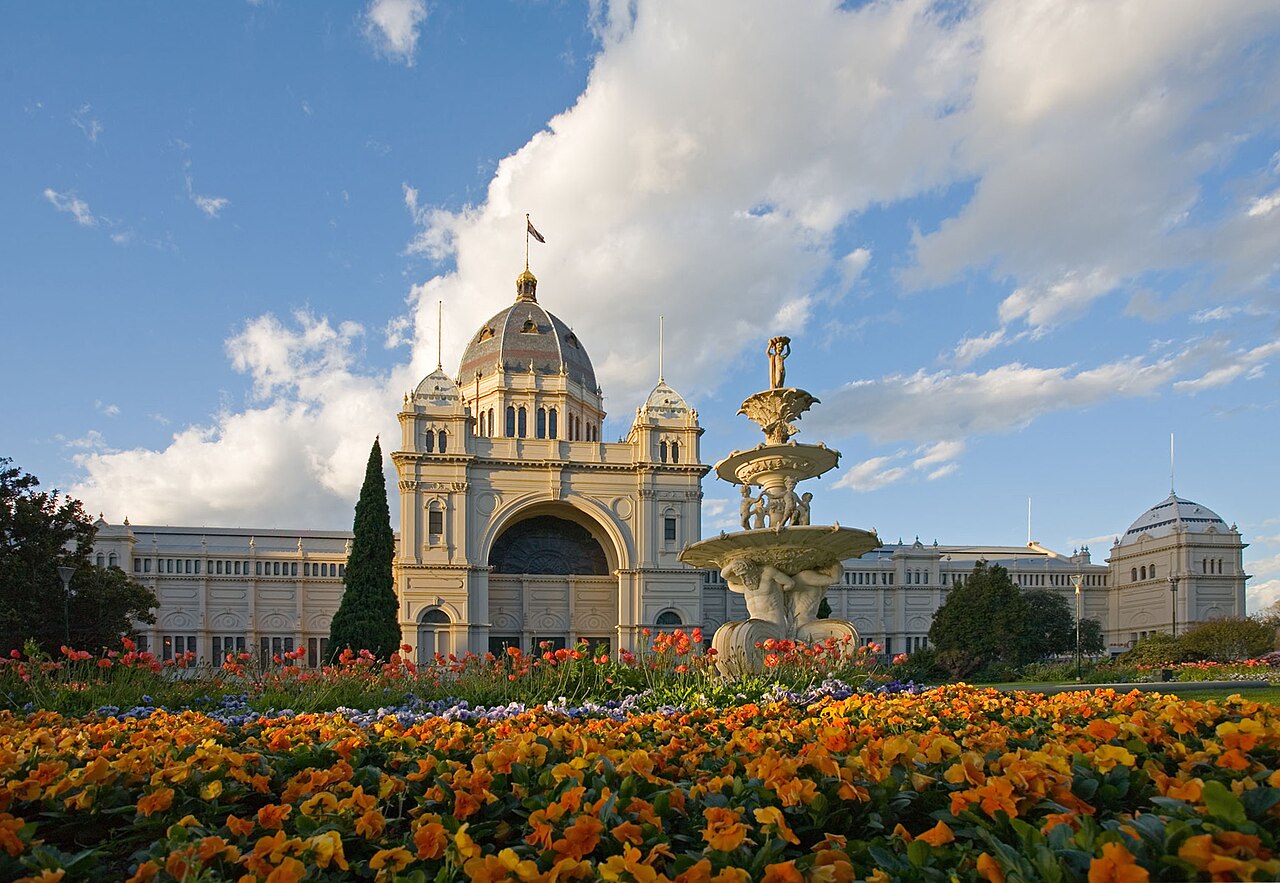
A grand 19th-century exhibition hall in the Carlton Gardens, built in 1879 and 1880 for the Melbourne International Exhibition. The first Parliament of Australia was opened here on 9 May 1901. In 2004 it became the first building in Australia to be listed as a World Heritage Site.
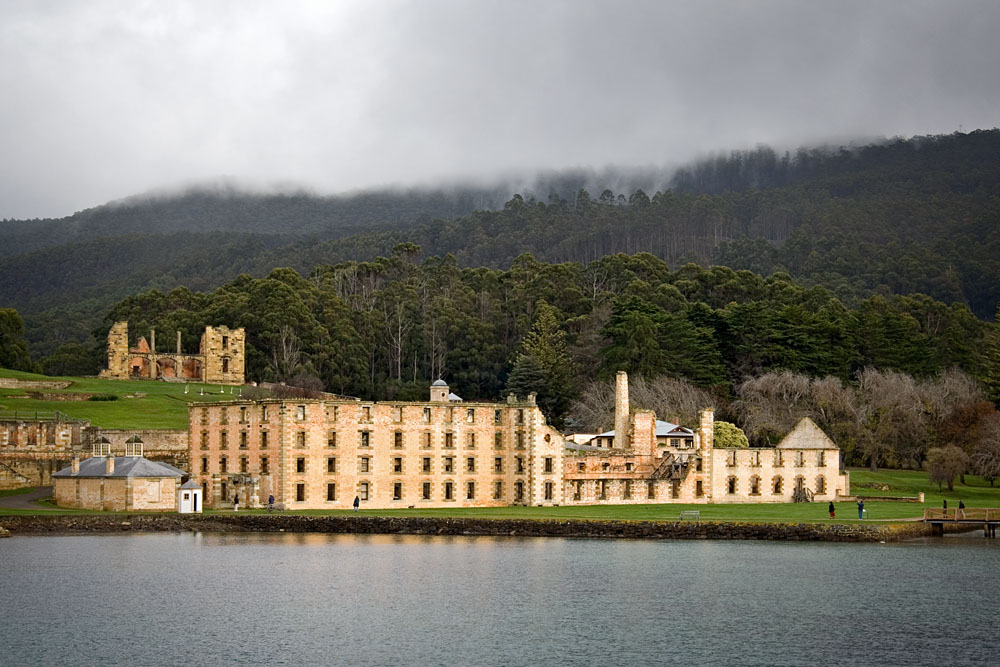
The ruins of a convict settlement on the Tasman Peninsula, about 97 km south-east of Hobart. From 1833 to 1877 it held convicts who had committed new crimes after arriving in Australia. It is part of the Australian Convict Sites World Heritage property, listed in 2010.
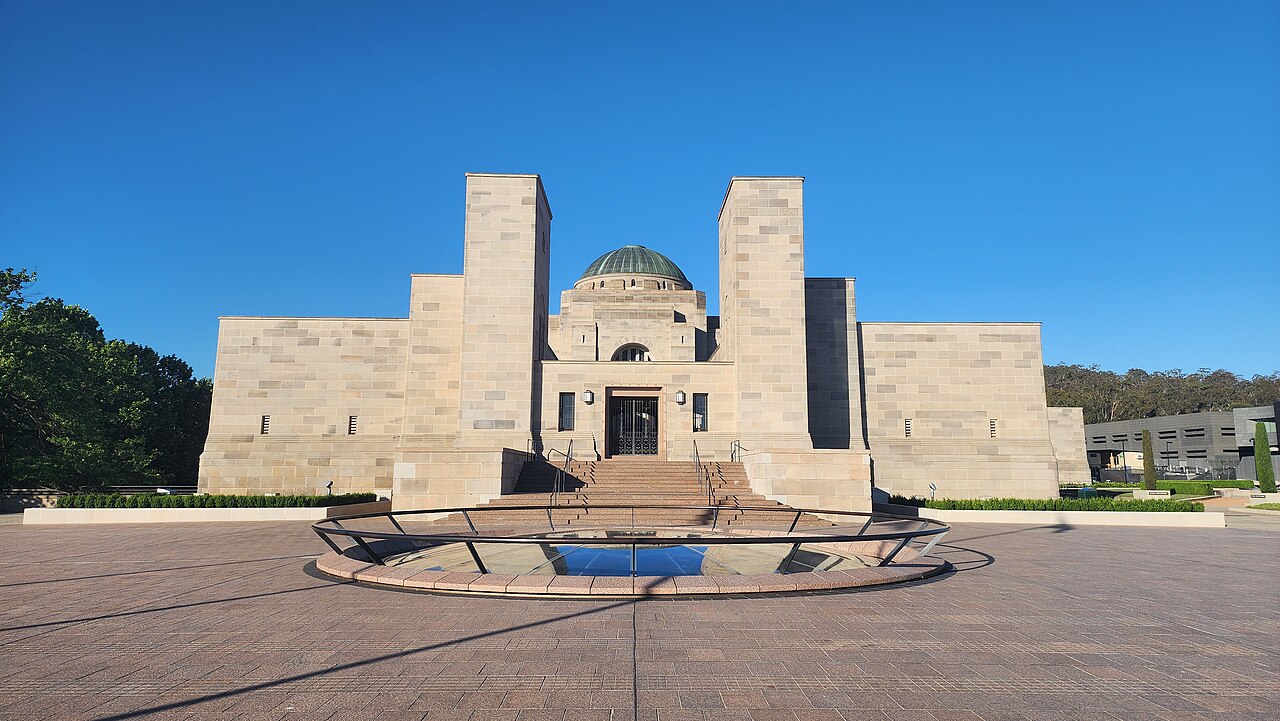
The national memorial, museum and archive for Australians who have died in war, opened in 1941. The Tomb of the Unknown Australian Soldier lies in its Hall of Memory, and a Last Post Ceremony is held there at the end of every day.
The Dingo Fence, built to keep wild dogs away from sheep in the south-east, is 5,614 km long, one of the longest structures in the world.
02
In 1988 Australia became the first country to issue a polymer (plastic) banknote, developed by the Reserve Bank of Australia and the scientific agency CSIRO. By 1996 all Australian banknotes were polymer.
03
The platypus and the echidnas are the only living mammals that lay eggs. They are found only in Australia and New Guinea.
04
Voting is compulsory in Australia. A law of 1924 made it compulsory in federal elections, and it was first used at the 1925 election.
05
In 1856 the colonies of Tasmania, Victoria and South Australia began using a secret ballot. The idea spread around the world, and in the United States it was long called the 'Australian ballot'.
06
The lowest point in Australia is Kati Thanda-Lake Eyre in South Australia, about 15 m below sea level. The salt lake is usually dry and has filled completely only three times between 1860 and 2025.
07
The sails of the Sydney Opera House are covered with 1,056,006 tiles, made in Sweden.
08
The word 'kangaroo' comes from gangurru in the Guugu Yimithirr language. Joseph Banks first wrote it down in July 1770, while Cook's ship was being repaired near today's Cooktown.
09
When the British arrived, Aboriginal people spoke more than 250 languages. Far fewer are still spoken today.
10
The kangaroo and the emu hold up the shield on Australia's coat of arms.
11
The Melbourne Cup horse race, held on the first Tuesday of November, is known as 'the race that stops the nation'.
12
As of 2026, Australia has 21 UNESCO World Heritage Sites, from the Great Barrier Reef to the Sydney Opera House and the ancient rock art of Murujuga.
13
Uluru rises 348 m above the plain, but most of the rock lies hidden underground.
Everyday words that are typically Australian, with the British or American word where it helps. Several of them come from Aboriginal languages. Pronunciation is written the way it sounds; the capital letters show where the stress goes. Audio is coming soon.
Everyday talk
arvoAH-vohafternoon, as in 'See you this arvo'
mateMAYTa friend, or a friendly way to address anyone
Food and drink
barbieBAR-beea barbecue
snagSNAGa sausage
chookCHOOK (rhymes with 'book')a chicken
bottle-oBOT-ul-oha shop that sells alcohol (British: off-licence; American: liquor store)
Getting around
uteYOOTa pickup truck, short for 'utility vehicle'
servoSUR-voha petrol station (American: gas station)
At home
doonaDOO-nuha duvet or quilt (American: comforter)
eskyES-keea portable cool box for drinks and food (American: cooler)
Clothes
thongsTHONGZflip-flops, the rubber sandals
togsTOGZa swimming costume; also called 'swimmers', 'cossies' or 'bathers', depending on the state
sunniesSUN-eezsunglasses
Nature
mozzieMOZ-eea mosquito
outbackOWT-bakthe remote, dry, thinly populated inland of Australia
Sport
footyFUT-eefootball: Australian rules football or rugby league, depending on where you are
From Aboriginal languages
kangarookang-guh-ROOthe famous hopping animal; from gangurru in the Guugu Yimithirr language
billabongBIL-uh-bonga pool or small lake left beside a river when it changes course or floods; probably from the Wiradjuri language
yakkaYAK-uhwork, especially 'hard yakka', hard physical work; from the Yagara language of the Brisbane area
cooeeKOO-eea long, high call used to find people in the bush, from the Dharug language of the Sydney area; 'within cooee' means within calling distance
The Australian sun is very strong, even on cloudy days. Follow the Cancer Council's advice: slip on a shirt, slop on sunscreen, slap on a hat, seek shade and slide on sunglasses.
Swim between the red and yellow flags
Swim only at patrolled beaches, between the red and yellow flags, where lifesavers are watching. Rip currents are the main danger on Australian beaches. If one pulls you out, stay calm and swim parallel to the beach or towards breaking waves, not against the current.
Crocodiles in the north
Saltwater crocodiles live in rivers, estuaries and along the coast of northern Australia, from Broome in Western Australia across the Top End to Gladstone in Queensland. Obey every crocodile warning sign, and do not swim in rivers, creeks or billabongs unless you know it is safe.
Stinger season in the tropics
In tropical waters, box jellyfish and other stingers are most common from late spring to early autumn. Swim at patrolled beaches, inside stinger nets where they exist, and wear a full-body stinger suit. Vinegar is used as first aid for box jellyfish stings.
Leave snakes and spiders alone
Australia has venomous snakes and spiders, but they rarely bite people who leave them alone. If someone is bitten by a snake, call 000, keep them still and calm, wrap a firm bandage over the bite and up the limb, and do not wash the bite.
Emergencies: call 000
The official emergency number for police, fire and ambulance is 000, called Triple Zero. From a mobile phone, 112 also works and is connected to 000.
Arrange your visa before you fly
Everyone except New Zealand citizens needs a visa or an electronic travel authority before travelling to Australia. As of 2026, citizens of EU countries and the United Kingdom can apply online for a free eVisitor visa, and people from some other countries apply for an ETA through the official Australian ETA app, for a service charge. Use only official Australian government websites and apps.
Drive on the left and allow for distances
Traffic drives on the left. Distances are huge: the mainland spans three main time zones, and towns in the outback can be very far apart. Carry water and rest often on long drives.