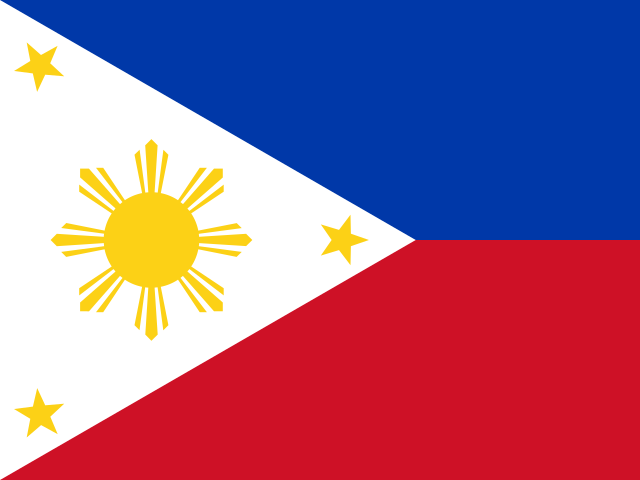
Philippines trivia: 45 questions and answers
The country at a glance
As of 2026, which city is the capital of the Philippines?
- A. Manila
- B. Quezon City
- C. Cebu City
- D. Davao City
Show the answer
Manila. Manila is the capital. Its neighbour Quezon City has more people and was the official capital from 1948 to 1976, but the capital has been Manila again since 1976.
About how many islands make up the Philippines?
- A. About 7,600
- B. About 1,200
- C. About 17,000
- D. About 70,000
Show the answer
About 7,600. About 7,600: the usual official figure is 7,641 islands, grouped into Luzon, the Visayas and Mindanao.
What is the highest mountain in the Philippines?
- A. Mount Apo
- B. Mayon Volcano
- C. Mount Pinatubo
- D. Taal Volcano
Show the answer
Mount Apo. Mount Apo, 2,954 m, a dormant volcano on Mindanao near Davao City, is the highest mountain in the country.
Filipino and English are the two official languages of the Philippines.
True or false?
Show the answer
True. True. Filipino, based on Tagalog, and English are the official languages, and well over a hundred other languages are spoken across the islands.
In the Philippines, traffic drives on the left side of the road.
True or false?
Show the answer
False. False. The Philippines drives on the right, like the United States.
History
Which local chief defeated Ferdinand Magellan's men at the Battle of Mactan in 1521?
- A. Lapulapu
- B. Rajah Sulayman
- C. Andrés Bonifacio
- D. Emilio Aguinaldo
Show the answer
Lapulapu. Lapulapu, the chief of Mactan. Magellan was killed in the battle, and Lapulapu is remembered as a national hero.
Besides writing novels, what was José Rizal's profession?
- A. Eye doctor
- B. Priest
- C. Army officer
- D. Ship captain
Show the answer
Eye doctor. Rizal was an eye doctor. His novels Noli Me Tángere and El Filibusterismo criticised Spanish colonial rule.
From 1565 to 1815, the Manila galleons sailed across the Pacific between Manila and which port?
- A. Acapulco
- B. Havana
- C. Lima
- D. Seville
Show the answer
Acapulco. Acapulco, in Mexico. The galleons carried Chinese silk and porcelain east and Mexican silver west.
The 1986 People Power Revolution is named after the huge crowds that gathered on which avenue in Metro Manila?
- A. EDSA
- B. Roxas Boulevard
- C. Ayala Avenue
- D. Taft Avenue
Show the answer
EDSA. EDSA, a main avenue of Metro Manila. That is why the revolution is also called the EDSA Revolution.
The United States recognised the independence of the Philippines on 4 July 1946.
True or false?
Show the answer
True. True. The Treaty of Manila was signed on 4 July 1946. Independence Day is now celebrated on 12 June, the date of the 1898 declaration.
The 1991 eruption of Mount Pinatubo was the largest volcanic eruption of the 20th century.
True or false?
Show the answer
False. False. It was the second-largest of the 20th century, after the 1912 eruption of Novarupta in Alaska.
Food and drink
Which fruit gives sinigang soup its classic sour taste?
- A. Tamarind
- B. Coconut
- C. Banana
- D. Jackfruit
Show the answer
Tamarind. Tamarind is the classic souring agent of sinigang, though cooks also use unripe mango, guava or bilimbi.
Sizzling sisig comes from which province?
- A. Pampanga
- B. Cebu
- C. Palawan
- D. Ilocos Norte
Show the answer
Pampanga. Pampanga. The modern sizzling version was created in 1974 by Aling Lucing in Angeles City.
What does the name of the dessert halo-halo mean?
- A. Mix-mix
- B. Ice-ice
- C. Sweet-sweet
- D. Cold-cold
Show the answer
Mix-mix. Halo-halo means 'mix-mix': you stir the shaved ice, milk, beans, fruit and jellies together before eating.
The spicy pork dish Bicol express is named after what?
- A. A railway train
- B. A ferry
- C. A bus company
- D. A racehorse
Show the answer
A railway train. A railway train: the Bicol Express ran from Manila to Legazpi, in the Bicol region.
In the breakfast dish tapsilog, what does the ending 'log' stand for?
- A. Itlog, egg
- B. Longganisa, sausage
- C. Lugaw, rice porridge
- D. Talong, aubergine
Show the answer
Itlog, egg. Itlog, egg. Tapsilog joins TAPa (cured beef), SInangag (garlic fried rice) and itLOG (egg).
Pancit noodles are served at birthdays because the long noodles stand for a long life.
True or false?
Show the answer
True. True. Noodles came with Chinese settlers, and long noodles are a wish for long life.
Filipinos usually eat with a knife and fork.
True or false?
Show the answer
False. False. The usual pair is a spoon in the right hand and a fork in the left, with the side of the spoon used for cutting.
Kinilaw is raw fish that is 'cooked' in vinegar or citrus juice instead of heat.
True or false?
Show the answer
True. True. The acid firms and whitens the fish. Pregnant women, young children, older people and anyone with a weak immune system are advised to avoid raw fish.
Cities
Which city, high in the pine-covered mountains, is called the 'Summer Capital of the Philippines'?
- A. Baguio
- B. Vigan
- C. Iloilo City
- D. Davao City
Show the answer
Baguio. Baguio, about 1,500 m above sea level, where the cool air draws people away from the lowland heat.
In which of these cities do many people speak Chavacano, a language based on Spanish?
- A. Zamboanga City
- B. Baguio
- C. Vigan
- D. Legazpi
Show the answer
Zamboanga City. Zamboanga City, at the southwestern tip of Mindanao, is the main home of Chavacano.
According to the 2024 census, Quezon City has more people than Manila.
True or false?
Show the answer
True. True. Quezon City had about 3.1 million people and Manila about 1.9 million. Both are part of Metro Manila.
Landmarks
Mayon Volcano is famous around the world for what?
- A. Its almost perfectly symmetrical cone
- B. A lake of hot water in its crater
- C. Its twin summits
- D. Its glaciers
Show the answer
Its almost perfectly symmetrical cone. Its almost perfectly symmetrical cone. Mayon, near Legazpi, is also the most active volcano in the Philippines.
Which of these is part of a UNESCO World Heritage Site?
- A. Miagao Church
- B. Magellan's Cross
- C. Fort Santiago
- D. Rizal Park
Show the answer
Miagao Church. Miagao Church, near Iloilo City, is one of the four Baroque Churches of the Philippines listed in 1993. The other three places are famous sights but not World Heritage Sites.
Why are the Chocolate Hills of Bohol called that?
- A. Their grass turns brown in the dry season
- B. Cocoa trees grow on them
- C. A chocolate factory stood nearby
- D. They are made of dark volcanic ash
Show the answer
Their grass turns brown in the dry season. Their grass turns brown in the dry season. There are at least 1,260 of these rounded hills.
Which people built the rice terraces of Batad and Banaue?
- A. The Ifugao
- B. The Ilocano
- C. The Tausug
- D. The Cebuano
Show the answer
The Ifugao. The Ifugao, who carved the terraces into the steep mountainsides and water them from the forests above.
Which national hero was imprisoned at Fort Santiago before his execution in 1896?
- A. José Rizal
- B. Lapulapu
- C. Emilio Aguinaldo
- D. Manuel L. Quezon
Show the answer
José Rizal. José Rizal. Bronze footsteps in the ground mark his last walk from his cell.
The Puerto Princesa Underground River flows through a cave directly into the sea.
True or false?
Show the answer
True. True. Visitors enter the cave from the sea by small boat. The national park is a UNESCO World Heritage Site.
Fun facts
The Philippines is named after which king of Spain?
- A. Philip II
- B. Charles V
- C. Ferdinand VII
- D. Alfonso XIII
Show the answer
Philip II. Philip II. A Spanish expedition named some of the islands 'Felipinas' after him in the 1540s, when he was still a prince.
Which English word comes from the Tagalog word for 'mountain'?
- A. Boondocks
- B. Bungalow
- C. Jungle
- D. Typhoon
Show the answer
Boondocks. Boondocks, from the Tagalog bundok, 'mountain'. Bungalow and jungle come from languages of India.
What is the national bird of the Philippines?
- A. The Philippine eagle
- B. The Philippine cockatoo
- C. The Indian peafowl
- D. The great hornbill
Show the answer
The Philippine eagle. The Philippine eagle, one of the largest eagles in the world. It is critically endangered and appears on the 1,000-peso note.
In the Philippines, the Christmas season can begin as early as September.
True or false?
Show the answer
True. True. Carols and decorations can appear from 1 September, the start of the 'ber months'.
As of 2026, the Philippines celebrates its Independence Day on 4 July.
True or false?
Show the answer
False. False. Independence Day is 12 June, the date of the 1898 declaration. The holiday was moved from 4 July in 1962, and a 1964 law made it official.
The Philippine tarsier is one of the largest primates in Asia.
True or false?
Show the answer
False. False. It is one of the smallest primates, only about 8.5 to 16 cm tall, with huge eyes for hunting at night.
Words
What does the small word 'po' do in a Filipino sentence?
- A. It shows respect
- B. It turns it into a question
- C. It puts it in the past tense
- D. It means 'not'
Show the answer
It shows respect. It shows respect. Filipinos add po when speaking to older people or strangers, as in 'salamat po'.
The Filipino word 'mahal' means 'love' or 'dear'. What else can it mean?
- A. Expensive
- B. Cheap
- C. Tomorrow
- D. Delicious
Show the answer
Expensive. Expensive. Mahal means both 'beloved' and 'costly'. 'Delicious' is masarap.
The Filipino word 'oo' means 'no'.
True or false?
Show the answer
False. False. Oo means 'yes' (opo to an older person). 'No' is hindi.
Phrases
What do you say to the driver to get off a jeepney?
- A. Para po!
- B. Kain tayo!
- C. Ingat!
- D. Mano po
Show the answer
Para po!. Para po! means 'Stop here, please!'. Kain tayo! is 'Let's eat!', Ingat! is 'Take care!', and Mano po is said when greeting an elder.
What does 'Magandang umaga po' mean?
- A. Good morning
- B. Good evening
- C. Good afternoon
- D. Goodbye
Show the answer
Good morning. Good morning, said politely with po. Good afternoon is magandang hapon and good evening is magandang gabi.
In the Philippines, what is a 'CR'?
- A. A toilet
- B. A taxi
- C. A small restaurant
- D. A bank machine
Show the answer
A toilet. A toilet. CR stands for 'comfort room', so you ask 'Nasaan po ang CR?'.
'Kain tayo!' means 'Let's eat!'.
True or false?
Show the answer
True. True. Filipinos say it to invite people to the table, even someone just passing by.
Local customs and tips
As of 2026, what is the official national emergency hotline in the Philippines?
- A. 911
- B. 117
- C. 999
- D. 000
Show the answer
911. 911. It replaced the old 117 number in 2016 and connects to police, fire and ambulance services.
In which months are typhoons most common in the Philippines?
- A. July to October
- B. December to February
- C. March to May
Show the answer
July to October. July to October. Leave spare days when island-hopping, because ferries and flights can be cancelled.
English is widely used in the Philippines, on signs, on menus and in schools.
True or false?
Show the answer
True. True. English is an official language, and people often mix it with Filipino.
Jeepneys and tricycles in the Philippines are usually paid for by bank card.
True or false?
Show the answer
False. False. Jeepneys, tricycles and markets run on cash, so carry small notes and coins.
Answer key
The country at a glance
- A. Manila
- A. About 7,600
- A. Mount Apo
- True
- False
History
- A. Lapulapu
- A. Eye doctor
- A. Acapulco
- A. EDSA
- True
- False
Food and drink
- A. Tamarind
- A. Pampanga
- A. Mix-mix
- A. A railway train
- A. Itlog, egg
- True
- False
- True
Cities
- A. Baguio
- A. Zamboanga City
- True
Landmarks
- A. Its almost perfectly symmetrical cone
- A. Miagao Church
- A. Their grass turns brown in the dry season
- A. The Ifugao
- A. José Rizal
- True
Fun facts
- A. Philip II
- A. Boondocks
- A. The Philippine eagle
- True
- False
- False
Words
- A. It shows respect
- A. Expensive
- False
Phrases
- A. Para po!
- A. Good morning
- A. A toilet
- True
Local customs and tips
- A. 911
- A. July to October
- True
- False
More about the Philippines
- The trip to the PhilippinesMap, story, food, phrases and a friendly quiz.
- Philippines word searchCities and dishes in large print.
- Filipino words crosswordLearn a few words while you solve it.
- Colour the flag of the PhilippinesPrint it or colour it in on the screen.
- Filipino rootsA family guide: history, recipes and words for the grandchildren.
- Before you goPhrases, customs and tips for travellers.
- Printable packLarge print, with a quiz and answers.