Lebanon trivia: 44 questions and answers
The country at a glance
What is the capital of Lebanon?
- A. Beirut
- B. Tripoli
- C. Sidon
- D. Damascus
Show the answer
Beirut. Beirut is the capital and largest city. Damascus is the capital of neighbouring Syria.
Which two countries share a land border with Lebanon?
- A. Syria and Israel
- B. Syria and Jordan
- C. Jordan and Turkey
- D. Egypt and Israel
Show the answer
Syria and Israel. Lebanon borders Syria and Israel. Syria lies to the north and east and Israel to the south; Cyprus lies across the sea.
Arabic is the official language of Lebanon.
True or false?
Show the answer
True. True. The constitution names Arabic as the official national language and lets a law decide when French may be used.
History
According to tradition, settlers from which Phoenician city founded Carthage in 814 BC?
- A. Tyre
- B. Byblos
- C. Baalbek
- D. Tripoli
Show the answer
Tyre. Tyre. Tradition says Queen Elissa, also called Dido, led settlers from Tyre to found Carthage in what is now Tunisia.
Who besieged the island city of Tyre for seven months in 332 BC?
- A. Alexander the Great
- B. Julius Caesar
- C. Hannibal
- D. Saladin
Show the answer
Alexander the Great. Alexander the Great built a causeway out to the island. Sand later piled up along it and joined Tyre to the mainland.
Which country governed Lebanon under a League of Nations mandate after the First World War?
- A. France
- B. United Kingdom
- C. Italy
- D. Spain
Show the answer
France. France held the mandate and declared the State of Greater Lebanon in 1920. That is why French is still widely spoken.
Lebanon celebrates its Independence Day on 22 November.
True or false?
Show the answer
True. True. On 22 November 1943 France released the arrested Lebanese leaders and accepted the end of the mandate.
The Taif Agreement, which laid the basis for ending the civil war, was signed in Beirut.
True or false?
Show the answer
False. False. It was negotiated and signed in Taif, in Saudi Arabia, in 1989. The war ended in 1990.
Food and drink
In the Lebanese version of tabbouleh, which ingredient makes up most of the salad?
- A. Parsley
- B. Bulgur wheat
- C. Rice
- D. Lettuce
Show the answer
Parsley. Parsley. Lebanese tabbouleh is a parsley salad with only a little fine bulgur, plus mint, tomato and onion.
Hummus is made mainly from which pulse?
- A. Chickpeas
- B. Lentils
- C. Kidney beans
- D. Peas
Show the answer
Chickpeas. Chickpeas, blended with tahini, lemon juice and garlic. The word hummus means chickpeas in Arabic.
What is spread on the classic Lebanese breakfast flatbread, the man'oushe?
- A. Za'atar and olive oil
- B. Tomato sauce and mozzarella
- C. Butter and jam
- D. Chocolate spread
Show the answer
Za'atar and olive oil. Za'atar and olive oil: a mix of wild thyme, sumac and sesame. Cheese and minced meat are other toppings.
Arak turns milky white when it is mixed with water.
True or false?
Show the answer
True. True. The aniseed oils cloud the clear spirit when water and ice are added.
Which spice gives the Lebanese cake sfouf its bright yellow colour?
- A. Turmeric
- B. Paprika
- C. Cinnamon
- D. Cardamom
Show the answer
Turmeric. Turmeric colours the semolina cake yellow, and aniseed gives it its flavour.
Which town in the Beqaa is known as a capital of arak?
- A. Zahlé
- B. Byblos
- C. Tyre
- D. Batroun
Show the answer
Zahlé. Zahlé, where Arak Zahlawi is made, is known as a capital of arak and as the city of wine and poetry.
What is poured over knafeh after baking?
- A. Sugar syrup
- B. Olive oil
- C. Tahini
- D. Pomegranate molasses
Show the answer
Sugar syrup. Sugar syrup, often scented with orange blossom, soaks into the pastry and the soft cheese.
Cities
In which mountain town was the writer Kahlil Gibran born?
- A. Bsharri
- B. Zahlé
- C. Tripoli
- D. Sidon
Show the answer
Bsharri. Bsharri, at the head of the Kadisha Valley. A museum there honours his life and work.
The cafés of which coastal town have been famous for fresh lemonade since the early 1900s?
- A. Batroun
- B. Tyre
- C. Sidon
- D. Jounieh
Show the answer
Batroun. Batroun is surrounded by citrus groves, and its lemonade is famous across Lebanon.
Landmarks
Six columns of the temple of which Roman god still stand at Baalbek?
- A. Jupiter
- B. Mars
- C. Neptune
- D. Apollo
Show the answer
Jupiter. Jupiter. Only six of its 54 columns still stand; the nearby Temple of Bacchus is much better preserved.
The Cedars of God forest lies near which mountain town?
- A. Bsharri
- B. Tyre
- C. Sidon
- D. Zahlé
Show the answer
Bsharri. Bsharri. The grove lies above the Kadisha Valley, and together they are a UNESCO World Heritage Site.
Anjar was built by the Umayyad caliphs in the early 700s.
True or false?
Show the answer
True. True. Anjar is a planned walled town from the early 8th century, and a UNESCO World Heritage Site.
How do visitors travel through the lower cave of Jeita Grotto?
- A. By boat
- B. On a zip line
- C. By bicycle
- D. On horseback
Show the answer
By boat. By boat: an underground river runs through the lower cave. The upper cave is visited on foot.
The Sea Castle of Sidon was built by the Romans.
True or false?
Show the answer
False. False. The Crusaders built it in 1228 on a small island linked to the shore by a causeway.
Which emir built Beiteddine Palace between 1788 and 1818?
- A. Bashir II
- B. Fakhr al-Din II
- C. Hiram of Tyre
- D. Ahiram of Byblos
Show the answer
Bashir II. Emir Bashir II built it; he is buried in its grounds.
The ruins of Tyre are on UNESCO's World Heritage List.
True or false?
Show the answer
True. True. Tyre was added to the list in 1984, together with Baalbek, Byblos and Anjar.
Fun facts
The name Lebanon comes from an old Semitic root 'lbn'. What does it mean?
- A. White
- B. Cedar
- C. Mountain
- D. Sea
Show the answer
White. White, probably because of the snow on the mountains.
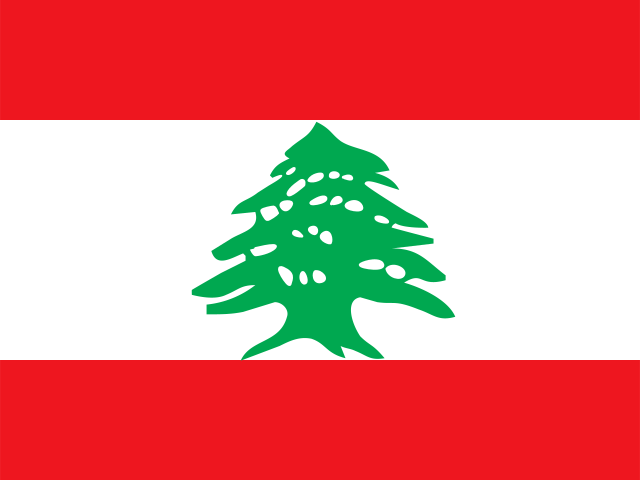
Which tree is on the flag of Lebanon?
- A. Cedar
- B. Olive
- C. Palm
- D. Oak
Show the answer
Cedar. The cedar of Lebanon, the national emblem, stands in the white stripe between two red stripes.
The Greek name of which Lebanese town gave us the word Bible?
- A. Byblos
- B. Tyre
- C. Sidon
- D. Baalbek
Show the answer
Byblos. Byblos. Papyrus passed through its port, so byblos came to mean papyrus in Greek.
Which book, published in 1923, did Kahlil Gibran write?
- A. The Prophet
- B. The Little Prince
- C. The Old Man and the Sea
- D. The Alchemist
Show the answer
The Prophet. The Prophet, which has been translated into more than 100 languages.
Lebanon officially recognises 18 religious communities.
True or false?
Show the answer
True. True. They include Christian, Muslim, Druze and Jewish communities.
By the unwritten National Pact of 1943, the president of Lebanon is a member of which community?
- A. Maronite Christian
- B. Sunni Muslim
- C. Shia Muslim
- D. Druze
Show the answer
Maronite Christian. Maronite Christian. The prime minister is a Sunni Muslim and the speaker of parliament a Shia Muslim.
Words
What does 'shukran' mean?
- A. Thank you
- B. Hello
- C. Goodbye
- D. Please
Show the answer
Thank you. Shukran means thank you. Many Lebanese also say yislamo, or the French merci.
What does the word 'arz' mean?
- A. Cedar
- B. Sea
- C. Mountain
- D. Bread
Show the answer
Cedar. Arz means cedar, the tree on the Lebanese flag.
In Lebanese Arabic, 'la'' means yes.
True or false?
Show the answer
False. False. La' means no; yes is eh.
What does 'yalla' mean?
- A. Come on, let's go
- B. Thank you
- C. Sorry
- D. Good night
Show the answer
Come on, let's go. Yalla means come on, let's go, and it is heard everywhere in Lebanon.
Phrases
How do you say hello in Lebanese Arabic?
- A. Marhaba
- B. Ma'a salameh
- C. Sahtein
- D. Tikram
Show the answer
Marhaba. Marhaba means hello. Ma'a salameh is goodbye.
What do people say before or during a meal to wish you well?
- A. Sahtein
- B. Inshallah
- C. Marhaba
- D. Ma fhemet
Show the answer
Sahtein. Sahtein means to your health, like bon appétit.
'Kifak?' is the form used to ask a woman how she is.
True or false?
Show the answer
False. False. Kifak is for a man; to a woman you say kifik.
What does 'Addeish hayda?' mean?
- A. How much is this?
- B. Where is the toilet?
- C. Do you speak English?
- D. How are you?
Show the answer
How much is this?. Addeish hayda? means How much is this?, useful in any shop or market.
Local customs and tips
As of 2026, besides the Lebanese pound, which currency is widely used for cash payments in Lebanon?
- A. US dollar
- B. Euro
- C. Pound sterling
- D. Swiss franc
Show the answer
US dollar. The US dollar. Since the economic crisis many places prefer cash in dollars, and change is often given in Lebanese pounds.
What is the police emergency number in Lebanon, as of 2026?
- A. 112
- B. 140
- C. 175
- D. 100
Show the answer
112. 112 is the police. In Lebanon 140 is the Red Cross ambulance and 175 the fire brigade.
In Lebanon, taxis and other public transport vehicles have red number plates.
True or false?
Show the answer
True. True. Red plates mark taxis, shared service taxis, buses and minivans.
It is fine to photograph military checkpoints in Lebanon.
True or false?
Show the answer
False. False. Photographing soldiers, checkpoints or military sites can lead to arrest.
Which three languages do many Lebanese mix in everyday speech?
- A. Arabic, French and English
- B. Arabic, Turkish and Greek
- C. Arabic, Italian and Spanish
- D. Arabic, German and Russian
Show the answer
Arabic, French and English. Arabic, French and English, as in the famous greeting "Hi, kifak, ça va?".
As of September 2026, what should you do before planning a trip to Lebanon?
- A. Check your government's official travel advice
- B. Nothing, every region is open as normal
- C. Rely on travel advice from 2019
- D. Plan to pay everything by card
Show the answer
Check your government's official travel advice. Check your government's official travel advice: as of September 2026, several governments advise against travel to large parts of the country, and the situation can change quickly.
Answer key
The country at a glance
- A. Beirut
- A. Syria and Israel
- True
History
- A. Tyre
- A. Alexander the Great
- A. France
- True
- False
Food and drink
- A. Parsley
- A. Chickpeas
- A. Za'atar and olive oil
- True
- A. Turmeric
- A. Zahlé
- A. Sugar syrup
Cities
- A. Bsharri
- A. Batroun
Landmarks
- A. Jupiter
- A. Bsharri
- True
- A. By boat
- False
- A. Bashir II
- True
Fun facts
- A. White
- A. Cedar
- A. Byblos
- A. The Prophet
- True
- A. Maronite Christian
Words
- A. Thank you
- A. Cedar
- False
- A. Come on, let's go
Phrases
- A. Marhaba
- A. Sahtein
- False
- A. How much is this?
Local customs and tips
- A. US dollar
- A. 112
- True
- False
- A. Arabic, French and English
- A. Check your government's official travel advice
More about Lebanon
- The trip to LebanonMap, story, food, phrases and a friendly quiz.
- Lebanon word searchCities and dishes in large print.
- Lebanese words crosswordLearn a few words while you solve it.
- Colour the flag of LebanonPrint it or colour it in on the screen.
- Lebanese rootsA family guide: history, recipes and words for the grandchildren.
- Before you goPhrases, customs and tips for travellers.
- Printable packLarge print, with a quiz and answers.