Ancient Carthage, Roman amphitheatres, blue and white villages above the sea and the edge of the Sahara, all in the northernmost country of Africa.
Tunisia is the smallest country of the Maghreb, the region of northwest Africa, and its northern tip, Cape Angela near Bizerte, is the northernmost point of the African continent. It has about 1,300 km of Mediterranean coastline with long sandy beaches, while the eastern end of the Atlas Mountains crosses the west of the country and the south opens onto salt lakes, palm oases and the dunes of the Sahara.
Few countries of its size have so much history. Phoenician settlers founded Carthage near today's Tunis, the city that fought Rome in the Punic Wars. Rome then made the region one of its richest provinces, and its amphitheatres, mosaics and ruined towns still stand. Arab armies brought Islam in the 7th century and founded Kairouan, and later Ottoman beys ruled from Tunis until France made Tunisia a protectorate in 1881. Independence came in 1956.
Questions to ask the older generation
Memories fade faster than photos. Ask these over a meal or a phone call, and write the answers down.
Which town or region of Tunisia did our family come from? Was it near Sfax, Sousse, Kairouan?
Who was the first in the family to leave Tunisia, when, and why?
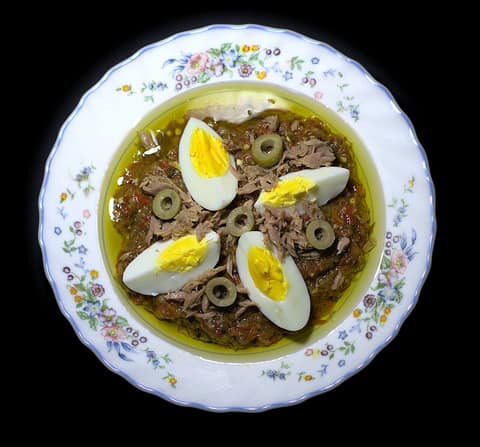
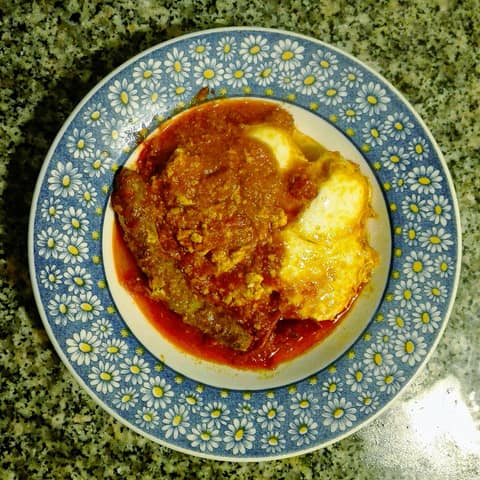
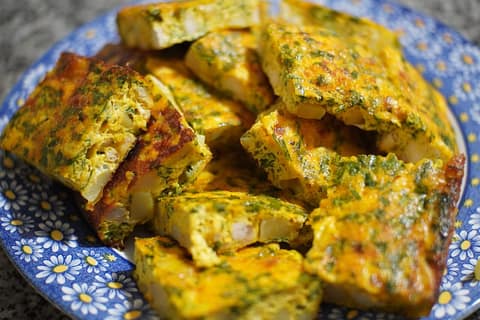
Which dishes from Tunisia were cooked at home? Did anyone make Fish couscous or Brik with egg?
Does anyone in the family still speak Tunisian Arabic, or use a few words of it?
Were there songs, prayers, games or holidays from Tunisia that the family kept?
Are there old photos, letters or documents from Tunisia? Who has them?
If you could visit Tunisia together, where would you go first?
A short history of Tunisia
Amazigh (Berber) peoples have lived in Tunisia since ancient times. Phoenician traders built Carthage, which became a great sea power until Rome destroyed it. After Roman, Vandal and Byzantine rule, Arab armies brought Islam in the 7th century, and a series of dynasties ruled from Kairouan, Mahdia and Tunis. Ottoman governors and then local dynasties of beys followed, France ruled from 1881, and Tunisia became independent in 1956 and a republic in 1957.
814 BC
Carthage is founded
According to legend, Queen Elissa, also called Dido, sailed from the Phoenician city of Tyre, in today's Lebanon, and founded Carthage on the Gulf of Tunis in 814 BC. The date comes from ancient Greek writers, and archaeology places the city's beginnings in the 9th century BC.
146 BC
Rome destroys Carthage
At the end of the Third Punic War, after a siege of nearly three years, the Romans captured and destroyed Carthage. The region became the Roman province of Africa, and a new Roman Carthage later grew into one of the largest cities of the empire.
AD 909
The Fatimids take Kairouan
The Fatimids, a Shia dynasty supported by Kutama Amazigh tribes, drove out the Aghlabids who had ruled from Kairouan since 800, and founded a new caliphate. They built a fortified capital at Mahdia on the coast, inaugurated in 921, before moving on to conquer Egypt.
1574
The Ottomans take Tunis
After decades of fighting between Spain and the Ottoman Empire over Tunis, an Ottoman fleet under Uluç Ali captured the city for good in 1574. Tunisia became a province of the Ottoman Empire, governed from Tunis.
1846
Slavery is abolished
Ahmad Bey, who had already ended the slave trade in 1841, abolished slavery in Tunisia in January 1846, two years before France abolished it for good in its colonies in 1848.
1943
The Tunisia Campaign ends
From November 1942 German and Italian forces fought the Allies across Tunisia. On 13 May 1943 the Axis armies in Tunisia surrendered, ending the fighting in North Africa during the Second World War.
1957
Tunisia becomes a republic
On 25 July 1957 the Constituent Assembly abolished the monarchy of the beys and proclaimed a republic, with Habib Bourguiba as its first president. He led the country for three decades, until 1987.
2015
The Nobel Peace Prize
The Tunisian National Dialogue Quartet, four organisations representing trade unions, employers, lawyers and human rights campaigners, won the Nobel Peace Prize for helping to build a peaceful, pluralistic political order after the revolution.