Deep fjords, the midnight sun, northern lights and a long, proud coast at the top of Europe.
Norway is a long, narrow country on the western side of the Scandinavian Peninsula, facing the North Sea and the Atlantic. Its coast is cut by hundreds of fjords, deep arms of the sea carved by glaciers, and lined with countless islands. A large part of the country lies north of the Arctic Circle, where the sun does not set in early summer and hardly rises in midwinter.
Norway's Viking seafarers sailed as far as Iceland, Greenland and North America more than a thousand years ago. Later Norway spent centuries in unions with Denmark and then Sweden. It wrote its own constitution on 17 May 1814, still celebrated as the national day, and became fully independent in 1905. The country was occupied by Germany from 1940 to 1945.
Questions to ask the older generation
Memories fade faster than photos. Ask these over a meal or a phone call, and write the answers down.
Which town or region of Norway did our family come from? Was it near Bergen, Trondheim, Stavanger?
Who was the first in the family to leave Norway, when, and why?
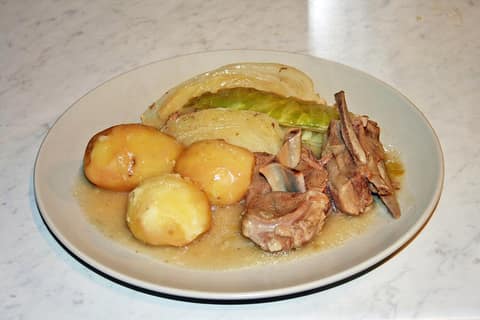
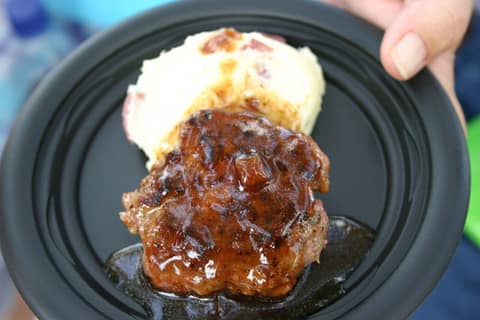
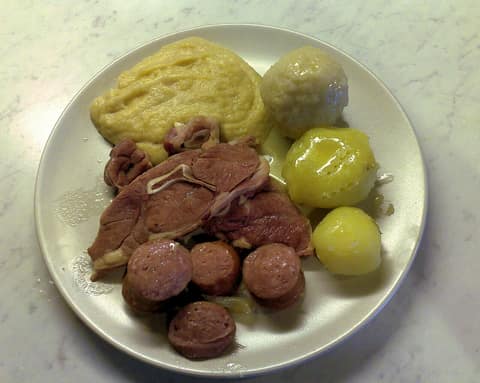
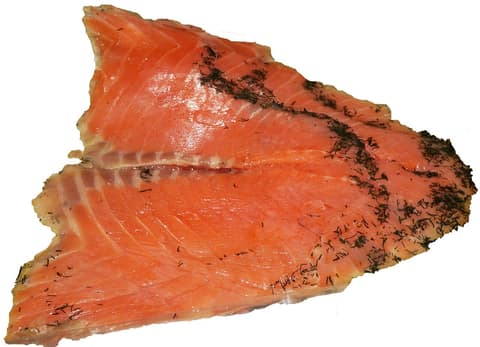
Which dishes from Norway were cooked at home? Did anyone make Fårikål or Kjøttkaker?
Does anyone in the family still use a few words from the old country?
Were there songs, prayers, games or holidays from Norway that the family kept?
Are there old photos, letters or documents from Norway? Who has them?
If you could visit Norway together, where would you go first?
A short history of Norway
From Viking ships and saint kings to plague, long unions with Denmark and Sweden, a proud constitution, a hard occupation and sudden oil wealth, Norway's story is one of a small nation at the edge of Europe finding its own way.
AD 793
The Viking Age begins
On 8 June 793 Norse raiders attacked the monastery of Lindisfarne, off the coast of northeast England. The raid is usually taken as the start of the Viking Age. For the next 270 years Norwegian Vikings raided, traded and settled across the North Atlantic, from Ireland and Scotland to Iceland and Greenland.
1030
The Battle of Stiklestad
On 29 July 1030 King Olaf II Haraldsson was killed at Stiklestad, in Trøndelag, fighting an army of farmers and nobles. Soon after his death he was honoured as a saint, and Nidaros Cathedral in Trondheim was later built over his grave. Saint Olaf became Norway's patron saint and helped complete the country's conversion to Christianity.
1380
The union with Denmark begins
In 1380 the young Olaf Haakonsson, already King of Denmark, also inherited the throne of Norway. The two kingdoms now shared one king, the start of a union with Denmark that lasted, in different forms, until 1814.
1537
The Reformation comes to Norway
In 1537 the Danish King Christian III made Lutheranism the official religion of Norway. The Catholic archbishop, Olav Engelbrektsson, went into exile, church lands passed to the crown and Norway was bound more tightly to Denmark, ruled from Copenhagen until 1814.
1814
The Constitution is signed at Eidsvoll
Denmark, on the losing side in the Napoleonic Wars, had to hand Norway to Sweden in the Treaty of Kiel. Norwegians refused and met at Eidsvoll, where they signed their own constitution on 17 May 1814. Norway then entered a union with Sweden in November 1814, but kept its constitution and parliament. The constitution is still in force, the second-oldest working national constitution in the world after that of the United States.
1911
Amundsen reaches the South Pole
On 14 December 1911 the Norwegian explorer Roald Amundsen and his team became the first people to reach the South Pole, about a month ahead of the British expedition of Robert Falcon Scott. Amundsen had also been the first to sail through the Northwest Passage, from 1903 to 1906.
1945
Norway is liberated
The German forces in Norway surrendered on 8 May 1945, at the end of the war in Europe. King Haakon VII came home to Oslo on 7 June 1945. In the far north, Finnmark had to be rebuilt almost from nothing, because retreating German troops had burned it.
1994
Lillehammer and a second no to the EU
In February 1994 Lillehammer hosted the Winter Olympics, and Norway won more medals than any other country. The same year Norway joined the European Economic Area, but in November voters said no to EU membership, 52.2 percent against, just as they had in 1972.