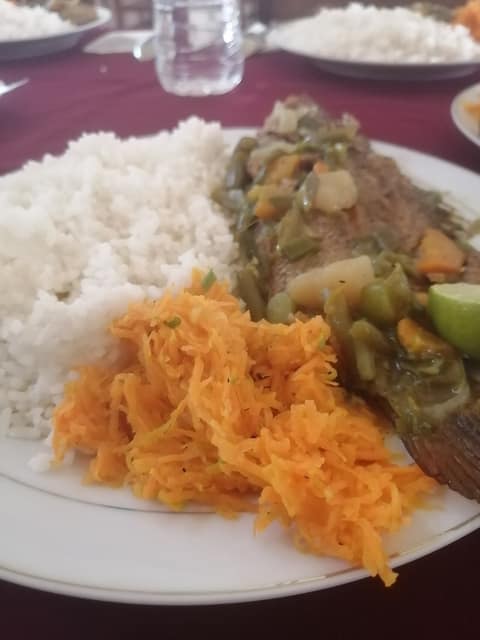
Lemurs leaping through the rainforest, giant baobabs at sunset, rice at every meal and a language that sailed here from Borneo, on the fourth-largest island in the world.
Madagascar is a huge island in the Indian Ocean, about 420 km off the coast of southeastern Africa across the Mozambique Channel. Cool green highlands with rice terraces run down its middle; the east is covered in rainforest, the west in dry forest and savanna, and the far south in spiny desert. It is the fourth-largest island in the world.
The island broke away from Africa and later from India many millions of years ago, and its plants and animals went their own way. More than 90 percent of its wildlife is found nowhere else, including all of the world's lemurs, the cat-like fossa and about half of all chameleon species. People arrived late, probably in the first millennium AD, when seafarers from Southeast Asia crossed the ocean in outrigger canoes; later settlers came from East Africa, Arabia and beyond.
Questions to ask the older generation
Memories fade faster than photos. Ask these over a meal or a phone call, and write the answers down.
Which town or region of Madagascar did our family come from? Was it near Toamasina, Antsirabe, Fianarantsoa?
Who was the first in the family to leave Madagascar, when, and why?
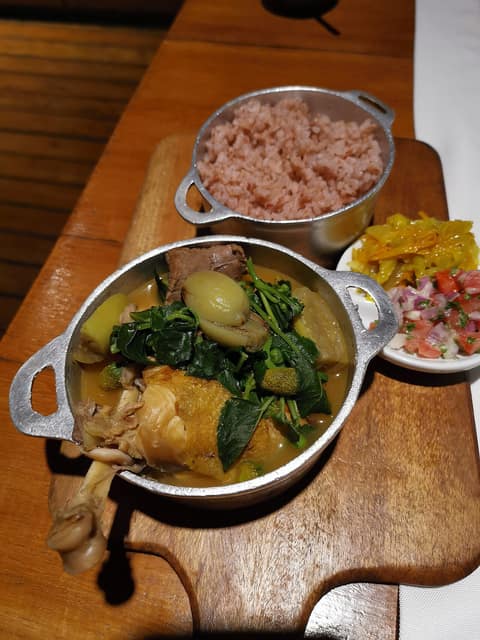
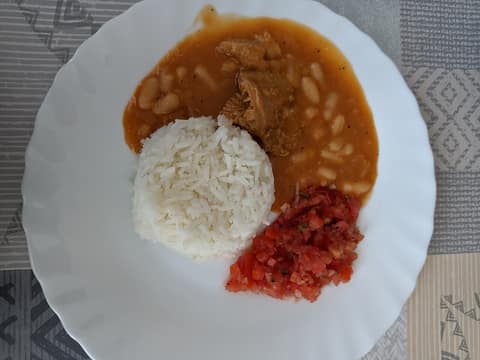
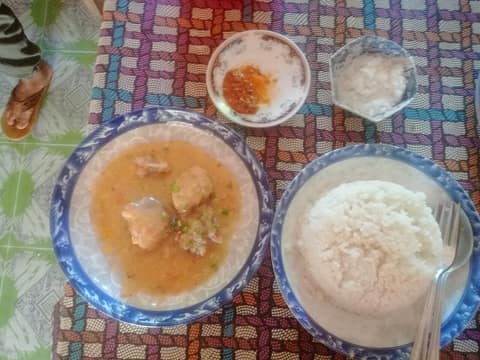
Which dishes from Madagascar were cooked at home? Did anyone make Romazava or Ravitoto sy henakisoa?
Does anyone in the family still speak Malagasy, or use a few words of it?
Were there songs, prayers, games or holidays from Madagascar that the family kept?
Are there old photos, letters or documents from Madagascar? Who has them?
If you could visit Madagascar together, where would you go first?
A short history of Madagascar
Madagascar was one of the last large lands on Earth to be settled. Seafarers from Southeast Asia arrived in outrigger canoes, probably in the first millennium AD, and were joined by Bantu-speaking people from East Africa and by Arab and Swahili traders. Many small kingdoms grew up, and in the 1800s the Merina rulers of the highlands united most of the island. France conquered it at the end of the century, and Madagascar became independent again in 1960.
1500
Diogo Dias sights the island
On 10 August 1500 the Portuguese captain Diogo Dias, whose ship had been blown off course on the way to India, became the first European known to reach Madagascar. He named it the island of Saint Lawrence. Over the next two centuries English and French settlers tried to build colonies on the coast, with little success.
1817
Britain recognises Radama as King of Madagascar
On 23 October 1817 Radama signed a treaty with Britain. In return for giving up the export of slaves, he received horses, uniforms and military help, and the British recognised him as King of Madagascar.
1828
Ranavalona I takes the throne
Radama's widow, Queen Ranavalona I, ruled for 33 years. She fought to keep Madagascar free of British and French influence, banned Christianity and forced most foreigners to leave, and her reign is remembered as both strong and very harsh.
1883
The first Franco-Hova War begins
France, claiming rights on the northwest coast, bombarded Mahajanga and began a war against the Kingdom of Madagascar. The peace treaty of 1885 gave France the bay of Diego-Suarez in the north, today's Antsiranana, and control over the kingdom's foreign affairs.
1897
The monarchy is abolished
On 27 February 1897 the French governor, General Gallieni, sent Queen Ranavalona III into exile, first to Réunion and later to Algeria, and the next day he abolished the monarchy. She was the last sovereign of Madagascar.
1947
The Malagasy Uprising begins
On the night of 29 March 1947 nationalists attacked French bases and plantations in the east of the island. The French army put down the rising by 1949. Estimates of the Malagasy dead range from about 11,000 to more than 100,000, and 29 March is now a national day of remembrance.
1960
Independence from France
Madagascar became fully independent on 26 June 1960, which is now its national day, and joined the United Nations that September.
2010
Voters approve the Fourth Republic constitution
After a political crisis that began in 2009, voters approved a new constitution in a referendum on 14 November 2010. It began the Fourth Republic and named Malagasy and French as the official languages, dropping English, which had been added in 2007.