The land of ancient Persia, where Persepolis, blue-tiled mosques, saffron rice and the poems of Hafez are part of everyday life.
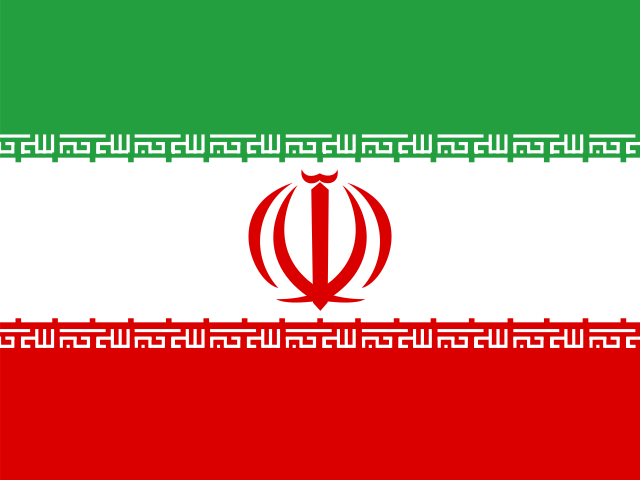
Iran is a large country in West Asia, about the size of Britain, France, Spain and Germany together. Most of it is a high plateau ringed by mountains: the Alborz in the north, with Mount Damavand, and the long Zagros range in the west. The Caspian Sea lies to the north, and the Persian Gulf and the Gulf of Oman to the south. The centre holds two great deserts, the Dasht-e Kavir and the Lut. For centuries the country was known in the West as Persia, a name that came through Greek from Pars (today's Fars province), the homeland of the ancient Persian kings. Iranians have long called their land Iran, and in 1935 the government asked other countries to use that name in official letters. Both names are still heard, and 'Persian' is used for the language, carpets, cats and cooking.
This is one of the oldest centres of civilisation. People built cities here, such as Susa, more than 5,000 years ago, and in 550 BC Cyrus the Great founded the Persian Empire, which grew into the largest the world had yet seen. Later came the Parthians and the Sasanians, then Islam in the 7th century, and a golden age of Persian poetry: Ferdowsi, Saadi and Hafez are still quoted every day. Iranians celebrate Nowruz, the New Year, on the first day of spring.
Questions to ask the older generation
Memories fade faster than photos. Ask these over a meal or a phone call, and write the answers down.
Which town or region of Iran did our family come from? Was it near Mashhad, Isfahan, Shiraz?
Who was the first in the family to leave Iran, when, and why?
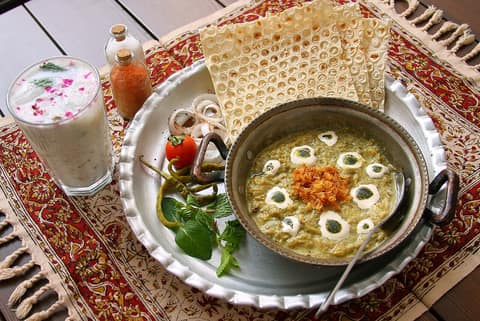
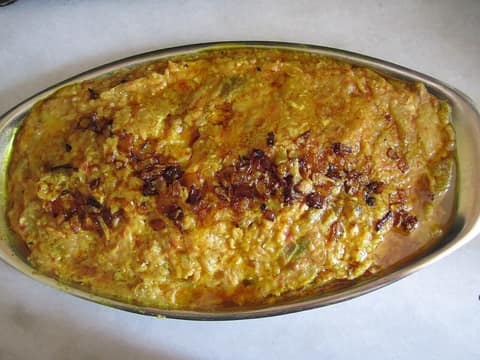
Which dishes from Iran were cooked at home? Did anyone make Chelow kabab or Ghormeh sabzi?
Does anyone in the family still speak Persian, or use a few words of it?
Were there songs, prayers, games or holidays from Iran that the family kept?
Are there old photos, letters or documents from Iran? Who has them?
If you could visit Iran together, where would you go first?
A short history of Iran
Iran's history is often told as a chain of great empires: the Elamites, the Medes, the Achaemenid Persians of Cyrus and Darius, the Parthians and the Sasanians. After the Arab conquest in the 7th century Iran became Muslim, but kept its own language, and Persian poetry, painting and architecture flourished under many dynasties. The Safavids made Shia Islam the state religion in 1501, the Qajars moved the capital to Tehran, and the 20th century brought a constitution, the Pahlavi shahs and, in 1979, the Islamic Republic.
1250 BC
Chogha Zanbil ziggurat is built
Around 1250 BC the Elamite king Untash-Napirisha built a great stepped temple, a ziggurat, near Susa in today's Khuzestan. It is one of the few ziggurats outside Mesopotamia and among the best preserved anywhere. In 1979 it became one of Iran's first three sites on the UNESCO World Heritage List, together with Persepolis and Naqsh-e Jahan Square.
539 BC
Cyrus takes Babylon
In 539 BC Cyrus entered Babylon. A clay cylinder written in his name, the Cyrus Cylinder, praises his rule and tells how he allowed deported peoples to return home and rebuild their temples. The cylinder was found in Babylon in 1879 and is now in the British Museum in London.
330 BC
Alexander burns Persepolis
Alexander the Great of Macedon defeated the last Achaemenid king, Darius III, and in 330 BC his army took Persepolis. Soon afterwards its palaces burned. Ancient writers disagree about whether the fire was revenge for the Persian burning of Athens or an accident after a feast.
AD 651
The Arab conquest ends Sasanian rule
From 633 the armies of the new Muslim caliphate invaded the Sasanian Empire. The last Sasanian king, Yazdegerd III, was killed in 651. Over the following centuries most Iranians became Muslim, while Persian survived as the everyday language and later returned as a great literary language.
1501
The Safavids unite Iran
In 1501 Ismail I was crowned shah in Tabriz and founded the Safavid dynasty. He made Twelver Shia Islam the official religion, one of the most important turning points in the history of Islam, and the Safavids ruled a united Iran for more than two centuries.
1786
Tehran becomes the capital
In 1786 Agha Mohammad Khan, founder of the Qajar dynasty, made the small town of Tehran his capital. It has been the capital ever since, and it has grown into a city of about 9 million people.
1935
Persia asks to be called Iran
In 1935 Reza Shah Pahlavi asked foreign governments to use the name Iran, the country's own name, instead of Persia in official letters. In 1959 his son said that both names could be used.
1980
The Iran-Iraq War begins
In September 1980 Iraq invaded Iran. The war lasted eight years and cost around half a million lives before both sides accepted a UN ceasefire in August 1988. Iranians call it the Sacred Defence.