Kronborg Castle, Roskilde Cathedral, Jelling Mounds, Runic Stones and Church
Money
Danish krone (DKK), since 1875. Denmark is in the EU but voted in 2000 to keep the krone instead of the euro
Good to know
Watch out for bicycles. Danish cities have separate cycle tracks between the pavement and the road, and they are busy. Look both ways before you step onto one, and never stand or walk in it. If you rent a bike, keep to the right and signal with your hand before you turn or stop.
Vasa Museum, The Royal Palace, Drottningholm Palace
Money
Swedish krona (SEK, 'kr'), divided into 100 öre. Sweden is in the European Union but does not use the euro; voters said no to it in a referendum in 2003
Good to know
Bring a card, not cash. Sweden is one of the most cashless countries in the world: most people pay by card or with the mobile app Swish, and quite a few shops, cafés and restaurants do not accept cash at all. A contactless bank card works almost everywhere.
Headlights on, always. Norway drives on the right, and dipped headlights must be on at all times, even on a bright summer day. Speed limits are low, usually 80 km/h outside towns and at most 110 km/h, the drink-driving limit is very strict (0.2 per mille) and fines are high.
Suomenlinna, Helsinki Cathedral, Temppeliaukio Church (the Rock Church)
Money
Euro (€), since 1999 (notes and coins since 2002); before that, the Finnish markka
Good to know
Drive on the right, lights on. Cars drive on the right. Finnish law requires headlights to be on whenever you drive, in every season. Usual speed limits are 50 km/h in towns, 80 km/h on country roads and up to 120 km/h on motorways in summer.
Historic Centre (Old Town) of Tallinn, Toompea Castle, Alexander Nevsky Cathedral
Money
Euro (€), since 1 January 2011
Good to know
Euros and cards. Estonia uses the euro. Cards are accepted almost everywhere; the main exceptions are some parking machines and small rural farms, so carry a few coins.
The Historic Centre of Riga, The House of the Blackheads, The Freedom Monument
Money
Euro (€), since 1 January 2014
Good to know
Euros and modest tips. Latvia has used the euro since 1 January 2014, so old prices in lats are long out of date. Tipping is modest: rounding up or leaving about 5 to 10% is enough, and it is not required. Check the bill, as a few places add a service charge.
Vilnius Old Town, Trakai Island Castle, The Curonian Spit and the Parnidis Dune
Money
Euro (€), since 1 January 2015
Good to know
Euros, and old litas at the bank. Lithuania has used the euro since 1 January 2015. If you find old litas notes at home, the Bank of Lithuania still exchanges them free of charge at a fixed rate of 3.4528 litas to 1 euro. City buses and trolleybuses no longer take cash, so pay with a travel card or by tapping your bank card.
The Old Town of Warsaw, Wawel Royal Castle, Wieliczka Salt Mine
Money
Polish złoty (zł, PLN), divided into 100 groszy
Good to know
Złoty, not euro. Poland is in the European Union but uses its own currency, the złoty (zł). Cards are accepted almost everywhere in the cities. If you change money, private exchange offices called kantor usually give fair rates, but those at stations and tourist hot spots often charge more.
Brandenburg Gate, Museum Island, Berlin Wall Memorial
Money
Euro (€), since 1999 (notes and coins since 2002); before that, the Deutsche Mark, introduced in 1948
Good to know
Shops close on Sundays. Most shops, including supermarkets, are closed on Sundays and public holidays. Bakeries often open for a few hours, and shops in large railway stations and airports stay open, so plan your shopping for Saturday.
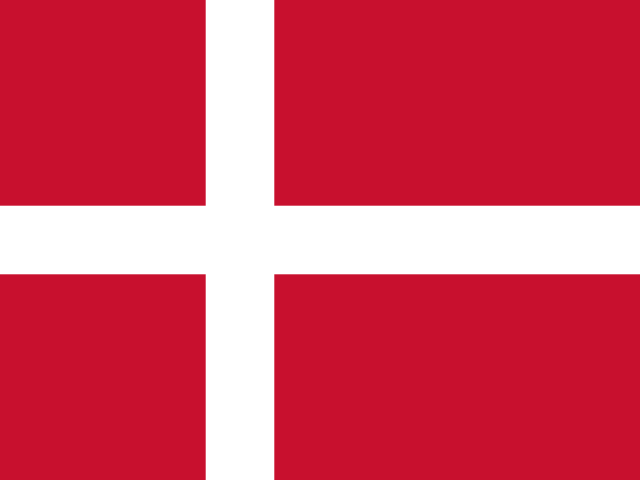 Denmark
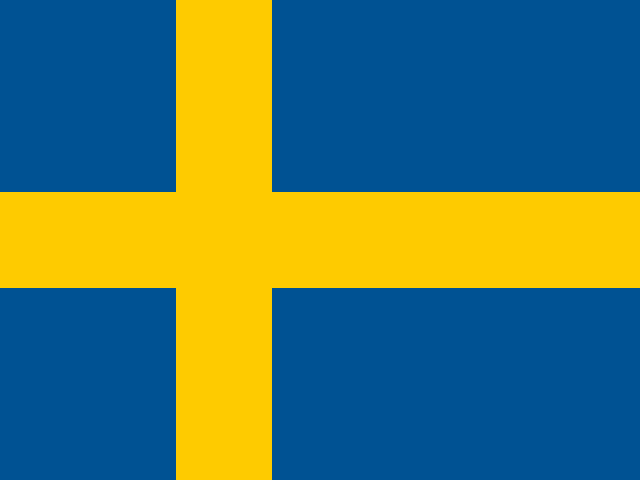 Sweden
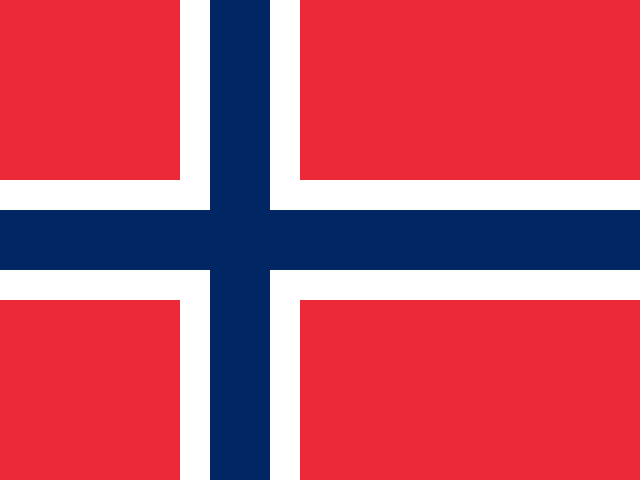 Norway
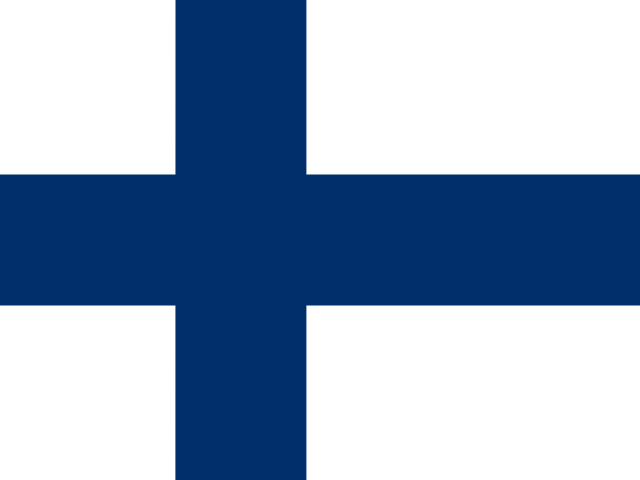 Finland
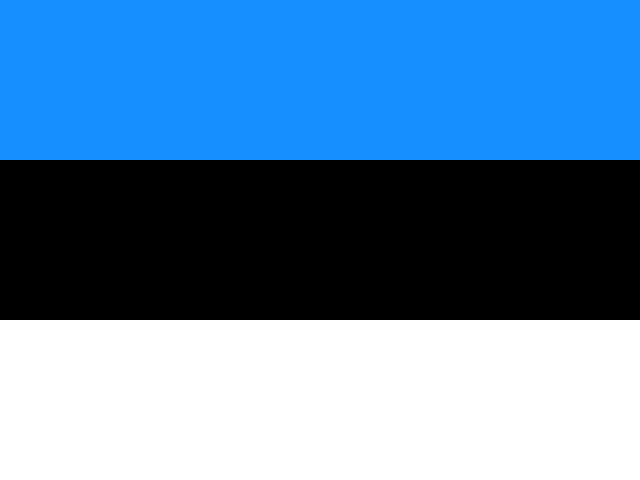 Estonia
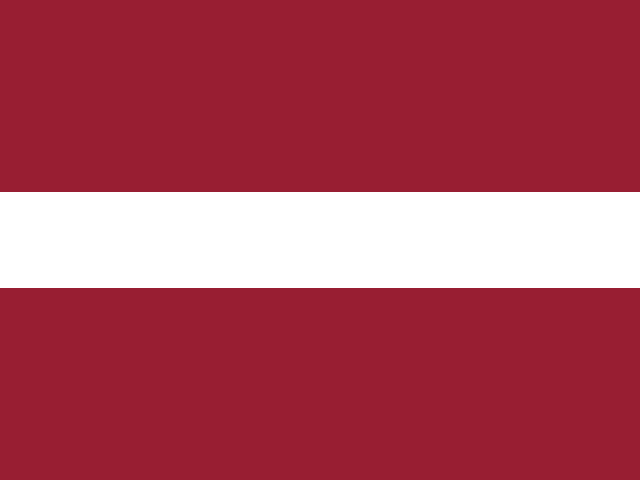 Latvia
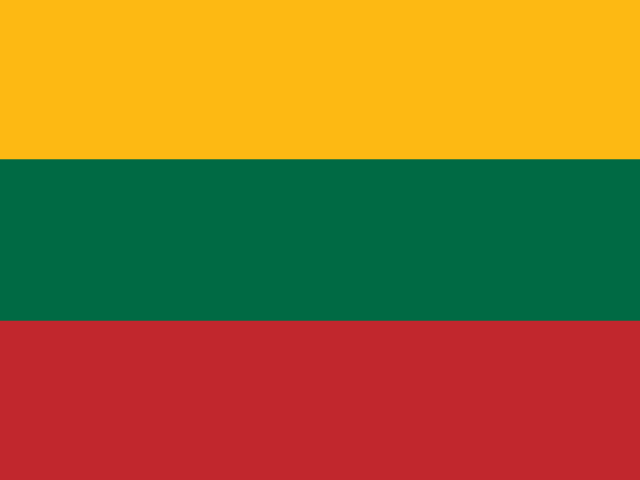 Lithuania
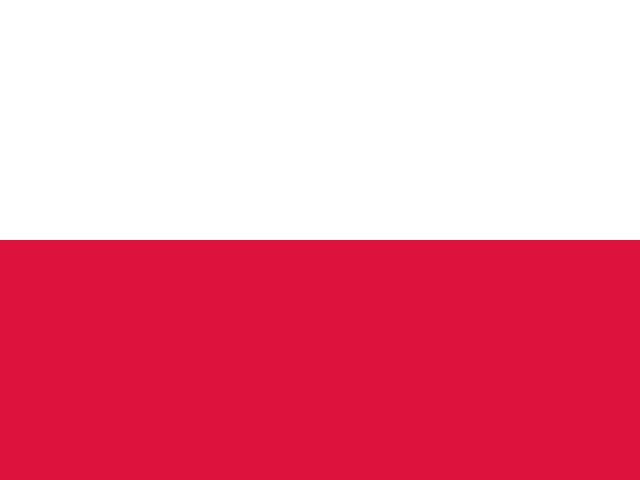 Poland
 Germany