A free large-print PDF. Choose what goes in: facts, map, history, dishes and recipes, phrases, fun facts, a quiz with or without answers. Made for clubs, care homes, libraries and family afternoons.
Mongolia lies in the heart of Asia, between Russia to the north and China to the south, and it has no coast at all. It is a high country of grassy steppe, forested mountains in the north and west, and the Gobi Desert in the south. Winters are long and bitterly cold, but the sky is famously clear: the country has more than 250 sunny days a year.
More than 2,000 years ago the Xiongnu built a great nomad empire here. In 1206 the Mongol tribes were united under Temüjin, who took the title Genghis Khan, and his armies and those of his grandsons created the largest contiguous land empire in history. Later Mongolia came under the Qing dynasty of China, declared independence in 1911, and was a communist state closely tied to the Soviet Union from 1924 until the peaceful democratic revolution of 1990.
As of 2026, Mongolia is the most sparsely populated sovereign country in the world, with only about two people for every square kilometre. About half of all Mongolians live in the capital, Ulaanbaatar, while many families in the countryside still move with their herds of sheep, goats, horses, cattle and camels and live in the round felt tent called the ger.
CapitalUlaanbaatar
PopulationAbout 3.6 million (end of 2025)
Official languageMongolian, written in the Cyrillic alphabet; as of 2026 the traditional vertical Mongolian script is also used in official documents
CurrencyMongolian tögrög (₮)
AreaAbout 1.56 million km², the 18th largest country in the world
GovernmentRepublic with an elected president and a parliament called the State Great Khural
Highest mountainKhüiten Peak in the Altai Mountains, about 4,356 m (older sources give 4,374 m), on the border with China
Longest riverThe Orkhon, 1,124 km, the longest river entirely within Mongolia
NeighboursOnly two: Russia and China. At its western tip Kazakhstan is less than 40 km away, but the two countries do not touch
Drives on theRight
Calling code+976
Time zoneUTC+8 in most of the country, UTC+7 in the far west
Mongolian history is the story of the steppe: nomad peoples who rose to build great empires, of which the Mongol Empire of Genghis Khan was the largest. The events below run from the Xiongnu, more than 2,000 years ago, to the peaceful revolution that brought democracy.
209 BC
Modu becomes ruler of the Xiongnu
In 209 BC Modu took power over the Xiongnu, a confederation of nomad tribes on the Mongolian plateau. He united the tribes of the steppe into a powerful empire that reached Lake Baikal in the north and the Pamir Mountains in the west, and forced China's Han dynasty to pay tribute.
AD 732
The Orkhon inscriptions are carved
In the early 8th century the Göktürks, a Turkic people, set up tall stone memorials in the Orkhon Valley. The inscription for Prince Kul Tigin, raised in 732, is one of the oldest known texts in a Turkic language, carved next to a text in Chinese.
1206
Temüjin becomes Genghis Khan
In 1206 a great assembly of Mongol nobles on the Onon River proclaimed Temüjin ruler of all the Mongols, with the title Genghis Khan (Chinggis Khaan in Mongolian). He reorganised the army and made the Mongols a single nation.
1220
Karakorum is founded
The city of Karakorum, in the Orkhon Valley, is usually said to have been founded in 1220. Under Genghis Khan's son Ögedei it received walls and a palace in 1235 and became the capital of the empire, visited by envoys, merchants and monks from Europe and Asia.
1227
Genghis Khan dies
Genghis Khan died in 1227 during a campaign against the Western Xia kingdom. The place of his grave is still unknown. His sons and grandsons went on to enlarge the Mongol Empire until it stretched from Korea to Eastern Europe.
1271
Kublai Khan founds the Yuan dynasty
In 1271 Kublai Khan, a grandson of Genghis Khan, proclaimed the Yuan dynasty and made Dadu, today's Beijing, his capital. By 1279 the Mongols ruled all of China.
1368
The Mongols are driven out of China
In 1368 the Ming dynasty drove the last Yuan emperor out of Beijing, and the Mongol court retreated to the steppe. In 1372 a Ming army occupied Karakorum.
1585
Erdene Zuu Monastery is founded
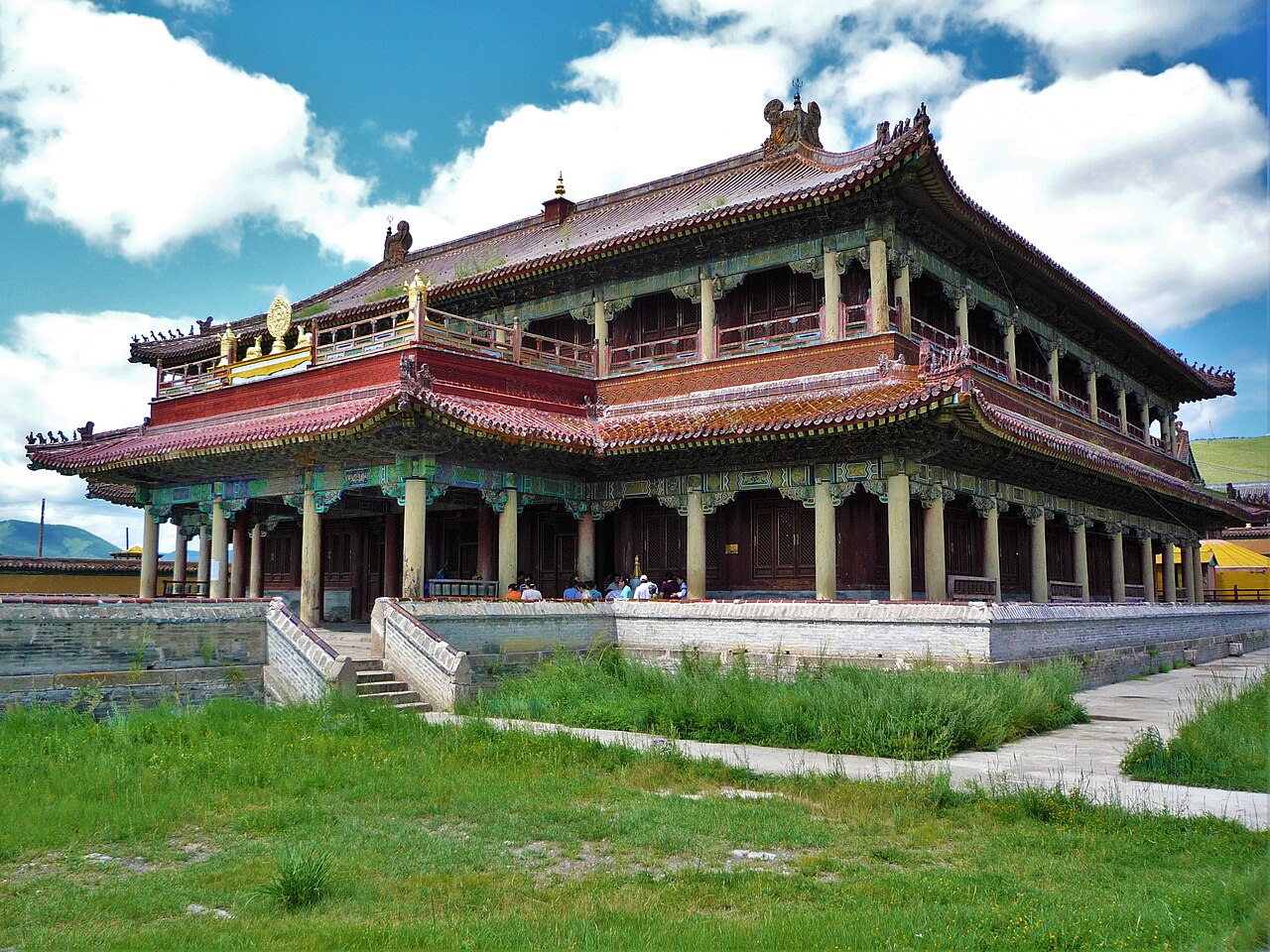
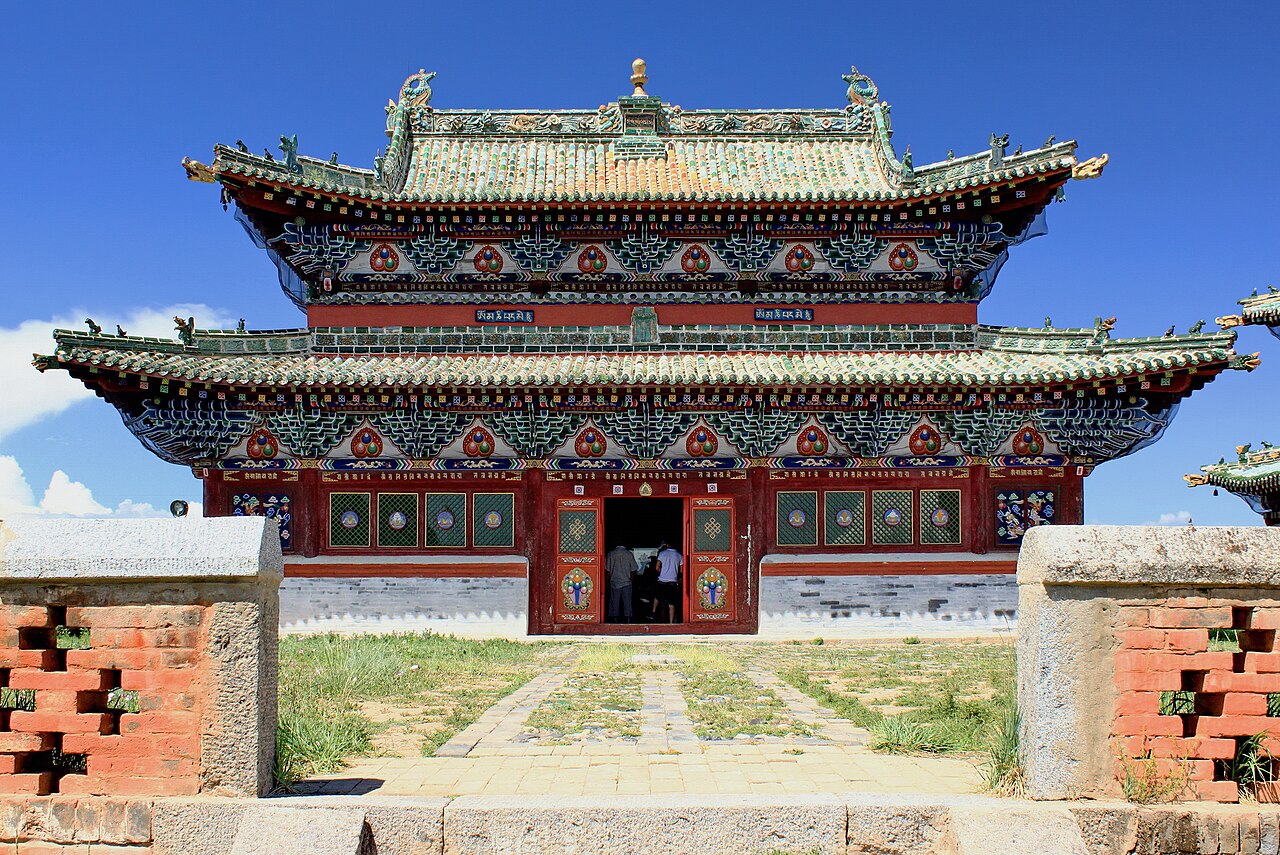
In 1585 Abtai Sain Khan, a ruler of the Khalkha Mongols, founded Erdene Zuu, probably the oldest surviving Buddhist monastery in Mongolia, next to the ruins of Karakorum and partly with its stones. Tibetan Buddhism became the main faith of the Mongols.
1639
Örgöö, the future Ulaanbaatar, is founded
In 1639 the young Zanabazar was made the spiritual head of the Khalkha Mongols, and his mobile monastery camp, Örgöö, was founded. It moved many times before settling for good in 1778 by the Tuul River, where it grew into today's capital.
1691
The Khalkha Mongols submit to the Qing
At a meeting at Dolon Nor in 1691 the princes of the Khalkha Mongols accepted the rule of the Qing emperor Kangxi. Khalkha stayed part of the Qing empire for 220 years.
1911
Mongolia declares independence
As the Qing empire collapsed, Mongolian nobles declared independence on 1 December 1911, and on 29 December the Bogd Khan, the head of Mongolian Buddhism, was enthroned as their monarch.
1921
The People's Revolution
In 1921 Mongolian revolutionaries led by Damdin Sükhbaatar, with help from the Soviet Red Army, drove foreign troops out of the country. The anniversary, 11 July, is celebrated each year with the Naadam festival.
1924
The Mongolian People's Republic is proclaimed
After the Bogd Khan died, the Mongolian People's Republic was proclaimed on 26 November 1924, the world's second communist state. The capital, then called Urga, was renamed Ulaanbaatar, 'Red Hero'.
1939
The Battles of Khalkhin Gol
From May to September 1939, Soviet and Mongolian forces fought the Japanese army along the Khalkhin Gol river in eastern Mongolia. The Soviet and Mongolian victory kept Japan from attacking the Soviet Union again during the Second World War.
1990
The peaceful Democratic Revolution
In the winter of 1990, young people gathered in the central square of Ulaanbaatar to demand democracy. The protests stayed peaceful, the communist leadership resigned in March 1990, and the first multi-party elections were held that summer.
1992
A new constitution takes effect
On 12 February 1992 a new democratic constitution came into force. It ended one-party rule, guaranteed freedom of religion, speech and travel, and changed the name of the country simply to Mongolia.
Mongolian food was shaped by a hard climate and the life of herders. Meat, mostly mutton and beef but also goat, horse and camel, is eaten through the long winter, and in summer families live largely on dairy foods, often called 'white foods': clotted cream, dried curds, yoghurt and fermented mare's milk. Spices are few; salt, onion and garlic do most of the work. A visit to a ger always starts with a bowl of salty milk tea, offered with a plate of dried curds, fried dough and cream, before any meat or noodles appear. Flour arrived through trade with China and Russia and is used for dumplings, noodles and fried pastries.
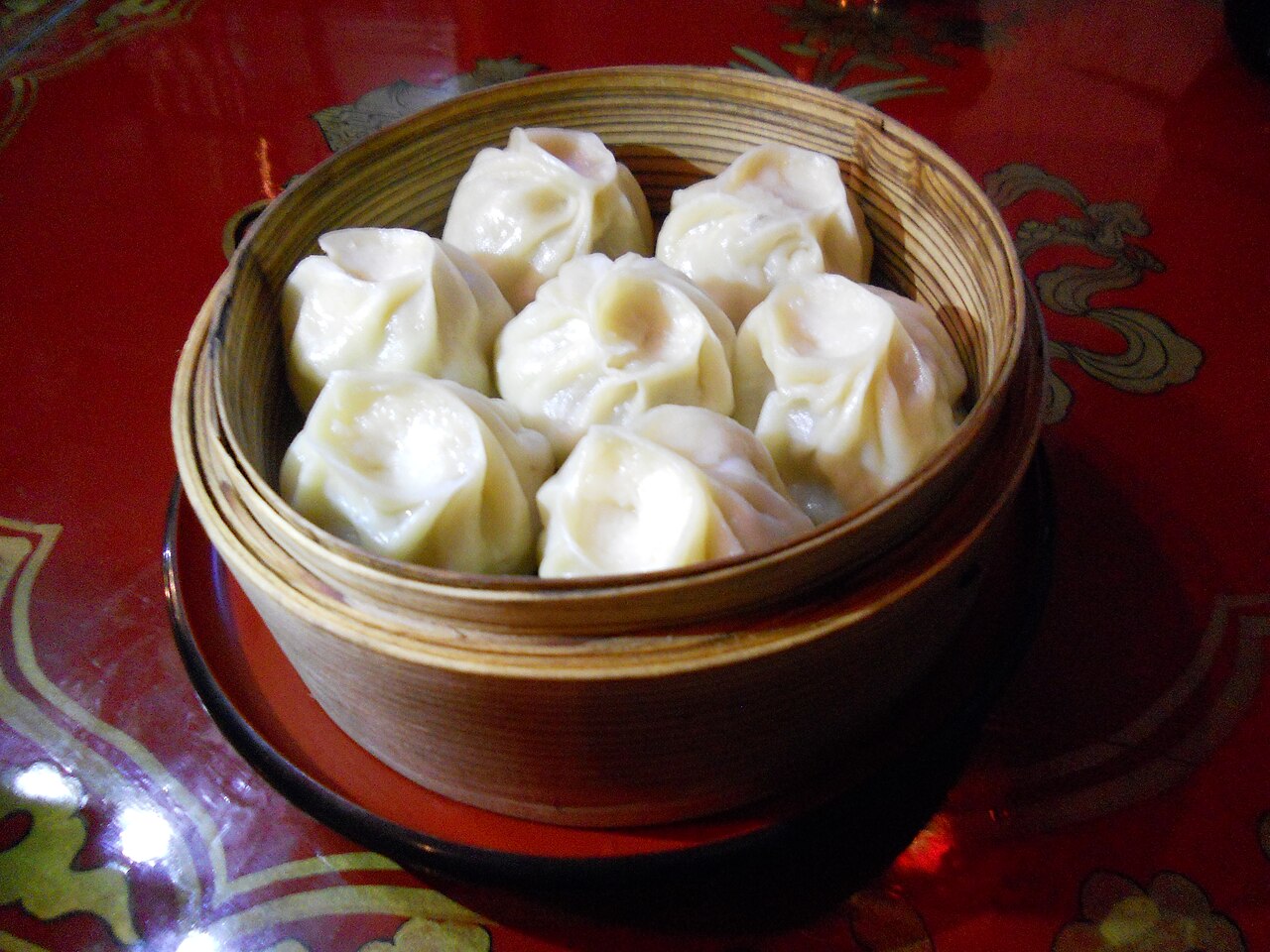
Steamed dumplings filled with minced mutton or beef, onion and garlic, pleated by hand and left with a small opening at the top. They are the traditional dish eaten at home during Tsagaan Sar, the Lunar New Year, when relatives visit one another.
In Ulaanbaatar buuz are sold all year in small, simple cafés called guanz.
See the recipe
Serves 4
1 h 30 min
Ingredients
400 g plain flour
About 200 ml water
500 g minced mutton or beef, with some fat
1 large onion, very finely chopped
2 cloves garlic, crushed
1 teaspoon salt and a little black pepper
4 tablespoons cold water for the filling
Method
Mix the flour and water into a firm, smooth dough. Cover it and let it rest for 20 minutes.
Mix the meat with the onion, garlic, salt, pepper and the cold water until soft and juicy.
Roll the dough into a long rope, cut it into walnut-sized pieces and roll each into a circle about 8 cm wide, thinner at the edges.
Put a spoonful of filling in the middle, then gather the edge in small pleats around it, leaving a small hole at the top.
Steam the buuz on an oiled steamer, not touching, for 15 to 20 minutes, until the meat is cooked through. Serve hot, with salad or soy sauce.
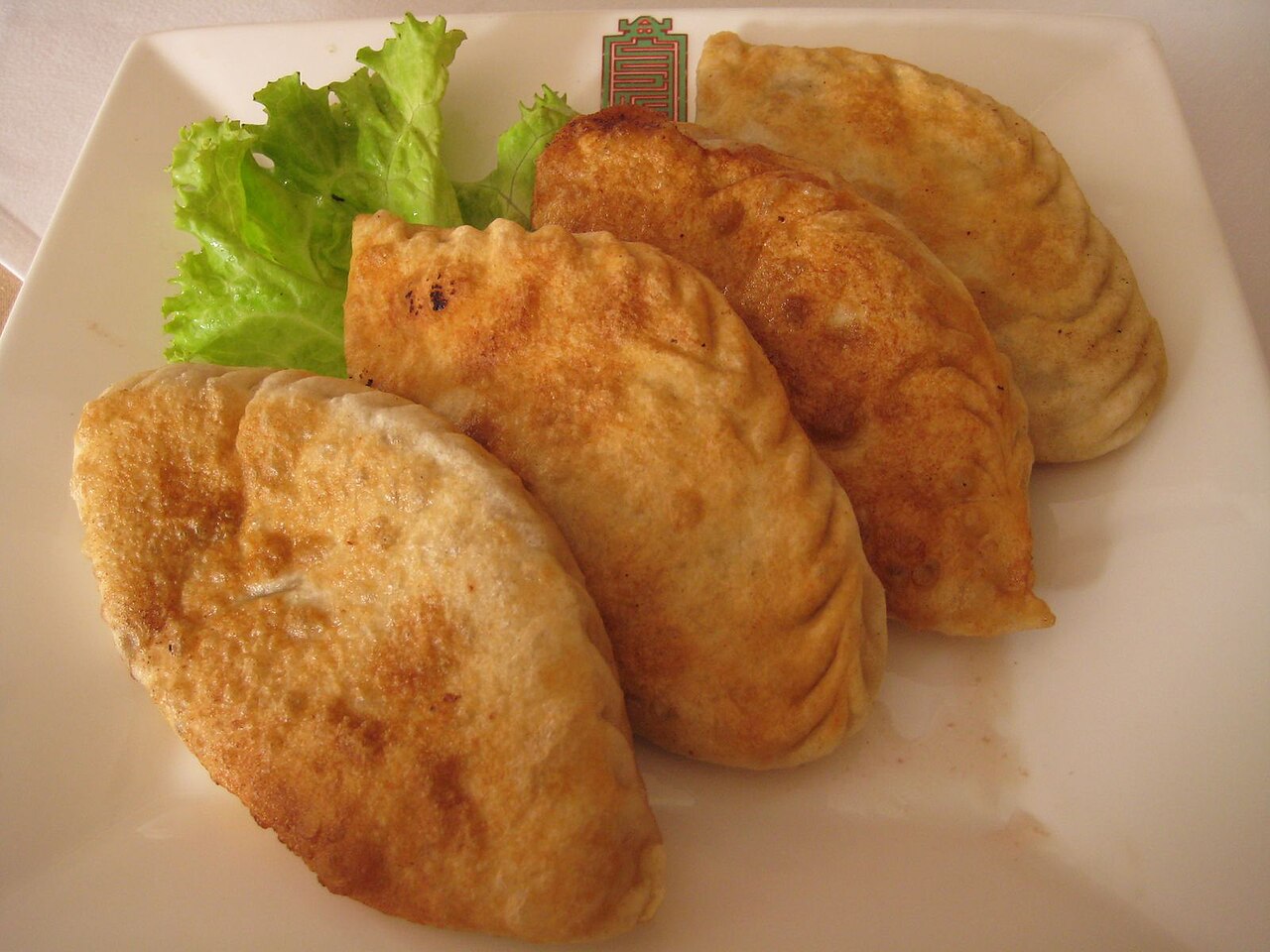
A flat pastry filled with minced mutton or beef, onion and garlic, folded into a half-moon and fried until golden. Khuushuur is the food of the Naadam festival in July, when stalls near the stadium and the race tracks fry them by the thousand.
The classic filling is just meat, onion and salt; versions with potato, carrot or cabbage exist but are less common.
See the recipe
Serves 4
1 h
Ingredients
400 g plain flour
About 200 ml water
500 g minced mutton or beef
1 onion, finely chopped
2 cloves garlic, crushed
1 teaspoon salt and some black pepper
3 tablespoons water for the filling
Vegetable oil for frying
Method
Mix the flour and water into a smooth, firm dough and rest it for 20 minutes under a cloth.
Mix the meat, onion, garlic, salt, pepper and water.
Cut the dough into 12 pieces and roll each into a thin circle about 12 cm wide.
Spread a spoonful of filling over half of each circle, fold the other half over and press the edges firmly, then press the pastry flat with your palm.
Fry in 1 cm of hot oil for 3 to 4 minutes on each side, until golden and the meat is cooked through. Drain on paper and eat hot.
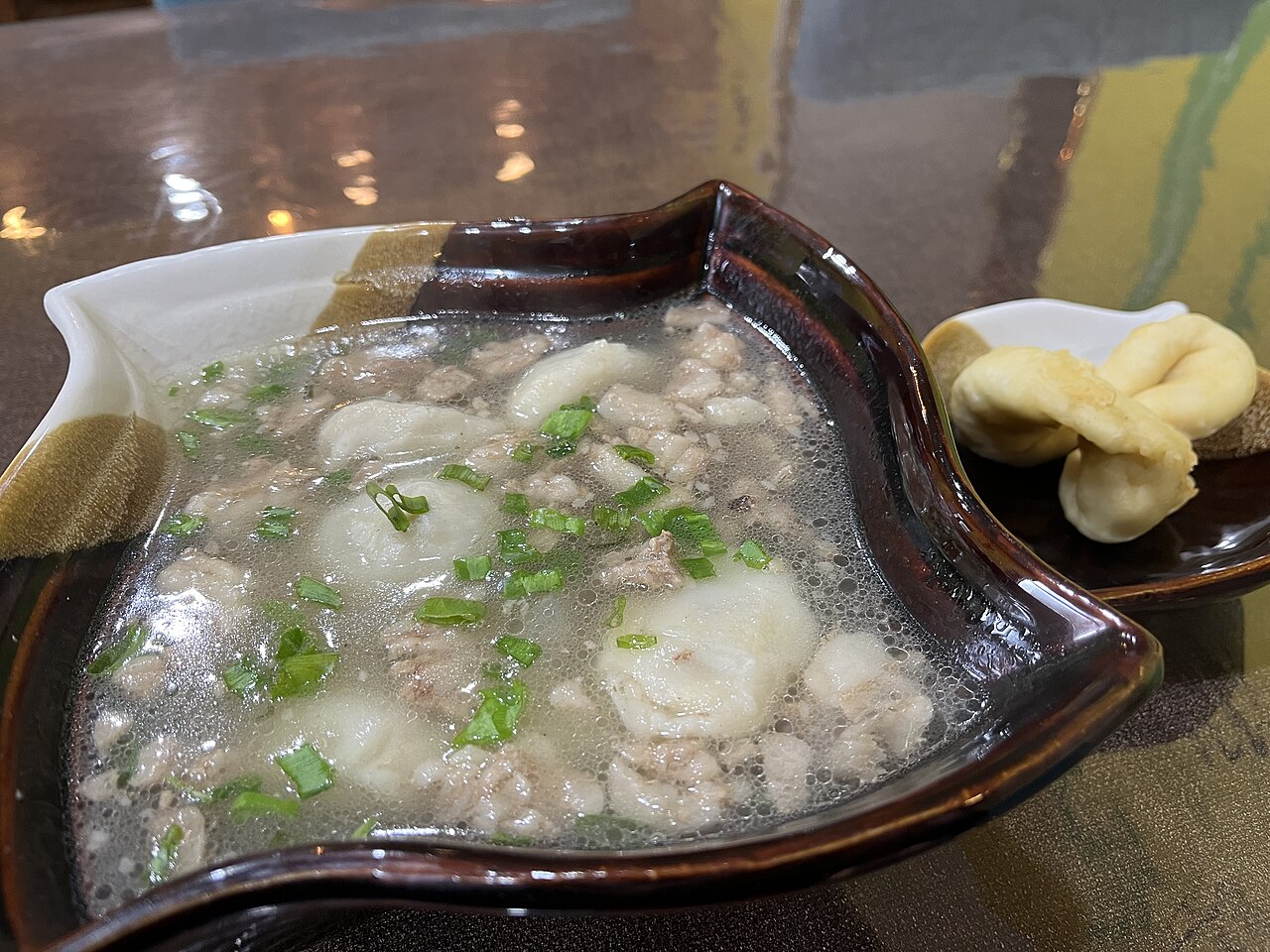
Small dumplings filled with meat, smaller than buuz. Instead of being steamed like buuz, bansh are boiled, often in a clear mutton soup, to make a warming winter meal.
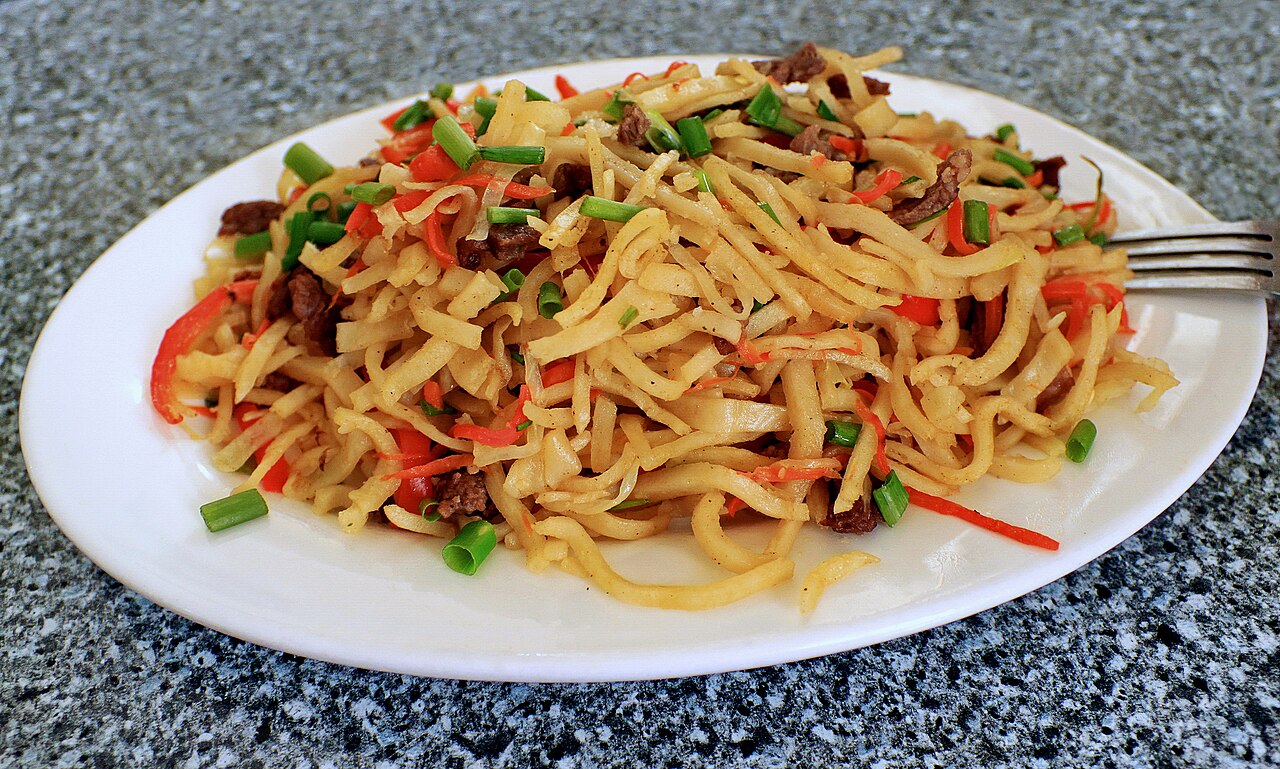
Home-made flat noodles steamed on top of fried strips of meat with onion, carrot and cabbage, then stirred together. It is one of the most common everyday meals in Mongolian homes and cafés.
See the recipe
Serves 4
1 h
Ingredients
300 g plain flour, a pinch of salt and about 150 ml water, or 400 g fresh flat noodles
400 g mutton or beef, cut into thin strips
1 onion, sliced
1 large carrot, cut into thin sticks
A quarter of a small cabbage, shredded
2 tablespoons vegetable oil
About 200 ml water or stock
Salt
Method
If you make your own noodles, knead the flour, salt and water into a firm dough, roll it out thinly, brush with a little oil and cut it into strips about 5 mm wide.
Heat the oil in a wide pan with a lid and fry the meat until browned. Add the onion and carrot and fry for 3 minutes more.
Add the cabbage, salt and the water or stock and bring to a simmer.
Spread the noodles loosely over the top, cover the pan and let them steam over low heat for about 10 minutes, until tender.
Stir the noodles into the meat and vegetables, check the salt and serve.
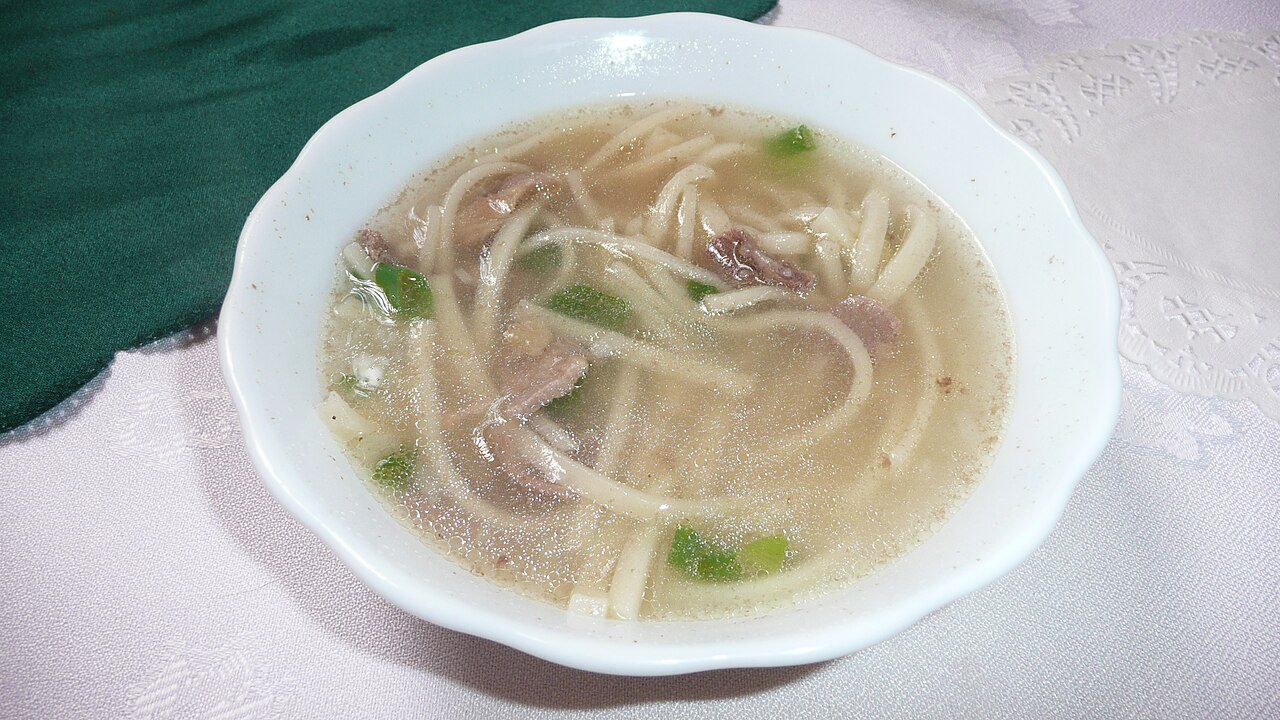
A simple, filling soup of mutton, noodles and a few vegetables such as potato, carrot and onion. The name means 'soup with flour', because the noodles are made from flour at home. It is a favourite in the cold months and a common roadside café meal.
See the recipe
Serves 4
50 min
Ingredients
400 g mutton or beef, cut into thin strips
1 onion, sliced
1 carrot, cut into thin sticks
2 potatoes, peeled and diced
1 tablespoon vegetable oil
1.5 litres water
200 g fresh flat noodles
Salt
Method
Fry the meat in the oil in a large pan until browned, then add the onion and fry for 2 minutes.
Pour in the water, add salt and bring to the boil. Skim off any foam and simmer for 20 minutes.
Add the potato and carrot and cook for 10 minutes.
Add the noodles and cook for 5 minutes more, until they are soft.
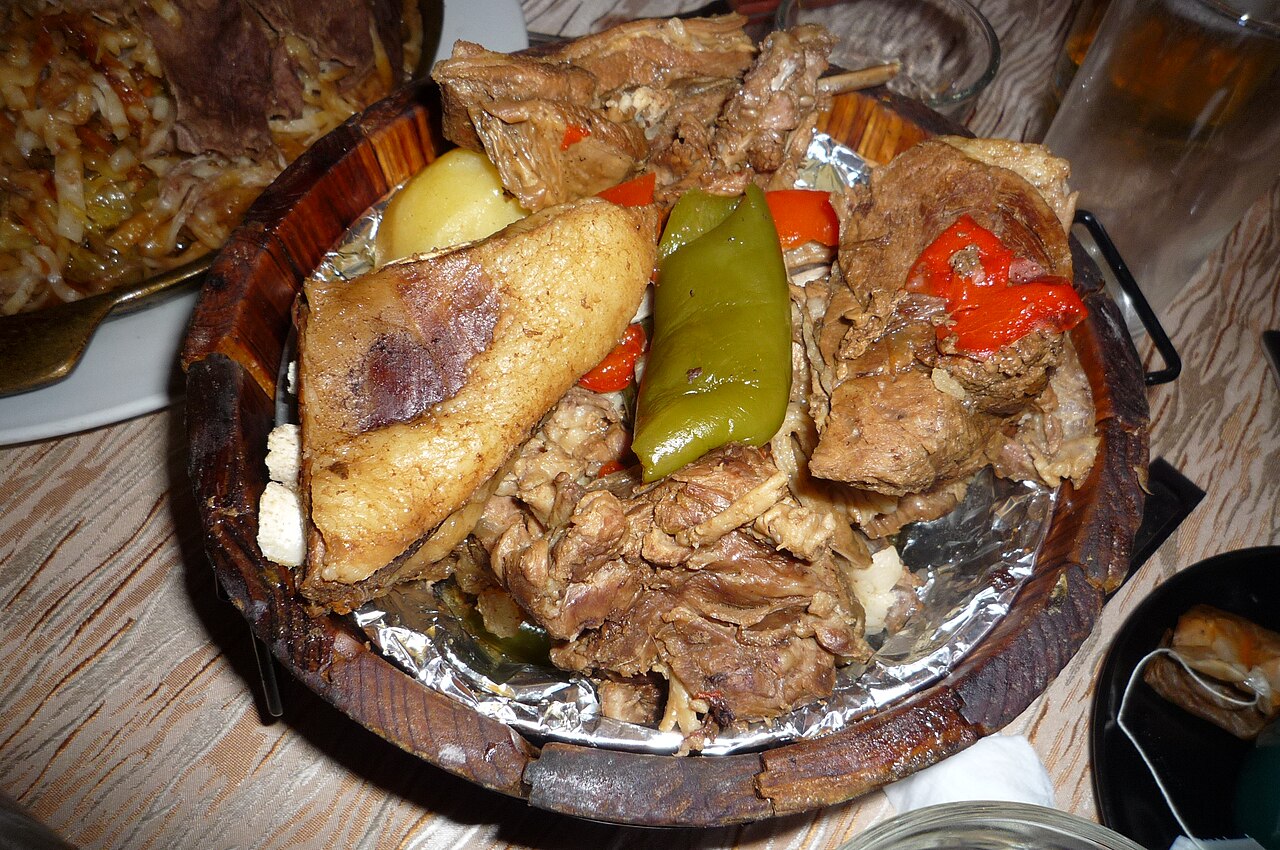
A feast dish for guests and special days. Pieces of mutton on the bone are cooked with water, vegetables and fist-sized stones heated in the fire, all sealed inside a metal milk can or pot. When the meat is ready, the hot, greasy stones are passed from hand to hand before the meal.
Khorkhog is said to date from the time of Soviet troops in Mongolia, when herders began to cook with old army water cans instead of an animal skin.
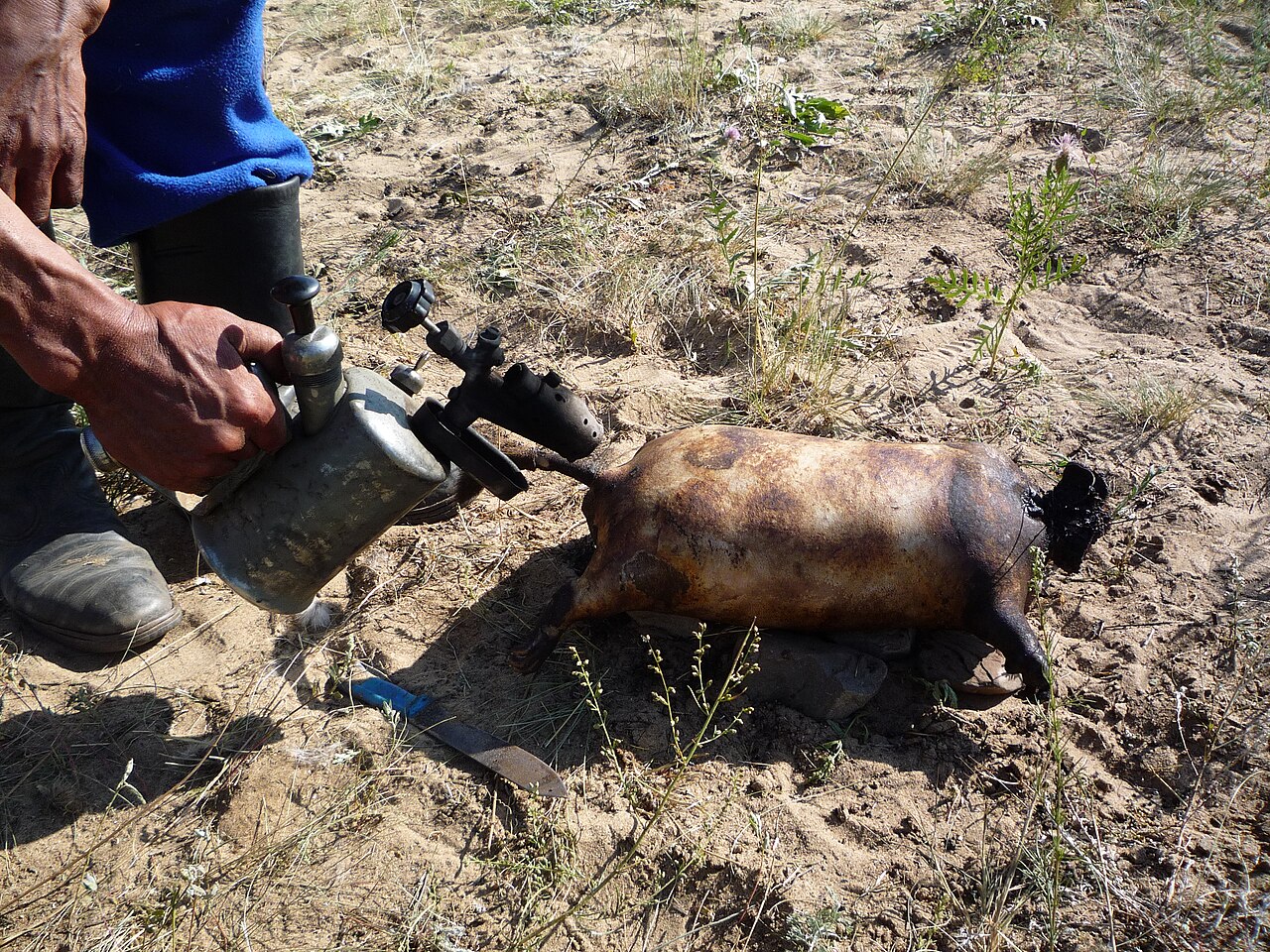
A goat or a marmot cooked from the inside: the meat is taken out through the neck, then put back into the skin with red-hot stones, and the outside is singed, today often with a blowtorch. It is prepared for special occasions and is one of the oldest ways of cooking on the steppe.
Wild marmots in Mongolia can carry plague, so visitors should never eat marmot meat.
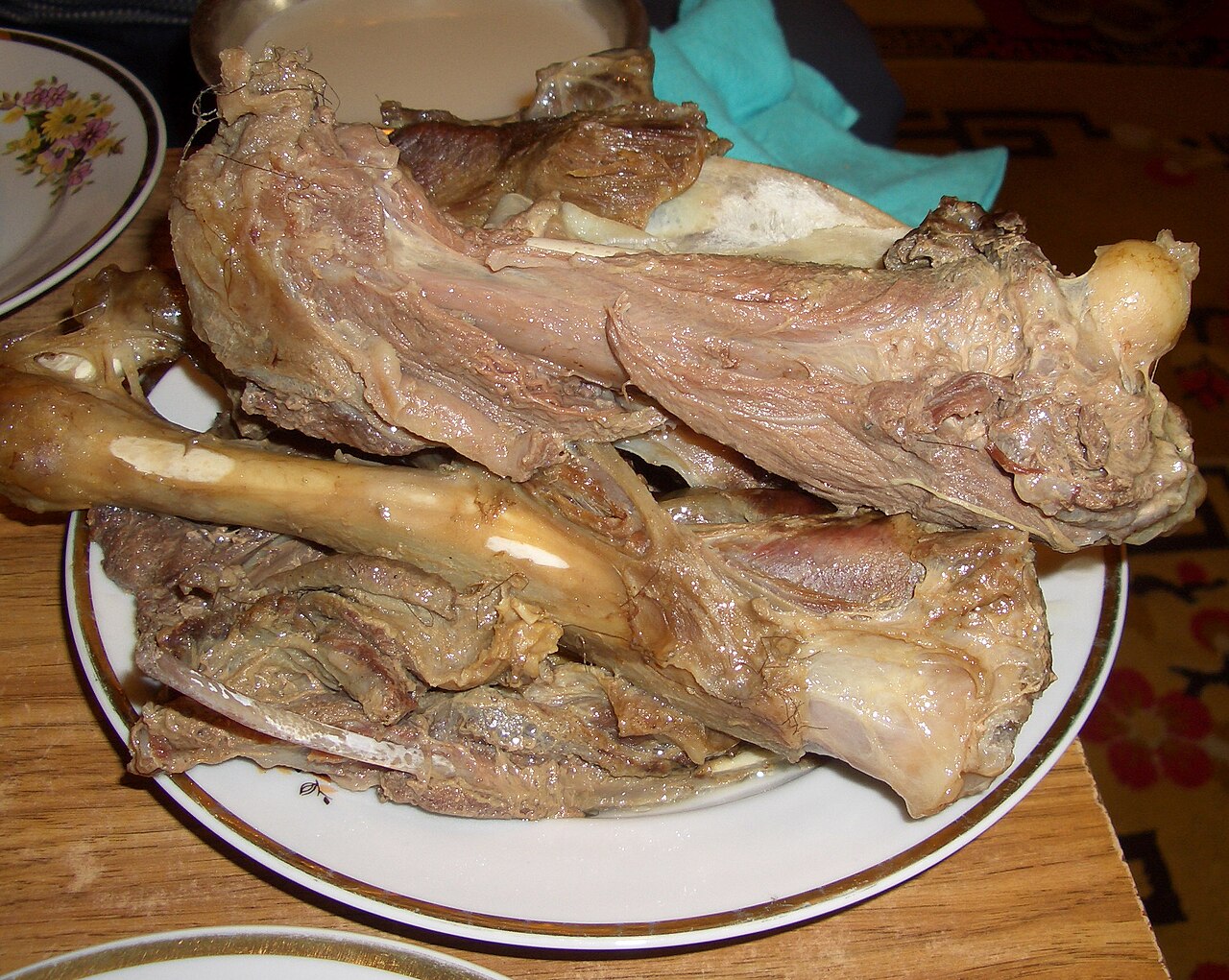
Big pieces of mutton on the bone, simply boiled in salted water and served on a platter. Each person cuts off meat with a knife, and the broth can be drunk as soup.
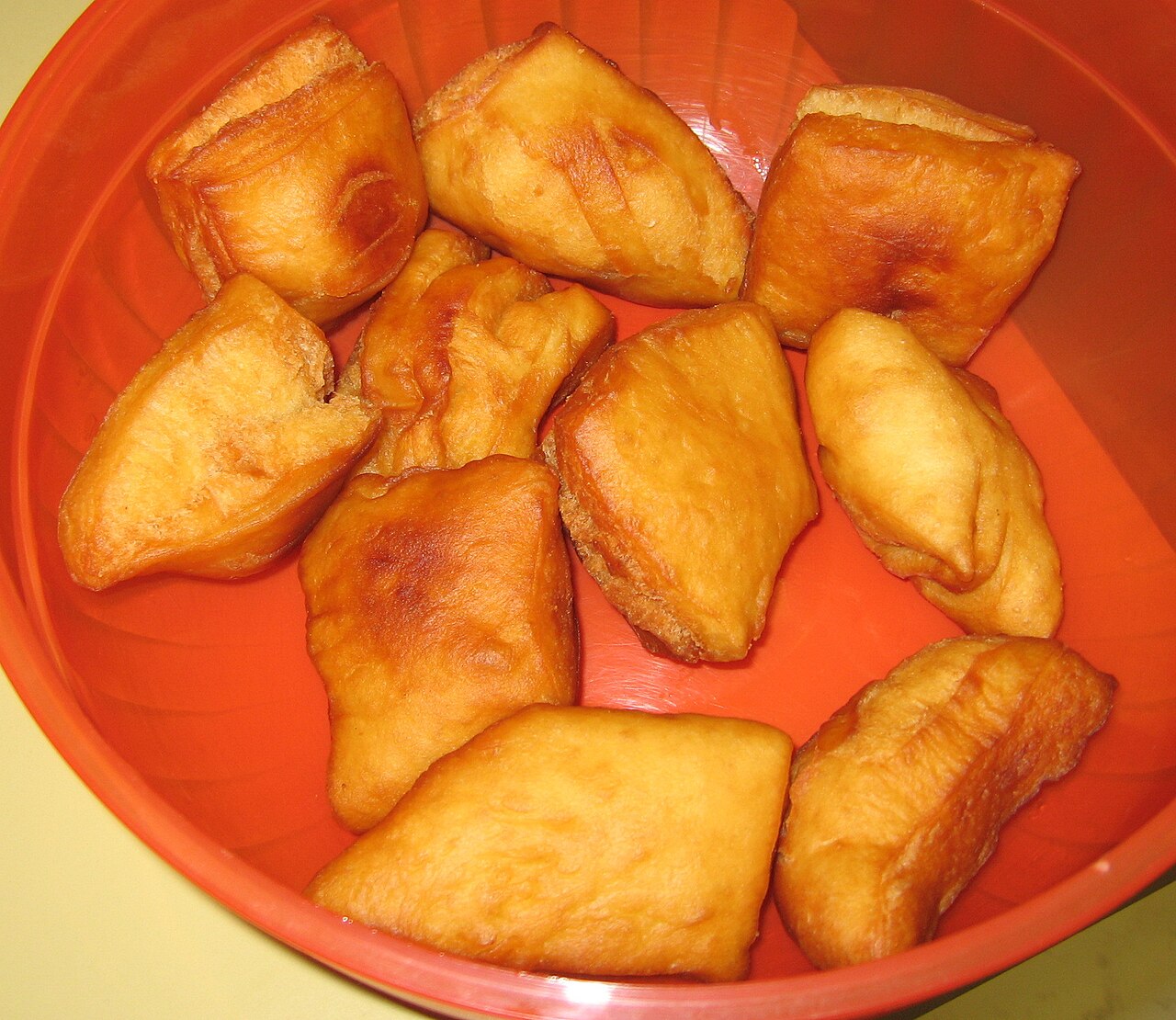
Small pieces of dough fried in fat or oil until crisp and golden. They are served with milk tea, often with clotted cream or sugar, for breakfast or as a snack.
Similar fried dough is eaten across Central Asia, where it is called baursak.
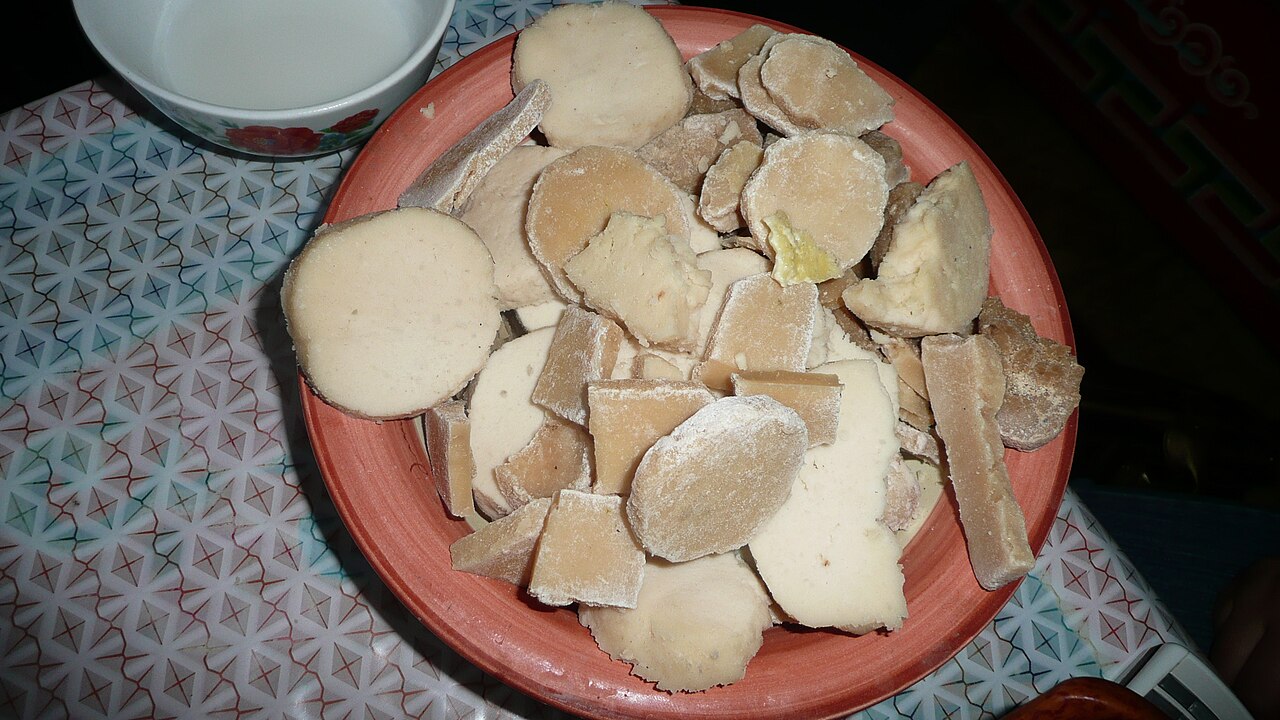
Dried curds made from the milk left after the cream has been taken off. The curds are pressed, cut into pieces and dried in the sun until they are rock hard. They keep for months and are nibbled slowly as a sour, hard snack, often with milk tea.
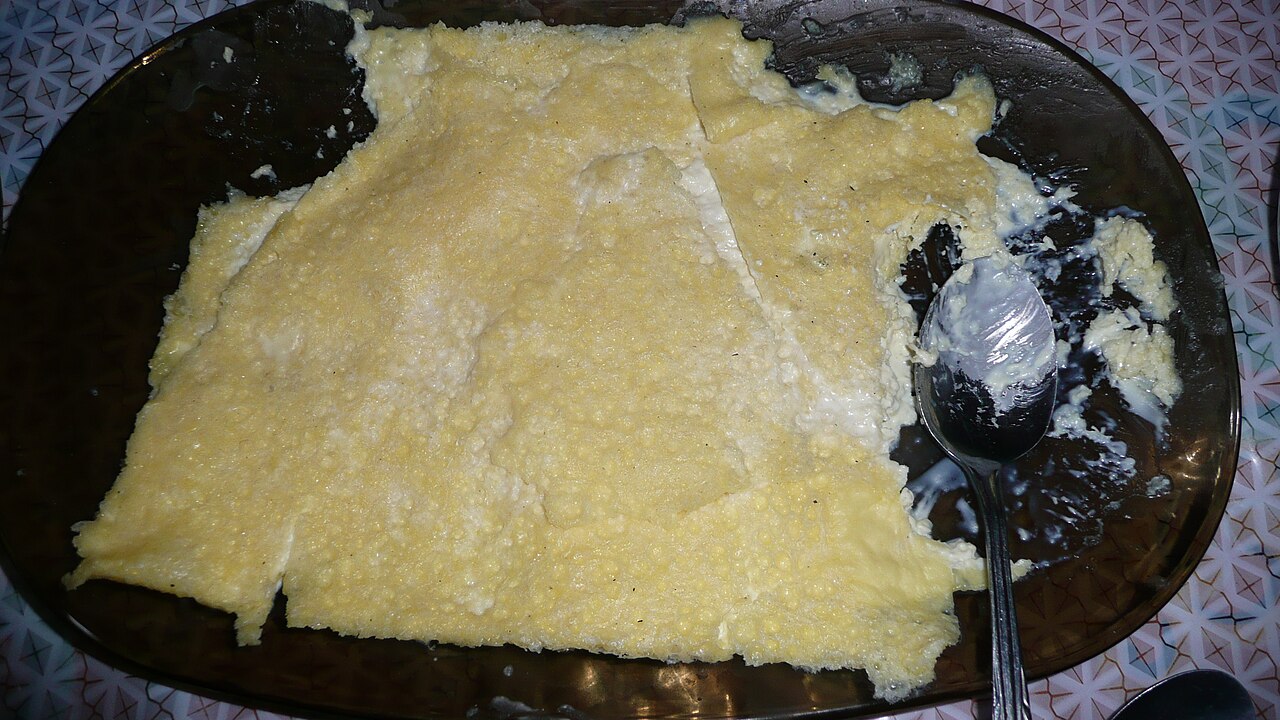
A rich clotted cream. Fresh milk is boiled slowly and left to cool, and the thick layer of cream that forms on top is lifted off. It is eaten spread on bread or boortsog, often with a little sugar, and is one of the best loved 'white foods'.
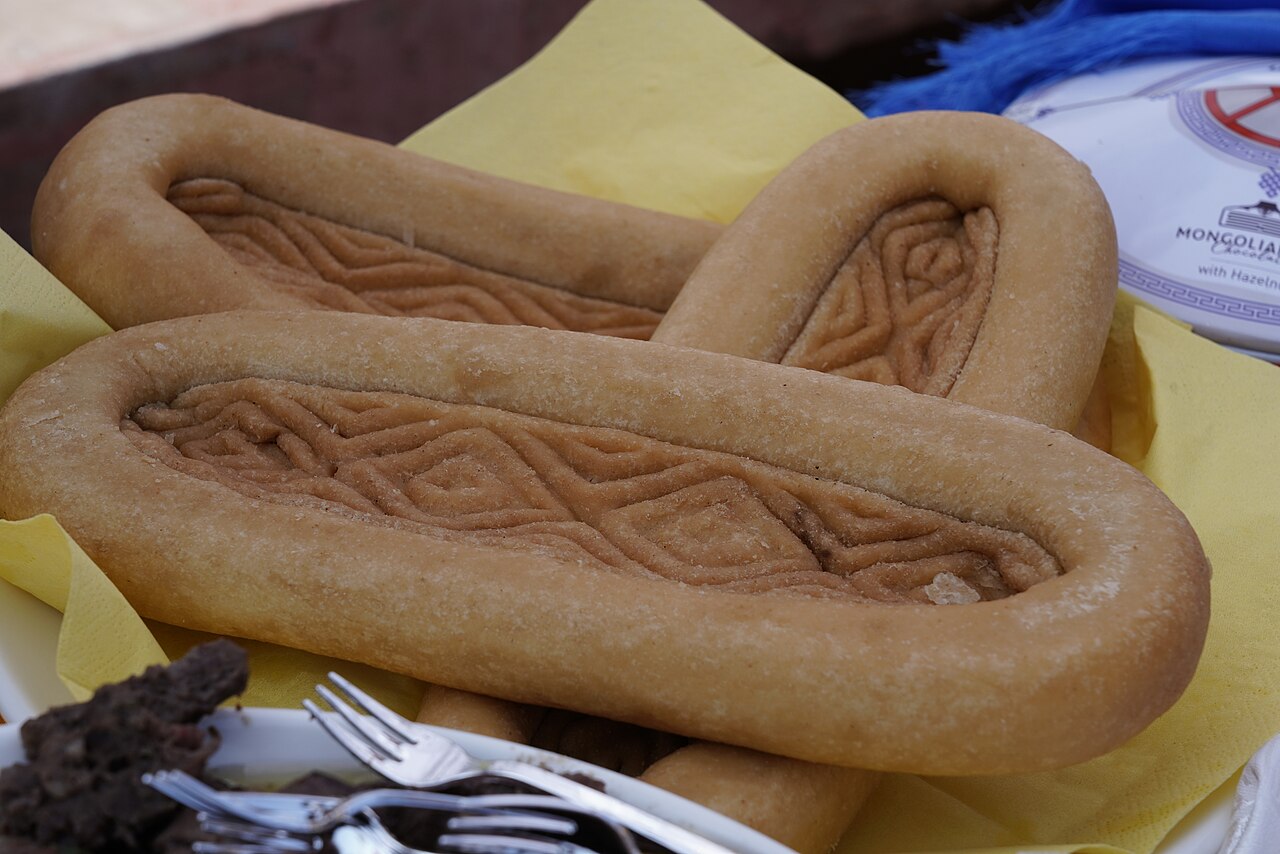
Oblong biscuits pressed with a carved pattern, stacked in a tall pile in the centre of the table for Tsagaan Sar, the Lunar New Year. The layered pile stands for Mount Sumeru, the sacred mountain at the centre of the world in Buddhist belief, and it is shared out among the guests.
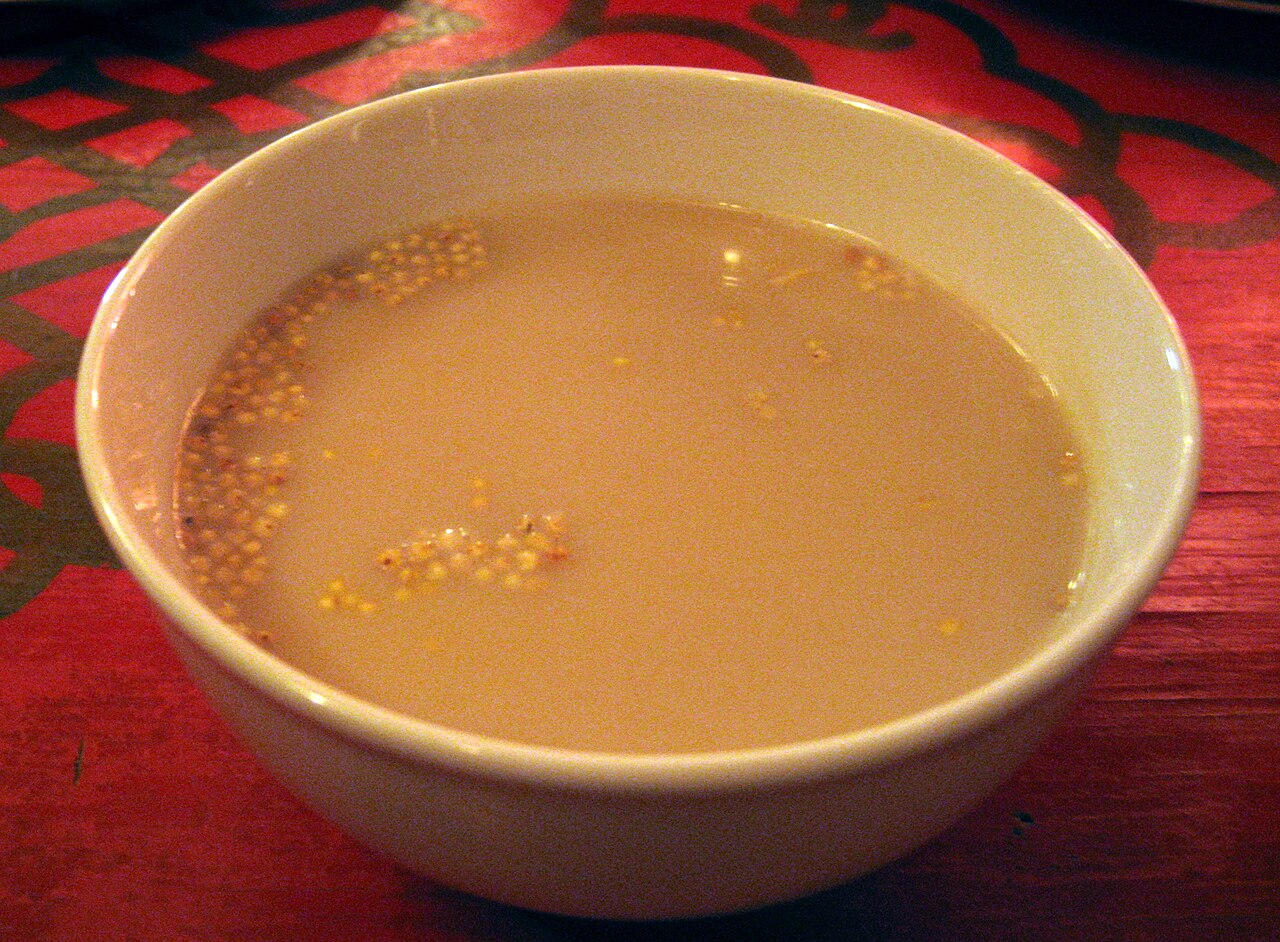
Mongolian milk tea: brick tea boiled in water with milk and a pinch of salt, sometimes with butter. It is drunk many times a day and is always offered to a guest first. It tastes more like a light soup than a sweet drink.
See the recipe
Serves 4
15 min
Ingredients
1 litre water
1 tablespoon green brick tea or loose green tea
500 ml whole milk
Half a teaspoon salt, or to taste
A small knob of butter (optional)
Method
Bring the water to the boil and add the tea. Simmer for 2 to 3 minutes.
Pour in the milk and bring it back to the boil.
Scoop up the tea with a ladle and pour it back into the pot from a height, ten or more times, to mix and cool it a little.
Add the salt and the butter if you use it, then strain the tea into bowls.
Serve hot, with boortsog or bread and clotted cream.
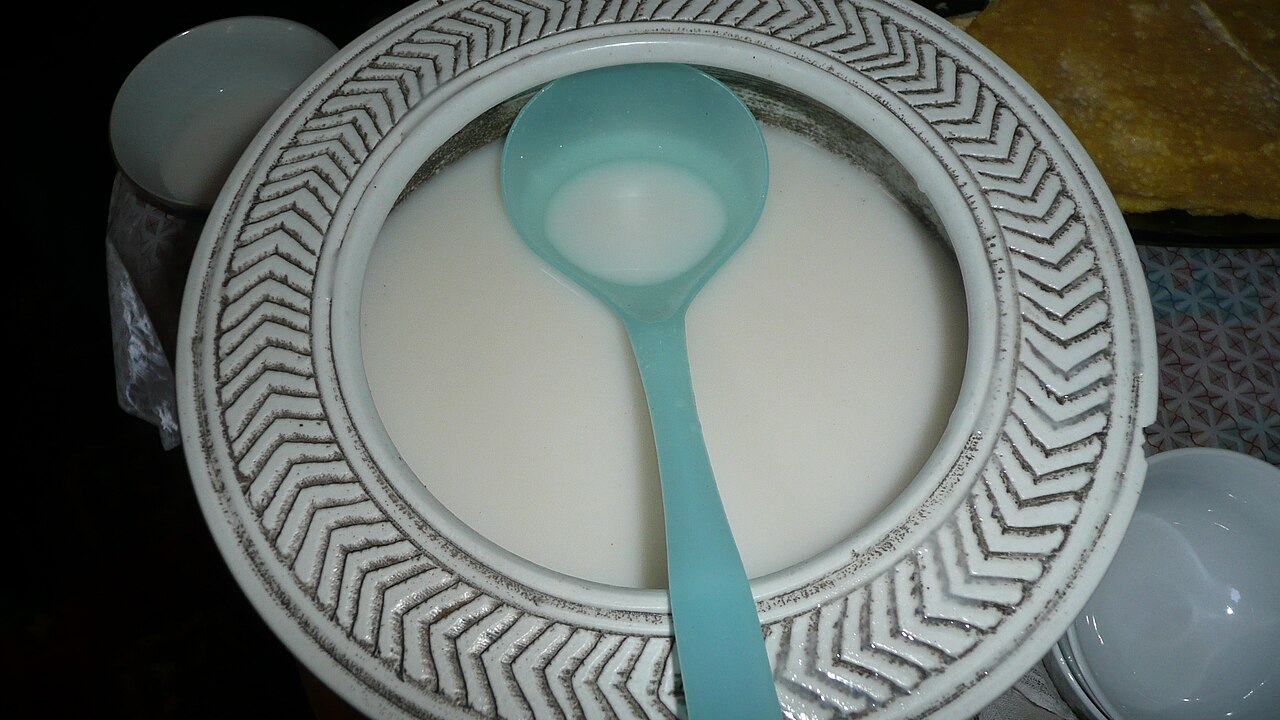
Fermented mare's milk, slightly sour and fizzy, with only a little alcohol, usually between about 0.7 and 2.5 percent. Mares are milked from mid-June to early October, and the milk is churned for hours in a large leather bag or barrel until it ferments. In summer it is often offered to visitors in a large bowl.
Airag can be distilled into a clear, stronger spirit called arkhi.
Table manners
A guest is always offered milk tea first. Take the bowl with your right hand, or with both hands, and it is polite to support your right elbow with your left hand.
Try at least a little of everything you are offered, even a small bite or a sip. Refusing food outright is impolite.
The stove or hearth in the middle of the ger is sacred. Never throw rubbish into the fire.
Do not point the soles of your feet towards the hearth or the family altar at the back of the ger.
When khorkhog is served, the hot, greasy stones are passed round from hand to hand before the meal. Take one when it reaches you, then pass it on.
Older men may offer you a small snuff bottle. Take it with your right hand, sniff the stopper or the bottle, and hand it back with your right hand.
Mongolia has few cities, and one of them is far bigger than the rest: about half the country lives in Ulaanbaatar. Erdenet and Darkhan lie in the green north, on the road and railway to Russia. Choibalsan is the centre of the eastern steppe, Khovd and Ölgii are gateways to the Altai Mountains in the far west, and Dalanzadgad and Zamyn-Üüd are towns of the Gobi in the south.
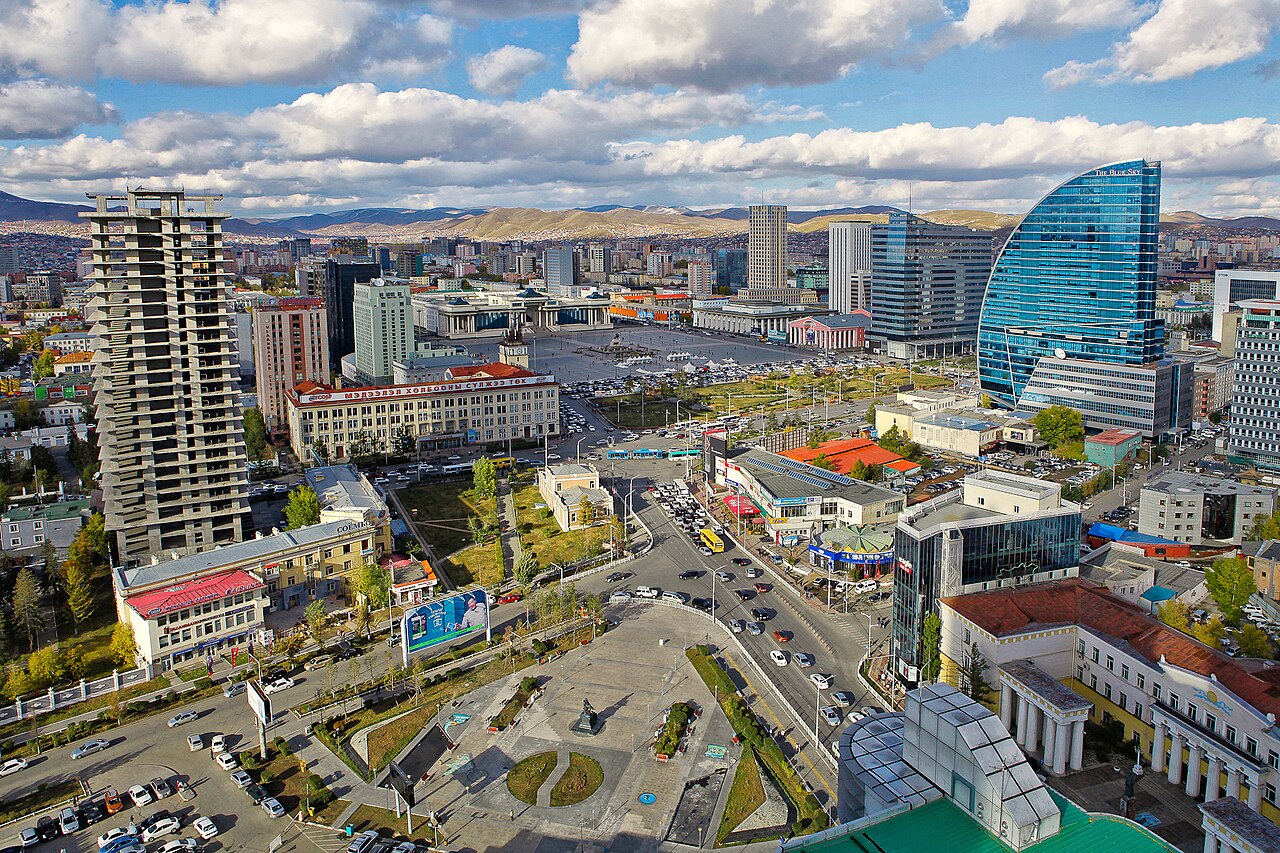
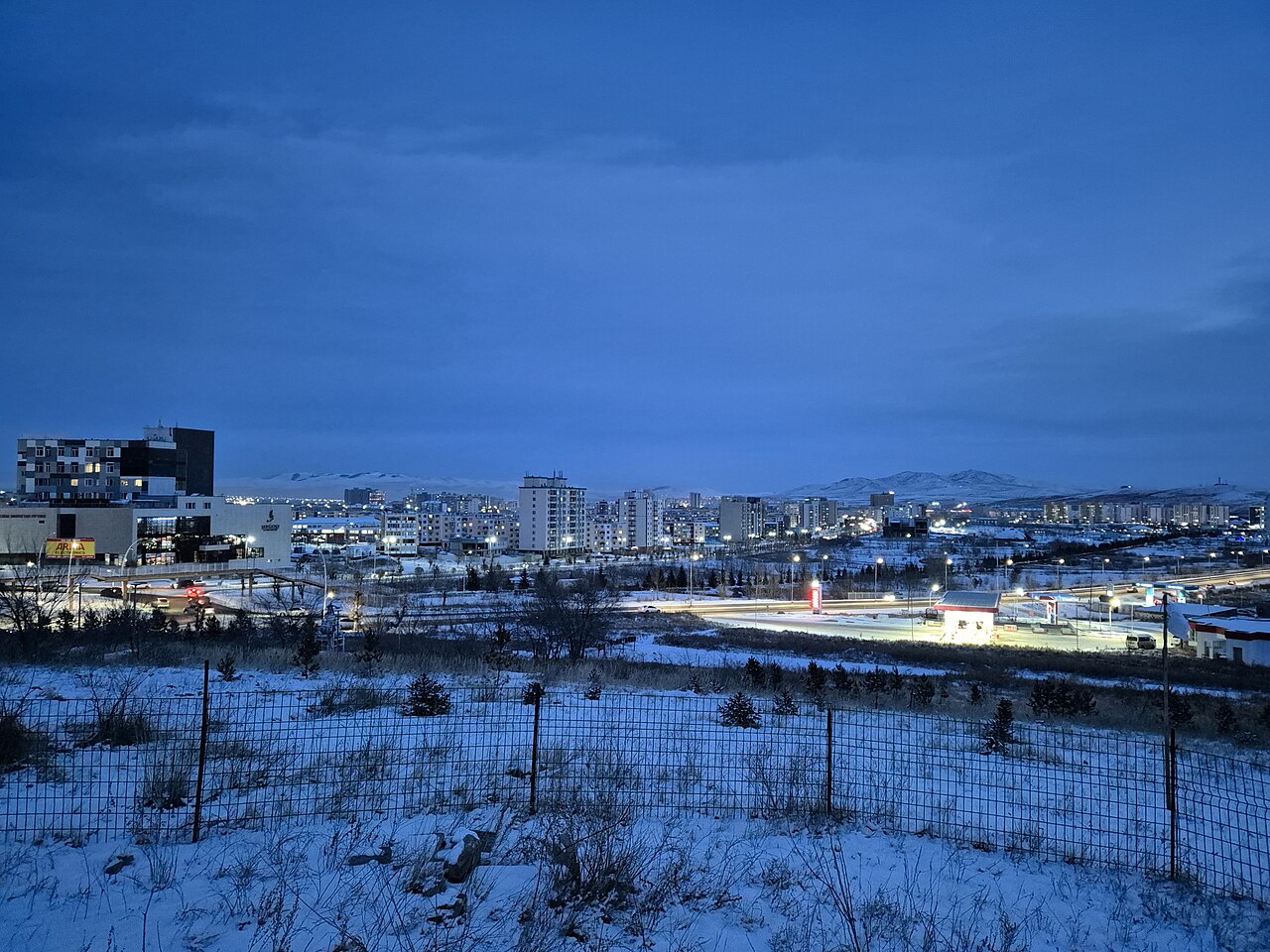
The capital, whose name means 'Red Hero'; it is also written Ulan Bator in older English books. About 1.8 million people live here (2025), around half of all Mongolians. It lies at about 1,350 m in the valley of the Tuul River and is the coldest national capital in the world by average yearly temperature. Around the modern centre spread the ger districts, where many families live in felt tents and small houses.
Sükhbaatar Square and the Government Palace
Gandan Monastery and its giant golden statue of Avalokiteshvara
The second largest city in Mongolia, with about 112,000 people, in a valley between the Selenge and Orkhon rivers about 240 km northwest of Ulaanbaatar in a straight line. Its name means 'precious'. It was founded in 1974 for a huge copper mine that earns a large share of Mongolia's income.
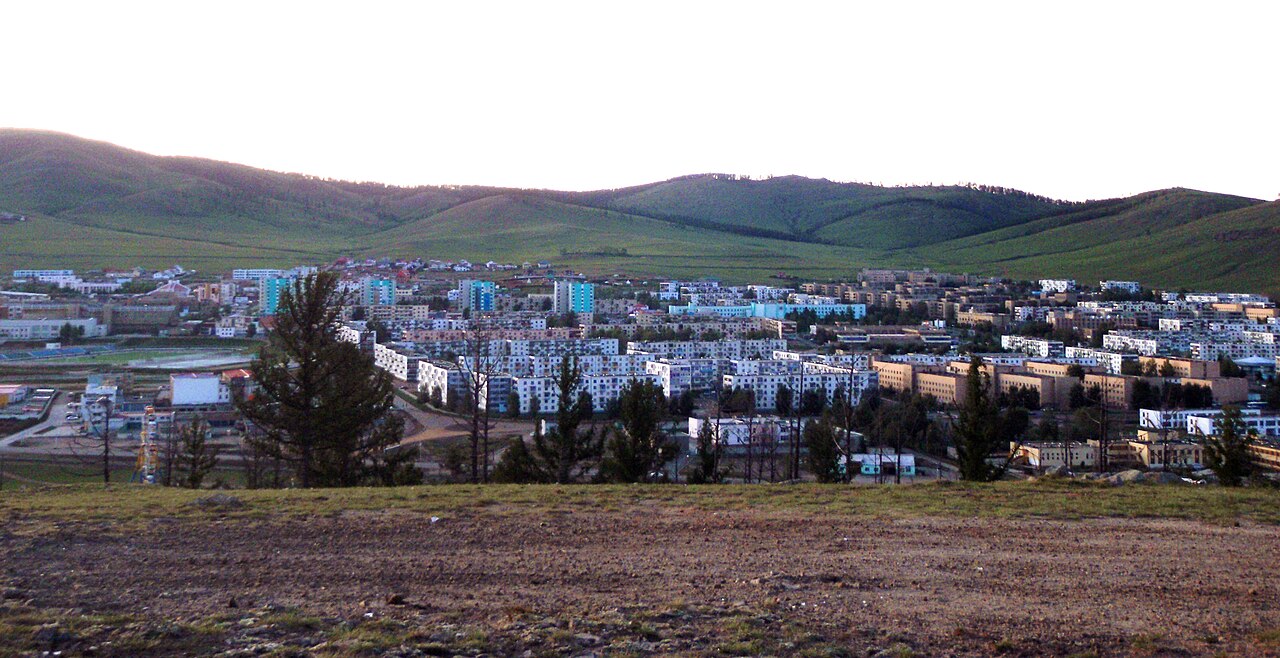
The third largest city in Mongolia, with about 88,000 people (2022). It was founded in 1961 as an industrial centre on the railway between Ulaanbaatar and Russia, about 204 km north of the capital by road, and many of its buildings still show Soviet-era design.
The Trans-Mongolian Railway
A monument to the morin khuur, the horsehead fiddle
The largest city of eastern Mongolia and the capital of Dornod province, on the Kherlen River at about 750 m. It was called Bayan Tümen until 1941, when it was renamed after the communist leader Khorloogiin Choibalsan. Around it stretch the wide grasslands of the eastern steppe.
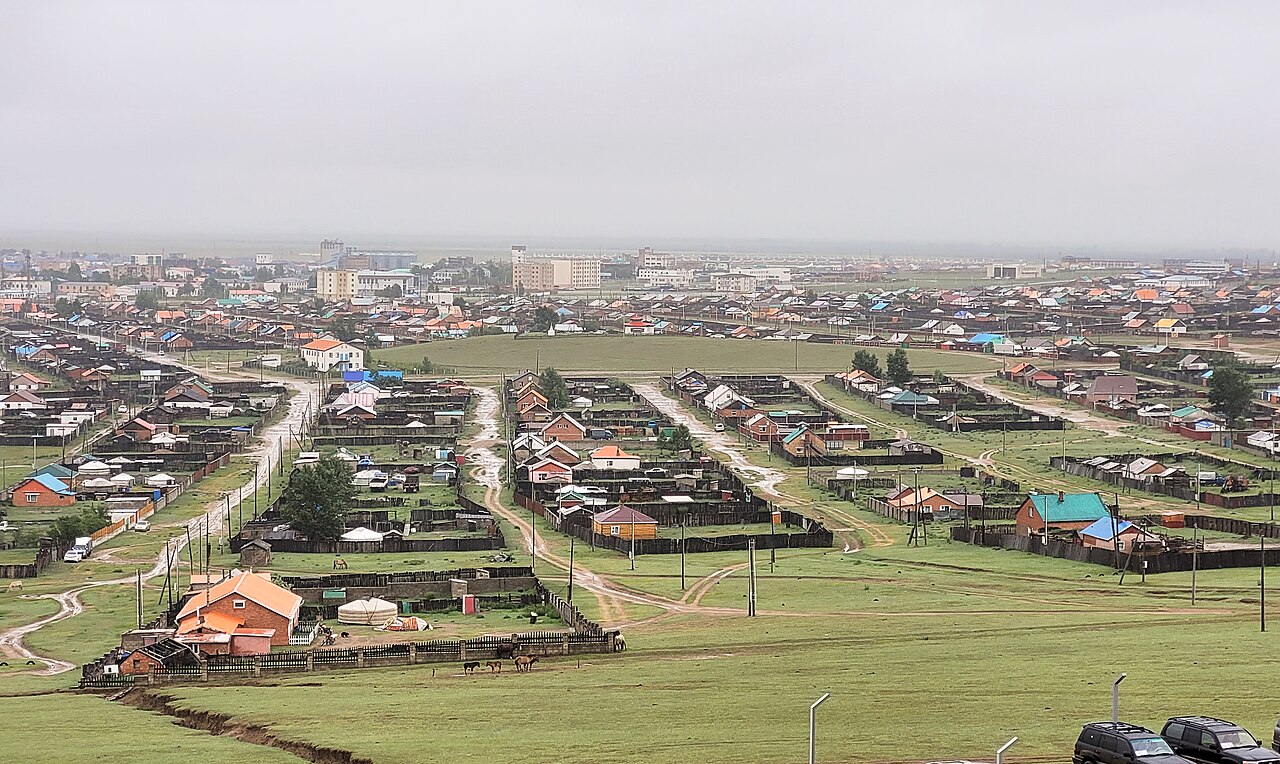
A town of about 47,000 people whose name means 'river'. It is the capital of Khövsgöl province and the usual starting point for trips to Lake Khövsgöl, to the north.
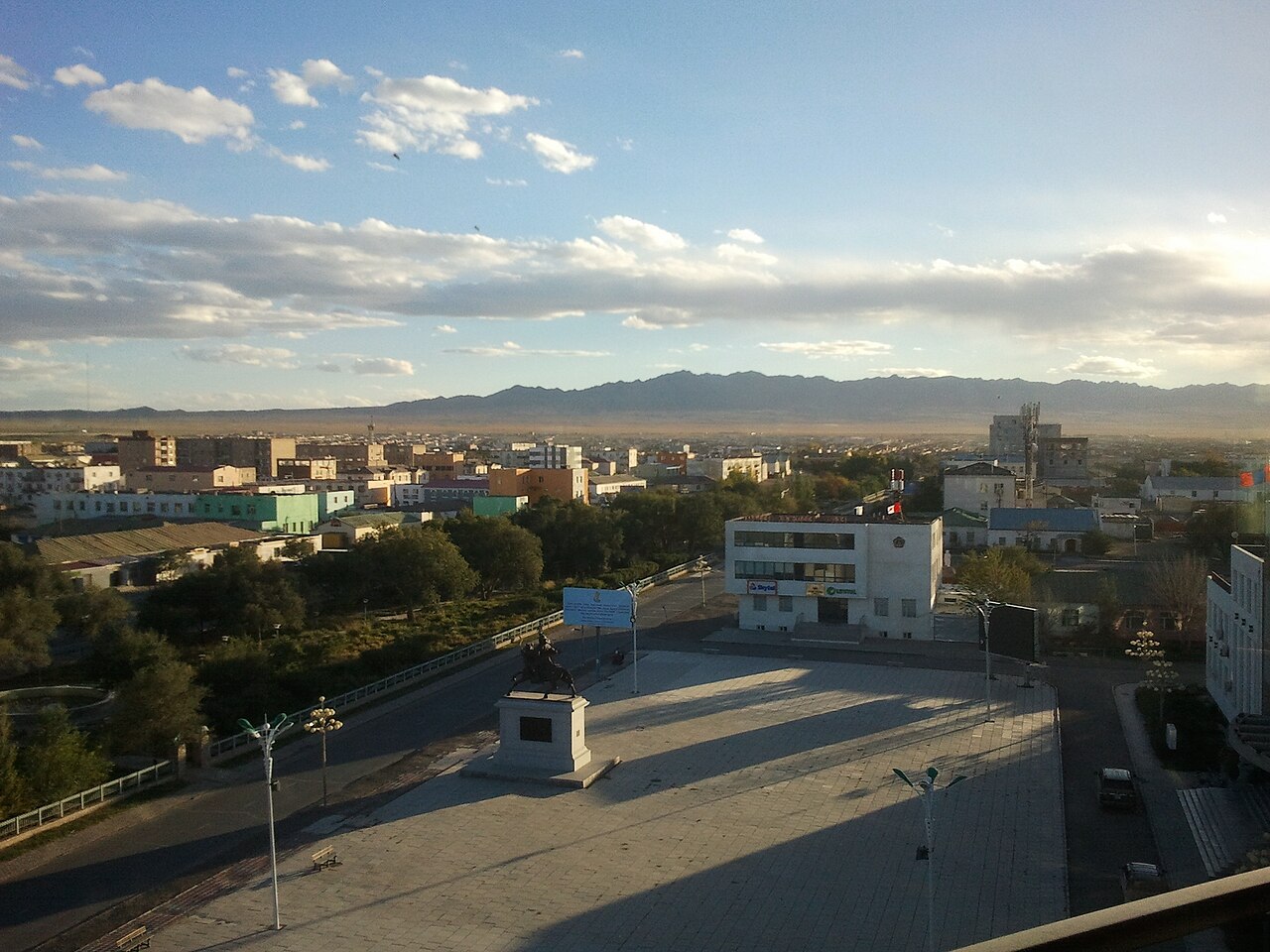
An old fortress town of western Mongolia, formerly spelled Kobdo, at about 1,395 m at the foot of the Altai Mountains. It was founded in 1685 and later became a Qing garrison town. More than ten ethnic groups live in the district around it.
Gateway to the Mongolian Altai
A mix of Mongol, Kazakh and other peoples of the west
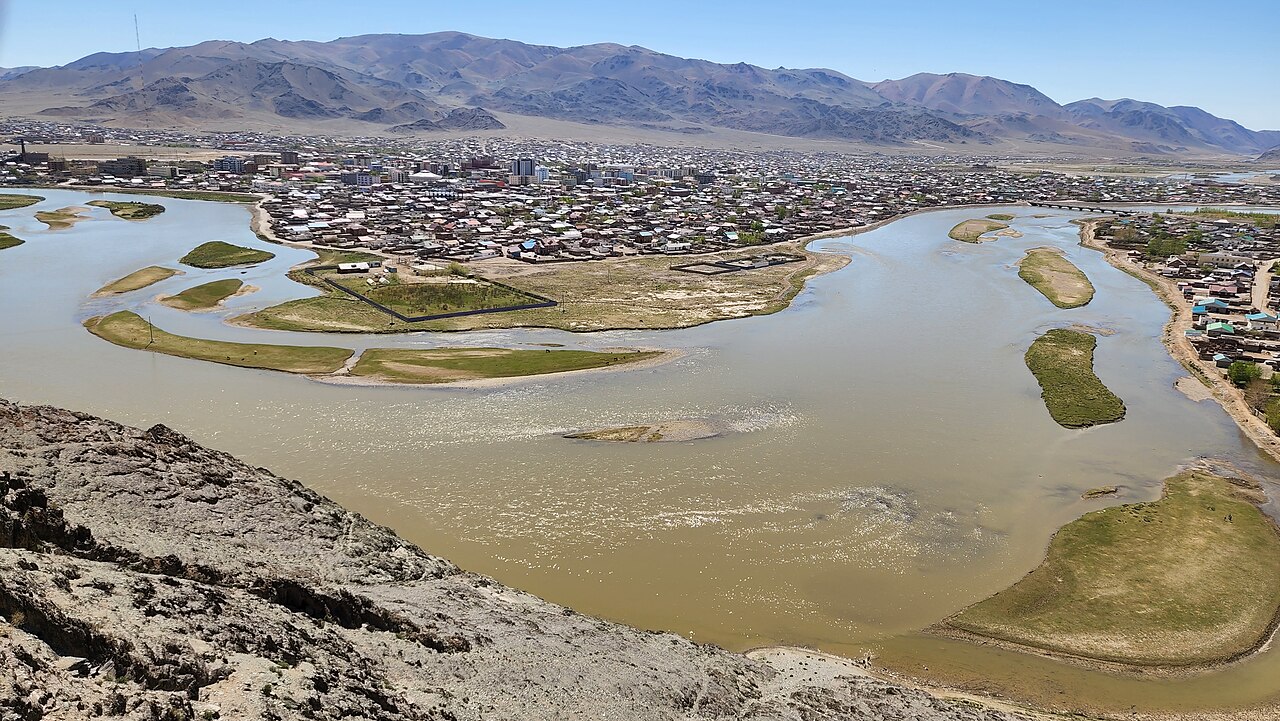
The westernmost provincial capital, on the Khovd River at about 1,710 m, with about 50,000 people (2024). Most people in Bayan-Ölgii province are Kazakhs, and signs, mosques and music here have a Kazakh flavour.
Kazakh eagle hunters and the Golden Eagle Festival
A small town of about 15,000 people (2017) in the Orkhon Valley, next to the ruins of Karakorum, the 13th-century capital of the Mongol Empire. The valley is a UNESCO World Heritage Site.
The main town of the South Gobi, about 540 km south of Ulaanbaatar, with about 33,000 people (2024). It is the base for trips to the dunes, canyons and dinosaur sites of the Gobi.
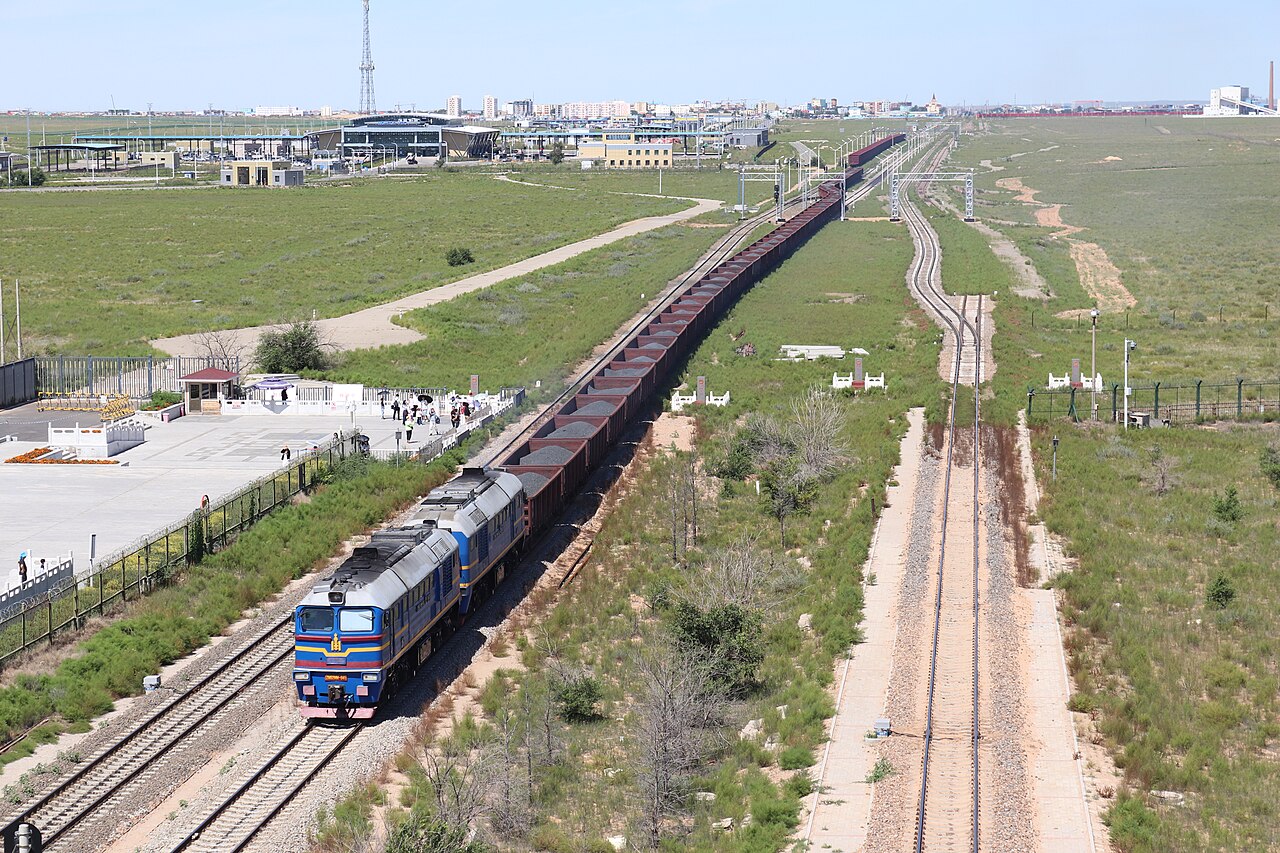
A small town on the border with China, where the Trans-Mongolian Railway leaves Mongolia. Its name means 'the road's gate'. It is a busy crossing for trade with China.
Probably the oldest surviving Buddhist monastery in Mongolia, founded in 1585 next to the ruins of Karakorum and partly built from its stones. A long white wall lined with stupas surrounds its temples; the builders aimed for 108, a sacred number in Buddhism. It is still an active monastery and a museum, and part of the Orkhon Valley Cultural Landscape, a UNESCO World Heritage Site since 2004.
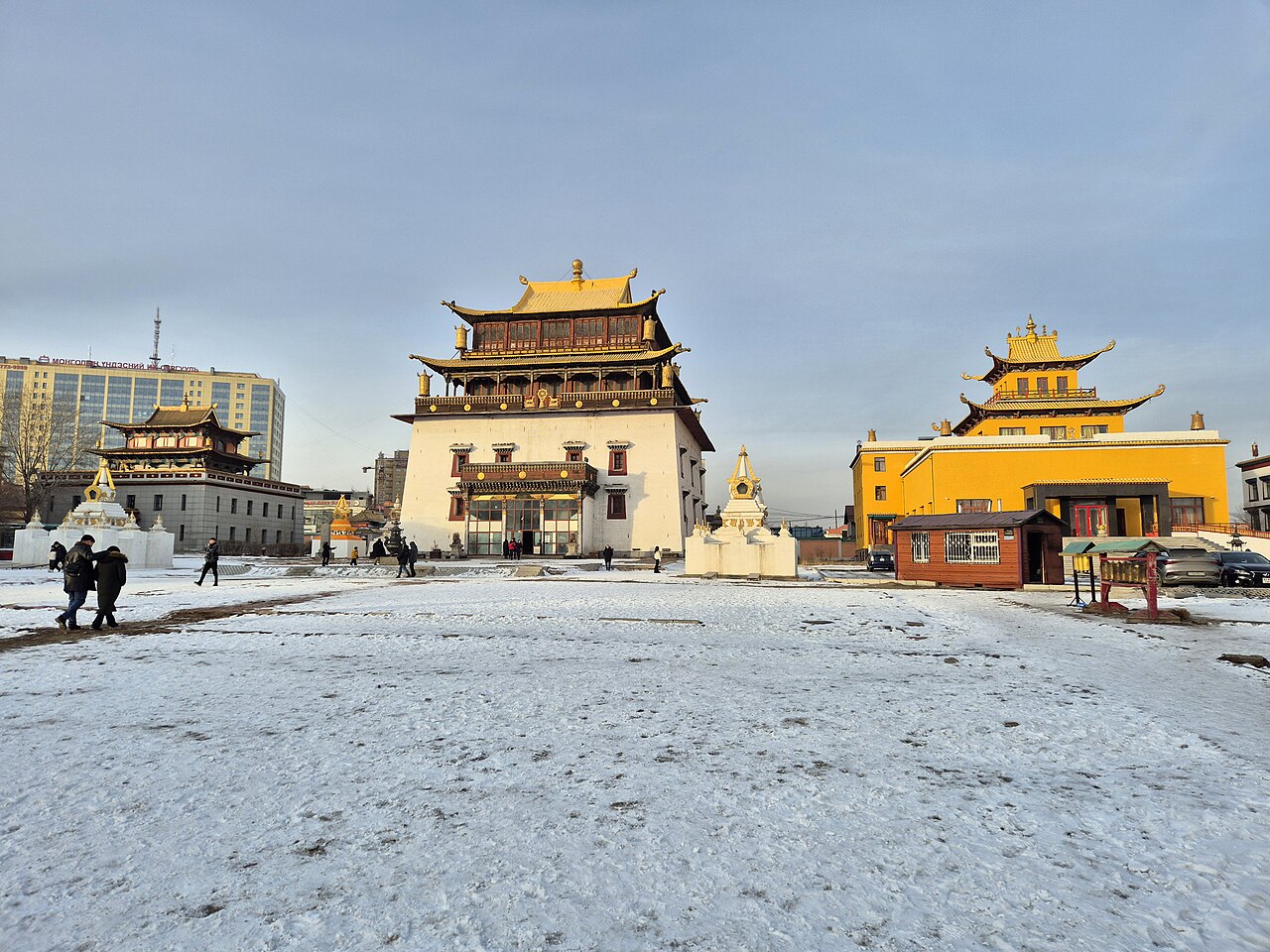
The largest active monastery in Mongolia, founded in 1809. It was closed in 1939 during the communist persecution of religion, then reopened in 1944 and for more than 40 years was the only working monastery in the country. Its main temple holds a golden statue of Avalokiteshvara, the bodhisattva of compassion, 26.5 m high, dedicated in 1996.
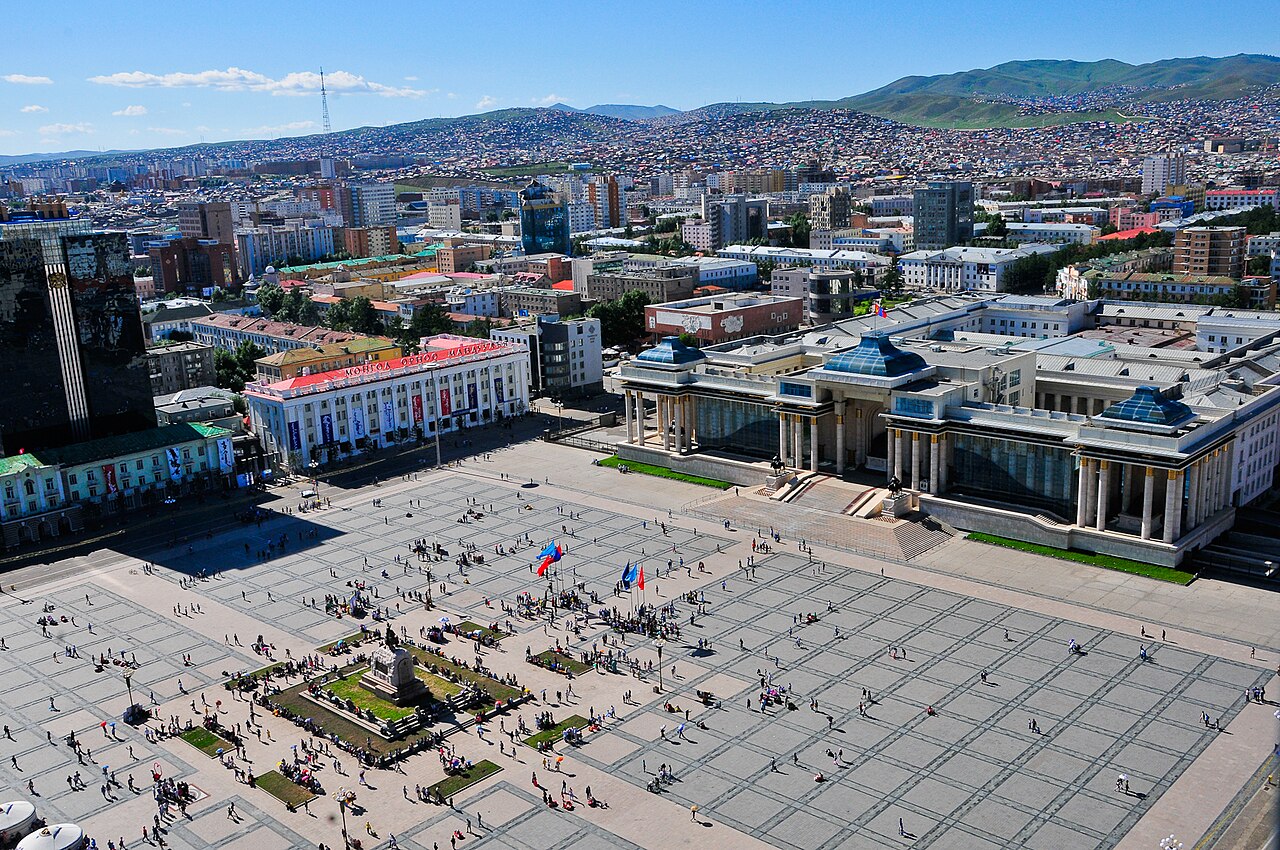
The great central square of the capital, named after the revolutionary hero Damdin Sükhbaatar, whose statue on horseback, made in 1946, stands in the middle. On its north side is the Government Palace, fronted since 2006 by a great colonnade with statues of Genghis Khan, Ögedei Khan and Kublai Khan. The demonstrations and hunger strikes of the peaceful 1990 Democratic Revolution took place here.
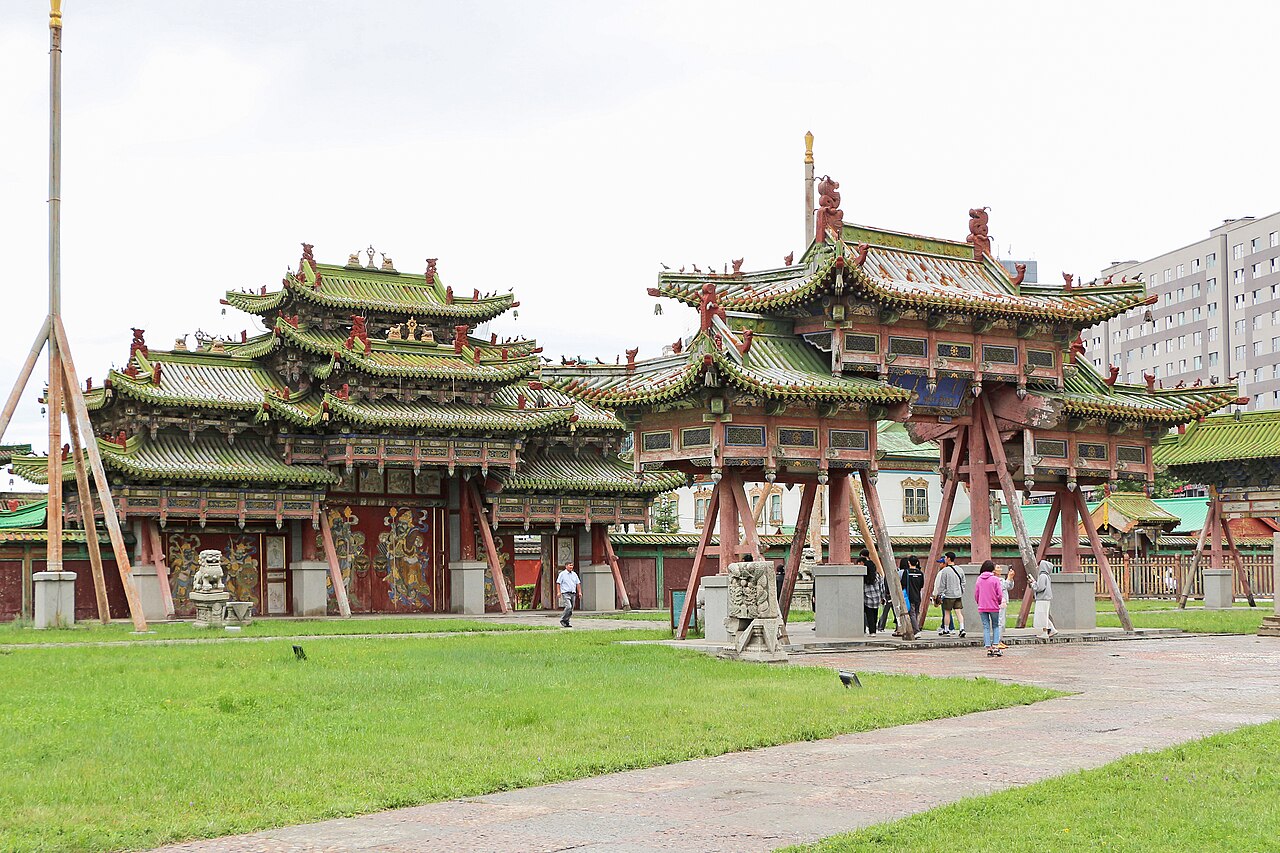
The winter residence of the Bogd Khan, the Buddhist leader who became king of Mongolia in 1911. Its palace complex was built between 1893 and 1903, and the Winter Palace building was added in 1905. It is the only one of his four palaces that survives, and it is now the Bogd Khan Palace Museum, with six temples, his throne and a pair of ceremonial boots given to him by the Russian Tsar Nicholas II.
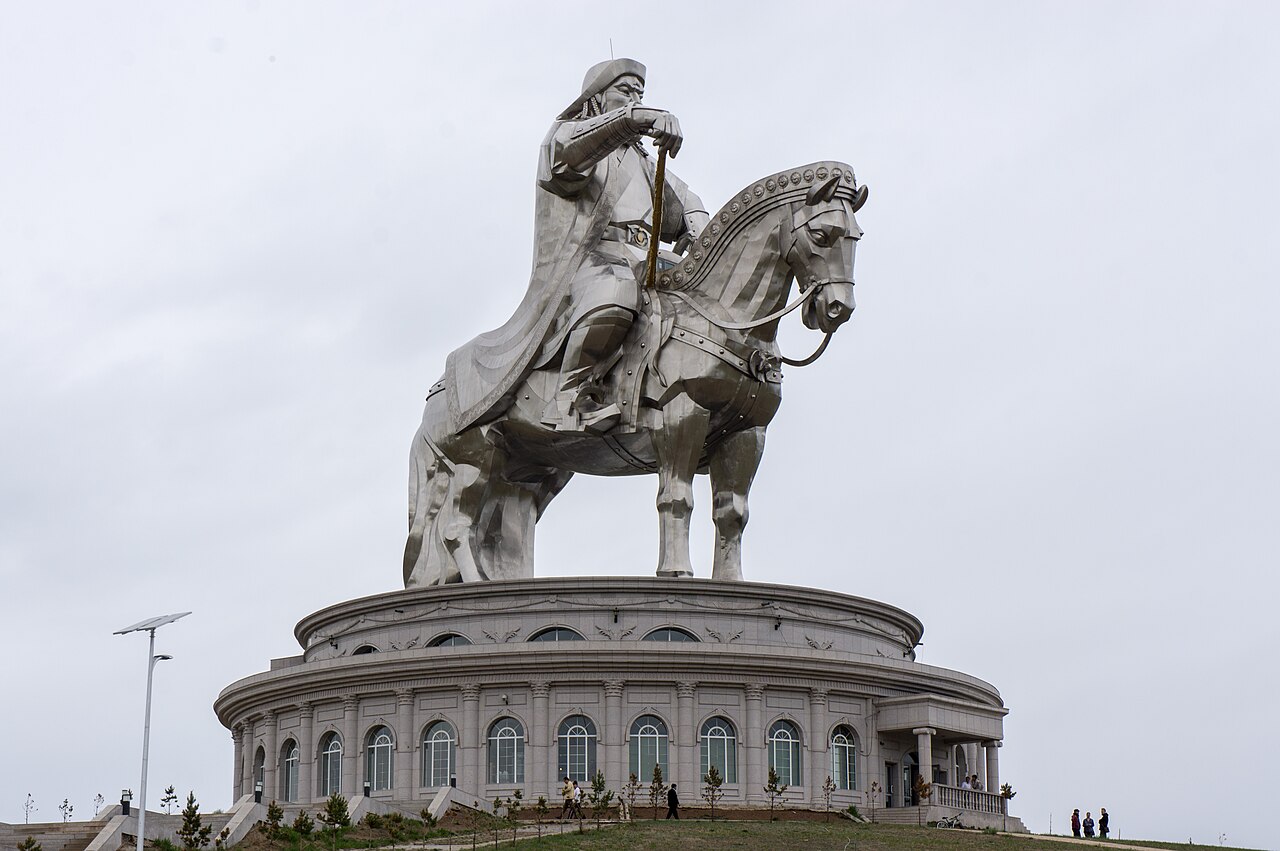
A 40 m stainless steel statue of Genghis Khan on horseback at Tsonjin Boldog, about 54 km east of Ulaanbaatar, near the Tuul River. It was put up in 2008, and as of 2026 it is the tallest equestrian statue in the world. Visitors can walk up through the horse's chest and neck to a viewing platform with wide views of the steppe. Legend says Genghis Khan found a golden whip on this spot.
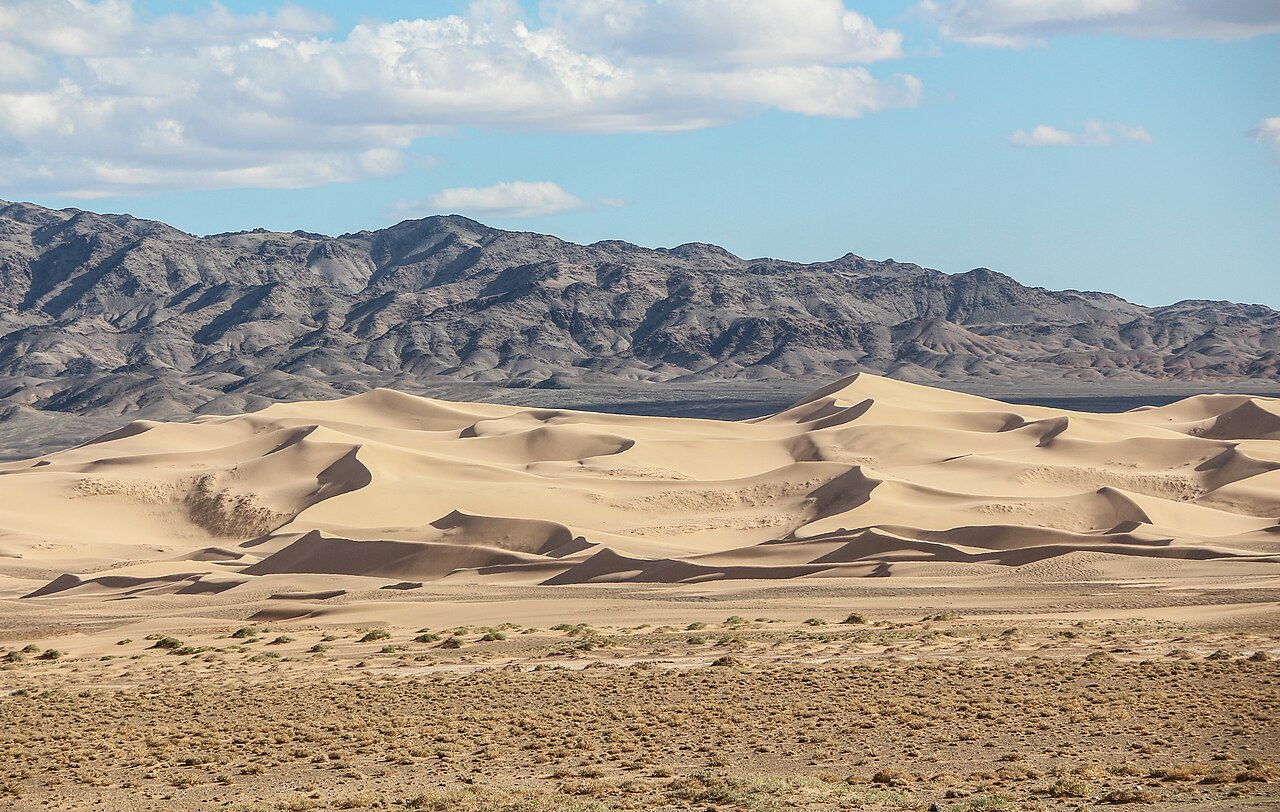
The largest sand dunes in Mongolia, in Gobi Gurvansaikhan National Park, about 180 km west of Dalanzadgad. The dunes run for about 100 km at the foot of the mountains and usually rise to about 80 m. They are called the 'singing sands', because the sand hums and roars when the wind moves it or it slides down the slopes.
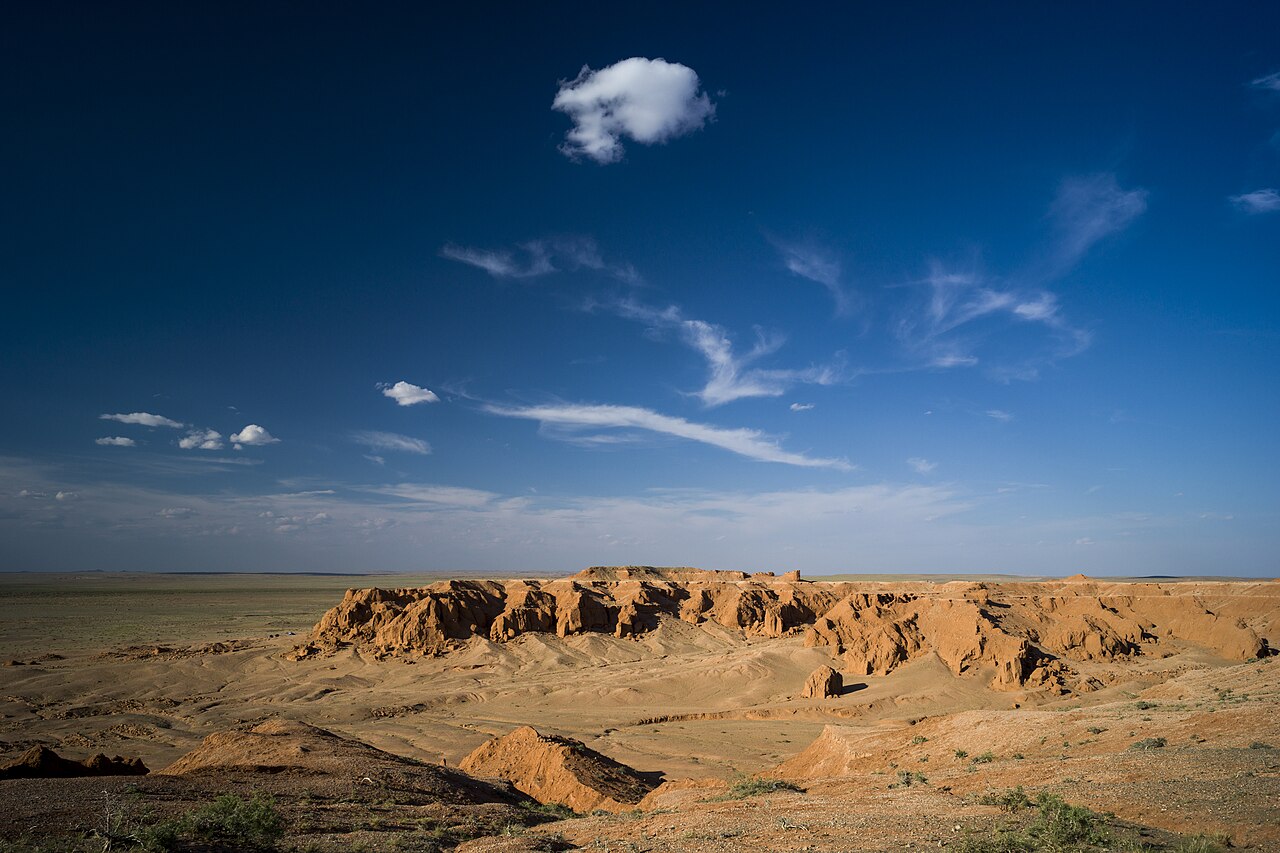
Red and orange sandstone cliffs in the Gobi, named by the American explorer Roy Chapman Andrews, whose expedition found fossil dinosaur eggs here in 1923. Fossils of Velociraptor and Protoceratops have also been found in these rocks. It is illegal to take fossils away.
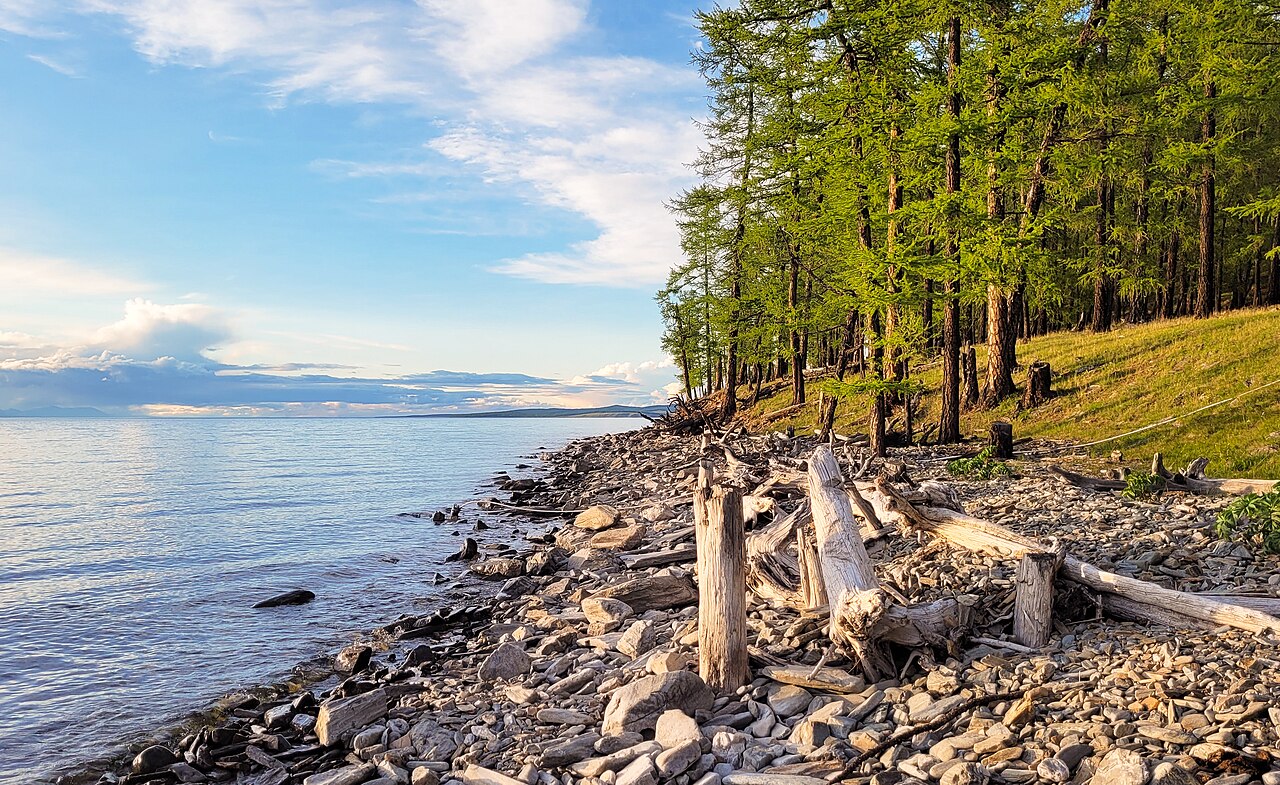
A deep, clear mountain lake near the Russian border, 136 km long and up to 262 m deep, at 1,645 m above sea level. It holds almost 70 percent of Mongolia's fresh water. Its clear water and the forests around it make it a favourite summer destination. The pin marks the lake, north of Mörön.
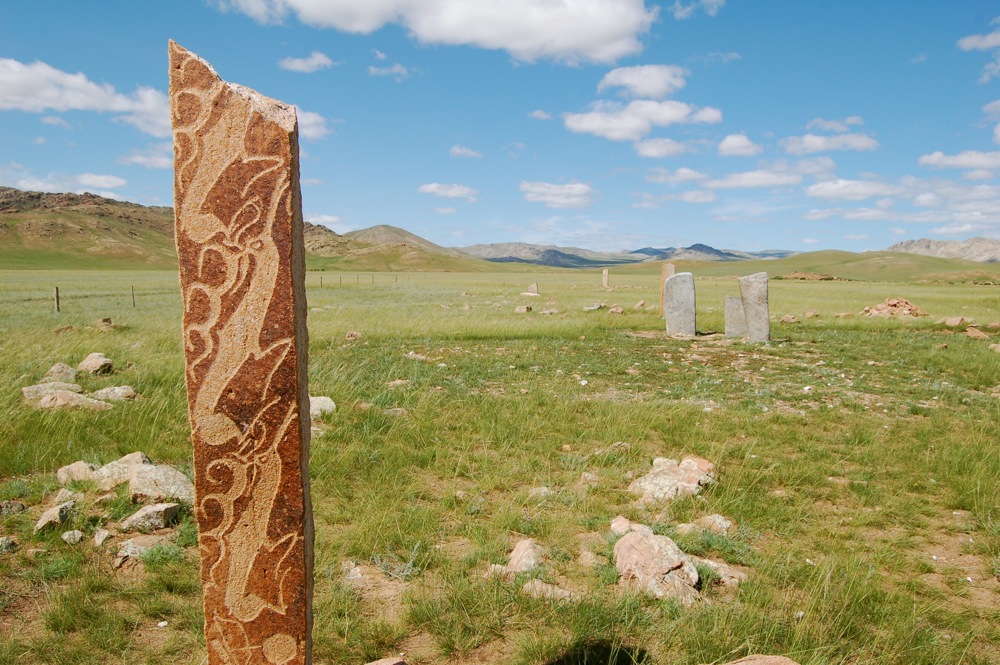
A group of standing stones about 20 km west of Mörön, carved about 3,000 years ago with deer, other animals and human faces. They belong to the Deer Stone Monuments and Related Bronze Age Sites, a UNESCO World Heritage Site since 2023.
A large Buddhist monastery in a quiet valley of Selenge province, far from any town. It was built between 1727 and 1736 by order of the Qing emperor as a resting place for Zanabazar, the first spiritual head of the Khalkha Mongols.
As of 2026, Mongolia is the most sparsely populated sovereign country in the world, with only about two people for every square kilometre.
02
Ulaanbaatar is the coldest national capital in the world by average yearly temperature. In January the temperature can fall to between minus 36 and minus 40 °C.
03
The Mongol Empire, founded by Genghis Khan in 1206, was the largest contiguous land empire in history. At its height it stretched from the Sea of Japan to Eastern Europe.
04
Mongolia is the second largest landlocked country in the world, after Kazakhstan.
05
Mongolia has far more farm animals than people. At the end of 2025 the national count found about 58 million sheep, goats, cattle, horses and camels, around 16 for every person.
06
The traditional Mongolian script is written from top to bottom, in columns that run from left to right. It came from the Old Uyghur alphabet in the time of Genghis Khan and, as of 2026, is used alongside Cyrillic in official documents.
07
Przewalski's horse, called takhi in Mongolian, disappeared from the wild in 1969. Horses bred in zoos were brought back to Mongolia from 1992, and herds now live again in Hustai National Park and other reserves.
08
In 1923 an American expedition led by Roy Chapman Andrews found fossil dinosaur eggs at the Flaming Cliffs in the Gobi, which made the site famous around the world.
09
The morin khuur, the horsehead fiddle, has only two strings, traditionally made of horse hair, and a scroll carved like a horse's head. It is on UNESCO's list of the intangible cultural heritage of humanity.
10
At the Naadam festival in July, the horse races are ridden by children, usually between 5 and 13 years old, across open country. Naadam was added to UNESCO's intangible heritage list in 2010.
11
Lake Khövsgöl holds almost 70 percent of Mongolia's fresh water and about 0.4 percent of all the fresh water in the world.
12
Mongolia's domestic camels are Bactrian camels, with two humps. They cope with the Gobi's heat in summer and its bitter cold in winter.
13
In July 2026 UNESCO added the Cemetery Complexes of the Xiongnu Nobility, the tombs of the nomad empire that ruled the steppe more than 2,000 years ago, to the World Heritage List. As of 2026, Mongolia has seven World Heritage Sites.
14
Despite its long, harsh winters, Mongolia has more than 250 sunny days a year.
Mongolia's climate is extreme. Summer days can be hot, but nights on the steppe and in the mountains are cold even in July, and in Ulaanbaatar winter temperatures can fall below minus 30 °C. The most popular months are May to September; bring warm layers, a hat and sunscreen whatever the season.
Book early for Naadam
The national Naadam festival is held from 11 to 13 July, with wrestling, horse racing and archery in Ulaanbaatar and smaller Naadams all over the country. Hotels, flights and tours fill up months ahead, and the crowds are huge, so book well in advance and keep an eye on your belongings.
Check the entry rules before you go
As of September 2026, British citizens can visit Mongolia for tourism for up to 30 days without a visa until 31 December 2026, and visitors must be registered with the immigration authorities (hotels usually do this). Your passport should be valid for at least six months after arrival. Rules differ by nationality, so check before you travel.
Travel with a driver
Distances are huge and many country roads are dirt tracks with few signs. Most visitors travel in a four-wheel-drive vehicle with a local driver or join a tour. Avoid driving at night. The Trans-Mongolian Railway links Ulaanbaatar with Russia and China and is a slow but memorable way to arrive.
Carry cash outside the capital
Cards are widely accepted in Ulaanbaatar, but in the countryside you will need cash in tögrög. Change or withdraw money in the capital before a long trip.
Look after your health
Medical care outside Ulaanbaatar is limited, so bring your regular medicines and a first aid kit, and make sure your travel insurance covers evacuation by air. Air pollution in Ulaanbaatar can be very bad in winter, especially for people with breathing problems. Keep away from marmots, which can carry plague, and from dogs, which can carry rabies.
Visiting a ger
Call out 'Nokhoi khor!' ('Hold the dog!') as you approach. Inside, do not step on the threshold, do not walk between the two central posts or lean on them, and accept tea and food with your right hand. Try at least a little of what you are offered.
 China
China Russia