Ecuador trivia: 49 questions and answers
The country at a glance
What does the name 'Ecuador' mean in Spanish?
- A. Equator
- B. Volcano
- C. Green land
- D. Silver river
Show the answer
Equator. Ecuador means 'Equator'. The line runs through the northern edge of Quito's metropolitan area.
Which two countries share a land border with Ecuador?
- A. Colombia and Peru
- B. Colombia and Venezuela
- C. Peru and Bolivia
- D. Brazil and Peru
Show the answer
Colombia and Peru. Colombia and Peru are Ecuador's only neighbours: Colombia to the north, Peru to the east and south.
Which currency has Ecuador used since 2000?
- A. The United States dollar
- B. The sucre
- C. The Peruvian sol
- D. The Colombian peso
Show the answer
The United States dollar. The United States dollar replaced the sucre in 2000 and has been Ecuador's only official currency since then.
What is the highest mountain in Ecuador?
- A. Chimborazo
- B. Cotopaxi
- C. Tungurahua
- D. Pichincha
Show the answer
Chimborazo. Chimborazo, 6,263 m, is Ecuador's highest mountain. Cotopaxi, 5,897 m, is second.
Kichwa, spoken in Ecuador, is a form of Quechua, the language of the Incas.
True or false?
Show the answer
True. True. Kichwa belongs to the Quechuan languages and is the most widely spoken Indigenous language in Ecuador.
History
Which general won the Battle of Pichincha in 1822, freeing the lands that became Ecuador?
- A. Antonio José de Sucre
- B. Francisco Pizarro
- C. Eloy Alfaro
- D. Juan José Flores
Show the answer
Antonio José de Sucre. Antonio José de Sucre defeated the royalist army on the slopes of Pichincha above Quito on 24 May 1822.
Which state did Ecuador leave in 1830 to become an independent republic?
- A. Gran Colombia
- B. The Viceroyalty of Peru
- C. The Inca Empire
- D. The Confederation of Peru and Bolivia
Show the answer
Gran Colombia. Gran Colombia, Simón Bolívar's republic, lost its southern district in 1830, when Ecuador became independent.
The government set up in Quito on 10 August 1809 lasted for about twenty years.
True or false?
Show the answer
False. False. It lasted only about two months, but it inspired the independence movements of Spanish America.
Charles Darwin visited the Galápagos Islands on the voyage of HMS Beagle.
True or false?
Show the answer
True. True. The Beagle reached the Galápagos in September 1835 and stayed five weeks.
What was the name of Ecuador's own currency before the dollar?
- A. The sucre
- B. The bolívar
- C. The inti
- D. The austral
Show the answer
The sucre. The sucre, named after Antonio José de Sucre, was Ecuador's currency from 1884 until 2000.
What did Ecuador's 2008 constitution give legal rights to, for the first time in any constitution?
- A. Nature
- B. Foreign tourists
- C. The Catholic Church
- D. Volcano observatories
Show the answer
Nature. Nature. The 2008 constitution recognises the rights of nature, inspired by the Andean idea of Pachamama, Mother Earth.
Food and drink
Encebollado, often called Ecuador's national dish, is mainly made with which fish?
- A. Tuna
- B. Salmon
- C. Trout
- D. Cod
Show the answer
Tuna. Tuna. Encebollado is usually made with albacore, a kind of tuna, with cassava and pickled red onion.
Ecuadorian prawn ceviche is usually made with cooked prawns.
True or false?
Show the answer
True. True. Unlike Peruvian ceviche, Ecuadorian ceviche is usually made with cooked seafood.
When is fanesca, the thick soup of grains, beans and fish, traditionally eaten?
- A. Holy Week, before Easter
- B. Christmas Eve
- C. New Year's Day
- D. Independence Day
Show the answer
Holy Week, before Easter. Holy Week, before Easter. Fanesca is traditionally made only once a year, for Good Friday.
Colada morada, the purple corn drink, is served with bread rolls shaped like what?
- A. A baby
- B. A condor
- C. A tortoise
- D. A volcano
Show the answer
A baby. A baby. The rolls are called guaguas de pan, from the Kichwa word for baby, and are eaten on 2 November, All Souls' Day.
Llapingachos are patties made mainly of what?
- A. Potato
- B. Green plantain
- C. Maize
- D. Rice
Show the answer
Potato. Potato. Llapingachos are potato patties stuffed with cheese and served with peanut sauce.
Encocado, from the province of Esmeraldas, is fish or prawns cooked in a sauce made from what?
- A. Coconut
- B. Peanuts
- C. Tomato
- D. Cheese
Show the answer
Coconut. Coconut. Its name comes from 'coco', and the dish goes back to Africans who settled on the Esmeraldas coast.
Cuy, eaten in the Andes of Ecuador, is roast guinea pig.
True or false?
Show the answer
True. True. Guinea pigs were first kept for food in the Andes thousands of years ago, and cuy is a dish for special occasions.
Helado de paila is a fruit sorbet stirred by hand in a large pan over ice. Which city is it most associated with?
- A. Ibarra
- B. Guayaquil
- C. Loja
- D. Tena
Show the answer
Ibarra. Ibarra, in the northern Andes. It is said the first helado de paila was made there with snow and ice from the Imbabura volcano.
Cities
Which Andean city is famous for weaving the straw hats known as 'Panama hats'?
- A. Cuenca
- B. Otavalo
- C. Tena
- D. Guayaquil
Show the answer
Cuenca. Cuenca. The straw hats known worldwide as Panama hats are made there by local artisans.
Otavalo is known for its big Saturday market of woven textiles.
True or false?
Show the answer
True. True. The Otavalo people are famous weavers, and the largest market is held on Saturday around the Plaza de los Ponchos.
Which town, whose name means 'baths', is known for hot springs and as the 'Gateway to the Amazon'?
- A. Baños
- B. Latacunga
- C. Loja
- D. Puerto Ayora
Show the answer
Baños. Baños, full name Baños de Agua Santa, lies at the foot of the Tungurahua volcano.
Which town is the capital of Galápagos Province?
- A. Puerto Baquerizo Moreno
- B. Puerto Ayora
- C. Guayaquil
- D. Tena
Show the answer
Puerto Baquerizo Moreno. Puerto Baquerizo Moreno, on San Cristóbal Island, is the capital. Puerto Ayora is the largest town.
Landmarks
The summit of which Ecuadorian mountain is the point on Earth's surface farthest from the planet's centre?
- A. Chimborazo
- B. Cotopaxi
- C. Pichincha
- D. Quilotoa
Show the answer
Chimborazo. Chimborazo. Because the Earth bulges at the equator, its summit is farther from the centre than the top of Everest.
Cotopaxi is an extinct volcano that has not erupted for thousands of years.
True or false?
Show the answer
False. False. Cotopaxi is one of the highest active volcanoes in the world, and an eruption began in October 2022.
What is Quilotoa?
- A. A lake inside a volcanic crater
- B. A colonial church in Quito
- C. A waterfall near Baños
- D. A beach in the Galápagos
Show the answer
A lake inside a volcanic crater. A lake inside a volcanic crater. Quilotoa's green lake is 250 m deep and fills a crater 3 km wide.
What does the monument at the Middle of the World City, north of Quito, mark?
- A. The equator
- B. The highest point in Ecuador
- C. The border with Colombia
- D. Where Quito was founded
Show the answer
The equator. The equator. The 30 m monument honours the French Geodesic Mission of 1736.
The historic centre of Quito became a UNESCO World Heritage Site in 1978.
True or false?
Show the answer
True. True. Quito and Kraków were the first two cities declared World Cultural Heritage Sites, in 1978.
What is the Pailón del Diablo, the 'Devil's Cauldron'?
- A. A waterfall
- B. A volcano crater
- C. A cave
- D. A canyon bridge
Show the answer
A waterfall. A waterfall. The Río Verde drops about 80 m into a rocky basin near Baños.
Fun facts
In which country does the 'Panama hat' really originate?
- A. Ecuador
- B. Panama
- C. Colombia
- D. Cuba
Show the answer
Ecuador. Ecuador. The hats got their name because they were shipped through Panama on their way to the rest of the world.
The Galápagos Islands are named after which animal?
- A. The giant tortoise
- B. The marine iguana
- C. The sea lion
- D. The blue-footed booby
Show the answer
The giant tortoise. The giant tortoise. 'Galápago' is an old Spanish word for a tortoise.
Lonesome George was the last known giant tortoise from Pinta Island.
True or false?
Show the answer
True. True. He lived at the Charles Darwin Research Station until his death in 2012.
Archaeologists found that people in southeast Ecuador grew which plant at least 5,300 years ago?
- A. Cacao
- B. Coffee
- C. Wheat
- D. Sugar cane
Show the answer
Cacao. Cacao, the source of chocolate. It was grown by the Mayo-Chinchipe people more than a thousand years before the first traces of it in Mexico and Central America.
Between 2016 and 2018, about what share of the world's exported bananas came from Ecuador?
- A. About 36 percent
- B. About 5 percent
- C. About 12 percent
- D. About 70 percent
Show the answer
About 36 percent. About 36 percent. Bananas are one of Ecuador's most important exports.
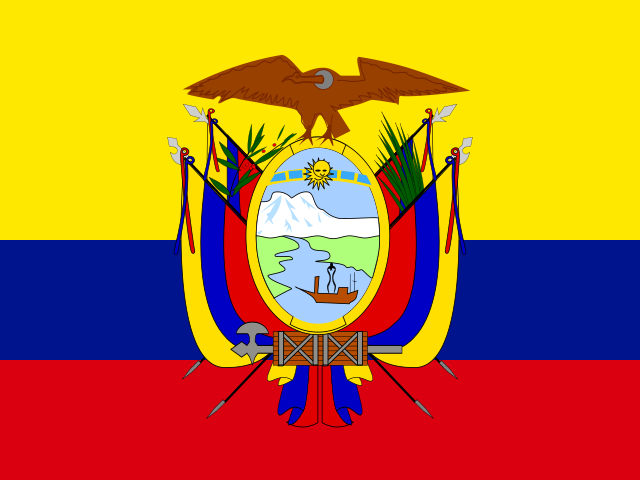
Which bird is Ecuador's national bird and sits on top of its coat of arms?
- A. The Andean condor
- B. The blue-footed booby
- C. The hummingbird
- D. The Galápagos penguin
Show the answer
The Andean condor. The Andean condor, shown with spread wings above the snowy peak of Chimborazo.
In Ecuador, voting is voluntary for literate citizens aged 18 to 65.
True or false?
Show the answer
False. False. Voting is compulsory for literate citizens aged 18 to 65, and optional for others over 16.
Ecuador's yellow, blue and red flag looks very similar to the flags of which two countries?
- A. Colombia and Venezuela
- B. Peru and Bolivia
- C. Spain and Portugal
- D. Chile and Argentina
Show the answer
Colombia and Venezuela. Colombia and Venezuela, because all three were once part of Gran Colombia.
Words
In Ecuador, what does 'ñaño' mean?
- A. Brother
- B. Grandfather
- C. Neighbour
- D. Teacher
Show the answer
Brother. Brother. 'Ñaño' is a word from Kichwa, used all over Ecuador; 'ñaña' means sister.
In Ecuador, what is a 'guagua'?
- A. A baby or small child
- B. A hat
- C. A guinea pig
- D. A market
Show the answer
A baby or small child. A baby or small child, from the Kichwa word 'wawa'.
What are 'chifles', served with encebollado?
- A. Crisp green-plantain chips
- B. Pickled onions
- C. Toasted maize kernels
- D. Cheese rolls
Show the answer
Crisp green-plantain chips. Crisp green-plantain chips, thin and salty.
'La cuenta' means the menu.
True or false?
Show the answer
False. False. 'La cuenta' means the bill. The menu is 'la carta' or 'el menú'.
Phrases
What would you say to greet someone at 3 in the afternoon?
- A. Buenas tardes
- B. Buenos días
- C. Buenas noches
- D. Buen provecho
Show the answer
Buenas tardes. Buenas tardes, good afternoon, is used from about noon until it gets dark.
What does '¿Cuánto cuesta?' mean?
- A. How much is it?
- B. Where is it?
- C. What time is it?
- D. Is it spicy?
Show the answer
How much is it?. How much is it? You will use it in shops and markets.
Which phrase asks someone to call you a taxi?
- A. ¿Me puede llamar un taxi, por favor?
- B. ¿Dónde está el baño?
- C. Agua sin hielo, por favor
- D. La cuenta, por favor
Show the answer
¿Me puede llamar un taxi, por favor?. ¿Me puede llamar un taxi, por favor? It is useful at hotels and restaurants, because hailing taxis in the street is not advised.
Local customs and tips
The UK government advises visitors to Ecuador to hail taxis in the street rather than book them.
True or false?
Show the answer
False. False. Many express kidnappings start with taxis hailed in the street. Book a registered taxi through your hotel or a radio taxi company.
What is the safest water to drink in Ecuador?
- A. Bottled, boiled or filtered water
- B. Tap water in big cities
- C. Tap water with ice
- D. Any water in restaurants
Show the answer
Bottled, boiled or filtered water. Bottled, boiled or filtered water. Also avoid ice in drinks.
What must foreign tourists buy at the departure airport before flying to the Galápagos?
- A. A transit control card
- B. A fishing licence
- C. A diving permit
- D. A return bus ticket
Show the answer
A transit control card. A transit control card. Travel health insurance is also mandatory for foreign tourists.
Which number does the UK government's travel advice tell you to call for an ambulance in Ecuador?
- A. 911
- B. 999
- C. 000
- D. 15
Show the answer
911. 911. Call it and ask for an ambulance. Ecuador's emergency service is known as ECU 911.
As of September 2026, the UK government advises against non-essential travel to Guayas province, which includes Guayaquil.
True or false?
Show the answer
True. True. As of September 2026 the advice covers seven coastal provinces, including Guayas, and areas near the Colombian border.
Answer key
The country at a glance
- A. Equator
- A. Colombia and Peru
- A. The United States dollar
- A. Chimborazo
- True
History
- A. Antonio José de Sucre
- A. Gran Colombia
- False
- True
- A. The sucre
- A. Nature
Food and drink
- A. Tuna
- True
- A. Holy Week, before Easter
- A. A baby
- A. Potato
- A. Coconut
- True
- A. Ibarra
Cities
- A. Cuenca
- True
- A. Baños
- A. Puerto Baquerizo Moreno
Landmarks
- A. Chimborazo
- False
- A. A lake inside a volcanic crater
- A. The equator
- True
- A. A waterfall
Fun facts
- A. Ecuador
- A. The giant tortoise
- True
- A. Cacao
- A. About 36 percent
- A. The Andean condor
- False
- A. Colombia and Venezuela
Words
- A. Brother
- A. A baby or small child
- A. Crisp green-plantain chips
- False
Phrases
- A. Buenas tardes
- A. How much is it?
- A. ¿Me puede llamar un taxi, por favor?
Local customs and tips
- False
- A. Bottled, boiled or filtered water
- A. A transit control card
- A. 911
- True
More about Ecuador
- The trip to EcuadorMap, story, food, phrases and a friendly quiz.
- Ecuador word searchCities and dishes in large print.
- Ecuadorean words crosswordLearn a few words while you solve it.
- Colour the flag of EcuadorPrint it or colour it in on the screen.
- Ecuadorean rootsA family guide: history, recipes and words for the grandchildren.
- Before you goPhrases, customs and tips for travellers.
- Printable packLarge print, with a quiz and answers.