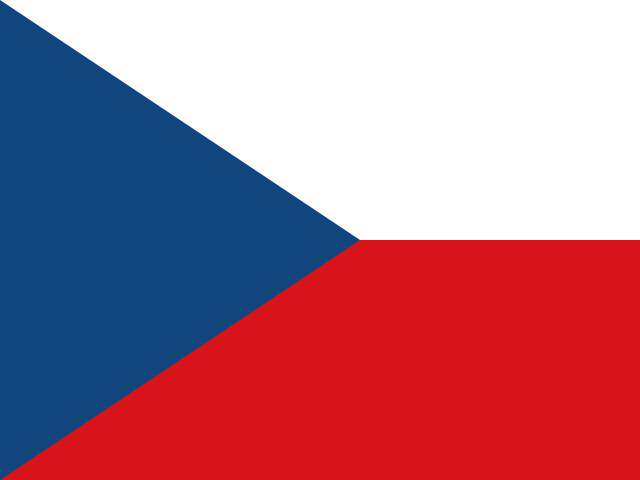
Czechia trivia: 47 questions and answers
The country at a glance
What is the capital of Czechia?
- A. Prague
- B. Brno
- C. Ostrava
- D. Plzeň
Show the answer
Prague. Prague is the capital and by far the largest city, home to about 1.4 million people on the Vltava river.
Which currency do people pay with in Czechia?
- A. The Czech koruna
- B. The euro
- C. The złoty
- D. The forint
Show the answer
The Czech koruna. The Czech koruna (Kč) has been the currency since 1993. Czechia is in the European Union but has not adopted the euro.
What is the highest mountain in Czechia?
- A. Sněžka
- B. Říp
- C. Ještěd
- D. Triglav
Show the answer
Sněžka. Sněžka, 1,603 m, in the Giant Mountains on the border with Poland, is the highest mountain in Czechia. Říp is a 461 m hill from the legend of forefather Čech, and Triglav is in Slovenia.
Czechia shares a land border with Hungary.
True or false?
Show the answer
False. False. Czechia borders Germany, Poland, Slovakia and Austria. Slovakia lies between Czechia and Hungary.
Which is the longest river in Czechia, flowing through Prague?
- A. The Vltava
- B. The Danube
- C. The Morava
- D. The Oder
Show the answer
The Vltava. The Vltava, about 430 km long, flows through Český Krumlov, České Budějovice and Prague before joining the Elbe.
History
Which two brothers came to Great Moravia in 863 and brought an alphabet for the Slavic language?
- A. Cyril and Methodius
- B. Karel and Josef Čapek
- C. Wenceslas and Boleslaus
- D. Peter and Johann Parler
Show the answer
Cyril and Methodius. Cyril and Methodius came from Byzantium at Prince Rastislav's request, bringing the Glagolitic alphabet and a church service in Slavic.
Where was the reformer Jan Hus burned at the stake in 1415?
- A. At the Council of Constance
- B. On Old Town Square in Prague
- C. At Karlštejn Castle
- D. In Rome
Show the answer
At the Council of Constance. Jan Hus was burned as a heretic at the Council of Constance on 6 July 1415. His followers, the Hussites, soon rose up in Bohemia.
The two royal governors thrown out of a window of Prague Castle in 1618 survived the fall.
True or false?
Show the answer
True. True. Both governors and their secretary survived the fall of about 21 metres. The revolt that followed started the Thirty Years' War.
The Bohemian rebels won the Battle of White Mountain in 1620.
True or false?
Show the answer
False. False. The rebels were crushed outside Prague on 8 November 1620, and Habsburg rule over the Czech lands grew much stronger.
Who was the first president of Czechoslovakia, founded in 1918?
- A. Tomáš Garrigue Masaryk
- B. Václav Havel
- C. Alexander Dubček
- D. Charles IV
Show the answer
Tomáš Garrigue Masaryk. Tomáš Garrigue Masaryk led the new state after independence was proclaimed on 28 October 1918. Havel became president only in 1989.
Czechoslovakia signed the Munich Agreement of 1938 together with Germany, Britain, France and Italy.
True or false?
Show the answer
False. False. The agreement was signed by Germany, Britain, France and Italy only. Czechoslovakia was not at the table, although it lost the Sudetenland.
What name is given to the peaceful protests of November 1989 that ended communist rule?
- A. The Velvet Revolution
- B. The Prague Spring
- C. The Hussite Revolution
- D. The Singing Revolution
Show the answer
The Velvet Revolution. The Velvet Revolution began on 17 November 1989. The Prague Spring was the reform movement of 1968 crushed by a Soviet-led invasion.
On 1 January 1993 Czechoslovakia split peacefully into the Czech Republic and which other country?
- A. Slovakia
- B. Slovenia
- C. Austria
- D. Poland
Show the answer
Slovakia. The Czech Republic and Slovakia became independent on 1 January 1993, a split often called the Velvet Divorce.
Food and drink
Svíčková is beef served in a sauce made mainly from what?
- A. Root vegetables blended with cream
- B. Tomatoes and red wine
- C. Paprika and sour cabbage
- D. Mushrooms and dill
Show the answer
Root vegetables blended with cream. The sauce is made of root vegetables blended with cream. It is served with bread dumplings, whipped cream, cranberry sauce and a slice of lemon.
The nickname 'vepřo knedlo zelo' lists the three parts of a classic Czech plate. What are they?
- A. Pork, dumpling and cabbage
- B. Beef, potatoes and beans
- C. Duck, rice and apples
- D. Fish, bread and salad
Show the answer
Pork, dumpling and cabbage. Pork, dumpling and cabbage: roast pork with slices of dumpling and sweet-and-sour sauerkraut.
In which city was the first pale lager, the pilsner, brewed in 1842?
- A. Plzeň
- B. Brno
- C. Olomouc
- D. Karlovy Vary
Show the answer
Plzeň. The pilsner style is named after Plzeň (Pilsen in German), where the Bavarian brewer Josef Groll first brewed it in 1842.
Which cheese is most often used for smažený sýr, the Czech fried cheese?
- A. Edam
- B. Mozzarella
- C. Feta
- D. Stilton
Show the answer
Edam. A thick slice of Edam is coated in flour, egg and breadcrumbs, fried and served with tartar sauce.
Trdelník, the sugary pastry sold on Prague's tourist streets, has been a Prague tradition for many centuries.
True or false?
Show the answer
False. False. Its traditional home is the Slovak town of Skalica and nearby Moravia. It spread in Prague only from the early 2000s.
Which fish is the centre of the traditional Czech Christmas Eve dinner?
- A. Carp
- B. Salmon
- C. Cod
- D. Tuna
Show the answer
Carp. Fried carp with potato salad is the traditional Christmas Eve dinner.
Utopenci, pickled sausages served in Czech pubs, literally means what?
- A. Drowned men
- B. Little soldiers
- C. Sleeping piglets
- D. Pub friends
Show the answer
Drowned men. Utopenci means 'drowned men'. The sausages are pickled in a sweet-and-sour vinegar with onion and spices.
Cities
Which is the second-largest city in Czechia?
- A. Brno
- B. Ostrava
- C. Plzeň
- D. Olomouc
Show the answer
Brno. Brno, with about 404,000 people, is the second-largest city after Prague. Ostrava is third and Plzeň fourth.
Karlovy Vary is named after King Charles IV.
True or false?
Show the answer
True. True. Karlovy Vary means 'Charles' Baths'. Charles IV founded the spa in the 14th century.
Which city's textile mills earned it the nickname 'Manchester of Bohemia'?
- A. Liberec
- B. Kutná Hora
- C. Český Krumlov
- D. Karlovy Vary
Show the answer
Liberec. Liberec had a thriving textile industry. Today its best-known landmark is the Ještěd Tower on the mountain above the city.
Landmarks
Which river does Charles Bridge cross?
- A. The Vltava
- B. The Danube
- C. The Elbe
- D. The Morava
Show the answer
The Vltava. Charles Bridge crosses the Vltava in Prague. It was begun in 1357 and is 516 metres long.
The Prague Astronomical Clock is mounted on the wall of which building?
- A. The Old Town Hall
- B. St Vitus Cathedral
- C. The National Museum
- D. The Old Town Bridge Tower
Show the answer
The Old Town Hall. The clock is on the Old Town Hall on Old Town Square. It is first recorded in 1410.
Which architect designed Villa Tugendhat in Brno together with Lilly Reich?
- A. Ludwig Mies van der Rohe
- B. Le Corbusier
- C. Frank Lloyd Wright
- D. Antoni Gaudí
Show the answer
Ludwig Mies van der Rohe. Ludwig Mies van der Rohe and Lilly Reich designed the villa, built between 1928 and 1930 and on the UNESCO list since 2001.
Charles IV founded Karlštejn Castle in 1348 mainly to do what?
- A. Keep the crown jewels and holy relics safe
- B. Guard the border with Poland
- C. Host the first Czech university
- D. Serve as a hunting lodge for the Habsburgs
Show the answer
Keep the crown jewels and holy relics safe. Keep the crown jewels and holy relics safe: Karlštejn was built to guard the imperial regalia, the Bohemian crown jewels and holy relics.
St Barbara's Church in Kutná Hora was begun in 1388 but not completed until 1905.
True or false?
Show the answer
True. True. Work stopped for decades during the Hussite Wars, and the church, dedicated to the patron saint of miners, was finished only in 1905.
Prague Castle is still the official office of the Czech president.
True or false?
Show the answer
True. True. Prague Castle has been the seat of kings, emperors and presidents, and the president still works there.
Fun facts
Which English word first appeared in a 1920 play by the Czech writer Karel Čapek?
- A. Robot
- B. Computer
- C. Rocket
- D. Television
Show the answer
Robot. Robot comes from Čapek's play R.U.R. The Czech word robota means forced labour.
Czech chemist Otto Wichterle is known for the material behind which everyday item?
- A. Soft contact lenses
- B. Ballpoint pens
- C. Plastic bottles
- D. Light bulbs
Show the answer
Soft contact lenses. Soft contact lenses go back to Otto Wichterle and Drahoslav Lím, who developed the soft gel material around 1960.
Although Czechia is landlocked, its rivers flow to three different seas.
True or false?
Show the answer
True. True. Its water reaches the North Sea, the Baltic Sea and the Black Sea.
The first sugar cube factory was set up in which Czech town?
- A. Dačice
- B. Plzeň
- C. Karlovy Vary
- D. Olomouc
Show the answer
Dačice. Jakub Kryštof Rad made the first sugar cubes in Dačice and patented them in 1843. A sugar cube monument stands there today.
In which year did the Czech government make 'Czechia' the official short English name of the country?
- A. 2016
- B. 1989
- C. 2004
- D. 1918
Show the answer
2016. The government made 'Czechia' official in 2016. 'Czech Republic' is still widely used too.
Words
What does the Czech word 'pivo' mean?
- A. Beer
- B. Bread
- C. Water
- D. Cheese
Show the answer
Beer. Pivo means beer. Bread is chleba, water is voda and cheese is sýr.
In Czech, 'ano' means 'yes'.
True or false?
Show the answer
True. True. Ano means yes and ne means no.
How do you say 'thank you' in Czech?
- A. Děkuji
- B. Prosím
- C. Ahoj
- D. Promiňte
Show the answer
Děkuji. Děkuji (DYEH-koo-yih) means thank you. Prosím is please, ahoj is an informal hi or bye and promiňte is excuse me.
You see the sign 'Otevřeno' on a shop door. What does it mean?
- A. Open
- B. Closed
- C. Push
- D. Exit
Show the answer
Open. Otevřeno means open. Closed is zavřeno.
Phrases
What do Czechs say when they raise their glasses?
- A. Na zdraví!
- B. Dobrou noc!
- C. Na shledanou!
- D. Pomoc!
Show the answer
Na zdraví!. Na zdraví (to your health) is the Czech 'cheers'.
When do you say 'Dobrou chuť'?
- A. Before starting to eat
- B. When going to bed
- C. When paying the bill
- D. When getting off a tram
Show the answer
Before starting to eat. Dobrou chuť means 'enjoy your meal' and is said before starting to eat.
Which phrase do you use to ask for the bill in a restaurant?
- A. Zaplatím, prosím
- B. Těší mě
- C. Nerozumím
- D. Dobré ráno
Show the answer
Zaplatím, prosím. Zaplatím, prosím literally means 'I will pay, please'. Těší mě is 'nice to meet you', nerozumím is 'I don't understand' and dobré ráno is 'good morning'.
'Dobrý den' is the polite Czech greeting for most of the day, used in shops and with strangers.
True or false?
Show the answer
True. True. Dobrý den means 'good day'. Ahoj is the informal greeting for friends and family.
Local customs and tips
What is the official number for all emergencies in Czechia?
- A. 112
- B. 155
- C. 158
- D. 150
Show the answer
112. 112 is the number for all emergencies. 155 is the direct number for an ambulance, 158 for the police and 150 for the fire brigade.
In Czechia a driver may have one small beer and still drive legally.
True or false?
Show the answer
False. False. Czechia has zero tolerance: it is illegal to drive with any amount of alcohol in your blood.
You are invited into a Czech home. What do you usually do at the door?
- A. Take off your shoes
- B. Bring a bottle of water
- C. Ring the bell three times
- D. Leave your coat on
Show the answer
Take off your shoes. Take off your shoes: Czechs wear slippers indoors and hosts usually offer some to guests.
What do you need before driving a car on Czech motorways?
- A. A vignette
- B. A permit from the town hall
- C. A special motorway driving test
- D. A mountain permit
Show the answer
A vignette. A vignette (dálniční známka) is required on motorways and is bought online at edalnice.cz.
The cheap 'denní menu' in local restaurants is usually offered at lunchtime.
True or false?
Show the answer
True. True. The daily menu is a two- or three-course lunch special that usually ends by about 13:00 or 14:00.
Answer key
The country at a glance
- A. Prague
- A. The Czech koruna
- A. Sněžka
- False
- A. The Vltava
History
- A. Cyril and Methodius
- A. At the Council of Constance
- True
- False
- A. Tomáš Garrigue Masaryk
- False
- A. The Velvet Revolution
- A. Slovakia
Food and drink
- A. Root vegetables blended with cream
- A. Pork, dumpling and cabbage
- A. Plzeň
- A. Edam
- False
- A. Carp
- A. Drowned men
Cities
- A. Brno
- True
- A. Liberec
Landmarks
- A. The Vltava
- A. The Old Town Hall
- A. Ludwig Mies van der Rohe
- A. Keep the crown jewels and holy relics safe
- True
- True
Fun facts
- A. Robot
- A. Soft contact lenses
- True
- A. Dačice
- A. 2016
Words
- A. Beer
- True
- A. Děkuji
- A. Open
Phrases
- A. Na zdraví!
- A. Before starting to eat
- A. Zaplatím, prosím
- True
Local customs and tips
- A. 112
- False
- A. Take off your shoes
- A. A vignette
- True
More about Czechia
- The trip to CzechiaMap, story, food, phrases and a friendly quiz.
- Czechia word searchCities and dishes in large print.
- Czech words crosswordLearn a few words while you solve it.
- Colour the flag of CzechiaPrint it or colour it in on the screen.
- Czech rootsA family guide: history, recipes and words for the grandchildren.
- Before you goPhrases, customs and tips for travellers.
- Printable packLarge print, with a quiz and answers.