Albania trivia: 46 questions and answers
The country at a glance
What is the capital of Albania?
- A. Tirana
- B. Durrës
- C. Vlorë
- D. Shkodër
Show the answer
Tirana. Tirana is the capital and largest city. It was proclaimed the capital in 1920.
What is Albania's official currency?
- A. The lek
- B. The euro
- C. The drachma
- D. The kuna
Show the answer
The lek. The lek has been Albania's currency since 1926. Euros are often accepted, but the lek is the official currency.
What is the highest mountain in Albania?
- A. Korab
- B. Dajti
- C. Tomorr
- D. Mount Olympus
Show the answer
Korab. Korab, 2,764 m, on the border with North Macedonia, is the highest mountain in Albania. Mount Olympus is in Greece.
Which two seas wash Albania's coast?
- A. The Adriatic and the Ionian
- B. The Adriatic and the Aegean
- C. The Aegean and the Black Sea
- D. The Tyrrhenian and the Ionian
Show the answer
The Adriatic and the Ionian. The Adriatic and the Ionian seas wash Albania's coast: the Adriatic in the north and centre, the Ionian along the Riviera in the south-west.
Albania shares a land border with Greece.
True or false?
Show the answer
True. True. Greece lies to the south. Albania's other land neighbours are Montenegro, Kosovo and North Macedonia.
Albania shares a land border with Bulgaria.
True or false?
Show the answer
False. False. Albania borders Montenegro, Kosovo, North Macedonia and Greece. North Macedonia lies between Albania and Bulgaria.
History
In which city was Albanian independence declared on 28 November 1912?
- A. Vlorë
- B. Tirana
- C. Durrës
- D. Shkodër
Show the answer
Vlorë. Vlorë: an assembly led by Ismail Qemali declared independence there, and it became the first capital of the new state.
Who united Albanian noble families in the League of Lezhë in 1444 to fight the Ottomans?
- A. Skanderbeg
- B. Ismail Qemali
- C. King Zog
- D. Enver Hoxha
Show the answer
Skanderbeg. Skanderbeg formed the League of Lezhë in 1444 and resisted the Ottomans for about 25 years, from his stronghold at Krujë.
Which modern city grew from Epidamnos, founded by Greek colonists in 627 BC?
- A. Durrës
- B. Vlorë
- C. Sarandë
- D. Korçë
Show the answer
Durrës. Durrës grew from Epidamnos, which the Romans called Dyrrachium. Today it is Albania's main port.
In 1967 communist Albania declared itself an atheist state and closed its mosques and churches.
True or false?
Show the answer
True. True. The ban lasted until the early 1990s, when places of worship reopened.
King Zog ruled Albania until the communists took power in 1944.
True or false?
Show the answer
False. False. Zog went into exile when Italy invaded in April 1939, and he never returned.
Food and drink
In tavë kosi, lamb and rice are baked under a thick layer of what?
- A. Yogurt beaten with eggs
- B. Tomato sauce
- C. Mashed potato
- D. Honey and walnuts
Show the answer
Yogurt beaten with eggs. Yogurt beaten with eggs, butter and flour sets into a golden crust over the lamb. Tavë kosi means 'yogurt casserole'.
Fërgesë, a bake of peppers, tomatoes and curd cheese, is most associated with which city?
- A. Tirana
- B. Shkodër
- C. Sarandë
- D. Korçë
Show the answer
Tirana. Tirana and central Albania are the home of fërgesë. A Tirana version uses liver instead of cheese.
What is raki rrushi made from?
- A. Grapes
- B. Plums
- C. Aniseed
- D. Honey
Show the answer
Grapes. Grapes: raki rrushi is grape raki. Albanians also make raki from plums, blackberries and mulberries.
What is çaj mali?
- A. A herbal mountain tea
- B. A strong black coffee
- C. A yogurt drink
- D. A plum brandy
Show the answer
A herbal mountain tea. Çaj mali is a herbal mountain tea made from the dried flowers and stems of Sideritis. It has no caffeine.
Koran, a fish native only to Lake Ohrid, is a kind of what?
- A. Trout
- B. Eel
- C. Carp
- D. Sardine
Show the answer
Trout. Koran is the Ohrid trout, native only to Lake Ohrid, near Pogradec.
Trileçe is a sponge cake soaked in three kinds of milk.
True or false?
Show the answer
True. True. It is based on the Latin American tres leches cake and is usually topped with caramel.
Ballokume cookies are traditionally baked for Christmas.
True or false?
Show the answer
False. False. Ballokume are made for Summer Day, Dita e Verës, on 14 March, above all in Elbasan.
Cities
Which town is known as the town of 'one window above the other'?
- A. Berat
- B. Durrës
- C. Pogradec
- D. Elbasan
Show the answer
Berat. Berat, on the Osum river, is famous for the many windows of its Ottoman houses climbing the hillside.
Which town is nicknamed the 'City of Stone' because its old houses have roofs of flat stone slabs?
- A. Gjirokastër
- B. Durrës
- C. Vlorë
- D. Tirana
Show the answer
Gjirokastër. Gjirokastër is the 'City of Stone'. It is also the birthplace of the writer Ismail Kadare.
Pogradec lies on the shore of Lake Ohrid.
True or false?
Show the answer
True. True. Pogradec is on the south-western shore of Lake Ohrid, near North Macedonia.
Landmarks
Which ancient city, about 14 km south of Sarandë, has been a UNESCO World Heritage Site since 1992?
- A. Butrint
- B. Apollonia
- C. Krujë
- D. Theth
Show the answer
Butrint. Butrint, with its Greek theatre, Roman baths and early Christian baptistery, has been on the UNESCO list since 1992.
Which castle held out against three great Ottoman sieges under Skanderbeg?
- A. Krujë Castle
- B. Rozafa Castle
- C. Gjirokastër Castle
- D. Berat Castle
Show the answer
Krujë Castle. Krujë Castle withstood sieges in 1450, 1466 and 1467. The Skanderbeg Museum stands inside its walls.
About how many spectators could the Roman amphitheatre of Durrës once hold?
- A. 20,000
- B. 2,000
- C. 80,000
- D. 200,000
Show the answer
20,000. About 20,000 people. It is the largest Roman amphitheatre in the Balkan Peninsula.
The Blue Eye is a sea cave on the Albanian Riviera.
True or false?
Show the answer
False. False. The Blue Eye is an inland spring, the source of the Bistricë river, in the hills near Sarandë.
Visitors to the Et'hem Bey Mosque in Tirana must take off their shoes before entering the inner room.
True or false?
Show the answer
True. True. Tours are given daily outside prayer times, and shoes come off before the inner room.
The Albanian shore of Lake Ohrid was added to a UNESCO World Heritage Site in 2019.
True or false?
Show the answer
True. True. In 2019 UNESCO extended the Ohrid region site, first listed in North Macedonia, to the Albanian part of the lake.
Fun facts
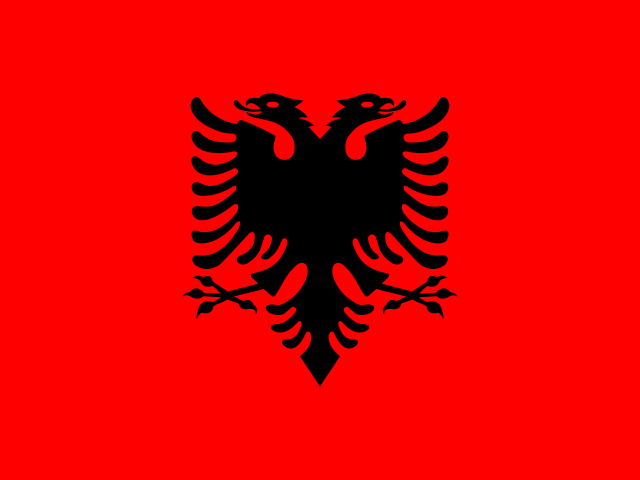
What is shown on the flag of Albania?
- A. A black double-headed eagle on red
- B. A white cross on red
- C. A golden lion on blue
- D. A red star on white
Show the answer
A black double-headed eagle on red. A black double-headed eagle on red: Albanians call their country Shqipëria, often explained as 'Land of the Eagles'.
In which city was Mother Teresa, born Anjezë Gonxhe Bojaxhiu, born in 1910?
- A. Skopje
- B. Tirana
- C. Shkodër
- D. Durrës
Show the answer
Skopje. She was born in Skopje. Tirana's international airport is named after her.
Under Enver Hoxha, what was built all over Albania in huge numbers?
- A. Concrete bunkers
- B. Windmills
- C. Lighthouses
- D. Stone bridges
Show the answer
Concrete bunkers. Concrete bunkers were built from the 1960s to the 1980s against an invasion that never came, and many still stand.
Albanian forms a branch of its own within the Indo-European family of languages.
True or false?
Show the answer
True. True. Albanian has no close relatives among living languages.
In 2016 Albania was reported to have more coffee houses per person than any other country.
True or false?
Show the answer
True. True. It had about 654 coffee houses for every 100,000 people, passing Spain.
Albania ended the Second World War with fewer Jews than before the war.
True or false?
Show the answer
False. False. Albanian families hid Jewish residents and refugees, and Albania ended the war with more Jews than at the start.
Words
What does 'po' mean in Albanian?
- A. Yes
- B. No
- C. Please
- D. Hello
Show the answer
Yes. 'Po' means yes, and 'jo' means no.
In Albanian, 'jo' means yes.
True or false?
Show the answer
False. False. 'Jo' means no. Yes is 'po'.
What does 'majtas' mean?
- A. Left
- B. Right
- C. Straight ahead
- D. Stop
Show the answer
Left. 'Majtas' means left. Right is 'djathtas' and straight ahead is 'drejt'.
Which Albanian word means 'tomorrow'?
- A. nesër
- B. sot
- C. mirë
- D. drejt
Show the answer
nesër. 'Nesër' means tomorrow. 'Sot' means today.
Phrases
How do you say 'thank you' in Albanian?
- A. Faleminderit
- B. Mirupafshim
- C. Tungjatjeta
- D. Gëzuar
Show the answer
Faleminderit. Faleminderit means thank you. Mirupafshim is goodbye, tungjatjeta is hello and gëzuar is cheers.
What do Albanians say when they raise their glasses?
- A. Gëzuar!
- B. Mirëdita
- C. Më falni
- D. Nuk kuptoj
Show the answer
Gëzuar!. Gëzuar! means cheers.
'Mirupafshim' means 'good morning'.
True or false?
Show the answer
False. False. 'Mirupafshim' means goodbye. Good morning is 'mirëmëngjes'.
What does 'A flisni anglisht?' mean?
- A. Do you speak English?
- B. Where is the toilet?
- C. How much is this?
- D. I don't understand
Show the answer
Do you speak English?. It means 'Do you speak English?'. 'Nuk kuptoj' means I don't understand.
Local customs and tips
Which number do you call for emergency help in Albania?
- A. 112
- B. 999
- C. 000
- D. 15
Show the answer
112. 112 is the emergency number, and it also reaches the police. For an ambulance call 127, and for the fire service 128.
A shopkeeper says '2,000 lek' for something priced at 200 lek. What is most likely happening?
- A. They are counting in 'old lek', worth a tenth of today's lek
- B. They are quoting the price in euros
- C. They are adding a tourist tax
- D. They are giving the price for ten items
Show the answer
They are counting in 'old lek', worth a tenth of today's lek. They are counting in 'old lek', worth a tenth of today's lek. Many Albanians still count this way, decades after the 1965 change.
Tips of 15 to 20% are expected in Albanian restaurants.
True or false?
Show the answer
False. False. Tipping is not a firm custom. Rounding up the bill is a kind gesture.
In parts of southern Albania, a shake of the head can mean yes.
True or false?
Show the answer
True. True. To avoid mix-ups, listen for the words: po means yes and jo means no.
As of 2026, how do most travellers get between Albanian towns by public transport?
- A. By bus or furgon (minibus)
- B. By train
- C. By tram
- D. By river boat
Show the answer
By bus or furgon (minibus). By bus or furgon (minibus): passenger trains are largely suspended.
Answer key
The country at a glance
- A. Tirana
- A. The lek
- A. Korab
- A. The Adriatic and the Ionian
- True
- False
History
- A. Vlorë
- A. Skanderbeg
- A. Durrës
- True
- False
Food and drink
- A. Yogurt beaten with eggs
- A. Tirana
- A. Grapes
- A. A herbal mountain tea
- A. Trout
- True
- False
Cities
- A. Berat
- A. Gjirokastër
- True
Landmarks
- A. Butrint
- A. Krujë Castle
- A. 20,000
- False
- True
- True
Fun facts
- A. A black double-headed eagle on red
- A. Skopje
- A. Concrete bunkers
- True
- True
- False
Words
- A. Yes
- False
- A. Left
- A. nesër
Phrases
- A. Faleminderit
- A. Gëzuar!
- False
- A. Do you speak English?
Local customs and tips
- A. 112
- A. They are counting in 'old lek', worth a tenth of today's lek
- False
- True
- A. By bus or furgon (minibus)
More about Albania
- The trip to AlbaniaMap, story, food, phrases and a friendly quiz.
- Albania word searchCities and dishes in large print.
- Albanian words crosswordLearn a few words while you solve it.
- Colour the flag of AlbaniaPrint it or colour it in on the screen.
- Albanian rootsA family guide: history, recipes and words for the grandchildren.
- Before you goPhrases, customs and tips for travellers.
- Printable packLarge print, with a quiz and answers.