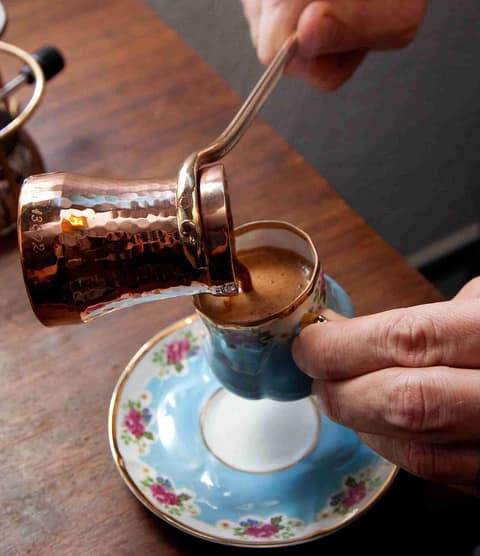
A country on two continents, where Istanbul's minarets rise over the Bosphorus and every visitor is offered a glass of tea.
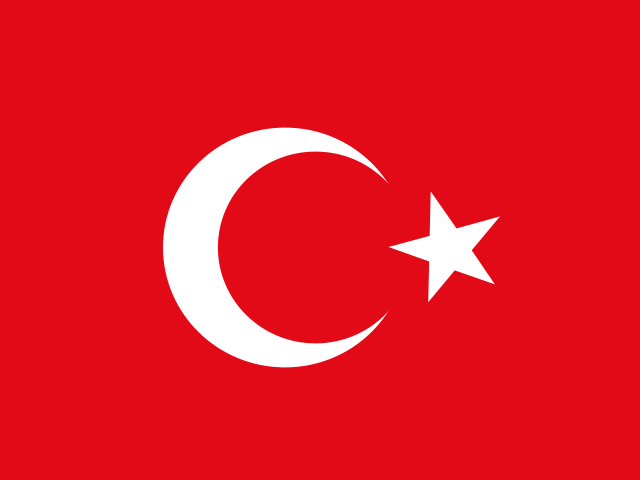
Türkiye, still widely called Turkey in English, is a large country where Europe meets Asia. A small corner, East Thrace, lies in Europe, while most of the land is the broad peninsula of Anatolia, also called Asia Minor. The Bosphorus, the Sea of Marmara and the Dardanelles divide the two parts, and the country has long coasts on the Black Sea, the Aegean and the Mediterranean. In 2022 the government asked the United Nations and other international bodies to use the name Türkiye, the country's own name for itself, and the UN agreed. Both names refer to the same country.
People have lived here for a very long time: Göbekli Tepe, near Şanlıurfa, is about 11,000 years old. Hittites, Greeks, Persians, Romans and Byzantines followed, and Turkish peoples arrived from the east after 1071. The Ottoman Empire ruled from Istanbul for centuries, and after it collapsed in the First World War, Mustafa Kemal Atatürk founded the Republic of Turkey in 1923, with Ankara as its capital.
Questions to ask the older generation
Memories fade faster than photos. Ask these over a meal or a phone call, and write the answers down.
Which town or region of Türkiye did our family come from? Was it near Istanbul, İzmir, Bursa?
Who was the first in the family to leave Türkiye, when, and why?
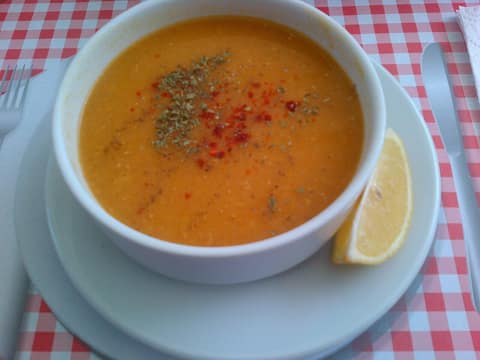
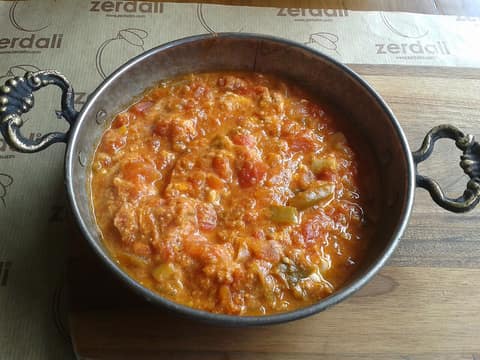
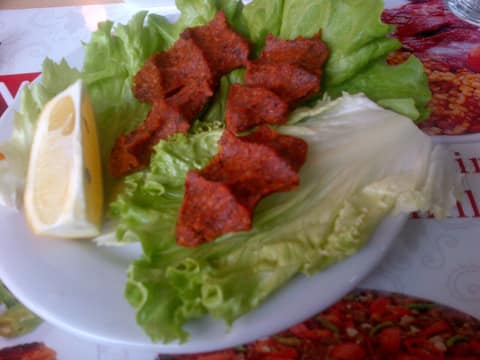
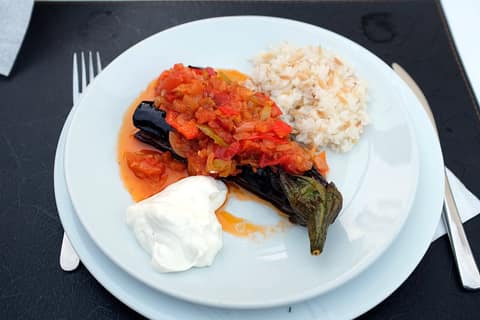
Which dishes from Türkiye were cooked at home? Did anyone make Meze or Red lentil soup?
Does anyone in the family still speak Turkish, or use a few words of it?
Were there songs, prayers, games or holidays from Türkiye that the family kept?
Are there old photos, letters or documents from Türkiye? Who has them?
If you could visit Türkiye together, where would you go first?
A short history of Türkiye
Anatolia is one of the oldest settled lands on earth. Hunter-gatherers raised the stone circles of Göbekli Tepe, and later came the Hittites, Greek cities along the coast, the Persians, Alexander the Great and the Romans. Byzantium became Constantinople, capital of the Eastern Roman Empire for over a thousand years. Turkish peoples arrived from Central Asia in the 11th century, the Ottomans rose from a small state in the northwest to a great empire, and after the First World War the modern republic was founded in 1923. Some chapters of this history, such as the fate of the Armenians in 1915 and the division of Cyprus in 1974, are still seen very differently by different sides.
9500 BC
Göbekli Tepe is built
From about 9500 BC, people who still lived mainly by hunting and gathering built round enclosures of huge carved T-shaped stone pillars on a hill near today's Şanlıurfa. They are among the oldest known monumental buildings in the world, thousands of years older than Stonehenge or the pyramids.
AD 330
Constantinople becomes the capital
The Roman emperor Constantine the Great rebuilt the old Greek city of Byzantium, founded about 660 BC, and in 330 made it the new capital of the empire under the name Constantinople. It remained the capital of the Eastern Roman, or Byzantine, Empire for over 1,100 years.
1071
The Battle of Manzikert
On 26 August 1071 the Seljuk Turks under Sultan Alp Arslan defeated the Byzantine army near Malazgirt in eastern Anatolia and captured Emperor Romanos IV. The victory opened Anatolia to Turkish settlement, and the land slowly became Turkish in language and culture.
1453
The Ottomans take Constantinople
On 29 May 1453, after a siege of 53 days, the 21-year-old Sultan Mehmed II took Constantinople, and the last Byzantine emperor, Constantine XI, died in the fighting. Mehmed, known ever after as 'the Conqueror', made the city his capital and turned Hagia Sophia into a mosque.
1915
The Armenian deportations and massacres
From April 1915, during the First World War, the Ottoman government deported the Armenian population of Anatolia, and between about 600,000 and 1.5 million Armenians died in massacres and death marches. Most historians and many countries call these events the Armenian genocide. The Turkish government rejects that term and describes the deportations as a wartime measure. Armenians remember the victims every year on 24 April.
1928
A new Latin alphabet
A law of 1 November 1928 replaced the Arabic script with a new alphabet of 29 Latin letters, including ç, ğ, ı, ö, ş and ü, which matches spoken Turkish very closely. Atatürk himself toured the country to teach it, and schools for adults opened everywhere.
1974
Cyprus is divided
In July 1974 a coup in Cyprus, backed by the military government in Athens, aimed at union with Greece. Türkiye then sent troops, and by mid-August they held more than a third of the island. Cyprus has been divided ever since, with a UN buffer zone between the Greek Cypriot south and the Turkish Cypriot north, which only Türkiye recognises as a state. Talks to reunite the island have so far failed.
2023
Earthquakes in the southeast
On 6 February 2023 two huge earthquakes, of magnitude 7.8 and about 7.5, struck southeastern Türkiye and northern Syria about nine hours apart. More than 53,000 people died in Türkiye alone, whole neighbourhoods in cities such as Antakya and Kahramanmaraş collapsed, and rebuilding is still going on.