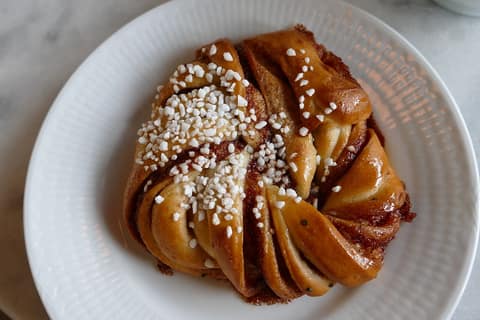
Forests, lakes and islands, midsummer nights and cosy winters, coffee with cinnamon buns and a king in Stockholm.
Sweden is a long country on the Scandinavian Peninsula, reaching from about 55 to 69 degrees north: from the farmland of Skåne (Scania) in the south to the mountains of Lapland, far above the Arctic Circle. It is the largest of the Nordic countries, with about 10.6 million people, but it is thinly populated: most Swedes live in towns and cities in the south and centre, while the north is a land of forests, rivers, lakes and reindeer. Around Kiruna, the sun does not set at all for weeks in early summer.
The Vikings of the Swedish lands traded far to the east, along the rivers of today's Russia and Ukraine. In the Middle Ages Sweden joined Denmark and Norway in the Kalmar Union, left it in 1523 under Gustav Vasa, and in the 17th century became a great power around the Baltic Sea. After losing Finland to Russia in 1809, Sweden fought its last war in 1814 and then stayed out of wars for more than two centuries. It joined the European Union in 1995 and, after Russia's full-scale invasion of Ukraine, NATO in 2024.
Questions to ask the older generation
Memories fade faster than photos. Ask these over a meal or a phone call, and write the answers down.
Which town or region of Sweden did our family come from? Was it near Gothenburg, Malmö, Uppsala?
Who was the first in the family to leave Sweden, when, and why?
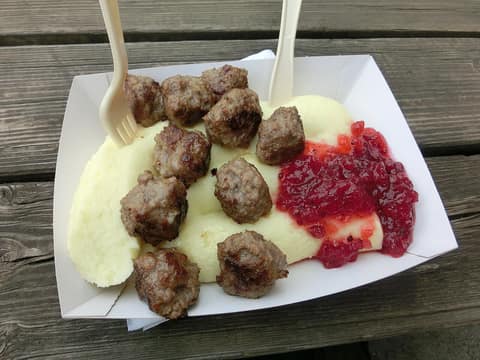
Which dishes from Sweden were cooked at home? Did anyone make Swedish meatballs or Gravlax, cured salmon?
Does anyone in the family still speak Swedish, or use a few words of it?
Were there songs, prayers, games or holidays from Sweden that the family kept?
Are there old photos, letters or documents from Sweden? Who has them?
If you could visit Sweden together, where would you go first?
A short history of Sweden
From Viking trading towns to the Kalmar Union, a 17th-century empire around the Baltic and two centuries of peace, Sweden's story runs from longships to the Nobel Prizes and NATO.
AD 750
Birka is founded
Around the year 750, the trading town of Birka grew up on the island of Björkö in Lake Mälaren, west of today's Stockholm. For about 200 years merchants met there with furs, iron and silver, and in the 830s the missionary Ansgar founded the first known Christian congregation in Sweden there.
1397
The Kalmar Union
At Kalmar in 1397, Queen Margaret of Denmark brought Denmark, Norway and Sweden, which then included much of Finland, under one monarch. The union lasted until 1523, but Swedes often resisted Danish rule.
1523
Gustav Vasa becomes king
The rebel leader Gustav Vasa was elected King of Sweden on 6 June 1523, ending Sweden's part in the Kalmar Union. He built a strong state and broke with the Catholic Church. The date, 6 June, is today Sweden's National Day, which also marks the constitution of 1809.
1658
The Treaty of Roskilde
After Charles X Gustav led his army across the frozen straits of Denmark, Denmark-Norway had to give up large lands in 1658. Scania (Skåne), Halland, Blekinge and Bohuslän in the south and west have been Swedish ever since.
1809
Finland is lost to Russia
After the Finnish War with Russia, Sweden gave up Finland, which had been part of the Swedish realm for about 600 years. The same year Sweden got a new constitution, which created the Parliamentary Ombudsman.
1901
The first Nobel Prizes
The Swedish inventor Alfred Nobel, famous for dynamite, left most of his fortune in his will of 1895 to fund prizes for the greatest benefit to humankind. The first Nobel Prizes were awarded in 1901.
1967
Dagen H: driving on the right
Early on Sunday 3 September 1967, the whole country switched from driving on the left to driving on the right. The day is remembered as Dagen H, 'H Day', from 'högertrafik', right-hand traffic.
2024
Sweden joins NATO
After Russia's full-scale invasion of Ukraine, Sweden applied to join NATO in 2022 together with Finland. It became the alliance's 32nd member on 7 March 2024, ending more than 200 years of military non-alignment.