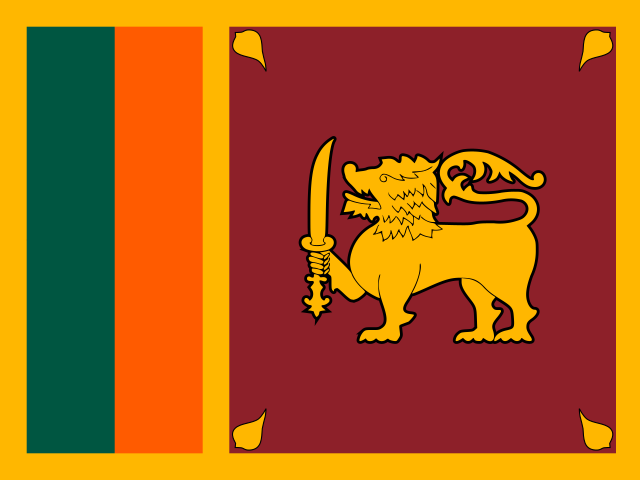
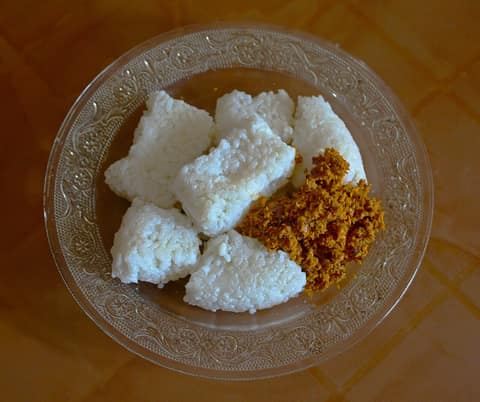
A teardrop-shaped island of tea hills, ancient Buddhist cities, golden beaches and wild elephants, where every meal starts with rice and a table full of curries.
Sri Lanka is an island country in the Indian Ocean, just off the southern tip of India, from which it is separated by the shallow Palk Strait and the Gulf of Mannar. The coasts are lined with palm-fringed beaches and lagoons, and the south-central interior rises into green hills and mountains covered in tea gardens and cloud forest. Until 1972 the country was called Ceylon, a name that lives on in its famous tea.
People have lived on the island for many thousands of years, and its written history is one of the longest in Asia. Buddhism arrived in the 3rd century BC, and kings at Anuradhapura and later Polonnaruwa built huge monasteries, stupas and irrigation reservoirs. From 1505 the Portuguese, then the Dutch and finally the British controlled the coasts, and in 1815 the British took the last kingdom, Kandy. Ceylon became independent in 1948. From 1983 to 2009 the country went through a long civil war, which ended in May 2009.
Questions to ask the older generation
Memories fade faster than photos. Ask these over a meal or a phone call, and write the answers down.
Which town or region of Sri Lanka did our family come from? Was it near Negombo, Kandy, Nuwara Eliya?
Who was the first in the family to leave Sri Lanka, when, and why?
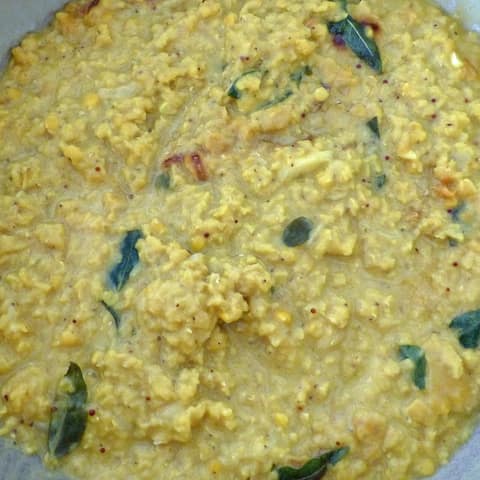
Which dishes from Sri Lanka were cooked at home? Did anyone make Rice and curry or Parippu (dhal curry)?
Does anyone in the family still speak Sinhala, or use a few words of it?
Were there songs, prayers, games or holidays from Sri Lanka that the family kept?
Are there old photos, letters or documents from Sri Lanka? Who has them?
If you could visit Sri Lanka together, where would you go first?
A short history of Sri Lanka
Sri Lanka's chronicles, above all the Mahavamsa, tell the island's story for more than two thousand years. It is a history of great Buddhist kingdoms in the dry north, of irrigation works that still water the rice fields, of spice traders and European fleets, of tea, independence, a long civil war and recovery.
543 BC
Prince Vijaya arrives, according to legend
Sinhalese history traditionally begins in 543 BC, when the semi-legendary Prince Vijaya, sent away from his home in Vanga, in today's Bengal, landed near today's Mannar with 700 followers. The island's chronicles count him as the first of about 189 kings. Archaeology shows that people had lived here for many thousands of years before.
AD 477
King Kashyapa builds Sigiriya
King Kashyapa, who reigned in the late 5th century until 495, moved his capital to a huge granite rock at Sigiriya. He built a palace on the summit, painted frescoes on the rock face and made a gateway in the shape of a giant lion. After his death the palace was abandoned and the site became a Buddhist monastery.
1153
Parakramabahu the Great comes to the throne
Parakramabahu I, who reigned from 1153 to 1186, is remembered as one of the island's greatest kings. He built or repaired hundreds of reservoirs and canals, including the vast Parakrama Samudra lake at Polonnaruwa, and had the Buddha statues of the Gal Vihara carved in the rock.
1656
The Dutch take Colombo
The king of Kandy made a treaty with the Dutch East India Company in 1638 to push out the Portuguese. The Dutch took Colombo in 1656 and the last Portuguese strongholds in 1658, but then kept the coast for themselves. Dutch rule left forts, canals, Roman-Dutch law and the Burgher community.
1931
Votes for all adults
The Donoughmore Constitution of 1931 gave the vote to all adults, men and women, at a time when only about 4 percent of the population had been able to vote. It was the first time a non-European colony of a Western European empire was given one person, one vote.
1960
The world's first woman prime minister
On 21 July 1960 Sirimavo Bandaranaike was sworn in as prime minister of Ceylon, the first woman in the world to lead a government as prime minister. She served three terms in all.
1983
The civil war begins
Tensions between the government and parts of the Tamil minority had grown since independence. In July 1983 an attack by the Liberation Tigers of Tamil Eelam (LTTE), who wanted a separate Tamil state in the north and east, was followed by deadly anti-Tamil riots, and the conflict became a civil war. Many thousands of Tamils left the country.
2009
The civil war ends
In May 2009 the army defeated the LTTE and the 26-year war ended. The United Nations estimated that 80,000 to 100,000 people died over the whole war. The final months, when many civilians were trapped in the fighting, have been examined by the United Nations, and reconciliation is still a national task.