A land of wide plains, Baltic beaches and Tatra peaks, with royal Kraków, rebuilt Warsaw and a long, brave history.
Poland lies in the heart of Central Europe. Most of the country is flat farmland and forest on the great European plain, which gave the land its name: the Polans, an early Slavic tribe, were 'people living in open fields'. In the north it meets the Baltic Sea with sandy beaches and dunes, in the north-east lies the Masurian Lake District, with more than two thousand of the country's roughly ten thousand lakes, and in the far south rise the Sudetes and the Carpathian mountains, including the rocky Tatras.
Polish statehood is usually dated to 966, when Duke Mieszko I was baptised. The Kingdom of Poland joined with Lithuania to form the Polish-Lithuanian Commonwealth, one of Europe's great powers, which adopted a modern constitution in 1791. Soon after, its neighbours divided up what was left of it, and Poland vanished from the map for 123 years. It returned in 1918, suffered terribly in the Second World War, lived under communist rule, and in 1989 led the way out of it with the Solidarity movement.
Questions to ask the older generation
Memories fade faster than photos. Ask these over a meal or a phone call, and write the answers down.
Which town or region of Poland did our family come from? Was it near Kraków, Gdańsk, Wrocław?
Who was the first in the family to leave Poland, when, and why?
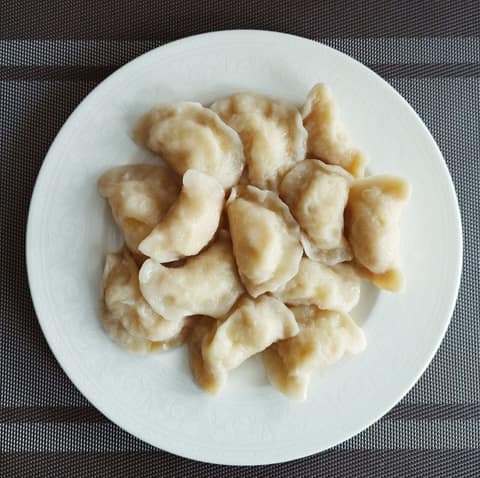
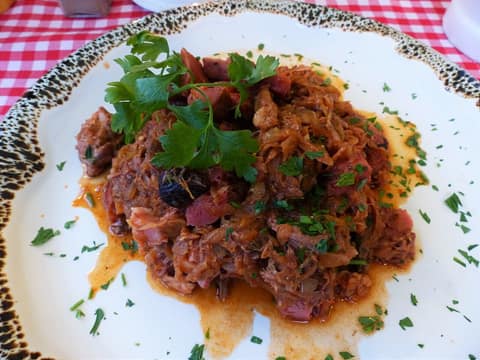
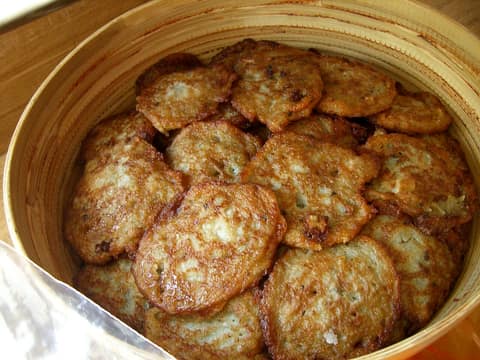
Which dishes from Poland were cooked at home? Did anyone make Pierogi or Bigos (hunter's stew)?
Does anyone in the family still speak Polish, or use a few words of it?
Were there songs, prayers, games or holidays from Poland that the family kept?
Are there old photos, letters or documents from Poland? Who has them?
If you could visit Poland together, where would you go first?
A short history of Poland
Poland's story runs from a duke's baptism and a golden age of kings and scholars, through the partitions that erased it from the map, to the terrible years of the Second World War and the peaceful Solidarity revolution that helped end communism in Europe.
AD 966
The baptism of Mieszko I
Duke Mieszko I, the first ruler of the Polish state, was baptised together with much of his court, probably at Poznań or Gniezno. His Czech wife Dobrawa is often credited with influencing him. Many historians see this as the beginning of Poland as a state.
1025
The first king is crowned
Bolesław I the Brave, son of Mieszko I, was crowned the first king of Poland in 1025, near the end of his life, after years of building up the Polish Church and enlarging his lands.
1410
The Battle of Grunwald
On 15 July 1410 the armies of Poland and Lithuania, led by King Władysław II Jagiełło and Grand Duke Vytautas, crushed the Teutonic Knights. It was one of the largest battles of medieval Europe, and the Teutonic Order never recovered its former power.
1569
The Union of Lublin
On 1 July 1569 Poland and the Grand Duchy of Lithuania joined into a single state, the Polish-Lithuanian Commonwealth, with one elected king and one parliament. It became one of the largest countries in Europe.
1795
Poland vanishes from the map
In the third partition, Russia, Prussia and Austria divided up what was left of the Commonwealth. After partitions in 1772, 1793 and 1795, there was no independent Polish state for 123 years.
1939
The invasion of Poland
On 1 September 1939 Nazi Germany invaded Poland, starting the Second World War in Europe, and on 17 September the Soviet Union invaded from the east. Around 6 million Polish citizens died in the war, about half of them Polish Jews murdered in the Holocaust.
1980
Solidarity is born
Strikes at the Lenin Shipyard in Gdańsk in August 1980 led to Solidarity, the first independent trade union in a Warsaw Pact country to be recognised by the state. Led by the electrician Lech Wałęsa, it soon had about 10 million members.
2004
Poland joins the EU
On 1 May 2004 Poland joined the European Union together with nine other countries. It had already joined NATO on 12 March 1999, and in 2007 it joined the Schengen area.