Inca stone cities, desert lines, a lake high in the Andes, the Amazon rainforest and one of the world's great kitchens.
Peru lies on the Pacific coast of South America. It has three very different parts: a narrow desert coast, where most people live; the high Andes mountains down the middle; and the Amazon rainforest in the east, which covers more than half of the country. Lima, the capital, stands on the dry coast, where rain is extremely rare.
People have lived here for more than 14,000 years. Caral, one of the oldest cities in the Americas, was built more than 4,500 years ago, and later came the Chavín, Nazca and Moche cultures. In the 1400s the Incas, ruling from Cusco, built the largest empire in the Americas before the Europeans arrived. Spain conquered it in the 1530s, and Peru declared its independence in 1821.
Questions to ask the older generation
Memories fade faster than photos. Ask these over a meal or a phone call, and write the answers down.
Which town or region of Peru did our family come from? Was it near Arequipa, Trujillo, Chiclayo?
Who was the first in the family to leave Peru, when, and why?
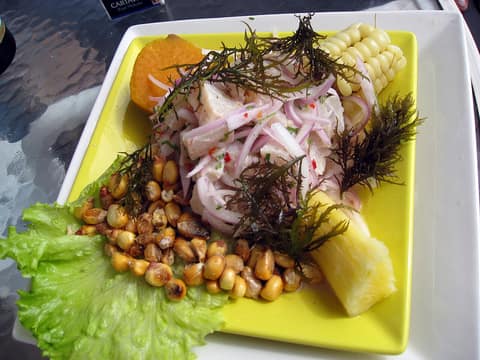
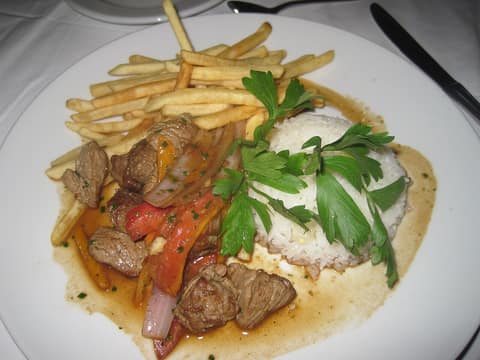
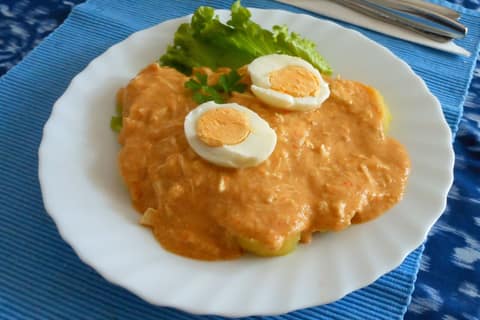
Which dishes from Peru were cooked at home? Did anyone make Ceviche or Tiradito?
Does anyone in the family still speak Spanish, or use a few words of it?
Were there songs, prayers, games or holidays from Peru that the family kept?
Are there old photos, letters or documents from Peru? Who has them?
If you could visit Peru together, where would you go first?
A short history of Peru
Peru has one of the longest histories of civilisation in the world. Long before the Incas, peoples such as the Caral, Chavín, Nazca and Moche built temples, cities and irrigation canals. The Incas then created a vast empire from Cusco, until Spanish conquerors arrived in 1532. For almost three centuries Lima was the capital of the Viceroyalty of Peru, for a long time the heart of Spain's South American empire. Peru became independent in the 1820s and has been a republic ever since.
2600 BC
Caral rises in the Supe Valley
From about 2600 BC, people in the Supe Valley, about 180 km north of Lima, built Caral, with stepped pyramids and sunken plazas. It is one of the oldest cities in the Americas, and the Caral culture began about 1,500 years before the Olmecs of Mexico.
100 BC
The Nazca culture flourishes
From about 100 BC the Nazca people lived in the river valleys of the dry southern coast. They made fine painted pottery, dug underground water channels that still work today, and drew many of the famous Nazca Lines in the desert.
1438
Pachacuti becomes Sapa Inca
According to the traditional dates, Pachacuti became ruler of Cusco in 1438 (some scientists think it was a little earlier). He rebuilt Cusco and turned a small kingdom into the Inca Empire, which he and his son spread along the Andes.
1532
Pizarro captures Atahualpa at Cajamarca
On 16 November 1532, the Spanish conqueror Francisco Pizarro and about 170 to 180 men ambushed the Inca emperor Atahualpa in the town square of Cajamarca and took him prisoner. It was the start of the Spanish conquest of the Inca Empire.
1780
Túpac Amaru II leads a great rebellion
In November 1780, José Gabriel Condorcanqui, an Indigenous leader who called himself Túpac Amaru II after the last Inca ruler, rose up against Spanish rule near Cusco. He was captured in April 1781 and executed in Cusco the next month, but the rebellion went on for another two years.
1824
The Battle of Ayacucho
On 9 December 1824, independence forces led by Antonio José de Sucre, a general of Simón Bolívar, defeated the Spanish royalist army near Ayacucho. The victory sealed Peru's independence and, in practice, ended Spanish rule in South America.
1911
Hiram Bingham reaches Machu Picchu
On 24 July 1911, local farmers led the American historian Hiram Bingham to Machu Picchu. The site was known to people in the valley, but his articles and photographs made it famous around the world.
2025
A Peruvian citizen becomes Pope
On 8 May 2025, Robert Prevost, a missionary born in Chicago who spent many years in Peru and was Bishop of Chiclayo from 2015 to 2023, was elected Pope Leo XIV. He became a Peruvian citizen in 2015 and is the first pope to be a citizen of Peru.