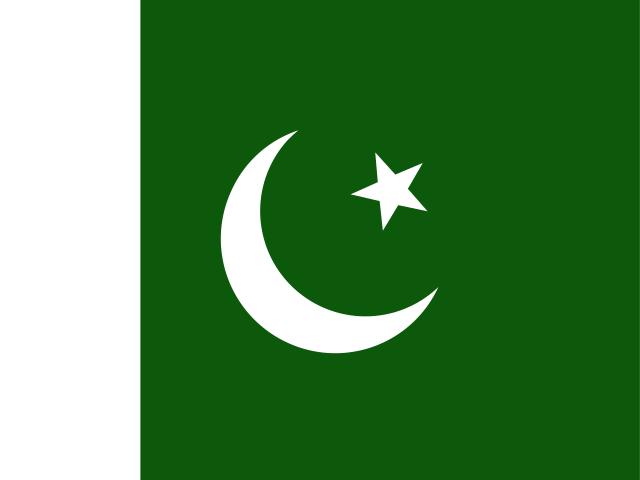
From the Arabian Sea to the high Karakoram: the cities of the Indus, Mughal Lahore and some of the warmest hospitality in Asia.
Pakistan stretches from the warm coast of the Arabian Sea to some of the highest mountains on Earth. The Indus River runs through the whole country from north to south, and its plains in Punjab and Sindh are where most Pakistanis live. To the west lies the dry Balochistan Plateau, to the east the Thar Desert, and in the far north the Hindu Kush, the Karakoram and the western Himalayas. There, Pakistan administers Gilgit-Baltistan and Azad Jammu and Kashmir, parts of the wider Kashmir region, whose status is disputed.
People have lived here for thousands of years. The Indus Valley city of Mohenjo-daro was built around 2500 BC, Taxila was a great centre of Buddhist learning, and later the Mughal emperors left mosques, forts and gardens in Lahore. Modern Pakistan was created on 14 August 1947, when British India was divided, as a homeland for the Muslims of the subcontinent. Its eastern wing became the independent country of Bangladesh in 1971.
Questions to ask the older generation
Memories fade faster than photos. Ask these over a meal or a phone call, and write the answers down.
Which town or region of Pakistan did our family come from? Was it near Rawalpindi, Lahore, Faisalabad?
Who was the first in the family to leave Pakistan, when, and why?
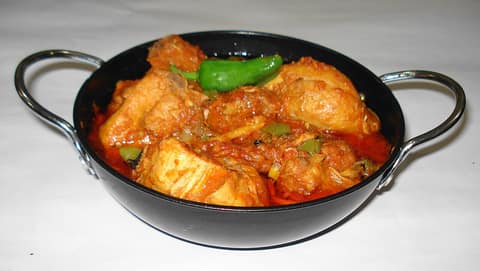
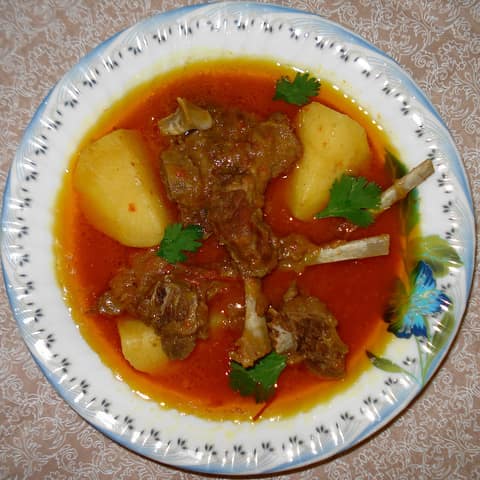
Which dishes from Pakistan were cooked at home? Did anyone make Chicken karahi or Nihari?
Does anyone in the family still speak Urdu, or use a few words of it?
Were there songs, prayers, games or holidays from Pakistan that the family kept?
Are there old photos, letters or documents from Pakistan? Who has them?
If you could visit Pakistan together, where would you go first?
A short history of Pakistan
The land of the Indus has been a crossroads for 5,000 years. Its first great cities were built in the Bronze Age, Persian, Greek, Buddhist, Arab, Turkic, Mughal, Sikh and British rulers followed, and in 1947 it became a new country.
2500 BC
Mohenjo-daro is built
Around 2500 BC the people of the Indus Valley Civilisation built Mohenjo-daro in Sindh, one of the largest cities of its time, with brick houses, straight streets and covered drains. At least 40,000 people lived there. By about 1700 BC it had been abandoned, and it was rediscovered only in the 1920s.
AD 711
The Arab conquest of Sindh
In 711 an Arab army of the Umayyad Caliphate, led by the young general Muhammad ibn al-Qasim, began the conquest of Sindh, and his forces later reached Multan. It marked the beginning of Muslim rule in South Asia, and over the following centuries Islam became the main religion of the region, spread largely by Sufi teachers.
1673
The Badshahi Mosque is completed
The emperor Aurangzeb built the Badshahi Mosque in Lahore between 1671 and 1673, facing the gate of the Lahore Fort. Made of red sandstone with white marble, it was the largest mosque of the Mughal era and is still one of the great symbols of the country.
1849
Britain annexes Punjab
The British East India Company had taken Sindh in 1843. After two wars with the Sikhs it annexed Punjab in 1849, and from 1858 the region was ruled directly by the British Crown as part of British India.
1947
Independence and Partition
On 14 August 1947 Pakistan became independent, made up of West Pakistan and East Pakistan, separated by Indian territory. Jinnah became its first governor-general. The division of British India caused one of the largest migrations in history: millions of Muslims moved to Pakistan and millions of Hindus and Sikhs moved to India, and a great many people died in the violence, above all in Punjab.
1971
Bangladesh becomes independent
After the 1970 election, a political crisis between the two wings turned into a nine-month war in East Pakistan in which many civilians died and millions fled to India. India entered the war in December, and in December 1971 East Pakistan became the independent country of Bangladesh.
1988
Benazir Bhutto becomes prime minister
In 1988 Benazir Bhutto, daughter of the former leader Zulfikar Ali Bhutto, became prime minister at the age of 35. She was the first woman elected to head a democratic government in a Muslim-majority country. She served twice and was killed in an attack in 2007.
2014
Malala Yousafzai wins the Nobel Peace Prize
Malala Yousafzai from the Swat Valley, who was shot in 2012 for campaigning for girls' education, received the Nobel Peace Prize in 2014 at the age of 17. She is the youngest Nobel laureate in history.