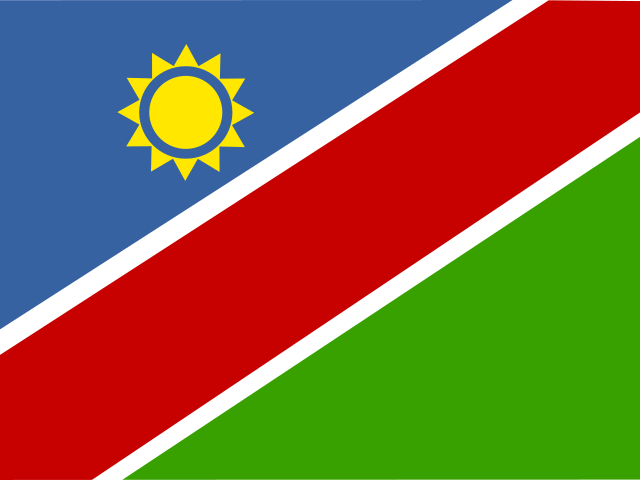
Red dunes above a foggy Atlantic coast, desert elephants and cheetahs, and a young nation that won its independence in 1990.
Namibia lies on the Atlantic coast of southwestern Africa, between Angola and South Africa. Its name comes from the Namib, the coastal desert that runs the whole length of its shore, where cold sea fog drifts over some of the tallest sand dunes on Earth. Inland rise a high central plateau, rocky mountains and, in the east, the red sands of the Kalahari. The far northeast, along the narrow Caprivi Strip, is the greenest and wettest part of the country.
People have lived here for tens of thousands of years: San hunter-gatherers and Khoekhoe herders left rock engravings and paintings across the country, and Bantu-speaking farmers and cattle keepers such as the Ovambo and Herero arrived later. Germany made the territory a colony in 1884, and between 1904 and 1908 German troops killed tens of thousands of Herero and Nama people. South Africa then ruled the land as South West Africa and imposed apartheid, until a long struggle and a United Nations plan brought independence on 21 March 1990.
Questions to ask the older generation
Memories fade faster than photos. Ask these over a meal or a phone call, and write the answers down.
Which town or region of Namibia did our family come from? Was it near Walvis Bay, Swakopmund, Lüderitz?
Who was the first in the family to leave Namibia, when, and why?
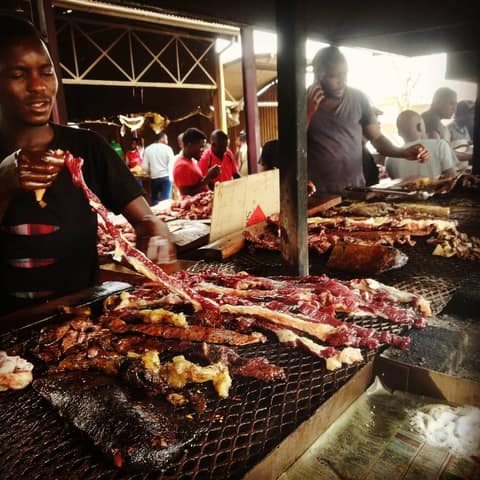
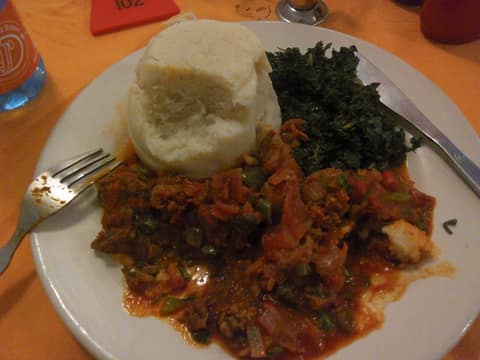
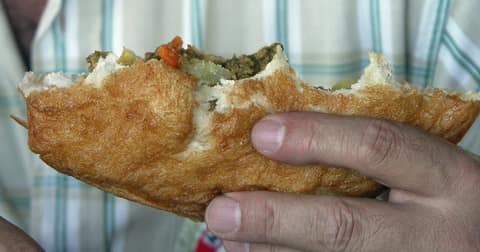
Which dishes from Namibia were cooked at home? Did anyone make Kapana or Oshifima?
Does anyone in the family still speak Oshiwambo, or use a few words of it?
Were there songs, prayers, games or holidays from Namibia that the family kept?
Are there old photos, letters or documents from Namibia? Who has them?
If you could visit Namibia together, where would you go first?
A short history of Namibia
Namibia's dry lands have been home to San and Khoekhoe peoples for thousands of years, and rock slabs painted about 30,000 years ago in the Apollo 11 Cave are among the oldest figurative art in Africa. Bantu-speaking peoples arrived from around the 14th century, and Ovambo kingdoms grew up in the north. In the 1800s missionaries, traders and Oorlam groups from the Cape came in, and in 1884 Germany made the territory its colony. German rule brought war and genocide; South African rule after 1915 brought apartheid. The long struggle for independence ended in 1990.
1840
Jonker Afrikaner settles at Windhoek
Jonker Afrikaner, leader of the Oorlam people who had come north from the Cape, settled with his followers by the hot springs of Windhoek and built a stone church there that held 500 people. The first known written mention of the name Windhoek is in a letter he wrote in 1844.
1904
The Herero and Nama genocide
On 12 January 1904 the Herero rose up against German rule, and the Nama followed later that year. German troops under General Lothar von Trotha answered with a campaign of extermination: after the Battle of Waterberg in August 1904 many Herero were driven into the Omaheke desert, where large numbers died of thirst, and survivors were held in camps where about half the prisoners died. By 1908 around 80 percent of the Herero and half of the Nama had died.
1908
Diamonds are found near Lüderitz
In 1908 the railway worker Zacharias Lewala found a diamond in the sand near Lüderitz and showed it to his supervisor, August Stauch. A diamond rush followed, the town of Kolmanskop grew up in the desert, and Germany closed off a vast area of the coast as the Sperrgebiet, the 'forbidden area'.
1960
SWAPO is founded
On 19 April 1960 the South West Africa People's Organisation, SWAPO, was founded to campaign for the end of South African rule. As of 2026, it has governed Namibia ever since independence.
1966
The armed struggle begins
On 26 August 1966 South African forces attacked a SWAPO camp at Omugulugwombashe in the north, the first major clash of a war that lasted until independence. Namibians remember the day as Heroes' Day.
1989
The first free election
From 7 to 11 November 1989 Namibians of all backgrounds voted together for the first time, under United Nations supervision, and just over 97 percent of registered voters took part. The Constituent Assembly they elected wrote the Constitution, adopted in February 1990.
1993
The Namibian dollar arrives
On 15 September 1993 the Bank of Namibia issued the first Namibian dollar banknotes. The new currency replaced the South African rand at the same value, and the rand remains legal tender alongside it.
2021
Germany recognises the genocide
On 28 May 2021, after more than five years of talks with Namibia, Germany's foreign minister said that Germany would now officially call the events of 1904 to 1908 a genocide and would ask Namibia and the descendants of the victims for forgiveness. German officials had already used the word genocide in 2015. Germany offered 1.1 billion euros for development over 30 years. Many Herero and Nama leaders reject the deal, saying they were left out of the talks.