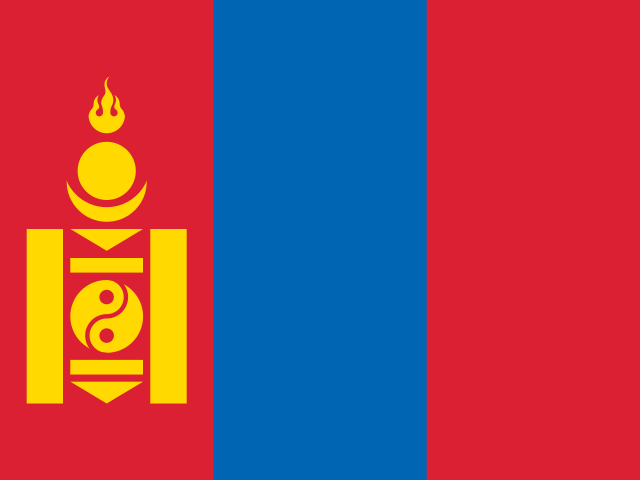
Endless steppe, the Gobi Desert, nomad tents and horses, in the homeland of Genghis Khan and the largest contiguous land empire in history.
Mongolia lies in the heart of Asia, between Russia to the north and China to the south, and it has no coast at all. It is a high country of grassy steppe, forested mountains in the north and west, and the Gobi Desert in the south. Winters are long and bitterly cold, but the sky is famously clear: the country has more than 250 sunny days a year.
More than 2,000 years ago the Xiongnu built a great nomad empire here. In 1206 the Mongol tribes were united under Temüjin, who took the title Genghis Khan, and his armies and those of his grandsons created the largest contiguous land empire in history. Later Mongolia came under the Qing dynasty of China, declared independence in 1911, and was a communist state closely tied to the Soviet Union from 1924 until the peaceful democratic revolution of 1990.
Questions to ask the older generation
Memories fade faster than photos. Ask these over a meal or a phone call, and write the answers down.
Which town or region of Mongolia did our family come from? Was it near Erdenet, Darkhan, Choibalsan?
Who was the first in the family to leave Mongolia, when, and why?
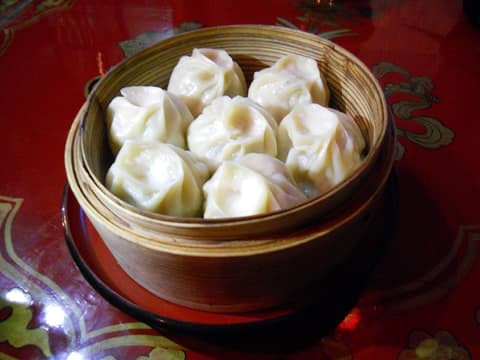
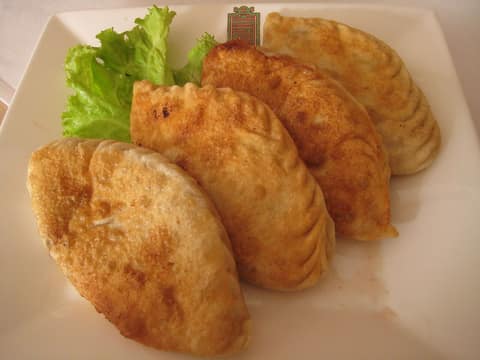
Which dishes from Mongolia were cooked at home? Did anyone make Buuz or Khuushuur?
Does anyone in the family still speak Mongolian, or use a few words of it?
Were there songs, prayers, games or holidays from Mongolia that the family kept?
Are there old photos, letters or documents from Mongolia? Who has them?
If you could visit Mongolia together, where would you go first?
A short history of Mongolia
Mongolian history is the story of the steppe: nomad peoples who rose to build great empires, of which the Mongol Empire of Genghis Khan was the largest. The events below run from the Xiongnu, more than 2,000 years ago, to the peaceful revolution that brought democracy.
209 BC
Modu becomes ruler of the Xiongnu
In 209 BC Modu took power over the Xiongnu, a confederation of nomad tribes on the Mongolian plateau. He united the tribes of the steppe into a powerful empire that reached Lake Baikal in the north and the Pamir Mountains in the west, and forced China's Han dynasty to pay tribute.
1206
Temüjin becomes Genghis Khan
In 1206 a great assembly of Mongol nobles on the Onon River proclaimed Temüjin ruler of all the Mongols, with the title Genghis Khan (Chinggis Khaan in Mongolian). He reorganised the army and made the Mongols a single nation.
1227
Genghis Khan dies
Genghis Khan died in 1227 during a campaign against the Western Xia kingdom. The place of his grave is still unknown. His sons and grandsons went on to enlarge the Mongol Empire until it stretched from Korea to Eastern Europe.
1368
The Mongols are driven out of China
In 1368 the Ming dynasty drove the last Yuan emperor out of Beijing, and the Mongol court retreated to the steppe. In 1372 a Ming army occupied Karakorum.
1691
The Khalkha Mongols submit to the Qing
At a meeting at Dolon Nor in 1691 the princes of the Khalkha Mongols accepted the rule of the Qing emperor Kangxi. Khalkha stayed part of the Qing empire for 220 years.
1921
The People's Revolution
In 1921 Mongolian revolutionaries led by Damdin Sükhbaatar, with help from the Soviet Red Army, drove foreign troops out of the country. The anniversary, 11 July, is celebrated each year with the Naadam festival.
1939
The Battles of Khalkhin Gol
From May to September 1939, Soviet and Mongolian forces fought the Japanese army along the Khalkhin Gol river in eastern Mongolia. The Soviet and Mongolian victory kept Japan from attacking the Soviet Union again during the Second World War.
1992
A new constitution takes effect
On 12 February 1992 a new democratic constitution came into force. It ended one-party rule, guaranteed freedom of religion, speech and travel, and changed the name of the country simply to Mongolia.