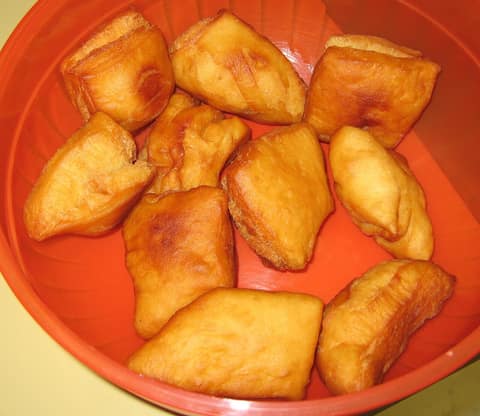
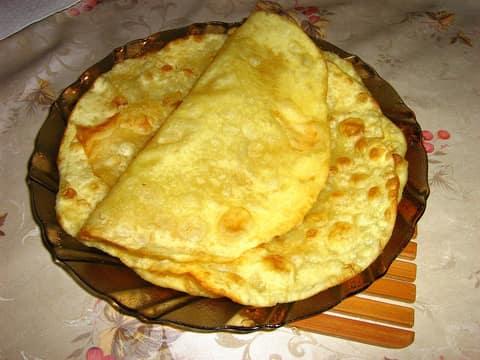
The world's largest landlocked country, where endless steppe meets snowy mountains, and every guest is welcomed with tea and warm fried bread.
Kazakhstan is a vast country in the heart of Eurasia, the ninth largest in the world and the largest with no coast on the open ocean. It stretches from the Caspian Sea in the west to the Altai and Tian Shan mountains in the east, and a small part west of the Ural River lies in Europe. Most of the land is steppe, dry grassland, together with semi-desert, and it is one of the most thinly populated countries on earth.
For thousands of years this was the land of horse-riding nomads. Saka warriors, Turkic tribes and the Mongols passed through, Silk Road towns such as Otrar and Turkistan grew rich on trade, and in the 15th century the Kazakh Khanate was founded. The Russian Empire gradually took control in the 18th and 19th centuries, and in Soviet times Kazakhstan went through a terrible famine, the Virgin Lands farming campaign, nuclear testing and the first human flight into space. It became independent on 16 December 1991, the last Soviet republic to do so.
Questions to ask the older generation
Memories fade faster than photos. Ask these over a meal or a phone call, and write the answers down.
Which town or region of Kazakhstan did our family come from? Was it near Almaty, Shymkent, Karaganda?
Who was the first in the family to leave Kazakhstan, when, and why?
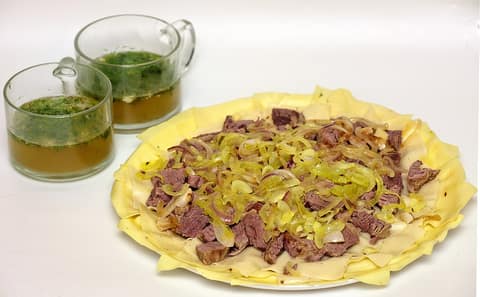
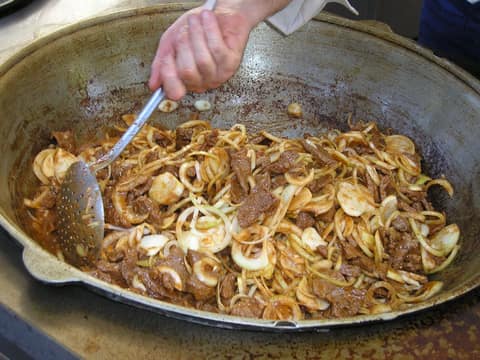
Which dishes from Kazakhstan were cooked at home? Did anyone make Beshbarmak or Kazy?
Does anyone in the family still use a few words from the old country?
Were there songs, prayers, games or holidays from Kazakhstan that the family kept?
Are there old photos, letters or documents from Kazakhstan? Who has them?
If you could visit Kazakhstan together, where would you go first?
A short history of Kazakhstan
The Kazakh steppe was a highway of peoples. Early horse herders, Saka warriors buried with gold, Turkic tribes and the Mongols all crossed it, and Silk Road cities flourished along its southern rivers. The Kazakh Khanate rose in the 15th century and was slowly absorbed by the Russian Empire. The Soviet period brought both great suffering, above all the famine of the early 1930s and four decades of nuclear tests, and great change, from new cities to the launch pad of the space age. Since 1991 Kazakhstan has been an independent country.
3500 BC
The Botai herd horses
Between about 3700 and 3100 BC, people of the Botai culture lived in villages of pit-houses on the northern steppe and depended heavily on horses. Wear marks on horse teeth suggest they used bridles, which makes Botai one of the earliest known places where people kept horses, although scientists still debate the details.
1219
Genghis Khan takes Otrar
After the governor of Otrar, a Silk Road city on the Syr Darya, had a Mongol trade caravan killed in 1218, Genghis Khan besieged the city in 1219, and it fell after about five months. Its fall opened the Mongol conquest of Central Asia.
1465
The Kazakh Khanate is founded
The sultans Kerei and Janibek led their followers away from the Uzbek khan and founded the Kazakh Khanate. The year 1465 is the date accepted in Kazakh history writing, and in 2015 the country celebrated 550 years of Kazakh statehood.
1930
The great famine begins
Forced collectivisation took the herds of the nomads and pushed them onto collective farms. In the famine that followed, known in Kazakh as Asharshylyq, an estimated 1.3 to 2.3 million people died between 1930 and 1933, most of them Kazakhs, and many others fled to China and neighbouring lands.
1954
The Virgin Lands campaign
The Soviet leader Nikita Khrushchev sent hundreds of thousands of young volunteers to plough up the grasslands of northern Kazakhstan for wheat. Harvests rose at first, but soil erosion followed, and the newcomers changed the make-up of the population.
1986
The Jeltoqsan protests
In December 1986 young Kazakhs protested in Alma-Ata after Moscow replaced the long-serving Kazakh party leader with a Russian official from outside the republic. The protests were put down by force. Jeltoqsan means 'December' in Kazakh.
1997
The capital moves north
On 10 December 1997 the capital moved from Almaty to Akmola, on the Ishim River. The city was renamed Astana, meaning 'capital', in 1998, became Nur-Sultan in 2019 in honour of the first president, and went back to the name Astana in 2022.
2026
A new constitution
On 15 March 2026 voters approved a new constitution in a referendum. It came into force on 1 July 2026, replacing the constitution of 1995 and creating a single-chamber parliament, the Kurultai. 15 March is now Constitution Day.
Astana, City of republican significance, on the Ishim River in the north: The Baiterek tower, Khan Shatyr, a giant transparent tent.
Almaty, City of republican significance, in the southeast at the foot of the Tian Shan: Mountain views and the Medeu skating rink, The wooden Ascension Cathedral.
Shymkent, City of republican significance, in the far south: Silk Road history, Markets and southern food.
Karaganda, Karaganda Region, central Kazakhstan: Coal mining, Soviet-era architecture.
Aktobe, Aktobe Region, northwest Kazakhstan: Oil and gas, Metal industry.
Turkistan, Turkistan Region, in the south near the Syr Darya: The Mausoleum of Khoja Ahmed Yasawi, Pilgrimage.
Semey, Abai Region, on the Irtysh River in the northeast: The poet Abai Kunanbayuly, The Irtysh River.
Oskemen, East Kazakhstan Region: Metal industry, The Altai mountains.
Atyrau, Atyrau Region, at the mouth of the Ural River: Oil and gas, Bridges between Europe and Asia.
Aktau, Mangystau Region, on the Caspian Sea: The Caspian Sea shore, Mangystau desert landscapes.