More than 330 green volcanic islands in the South Pacific, where people greet you with a warm 'Bula!', share a bowl of kava, and cook a feast in an earth oven.
Fiji is an island country in Melanesia, in the South Pacific Ocean, about 2,000 km north of New Zealand. It is made up of more than 330 islands, about 110 of them lived on all year, plus hundreds of tiny islets. Most people live on the two big islands, Viti Levu and Vanua Levu, and about three quarters live on the coasts of Viti Levu, in and around Suva, Nadi and Lautoka. The islands are mountainous and volcanic in origin, with rainforest on the wetter eastern sides and sugarcane fields on the drier western sides.
People have lived here for about 3,000 years. The first settlers made Lapita pottery, and later waves of people from Melanesia and contact with Tonga and Samoa shaped Fijian culture. Chiefs and villages were, and still are, at the heart of indigenous Fijian life. Fiji became a British colony in 1874, and from 1879 the British brought tens of thousands of workers from India to the sugarcane fields. Fiji became independent on 10 October 1970, a date still celebrated as Fiji Day.
Questions to ask the older generation
Memories fade faster than photos. Ask these over a meal or a phone call, and write the answers down.
Which town or region of Fiji did our family come from? Was it near Lautoka, Nadi, Nausori?
Who was the first in the family to leave Fiji, when, and why?
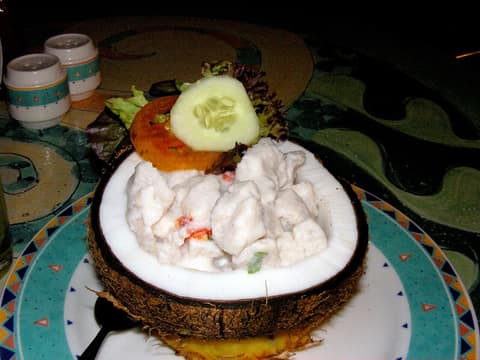
Which dishes from Fiji were cooked at home? Did anyone make Kokoda or Lovo?
Does anyone in the family still speak Fijian, or use a few words of it?
Were there songs, prayers, games or holidays from Fiji that the family kept?
Are there old photos, letters or documents from Fiji? Who has them?
If you could visit Fiji together, where would you go first?
A short history of Fiji
Fiji's story runs from Lapita seafarers about 3,000 years ago, through powerful chiefdoms and the arrival of European traders and missionaries, to British rule from 1874 and the arrival of tens of thousands of workers from India. Fiji became independent in 1970. Since then it has lived through several coups, in 1987, 2000 and 2006, as well as new constitutions and elections, and it has also cheered two Olympic gold medals in rugby sevens.
1000 BC
The first settlers arrive
By around 1000 BC, seafaring people of the Lapita culture, known for their stamped pottery, had settled in Fiji. People with Melanesian roots followed roughly a thousand years later, and Fiji also had close contact with Tonga and Samoa. Over the centuries Fijians built large sailing canoes called drua, fortified villages and a society led by chiefs.
1774
James Cook visits the Lau Islands
The British navigator James Cook landed on one of the southern Lau islands in the east. Cook had heard of Fiji in Tonga, and the Tongan pronunciation of Viti, 'Fisi', gave the islands their English name.
1854
Cakobau converts to Christianity
Seru Epenisa Cakobau, the powerful chief of the small island of Bau, had fought the missionaries and their allies. Under pressure from Tongan forces, foreign warships and his own rivals, he accepted Christianity in 1854. Methodist and later Catholic missions spread across the islands in the decades that followed.
1874
Fiji becomes a British colony
On 10 October 1874 Cakobau, the Tongan chief Ma'afu and other senior chiefs signed the Deed of Cession at Levuka, handing Fiji to Great Britain. The Colony of Fiji lasted 96 years.
1882
Suva officially becomes the capital
Levuka was squeezed between the sea and steep hills, with no room to grow. In 1877 the colony decided to move the capital to Suva on Viti Levu, and the administration completed the move in 1882.
1970
Fiji becomes independent
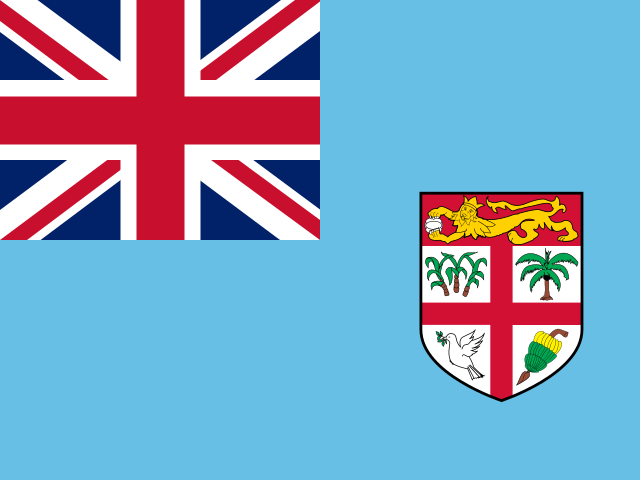
The British flag was lowered in Suva at sunset on 9 October 1970, and Fiji became an independent country within the Commonwealth at midnight. 10 October is celebrated as Fiji Day.
2006
A military coup
After a civilian coup in 2000, tensions between the army and the government grew again, and on 5 December 2006 the military took power. In April 2009 the Court of Appeal ruled the takeover illegal, the constitution was abrogated days later, and Fiji was suspended from the Commonwealth until 2014.
2016
Olympic gold in rugby sevens
At the Rio de Janeiro Olympics, Fiji's rugby sevens team beat Great Britain 43 to 7 in the final and won the country's first Olympic medal of any colour. The team won gold again at the Tokyo Games, held in 2021, and the victory was celebrated with a special 7 dollar banknote. At Paris 2024 they took silver.